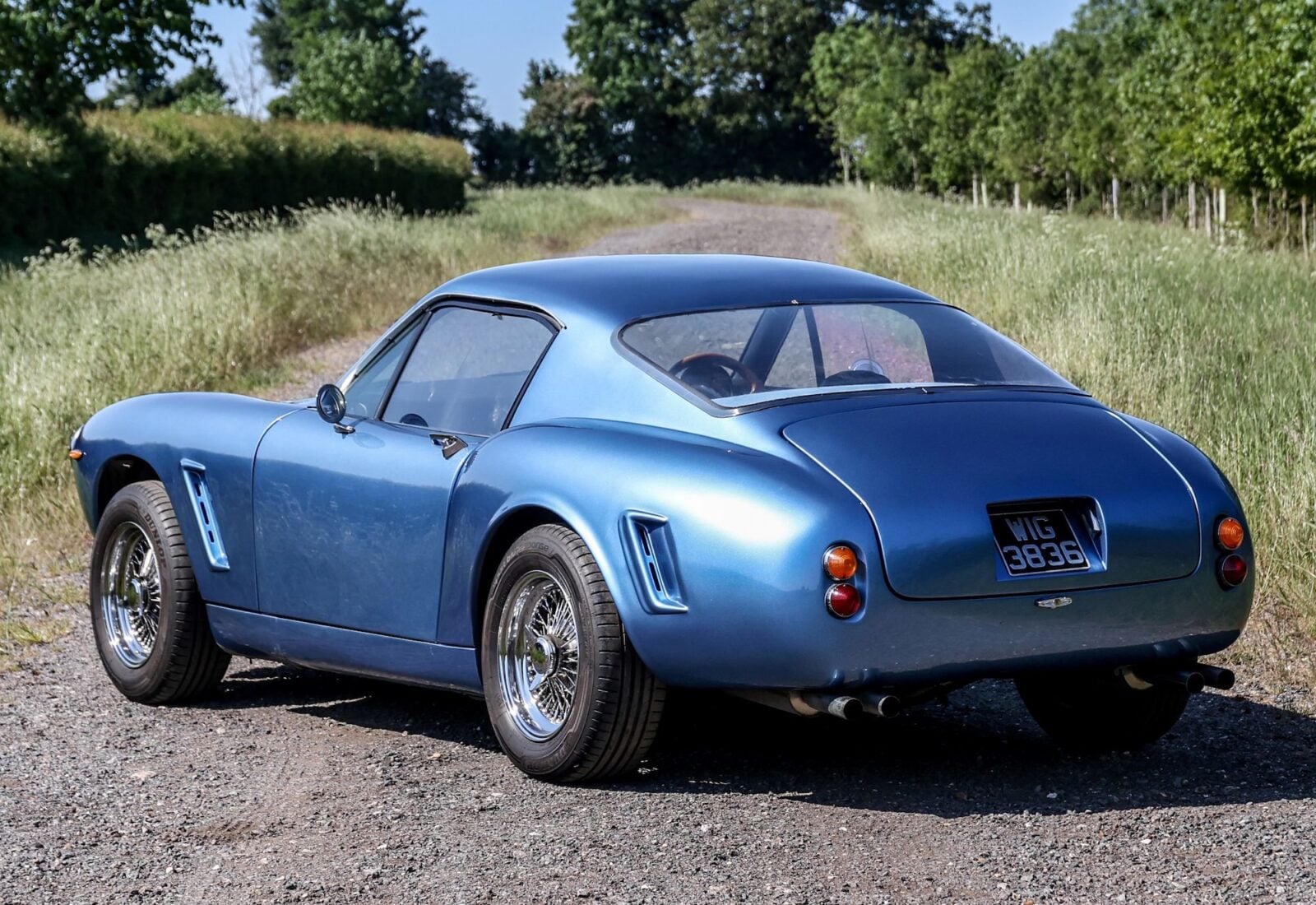
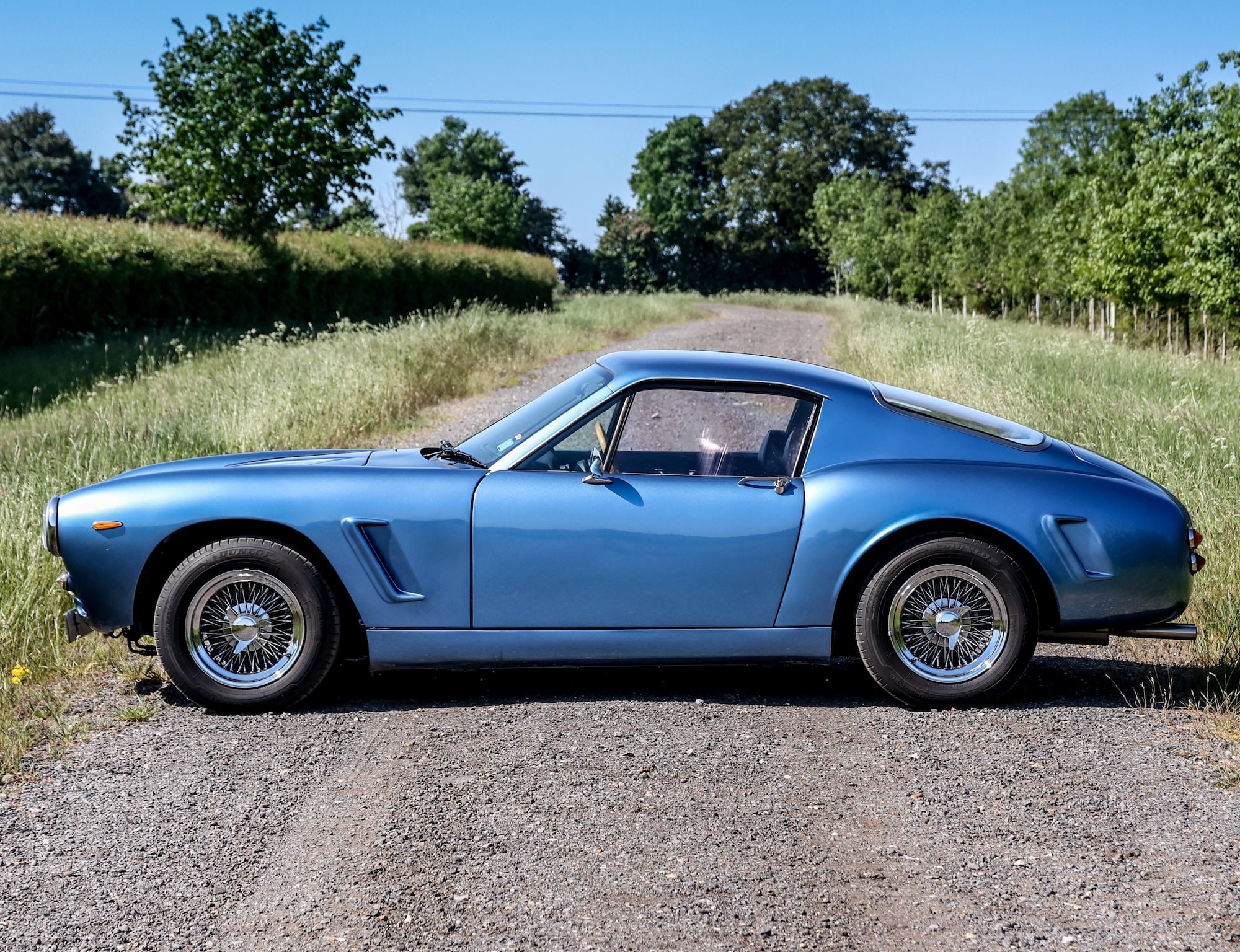
This is a BMW Z3 from the year 2000, but you’d be forgiven for thinking it’s a far more Italian car, from a far earlier decade. Much of the body has been replaced with new panels and the interior has been largely reworked.
Cars like this will always be controversial, even shunned by many. They’re intended for people who really want a car that resembles the Ferrari 250 GT SWB, but they don’t quite have the $8 million USD required to buy a real one. Instead, they start with a cheap Z3, buy a kit for a few thousand dollars, and spend a few weekends piecing it all together in the garage.
Fast Facts: A Tribute Automotive-Bodied BMW Z3
- The BMW Z3 entered production in 1992, combining Joji Nagashima’s retro-influenced styling with engineering input from BMW Motorrad. Built in Spartanburg, South Carolina, it became BMW’s first mass-produced roadster and first model manufactured entirely outside Germany, aimed at younger buyers seeking an affordable, entertaining two-seat sports car.
- Built on a shortened E36 3 Series platform, the Z3 kept the compact semi-trailing-arm rear suspension from the E30. Its styling borrowed cues from the BMW 507, while its 1995 appearance in 007’s “GoldenEy generated major global publicity. Demand was immediate, with the first US production allocation effectively sold before showroom deliveries began.
- BMW steadily expanded the Z3 range with more powerful six-cylinder engines, the high-performance M Roadster, and the unusually-shaped Z3 Coupe. A 1999 facelift revised the rear styling, while later M54 and S54 engines increased performance. Production ended in June of 2002 after 297,088 Z3s had been built.
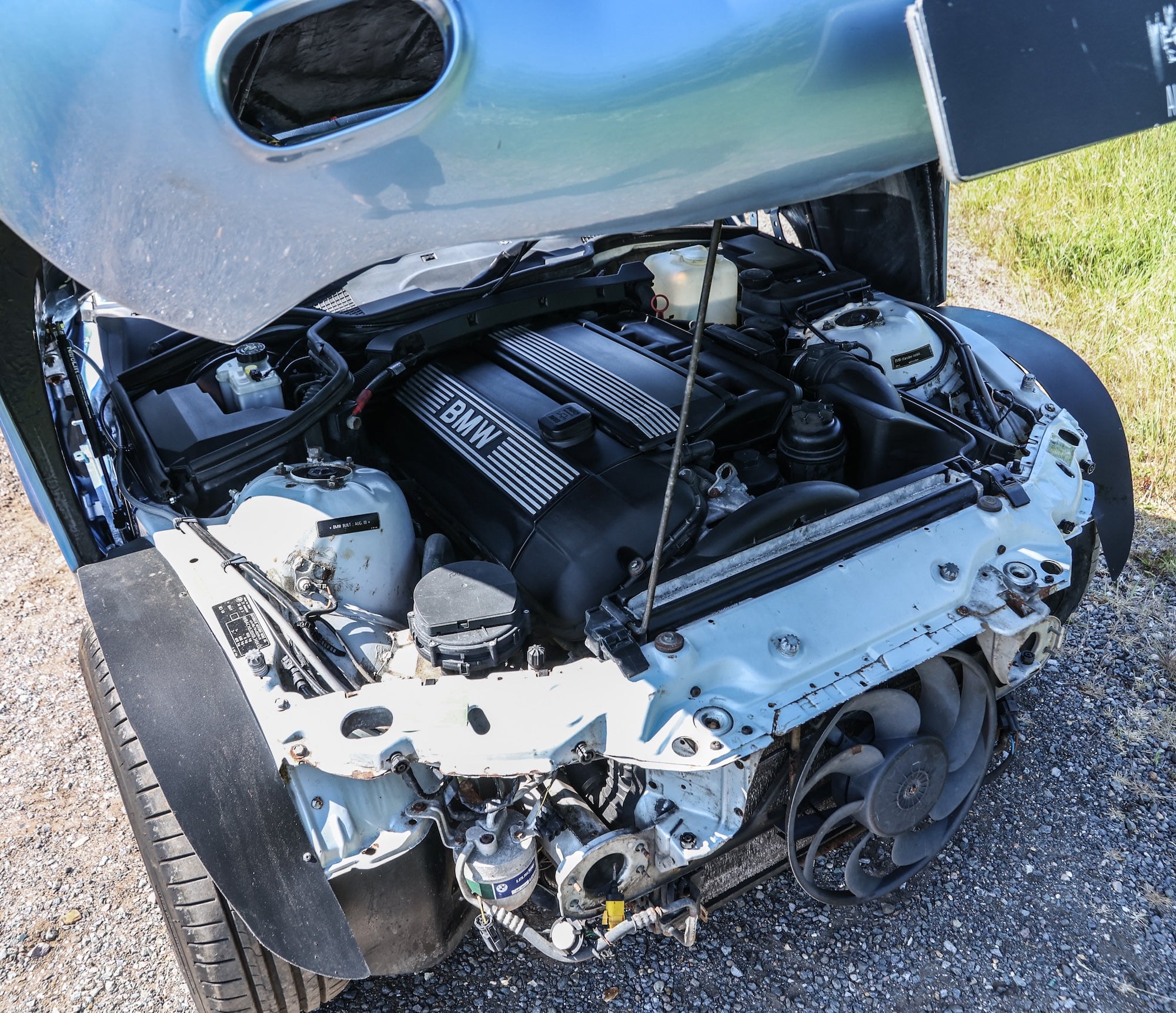
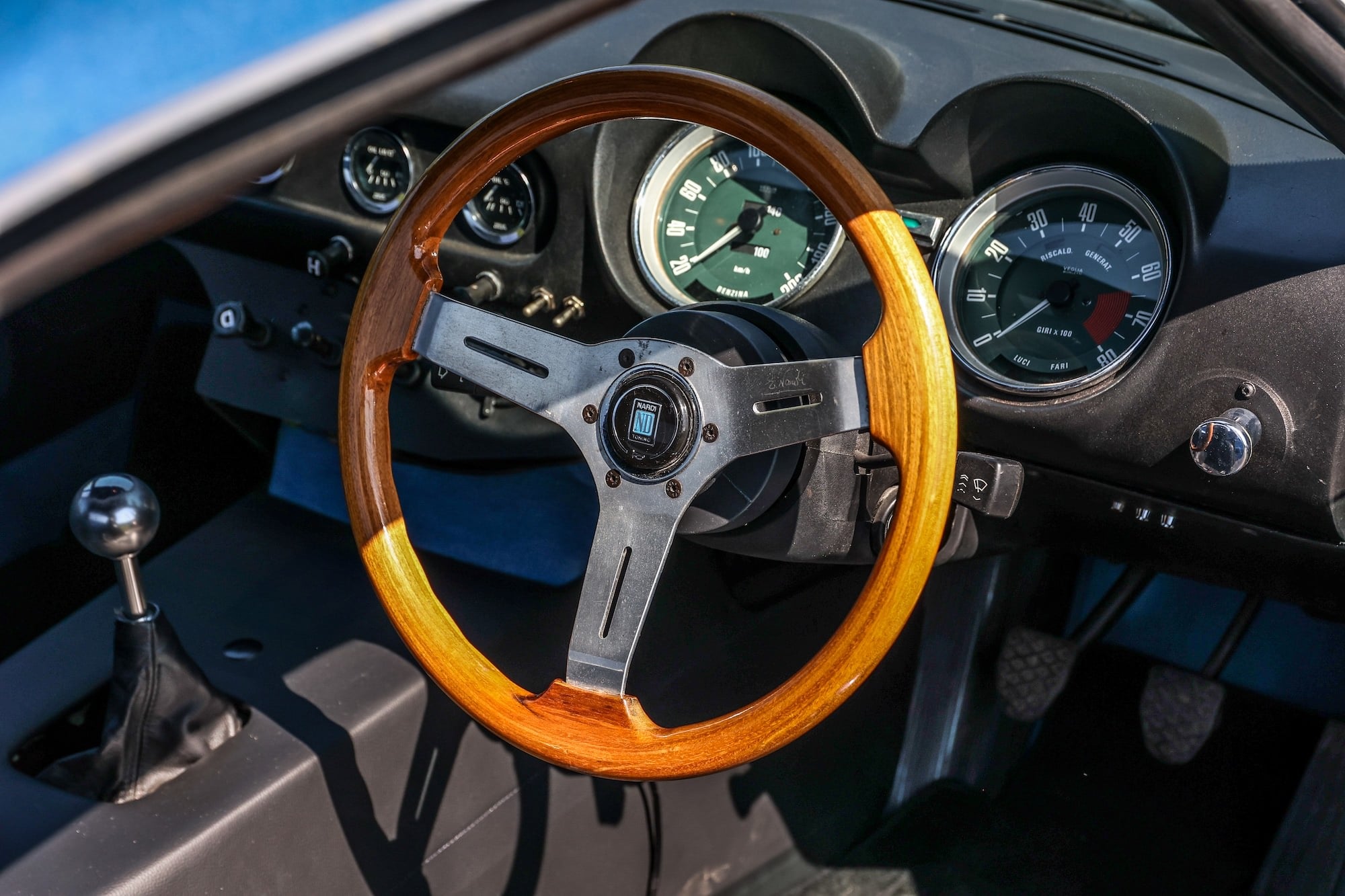
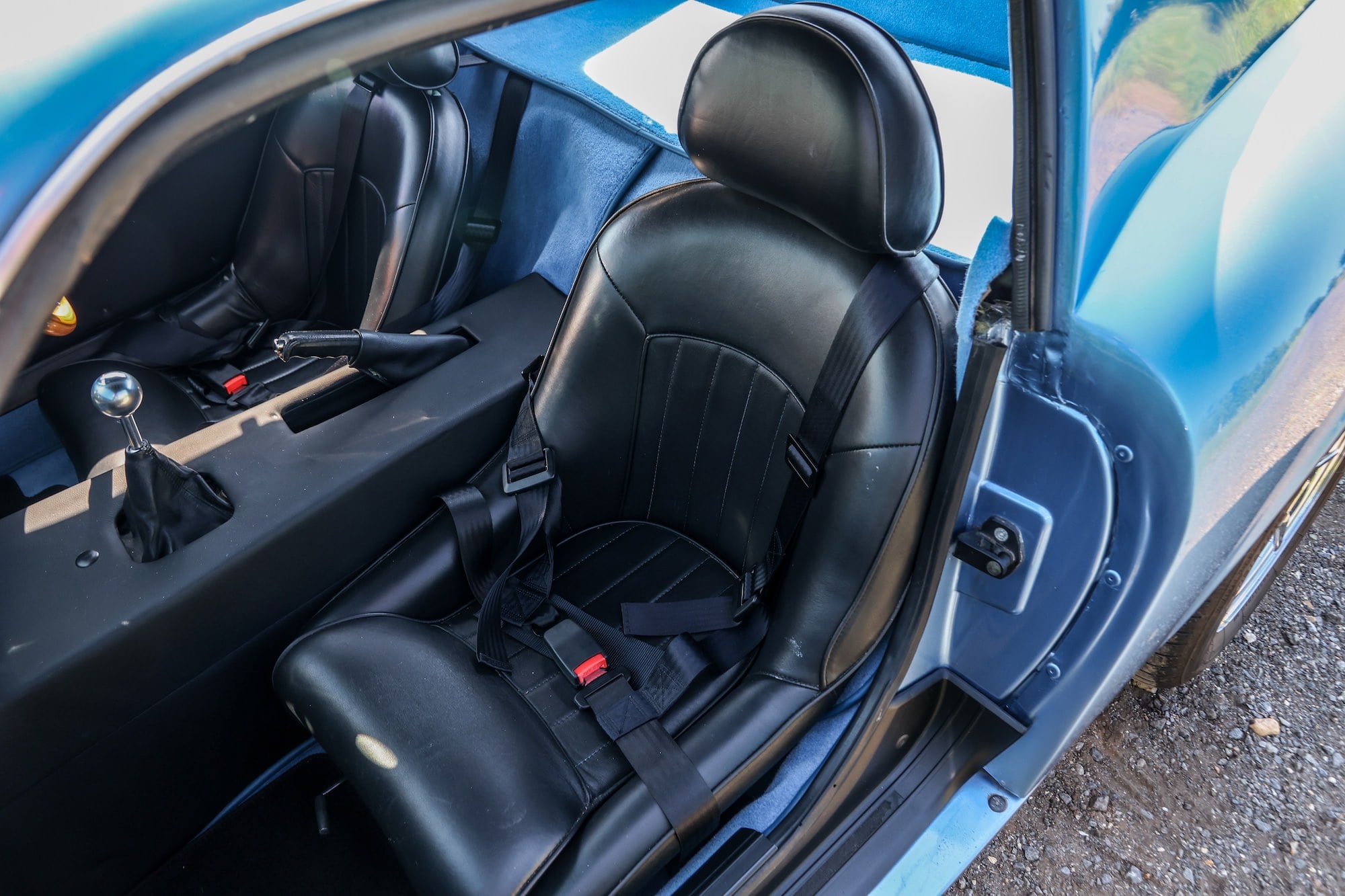
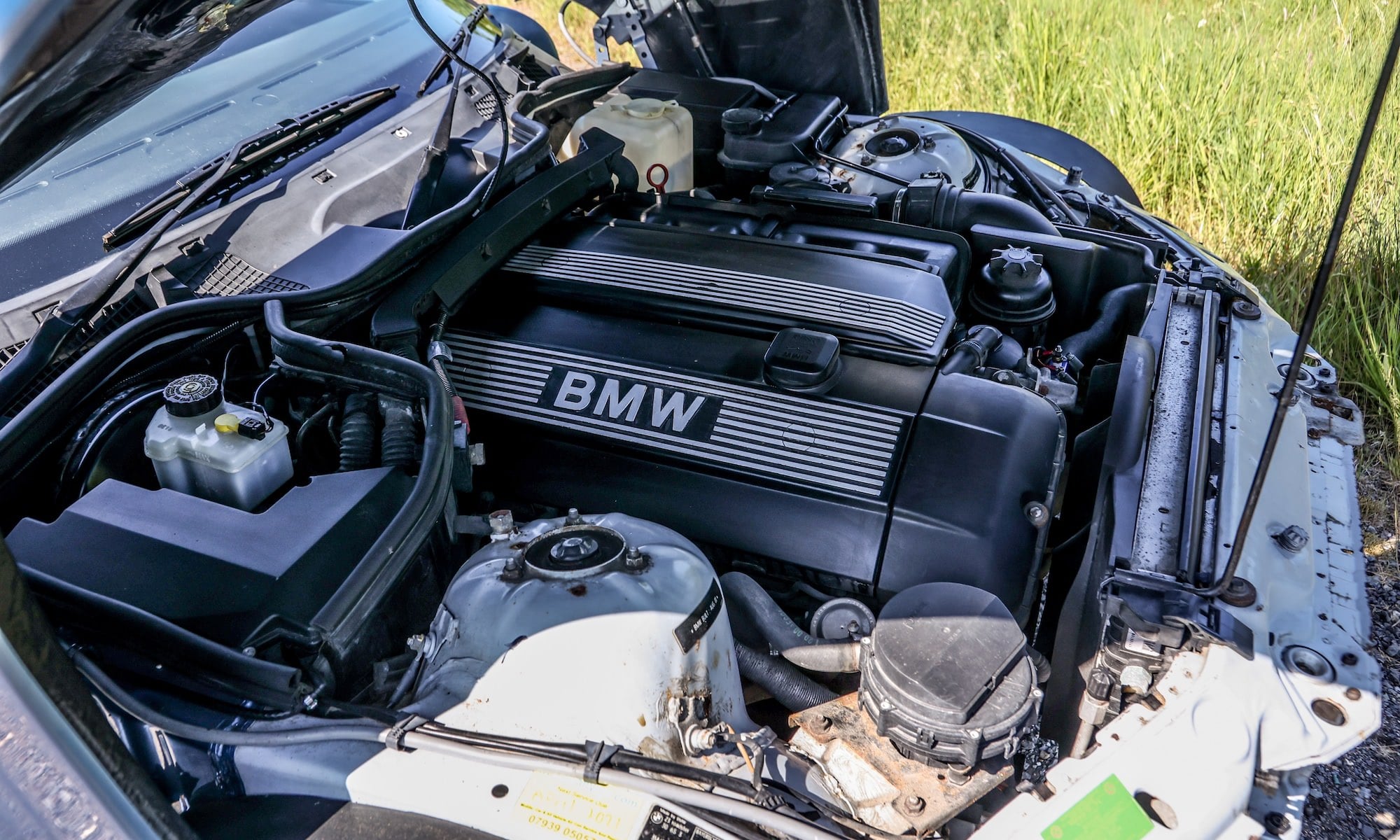
- The 2000 Z3 3.0 Roadster shown here has been transformed into a Ferrari 250 GT SWB-inspired tribute using Tribute Automotive fiberglass bodywork. It keeps its BMW straight-six, manual transmission, air conditioning, and electric windows, while gaining Azzurro California Blue paint, wire wheels, period-style fittings, Veglia-style instruments, black leather trim, and a Nardi steering wheel.
History Speedrun: The BMW Z3
BMW approved the Z3 for a production run in 1992 – Joji Nagashima, the designer whose sketch became the production shape, was told to style it as “a compact, fun-to-drive city commuter.” It was to be a fun, affordable BMW priced to sell at around $25,000 USD and targeted squarely at a younger demographic.
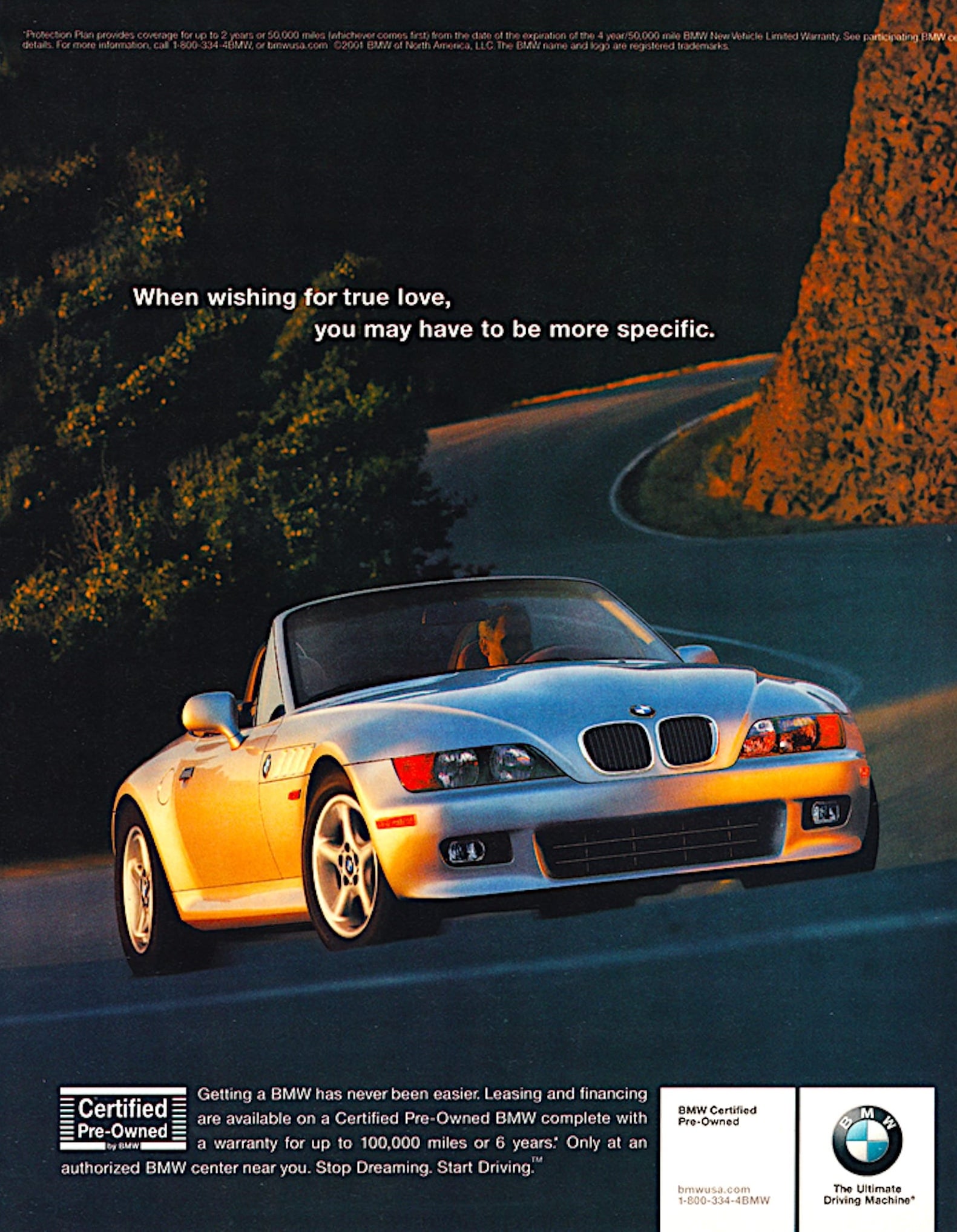
 The Z3 production car was built on a shortened version of the E36 3 Series platform, its wheelbase cut by 10 inches, but in place of the E36’s multilink rear axle it used the simpler semi-trailing arm rear suspension from the outgoing E30. Image courtesy of BMW.
The Z3 would become BMW’s first mass-produced roadster, but it was also the first of the company’s cars to be built entirely outside Germany – a controversial move at the time.
Two cars had really helped to make the business case for the Z3 – BMW’s own Z1, a limited-production roadster with vertically sliding doors built from 1989 to 1991. Only 8,013 examples were sold, possibly because of the much higher price nearing $45,000 USD, but it provided proof that an audience existed for an open two-seat BMW roadster.
The Mazda MX-5, also known as the Miata, proved the same thing at a third of the cost, with more than 23,000 US sales in 1989 and nearly 36,000 in 1990. Inside BMW, two teams were already circling the idea – Nagashima had drawn a retro two-seater during a styling exercise called “Fun Car,” a shape he compared to the prewar BMW 328, while the BMW Motorrad motorcycle division under Dr. Burkhard Göschel built its own rough concept from E30 3 Series parts, complete with removable door panels and a removable trunk cover.
In 1992 Wolfgang Reitzle, the board member for research and development, put three proposals in front of the board, which chose Nagashima’s styling, but they folded in the Motorrad team’s thinking, and then handed Göschel the program.
The Z3 production car was built on a shortened version of the E36 3 Series platform, its wheelbase cut by 10 inches, but in place of the E36’s multilink rear axle it used the simpler semi-trailing arm rear suspension from the outgoing E30. The old design was cheaper and more compact, and although it did give up some mechanical grip, by Göschel’s account it also made the car more fun to drive.
The styling of the new German roadster was very clearly influenced by BMW’s most famous post-WWII roadster – the 507. The new car had similar side “gills” and fender-mounted roundels, as well as the long-hood, short-deck, curved roadster proportions front to back. It had been a commercial failure for BMW, but the 507 was one of the company’s most iconic models, Elvis Presley even owned one when he was deployed to Germany.
BMW was setting up a plant at Spartanburg, South Carolina, and America was where the Miata had proven that the market for a lightweight roadster was strongest. The first car came off the line in September of 1995, and two months later the Z3 made its public debut in the 007 film GoldenEye, with James Bond controversially trading in his Aston Martin for an Atlanta Blue Z3 1.9.
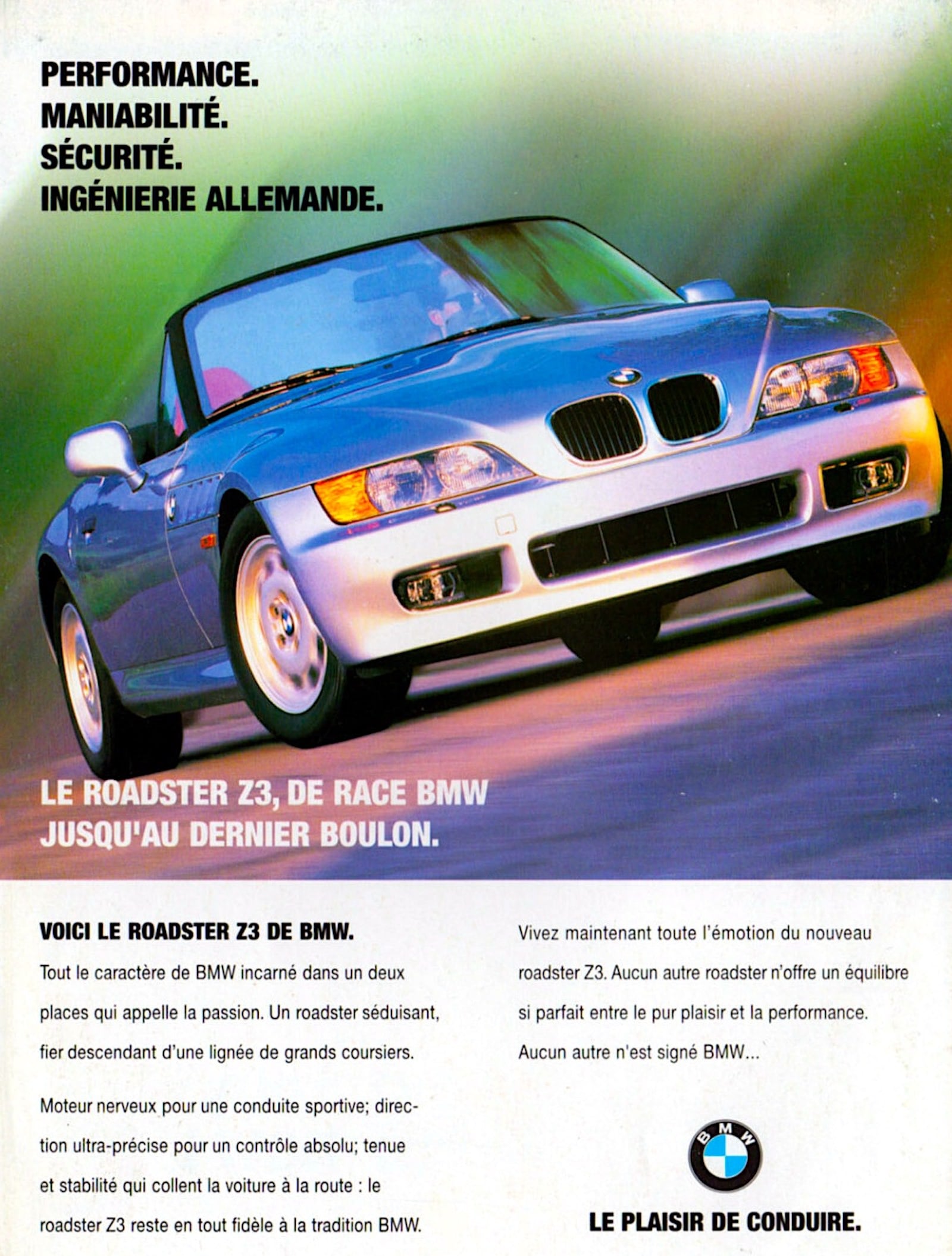
BMW approved the Z3 for a production run in 1992 – Joji Nagashima, the designer whose sketch became the production shape, was told to style it as “a compact, fun-to-drive city commuter.” It was to be a fun, affordable BMW priced to sell at around $25,000 USD and targeted squarely at a younger demographic. Image courtesy of BMW.
A 100-car James Bond Edition sold through the Neiman Marcus Christmas catalog, and it drew more than 200 orders in its first five minutes – by the time the roadster reached showrooms in the spring of 1996, the entire first-year US run of more than 15,000 cars was already spoken for.
The launch engines were somewhat modest in their power output, but there was more to come. American cars were fitted with a 1.9 liter twin-cam four with 138 bhp and 133 lb ft of torque at a base price of $28,750, while European buyers could also have a 113 bhp 1.8 liter.
A 2.8 liter straight-six with 189 bhp and 203 lb ft followed for 1997, along with wider rear fenders. Smaller sixes later filled out the range, including a 2.0 liter for Europe and, in the United States, the misleadingly badged Z3 2.3, which was actually powered by a 170 bhp 2.5 liter six.
The M Roadster arrived in 1997 with running gear from the E36 M3, it was a fundamentally different car in many respects, with a 3.2 liter six rated at 316 bhp in European trim and, in detuned US form, 240 bhp with 236 lb ft. It added a limited-slip differential, a wider track width, M3 brakes front and back, and quad exhausts – it came only with a 5-speed manual box.
The tin-top Z3 Coupe began as an unsanctioned project when a group of engineers under Göschel developed the fixed-roof shooting-brake body in their own time. They were looking for some increased shell rigidity rather than a styling improvement – the roof made the structure 2.6 times stiffer than the roadster’s.
The board was talked into production on the condition that costs stay low, so the coupe kept the roadster’s doors and bodywork forward of the A-pillars. Unveiled at Frankfurt in 1997 and in production from early-1998, it was sold with six-cylinder engines only and picked up the nicknames “clown shoe” and “bread van” for its troubles.
A facelift in 1999 gave the non-M Z3 range reshaped rear bodywork with more pronounced wheel arches. The M52 sixes gave way to the newer M54 generation soon after, with a 2.2i and a 2.5 sitting below a 3.0i making 228 bhp and 221 lb ft of torque. From early 2001 the M cars took the S54 engine from the E46 M3, rated at 315 bhp and 251 lb ft in US trim.
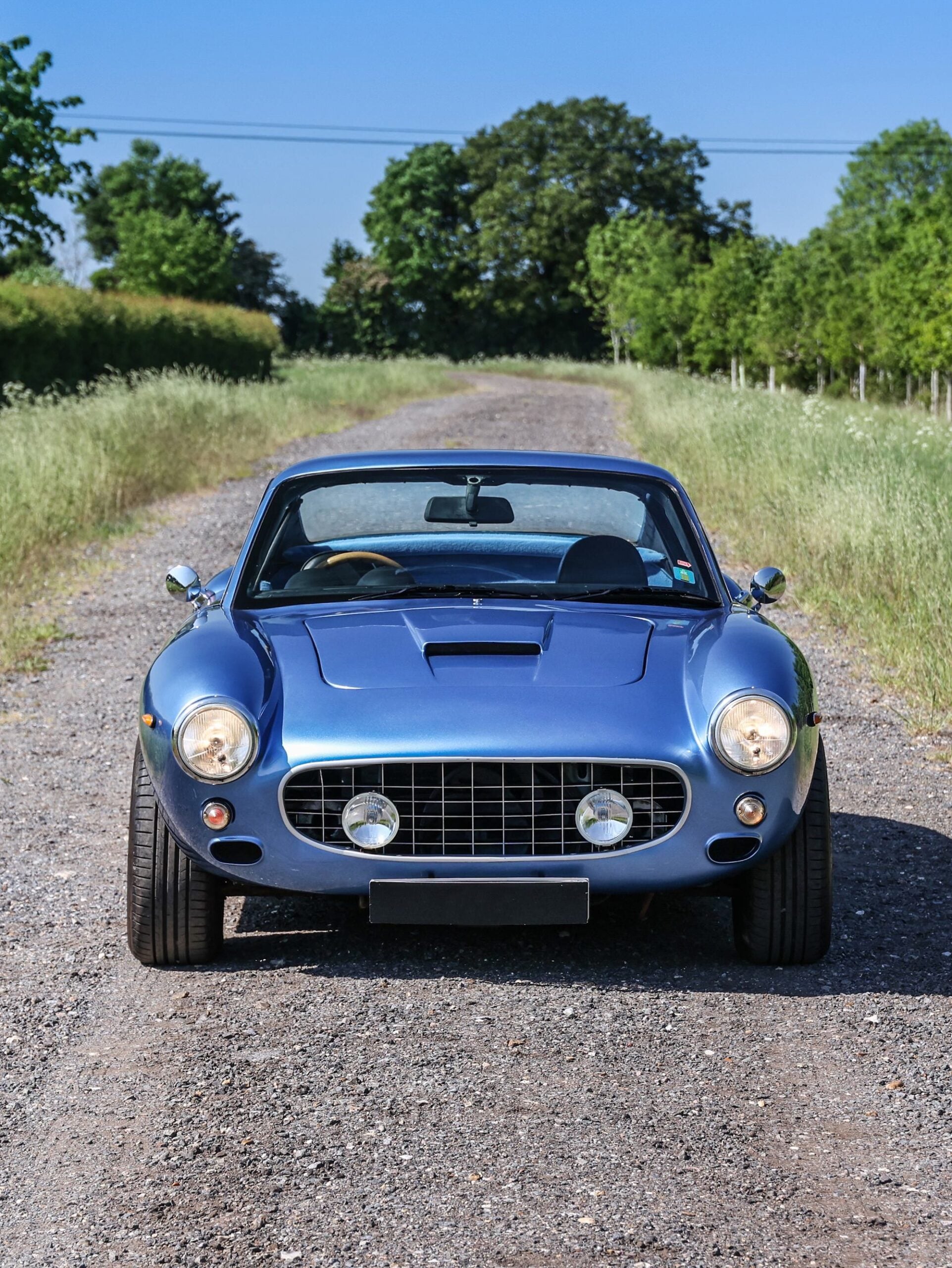
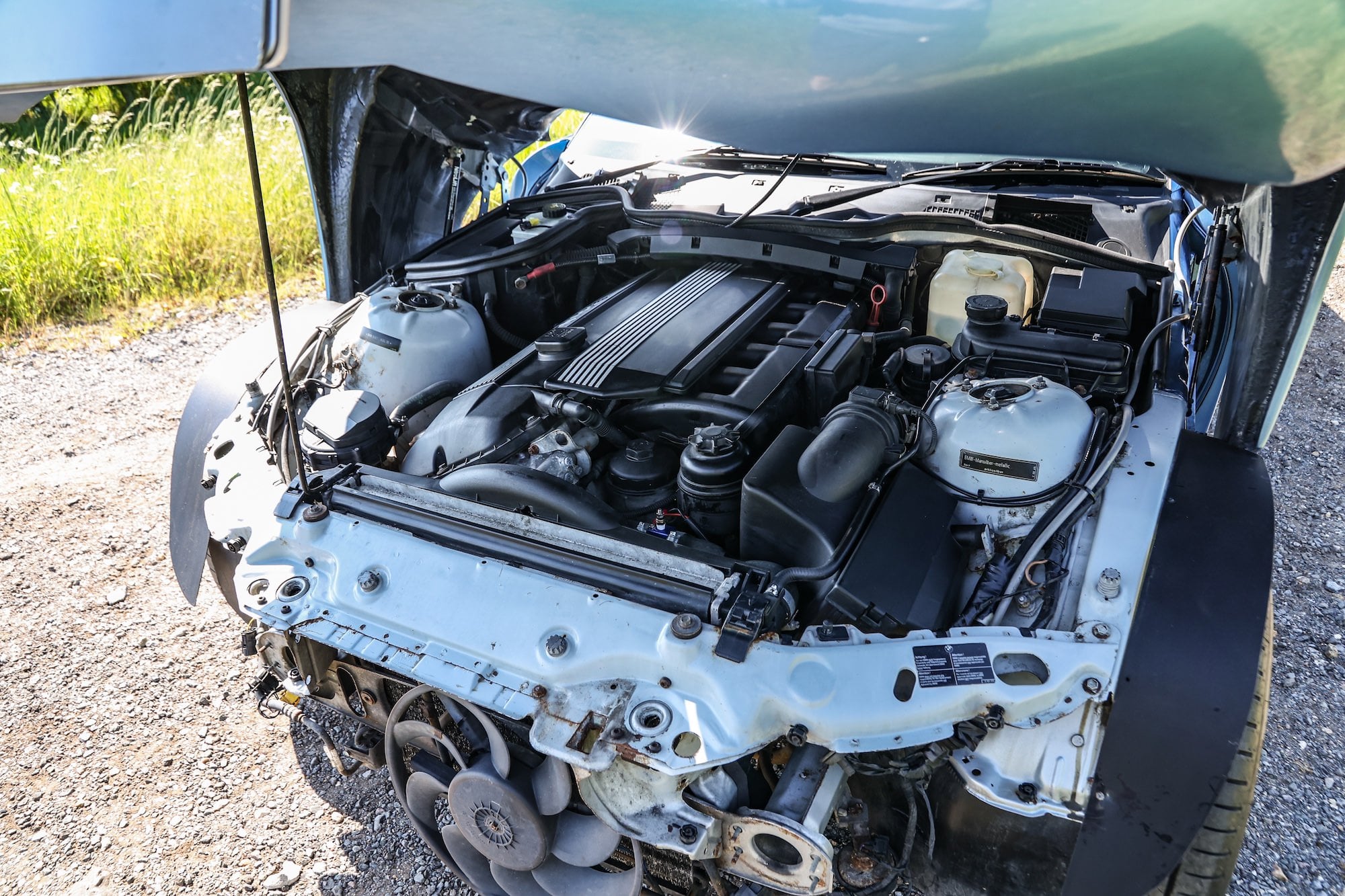
This 250 SWB tribute is based on a 2000 BMW Z3 3.0 Roadster, keeping the BMW’s 3.0 liter straight-six engine, manual transmission, rear-wheel-drive unibody chassis, as well as the air conditioning, and electric windows.
Z3 Roadster production ended on June the 28th, 2002, and the Z4 line started up at Spartanburg that fall. Of the 297,088 Z3s built there, just under 18,000 were coupes. The final roadster, a six-cylinder car finished in Sepia Metallic over Arizona Sun leather, never left – it’s still on display in the plant’s Zentrum museum.
BMW’s gamble that the world was ready for a roadster that sat somewhere above the Miata but still in affordable territory had been correct, and the company has had one in production ever since.
The Custom BMW Z3 Shown Here
This 250 SWB tribute is based on a 2000 BMW Z3 3.0 Roadster, keeping the BMW’s 3.0 liter straight-six engine, manual transmission, rear-wheel-drive unibody chassis, as well as the air conditioning, and electric windows.
The conversion was carried out by an engineer who wanted the appearance of an early-1960s Italian GT while keeping the costs down and having more modern mechanicals and day-to-day usability.
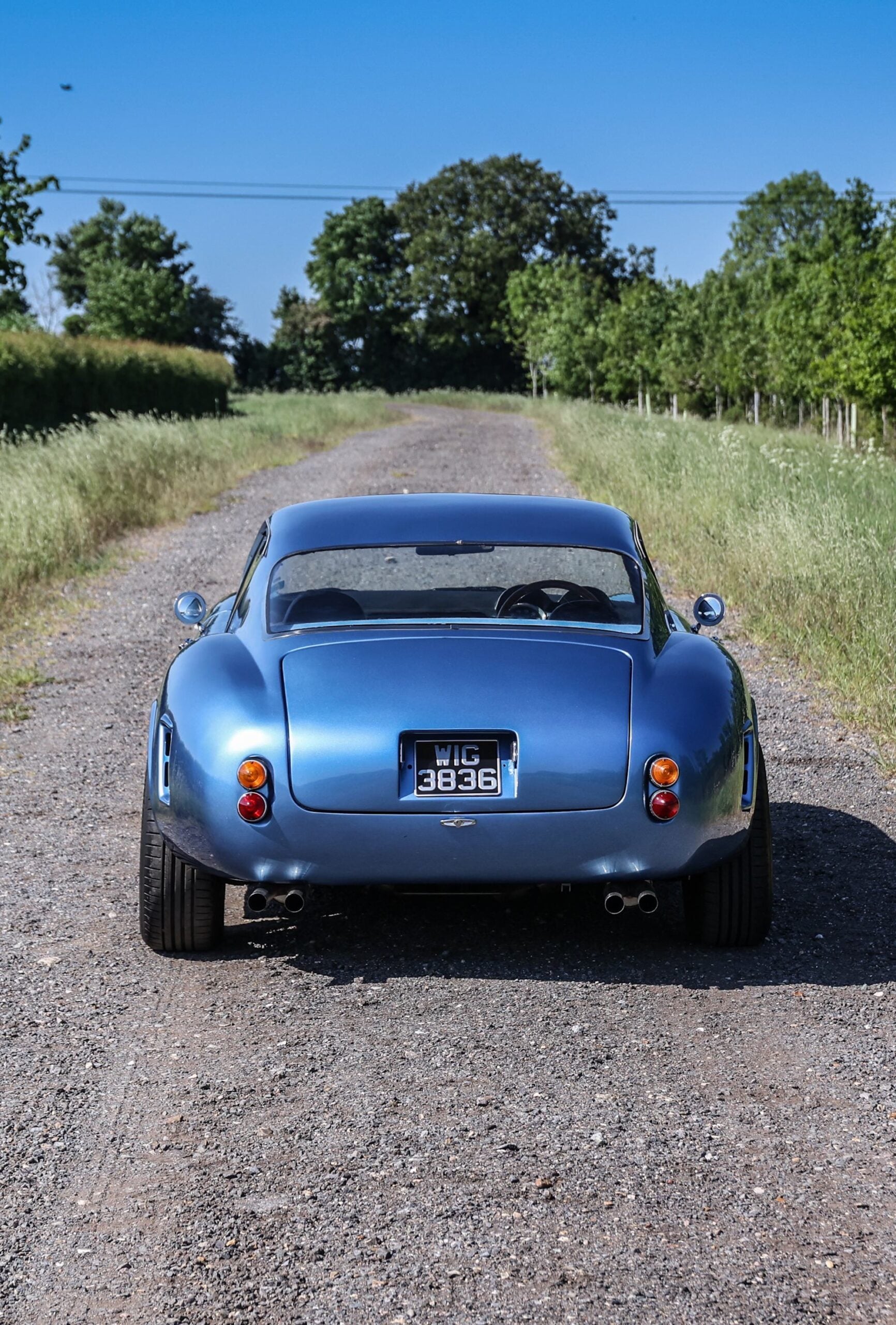
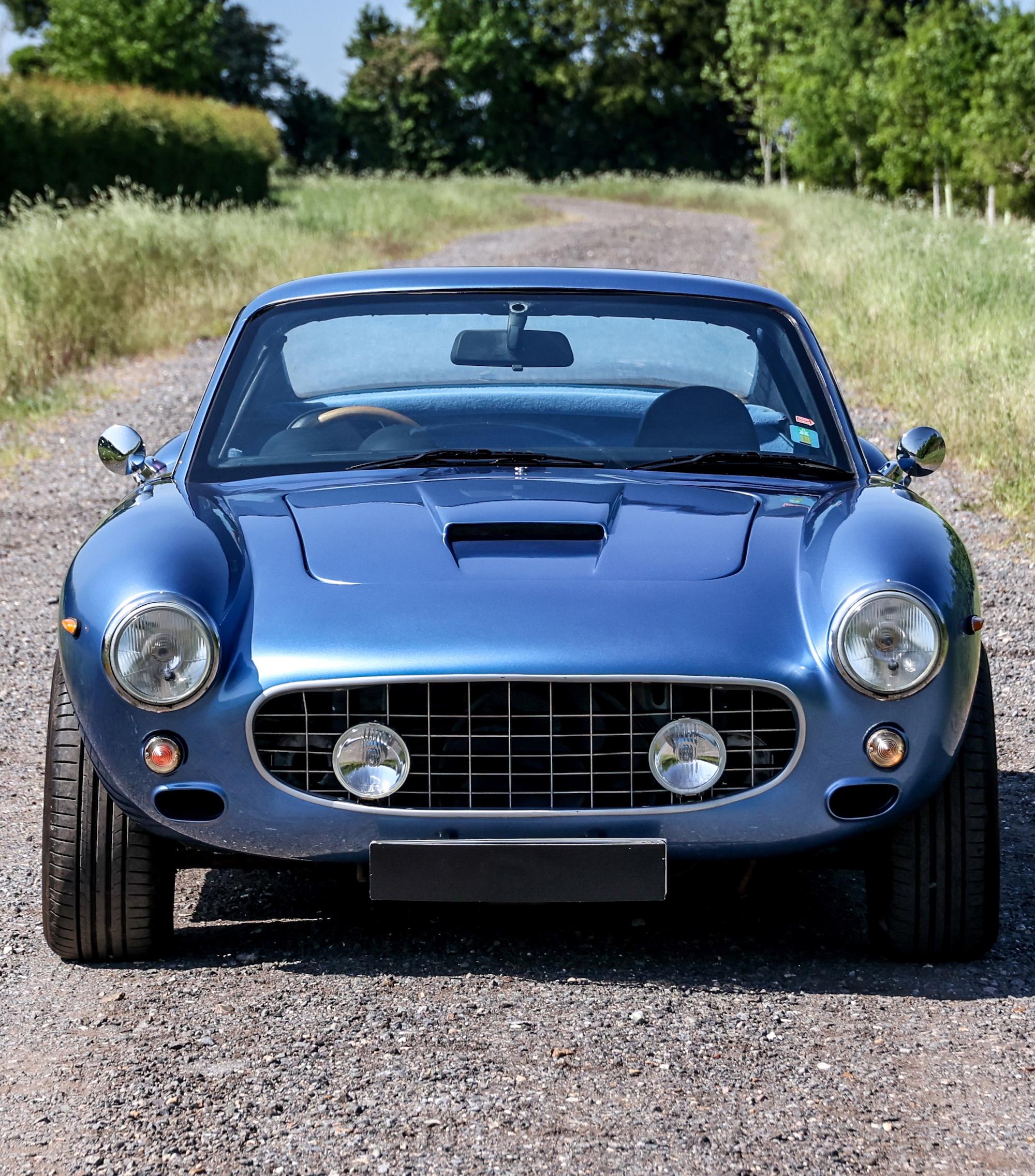
Fiberglass bodywork from Tribute Automotive was fitted to the Z3, including a new hood, boot lid, wings, and a substantially revised roofline – all intended to give the car the proportions of the 250 GT SWB that inspired it. The completed body was painted Azzurro California Blue and fitted with a traditional front grille, auxiliary driving lamps, period-style door handles, and wire wheels with knock-off-style spinners.
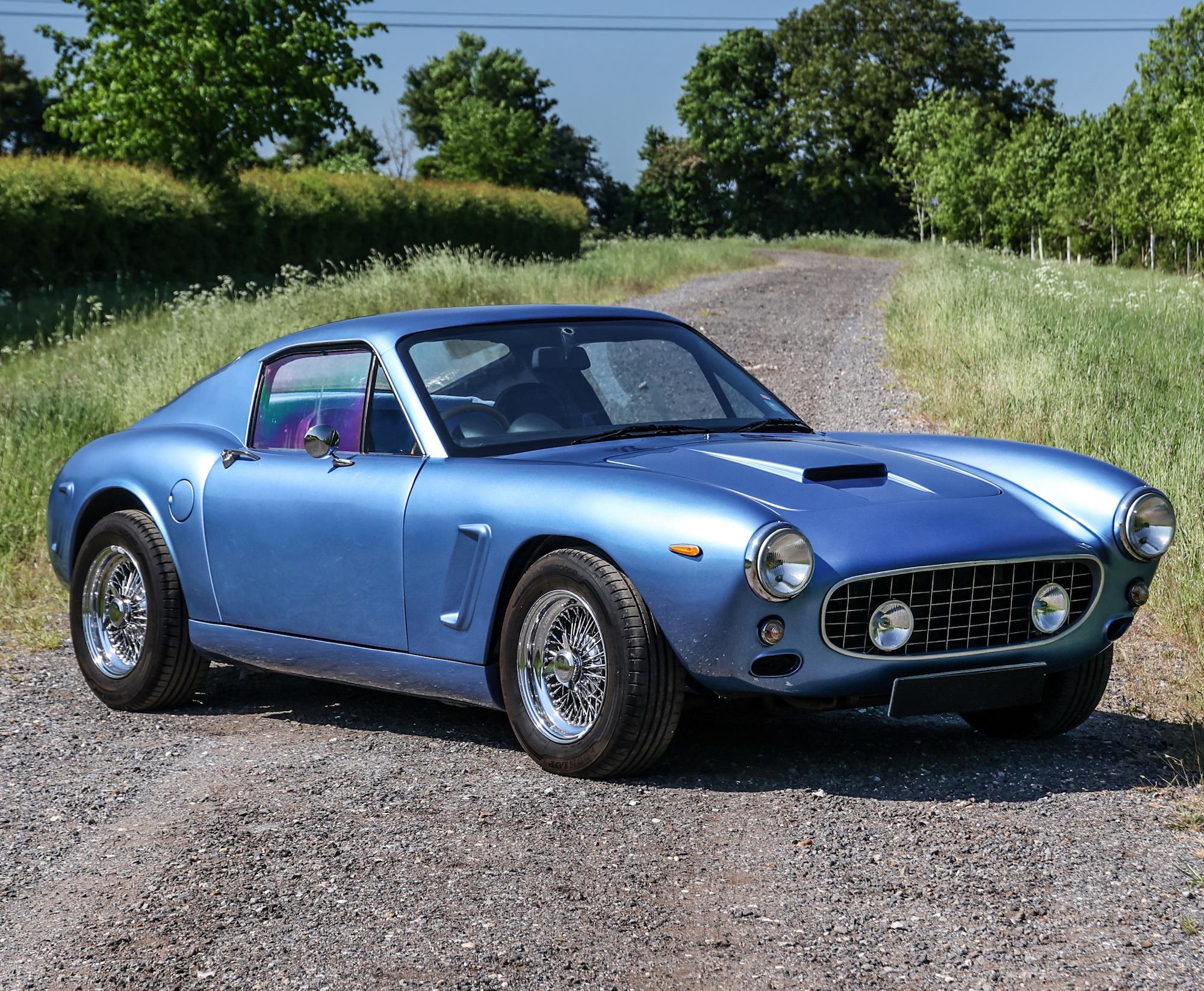
The conversion was carried out by an engineer who wanted the appearance of an early-1960s Italian GT while keeping the costs down and having more modern mechanicals and day-to-day usability.
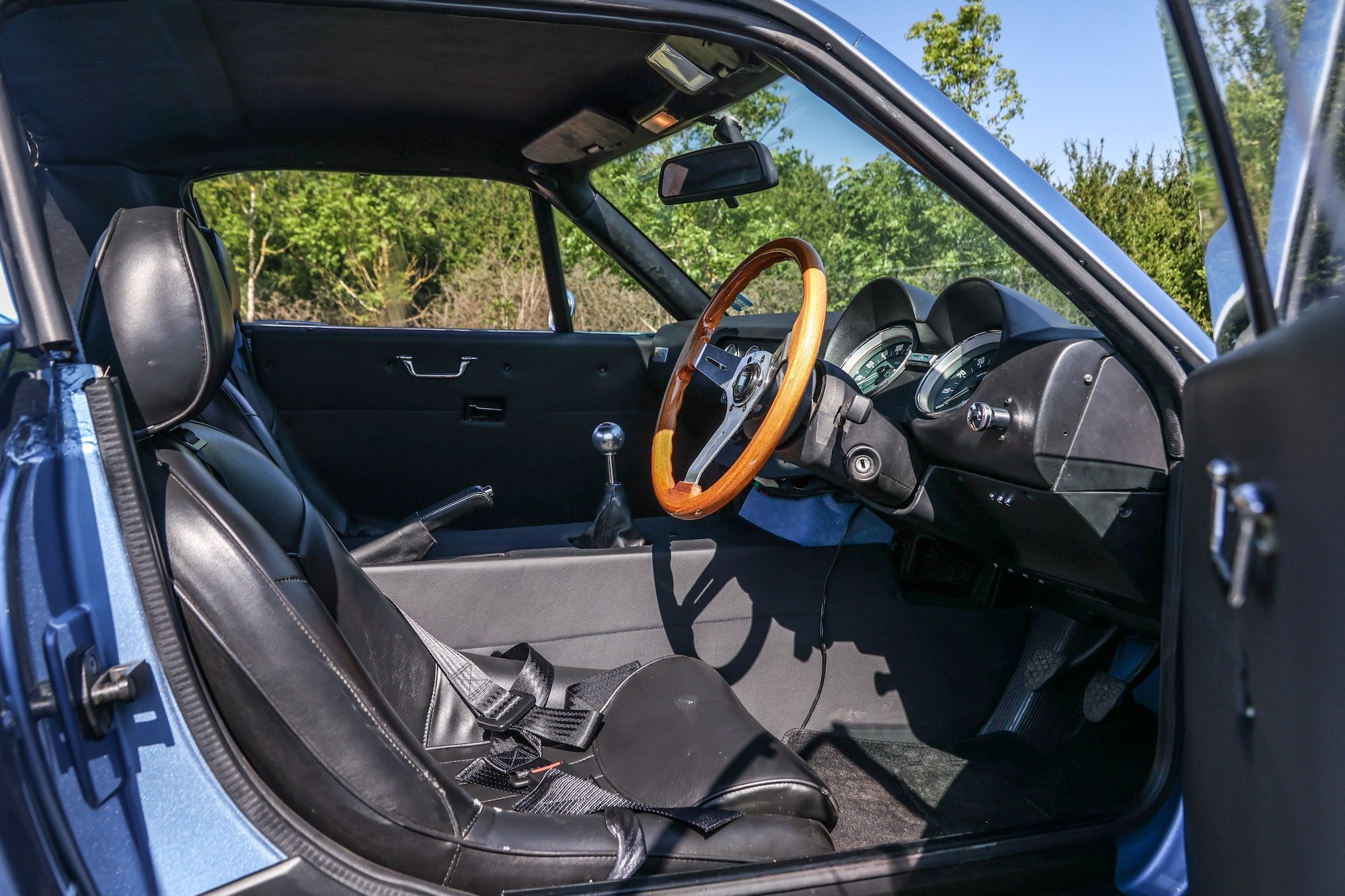
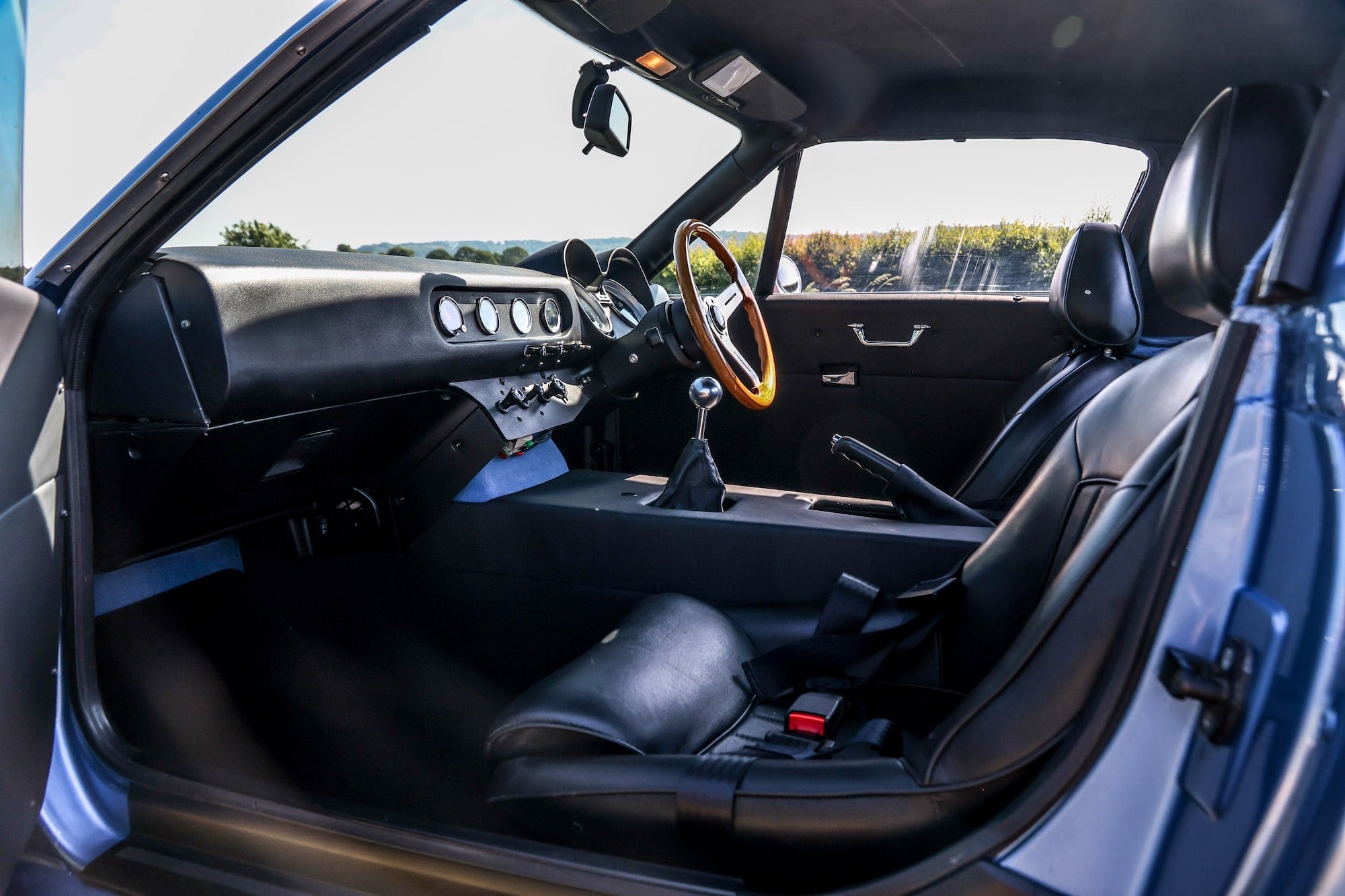
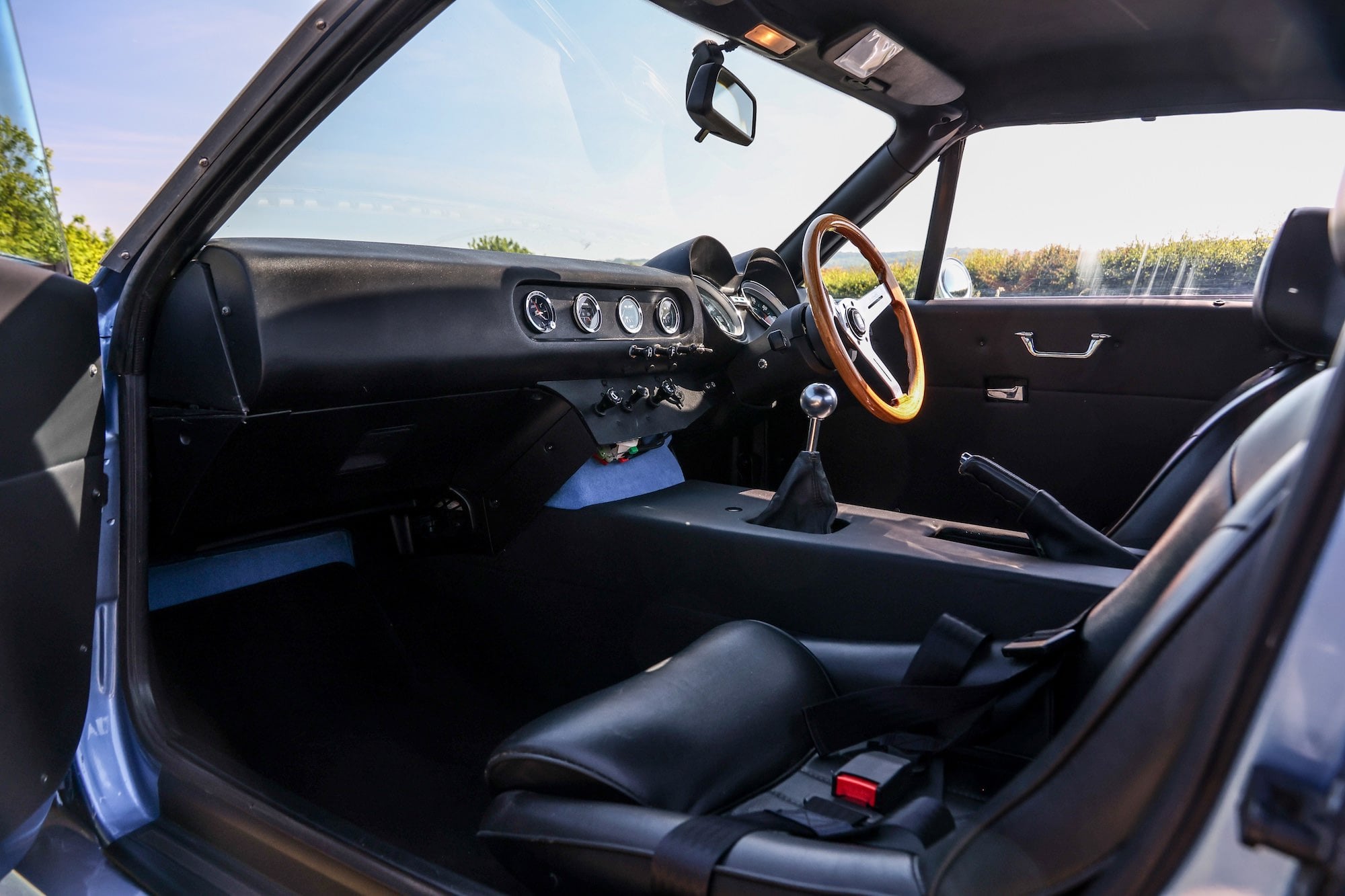
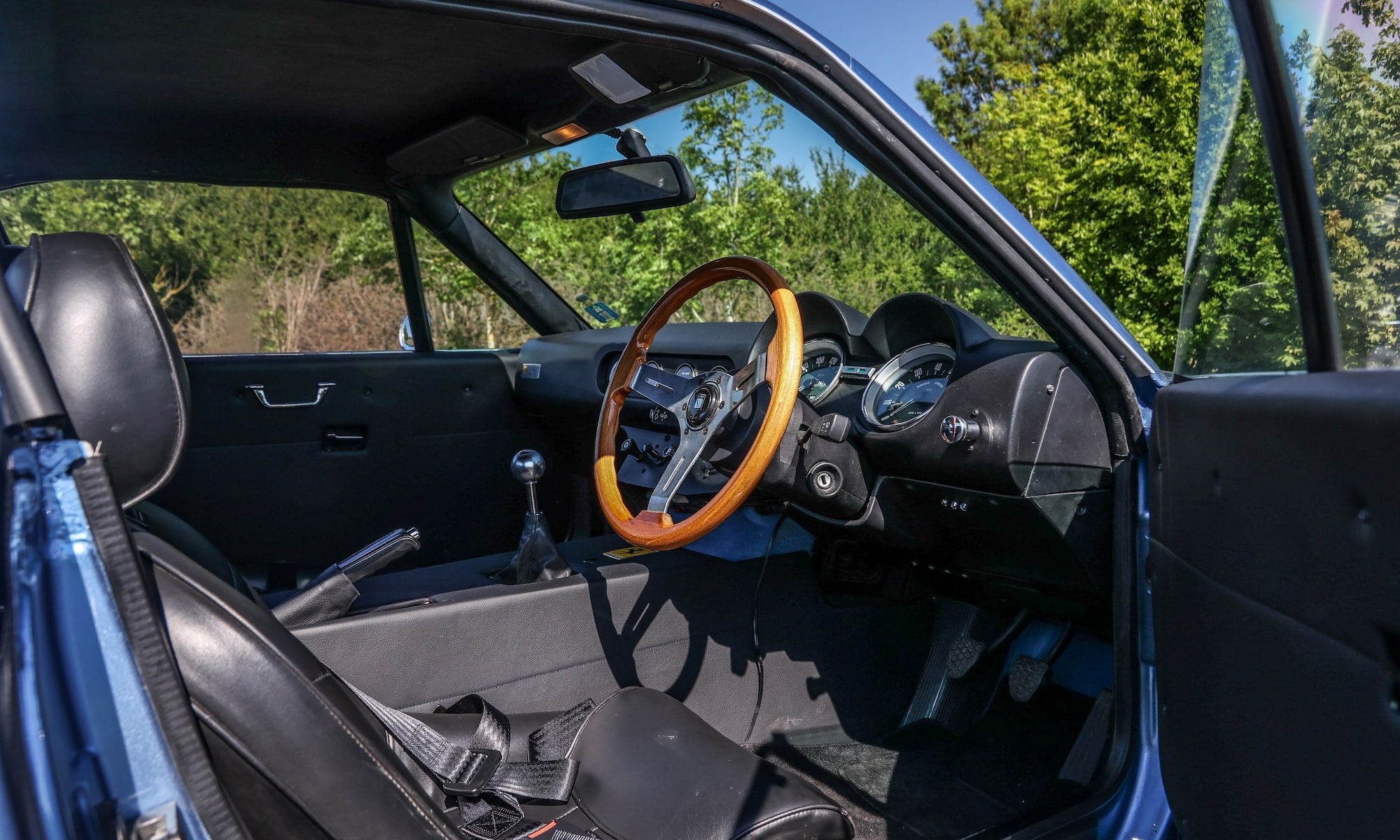
Inside, the dashboard was reworked and rewired to accept Veglia-style instruments, while black leather upholstery and a Nardi steering wheel were added to help it all look more period correct. The conversion also included mechanical and electrical work to match.
It’s now due to roll across the auction block with Historics Auctioneers in mid-September and you can visit the listing here if you’d like to read more about it or register to bid.
Images courtesy of Historics Auctioneers

Articles that Ben Branch has written have been covered on CNN, Popular Mechanics, Smithsonian Magazine, Road & Track Magazine, the official Pinterest blog, the official eBay Motors blog, BuzzFeed, Autoweek Magazine, Wired Magazine, Autoblog, Gear Patrol, Jalopnik, The Verge, and many more.
Silodrome was founded by Ben back in 2010, in the years since the site has grown to become a world leader in the alternative and vintage motoring sector, with well over a million monthly readers from around the world and many hundreds of thousands of followers on social media.