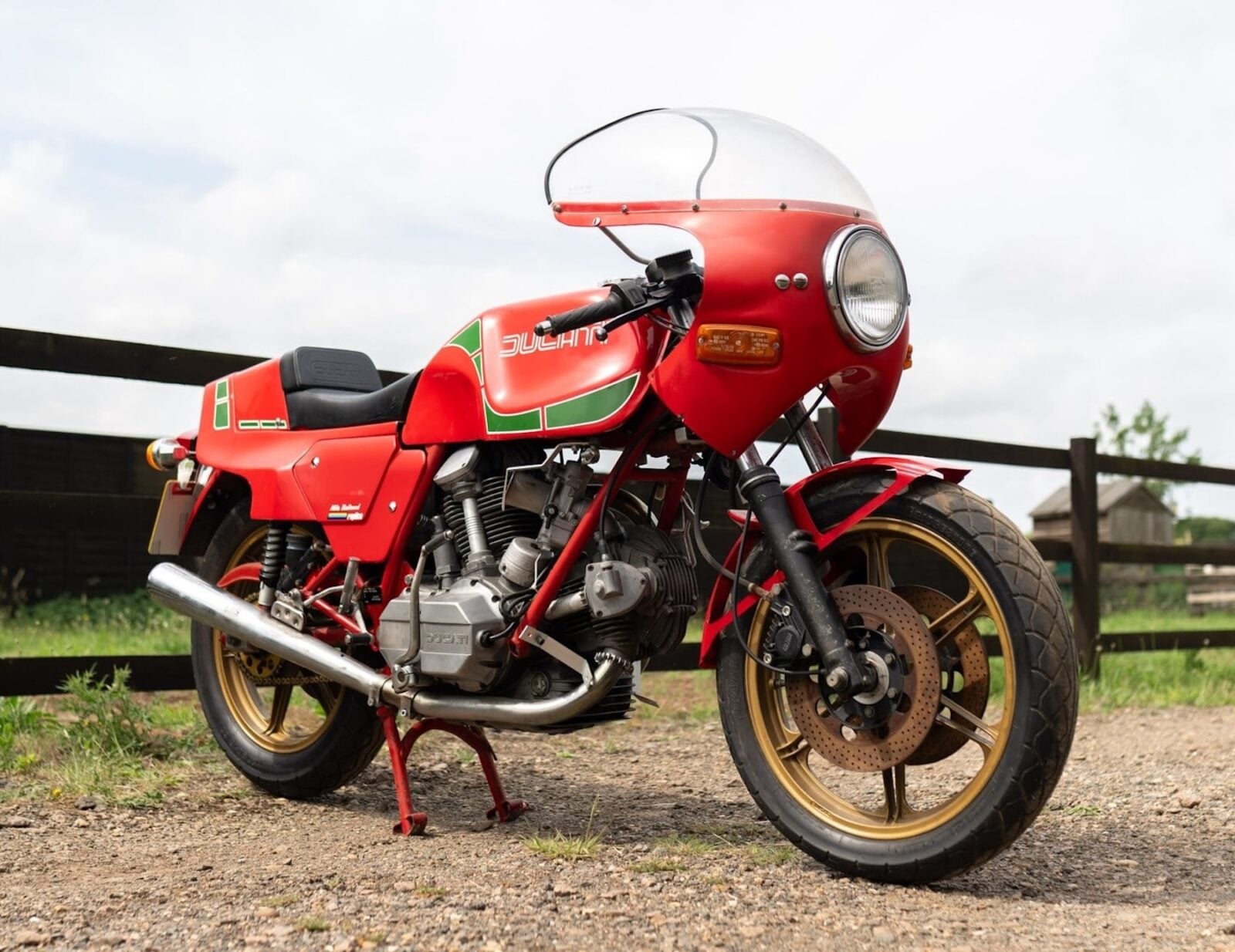
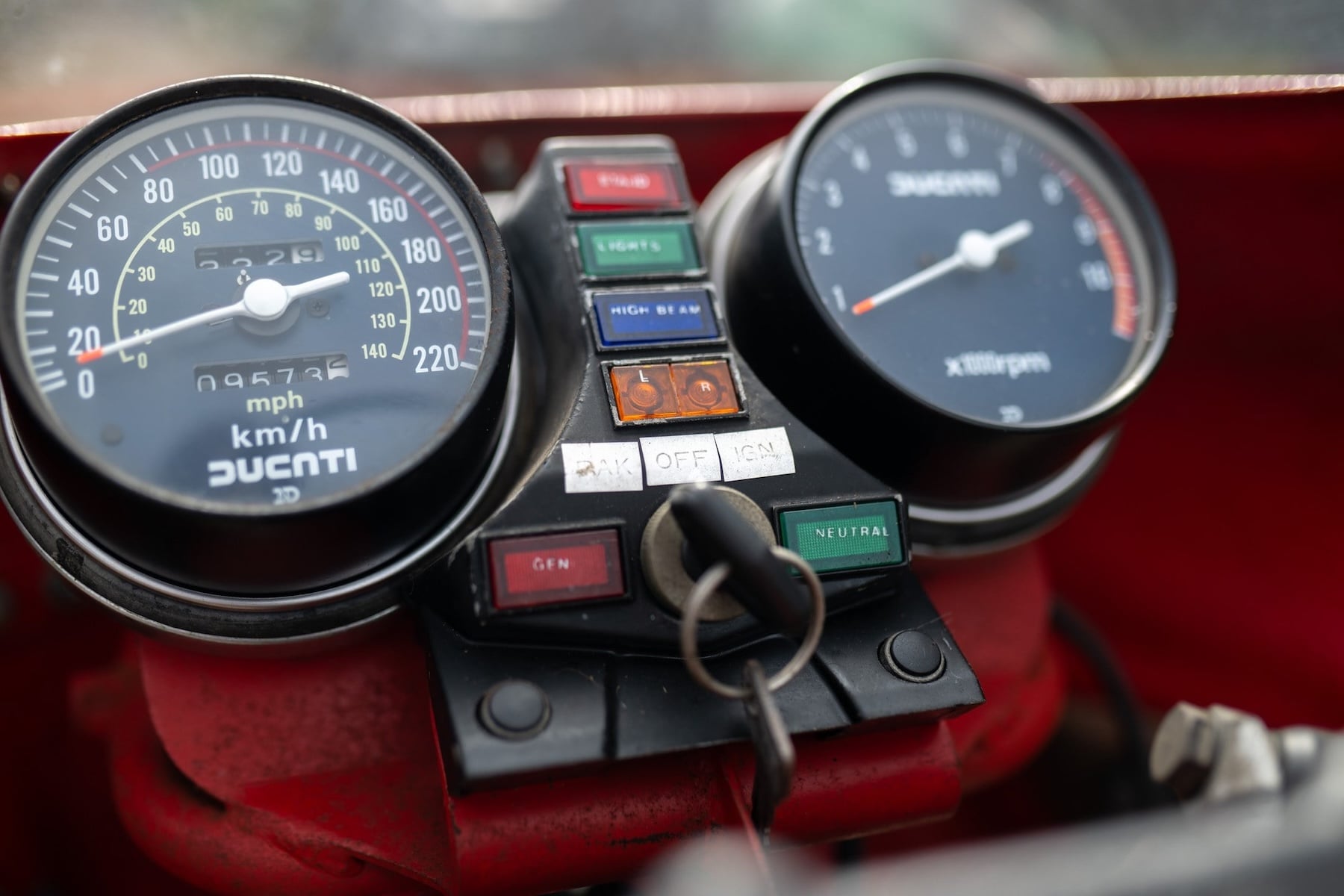
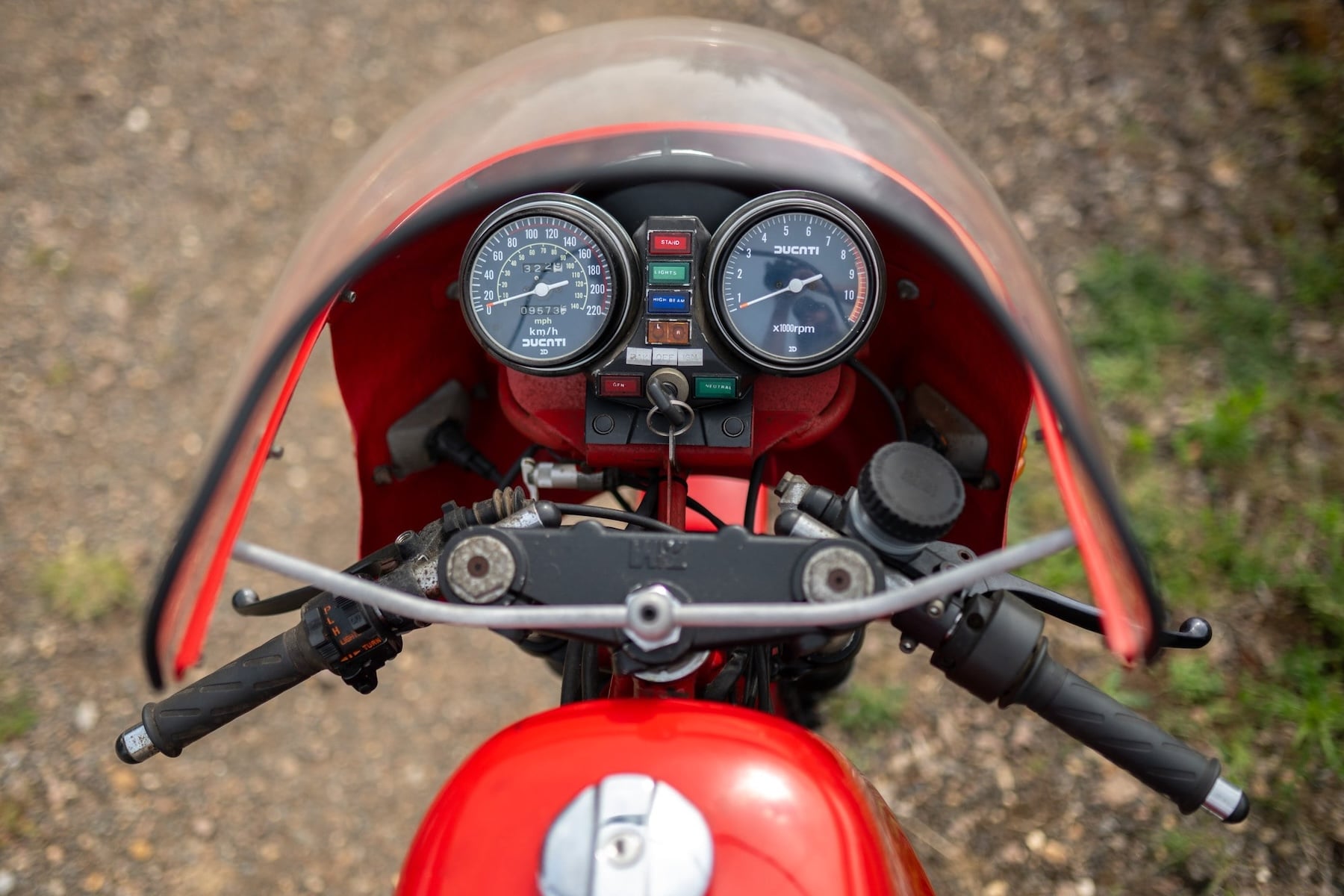
This is an original 1983 Ducati MHR 900 that was part of a private Japanese collection for many years – resulting in it having a remarkably low mileage, with just 5,948 miles (9,573 kms) on the clock.
The Ducati MHR 900 is one of the best-loved Ducatis of its time and it’s not hard to see why, it’s a race replica built around the popular Ducati 900SS model with a series of upgrades and that eye-catching Mike Hailwood fairing.
Above Video: This is a short film about Mike Hailwood’s incredible 1978 Isle of Man TT race, one of the greatest comebacks in motorsport history.
History Speedrun: The Ducati MHR 900
The Ducati MHR 900 “Mike Hailwood Replica” was a road bike built to sell on the strength of just a single race result. It hit the British market in the second half of 1979, about 15 months after Mike Hailwood won the Formula 1 TT at the Isle of Man on a Ducati, and it then promptly went on to outsell every other bevel-drive twin the company had ever made. Some say it’s the bike that saved Ducati.
Hailwood’s Incredible 1978 TT
Hailwood hadn’t raced at the Isle of Man since 1967, he had spent the intervening years racing cars, including 50 Grand Prix entries, but he stopped after a heavy crash at the Nürburgring in 1974.
The route back to two wheels ran through Steve Wynne, who owned Sports Motorcycles in Manchester. Wynne had entered Roger Nicholls on a Ducati in the first TT Formula 1 race in 1977 and lost to Phil Read’s works Honda after officials shortened the race in bad weather.
For 1978 he arranged three specially built 900s from Ducati – two on behalf of his motorcycle dealership, which he paid for himself, and a third bought by the Australian backers of Hailwood’s friend Jim Scaysbrook. Hailwood signed to ride one of the dealership’s machines.
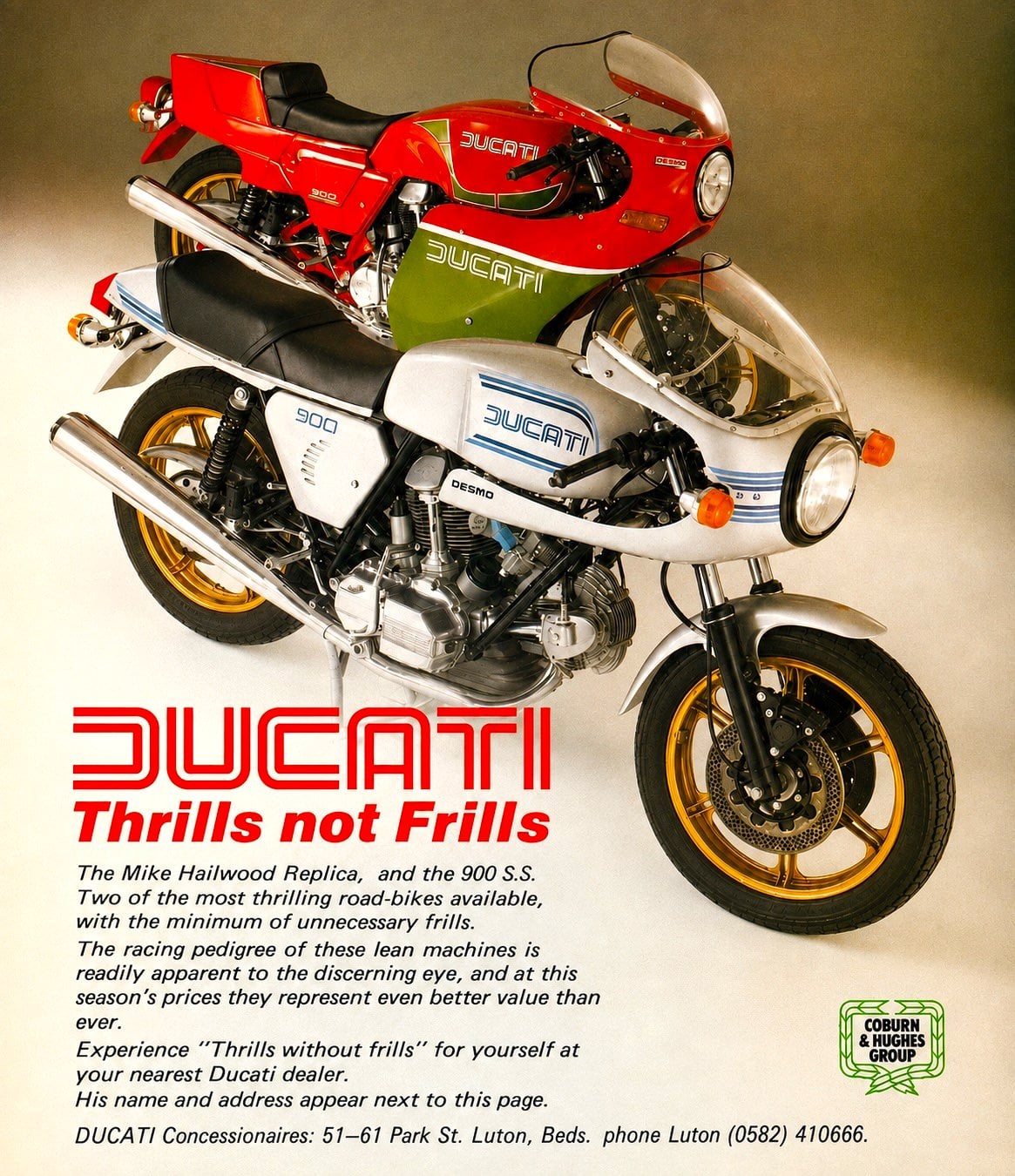
 The Ducati MHR 900 is one of the best-loved Ducatis of its time and it’s not hard to see why, it’s a race replica built around the popular Ducati 900SS model with a series of upgrades and that eye-catching Mike Hailwood fairing. Image courtesy of Ducati.
These bikes were not production 900 Super Sports – they were assembled by NCR, the Bologna outfit founded by Nepoti, Caracchi and Rizzi, which built race bikes from factory parts in lighter frames. Wynne described the machine to journalists as a modified 900SS anyway, since he was in the business of selling production motorcycles, and the factory-stock 900SS was a decent seller.
Hailwood, then 38 years of age, led the six-lap race from the start and caught Read on the road. Read’s Honda retired on the 5th lap. Hailwood won at an average of 108.51 mph, set a class lap record of 110.62 mph, and finished close to two minutes clear of John Williams on the other works Honda. The win also took the 1978 TT F1 world title. It was his 13th TT victory – the 14th and last came the following year in the Senior, on a Suzuki.
A Race Replica – From 20 Paces
Ducati was operating under VM Motori within the Finmeccanica group at the time, and spending decisions ran through a team of humorless bean counters in Rome. Production in 1979 shrank to just 3,500 machines and Ducati was clearly in a financial pickle.
A road-going replica of Hailwood’s bike was the obvious response, as it would likely drive sales and help fatten the now rather slender Ducati pocketbook, but it still took more than a year to arrive once all the approvals had been attained.
Ducati marque specialist Ian Falloon has called it a cosmetic adaptation of the 900 Super Sport, and that’s inarguably the most accurate way of looking at it.
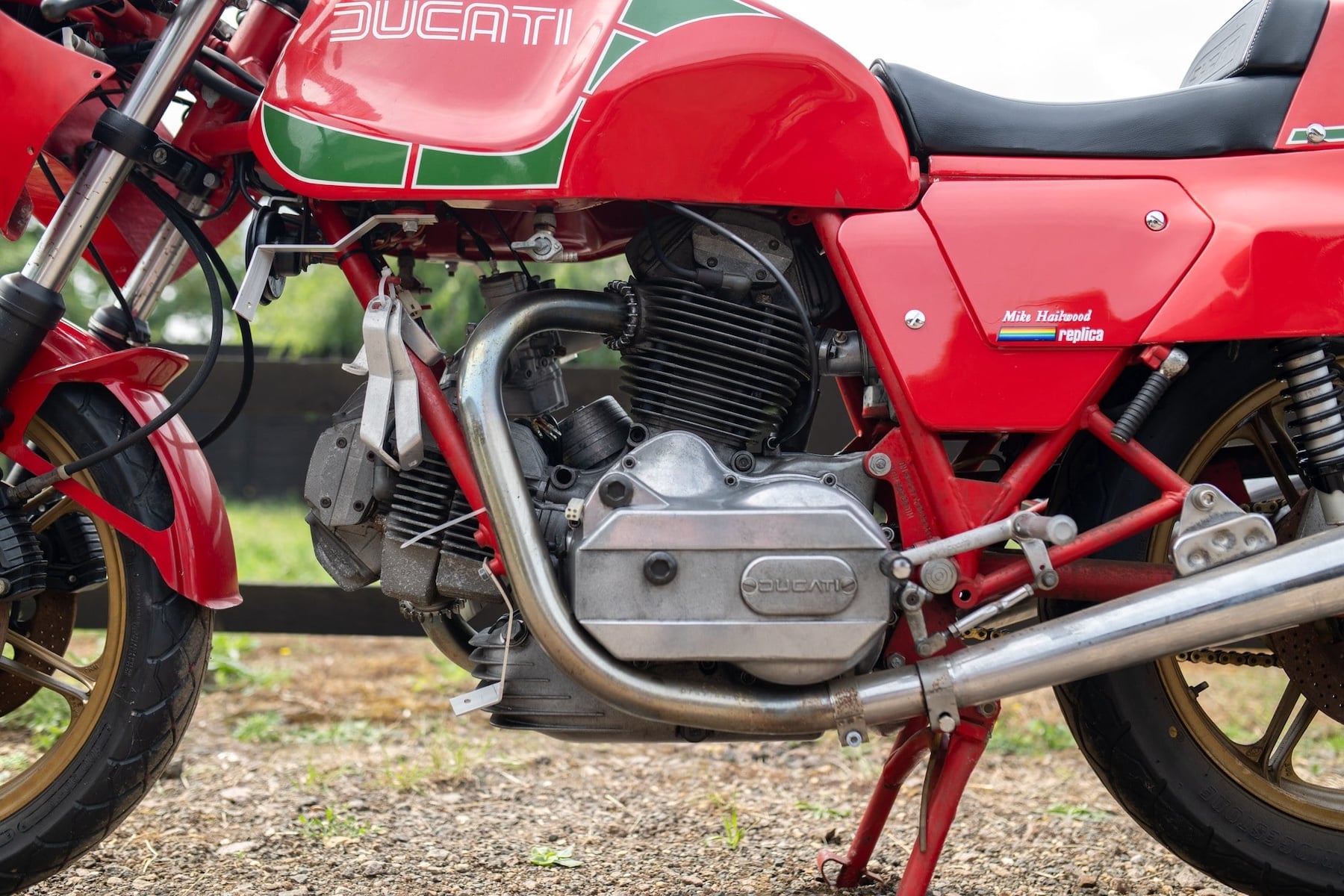
The engine was the standard 863.9cc air-cooled 90º L-twin, 86 x 74.4mm bore and stroke, with a 9.5:1 compression ratio, with a single overhead cam per cylinder driven by shafts and bevel gears and desmodromic valve gear, that famously closes the valves mechanically through a second set of rockers instead of relying on springs.
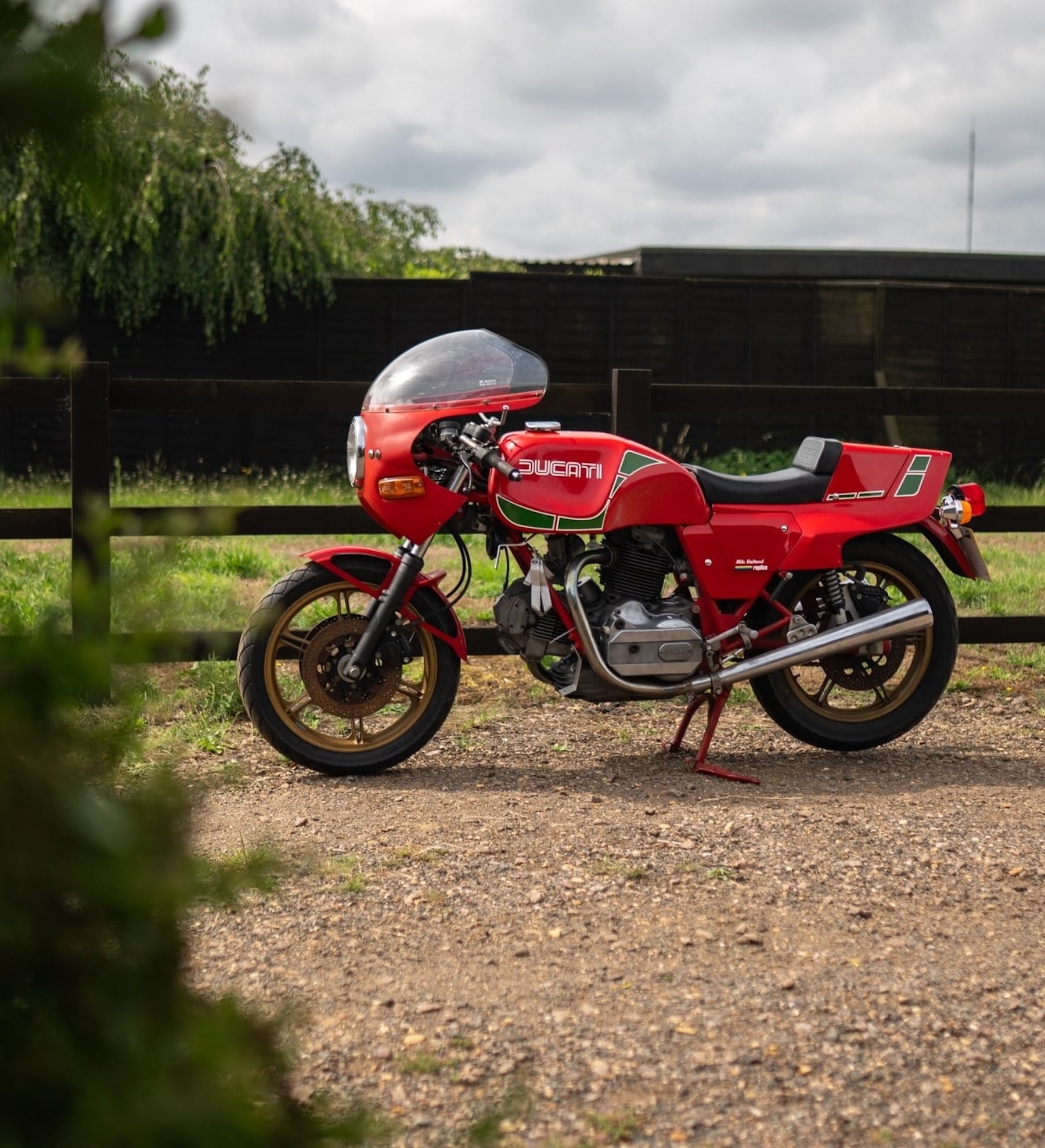
This is an original 1983 Ducati MHR 900 that was part of a private Japanese collection for many years – resulting in it having a remarkably low mileage, just 5,948 miles (9,573 kms).
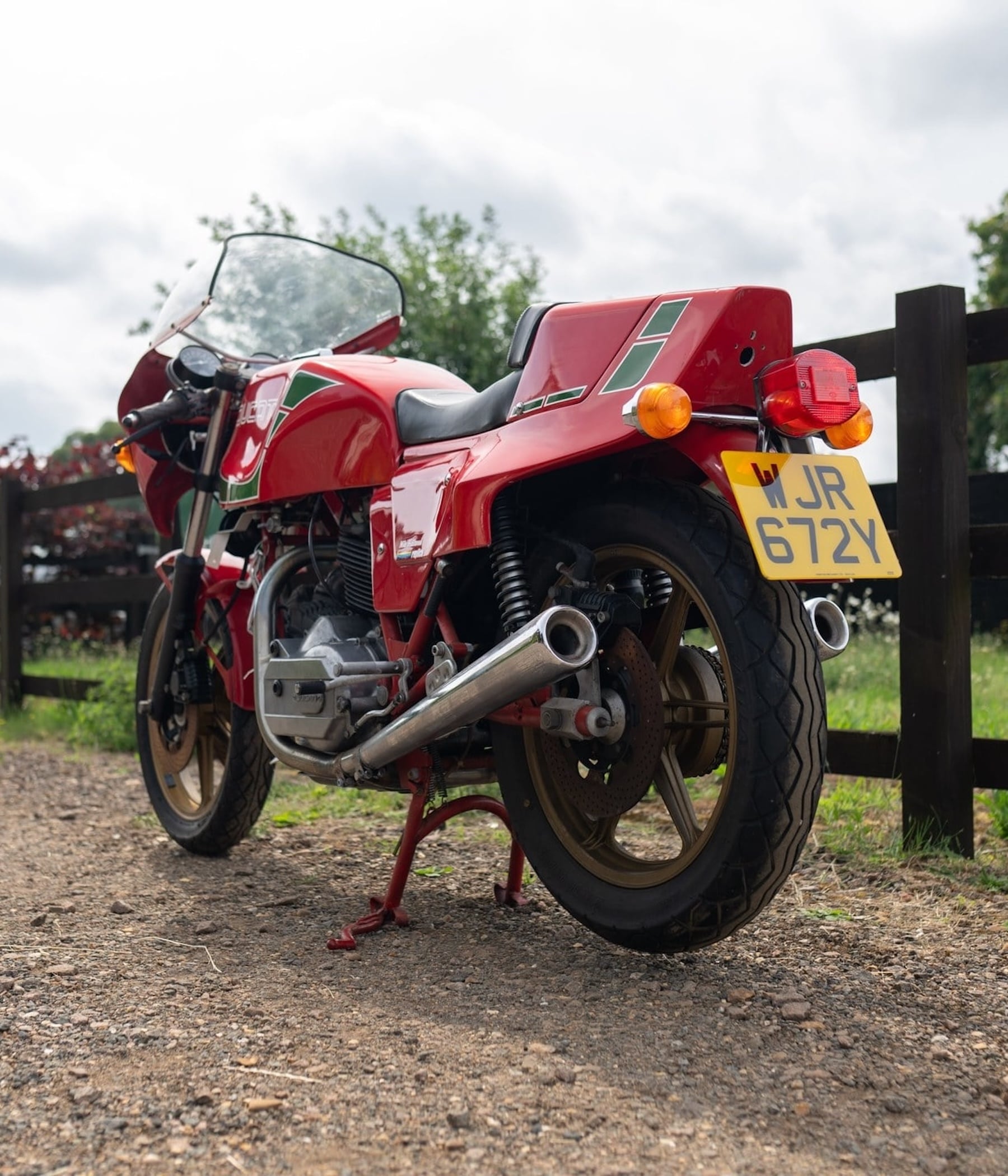
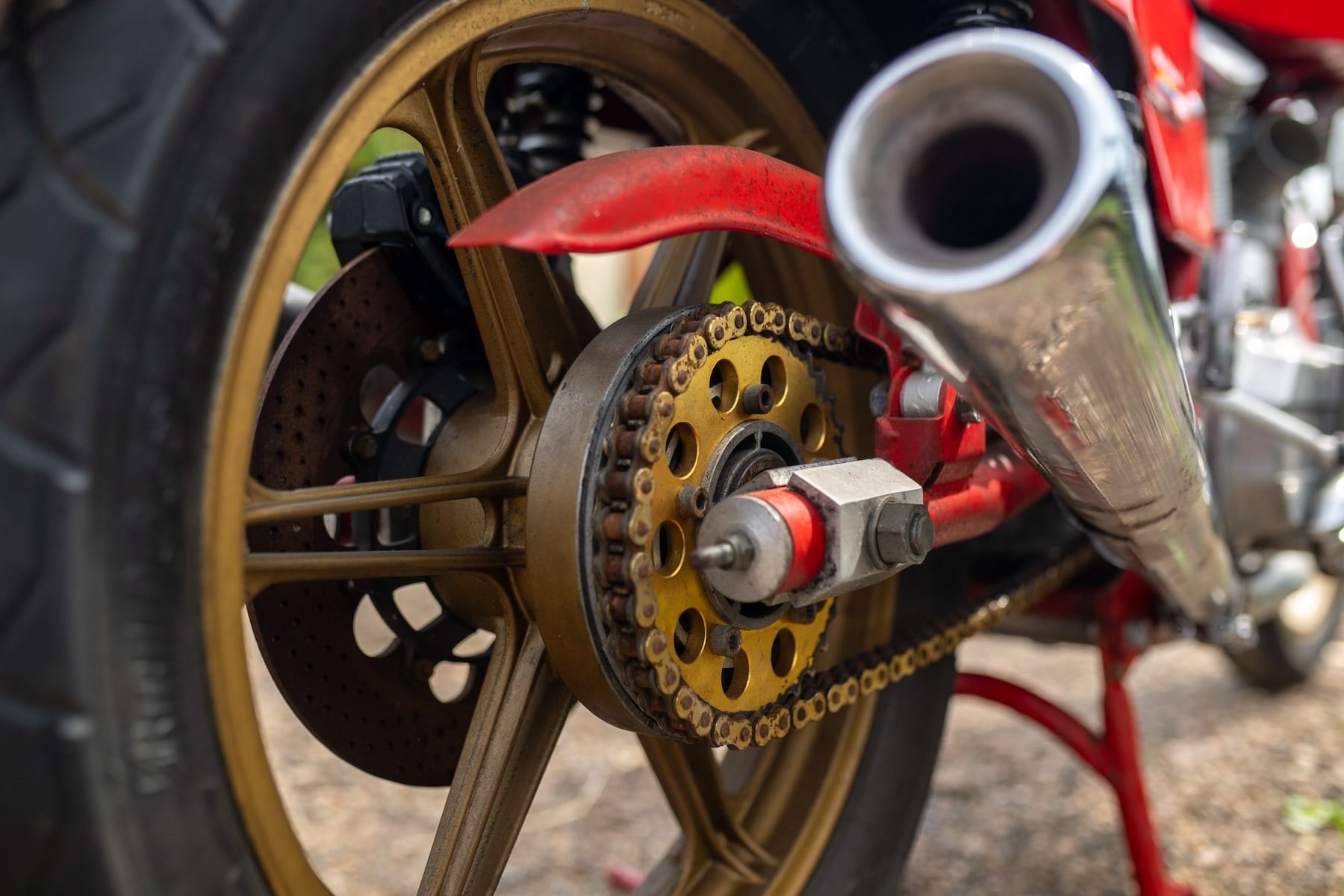
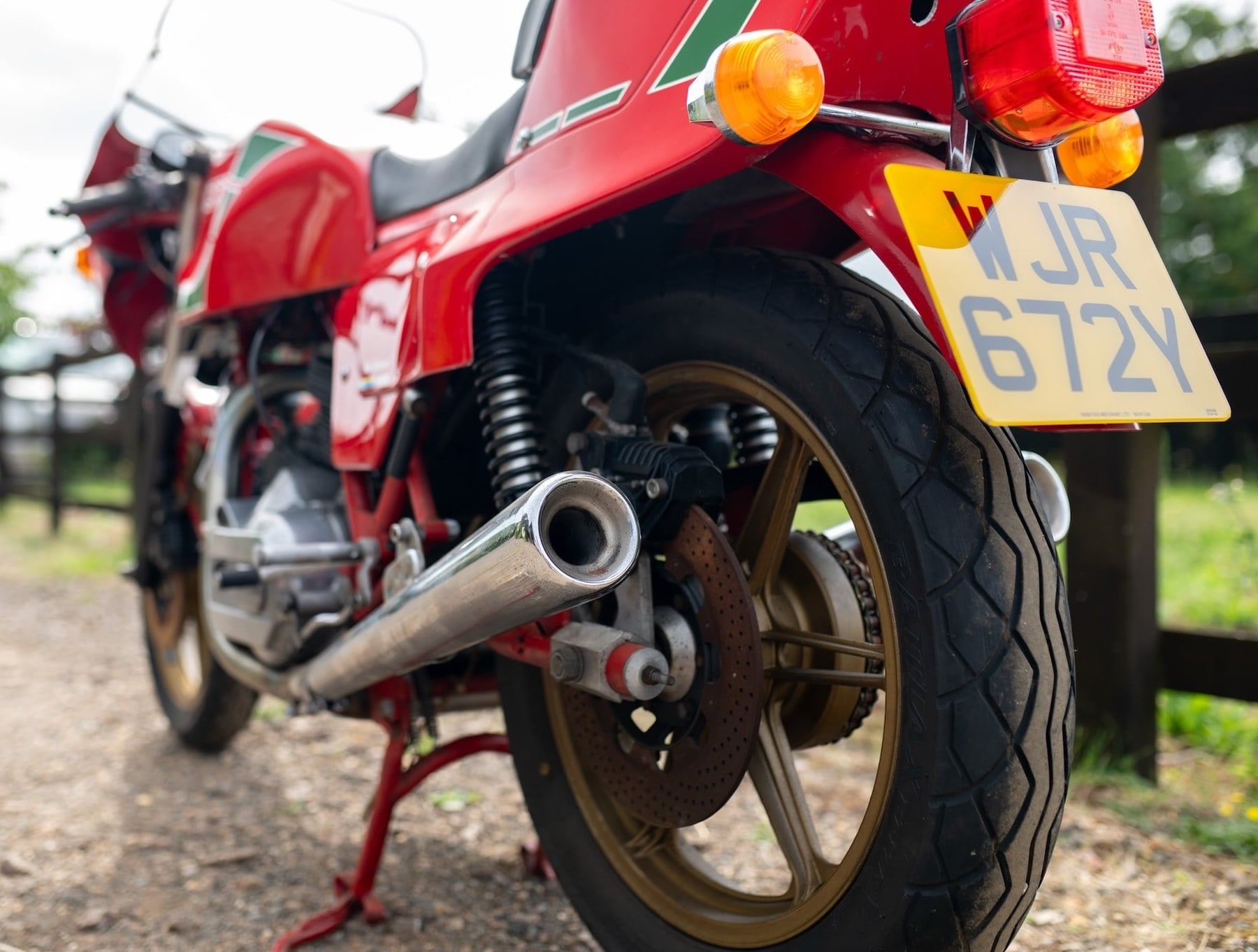
Power was sent back through a 5-speed gearbox to the rear wheel via a chain final drive. What set it apart from the Super Sport was mostly its bodywork, plus 40mm Dell’Orto PHM carburetors with no chokes or air filters, running open plastic bellmouths that carried wire-gauze screens, and it had a handsome pair of nice-sounding Conti mufflers.
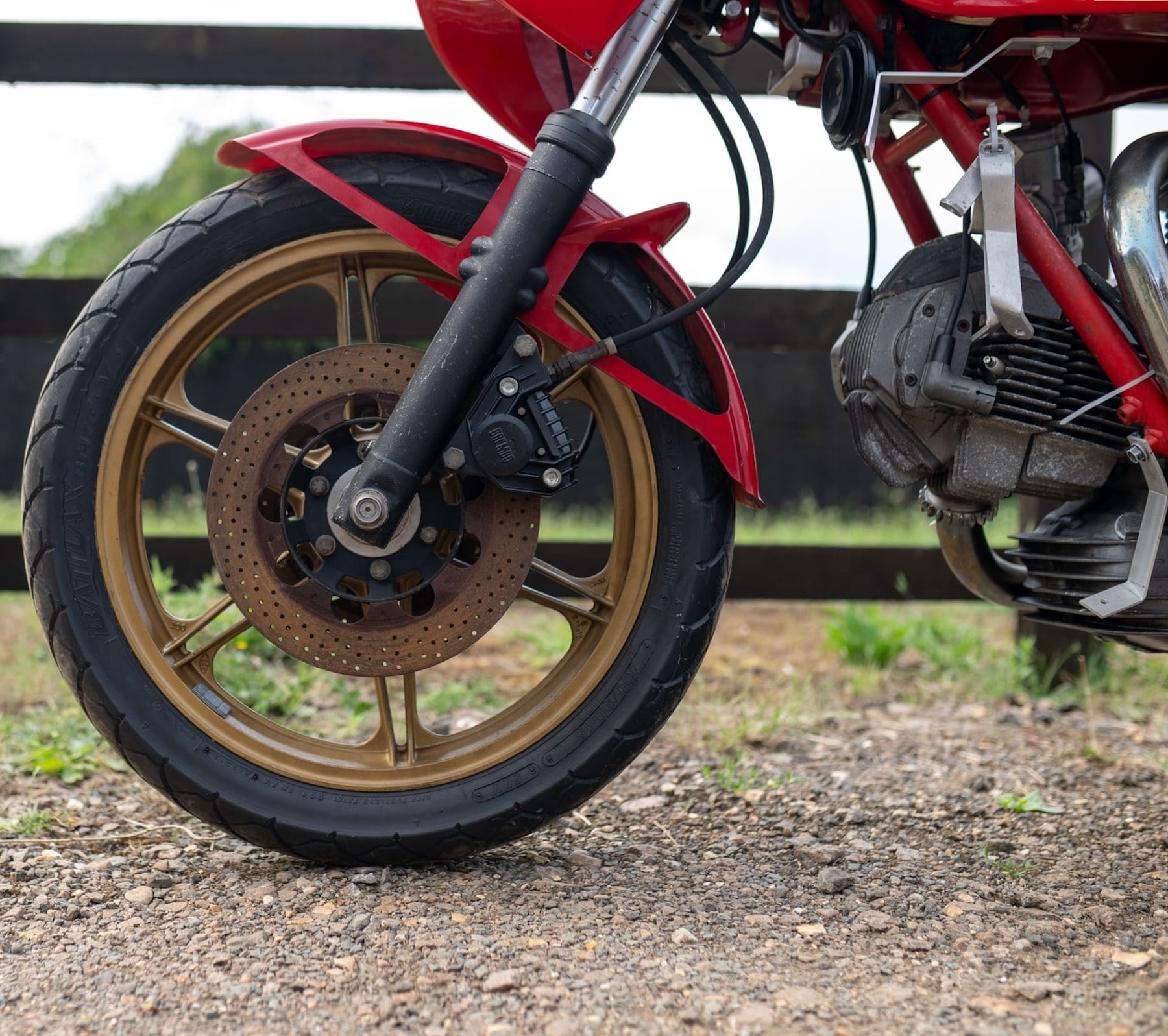
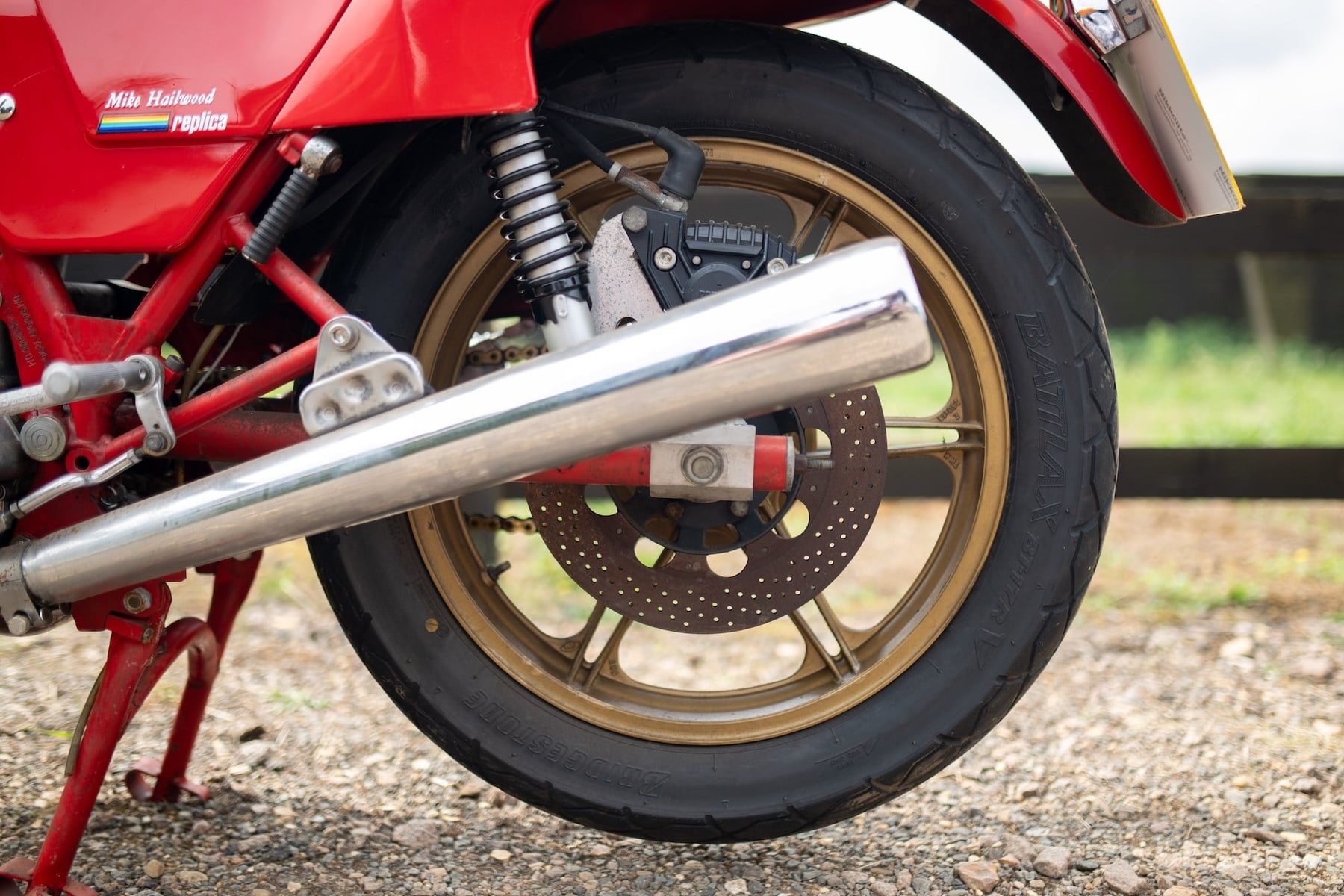
The frame was the same Verlicchi item the Super Sport used, Brembo Gold Line calipers were fitted over 280mm drilled discs, the instruments came from the Darmah, and the Marzocchi shocks were 20mm longer than standard at 330mm to buy a little ground clearance.
Nobody quite agrees on how much power it made. Falloon records 80 bhp at 7,000 rpm for the earliest bikes and 72 bhp at 7,500 rpm for later ones, while Robert Smith gives a claimed 63 bhp for the early MHR and 72 bhp by 1984. Ducati factory literature claimed a top speed of 137 mph, but a period Motor Cycle Weekly test recorded 129 mph.
Development Through To 1984
It’s generally thought that 747 MHR 900s were built across 1979 and 1980. There were some complaints about how hard it was to get the one-piece fiberglass fairing off, which was required to service the engine of course, but this would soon be addressed.
The revised MHR 900 was first shown at Bologna in November of 1980 and it fixed the worst of the complaints. The fairing became a two-piece assembly on Dzus fasteners, side covers hid the battery and rear carburetor, the carburetors gained chokes, and gold FPS wheels became standard. Official 1981 production numbers claim 1,500 units, and the 1982 bikes got slightly longer forks with reduced travel.
1,500 bikes may not sound like much from a major manufacturer, but for Ducati at the time, it was transformative. It brought in significant cash flow that the company sorely needed, and it helped quieten those ever-present accountants.
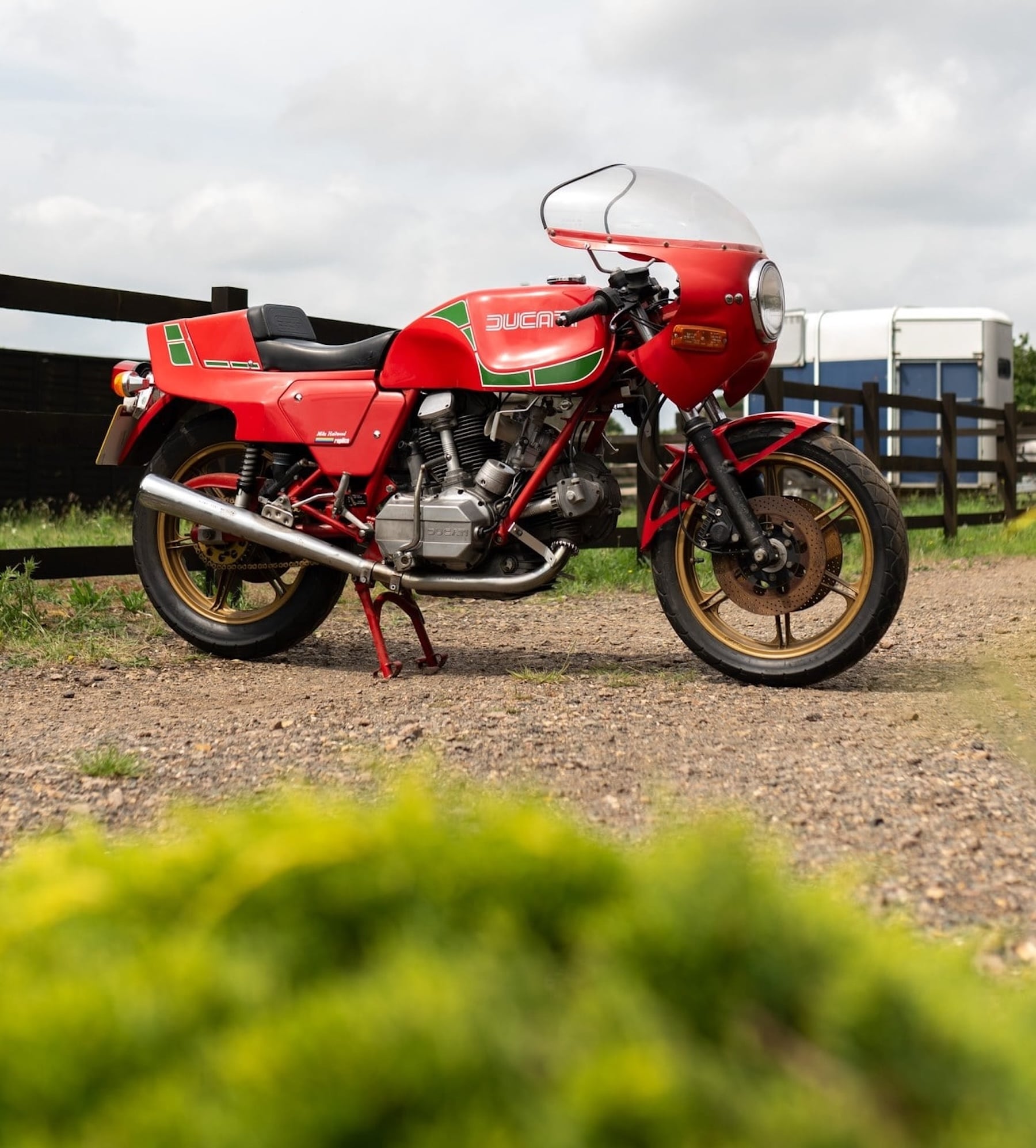
This 1983 Ducati 900 Mike Hailwood Replica spent most of its life in a private collection in Japan before being imported to the UK, where it’s been registered since April of 2026. That history is the likely explanation for its unmodified, factory-standard condition, and it also accounts for the low mileage of just 5,948 miles (9,573 kms).
Around 800 were built for 1983, still with kickstart-only, but electric start arrived on the revised 1984-model MHR 900, introduced around the end of 1983 with a dry hydraulically operated clutch and a compact Nippon Denso starter motor, it phased in gradually across most of that year’s production.
The 1984 bikes also moved onto the heavier 900 S2 chassis, with a narrower fairing split horizontally into red and green halves divided by a white stripe, gold Oscam wheels, and the brake calipers behind the fork legs. Of the 1,965 motorcycles Ducati built in 1984, 1,728 were Hailwood Replicas. The company would have been unlikely to survive without it.
The Mille And The End Of The Line
The last version of the MHR 900 was the Mille of 1984. The displacement rose to 973cc on an 88 x 80mm bore and stroke, with Nikasil-plated bores and it came with a reworked gearbox. The real change was at the bottom end, where a fully pressurized oil system with a full-flow filter let Ducati abandon the pressed-up roller-bearing crank for a one-piece forged and nitrided crankshaft running plain big-end bearings.
It made a claimed 76 bhp at 6,700 rpm and 62 lb ft at 5,800 rpm. It was also the heaviest Replica yet, and by 1985 it faced Japanese sports bikes with single-shock rear ends and 16-inch front wheels. Cagiva completed its takeover that year and judged the bevel engine too expensive to build – the last run of 250 bikes left the factory in early 1986.
Total production is above 7,000, with 7,169 the most commonly cited figure, but some do claim it was a few hundred bikes fewer. Ducati’s official record keeping at the time wasn’t the best, so official clarification seems unlikely.
Many, if not most, of the MHR 900 production bikes have survived to the modern day – they’re icons of their age after all, and they always manage to gather a crowd when they arrive at meet-ups, even almost 50 years after the first one debuted.
The 1983 Ducati MHR 900 Shown Here
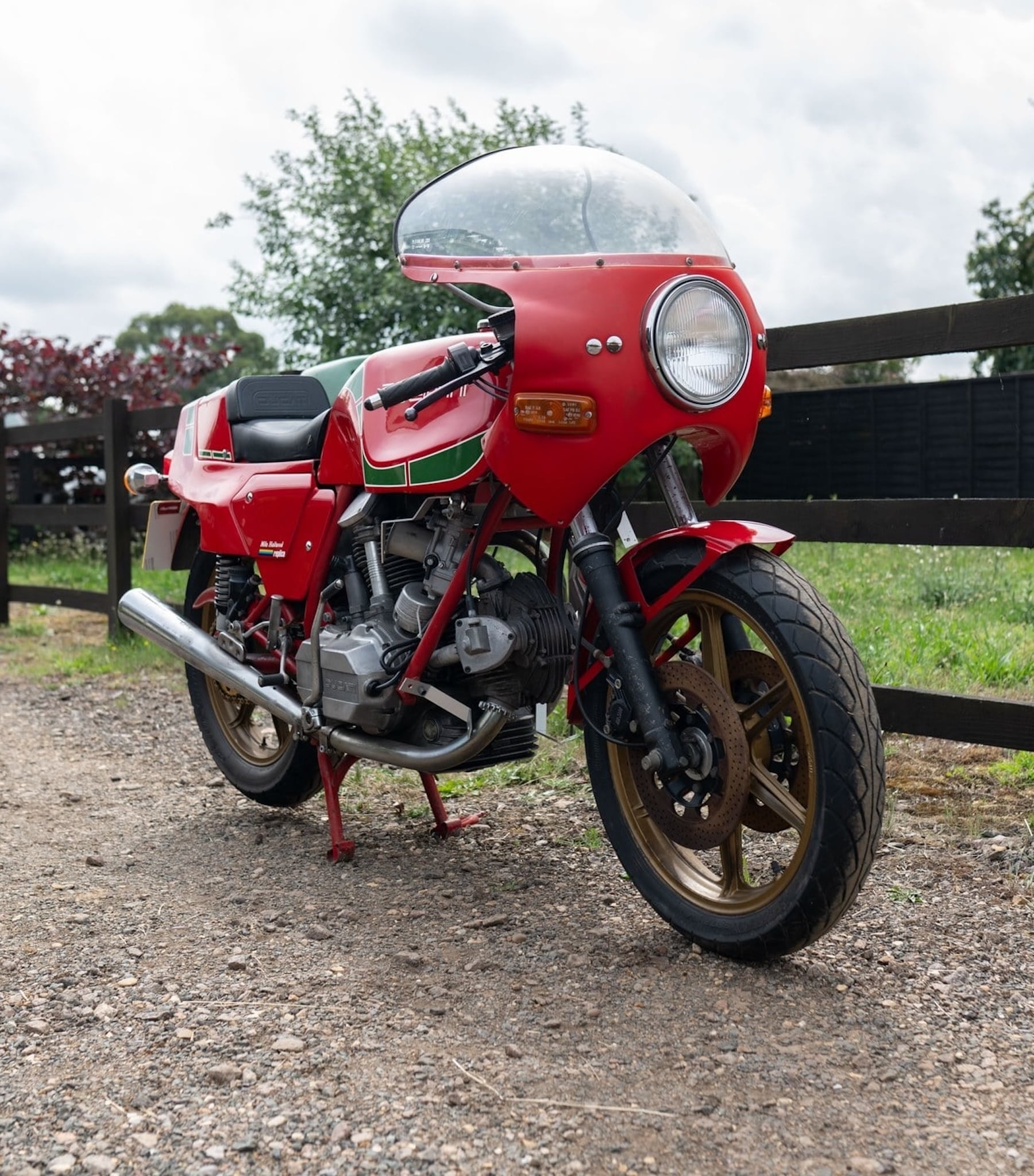
This 1983 Ducati 900 Mike Hailwood Replica spent most of its life in a private collection in Japan before being imported to the UK, where it’s been registered since April of 2026. That history is the likely explanation for its unmodified, factory-standard condition, and it also accounts for the low mileage of just 5,948 miles (9,573 kms).
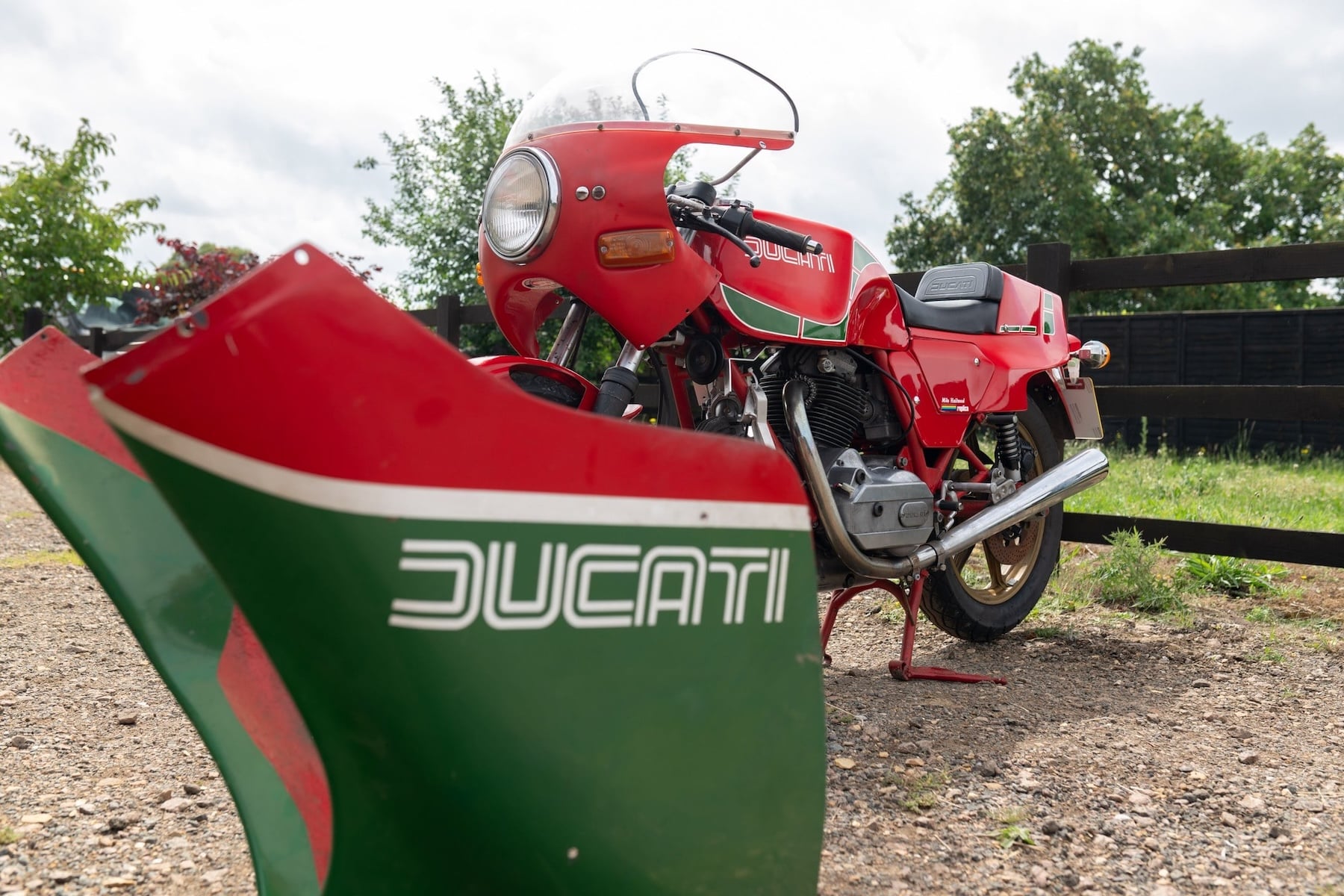
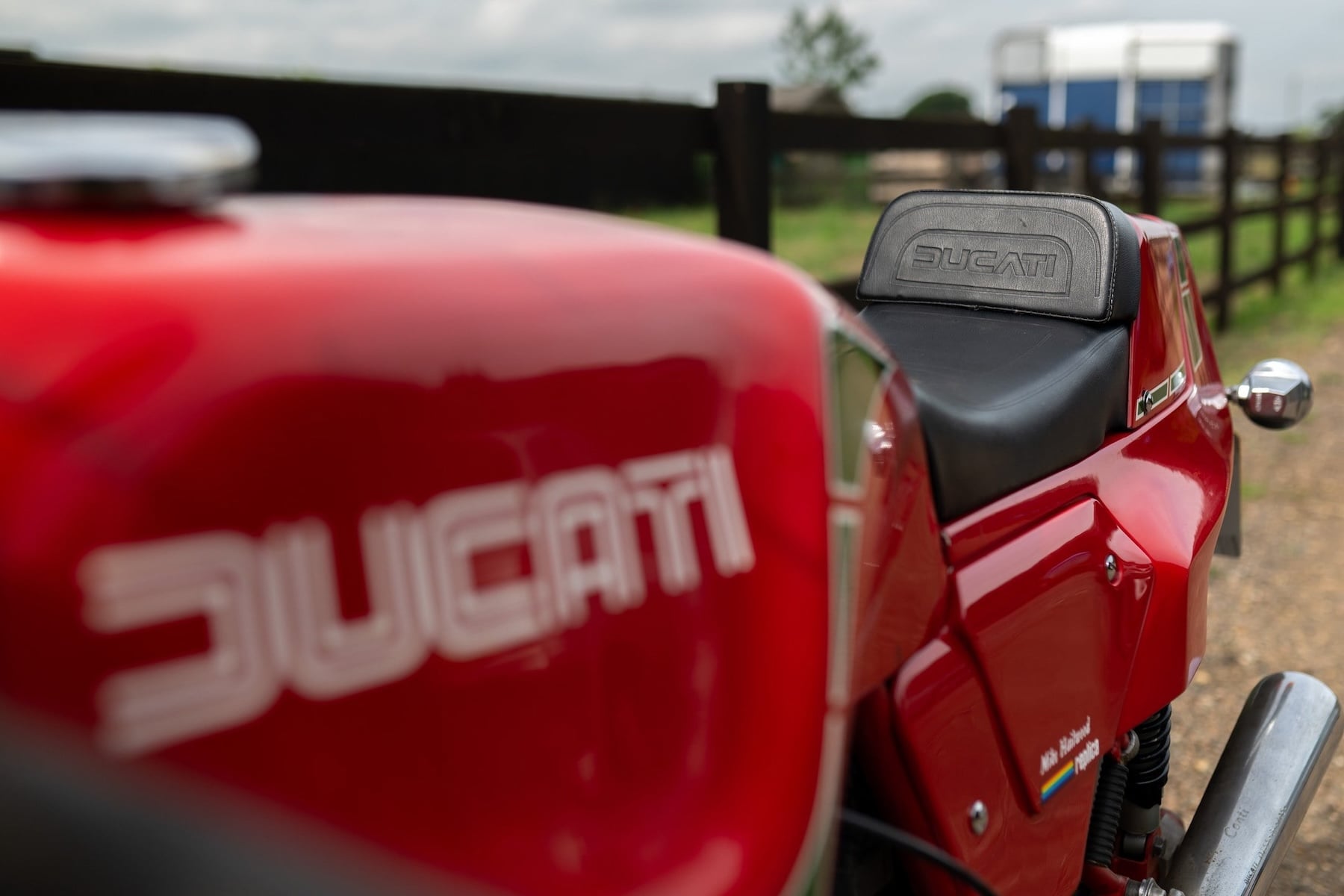
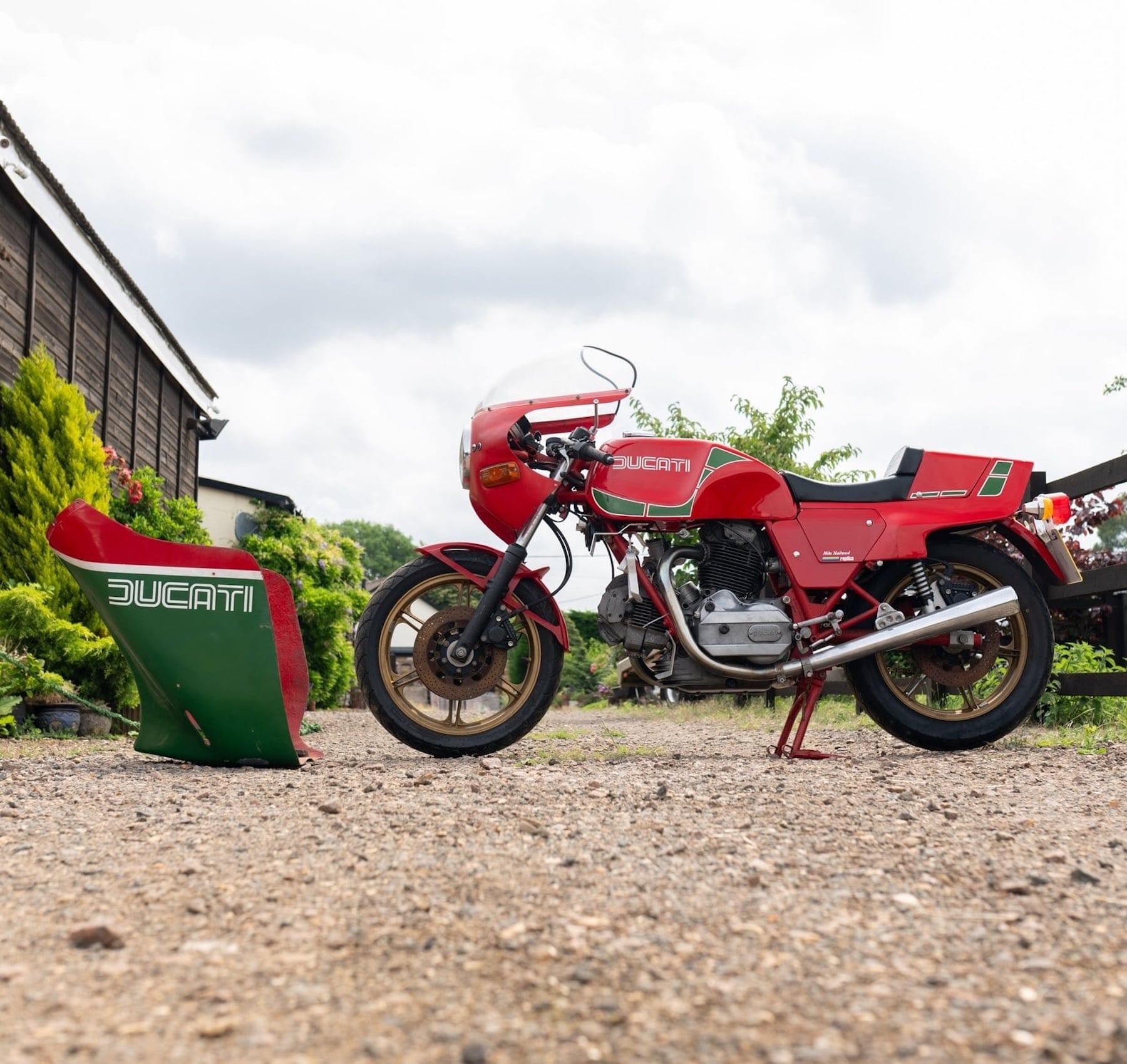
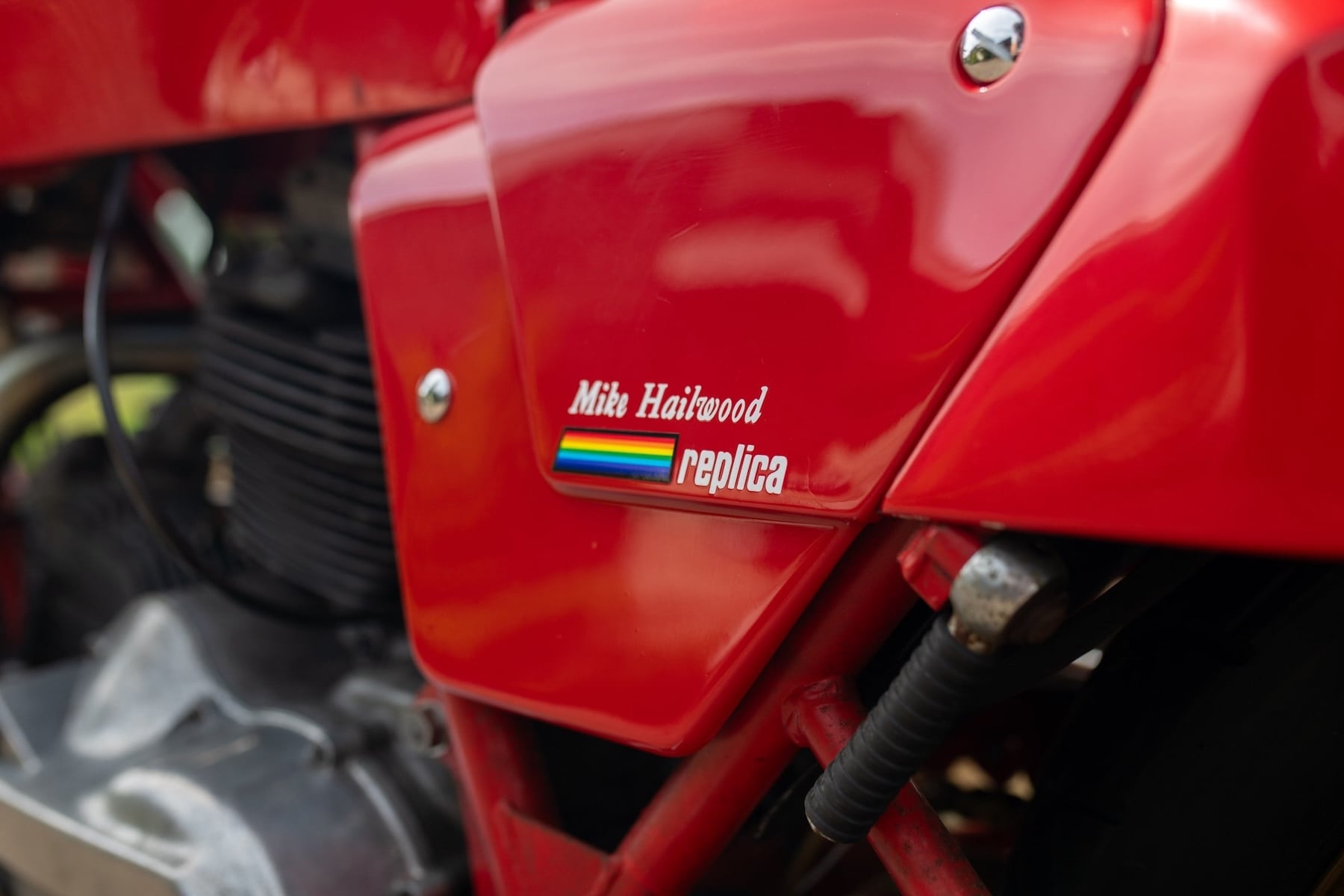
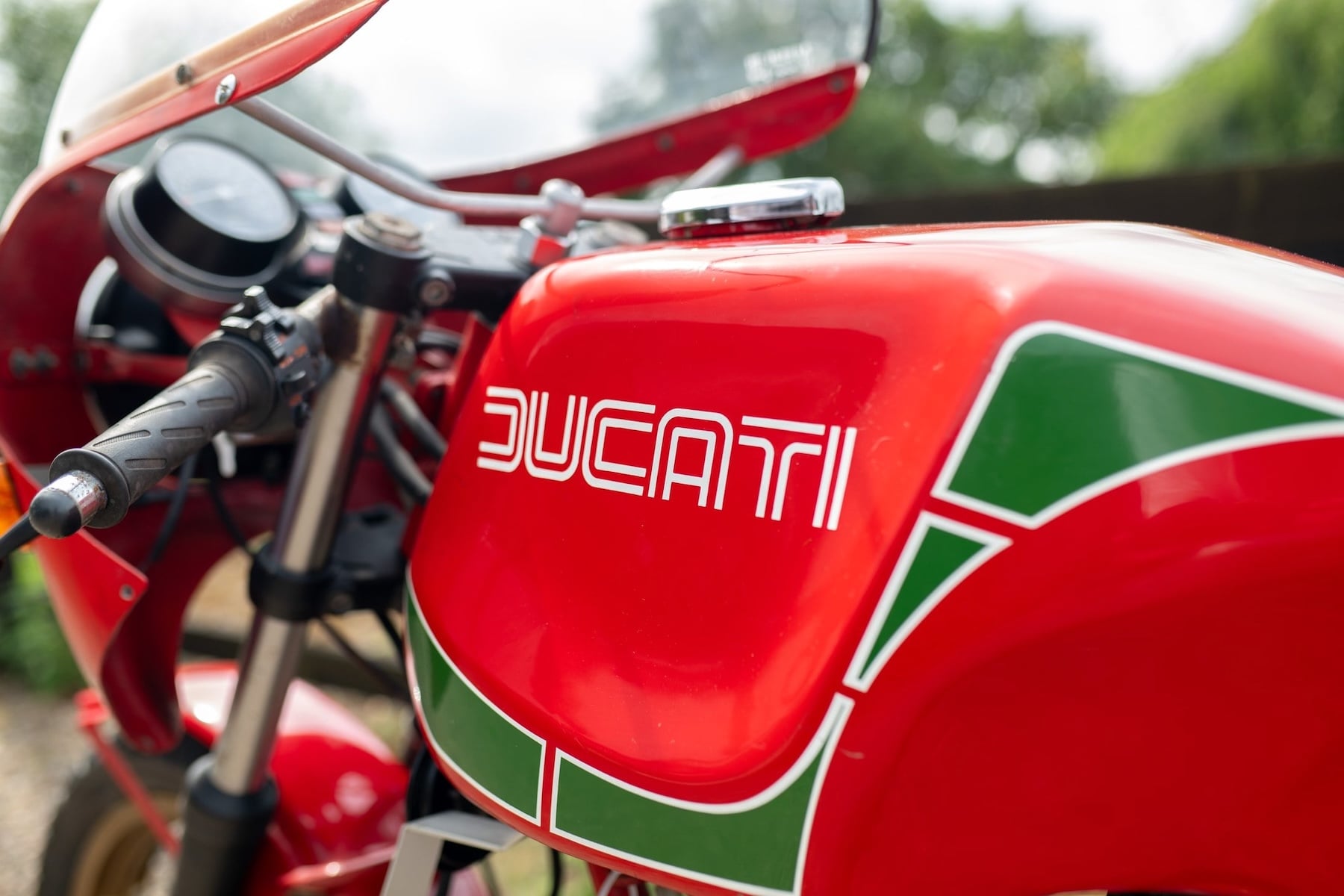
As you would expect, the bike is finished in the standard red with red and green decals, and carries the two-piece fairing with what the seller describes as a rare original “bikini” nose. Gold alloy wheels, a black Ducati-branded seat and clear kilometer-reading dials are all present, and the 864cc bevel-drive V-twin drives through the standard 5-speed gearbox.
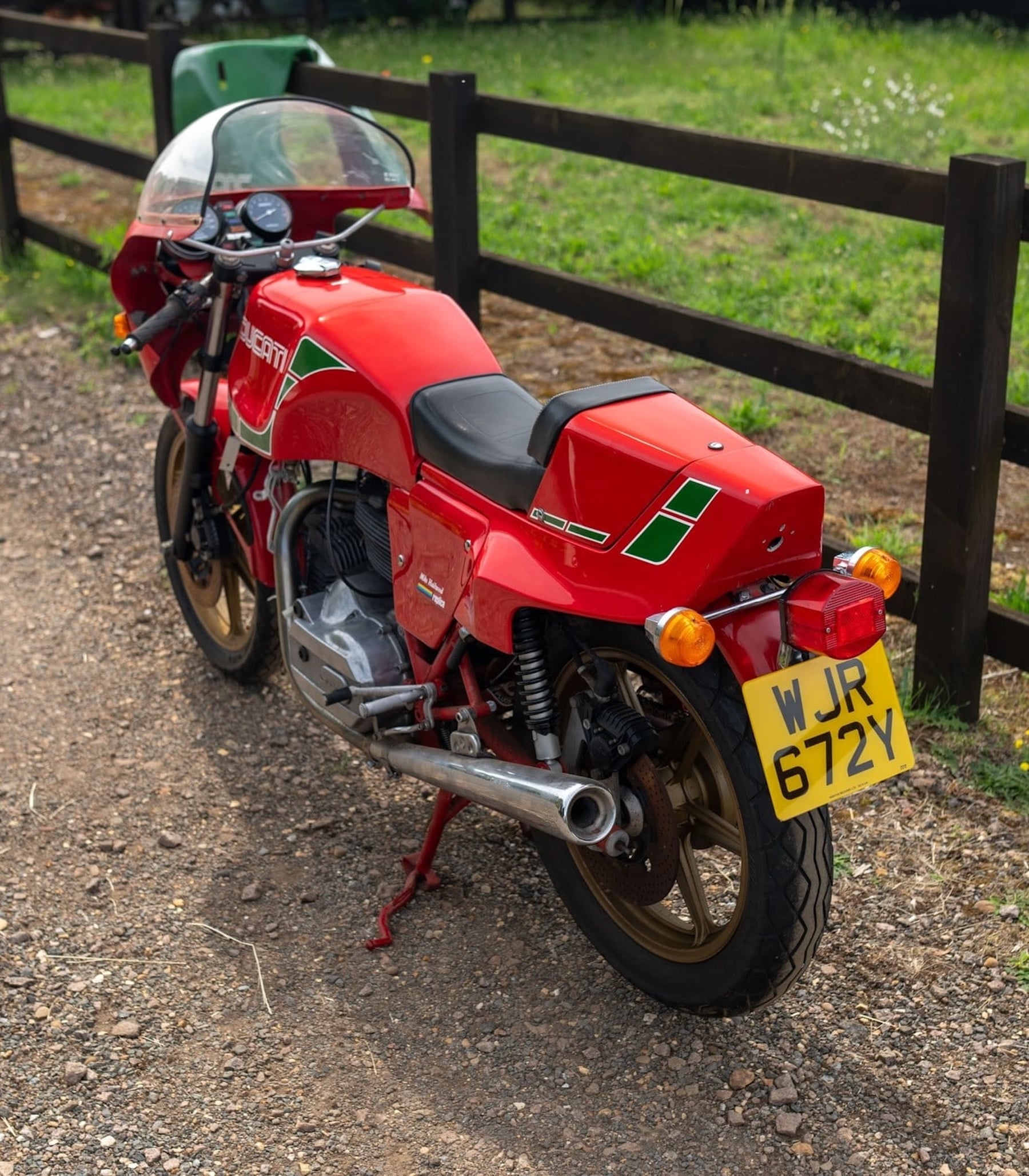
As you would expect, the bike is finished in the standard red with red and green decals, and carries the two-piece fairing with what the seller describes as a rare original “bikini” nose. Gold alloy wheels, a black Ducati-branded seat and clear kilometer-reading dials are all present, and the 864cc bevel-drive V-twin drives through the standard 5-speed gearbox.
Paperwork includes a V5C, HMRC import documents and a Ducati Owners Club certificate, and the bike is exempt from technical inspection. Two points a buyer should note – the lower fairing was removed for photography and is supplied rather than fitted, and the vendor states the machine is complete but will need recommissioning before use.
The bike is now being offered for sale out of Cambridgeshire in the United Kingdom and you can visit the listing here if you’d like to read more about it or register to bid.
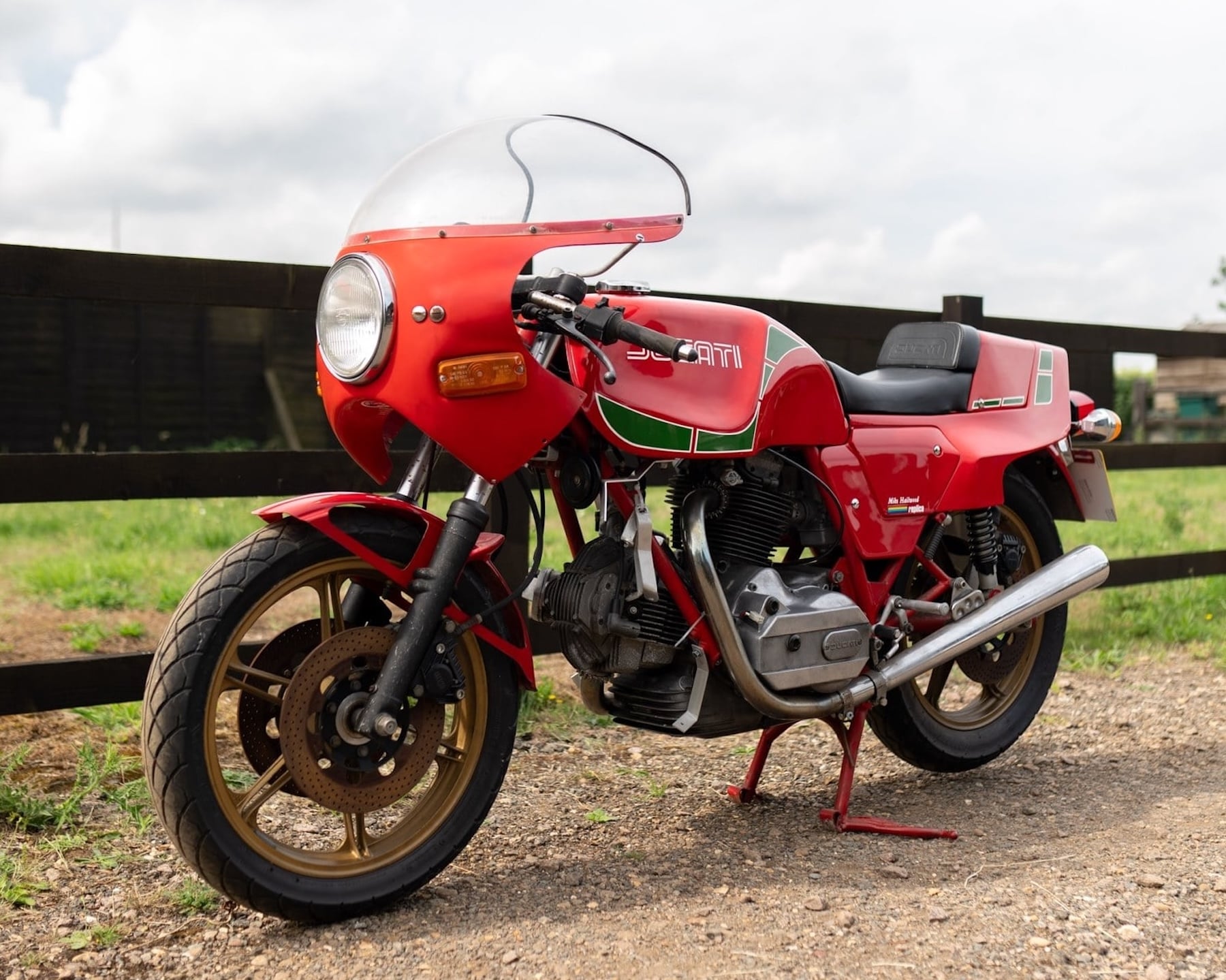
Images courtesy of Car & Classic + Ducati
Articles that Ben Branch has written have been covered on CNN, Popular Mechanics, Smithsonian Magazine, Road & Track Magazine, the official Pinterest blog, the official eBay Motors blog, BuzzFeed, Autoweek Magazine, Wired Magazine, Autoblog, Gear Patrol, Jalopnik, The Verge, and many more.
Silodrome was founded by Ben back in 2010, in the years since the site has grown to become a world leader in the alternative and vintage motoring sector, with well over a million monthly readers from around the world and many hundreds of thousands of followers on social media.