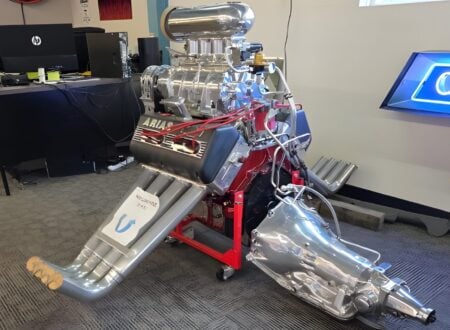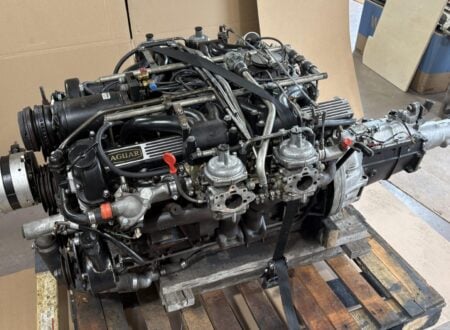

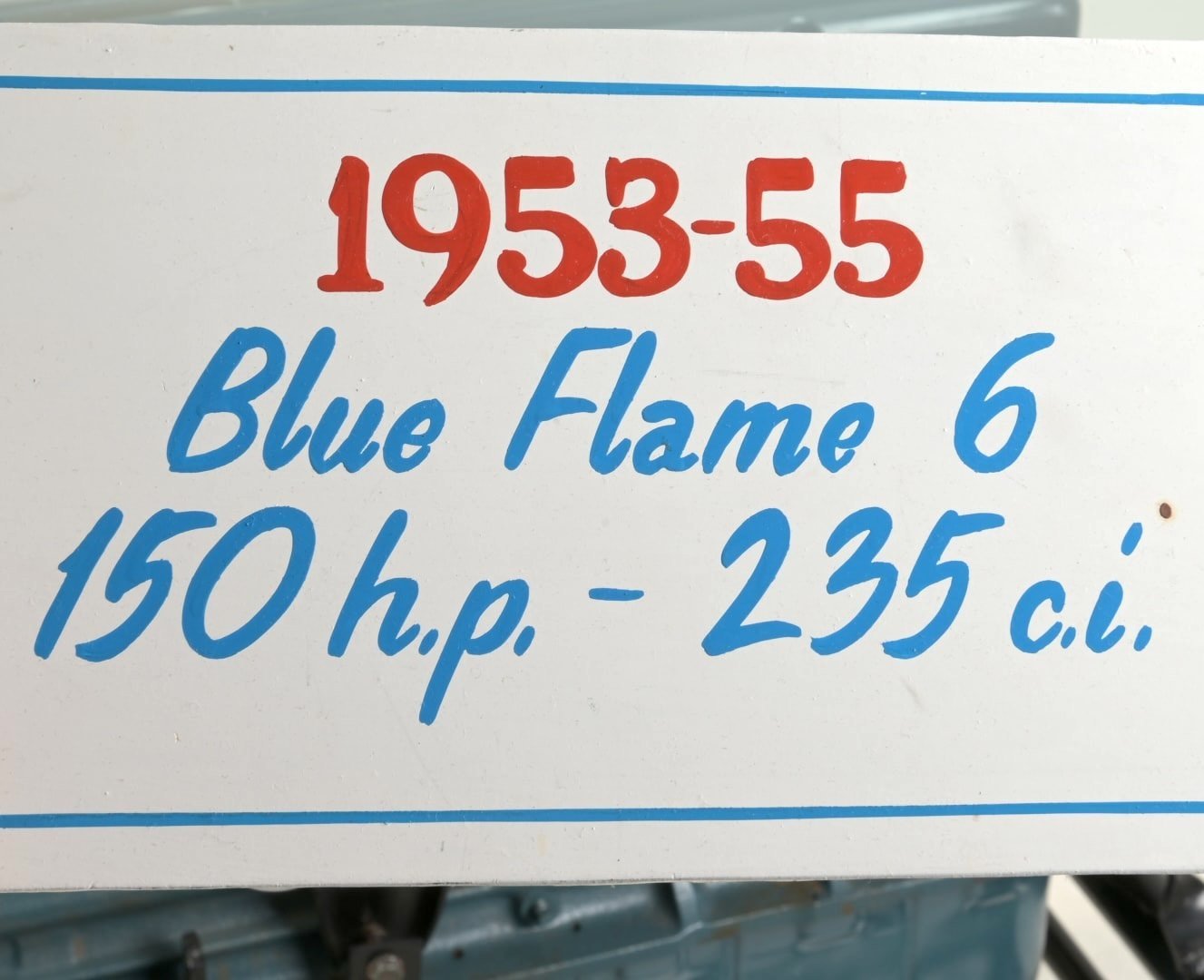
This is the engine that started it all for the Corvette – the GM “Blue Flame” Six, an inline-six cylinder engine with a displacement of 235 cubic inches (3.9 liters) capable of 150 bhp and 223 lb ft of torque.
Although the Corvette is today best known for its use of V8s, a reputation it’s had since the mid-1950s, when the model first debuted it was powered by the “Blue Flame” six and only offered with an automatic transmission – a choice that wasn’t at all popular with more sporting minded drivers.
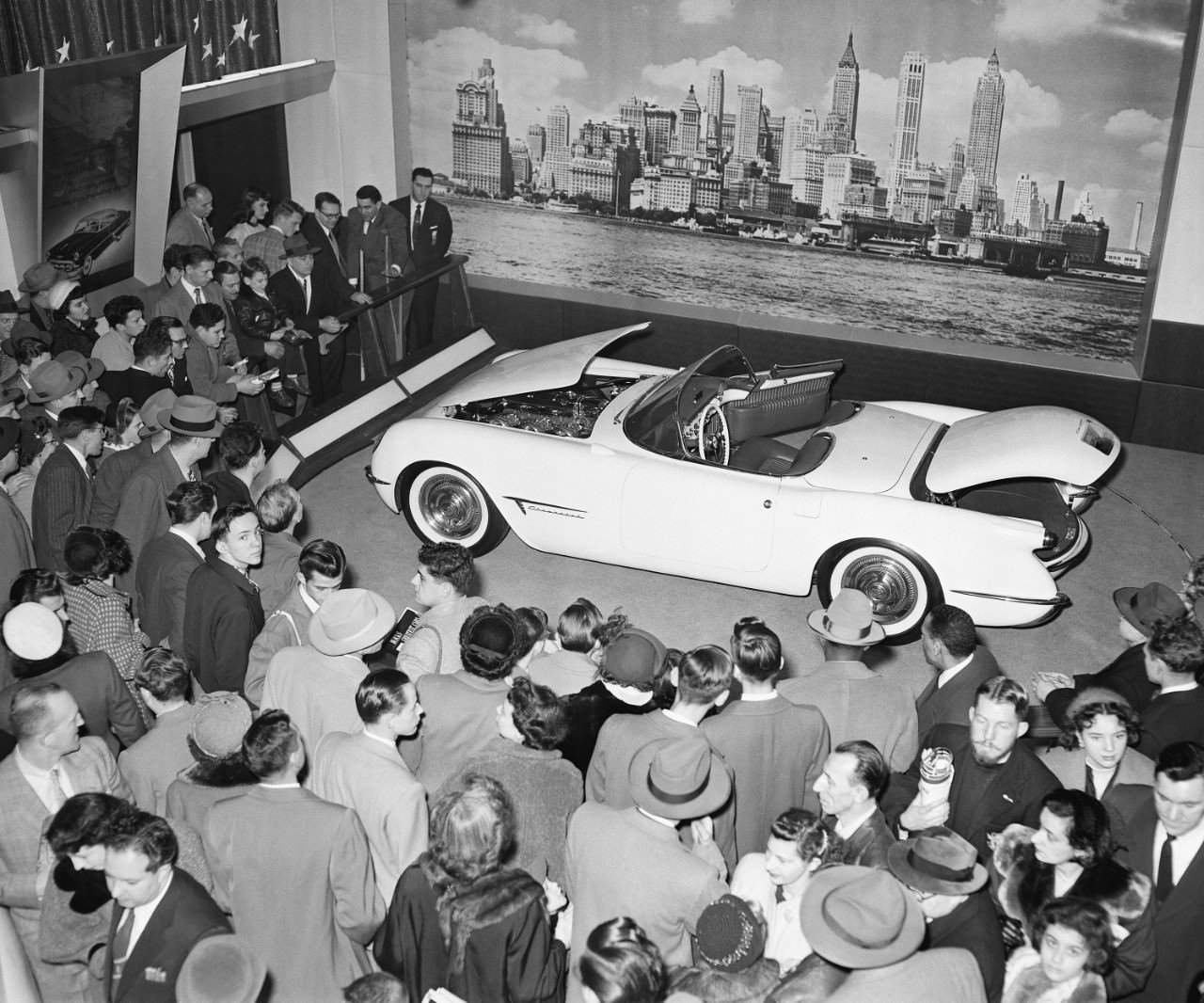
 The first generation 1953 Chevrolet Corvette on display at the Motorama Auto Show in 1953. Image courtesy of General Motors.
History Speedrun: The Chevrolet “Blue Flame” Six Engine
Before the Corvette ever gained a fire-breathing V8, and years before it became known as the quintessential American performance roadster, Chevrolet launched its first sports car with an inline six that traced its lineage back nearly a quarter century – all the way back to before the Great Depression. That engine was the Blue Flame, a refined evolution of Chevrolet’s long-running overhead-valve straight-six and the powerplant fitted to the Corvette at its debut in 1953.
While the Blue Flame’s time in the spotlight was brief, its role was undeniably important, in a way it linked Chevrolet’s conservative engineering past to the ambitions that would soon define the brand’s future.
Chevrolet’s inline-six story began in the late 1920s with the introduction of its overhead-valve six, quickly earning the “Stovebolt” nickname. From the very beginning, this engine design emphasized toughness, reliability, smooth torque delivery, and ease of manufacture. The use of overhead valves was relatively unusual at the time, when side valve (of flathead) engines typically ruled the roost.
Through the 1930s and 1940s the Stovebolt engine evolved steadily, increasing in displacement and benefiting from improvements in cooling, lubrication, and material engineering. By the early post-WWII period, Chevrolet’s six had become one of the most widely used and trusted engines in the American market.
The specific variant of the engine, the one that would become known as the Blue Flame, was the 235 cubic inch version introduced in the early 1950s. The “Blue Flame” designation was officially applied beginning in 1953 and was associated with the 235 engine when paired with Chevrolet’s Powerglide automatic transmission.
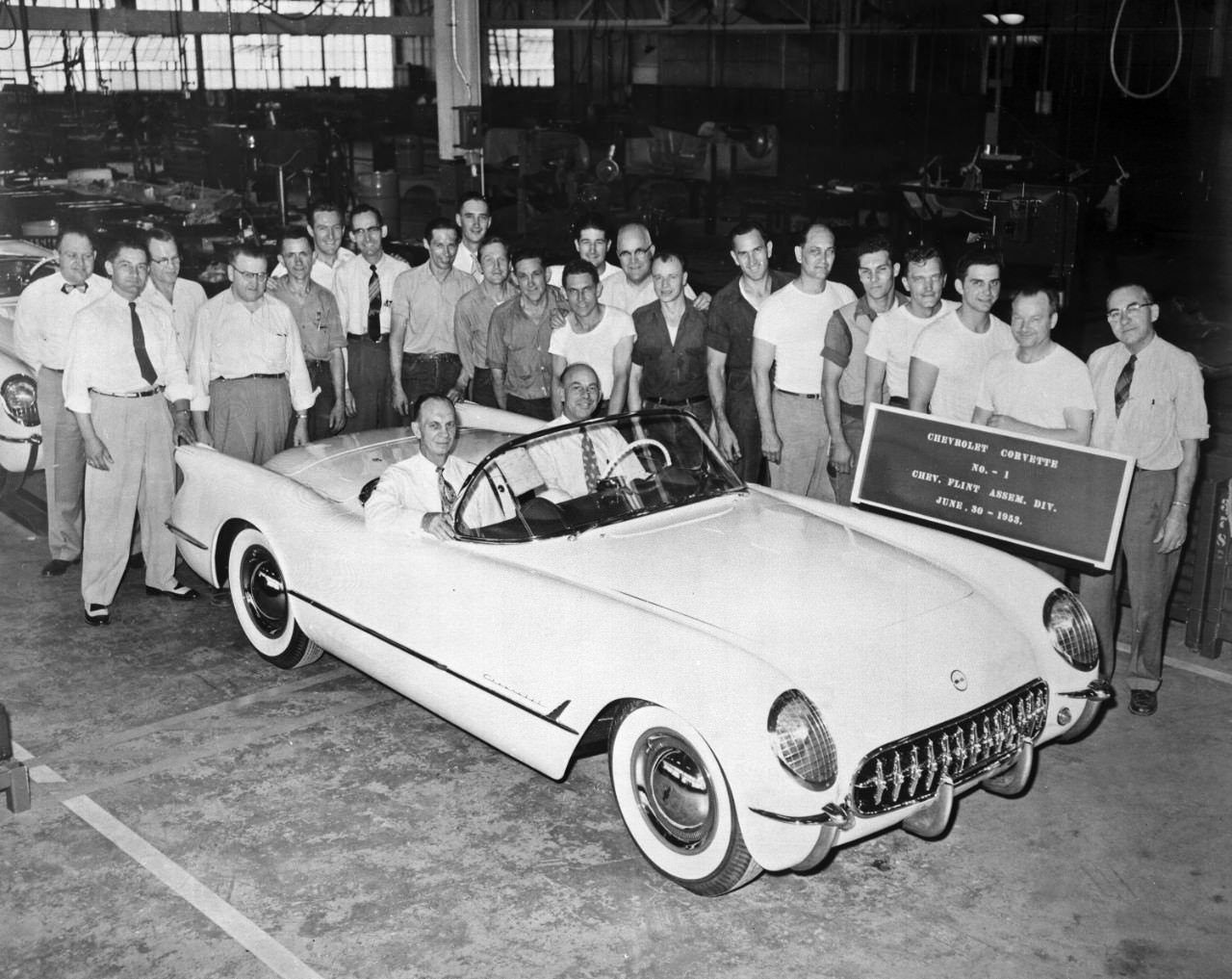
The first production Corvette, built in Flint, Michigan on June the 30th, 1953. Image courtesy of General Motors.
In passenger cars, this engine represented the top tier of Chevrolet’s six-cylinder lineup, offering improved power and smoother operation compared with earlier versions. The name itself was primarily a marketing distinction, but it gained a far more visible identity when Chevrolet selected the engine for its new fiberglass-bodied sports car.
For the 1953 and 1954 Corvette, the 235 received significant upgrades. Compression was raised to 8.0:1, a more aggressive camshaft was used, and induction was handled by a factory triple-carburetor setup using three Carter carburetors mounted on a special intake manifold.
Output rose to 150 bhp, a respectable figure for the era and enough to give the lightweight Corvette credible straight-line performance. This configuration was exclusive to the Corvette and stood well above the single-carburetor Blue Flame engines installed in many standard Chevrolet sedans.
In non-Corvette applications, the 235 six was offered in milder states of tune, with published outputs varying by year and specification, generally falling between the mid-115 bhp range and into the mid-130s for passenger cars equipped with the Blue Flame designation.
These engines shared the same basic cast-iron architecture and undersquare layout of the original, prioritizing reliability, low-speed torque, and service life over outright speed. This design commonality allowed Chevrolet to support the Corvette program without developing a bespoke engine, an important consideration given the car’s experimental status and the importance of keeping development costs as low as possible.
The Blue Flame’s tenure as the primary Corvette powerplant ended after the 1954 model year. Early Corvettes were available only with the two-speed Powerglide automatic gearbox, and growing performance expectations quickly outpaced what the inline-six could deliver when mated to its sedate slushbox. Chevrolet’s new small block V8 arrived for 1955 and immediately transformed both the Corvette and the company’s entire performance image.
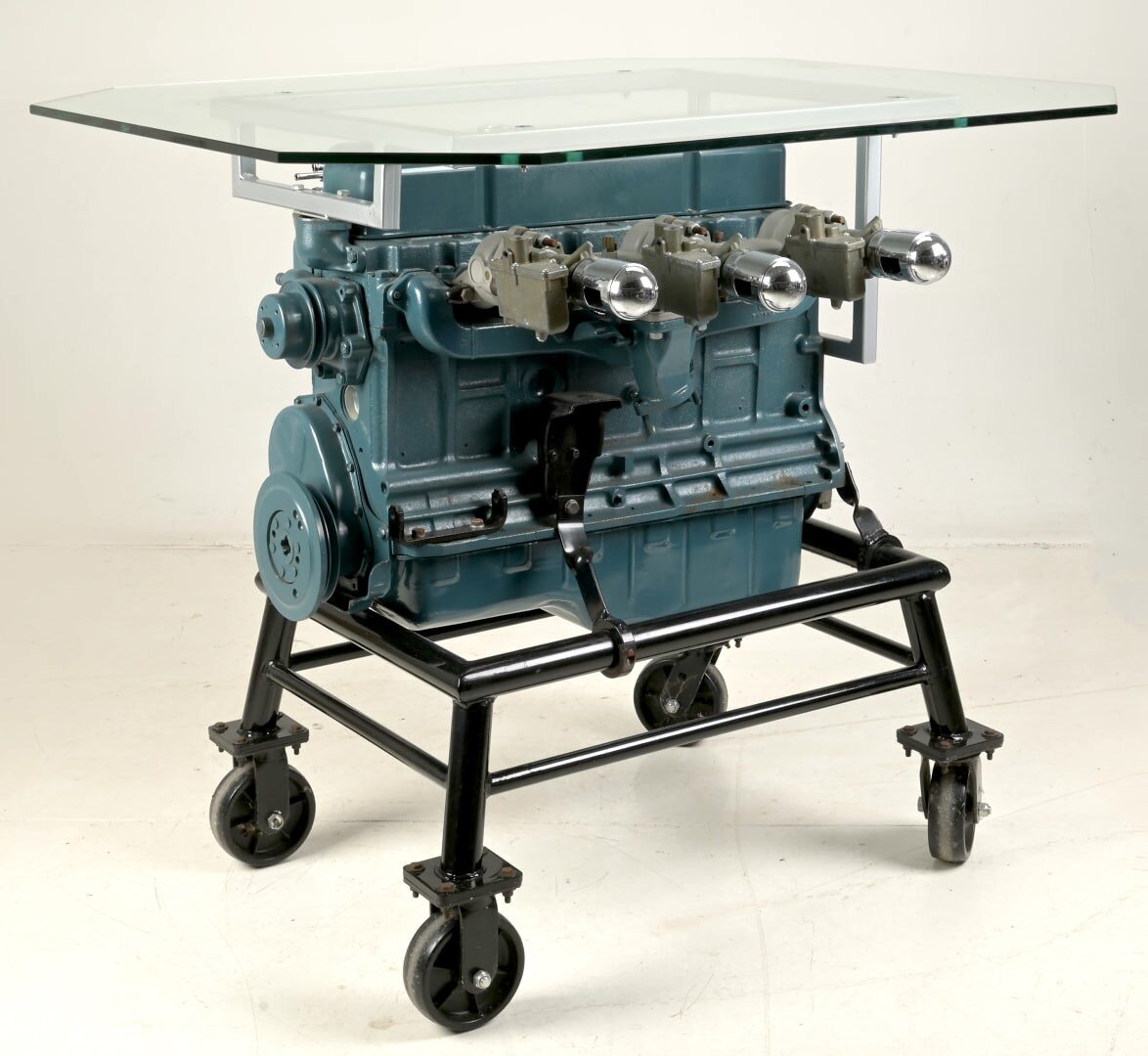
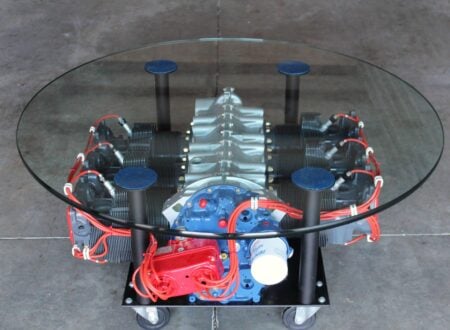
The “Blue Flame” six engine you see here reportedly remains in complete condition, and is now fitted to a steel cradle with heavy duty caster wheels allowing for easy movement.
In hindsight, the Blue Flame Six had never been intended as a sports car engine. Its existence did enable Chevrolet to launch the Corvette, kept the project economically viable in its formative years, and it marked the final, most public chapter of Chevrolet’s venerable Stove Bolt inline six era before the V8 age took hold.
The “Blue Flame” Six Engine Glass Table Shown Here
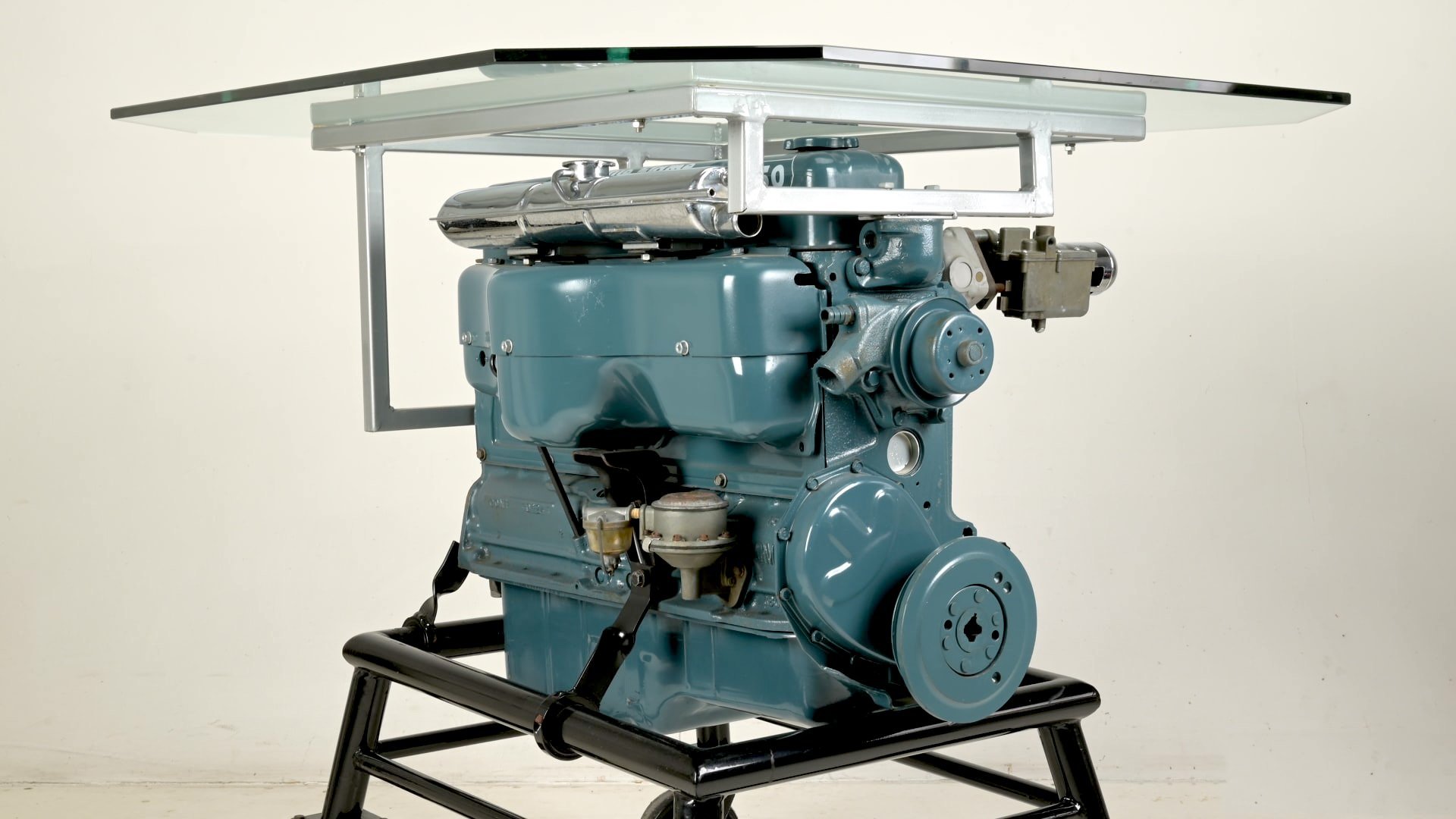
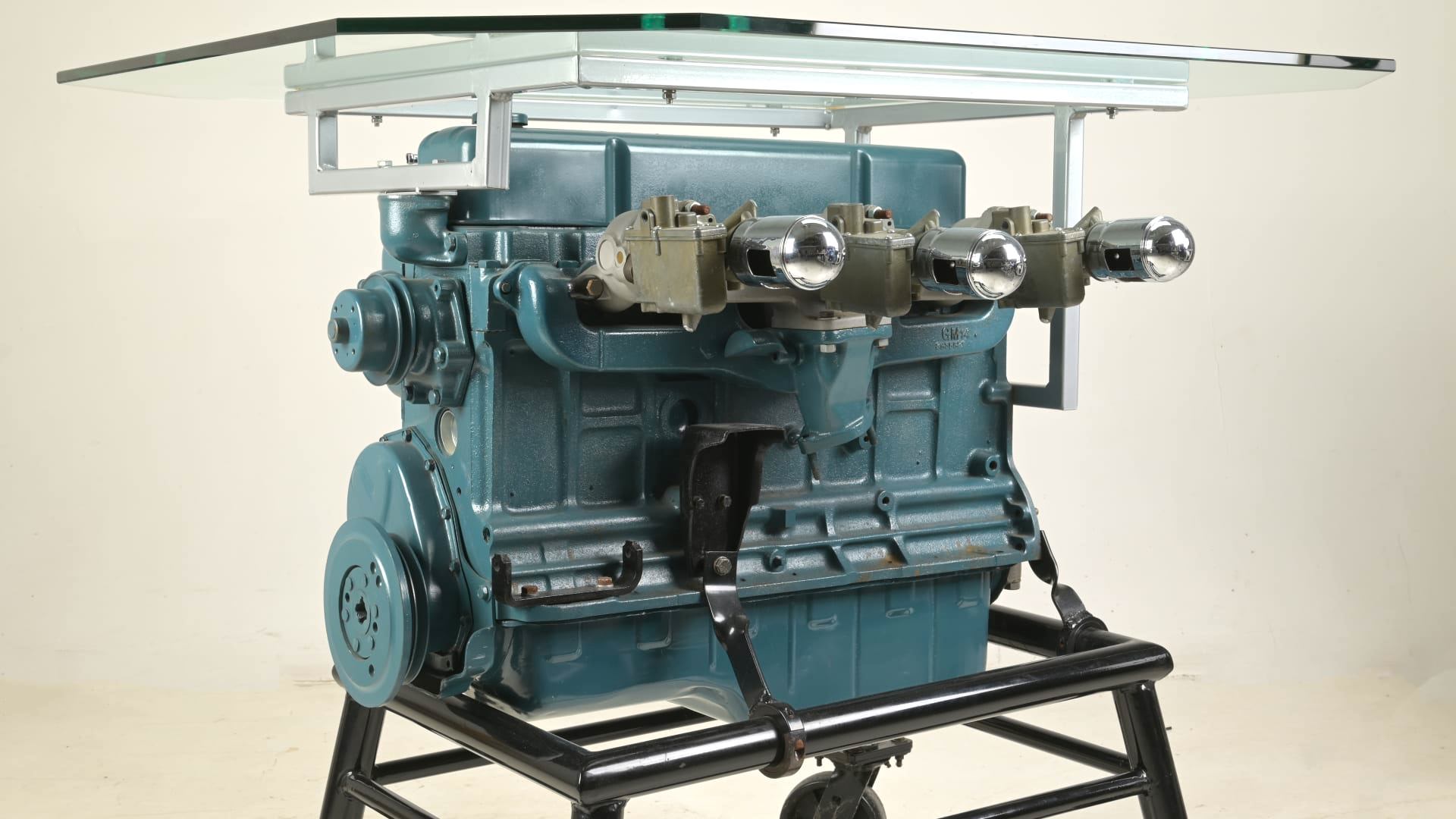
The “Blue Flame” six engine you see here reportedly remains in complete condition, and is now fitted to a steel cradle with heavy duty caster wheels allowing for easy movement. It also has a glass table top, making it a handy addition to any garage or shed, or to any living room if you have an understanding spouse.

The engine retains its triple side-draft carburetors, and it’s fitted with a fuel pump, water pump, and an overflow tank.
The engine retains its triple side-draft carburetors, and it’s fitted with a fuel pump, water pump, and an overflow tank. It also has the correct Corvette script valve cover with Blue Flame decals, and it was formerly used as a display at Mike Yager’s MYGarage Museum.
It’s now due to roll across the auction block with Mecum in mid-January and you can visit the listing here if you’d like to read more about it or register to bid.

Images courtesy of Mecum

Articles that Ben Branch has written have been covered on CNN, Popular Mechanics, Smithsonian Magazine, Road & Track Magazine, the official Pinterest blog, the official eBay Motors blog, BuzzFeed, Autoweek Magazine, Wired Magazine, Autoblog, Gear Patrol, Jalopnik, The Verge, and many more.
Silodrome was founded by Ben back in 2010, in the years since the site has grown to become a world leader in the alternative and vintage motoring sector, with well over a million monthly readers from around the world and many hundreds of thousands of followers on social media.