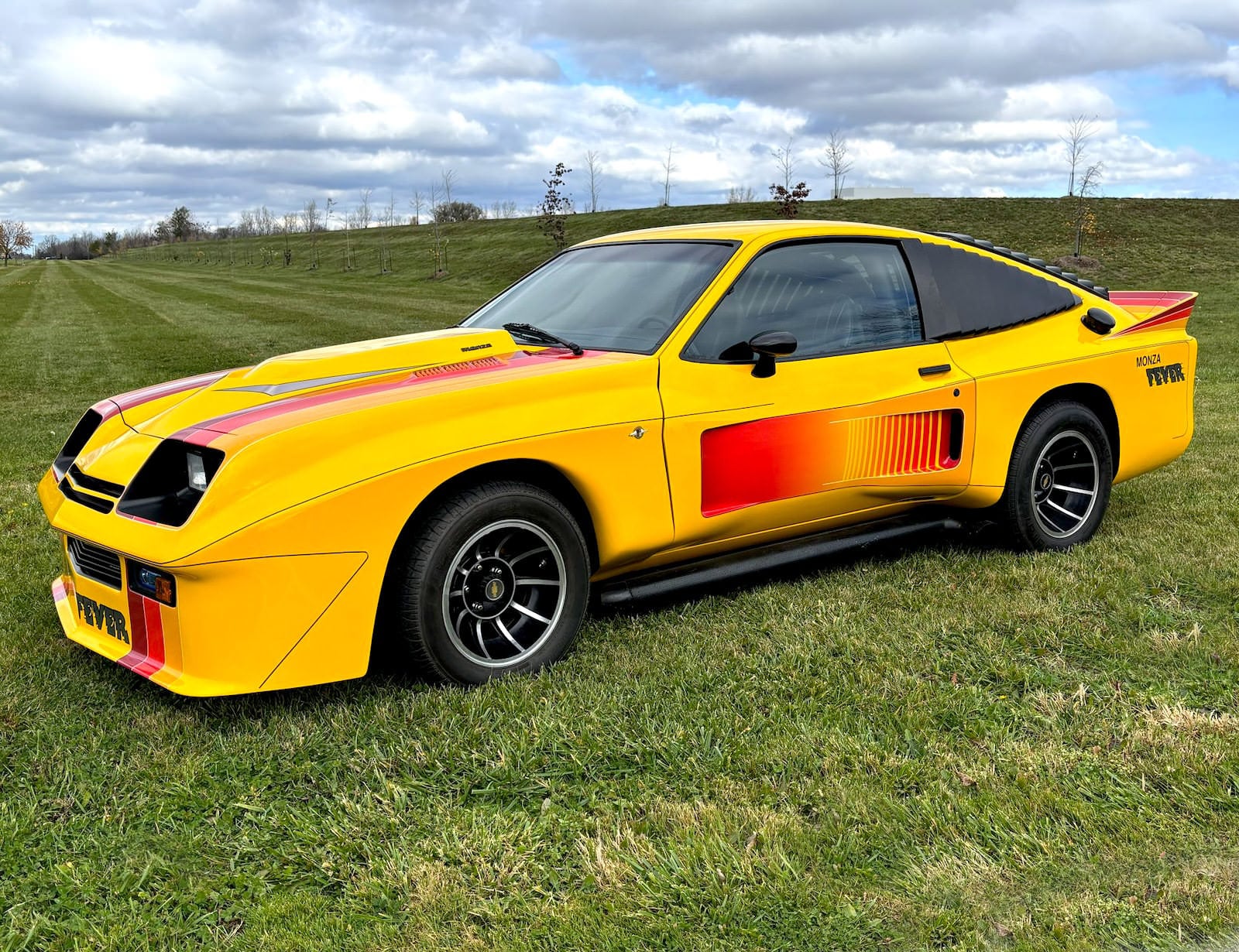
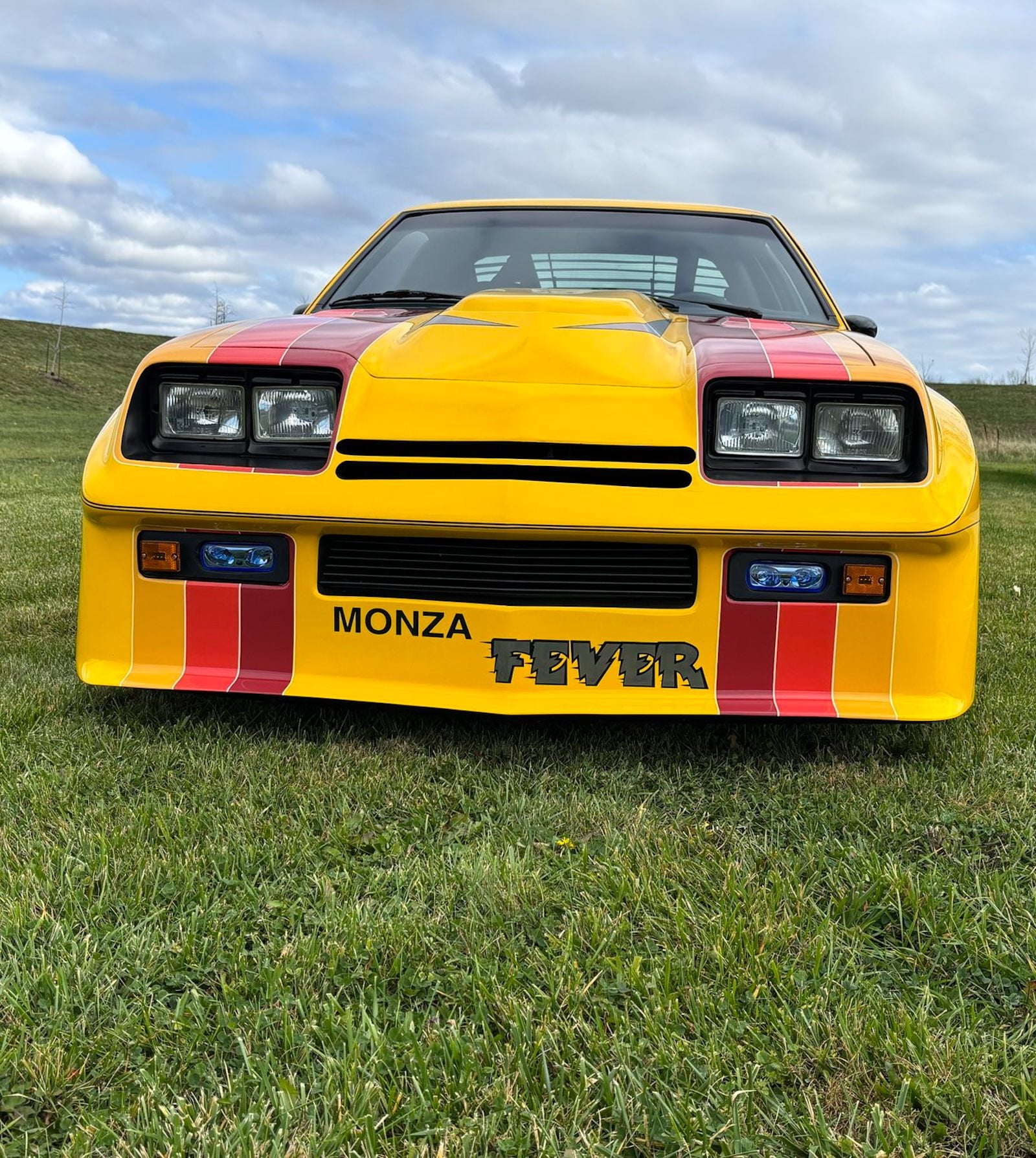
This is “Monza Fever,” it’s a custom 1975 Chevrolet Monza that was built in-period by the legendary George Barris and his team, the creators of cars like the original Batmobile, KITT from Knight Rider, the Munster Koach, and countless others.
Monza Fever was built to resemble the hugely-popular Monza IMSA race cars of the time, they won the 1976 Camel GT title, then won the championship again in 1977 in an updated, winged car against the Porsche 934 and 935. Porsche had been trounced, and Chevy fans loved every minute of it.
Fast Facts: The “Monza Fever” By George Barris
- The Chevrolet Monza debuted for 1975 as a sporting Vega-based coupe originally intended to use GM’s Wankel rotary engine. When the rotary program was abandoned, Chevrolet instead offered conventional four-cylinder and small block V8 engines. The Monza was named Motor Trend’s Car of the Year for 1975.
- This 1975 Chevrolet Monza 2+2 was customized by George Barris and his team, taking inspiration from the DeKon IMSA race cars that won consecutive Camel GT championships in 1976 and 1977. Named “Monza Fever,” the car appeared on the cover of the June 1976 issue of Hot Rod magazine.
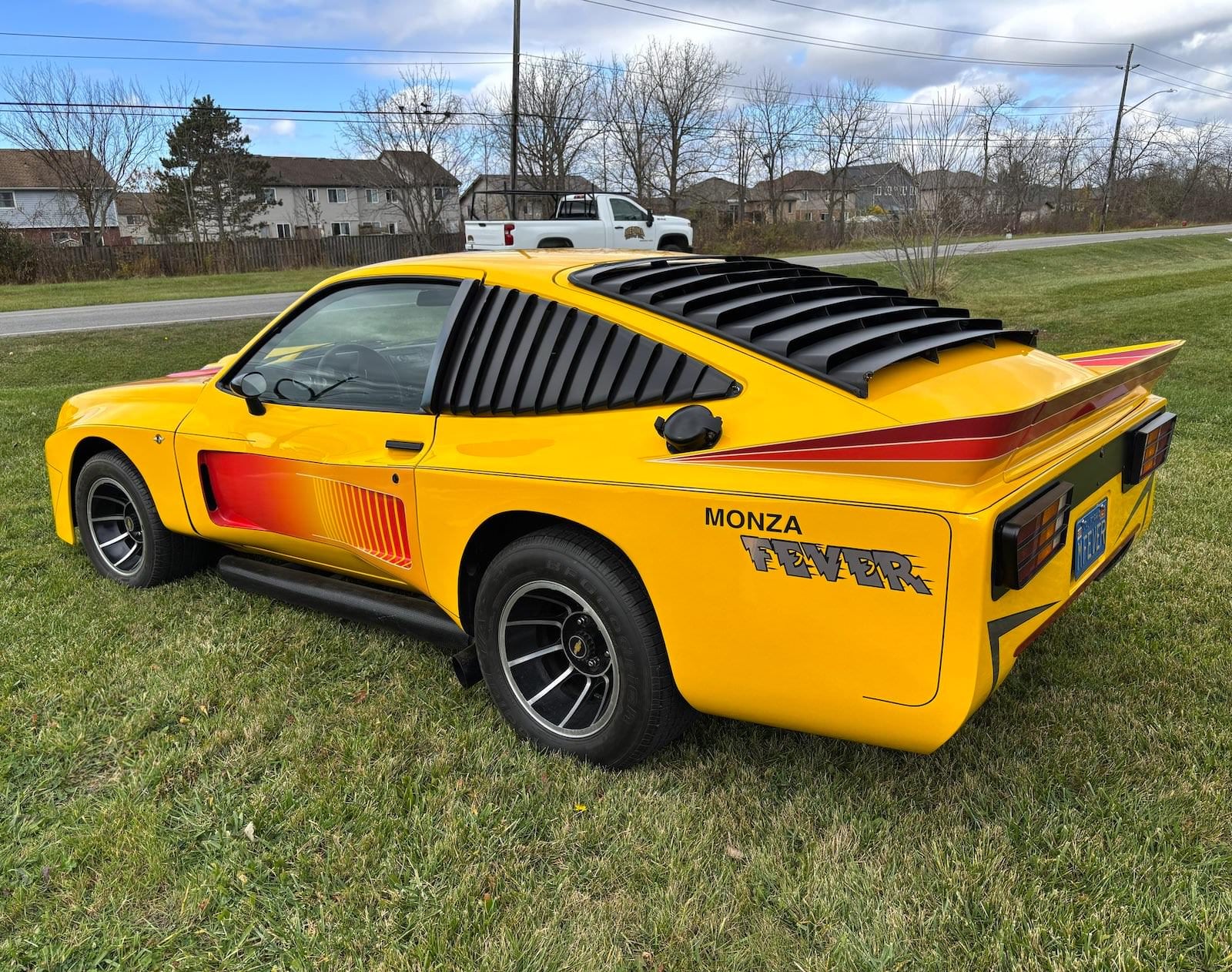
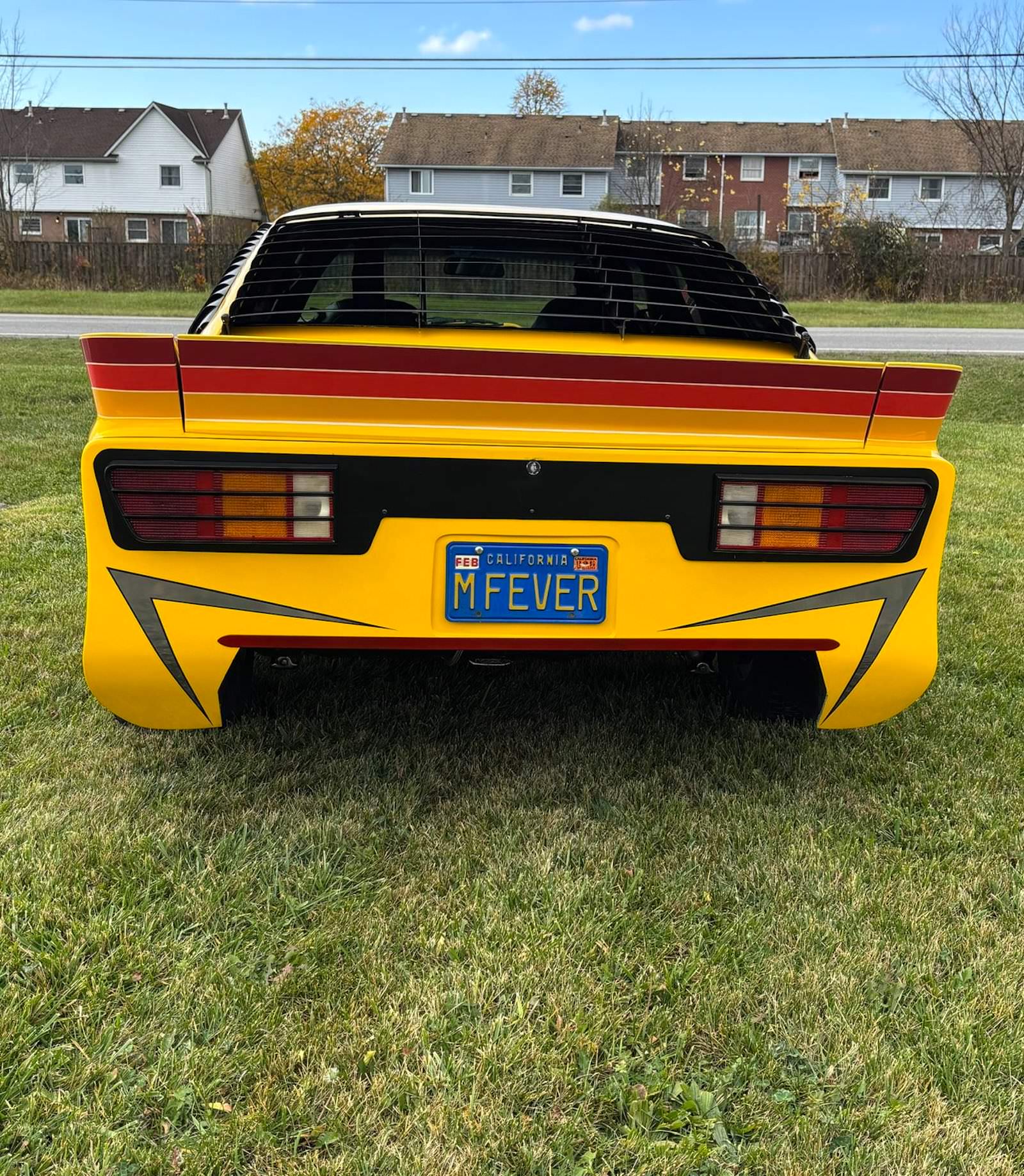
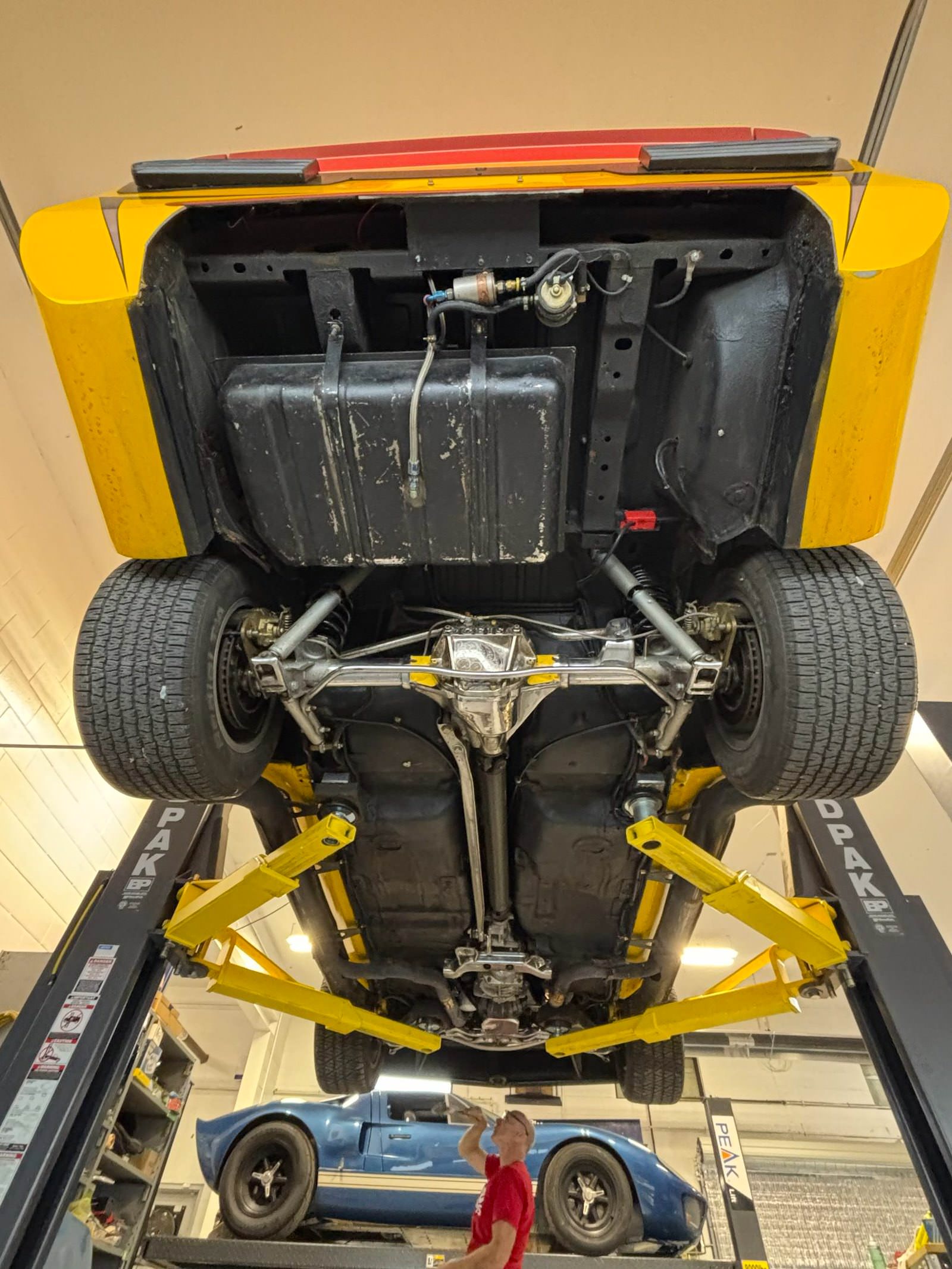
- Monza Fever has a fiberglass widebody kit, custom window louvers, inverted Pontiac Sunbird taillights, and an L88-style hood scoop. It’s now powered by a 377 cubic inch (6.2 liter) Chevrolet small block V8 paired with a Tremec TKO 5-speed manual transmission and a 12-bolt limited-slip rear axle.
- The car was repainted in Boyd Coddington Smooth Yellow under previous ownership and has American Racing Vector wheels, four-wheel disc brakes, a four-point roll bar, and George Barris’ signature on the glovebox. It’s now being offered for sale in Ontario, Canada, with historical documentation, appraisals, and current registration.
History Speedrun: The Chevrolet Monza
General Motors paid an eye-watering $50 million USD (about $435 million USD in 2026 dollars) in late-1970 for the rights to build Wankel rotary engines, and GM president Ed Cole projected one in showrooms within three years. At the time, many thought that the Wankel was the engine of the future, and more than a few fortunes were lost as a result.
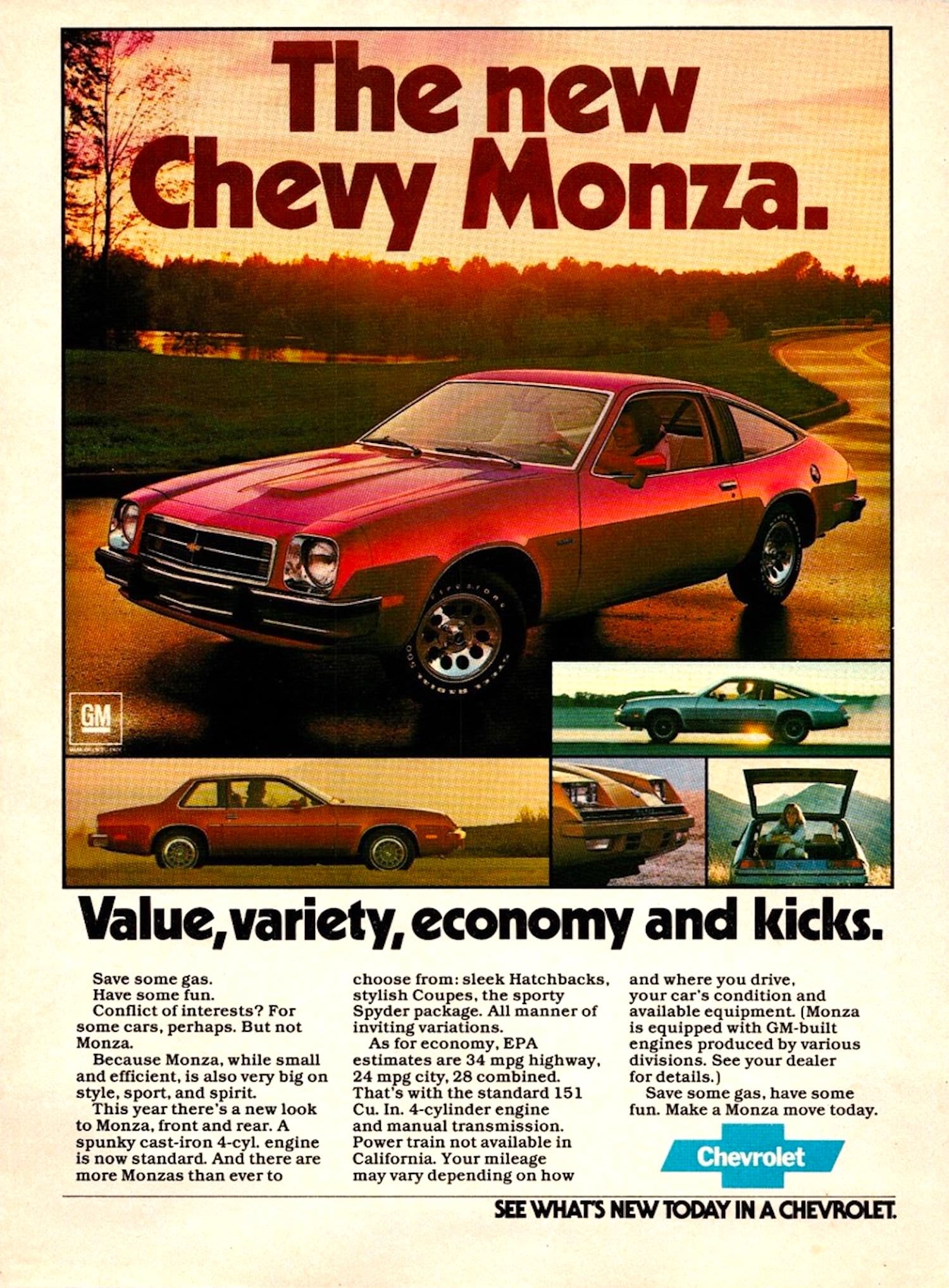
 The Monza had a unibody frame on a 97 inch wheelbase, but it was longer overall, at 179.3 inches, and its fastback profile was said to have been influenced by the Ferrari 365 GTC/4. Image courtesy of General Motors.
The engine that came out of the General Motors program was a two-rotor unit of 206 cubic inches (3.4 liters), first targeted at the 1974 Vega and then at a new sporty hatchback based on it. By late 1973 it was clear the rotary wouldn’t be ready, fuel economy was poor, emissions certification seemed impossible, and GM postponed the engine in September of 1974, as the car designed around it was going on sale. The engine was eventually abandoned, never to return.
The Monza 2+2
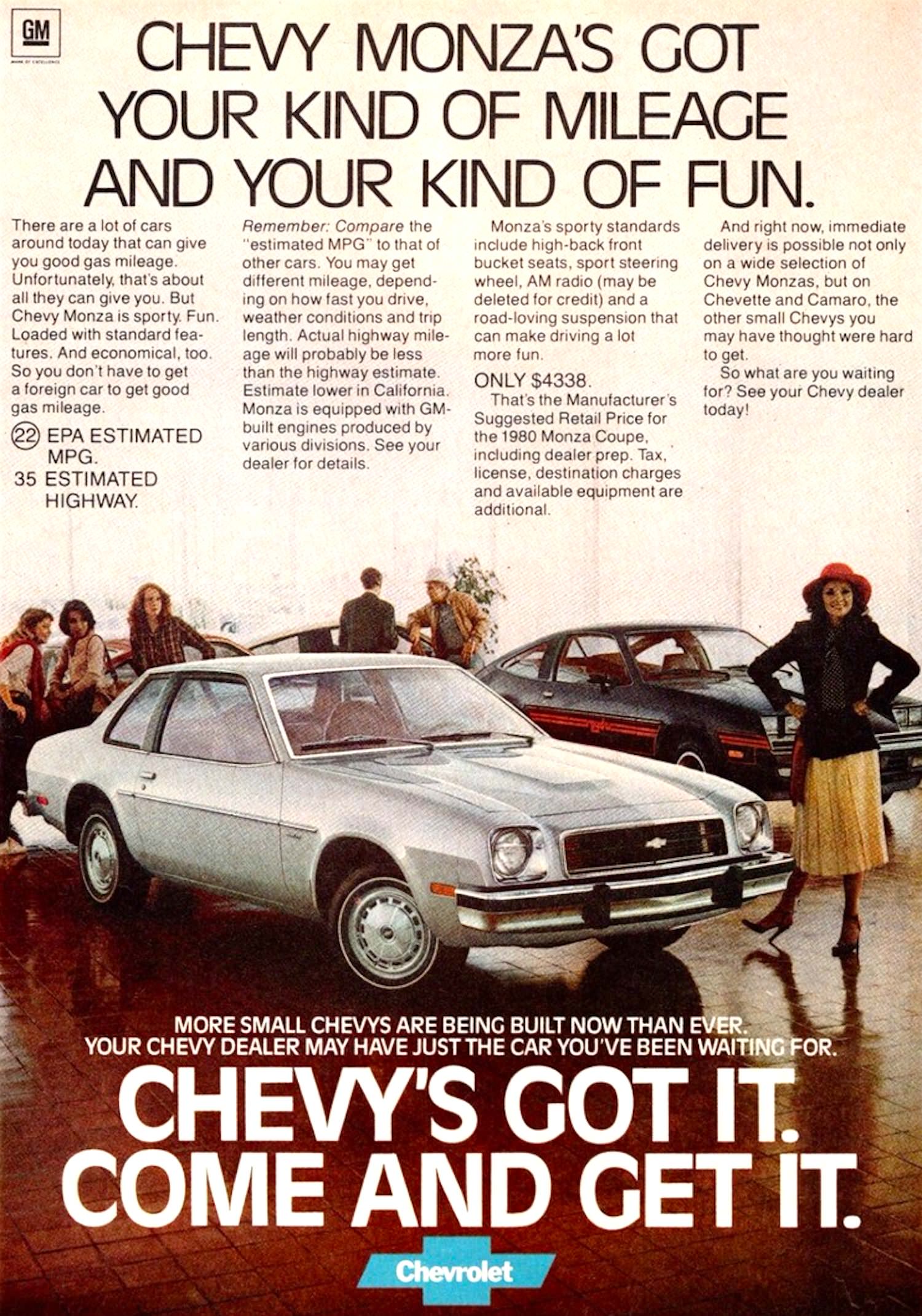
The car the engine was being developed for was the 1975 Monza 2+2. Much like the Vega it was based on, it had a unibody frame on a 97 inch wheelbase, but it was longer overall, at 179.3 inches, and its fastback profile was said to have been influenced by the Ferrari 365 GTC/4. The nose was molded urethane, with four rectangular headlights – that headlight shape had only just become legal in the United States.
Underneath, the front end was all Vega, with independent front suspension on coil springs, front disc brakes, and 13 inch wheels. The rear was new however, Chevrolet kept the live axle and coil springs but located the axle with two lower arms, a track bar and a long torque arm running forward to the transmission, to tame the Vega’s propensity for axle hop. GM later put the same fundamental layout under the 1982 (and onwards) Camaro and Firebird.
With no rotary engine, the Monza used the Vega’s aluminum-block 140 cubic inch (2.3 liter) four, with 78 bhp from a single-barrel carburetor or 87 bhp from a two-barrel. The 2+2’s engine bay was wider than the Vega’s and would take a small block V8, so Chevrolet built a 262 cubic inch (4.3 liter) version, the smallest small block V8 it ever put into series production, rated at 110 bhp. It was a rather tight fit, and on some cars the number three spark plug couldn’t be reached without unbolting the engine mounts and jacking the engine up. Understandably, mechanics weren’t fans of the design.
In California and high-altitude areas the optional V8 was a 125 bhp 350 cubic inch (5.7 liter) engine instead, but this was for 1975 only. The Monza V8 2+2 needed 13.4 seconds to reach 60 mph in a January 1975 Road & Track magazine test. This was a deeply unimpressive time for a V8 coupe, however the 2+2 was still named Motor Trend’s Car of the Year for 1975.
The Towne Coupe Arrives
In April of 1975 Chevrolet added a notchback body style with a conventional trunk, named the Towne Coupe, which was priced from $3,570 USD (about $22,400 USD in 2026 dollars). It promptly outsold the Monza 2+2 hatchback in that first model year, 69,238 to 57,170.
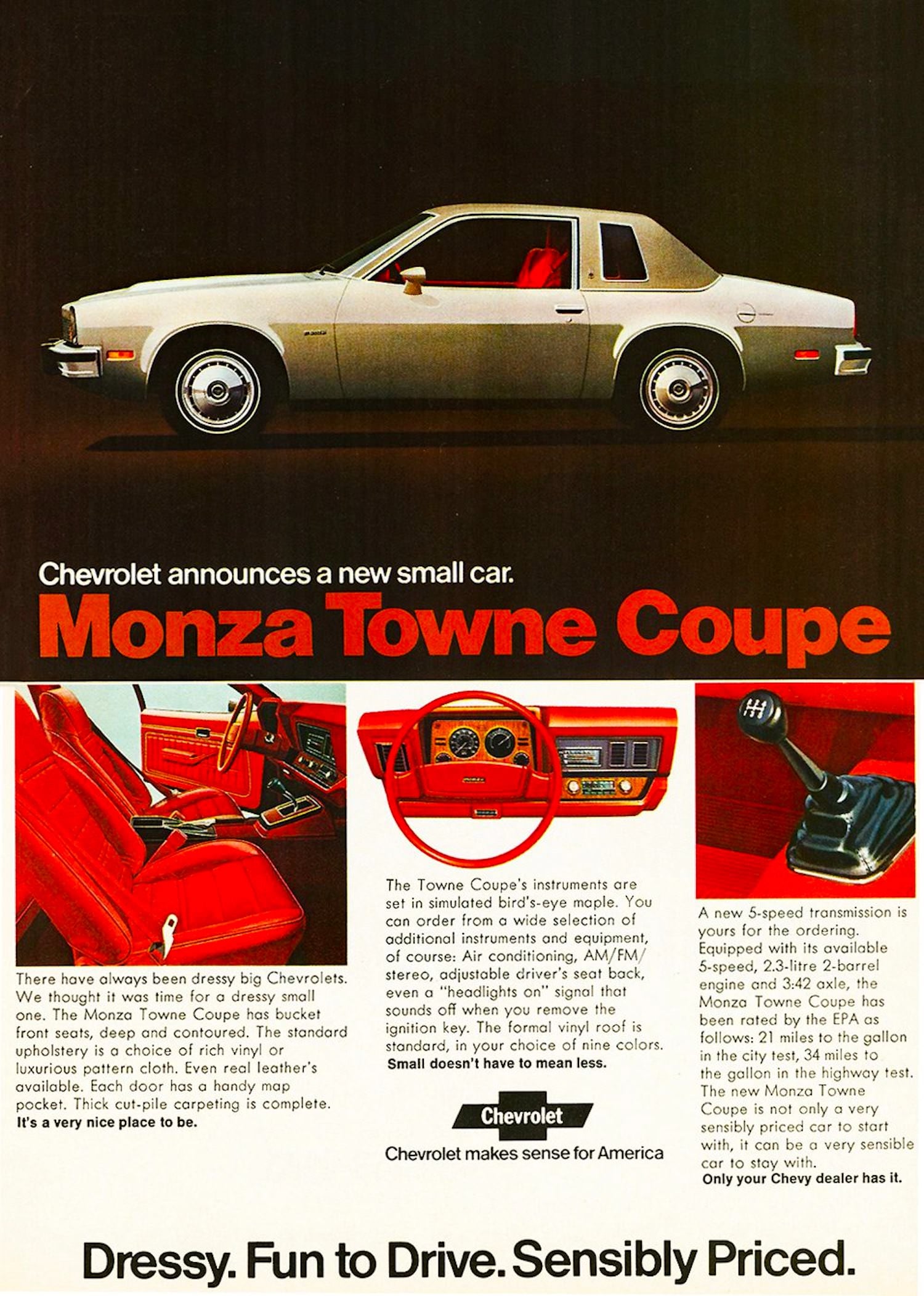
The Towne Coupe arrived in 1975 and promptly outsold the Monza 2+2 hatchback in that first model year, 69,238 to 57,170. Image courtesy of General Motors.
The 305 cubic inch (5.0 liter) V8 took over from the 350 in California and high-altitude areas for 1976, though despite the drop in displacement it had more power – 140 bhp. For 1977 it replaced the 262 V8 everywhere, now at 145 bhp, or 135 bhp in California.
Pontiac’s 151 cubic inch (2.5 liter) Iron Duke four replaced the Vega engine for 1978 and Buick V6s of 196 and 231 cubic inches (3.2 and 3.8 liters) joined the list the same year. The discontinued Vega’s hatchback and wagon bodies were given Monza noses and badges, the V8 was gone for good after 1979.
The IMSA Monza Race Cars
The Monza Spyder package arrived for 1976 and for 1977, Michigan Auto Techniques turned about 4,100 hatchbacks into the white, flared Monza Mirage, modeled on the popular IMSA racers of the time.
Those racers came from DeKon Engineering, run by Lee Dykstra and Horst Kwech, who built tube-frame Monzas for IMSA’s AAGT class. Al Holbert bought one for 1976, won first time out at Road Atlanta that April, took four more races and the Camel GT title, then won the title again in 1977 against the Porsche 934 and 935. Porsche engineers were reportedly unimpressed by the turn of events.
Chevrolet built 136,203 Monzas for 1975, 80,905 for 1976 and 73,348 for 1977, against almost 189,000 Mustang IIs in 1975 alone, their key rival. After that the numbers began a slow steady climb, from 138,832 in 1978, to 163,833 for 1979 and 169,418 for 1980, with another 34,516 built in an extended run to the end of that year while dealers waited for the front-wheel drive Cavalier, which arrived in spring 1981.
In total, that made just under 800,000 cars. Chevrolet later reused the Monza name on an Opel-based car sold in Brazil from 1982 to 1996, and on a Chinese-market sedan launched in 2019, but it’s not yet made a comeback in the US market.
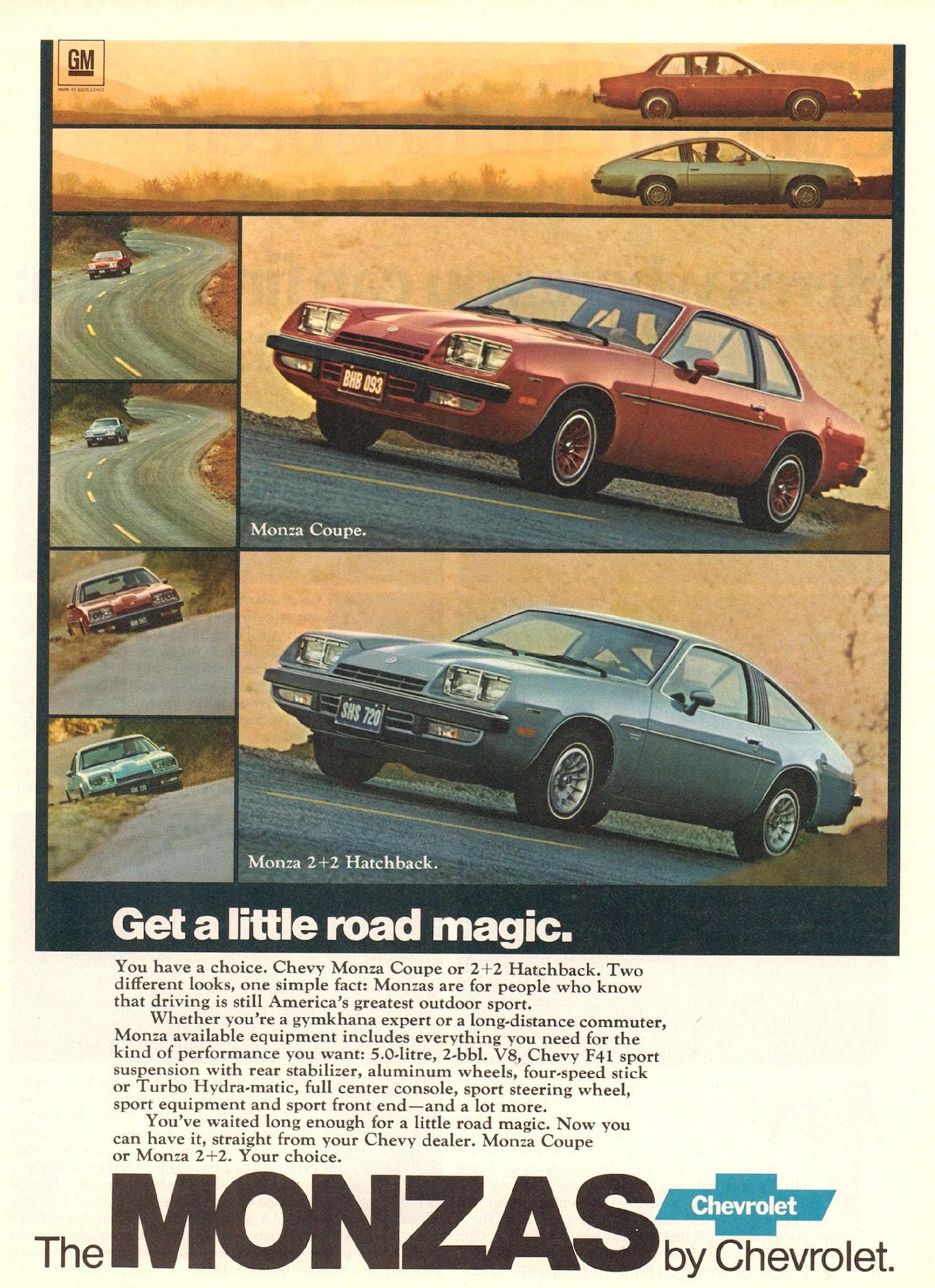
The 305 cubic inch (5.0 liter) V8 took over from the 350 in California and high-altitude areas for 1976, though despite the drop in displacement it had more power – 140 bhp. Image courtesy of General Motors.
Shown Here: The 1975 Chevrolet “Monza Fever”
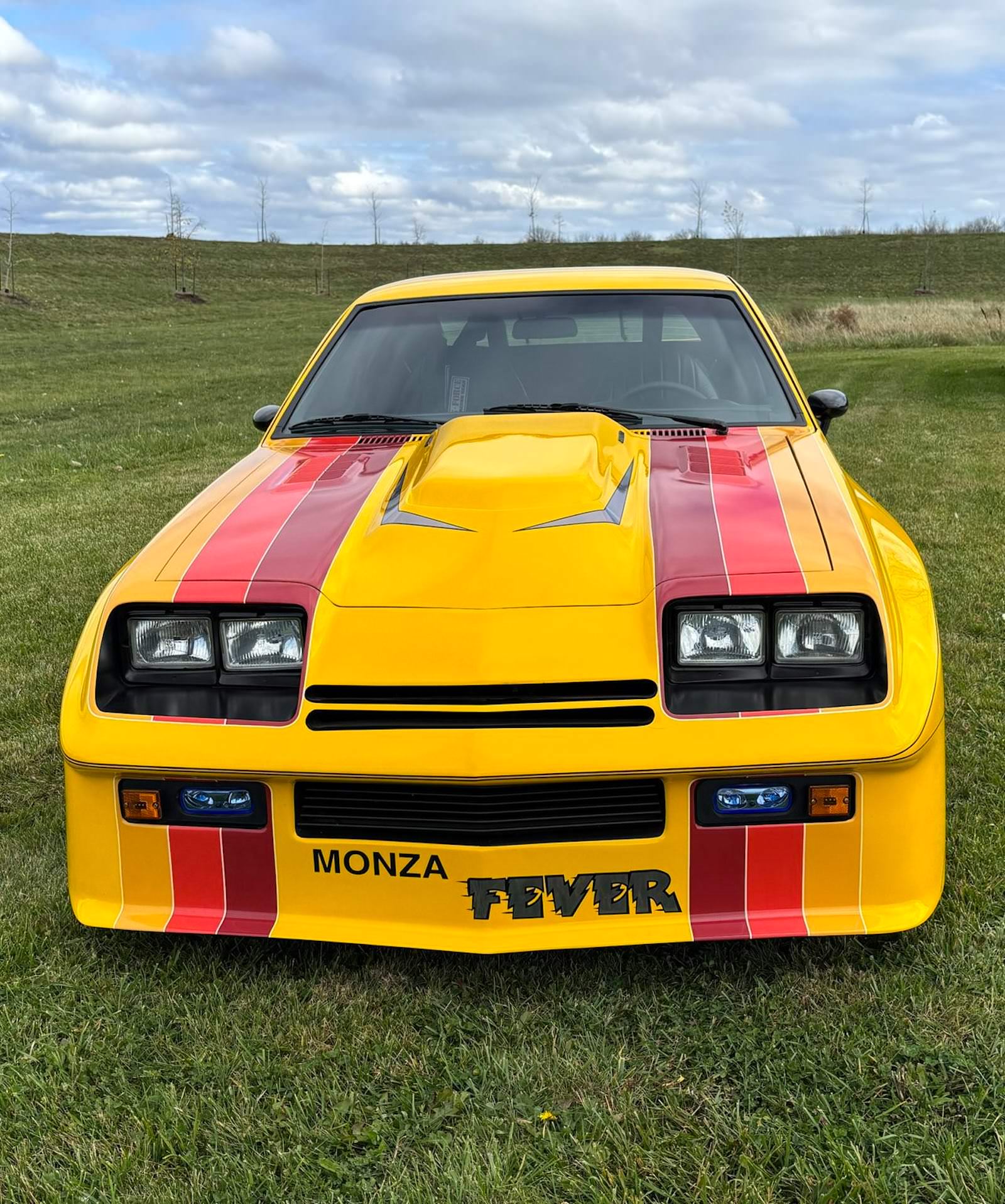
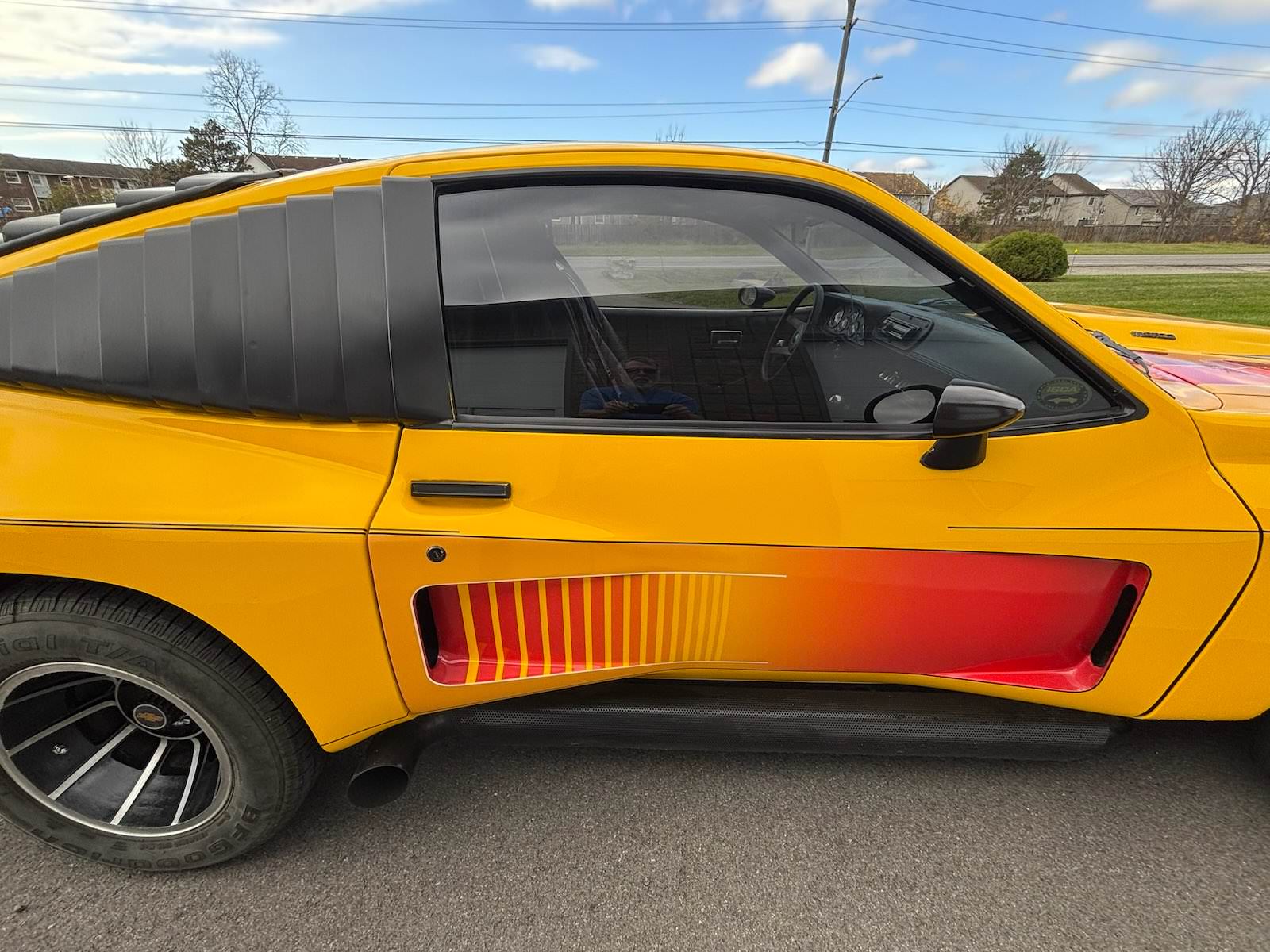
This 1975 Chevrolet Monza 2+2 is popularly known as “Monza Fever,” it was customized by legendary Hollywood car builder George Barris and his team, taking inspiration from the DeKon Monza “Porsche Eater” IMSA race cars of the 1970s.
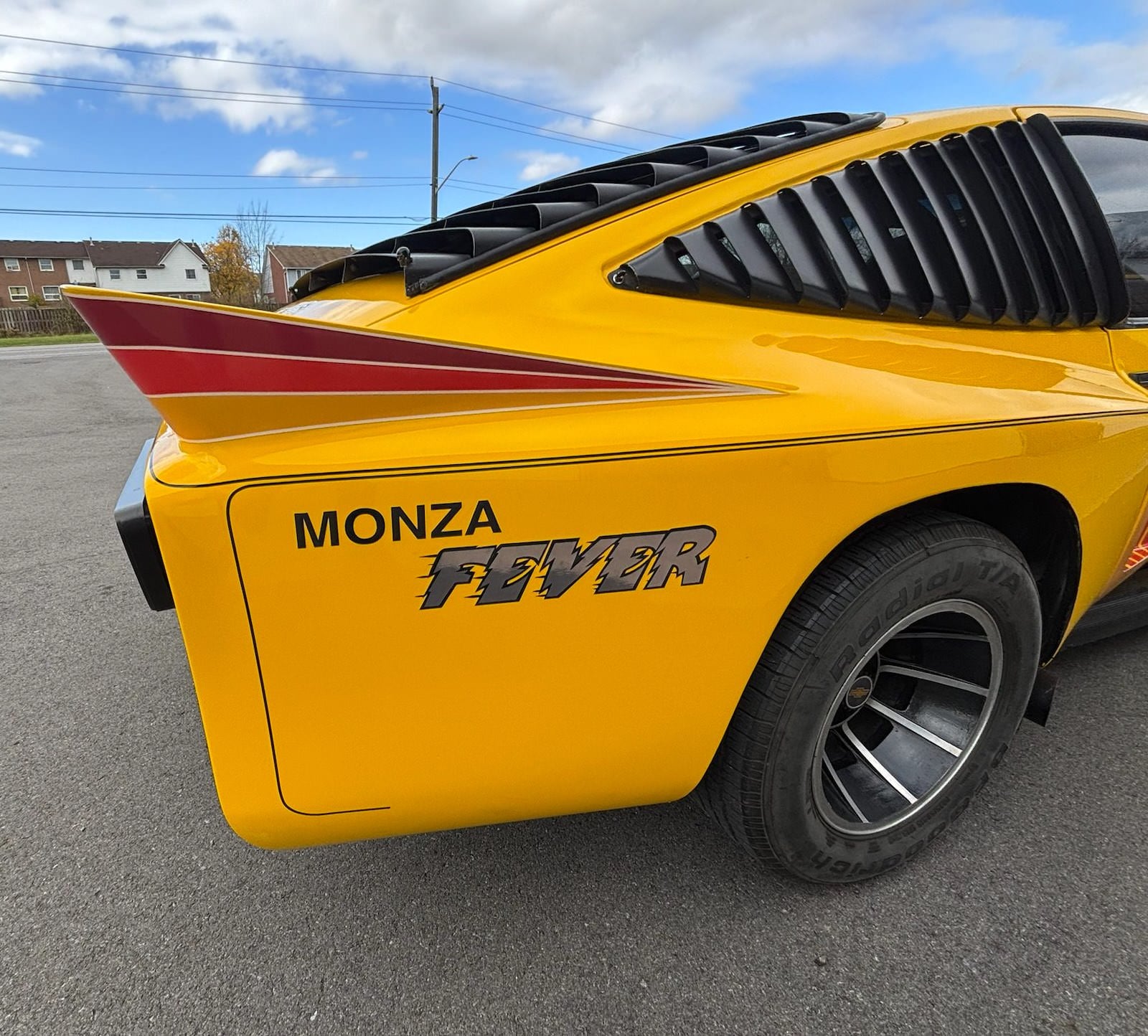
Monza Fever was fitted with a factory-offered fiberglass widebody kit, custom side and rear window louvers, an L88 Corvette-style hood scoop, and inverted Pontiac Sunbird taillights. It became a bit of a celebrity in-period after it appeared on the cover of the June 1976 issue of Hot Rod magazine.
Originally finished in Medium Red, the car underwent a refurb under previous ownership that included a repaint in Boyd Coddington Smooth Yellow with burgundy, tangerine, and gold stripes.
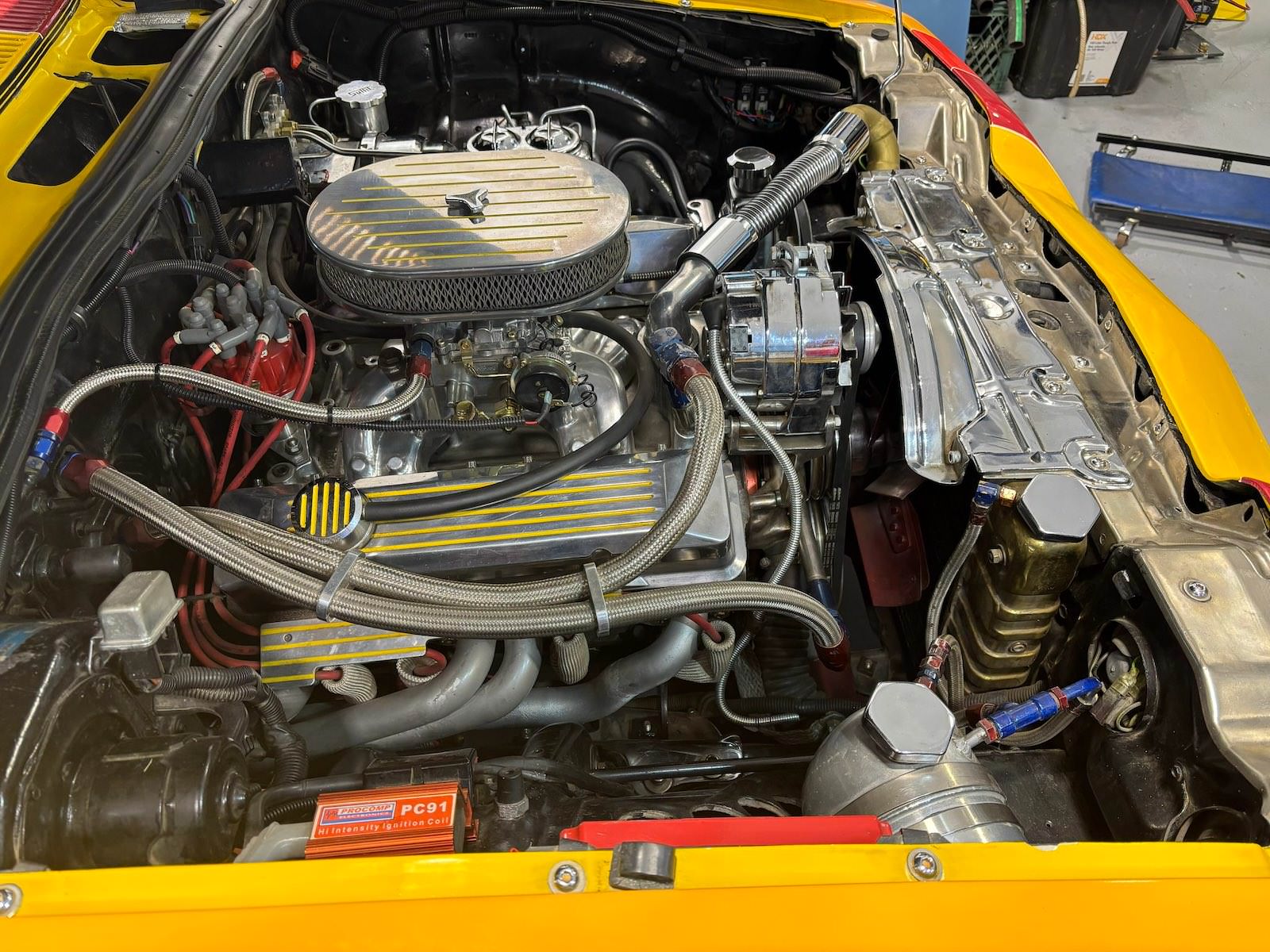
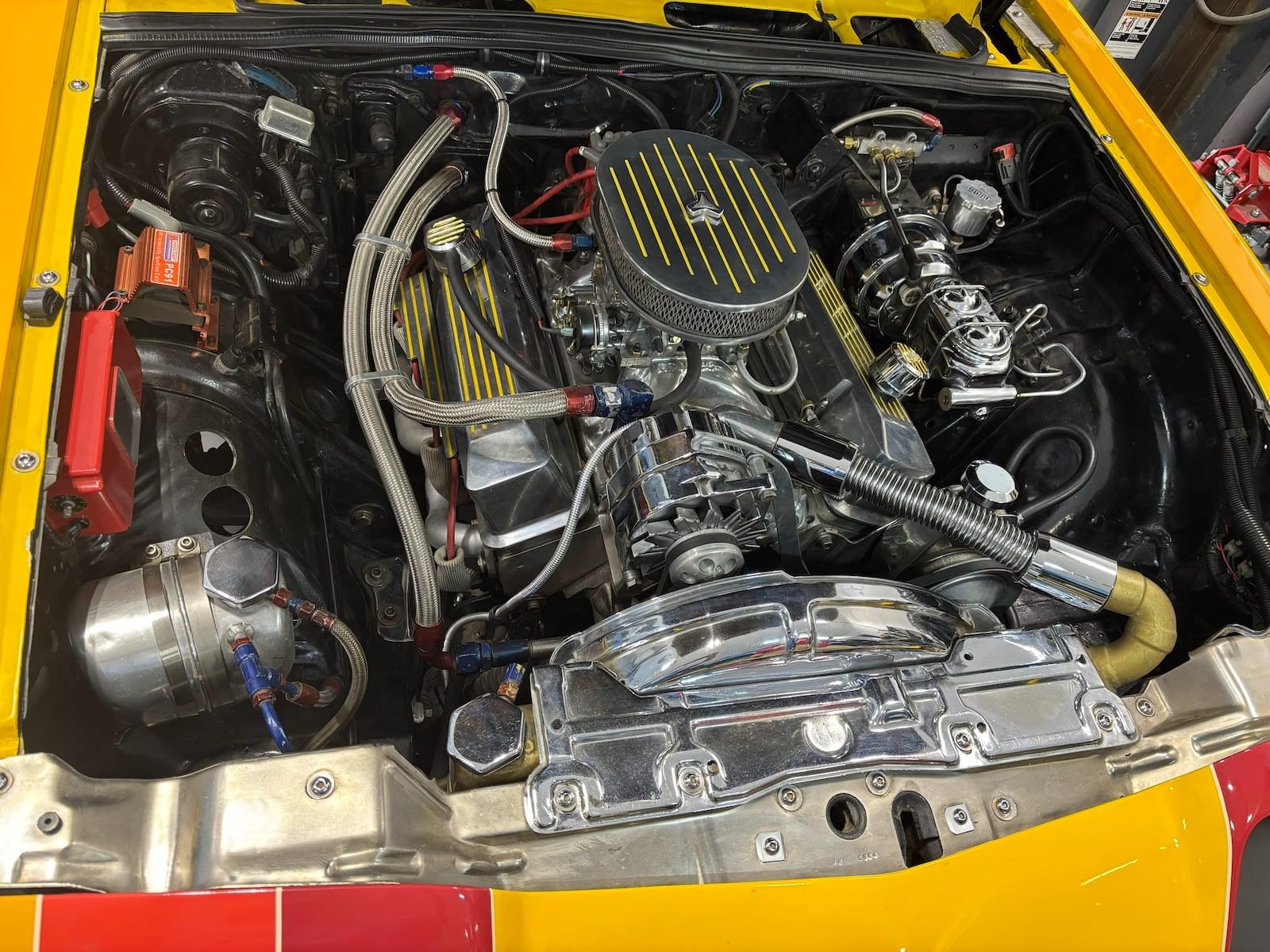
Power is provided by a 377 cubic inch (6.2 liter) Chevrolet small block V8 built by Phillips Racing Engines in Washington. The engine is based on a de-stroked 400 V8 fitted with a forged SCAT crankshaft, forged pistons, a Crane hydraulic camshaft, Patriot Performance cylinder heads, an Edelbrock Air Gap intake manifold, and a 600 CFM four-barrel carburetor.
Power is sent back through a Tremec TKO 5-speed manual transmission, a Centerforce dual-friction clutch, and a 12-bolt limited-slip rear axle with 3.55:1 gearing. The car rides on 15-inch American Racing Vector alloy wheels and benefits from four-wheel disc brakes, Chevrolet S-10 front spindles, and custom adjustable rear trailing arms.
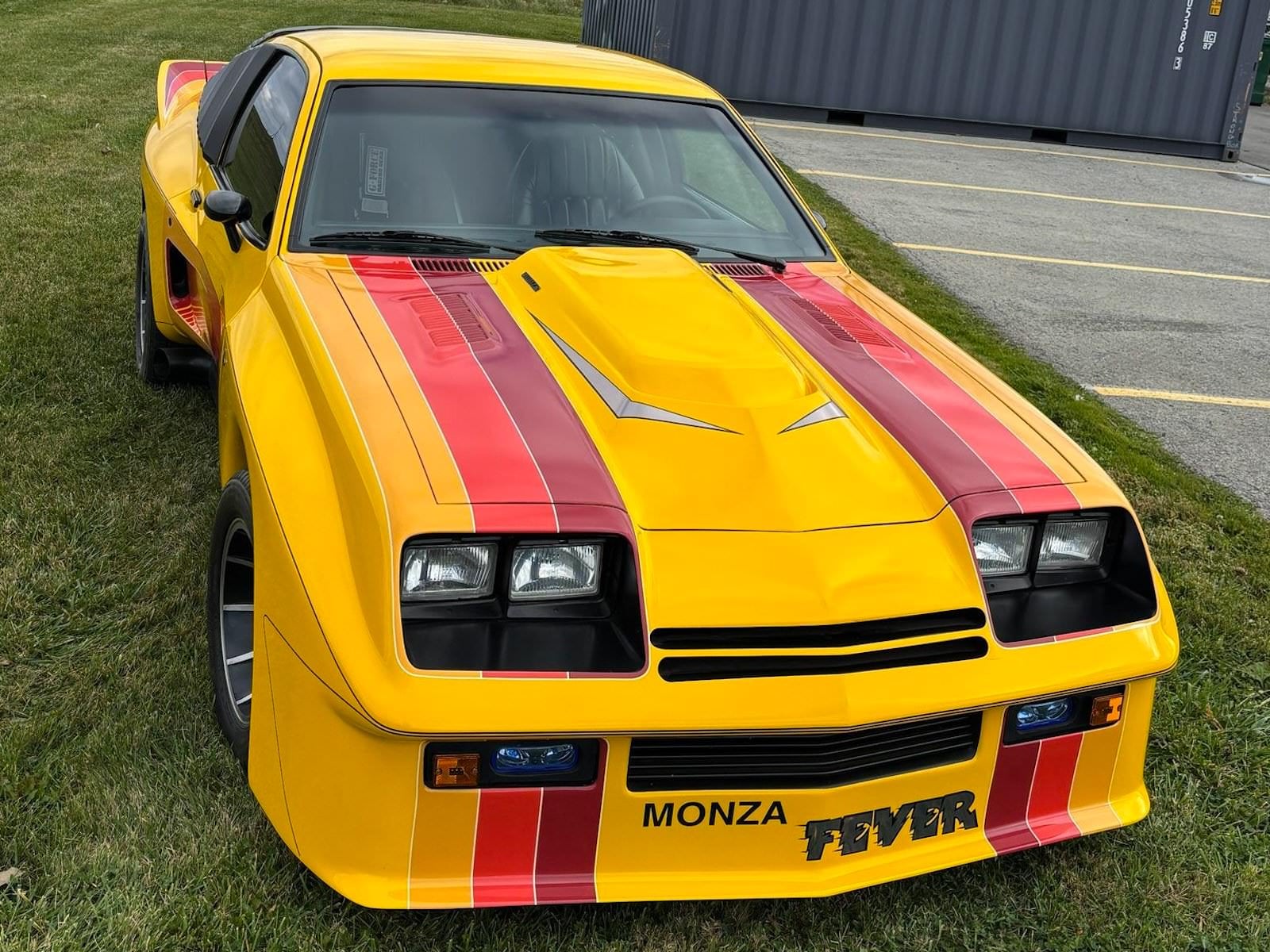
This is “Monza Fever,” it’s a custom 1975 Chevrolet Monza that was built in-period by the legendary George Barris and his team, the creators of cars like the original Batmobile, KITT from Knight Rider, the Munster Koach, and countless others.
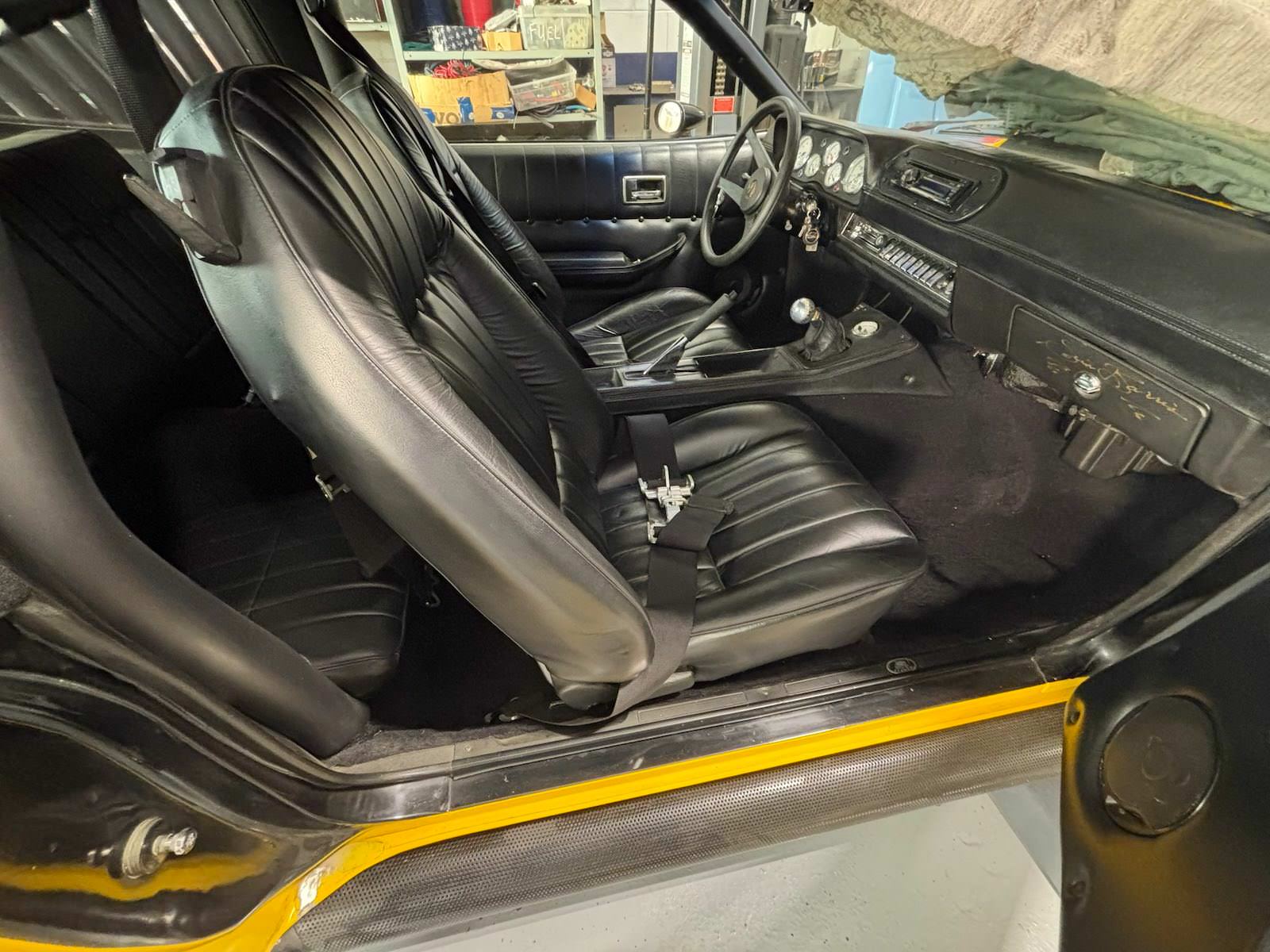
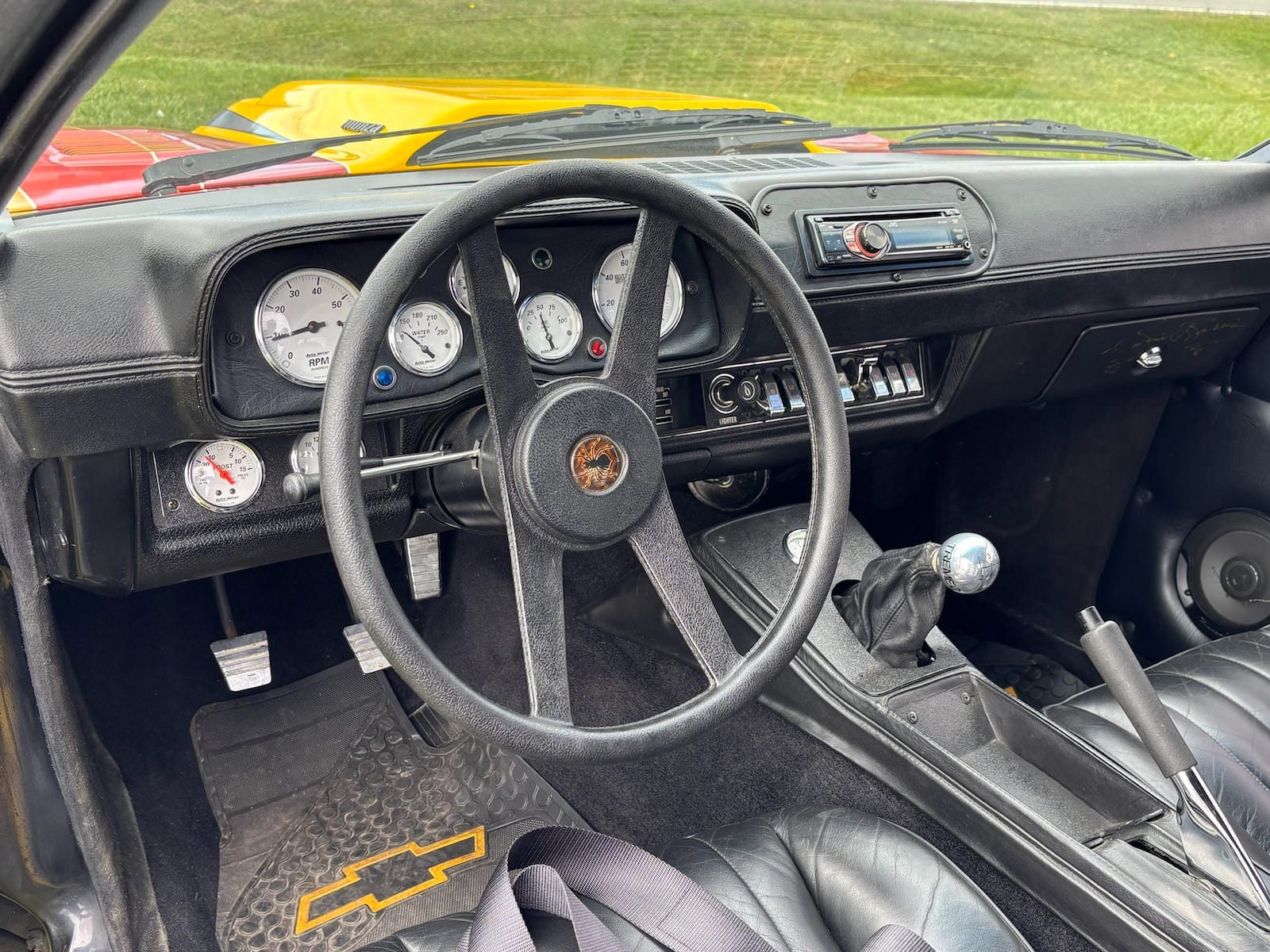
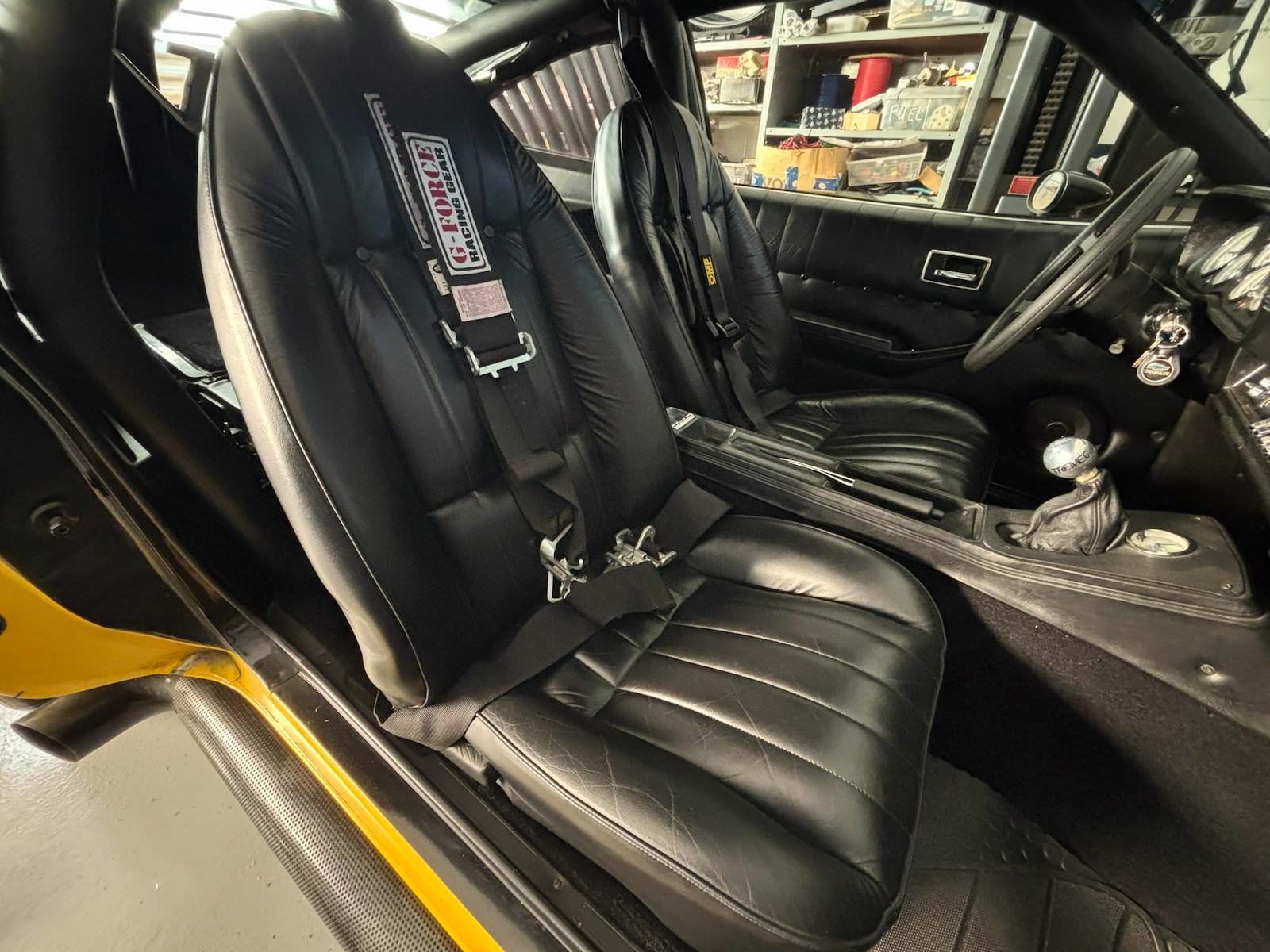
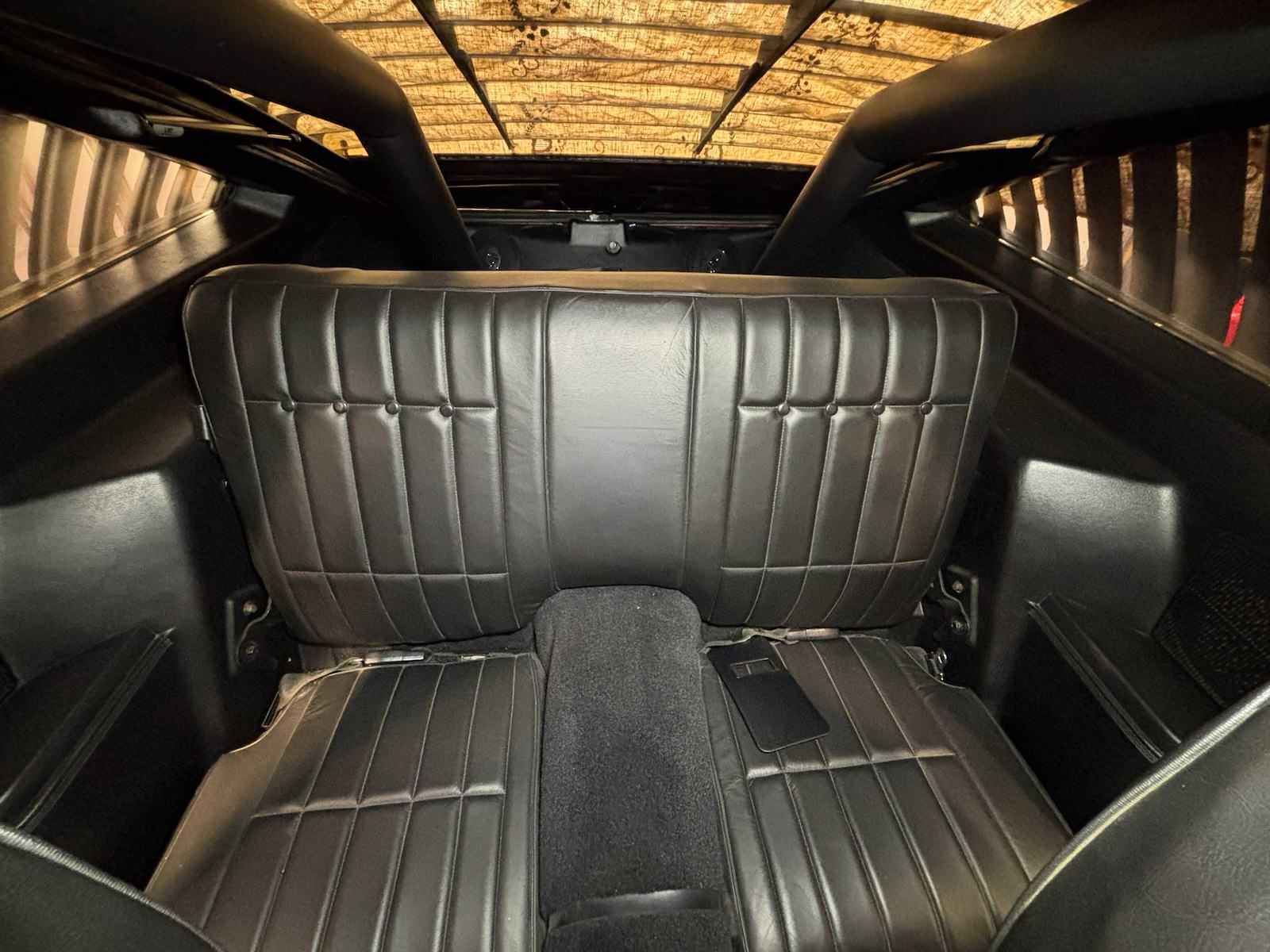
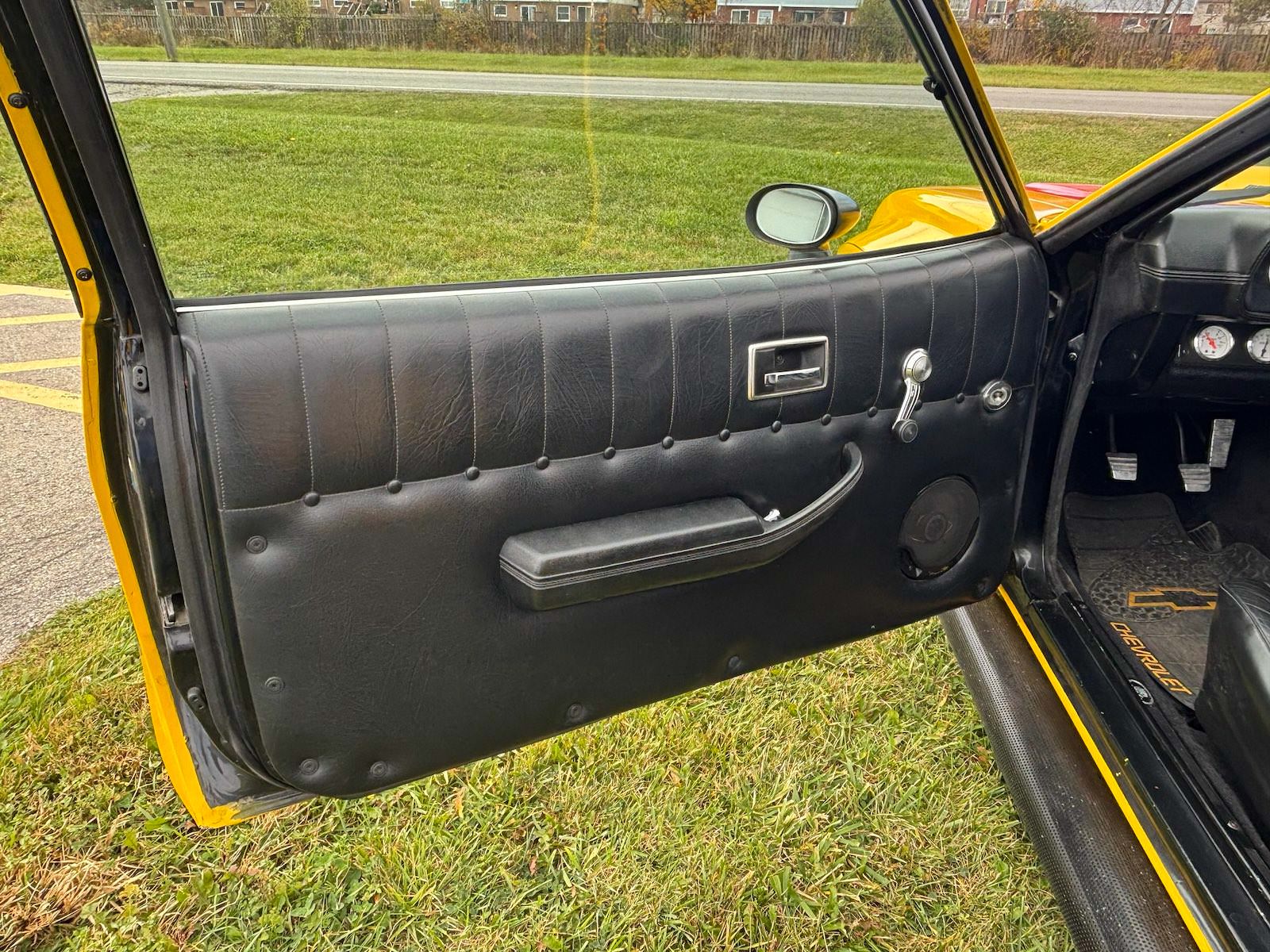
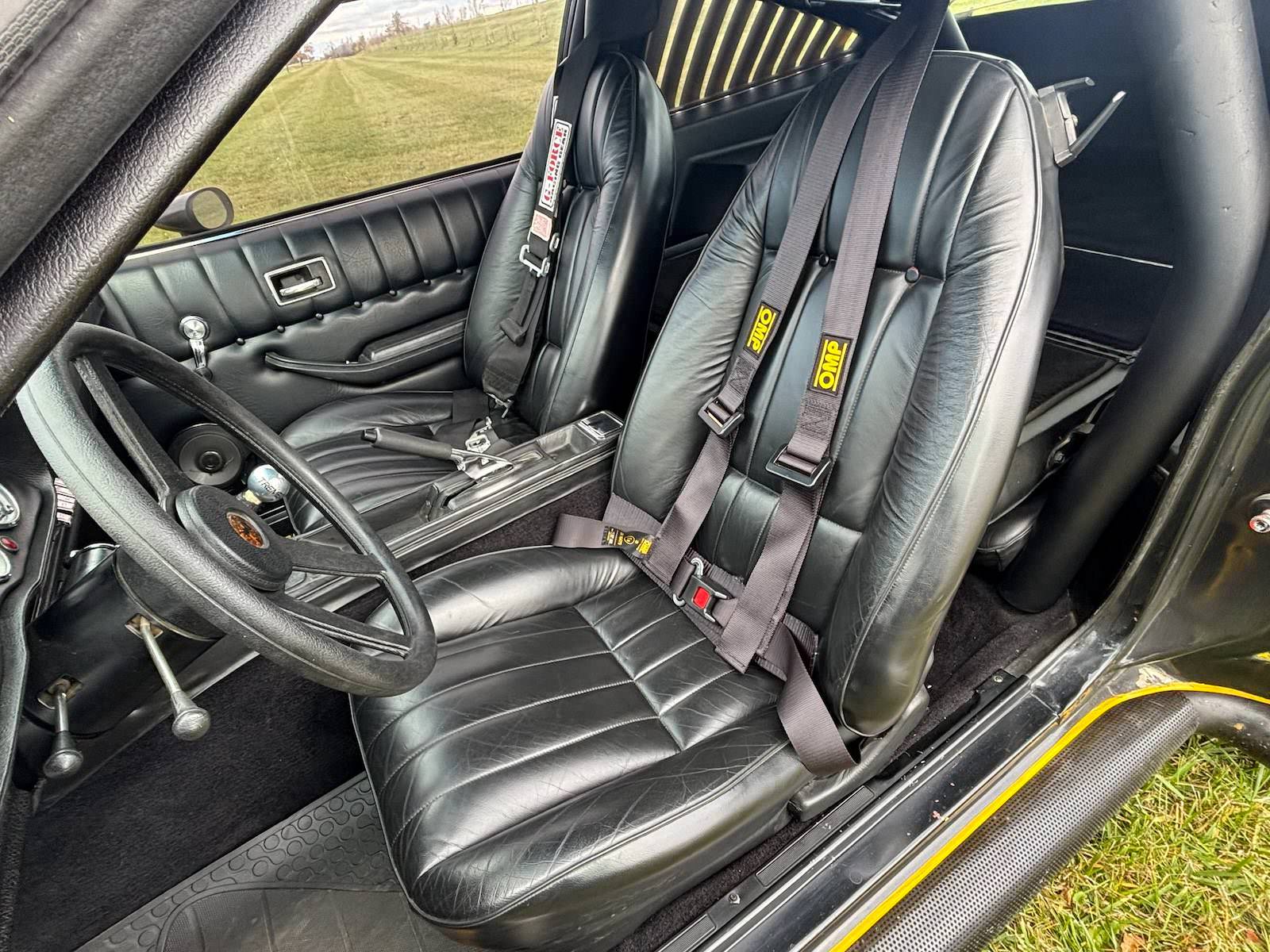
The interior has black vinyl and leather bucket seats, a four-point roll bar, racing harnesses, AutoMeter instrumentation, a Hurst shifter, and a JVC stereo. The glovebox also carries George Barris’ signature. The current owner bought the car in November of 2022 and has added approximately 100 miles to the 6,500 shown on the replacement odometer, though true mileage is unknown.
It’s now being offered for sale out of Ontario, Canada, with historical records, appraisals, a blue California license plate, and Ontario registration in the seller’s name. If you’d like to read more or register to bid, you can visit the listing here.
Images courtesy of Bring a Trailer + General Motors

Articles that Ben Branch has written have been covered on CNN, Popular Mechanics, Smithsonian Magazine, Road & Track Magazine, the official Pinterest blog, the official eBay Motors blog, BuzzFeed, Autoweek Magazine, Wired Magazine, Autoblog, Gear Patrol, Jalopnik, The Verge, and many more.
Silodrome was founded by Ben back in 2010, in the years since the site has grown to become a world leader in the alternative and vintage motoring sector, with well over a million monthly readers from around the world and many hundreds of thousands of followers on social media.