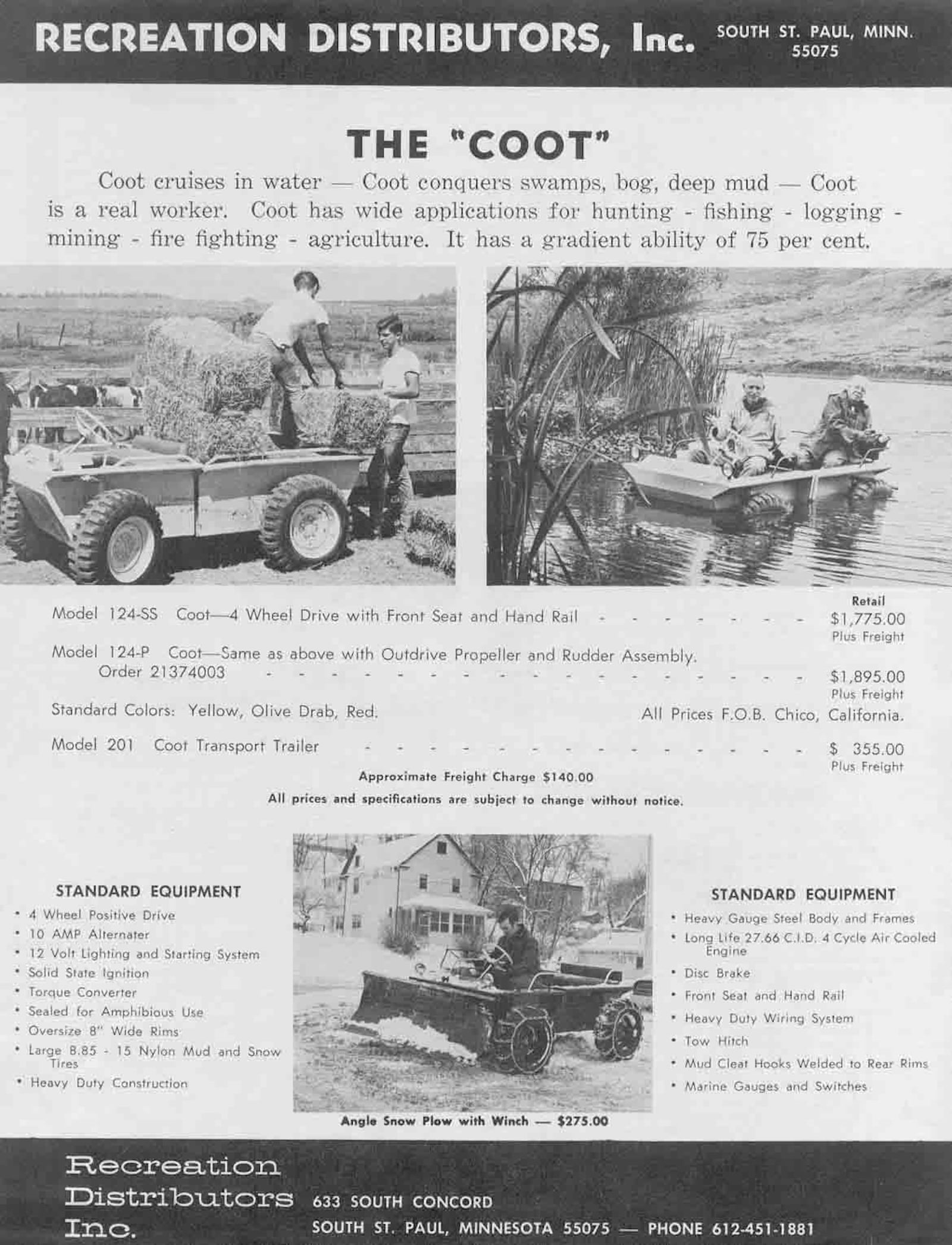
This is a rare Coot 4×4 amphibious ATV from 1967, it’s one of the most unusual all-terrain vehicles of the time, with a clever pivoting twin-hull design that offered good wheel articulation without the need for traditional suspension.
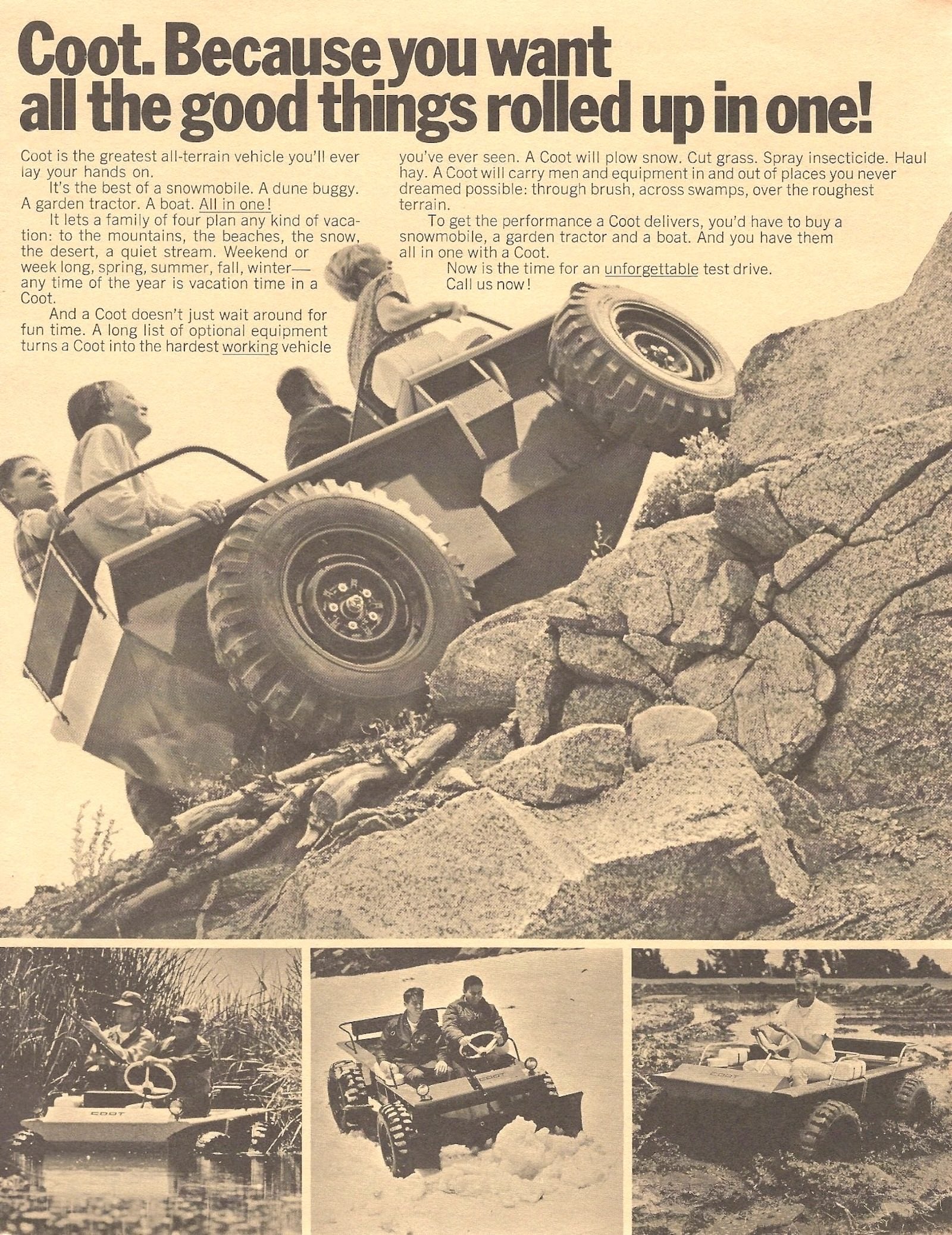
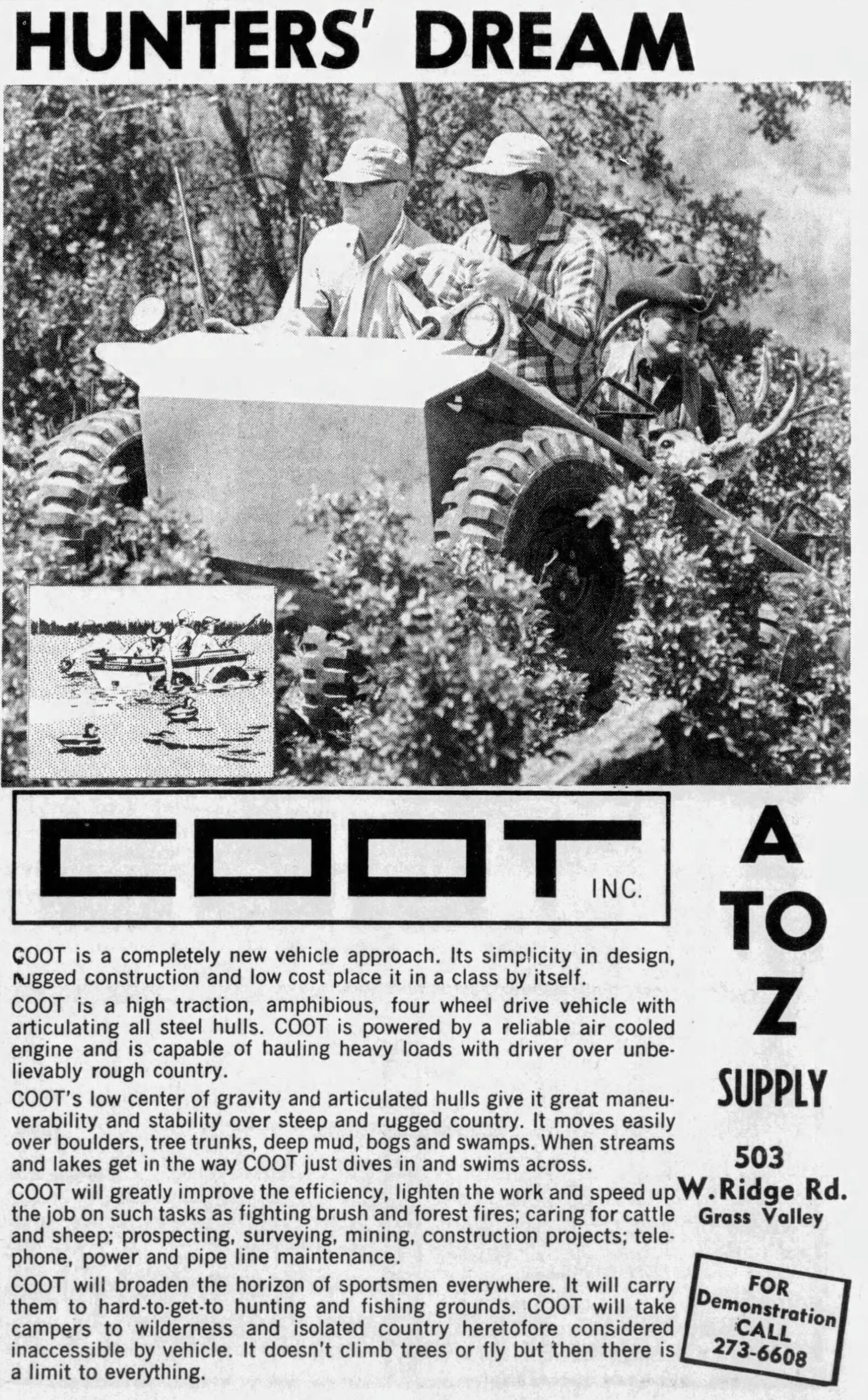
The Coot was developed long before the arrival of quad bikes and the three-wheelers that came before them. It was initially designed for agricultural, forestry, and search and rescue use, but it soon became popular with hunters, anglers, and for other outdoor pursuits.
Fast Facts: A 1967 Coot 4×4 Amphibious ATV
- The Coot amphibious ATV was designed in 1964 by California mechanic Carl Enos Jr. Production began in 1967, with its articulated dual-hull construction allowing exceptional off-road mobility without conventional suspension. By 1968, the company had sold 1,800 vehicles through 254 American dealerships, attracting ranchers, hunters, forestry workers, and law enforcement agencies.
- The original Coot featured two watertight steel hulls capable of twisting 45º relative to each other, keeping all four wheels in contact with uneven terrain. Power came from a 12 bhp Tecumseh single-cylinder engine driving all four wheels through a variable-speed torque converter, two-speed transmission, and worm gear drivetrain.
- The Coot could reach 20 mph on land and 1.5 mph in water, increasing to 5 mph with an optional propeller. Cummins acquired the design in 1970, and production continued under subsequent ownership until the 1980s. The Coot2 revival appeared in the mid-2000s with hydraulic drive and a 27 bhp Kohler V-twin.
- The Coot shown here is an early example, chassis number 0977, dating from the initial production period in 1967. It retains its articulated steel hulls and two-wheel steering but now features a 688cc Honda GX690 V-twin and Subaru differentials. Finished in green, it’s offered at no reserve in Nampa, Idaho.
History Speedrun: The Coot ATV
Carl Enos Jr was a mechanic from Orland, California. He designed the Coot in 1964 as a utility vehicle of sorts for use on ranches, and in other fields where small, go-anywhere mobility was required.
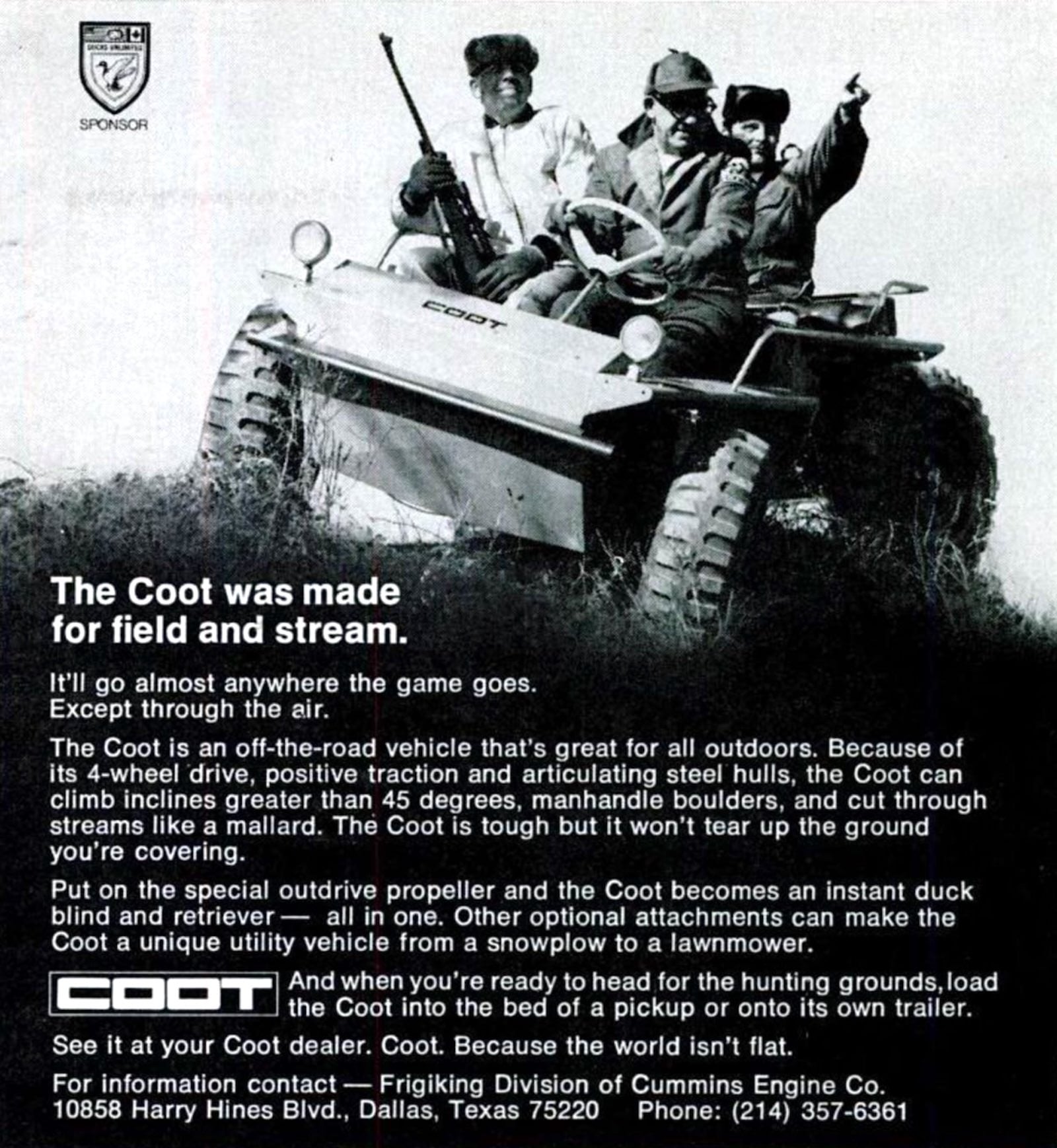
 Carl Enos Jr was a mechanic from Orland, California. He designed the Coot in 1964 as a utility vehicle of sorts for use on ranches, and in other fields where small, go-anywhere mobility was required. Image courtesy of Coot Inc.
Enos’ idea was to build the body as two steel tubs joined in the middle by a pivot, so the front half could twist against the rear and keep four driven wheels on the ground with no conventional suspension at all. It was a clever idea. Coot Inc. was officially founded in 1966 with Robert K. Mauser of San Francisco as President and Enos as VP.
That November, the Glenn County supervisors agreed to lease the company a county building in Orland for an assembly line. The firm talked of a first batch of 1,000 vehicles and an eventual 100,000, each weighing 700lbs and selling for under $1,000 USD, that’s a little over $10,000 USD in 2026 dollars.
Enos filed a patent for his “High Traction Vehicle” design in October of 1966 and it was granted on February the 11th, 1969, assigned to Coot Inc.
Series production of the Coot began in mid-1967, and by 1968 the Coot was being built in Chico, California, and sold out of San Francisco. The price had risen to $1,595 USD, over $15,500 USD equivalent in 2026. Despite the price increase, sales hit 1,800 in 1968 through 254 dealers across the country, and the company expected to double that sales figure in 1969.
Buyers included ranchers, hunters, federal forest rangers, and about a dozen law enforcement agencies that used Coots for search and rescue in rocky country. At least 14 other American firms were selling off-road amphibians by then, among them the Terra-Tiger at about $1,400 USD and the Amphi-Cat at $1,500 USD.
It’s worth remembering that this was before the introduction of quad bikes or the plentiful Japanese three-wheelers that came before them, and there was a significant latent demand for small, highly-capable off-road vehicles.
By the end of 1968 Enos and Mauser sold Coot Inc. for just over $1 million USD to Randtron (almost $10,000,000 USD by 2026 standards). Randtron was a new manufacturing conglomerate based near San Francisco. Both Enos and Mauser stayed on in advisory and management roles, though interestingly, the company hadn’t yet turned a profit.
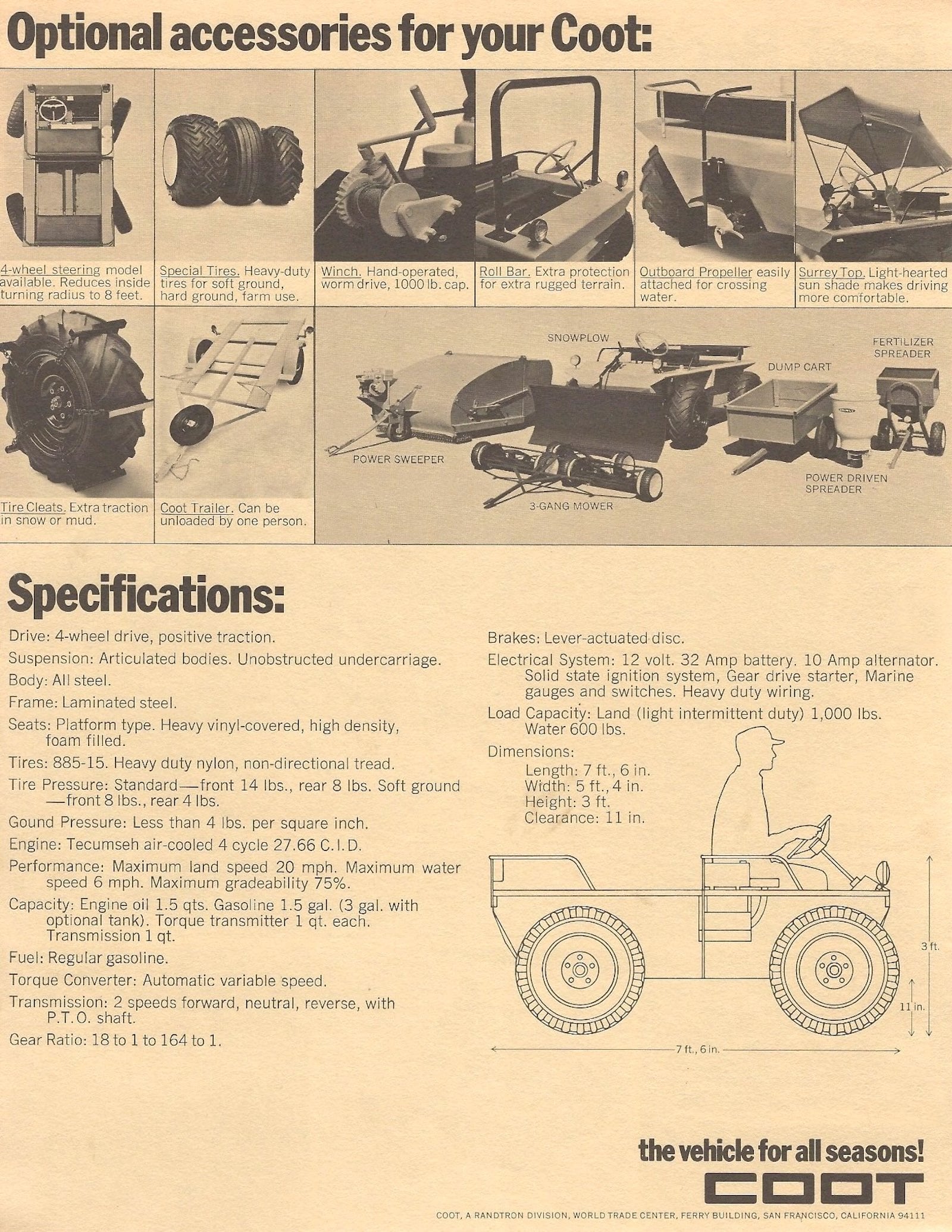
The Coot’s two tubs were open hulls made from 16-gauge sheet steel. They were joined by a hollow, grease-sealed threaded sleeve that allowed each half to rotate up to 45º relative to the other and still keep water out when the vehicle was afloat. Image courtesy of Coot Inc.
The Coot: Two Steel Tubs And A Pivot
A 1969 magazine report summed the Coot up as “two steel tubs hung between four large tires”, and it was probably the best brief summary that could be written. The tubs were open hulls made from 16-gauge sheet steel. They were joined by a hollow, grease-sealed threaded sleeve that allowed each half to rotate up to 45º relative to the other and still keep water out when the vehicle was afloat. There was no normal suspension at all, the pivoting center and the large, low-pressure tires more than made up for it.
The engine was installed under the front seat, it was a 12 bhp Tecumseh HH120 unit – an air-cooled, cast-iron, four-stroke single with 27.66 cubic inches of displacement (about 450cc), with 12-volt electrics. It drove through a belt-type variable-speed torque converter to a gearbox with two forward speeds, as well as a neutral and reverse. A chain then turned a drive shaft that runs the length of the vehicle, passing through the center of the pivot sleeve. Because the shaft lies on the same axis the hulls rotate around, it needed no universal joints. A worm gear at each end then turned a solid axle.
There were no differentials, so all four wheels turn at the same speed all the time. That gives the Coot its traction, and it gives the two-wheel-steer version a rather wide turning circle. Four-wheel steering was offered later to tighten that turning circle and make it better suited to tighter spaces.
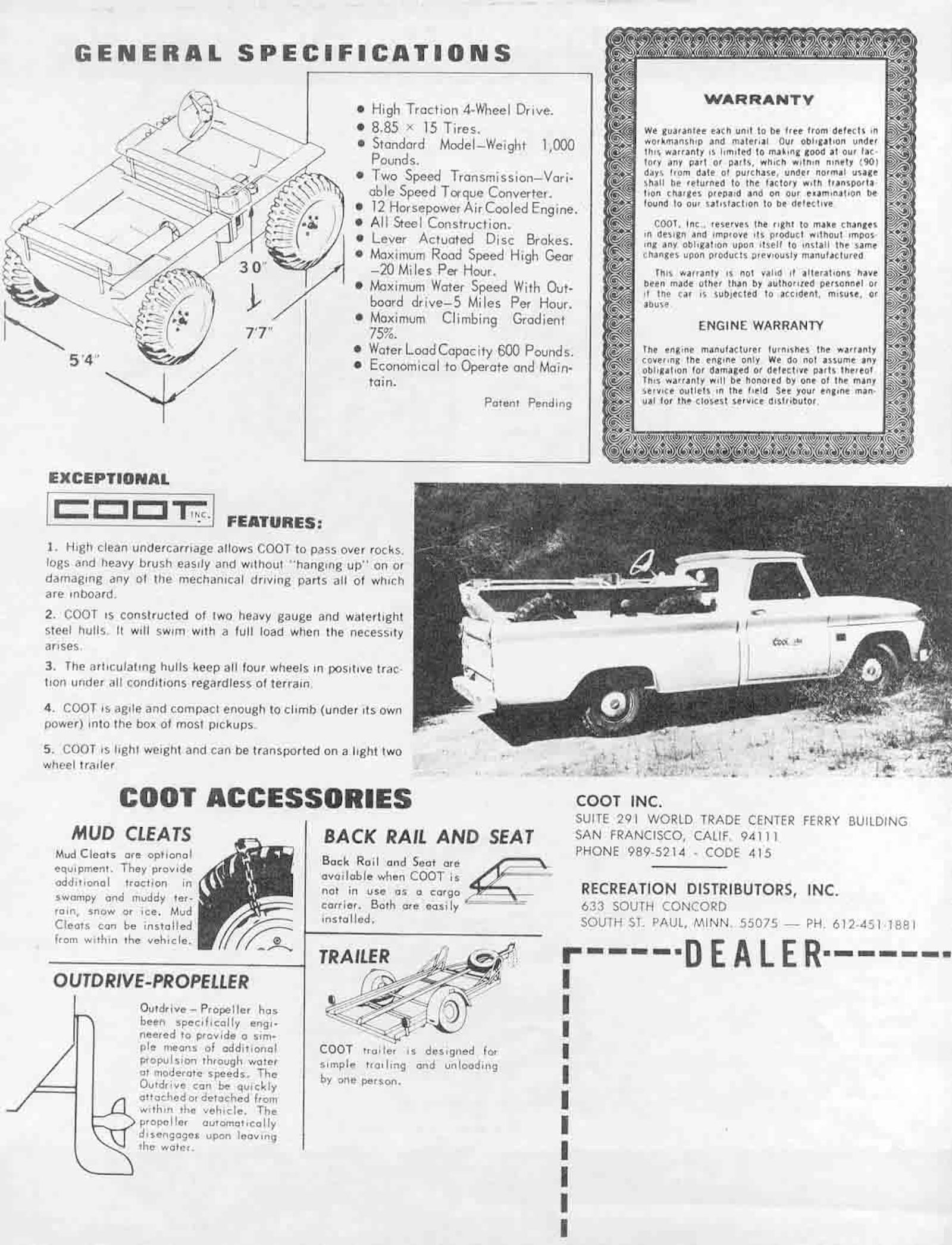
Production Coots used a lever-operated disc for braking, and the whole driveline was housed inside the hulls, which left a smooth underside with 11 inches of ground clearance that could float across the water and slide across deep snow and mud.
The Coot measured in at 7 feet 7 inches long, 5 feet 4 inches wide, and 3 feet high, on a 58½ inch wheelbase. The 1973 factory spec sheet gave a weight of 1,100 lbs for the two-wheel-steer model and 1,160 lbs with four-wheel steering. It was sized to drive up into the bed of a pickup truck. The rated payload on land was 1,000 lbs for light, intermittent work or 750 lbs for continuous heavy duty, and the two-wheel-steer model could carry up to 600 lbs when on the water.
The top speed was 20 mph in high gear, and the company claimed it could climb up to a 75% grade. In water the spinning wheels pushed it along at 1.5 mph. There was an optional propeller, it was driven from the rear end of the drive shaft, and it raised the speed on water to a more respectable 5 mph. A gallon of gasoline was said to last about two hours, though of course this would largely depend on the kind of work you were making it do.
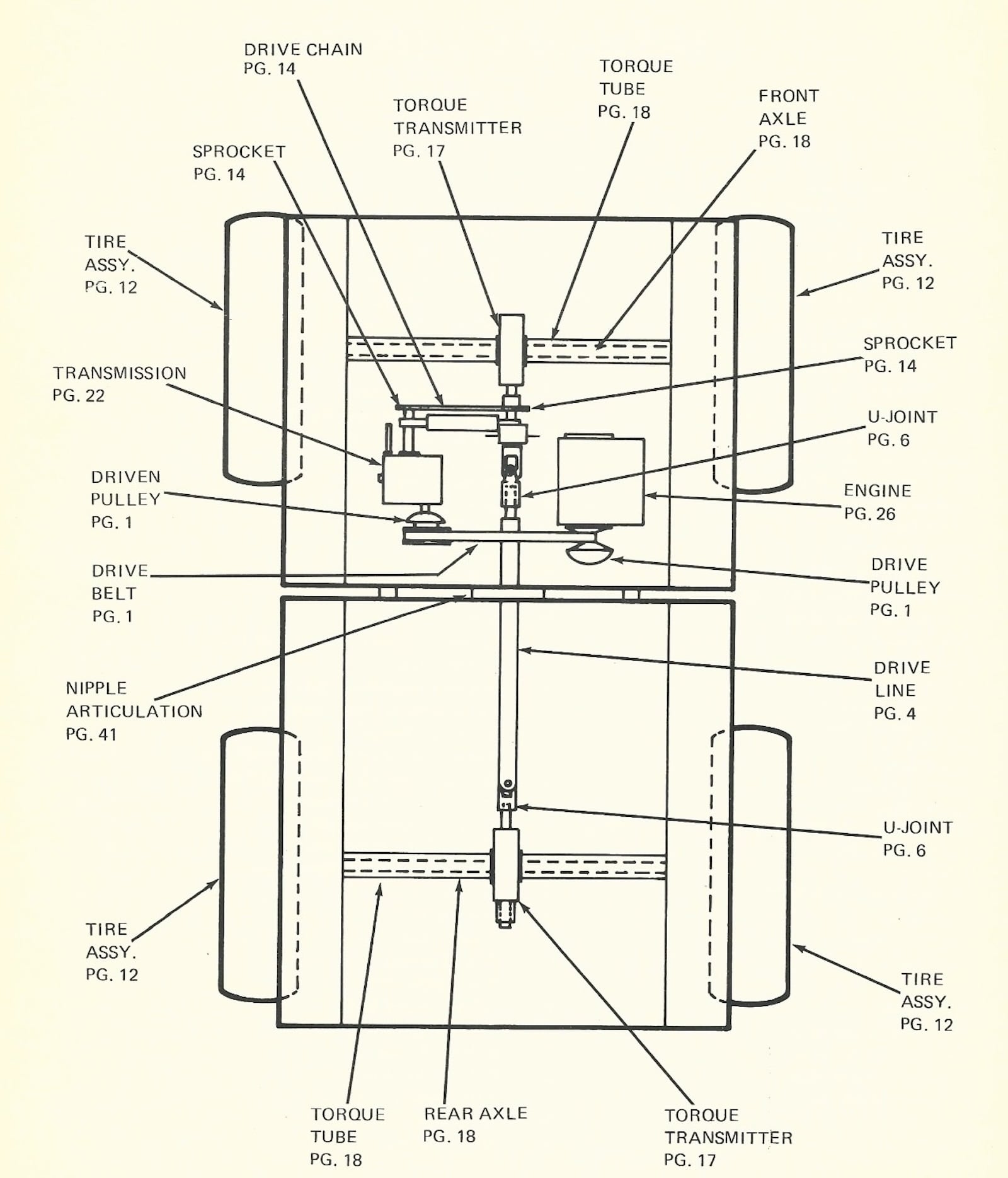
The Coot drove through a belt-type variable-speed torque converter to a gearbox with two forward speeds, as well as a neutral and reverse. A chain then turned a drive shaft that runs the length of the vehicle, passing through the center of the pivot sleeve. A worm gear at each end then turned a solid axle. Image courtesy of Coot Inc.
The Coot2 Debuts
In August of 1970 the Cummins Engine Company of Columbus, Indiana, bought the rights to the Coot from what was by then Coot Industries, Inc., along with the patents, trademarks, and inventory, including about 100 finished vehicles. Production moved from Chico to Dallas, Texas, where Cummins’s Frigiking division made automotive air conditioners and needed work to balance out what was a very seasonal business.
Frigiking pitched the Coot at oil, mining, forestry, and utility companies as well as American hunters and sportsmen. Its advertising claimed more than 5,000 were in use, and its publicity materials said that it had a ground pressure of about four pounds per square inch, less than that of a man on foot.
Cummins later sold the line to the Marmon Group of Chicago, and manufacture ended up at a plant near Austin, Texas. The Coot was marketed until 1984, and Coot Inc. of Cedar Park, Texas, was dissolved in late 1985. No total production figure has ever been published that we could find.
The design returned in the mid-2000s as the Coot2, built in Fairview, Illinois. Coot2 Inc. filed a patent application for it in November of 2004, naming David Donaldson and John LaReau as inventors. The Coot2 kept the 16-gauge steel hulls and 45º of articulation but replaced the belts, chain, and worm gears with a 27 bhp Kohler V-twin driving a hydraulic pump, a hydraulic motor at each wheel, and four-wheel power steering.
A fully optioned example cost close to $20,000 USD at the time. The last one was built in 2008.
The Coot 4×4 Amphibious ATV Shown Here
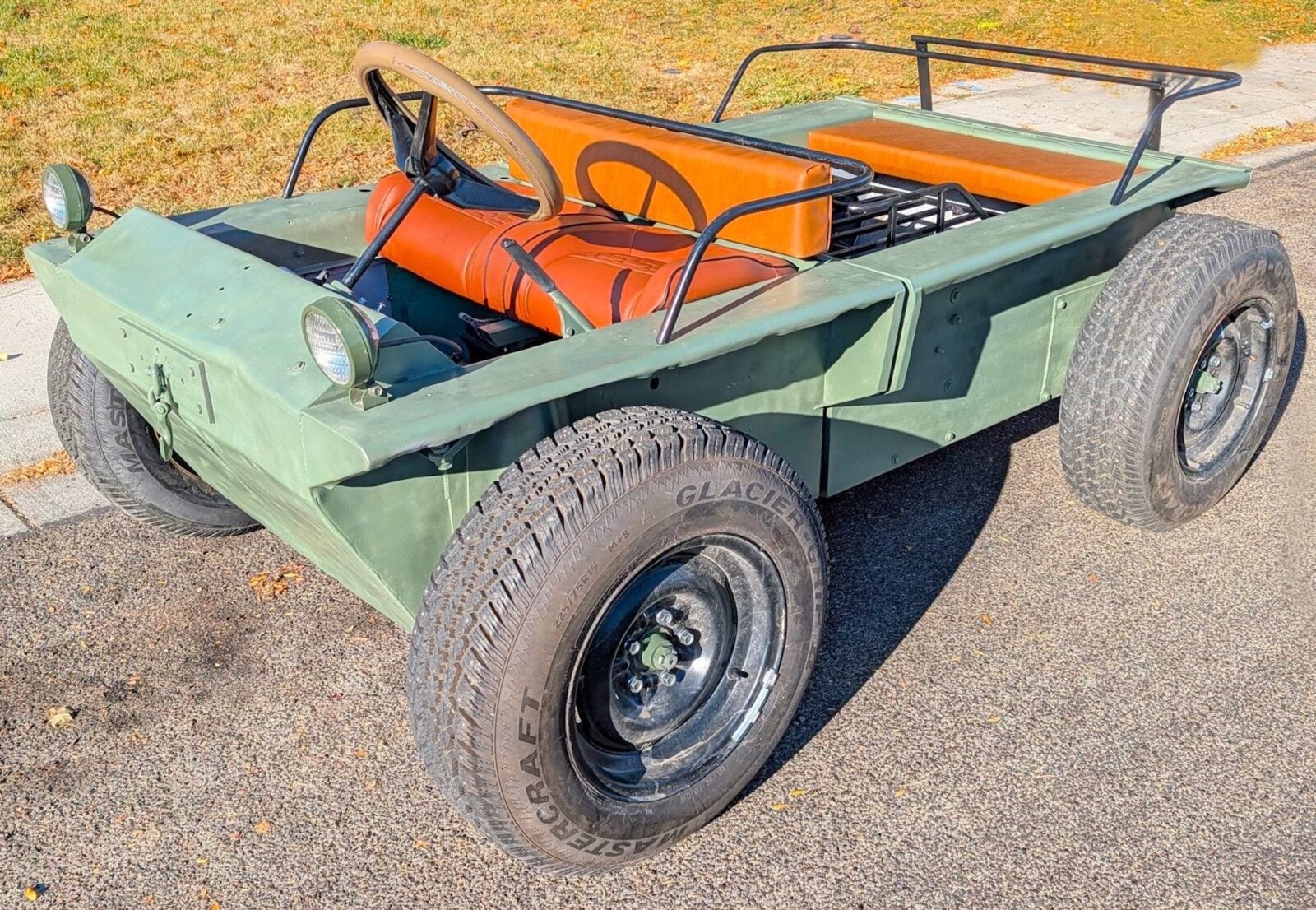
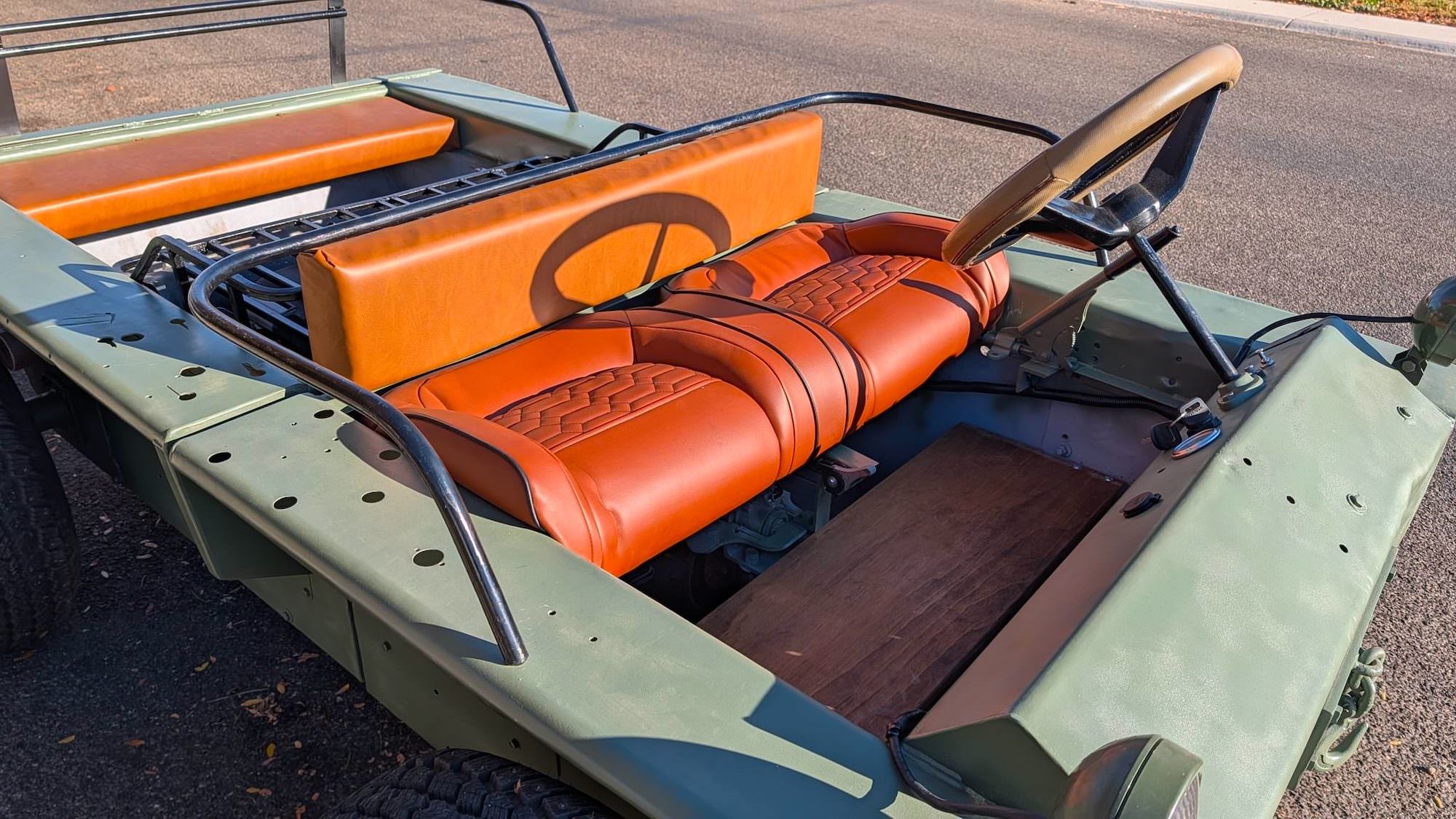
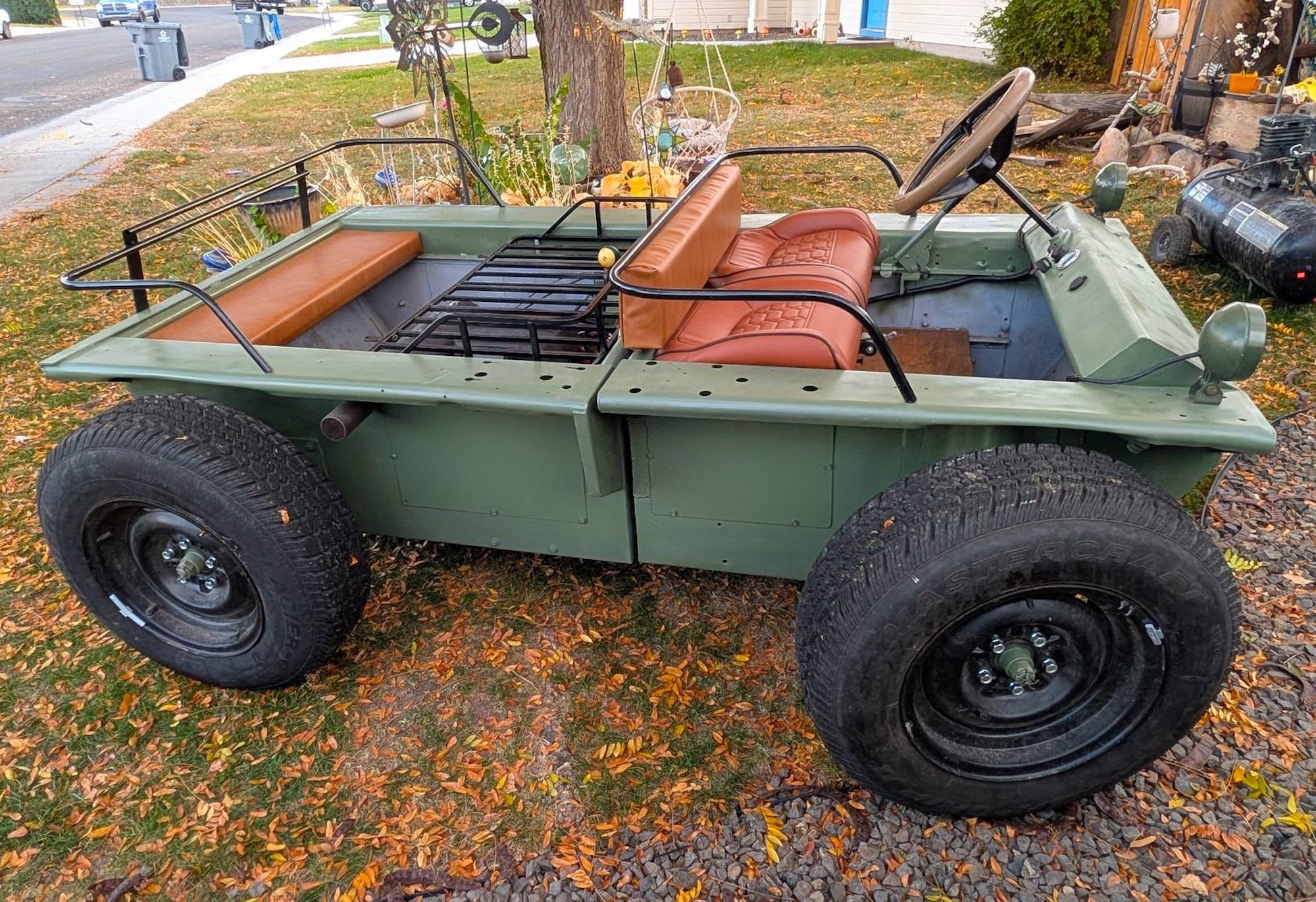
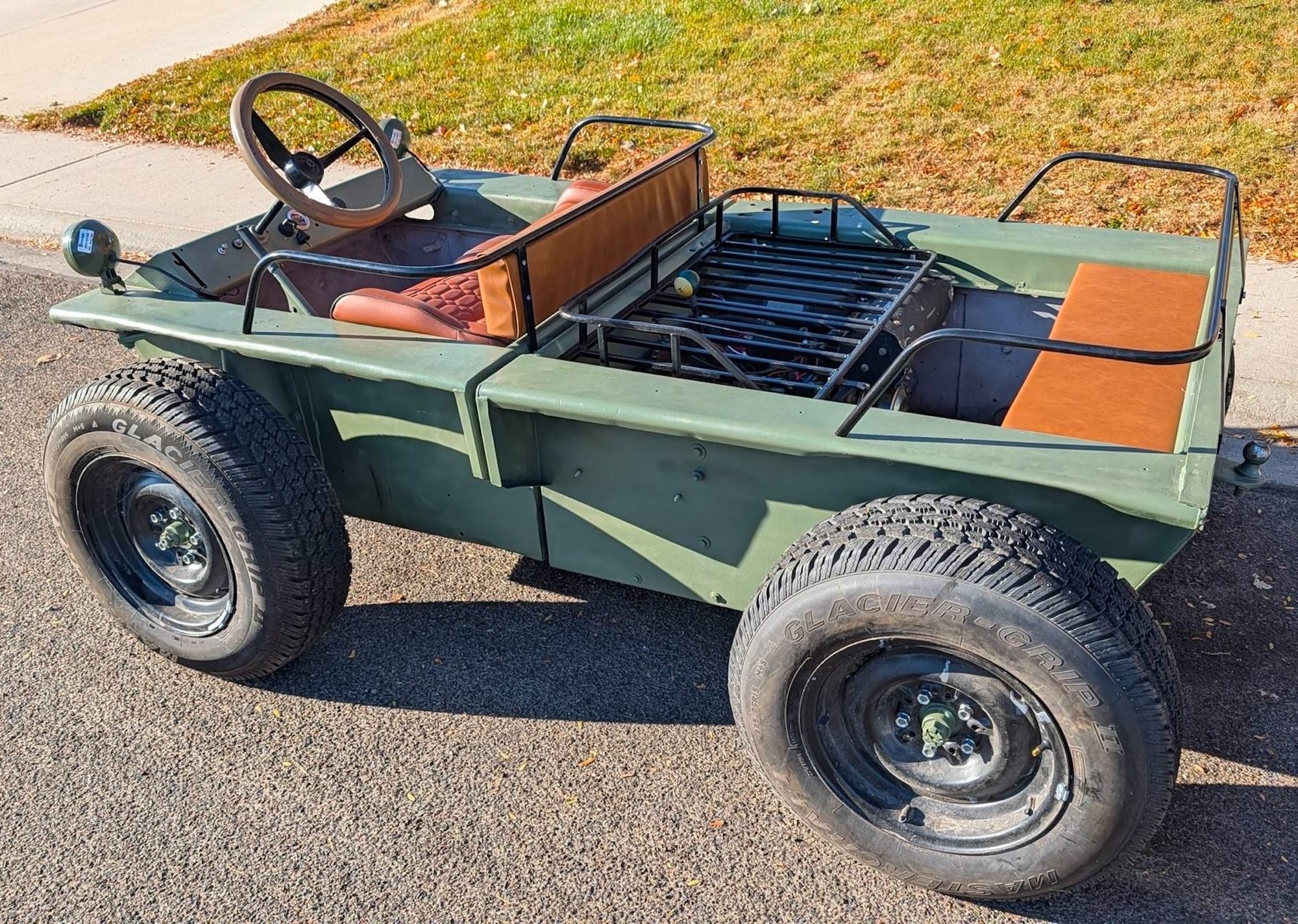
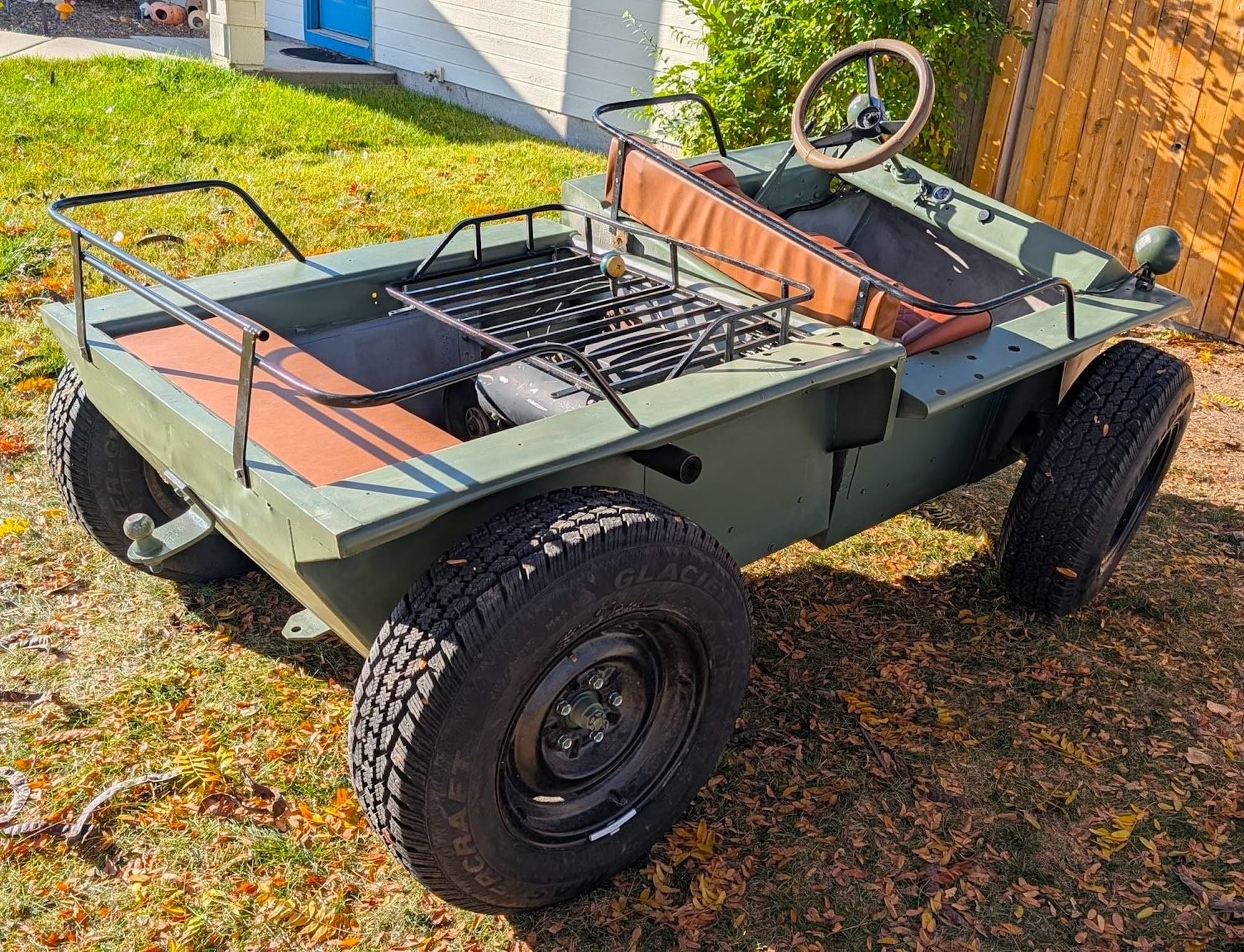
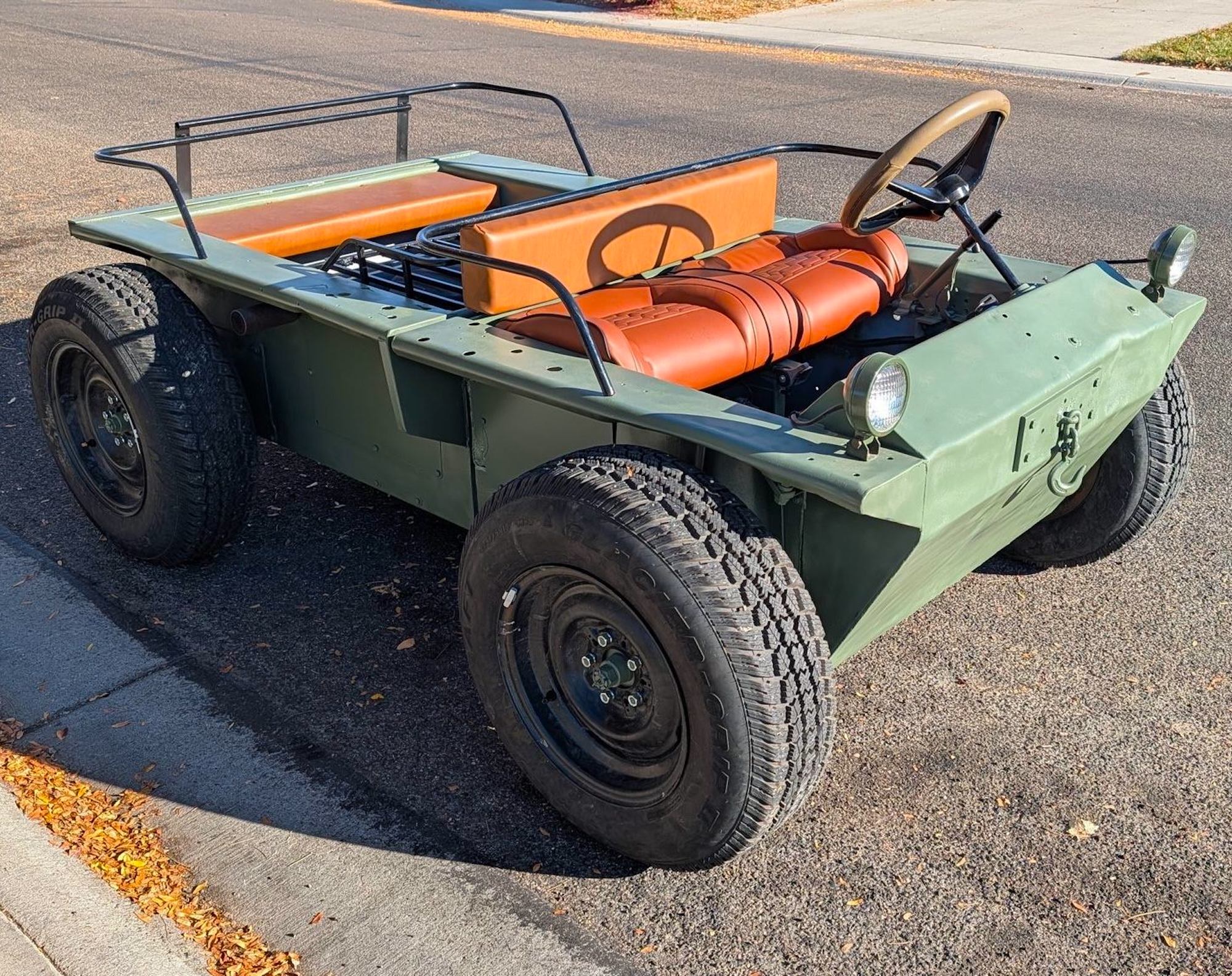
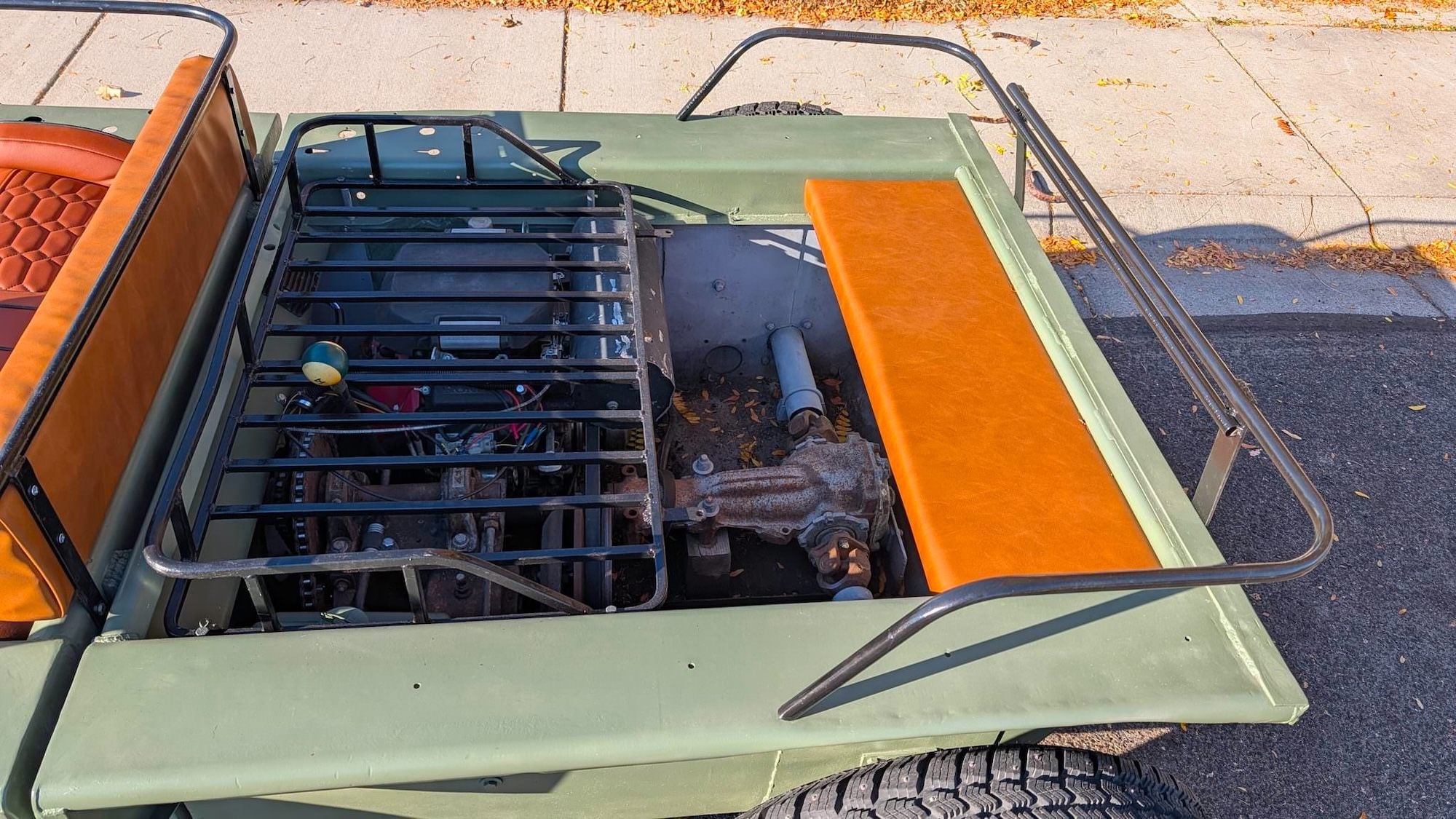
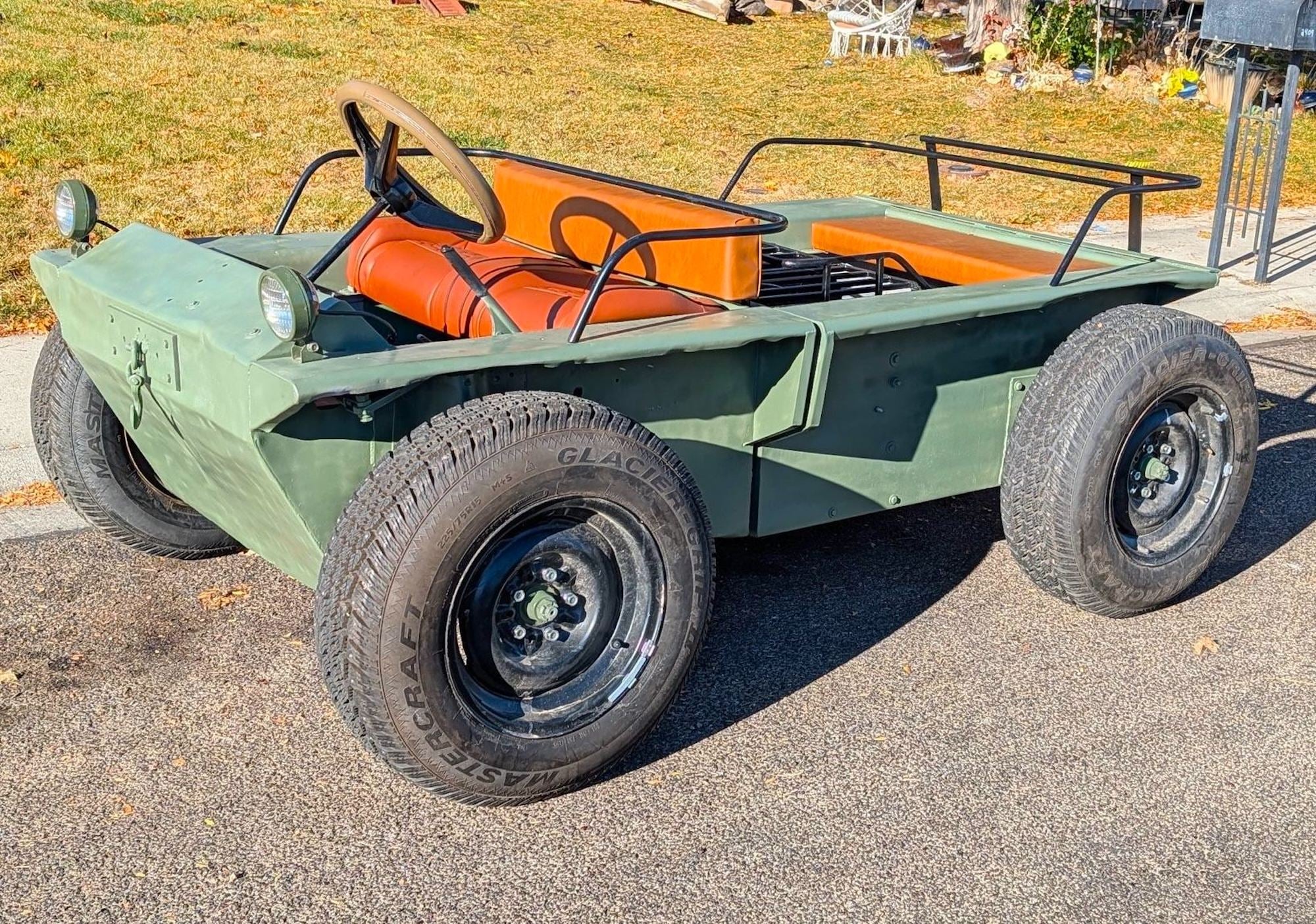
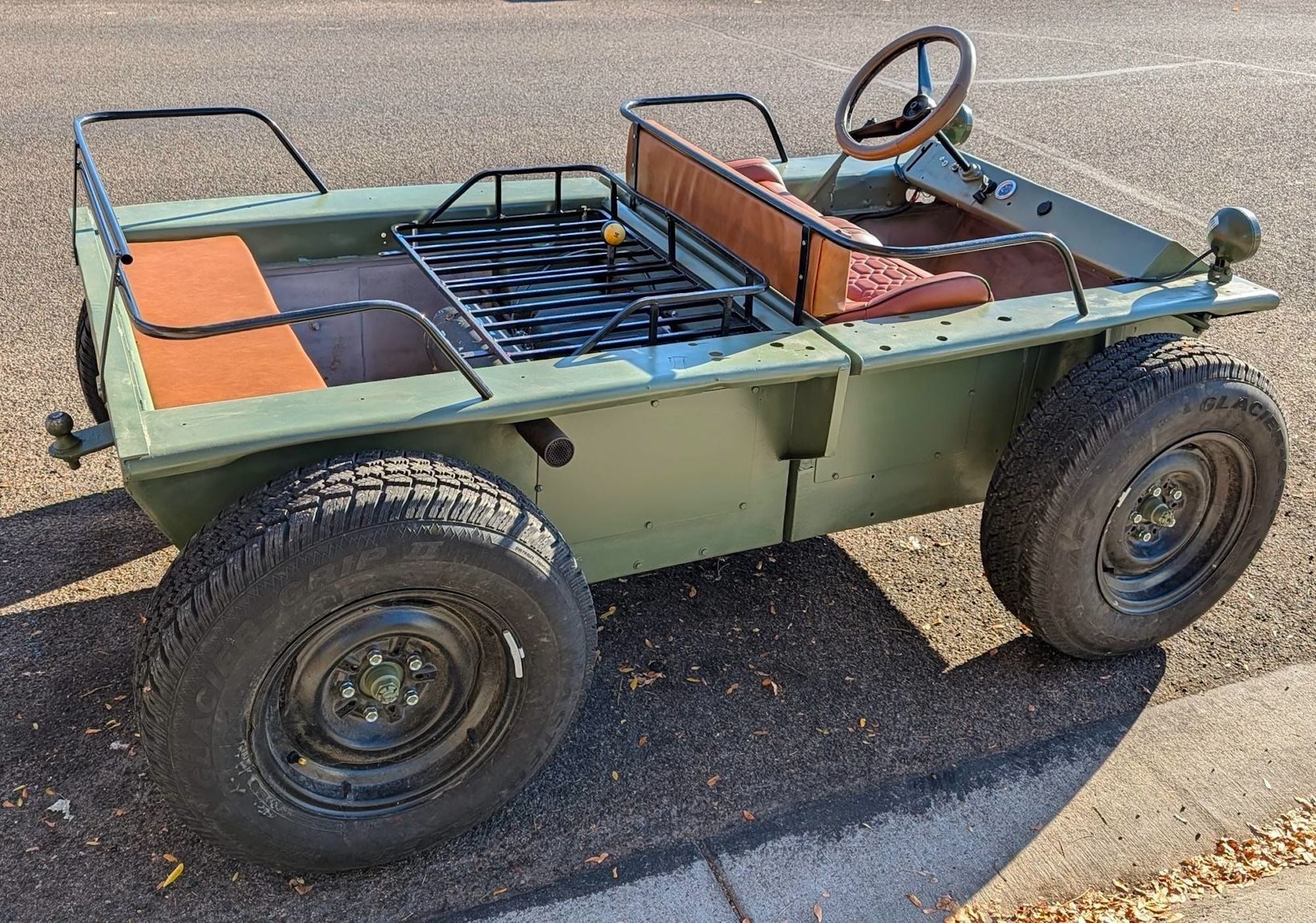
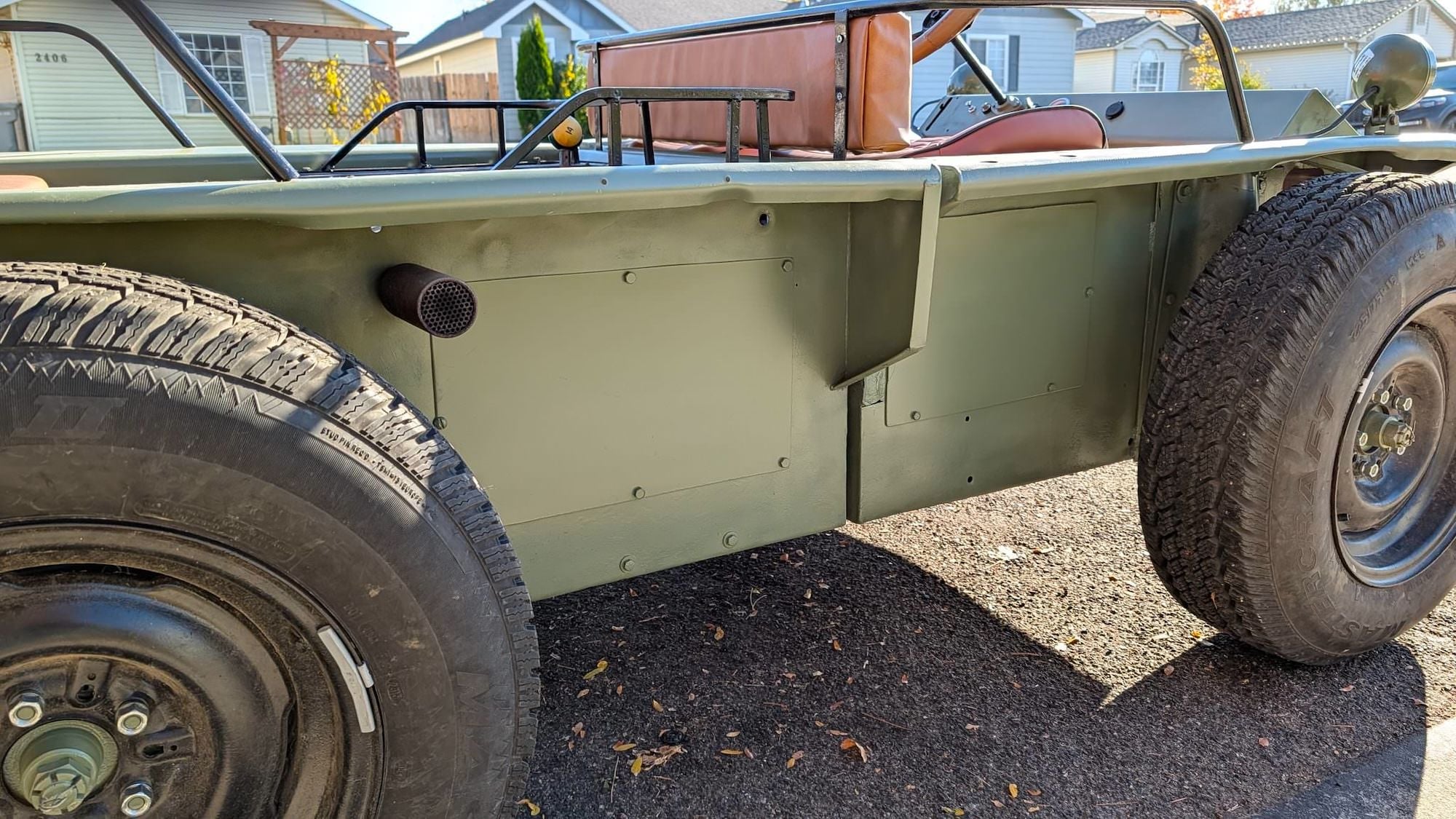
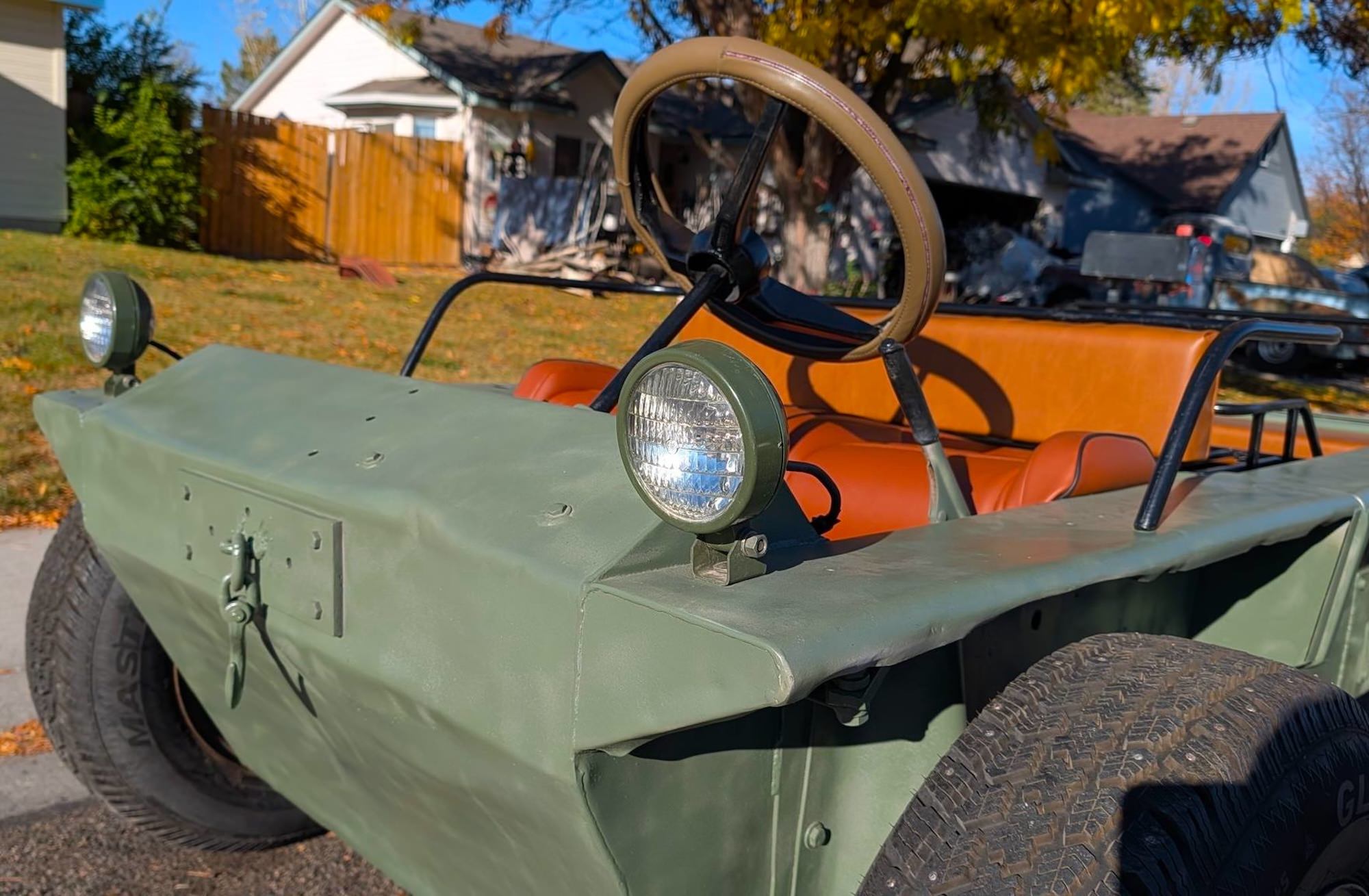
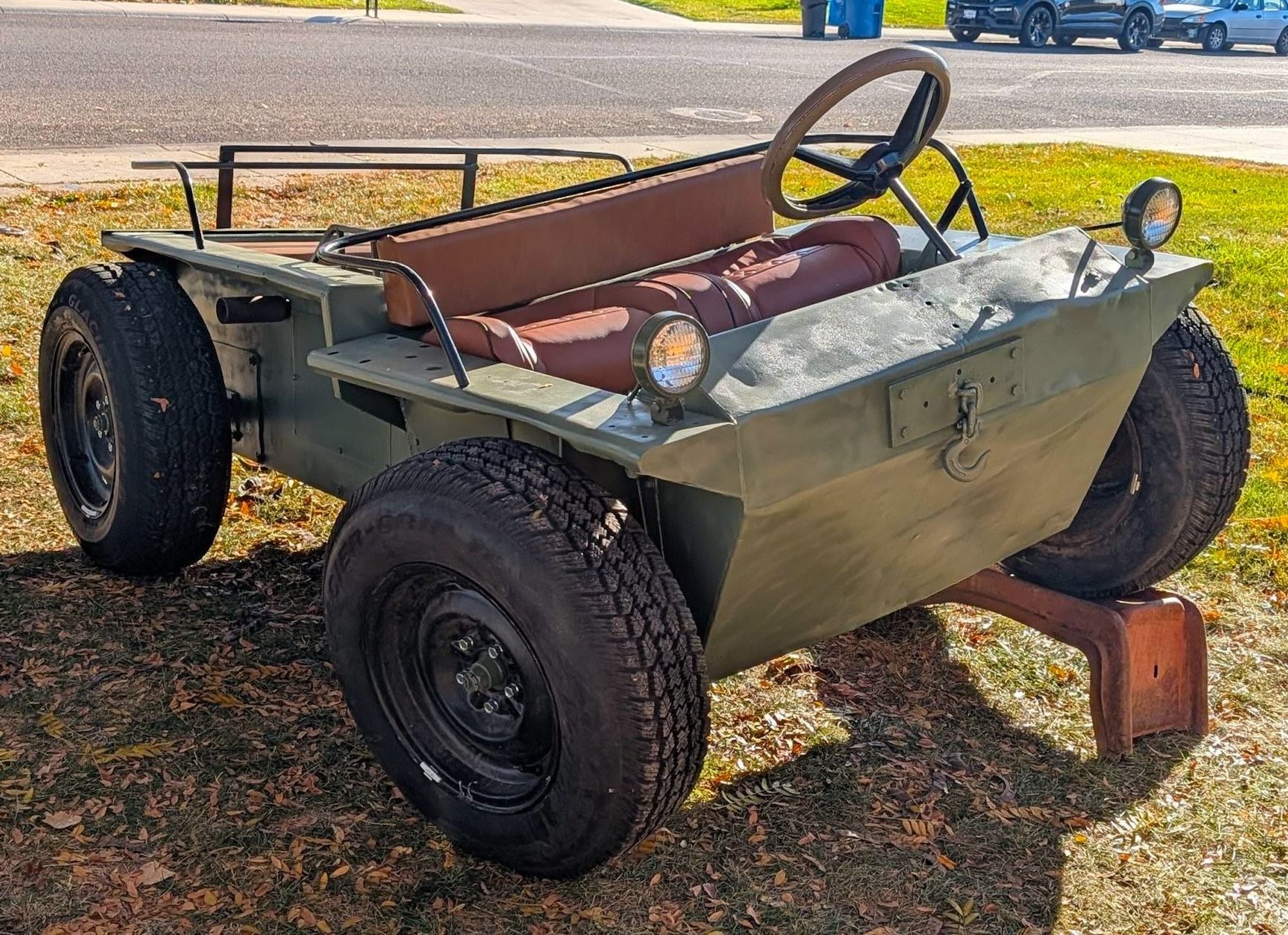
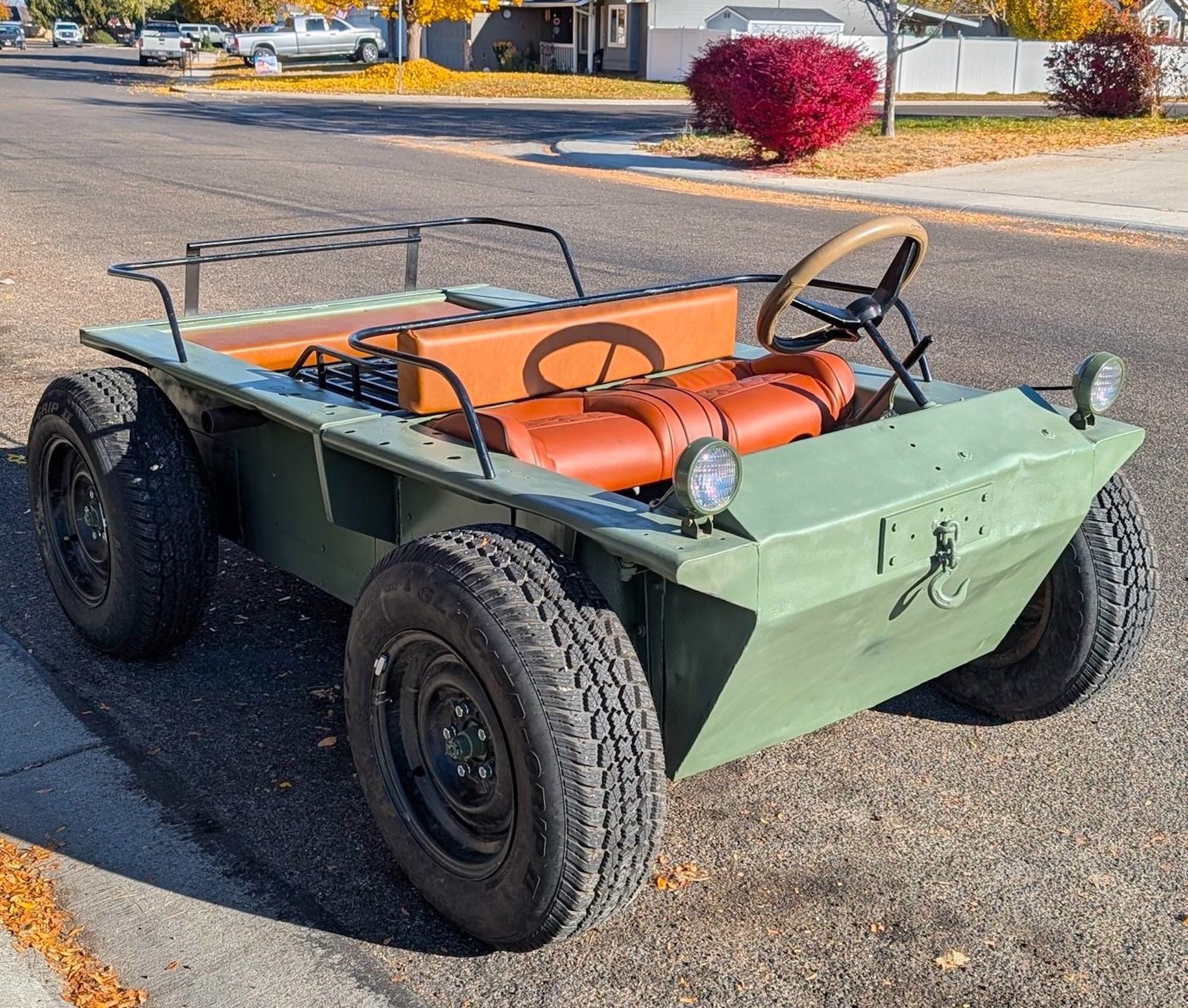
This is an original Coot 4×4 amphibious all-terrain vehicle, it’s an early example, chassis number 0977, dating from the initial production period that began in 1967 in Orland, California. It has the classic two-piece articulated hull design and two-wheel steering, and it was modified under previous ownership with a replacement engine and drivetrain.
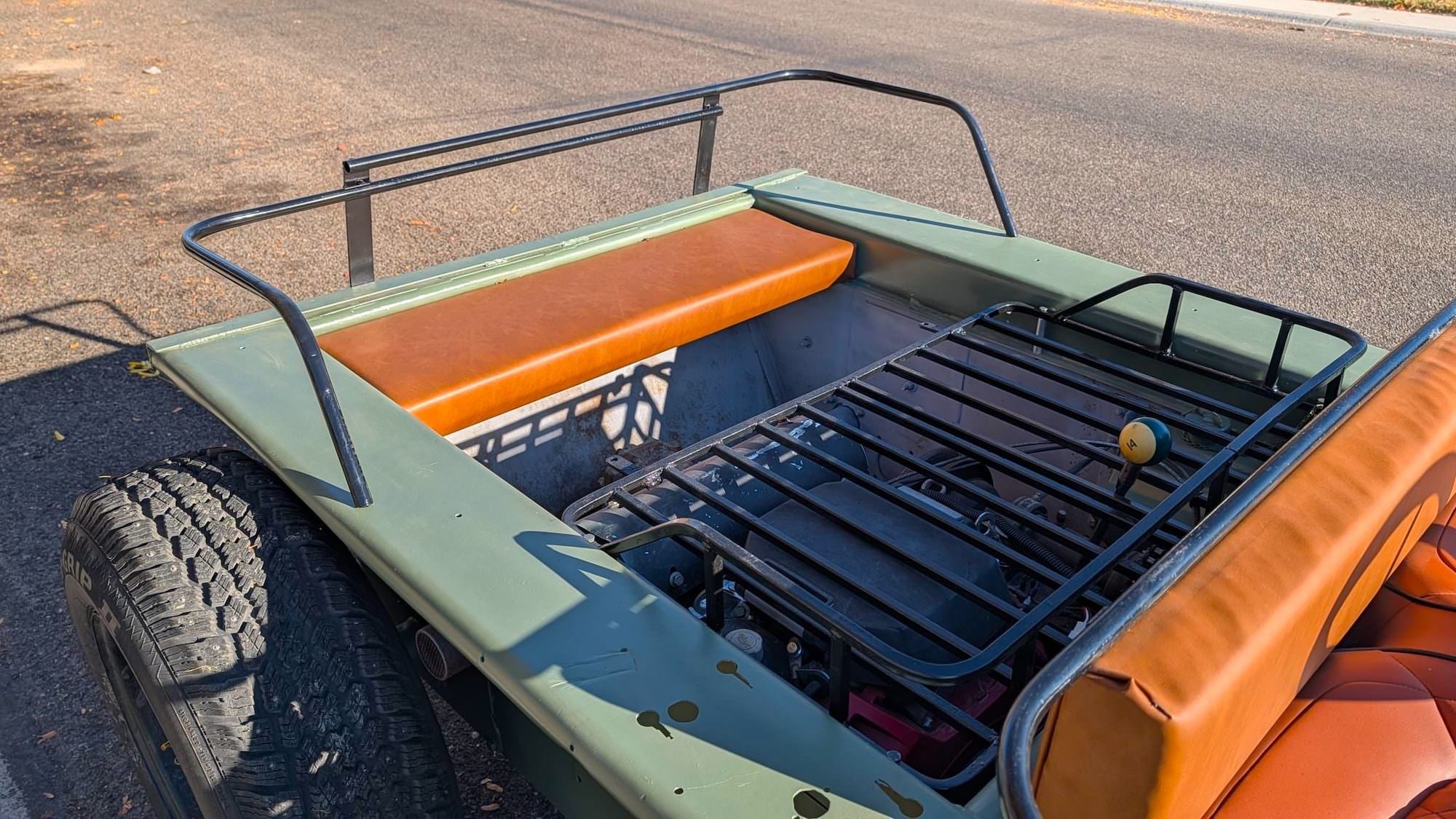
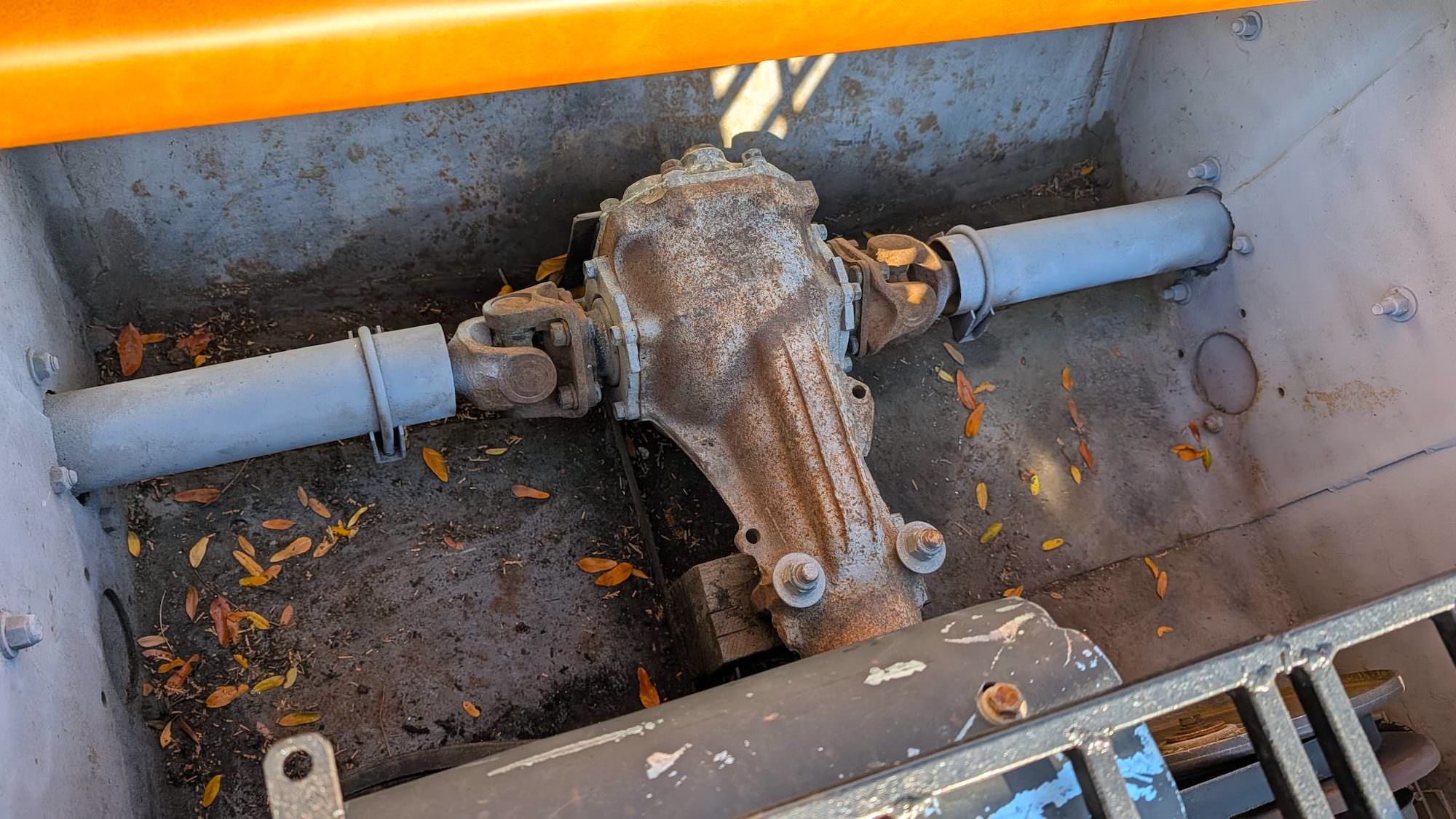
The original engine has been replaced with an air-cooled 688cc Honda GX690 V-twin, rated at 22 bhp when new. Mounted behind the front seat, the engine drives all four wheels through an automatic variable-speed torque converter, a two-speed semi-automatic transmission with reverse, and front and rear Subaru differentials that replace the original worm gear drive system.
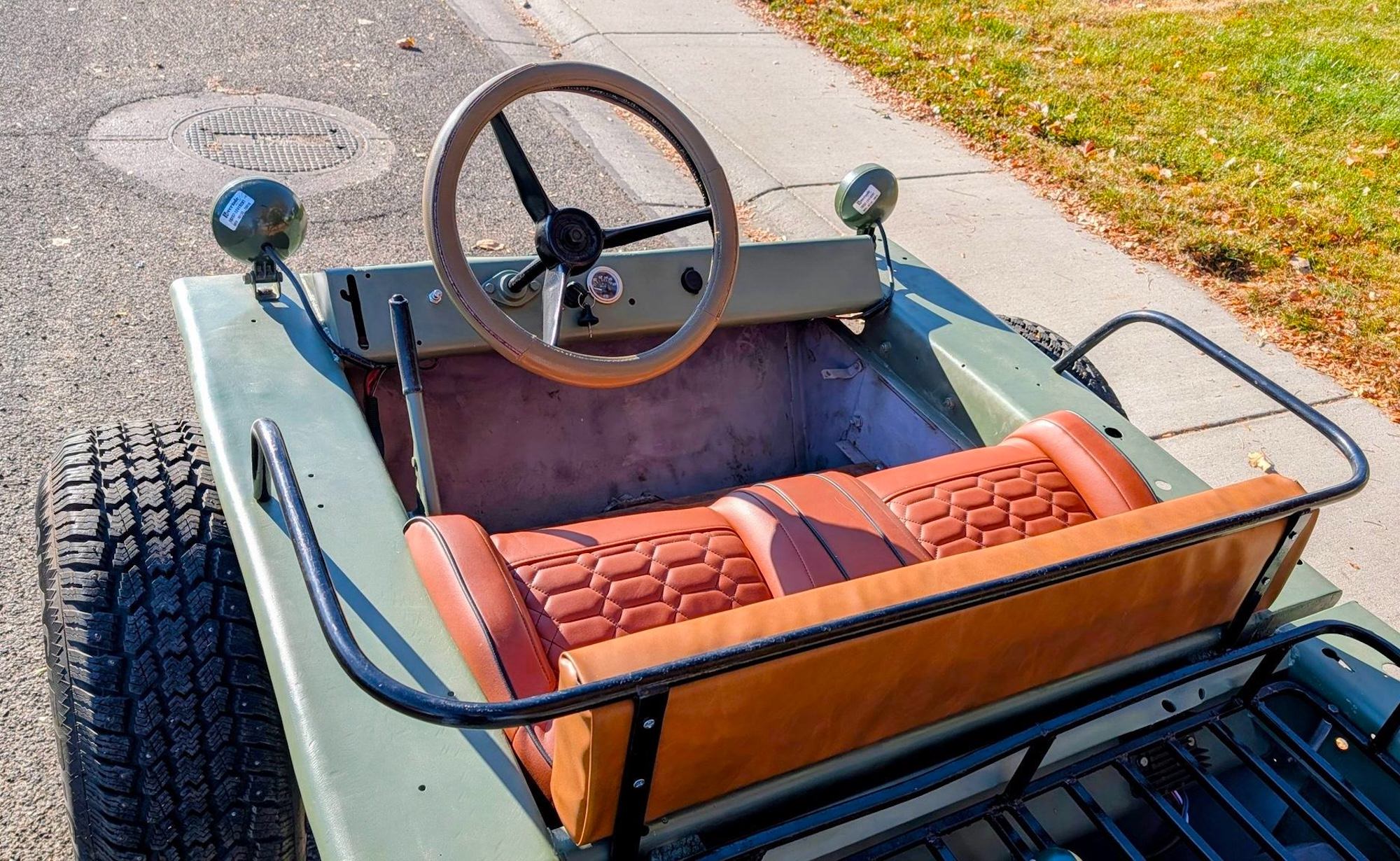
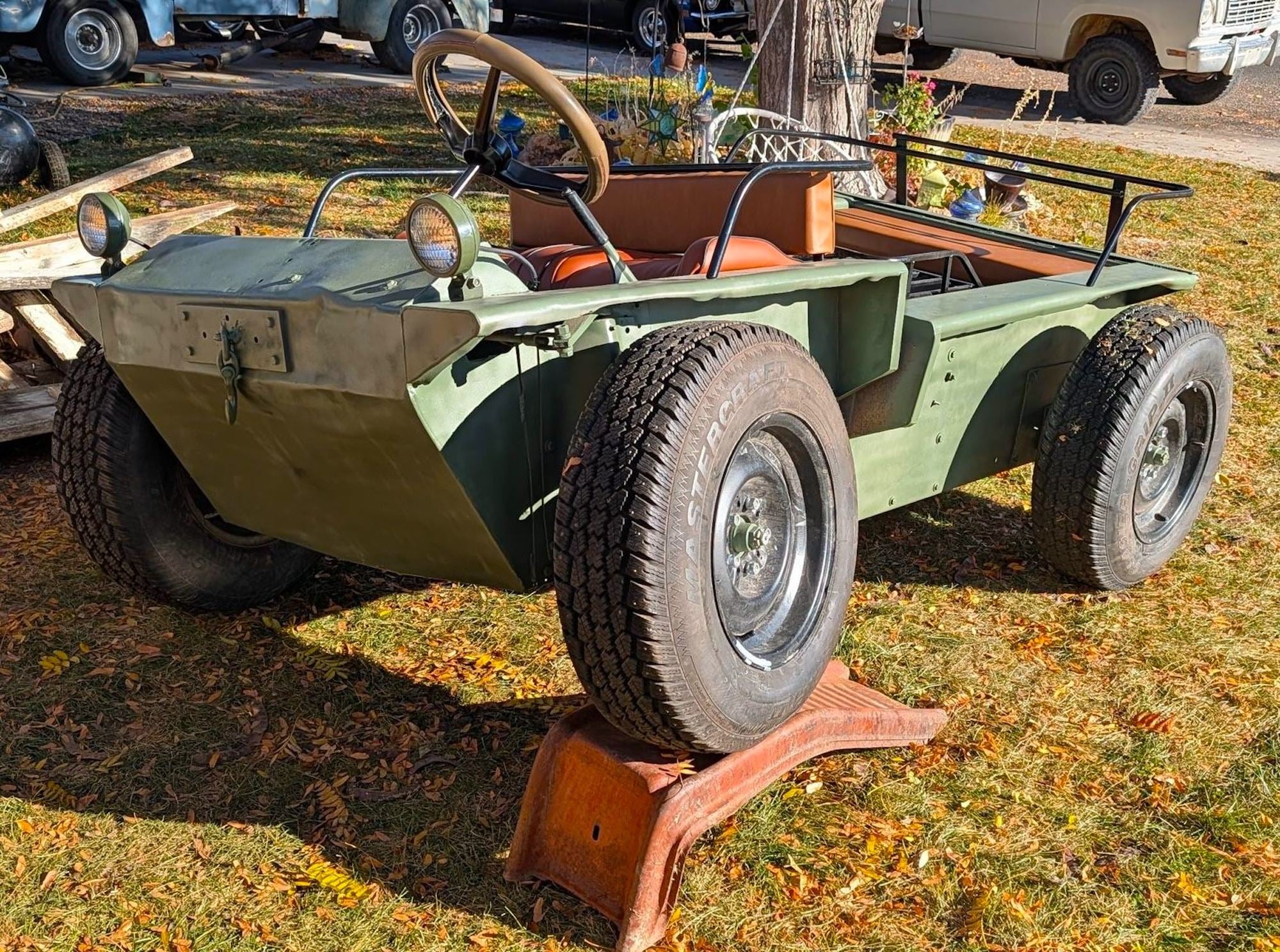
This is an original Coot 4×4 amphibious all-terrain vehicle, it’s an early example, chassis number 0977, dating from the initial production period that began in 1967 in Orland, California. It has the classic two-piece articulated hull design and two-wheel steering, and it was modified under previous ownership with a replacement engine and drivetrain.
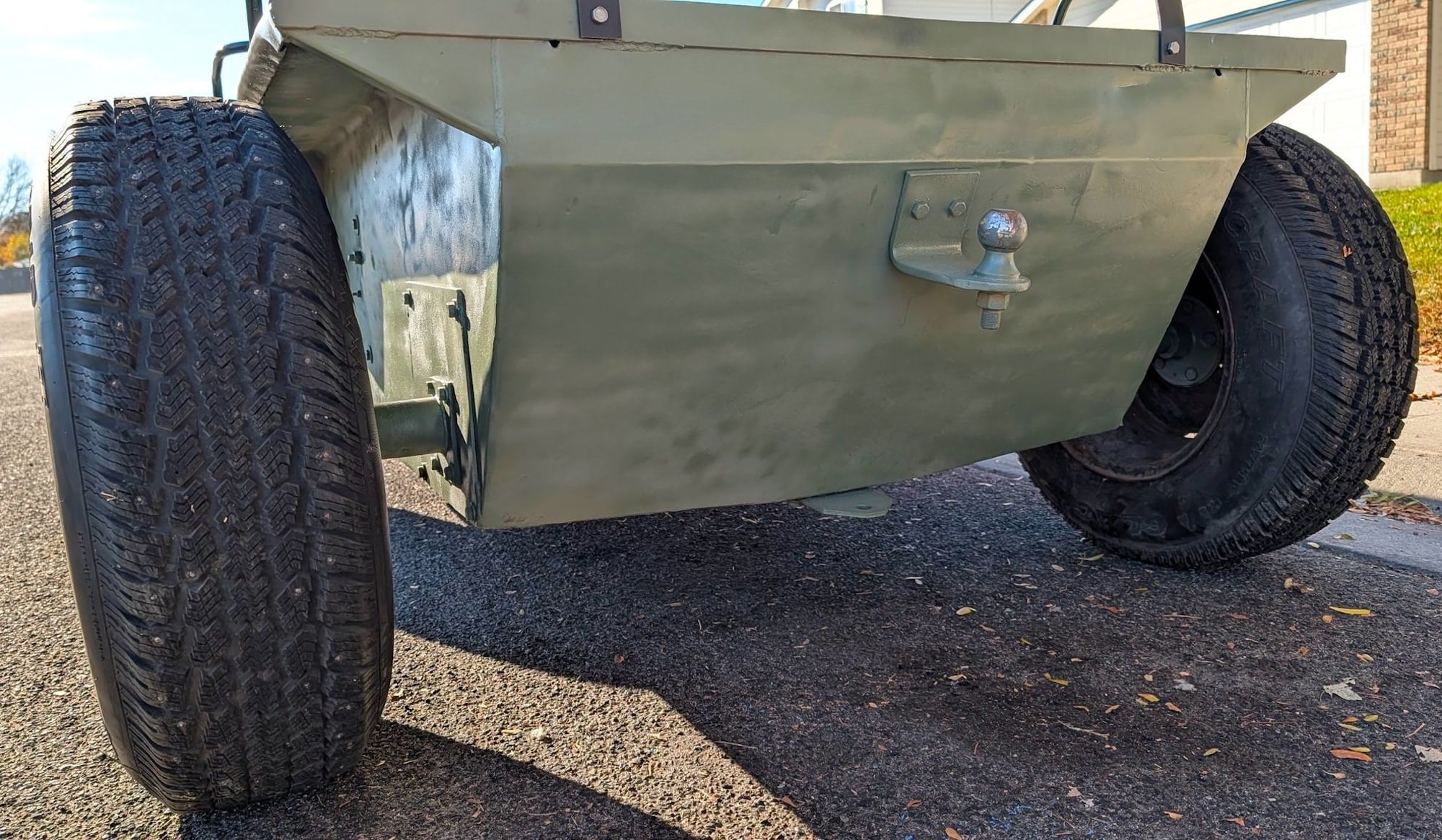
This Coot is finished in green with two rows of brown vinyl bench seats, a three-spoke steering wheel, a voltmeter, and a 12-volt accessory outlet. Additional equipment includes tilt-adjustable Riverside headlights, a front tow hook, a rear ball hitch, a side-exit exhaust, and 15-inch steel wheels fitted with Mastercraft Glacier-Grip II tires.
It’s now being offered for sale out of Nampa, Idaho with no reserve for off-road use only, with a bill of sale. If you’d like to read more about it or register to bid you can visit the listing here.
Images courtesy of Bring a Trailer

Articles that Ben Branch has written have been covered on CNN, Popular Mechanics, Smithsonian Magazine, Road & Track Magazine, the official Pinterest blog, the official eBay Motors blog, BuzzFeed, Autoweek Magazine, Wired Magazine, Autoblog, Gear Patrol, Jalopnik, The Verge, and many more.
Silodrome was founded by Ben back in 2010, in the years since the site has grown to become a world leader in the alternative and vintage motoring sector, with well over a million monthly readers from around the world and many hundreds of thousands of followers on social media.