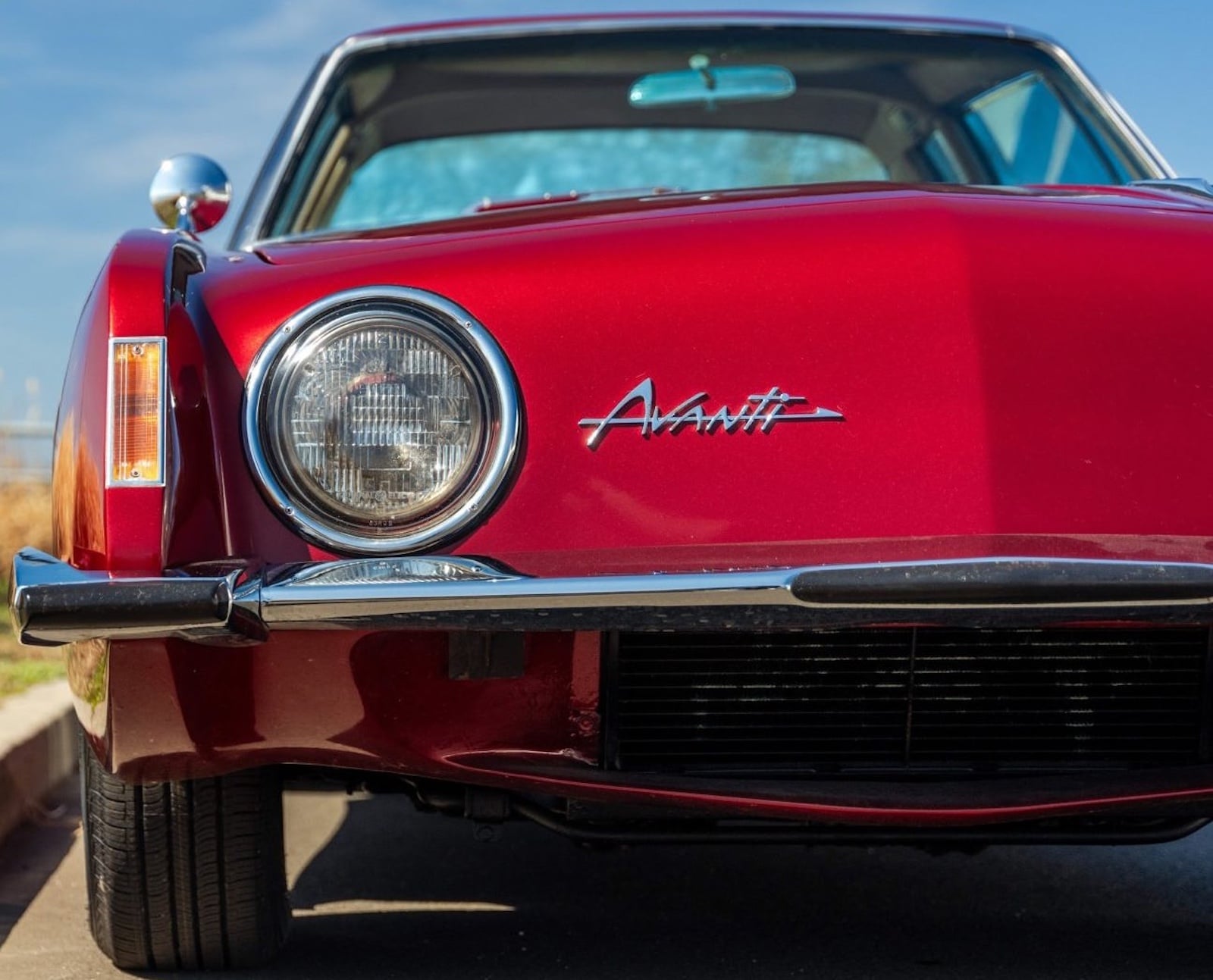
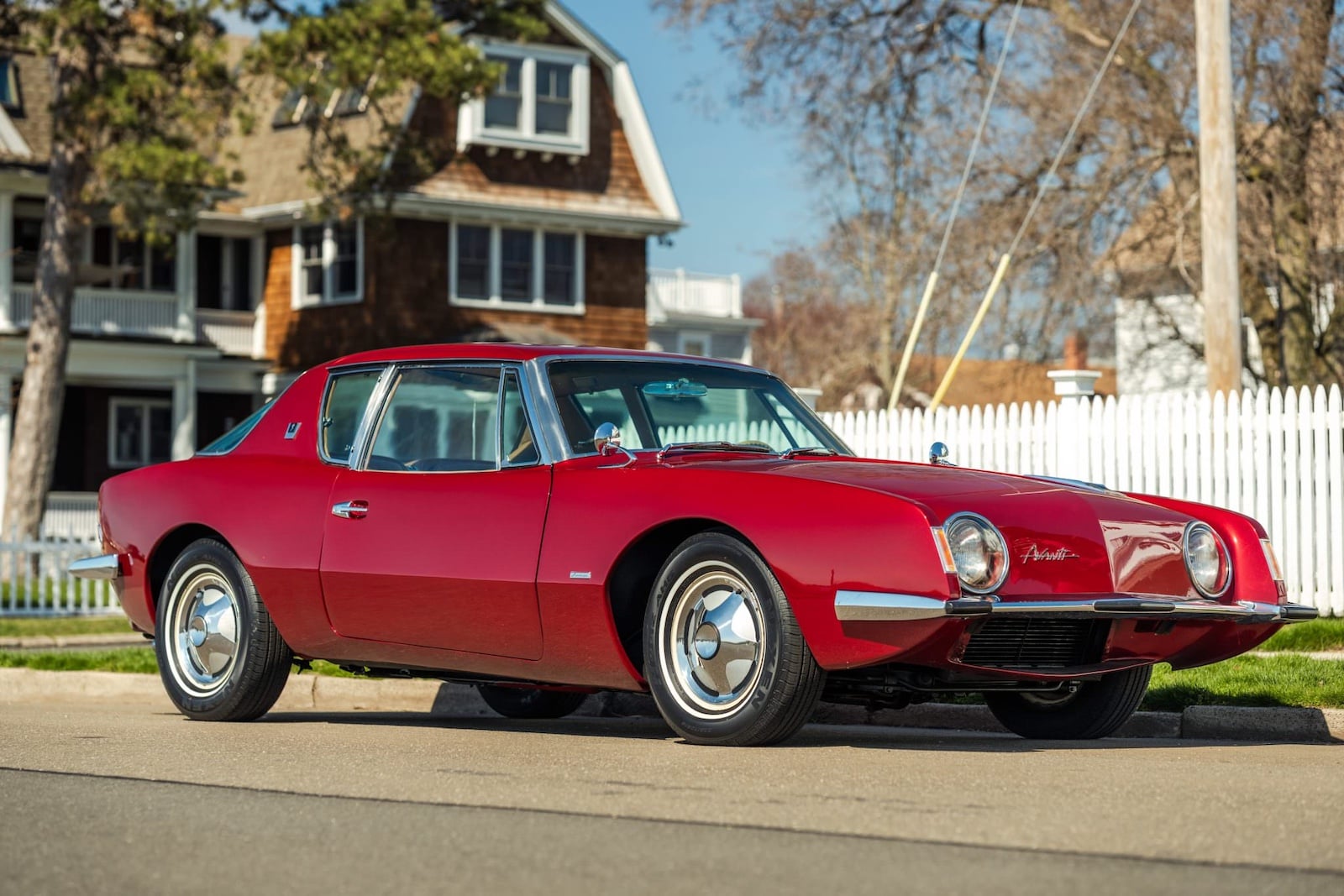
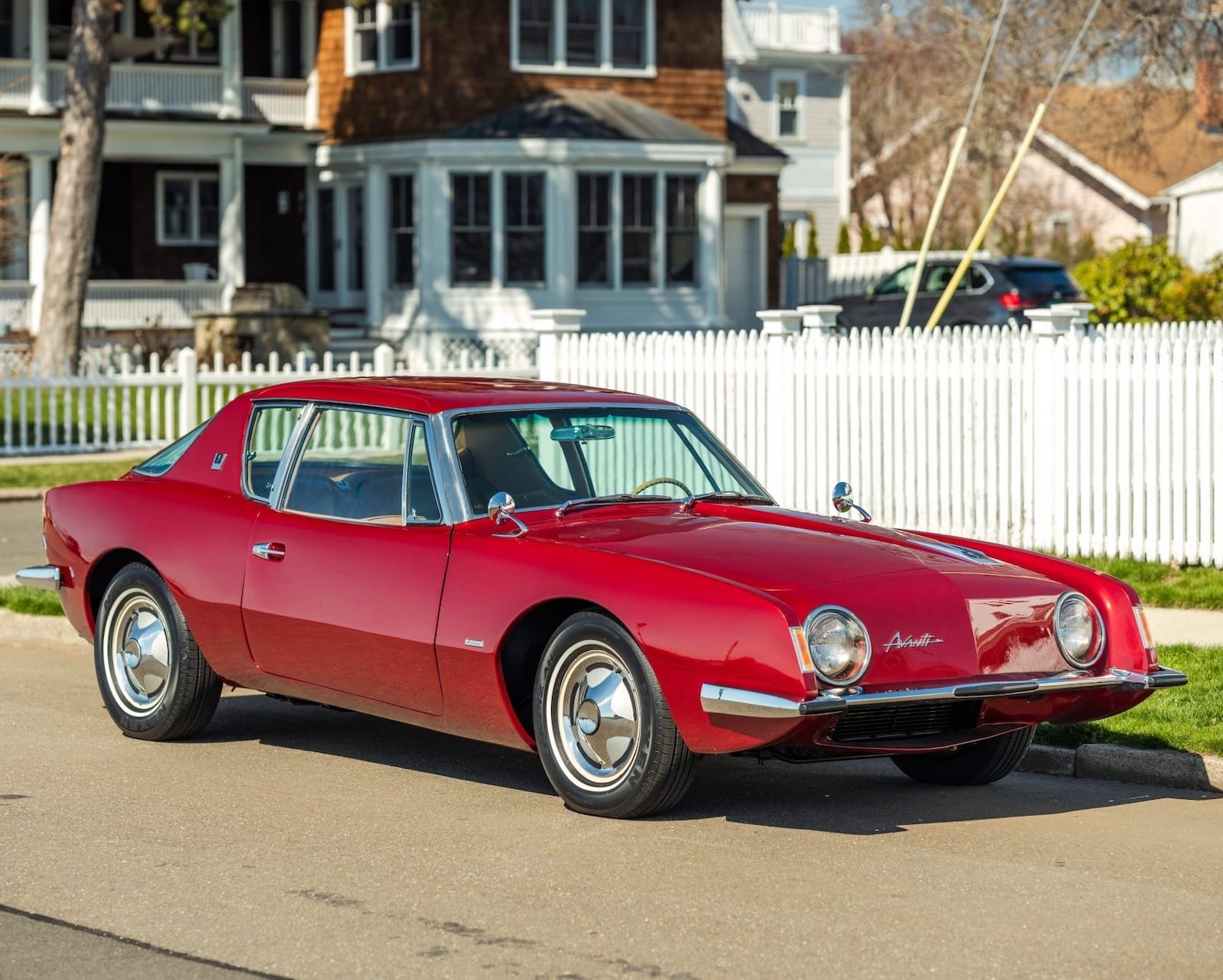
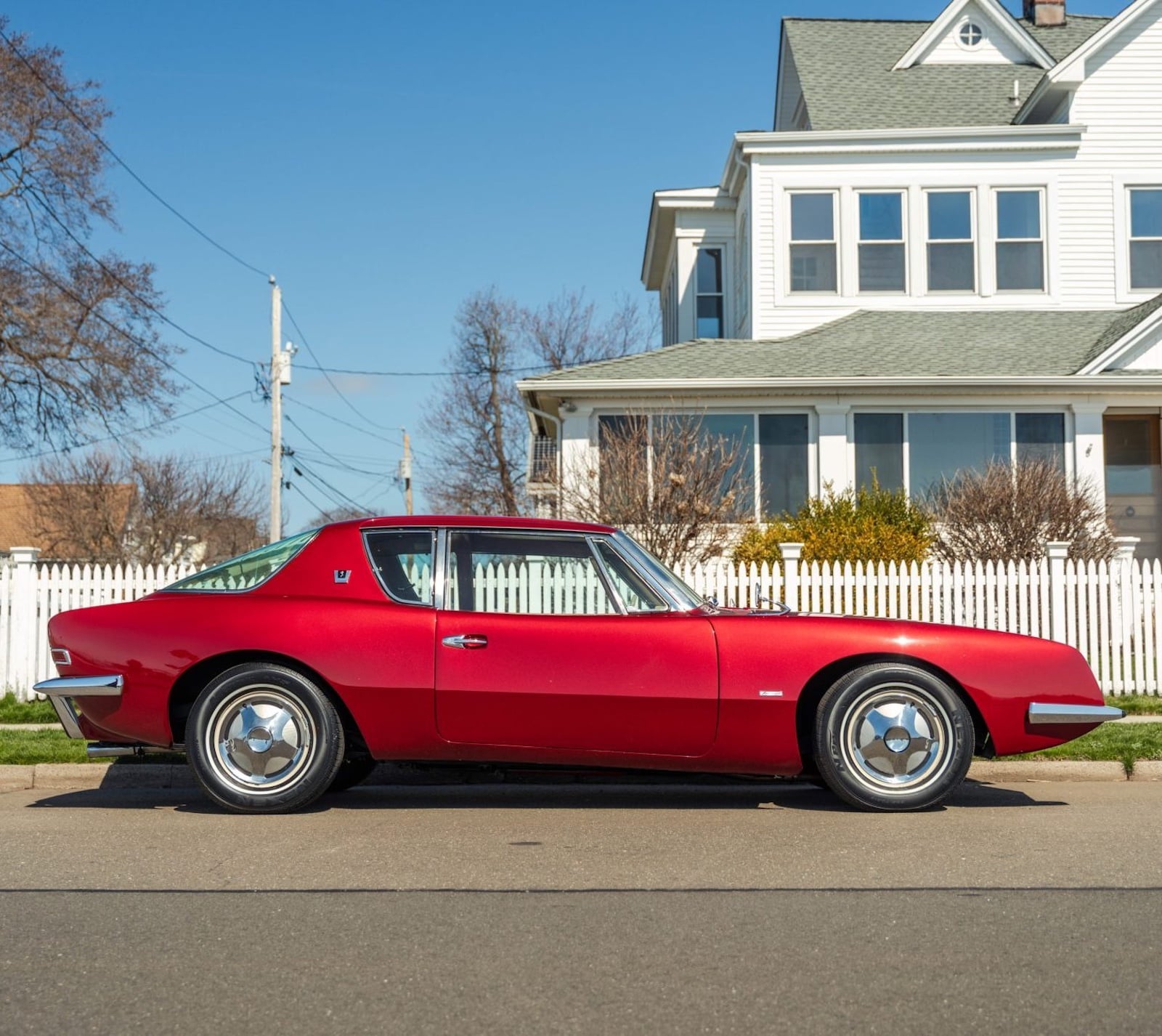
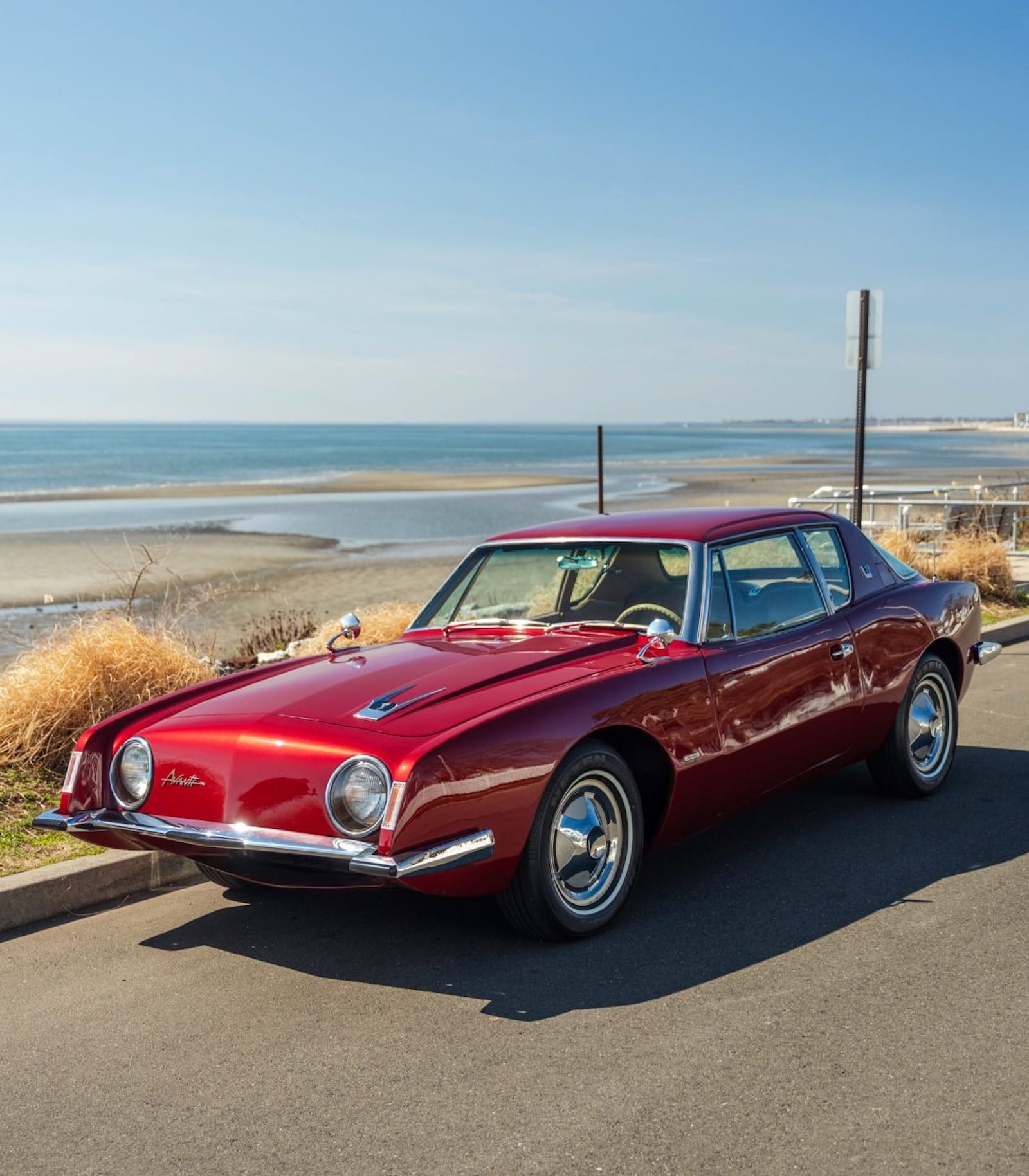
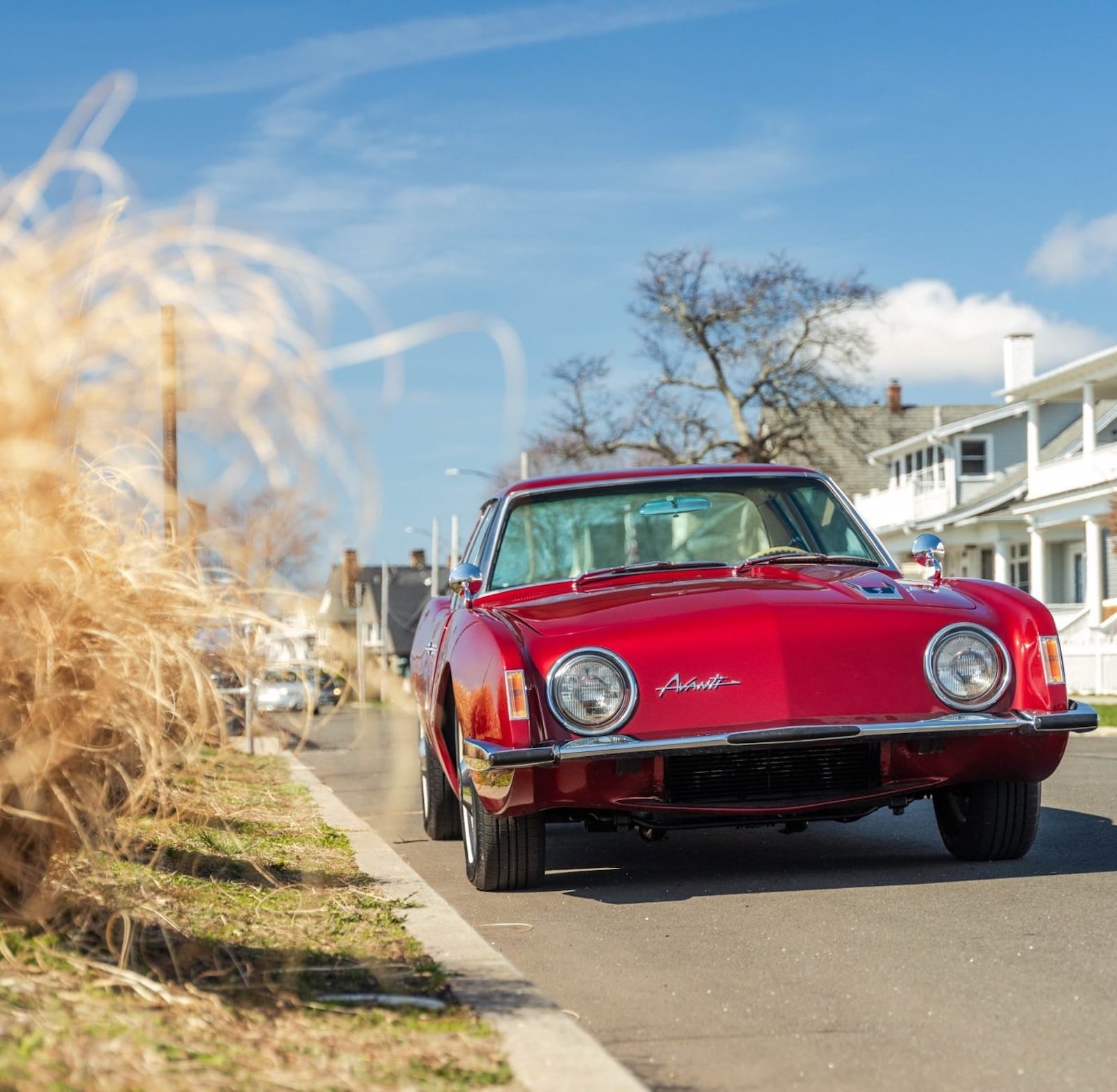
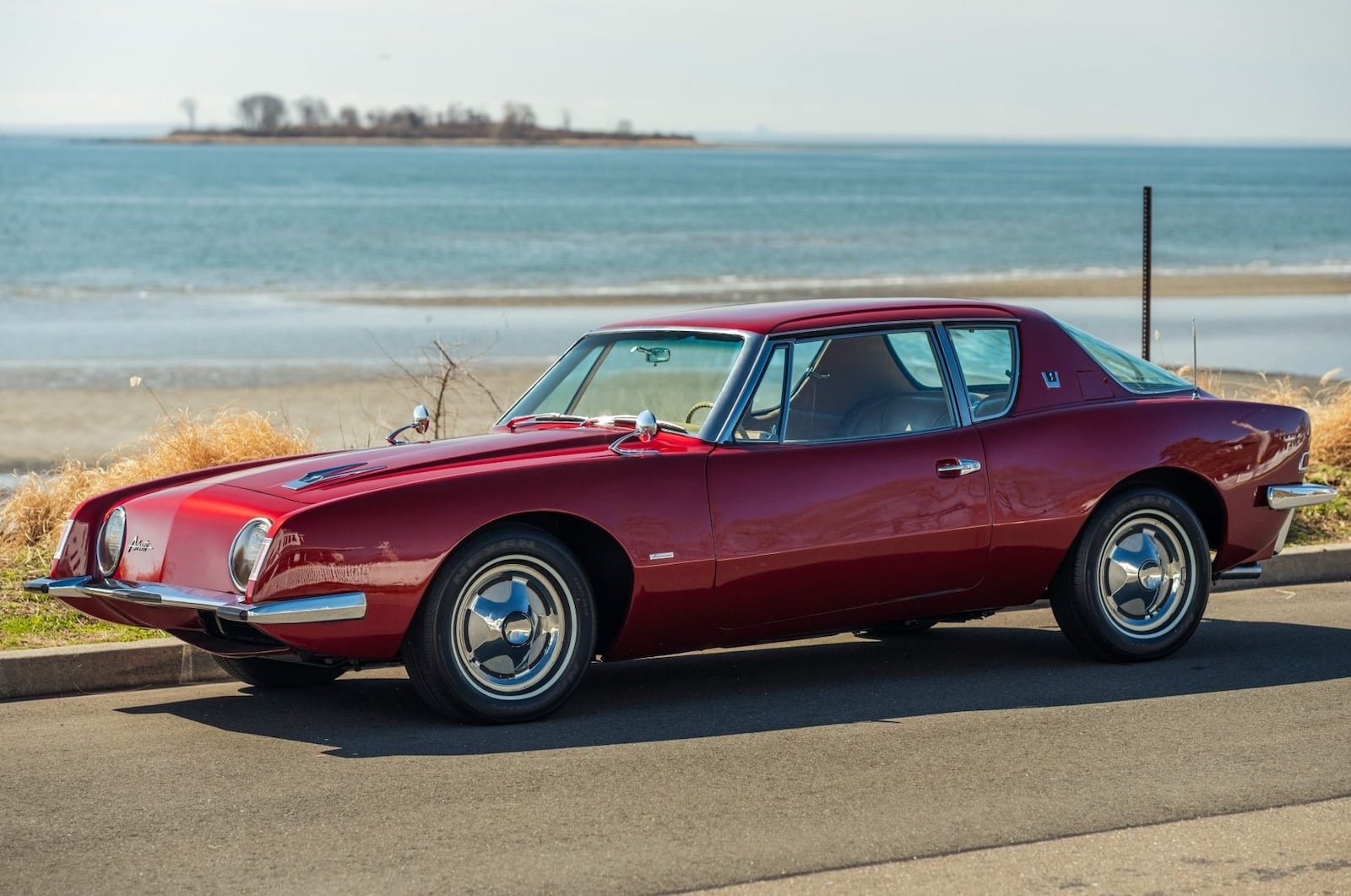
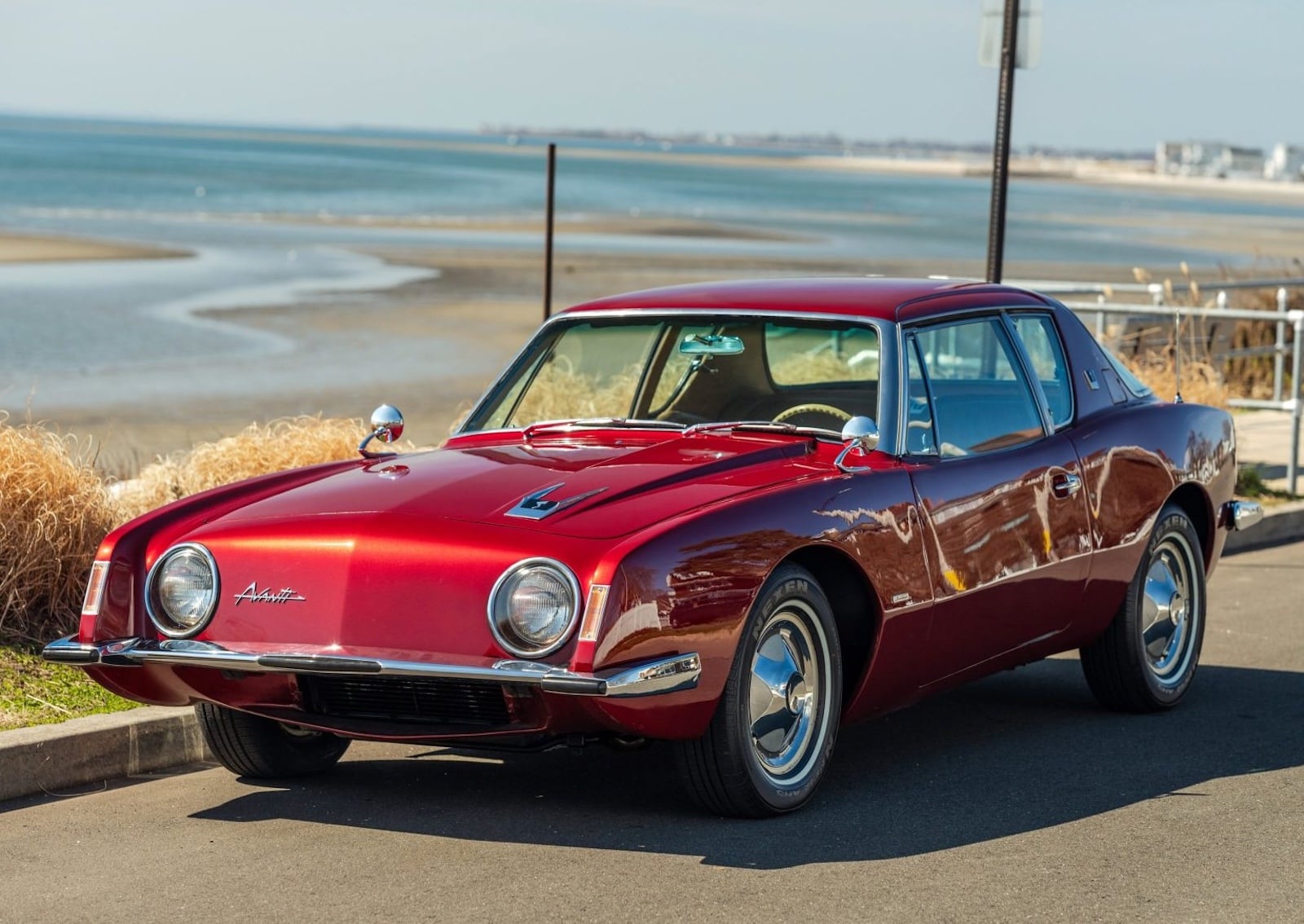
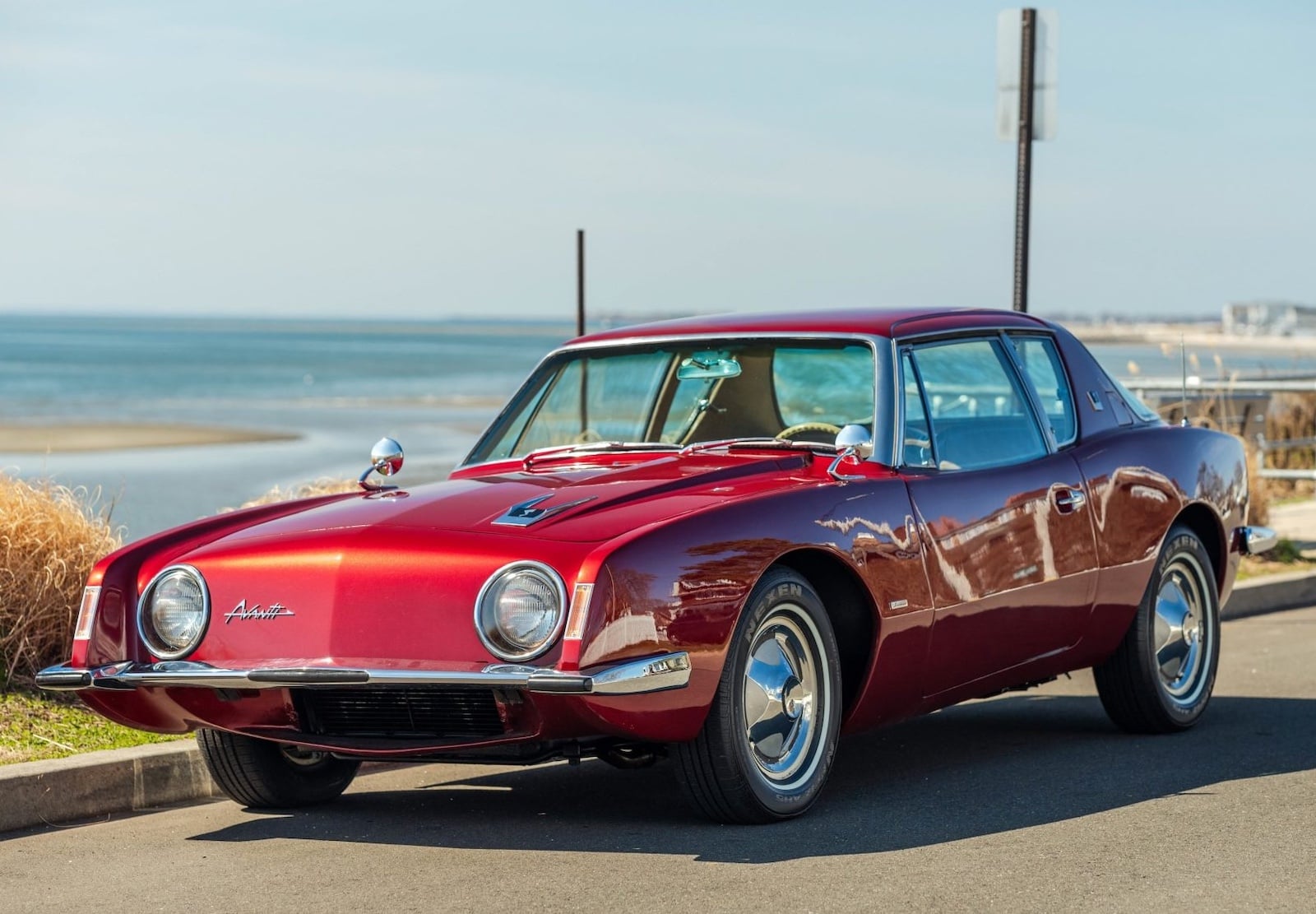
This is a 1963 Studebaker Avanti R2 with the relatively rare 4-speed manual transmission option. The R2 was the factory-supercharged version of the Avanti, capable of 290 bhp.
The Studebaker Avanti was styled by industrial design legend Raymond Loewy working with a team out of a house in Palm Springs, California. Versions of the car would set 29 American national stock car records at Bonneville, and become known as “the world’s fastest production car.”
Fast Facts: The Studebaker Avanti R2
- This 1963 Studebaker Avanti R2 is one of 1,833 supercharged examples built across the 1963 to 1964 model years, and one of just 643 paired with a 4-speed manual transmission. It spent nearly six decades under single ownership before being acquired by the selling dealer in 2025.
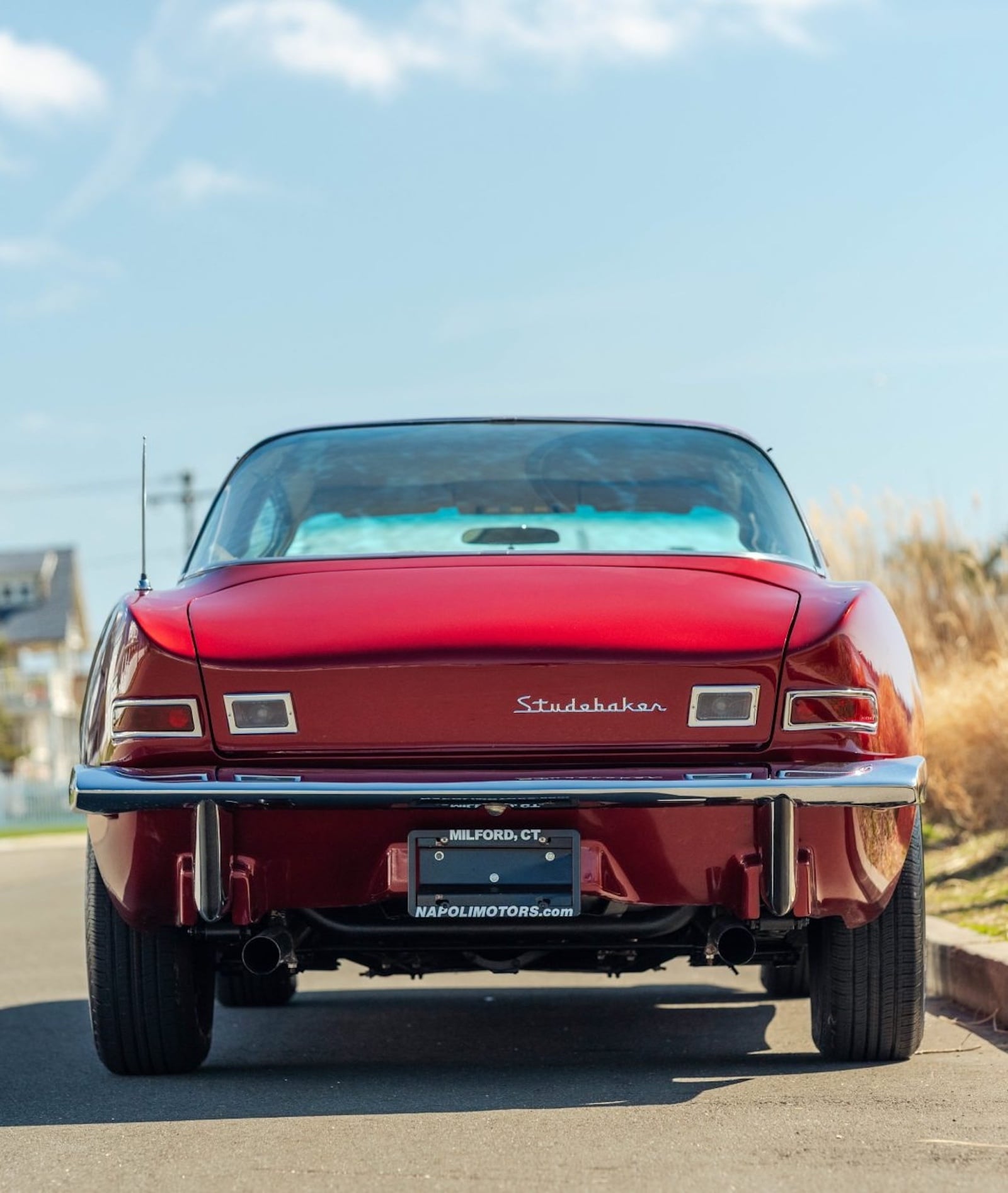
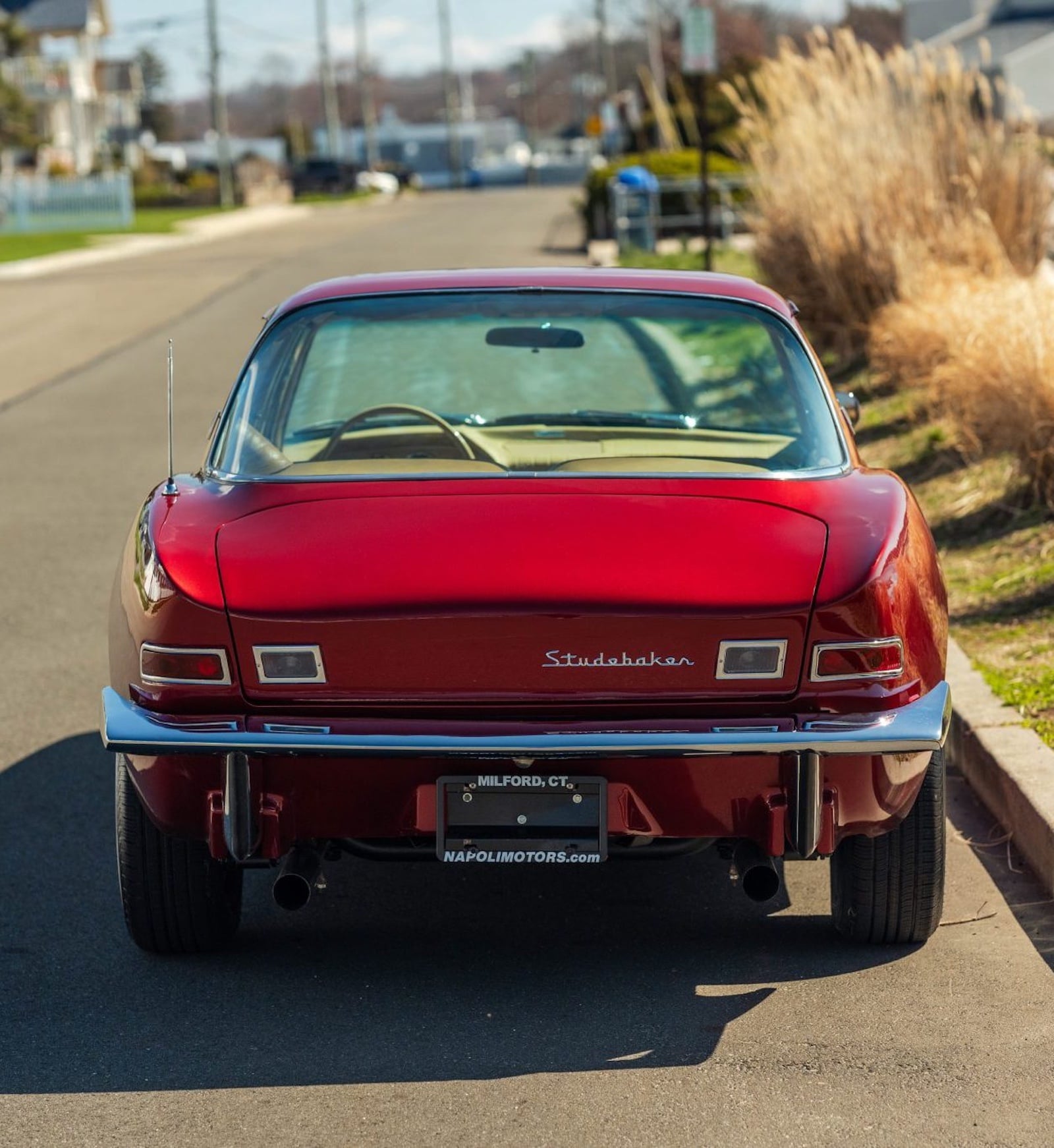
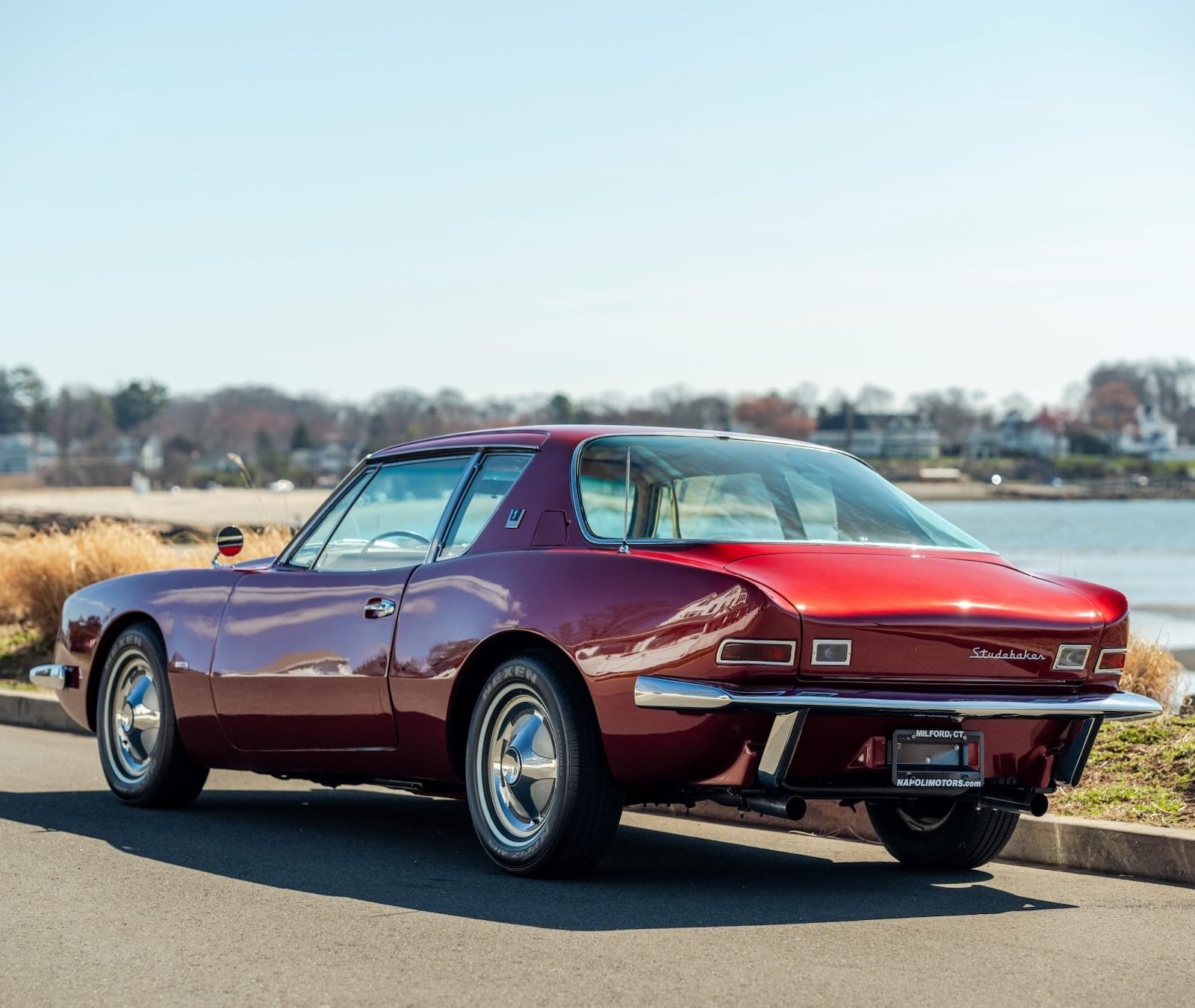
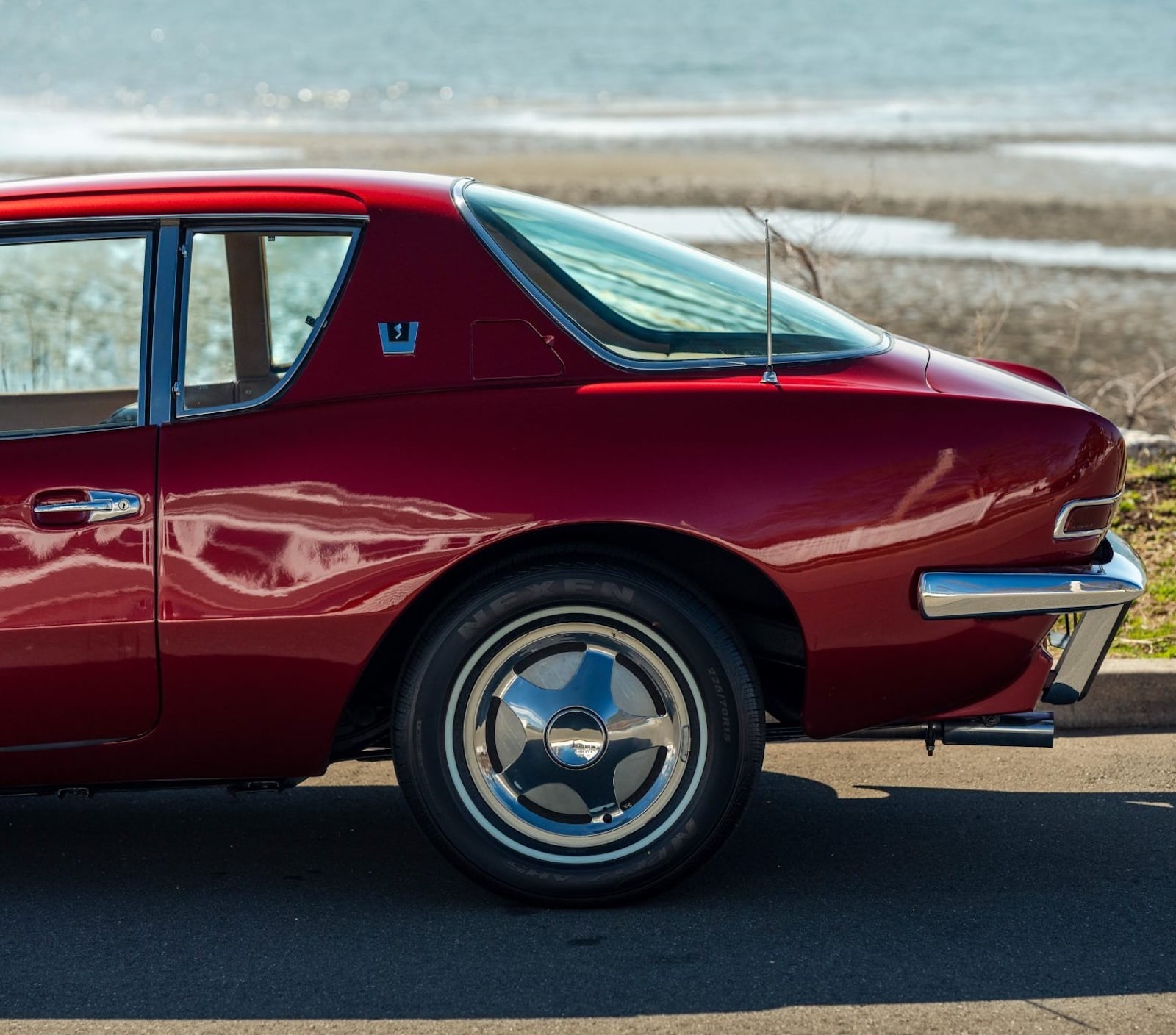
- The Raymond Loewy-designed fiberglass body was refinished in red during a 2014-2016 refurbishment that also included an engine rebuild, a transmission overhaul, and a new exhaust system and electronic distributor. The 15-inch steel wheels with spoke-style covers now wear Nexen N’Priz tires dated 2024.
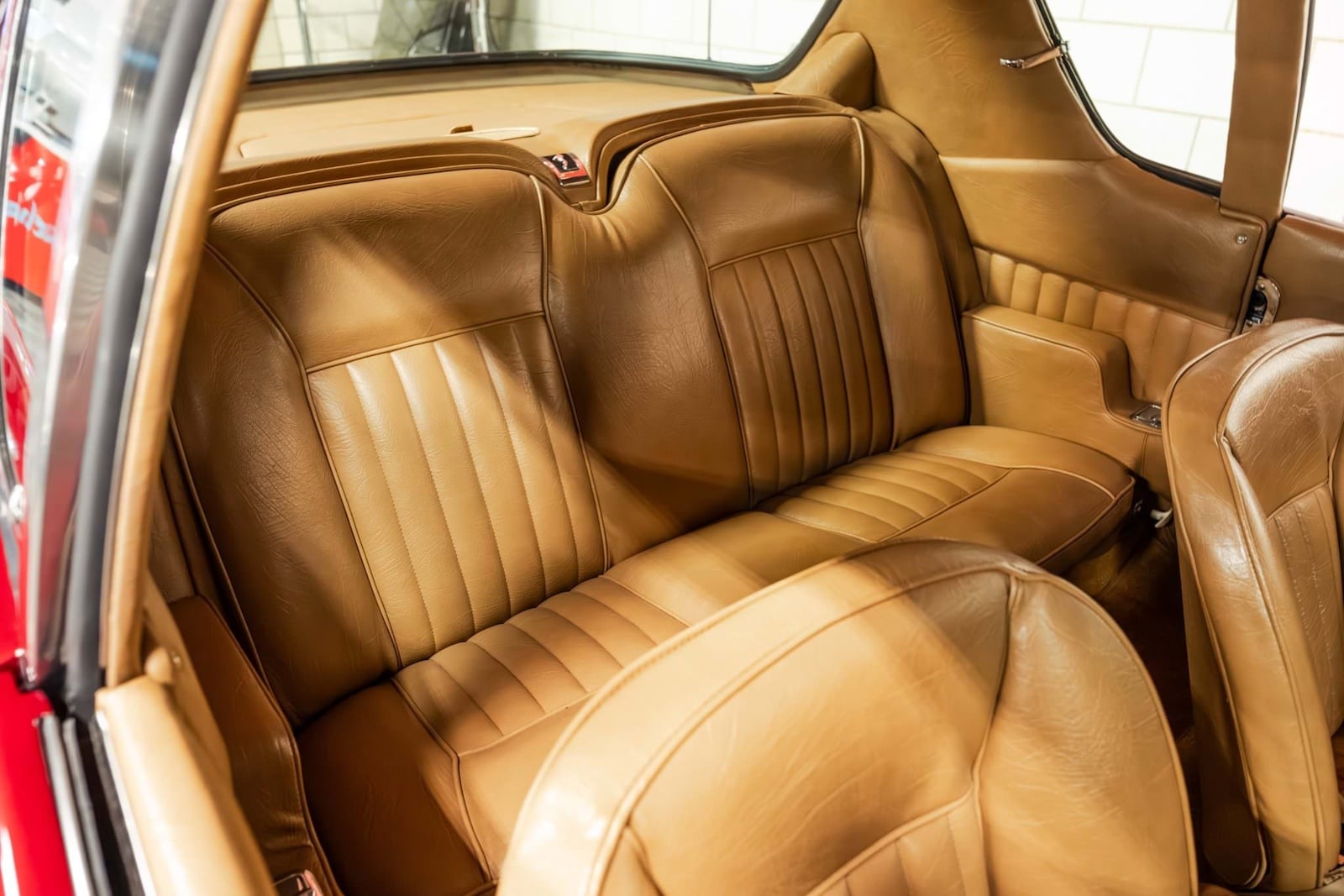
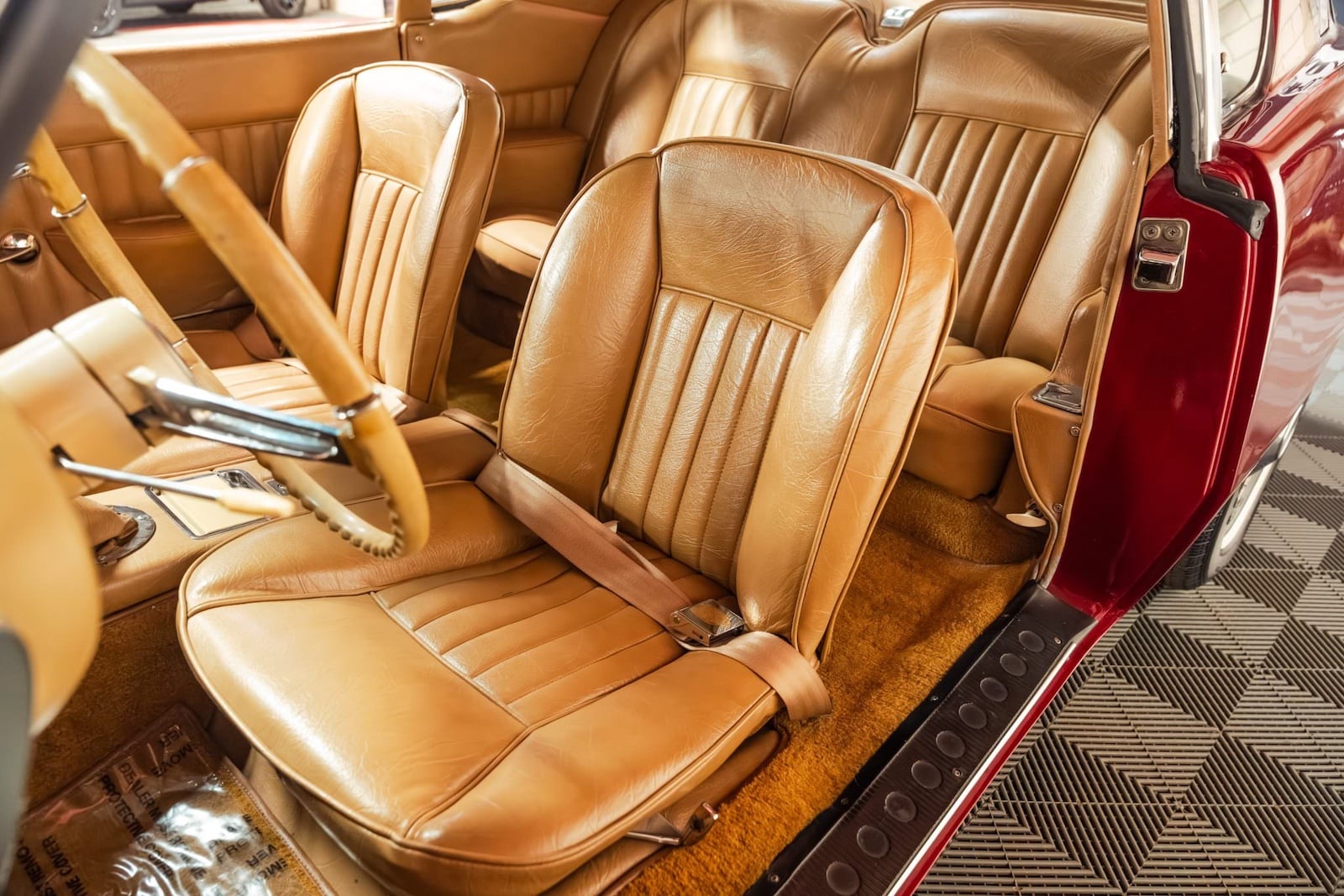
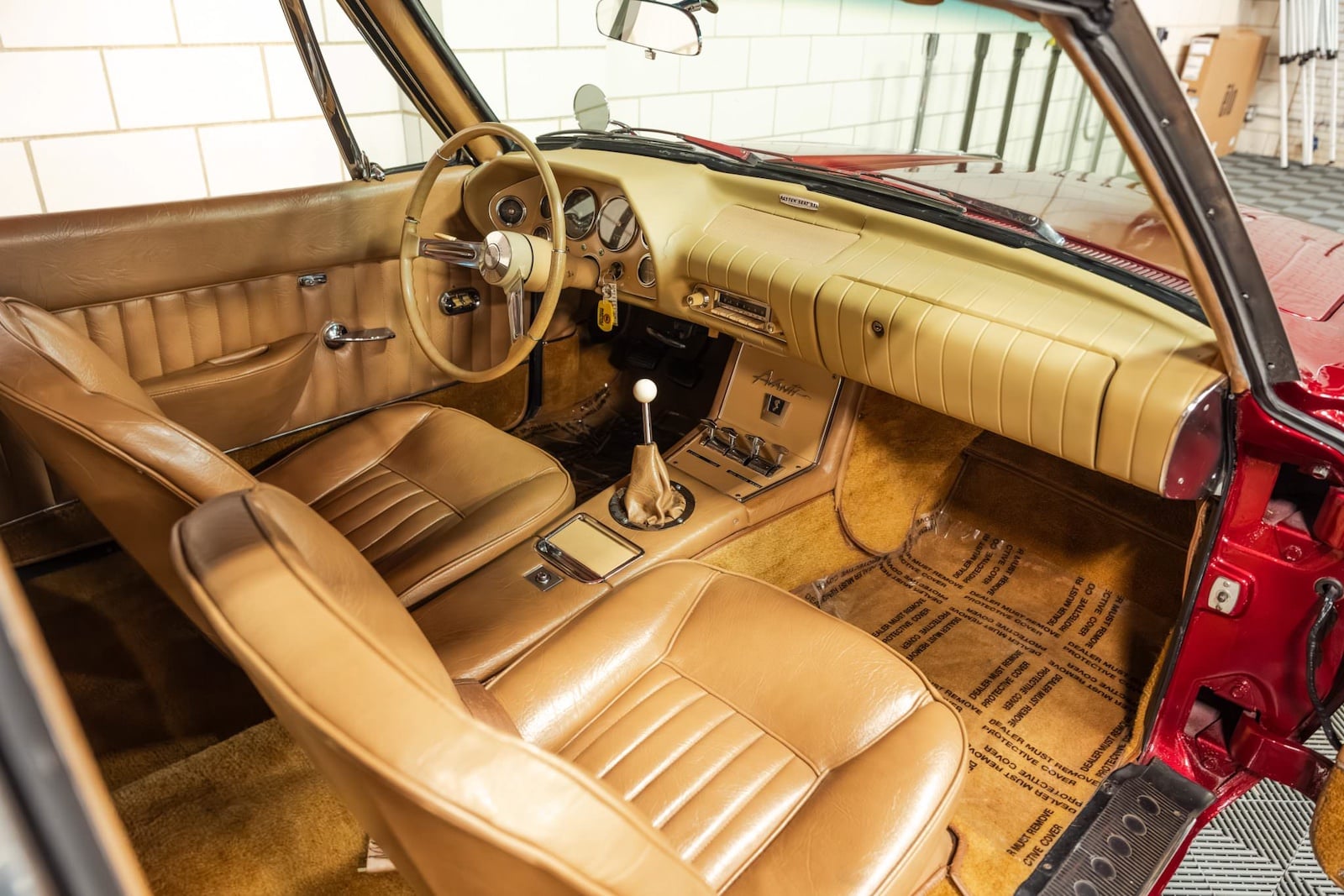
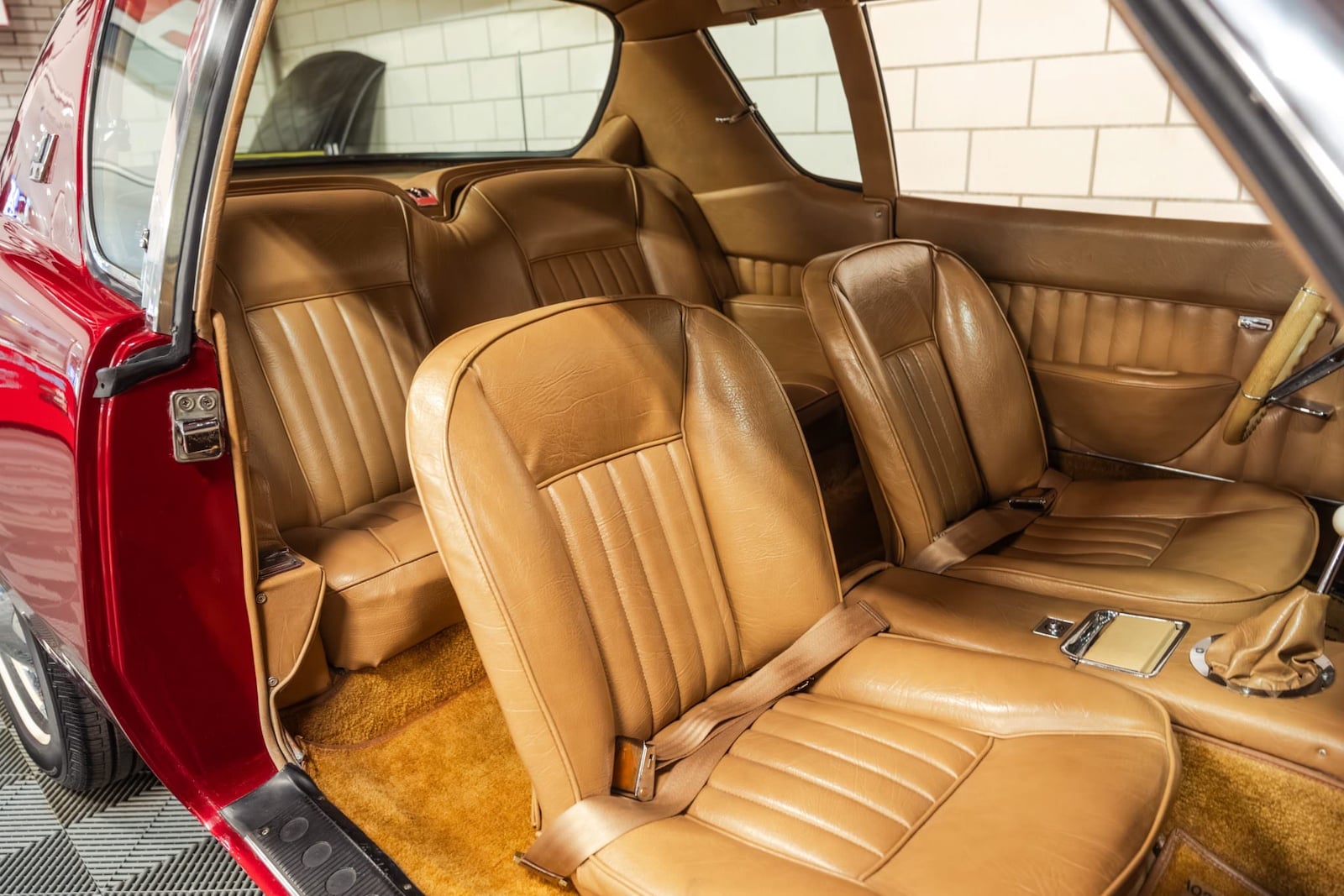
- The cabin has elk vinyl upholstery on the bucket seats and rear bench, aircraft-throttle-inspired climate controls, overhead switchgear, power front windows, and a push-button AM radio. The odometer reads 89,000 miles, about 100 of which were added under current ownership.
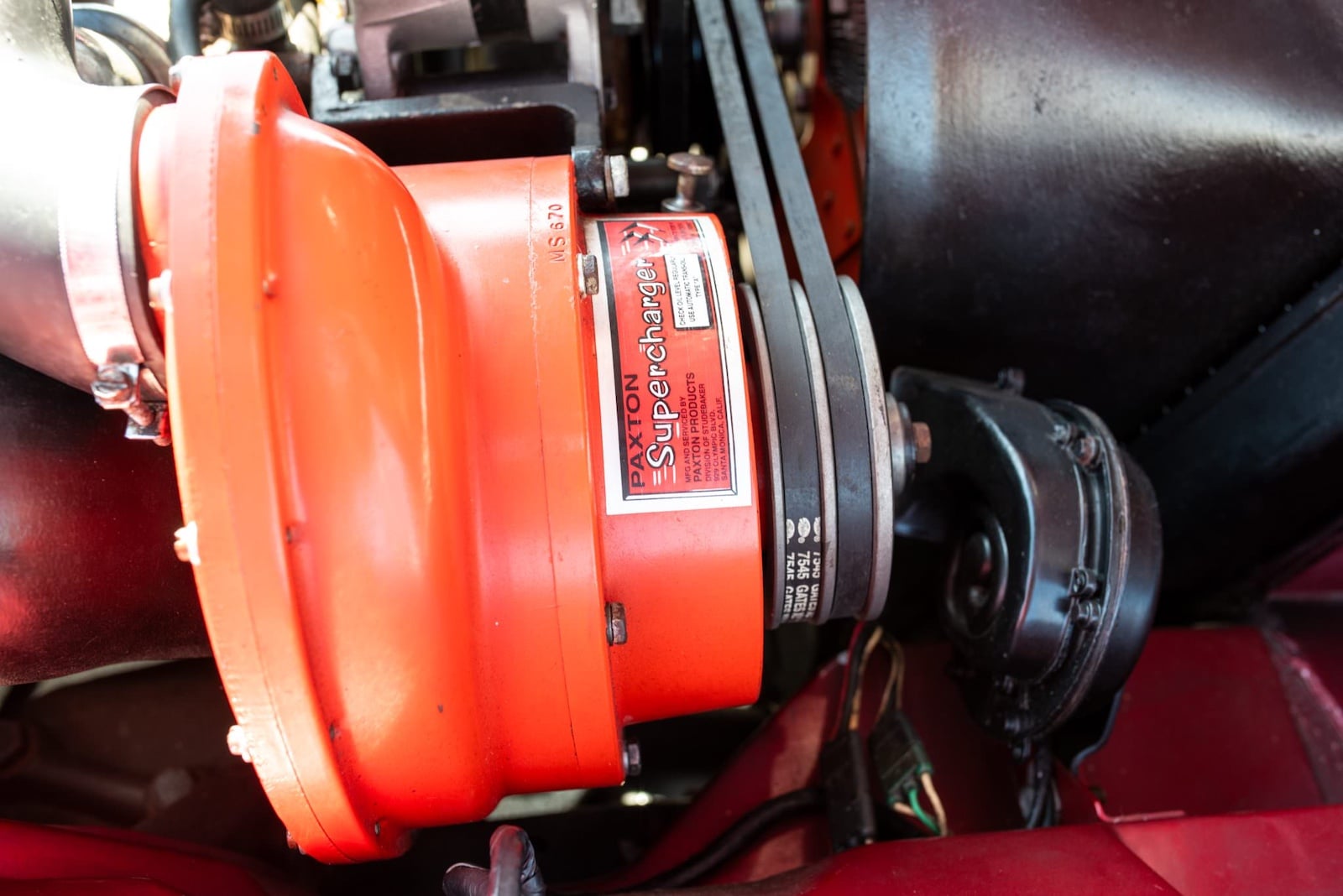
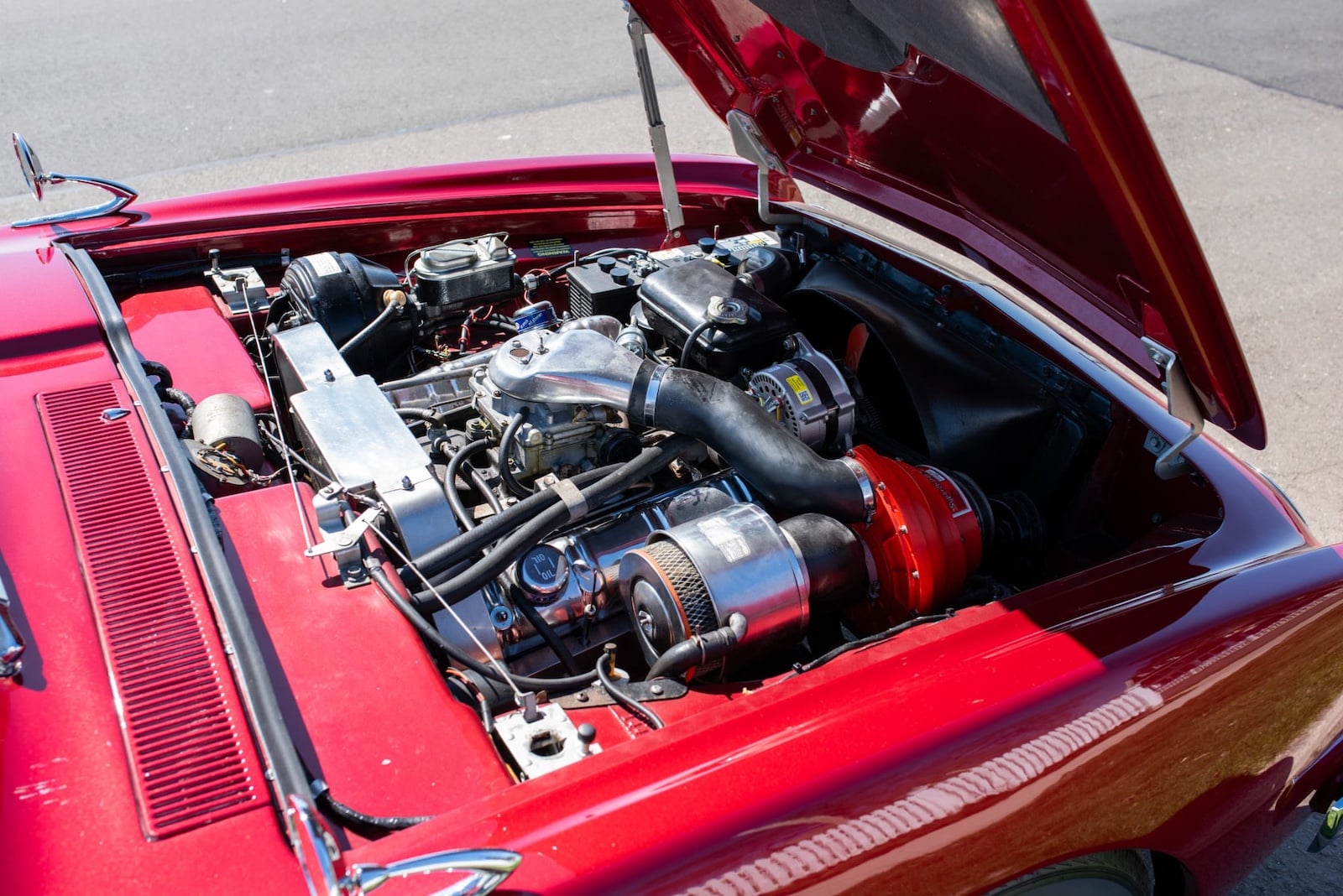
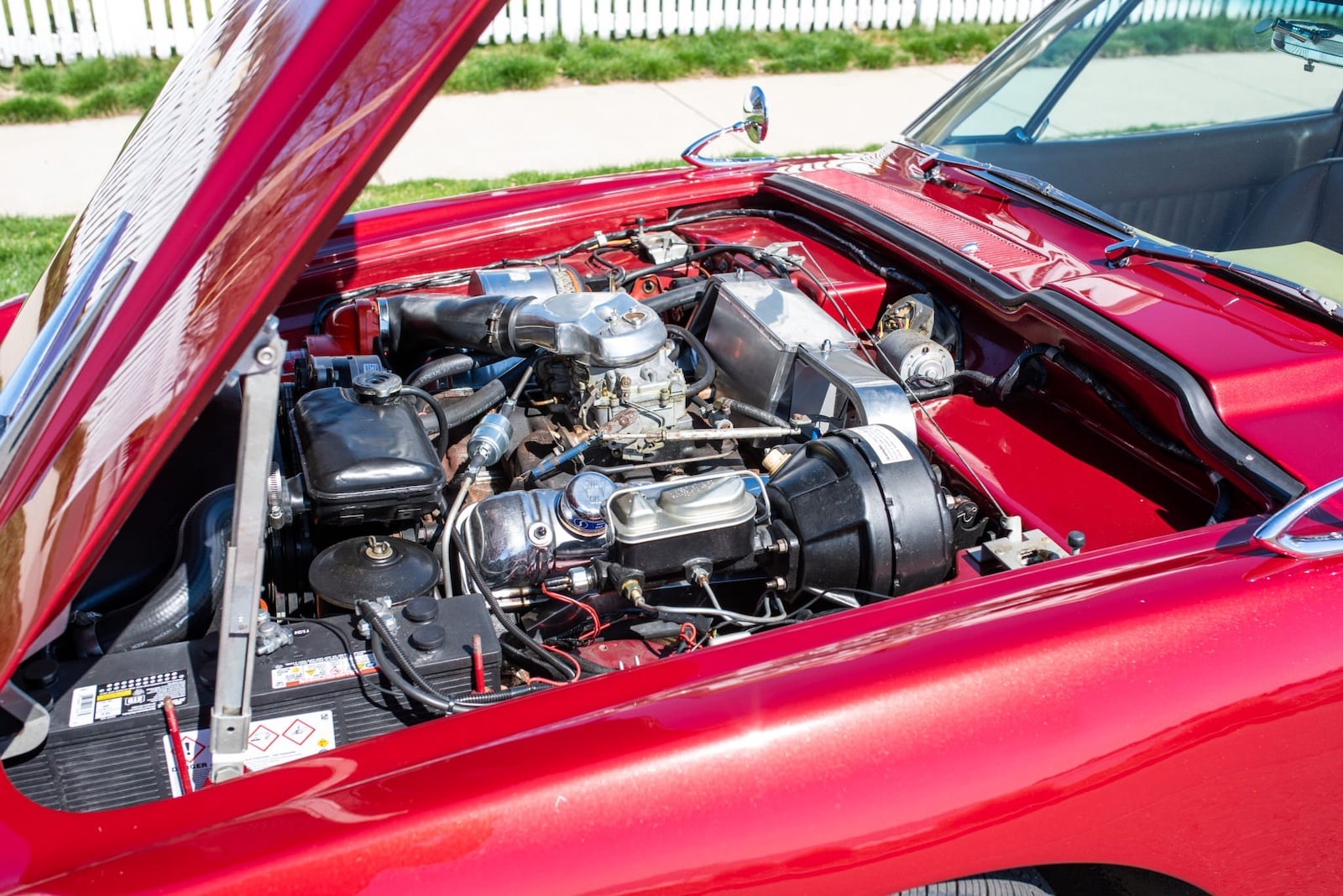
- The Paxton-supercharged Jet Thrust 289 cubic inch V8 produces a rated 290 bhp and drives through the rebuilt 4-speed manual to a Twin-Traction limited-slip differential. The car is offered in Milford, Connecticut with a 1967 registration document, refurbishment records, and a clean Tennessee title.
History Speedrun: The Studebaker Avanti
By early 1961, Studebaker was running out of time, and everyone knew it. Sales were sliding, the model lineup was aging, and the South Bend, Indiana automaker was staring down the barrel of an existential crisis. Into this pressure cooker stepped Sherwood Egbert, who took over as president in February of 1961. His strategy was a four-wheeled Hail Mary – he wanted a high-performance personal luxury car that could rival Ford’s Thunderbird and generate the kind of showroom foot traffic that no amount of Lark facelifts ever could.
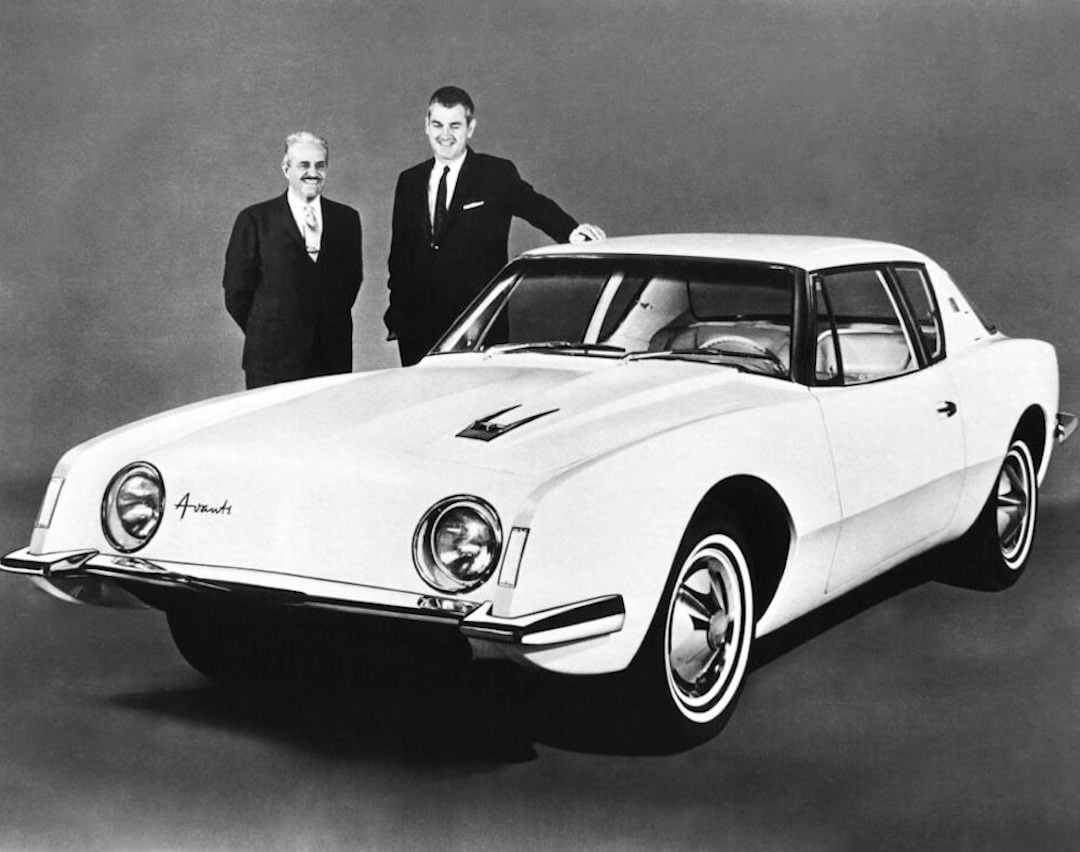
 Here we see Raymond Loewy (left) next to Studebaker boss Sherwood Egbert (right), with the then-new Studebaker Avanti – a car that neither man could possibly have known would remain in production (in some form or other) until 2006. Image courtesy of the Raymond Loewy Family Archives.
Egbert turned to Raymond Loewy, the legendary industrial designer who had worked with Studebaker earlier in 1956, and who jumped at the opportunity. Loewy assembled a small team including Tom Kellogg, Bob Andrews, and John Ebstein, at a rented house near Palm Springs, California in March of 1961.
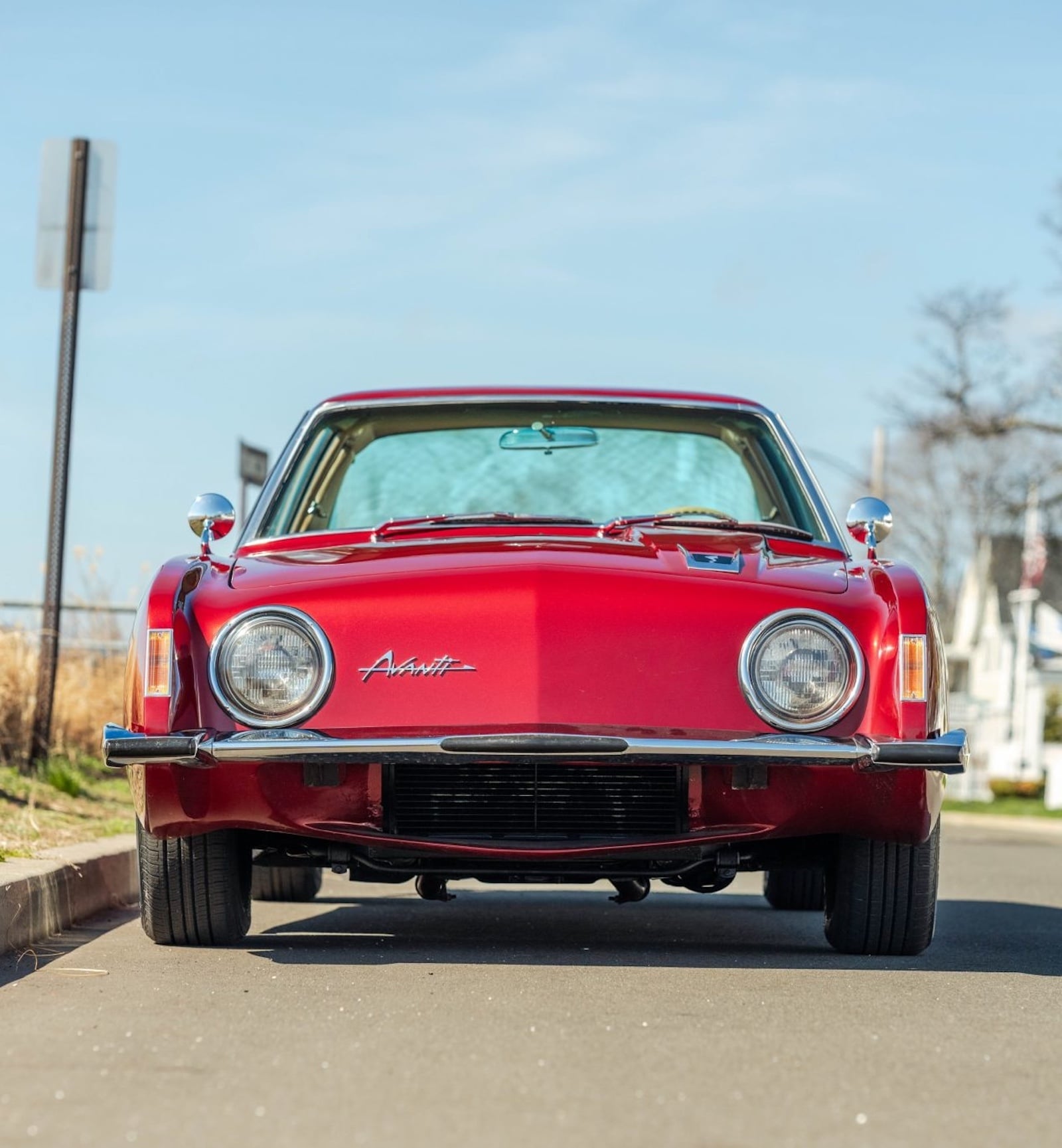
Working in near-total seclusion, they developed the design in a 40 day crash program. The result was radical – a low-slung, wasp-waisted semi-fastback coupe with a grille-less nose, a built-in rollbar integrated into the roof, and a classic Coke-bottle curvature over the rear fenders.
Studebaker’s board approved the design and rushed it toward production. Just 14 months later, the Avanti (its name an Italian word meaning “forward”) made its public debut on April the 26th, 1962, simultaneously at the New York International Auto Show and the company’s annual shareholders’ meeting.
Studebaker Avanti – Construction + Engineering
The Avanti’s unusual body shape would have been prohibitively expensive to stamp in steel, so Studebaker followed the path General Motors had pioneered with the Corvette and chose to mold the external panels in fiberglass.
The work was outsourced to Molded Fiberglass Body in Ashtabula, Ohio, the same firm that had built the fiberglass panels for the 1953 Corvette. Underneath, the Avanti was based on a modified Studebaker Lark convertible chassis with a 109 inch wheelbase, shortened and stiffened by chief engineer Gene Hardig, who added front and rear anti-sway bars and rear radius rods.
The Avanti was also the first American production model to make front disc brakes standard equipment – they were British Dunlop-designed units manufactured under license by Bendix. The car’s “bottom breather” nose design, which drew cooling air from beneath the front bumper rather than through a conventional grille, was a forward-thinking design detail that wouldn’t become commonplace until the 1980s.
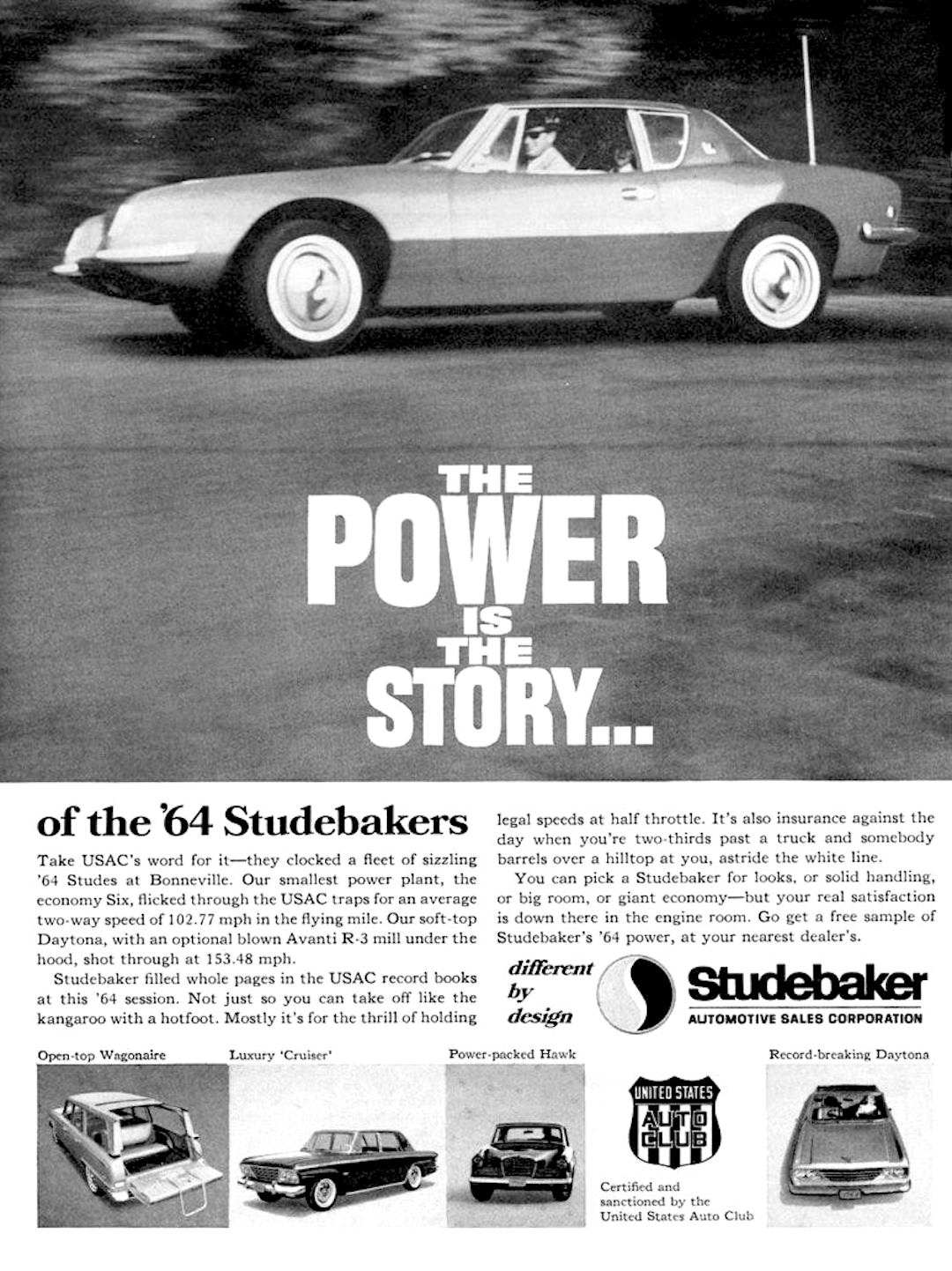
The base R1 engine was naturally aspirated, producing 240 bhp with a four-barrel carburetor and a 10.25:1 compression ratio. The R2 added a Paxton SN-60 centrifugal supercharger, dropping compression to 9.0:1 and boosting output to 290 bhp – for just $210 over the base price of $4,445. Image courtesy of Studebaker.
The R-Series Engines
Power came from Studebaker’s 289 cubic inch overhead valve V8, modified into a tiered lineup developed by Andy Granatelli and Paxton Products. It’s worth noting that even though it shared a displacement figure with the Ford 289 V8 of Mustang and Cobra fame, the two engines were completely unrelated.
The base R1 engine was naturally aspirated, producing 240 bhp with a four-barrel carburetor and a 10.25:1 compression ratio. The R2 added a Paxton SN-60 centrifugal supercharger, dropping compression to 9.0:1 and boosting output to 290 bhp – for just $210 over the base price of $4,445.
The rare R3 used a bored-out 304.5 cubic inch block with a supercharger, producing a claimed 335 bhp. Only nine were built. Beyond these, the R4 (naturally aspirated, high-performance) and R5 (twin-supercharged with Bendix fuel injection and magneto ignition, producing 575 bhp) existed only as experimental prototype engines.
Transmission choices included a 3-speed manual, a 4-speed manual, or a 3-speed Borg-Warner automatic.
The Avanti At Bonneville
In the summer of 1962, Andy Granatelli (Chief Driver and Engineer at Studebaker Racing) took three specially prepared, supercharged Avantis – all fitted with R3-spec engines – to the Bonneville Salt Flats and shattered 29 American national stock car records in a single session.
The highlights of these sessions included a two-way flying mile average of 168.15 mph and a 10 mile average of 163.9 mph, demolishing the previous Class C benchmark (held by a Dodge) by more than 50 mph. The records were USAC-sanctioned, with the car certified stock and running on Mobil premium pump gas.
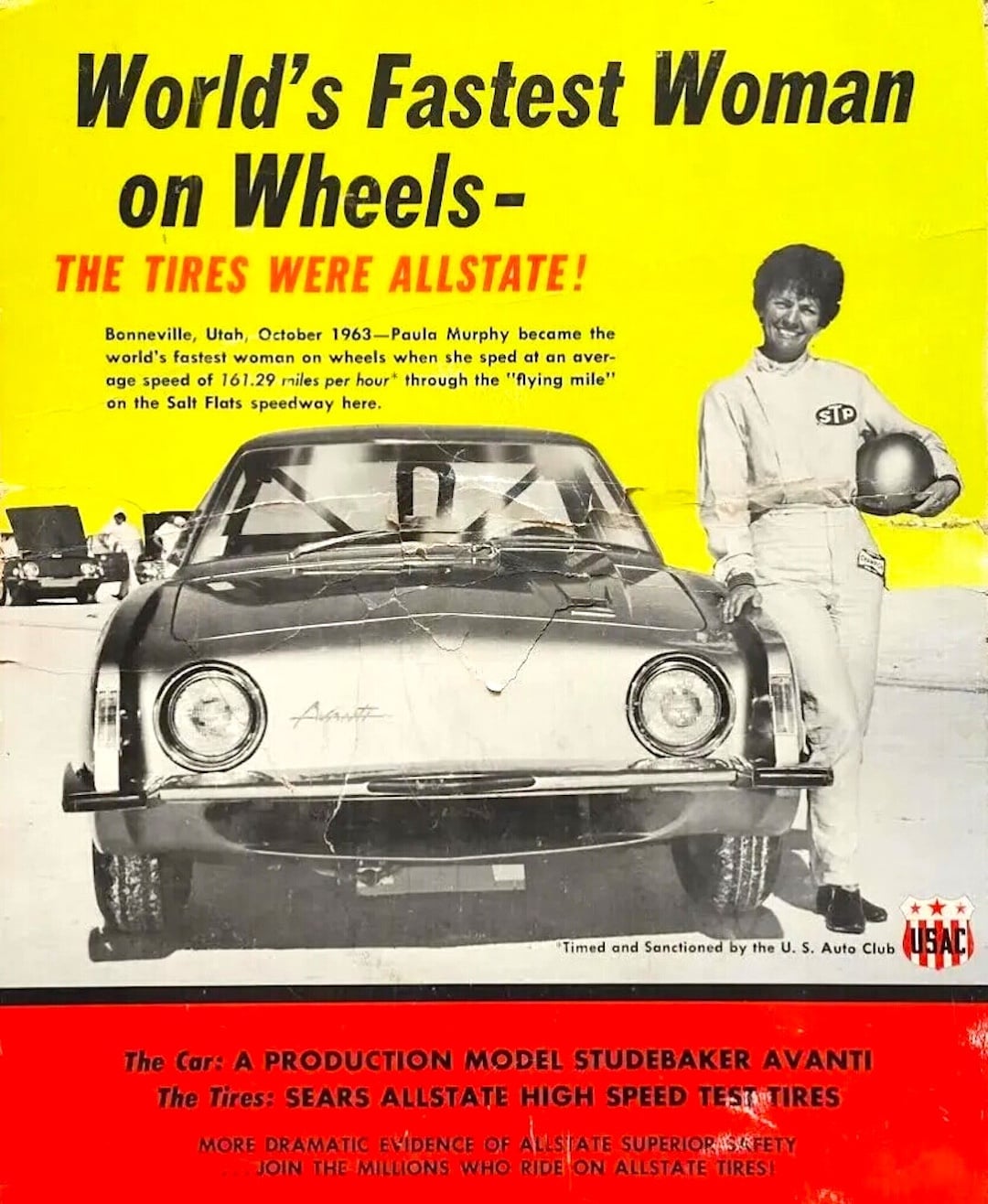
In October of 1963, Paula Murphy became the world’s fastest woman on wheels when she sped at an average speed of 161.29 miles per hour through the “flying mile” on the Salt Flats. Image courtesy of Studebaker.
Granatelli would return in 1963 and push the two-way flying mile average beyond 170 mph. Studebaker wasted no time marketing the Avanti as “the world’s fastest production car.”
The Avanti’s Primary Competitors
Priced at around $4,445 in base R1 trim, the Avanti competed against the likes of the Ford Thunderbird, the Buick Riviera, and the Chevrolet Corvette – all three of which were lined up against it in a Popular Mechanics comparison test in early 1963.
Against the Thunderbird the Avanti offered significantly more performance, against the Corvette it offered rear seats and a more luxurious cabin, though it couldn’t quite match the Chevy’s handling.
The Avanti was more expensive than the other cars, but its positioning as a four-passenger grand tourer would prove to be hugely successful later in the 1960s, with cars like the Mustang, Camaro, Cougar, Firebird, Javelin, and Challenger all showing that the concept had legs.
The (Infamous) Production Troubles
Despite the excitement around the car, the Avanti was plagued by production problems. The fiberglass body panels proved difficult to cure and fit correctly, causing chronic delays and canceled orders.
Egbert had planned to sell 20,000 Avantis in the first year, but only around 1,200 were built in 1962. By the time the manufacturing issues were resolved, many buyers had given up and bought Corvettes or imports.
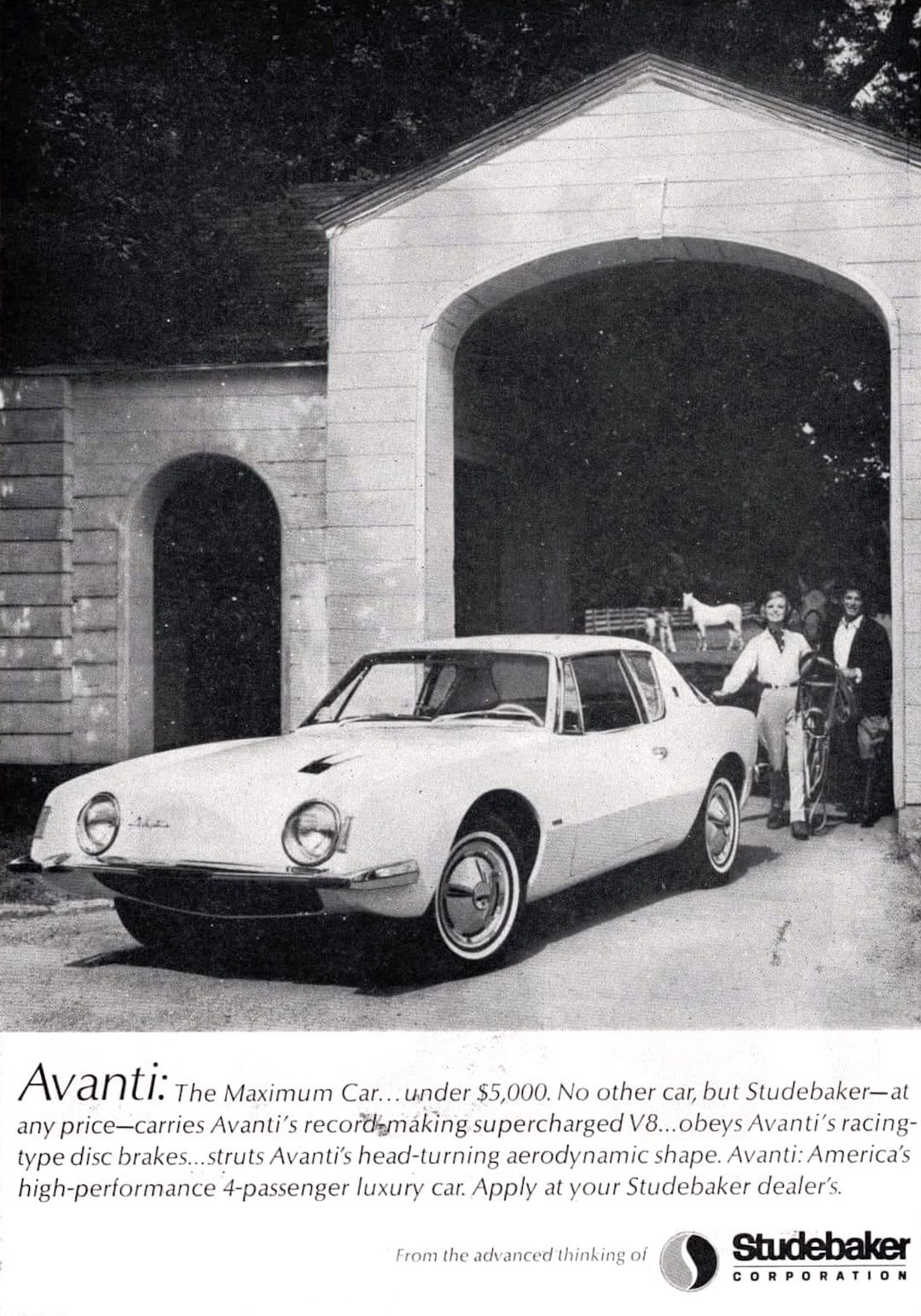
In the summer of 1962, Andy Granatelli (Chief Driver and Engineer at Studebaker Racing) took three specially prepared, supercharged Avantis – all fitted with R3-spec engines – to the Bonneville Salt Flats and shattered 29 American national stock car records in a single session. Image courtesy of Studebaker.
Total Studebaker-era production is generally quoted as 4,643 cars (though some Avanti-specialists give a slightly higher count), with 3,834 for the 1963 model year and 809 for 1964, this was before the South Bend factory closed on December the 20th, 1963.
Afterlife – The Avanti II + Beyond
Fortunately, and perhaps surprisingly, the Avanti story didn’t end with Studebaker’s closure. Not by a long shot. In mid-1964, South Bend Studebaker dealers Nathan Altman, Arnold Altman, and Leo Newman bought the Avanti name, tooling, molds, and factory space.
They began hand-building a revised version called the Avanti II in 1965, initially powered by a 327 cubic inch Chevrolet Corvette V8 and later transitioning through various GM powerplants. These were low-volume, bespoke luxury cars built on the original Studebaker chassis through 1985, after which production moved first to a Chevrolet Monte Carlo chassis and later to a Caprice-based chassis.
A succession of subsequent company owners – Stephen Blake, John Cafaro (who moved production to Youngstown, Ohio), and Michael Kelly (who relocated to Villa Rica, Georgia, and eventually Cancun, Mexico), kept the Avanti flame alive.
The last Avantis were built in 2006, more than four decades after Loewy’s team first developed the design in the California desert.
The original 1963-1964 Studebaker Avanti is widely regarded as one of the most unusual American sporting GT cars of the postwar era. Though it seemed doomed by an early demise, it managed the impossible and remained in production for decades after the company that created it went the way of the dodo.
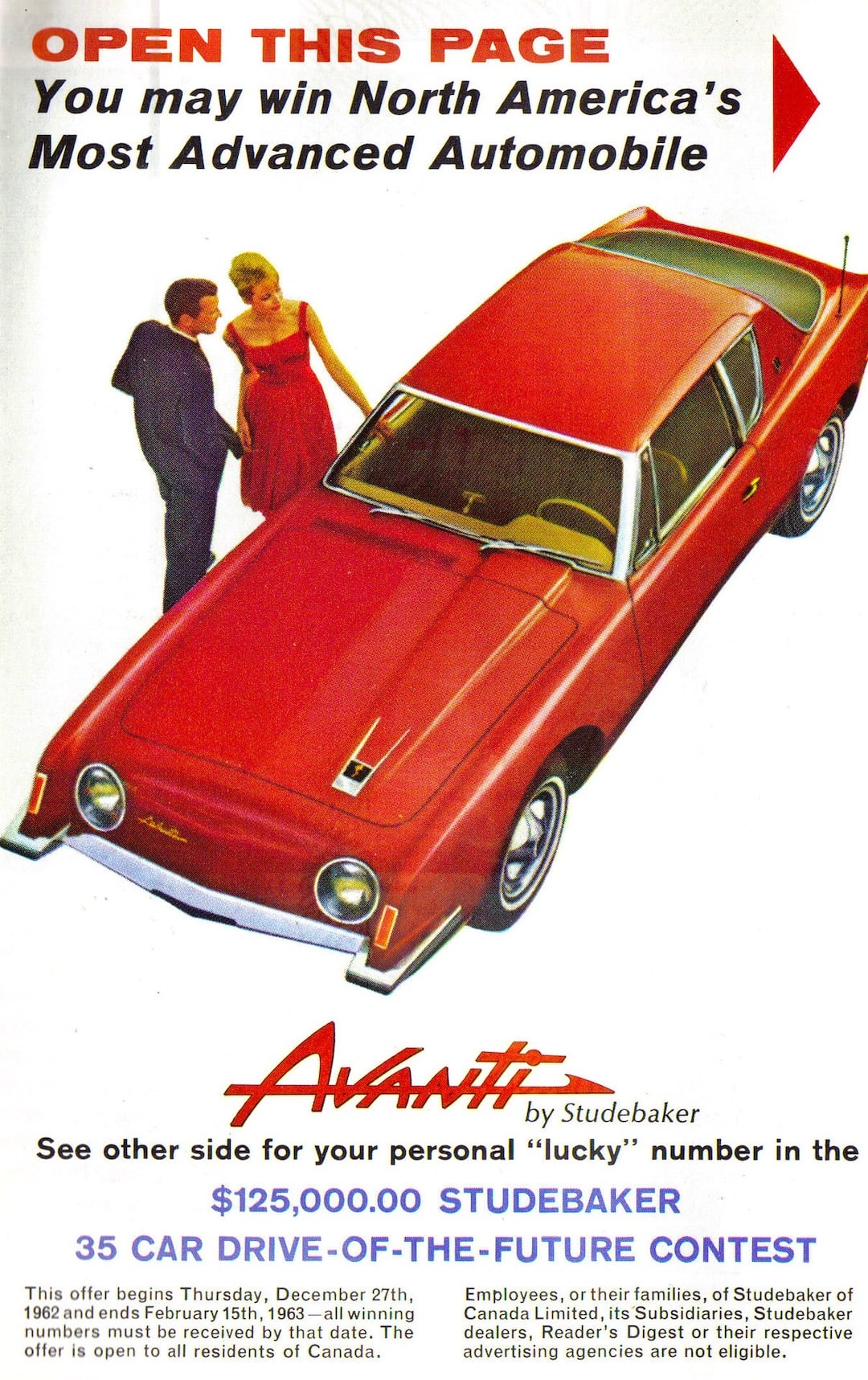
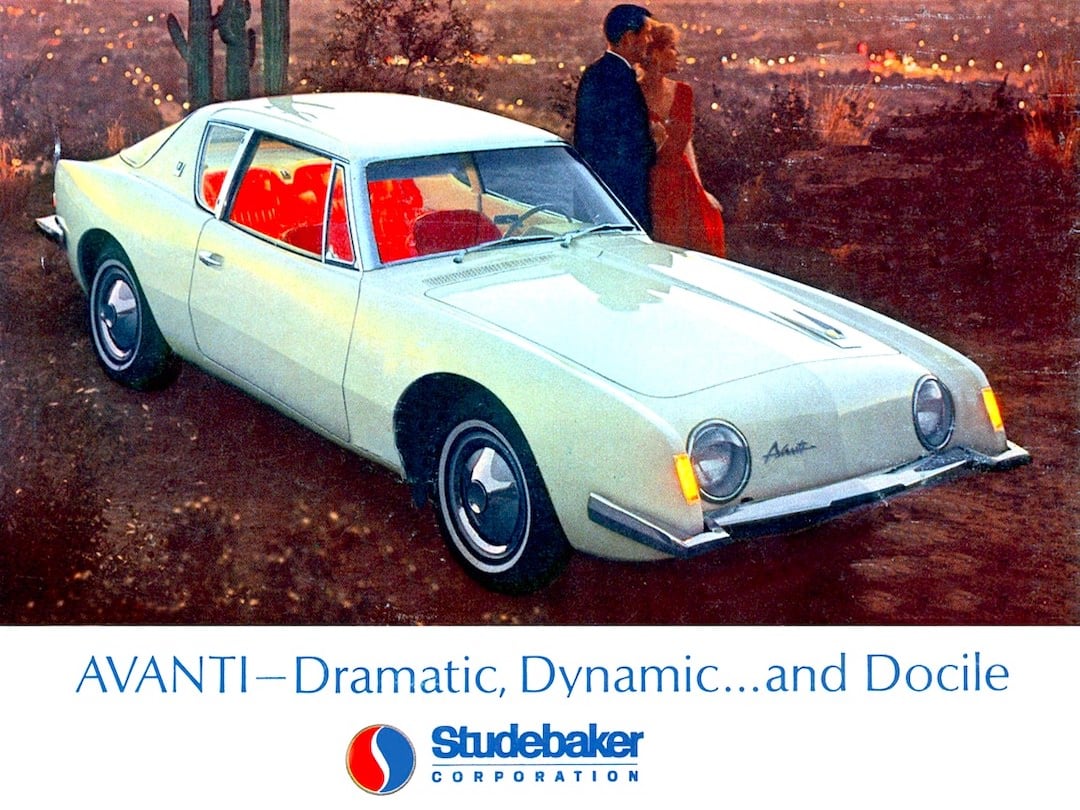
Priced at around $4,445 in base R1 trim, the Avanti competed against the likes of the Ford Thunderbird, the Buick Riviera, and the Chevrolet Corvette – all three of which were lined up against it in a Popular Mechanics comparison test in early 1963. Image courtesy of Studebaker.
The 1963 Studebaker Avanti R2 4-Speed Shown Here
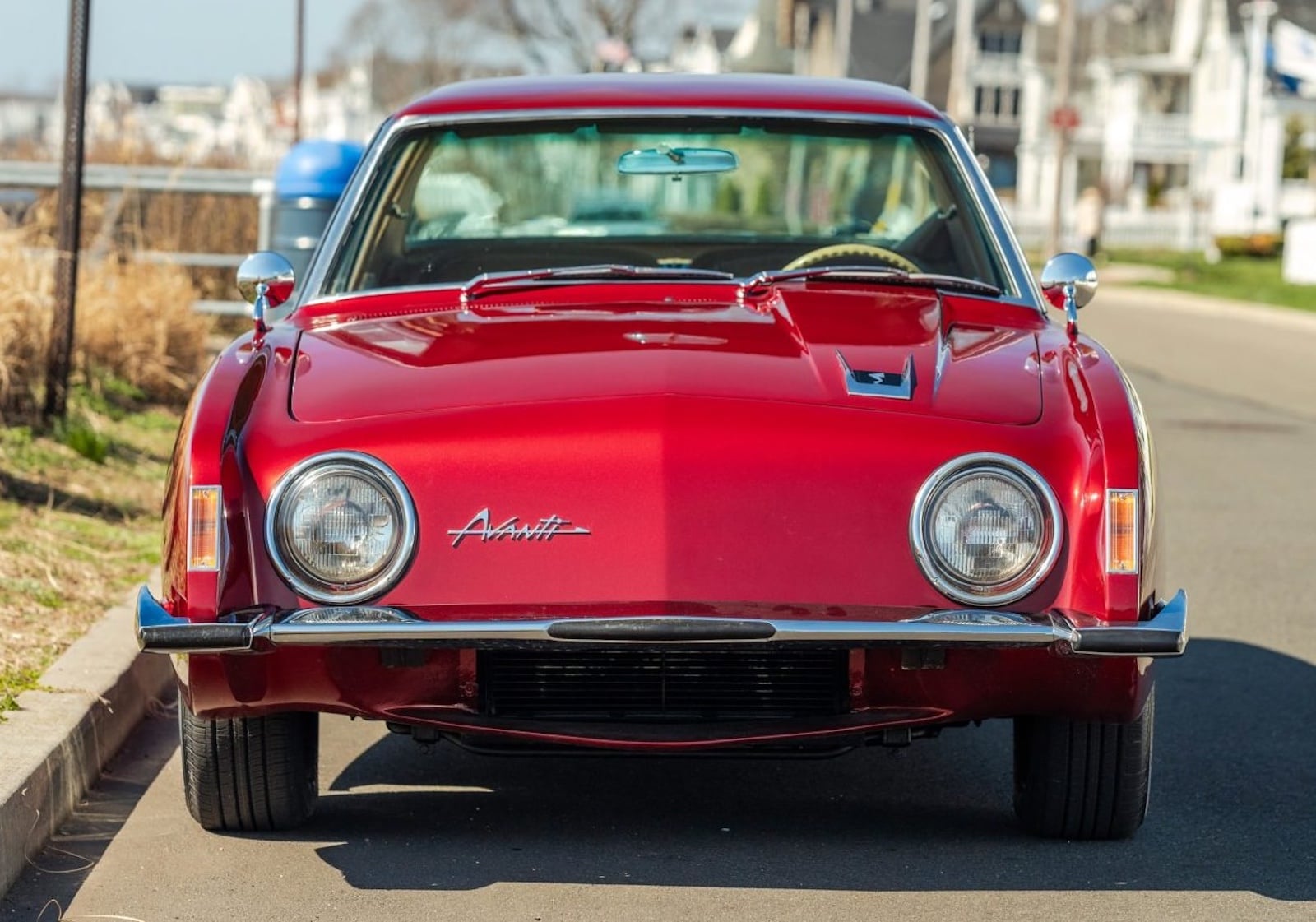
This 1963 Studebaker Avanti R2 is one of 1,833 examples built with the Paxton-supercharged 289 cubic inch V8, and one of only 643 that paired the R2 engine with a 4-speed manual transmission. This car spent nearly six decades under single ownership before being acquired by the selling dealer in 2025.
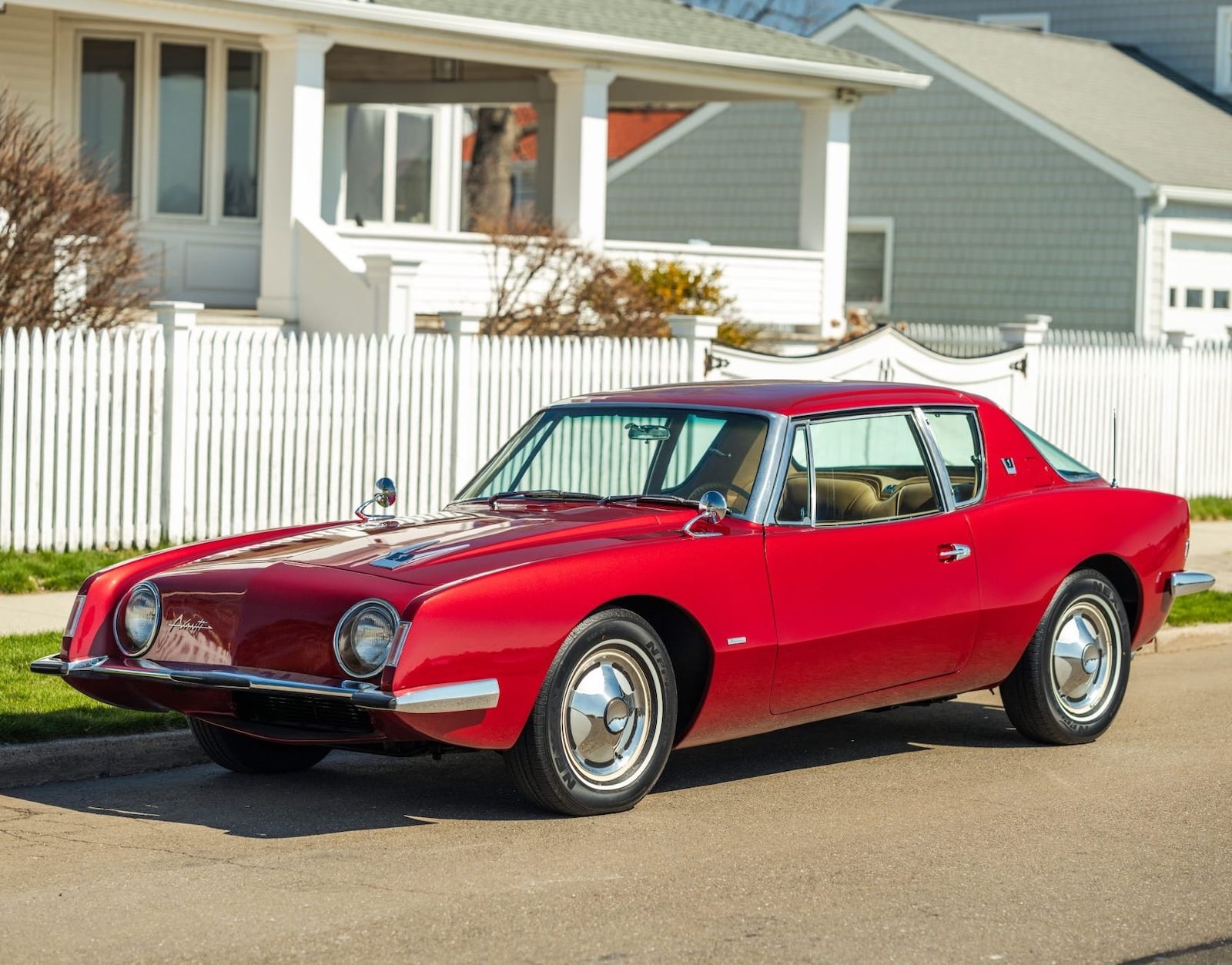
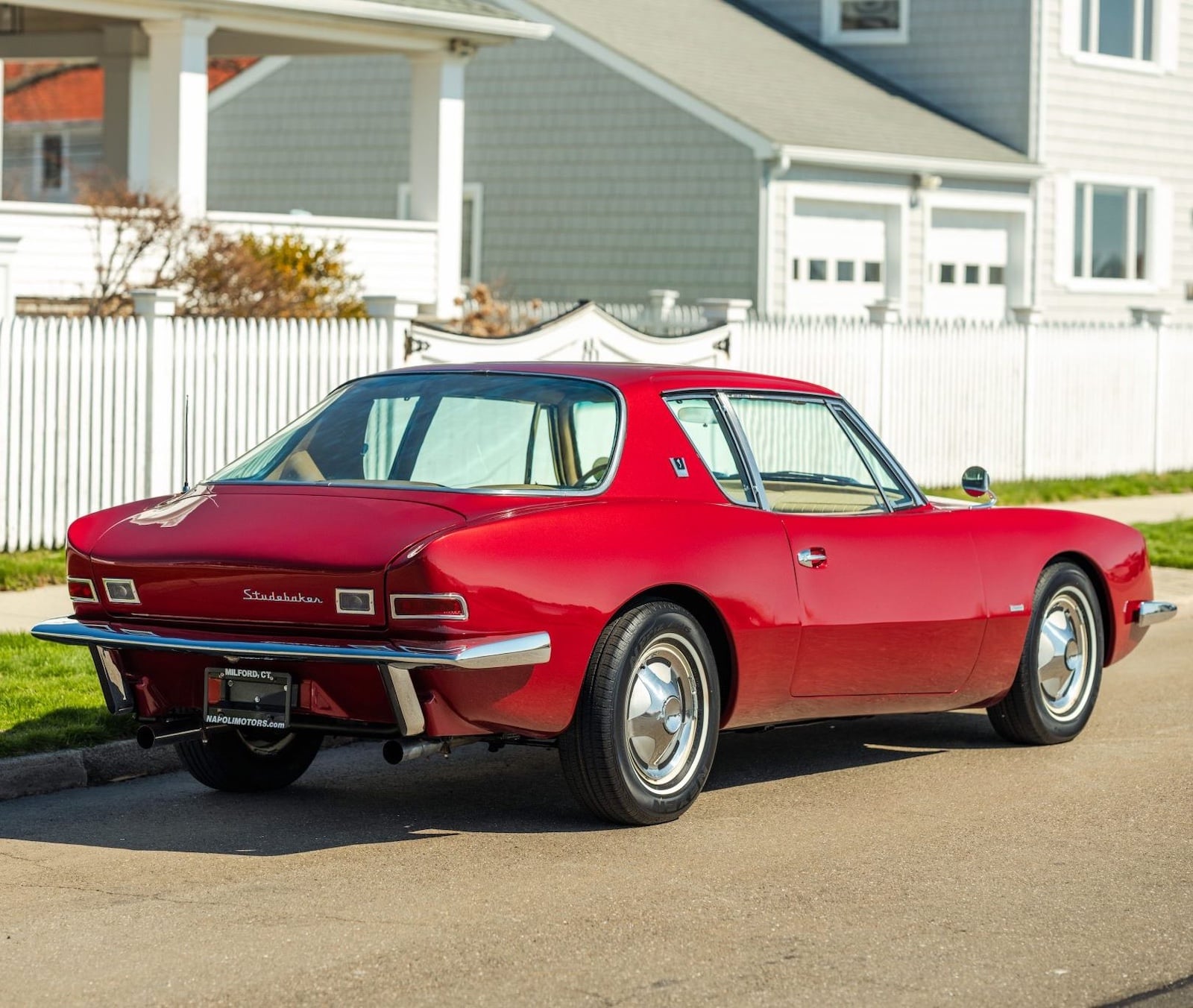
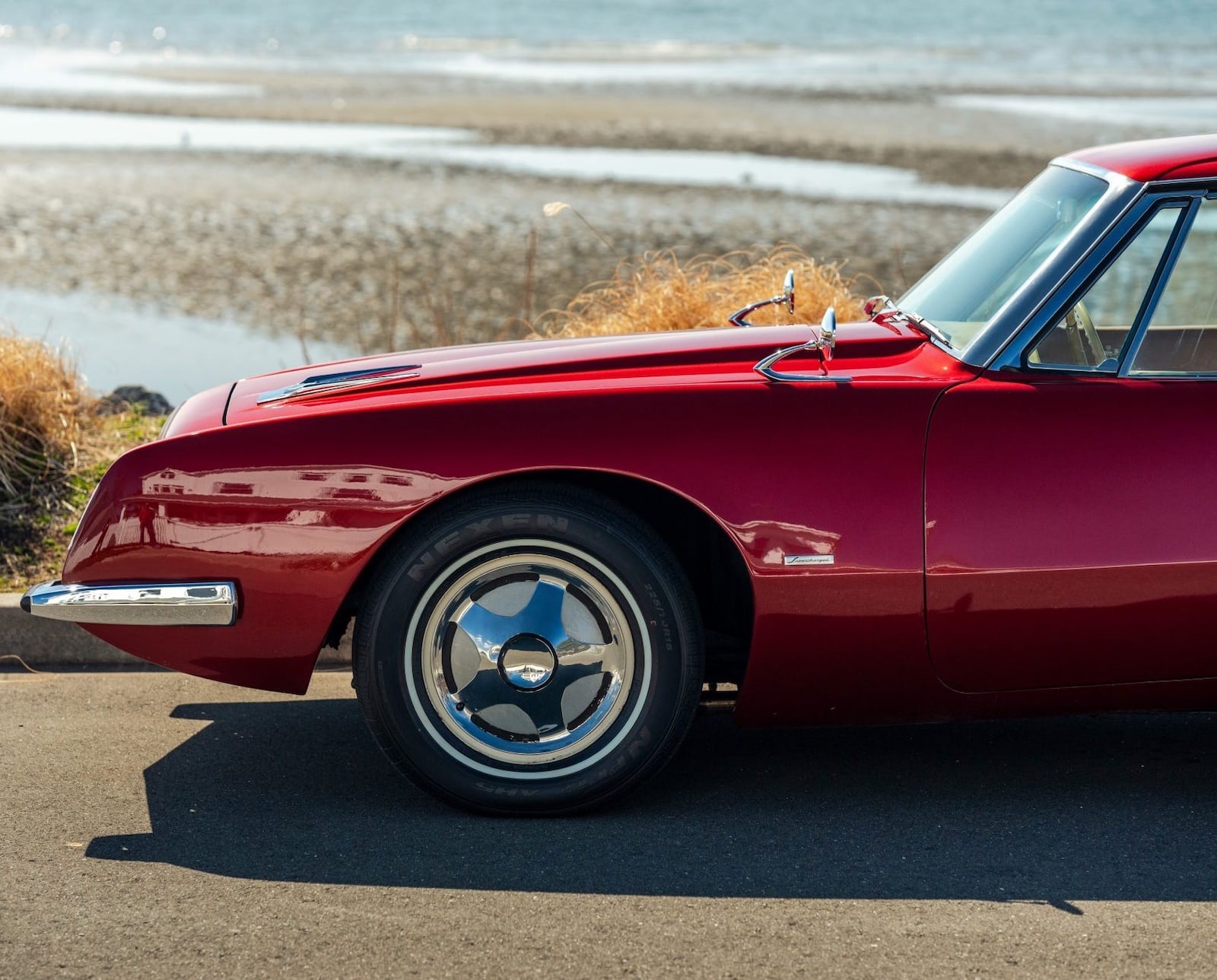
The Raymond Loewy-designed fiberglass body was refinished in red between 2014 and 2016 as part of a broader refurbishment program that also included an engine rebuild, a transmission overhaul, and the installation of a replacement exhaust system and electronic distributor.
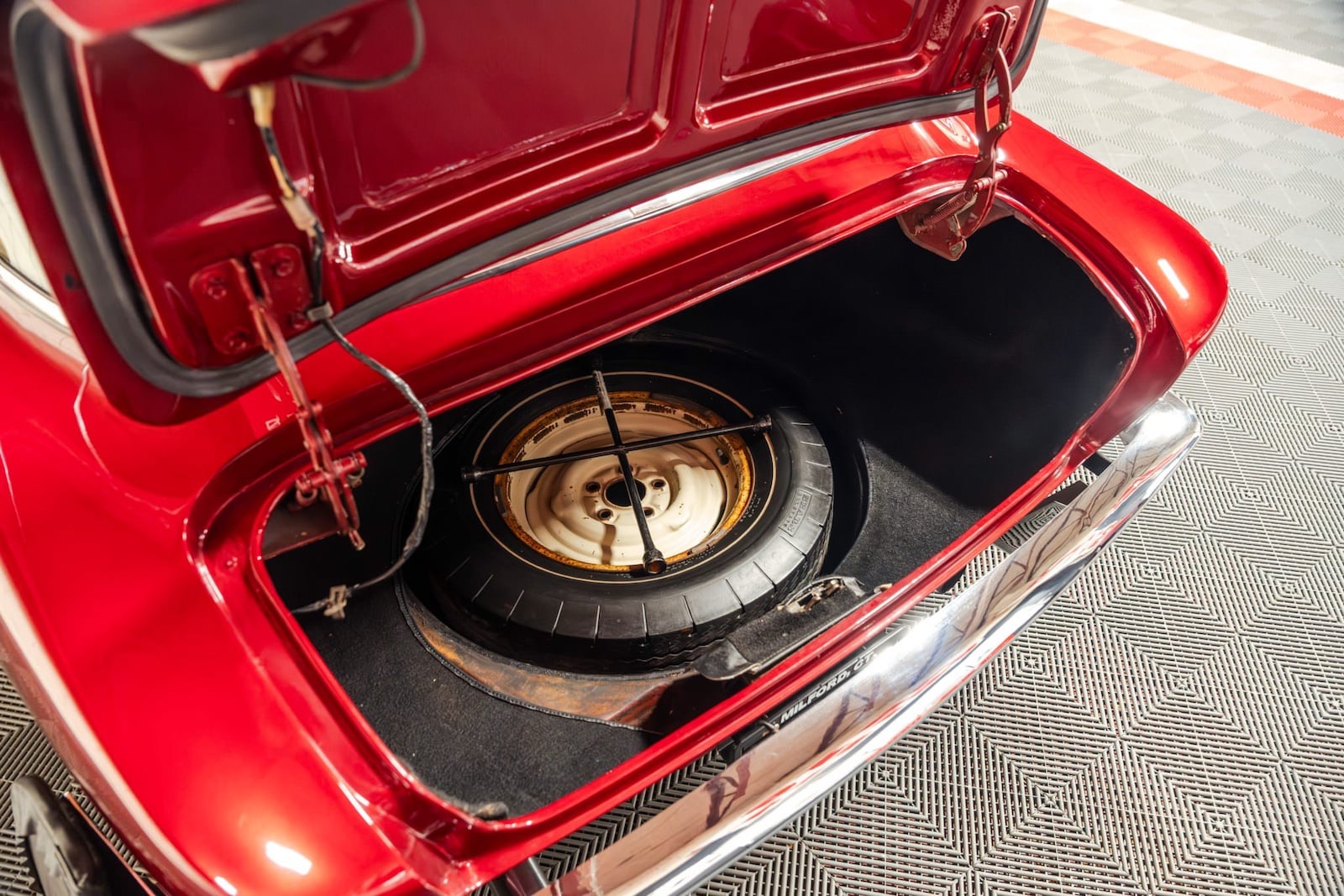
Exterior and trim details include fender-mounted chrome mirrors, polished trim, dual exhaust outlets, and wraparound chrome bumpers. The 15 inch steel wheels have spoke-style covers and are fitted with Nexen N’Priz tires showing 2024 production codes.
Inside, the car has elk vinyl upholstery on the front bucket seats and rear bench, with a color-coordinated center console, door panels, and carpeting throughout. The cabin has aircraft-throttle-inspired climate controls on the center console, overhead switchgear for lighting and fan control, power front windows, a push-button AM radio, and a heater.
A Beauty Vanity makeup mirror is tucked into the glovebox. The two-spoke steering wheel frames a 140 mph speedometer, a tachometer with a 5,000 rpm redline, and gauges for coolant temperature, amperage, fuel level, oil pressure, and intake manifold pressure. The five-digit odometer shows 89,000 miles, roughly 100 of which were added under current ownership.
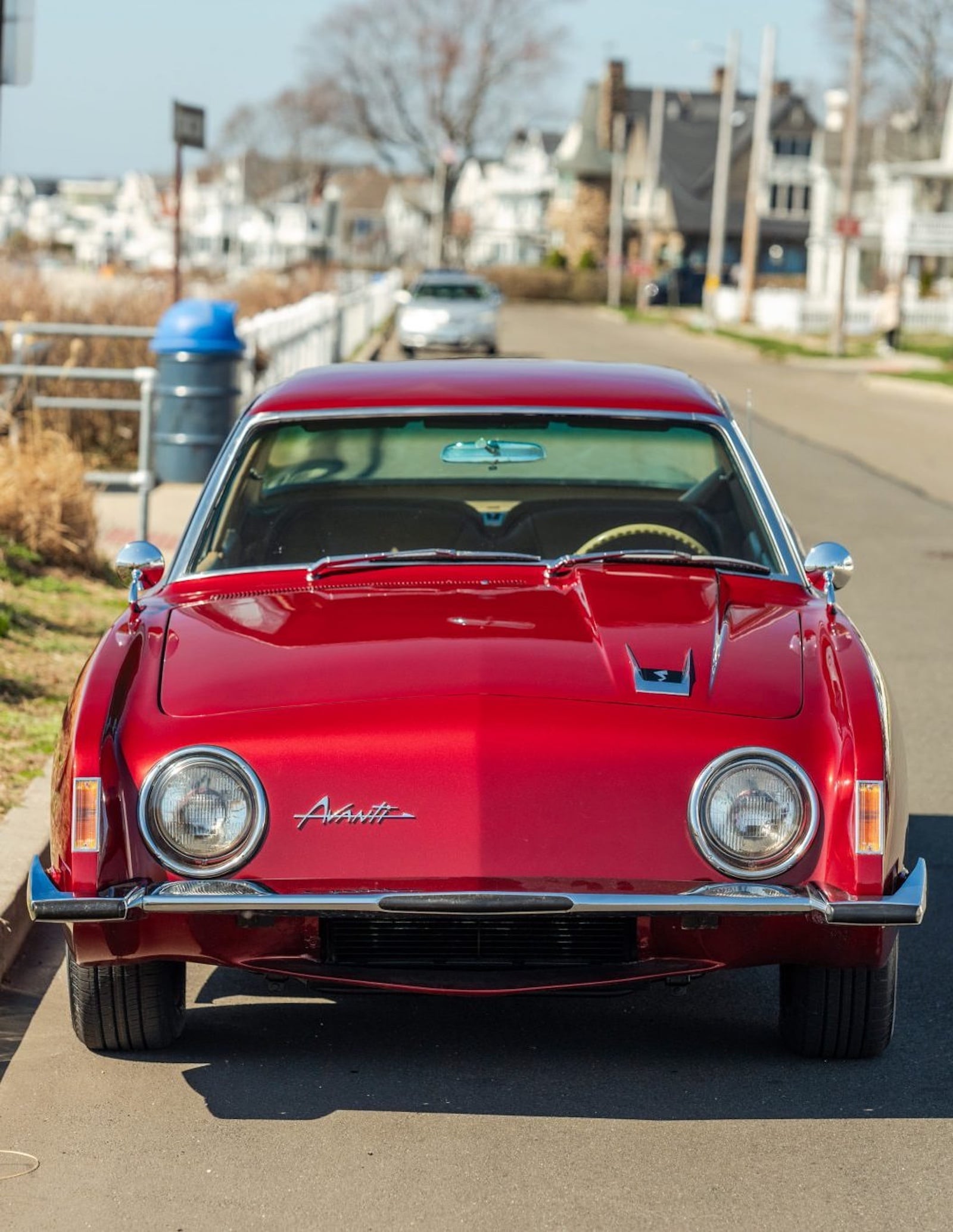
This 1963 Studebaker Avanti R2 is one of 1,833 examples built with the Paxton-supercharged 289 cubic inch V8, and one of only 643 that paired the R2 engine with a 4-speed manual transmission.
The Jet Thrust 289 cubic inch V8 produces a rated 290 bhp courtesy of its Paxton supercharger and was rebuilt during the 2014-2016 refurb. It drives through the rebuilt 4-speed manual gearbox to a Twin-Traction limited-slip differential. The car is equipped with power steering, power-assisted front disc brakes, and rear drum brakes, all of which were overhauled under prior ownership.
It’s now being offered for sale out of Milford, Connecticut with a 1967 registration document, a refurbishment summary, refurbishment records, and a clean Tennessee title. If you’d like to read more about it or place a bid you can visit the listing here.
Images courtesy of Bring a Trailer + Studebaker

Articles that Ben Branch has written have been covered on CNN, Popular Mechanics, Smithsonian Magazine, Road & Track Magazine, the official Pinterest blog, the official eBay Motors blog, BuzzFeed, Autoweek Magazine, Wired Magazine, Autoblog, Gear Patrol, Jalopnik, The Verge, and many more.
Silodrome was founded by Ben back in 2010, in the years since the site has grown to become a world leader in the alternative and vintage motoring sector, with well over a million monthly readers from around the world and many hundreds of thousands of followers on social media.