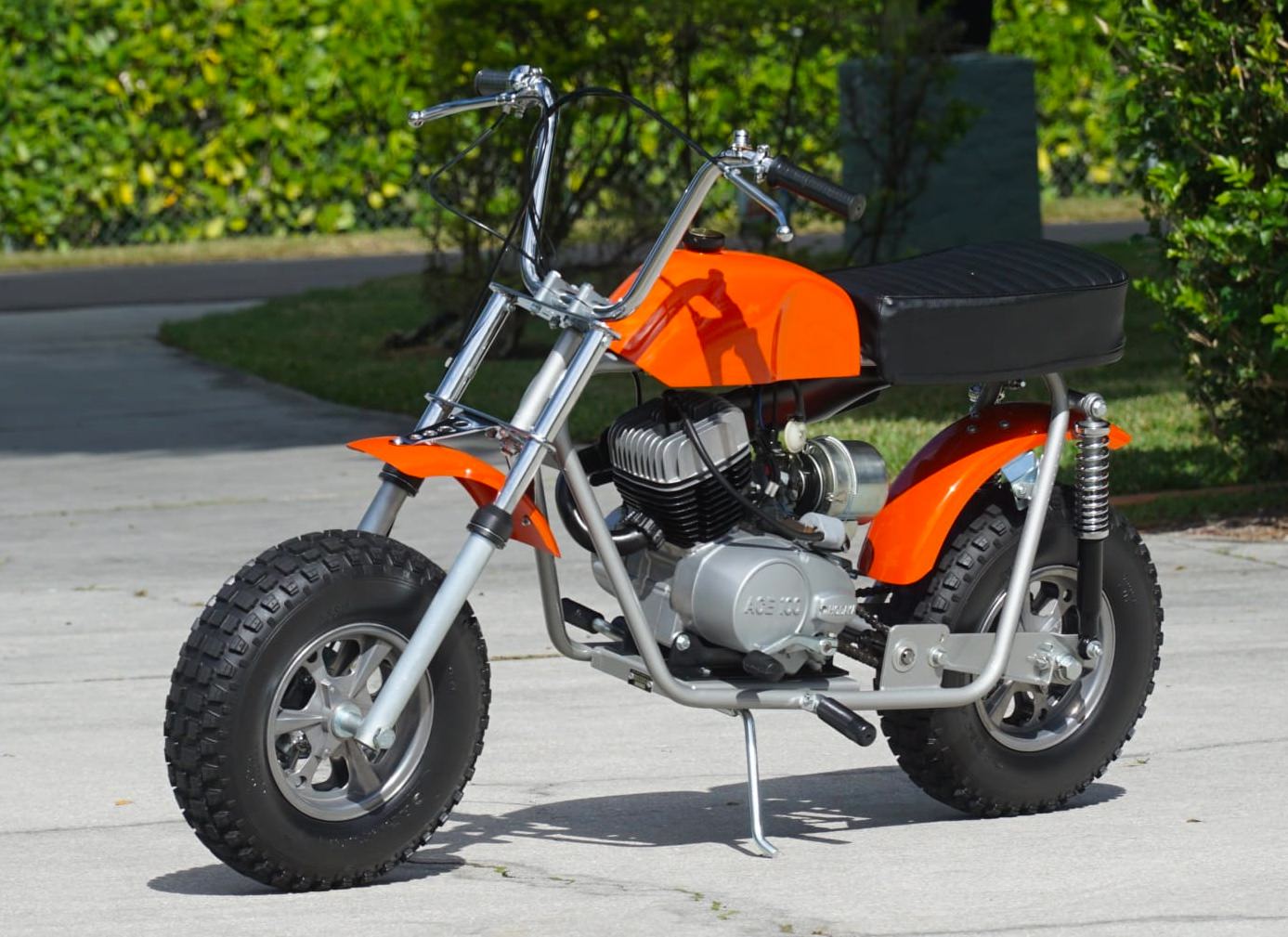
This is a 1970 Bonanza MX1510 that benefits from an extensive restoration back to new (or better than new) condition throughout.
These American-made minibikes from Bonanza provided the first taste of life on two wheels for many, and they were better built than most of their competitors, often fitted with front and rear suspension, front and rear brakes, solid frames, and punchy engines.
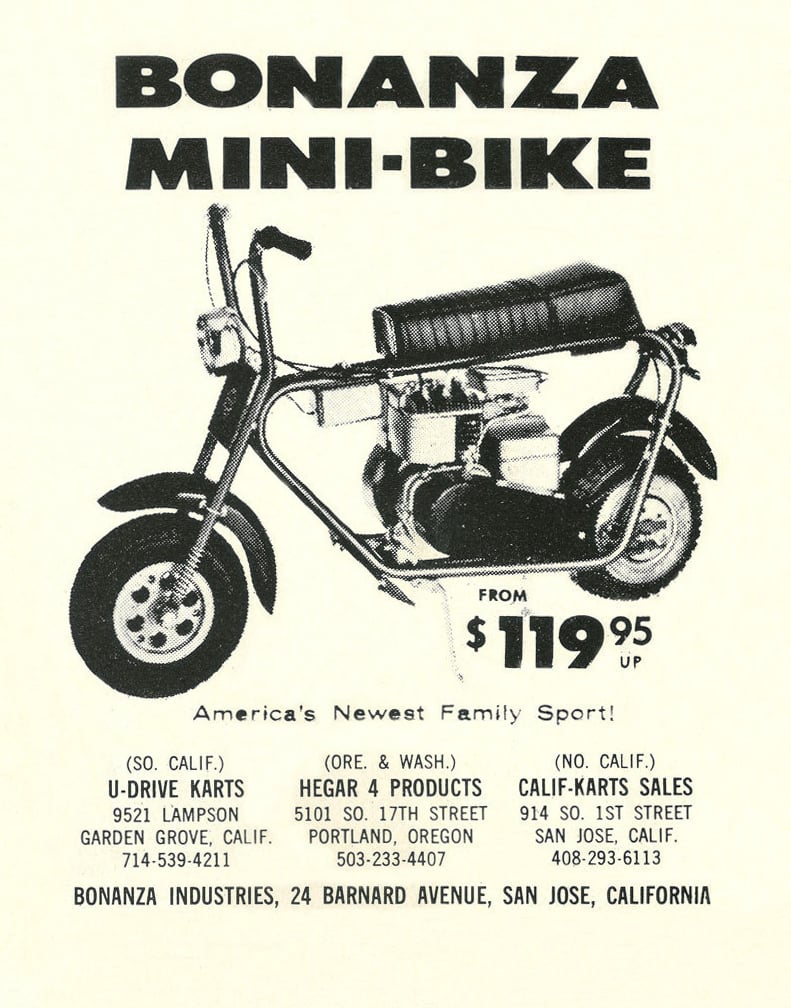
 These minibikes from Bonanza provided the first taste of life on two wheels for many, and they were better built than most of their competitors, with front and rear suspension, front and rear brakes, solid frames, and punchy engines.
History Speedrun: Bonanza Minibikes
Bonanza was a Southern California-based minibike manufacturer that became a household name during the peak of the American minibike boom in the late 1960s and into the early 1970s. This was a time when much of the market was dominated by cheaply built, almost disposable machines and so Bonanza distinguished itself by treating minibikes as scaled-down motorcycles rather than toys.
The company was operating between the mid-1960s and into the early 1970s, it focused on sound chassis engineering and the kind of built-in toughness that was rare in the industry at the time. Its tubular steel frames were heavier and more rigid than many competitors, and most models had proper motorcycle-style suspension, including telescopic forks up front and rear swingarms with twin shocks.
This approach meant that Bonanza bikes felt closer to contemporary trail motorcycles than to the bouncy, mass-market minibikes commonly sold through department stores.
Bonanza’s best-known models included the BC1300, BC1400, and BC1500 series. These typically used Tecumseh or Hodaka engines in the 3 to 6 bhp range, paired with centrifugal clutches. Period testing and coverage in Cycle World magazine praised their solid build quality and stable ride, mentioning that Bonanza bikes were heavier and better built than many rivals, particularly noticeable at speed or over rough ground.
Bonanza minibike styling was restrained to a degree and more functional than flashy, perhaps as a result of Southern California’s desert riding culture that was always focused more on what worked than on what just looked good.
Like many specialist minibike manufacturers, Bonanza was ultimately undone by tightening safety regulations, rising insurance costs, and competition from increasingly cheap and plentiful Japanese trail bikes in the early 1970s.
Surviving Bonanza minibikes are well regarded among collectors and restorers as some of the best-engineered American minibikes of their era, and they’re becoming quite collectible.
The 1970 Bonanza MX1510 Shown Here
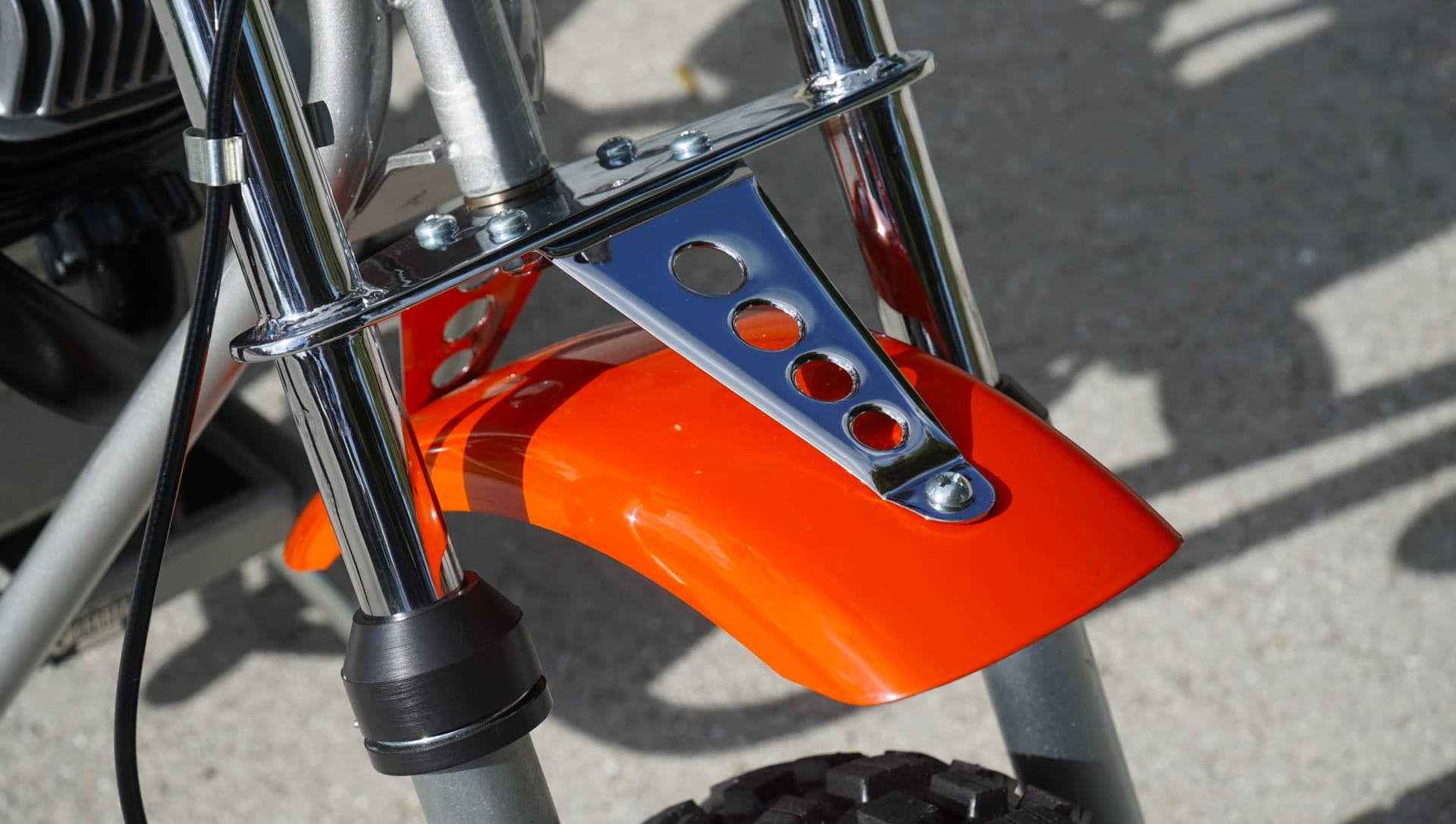
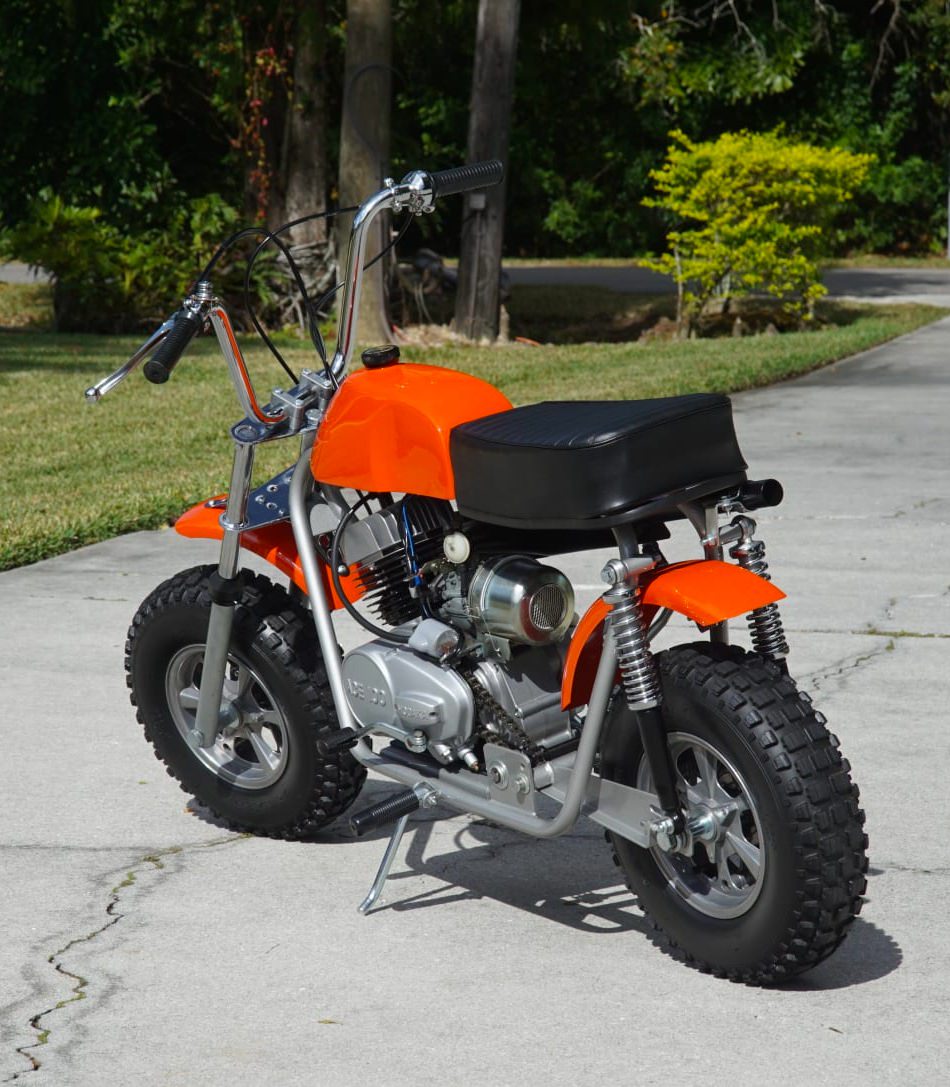
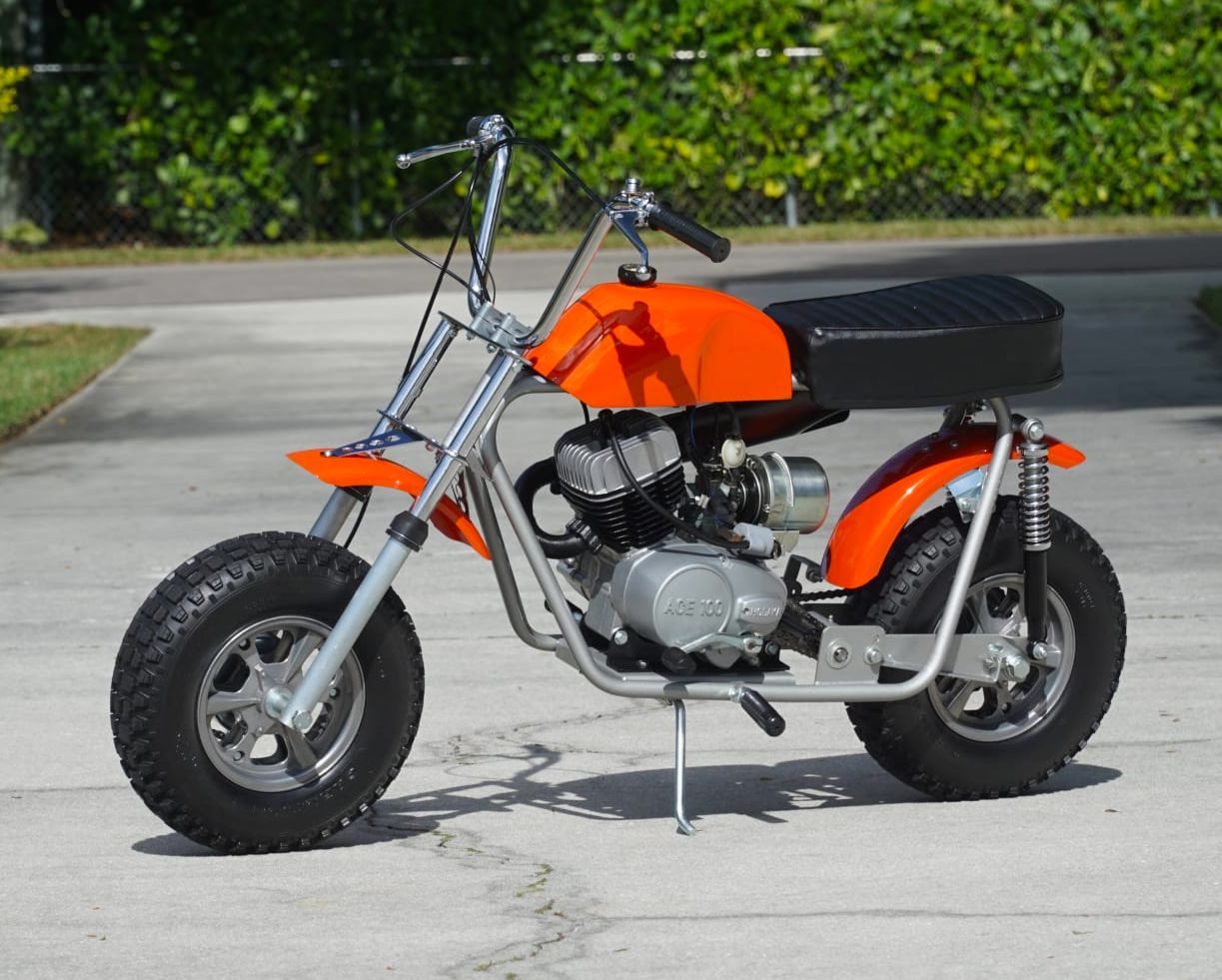
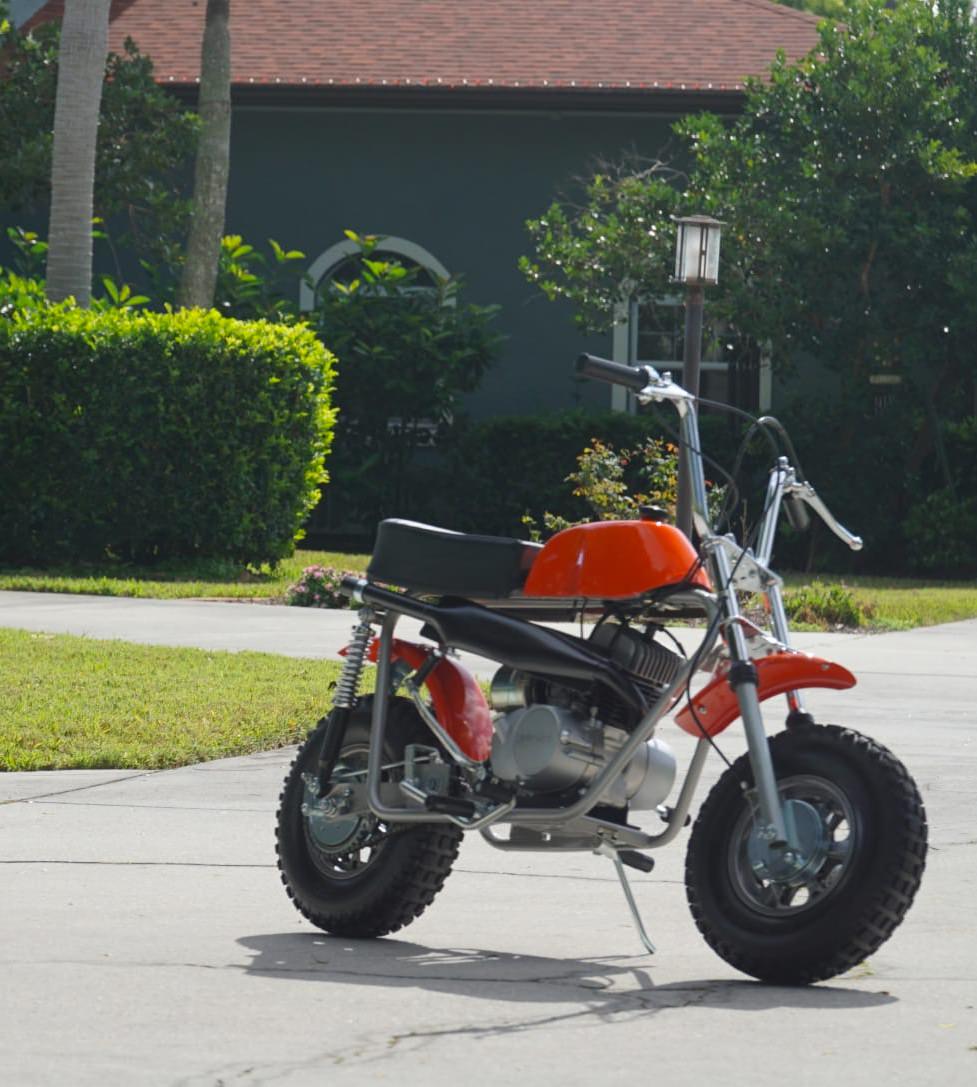
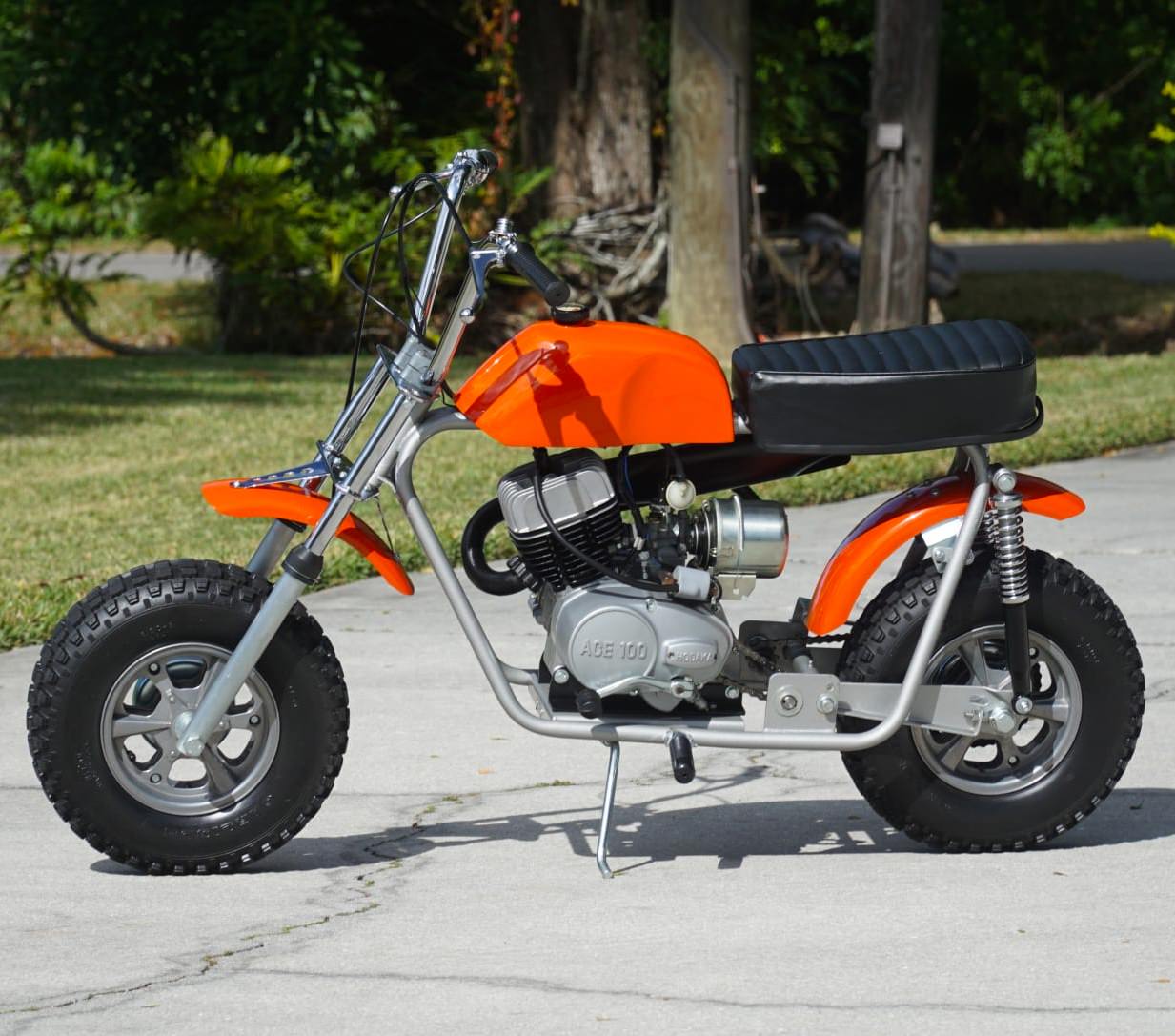
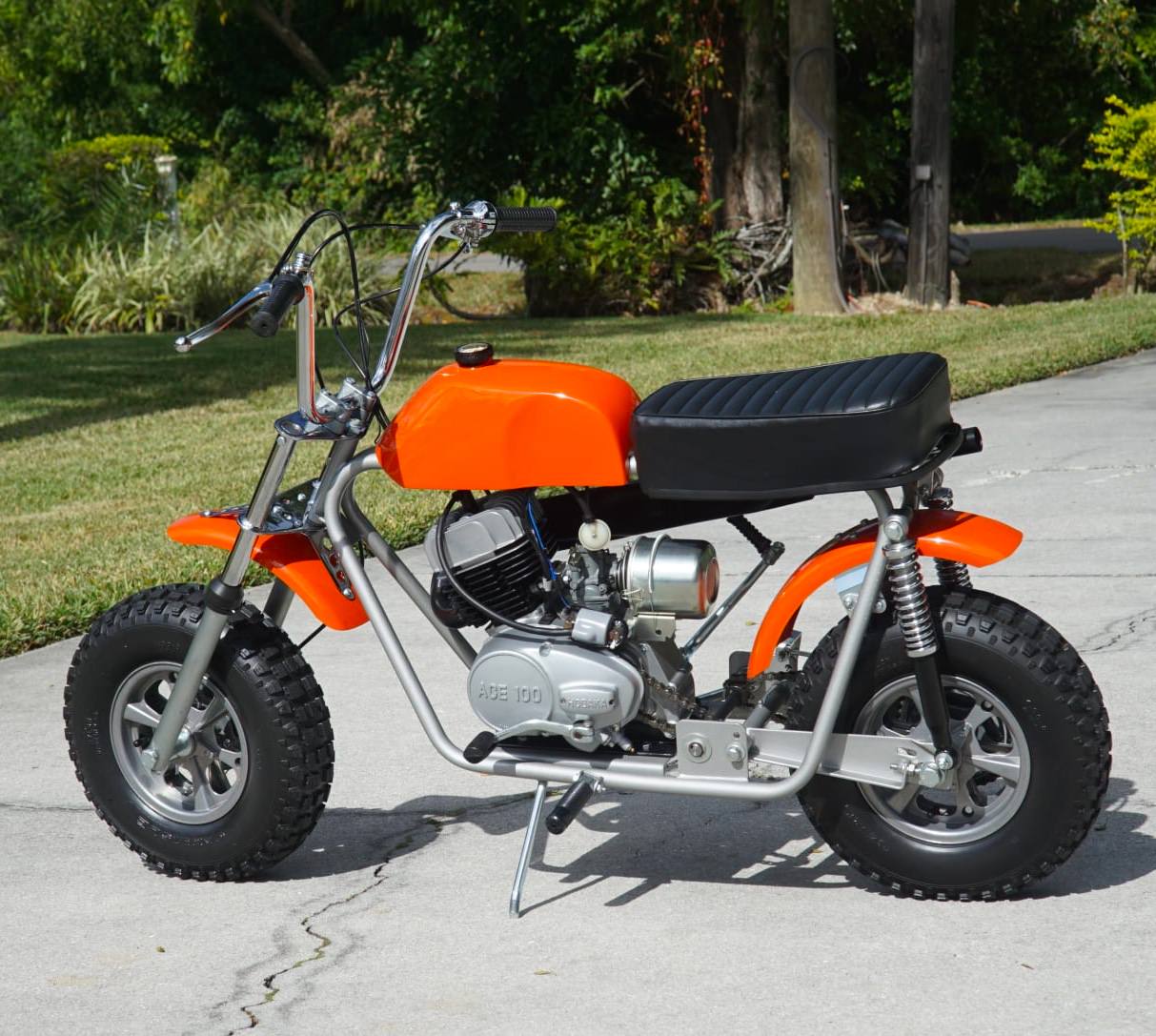
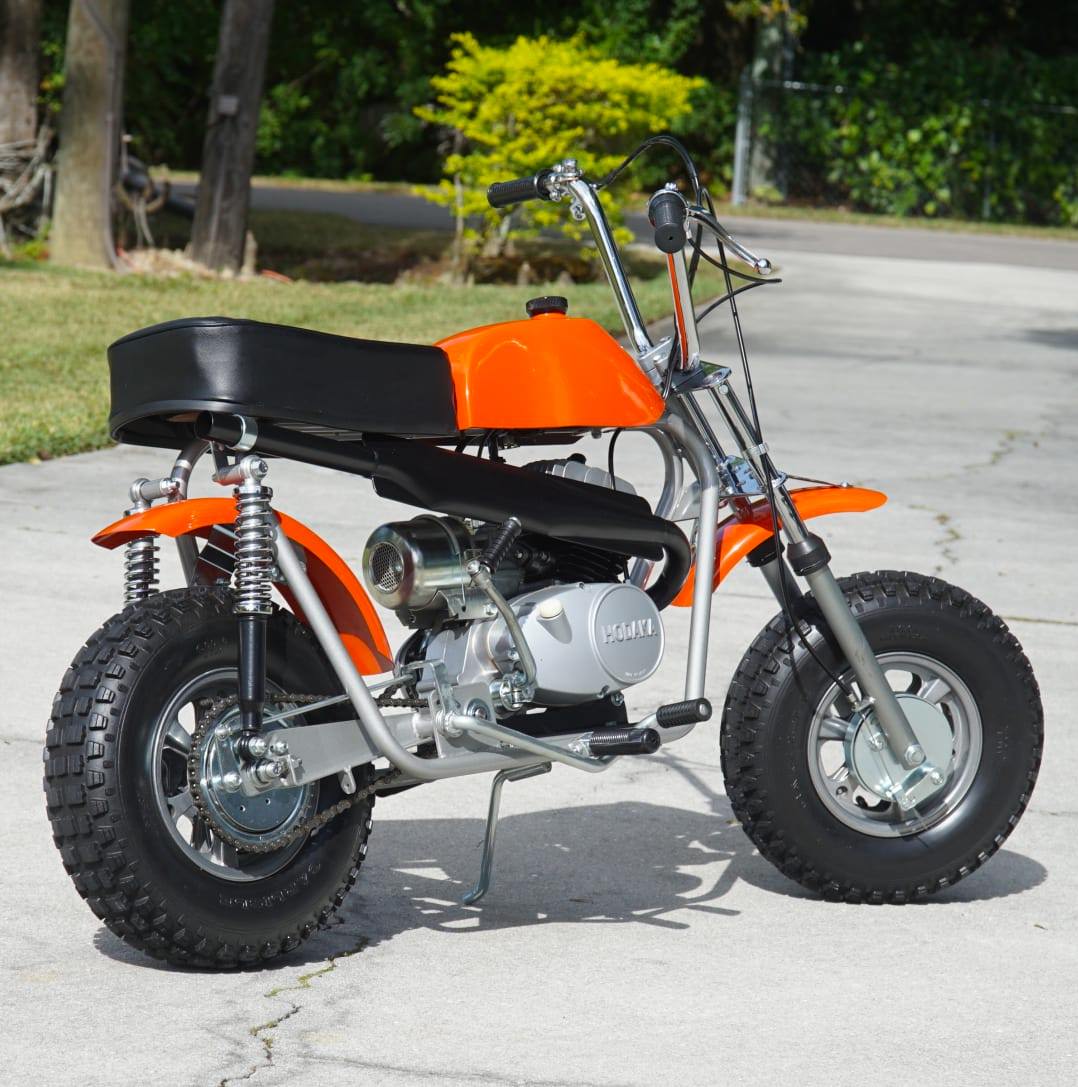
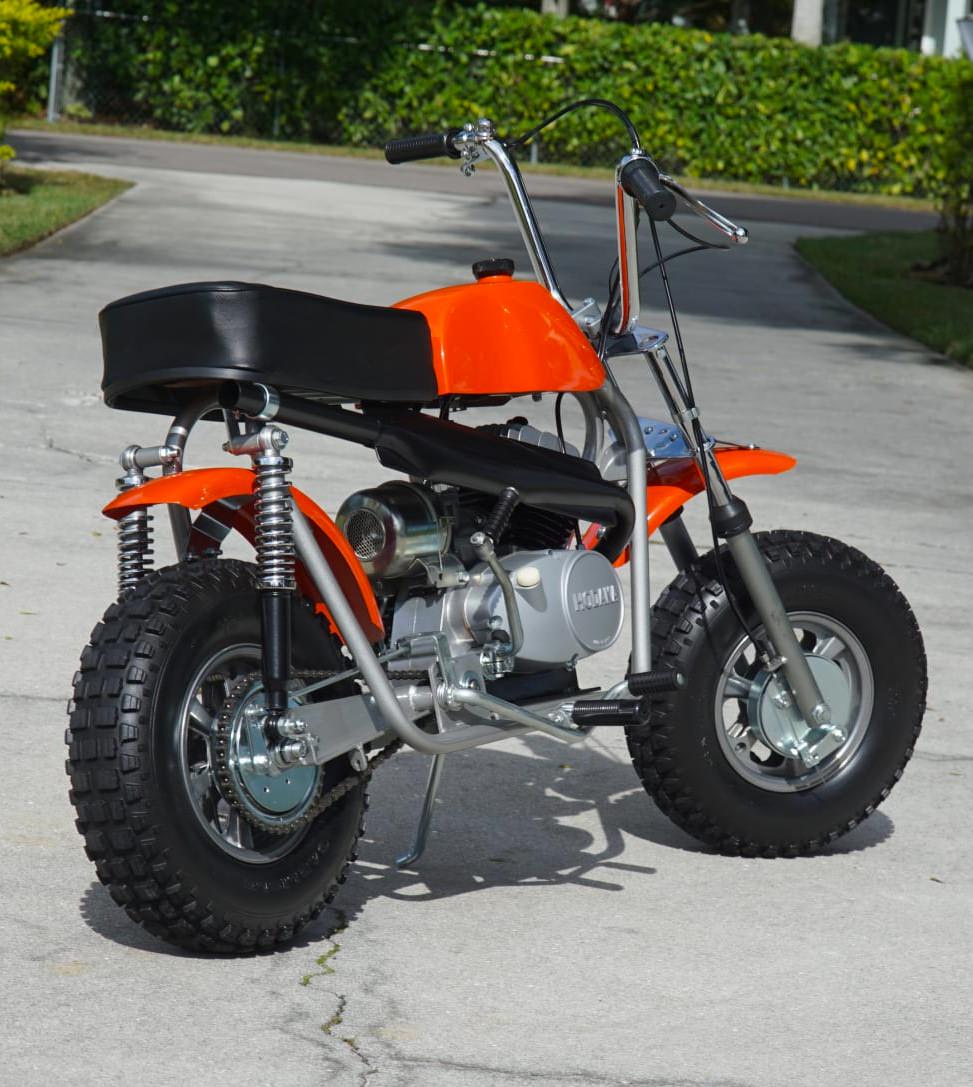
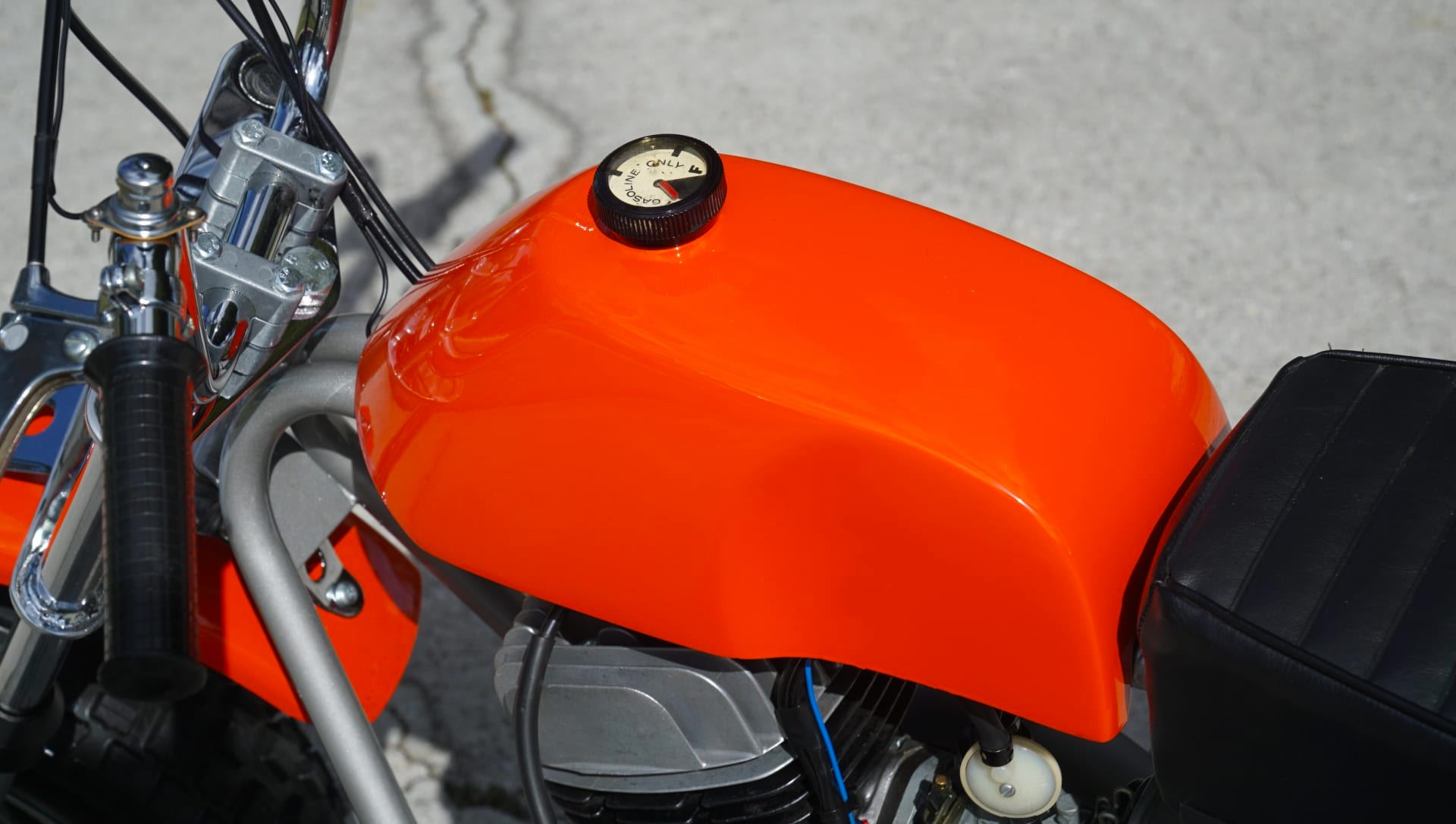
The minibike you see here is an original Bonanza MX1510 from 1970 that has now been fully restored, it has front and rear suspension, a thickly padded black seat suitable for soaking up those off-road bumps, and a bright orange fuel tank with matching fenders.
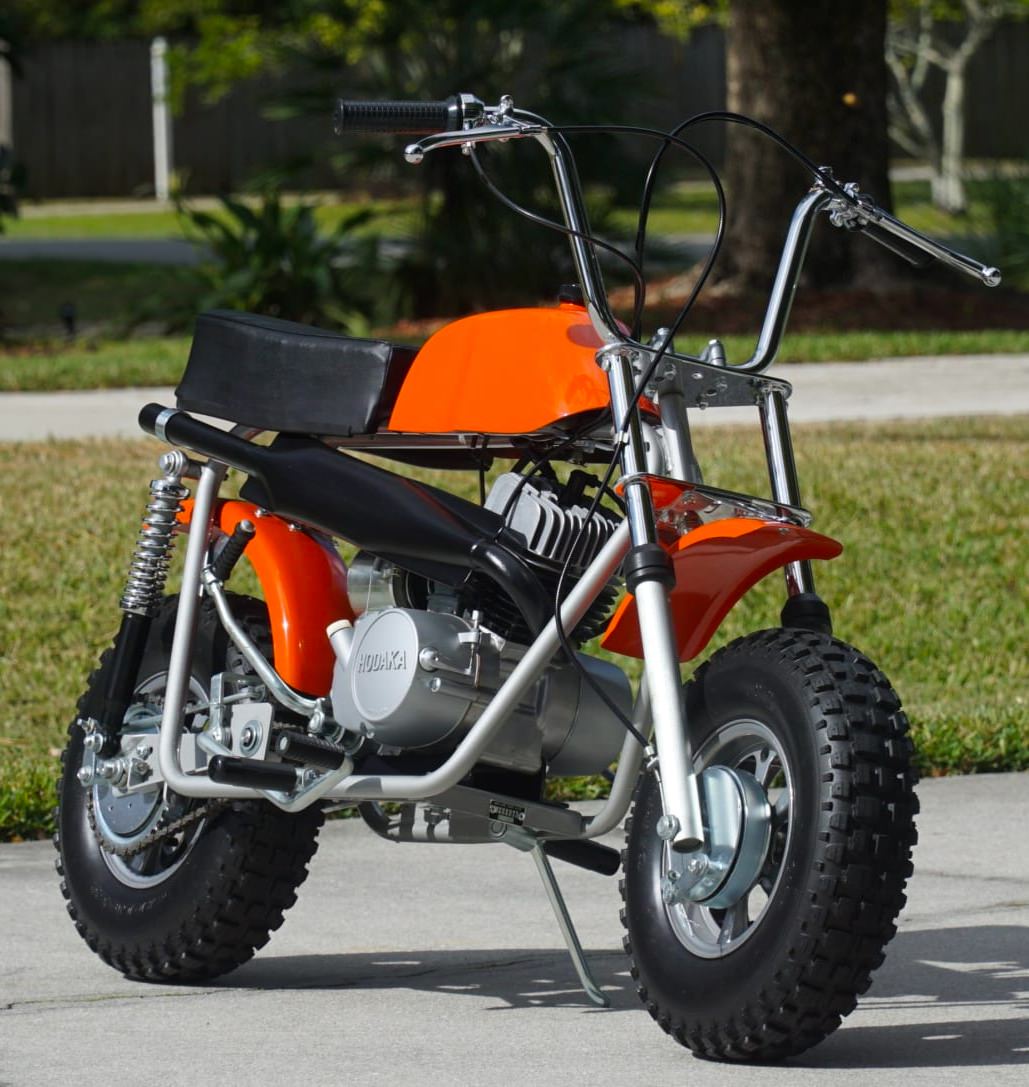
The minibike you see here is an original Bonanza MX1510 from 1970 that has now been fully restored, it has front and rear suspension, a thickly padded black seat suitable for soaking up those off-road bumps, and a bright orange fuel tank with matching fenders.
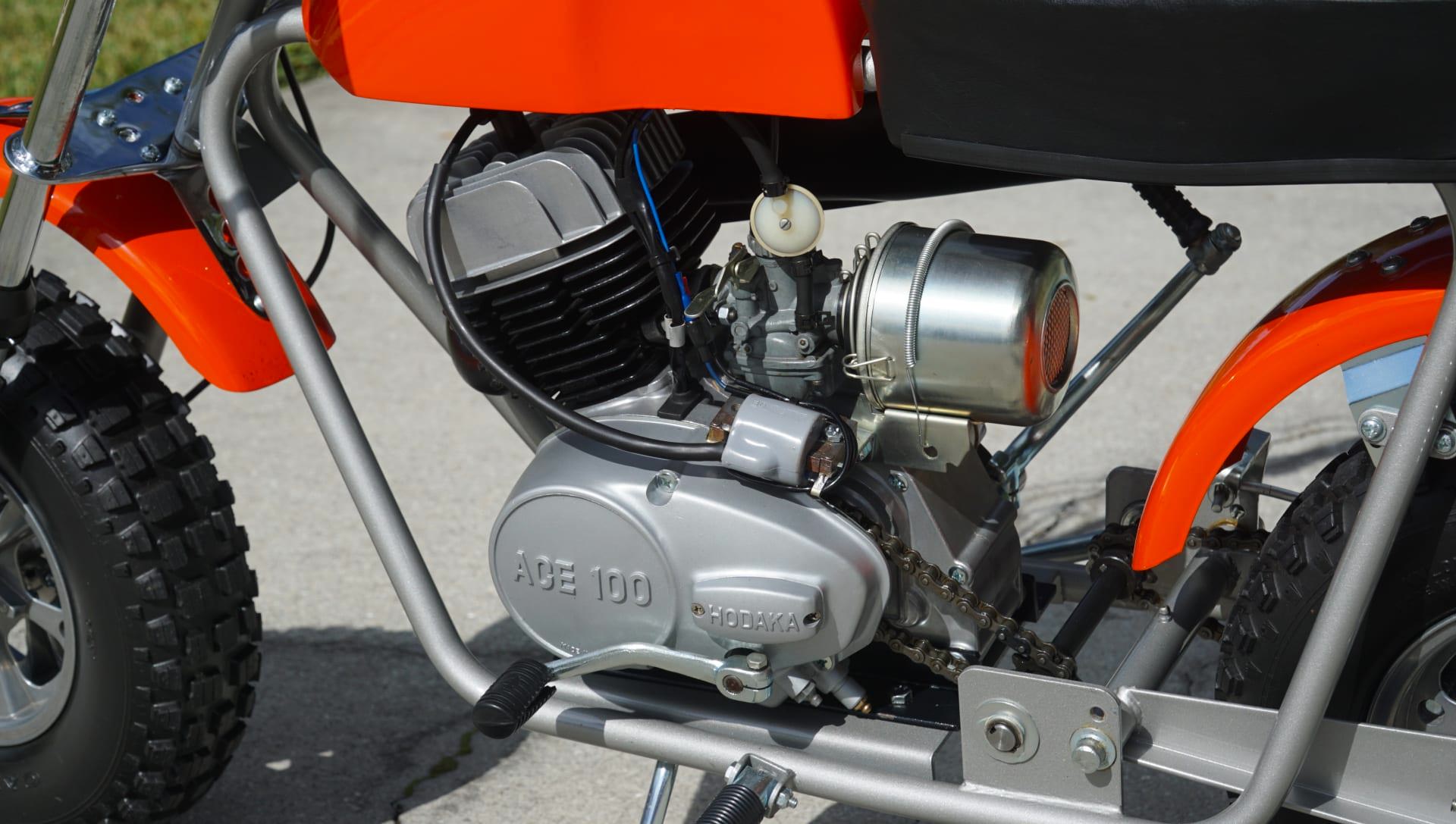
This bike is fitted with a Hodaka ACE100 100cc two-stroke engine that’s been rebuilt, paired with a 5-speed transmission. It rides on magnesium wheels and it has a fuel cap with a gauge, front and rear brakes, chrome handlebars, and it’s listed as being in running condition.
It’s now due to roll across the auction block with Mecum in January with no reserve, and you can visit the listing here if you’d like to read more or register to bid.
Images courtesy of Mecum + Bonanza

Articles that Ben Branch has written have been covered on CNN, Popular Mechanics, Smithsonian Magazine, Road & Track Magazine, the official Pinterest blog, the official eBay Motors blog, BuzzFeed, Autoweek Magazine, Wired Magazine, Autoblog, Gear Patrol, Jalopnik, The Verge, and many more.
Silodrome was founded by Ben back in 2010, in the years since the site has grown to become a world leader in the alternative and vintage motoring sector, with well over a million monthly readers from around the world and many hundreds of thousands of followers on social media.