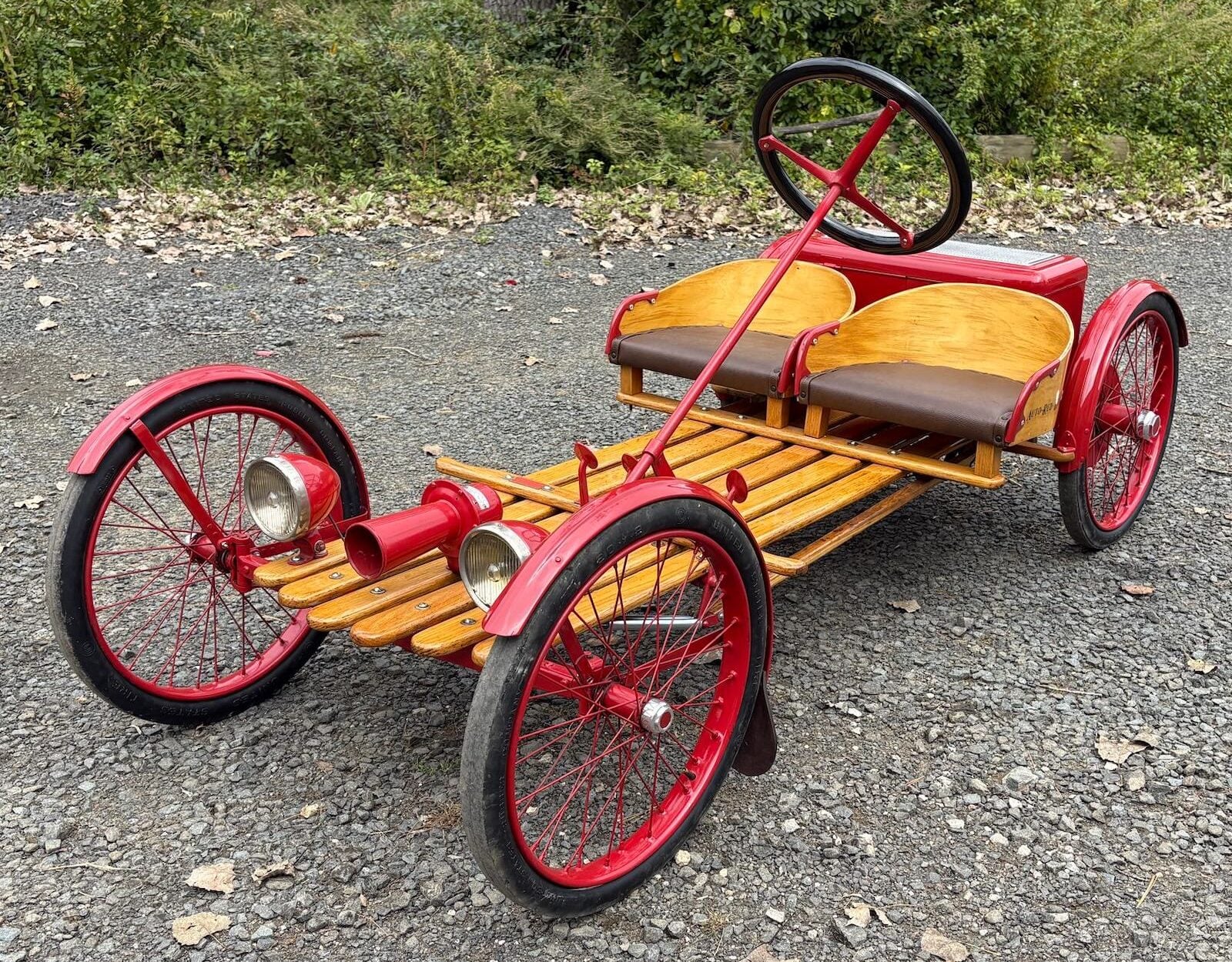
This is an original 1926 Auto Red Bug, it’s most famous for holding the Guinness World Record for being the cheapest mass-produced car in history – with a price (in 1922) that works out to $2,507 USD in 2026 dollars.
Red Bugs actually started out with small gasoline engines before being offered later as an electric car, powered by a pair of 6-volt batteries and a 12-volt electric motor – the same one used in Dodge automobiles at the time as their starter motor.
Fast Facts: An Electric 1926 Auto Red Bug
- The Auto Red Bug was an indirect development of Arthur William Wall’s 1908 Auto-Wheel, a powered bicycle motor wheel attachment. A.O. Smith acquired the American rights and developed the Smith Motor Wheel, launched in 1914. Its 1.5 bhp single-cylinder engine drove a disc wheel directly, and approximately 25,000 units were sold before 1919.
- In 1916, the Smith Flyer combined the motorized fifth wheel with a simple wooden chassis, two seats, bicycle-style wheels, and no conventional suspension. Briggs & Stratton purchased the design in 1919, increased output to 2 bhp, and advertised the Flyer for $125 in 1922, earning it a Guinness World Record for being the cheapest ever made.
- In 1924, Automotive Electric Service Corporation acquired the rights and developed the Auto Red Bug, eventually introducing an electric version powered by two 6-volt batteries and a 12-volt Dodge starter motor. Popular with wealthy estate owners, resorts, and amusement parks, the cars were also sold through prestigious retailers including F.A.O. Schwarz and Abercrombie & Fitch.
- The featured 1926 electric Auto Red Bug was sold new through F.A.O. Schwarz and reportedly displayed at a Massachusetts museum before restoration in the early 1970s. It won an AACA National First Prize in 1975. Acquired by the seller in 2019, it received a replacement battery and new tires in 2026 and is now offered at no reserve in Connecticut.
History Speedrun: The Auto Red Bug
The story of the Auto Red Bug actually started with a man named Arthur William Wall of Birmingham, England. In 1908 he patented a kind of motorized wheel that could be attached to the side of a bicycle, turning it into a rudimentary moped/motorcycle.
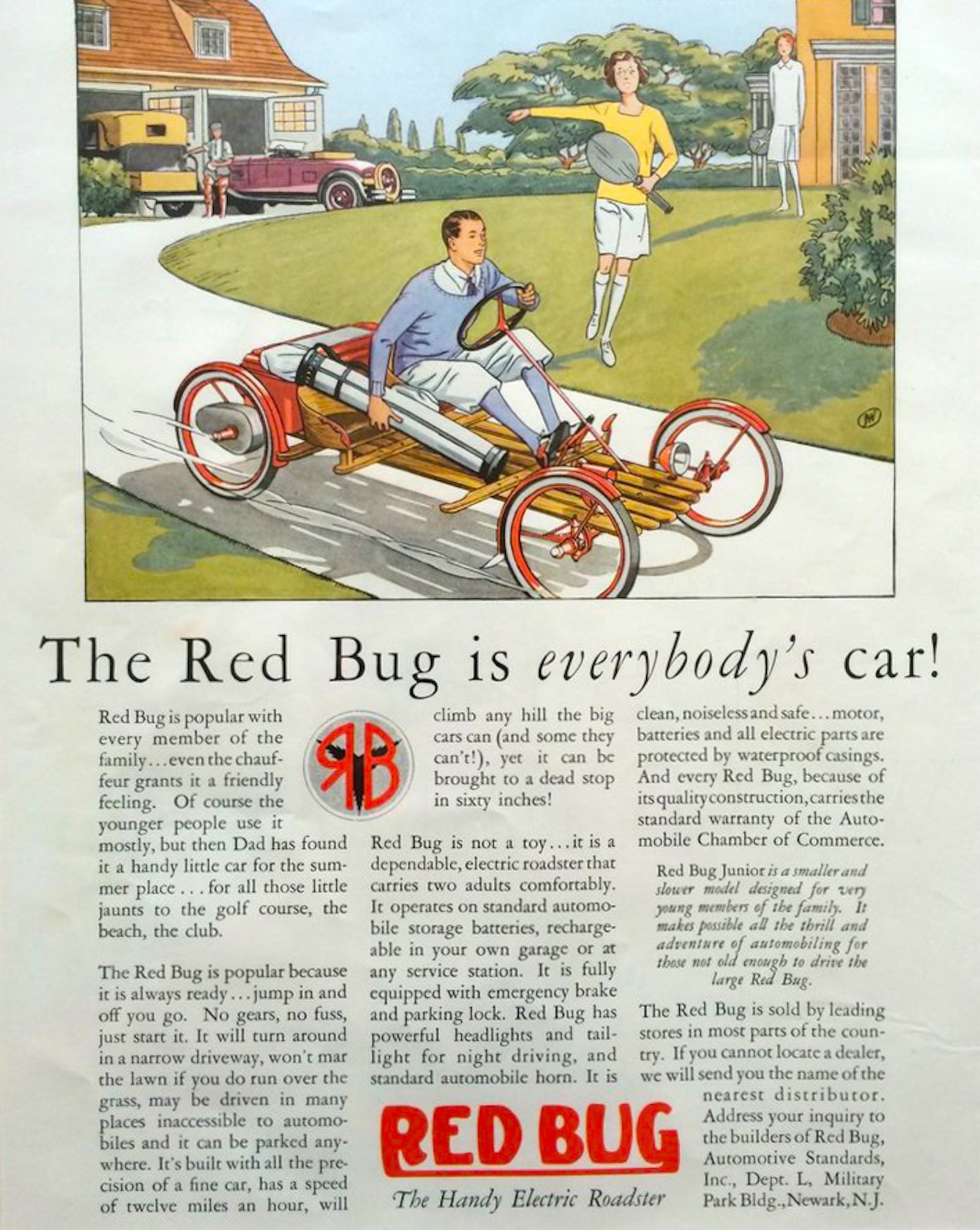
 The Auto Red Bug is famous for holding the Guinness world record for being the cheapest mass-produced car in history – with a price in 1922 that works out to $2,507 USD in 2026 dollars. Image courtesy of Automotive Standards Inc.
He showed his new invention, named the “Auto-Wheel,” at the 1909 Stanley Show, but deliveries were held back while development of the final prototype continued. The Auto-Wheel reached production in early 1913 in its final form, a 1 bhp four-stroke single-cylinder engine mounted on a 20 inch wheel.
A.O. Smith of Milwaukee saw potential in the invention, and bought the American rights. At the time, his company made its money stamping chassis frames for many of the smaller American automakers.
Smith spent nearly two years redesigning the unit, and the bright red “Smith Motor Wheel” finally went on sale in October of 1914. Smith dropped the earlier design’s chain drive and wire wheel – instead, a 20 inch disc wheel was bolted directly to the four-lobe camshaft, which turned at 1/8th of engine speed and so served as the final drive.
The engine was an air-cooled single rated at 1.5 bhp, and about 25,000 of them were sold before 1919, the vast majority were fitted to bicycles, but there were some four-wheeled applications too.
The Smith Flyer Debuts
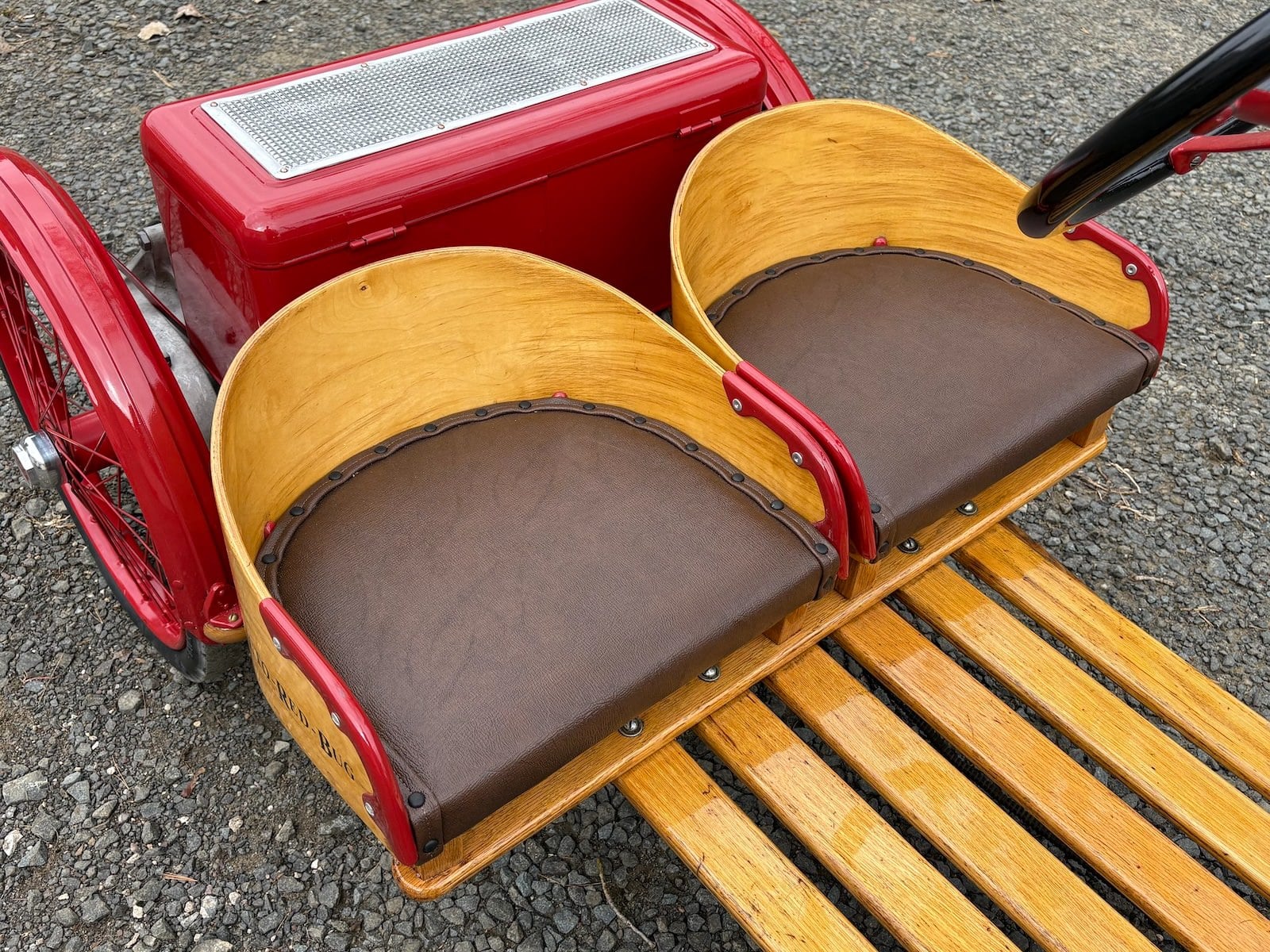
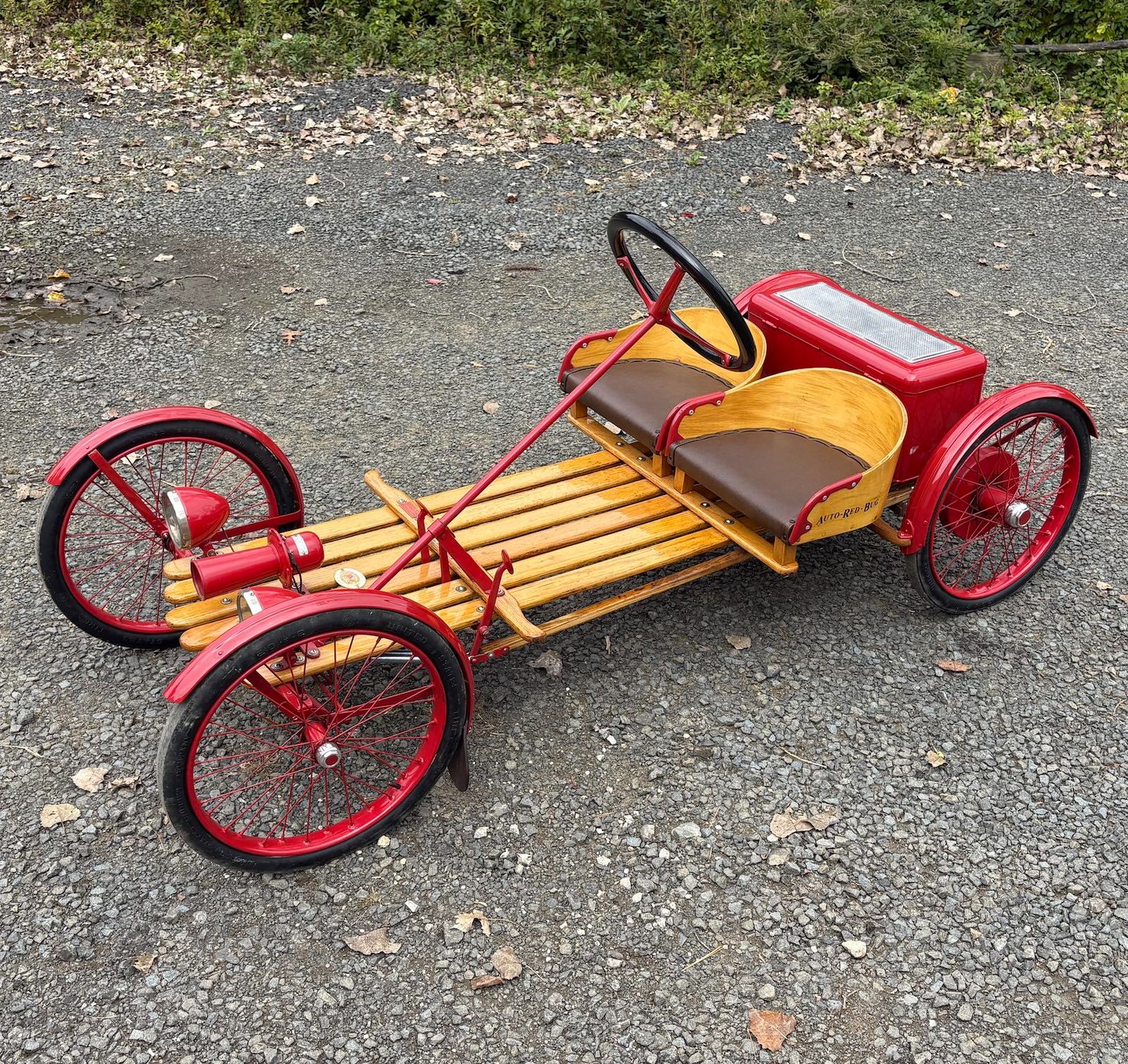
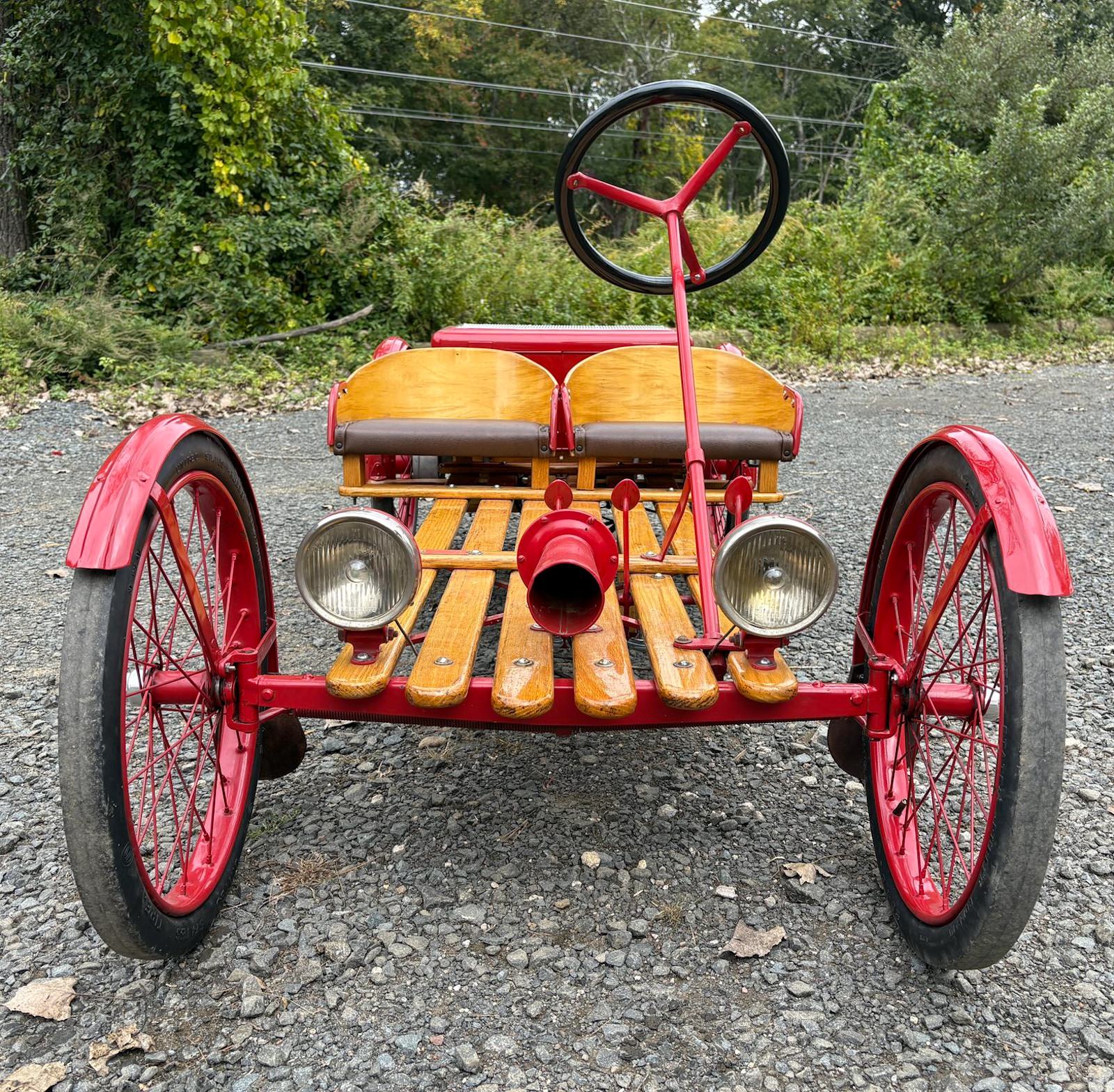
The Smith Flyer followed in 1916, it was an incredibly simple little automobile with varnished hardwood slats that served as the floor, the frame, and the suspension. Both axles were bolted directly to the wood floor, with no springs at either end.
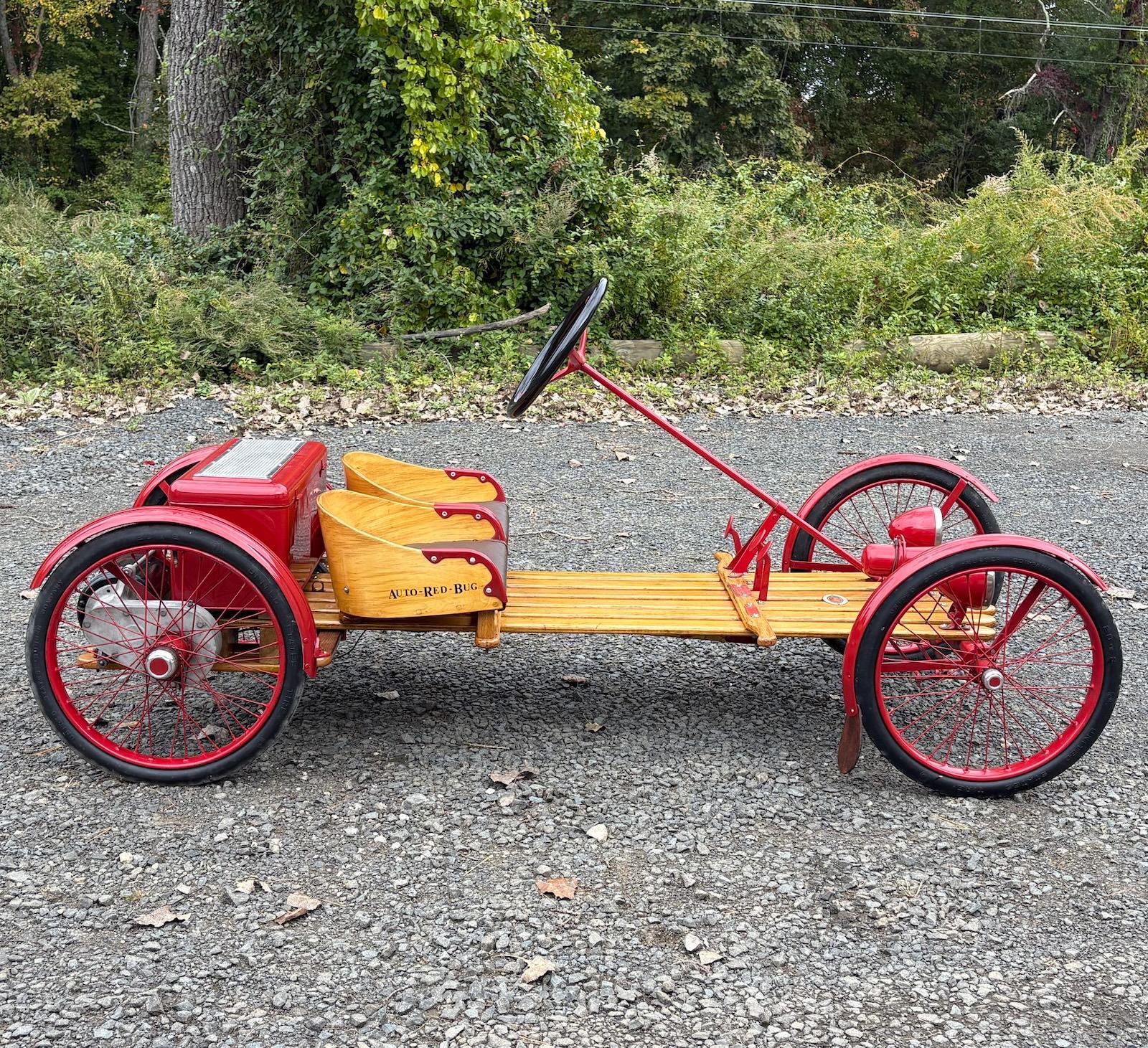
The wheelbase was 62 inches and the track width 30 inches, the four road wheels were 20 inch bicycle-type rims on clincher tires, and two upholstered seats were installed on minimal steel frames attached to the slats.
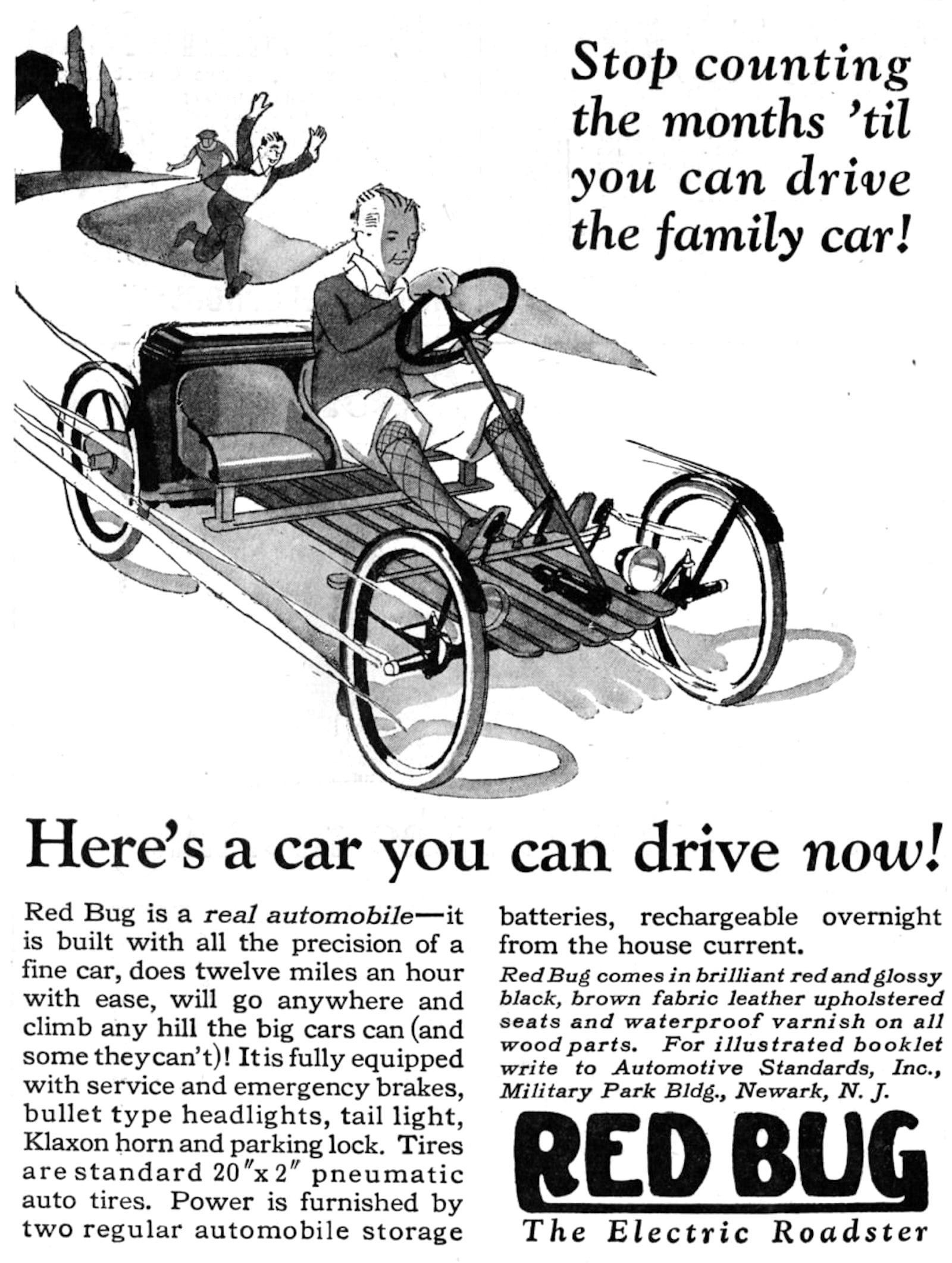
The Automotive Electric Service Corporation, later renamed Automotive Standards Inc, adopted the Red Bug name for the Flyer due to its red metalwork, and eventually marketed the car as the Auto Red Bug. Image courtesy of Automotive Standards Inc.
The driver steered with a wooden wheel that also had a throttle lever attached, a hand lever between the seats lifted the hinged Motor Wheel off the ground – essentially, that lever was the clutch. It also let the driver start the engine before dropping the wheel back onto the road.
To stop, the driver pressed a pedal that pushed the leather-padded rear fenders against the rear tires. The Guinness Book of World Records would later list it as the cheapest mass-produced car in world history.
Briggs & Stratton Takes The Wheel
Stephen Foster Briggs and Harold M. Stratton founded Briggs & Stratton in Milwaukee in 1909. By 1920 it was the largest American maker of specialty lights, ignitions, and starting switches for cars.
The company already knew about the Motor Wheel, it had actually sent A.O. Smith drawings for a flywheel magneto in 1915. Briggs himself personally negotiated the purchase of the rights to the Smith Motor Wheel and to the Flyer, the sale was officially completed in May of 1919.
Briggs & Stratton enlarged the bore of the small engine, they moved the magneto inside the flywheel and rated the new Model D at 2 bhp, the top speed was now a heady 25 mph. The car was renamed the Briggs & Stratton Flyer.
A 1922 ad for the Briggs & Stratton Flyer priced it at $125 USD ($2,507 USD in 2026), and that’s the figure Guinness used to award the car the record. Sadly, even at that price it simply couldn’t compete with the Ford Model T which could be bought for as little as $319 USD.
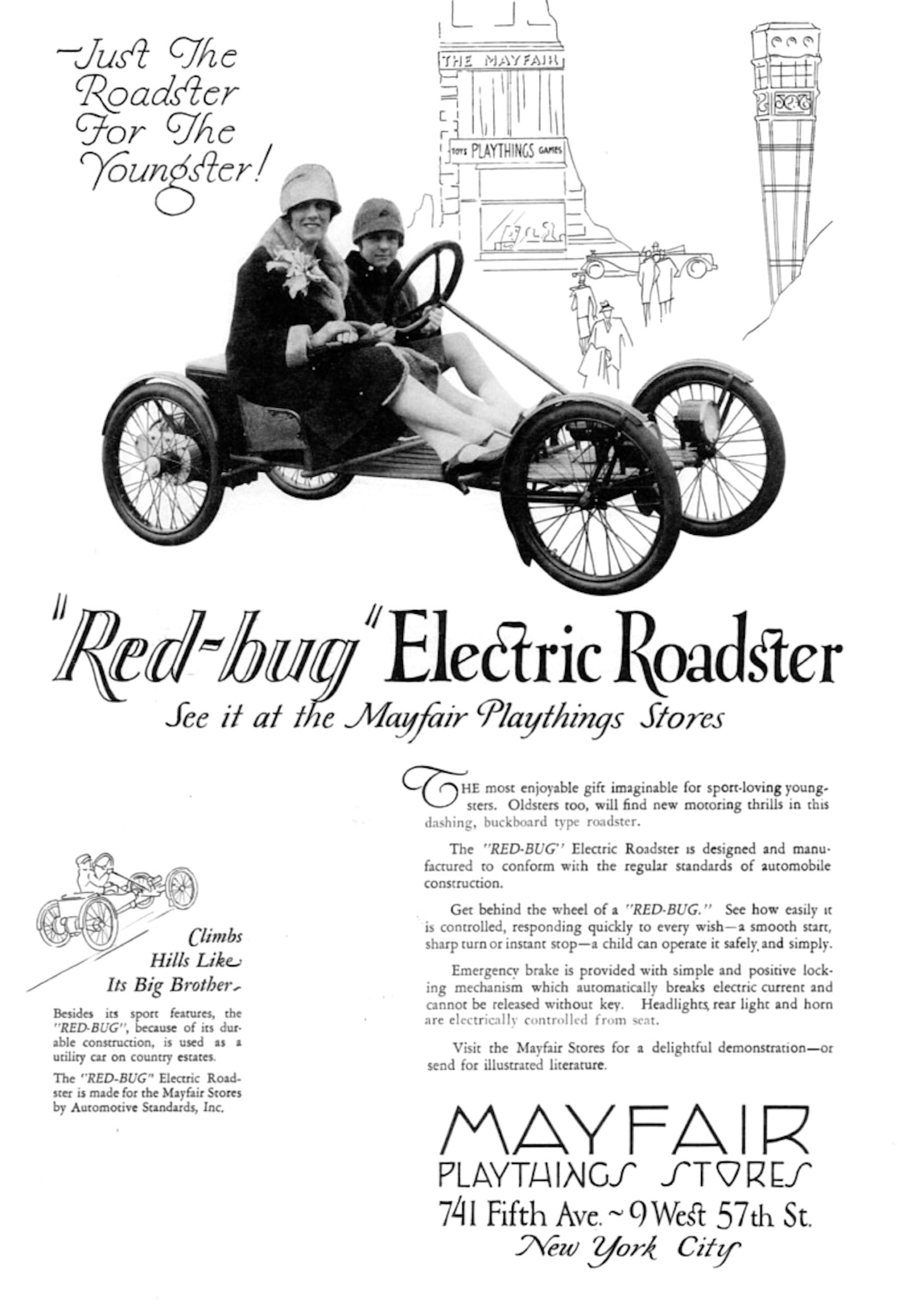
Automotive Standards continued building gasoline cars with the Briggs & Stratton Motor Wheel but they added an electric version when the engine supply ran low – as a result, most of the Red Bugs it built were electric. Image courtesy of Automotive Standards Inc.
Briggs & Stratton’s own official company history puts Flyer sales at around the 2,000 mark between 1920 and 1923. In order to increase the usefulness of the Motor Wheel, Briggs & Stratton also offered it as a stationary engine for agricultural and industrial use. It was soon being used for pumping water, in cultivators, and in countless other roles in factories and on farms.
The Motor Wheel and the Flyer were earning less than the company had hoped, so in February of 1924 Briggs & Stratton sold the rights to the Automotive Electric Service Corporation of North Bergen, New Jersey.
The Motor Wheel’s small engine was the first gasoline engine Briggs & Stratton produced in any significant volume, and the company’s stationary-engine business grew directly out of it.
It might not have been a successful product for the company, but it did set them off on the path to become the most famous small-engine manufacturer in the country as the 20th century progressed.
The Red Bug Goes Electric
The Automotive Electric Service Corporation, later renamed Automotive Standards Inc, adopted the Red Bug name for the Flyer due to its red metalwork, and eventually marketed the car as the Auto Red Bug.
It continued building gasoline cars with the Briggs & Stratton Motor Wheel but they added an electric version when the engine supply ran low – as a result, most of the Red Bugs it built were electric.
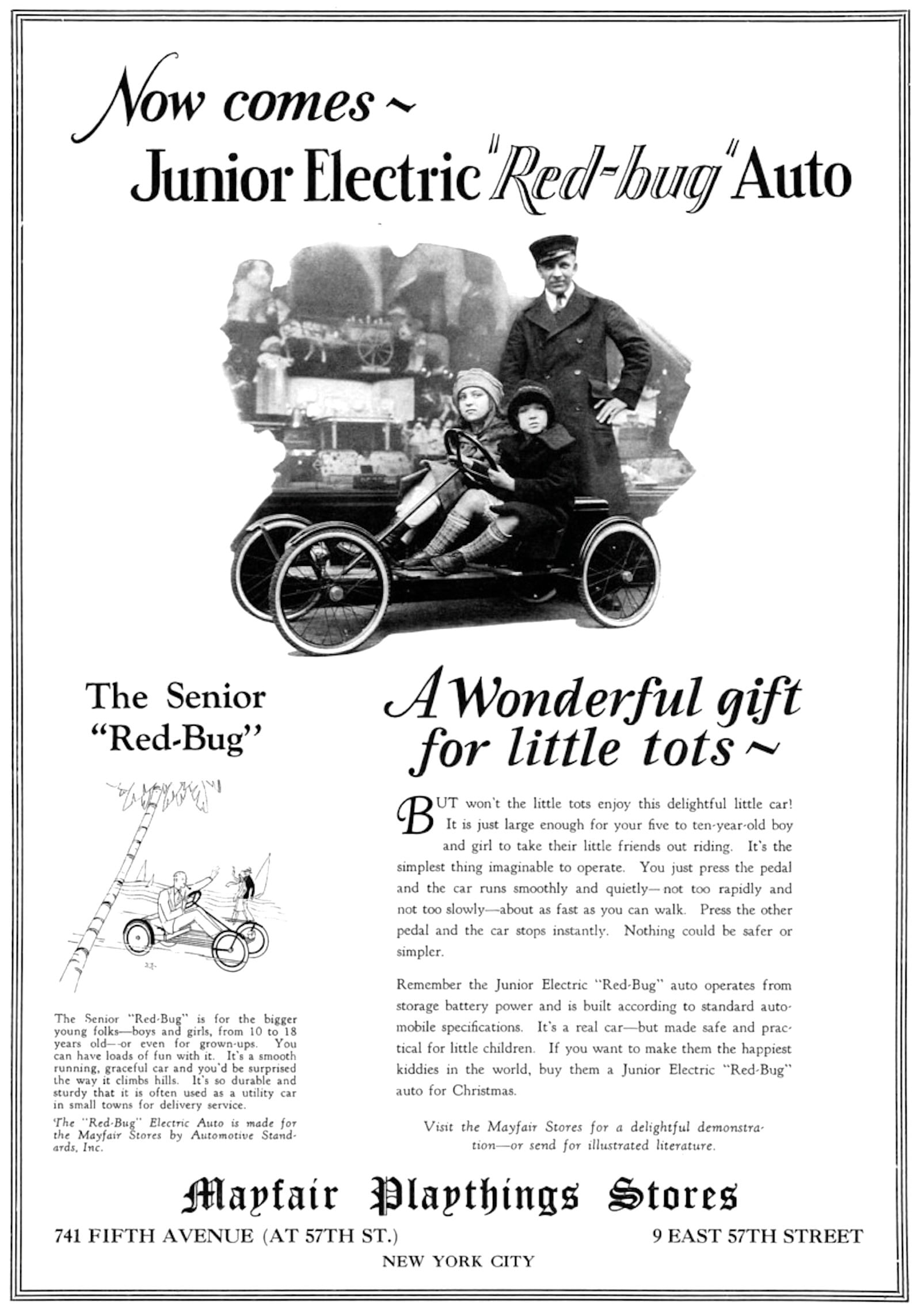
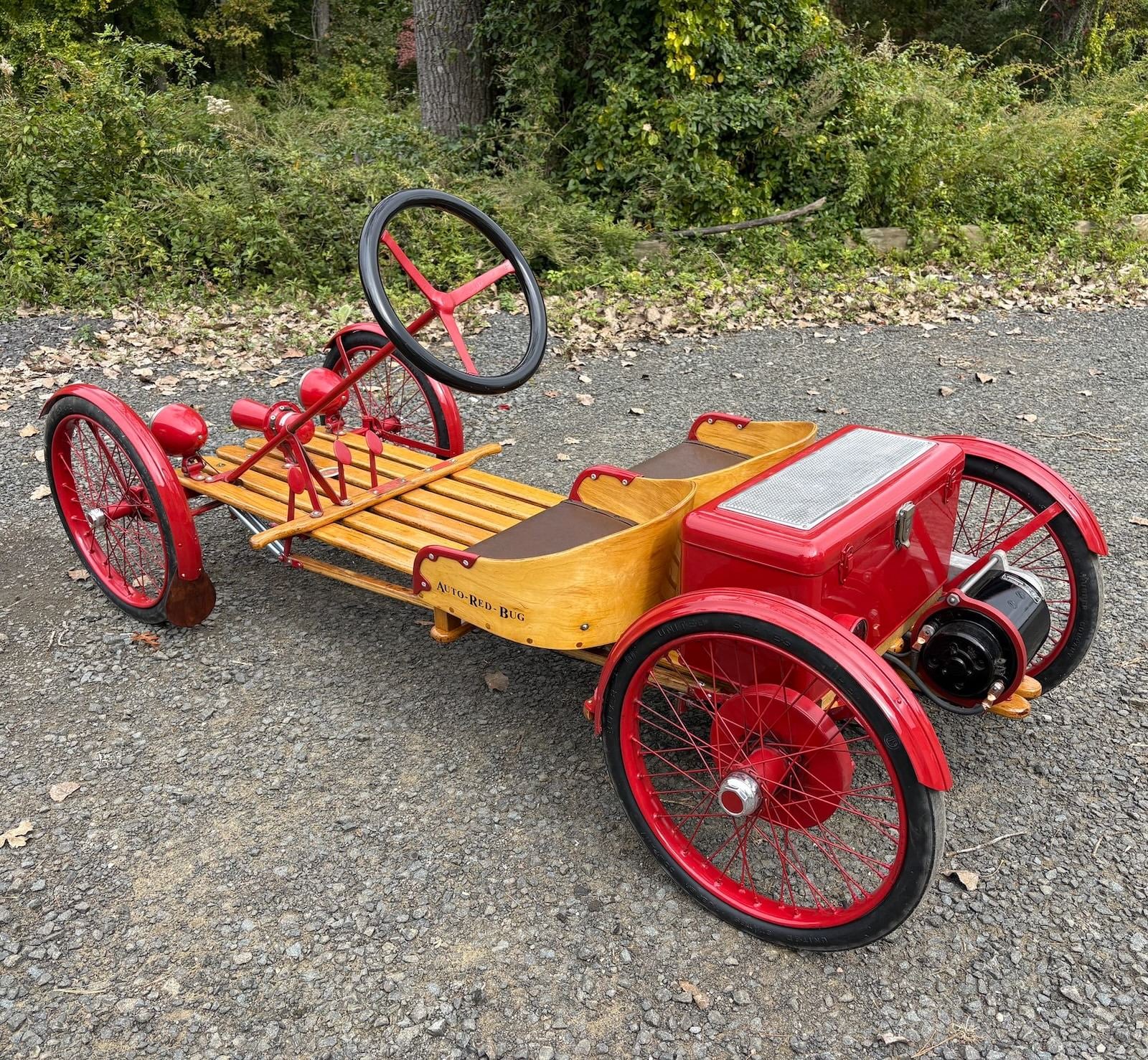
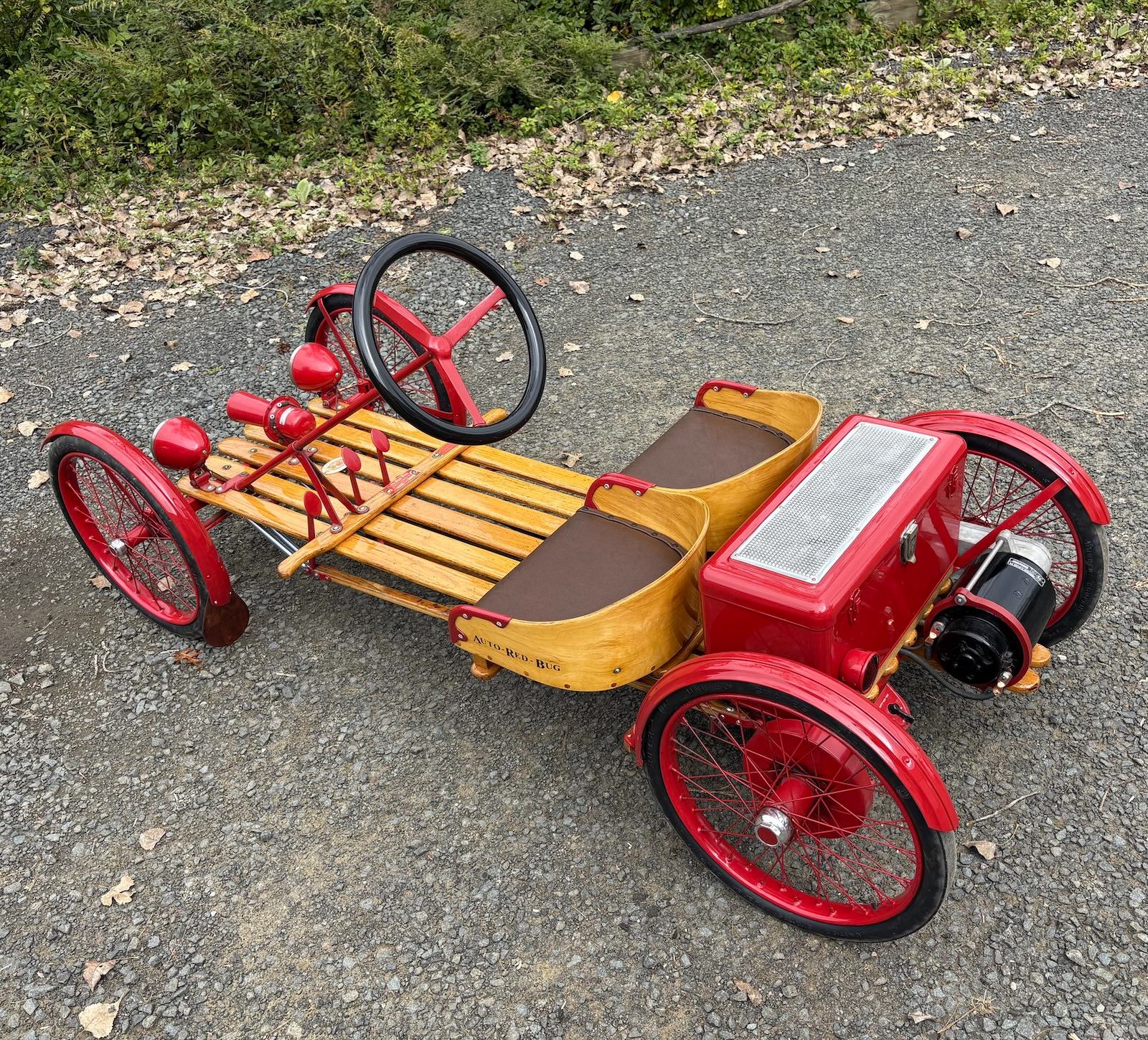
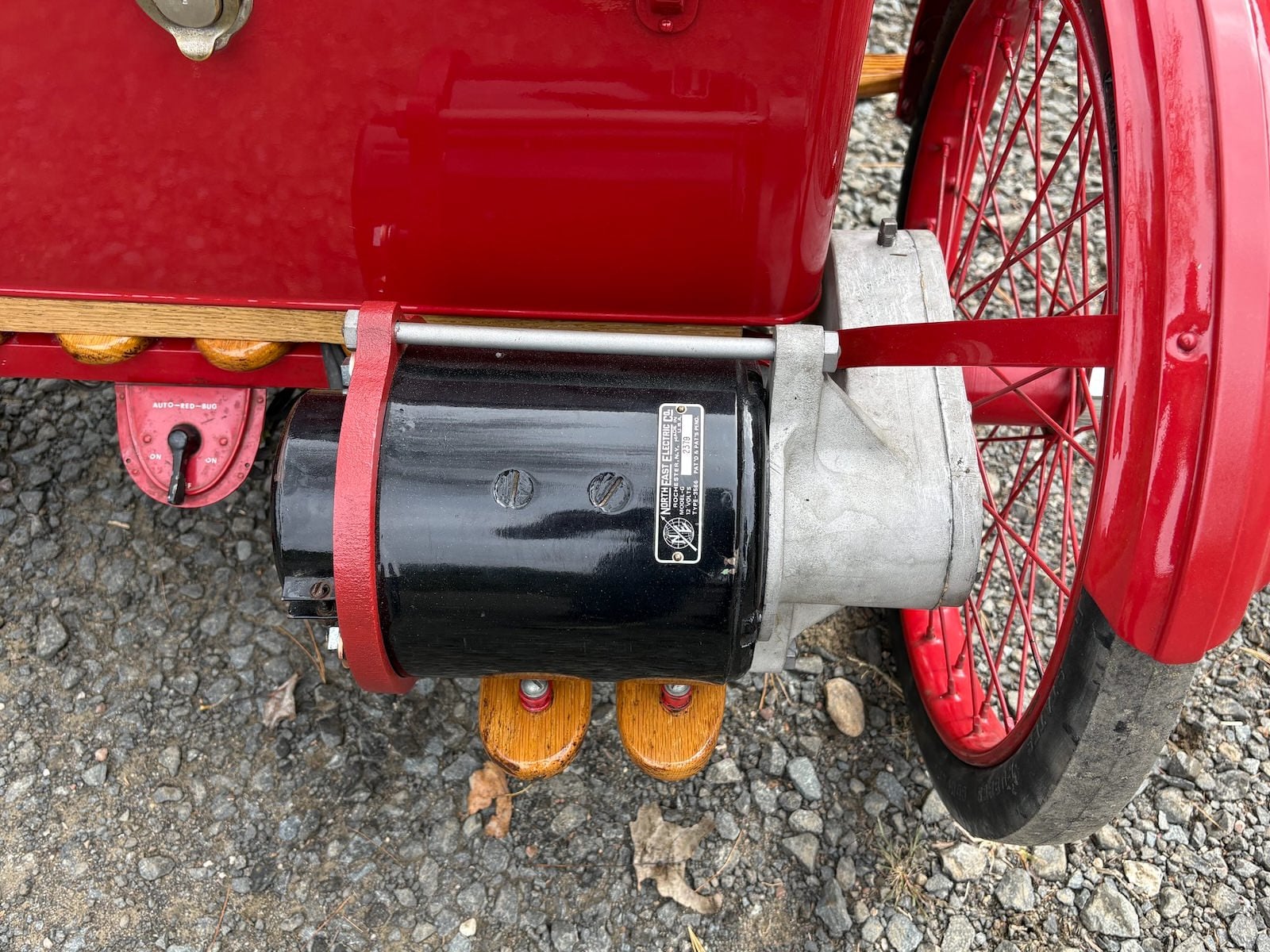
The electric version of the Red Bug had four wheels (and no fifth Motor Wheel), a 12-volt Northeast motor drove one of the rear wheels – the same exact motor that was used as a starter motor by the Dodge Brothers in their automobiles. Image courtesy of Automotive Standards Inc.
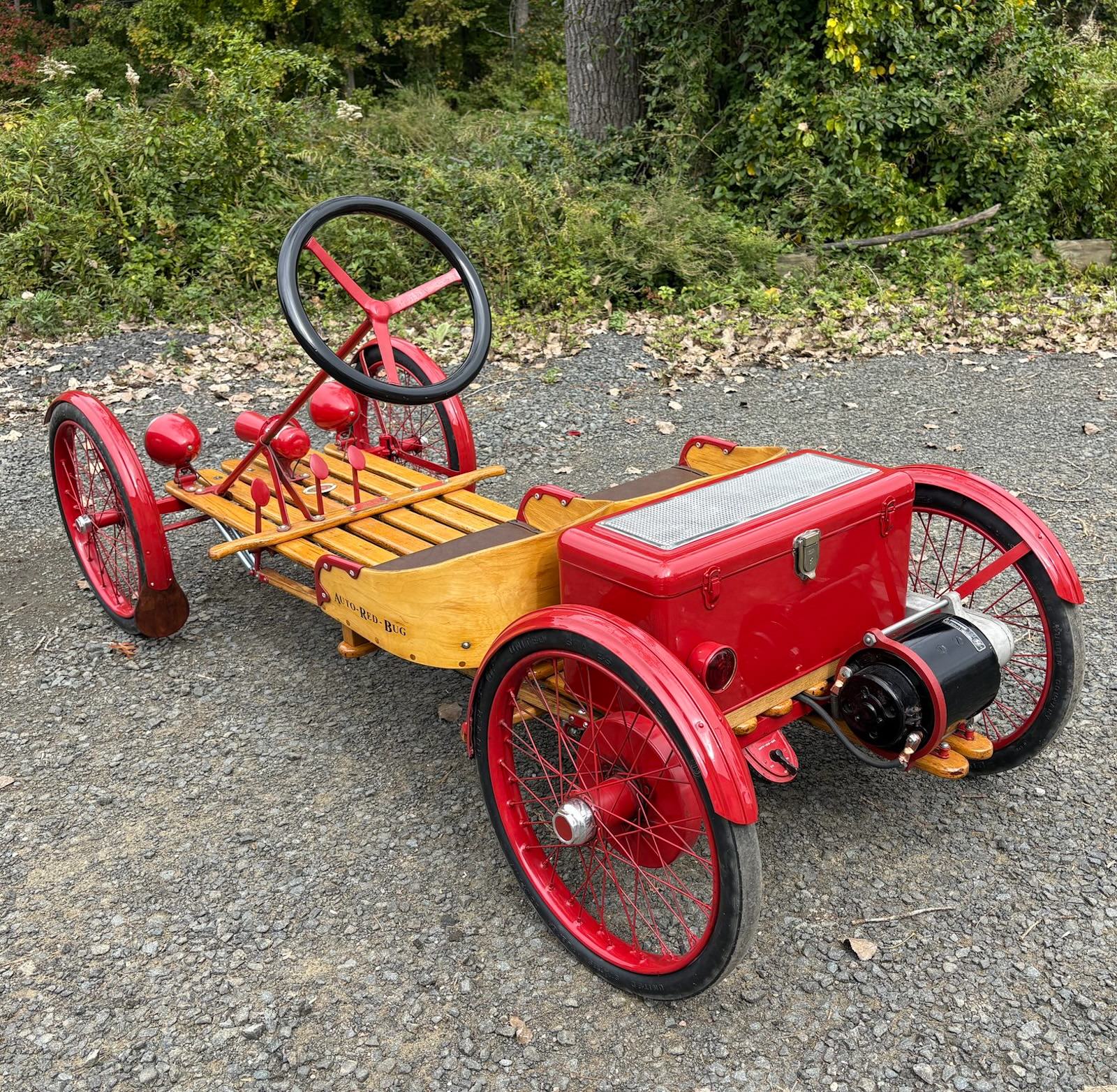
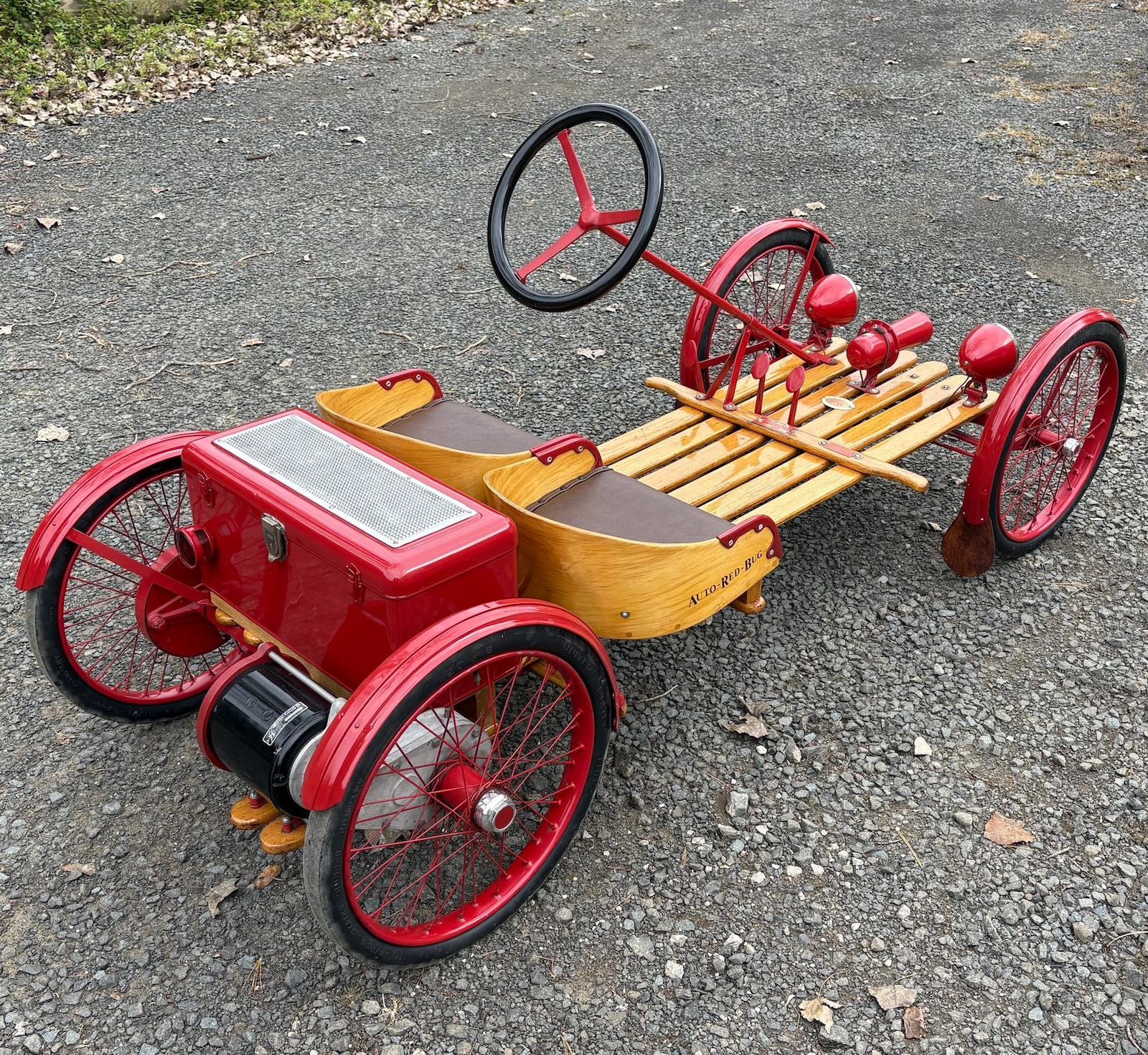
The electric car had four wheels (and no fifth Motor Wheel), a 12-volt Northeast motor drove one of the rear wheels – the same exact motor that was used as a starter motor by the Dodge Brothers in their automobiles. The car used two 6-volt automobile batteries which sat in a box behind the seats, and the company’s advertising promised they were “rechargeable in your own garage or at any service station.”
A foot brake worked on the rear wheel (the one the motor didn’t drive), and the same advertising listed an emergency brake and a parking lock. The price was $150 in 1924, or around $2,955 USD in 2026.
Interestingly, it would be wealthy buyers who bought many of them as novelty estate transport, resorts and amusement parks also used them for getting around. The simple electric drivetrain made them reliable, and range wasn’t typically a major concern.
Abercrombie & Fitch in New York sold the Red Bug in their catalogue, as did the toy store FAO Schwarz. It was also sold in Britain and in France, where it was marketed as “Le Red Bug.” The Jekyll Island Club in Georgia asked its members to leave their automobiles at home and kept a fleet of Red Bugs for rent. Ettore Bugatti even bought one for his son Roland.
Production continued into the late 1920s and in 1930 there were reports that Indian would take over Red Bug production, but nothing came of it. Production ended and the vast majority of them were scrapped or otherwise lost to neglect, the few that have survived are now much sought after by collectors.
The 1926 Auto Red Bug Shown Here
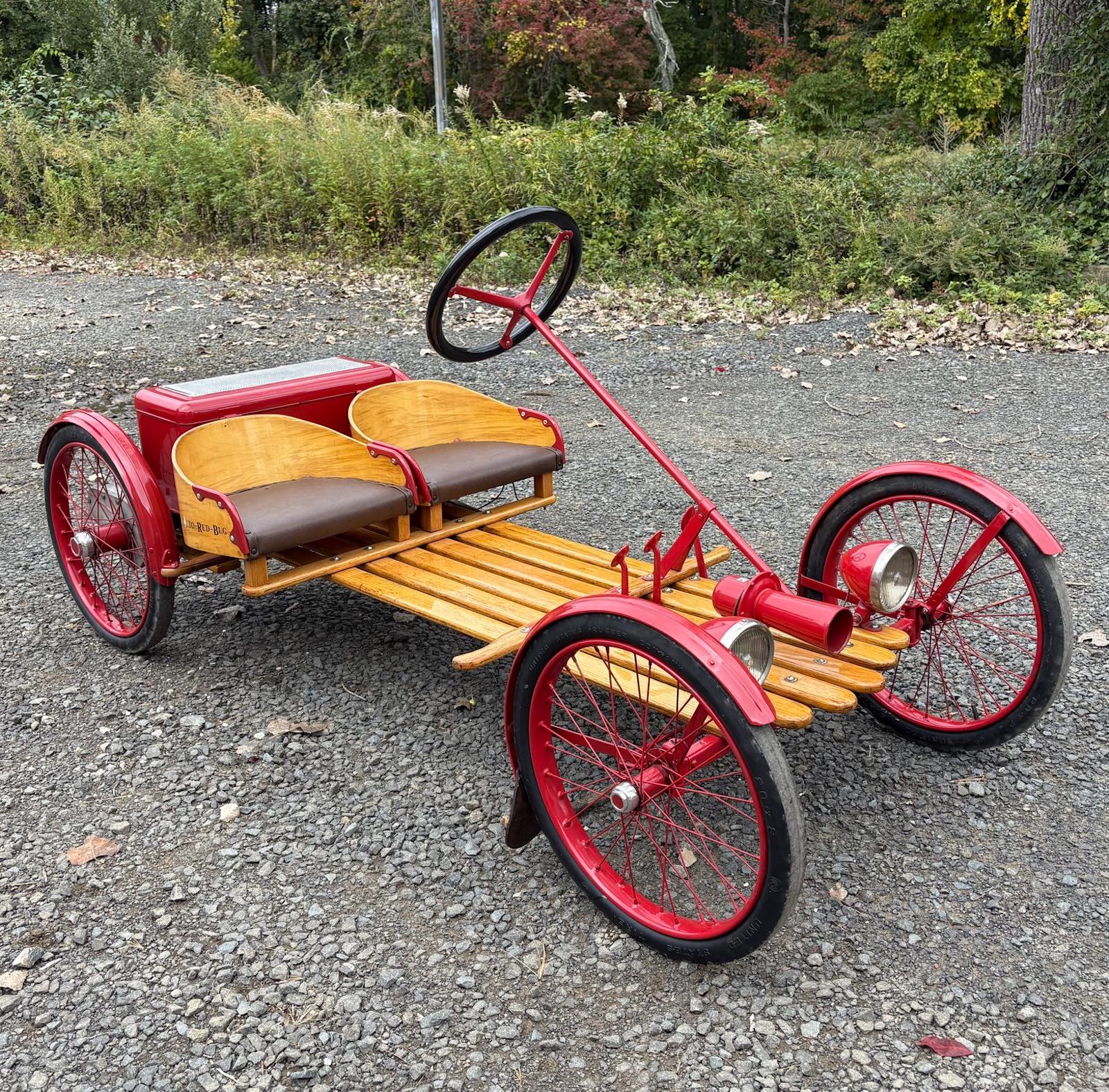
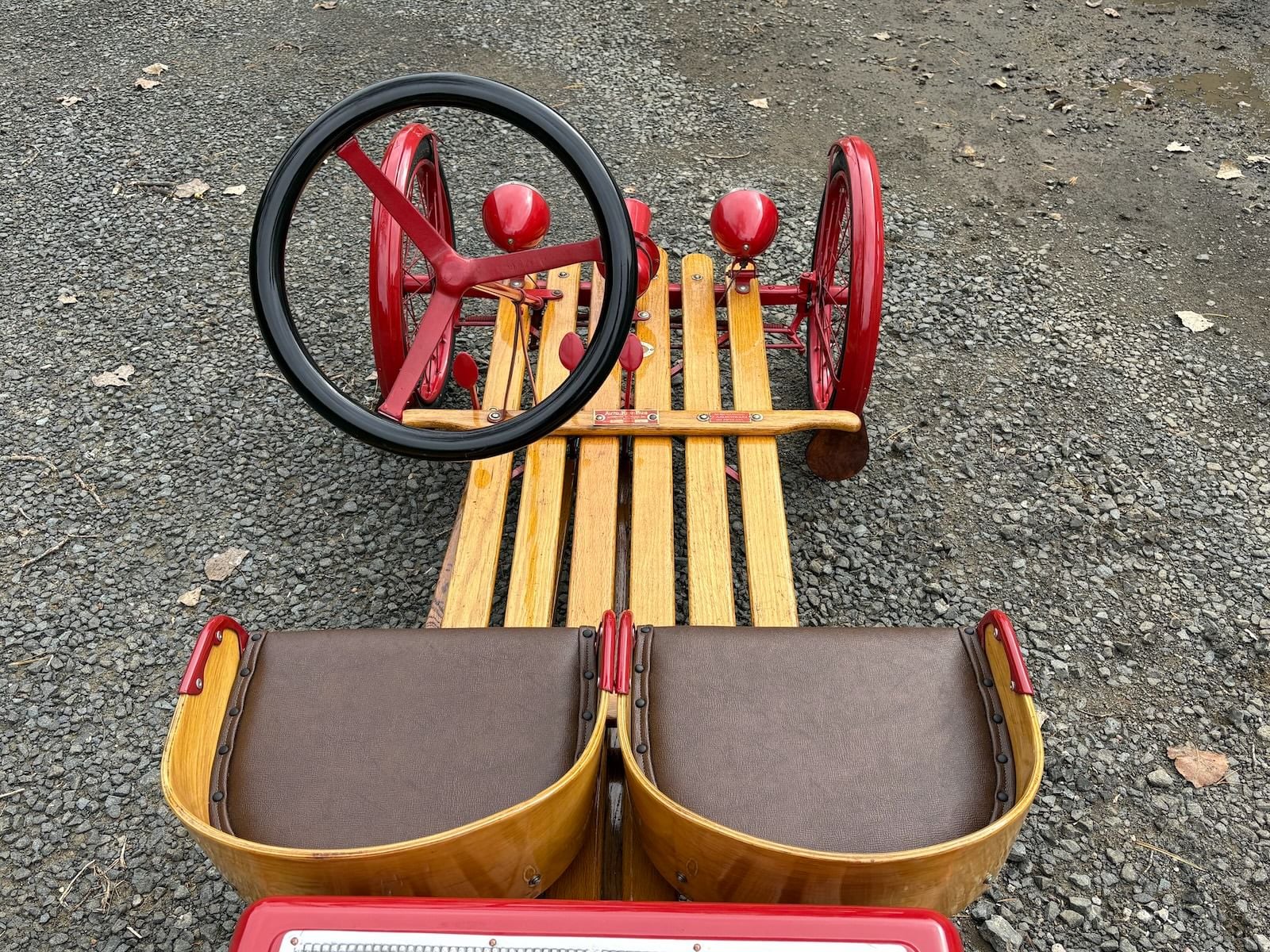
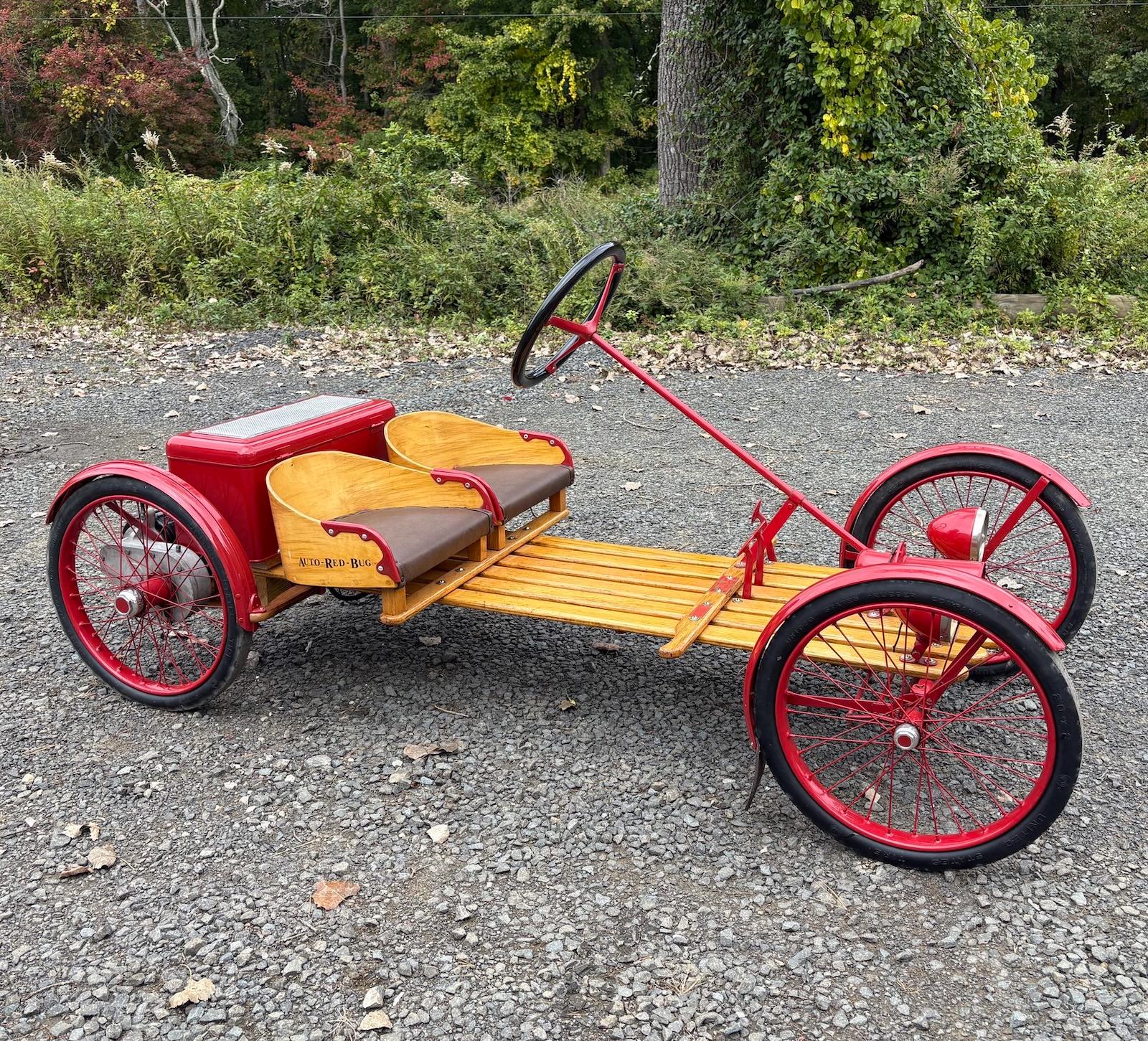
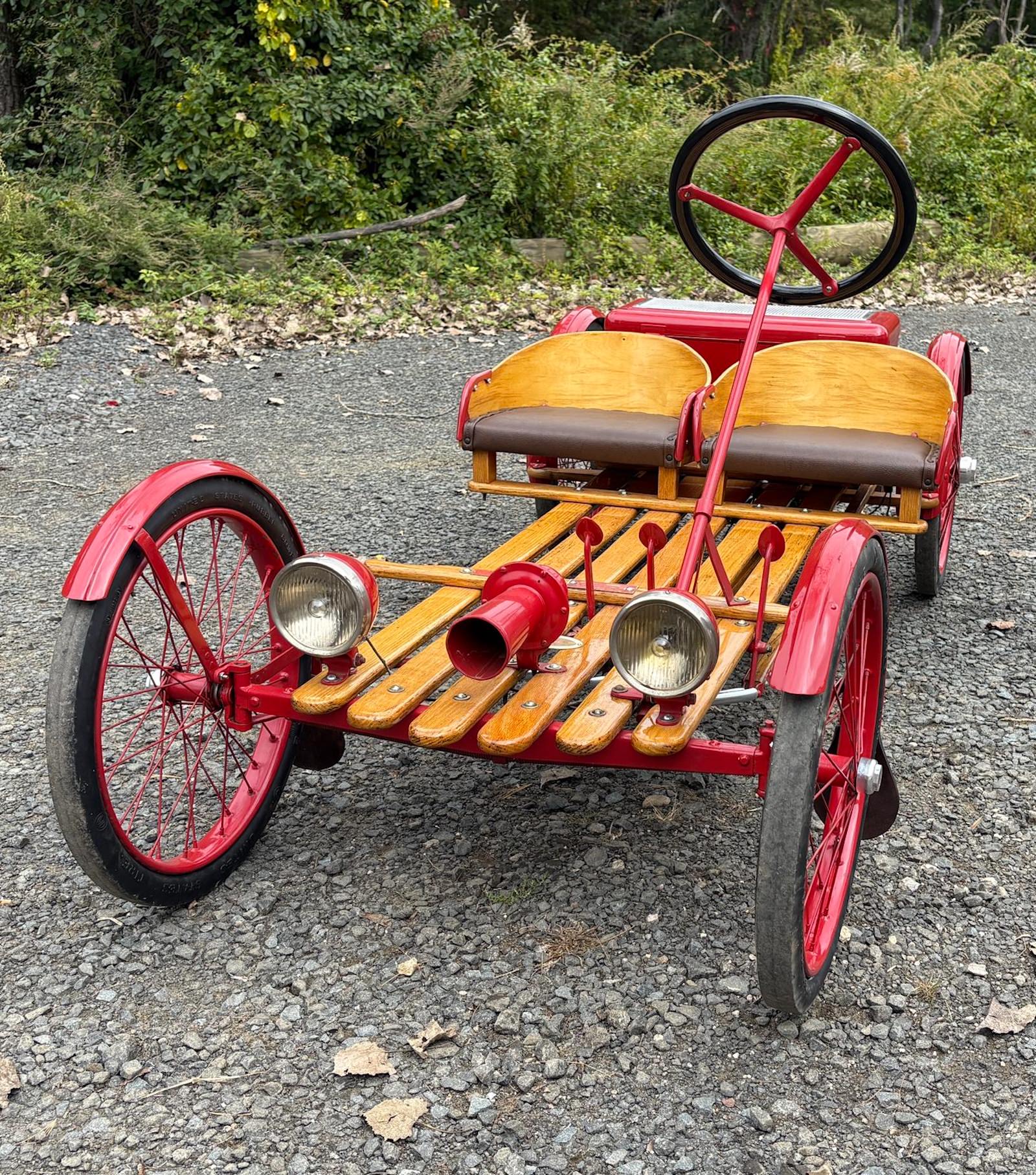
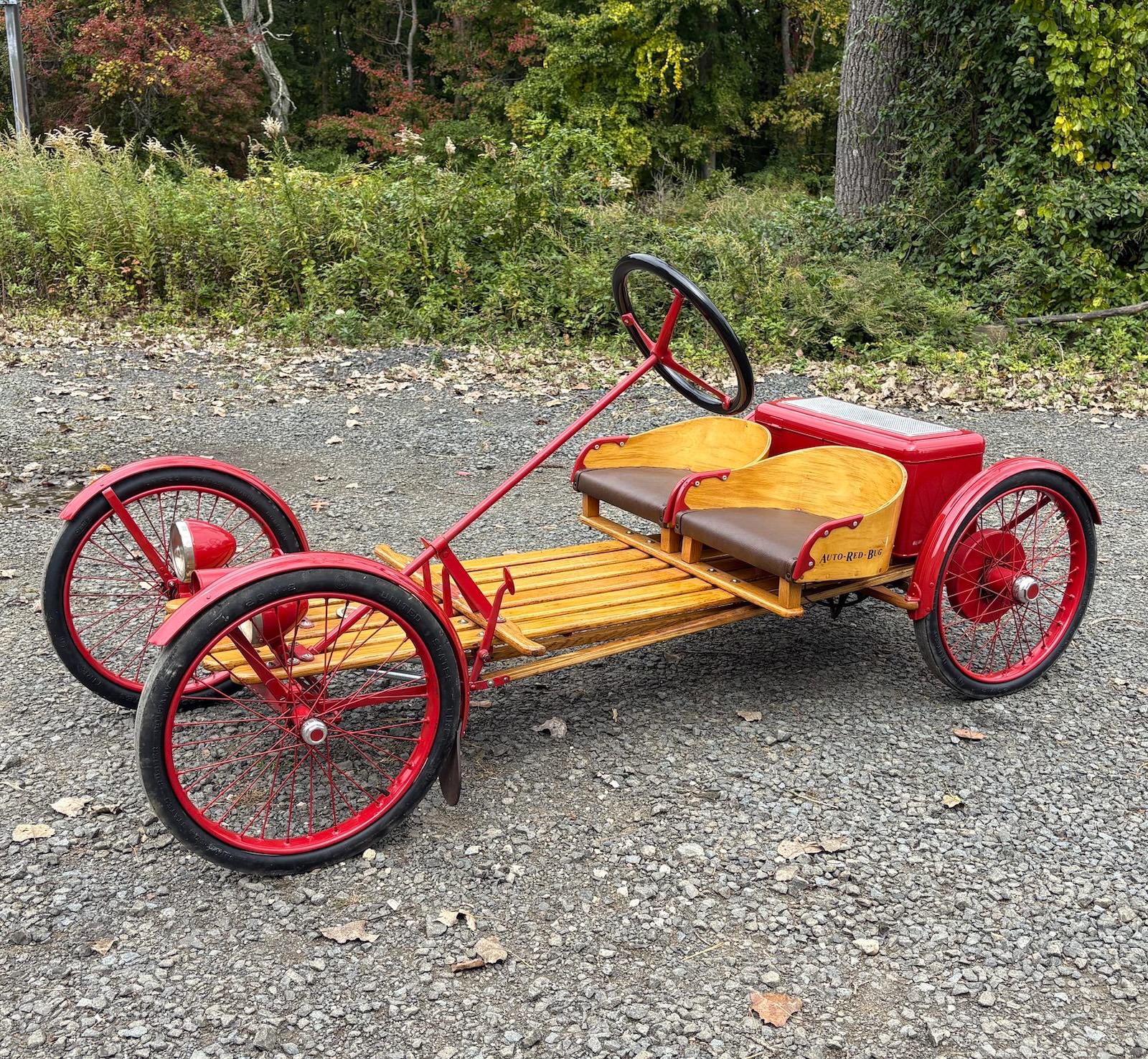
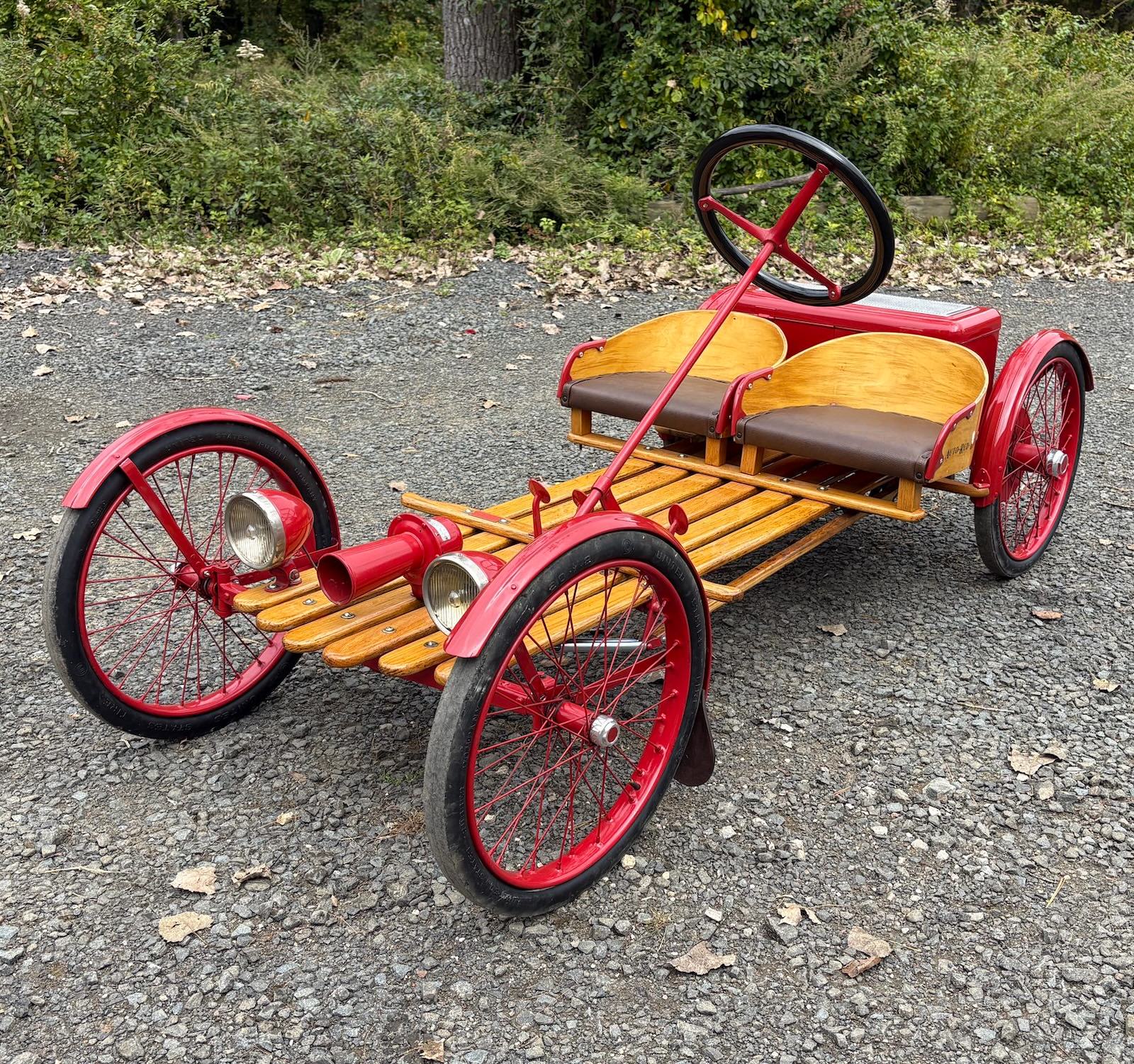
This is an original 1926 Auto Red Bug, it’s an electric-powered version of the cyclecar that was sold new through F.A.O. Schwarz in New York City. It’s said to have spent time on display at the Museum of Antique Autos in Princeton, Massachusetts, before undergoing a restoration in the early 1970s.
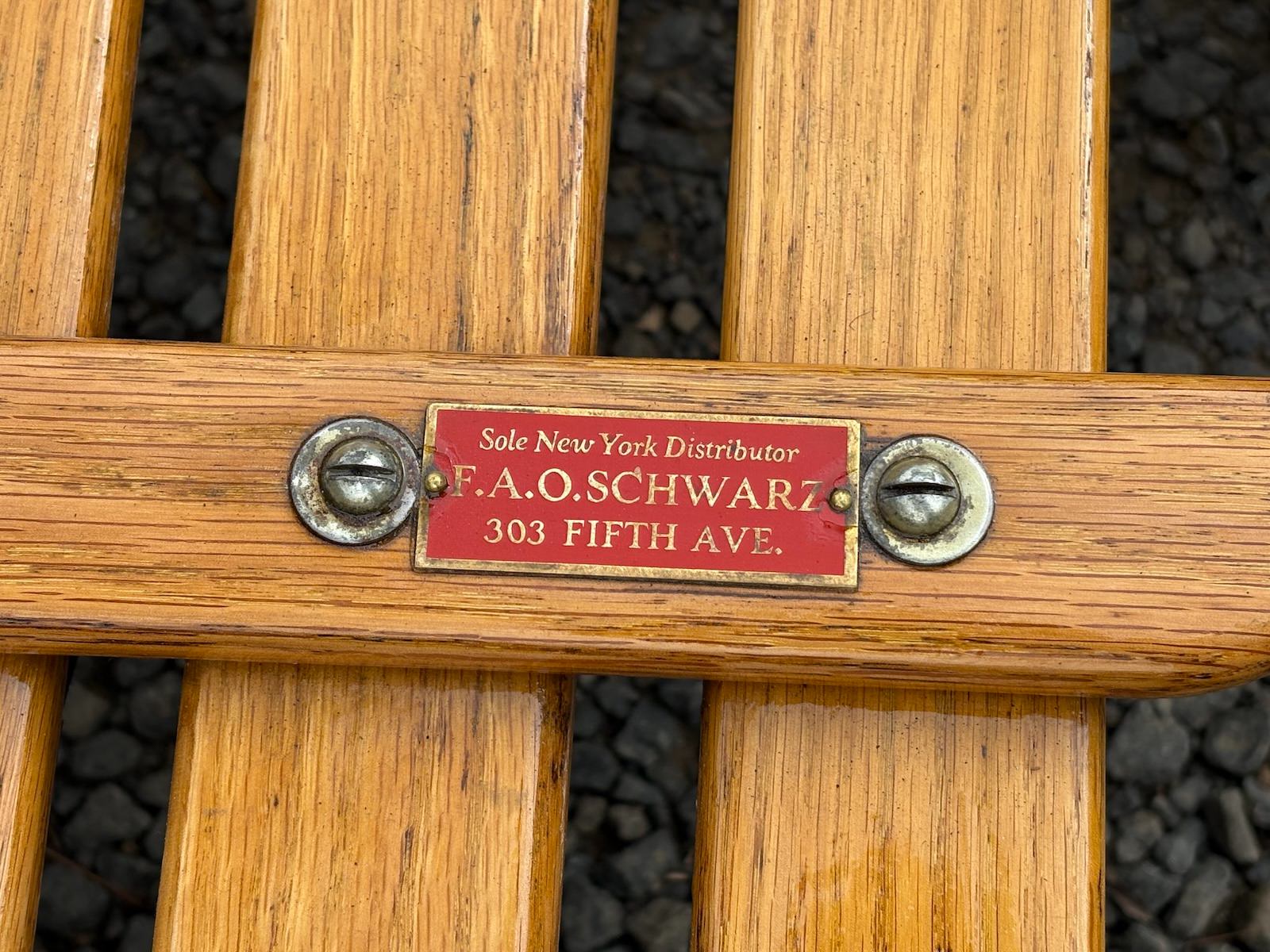
It later received an Antique Automobile Club of America (AACA) National First Prize award in 1975, and still has its award plaque and original F.A.O. Schwarz identification tag.
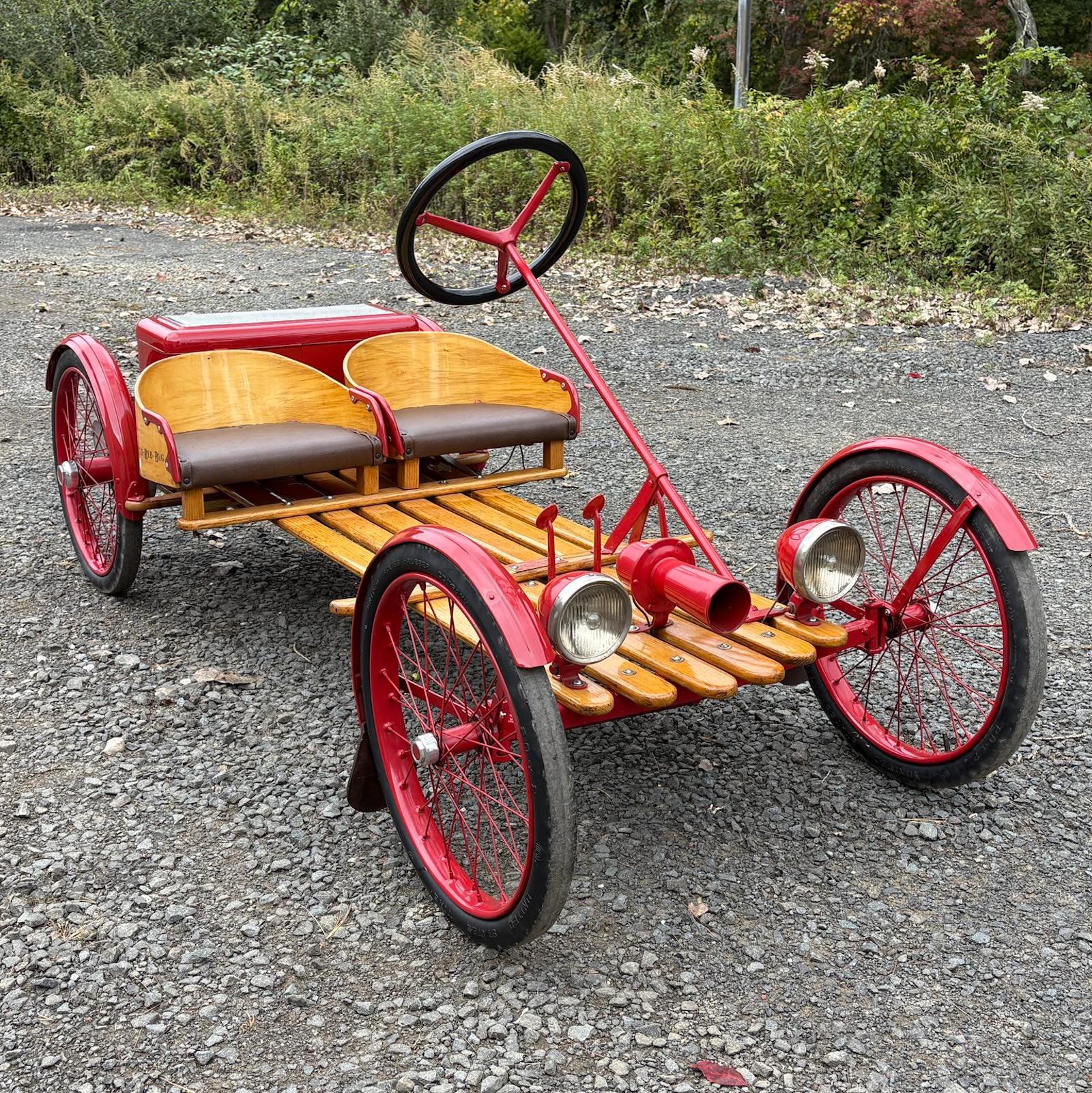
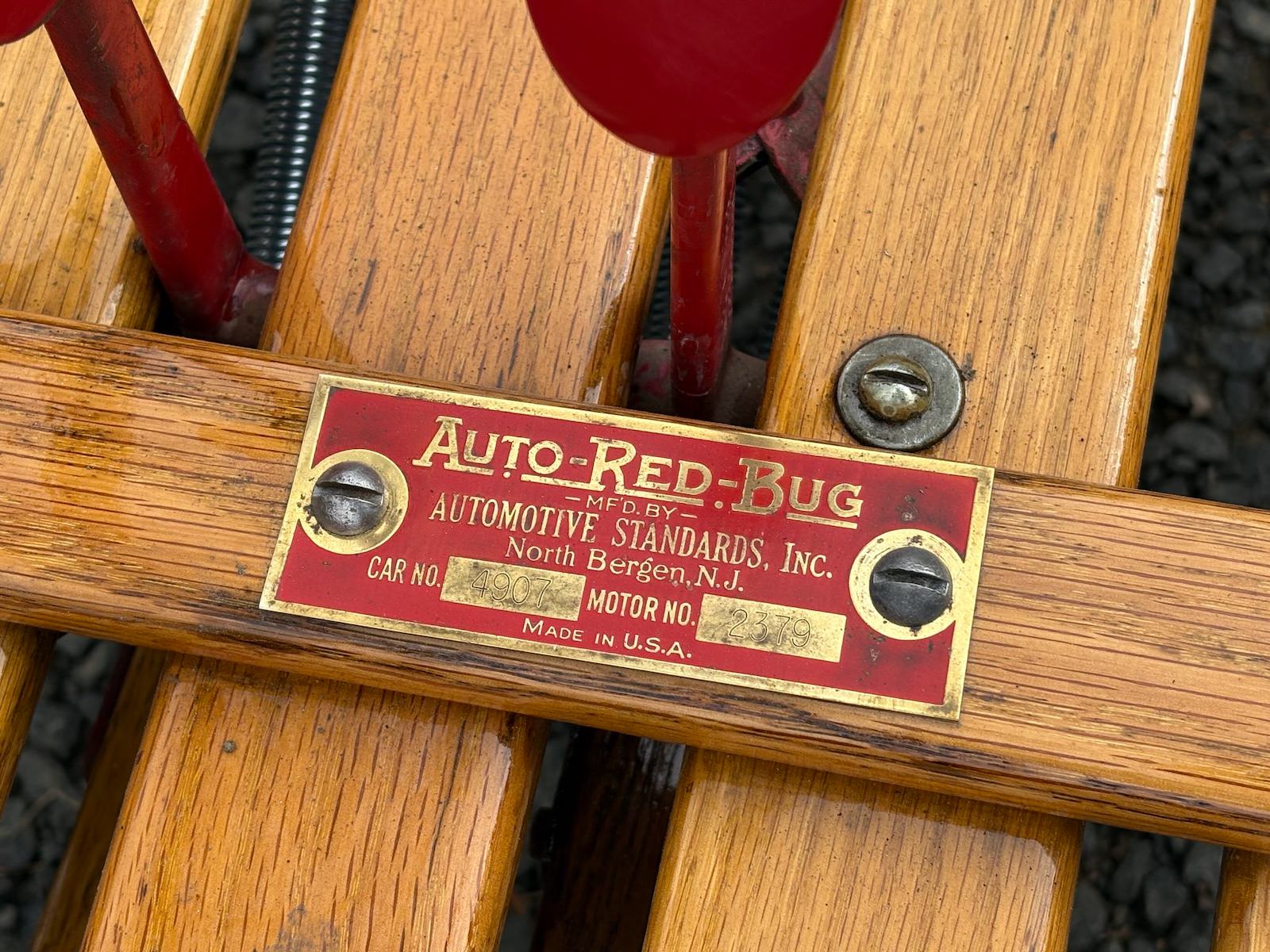
This is an original 1926 Auto Red Bug, it’s an electric-powered version of the cyclecar that was sold new through F.A.O. Schwarz in New York City. It’s said to have spent time on display at the Museum of Antique Autos in Princeton, Massachusetts, before undergoing a restoration in the early 1970s.
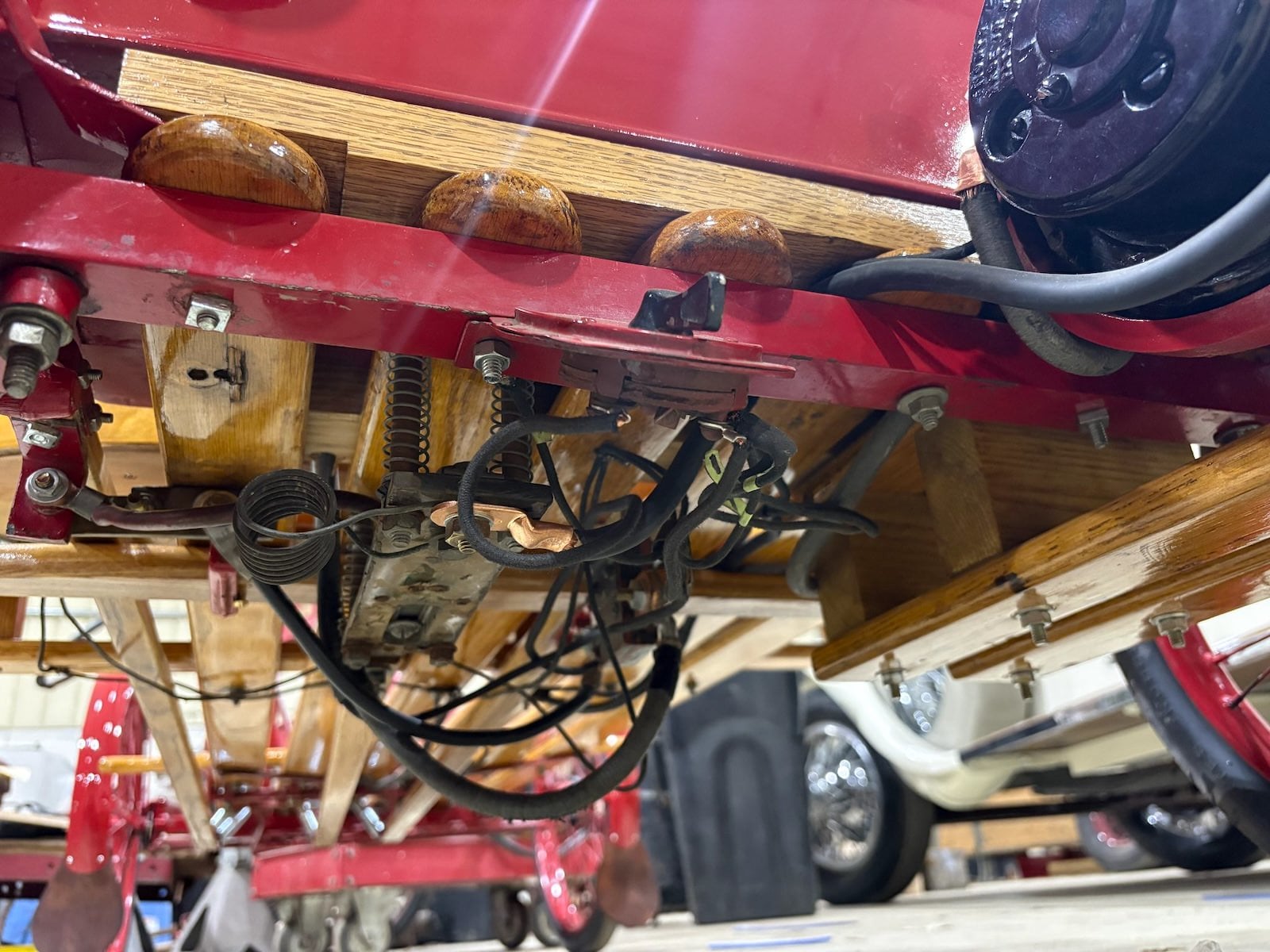
As you would expect, power comes from a 12-volt North East electric motor, which drives the right-rear wheel through a cast-aluminum gearbox containing four spur gears and ball bearings. The current seller bought the Red Bug in 2019, and a replacement 12-volt battery and new US Rubber bias-ply tires were fitted in 2026.
It’s now being offered for sale out of Connecticut at no reserve, with a bill of sale rather than a title, as it’s not registered for road use. If you’d like to read more about it or register to bid you can visit the listing here.
Images courtesy of Bring a Trailer

Articles that Ben Branch has written have been covered on CNN, Popular Mechanics, Smithsonian Magazine, Road & Track Magazine, the official Pinterest blog, the official eBay Motors blog, BuzzFeed, Autoweek Magazine, Wired Magazine, Autoblog, Gear Patrol, Jalopnik, The Verge, and many more.
Silodrome was founded by Ben back in 2010, in the years since the site has grown to become a world leader in the alternative and vintage motoring sector, with well over a million monthly readers from around the world and many hundreds of thousands of followers on social media.