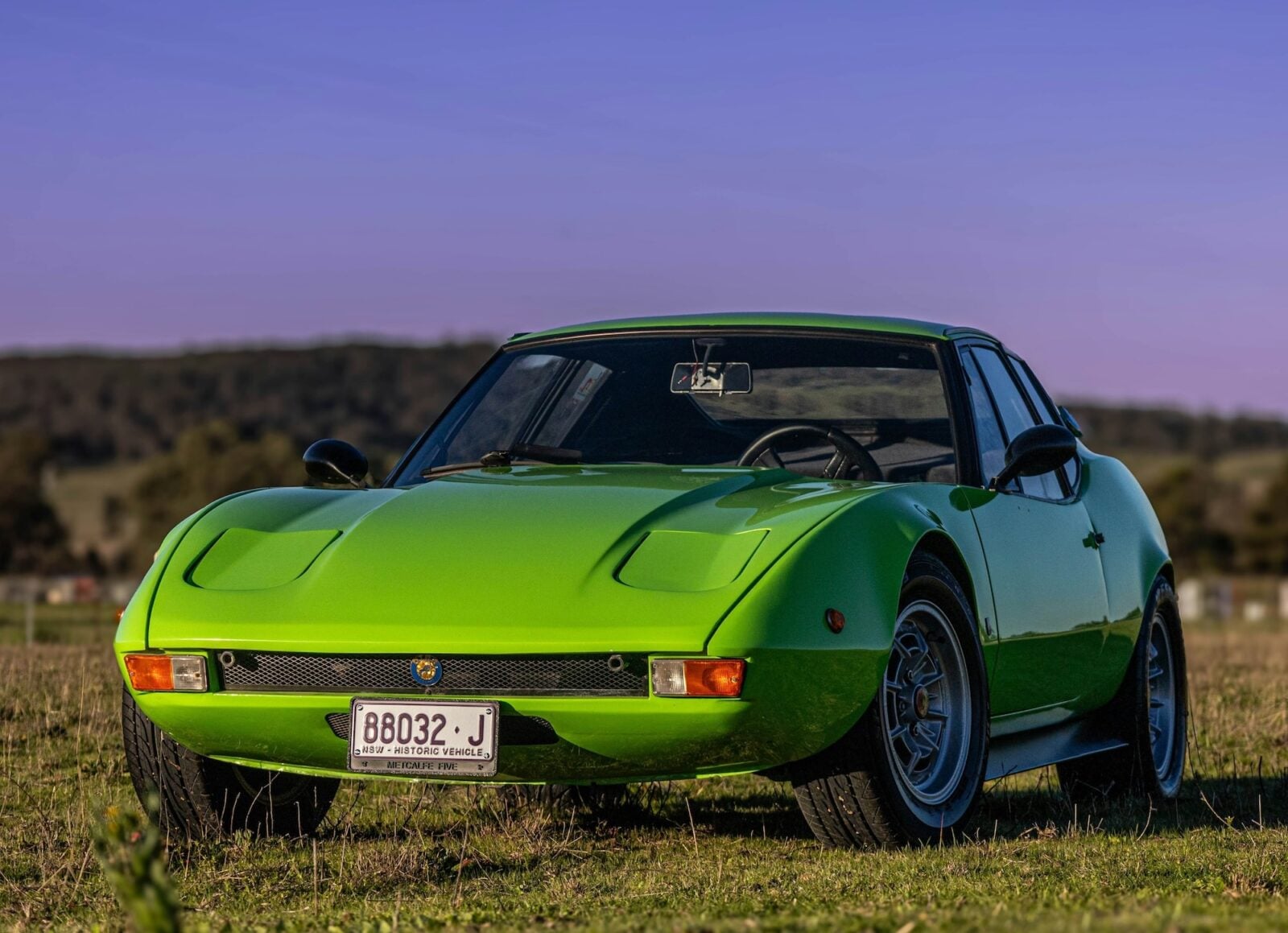
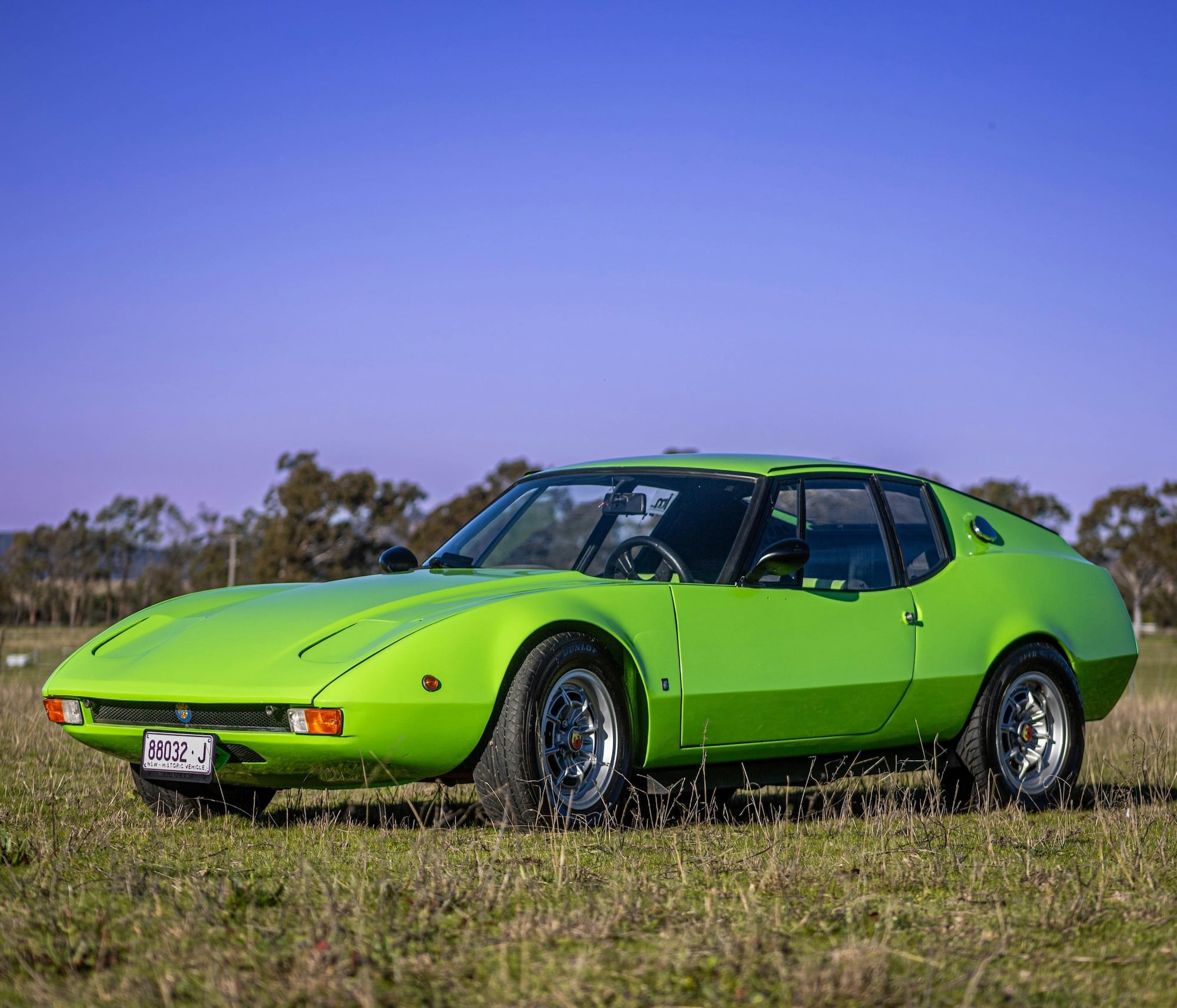
This is an unusual Abarth OTAS Grand Prix 1000, it’s a car many have never seen in person, or even heard about, as only a few hundred examples were made, and they were made under four different names.
The ambitiously-named Grand Prix 1000 has futuristic styling penned by Giuseppe Rinaldi, it shares its fundamental chassis architecture with the Fiat 850, and it was fitted with a number of different uprated engines – all intended to move the relatively low 630 kg curb weight along at a decent clip.
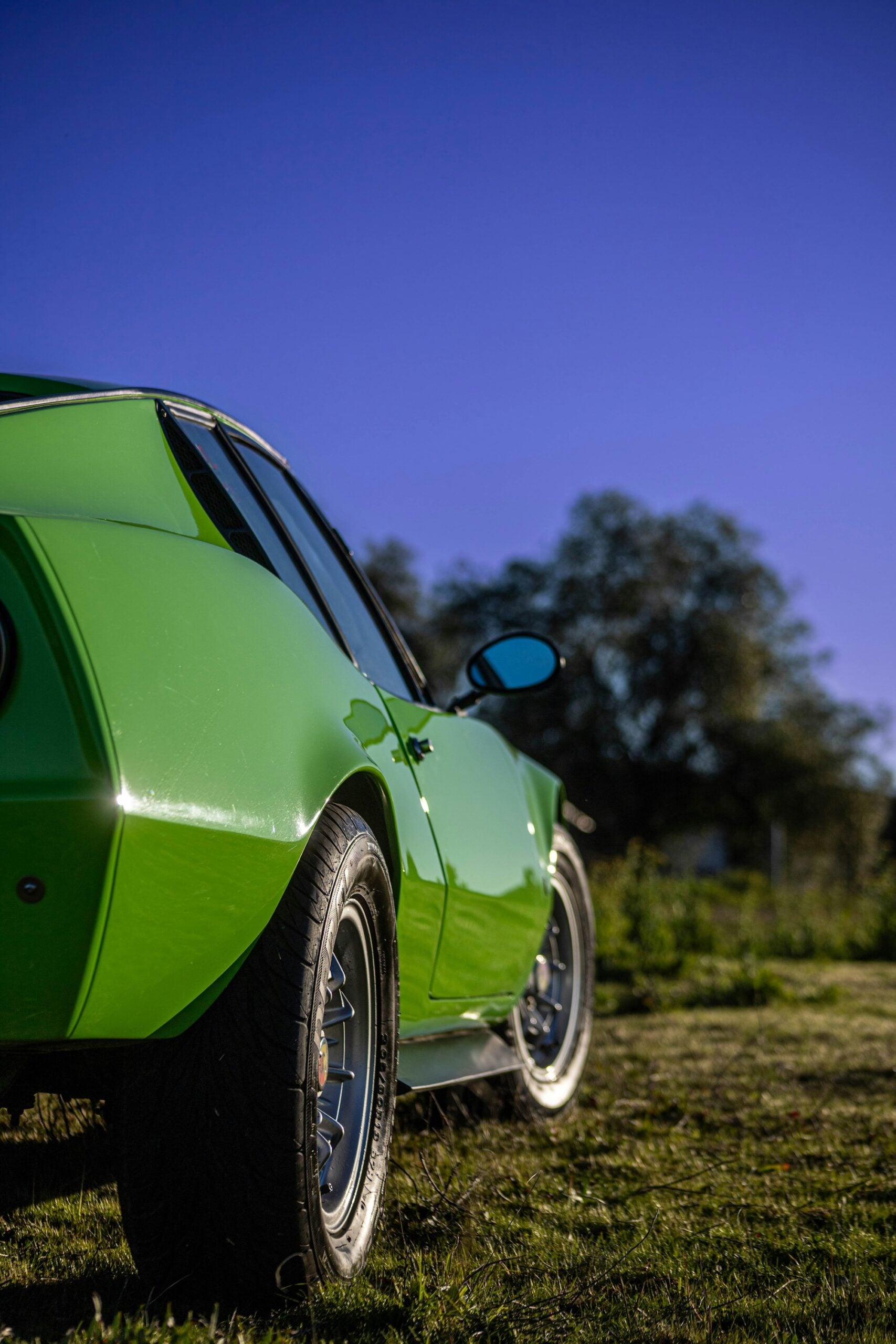
 This is an unusual Abarth OTAS Grand Prix 1000, it’s a car many have never seen in person, or even heard about, as only a few hundred examples were made – and they were made under four different names.
History Speedrun: Abarth OTAS Grand Prix 1000
The OTAS 820 Grand Prix used an 817cc engine for a single, regulatory-related reason – engines under 50 cubic inches (819cc) were exempt from US federal emissions standards at the time. This meant that the car could be sold in the USA, the most lucrative export market in the world, without needing to worry about catalytic converters or those fiddly EGR systems.
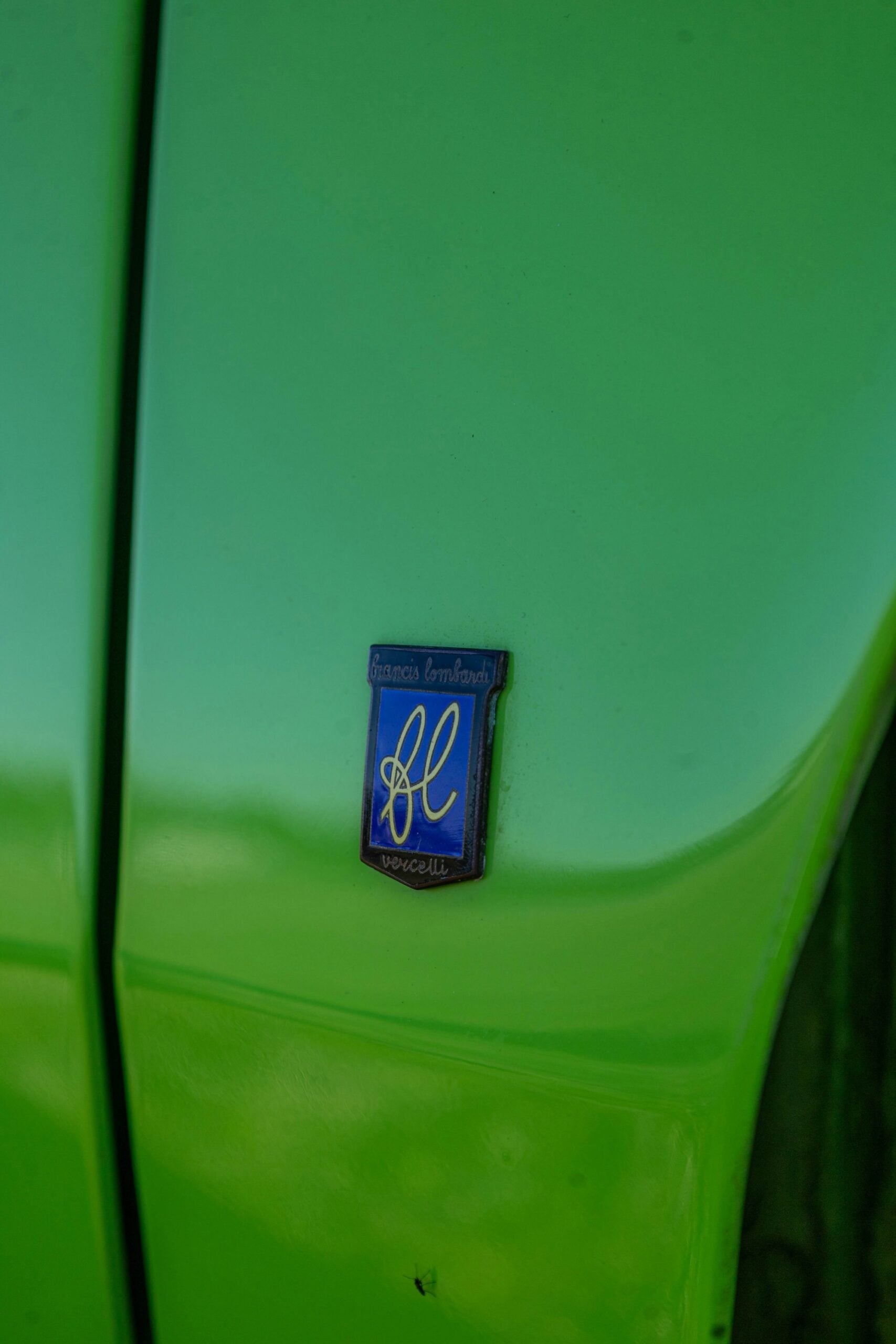
The car itself was a rear-engined coupe built on Fiat 850 running gear by Carrozzeria Francis Lombardi of Vercelli. It was sold as a Lombardi, a Giannini, an Abarth, or an OTAS, depending on who had tuned it and where it was headed. As you can imagine, this can make researching and writing about them a little tricky, as the car has more names than a fireworks enthusiast has fingers.
Carlo Francesco “Francis” Lombardi had been a First World War fighter ace and a builder of light aircraft before he founded his coachbuilding firm in 1947, two years after the end of WWII when demand for aircraft tailed off rather sharply.
The Lombardi Grand Prix, which made its international debut at the Geneva Motor Show in March of 1968, became the company’s best-known car. Giuseppe Rinaldi styled it in-house, and his sketches for a car labeled “Dream,” which dated to 1967, closely match the finished shape.
A Fiat 850 In A Dinner Jacket
Mechanically, the Grand Prix was essentially a Fiat 850 Special in a nice suit. Its 843cc overhead-valve four sat in the back and drove the rear wheels through a 4-speed gearbox. It was good for 47 bhp at 6,400 rpm and 43 lb ft torque at 3,600 rpm.
The ambitiously-named Grand Prix 1000 has futuristic styling penned by Giuseppe Rinaldi, it shares its fundamental chassis architecture with the Fiat 850, and it was fitted with a number of different uprated engines – all intended to move the relatively low 630 kg curb weight along at a decent clip.
Upper A-arms and a transverse leaf spring located the front wheels, the rear had semi-trailing arms and coil springs, and there were anti-roll bars at both ends. Steering was worm-and-roller, and brakes were discs in front and drums out back.
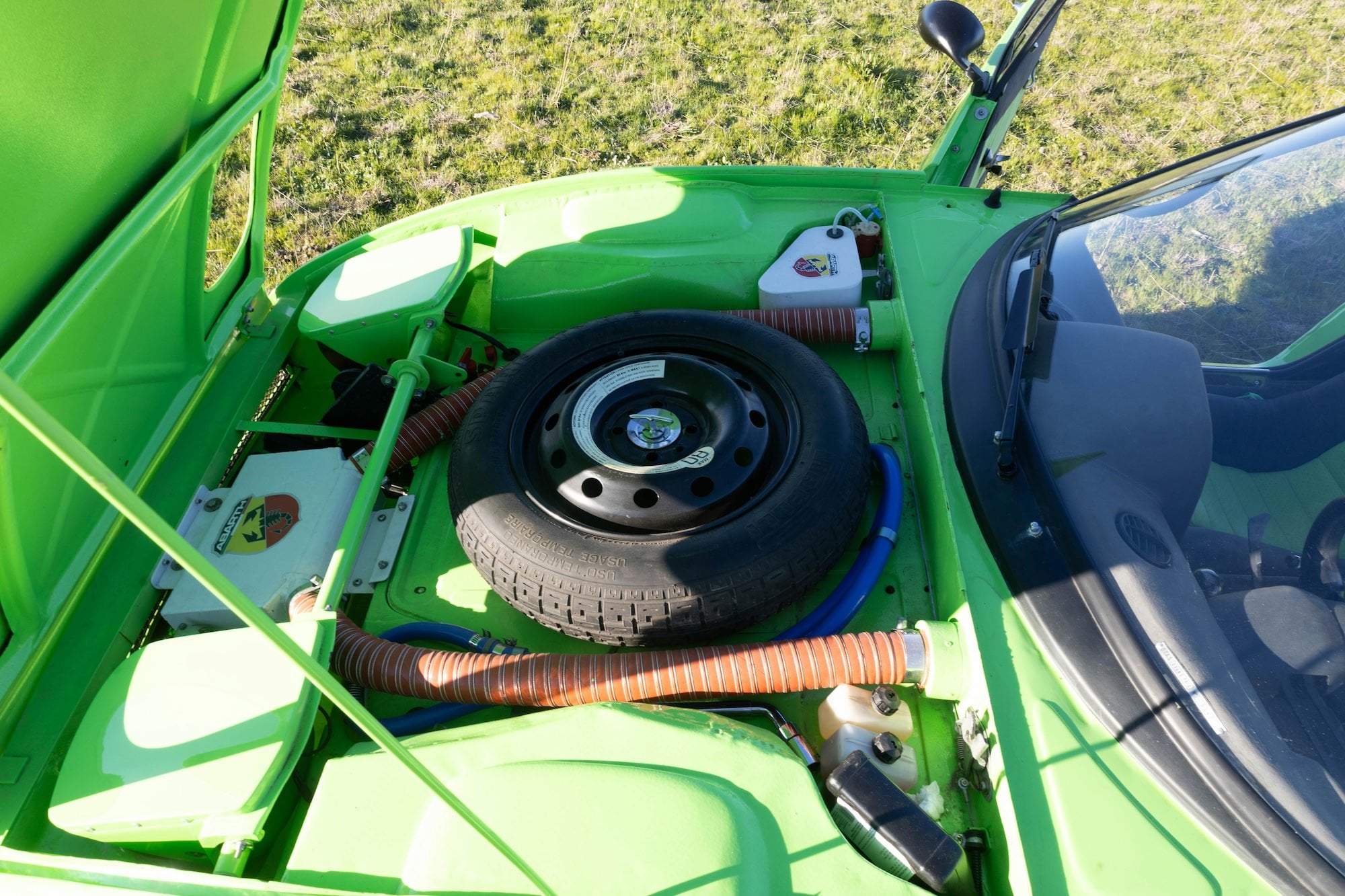
The body was mostly made from steel, although fiberglass was used for the rear panel and, initially, the doors, with steel doors listed as an optional extra. Electric motors raised the pop-up headlights, with a lever under the hood as a backup if the motor failed, and a single wiper did its best covering the whole windshield.
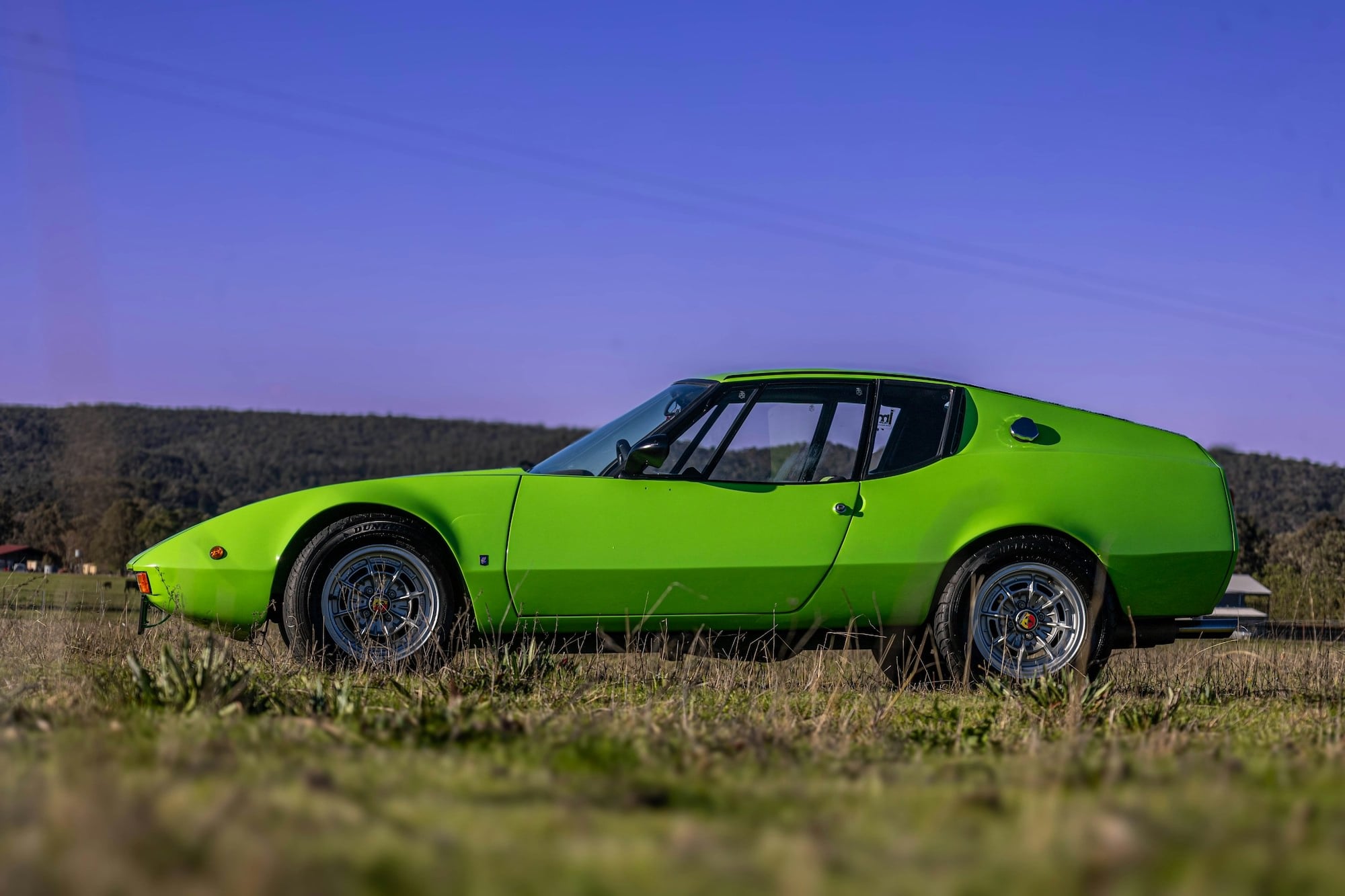
The Grand Prix stood 42 inches tall on a 79.9 inch wheelbase and most put its weight at 1,390 lbs (630 kgs) and its top speed at 99 mph, just a smidge under the ton, but an enterprising owner with a tailwind and a long downhill section could (just) get it into the triple digits for bragging rights down at the pub.
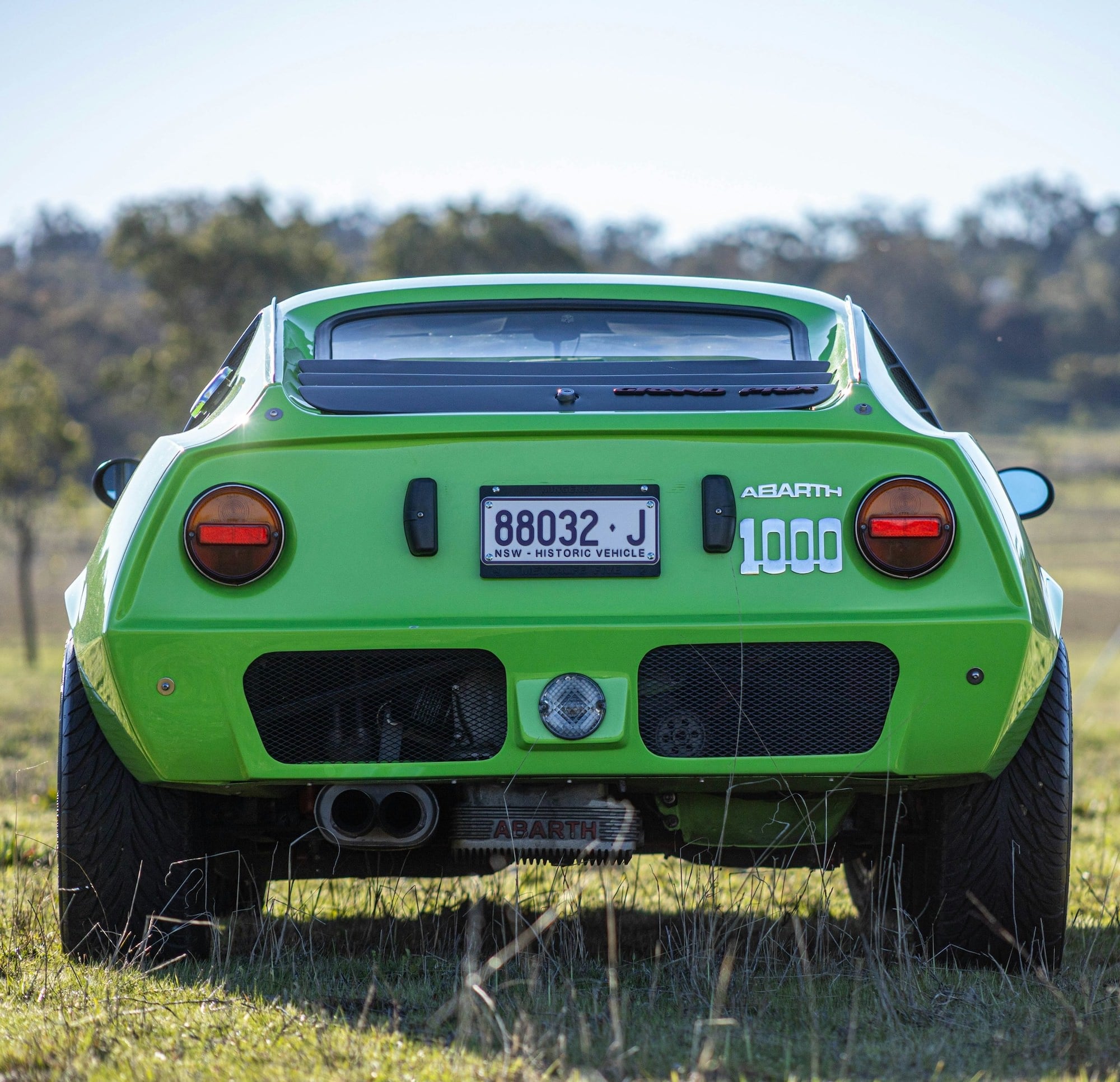
A second series of the Grand Prix arrived in 1970, it had a louvered black engine cover for cooling, a raised rib in the hood to clear a larger spare wheel, and 5.5 inch wide wheels in place of the earlier 4.5 inch units.
The Four Versions
In Britain, London gaming-club owner Frixos Demetriou showed the car at Olympia in January of 1969 and offered it in right-hand drive at £1,426. Only a handful found buyers because, at the time, there were plenty of faster cars on offer for one and a half grand.
Giannini Automobili of Rome sold its own versions too, named the Giannini 1000 Grand Prix, it used a stroked 1.0 liter (982 cc) Fiat engine with 84 bhp.
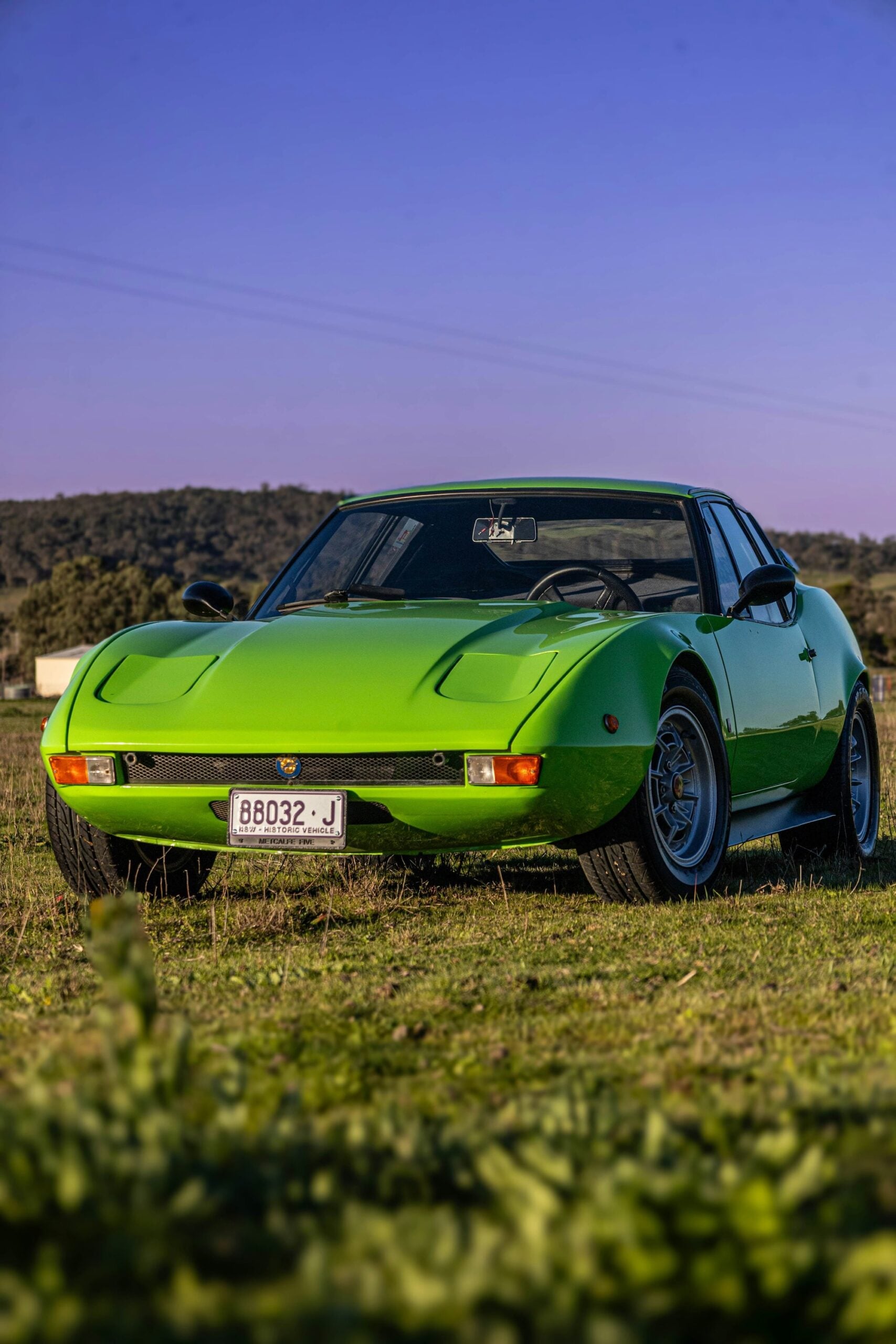
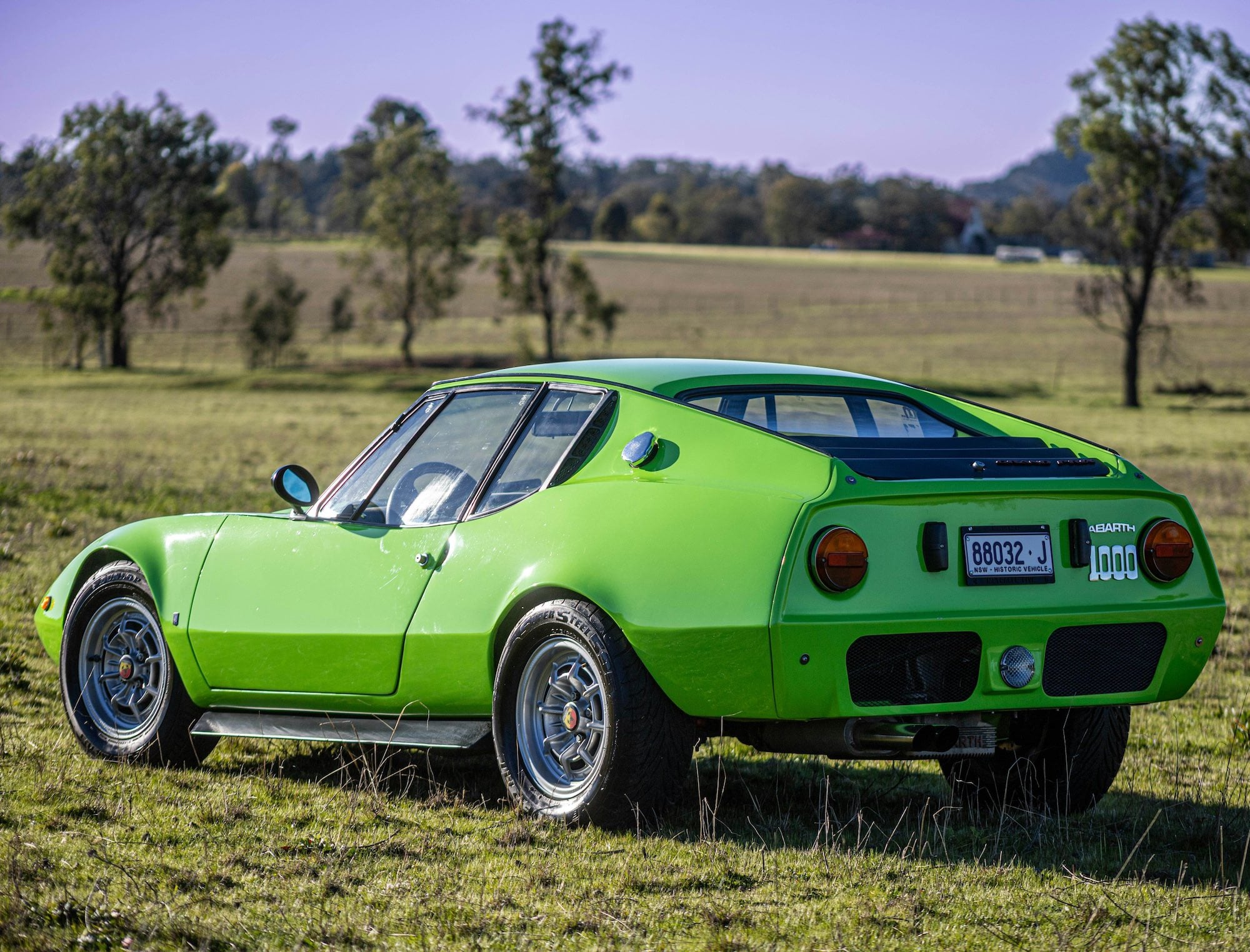
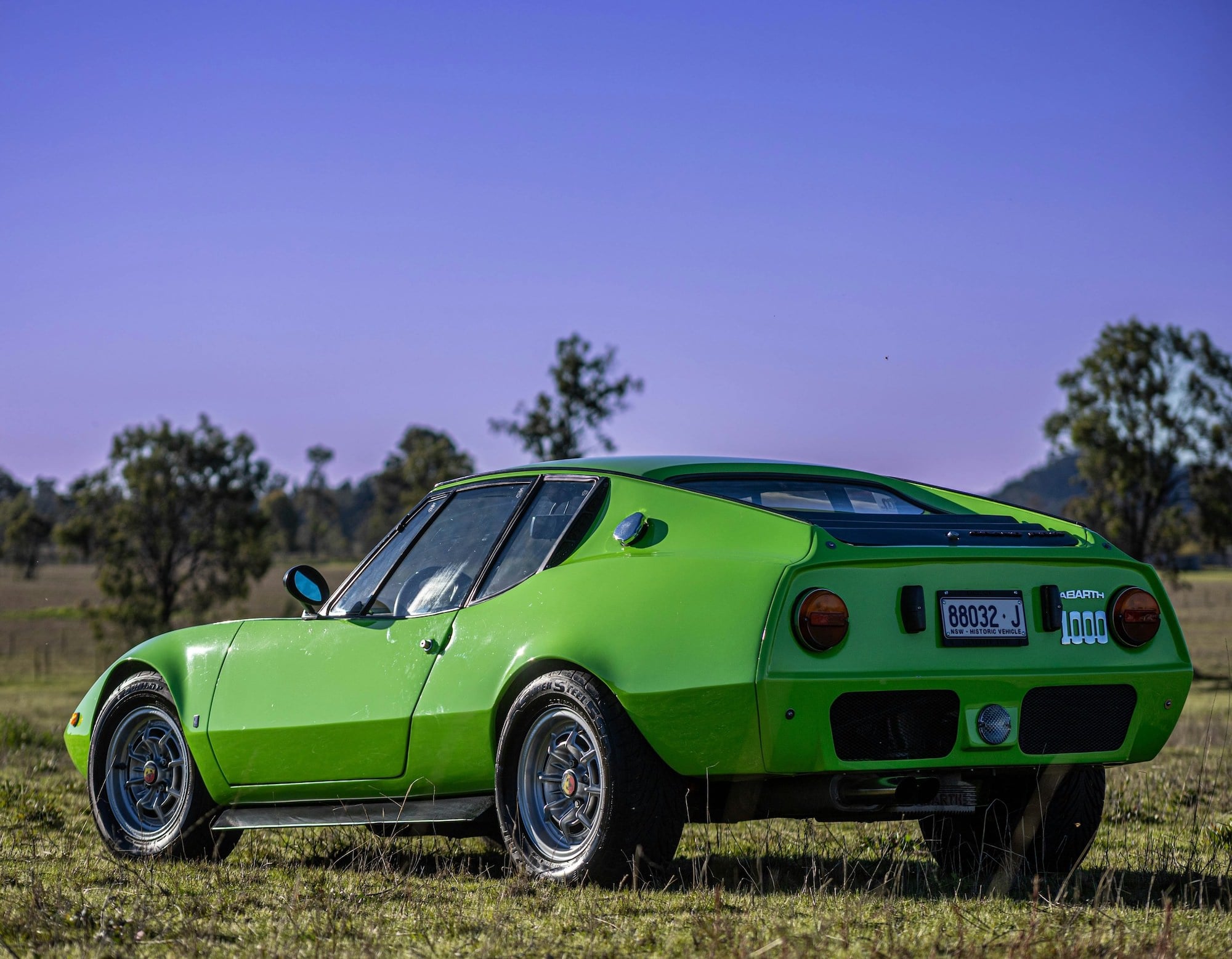
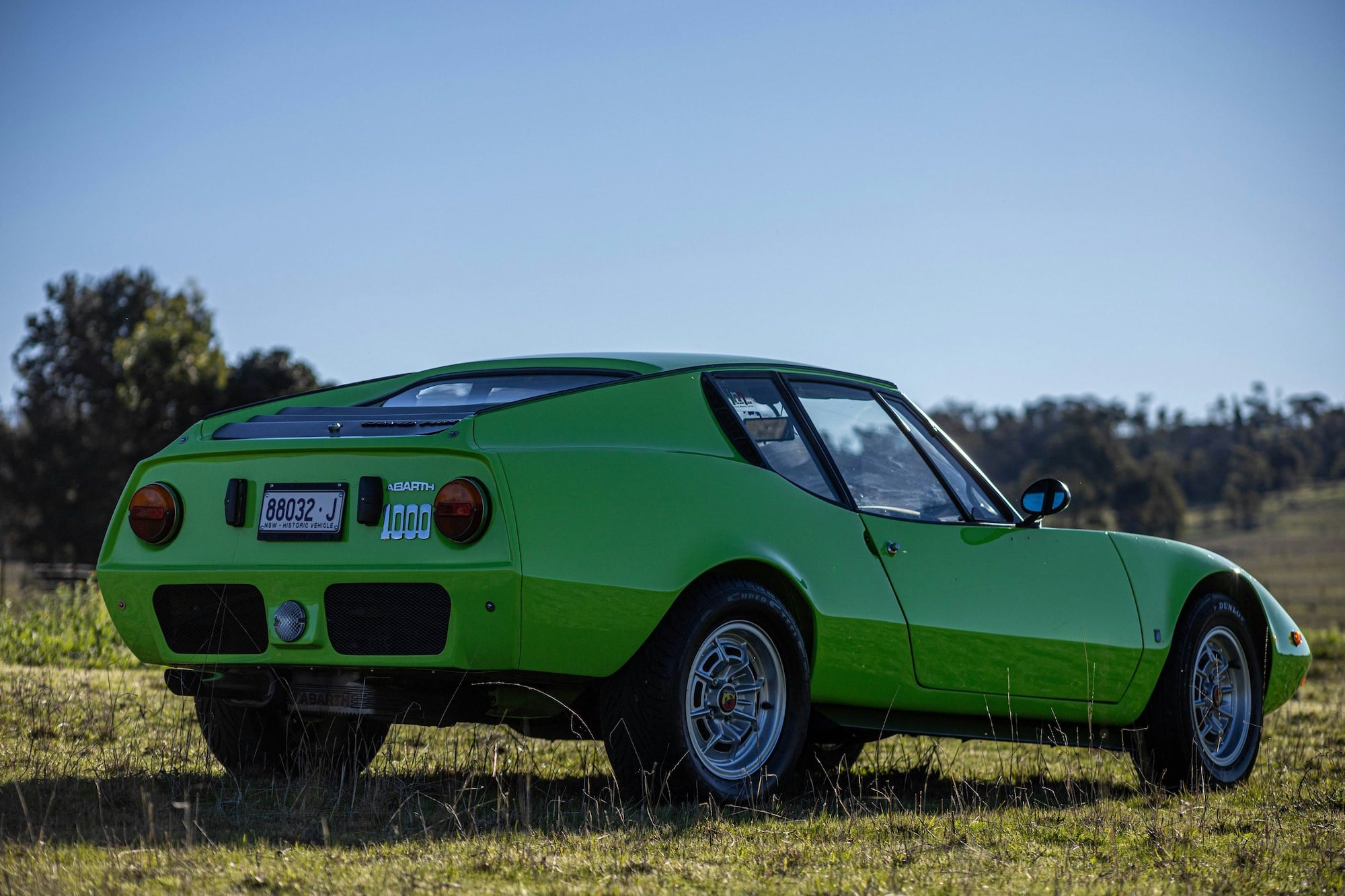
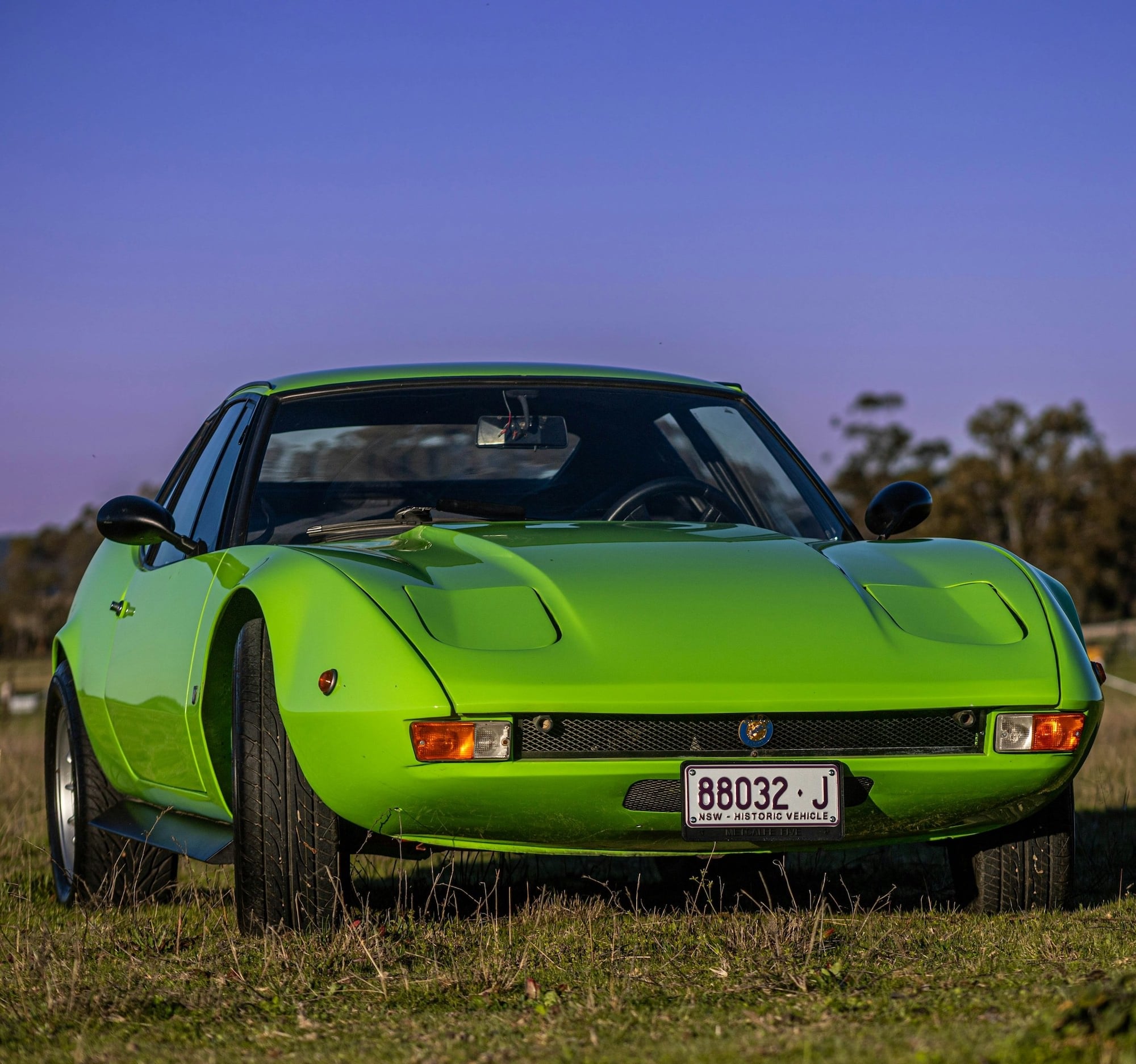
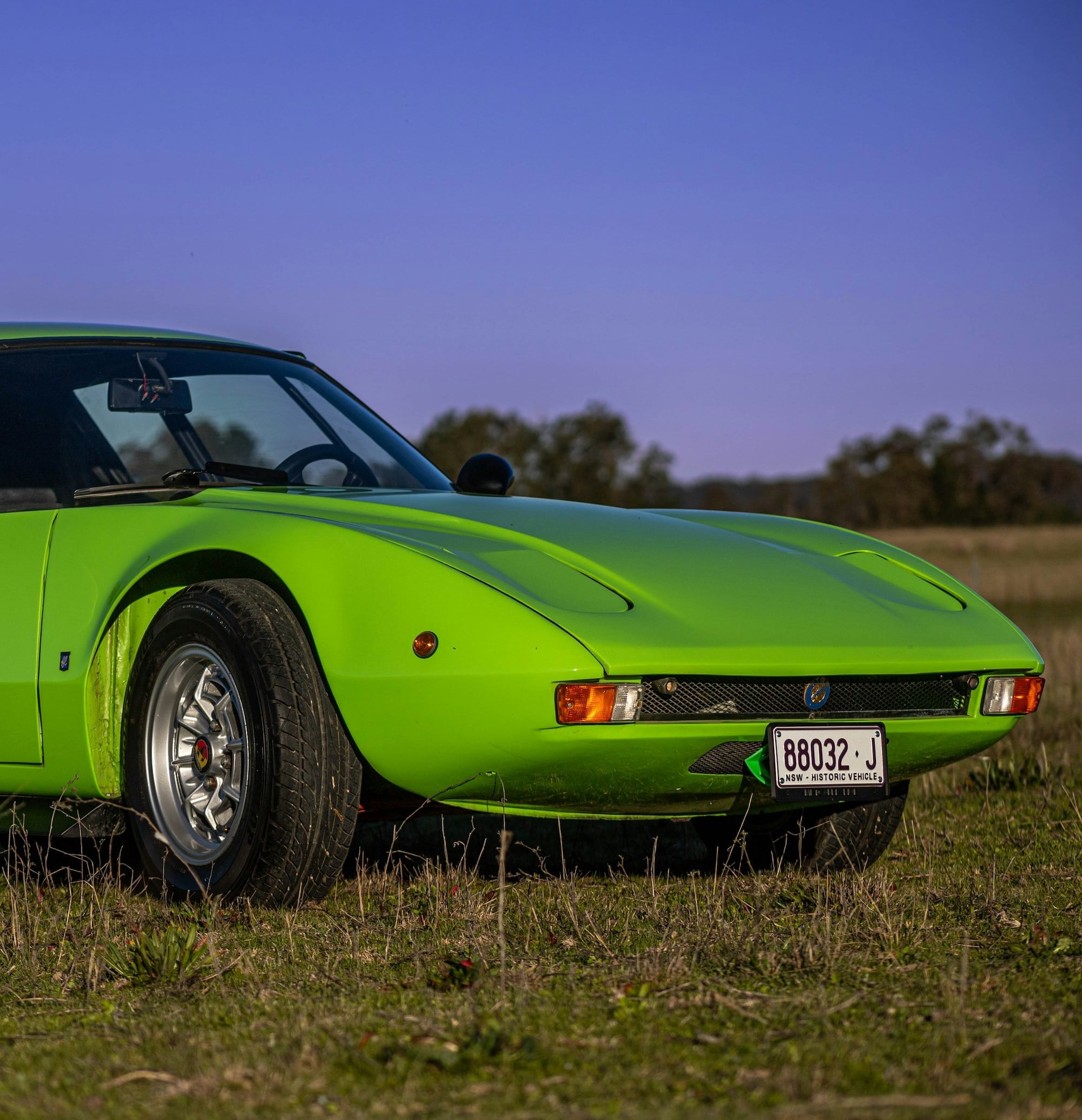
This is a 1971 Abarth OTAS Grand Prix 1000 it’s a US-delivered example now located in Australia, and it’s believed to be one relatively few that have survived to the modern day.
Abarth went further still, its “Scorpione” replaced the Fiat 850 engine with a 1.3 liter (1,280 cc) version of the Fiat 124 four, mated to the 850 gearbox by an Abarth bell housing, and made 74 bhp with more torque. It was said to be capable of 109.1 mph and could manage the 0 to 62 mph sprint in 12.7 seconds.
The Scorpione S added four-wheel disc brakes and uprated suspension, the SS kept both and raised output to 100 bhp. Fiat took over Abarth in 1971, and sadly, the Scorpione was dropped soon after.
OTAS, short for Officina Trasformazioni Automobili Sportive, was set up in Turin by Franco Giannini, son of Giannini Automobili founder Domenico Giannini, to sell versions of the car outside Italy. Siata International of Newark, New Jersey, showed it as the OTAS Tigre at the New York Auto Show in April of 1970, but the arrangement didn’t last. In California, the cars were sold by John Rich, a Glendale Fiat dealer who was also the US importer for Abarth.
To get the displacement under the limit, OTAS sleeved the Fiat block and reduced the bore from 65 mm to 64 mm. Compression went from 9.3:1 to 10.1:1. A hotter camshaft, an Abarth exhaust manifold and a single-barrel carburetor brought output to 52 bhp. The cars kept their Fiat 850 chassis numbers, but how many reached the US is disputed. Rich himself put the figure at 65, while other accounts go as high as 100.
Production of the Grand Prix ended in 1971, when Fiat refused to supply anymore platforms. Estimates of total output across every version start at around 500, making it a relatively rare car today.
The 850 Grand Prix Goes Racing
The FIA homologated the car in Group 3 as the Francis Lombardi 850 Grand Prix on July 2, 1969. A second homologation, dated July 2, 1970, carried an extension covering bodywork, weight and wheels and ran until January 1, 1974.
Italian engineer Francesco Landi raced a ombardi 850 Grand Prix in hillclimbs. After Abarth’s Scorpione program ended, he fitted his car with a 1.3 liter (1,280 cc) engine so it would qualify for the 1,300 cc class he preferred.
On its second outing it hit a tree. Landi rebuilt it with a downturned nose to add front-end downforce, plus NACA ducts and Plexiglas windows, but the results never quite met his expectations.
The Abarth OTAS Grand Prix 1000 Shown Here
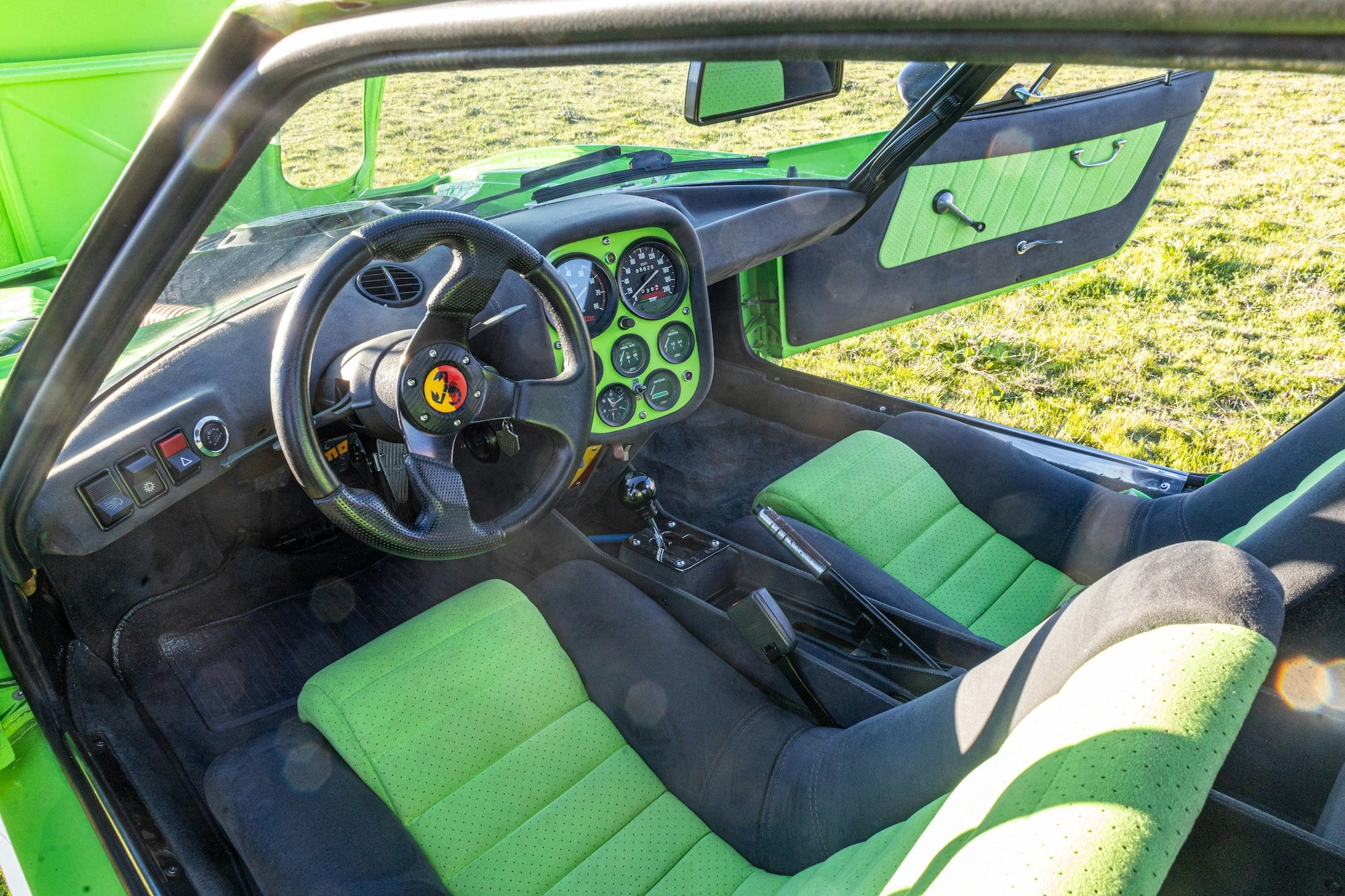
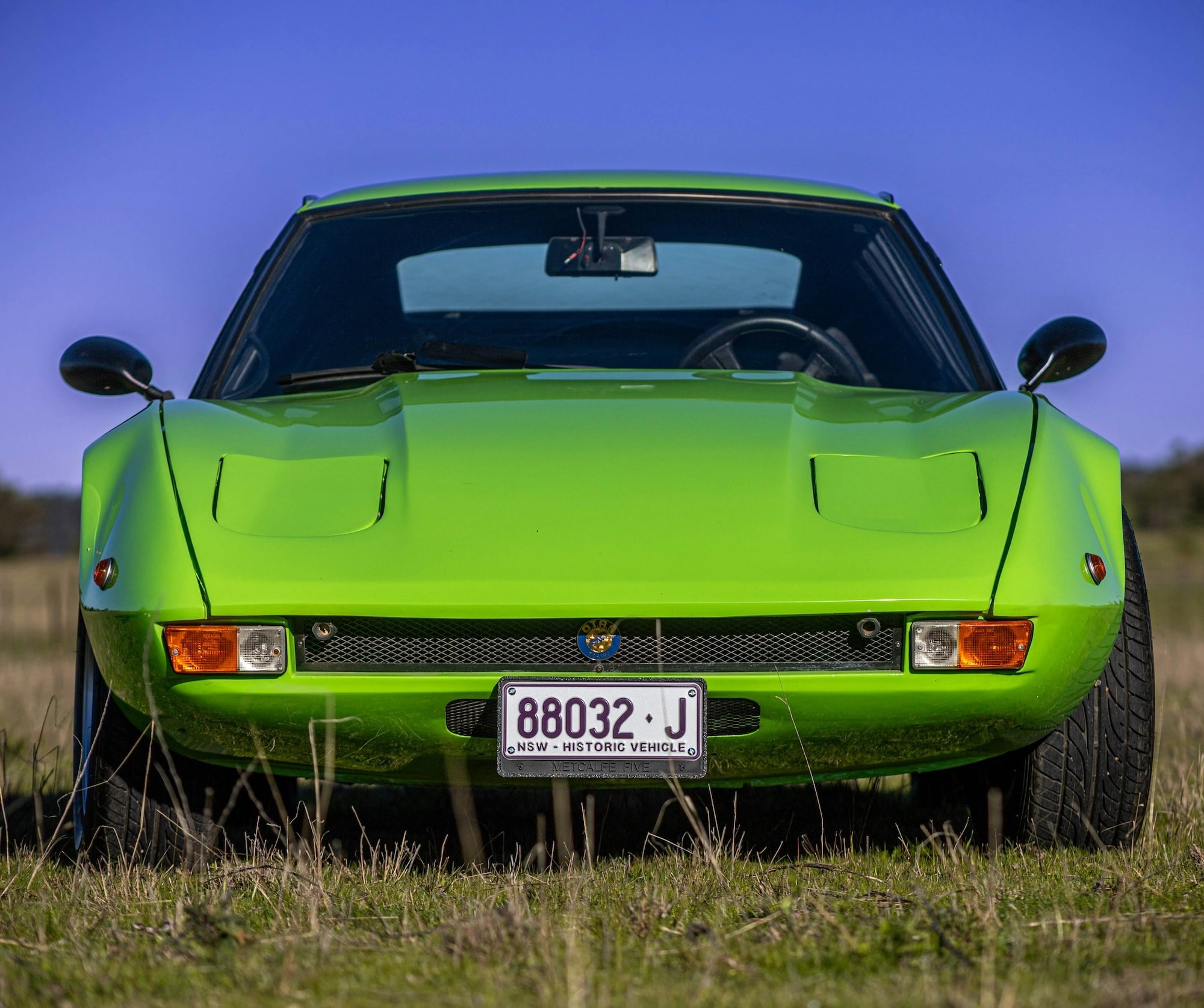
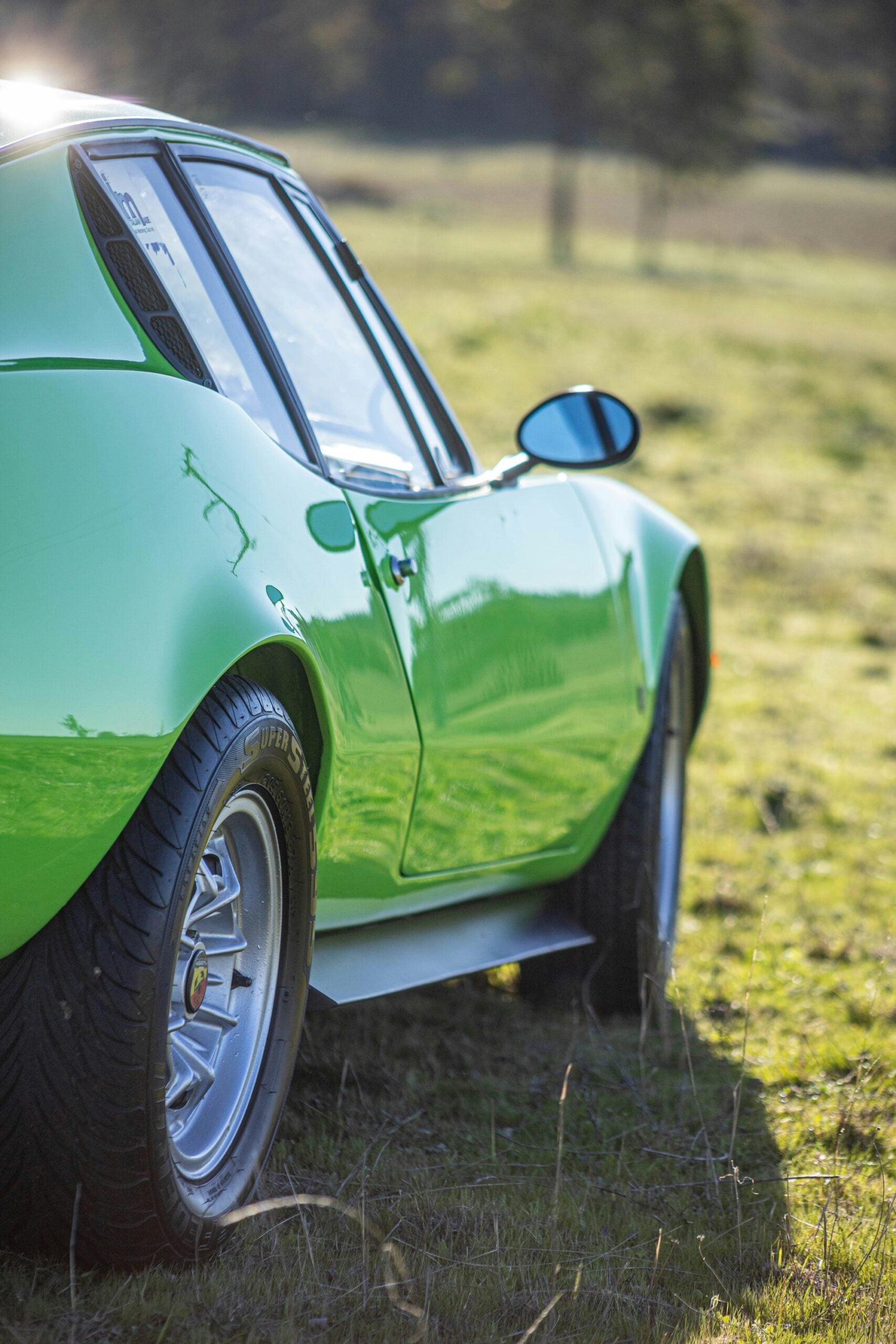
This is a 1971 Abarth OTAS Grand Prix 1000 it’s a US-delivered example now located in Australia, and it’s believed to be one relatively few that have survived to the modern day. It was built with Carrozzeria Lombardi coachwork, and it’s reportedly undergone a comprehensive nut-and-bolt restoration covering the body, interior, drivetrain, and wheels.
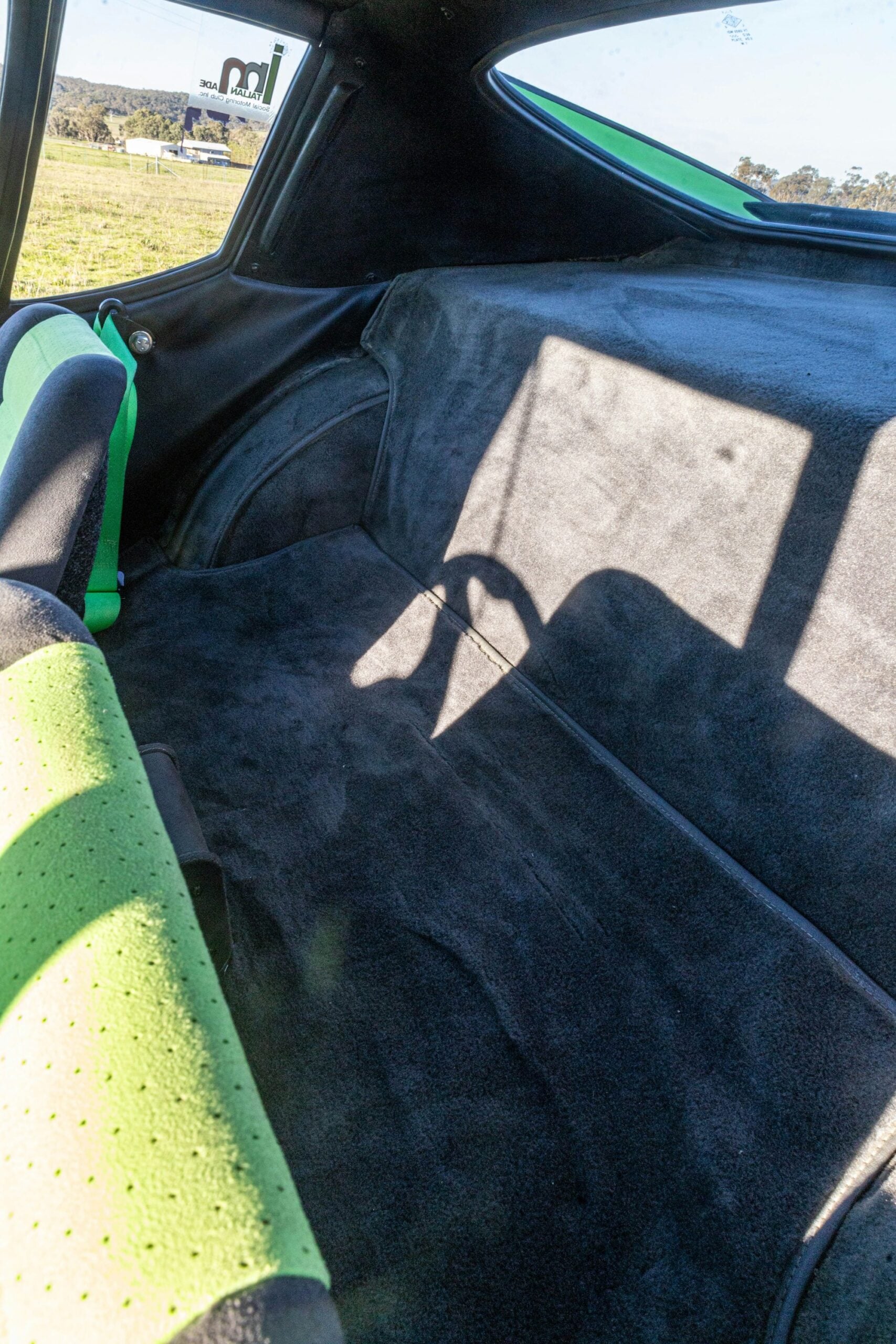
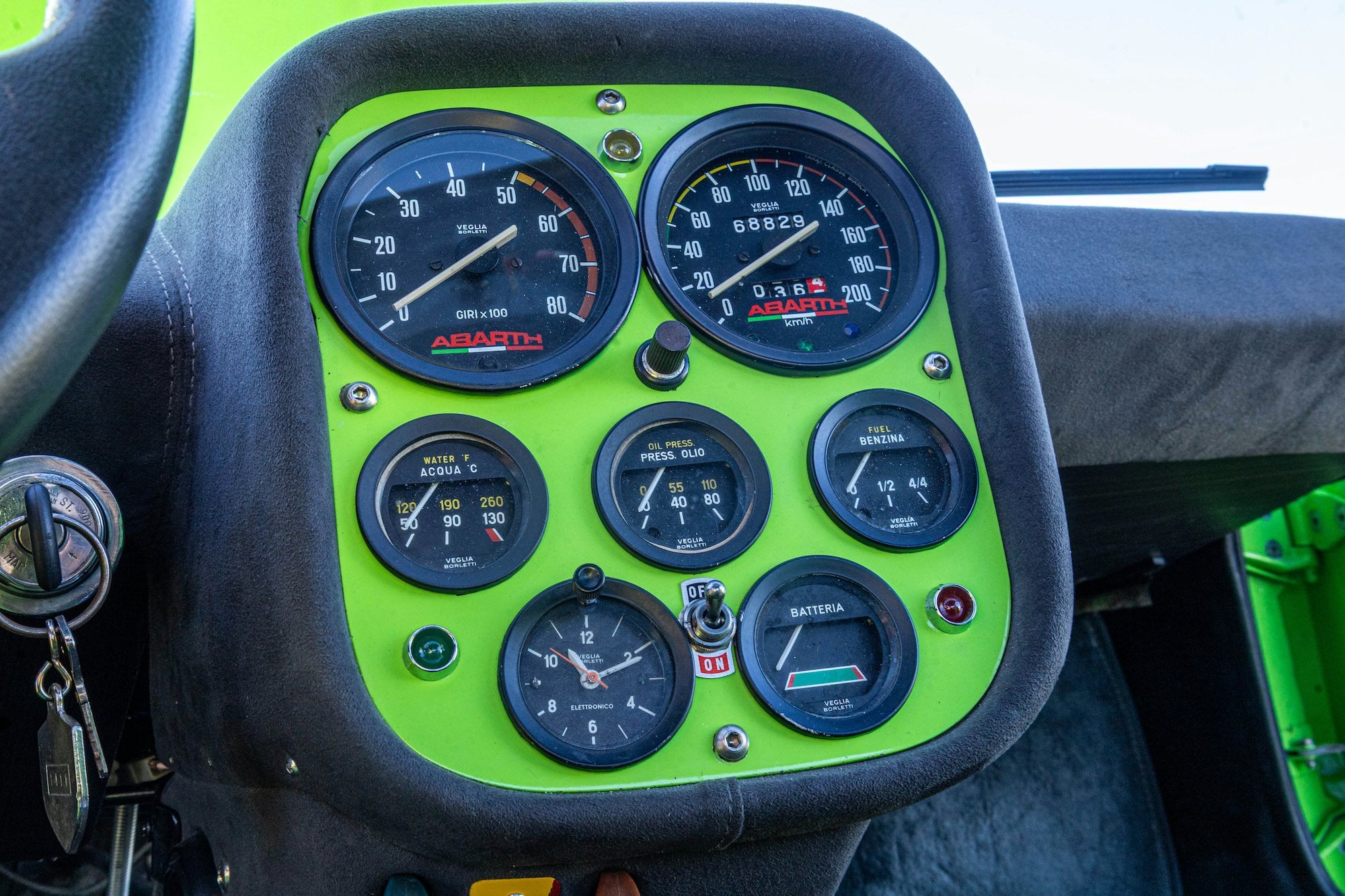
During the resto body was stripped to bare metal and repainted in green, while the cabin was retrimmed in dark grey and green Alcantara with new carpets.
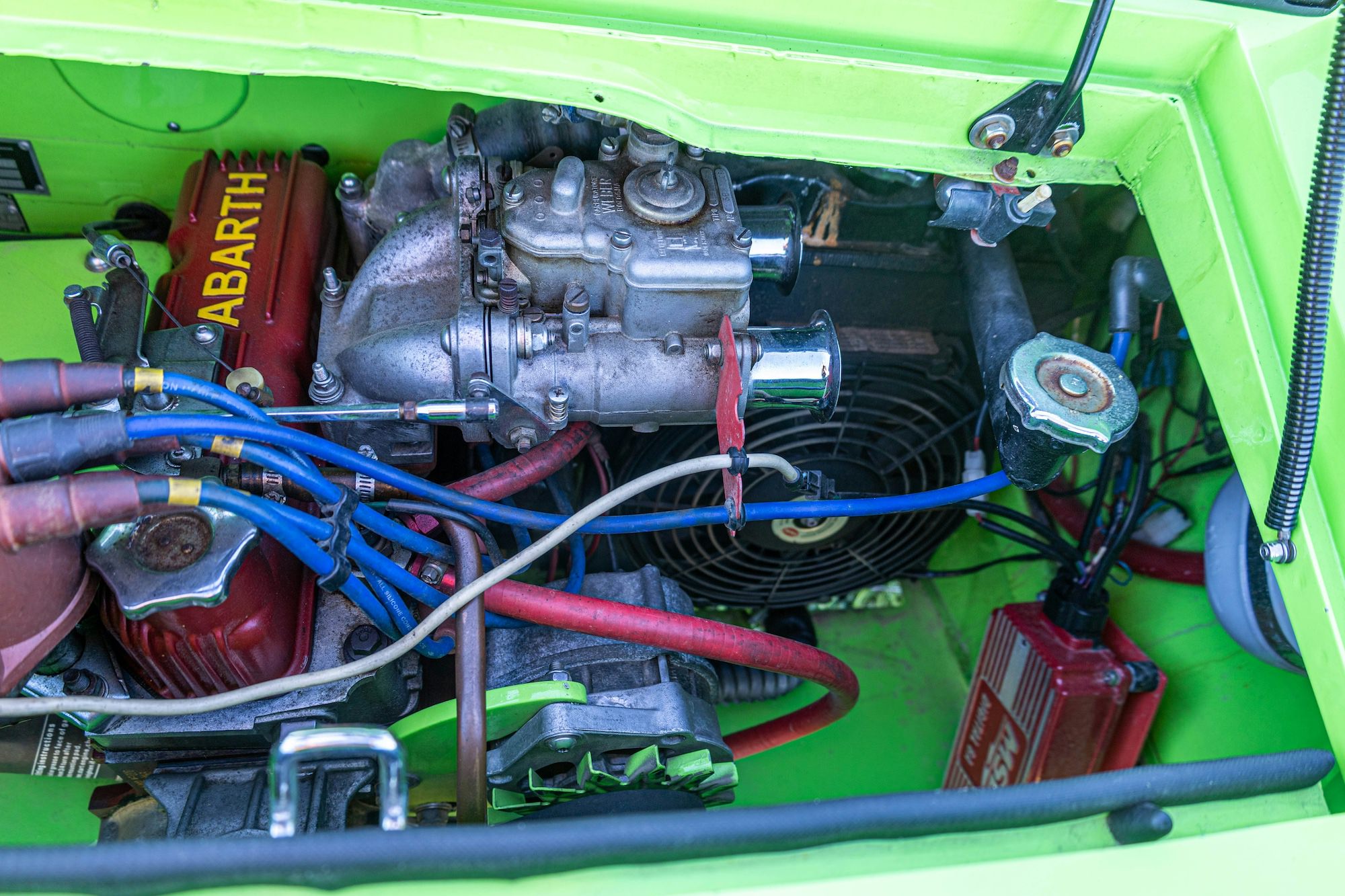
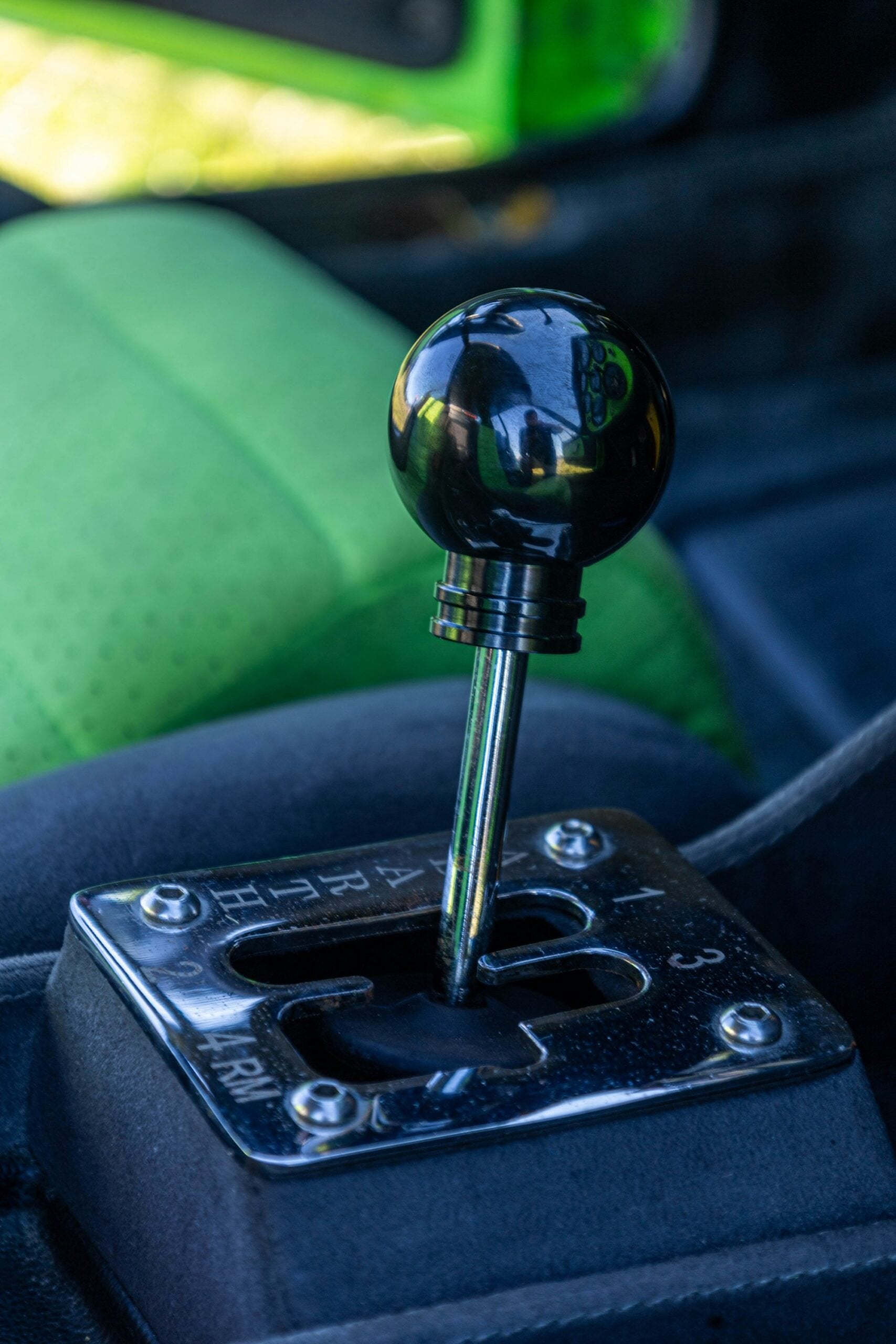
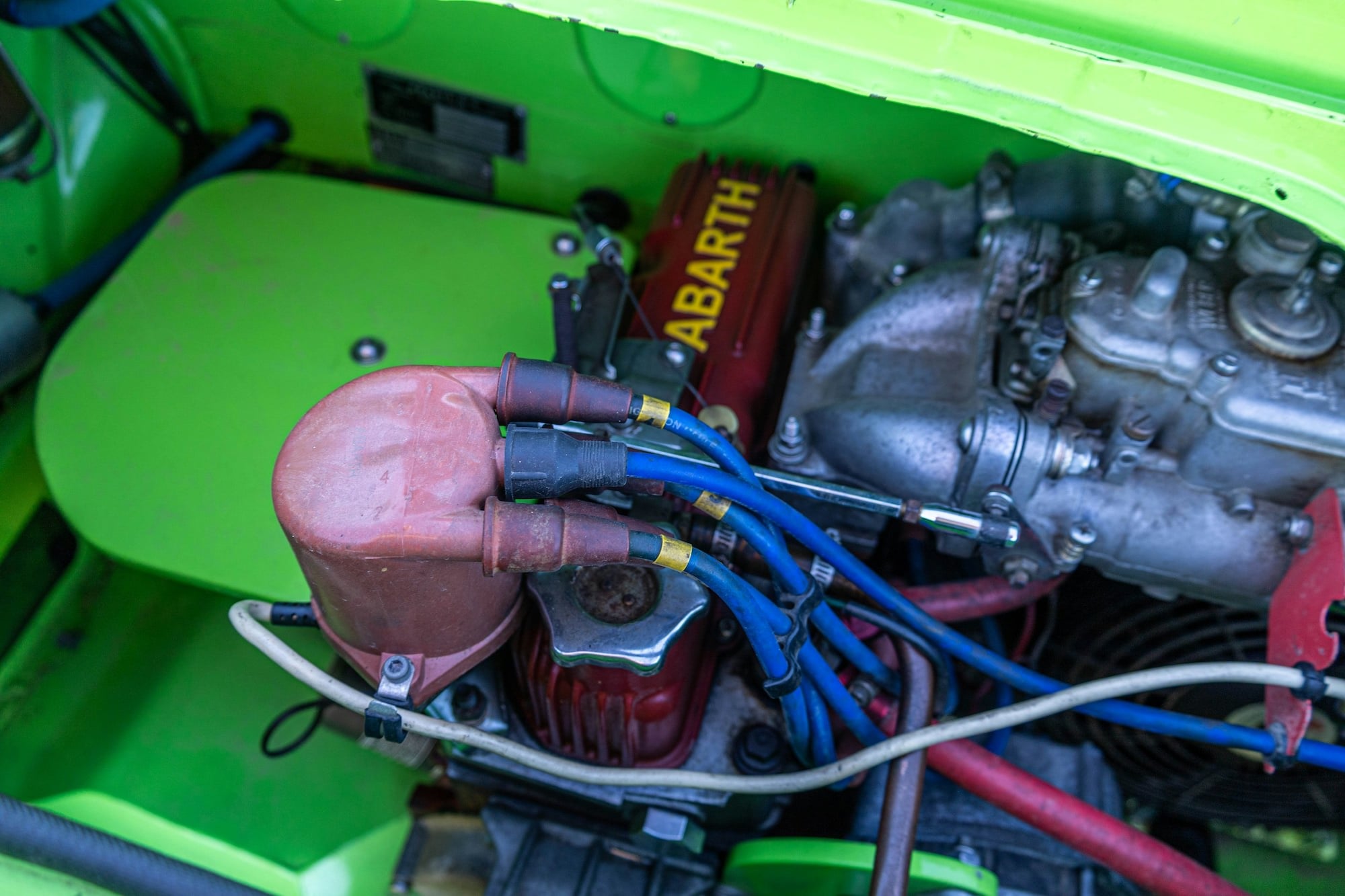
It’s powered by a rebuilt 1,050cc inline-four based on the Abarth A112 engine, driving the rear wheels through a 4-speed open-gate manual gearbox. The engine has been extensively modified with a Weber 40 DCOE carburetor, larger stainless steel valves, a re-profiled sport cam, A112 70HP ignition, a lighter flywheel, reinforced clutch hardware, an Abarth OT five liter sump, stainless extractors, and an MSD Digital 6A ignition system.
It’s powered by a rebuilt 1,050cc inline-four based on the Abarth A112 engine, driving the rear wheels through a 4-speed open-gate manual gearbox.
The chassis has also received considerable attention, it has Fiat 124 disc brakes, Pendolare independent front suspension, Abarth OT rear axles, Koni dampers, and Eibach springs. Campagnolo Ragno magnesium wheels complete the period competition look.
The car is now being offered for sale with restoration records, wiring diagrams, paint information, import documents, an original newspaper article, and a photographic record of the restoration. It’s being listed out of Mudgee in NSW, Australia and you can visit the listing here.
Images courtesy of Collecting Cars

Articles that Ben Branch has written have been covered on CNN, Popular Mechanics, Smithsonian Magazine, Road & Track Magazine, the official Pinterest blog, the official eBay Motors blog, BuzzFeed, Autoweek Magazine, Wired Magazine, Autoblog, Gear Patrol, Jalopnik, The Verge, and many more.
Silodrome was founded by Ben back in 2010, in the years since the site has grown to become a world leader in the alternative and vintage motoring sector, with well over a million monthly readers from around the world and many hundreds of thousands of followers on social media.