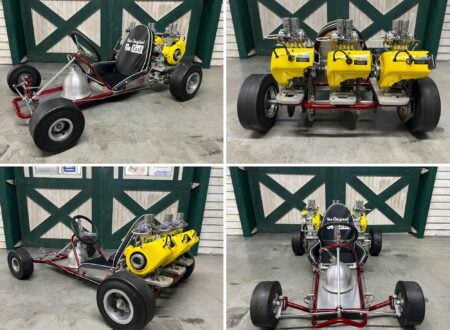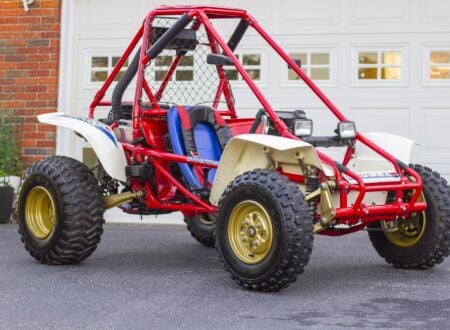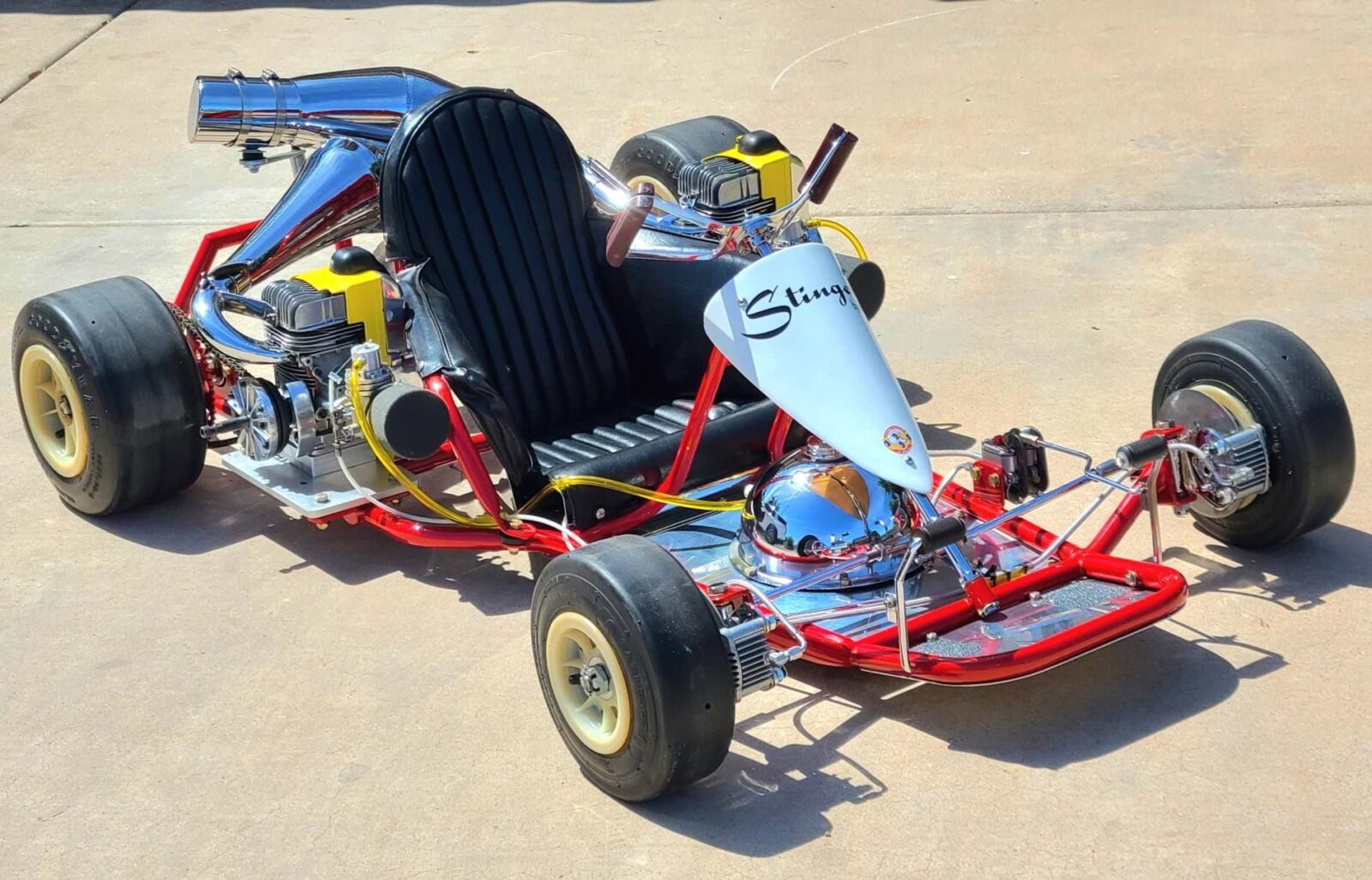
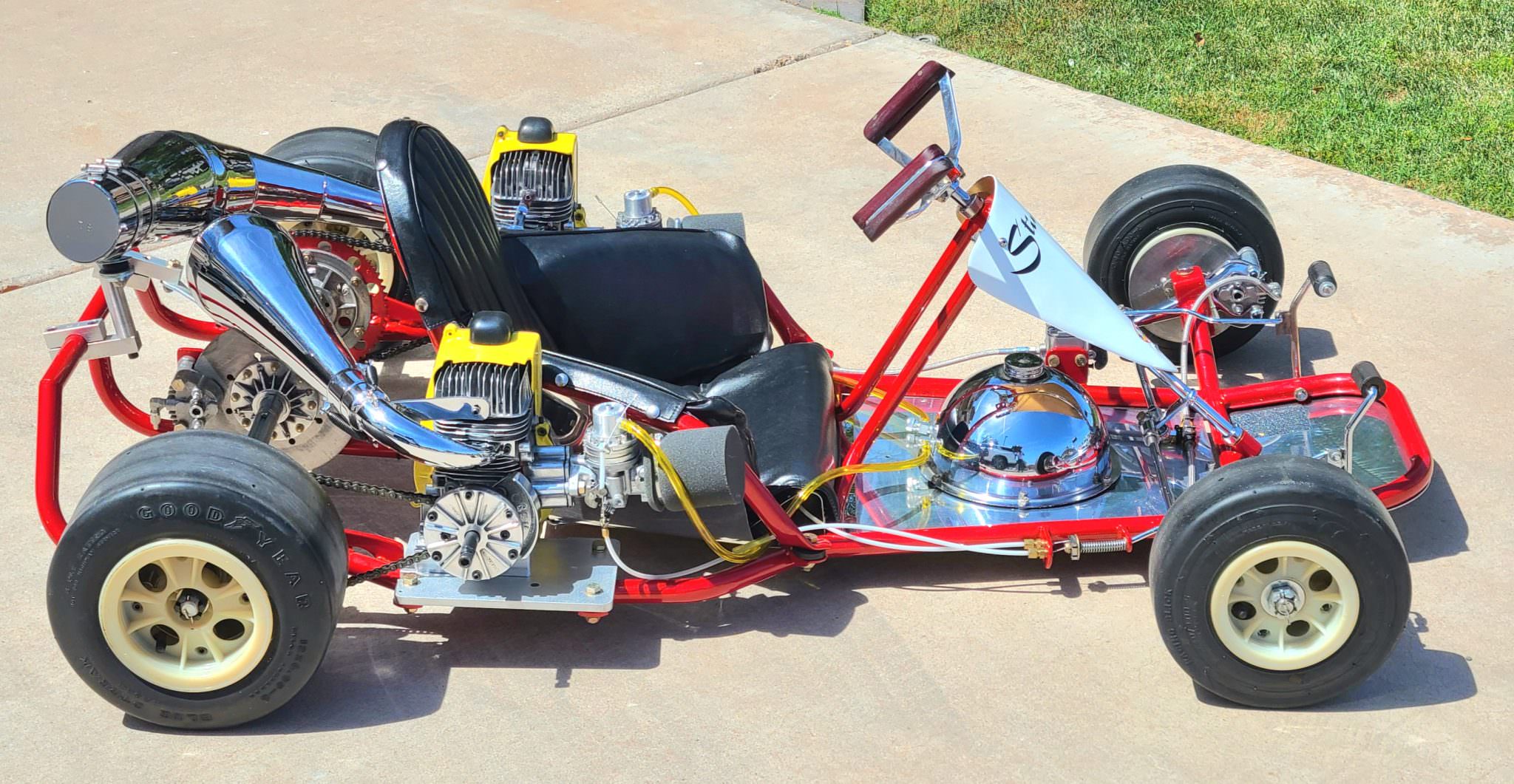
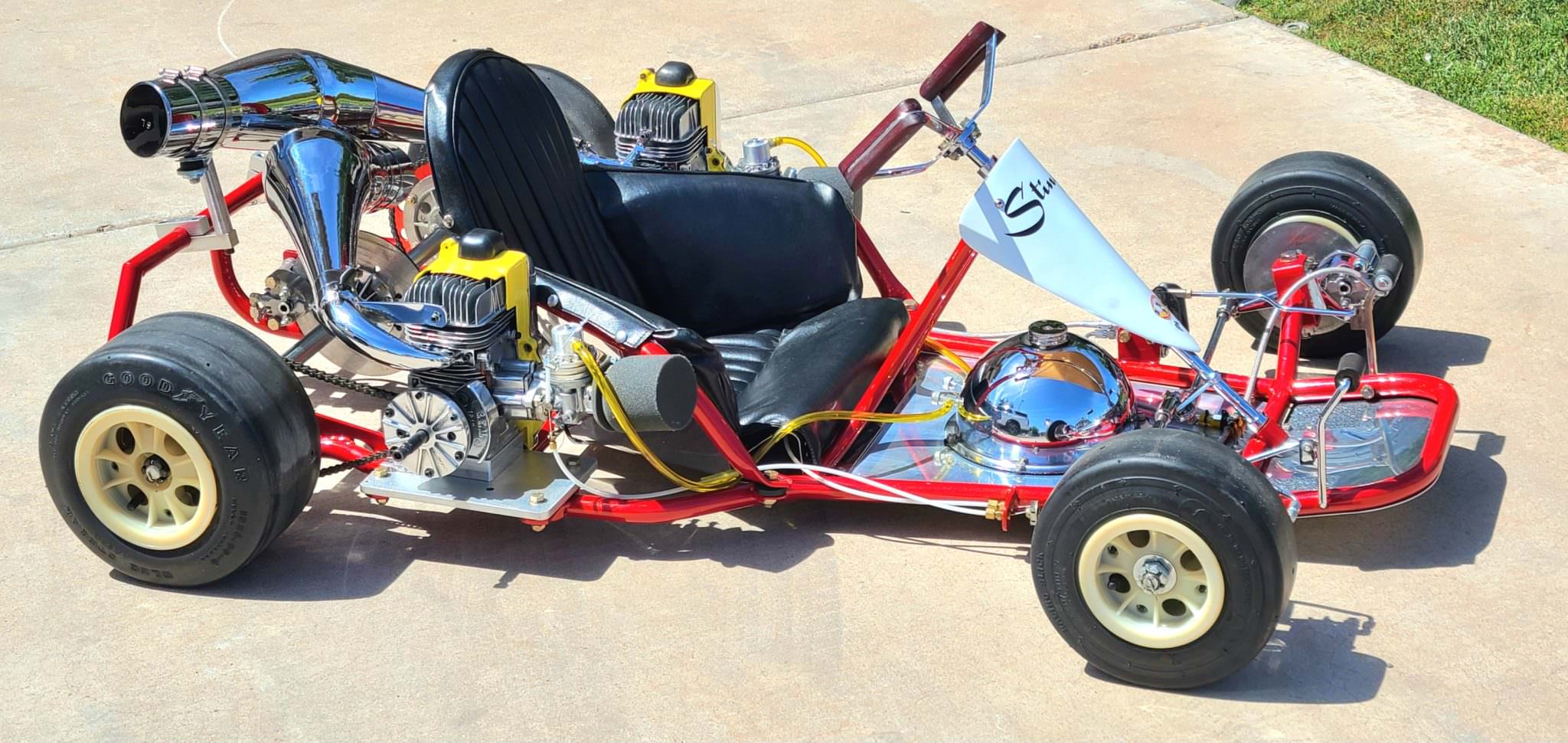
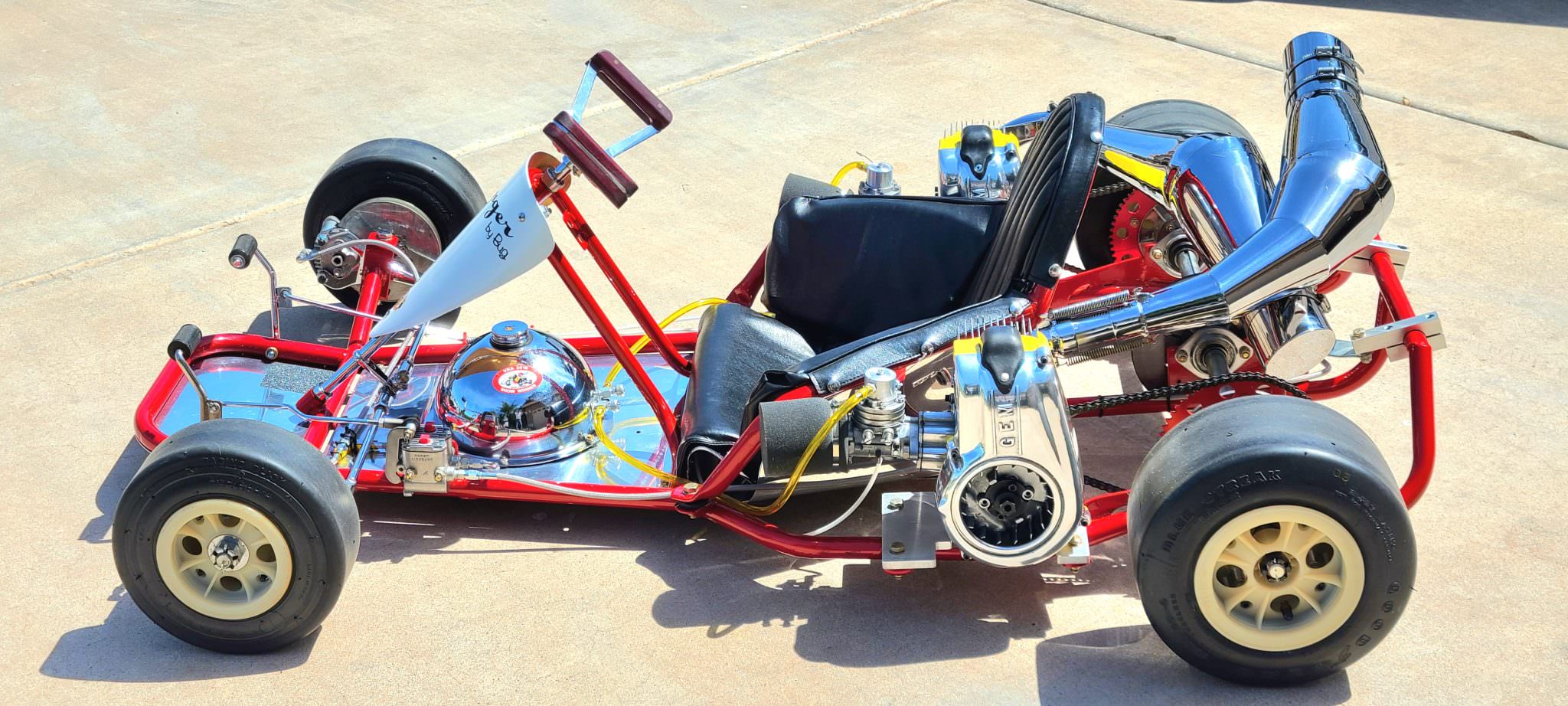
This is a twin-engined Bug Stinger go kart from 1970 that now benefits from a full restoration. It’s powered by twin McCulloch MC-91/B single-cylinder engines, offering a significant power boost and making it ideal for adult kart racers.
Bug Engineering was one of the most influential kart manufacturers from the early years of the sport, and original period-correct examples are now highly sought after in the growing vintage karting community in the US and around the world.
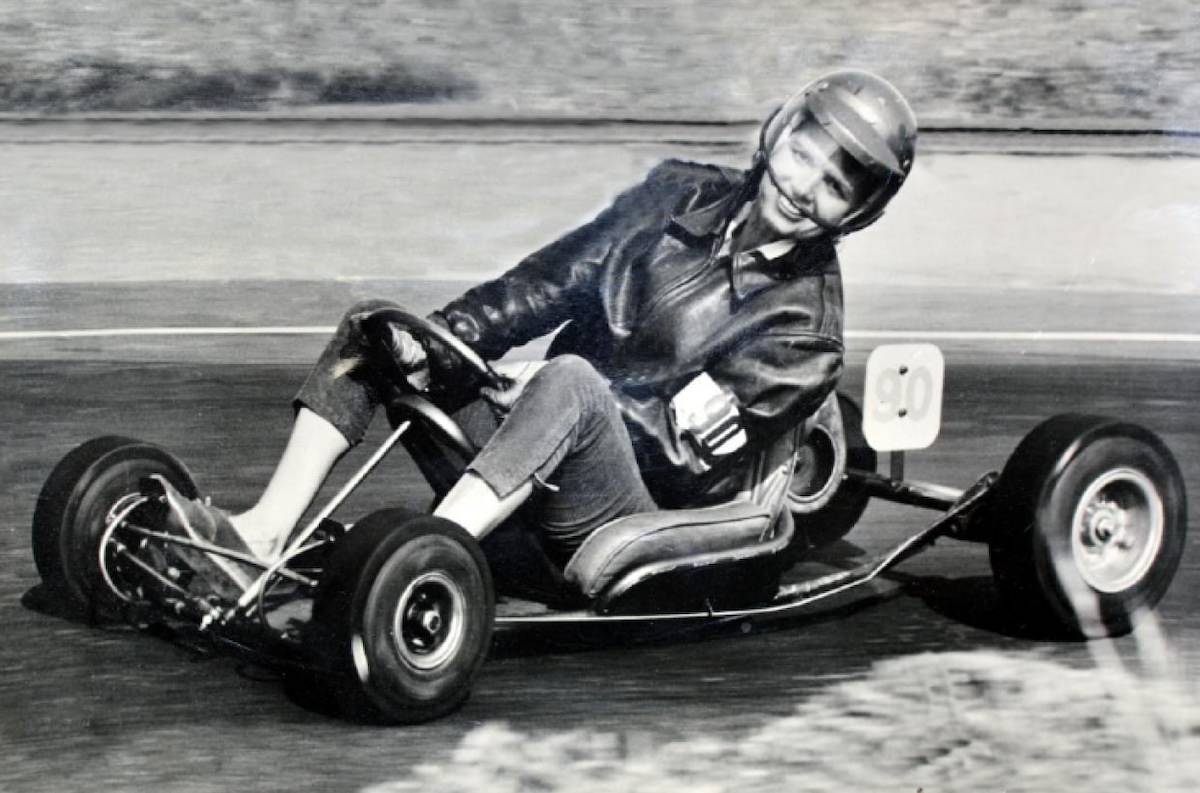
 Bug Engineering was founded in 1958 by Faye and Tom Pierson, along with family friend Dick Geer, in the Piersons’ garage in a Los Angeles suburb. The company name has long been attributed to a failed brainstorming session, according to a widely repeated story, Faye grew frustrated with the process, said it was “bugging” her, and the name stuck. Image courtesy of Bug Engineering.
History Speedrun: Bug Engineering
The story of Bug Engineering began almost 70 years ago on Christmas Day in 1957, when Faye and Tom Pierson helped a neighbor assemble a go kart that had been given to the family’s son. Taking turns driving the little machine, the Piersons were instantly hooked – and within just a few months, they had teamed up with family friend Dick Geer to begin building karts in a semi-professional capacity from their garage in Los Angeles. By 1958, demand had grown enough that the operation needed a real factory, and the newly formed Bug Engineering relocated to a facility on Irwindale Avenue in Azusa, California.
The “Bug” name is said to have come about almost by accident, after working through a long list of potential company names with nothing seeming to fit, Faye remarked in frustration that the whole exercise was “bugging” her – and the name instantly stuck.
In early 1960, Bug introduced the model that would define the brand for a generation – the Bug Wasp. Standard features on the $189 Wasp included a hydraulic rear disc brake, a Clinton A400 engine, and a two-spoke steering wheel, with optional engines including the Clinton A-490 and McCulloch MC-5 and MC-10 singles or duals.
Do-it-yourselfers could buy a bare Wasp frame for $60 and build up a kart to their own specs. The Wasp arrived at a truly pivotal moment in karting history, just as the sport was transitioning from crude backyard contraptions into legitimate purpose-built racing machines, and it helped establish the template for what a proper racing kart should look like.
By one 1960, Bug Engineering was producing as many as 320 complete karts per day, and the company would eventually relocate to a purpose-built facility at 950 West Foothill Boulevard in Azusa. In the mid-1960s, Bug introduced the rear-engine Sprint chassis, which would remain in the lineup in various forms for decades and eventually be reproduced as a replica in the company’s later years for the vintage karting community.
In 1970, Bug introduced the model that arguably became its most celebrated – the Stinger sidewinder. With its side-mounted engine layout (or twin engines, in some cases), the Stinger proved an instant success on track and received incremental yearly improvements throughout the decade. It was eventually superseded by a new generation of the Wasp and later chassis, though the Stinger name retained enough cachet that K&P would later produce replica copies of it alongside the Sprint to meet demand from vintage karting enthusiasts.
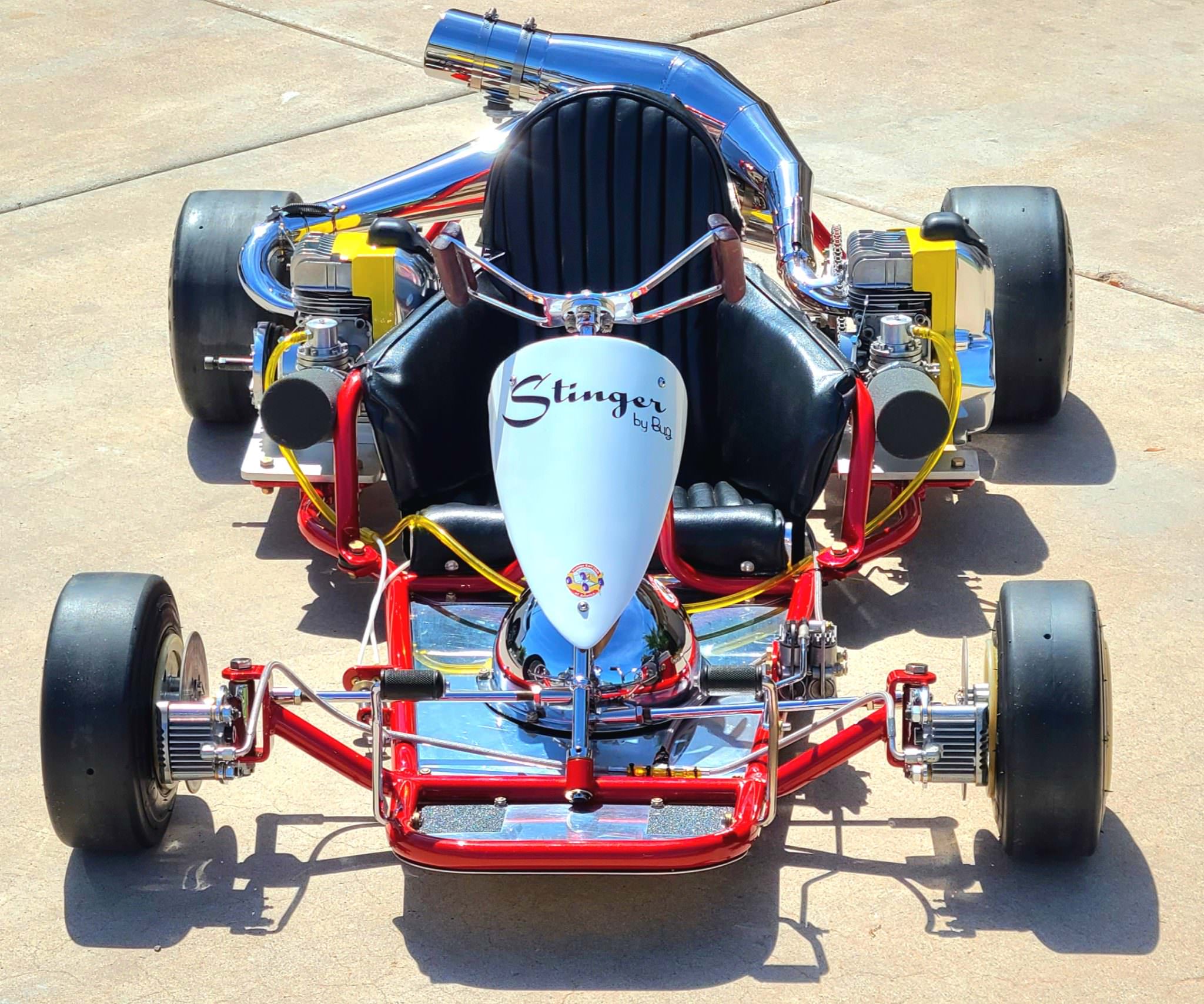
This is a twin-engined Bug Stinger go kart from 1970 that now benefits from a full restoration. It’s powered by twin McCulloch MC-91/B single-cylinder engines, offering a significant power boost and making it ideal for adult kart racers.
The company was eventually renamed K&P (Karts & Parts) Manufacturing, and Bug chassis remained competitive in kart racing well into the 1990s, winning numerous national and international championships in the hands of many of karting’s biggest names.
Beyond manufacturing its own karts, K&P also represented Birel in the United States and, beginning in 1978, acted as a distributor for Bridgestone kart tires for decades. In the company’s later years, the main business shifted toward tire sales, parts fabrication for vintage Bug enthusiasts, and the production of replica Sprint and Stinger chassis.
Faye Pierson was inducted into the World Karting Association Hall of Fame in 1989 and remained active in vintage karting events well into her later years. Tom Pierson passed away on October the 26th, 2000, leaving Faye to run the company with sons Tommy and Jon. K&P Manufacturing closed its doors in 2014, earning the distinction of being the world’s oldest kart manufacturer at the time, and Faye preserved part of the old facility as a private museum dedicated to the company’s history.
The 1970 Bug Stinger Go-Kart Shown Here
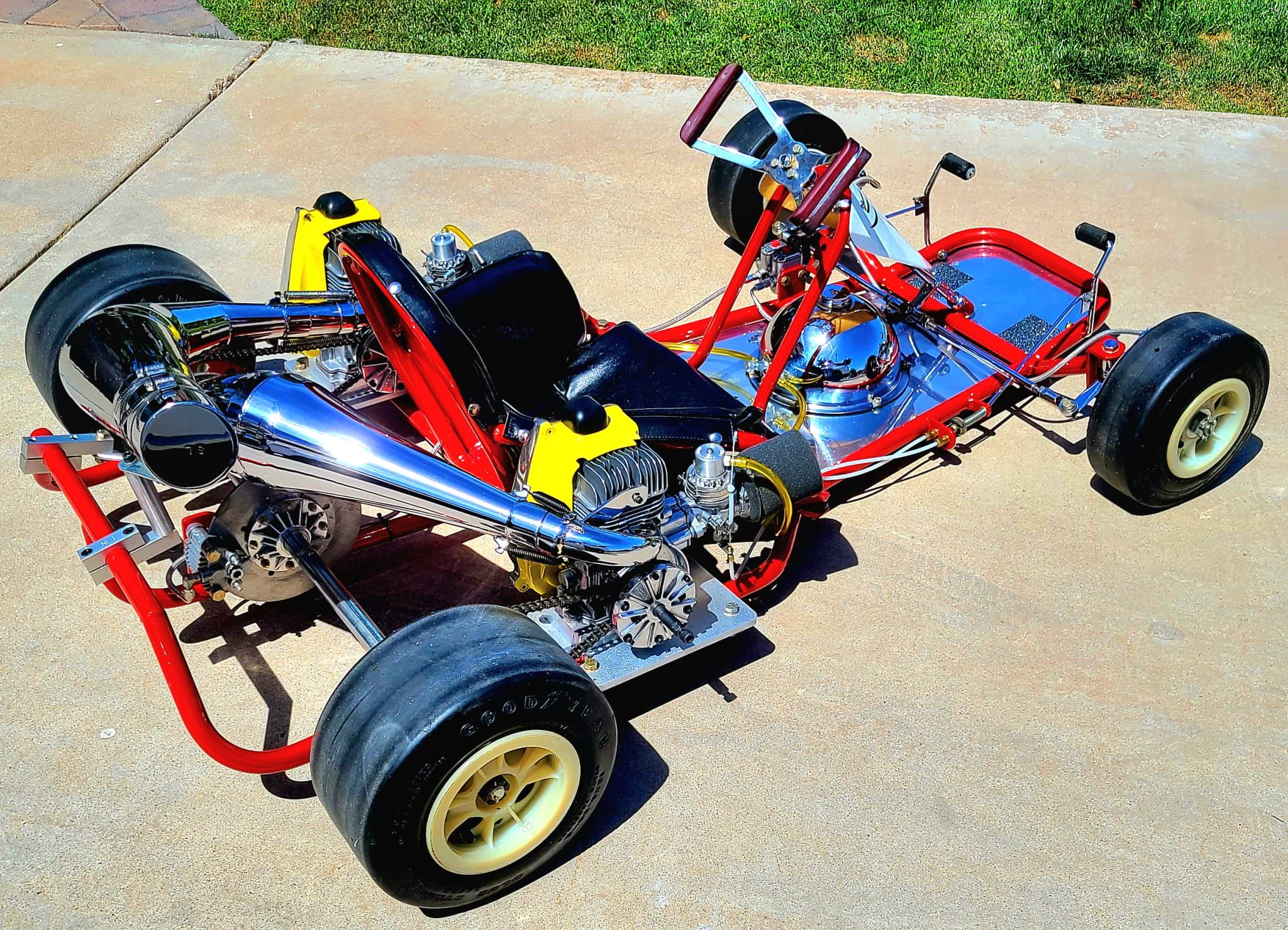
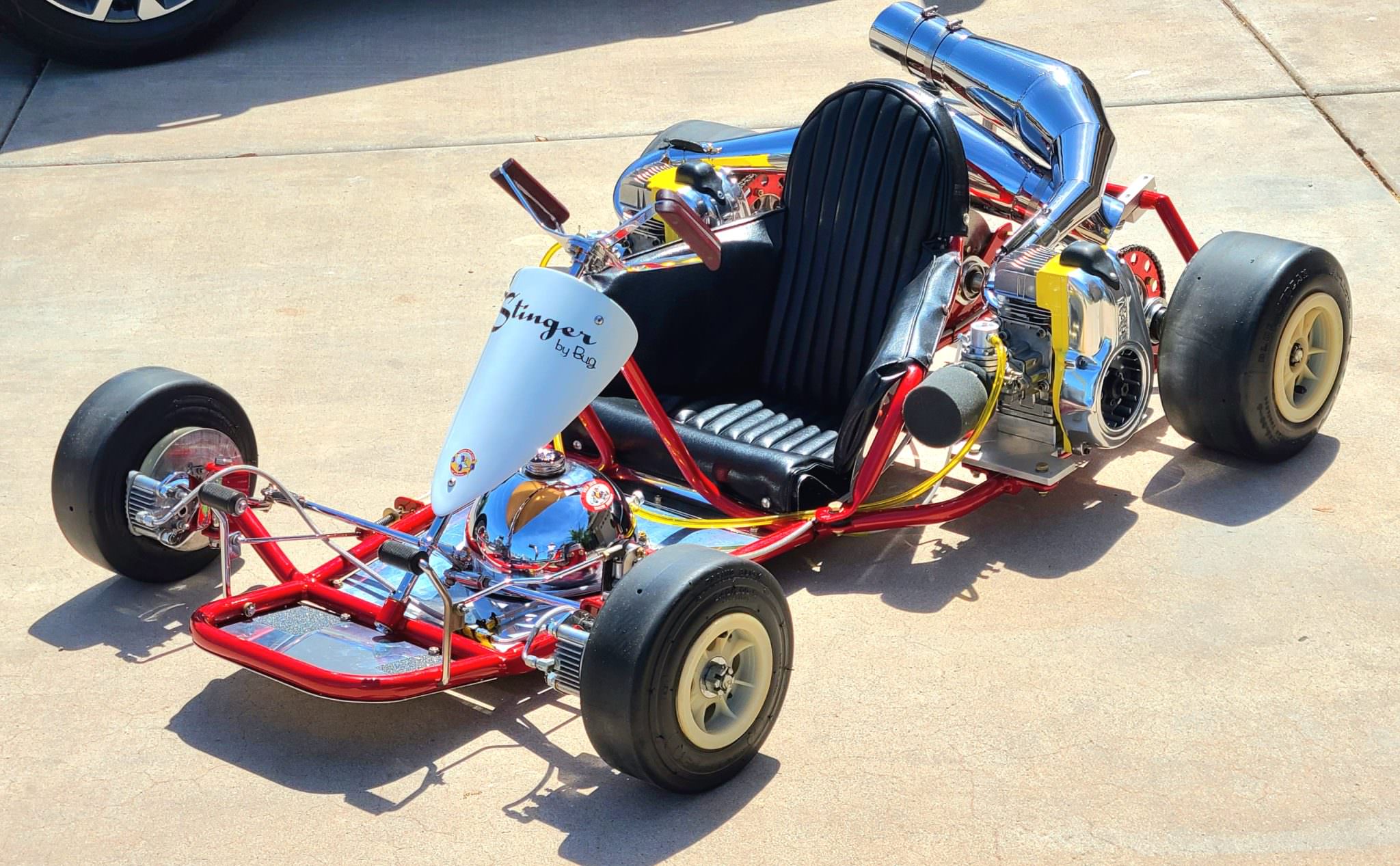
This 1970 Bug Stinger go-kart was bought by the current seller in 2023 and has since been refurbished, with the powder-coated tubular steel frame refinished in Bug Racing Red.
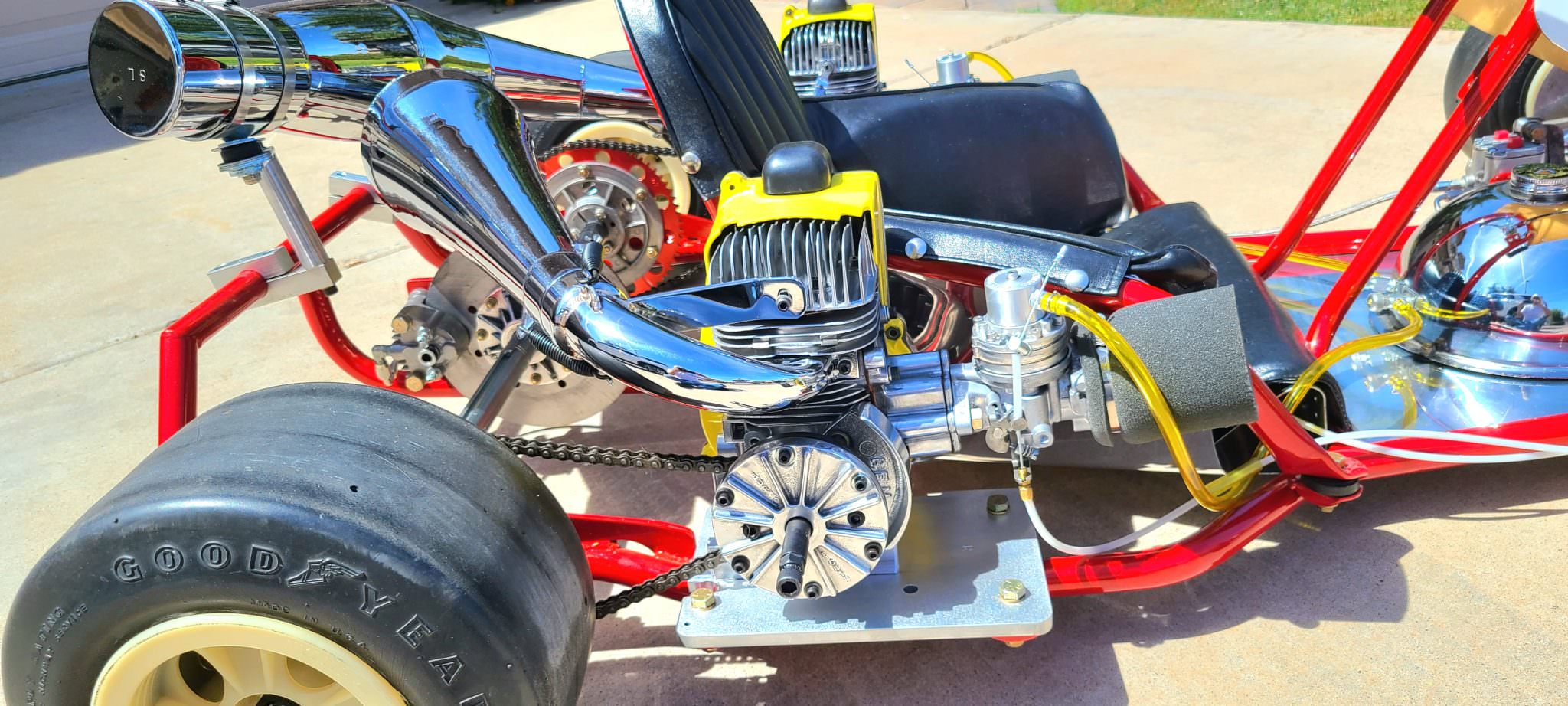
Power is provided by a pair of McCulloch MC91-B1 two-stroke singles that were rebuilt by Pop Mossholder and Bill Pryor. The engines are mounted on aluminum plates and breathe through Competition Carburetors with air filters, while spent gases exit via chrome-polished Mayko SL exhausts.
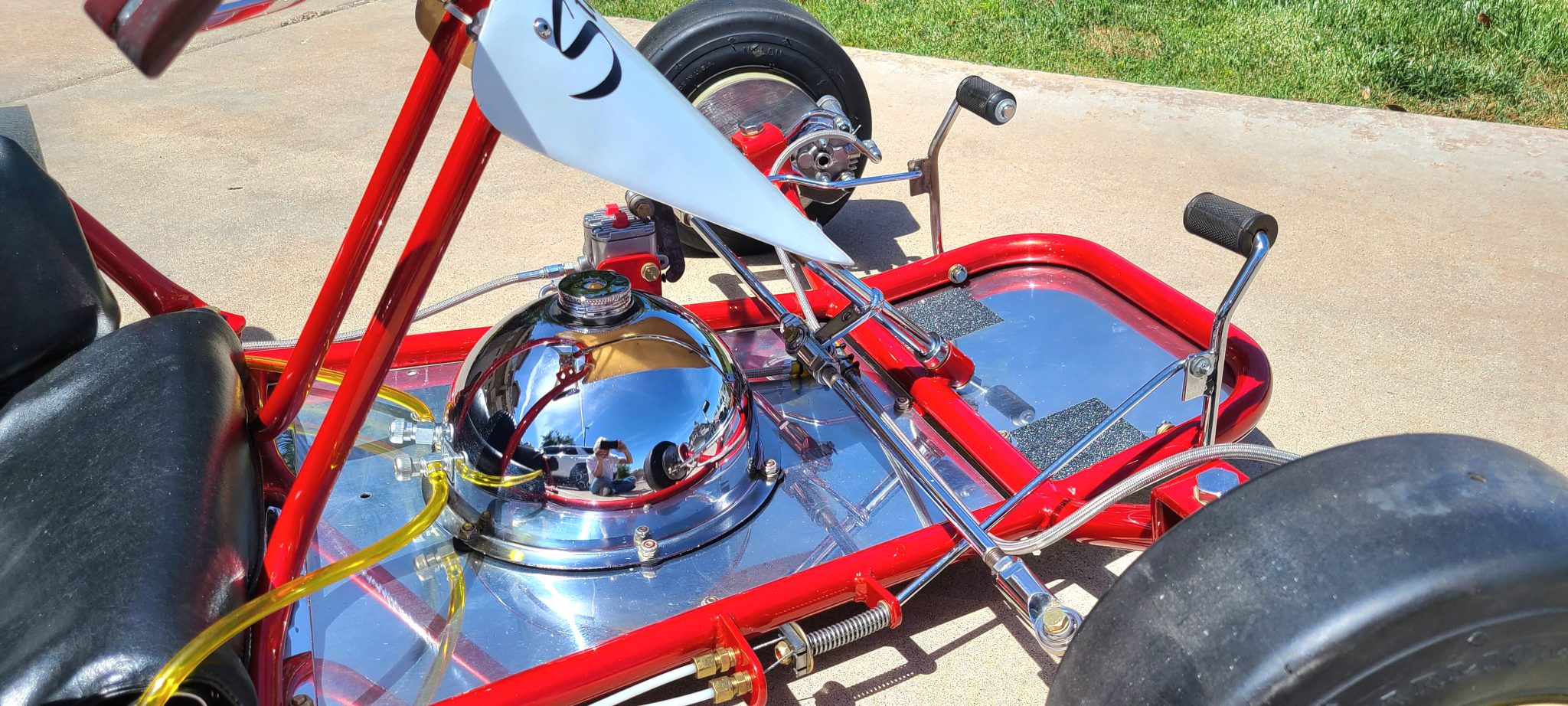
Power is sent to the rear wheels through replacement Burco centrifugal clutches and drive chains, and GEM chain guards and fan shrouds are also fitted. Stopping power is provided by Hurst Airheart front and rear disc brakes, plumbed through dual master cylinders and stainless steel braided lines.
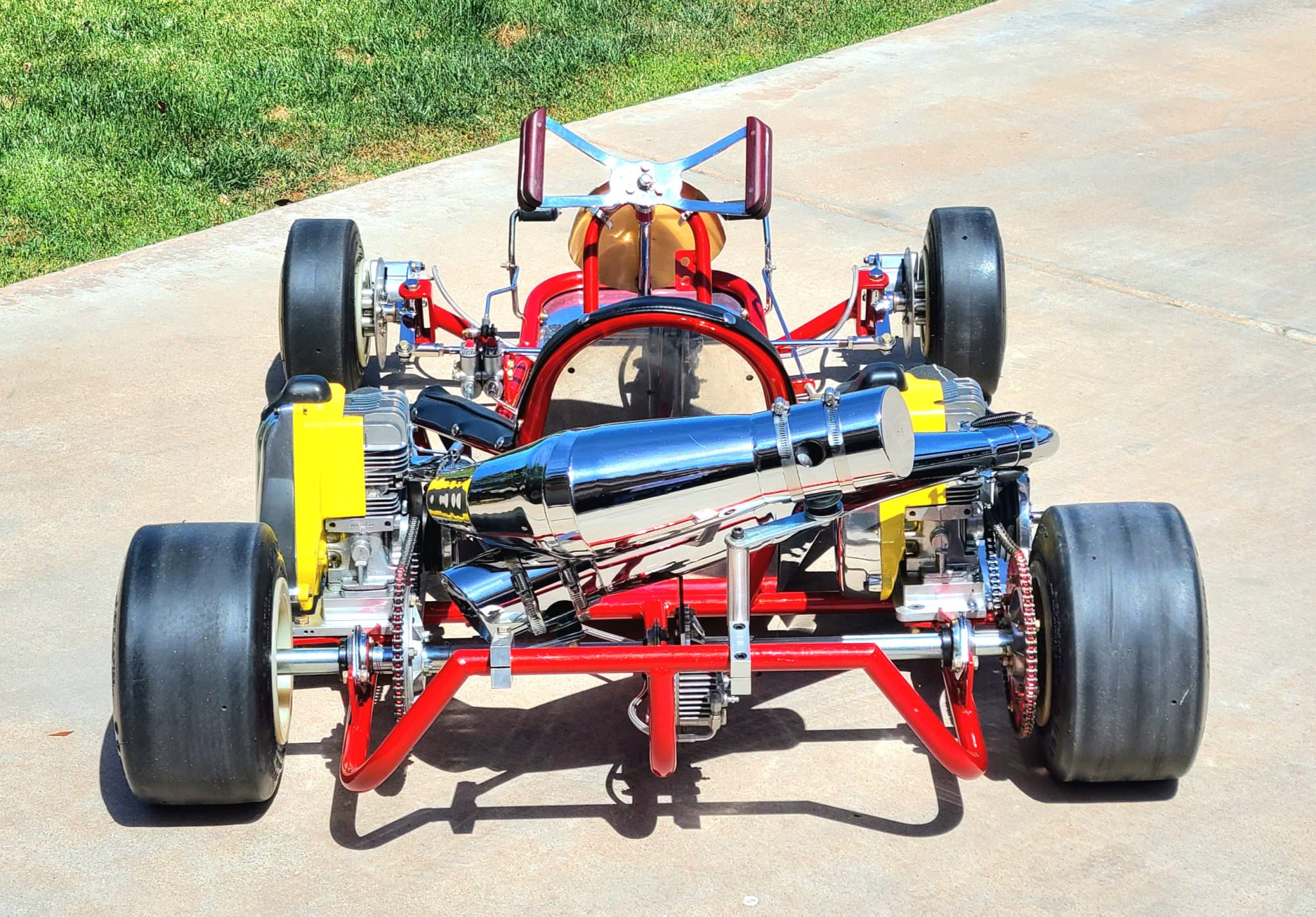
This 1970 Bug Stinger go-kart was bought by the current seller in 2023 and has since been refurbished, with the powder-coated tubular steel frame refinished in Bug Racing Red.
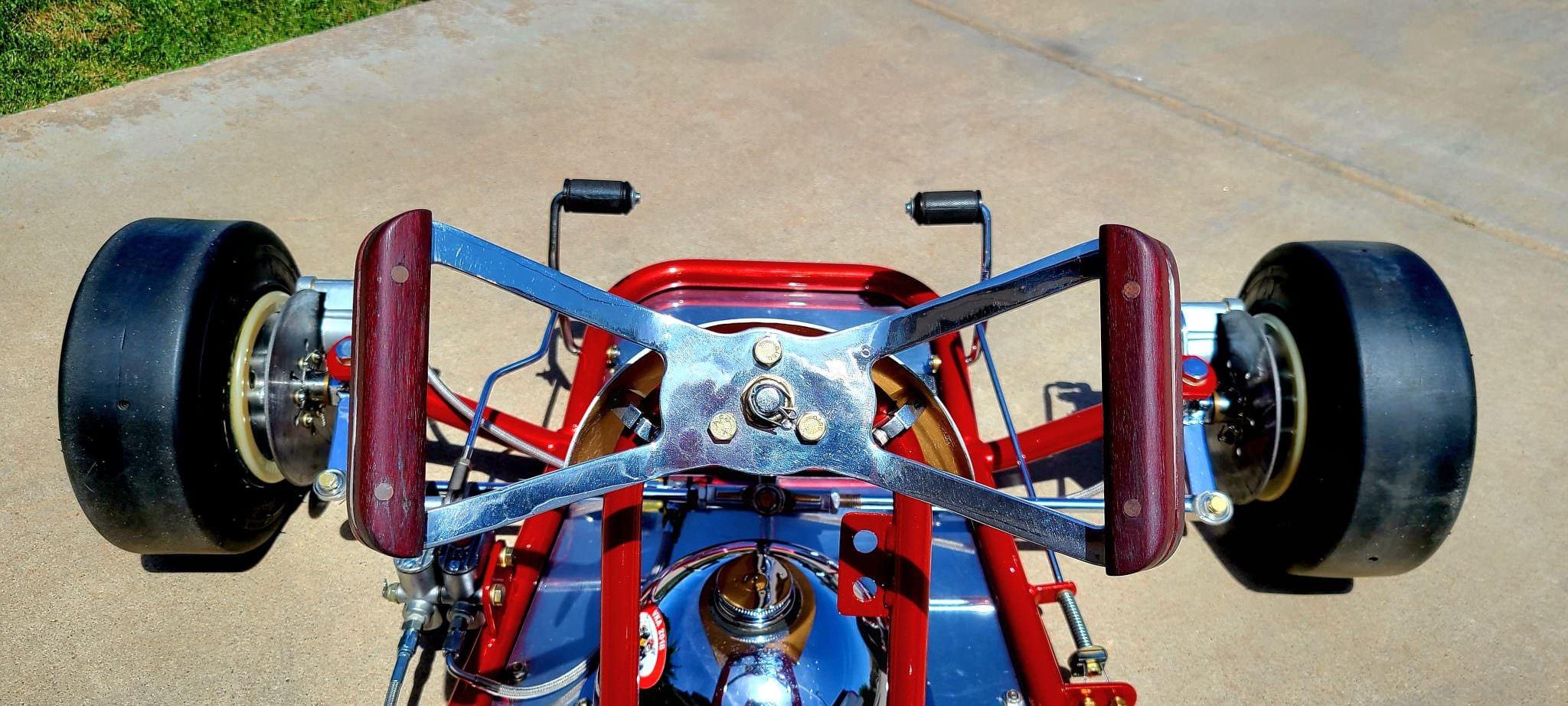
The kart rolls on Nylite wheels measuring 5 inches up front and 6 inches at the rear, shod in 3.40/3.00-5 Carlisle Vintage Speed tires and Goodyear Blue Streak 12×6.00-6 bias-ply rubber, respectively. The kart has a white Nassau panel with a “Stinger by Bug” decal, a polished aluminum floor pan with under-heel grip pads, a moon-style polished aluminum fuel tank, chrome steering components and trim, and a steering yoke with wood grips.
It’s now being offered for sale out of Gilbert, Arizona on a bill of sale. If you’d like to read more about it or register to bid you can visit the listing here.
Images courtesy of Bring a Trailer

Articles that Ben Branch has written have been covered on CNN, Popular Mechanics, Smithsonian Magazine, Road & Track Magazine, the official Pinterest blog, the official eBay Motors blog, BuzzFeed, Autoweek Magazine, Wired Magazine, Autoblog, Gear Patrol, Jalopnik, The Verge, and many more.
Silodrome was founded by Ben back in 2010, in the years since the site has grown to become a world leader in the alternative and vintage motoring sector, with well over a million monthly readers from around the world and many hundreds of thousands of followers on social media.