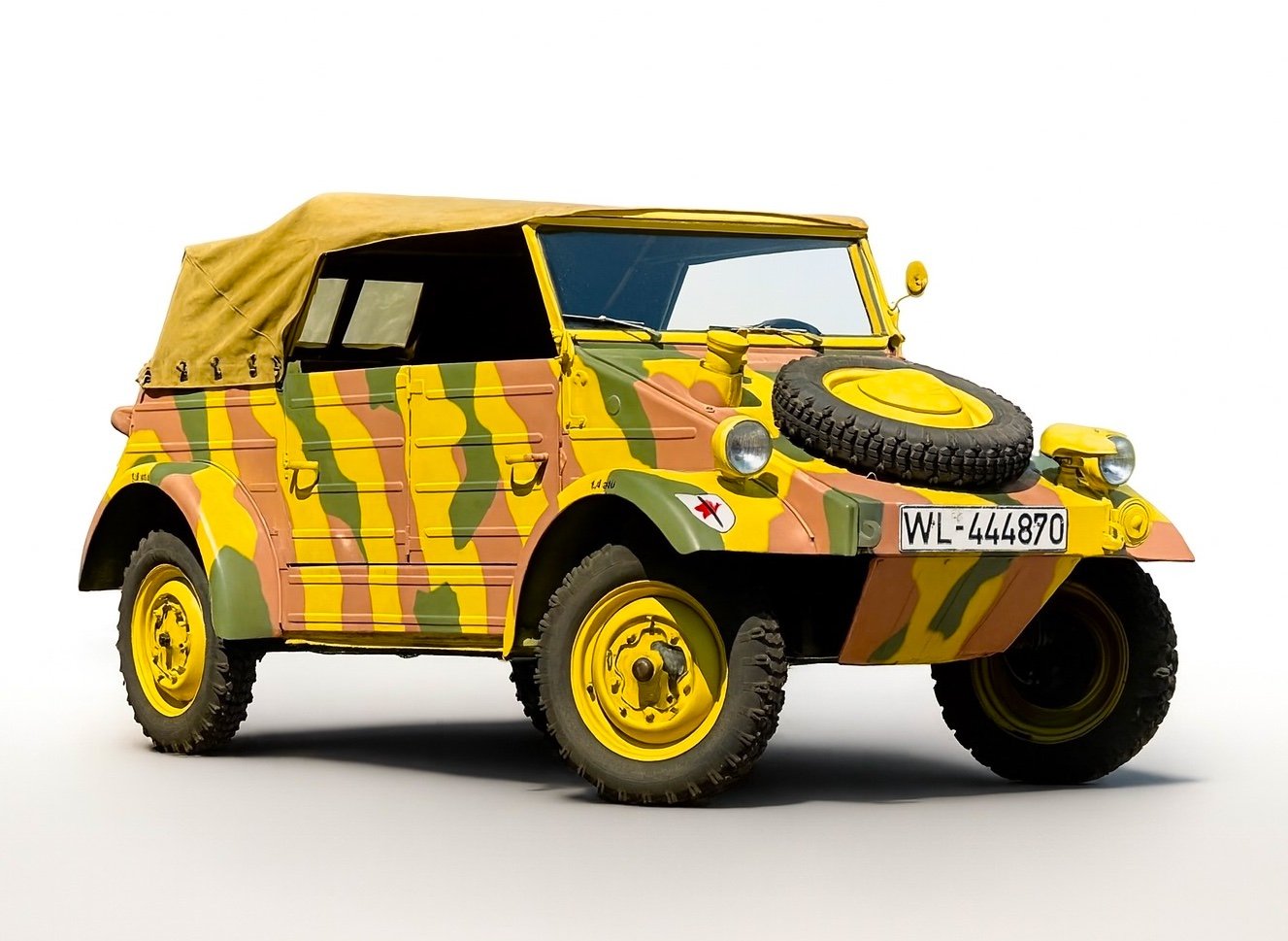
It’s not everyday you find a WWII-era Volkswagen Kübelwagen on eBay in the USA, registered and road legal, ready for its new owner.
The Kübelwagen was designed by Ferdinand Porsche as a German answer to the Willys Jeep, it was closely based on Volkswagen Beetle underpinnings, and it was used extensively during the war by both the Wehrmacht and Waffen-SS.
Fast Facts: The Volkswagen Kübelwagen
- The WWII-era Volkswagen Kübelwagen was Ferdinand Porsche’s answer to the Willys Jeep, developed from the earlier KdF-Wagen. Light weight, rear-engined, and air-cooled simplicity defined the design. It relied on engineering efficiency rather than four-wheel drive to achieve surprisingly good off-road capability in military service.
- Development began in 1938 with the Type 62 prototype, evolving into the Type 82 after testing exposed weaknesses in a standard car chassis. Engineers reinforced the floorpan, added a flat underside, and used reduction gears at the rear hubs to improve ground clearance and low-speed traction.
- Powered by an air-cooled flat-four producing 23 to 25 bhp, the Kübelwagen weighed 1,300 lbs and reached roughly 50 mph. Production started in 1940, with around 50,000 built. Its reliability proved valuable in extreme climates where liquid-cooled vehicles often failed.
- Variants included the Type 82E officer car, the rare Type 86 all-wheel-drive version, and the amphibious Type 166 Schwimmwagen. After 1945, production ended as Volkswagen shifted to civilian Beetles, though surplus vehicles saw postwar use and later influenced the Volkswagen Type 181 Thing.
History Speedrun: The Volkswagen Kübelwagen
Ferdinand Porsche was contracted in 1938 to adapt his Volkswagen “KdF-Wagen” into a light military vehicle, the result was the Type 62 prototype, soon refined into the Type 82 Kübelwagen. The name was shorthand for Kübelsitzwagen – “bucket seat car” – a term the German military had applied to open utility cars since the 1930s.
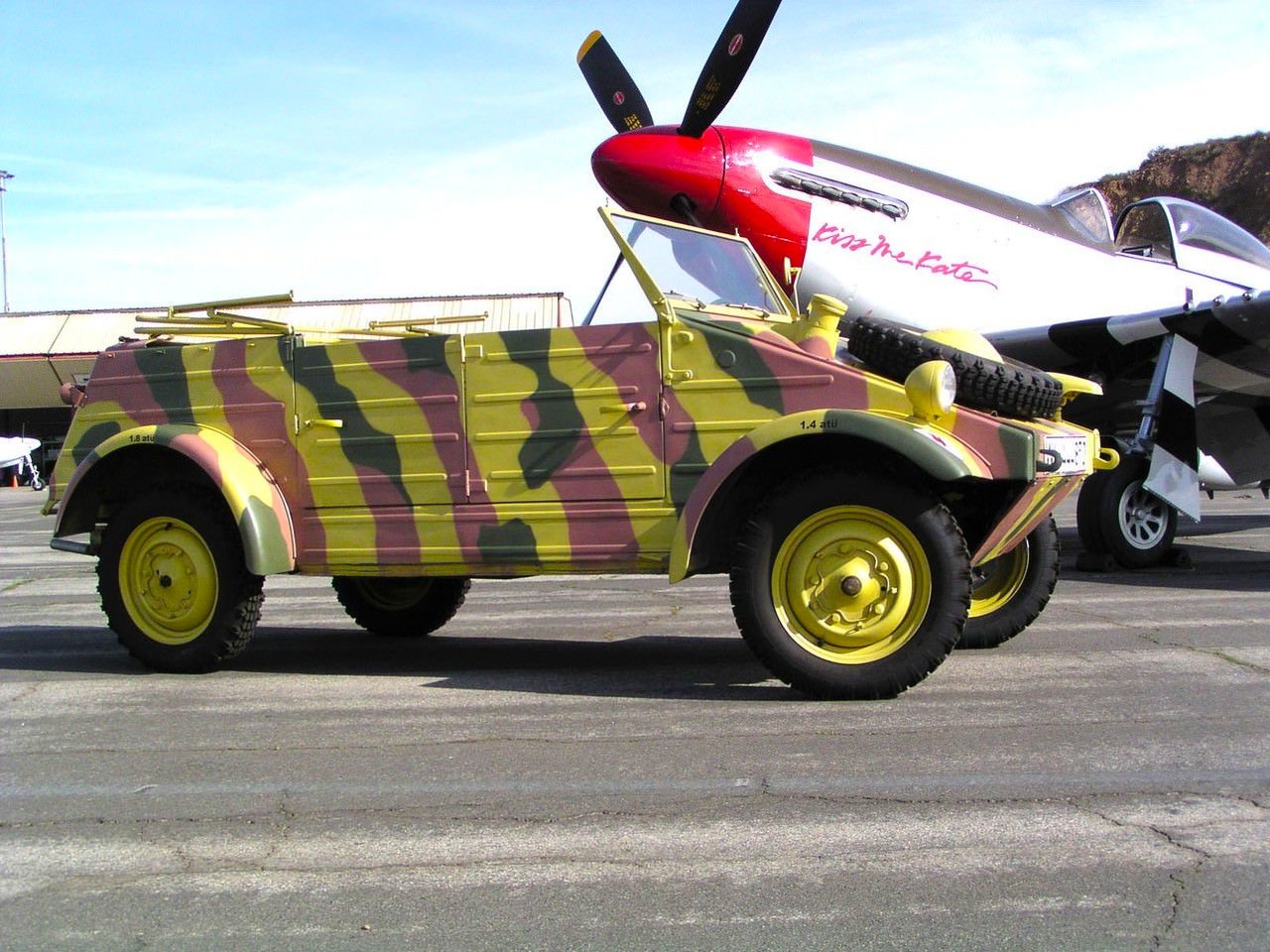
 Ferdinand Porsche was contracted in 1938 to adapt his Volkswagen “KdF-Wagen” into a light military vehicle, the result was the Type 62 prototype, soon refined into the Type 82 Kübelwagen.
What emerged from Porsche’s drawing table was a uniquely German counterpart to the American Willys Jeep – light, simple, and field-reliable, yet shaped by Volkswagen’s rear-engined, rear-wheel drive layout.
The earliest prototypes used modified Beetle chassis, but testing in 1939 revealed that a conventional car platform lacked the strength or off-road ability required by the Wehrmacht. Porsche’s team revised the design with a stiffer floorpan, a flat underbody for sliding across deep mud and sand, and portal-type reduction gears in the rear hubs for better ground clearance and to improve torque at the wheels.
The result of all this was the Type 82, powered by the Volkswagen air-cooled four-cylinder with a 985cc displacement producing 23 bhp. Though modest even by the standards of the time, the low weight (around 1,300 lbs) gave it surprisingly good ability in rough terrain.
Production began in 1940 at the Volkswagenwerk in Wolfsburg, and over the course of the war some 50,000 examples were built. Their air-cooled engines proved invaluable in the deserts of North Africa and on the Eastern Front, where liquid-cooled vehicles often froze or succumbed to their own increased complexity.
Though the basic the Type 82 remained relatively consistent, several variants appeared over time. The Type 82E combined the Beetle body with the Kübelwagen floorpan for more comfortable officer transport, and the all-wheel-drive Type 86 was tested but never mass-produced due to cost.
The most notable offshoot was the Type 166 Schwimmwagen, a fully amphibious version built in large numbers from 1942 onward. Command versions with radios, winter kits, and even ambulance adaptations were also deployed, though the vast majority remained simple troop and utility cars.
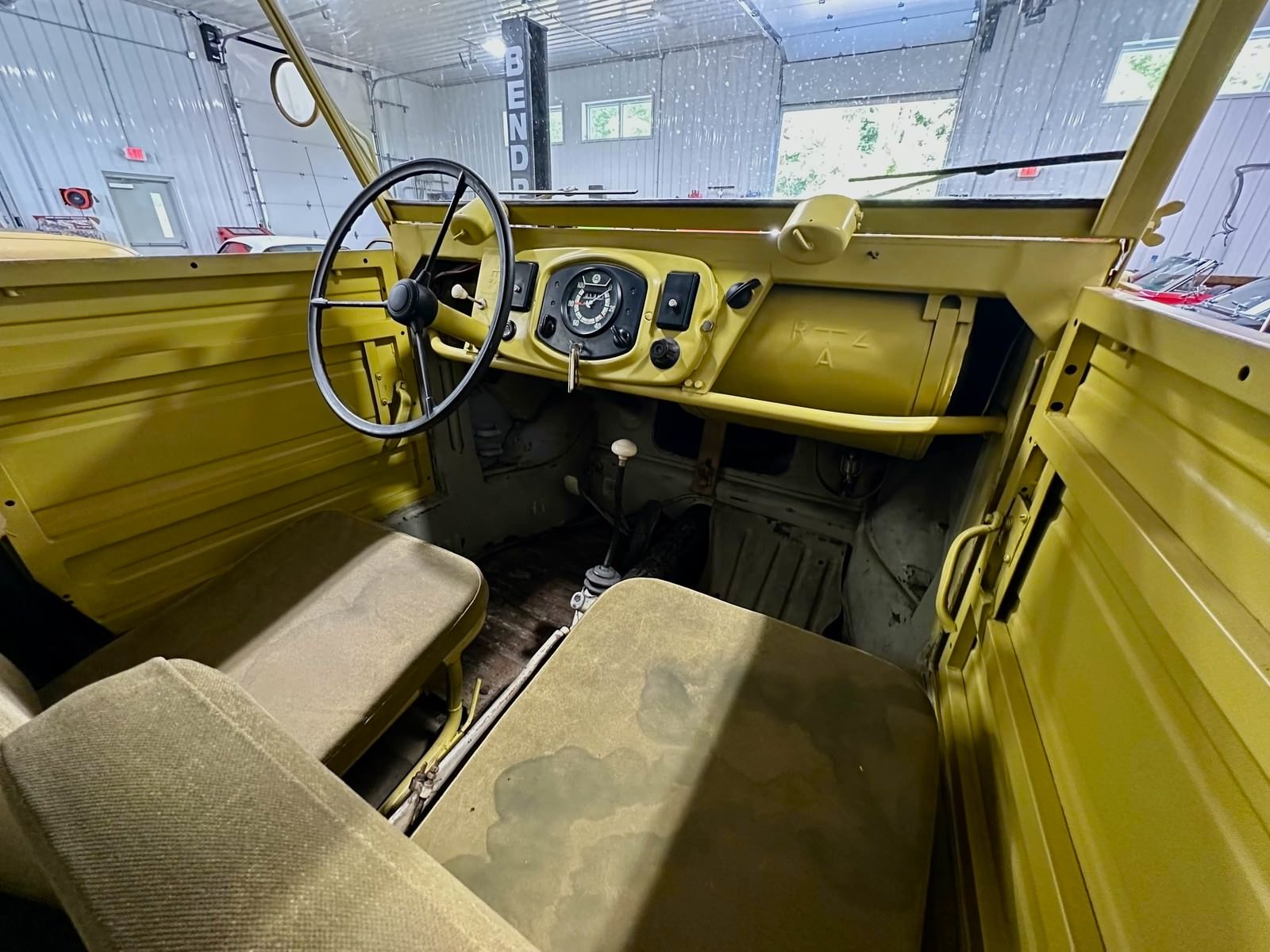
The Kübelwagen saw service on every German front, from France to Russia to North Africa. Its light weight let soldiers manhandle it out of mud or snow, and the flat panels and simple drivetrain made field repairs simple.
The Type 82 Kübelwagen had a 94.5 inch wheelbase with independent suspension at all four corners. Power came from Volkswagen’s flat-four, first in 985cc as mentioned higher up, this was later enlarged to 1,131 cc, producing between 23 and 25 bhp.
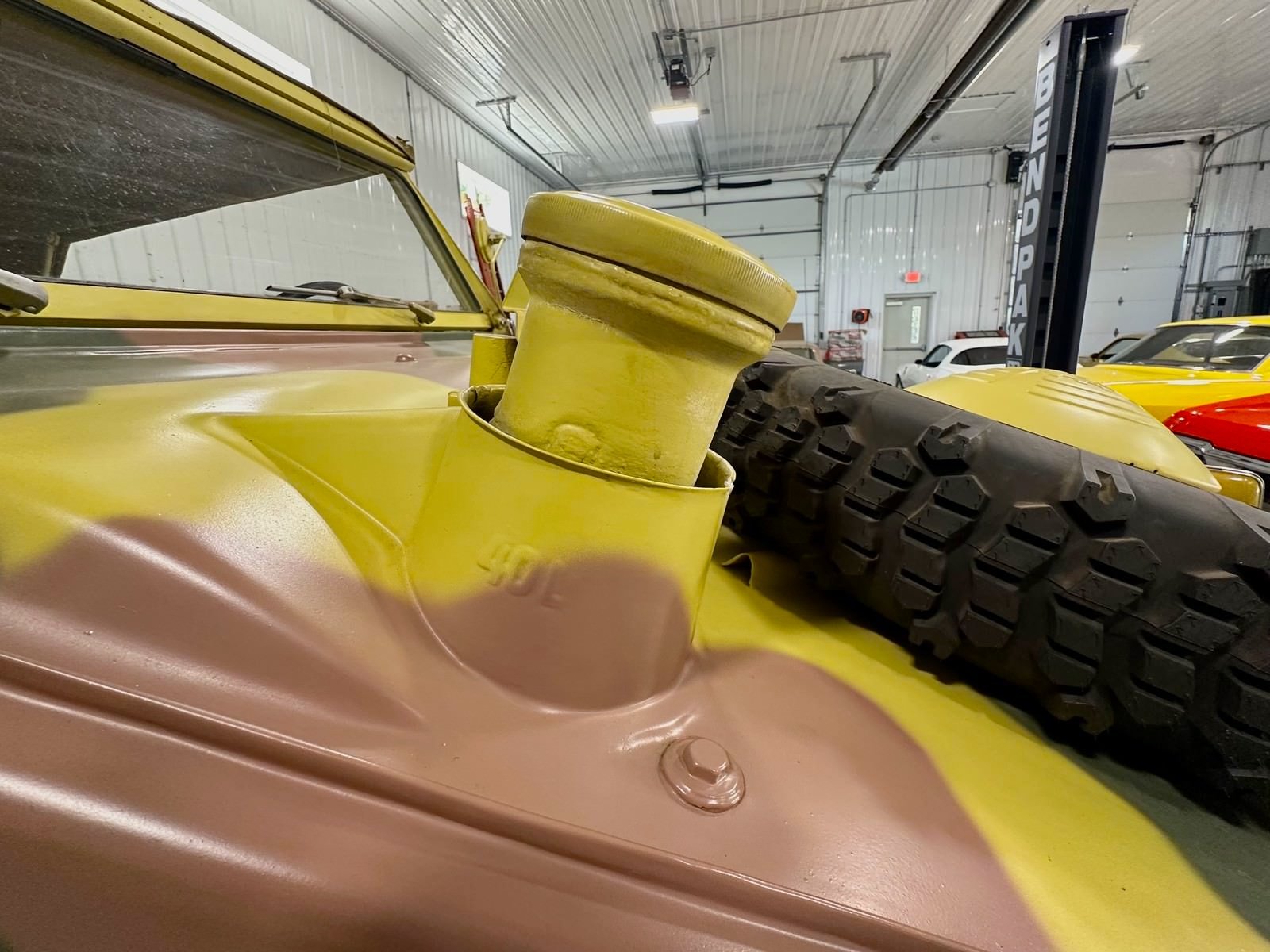
Power was sent through a 4-speed manual gearbox with optional low gearing. Unladen weight was around 1,300 lbs, and maximum speed was roughly 50 mph on road. Fuel consumption – 30 mpg in favorable conditions – was excellent compared to other military vehicles, giving the Kübelwagen long range from its 40 liter tank.
The Kübelwagen saw service on every German front, from France to Russia to North Africa. Its light weight let soldiers manhandle it out of mud or snow, and the flat panels and simple drivetrain made field repairs simple.
Allied intelligence noted its efficiency – captured examples were tested by the US Army and they were praised for their economy and effectiveness in varied terrain, even if they lacked the Jeep’s four-wheel drive.
By 1945, the Kübelwagen had become as closely associated with German forces as the Jeep was with the Allies. Photographs of Rommel’s Afrika Korps often show Kübelwagens in the background, and countless Wehrmacht formations relied on them as liaison, reconnaissance, and command cars.
After the war, production of the Kübelwagen ceased as Volkswagen transitioned into civilian Beetles under British supervision. Yet its influence lingered – surplus examples were used by Allied occupation forces and later filtered into civilian hands. In the 1960s Volkswagen revisited the concept with the Type 181 Thing a spiritual successor built on Beetle underpinnings and exported worldwide.
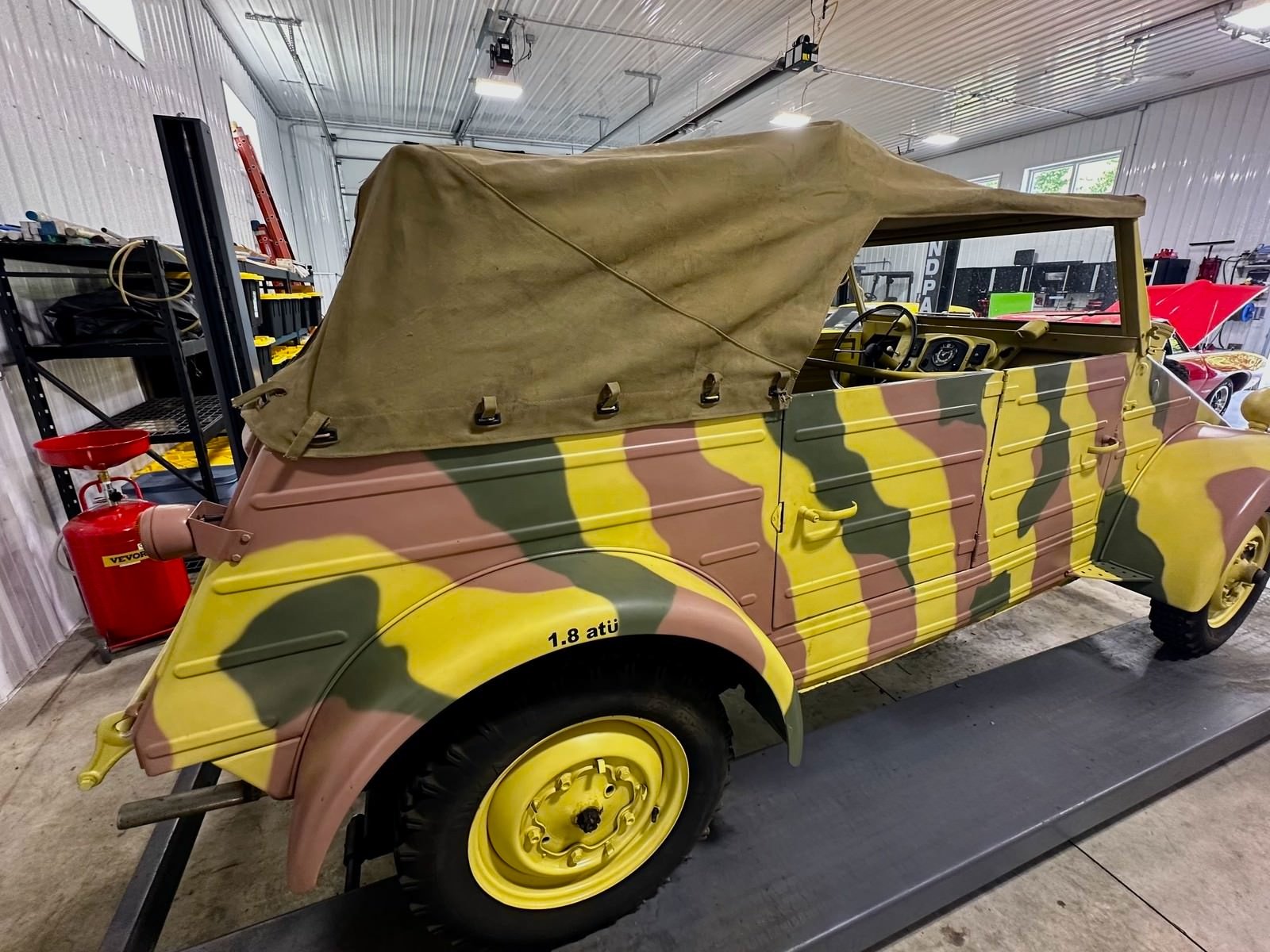
The 1943 Volkswagen Kübelwagen Shown Here
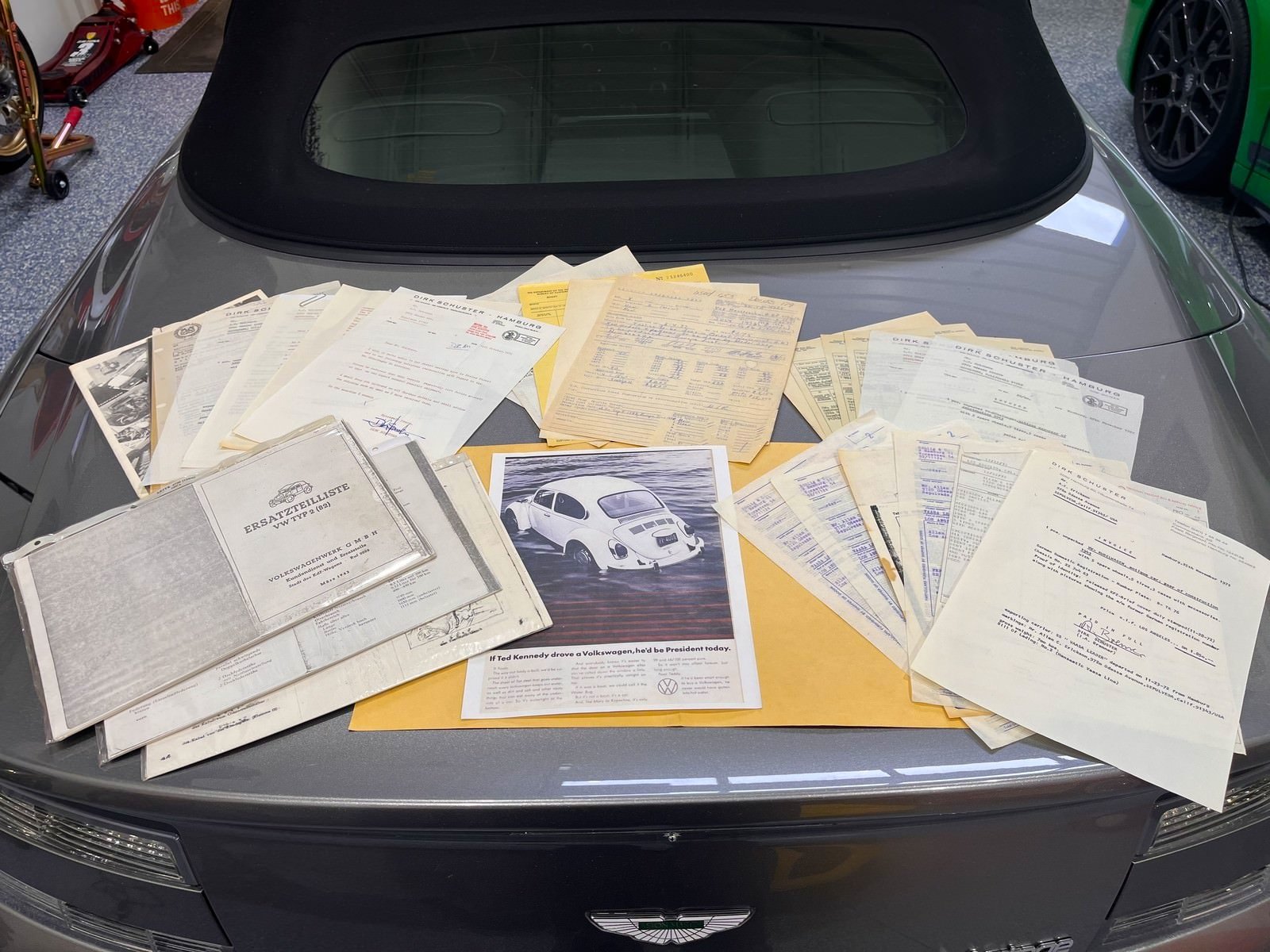
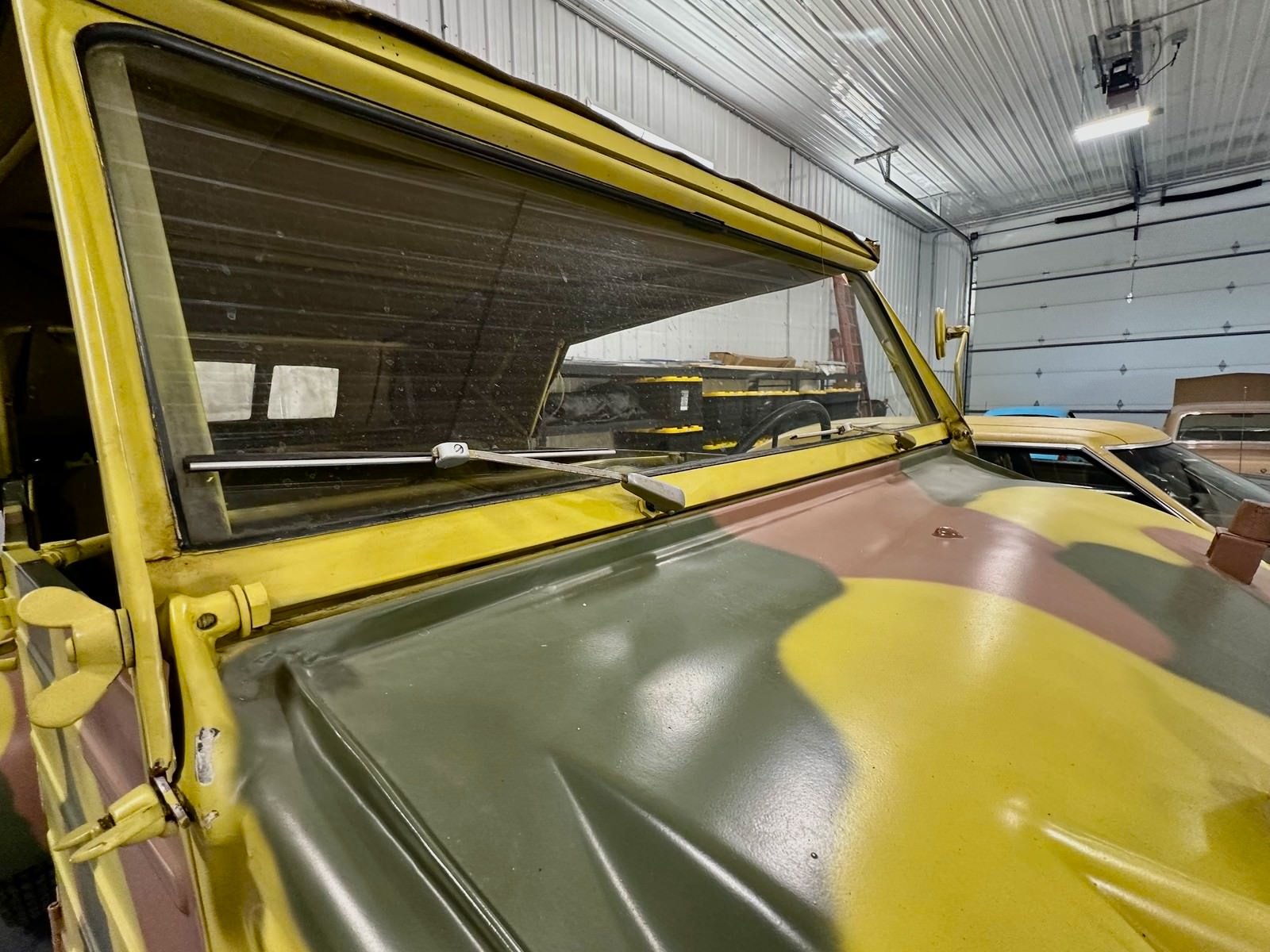
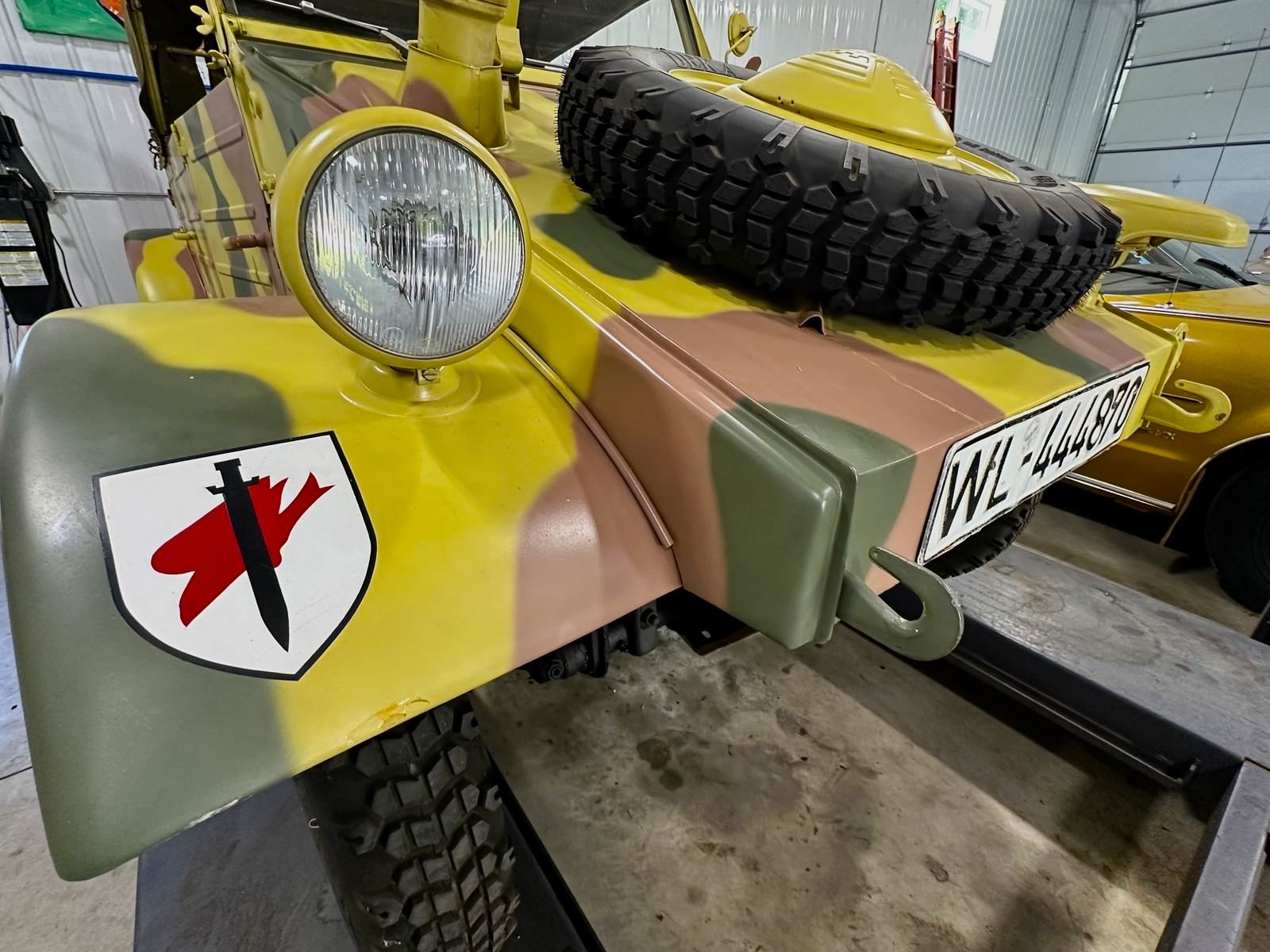
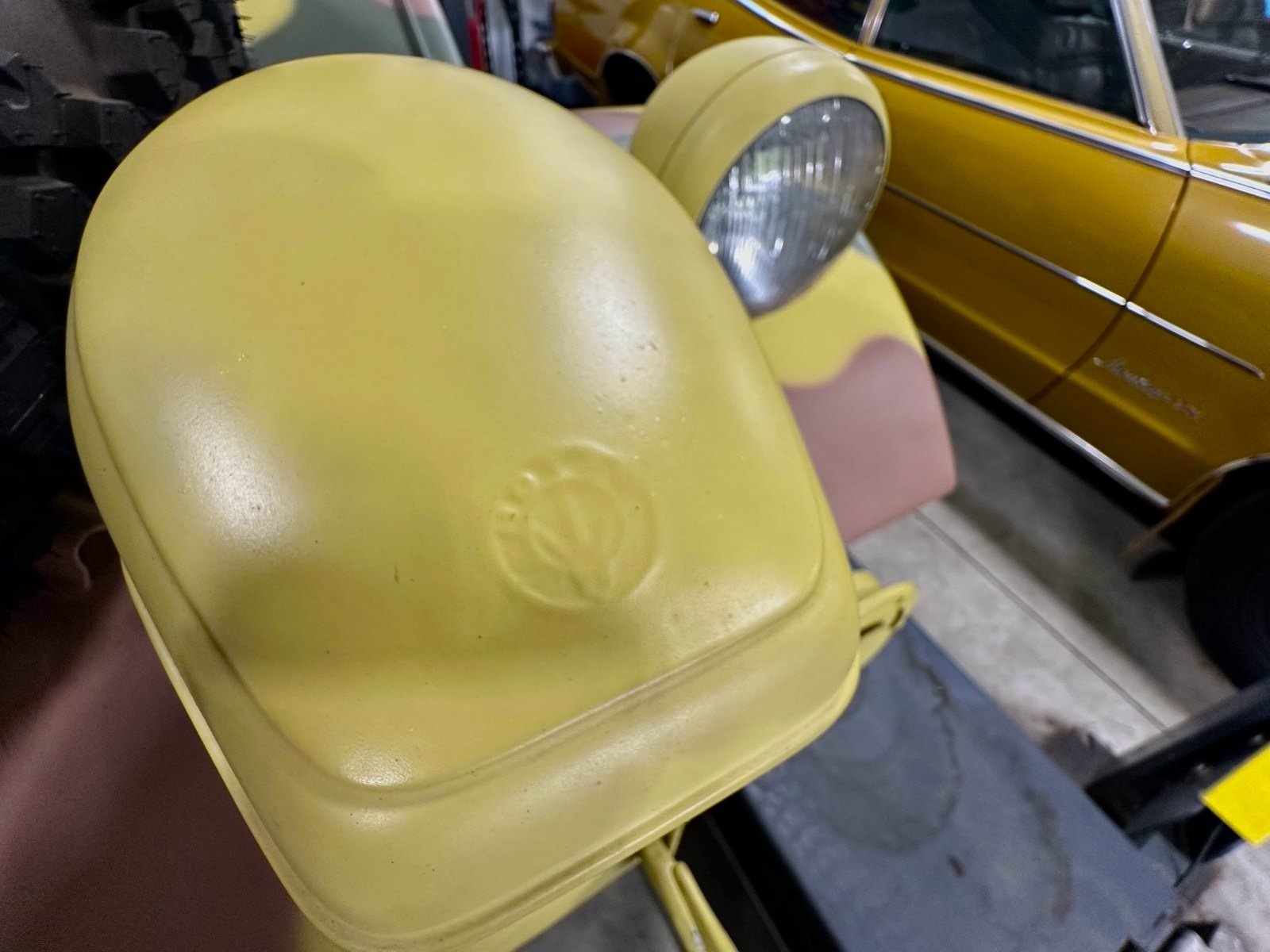
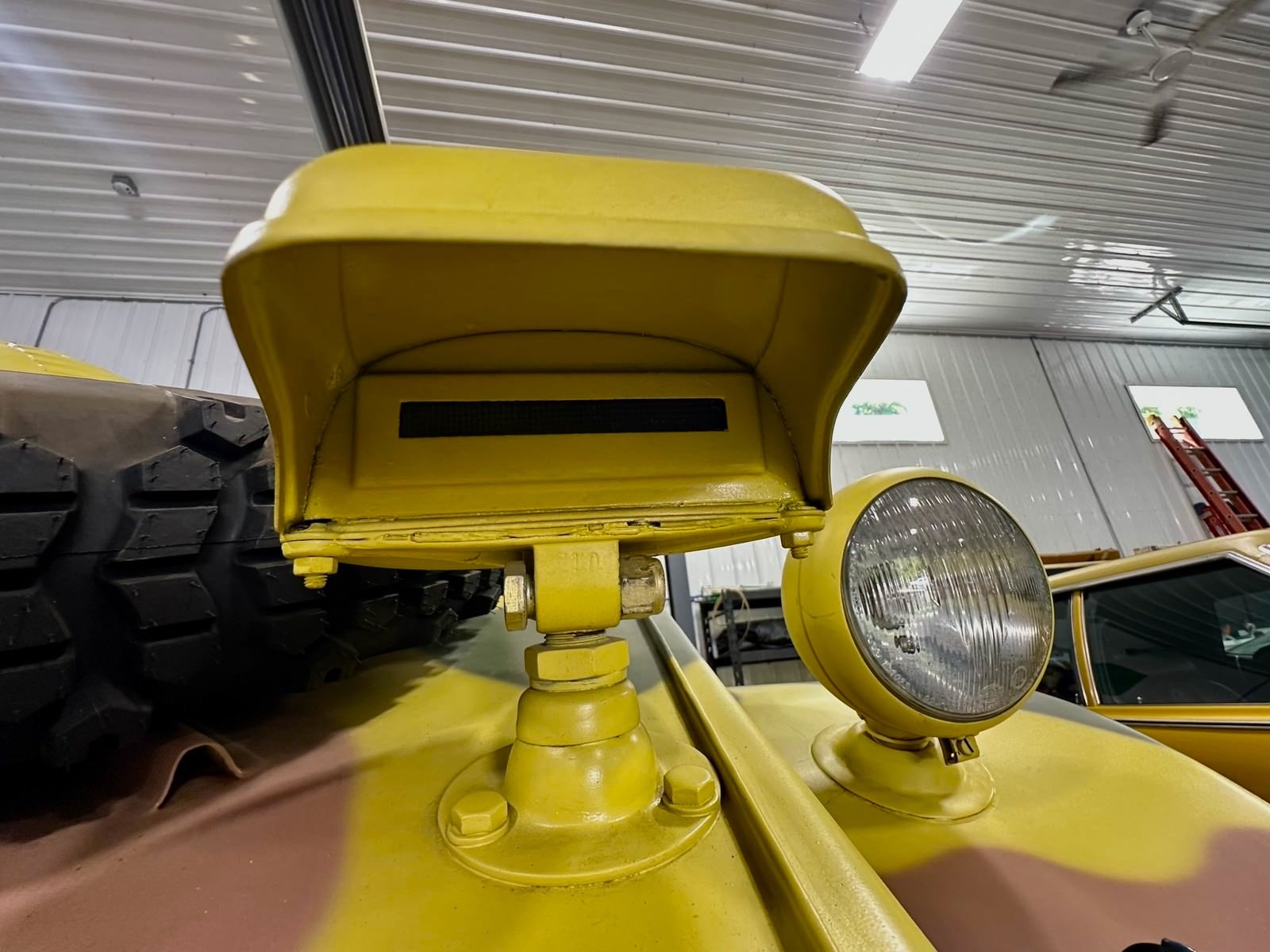
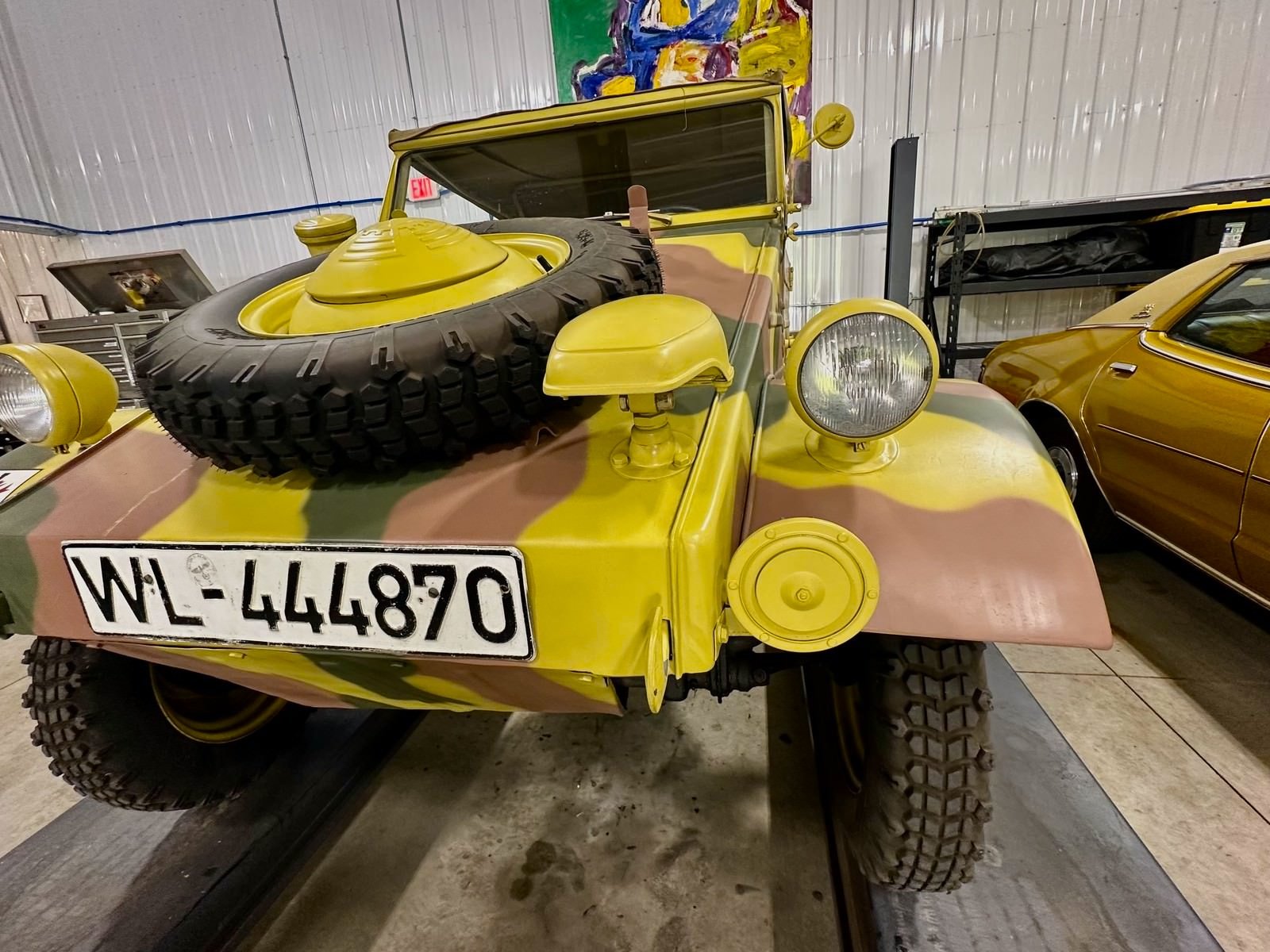
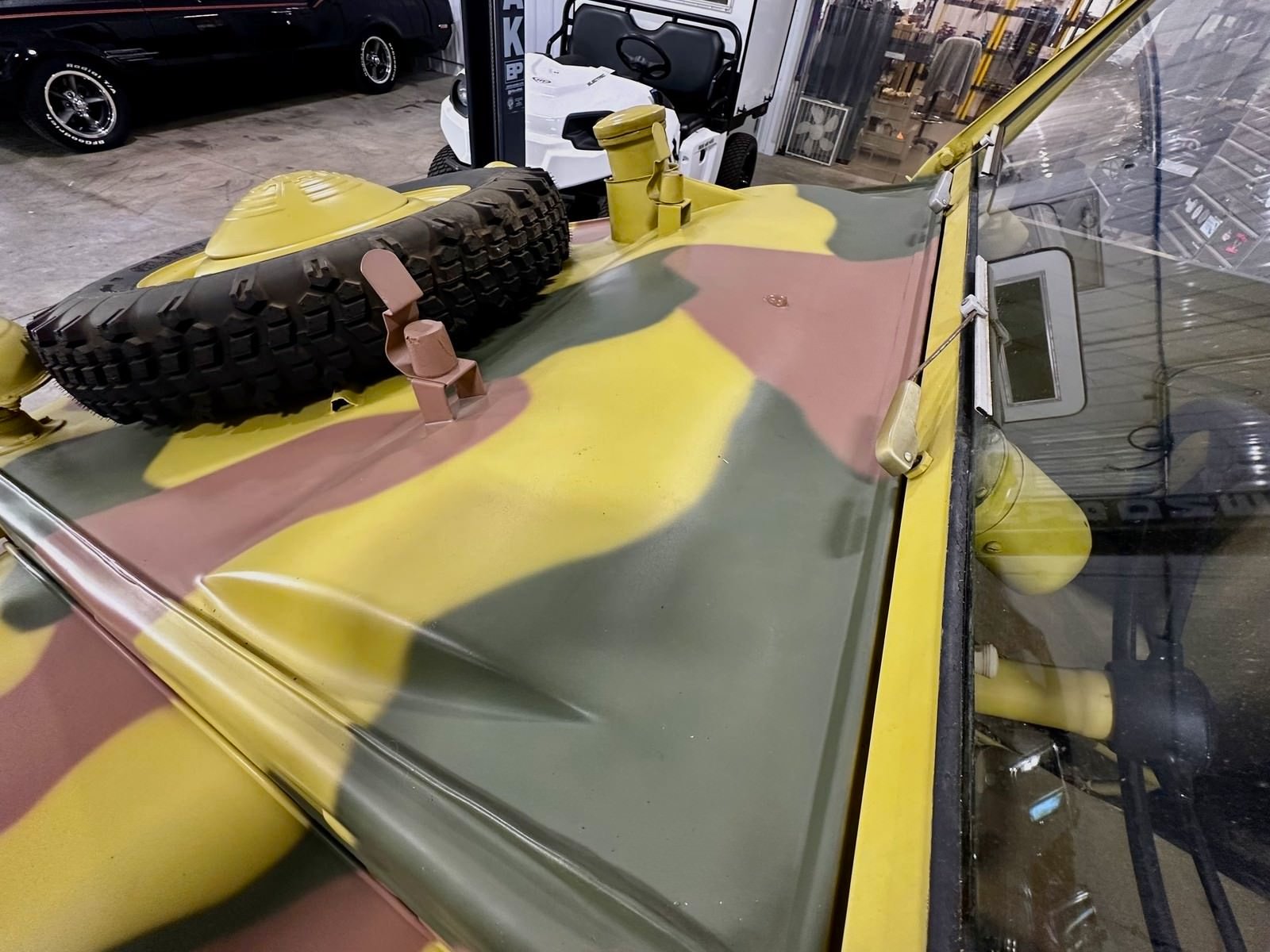
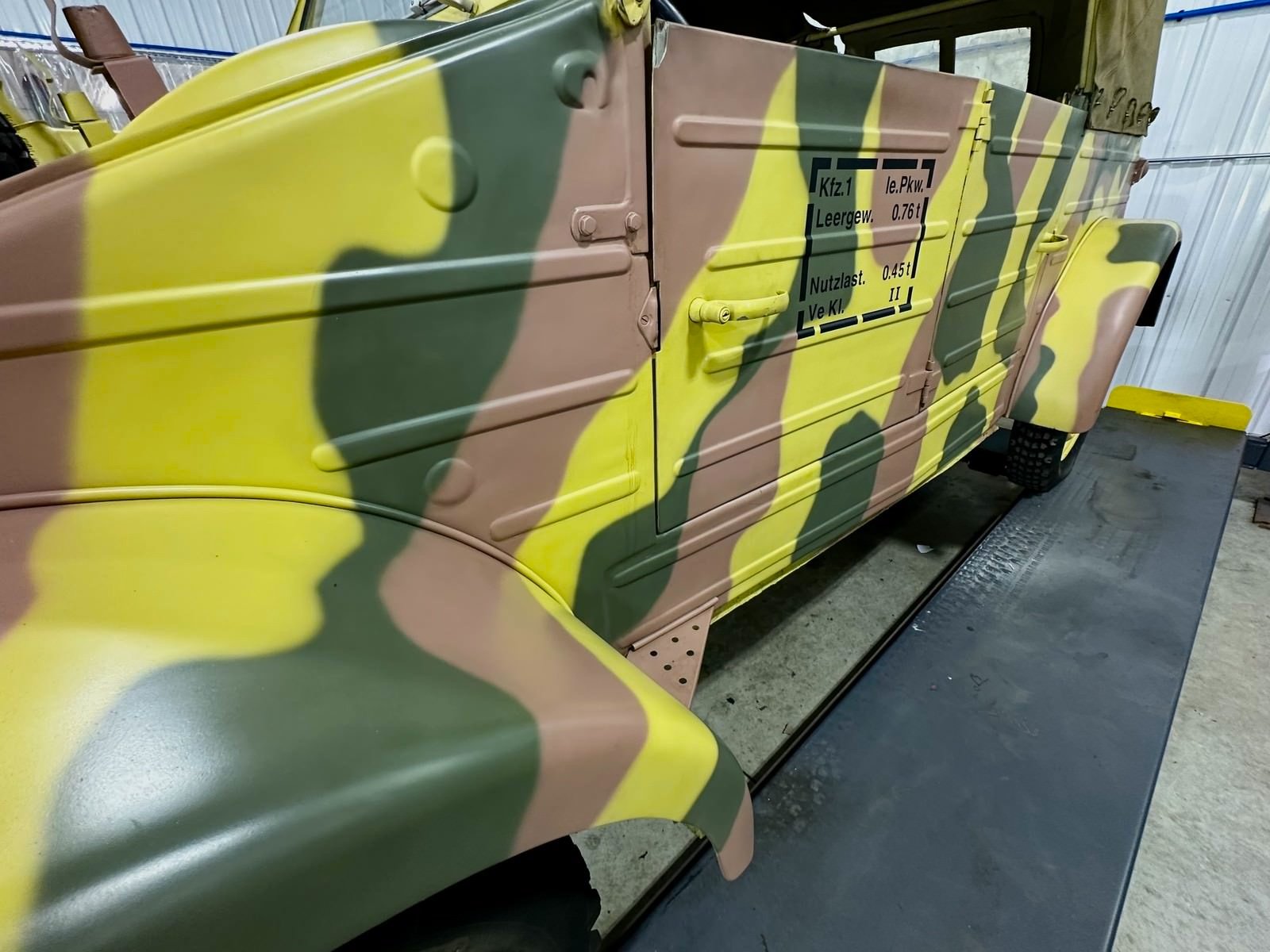
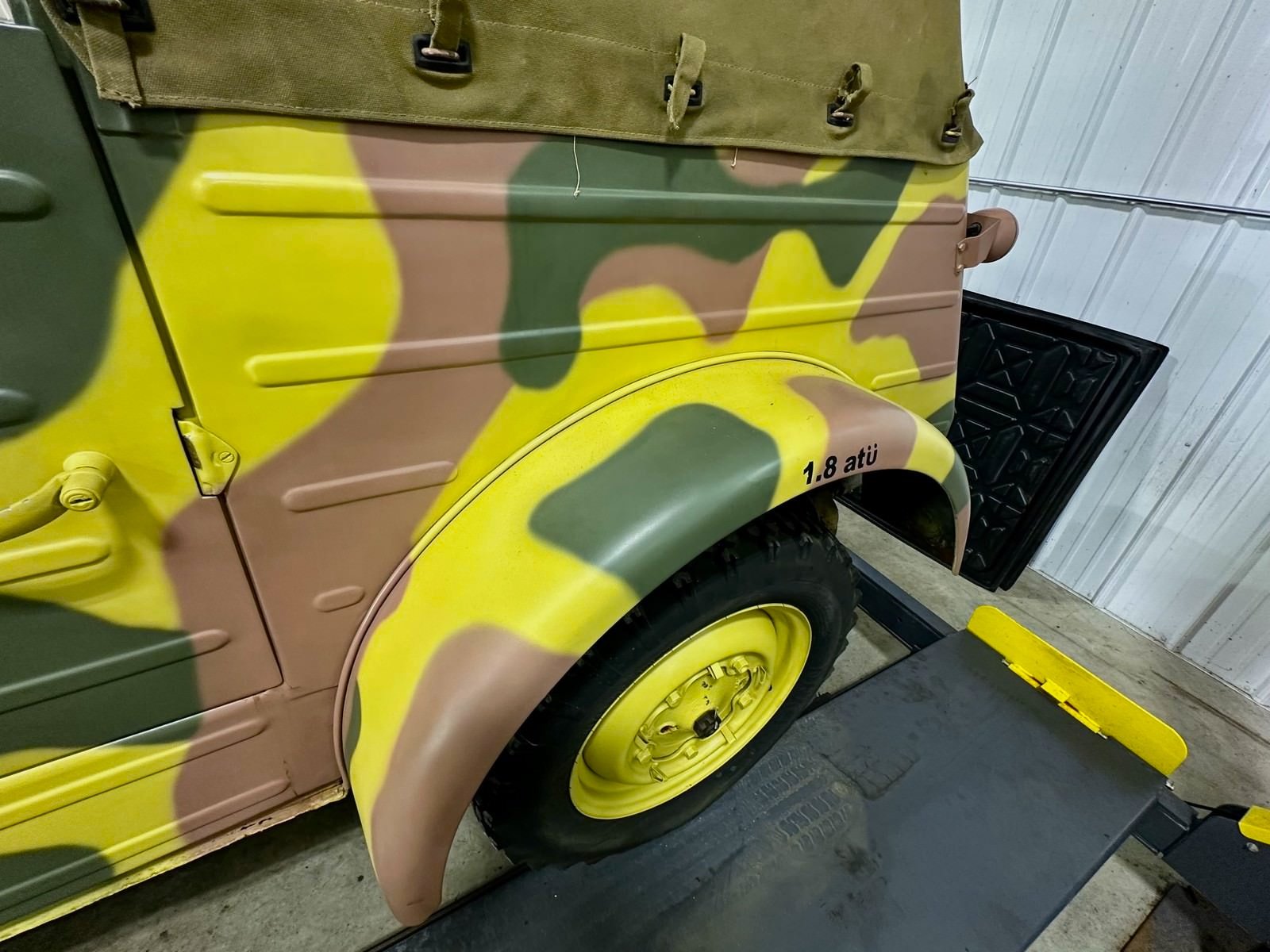
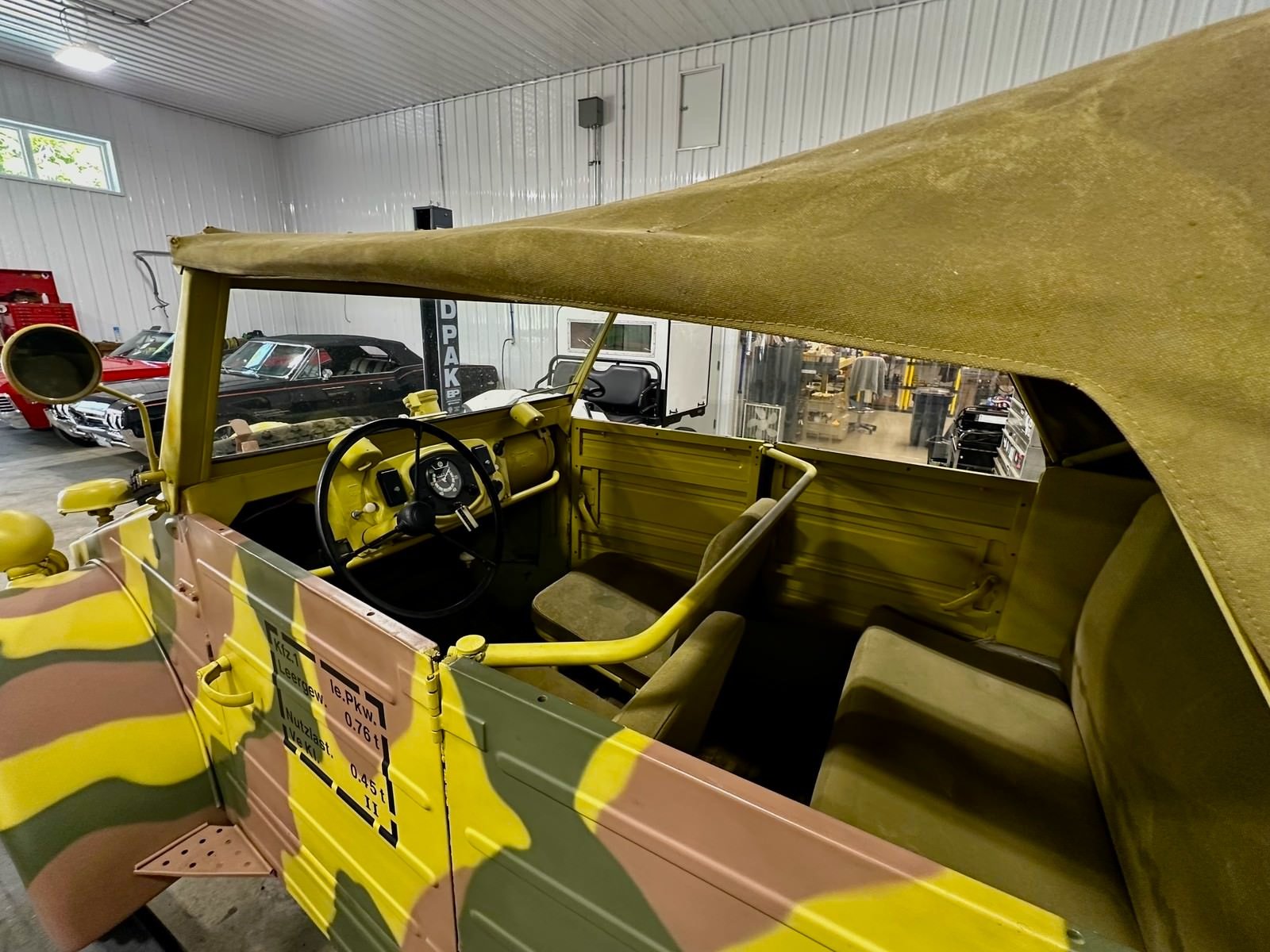
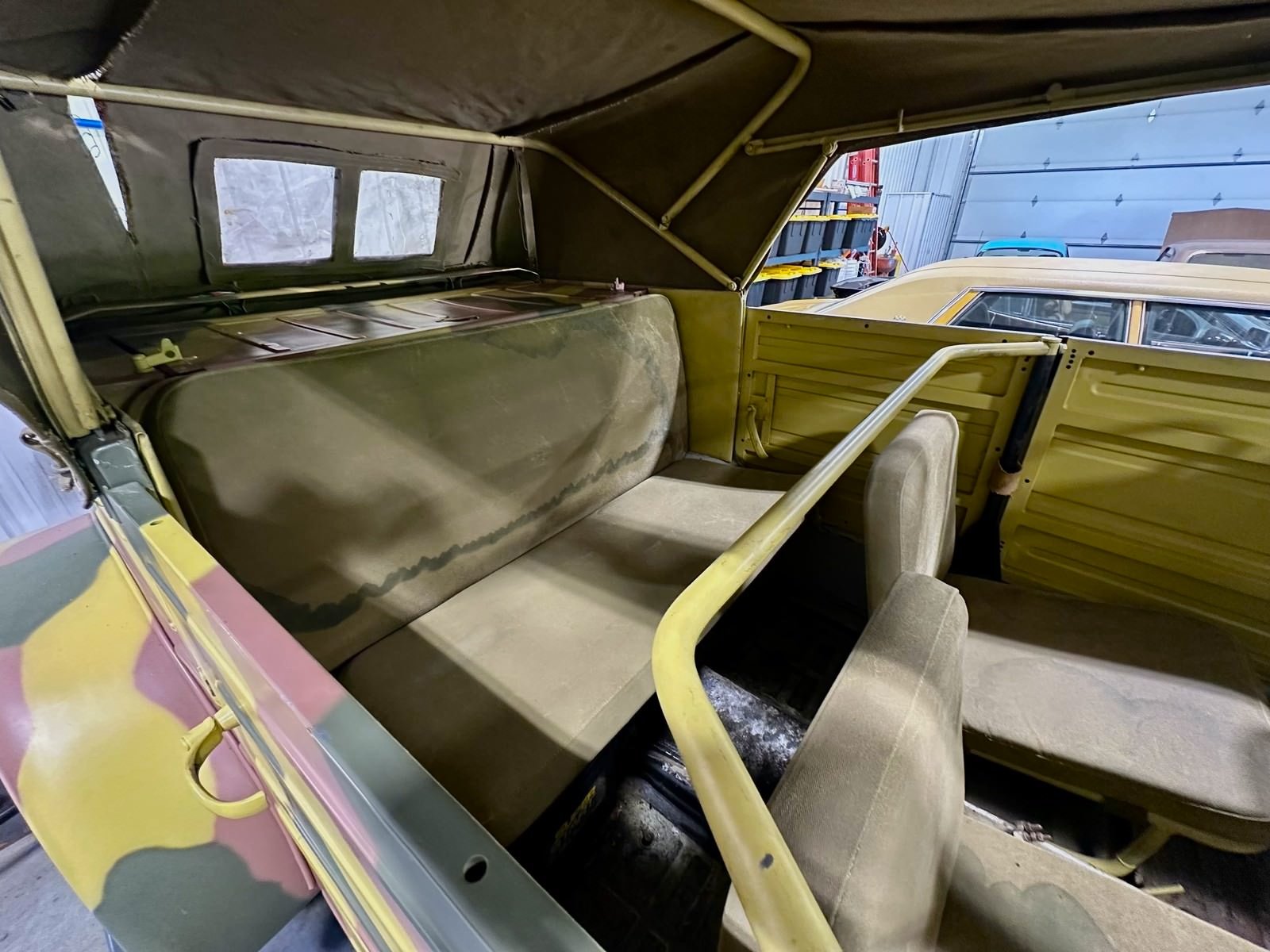
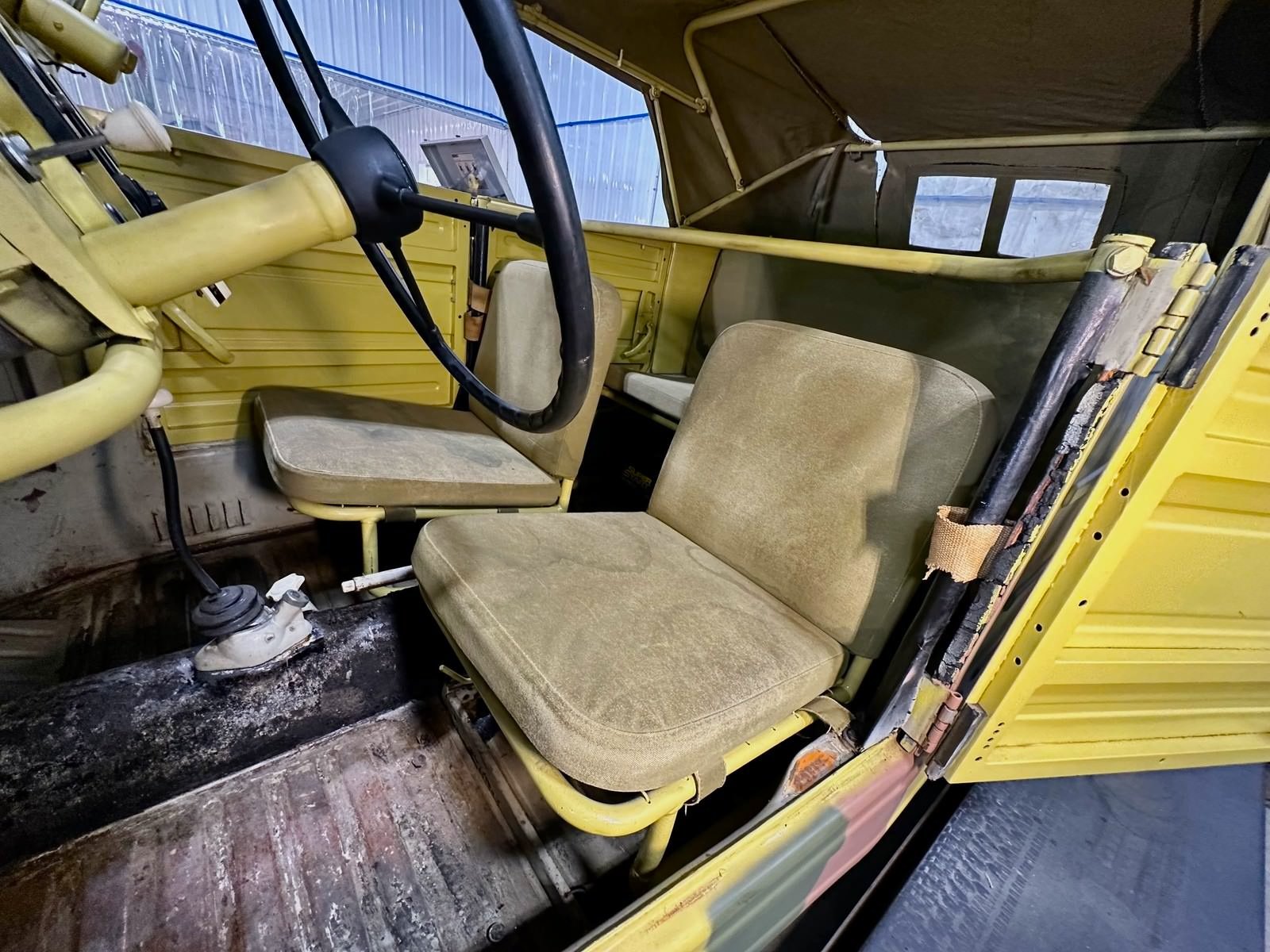
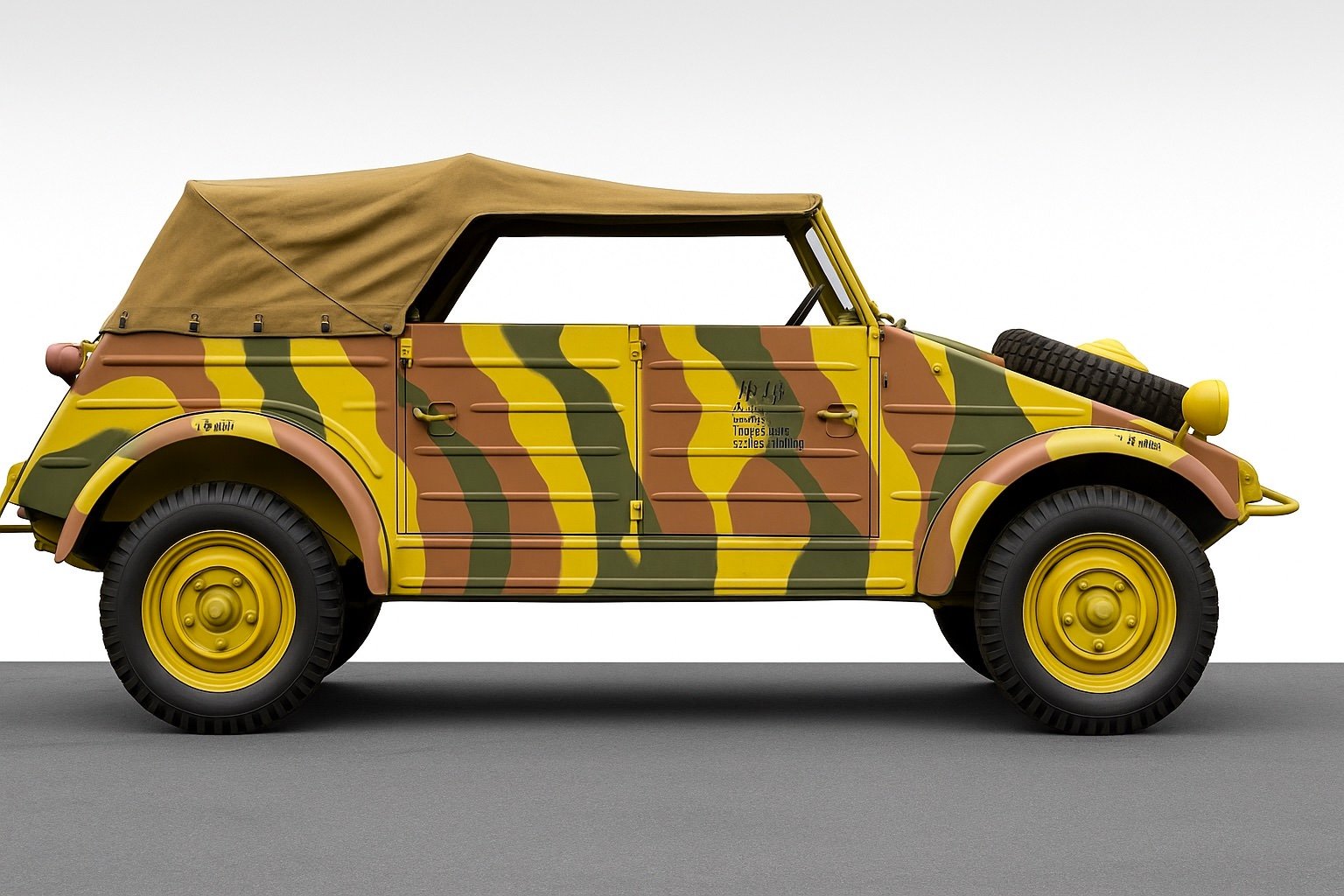
The vehicle you see here is a WWII-era Volkswagen Kübelwagen that was imported into the United States in 1972. It currently carries California “blue plate” registration and it’s finished in period-correct German military markings.
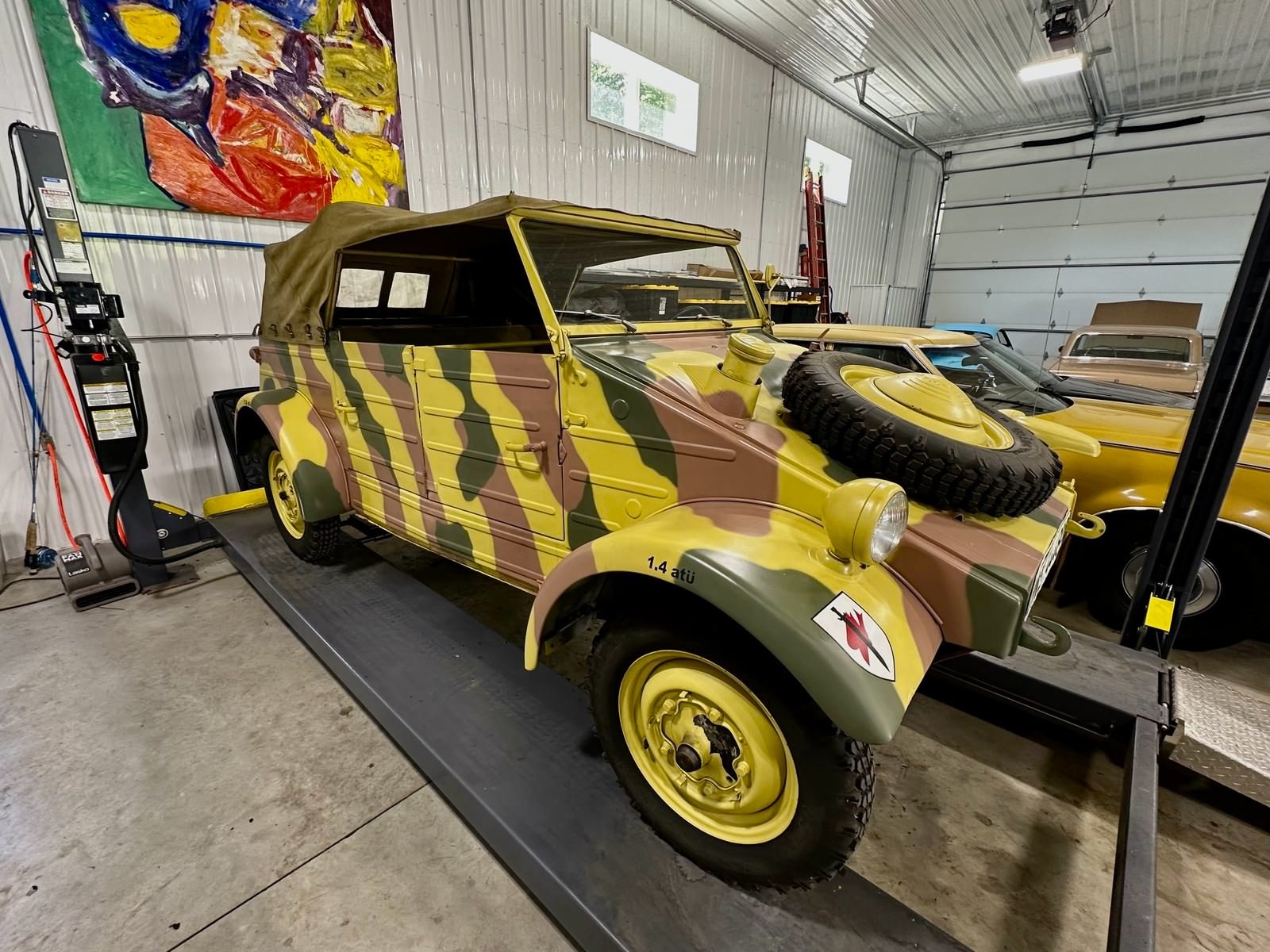
The vehicle you see here is a WWII-era Volkswagen Kübelwagen that was imported into the United States in 1972. It currently carries California “blue plate” registration and it’s finished in period-correct German military markings.
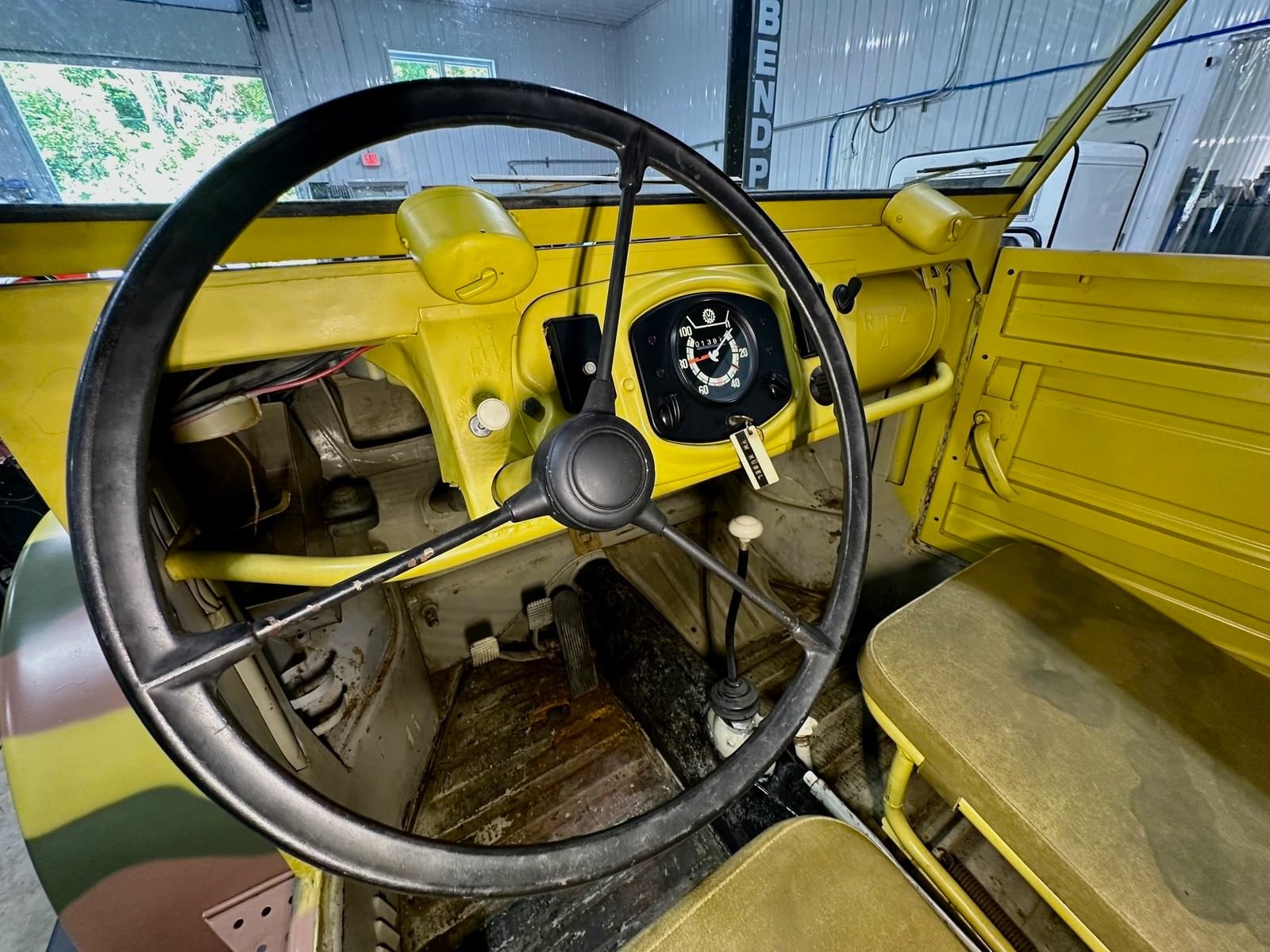
While this Kübelwagen keeps its original body, it does have a replacement Beetle tub and engine – commonplace swaps due to the propensity for rust. The swaps appears to have been well done however, and the vehicle looks remarkably original as a result.
It’s now being offered for sale out of Saugatuck, Michigan on eBay and you can visit the listing here if you’d like to read more about it or place a bid.
Images courtesy of eBay

Articles that Ben Branch has written have been covered on CNN, Popular Mechanics, Smithsonian Magazine, Road & Track Magazine, the official Pinterest blog, the official eBay Motors blog, BuzzFeed, Autoweek Magazine, Wired Magazine, Autoblog, Gear Patrol, Jalopnik, The Verge, and many more.
Silodrome was founded by Ben back in 2010, in the years since the site has grown to become a world leader in the alternative and vintage motoring sector, with well over a million monthly readers from around the world and many hundreds of thousands of followers on social media.