The Harley-Davidson XR750 is undeniably the most famous flat track racing motorcycle in history, the main gripe of many of the bike’s fans is that no road-legal version was ever offered by Harley-Davidson – but some aftermarket custom bike workshops did build some.
In the form it was originally produced by Harley, the XR750 had no headlight, no tail or brake light, no blinkers, no license plate mount, or any fenders. Because of all this it was essentially impossible to get unmodified factory-built bikes road legal (in most jurisdictions). But with a few mods to correct these things, a handful of XR750s have been made road legal over the years.
Fast Facts: A Street-Legal 1972 Harley-Davidson XR750
- The Harley-Davidson XR750 is widely regarded as the most successful flat track racing motorcycle ever built. Developed in 1970 to maintain Harley’s dominance under changing AMA rules, it evolved from a stopgap OHV replacement for the KR750 into a long-term competition platform that defined American dirt track racing.
- Early XR750s used iron heads and cylinders derived from the Sportster, which caused overheating and reliability issues. In 1972, Harley switched to all-aluminum heads and barrels, reducing weight and heat buildup. This change transformed the XR750 into a reliable, competitive race engine capable of sustained on-track abuse.
- The 748cc, 45º air-cooled V-twin produced roughly 90 bhp in race trim, paired with a steel-tube frame and minimal braking for flat track use. Variants were adapted for TT and road racing, achieving some major successes, including wins by Cal Rayborn against European multi-cylinder rivals.
- XR750s were never sold as street-legal motorcycles, with about 530 complete factory-built examples produced from 1970 to around 1980. A small number were later converted for road use by specialists.
History Speedrun: The Harley-Davidson XR750
The Harley-Davidson XR750 occupies a unique place in American motorsport history, relatively few racing motorcycles can claim to have remained competitive for multiple years in a row – but the XR750 enjoyed outright dominance across multiple decades in a row.
 Introduced in 1970, the XR750 was created due to Harley-Davidson’s determination to retain its grip on Grand National dirt track racing (also called flat track). What followed was one of the most successful purpose-built racing motorcycles ever produced, and certainly the most successful flat tracker ever made.
Introduced in 1970, the XR750 was created due to Harley-Davidson’s determination to retain its grip on Grand National dirt track racing (also called flat track). What followed was one of the most successful purpose-built racing motorcycles ever produced, and certainly the most successful flat tracker ever made.
By the late 1960s, Harley-Davidson’s flat track success rested heavily on the earlier KR750, a side-valve design that could trace its roots all the way back to the 1950s. While reliable and familiar, the KR was increasingly outgunned by overhead valve British twins, particularly after AMA rule changes regarding overhead valve motorcycles limited their earlier displacement advantage.
In short, earlier rules had limited overhead valve (OHV) motorcycle displacement to 500cc, while side valve motorcycles were permitted up to 750cc of displacement. This carve out was scrapped in 1969, and it left Harley needing a modern OHV engine quickly, and it needed to fit within existing AMA Class C regulations.
The result was the XR750, initially conceived as a stopgap, but as with many stopgap measures it was eventually refined into a permanent solution.
The first XR750 engines were essentially race-modified Sportster V-twins using iron cylinder heads and barrels derived from the XLH street engine. These early “iron XR” examples ran hot and suffered from heat-related reliability issues, especially under the sustained high loads of mile tracks. They were ignominiously referred to as waffle irons by some.
Harley-Davidson engineers responded quickly, and by 1972 the XR750 received all-aluminum cylinders and heads. This change transformed the engine, reducing weight, vastly improving heat dissipation, and significantly increasing reliability. From that point onward, the XR750 became the definitive American flat-track powerplant.
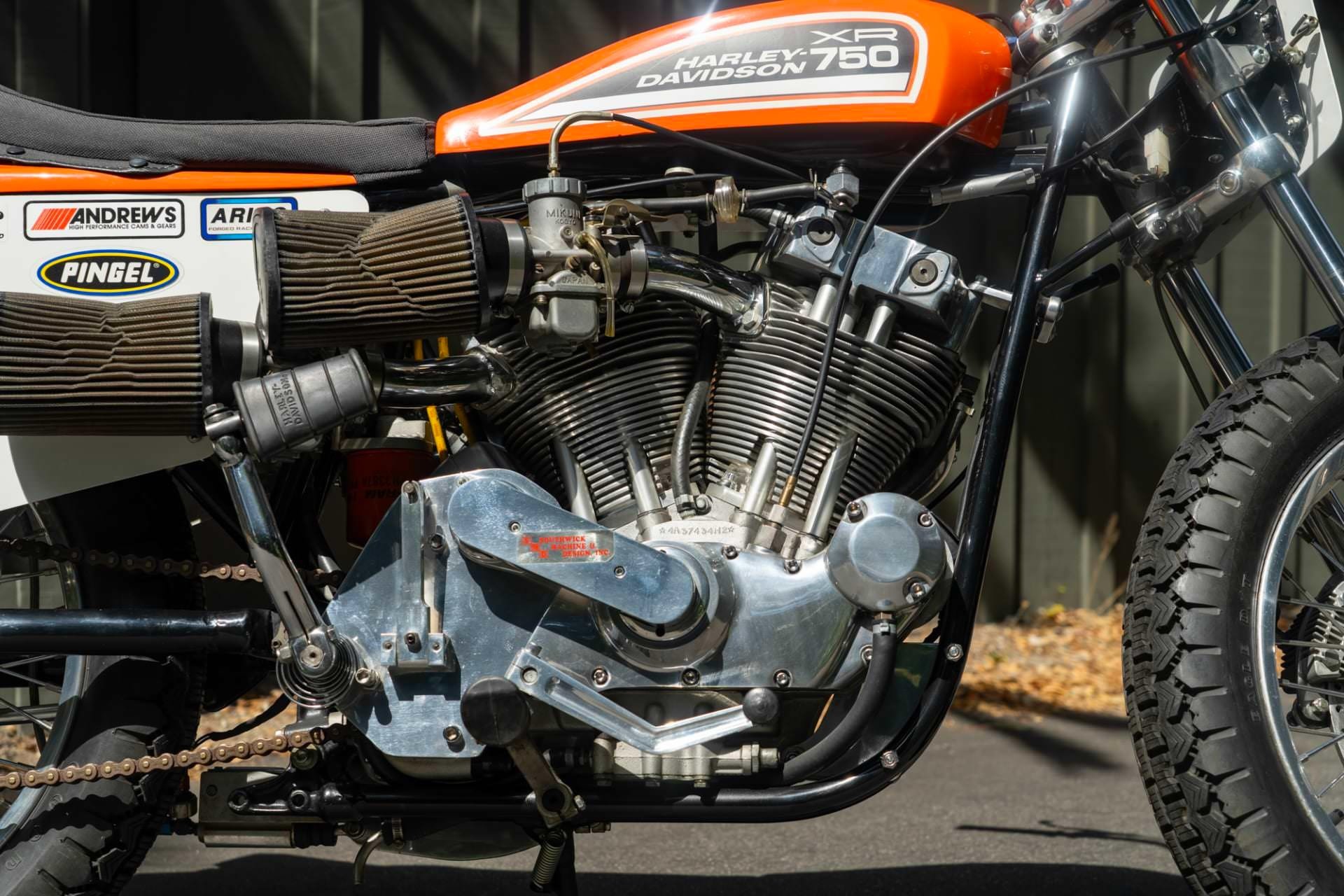
The XR750 V-twin was a 748cc, 45-degree air-cooled engine with pushrod-operated overhead valves. Early iron head engines typically used a single carburetor, while later alloy-cylinder engines adopted dual carburetor arrangement for better flow.
The XR750 V-twin was a 748cc, 45-degree air-cooled engine with pushrod-operated overhead valves. Early iron head engines typically used a single carburetor, while later alloy-cylinder engines adopted dual carburetor arrangement for better flow.
Bore and stroke varied slightly between iterations, with the widely documented alloy-era specification measuring approximately 3.125 inches by 2.98 inches. In race trim, output varied depending on specification and era, but most competitive engines produced in the region of 90 bhp, with a broad, tractable torque curve ideally suited to dirt track racing.
XR750 frames followed a full-cradle steel-tube design philosophy rather than relying on the engine as a stressed structural member. Suspension evolved steadily over time, with period-correct Ceriani forks appearing on early factory machines and later supplier changes helping the bike keep up with advancements in suspension tech over time.
Braking was minimal by design – pure flat track XR750s ran without a front brake, while TT and road-racing variants were equipped with front brakes more appropriate to their discipline. Early XRTT machines used large four-leading-shoe drum brakes, with disc brakes appearing on later road-race and TT configurations as rules and technology evolved.
On the racetrack, the XR750’s record is without parallel. From its introduction through the early 2000s, XR750-powered riders accumulated hundreds of AMA National victories and secured dozens of Grand National Championships.
Riders like Gary Scott, Jay Springsteen, Scott Parker, Ricky Graham, and Chris Carr built their careers atop the XR platform. Scott Parker alone claimed nine Grand National titles on XR750s, forever establishing both rider and machine as enduring benchmarks in American motorcycle racing.
Perhaps the XR750’s most unexpected cultural impact came outside conventional racing altogether. Evel Knievel adopted the XR750 as his motorcycle of choice for televised stunt jumps beginning in the early 1970s.
While flat track was its natural habitat, the XR750 also proved adaptable beyond the dirt ovals. Harley-Davidson produced road-race and TT variants for AMA Grand National Championship road races and Formula 750-era events during the early 1970s. These machines featured front brakes, modified frames, aerodynamic bodywork, and altered suspension geometry.
Cal Rayborn achieved significant road-racing successes aboard XR750 machinery during this period – demonstrating the engine’s competitiveness against multi-cylinder European opposition when properly developed.
Perhaps the XR750’s most unexpected cultural impact came outside conventional racing altogether. Evel Knievel adopted the XR750 as his motorcycle of choice for televised stunt jumps beginning in the early 1970s.
Its compact dimensions, strong midrange power, and proven reliability made it well suited to high-risk launches and repeated hard landings. Knievel’s use of the XR750 introduced the bike to a global audience far beyond the racing paddock, forever embedding it in popular culture.
XR750s were never street-legal and were built exclusively as competition machines – museum records and factory-aligned archival research most consistently indicate that only approximately 530 complete factory-assembled XR750 motorcycles were produced, with full motorcycle assembly occurring in limited batches from 1970 through around 1980.
After that point, Harley-Davidson continued to supply XR750 engines, rolling chassis components, and race kits for competition use, rather than complete motorcycles. Continuous incremental updates meant that no two eras of XR750 were quite the same, with changes to cylinder heads, ignition systems, frames, and ancillary components highlighting evolving racing needs rather than formal model-year differences.
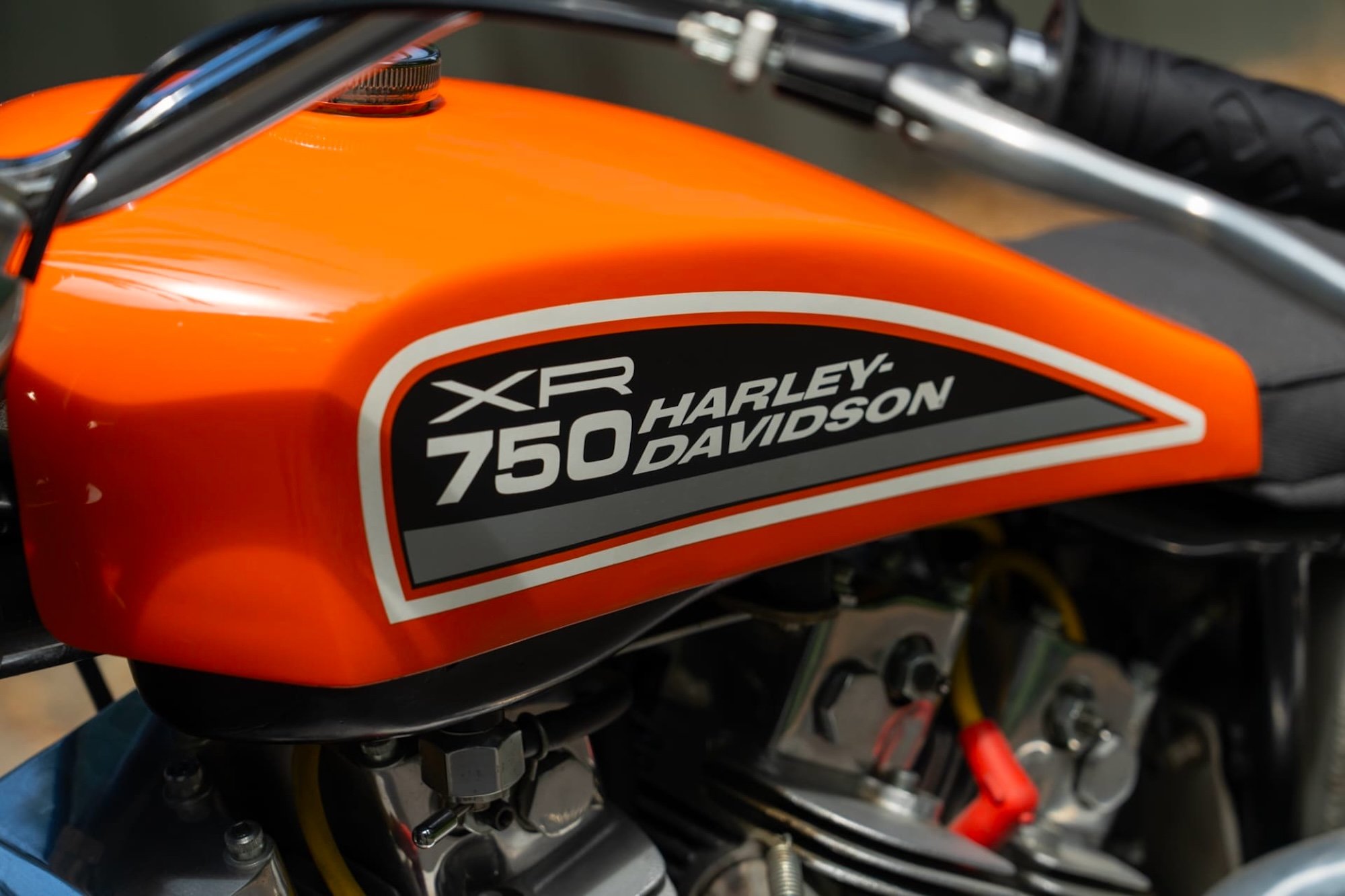
By the time Harley-Davidson concluded factory XR750 engine and competition support in the early 2000s (around 2008), the racing world had largely moved on to liquid-cooled, multi-valve designs. Yet the XR750’s influence remains profound.
By the time Harley-Davidson concluded factory XR750 engine and competition support in the early 2000s (around 2008), the racing world had largely moved on to liquid-cooled, multi-valve designs. Yet the XR750’s influence remains profound.
It defined the sound, style, and substance of American flat-track racing for nearly forty years. More than just a successful race bike, it became a symbol of Harley-Davidson’s engineering pragmatism and competitive stubbornness.
The John Steel-Built Harley-Davidson XR750 Shown Here
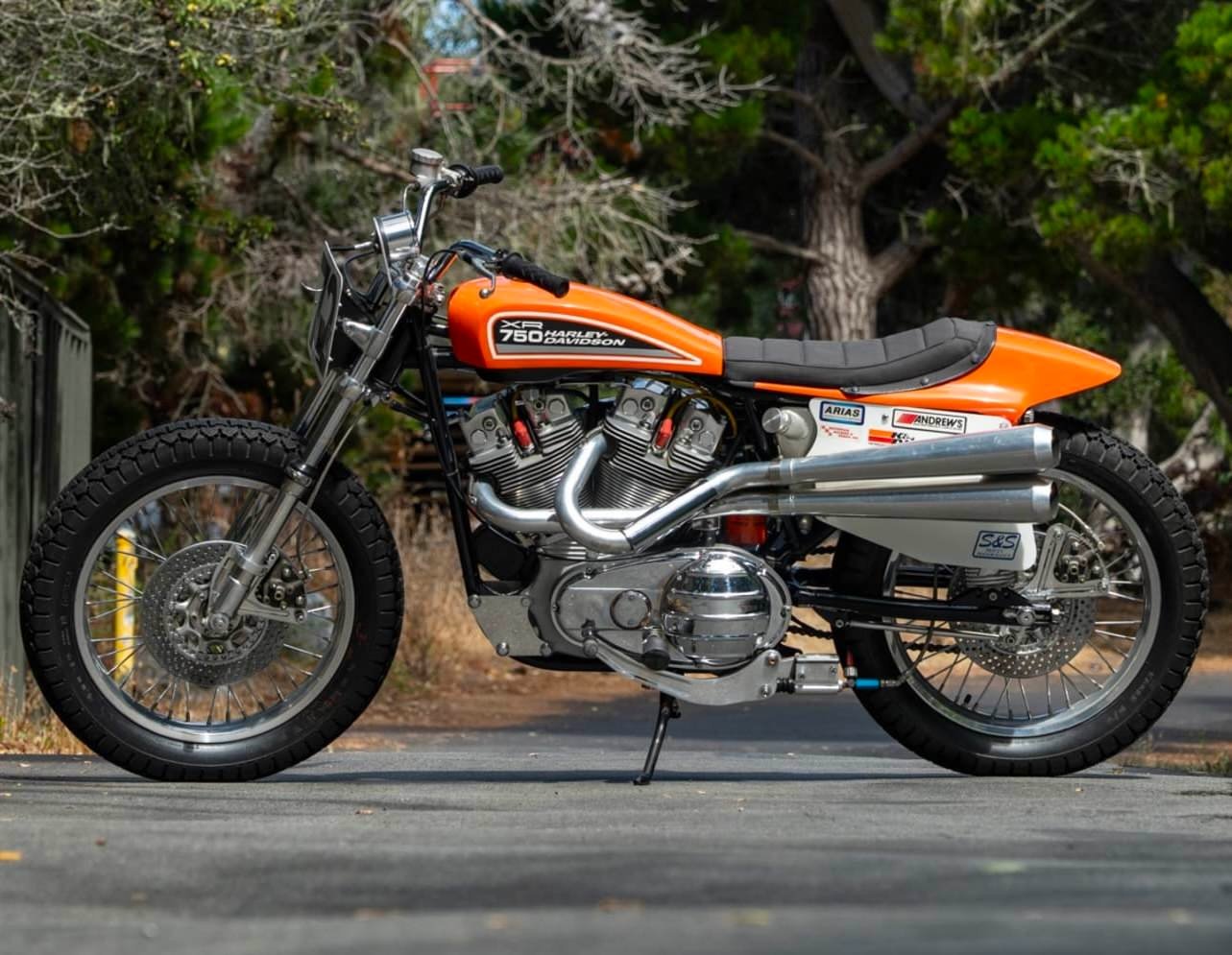
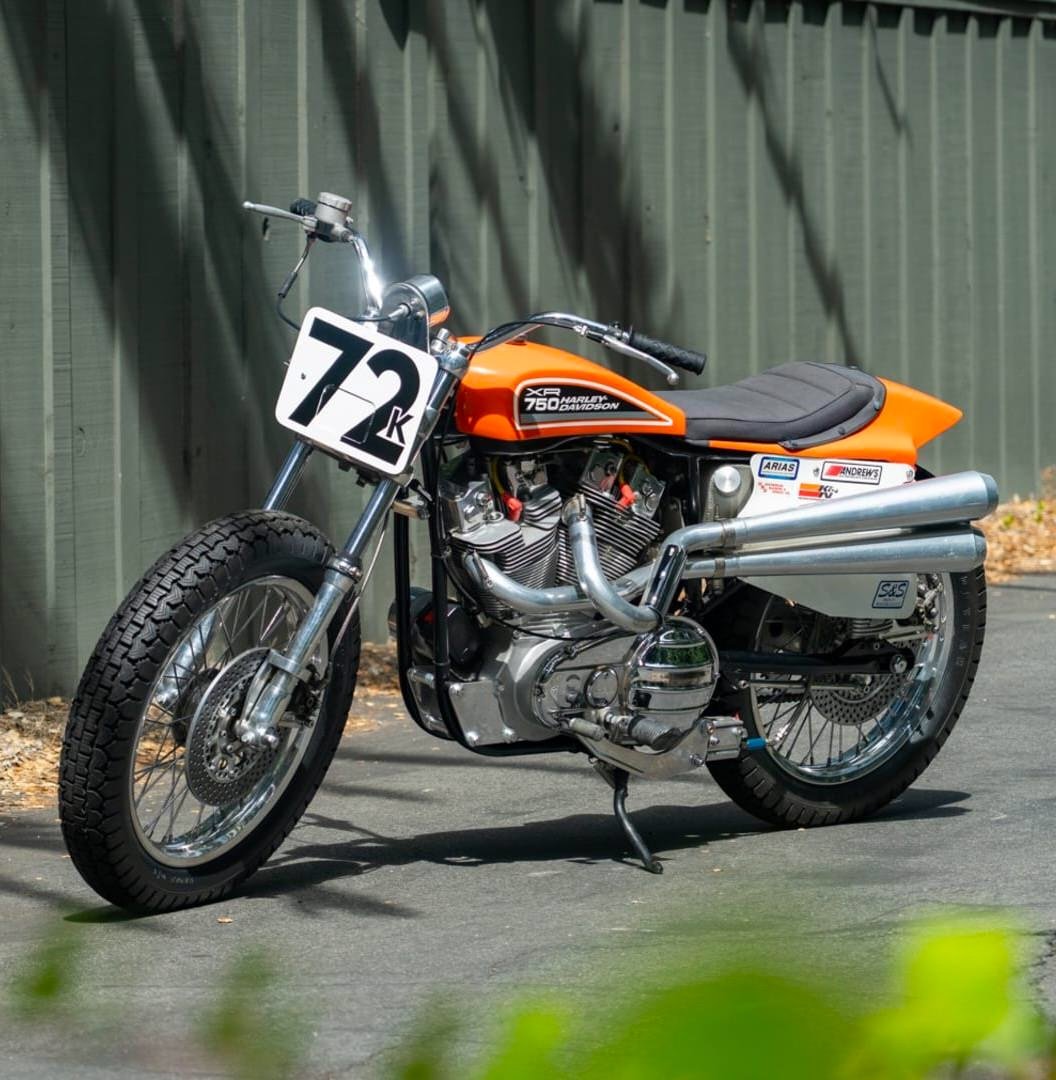
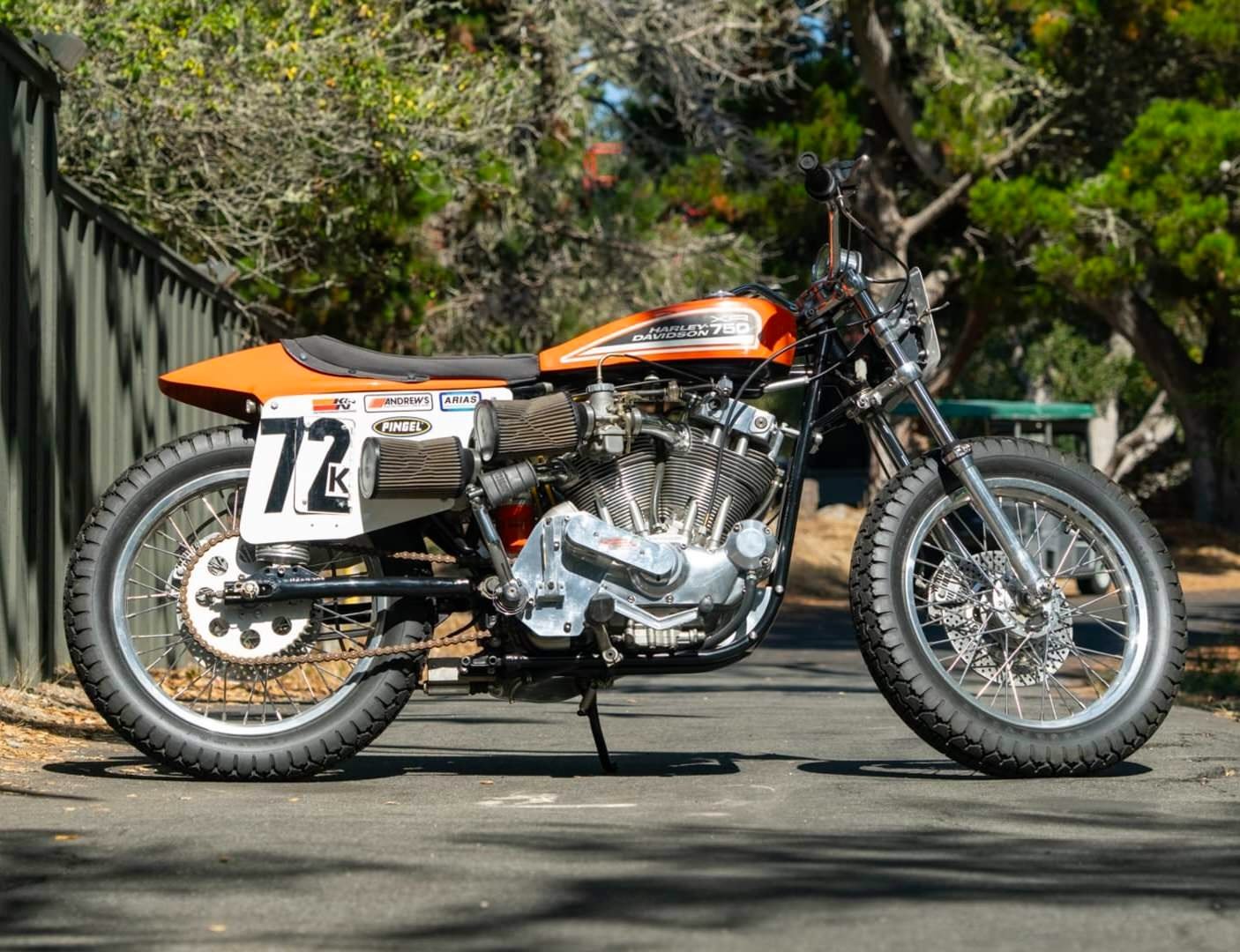
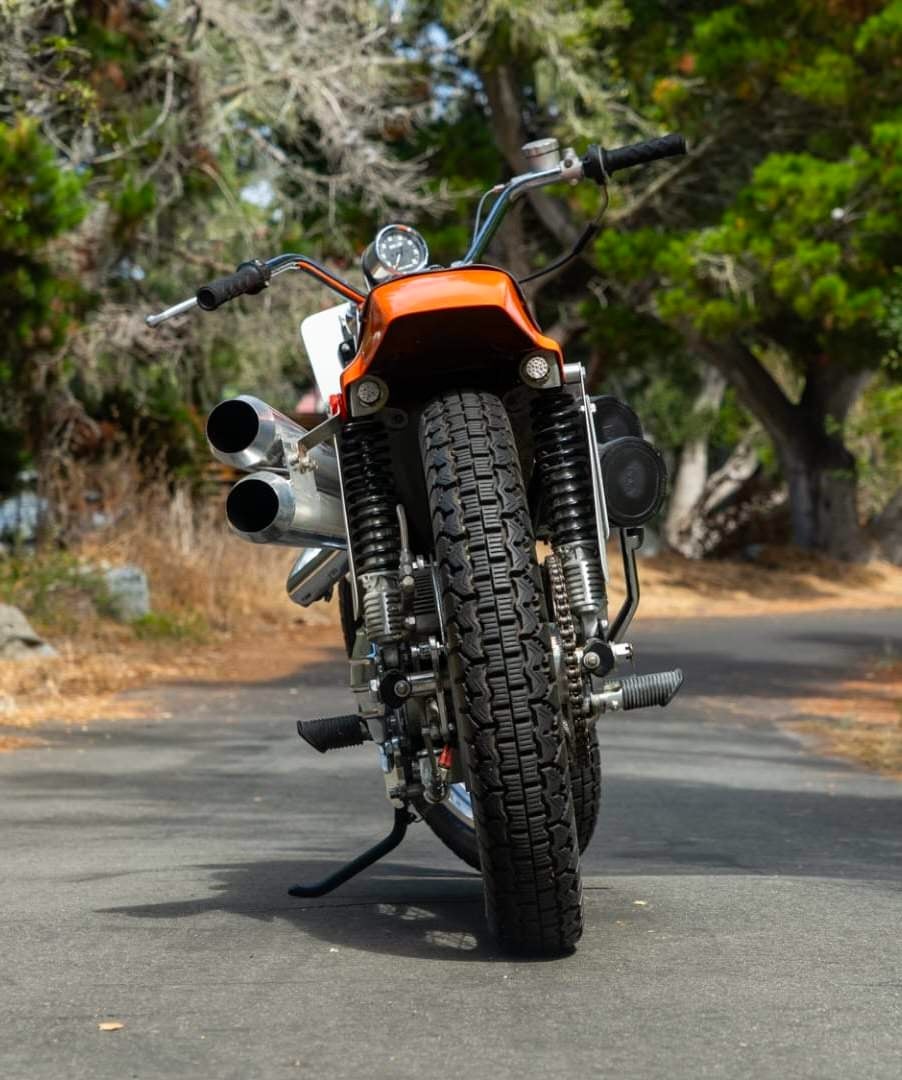
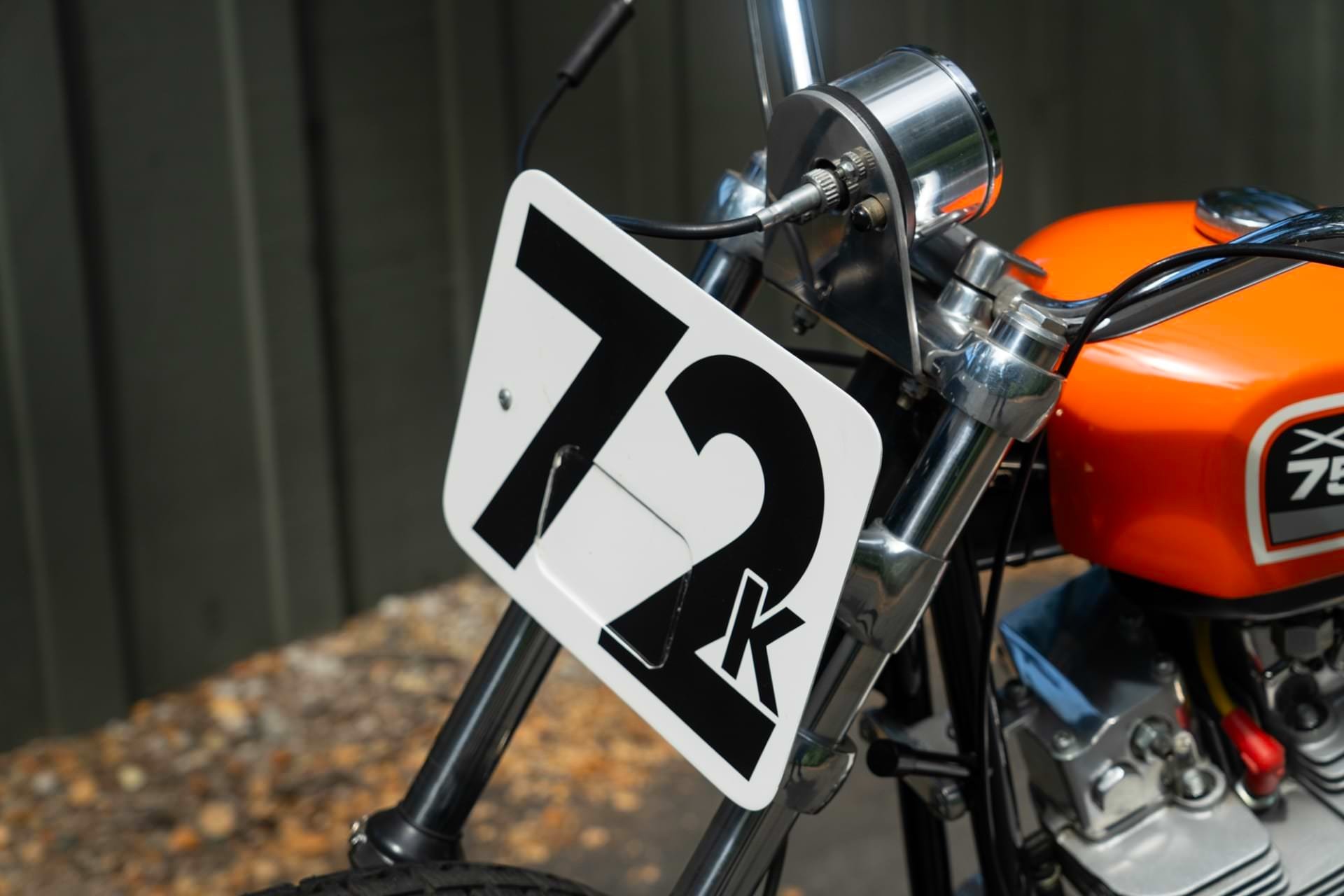
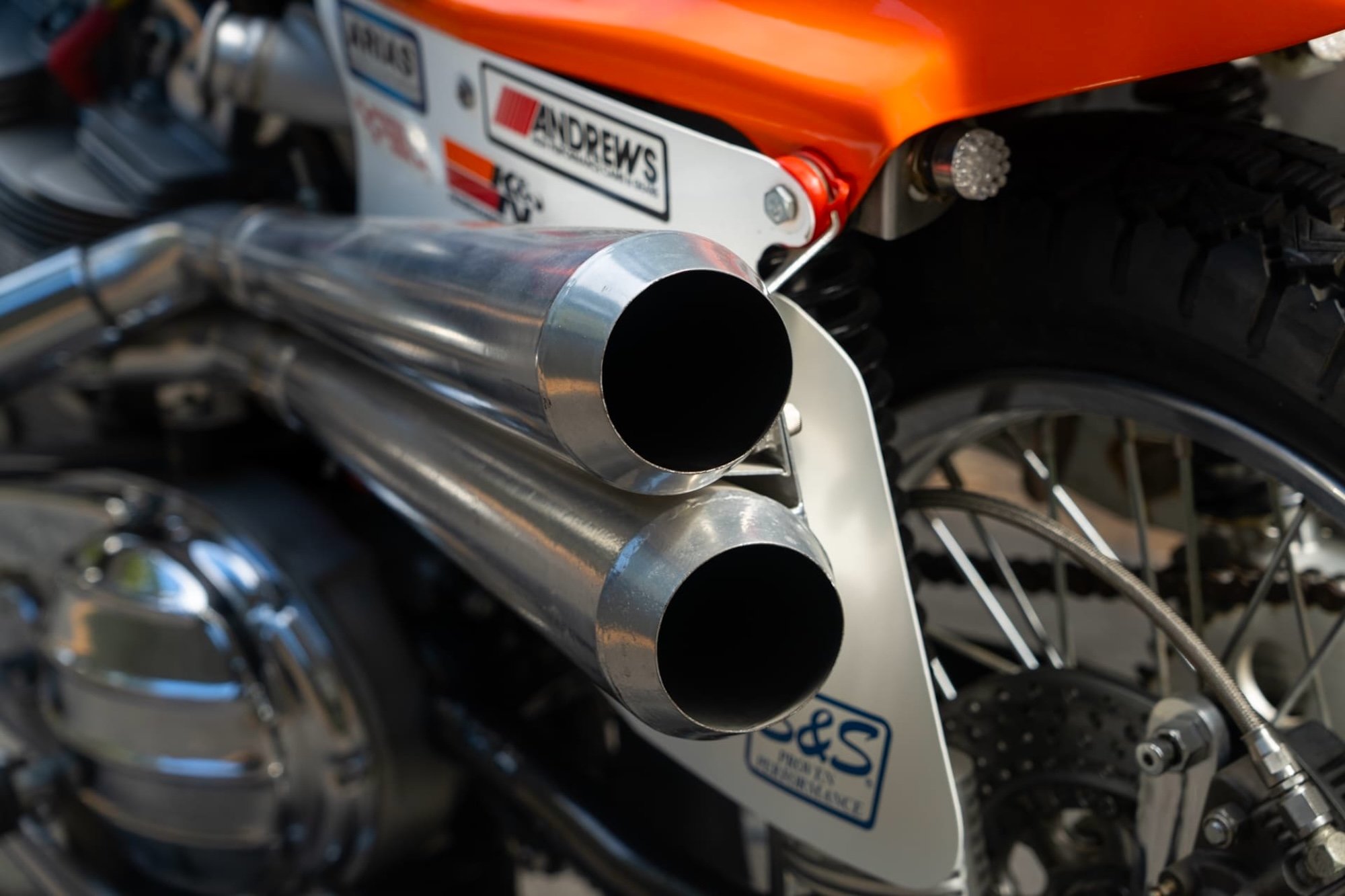
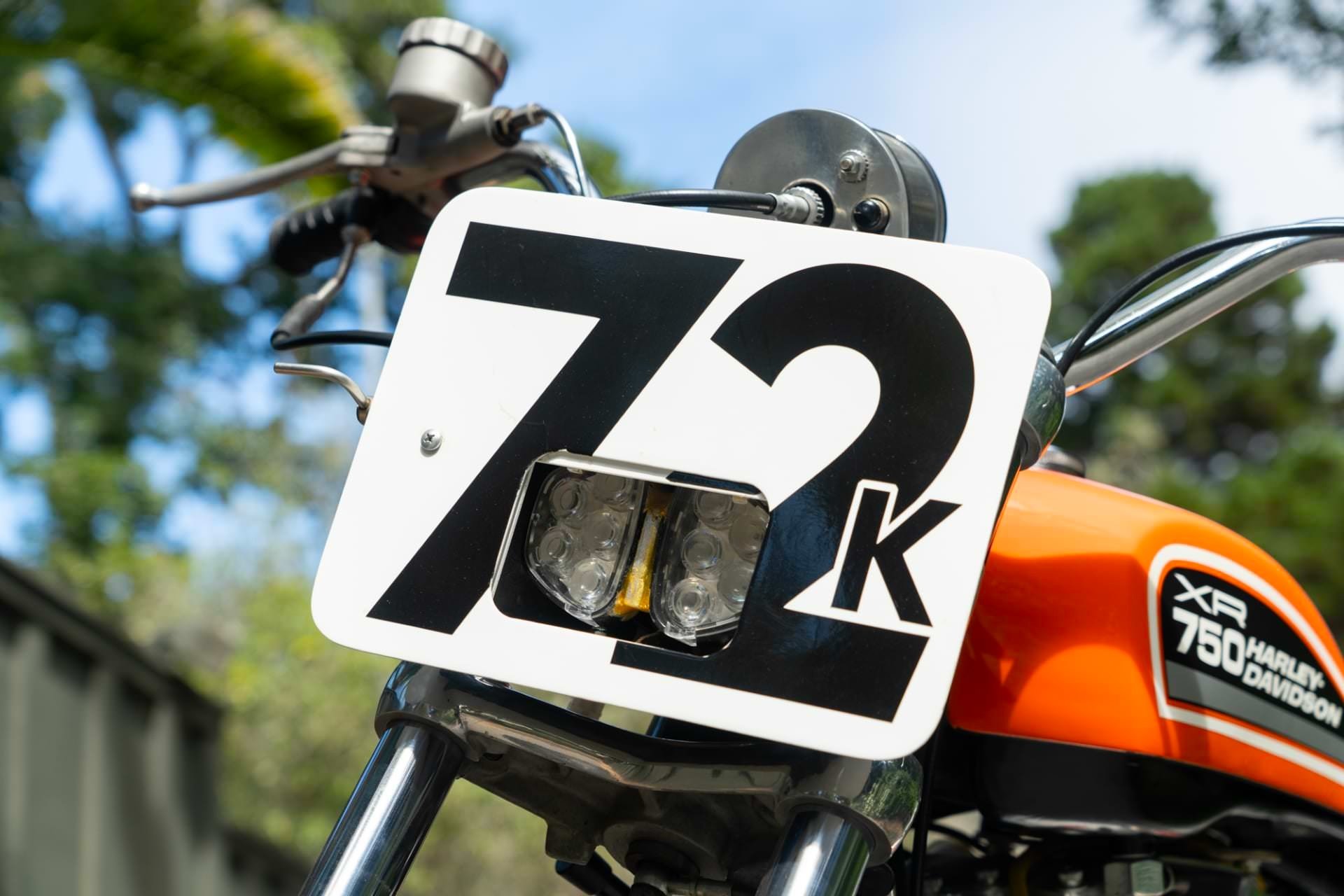
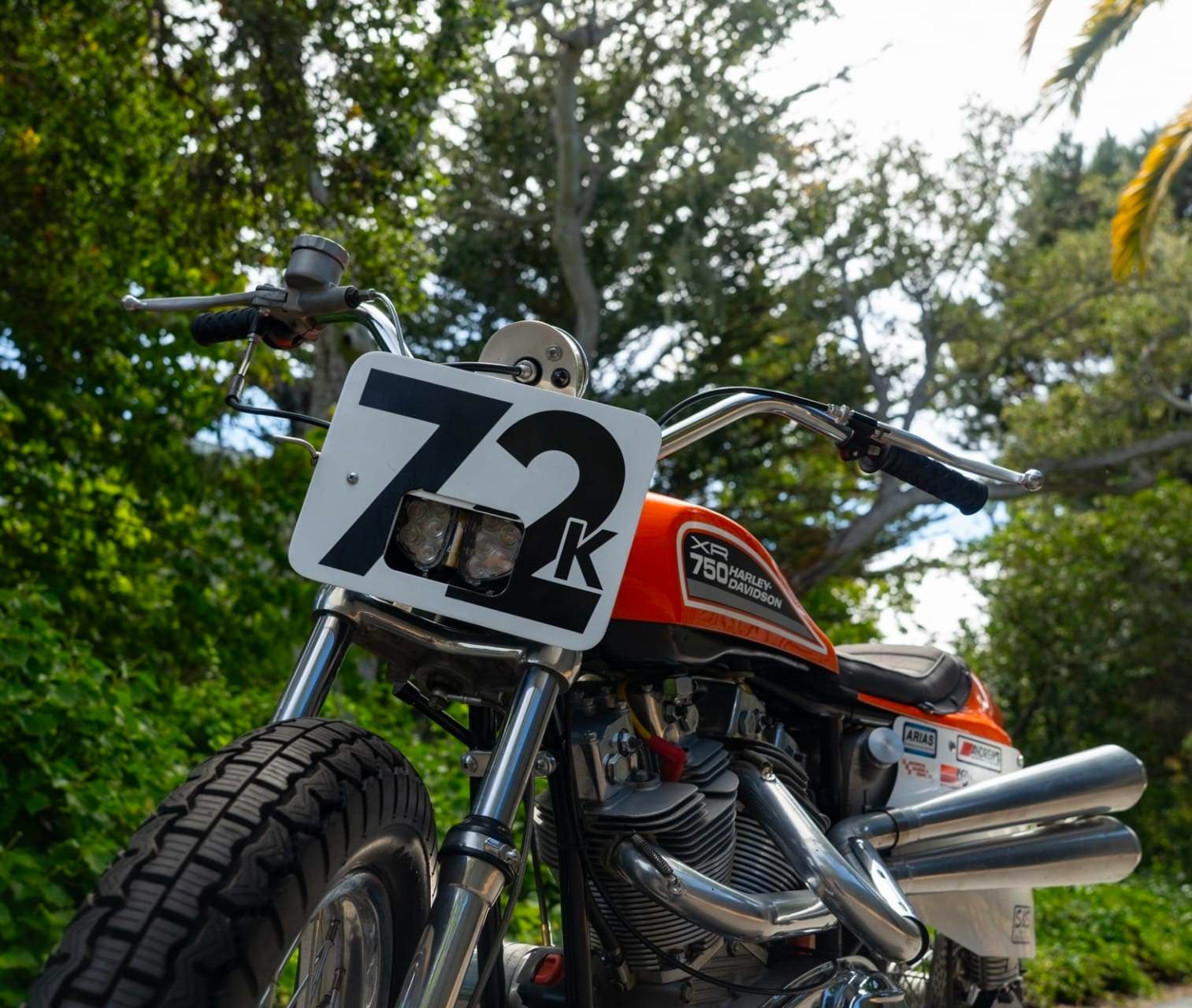
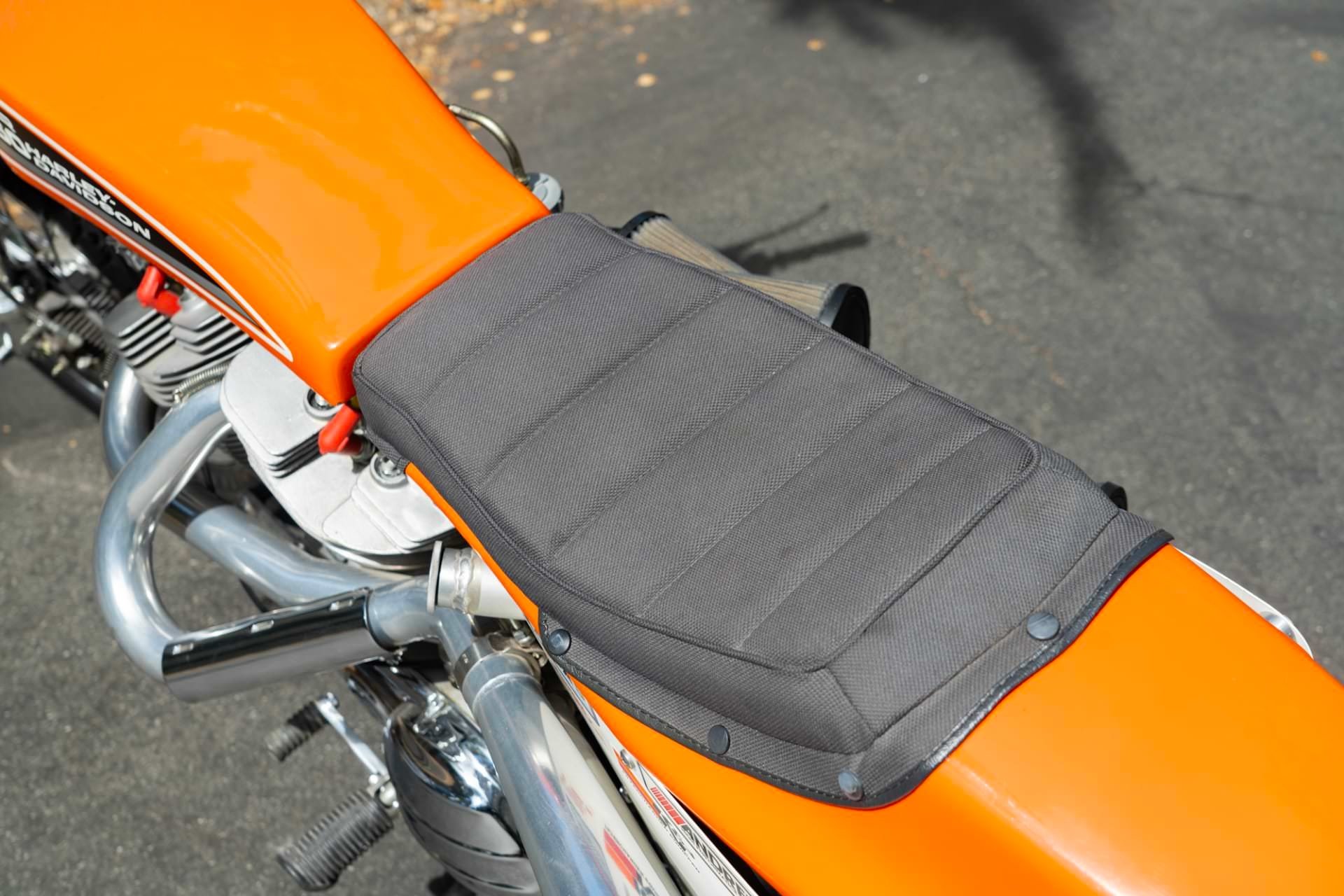
The motorcycle you see here is a 1972 Harley-Davidson XR750 that has been discreetly customized by John Steel to make it road legal. It now has a headlight hidden behind a moving panel in the front racing number plate, it has blinkers, rear lights, and a clever rear road license plate that folds out of the side racing number plate.
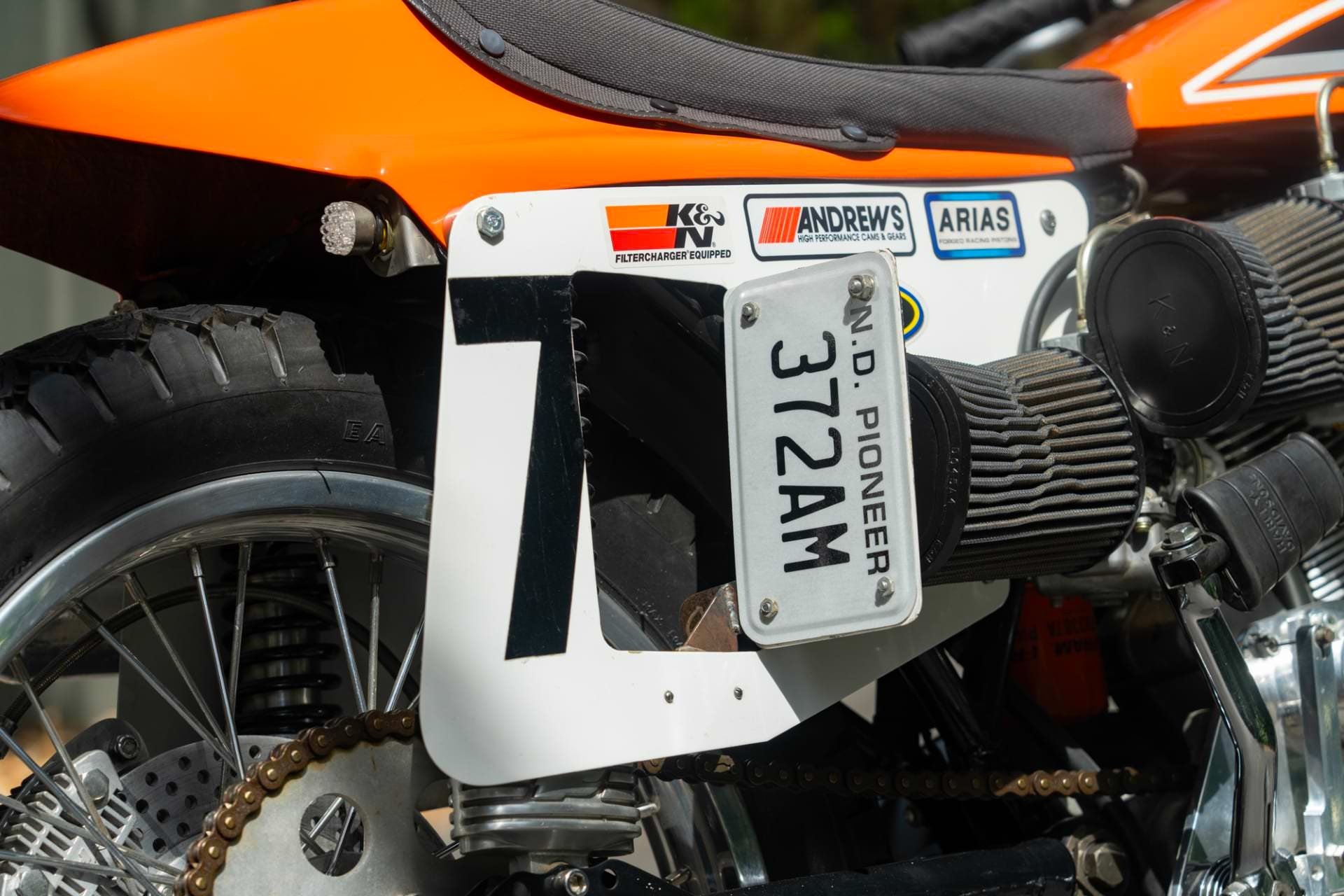
The motorcycle you see here is a 1972 Harley-Davidson XR750 that has been discreetly customized by John Steel to make it road legal. It now has a headlight hidden behind a moving panel in the front racing number plate, it has blinkers, rear lights, and a clever rear road license plate that folds out of the side racing number plate.
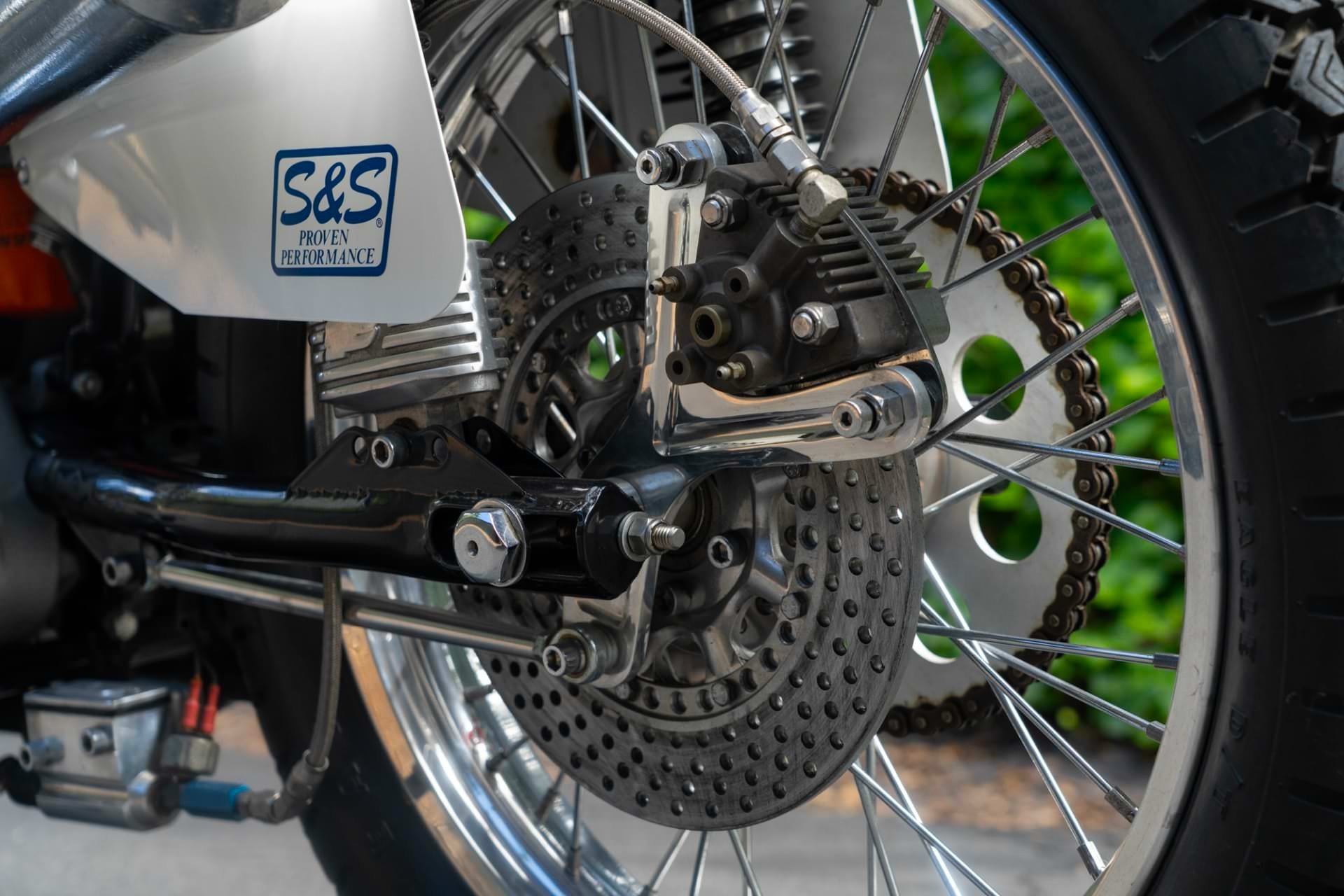
With these additions, and the additions of other sensible things like the front disc brake to match the rear disc, it is now legal to road register and street ride in many jurisdictions, although it would be important to research local requirements before bidding.
The bike is now due to roll across the auction block with Mecum in late-January and you can visit the listing here if you’d like to read more or register to bid.
Images courtesy of Mecum

Articles that Ben Branch has written have been covered on CNN, Popular Mechanics, Smithsonian Magazine, Road & Track Magazine, the official Pinterest blog, the official eBay Motors blog, BuzzFeed, Autoweek Magazine, Wired Magazine, Autoblog, Gear Patrol, Jalopnik, The Verge, and many more.
Silodrome was founded by Ben back in 2010, in the years since the site has grown to become a world leader in the alternative and vintage motoring sector, with well over a million monthly readers from around the world and many hundreds of thousands of followers on social media.