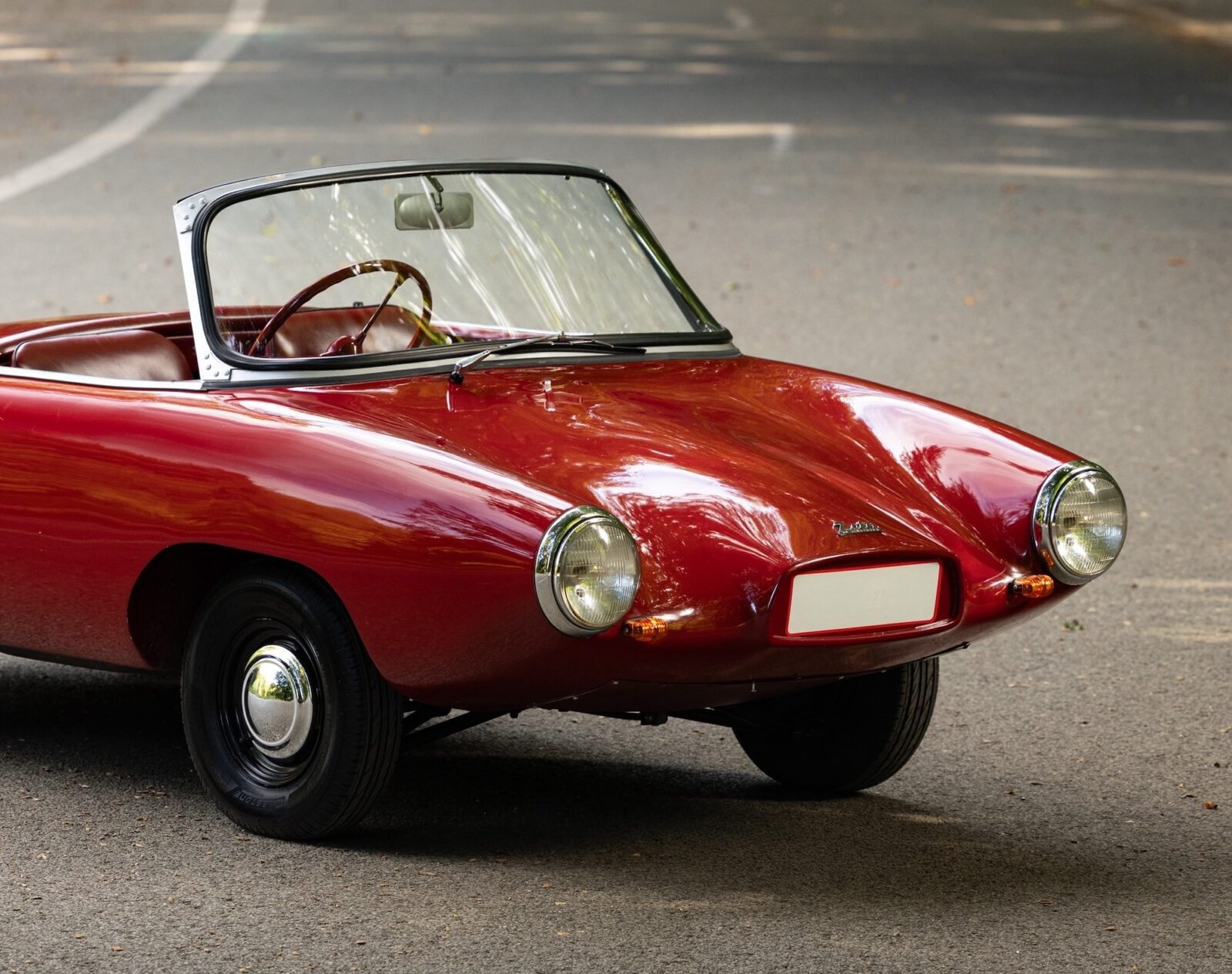
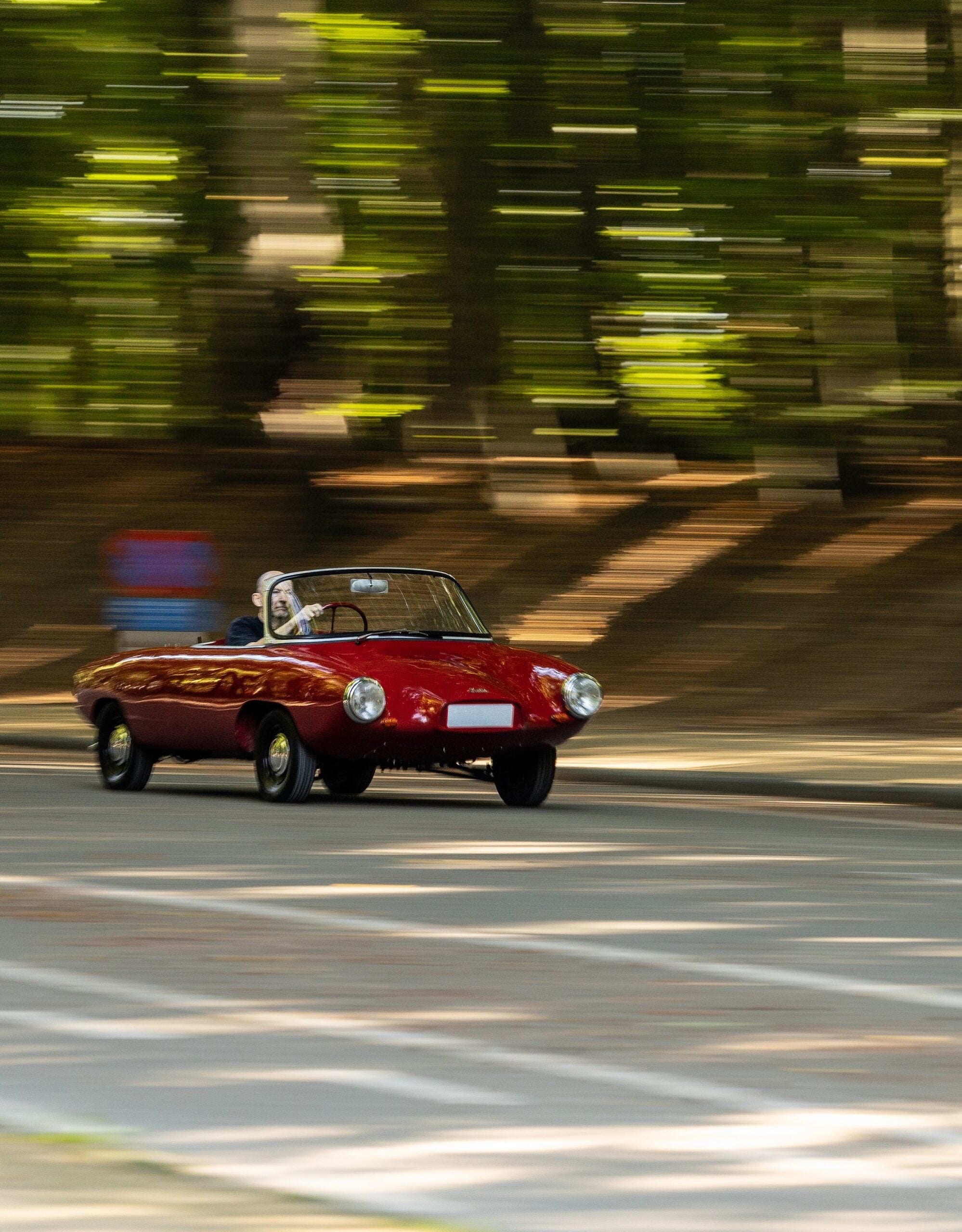
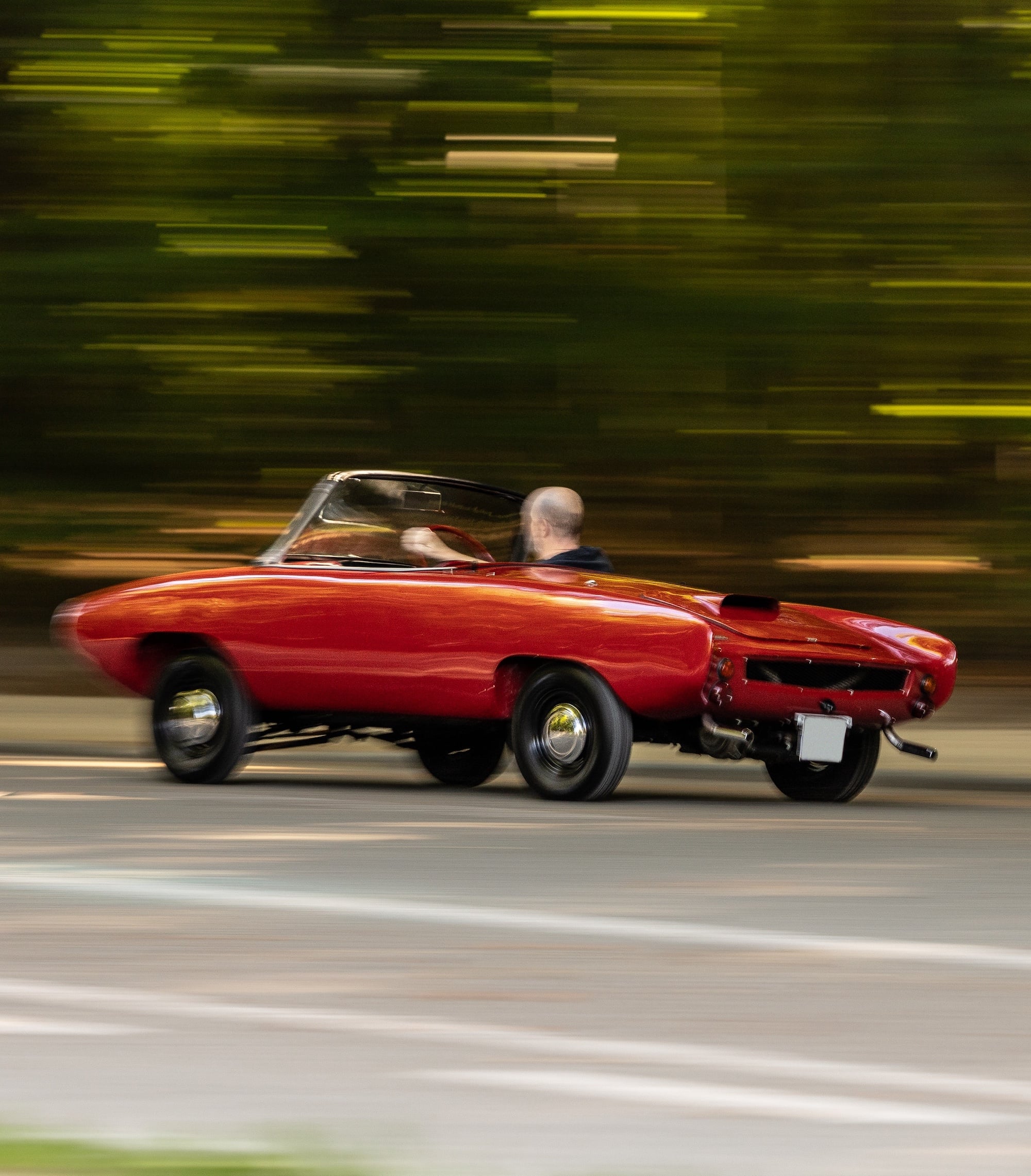
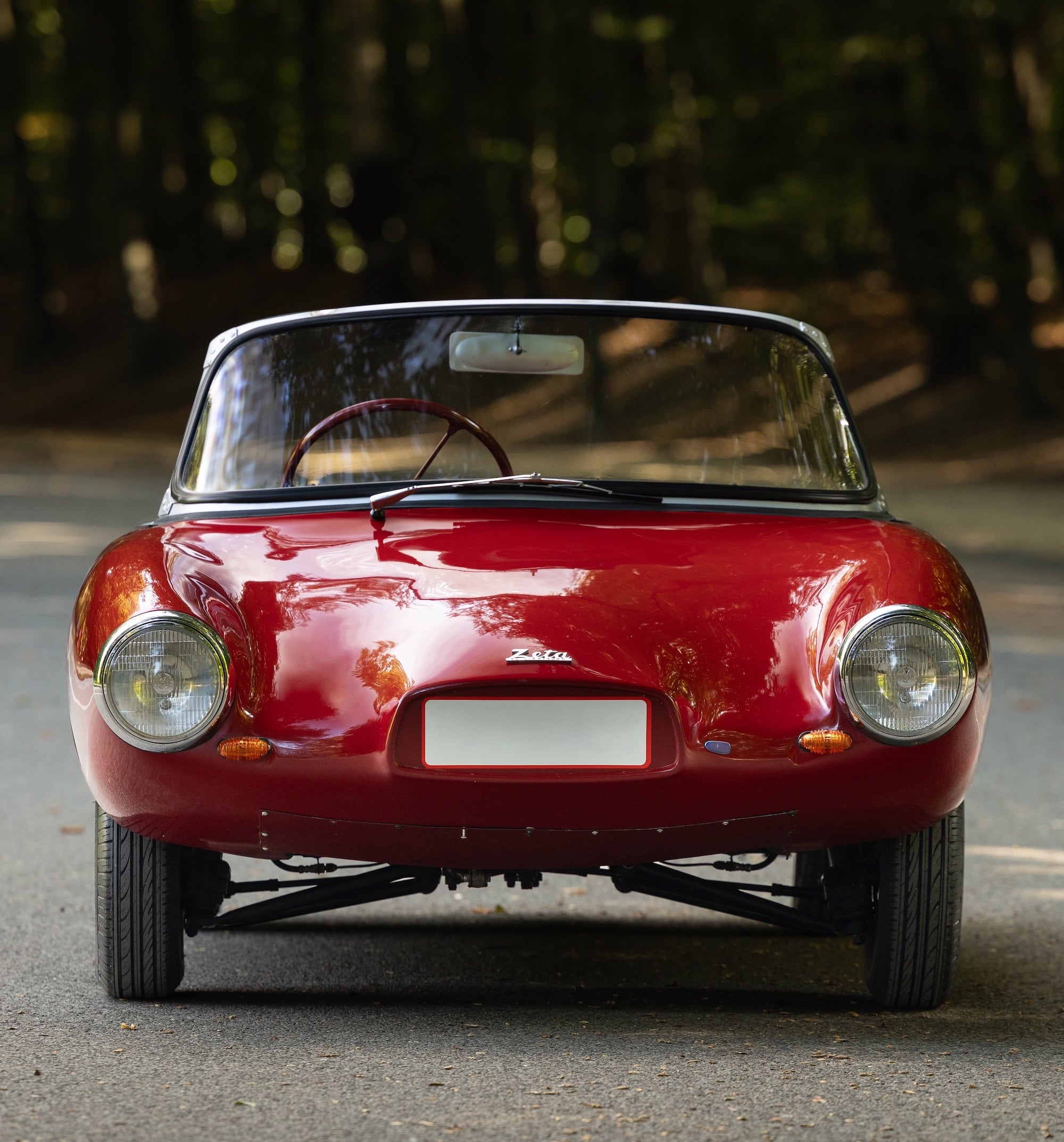
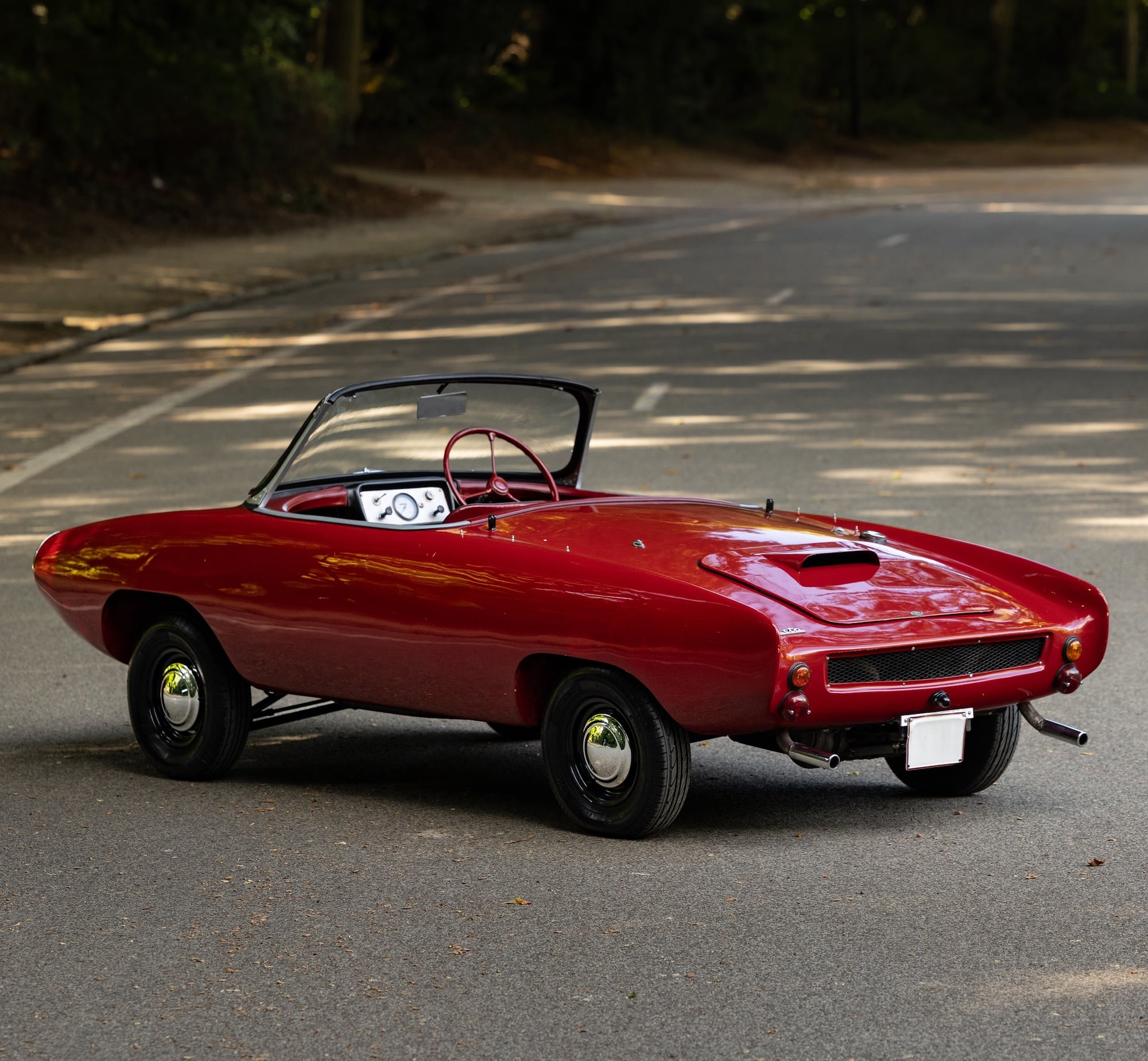
This is a 1964 Lightburn Zeta Sports, it’s a pint-sized roadster from Australia powered by a rear-mounted engine that drives the rear wheels through a 4-speed manual transmission.
It’s believed that only 28-50 of these cars were ever made, and they remain largely forgotten today, even in Australia. It’s not known how many have survived, however some estimates put the number in the single digits.
Fast Facts: A 1964 Lightburn Zeta Sports
- The 1964 Lightburn Zeta Sports is a rare Australian-built micro0sports-car, with production estimates ranging from 28 to 50 examples. Developed in Adelaide by a company better known for washing machines and cement mixers, the lightweight, fiberglass-bodied roadster had rear-wheel drive, independent four-wheel suspension, and a distinctive doorless design.
- The Zeta Sports evolved from the British Frisky Sprint, developed by Gordon Bedson and Keith Peckmore, who relocated to Australia in 1959. Powered by a rear-mounted Fichtel & Sachs two-stroke twin producing approximately 19 bhp, the 400 kg roadster had a 4-speed manual gearbox and a claimed 75 mph top speed.
- Although developed before Lightburn’s other cars, the Zeta Sports didn’t reach buyers until 1964. Sales were disappointing, and production ended in 1965 alongside the rest of the Zeta range. The car’s styling remains controversial, with conflicting claims about whether Giovanni Michelotti or Gordon Bedson designed it.
- The red 1964 example offered here reportedly dates from 1961 but wasn’t registered until September of 1964. Previously part of the Bruce Weiner Microcar Museum collection in Georgia, it was bought in February of 2013 and imported into Belgium. It’s now offered without reserve, estimated at £25,000 to £35,000 ($34,000 to $47,500 USD).
History Speedrun: The Lightburn Zeta Sports
Lightburn & Co was an Adelaide, Australia-based manufacturer of washing machines and cement mixers, so it might seem odd that they seemingly suddenly decided, in the early 1960s, to put their own sports car into production. The company had actually started out as a motor car repair garage that Albert Henry Lightburn opened behind his family home in the Adelaide suburb of Unley in 1919, so the automotive link had always been there.
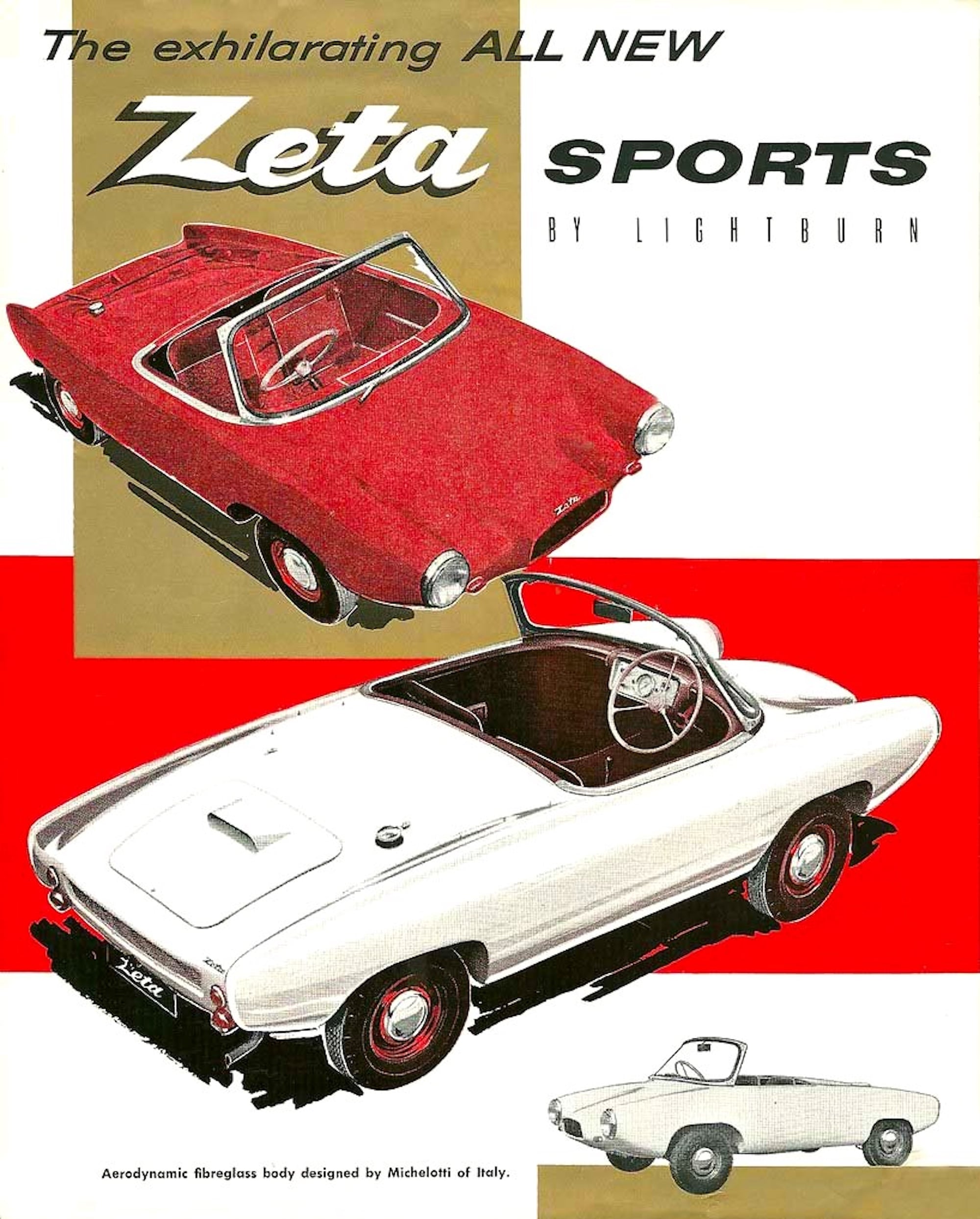
 The Lightburn Zeta Sports had its origins in the Frisky Sprint from England, which Gordon Bedson and his development engineer Keith Peckmore had developed at Henry Meadows Ltd in Wolverhampton. Bedson was a former Vickers aircraft engineer who had designed Stirling Moss’s 500cc Formula 3 car at Kieft. Image courtesy of Lightburn & Co.
Lightburn’s oldest son, Harold, had taken over the company after Albert died in October 1940 and, from 1941, moved it into manufacturing, starting with workshop equipment like Lightning hydraulic jacks. Washing machines followed in 1949, along with concrete mixers, and then fiberglass boats. Because why not.
The first of Harold Lightburn’s production cars to go on sale was the Zeta Runabout, a fiberglass sedan that launched in 1963 at £595 (about $1,330 USD). A 324cc Villiers two-stroke twin drove the front wheels, and there was no reverse gear – to back up, the driver stopped the engine, then restarted it running backwards, which allowed the regular forward gears to move it in reverse. It was a clever arrangement.
Zeta was the brand Lightburn used for all its cars, so the sedan was sold as the Zeta Runabout, the pickup as the Zeta Utility, and the roadster as the Zeta Sports. The timeline of the various model releases is a little haphazard, the Zeta Sports was developed first, but went on sale after the Zeta Runabout sedan and the Zeta Utility. No one is quite sure why, and the actual reason seems to be lost to history.
The Lightburn Zeta Sports Debuts
The Lightburn Zeta Sports had its origins in the Frisky Sprint from England, which Gordon Bedson and his development engineer Keith Peckmore had developed at Henry Meadows Ltd in Wolverhampton. Bedson was a former Vickers aircraft engineer who had designed Stirling Moss’s 500cc Formula 3 car at Kieft.
The Sprint appeared at the Earls Court show on October the 22nd, 1958 – it was a low fiberglass roadster on a tubular steel ladder chassis, with independent suspension at all four corners and a 36 bhp, 492cc three-cylinder Excelsior two-stroke in the tail. Harold Lightburn loved the car, he approached both men at the show, and in March of 1959 they left England for Adelaide. Frisky Cars went into liquidation later that year, and the Sprint never reached production in the UK.
Lightburn had never built a car before the Zeta Sports, and the project was slow to get under way. Bedson and Peckmore filled the time with a Norton-powered 750 special, which they tested around the factory and Bedson raced at Port Wakefield in October of 1959.
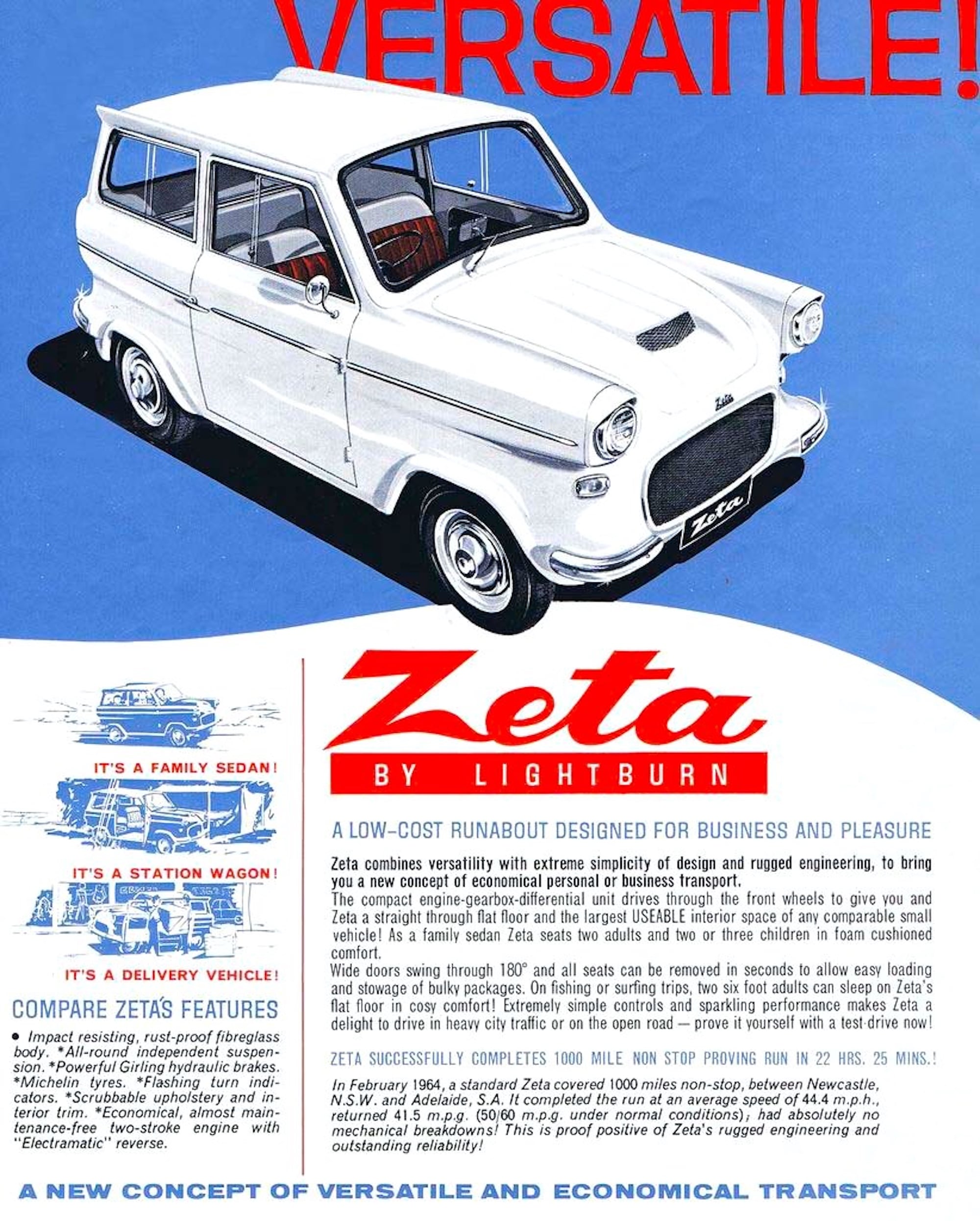
The first of Harold Lightburn’s production cars to go on sale was the Zeta Runabout, a fiberglass sedan that launched in 1963 at £595 (about $1,330 USD). Image courtesy of Lightburn & Co.
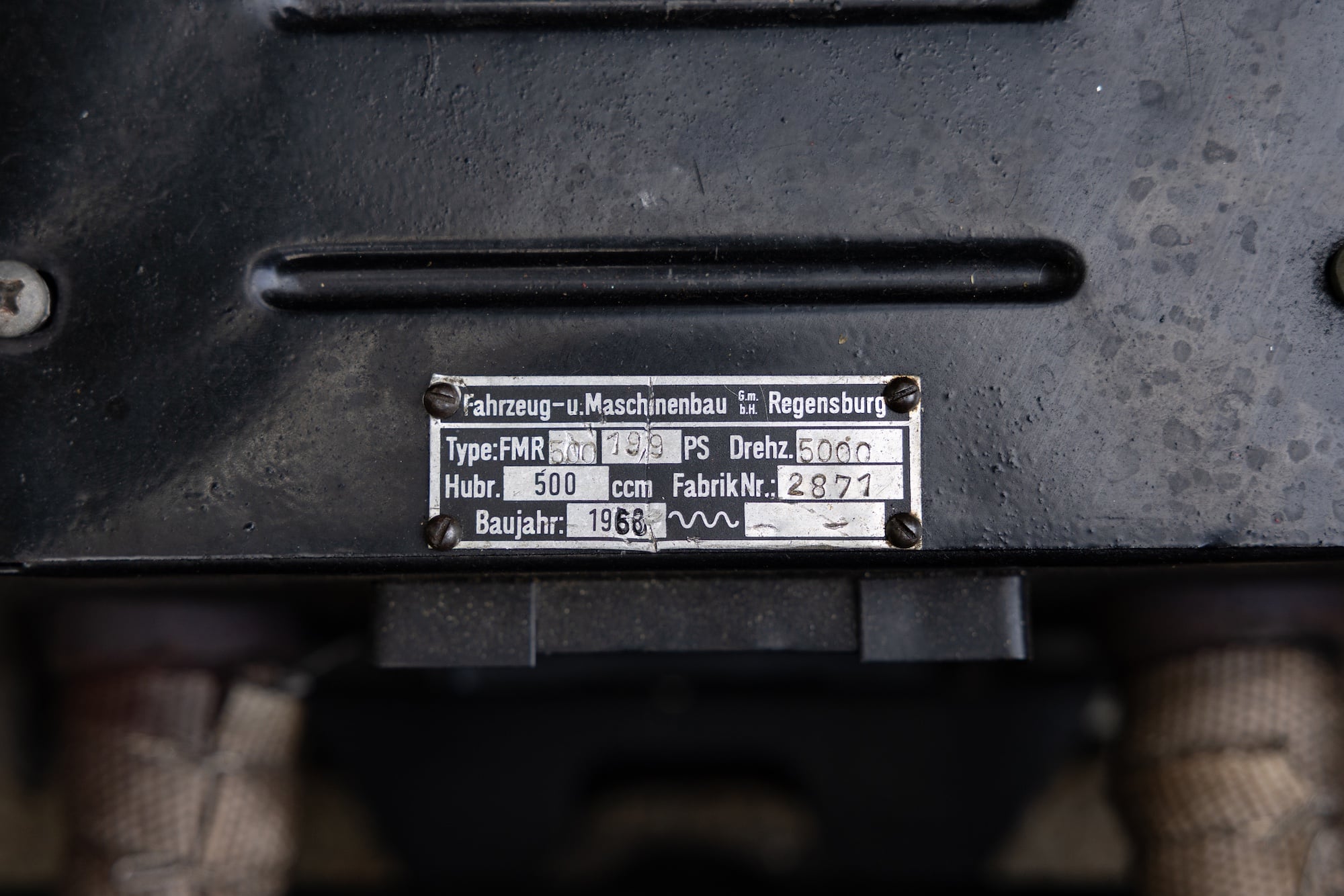
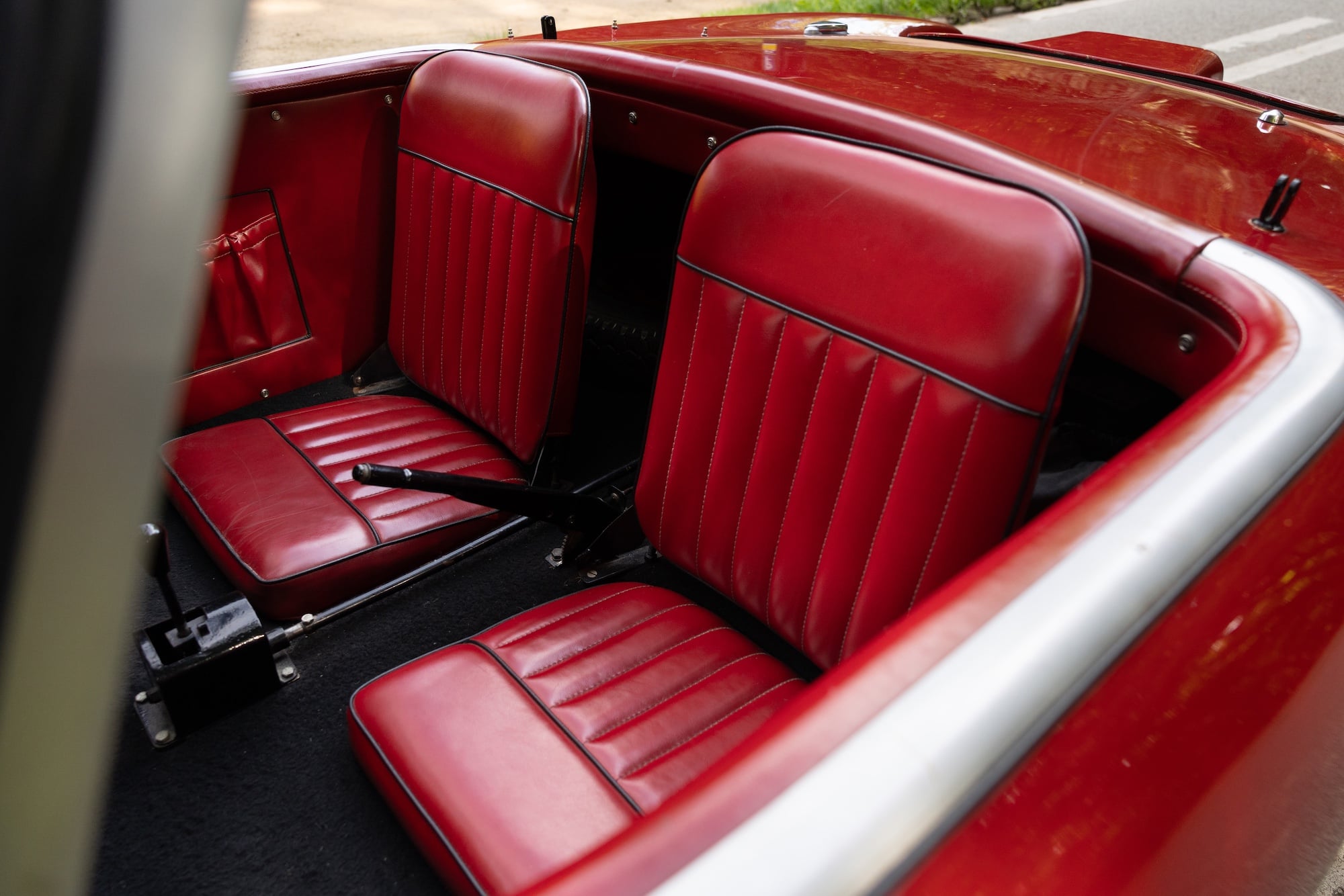
The production car kept the Sprint’s outline but lost its shallow bottom-hinged doors, they were deleted for better bodyshell strength, along with its small Perspex racing screen. Bedson reportedly brought 50 engines from FMR, the Regensburg company that had taken over production of Messerschmitt’s bubble cars and built the four-wheeled Tg500 “Tiger.”
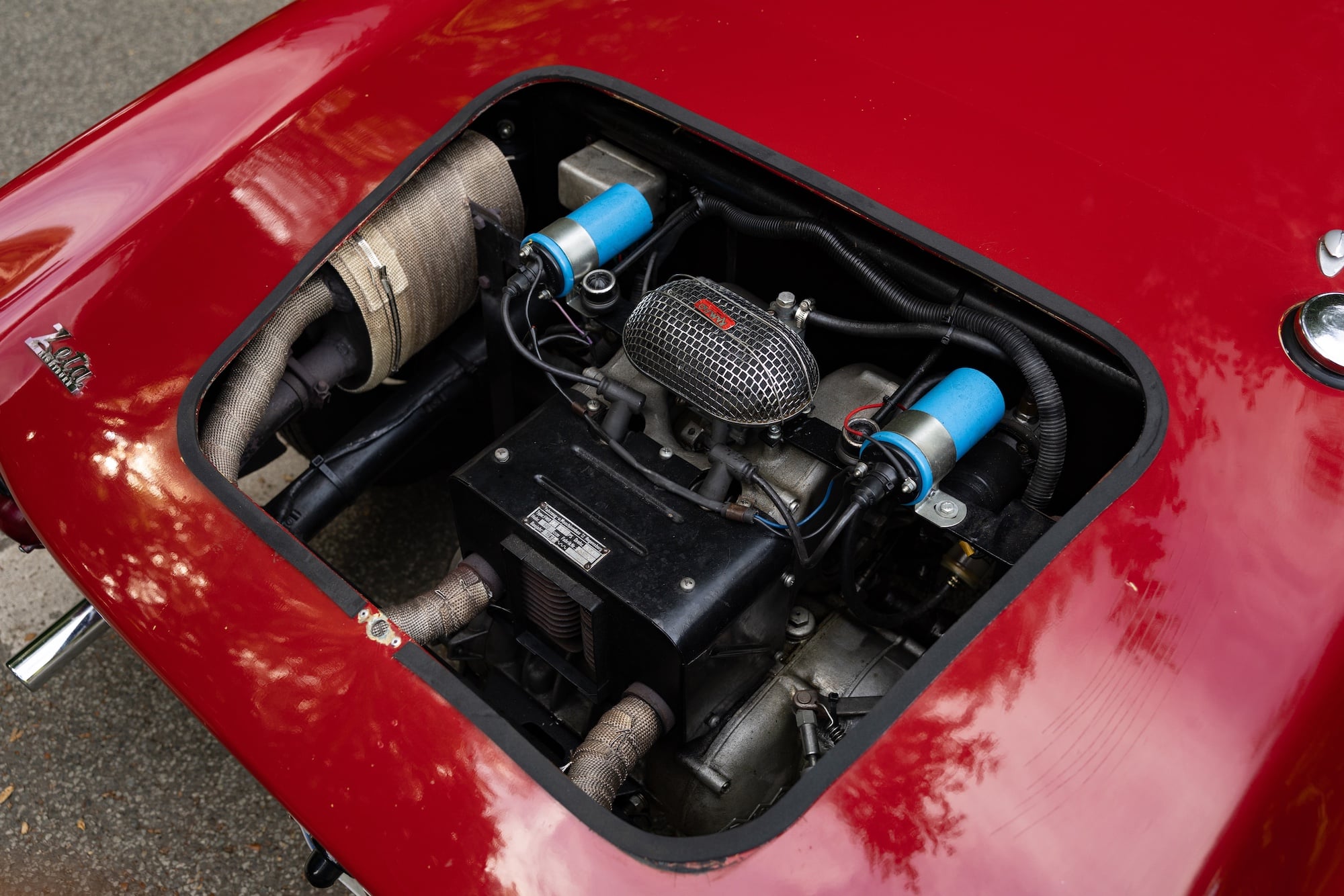
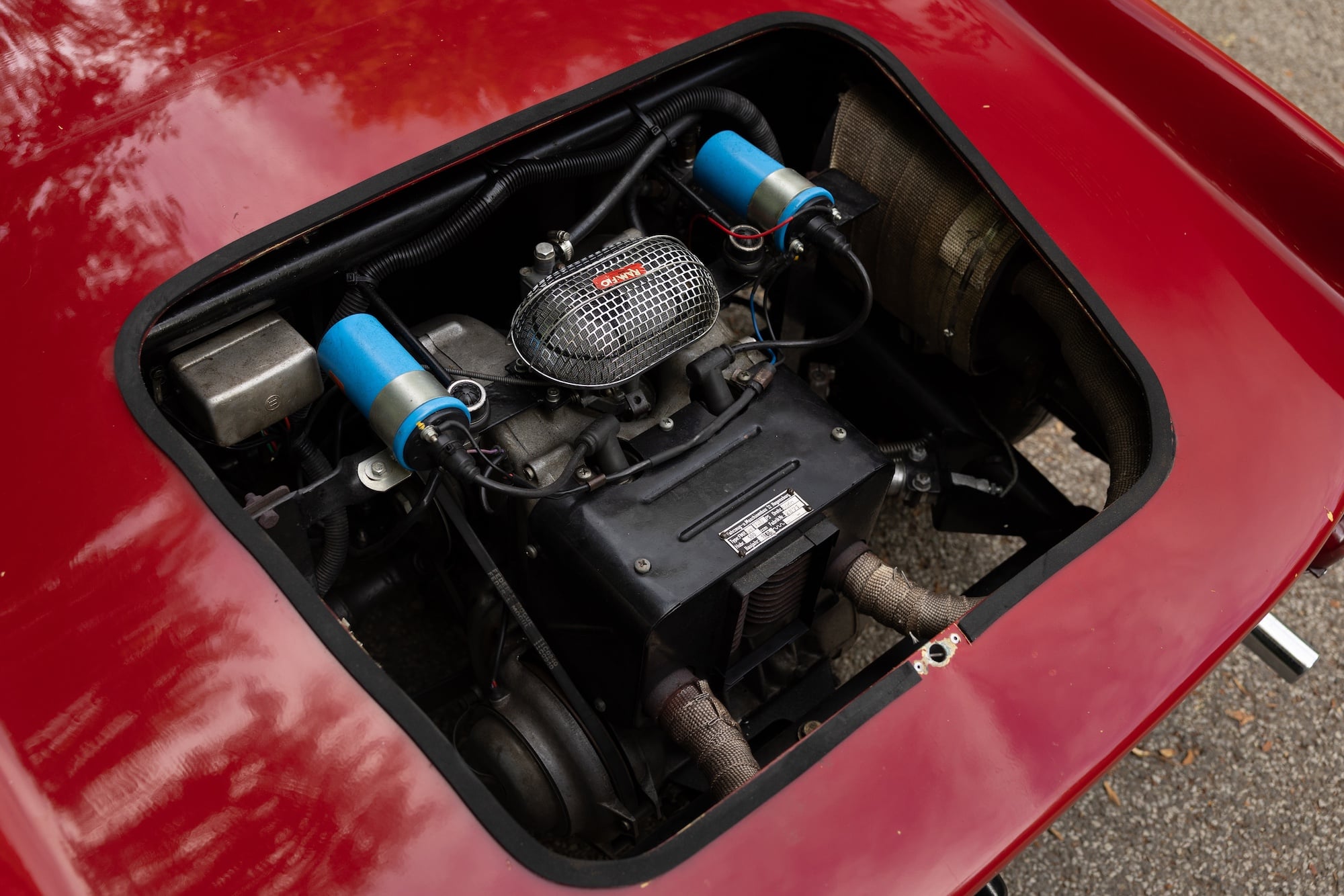
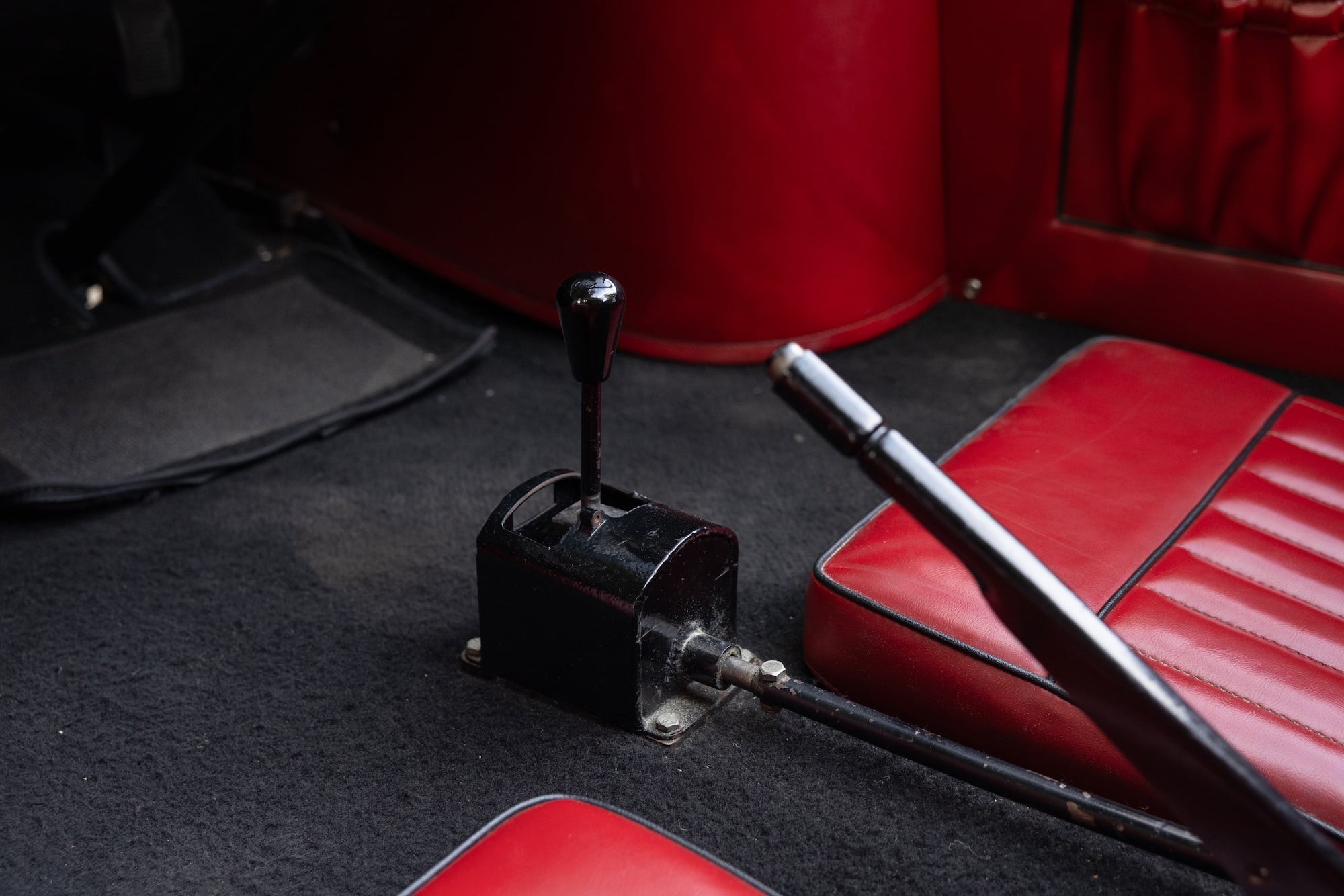
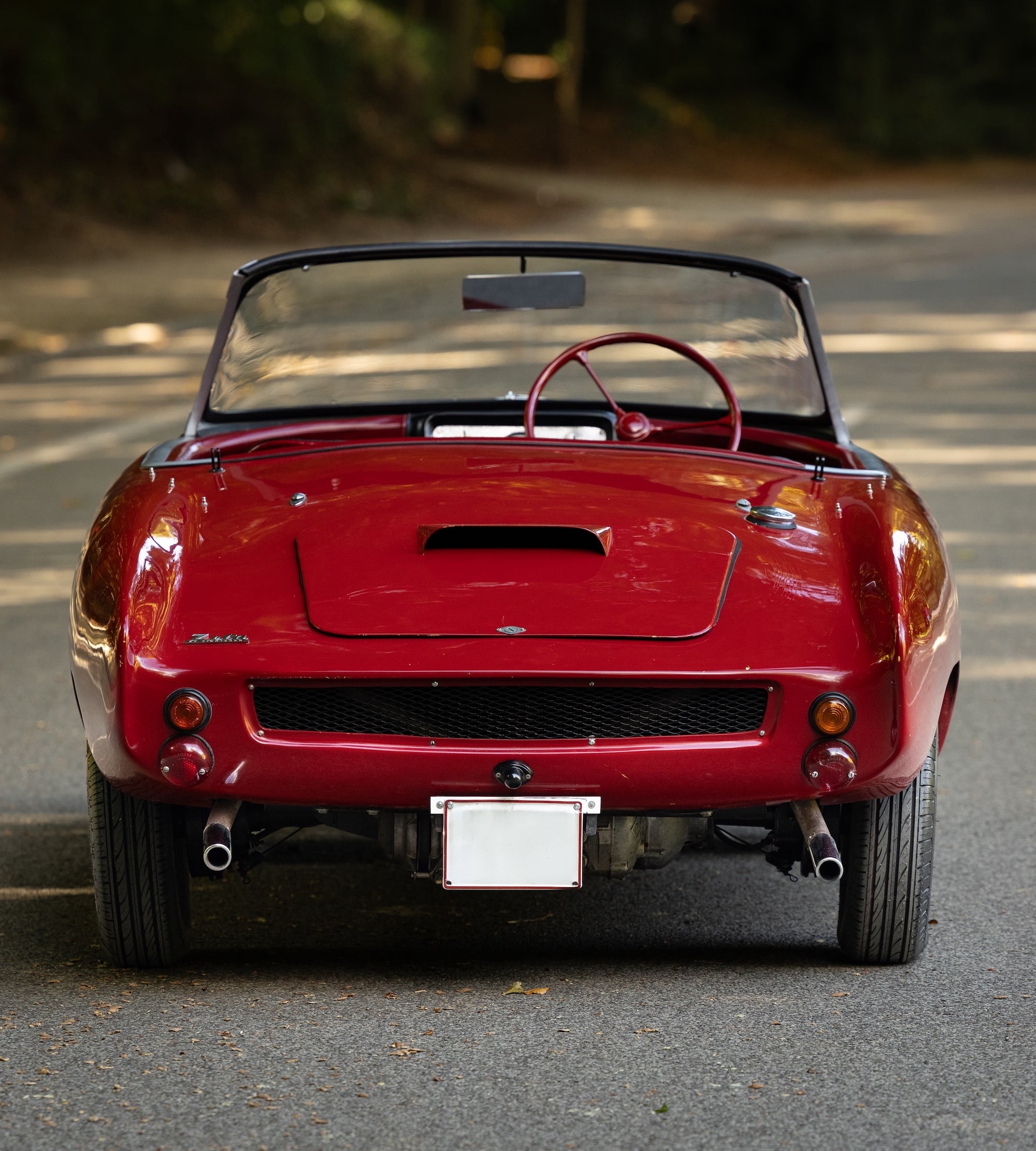
Designed by Fichtel & Sachs, the unit was a 493cc air-cooled two-stroke twin with a 67 mm bore and 70 mm stroke. It made about 19 bhp and sat at the back of the Zeta Sports in unit with the Tg500’s 4-speed gearbox.
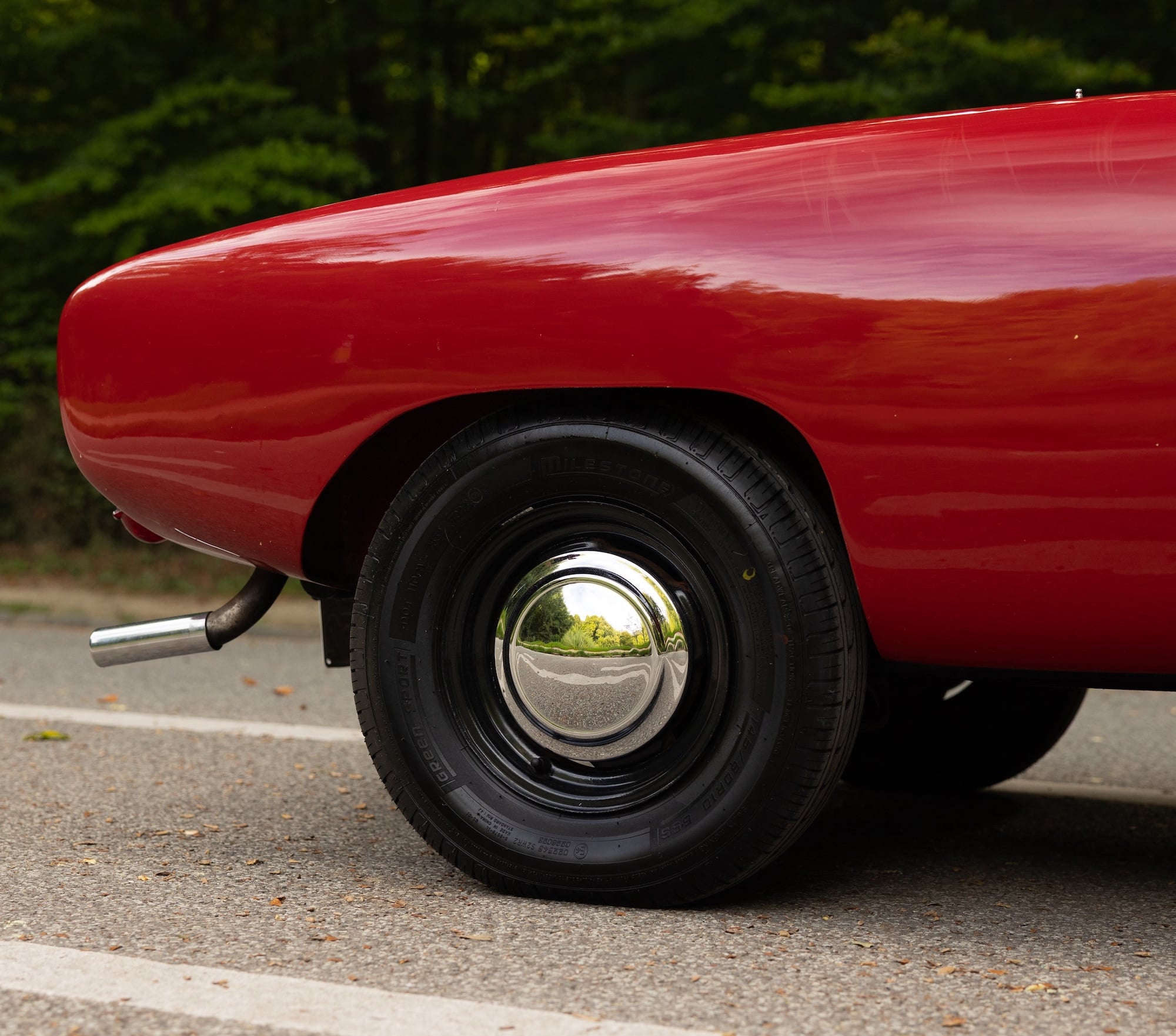
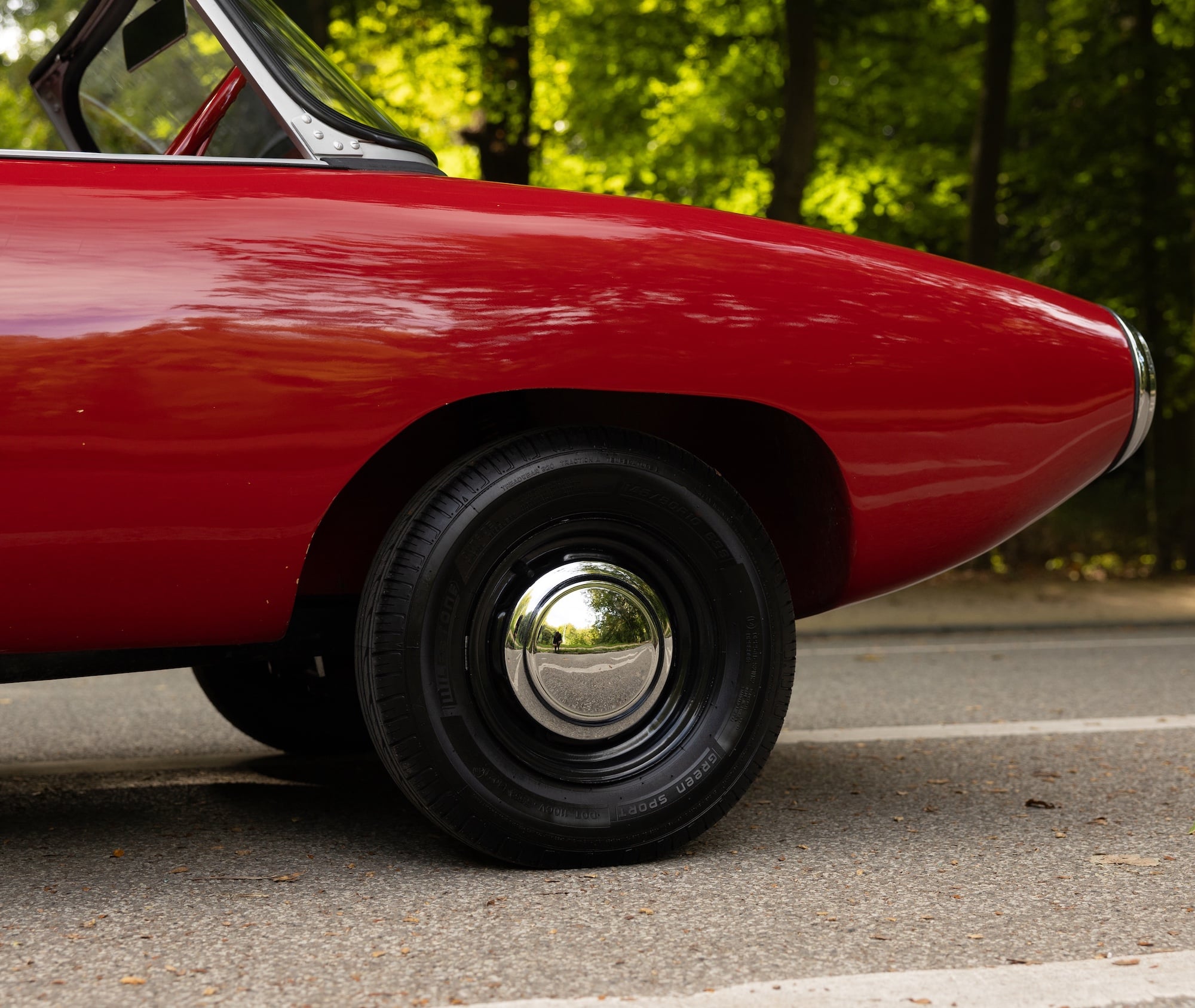
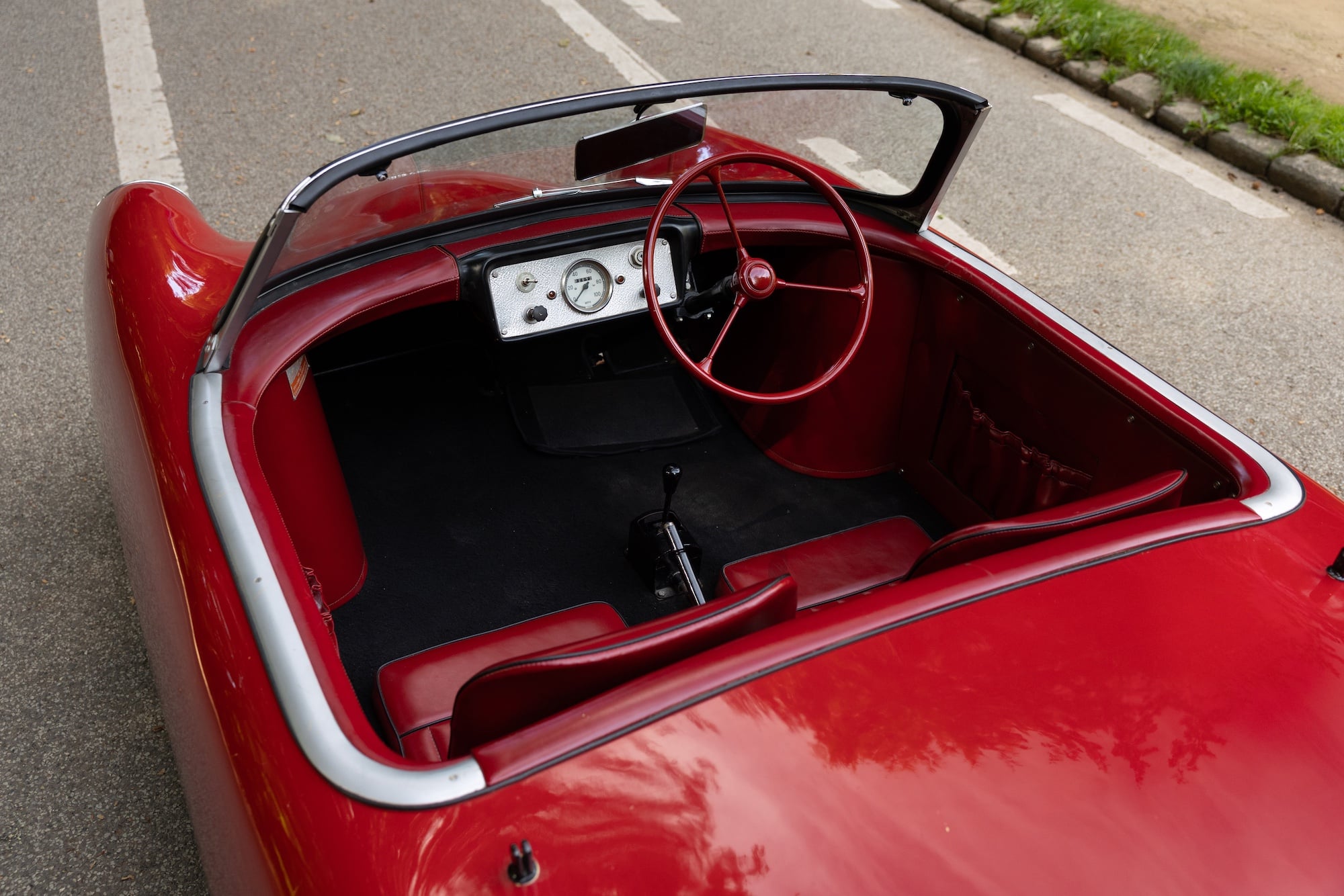
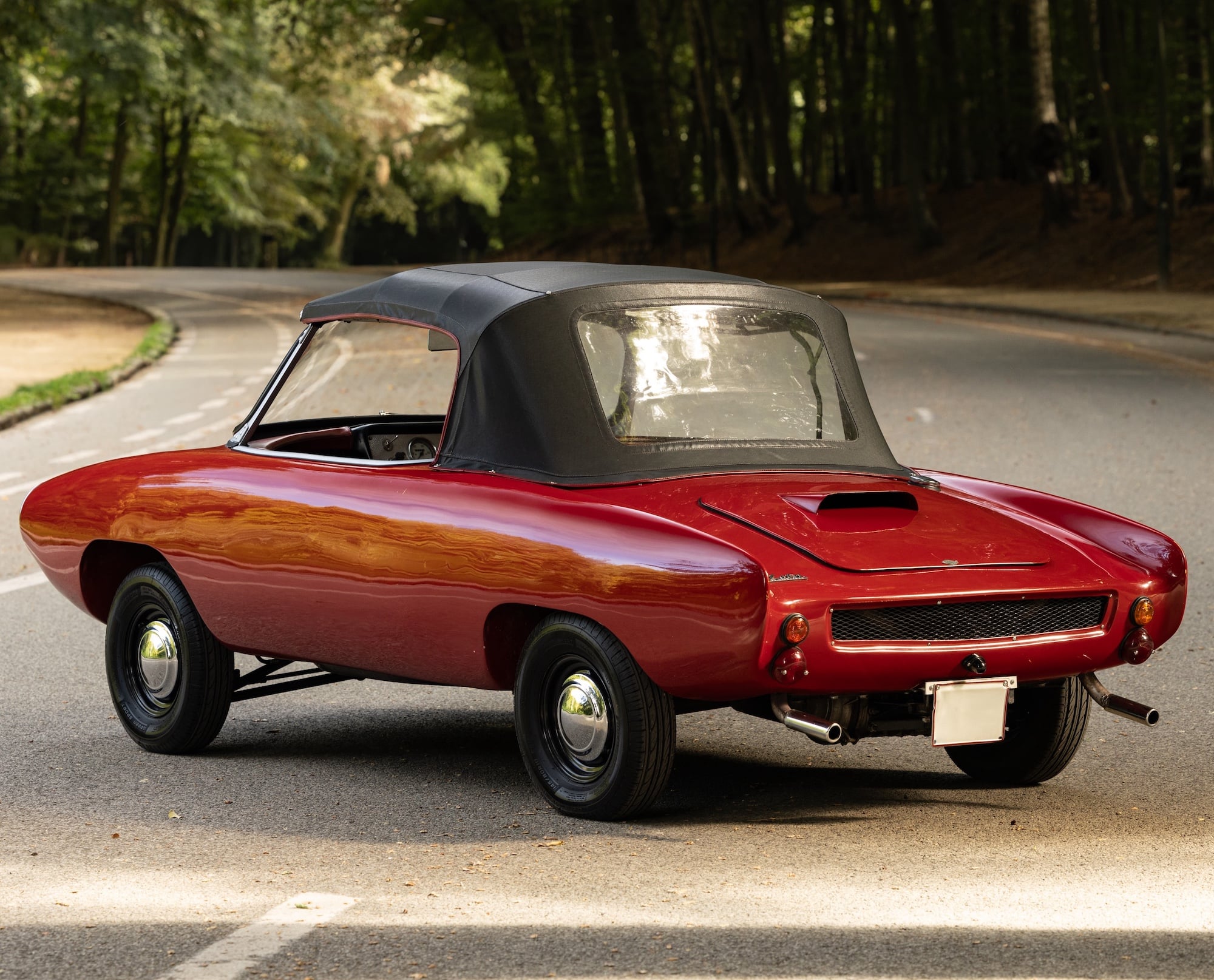
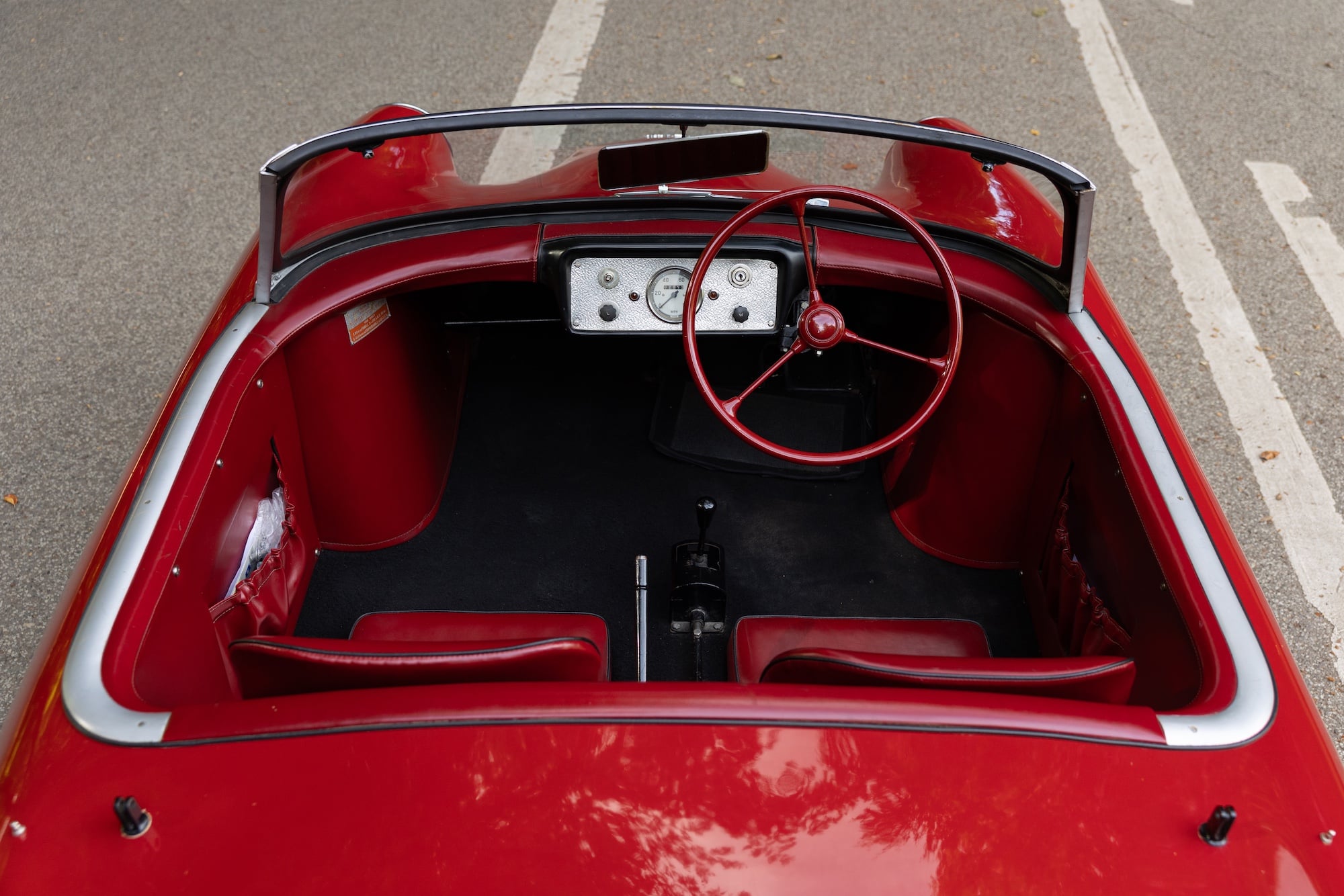
Built with a lightweight fiberglass body and a steel chassis, the Zeta weighed only 880 lbs (400 kgs) and rode on 10-inch wheels with drum brakes all round. It had no bumpers, the two bucket seats were mounted flat on the floor, and the engine was reached through a panel held in place by quarter-turn fasteners.
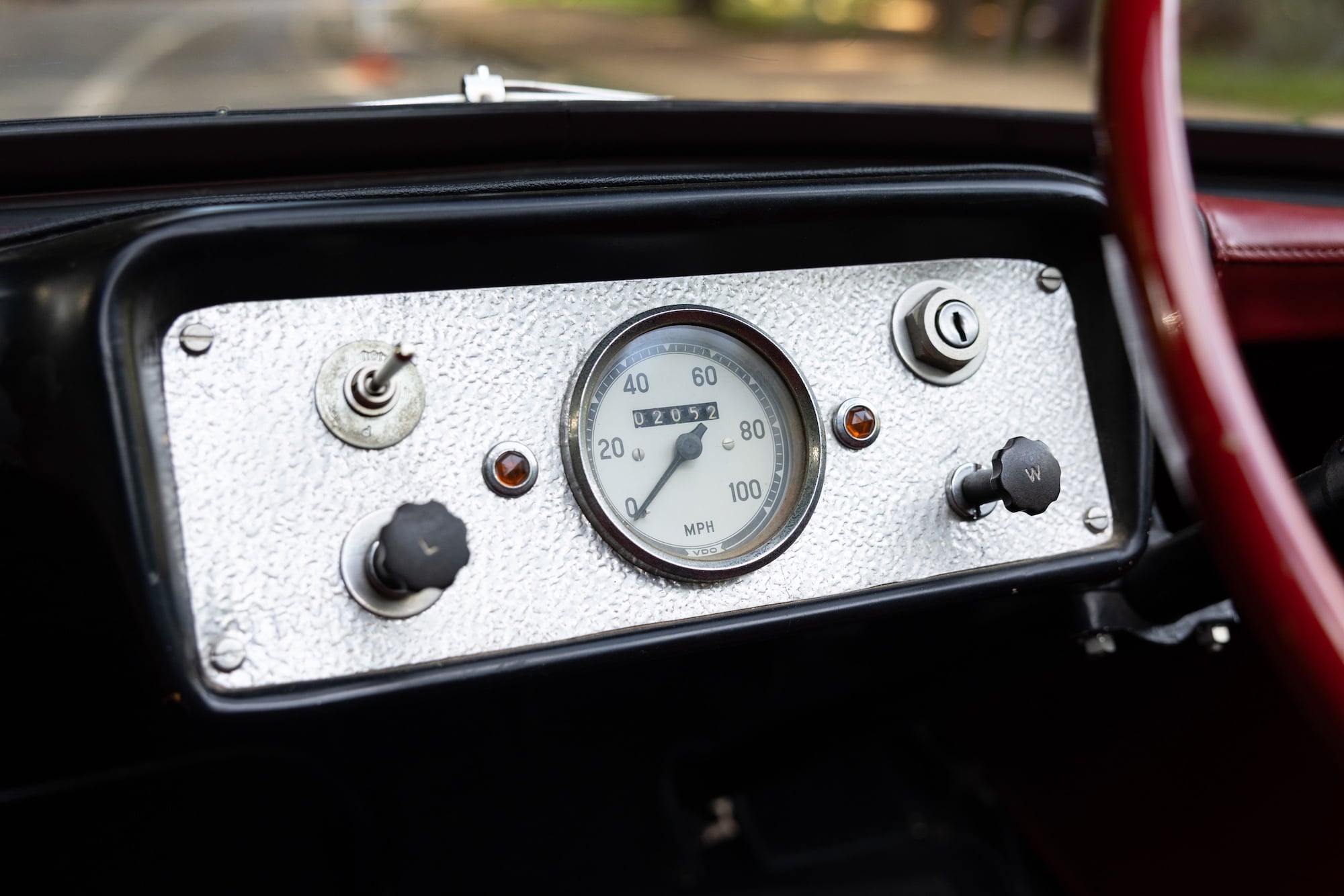
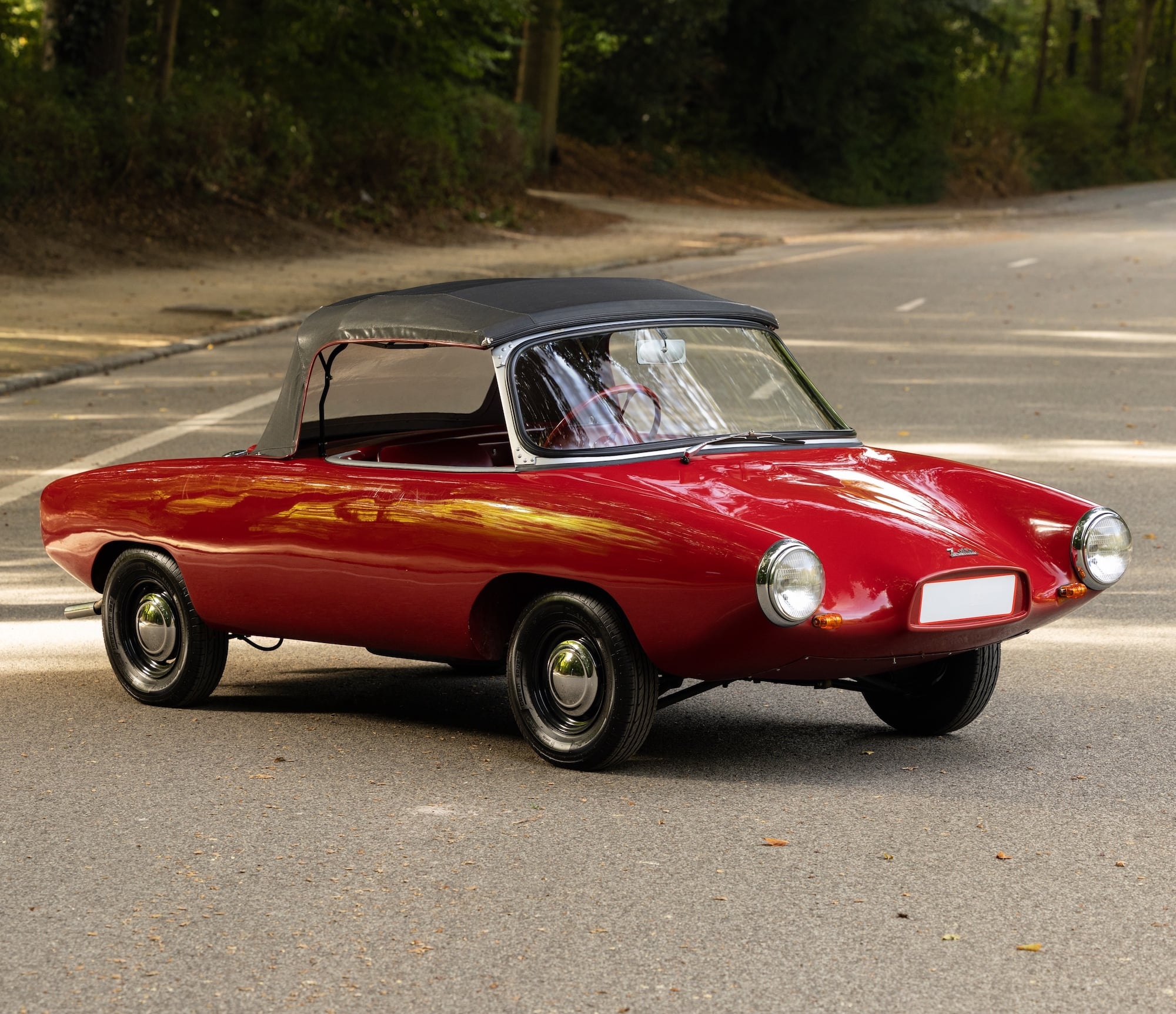
The headlights sat too low for New South Wales lighting rules, so some cars carried an extra pair on the hood, and looked a little ridiculous as a result. Claimed performance was 0 to 50 mph in 12 seconds and a top speed of about 75 mph (120 km/h), these were highly-respectable numbers for a car of this type at the time.
The Michelotti Controversy
Lightburn’s brochure for the car credited the styling to Giovanni Michelotti, one of the leading automotive designers of the time, who’s said to have worked on earlier Frisky models. This is a little controversial however, and the Frisky Register says Michelotti had no part in the Sprint or the Zeta Sports, and it credits the design of the car to Bedson alone. Bedson had left before the car reached buyers, after disagreements with Harold Lightburn over styling and some other factors.
Low Sales Numbers + The End
By 1964 Lightburn was Alfa Romeo’s Australian distributor, and it had Alfa dealers ready to sell the Sports. Everything seemed primed and ready, but orders were thin. The National Motor Museum in Birdwood believes only 28 were sold in the end, the Frisky Register puts the number built at 50.
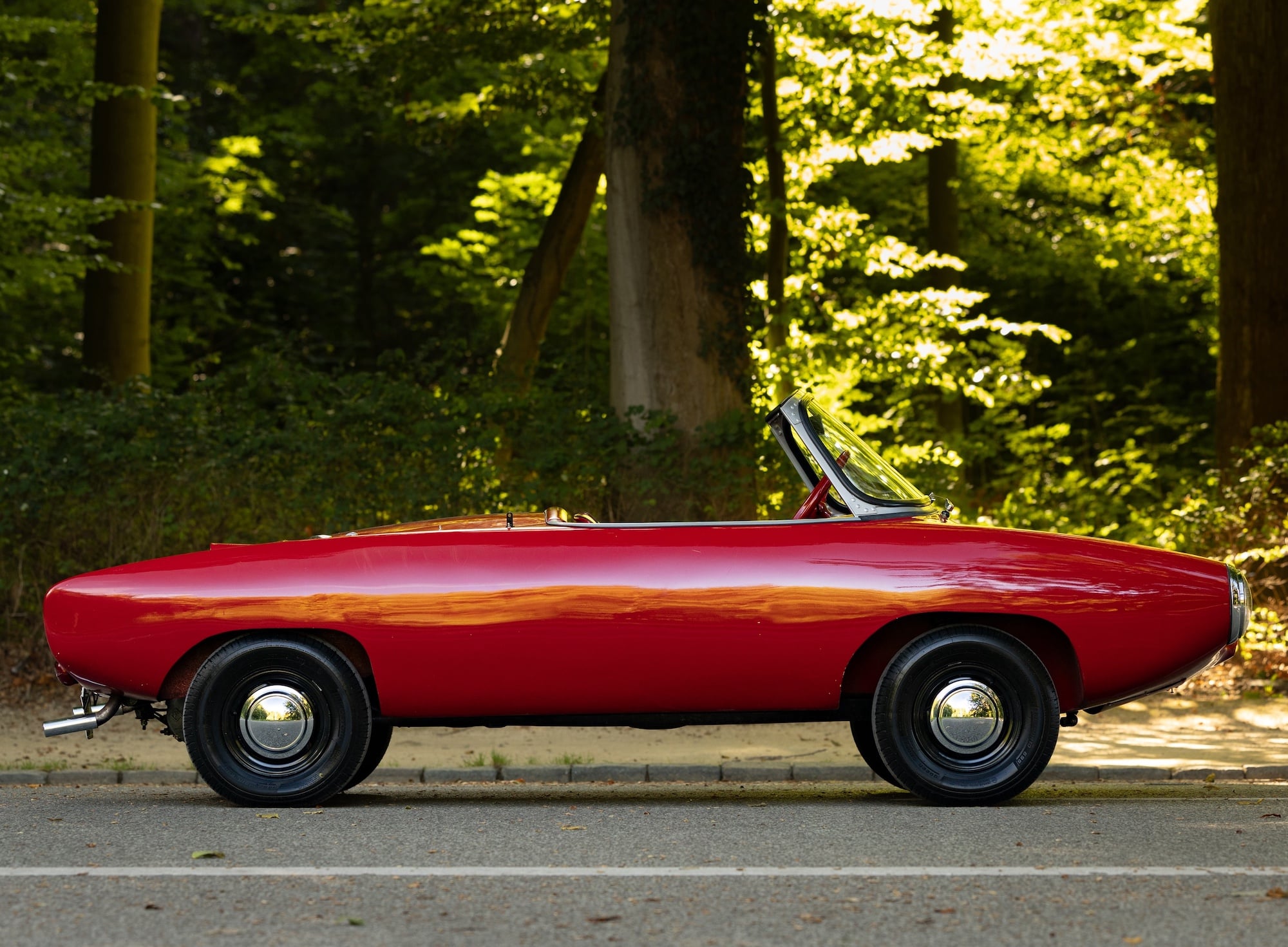
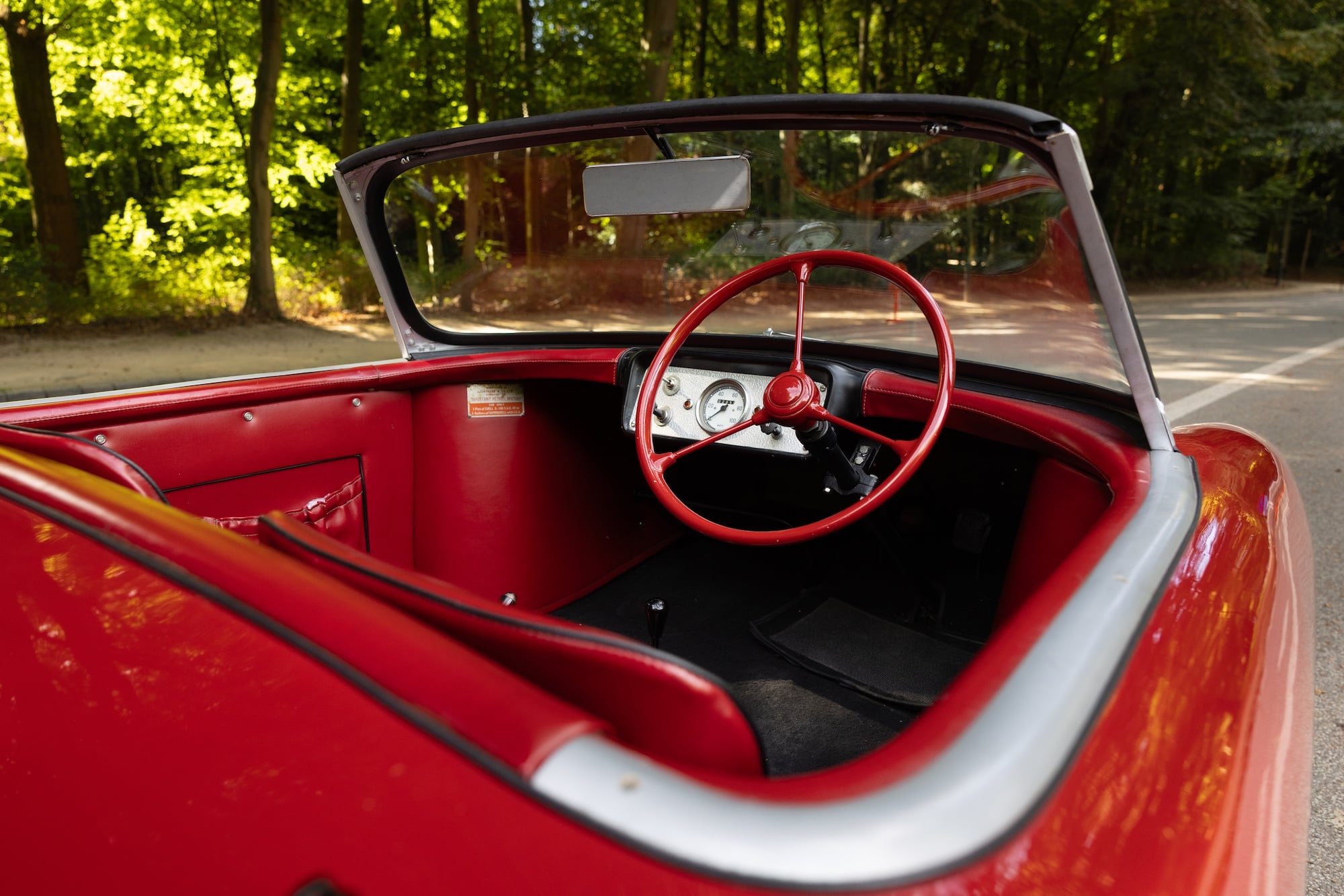
This is a 1964 Lightburn Zeta Sports, it’s a pint-sized roadster from Australia powered by a rear-mounted engine that drives the rear wheels through a 4-speed manual transmission.
Lightburn’s Alfa Romeo arrangement ended in August of 1965, after only about 65 cars had been sold, and Zeta production stopped that same year. Across sedans, utilities, and the Sports, Lightburn made roughly 400 Zetas in total.
The obvious comparison for the Zeta Sports was the Goggomobil Dart, a fiberglass two-seater, usually doorless, that Bill Buckle’s company assembled in Sydney on imported Goggomobil chassis from 1959. Buckle built about 700 before stopping in September of 1961, after the locally built Mini arrived and Dart sales collapsed. It’s possible that it was the Goggomobil Dart that had blunted demand for Lightburn’s cars.
It’s exceedingly unusual to see a Zeta come up for sale nowadays, and it’s not known how many have survived to the current day. Most remain in Australia, though there is at least one Zeta Sports in the UK, and another in the USA.
The 1964 Lightburn Zeta Sports Shown Here
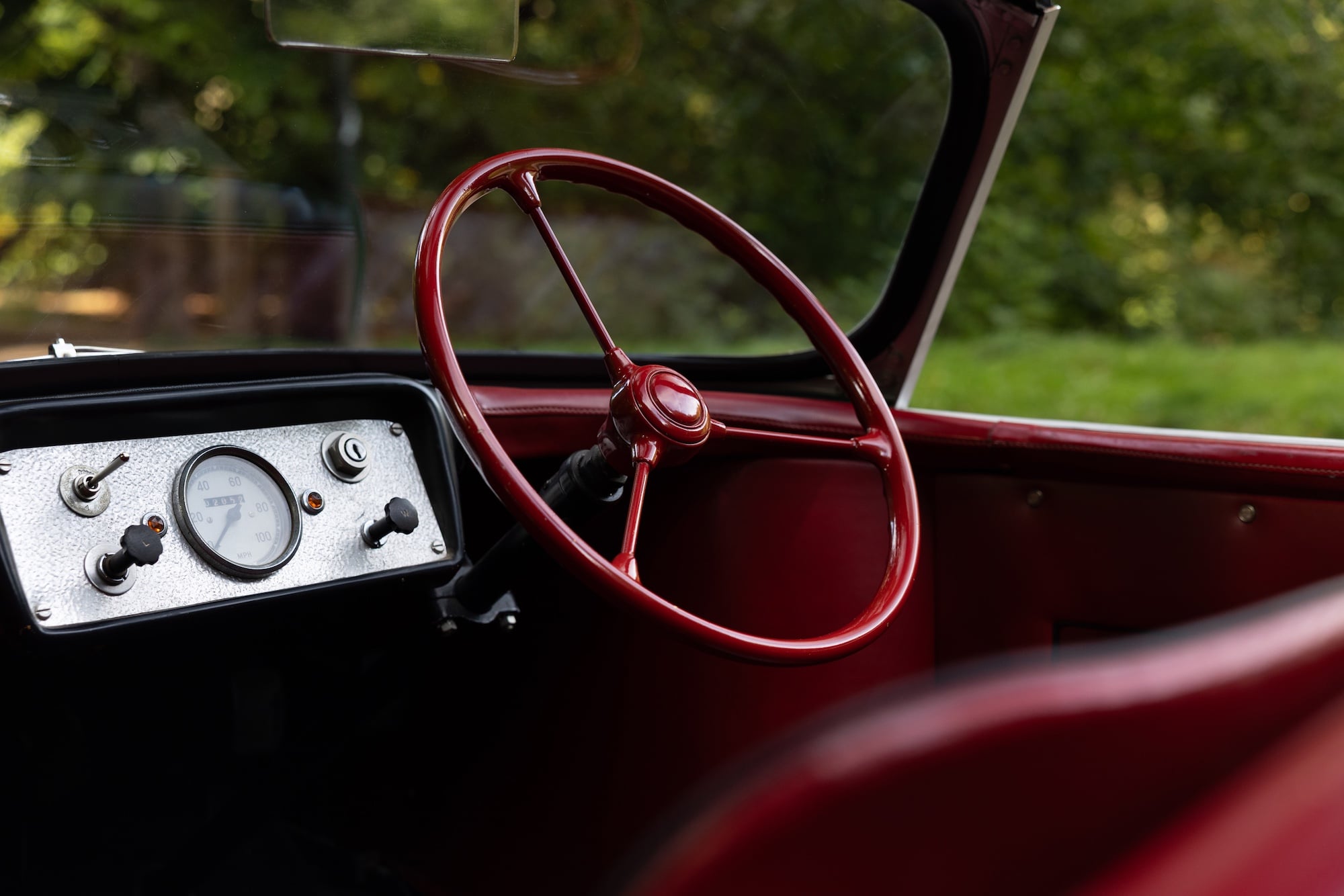
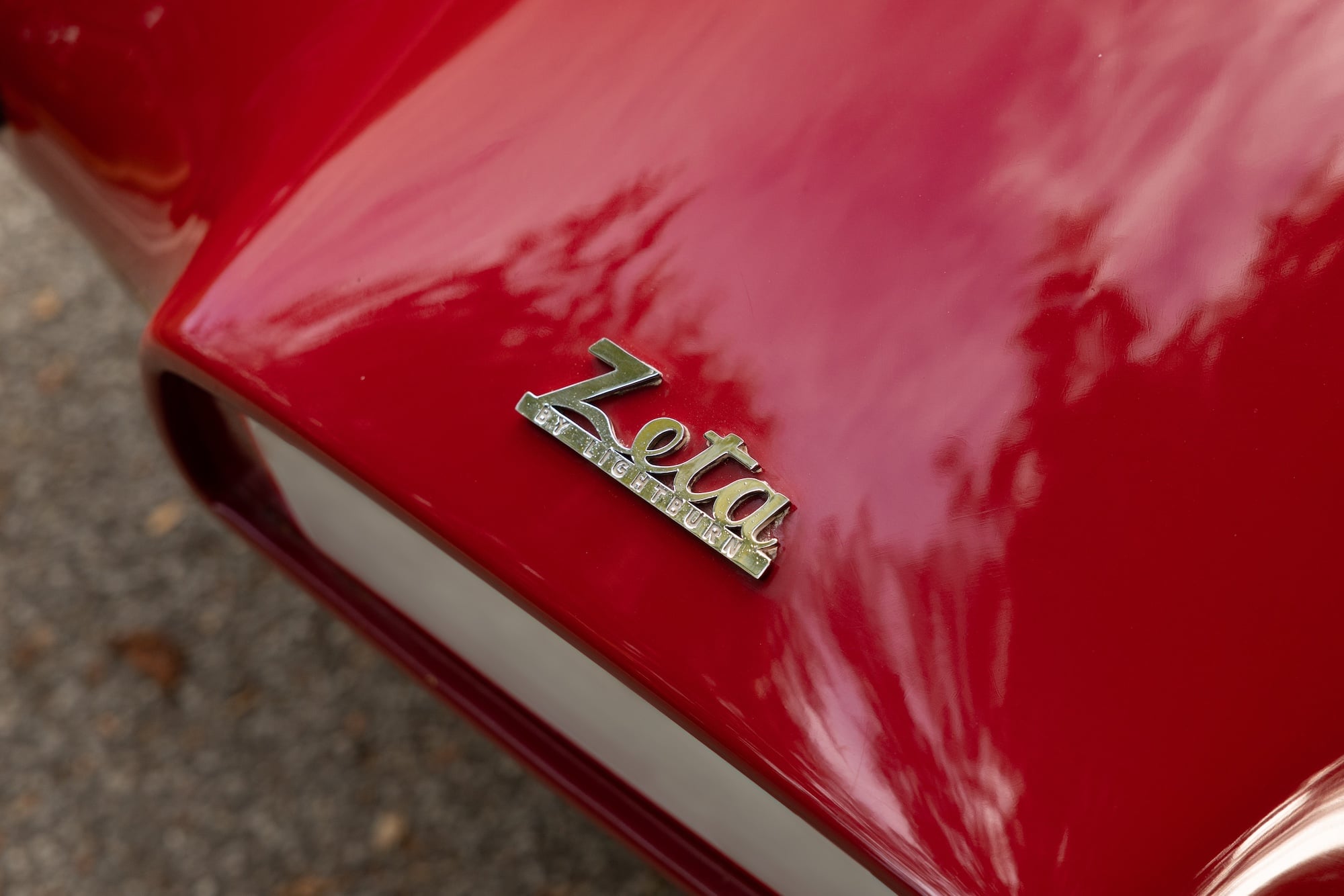
This is an original 1964 Lightburn Zeta Sports, it’s one of very few produced by Lightburn in Adelaide, Australia. Finished in red with a black folding roof, it’s powered by a correct 498cc Fichtel & Sachs twin-cylinder engine producing a claimed 19 bhp.
Interestingly, although it was reportedly built in 1961, the car wasn’t first registered until September of 1964. Perhaps a clue as to why the Zeta Sports was developed before the marque’s other models but officially went on sale after them.
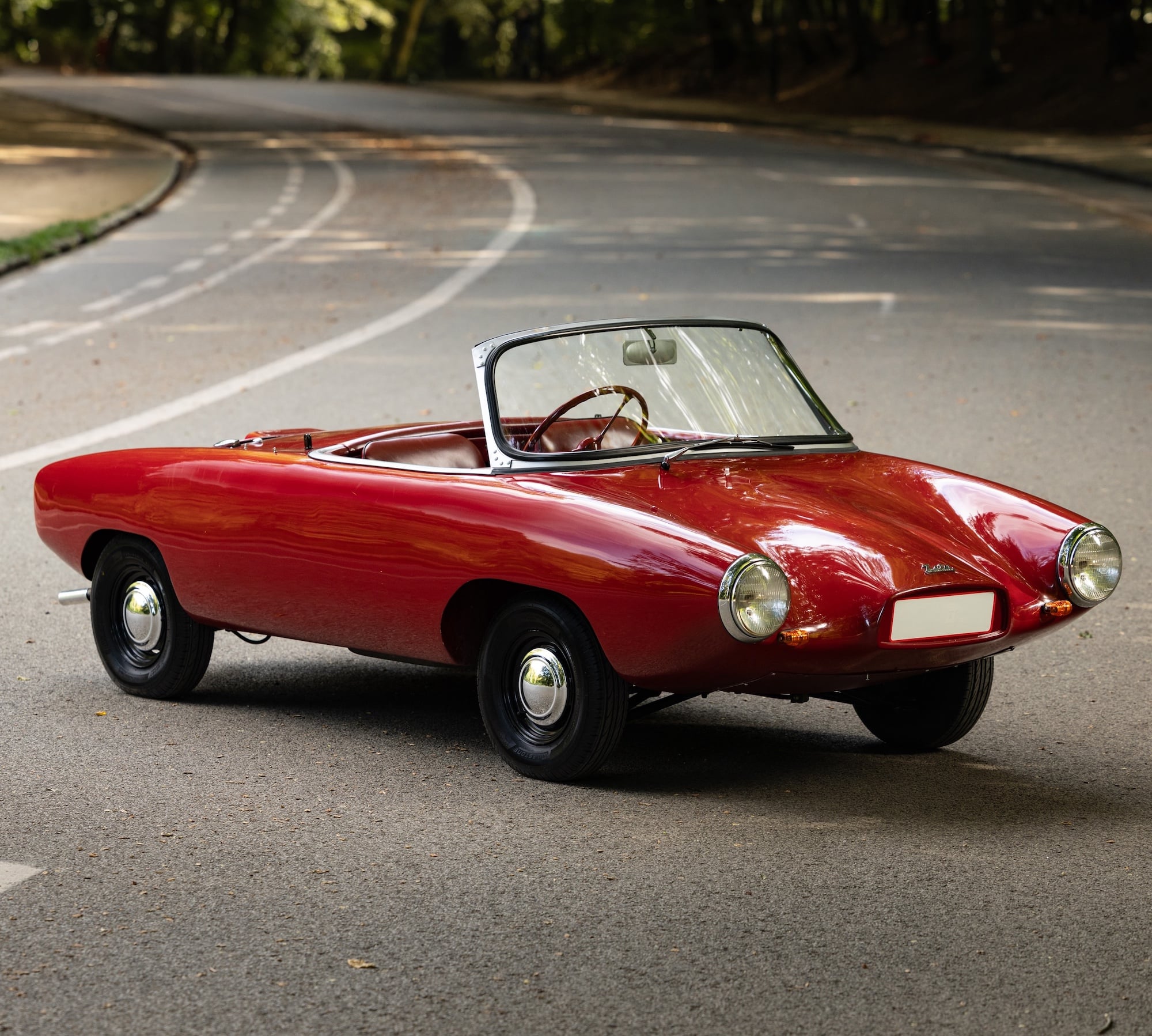
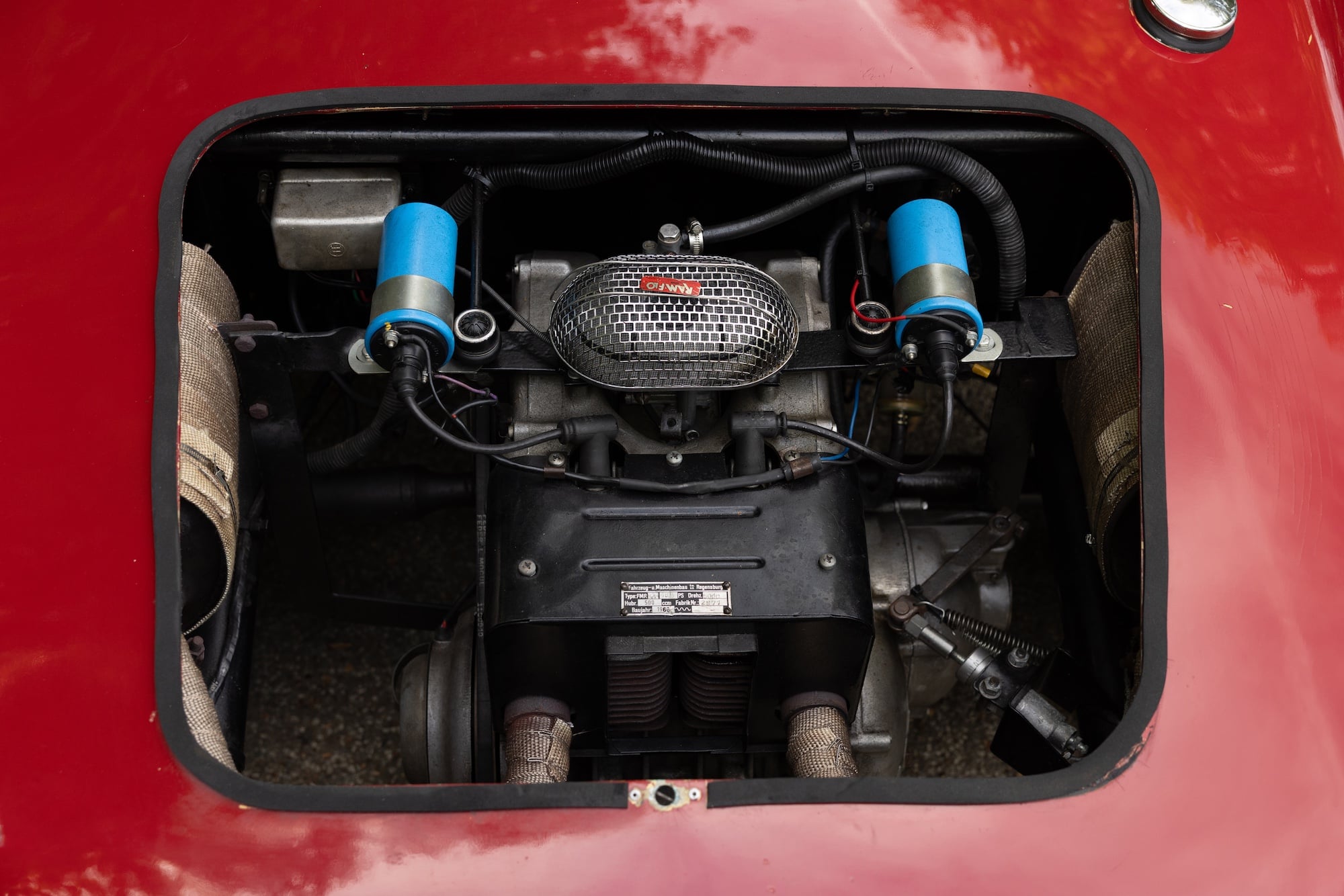
This is an original 1964 Lightburn Zeta Sports, it’s one of very few produced by Lightburn in Adelaide, Australia. Finished in red with a black folding roof, it’s powered by a correct 498cc Fichtel & Sachs twin-cylinder engine producing a claimed 19 bhp.
This car was previously part of the Bruce Weiner Microcar Museum collection in Georgia, United States. It was then bought by its current owner in February of 2013 and subsequently imported into Belgium, where it’s remained.
It’s now being offered for sale without reserve, with a pre-auction estimate of £25,000 to £35,000, which works out to approximately $34,000 – $47,500 USD. If you’d like to read more about it or register to bid you can visit the listing here.
Images: Tom Gidden ©2026 Courtesy of RM Sotheby’s

Articles that Ben Branch has written have been covered on CNN, Popular Mechanics, Smithsonian Magazine, Road & Track Magazine, the official Pinterest blog, the official eBay Motors blog, BuzzFeed, Autoweek Magazine, Wired Magazine, Autoblog, Gear Patrol, Jalopnik, The Verge, and many more.
Silodrome was founded by Ben back in 2010, in the years since the site has grown to become a world leader in the alternative and vintage motoring sector, with well over a million monthly readers from around the world and many hundreds of thousands of followers on social media.