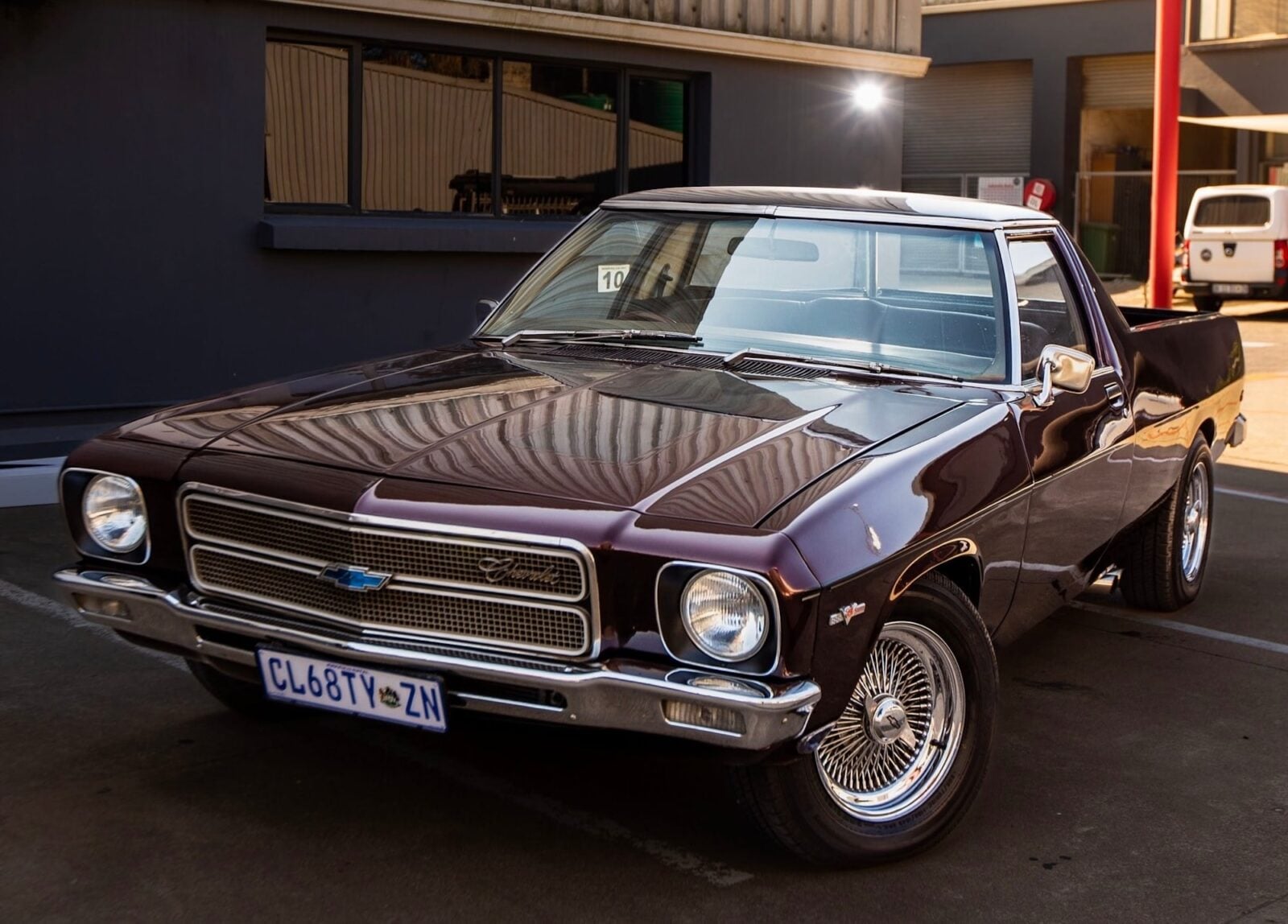
This is a rare South African-market-only 1972 Chevrolet El Camino, and if you think it looks an awful lot like a Holden ute, you’re more right than you know.
Known as “coupe utilities” in the US, “utes” in Australia, and “bakkies” in South Africa, this vehicle type has largely faded from production now, replaced with more conventional pickup trucks of all shapes and sizes.
Fast Facts: The South African 1972 El Camino
- The South African Chevrolet El Camino was a locally assembled Holden ute sold under Chevrolet branding from 1969. Early versions had unique quad-headlight front ends and South African trim, while engines included Chevrolet inline-sixes and Holden’s 308 cubic inch V8, creating an unusual mix of Australian and American GM parts.
- GM South Africa increasingly turned to Holden as rising local-content rules and Canadian kit costs made traditional American models less practical. Holden CKD vehicles were assembled in Port Elizabeth, with locally tailored names including Kommando and Constantia. Ford followed a similar strategy, selling Australian Falcon utilities locally under the Ranchero name.
- The Holden HQ-based El Camino arrived in South Africa under the AQ internal code, offering 202 and 250 cubic inch sixes or the 308 V8. Holden exports declined after the 1973 Oil Crisis and ended by 1978. Opel-derived Chevrolets then replaced the Holden-based range, while GM later withdrew from South Africa.
- The 1972 El Camino shown here has a 308 cubic inch Holden V8 and 3-speed Tri-Matic automatic. It later received a bare-metal metallic burgundy restoration, upgraded brakes, power steering, air conditioning, electric windows, side-exit exhaust, leather bucket-style seating, and custom French Oak dashboard and load-bed trim.
History Speedrun: The South African Chevrolet El Caminos
From 1969 until the late 1970s, General Motors South Africa sold a Chevrolet El Camino that had no body or platform relationship to the American pickup, despite sharing the exact same name. As a result, there has been some confusion in collector circles when an authentic El Camino surfaces for sale that looks nothing like the mainstream American models.
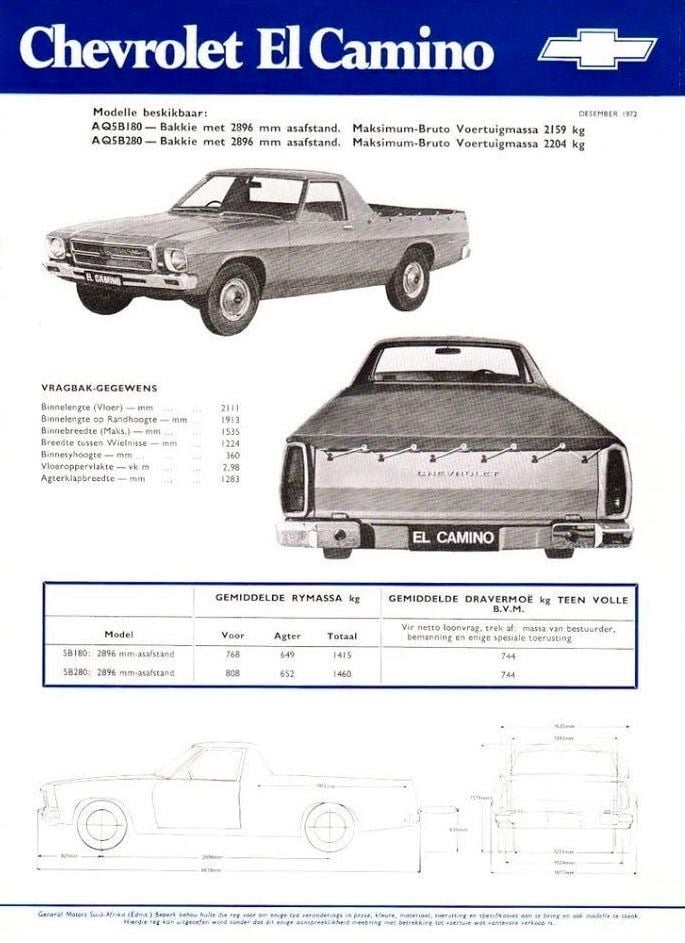
 The South African El Camino was essentially a Holden utility, or ute, shipped from Australia as a knock-down kit, assembled in Port Elizabeth, South Africa, and fitted for much of its life with a Chevrolet six-cylinder engine that Holden never offered, and, in its early years, given a front end design Australians never saw. Image courtesy of General Motors South Africa.
The South African El Camino was essentially a Holden utility, or ute, shipped from Australia as a knock-down kit, assembled in Port Elizabeth, South Africa, and fitted for much of its life with a Chevrolet six-cylinder engine that Holden never offered, and, in its early years, given a front end design Australians never saw.
Why GM’s South African Arm Turned To Holden
GM had imported Chevrolets into South Africa since 1913 and had assembled them at Port Elizabeth, on the coast between Durban in the east and Cape Town in the west, since 1926. Through the 1960s the company had two dealer networks, one selling Chevrolets, Oldsmobiles, and Vauxhalls, and the other selling Pontiacs, Buicks, and Opels, with the big American cars typically arriving at the port on ships as Canadian-sourced kits.
The use of Canadian kits was facing increasing pressure at the time, as South Africa’s local content requirements kept rising, and the kits from Canada kept getting more expensive. GMSA (General Motors South Africa) opened an engine plant in 1965 to increase the amount of local content, and from 1969 the Impala and Chevelle were replaced by cars from GM’s other right-hand-drive subsidiary in Australia – Holden.
The Holden name was already familiar, as Holden utes had gone to South Africa as CKD kits from 1959 and sedans from 1960, and from 1967 many South African HR-series cars were built with Chevrolet 194 and 230 sixes in place of Holden’s own engines, which meant finding a little extra room in the engine bay.
The Chevrolet Kommando, an HK Kingswood sedan and wagon, and the Chevrolet El Camino, the Holden HK ute, went on sale in May of 1969 after two years of development, alongside the Brougham-based Constantia. By that September, Cape Town’s Motoring Mirror magazine was reporting the range as GM’s best-seller in the country.
The car names were mostly kept local to better appeal to South Africans, Constantia referred to the Groot Constantia wine estate, whose gabled Cape Dutch homestead became the model’s emblem, and Kommando to the Boer commandos of the Anglo-Boer War. El Camino was simply borrowed from Detroit, where Chevrolet had used it on a car-based pickup since 1959 when it first threw its hat into the ring against the Ford Ranchero.
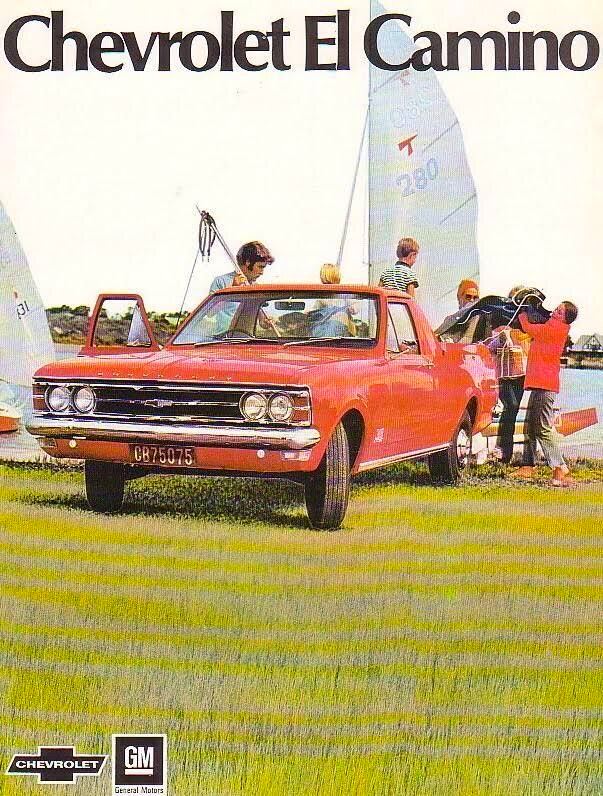
The first South African El Camino was the most heavily altered of the three cars, where the Australian HK, HT, and HG Holden utes had a simple two-headlight front, the South African car got a completely new nose with a redesigned grille housing quad headlights – from the front it looked like a different vehicle. Image courtesy of General Motors South Africa.
A Different Front End + A Different Engine
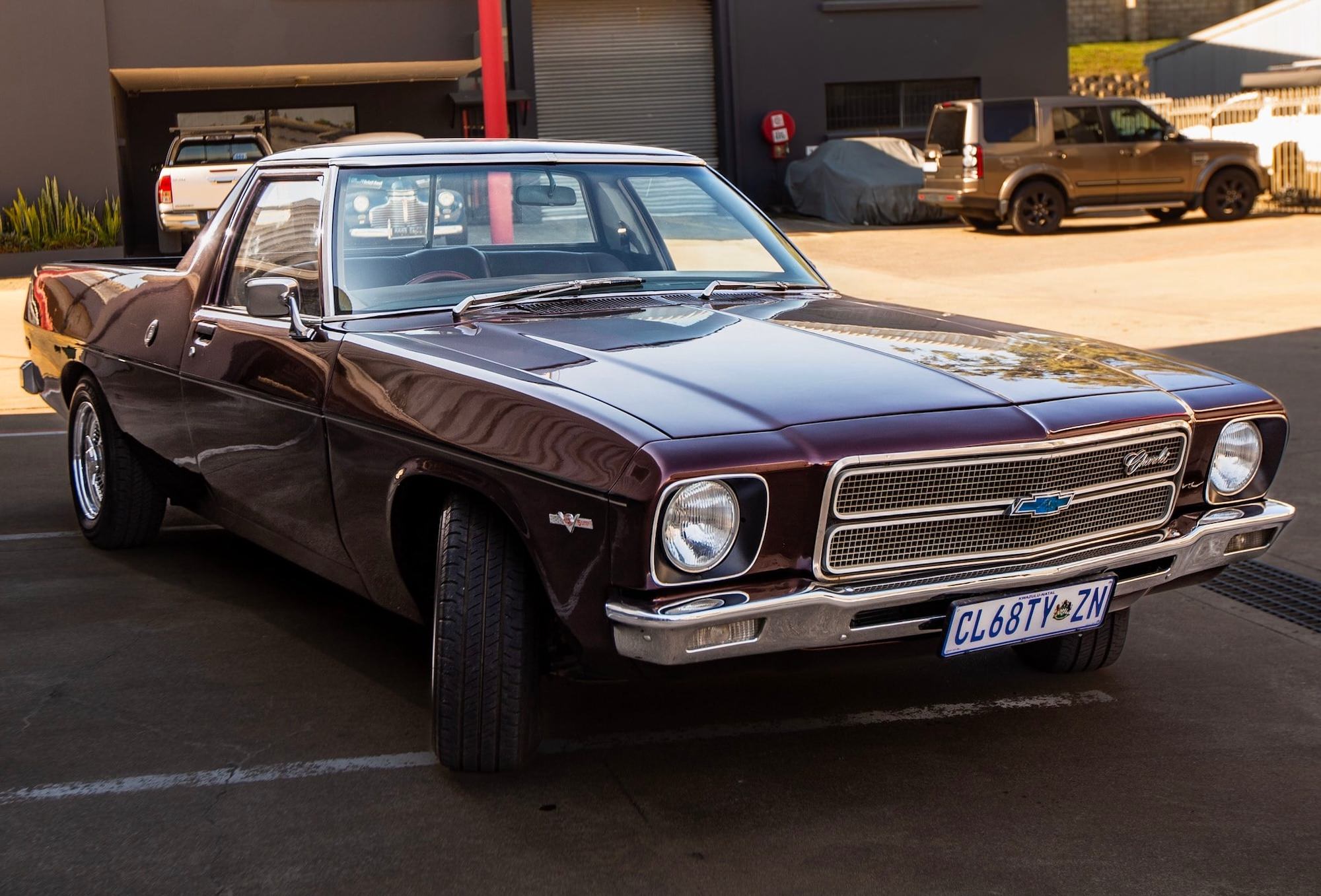
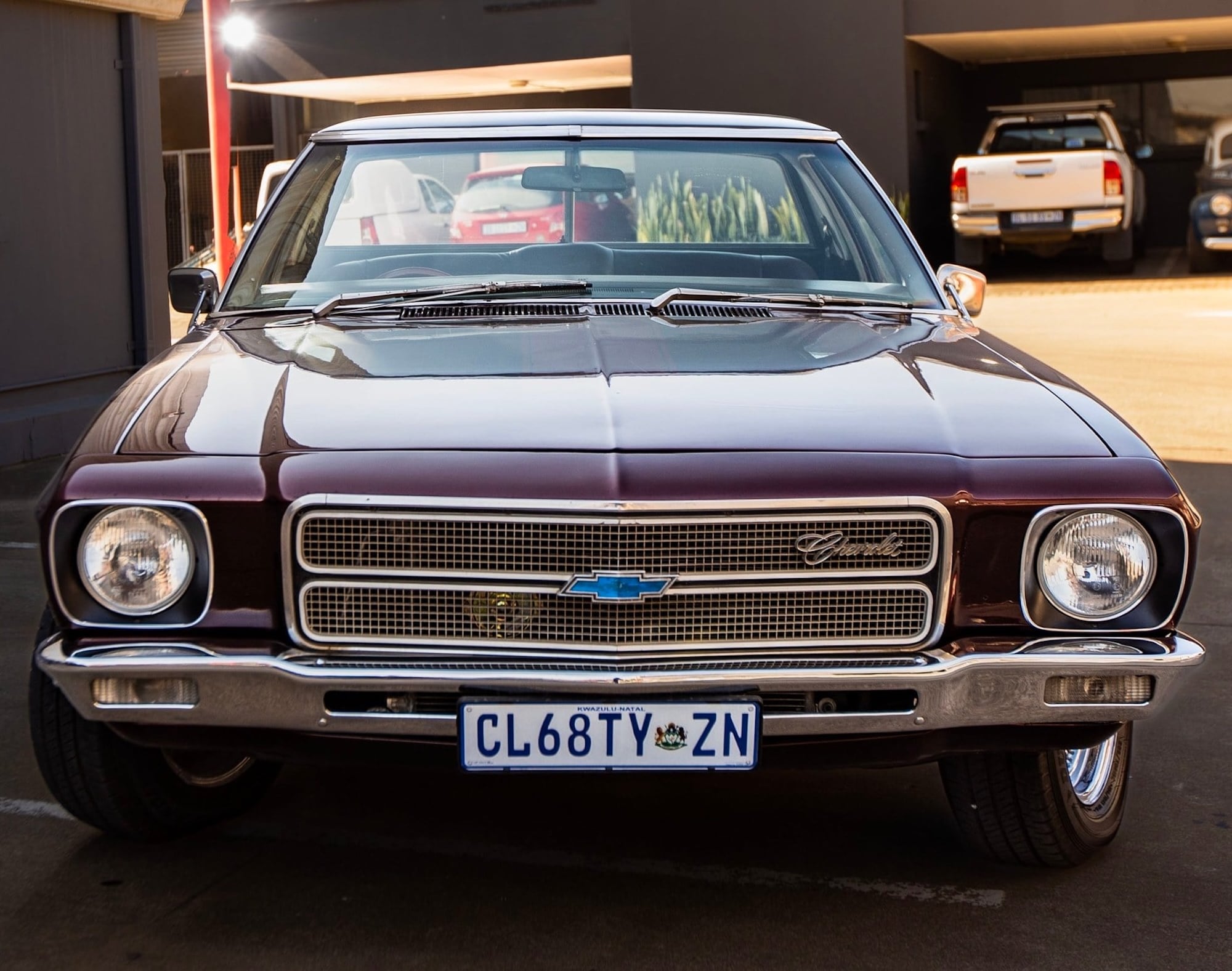
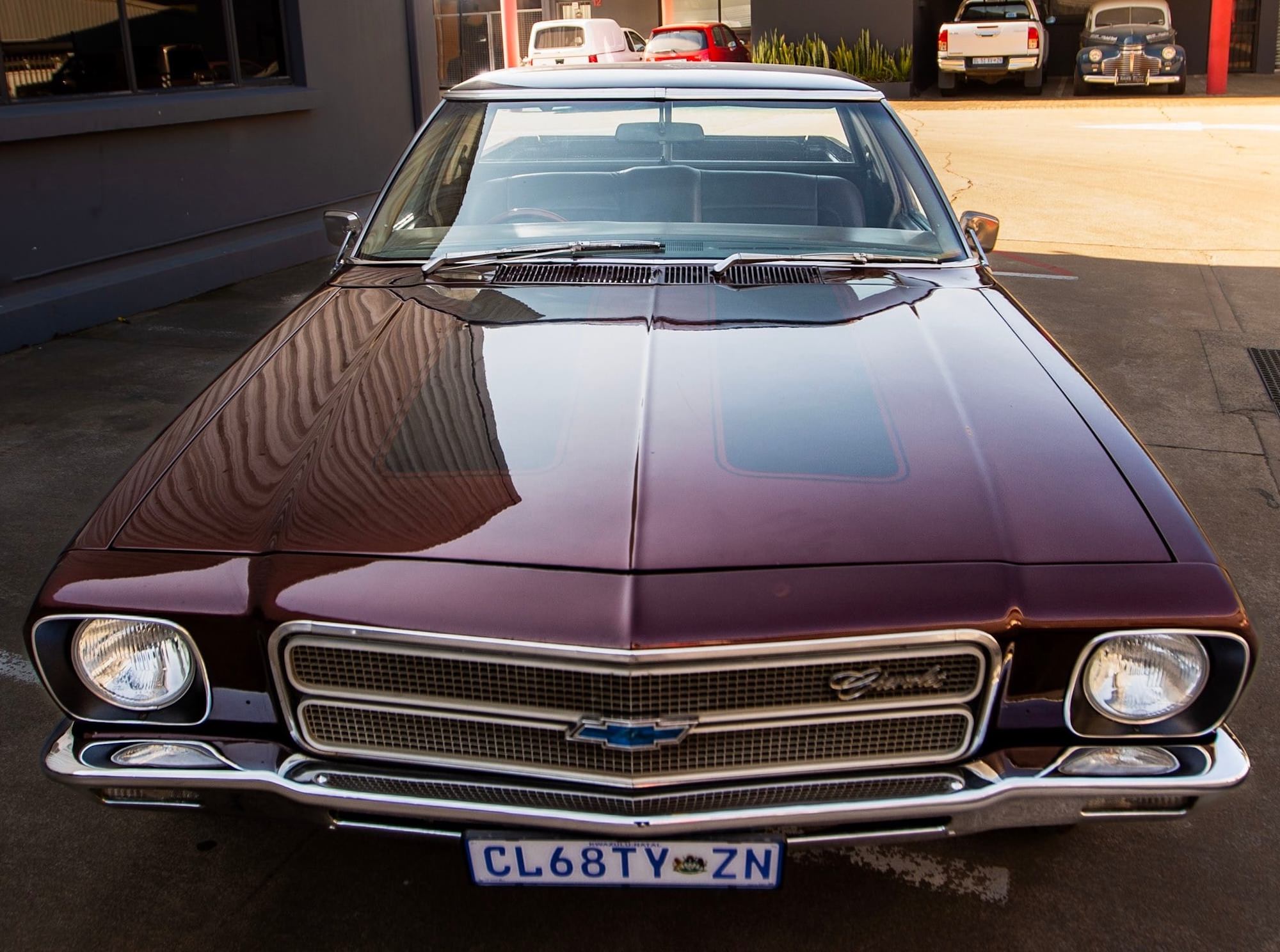
The first South African El Camino was the most heavily altered of the three cars, where the Australian HK, HT, and HG Holden utes had a simple two-headlight front, the South African car got a completely new nose with a redesigned grille housing quad headlights – from the front it looked like a different vehicle.
The interior and badging were unique to South Africa as well, its amber turn signals wrapped around at grille level, a frontal treatment Australian Holdens would not get until the HJ of October 1974, and the front bumper was made in two pieces where the Australian unit was one pressing.
Under the hood was either a Chevrolet 250 cubic inch six or a V8. The V8 was Holden’s own 308, the Australian-built engine that replaced the imported Chevrolet 307 in the HT range once stocks ran out. So the Chevrolet-badged ute carried a Holden V8, while Holden-badged sedans in the same country carried a Chevrolet six. You could forgive the motoring journalists of the time for being confused by the whole thing.
For a short period HT and HG cars were sold in South Africa under both badges, the Holden versions keeping the Australian nose. GMSA then consolidated everything under Chevrolet, and in 1971 the Monaro coupe joined the range as the Chevrolet SS.
The AQ: An HQ With A Bowtie
Holden’s all-new HQ model arrived in Australia in mid-1971 and reached South Africa under the internal code AQ. This time the changes were minor, a new grille with the Chevrolet emblem, and little else. Engine choice was a 202 cubic inch six, the Chevrolet 250 six, or the 308 V8. Both sixes came with a manual gearbox, the 250 could also be ordered with Holden’s 3-speed Tri-Matic automatic, and the V8 was automatic only.
From 1974 to 1978 GMSA also sold the HQ One Tonner, Holden’s cab-chassis truck introduced in 1971, as the Chevrolet El Toro. It kept the separate chassis, heavy-duty painted bumpers and plain grille of the Australian pickup, and its brochure was printed in both Afrikaans and English.
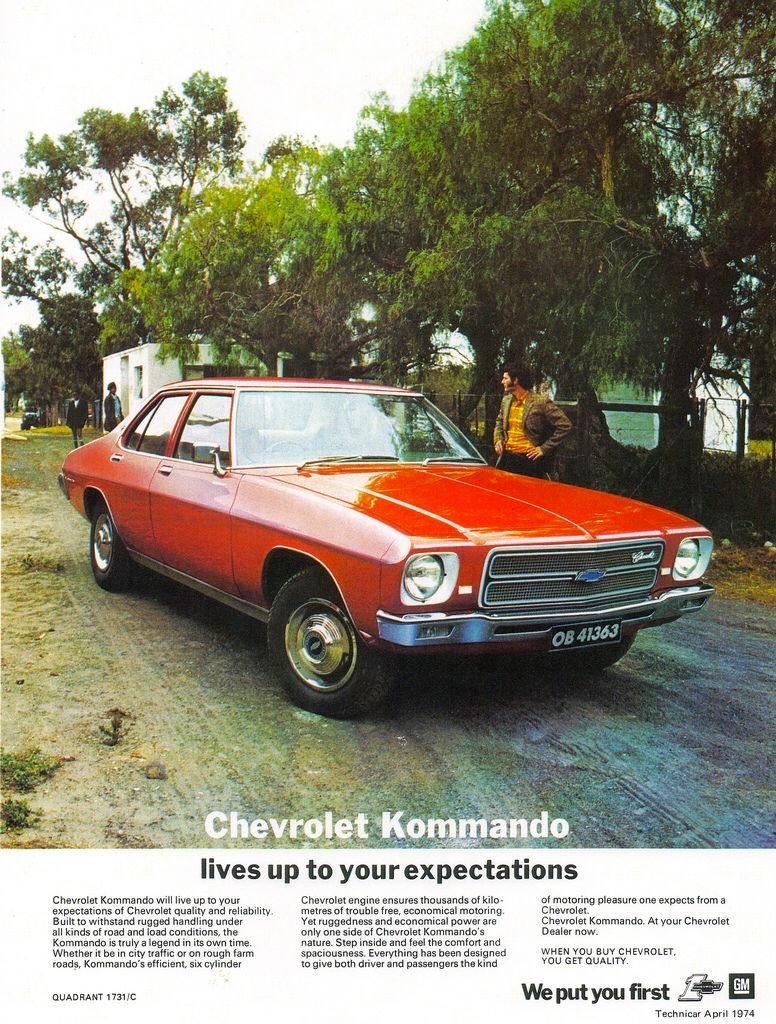
The Chevrolet Kommando, an HK Kingswood sedan and wagon, and the Chevrolet El Camino, the Holden HK ute, went on sale in May of 1969 after two years of development, alongside the Brougham-based Constantia. By that September, Cape Town’s Motoring Mirror magazine was reporting the range as GM’s best-seller in the country. Image courtesy of General Motors South Africa.
Across Town, Ford Was Doing The Same Thing
Across town at Ford’s own Port Elizabeth plant, Australian Falcon utes were being assembled from CKD kits and badged Ranchero, from the XT through the XW, XY, XA, and XB. V8 versions of the XA and XB were sold as the Ranchero 500. The XB Ranchero stayed on sale right the way through until 1976.
The 1973 Oil Crisis + The End
Updated Holden-based models arrived in late 1975 for the 1976 model year, with the Chevrolet 250 six modified for better economy, but sales never returned to their level before the 1973 Oil Crisis. With demand for the big cars weak, Holden’s exports to South Africa tailed off through the second half of the decade, and by 1978 they had stopped.
In 1979 the Holden-sourced Chevrolets were replaced by Chevrolet-badged versions of the Opel Rekord, Commodore, and Senator. GM itself sold its South African operation in 1986, after the passage of the Comprehensive Anti-Apartheid Act in the United States, and the business continued as the Delta Motor Corporation.
Chevrolet South Africa’s range announced in October 2003 brought a Holden-sourced ute back, the Commodore-based Holden Ute badged as the Lumina SS Ute, with a 5.7 liter V8 and a choice of manual or automatic transmissions. GM withdrew from South Africa again at the end of 2017, selling the Struandale plant at Port Elizabeth to Isuzu.
Some of the Chevrolet-badged Holdens have since made the reverse trip, with El Caminos and Chevrolet SS coupes turning up back in Australia in the hands of collectors who prize them for their uniqueness – and an even smaller number have made their way to the United States.
The 1972 Chevrolet El Camino Shown Here
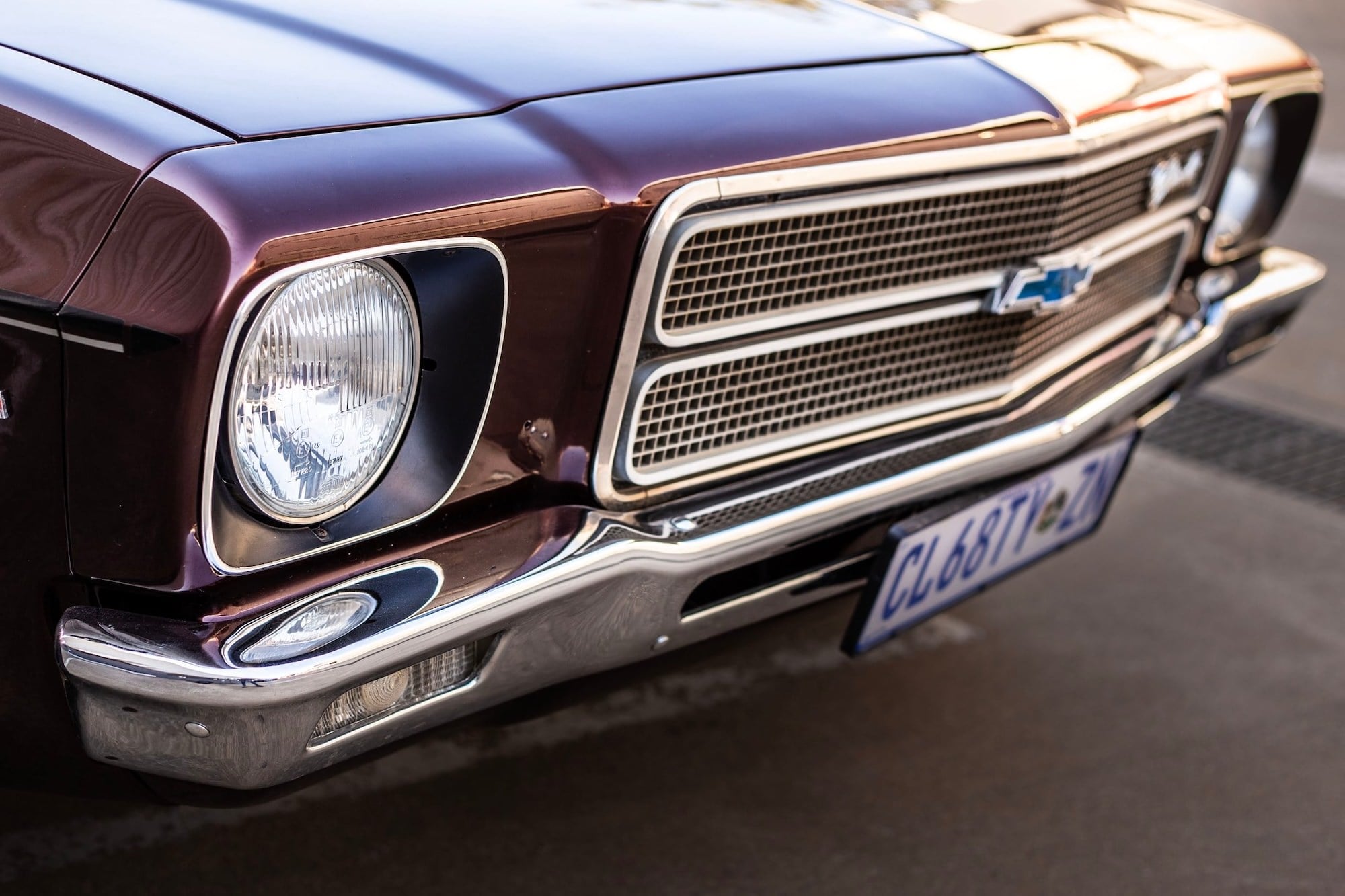
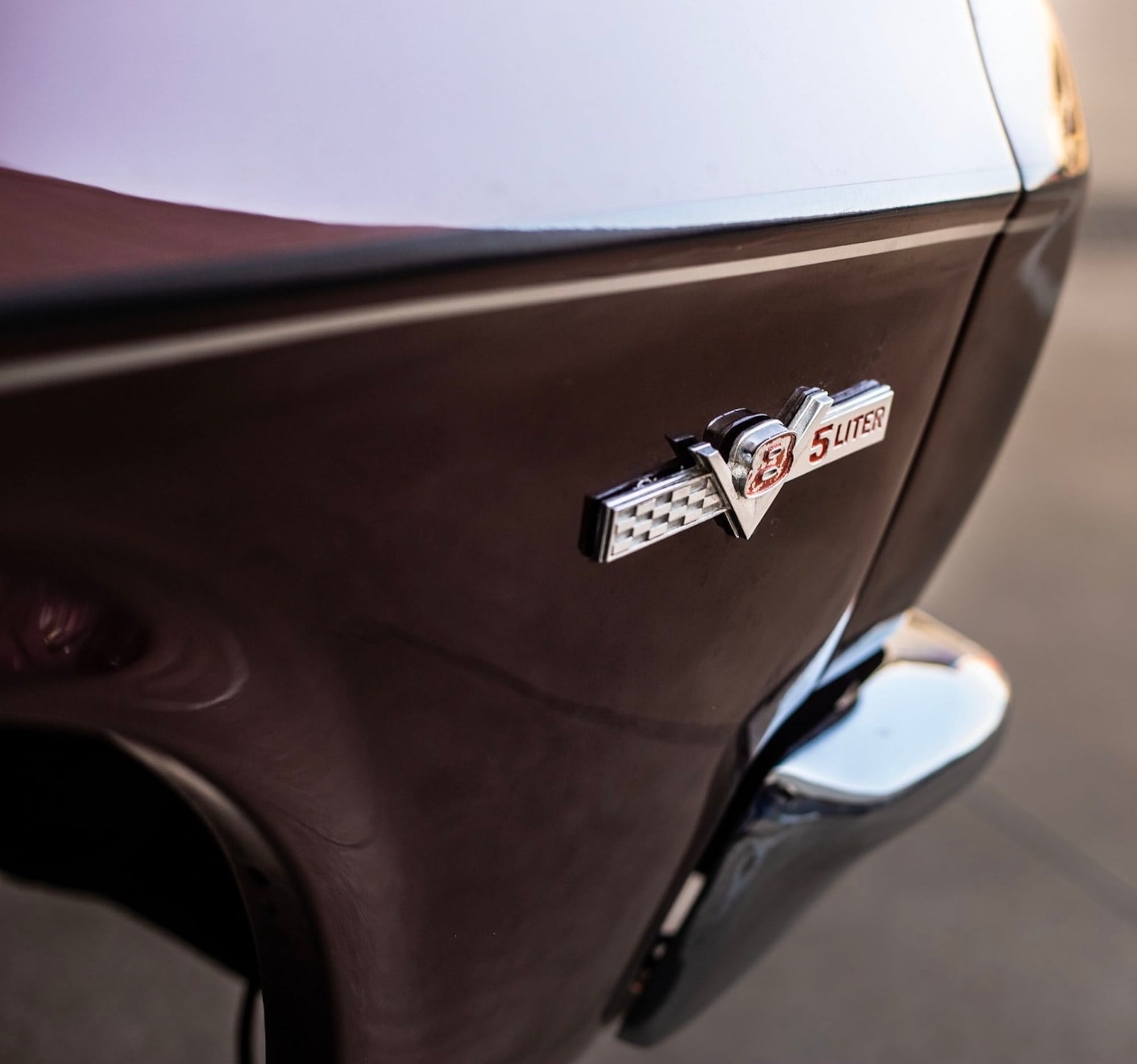
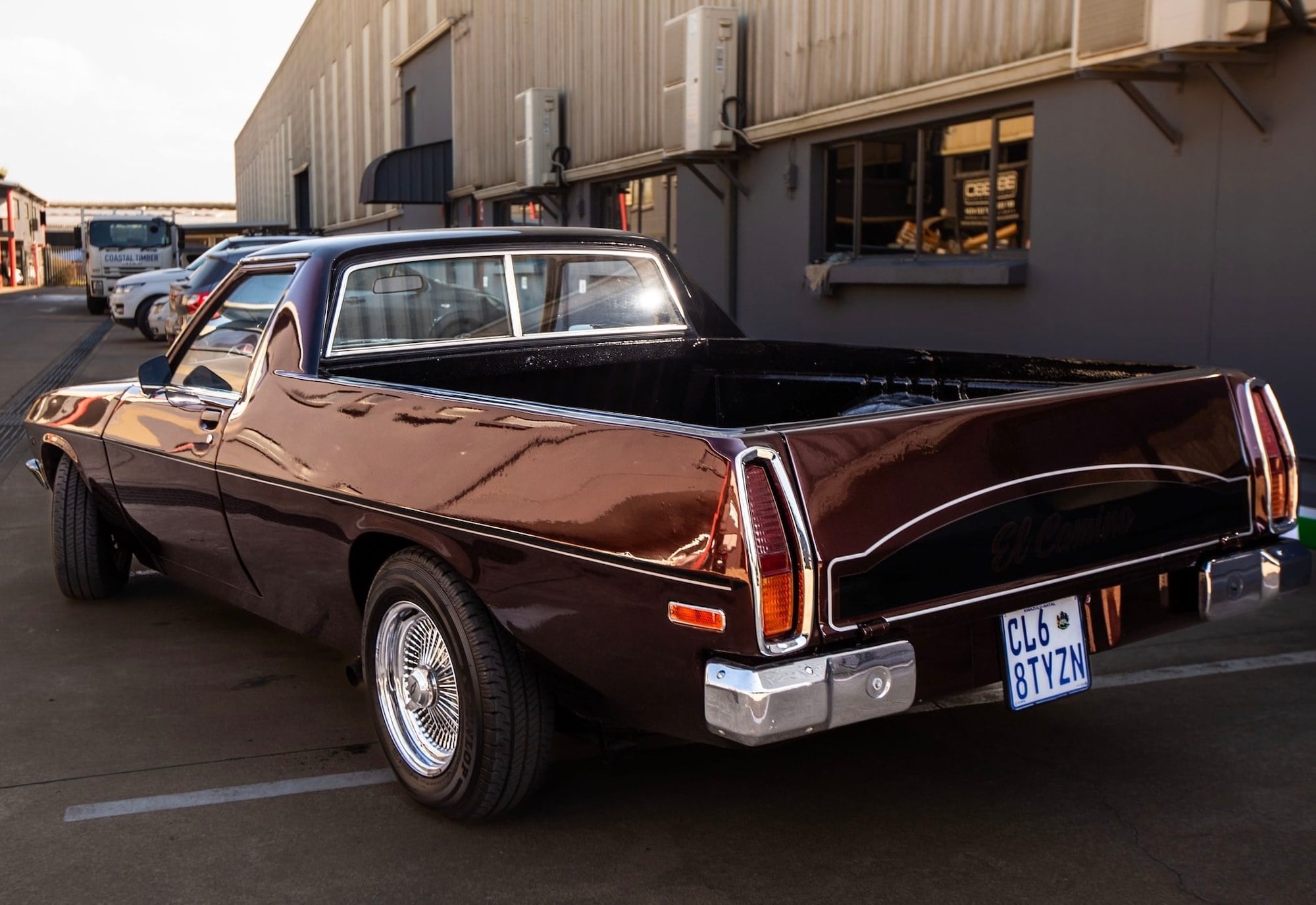
This is a 1972 Chevrolet El Camino, it’s a right-hand-drive, Holden-built example and it was originally built in South Africa from a kit, where it reportedly spent most of its life in a dry climate with a private owner – and it wasn’t used for commercial work or heavy hauling. It’s powered by a 308 cubic inch, 5.0 liter Holden V8 paired with a 3-speed Tri-Matic automatic transmission.
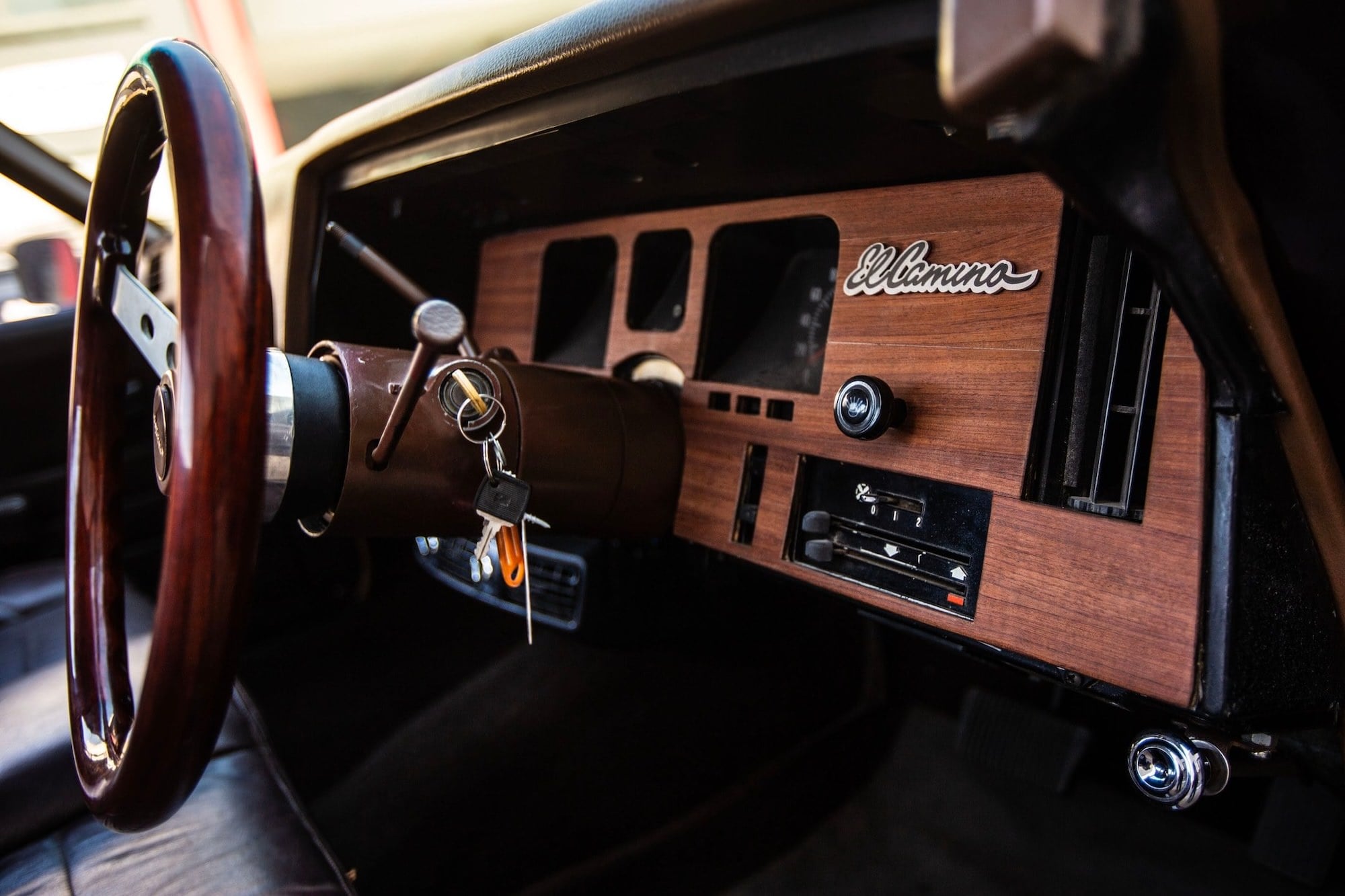
The car later underwent an extensive restoration and custom build, including a bare-metal repaint in metallic burgundy with metallic black panels. The glass, engine, and suspension were removed during the repaint, while the suspension and braking systems were overhauled, with upgraded front disc brakes, and it was slightly lowered. Further changes include the addition of modern power steering, air conditioning, electric windows, heavy-duty wire wheels, and a bespoke stainless-steel side-exit exhaust.
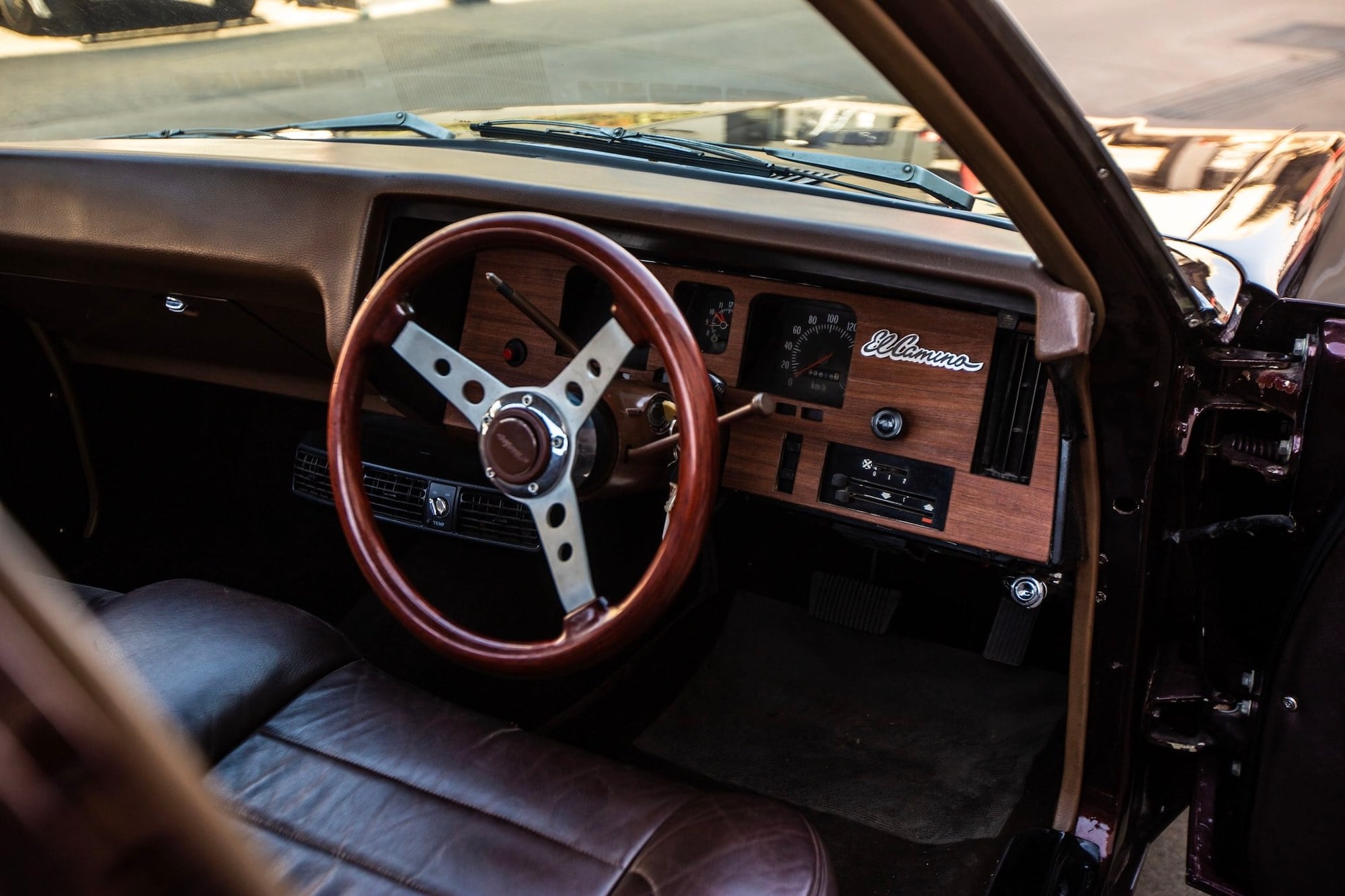
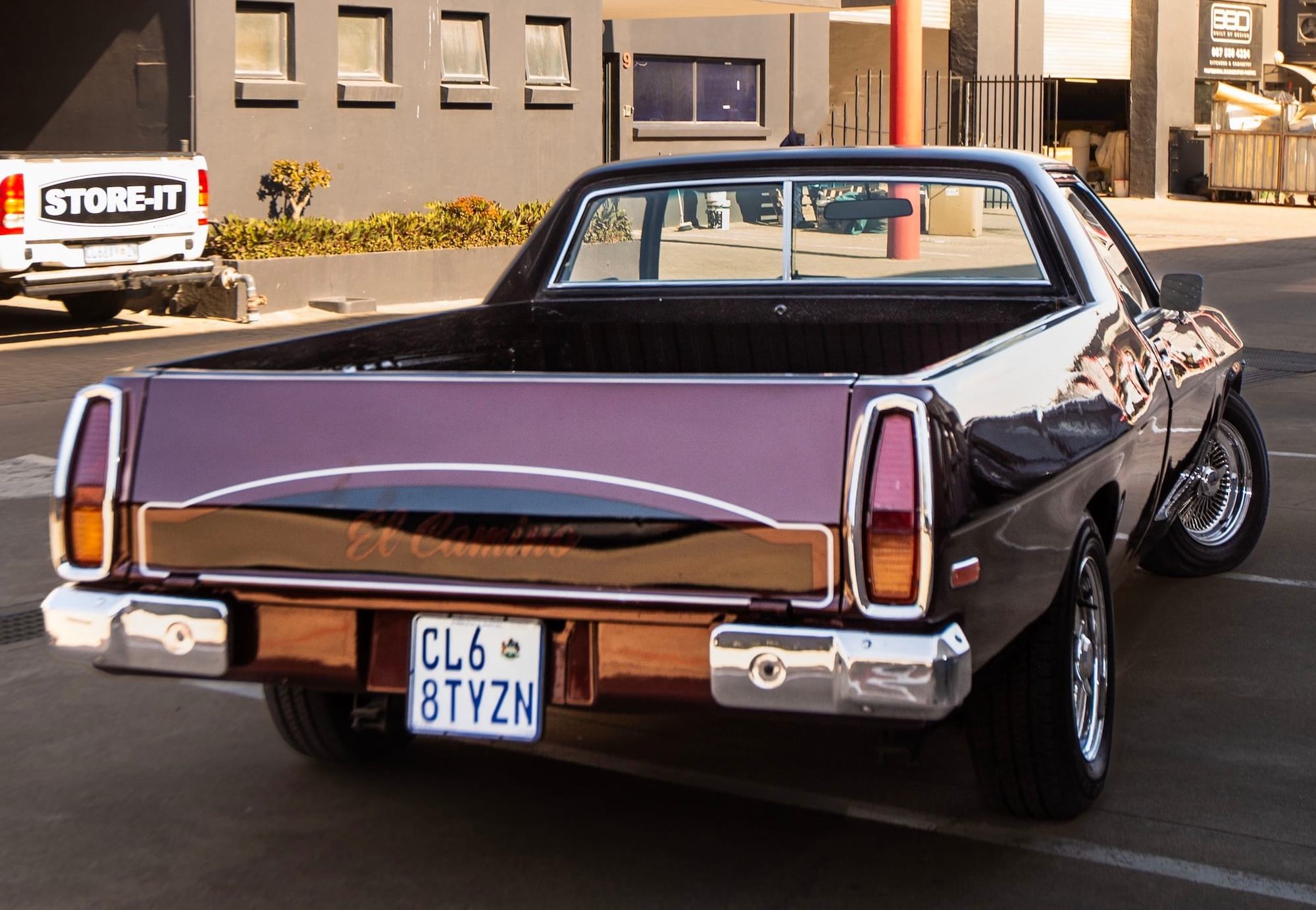
This is a 1972 Chevrolet El Camino, it’s a right-hand-drive, Holden-built example and it was originally built in South Africa from a kit, where it reportedly spent most of its life in a dry climate with a private owner.
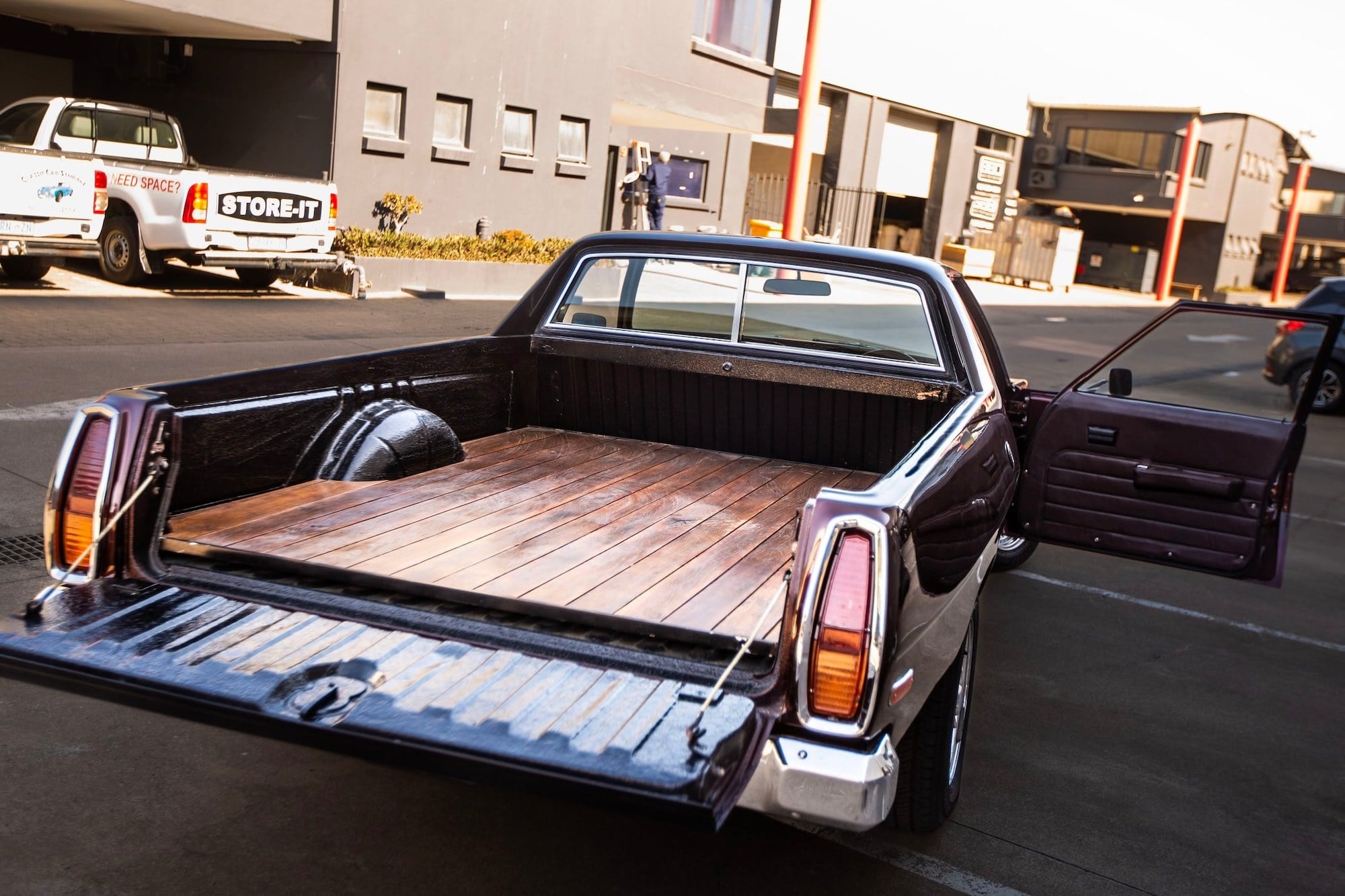
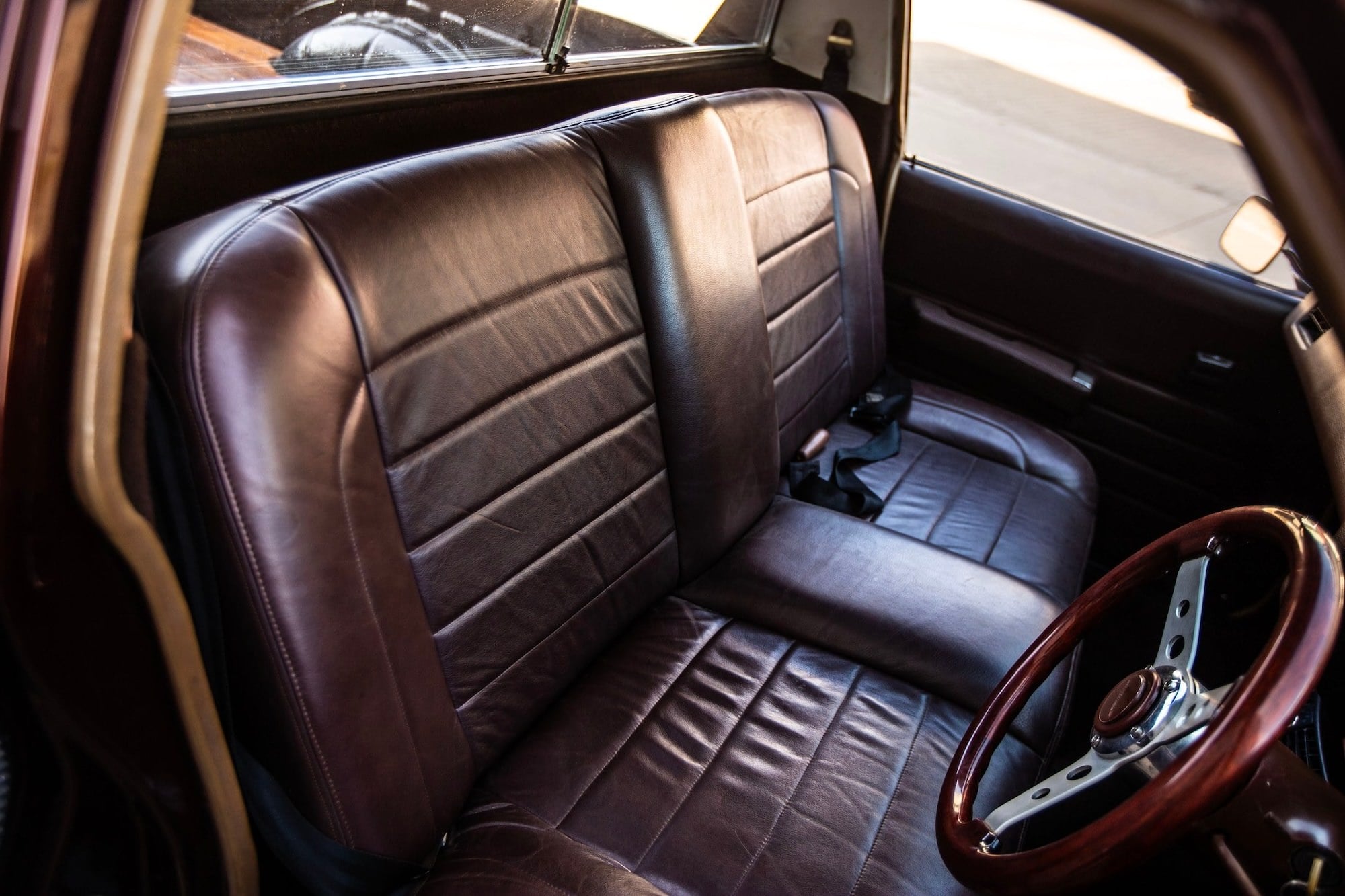
Inside, the original bench-seat arrangement was professionally reworked into molded bucket-style seating and trimmed in leather, while a solid French Oak dashboard was made to resemble the original design. The load bed also received a removable French Oak liner. The seller says that the El Camino runs as it should, and the original wheels and steering wheel are included in the sale.
It’s now being offered for sale out of South Africa, and you can visit the listing here if you’d like to read more about it or register to bid.
Images courtesy of Car & Classic

Articles that Ben Branch has written have been covered on CNN, Popular Mechanics, Smithsonian Magazine, Road & Track Magazine, the official Pinterest blog, the official eBay Motors blog, BuzzFeed, Autoweek Magazine, Wired Magazine, Autoblog, Gear Patrol, Jalopnik, The Verge, and many more.
Silodrome was founded by Ben back in 2010, in the years since the site has grown to become a world leader in the alternative and vintage motoring sector, with well over a million monthly readers from around the world and many hundreds of thousands of followers on social media.