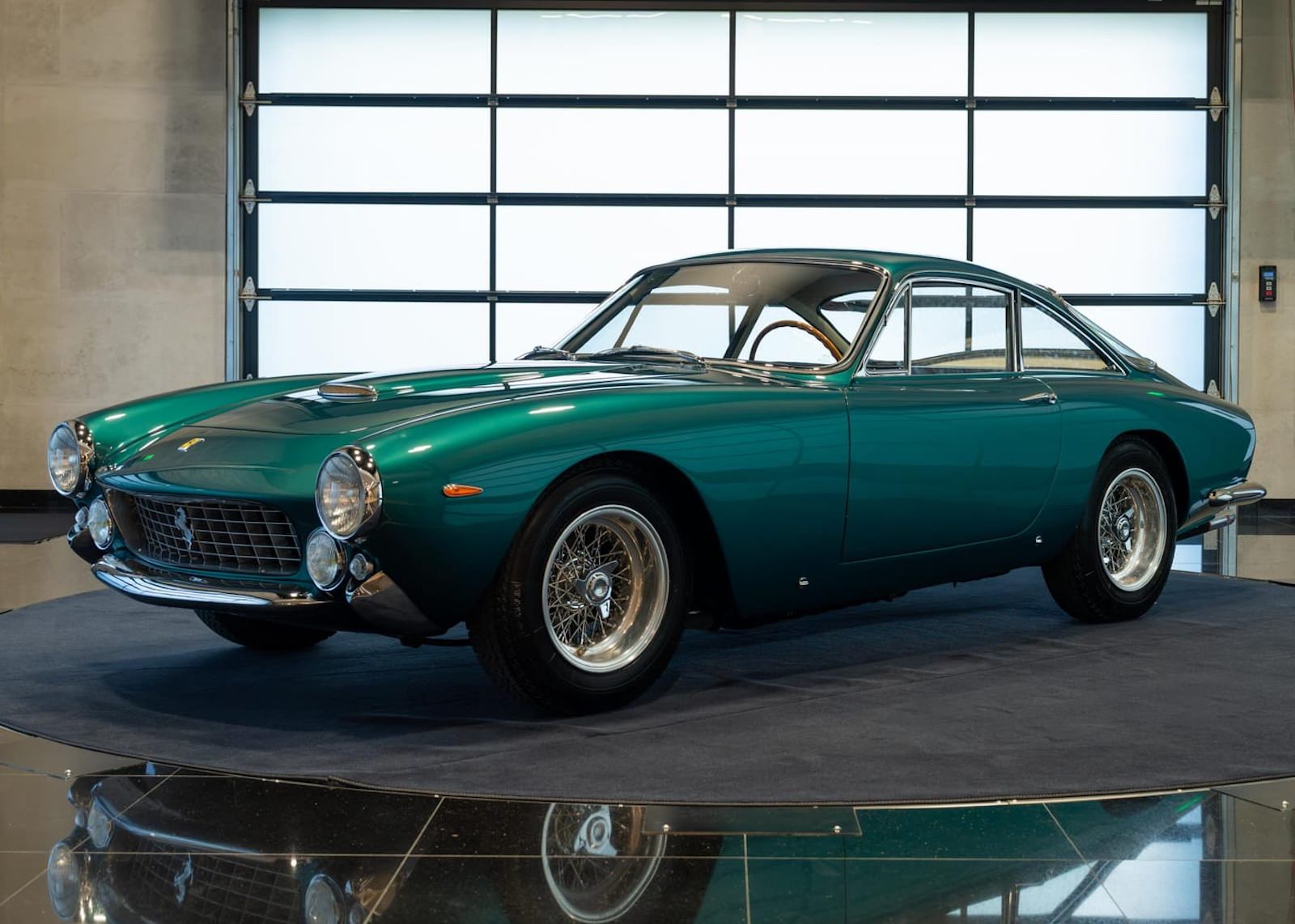
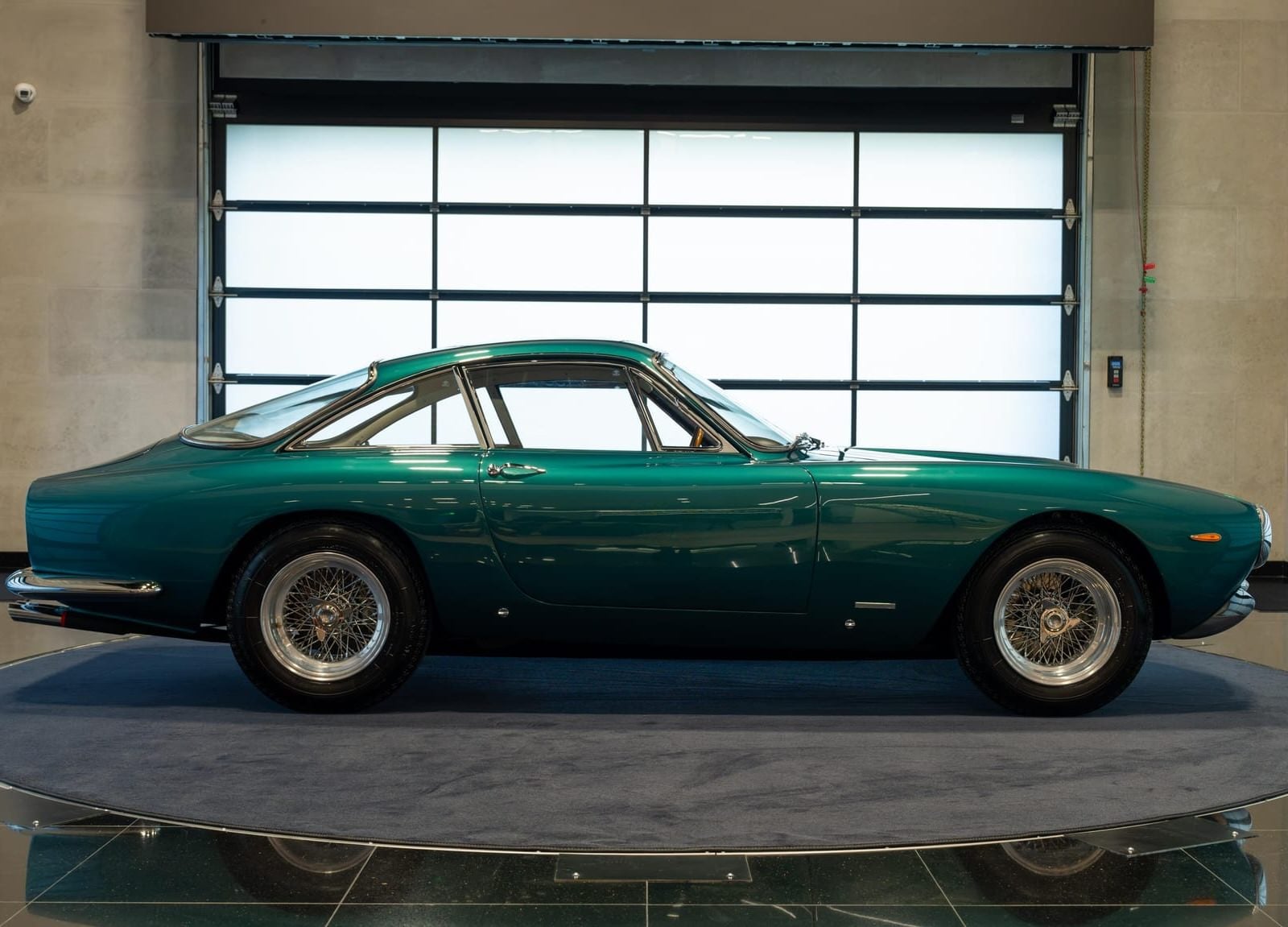
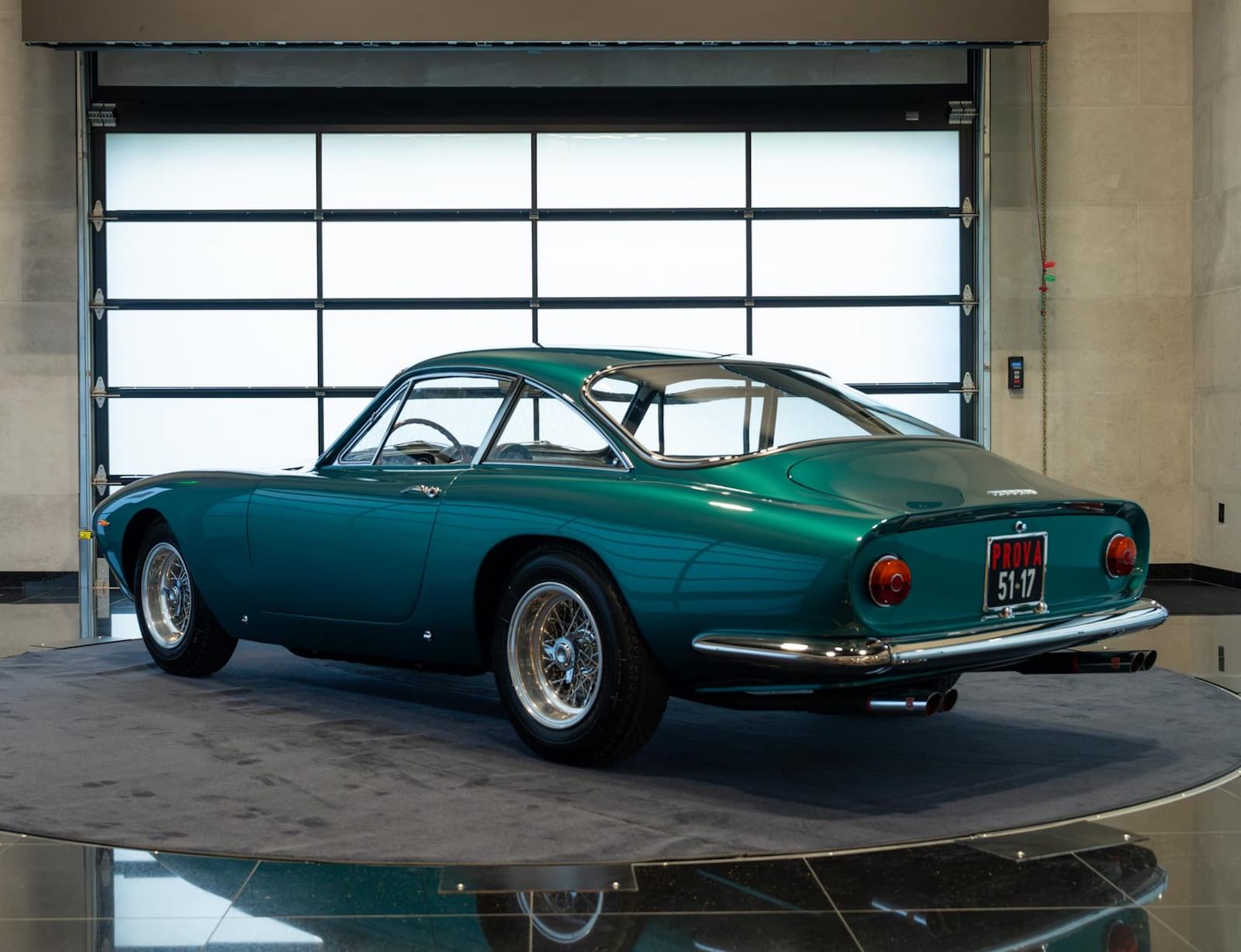
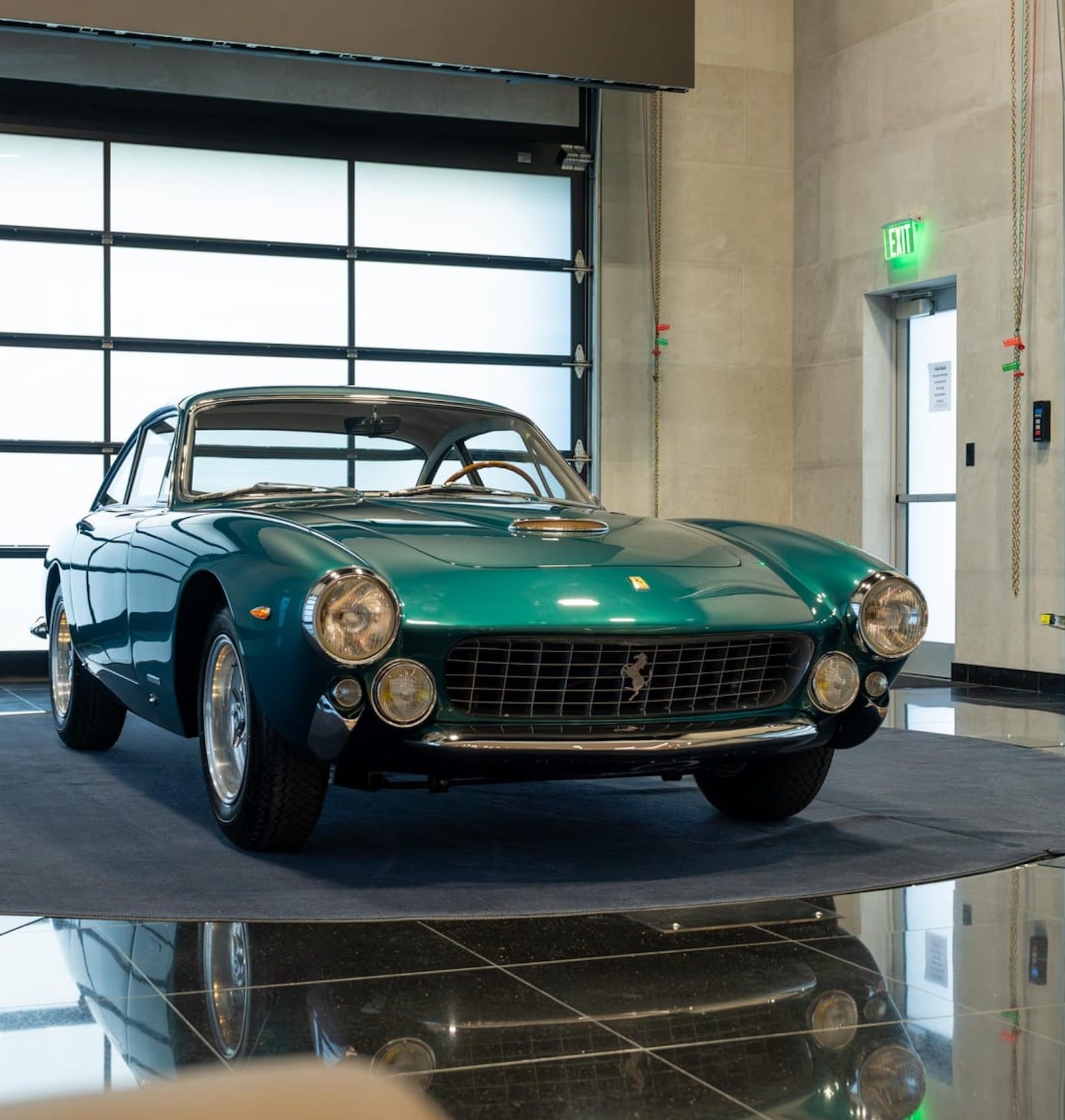
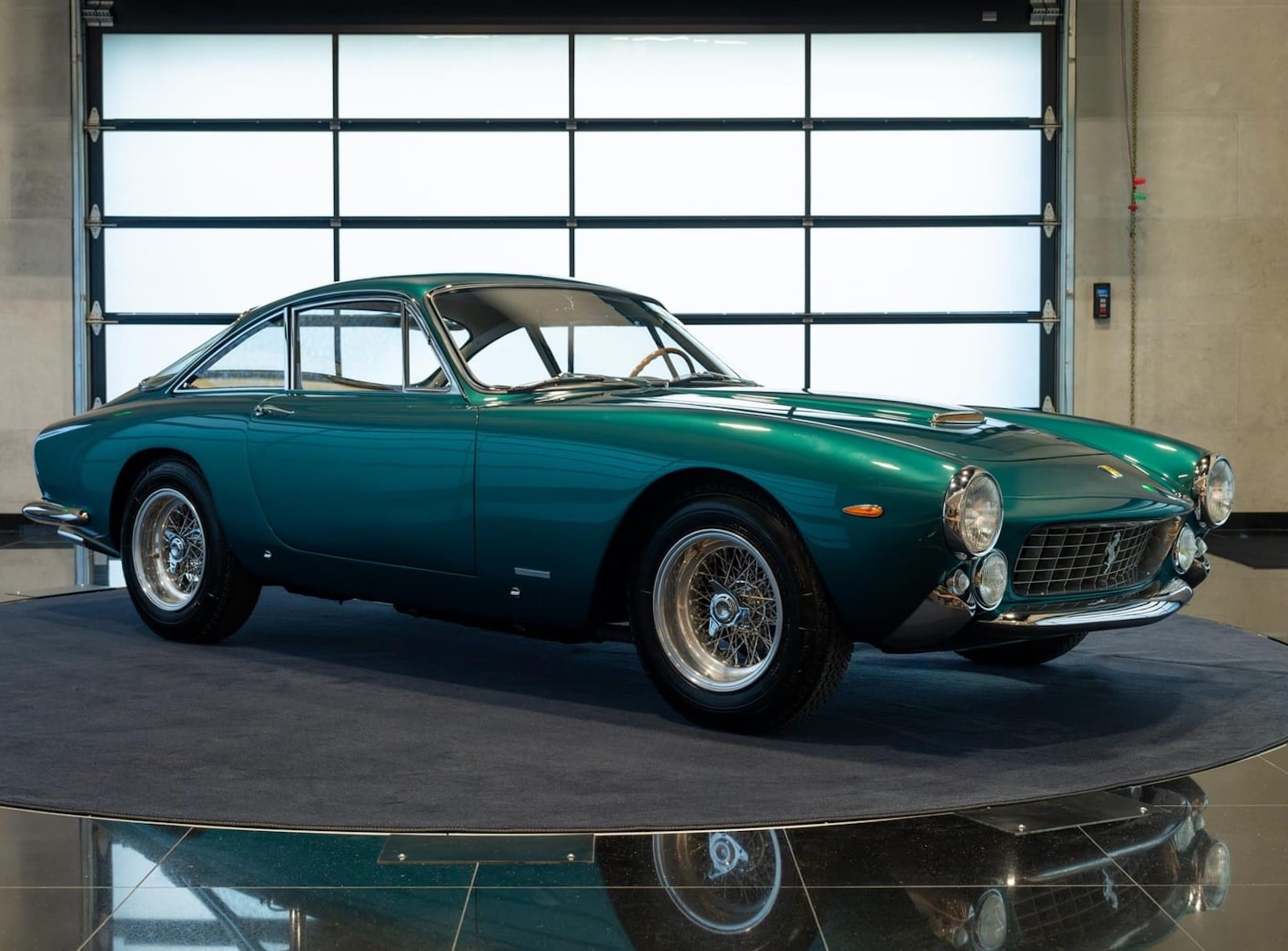
This is a 1963 Ferrari 250 GT Lusso that formerly belonged to Baseball Hall of Famer Reggie Jackson, who owned it for a decade, and commissioned an extensive refurbishment at a marque specialist.
The 250 GT Lusso was built at Ferrari at the same time as the legendary 250 GTO race cars, they’re both typically listed as being among the top ten most beautiful Ferraris of all time, and it’s not hard to see why.
Fast Facts: A 1963 Ferrari 250 GT Lusso
- The Ferrari 250 GT Lusso debuted in 1962 as a more luxurious grand touring alternative to Ferrari’s competition-focused Berlinettas. Designed by Pinin Farina and bodied by Scaglietti, it combined elegant styling with a spacious two-seat interior. Just 350 examples were produced between 1963 and 1964, making it one of Ferrari’s most desirable classics from the period.
- The Lusso used Ferrari’s Tipo 539/U tubular steel chassis with independent front suspension, a live rear axle, four-wheel disc brakes, and Borrani wire wheels. Its 3.0 liter Colombo V12 produced 240 bhp, driving the rear wheels through a four-speed manual transmission. Ferrari claimed a top speed of 149 mph (240 km/h).
- The Lusso shared considerable engineering DNA with Ferrari’s celebrated 250 GTO, which was produced during the same period. Its distinctive design attracted prominent owners, including Steve McQueen and Battista Pininfarina. Some special examples even received modified GTO-inspired bodywork and engines.
- The 1963 Lusso pictured here, chassis 5117, was originally delivered in Rome before passing through Swiss and American ownership. Baseball legend Reggie Jackson owned it from 1998 to 2008 and commissioned a refurbishment. Subsequently awarded Ferrari Classiche certification, the car is now offered for sale in Miami with extensive documentation and a Montana title.
History Speedrun: The Ferrari 250 GT Lusso
Ferrari’s 250 GT line started out in 1954 with the 250 Europa GT, a Pinin Farina-bodied coupe that paired Gioacchino Colombo’s short-block V12, by then enlarged to 3.0 liters, with coil spring front suspension. The “250” name came from the displacement of a single cylinder, in Ferrari tradition, and the “GT” refers to the models being gran turismos – Italian for “grand tourers.”
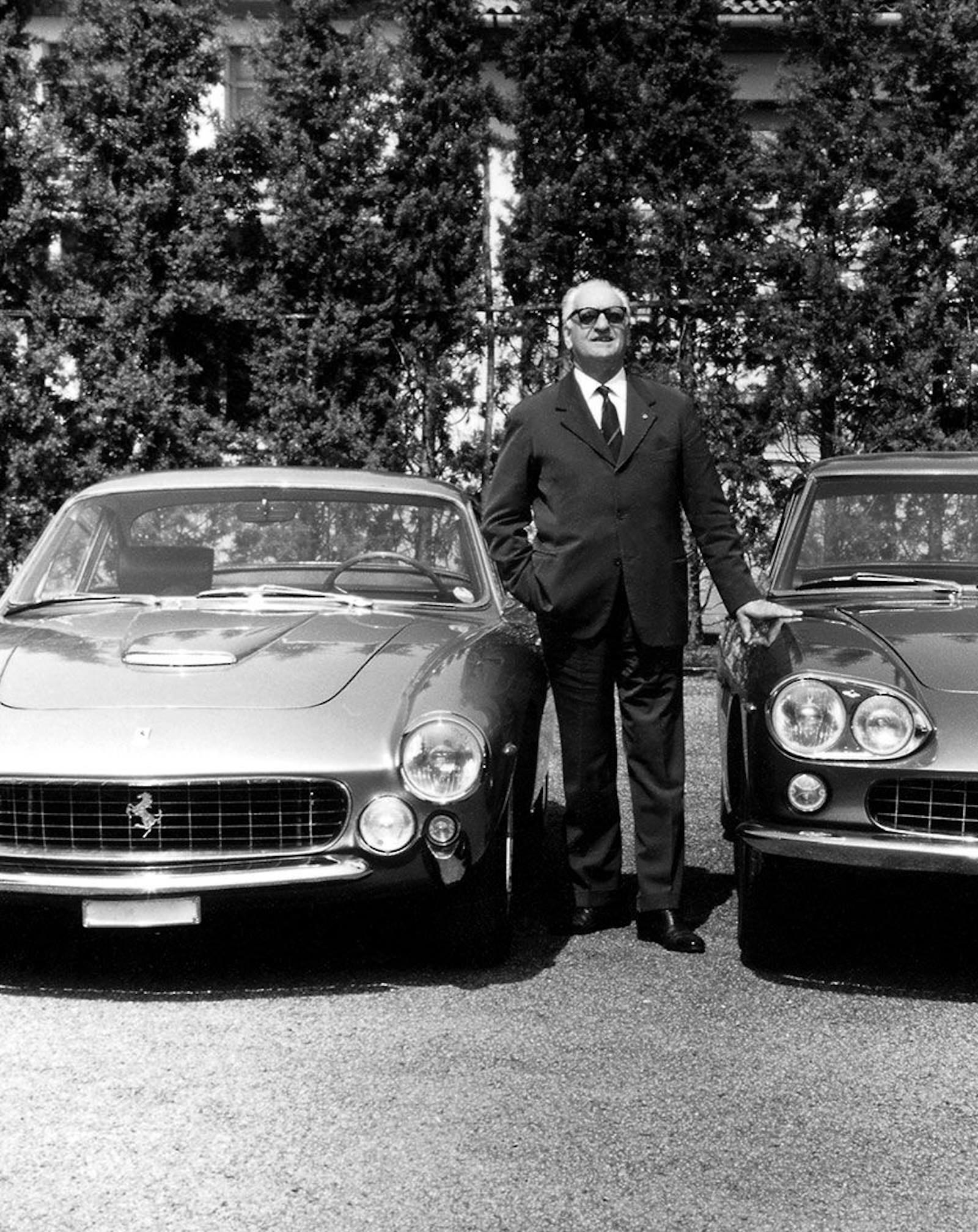
 Here we see Enzo Ferrari standing between two of his creations in 1964, that’s a 250 GT Lusso on the left, and a 330 GT 2+2 Series I peeking out on the right. Image provided by Ferrari.
Over the next eight years Ferrari built an entire model family under the 250 GT name, including some of the Italian automaker’s best-loved and most desirable cars. There was the long-wheelbase Berlinetta, nicknamed the Tour de France after the automobile race, the open-top California Spider, the Pinin Farina Coupé and Cabriolet. The four-seat 250 GT 2+2 arrived in 1960 and sold 957 cars, about two thirds of 250 GT road car production in its period.
The 250 GTO racing car followed in 1962, 36 were built, and the surviving examples are now among the most valuable cars on earth. By 1962 the Pinin Farina Coupé needed a replacement, and while the short-wheelbase Berlinetta had been sold in a road-trimmed “Lusso” version, it didn’t have enough interior or luggage space.
The Debut Of The Lusso
Ferrari showed the new car in the 250 GT family, the Lusso, at the Paris Motor Show in October of 1962, and a second prototype at the Turin Show that October. Italian coachbuilder Scaglietti built the production bodies in Modena, in steel with aluminum for the doors, hood, and trunk lid. Ferrari called the car the 250 GT Berlinetta Lusso, lusso being Italian for “luxury,” and it’s often written more simply as the “250 GT/L.”
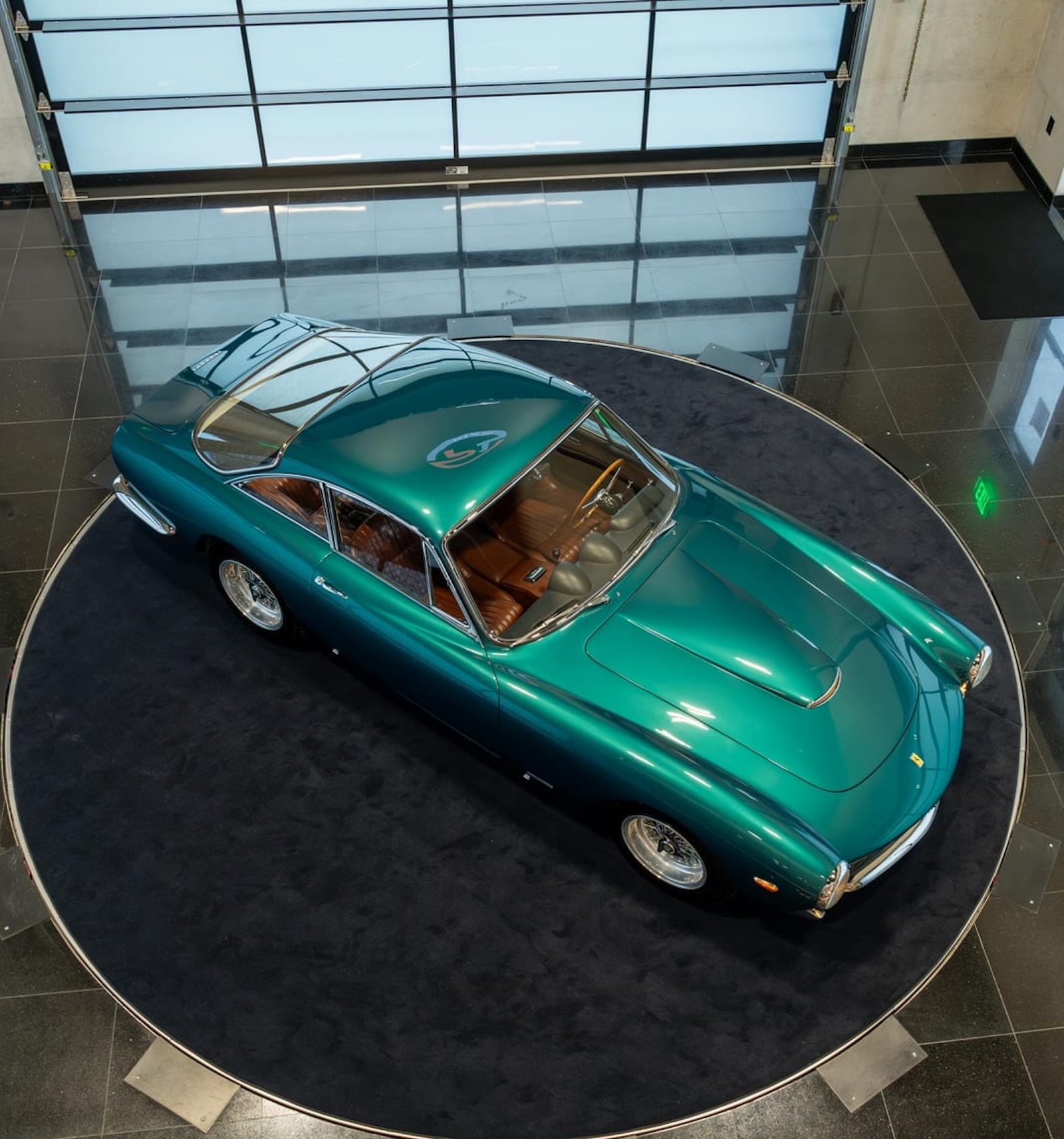
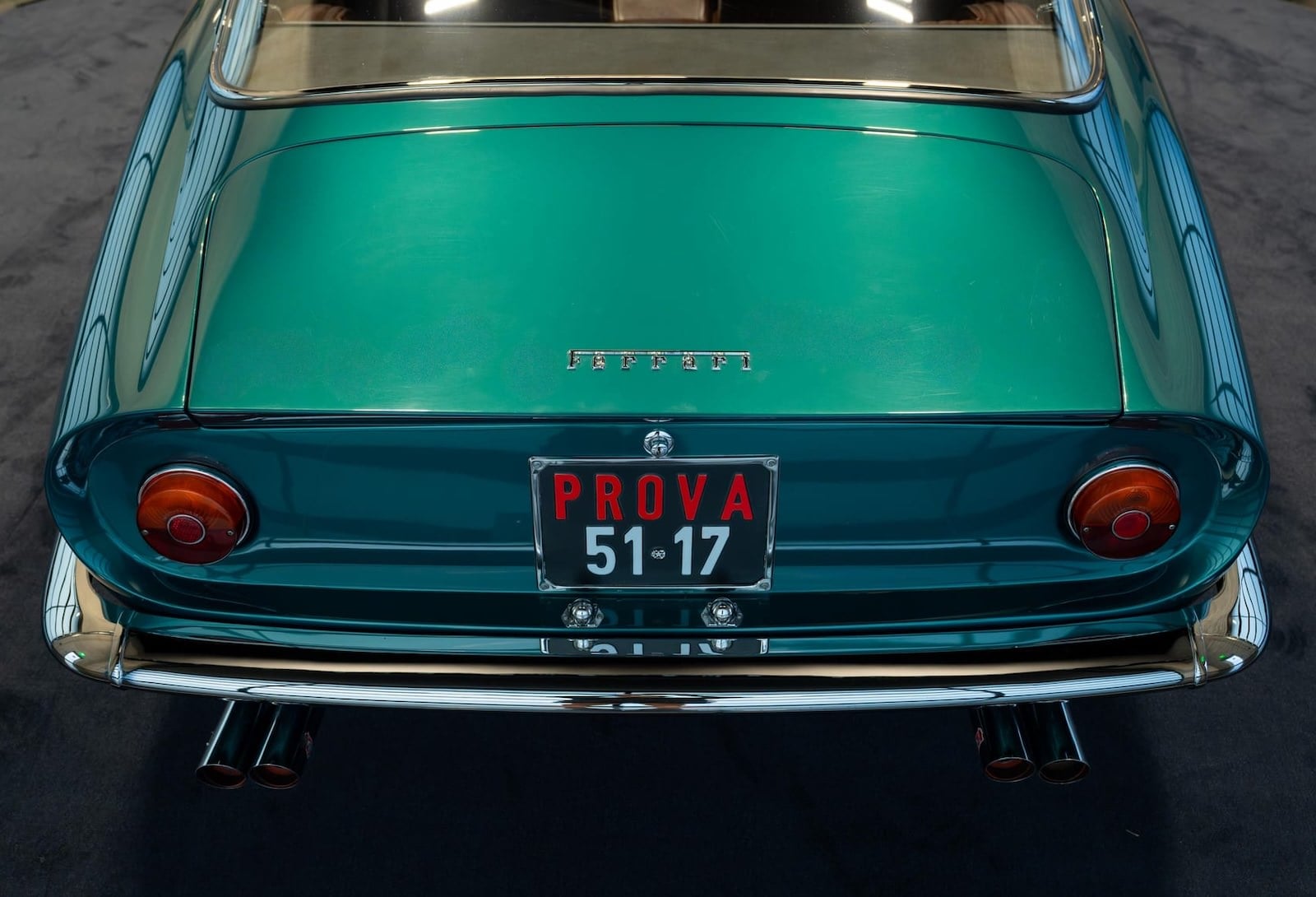
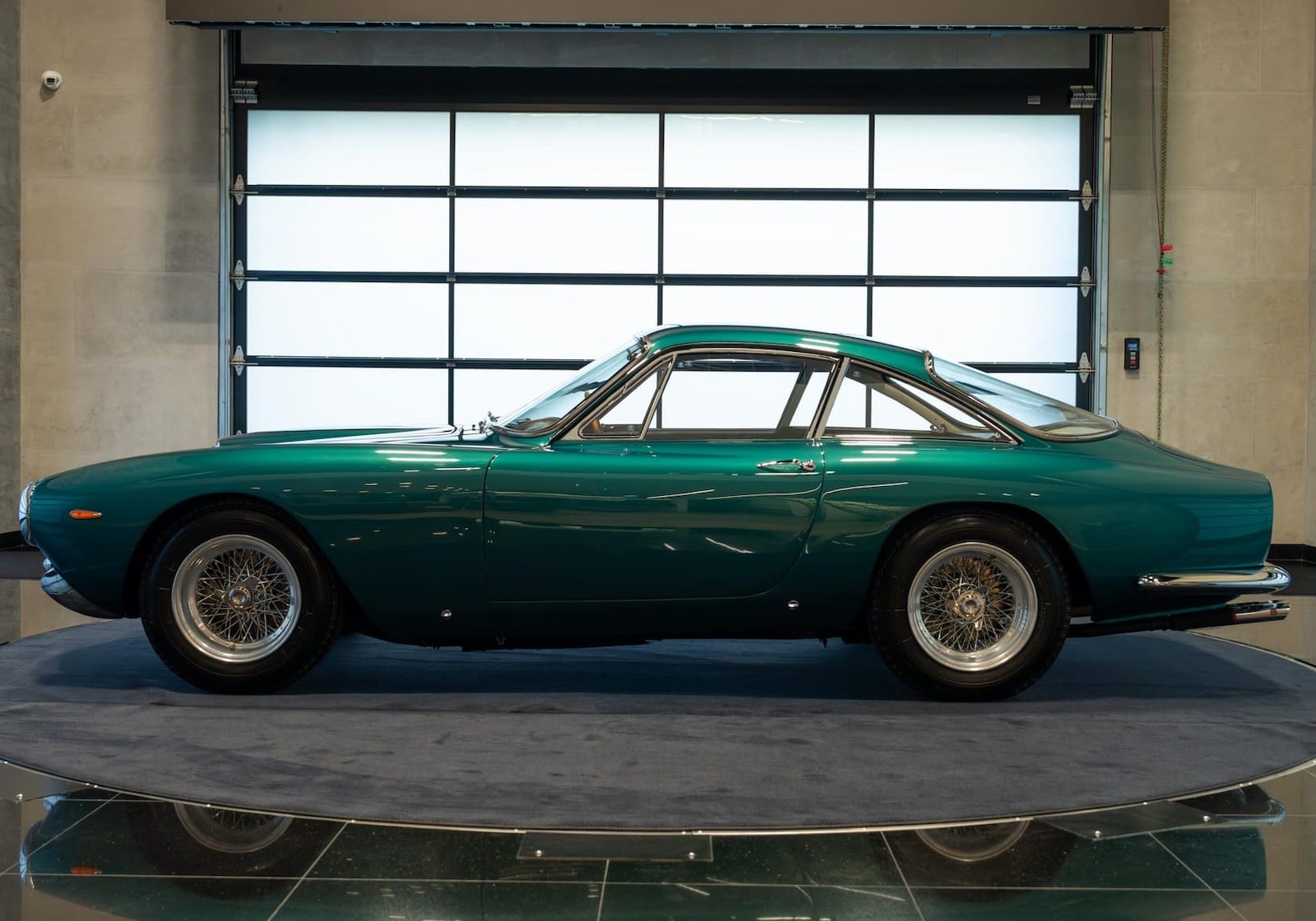
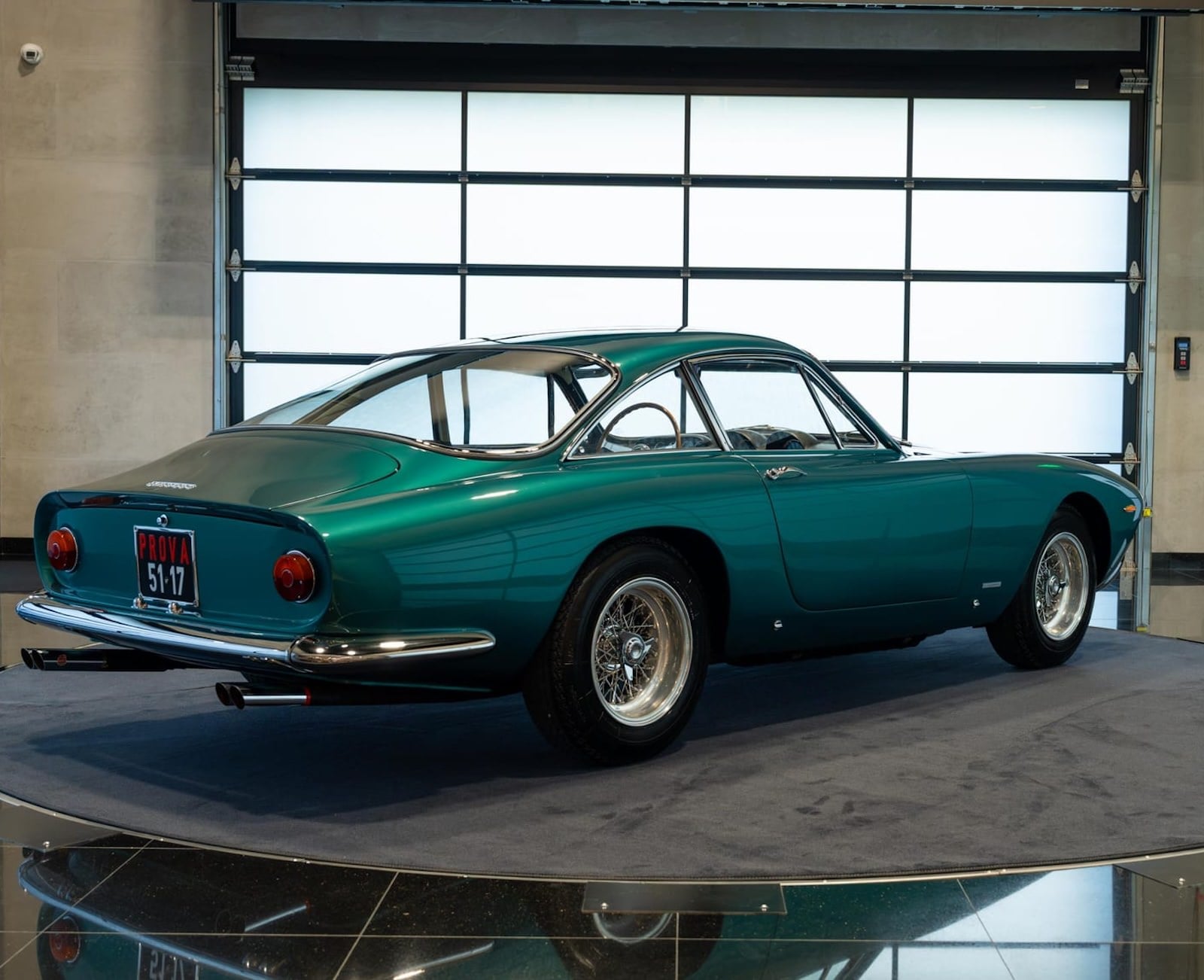
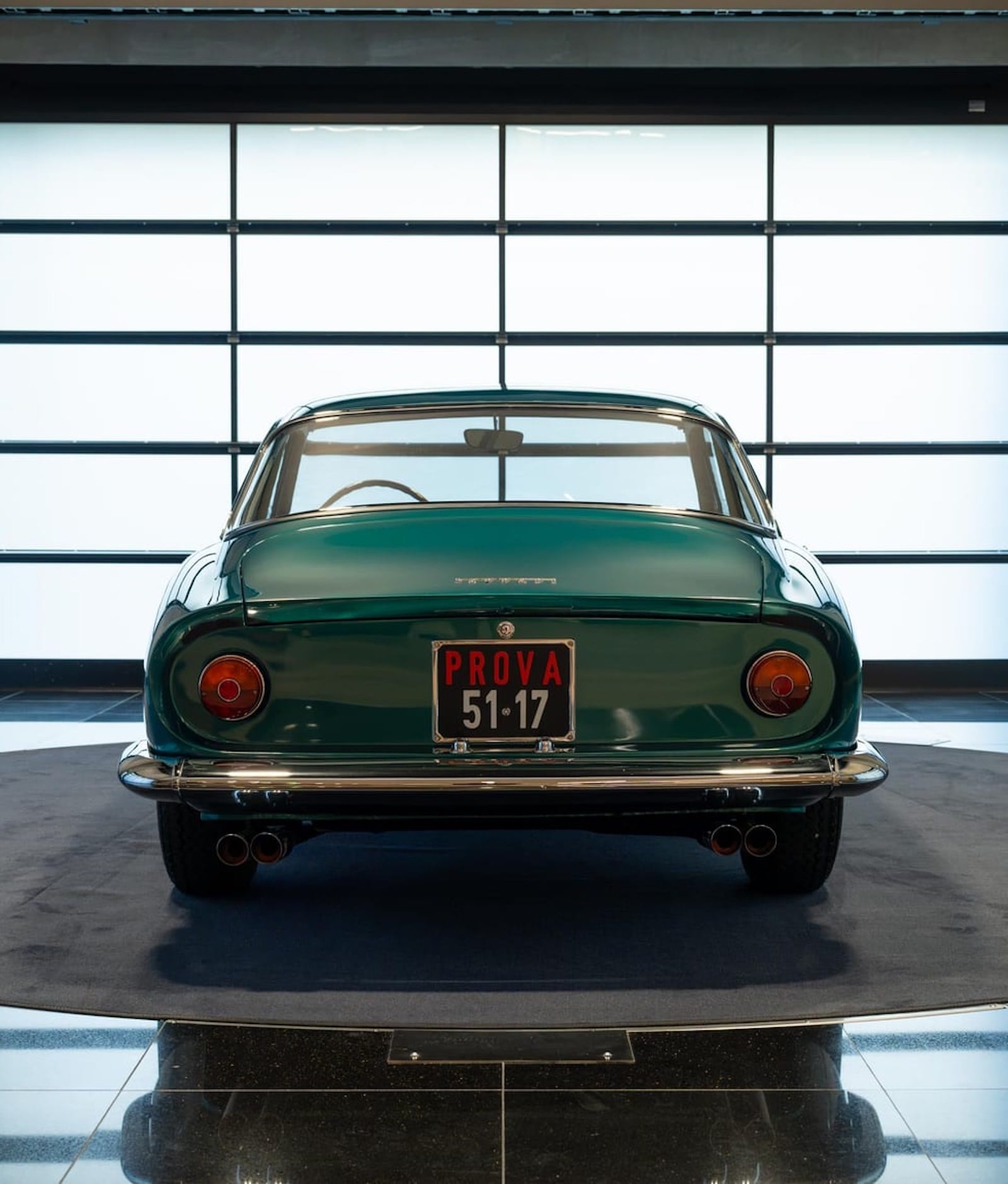
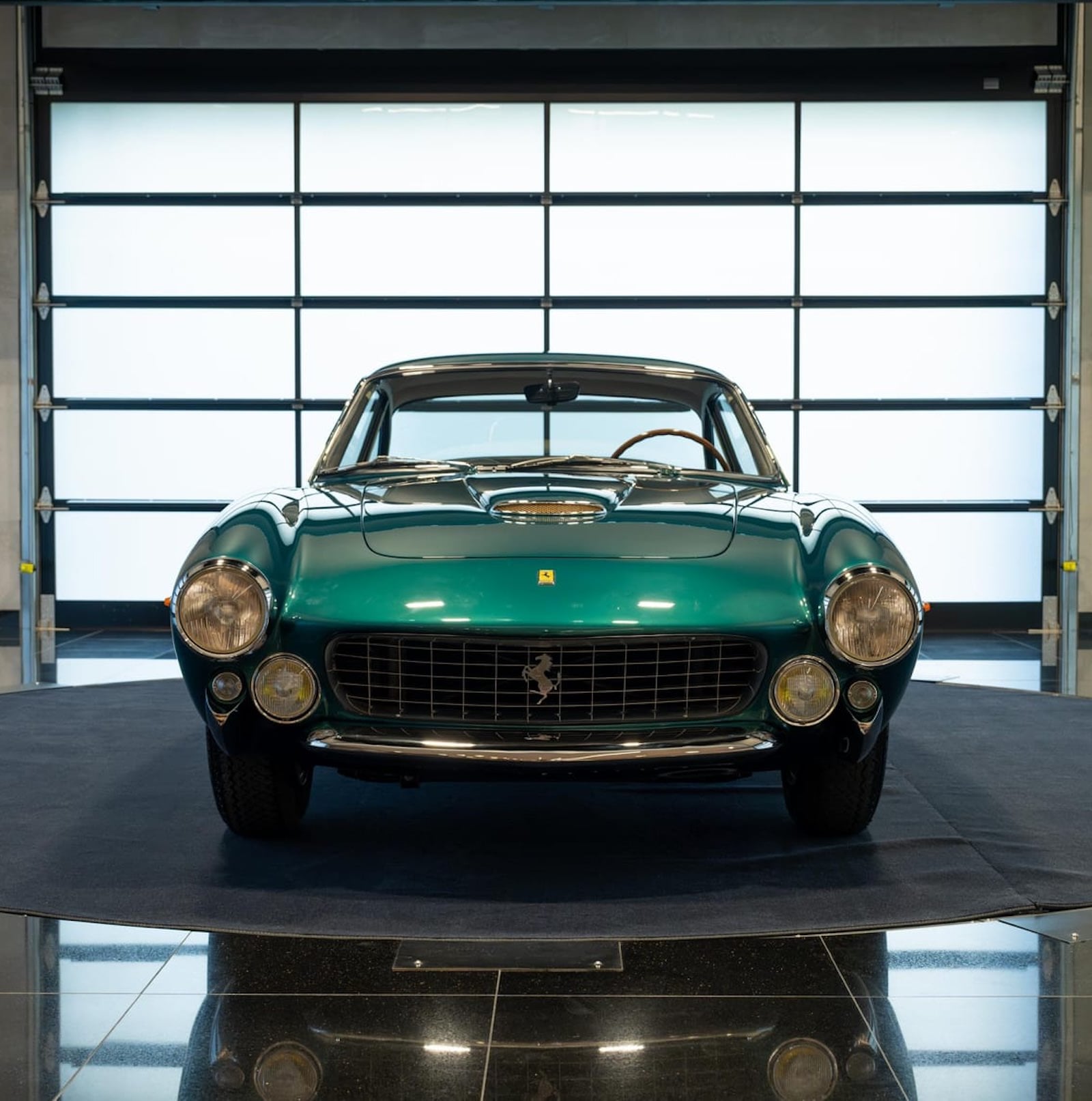
The design had come from Pinin Farina, the shape took its low egg-crate grille from the short-wheelbase Berlinetta and ended in a cut-off Kamm tail with a small lip along its upper edge. The roof pillars were slim and the rear window large, running at a shallow angle into the trunk line. The front bumper came in three pieces – a bar under the grille and a small vertical bumperette on each fender.
Battista Pininfarina liked the car so much he got one of his own, but he couldn’t resist tweaking the design slightly.
The 250 GT Lusso Chassis + Engine
Underneath the elegant new body was Ferrari’s Tipo 539/U chassis, made from two large oval-section steel tubes with cross bracing, on the same 2,400 mm wheelbase as the short-wheelbase Berlinetta. The engine sat further forward than in that car to give more space in the cabin.
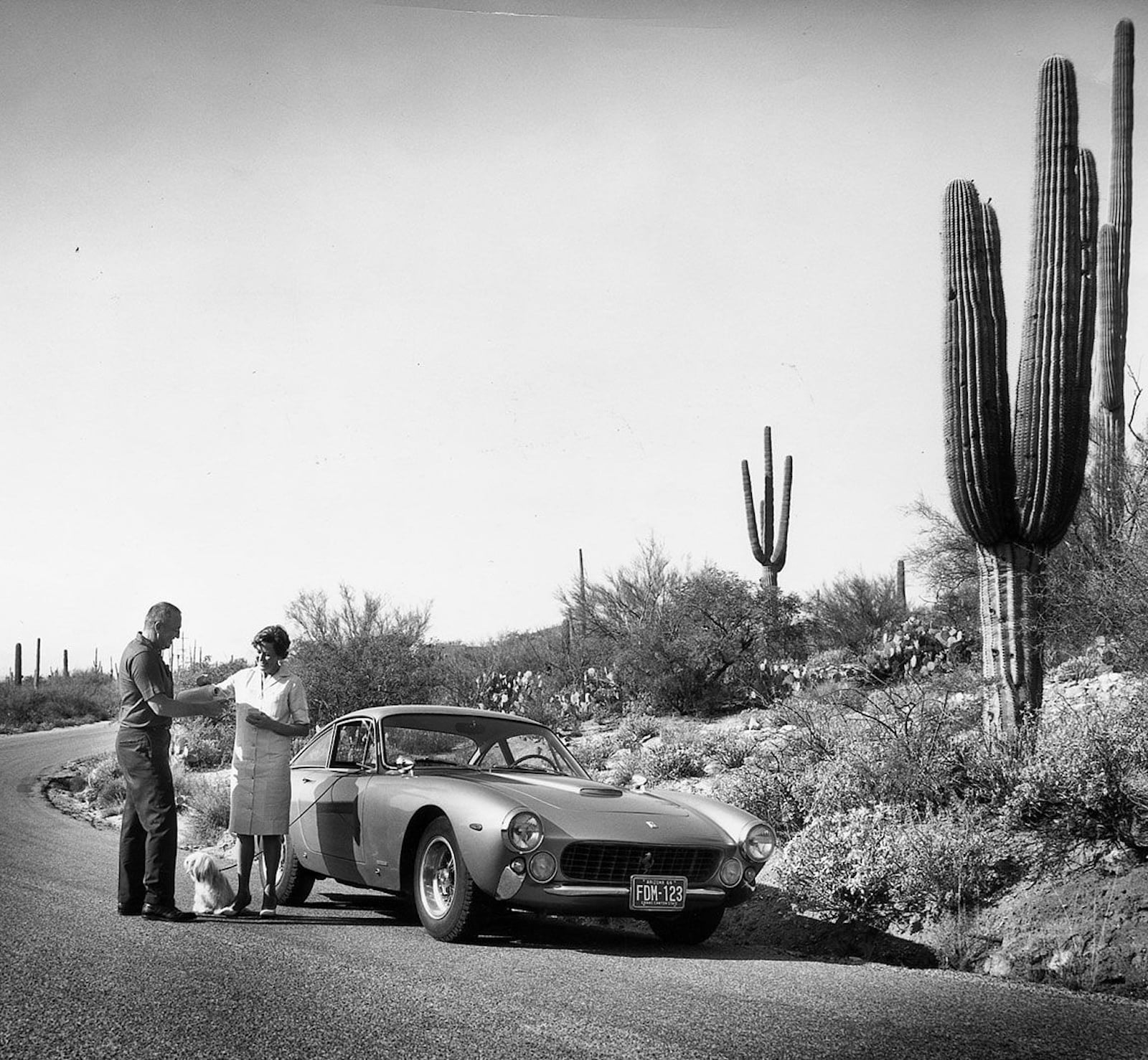
This image is in the Ferrari Archives, but there’s no additional information about the scene which seems a shame. It shows a 250 GT Lusso with a couple pouring coffee from a thermos flask, with their little dog surveying the horizon. Image provided by Ferrari.
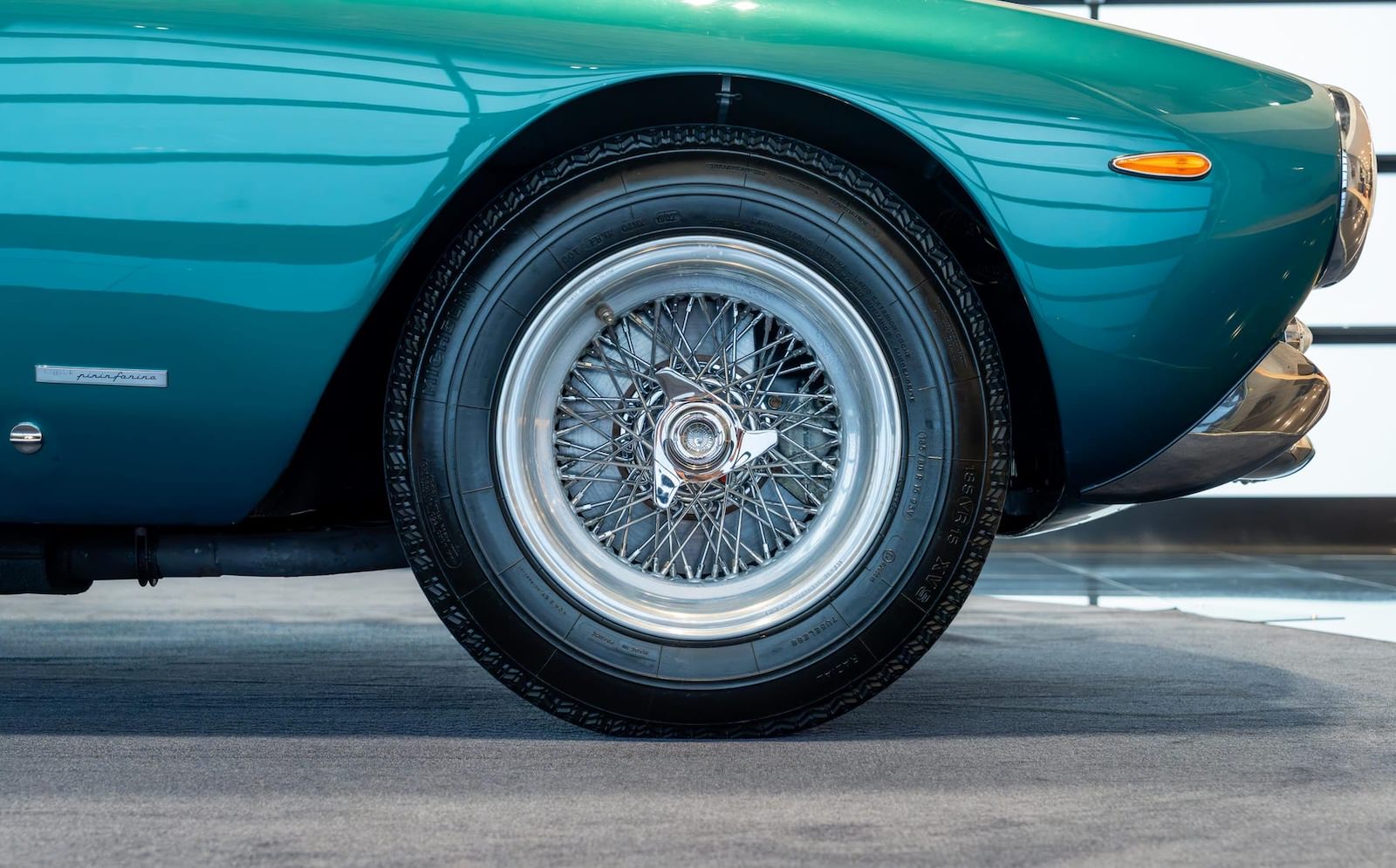
The front suspension consisted of unequal-length wishbones and coil springs, out the back you’d find a live axle on semi-elliptic leaf springs and radius arms, with two additions developed on the GTO – coil springs wound around the telescopic shock absorbers, and a Watt linkage, to stop sideways movement of the axle. Disc brakes were fitted at all four wheels, steering was by worm and sector, and the car rode on gleaming 15 inch Borrani wire wheels.
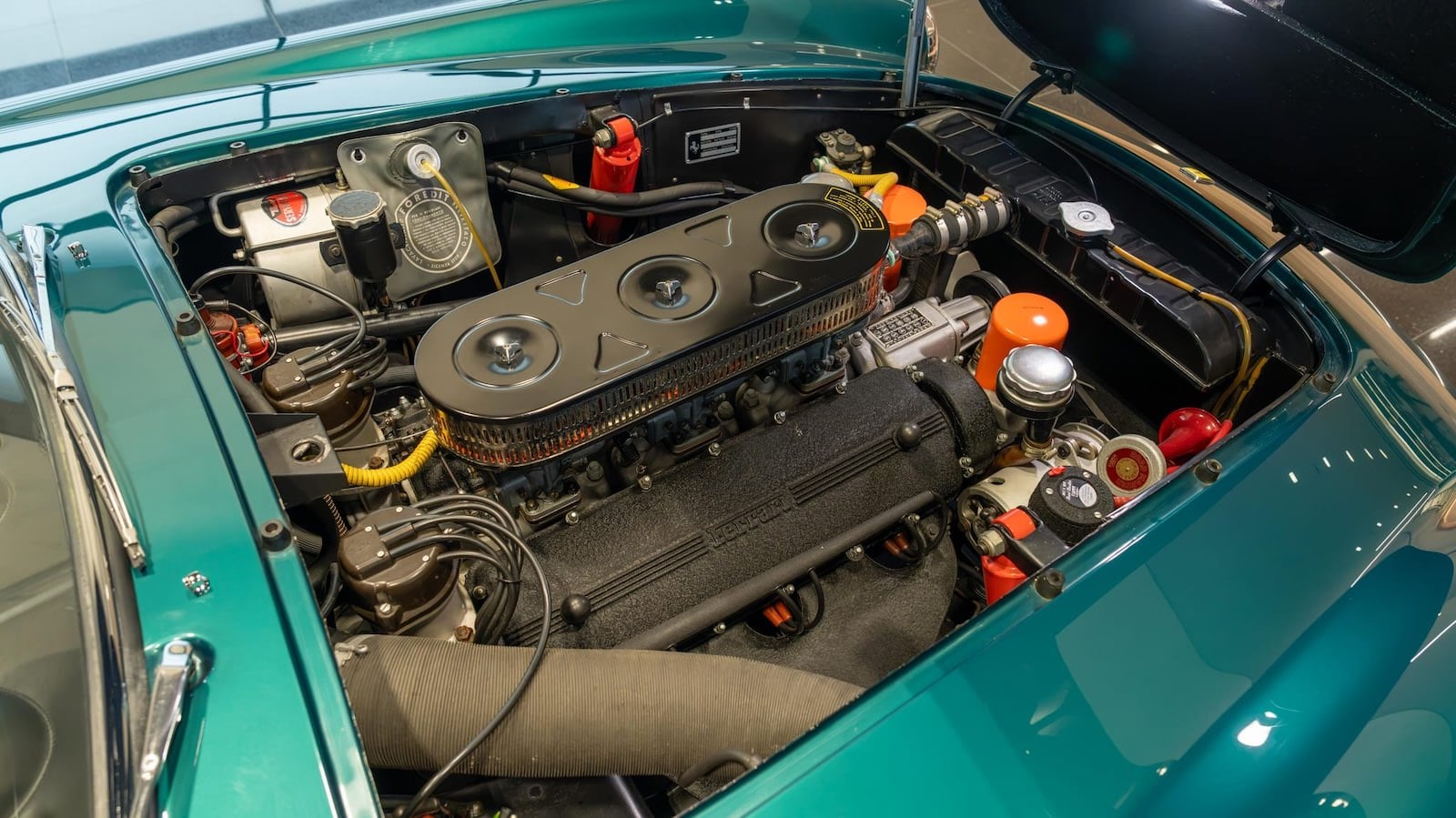
The Colombo V12 was the Tipo 168/U, an all-aluminum 3.0 liter (2,953 cc) unit with a bore and stroke of 73 x 58.8 mm, a single overhead camshaft per bank, a 9.2:1 compression ratio and three twin-choke Weber 36 DCS carburetors. Each cylinder displaced 246cc, the source of the 250 in the name as you’ll remember.
Ferrari claimed 240 bhp at 7,500 rpm, drive went back through a 4-speed all-synchromesh gearbox to the rear axle, with a choice of two final drive ratios.
The car had a dry weight of 1,020 kgs (about 2,250 lbs) and a top speed of 240 km/h (149 mph). A 1969 road test of a five-year-old Lusso with some 20,000 miles on it recorded 0 to 60 mph in 8.0 seconds and a standing quarter mile in 16.1 seconds at 91 mph.
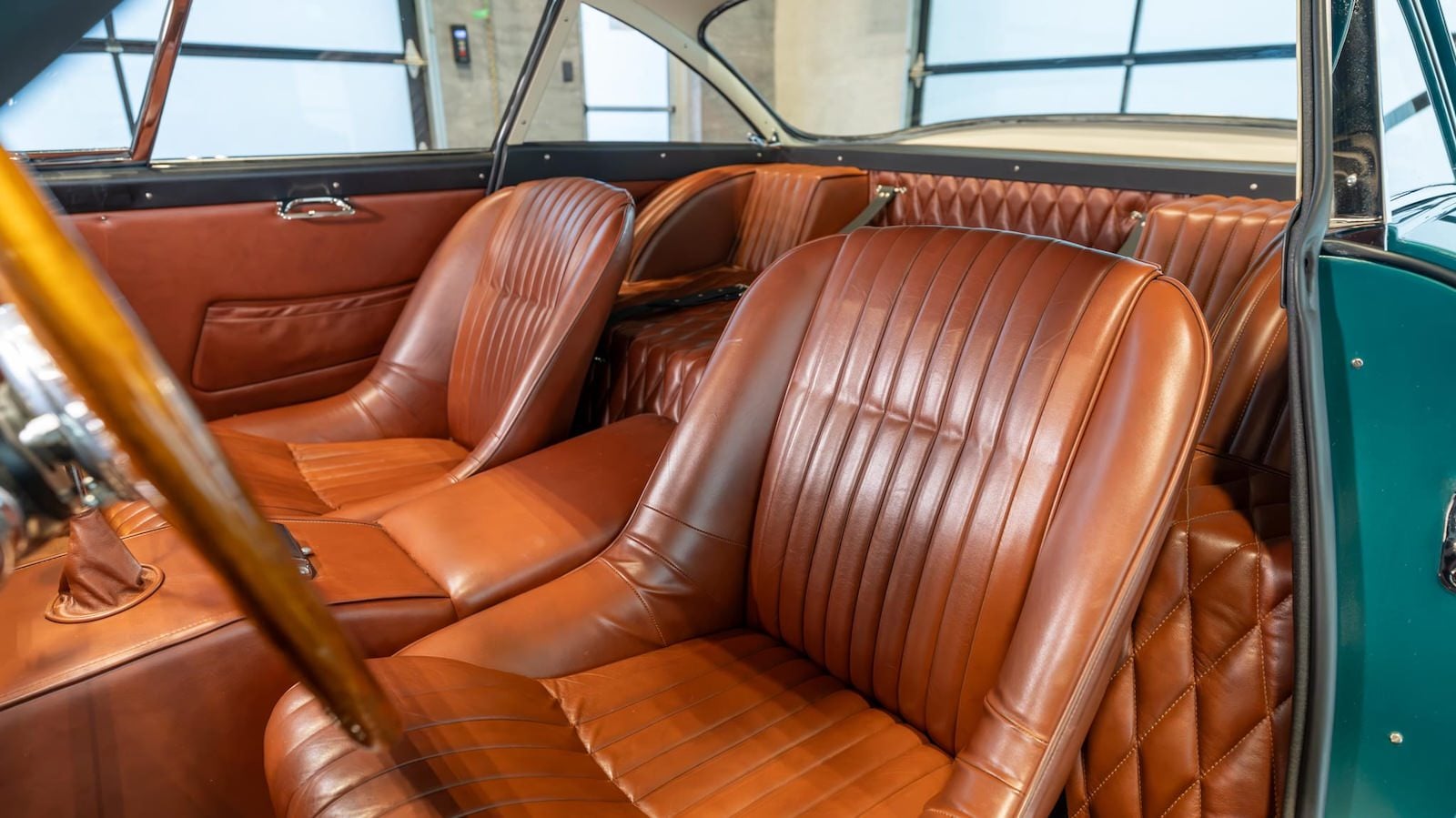
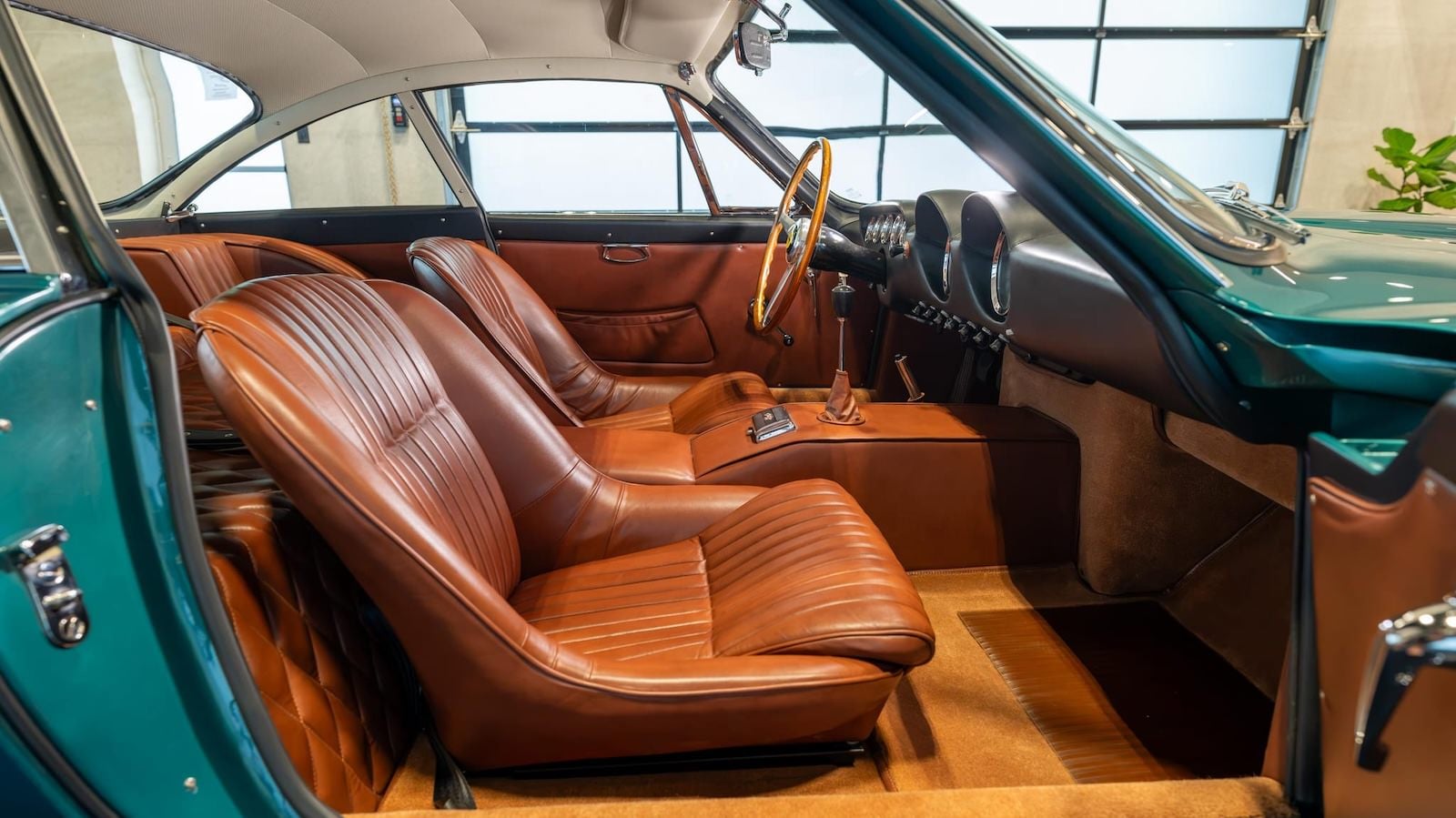
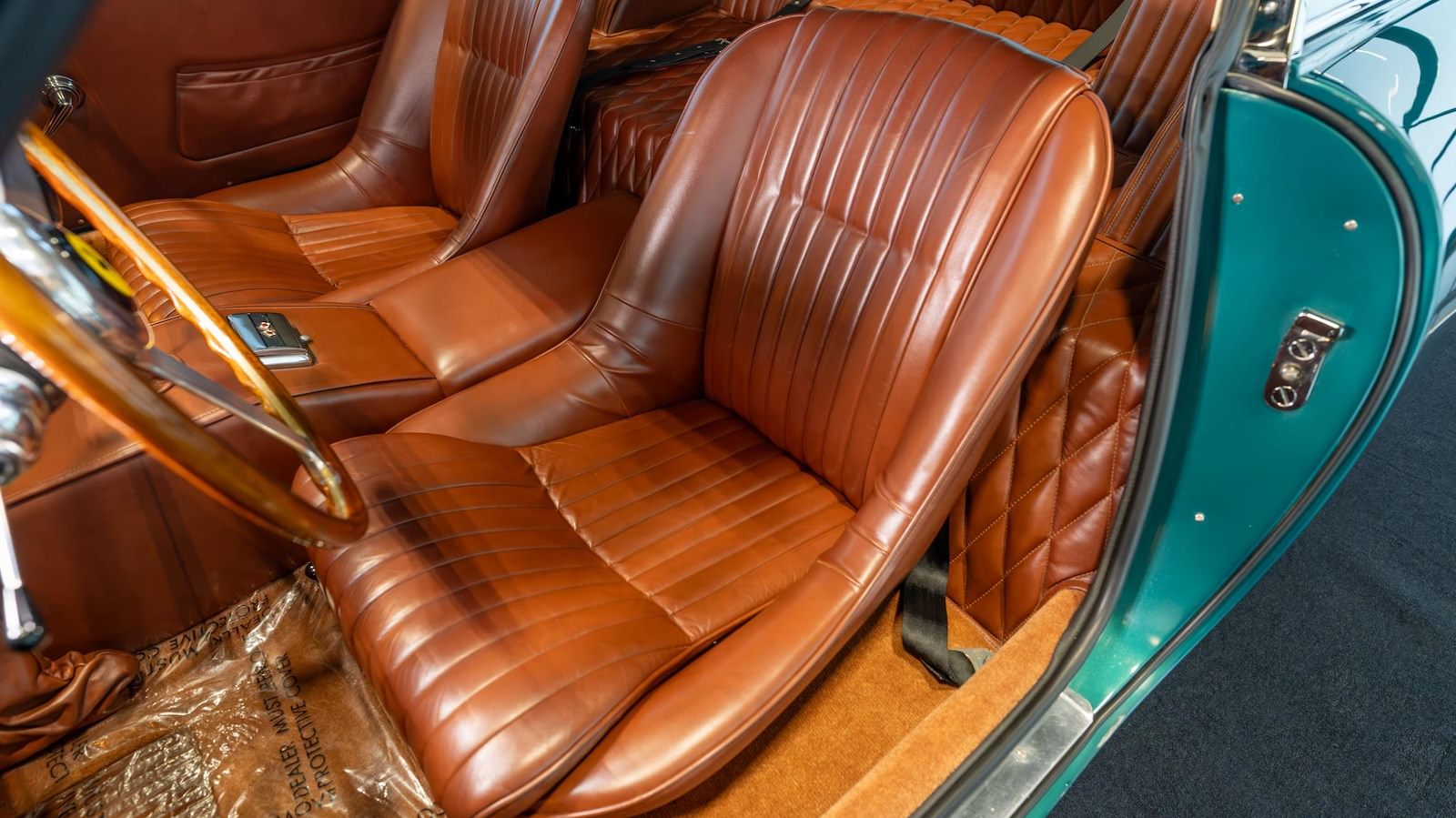
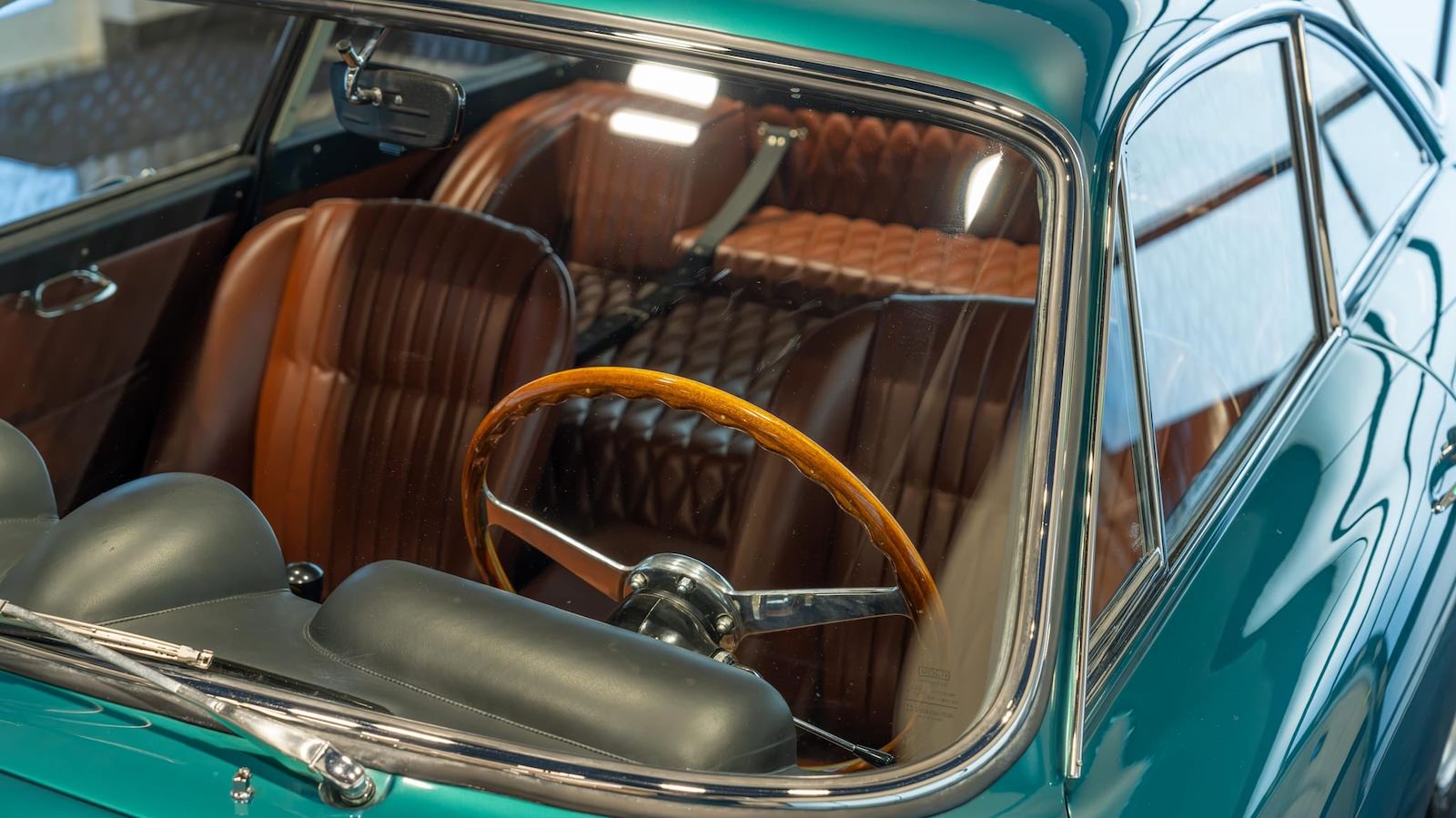
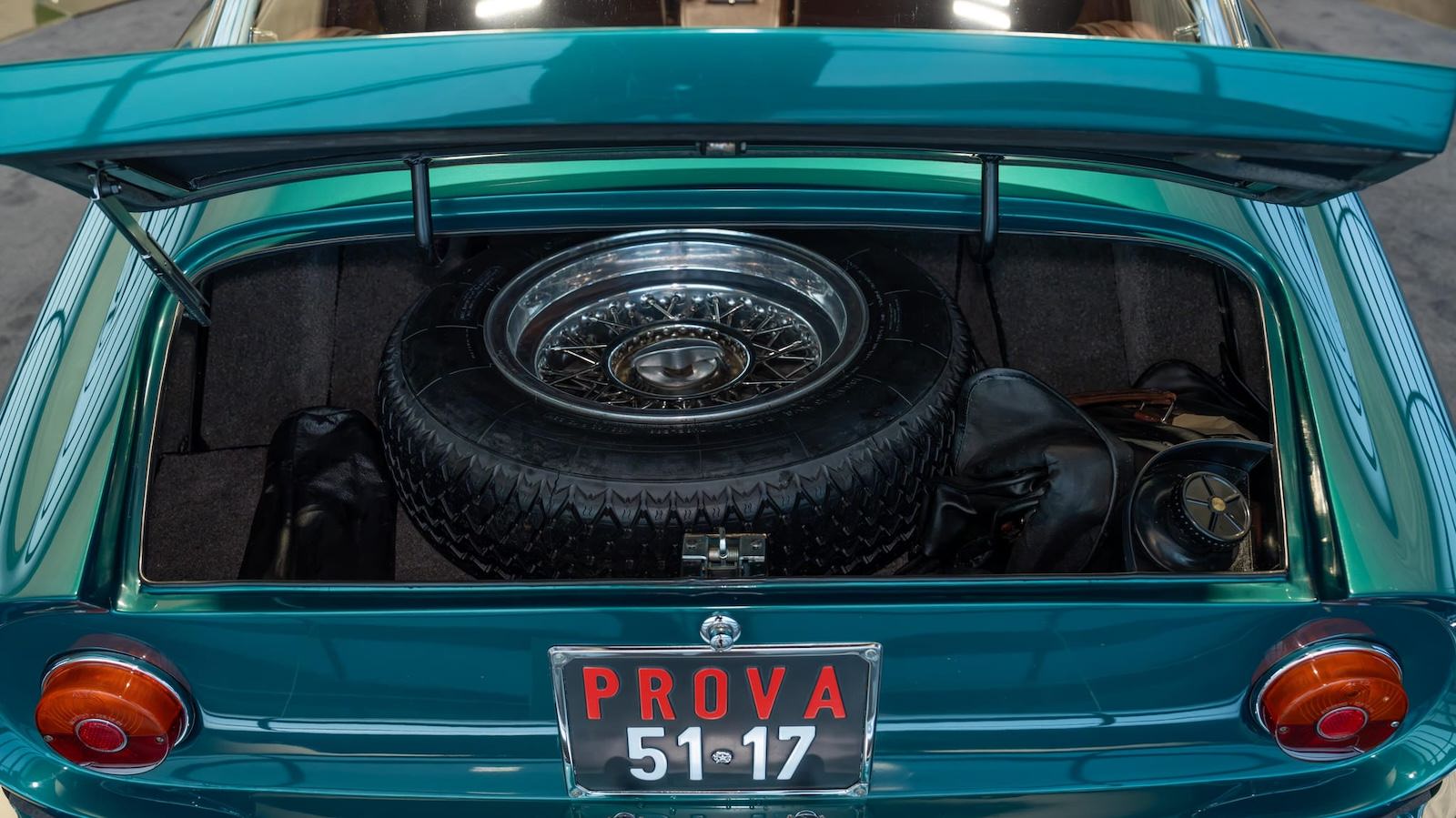
The speedometer and rev counter sat in two large pods at the top center of the dashboard, angled toward the driver, with five small gauges in a strip behind the wood-rimmed wheel. Behind the two leather bucket seats was a luggage platform with leather straps and a quilted panel, which was important, because the trunk wasn’t exactly spacious. The seatbacks didn’t adjust but the brake and clutch pedals did, by about two inches in and out.
Customer deliveries of the 250 GT Lusso started in early 1963, and production ran until late 1964, by which time 350 cars had been sold. The US list price was $13,375 USD in 1964 (about $146,000 USD in 2026).
A few cars did depart somewhat from the standard specification – Battista Pininfarina’s car was given a GTO-like nose with covered headlights. Chassis 4385 GT was built for a client who had wanted a GTO, with a GTO-style nose, six carburetors and high-lift camshafts.
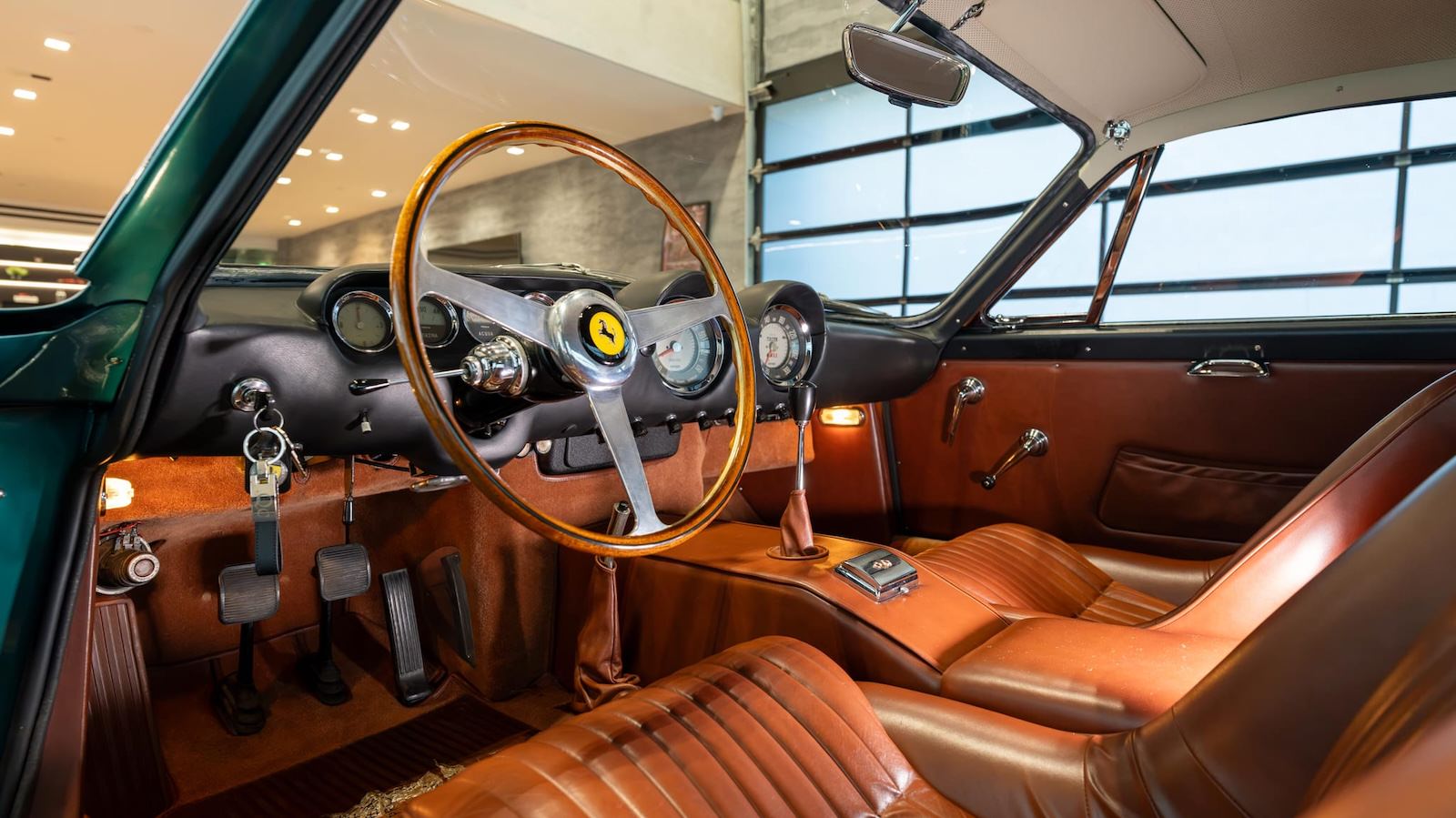
Under Reggie Jackson’s ownership it was sent off for a refurbishment by Grand Prix Motors in La Jolla, California, in 2000. Originally finished in Marrone and later repainted blue, the Ferrari was refinished in its current Pino Verde Metallizzato, while the interior was retrimmed in Tobacco leather.
The influence ran the other way too – in 1963 Ferrari built one GTO, chassis 4713 GT, and four 330 LM Berlinettas with bodies based on the Lusso’s. It probably shouldn’t be surprising that there was so much cross-pollination so to speak, as the 250 GTO and the Lusso were being built by Ferrari at the same time.
The McQueen Car
Steve McQueen famously owned a Lusso, chassis 4891 GT, it was a gift from his wife Neile Adams who ordered it through Otto Zipper’s dealership in Santa Monica, California, finished in metallic brown with a beige interior.
McQueen was pictured with his car a number of times, quite the publicity boost for Ferrari as he was one of the biggest movie stars in the world at the time.
The Ex–Reggie Jackson 1963 250 GT Lusso Shown Here
This is a 1963 Ferrari 250 GT Lusso, chassis 5117, that formerly belonged to Baseball Hall of Famer Reggie Jackson who bought it in 1998. It’s the 125th of 350 examples built, and was completed on October the 19th, 1963, then delivered new to Ferrari dealer Gioacchino Veri in Rome and sold the following month to a local construction company.
It passed into Swiss ownership in 1964 before being acquired by Luigi Chinetti Motors in Connecticut in 1970 and imported to the United States. It then spent 25 years with an owner in Rhode Island. Under Reggie Jackson’s ownership it was sent off for a refurbishment by Grand Prix Motors in La Jolla, California, in 2000.
Originally finished in Marrone and later repainted blue, the Ferrari was refinished in its current Pino Verde Metallizzato, while the interior was retrimmed in Tobacco leather. Jackson sold the car in 2008 to a Midwest collector, who commissioned further work by Ferrari specialist Greg Jones, including a valve job. The car was then displayed at the 2009 Cavallino Classic, where it received a Platinum Award, and at the Meadowbrook Concours d’Elegance.
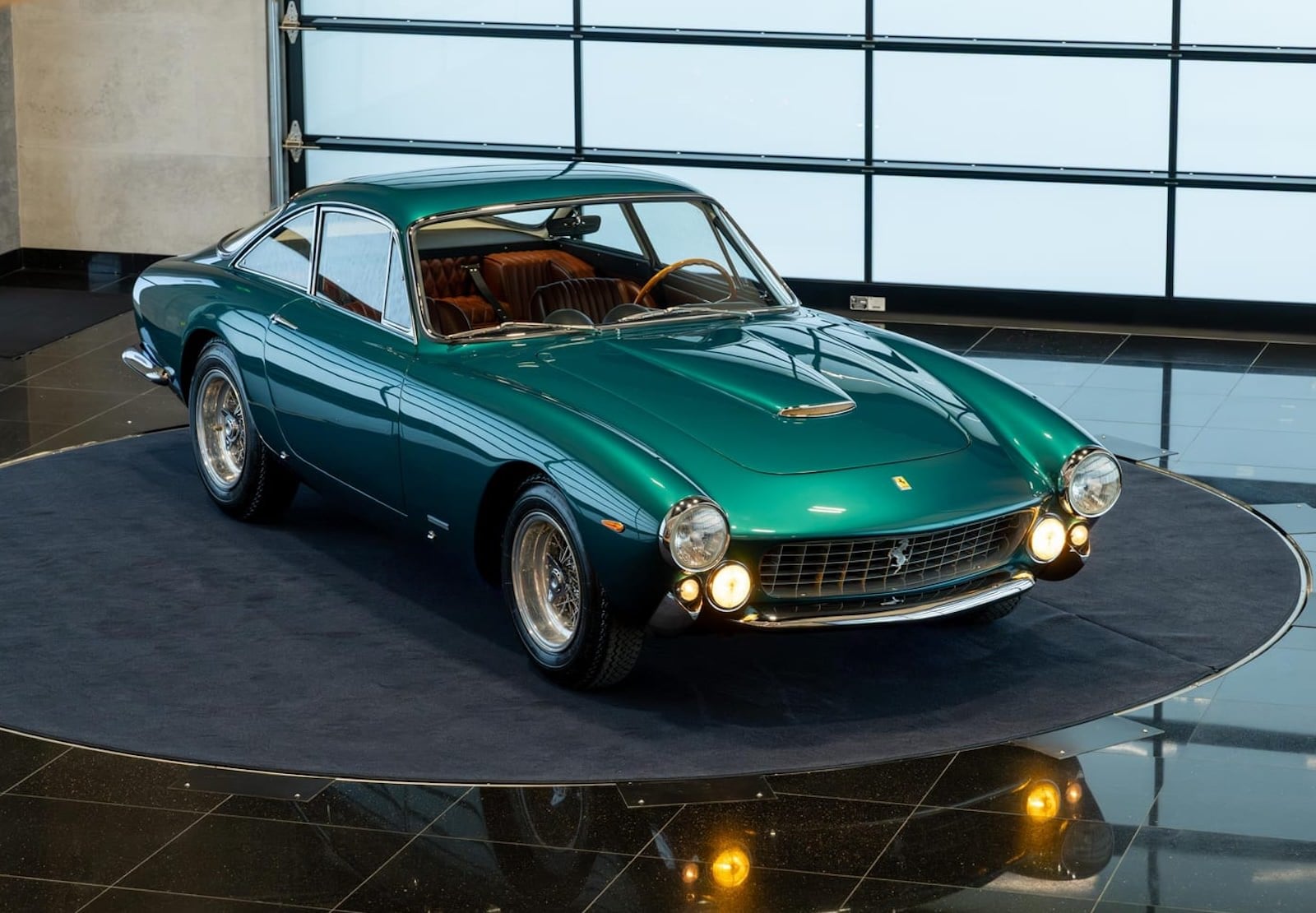
This is a 1963 Ferrari 250 GT Lusso, chassis 5117, that formerly belonged to Baseball Hall of Famer Reggie Jackson who bought it in 1998. It’s the 125th of 350 examples built, and was completed on October the 19th, 1963, then delivered new to Ferrari dealer Gioacchino Veri in Rome.
It received Ferrari Classiche certification in 2011 and appeared at the FCA Ferraris on Oak Street Concours d’Elegance in Chicago in 2014. Its current owner bought it in 2018 and has reportedly driven just 50 kilometers since then. In November of 2026, the car was given rebuilt Weber carburetors, new spark plugs, a fuel filter, and an oil change.
The car is now being offered for sale out of Miami, Florida on consignment with a Ferrari Classiche Red Book, a Marcel Massini history report, historical invoices and photographs, a tool kit, and a Montana title listing it as a 1964 model. If you’d like to read more about it or register to bid you can visit the listing here.
Images courtesy of Bring a Trailer

Articles that Ben Branch has written have been covered on CNN, Popular Mechanics, Smithsonian Magazine, Road & Track Magazine, the official Pinterest blog, the official eBay Motors blog, BuzzFeed, Autoweek Magazine, Wired Magazine, Autoblog, Gear Patrol, Jalopnik, The Verge, and many more.
Silodrome was founded by Ben back in 2010, in the years since the site has grown to become a world leader in the alternative and vintage motoring sector, with well over a million monthly readers from around the world and many hundreds of thousands of followers on social media.