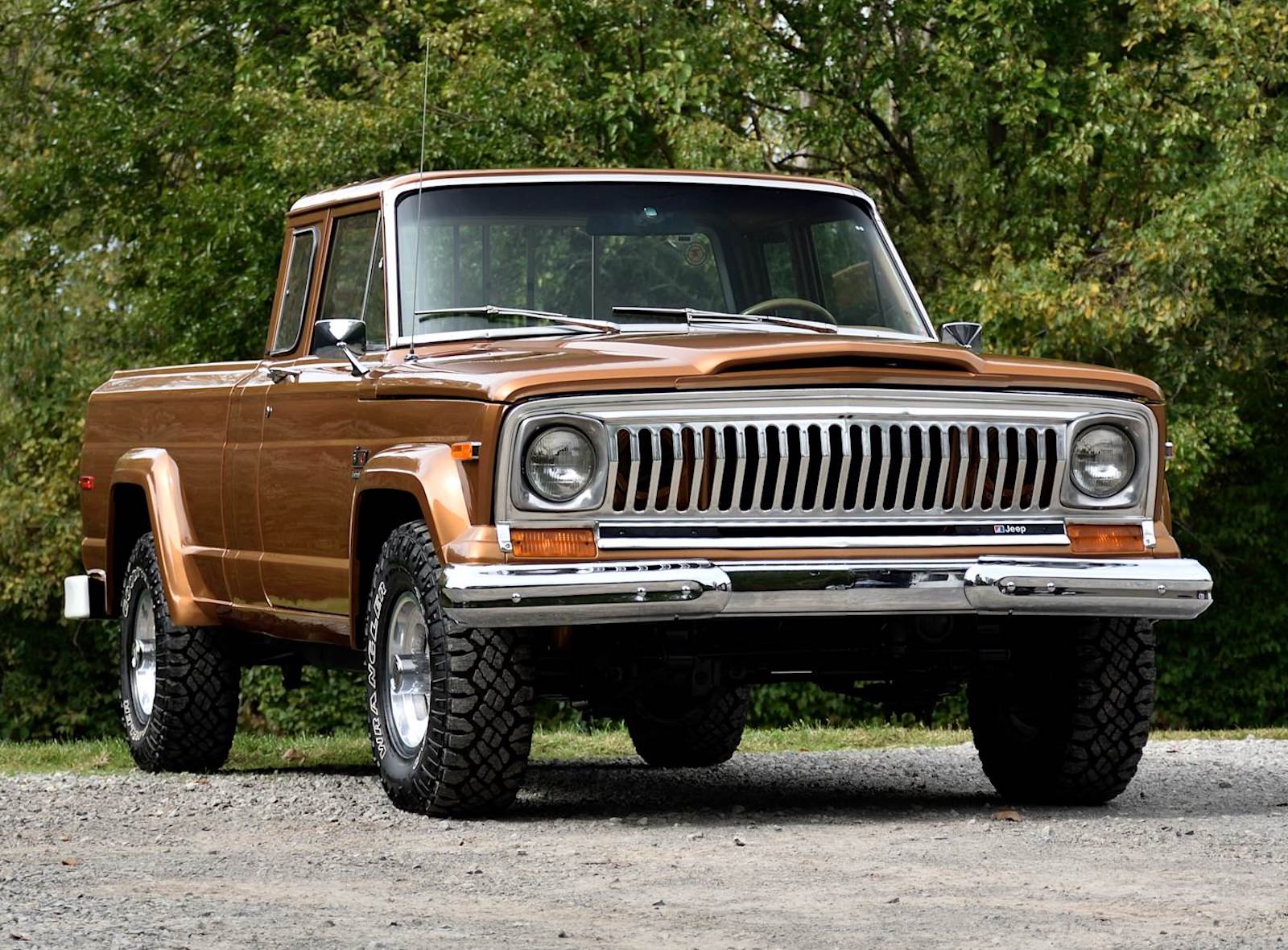
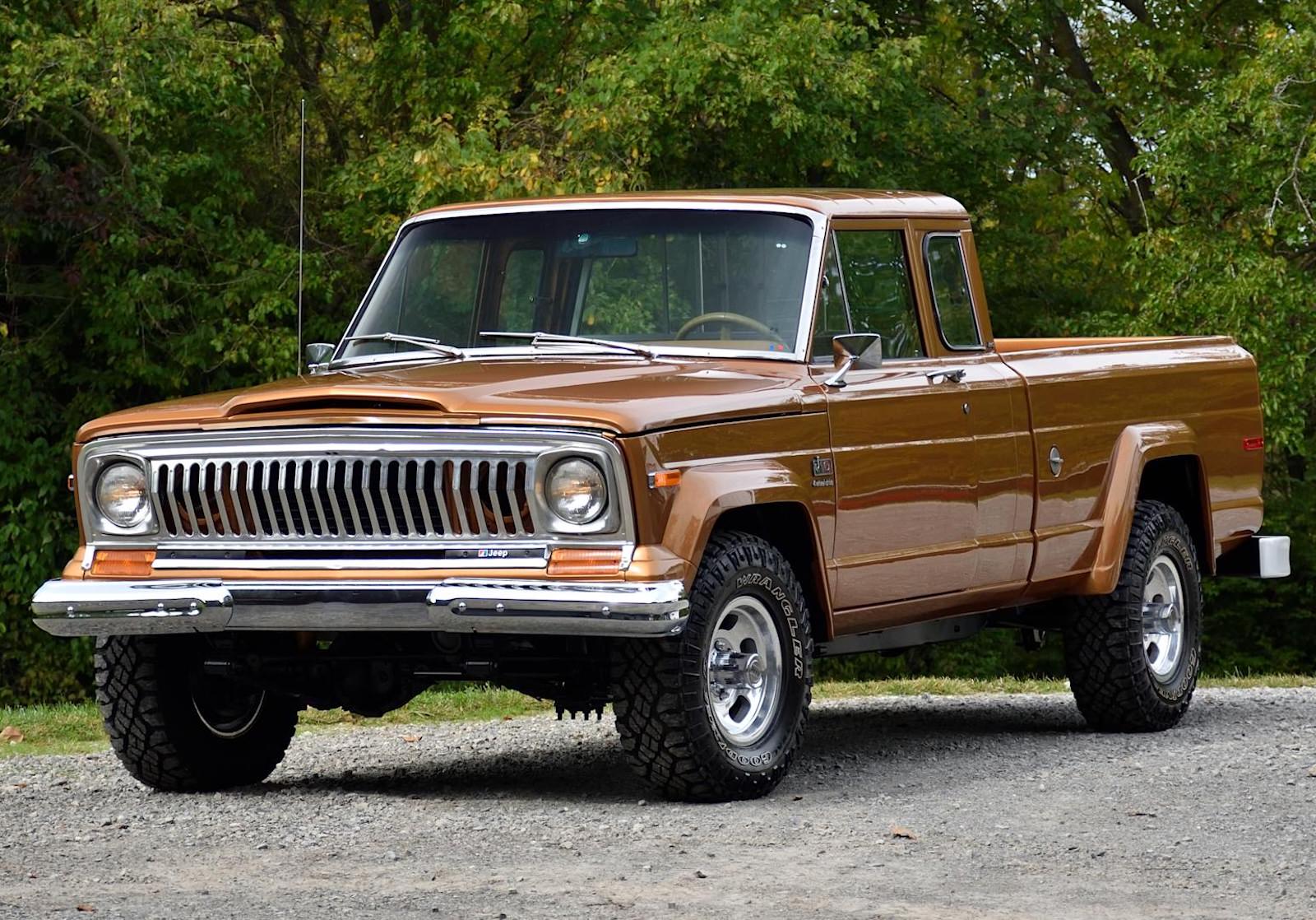
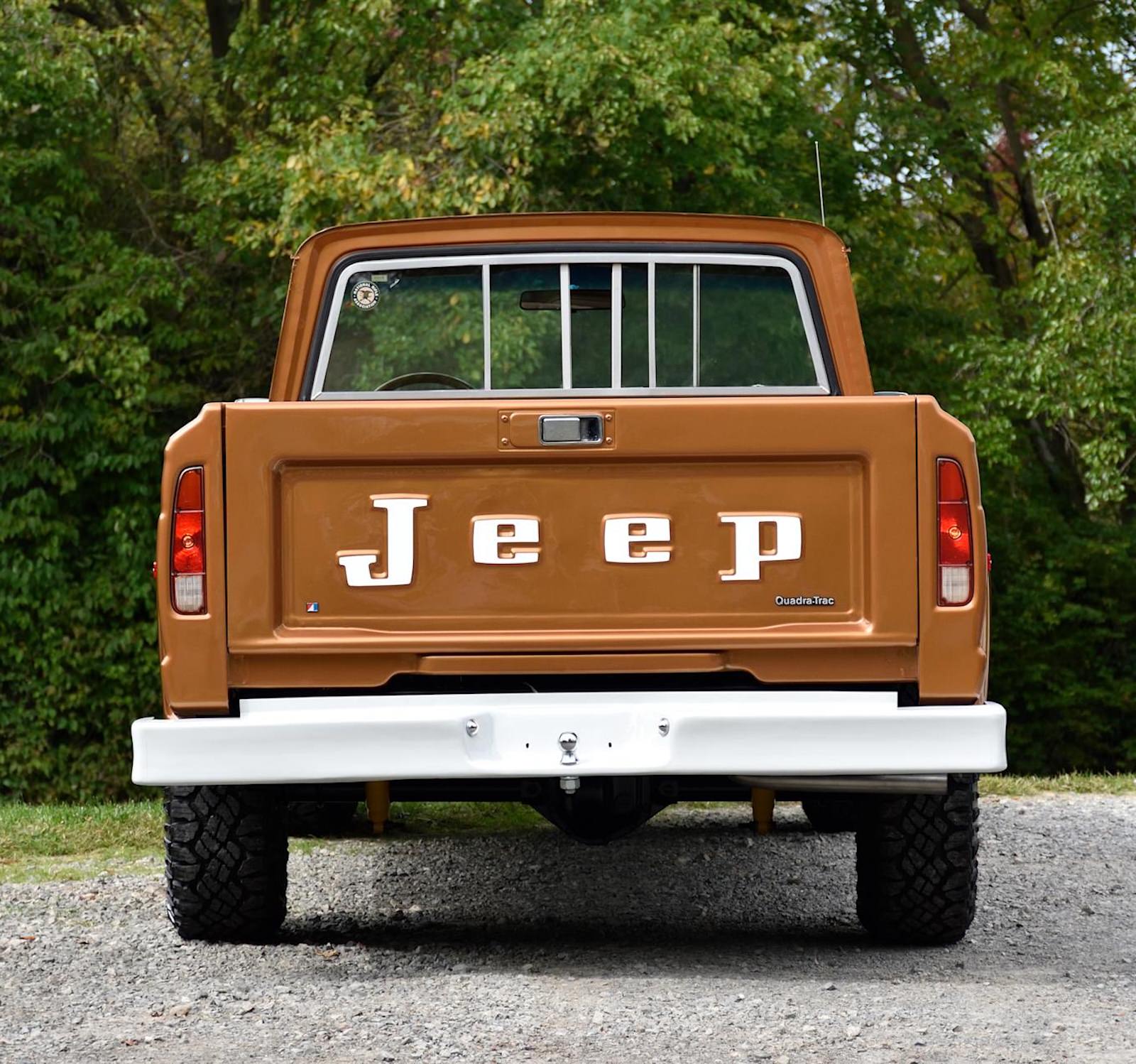
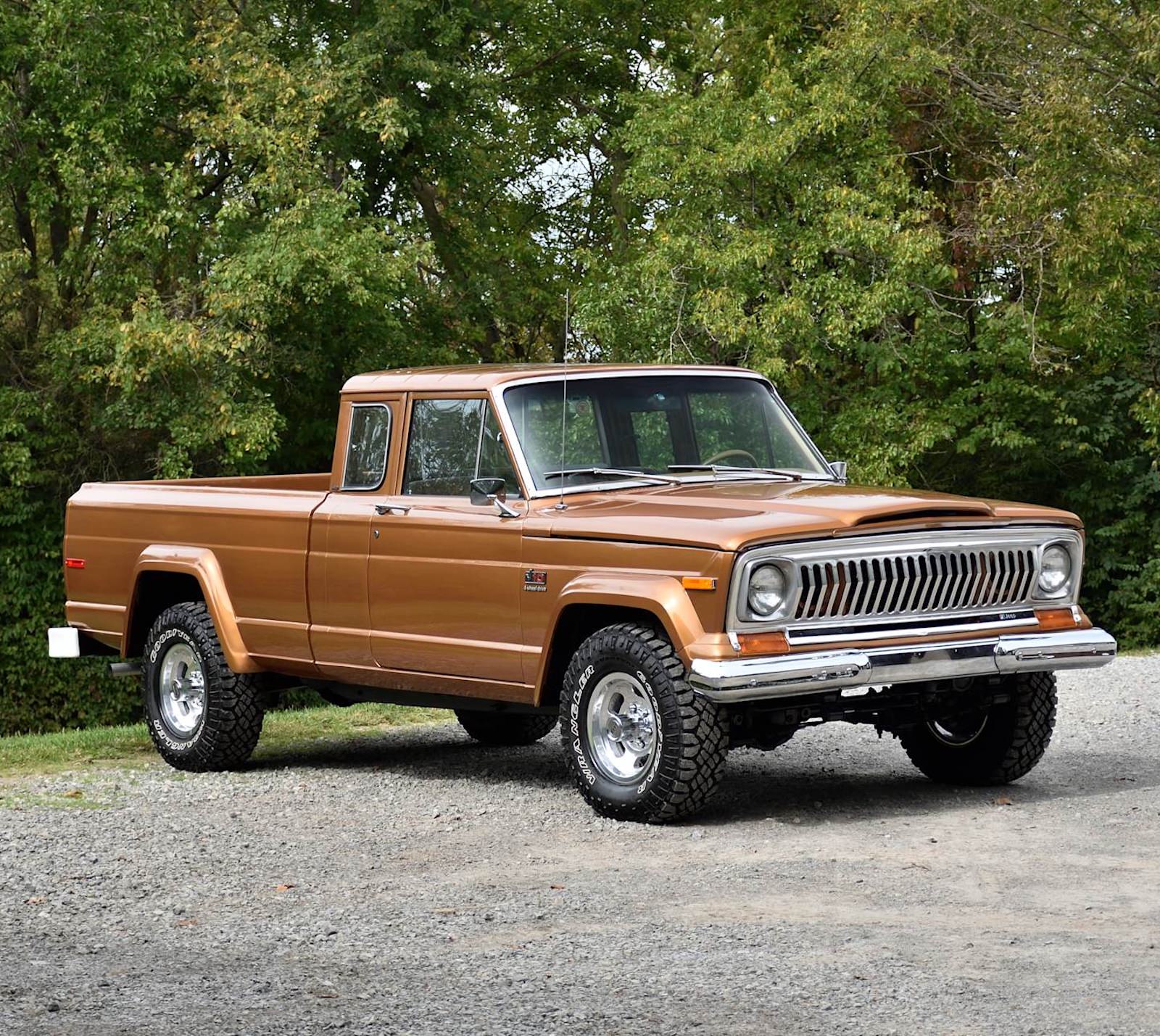
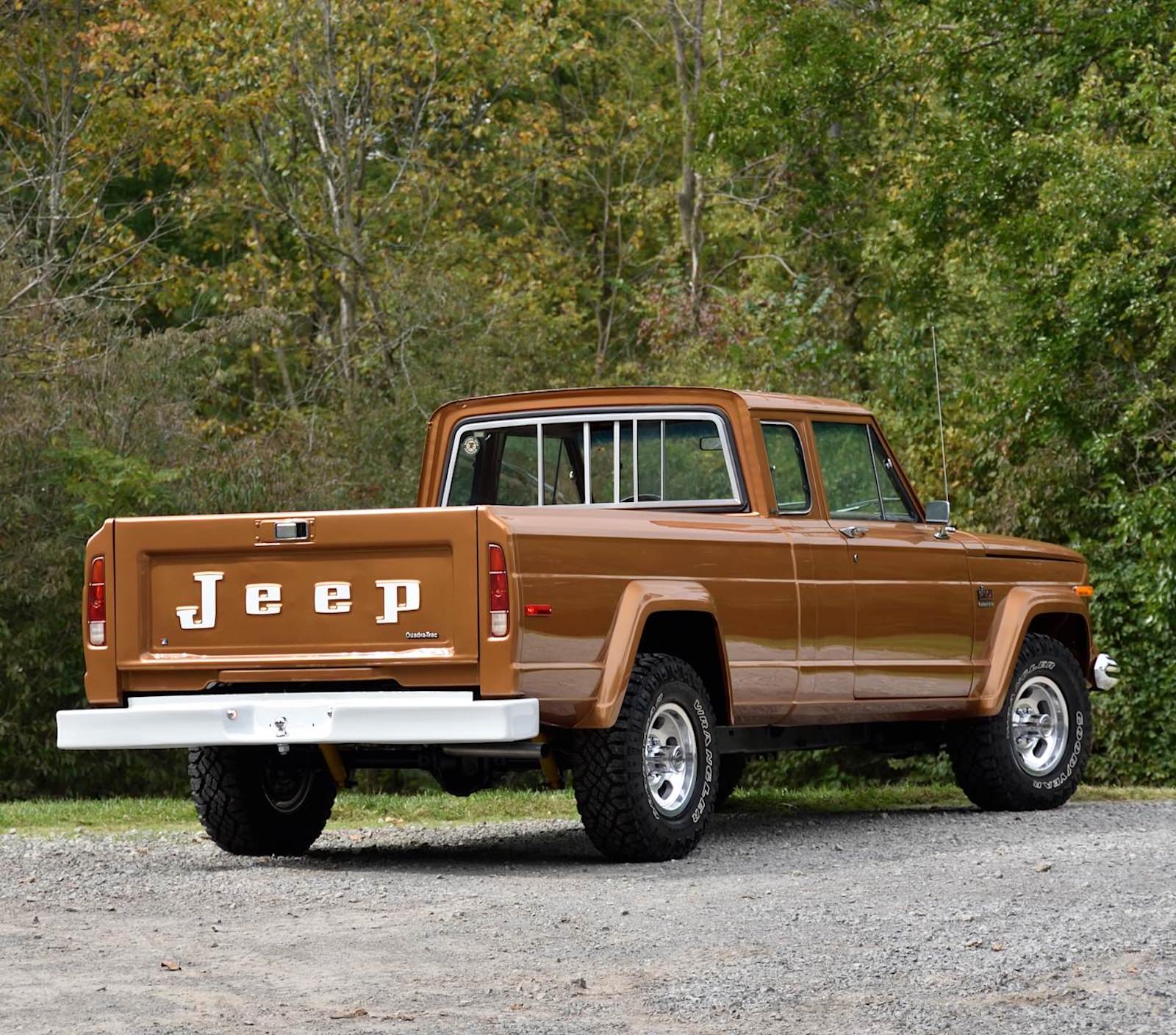
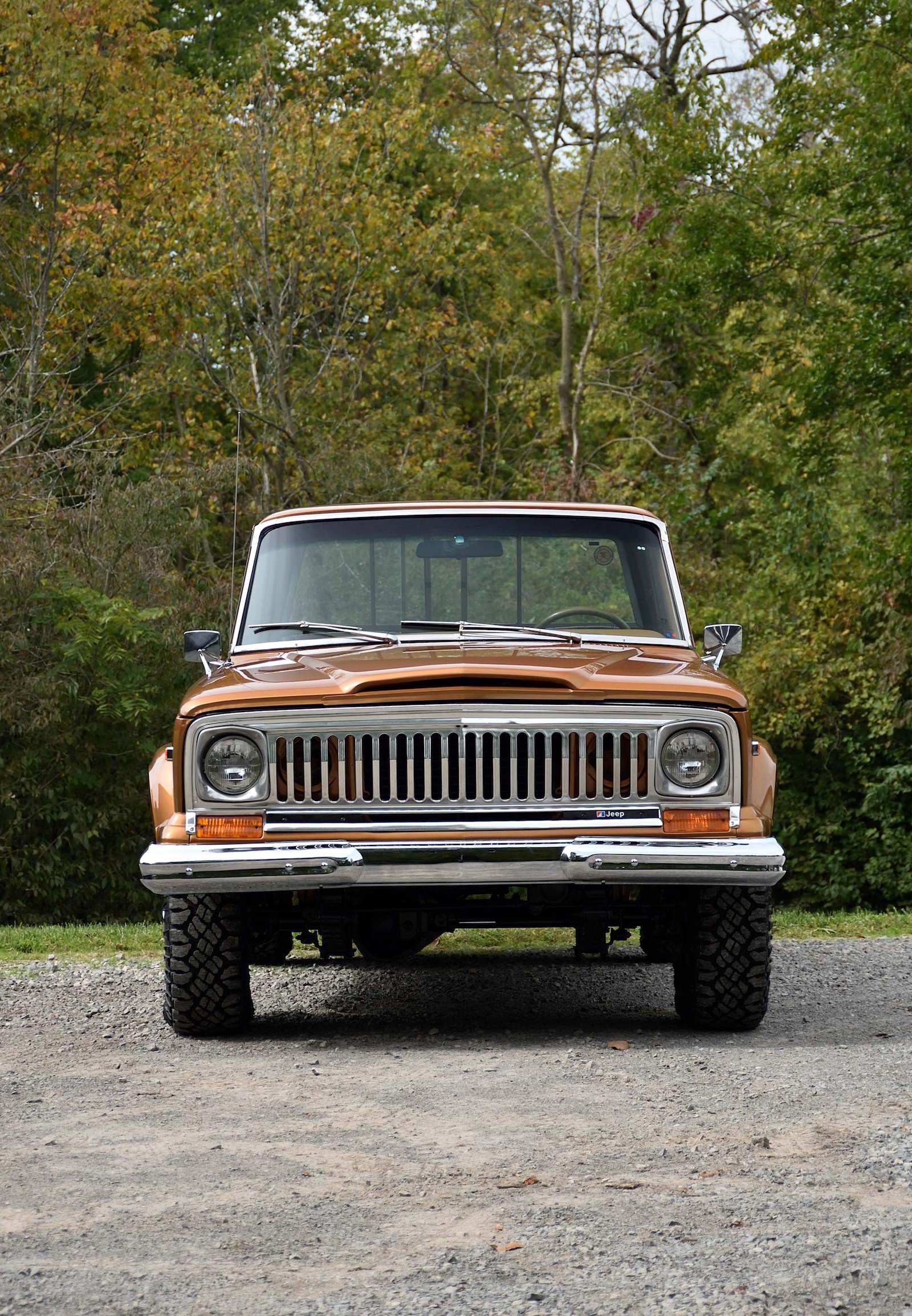
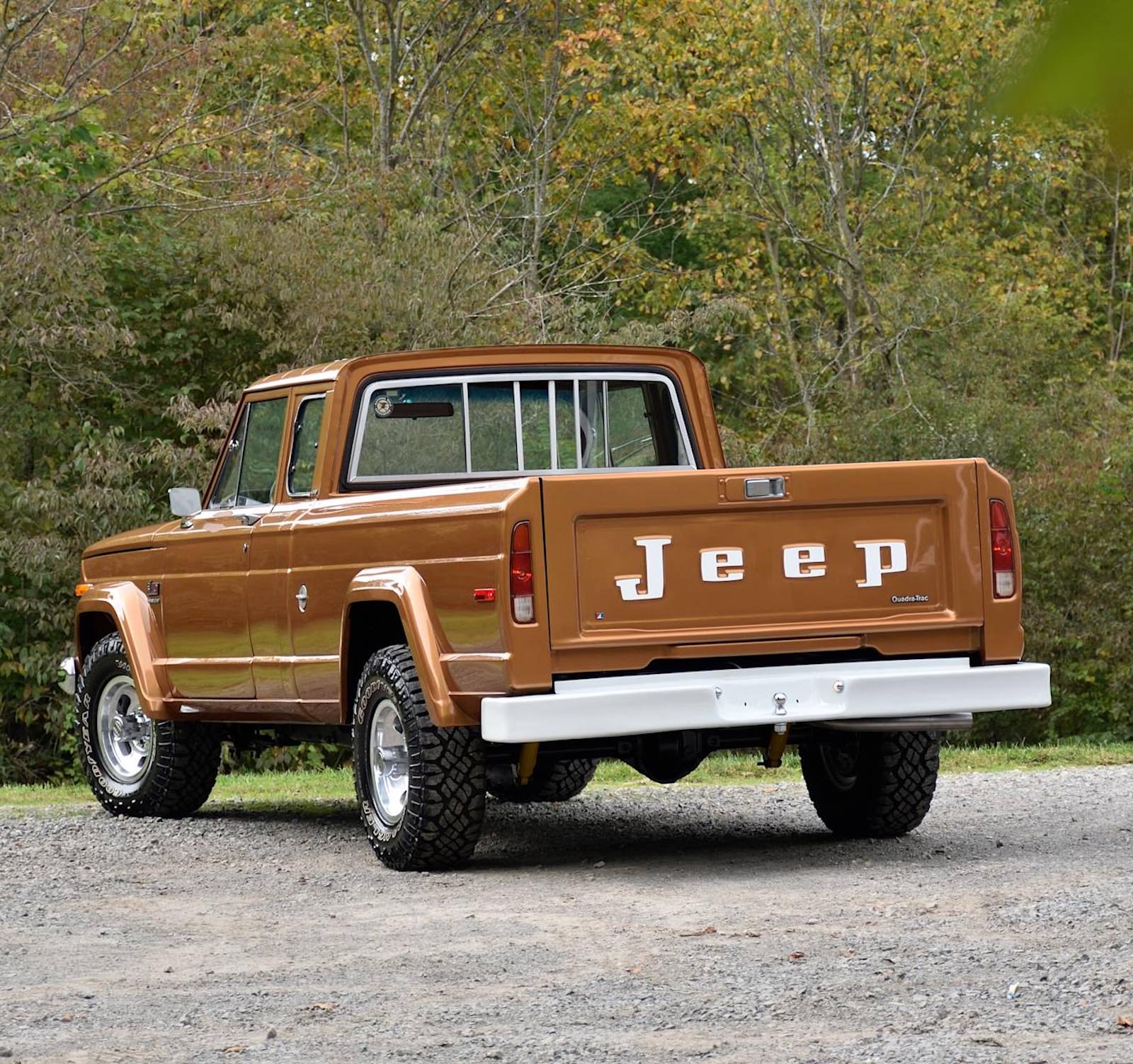
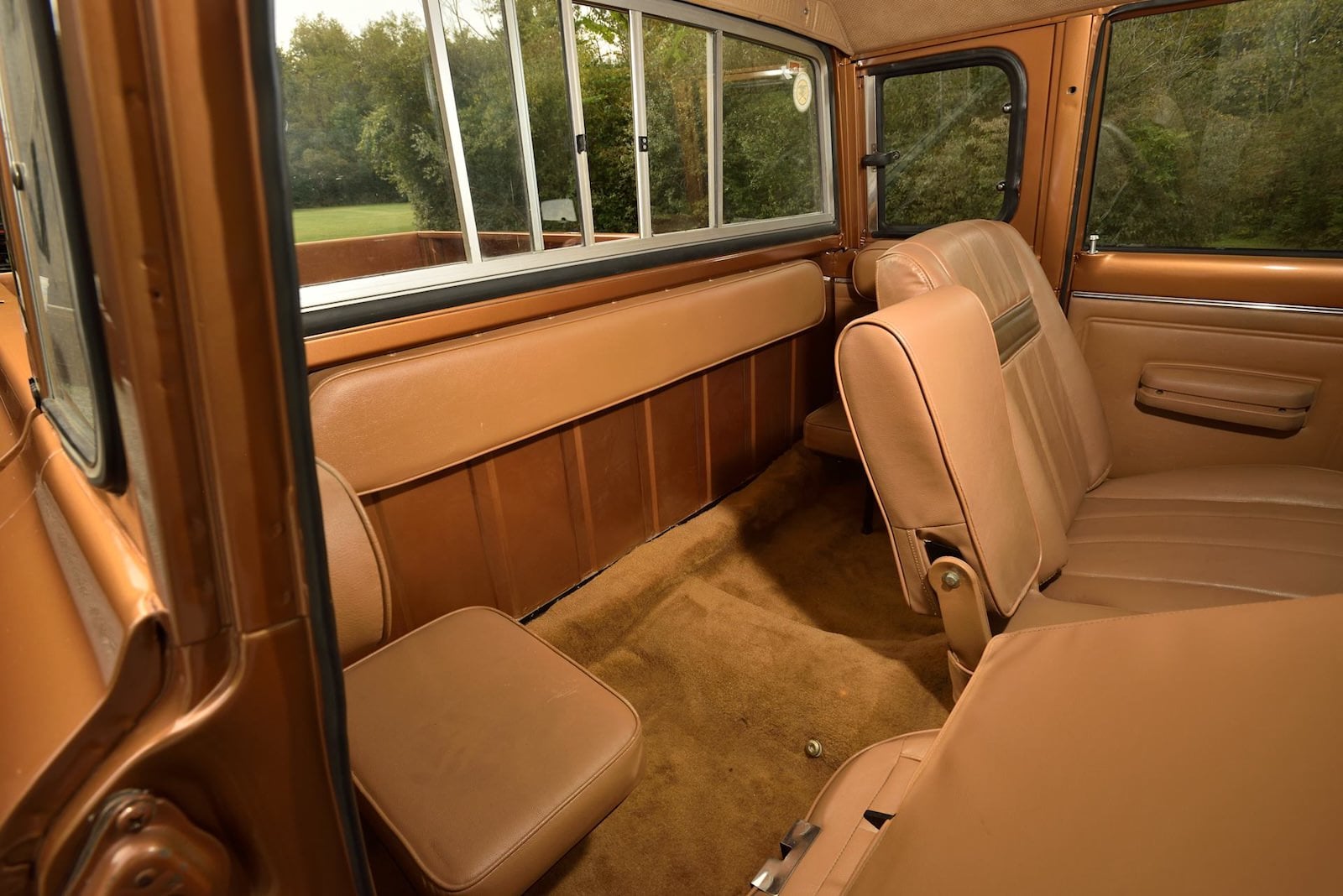
This is a 1977 Jeep J10, but not as most people know it. This vehicle was a secret prototype built on a Wagoneer frame with a Cherokee Chief cab with a second row of seats. It was created to test the viability of an extended cab J10, but it never went into production.
After testing, this vehicle was scheduled to be destroyed, but AMC/Jeep Research and Development supervisor Harold “Pete” Johnson had it hidden away in a backroom at the Toledo plant, saving it from the crusher.
Fast Facts: A 1977 Jeep J10 Prototype
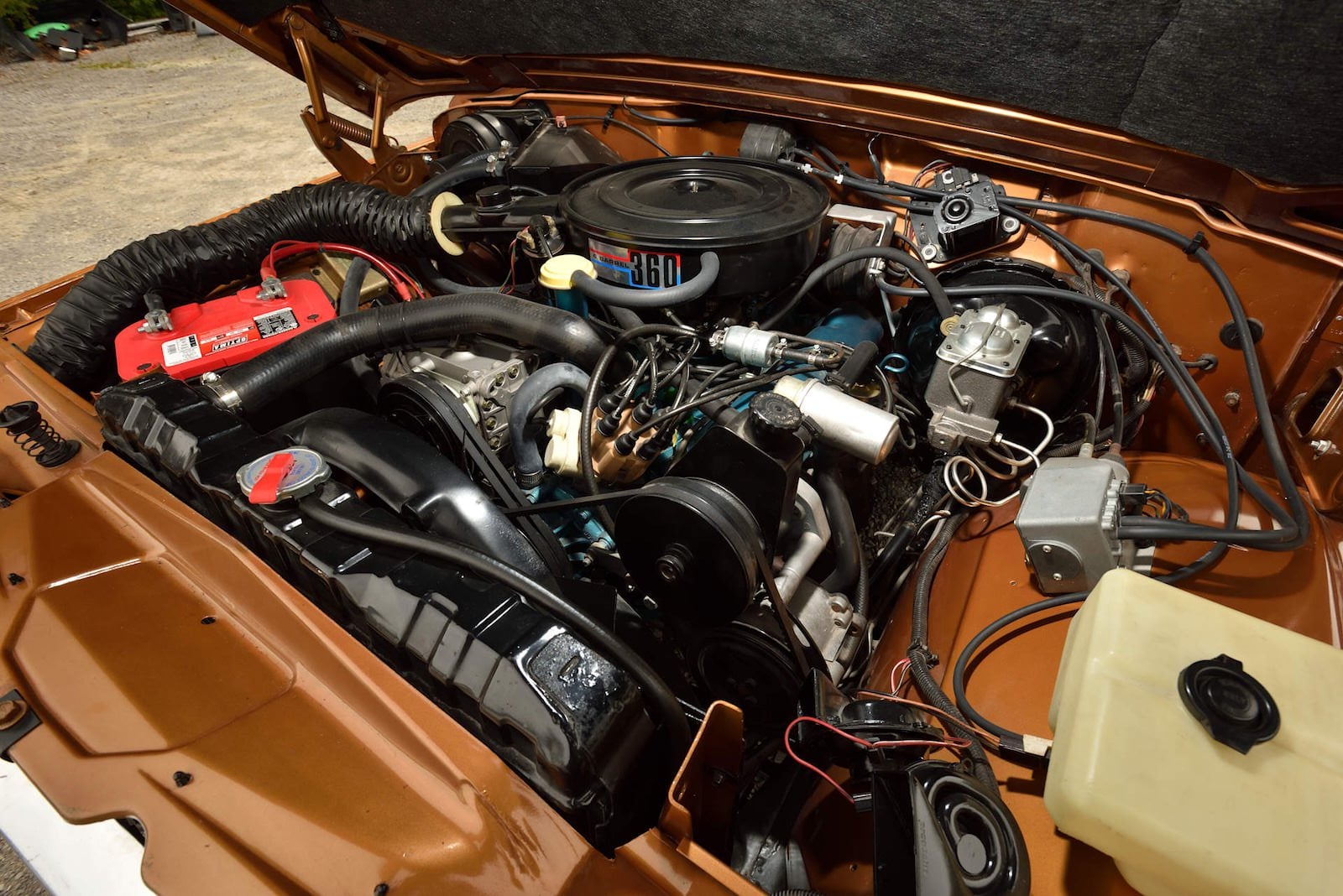
- This is a one-off 1977 Jeep J10 Extended Cab Prototype developed by AMC/Jeep’s Research and Development department. Built on a Wagoneer frame with a modified Cherokee Chief cab, it was designed to explore the viability of an extended-cab pickup with two rows of seats, although the project never reached production.
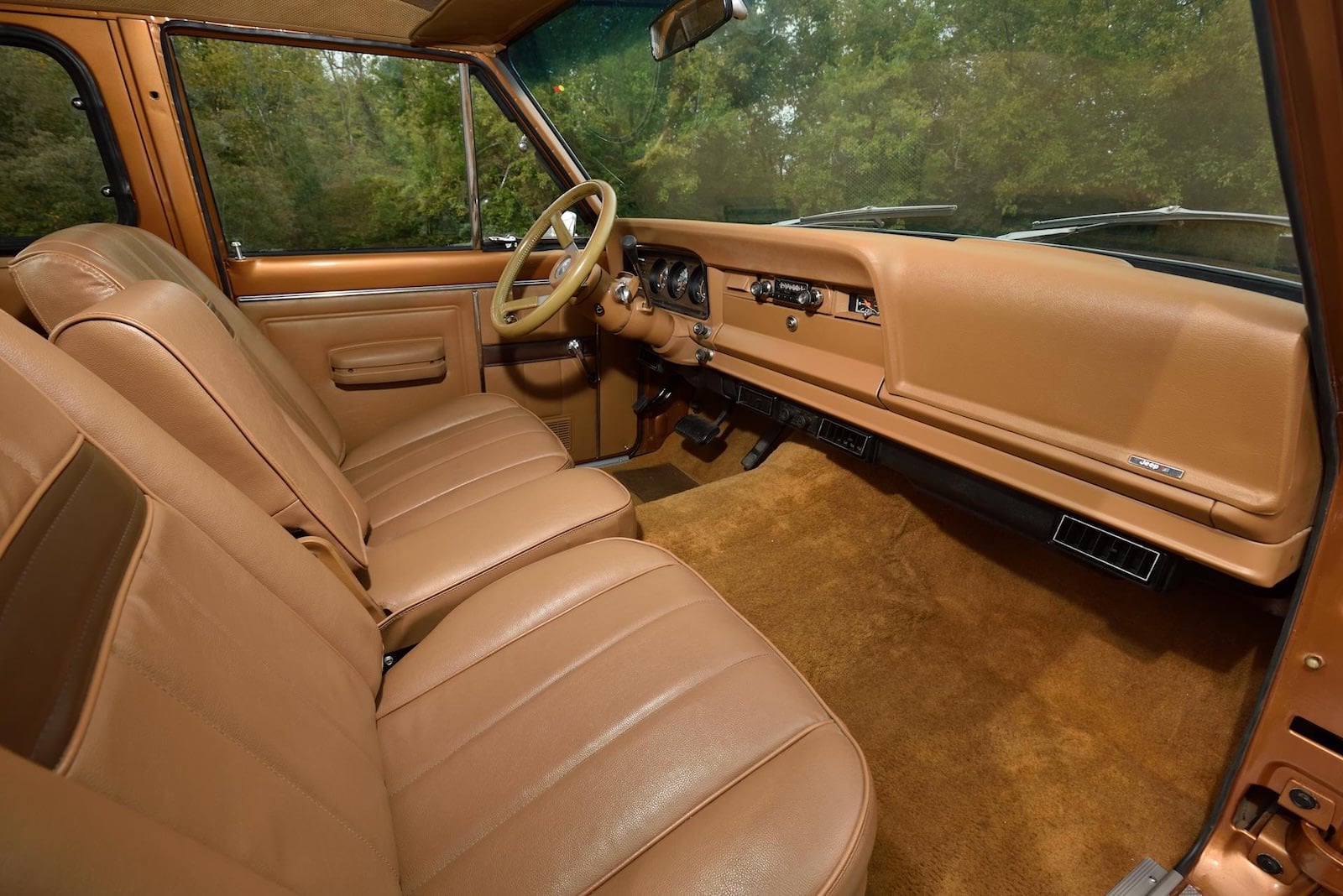
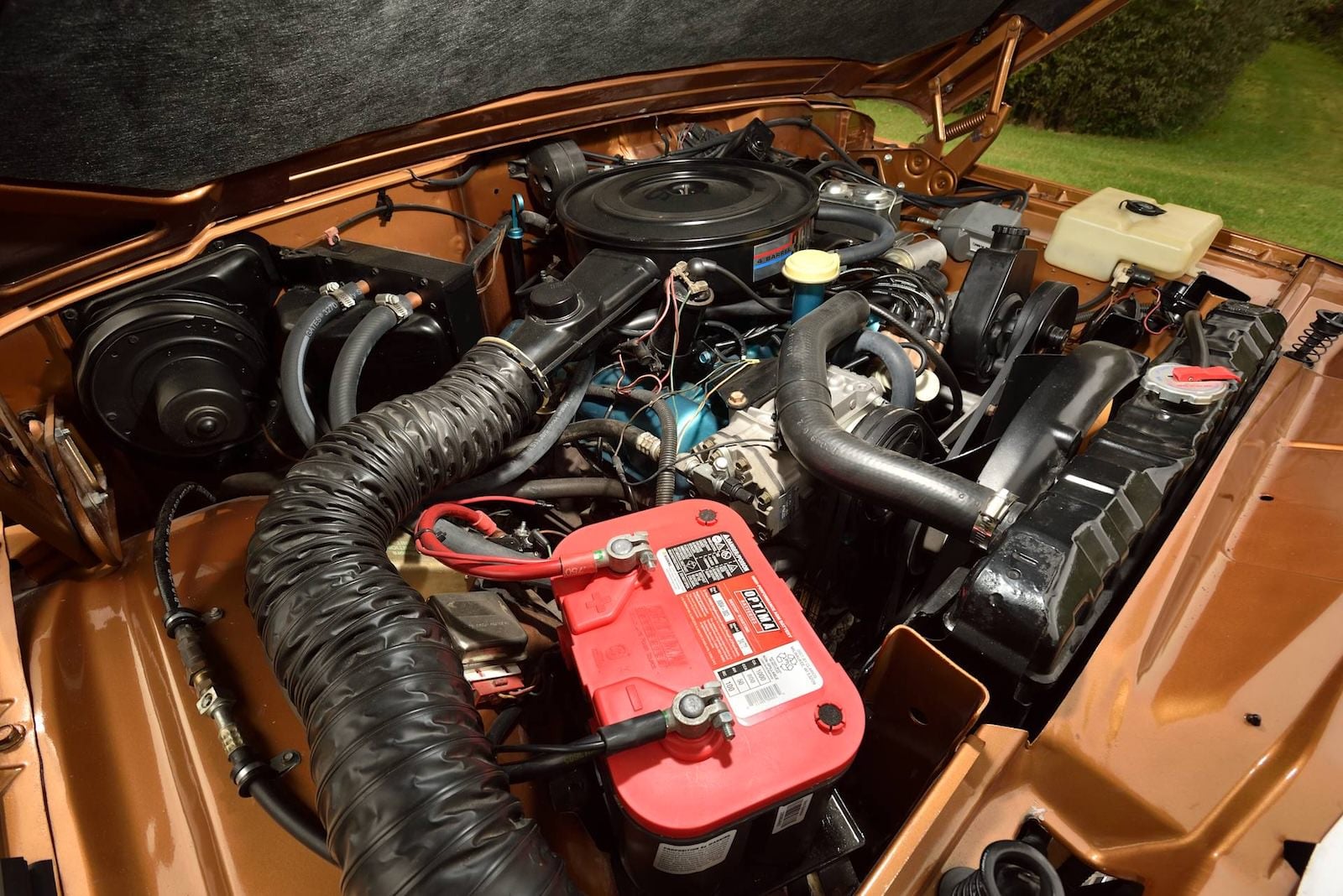
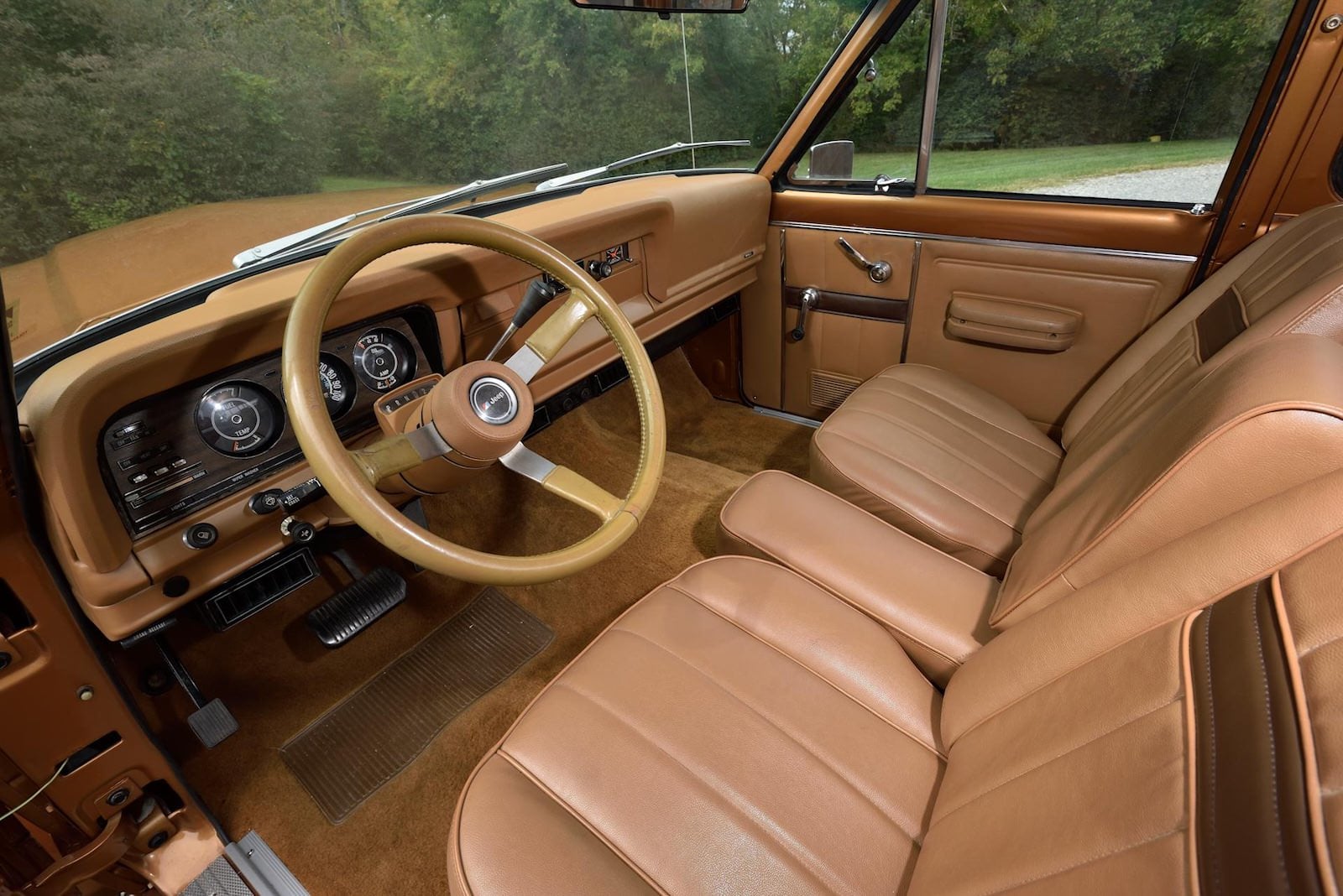
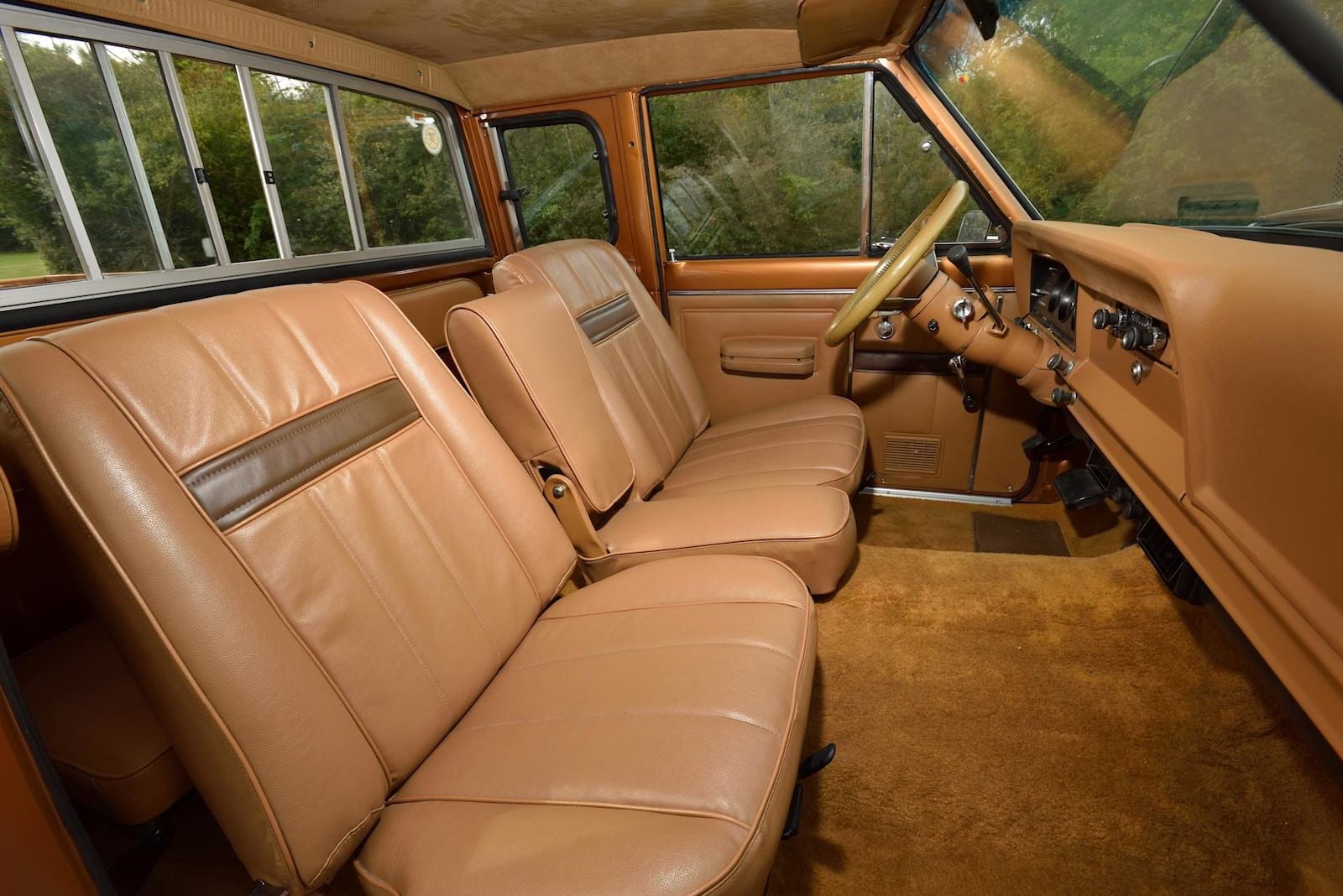
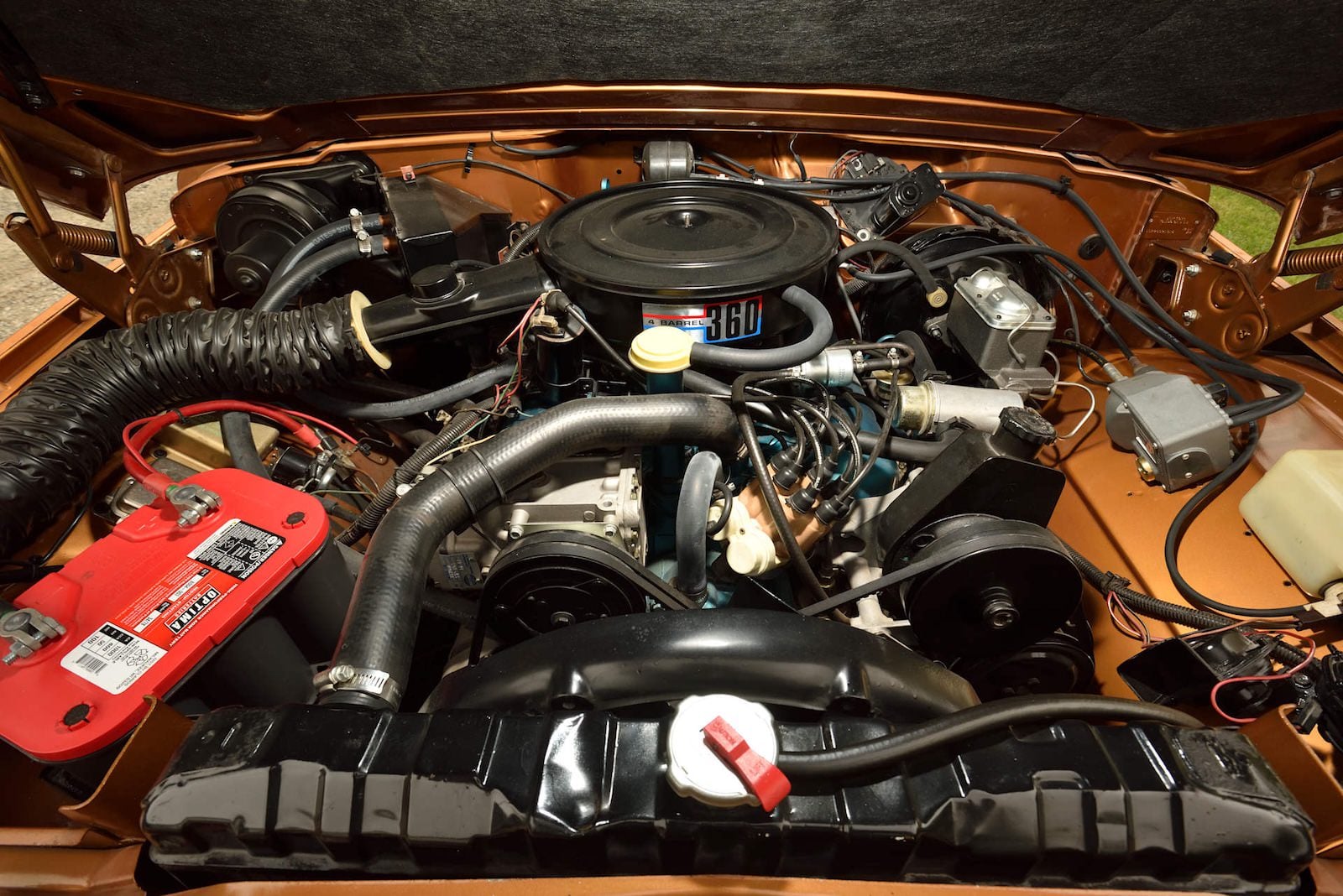
- The prototype is powered by a 360 cubic inch (5.9 liter) V8 with a four-barrel carburetor, paired with an automatic transmission and four-wheel drive. A specially modified front passenger seat tilts forward to provide access to the rear seats. Other features include air conditioning, power steering, power brakes, and a sliding rear window.
- After the project was abandoned, the prototype was scheduled for destruction, but AMC/Jeep supervisor Harold “Pete” Johnson saved it by hiding it at the Toledo plant. When he retired, Johnson was permitted to purchase the truck for just $1 USD. It’s remained in his family’s ownership ever since.
- The truck has undergone a comprehensive nut-and-bolt restoration to its original specs, including its Golden Ginger Poly paintwork. Nicknamed “The Unicorn,” it has appeared at SEMA and several Jeep festivals. Its history has reportedly been authenticated by Zack Heisey of Z&M Jeeps, and it’s now being offered for auction through Mecum.
History Speedrun: The Jeep J10 Pickup
Long before the J10 ever came to market, Jeep’s earlier pickup was the Willys one-ton 4×4 truck, built from 1947 until 1965 – a production run of almost 20 years. The newer Gladiator model was introduced in 1962 for the 1963 model year to replace it, it was a conventional body-on-frame pickup, and it shared its frame architecture, front-end styling and its powertrain with the new Wagoneer, a design by legendary industrial designer Brooks Stevens.
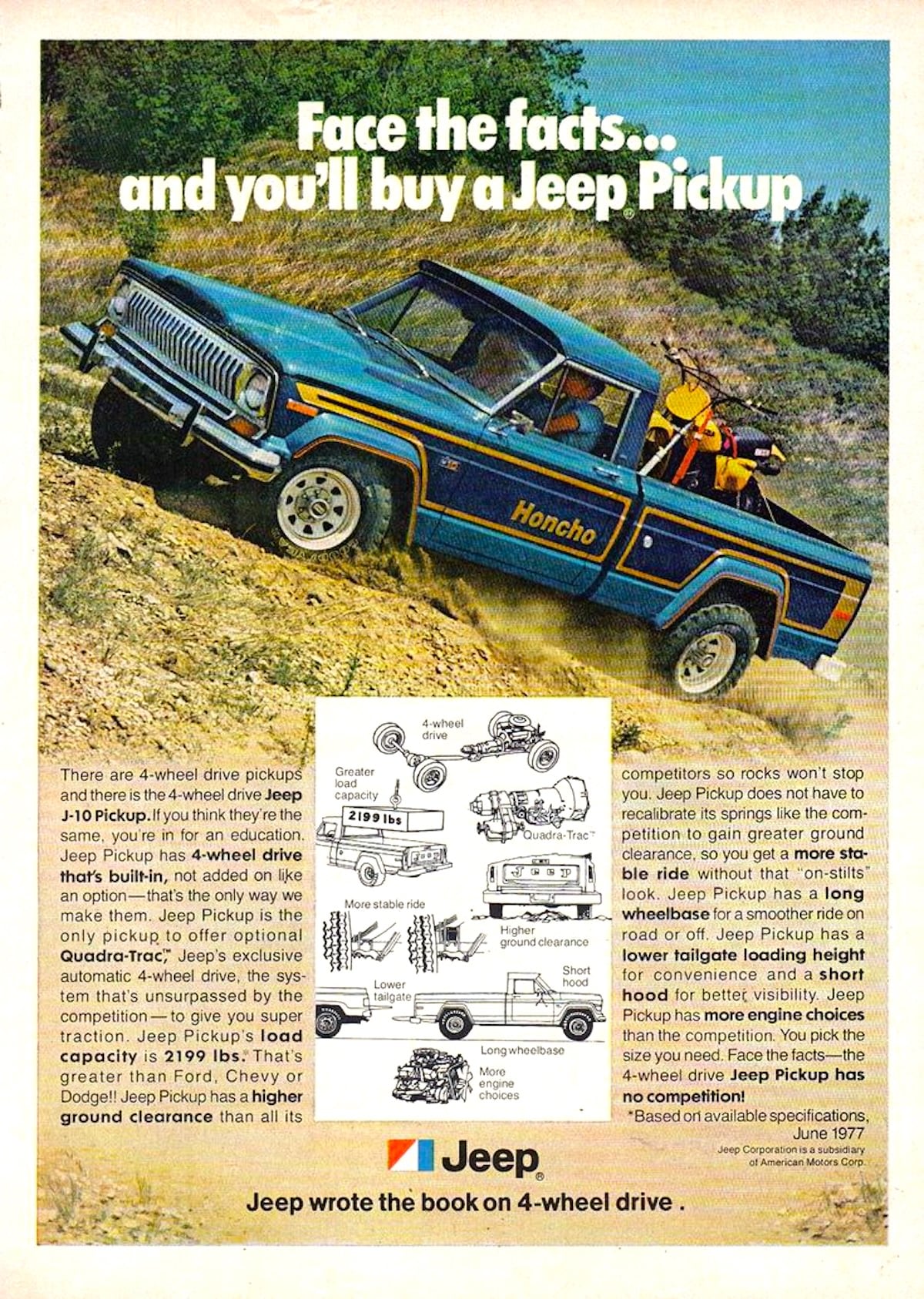
 The Honcho package was announced in 1976, it cost $699 USD over a Custom-trim J10 short bed, and Jeep listed gold striping, 8×15-inch wheels, off-road tires, and Levi’s denim upholstery among its features. Image courtesy of AMC/Jeep.
The Wagoneer was a vehicle well ahead of its time, it arrived years before the Range Rover but offered much the same in the way of luxuries, refinement, and 4×4 capability. It’s been called the origin of species of the luxury SUV, and for good reason.
The standard engine offered in the Gladiator was the 230 cubic inch (3.8 liter) Tornado straight-six, an overhead-cam design rated at 140 bhp. An automatic transmission was optional, the Wagoneer would have the first automatic ever offered in a four-wheel-drive vehicle.
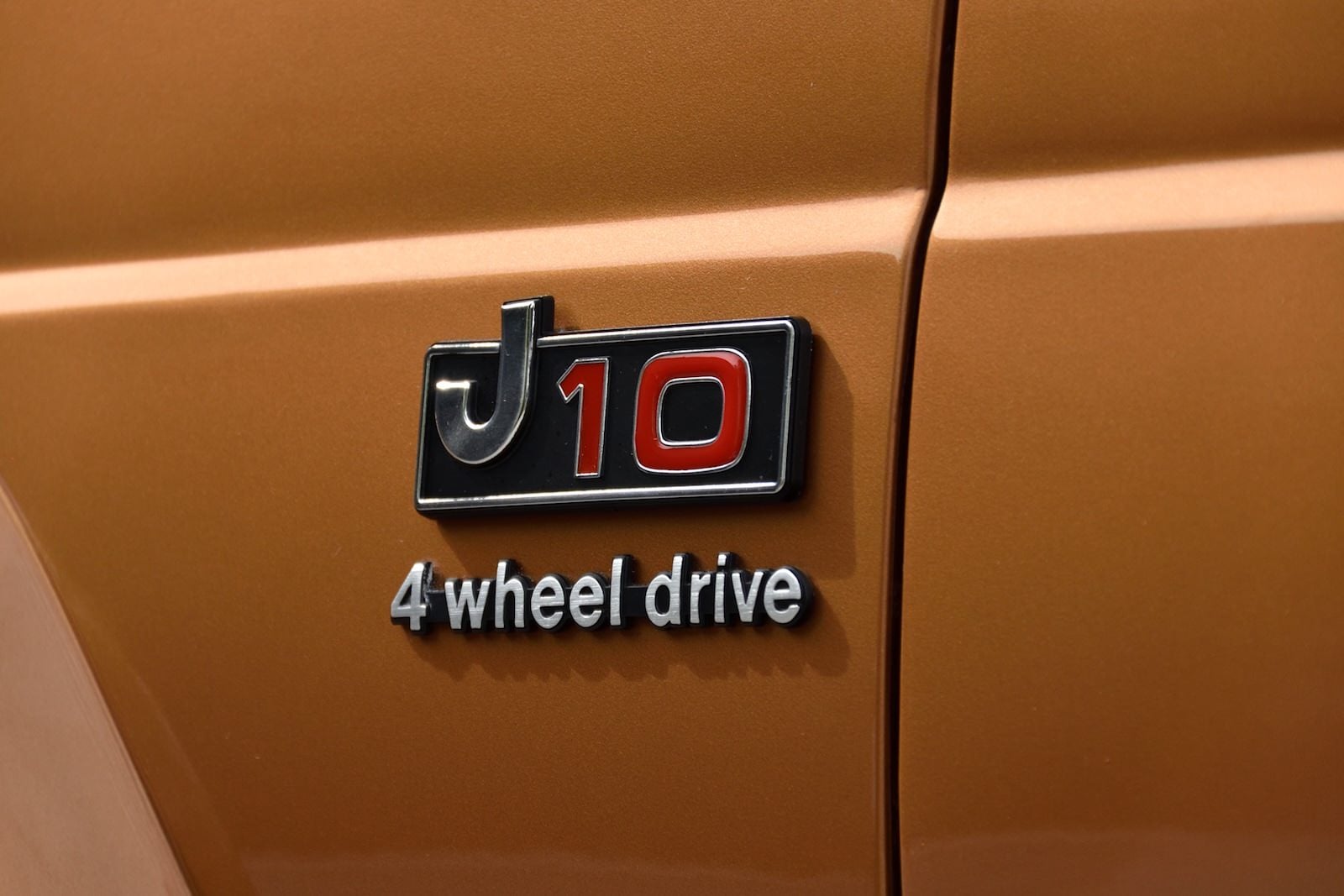
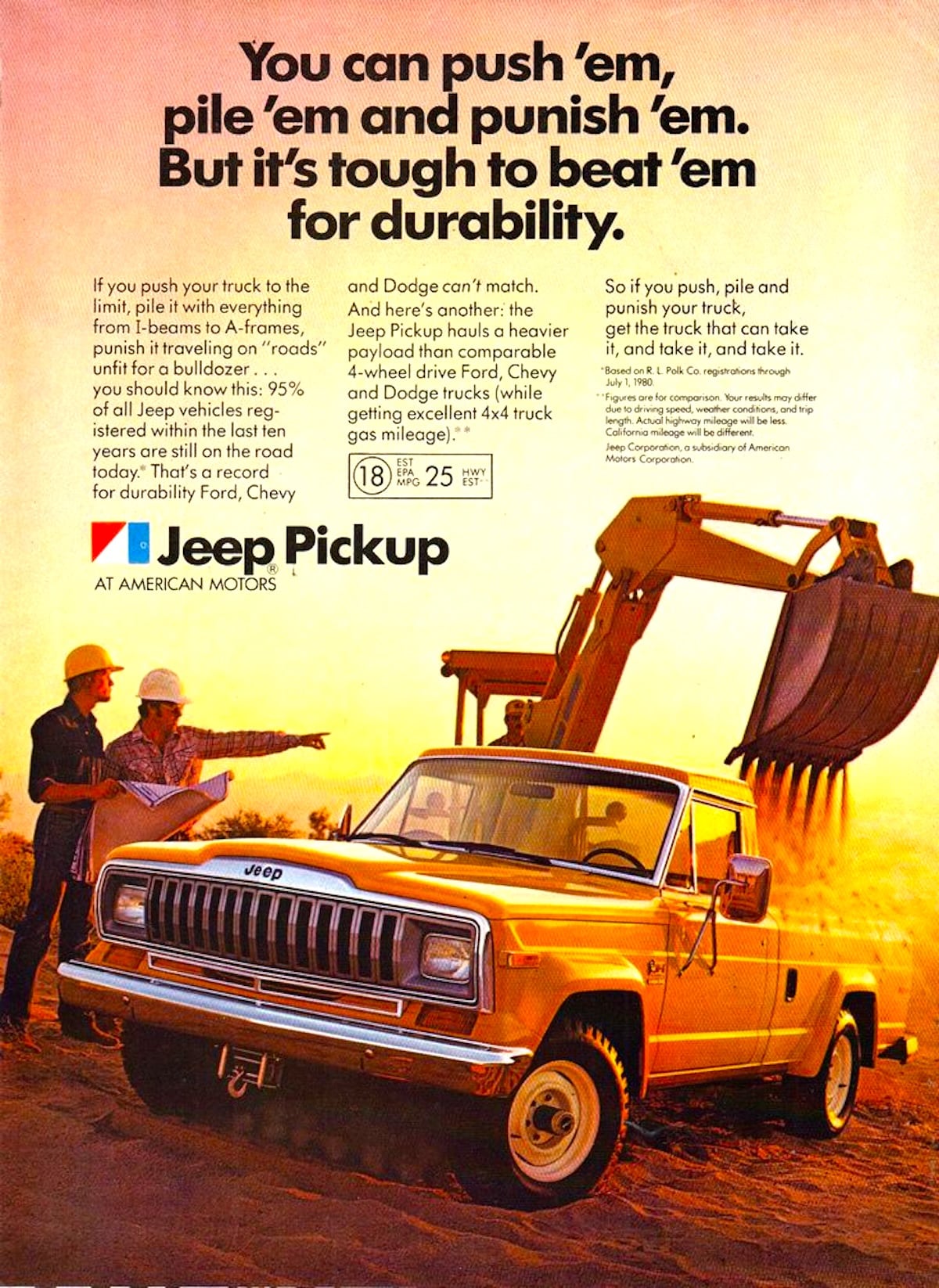
American Motors (AMC) bought Kaiser Jeep in 1970 and moved the trucks onto AMC engines. The Gladiator name was dropped after 1971, leaving the J-2000 and J-4000 – numbers that identified the wheelbase length. For 1974 they gave way to the J10 and J20, names that now indicated the payload – the J10 was the half-ton, and the heavier-duty J20 came in several gross vehicle weight ratings. The J10 was built on a 119 inch or 131 inch wheelbase. The heavy duty J20 used the longer wheelbase only.
The J10 Chassis + Drivetrain
The J10 kept the Gladiator’s body-on-frame construction, it had a new front axle, six-stud wheels, and heavier frame crossmembers, along with front disc brakes, which were optional on the J10 at first and standard from 1977 onwards.
The J10 rode on leaf springs and solid axles at both ends, with an open-knuckle Dana 44 at the front, and another Dana 44 at the rear. It had recirculating-ball steering, and the power-assisted gear had a variable ratio, from 16:1 on center to 13:1 at full lock.
The base engine was AMC’s 258 cubic inch (4.2 liter) inline-six. The 360 cubic inch (5.9 liter) V8 was available with 175 bhp or 195 bhp in 1978 trucks, depending on carburetion, and from 1974 to 1978 buyers could step up to the 401 cubic inch (6.6 liter) V8, AMC’s largest. Three and four-speed manuals were offered, and the automatic through till 1979 was GM’s Turbo Hydra-Matic 400.
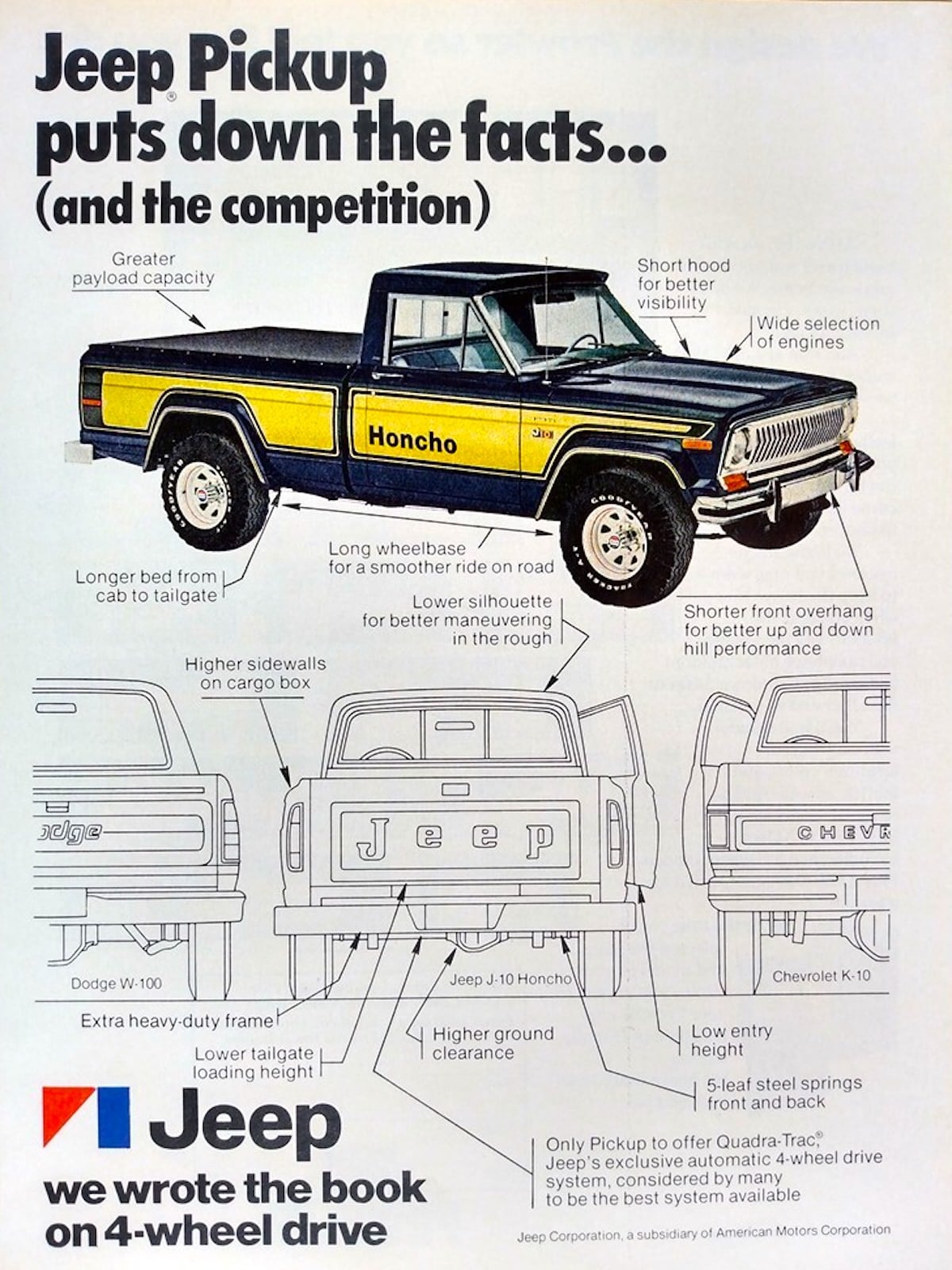
The J10 kept the Gladiator’s body-on-frame construction, it had a new front axle, six-stud wheels, and heavier frame crossmembers, along with front disc brakes, which were optional on the J10 at first and standard from 1977 onwards. Image courtesy of AMC/Jeep.
Until the end of the 1970s, four-wheel drive came as either a part-time Dana 20 transfer case system or Quadra-Trac, this was the full-time system Jeep introduced for the 1973 model year – the first automatic full-time four-wheel-drive system. Quadra-Trac remained available until Selec-Trac replaced it for 1983.
The Honcho, Golden Eagle, Laredo, + 10-4
From 1975 the Pioneer package added woodgrain trim inside and out, the Honcho package followed in 1976, it cost $699 USD over a Custom-trim J10 short bed, and Jeep listed gold striping, 8×15-inch wheels, off-road tires, and Levi’s denim upholstery among its features, but these changed from year to year. Over its life it was sold in both Townside and step-side Sportside forms.
The 1977 Golden Eagle, a $749 USD option, added a grille guard, driving lamps, a bed-mounted roll bar and an eagle decal on the hood. For 1978 the 10-4 package offered an optional factory-installed CB radio. The Laredo package followed for 1980, with a leather-wrapped steering wheel among its equipment.
The End Of The J10
J-series truck sales volume, J10 and J20 combined, was 20,495 in 1978 and 1,153 in 1987. Chrysler bought AMC in 1987 and, with Dodge already selling full-size pickups, discontinued the J-series. The Grand Wagoneer, which shared the pickups’ chassis, continued for a few more years.
A smaller Jeep pickup was already on sale by then, the Comanche, based on the XJ Cherokee, arrived for the 1986 model year and was built until mid-1992. For export, Jeep also built the CJ-10 from 1981 to 1985, a pickup on a modified J10 chassis with a CJ-style cab and nose, sold in markets including Australia.
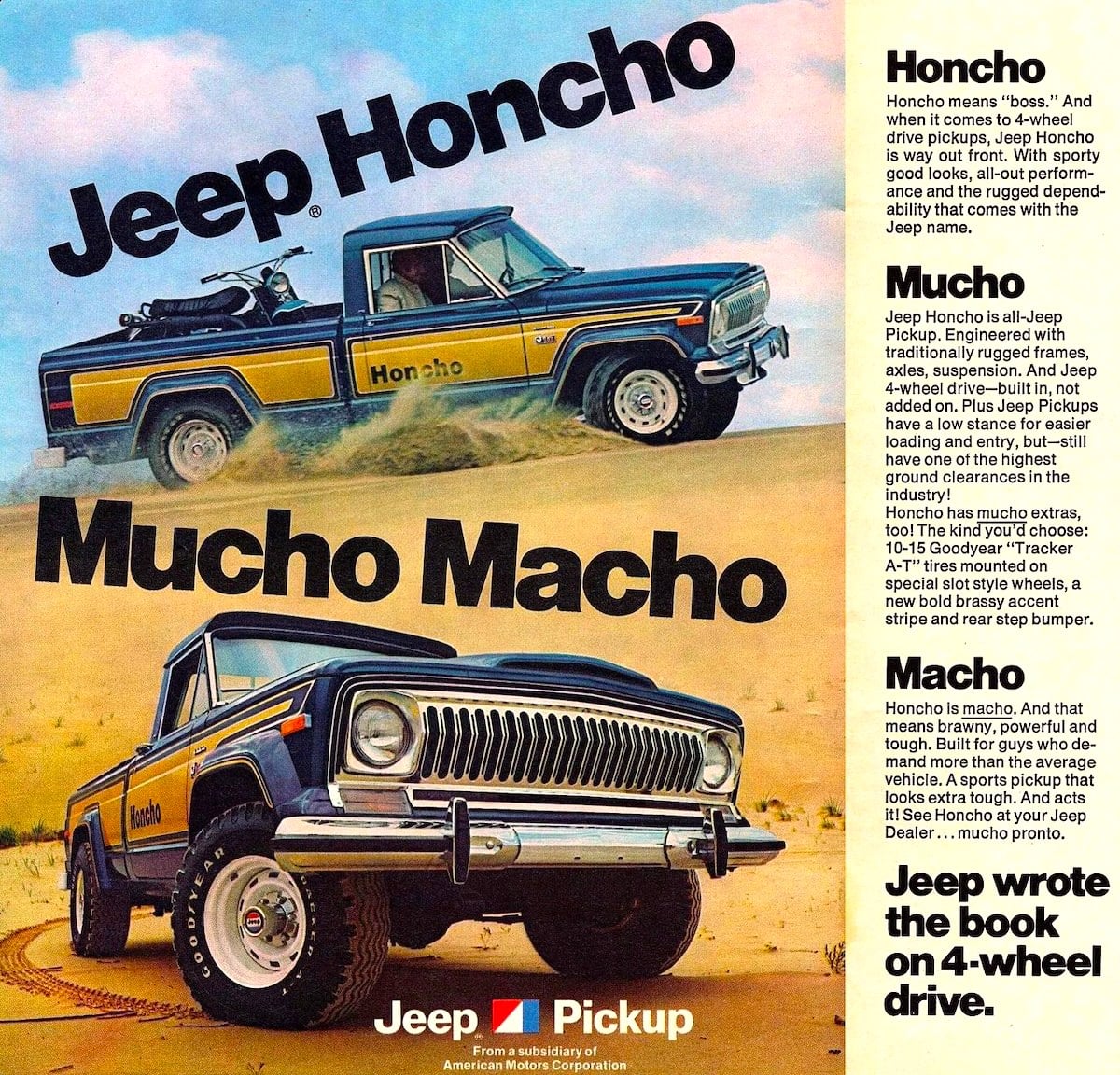
The base engine was AMC’s 258 cubic inch (4.2 liter) inline-six. The 360 cubic inch (5.9 liter) V8 was available with 175 bhp or 195 bhp in 1978 trucks, depending on carburetion, and from 1974 to 1978 buyers could step up to the 401 cubic inch (6.6 liter) V8, AMC’s largest. Image courtesy of AMC/Jeep.
After the Comanche, Jeep had no pickup until the Wrangler-based Gladiator was unveiled at the Los Angeles Auto Show in November of 2018.
The J10 Pickup In “Twister”
Jo Harding, the storm chaser played by Helen Hunt in the 1996 movie Twister, drives a yellow J10 Jeep Pickup with blue Honcho package graphics, a grille guard and a bed-mounted roll bar. Early in the film a tornado lifts the truck and drops it back to earth, wrecked. It was one of the most memorable parts of the movie, certainly for car people.
The Hollywood Star Cars Museum in Gatlinburg, Tennessee, says three trucks were used to film those scenes, and it displays one it describes as a 1982 and as the only survivor from production. Another truck, also billed as screen-used, a 1984 J10 Honcho with a screen-used Dorothy instrument in its bed, was announced for display at Charlotte Motor Speedway’s AutoFair in April 2025.
The 2024 follow-up film Twisters, includes a dark-colored J10 driven by James Paxton, son of the original film’s star Bill Paxton. It is on screen for a couple of seconds before a tornado pulls it in. A brief homage to that iconic J10 from the original film.
The 1977 Jeep J10 Prototype Shown Here
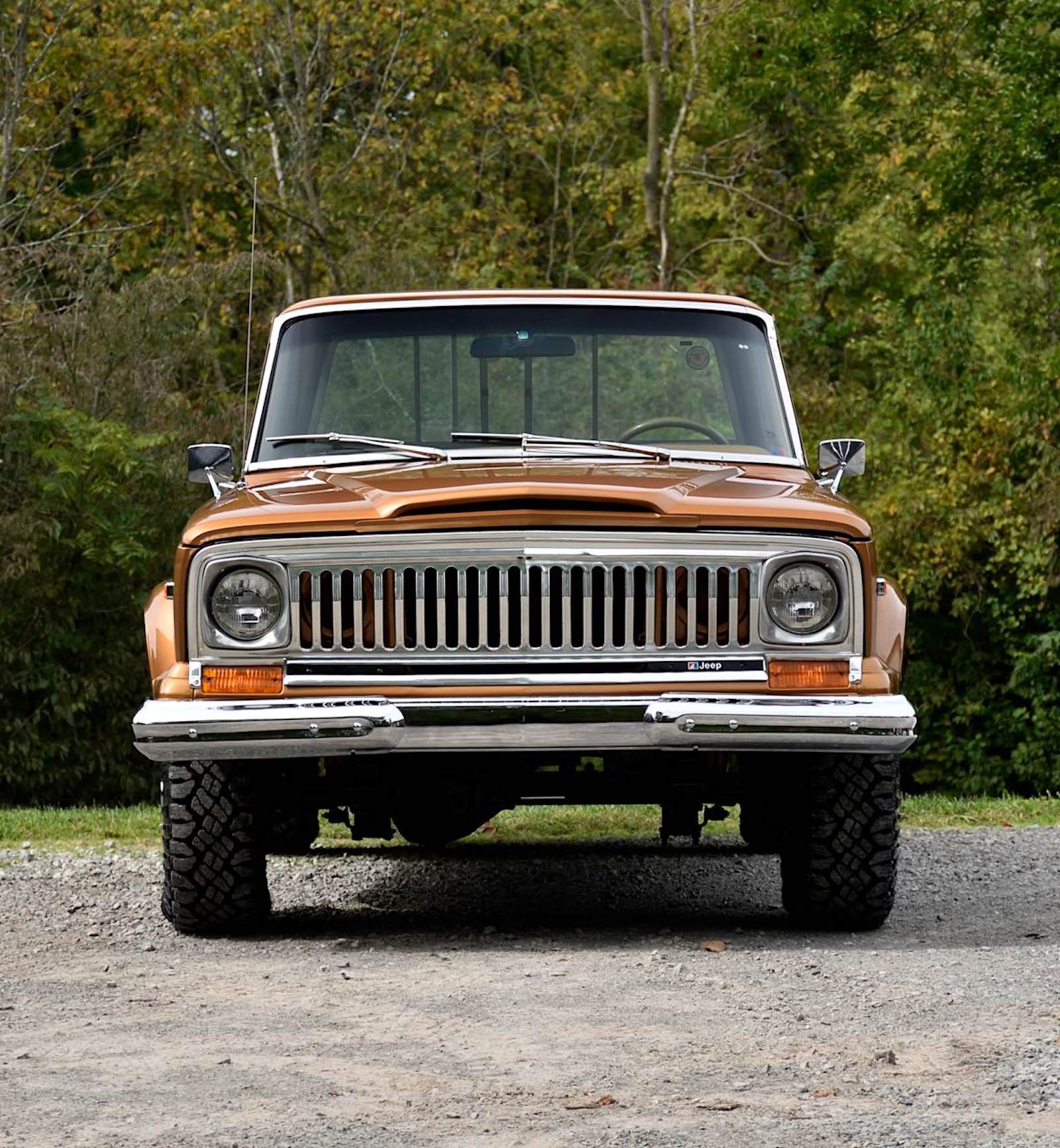
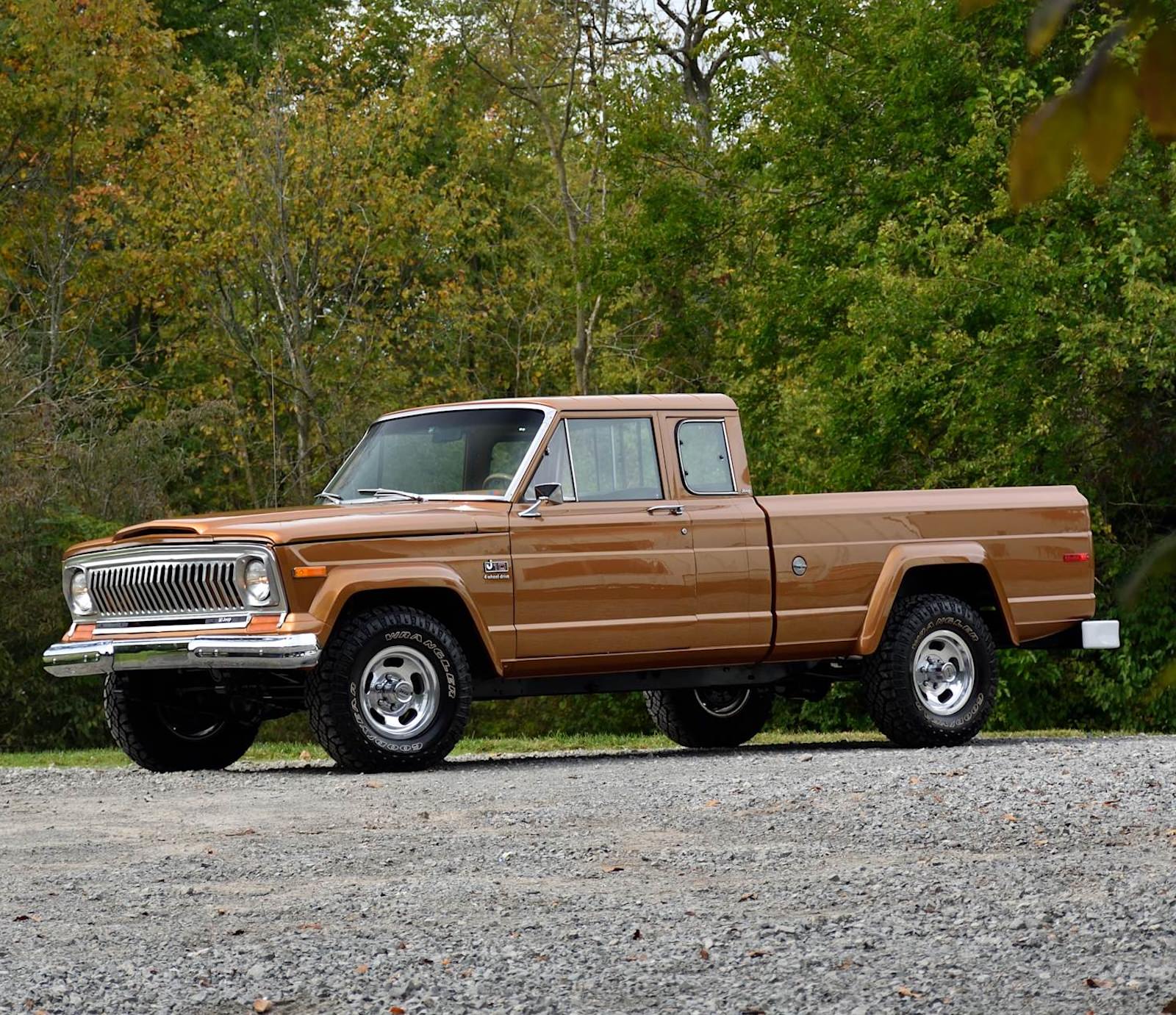
This is a one-off 1977 Jeep J10 Extended Cab Prototype, it was built by AMC/Jeep’s Research and Development department to explore the possibility of offering an extended-cab pickup with two rows of seats. Though the second row of seats were a little on the slender side.
The vehicle was built using a Jeep Wagoneer frame and a Cherokee Chief cab with second-row seating in the extended rear section – the front passenger seat was specially modified to tilt forward, allowing access to the rear seating area. Power is provided by a 360 cubic inch (5.9 liter) V8 with a four-barrel carburetor, paired with an automatic transmission, and four-wheel drive.
This J10 prototype is being offered by the family of Harold “Pete” Johnson, an AMC/Jeep Research and Development supervisor who helped develop it. After the project was abandoned, the prototype was reportedly scheduled for destruction, but Johnson saved it by hiding it in a back room of Jeep’s Toledo plant, where it remained concealed behind a file room for years.
When Johnson retired, he received permission to buy the truck for just $1 and he trailered it home. It’s remained in his family’s care ever since.
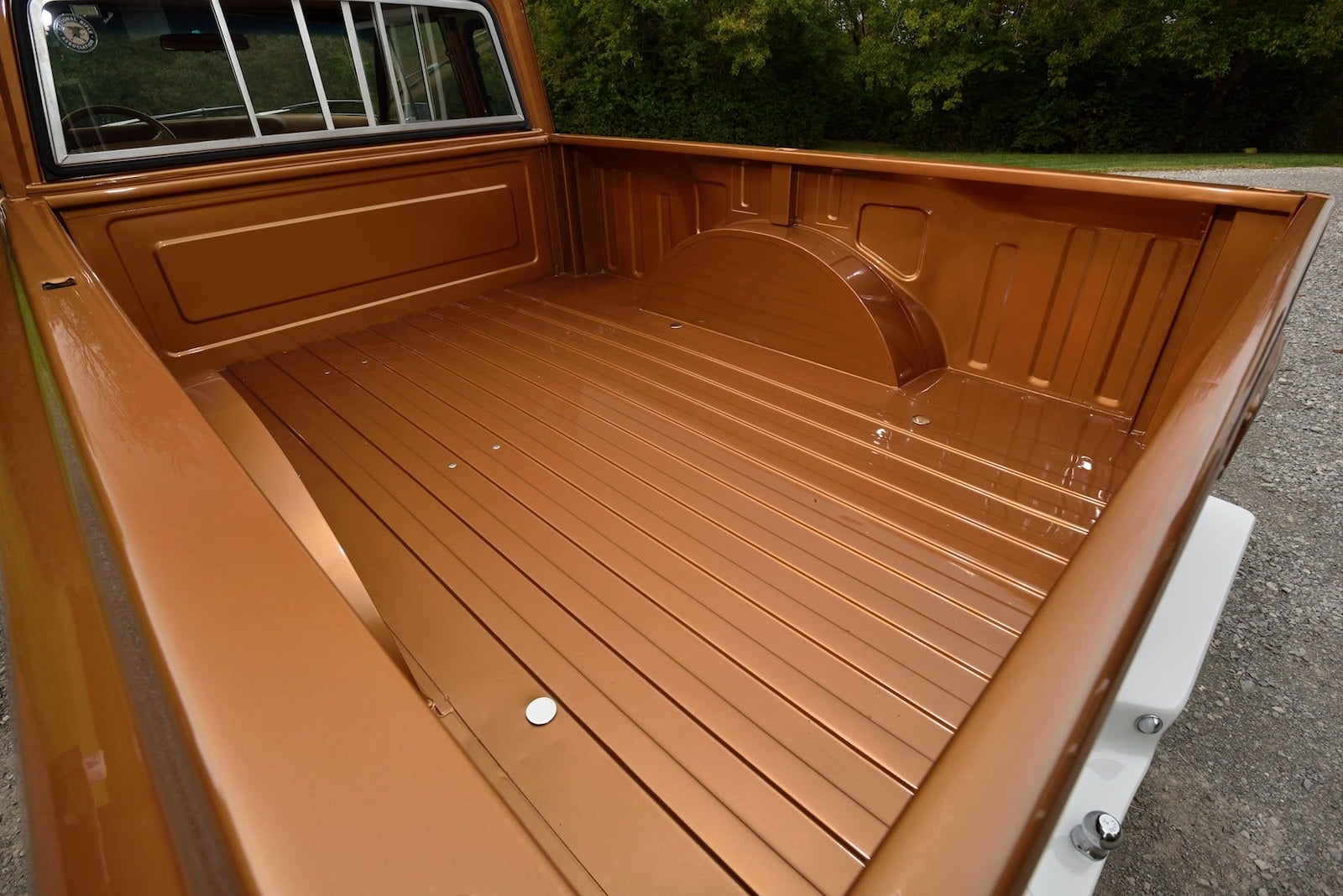
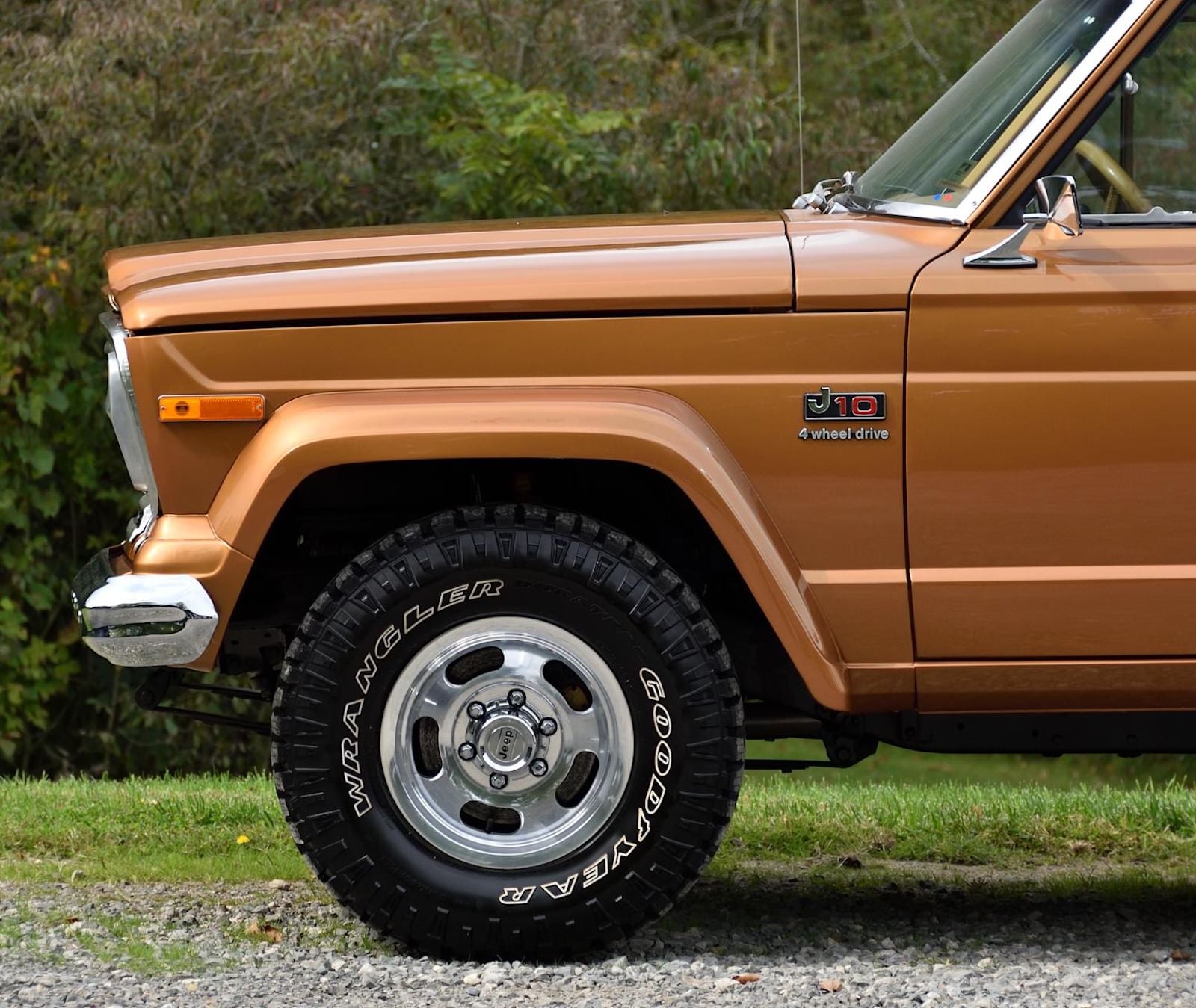
The Jeep has since undergone an extensive nut-and-bolt restoration to its original prototype specifications, including a refinish in Golden Ginger Poly. During the restoration, the word “special” was discovered written inside a frame rail. The truck retains its Toledo Engineering windshield parking pass and is accompanied by vintage photographs documenting its history.
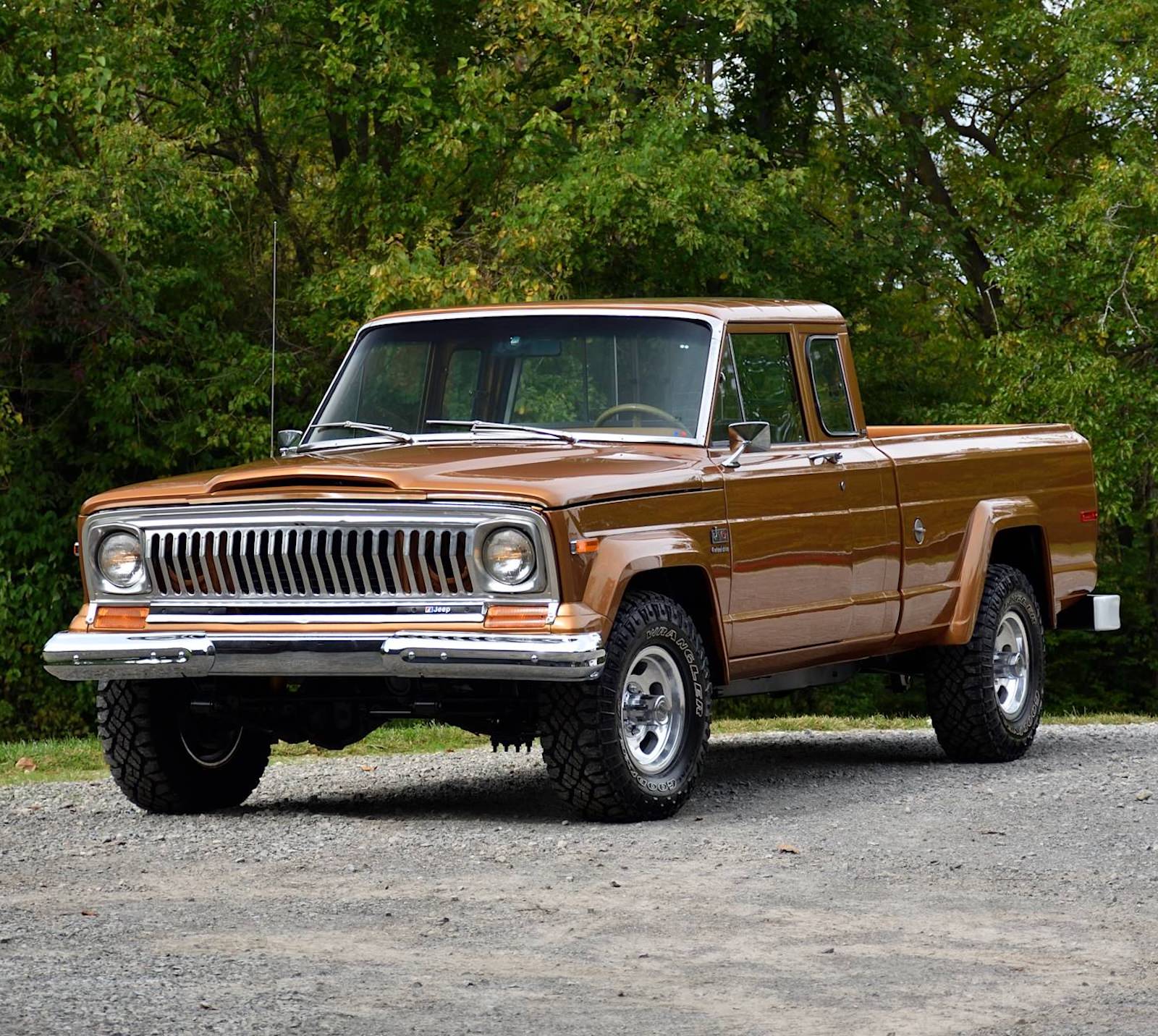
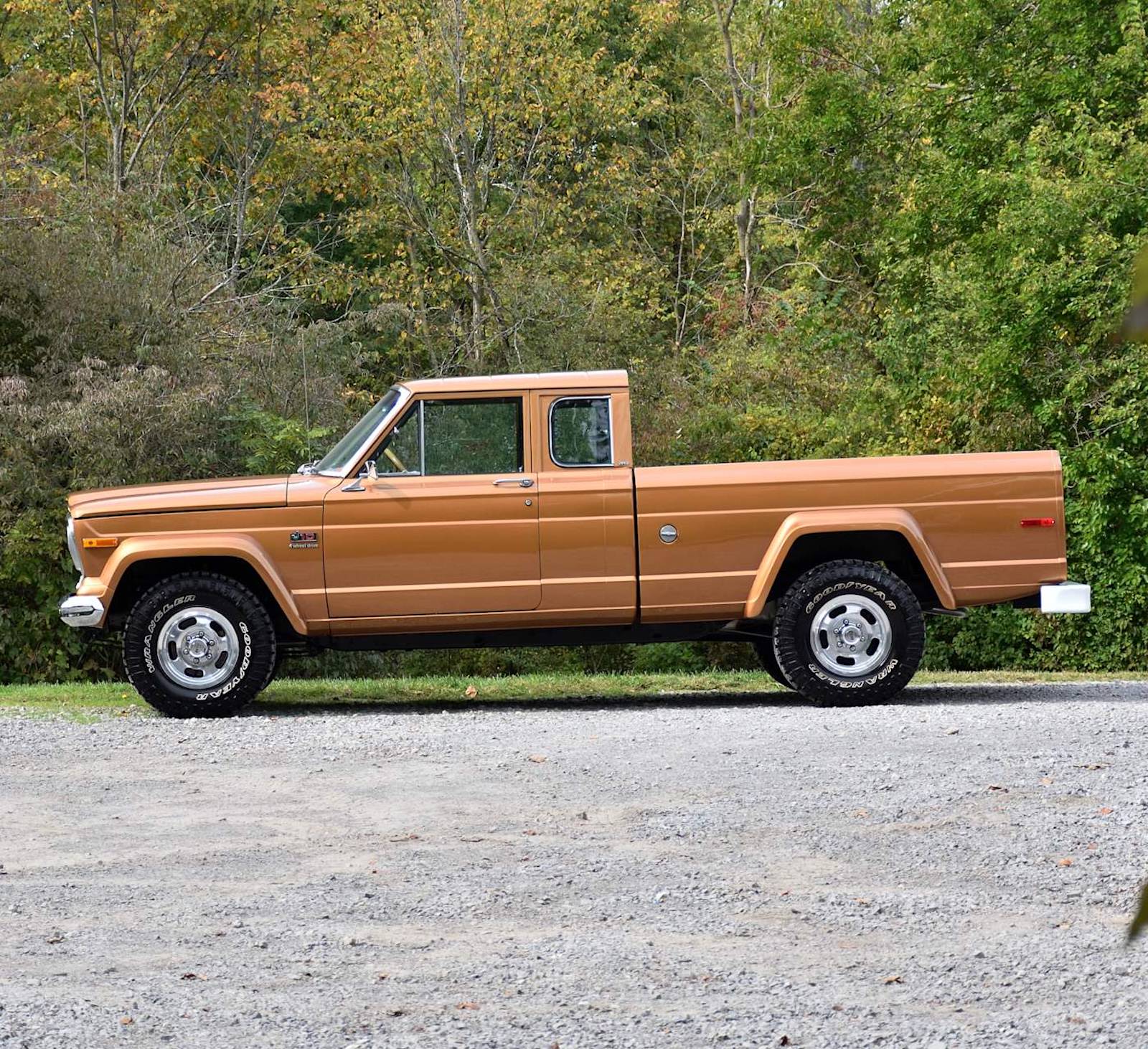
This is a 1977 Jeep J10, but not as most people know it. This vehicle was a secret prototype built on a Wagoneer frame with a Cherokee Chief cab with a second row of seats.
Since its restoration, the prototype has appeared at Toledo Jeep Fest, the Bantam Jeep Heritage Festival, and the AkzoNobel booth at SEMA, where it was given the nickname “The Unicorn.” Its history and authenticity have reportedly been verified by Zack Heisey of Z&M Jeeps.
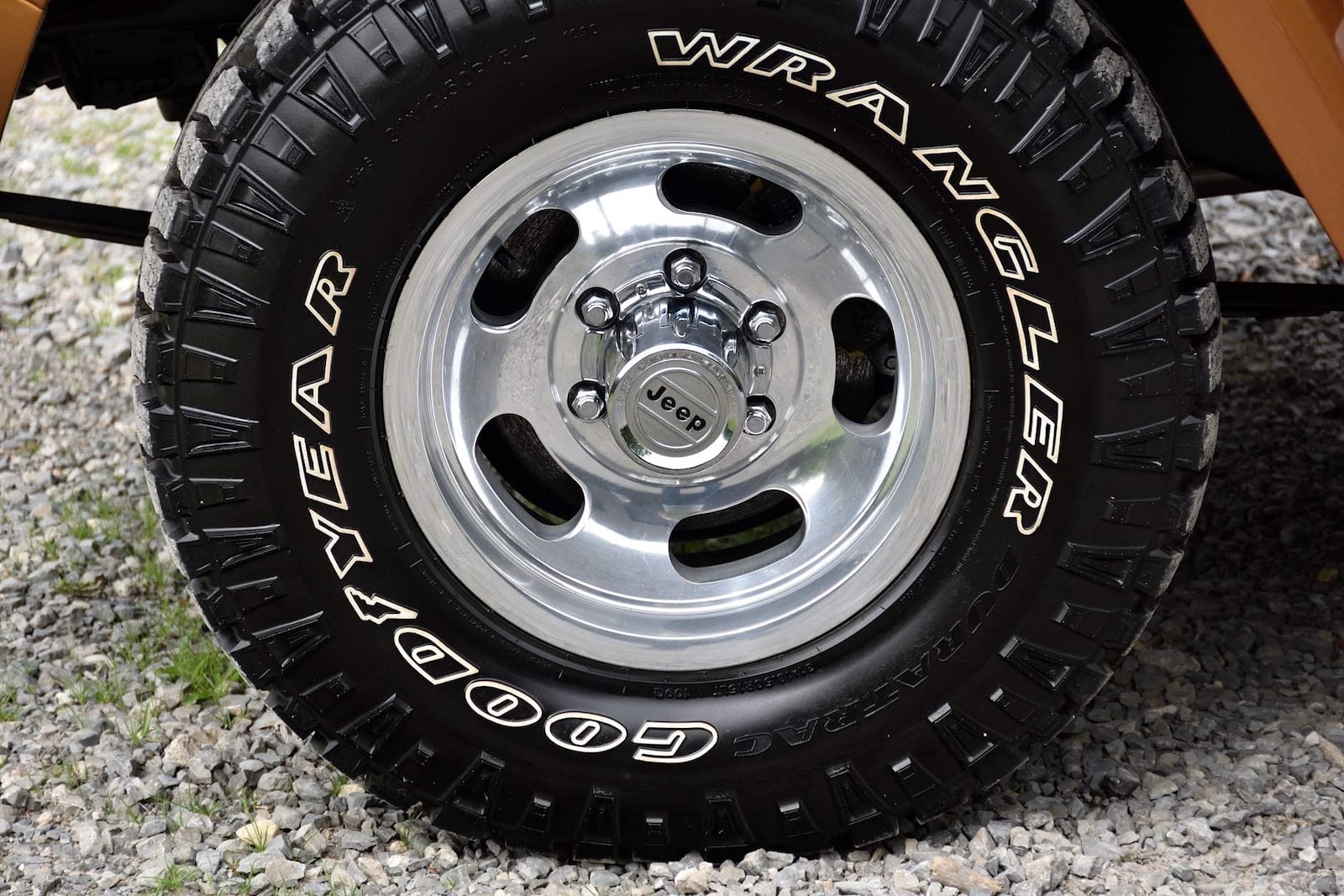
Additional equipment includes power steering, power brakes, air conditioning, a sliding rear window, polished alloy wheels, and Goodyear Wrangler tires. It’s now being offered for auction by Mecum, and you can visit the listing here if you’d like to read more about it or register to bid.
Images courtesy of Mecum + AMC/Jeep

Articles that Ben Branch has written have been covered on CNN, Popular Mechanics, Smithsonian Magazine, Road & Track Magazine, the official Pinterest blog, the official eBay Motors blog, BuzzFeed, Autoweek Magazine, Wired Magazine, Autoblog, Gear Patrol, Jalopnik, The Verge, and many more.
Silodrome was founded by Ben back in 2010, in the years since the site has grown to become a world leader in the alternative and vintage motoring sector, with well over a million monthly readers from around the world and many hundreds of thousands of followers on social media.