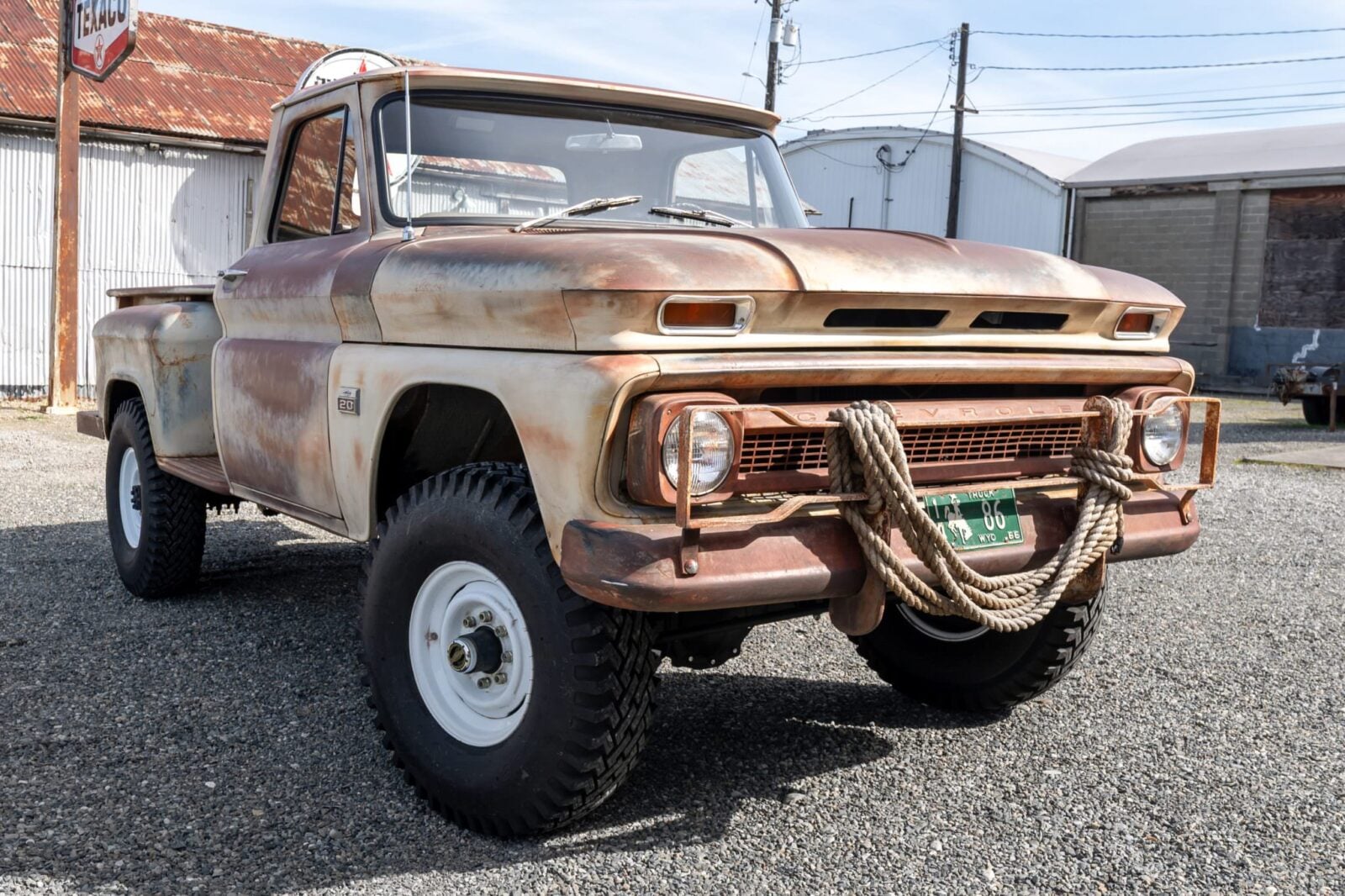
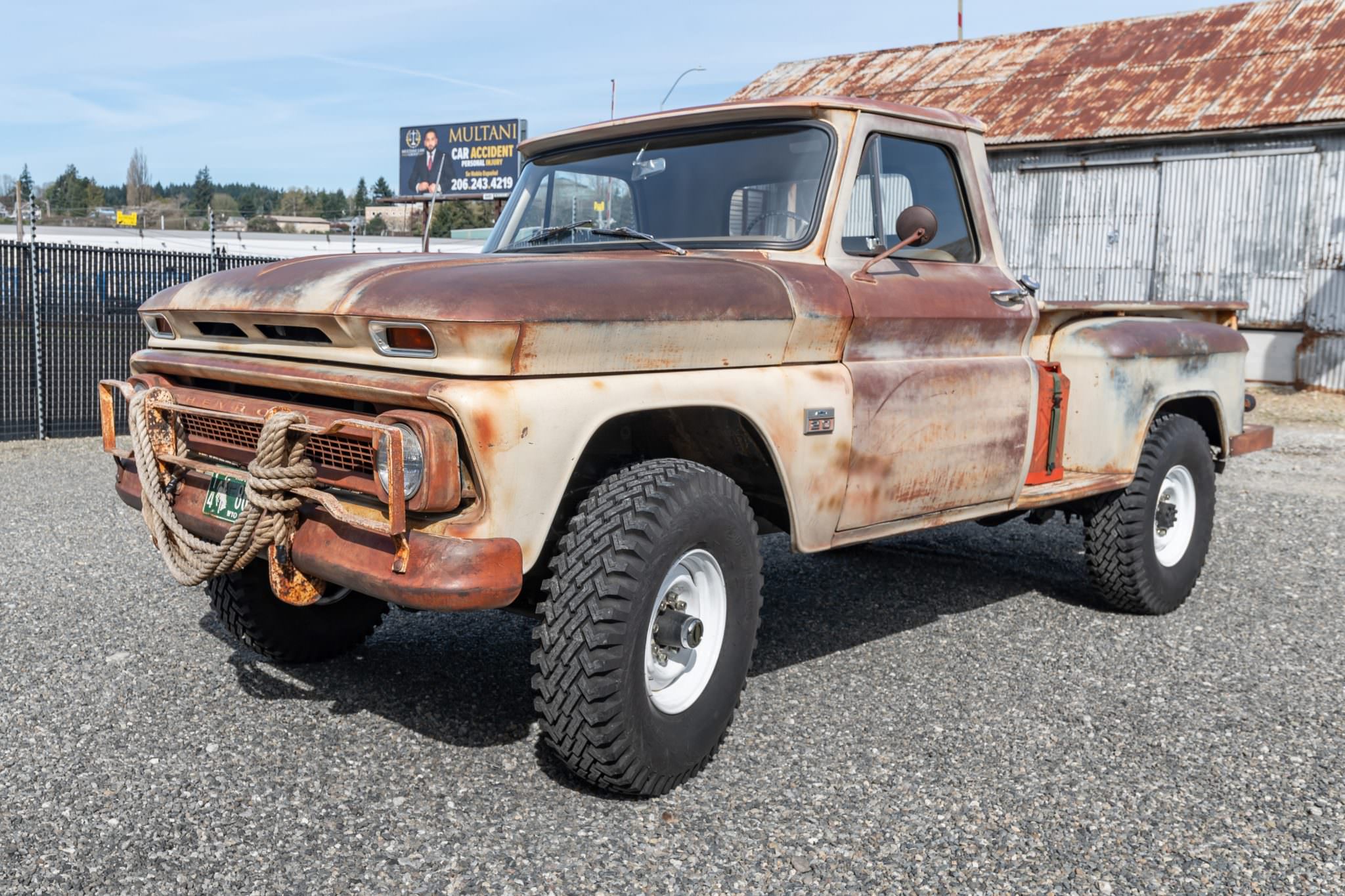
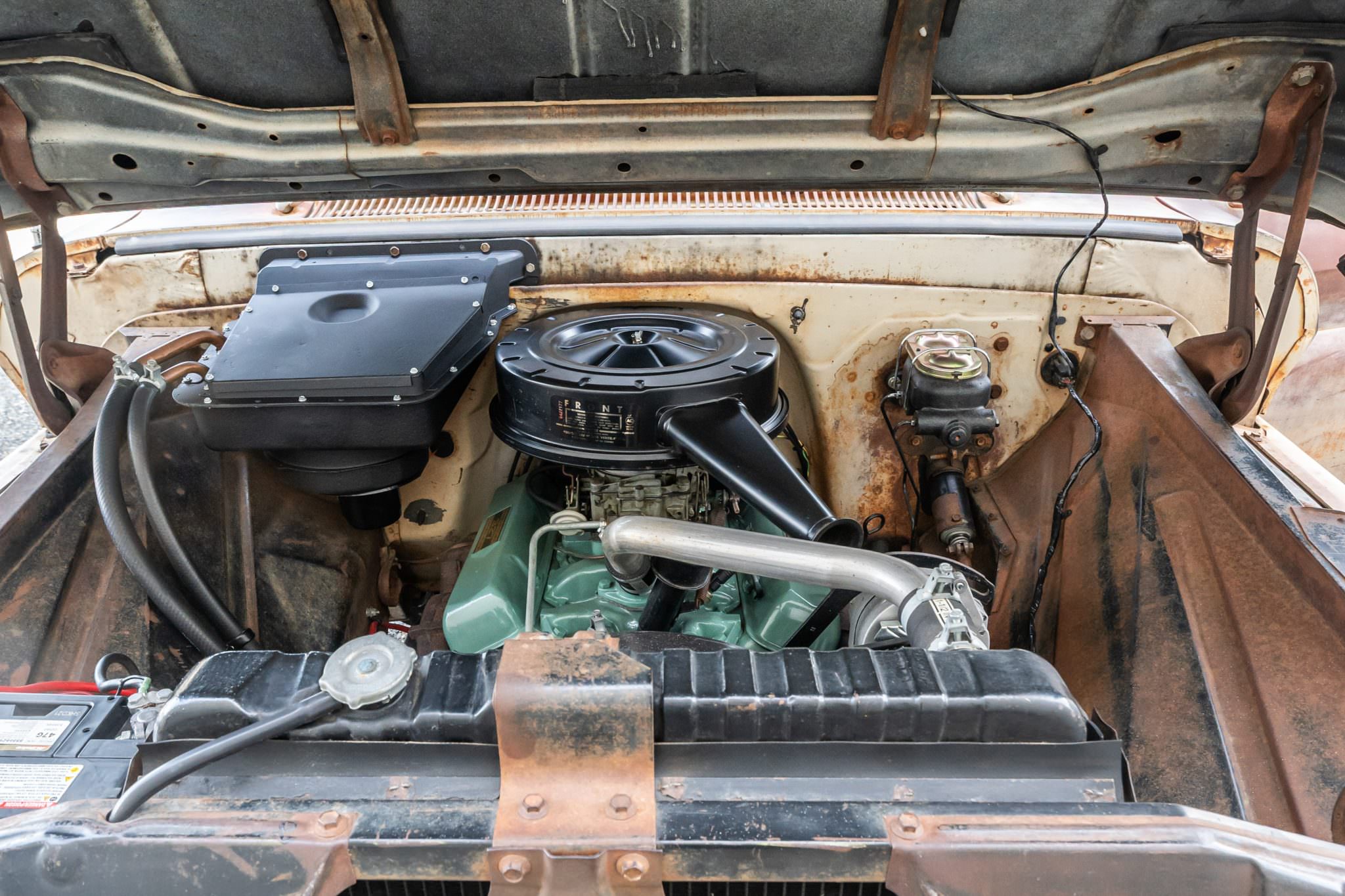
This is a 1966 Chevrolet K20 Stepside Pickup 4×4 that has been given a series of modifications, the most significant of which is the fitment of a 327 cubic inch V8 out of a mid-1960s Corvette, turning into a sleeper of sorts.
Power is routed back through a 5-speed manual transmission and a dual-range transfer case, to either the rear wheels or all four wheels. The truck also has uprated suspension and brakes, plus plenty of other work done under that well-patinated body.
Fast Facts: A Corvette-Powered 1966 Chevrolet K20 4×4
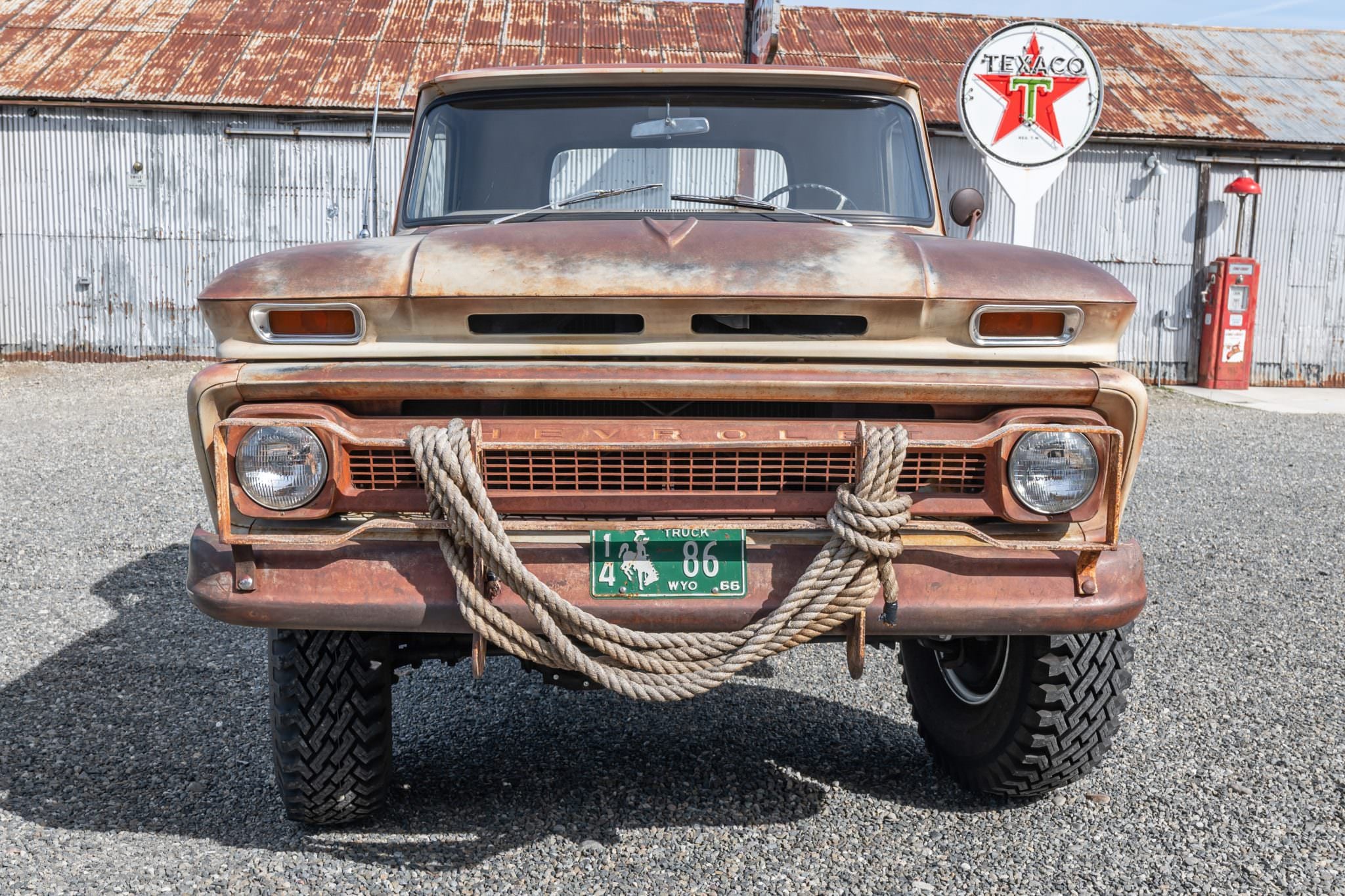
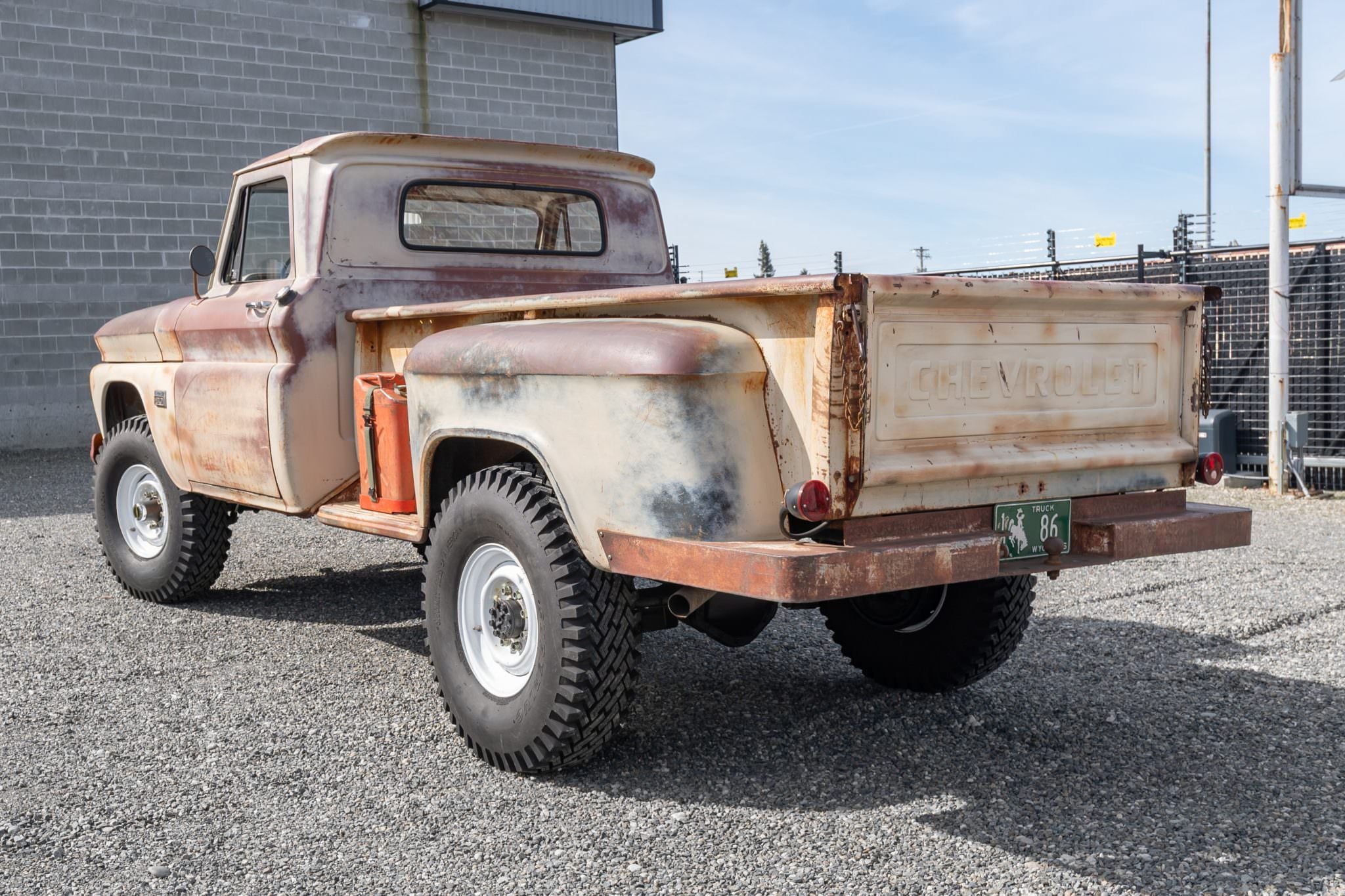
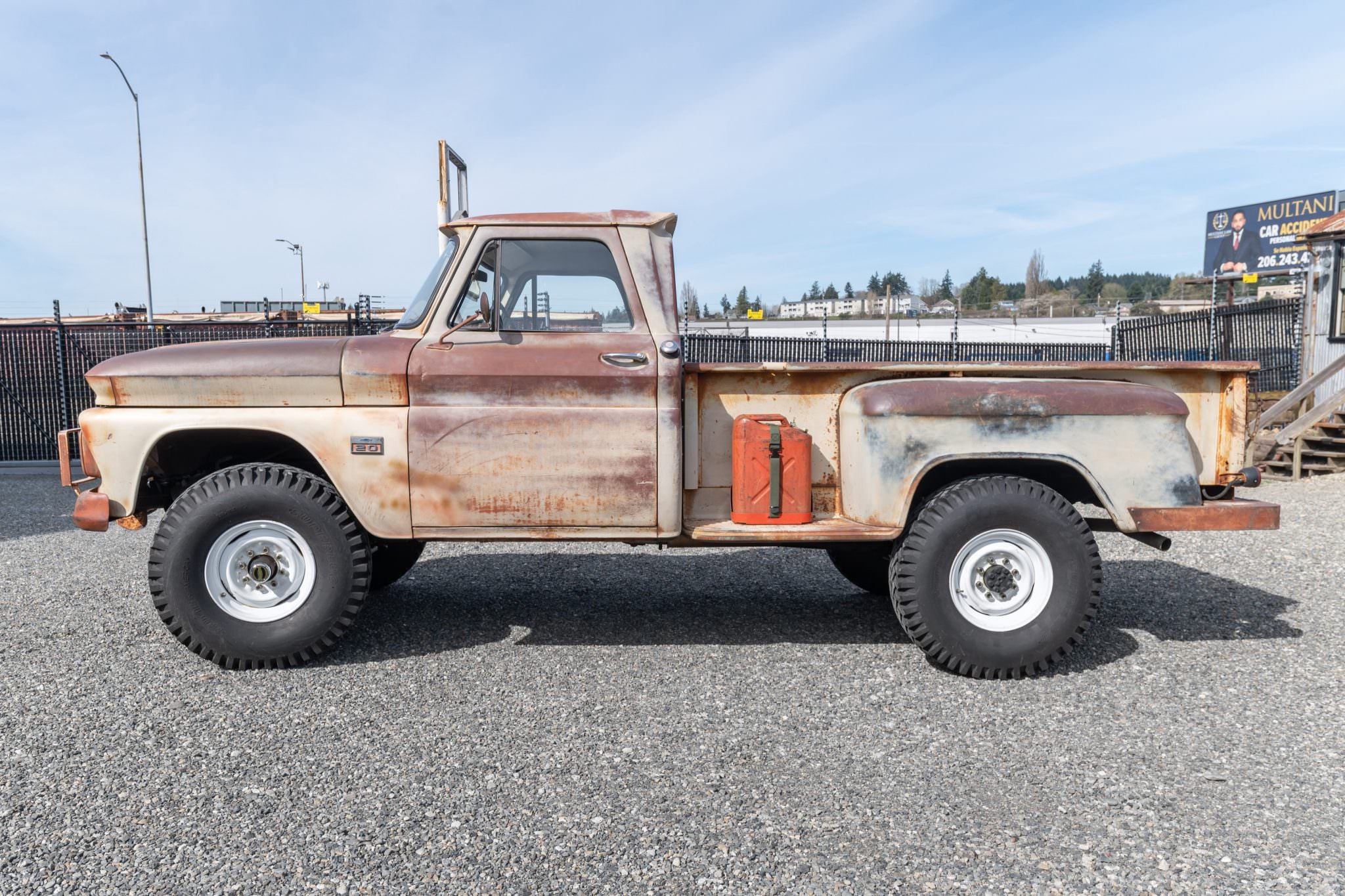
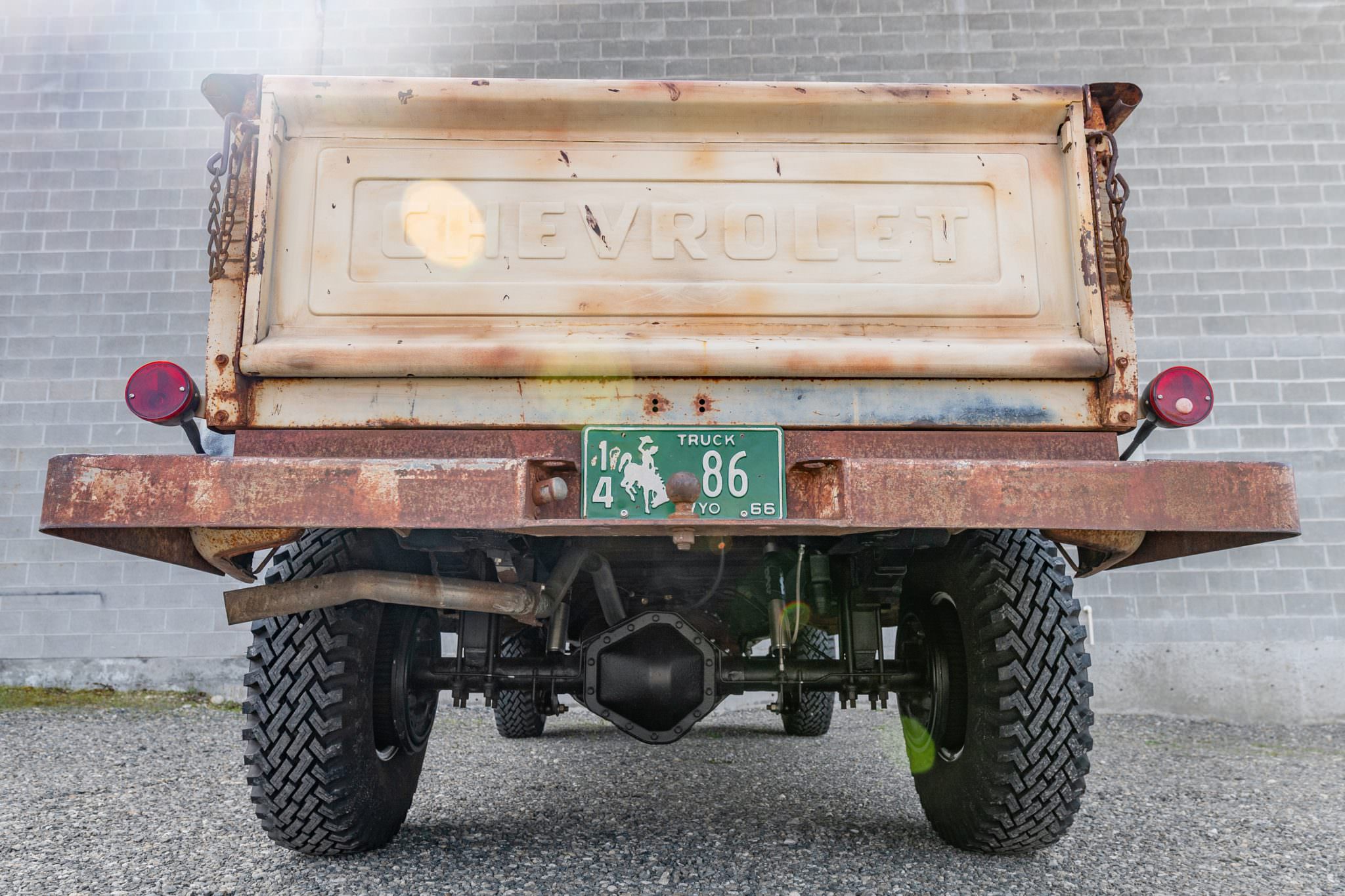
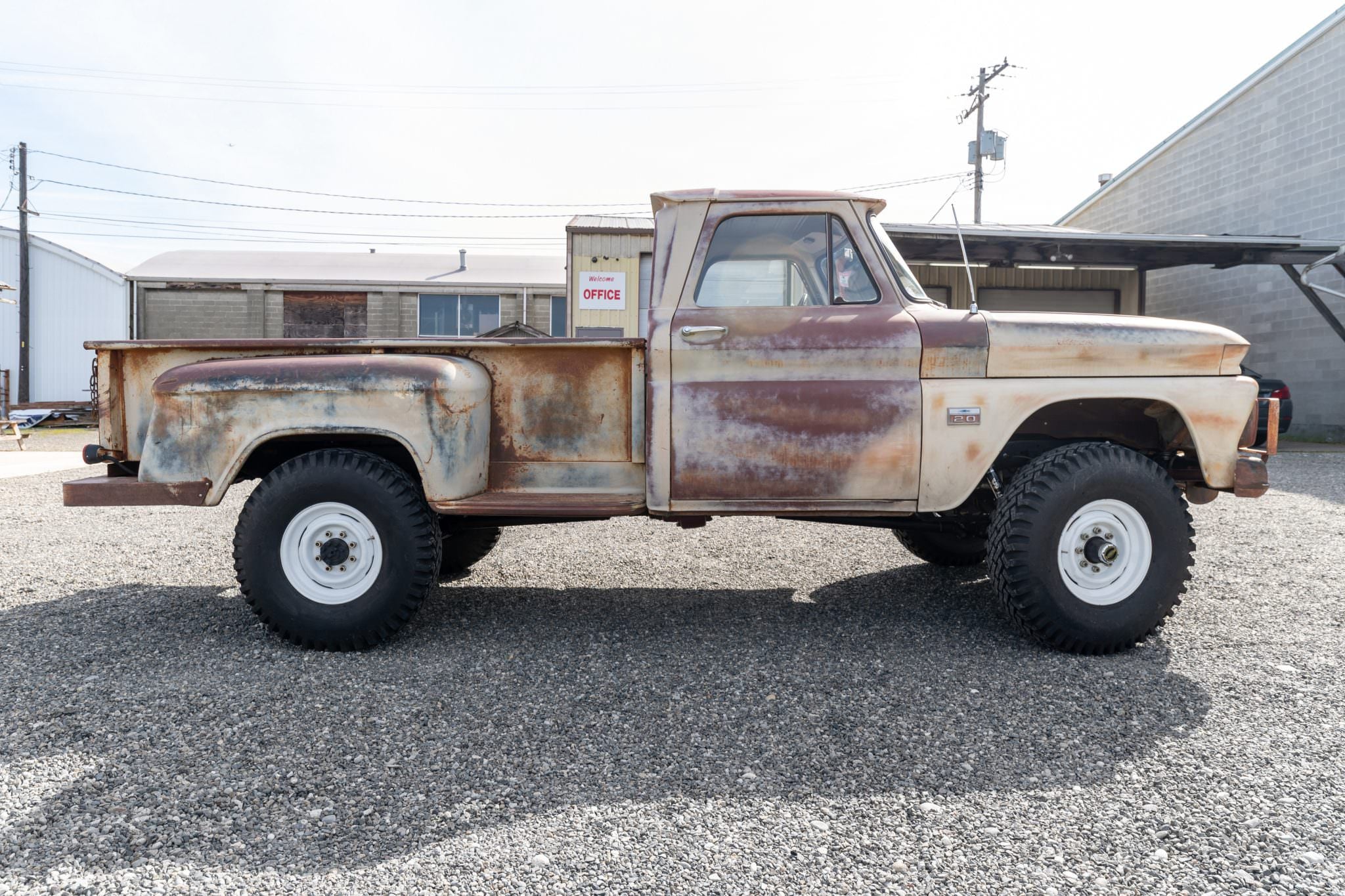
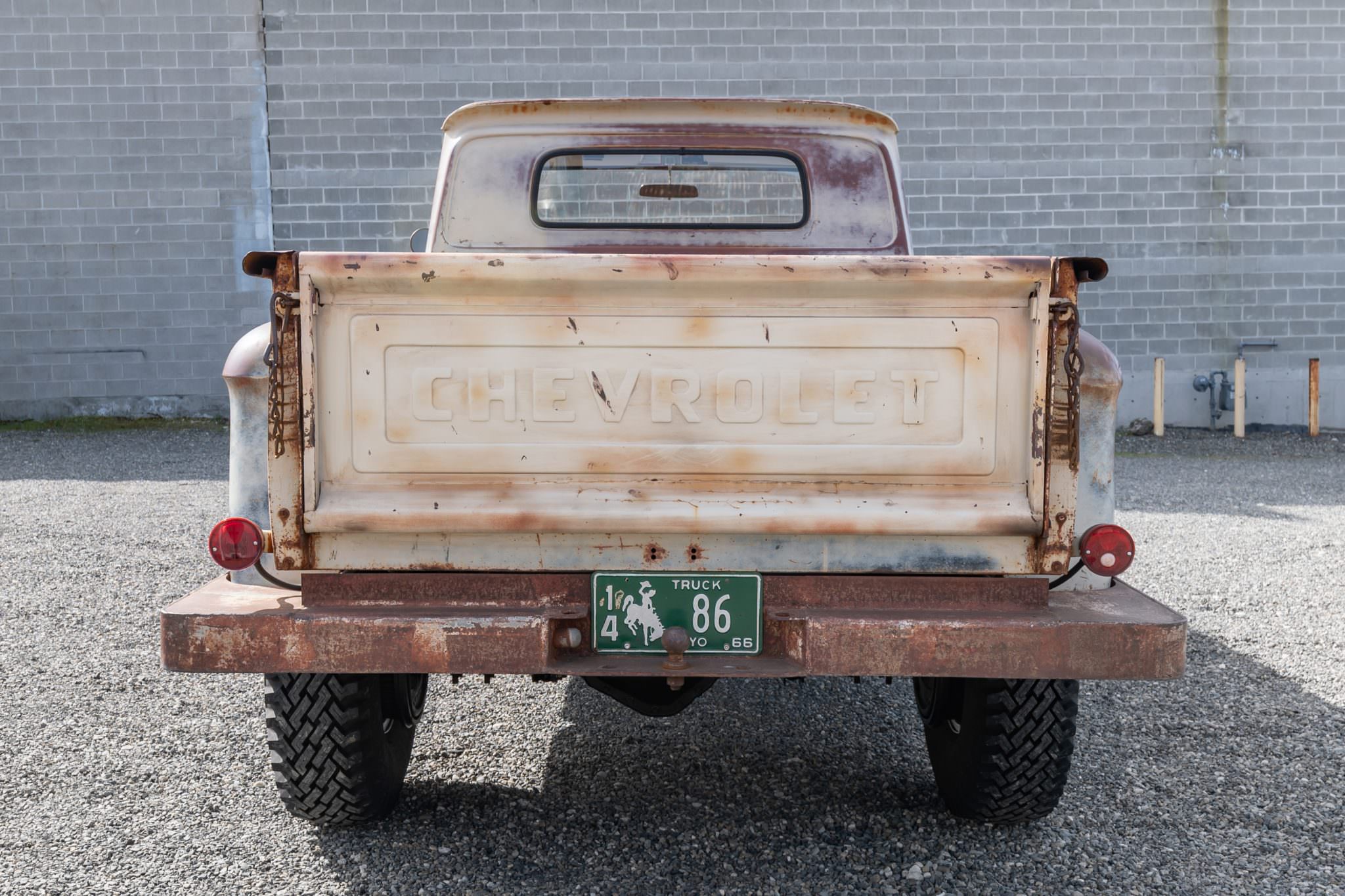
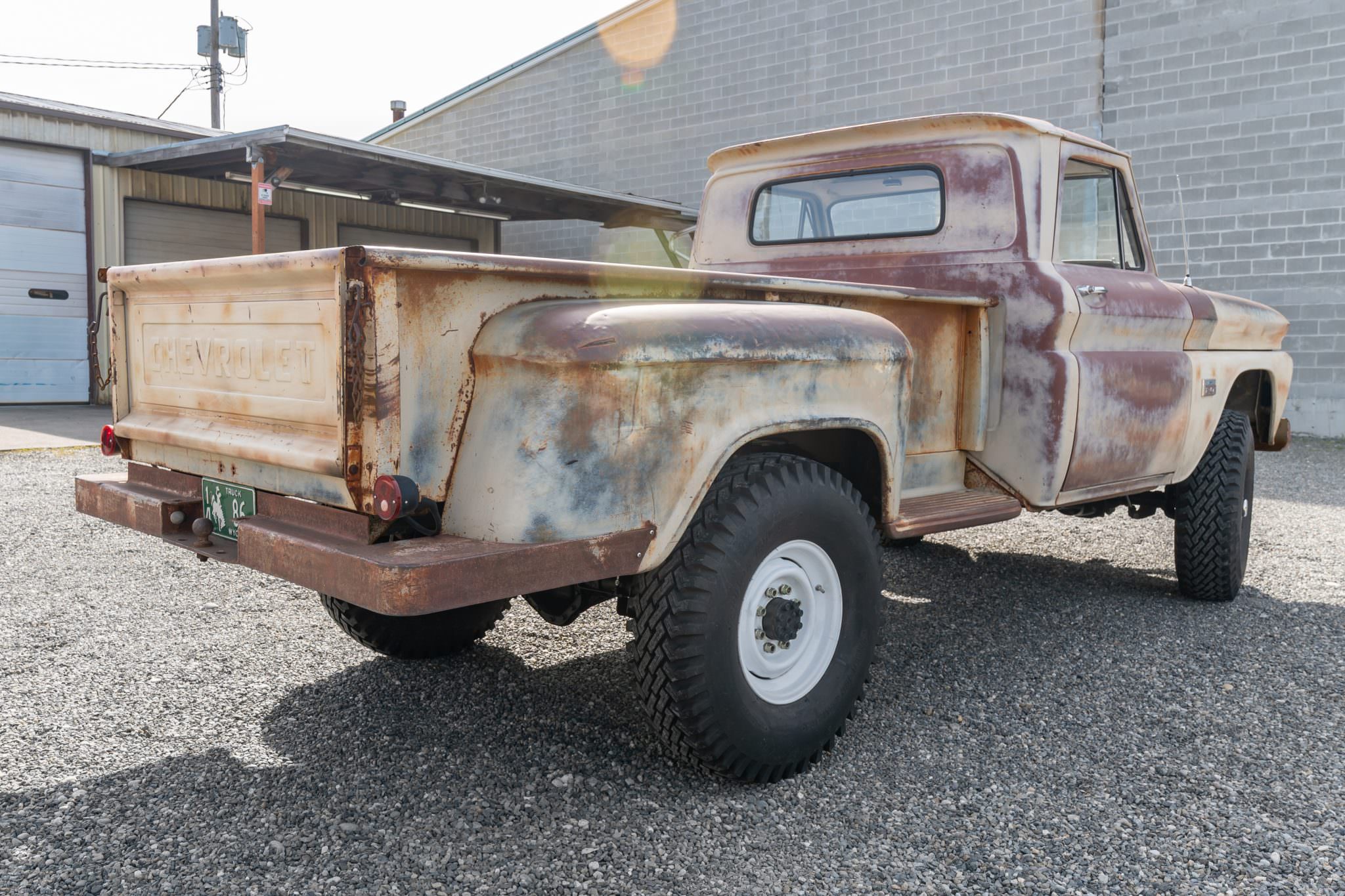
- This 1966 Chevrolet K20 Stepside 4×4 was refurbished under prior ownership and acquired by the current seller in 2026. The cab and bed were separated from the frame for body repairs during the build, and the truck now has distressed, patina-style paintwork. It’s being offered from Tacoma, Washington, with a Washington title in the seller’s name.
- The headline modification is a 327ci V8 sourced from a mid-1960s Corvette, fitted with green-finished valve covers bearing “Chevrolet 327 Turbo-Fire” decals, a single carburetor, and a black air cleaner. The carburetor and distributor were refurbed, and the radiator, fuel tank, exhaust, alternator, thermostat, and assorted belts and hoses were all replaced.
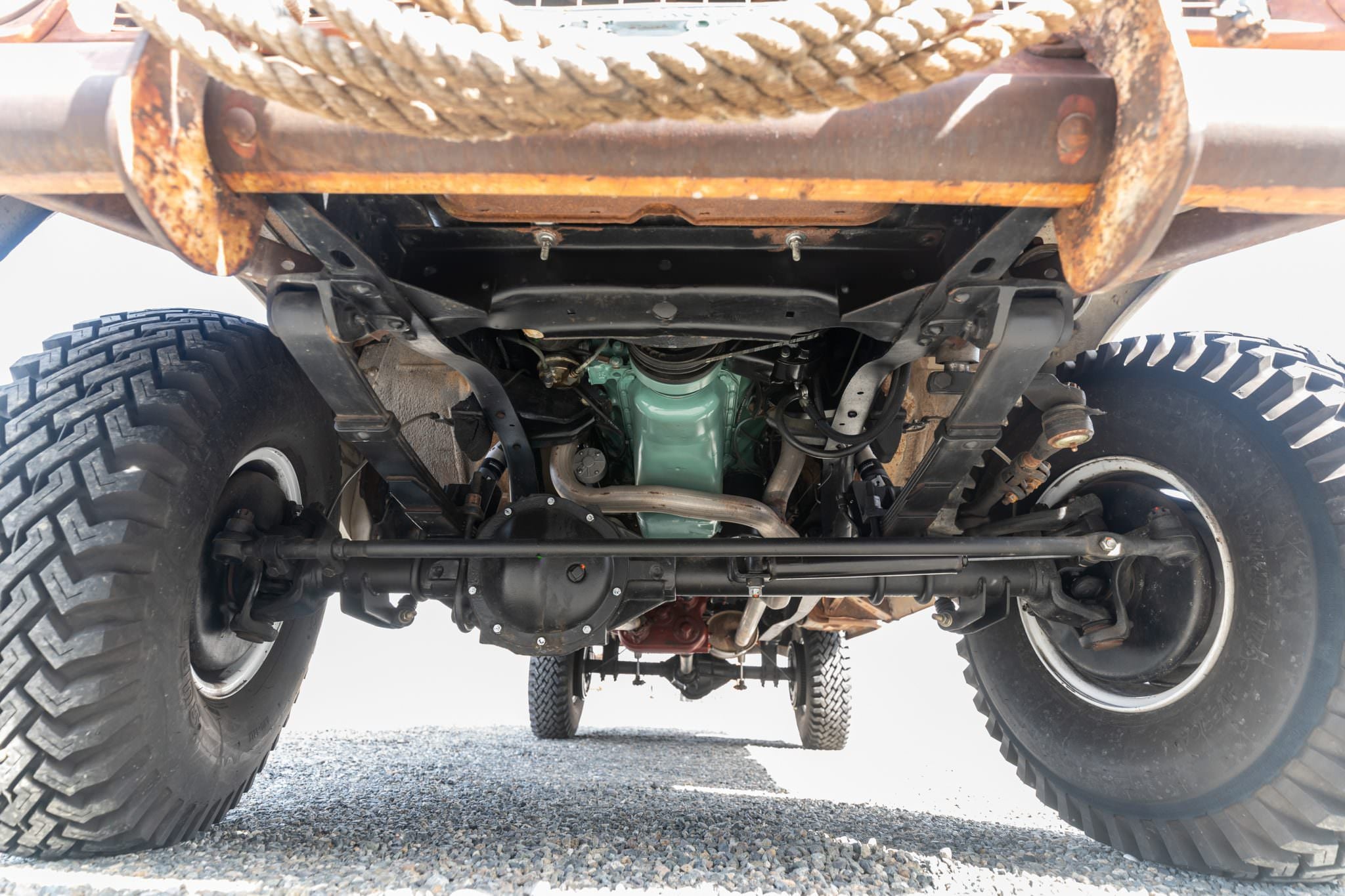
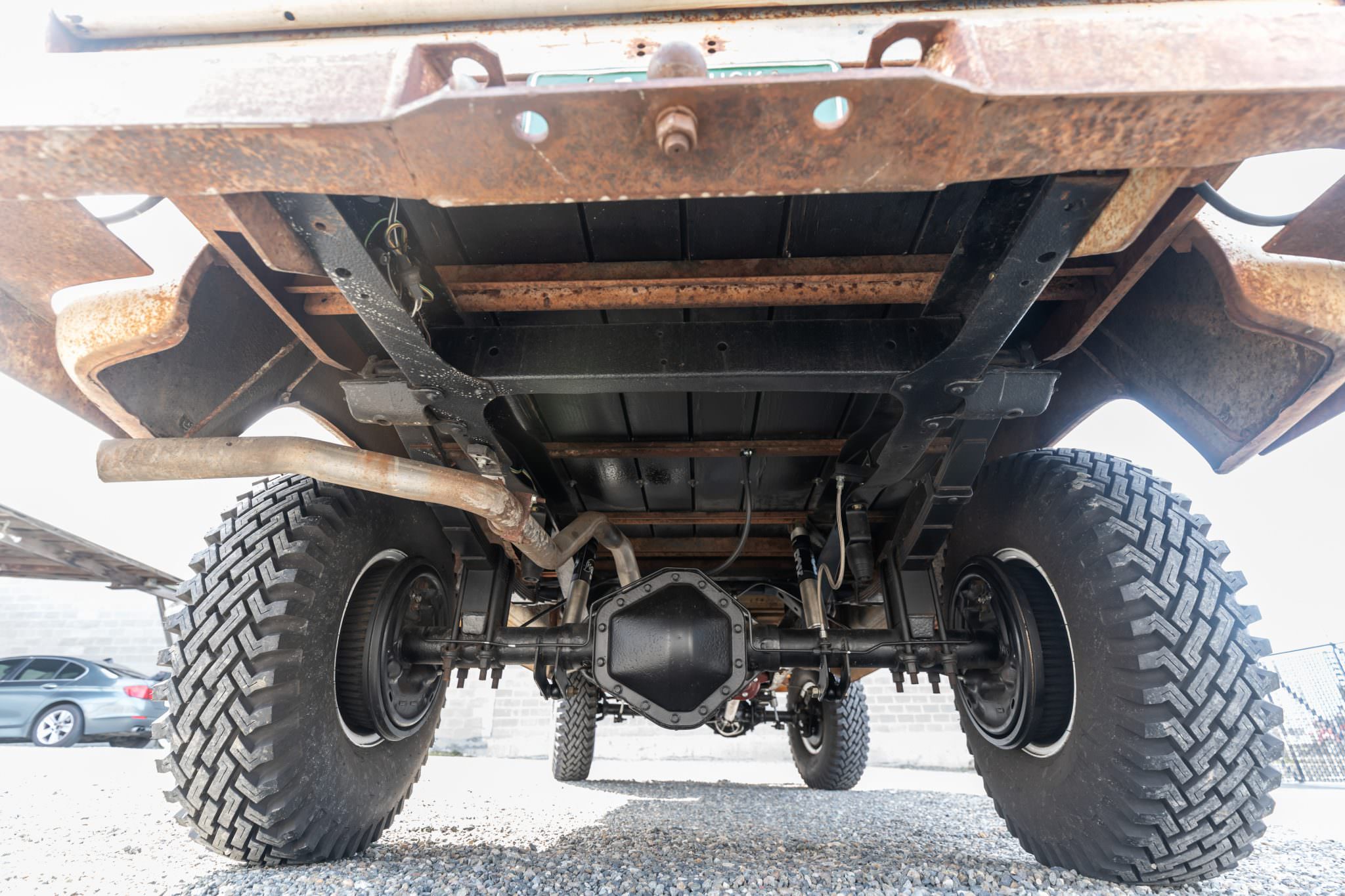
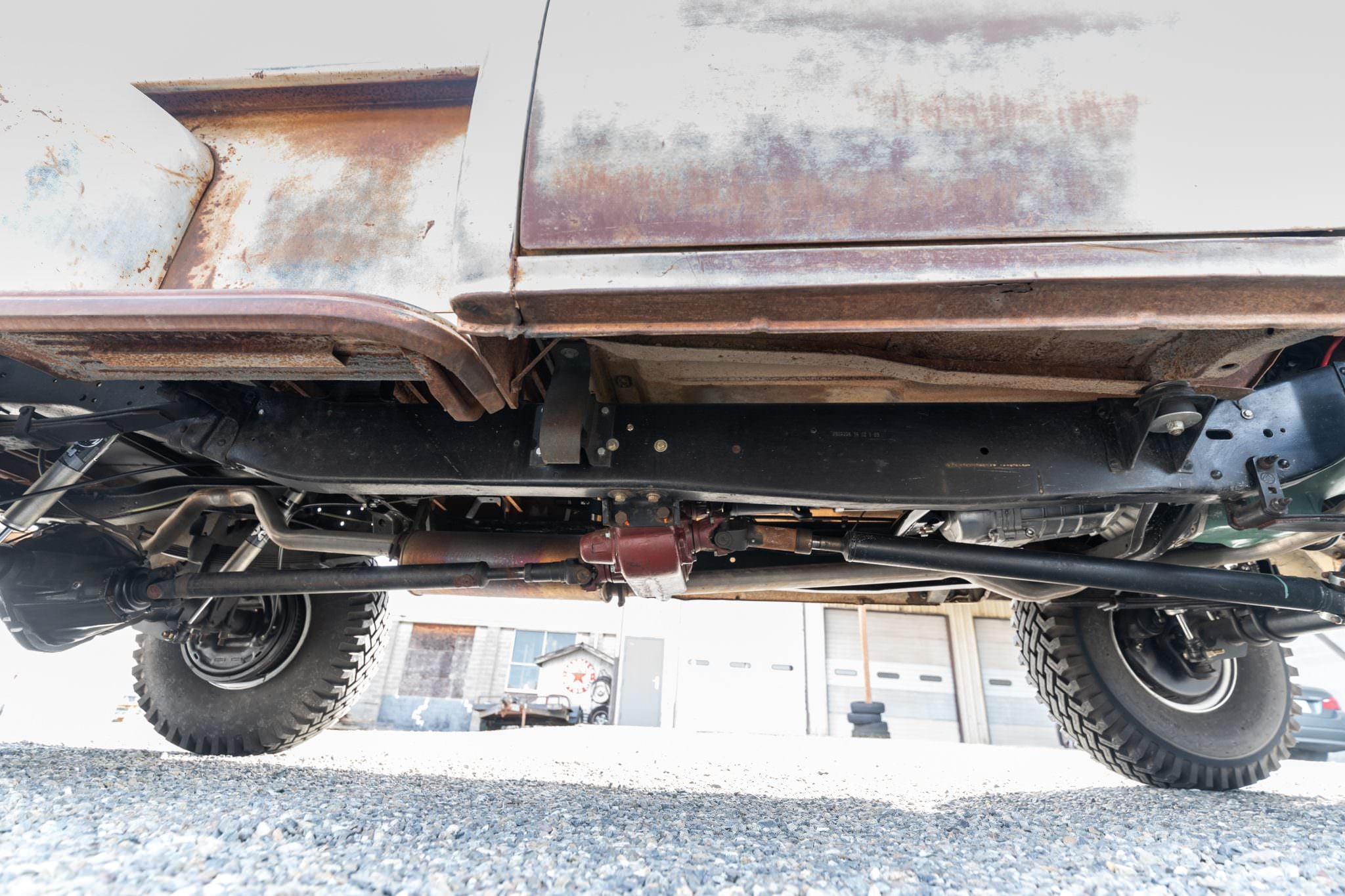
- Power is routed through a T5 5-speed manual transmission and a Rockwell dual-range transfer case, with a 10-bolt front axle and a 14-bolt rear axle completing the driveline. The truck rides on white 16-inch steel wheels shod with 9.00-16 Superlug tires, with lifted suspension, Fox Performance Series 2.0 shocks, and front disc and rear drum brakes.
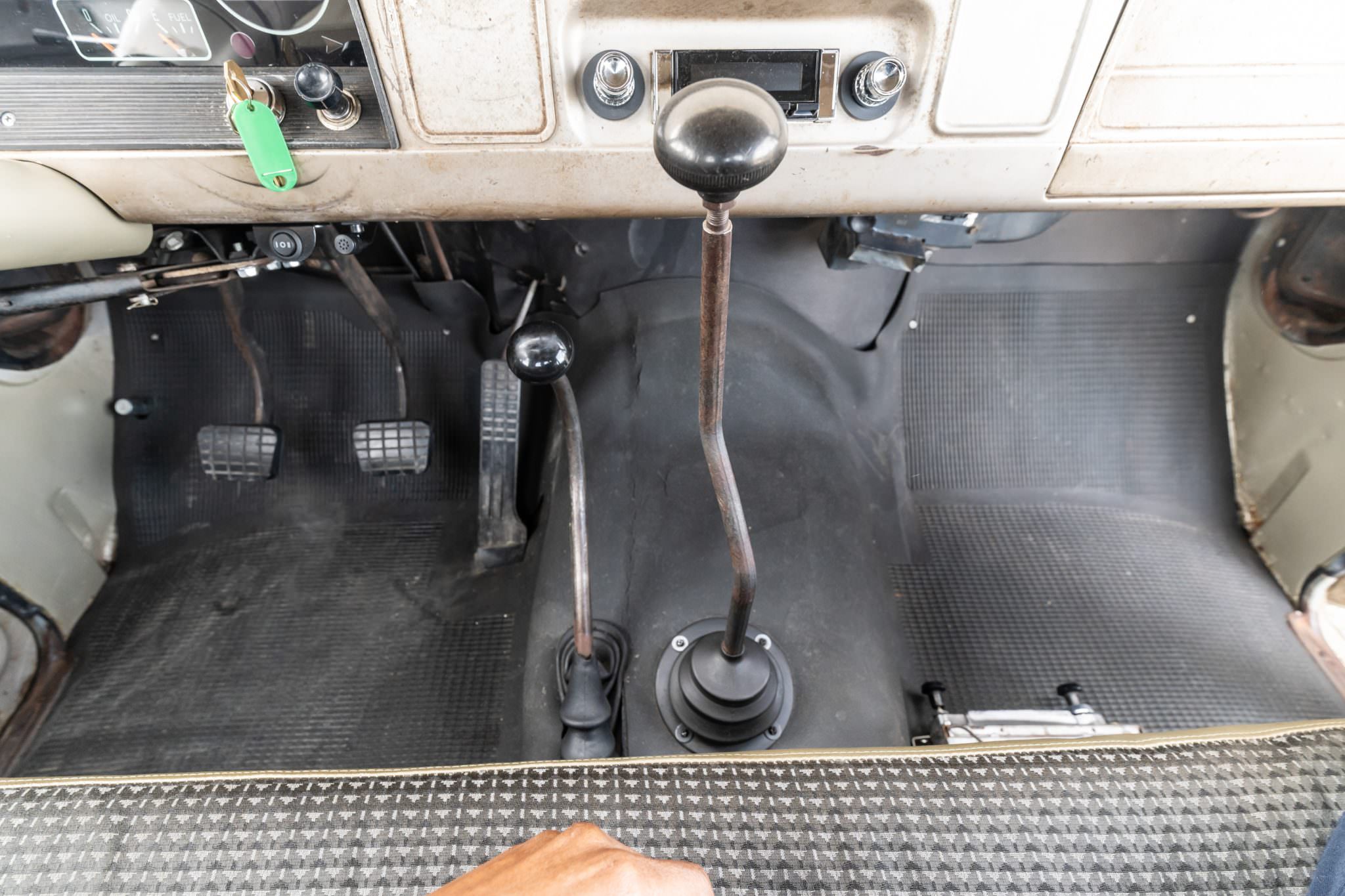
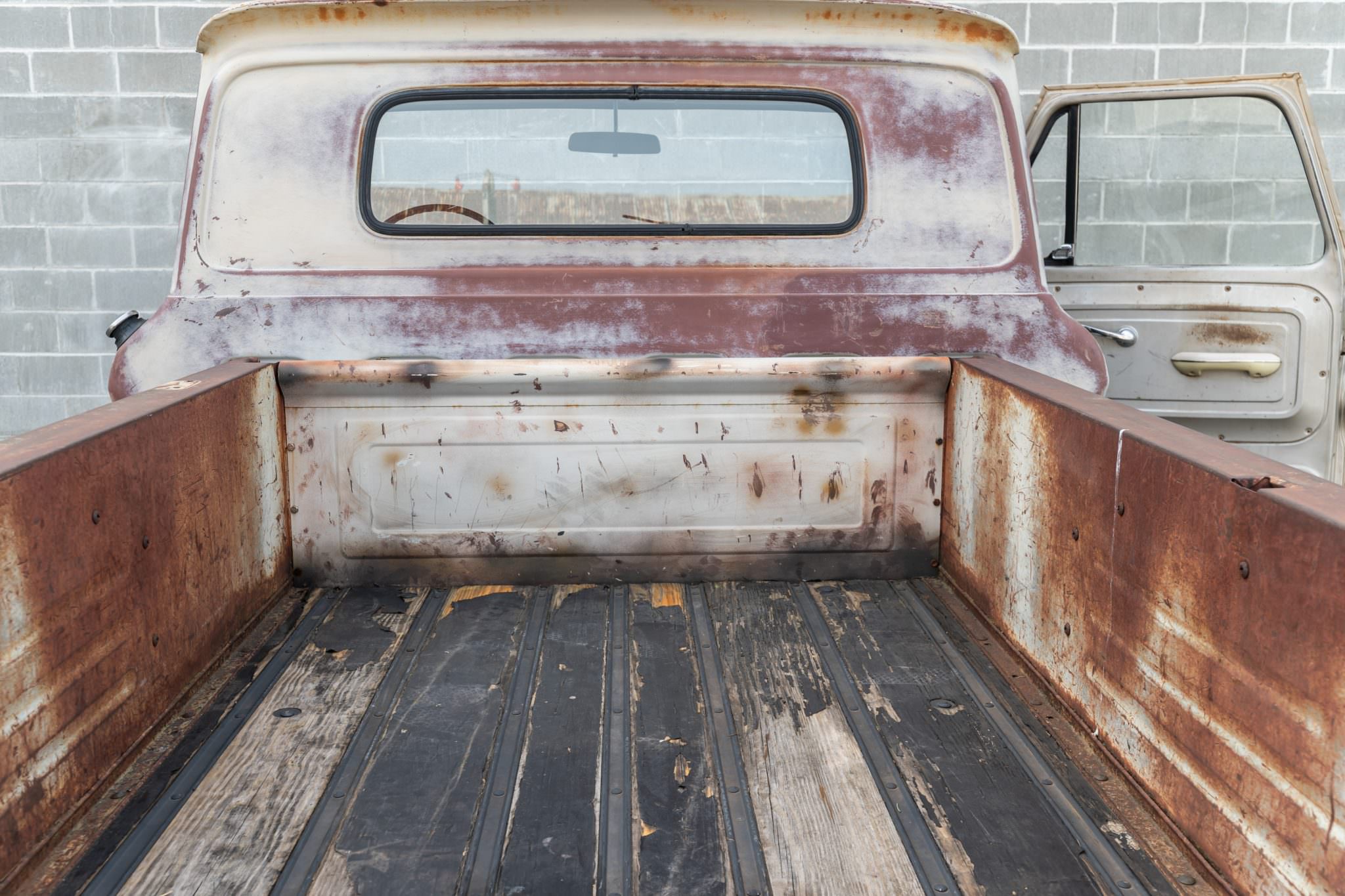
- The cabin has a bench seat trimmed in gold vinyl and patterned cloth, black flooring, a refurbished heater, and a RetroSound Bluetooth stereo. A two-spoke steering wheel frames Dakota Digital gauges, with the digital odometer reading 1,400 miles. Exterior equipment includes a grille guard, a tow ball, and a Stepside bed with a wood floor.
History Speedrun: The First-Gen Chevrolet K20
When General Motors introduced the C/K truck line for the 1960 model year, it (perhaps surprisingly) marked a clean break from everything that came before it in Chevrolet’s light-truck catalog – it was an all-new truck for an all-new decade.
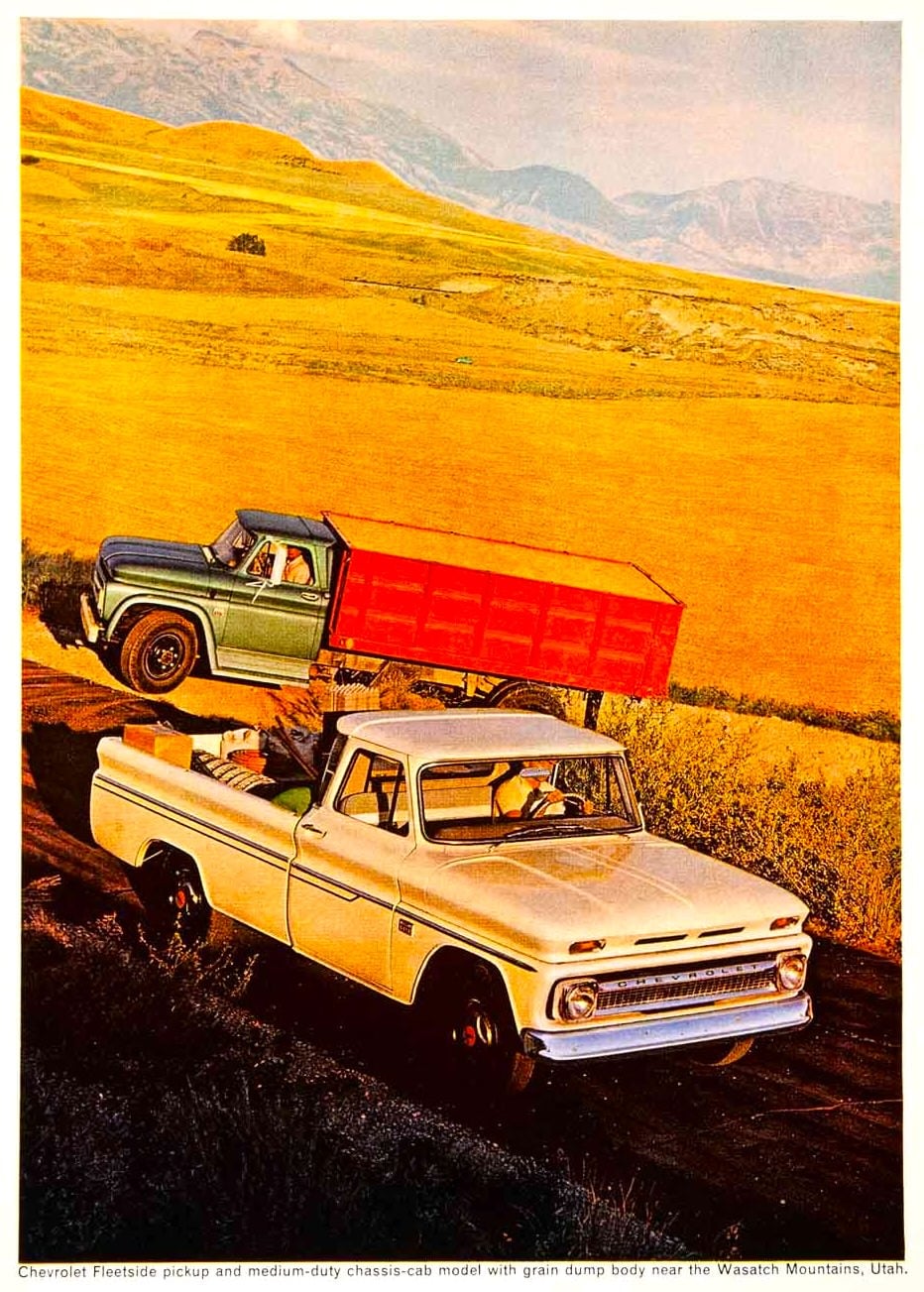
 When General Motors introduced the C/K truck line for the 1960 model year, it (perhaps surprisingly) marked a clean break from everything that came before it in Chevrolet’s light-truck catalog – it was an all-new truck for an all-new decade. Image courtesy of GM.
The new C/K truck platform was the first GM pickup developed on a dedicated truck chassis rather than an adaptation of a passenger-car architecture, and it introduced the now-legendary C/K nomenclature — “C” for conventional two-wheel (rear-wheel) drive and “K” for four-wheel drive. The K20 occupied an important slot in the line-up, it was the three-quarter-ton 4×4 pickup variant, and the first of its kind that Chevrolet would build entirely in-house.
The End Of The NAPCO Era
Before 1960, buyers wanting a four-wheel drive Chevy or GMC pickup had to go through NAPCO (Northwestern Auto Parts Company) of Minneapolis. NAPCO’s “Powr-Pak” 4×4 conversion kit had been bolted into Chevy and GMC trucks since the late 1940s, first as a dealer-installed crate and later as a factory-installed option from 1957 onward. Although factory-installed, it was still fundamentally an aftermarket conversion rather than a purpose-designed 4×4 system.
The NAPCO arrangement came to an end with the release of the new 1960 K series. GM had engineered its own 4×4 system from scratch, and the redesigned front end of the new K series truck was no longer compatible with NAPCO’s existing kits. NAPCO quickly found itself pushed out of the GM light-truck business, as a result of all this, the rights to the Powr-Pak were eventually sold to Dana, the company that had originally supplied the Powr-Pak’s transfer case.
K20 Chassis, Suspension, + Driveline
The K20 used body-on-frame construction, with a steel ladder-type chassis. The first-generation C/K redesign allowed the cab to sit roughly seven inches lower than the outgoing Task Force trucks, dropping the centre of gravity and improving stability both on and off road.
While the C-series rear-wheel drive trucks used an independent front suspension system, with torsion bars from 1960 through 1962, then coil springs from 1963, the K-series 4x4s took a different route. K-trucks used a live front axle on leaf springs throughout the first generation, specifically a closed-knuckle Dana 44. Rear suspension on the K20 was also a leaf-sprung live axle, and the transfer case was a divorced (separately mounted) two-speed Rockwell T-221.
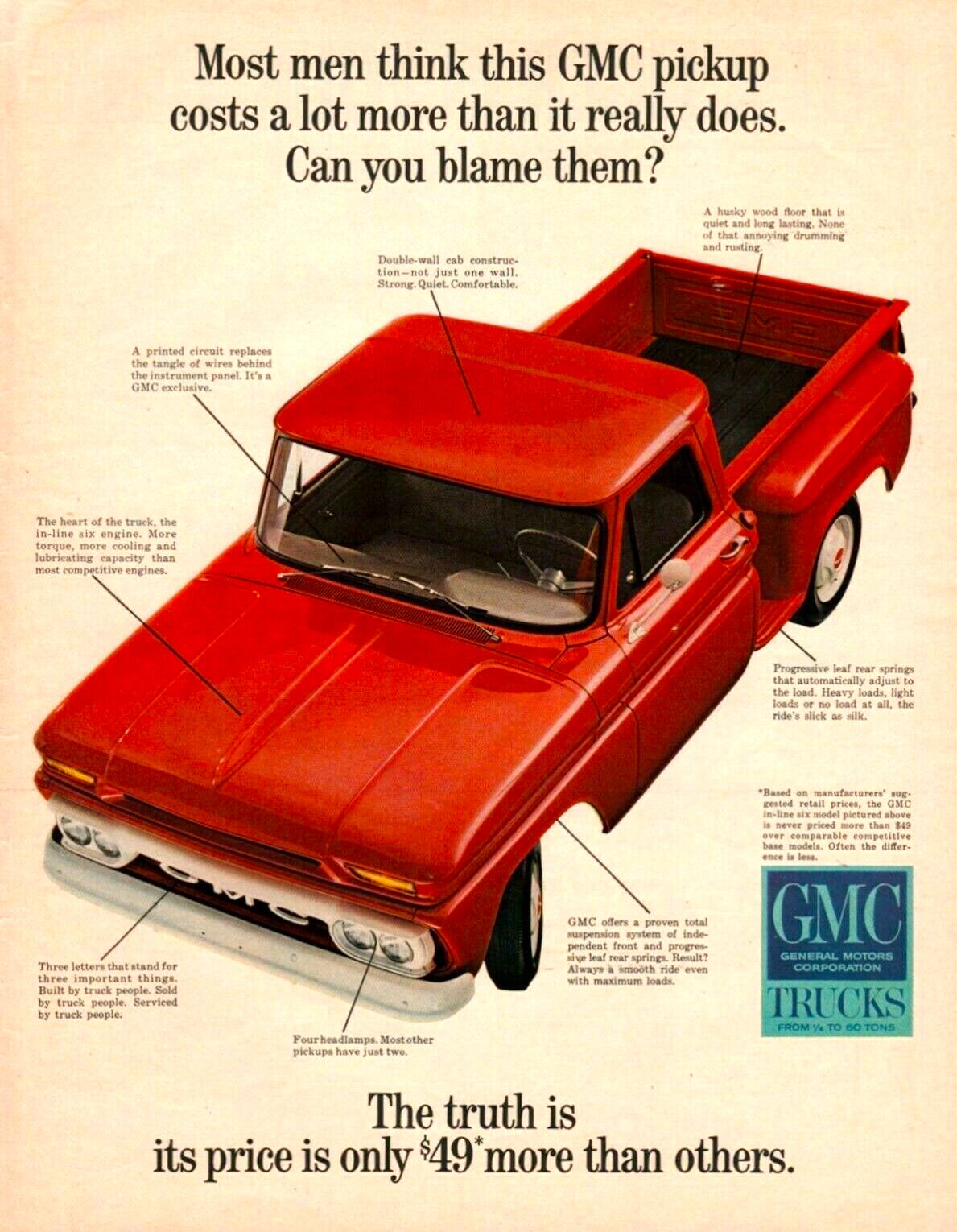
The K20 used body-on-frame construction, with a steel ladder-type chassis. The first-generation C/K redesign allowed the cab to sit roughly seven inches lower than the outgoing Task Force trucks, dropping the centre of gravity and improving stability both on and off road. Image courtesy of General Motors.
A heavier-duty Dana 44HD became an option on three-quarter-ton K-series trucks from 1962 onward, rated at 3,500 lbs versus the standard unit’s 3,300 lbs.
K-Series Body Styles + Cab Variants
The broader K-series 4×4 range was larger than just pickup trucks alone – Chevrolet’s initial 1960 four-wheel drive brochure listed nine 4×4 models, including Fleetside and Stepside pickups, panel trucks, and the Suburban Carryall, and the 1963 brochure added K10 and K20 chassis-cab offerings to that mix.
In pickup form, the K20 was offered as a standard-cab truck paired with an 8 foot bed on the 127 inch wheelbase, in either Fleetside (smooth-sided) or Stepside (fendered with a step ahead of the rear wheels) configuration. GMC used different terminology for the same beds – Wideside and Fenderside respectively, though there was no real difference and the different names all came down to differentiating the closely related trucks.
For 1960 and 1961, the trucks wore Apache badging on the lighter 10, 20, 30 and 40 series (carryover of the naming scheme from the Task Force generation) while heavier models were badged Viking (50-60 series) and Spartan (70-80 series). The Apache name was dropped altogether after 1961.
K-Series Engines + Transmission Options
At launch in 1960, the standard Chevrolet engine was the 235 cubic inch Thriftmaster inline-six, a Stovebolt-family unit producing 135 bhp. The optional engine was the 283 cubic inch Trademaster V8, detuned for truck use to 160 bhp. GMC used its own 305 cubic inch V6 rated at 150 bhp as standard.
For 1963, Chevrolet revised its engine lineup, a new 230 cubic inch inline-six became the base engine at 140 bhp, and an optional 292 cubic inch inline-six arrived with 165 bhp (an engine that would serve in GM trucks well into the 1980s).
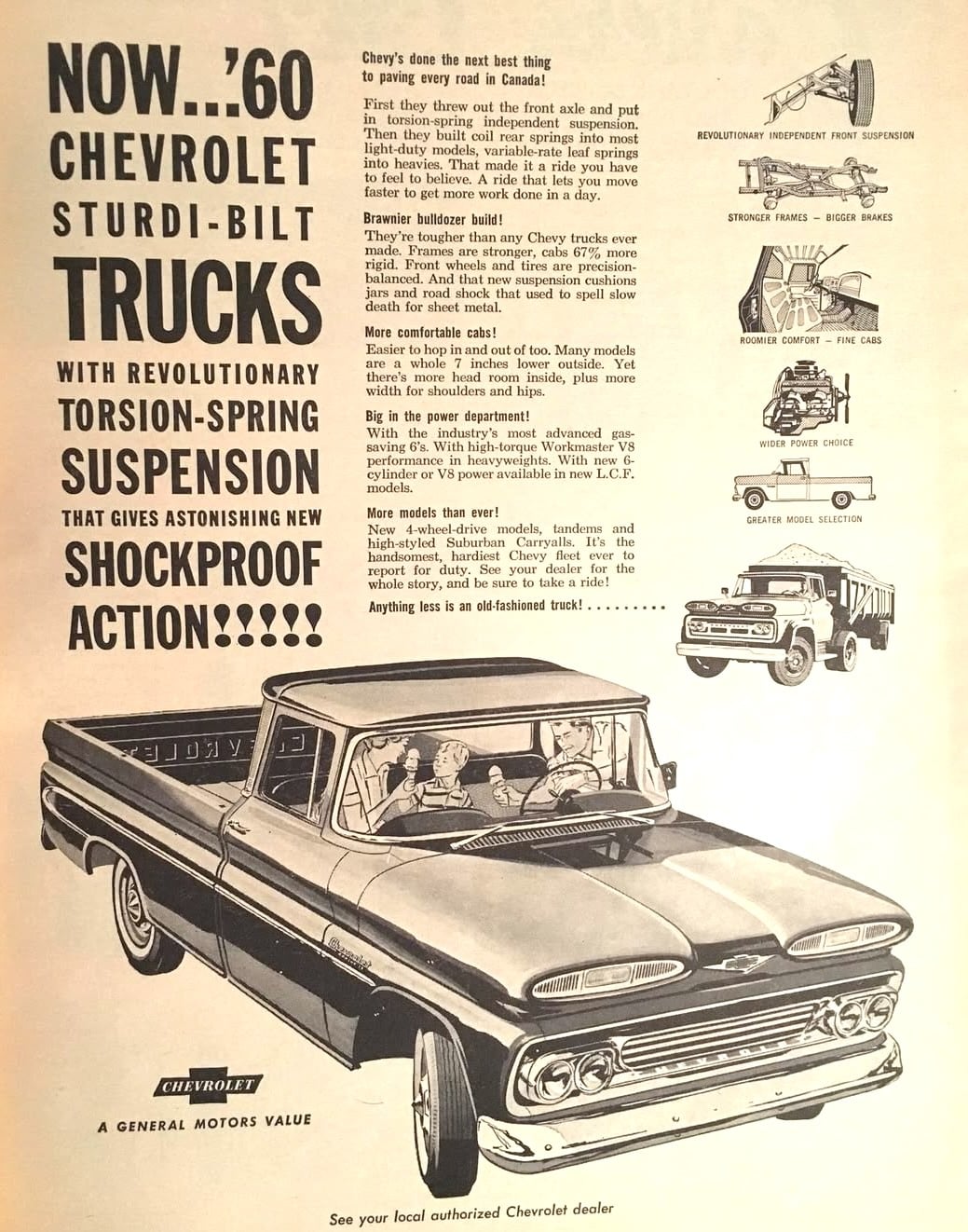
The C-series rear-wheel drive trucks used an independent front suspension system, with torsion bars from 1960 through 1962, then coil springs from 1963. Image courtesy of GM.
The 283 V8 was retuned to 175 bhp. In 1965 a 327 cubic inch V8 joined the options list at 220 bhp, initially for 3/4-ton and one-ton trucks before becoming available across the range for 1966. For the final 1966 model year, a 250 cubic inch inline-six replaced the 230 as the base engine.
On the K20 specifically, the standard transmission was a 3-speed column-shift manual, with the SM420 4-speed floor-shift manual ( with a compound-low first gear well-suited to 4×4 work) as the common heavy-duty choice. The optional 2-speed Powerglide automatic was offered across the first-generation C/K range (though its availability on 3/4-ton 4×4 applications depended on year and engine specification).
First-Gen Production Timeline
The first-gen C/K was built for the 1960 through 1966 model years. For 1967 the platform was replaced by the second-generation “Action Line” trucks, which introduced the squarer, more modern styling enthusiasts now associate with the late-1960s Chevy pickup.
K20 production numbers were relatively modest compared to the volume-leading two-wheel drive C10, with surviving examples relatively uncommon today but much sought after by collectors.
The first-gen K20 has an important place in GM history – it was the truck on which Chevrolet began building four-wheel drive in-house, kicking off a lineage of factory 4×4 three-quarter-tons that would run uninterrupted through the end of C/K production in the late 1990s.
The Corvette V8-Swapped 1966 K20 4×4 Shown Here
The 1966 Chevrolet K20 you see here was modified under previous ownership and bought by the current seller in 2026.
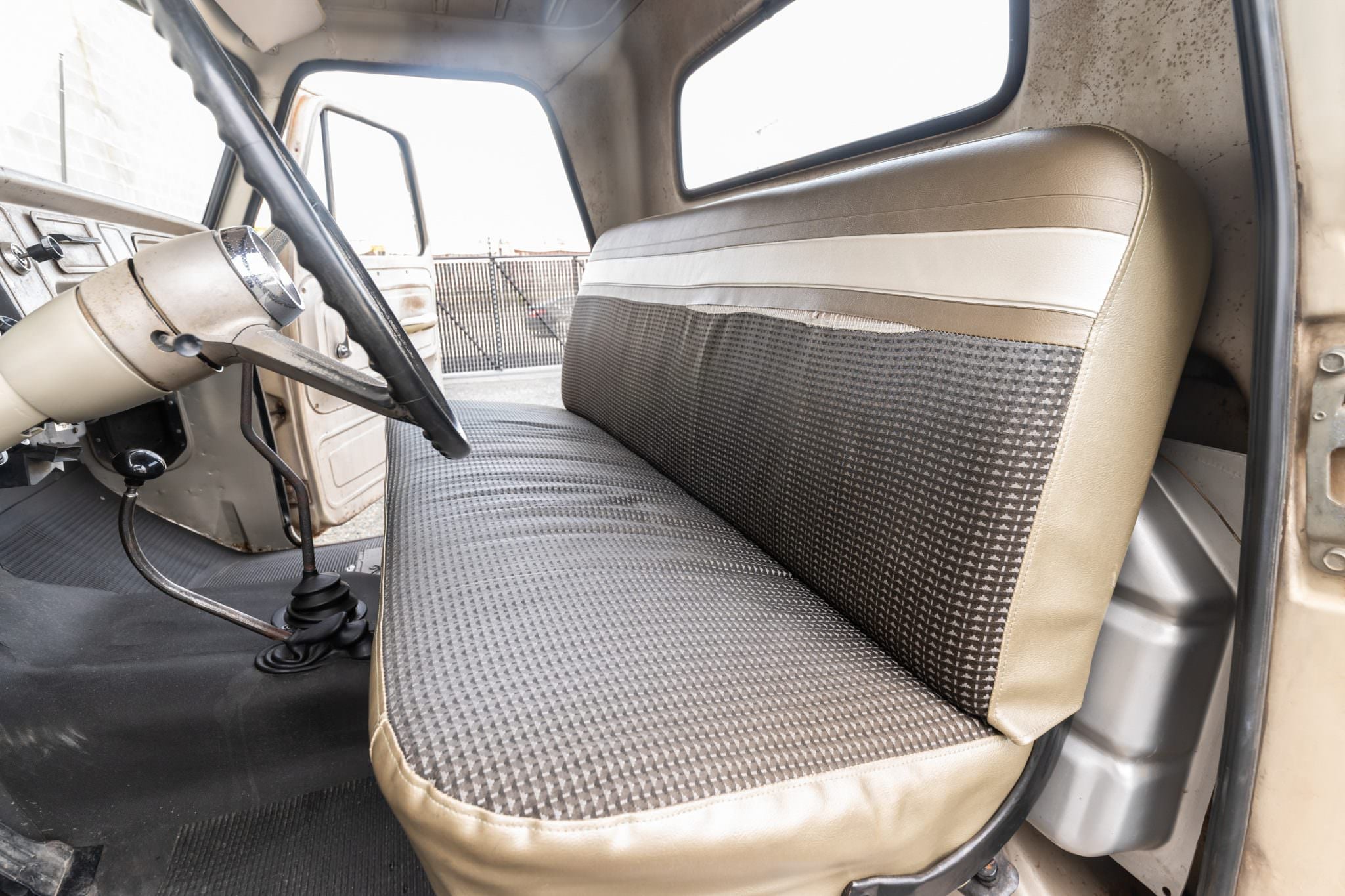
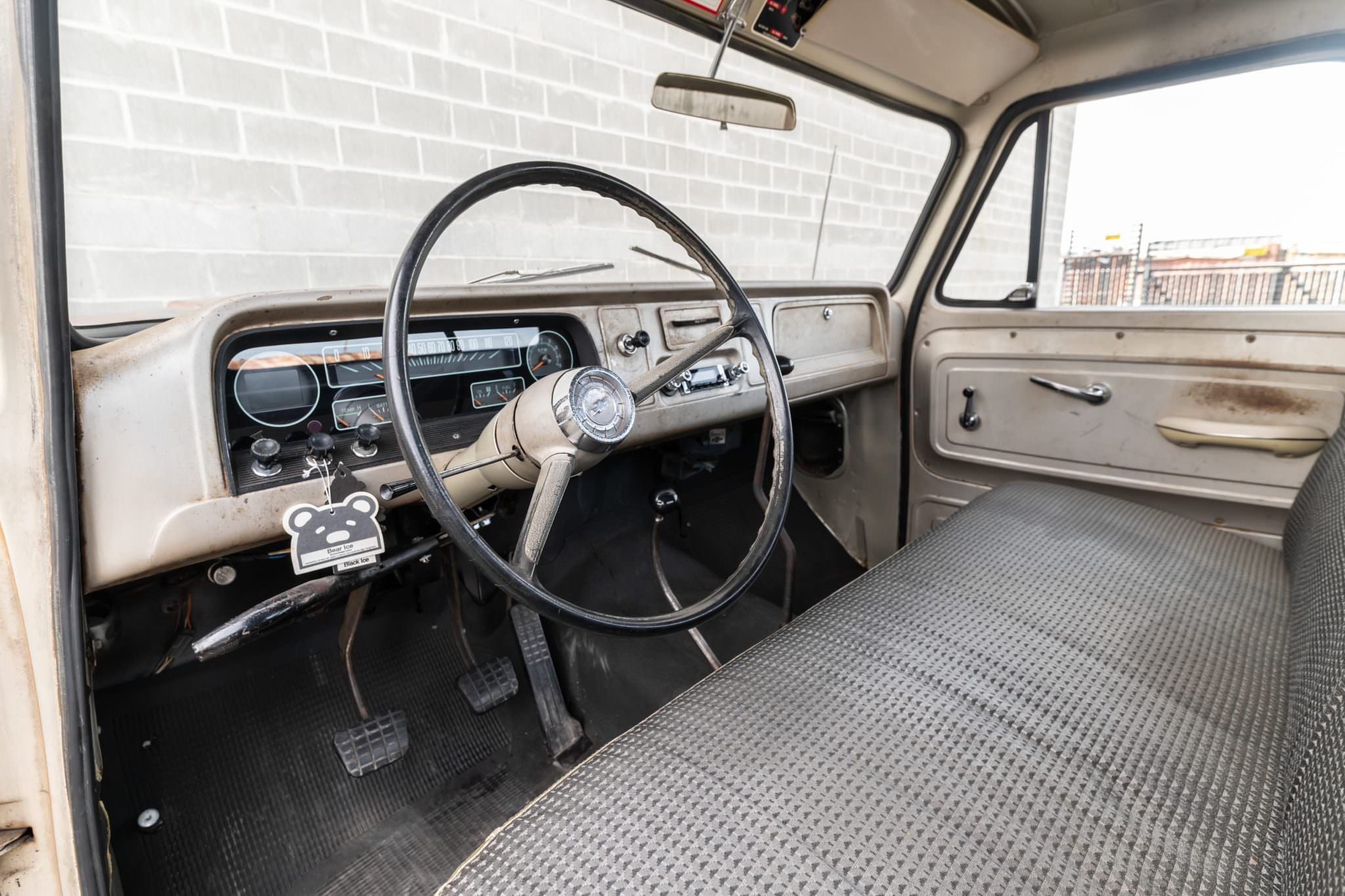
Inside you’ll find a bench seat trimmed in gold vinyl and patterned cloth, as well as black flooring, a refurbished heater, and a RetroSound Bluetooth-capable stereo. A two-spoke steering wheel sits ahead of Dakota Digital gauges, and the digital odometer currently reads 1,400 miles.
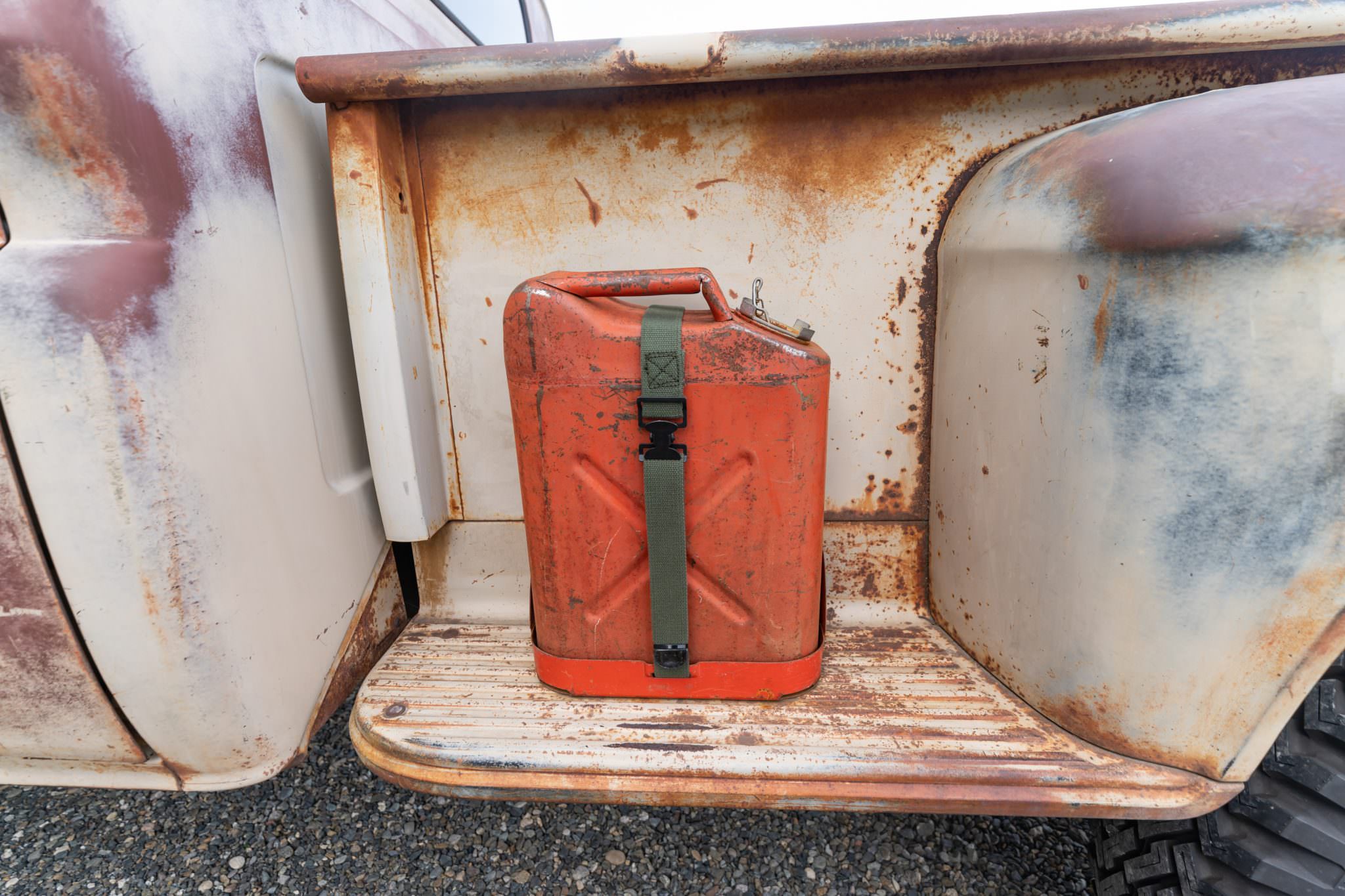
During the refurbishment process, the cab and bed were separated from the frame to allow body repairs to be carried out, and the truck now wears distressed, patina-style paintwork. The Stepside bed has a wood floor, and the truck has a grille guard and a tow ball.
The chassis rides on white 16 inch steel wheels shod with 9.00-16 Specialty Tires of America Superlug tires, and a lifted suspension has been fitted along with Fox Performance Series 2.0 shock absorbers. Braking is managed by front discs and rear drums, while the power steering system and steering box were both replaced as part of the refurb.
Inside you’ll find a bench seat trimmed in gold vinyl and patterned cloth, as well as black flooring, a refurbished heater, and a RetroSound Bluetooth-capable stereo. A two-spoke steering wheel sits ahead of Dakota Digital gauges, and the digital odometer currently reads 1,400 miles.
Power now comes from a 327 cubic inch V8 sourced from a mid-1960s Corvette and installed during the refurb. It has green-finished valve covers with “Chevrolet 327 Turbo-Fire” decals, a black-finished air cleaner assembly, and a single carburetor.
The carburetor and distributor were refurbished, and the radiator, fuel tank, exhaust system, alternator, thermostat, and assorted belts and hoses were all replaced under prior ownership. An oil change was completed in preparation for the sale.
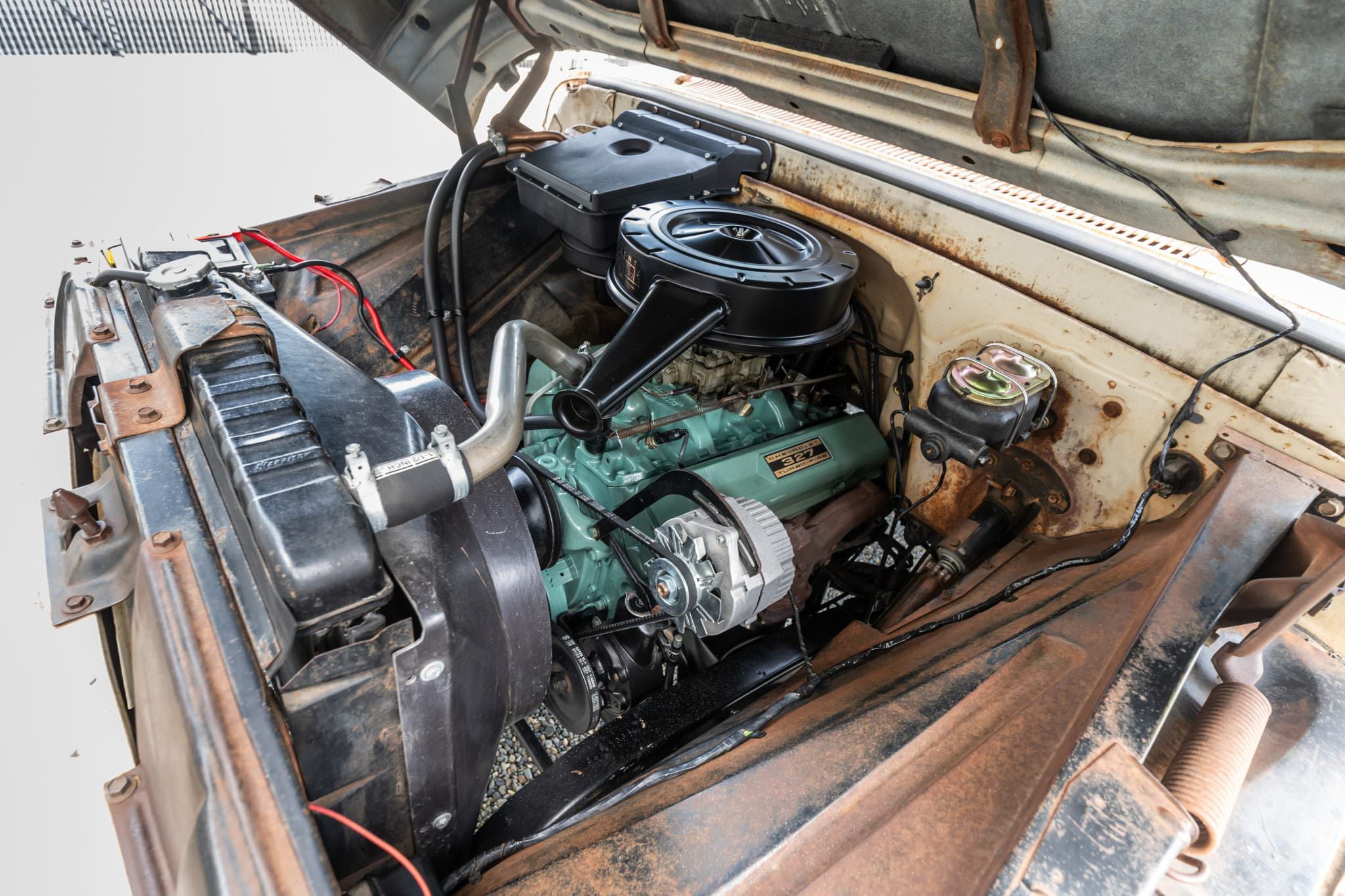
Power now comes from a 327 cubic inch V8 sourced from a mid-1960s Corvette and installed during the refurb. It has green-finished valve covers with “Chevrolet 327 Turbo-Fire” decals, a black-finished air cleaner assembly, and a single carburetor.
Power is sent to the rear or all four wheels via a T5 5-speed manual transmission and a Rockwell dual-range transfer case, with a 10 bolt front axle and a 14 bolt rear axle completing the driveline. A replacement fuel tank and fuel lines were installed during the refurb, and the exhaust system now has a replacement muffler.
It’s now being offered for sale out of Tacoma, Washington with a Washington title in the seller’s name, and you can visit the listing here if you’d like to read more or place a bid.
Images courtesy of Bring a Trailer

Articles that Ben Branch has written have been covered on CNN, Popular Mechanics, Smithsonian Magazine, Road & Track Magazine, the official Pinterest blog, the official eBay Motors blog, BuzzFeed, Autoweek Magazine, Wired Magazine, Autoblog, Gear Patrol, Jalopnik, The Verge, and many more.
Silodrome was founded by Ben back in 2010, in the years since the site has grown to become a world leader in the alternative and vintage motoring sector, with well over a million monthly readers from around the world and many hundreds of thousands of followers on social media.