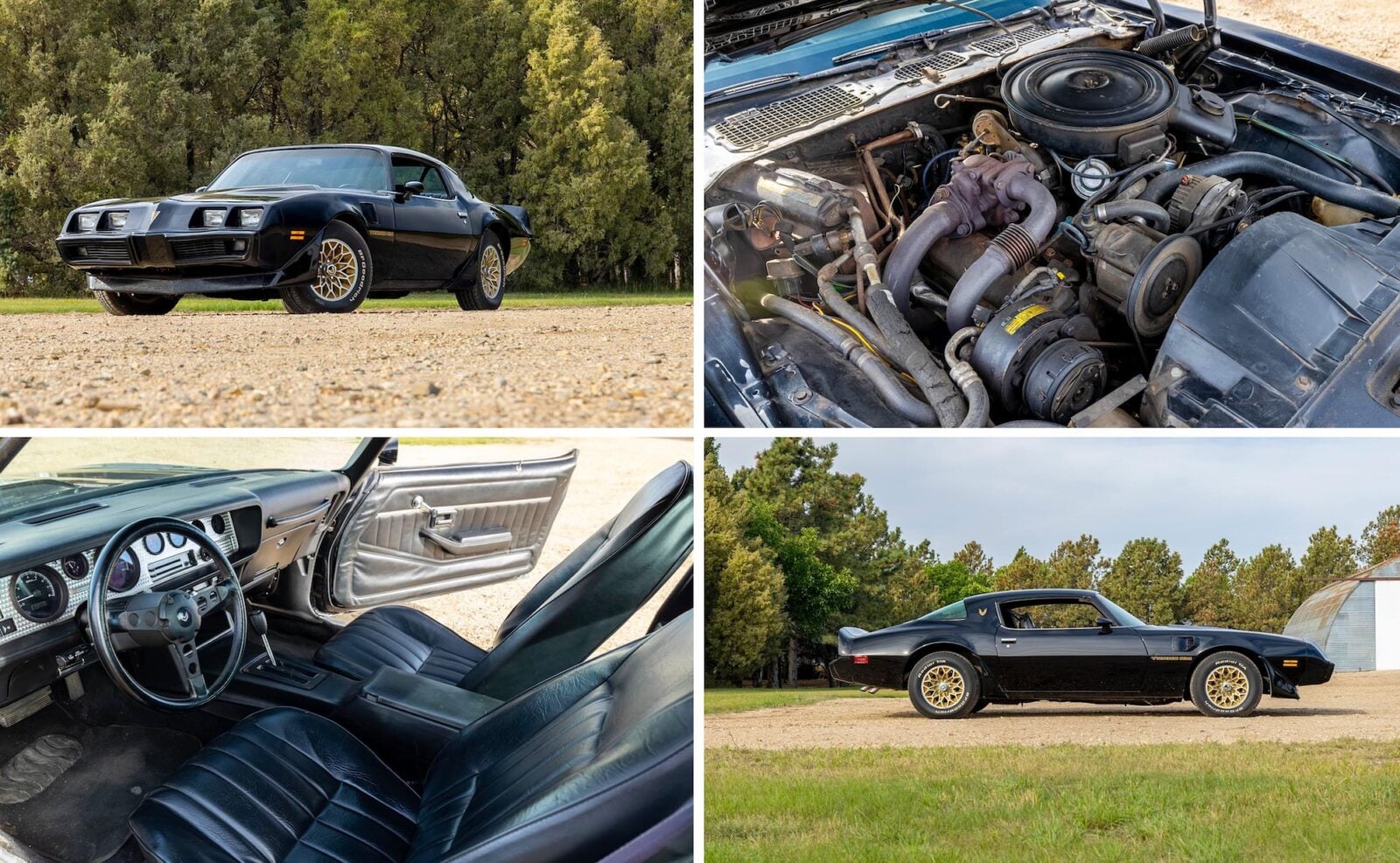
This is an original 1980 Pontiac Turbo Trans Am that’s still fitted with its original matching-numbers engine and transmission. These cars were only built for two model years, and they’re now becoming quite collectible.
The Turbo Trans Am was an interesting foray into forced-induction by the American automaker, brought about by increasingly stringent emissions and fuel economy restrictions that had been robbing engines of their power through the 1970s and into the 1980s.
Fast Facts: The Pontiac Turbo Trans Am
- Pontiac introduced the Turbo Trans Am for 1980 after emissions and fuel economy pressures ended the 400 cubic inch V8 era. Its turbocharged 301 cubic inch, or 4.9 liter, V8 produced 210 bhp and 345 lb ft of torque, making it the most powerful Trans Am engine available that year.
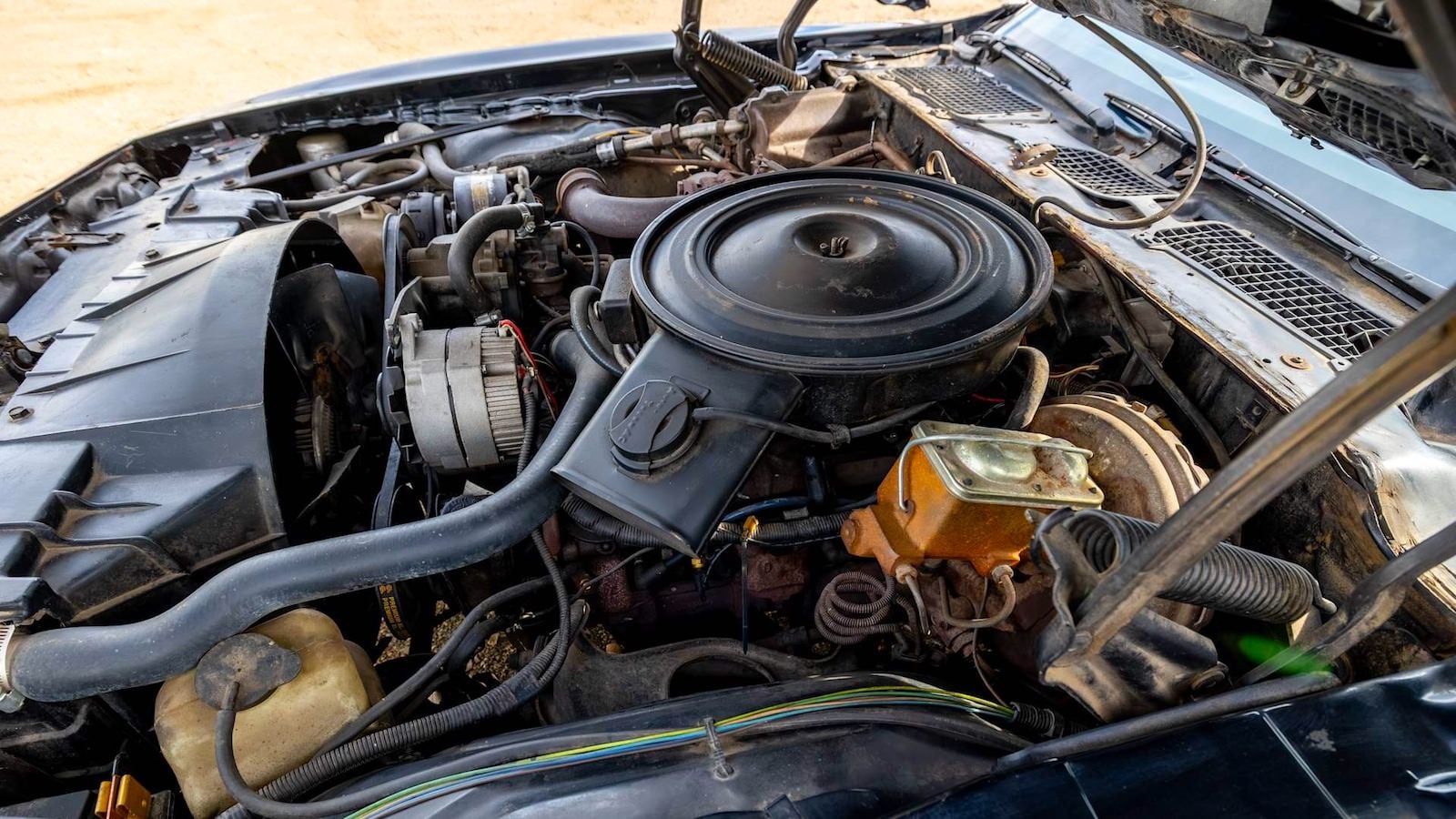
- The LU8 engine used a single Garrett AiResearch turbocharger, a modified Rochester Quadrajet carburetor, 9 psi of boost, 7.6:1 compression, and electronic knock control. It was paired exclusively with a THM350 3-speed automatic, 3.08:1 rear axle, and air conditioning, with no manual transmission offered for 1980.
- Performance varied considerably in period testing, with 0 to 60 mph times ranging from 8 to 9 seconds and quarter-mile runs generally in the mid-16 to 17-second range. Although it was powerful by 1980 standards, the Turbo Trans Am was slower than the outgoing W72 400-powered manual cars.
- The Turbo Trans Am lasted only through 1981, as GM standardized engines across its divisions and Pontiac ended V8 production. The 1980 example shown here retains its matching-numbers turbocharged 4.9 liter V8 and automatic transmission, finished in Starlight Black with gold graphics, Snowflake wheels, air conditioning, and Dakota Digital gauges.
History Speedrun: The Pontiac Turbo Trans Am
Pontiac would fit 22,176 Trans Ams with its turbocharged 301 cubic inch (4.9 liter) V8 in 1980, the first model year since the car’s 1969 debut with no engine of 400 cubic inches (6.6 liters) or more on the order form. It was a big step in the company’s history, but at the time no one was quite sure if it was a step forward or a step back.
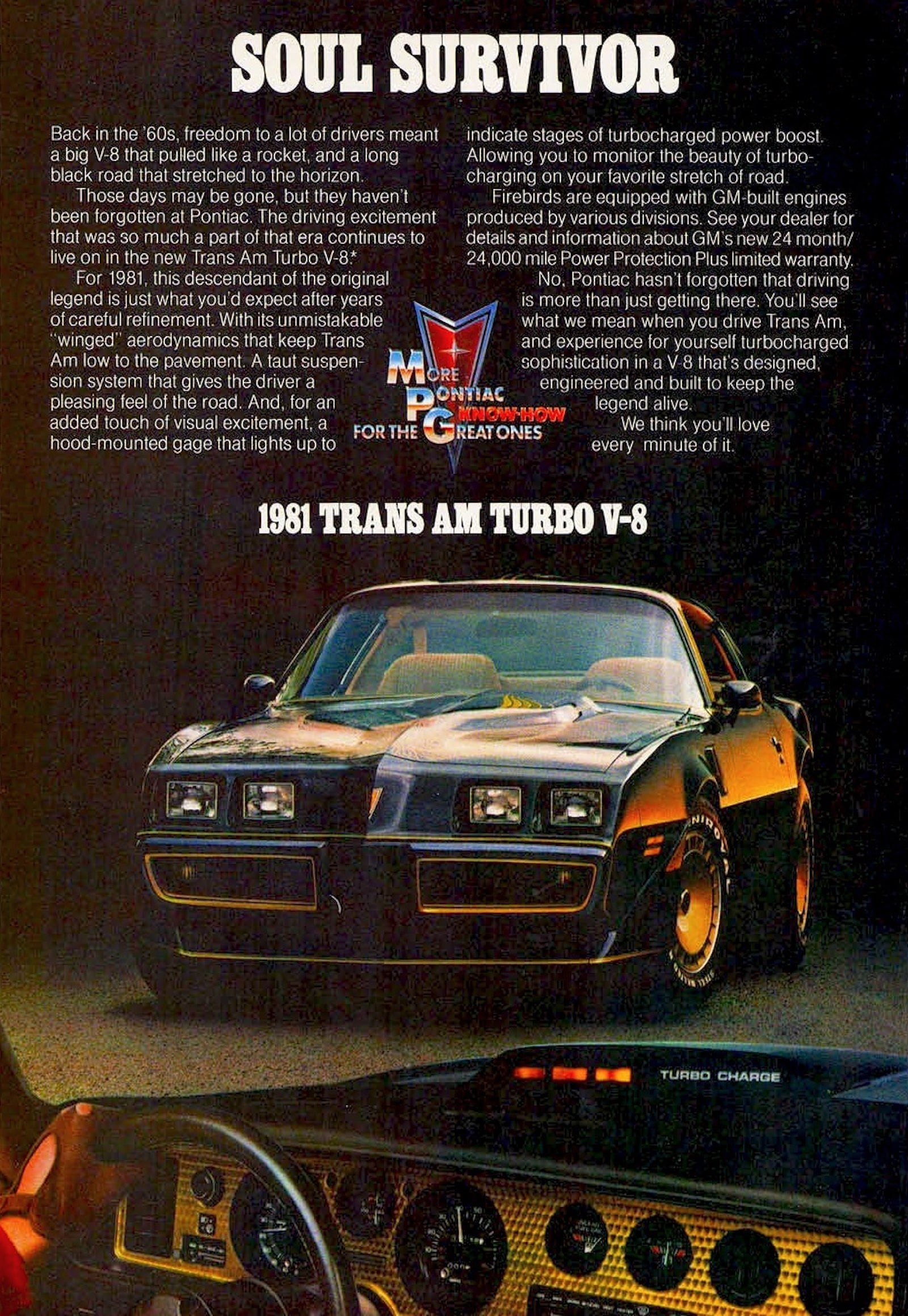
 Pontiac’s turbo program began as a student project at the General Motors Institute in Flint, a low-emissions turbo conversion of a Firebird 350 that professor Jim Lyons presented to Pontiac’s chief engine engineer, Leo Hilke. Pontiac announced a turbocharged 301 at the end of 1978. Image provided by General Motors.
The turbo was Pontiac’s answer to losing its 400, dropped as emissions and fuel economy rules pushed GM toward smaller, more efficient engines shared with other marques under the General Motors umbrella. It only lasted two model years, the 301 family turned out to be the last V8 Pontiac designed and built in-house, making it an interesting evolutionary dead-end.
A Look Back At The Pontiac Trans Am
Pontiac introduced the Trans Am in March of 1969 as a performance and appearance package for the Firebird, priced at $725 over the standard car. The name was licensed from the Sports Car Club of America’s (SCCA) Trans-American sedan series at $5 per car, even though the standard 400 cubic inch (6.6 liter) Ram Air III V8, rated at 335 bhp gross, put the car well over the series’ 305 cubic inch (5.0 liter) displacement limit.
Pontiac built 697 that first year, and unsurprisingly none of them actually raced in the Trans Am series. The second-generation body arrived in 1970 and stayed in production through to 1981.
The second-gen car’s engineering high point was the 1973 to 1974 Super Duty 455 V8 (7.5 liter), its sales high point came after the hit film Smokey and the Bandit hit cinemas in 1977, with more than 117,000 Trans Ams built for 1979. Third and fourth-generation cars followed in 1982 and 1993 respectively, and the last Trans Am rolled off the production line in 2002.
Why Pontiac Turbocharged The 301 V8
Federal fuel economy standards took effect for the 1978 model year with an 18 mpg fleet target, and understandably, Pontiac stopped building its 400 V8 after that year. The 1979 Trans Am used stockpiled 400s until supplies ran out in the spring, with Oldsmobile’s 403 (6.6 liter) as the standard engine. For 1980 neither was available, and California cars got a Chevrolet 305 (5.0 liter) instead to meet the state’s more stringent targets.
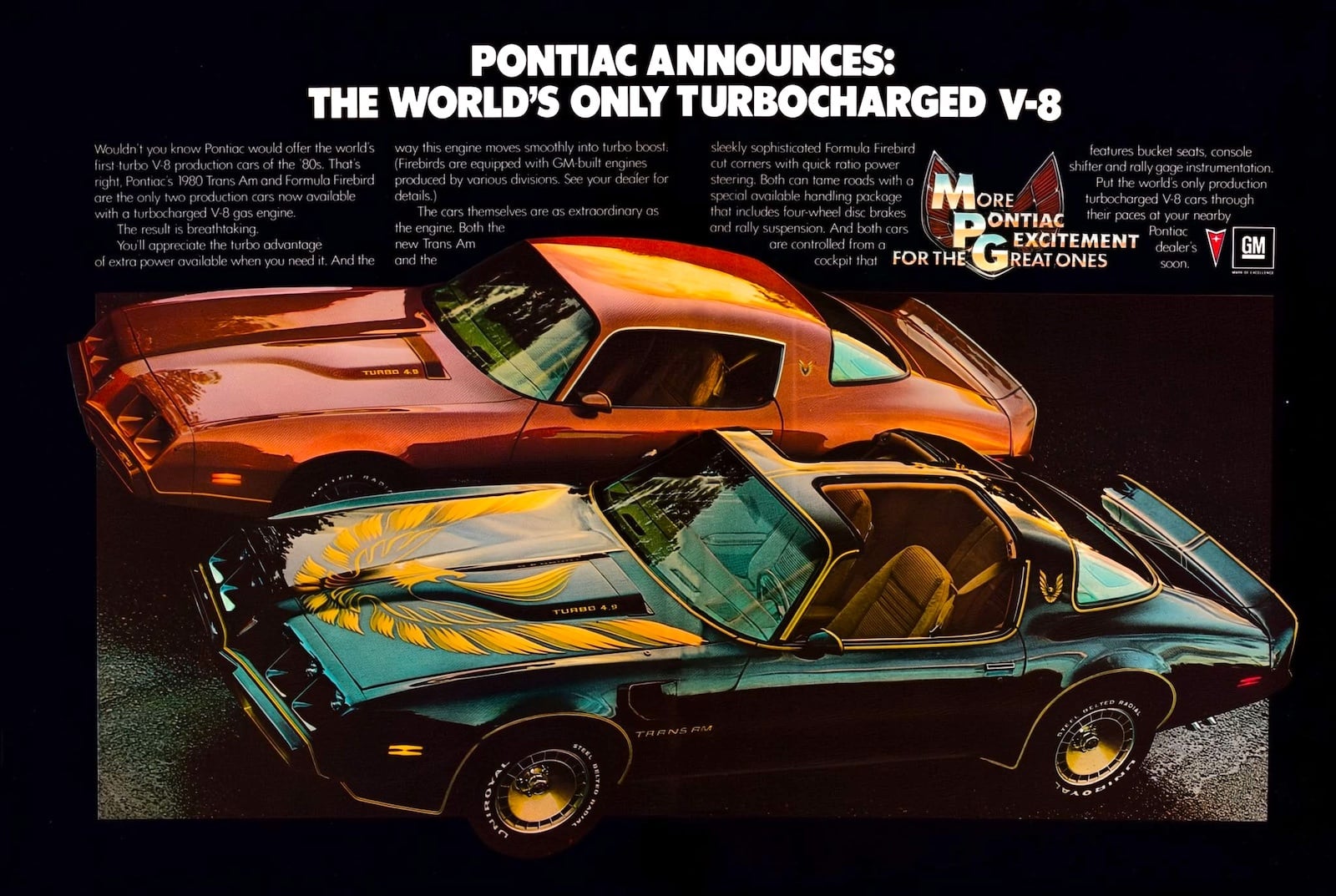
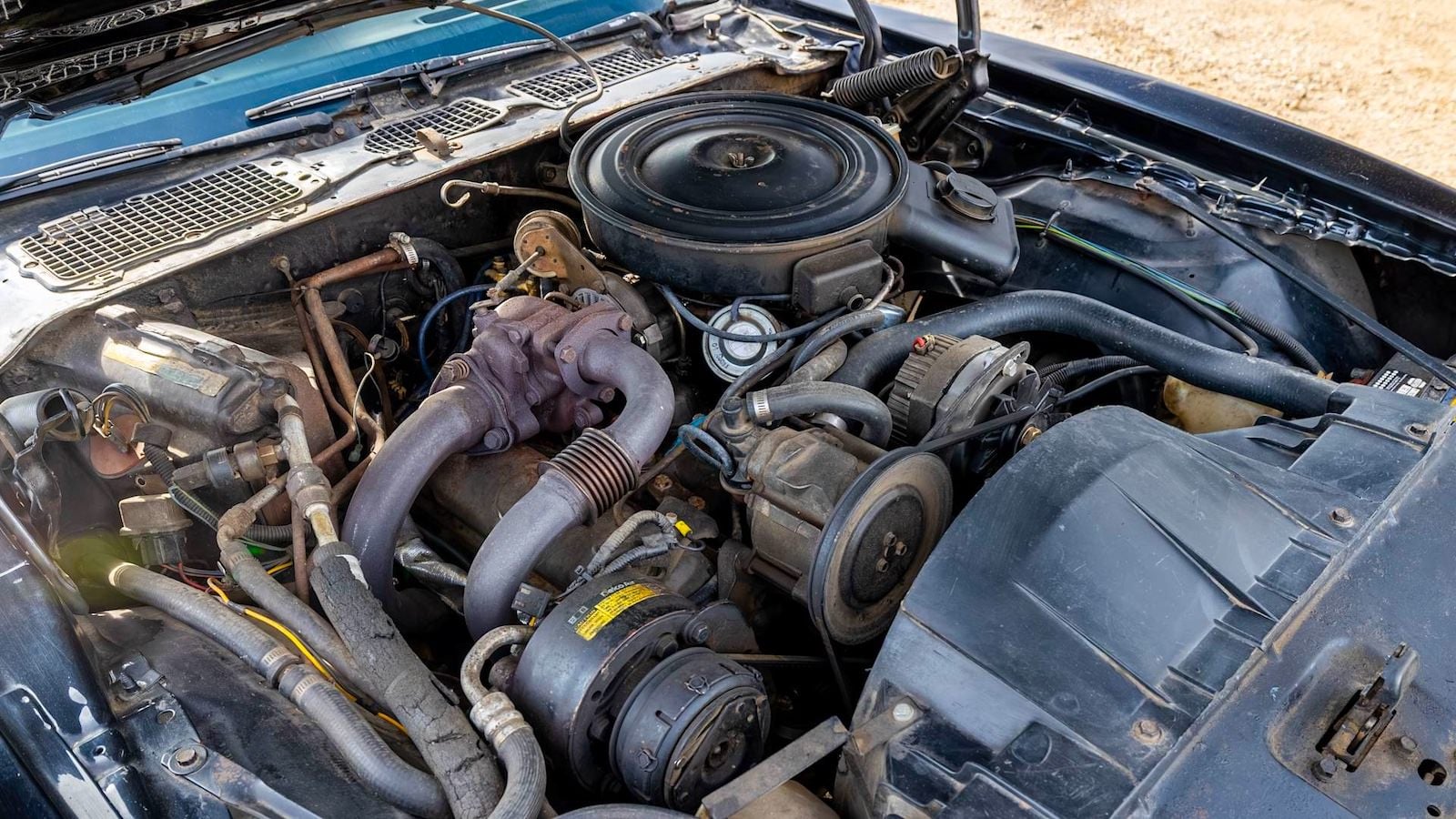
The LU8 4.9 liter engine used a single Garrett AiResearch TBO-305 draw-through turbocharger fed by a modified Rochester Quadrajet four-barrel carburetor, with 9 psi of boost. Confusingly, it was sometimes called the 301 and sometimes called the 4.9, both referencing the displacement of course, just in different units. Image provided by General Motors.
Pontiac had introduced the 301 for 1977 as a lightweight economy V8, it had a 4.0 inch bore and 3.0 inch stroke, and it actually displaced 302 cubic inches, and Pontiac advertised it as a 301 to avoid having people think it was using Ford’s already well-known 302. Thinner cylinder walls and a lighter crankshaft took 136 lbs out of the old Pontiac 350 design, and by 1980 the uprated W72 four-barrel version made 155 bhp.
Buick had put a turbocharged 231 cubic inch (3.8 liter) V6 into production for 1978, producing 165 bhp, and GM had had some prior turbocharging experience, with the Corvair Monza Spyder and Oldsmobile Jetfire.
Pontiac’s own turbo program began as a student project at the General Motors Institute in Flint, a low-emissions turbo conversion of a Firebird 350 that professor Jim Lyons presented to Pontiac’s chief engine engineer, Leo Hilke. Pontiac announced a turbocharged 301 at the end of 1978.
The Pontiac Turbo 4.9/301: Specifications
The LU8 4.9 liter engine used a single Garrett AiResearch TBO-305 draw-through turbocharger fed by a modified Rochester Quadrajet four-barrel carburetor, with 9 psi of boost. Confusingly, it was sometimes called the 301 and sometimes called the 4.9, both referencing the displacement of course, just in different units.
Compression fell to 7.6:1 so the engine could run on regular unleaded, a Delco electronic spark control unit with a knock sensor retarded the timing when detonation was detected, and the block, pistons and oiling system were all uprated over the standard 301.
Pontiac rated it at 210 bhp at 4,000 rpm and a healthier-sounding 345 lb ft at 2,000 rpm, both SAE net, against 155 bhp and 240 lb ft for the W72 four-barrel 301 and 220 bhp for the last of the 400s.
Pontiac rated the engine at 210 bhp at 4,000 rpm and a healthier-sounding 345 lb ft at 2,000 rpm, both SAE net, against 155 bhp and 240 lb ft for the W72 four-barrel 301 and 220 bhp for the last of the 400s.
The turbo option cost $350 on a Trans Am and $530 on a Formula, it only came with the THM350 3-speed automatic, a 3.08:1 axle, and air conditioning, and it was not certified for sale in California due to that state’s stricter rules.
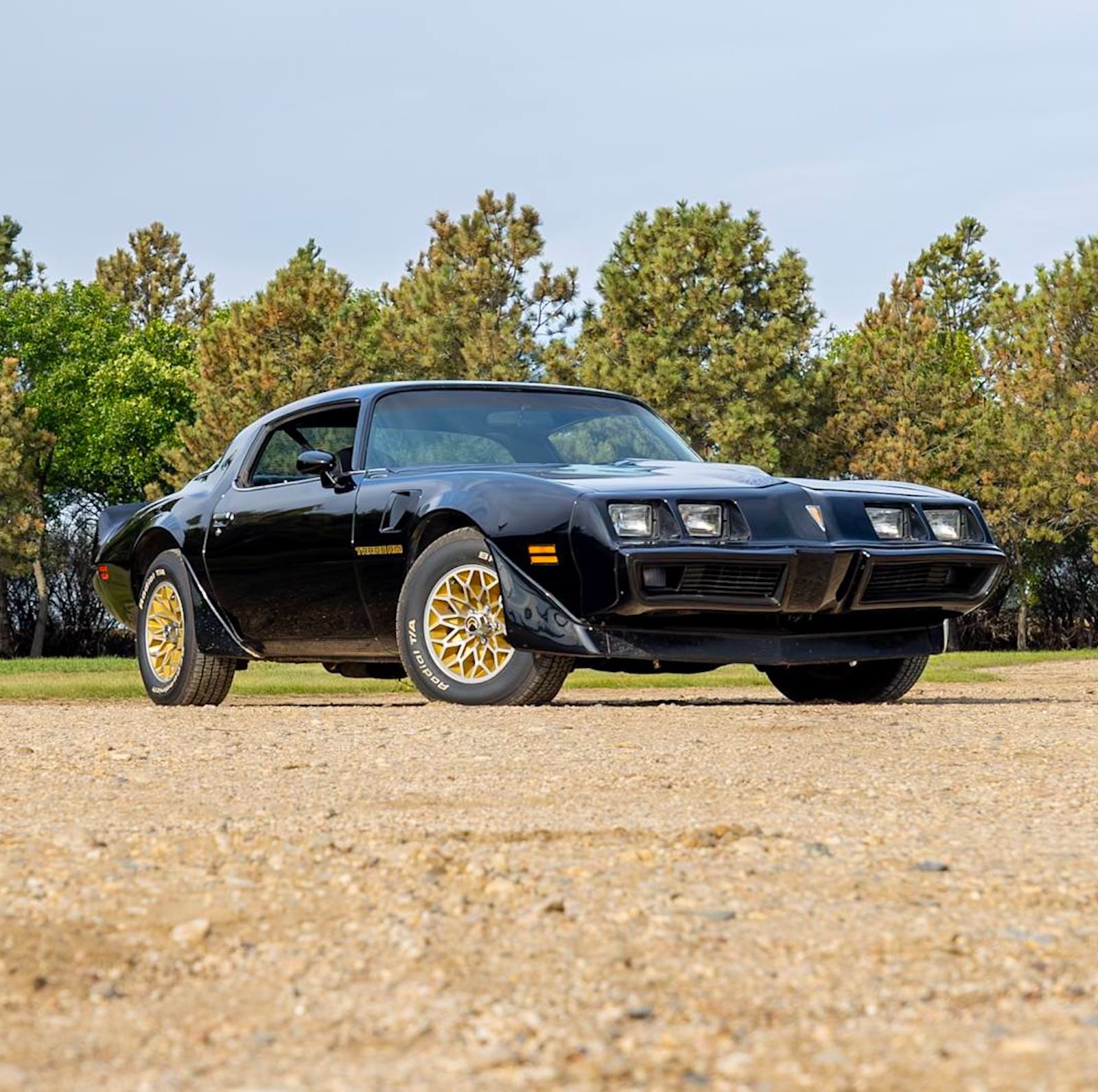
An off-center hood bulge cleared the turbocharger housing, with three boost lights set into its trailing edge that lit in sequence as pressure rose – they were standard on Pace Cars and an option, UR4, on other turbo cars from early-1980. No 1980 Firebird of any kind could be ordered with a manual gearbox, and the speedometer now stopped at 85 mph, even though the car could go plenty faster.
Performance + The Competition
Period tests of the turbocharged Trans Am produced surprisingly inconsistent results, the best recorded 0 to 60 mph in 8.0 seconds, quarter miles in the mid-16s and a top speed of 116 mph, while others saw 9.0 seconds to 60 mph and 17-second quarters, with times varying by as much as a second from car to car and reports of detonation under hard acceleration despite the knock sensor.
A 1979 W72 400 with the 4-speed manual had run the quarter in the low 15s, so on the road the turbo car gave up more than its 10 bhp rating deficit suggested, though as many have pointed out, it may have simply been down to the mandatory slush box on the forced-induction car.
Chevrolet’s competing 1980 Camaro Z28 was powered by the 350 cubic inch (5.7 liter) small block V8 rated at 190 bhp with a 4-speed manual as standard, and a manually shifted Z28 could outrun the automatic Turbo Trans Am despite the Pontiac’s 20 bhp advantage. Again, this was almost certainly a transmission issue rather than an engine-power issue.
Ford’s fastest 1980 Mustang was the Cobra with a 2.3 liter turbocharged four rated at 132 bhp, the Mustang’s 255 cubic inch (4.2 liter) V8 was good for just 119 bhp. Outside California, a Corvette offered 190 or 230 bhp, and Datsun’s 280ZX Turbo, new for 1981, was rated at 180 bhp.
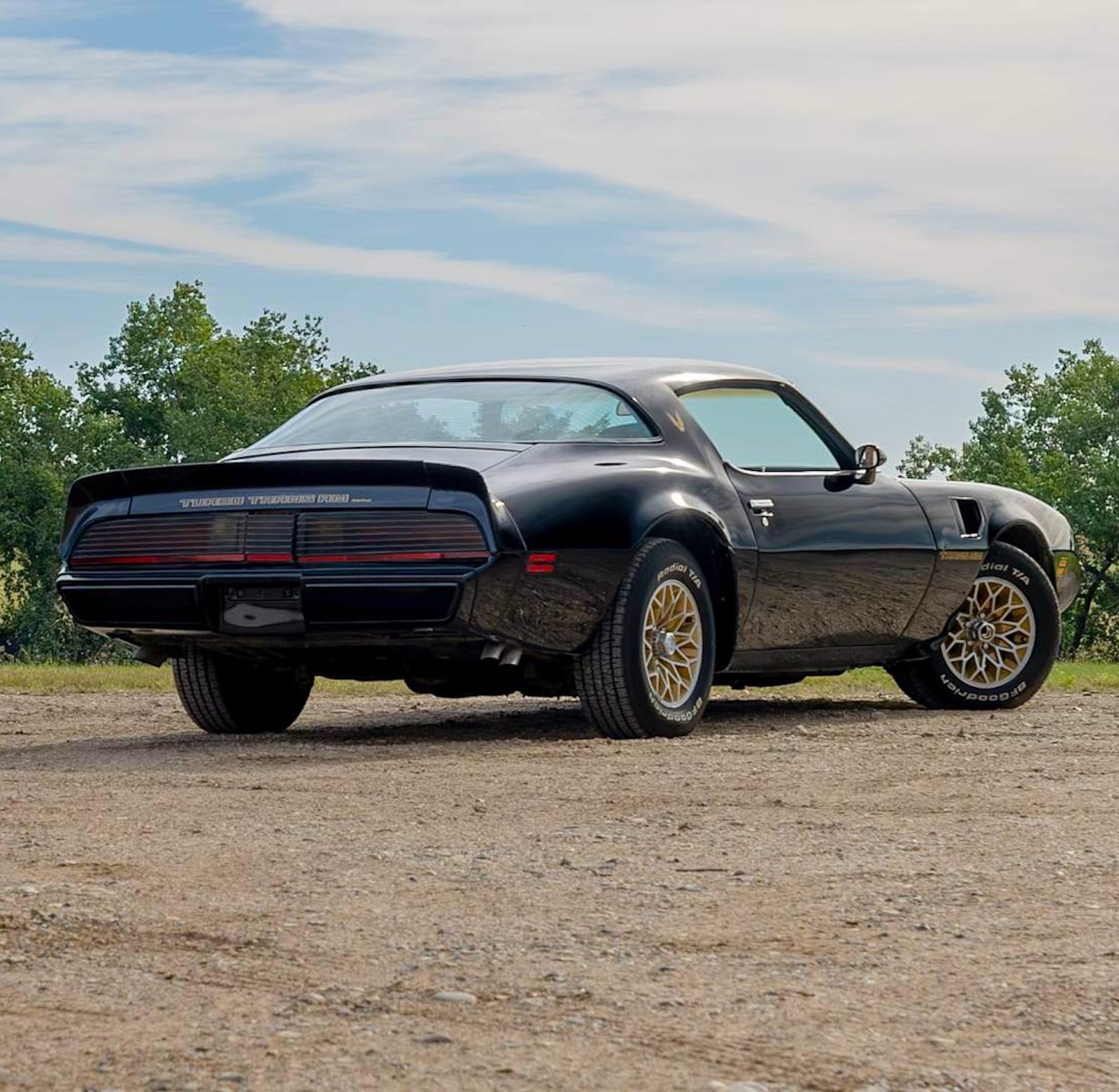
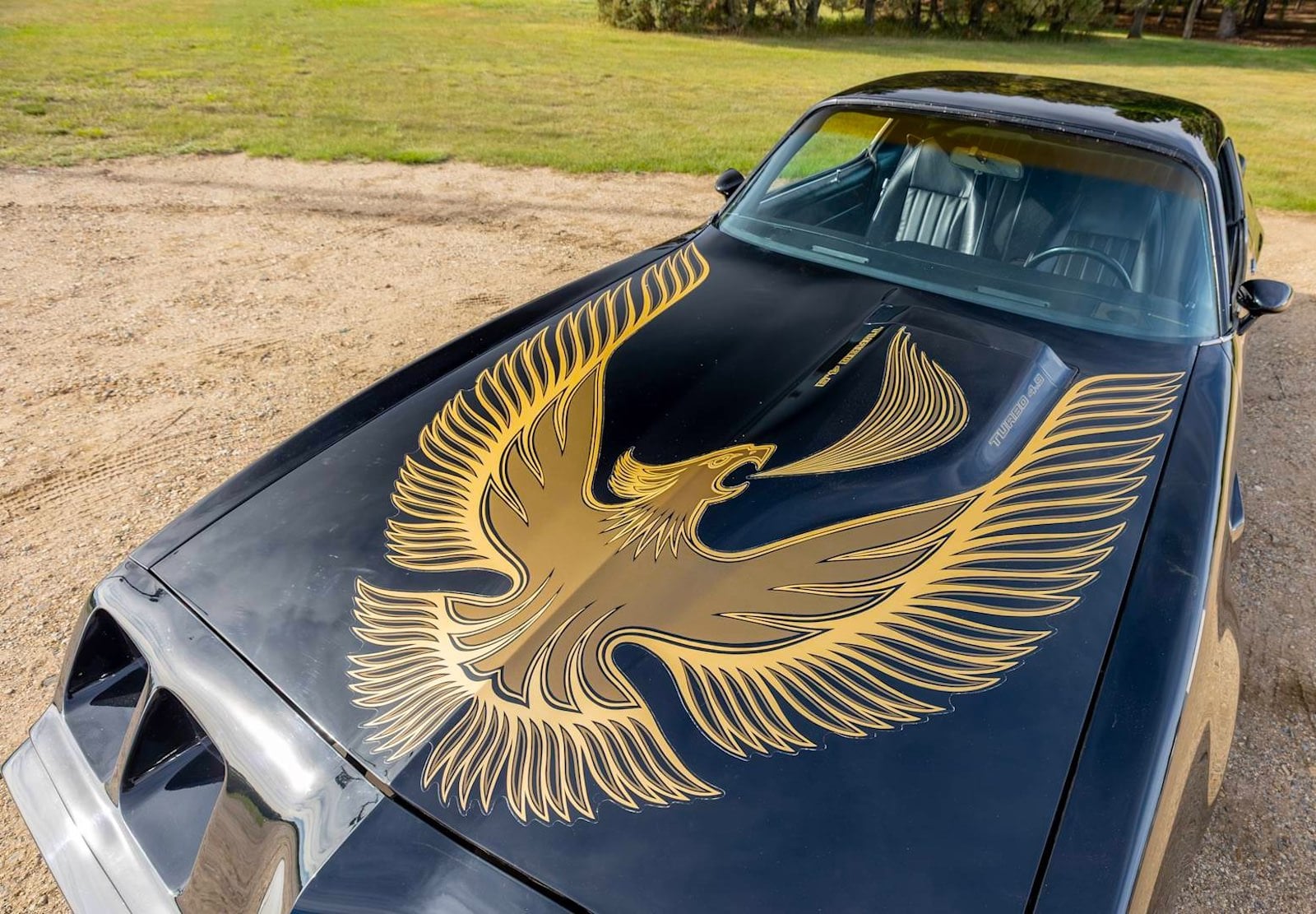
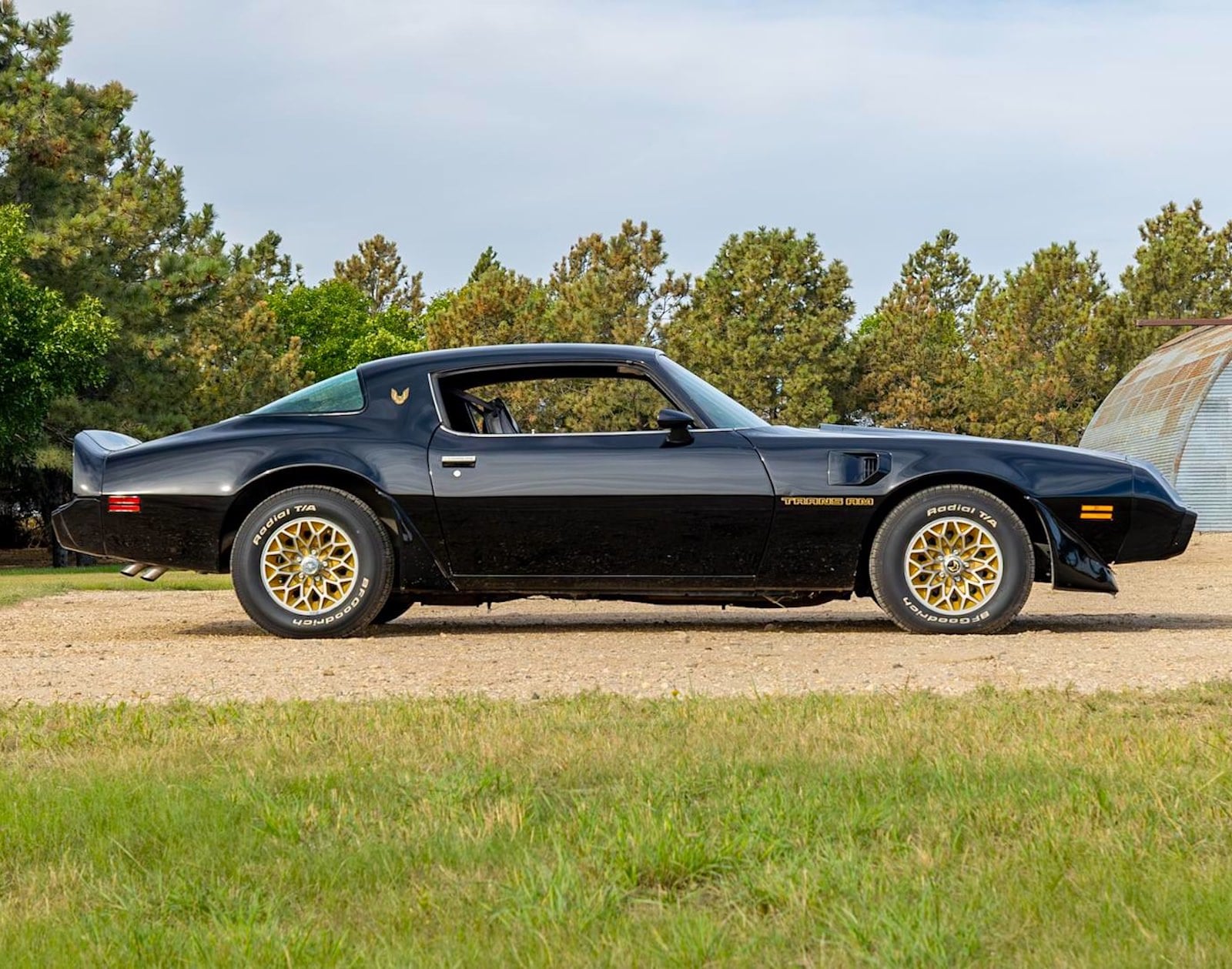
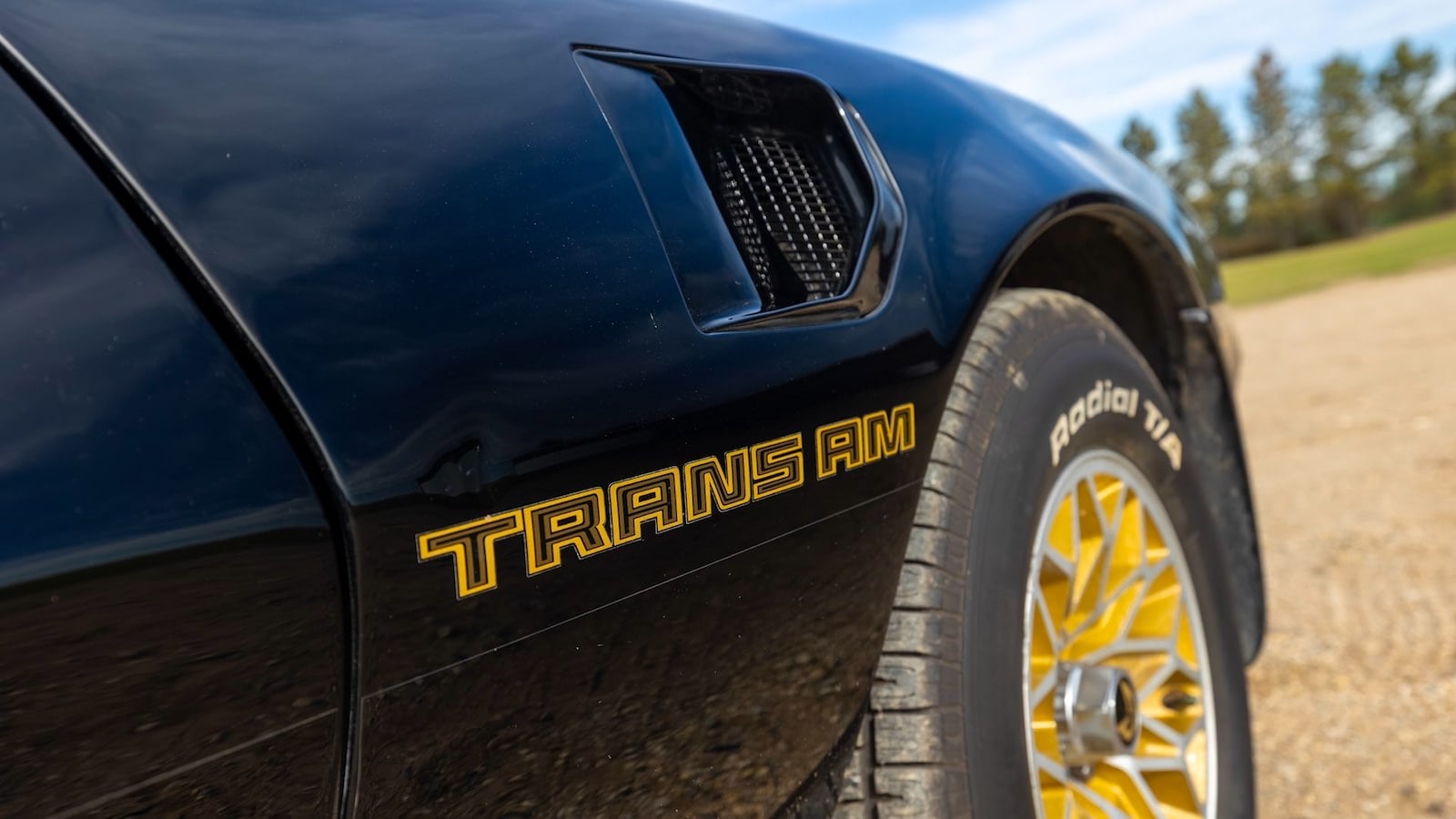
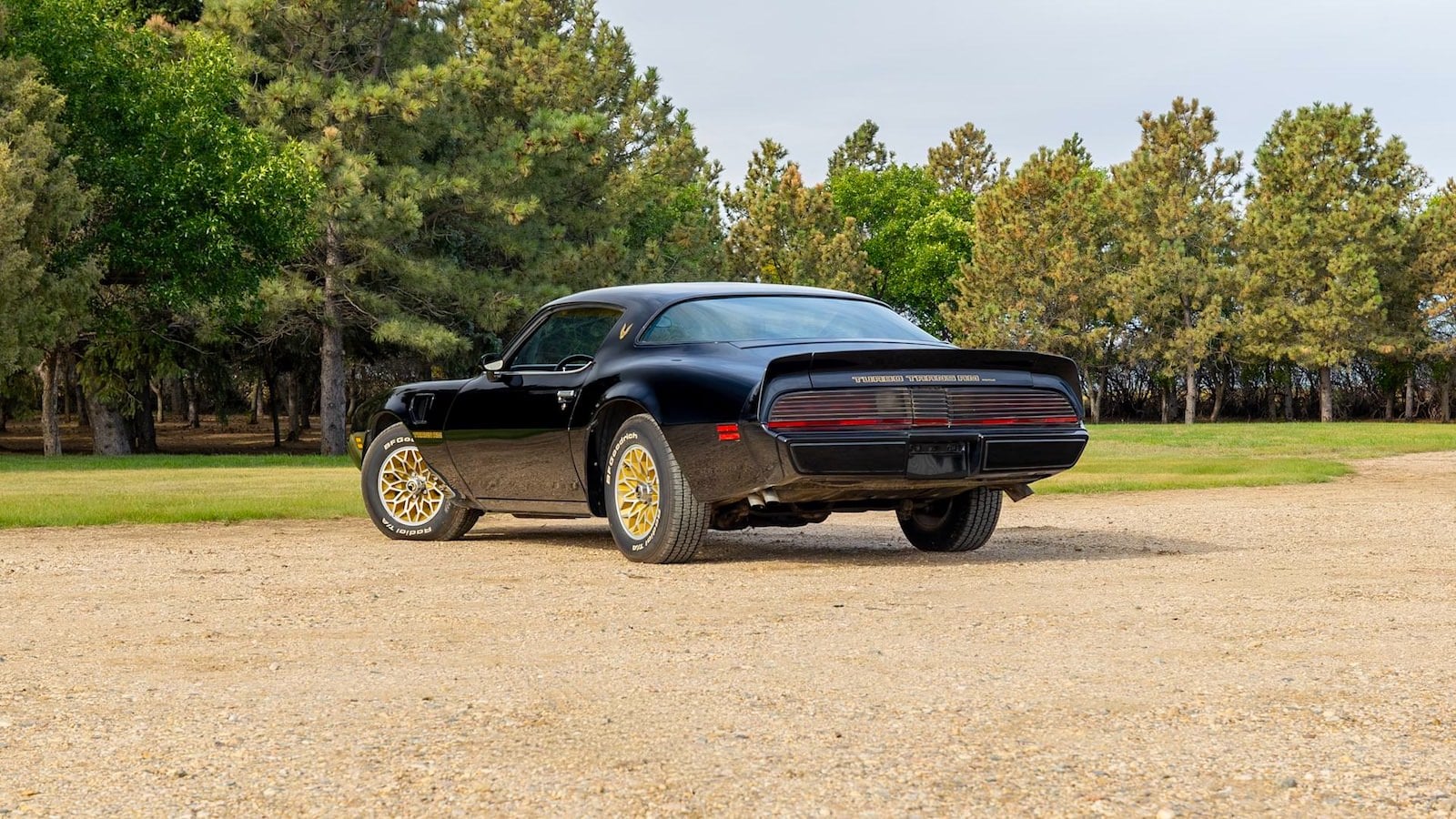
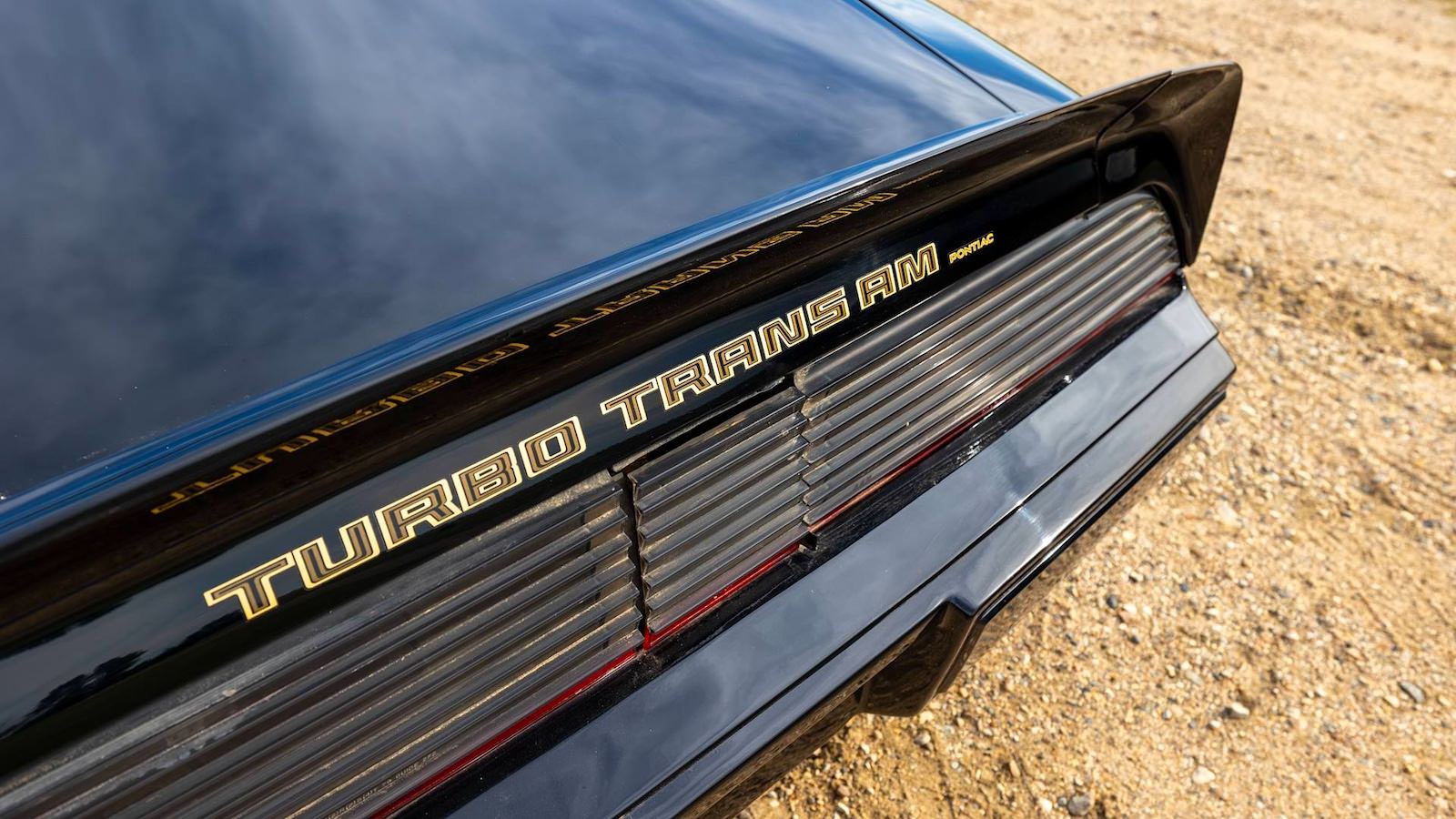
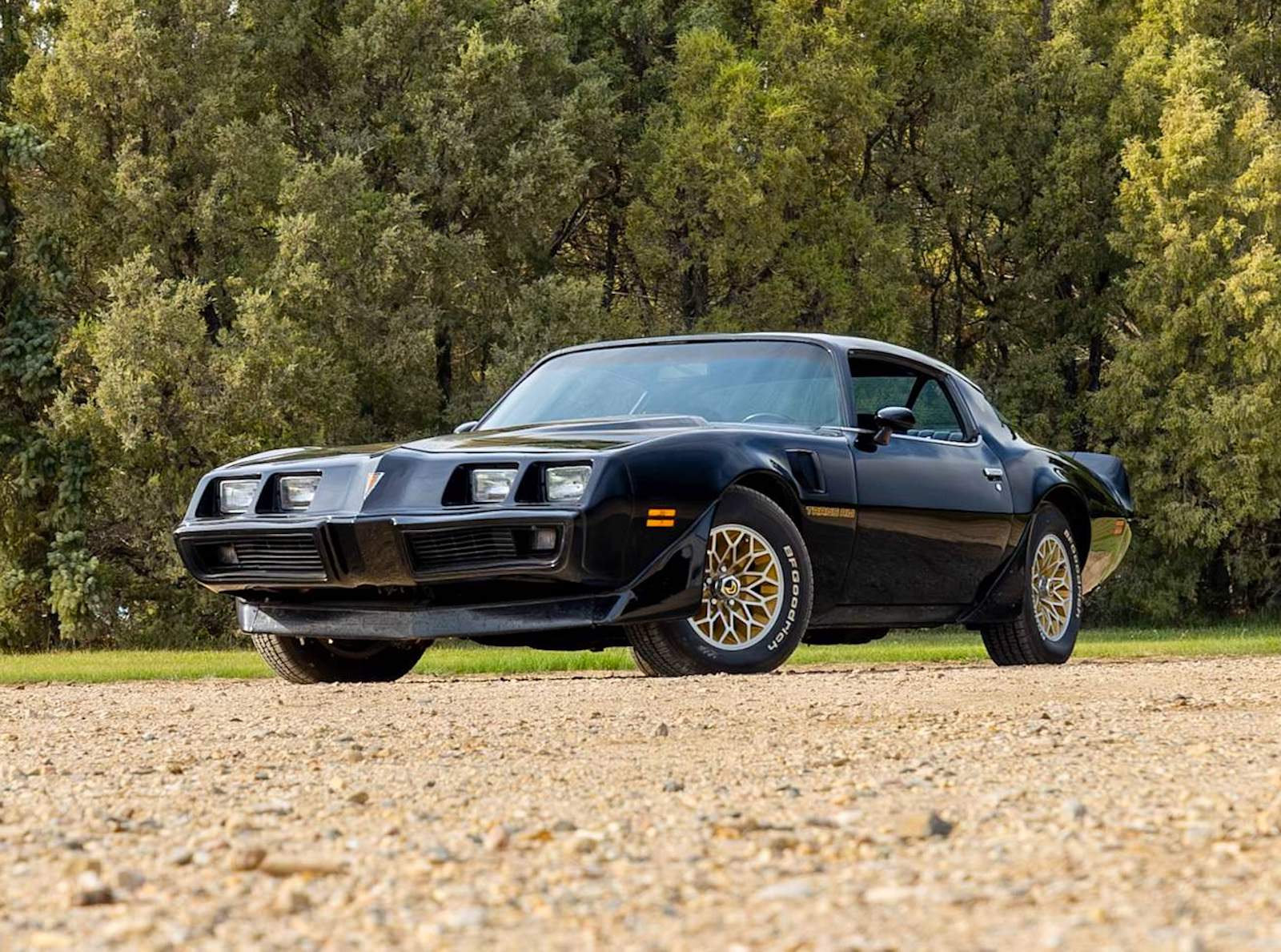
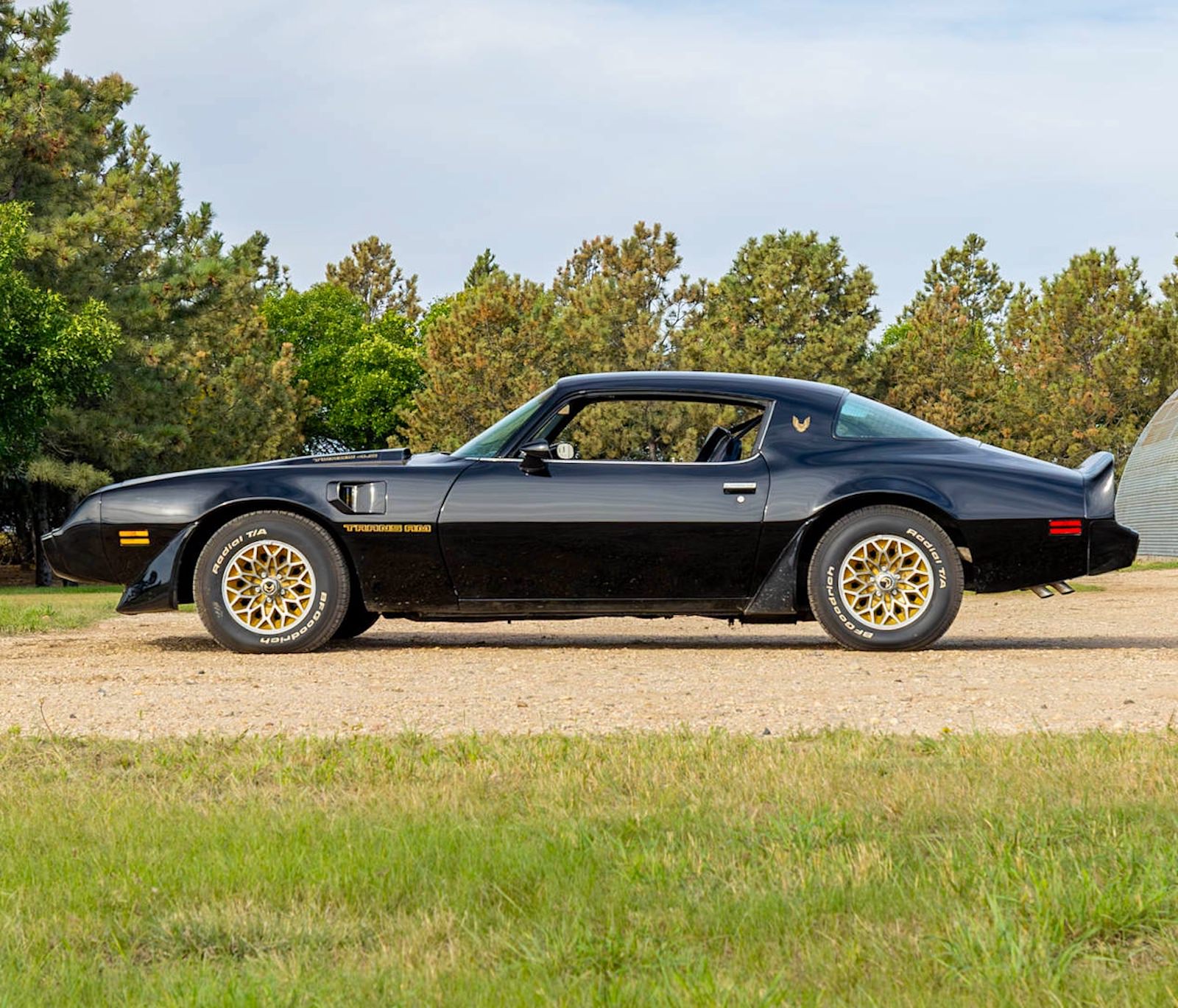
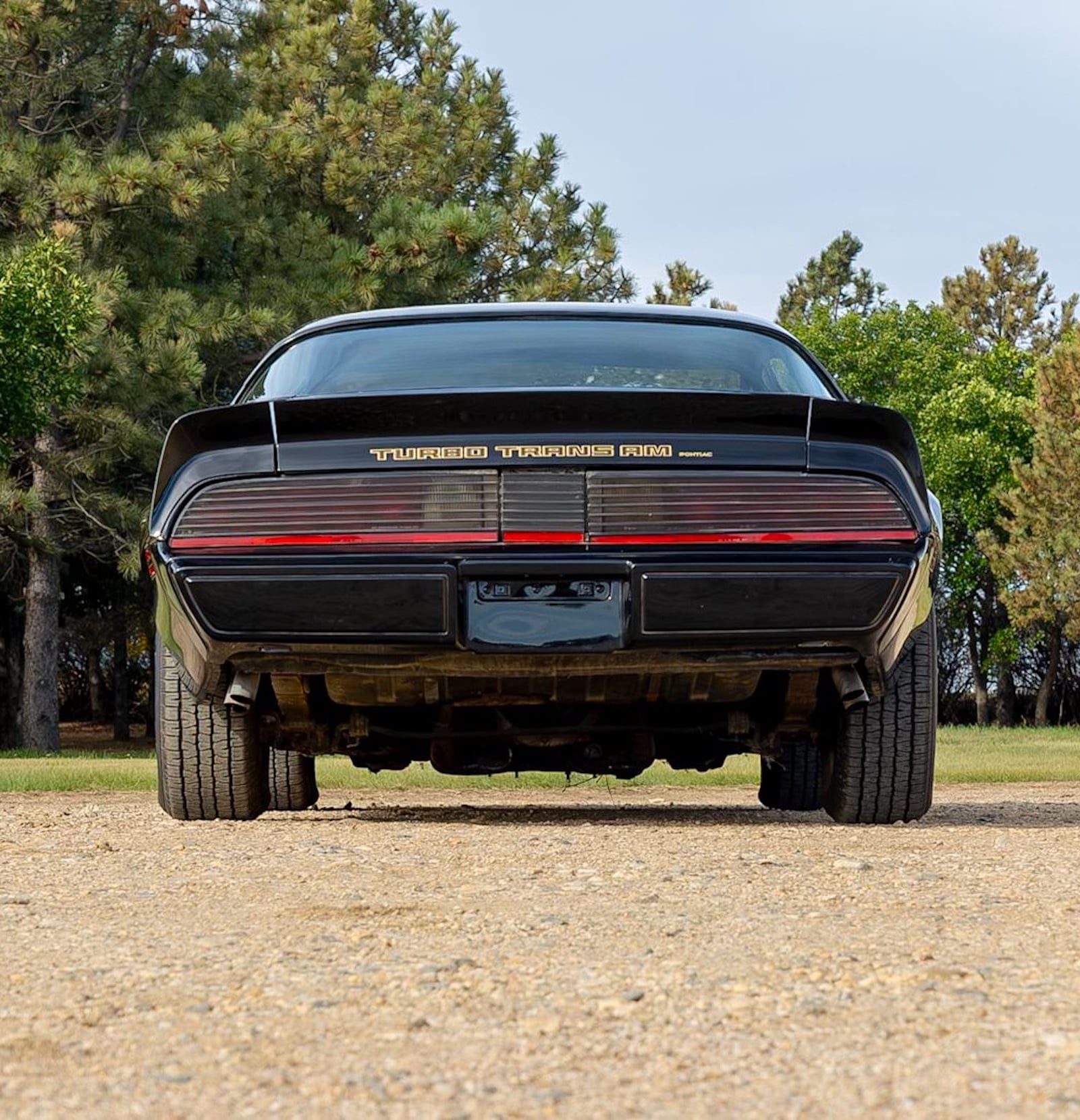
This is an original 1980 Pontiac Turbo Trans Am, it’s finished in Starlight Black with gold decals, and the signature hood phoenix graphic (screaming chicken), and it rides on gold Snowflake wheels.
The Turbo Trans Am: End Of The Line
The turbo’s short two-year production life had little to do with the car and everything to do with the big wigs at GM. The 1980 and 1981 model years were the last for the second-generation body, and Pontiac had intended to carry the engine into the third-generation Firebird – the 1982 to 1984 cars were designed with the same off-center hood bulge, and early promotional photographs of the new car still had Turbo T/A decals and badging.
Before the new car reached production, GM decided to standardize engines across its divisions, and the 301 line was closed to free tooling and capacity for the Iron Duke four-cylinder, which shared some of it and was needed in far larger numbers. Pontiac built its last V8 in March of 1981 and that was that.
Firebird sales had fallen from more than 210,000 in 1979 to 107,340 in 1980 as the economy soured and fuel worries returned, road-test results were inconsistent, the engine was never certified for California in 1980, and it began the 1981 model year on hold status.
The 1982 Trans Am arrived with a Chevrolet-built 5.0 liter V8 rated at 150 bhp, or 165 bhp with throttle-body injection, and no Pontiac-built V8 has been fitted to a car since. If the Turbo Trans Am had been offered with a 4-speed manual (or a 5-speed), and the turbocharging system had been refined a little, the model may very well have become an icon of the 1980s.
The 1980 Pontiac Turbo Trans Am Shown Here
This is an original 1980 Pontiac Turbo Trans Am, it’s finished in Starlight Black with gold decals, and the signature hood phoenix graphic (screaming chicken), and it rides on gold Snowflake wheels. Under the hood you’ll find a matching-numbers turbocharged 4.9 liter V8, paired with a matching-numbers 3-speed automatic transmission and dual exhaust.
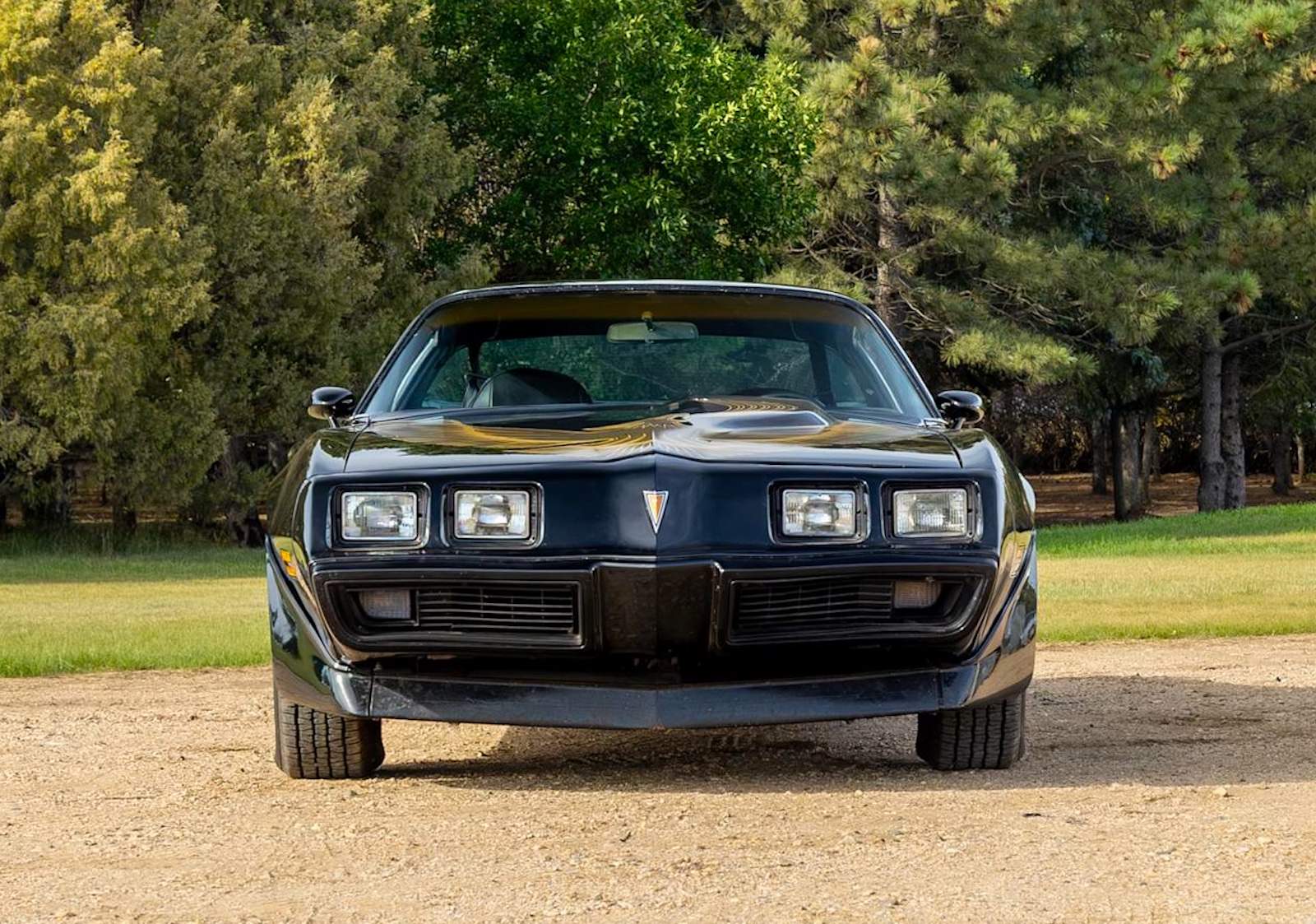
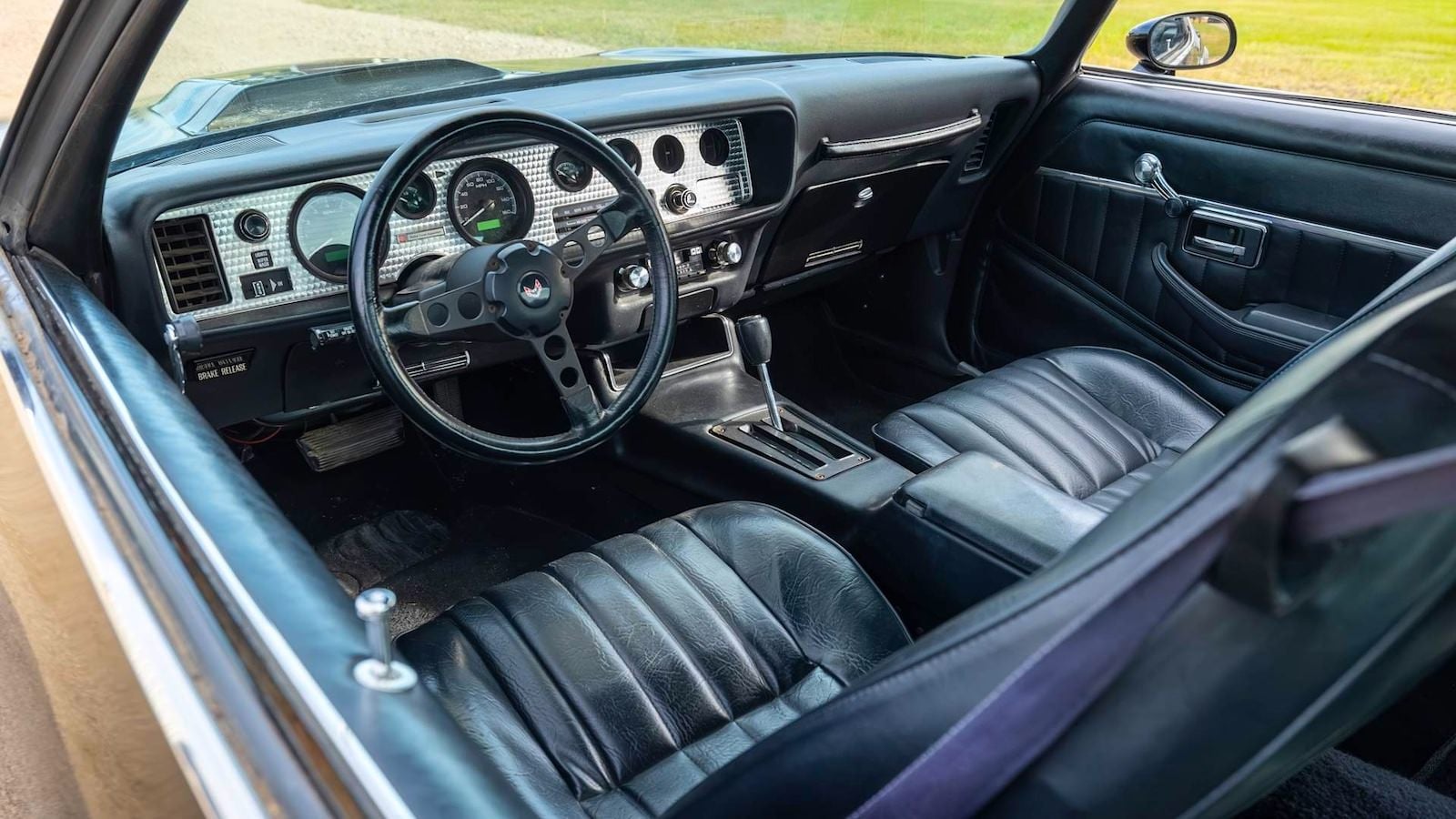
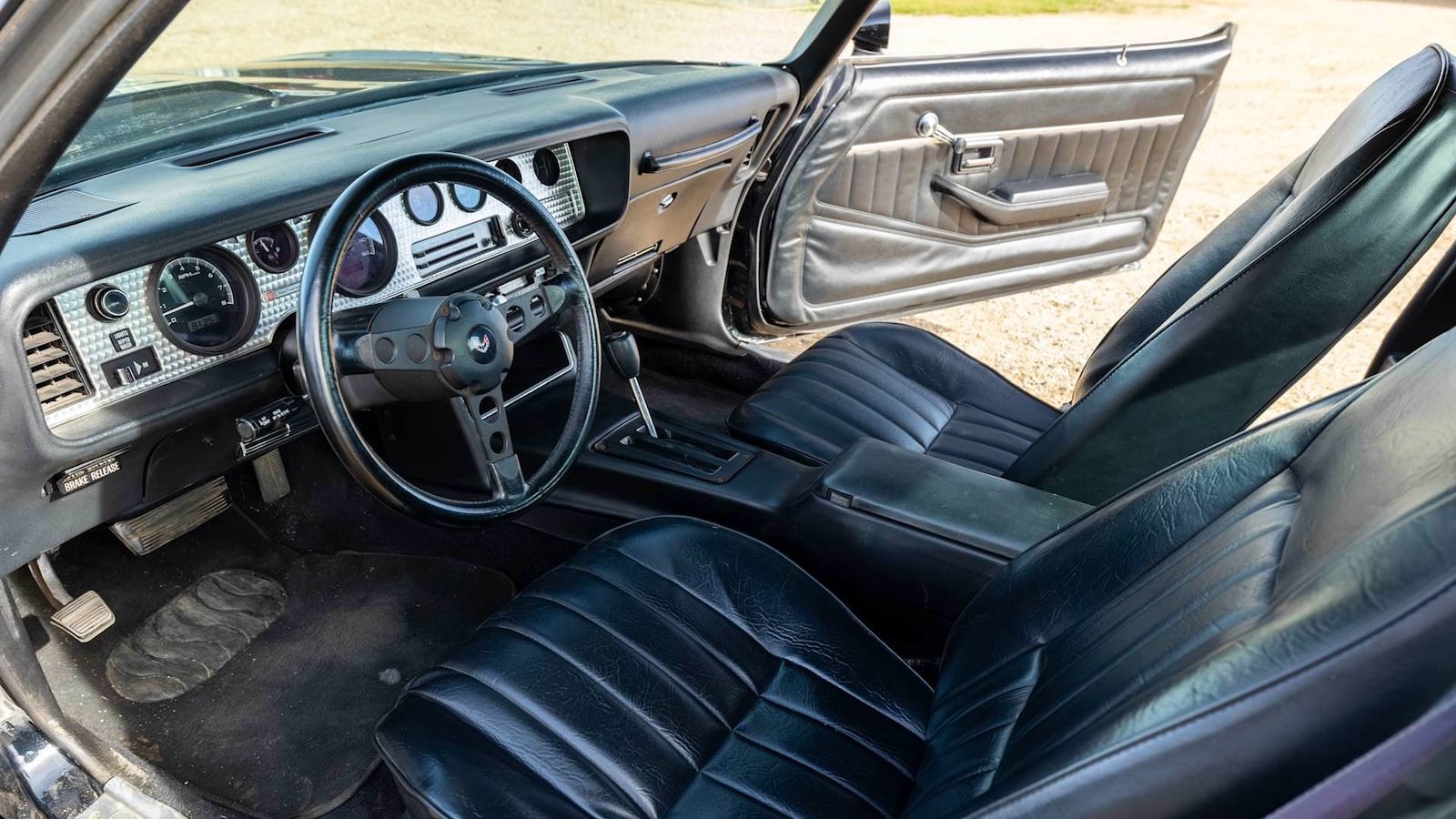
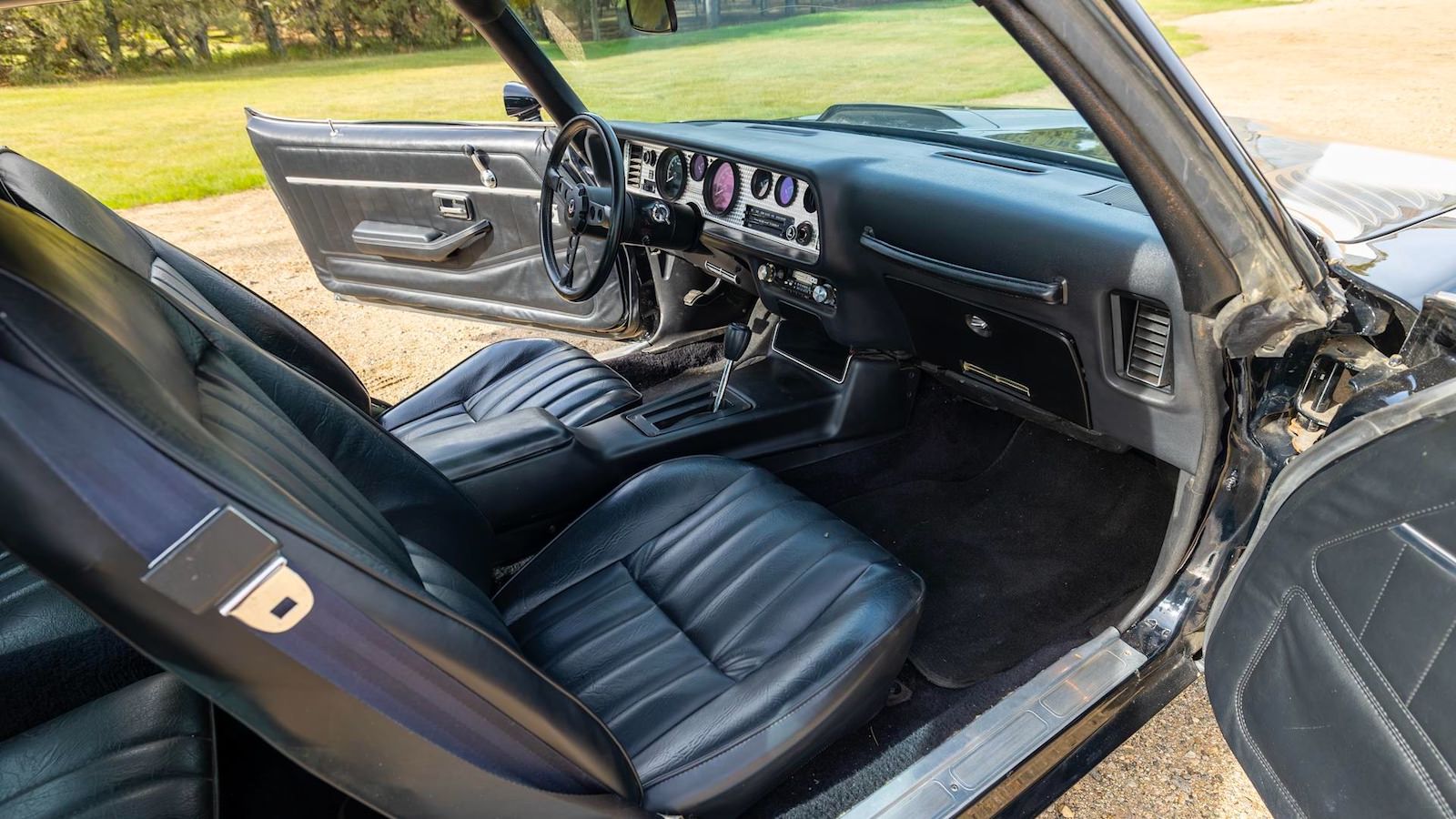
The car is equipped with power steering, power brakes, and air conditioning. Inside, it has a black cabin with front bucket seats, a center console with storage, and the familiar engine-turned dashboard treatment. Dakota Digital gauges have been fitted in place of the original instrumentation.
The car is equipped with power steering, power brakes, and air conditioning. Inside, it has a black cabin with front bucket seats, a center console with storage, and the familiar engine-turned dashboard treatment. Dakota Digital gauges have been fitted in place of the original instrumentation.
The sale also includes the owner’s manual and a fitted car cover. It’s now due to roll across the auction block with Mecum in late-October and you can visit the listing here if you’d like to read more about it or register to bid.
Images courtesy of Mecum

Articles that Ben Branch has written have been covered on CNN, Popular Mechanics, Smithsonian Magazine, Road & Track Magazine, the official Pinterest blog, the official eBay Motors blog, BuzzFeed, Autoweek Magazine, Wired Magazine, Autoblog, Gear Patrol, Jalopnik, The Verge, and many more.
Silodrome was founded by Ben back in 2010, in the years since the site has grown to become a world leader in the alternative and vintage motoring sector, with well over a million monthly readers from around the world and many hundreds of thousands of followers on social media.