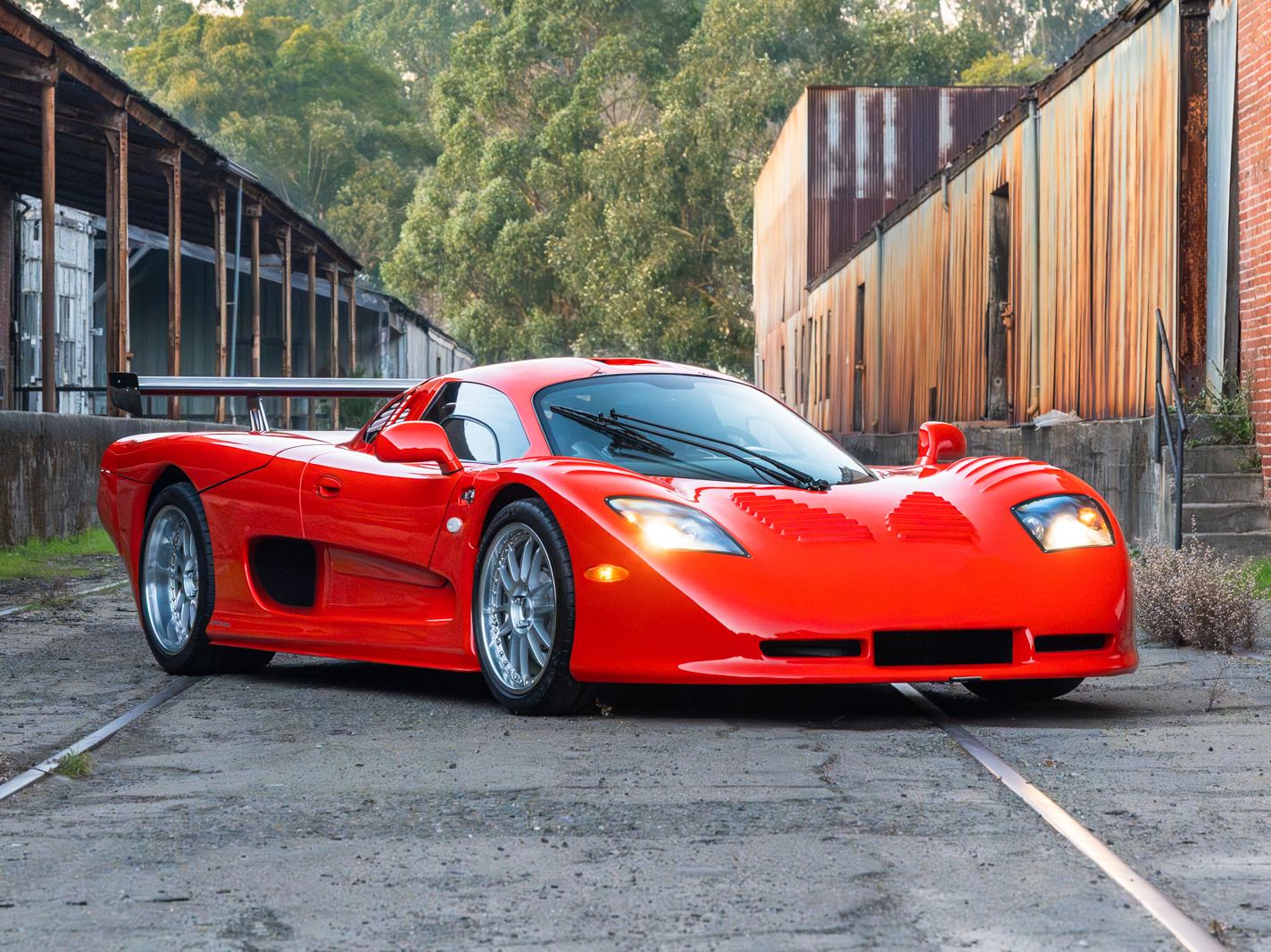
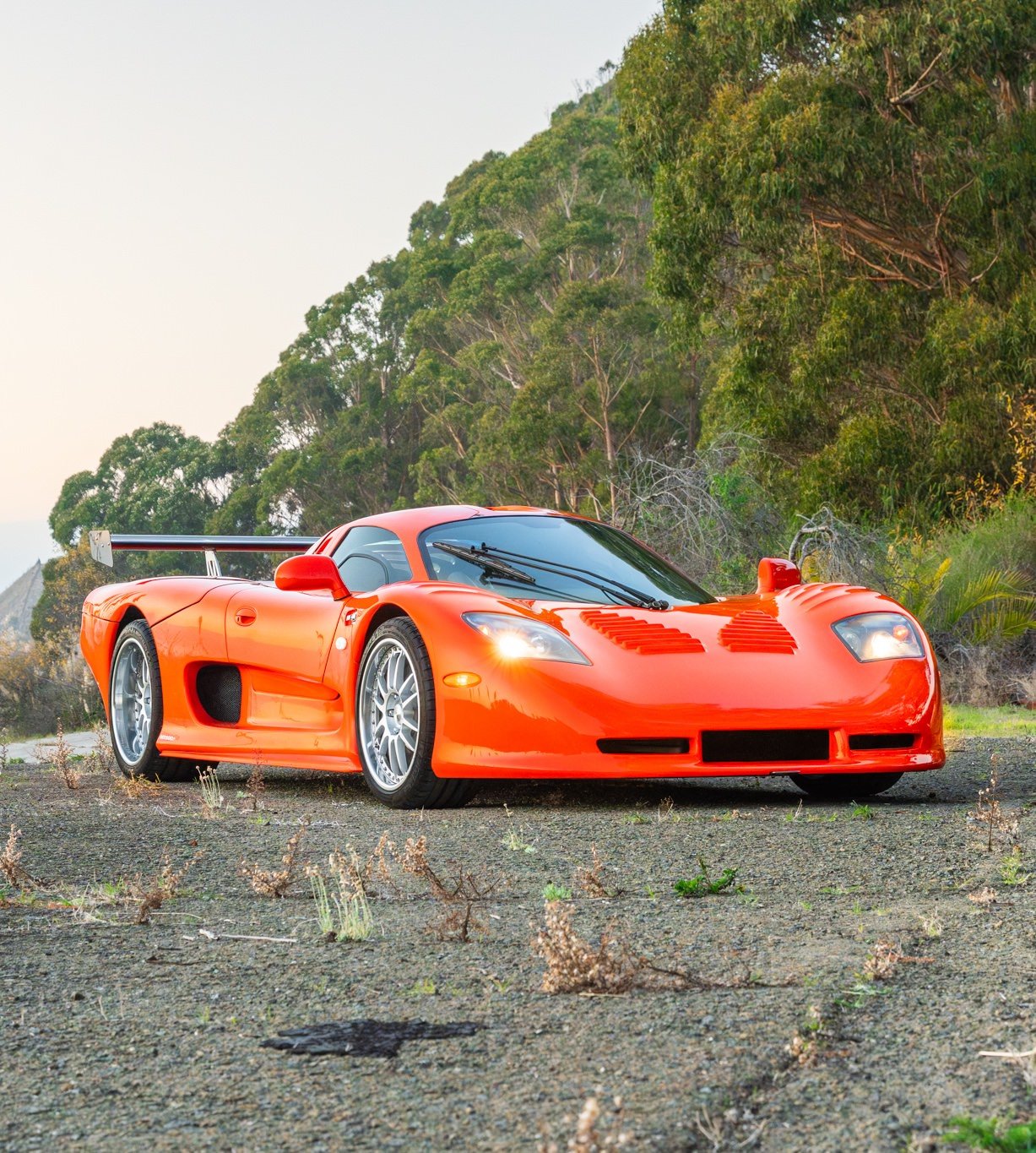
This is an original Mosler MT900S, an American-built supercar that’s now been largely forgotten by most. It was designed by Rod Trenne, the man behind the C5 Corvette, and some have called it the car that should have been the C5.
Interestingly, the first street-legal MT900S was delivered to legendary American filmmaker George Lucas – the creator of Star Wars and Indiana Jones. The MT900S was among the fastest-accelerating production cars in the world when it debuted, and it generated a huge amount of interest at the time.
Fast Facts: The Mosler MT900S
- The Mosler MT900S was a low-volume American supercar conceived in the late 1990s by financier Warren Mosler and designed by Rod Trenne. It aimed to outperform established European exotics through lightweight construction, advanced materials, and engineering-driven priorities rather than brand image or luxury positioning.
- Built around a mid-engine layout, the MT900 used a carbon fiber and honeycomb aluminum tub with steel subframes and an LS-series V8. Early versions produced 350 bhp, later rising to 405+ bhp, delivering excellent performance thanks to car’s low mass, rigid chassis, and well-tuned suspension.
- The MT900S version evolved the original concept into a more usable road car, adding some modest interior refinements while keeping its uncompromising character. It remained closer to a street-legal race car than a grand tourer, with minimal comfort concessions made intentionally in the interests of weight savings.
- Racing variants cemented the platform’s credibility, including the MT900R, which won its class at the 2003 Daytona 24 Hours. Fewer than 100 examples were built across all versions, and today surviving MT900s are rare, often overlooked, and frequently mistaken for European exotics.
History Speedrun: The Mosler MT900S
Development of the Mosler MT900 began in the late 1990s, a moment in time when the American performance car landscape was divided between small sports cars like the Miata, traditional V8 muscle cars, and a much smaller number of European-style, mid-engined exotics.
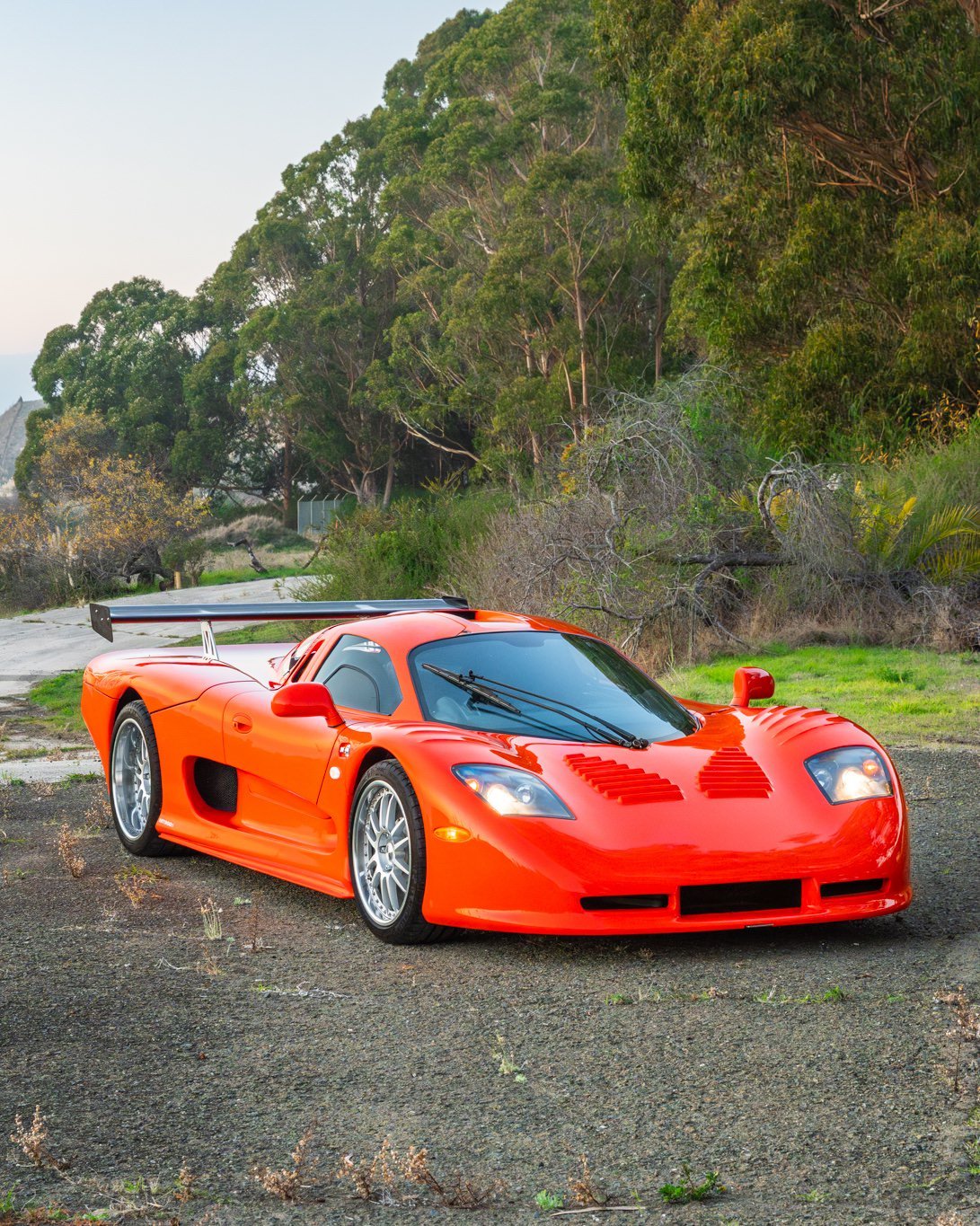
 This is an original Mosler MT900S, an American-built supercar that has now been largely forgotten. It was designed by Rod Trenne, the man behind the C5 Corvette, and some have called it the car that should have been the C5.
Warren Mosler, a successful financier with a deep interest in automotive engineering, racing, and state-of-the-art materials, believed there was room for something different in the American market. His idea wasn’t to outgun Ferrari or Porsche on brand cachet, but to beat them with engineering finesse and the ability of small automakers to think well outside the box. That fundamental philosophy shaped every part of the MT900 program.
Mosler Automotive was founded in Florida in 1985 with a clear goal in mind – to build an ultra-lightweight, structurally advanced road car that borrowed heavily from racing practice while still remaining street legal in all 50 states.
Development of the MT900 drew on earlier Mosler projects, including the Consulier GTP, but the new car was a clean slate effort. The configuration was a classic mid-engine arrangement, optimized for balance and front-rear weight distribution. The name included an M for Mosler, a T for Rod Trenne the designer, and 900 for the proposed curb weight in kilograms.
Mosler MT900 Specifications
Power came from a General Motors LS-series small block V8, chosen for its compact dimensions, toughness, ease of maintenance, and for its ability to deliver high levels of horsepower without complex ancillary systems. In early road-going form, the MT900 produced approximately 350 bhp and was paired with a Porsche-sourced transaxle – a manual gearbox derived from contemporary 911 hardware that could more than handle the torque.
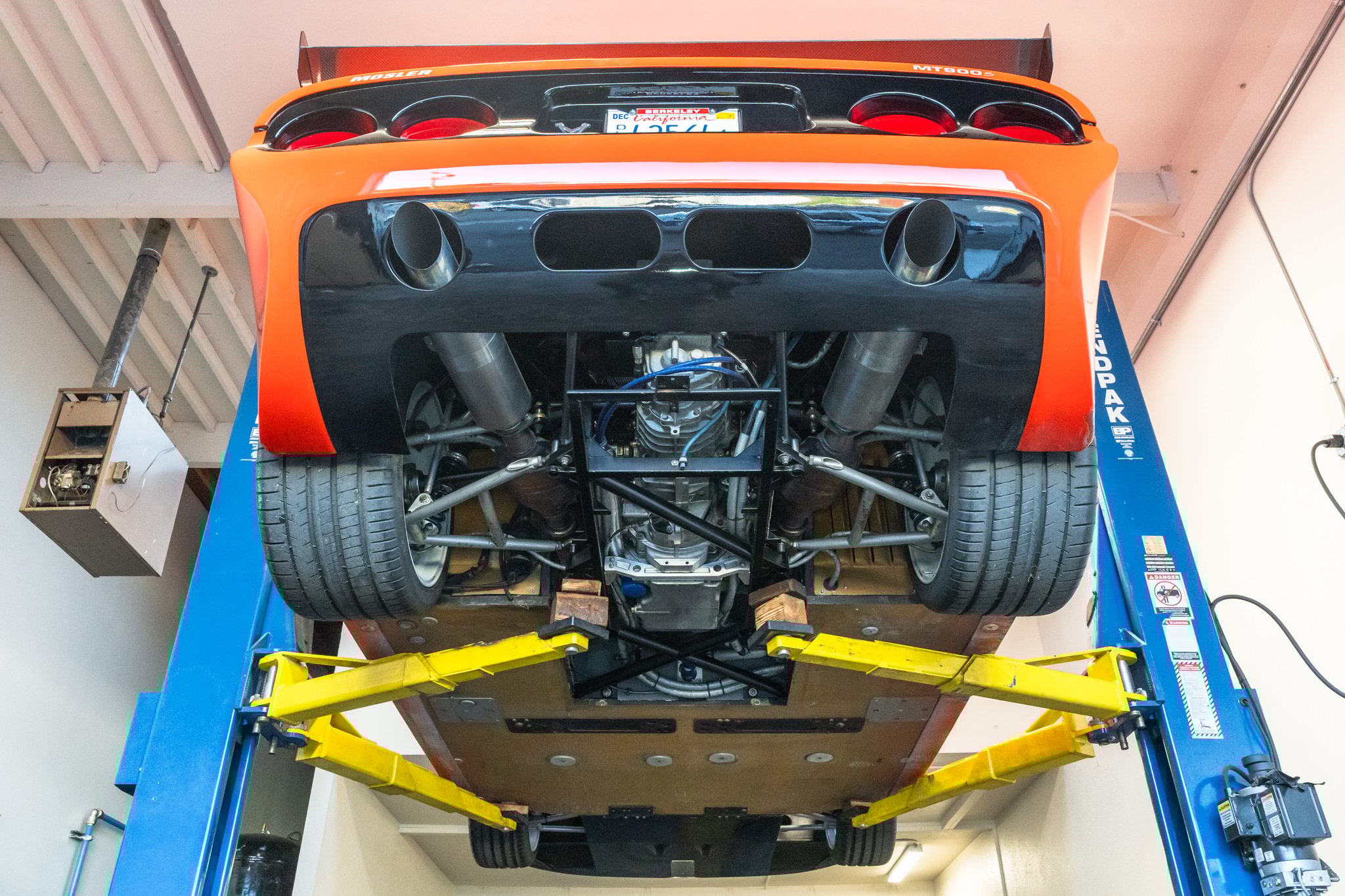
From the outset, the MT900 was conceived around an unconventional structure for an American manufacturer of its size, but then again Mosler was already well known for this. Rather than a steel monocoque or spaceframe, the car used a honeycombed aluminum and carbon fiber tub, paired with chro-moly steel subframes at the front and rear.
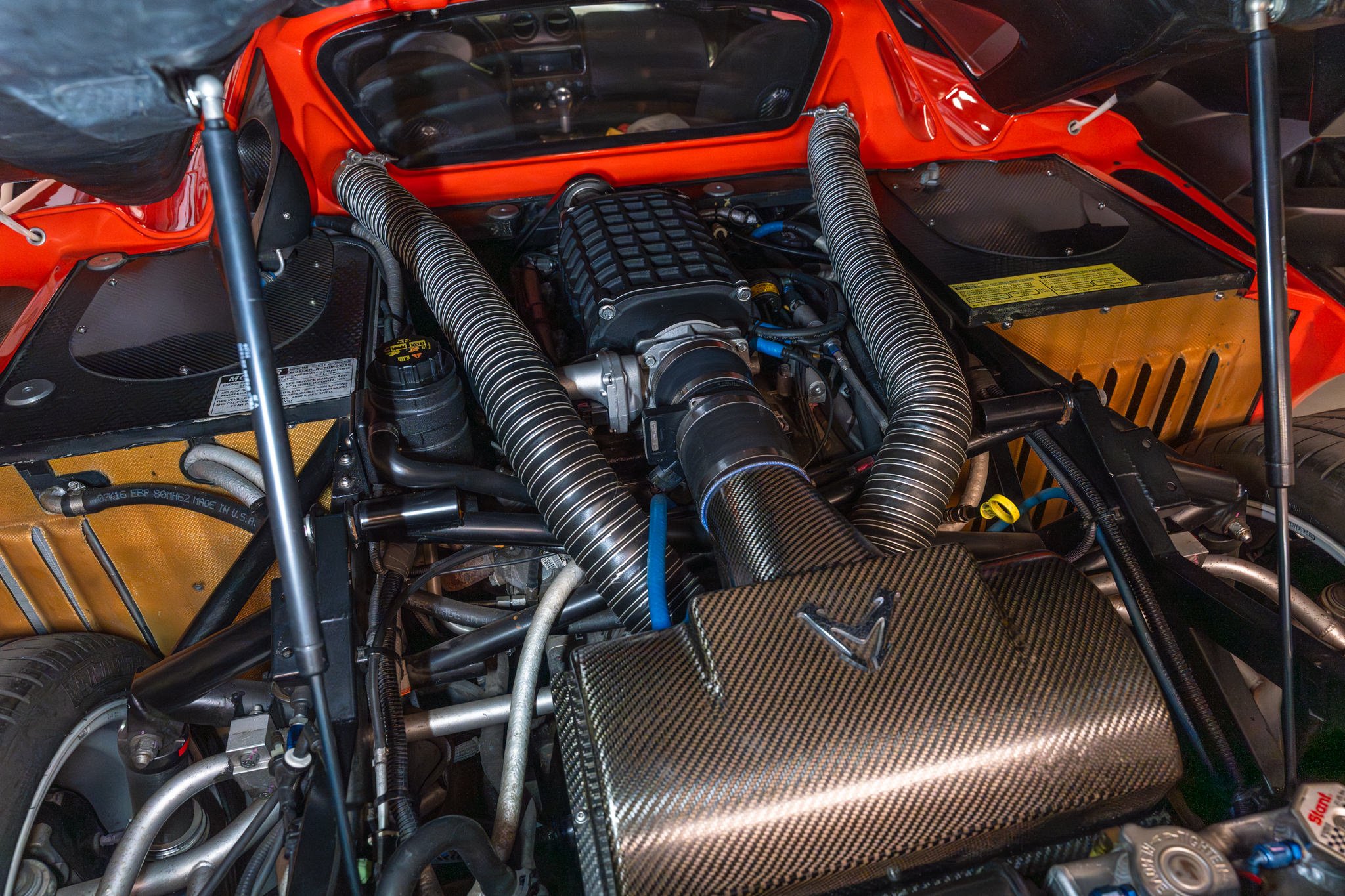
Power came from a General Motors LS-series small block V8, chosen for its compact size, toughness, ease of maintenance, and for its ability to deliver high levels of horsepower without complex ancillary systems.
The target curb weight was 900 kgs (1,984 lbs) as noted above, but it eventually landed at a more realistic 1,180 kgs (2,600 lbs), a figure that would have been ambitious even for a European supercar maker with significantly more resources at their disposal.
When the MT900 reached journalists, reactions were polarized but rarely indifferent. Contemporary road testers wrote about the car’s immediacy, the steering that felt unfiltered and responded instantly, and performance numbers that stood up well against far more expensive rivals.
0 to 60 mph times of 3.5 seconds were recorded, with the quarter mile dispatched in roughly 12 seconds at nearly 120 mph. More telling than straight-line pace, however, was braking and cornering. Thanks to its low mass, stiff chassis, and dialed in suspension, the MT900 delivered exceptional lateral grip that highlighted the advantages of its engineering-first design approach.
Noise insulation, interior finish, and comfort features were clearly secondary concerns, but that was an intentional trade-off for weight reduction rather than a failure of execution.
As production began in the early 2000s, Mosler soon expanded the MT900 model family. The MT900S was introduced as a higher powered and more road-focused evolution, with improved cabin trim and usability while retaining the same fundamental architecture and driving feel.
Power output rose to 405 bhp, and suspension tuning was adjusted to make the car more livable outside of a track environment. Some customer cars were later equipped with superchargers, pushing output dramatically higher, but these configurations were not representative of the base specification. Even in standard form, the MT900S remained closer in character to a homologation special than a conventional grand tourer.
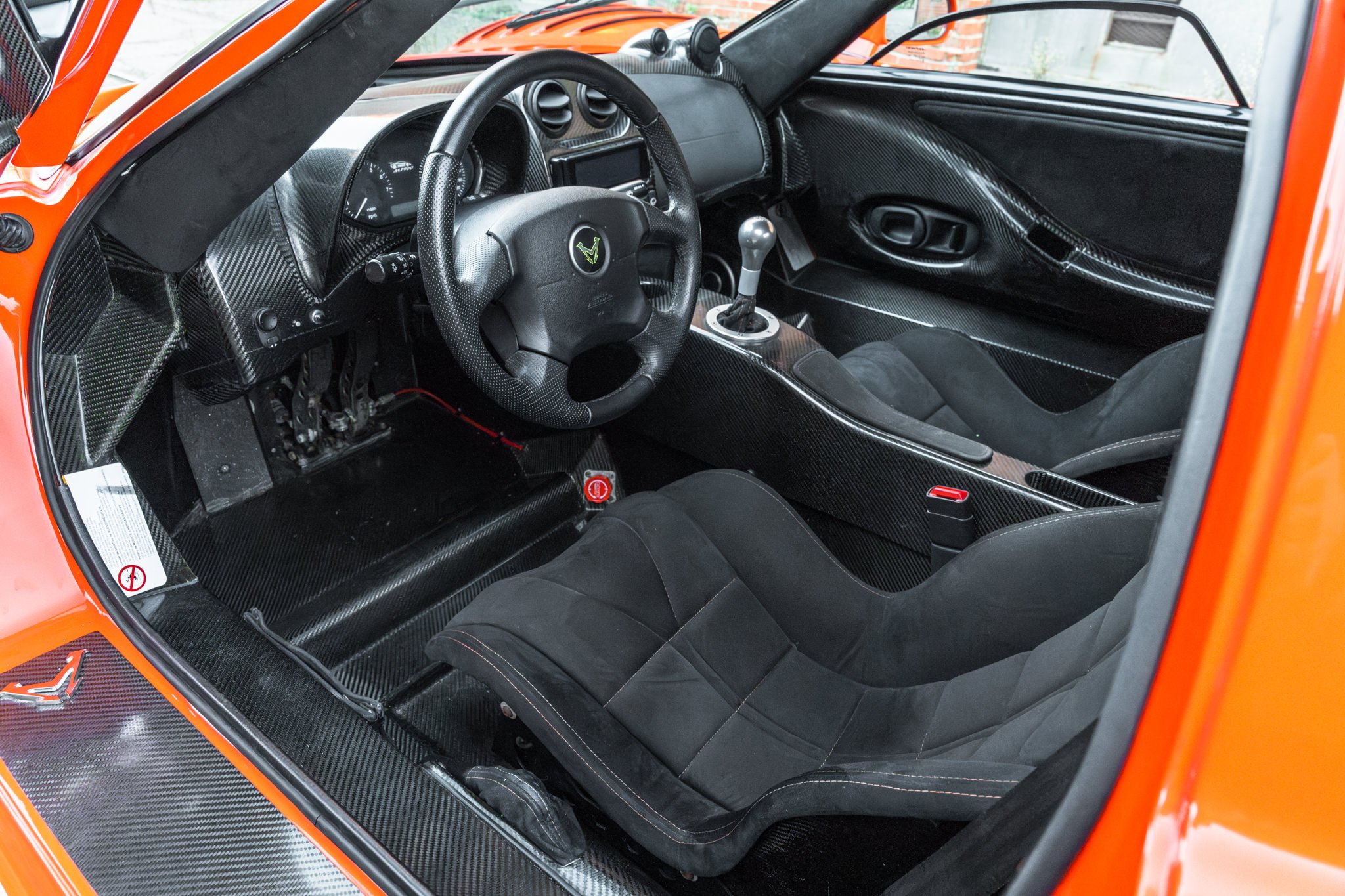
As production began in the early 2000s, Mosler soon expanded the MT900 model family. The MT900S was introduced as a higher powered and more road-focused evolution, with improved cabin trim and usability while retaining the same fundamental architecture and driving feel.
MT900 Variants
Parallel to their street-legal supercars, Mosler developed dedicated competition variants. The MT900R was perhaps the purest expression of the concept, built explicitly for endurance racing. Weight was reduced further, aerodynamics were revised, and engines were tuned to meet series regulations rather than chase headline power and performance figures.
The MT900R found its most notable success in the Grand-Am Rolex Sports Car Series, where it scored a class win at the 2003 24 Hours of Daytona. That result gave Mosler a further credibility boost on one of North America’s best-known endurance racing stages and helped reinforce the soundness of the underlying chassis design.
A later evolution appeared in the form of the MT900 GT3, developed to FIA GT3 regulations. This version had revised bodywork, more pronounced aerodynamic elements, and engines configured to comply with balance-of-performance rules. While the GT3 program never achieved widespread factory-backed success, the car did see international competition and occasional podium finishes, showing the world that the MT900 platform could adapt to evolving GT regulations even outside the United States.
Throughout its life, the MT900 was always relatively simple mechanically but structurally advanced, and even unconventional, in many regards. Suspension was double wishbone at all four corners, chosen for its precise geometry control and ease of adjustment. Braking systems were sourced from established suppliers, with large vented discs and multi-piston calipers.
Aerodynamics were functional rather than theatrical, prioritizing stability, downforce, and cooling over comicbook visual drama. The result was a car that felt engineered first and styled second, a distinction that appealed strongly to some buyers but perhaps limited its broader commercial appeal.
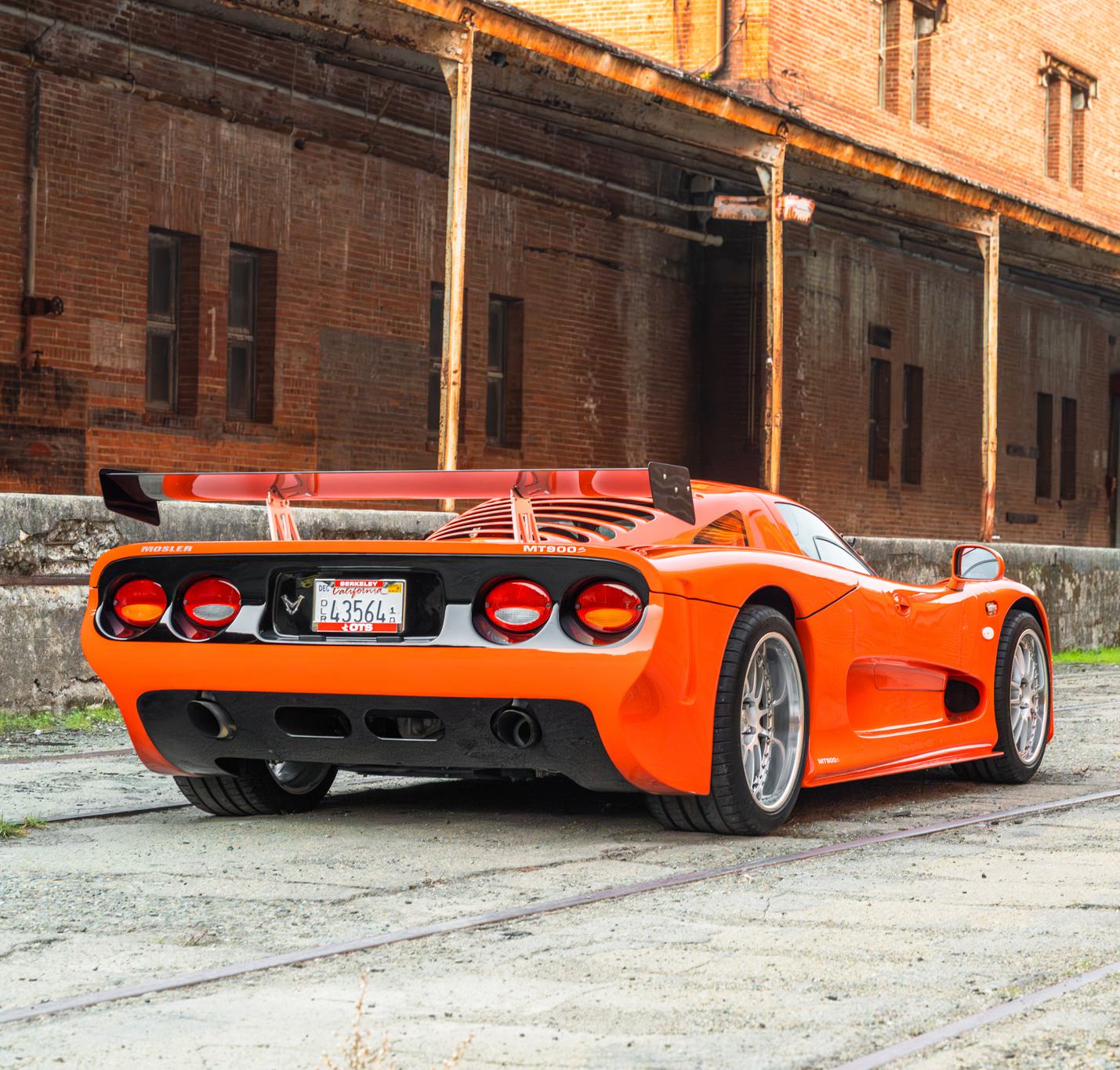
Those road-going MT900s are now mostly tucked away in private collections and only very rarely seen on the street. As a result they’ve been largely forgotten by many, and at shows some even assume they’re European in origin.
Production Numbers
Production numbers for the MT900 and its variants were always on the low side, but they were higher than many industry observers expected. Across road and racing versions combined, approximately 85 cars are generally cited as having been completed, split between roughly 35 street cars and around 50 competition chassis.
Exact figures remain difficult to confirm, in part because Mosler Automotive operated on a build-to-order basis and because some race cars were rebuilt or converted between specifications over time.
By the late 2000s, economic pressures and regulatory hurdles began to weigh heavily on Mosler Automotive. The cost of certifying low-volume vehicles, combined with tightening emissions and safety standards, made continued production increasingly difficult. The MT900S was quietly discontinued, and plans for successor models never reached production. Mosler Automotive eventually exited car manufacturing altogether, leaving the MT900 as both its most ambitious and most enduring achievement.
Those road-going MT900s are now mostly tucked away in private collections and only very rarely seen on the street. As a result they’ve been largely forgotten by many, and at shows some even assume they’re European in origin.
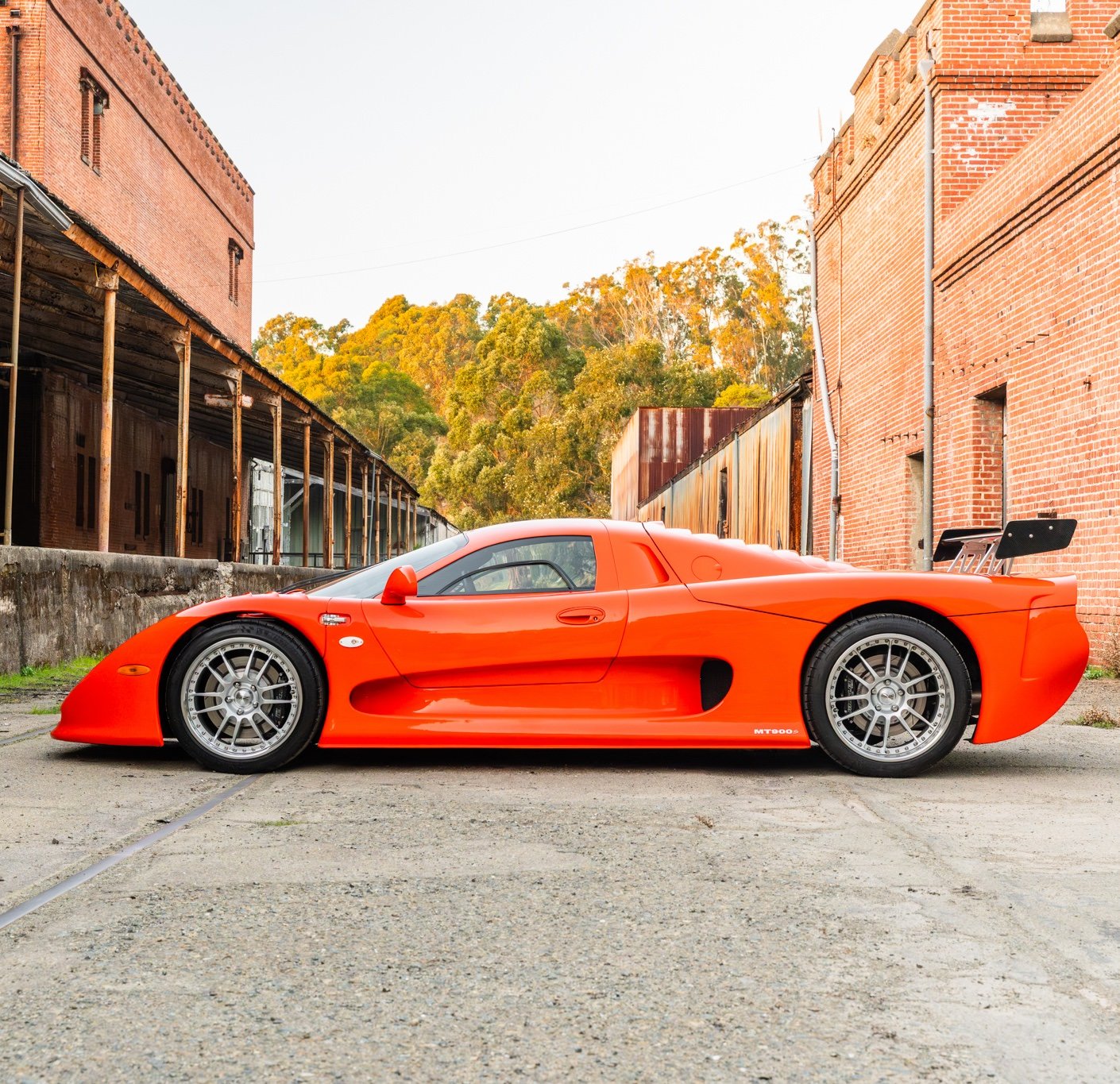
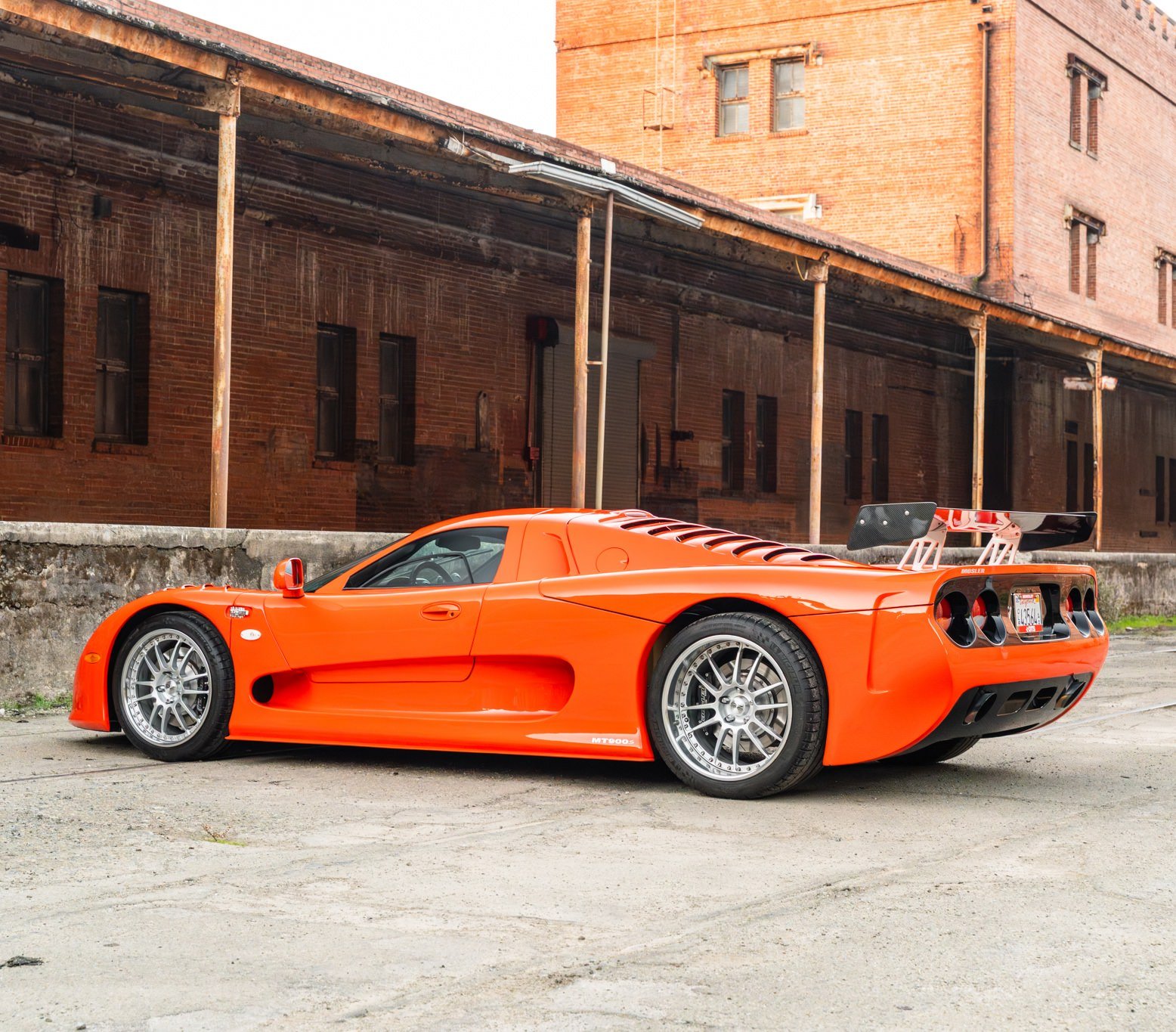
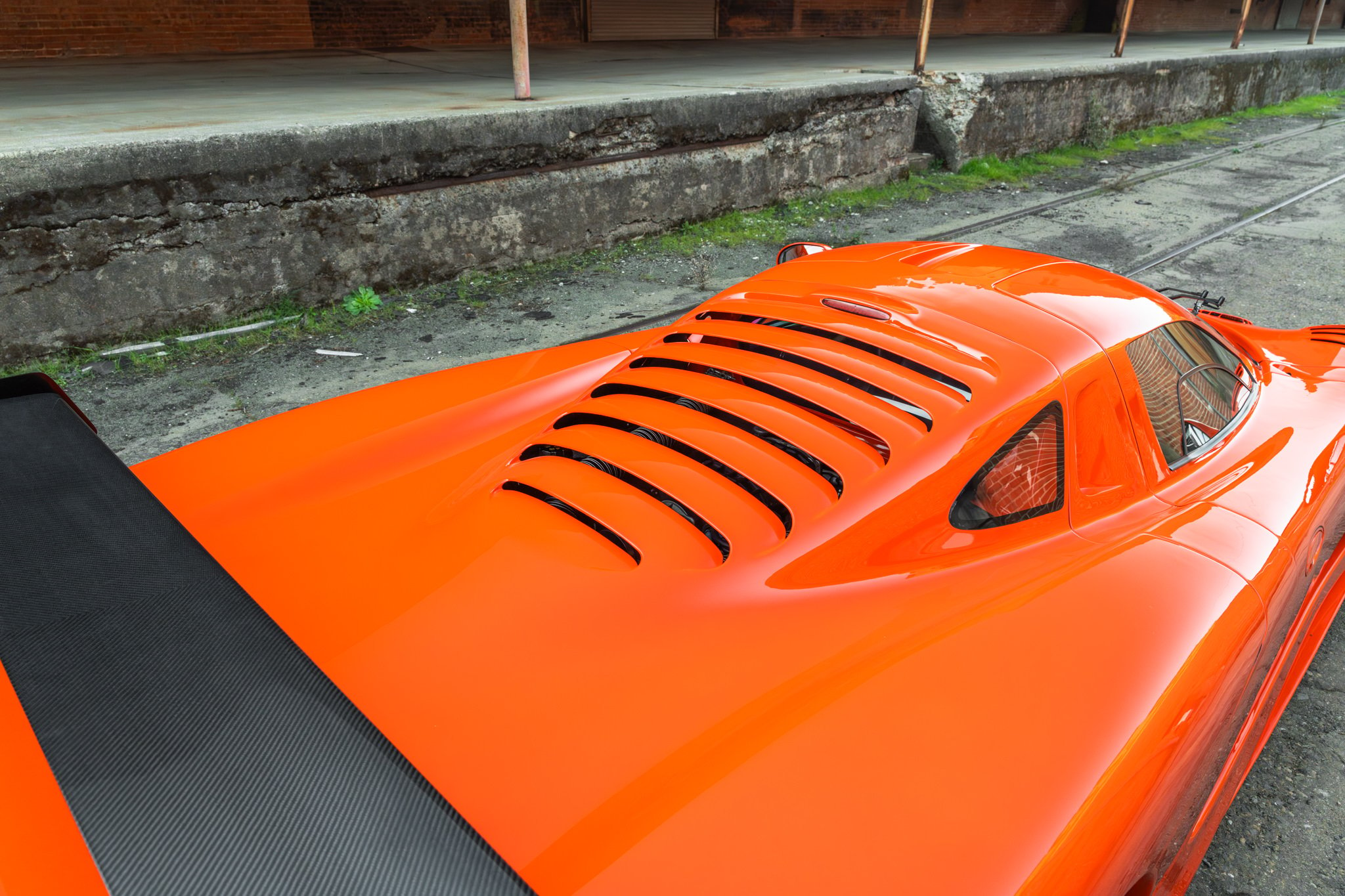
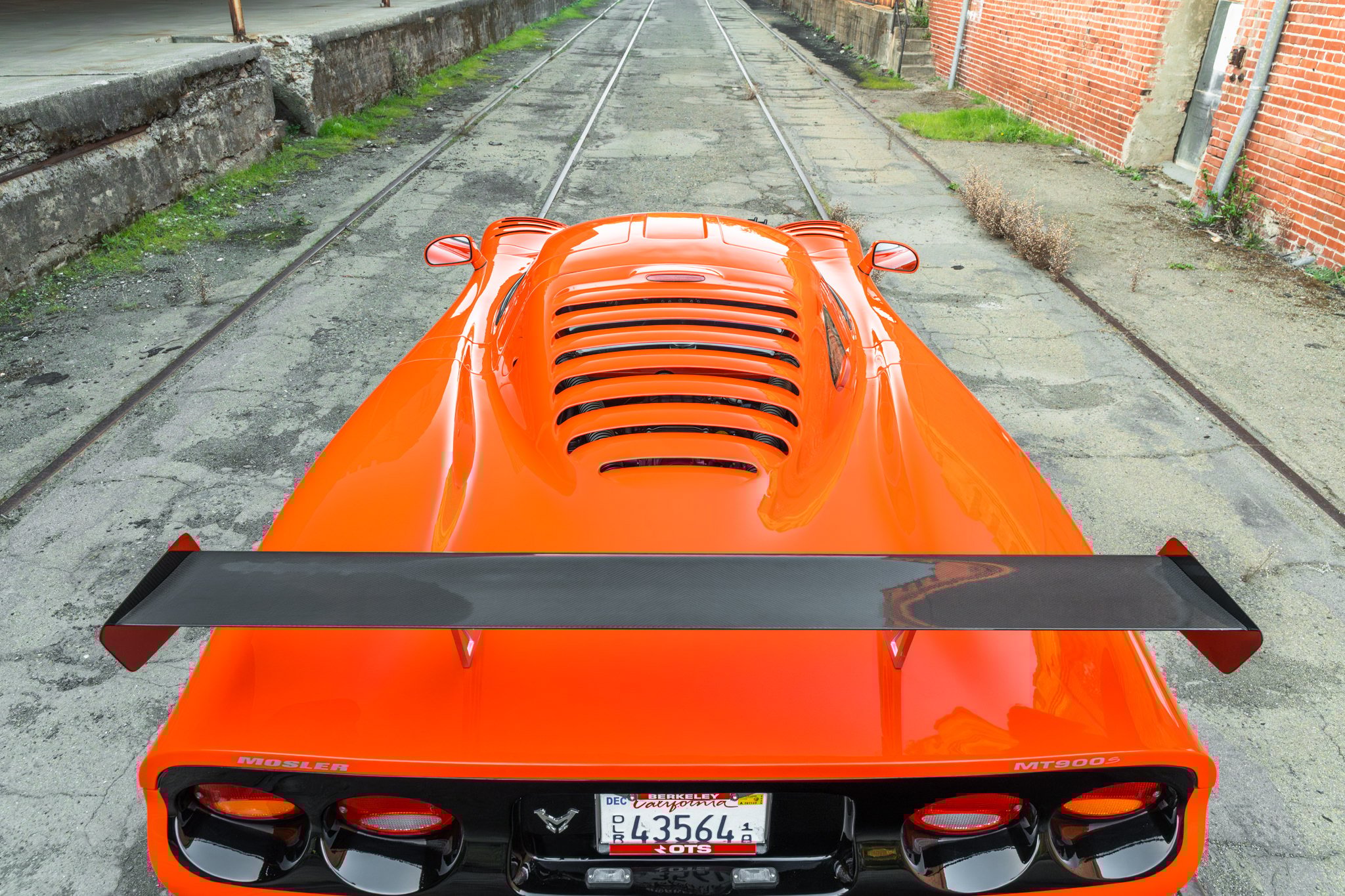
The 2004 Mosler MT900S Shown Here
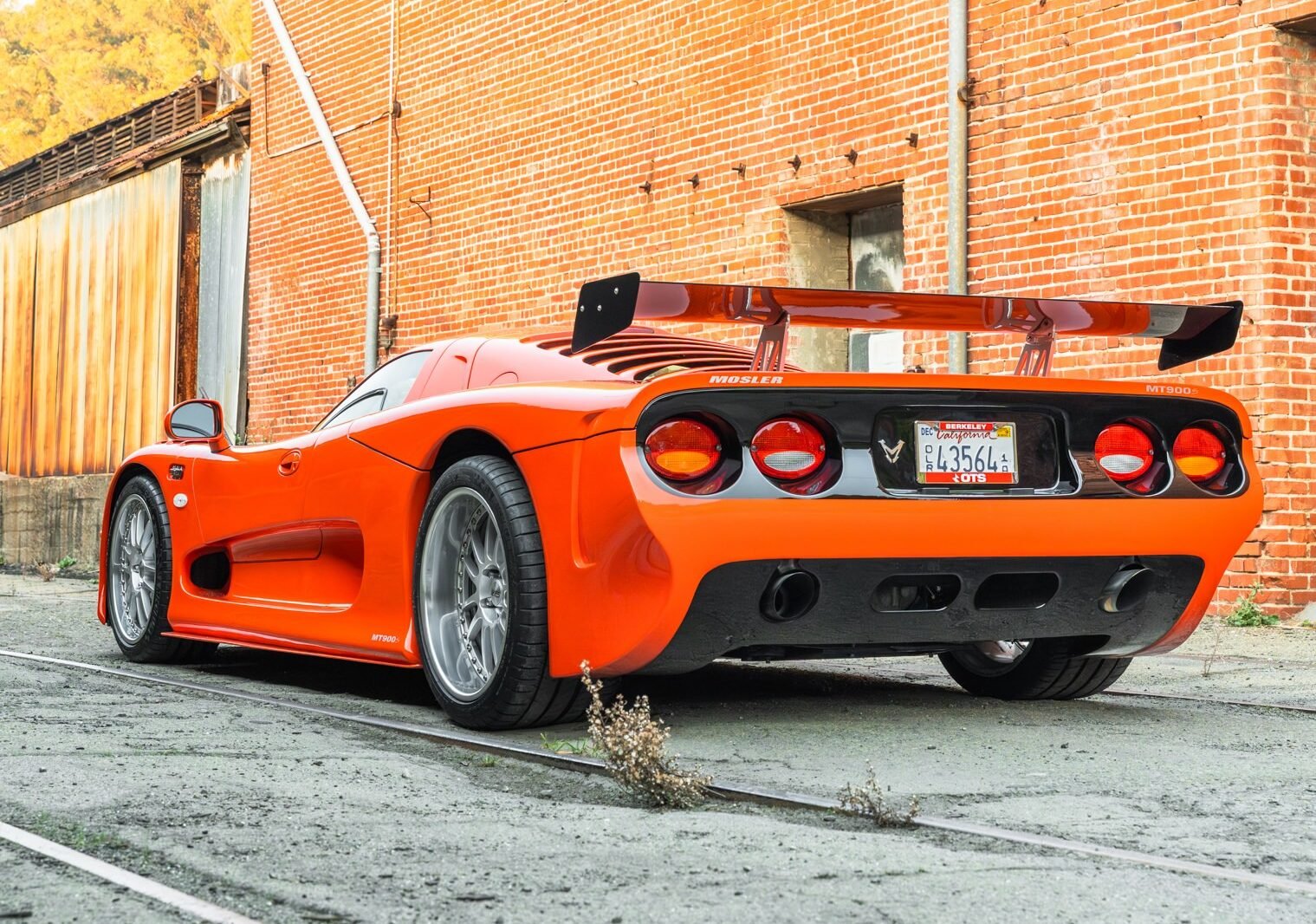
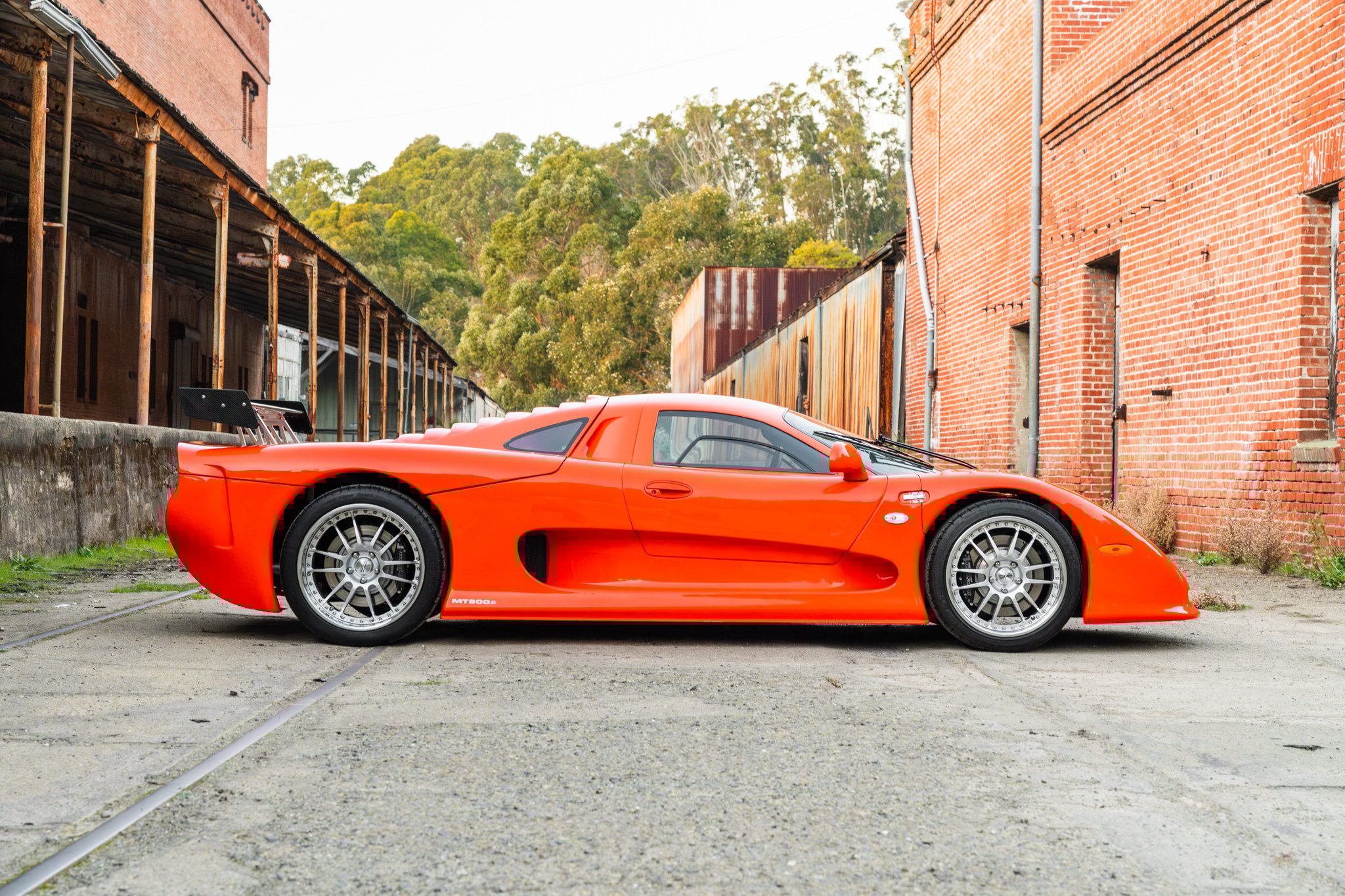
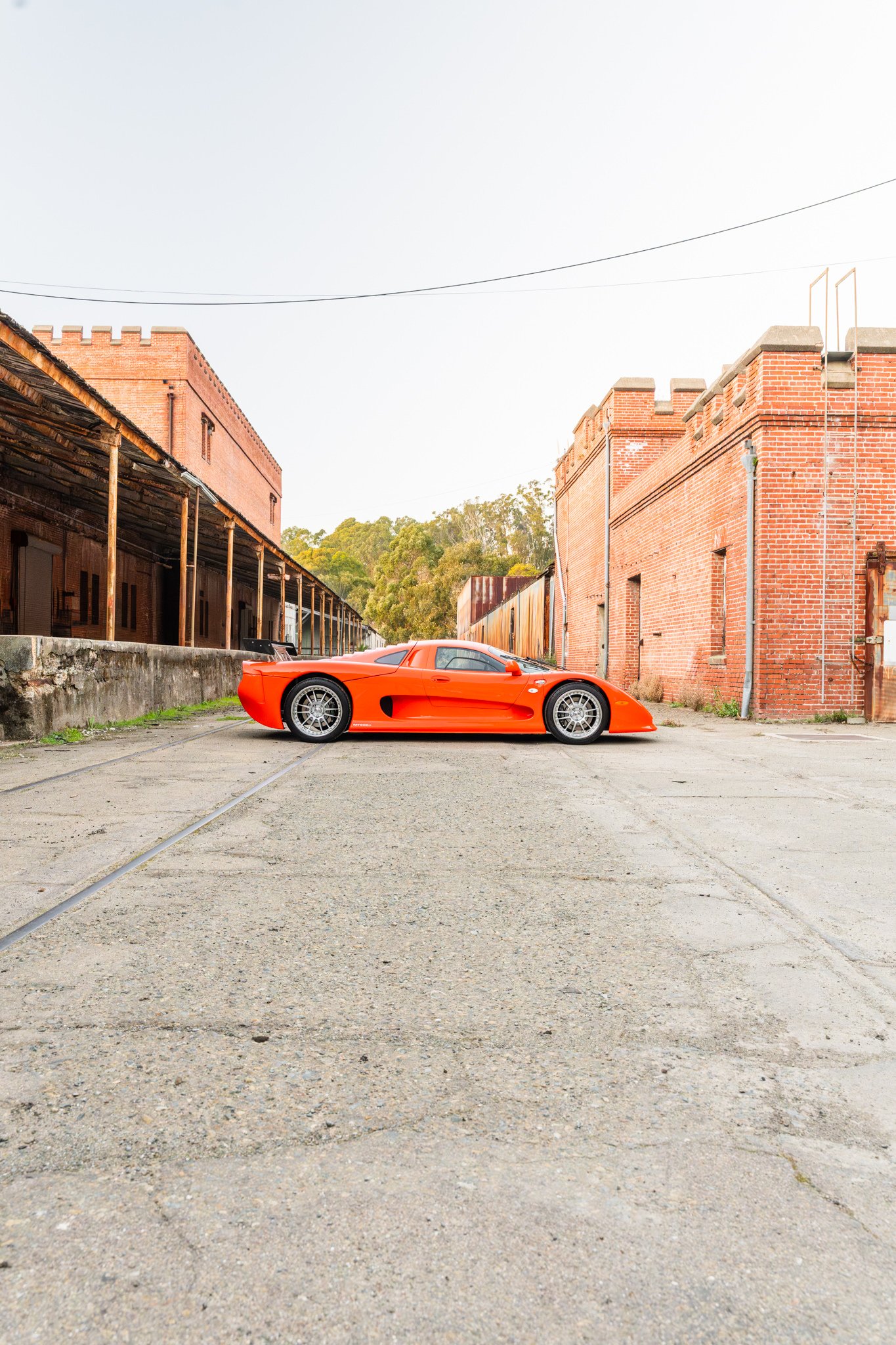
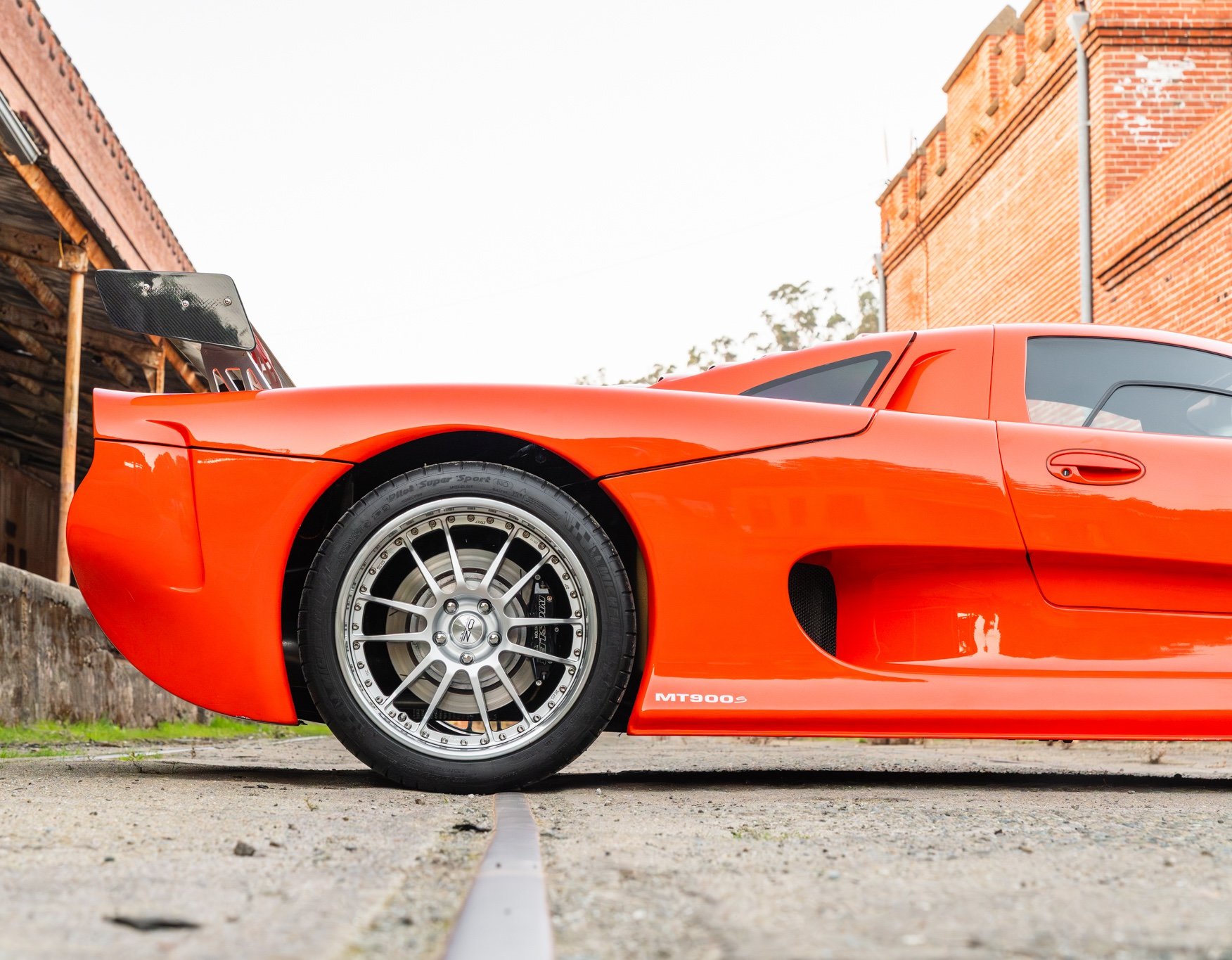
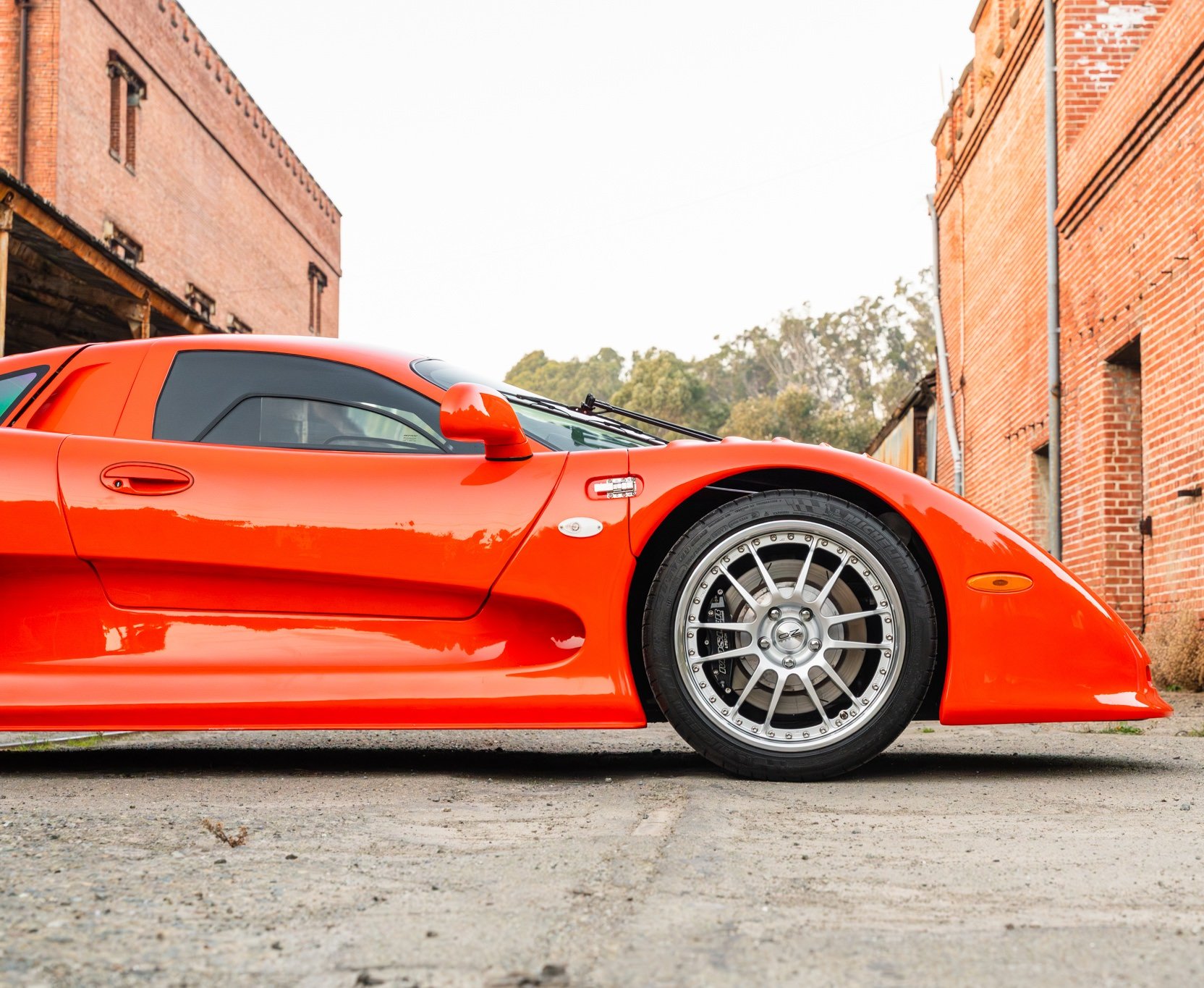
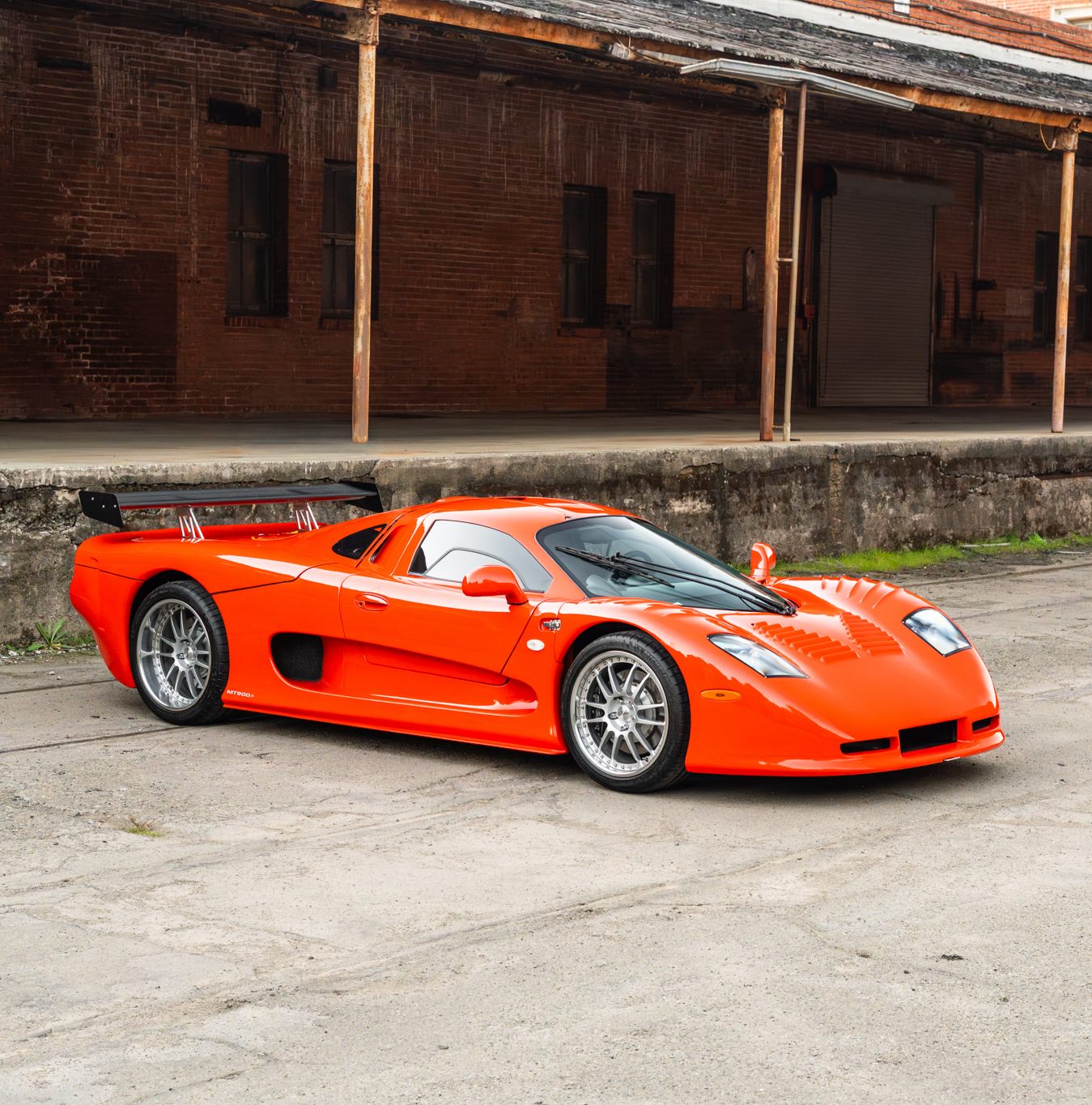
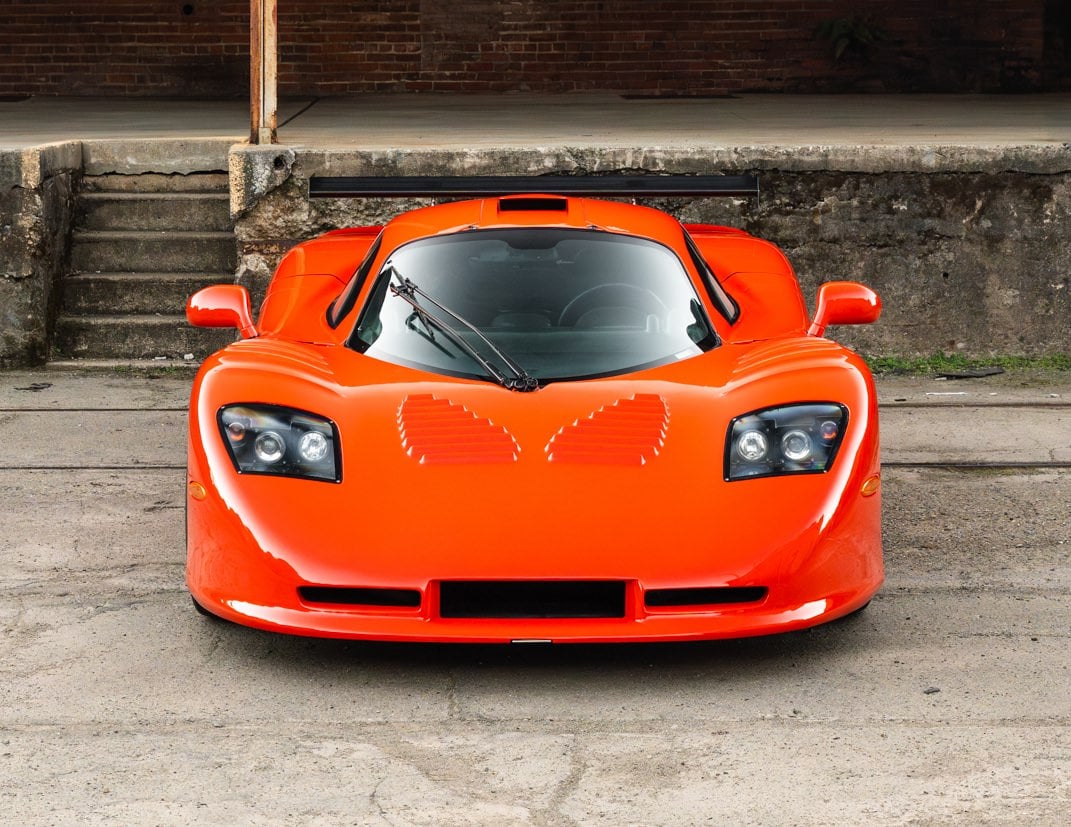
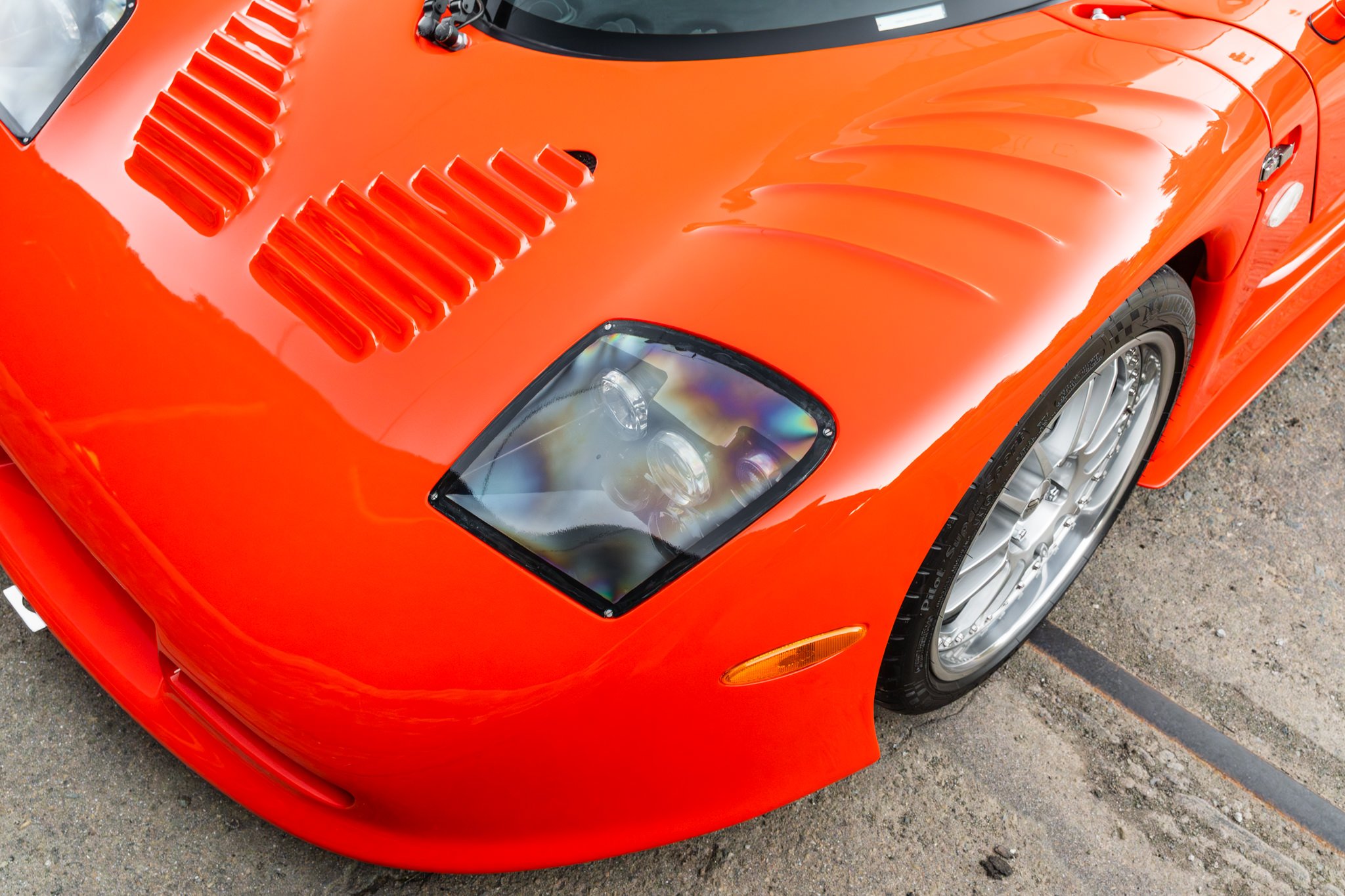
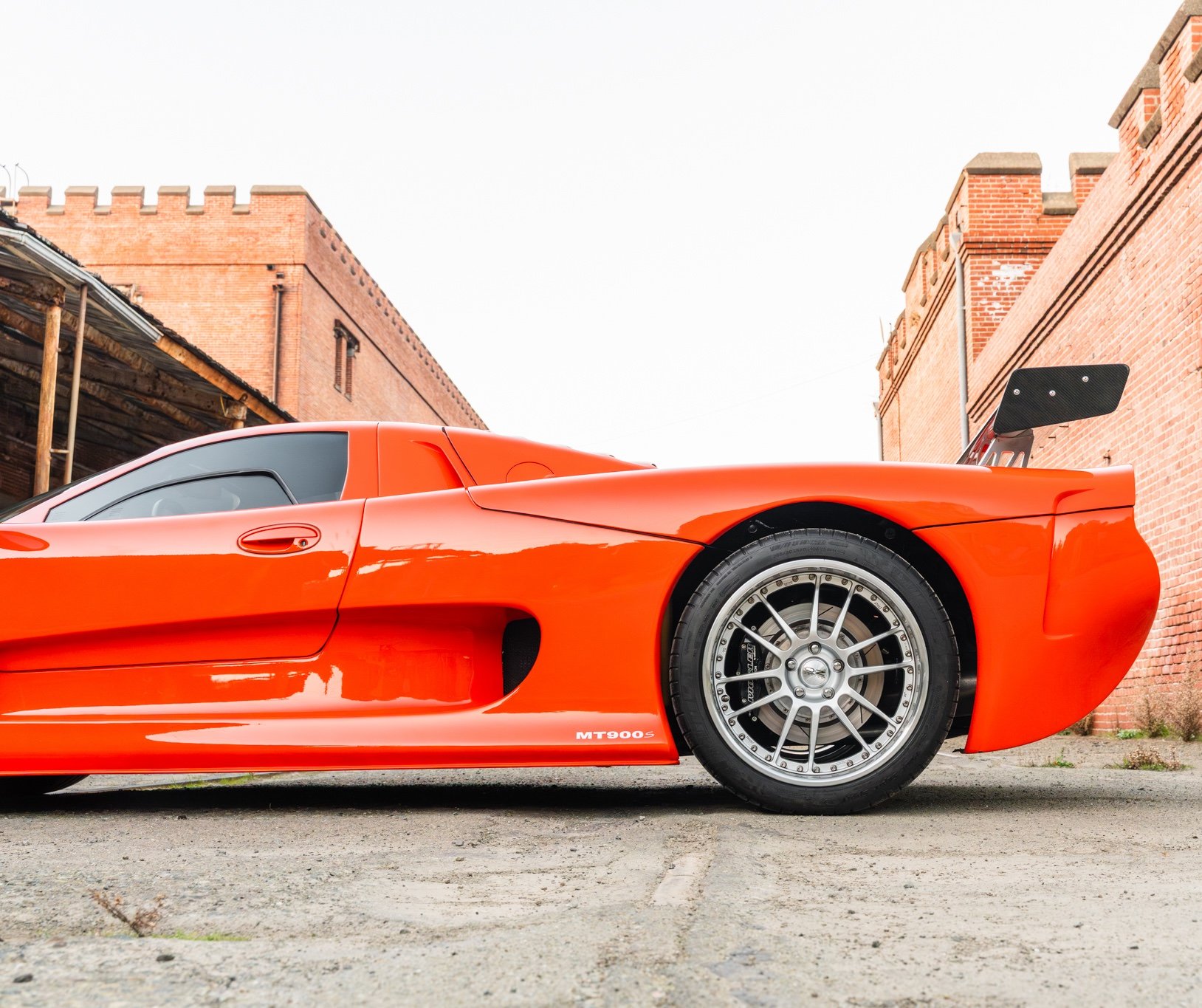
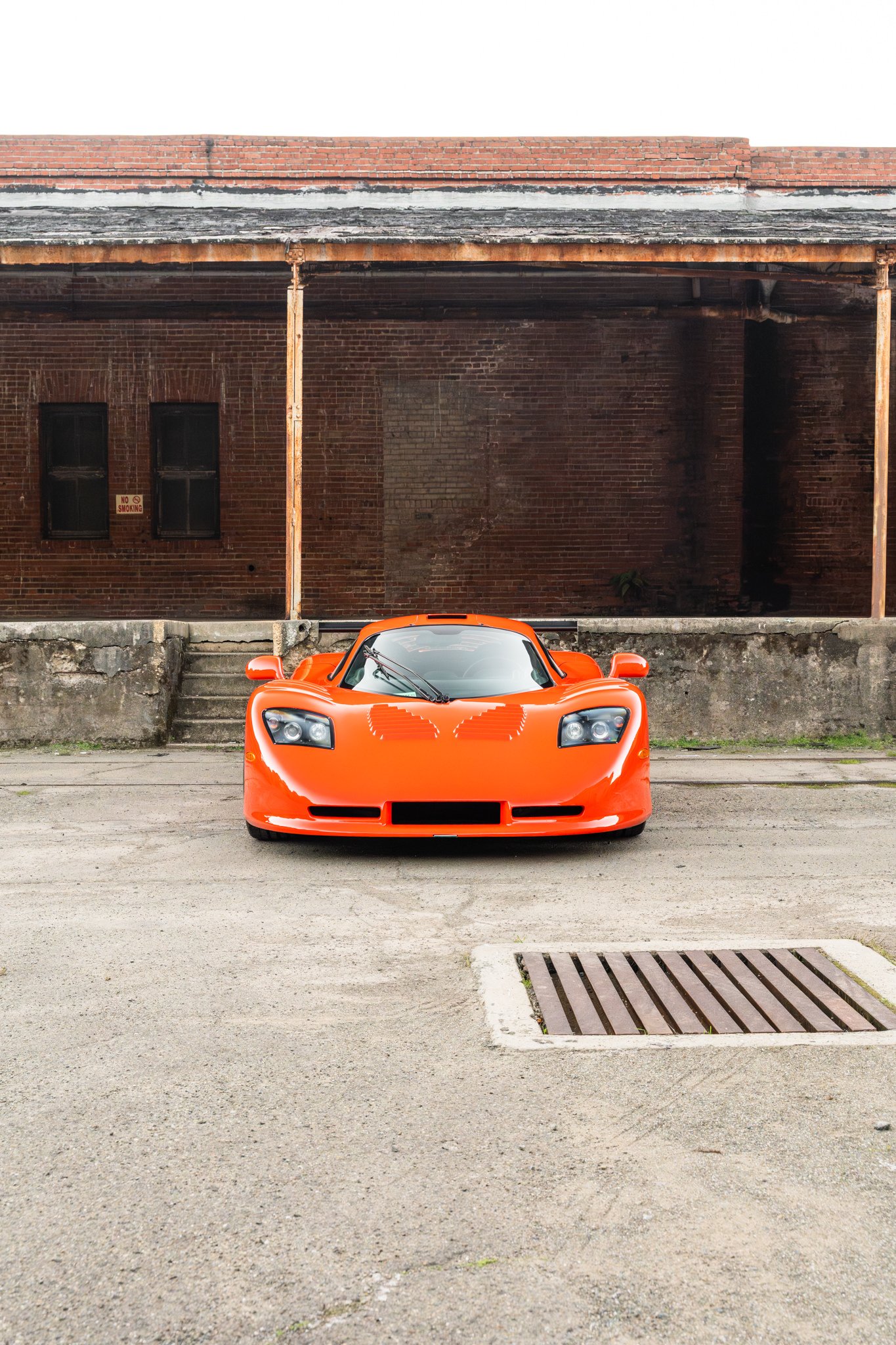
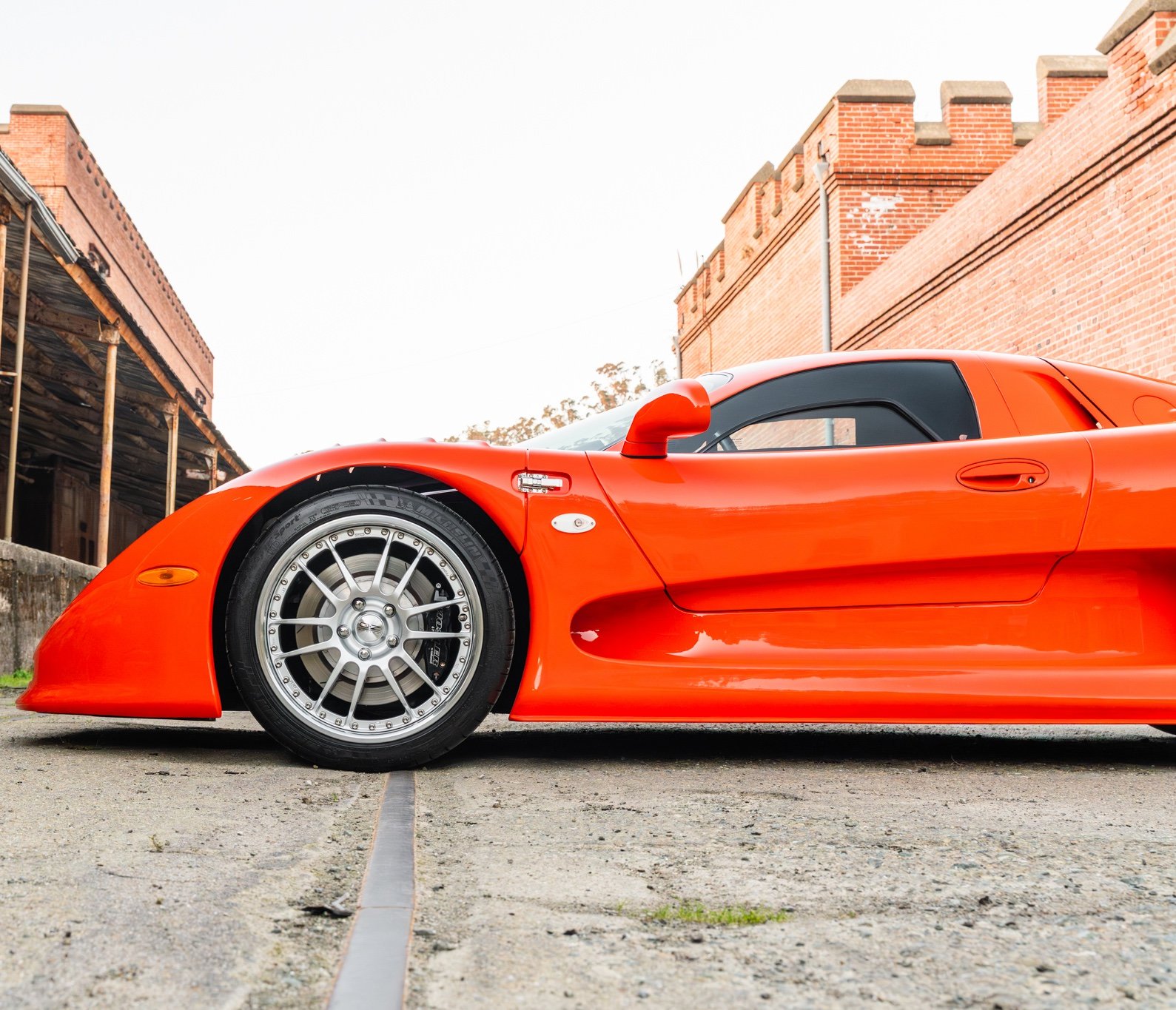
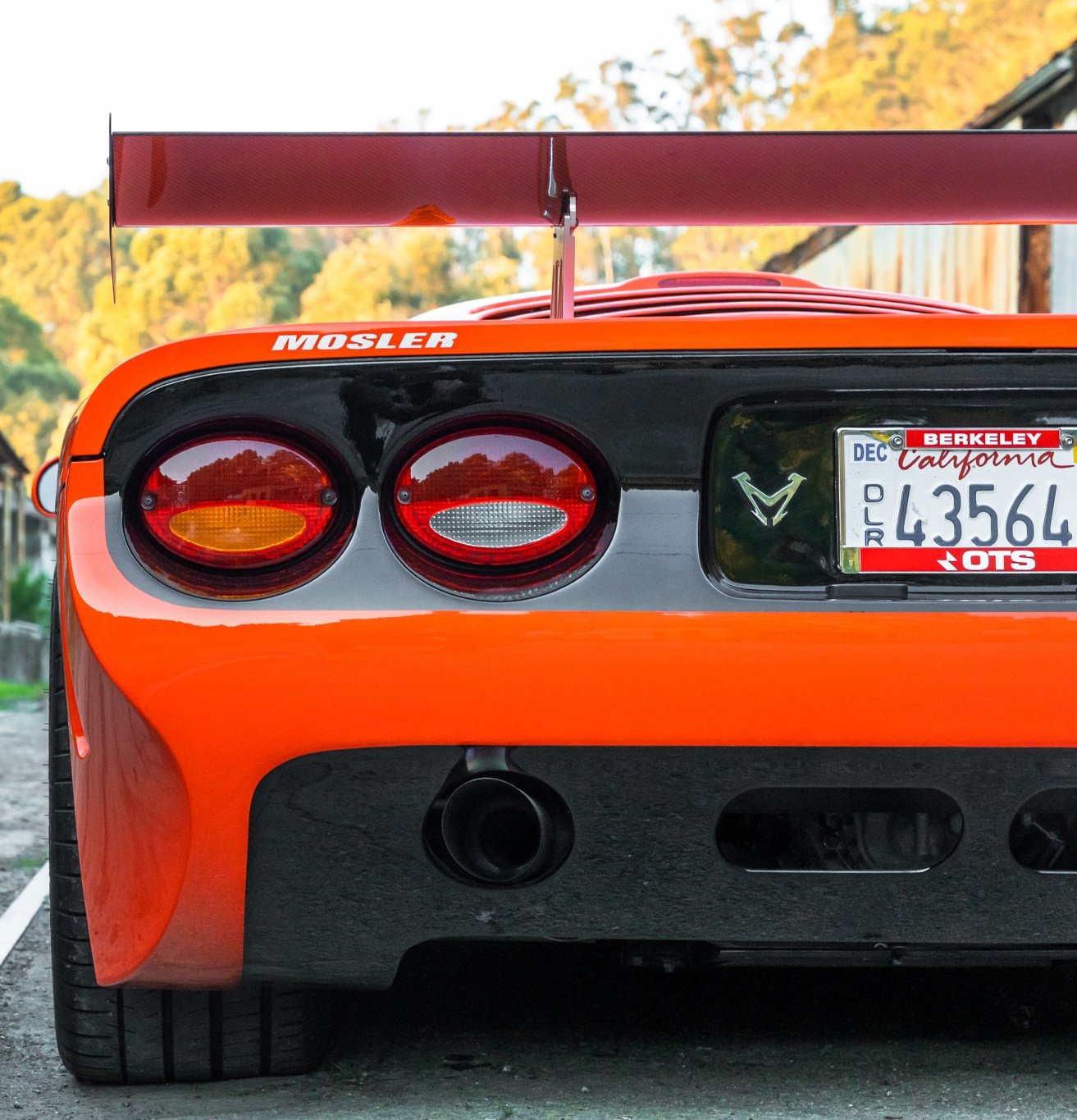
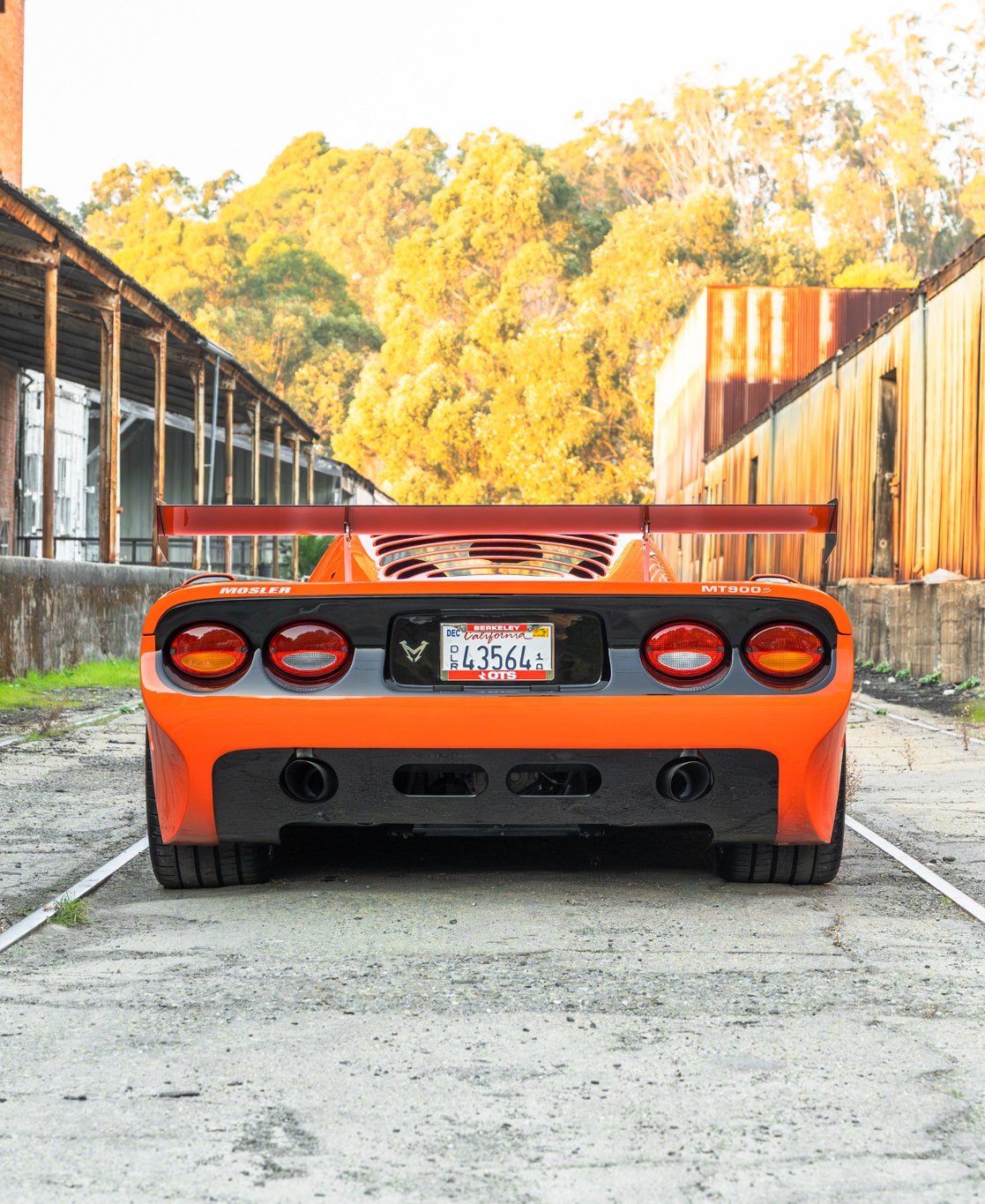
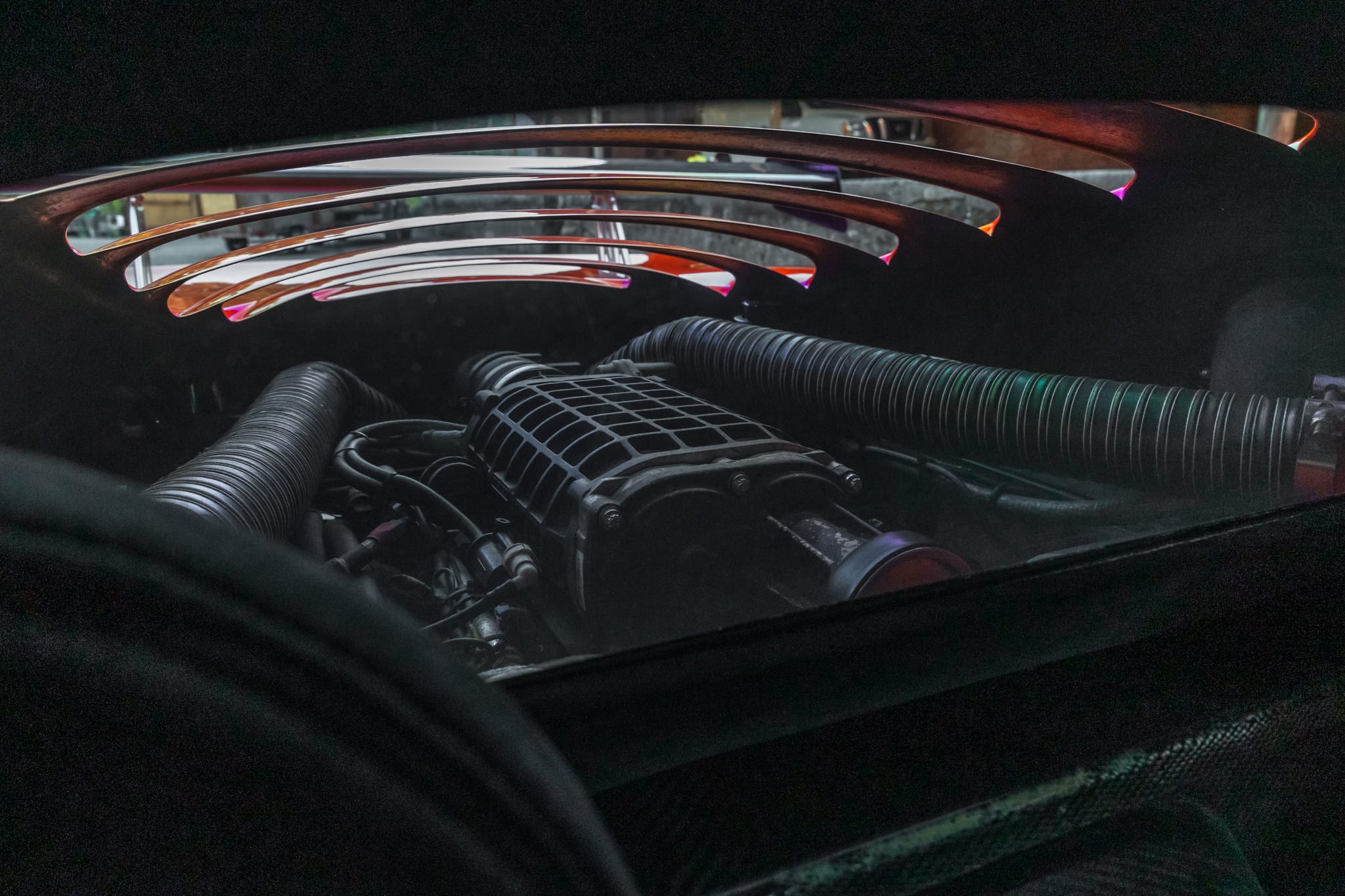
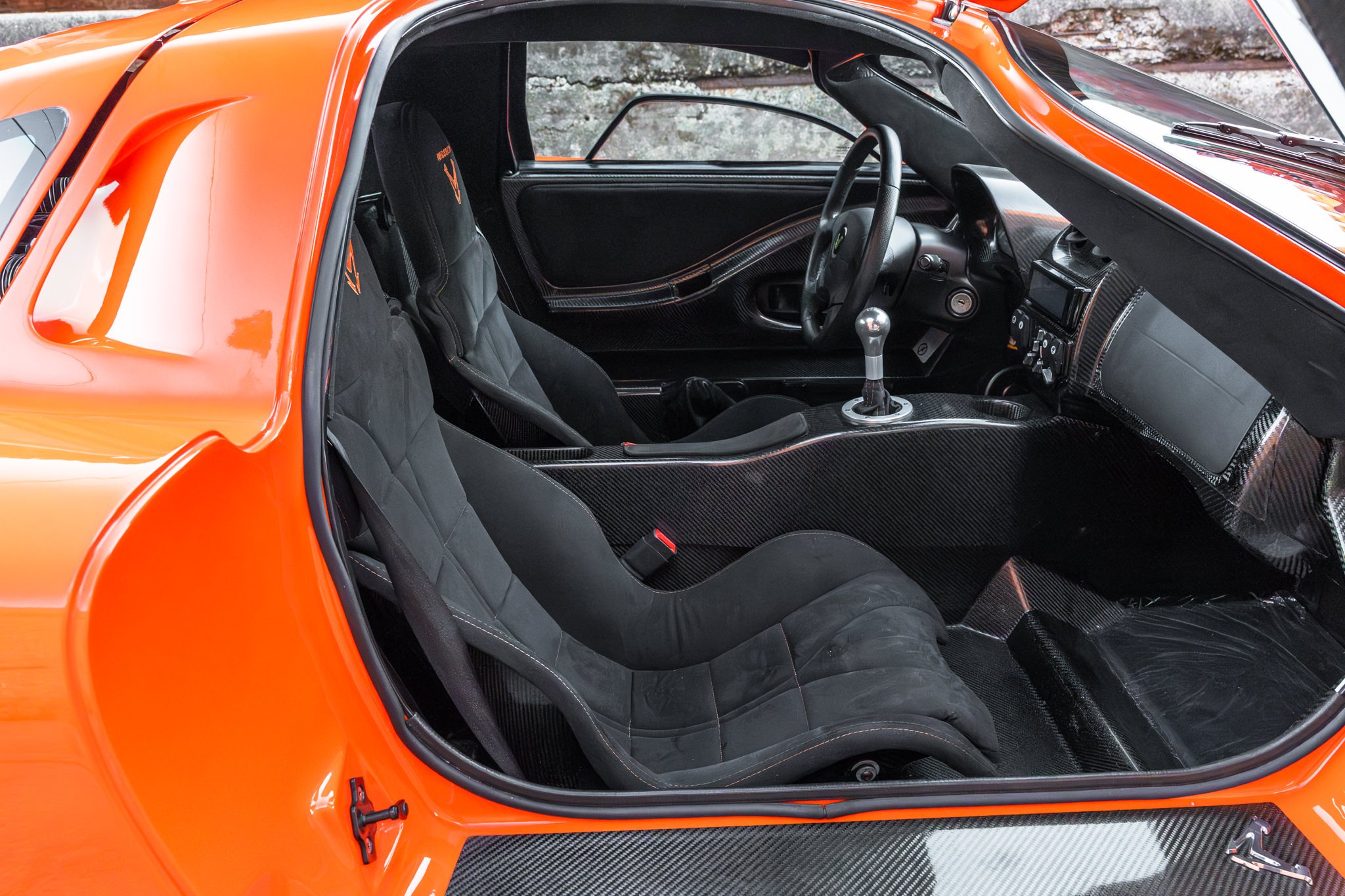
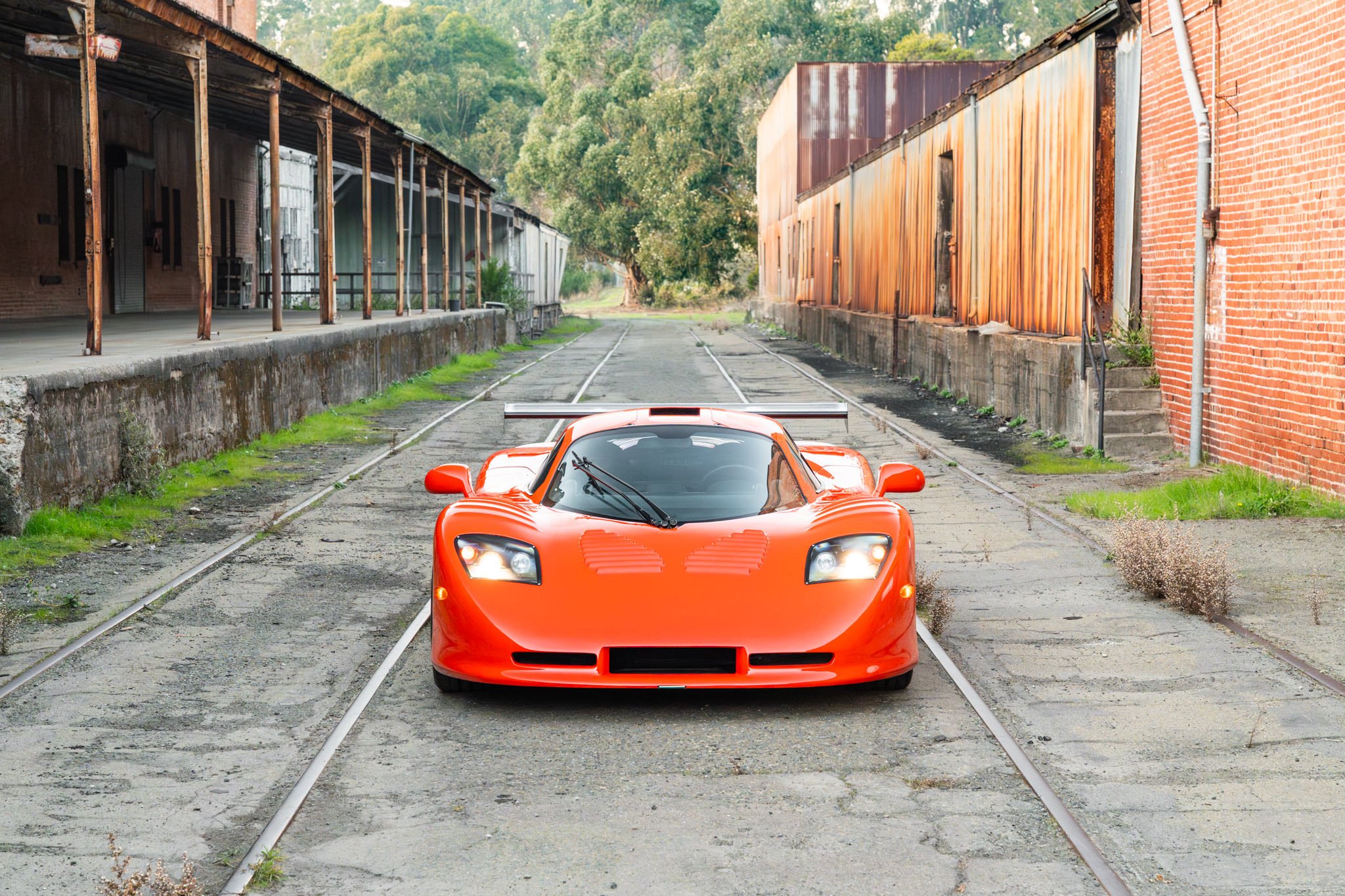
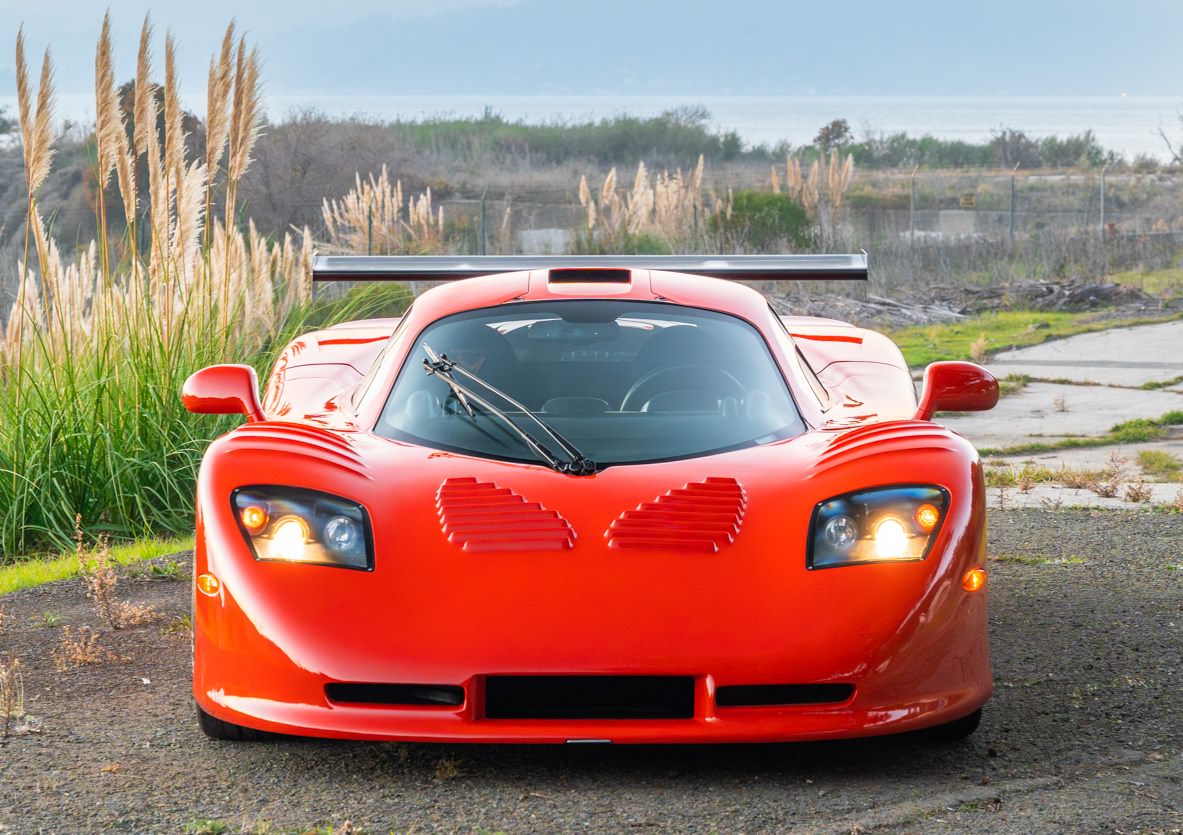
The car you see here is a supercharged Mosler MT900S from 2004, this addition of forced-induction boosted horsepower to 600 bhp from the original 405 bhp – a significant bump.
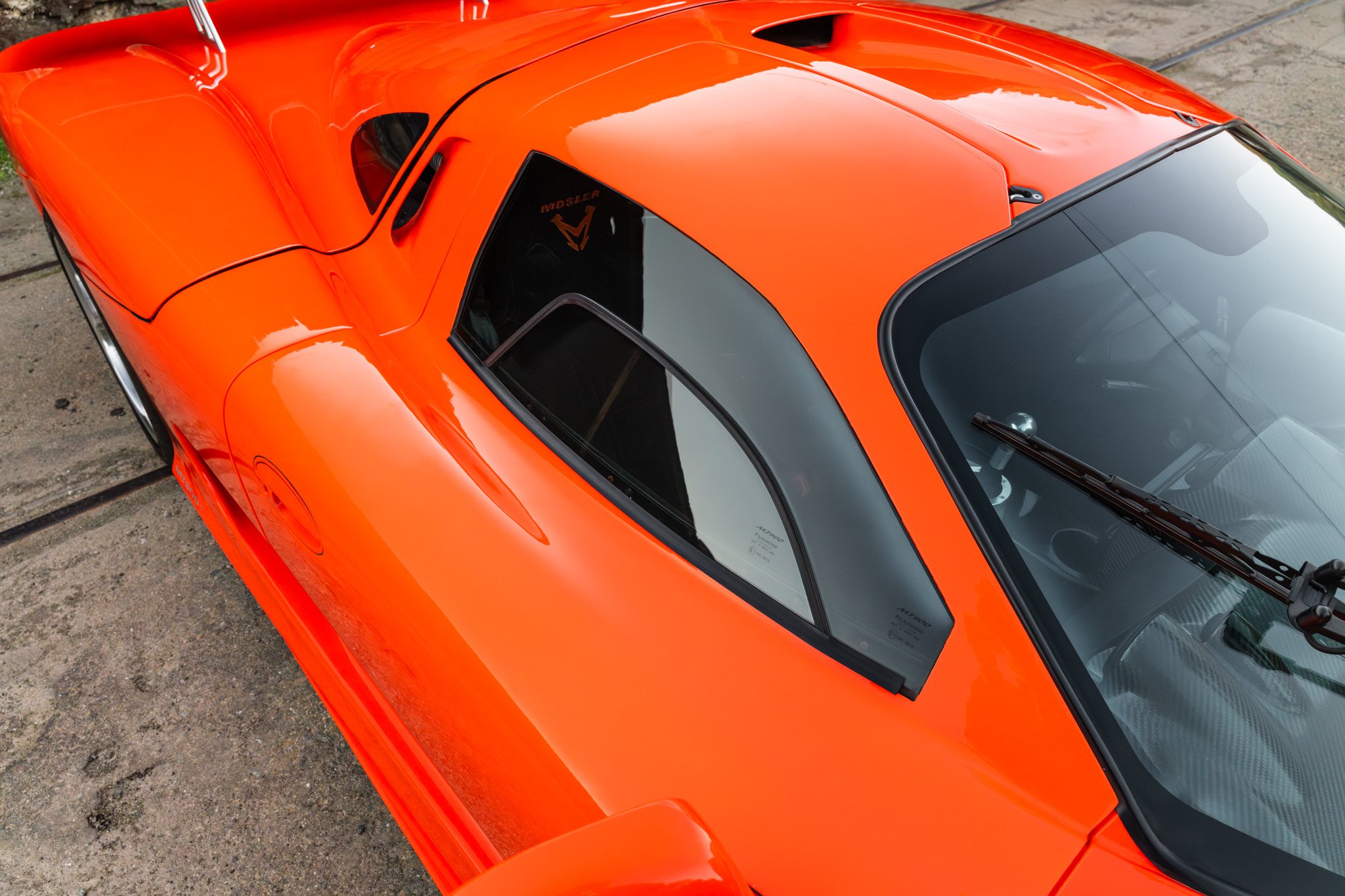
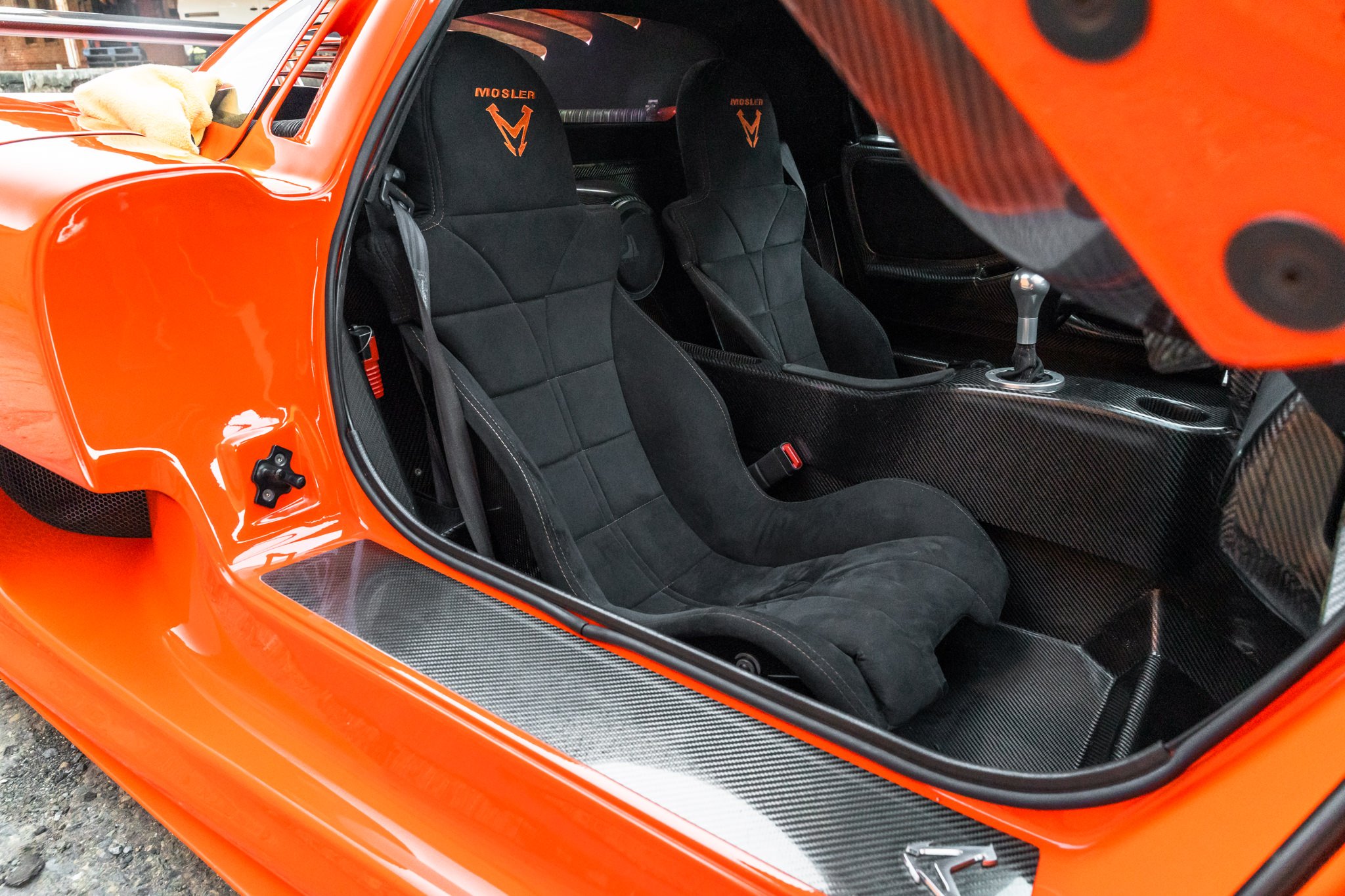
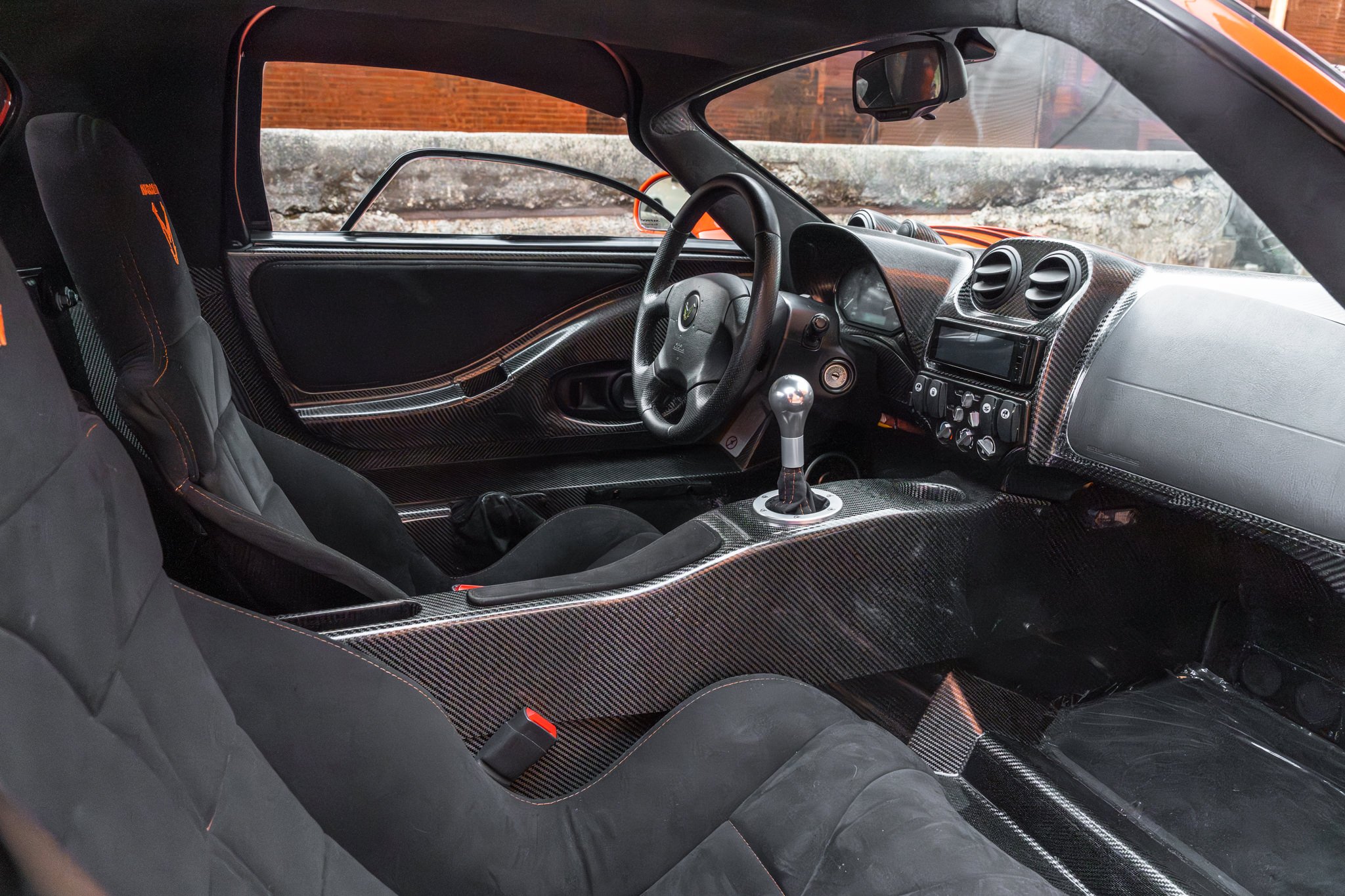
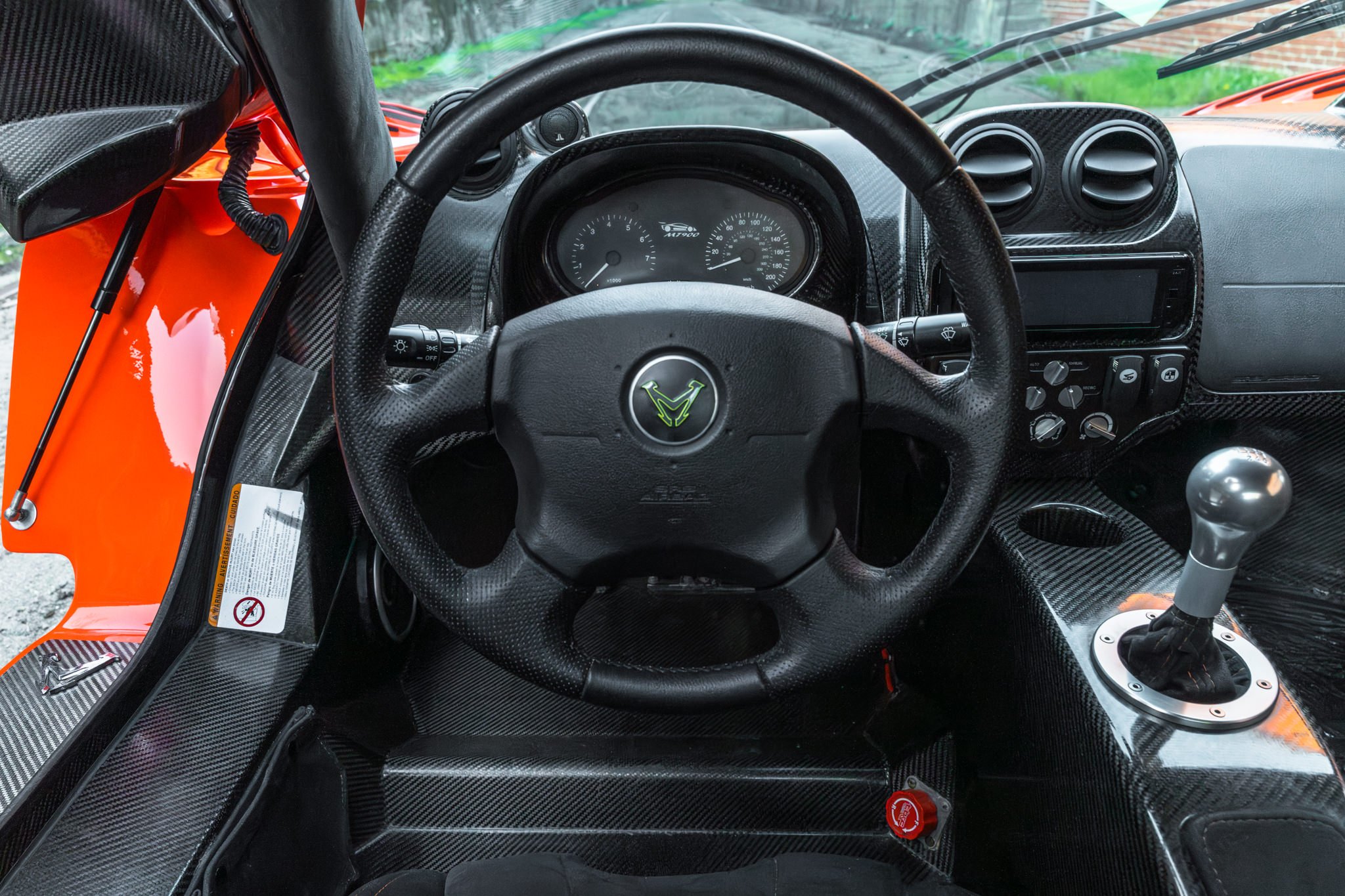
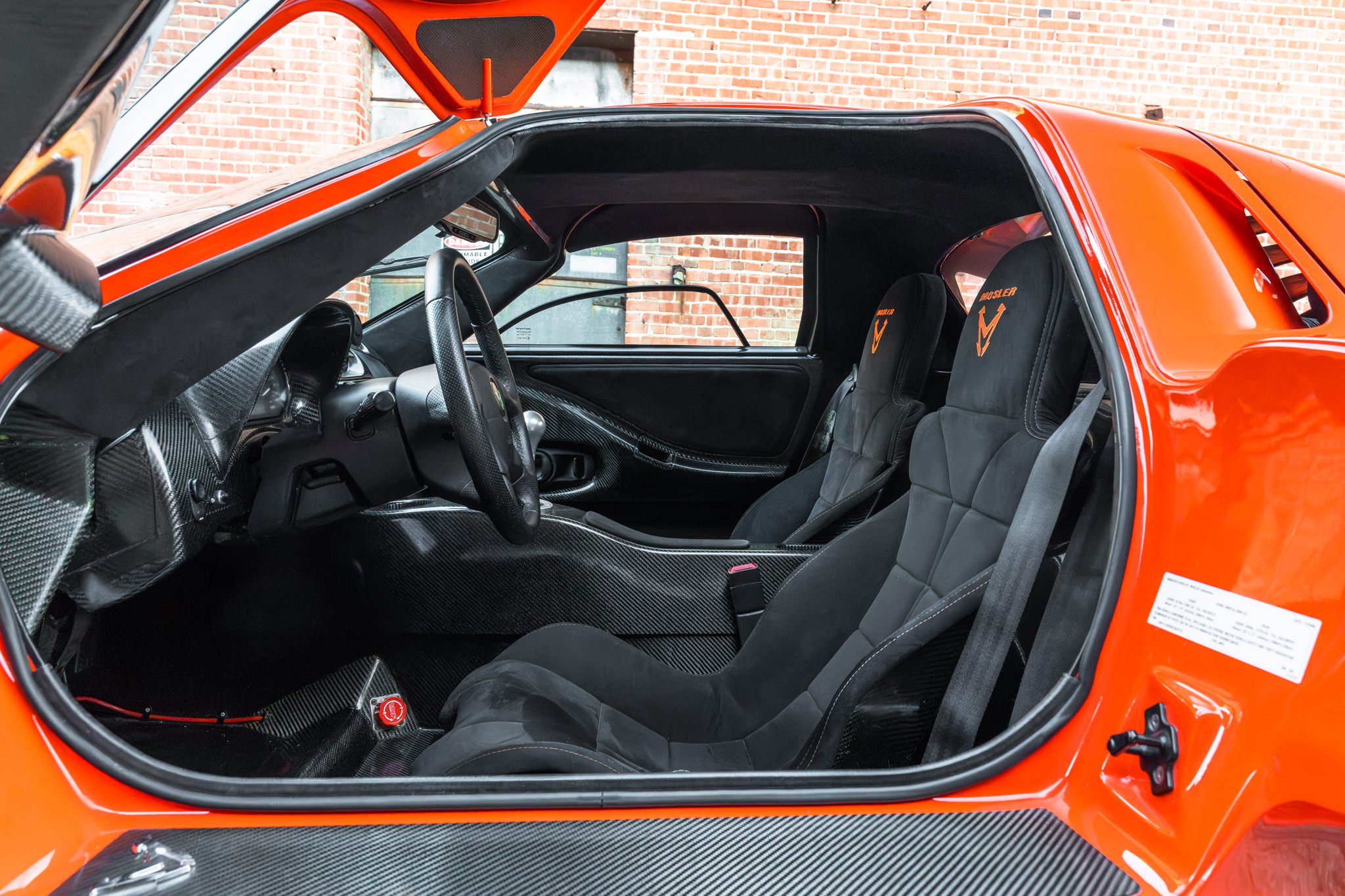
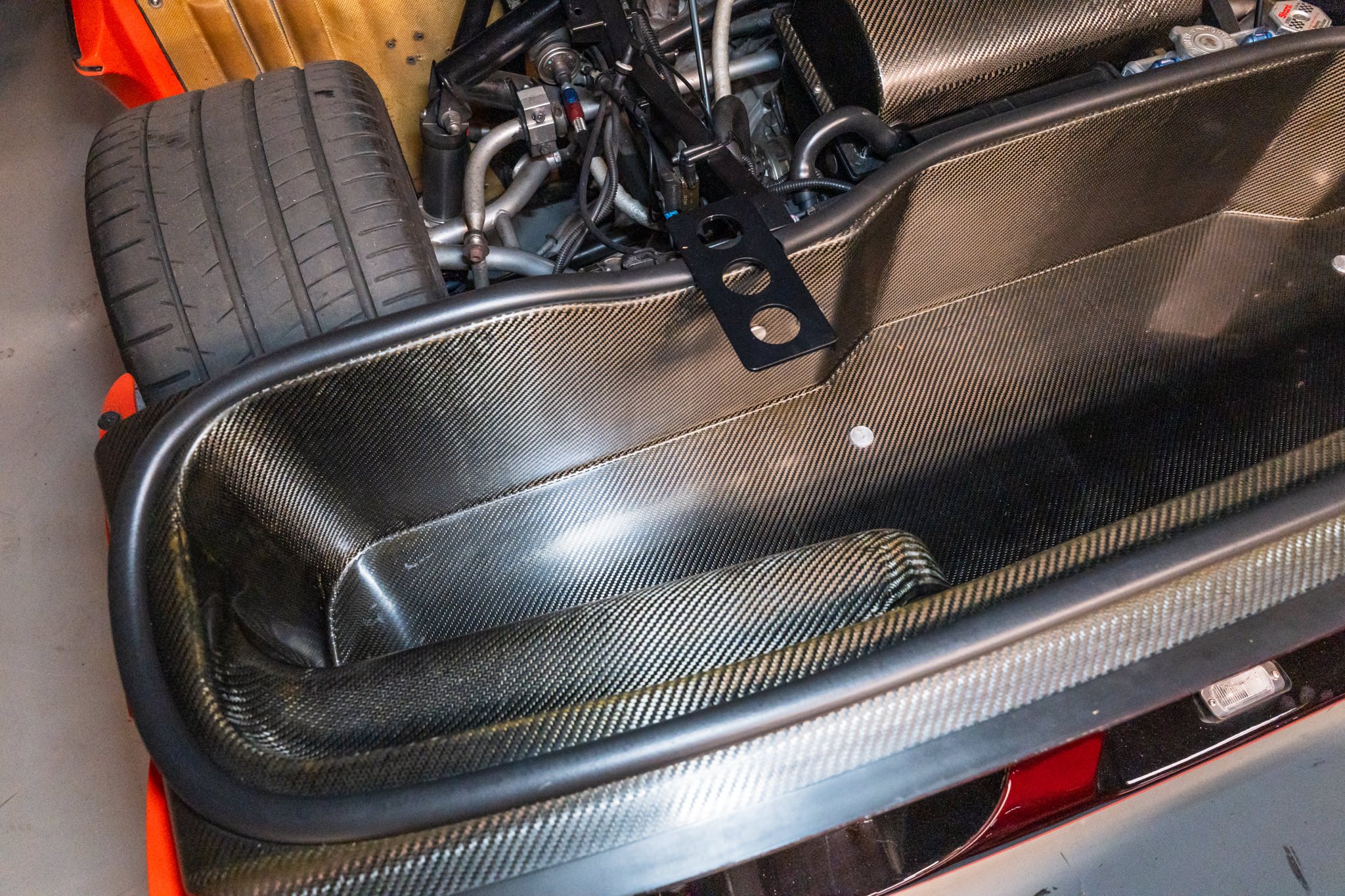
The car is finished in orange over a black Alcantara and carbon fiber interior. As you would expect, there are racing-style carbon fiber bucket seats for two and minimal space for luggage or cargo. The door panels, console, and dash are all carbon, as are many other parts of the interior and body.
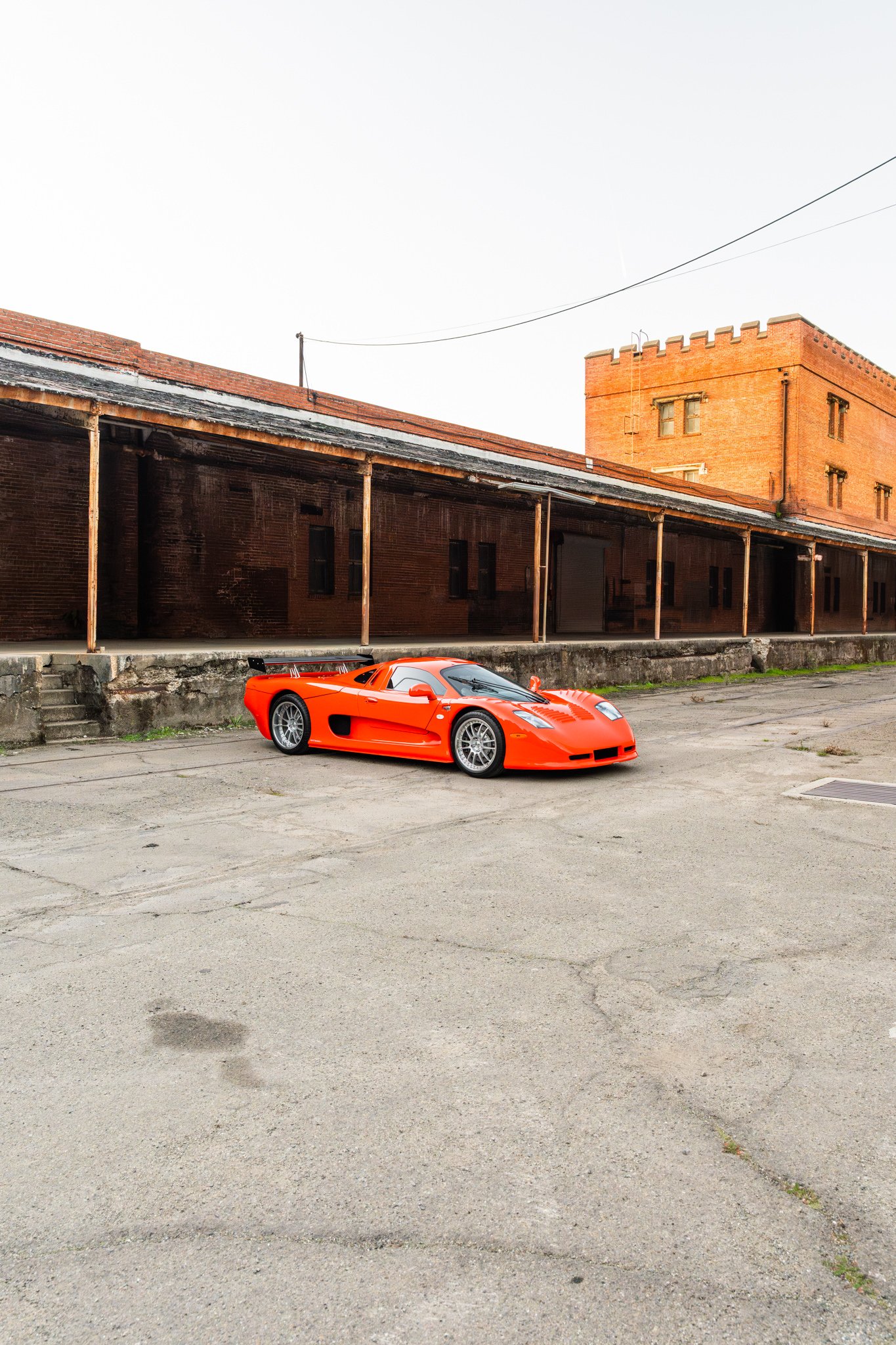
The car you see here is a supercharged Mosler MT900S from 2004, this addition of forced-induction boosted horsepower to 600 bhp from the original 405 bhp – a significant bump.
It has a few nods to comfort and modernity, including air conditioning, power windows, power locks, and a stereo system with a Bluetooth-capable JVC touchscreen receiver. It rides on multipiece OZ Racing wheels front and back, with Michelin Pilot Super Sport tires, and the Wilwood brakes have dual master cylinders with adjustable front-rear bias.
The car is now being offered for sale out of Berkeley, California with a clean Carfax report and a clean California title. If you’d like to read more about it or register to bid you can visit the listing here.
Images courtesy of Bring a Trailer

Articles that Ben Branch has written have been covered on CNN, Popular Mechanics, Smithsonian Magazine, Road & Track Magazine, the official Pinterest blog, the official eBay Motors blog, BuzzFeed, Autoweek Magazine, Wired Magazine, Autoblog, Gear Patrol, Jalopnik, The Verge, and many more.
Silodrome was founded by Ben back in 2010, in the years since the site has grown to become a world leader in the alternative and vintage motoring sector, with well over a million monthly readers from around the world and many hundreds of thousands of followers on social media.