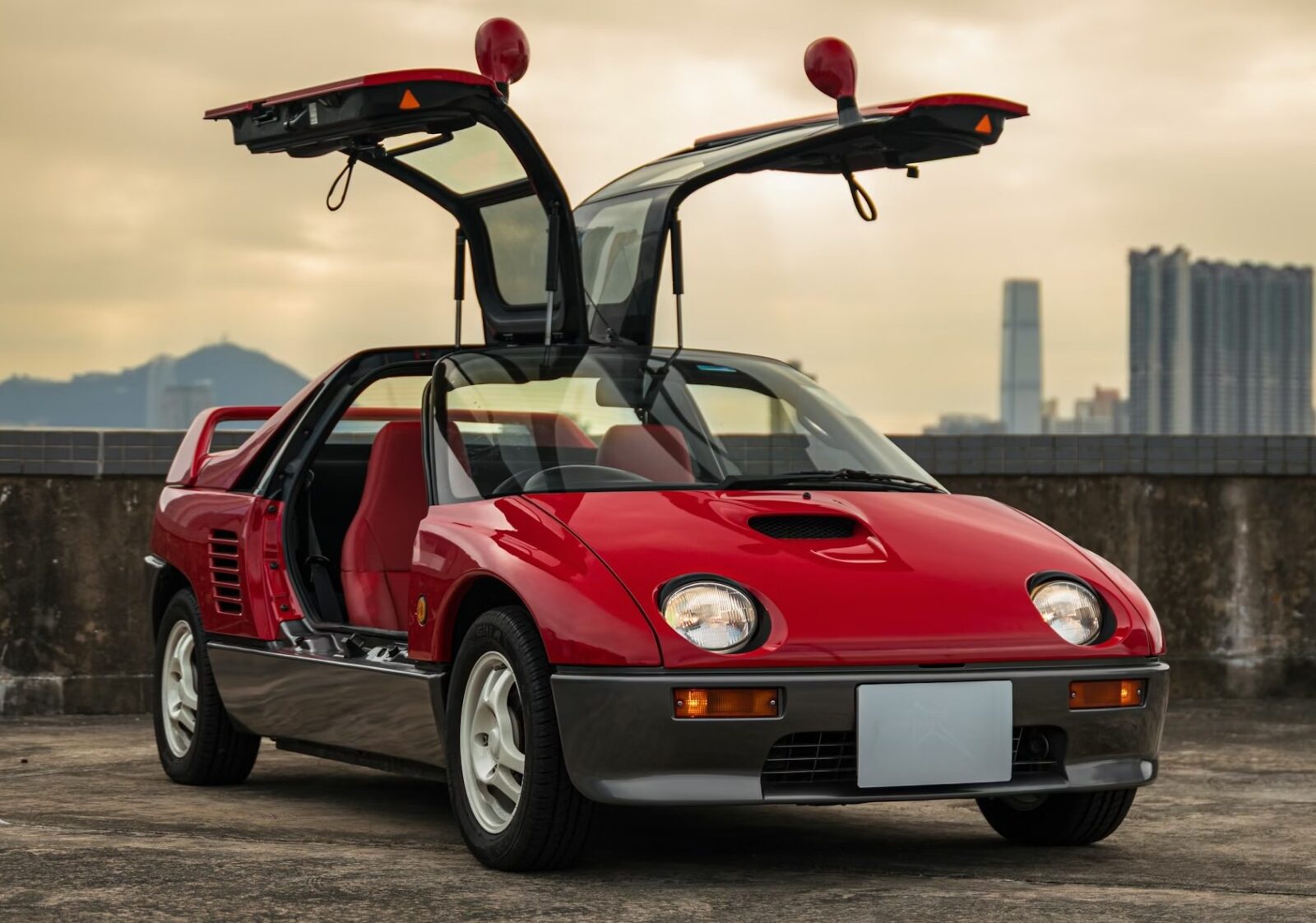
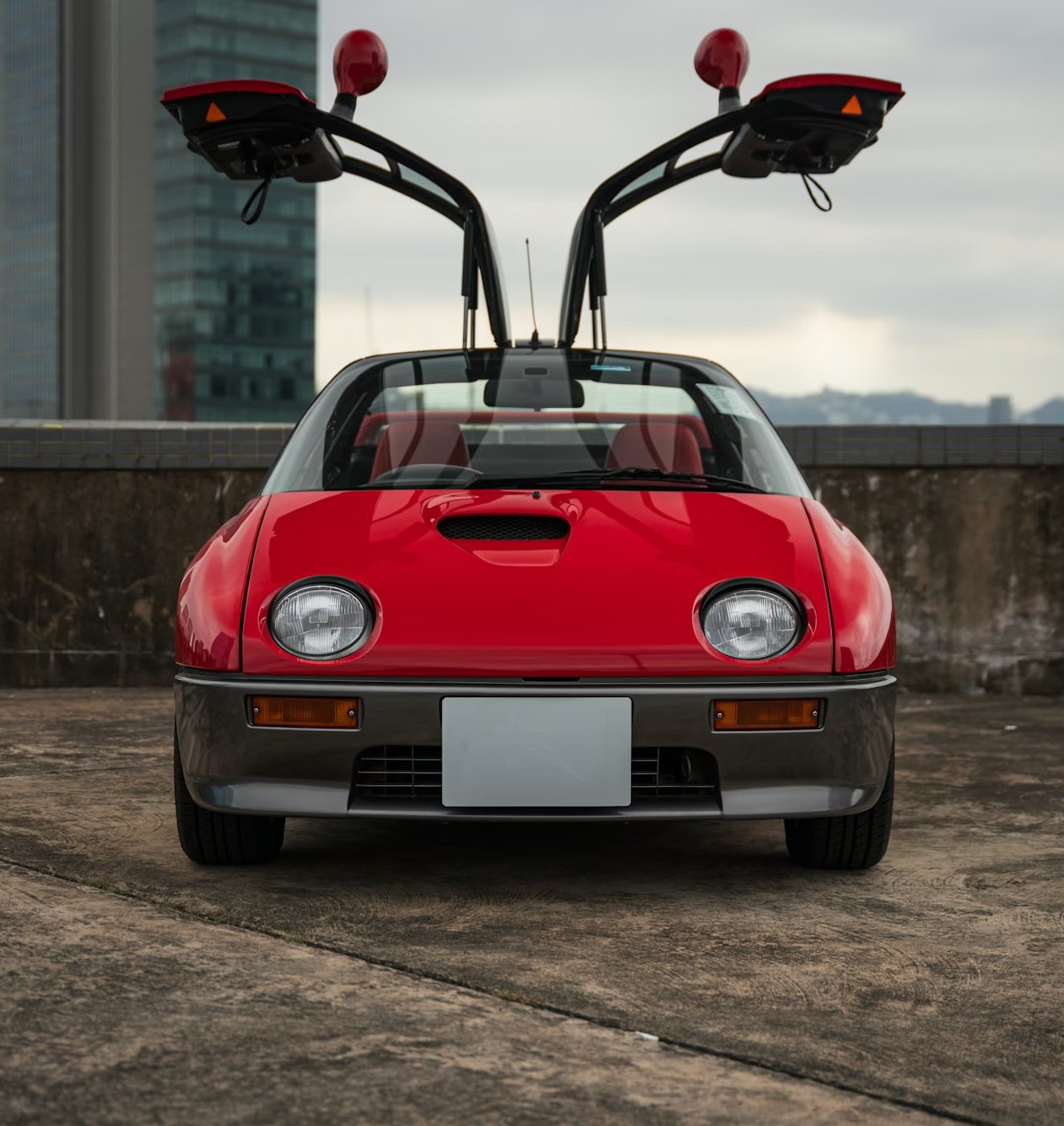
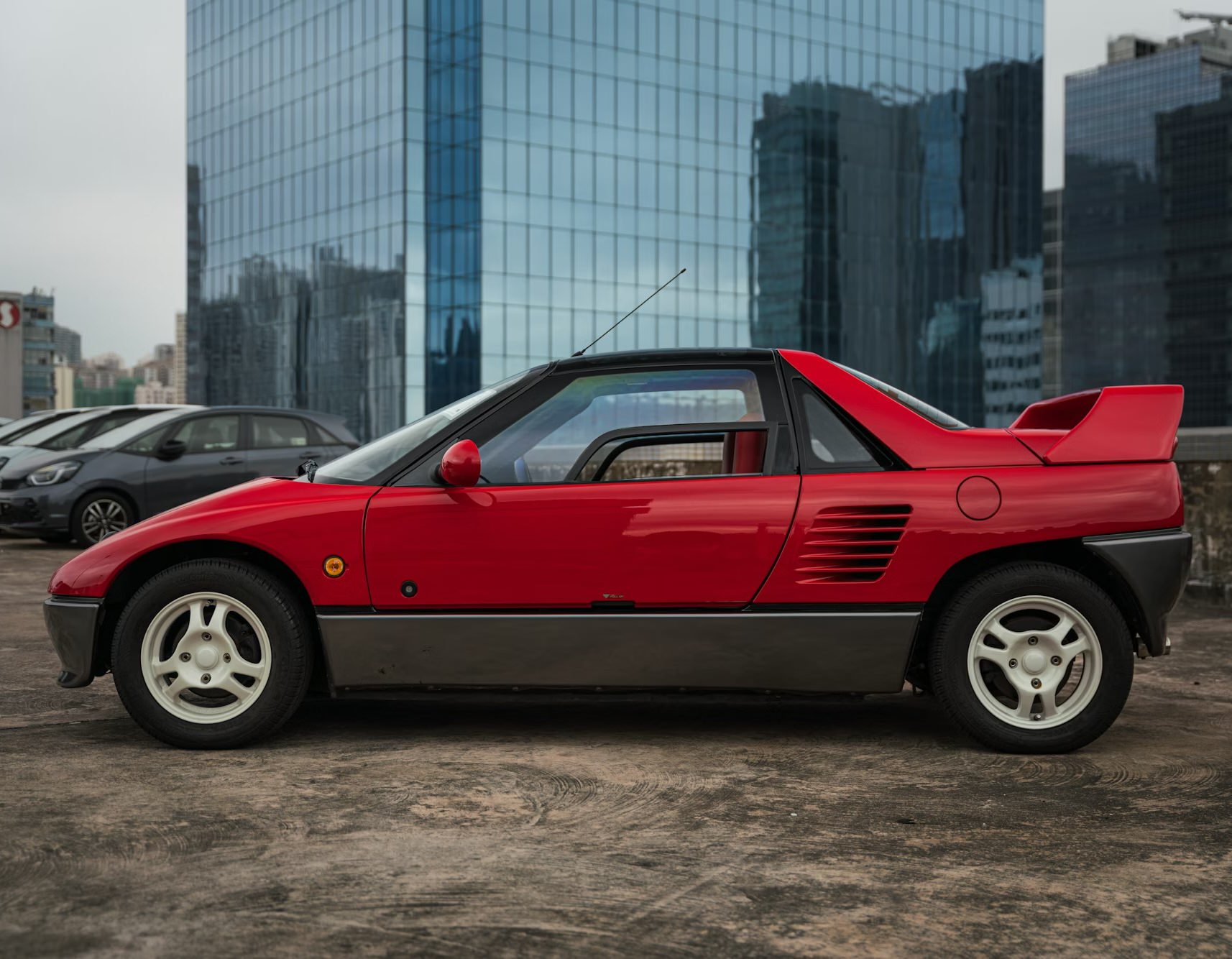
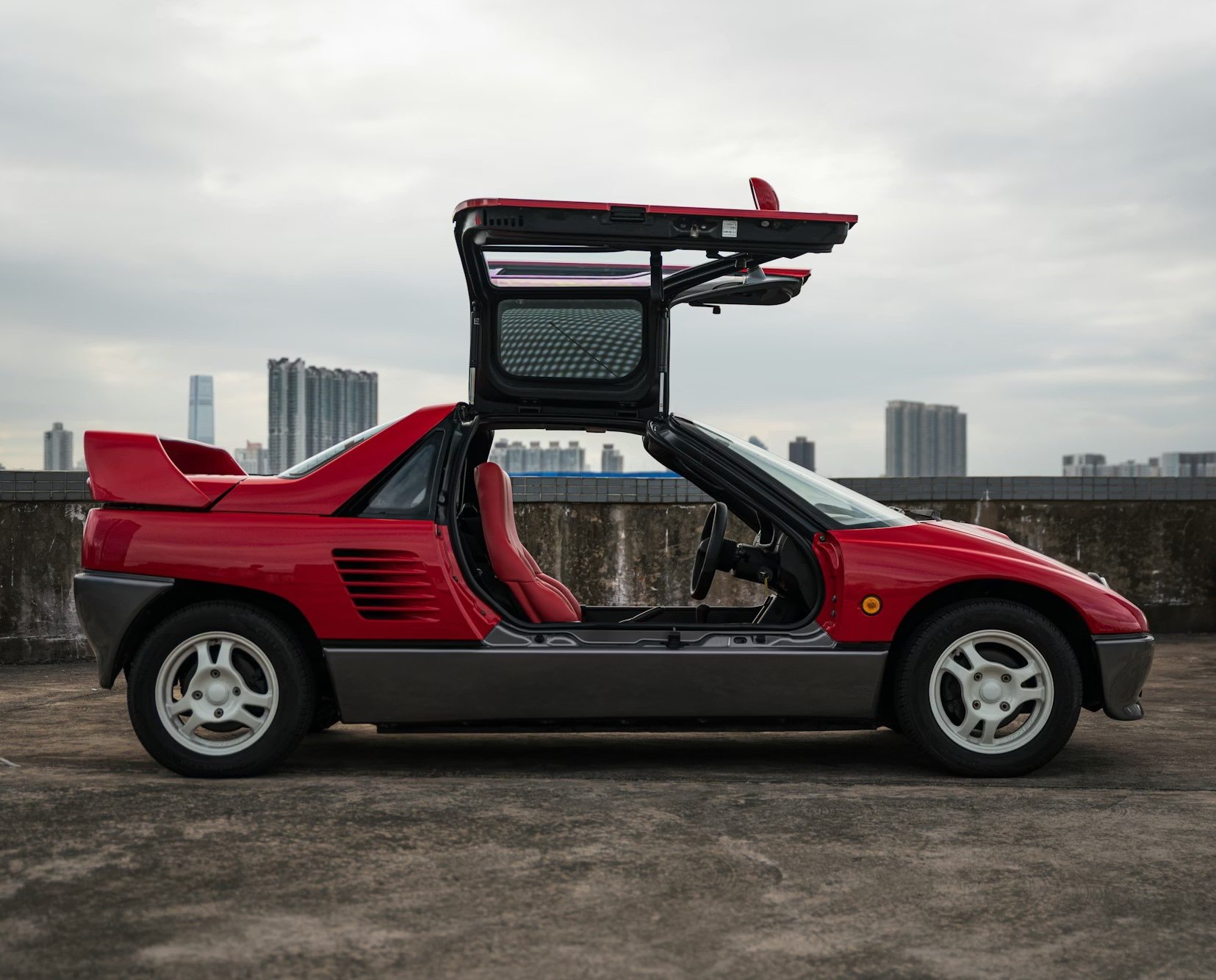
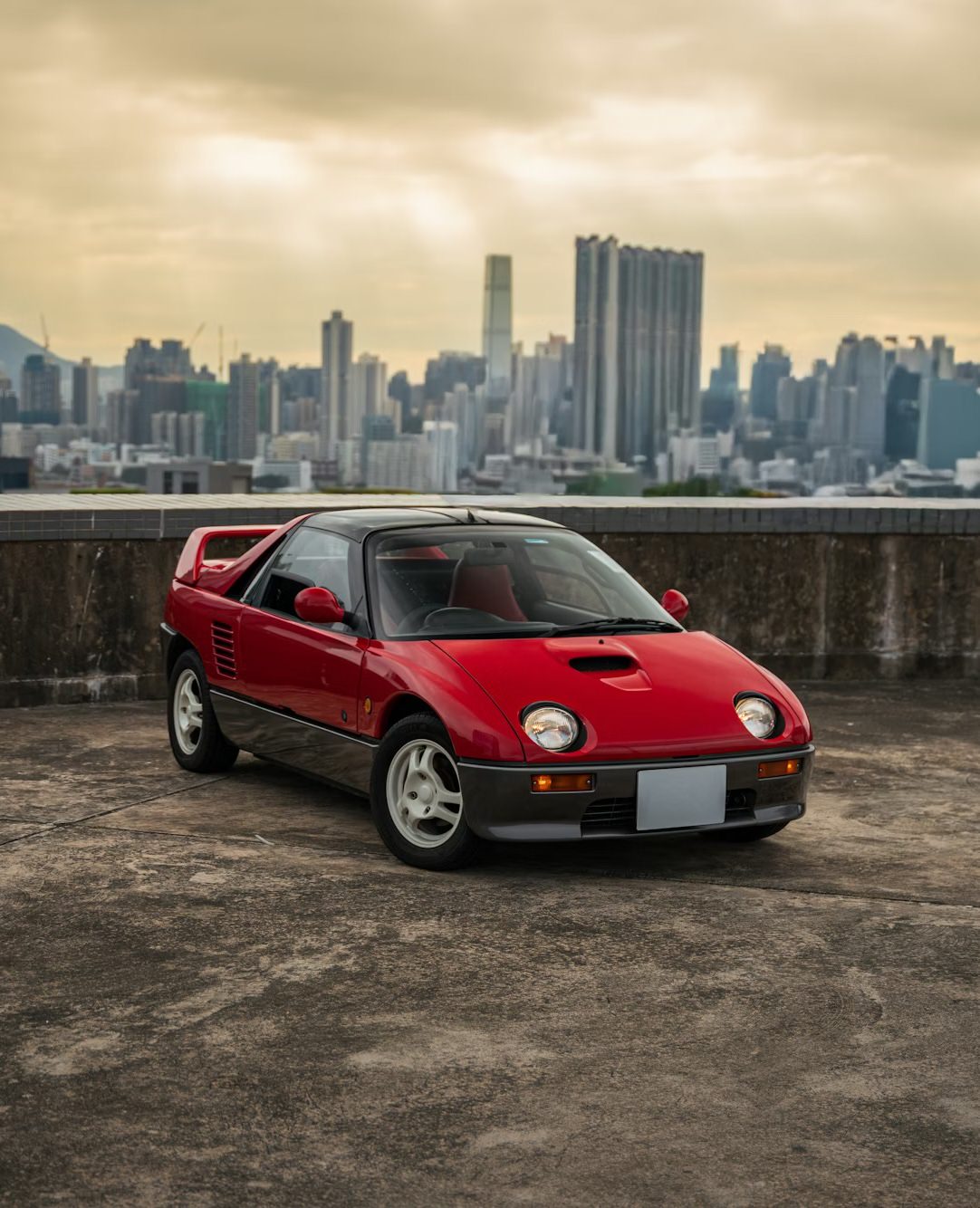
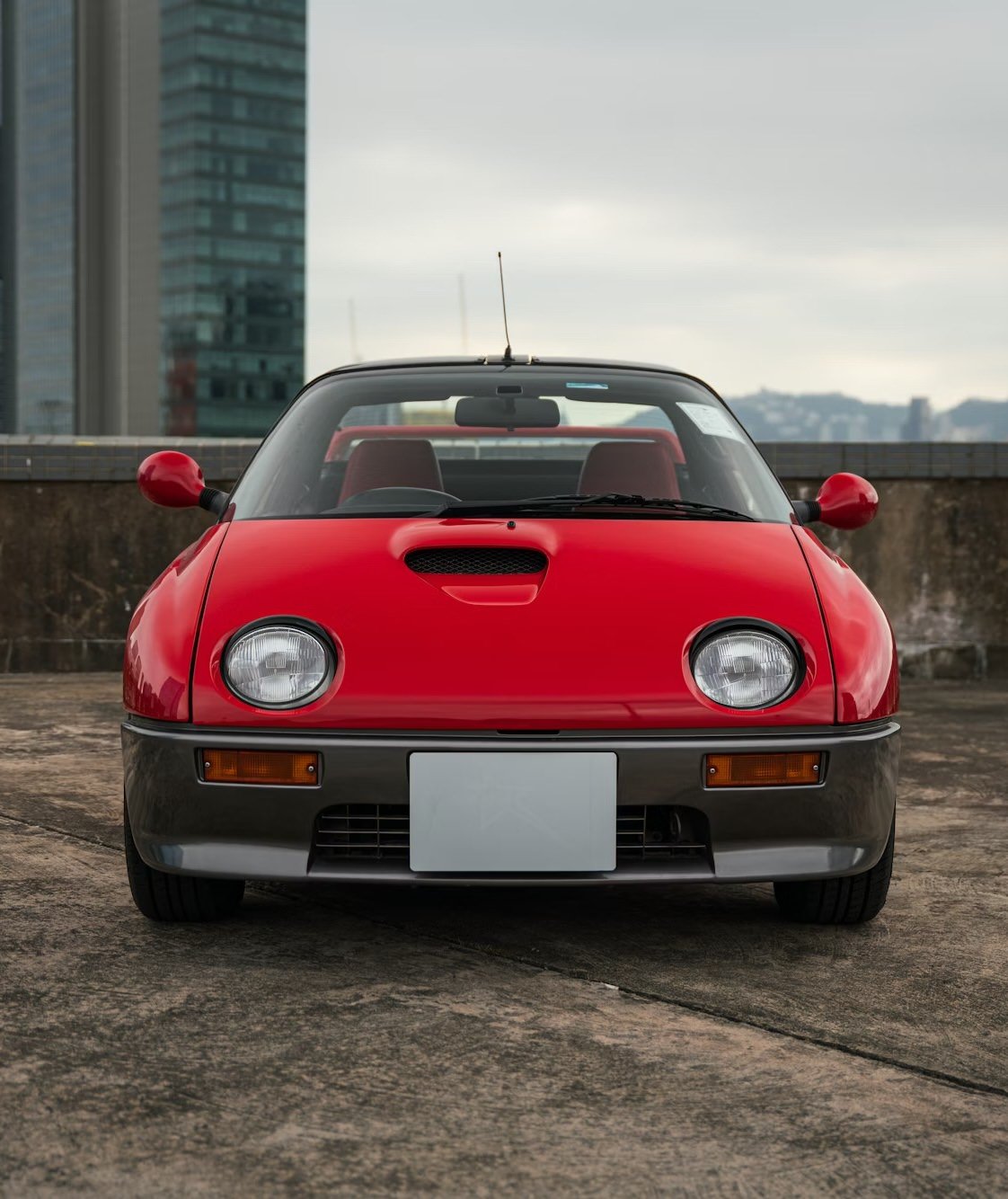
This is an original Mazda Autozam AZ-1, an oft-forgotten 1990s-era gullwing coupe from Japan that was one of the most exciting Kei class sports cars of its time.
The Autozam AZ-1 offers cutting-edge styling by the standards of its time, as well as a turbocharged mid-mounted engine, a 5-speed transmission, seating for two, and an ultra-light curb weight of only 720 kgs (1,587 lbs).
Fast Facts: The Autozam AZ-1
- The Mazda Autozam AZ-1 is a rare early-1990s Kei-class sports car from Japan, memorable for its gullwing doors, mid-engine layout, and supercar-inspired side profile. With seating for two, a 5-speed manual gearbox, and a curb weight of just 720 kgs, it offered an unusually fun driving experience for its class.
- Developed from mid-engined Suzuki prototypes of the 1980s, the AZ-1 project was ultimately taken over by Mazda through its Autozam sub-brand. Led by MX-5 engineer Toshihiko Hirai, Mazda further developed the concept into a production car that melded compact Kei car regulations with exotic styling and a rear-wheel-drive layout.
- The production AZ-1 used a steel unibody chassis with lightweight composite body panels, much of it developed in England. Power came from a turbocharged 657cc Suzuki F6A inline-three producing 63 – 66 bhp, routed to the rear wheels.
- Despite strong early interest, Japan’s early-1990s economic downturn limited sales, prompting several special editions in the hopes of increasing demand. Today the Autozam AZ-1 and its Suzuki Cara sibling are highly collectible, especially among JDM enthusiasts around the world.
History Speedrun: The Mazda Autozam AZ-1
What would happen if you took the engineering and styling specifications of the world’s most famous supercars and squeezed them into Japan’s restrictive Kei class? The answer is the car you see pictured here, the rare and highly unusual Autozam AZ-1 from Mazda, and indirectly from Suzuki.
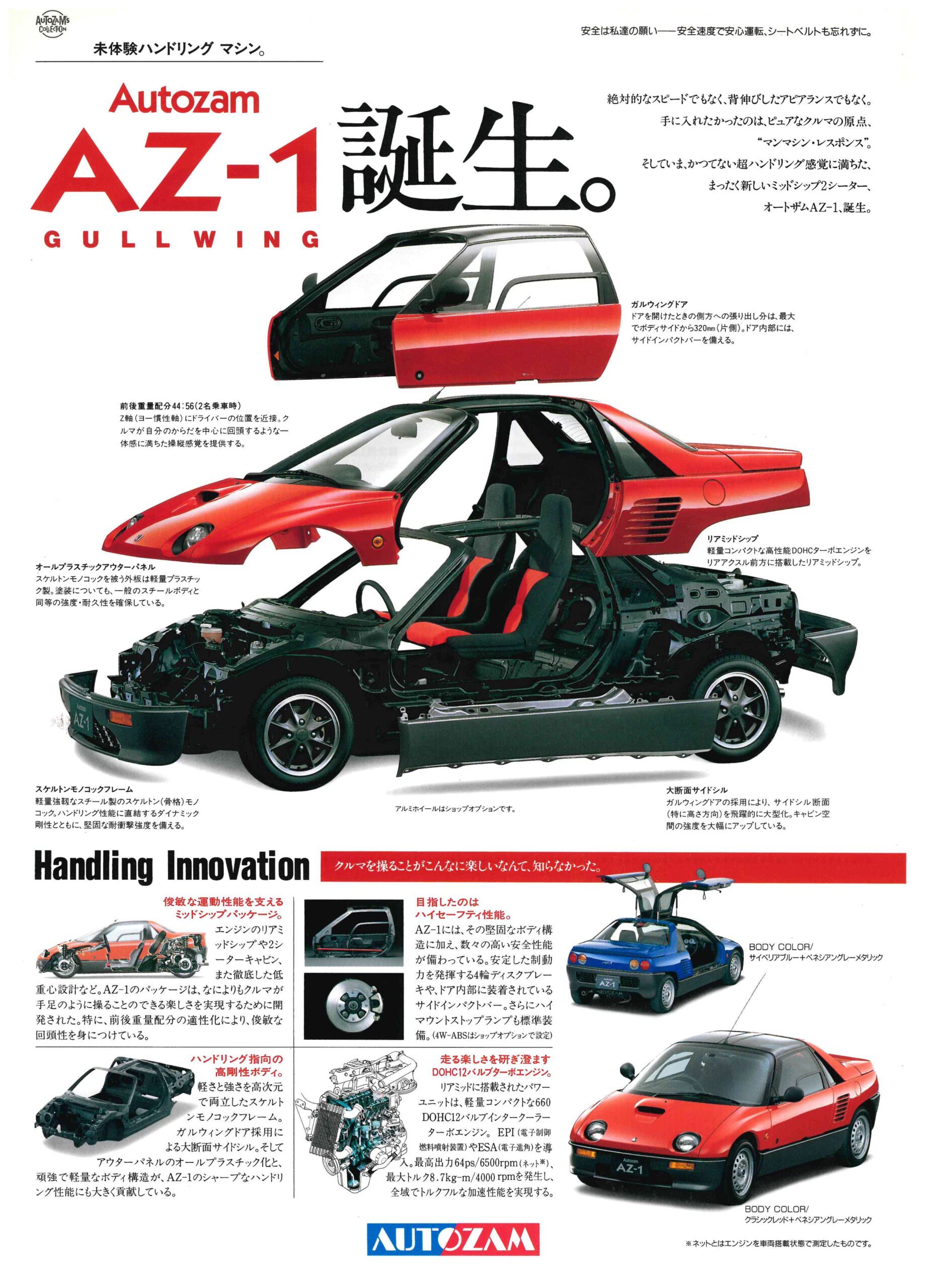
 Much of the development work for the chassis of the production car would take place in England, it consists of a steel unibody internal structure with lightweight plastic outer body panels. The curb weight of the production car was just 720 kgs or (1,587 lbs).
Japan’s “Kei” class is a series of size, weight, displacement, and power rules that offer excellent tax incentives if abided by. There are Kei class trucks and minivans, sports cars, and even 4×4 off-roaders – all decidedly on the diminutive side.
For the uninitiated, Autozam was Mazda’s sub-brand for smaller cars including Kei cars, many of which were simply badge-engineered Suzukis. This close connection between the two Japanese automakers would directly lead to the car you see here, it started out as a Suzuki prototype before being picked up and productionized by Mazda.
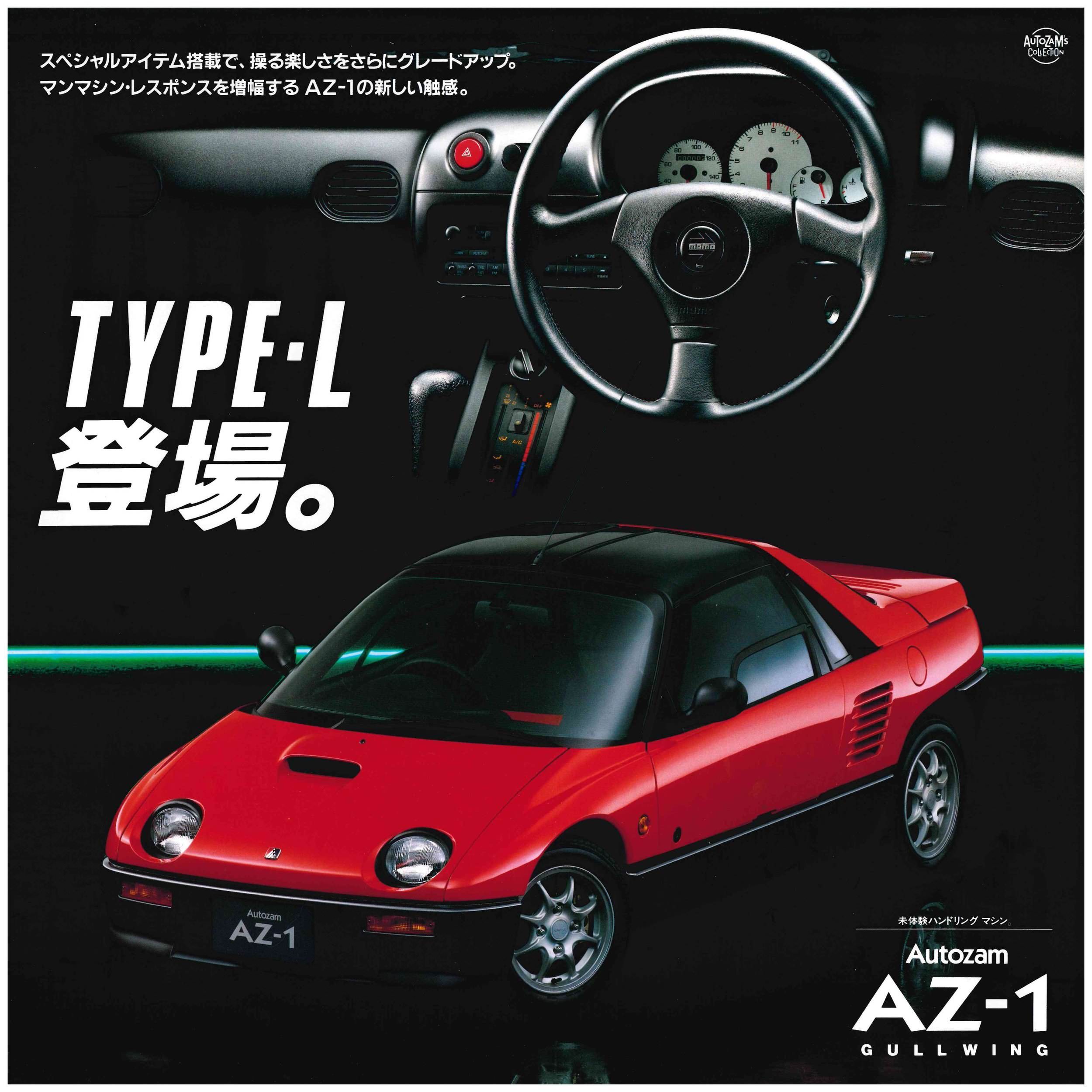
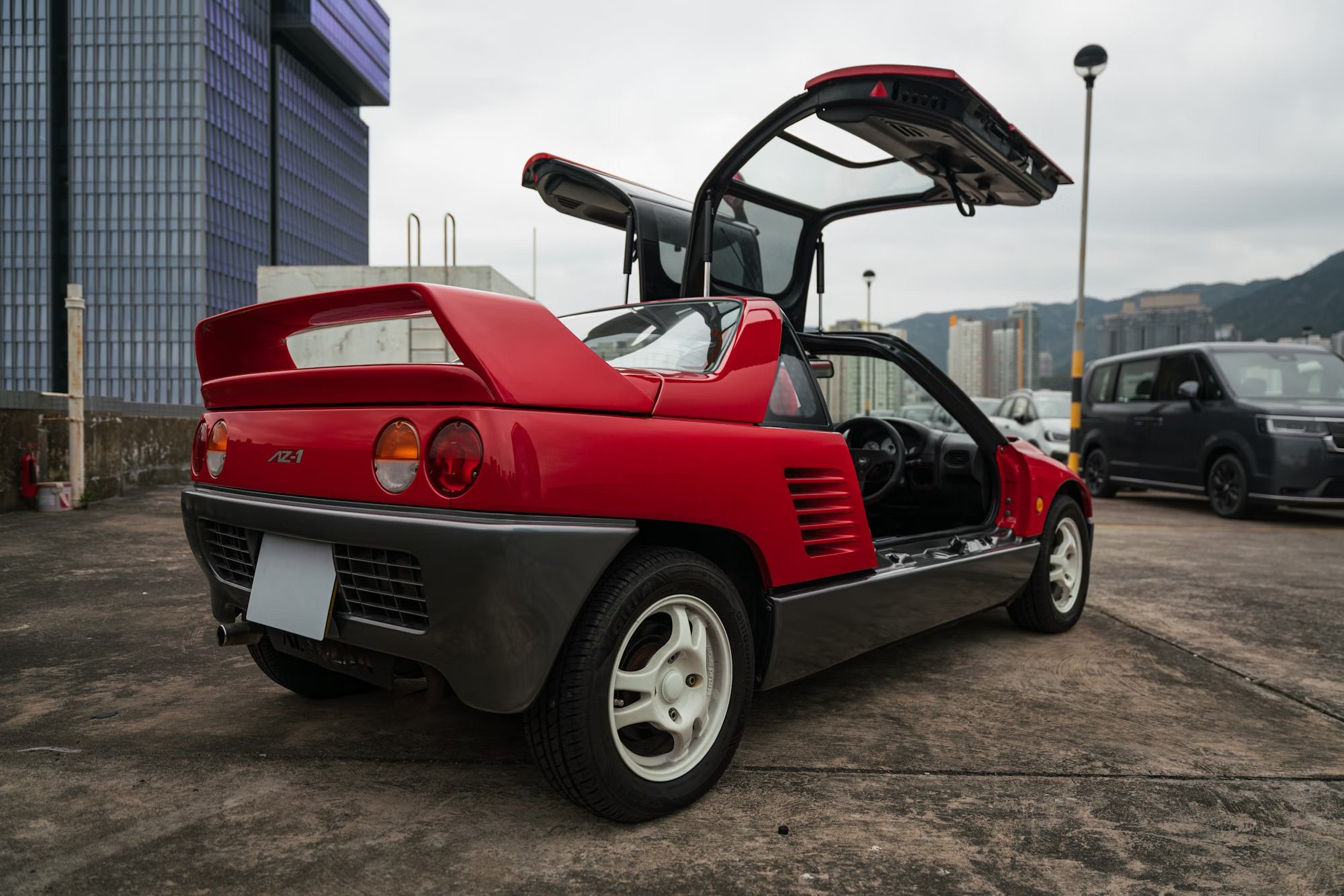
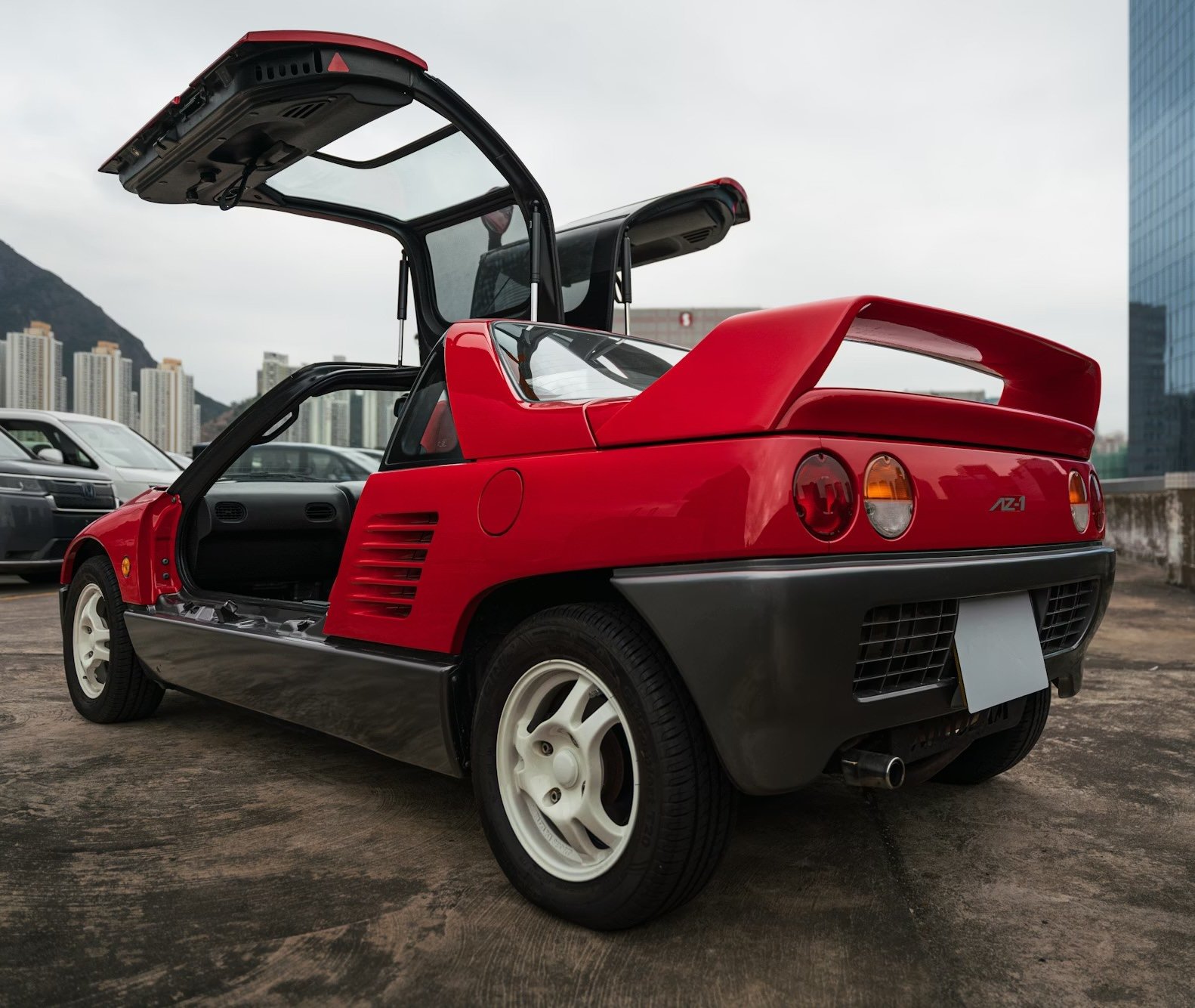
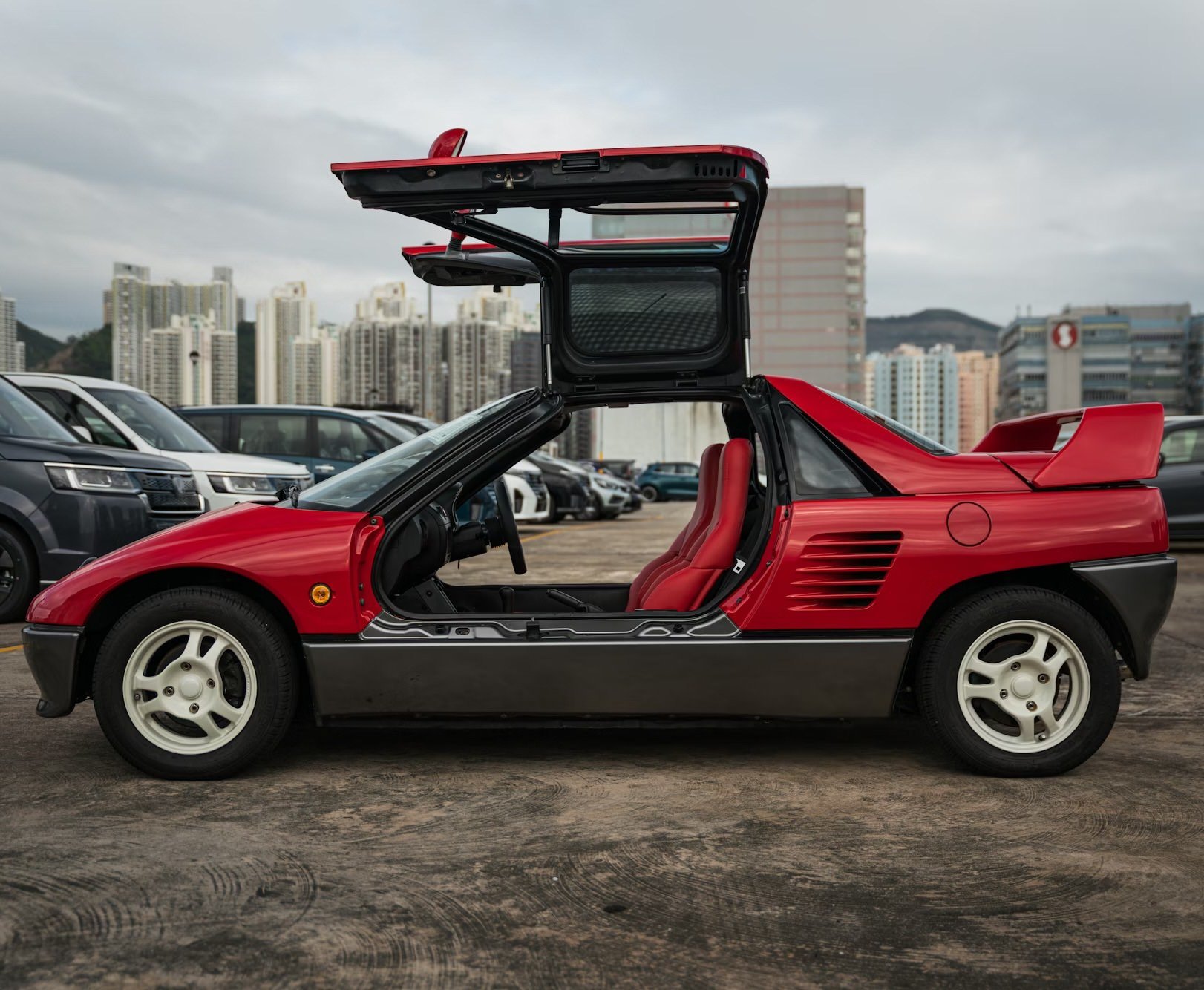
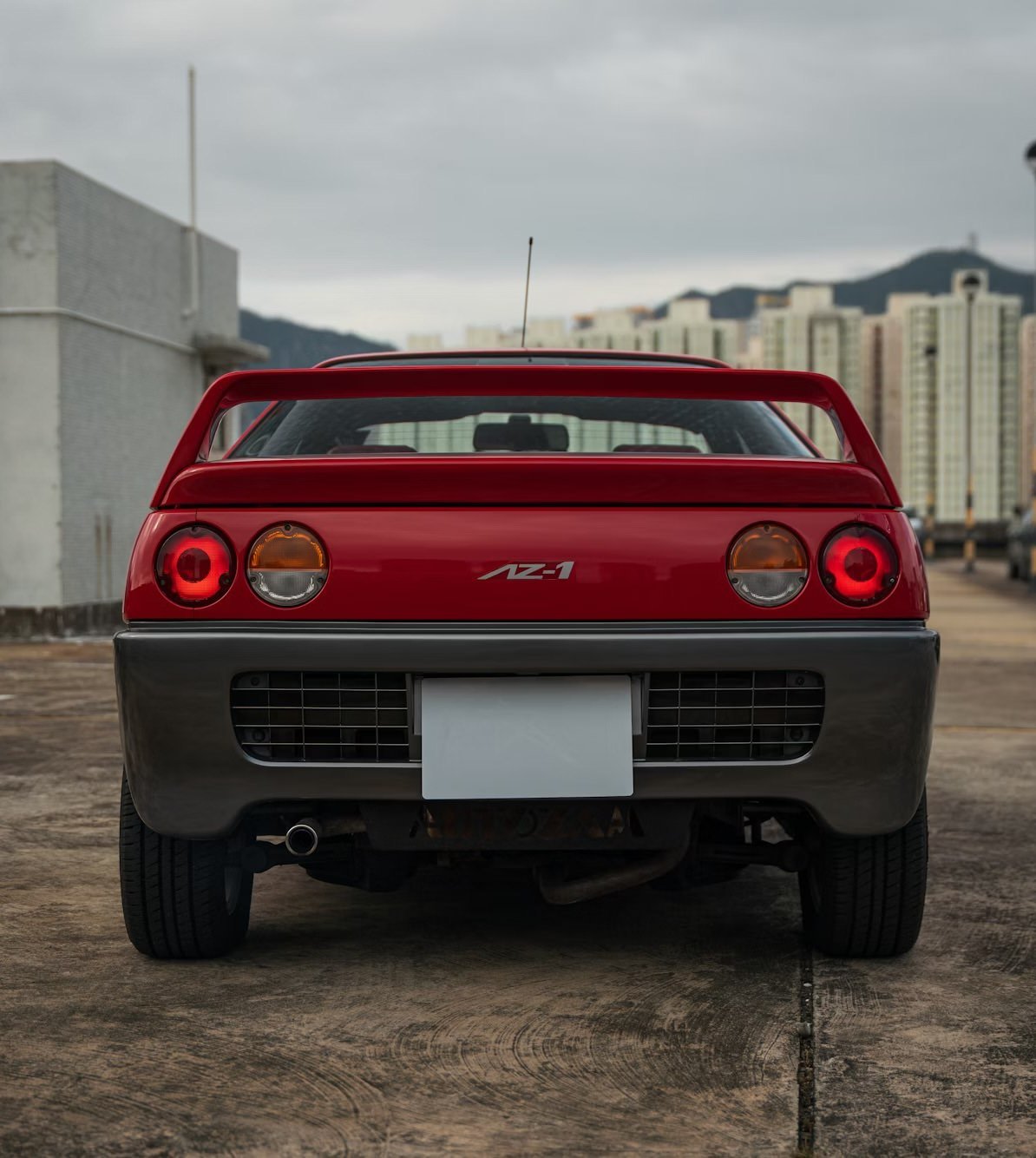
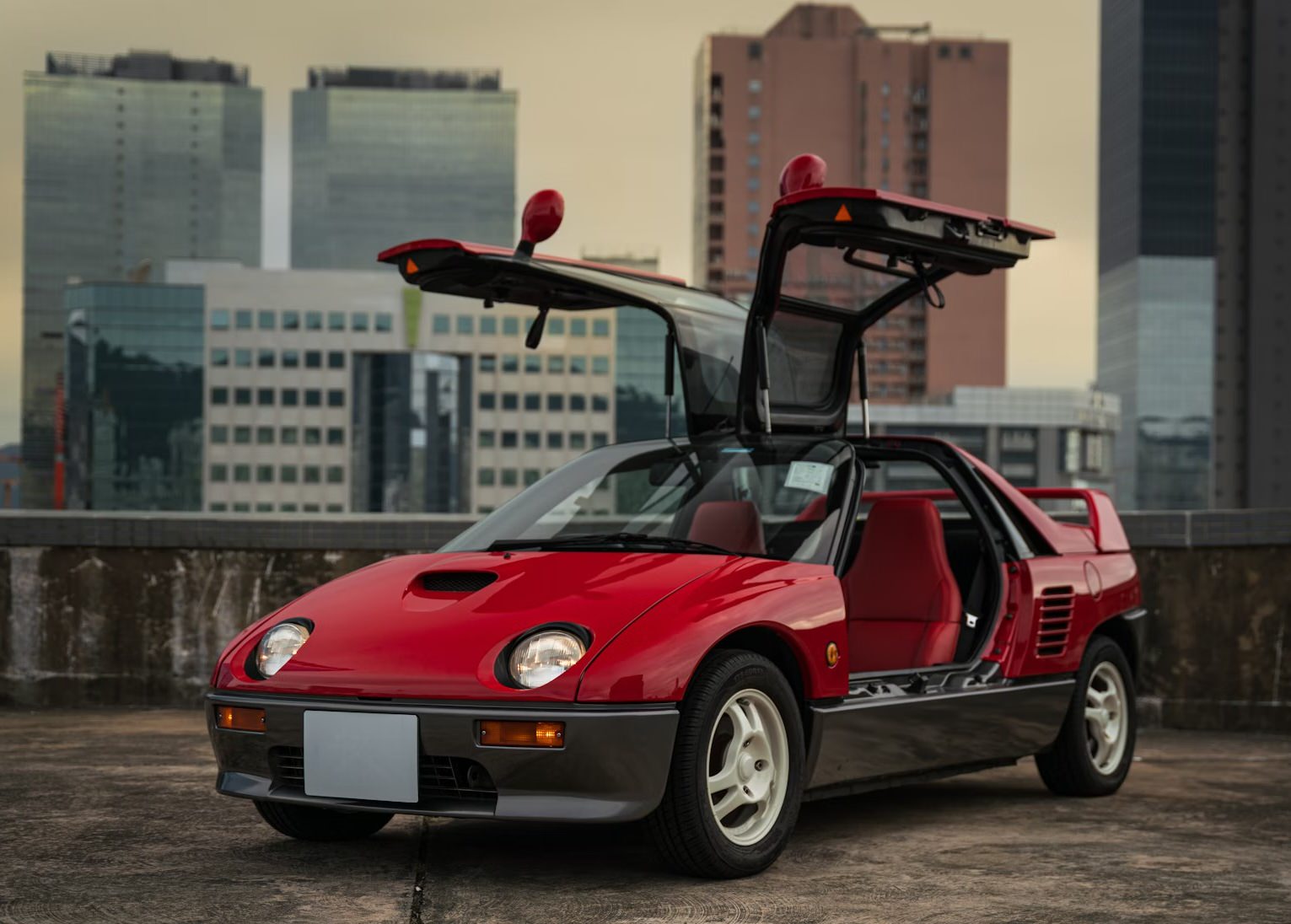
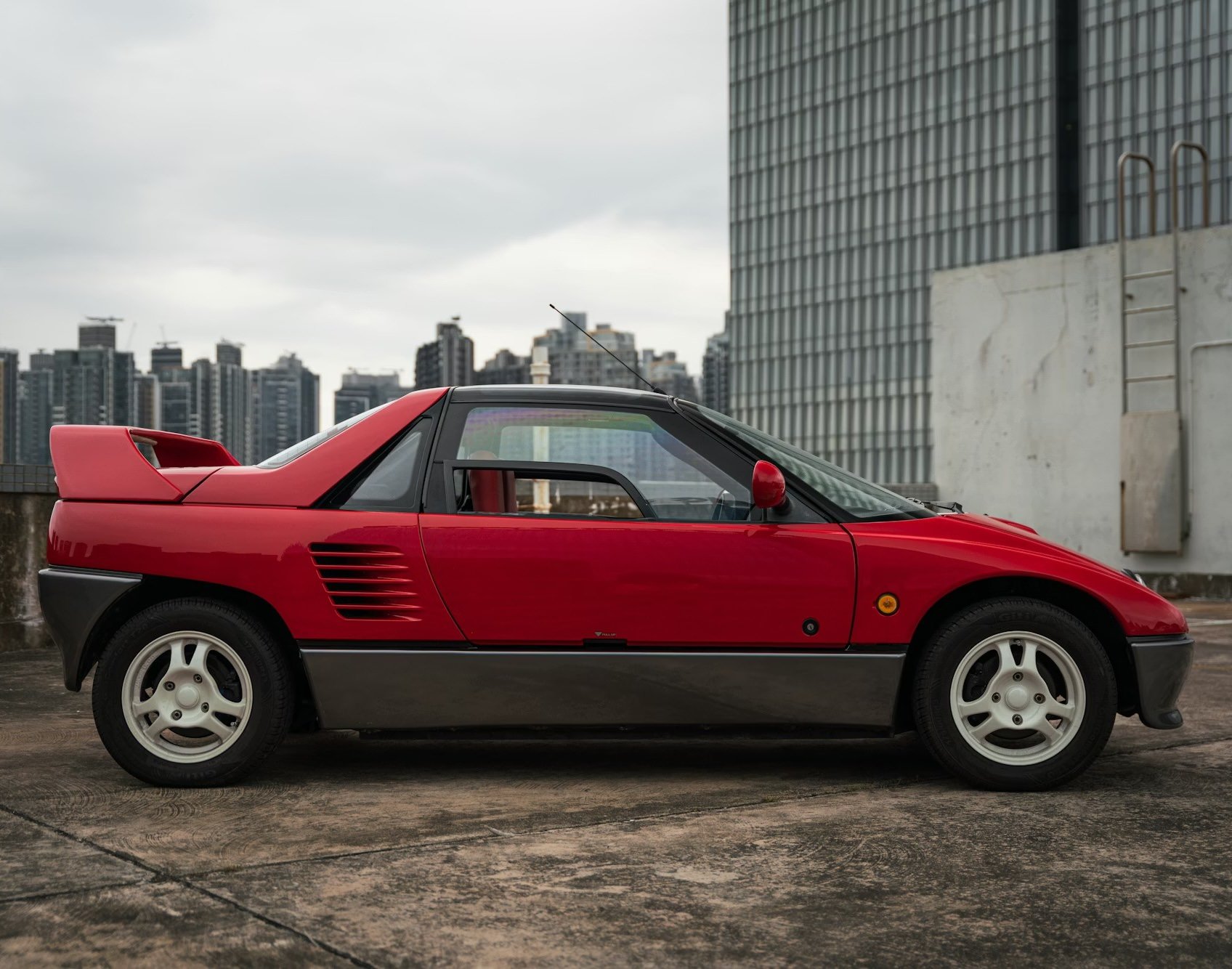
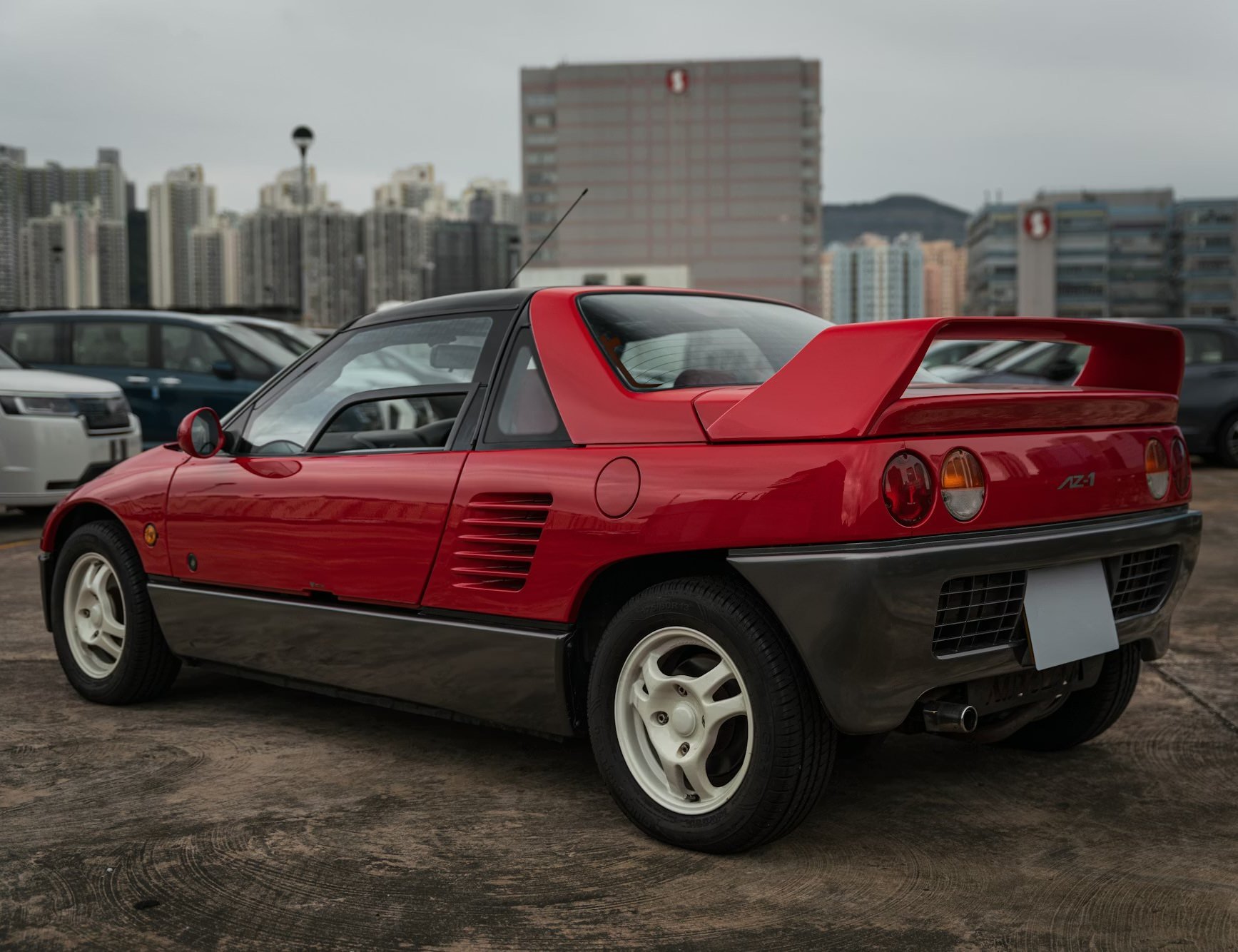
In the years since its introduction in 1992 some have called the AZ-1 a “mini supercar” due to its supercar-inspired design influences – the mid-engined layout, gullwing doors, optional rear wing, and prominent side strakes.
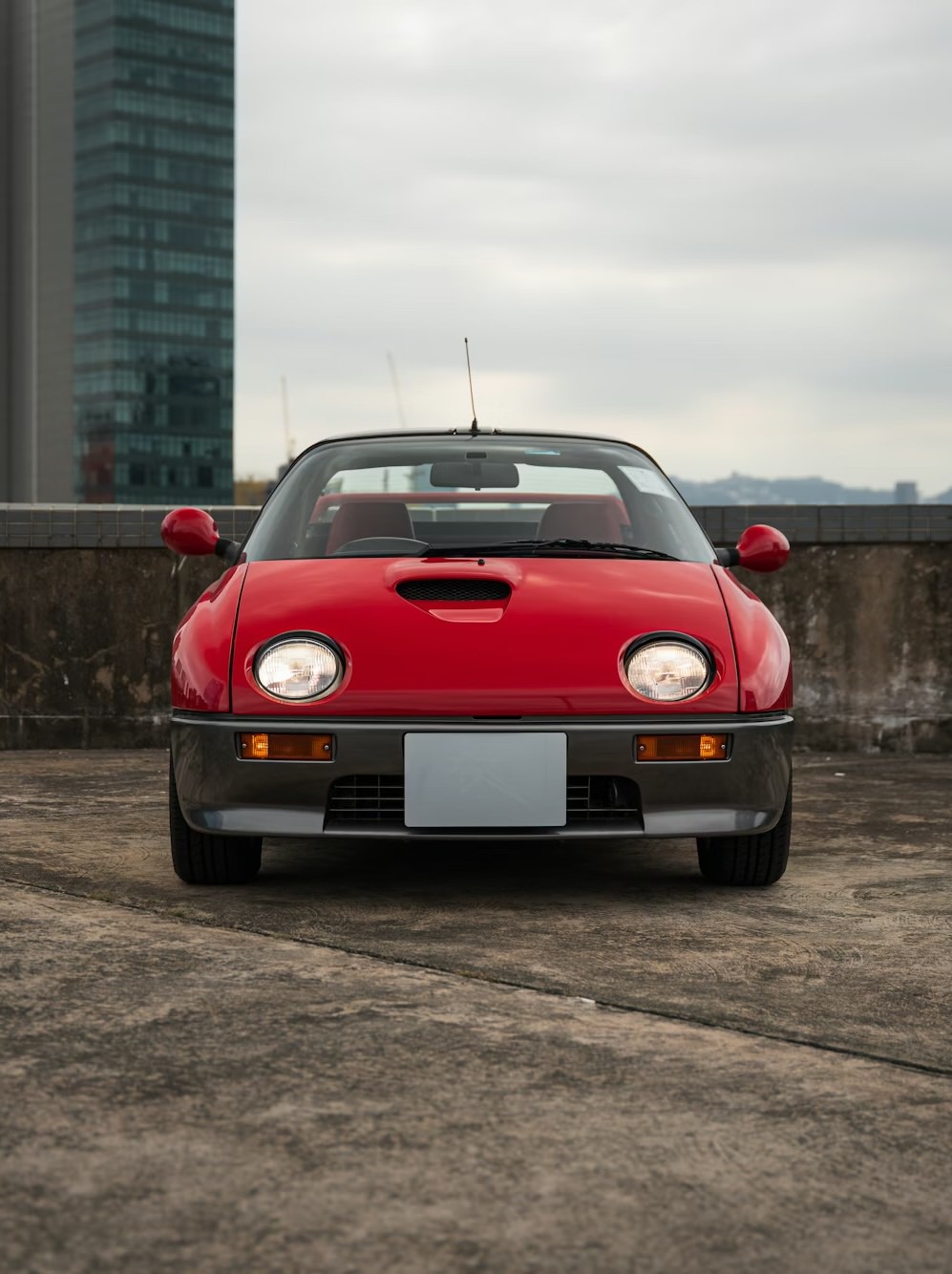
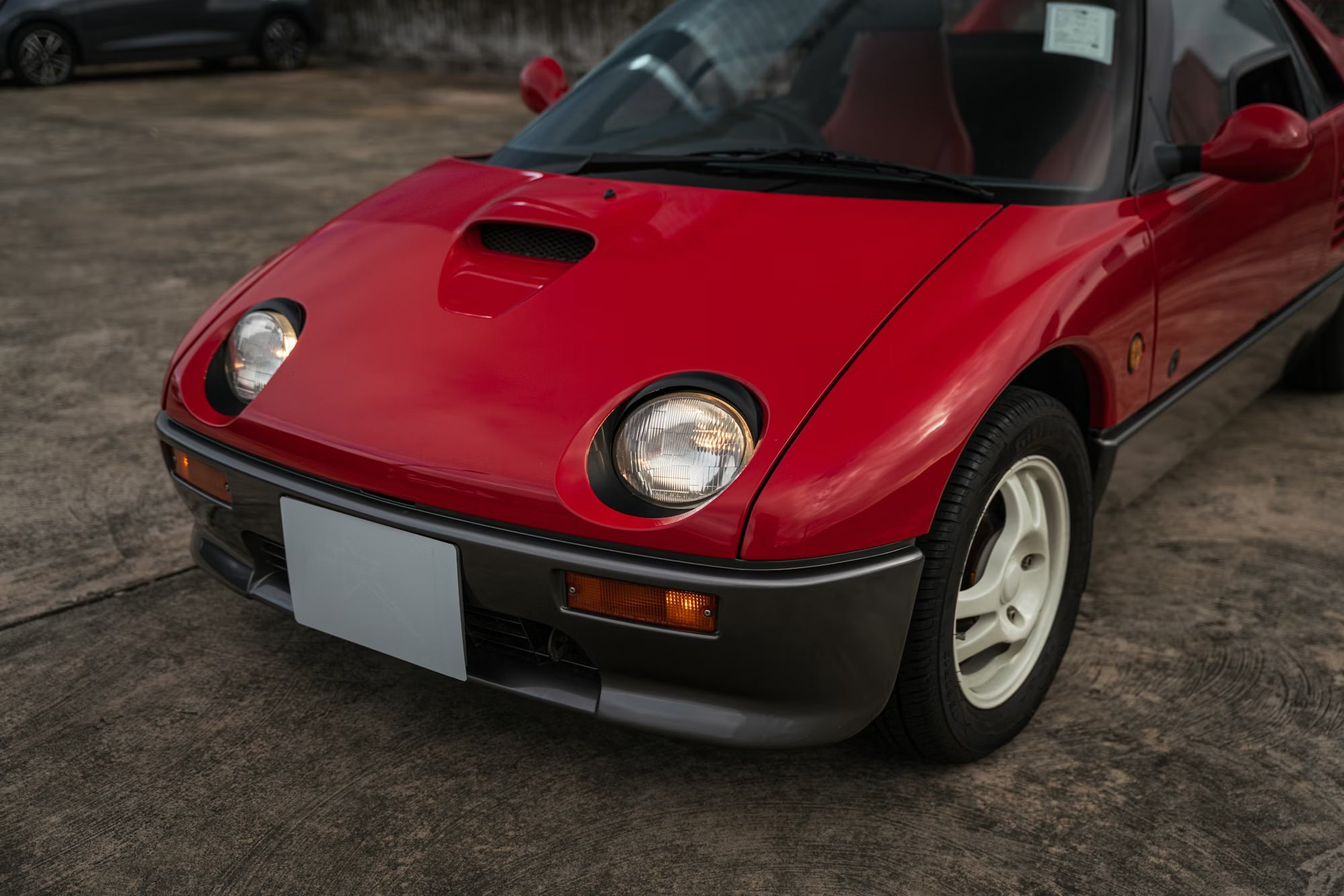
If you were Japanese in the early 1990s with a limited budget and a love for exotic machinery you would have likely had just one car on your shopping list – the cheeky little bug-eyed Autozam.
The original Suzuki prototypes that would eventually be developed into the AZ-1 started with the Suzuki RS/1 prototype from 1985 – a mid-engined Kei car that was followed up by the RS/3 of 1987.
Suzuki decided not to put the car into production, instead focusing on the Cappucino, but thankfully due to the close relationship between Suzuki and Mazda a deal was struck and the project was taken over by Toshihiko Hirai – the father of the Mazda MX-5 (Miata).
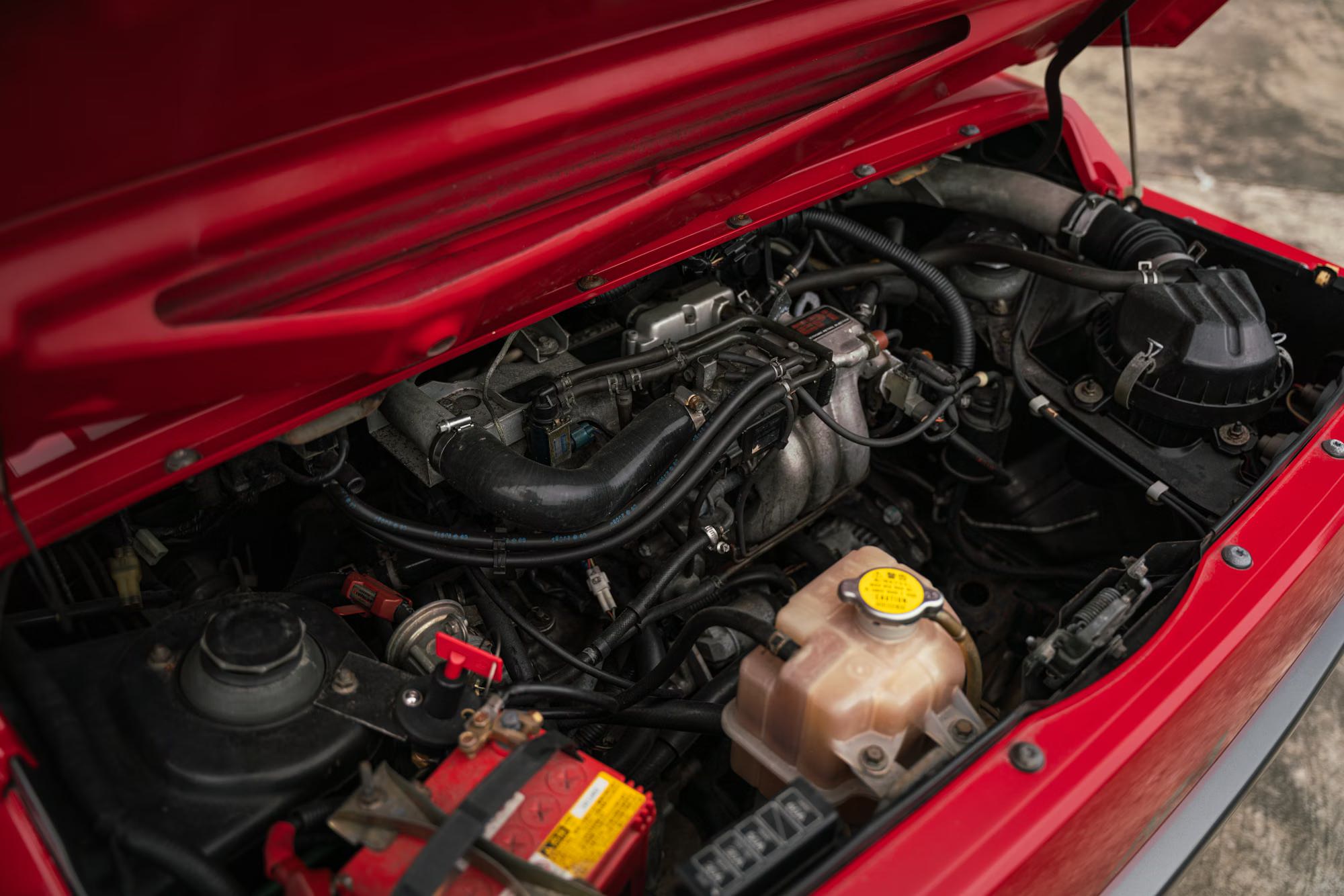
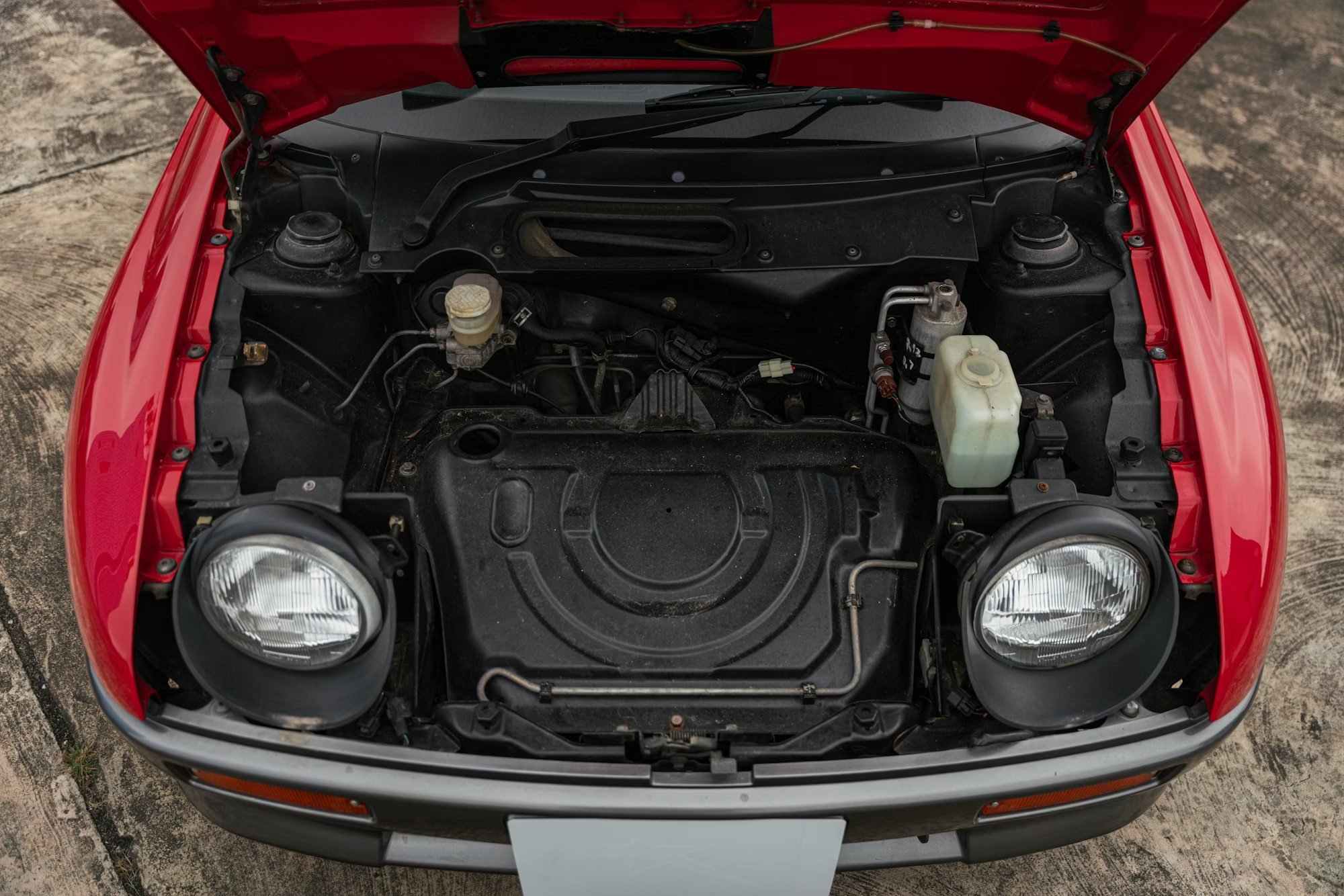
Power is provided by a mid-mounted double overhead cam, 12-valve, turbocharged inline-three cylinder Suzuki F6A engine producing 66 bhp and sending power back through a 5-speed gearbox to the rear wheels.
The Mazda team then developed their own version of the car, the AZ-550 Sports, in three different configurations: Type A, Type B, and Type C. The Type A was the design chosen for production, while the Type B was a spartan “high-tuned pure sports” version, and the Type C had a distinctive body design inspired by Mazda’s Group C sports prototype racers.
Much of the development work for the chassis of the production car would take place in England, it consists of a steel unibody internal structure with lightweight plastic outer body panels. The curb weight of the production car was just 720 kgs or (1,587 lbs).
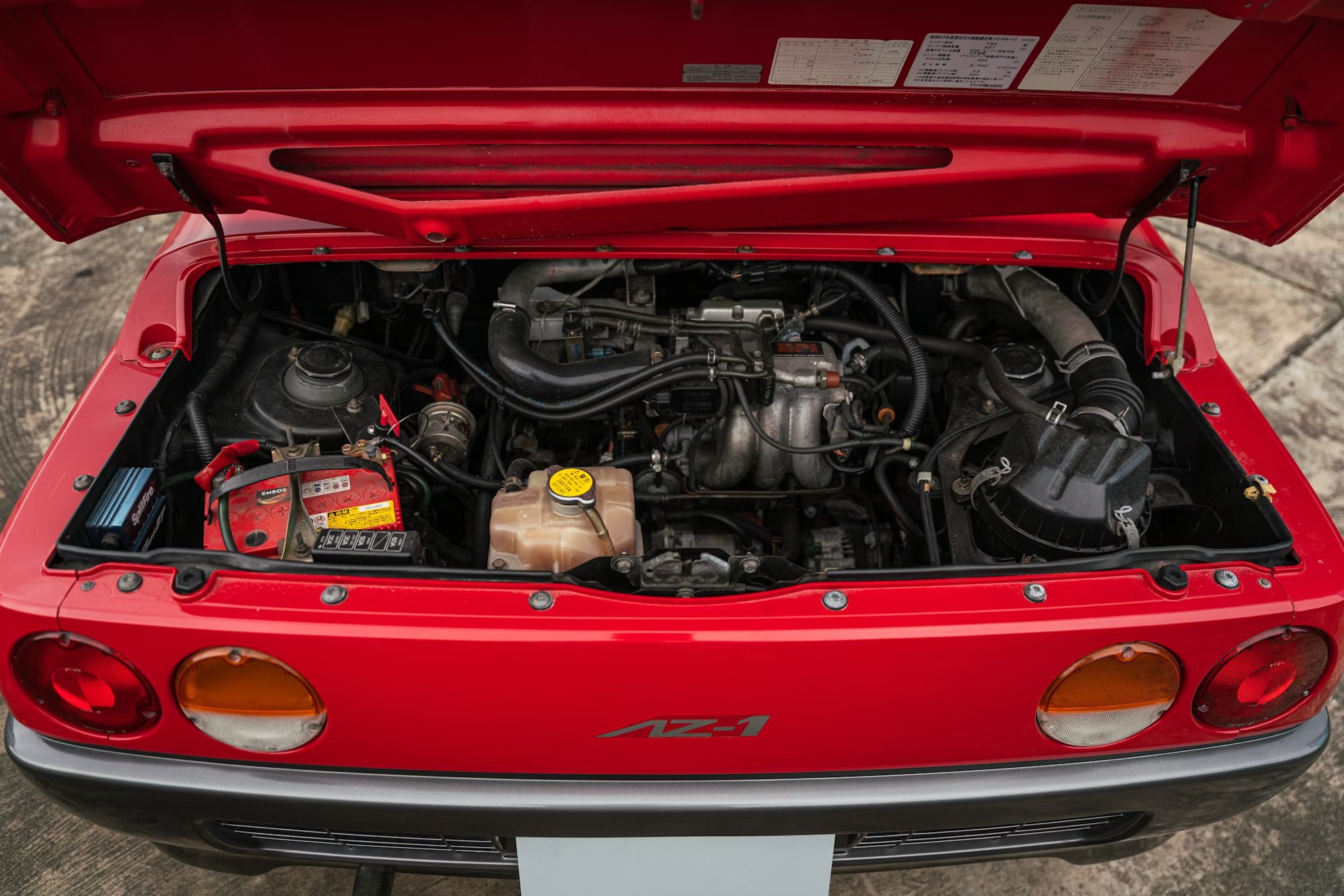
Power is provided by a mid-mounted double overhead cam, 12-valve, turbocharged inline-three cylinder Suzuki F6A engine producing 66 bhp and sending power back through a 5-speed gearbox to the rear wheels.
Period reviews extolled the handling and performance virtues of the Autozam AZ-1, by the standards of the Kei car class of course, and it appeared that Mazda was going to sell almost a thousand of them a month.
Unfortunately a recession hit the Japanese economy causing pursestrings to tighten, and ultimately Mazda would struggle to sell the cars, releasing a number of special edition versions to bolster interest and shift them off Autozam showroom floors.
Today the AZ-1 and its cousin the Cara are both highly sought after in Japan, and overseas in the rapidly growing JDM culture scene in the United States, Europe, and further afield.
The 1993 Mazda Autozam AZ-1 Shown Here
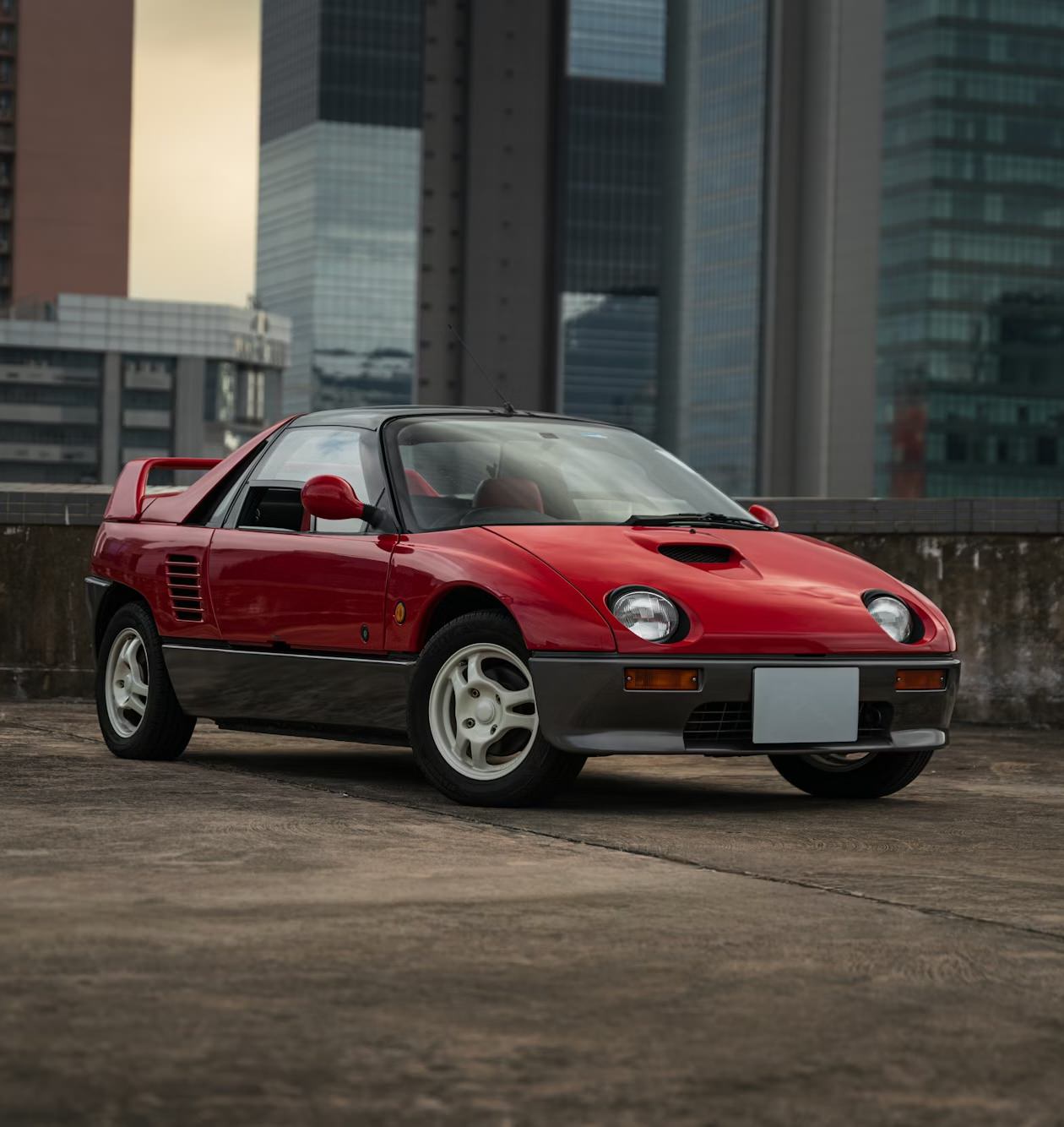
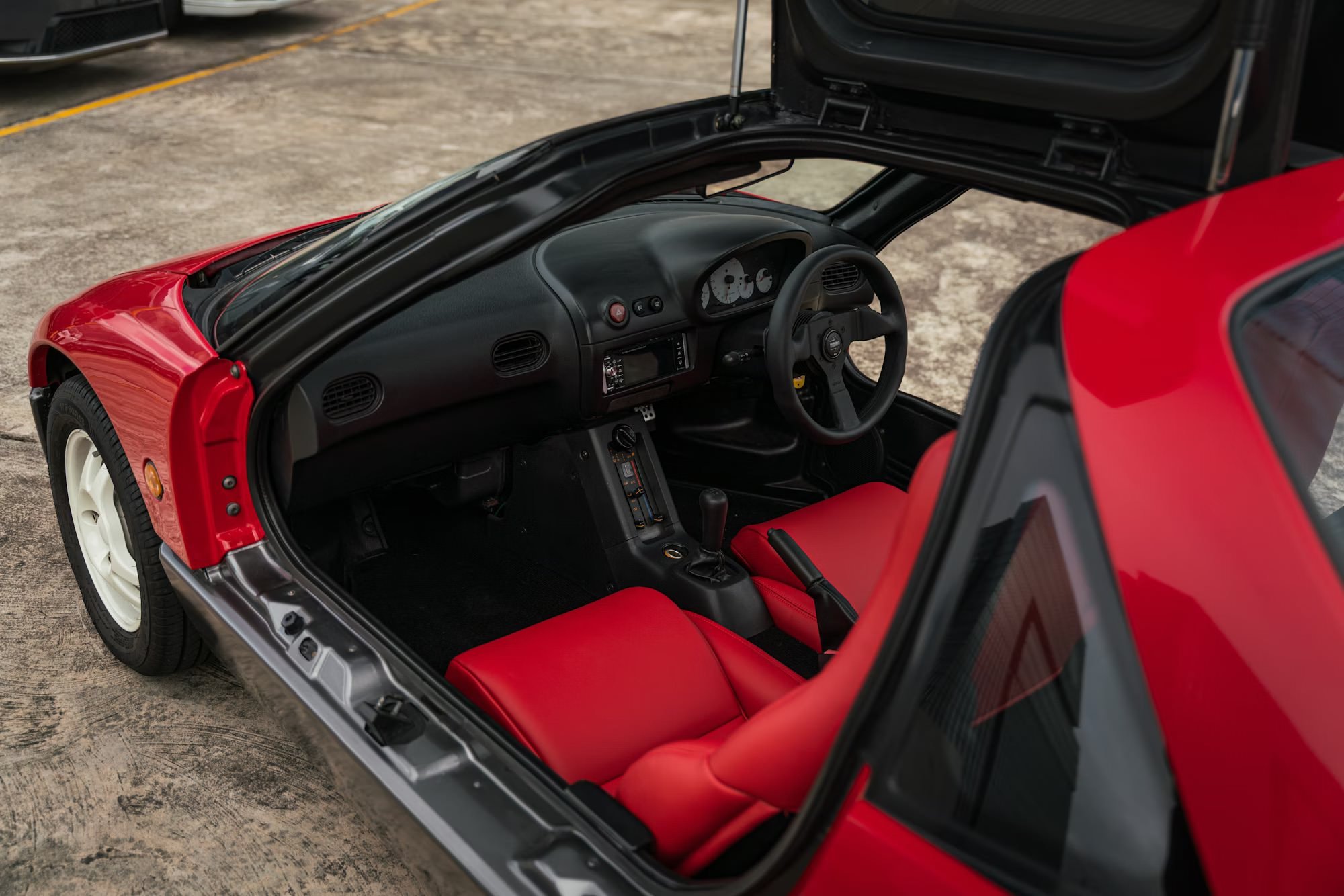
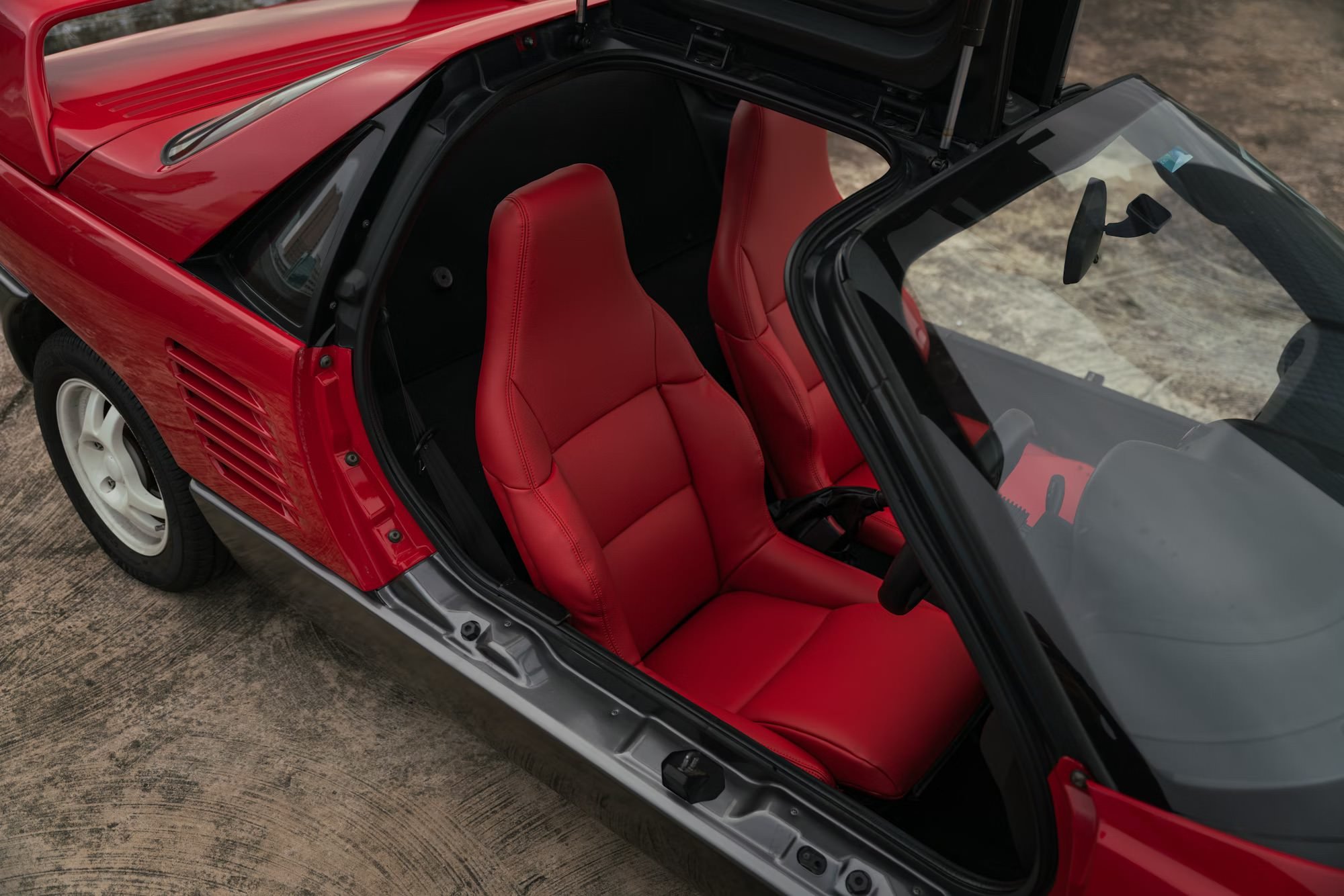
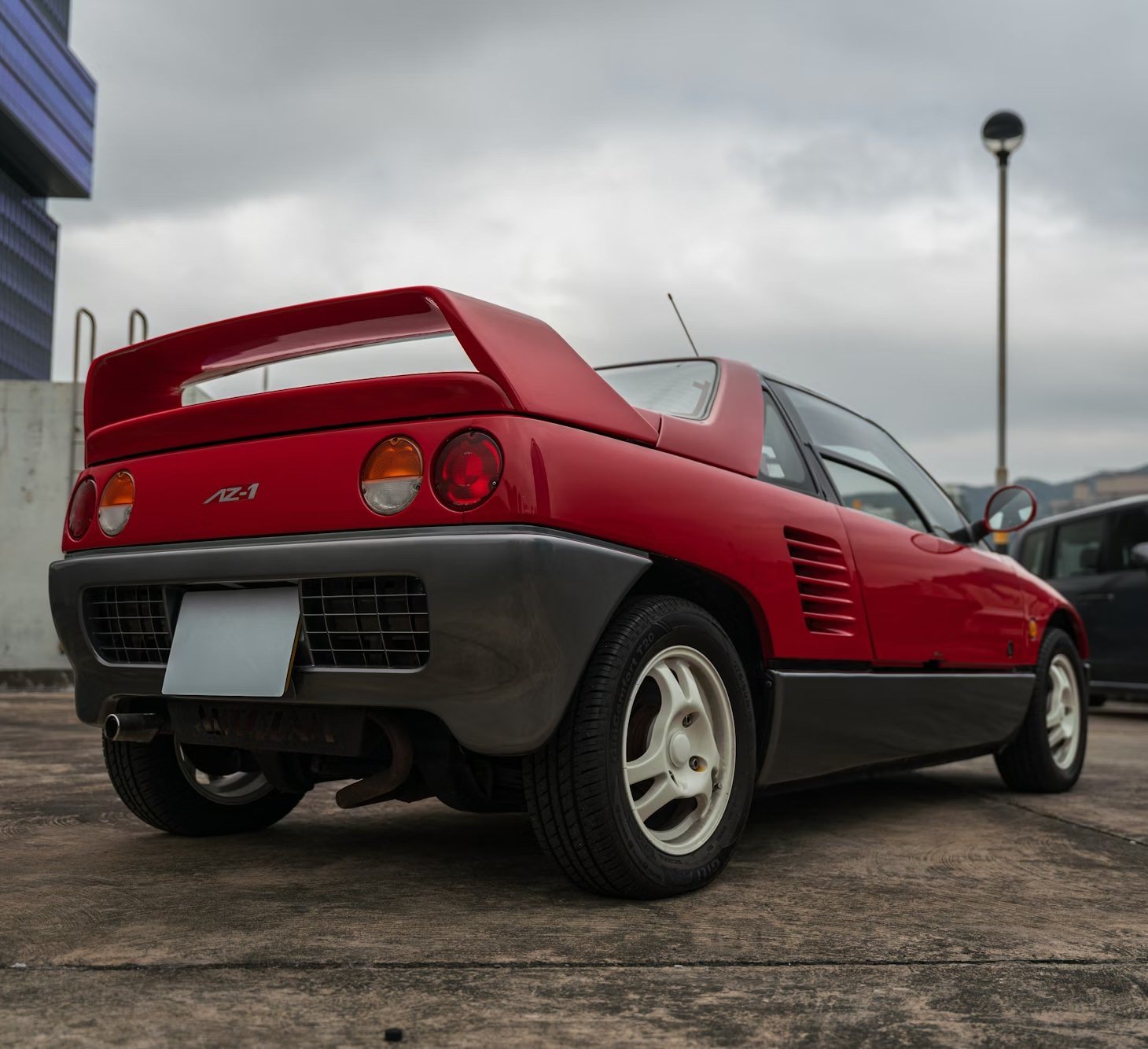
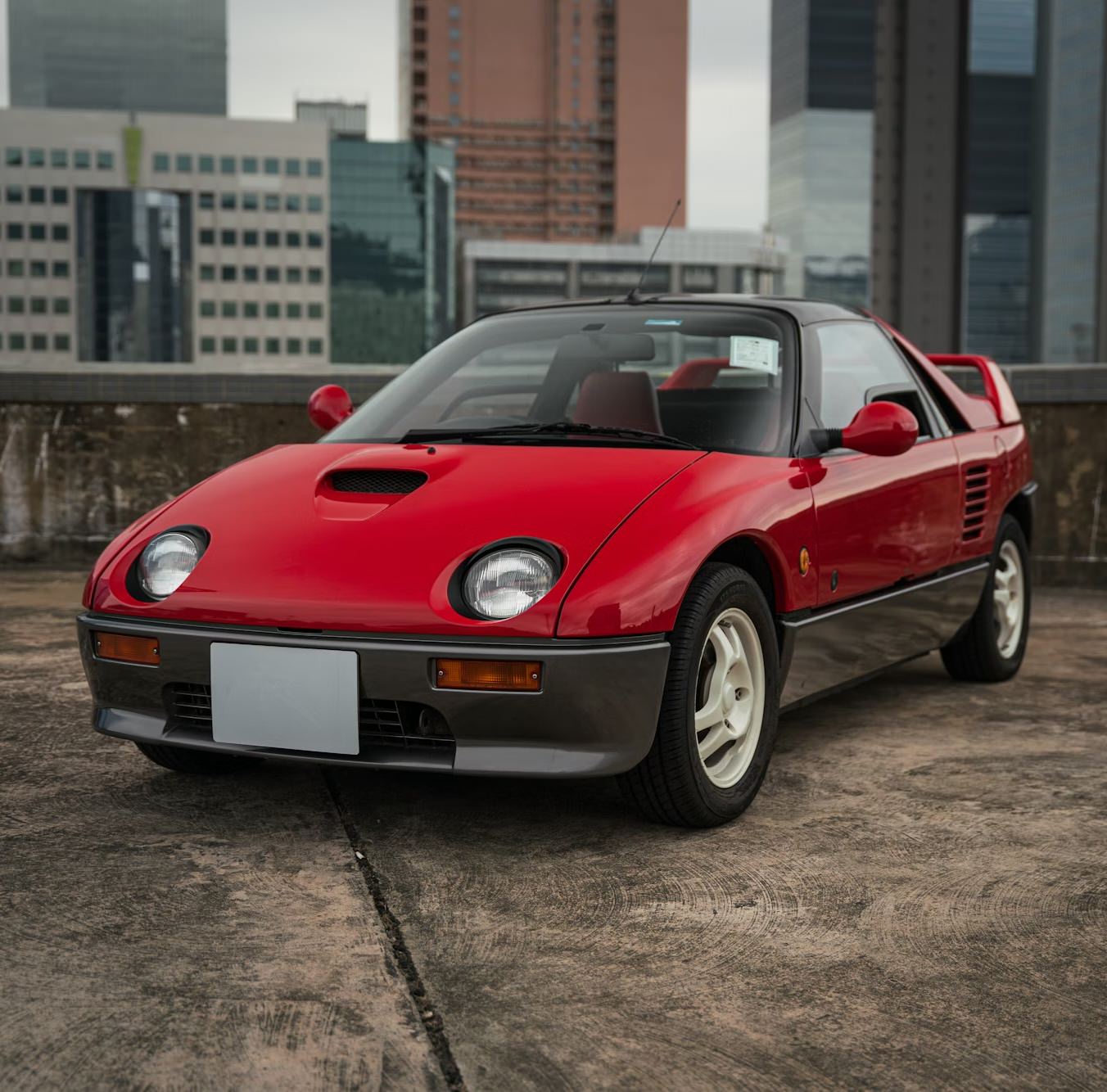
The car you see here is an original 1993 Mazda Autozam AZ-1 finished in Classic Red over a red leather-trimmed cabin, white 13-inch triple three-spoke alloy wheels, and it even has air conditioning.
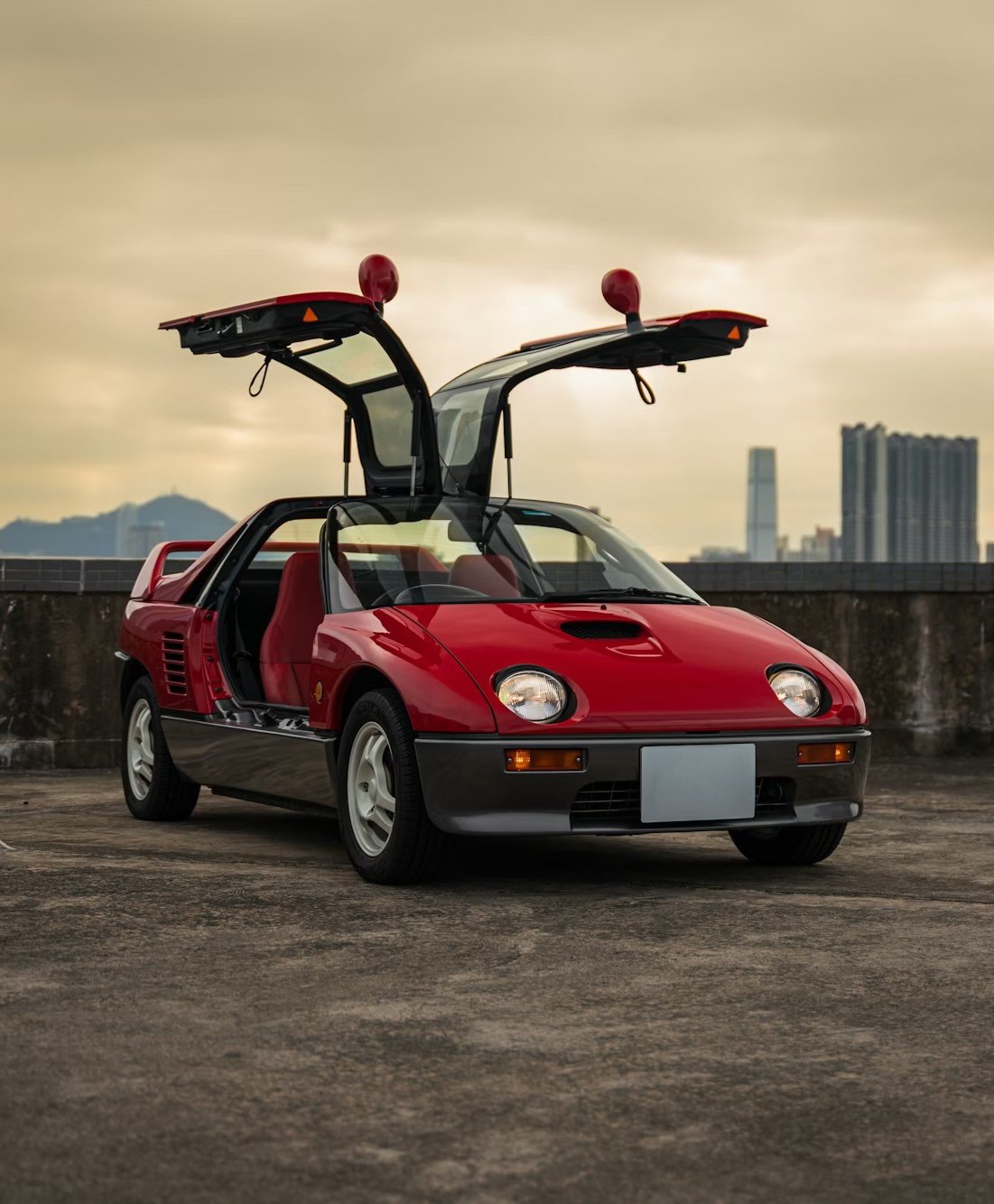
The car you see here is an original 1993 Mazda Autozam AZ-1 finished in Classic Red over a red leather-trimmed cabin, white 13-inch triple three-spoke alloy wheels, and it even has air conditioning.
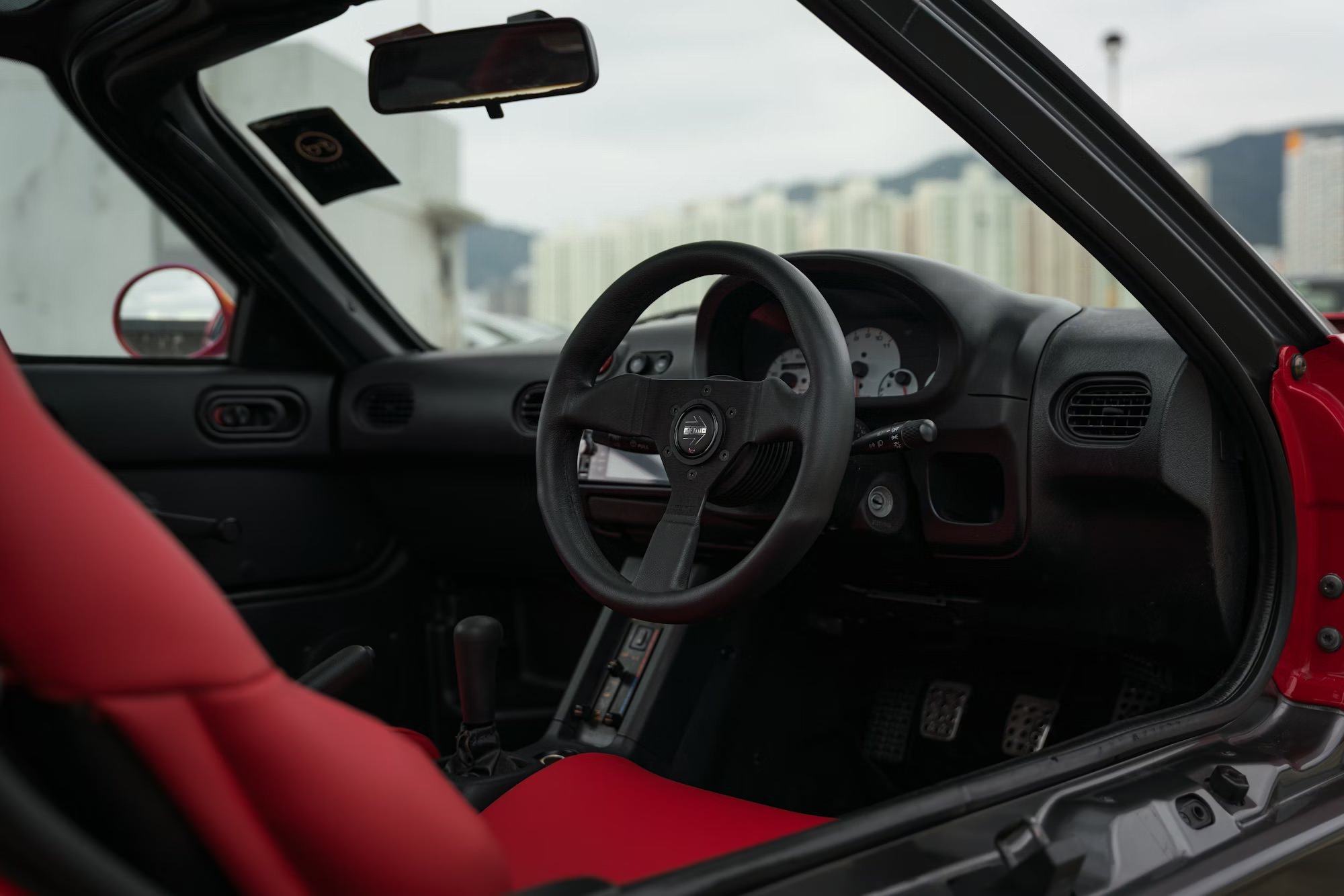
As you might expect, power is provided by a turbocharged 657cc inline-three cylinder engine, delivering 63 bhp to the rear wheels through a 5-speed manual transmission. The car has those signature gullwing doors, as well as a MOMO steering wheel, an uprated stereo, and a pair of bucket seats.
This car was originally delivered to Japan before later being exported to Hong Kong, it now has 98,809 kms on the odometer, or around 61,400 miles, and it’s now being offered for sale out of Hong Kong – if you’d like to read more or register to bid you can visit the listing here.
Images courtesy of Collecting Cars

Articles that Ben Branch has written have been covered on CNN, Popular Mechanics, Smithsonian Magazine, Road & Track Magazine, the official Pinterest blog, the official eBay Motors blog, BuzzFeed, Autoweek Magazine, Wired Magazine, Autoblog, Gear Patrol, Jalopnik, The Verge, and many more.
Silodrome was founded by Ben back in 2010, in the years since the site has grown to become a world leader in the alternative and vintage motoring sector, with well over a million monthly readers from around the world and many hundreds of thousands of followers on social media.