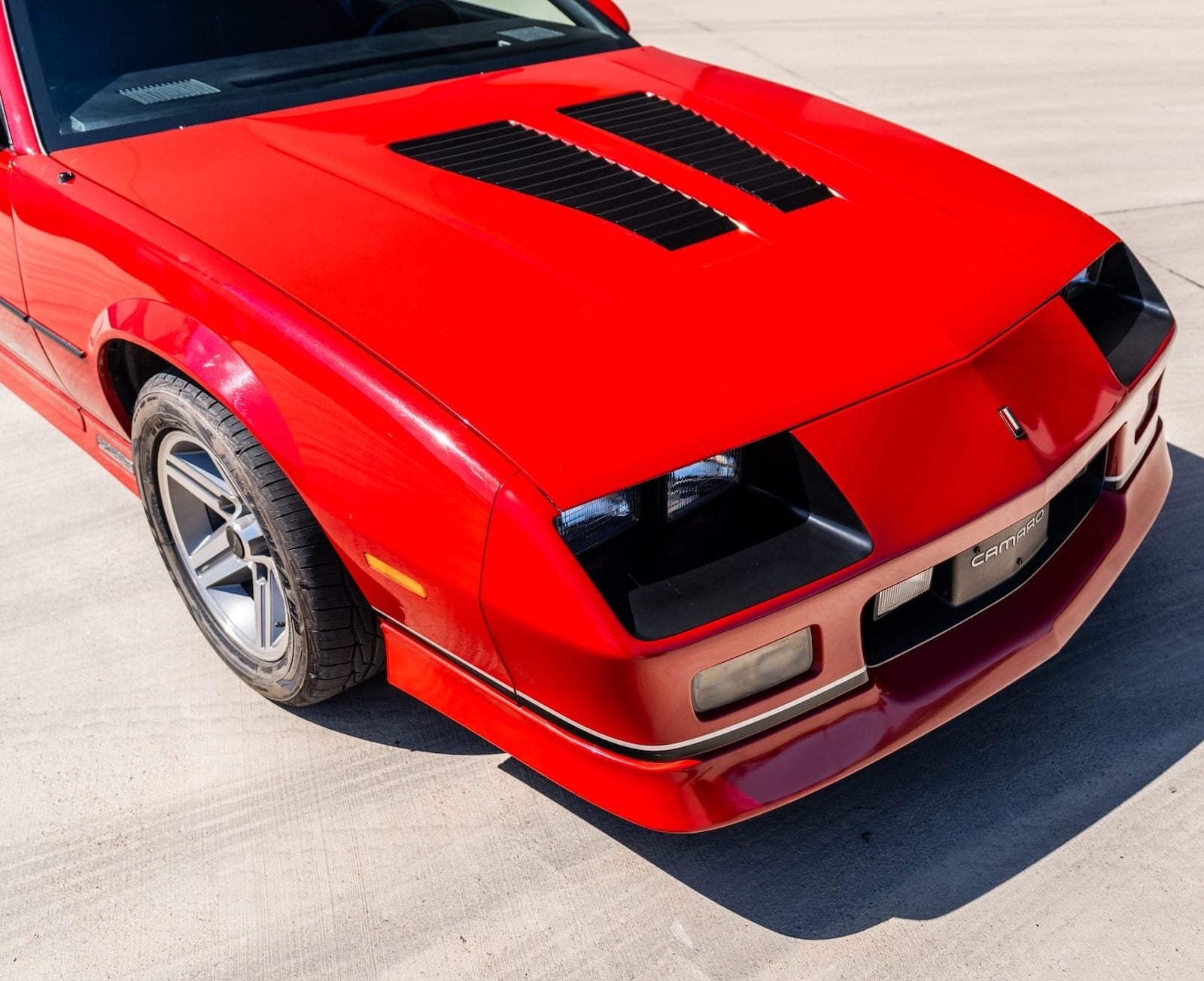
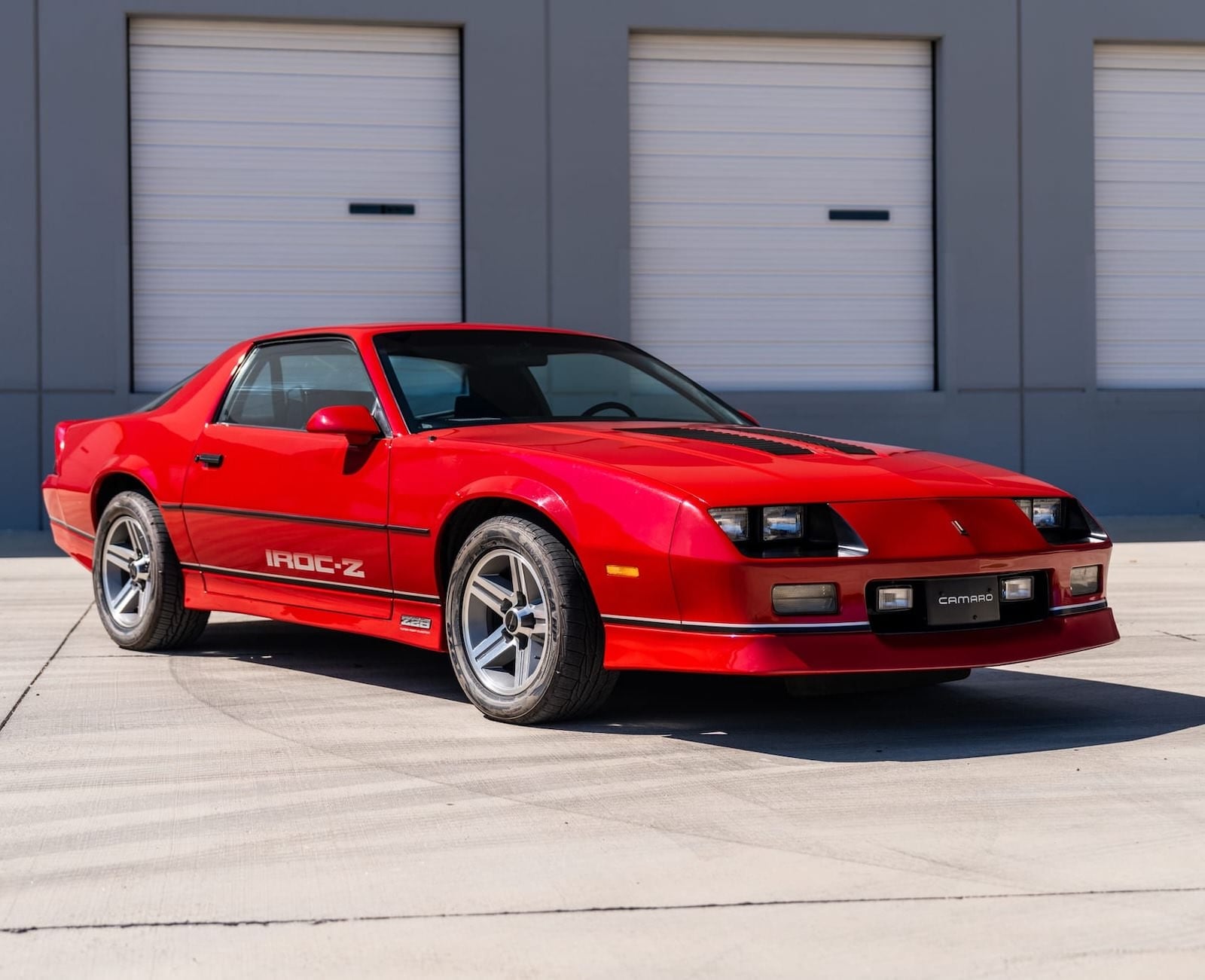
This is a 1985 Chevrolet Camaro Z28 IROC-Z that’s being offered for sale as part of a collection by Gas Monkey Garage out of Dallas, Texas.
The Z28 IROC-Z was the top-of-the-line option package for the third-generation Camaro, with lowered suspension and a series of running gear upgrades that significantly improved handling. The car you see here remained with its original owner in New York for a remarkable 40 years, and it has just 41,000 miles on the odometer.
Fast Facts: A 1985 Chevrolet Camaro Z28 IROC-Z
- Chevrolet introduced the Camaro in 1966 to compete with the Ford Mustang, followed by its second generation in 1970. The third-generation model arrived for 1982 with a shorter wheelbase, hatchback body, improved aerodynamics, and redesigned suspension. Initial engine choices ranged from a 90 bhp four-cylinder to a 165 bhp fuel-injected V8.
- Performance improved throughout the 1980s, beginning with new 5-speed manual and 4-speed automatic transmissions in 1983. The 1985 IROC-Z introduced lowered suspension, upgraded anti-roll bars, 16-inch wheels, and an optional 215 bhp Tuned Port Injection V8. Named after the International Race of Champions, it became Chevrolet’s flagship Camaro performance package.
- In 1987, Chevrolet introduced a 5.7 liter V8 and brought back the convertible. The IROC-Z replaced the Z28 as the main performance model in 1988, while competition-focused 1LE cars became rare collectibles. The IROC-Z name disappeared after 1990, the Z28 returned in 1991, and third-generation production ended in 1992.
- The 1985 IROC-Z shown here remained with its original New York owner for 40 years and has just 41,000 miles. Finished in red over black cloth, it has a 215 bhp 5.0 liter V8, 4-speed automatic, and limited-slip differential.
History Speedrun: The Third-Gen Chevrolet Camaro
Chevrolet launched the third-gen Camaro for 1982, the most powerful V8 option you could get was the 305 cubic inch (5.0 liter) V8 with Cross-Fire Injection producing 165 bhp and 240 lb ft of torque. It was still very much the Malaise Era, and American V8s were merely a shadow of what they had been just 10-12 years earlier. By the end of the third-gen Camaro’s production run, the most powerful V8 on offer was the 245 bhp and 345 lb ft 350 (5.7 liter) V8 – the engineers had managed to claw back a decent amount of power and still land on the right side of stringent US emissions laws.
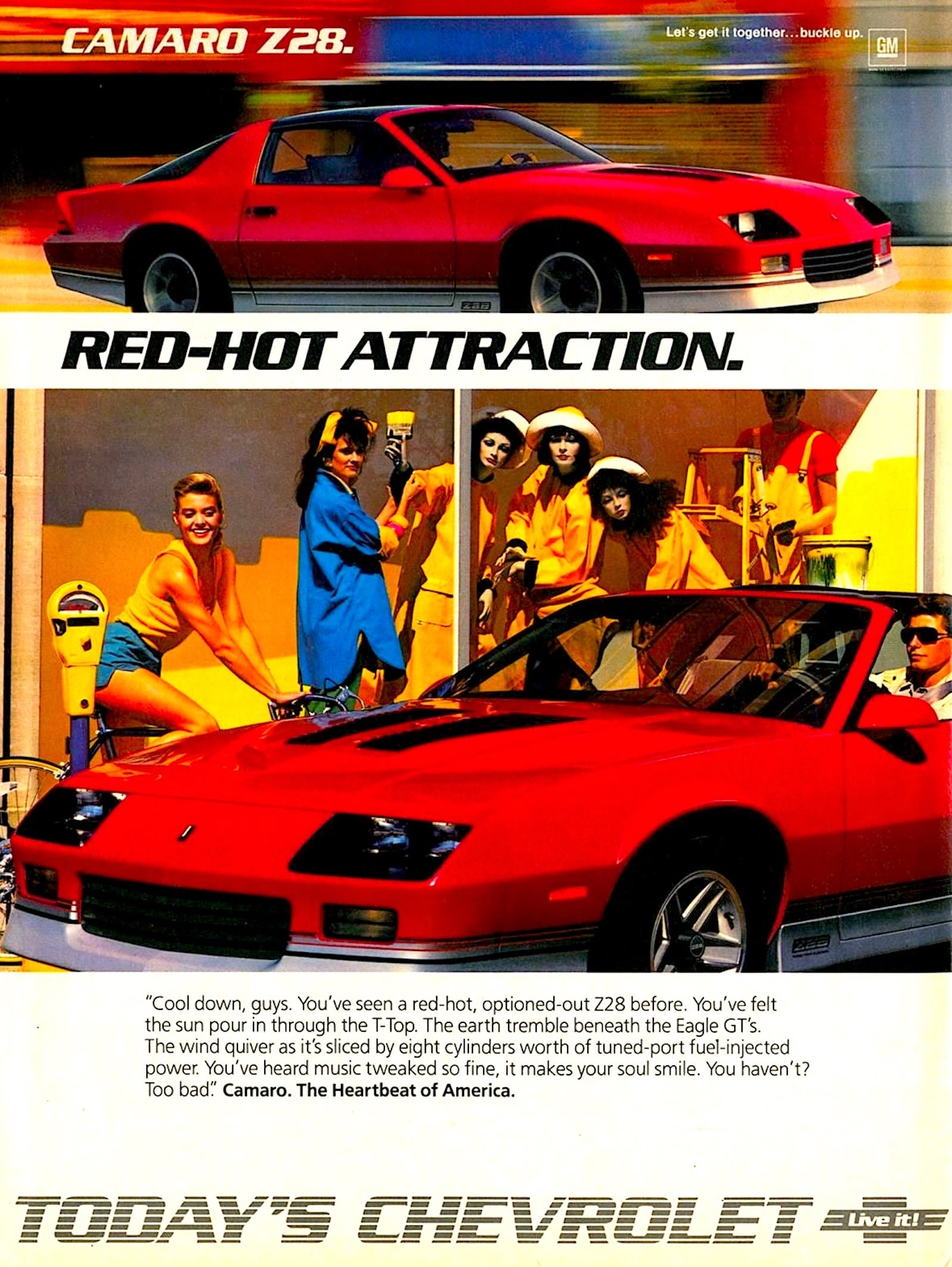
 The third-generation Camaro was the first with a hatchback, and its windshield was raked back at 62º for improved aero. Modified MacPherson struts with coil springs went in up front, and at the back, the live axle now rode on coil springs, located by a long torque arm, trailing links, and a Panhard rod. Image courtesy of General Motors.
The original Camaro went on sale on September the 29th, 1966, as a 1967 model designed to compete directly with the wildly popular Ford Mustang. The Camaro shared GM’s F-body platform with the Pontiac Firebird, and in December of 1966 Chevrolet added the Z/28 option package.
The Z/28 car was built around a 302 cubic inch (4.9 liter) V8 sized for the SCCA Trans-Am series’ new 5.0 liter class and it became one of the most iconic Camaros ever made. Chevrolet built 699,138 first-gen Camaros over three model years, it was a major sales success, and it almost immediately became the number one foe of the Mustang it had been developed to fight.
The second-gen Camaro followed on February the 26th, 1970. It kept the same basic layout – a steel unibody car with a front subframe and a leaf-sprung live axle. This version lasted through to 1981, when annual production had slipped to just 126,139 cars.
The 1982 Camaro Redesign
For the 1982 Camaro, the third-generation car, the front subframe was gone, absorbed into the unibody, and the wheelbase shrank 7 inches to 101.0 inches overall. It was the first Camaro with a hatchback, and its windshield was raked back at 62º for improved aero. Modified MacPherson struts with coil springs went in up front, and at the back, the live axle now rode on coil springs, located by a long torque arm, trailing links, and a Panhard rod. Power steering through a Saginaw steering box was standard, as were power front disc brakes with drums at the rear.
Buyers chose between the Sport Coupe, the Berlinetta, and the Z28, and the range brought the first four-cylinder and the first fuel injection system ever fitted to a production Camaro. The base engine was a Pontiac-built 151 cubic inch (2.5 liter) “Iron Duke” four, with throttle-body fuel injection and 90 bhp in US-market cars. A carbureted version, the LQ8, went to Canada and overseas markets. Truth be told, it was a horribly underpowered engine for the Camaro, but it did offer better fuel economy than the V8s.
A 173 cubic inch (2.8 liter) V6 made a slightly more respectable (but still insufficient) 102 bhp, and the four-barrel 305 cubic inch (5.0 liter) V8 made 145 bhp. Z28 owners could pay extra for Cross-Fire Injection, which fed the 305 through two throttle-body injectors for 165 bhp, but it was offered on the automatics only. Transmissions were a 4-speed manual or a 3-speed automatic, and the automatic was more popular with buyers.
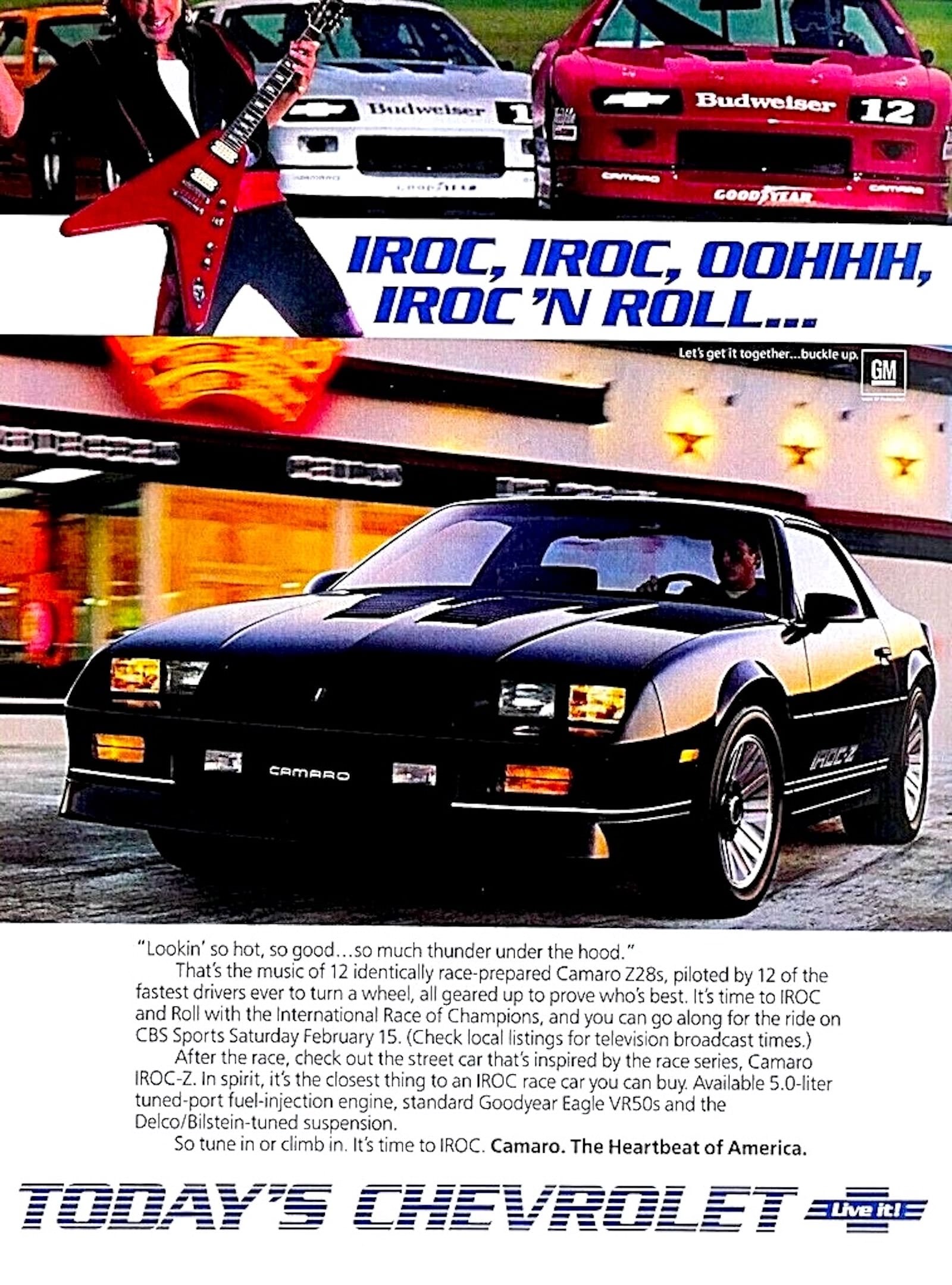
For 1985 Chevrolet named a new Z28 option after the International Race of Champions (IROC), a series in which star drivers all raced identical Camaros. The suspension of the IROC-Z was lower and firmer, it had uprated Delco-Bilstein rear shocks, thicker anti-roll bars, a steering brace known as the “wonder bar,” and 16 inch wheels on Goodyear Gatorback tires. Image courtesy of General Motors.
Period magazine reviews liked the styling and the handling, but they didn’t like the power. The Z28 was still named Motor Trend’s 1982 “Car of the Year” and it even paced the Indianapolis 500. Production figures rose to 189,747, better than the outgoing model, but buyers were clamoring for more power, and for more gears. This was the 1980s after all.
Chevrolet answered them the next year, 1983 saw the arrival of a Borg-Warner 5-speed manual or a 4-speed overdrive automatic, and the new 190 bhp L69 High Output 305 arrived. It still wasn’t enough power but at least it was trending in the right direction.
IROC-Z + The Final Years
For 1985 Chevrolet named a new Z28 option after the International Race of Champions (IROC), a series in which star drivers all raced identical Camaros. The suspension of the IROC-Z was lower and firmer, it had uprated Delco-Bilstein rear shocks, thicker anti-roll bars, a steering brace known as the “wonder bar,” and 16 inch wheels on Goodyear Gatorback tires. Its top engine was the 305 with the Corvette’s Tuned Port Injection, rated at 215 bhp and sold only with the automatic. A limitation that irritated many enthusiast drivers who wanted to row their own gears.
In 1987 the IROC-Z was given the larger 350 cubic inch (5.7 liter) L98 with Tuned Port Injection, it was rated at 225 bhp and four-wheel disc brakes were fitted as standard. A factory convertible returned to the Camaro platform for the first time since 1969, converted from T-top cars by American Sunroof Company – 1,007 were built.
The Z28 was dropped for 1988, leaving the IROC-Z as the performance model, and every engine was now fuel injected for improved emissions. That year also brought the 1LE, it was an option combination rather than a package per se, triggered by ordering an IROC-Z with the G92 performance axle and no air conditioning. Built for SCCA Showroom Stock racing, it added bigger front brakes with aluminum twin-piston calipers, an aluminum driveshaft, and a baffled fuel tank. Four were built in 1988, 111 in 1989, and today they’re hugely collectable.
The 1990 model year only ran from August to December 1989, because Chevrolet launched the facelifted 1991 cars early (they were still third-generation models), and as a result just 34,986 were built. It was the IROC-Z’s last year, with the 350 now at 245 bhp. Chevrolet didn’t renew its IROC contract, and the Z28 name returned for 1991.
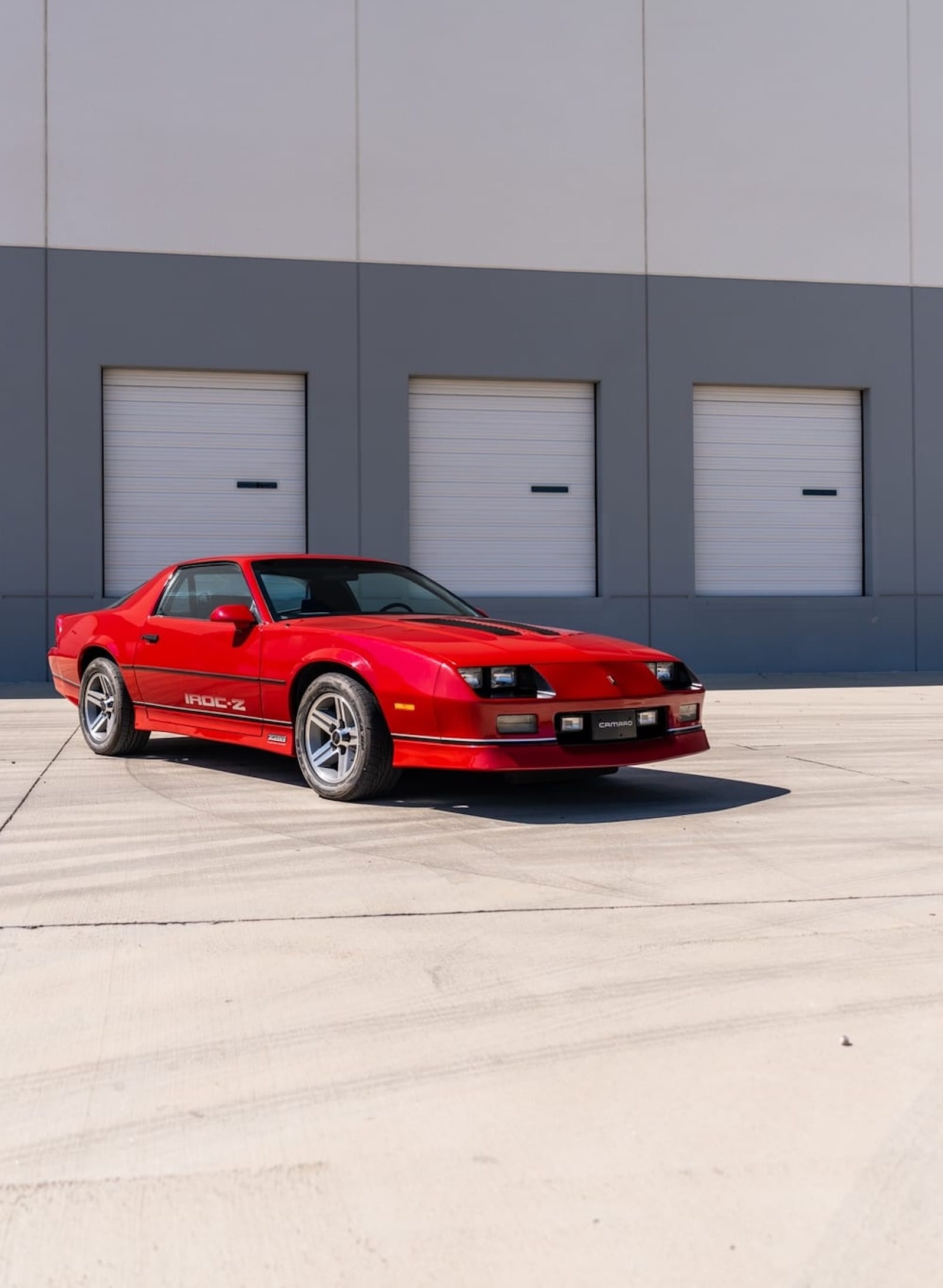
This 1985 Chevrolet Camaro Z28 IROC-Z is a low-mileage example that remained with its original owner in New York for a remarkable 40 years before being bought by the selling dealer, Gas Monkey Garage, in 2025.
Every 1992 Camaro that was built had a 25th anniversary badge on the dash, and a Heritage package added stripes and badging. Production fell to 70,007, the design was starting to show its age, and the last car – a red Z28 with black Heritage stripes, left the Van Nuys production line on August the 27th, 1992.
Many third-generation Camaro owners have either modified their original engines or swapped in crate engines offering as much as twice the horsepower (or more) compared to the stock engine. It’s widely considered to be one of the best-looking Camaro generations, and it’s now becoming just the right amount of retro/vintage for it to become cool again.
1985 Chevrolet Camaro Z28 IROC-Z Shown Here
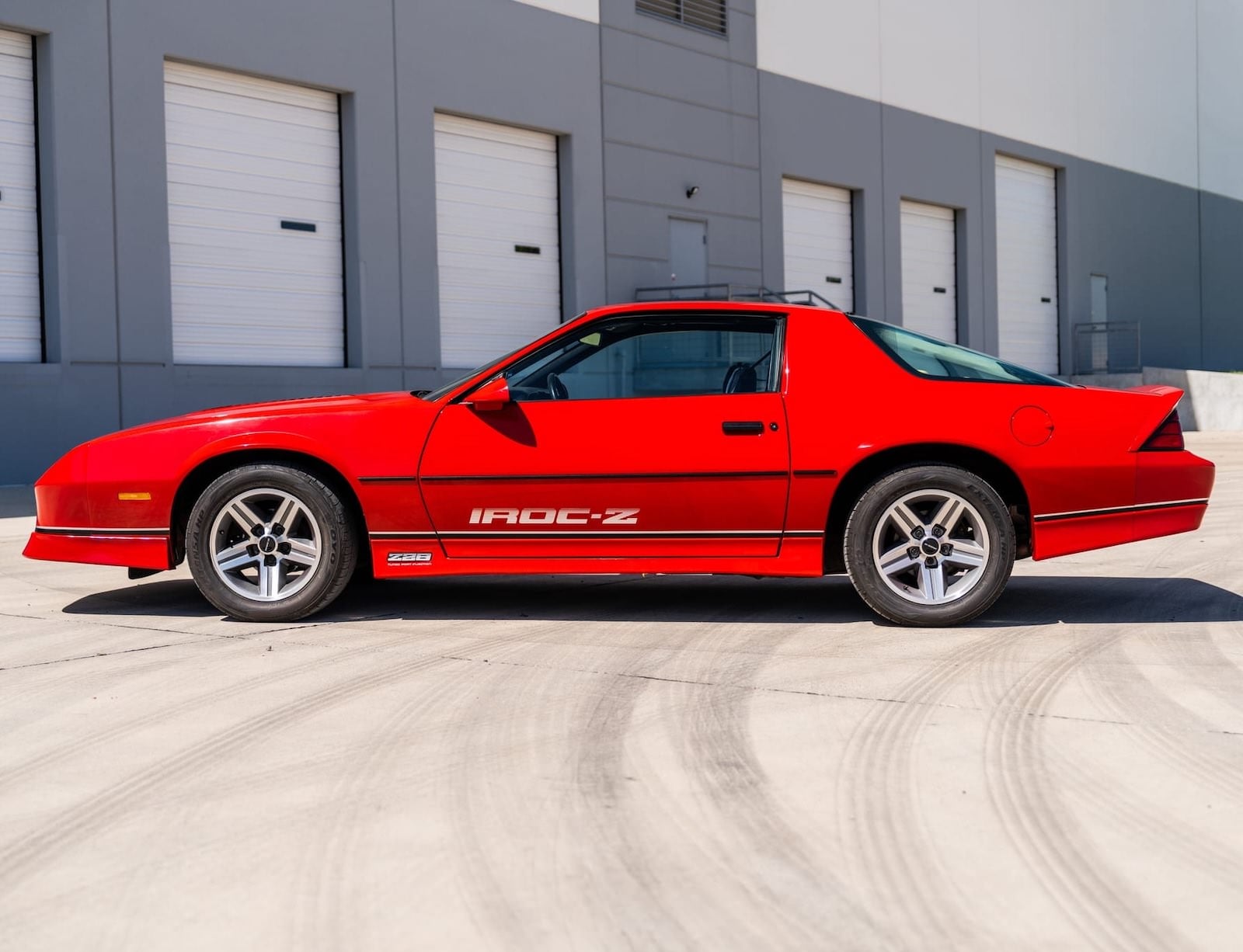
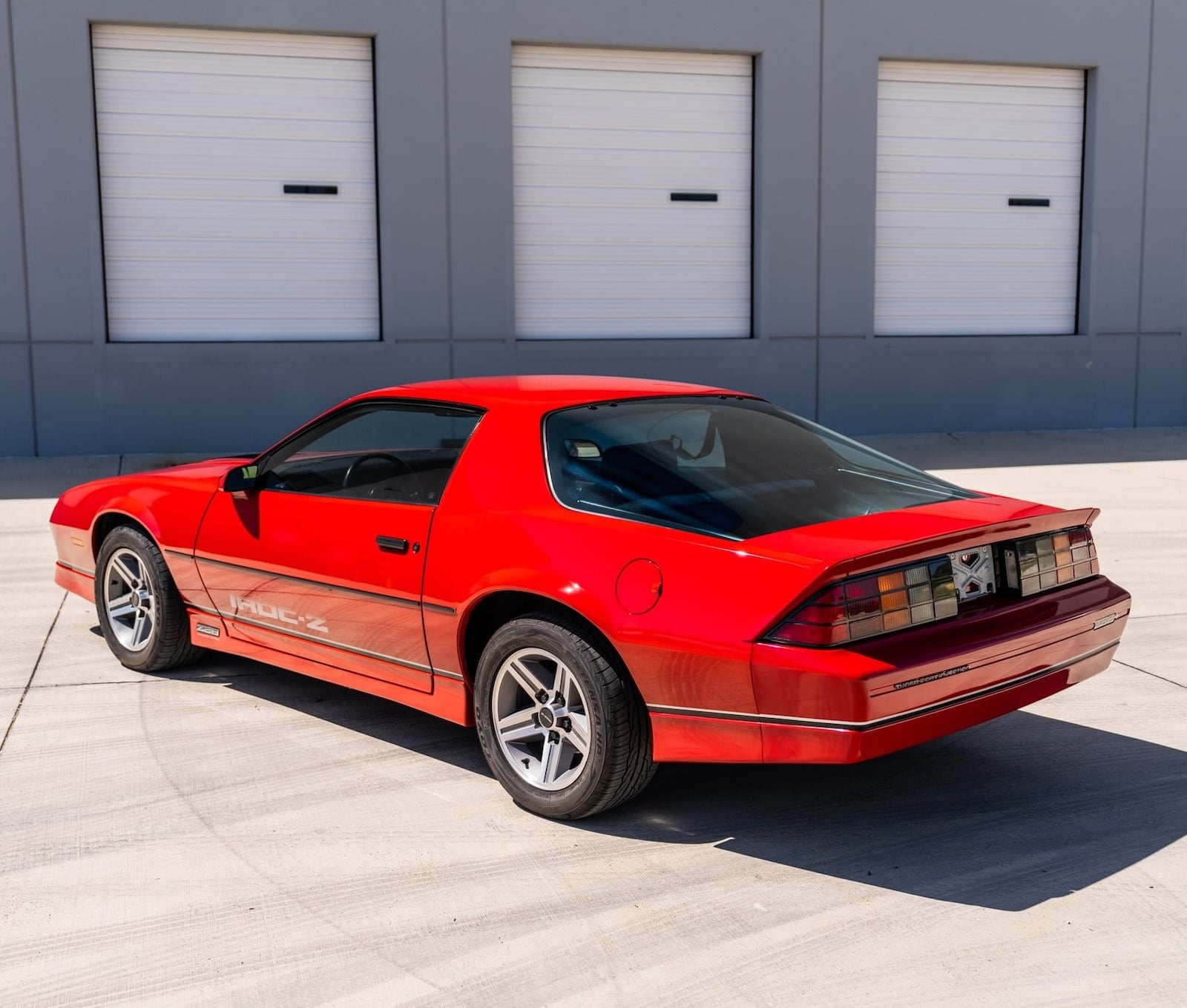
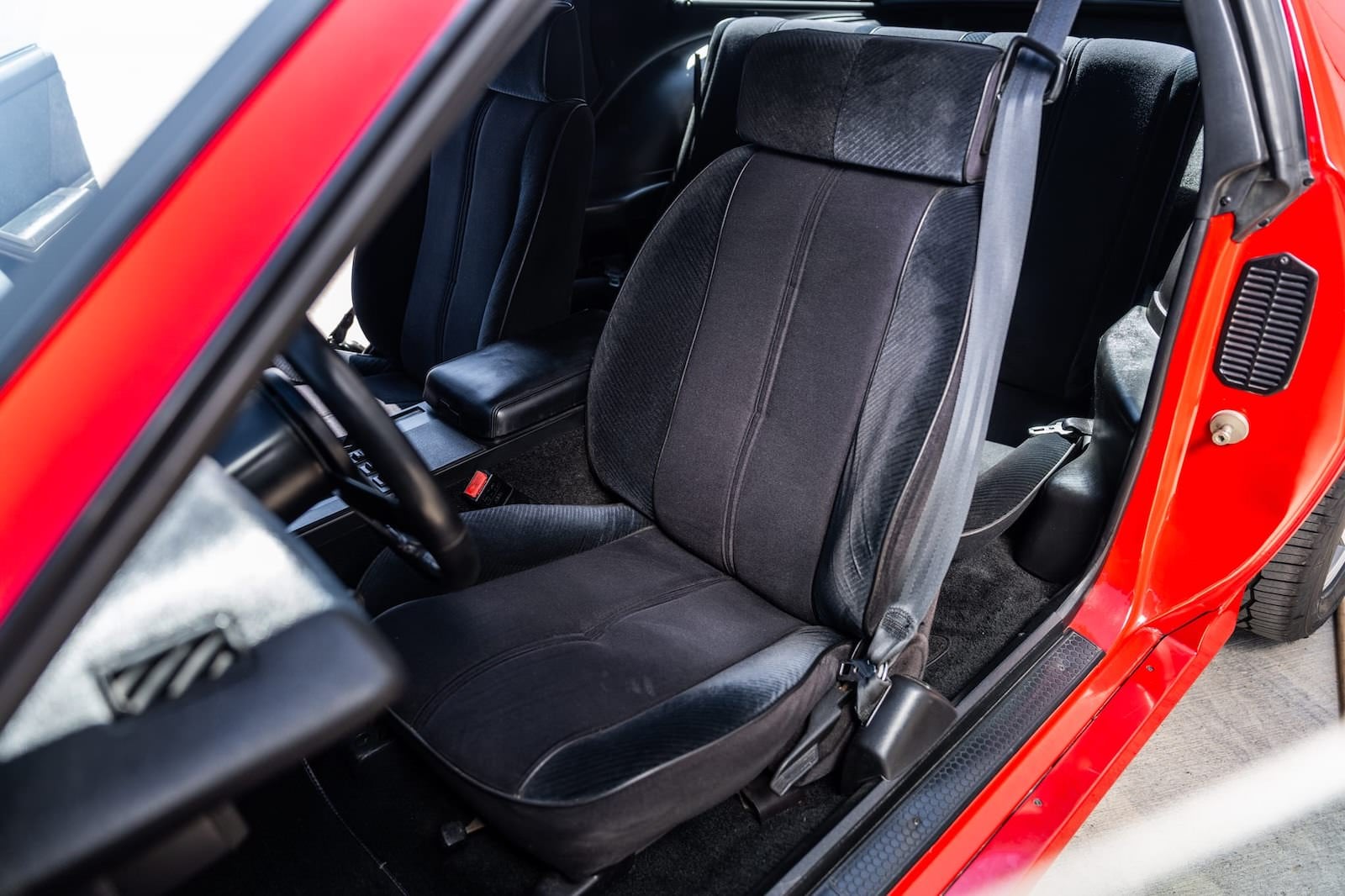
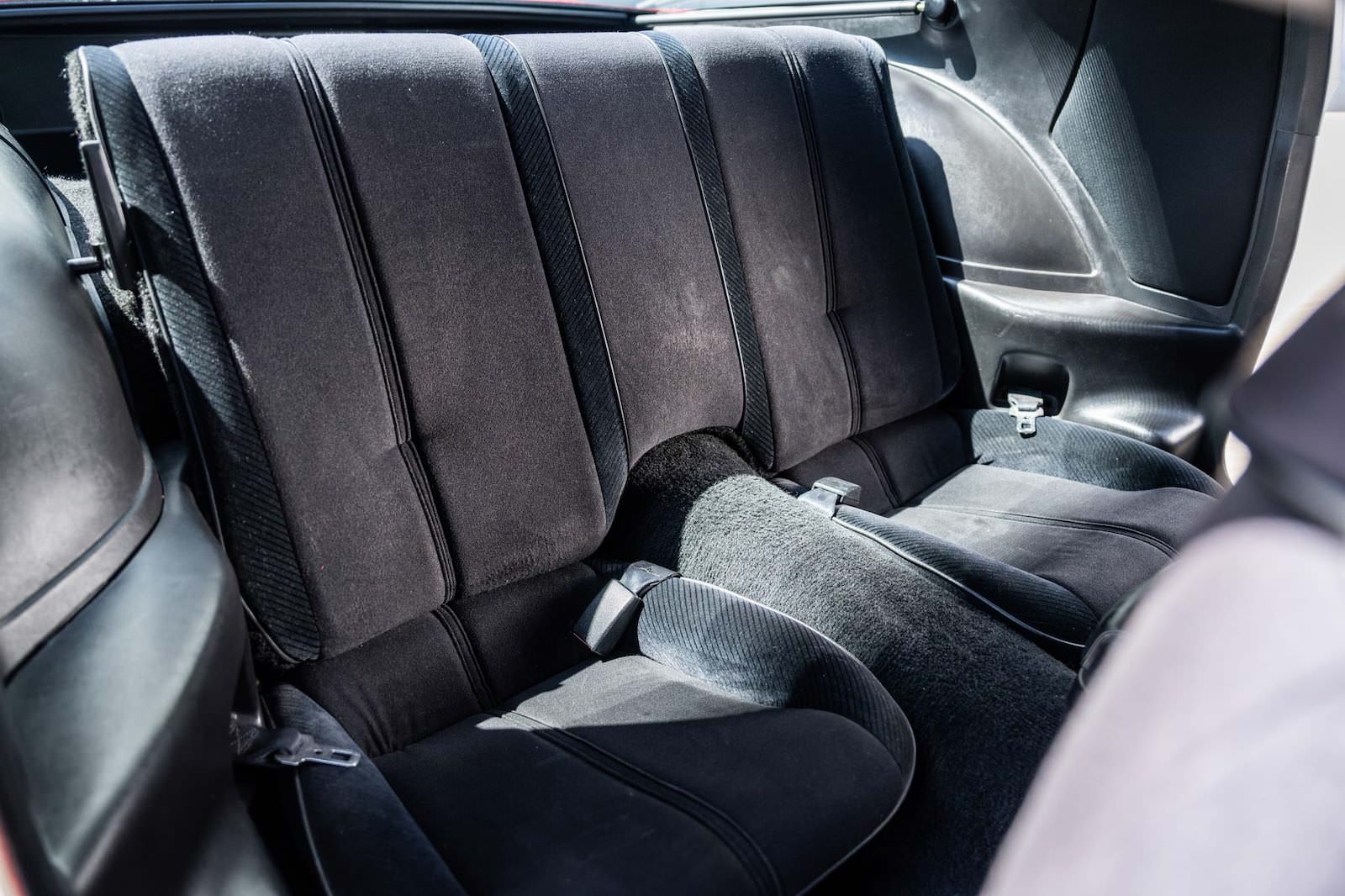
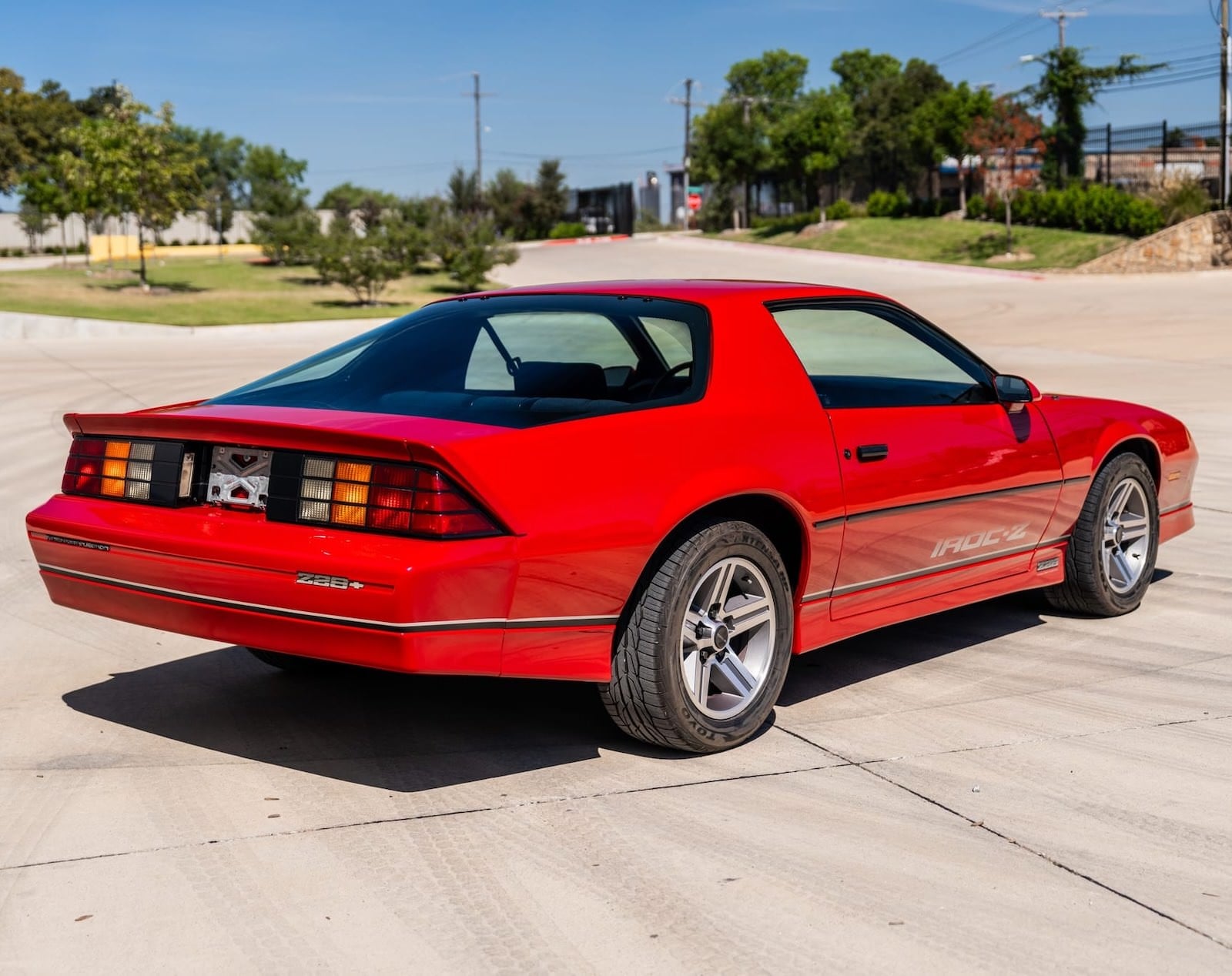
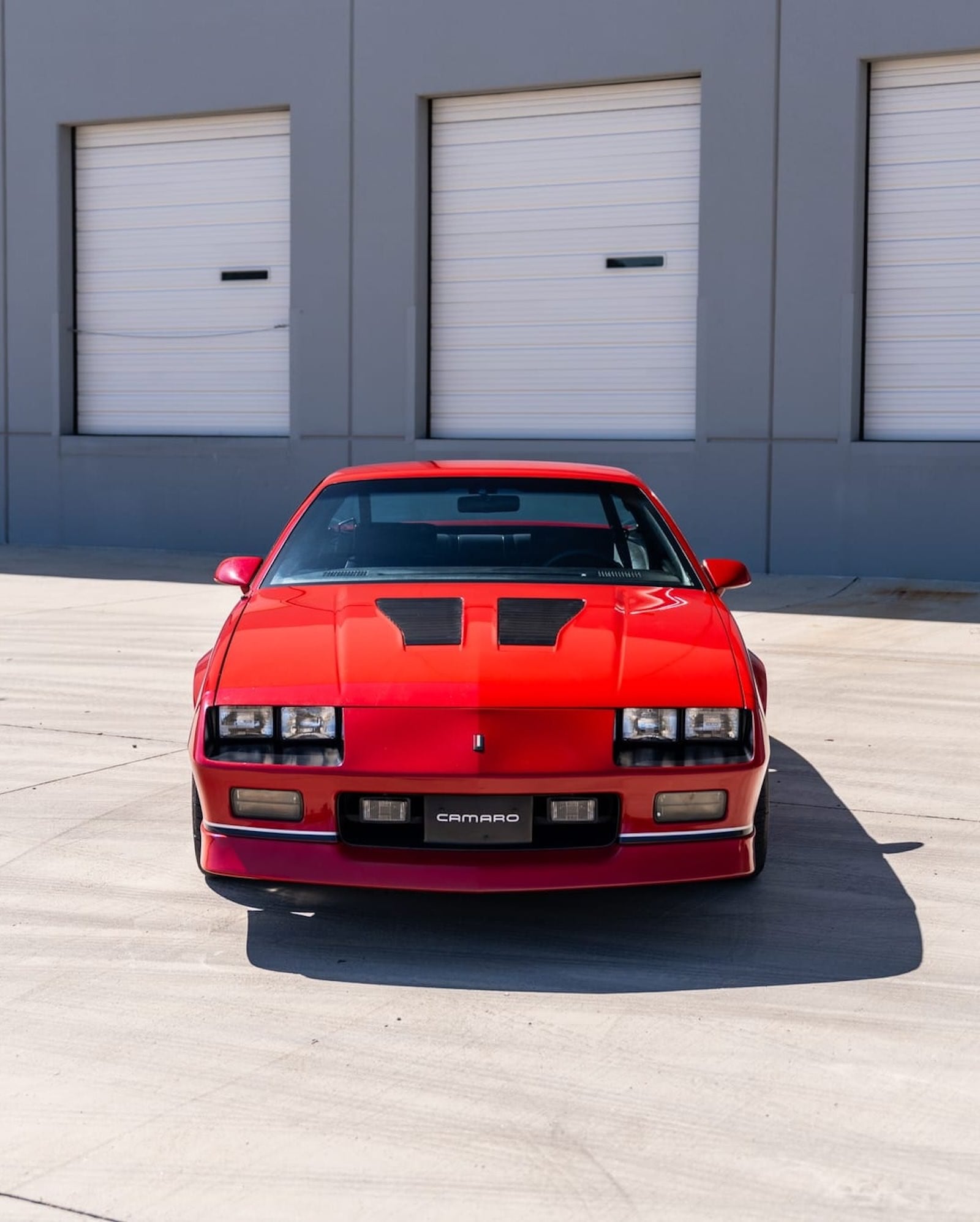
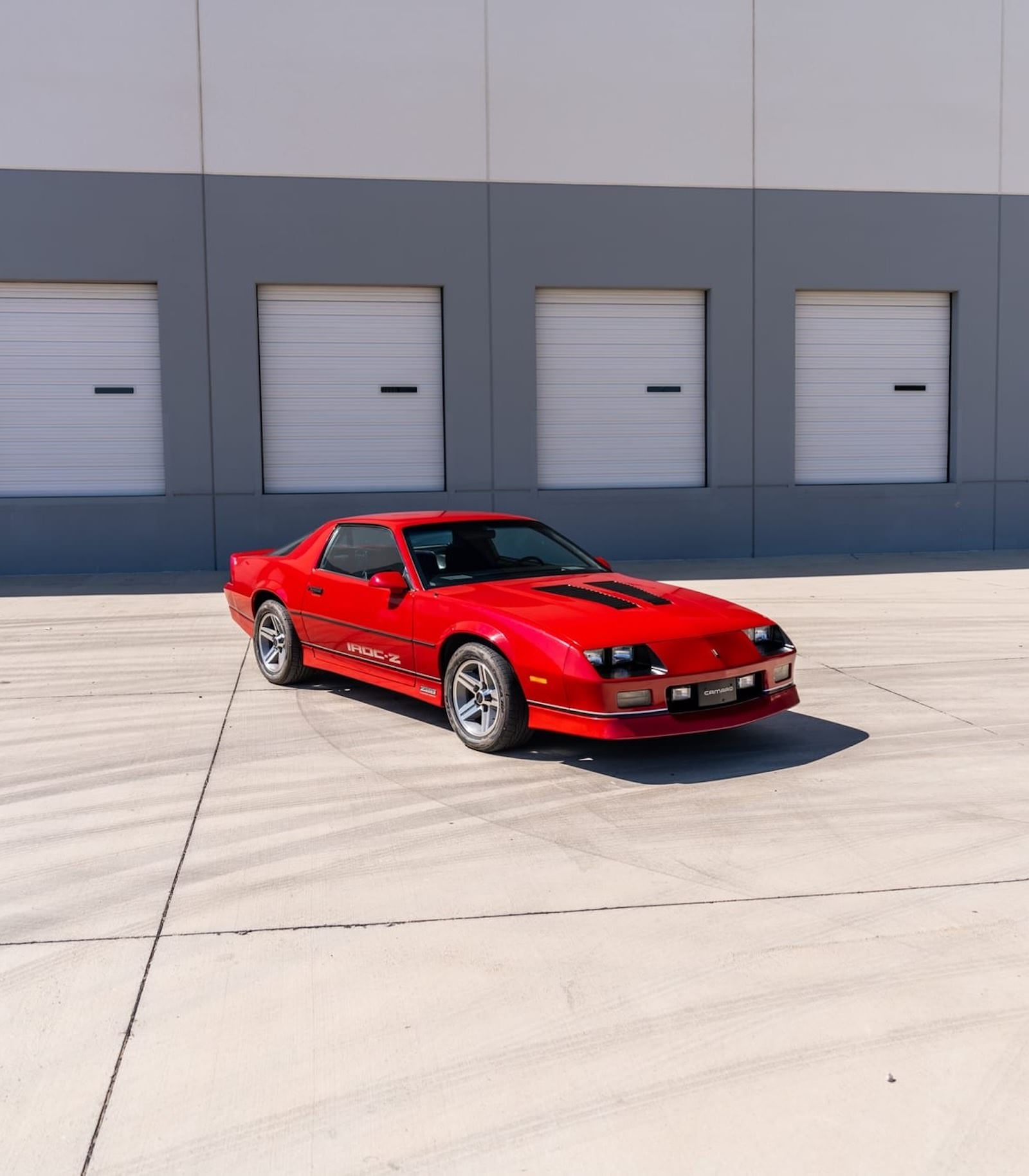
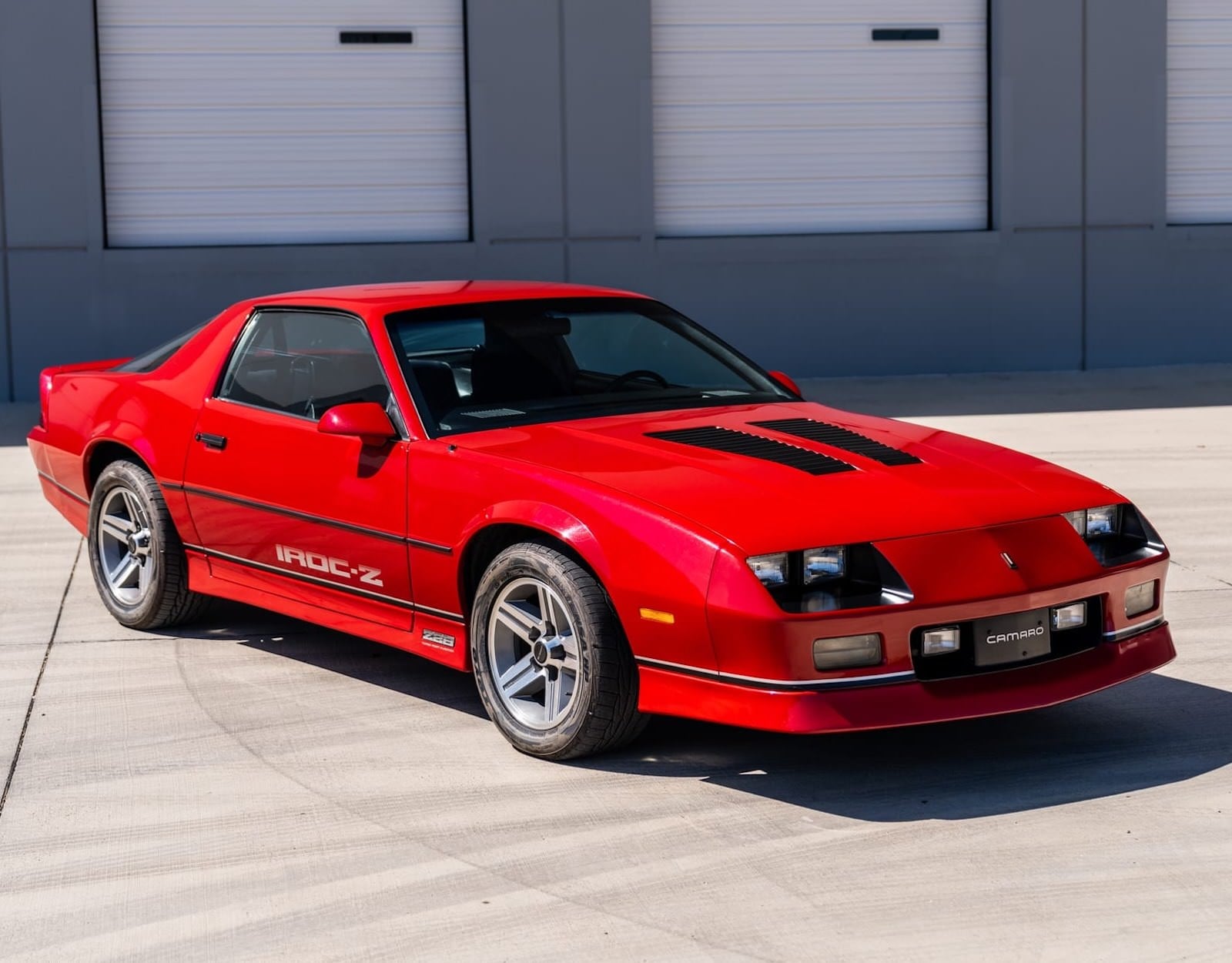
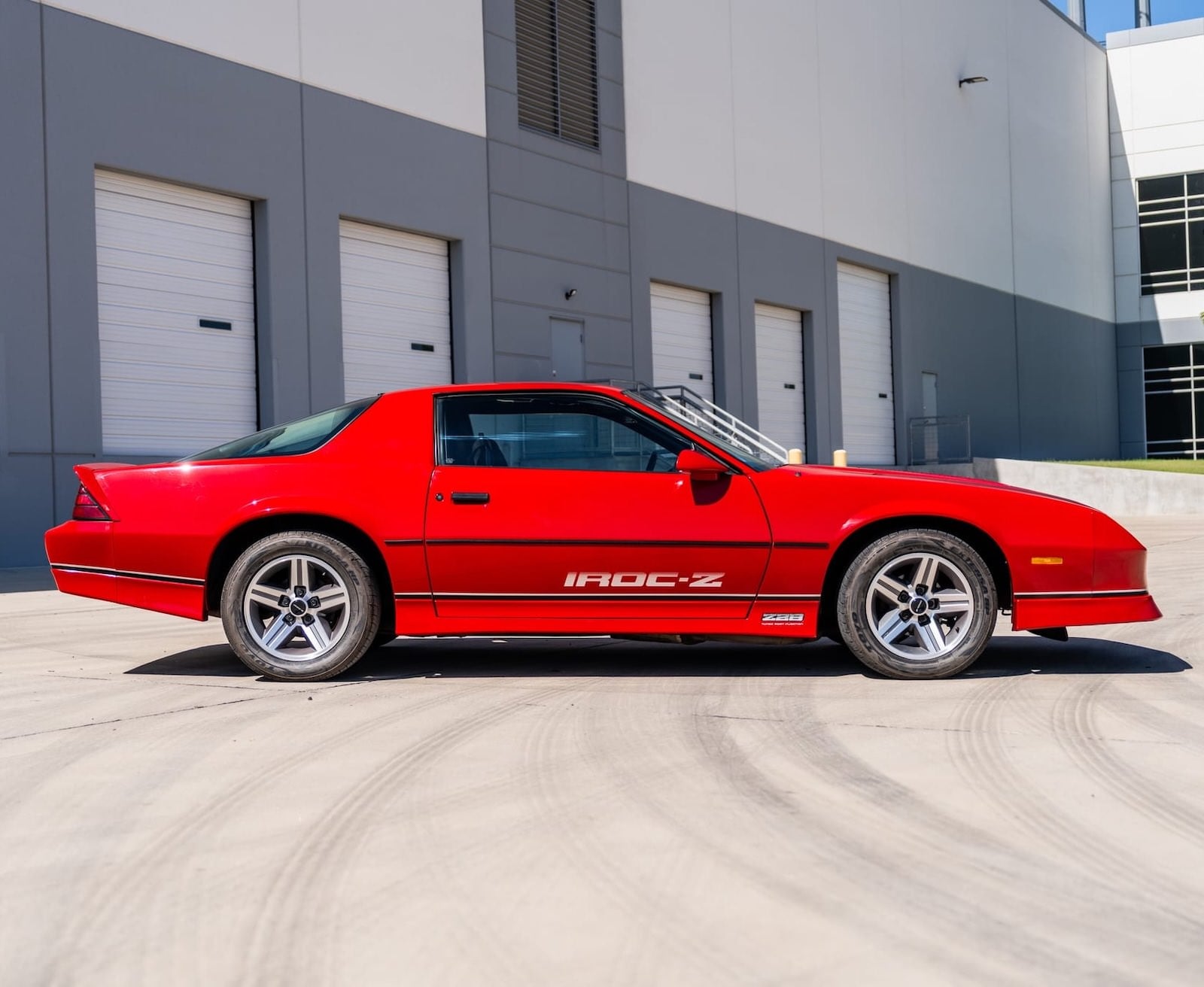
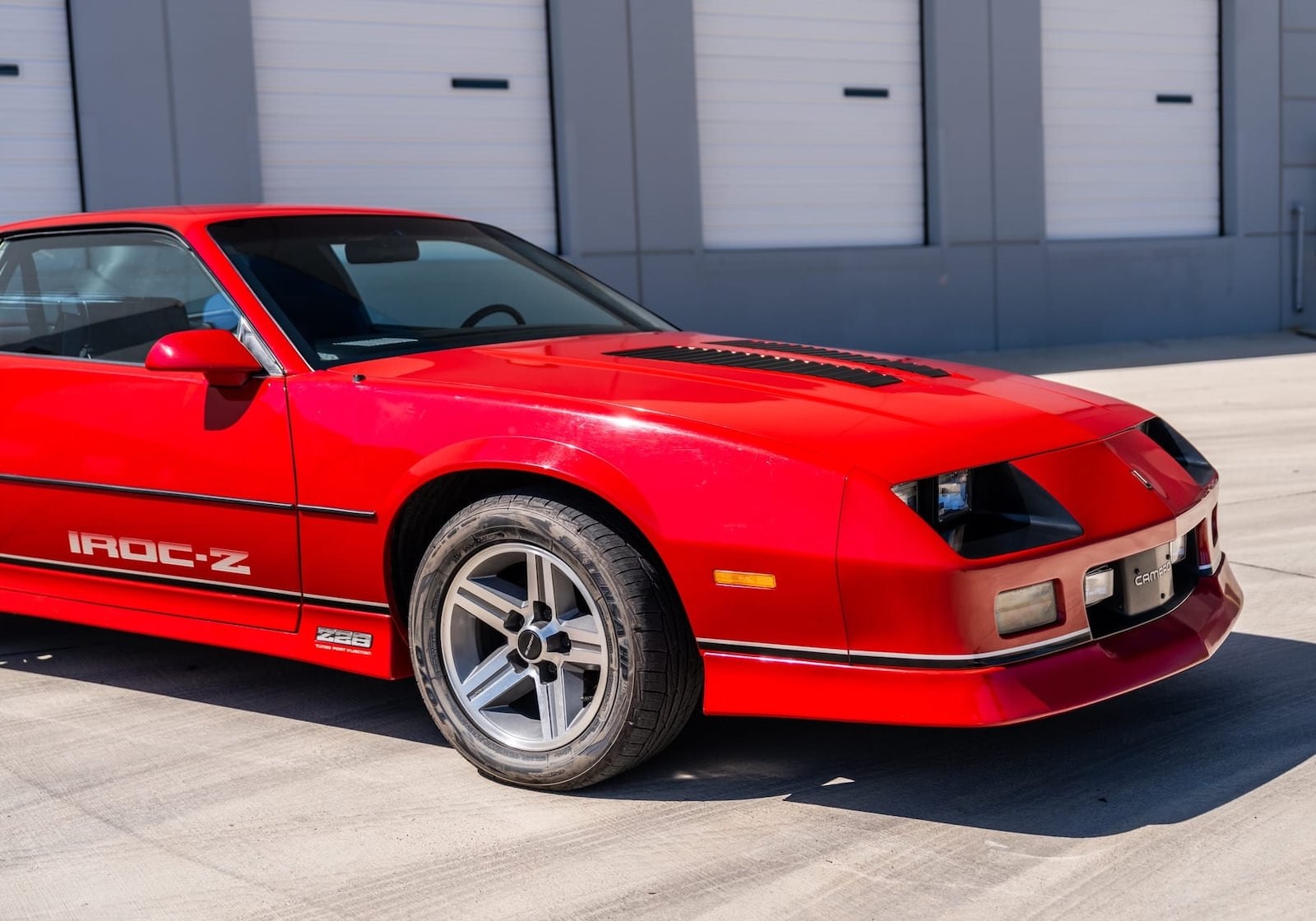
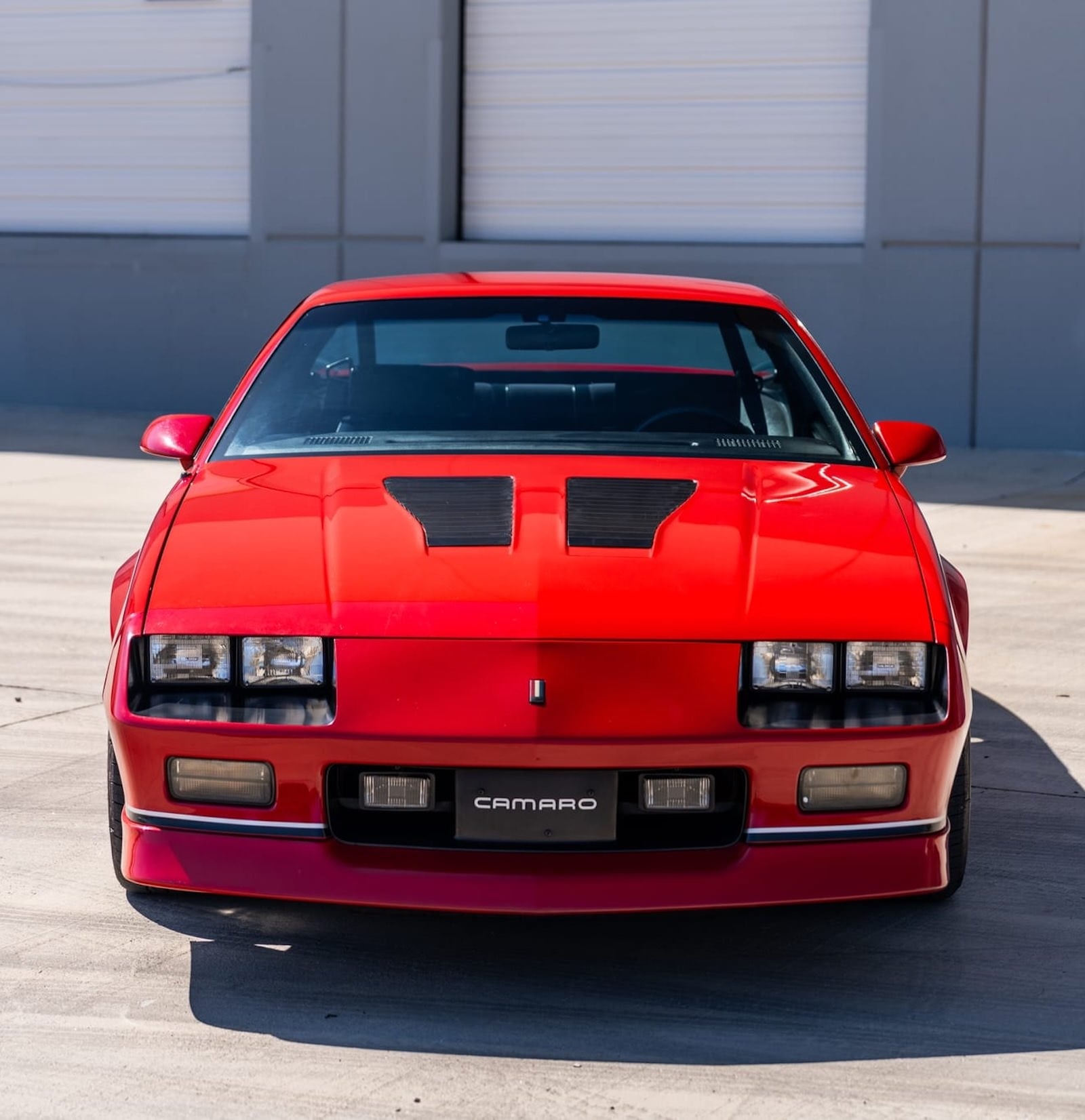
This 1985 Chevrolet Camaro Z28 IROC-Z is a low-mileage example that remained with its original owner in New York for a remarkable 40 years before being bought by the selling dealer, Gas Monkey Garage, in 2025. Finished in red over a black cloth interior, it shows just 41,000 miles on the clock and it’s now being offered at no reserve in Texas as part of the 2026 Gas Monkey Garage Collection.
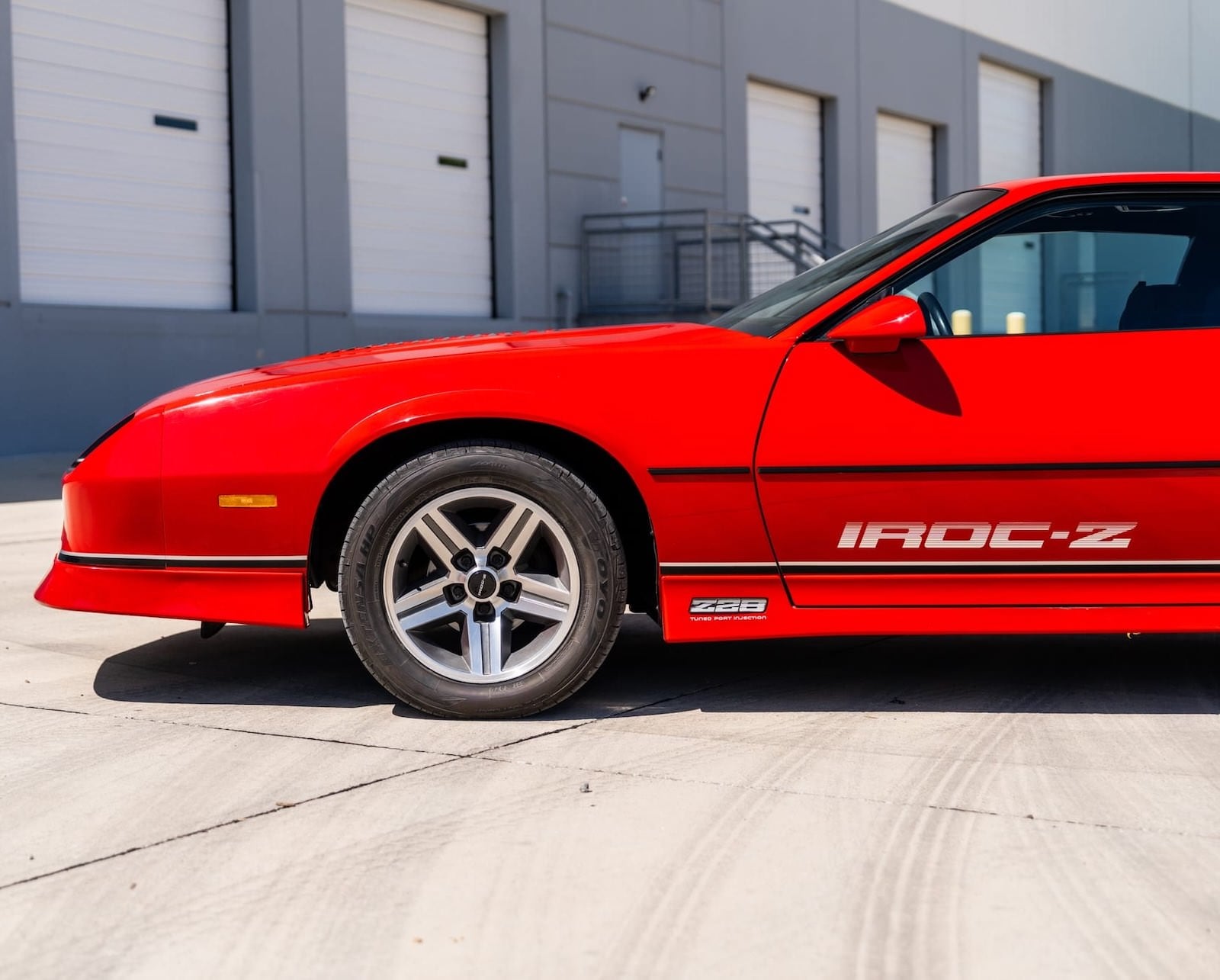
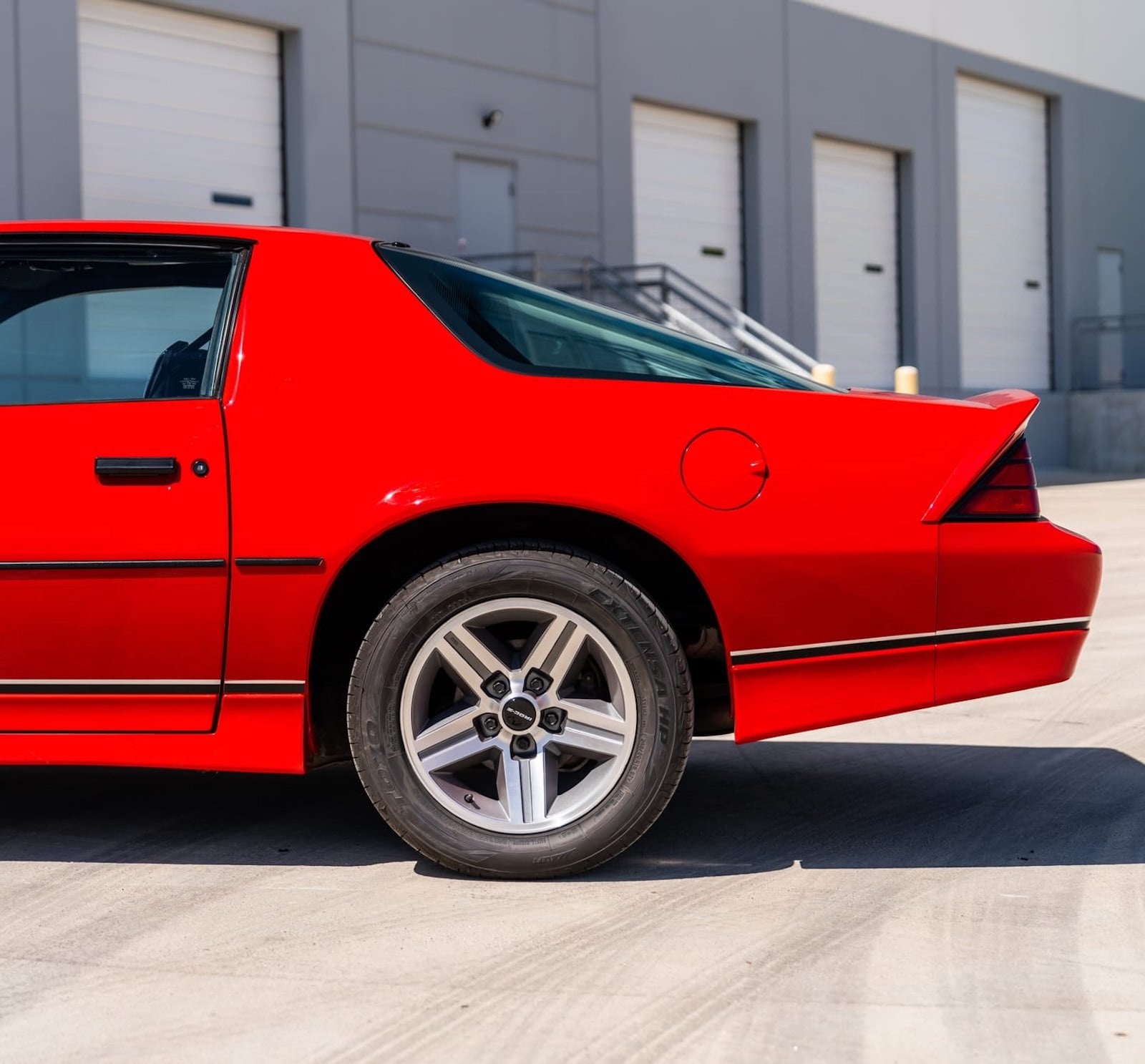
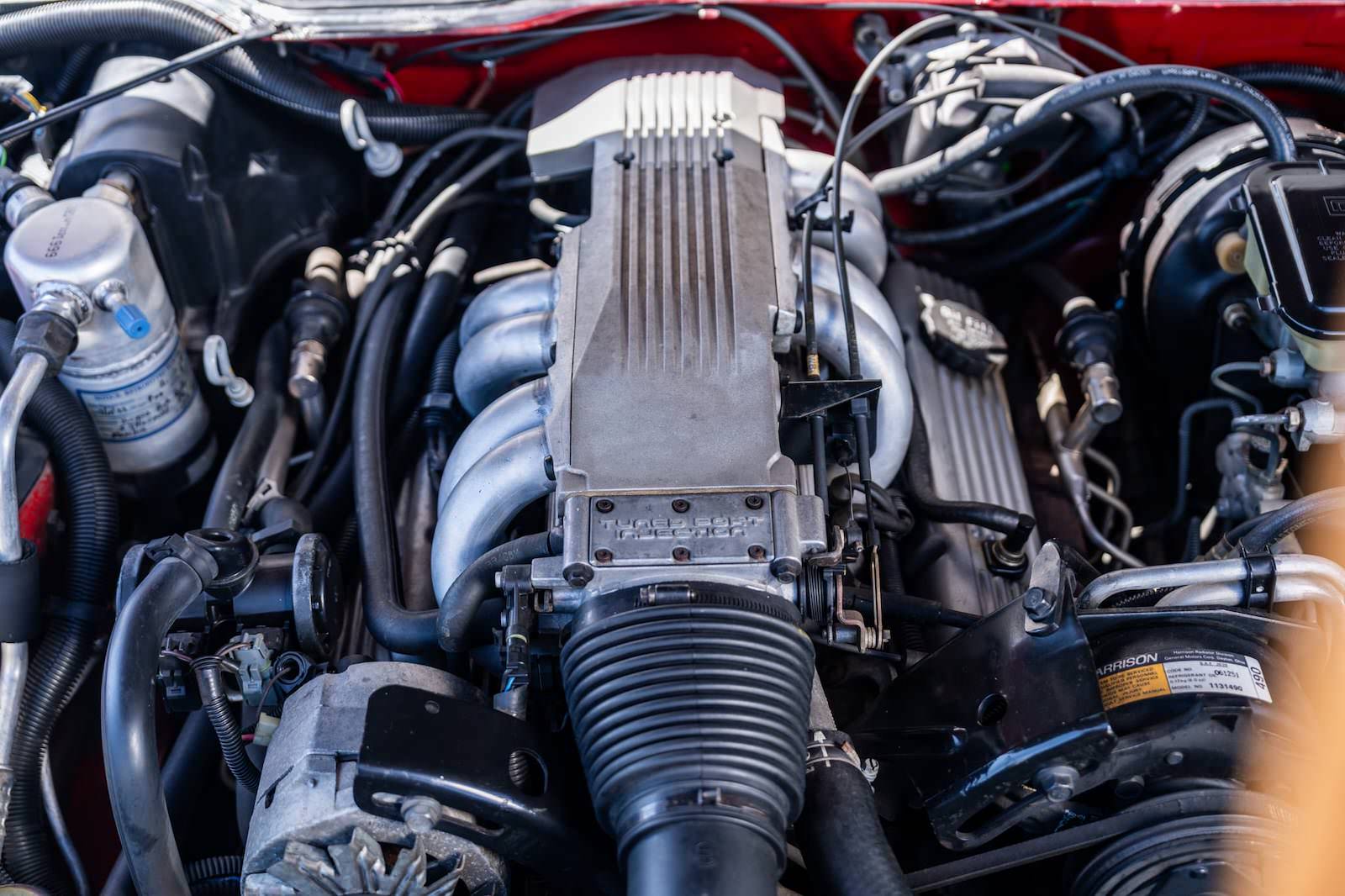
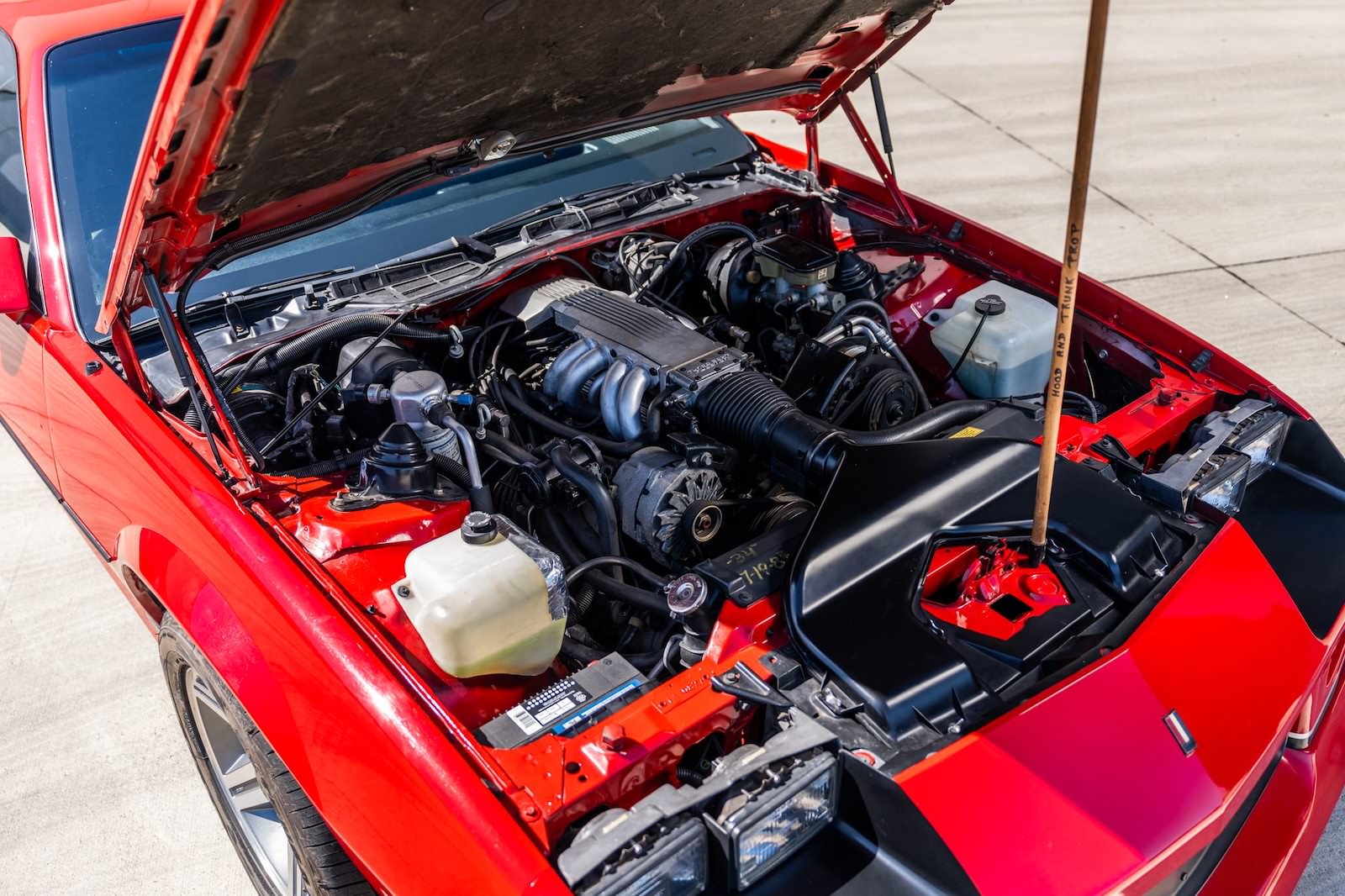
Power comes from a 5.0 liter LB9 V8 fitted with Chevrolet’s optional Tuned-Port Injection system, producing a factory-rated 215 bhp and 275 lb ft of torque. It’s paired with a 4-speed automatic transmission that sends power to the rear wheels through a limited-slip differential. The IROC-Z package included a lowered suspension, larger sway bars, revised dampers, and 16-inch five-spoke alloy wheels, giving it notably improved handling over the standard Z28 Camaro of the time.
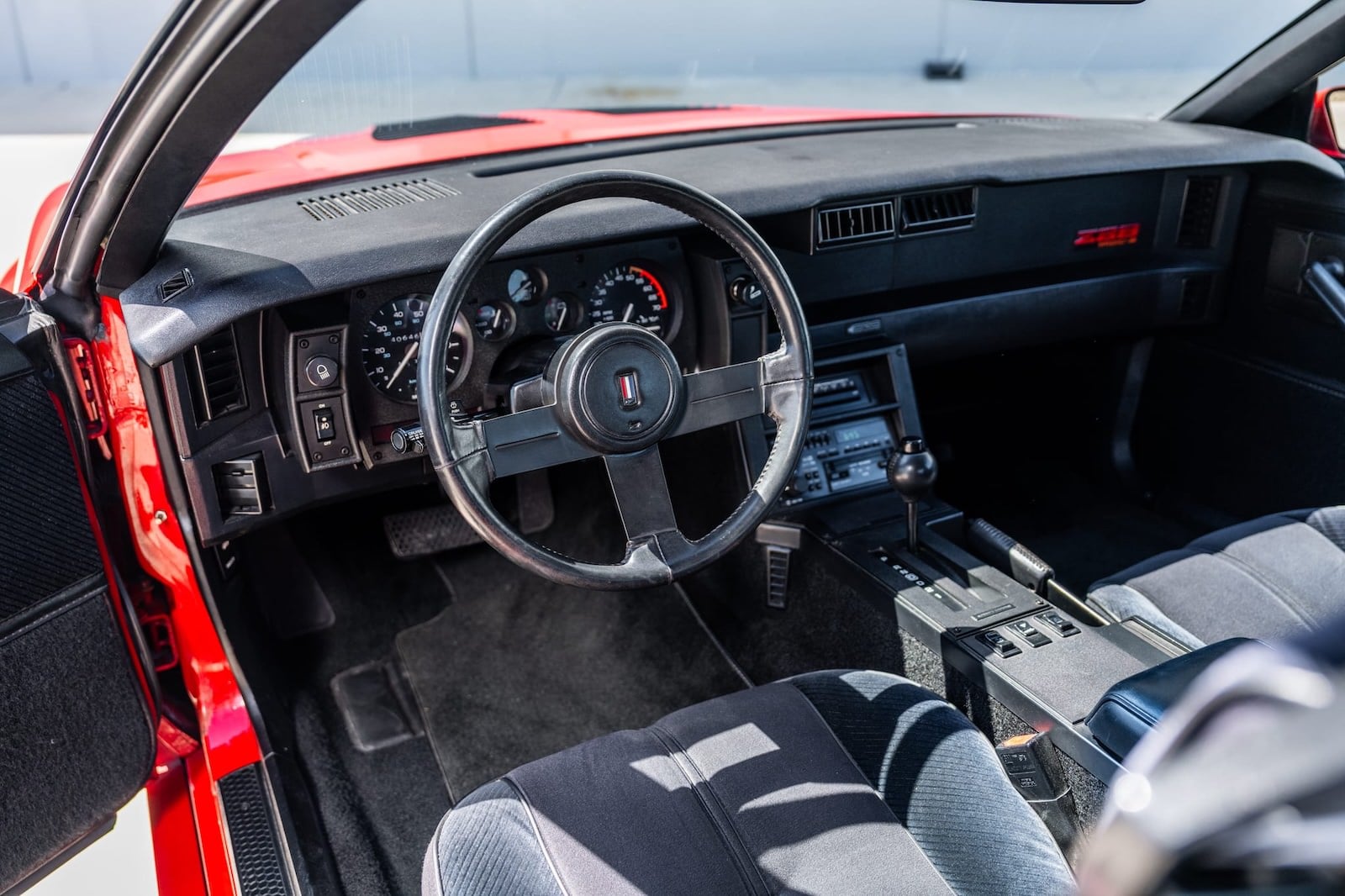
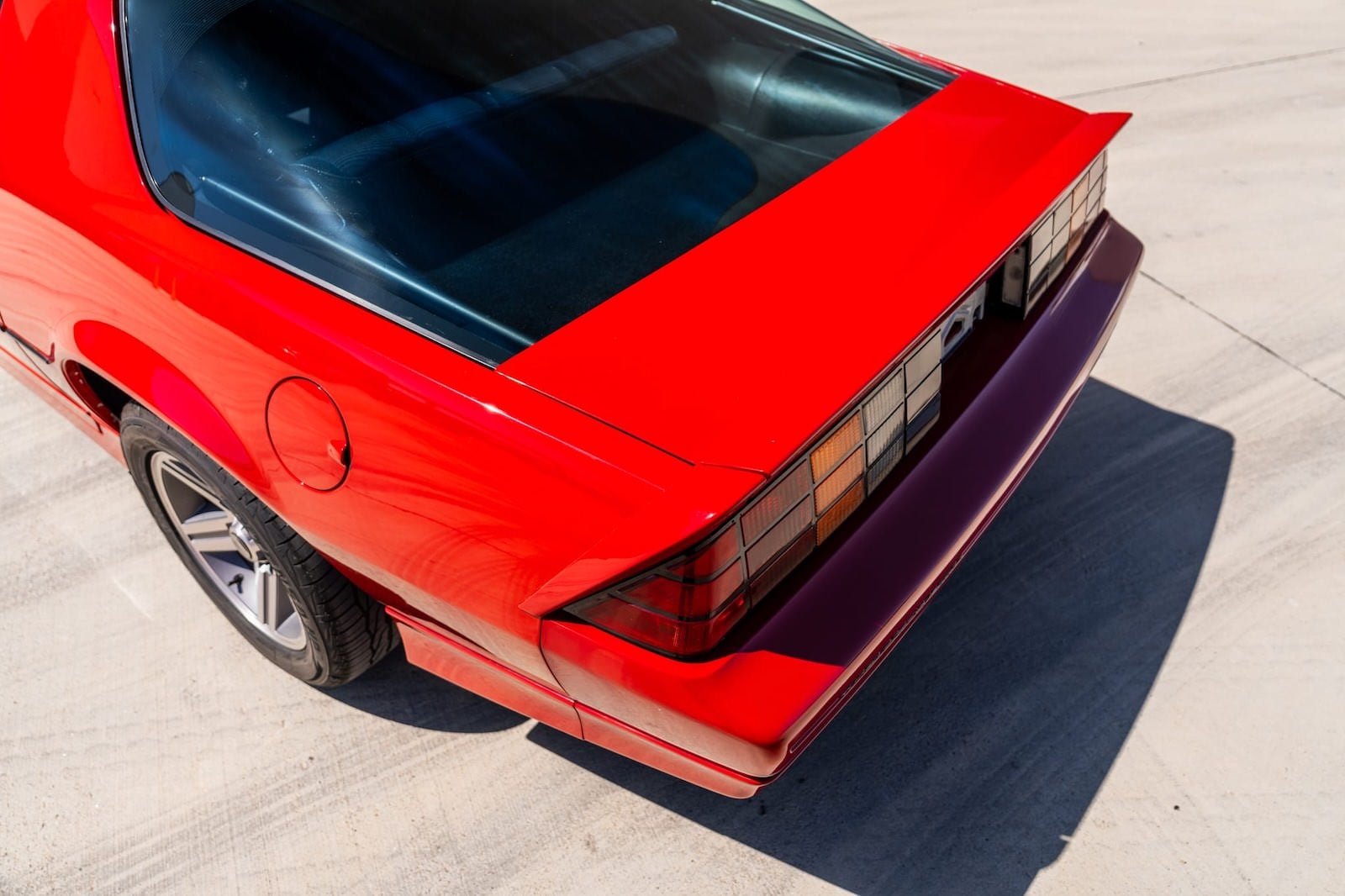
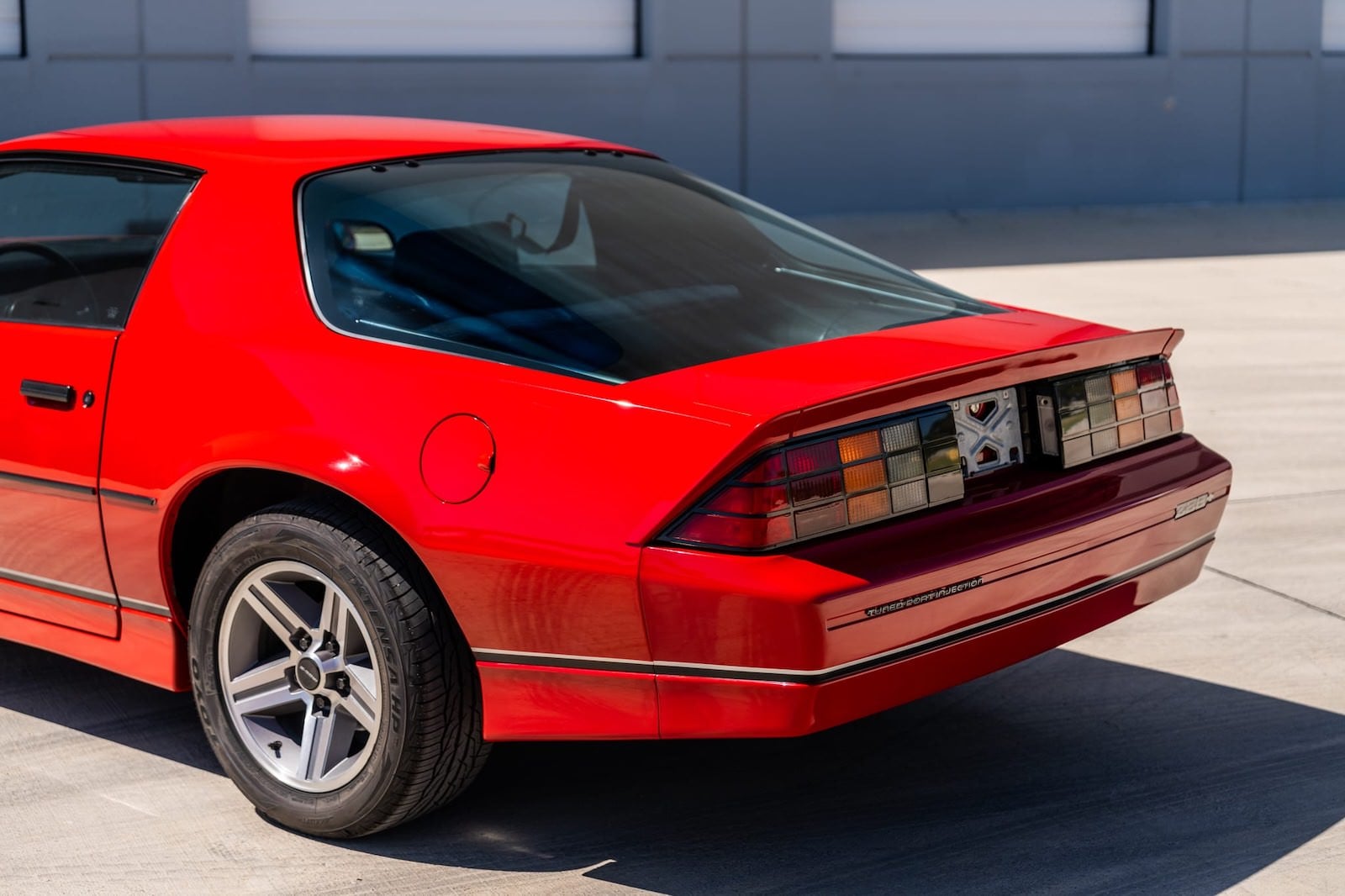
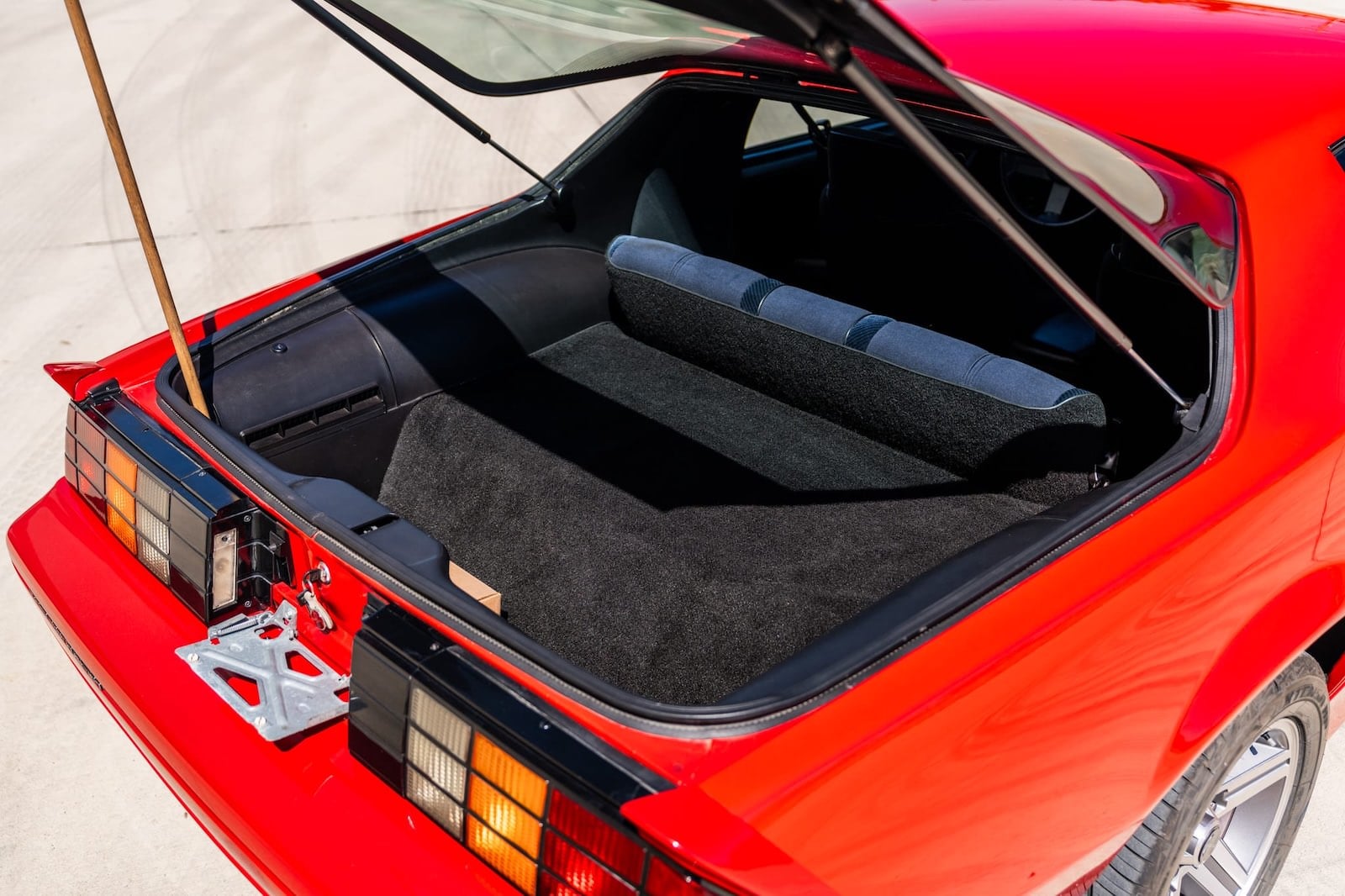
The exterior keeps its IROC-Z graphics, body-color front spoiler, ground-effects rocker panels, faux hood louvers, fog lights, and rear spoiler. The cabin has reclining front bucket seats, a contoured rear bench, air conditioning, power windows, power door locks, and a Delco AM/FM/cassette stereo. The original-style 16-inch wheels are shod with Toyo Extensa HP II tires that were installed in 2021.
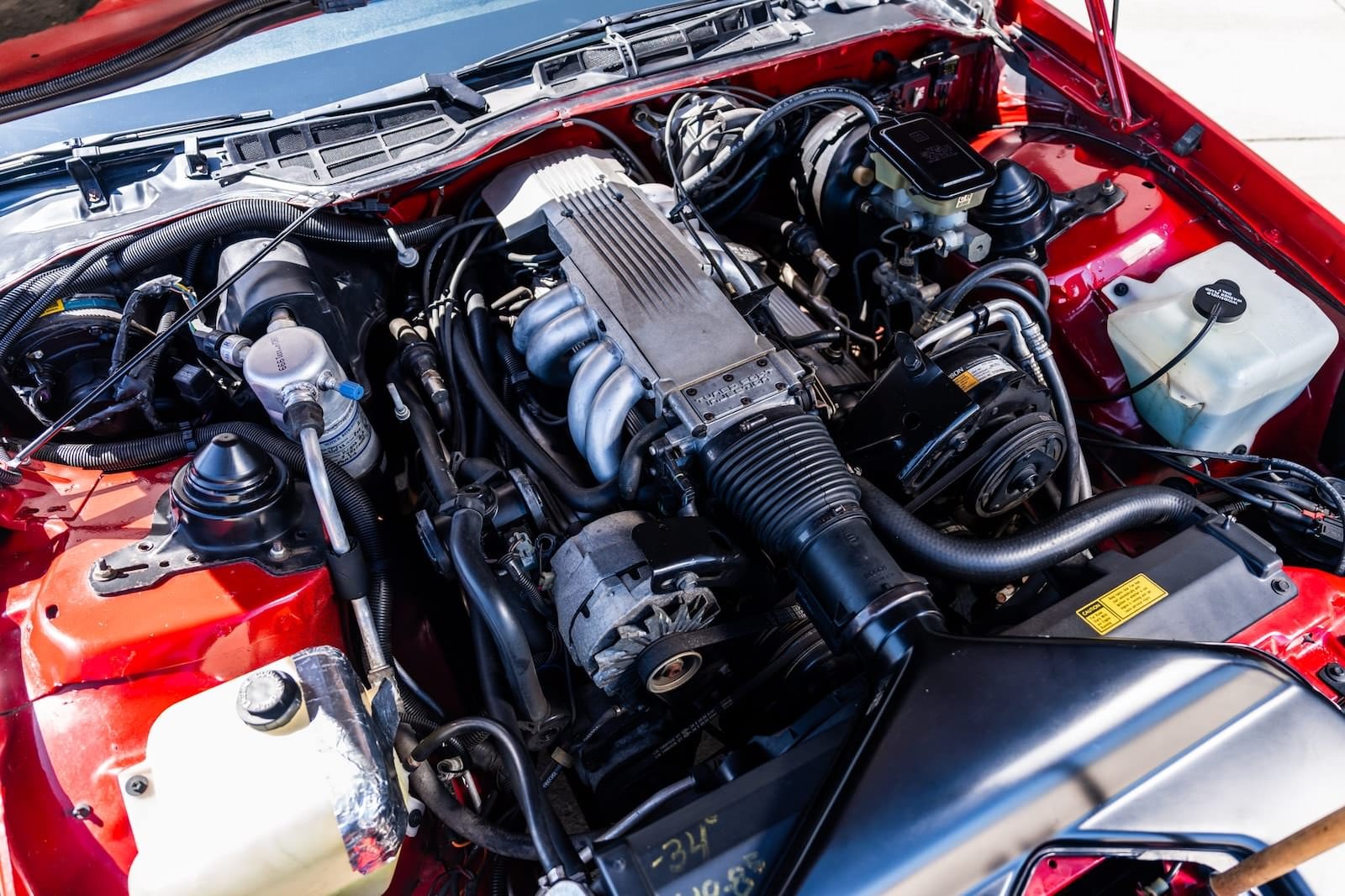
Power comes from a 5.0 liter LB9 V8 fitted with Chevrolet’s optional Tuned-Port Injection system, producing a factory-rated 215 bhp and 275 lb ft of torque. It’s paired with a 4-speed automatic transmission that sends power to the rear wheels through a limited-slip differential.
The car’s Carfax report records an accident involving another vehicle in June of 1999, and the seller explains that the body would benefit from paintless dent repair, though it all looks quite good for its age in the images shown above and below.
It’s now being offered for sale out of Dallas, Texas on Bring a Trailer with a Carfax report and a clean New York title. If you’d like to read more about it or register to bid you can visit the listing here.
Images courtesy of Bring a Trailer

Articles that Ben Branch has written have been covered on CNN, Popular Mechanics, Smithsonian Magazine, Road & Track Magazine, the official Pinterest blog, the official eBay Motors blog, BuzzFeed, Autoweek Magazine, Wired Magazine, Autoblog, Gear Patrol, Jalopnik, The Verge, and many more.
Silodrome was founded by Ben back in 2010, in the years since the site has grown to become a world leader in the alternative and vintage motoring sector, with well over a million monthly readers from around the world and many hundreds of thousands of followers on social media.