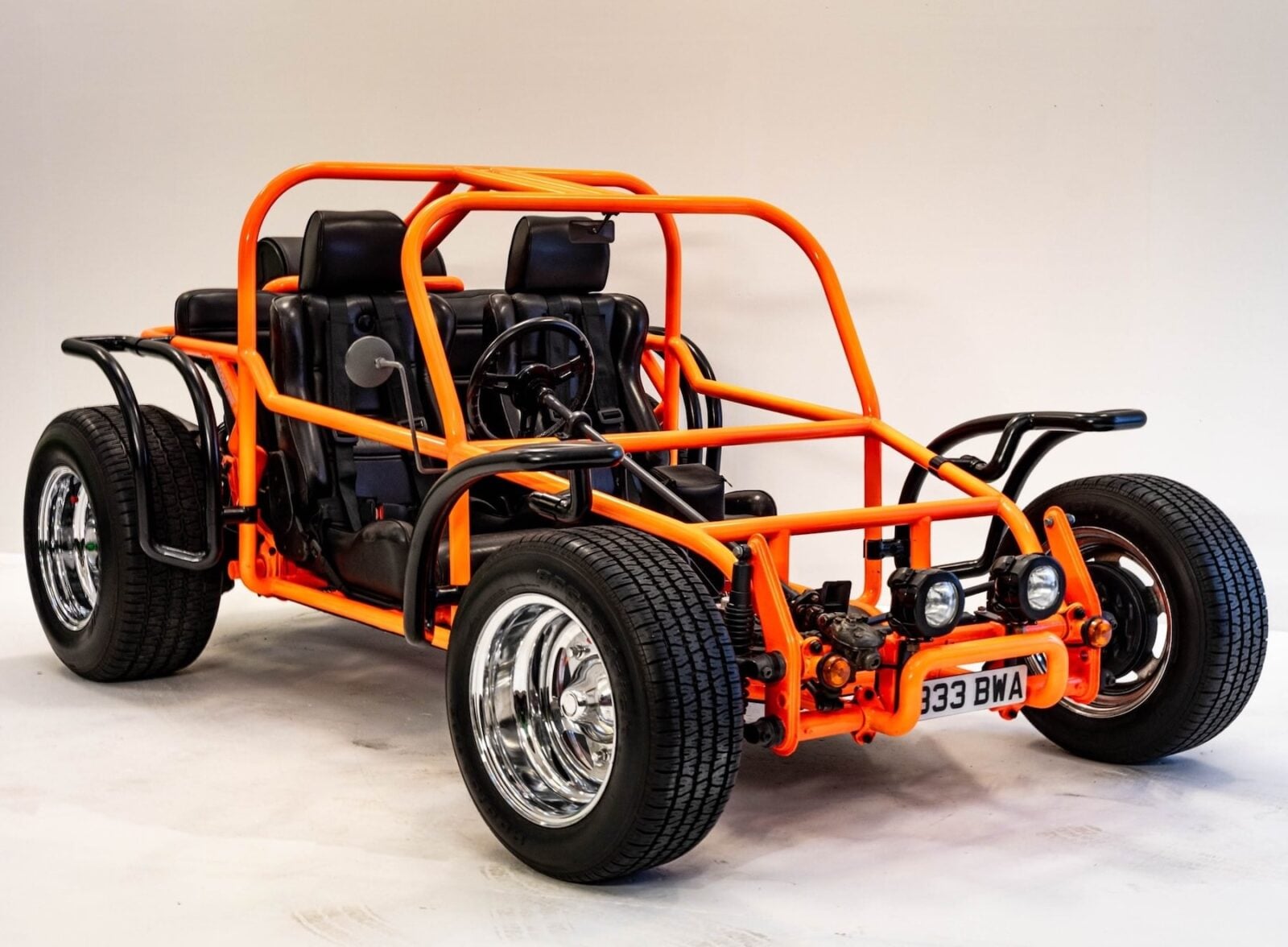
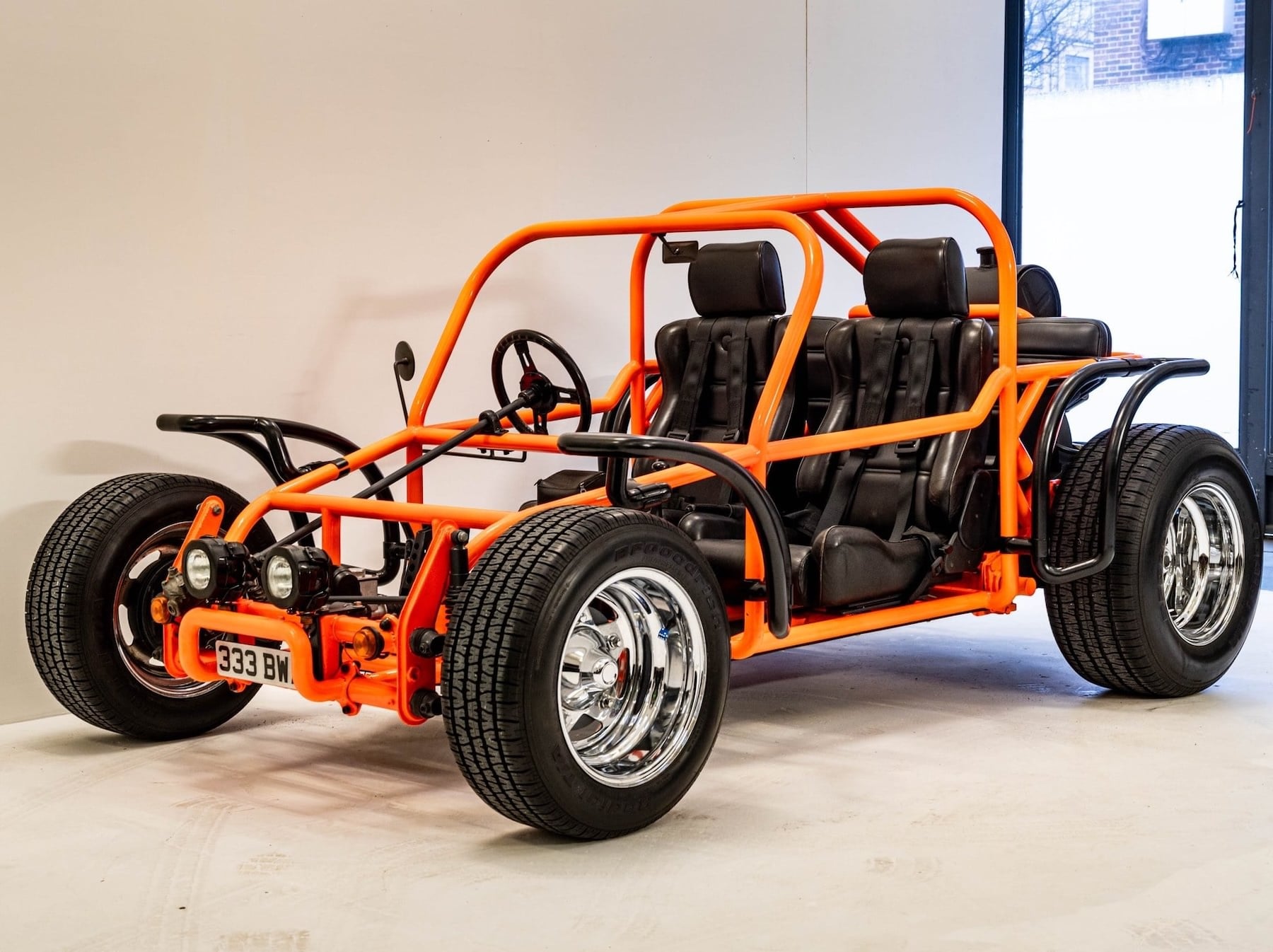
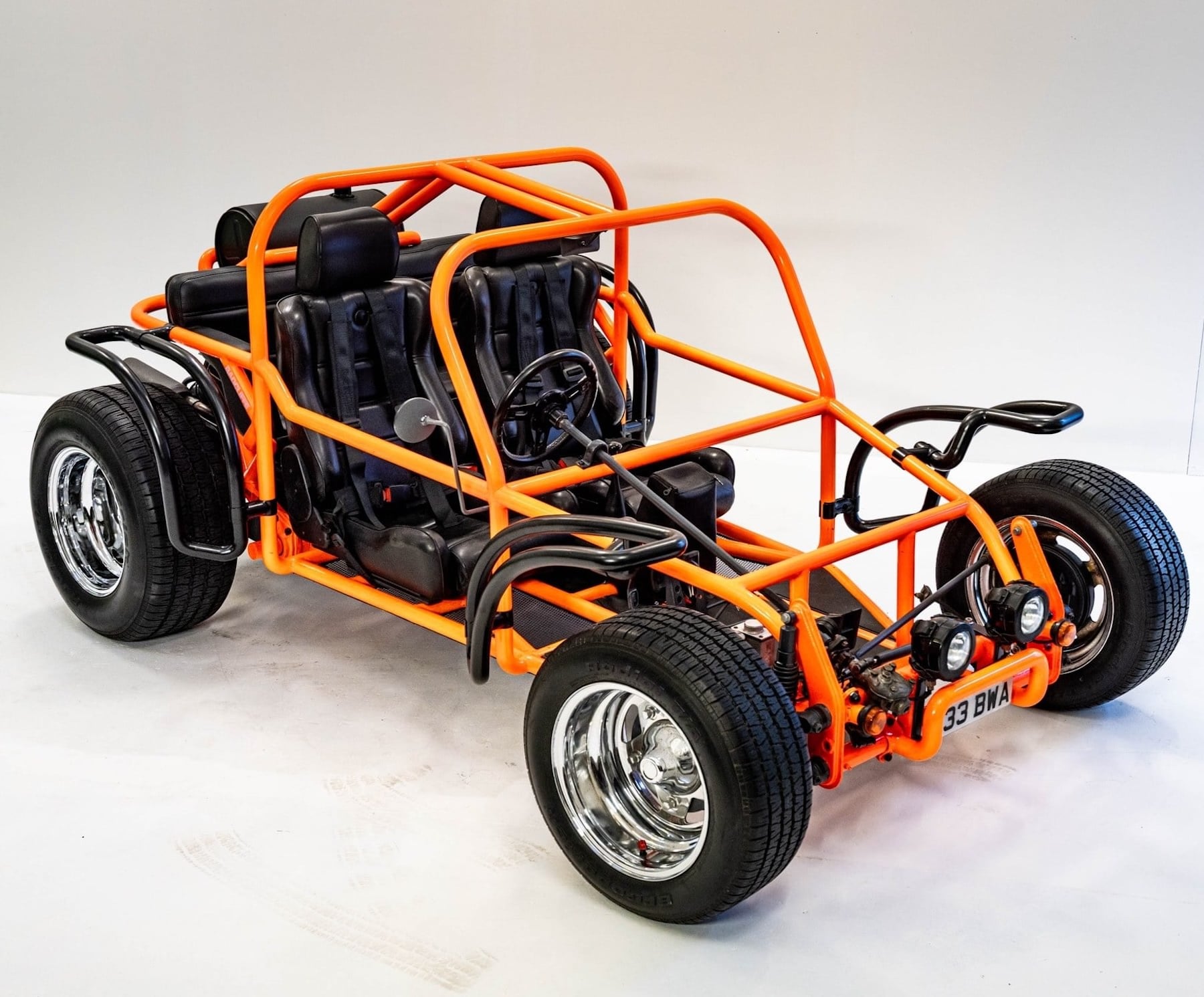
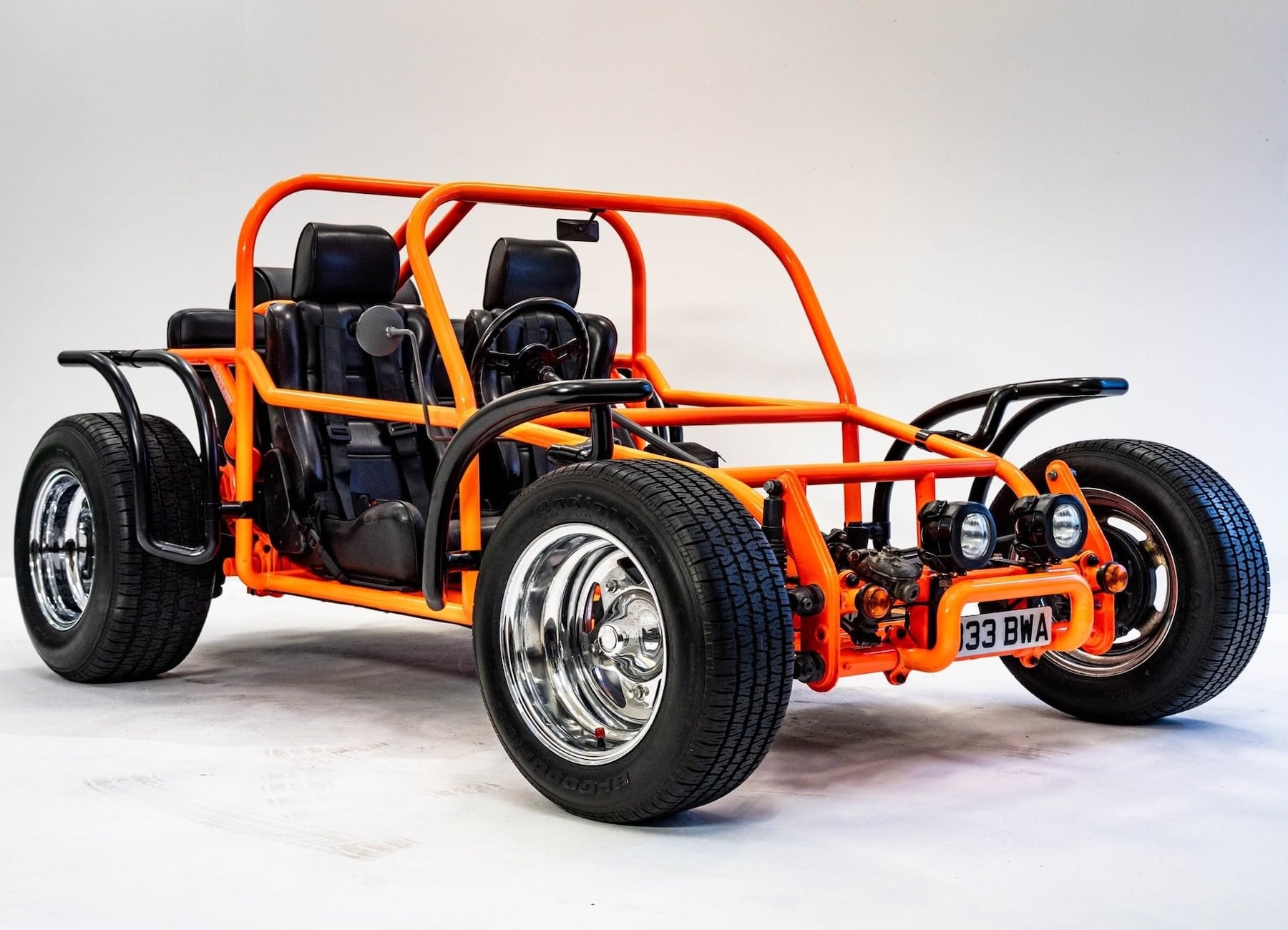
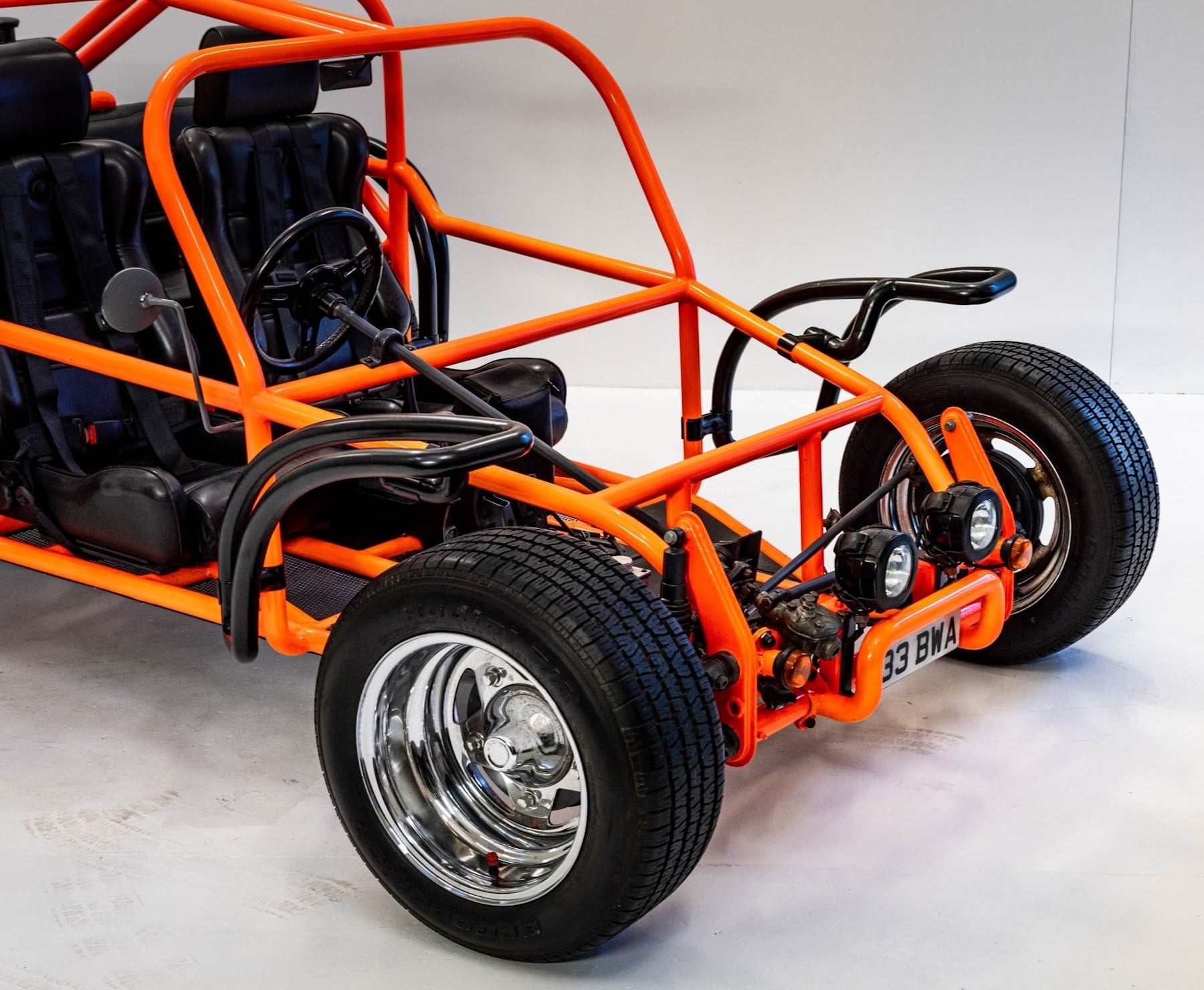
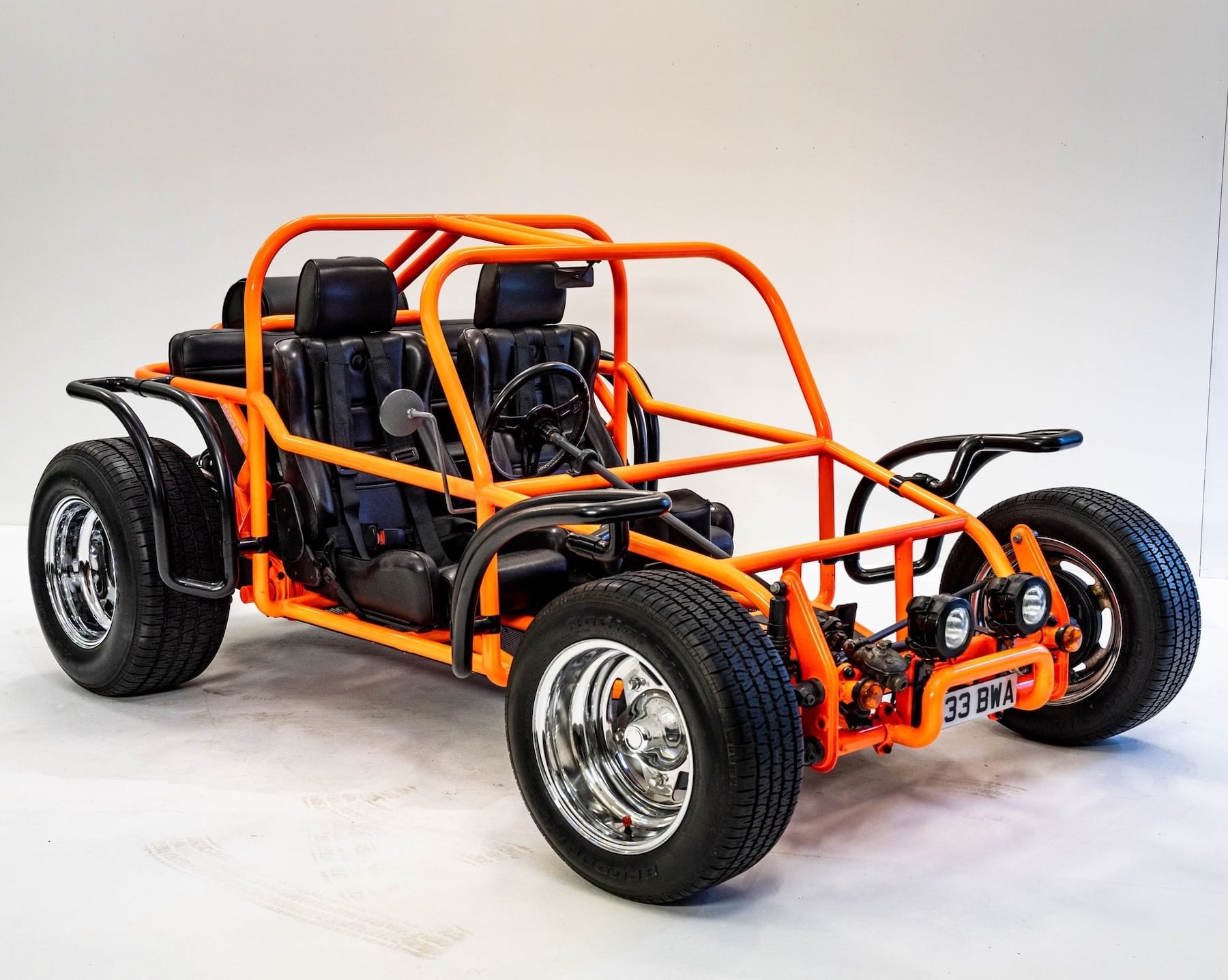
This is the Volkswagen Radcliffe Orange Beach, it’s a VW-based dune buggy built by celebrated artist Benedict Radcliffe, and it’s both fully-functional and 100% road-legal.
Radcliffe built two of these beach buggies, and though they were clearly related, they were styled differently. The other buggy is finished in green and yellow, and you can see it here. The version shown in this article is named Orange Beach, for obvious reasons, and it’s now being offered for sale as a solo unit for the first time.
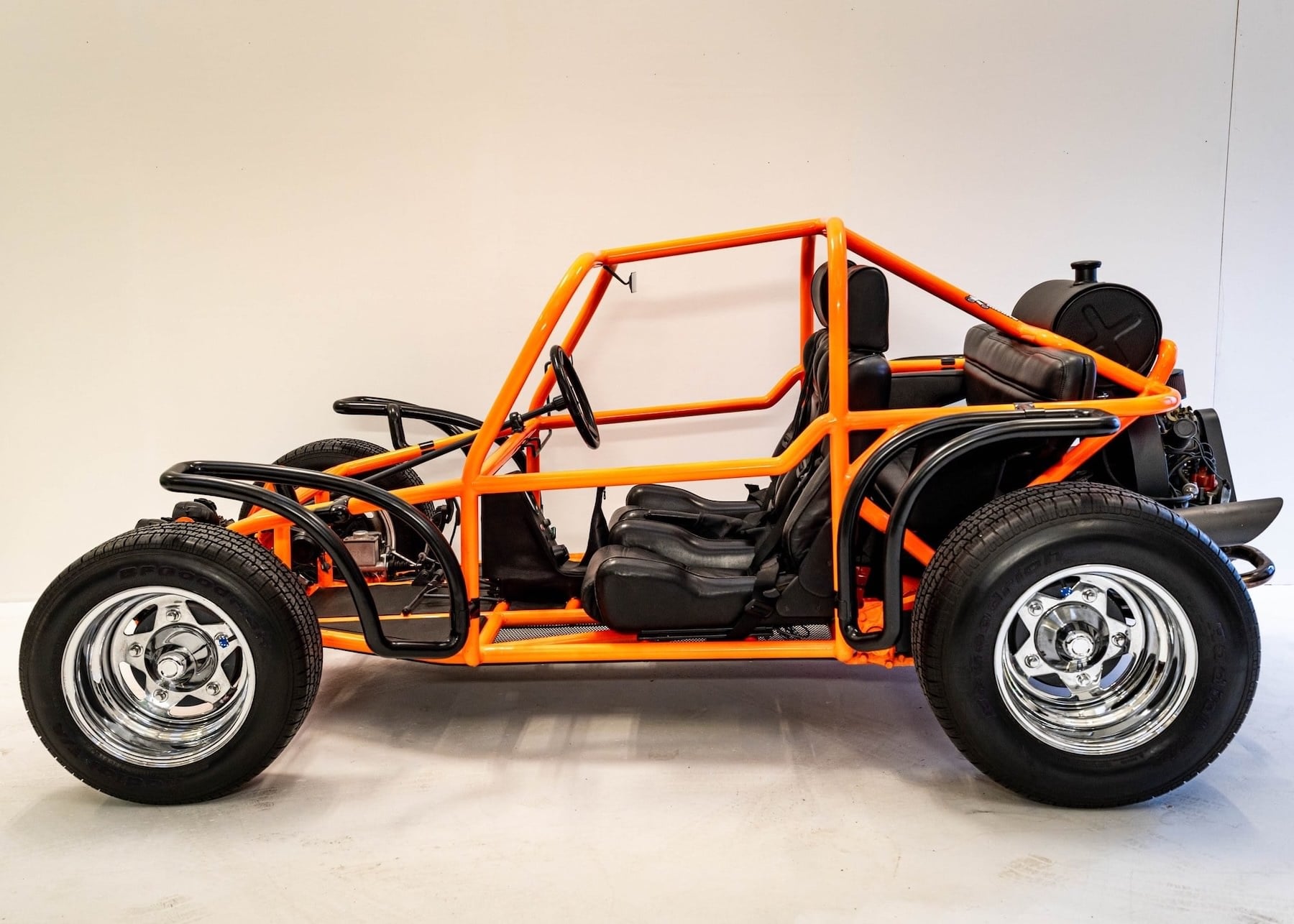
 This is the Volkswagen Radcliffe Orange Beach, it’s a VW-based dune buggy built by celebrated artist Benedict Radcliffe, and it’s both fully-functional and 100% road-legal.
History Speedrun: Benedict Radcliffe
Benedict Radcliffe is a British artist and fabricator whose signature work is a full-scale “wireframe” sculpture series of everyday objects and, most famously, cars reduced to their essential lines in steel. Radcliffe’s work looks like a three-dimensional drawing – they’re technical, precise, 1:1 scale, and usually very brightly colored.
Radcliffe studied at Glasgow’s Mackintosh School, then leaned hard into making things with his own hands as much as designing. Early on, he worked in commercial fabrication including interiors and furniture alongside sculpture, and his pieces are typically jig-built, welded, and finished more like engineering prototypes than traditional sculptures.
Perhaps his most important early project was a personal exhibition piece titled Modern Japanese Classic, it was a 1:1 wireframe Subaru Impreza P1 made shortly after he graduated in Glasgow. This piece set the template for much of what followed – automotive icons rendered in steel rod (or tube), then painted or powdercoated so they pop against their backgrounds.
Over time Radcliffe’s work has won him global recognition, and it now includes subjects including a London taxi (a Heathrow Terminal 2 commission), and the aforementioned Lamborghini Countach, Ferrari F40, Lancia Stratos HF, Porsche 934, and even a full-scale excavator.
His process is always hands-on – technical drawings and photos are distilled into a set of lines, then cut, bent, welded, and finished. Radcliffe’s sculptures have now been displayed at some of the world’s most prominent galleries and museums, and many pieces have been sold into major private collections.
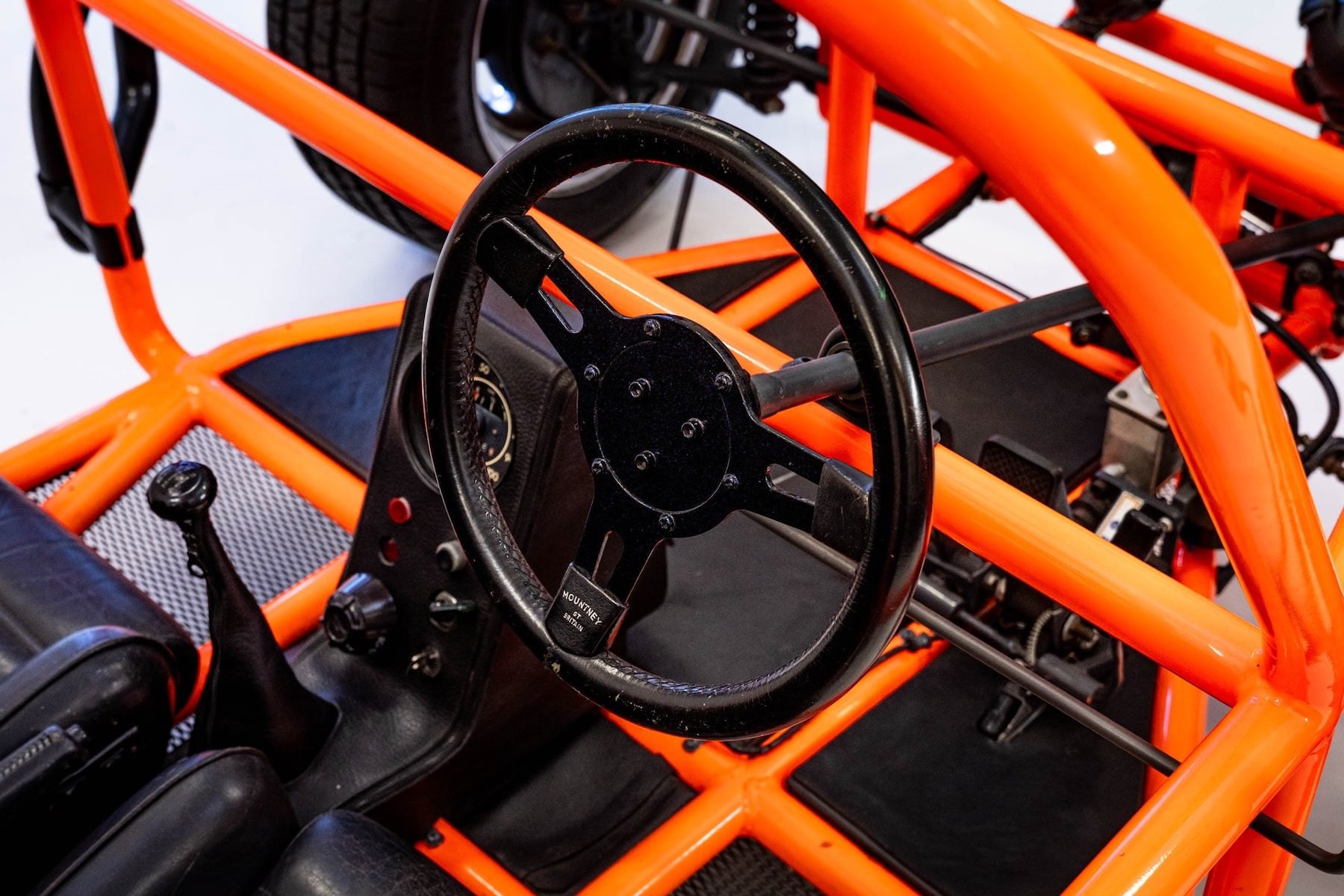
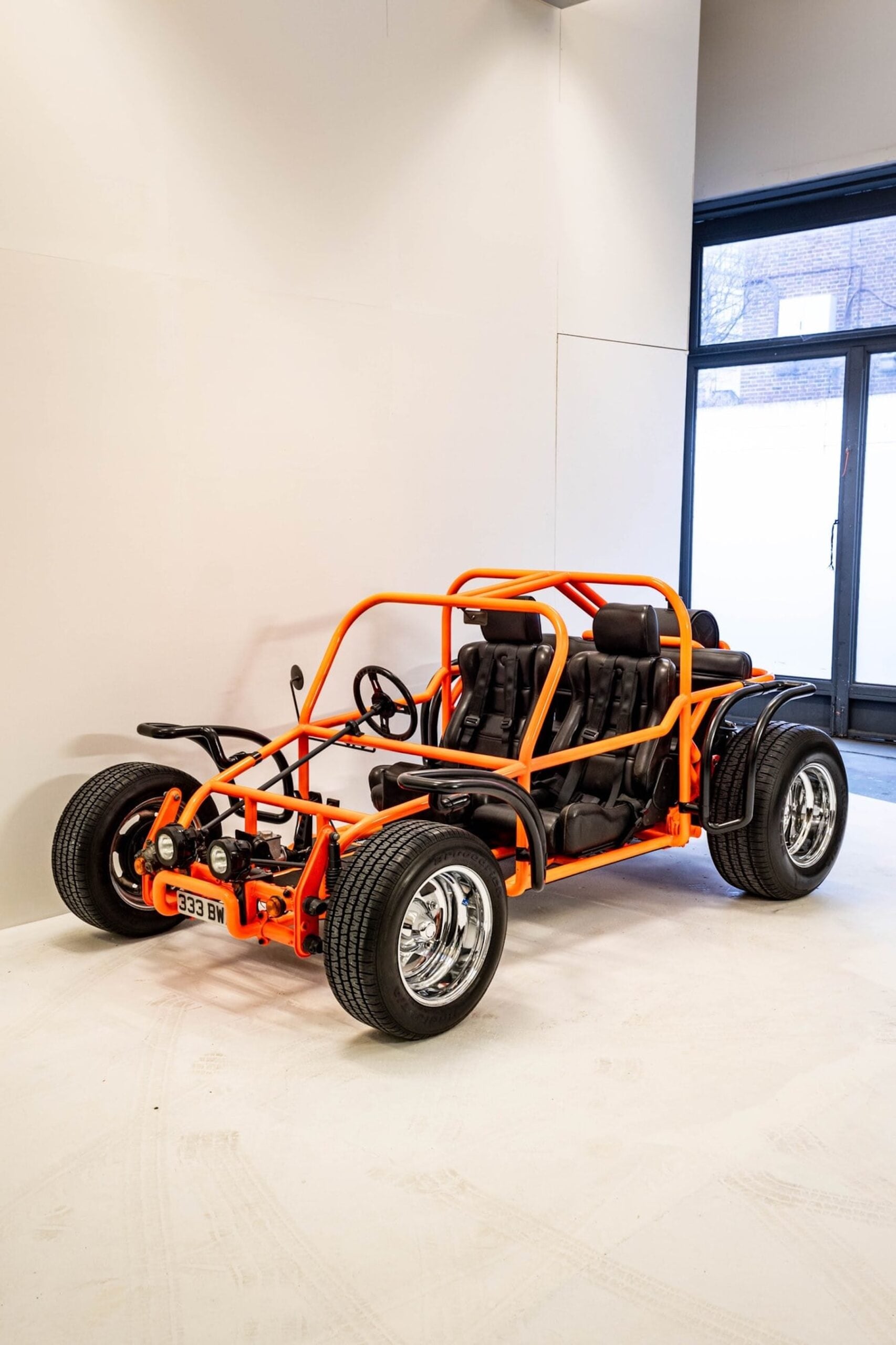
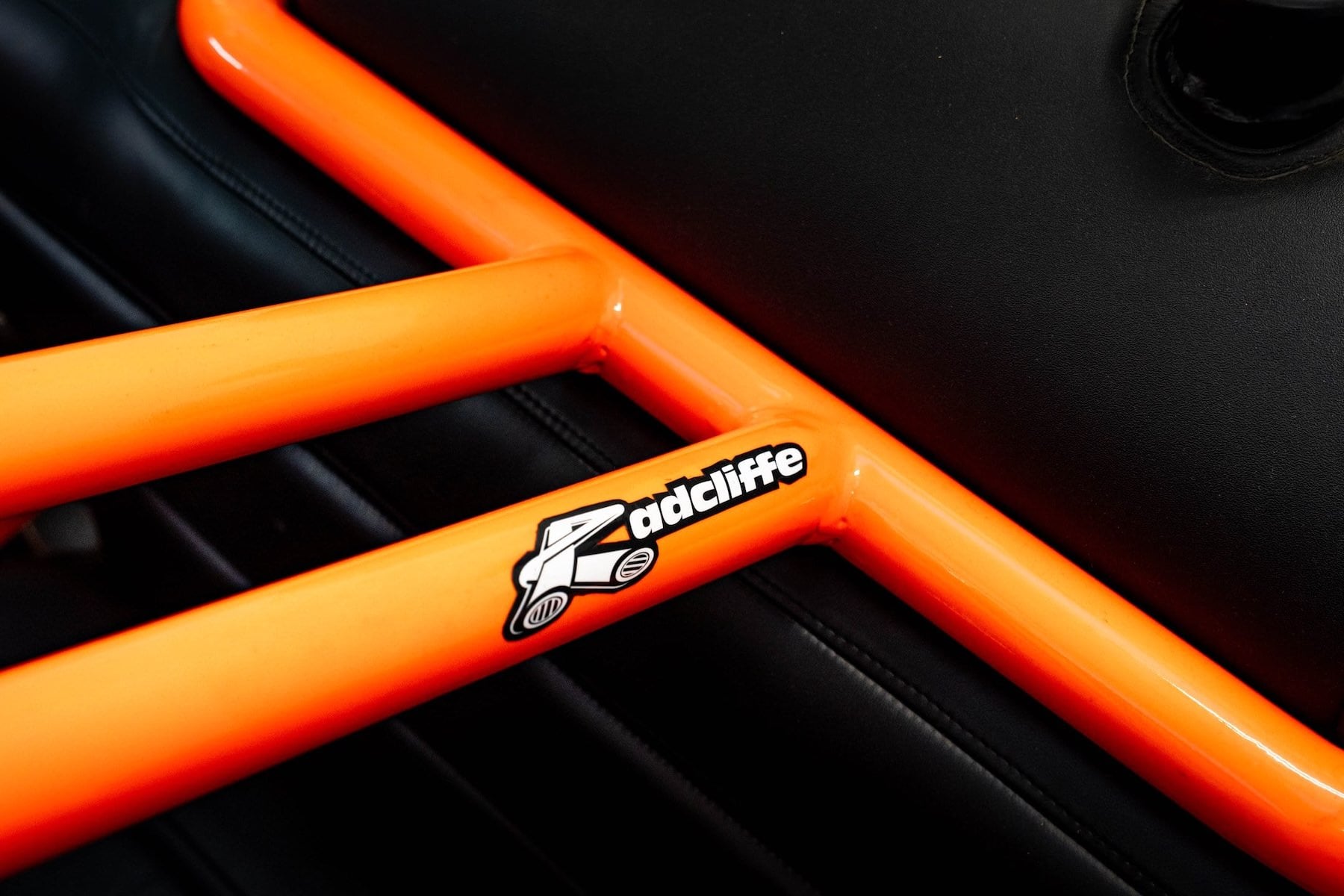
This is one of a matched pair of custom dune buggies built by London-based sculptor and fabricator Benedict Radcliffe. It’s the slightly more sensible of the two, finished in fluoro orange gloss with black wheel arch extensions, and powered by a 1.3 liter air-cooled VW flat-four.
The Volkswagen Radcliffe Orange Beach Shown Here
This is one of a matched pair of custom dune buggies built by London-based sculptor and fabricator Benedict Radcliffe. It’s the slightly more sensible of the two, finished in fluoro orange gloss with black wheel arch extensions, and powered by a 1.3 liter air-cooled VW flat-four.
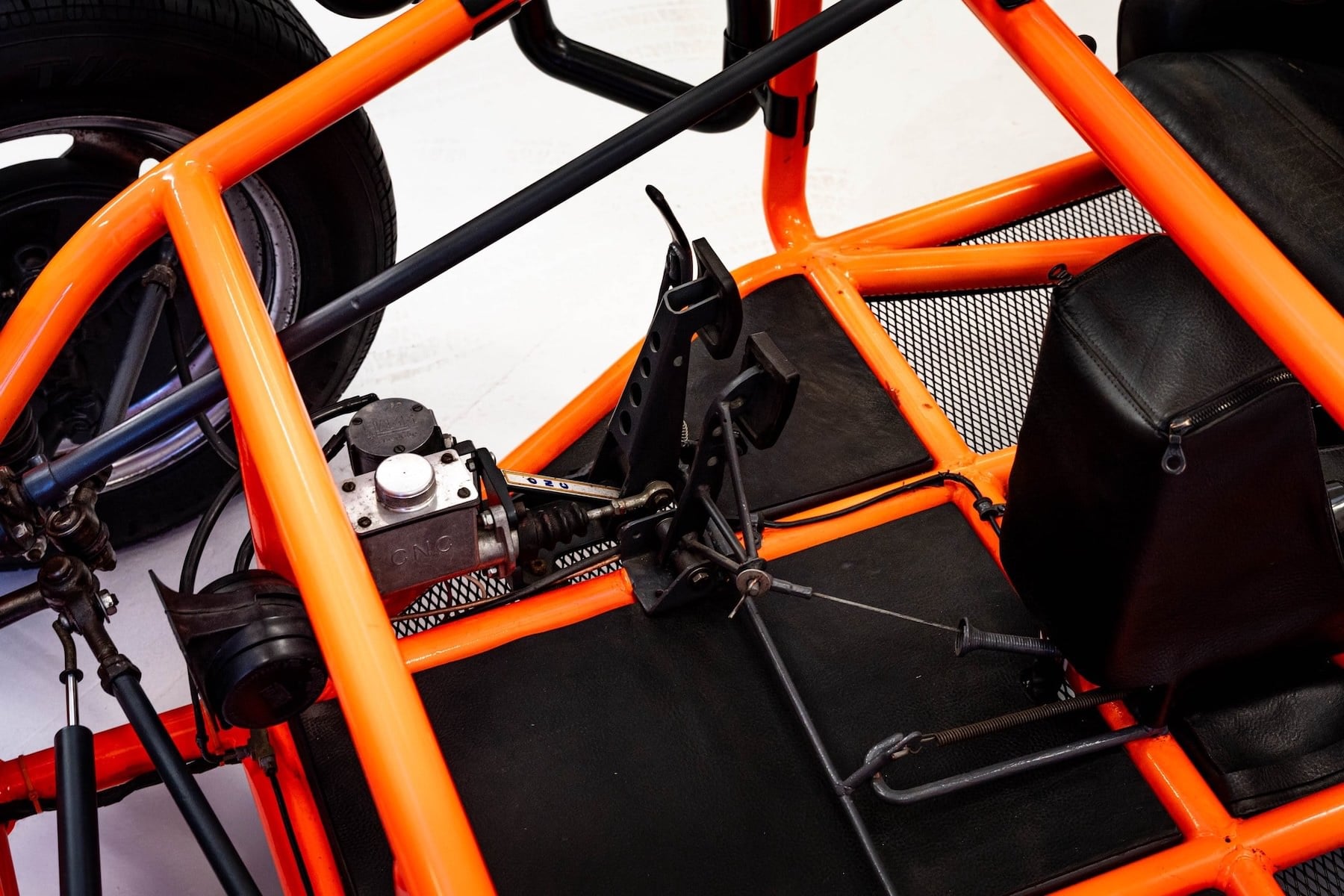
The donor car started life as a 1961 Volkswagen Beetle. It was converted into a “GP” tubular-chassis beach buggy around 1979, during the tail end of the mid-1970s British buggy conversion boom. Radcliffe acquired the car and rebuilt it in 2020, keeping the original VW running gear and the existing exposed tube chassis, then modifying it to give it its finished character – the fluoro orange gloss paint, the wheel and tire package, the seats, and quite a bit more.
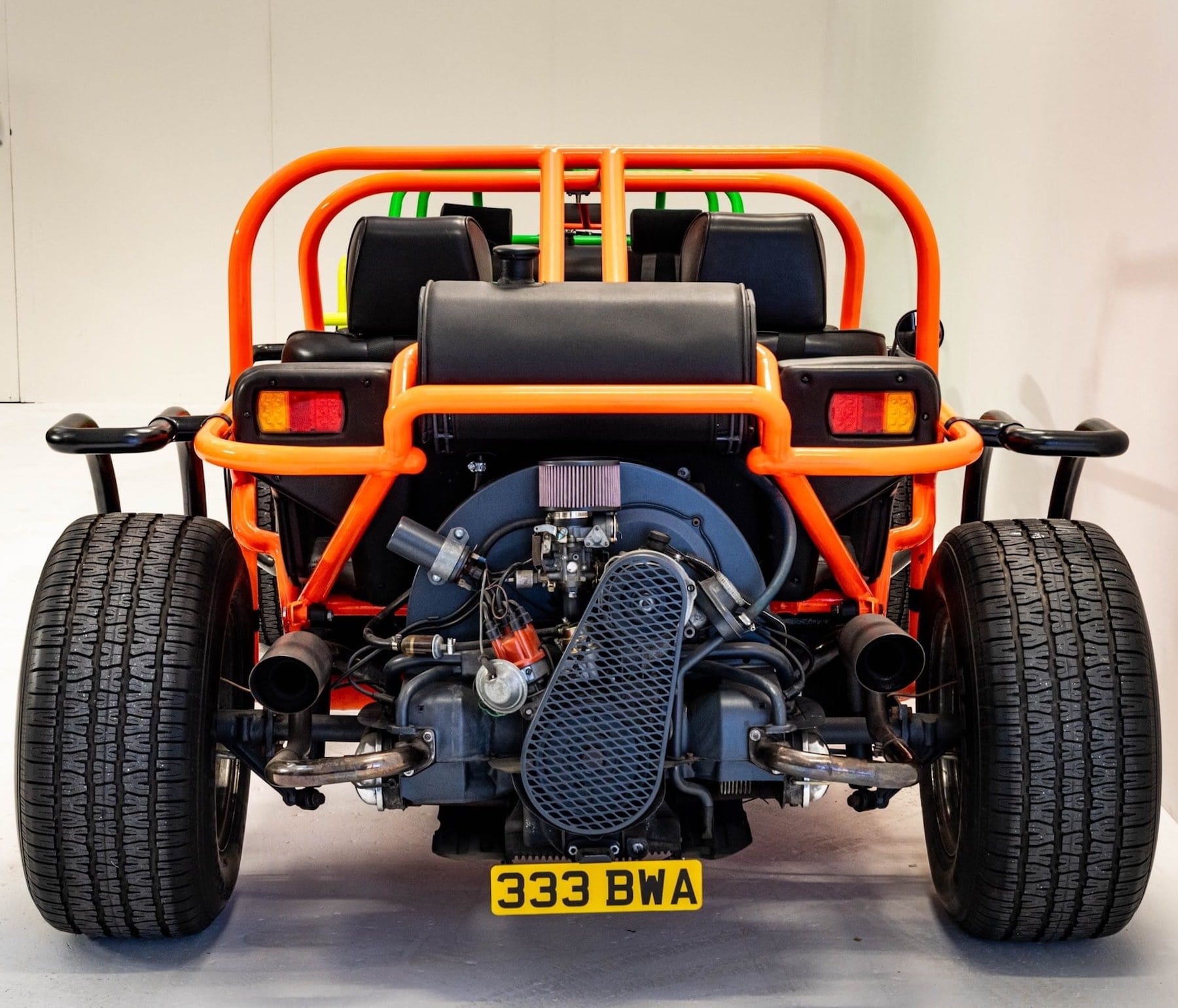
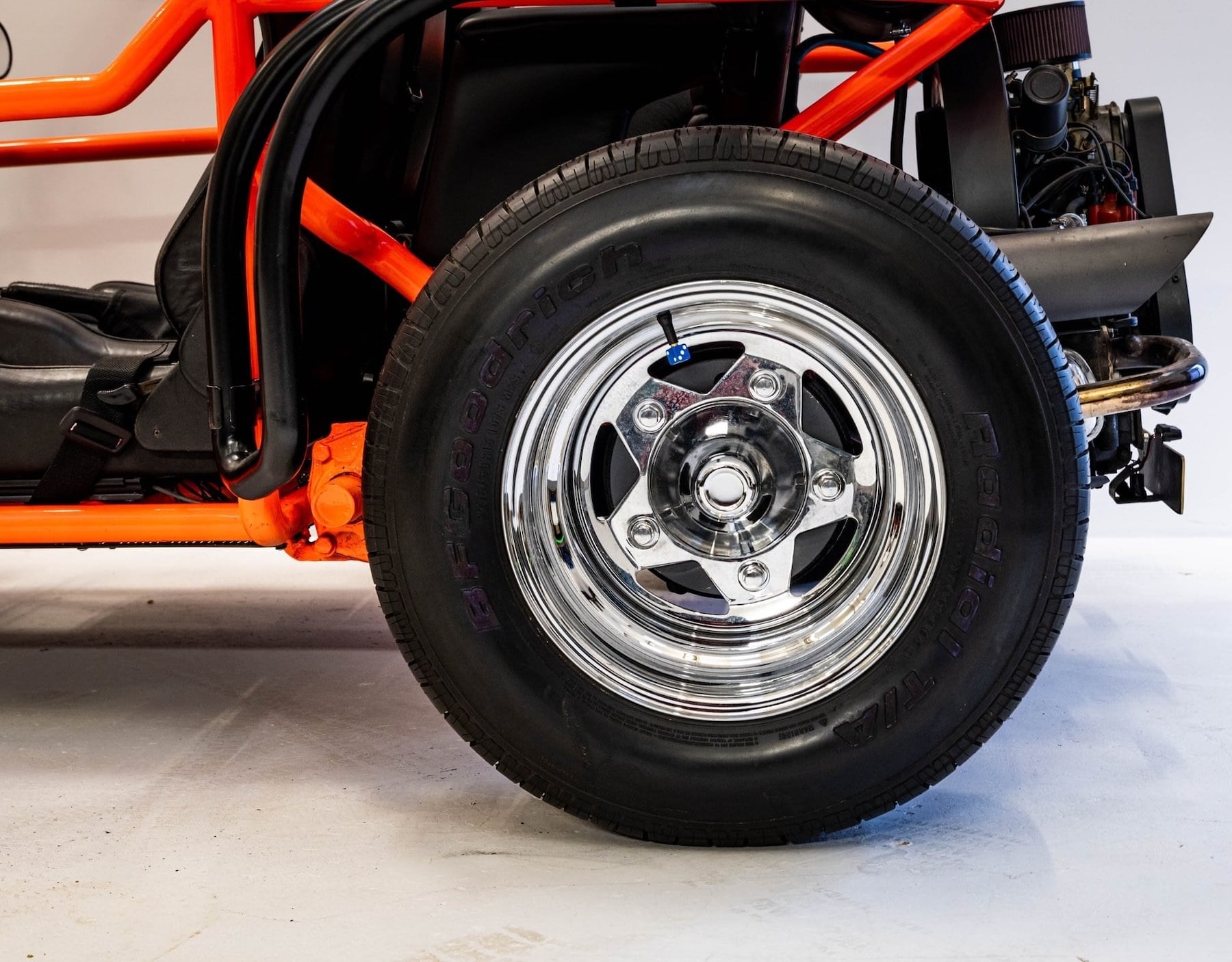
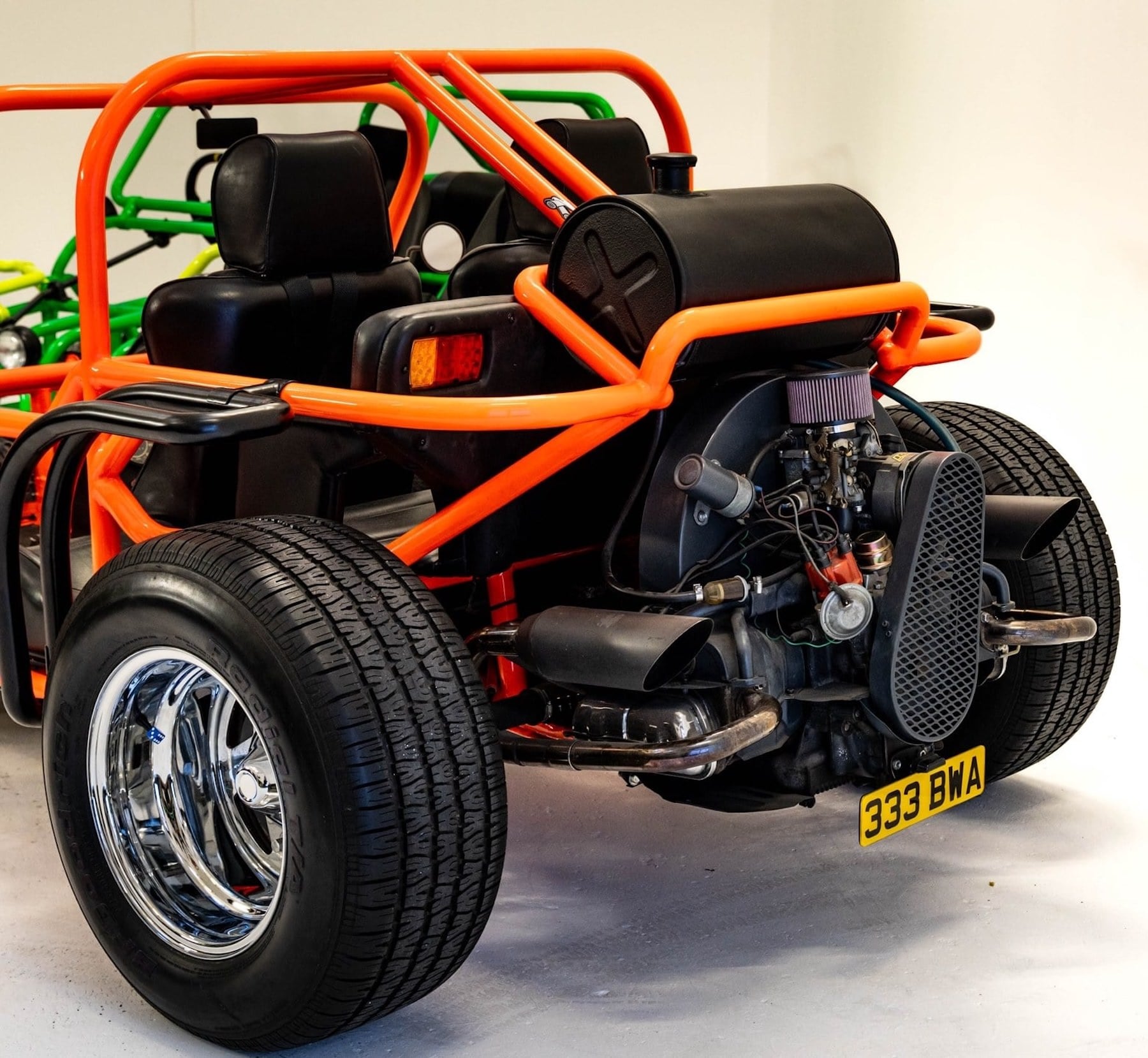
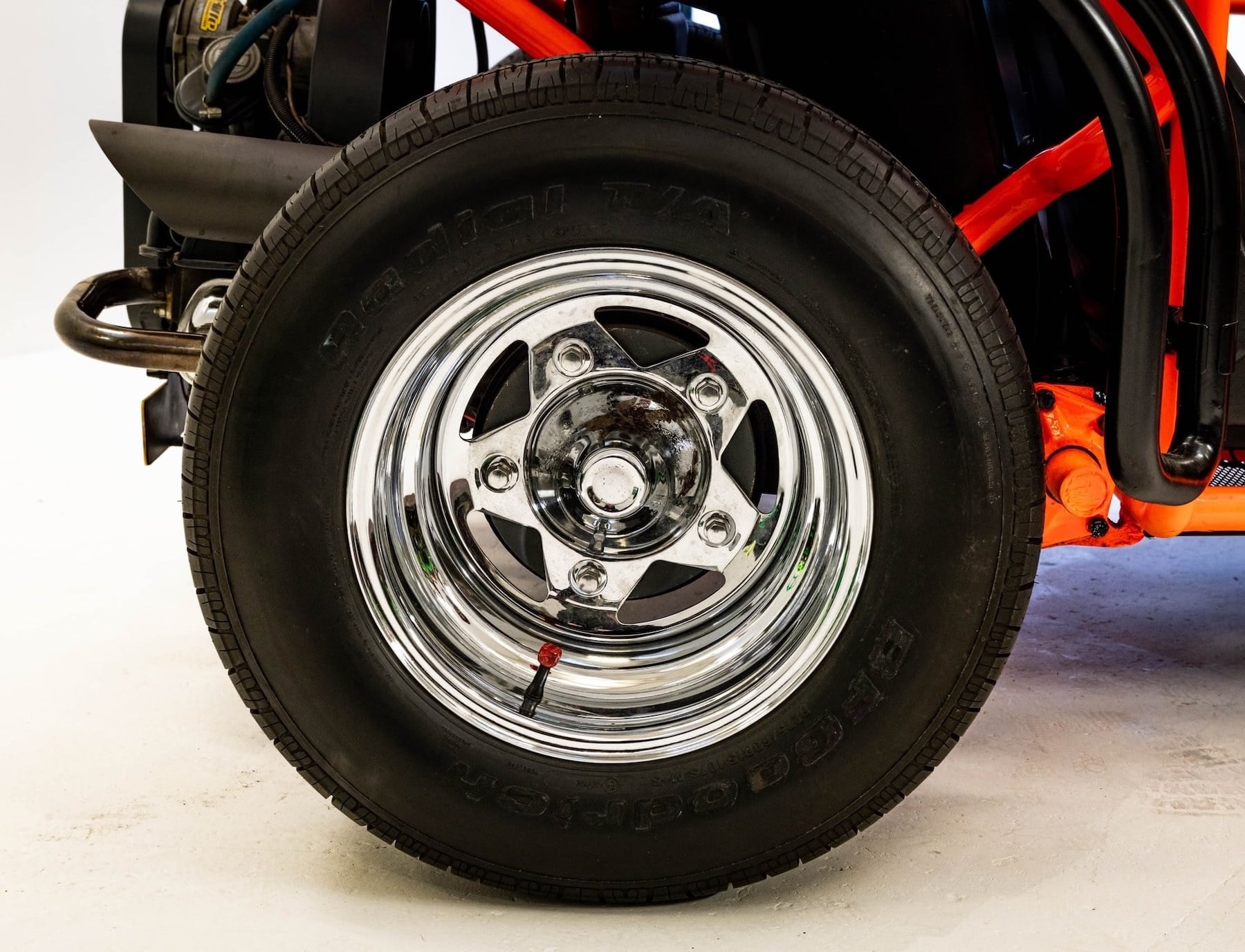
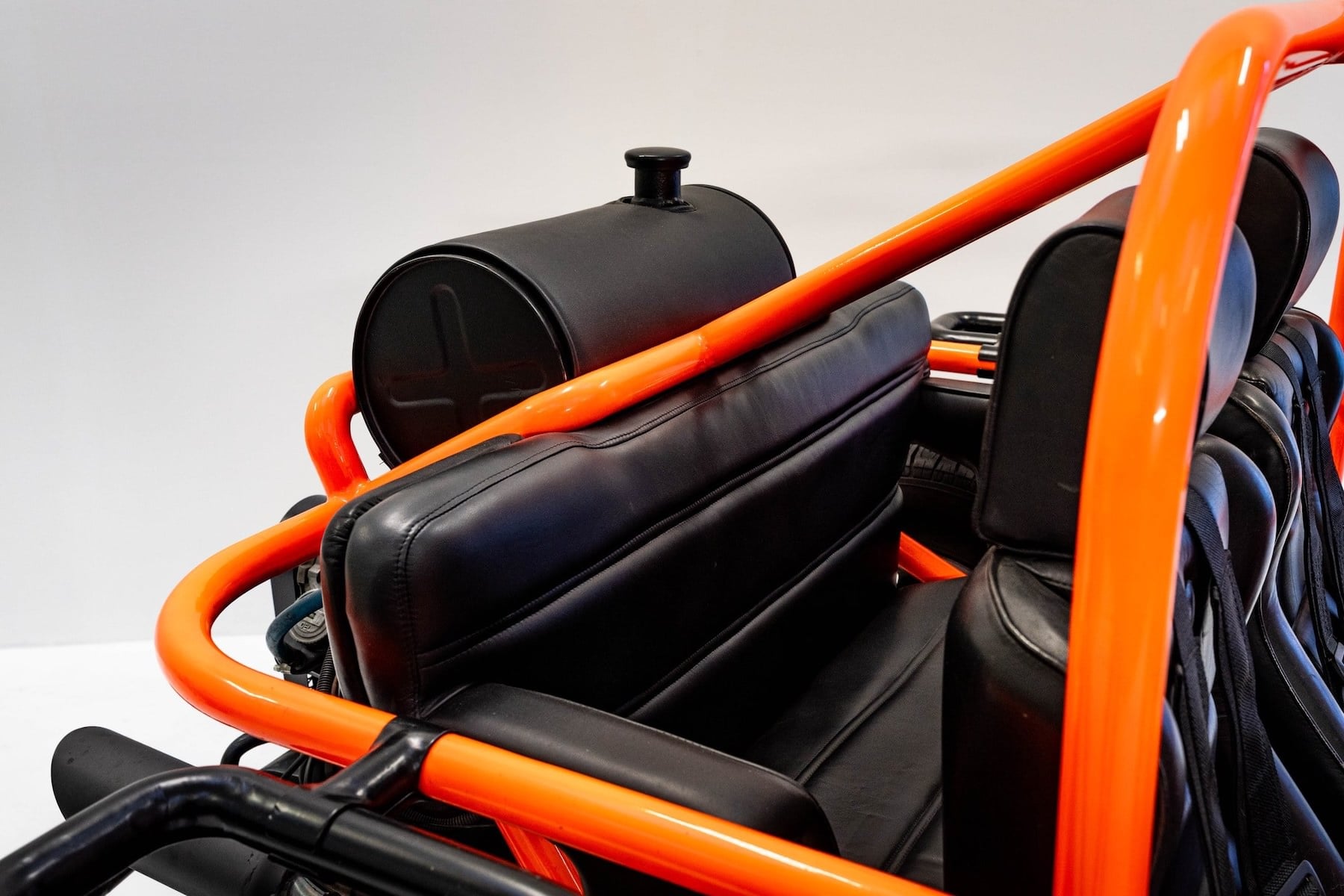
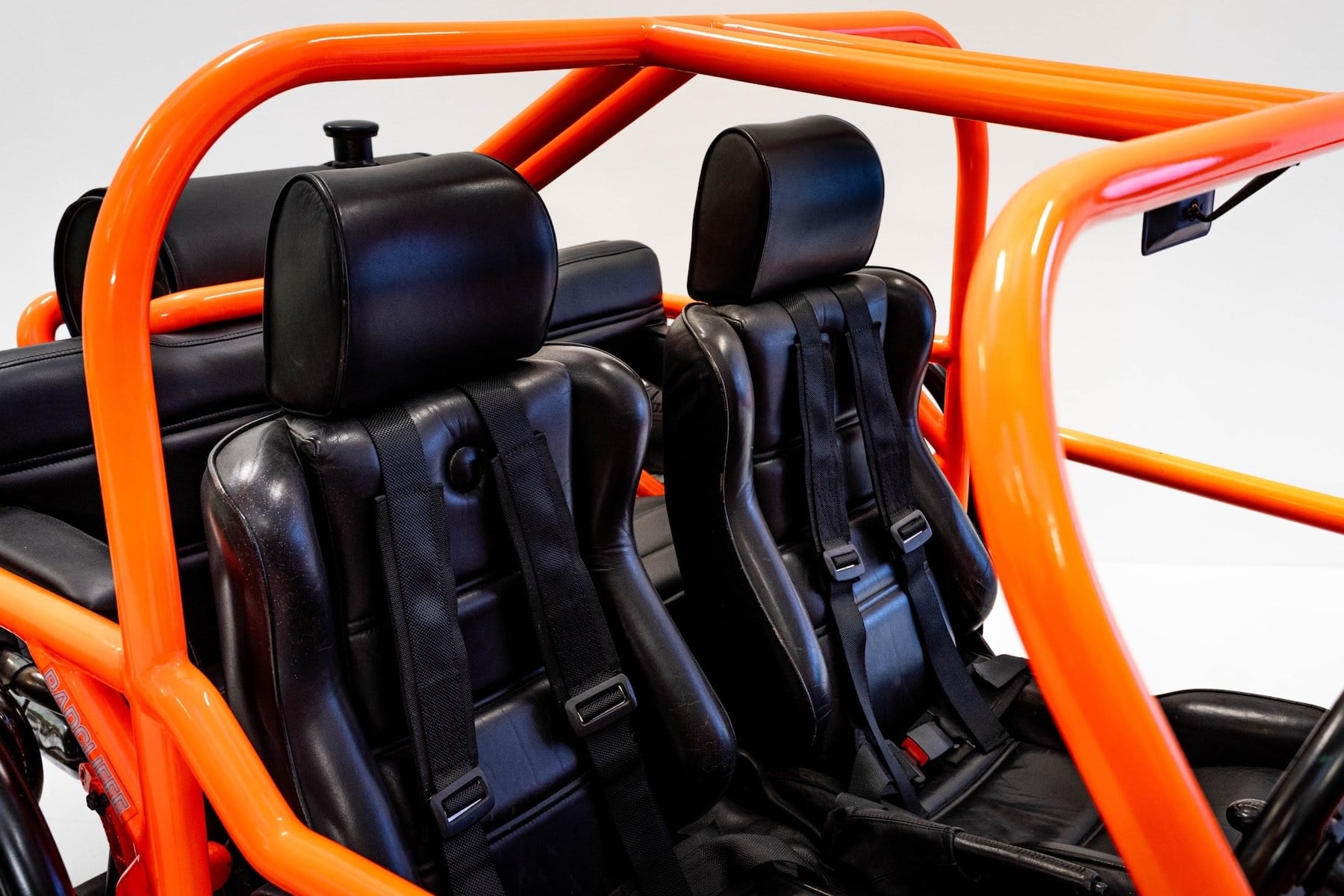
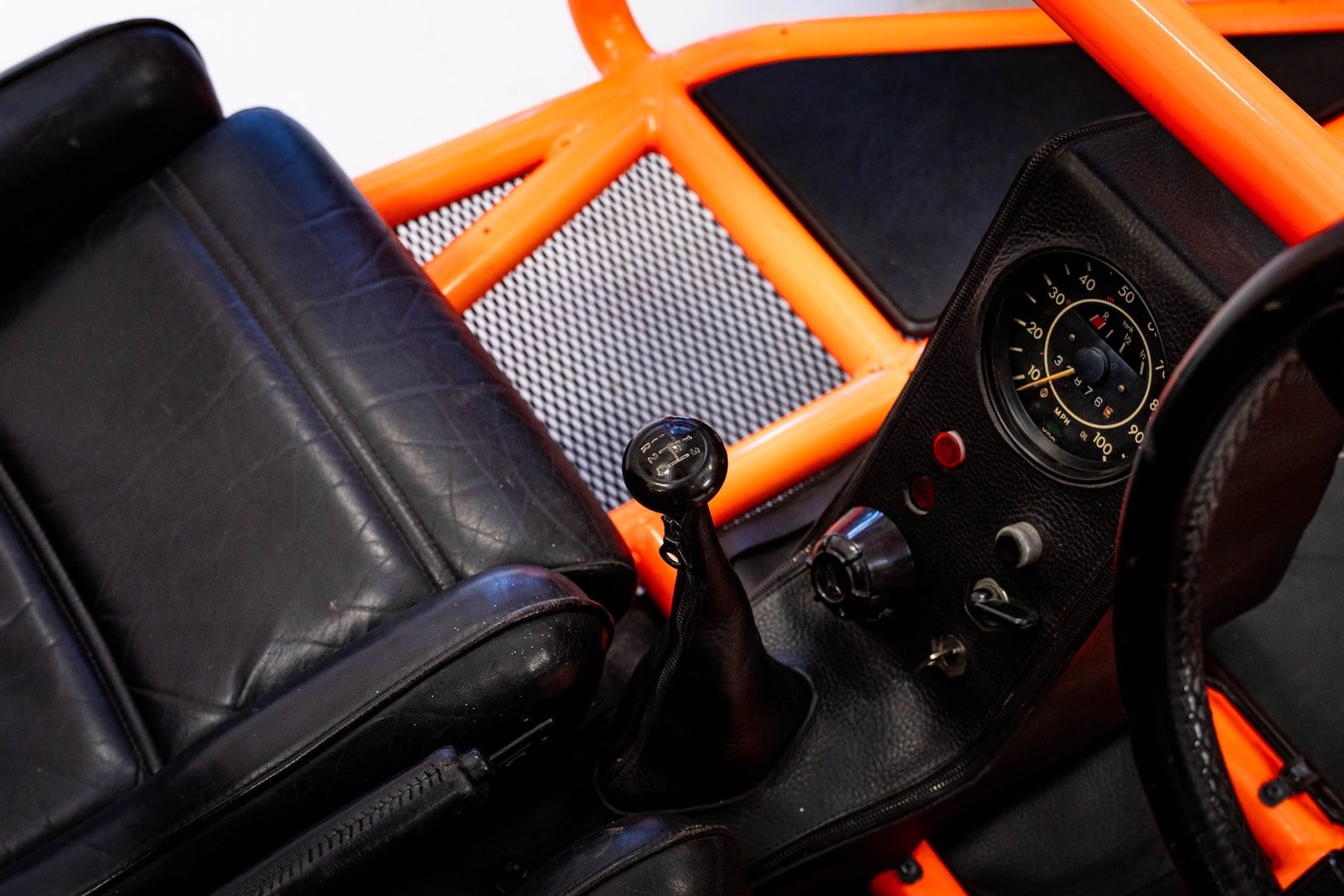
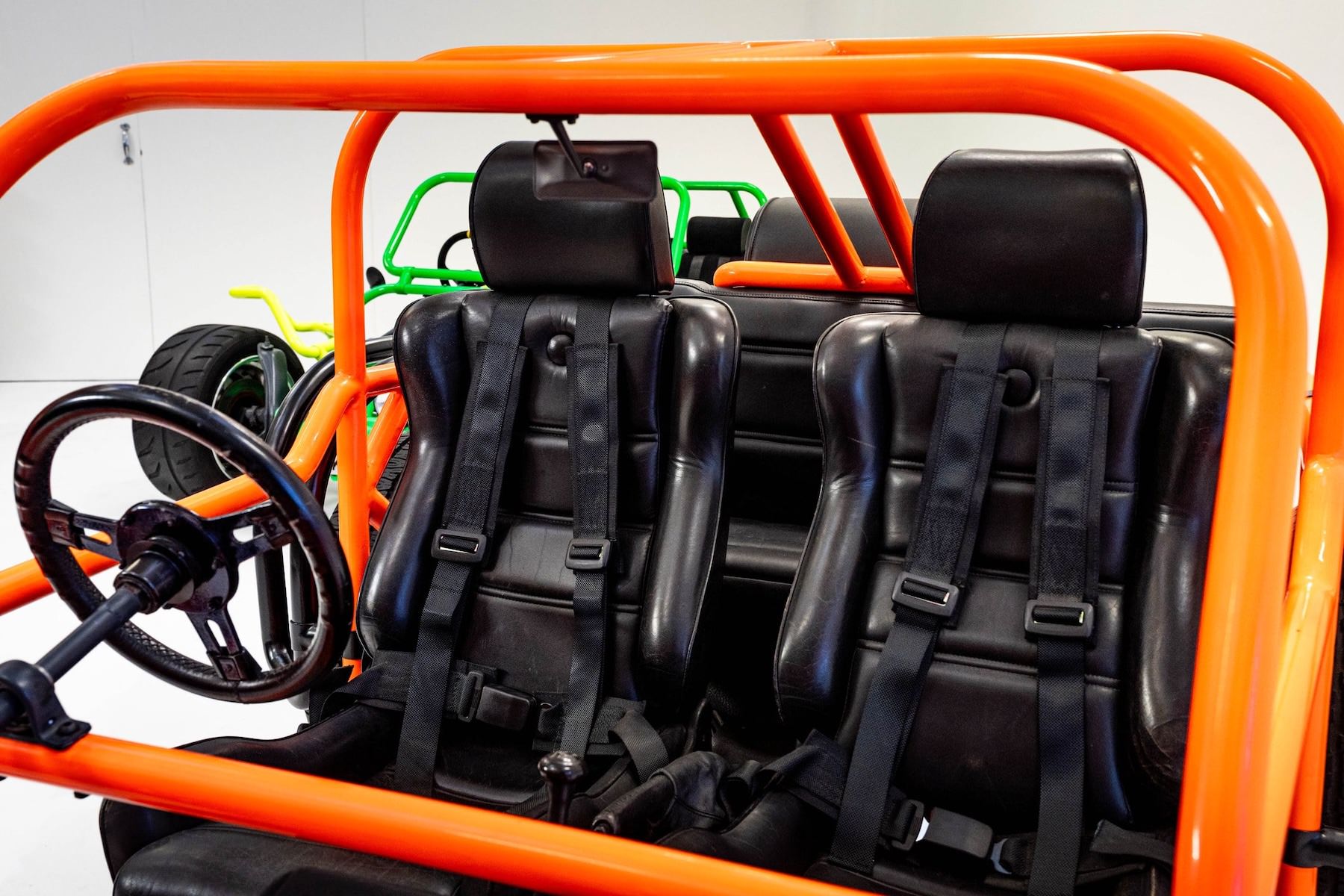
The 1.3 liter flat-four is in largely stock form, driving the rear wheels through a 4-speed manual gearbox. The buggy sits on 15-inch chrome mag alloys wrapped in BFGoodrich Radial T/A tires. Inside, the front seats are Scheel-Mann units imported from the US and trimmed in black leather, with a rear bench behind them for two additional passengers. The center console and floor panels are trimmed in black leatherette to match. The odometer shows 32,976 indicated miles.
Radcliffe built the orange buggy for display at the Nautilus event in Italy, held on the grounds of the Jules Verne-inspired Motel Nautilus at the invitation of Federico Fabbri of Motoring Attitude. It was shown there alongside its green sibling at the season-closing party.
That sister car, finished in vivid green with lighter green wheel arch extensions, is the wilder of the pair. It has a 1966 identity and runs a heavily modified 2.4 liter flat-four built on an Autolinea race case, with 94mm pistons, an 86mm counterweight crankshaft, 5.4 inch I-beam connecting rods, an Engle FK8 camshaft with 30mm followers, CB Performance Panchito big valve heads, 1.4:1 ratio rockers with bolt-up shafts, and 44 IDF carburetors.
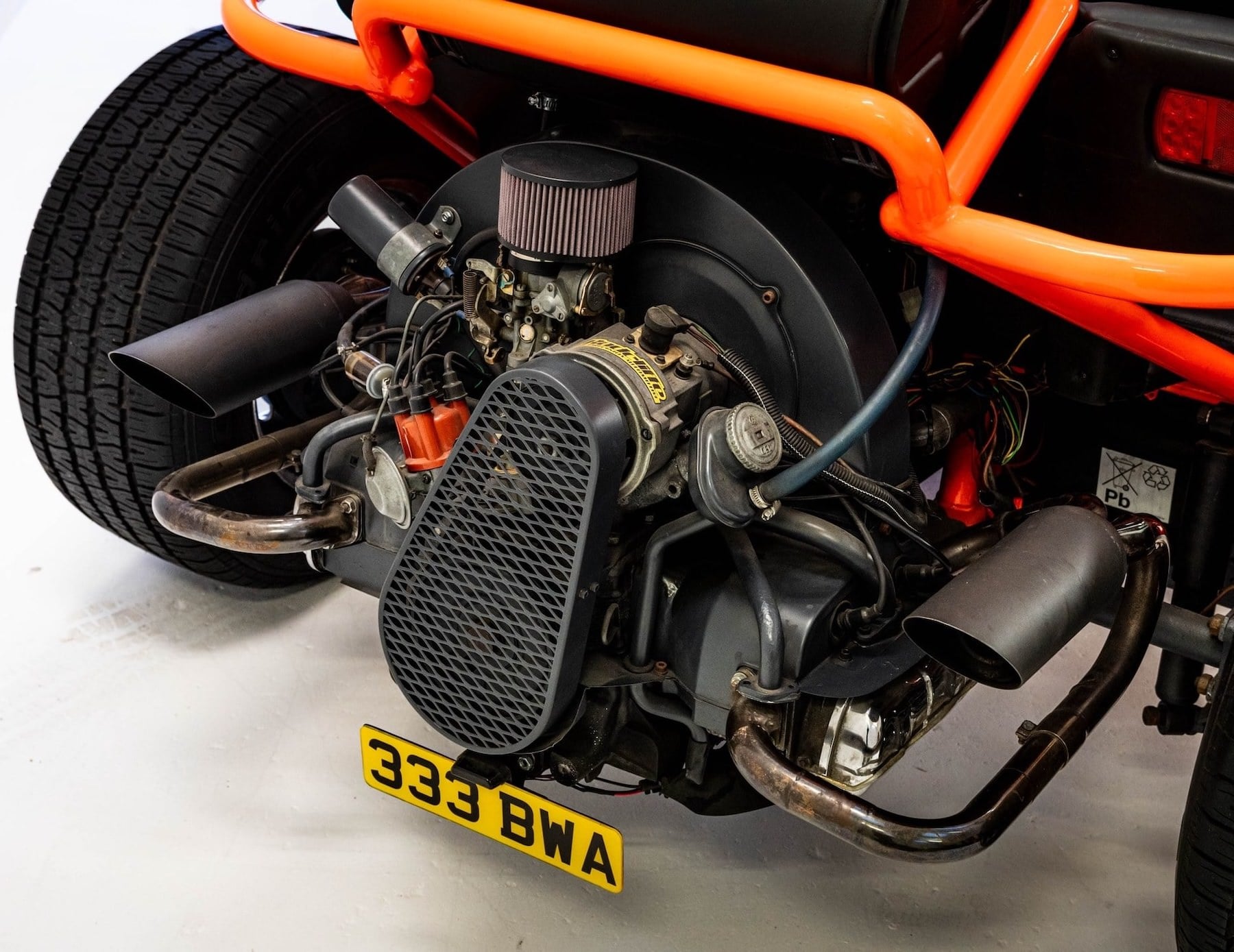
The 1.3 liter flat-four is in largely stock form, driving the rear wheels through a 4-speed manual gearbox. The buggy sits on 15-inch chrome mag alloys wrapped in BFGoodrich Radial T/A tires. Inside, the front seats are Scheel-Mann units imported from the US and trimmed in black leather, with a rear bench behind them for two additional passengers. The center console and floor panels are trimmed in black leatherette to match.
The two buggies were built as a matched pair, and they were originally offered for sale together. They have now been divided up and this one is being sold as a single unit – it’s probably not ideal as a daily driver, but it would be one hell of a fun weekend car.
This buggy is now being offered for sale on Car & Classic out of London in the United Kingdom, and you can visit the listing here if you’d like to read more about it or register to bid.
Images courtesy of Car & Classic
Articles that Ben Branch has written have been covered on CNN, Popular Mechanics, Smithsonian Magazine, Road & Track Magazine, the official Pinterest blog, the official eBay Motors blog, BuzzFeed, Autoweek Magazine, Wired Magazine, Autoblog, Gear Patrol, Jalopnik, The Verge, and many more.
Silodrome was founded by Ben back in 2010, in the years since the site has grown to become a world leader in the alternative and vintage motoring sector, with well over a million monthly readers from around the world and many hundreds of thousands of followers on social media.