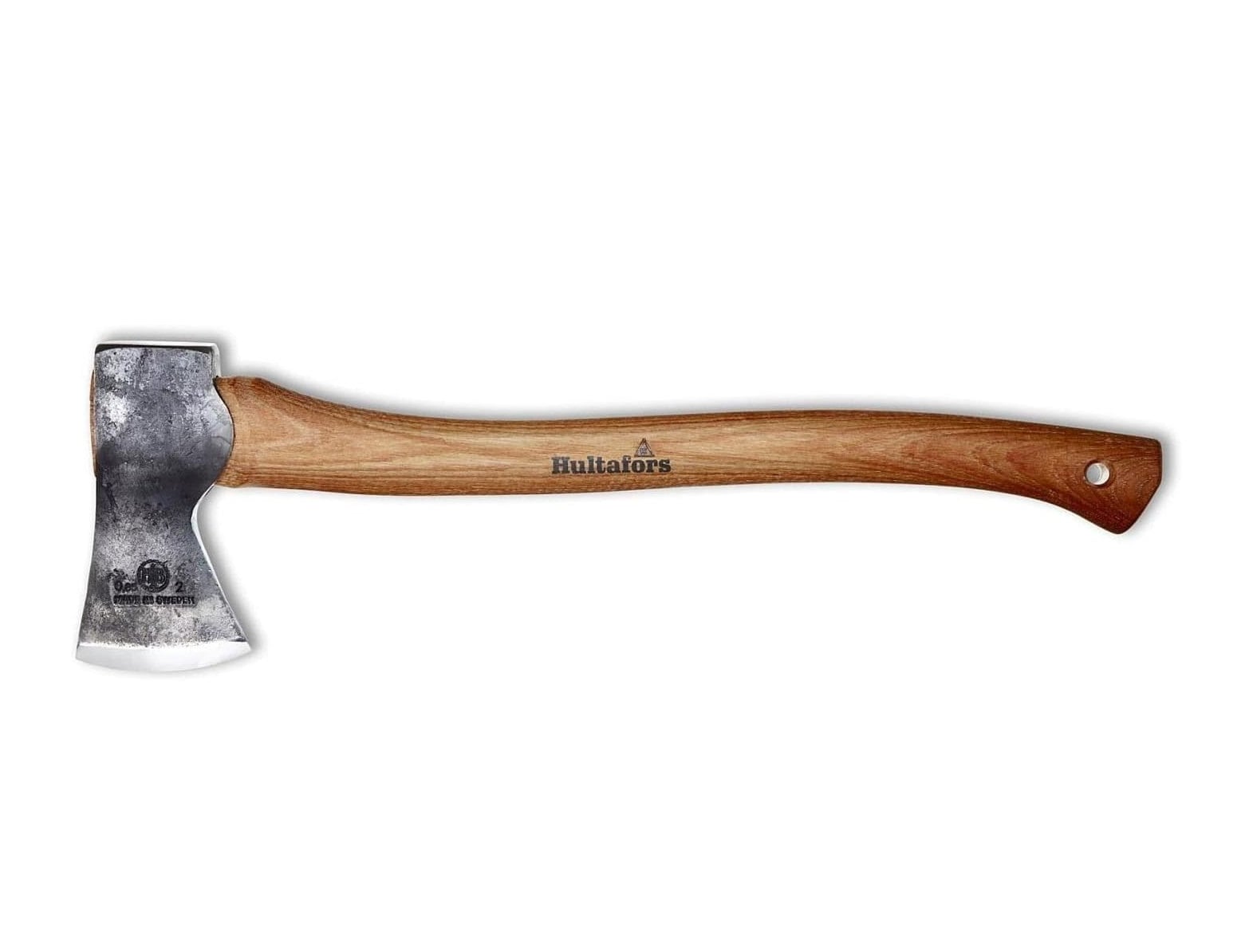
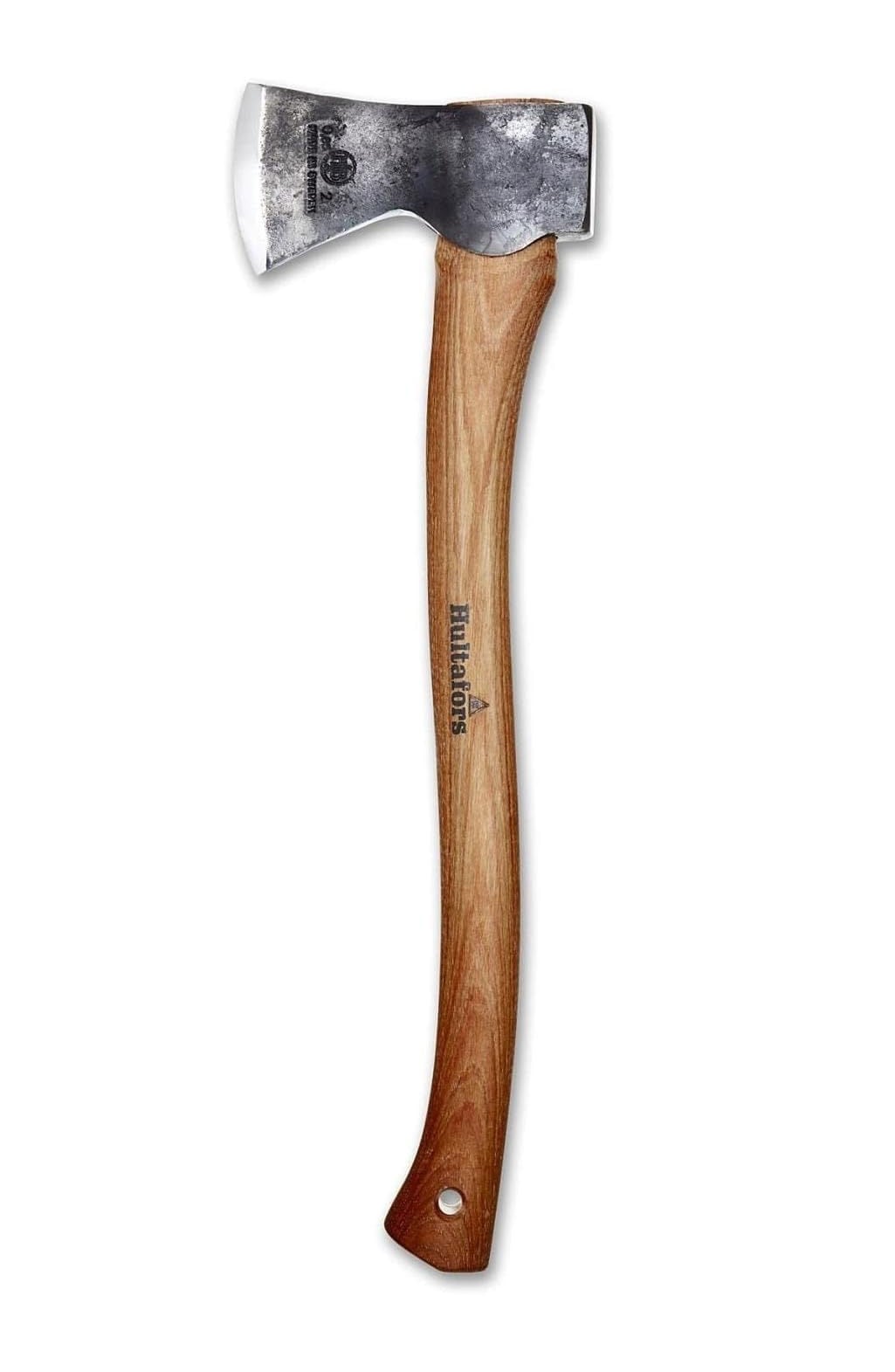
This is the Hultafors Classic Hunting Axe, each is made by hand in Sweden using traditional techniques, and this design was specifically created to be used for both wood cutting and game preparation.
Hultafors owns Hults Bruk, a company that’s been forging axes for hundreds of years in Sweden, and they’ve been exported all over the world – across Europe, and over to Canada, the United States, Australia, and New Zealand.
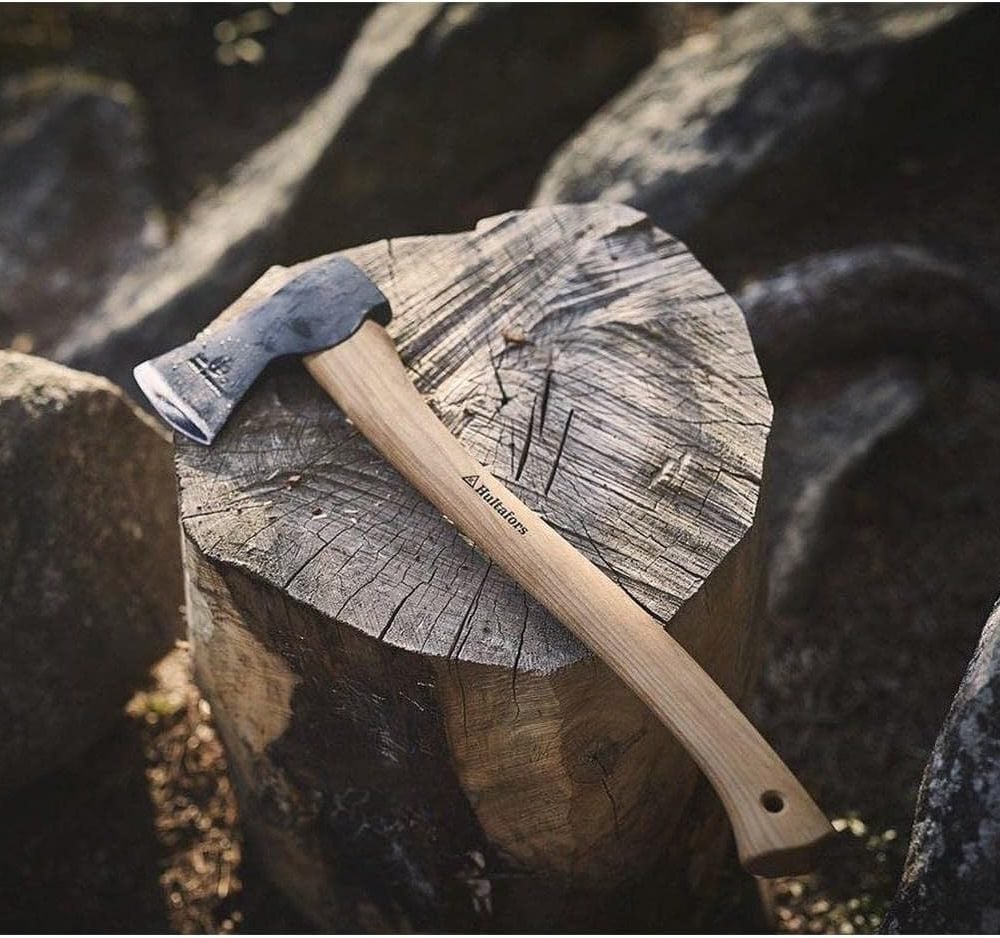
 The Hultafors Classic Hunting Axe (also sold as the Ekelund Hunting Axe in some regions) is an axe designed for hunting, camp work, limbing, and light forestry use.
History Speedrun: Hultafors
Hults Bruk, based outside Norrköping in Östergötland, Sweden, received its forging permit all the way back in 1697 – 329 years ago. Hultafors AB bought Hults Bruk in 1992, so now in Europe the axes are sold as Hultafors, but in the United States the same heads carry the older Hults Bruk name.
Karl-Hilmer Johansson Kollén founded Svenska Mått- och Tumstocksfabriken in Stockholm in 1883, while Sweden was in the midst of moving over to the metric system. His first product was a comparison rule showing inch and metric scales side by side, a folding joint in the middle came a little later.
Production moved to Hultafors in Västergötland in 1907, and the company was renamed Hultafors AB in 1925. Interestingly, the factory there still makes 13.7 million meters of folding rulers a year, that’s enough to cross the continental US three times coast-to-coast.
Going way back in time to May the 4th, 1697, a young Swede named Jacob Reenstierna had just received permission to install a drop forge and a hammer at Hult, below the lake Ågelsjön. Water from the lake drove the hammers as it flowed out into the Hultån river and down into the valley.
Nails, including nails for the Swedish navy used in shipbuilding, were the main product until 1882. The works later made anchor chain, stoves, flat irons and, in the late 1800s, they started making railcars.
Axes were a large part of the output by the 1870s, and the works bought two new axe-forging machines in 1877. Gunnar Ekelund, whose family had bought Hults Bruk in 1818, turned it into an axe specialist.
Hultafors owns Hults Bruk, a company that’s been forging axes for hundreds of years in Sweden, and they’ve been exported all over the world – across Europe, and over to Canada, the United States, Australia, and New Zealand.
He visited ironworks in England, Belgium, and the United States, and the works settled on axes forged using then-modern American methods, their intended export markets were Australia and New Zealand, as both nations had booming lumber industries. From America he brought back hickory handles and head patterns, including the Yankee and the Montreal.
The axes were exported under local names, including Flecha in South America, Jarrah Jack in Australia, and Tiger in Southeast Asia. The one that lasted longest was the Agdor, which Hultafors dates back to 1930. Hults Bruk believes the name Agdor came from the “Rodga,” a manor on the Hults Bruk estate, spelled backwards.
Each Hults Bruk axehead starts out as a block sawn from a bar of Swedish steel and heated in an induction oven to 1,200°C (2,192°F). One smith rough-forges it between dies on one side of the machine, then after reheating, a second smith on the other side brings it to its final shape. The eye is forged rather than drilled out for better strength.
The forging machines date from the 1950s and 1960s. Neither new machines nor spare parts can be bought, so Hults Bruk makes its own parts. The heads are hardened and tempered to approximately 54 to 56 HRC. They are fitted to linseed-oiled American hickory handles with both a wooden wedge and a steel wedge.
The higher-end Hults Bruk axes take their names from the forge’s people and places – the Qvarfot felling axe is named after a family of smiths, the Stålberg carpenter’s axe after the 20th century smith Ernst Stålberg, and the Hultån hatchet after the river that turned the water wheel.
The North American versions used to carry different names, the Åby, the Qvarfot, and the Dvardala – named for the forests north of Hults Bruk in Sweden.
The Hultafors Classic Hunting Axe Shown Here
The Hultafors Classic Hunting Axe (also sold as the Ekelund Hunting Axe in some regions) is an axe designed for hunting, camp work, limbing, and light forestry use. It has an 850 gram (1.87 lb) hand-forged Swedish steel head mounted on a 500mm (20 inch) American hickory wood handle, with a total weight of 1.21 kgs (2.67 lbs).
The head has a convex-ground cutting edge and a smoothly ground neck, a shape that makes it suitable not just for chopping but also for other hunting related-tasks like game preparation and skinning. The edge comes sharpened and polished from the factory, ready to use.
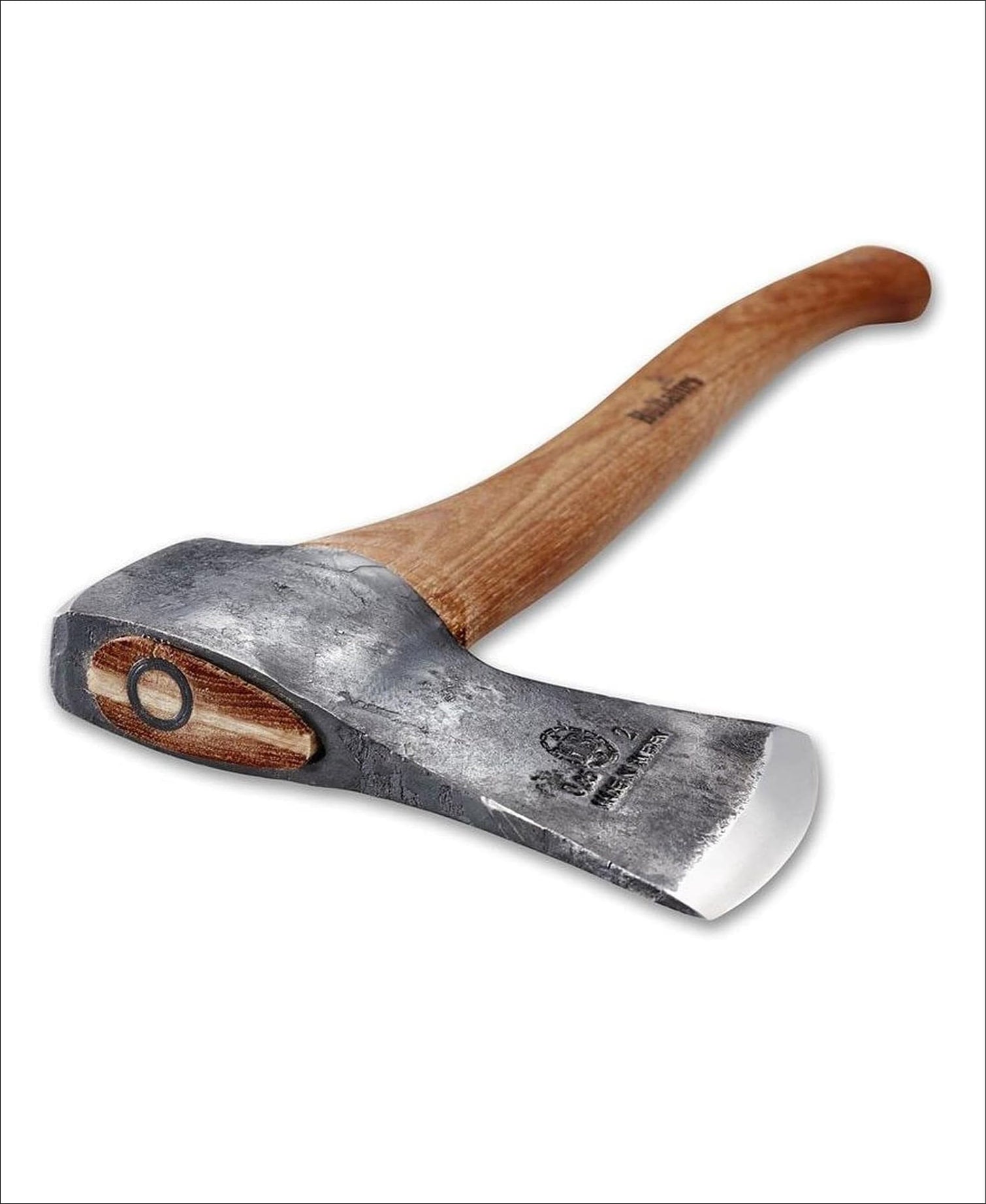
The head has a convex-ground cutting edge and a smoothly ground neck, a shape that makes it suitable not just for chopping but also for other hunting related-tasks like game preparation and skinning.
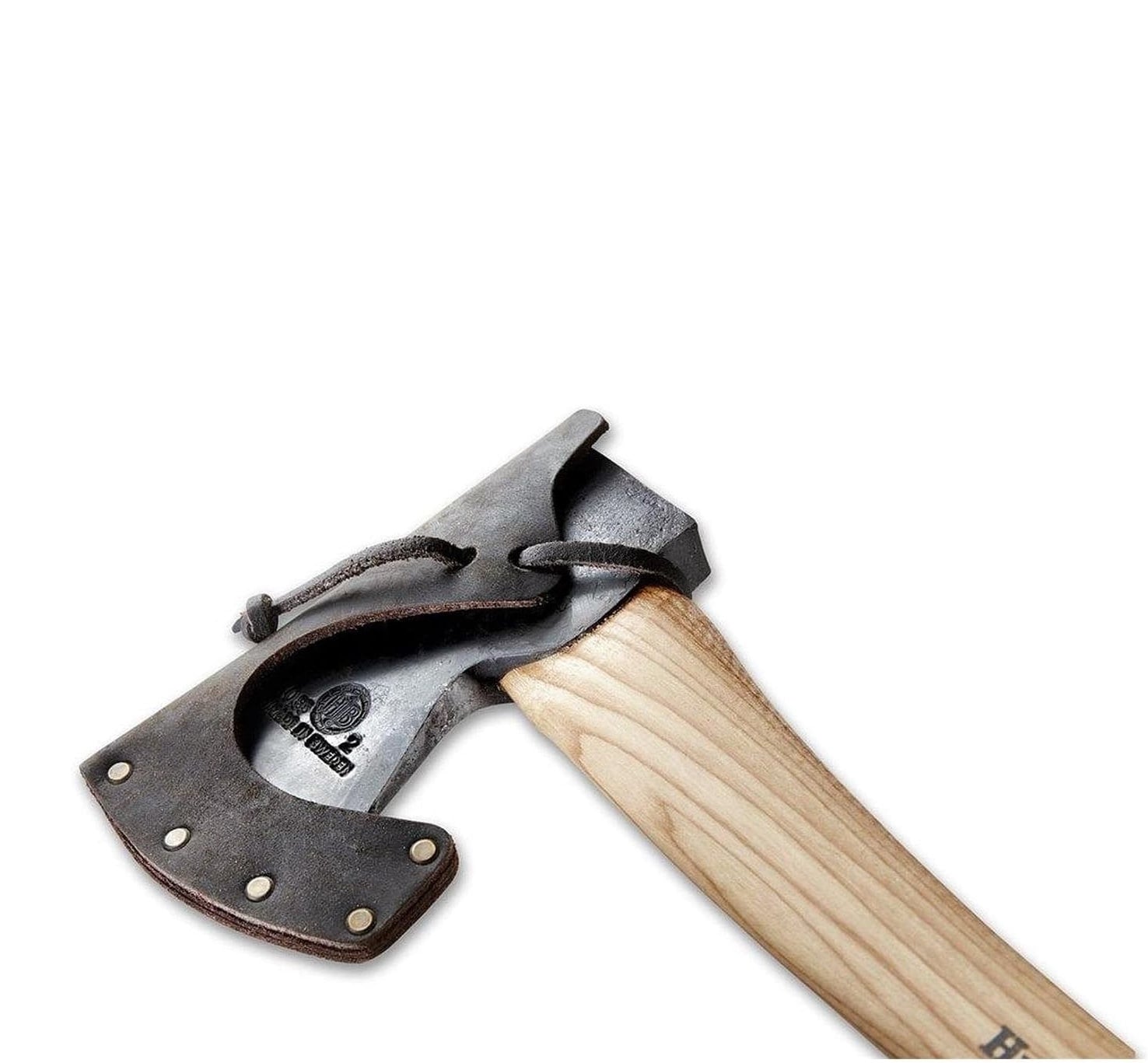
The hickory handle is treated with linseed oil, and a leather blade sheath is included to keep the blade safely tucked away when not in use. Its combination of a relatively heavy head and short handle gives it more chopping authority than a small hatchet while still being compact enough for regular outdoor carry when camping, hunting, or overlanding.
The Classic Hunting Axe is now available to buy here on the official Hultafors Amazon store here.
Images courtesy of Hultafors AB

Articles that Ben Branch has written have been covered on CNN, Popular Mechanics, Smithsonian Magazine, Road & Track Magazine, the official Pinterest blog, the official eBay Motors blog, BuzzFeed, Autoweek Magazine, Wired Magazine, Autoblog, Gear Patrol, Jalopnik, The Verge, and many more.
Silodrome was founded by Ben back in 2010, in the years since the site has grown to become a world leader in the alternative and vintage motoring sector, with well over a million monthly readers from around the world and many hundreds of thousands of followers on social media.