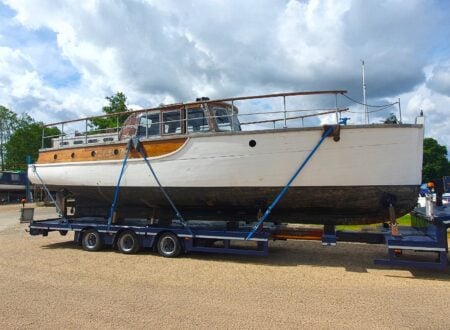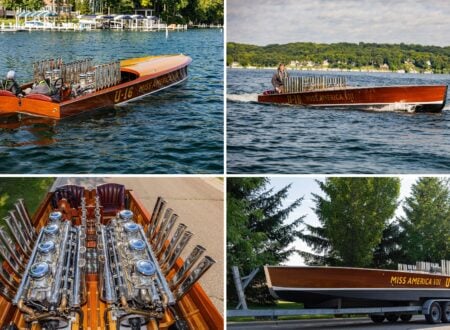
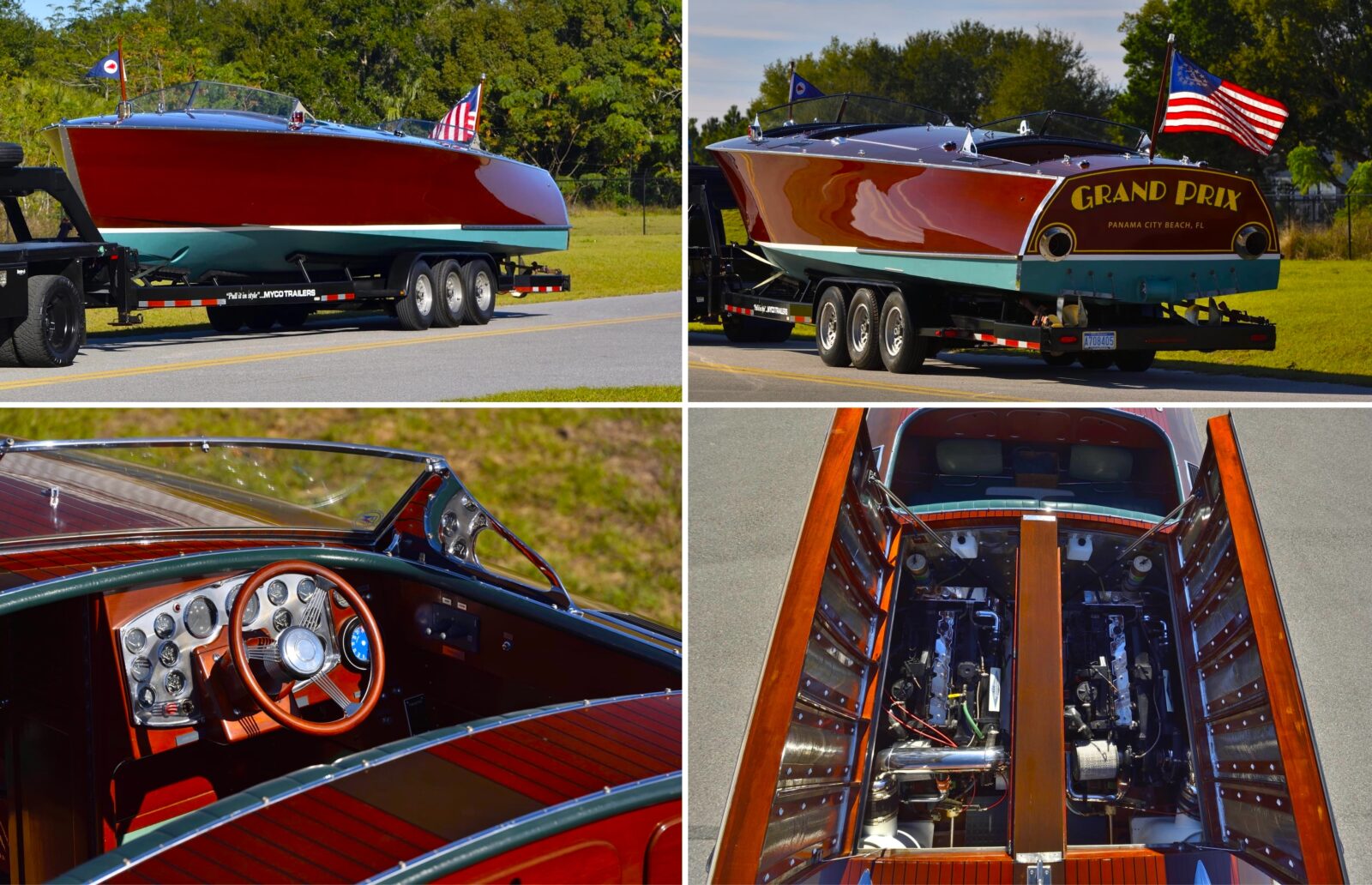
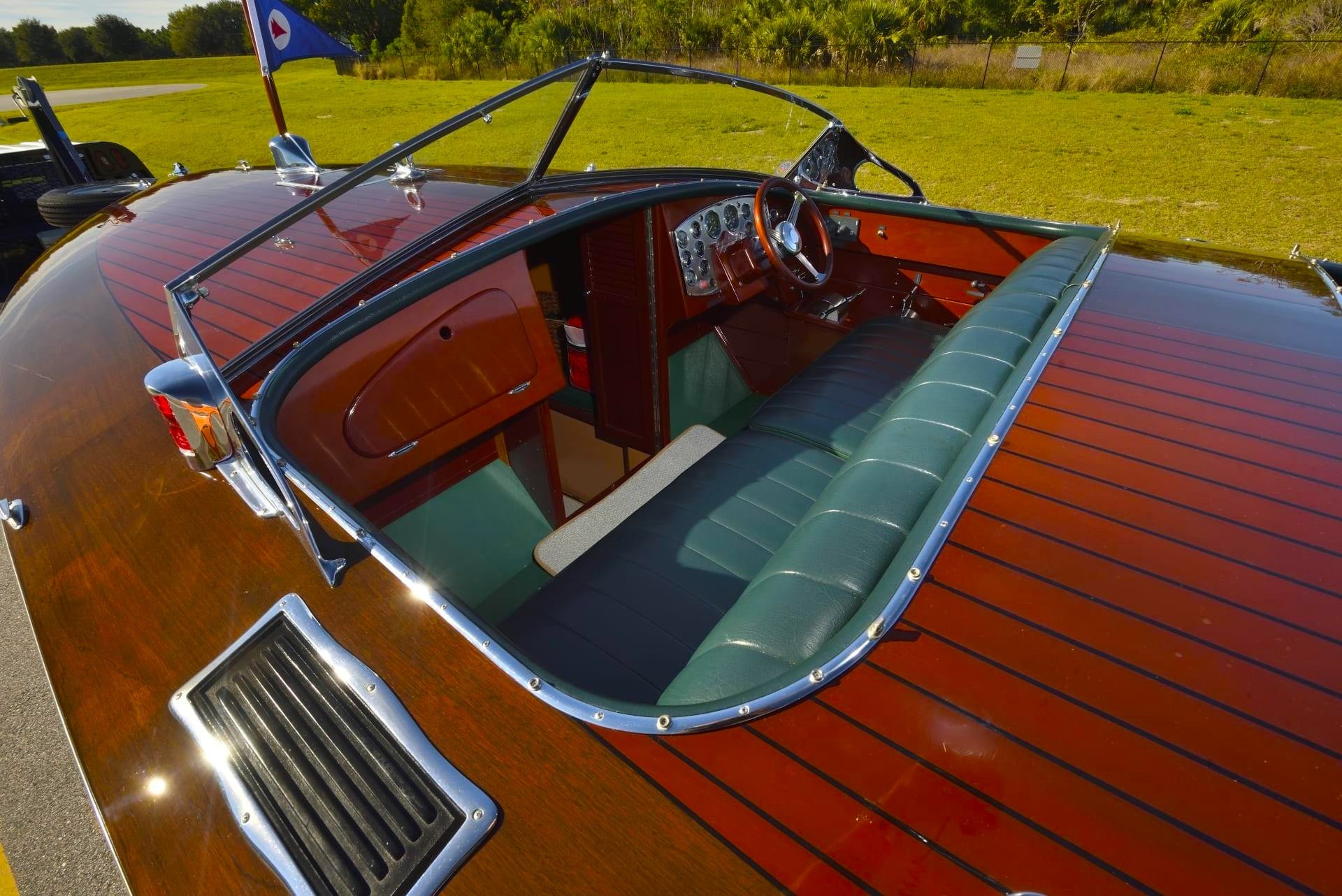
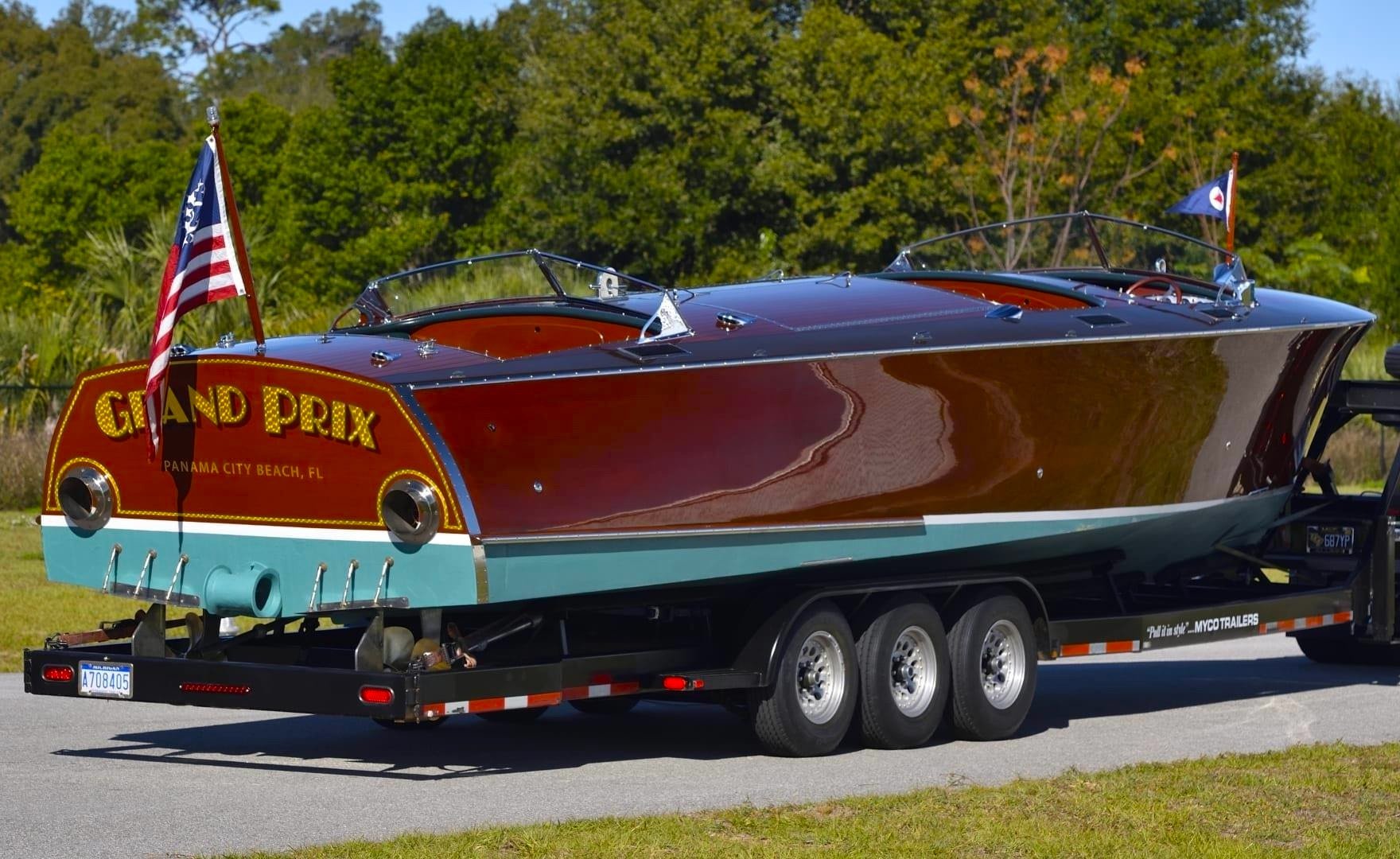
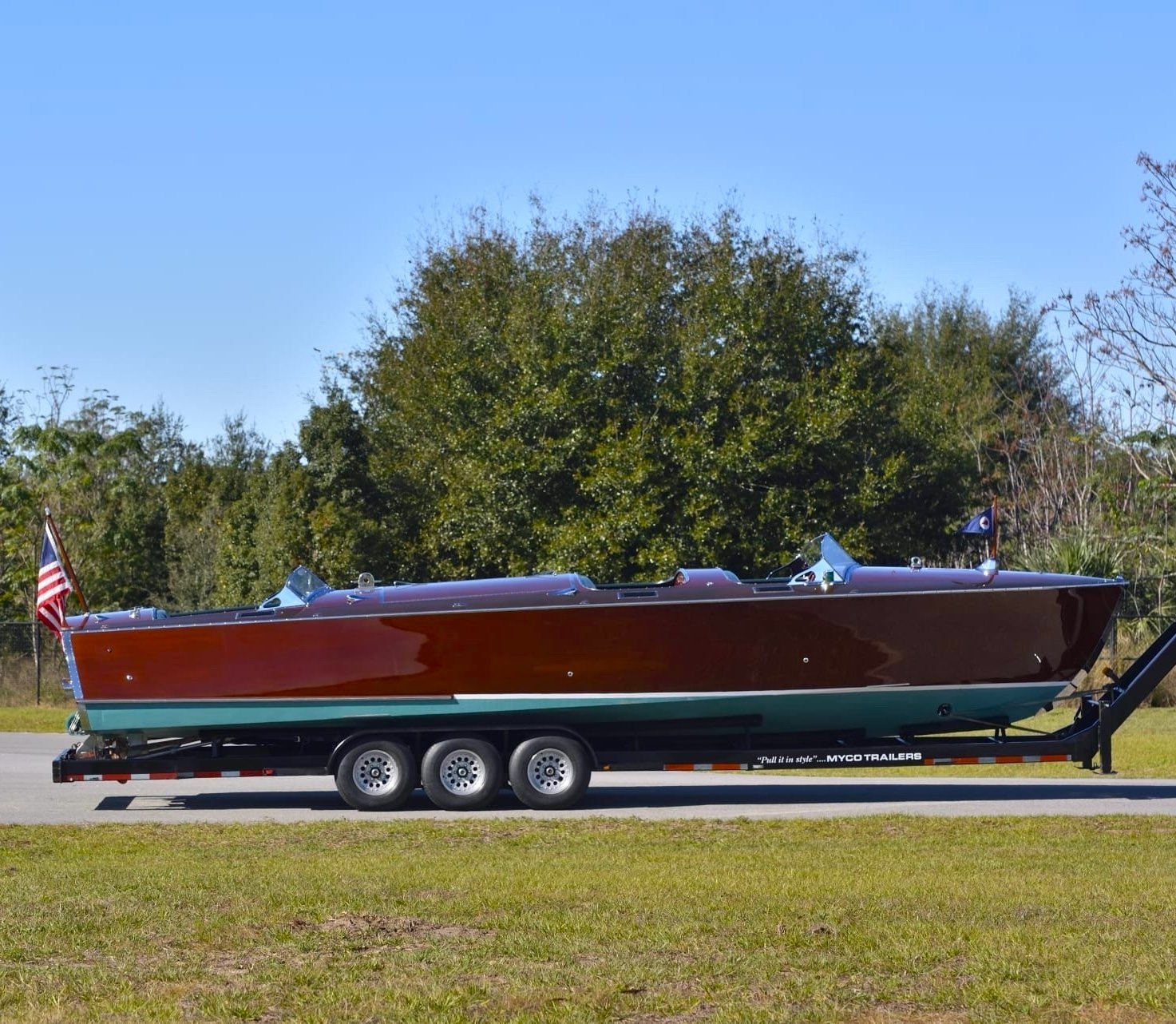
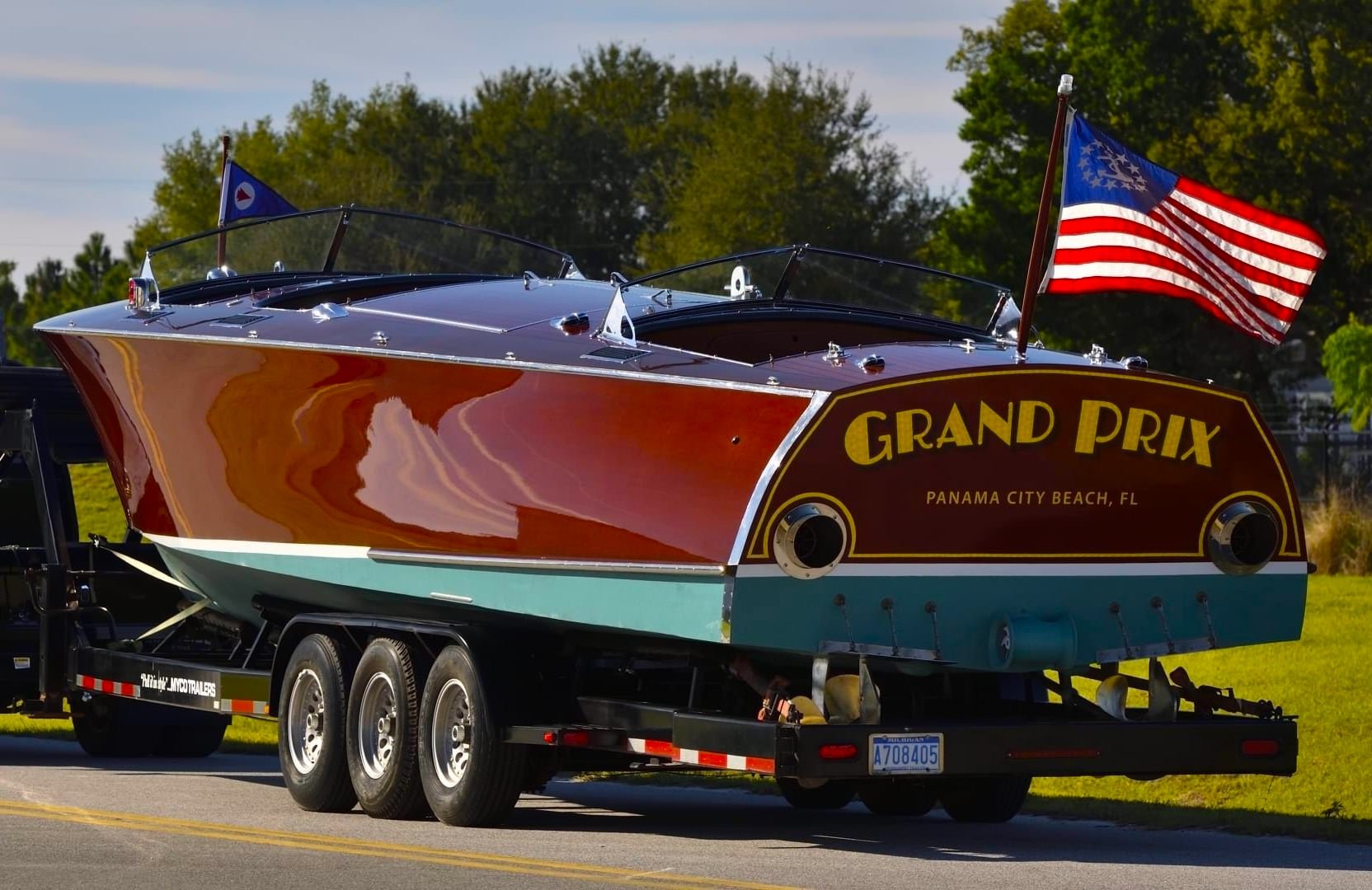
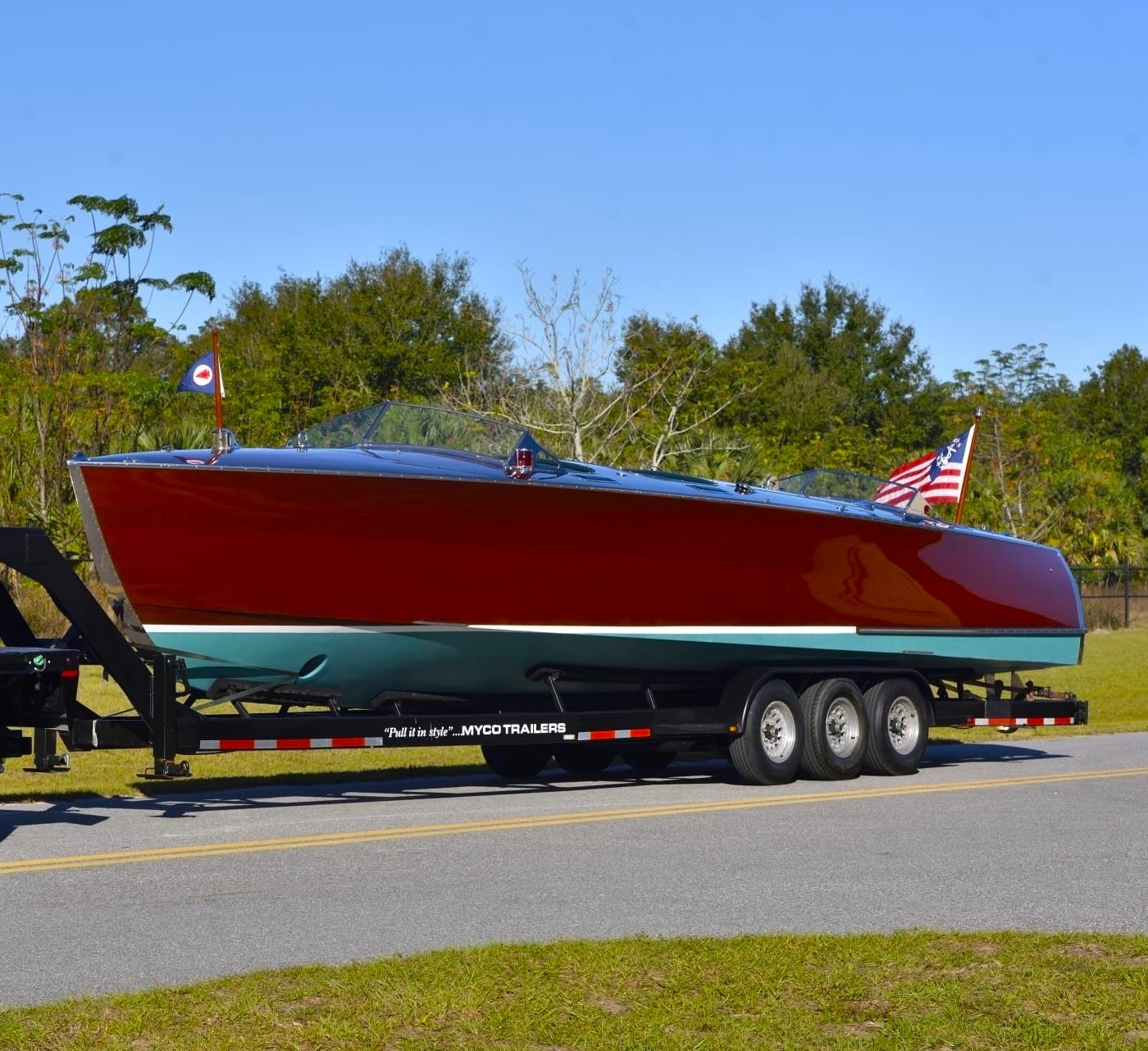
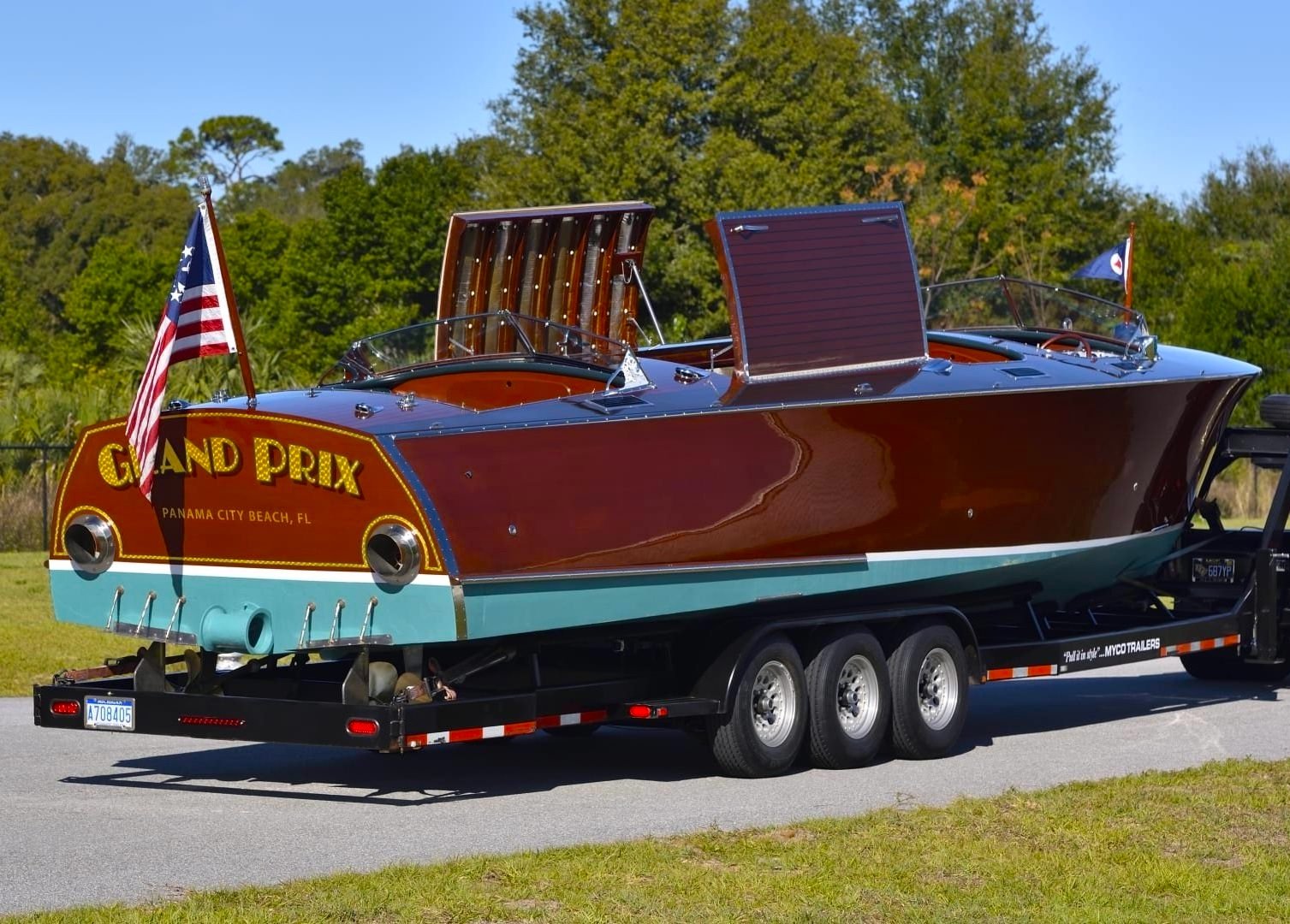
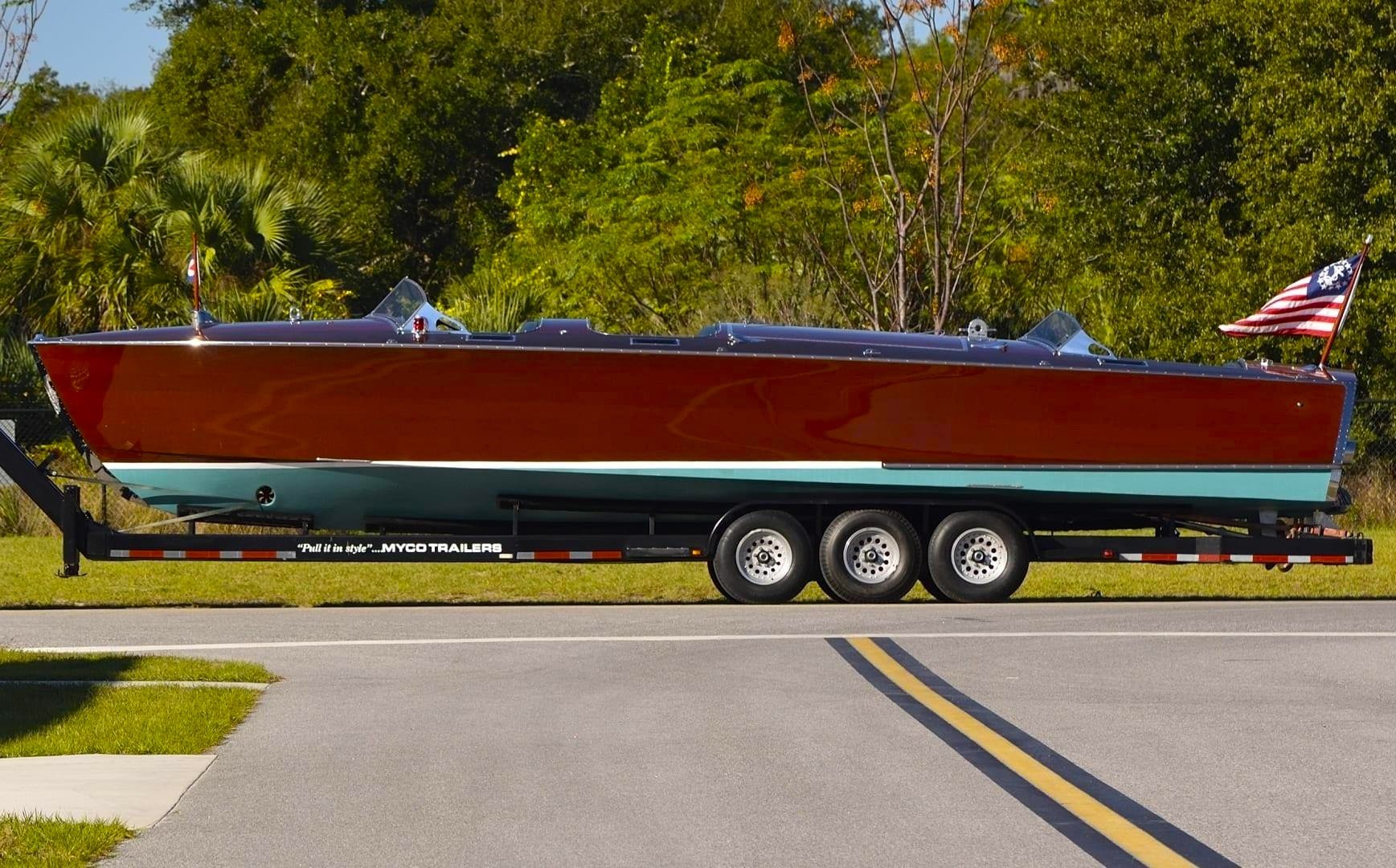
This is the Hugh Saint 34′ Grand Prix, it’s a mahogany runabout with triple cockpits that’s powered by twin Cummins 8.3 liter turbo diesel engines making a total of 840 bhp.
This boat was commissioned by Albert Tinnerman’s son in memory of his father, the inventor of the “speed nut,” a small fastener that combined a lock washer and a nut into a single object. The speed nut would revolutionize automobile and aircraft production, and you’ve doubtless encountered them when working on your own vehicles.
Fast Facts: The Hugh Saint 34′ Grand Prix
- The Hugh Saint 34′ Grand Prix is a 1995 mahogany runabout with a classic triple-cockpit layout, built by Saint Custom Boats. It uses pattern-grade Honduras mahogany with Okoume inner planking and modern wood epoxy saturation construction, combining traditional aesthetics with improved longevity and reduced maintenance demands.
- Power comes from twin Cummins 8.3 liter turbocharged inline-six marine diesel engines producing 420 bhp each, for a combined output of 840 bhp. Bow and stern thrusters improve low-speed maneuvering, allowing precise docking control despite the boat’s size, weight, and substantial performance capability.
- The boat was commissioned by the son of Albert Tinnerman as a memorial. Albert Tinnerman invented the speed nut in 1925, a stamped fastener that combined a nut and lock washer. Its adoption by Ford and later aircraft manufacturers reduced assembly time across major American industries.
- Hugh Saint has split front and aft windshields, extensive chromed deck hardware, and generous seating for passengers. It is offered with a custom Myco triple-axle gooseneck trailer and is scheduled to cross the Mecum auction block in Florida.
History Speedrun: Albert Tinnerman And The Speed Nut
Albert Tinnerman was born to George Tinnerman, his father and a German immigrant who had moved to Cleveland to escape political upheaval and seek a better future for his family. He couldn’t have known it at the time, but he would become a very wealthy man in the United States, and his son Albert would invent a little device that would transform the automobile industry, followed by the aircraft industry during WWII.
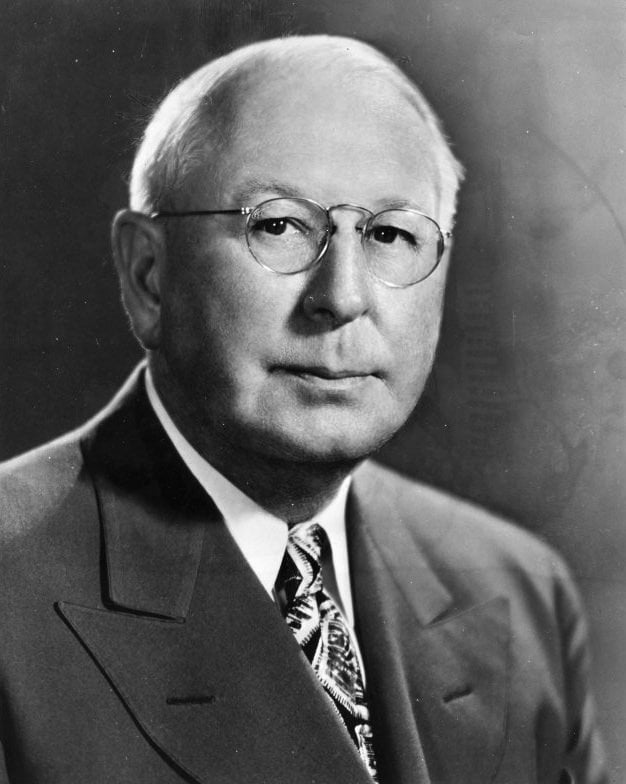
 Albert Tinnerman would invent a clever little device that could be stamped from sheet steel and that would act both as a lock washer and a nut. Named the “speed nut” or “Tinnerman nut” this little invention would have important applications right across the world of industry. Image courtesy of the Cleveland Historical Society.
The Tinnerman family initially ran a hardware store in Ohio and one of the products they sold was cast iron stoves – a popular item at the time and few houses were without one. It struck George Tinnerman that steel would be a better material for stove construction, and so he developed what became the first steel stove and its popularity skyrocketed.
This new steel stove was so popular in fact, that he closed his hardware store and focused on steel stove manufacturing full time – a decision that would make the family very rich indeed. An issue that plagued the stoves of the time was that their porcelain tops would sometimes crack when screwed too tightly to the stovetop.
It would be George’s son Albert who would solve this issue in 1925, coming up with a clever little device that could be stamped from sheet steel and that would act both as a lock washer and a nut. Named the “speed nut” or “Tinnerman nut” this little invention vastly reduced cracked porcelain, but it wasn’t long before Albert realized that his creation had applications right across the world of industry.
Henry Ford would be the first to embrace Albert’s creation, using it on his world famous Ford production lines and seeing a significant reduction in the number of hours required to build a car as a result. During WWII, American aircraft manufacturers adopted the speed nut in aircraft construction, once again it was claimed that it vastly reduced the hours required to build each plane.
After the war in 1947, Albert famously had a 3,300 lb Plymouth sedan hoisted into the air, held aloft by a single Tinnerman speed nut to showcase the strength of his diminutive device.
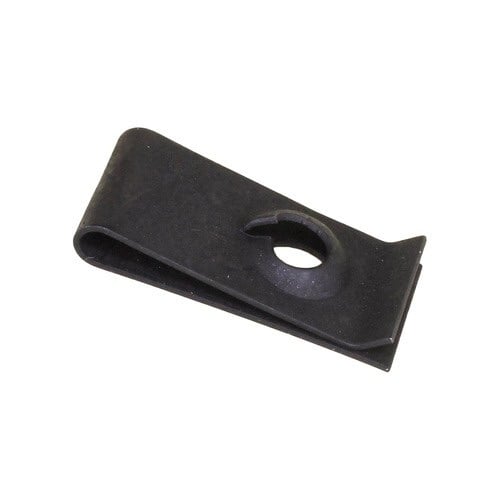
The “speed nut” is a small fastener that combines a lock washer and a nut into a single object, you’ve doubtless encountered plenty of them when working on your own vehicles.
By the mid-20th century there wasn’t a major automaker in the United States that wasn’t using speed nuts, and they had also been adopted in a number of other industries – including the household appliance industry for which they had originally been invented.
The Hugh Saint 34′ Grand Prix Runabout Shown Here
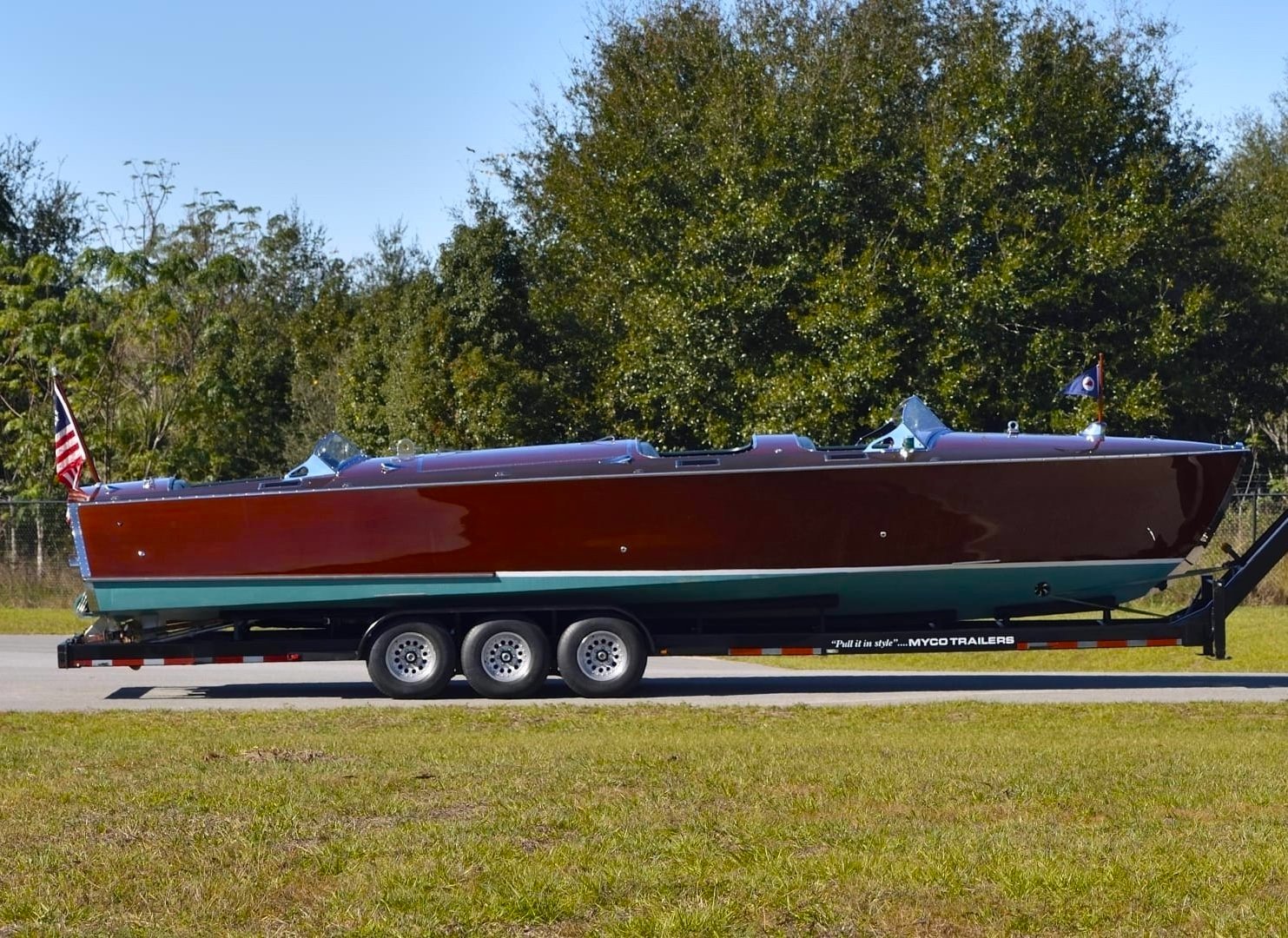
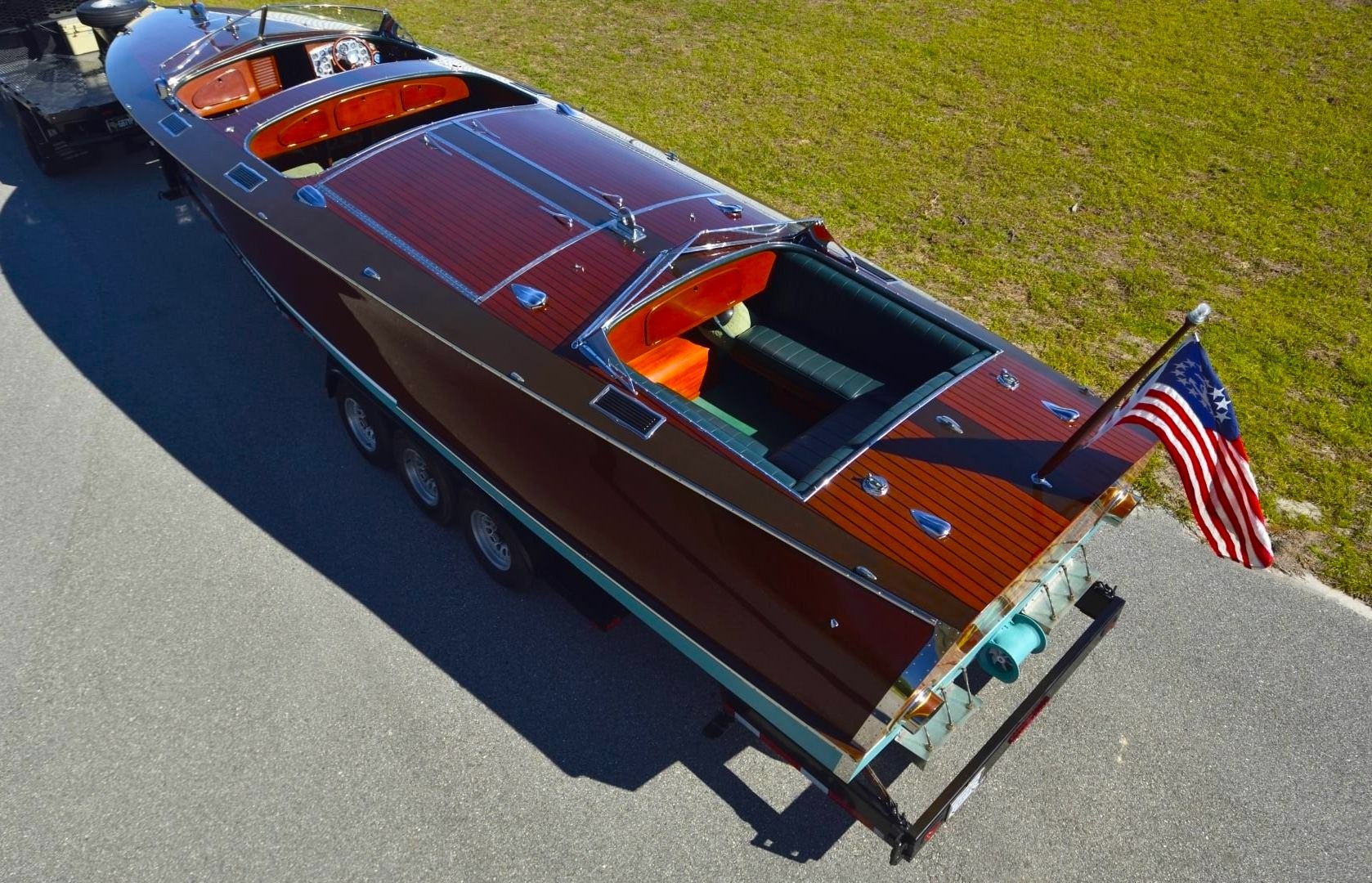
The mahogany runabout you see here was built in 1995 by Saint Custom Boats, commissioned by Albert Tinnerman’s son in memory of his father. The framework and outer planking are made from pattern-grade Honduras mahogany, with the inner planking made from African (Okoume) mahogany imported from France.
Named “Grand Prix,” the boat was built entirely using the wood epoxy saturation technique method for longevity and low upkeep, a significant step forward over earlier techniques which could still see water incursion and the related wood rot that would invariably follow.
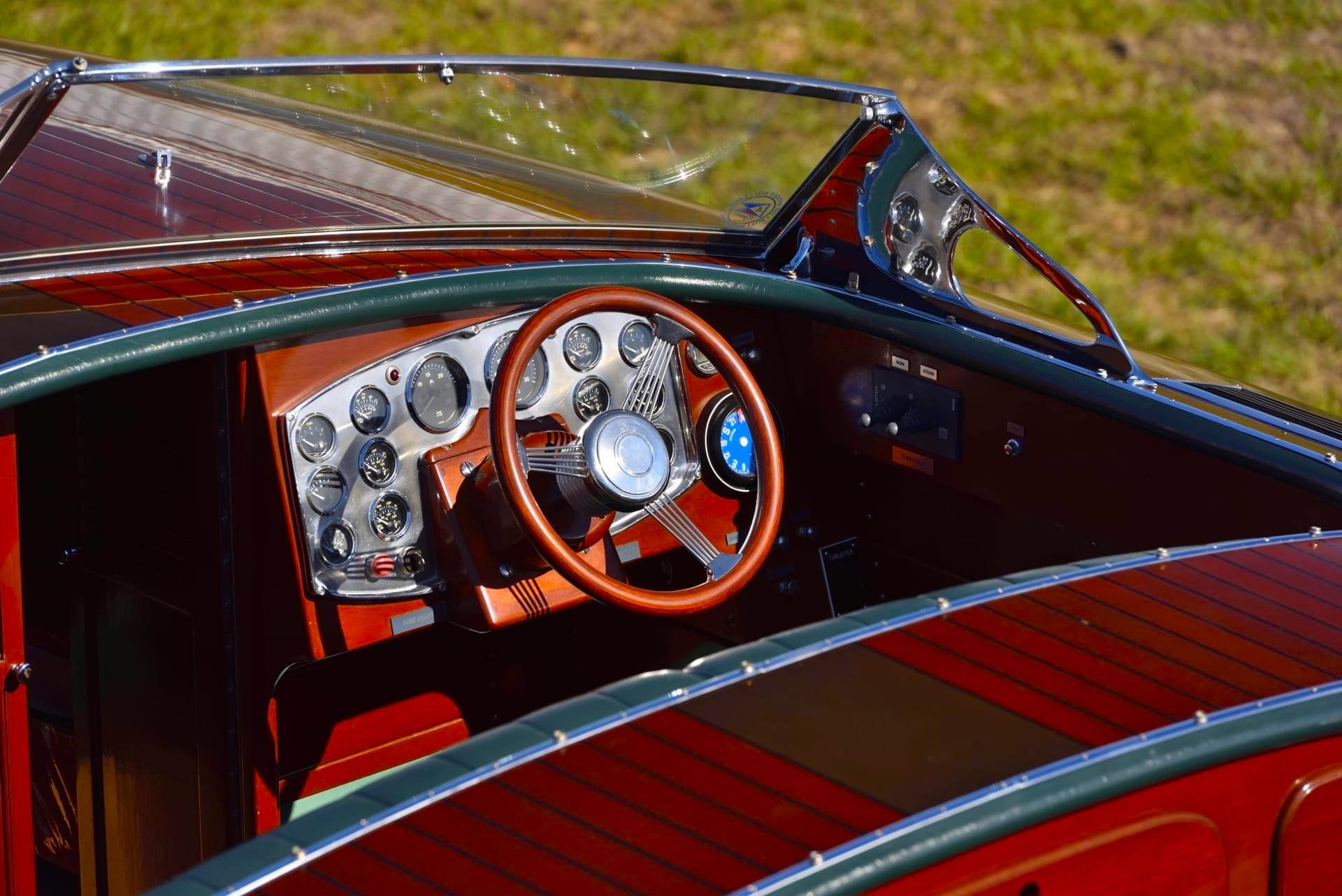
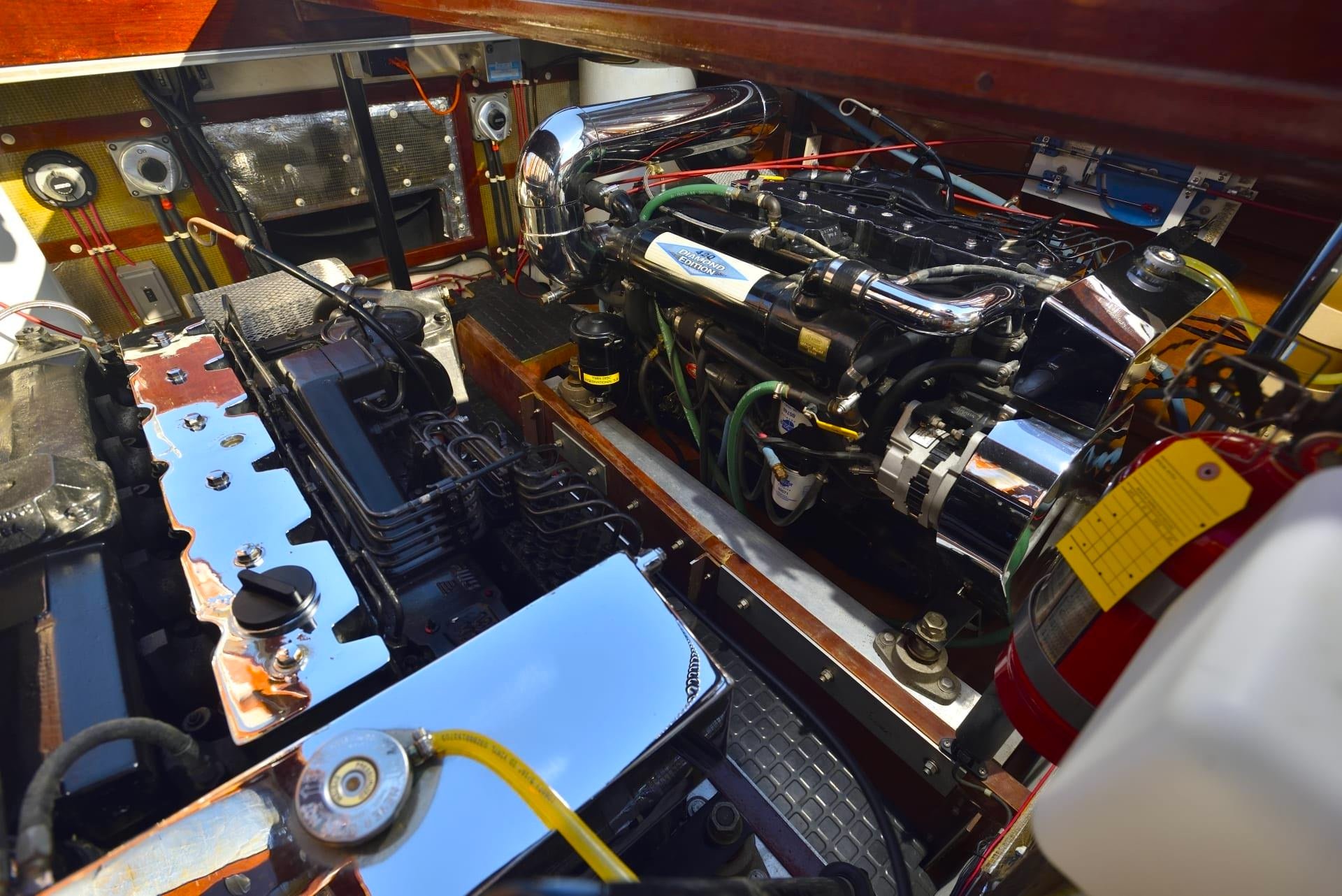
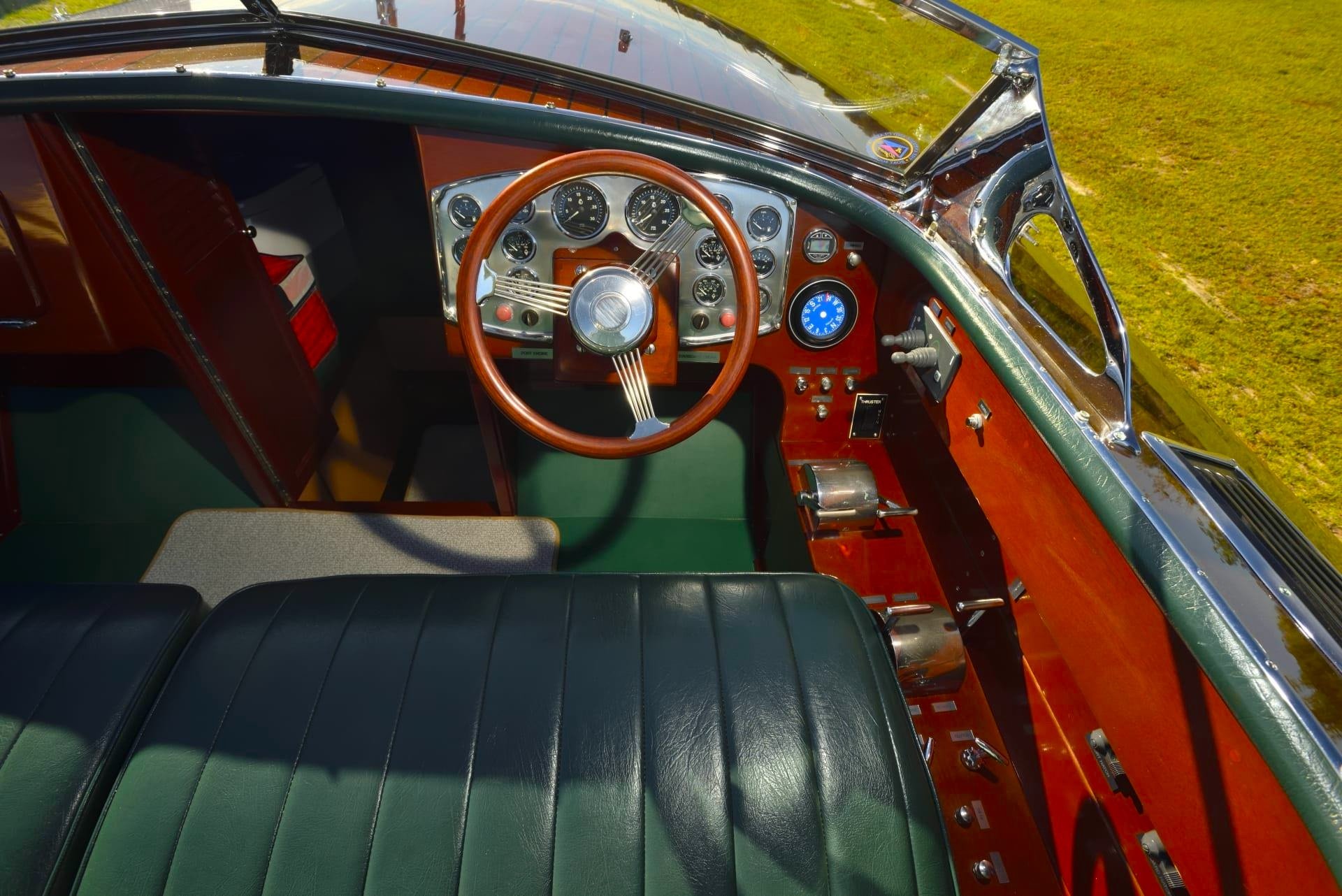
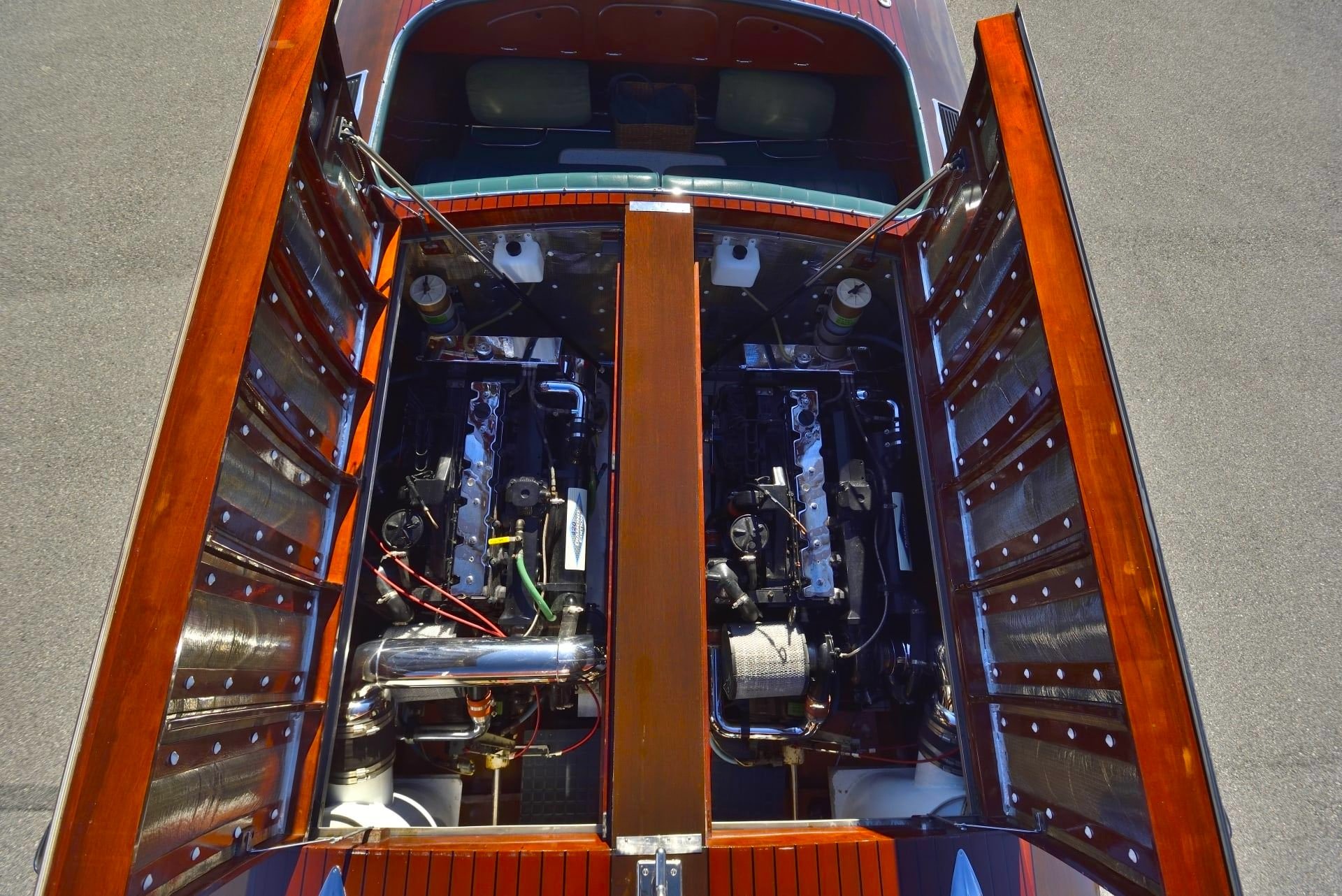
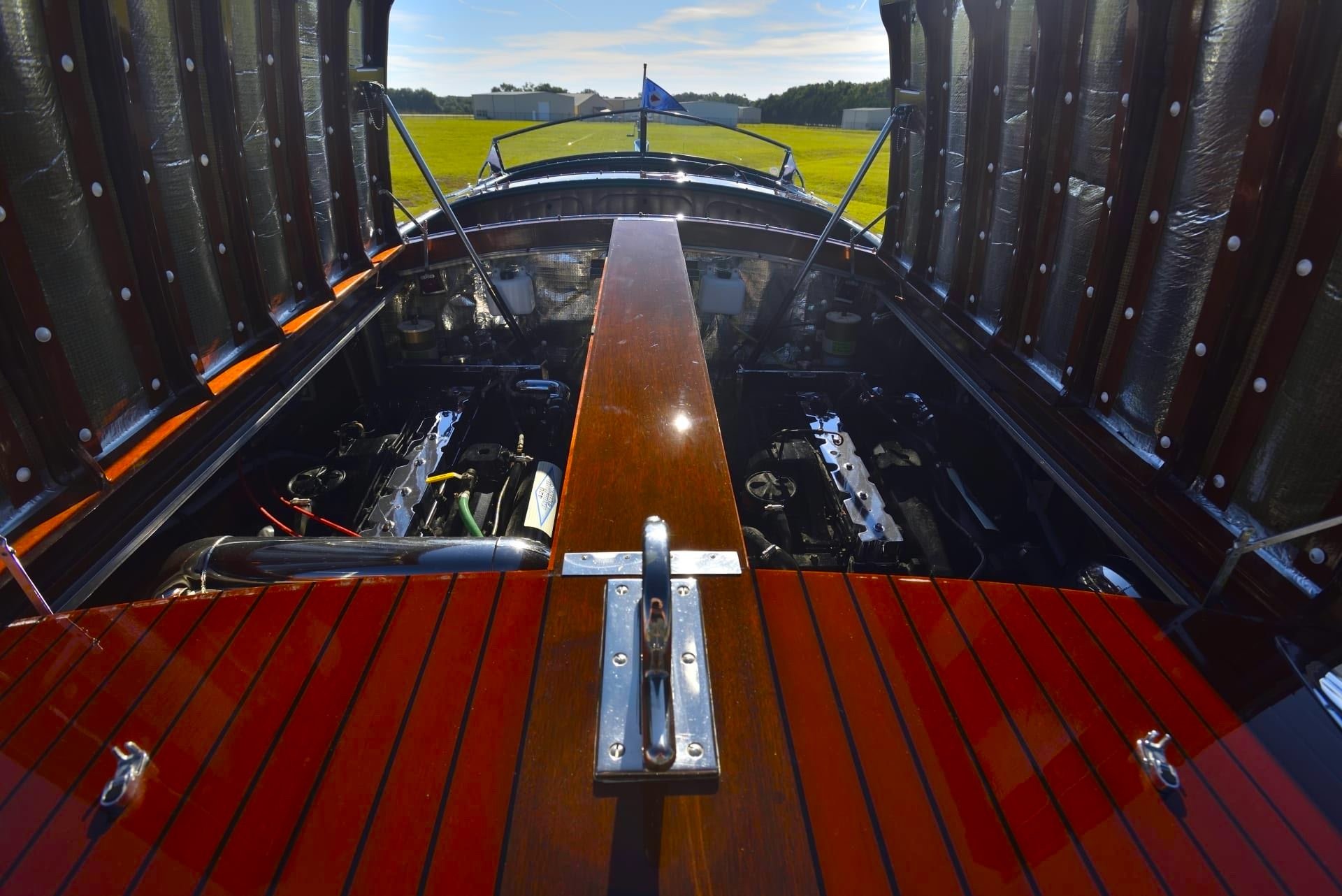
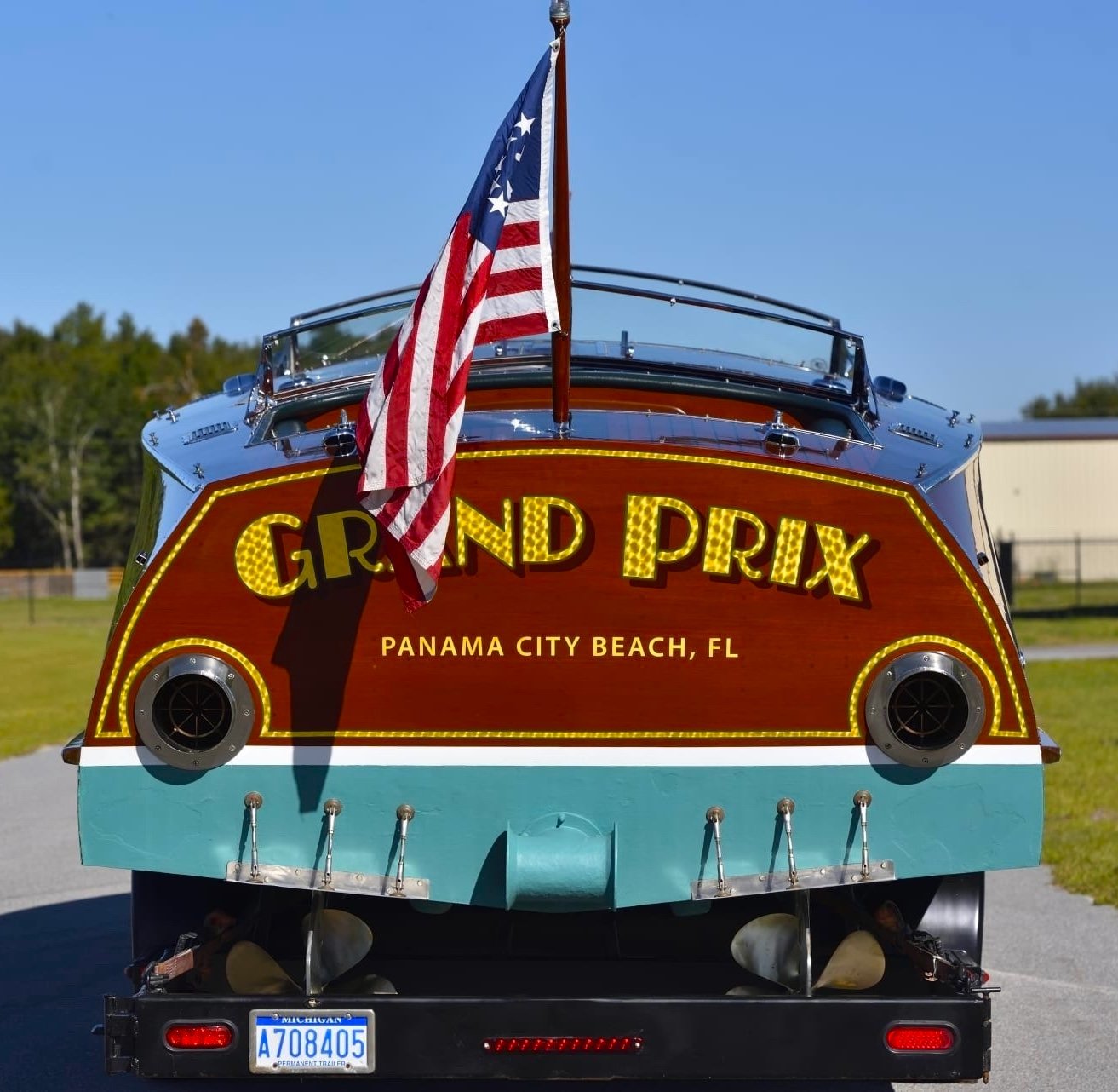
In the engine bay you’ll find a pair of matching Cummins 8.3 liter turbo diesel inline six marine engines producing 420 bhp each for a total of 840 bhp, and the boat also has bow and stern thrusters to allow the captain to “parallel park” the boat.
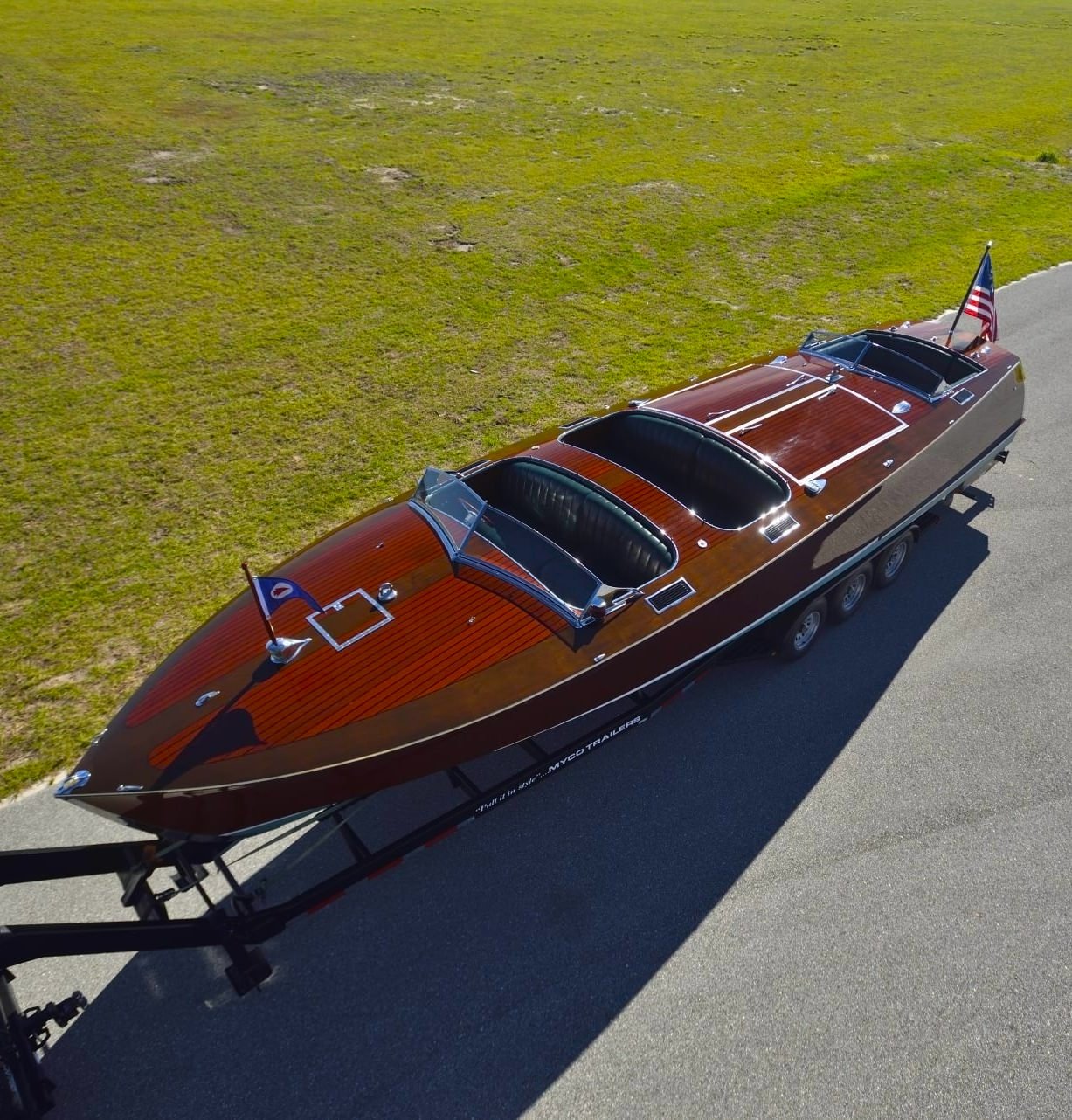
The mahogany runabout you see here was built in 1995 by Saint Custom Boats, commissioned by Albert Tinnerman’s son in memory of his father. The framework and outer planking are made from pattern-grade Honduras mahogany, with the inner planking made from African (Okoume) mahogany imported from France.
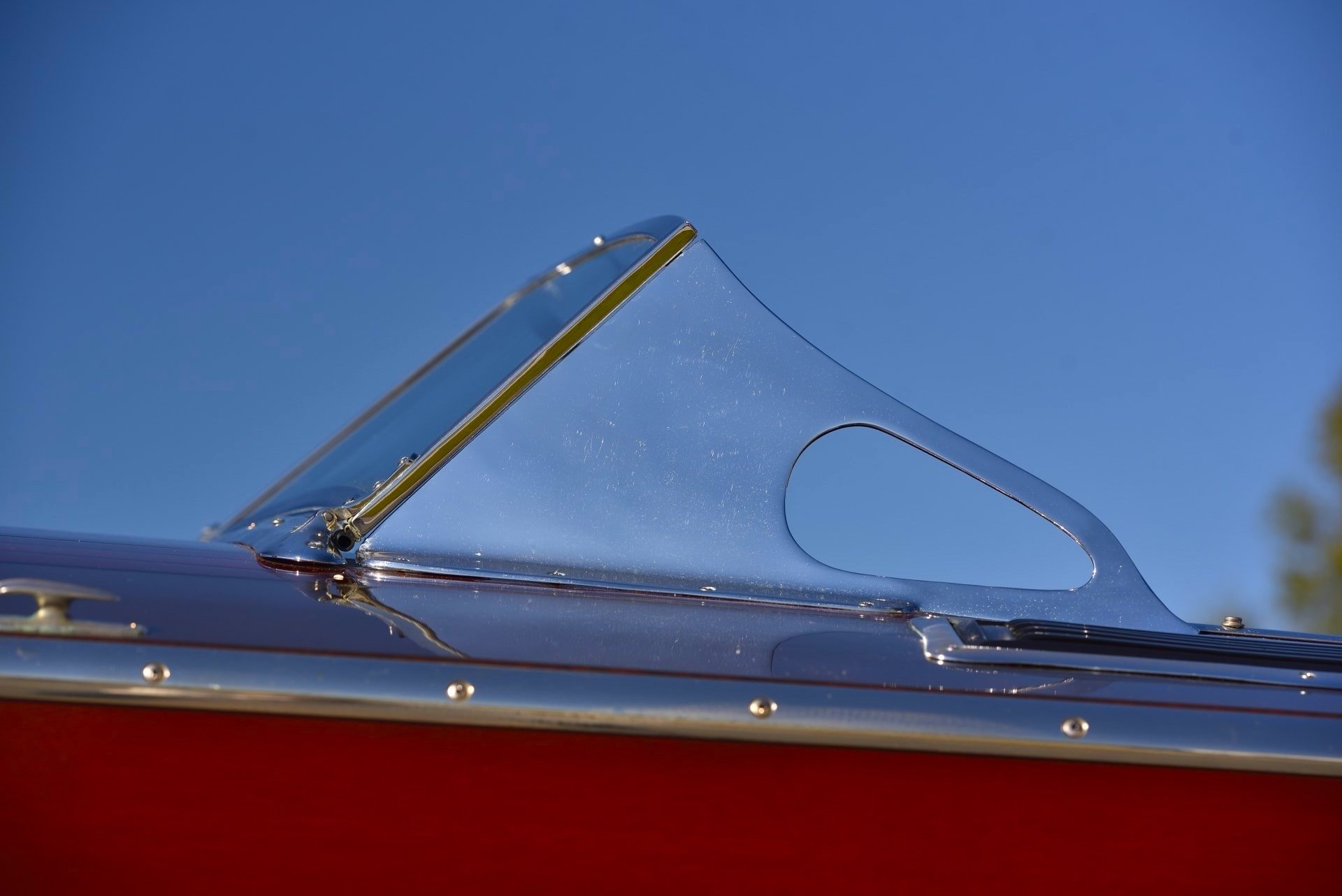
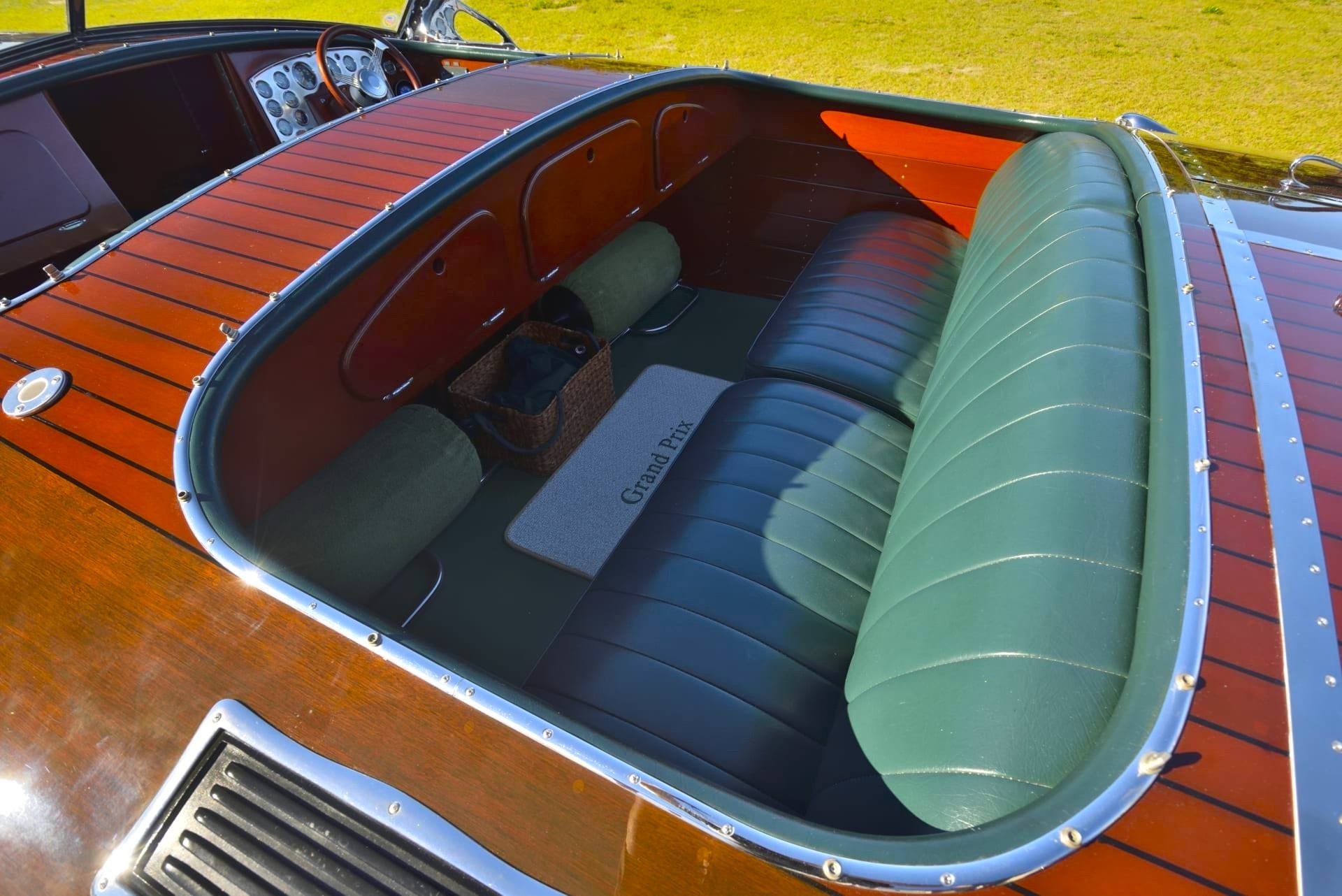
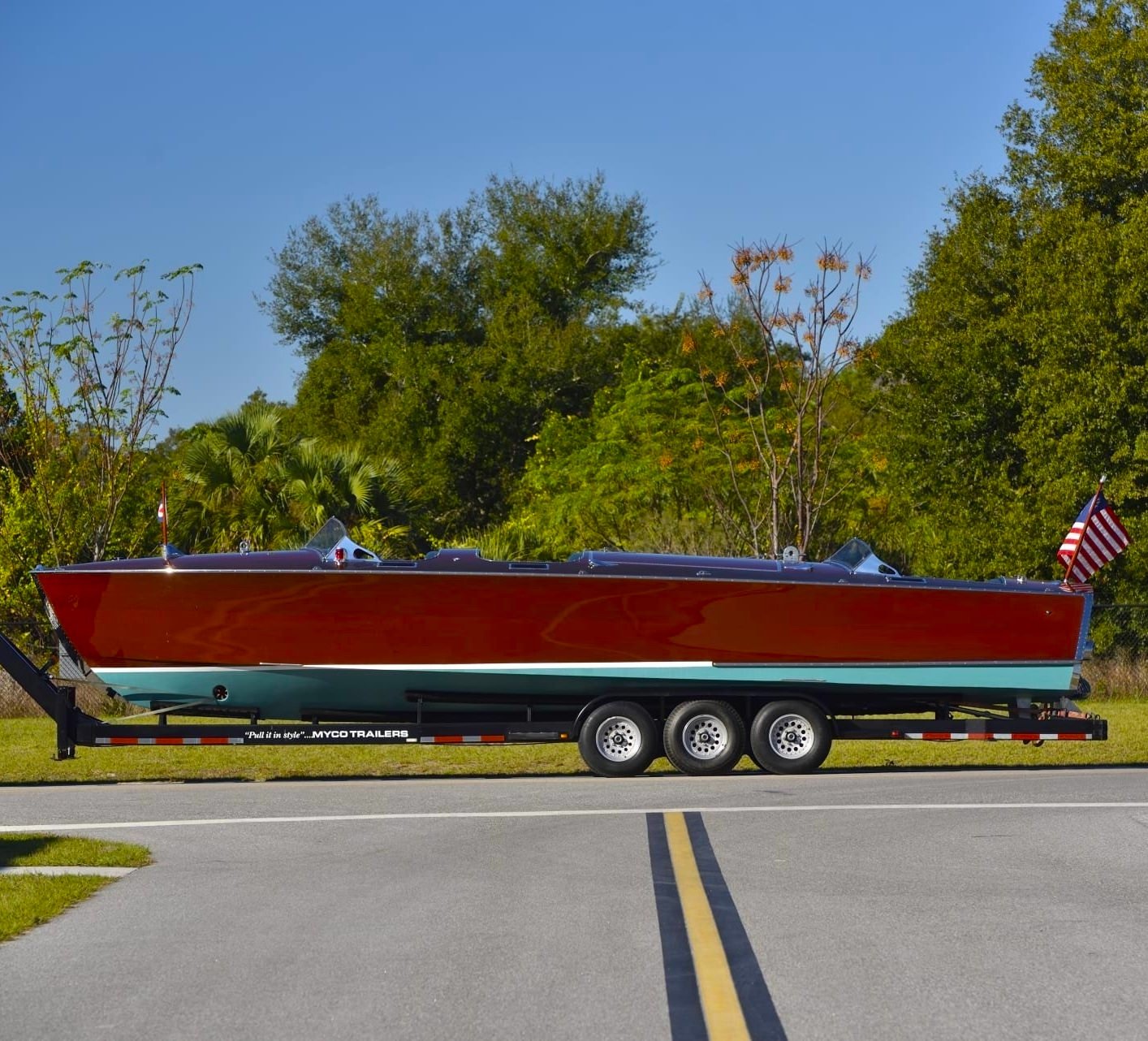
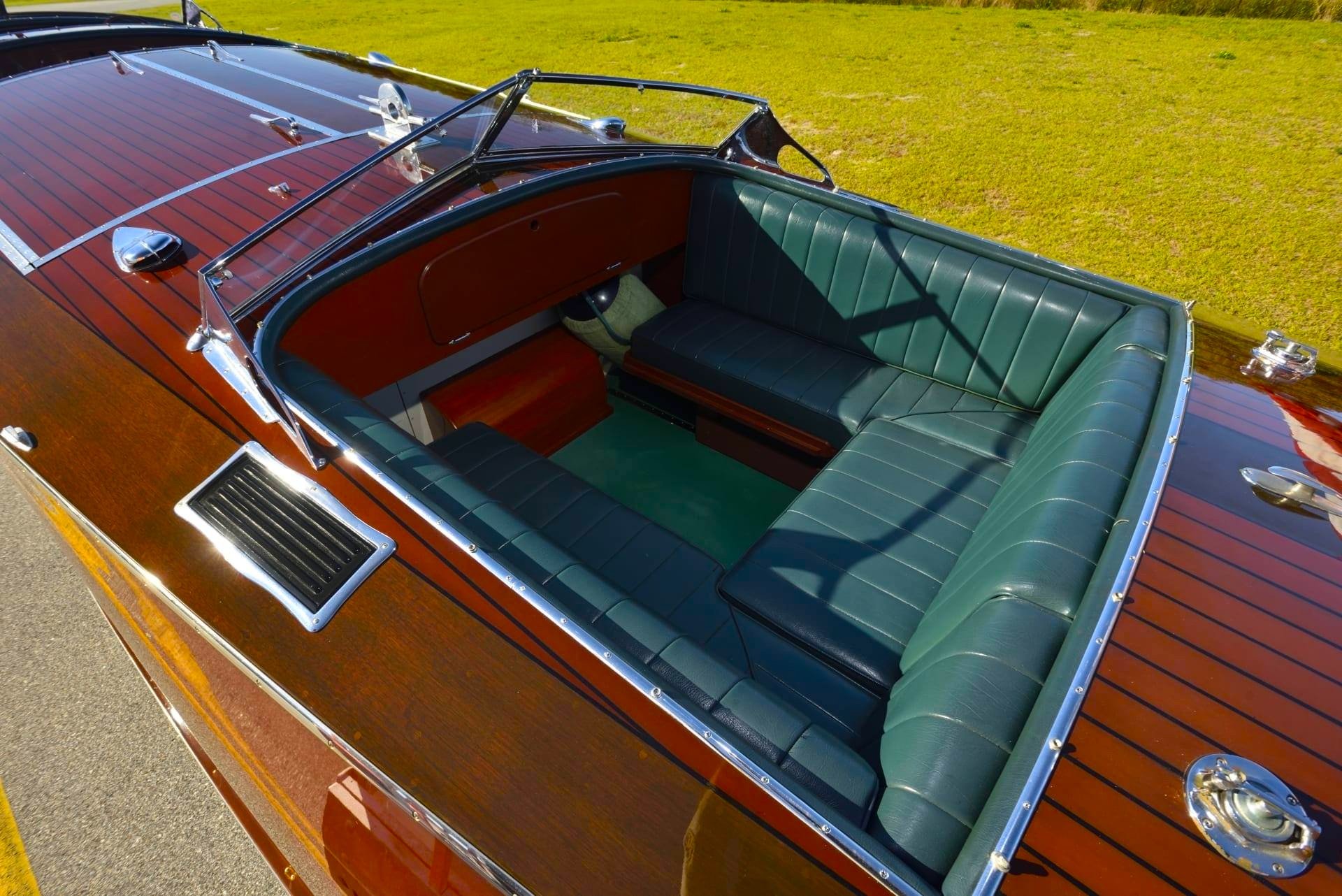
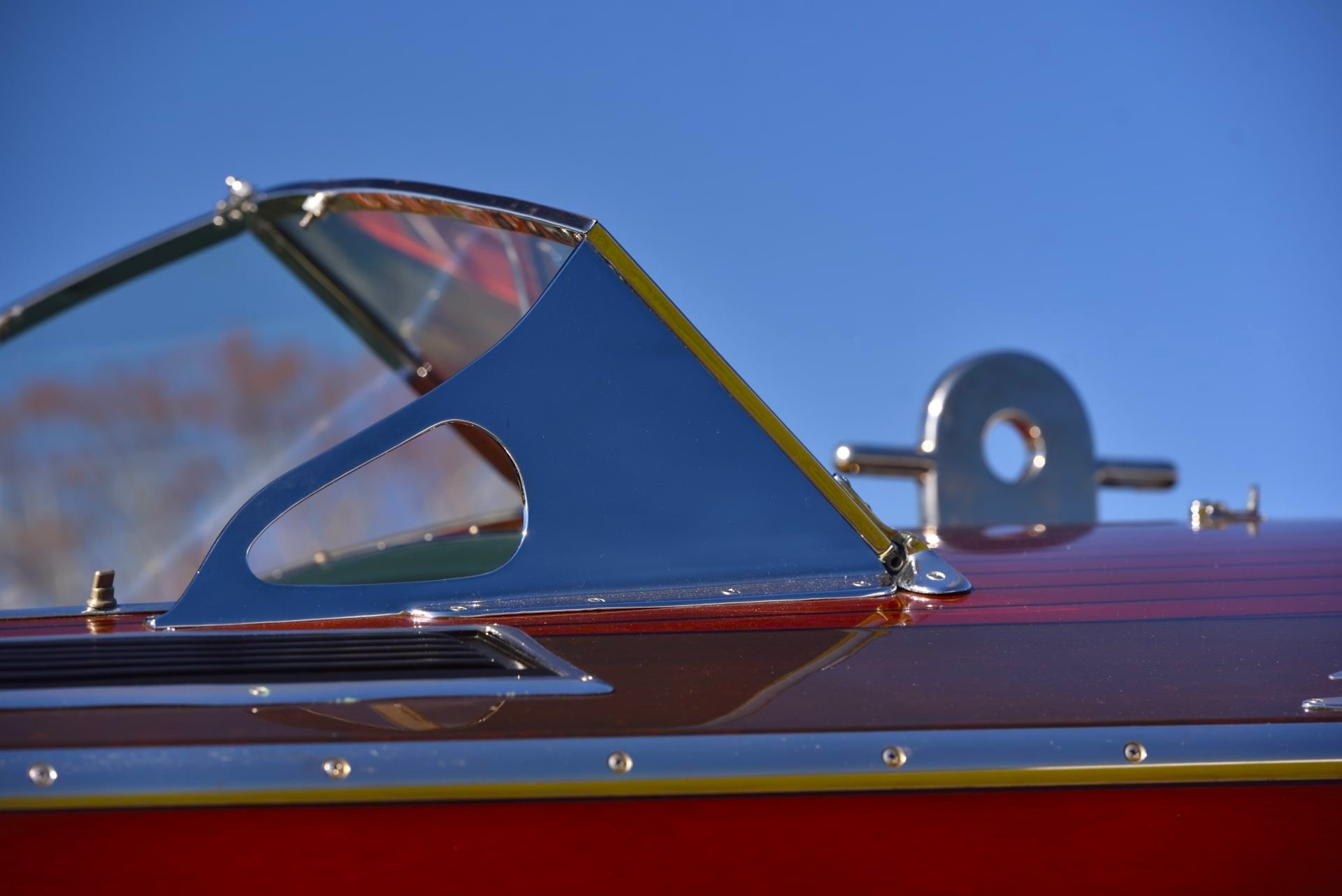
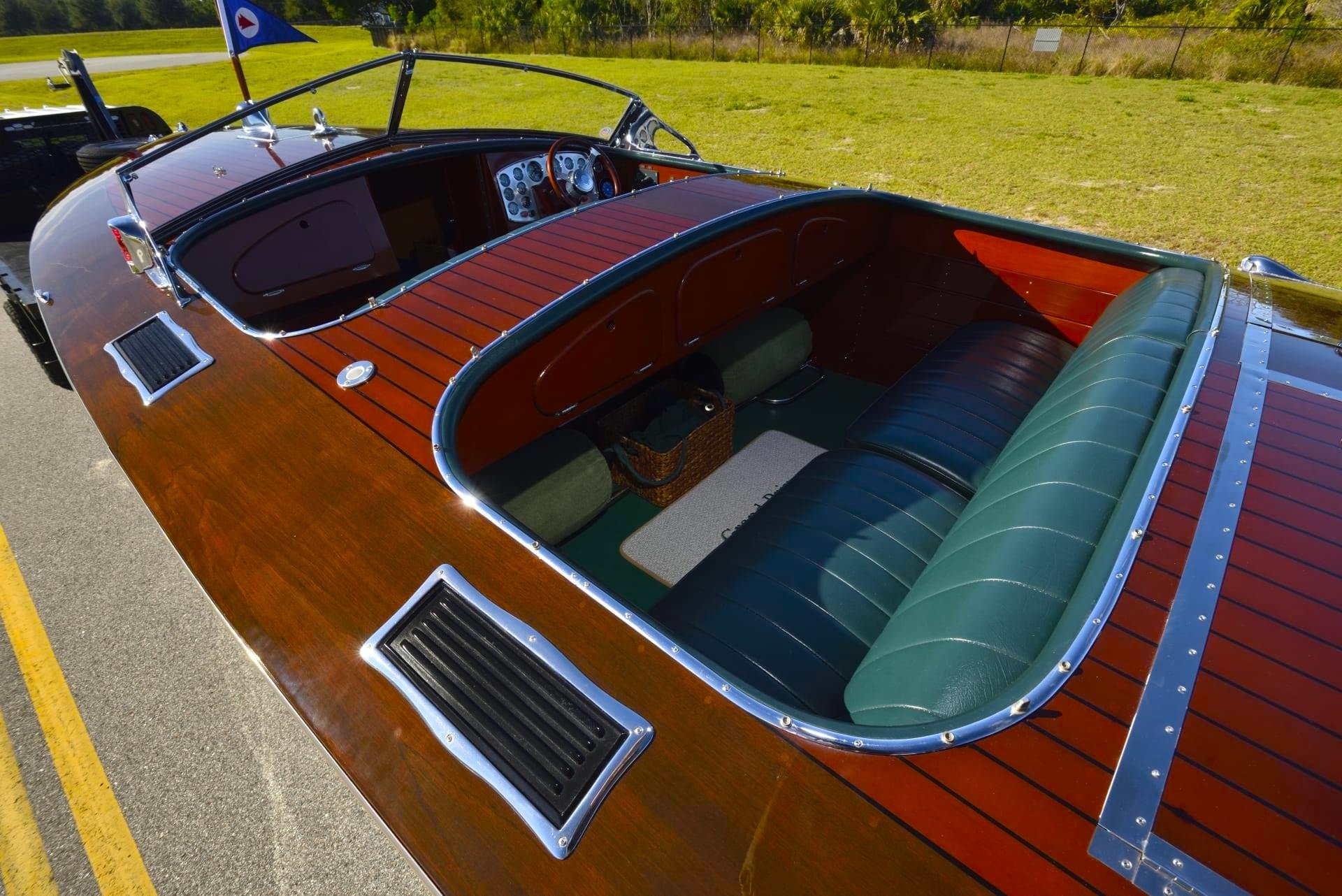
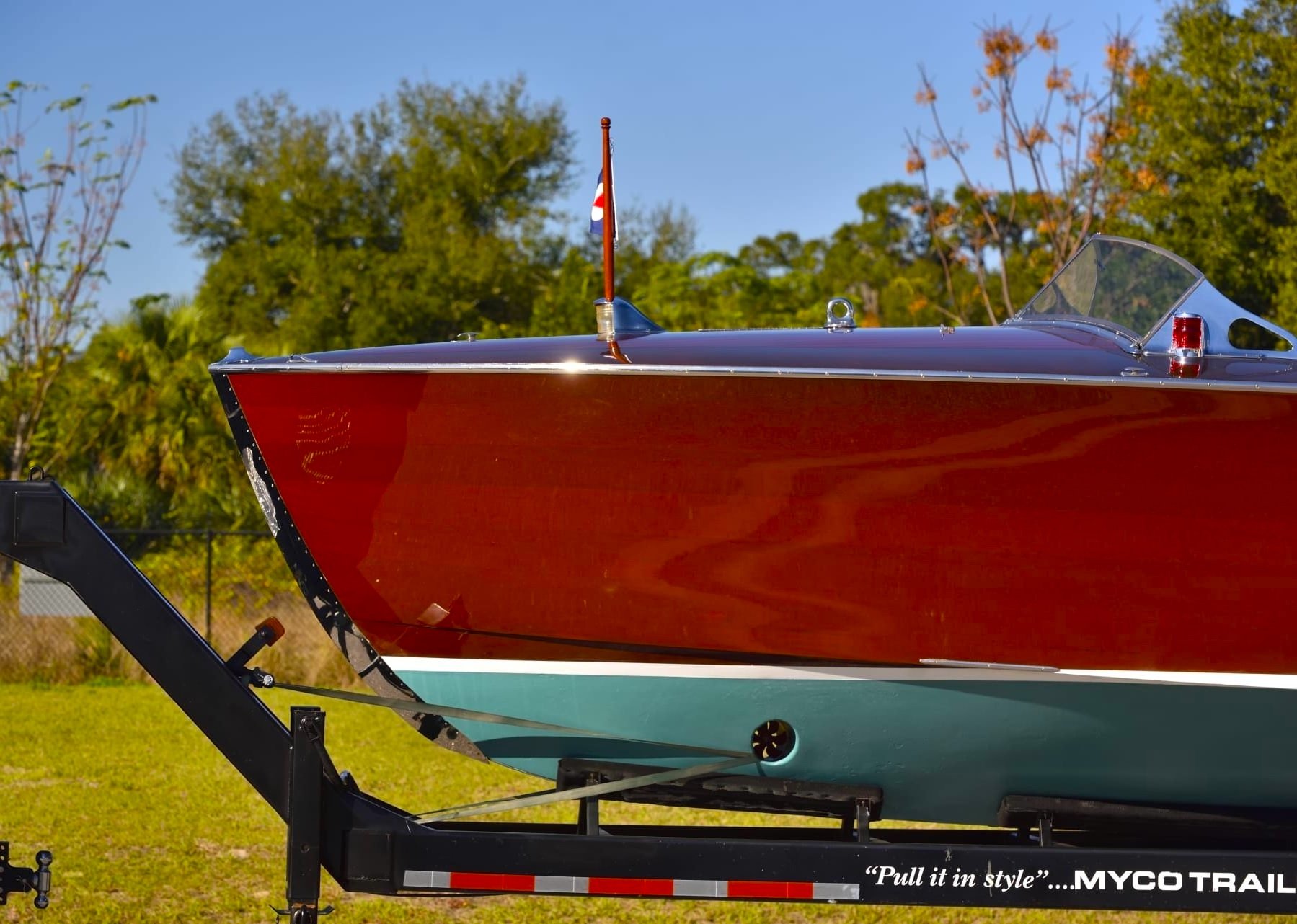
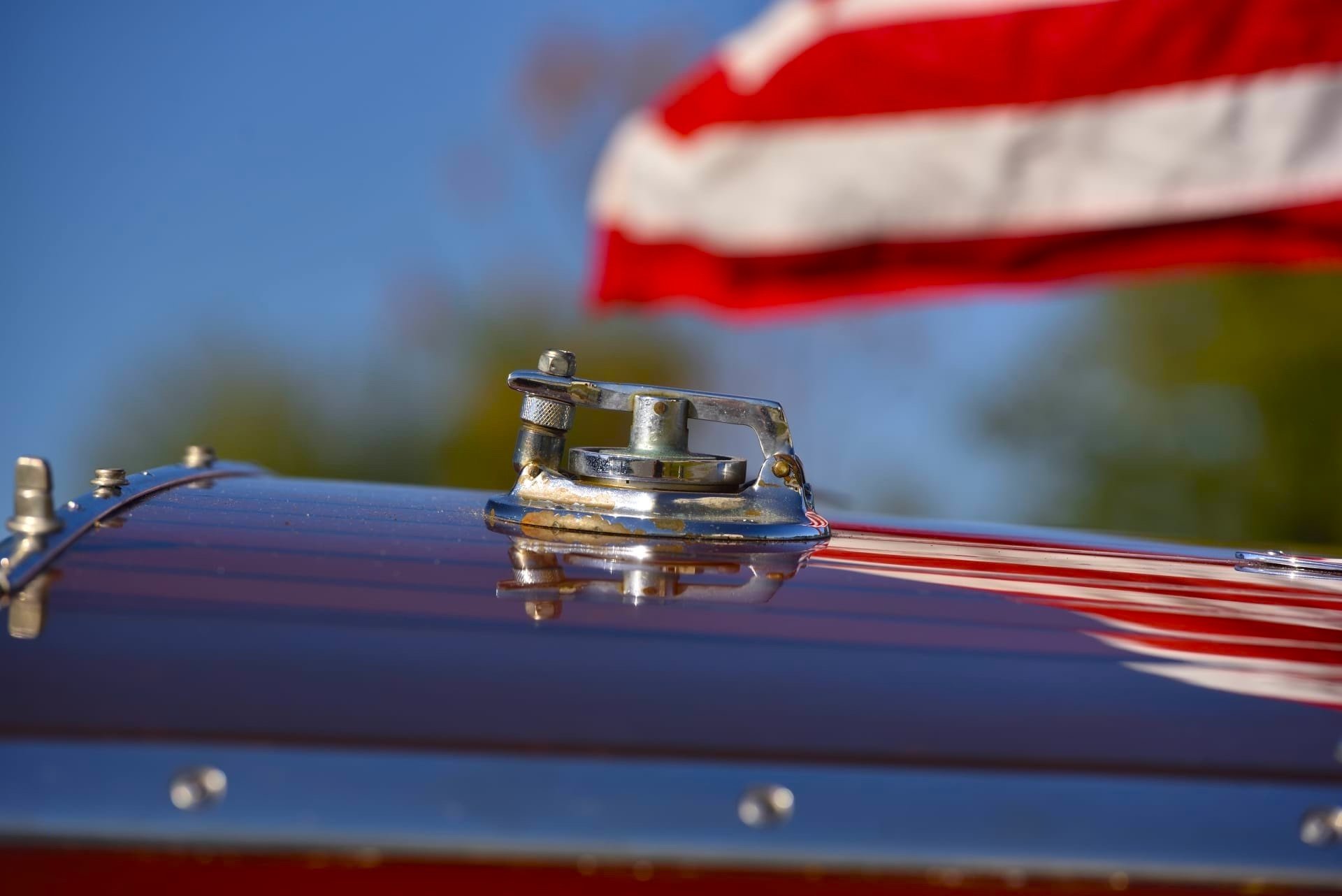
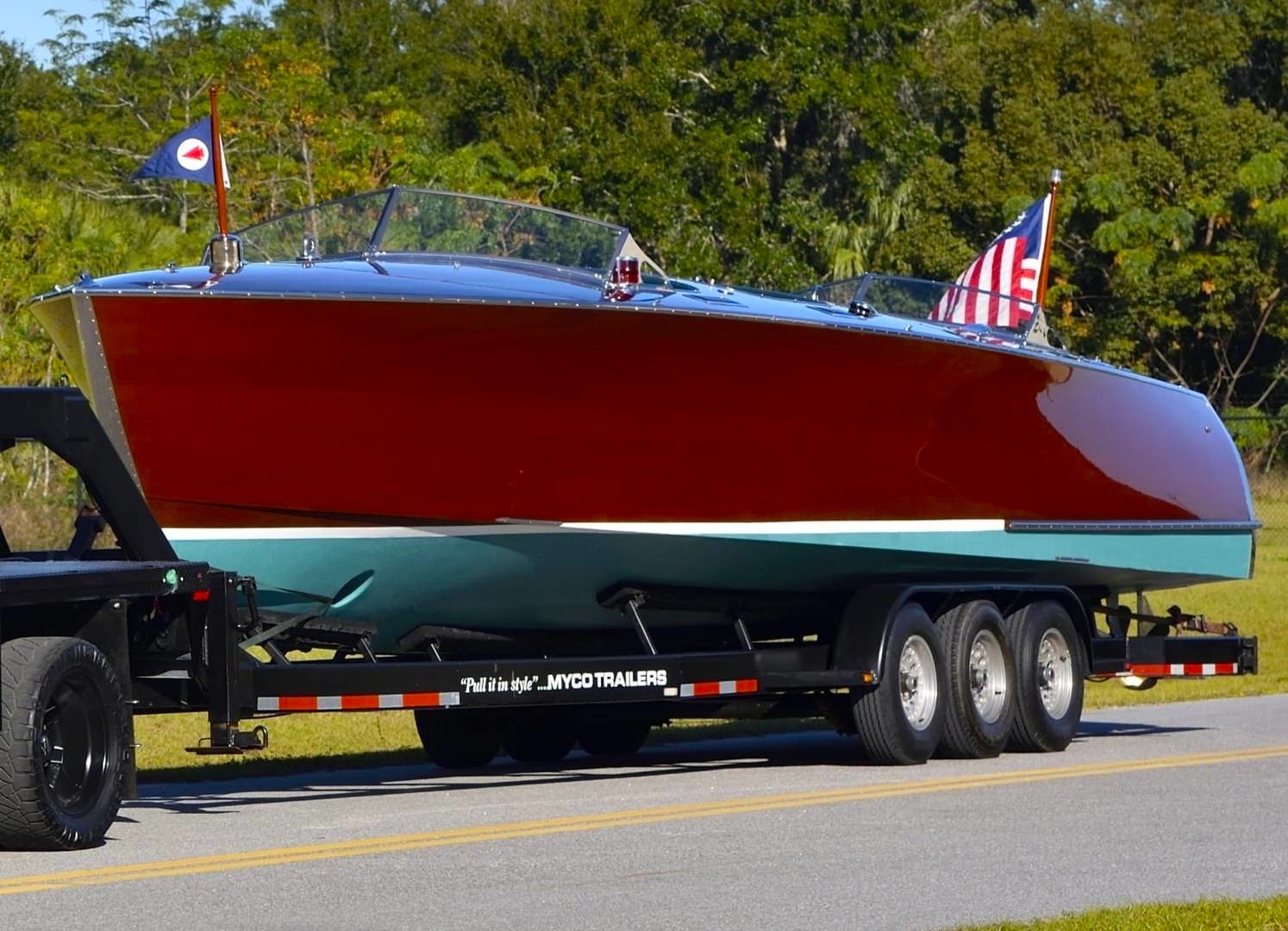
Grand Prix has a triple cockpit layout, allowing plenty of room for friends and family. It has a split front windshield, and an additional aft windshield, chromed trim on deck, and it comes with a custom Myco triple axle gooseneck trailer with new brakes, bearings, and paint.
It’s now due to roll across the auction block with Mecum in Florida, and you can visit the listing here if you’d like to read more about it or register to bid.
 17
17
Images courtesy of Mecum

Articles that Ben Branch has written have been covered on CNN, Popular Mechanics, Smithsonian Magazine, Road & Track Magazine, the official Pinterest blog, the official eBay Motors blog, BuzzFeed, Autoweek Magazine, Wired Magazine, Autoblog, Gear Patrol, Jalopnik, The Verge, and many more.
Silodrome was founded by Ben back in 2010, in the years since the site has grown to become a world leader in the alternative and vintage motoring sector, with well over a million monthly readers from around the world and many hundreds of thousands of followers on social media.