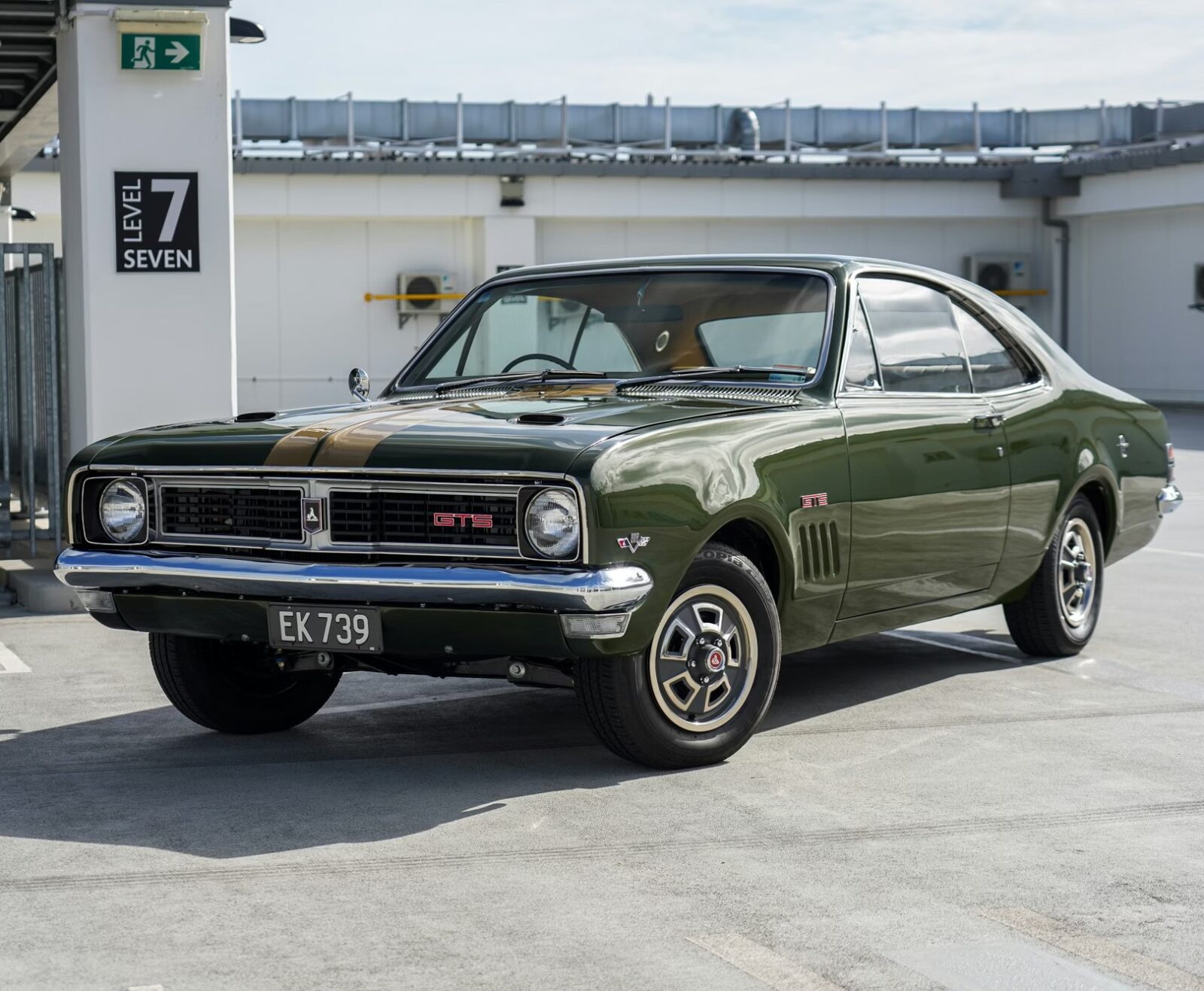
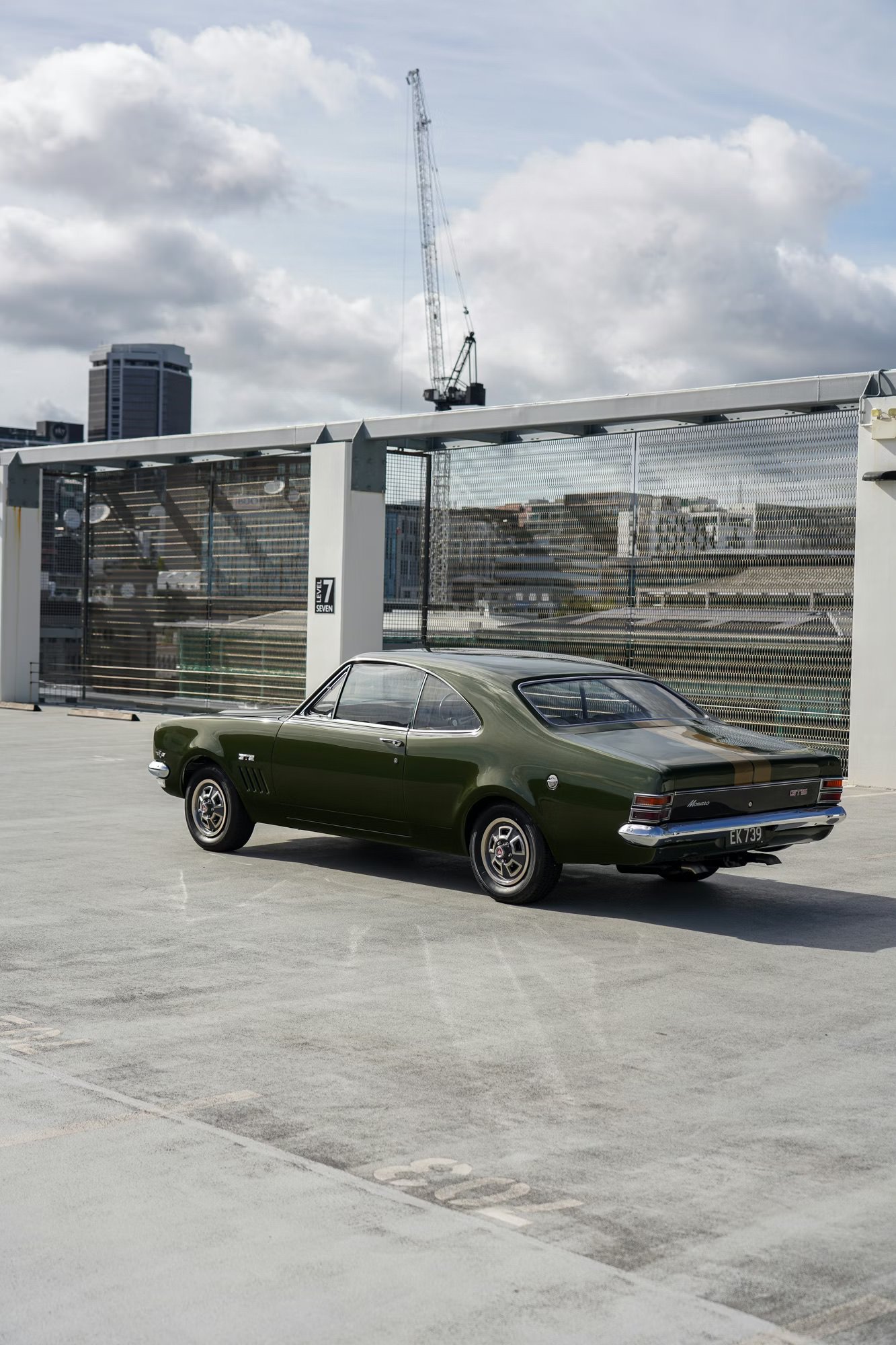
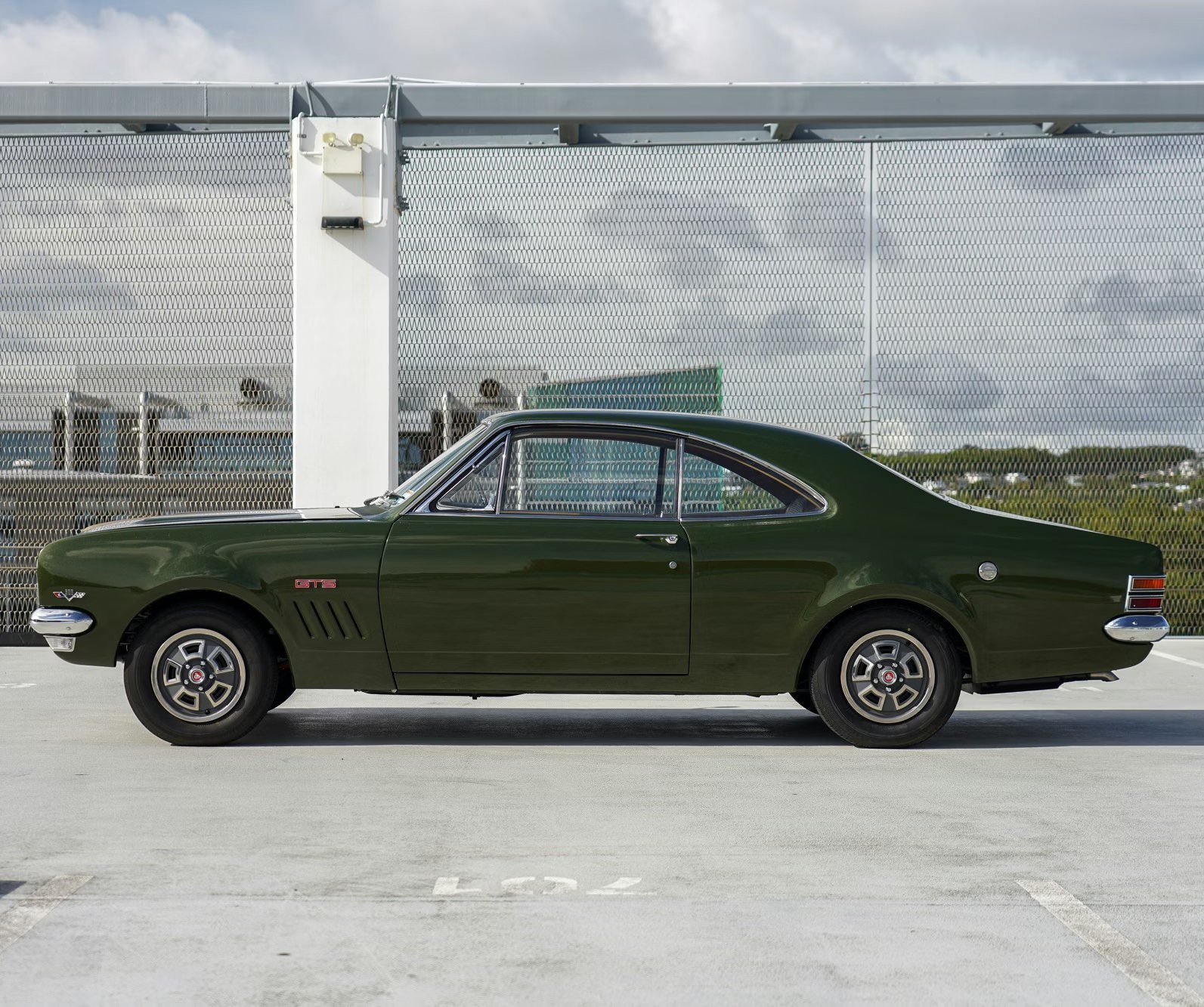
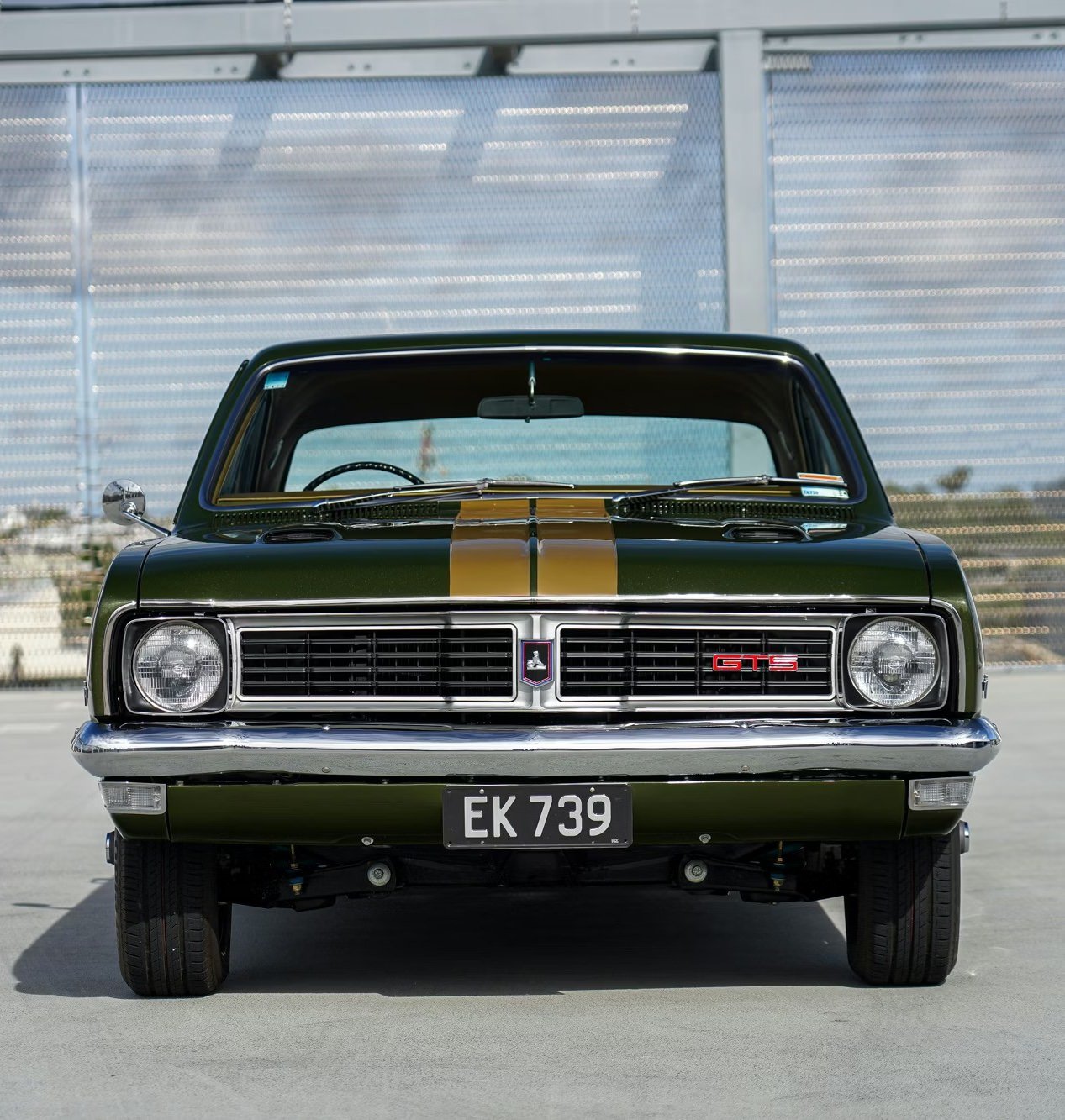
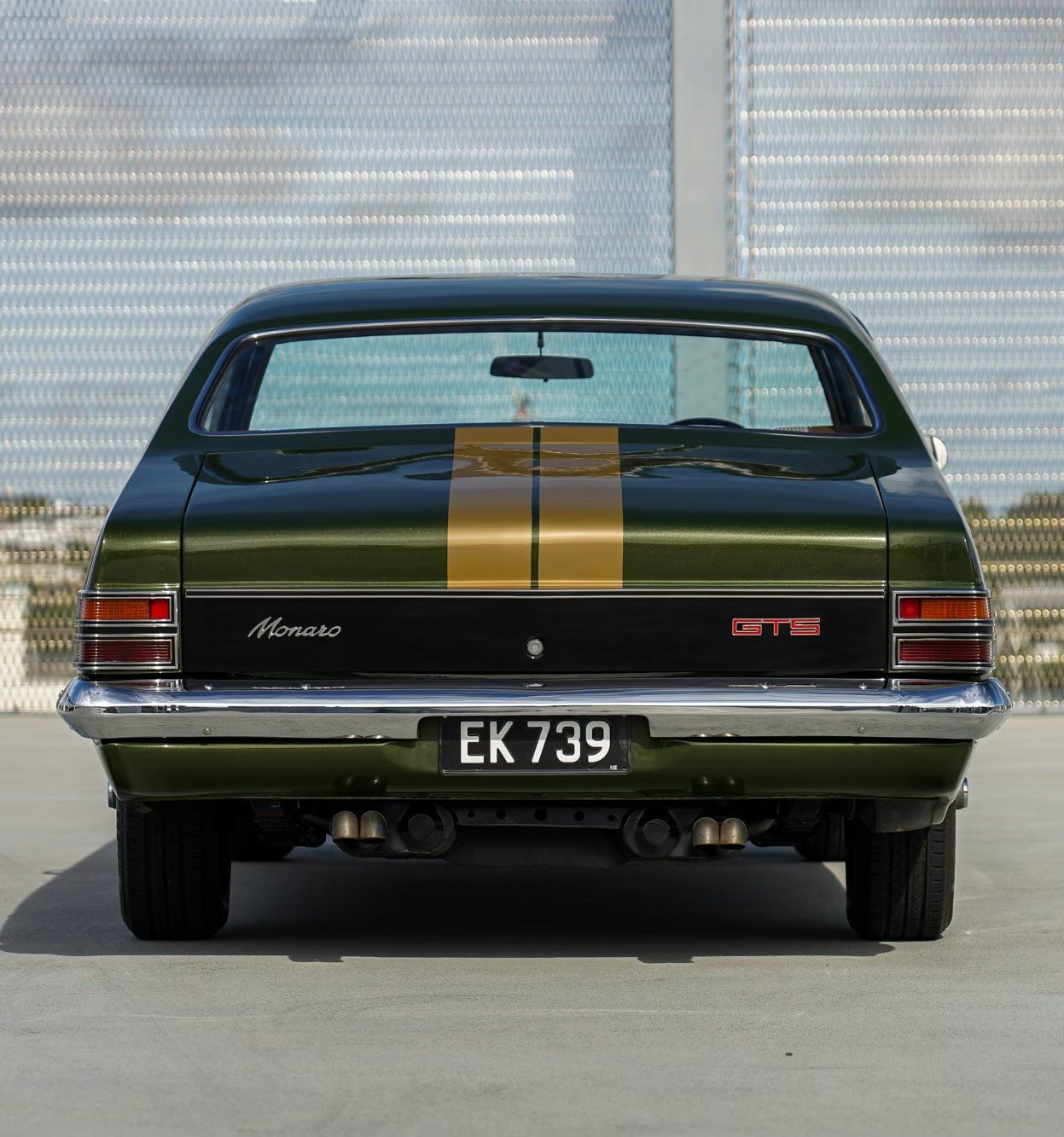
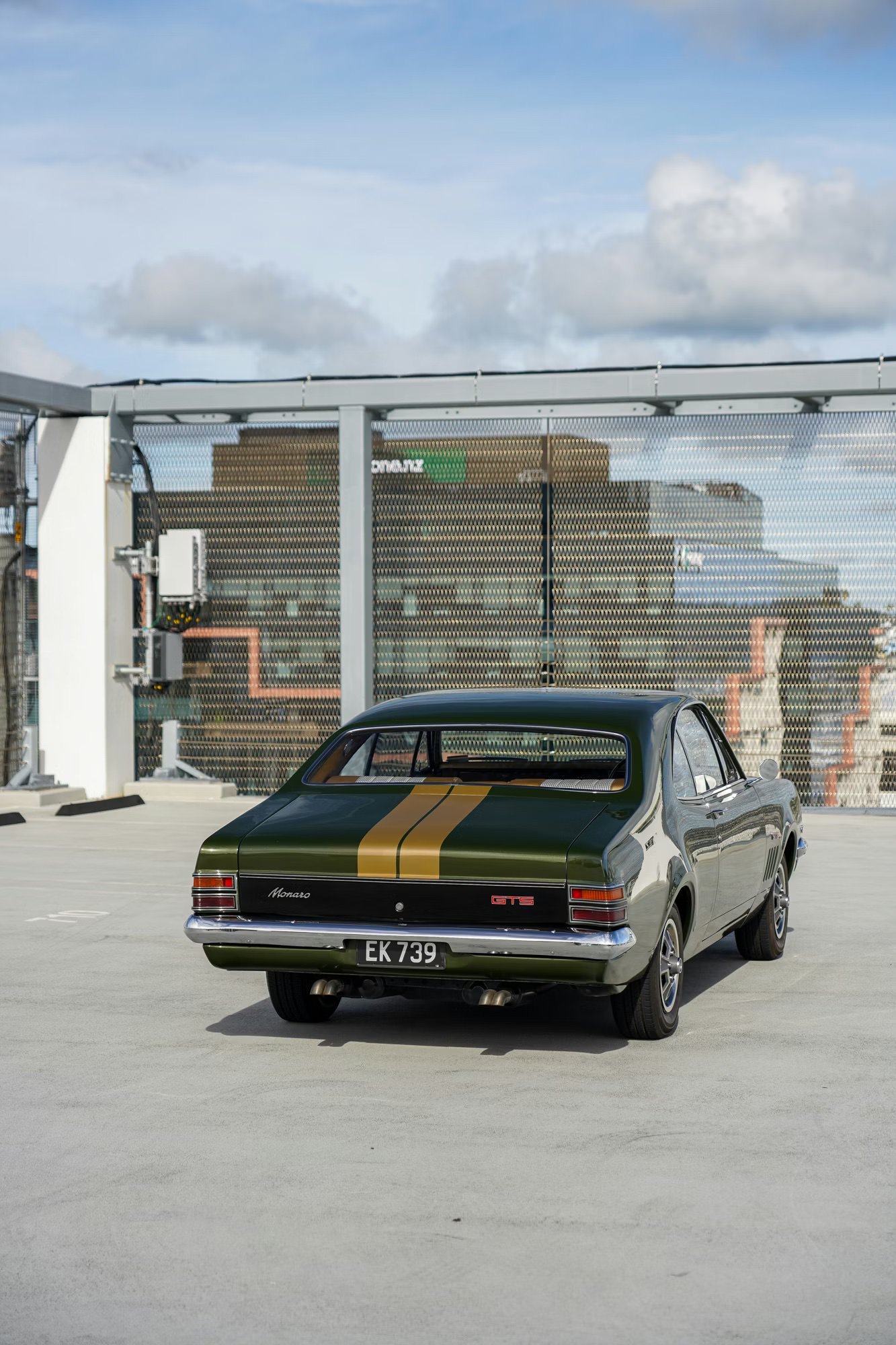
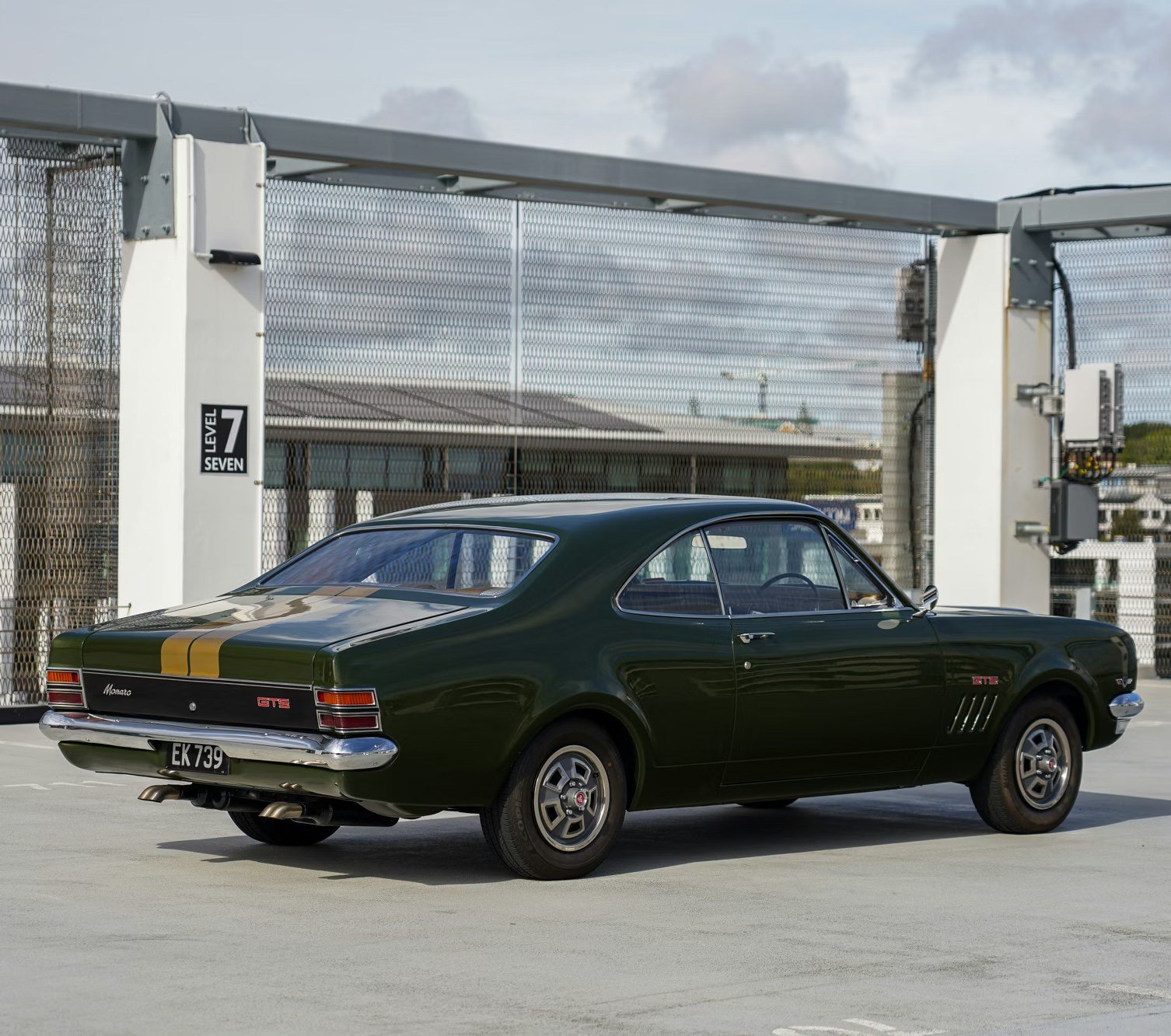
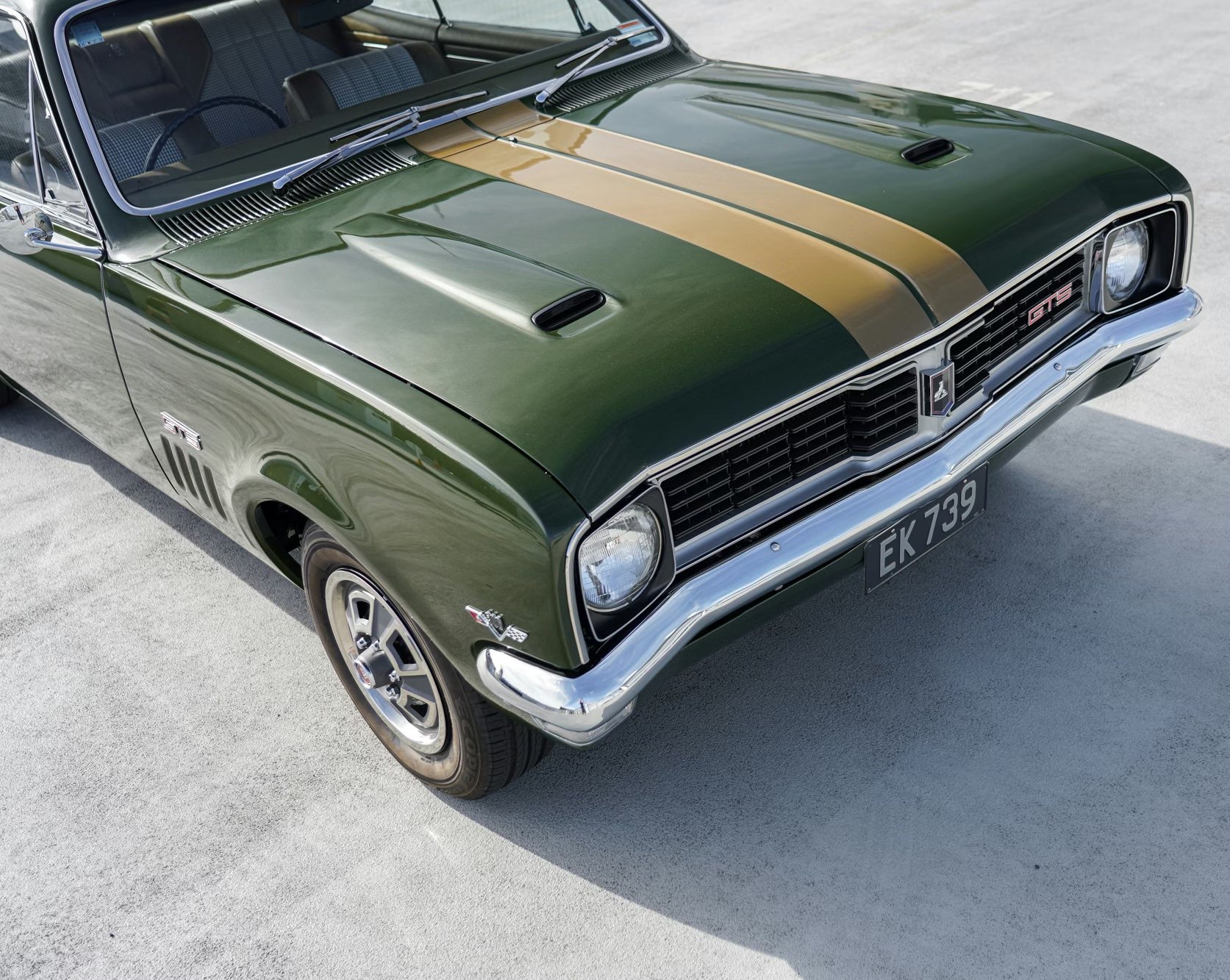
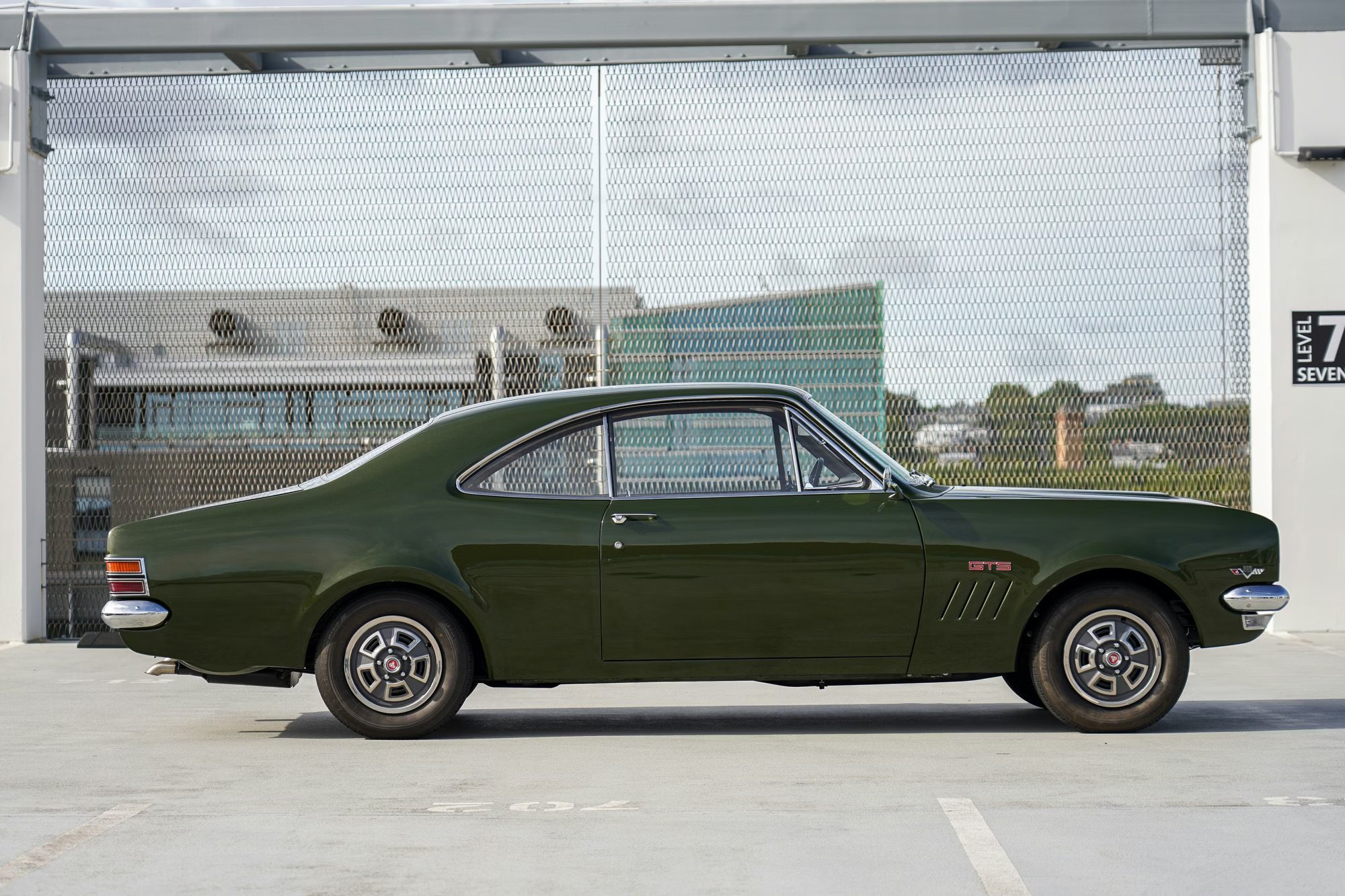
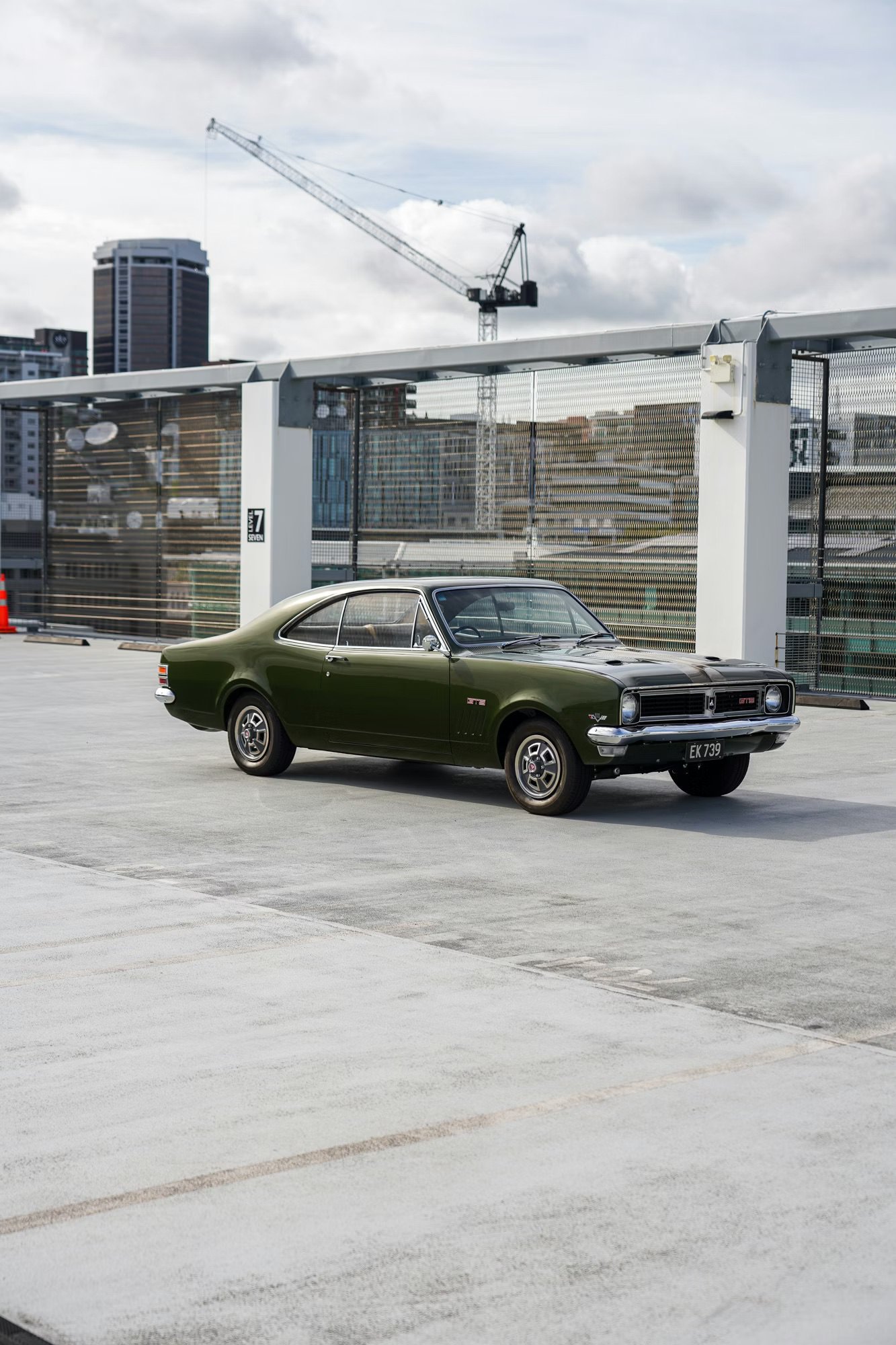
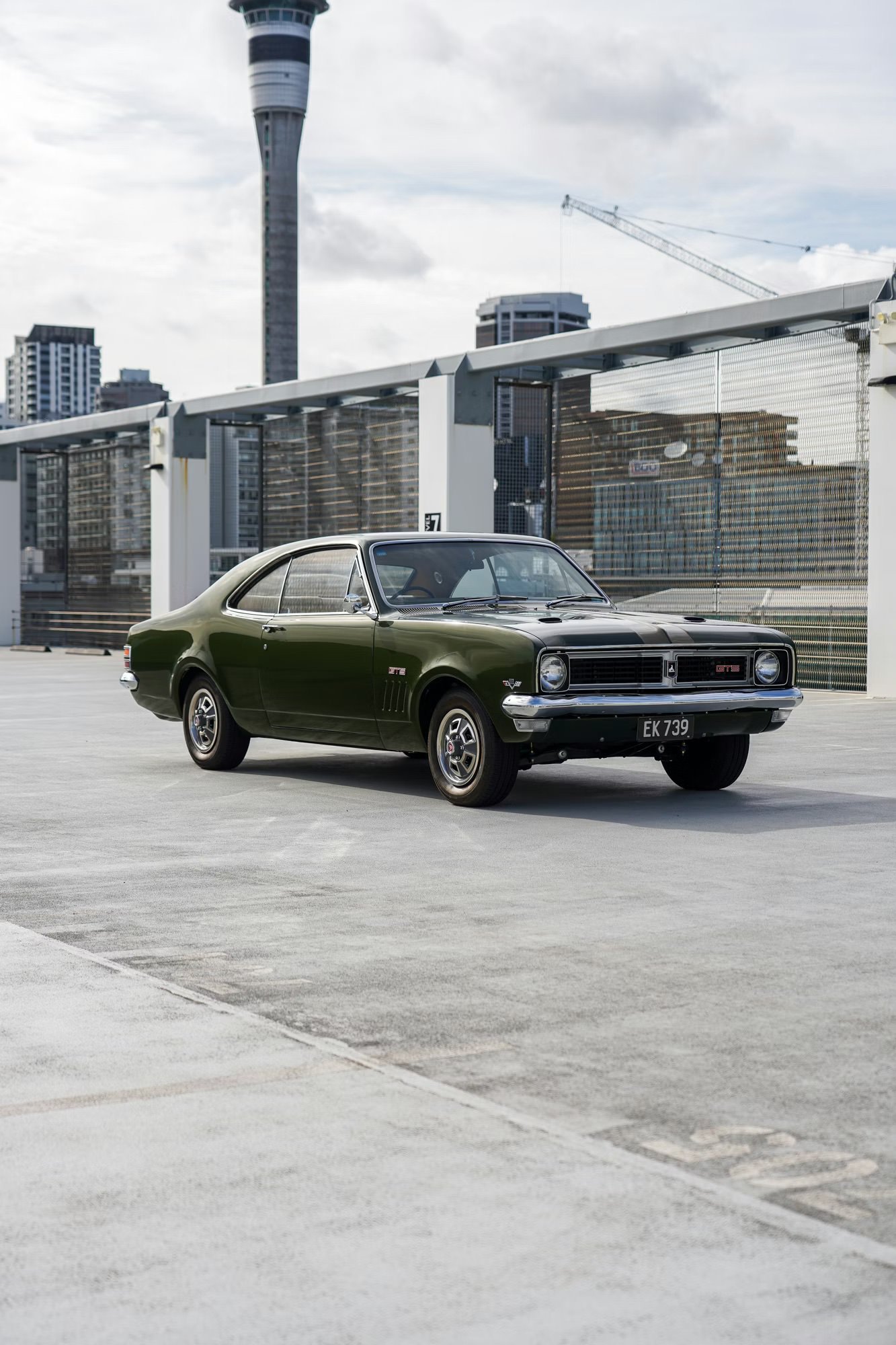
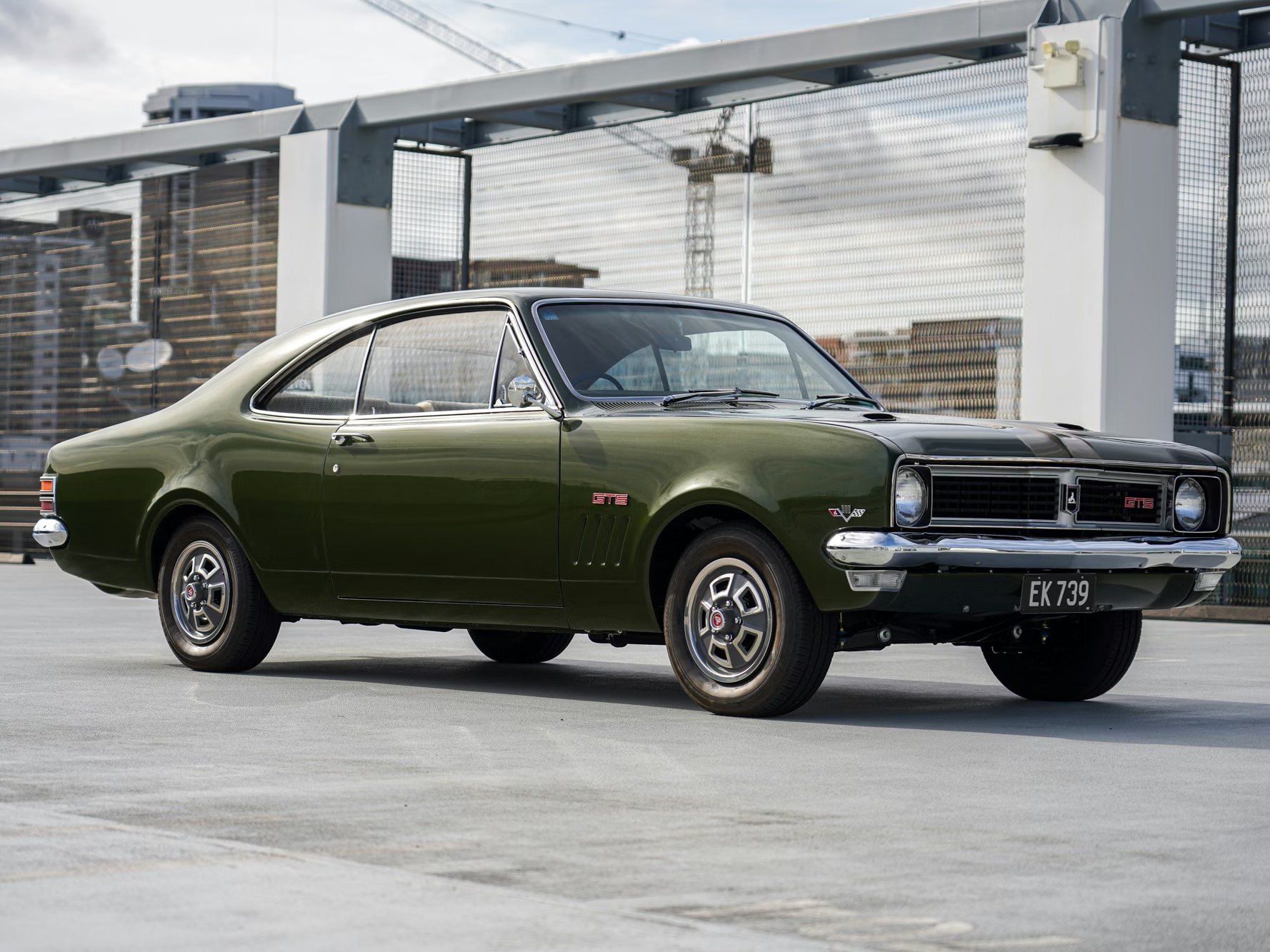
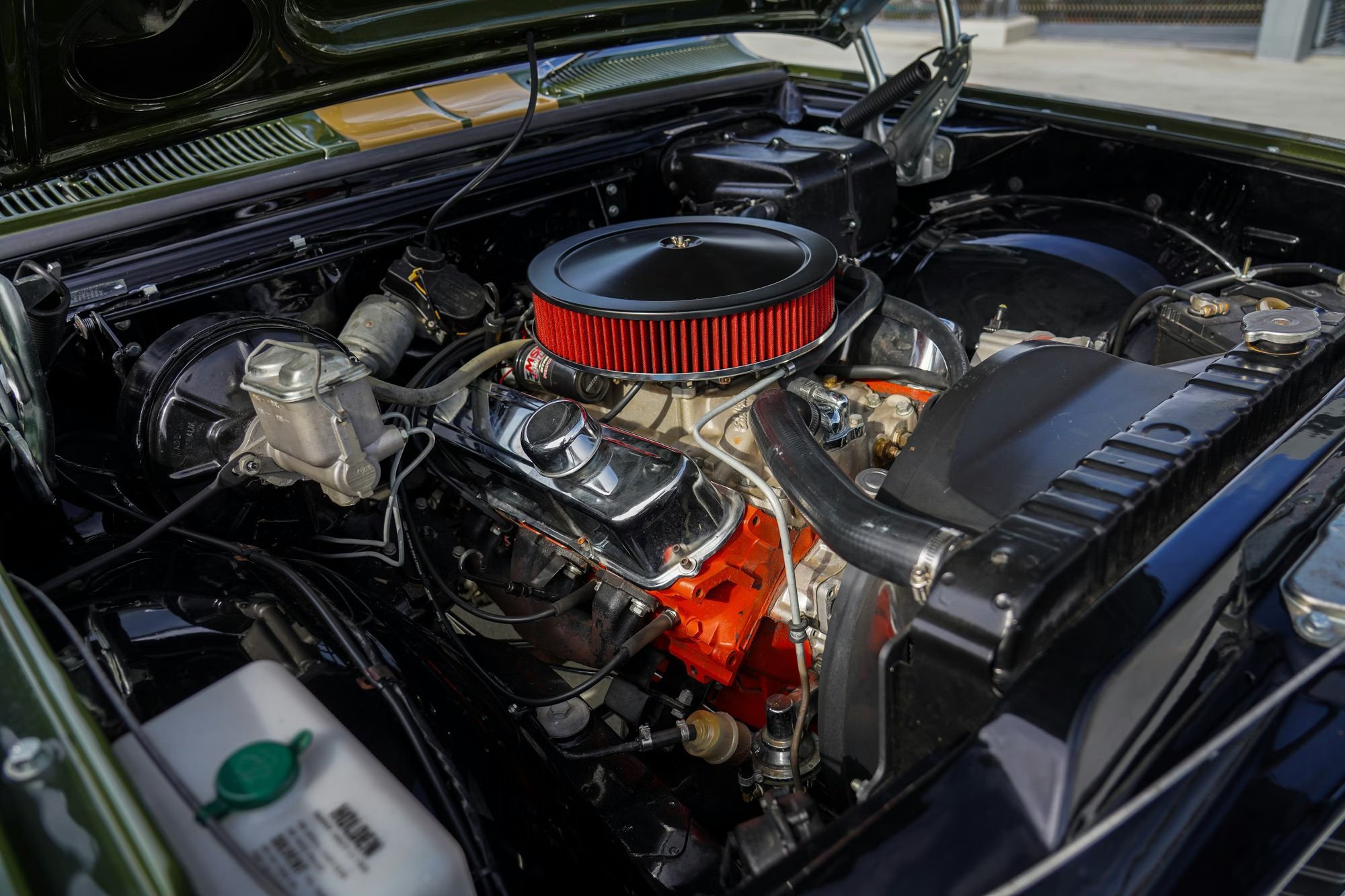
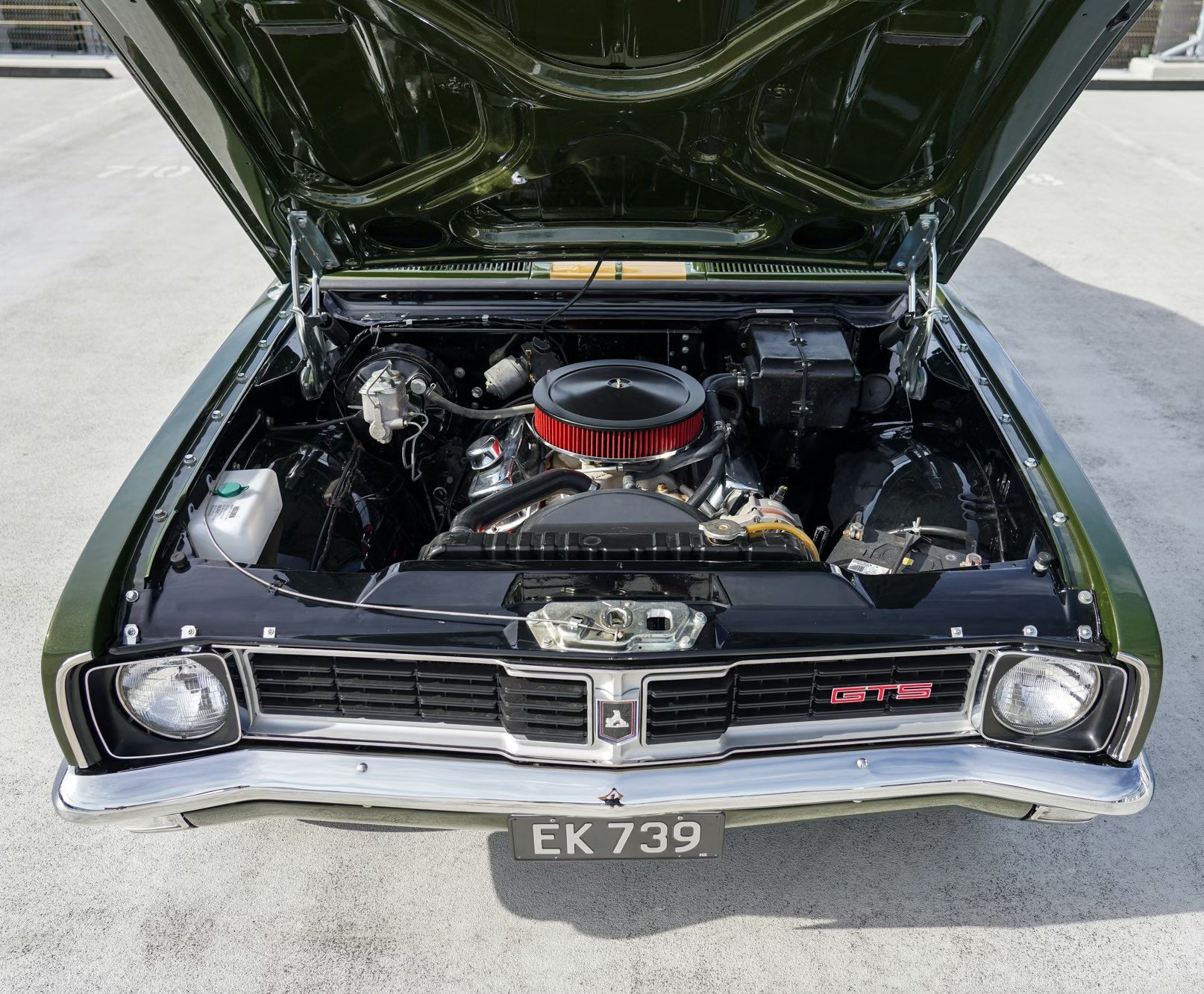
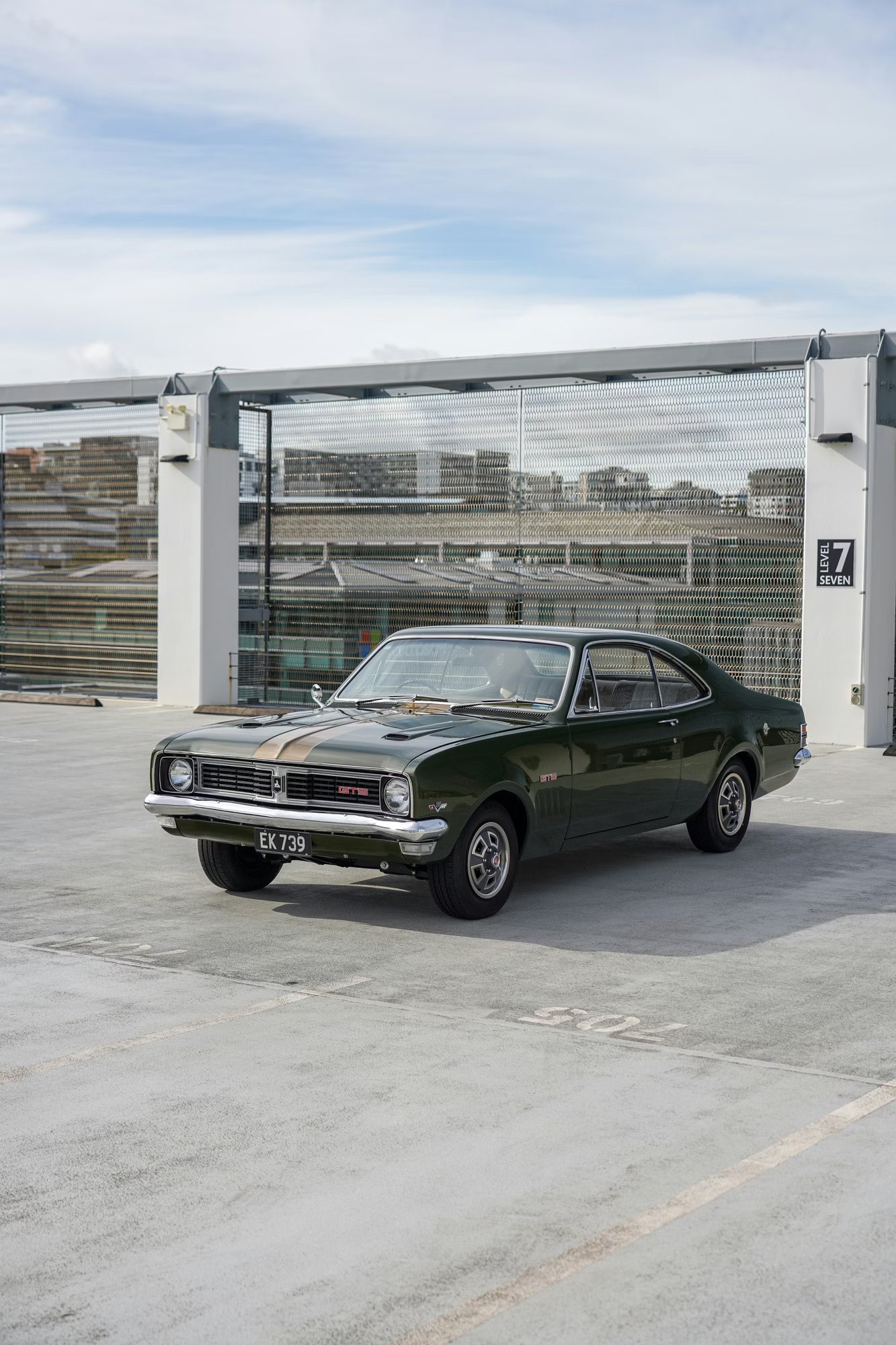
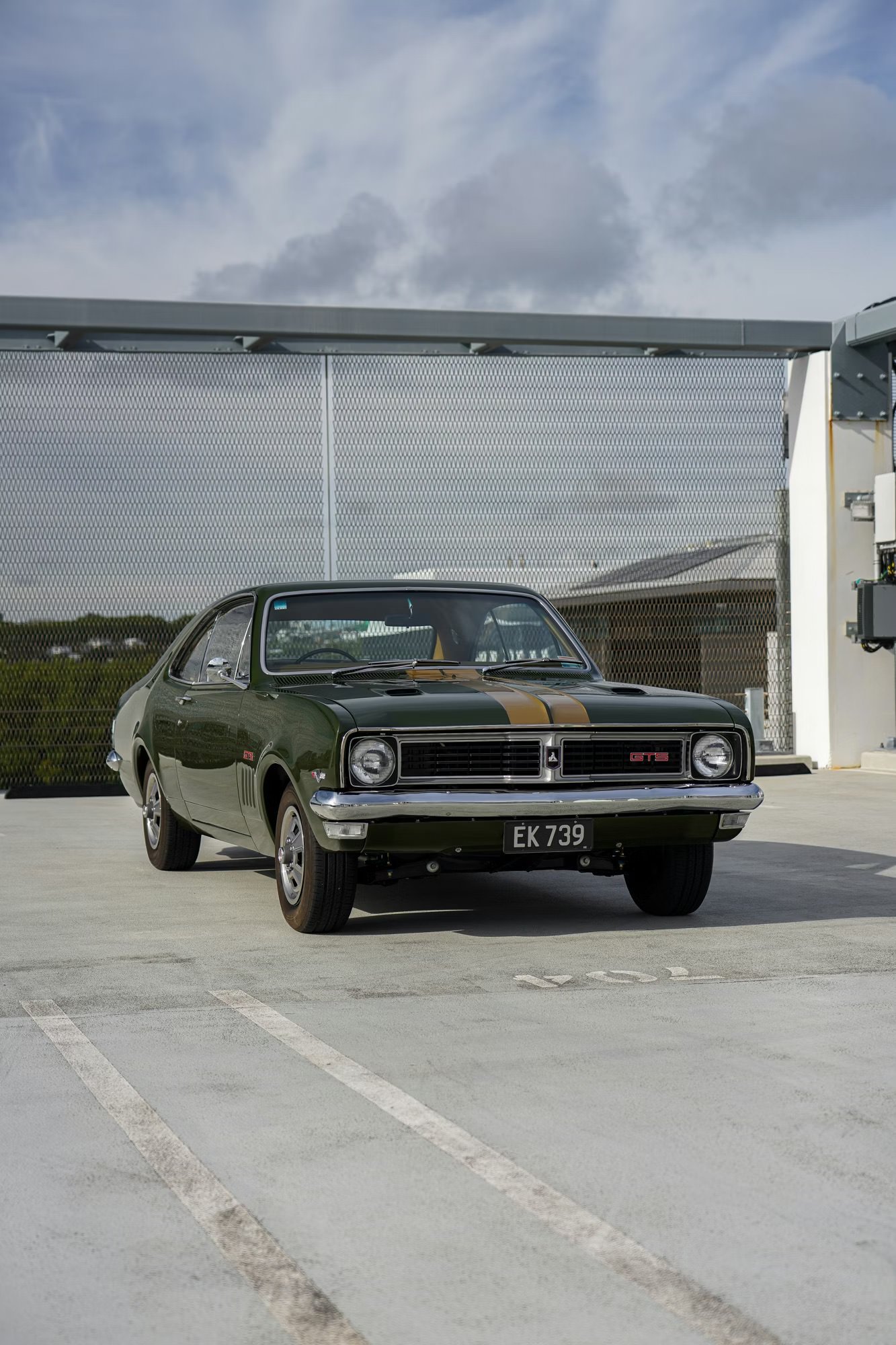
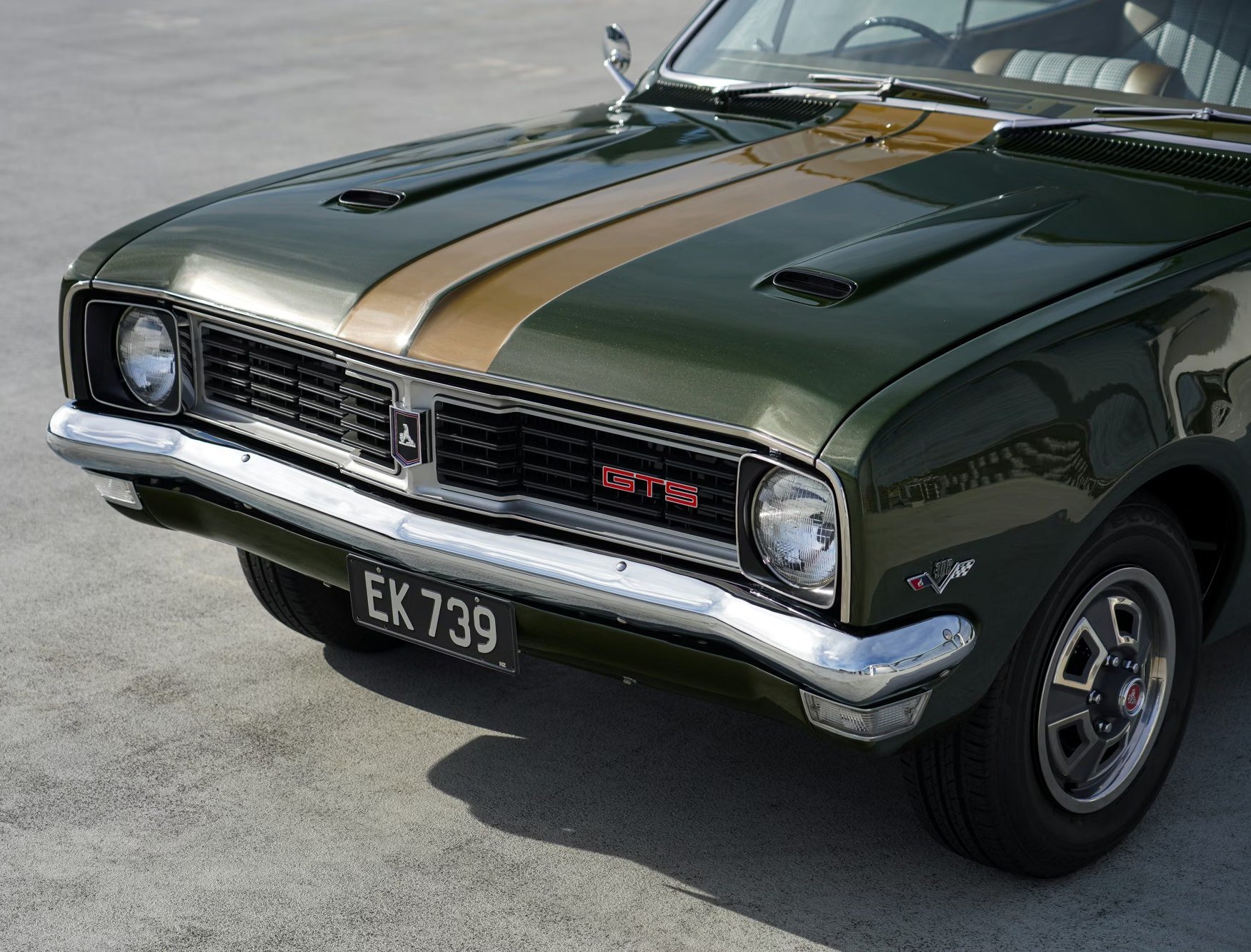
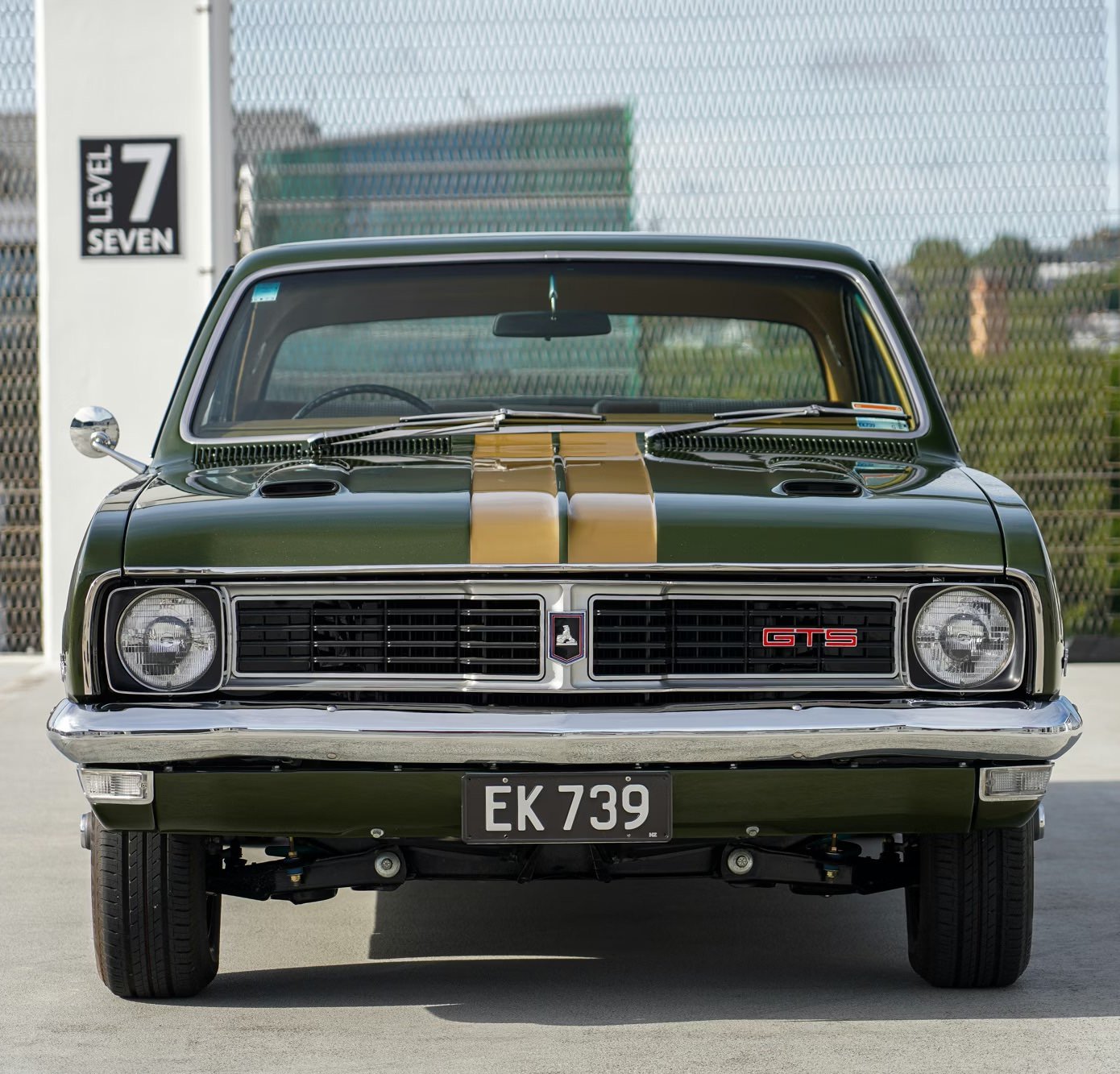
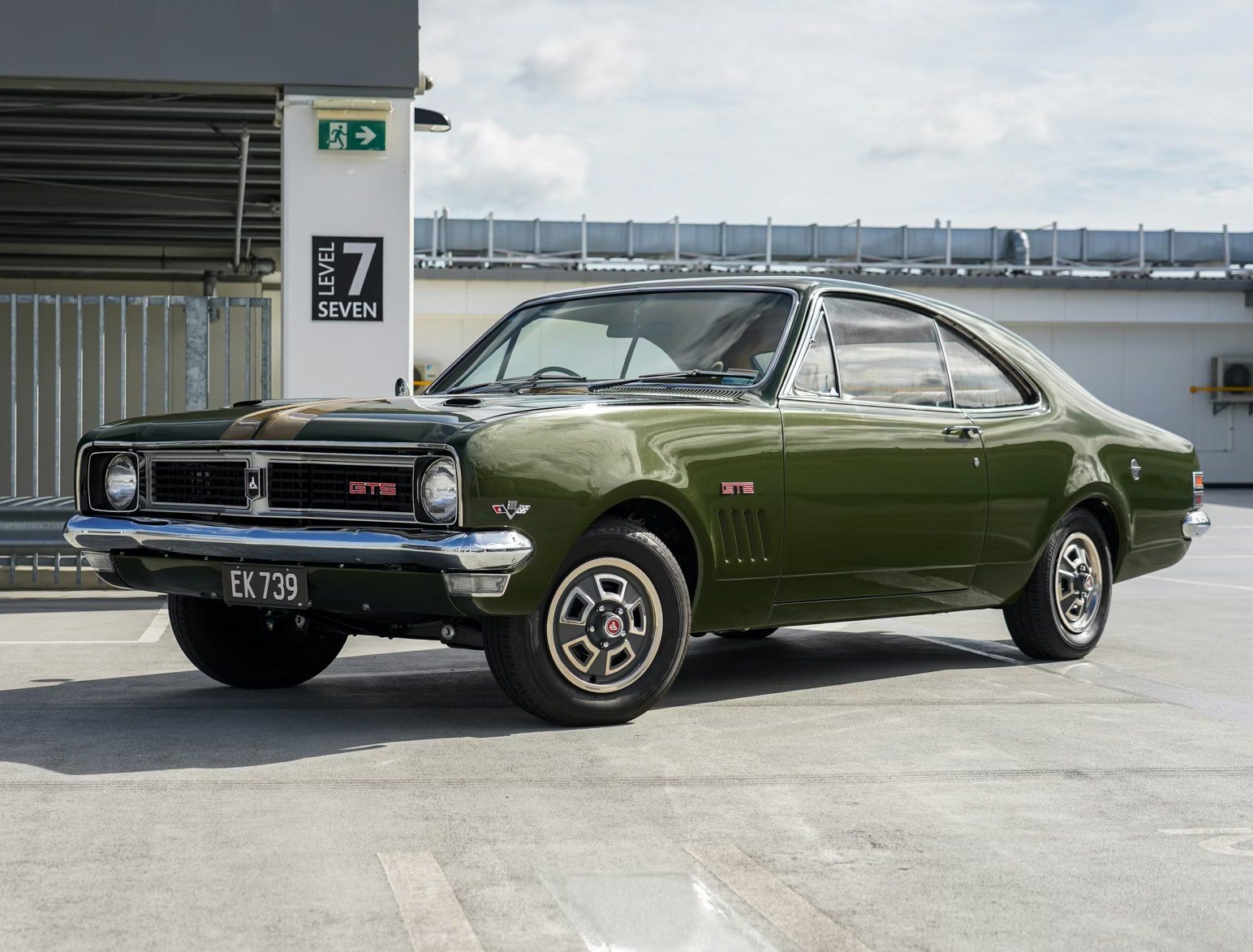
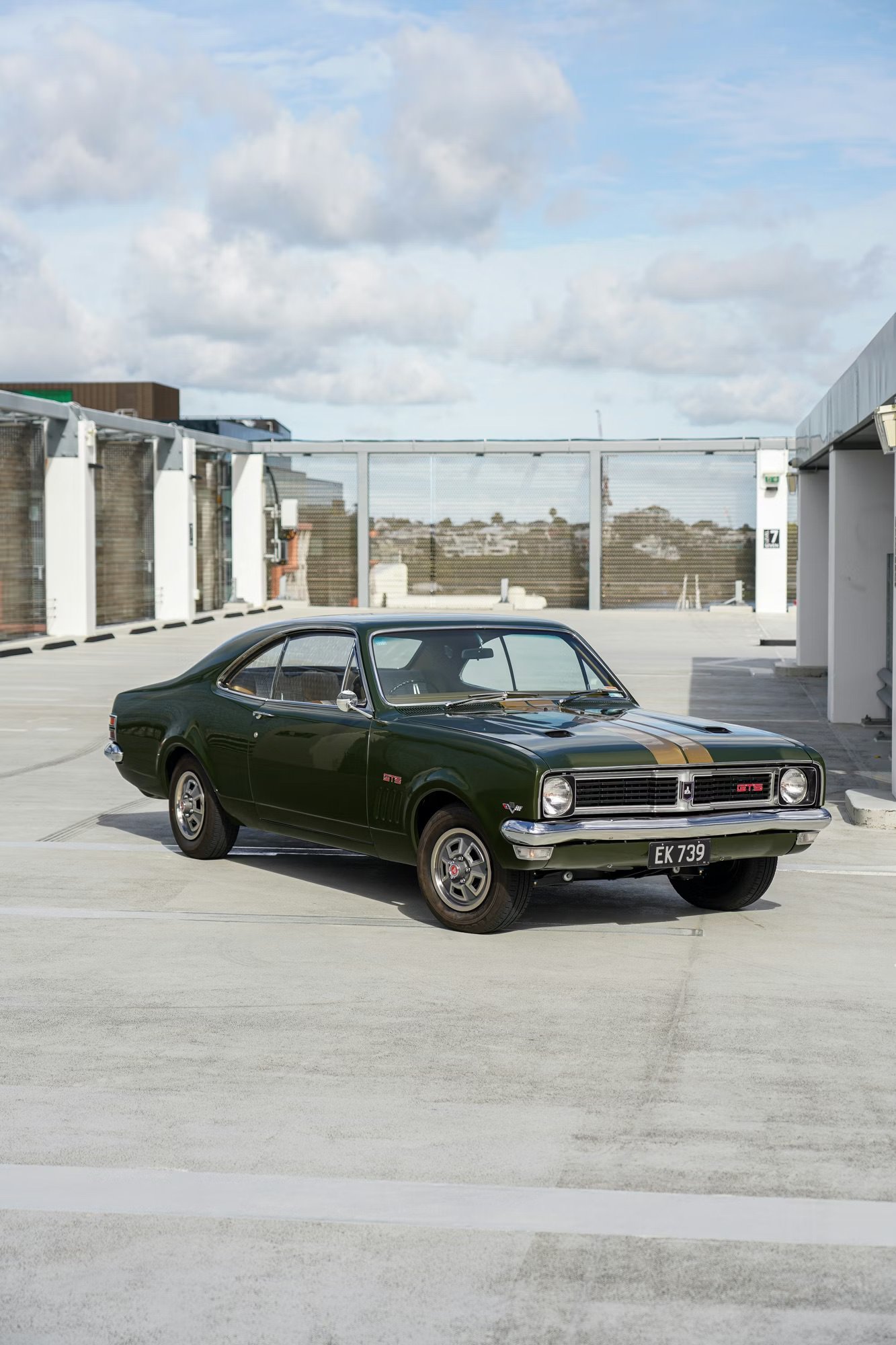
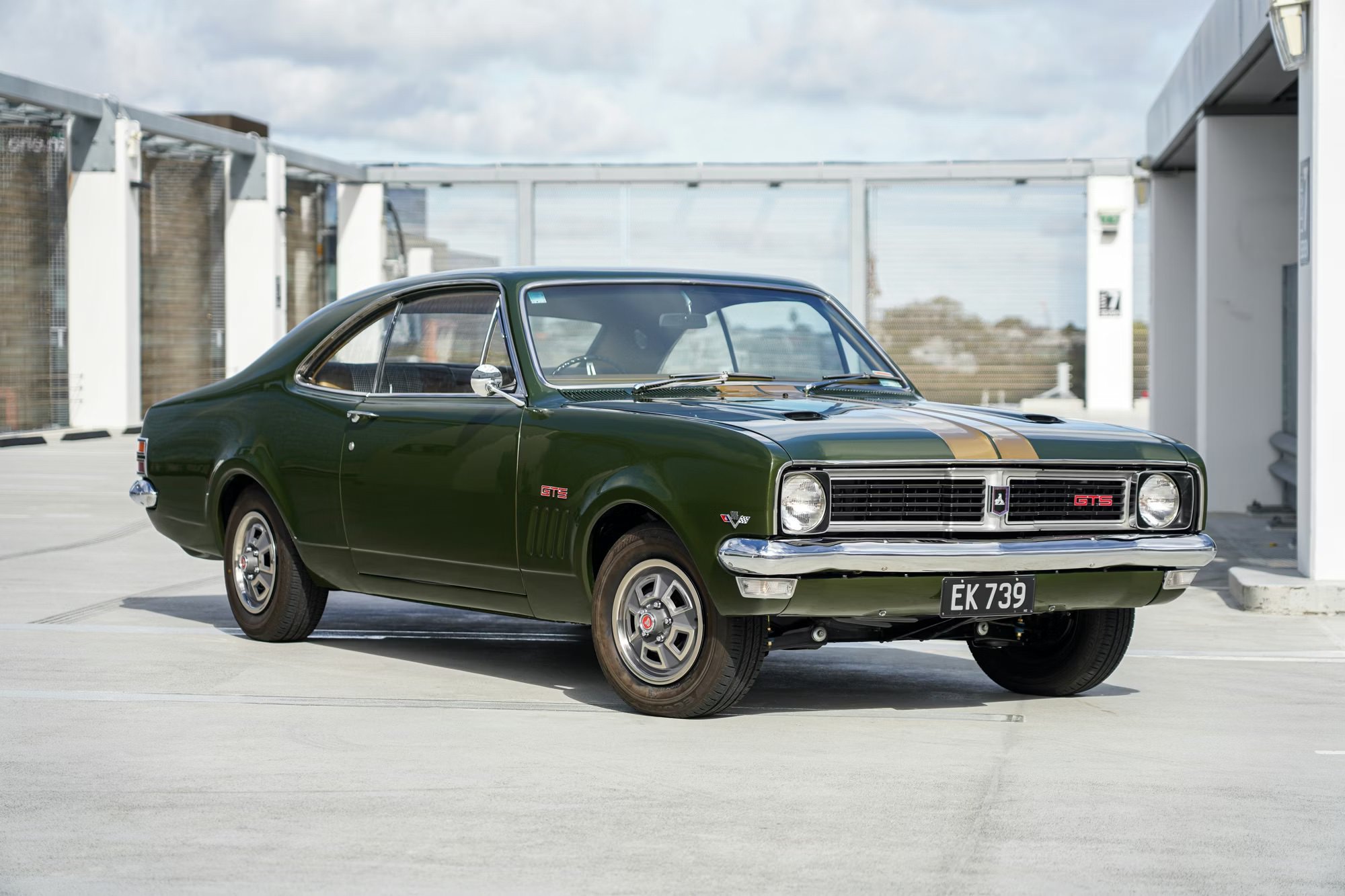
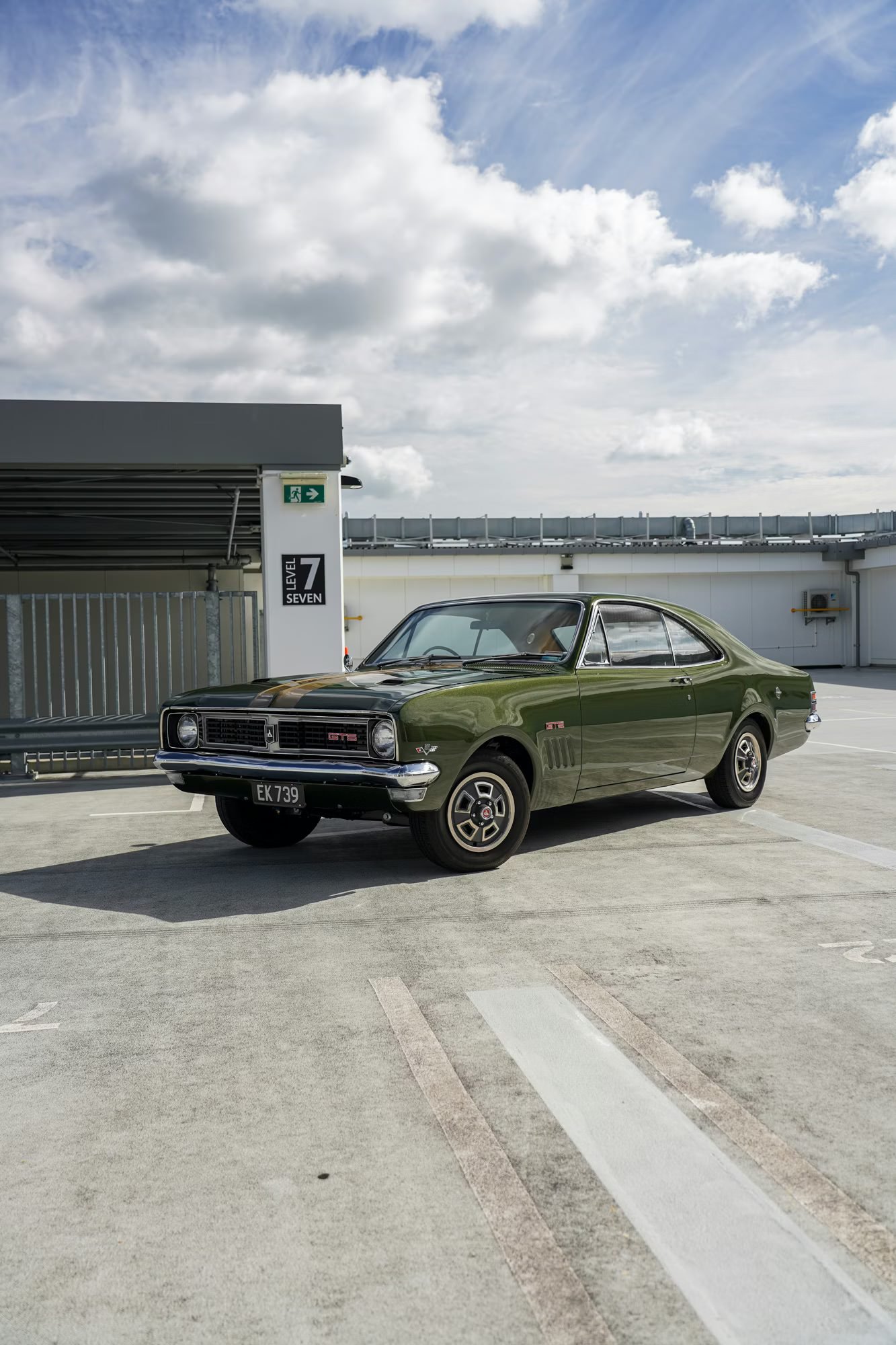
This is an original Holden HT Monaro GTS from 1969, it’s powered by the highly-desirable 308 cubic inch (5.0 liter) Holden V8, and it benefits from some restoration work and a rebuilt engine.
The Monaro is arguably the most famous Australian V8 coupe ever made, with the possible exception of the Ford Falcon XC Cobra of course. Original Monaros are now worth a pretty penny, and they’re slowly being discovered by an increasing number of international collectors.
Fast Facts: The Holden HT Monaro GTS
- This is a genuine 1969 Holden HT Monaro GTS, it’s fitted with the desirable 308 cubic inch 5.0 liter Holden V8 and an automatic transmission. It has benefited from restoration work and an engine rebuild, presenting as a well-kept, largely original Australian muscle coupe with major collector appeal.
- The Holden Monaro is one of Australia’s most iconic V8 coupes, rivaled mainly by the Ford Falcon Coupes of the era. Originally released in 1968 and produced until 1971, it combined American-inspired coupe styling with local engineering and quickly became a dominant presence in both showrooms and Australian touring car racing.
- Holden Monaros achieved notable motorsport success in the late 1960s and early 1970s, including multiple victories at the Hardie-Ferodo 500 at Bathurst and a win in the 1970 Australian Touring Car Championship. These results forever established the GTS V8’s reputation as a serious performance car, not just a stylish coupe.
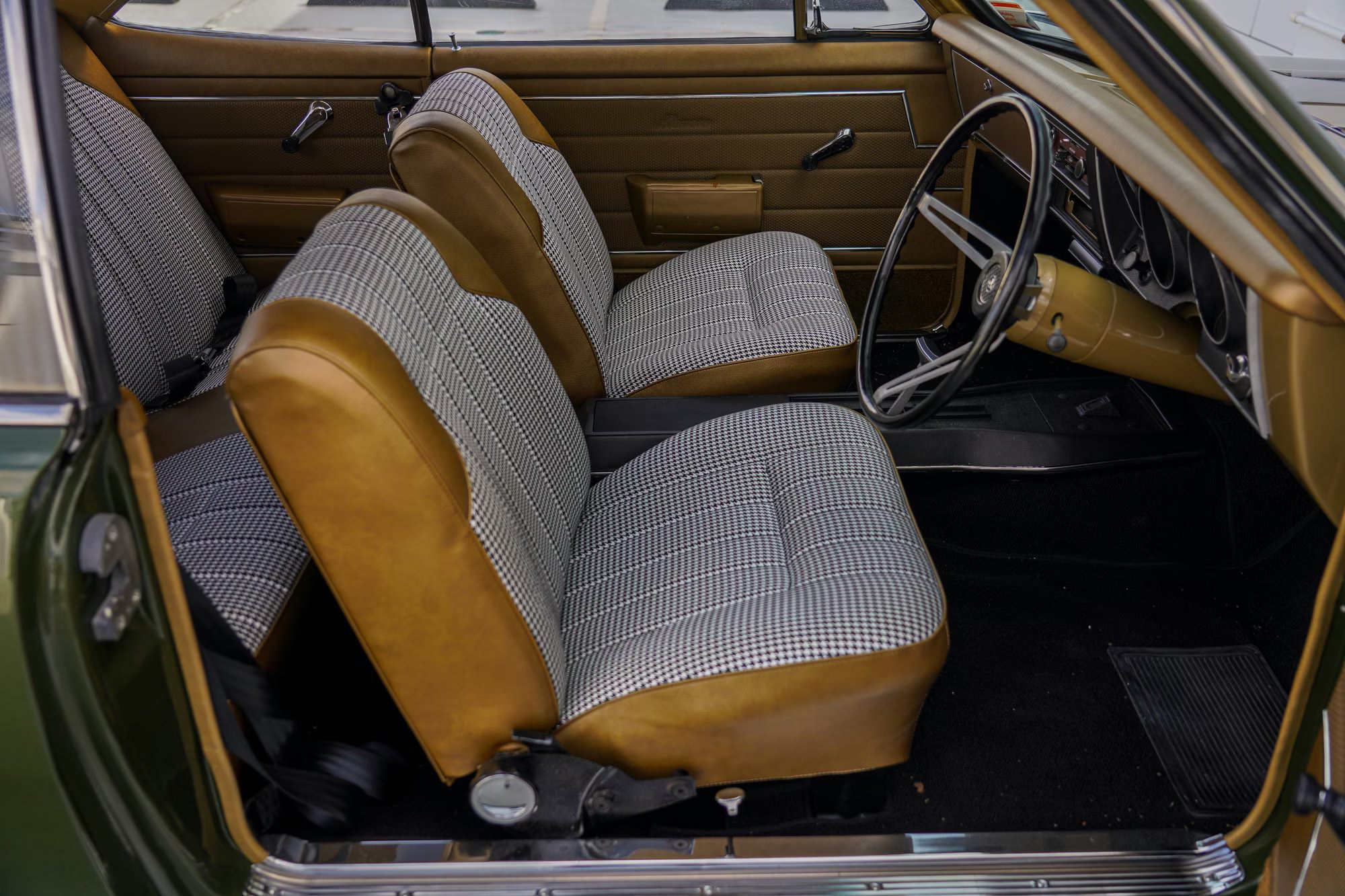
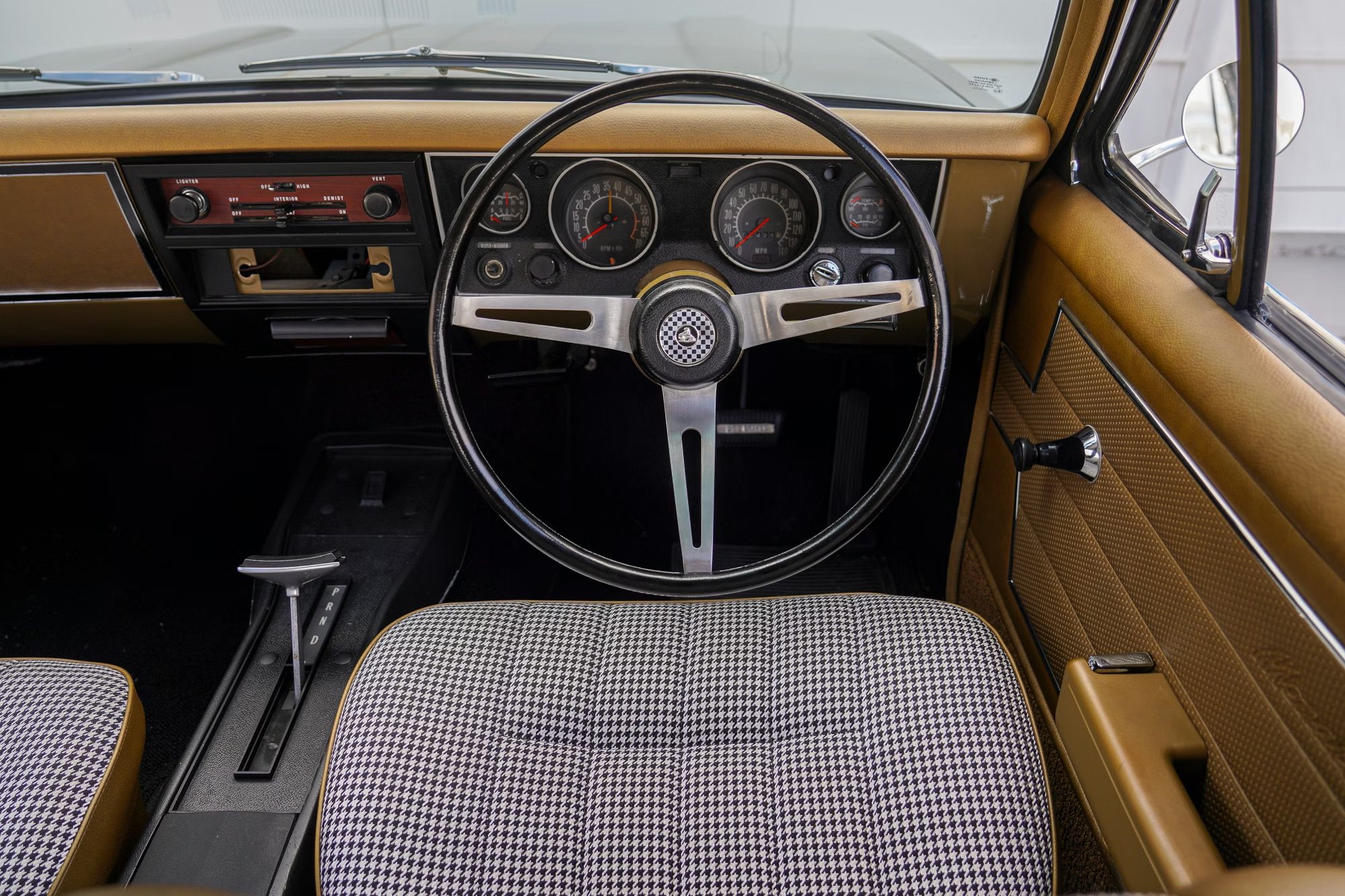
- The HT Monaro GTS shown here has around 104,000 miles on the clock and retains many period features and a factory-style interior trimmed in antique gold leather and houndstooth cloth. Finished in green and gold, it is offered from New Zealand with documentation and original removed parts.
History Speedrun: The Holden Monaro GTS
The first Holden Monaro was released in 1968 and sold over three model iterations until 1971. The styling was influenced by American V8 coupes like the Ford Mustang and Chevrolet Camaro, however the Monaro was entirely unique and it quickly became one of the most desirable sports cars in the country.
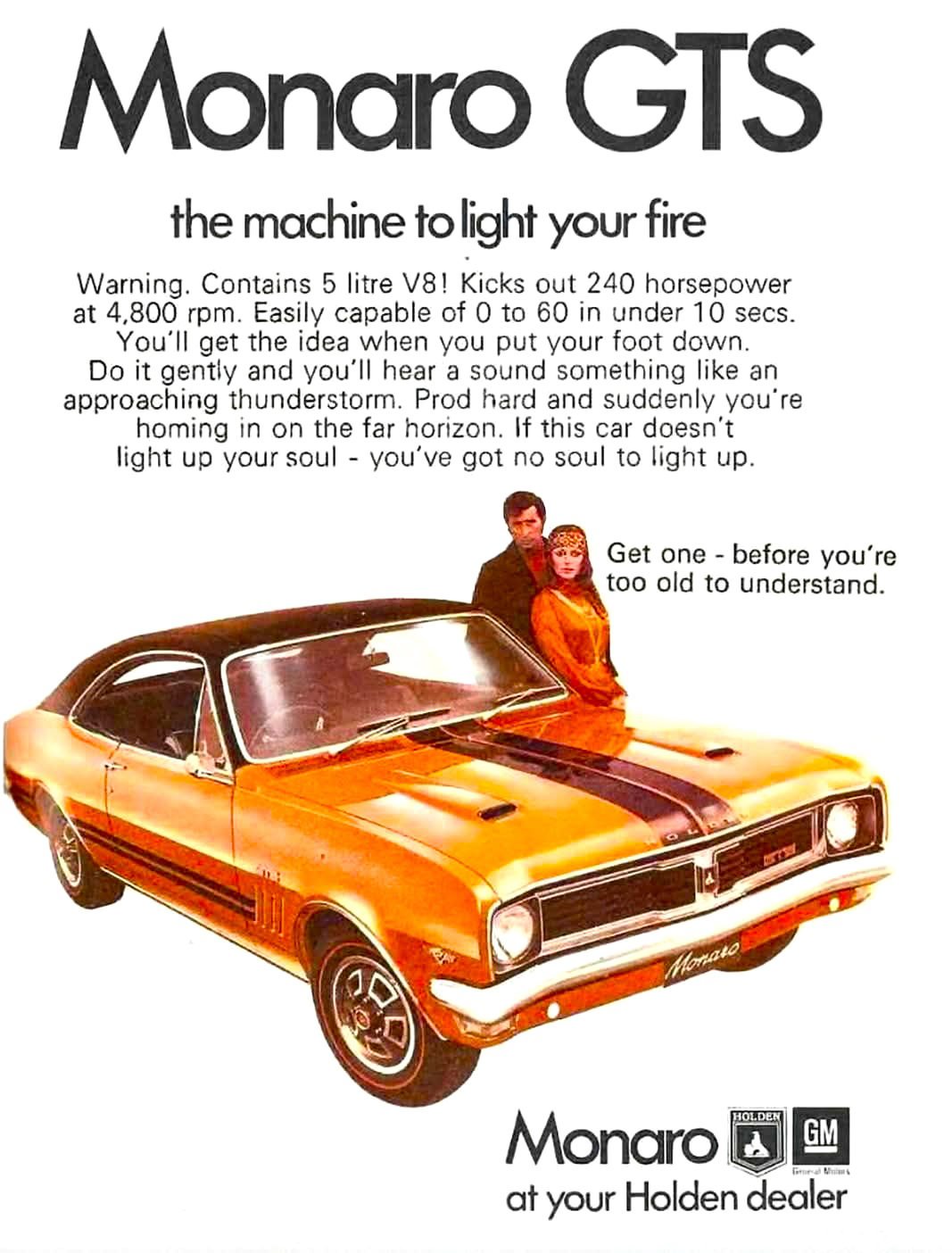
 The first Holden Monaro was released in 1968 and sold over three model iterations until 1971. The styling was influenced by American V8 coupes like the Ford Mustang and Chevrolet Camaro, however the Monaro was entirely unique and it quickly became one of the most desirable sports cars in the country. Image courtesy of General Motors Holden.
The elegant design of the Monaro belied its capabilities on track, over the course of the late 1960s and early 1970s Holden Monaros would win a slew of important Australian races and championships including the Hardie-Ferodo 500 (now known as the Bathurst 1000) on two occasions and the 1970 Australian Touring Car Championship.
Where Did The Name “Monaro” Come From?
Interestingly the Monaro didn’t have a name for much of its development, hundreds of names were tossed around and the name “Torana” seemed like the final choice until Noel Bedford, a member of Holden’s design team, discovered the name by accident while on a family road trip holiday.
Bedford was driving through the town of Cooma in New South Wales in Australia’s east when he saw a road sign: “It said Monaro County Council in western-type lettering that reminded me of “Marlboro Country” and “Camaro”. It seemed to me so simple and logical. Why didn’t somebody think of it before? I was quite excited and couldn’t wait to get back to work.” – Noel Bedford
After he got back to the office and checked the trademark status of the name Holden held an impromptu board meeting and approved it.
The First-Generation Monaro
The first generation Monaro would be built in three iterations, the Monaro HK, Monaro HT, and finally the Monaro HG. They all share the same body panels and look indistinguishable to the non-trained eye but there were a slew of changes made underneath and in the engine bay.
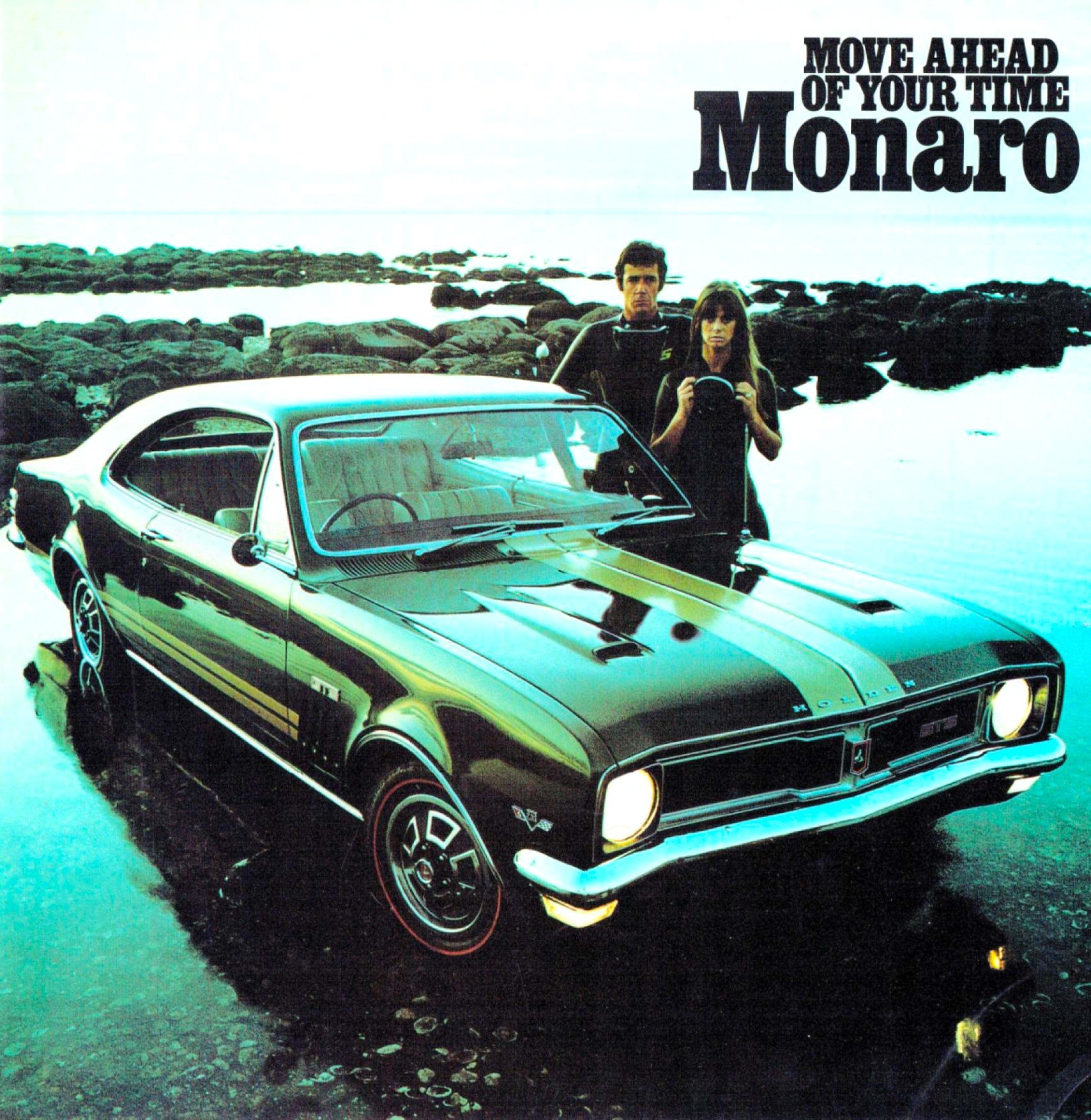
The first generation Monaro would be built in three iterations, the Monaro HK, Monaro HT, and finally the Monaro HG. They all share the same body panels and look indistinguishable to the non-trained eye but there were a slew of changes made underneath and in the engine bay. Image courtesy of General Motors Holden.
Initially you could buy a Monaro with a straight-six under the hood, you could opt for either a 5.0 liter (307 cubic inch) V8 or the top-of-the-line GTS model with a 327 cubic inch small-block Chevrolet V8. At this time Holden engineers were hard at work on their own V8 engine, this new engine was developed 100% in-house and it was intended to become the company’s flagship engine – which it was between 1969 and 2000.
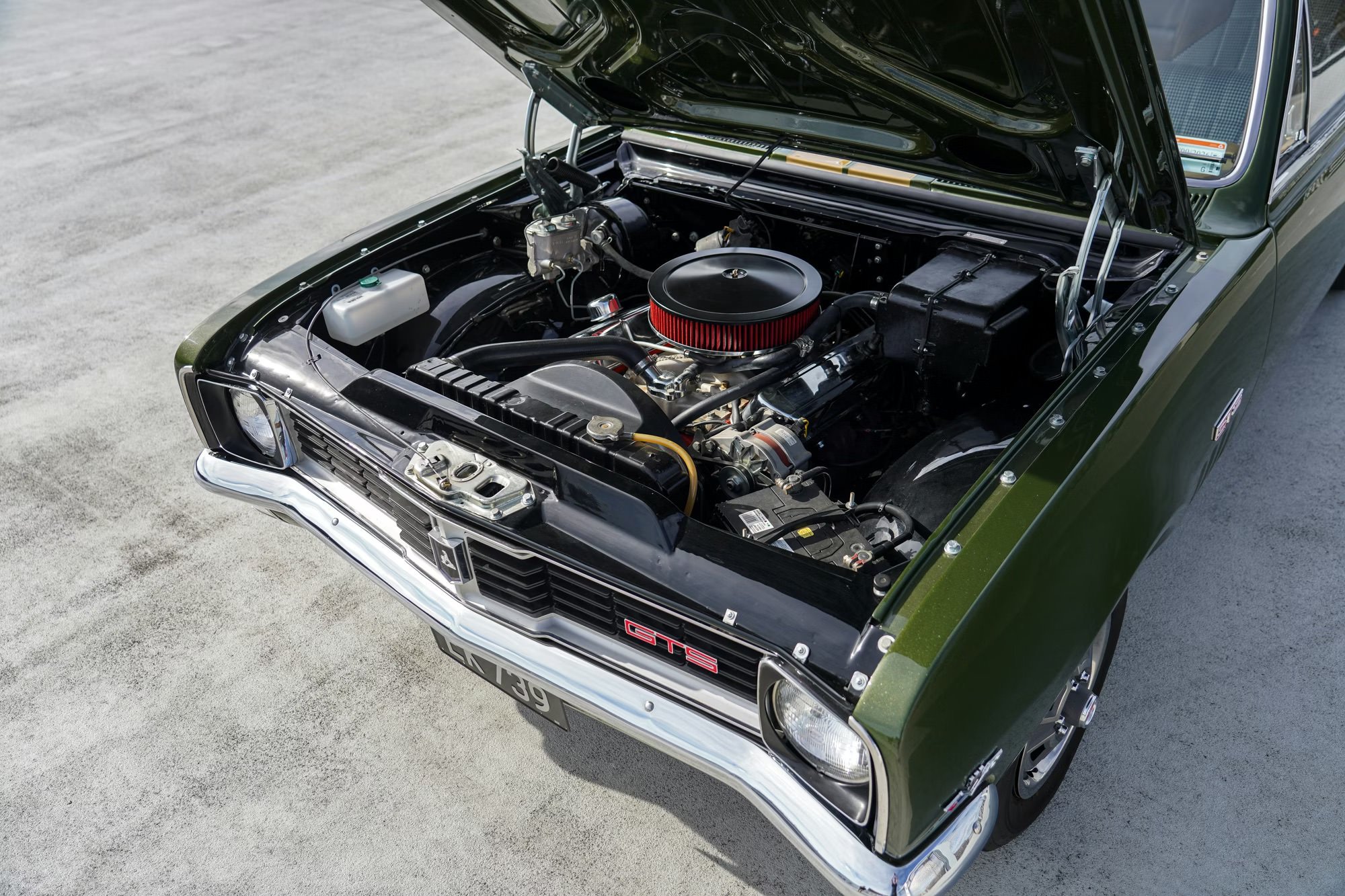
In 1969 you could order your new Monaro with the new Holden V8, a 308 cubic inch (5.0 liter) 90º V8 with 16 push-rod actuated valves and cross-flow heads. This engine proved popular both because it was smaller and lighter than the 327 cubic inch Chevrolet V8 and because it would give its owners bragging rights as owners of a “100% Australian muscle car”.
Today these original first generation Holden Monaros are highly sought after in Australia, particularly the GTS V8 versions which had proven so successful on the race track.
The 1969 Holden HT Monaro GTS Shown Here
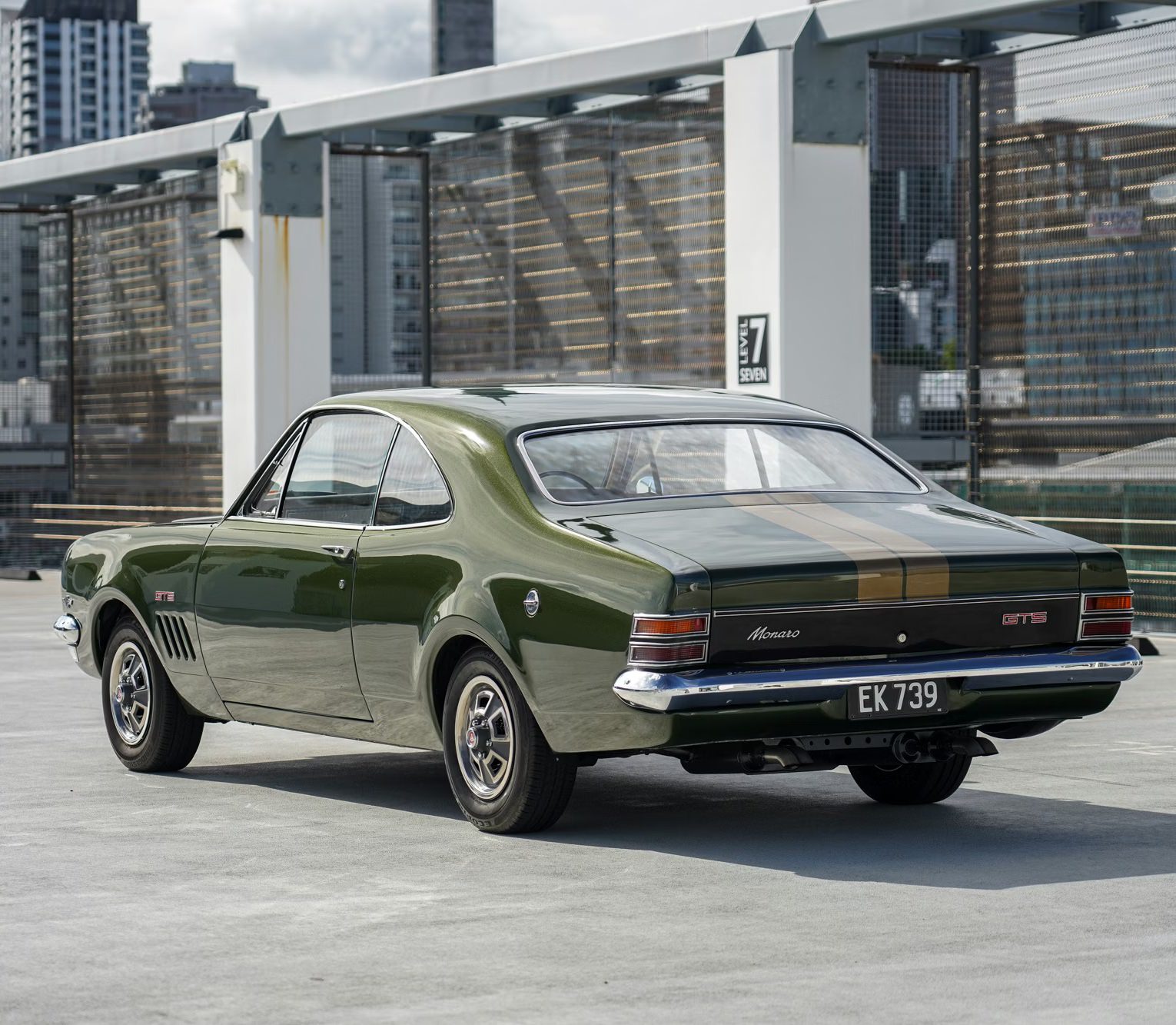
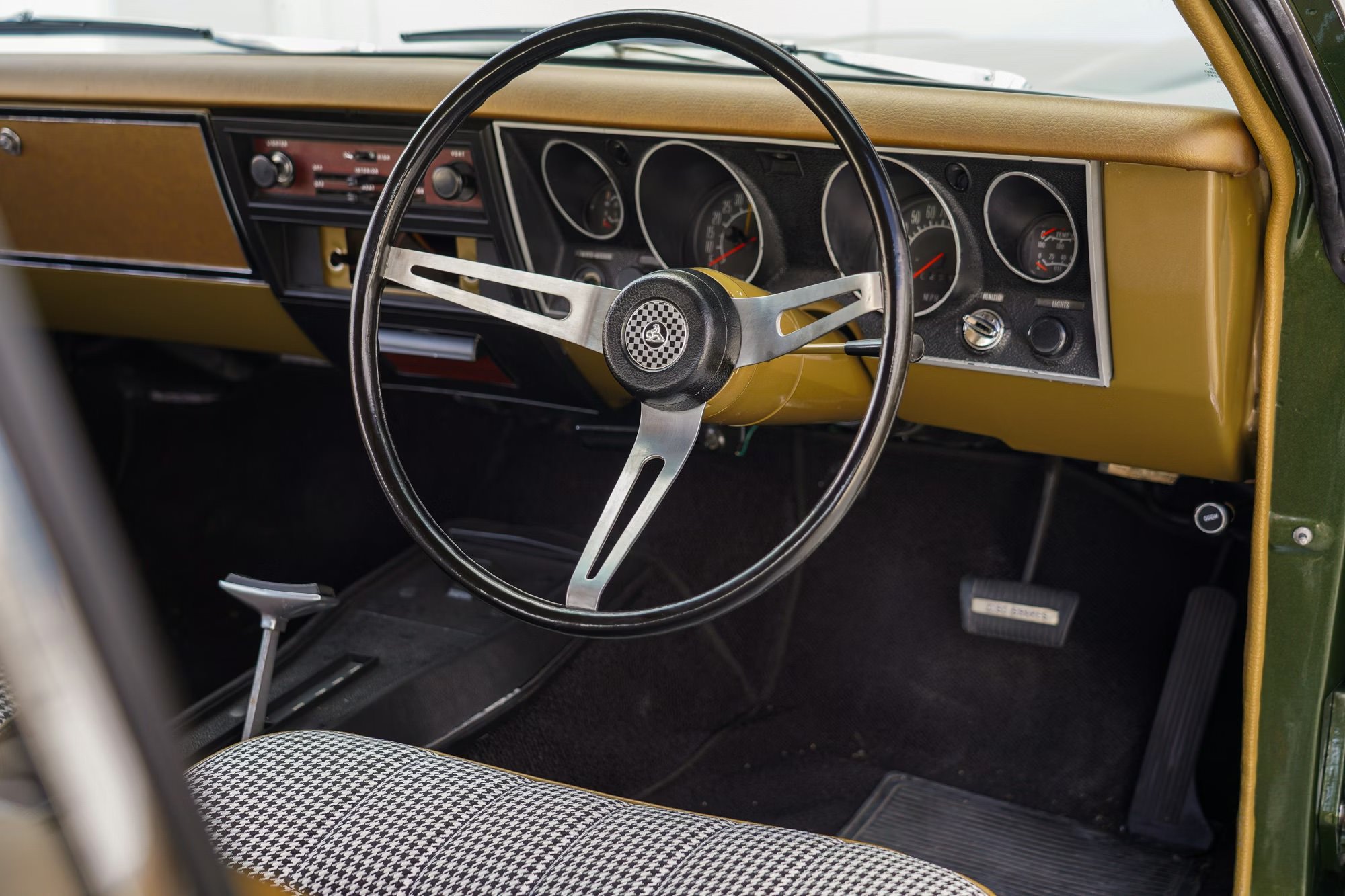
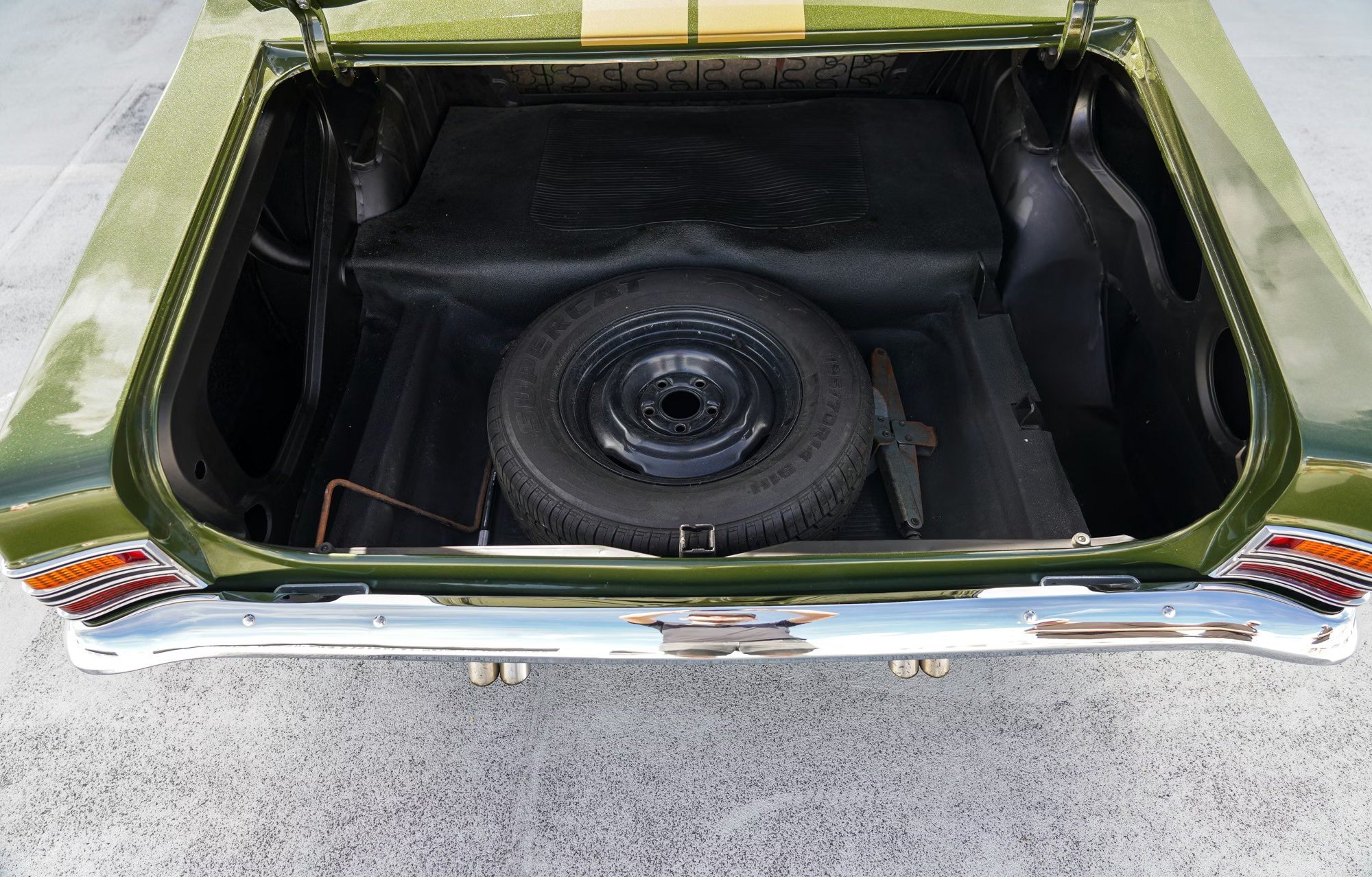
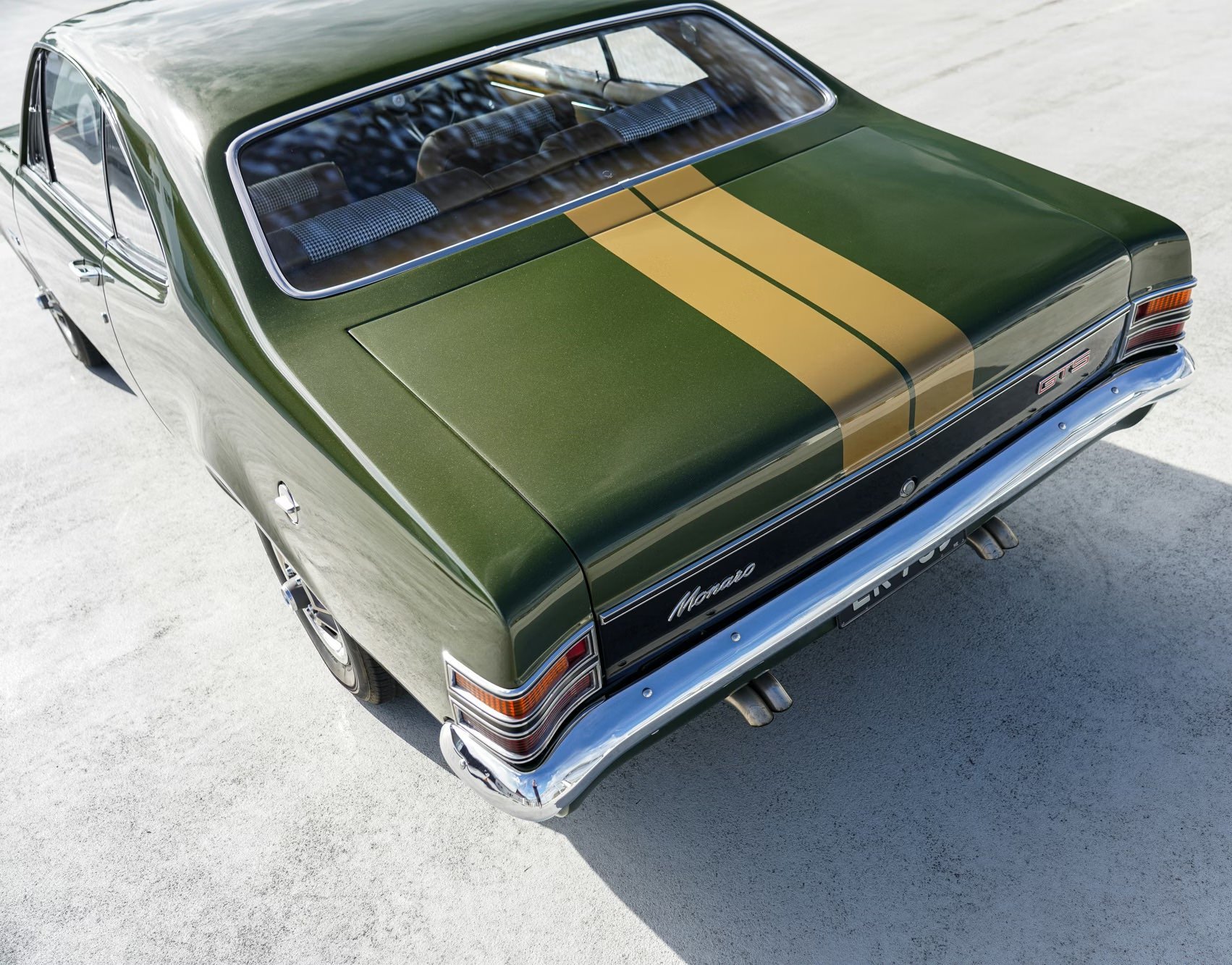
This is an original 1969 Holden HT Monaro GTS powered by the Holden 308 V8, with power sent back through a two-speed automatic transmission to the rear wheels. It’s covered approximately 104,000 miles from new, and it has classic wind-down windows with opening front quarter lights, a lockable glovebox, and a footwell-mounted fire extinguisher.
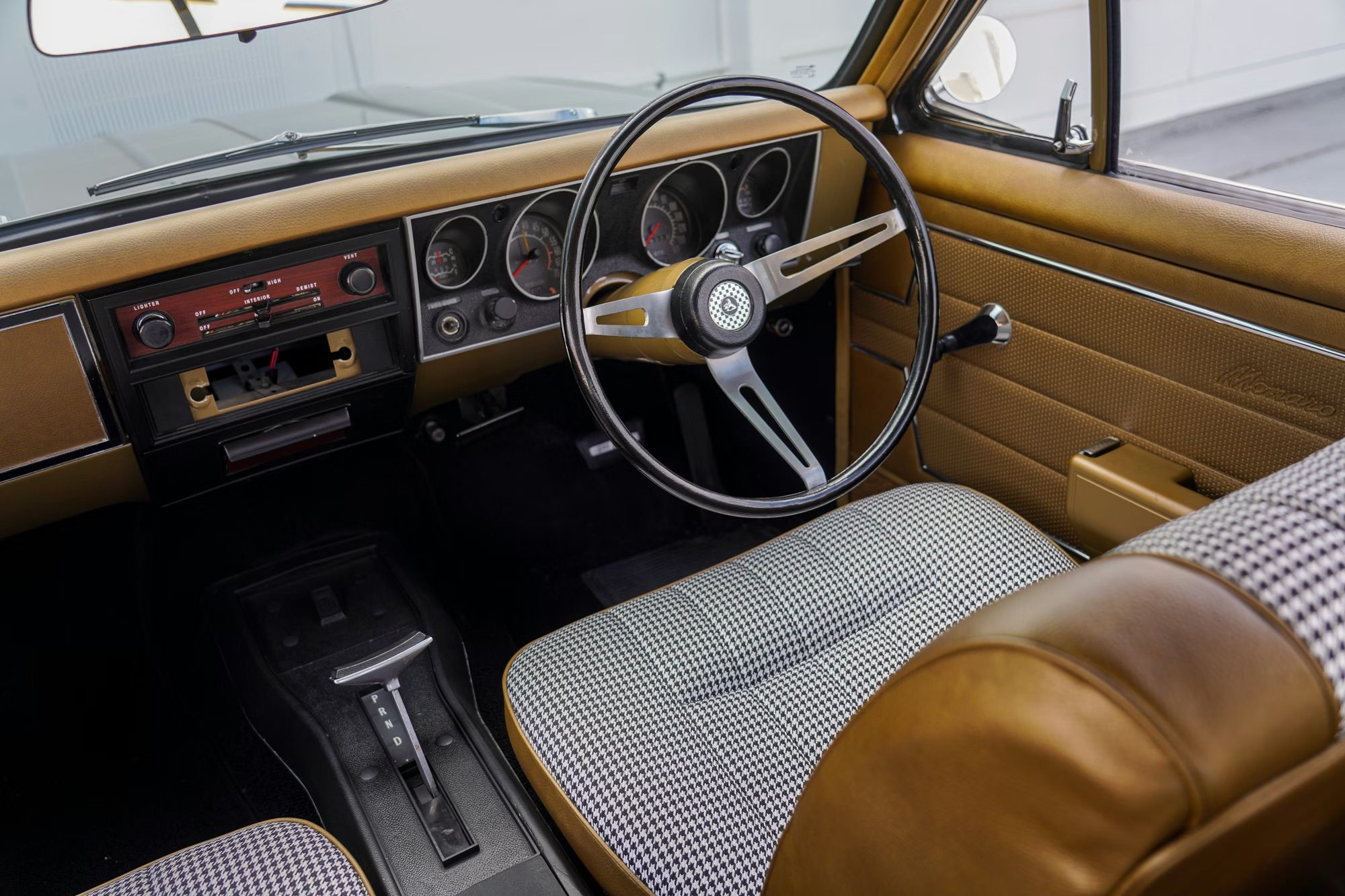
This car was given some restoration work previously, including a respray in green and gold (Australia’s national colors), it has an antique gold leather and houndstooth cloth interior. It rides on 14 inch wheels fitted with Bridgestone tires.
This car was given some restoration work previously, including a respray in green and gold (Australia’s national colors), it has an antique gold leather and houndstooth cloth interior. It rides on 14 inch wheels fitted with Bridgestone tires.
It’s now being offered for sale out of Auckland, New Zealand with an owner’s manual, various invoices and paperwork, and the original removed components. If you’d like to read more about it or register to bid you can visit the listing here.
Images courtesy of Collecting Cars

Articles that Ben Branch has written have been covered on CNN, Popular Mechanics, Smithsonian Magazine, Road & Track Magazine, the official Pinterest blog, the official eBay Motors blog, BuzzFeed, Autoweek Magazine, Wired Magazine, Autoblog, Gear Patrol, Jalopnik, The Verge, and many more.
Silodrome was founded by Ben back in 2010, in the years since the site has grown to become a world leader in the alternative and vintage motoring sector, with well over a million monthly readers from around the world and many hundreds of thousands of followers on social media.