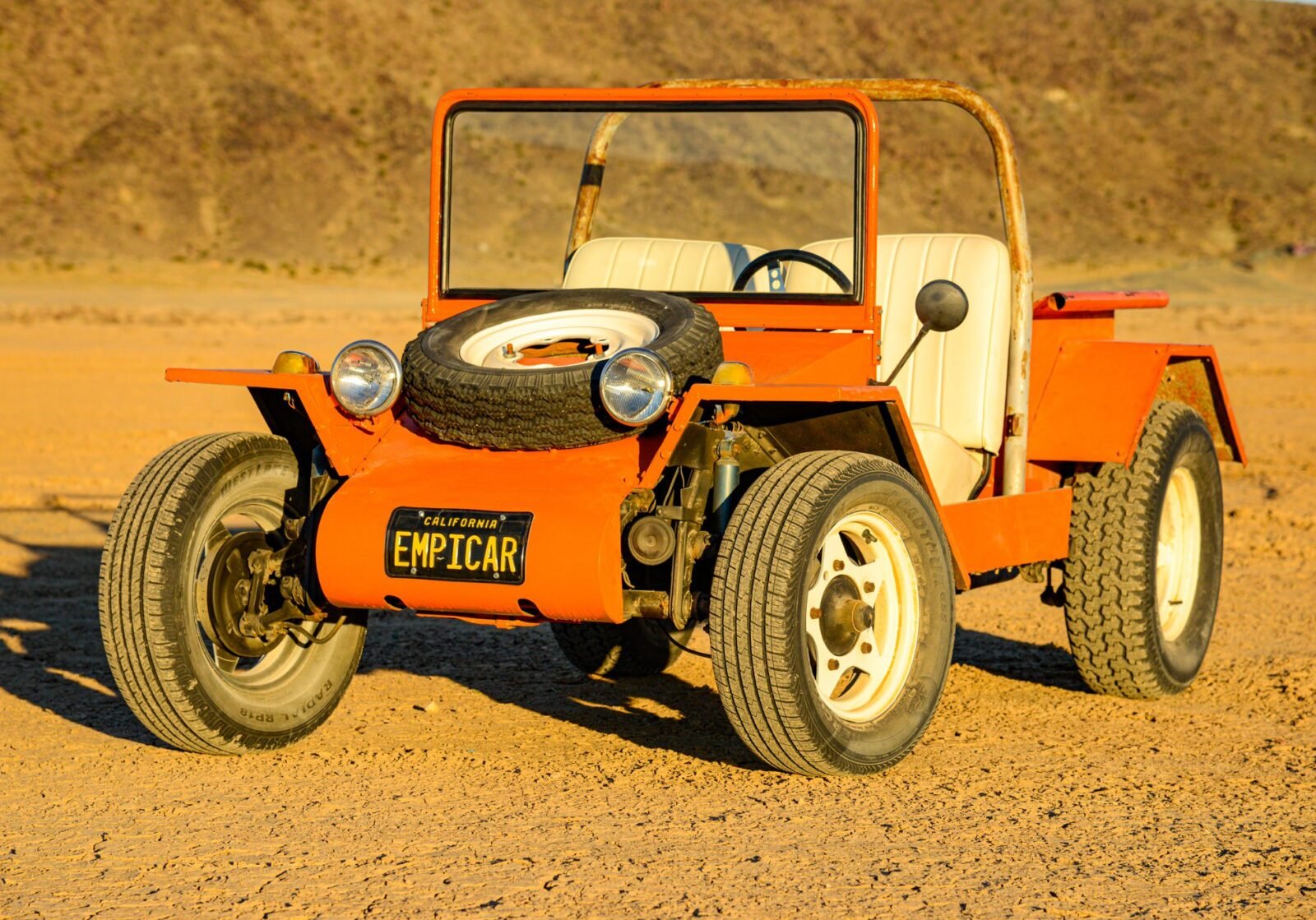
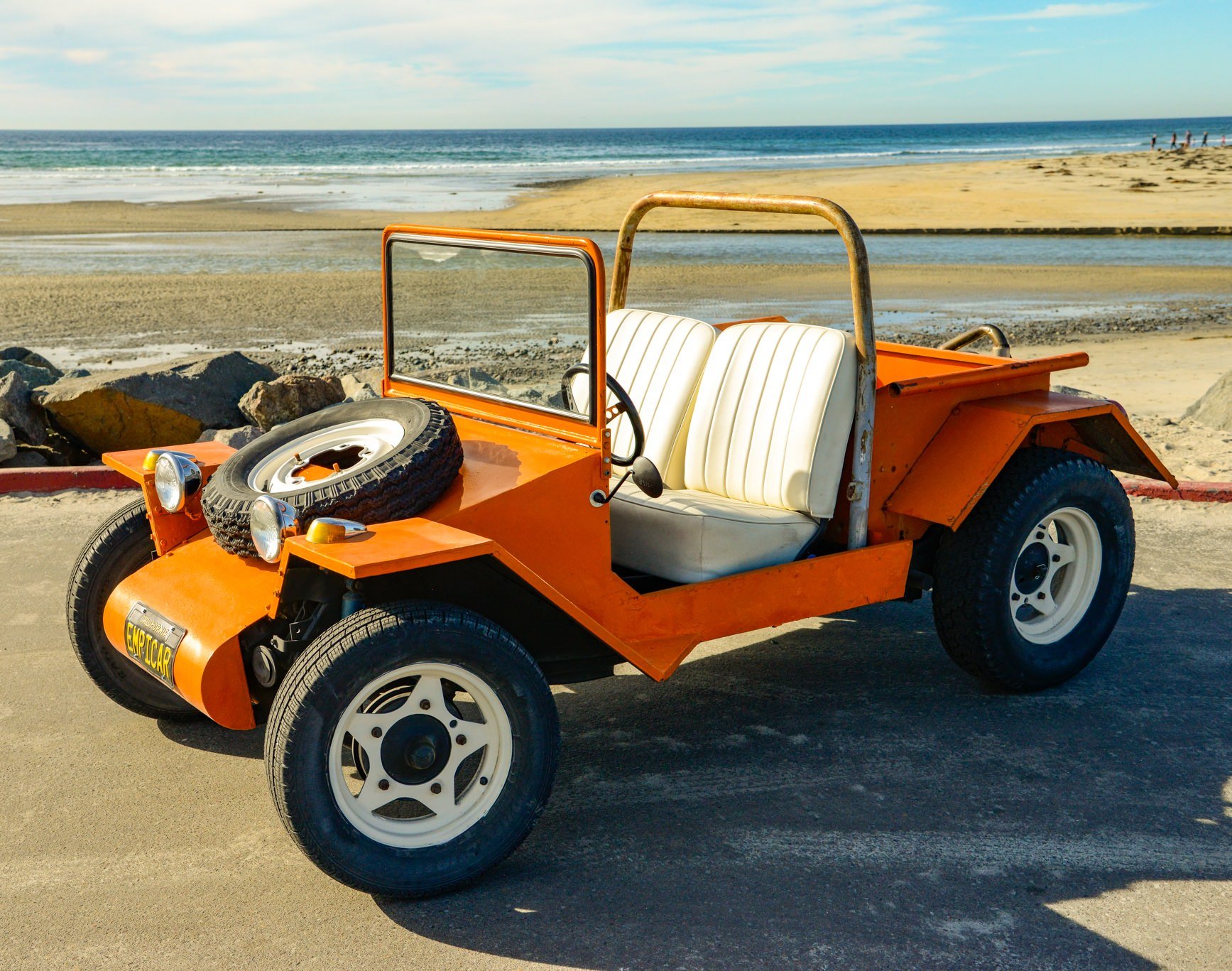
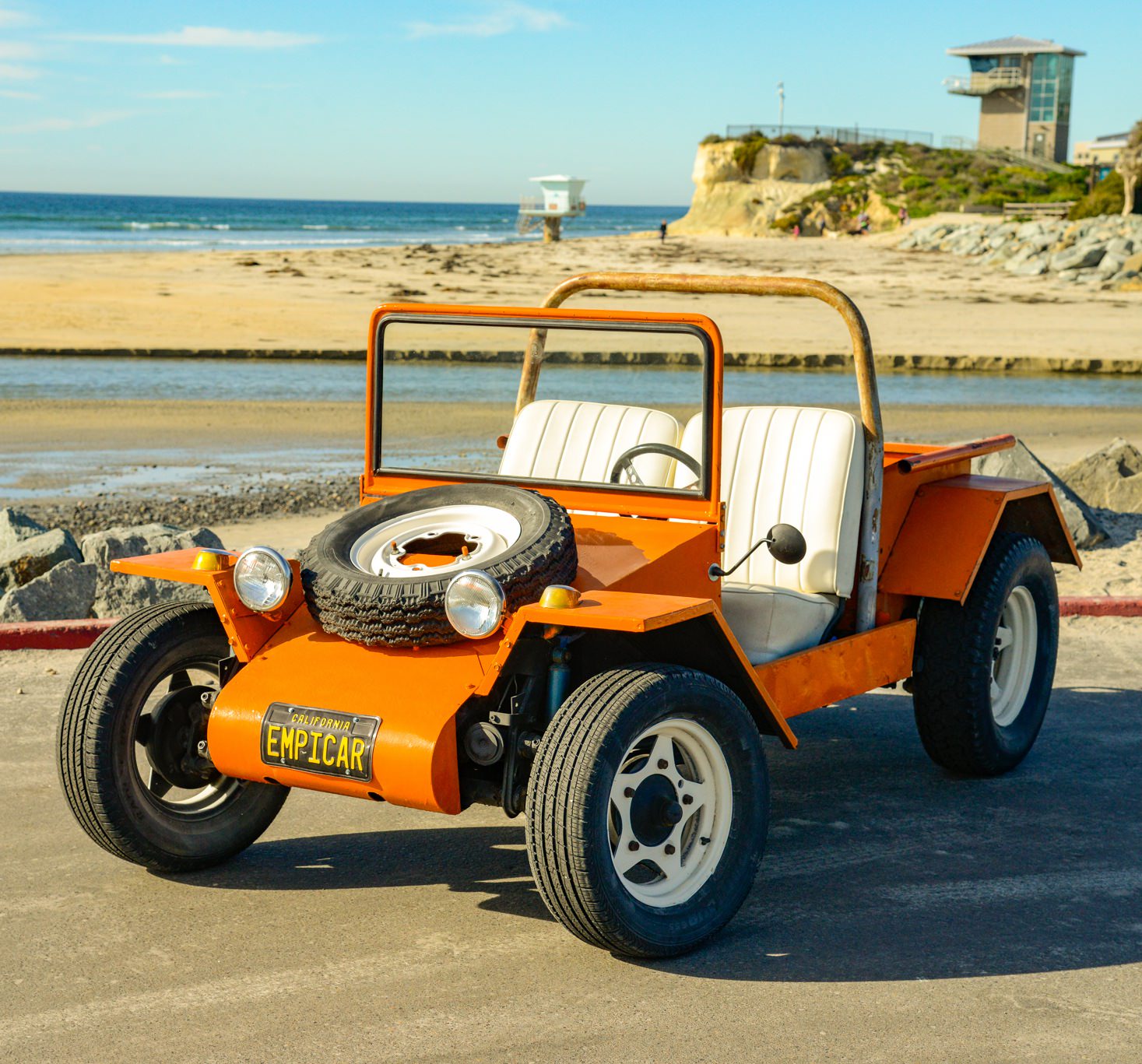
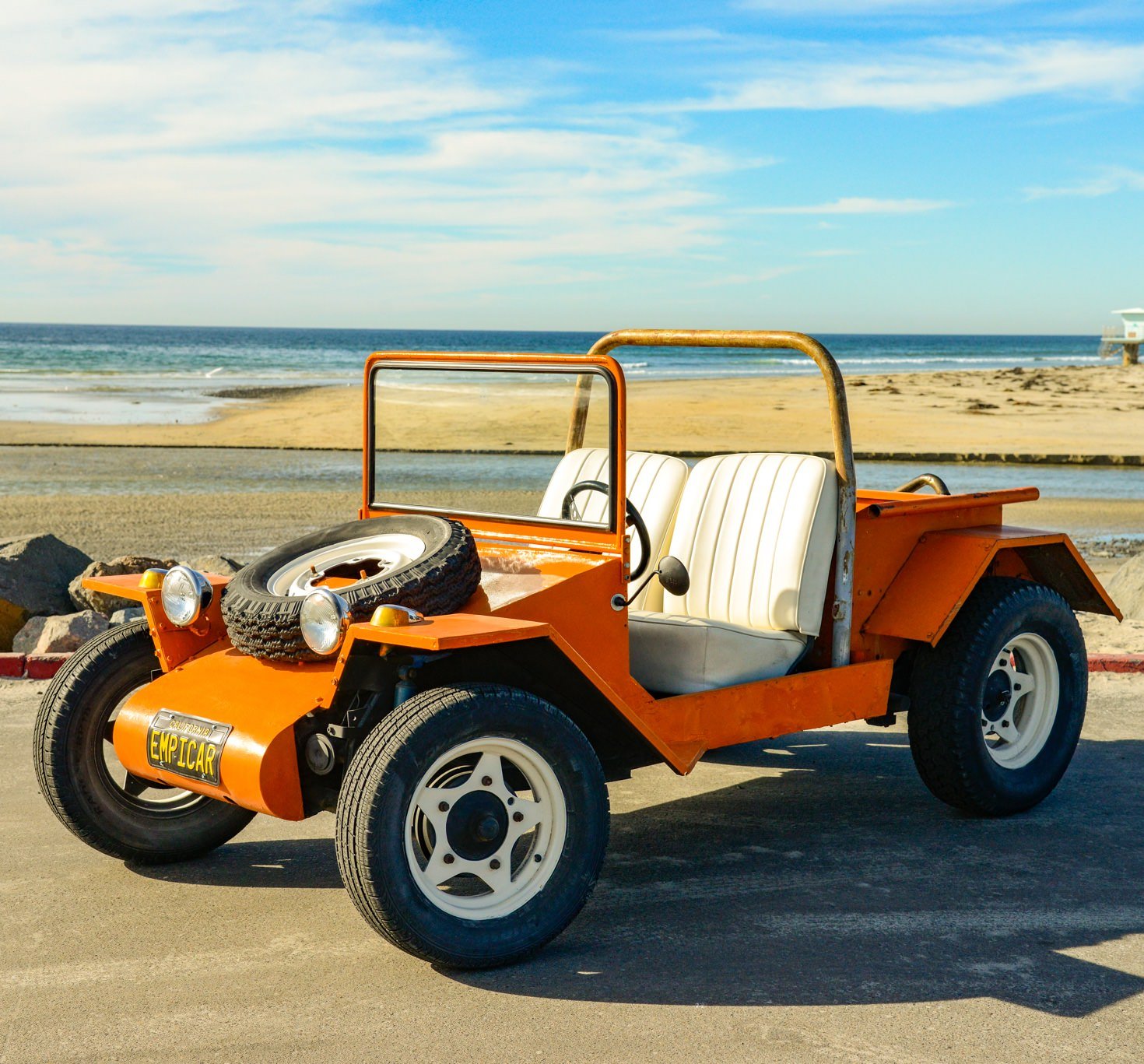
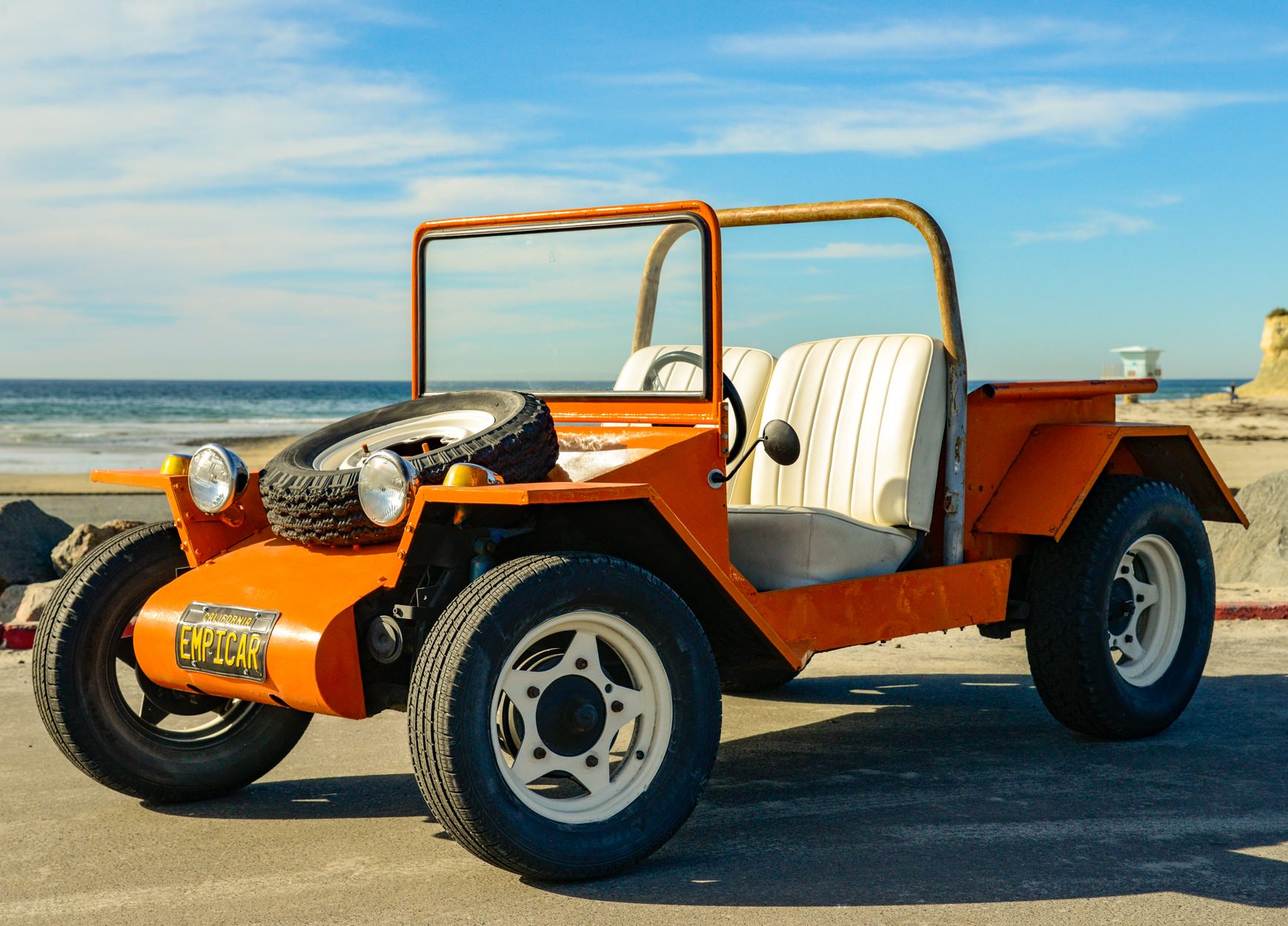
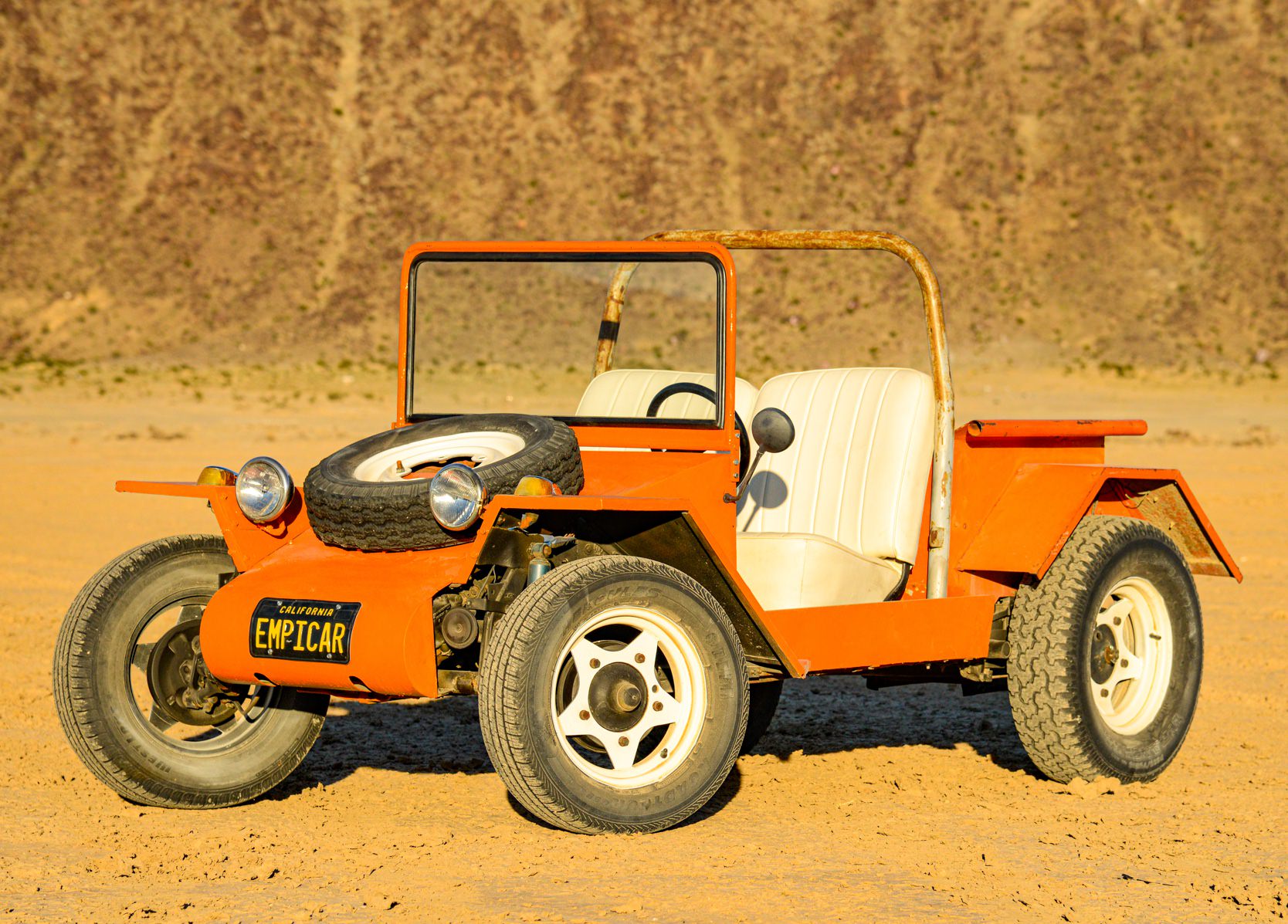
This is an original EMPI Sportster dune buggy, it was one of the first (if not the outright first) kits that could be ordered from the back of a magazine, and then fitted to a shortened VW Beetle platform chassis to create a dune buggy.
Before the EMPI Sportster came along in the 1960s, most VW based dune buggies were just homemade creations finished to varying degrees of quality. The Sportster kit allowed almost anyone to build a genuinely capable dune buggy in their garage in a few weekends, using only hand tools.
Fast Facts: The EMPI Sportster Dune Buggy
- The EMPI Sportster was among the earliest commercially available dune buggy kits, sold via magazine ads and designed to bolt onto a shortened Volkswagen Beetle floorpan. It transformed what had been mostly rough homebuilt buggies into a repeatable, garage-build project accessible to everyday enthusiasts using basic tools.
- EMPI was founded by California Volkswagen dealer Joe Vittone after he developed improved valve guides to solve a common Beetle failure point. The company rapidly expanded into performance, suspension, and cosmetic upgrades, becoming the largest U.S. Volkswagen aftermarket supplier by the early 1960s, with multimillion-dollar annual sales.
- The Sportster itself used a minimalist welded steel body made from flat panels, avoiding expensive stamped components. Removing the original Beetle body and shortening the chassis significantly reduced weight, vastly improving off-road ability. Both two-seat and four-seat versions were offered, though survival rates today appear are low due to rust.
- The Sportster helped establish the basic formula for VW-based dune buggies later popularized by the fiberglass Meyers Manx. The example shown here uses a shortened 1955 Beetle chassis, a 1.6 liter air-cooled flat-four, torsion-bar suspension, swing-axle rear end, and retains its donor Beetle registration.
Joe Vittone And EMPI
Joe Vittone was a Volkswagen dealer in California who had many customers coming in with the same exact issue: worn out valve guides. VW would instruct customers to simply fit new cylinder heads, but Vittone knew he could do better, so he developed his own heavy duty valve guide design and began selling them. They quickly became a wildly popular product, saving VW owners hundreds of dollars, and it showed how large the Volkswagen aftermarket parts market could be.
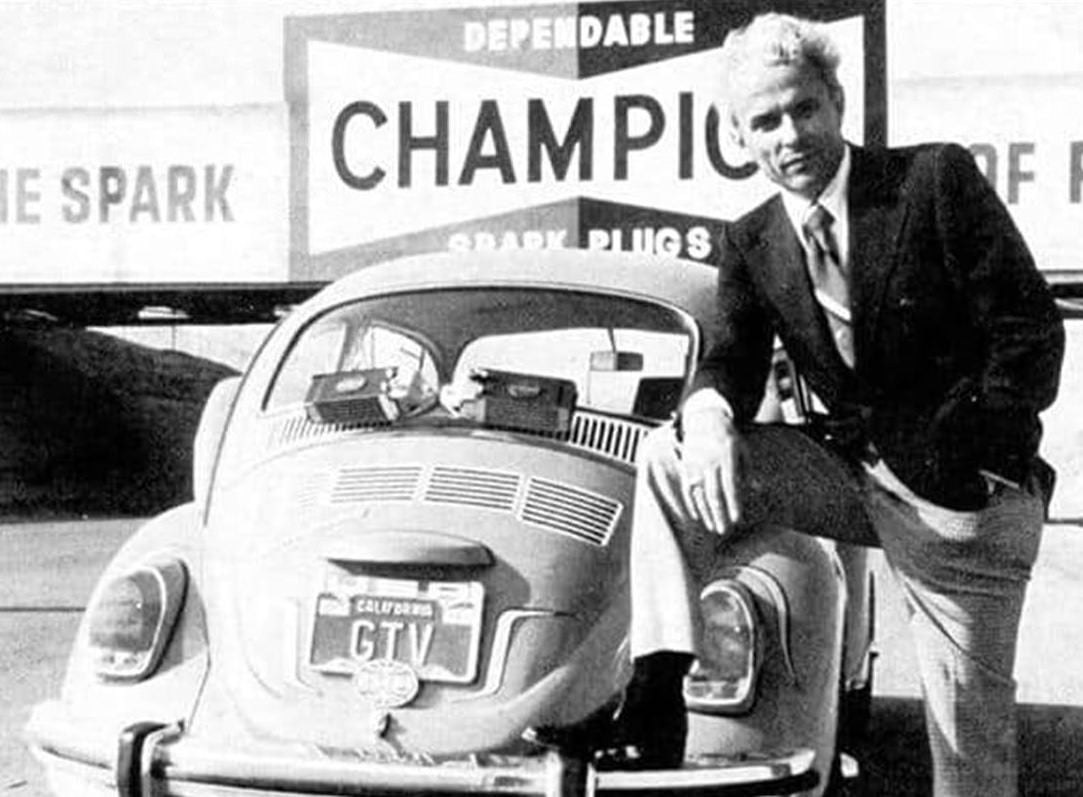
 Joe Vittone was a Volkswagen dealer in California who had many customers coming in with the same exact issue: worn out valve guides. VW would instruct customers to simply fit new cylinder heads, but Vittone knew he could do better, so he developed his own heavy duty valve guide design and began selling them. Image courtesy of EMPI.
He soon founded EMPI, initially named European Motor Products, Inc. but later changed to Engineered Motor Products, Inc., and began to work on other upgrades for the humble VW Beetle – one of the most popular economy cars in California at the time.
Before long, EMPI was selling engine performance upgrades, chrome dress kits, and suspension upgrades including a wildly popular front sway bar that transformed the handling of the Beetle – and may have even inspired Volkswagen to release their own front sway bar a few years later in 1960.
EMPI would later develop a rear stabilizer that stopped the back wheels tucking under during hard cornering due to their swing axles this was a major issue for some more spirited Beetle drivers. Officially named the camber compensator, this product would become a best-seller, with over 100,000 units sold around the world.
As the 1950s turned into the 1960s, EMPI had become the largest American aftermarket parts company for Volkswagens, and their annual sales grew to the $5 – $6 million level. The company would go through a couple of acquisitions and it still remains in business today, selling a huge range of parts for Volkswagens to owners around the world.
History Speedrun: The EMPI Sportster
One of the most important, but most forgotten EMPI products that was ever made, was the EMPI Sportster. Many Californians had taken to chopping up their VW Beetles and turning them into off road buggies, a trend that would eventually lead to the development of what we now know as the Baja Bug – a Beetle that’s been transformed for off road racing.
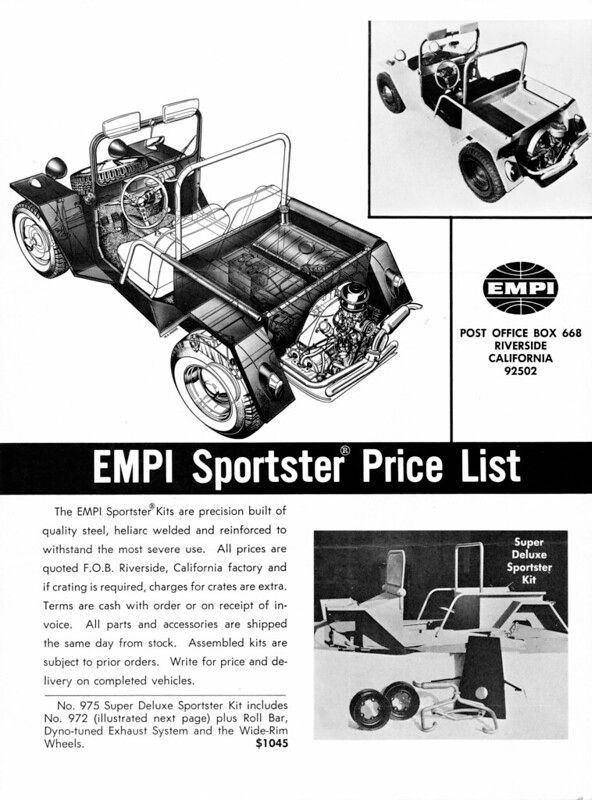
The design of the EMPI Sportster was utilitarian to say the least, with simple flat steel panels that had been cut, bent, and welded to shape. EMPI didn’t have the facilities required to stamp out curved steel panels, so they came up with a design that simply didn’t need them. Image courtesy of EMPI.
Joe Vittone and the team at EMPI saw this trend as it was starting out, and realized they could build a simple steel body kit that would bolt to a shortened Beetle floorpan and create a capable, lightweight buggy.
The design of the EMPI Sportster was utilitarian to say the least, with simple flat steel panels that had been cut, bent, and welded to shape. EMPI didn’t have the facilities required to stamp out curved steel panels, so they came up with a design that simply didn’t need them.
Thanks to the fact that the entire steel VW Beetle body was removed, the chassis was shortened, and a much more lightweight (and minimalist) body was fitted, the Sportster was significantly lighter than the Beetle it started out as. It was also a whole lot more off road capable, and these unusual, angular buggies soon became a common sight in the desert playgrounds of the west coast.
EMPI would offer the Sportster in their catalogue in both two-seat and four-seat form, and they would advertise it in the back of the Volkswagen and car enthusiast magazines of the day. It’s not known exactly how many kits were sold, or how many of those were built into completed buggies, but we do know that very few seem to have survived to the modern day.
The idea of shortening the Beetle platform and fitting a new lightweight body over the top would be picked up by Bruce Meyers, who developed the Meyers Manx– arguably the most famous dune buggy design in the world.
With its curved, beautifully-styled, one-piece fiberglass body, the Meyers Manx would soon become the best-selling VW-based kit car in history, and certainly the most famous. Interestingly, EMPI would follow the Manx with their own fiberglass-bodied dune buggy named the EMPI Imp.
The EMPI Sportster Shown Here
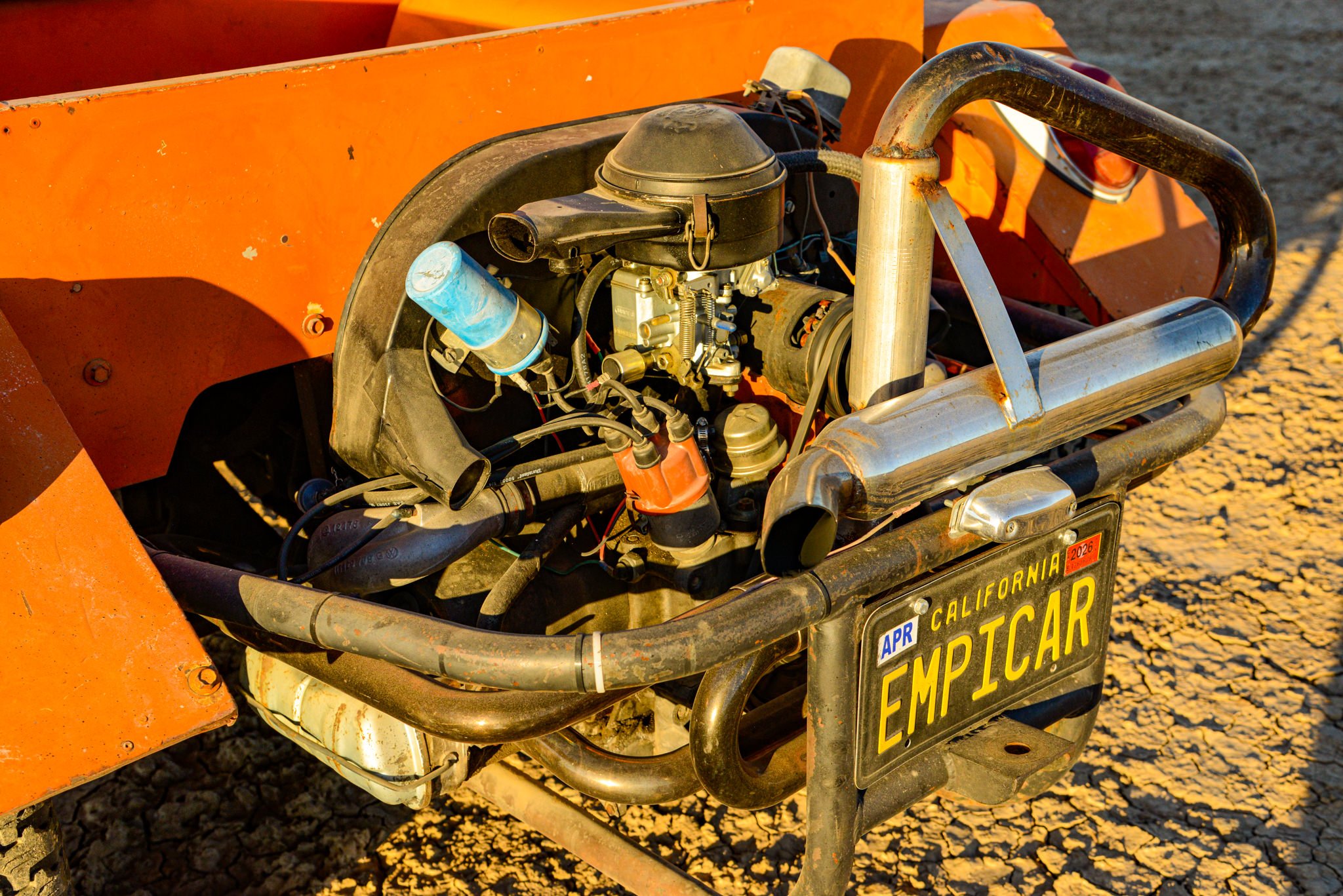
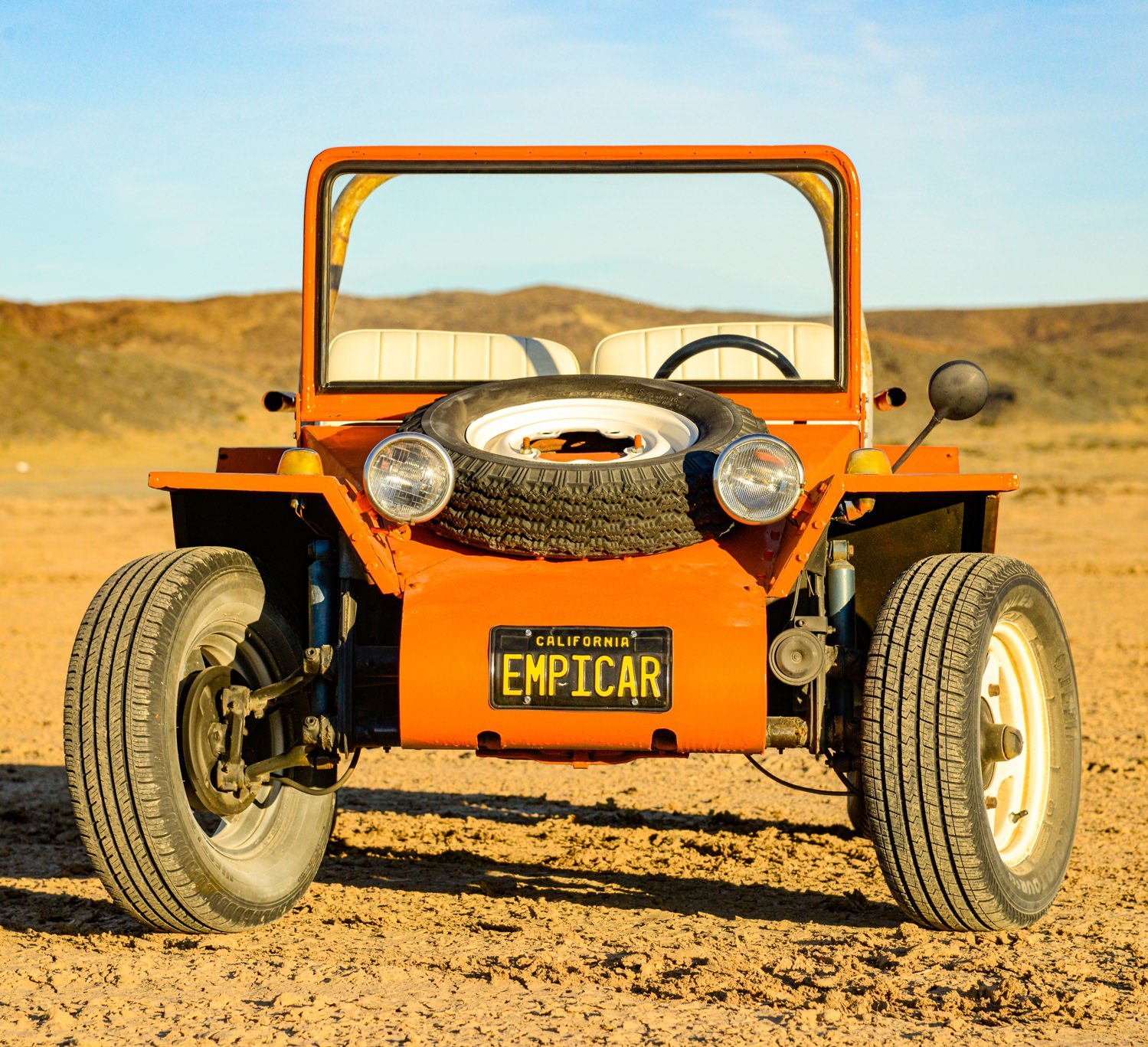
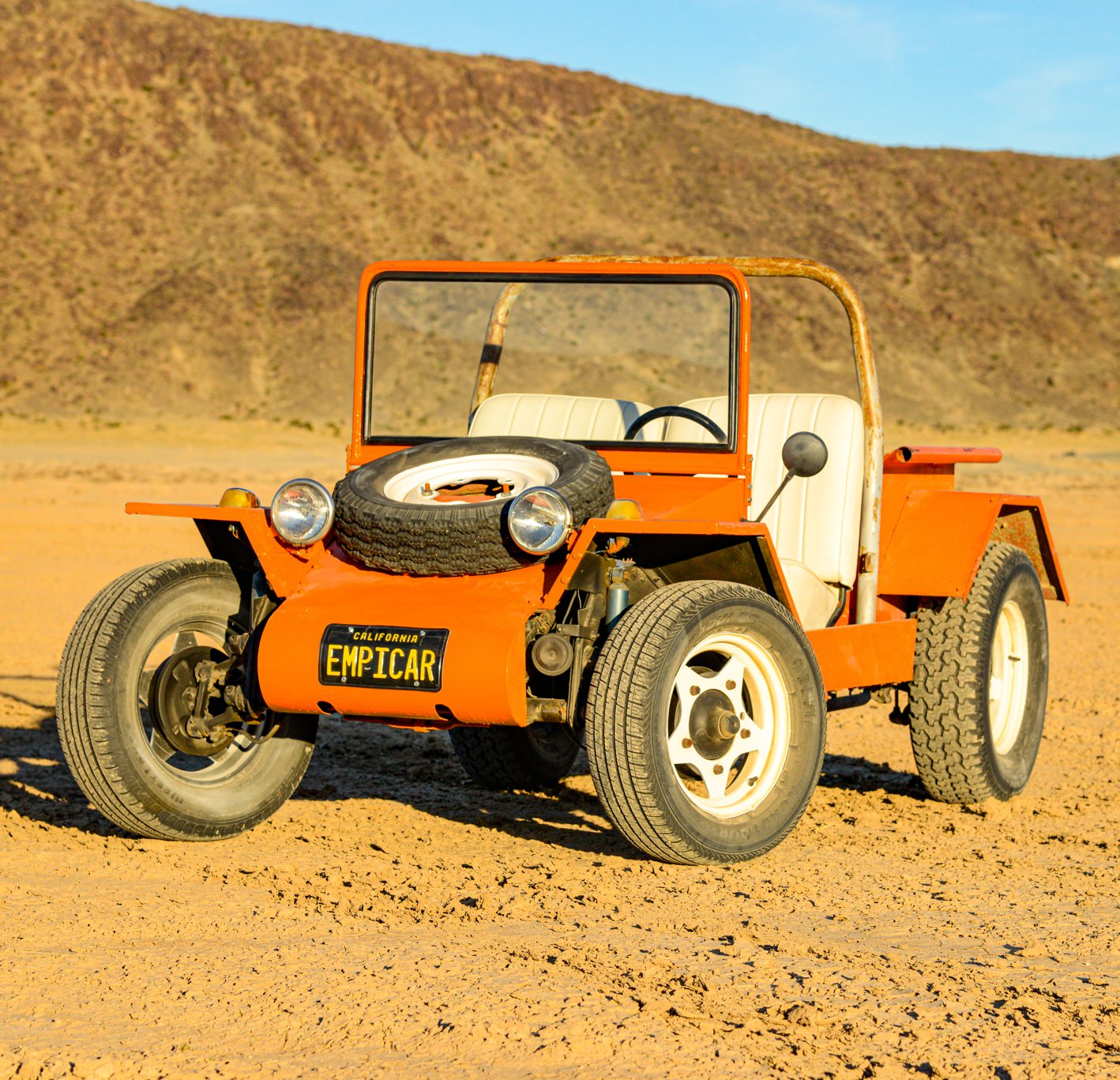
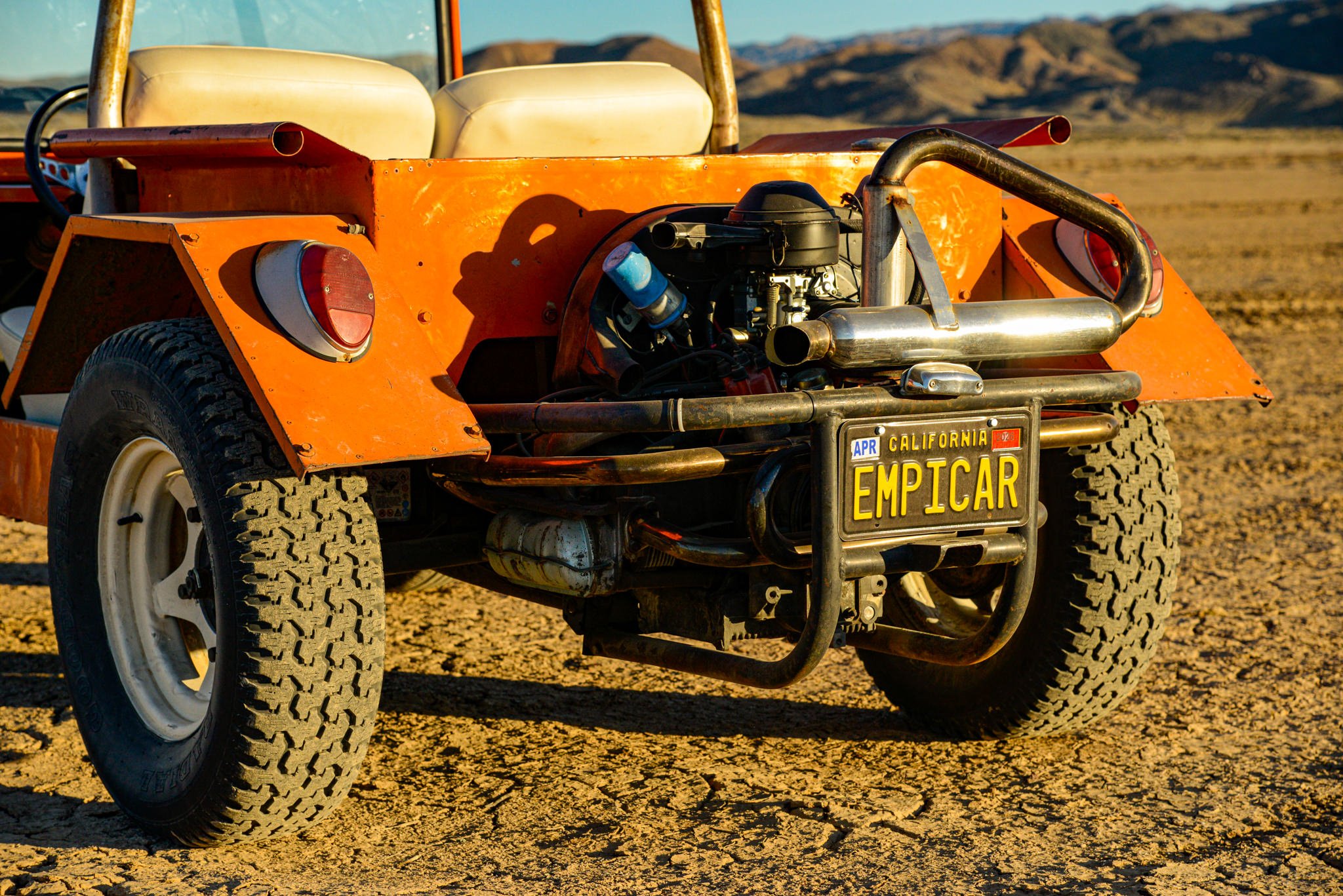
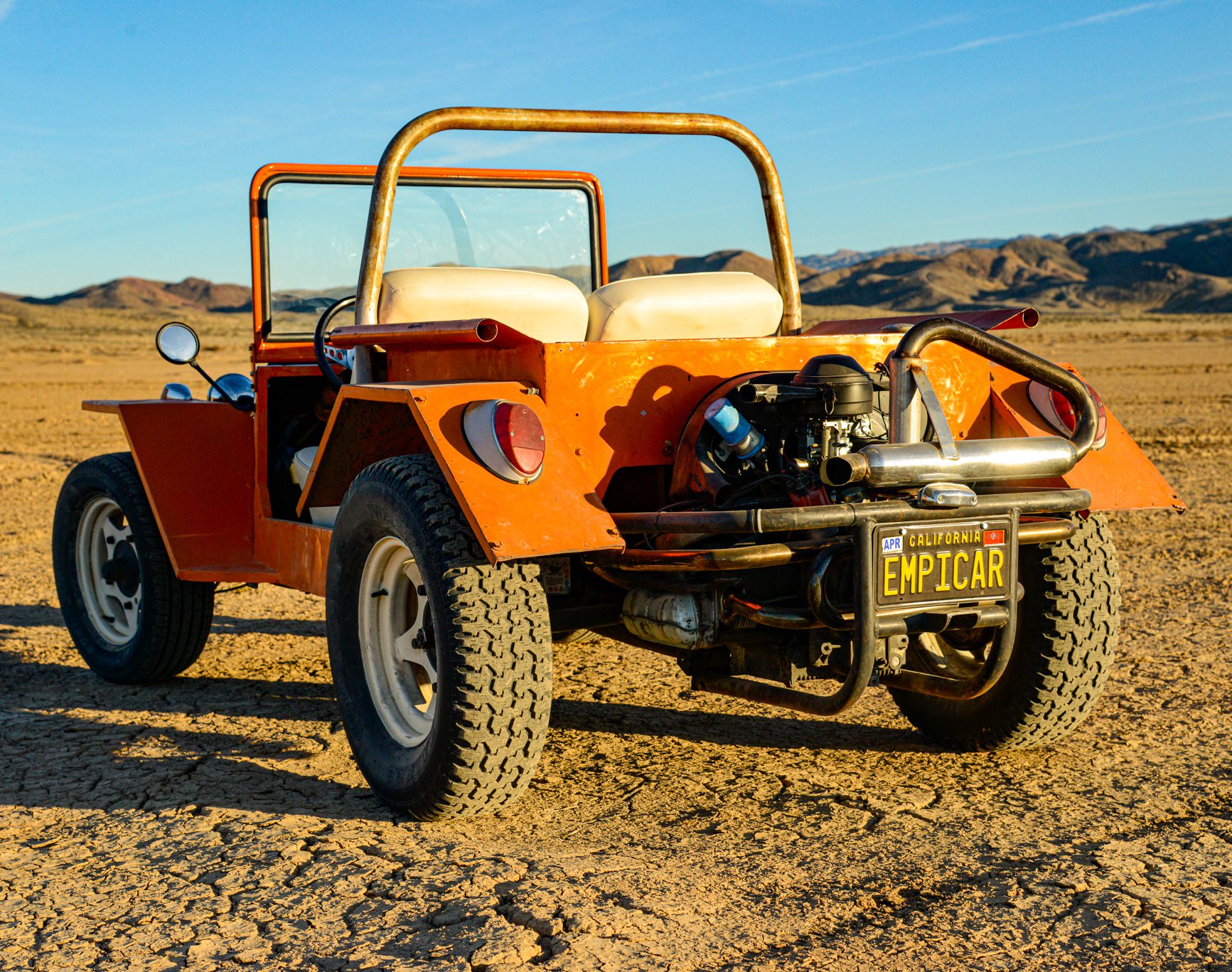
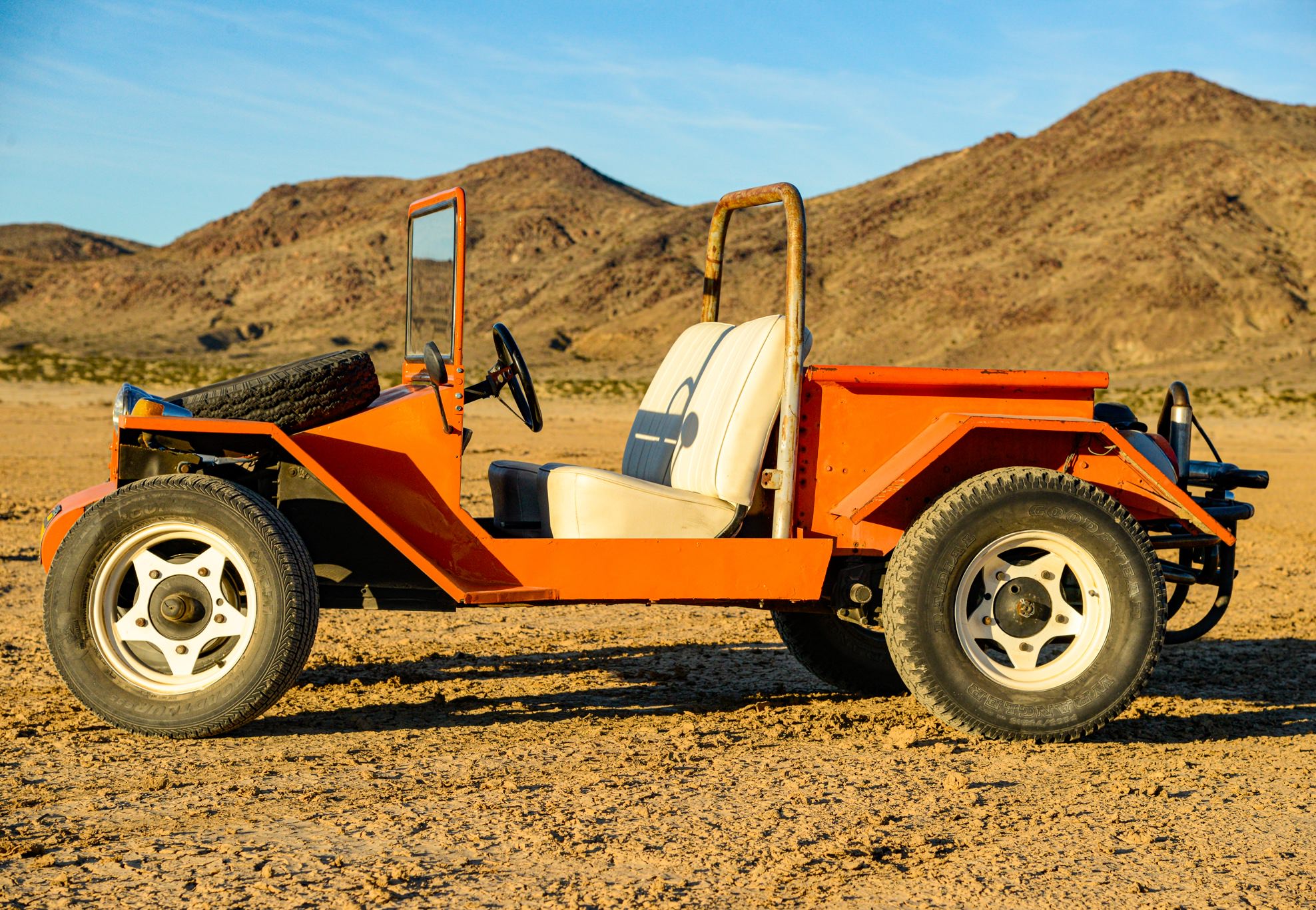
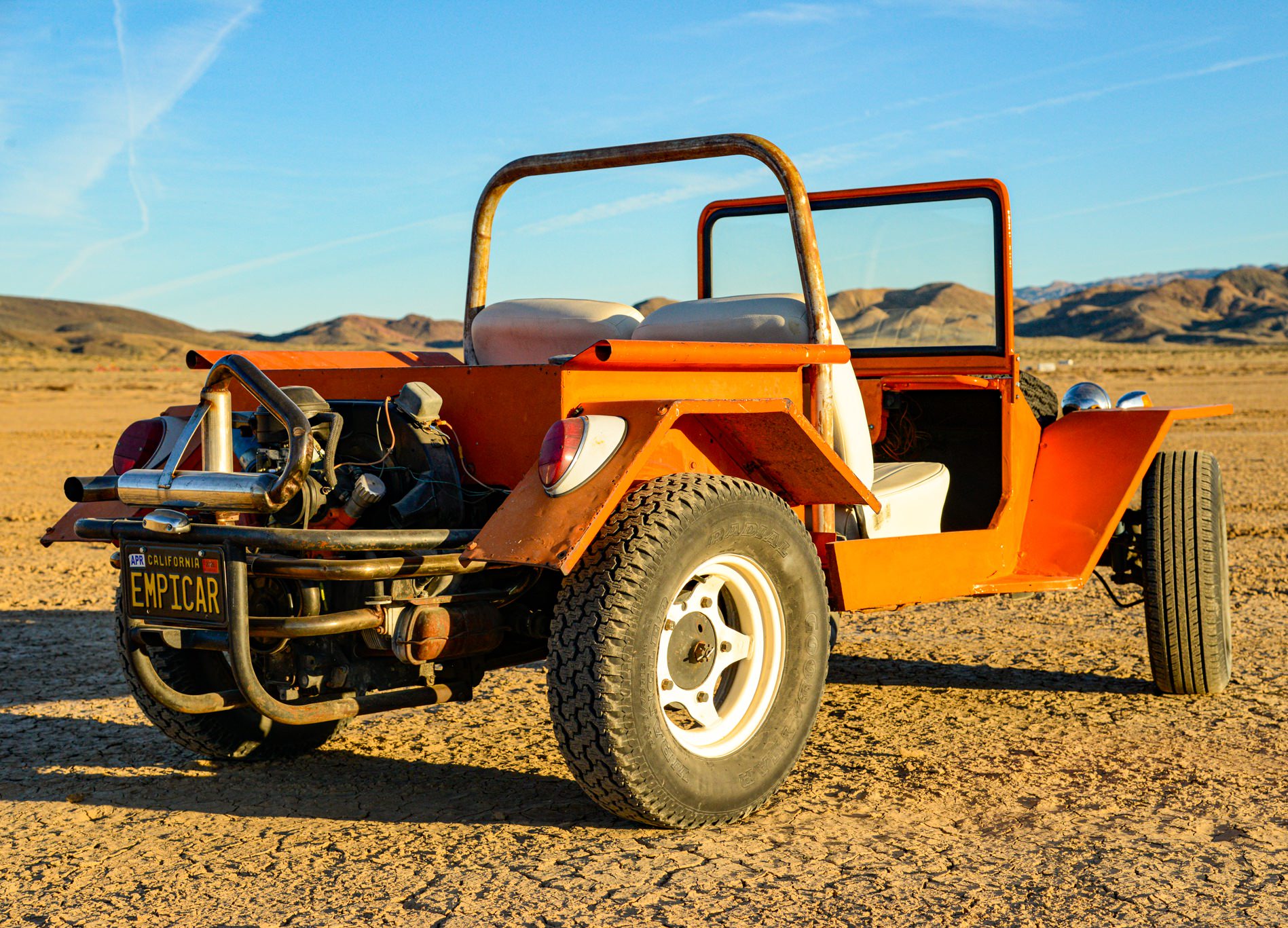
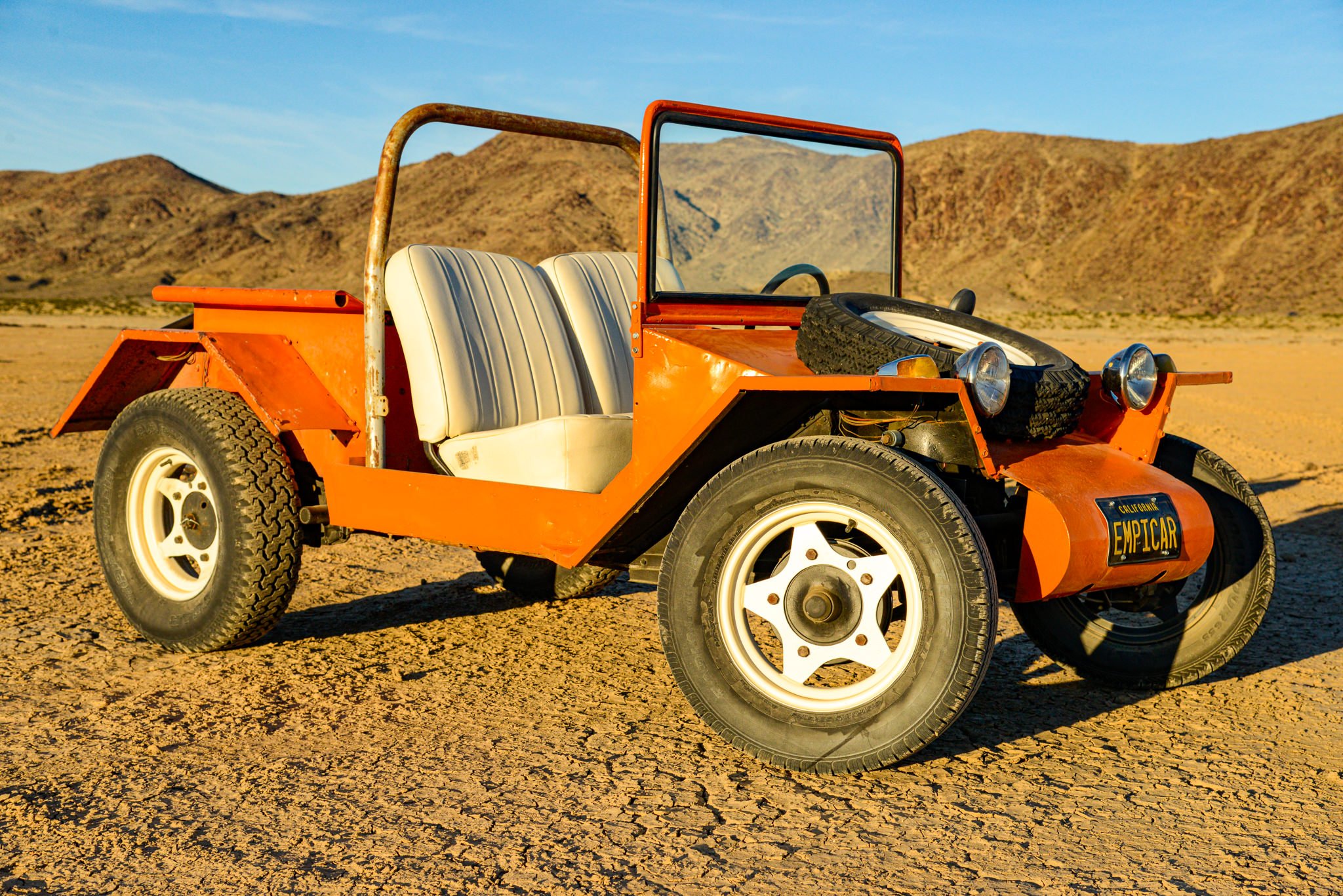
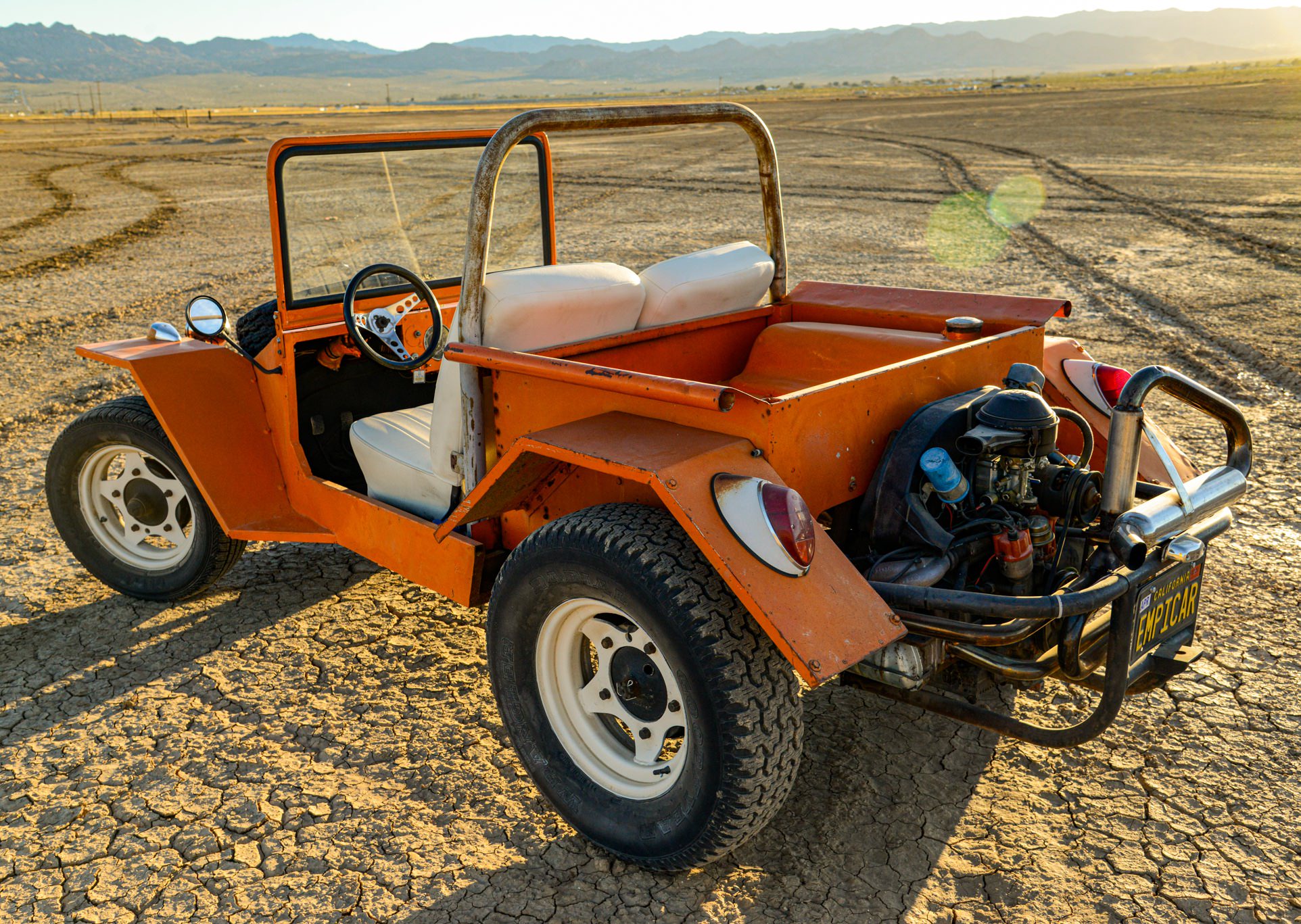
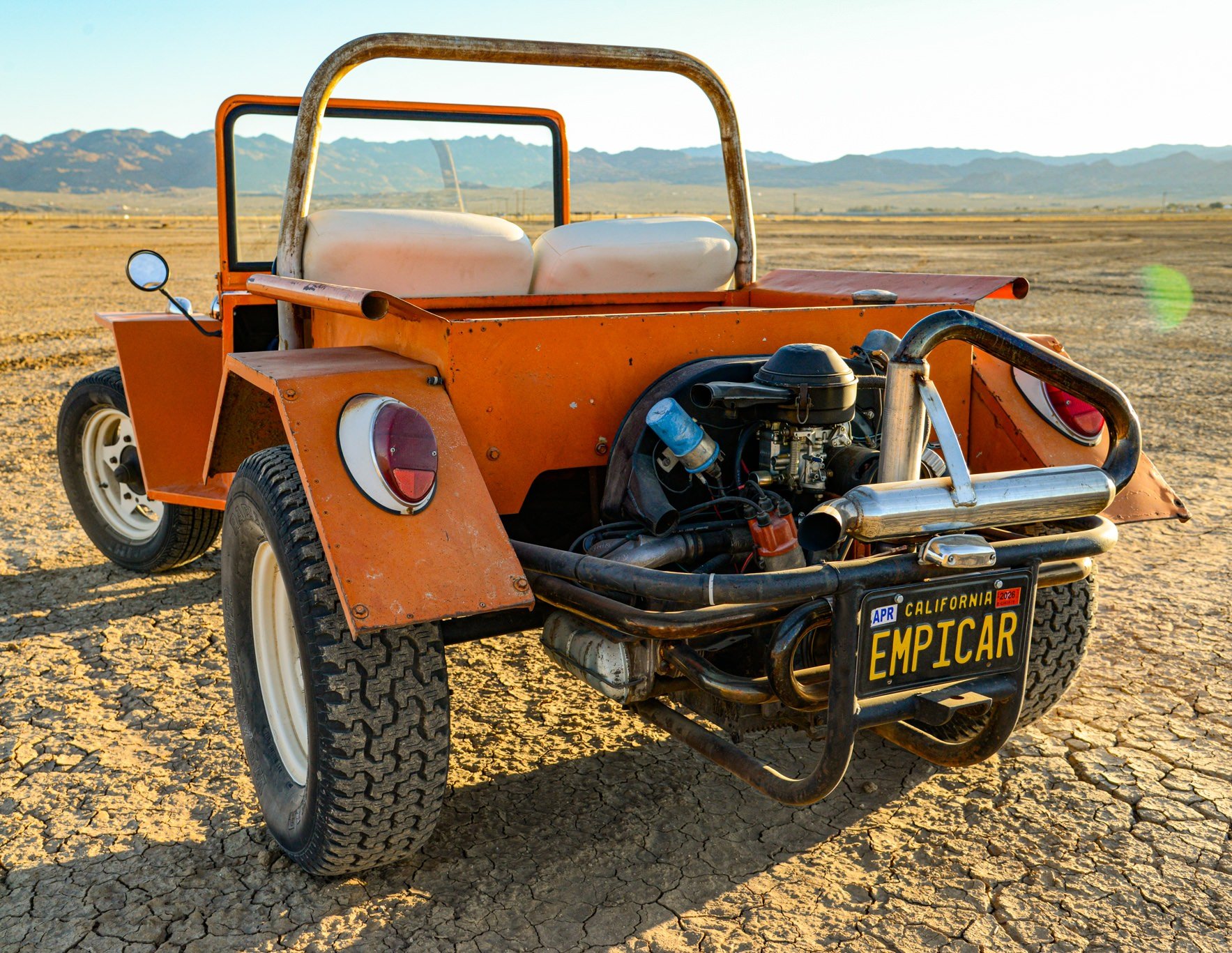
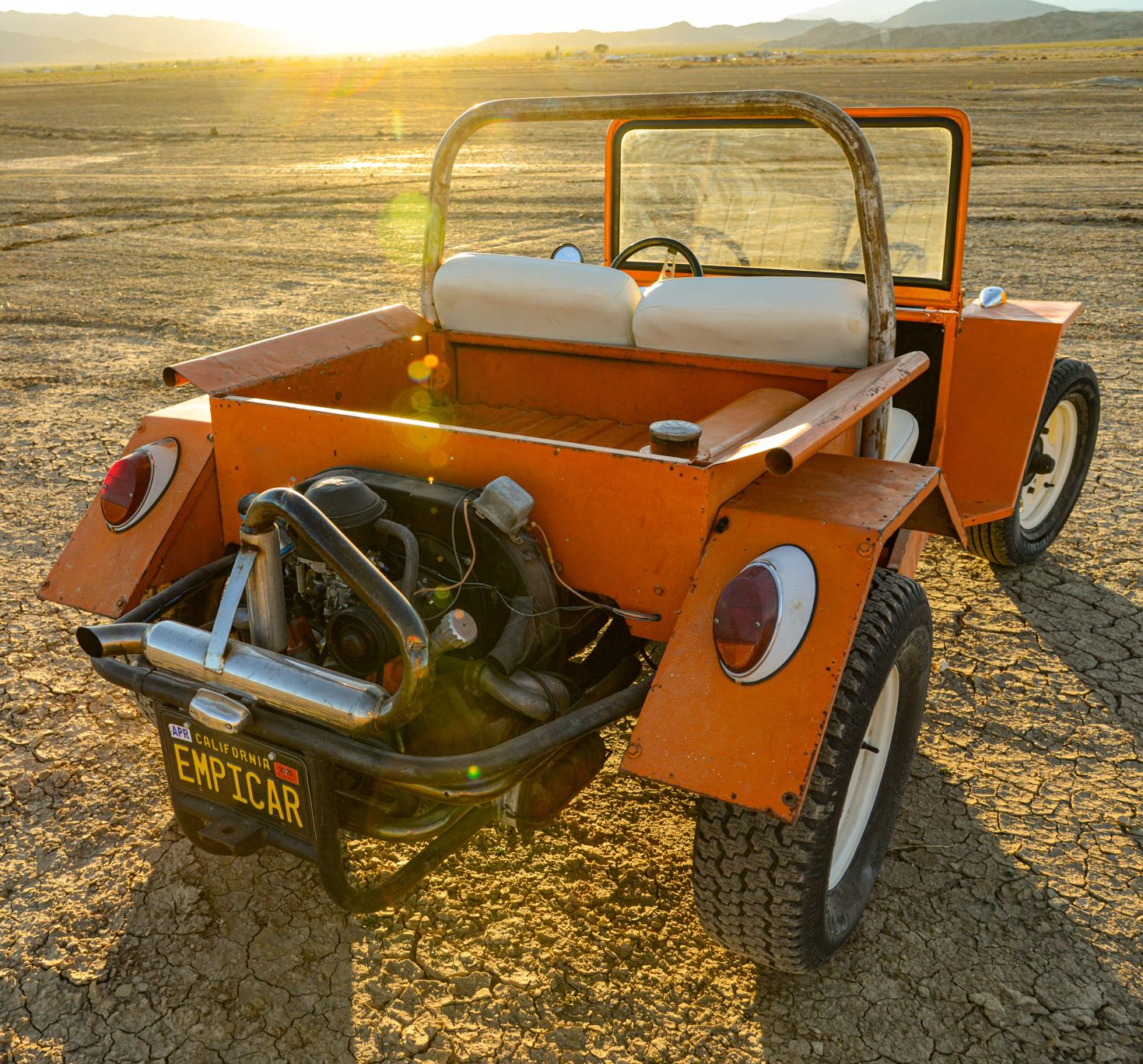
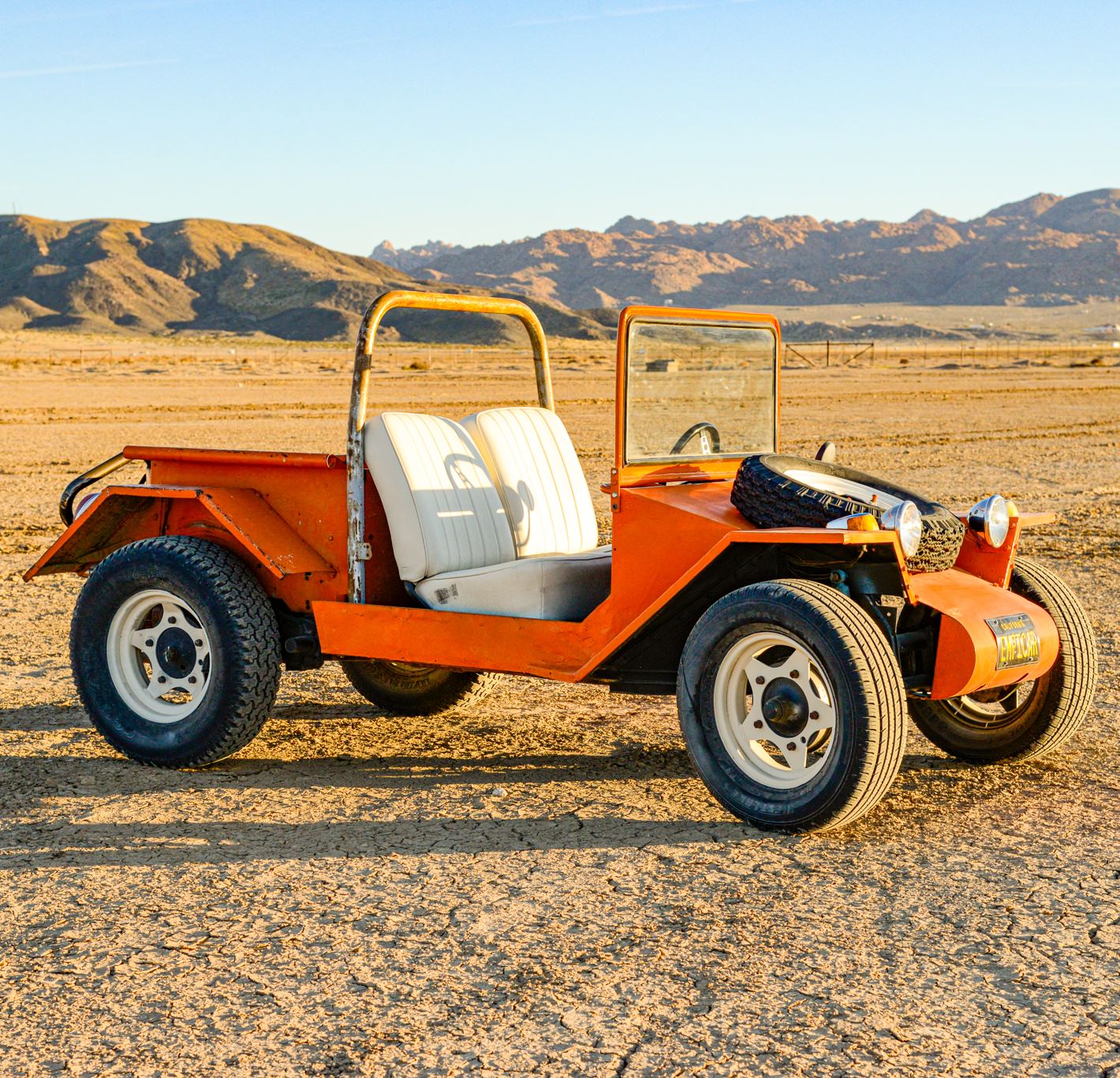
The vehicle you see here is an original EMPI Sportster based on a shortened 1955 VW Beetle platform. It’s powered by a 1.6 liter version of the iconic, air-cooled Beetle flat-four sending power to the rear wheels through a VW 4-speed manual transaxle.
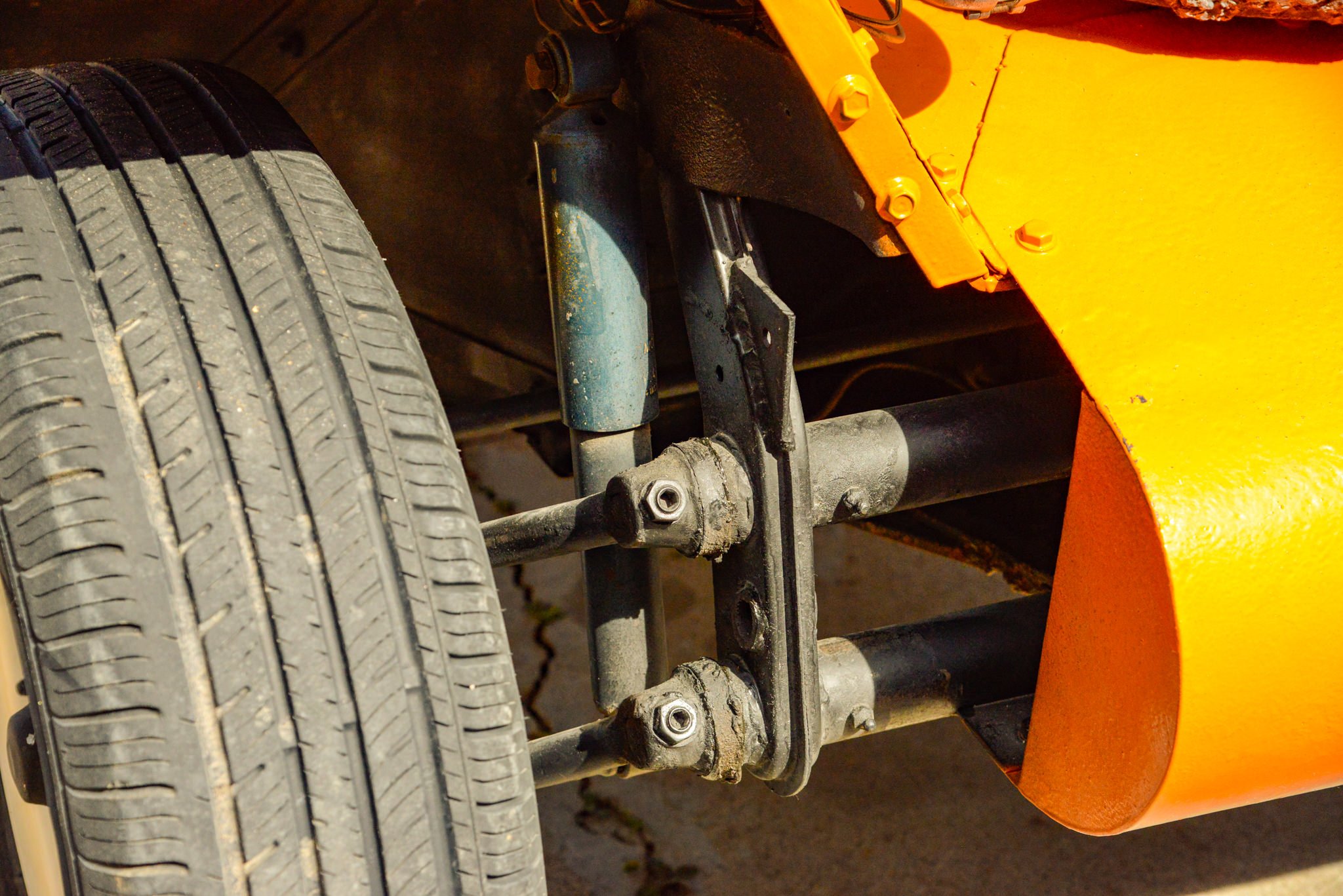
This Sportster is finished in bright orange and it rides on white steel wheels fitted with 235/75 Goodyear Wrangler tires. Suspension is independent front and rear of course, with torsion bars and double longitudinal trailing arms up front and a swing axle rear end. It’s also equipped with front and rear drum brakes.
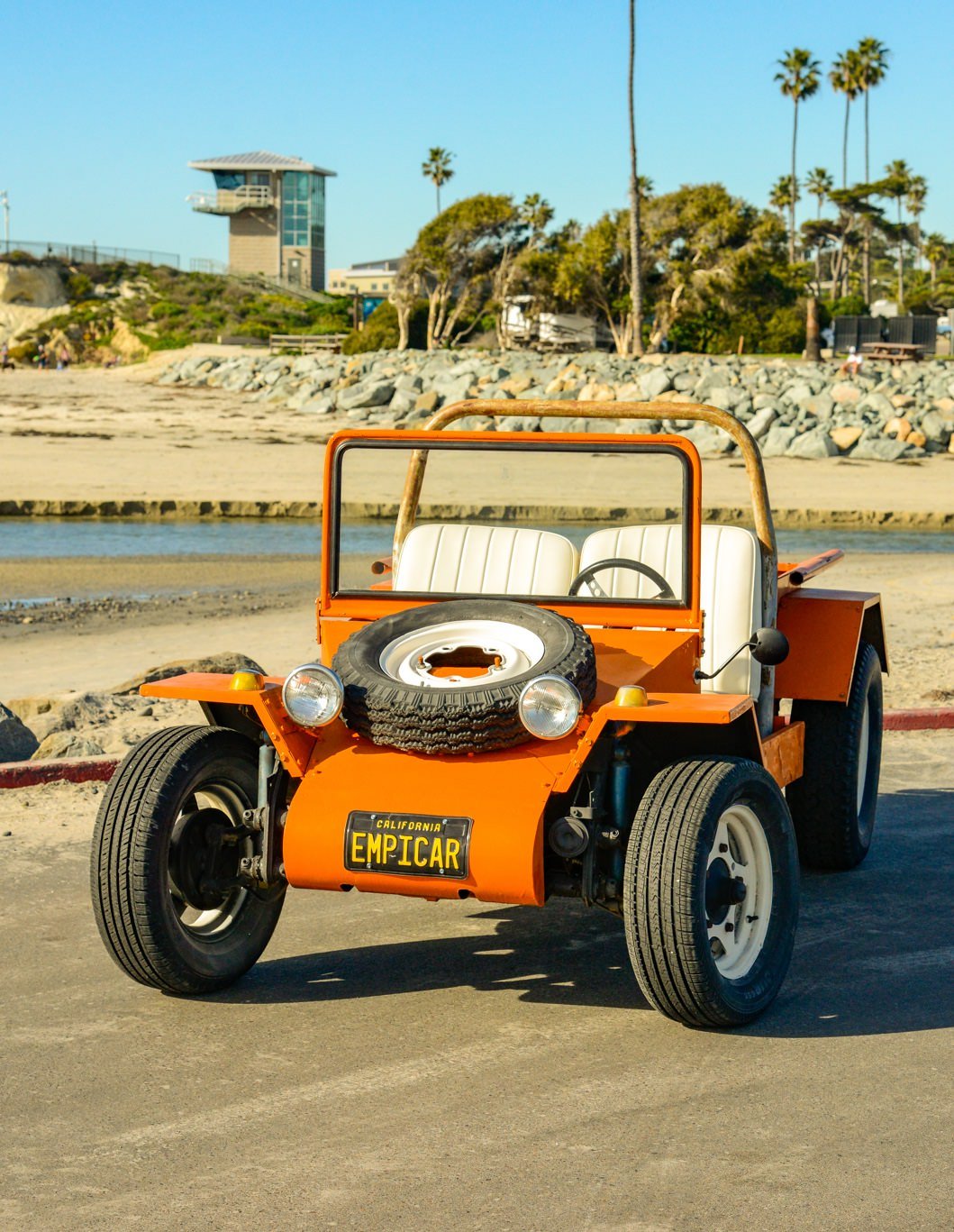
The vehicle you see here is an original EMPI Sportster based on a shortened 1955 VW Beetle platform. It’s powered by a 1.6 liter version of the iconic, air-cooled Beetle flat-four sending power to the rear wheels through a VW 4-speed manual transaxle.
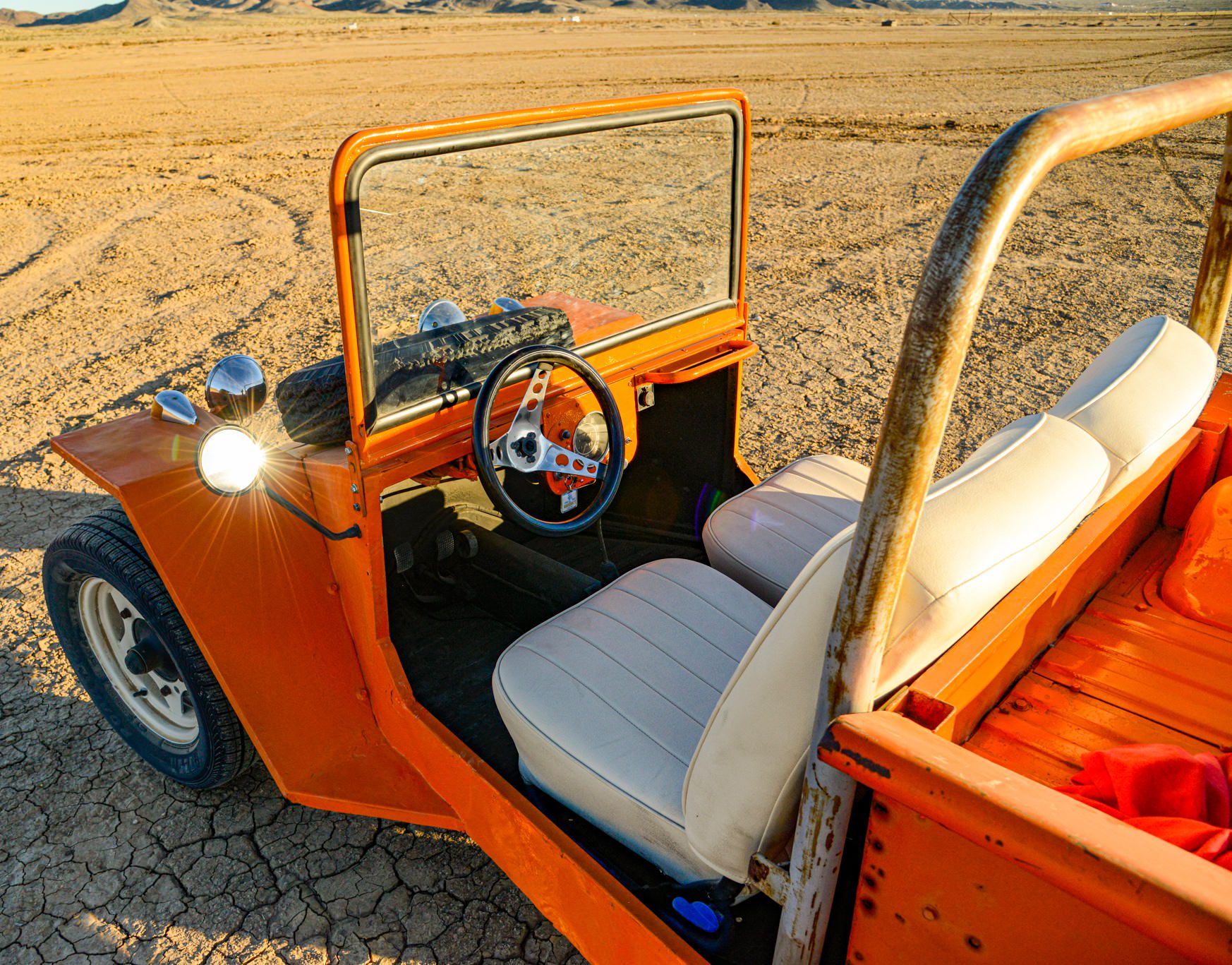
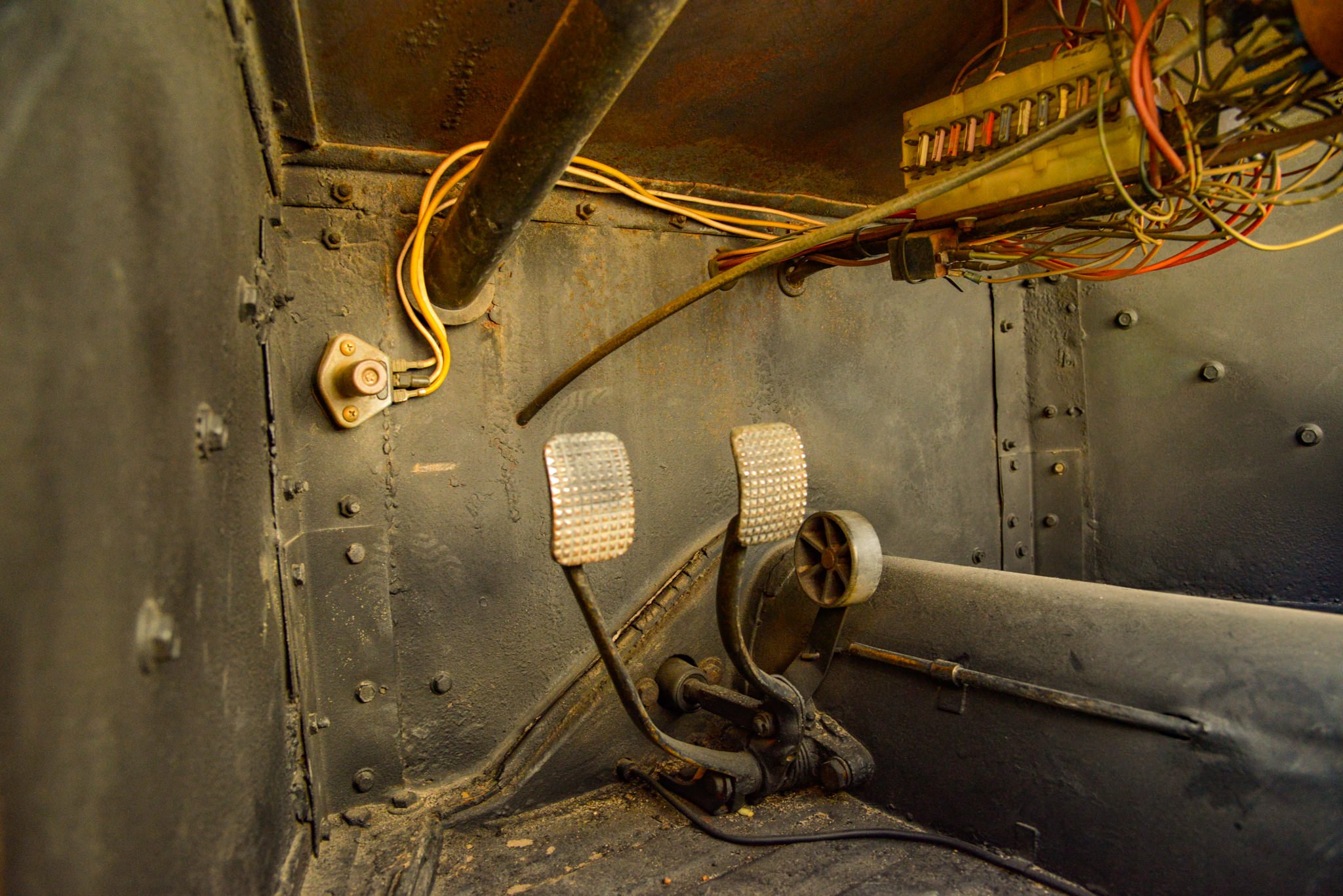
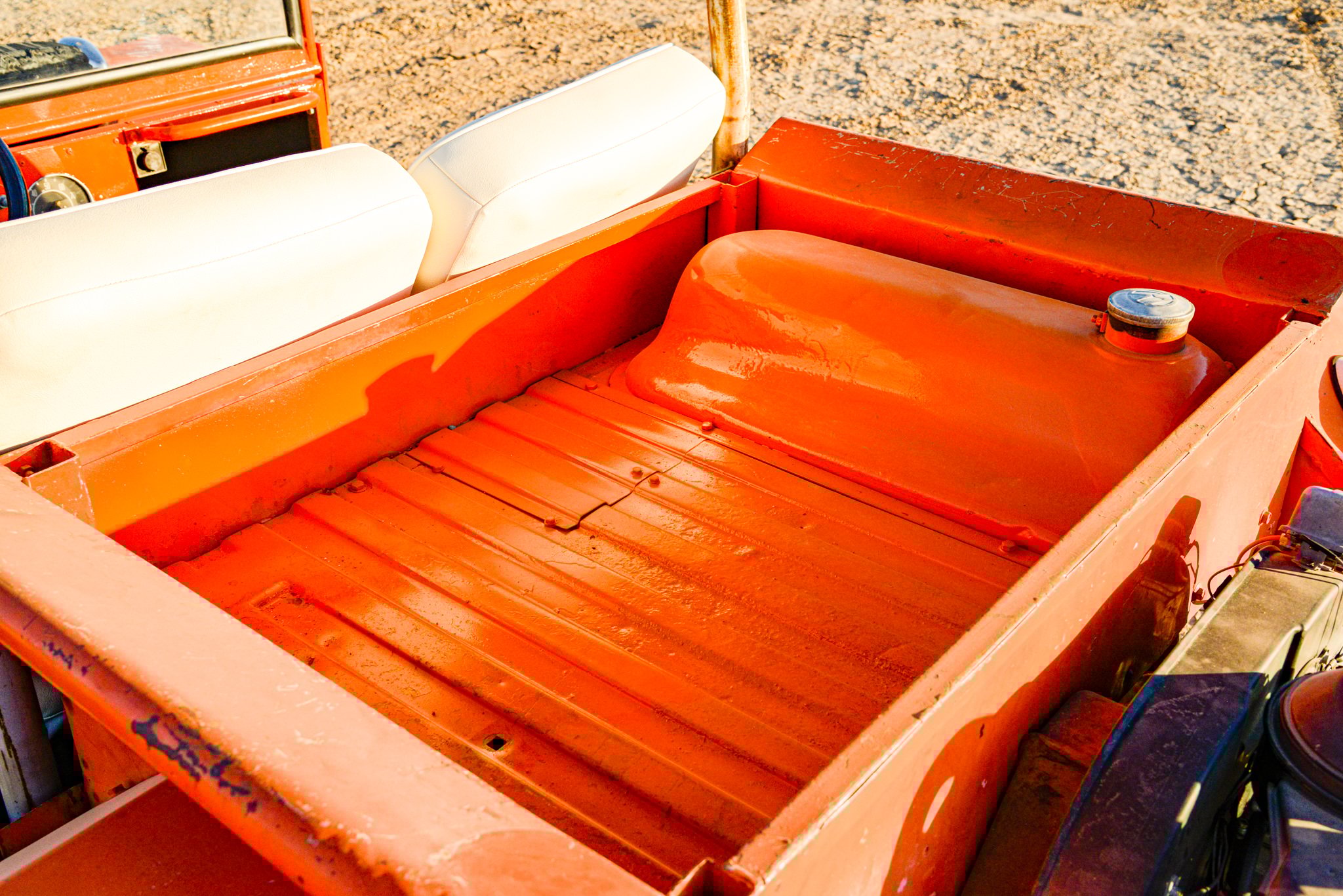
It’s titled as a 1955 VW Beetle, most dune buggies like this adopt the registration of their donor vehicle for obvious reasons. It has twin white bucket seats, a spare wheel mounted to the front, and a small cargo area in the rear.
It’s now being offered for sale out of Carlsbad, California with the registration plate “EMPICAR,” and it comes with a clean California title in the seller’s name. If you’d like to read more about it or place a bid you can visit the listing here.
Images courtesy of Bring a Trailer

Articles that Ben Branch has written have been covered on CNN, Popular Mechanics, Smithsonian Magazine, Road & Track Magazine, the official Pinterest blog, the official eBay Motors blog, BuzzFeed, Autoweek Magazine, Wired Magazine, Autoblog, Gear Patrol, Jalopnik, The Verge, and many more.
Silodrome was founded by Ben back in 2010, in the years since the site has grown to become a world leader in the alternative and vintage motoring sector, with well over a million monthly readers from around the world and many hundreds of thousands of followers on social media.