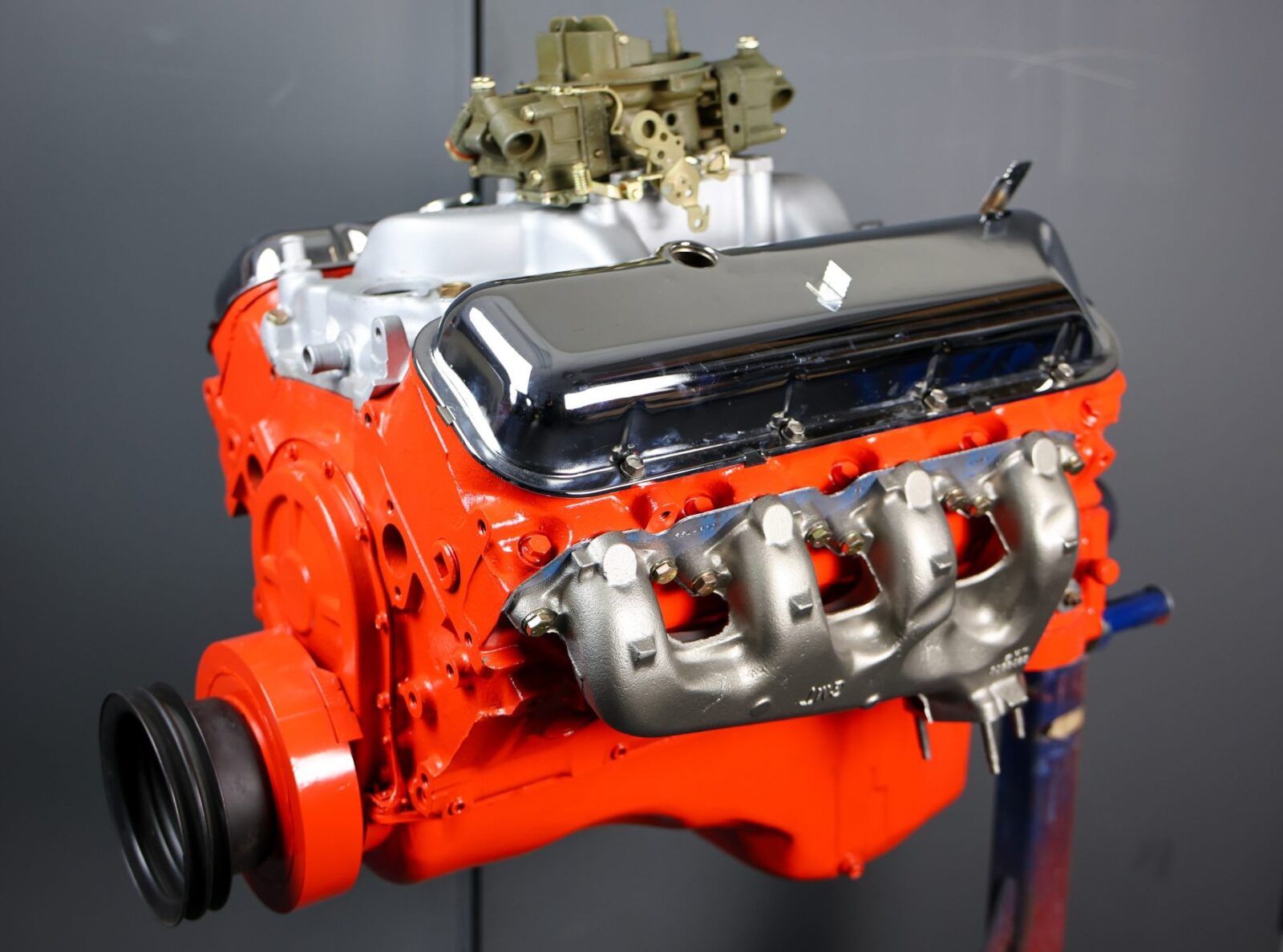
This is a Chevrolet L72 V8, it’s one of the defining engines of the 1960s muscle car “golden era,” with horsepower ratings in excess of 450 bhp according to some period sources.
The L72 was developed specifically to ensure that Chevrolet remained king of the hill in an increasingly competitive muscle car market. It was initially offered as an optional engine in the Corvette, instantly turning the fiberglass-bodied two-door into a 1/4 mile weapon in the right hands.
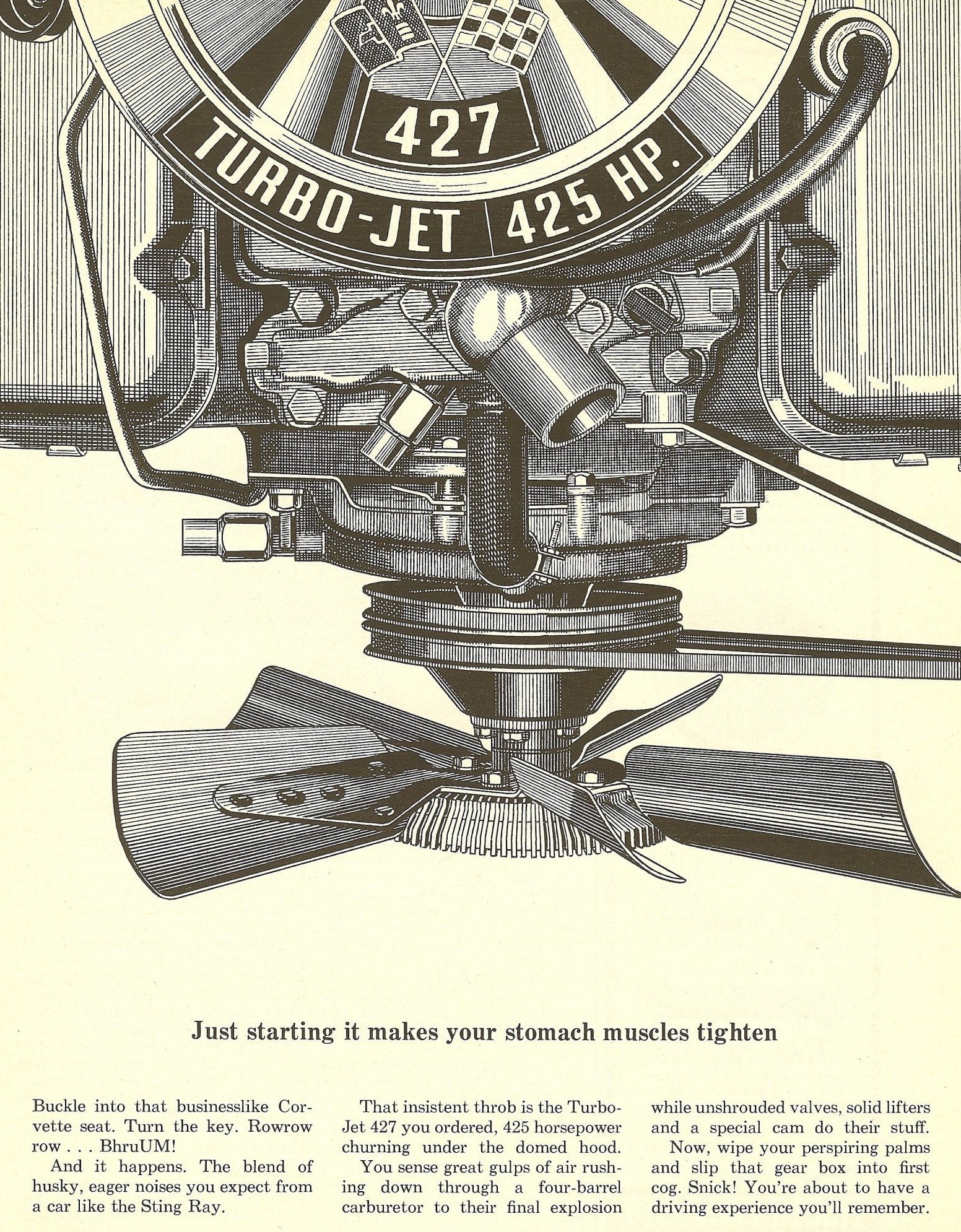
 The L72 was developed specifically to ensure that Chevrolet remained king of the hill in an increasingly competitive muscle car market. It was initially offered as an optional engine in the Corvette, instantly turning the fiberglass-bodied two-door into a 1/4 mile weapon in the right hands. Image courtesy of General Motors.
History Speedrun: The Chevrolet L72 V8
The Chevrolet L72 427 cubic inch big block was developed in the mid-1960s as General Motors faced growing pressure from Ford and Chrysler in the escalating horsepower wars. Chevrolet already had the Mark IV big block architecture in production, but the L72 was intended to be the most uncompromising factory street engine the company had yet offered – one that could dominate drag strips, road courses, and car show bragging rights with minimal (if any) concessions to emissions, fuel economy, or rationality.
Introduced for the 1966 model year, the L72 displaced 427 cubic inches (7.0 liters) using a 4.251-inch bore and 3.76-inch stroke. It was built around a cast-iron block with four-bolt main caps, it had a forged steel crankshaft, forged connecting rods, and forged aluminum pistons.
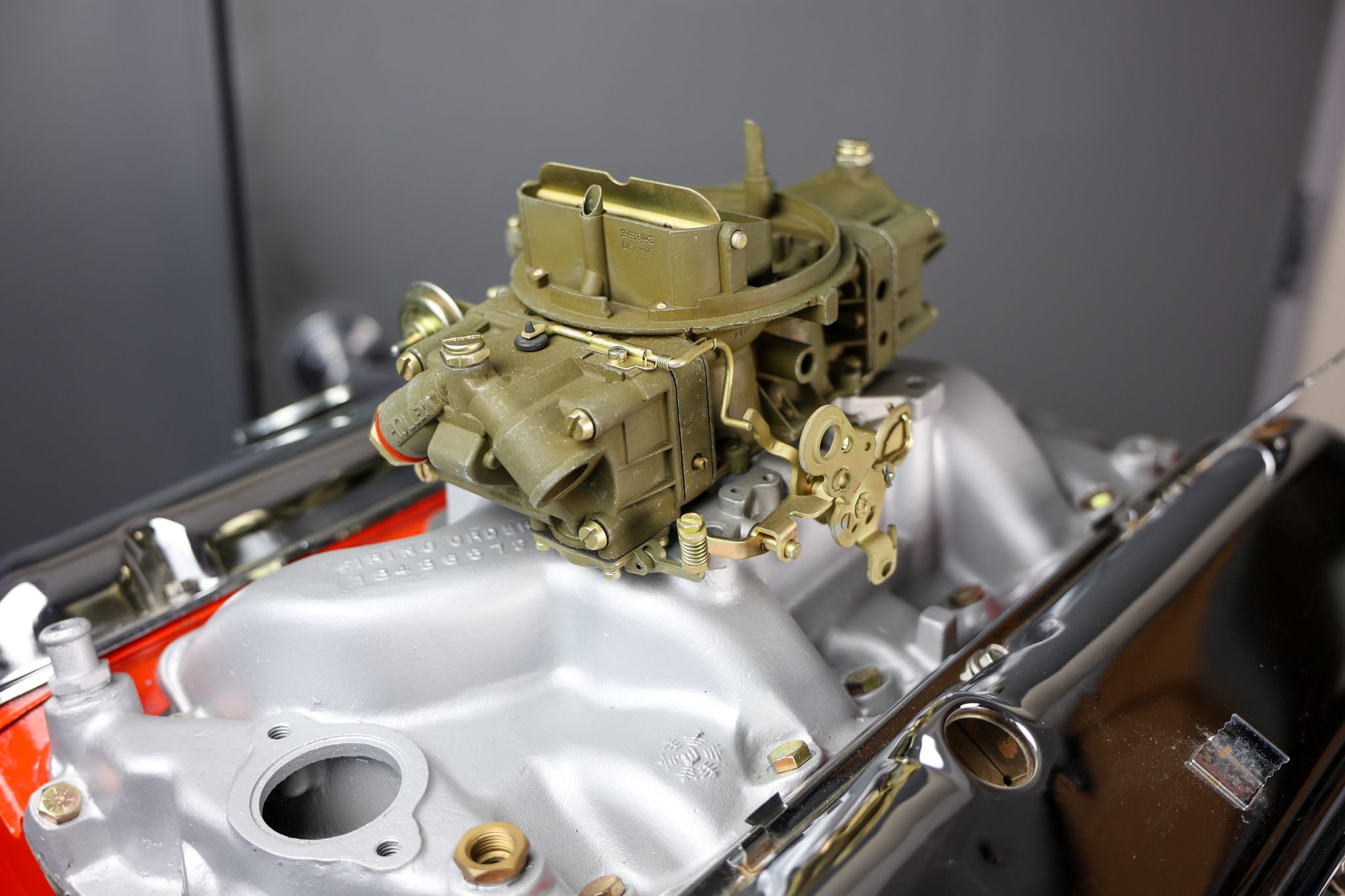
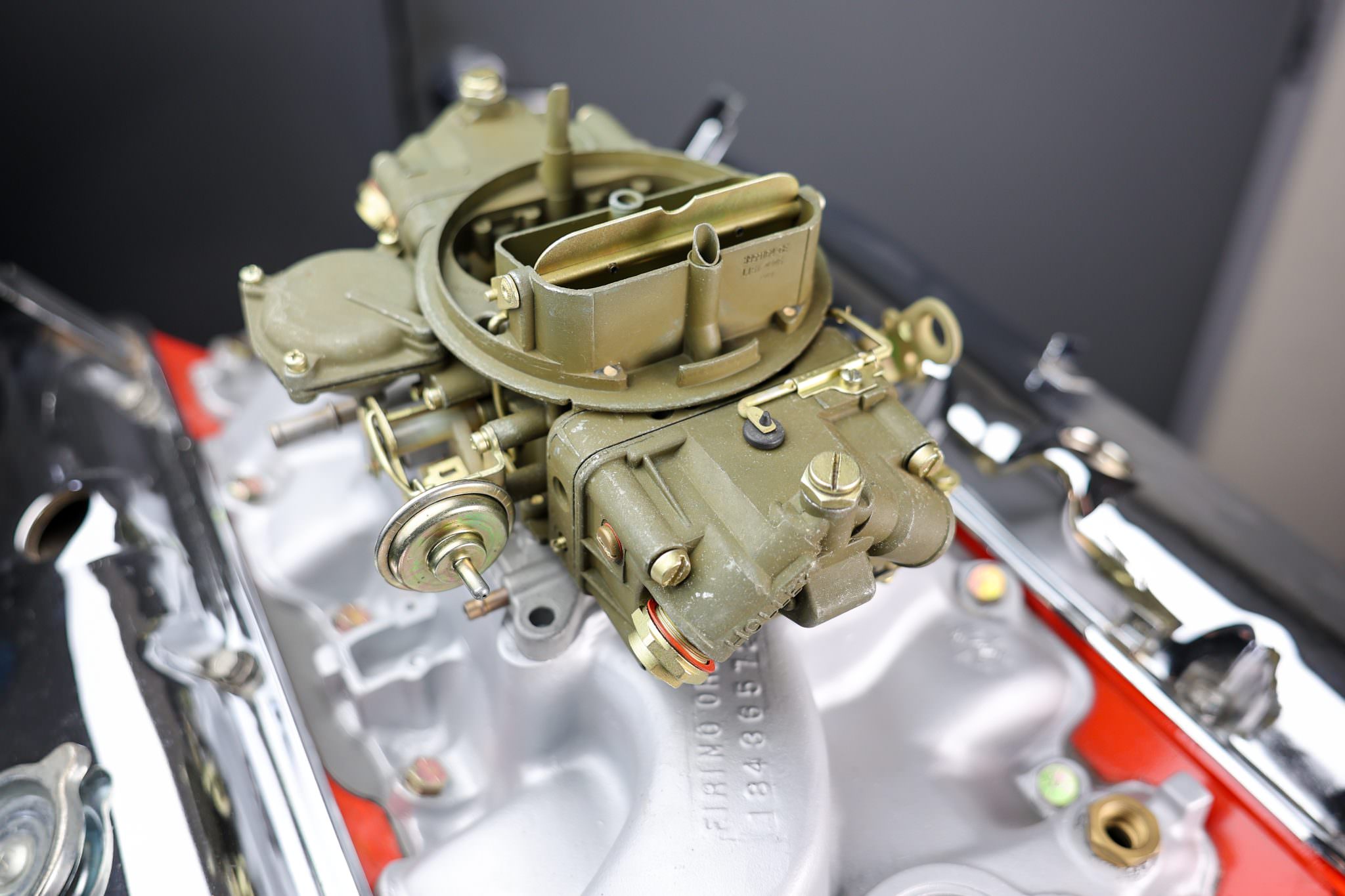
Cylinder heads had high-flow rectangular intake ports, paired with a solid-lifter camshaft and a single Holley four-barrel carburetor mounted on an aluminum intake manifold. Factory compression was approximately 11.0:1, requiring high-octane fuel and making it largely unsuitable for daily driving in the mid-1960s.
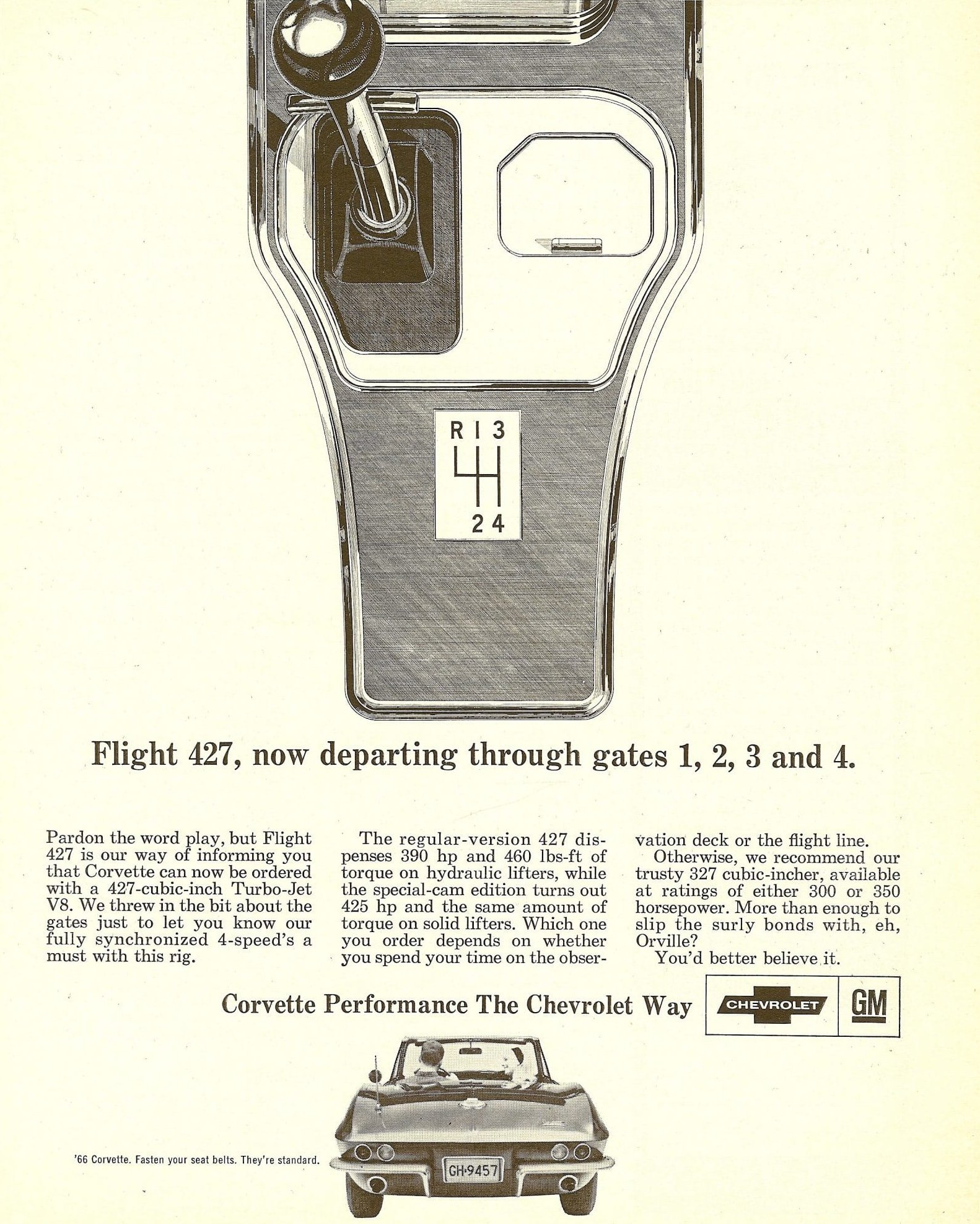
Chevrolet initially rated the L72 at 450 bhp at 5,600 rpm and 460 lb ft of torque at 4,000 rpm, figures that were widely understood to be conservative. That power rating was downgraded to 425 bhp relatively quickly but the engine hadn’t been changed in anyway, many surmise that the power downgrade had been done on paper only to appease insurance companies. Period testing and modern dyno work routinely show real-world output comfortably above the original 450 bhp rating.
The engine was typically paired with heavy-duty manual transmissions, typically 4-speeds, and drivers had to know what they were doing in order to launch the car down the strip without leaving a pile of clutch and gear parts twirling on the asphalt behind them soaked in transmission oil.
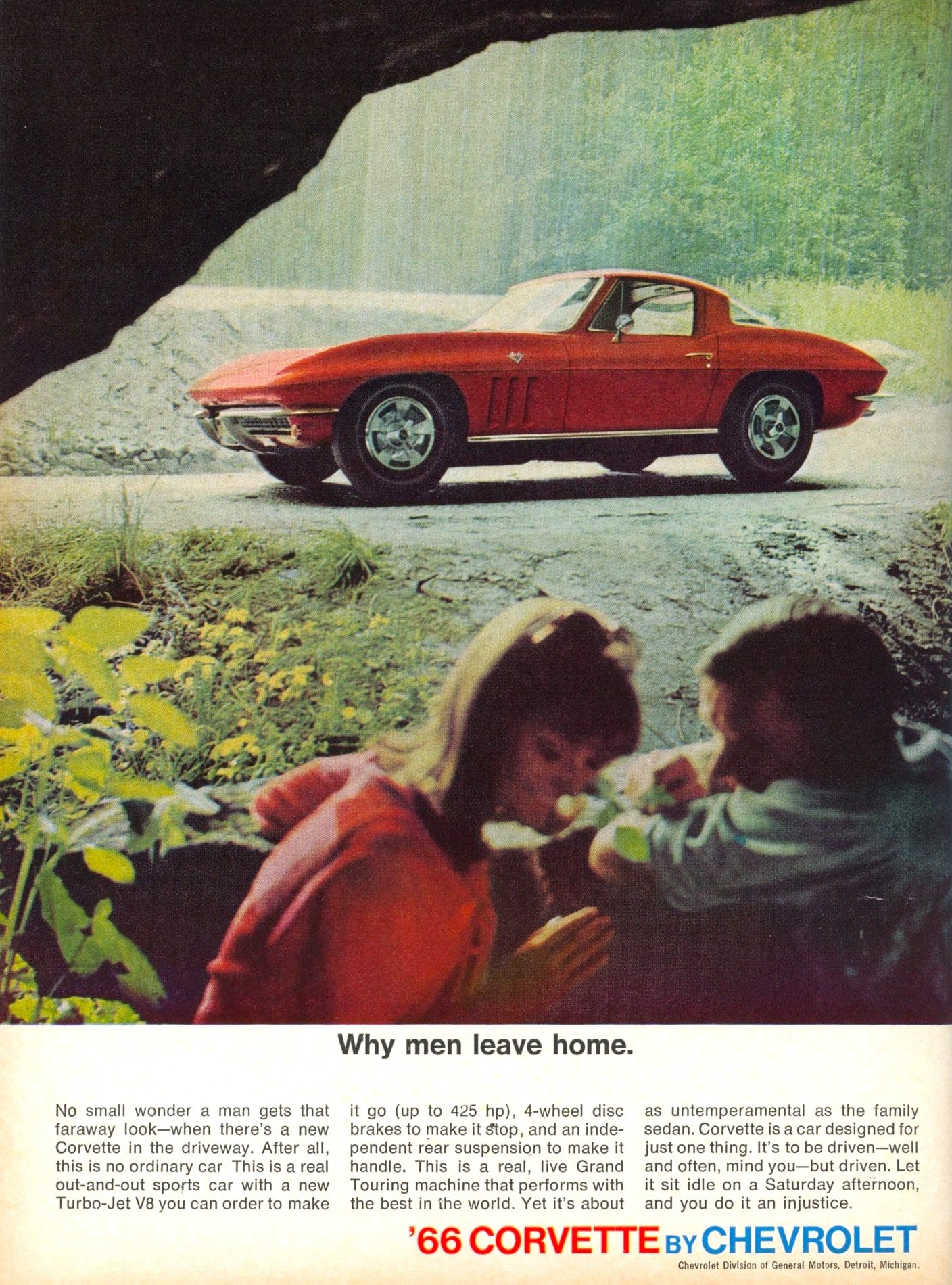
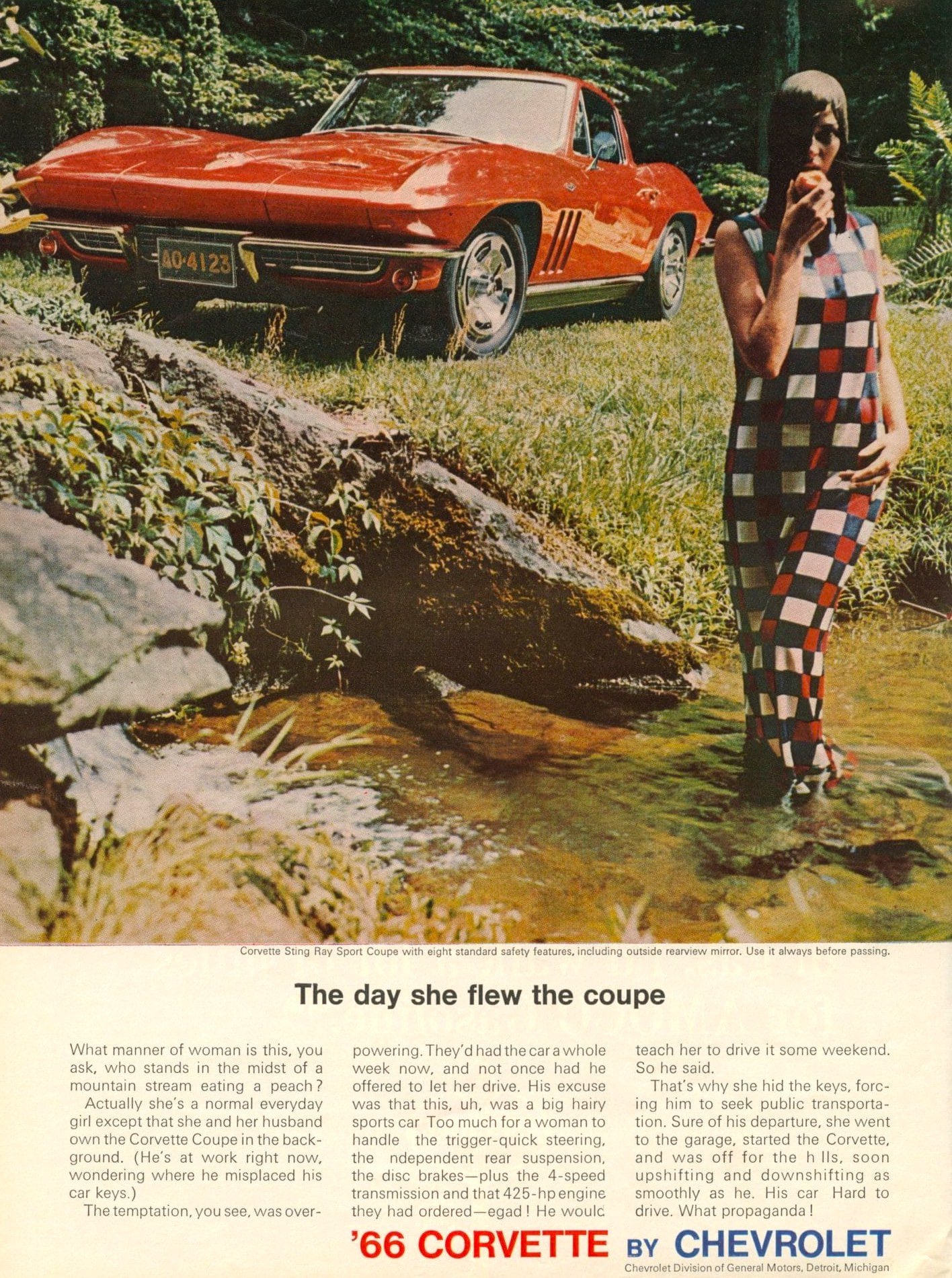
The L72 was installed in a very small range of vehicles. It was most famously offered in the 1966 to 1969 Chevrolet Corvette, where it quickly became one of the most desirable big block options of the era. Image courtesy of General Motors.
Closely related to the L72 was the L71 engine, which shared the same 427 block, cylinder heads, and solid-lifter valvetrain architecture as the L72 but used an alternative induction setup.
Introduced after the L72 in Corvette applications, the L71 employed triple two-barrel carburetors on an aluminum intake and carried a factory rating of 435 bhp. In practice, performance differences between the two engines were modest, with induction choice and tuning often determining the real separation.
The L72 was installed in a very small range of vehicles. It was most famously offered in the 1966 to 1969 Chevrolet Corvette, where it quickly became one of the most desirable big block options of the era. It was also available in selected full-size Chevrolets like the Biscayne, Bel Air, and Impala, often ordered by drag racers seeking maximum output with minimal other options chosen to keep weight down.
In 1969, the L72 gained near-mythical status when installed in limited-production COPO Camaros, created to bypass GM’s internal displacement limits and place the 427 into the compact F-body platform.
Production of the L72 effectively ended after 1969 as emissions regulations, insurance pressure, and internal corporate policies reshaped Chevrolet’s performance priorities. The engine now remains one of the defining symbols of the classic big block era when power was all that mattered, catalytic converters were largely unheard of, and leaded fuel still seemed like a good idea.
The Rebuilt Chevrolet L72 V8 Shown Here
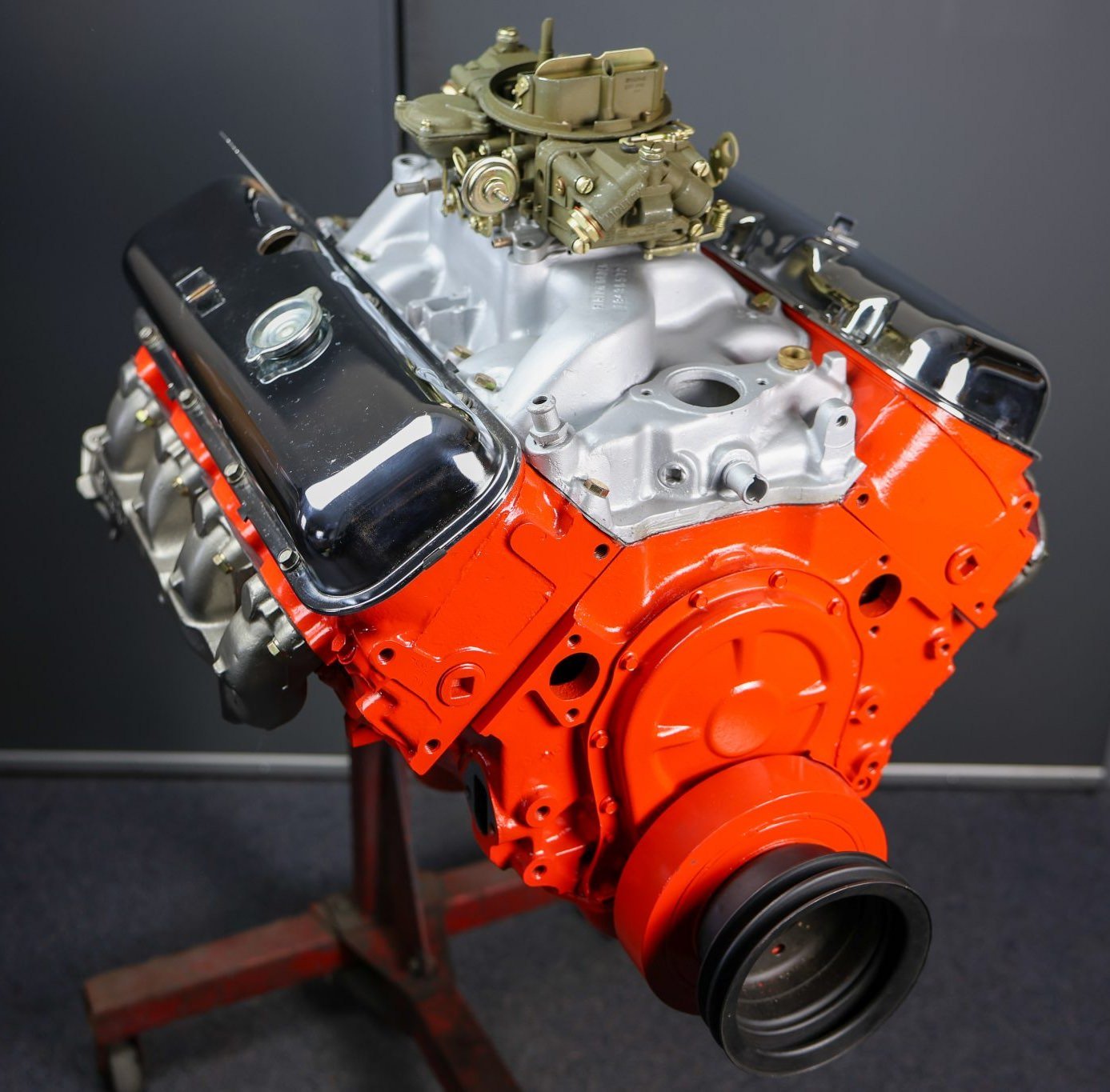
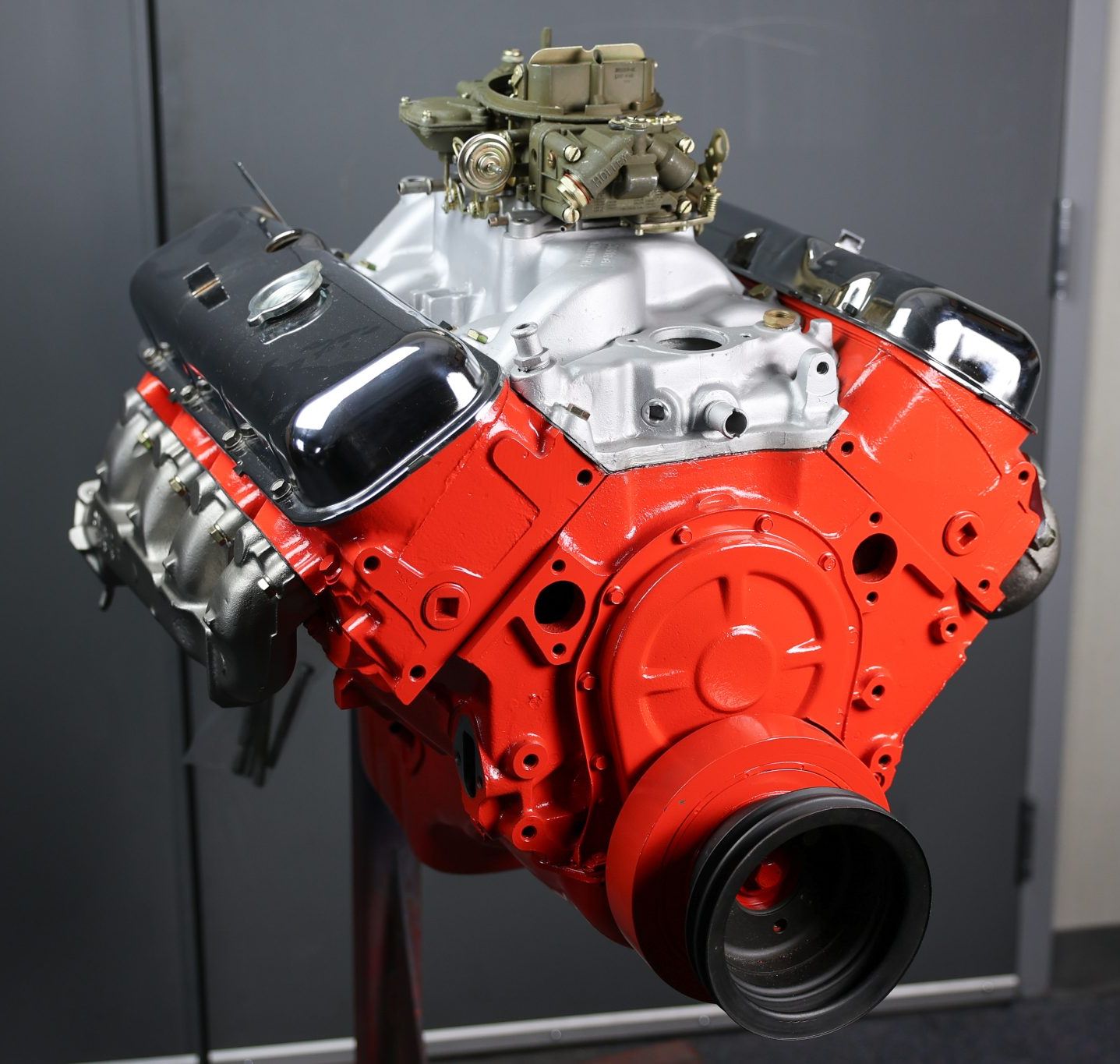
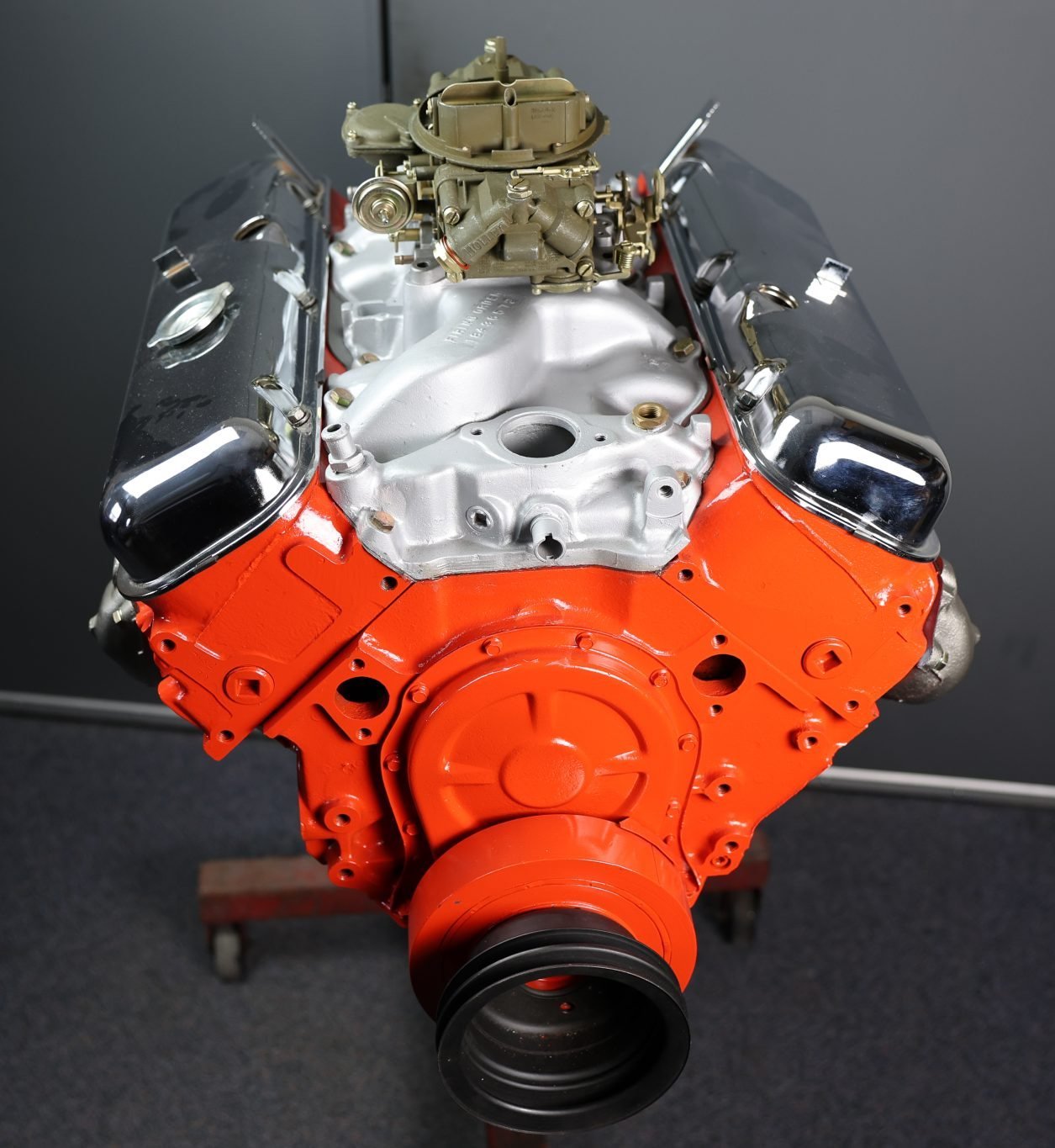
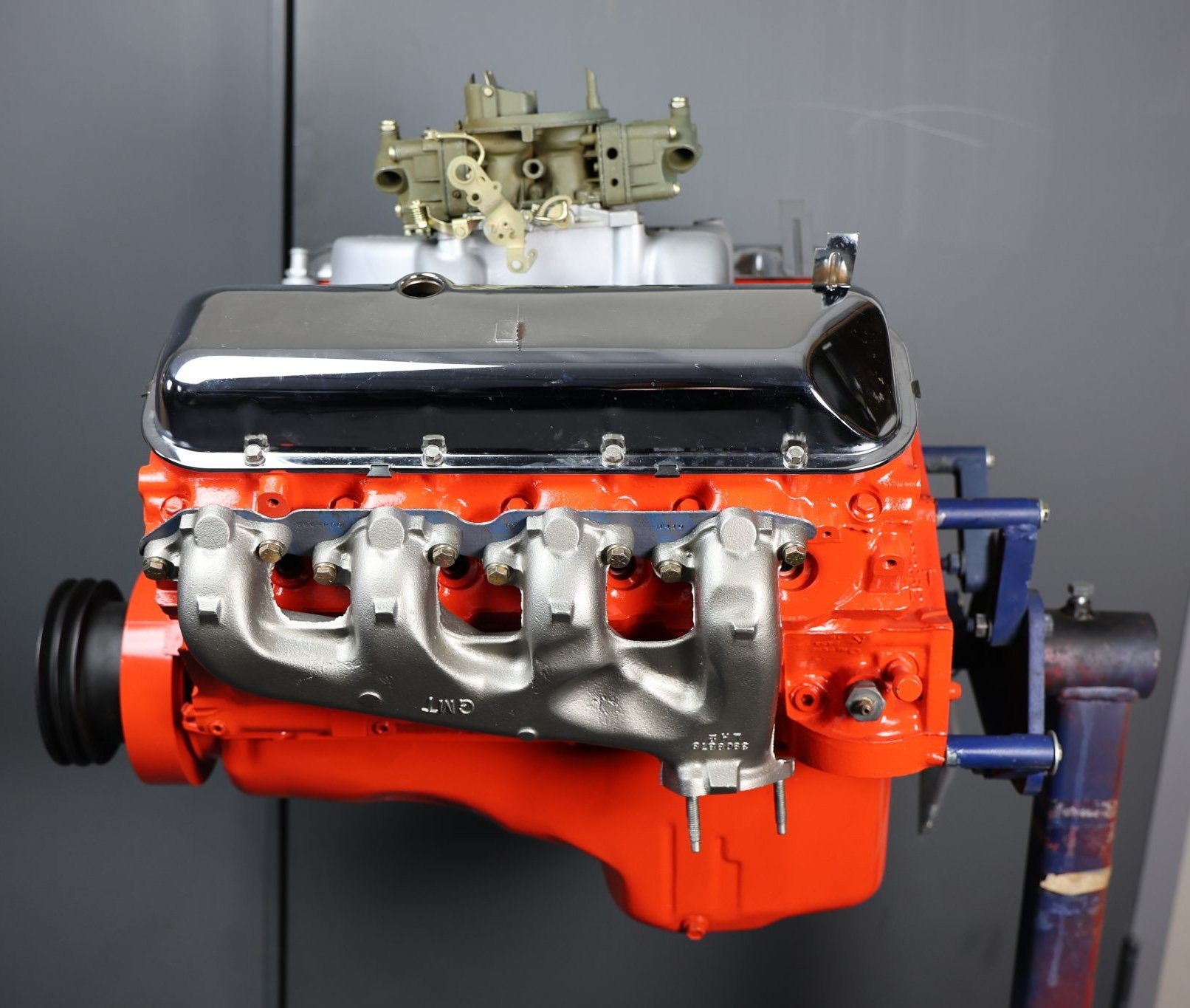
This is a Chevrolet L72 V8 that was bought by the current owner (and now seller) in 2022 and rebuilt shortly thereafter. It has a 512 block, 391 rectangular-port cylinder heads, and a Winters aluminum intake manifold topped with a Holley four-barrel carburetor.
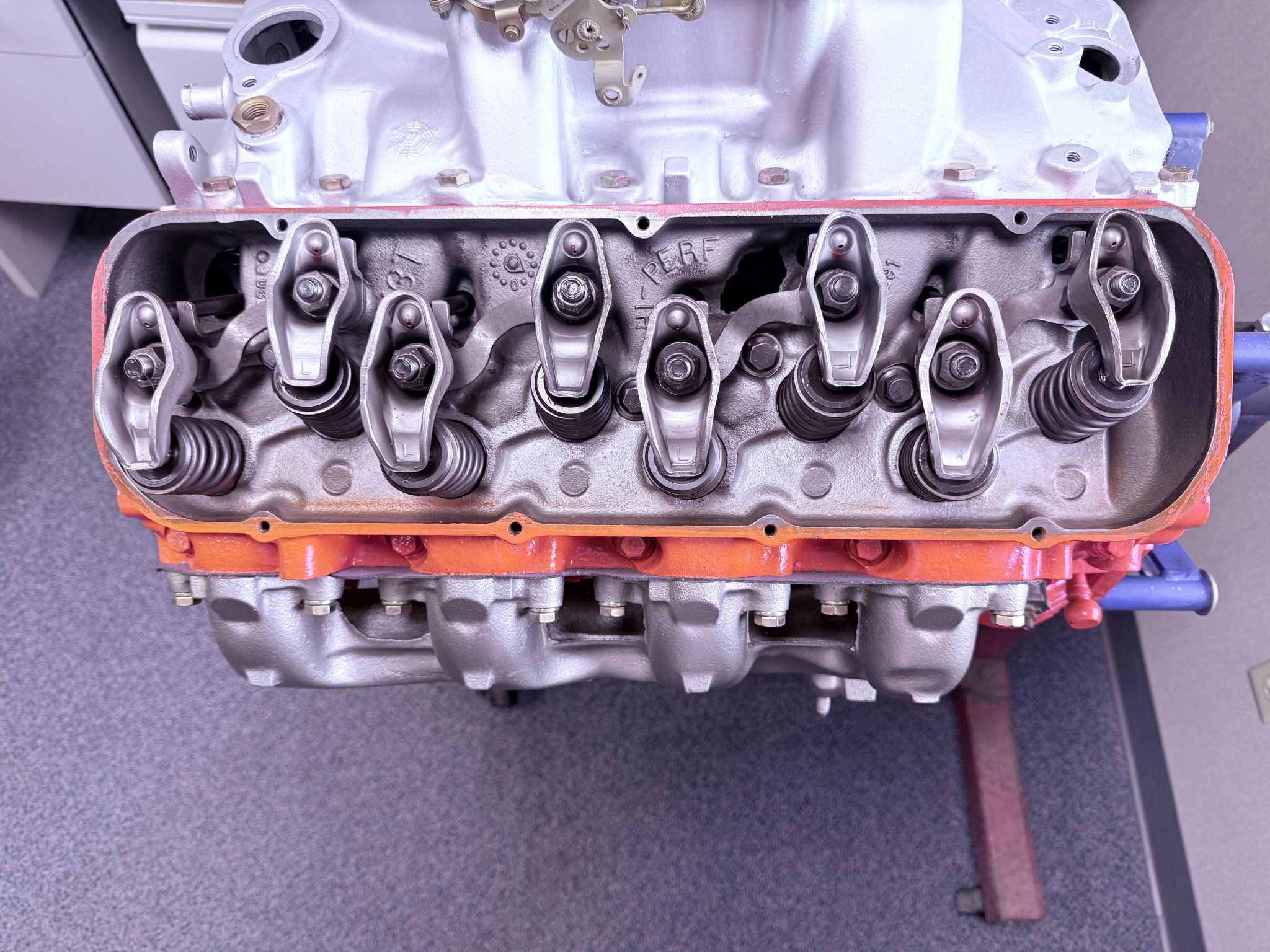
This is a Chevrolet L72 V8 that was bought by the current owner (and now seller) in 2022 and rebuilt shortly thereafter. It has a 512 block, 391 rectangular-port cylinder heads, and a Winters aluminum intake manifold topped with a Holley four-barrel carburetor.
The engine has an original-style orange painted block and heads, chrome valve covers, and cast iron exhaust manifolds. It also has a harmonic balancer and a lower crankshaft pulley fitted. Chevrolet L72 V8s are always in high demand, so this engine is likely to attract a fair amount of attention.
It’s now being offered for sale out of Milford, Michigan with no reserve on Bring a Trailer. If you’d like to read more about it or place a bid you can visit the listing here.



Images courtesy of Bring a Trailer + General Motors

Articles that Ben Branch has written have been covered on CNN, Popular Mechanics, Smithsonian Magazine, Road & Track Magazine, the official Pinterest blog, the official eBay Motors blog, BuzzFeed, Autoweek Magazine, Wired Magazine, Autoblog, Gear Patrol, Jalopnik, The Verge, and many more.
Silodrome was founded by Ben back in 2010, in the years since the site has grown to become a world leader in the alternative and vintage motoring sector, with well over a million monthly readers from around the world and many hundreds of thousands of followers on social media.