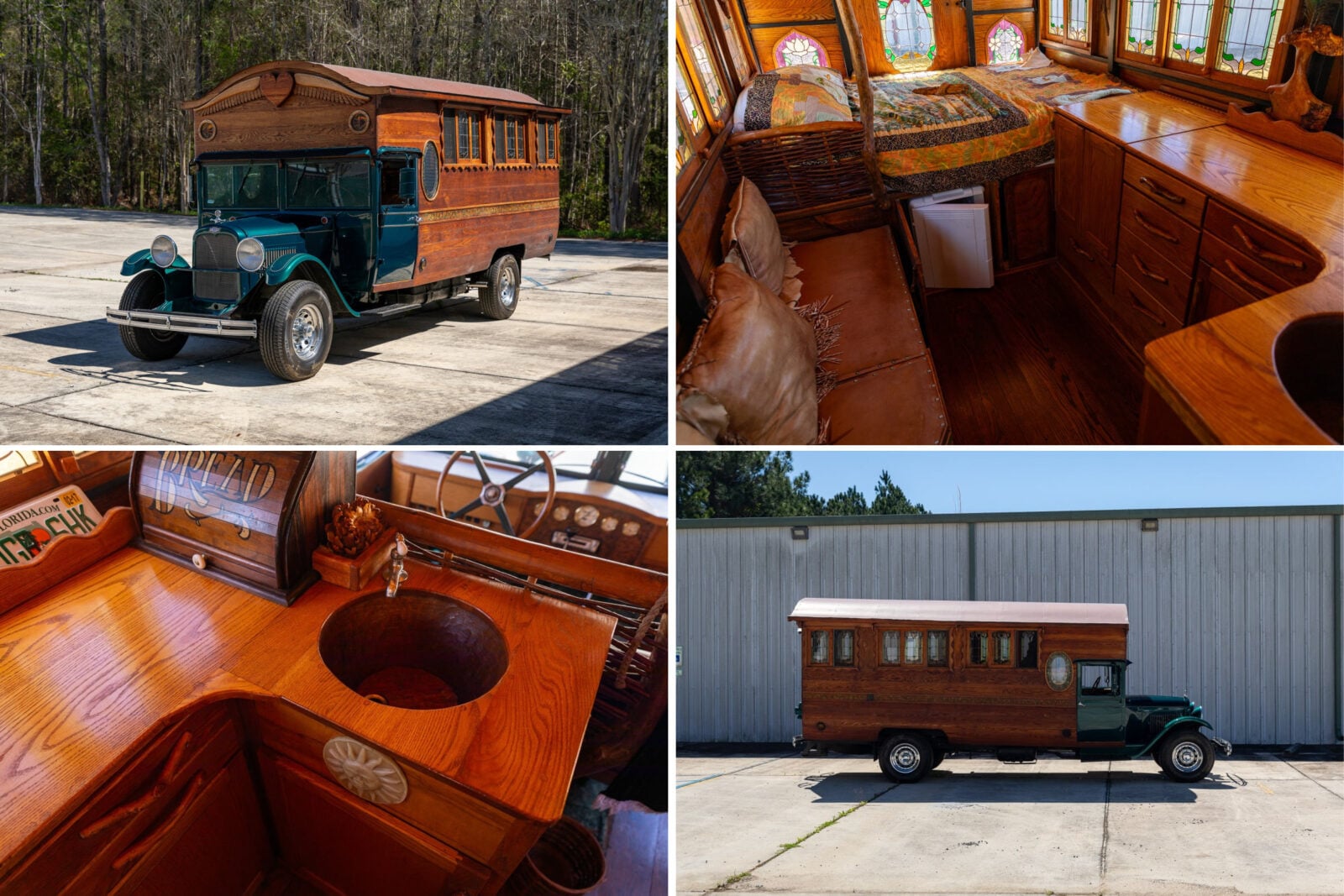
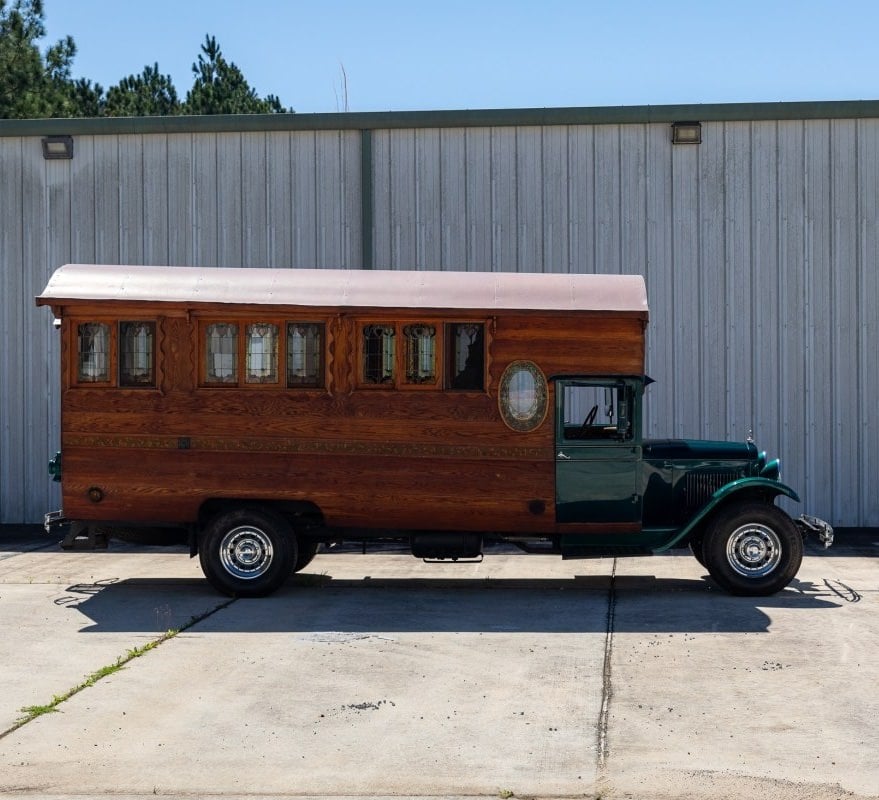
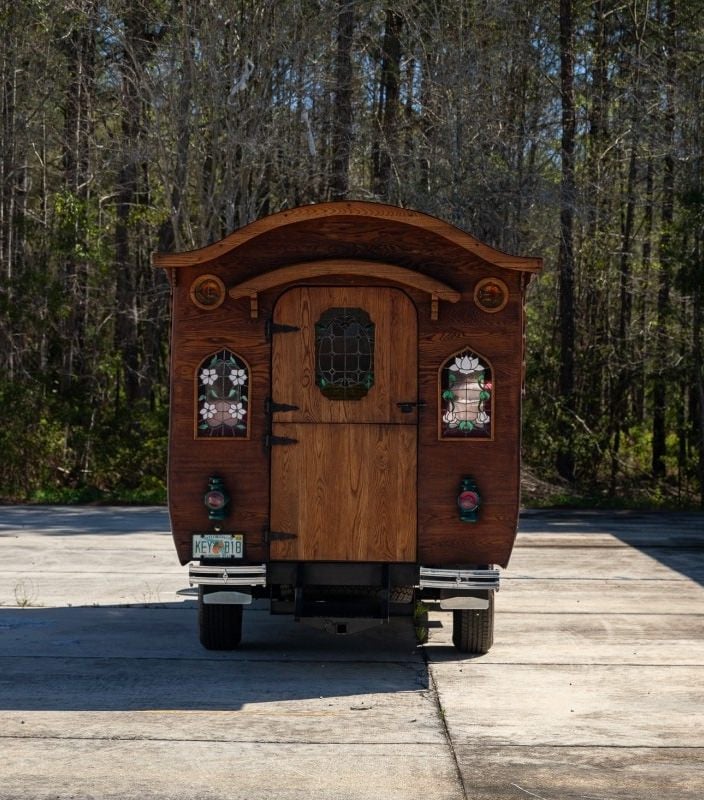
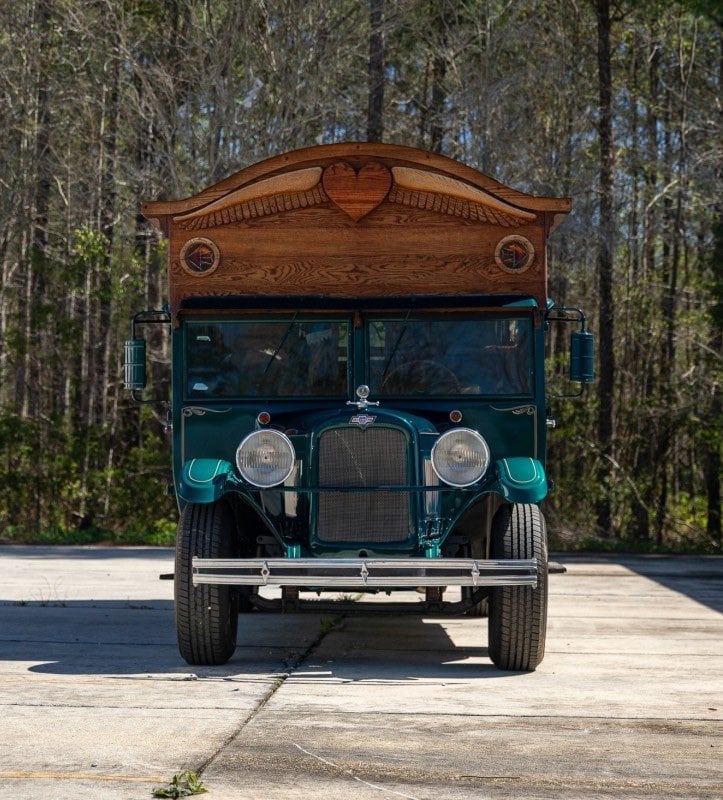
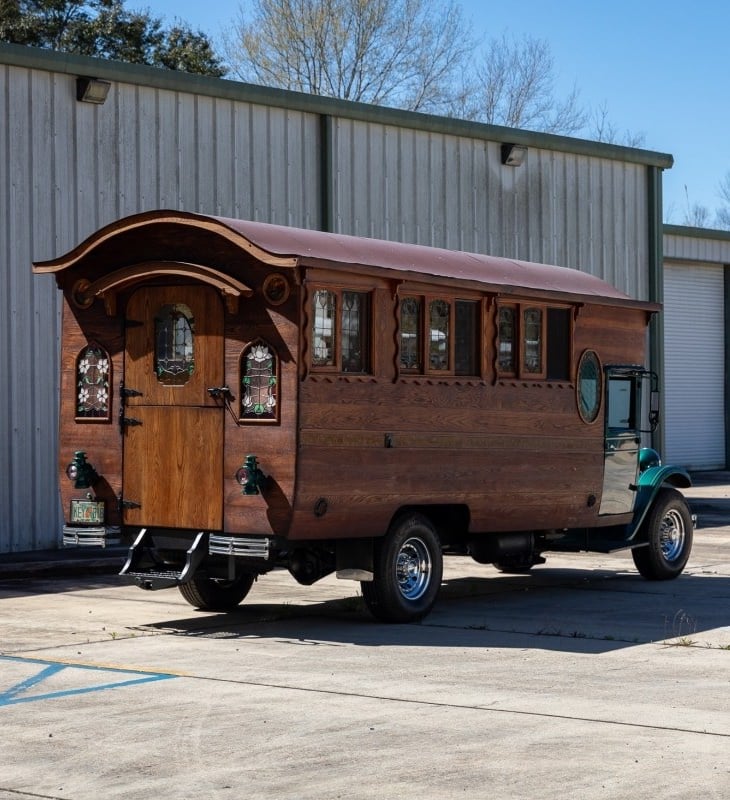
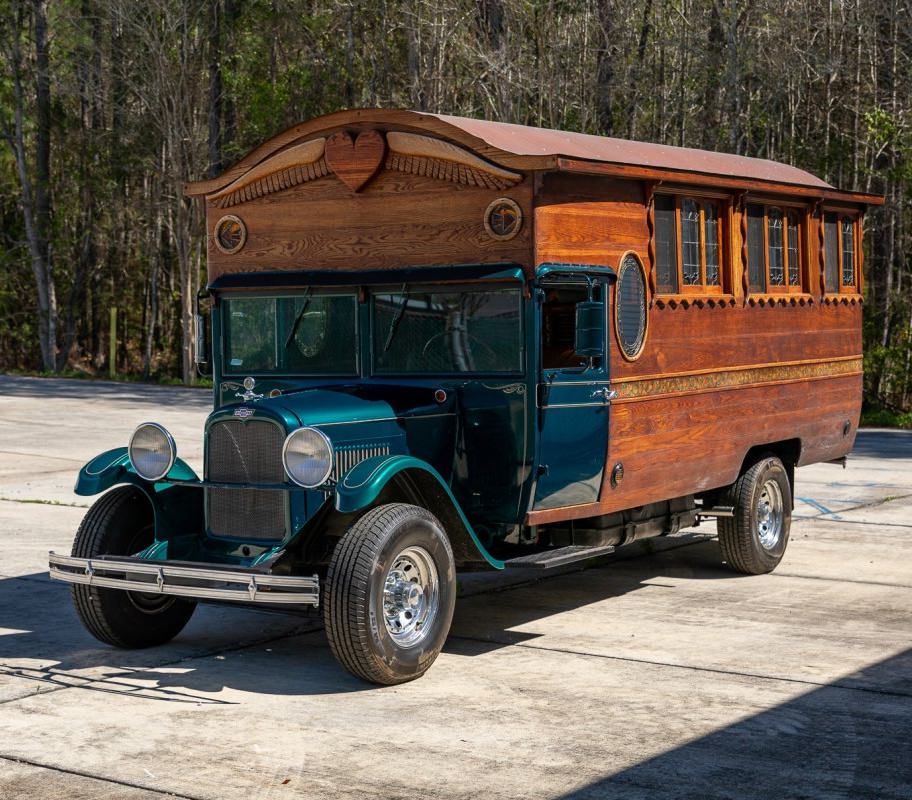
This is a 1928 Chevrolet One Ton truck that’s been converted into a “gypsy-style” camper that includes a double bed, a kitchenette, a seating area, and plenty of stained-glass windows.
This home-on-wheels would be ideally suited to a person (or couple) seeking an unusual alternative to a Winnebago, though the biggest problem you’d likely have is all the people who want to come talk to you about it at each fuel stop.
Fast Facts: 1928 Chevrolet Camper Wagon
- Chevrolet’s one-ton truck line had become an important part of the company’s commercial range by 1928, after ten years of steady development. That year marked a turning point, as the trucks kept Chevrolet’s long-running overhead-valve four-cylinder engine while also introducing a serious of mechanical upgrades before the move to six-cylinder power in 1929.
- Three one-ton series were offered during 1928 – the LM, LO, and LP. The LM and LO were closely related transitional models, while the LP was the major development, getting a standard 4-speed manual gearbox and mechanical four-wheel drum brakes. That made it historically notable as the first Chevrolet truck in this class to receive front brakes.
- All 1928 Chevrolet one-ton trucks used a 124-inch wheelbase and a 171 cubic inch overhead-valve inline-four producing 35 bhp at 2,200 rpm. Buyers could order the chassis in multiple forms, then fit bodies from outside coachbuilders, this resulted in a wide variety of working vehicles including stake trucks, panel vans, dump trucks, hearses, and ambulances.
- The vehicle shown here is no longer a standard commercial truck, having been transformed into a highly unusual “gypsy-style” camper. It now uses a much more modern 4.3 liter Chevrolet V6 with a 4-speed automatic, and features a wood-built rear cabin with stained glass, a double bed, kitchenette, seating area, and decorative trim throughout.
History Speedrun: The 1928 Chevrolet One Ton Truck
By the late 1920s Chevrolet had established its position as a major force in the rapidly growing American truck market. The division had been building one-ton commercial vehicles since 1918, and a decade of steady upgrades had produced a platform that was both mechanically capable and commercially quite successful.
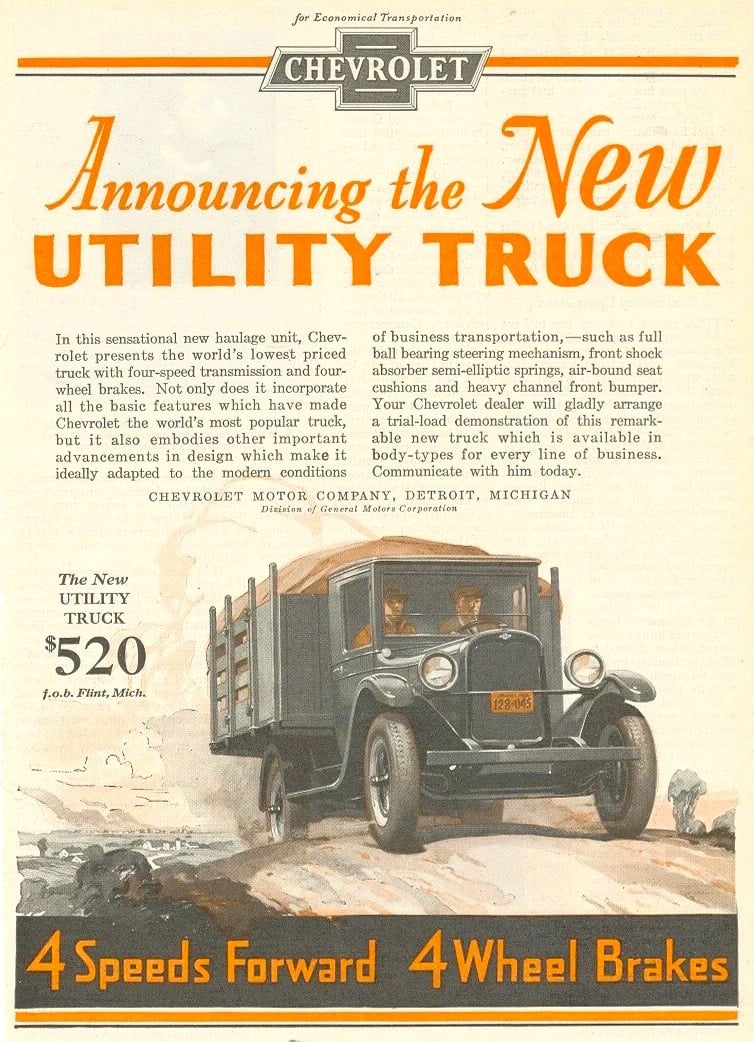
 The 1928 model year would prove to be a transitional one for the one-ton line, it was marked by a mid-year mechanical overhaul and the final appearance of Chevrolet’s four-cylinder engine before the arrival of the six-cylinder “Stovebolt” for 1929. Image courtesy of Chevrolet.
The 1928 model year would prove to be a transitional one for the one-ton line, it was marked by a mid-year mechanical overhaul and the final appearance of Chevrolet’s four-cylinder engine before the arrival of the six-cylinder “Stovebolt” for 1929.
The 1928 one-ton trucks sat alongside the National Series AB passenger cars and lighter commercial vehicles in Chevrolet’s growing catalogue, but they operated under their own distinct series designations. Three one-ton truck series were produced during the 1928 model year: the LM, LO, and LP.
The LM had been introduced in 1927 alongside the Capitol Series AA car line, and it carried over into early 1928 largely unchanged. The LO Series replaced the LM at the start of the model year but was mechanically nearly-identical. it was essentially just a transitional designation.
The real news arrived at mid-year with the LP Series, which brought two significant upgrades including a new 4-speed manual transmission as standard equipment (a lighter 4-speed had previously been offered only as an option), and mechanical four-wheel drum brakes – making the LP the first Chevrolet truck to be equipped with front brakes. As wild as it might sound today, before this time rear drum brakes had been the only option.
The LP’s gearbox also included a power take-off, a result of the widespread use of trucks in agricultural and industrial settings where auxiliary equipment needed to be driven from the drivetrain in the same way it could be driven off a tractor.
All three series rode on a 124-inch wheelbase, this was a now standard dimension the one-ton platform had used since 1925, and it was considerably longer than the 107-inch wheelbase of the lighter National AB chassis. Power came from Chevrolet’s 171 cubic inch (2,802cc) overhead-valve inline four-cylinder engine, fitted with a Carter one-barrel carburetor, solid valve lifters, and (new for 1928) larger valves and aluminum pistons.
Output was rated at 35 bhp at 2,200 rpm, up from 26 bhp in the 1927 trucks. Chevrolet’s OHV valve-train architecture was a major technical advantage over the Ford Model A’s flathead configuration, even if absolute power figures were modest by any modern standard.
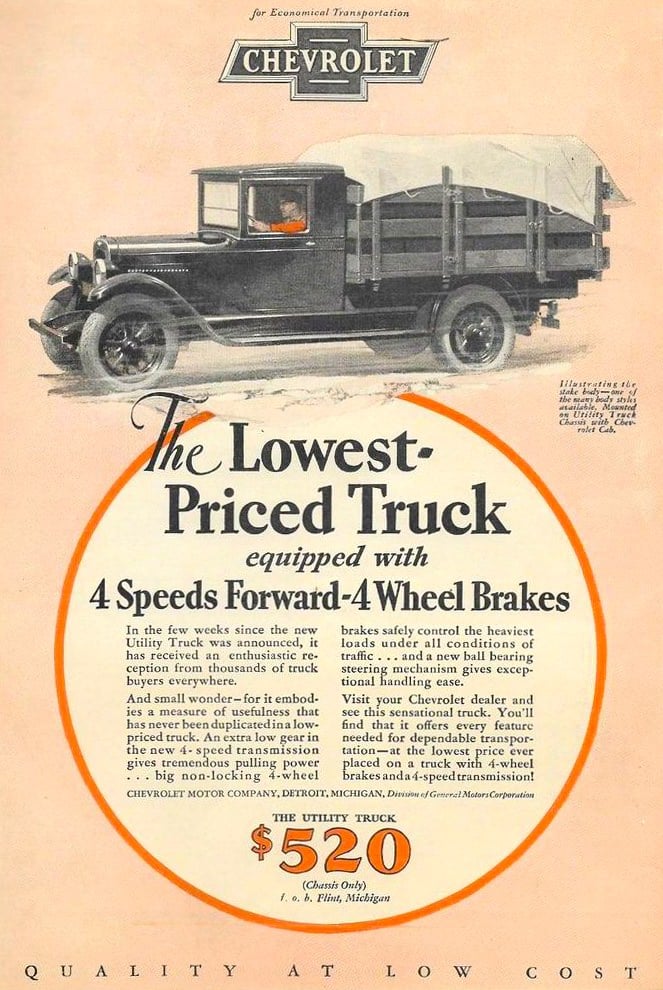
The 1928 one-ton trucks sat alongside the National Series AB passenger cars and lighter commercial vehicles in Chevrolet’s growing catalogue, but they operated under their own distinct series designations. Three one-ton truck series were produced during the 1928 model year: the LM, LO, and LP. Image courtesy of Chevrolet.
The one-ton chassis was sold in several forms, as a bare chassis with fenders, running boards, radiator, and hood, as a chassis-and-cowl unit, or as a complete chassis with cowl and closed cab. Fisher Body Co., General Motors’ in-house coachbuilder, produced the enclosed cabs.
Most truck sales in this period were for the bare chassis, with the buyer or dealer sourcing a body from third-party builders like Hercules, Martin Parry, and Mifflinburg.
The range of available body types was broad and included stake beds, panel deliveries, canopy express bodies, coal trucks with flared sides, insulated ice trucks, fuel tankers, dump trucks, and even hearses and ambulances built by J.W. Henney of Freeport, Illinois.
The 1928 Chevrolet “Gypsy” Camper Wagon Shown Here
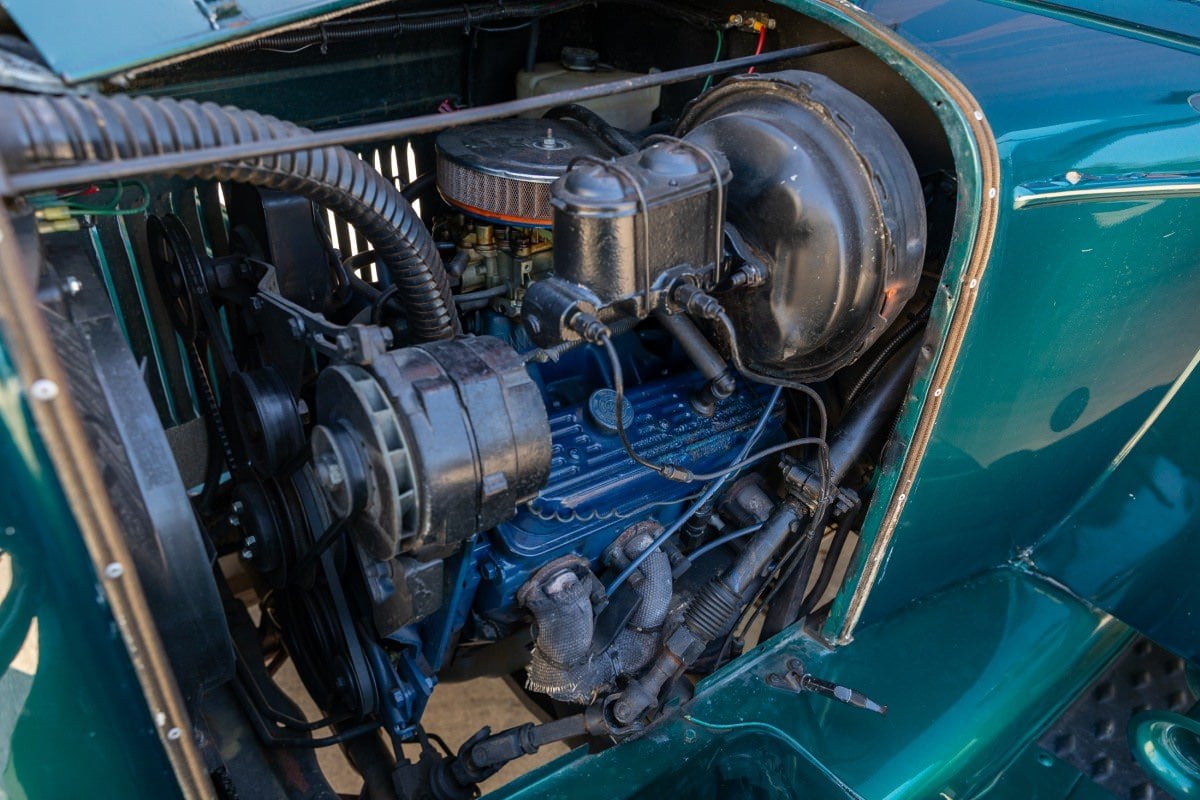
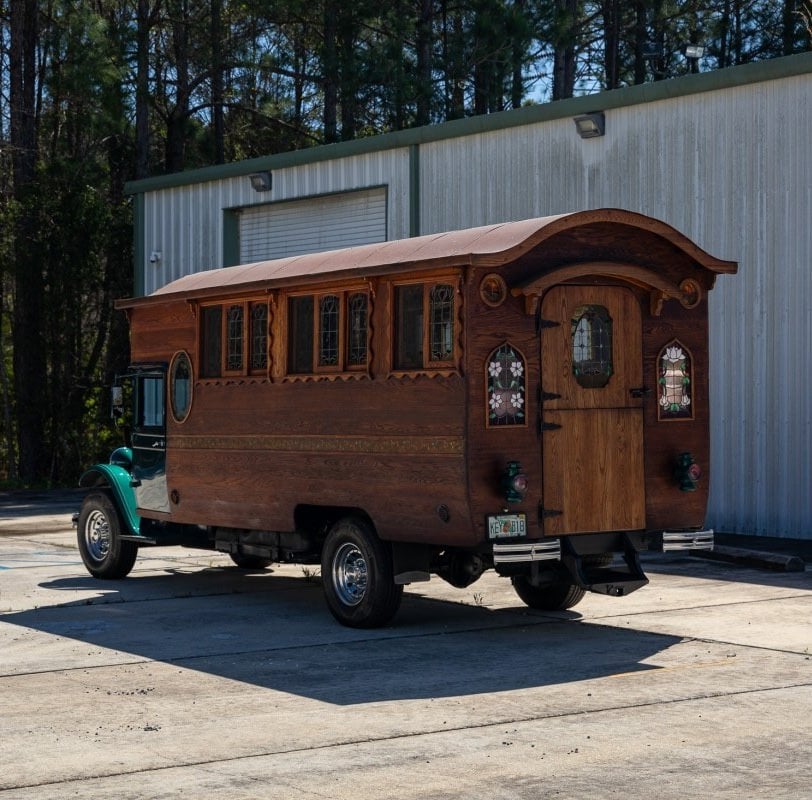
The 1928 Chevrolet “Gypsy” Camper Wagon you see here is one of the most unusual campers we’ve ever featured on Silodrome. It has now been re-powered by a more modern Chevrolet 4.3 liter V6 mated to a 4-speed automatic transmission, allowing it to be used in modern traffic with no major difficulties.
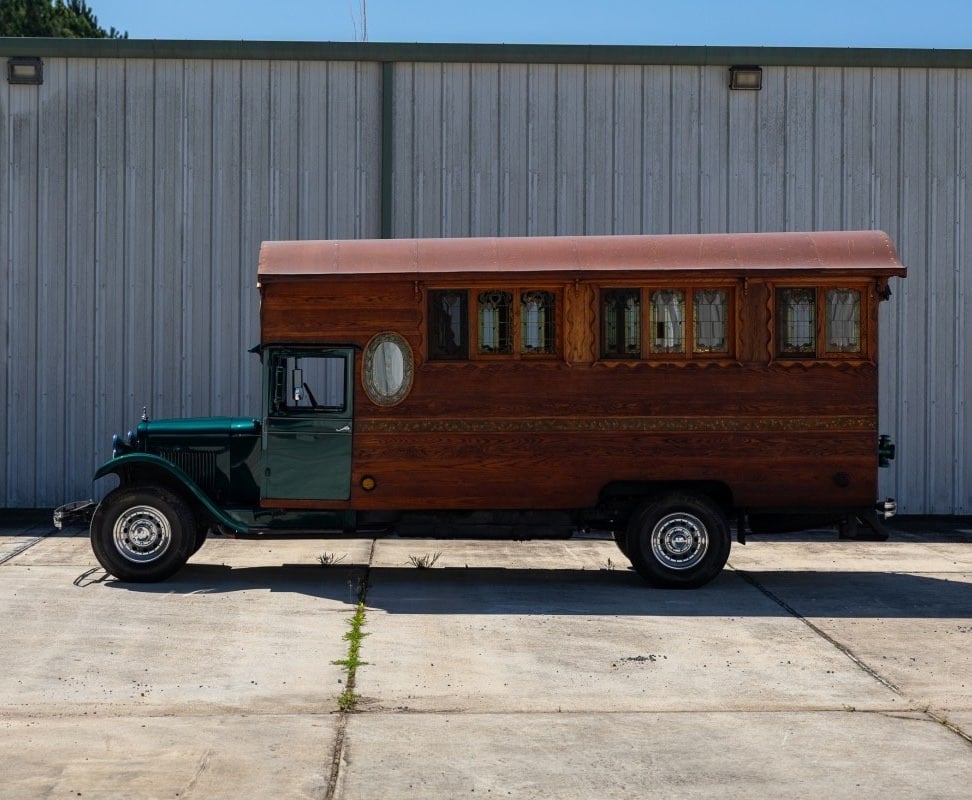
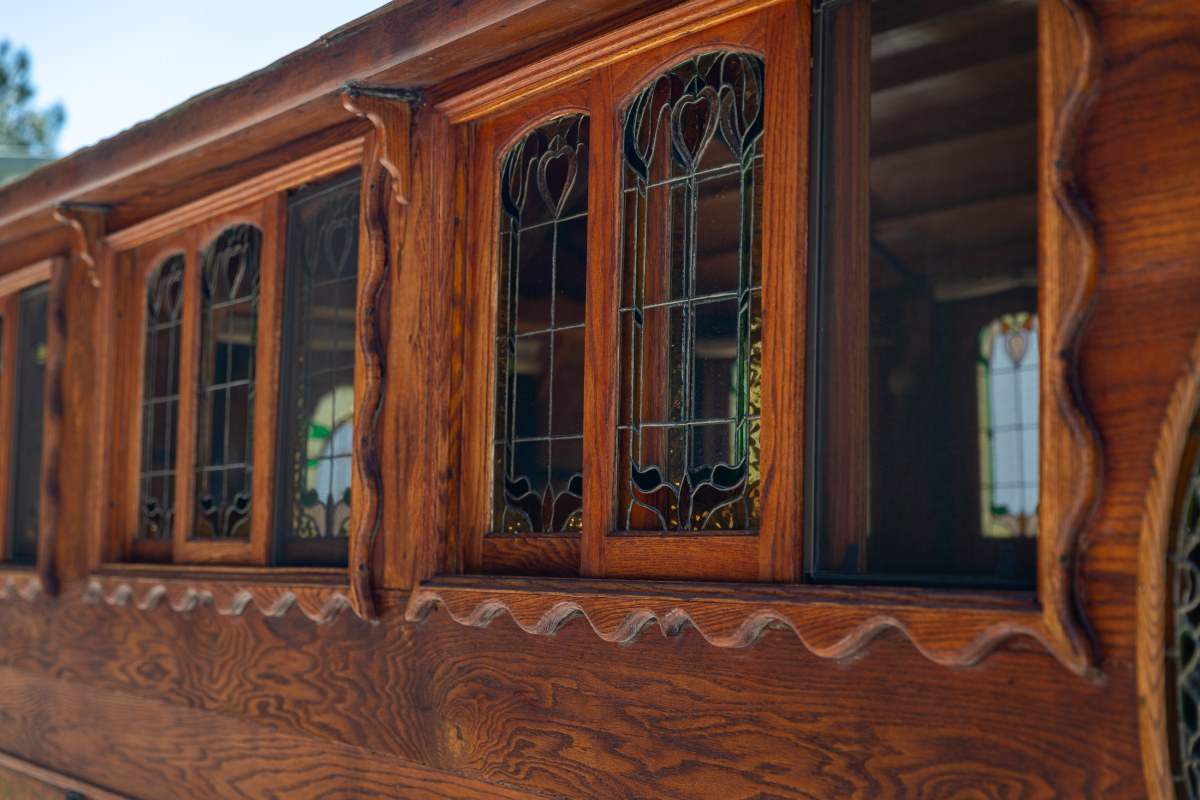
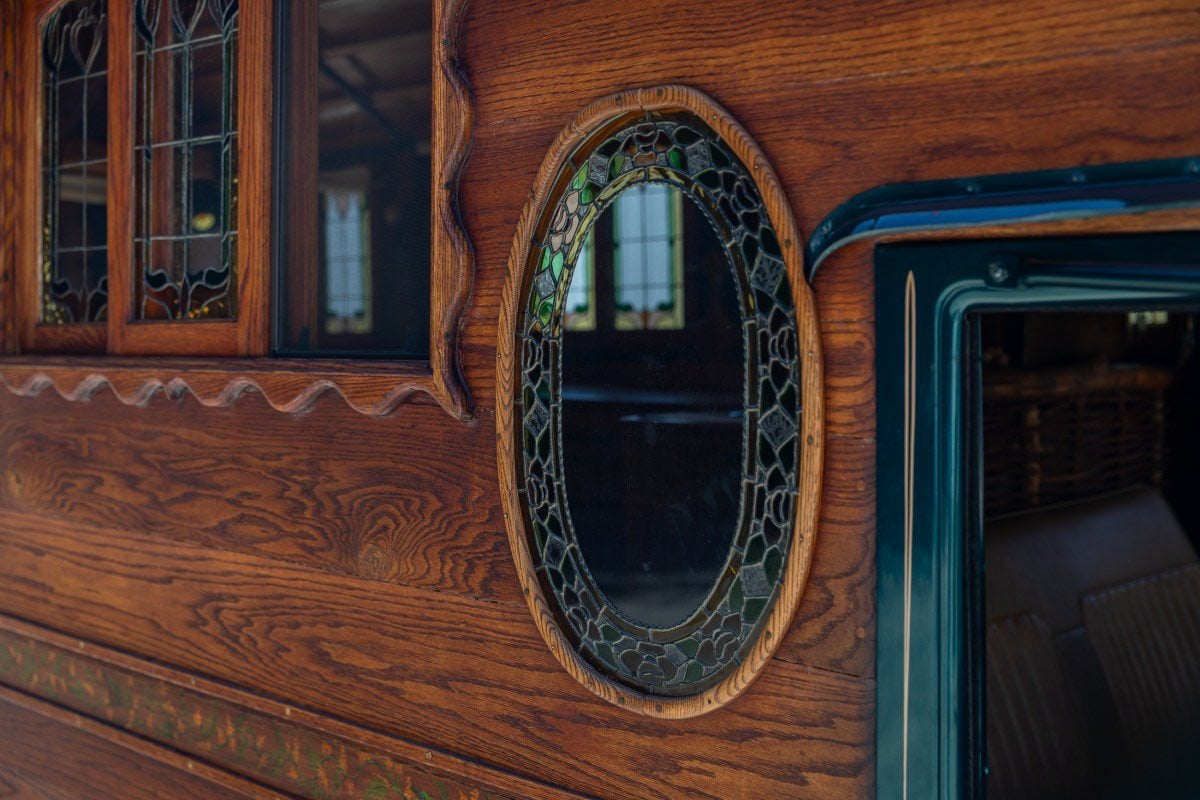
A new rear camper section has been built running from the cab right to the end of the vehicle, it’s mostly made from wood with a copper-looking curved roof, decorative trim down the sides, ample stained glass windows, and rear two-piece barn doors.
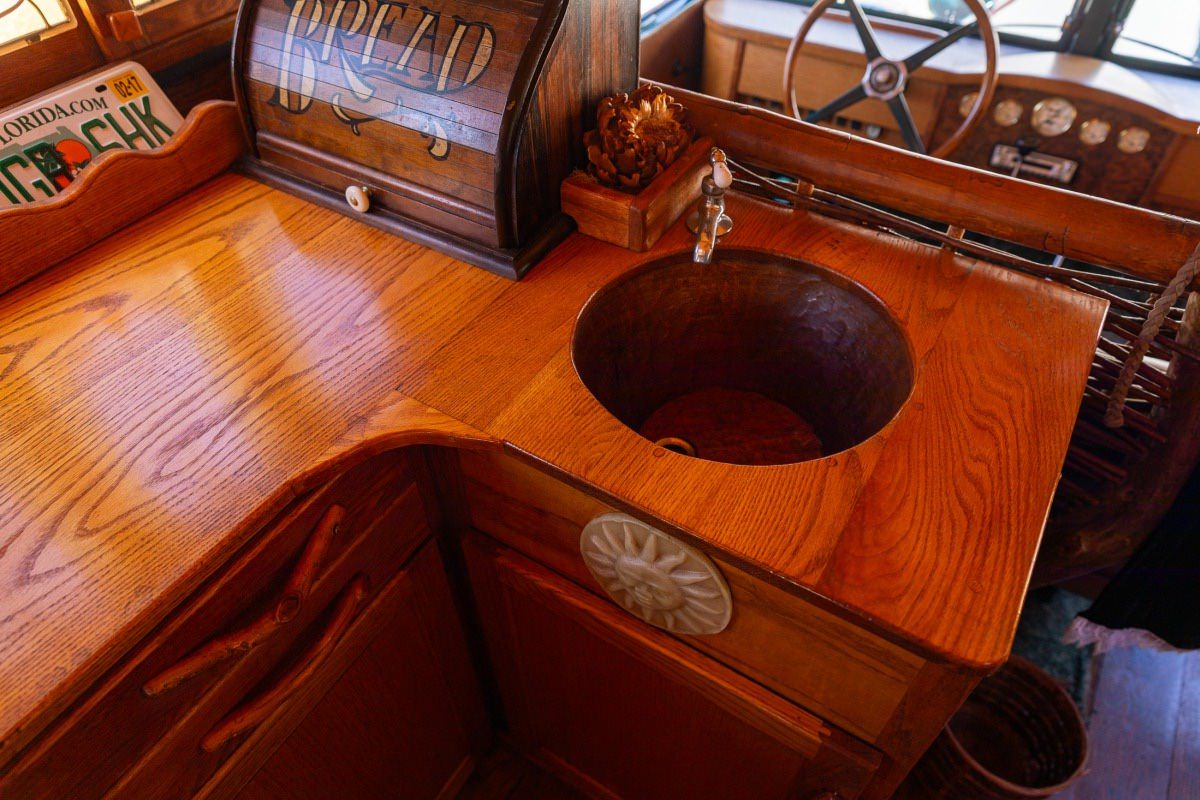
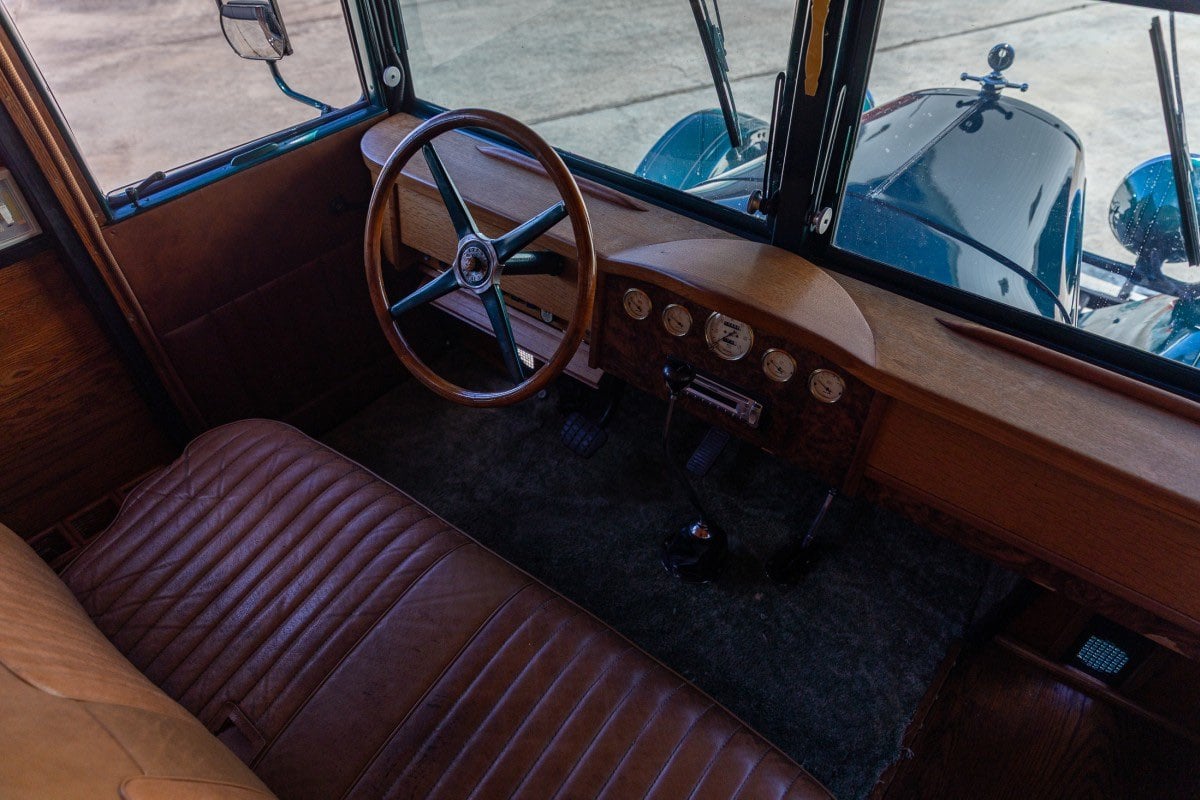
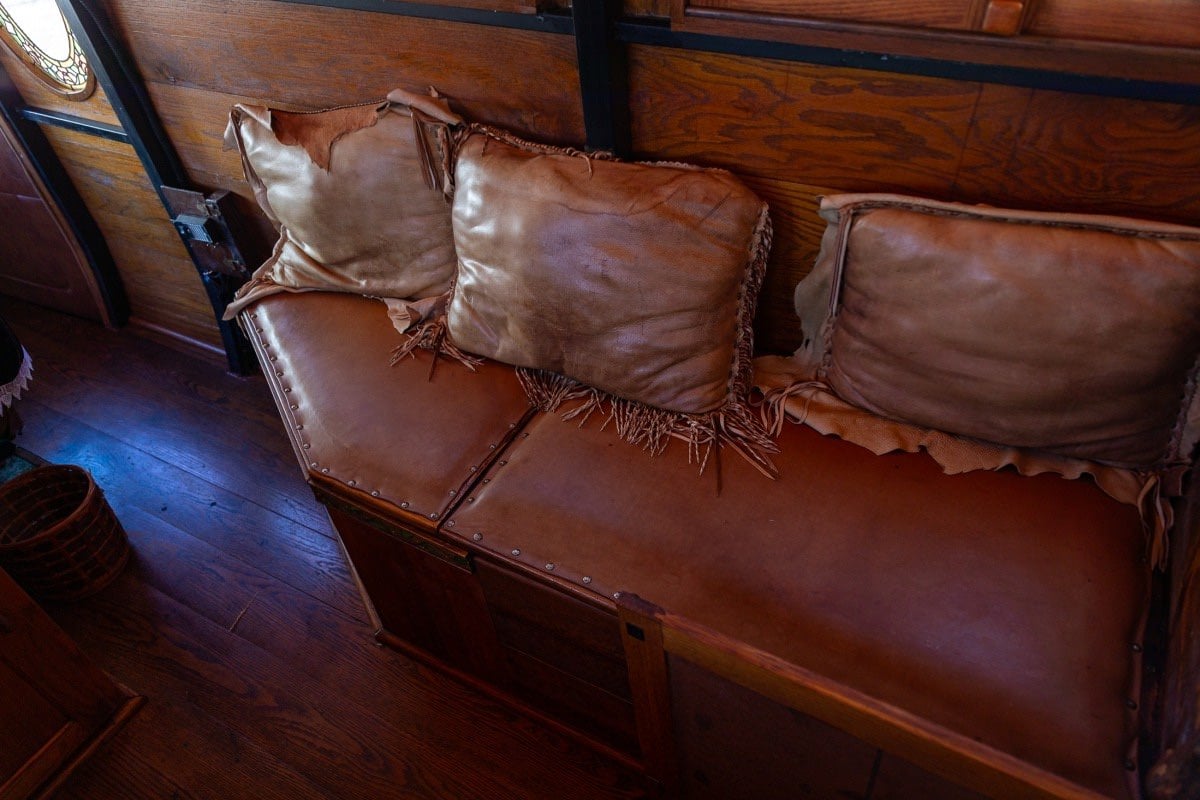
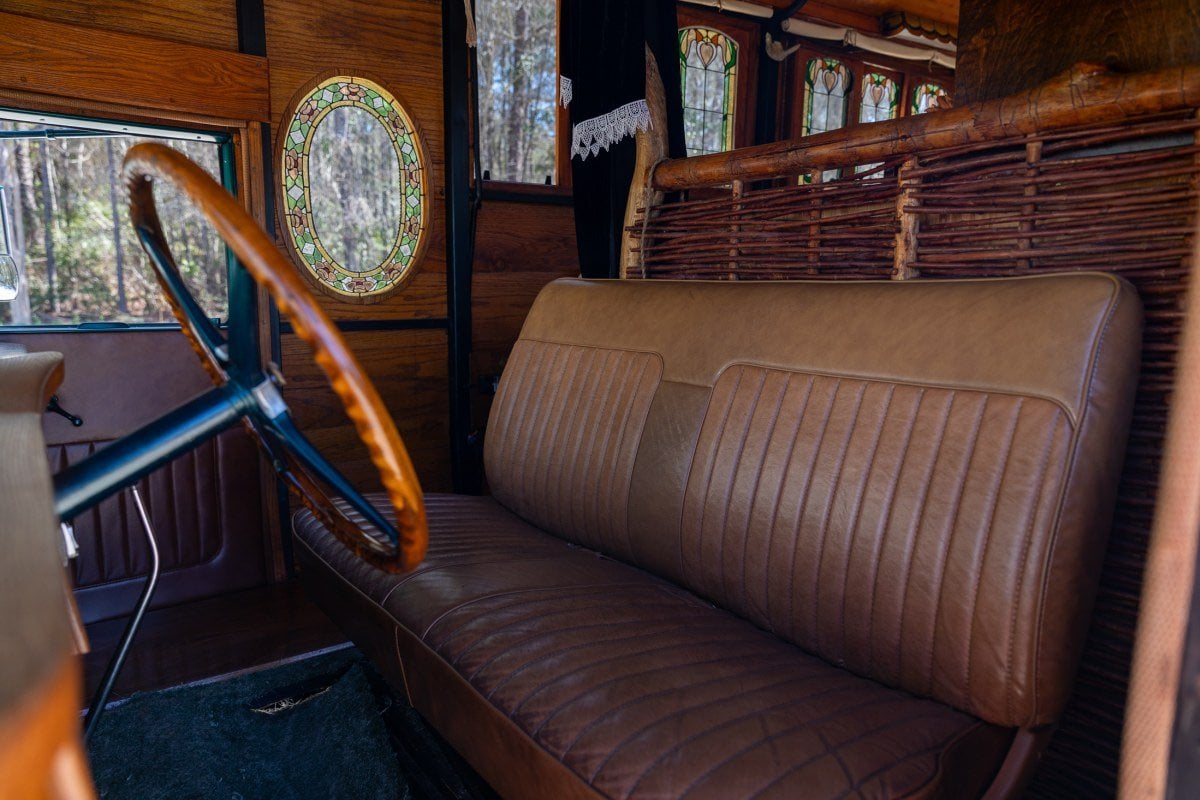
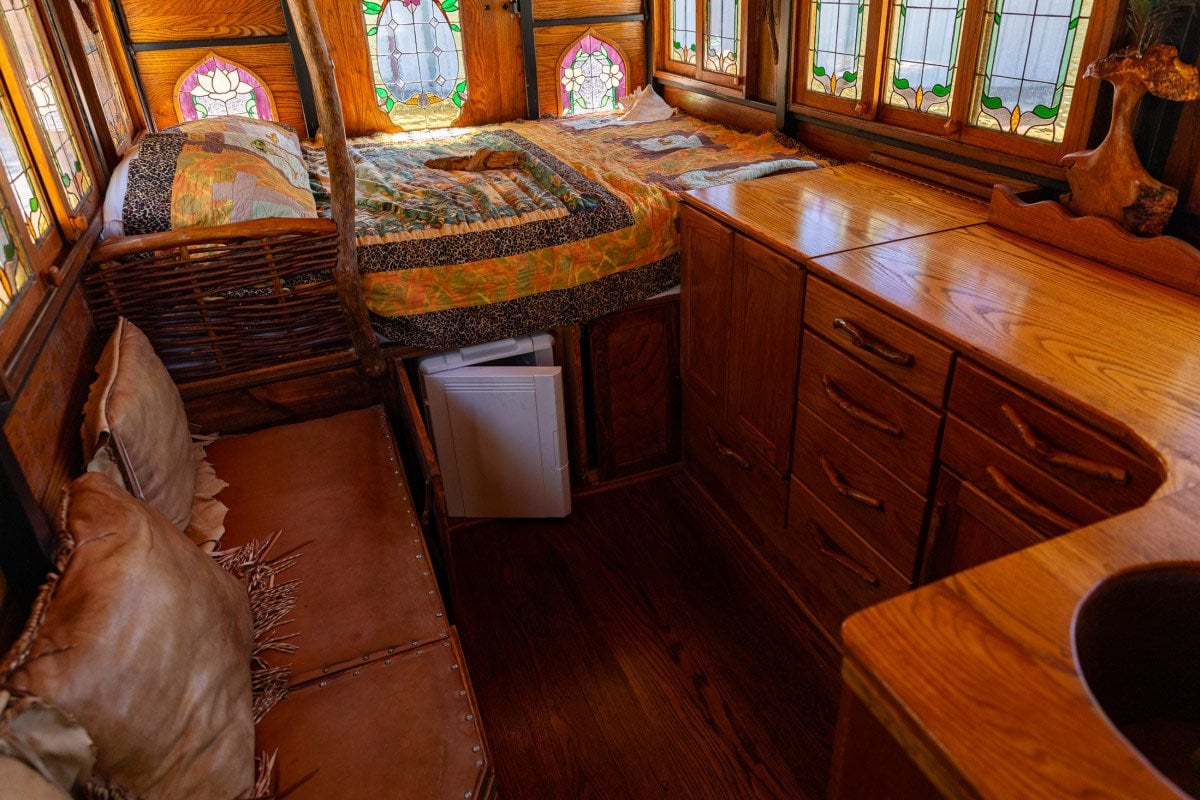
Inside you’ll find seating for two up front and a walnut dashboard with all the key gauges you need in period-correct style. There is a woven rattan-style separator behind the seat, and in the rear living quarters you’ll find a double bed, a kitchenette with a sink and running water and a fridge, and ample cupboard and drawer space.
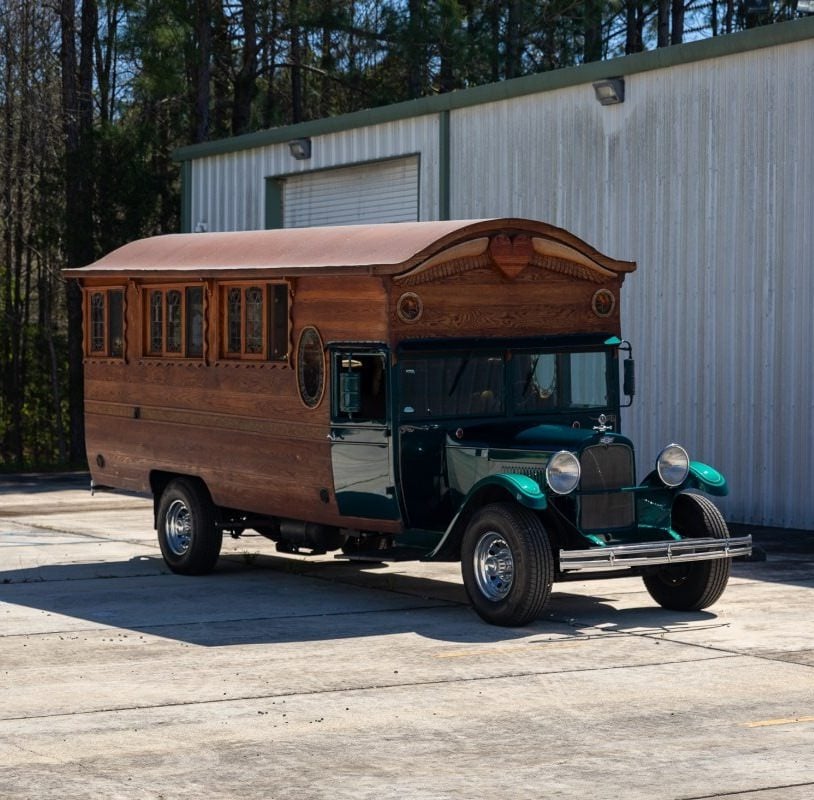
The 1928 Chevrolet “Gypsy” Camper Wagon you see here is one of the most unusual campers we’ve ever featured on Silodrome. It has now been re-powered by a more modern Chevrolet 4.3 liter V6 mated to a 4-speed automatic transmission, allowing it to be used in modern traffic with no major difficulties.
Taking a look under the hood, you realize that the fitment of a V6 over a V8 was a sensible choice, as there isn’t a whole lot of room – the truck was originally powered by a relatively small inline-four after all.
This unusual camper is now due to roll across the auction block with Mecum on the 10th of April and you can visit the listing here if you’d like to read more about it or register to bid.

Images courtesy of Mecum + Chevrolet

Articles that Ben Branch has written have been covered on CNN, Popular Mechanics, Smithsonian Magazine, Road & Track Magazine, the official Pinterest blog, the official eBay Motors blog, BuzzFeed, Autoweek Magazine, Wired Magazine, Autoblog, Gear Patrol, Jalopnik, The Verge, and many more.
Silodrome was founded by Ben back in 2010, in the years since the site has grown to become a world leader in the alternative and vintage motoring sector, with well over a million monthly readers from around the world and many hundreds of thousands of followers on social media.