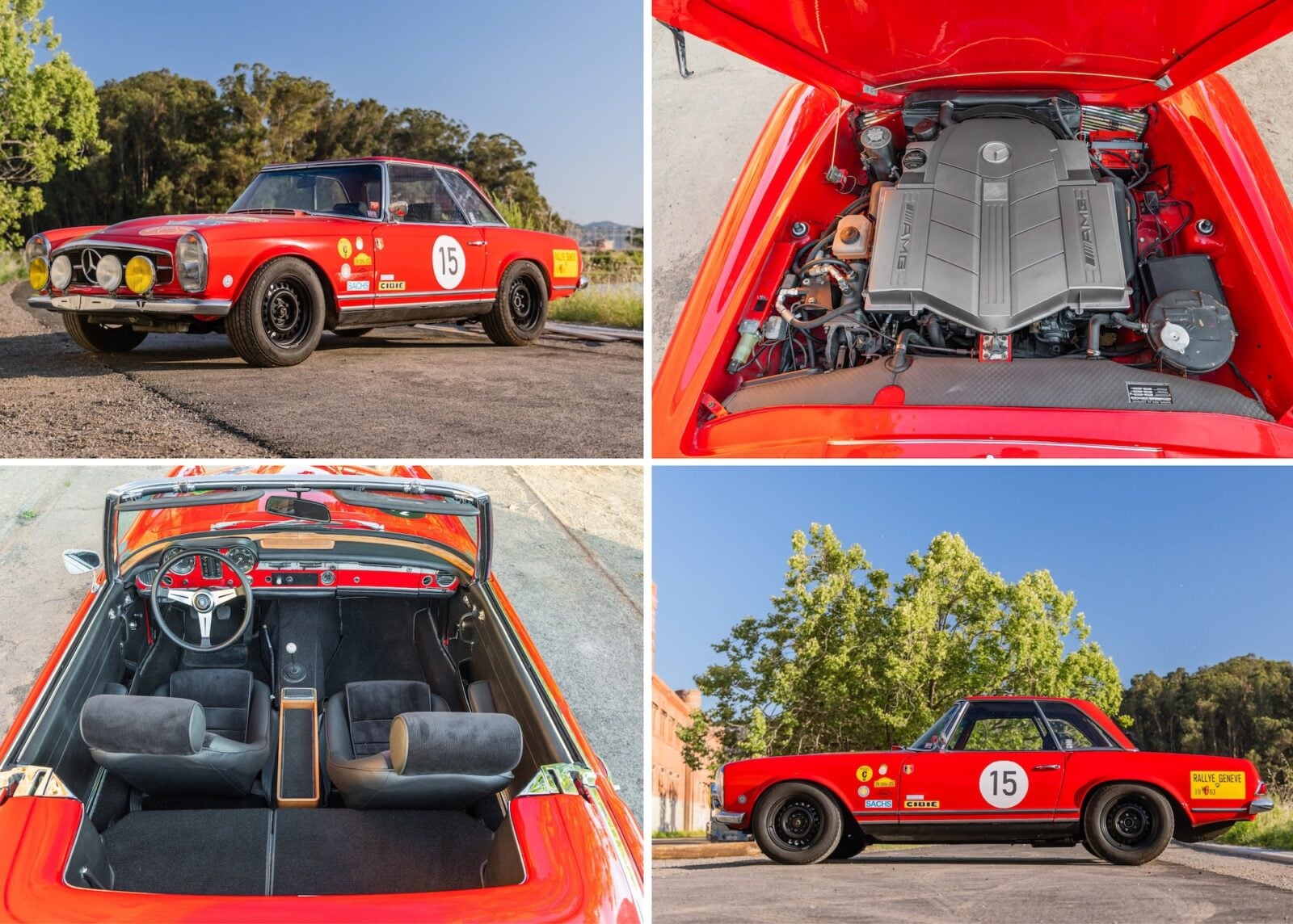
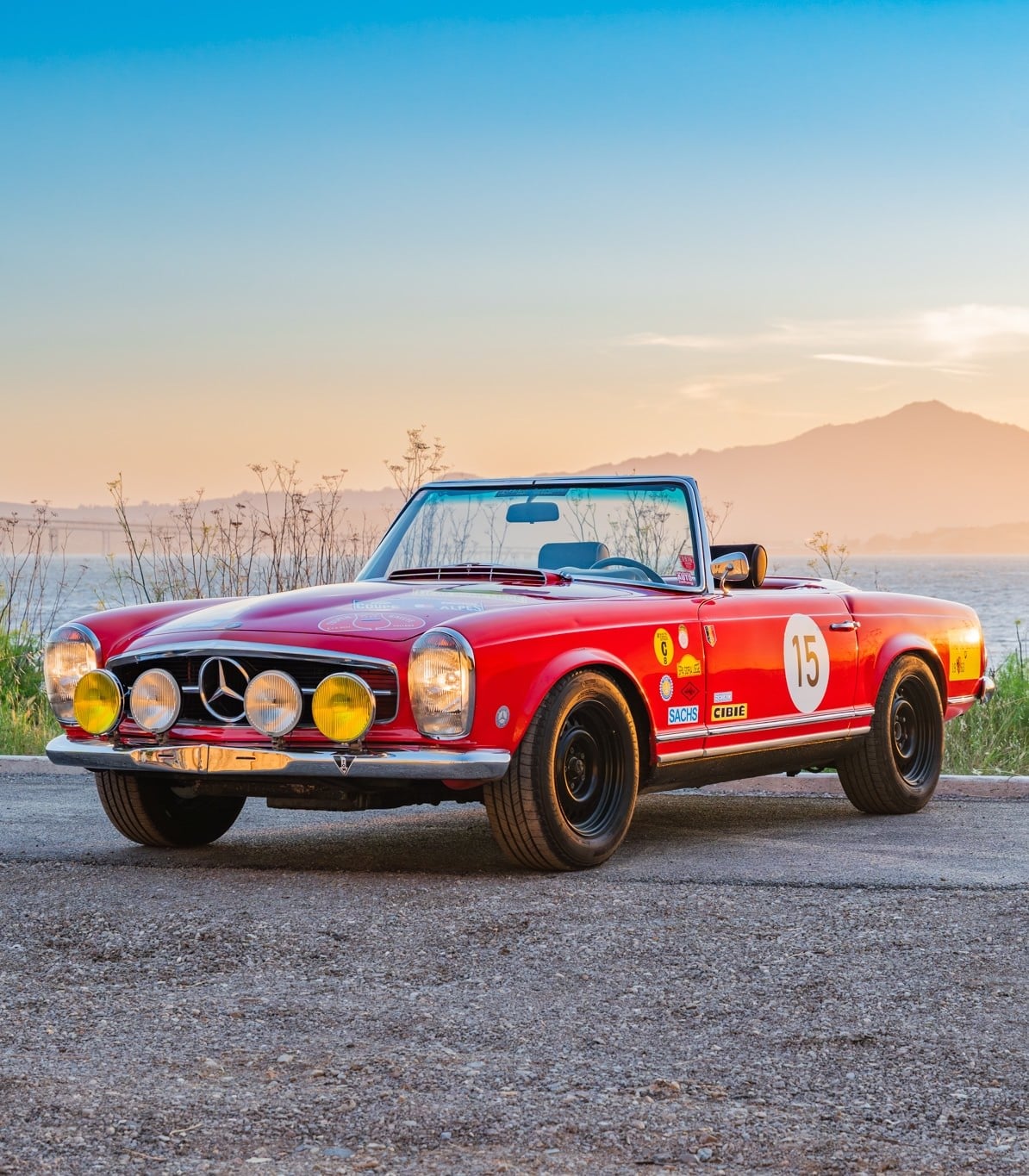
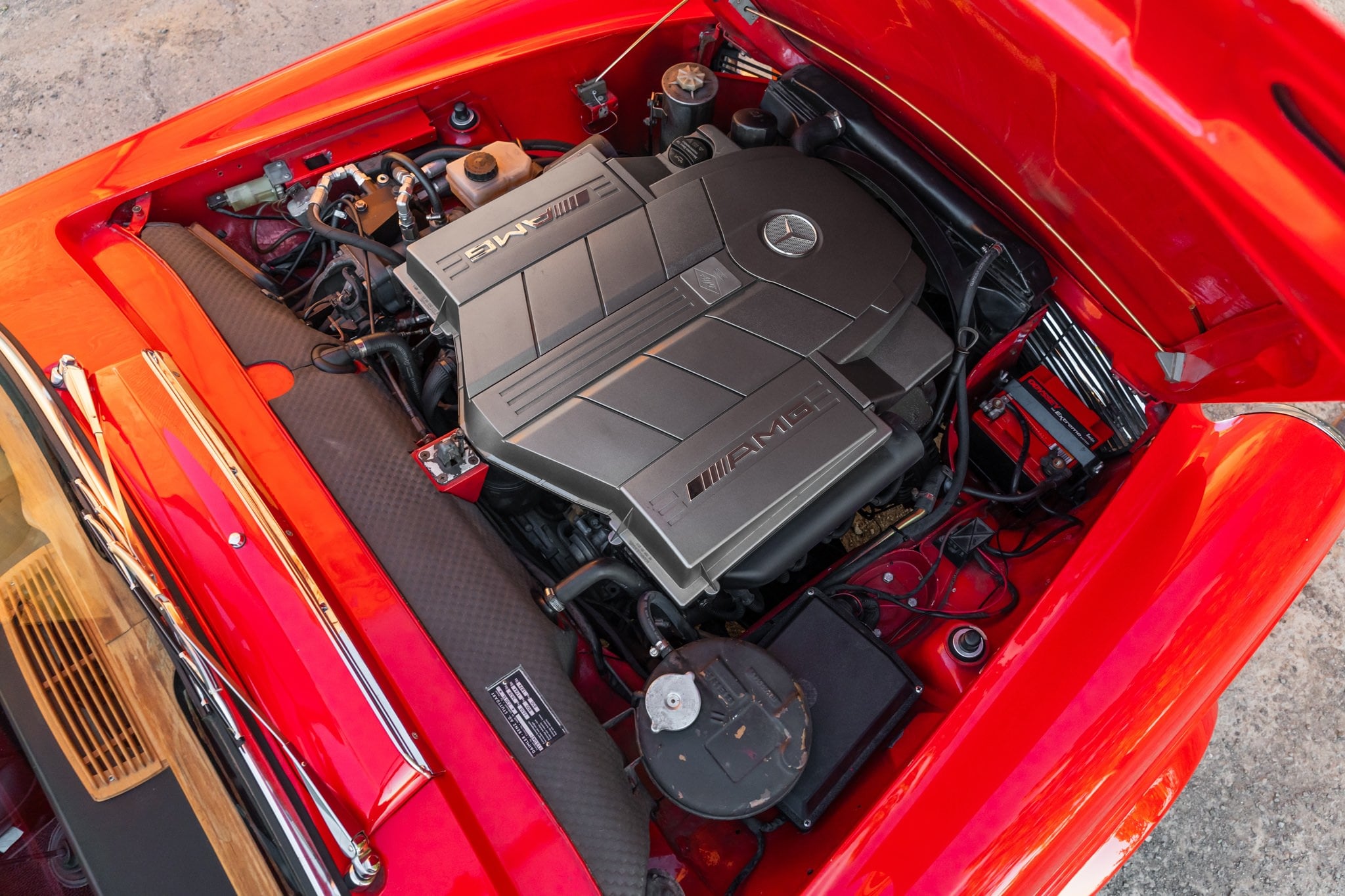
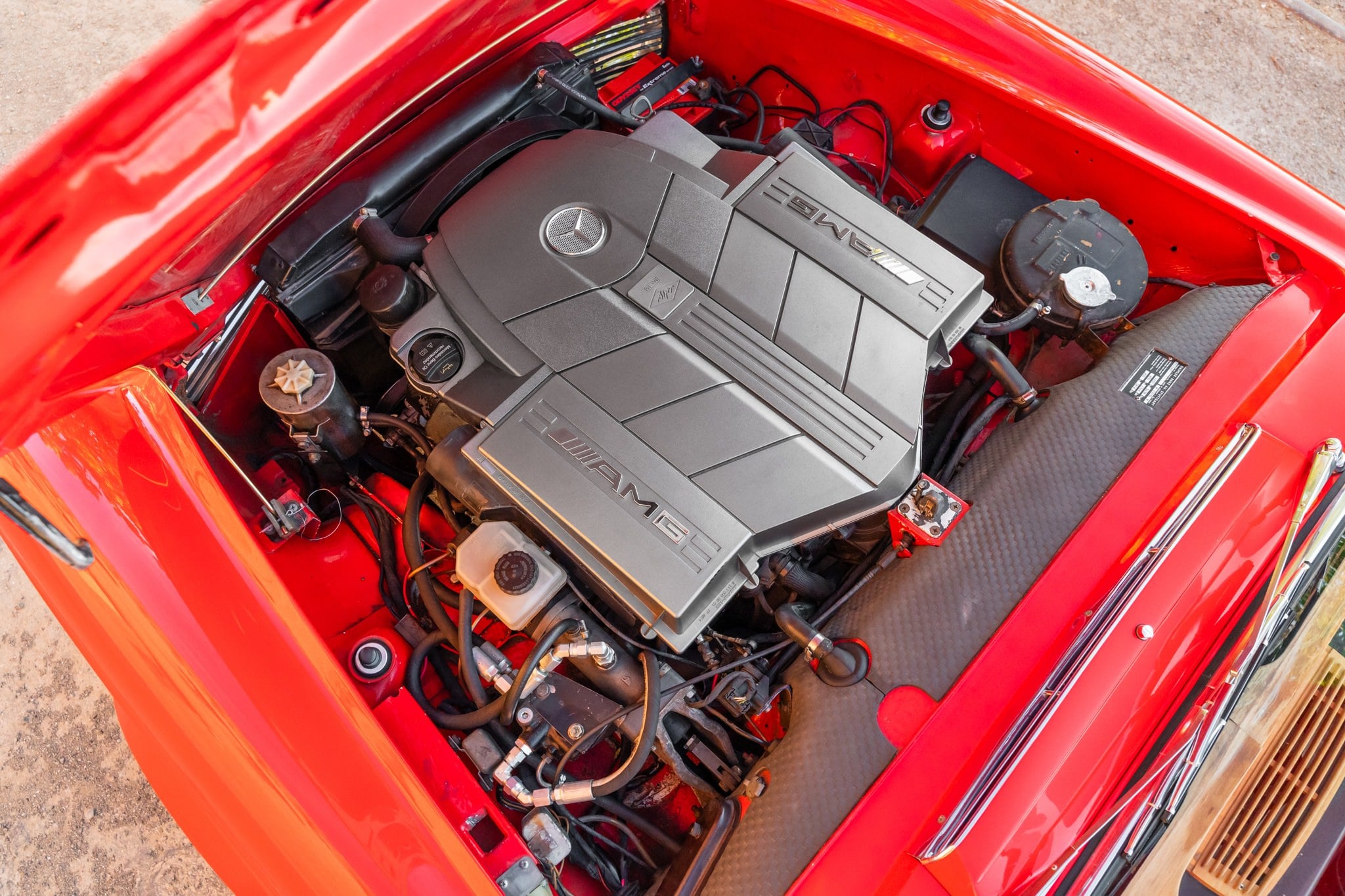
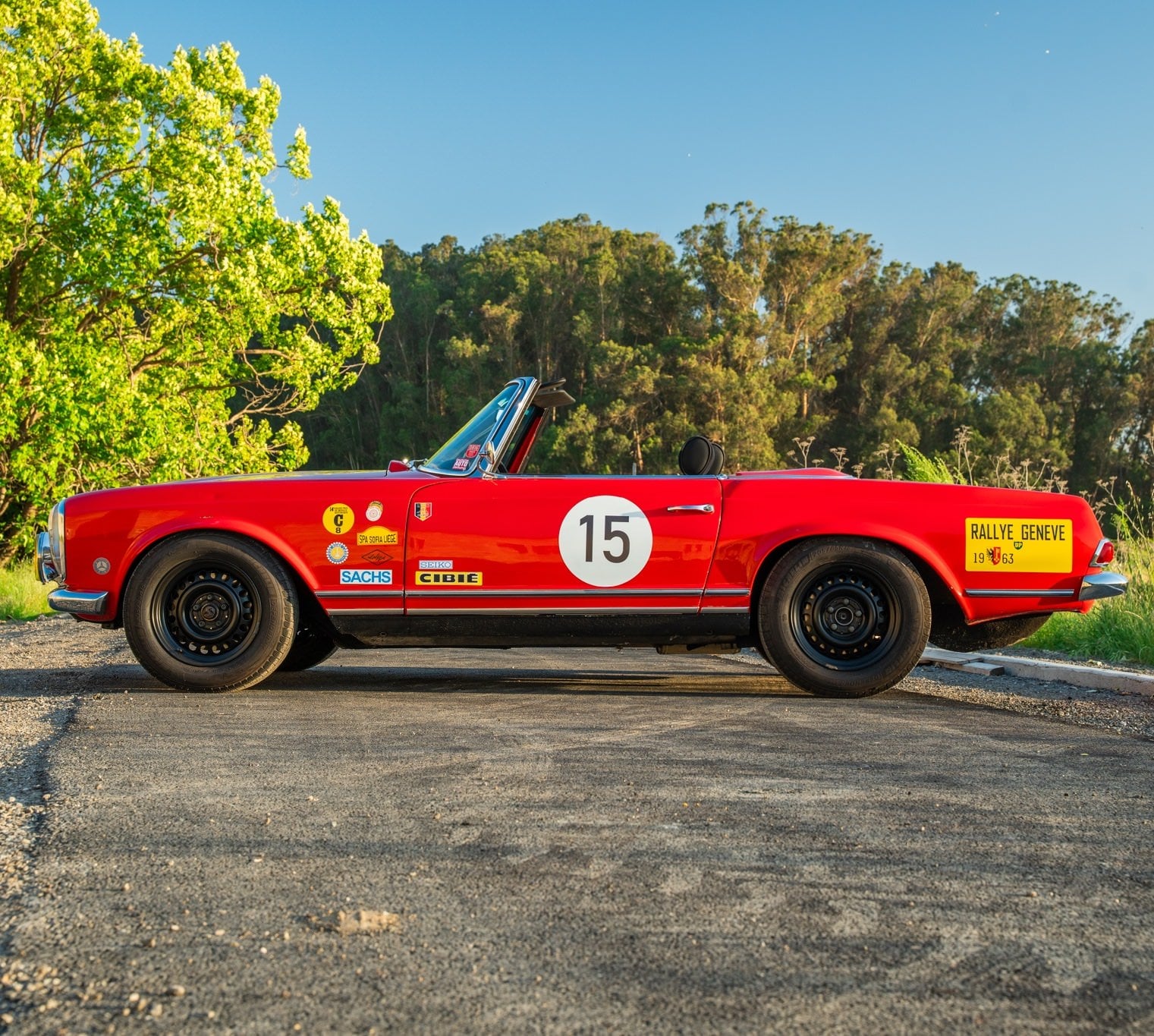
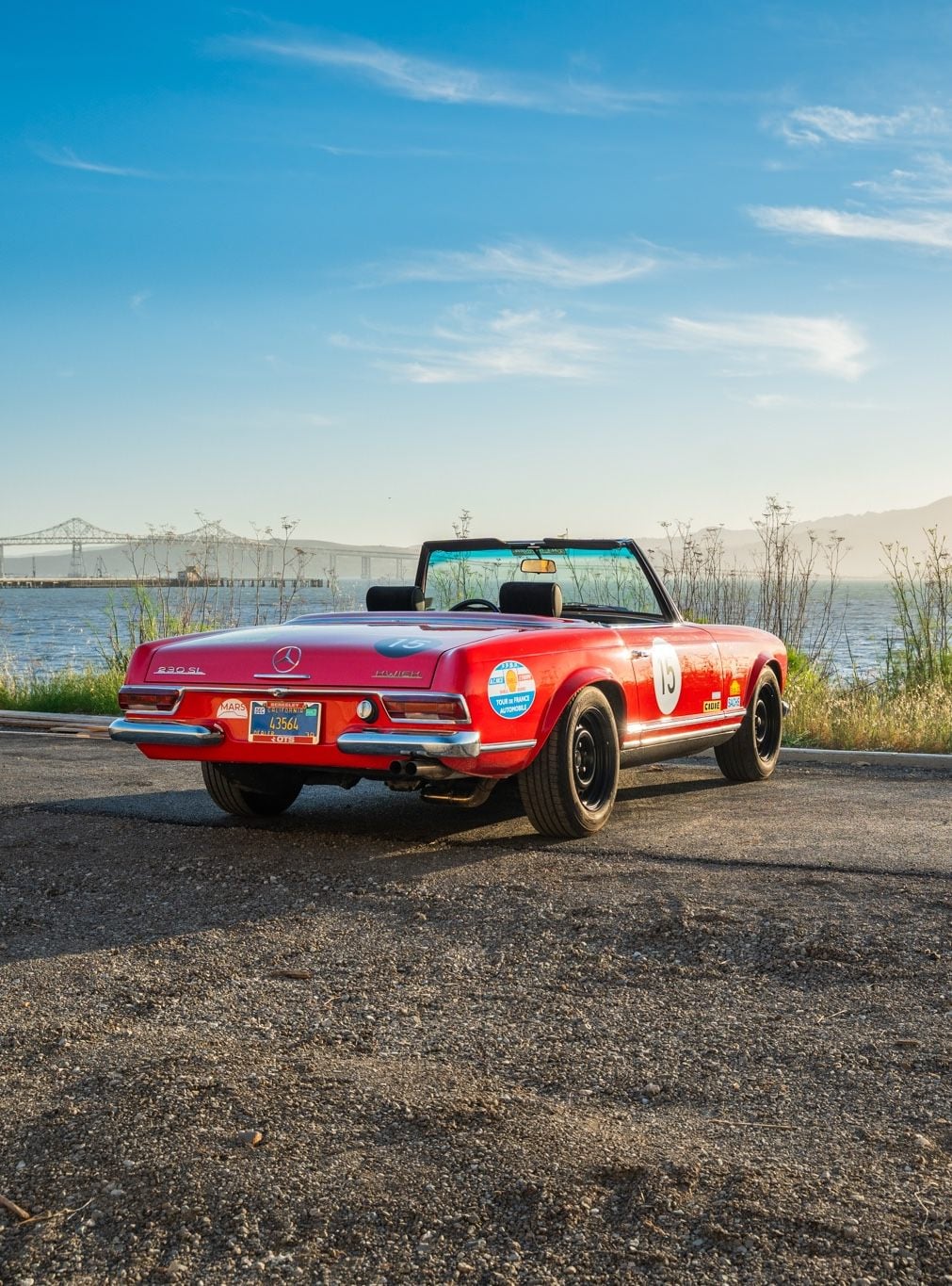
This is a 1963 Mercedes-Benz 230SL that’s now considerably faster than it was when it left the factory, largely thanks to the fact that it’s now powered by an S55 AMG V8 sending power back through a 6-speed manual transmission.
The 230SL originally made 148 bhp when new, this one is now putting out 354 bhp, so it’s a night and day difference in performance. Unsurprisingly, the suspension and brakes have been upgraded to match.
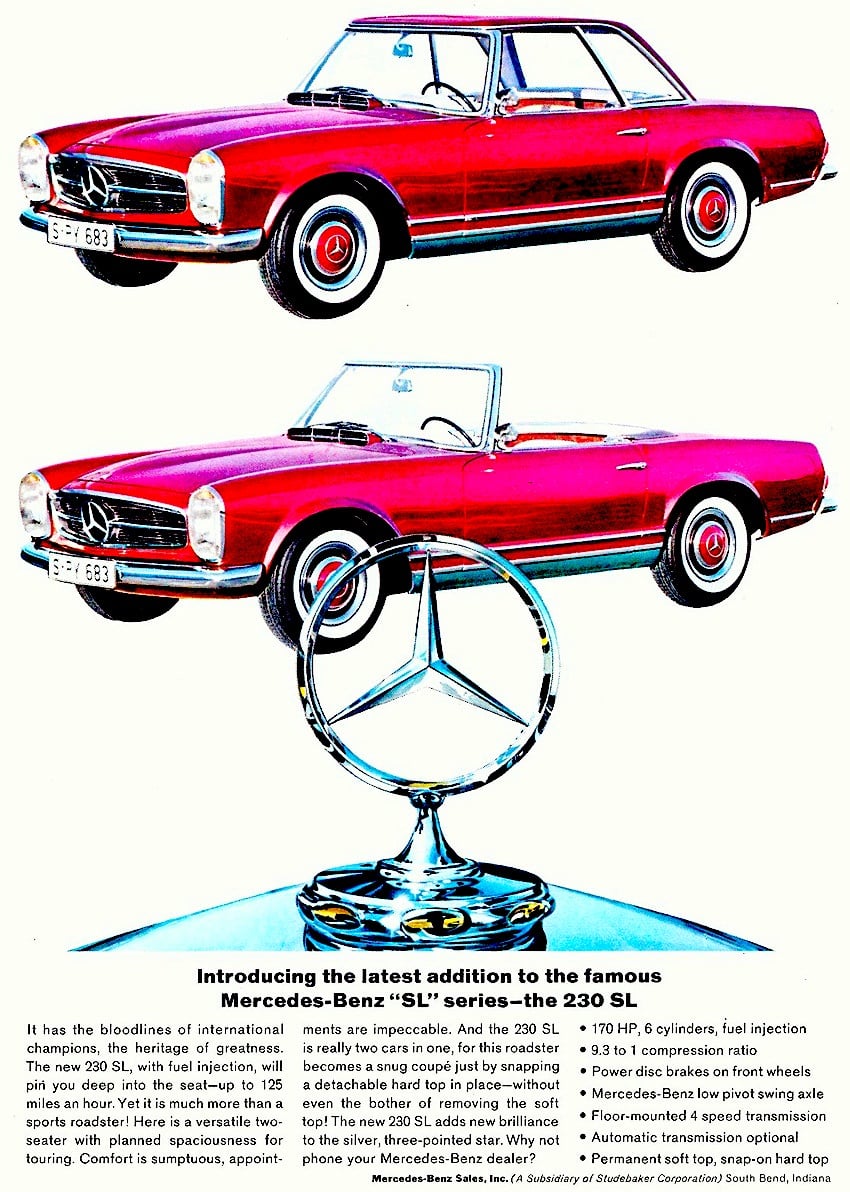
 The 230SL (W113) was the first of what came to be called the Pagoda generation of Mercedes, first introduced at the Geneva Motor Show in March of 1963 to replace both the 300SL and 190SL in a single swoop. Image courtesy of Mercedes-Benz.
History Speedrun: The Mercedes-Benz 230SL
The 230SL (W113) was the first of what came to be called the Pagoda generation of Mercedes, first introduced at the Geneva Motor Show in March of 1963 to replace both the 300SL and 190SL in a single swoop.
Development was overseen by technical director Fritz Nallinger, chief engineer Rudolf Uhlenhaut, and head of styling Friedrich Geiger, with Paul Bracq and Béla Barényi responsible for the design. The patented concave hardtop earned the car its long-lasting nickname.
Although Mercedes had withdrawn from racing after the 1955 Le Mans disaster, the company continued to quietly back a select number of rally efforts. The 230SL’s most famous competition result came less than five months after its debut, when works driver Eugen Böhringer and co-driver Klaus Kaiser took the overall win in the 5,500 kilometer Spa–Sofia–Liège marathon rally between August the 27th and 31st, 1963.
Their pre-production red 230SL covered the route from Belgium to Bulgaria and back across 90 hours of near-continuous driving on what were often unpaved Alpine and Balkan roads. Of 129 starters, only 20 teams reached the finish.
This single result helped establish the W113’s sporting credentials almost immediately, and the original Böhringer car was eventually located in the early 2010s after years of having been presumed destroyed. A recreated example is now in the permanent collection of the Mercedes-Benz Museum in Stuttgart.
Interest in transplanting a V8 into the W113 chassis started early, in fact, Mercedes-Benz itself experimented with V8 conversions during the car’s production run. In the summer of 1967, engineer Erich Waxenberger tested a W113 mule at the Nürburgring fitted with the 6.3 liter M100 V8 from the Mercedes-Benz 600, which would later also be used in the 300SEL 6.3.
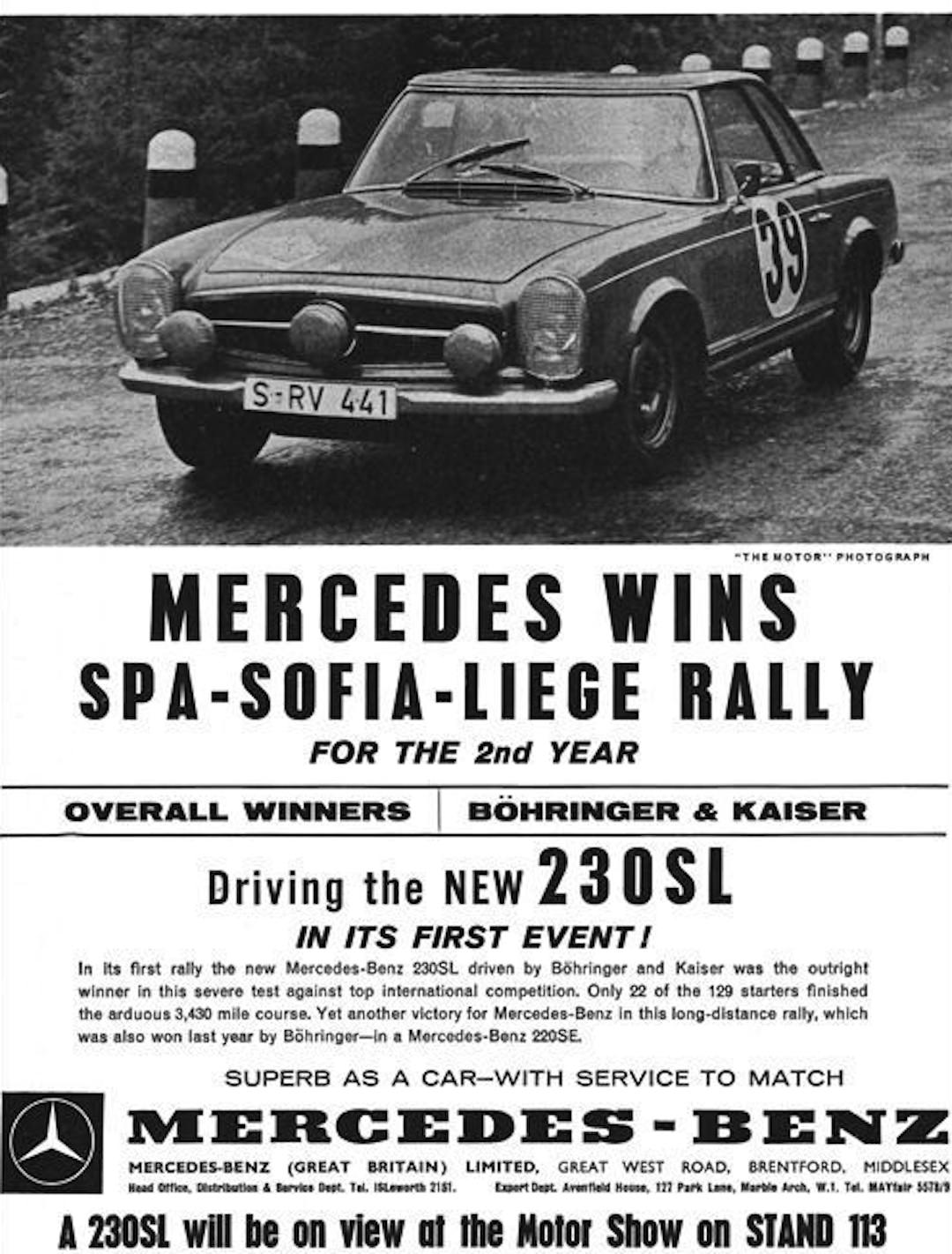
The 230SL’s most famous competition result came less than five months after its debut, when works driver Eugen Böhringer and co-driver Klaus Kaiser took the overall win in the 5,500 kilometer Spa–Sofia–Liège marathon rally between August the 27th and 31st, 1963. Image courtesy of Mercedes-Benz.
The conversion resulted in a huge performance boost, but it came at the cost of nose-heaviness that seriously compromised handling. A more obvious candidate would have been the M116 3.5 liter SOHC V8, introduced in 1969 in the 300SEL 3.5 and 280SE 3.5 and later rolled out to additional W108/109 and W111 models.
The M116 was light enough to have been a practical fit, but Mercedes-Benz never built a factory V8 SL on the W113 chassis. That said, the Pagoda’s successor, the R107, would have V8 power right from its launch in 1971.
The Kwiek Classics Build Shown Here
Kwiek Classics was founded by Matt Kwiek in Nashville in December of 2022 and it’s focused specifically on AMG drivetrain transplants into classic Mercedes-Benz, with most builds using Mercedes and/or AMG parts throughout.
The shop has worked on W108, W123, W124, W126, W201, and W202s (among others), and the M113 family has become a bit of a signature swap donor. The M113 first appeared in 1997 as Mercedes-Benz’s modular V8 replacement for the M119, sharing its basic architecture with the closely related M112 V6 introduced shortly before.
It used Alusil aluminum-silicon blocks and SOHC aluminum heads with three valves and twin spark plugs per cylinder. The engine was produced in 4.3, 5.0, and 5.4 liter versions across most of the Mercedes-Benz range for fifteen years, with AMG building the larger displacements at Affalterbach, including the 5.4 liter “55” variant used in the car shown here.
The donor engine for this car came from a 2002 S55 AMG – the 2002 model year was the last for the naturally-aspirated version of the M113 in the S55, it was capable of 354 bhp and 391 lb ft of torque.
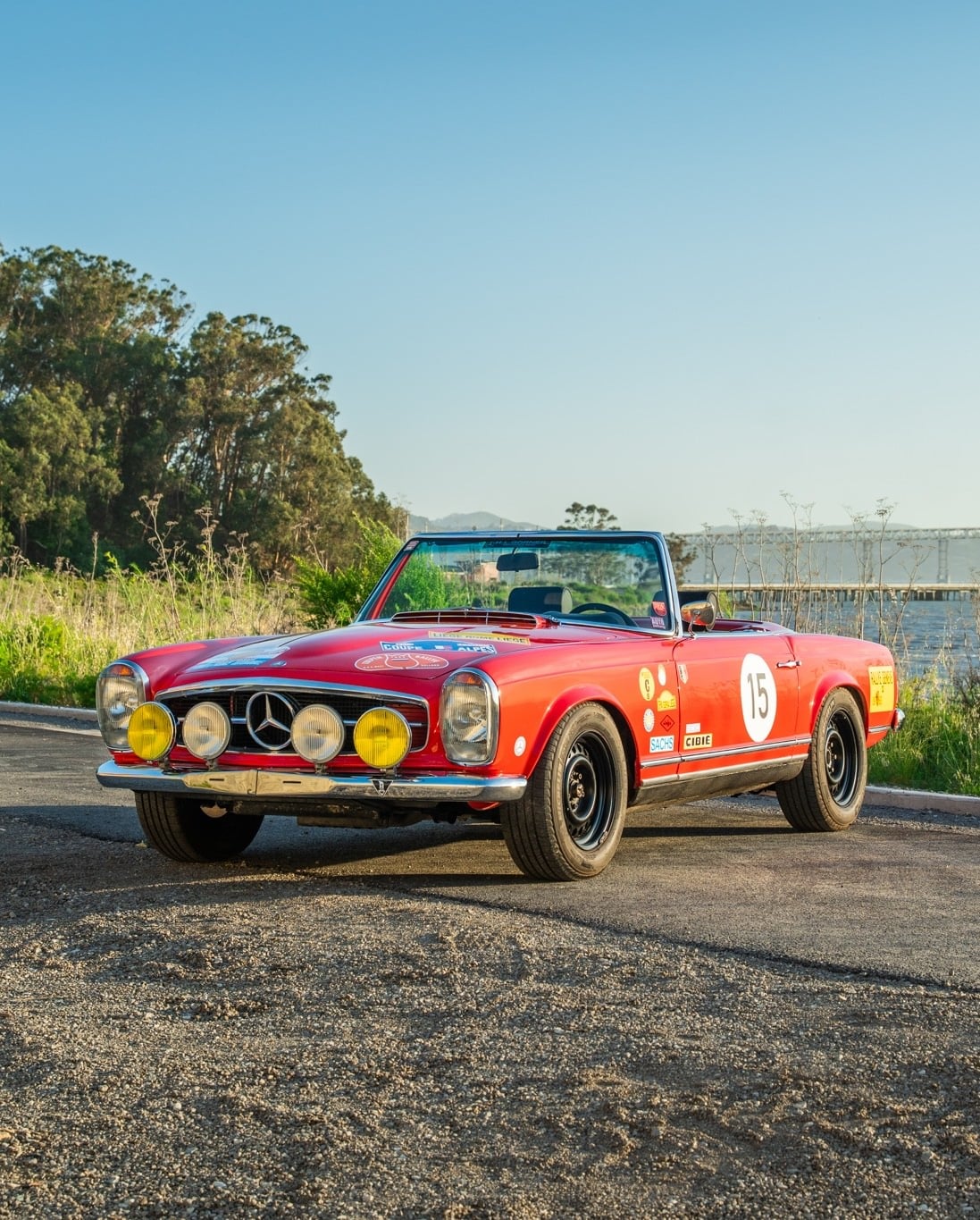
This is a 1963 Mercedes-Benz 230SL that’s now considerably faster than it was when it left the factory, thanks to the fact that it’s now powered by an S55 AMG V8 sending power back through a 6-speed manual transmission.
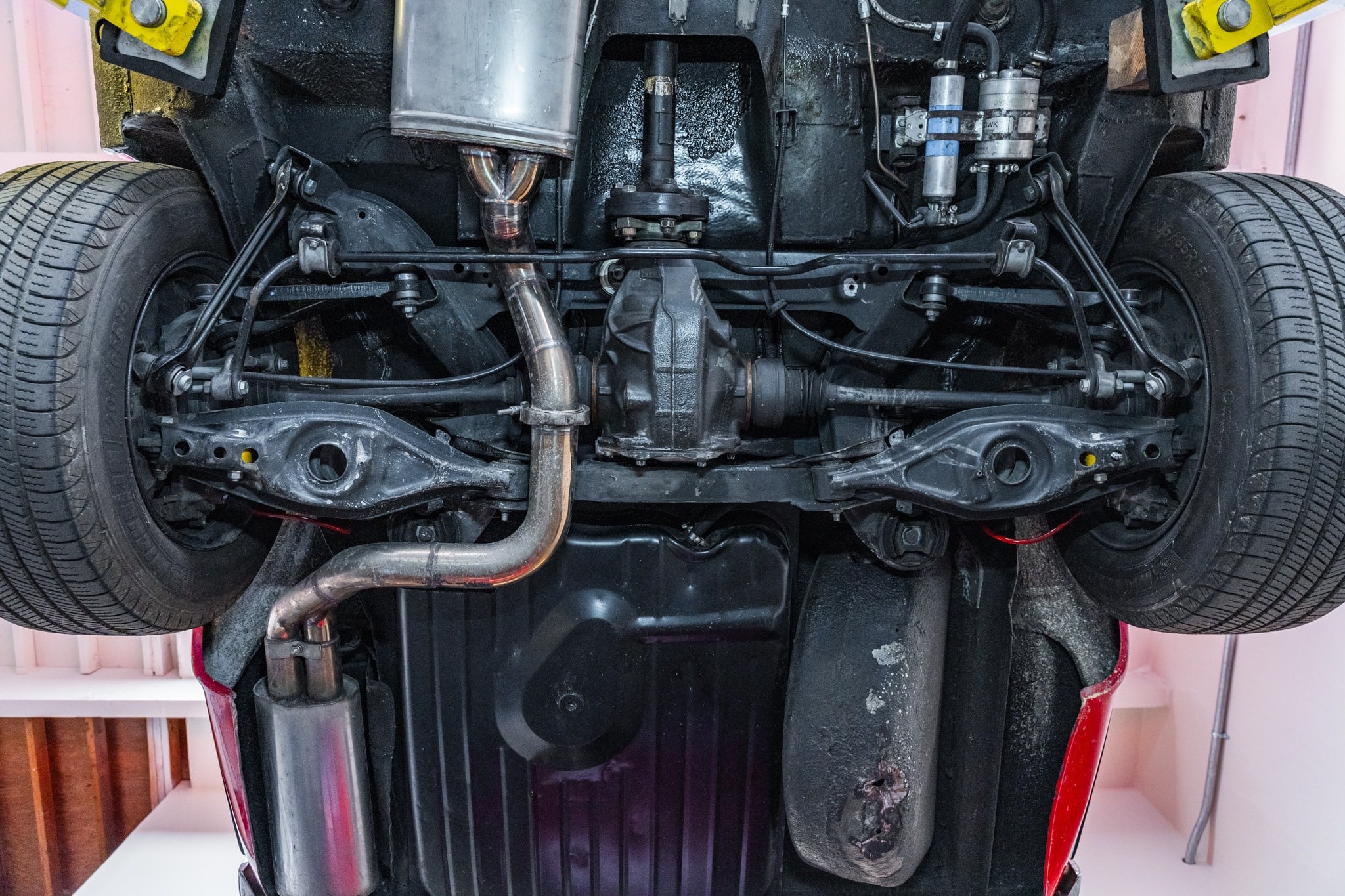
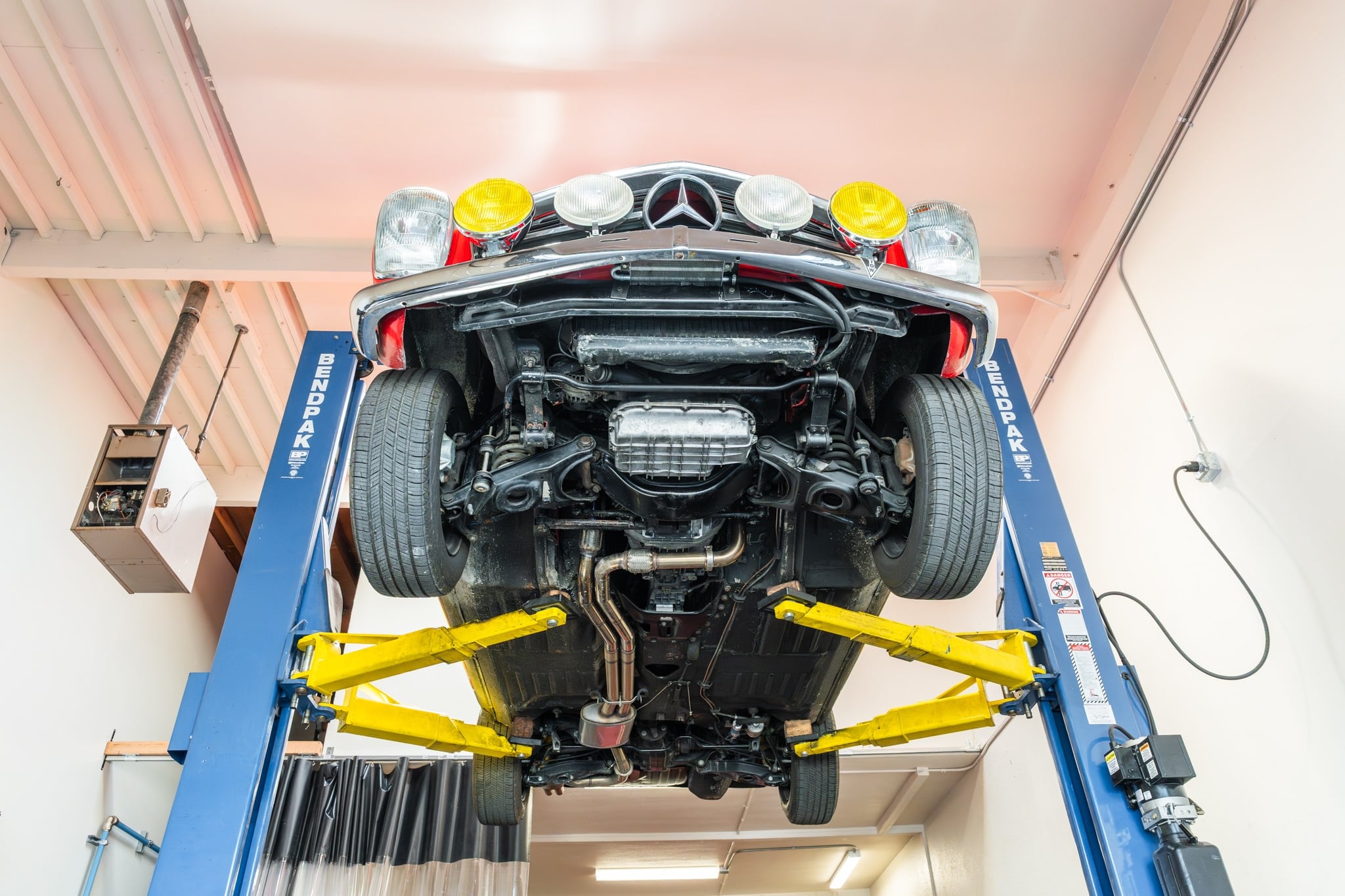
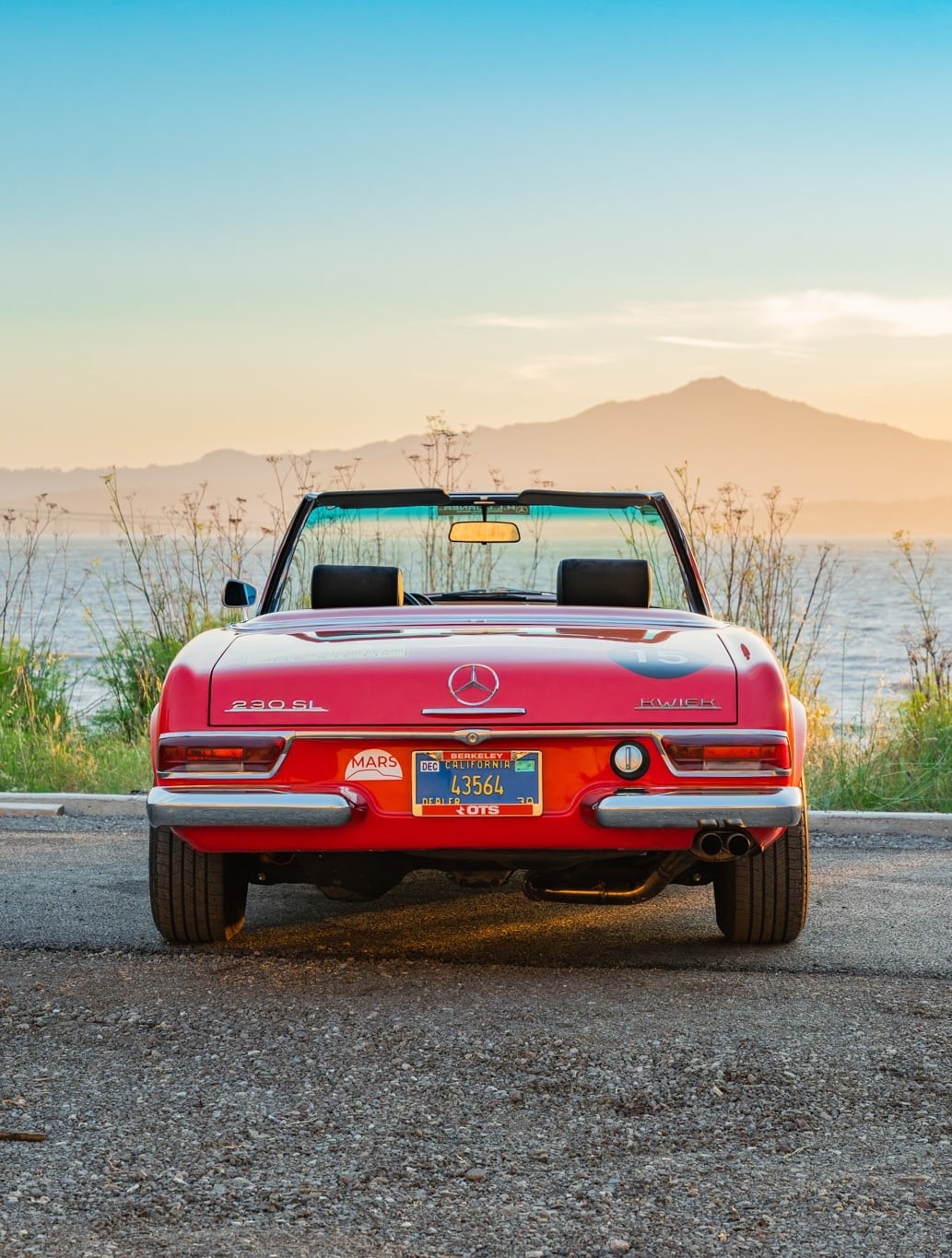
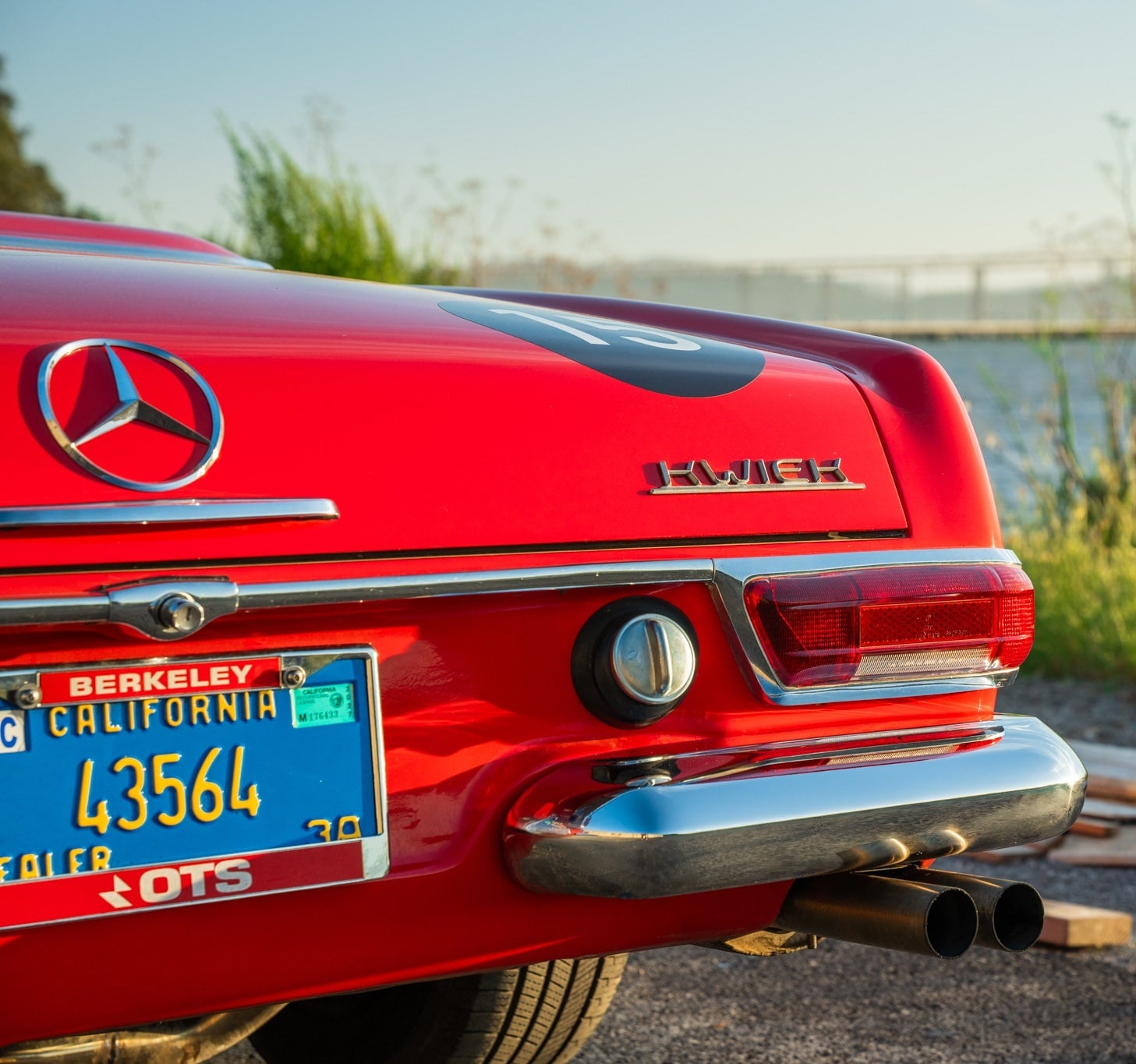
Before installation, Kwiek Classics performed a valve job, replaced the bearings and seals, fitted a lightweight flywheel and a new clutch, and added a tuned ECU. A custom stainless steel exhaust with tubular headers exits through twin tips placed near the original factory exhaust location. The selling dealer notes that the engine’s current power output likely exceeds its factory rating given the ECU tuning and other changes.
A Mercedes 716-series 6-speed manual transmission was bolted directly to the M113 with no adapter required. This bolt-on compatibility has made it a common choice in Mercedes restomod manual-swap builds. A custom driveshaft connects the transmission to a Quaife limited-slip differential carrying 2.82:1 gearing.
Kwiek Classics removed the original swing axle assembly and grafted in the complete rear subframe from a C209-generation CLK, keeping its multi-link rear suspension and rear disc brakes. The two cars share a nearly identical rear track width, which made the swap geometrically feasible, although new chassis mounts still required significant fabrication work.
The front suspension was kept but refreshed, with several iterations of springs and shock absorbers dialed in over roughly 8,000 miles of post-build sorting. Front brakes are 560SEL-spec units from the W126 S-Class, fitted with custom-machined billet hubs to mate to the original 230SL upright geometry.
Brake assist is supplied by a BMW hydraulic booster chosen for its compact size, providing power-assisted braking at all four corners. Powder-coated 15-inch steel wheels are shod with 205/65 Michelin Defender tires front and back.
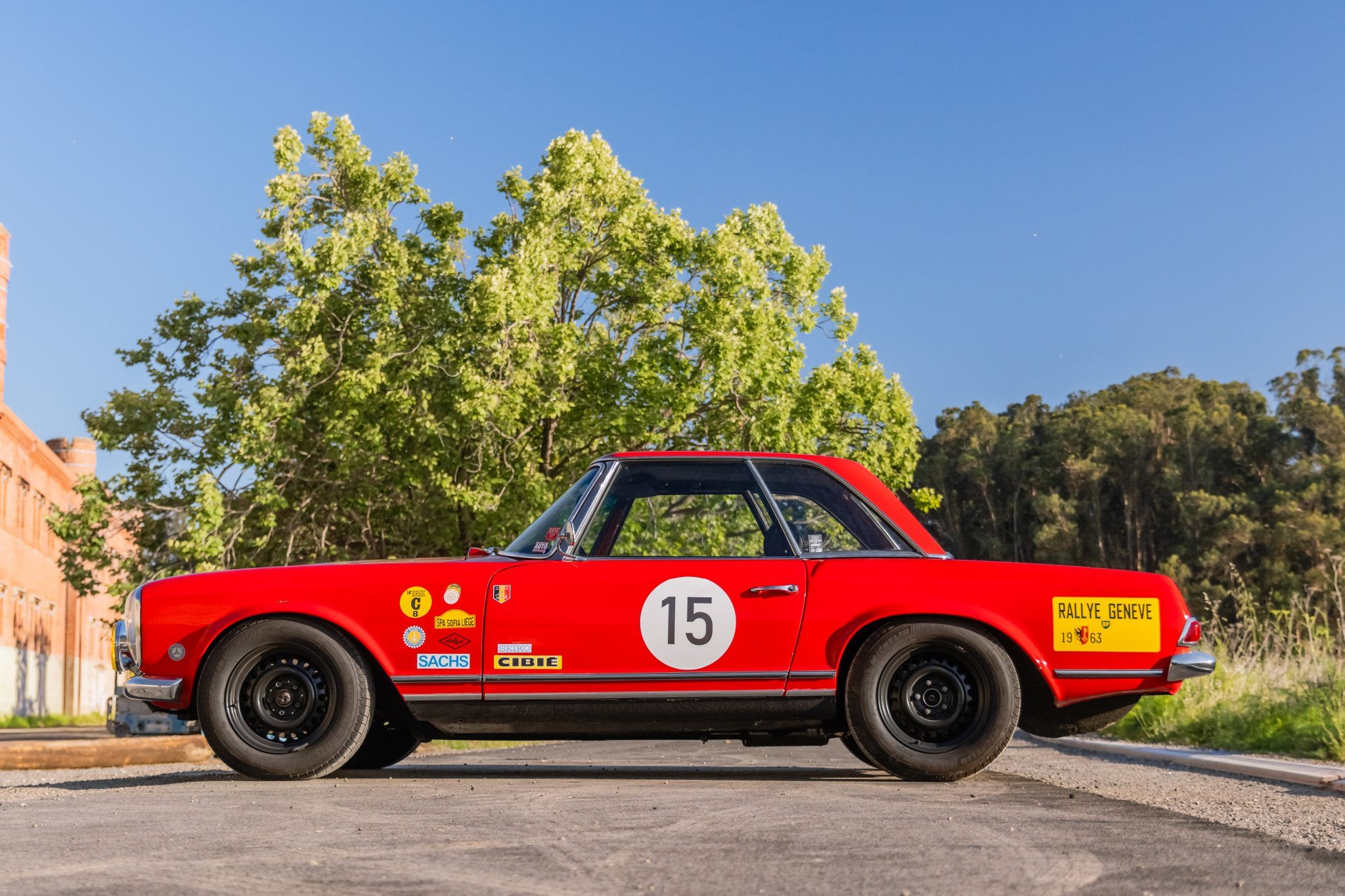
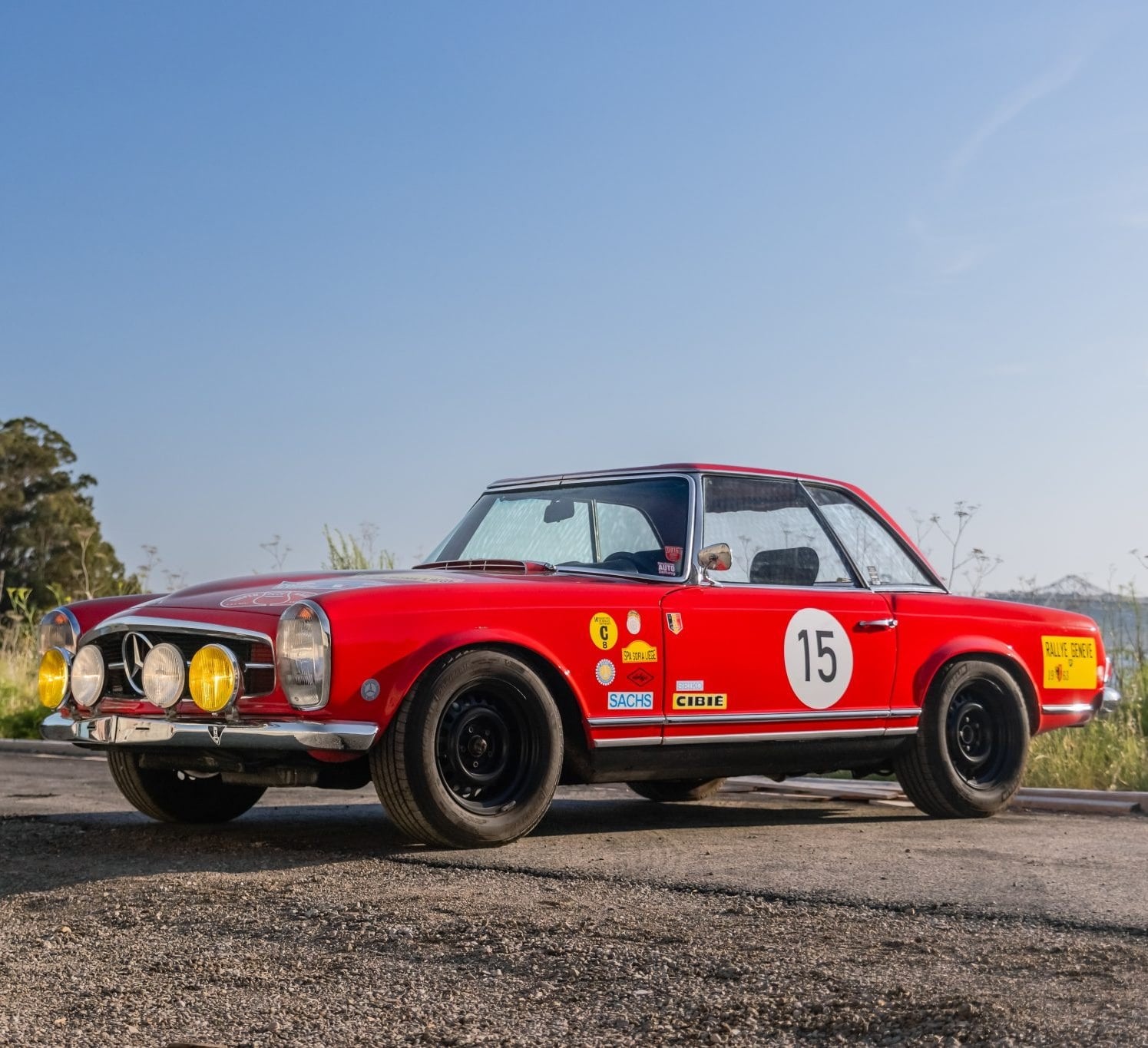
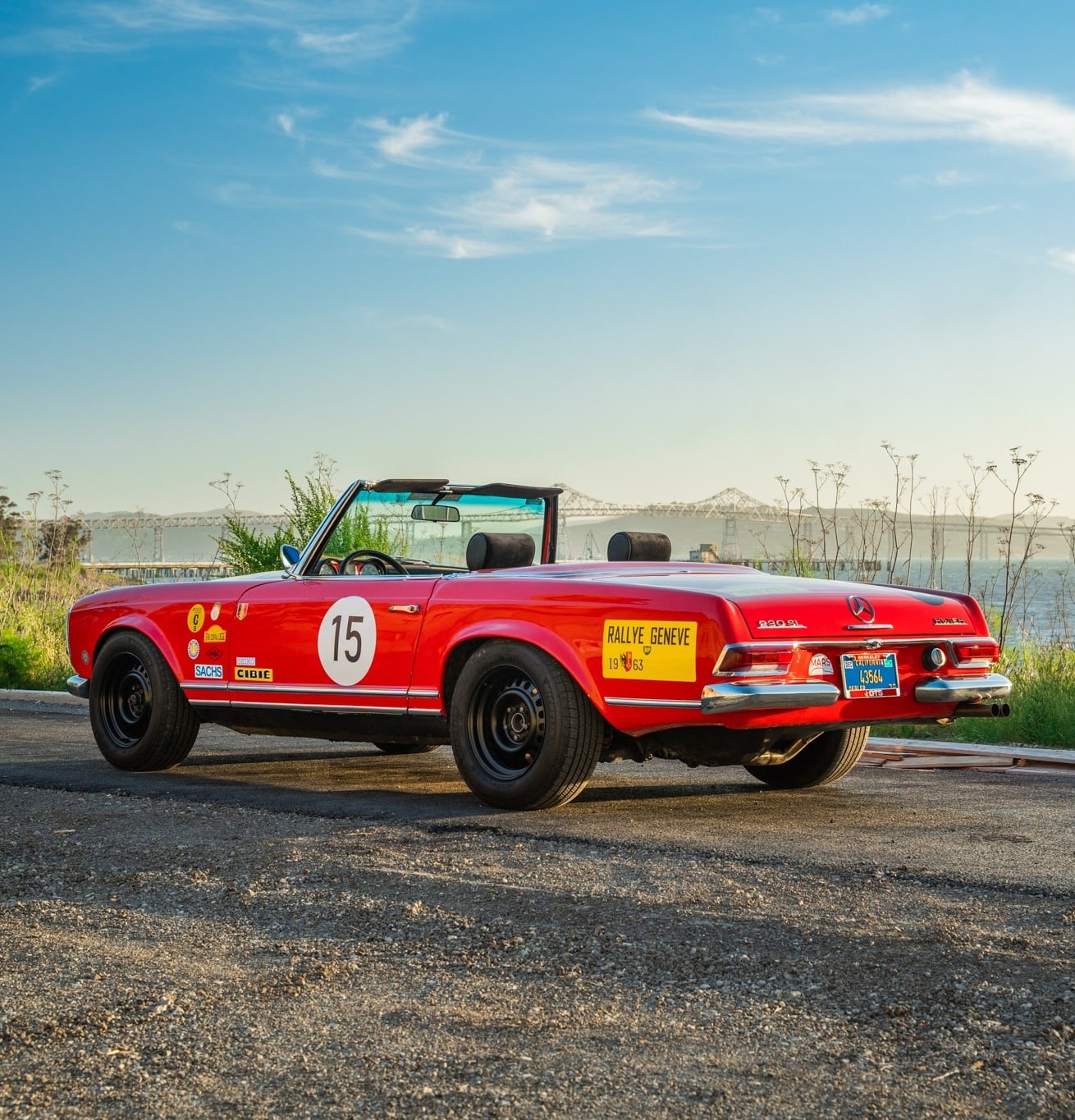
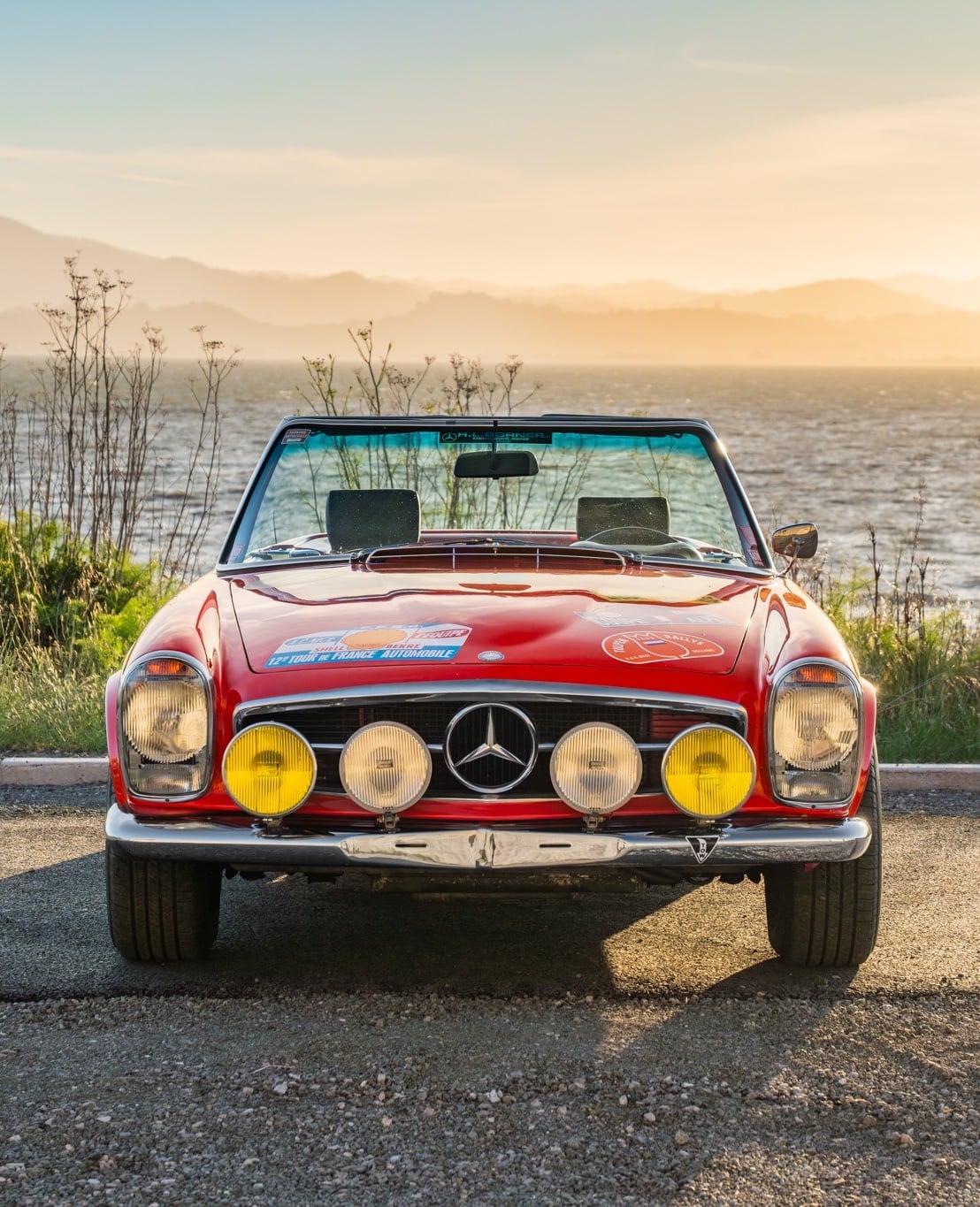
The case is wearing an older respray in red dating from 2006 and wasn’t further restored during the conversion. The selling dealer mentions paint imperfections and pitted chrome, with aged wood trim both in the cabin and on the removable hardtop.
It has a patinated look combined with some period-correct racing decals and a roundel styled after the livery of Böhringer’s 1963 Spa–Sofia–Liège winner, along with European-spec headlights and rally-style spotlights. A replacement black soft top has also been installed.
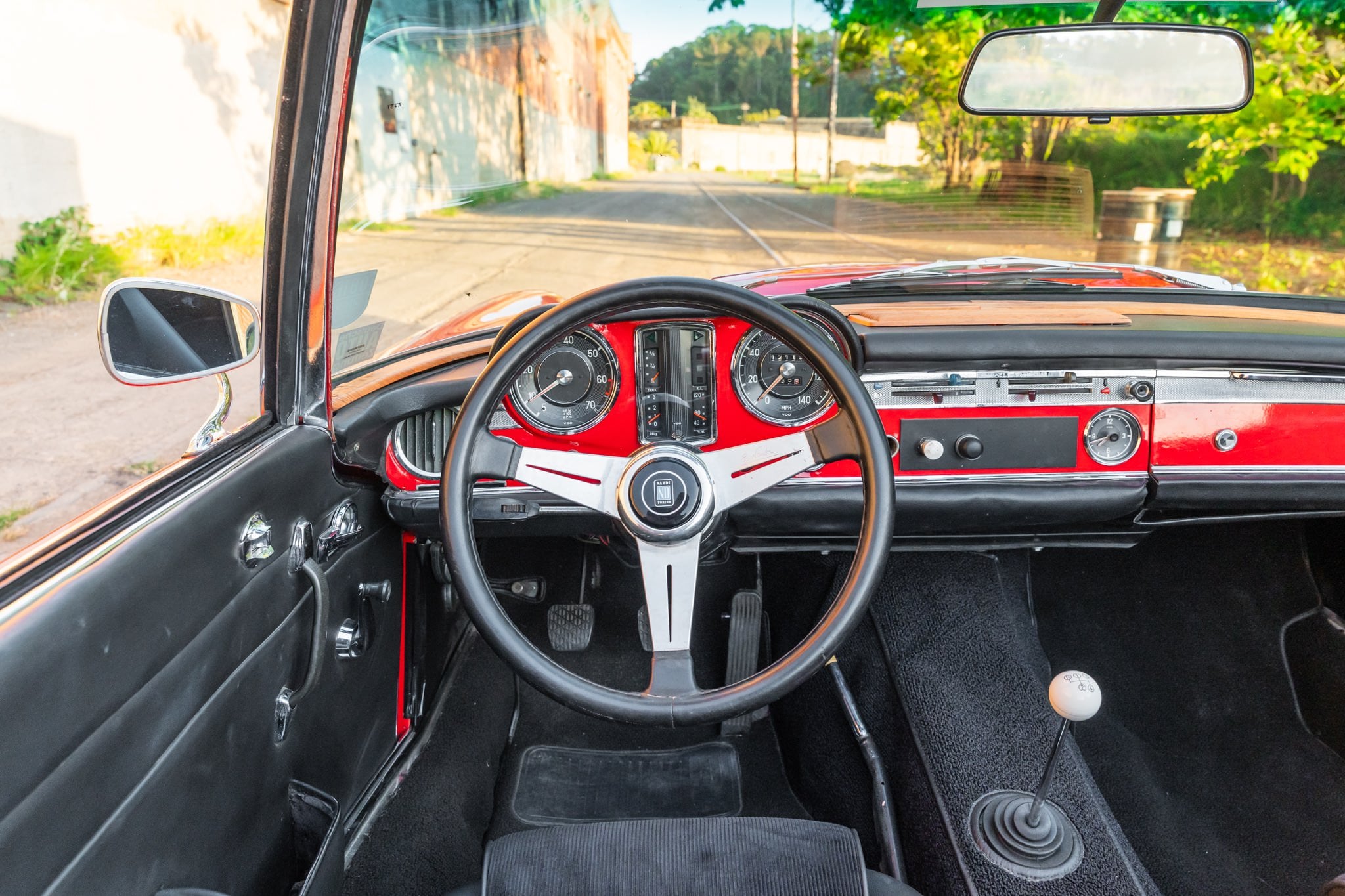
Inside you’ll find a pair of Cobra fixed-back bucket seats trimmed in black cloth and vinyl, with coordinating door panels replaced during the build. A Nardi three-spoke steering wheel sits in front of the original factory instruments – some of which the dealer notes operate intermittently. The five-digit odometer indicates 12,000 miles, of which approximately 8,000 were added under current ownership – the total mileage on the car is unknown.
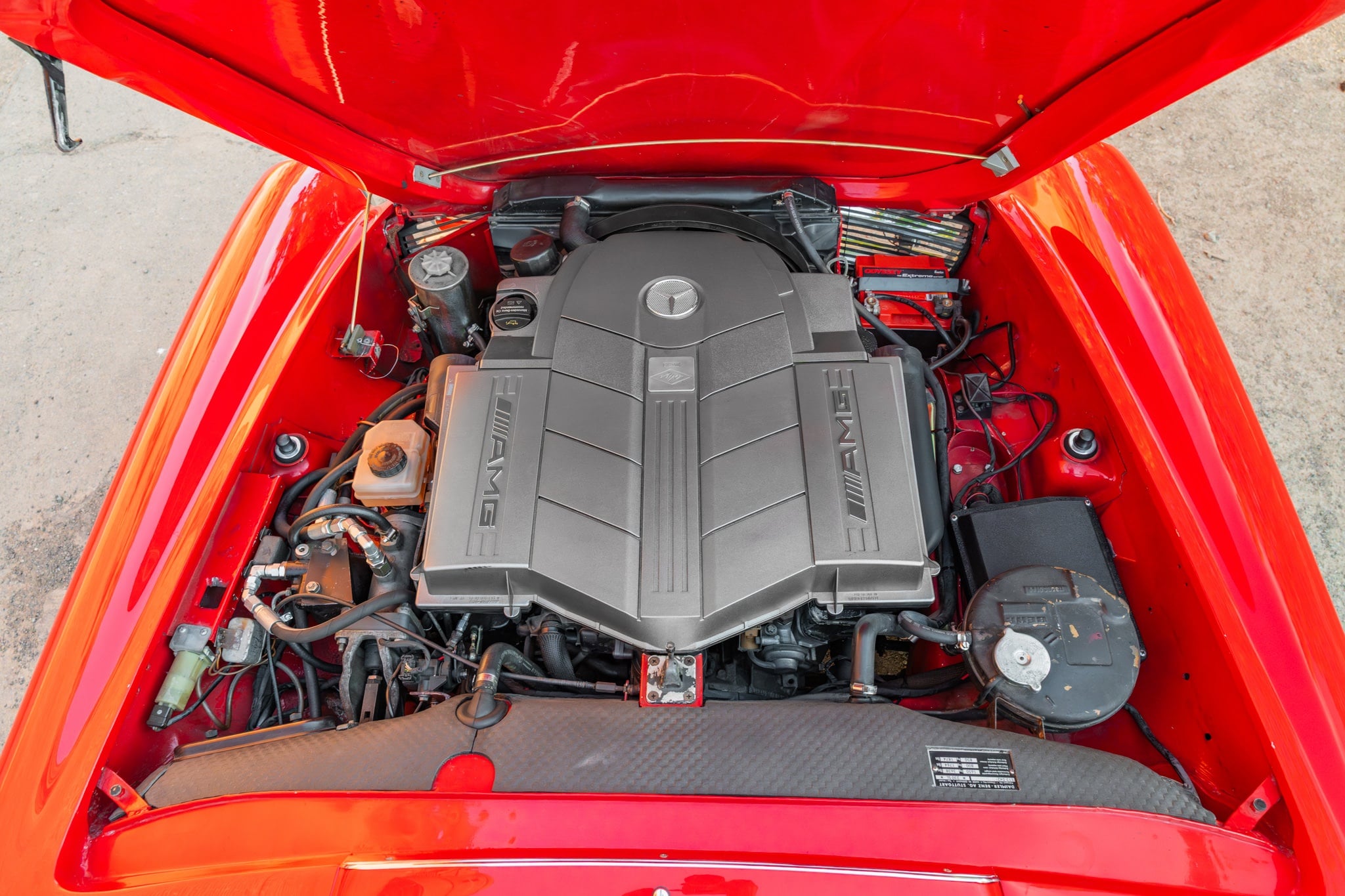
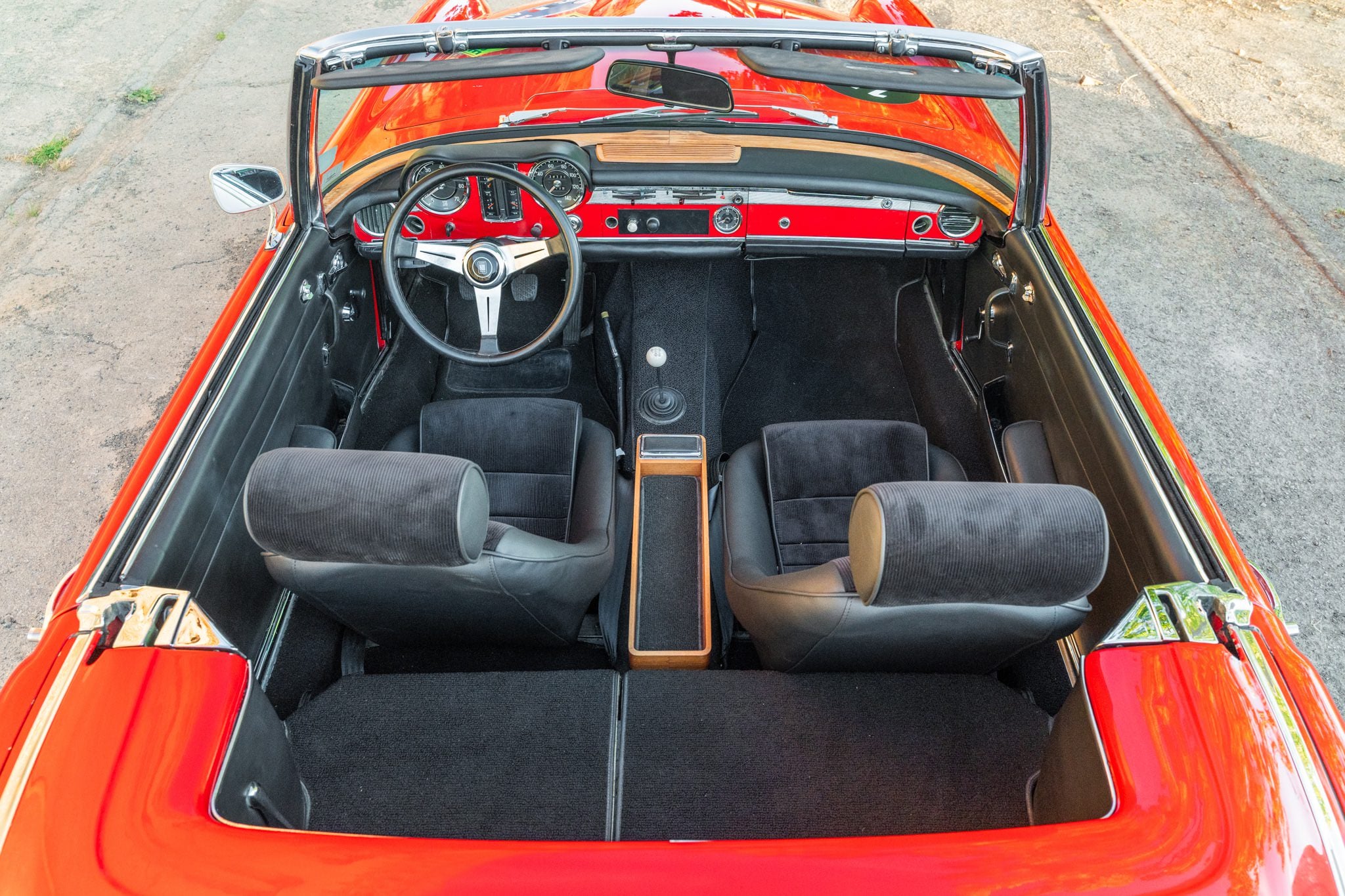
The donor engine for this car came from a 2002 S55 AMG – the 2002 model year was the last for the naturally-aspirated version of the M113 in the S55, it was capable of 354 bhp and 391 lb ft of torque.
This is reportedly the first (and so far only) 230SL build completed by Kwiek Classics.
It’s now being offered through Ottis & Co. on dealer consignment in California, accompanied by a body-color removable hardtop and a clean Tennessee title. You can visit the listing here if you’d like to read more or register to bid.
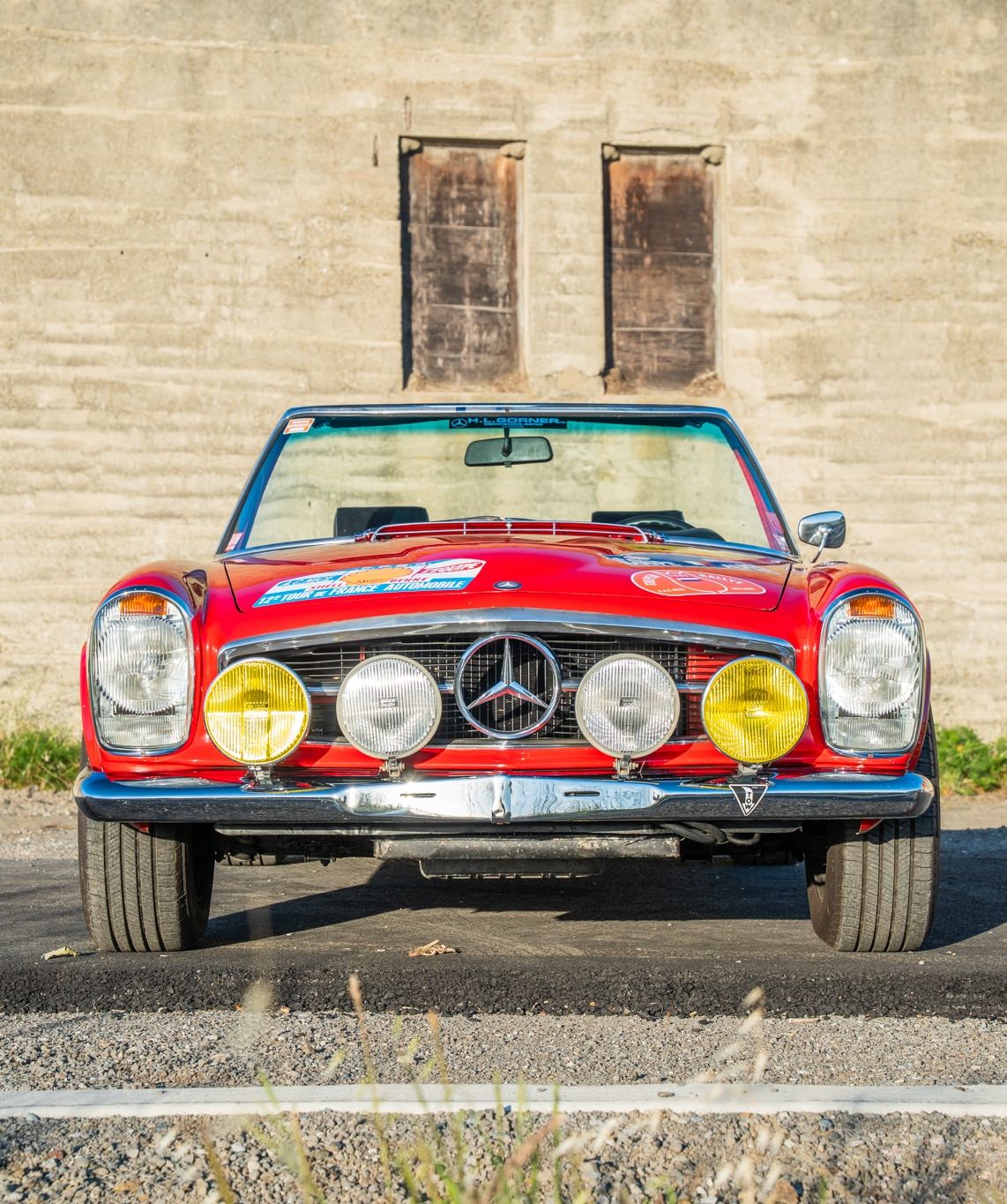
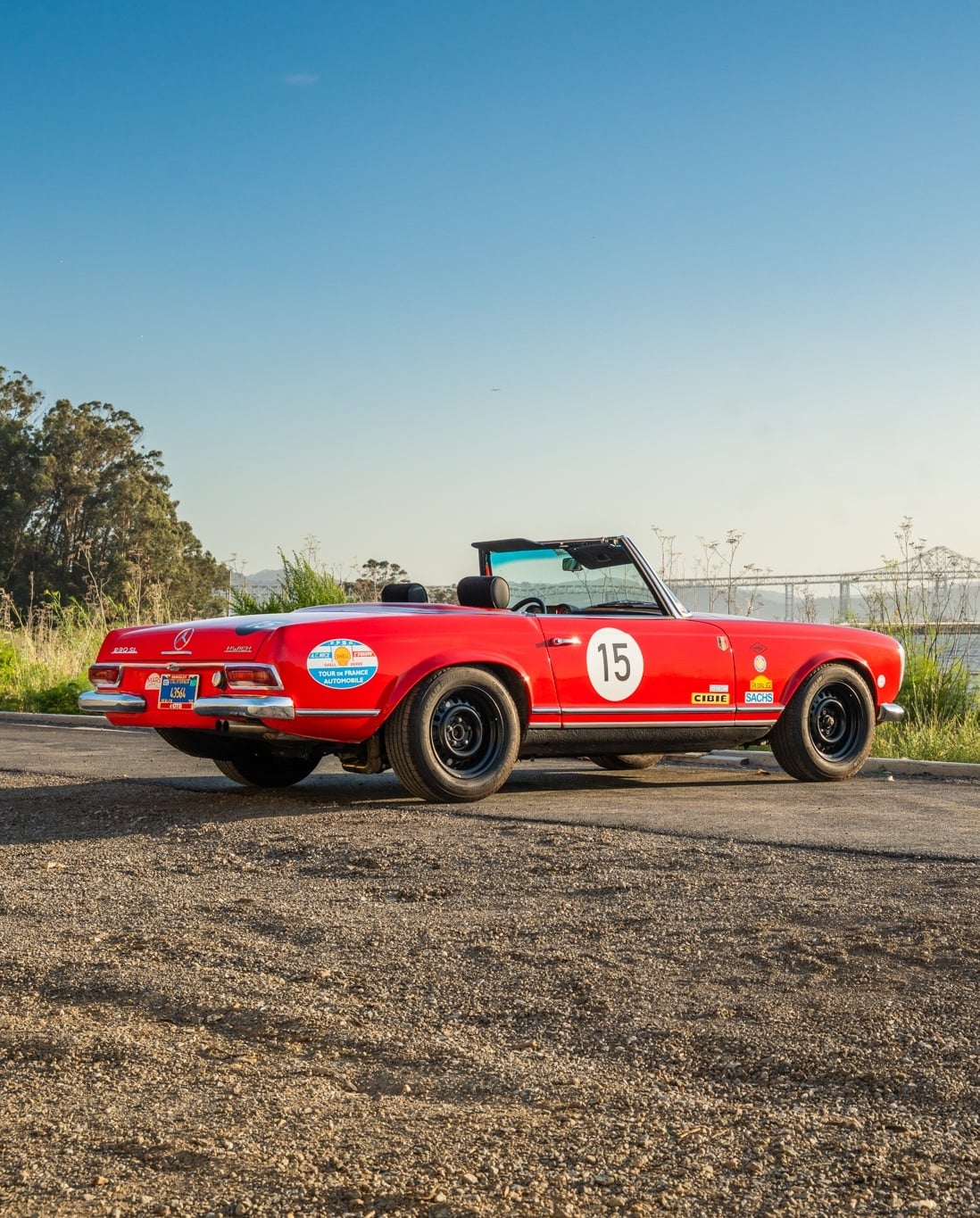
Images courtesy of Bring a Trailer
Articles that Ben Branch has written have been covered on CNN, Popular Mechanics, Smithsonian Magazine, Road & Track Magazine, the official Pinterest blog, the official eBay Motors blog, BuzzFeed, Autoweek Magazine, Wired Magazine, Autoblog, Gear Patrol, Jalopnik, The Verge, and many more.
Silodrome was founded by Ben back in 2010, in the years since the site has grown to become a world leader in the alternative and vintage motoring sector, with well over a million monthly readers from around the world and many hundreds of thousands of followers on social media.