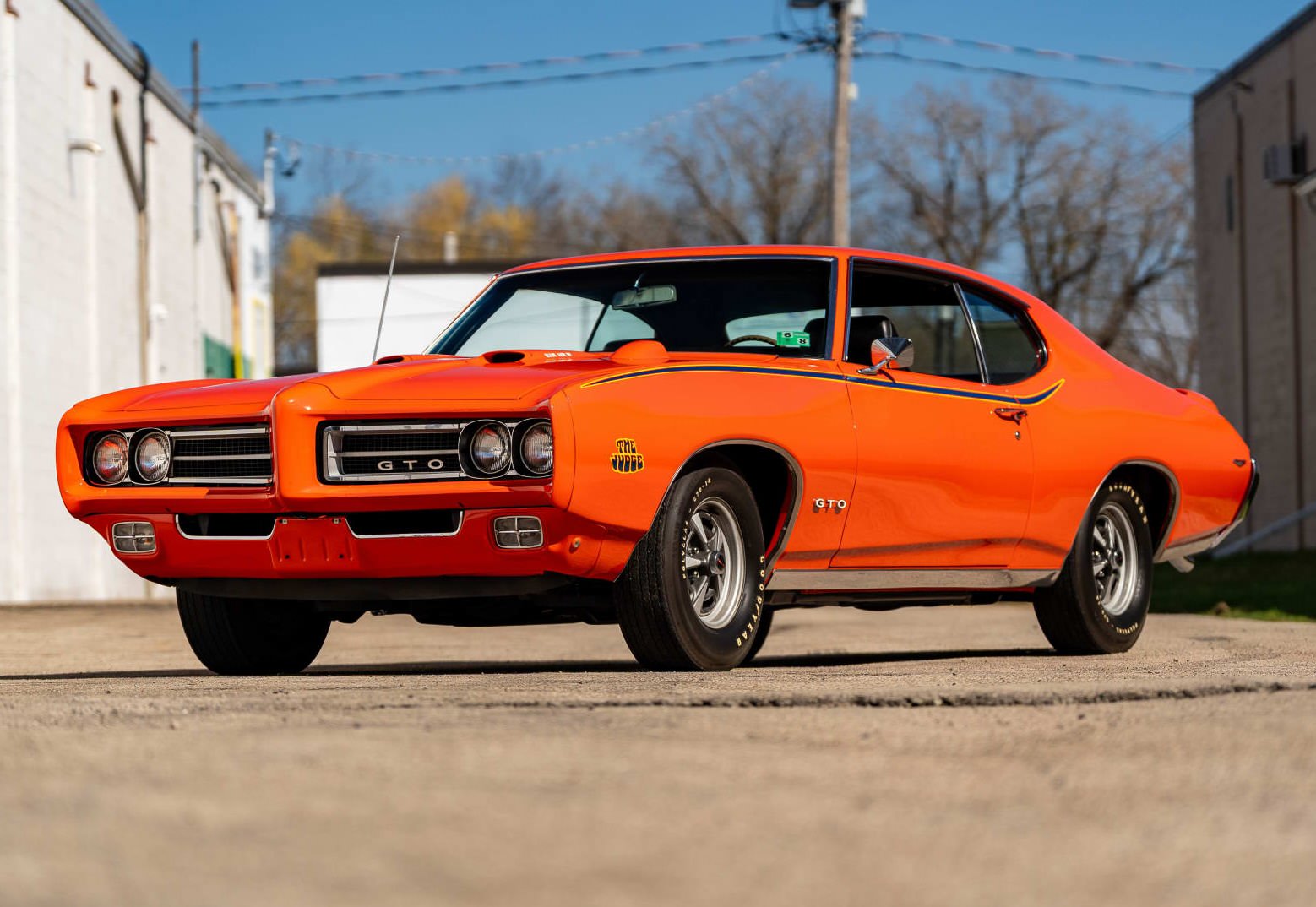
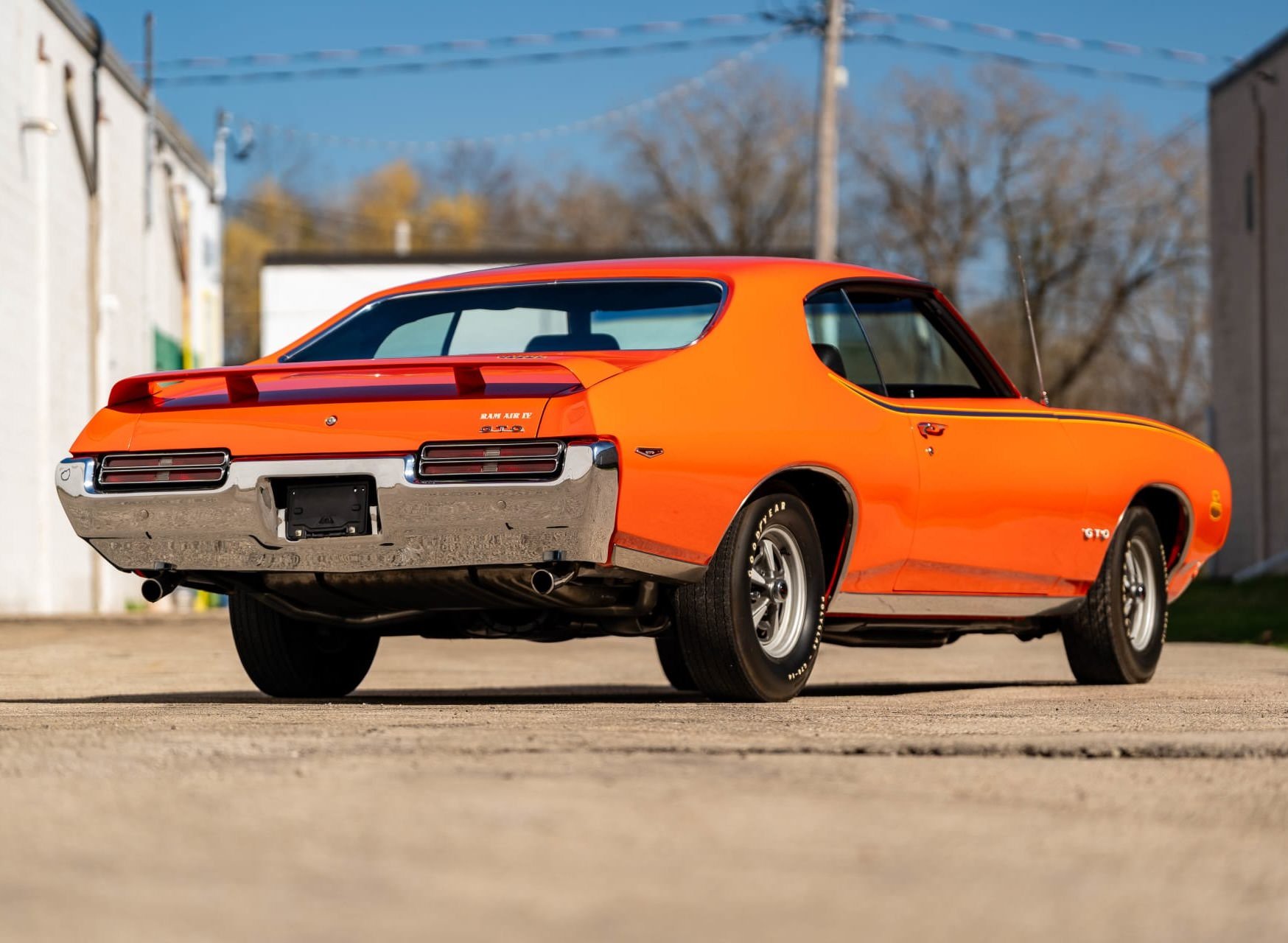
This is a 1969 Pontiac GTO Judge Ram Air IV, it’s one of just 239 GTO Judges produced with this engine and transmission combination for 1969, and it’s powered by the hugely-desirable Ram Air IV engine option producing a conservatively rated 370 bhp.
These Ram Air IV GTOs were among the quickest and most powerful production cars being built in the United States at the time, and period magazine tests strongly implied the 400 cubic inch V8 was turning out close to 400 bhp.
Fast Facts: The Pontiac GTO “Judge”
- The 1969 Pontiac GTO Judge Ram Air IV was the top-tier version of Pontiac’s famous muscle car, created at a time when Detroit’s horsepower race was at its peak. It combined good looks with near-race-spec hardware and was among the most potent American production cars of its year, with a 400 cubic inch V8 officially rated at 370 bhp.
- Pontiac introduced The Judge in January 1969 as both a marketing exercise and a response to the Plymouth Road Runner. The name referenced the “Here Comes the Judge” catchphrase from Rowan & Martin’s Laugh-In TV show. Buyers received vivid body stripes, bold badging, a rear spoiler, and standard Carousel Red paint, giving the car an instantly recognizable appearance on the street or showroom floor.
- Underneath, the Ram Air IV used round-port 722 heads, 1.65:1 rocker arms, an 041 camshaft, and an aluminum intake with a separate cast-iron heat crossover. Most examples were paired with a Muncie 4-speed and 3.90 or 4.33 gears, producing quarter-mile times in the low 14-second range and making it one of the quickest showroom machines available in 1969.
- Out of 6,833 Judges produced for 1969, about 239 manual and 58 automatic cars received the Ram Air IV option. The example described wears Carousel Red over black, retains its matching-numbers drivetrain, and has undergone a full nut-and-bolt restoration.
History Speedrun: The Pontiac GTO “Judge” Ram Air IV
By the late 1960s the American muscle car scene had reached fever pitch. Pontiac had fired the opening shot with the original 1964 GTO, originally a midsize Tempest coupe reimagined via an option package with a big V8 and street manners that appealed directly to a generation raised on drag strips. It was simple, loud, and fast – and by 1969, the formula had evolved into something more a whole lot more flamboyant… The Judge.
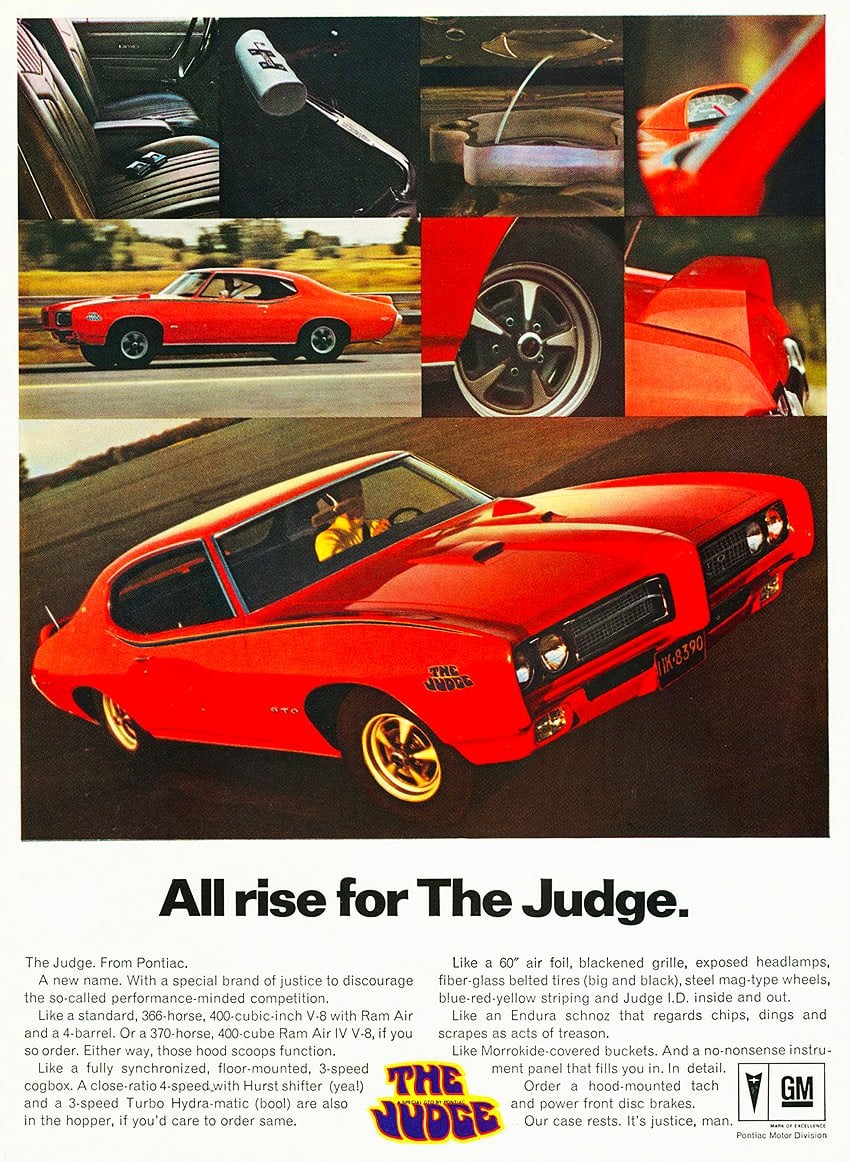
 By the late 1960s the American muscle car scene had reached fever pitch. Pontiac had fired the opening shot with the original 1964 GTO, originally a midsize Tempest coupe reimagined via an option package with a big V8 and street manners that appealed directly to a generation raised on drag strips. Image courtesy of Pontiac.
Pontiac unveiled The Judge in January of 1969 as both a marketing campaign and a new performance flagship in an increasingly crowded marketplace. The name, a tongue-in-cheek nod to the popular TV catchphrase “Here comes the Judge!” from Rowan & Martin’s Laugh-In, was chosen by John DeLorean as it was a favorite TV show of his.
Inside Pontiac, it had been conceived as a value-priced response to Plymouth’s Road Runner, but engineers and marketers quickly realized it could serve as the GTO’s halo car.
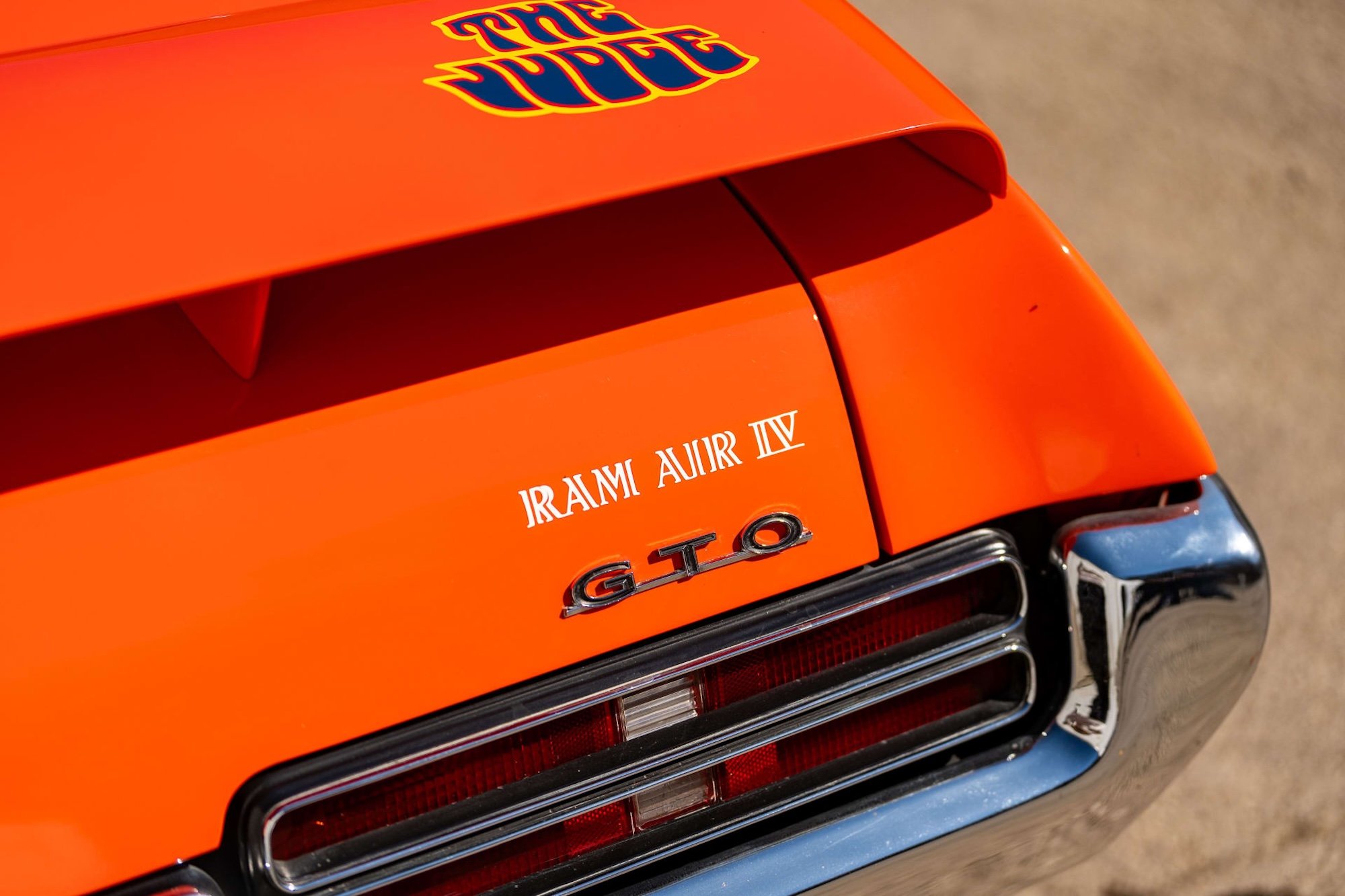
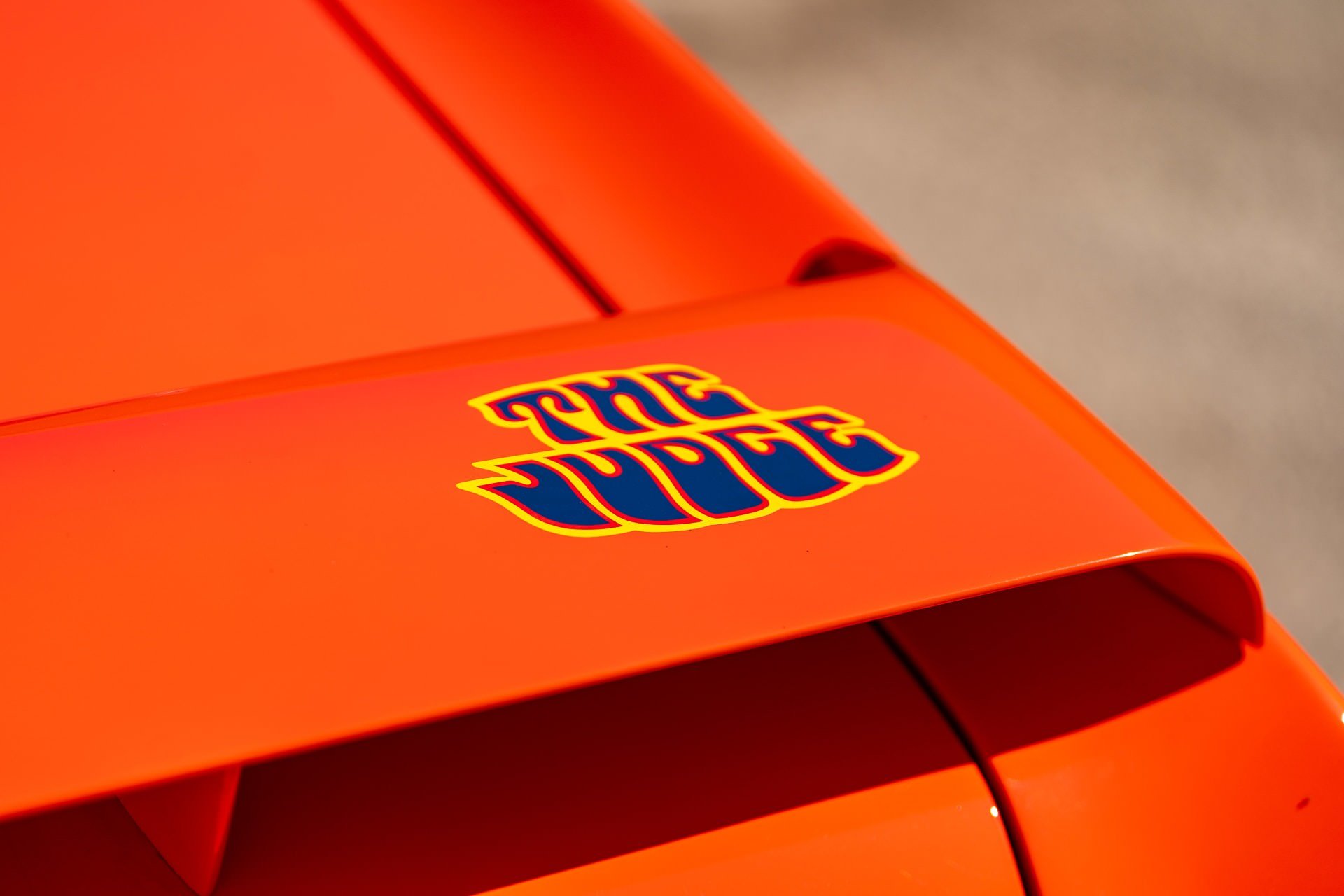
For $332.02, buyers got an unmistakable visual package – bold side stripes, “The Judge” decals, a fiberglass rear spoiler, Rally II wheels without trim rings, and a blacked-out grille. Carousel Red paint was standard at launch, though other colors followed in due course.
Beneath the eye-catching styling, every Judge came with the 400 cubic inch (6.6 liter) Ram Air III V8 rated at 366 bhp and 445 lb ft of torque, paired with a Hurst-shifter 3-speed manual and a heavy-duty Safe-T-Track rear axle. For most, that was plenty. But Pontiac quietly offered something with a little more oomph – the Ram Air IV.
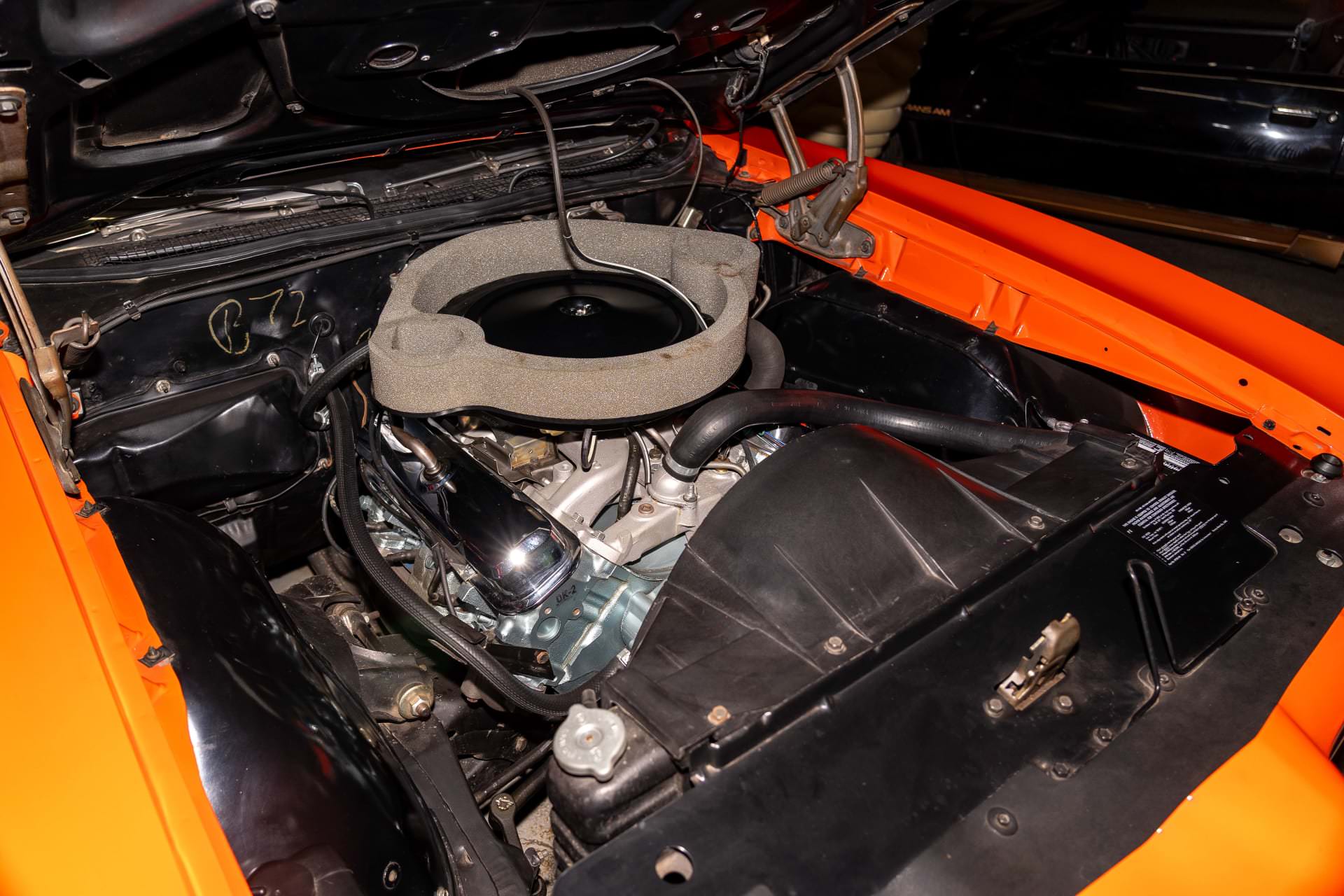
The Ram Air IV was a street-tuned version of Pontiac’s racing-spec 400. Though rated at 370 bhp, it shared little internally with the standard engine. Engineers fitted round-port 722 cylinder heads, 1.65:1 rocker arms, an 041 high-lift camshaft, and an aluminum intake manifold mated to a separate cast-iron heat crossover.
Four-bolt mains helped ensure the bottom end could handle the power, while free-flowing exhaust manifolds and a functional dual-scoop hood for fresh cool air rounded out the spec sheet. Air conditioning wasn’t available – the Ram Air IV was for those who wanted performance above all else.
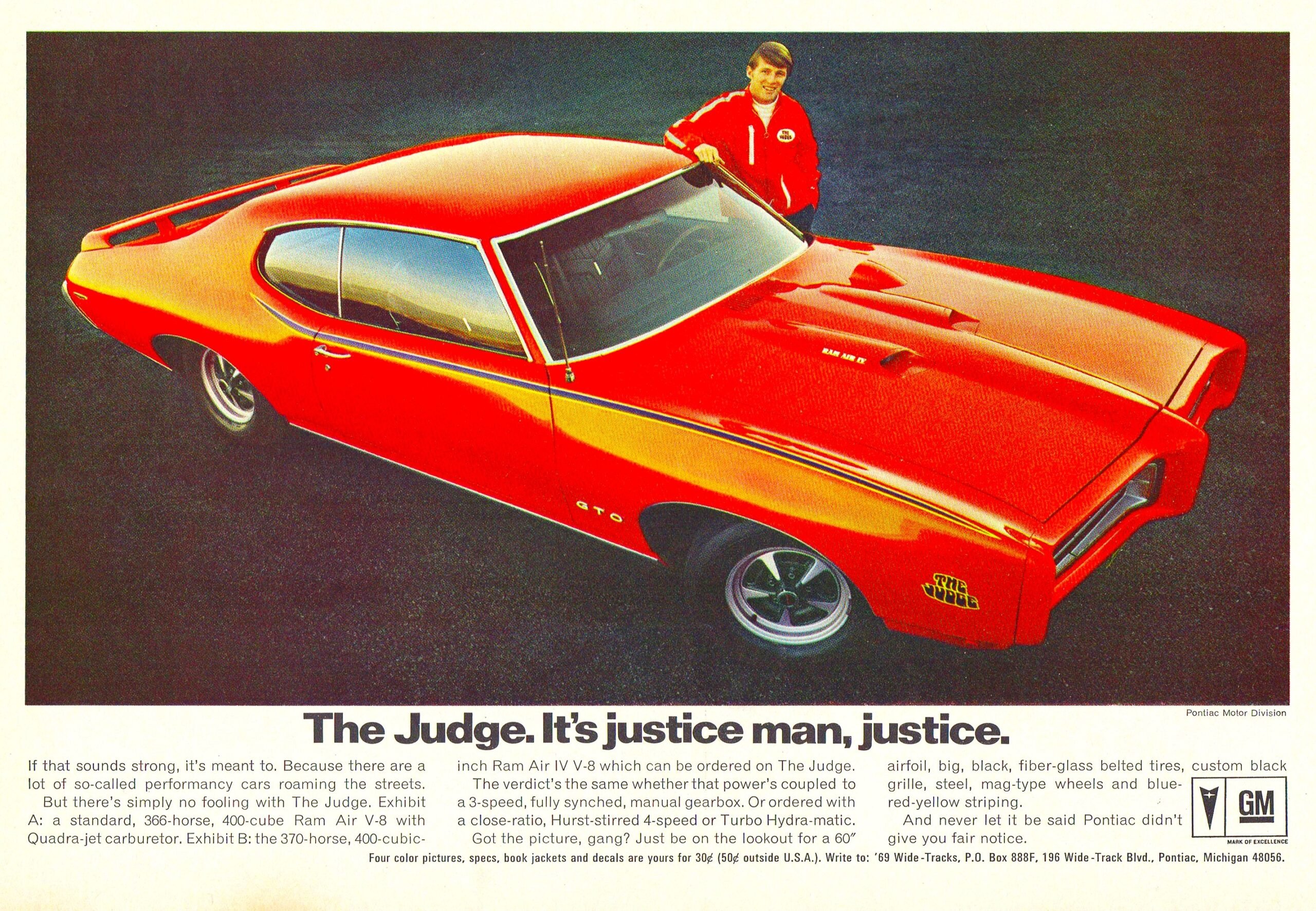
Pontiac unveiled The Judge in January of 1969 as both a marketing campaign and a new performance flagship in an increasingly crowded marketplace. The name, a tongue-in-cheek nod to the popular TV catchphrase “Here comes the Judge!” from Rowan & Martin’s Laugh-In, was chosen by John DeLorean as it was a favorite TV show of his. Image courtesy of Pontiac.
Buyers could pair it with either the close-ratio Muncie M21 4-speed manual or a Turbo Hydra-Matic automatic, though the manual cars dominated production. Pontiac’s official figure of 370 bhp at 5,000 rpm understated its true output – contemporary dyno estimates suggested a figure much closer to 400 bhp.
The quarter-mile proved the point – Car and Driver magazine recorded 13.7 seconds at 103 mph, while Car Life ran 14.45 seconds at 97.8 mph with a milder axle ratio. Those numbers made the Ram Air IV Judge one of the quickest factory cars of its day.
Pontiac built 6,833 Judges in 1969 – 6,725 hardtops and 108 convertibles. Of those, just under 300 received the Ram Air IV option, with roughly 239 4-speeds and 58 automatics sold. The Ram Air IV Judge therefore occupies a thin slice of GTO production – roughly 4% – and its rarity has only increased its legendary status among collectors.
A base variant Judge weighed around 3,650 lbs and rode on a 112 inch wheelbase. Suspension followed the tried-and-true GM A-body layout with unequal-length control arms up front, a four-link coil-spring rear, and front disc brakes were optional but highly recommended.
Standard gearing for RA IV cars was aggressive – typically 3.90:1 or 4.33:1 – and it gave the Judge fierce off-the-line initial acceleration. The combination of close-ratio gearing, a broad torque curve, and Pontiac’s distinctive cowl-induction growl made the Ram Air IV Judge as memorable to drive as it was to look at.
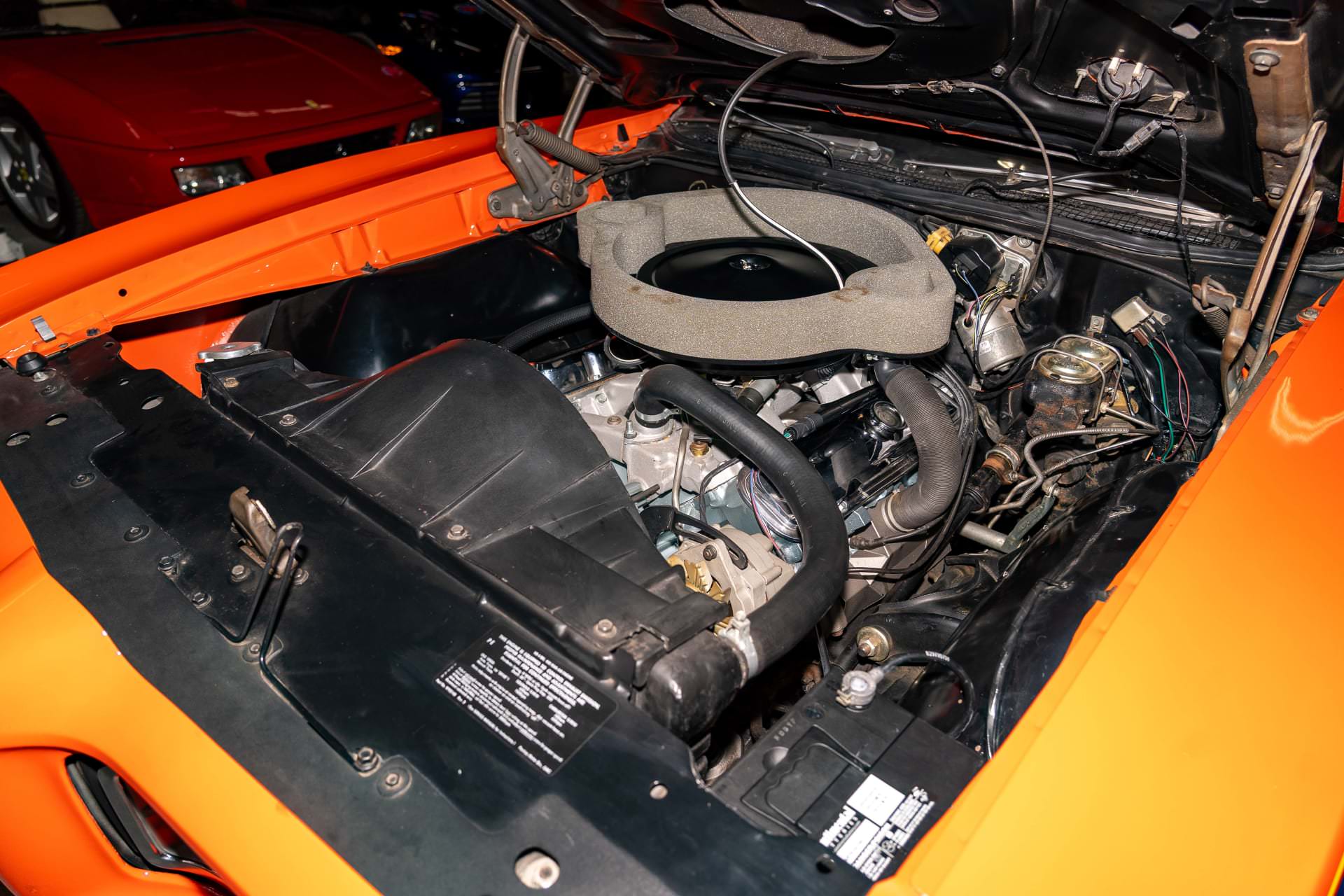
The Ram Air IV was a street-tuned version of Pontiac’s racing-spec 400. Though rated at 370 bhp, it shared little internally with the standard engine. Engineers fitted round-port 722 cylinder heads, 1.65:1 rocker arms, an 041 high-lift camshaft, and an aluminum intake manifold mated to a separate cast-iron heat crossover.
The package didn’t last long. By 1970, Pontiac toned down the color schemes and power figures as insurance premiums and emissions standards began to bite. Total RA IV GTO production for 1969 hovered around 759 units across all trims, making the Judge versions the top of a relatively short-lived pyramid.
The following year brought the even rarer 455 HO and the last of the true high-compression GTOs before federal regulations reshaped Detroit performance and brought power and performance figures crashing back down to numbers that had last been seen a couple of decades earlier.
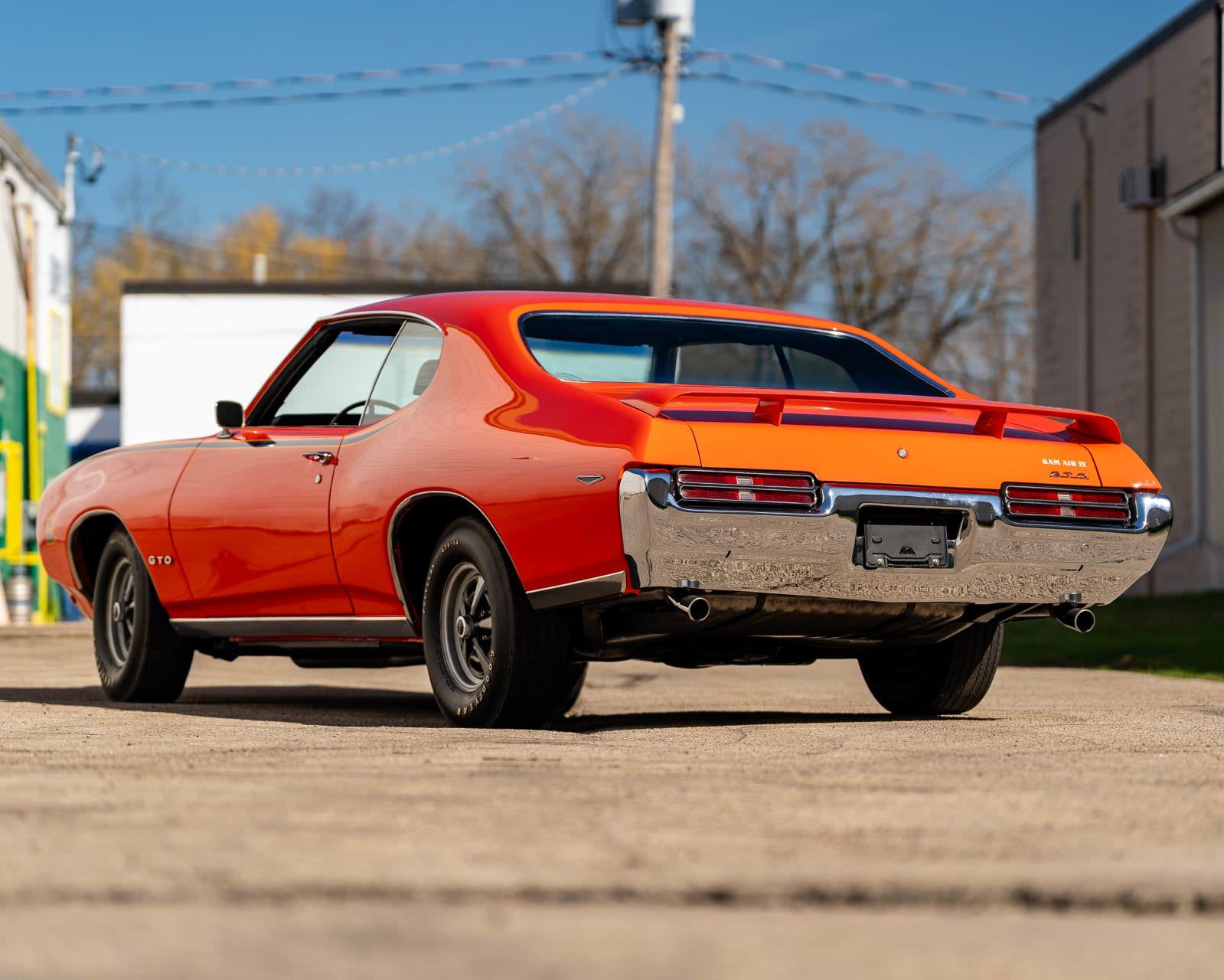
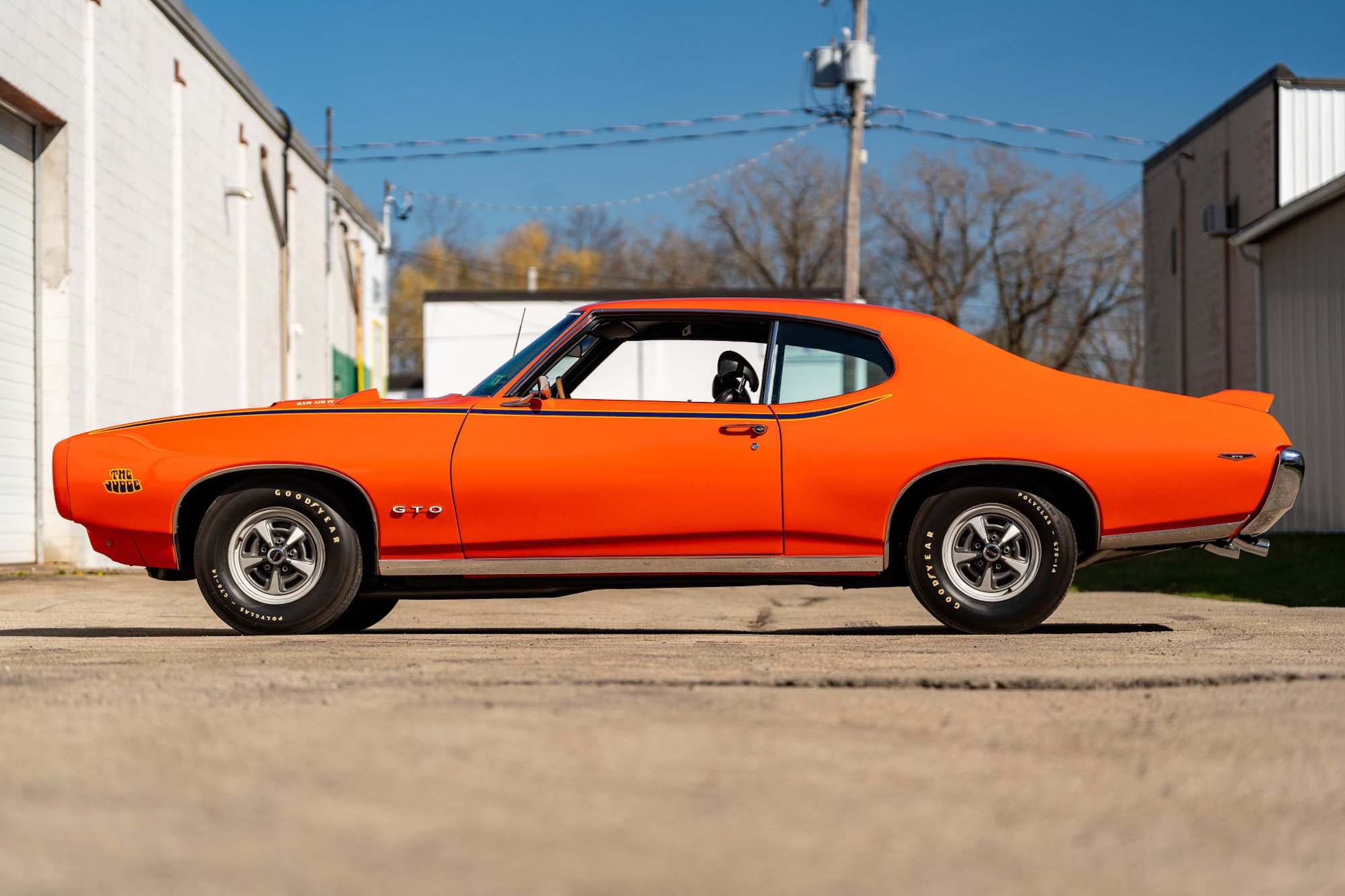
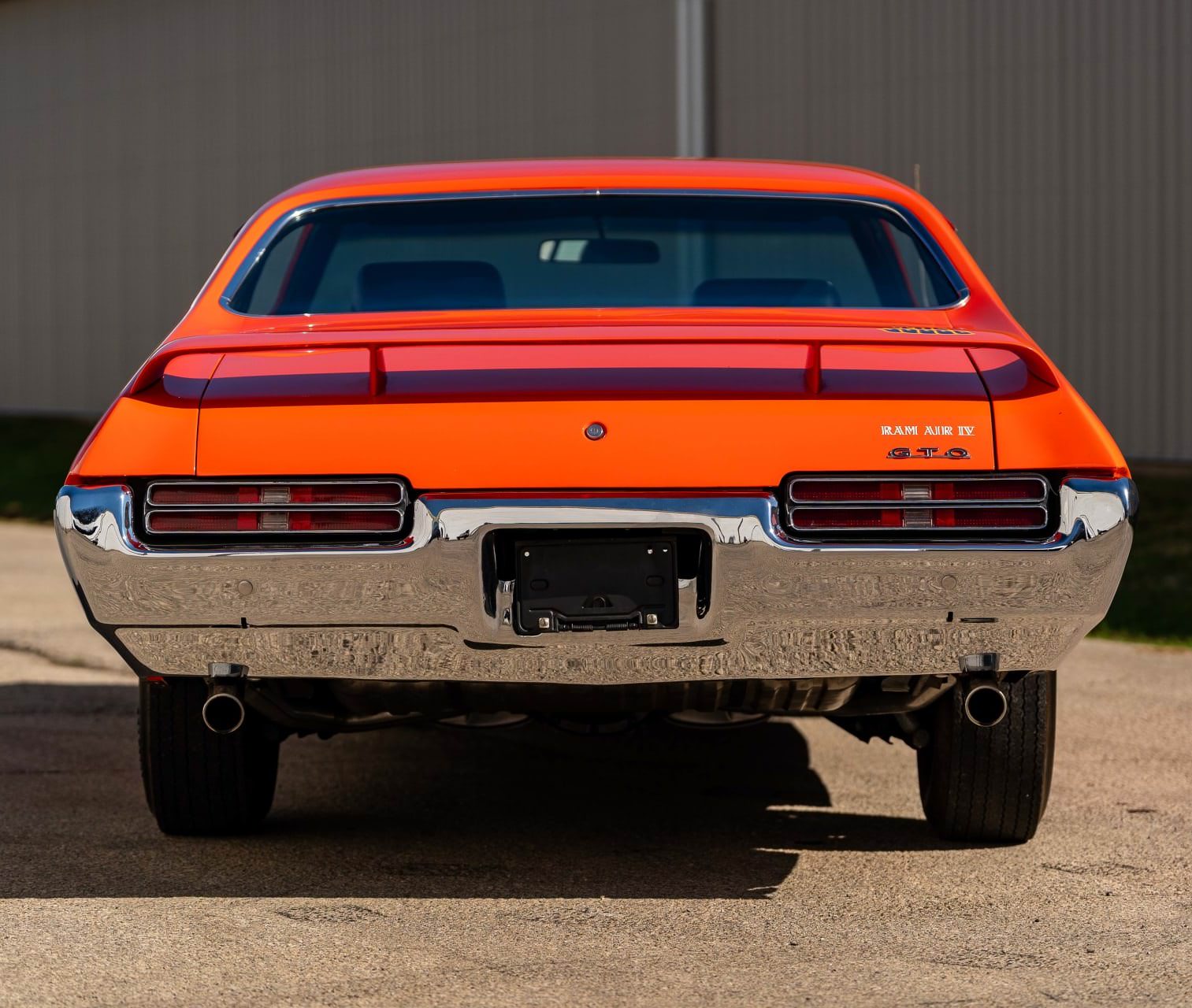
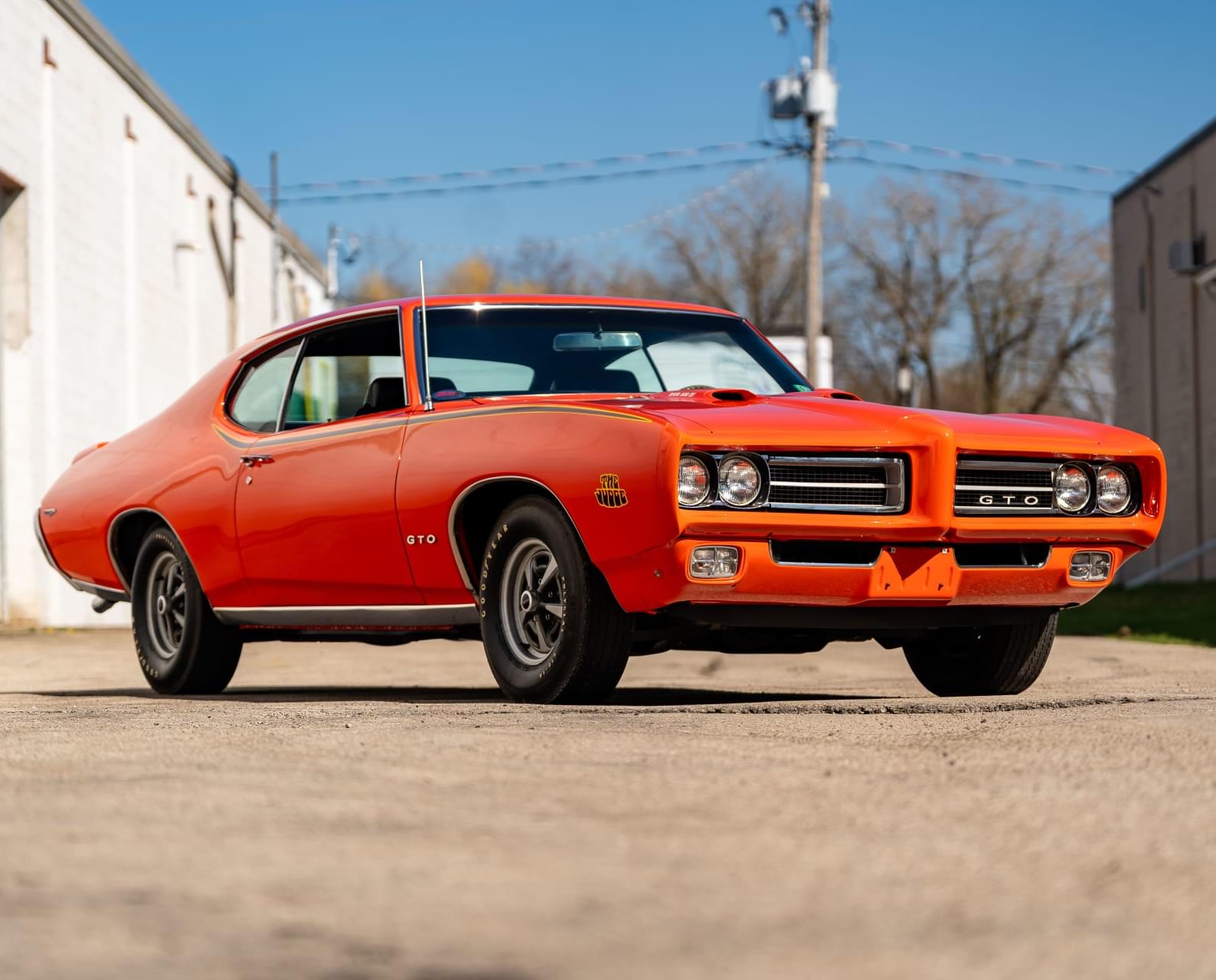
The 1969 Pontiac GTO Judge Ram Air IV Shown Here
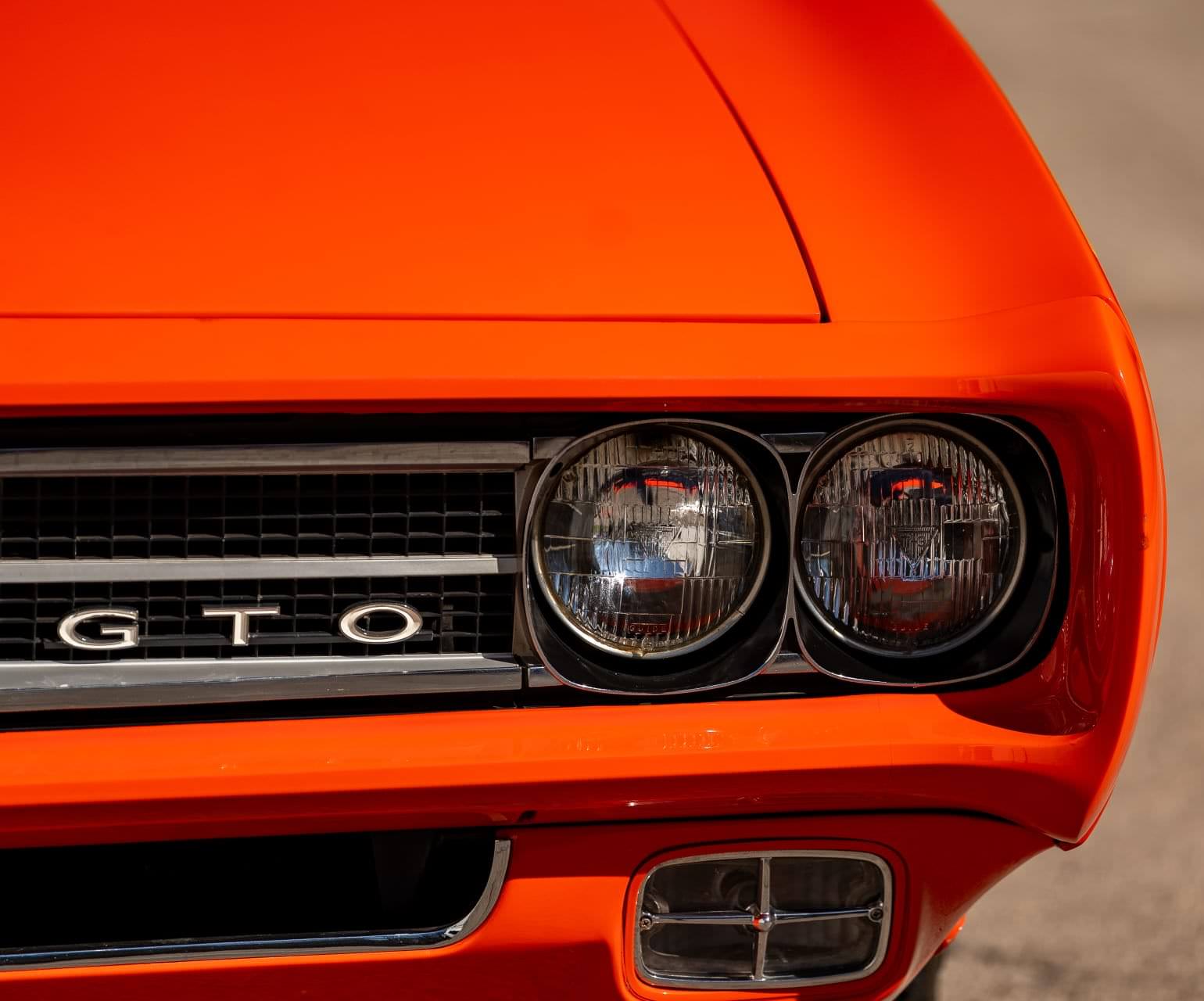
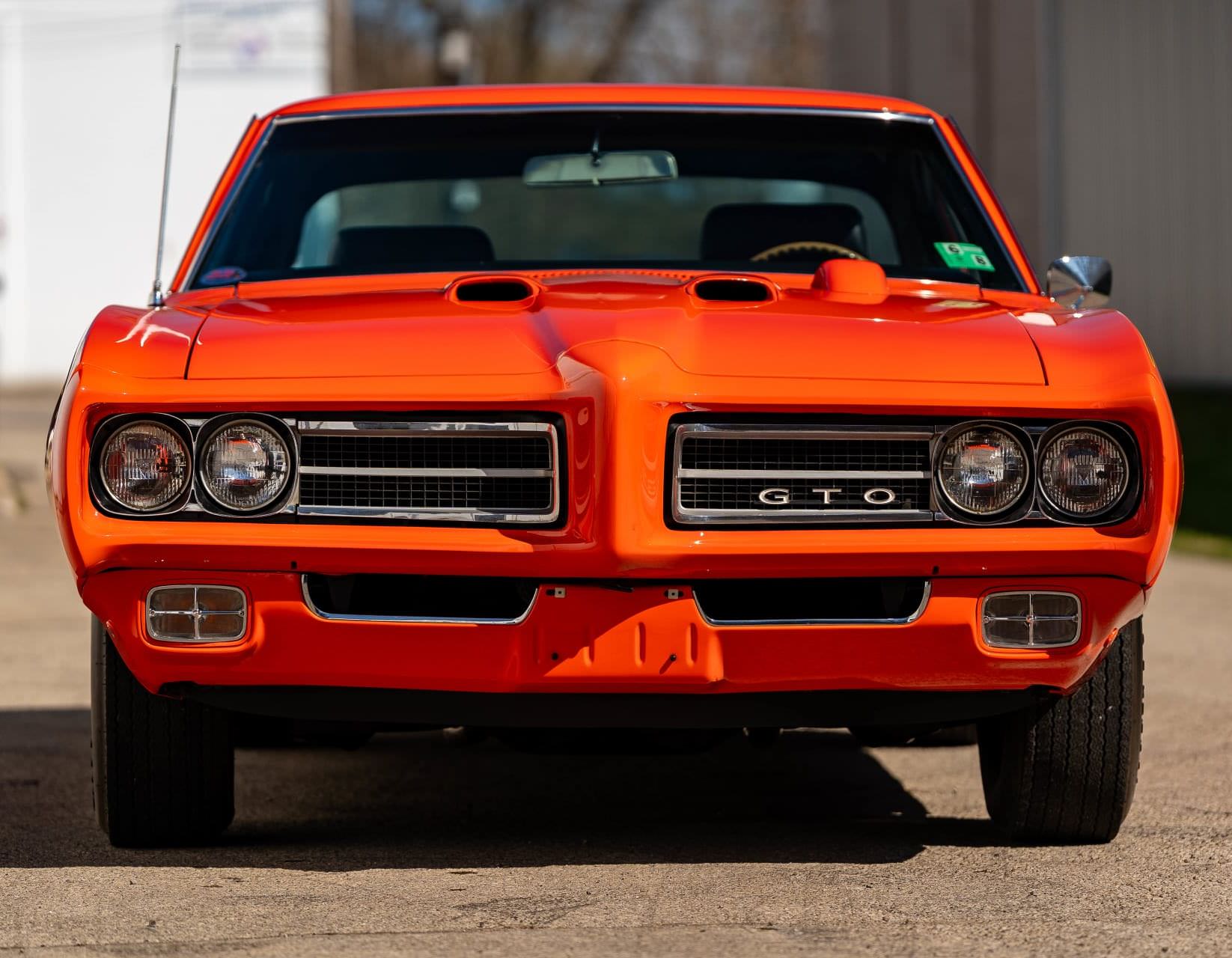
This is a 1969 Pontiac GTO Judge with the highly-desirable Ram Air IV option package, meaning it has close to 400 bhp as well as round-port 722 cylinder heads, an 041 high-lift camshaft, an aluminum intake manifold, free-flowing exhaust manifolds, and a functional dual-scoop hood.
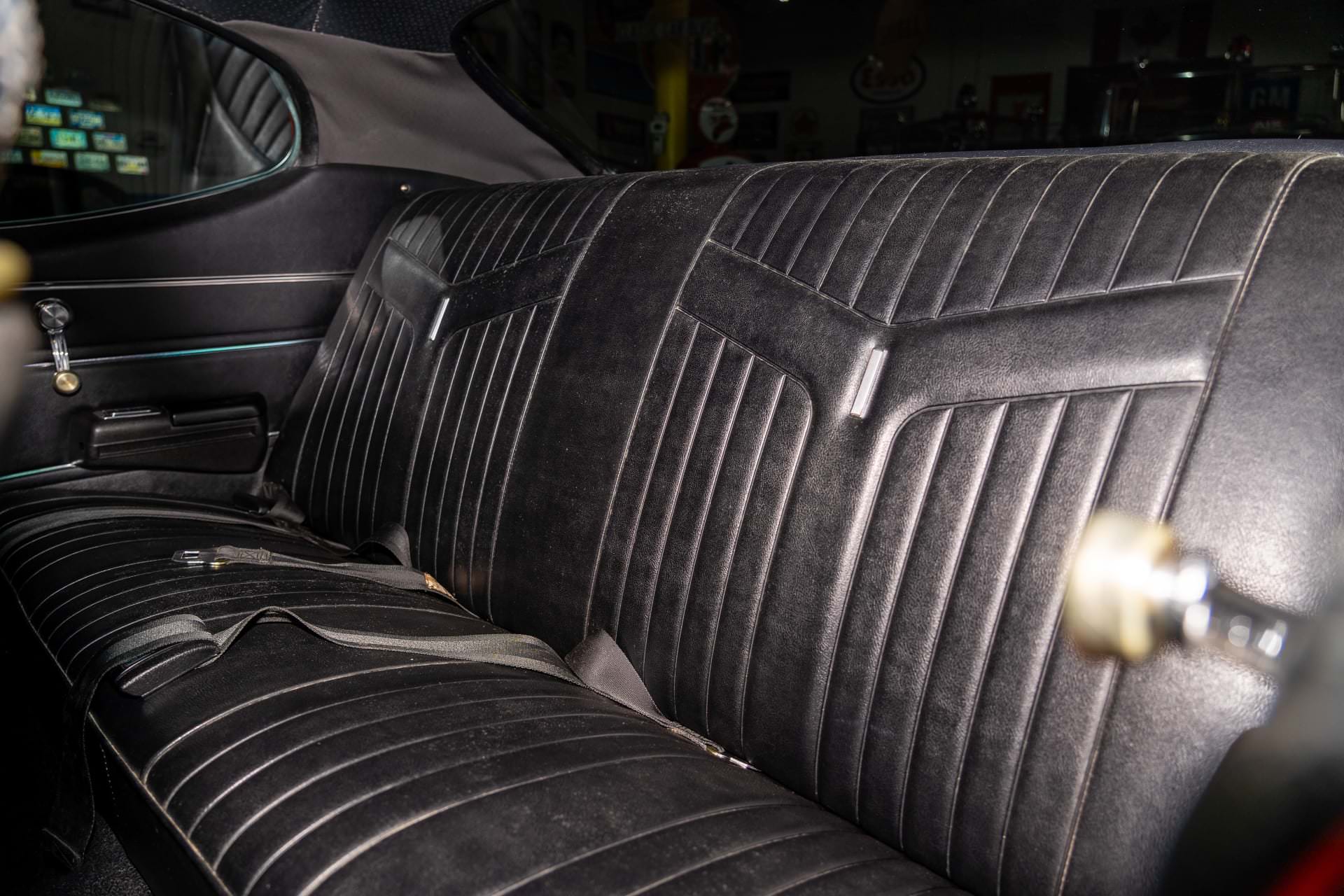
The car is finished in Carousel Red with a Black interior, it has factory Judge badging, Rally II wheels with Goodyear Polyglas tires, the M22 4-speed manual transmission, original body panels, a matching numbers drivetrain, and it’s been through a meticulous nut and bolt restoration.
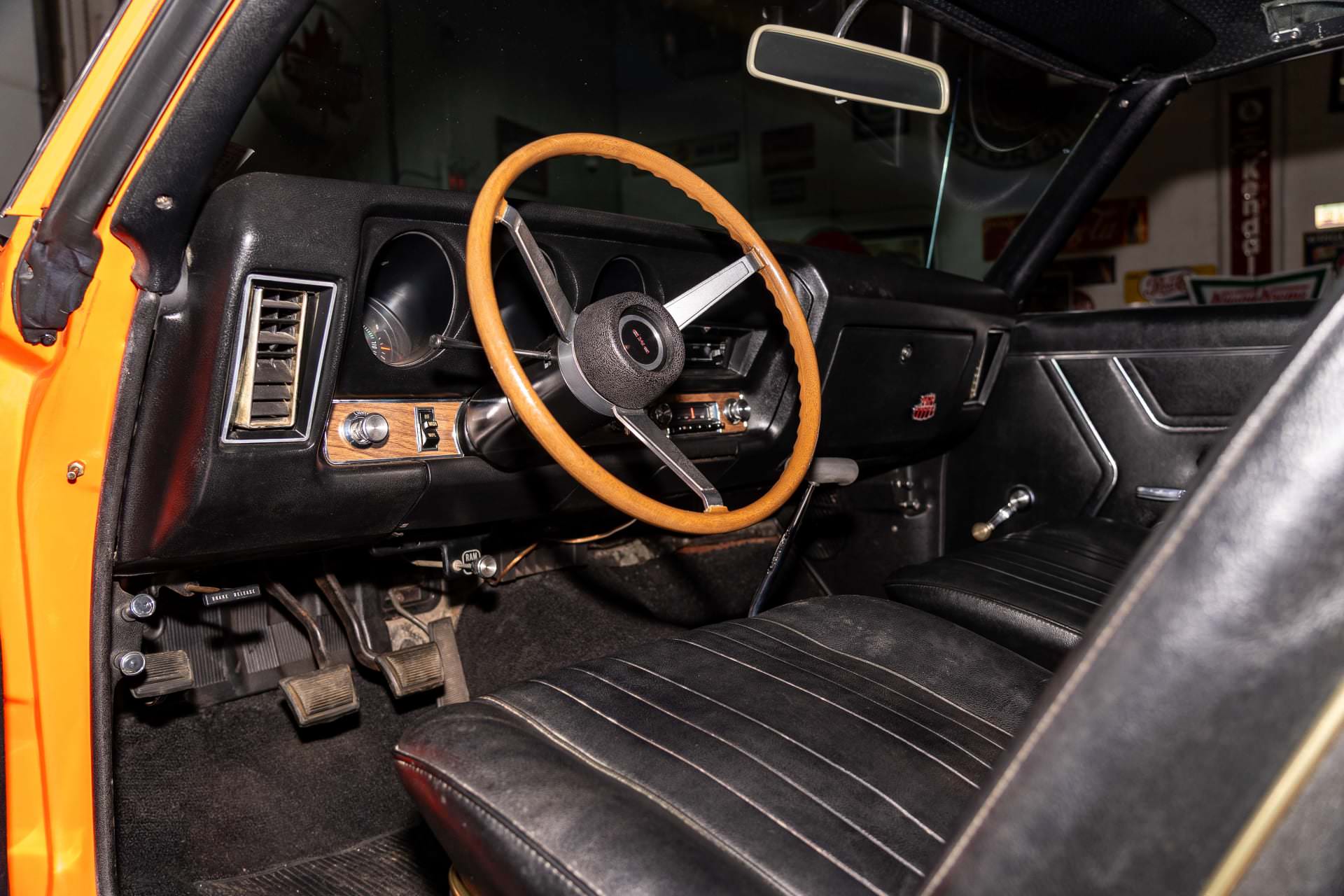
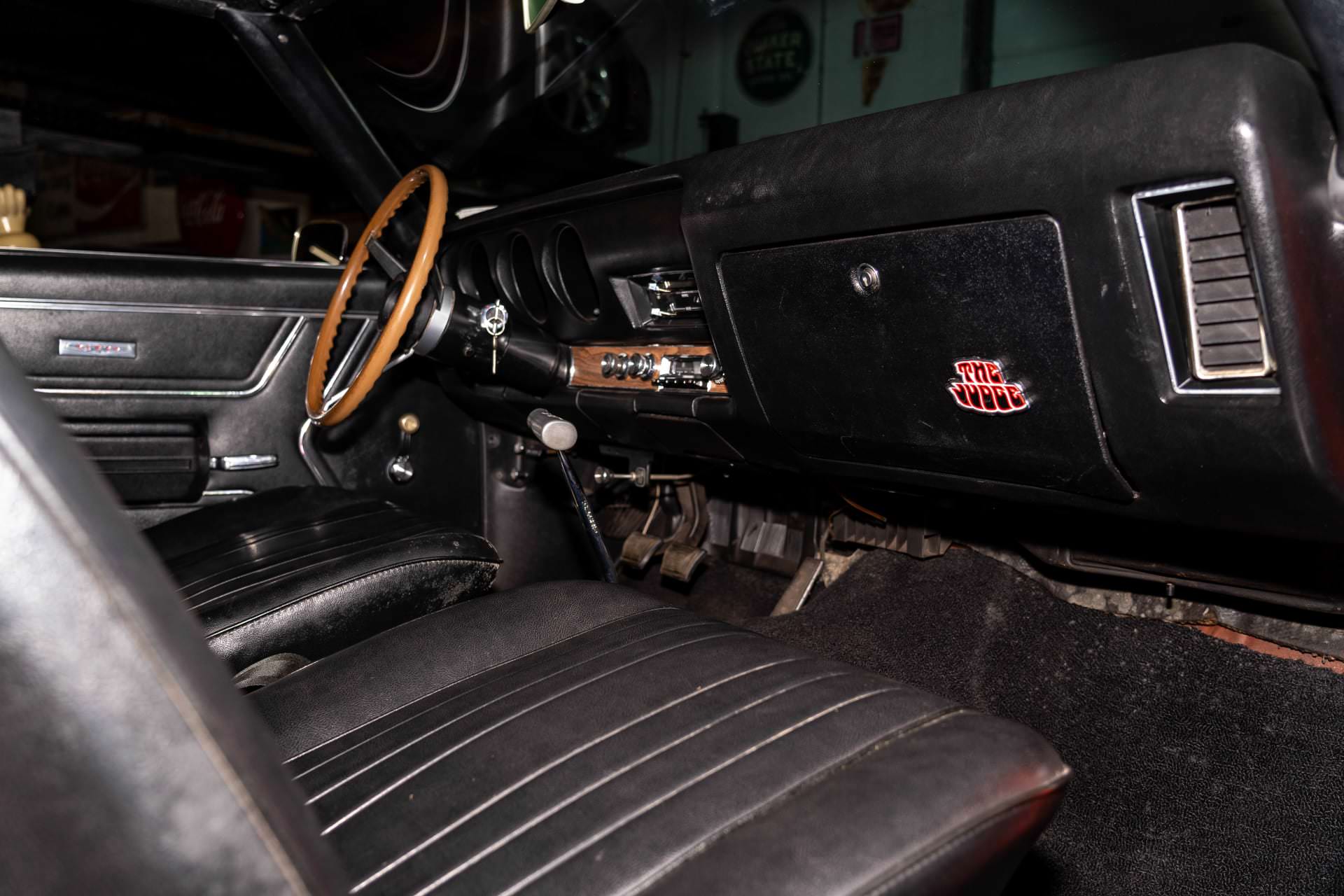
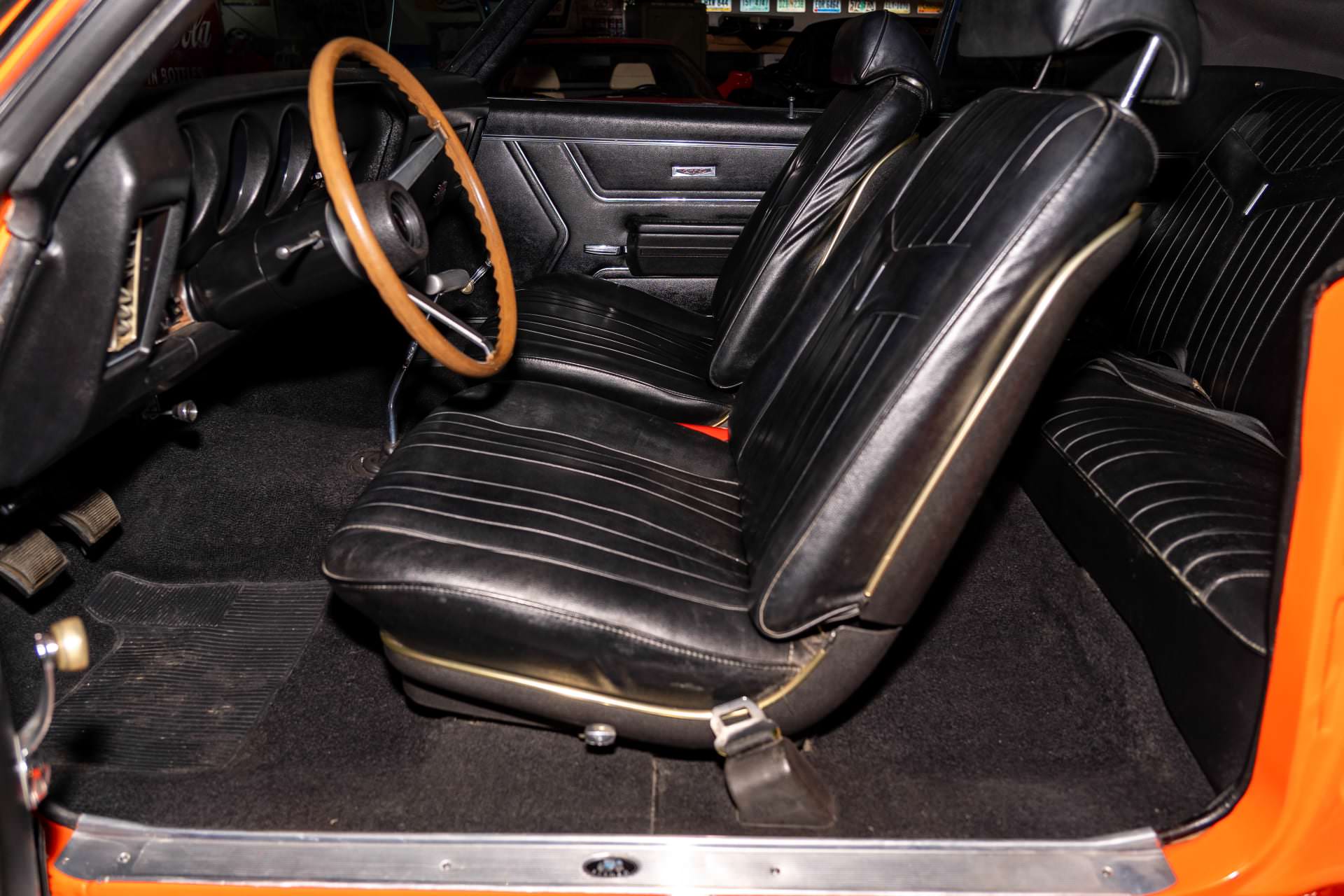
Inside, you’ll find bucket seats, a Hurst T-handle shifter, a push-button radio, faux wood trim, “The Judge” badging, and that famous pull-knob under the dash for opening the Ram Air scoop when you need more cool air for the intake.
Inside, you’ll find bucket seats, a Hurst T-handle shifter, a push-button radio, faux wood trim, “The Judge” badging, and that famous pull-knob under the dash for opening the Ram Air scoop when you need more cool air for the intake.
It’s now due to roll across the auction block with Mecum in mid-January and you can visit the listing here if you’d like to read more about it or place a bid.
Images courtesy of Mecum

Articles that Ben Branch has written have been covered on CNN, Popular Mechanics, Smithsonian Magazine, Road & Track Magazine, the official Pinterest blog, the official eBay Motors blog, BuzzFeed, Autoweek Magazine, Wired Magazine, Autoblog, Gear Patrol, Jalopnik, The Verge, and many more.
Silodrome was founded by Ben back in 2010, in the years since the site has grown to become a world leader in the alternative and vintage motoring sector, with well over a million monthly readers from around the world and many hundreds of thousands of followers on social media.