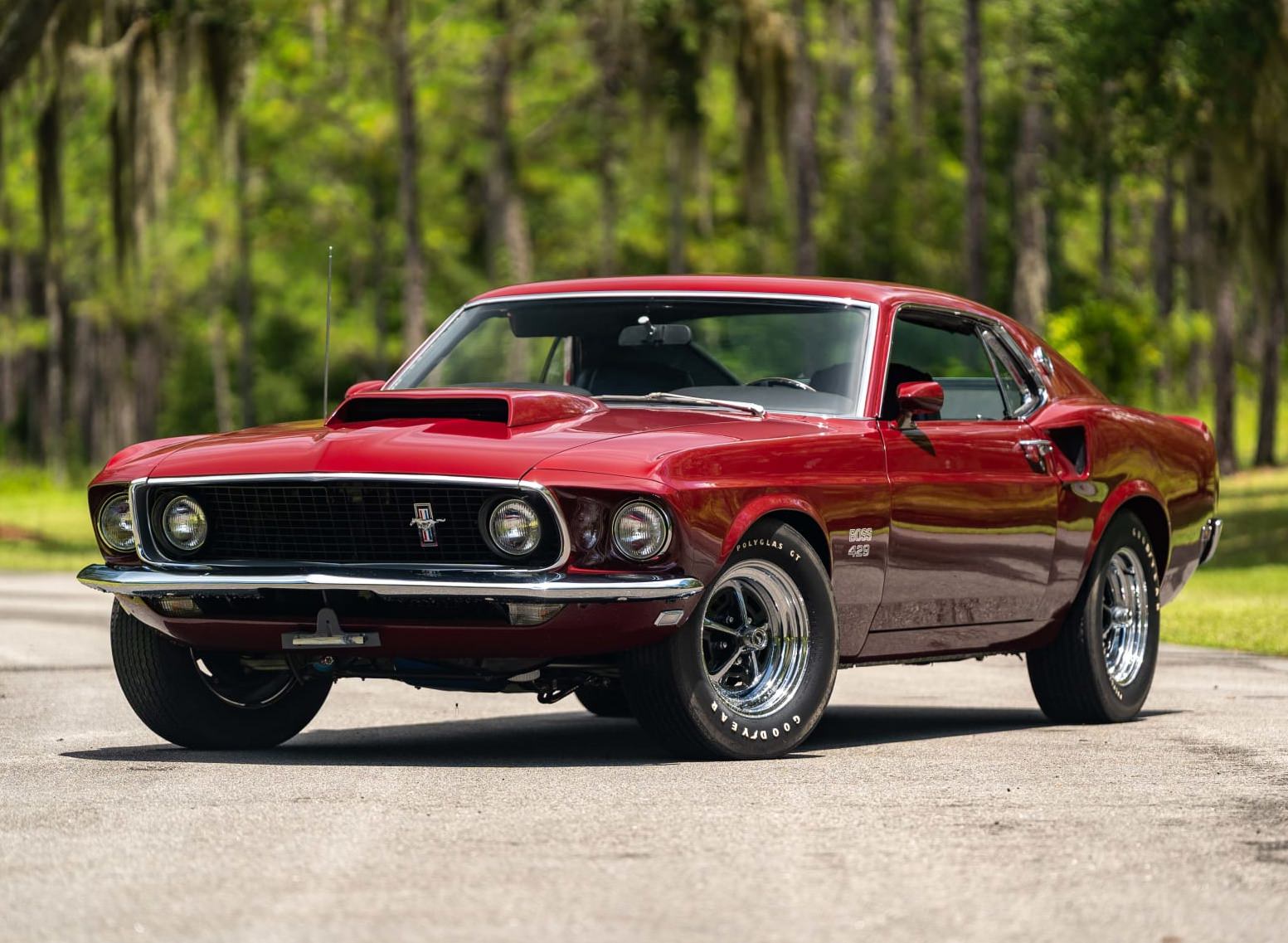
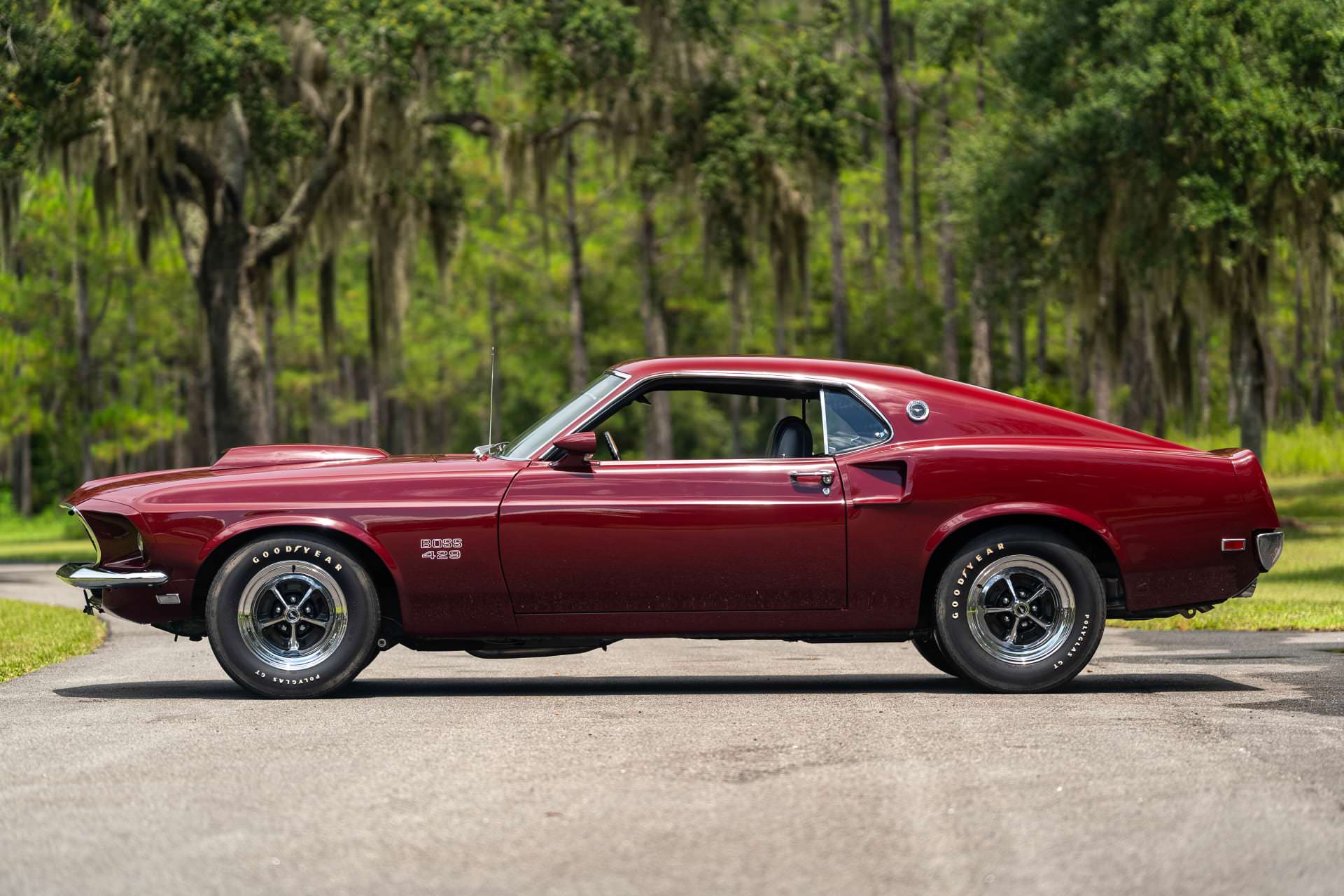
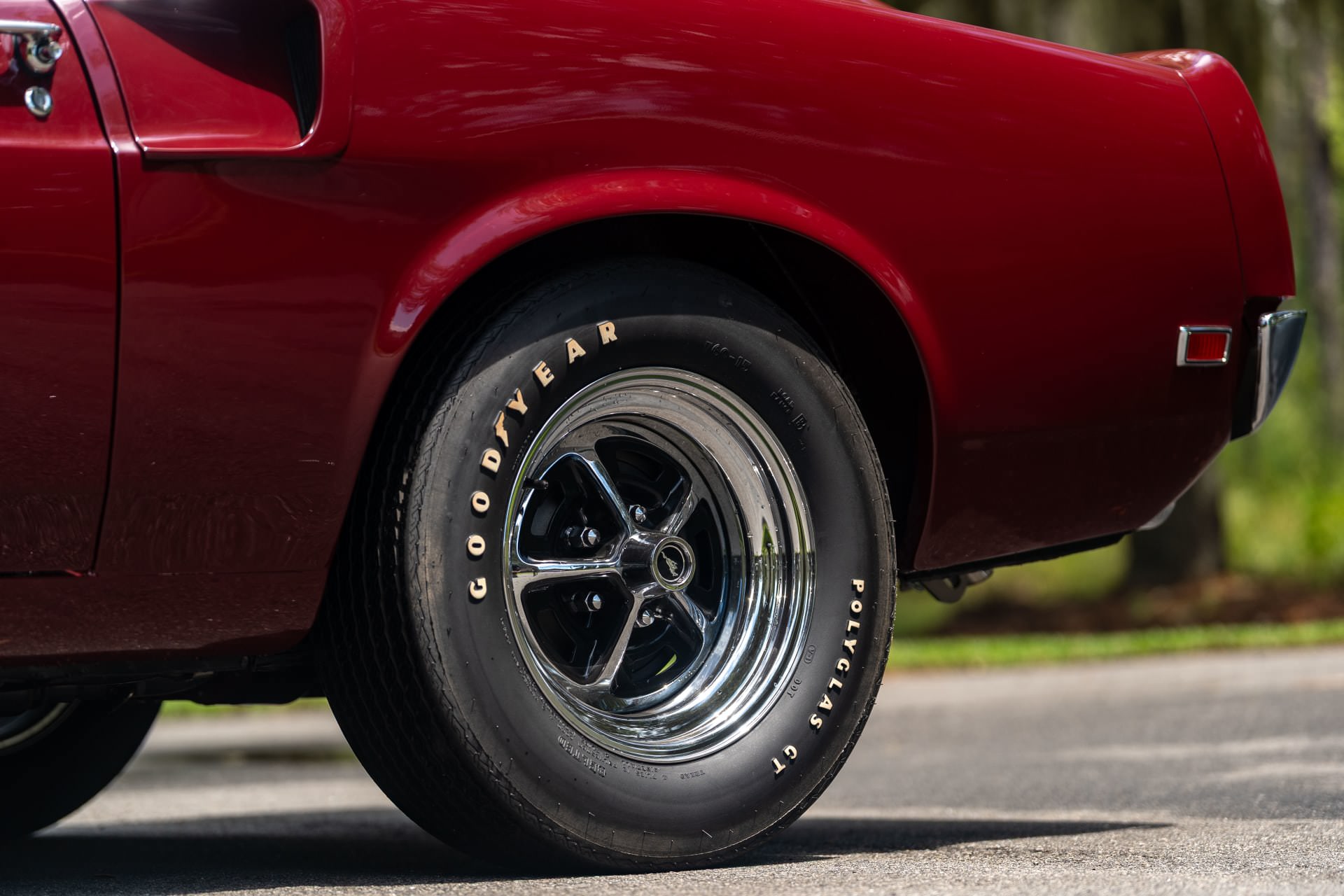
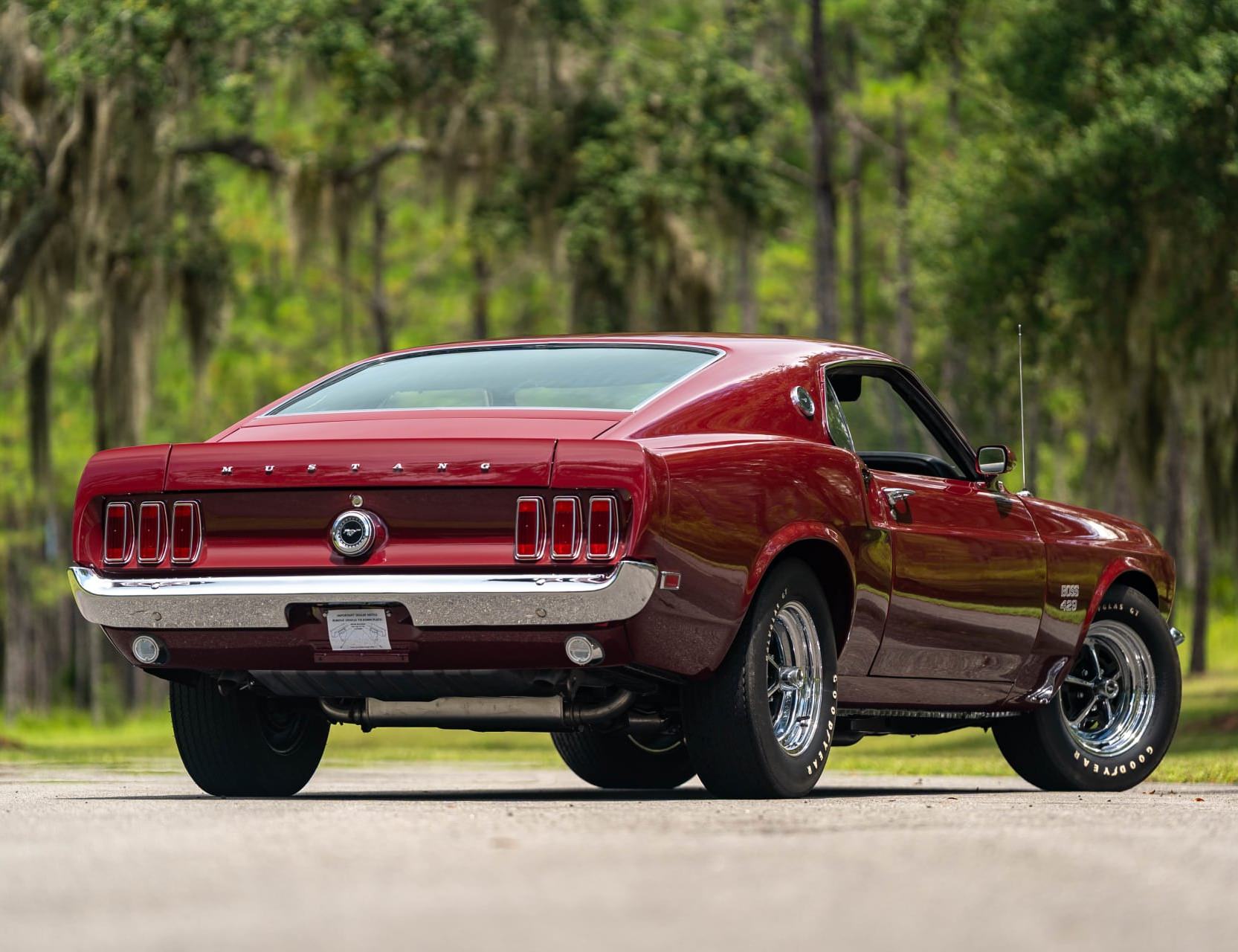
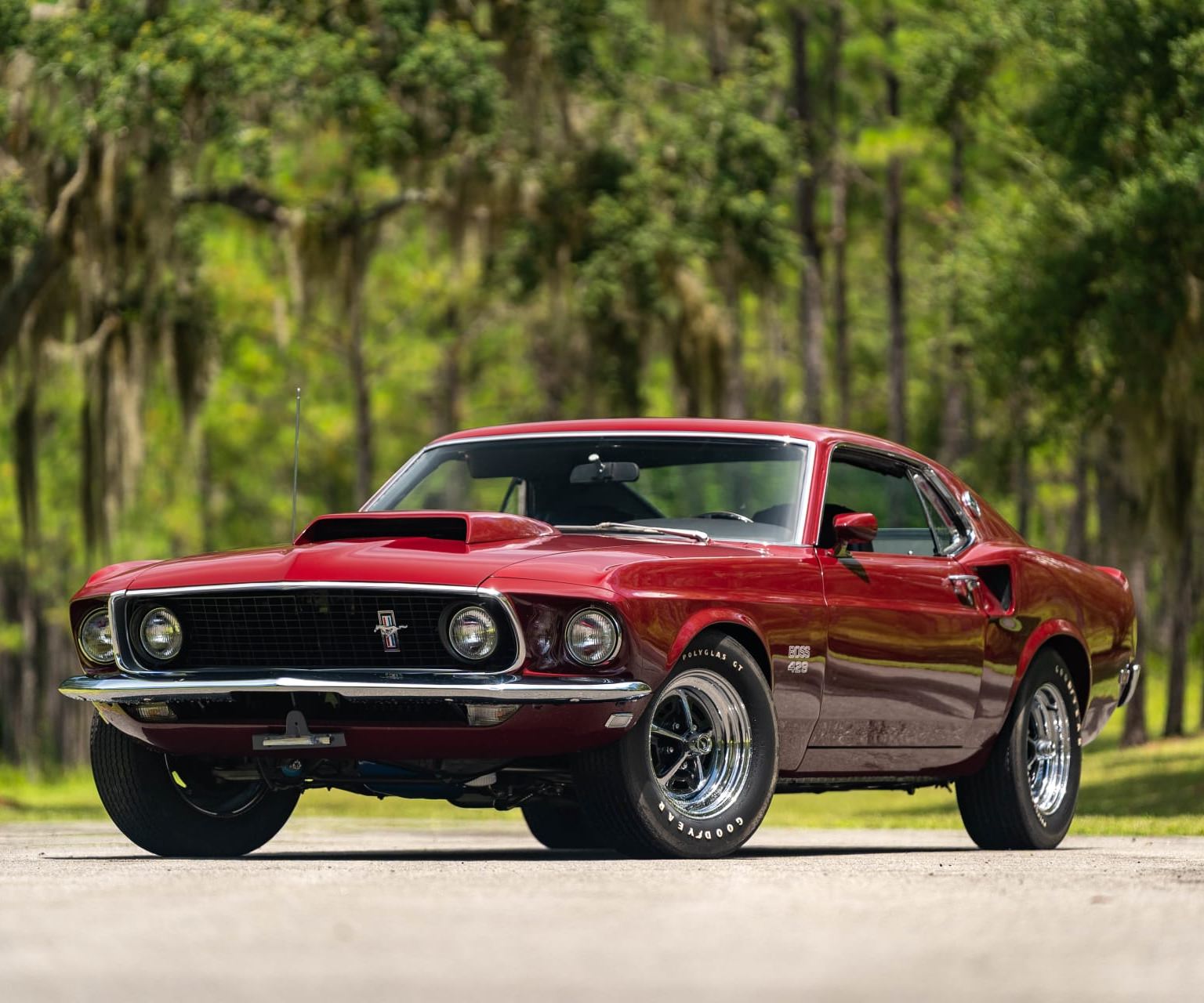
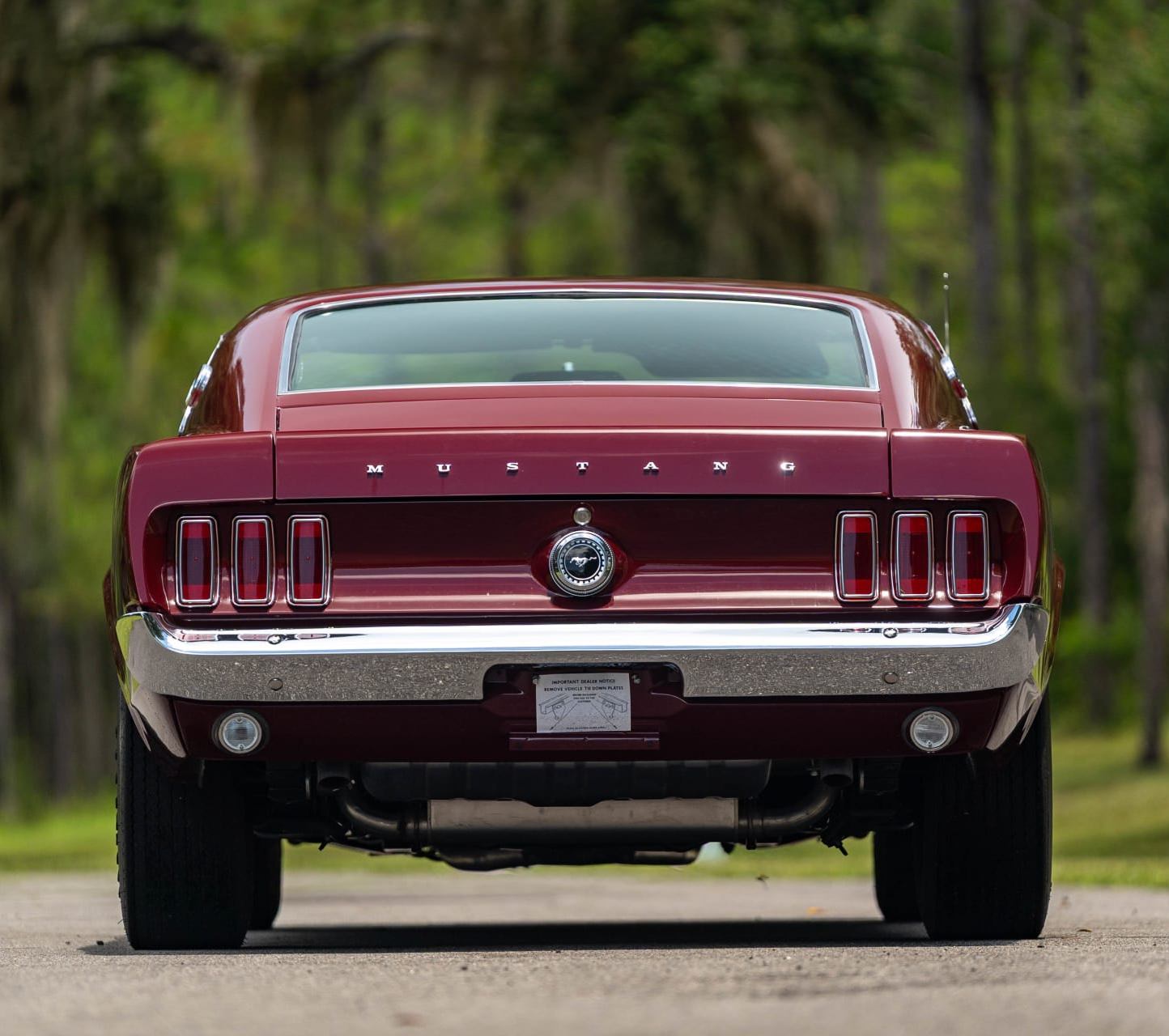
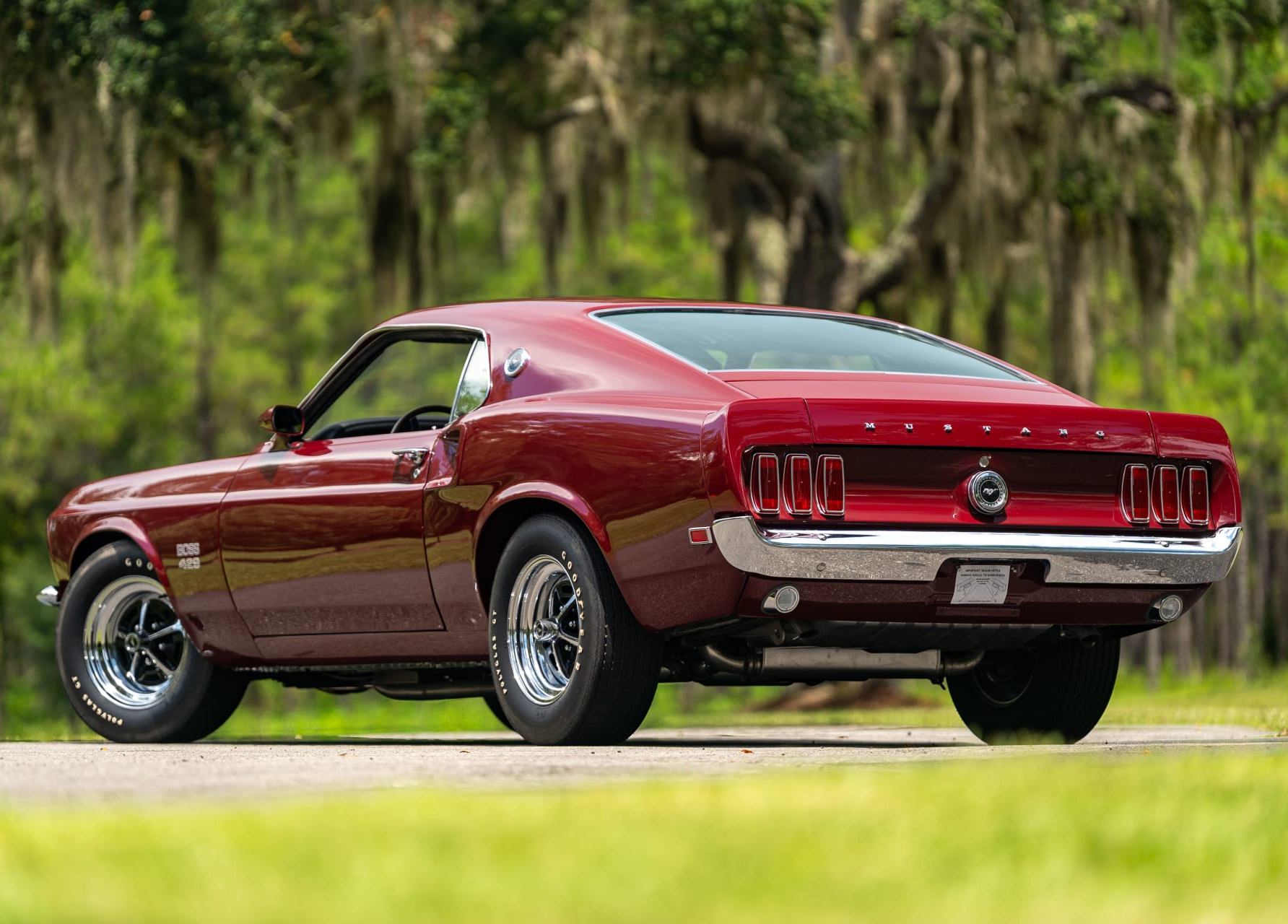
This is a 1969 Ford Mustang Boss 429 with the S-Code 429 cubic inch V8, a 4-speed manual transmission, competition suspension, and those timeless Magnum 500 wheels with Goodyear Polyglas GT tires.
The Boss 429 was built and sold to homologate the 429 V8 engine for NASCAR competition, in the hopes of taking the fight to the all-conquering Chrysler’s 426 Hemi. Ford officially rated the engine at 375 bhp, but unofficial period-rests put the actual output closer to 500 bhp in street tune and over 600 bhp in race tune.
Fast Facts: The 1969 Ford Mustang Boss 429
- The 1969 Ford Mustang Boss 429 was built to homologate Ford’s new 429 cubic inch semi-hemi V8 for NASCAR, aiming to challenge Chrysler’s 426 Hemi dominance. Although rated at 375 bhp, real output was around 500 bhp in street form and exceeded 600 bhp in race trim.
- Because the huge engine wouldn’t fit in a stock Mustang, Ford sent cars to Kar-Kraft in Michigan for major re-engineering. They widened the shock towers, moved the battery to the trunk, and adjusted suspension geometry. These changes made the car heavier and less agile but suitable for that behemoth of a V8.
- Designer Larry Shinoda coined the “Boss” name while secretly developing the Boss car project for Ford president Bunkie Knudsen. Produced in 859 units for 1969 and 499 for 1970, the Boss 429 had eye-catching looks, a 4-speed manual gearbox, and a 3.91 rear axle ratio. Only 1,358 examples were ever built.
- The restored 1969 example shown here was sold new in Iowa with competition suspension, power steering, power front discs, and the S-code 429 V8. It now has just 16 miles since a complete restoration by Muscle Car Restorations in Oklahoma and is scheduled to cross the Mecum auction block in January.
History Speedrun: The Ford Mustang Boss 429
When Ford unveiled the Boss 429 Mustang in 1969 it wasn’t meant as a mass-produced muscle car in the conventional sense. Instead, it was a homologation project – an engineering workaround to meet NASCAR’s requirement that racing engines be production-based. The car was essentially a Trojan horse – a street-legal Mustang built to sneak Ford’s new 429 cubic inch semi-hemi V8 past sanctioning bodies and onto the high-banked ovals of top flight NASCAR competition.
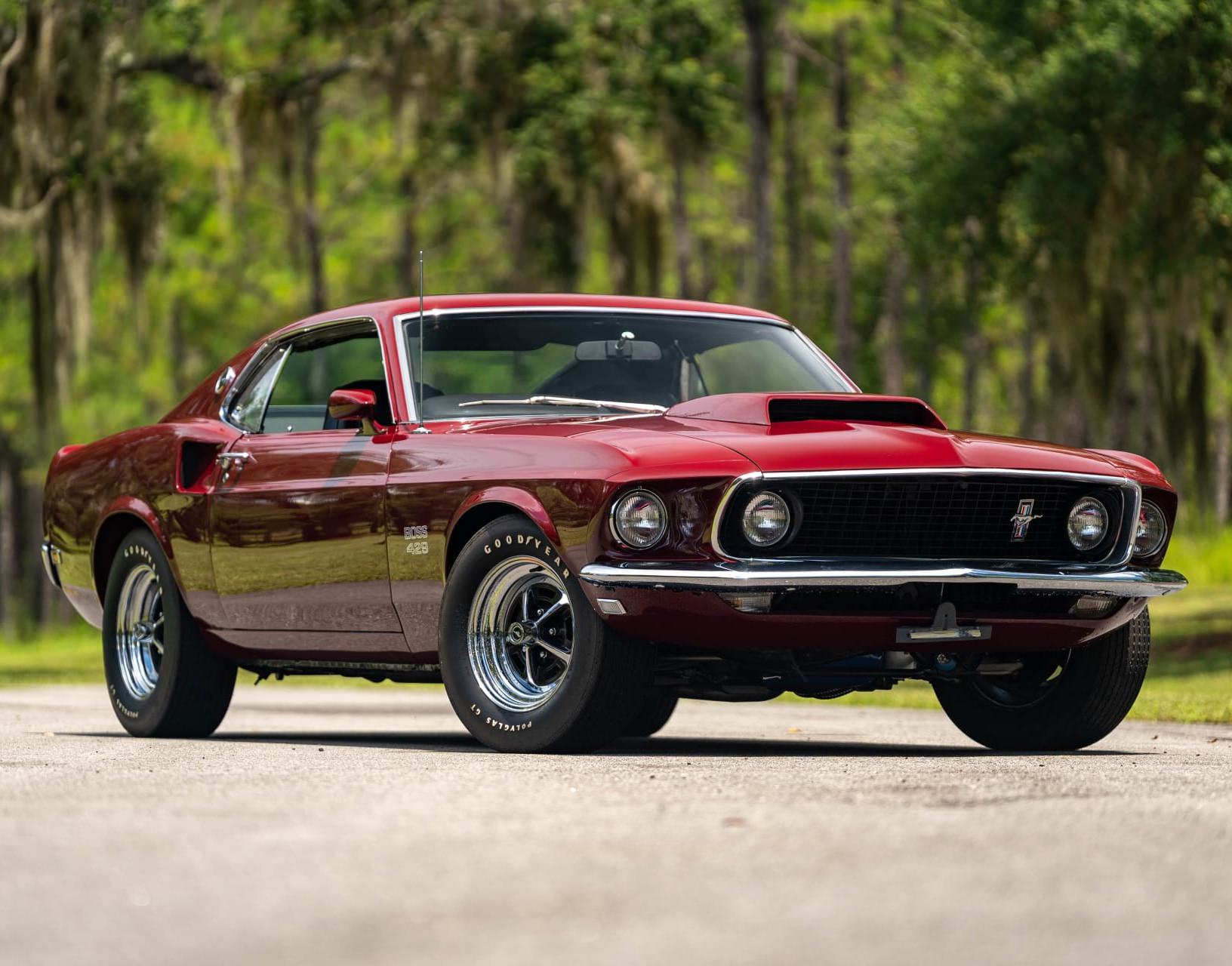
 The Boss 429 was essentially a Trojan horse – a street-legal Mustang built to sneak Ford’s new 429 cubic inch semi-hemi V8 past sanctioning bodies and onto the high-banked ovals of top flight NASCAR competition.
By the late 1960s, Ford was in a horsepower war on two fronts – the muscle car street scene and the NASCAR tracks where Chrysler’s 426 Hemi was dominating. To counter Mopar, Ford’s engineers developed a new big-block designed with hemispherical combustion chambers, massive cylinder heads, and the breathing capacity needed for sustained 7,000 rpm durability – that’s no small feat for a big block pushrod V8.
NASCAR homologation rules required that at least 500 street cars be produced with the new engine and the Mustang fastback was chosen as the host platform – not because it was the best fit but because Ford wanted the Mustang name associated with its latest on-track weapon.
The engine bay of a stock Mustang couldn’t accommodate the Boss 429, so Ford farmed the conversions out to Kar-Kraft, a specialty contractor in Brighton, Michigan, already known for its work on racing Fords including the legendary Le Mans-dominating Ford GT40.
Kar-Kraft re-engineered the front end of the Mustang to accept the oversized V8. This meant widening the shock towers, relocating the battery to the trunk, and revising the front suspension geometry. These changes shifted the car’s balance and made it less nimble on the street. But cornering and handling wasn’t the point – getting the Boss 429 engine onto the track was.
Where Did The Name “Boss” Come From?
The “Boss” name came from Ford designer Larry Shinoda, who had recently arrived from GM. When asked by colleagues what the secretive project he was working on was, Shinoda would jokingly say, “the boss’s car,” a reference to his boss Bunkie Knudsen, Ford’s recently hired president. The moniker stuck, first with the Boss 302 and then with the Boss 429.
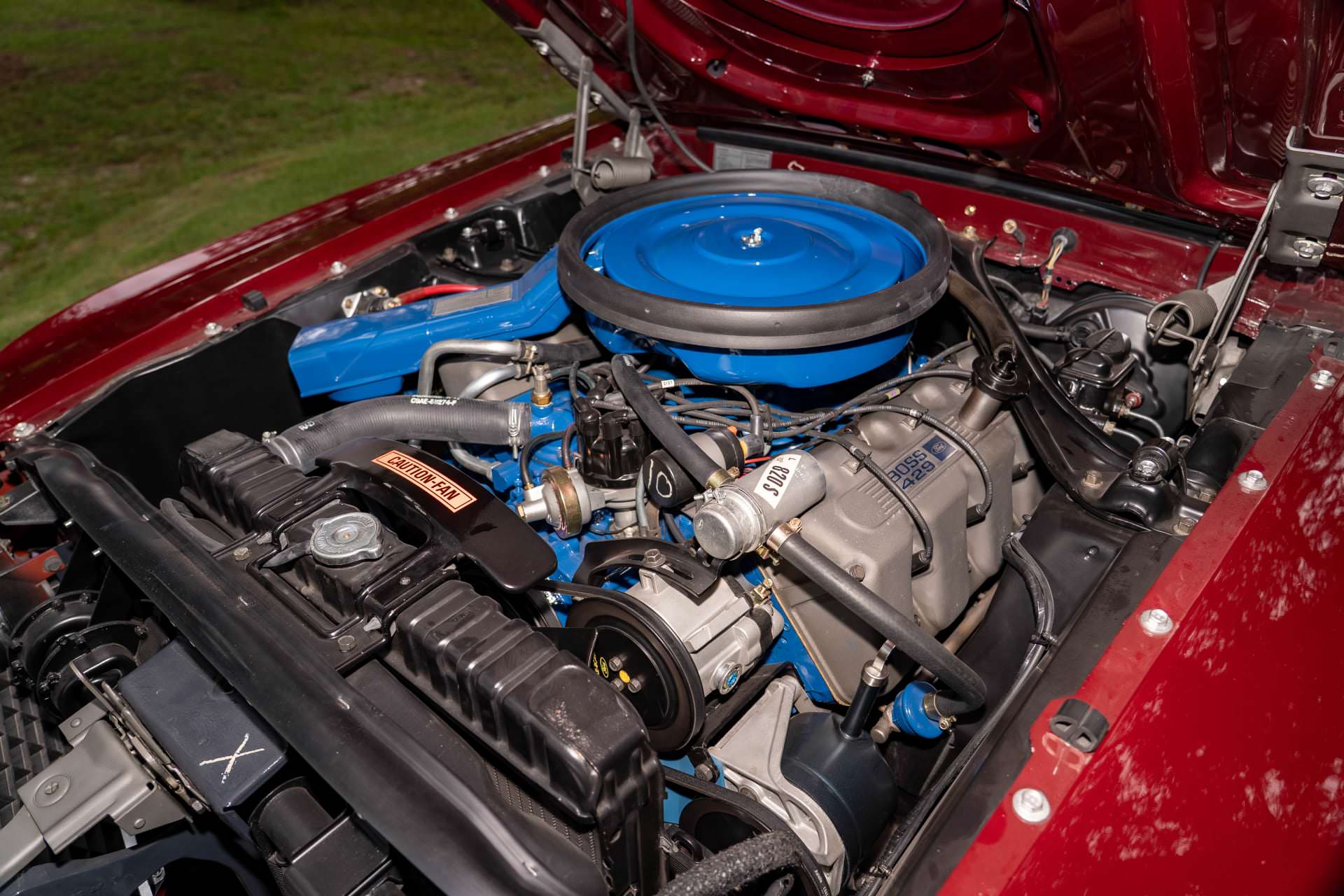
Officially, Ford rated the engine at 375 bhp at 5,200 rpm and 450 lb ft of torque but in reality, it produced much more – closer to 500 bhp in street trim and well over 600 in NASCAR-spec.
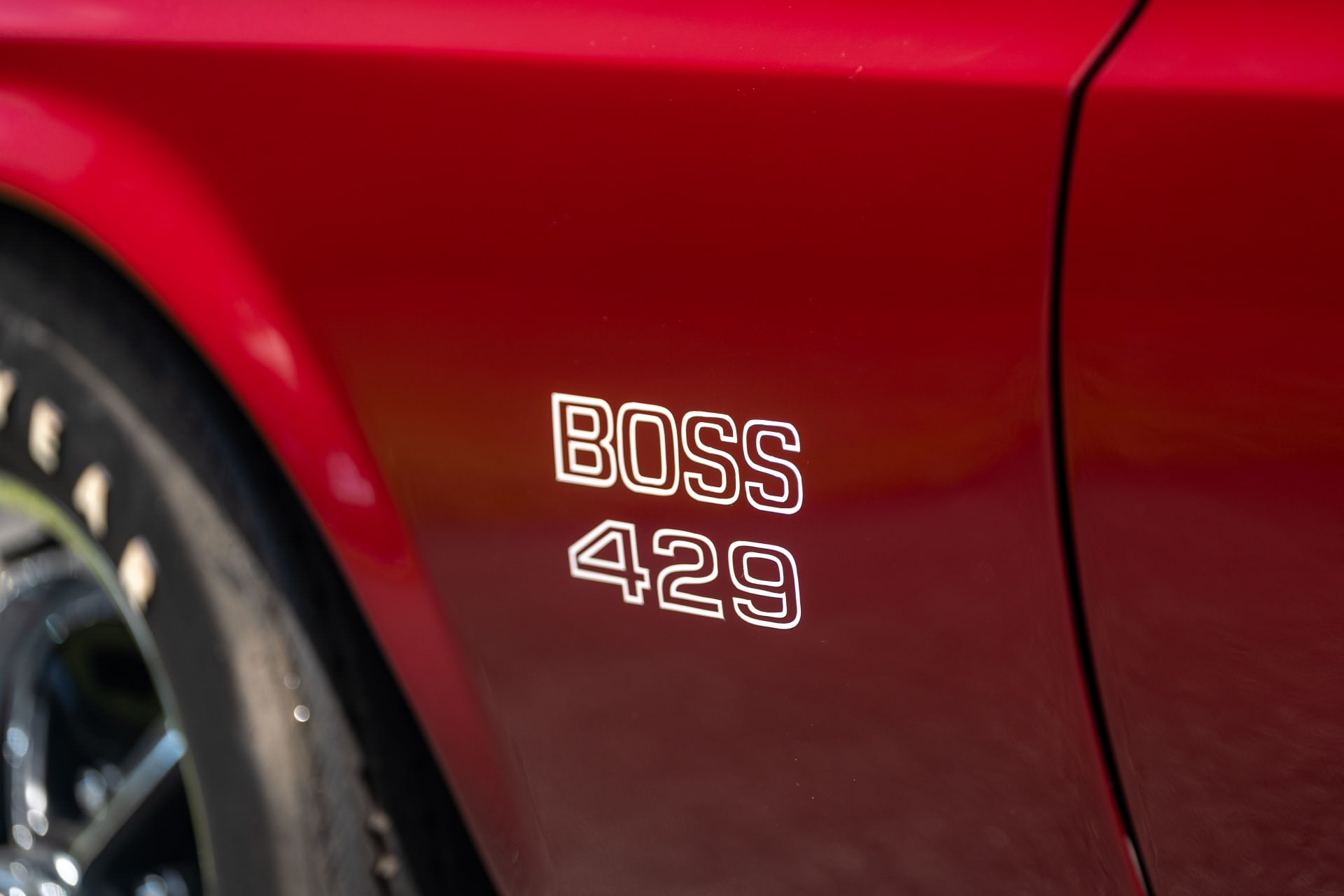
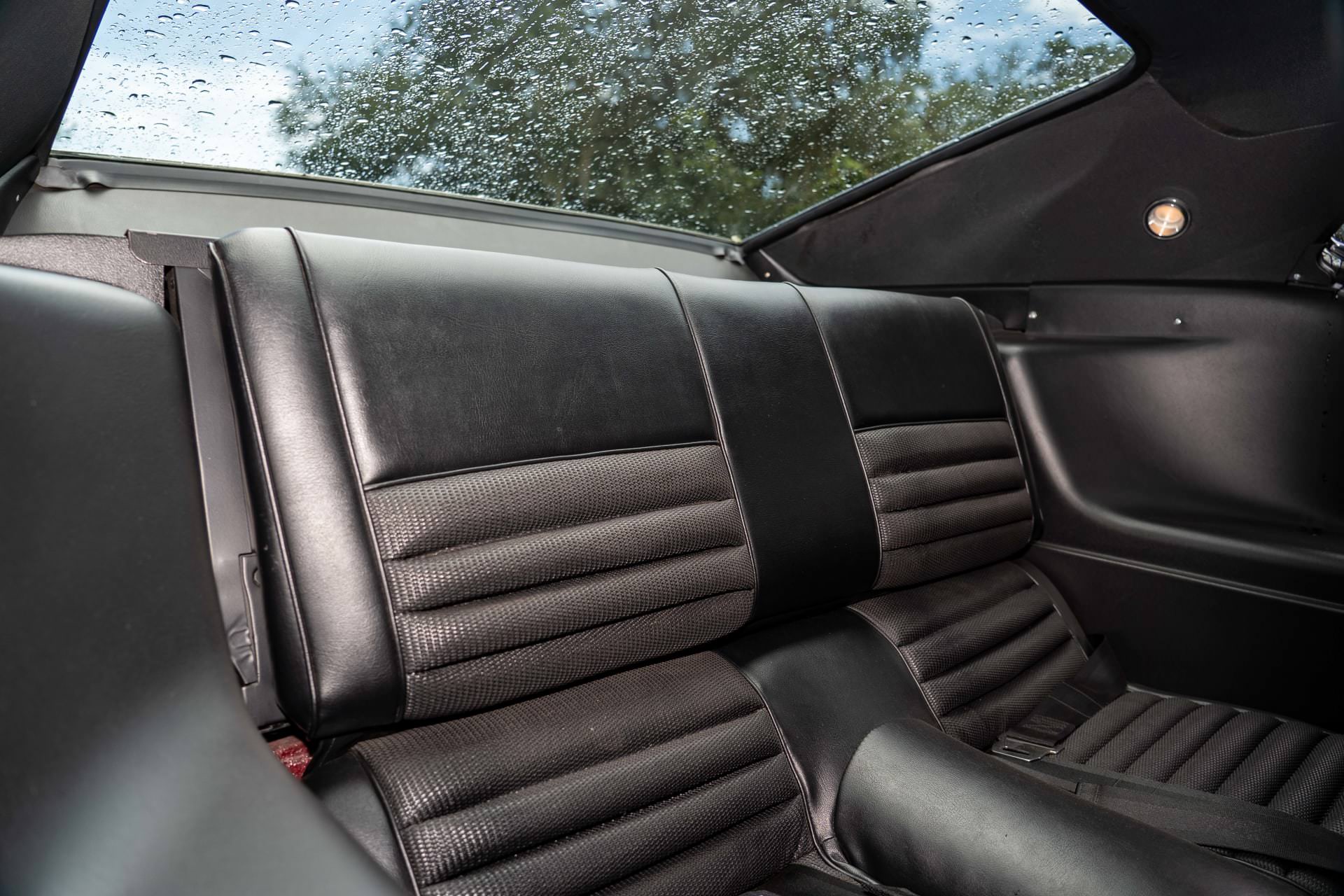
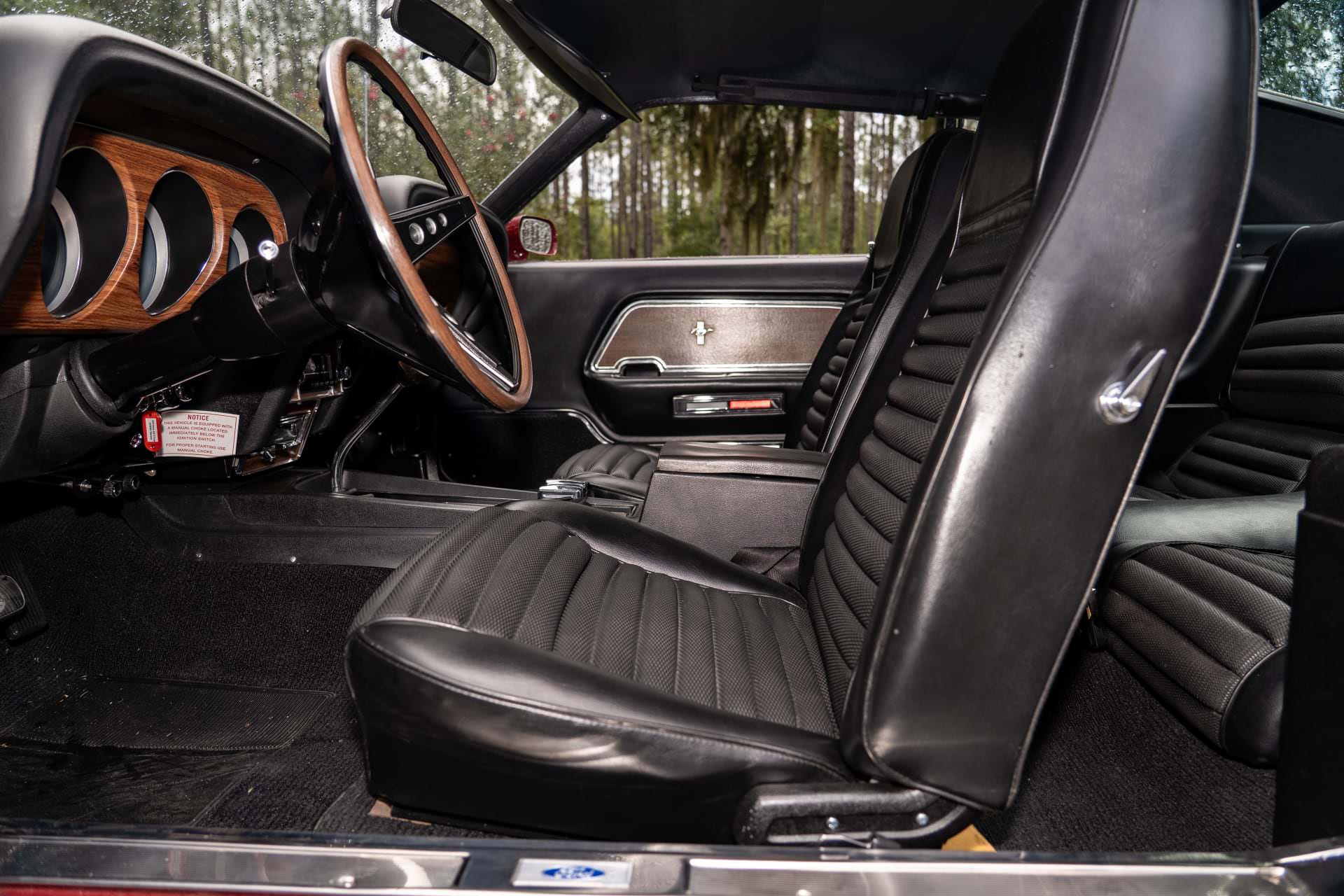
The Boss 429 Mustang made its debut in 1969 – instead of wild graphics or spoilers, it had relatively understated “Boss 429” decals on the front fenders, a functional hood scoop, and Magnum 500 wheels. Inside, it was much like a standard Mustang, though all examples came with a 4-speed manual gearbox and a 3.91 rear axle ratio.
Ford produced 859 Boss 429s in 1969, painted in a mix of Grabber colors and some more subdued hues. In 1970, the car returned with minor cosmetic revisions, including the new front-end design shared by the rest of the Mustang lineup. Only 499 were built for that model year, making the total production run just 1,358 units.
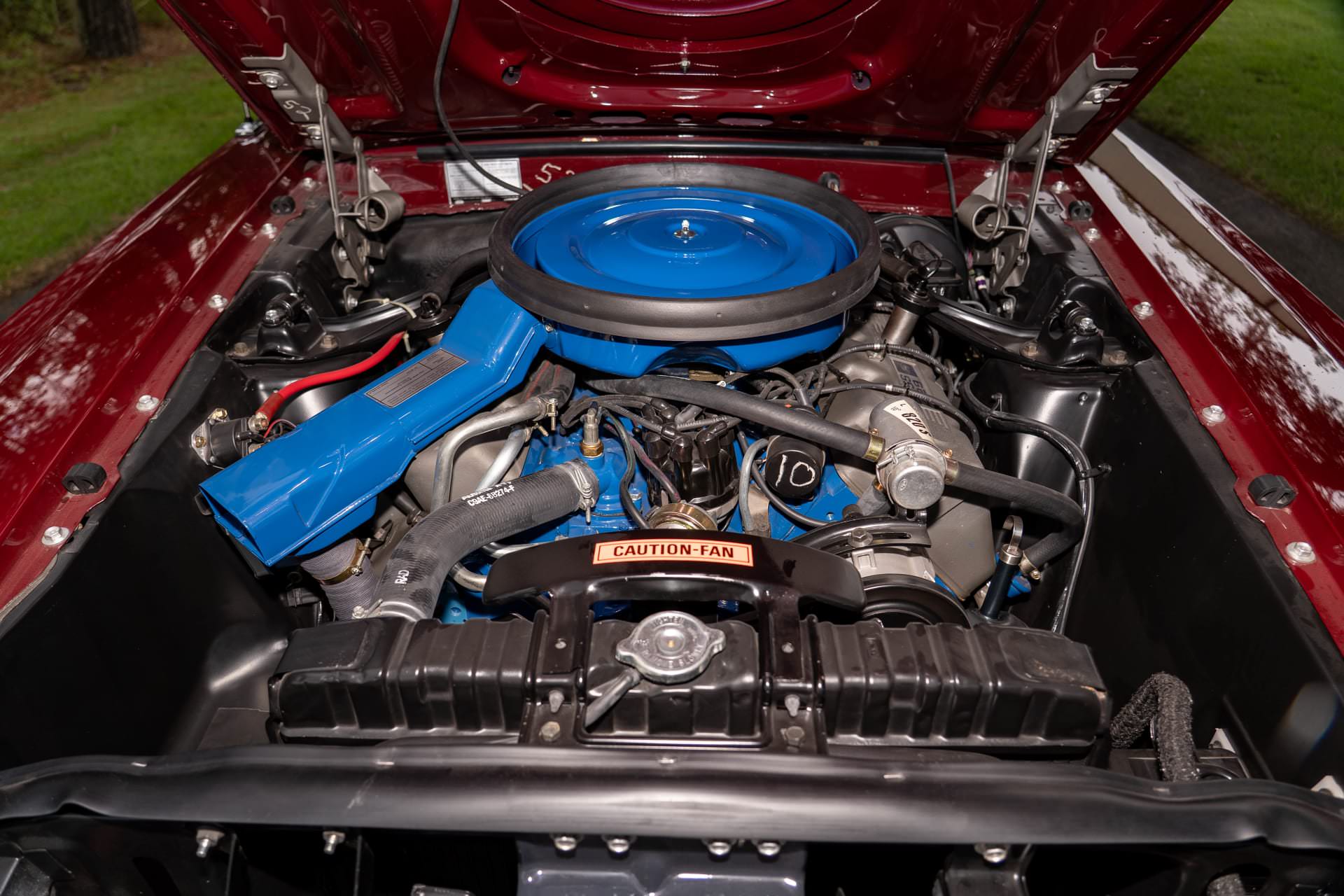
The Boss 429 V8 Engine
The heart of the car, the Boss 429 V8 mill, was a marvel of late-1960s engineering. With a 4.36 inch bore and 3.59 inch stroke, it displaced 429 cubic inches (7.0 liters). The aluminum cylinder heads used crescent-shaped combustion chambers, paired with large valves and high-flow ports.
Officially, Ford rated the engine at 375 bhp at 5,200 rpm and 450 lb ft of torque but in reality, it produced much more – closer to 500 bhp in street trim and well over 600 in NASCAR-spec.
The Boss 429 lasted only two model years. Rising insurance premiums, tighter emissions regulations, and changing market conditions spelled the end of Ford’s homologation special. By 1971, the Mustang itself had grown in size and weight, and the big-block performance era was already on borrowed time.
The Boss 429 name didn’t officially return in production Mustangs after 1970, though its legend only grew. In the decades since, Ford has periodically revived the “Boss” branding. The Boss 302 returned in 2012 to 2013 as a modern track-focused Mustang, while custom builders like Classic Recreations have offered officially licensed continuation Boss 429s using new Ford crate engines.
The 1969 Ford Mustang Boss 429 Shown Here
The car you see here is a 1969 Ford Mustang Boss 429 fitted with the desirable RUGAE2 4-speed manual transmission – this was also the only transmission ever offered with this car, as it was intended strictly for genuine enthusiasts who wanted to row their own gears.
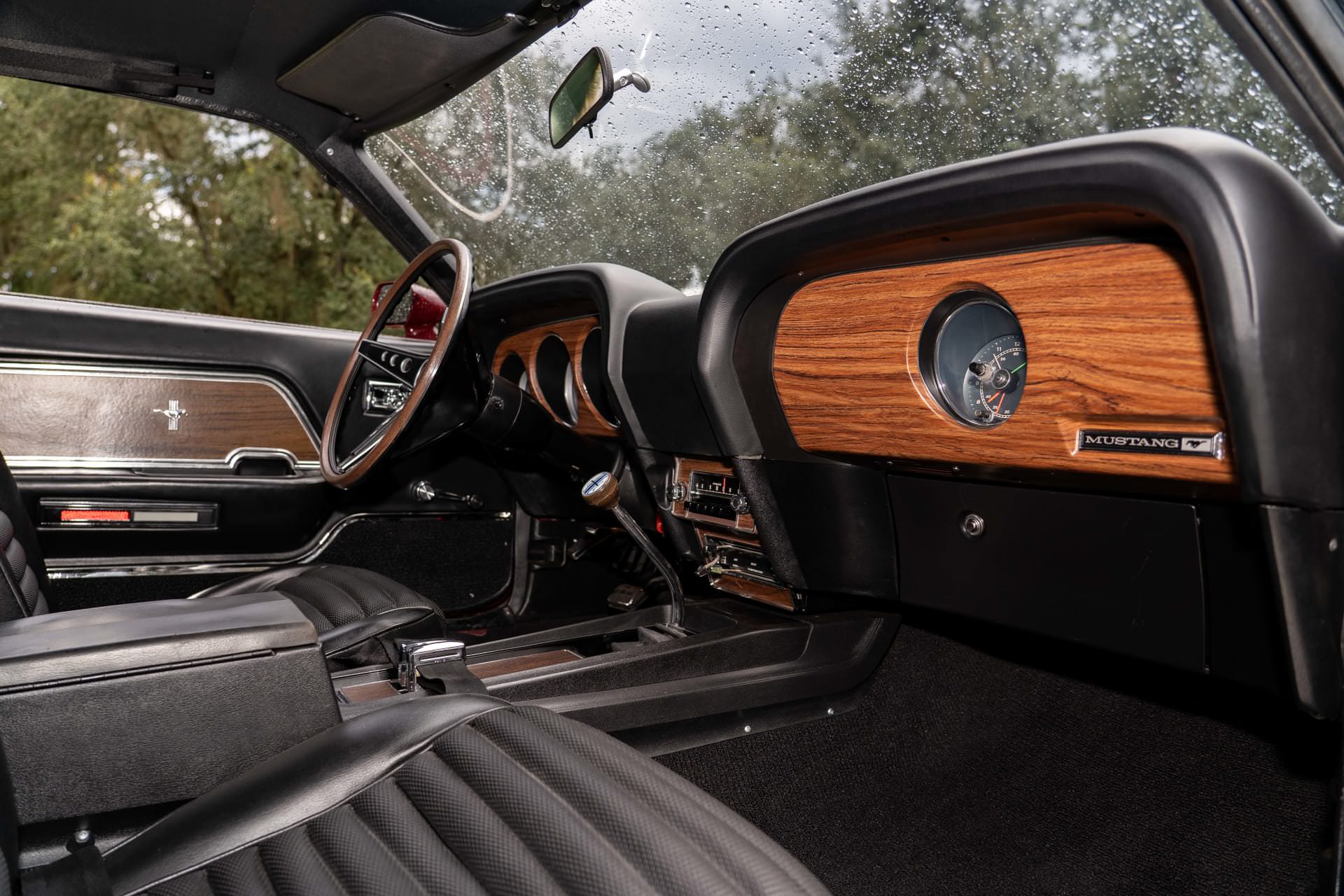
The car you see here is a 1969 Ford Mustang Boss 429 fitted with the desirable RUGAE2 4-speed manual transmission rather than the 3-speed automatic that so many opted for when ordering the car new.
It was given an extensive restoration completed by Muscle Car Restorations in Owasso, Oklahoma with just 16 miles added since completion. It was sold new at Burk Ford in Perry, Iowa, and it came with power steering, power brakes with front discs, competition suspension, the N case 3.91 rear end, and of course, that S-code 429 cubic inch V8.
It’s now due to roll across the auction block with Mecum in mid-January and you can visit the listing here if you’d like to read more about it or place a bid.
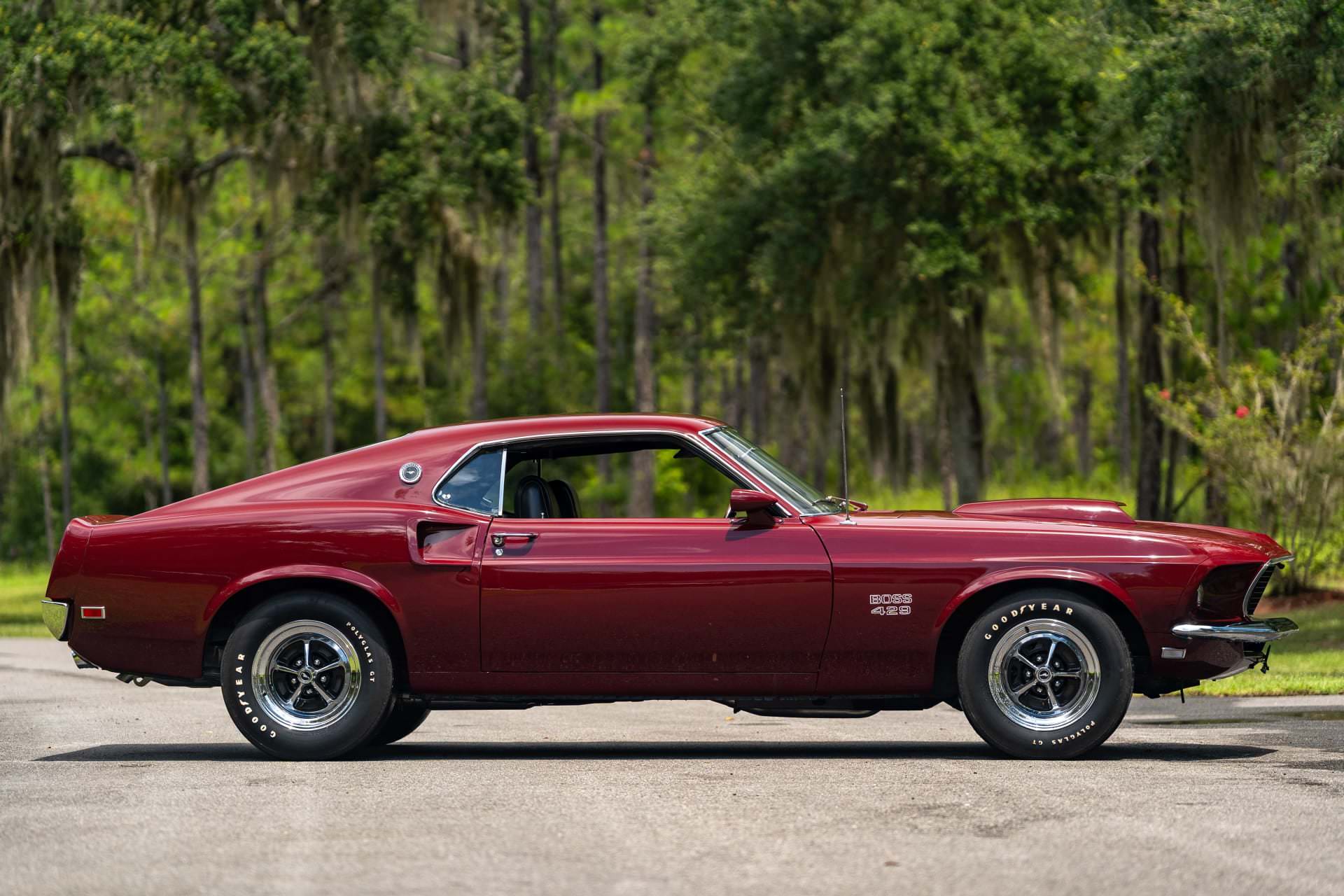
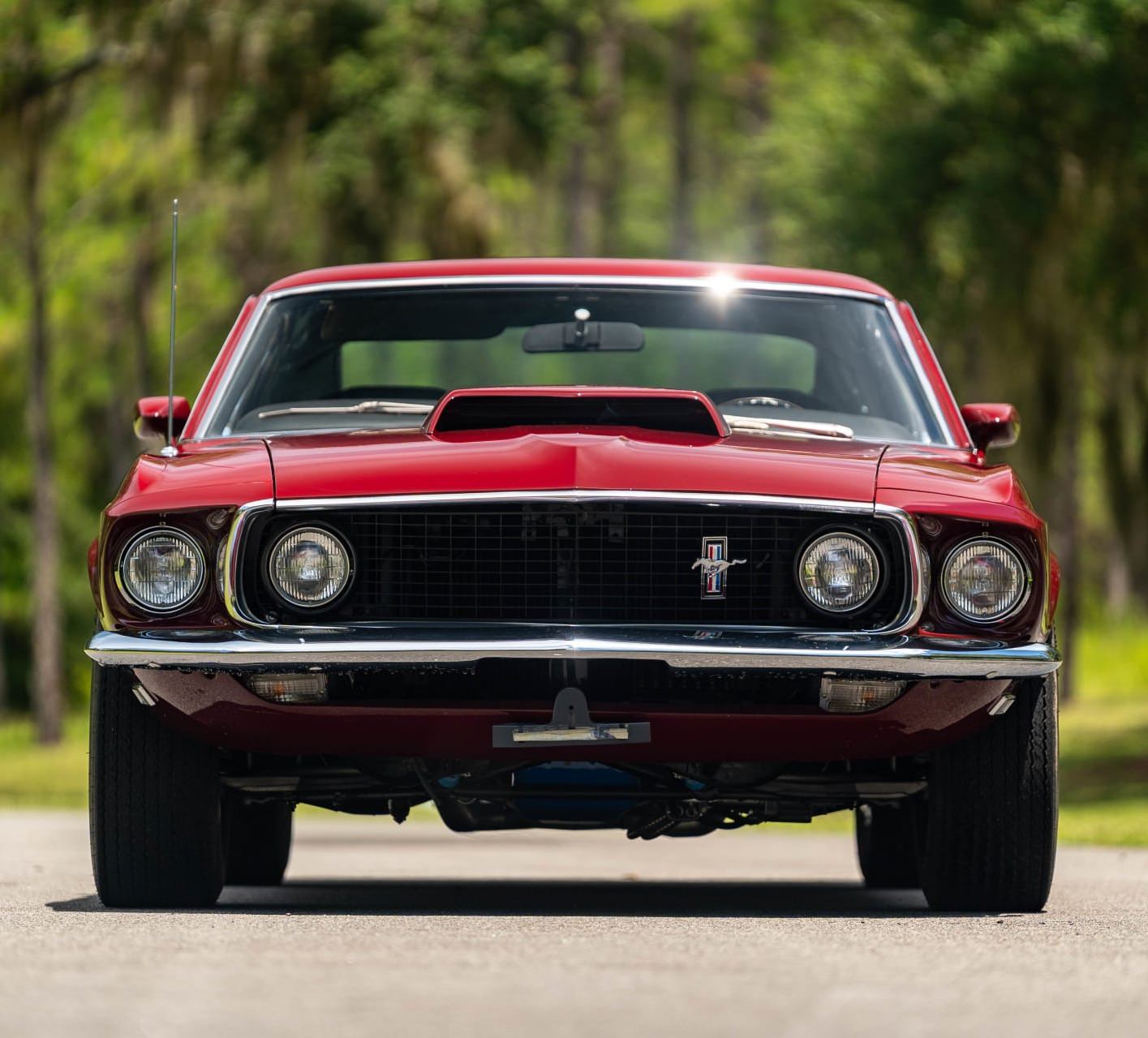
Images courtesy of Mecum

Articles that Ben Branch has written have been covered on CNN, Popular Mechanics, Smithsonian Magazine, Road & Track Magazine, the official Pinterest blog, the official eBay Motors blog, BuzzFeed, Autoweek Magazine, Wired Magazine, Autoblog, Gear Patrol, Jalopnik, The Verge, and many more.
Silodrome was founded by Ben back in 2010, in the years since the site has grown to become a world leader in the alternative and vintage motoring sector, with well over a million monthly readers from around the world and many hundreds of thousands of followers on social media.