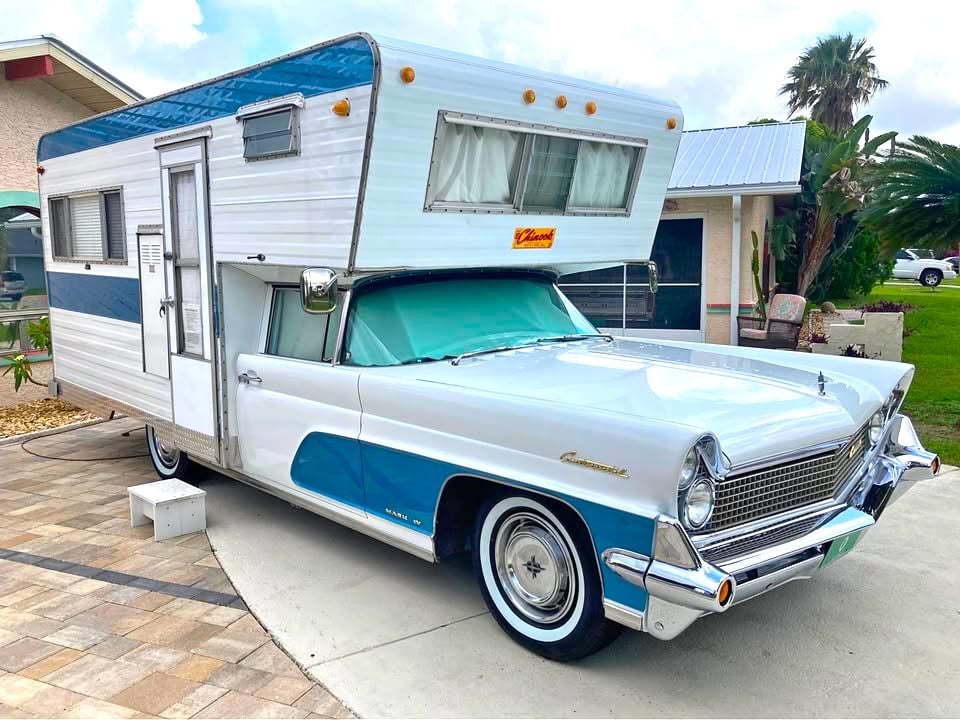
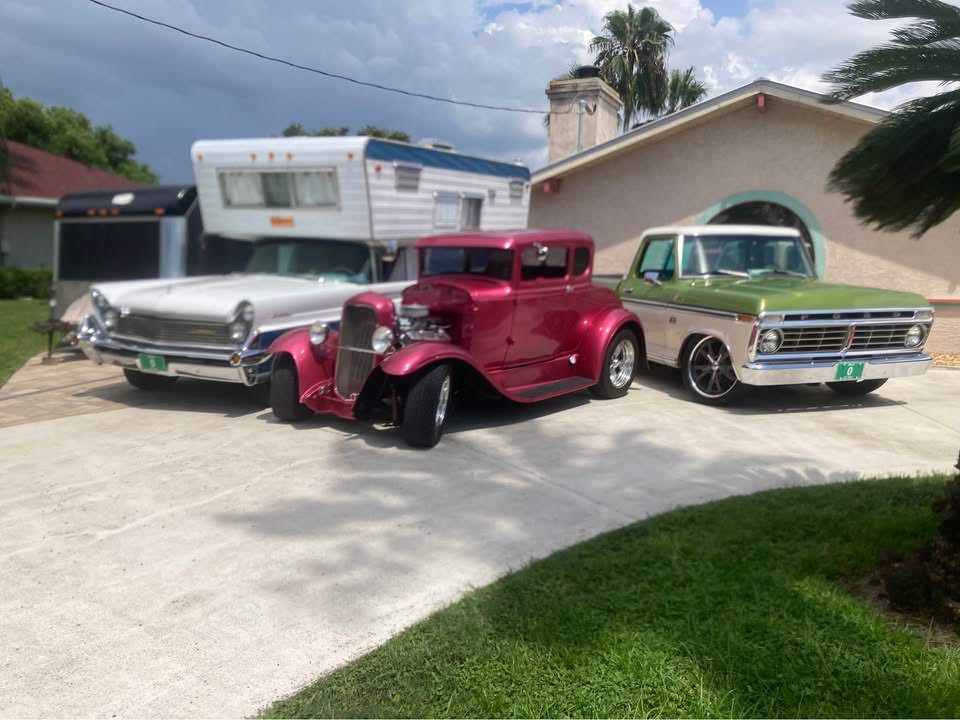
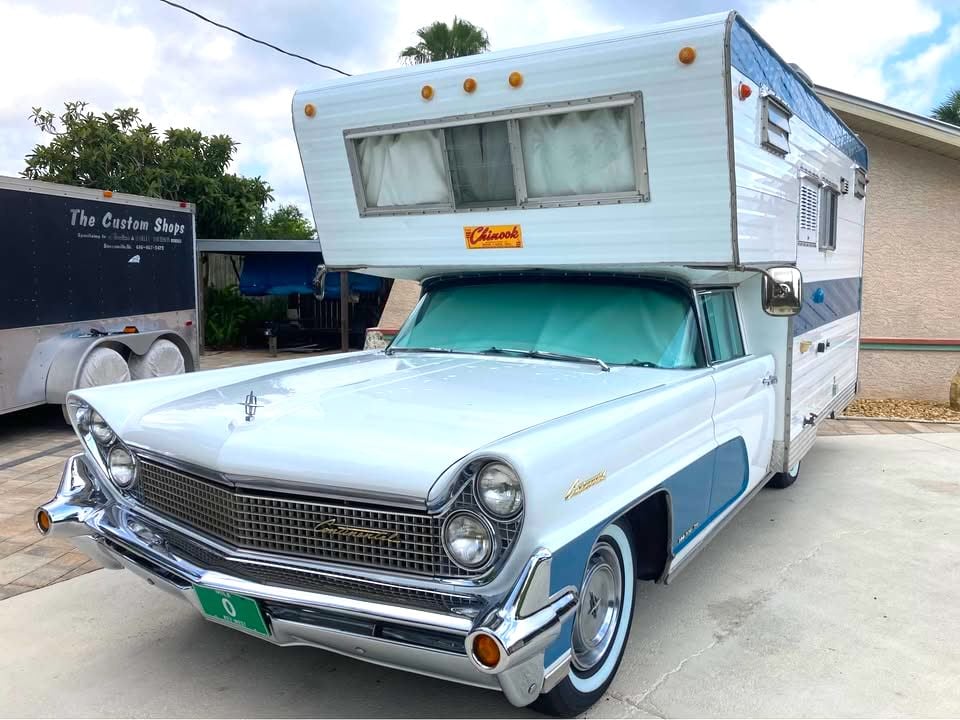
This 1959 Lincoln Continental Camper is easily one of the most elegant-looking RVs we’ve ever featured on Silodrome, and amazingly it’s said to have been built in period in a series of 10 vehicles – not converted years later as a one-off project.
Given the age of the Lincoln and its camper, it does appear to be in remarkably good overall condition, and whoever does buy it is going to have one of the most popular RVs in whichever campgrounds they stop in at on road trips.
Fast Facts: A 1959 Lincoln Continental Camper
- This is a 1959 Lincoln Continental Mark IV that was converted into a fully self-contained camper by Chinook when the car was new. The seller claims Chinook built ten of these Lincoln-based house cars between 1958 and 1960, though this production figure is sourced solely from the seller’s account.
- Chinook was founded in 1938 by Cyrus and Rose Mair in Orange County, California, making it one of the oldest names in the American RV industry. In the late 1950s the company was still building wood-framed, aluminum-sided campers, years before its pioneering use of fiberglass and its famous 1970s partnership with Toyota would make it a household name among RV enthusiasts.
- The Continental Mark IV was one of the largest unibody cars of its era, riding on a 131 inch wheelbase and weighing approximately 5,200 lbs in standard form. Power comes from a 430 cubic inch MEL V8 producing 350 bhp and 490 lb ft of torque, paired with what the seller describes as a heavy-duty truck automatic transmission.
- The camper conversion replaced everything behind the front seats with a walk-in living space with an over-cab sleeping area, a kitchenette, and checkerboard linoleum flooring. The vehicle has been sympathetically restored, keeping its original appliances while adding some diamond-plate cabinetry, and it’s offered for sale in Spring Hill, Florida with 48,000 miles on the odometer at an asking price of $50,000 USD.
The Lincoln Continental Camper By Chinook
In the late 1950s, the American RV industry was still figuring out what a motorhome was supposed to be. The term “motorhome” itself hadn’t even entered the popular lexicon yet, they were still called “house cars” by most, and they came in an extraordinary variety of shapes, sizes, and base vehicles.
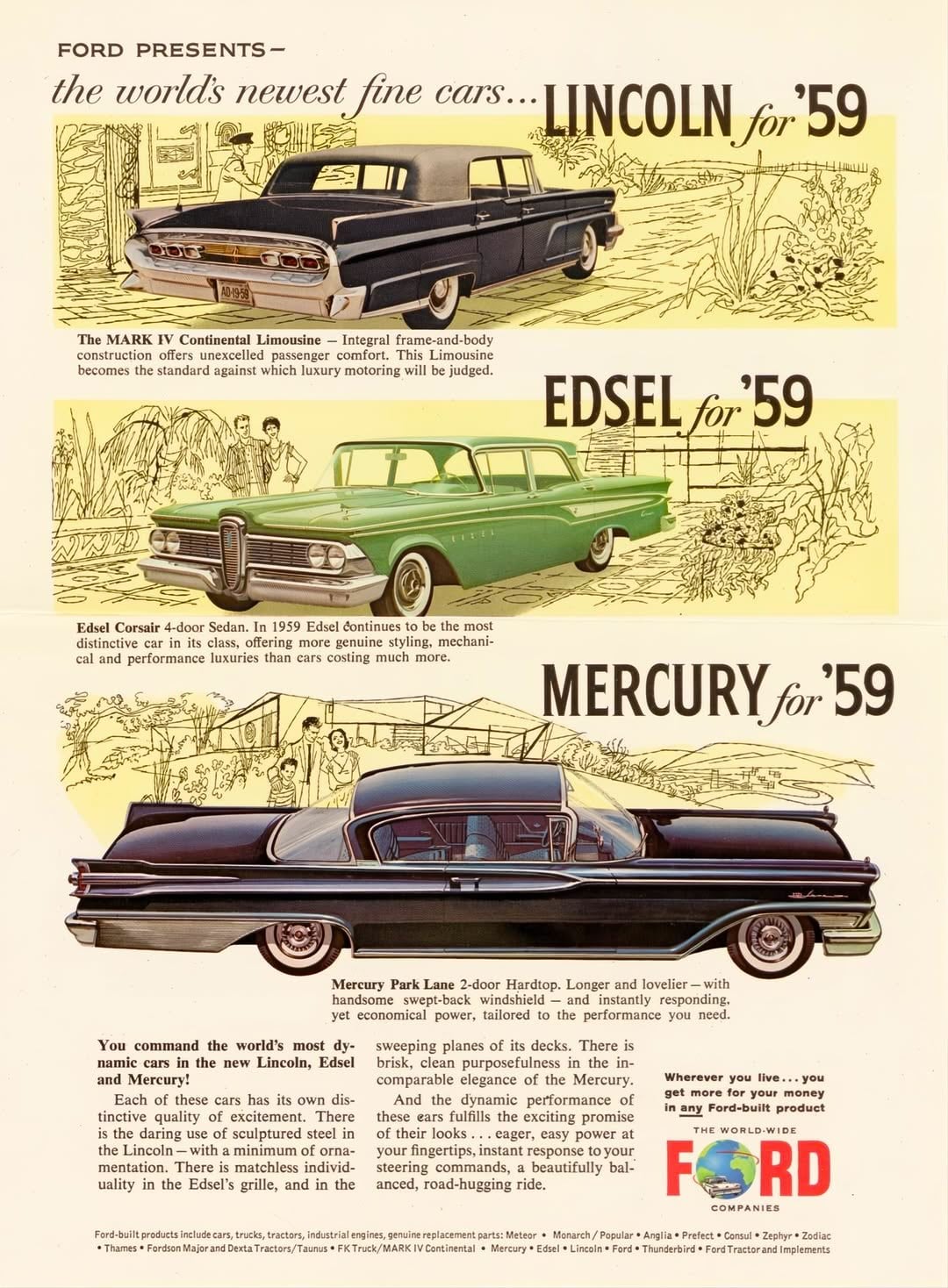
 The 1958 to 1960 Continentals were enormous automobiles even by 1950s American standards, when an oil tanker on chrome hub-capped wheels would have been viewed as a modest economy car suitable for use by penny pinchers and the elderly. Image courtesy of Ford.
While most builders worked with truck chassis for obvious reasons, a handful of small companies took a different, and perhaps more creative, approach entirely – grafting camper bodies onto full-size luxury sedans. One of those companies was Chinook, and the base vehicle they chose was the largest unit-body car Ford had ever built – the mighty Lincoln Continental.
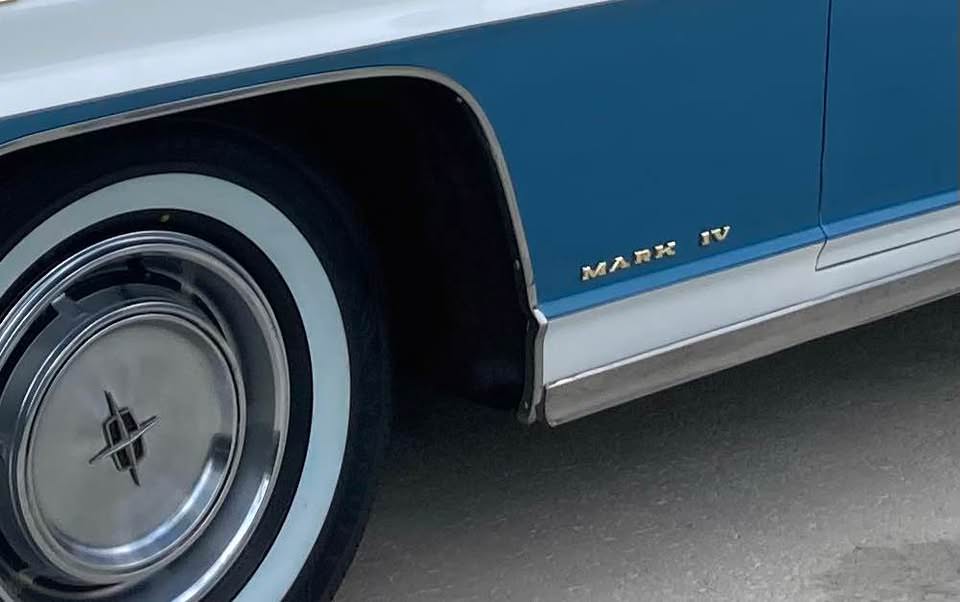
The example shown in this article is a 1959 Continental Mark IV that was converted into a self-contained camper by Chinook (then operating under the name Mair & Son, Inc.) when the car was new. According to the seller (who says he has been in contact with Chinook to verify the vehicle’s provenance) the company built a total of ten of these Lincoln-based house cars between 1958 and 1960 – four in each of the first two years and two in the final year.
At this point it’s important to note that this production breakdown is sourced solely from the seller’s account of his conversation with the company, and no independent documentation of these conversion numbers has been discovered in our research. That said, at least two other examples are known to have survived in various states of repair – which is consistent with a (very) small production run.
A Look Back At Chinook
Chinook is one of the oldest names in the American RV industry, the company was founded all the way back in 1938 by Cyrus (“Sy”) and Rose Mair in Orange County, California, initially operating under the name Mair & Son, Inc.
During its early years the company built travel trailers, pickup campers, chassis-mount camper bodies, and commercial truck bodies. At some point during this period, the company relocated from California to the Yakima Valley of Washington, where it would remain for decades.
The company’s pre-1960s history is remarkably poorly documented, even by little-remembered 20th century camper manufacturer standards, and that’s really saying something.
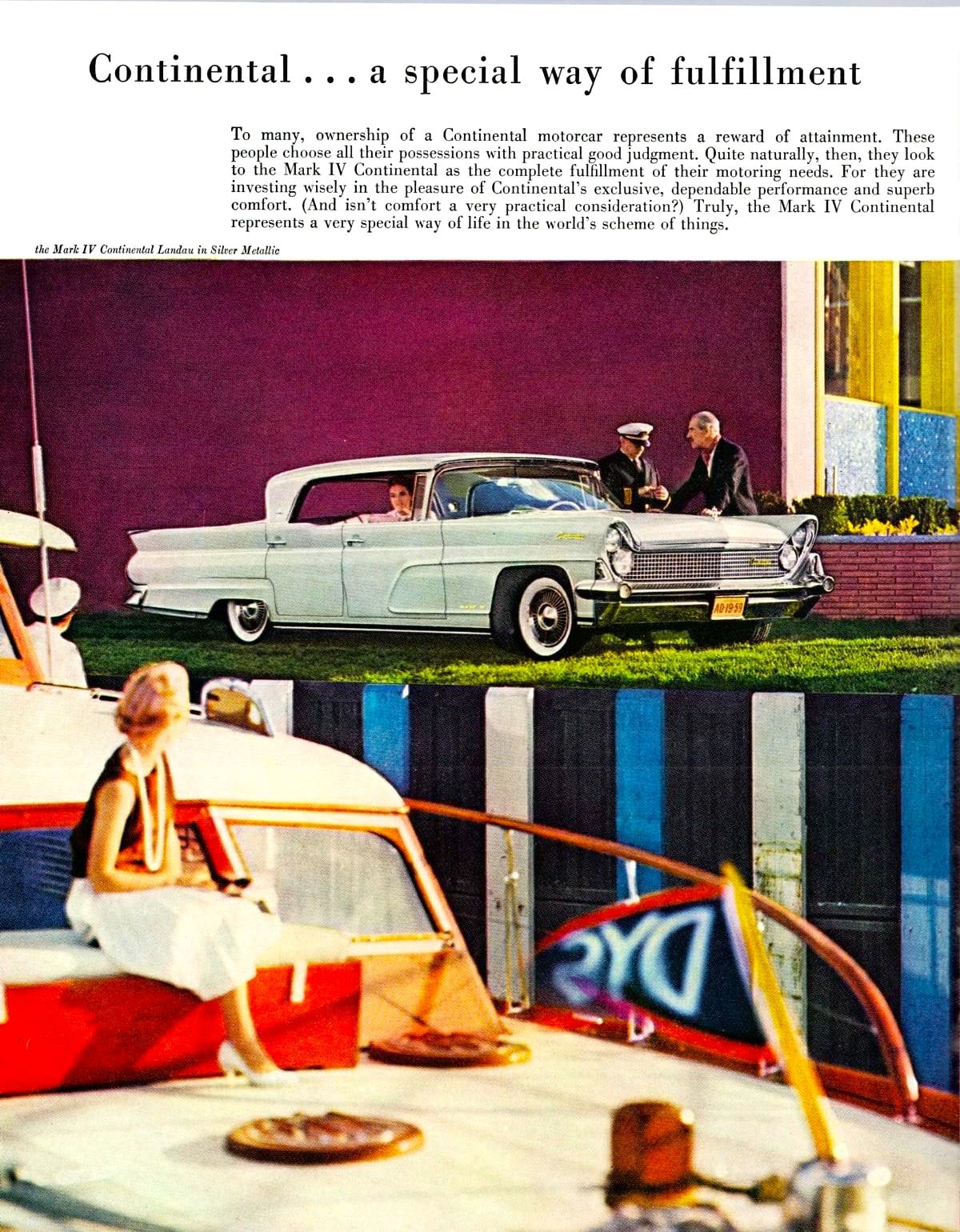
Designed under chief stylist John Najjar at Ford, the 1959 Lincoln Continental rode on a 131 inch wheelbase and measured in at a gargantuan 230 inches in overall length. Curb weight for the standard sedan was around 5,200 lbs, making these among the heaviest non-extended-wheelbase American passenger cars of the post-WWII era. Image courtesy of Ford.
Mair & Son joined the United Brotherhood of Carpenters and Joiners of America in 1960, and in 1961 invested $95,000 USD in a new 5,000 square foot facility for building truck campers, travel trailers, and commercial truck bodies.
Before the company adopted fiberglass construction (a process that began with fiberglass roofs on its truck campers in the 1960s for better weather protection) Chinook built its camper bodies using the industry-standard method of the era – simple wood framing with aluminum siding.
Chinook would go on to become famous for its pioneering use of fiberglass, debuting the Chinook 1400 in 1966 and producing the industry’s first one-piece all-fiberglass motorhome shell in 1971. The company’s partnership with Toyota in the 1970s to produce the Toyota Chinook micro mini-motorhome would lock in its reputation as a major innovator in its field.
But back in the late 1950s, when this Continental conversion was built, Chinook was still a small family operation building wood-and-aluminum campers – and, apparently, a handful of extraordinary luxury house cars.
The Lincoln Continental Mark IV
The 1958 to 1960 Continentals were enormous automobiles even by 1950s American standards, when an oil tanker on shiny hub-capped wheels would have been viewed as a modest economy car suitable for use only by penny-pinchers and the infirm.
Designed under chief stylist John Najjar at Ford, the 1959 Mark IV rode on a 131 inch wheelbase and measured in at a gargantuan 230 inches in overall length. Curb weight for the standard sedan was around 5,200 lbs, making these among the heaviest non-extended-wheelbase American passenger cars of the post-WWII era.
Interestingly, they were also among the first to use unibody construction at this scale, sharing their structure and many other parts with the Lincoln Capri and Premiere. The cars were assembled at Ford’s Wixom, Michigan plant alongside the world-famous Thunderbird.
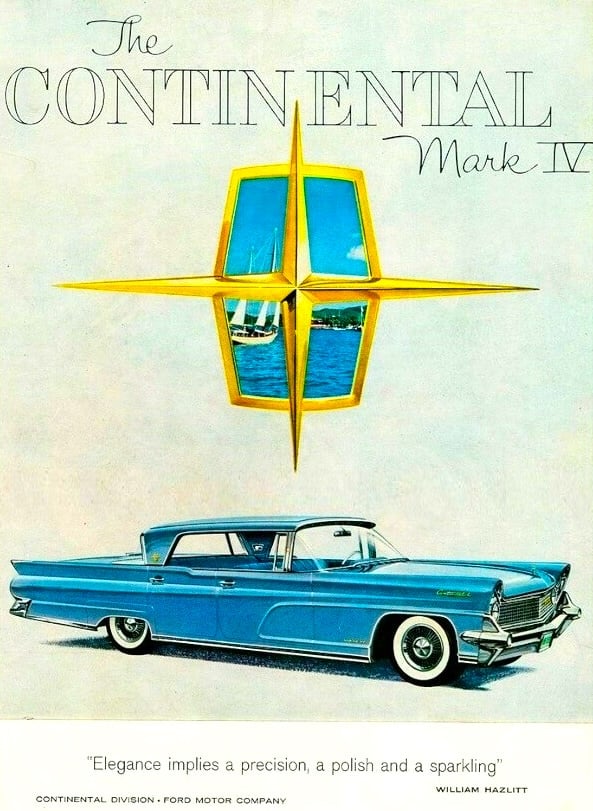
Interestingly, they were also among the first to use unibody construction at this scale, sharing their structure and many other parts with the Lincoln Capri and Premiere. The cars were assembled at Ford’s Wixom, Michigan plant alongside the world-famous Thunderbird. Image courtesy of Ford.
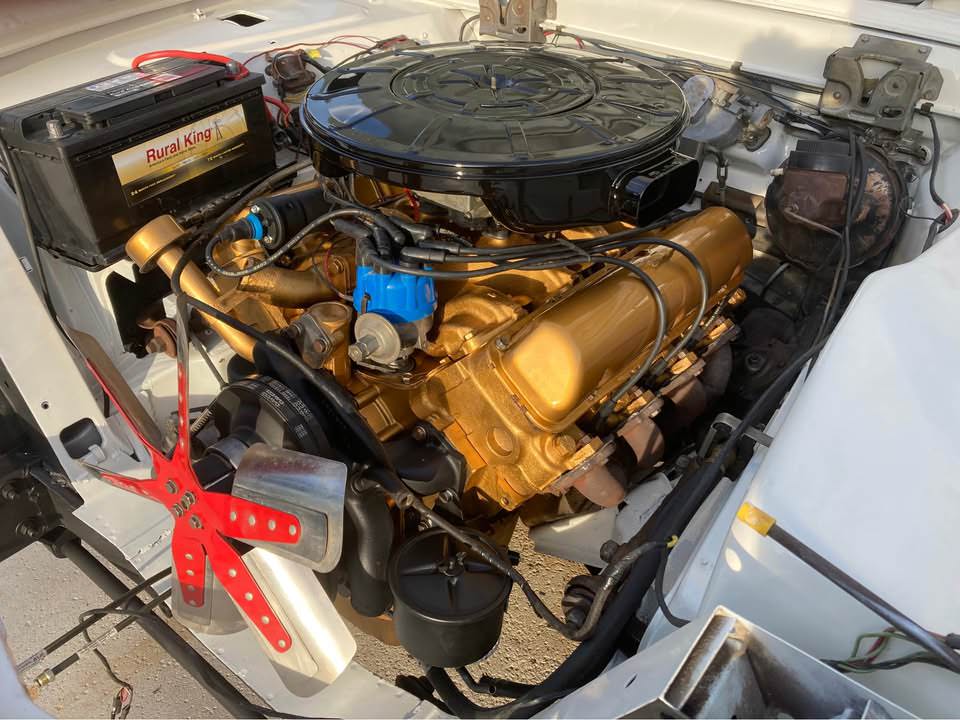
Power came from the 430 cubic inch MEL (Mercury-Edsel-Lincoln) V8, this was a big-block engine produced at Ford’s Lima, Ohio plant. In 1959 Continental specification, the 430 was fitted with a Carter AFB four-barrel carburetor and a compression ratio of 10.0:1 (reduced from 10.5:1 in the 1958 model year), producing 350 bhp and a hefty 490 lb ft of torque.
The 1958 model produced 375 bhp, and the only 430 rated above that was the 400 bhp Super Marauder with triple two-barrel Holley carburetors, which was offered across Mercury, Lincoln, and Continental applications for the 1958 model year only. The standard transmission was a 3-speed Turbo-Drive automatic.
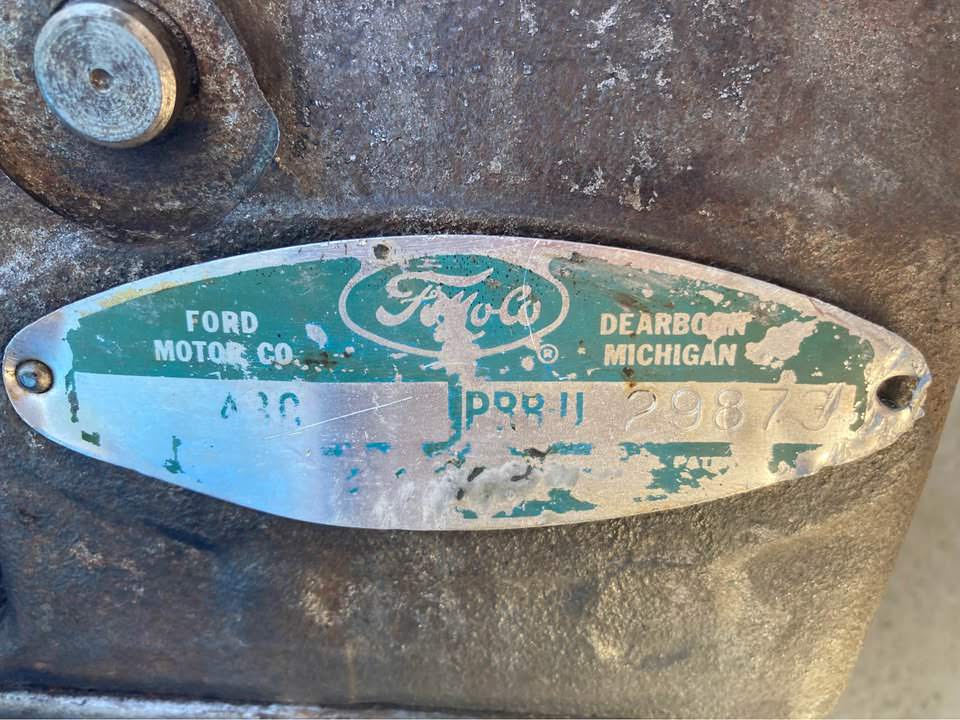
The seller of this specific vehicle describes the transmission in this camper as a “heavy duty truck automatic,” which he says is original to the unit. If verified, this would likely mean it was fitted by Chinook during the conversion rather than being the factory Lincoln transmission – it would have been a reasonable modification given the additional weight of the camper body.
A derelict 1960 Lincoln camper conversion that surfaced in Tucson, Arizona in 2017 appeared to have Ford truck running gear integrated, including what looked like F100-pattern front drums and an F250-style rear axle on heavy-duty leaf springs, suggesting that Chinook (or whoever built/modified that example) upgraded the running gear substantially for camper duty.
The Lincoln Camper Conversion
This conversion involved removing the Lincoln’s body behind the front seats and windshield and replacing it with a full walk-in camper body. The result is a vehicle the seller says measures 19 feet 8 inches in overall length and weighs approximately 6,440 lbs, only about 1,200 lbs more than a standard Continental sedan, which speaks to the relatively lightweight wood-and-aluminum construction of the camper body.
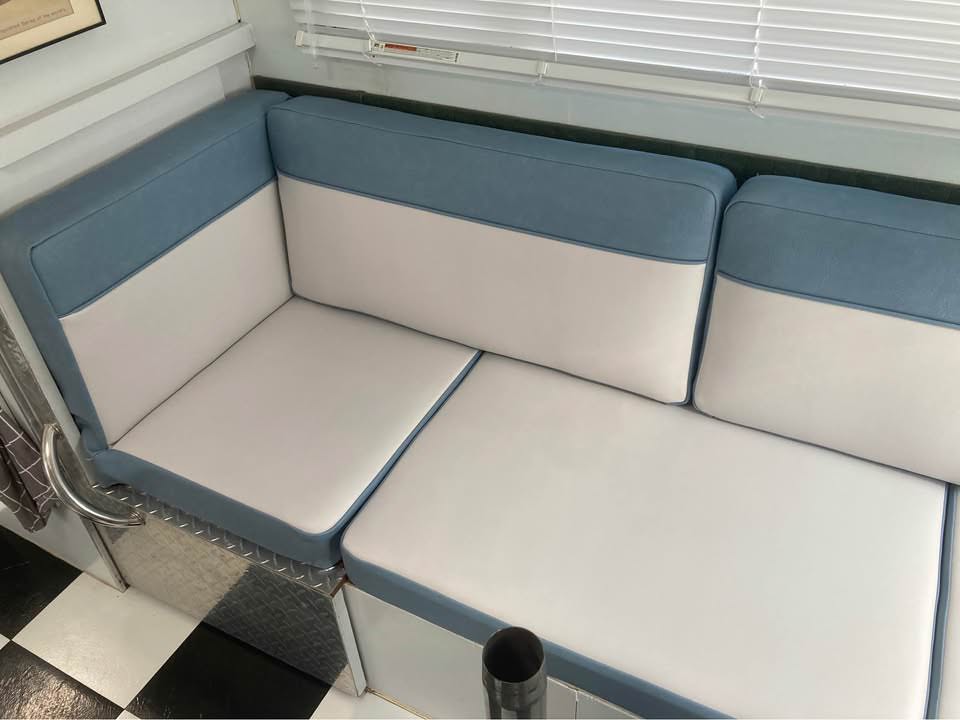
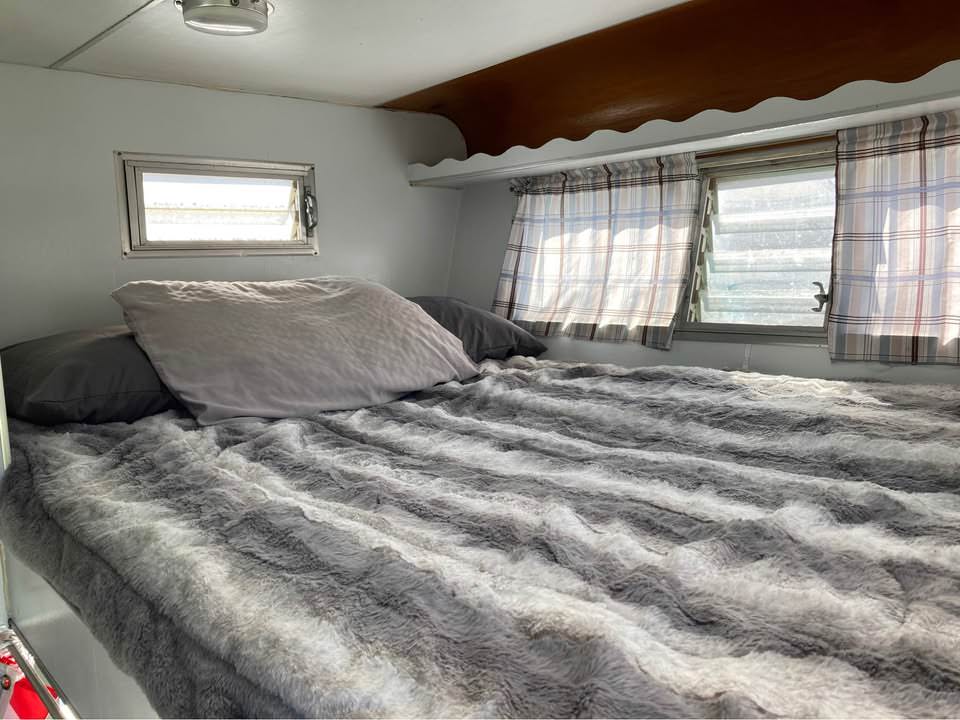
The interior has an over-cab sleeping area with jalousie windows, a kitchenette with a three-burner stove and combination oven, a sink, and a refrigerator. The floor is finished in black-and-white checkerboard linoleum.
The vehicle has clearly been through a sympathetic restoration at some point, the photos show evidence of an engine-out repaint, and portions of the camper interior have been updated with diamond-plate cabinetry that was not part of the original specification.
The original appliances appear to have been kept, finished in the avocado green that was ubiquitous in American kitchens of the 1960s, suggesting they may have been updated at some point during the vehicle’s early life.
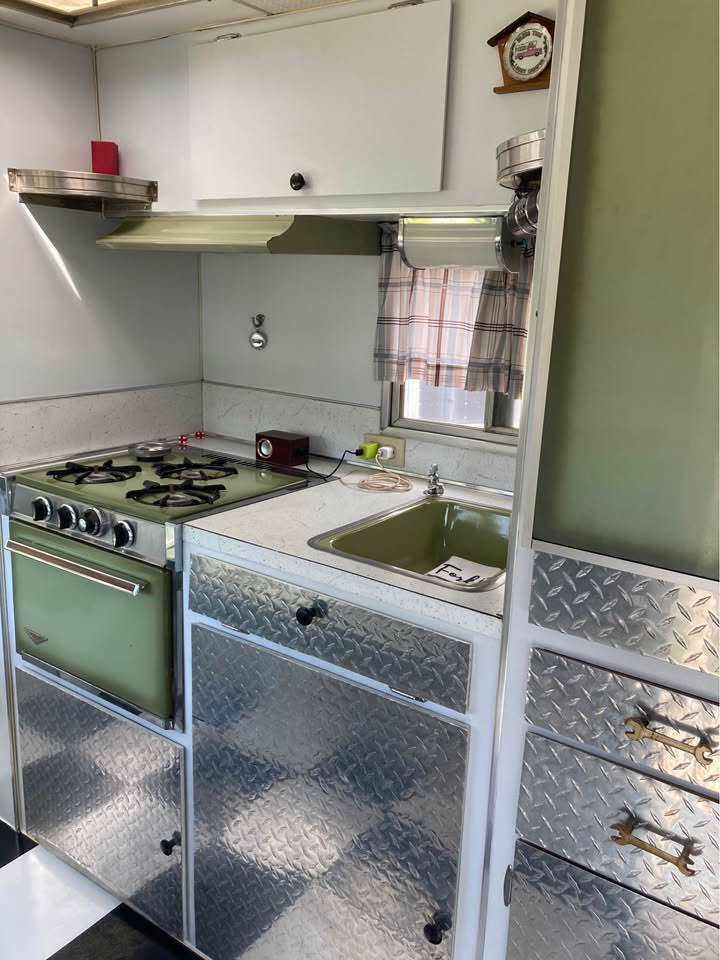
This conversion involved removing the Lincoln’s body behind the front seats and windshield and replacing it with a full walk-in camper body.
This particular example is said to have 48,000 miles on the odometer and is offered for sale in Spring Hill, Florida at an asking price of $50,000 USD. Given the near-total absence of documented examples and the lack of any auction precedent for a vehicle like this, pricing it is essentially a matter of negotiation between a willing buyer and seller.
If you’d like to read more about this vehicle or contact the owner with enquiries you’ll find the listing on Facebook Marketplace here.
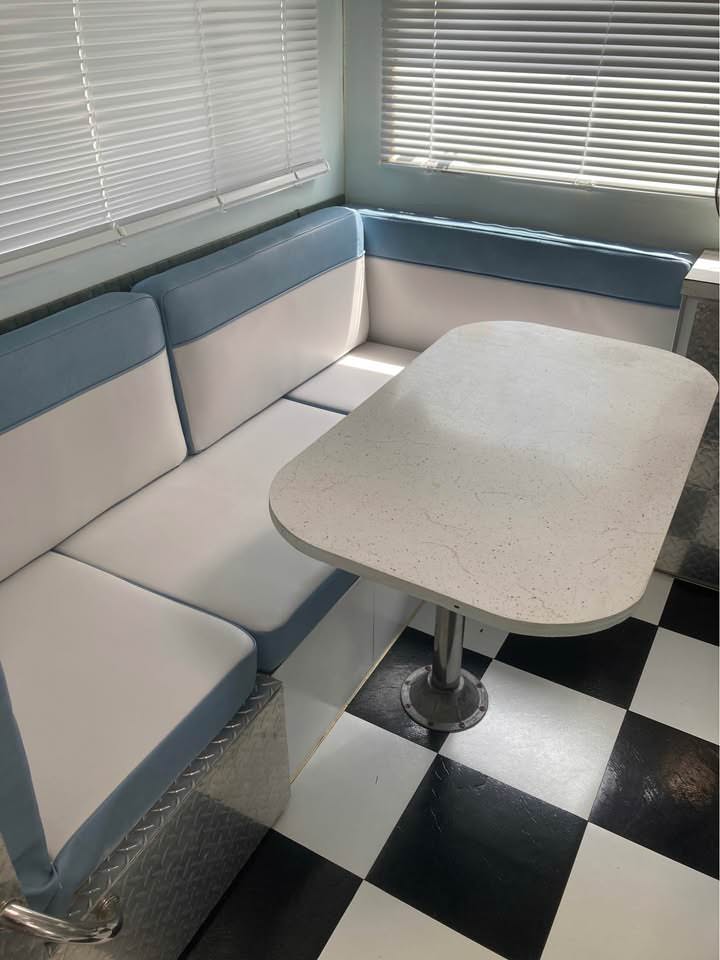
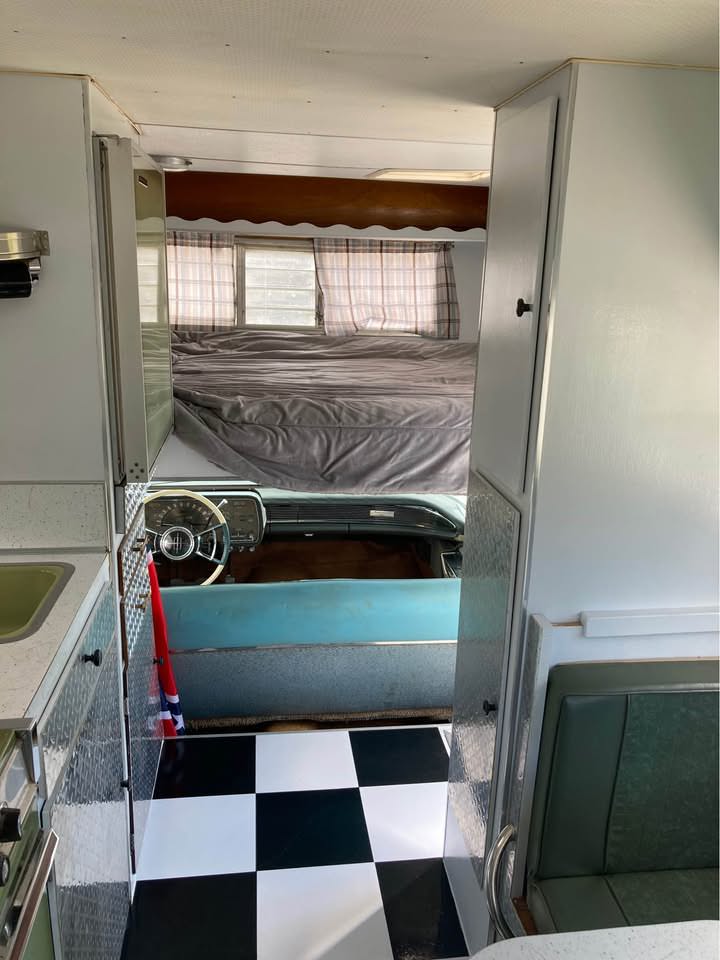
Images courtesy of

Articles that Ben Branch has written have been covered on CNN, Popular Mechanics, Smithsonian Magazine, Road & Track Magazine, the official Pinterest blog, the official eBay Motors blog, BuzzFeed, Autoweek Magazine, Wired Magazine, Autoblog, Gear Patrol, Jalopnik, The Verge, and many more.
Silodrome was founded by Ben back in 2010, in the years since the site has grown to become a world leader in the alternative and vintage motoring sector, with well over a million monthly readers from around the world and many hundreds of thousands of followers on social media.