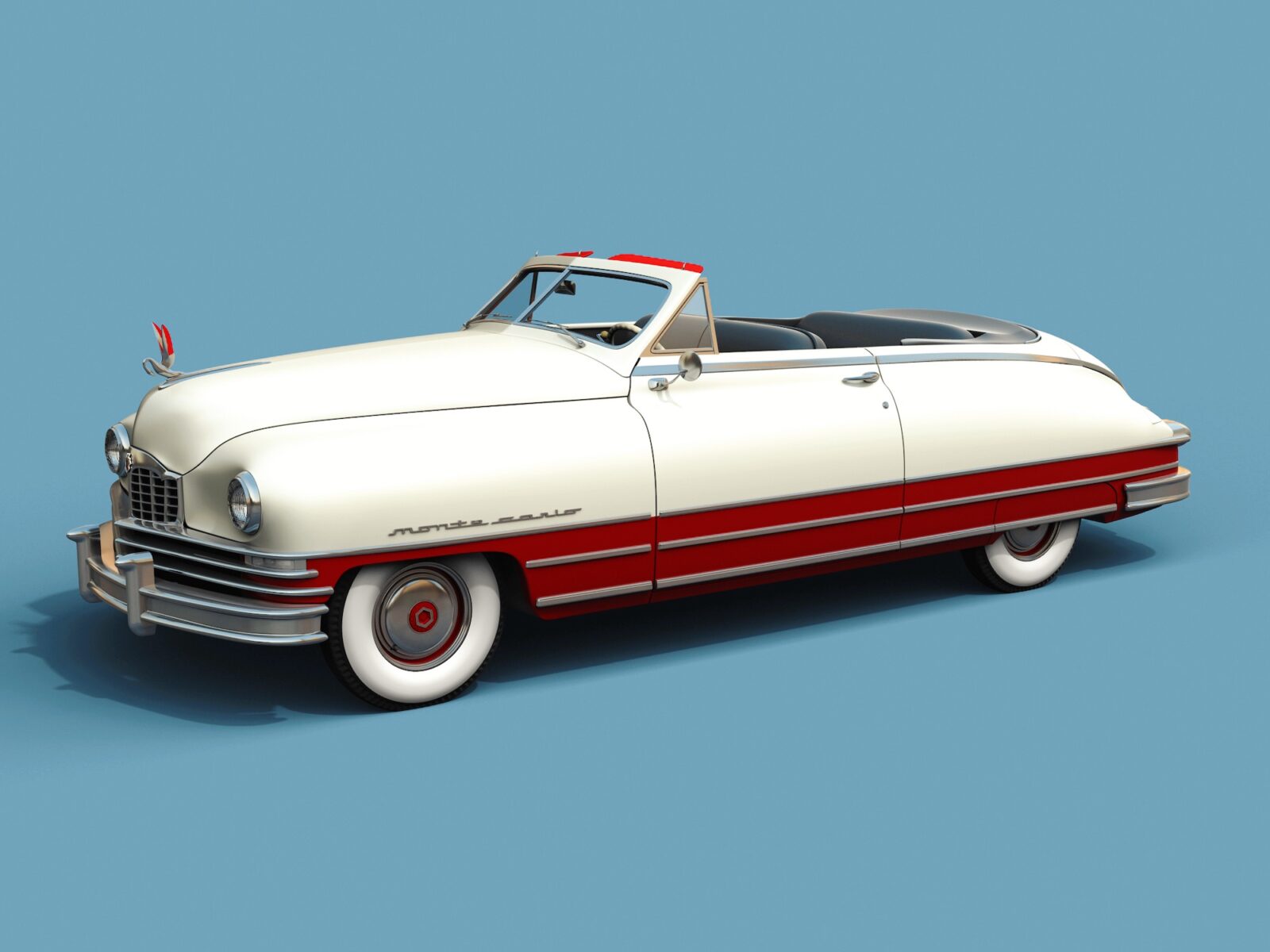
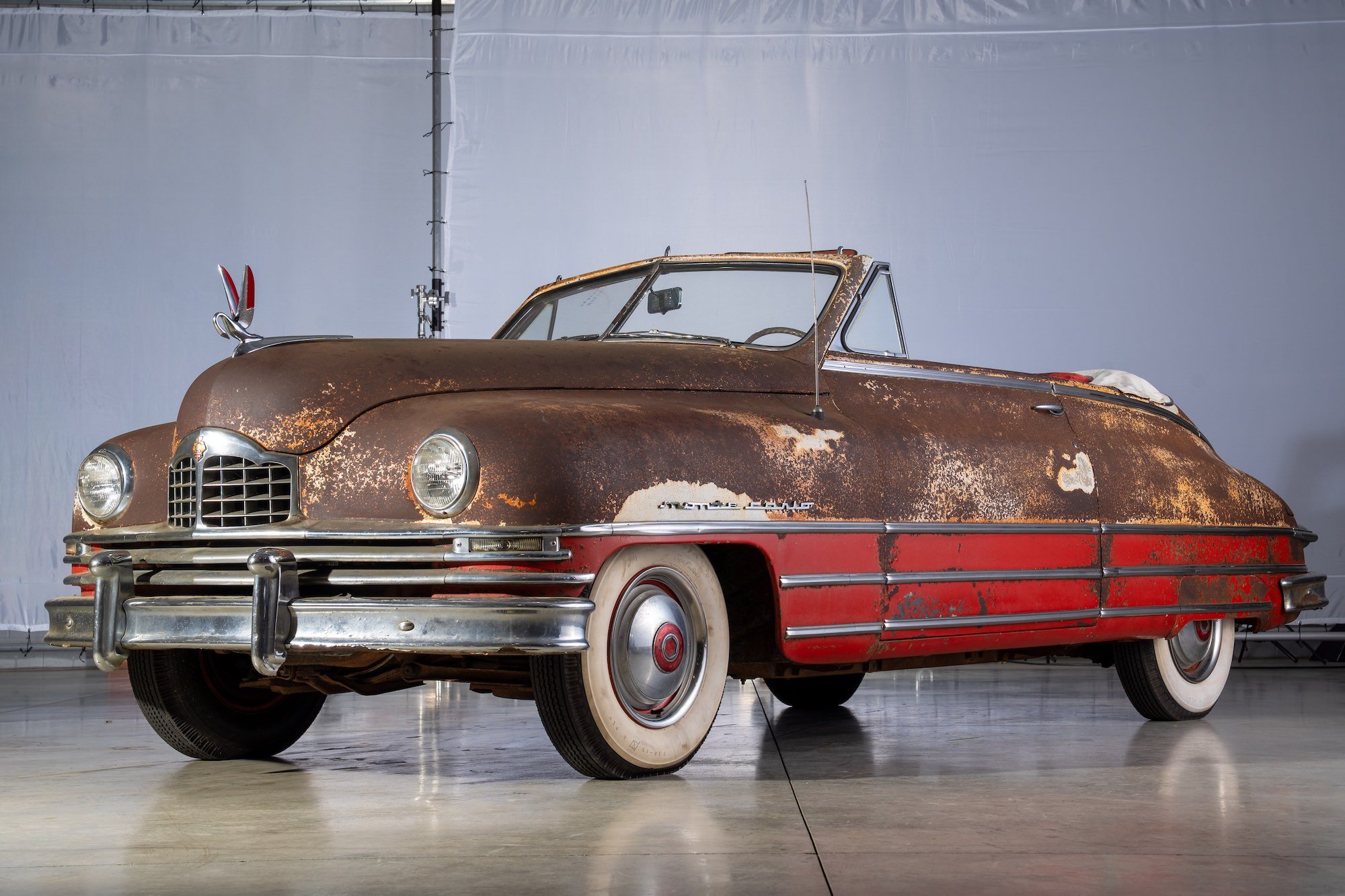
Our story with the 1949 Packard Monte Carlo starts with a typical night for car crazed people, scouring the internet for the next project car. It was back in 2010 in the pursuit of another postwar American Special when this unique Packard popped up, looking quite different compared to the typical “bathtub” Packards.
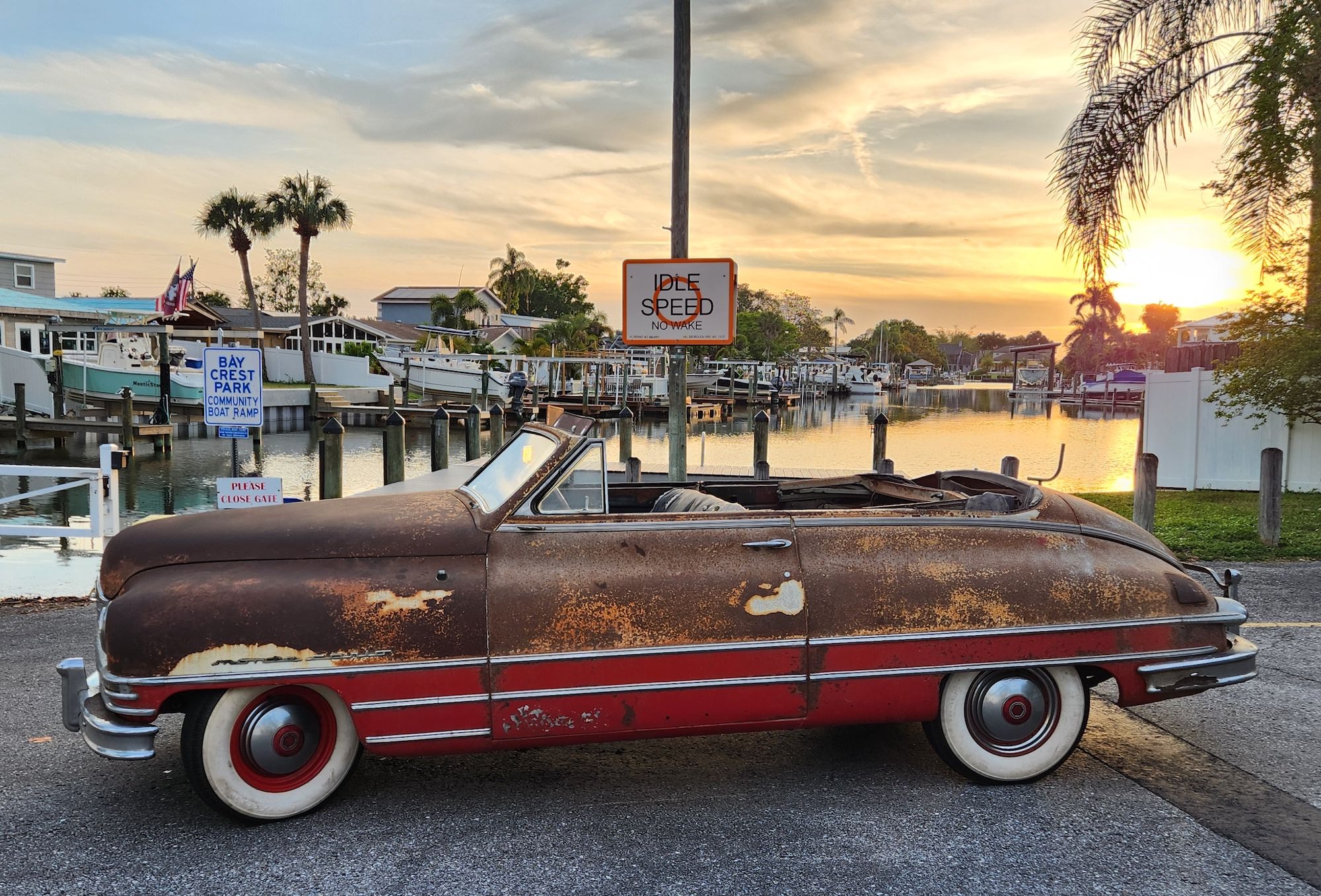
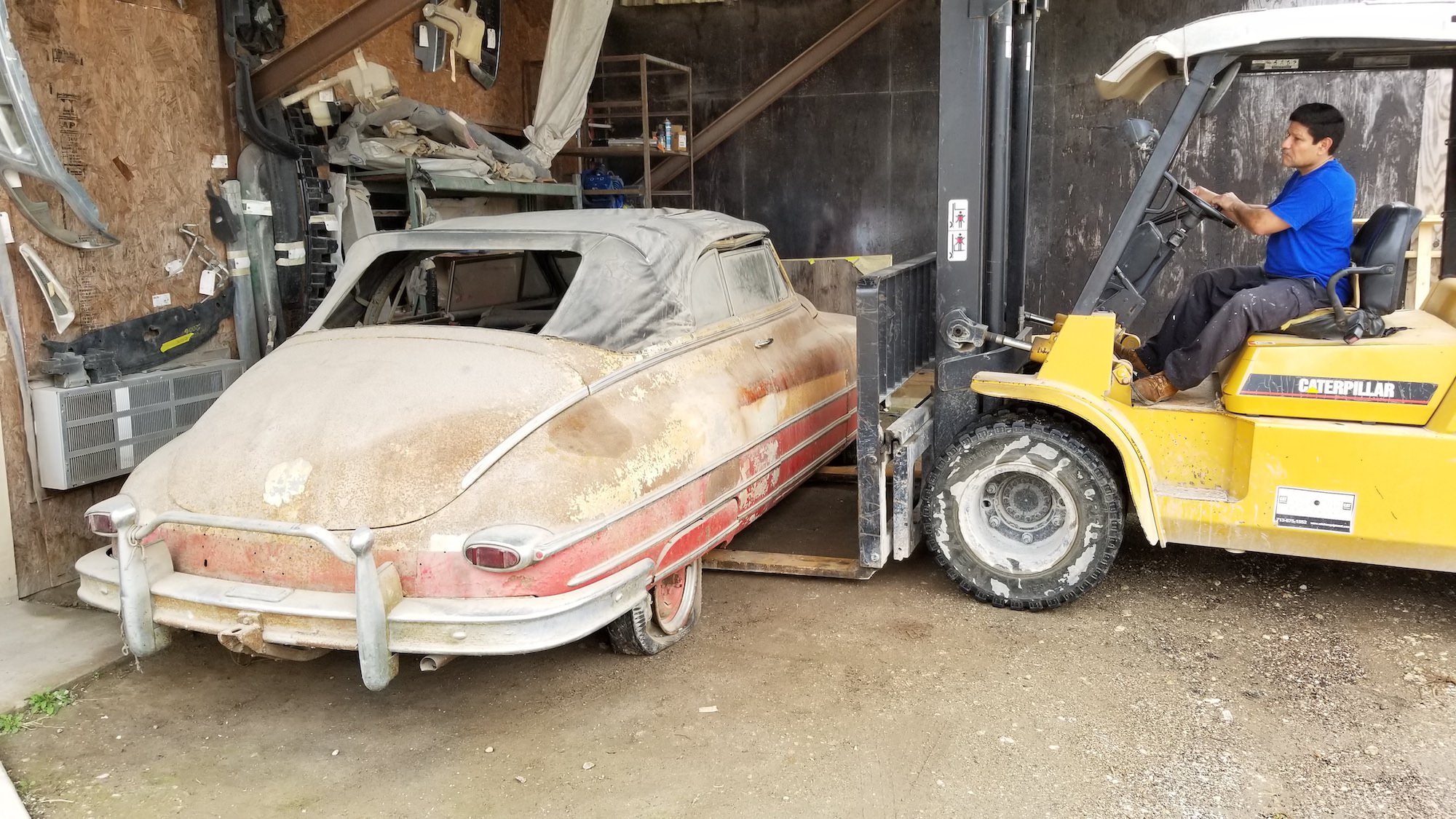
At the time, other projects took precedent and pursuing the Monte Carlo for another restoration project wasn’t on the cards. Just about seven years later, the Monte Carlo was creeping back into our minds, but trying to track it down after so long seemed unlikely. After three months of reaching out to find the car again, the owner finally responded and a deal was struck in the spring of 2018.
Above Video: This video from Undiscovered Classics does a great job of showing just what it took to get the 1949 Packard Monte Carlo running and driving again, all thanks to Robin James.
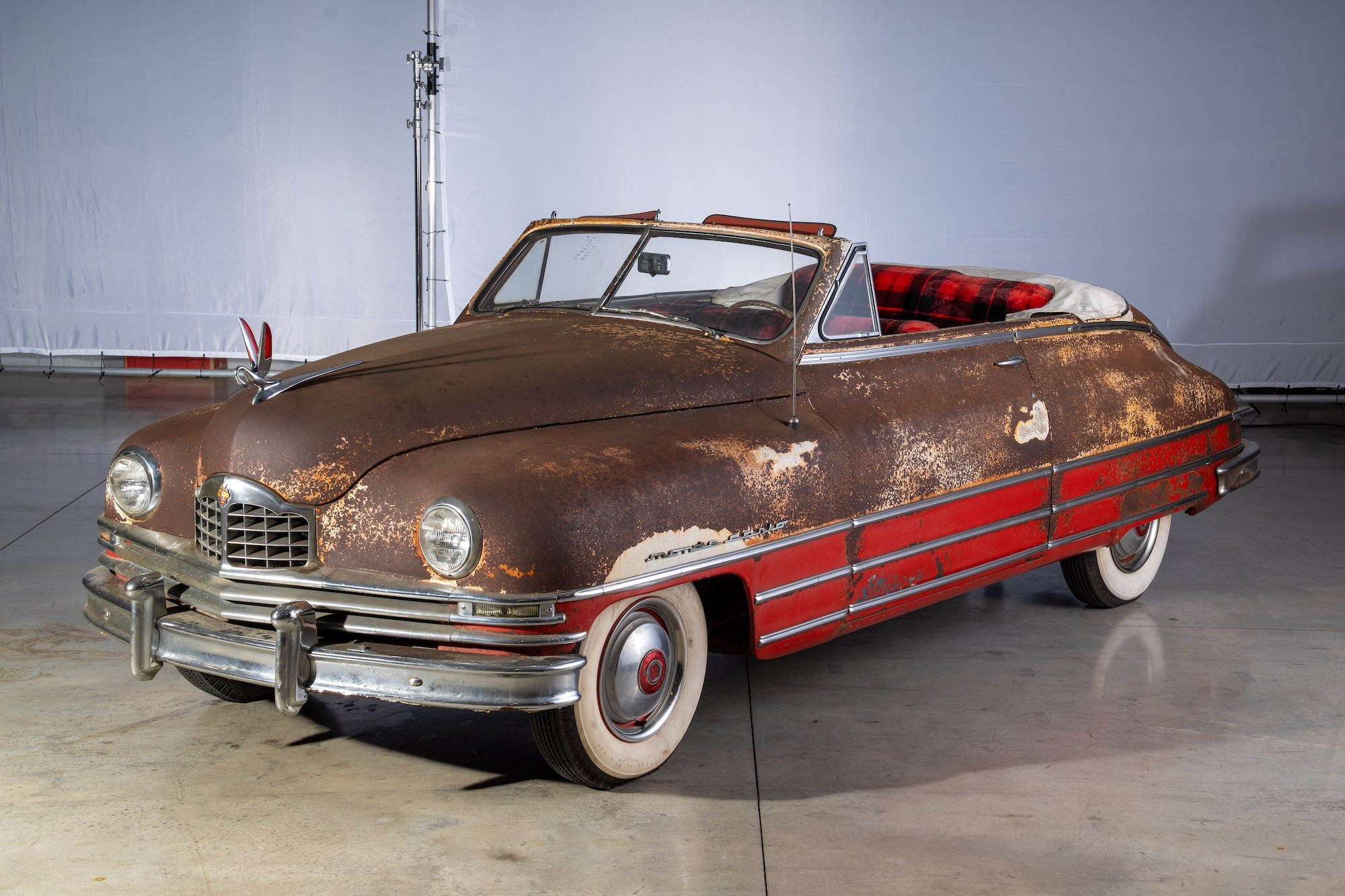
At the time of the purchase, all we really knew is that it didn’t look anything like a normal production Packard and that it had the Monte Carlo script in two locations. It was a bit worse for the wear, but we were undeterred and with a renewed interest in solving the mystery, we got right to work doing in-depth research.
Those years of research and crucial help from several colleagues who are Packard experts has solved a lot of that mystery. The case for its historic significance and close evaluation of its authenticity has been fully documented in this book, which is available online for free here.
History has shown that the creation of the Monte Carlo Packard was undertaken by designer Richard Arbib for the Henney Motor Company. Known for producing Packard’s professional cars, Henney sought to expand beyond hearses and ambulances after World War II.
Under its new owner, Charles Russell Feldmann (who purchased the company in 1946), Henney aimed to capture Packard’s attention and stimulate public interest with a show car, a specialty design that could demonstrate Henney’s capabilities. Arbib, then 31 years old and already experienced in automotive and industrial design, was hired as Henney’s styling consultant in 1949 to lead such efforts.
 History has shown that the creation of the Monte Carlo Packard was undertaken by designer Richard Arbib for the Henney Motor Company. Known for producing Packard’s professional cars, Henney sought to expand beyond hearses and ambulances after World War II.
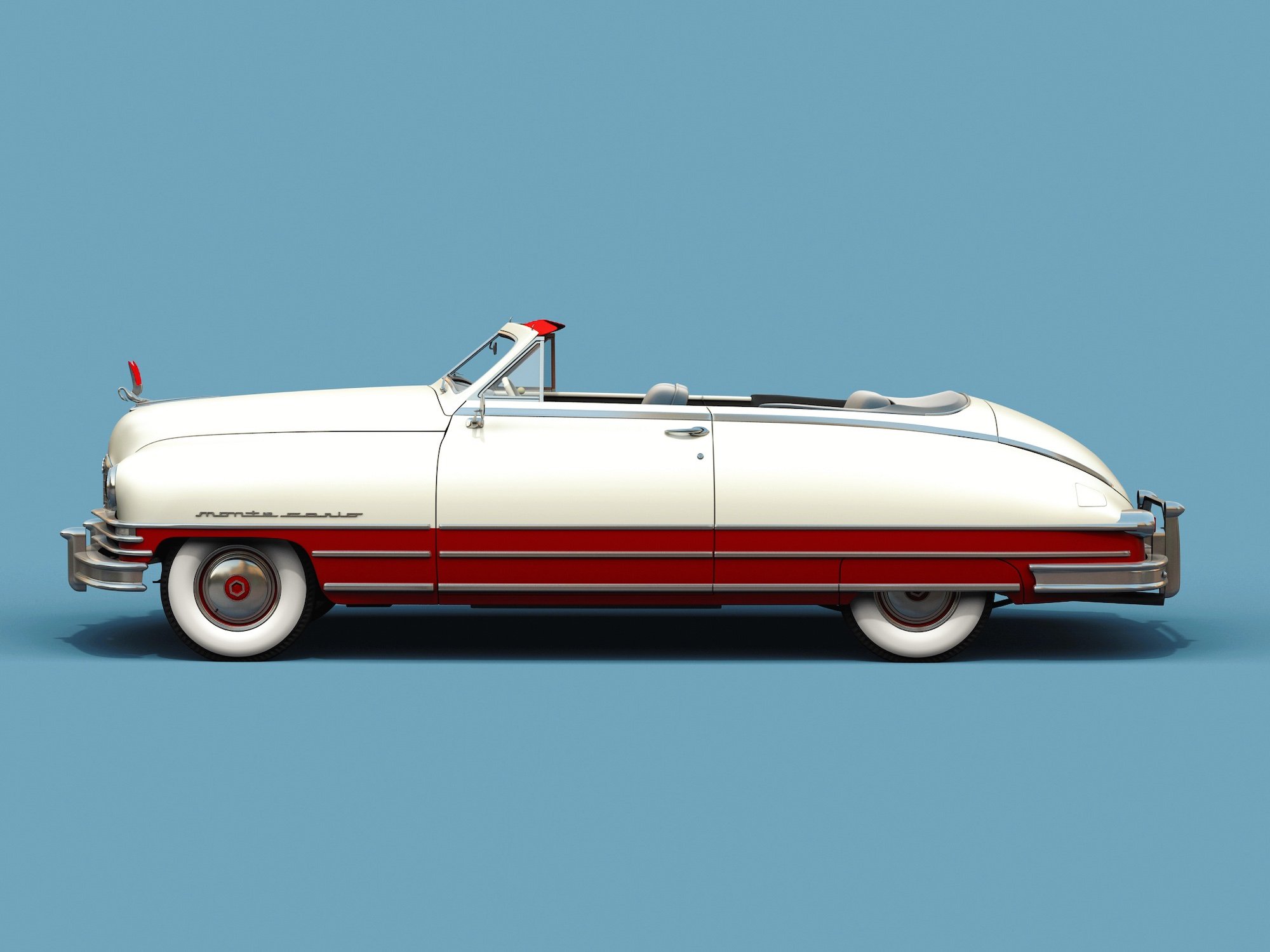
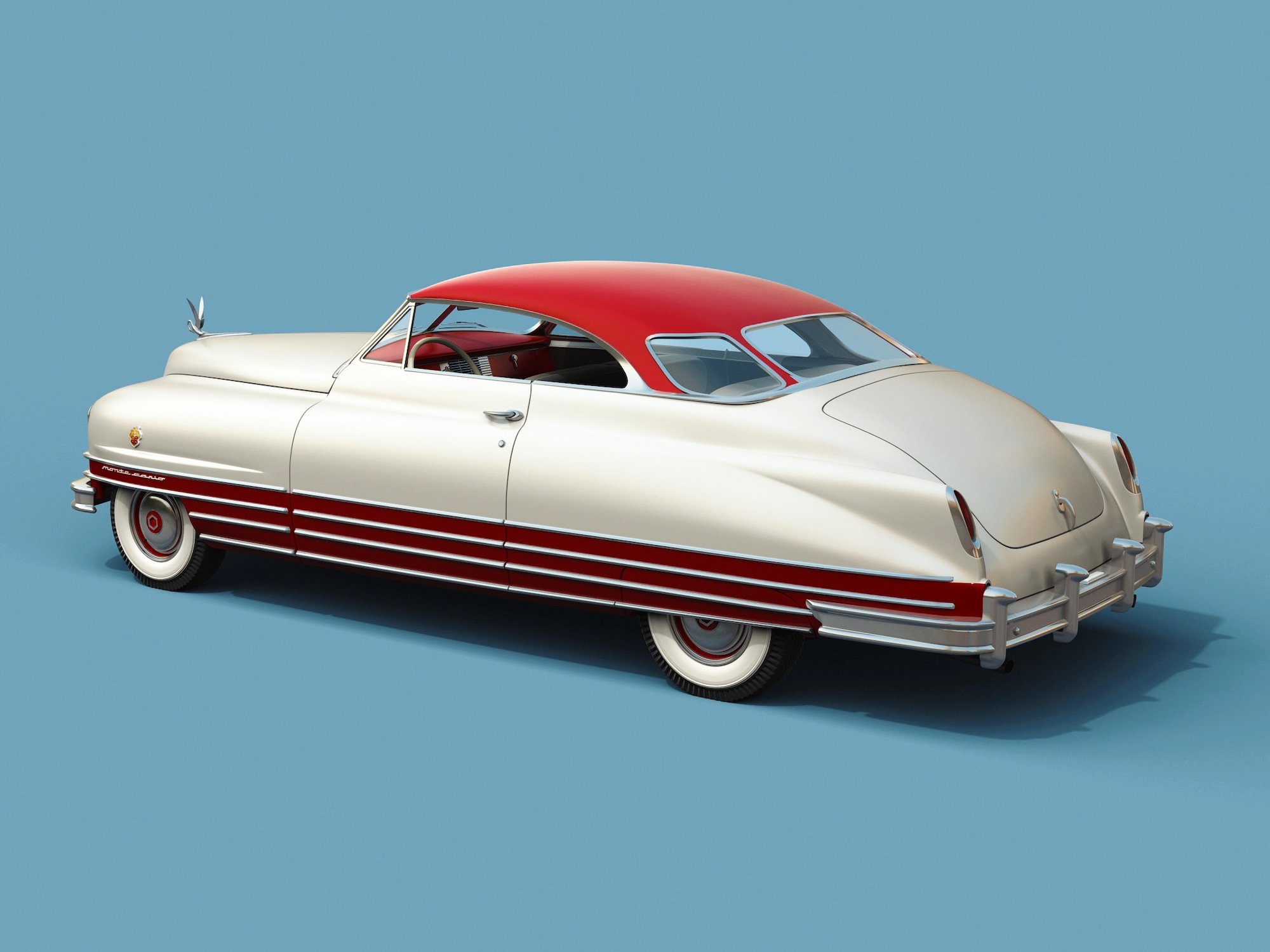
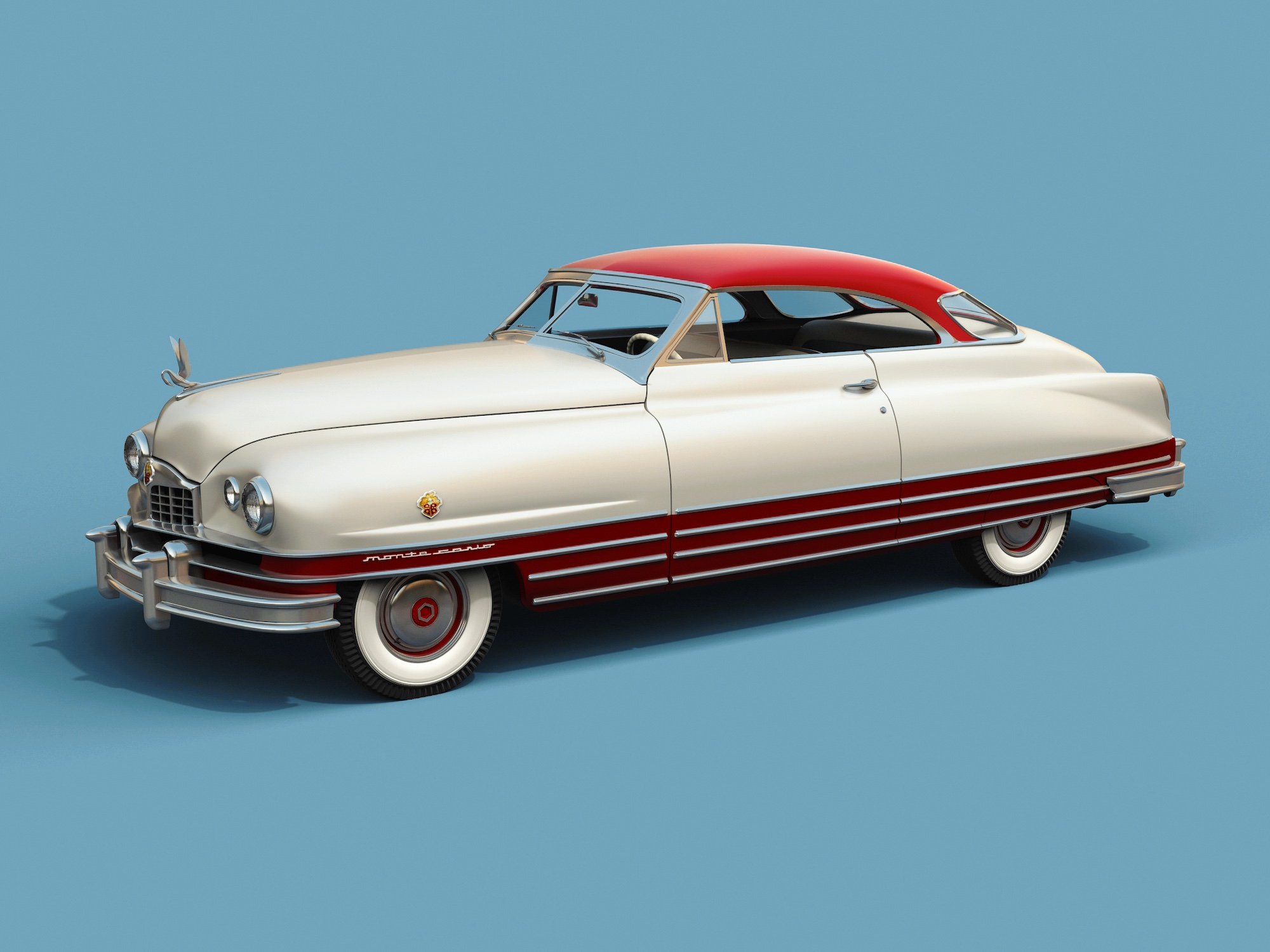
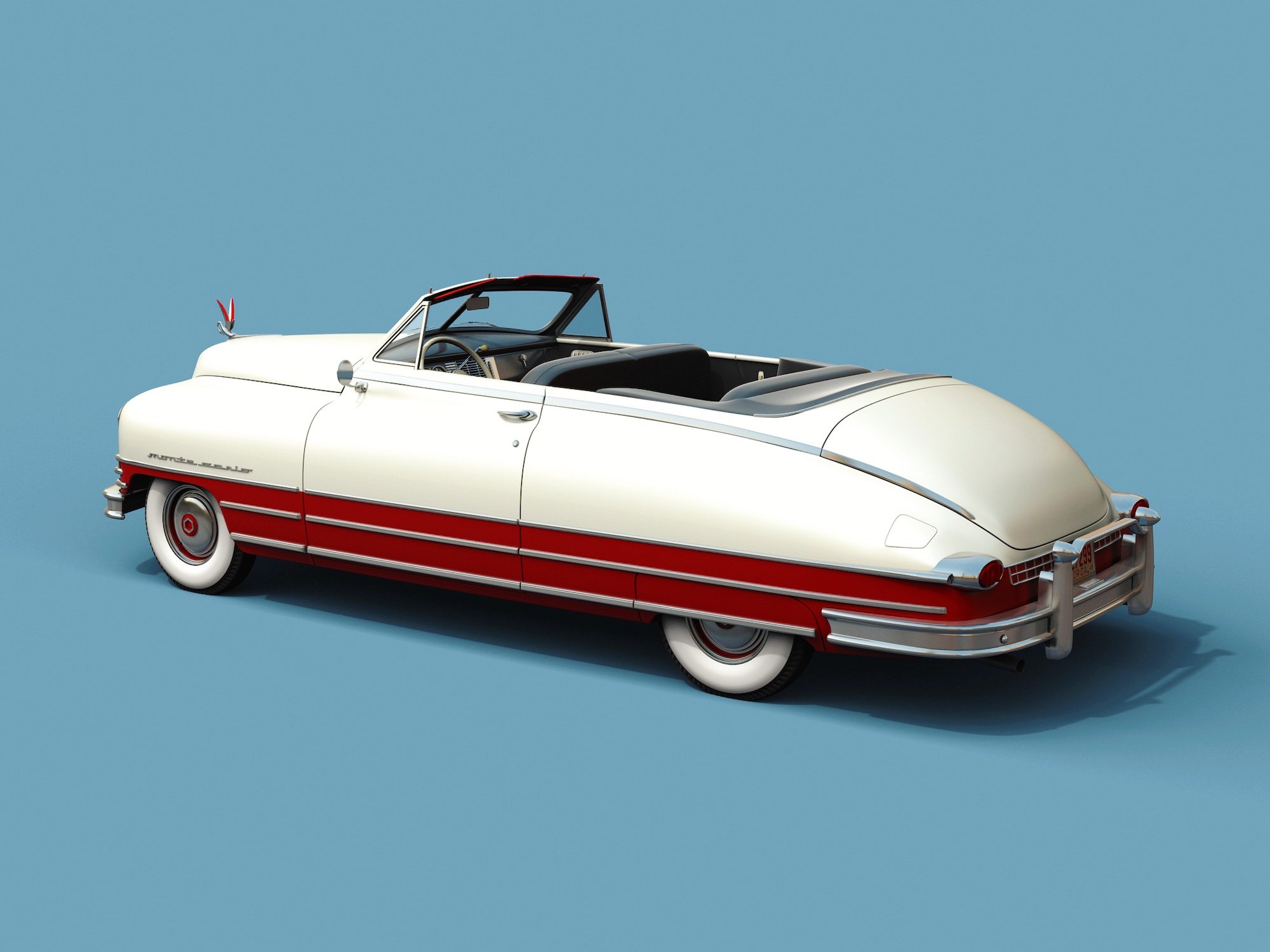
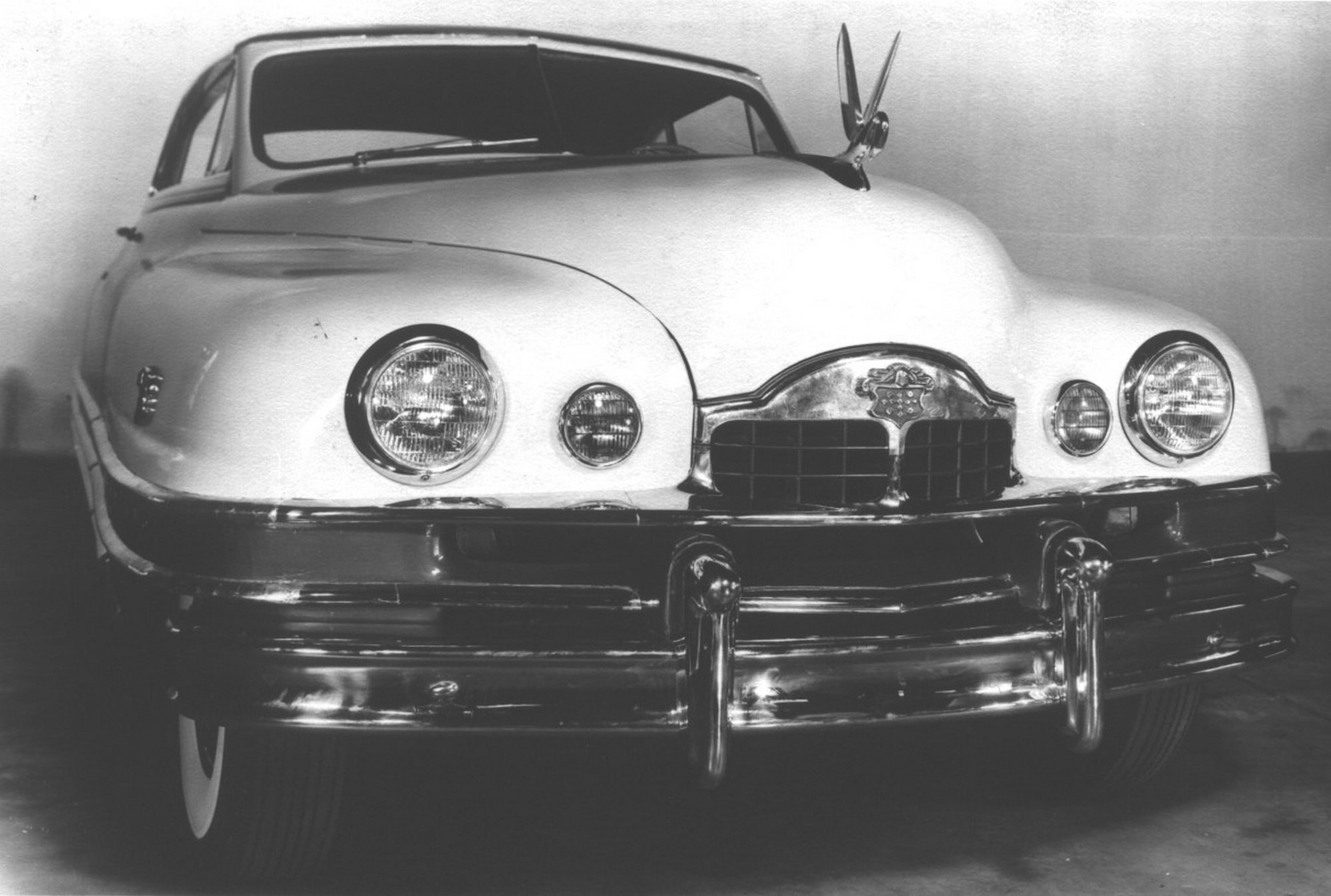
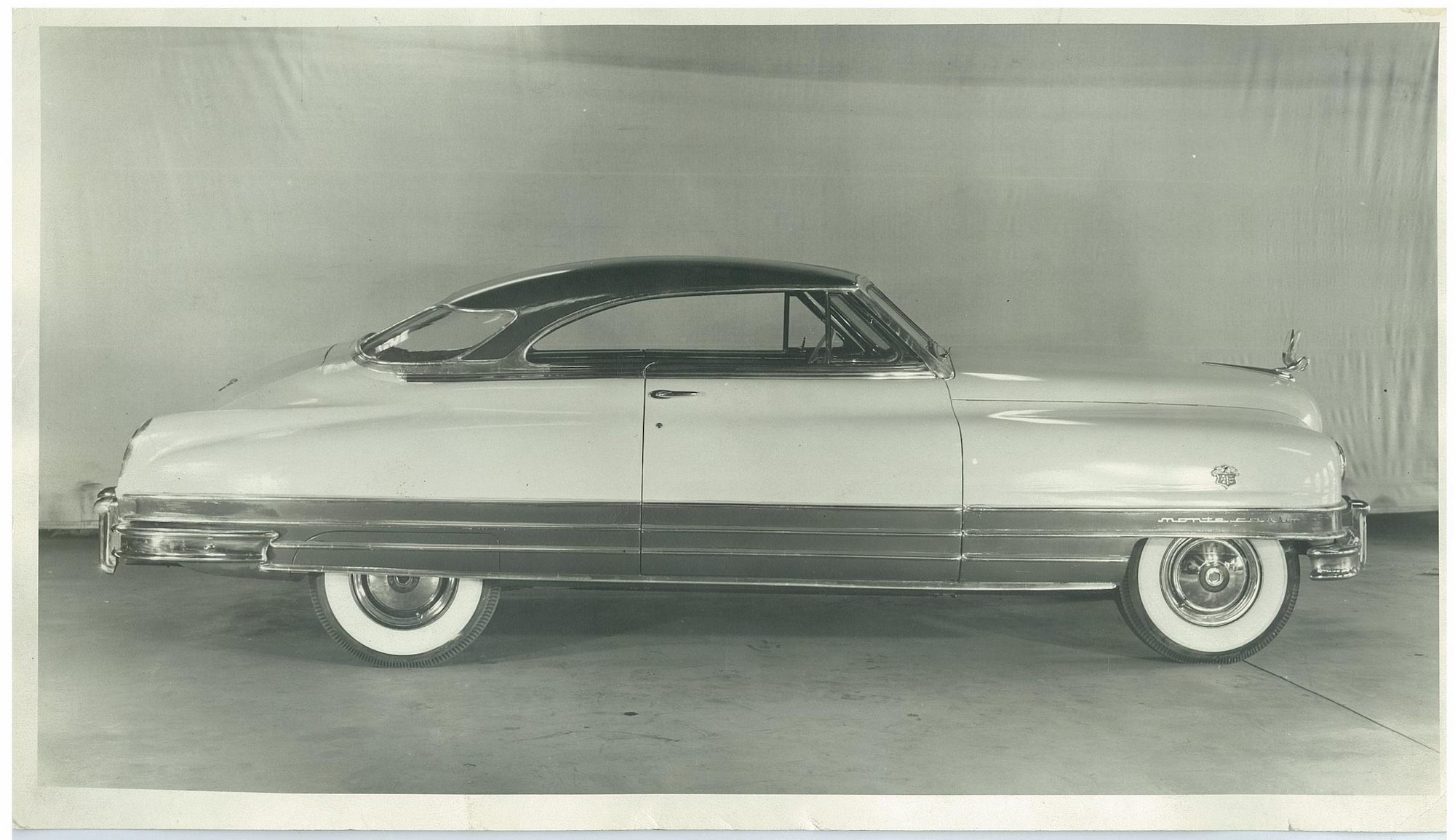
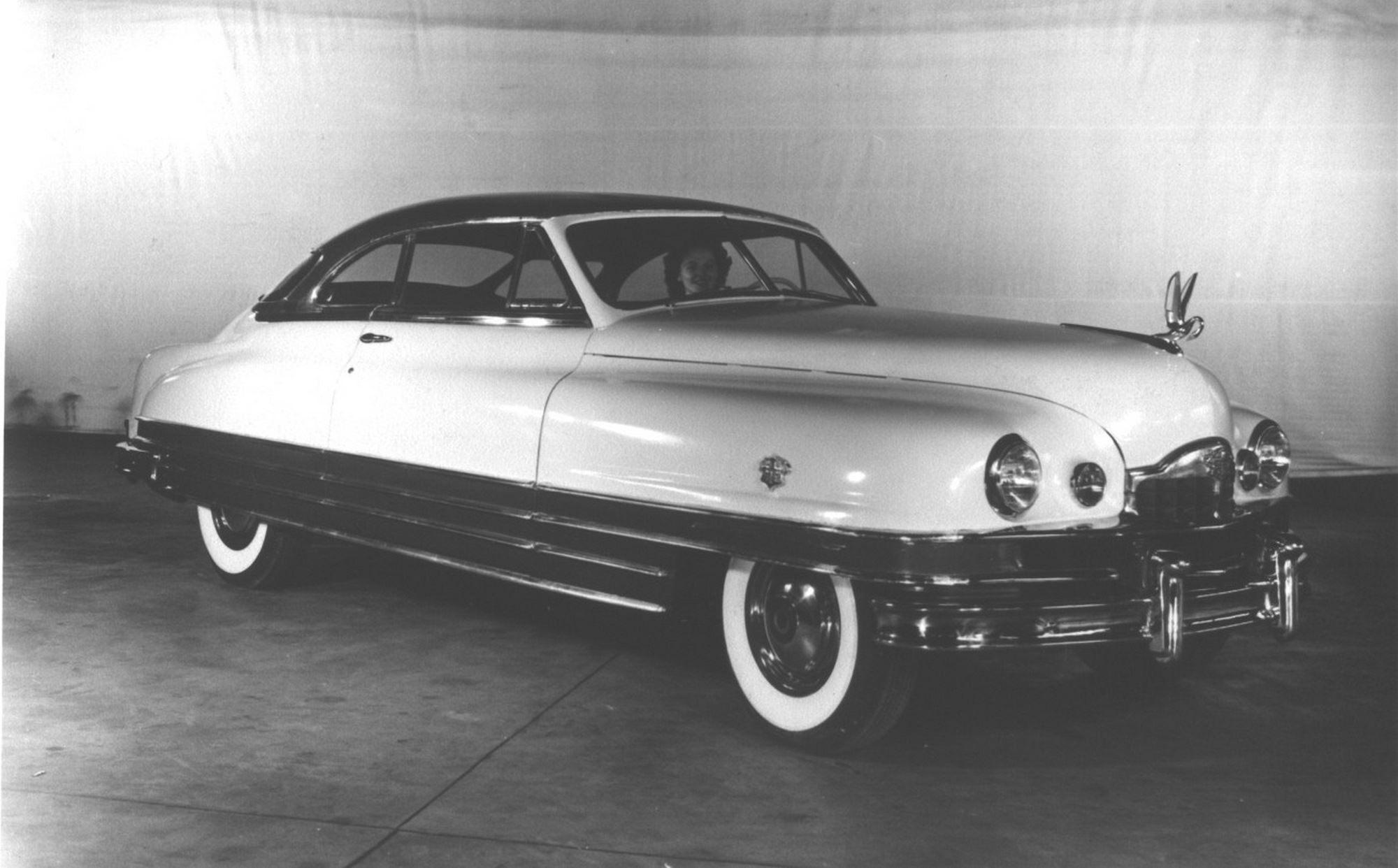
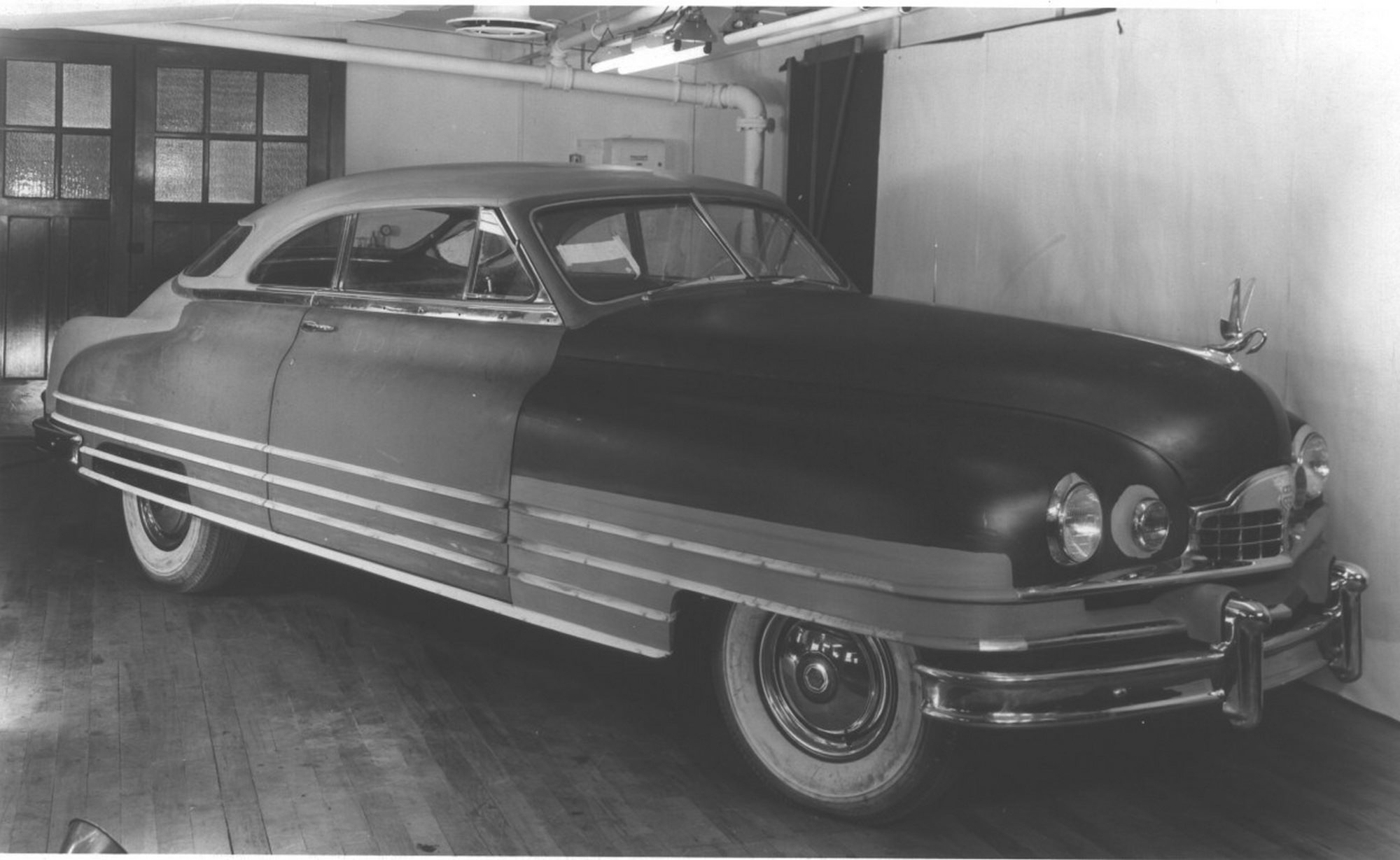
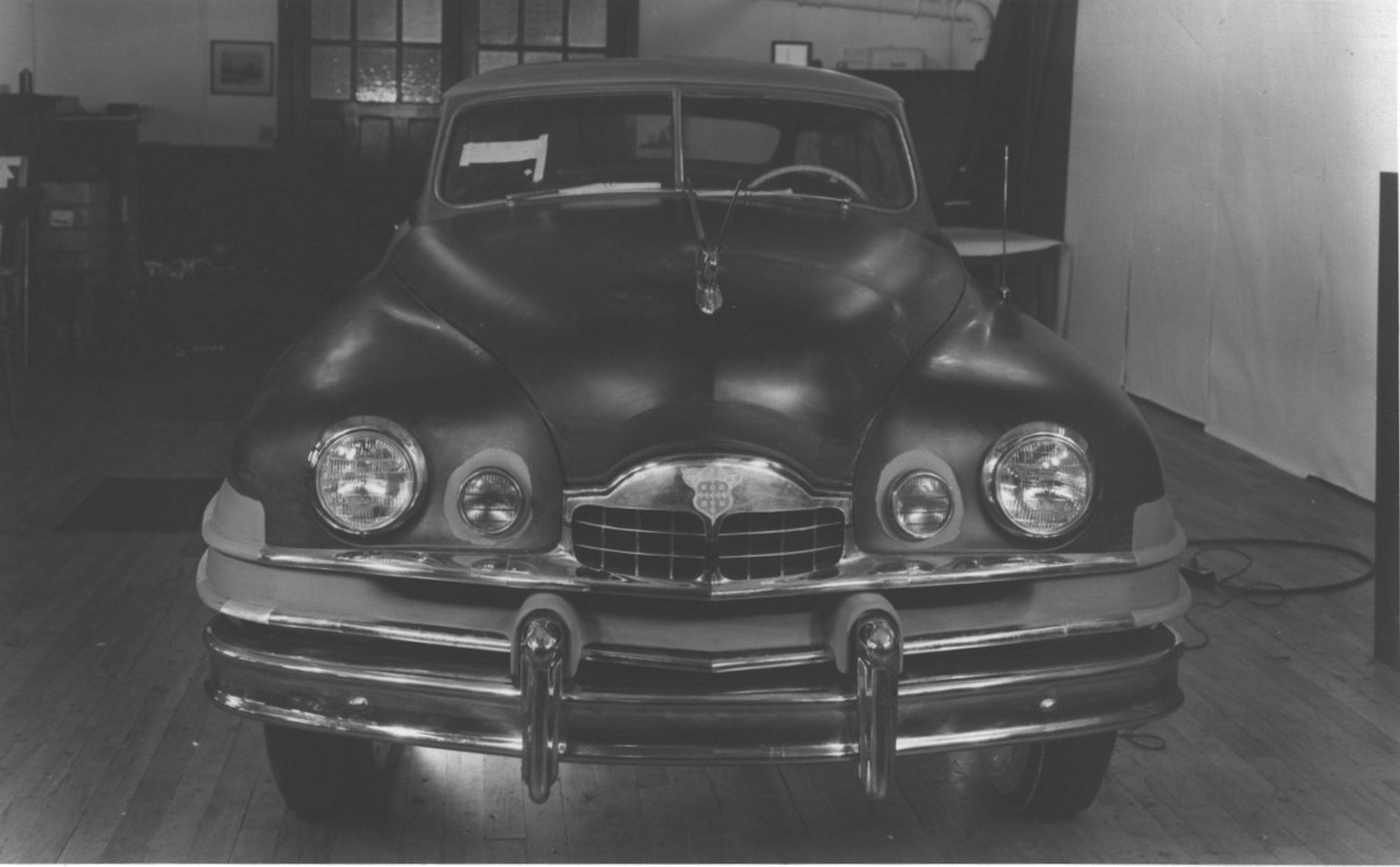
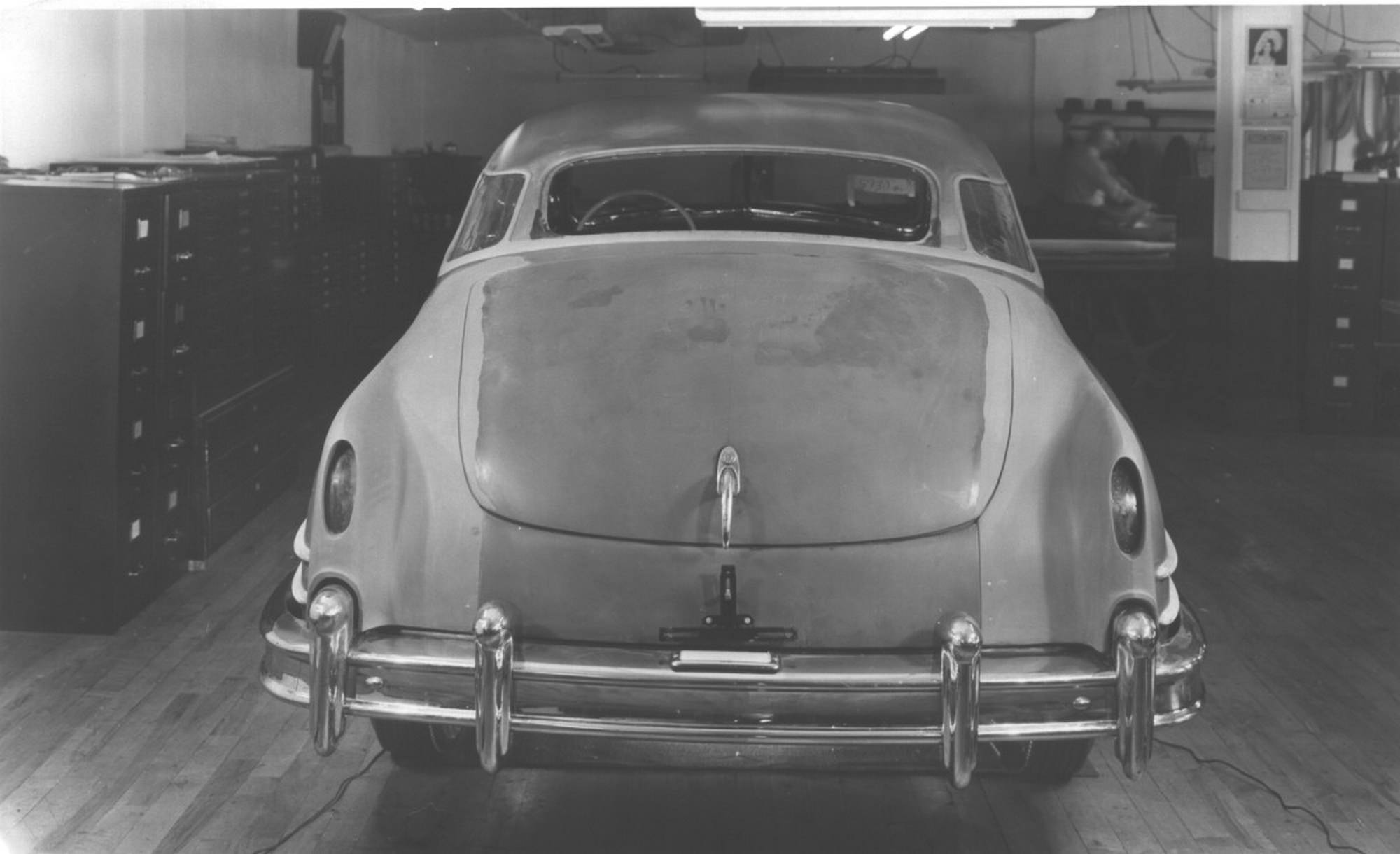
Arbib’s Monte Carlo concept ultimately resulted in two unique Packards: a hardtop clay mock-up based on a 22nd Series Custom Eight convertible with a 127-inch wheelbase and the car we found and returned with, a fully functional convertible derived from a 22nd Series Super Eight convertible with a 120-inch wheelbase.
Both Monte Carlos were produced late in the 22nd Series production run and were styled to anticipate the upcoming 23rd Series look that Packard would introduce in late 1949 and 1950. Though the Monte Carlo was striking, Packard’s management likely considered it too close in timing to the full model redesign coming in 1951 and the car never reached production.
Historians generally agree that the Monte Carlo design must have been shown to Packard, and that it would have been plausible for Henney to produce it as a specialty car. The hardtop design showcased Henney’s craftsmanship and Arbib’s imaginative styling, including enclosed wheels, striking grille treatments, dramatic trim, and an unusual greenhouse. These details, highlighted years later in George Hamlin’s Collectible Automobile article in 1992, underscored Henney’s readiness to build such a car on spec, hoping Packard might adopt it.
The existence of the convertible version remained unknown until 1988, when it resurfaced after decades out of sight. Its early life is largely undocumented, though period accounts suggest Henney likely provided it to a Packard dealer in Freeport, Illinois. Research conducted over the years, including work by Packard historians George Hamlin, Leon Dixon, and Robert Neal, helped clarify the Monte Carlo project.
Theories include a prototype for a halo car designed to elevate Packard’s brand image, a dealer-commissioned custom build, or simply the natural final stage of Henney’s proposal process: a finished, drivable example demonstrating the design’s feasibility.
The concept of a halo vehicle, a limited-production showpiece intended to cast a favorable impression over an entire brand, was common in the early postwar years. Cars like the Cadillac Eldorado, Buick Skylark, Oldsmobile Fiesta, Continental Mark II, Chrysler C-300, Studebaker Speedster, Hudson Italia, and others exemplified how manufacturers used prestige models to attract showroom traffic and bolster their reputations.
Packard, wanting to maintain its place among luxury marques, might have benefited from such an approach. Leon Dixon suggested the Monte Carlo could have served this role or even launched a quasi-independent sub-brand years before Packard tried similar strategies with its Caribbean line.
Packard, wanting to maintain its place among luxury marques, might have benefited from such an approach. Leon Dixon suggested the Monte Carlo could have served this role or even launched a quasi-independent sub-brand years before Packard tried similar strategies with its Caribbean line.
Regardless of Packard’s decision, the Monte Carlo project laid the foundation for a productive collaboration among Henney, Arbib, and Packard. After 1949, Henney and Arbib went on to create more Packard show cars: six Pan American roadsters in 1952 and two Monte Carlo hardtops in 1953, all of which still survive. These vehicles helped shape Packard’s design language and demonstrated what the independent coachbuilder–designer partnership could achieve.
Efforts to trace its earliest history led researchers to Alice Horner, whose father served as Henney’s head of personnel from 1927 to 1954. She confirmed that Freeport’s Packard dealership (owned by Eddie Engelhardt of the Freeport Garage) would have been the logical destination for such a car.
The Engelhardt family eventually relocated and liquidated their possessions in the mid-1950s, eliminating any potential Henney-related memorabilia. It’s unknown if the Monte Carlo spent most of its life in Freeport or moved around over the years, but it only resurfaced in 1988 in the Houston area.
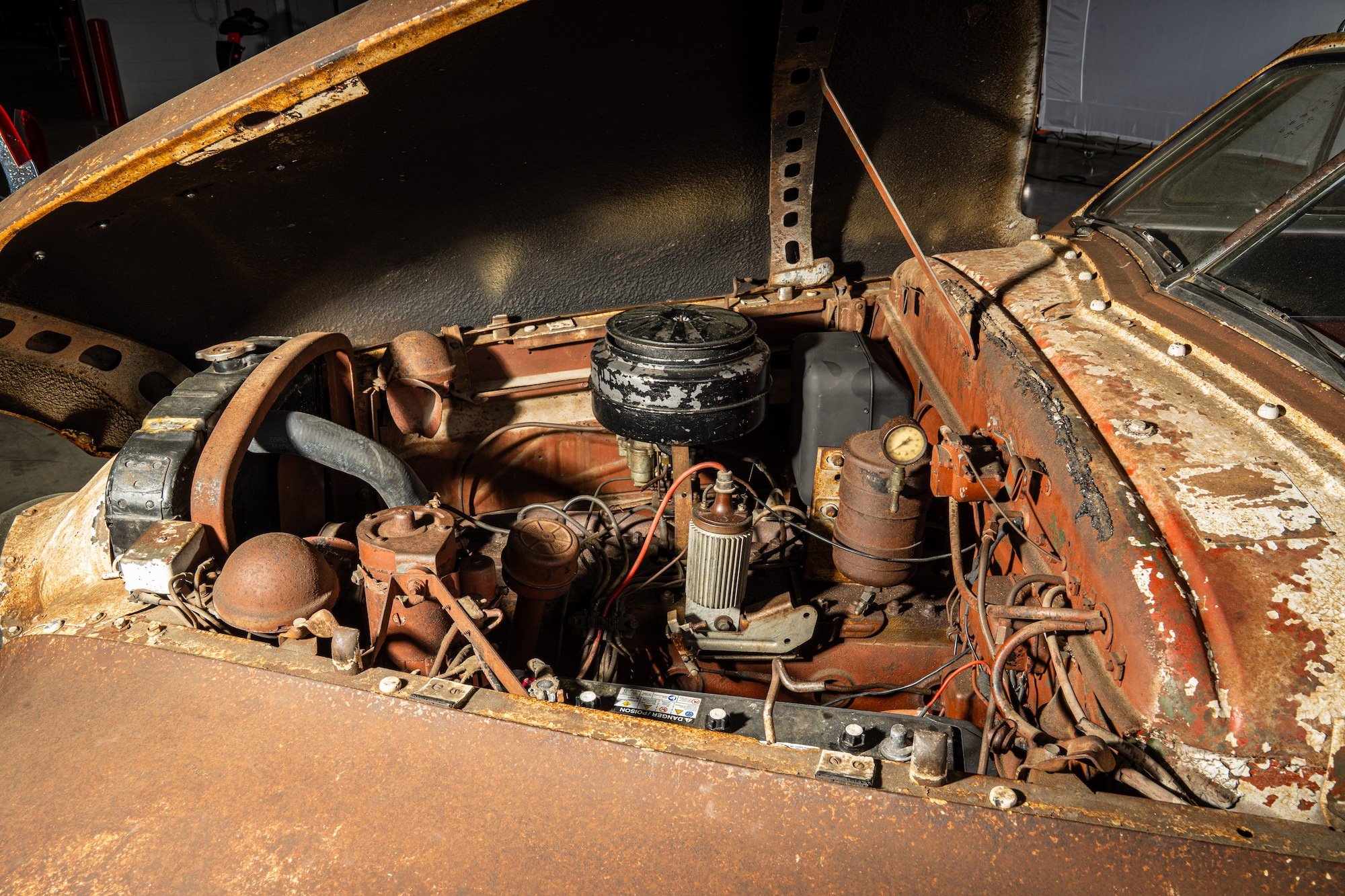
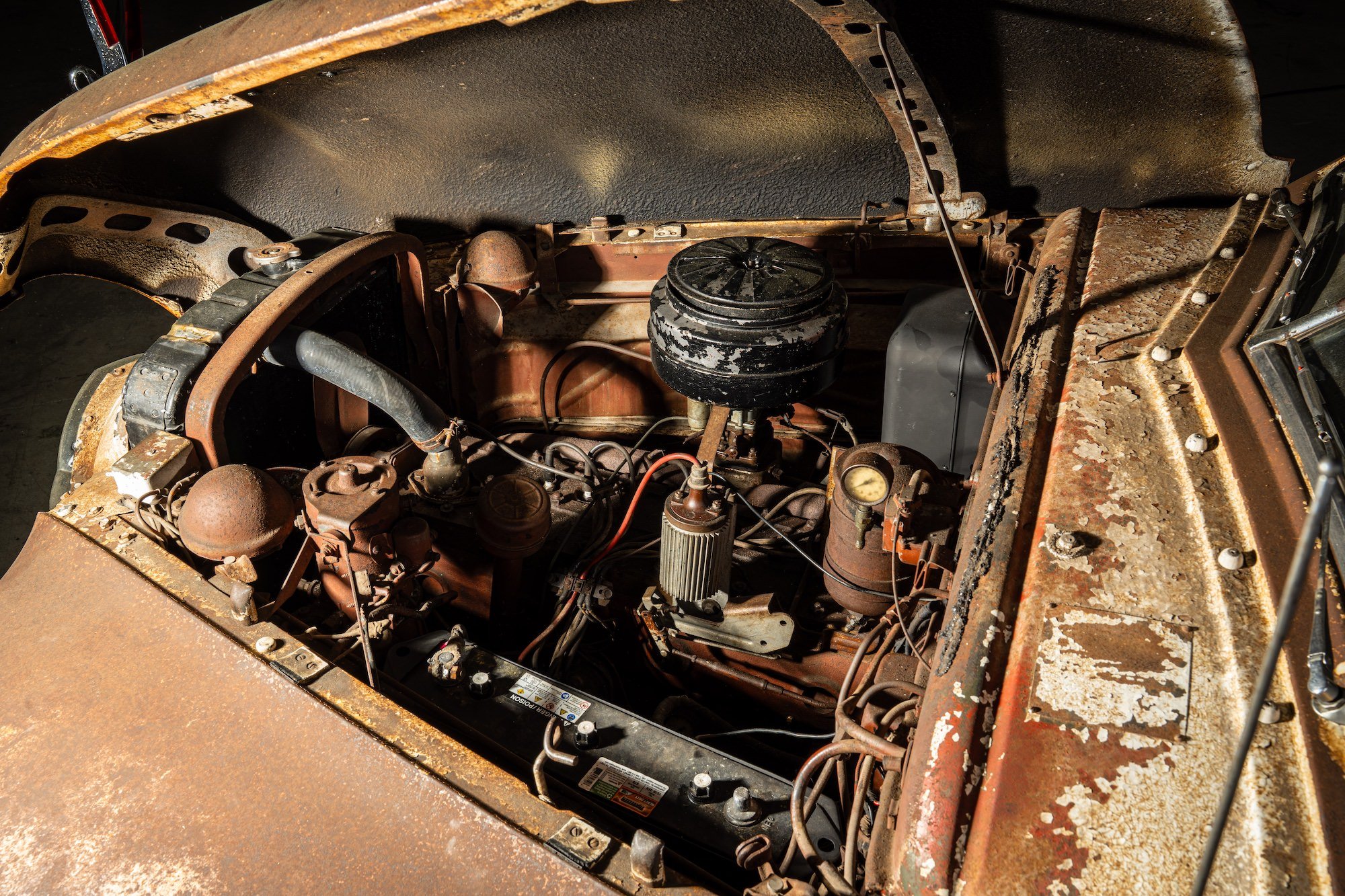
Just last year, the car was mechanically revived by our friend and Packard enthusiast, Robin James. He went through the engine, fuel system, brakes, and steering, to bring the car back to running condition for the first time since the 1950s.
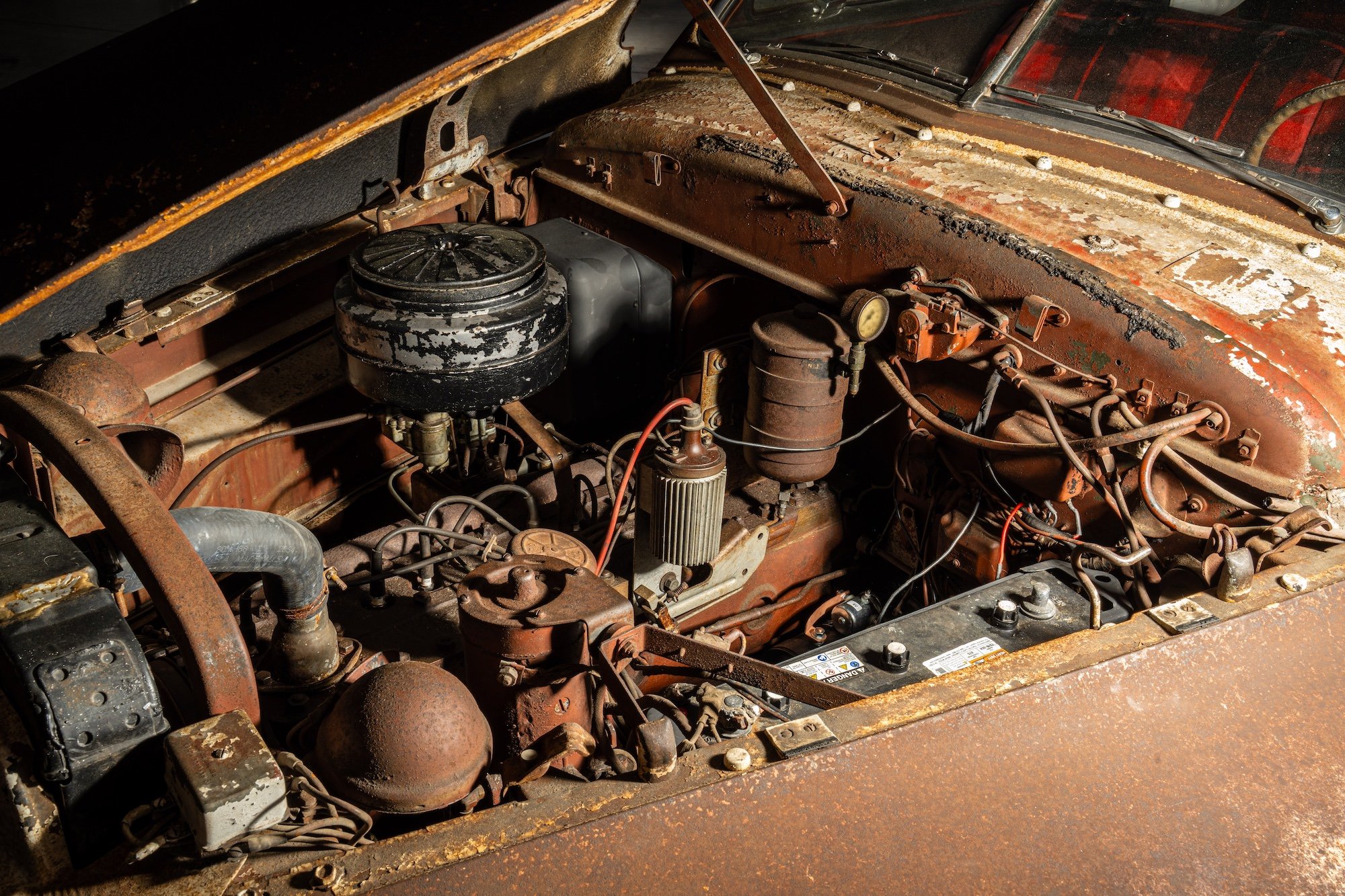
The odometer displayed 47,738 miles, consistent with the car’s well-preserved yet lightly used condition. Wear points such as pedals, striker plates, and upholstery supported the conclusion that the car led a gentle life, despite a heavy-duty rear hitch whose original purpose remains unknown.
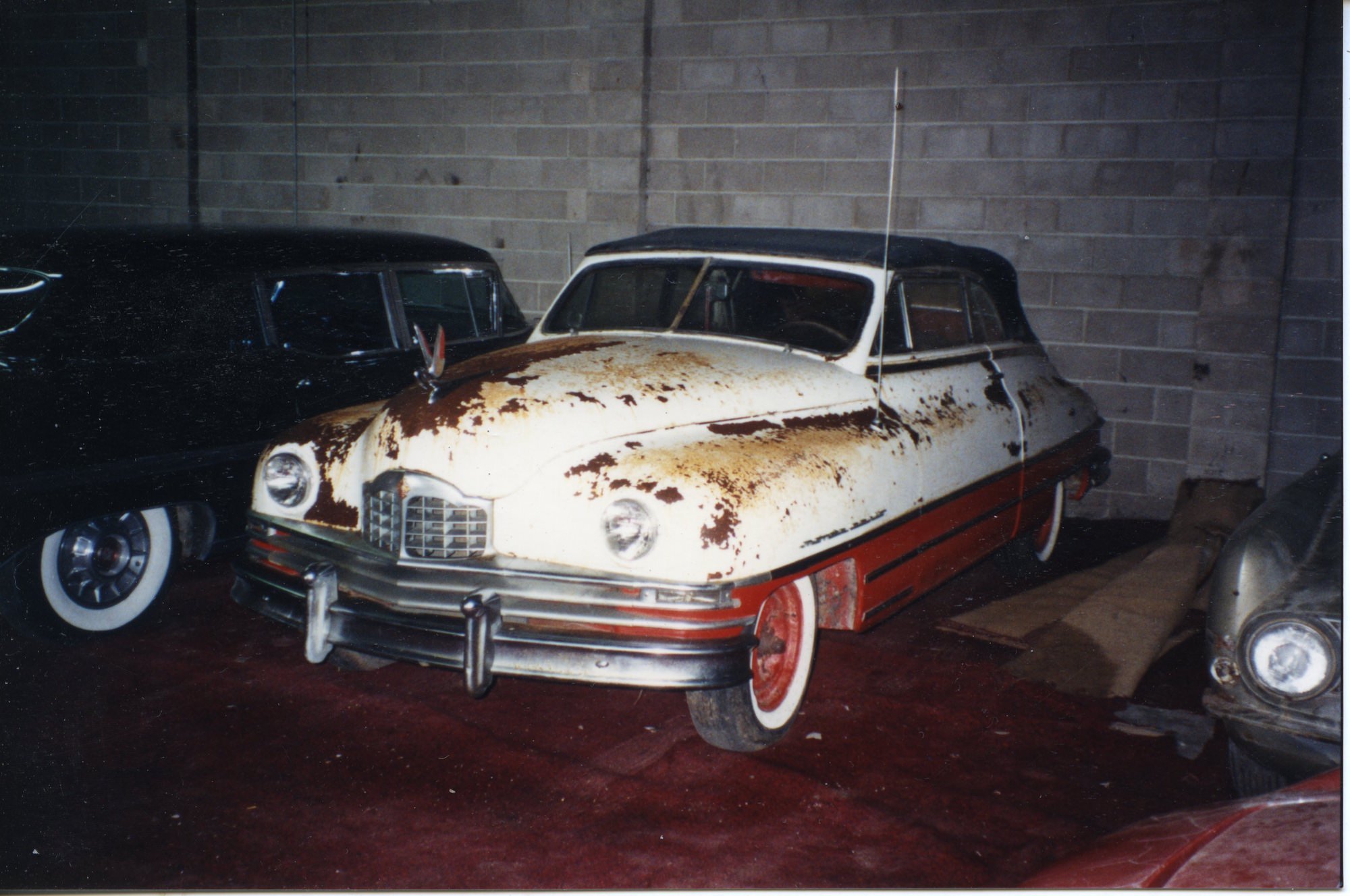
The odometer displayed 47,738 miles, consistent with the car’s well-preserved yet lightly used condition. Wear points such as pedals, striker plates, and upholstery supported the conclusion that the car led a gentle life, despite a heavy-duty rear hitch whose original purpose remains unknown.
Inspection revealed that all modifications, bodywork, paint, trim, and interior elements, originated from the car’s initial construction. Nothing had been updated since the early 1950s, reinforcing the notion that it was built only once, used sparingly, and stored away.
The craftsmanship strongly indicated Henney workmanship: body sections formed entirely in lead, custom chrome castings, grille modifications, unique fender openings, and other hallmarks of the company’s high-grade specialty fabrication. Henney, then the world’s largest professional-car builder with more than 1,000 employees and nearly 2,000 vehicles produced annually, possessed both the expertise and the facilities required for such sophisticated one-off construction.
The convertible also shares numerous design cues with the lost hardtop mock-up: “Monte Carlo” scripts, two-tone paint, matching hood ornament themes, horizontal chrome body trim, Custom Eight cloisonné wheel covers, and distinctive egg-crate grille treatments.
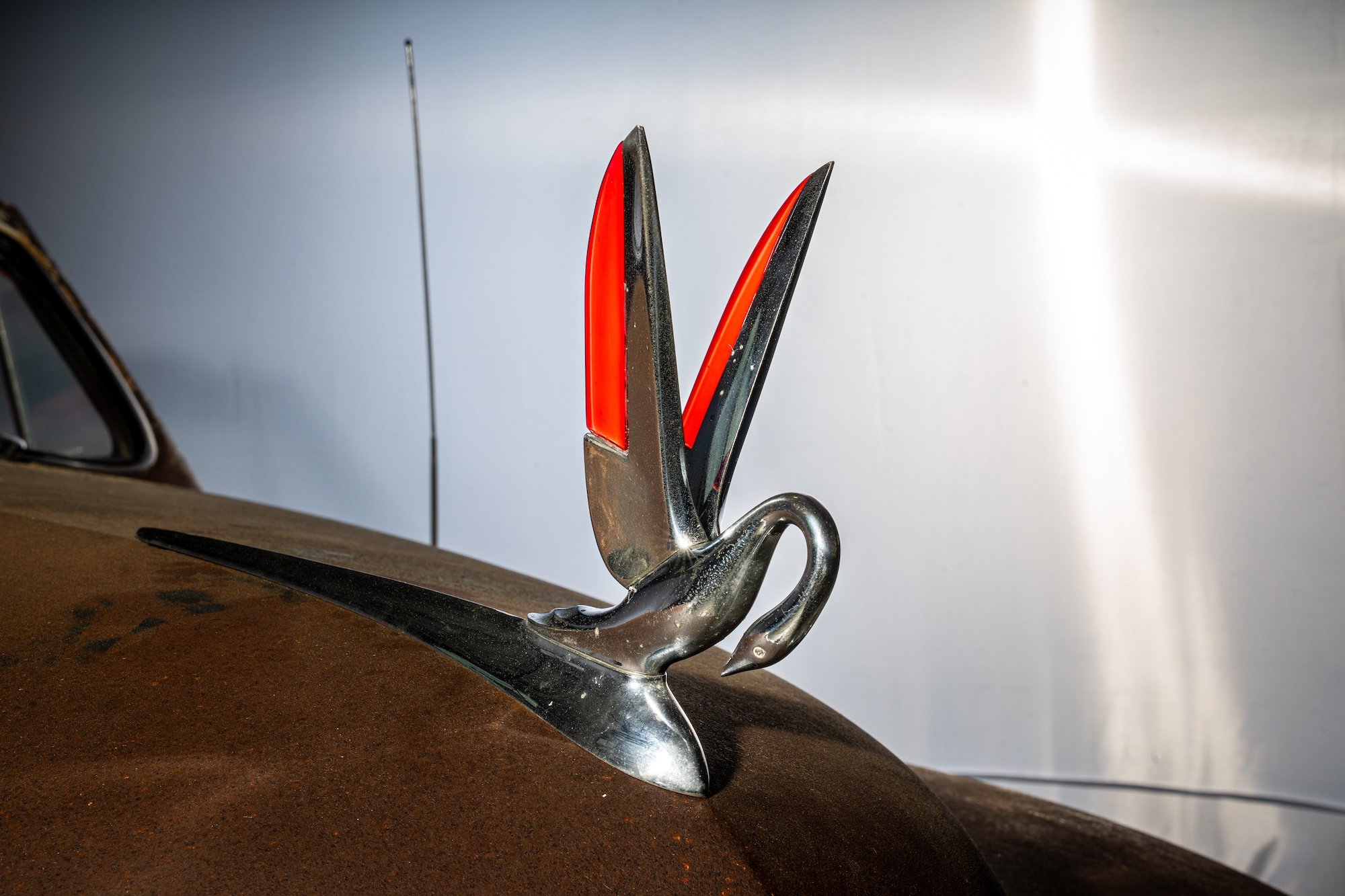
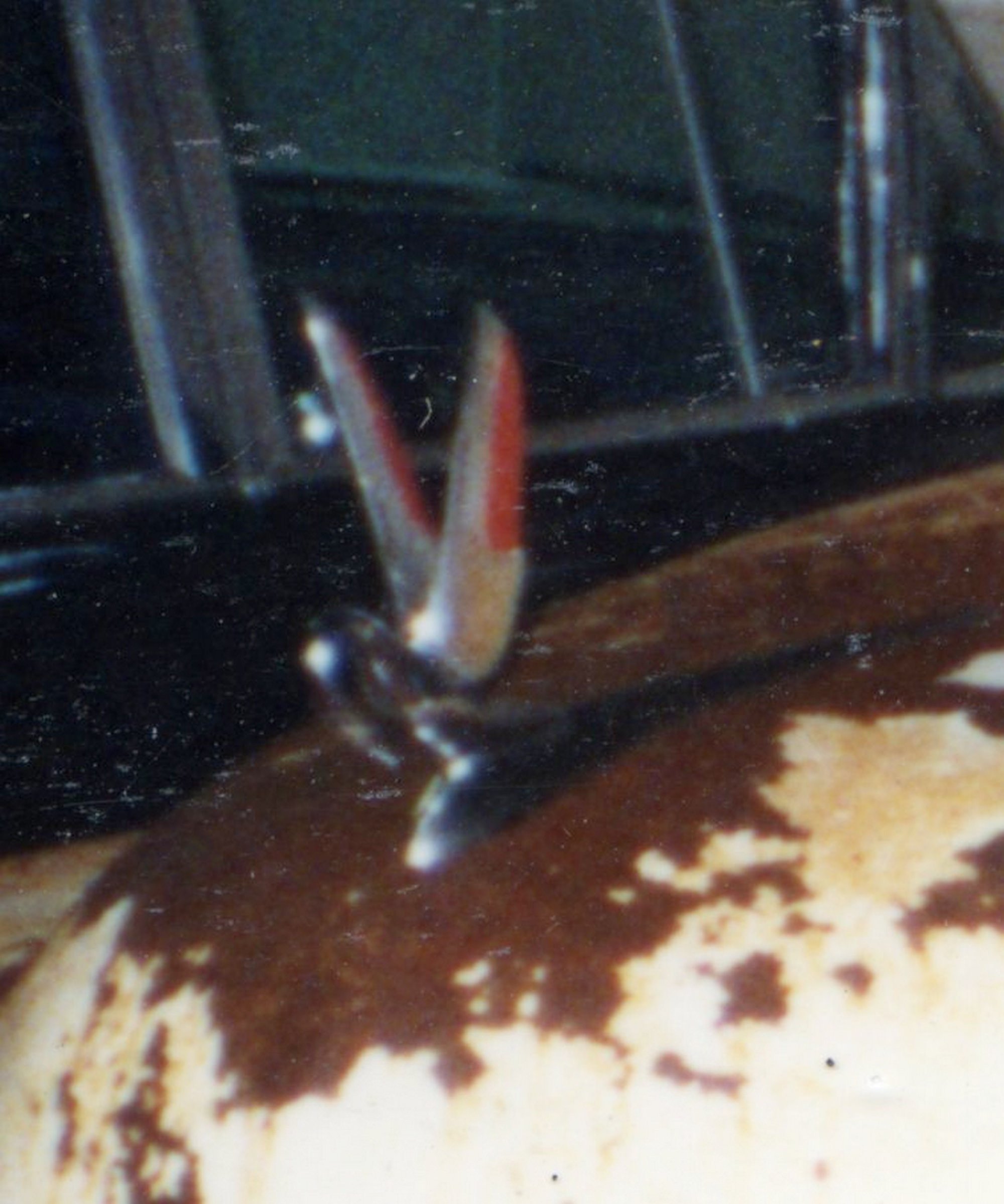
Both cars were built from late 22nd Series Packards likely pulled from the assembly line at similar times, a fact aligning with standard industry practices for concept and show car development. Arbib’s final change was a customized signature Packard Cormorant hood ornament that adorned both the Monte Carlo coupe and convertible. The hood ornament utilized both acrylic and steel components and was unique to each Packard Monte Carlo.
The Monte Carlo cars also appear to have influenced later Packard styling. The use of two-tone paint became more prominent in Packard’s postwar lineup, and the Monte Carlo’s sweeping side chrome may have foreshadowed the styling seen on the Caribbean models. These connections help illustrate how a low-volume concept program could shape aspects of mainstream design.
Though the original 1949 Monte Carlo hardtop mock-up has been lost, the surviving convertible remains a crucial artifact of the early partnership between Arbib and Henney, a relationship that would yield some of Packard’s most memorable early-1950s show cars. Arbib’s impact on Packard styling began with the Monte Carlo project, and Henney’s craftsmanship demonstrated its ability to deliver high-quality specialty vehicles that could rival manufacturer-built concepts.
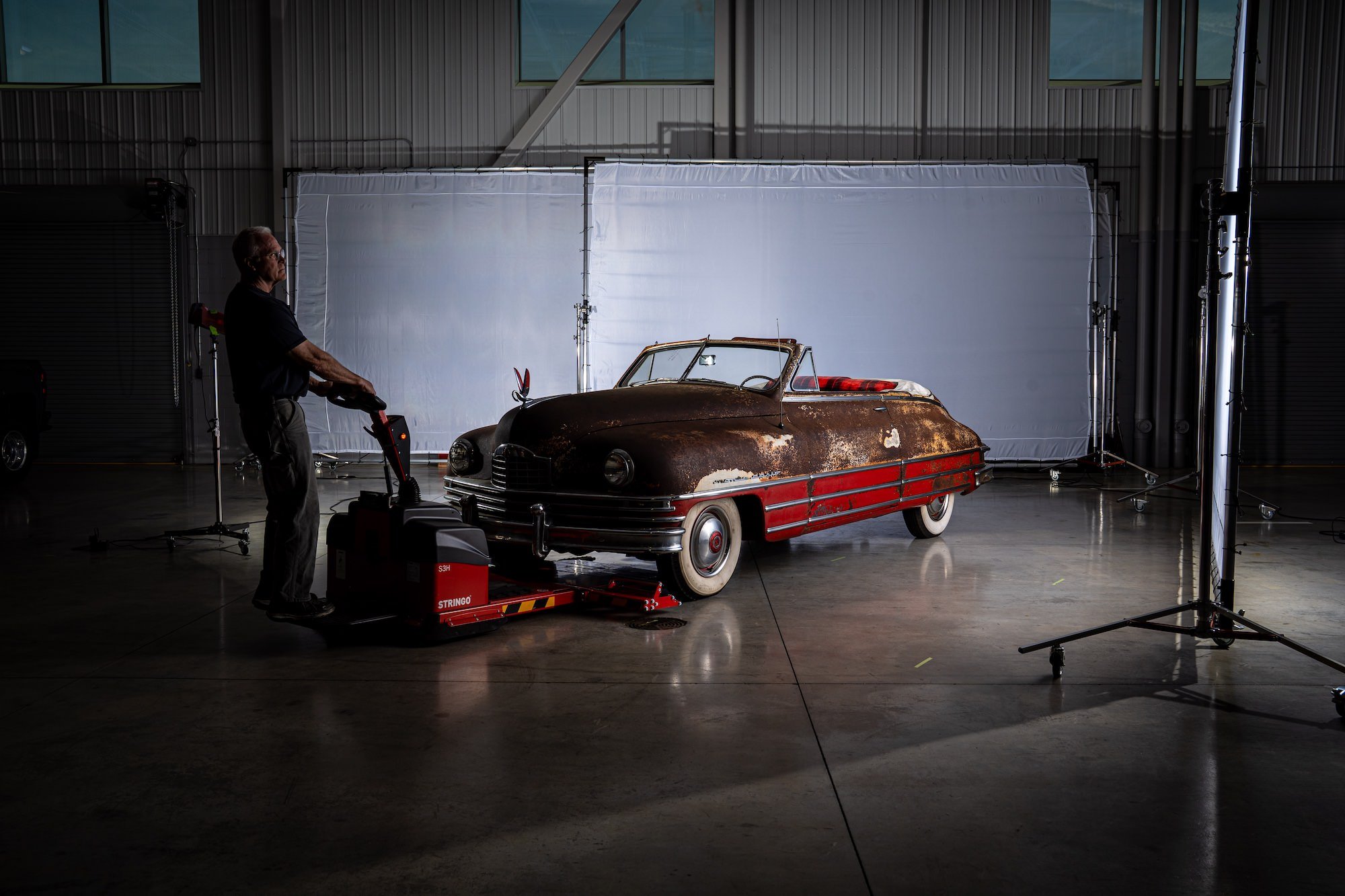
The 1949 Packard Monte Carlo made its debut in the spring of 2025 as part of the Barn Finds exhibit at the Savoy Automobile Museum in Cartersville, GA. The 1949 Packard Monte Carlo by Henney and Richard Arbib is now on display at the National Packard Museum in Warren, OH.
Even without complete documentation, years of research and newly conducted physical analysis affirm the car’s authenticity and significance. Its creation in 1949 marked the opening chapter of a productive period in which Arbib, Henney, and Packard produced influential designs during a pivotal era in American automotive history, an era when imagination, craftsmanship, and ambition often converged in the form of striking postwar show cars.
The 1949 Packard Monte Carlo made its debut in the spring of 2025 as part of the Barn Finds exhibit at the Savoy Automobile Museum in Cartersville, GA. The 1949 Packard Monte Carlo by Henney and Richard Arbib is now on display at the National Packard Museum in Warren, OH.



Images courtesy of Undiscovered Classics

Mike Puma is a partner at Undiscovered Classics along with Geoff Hacker and together they find, research, and restore America’s lost automotive treasures. Undiscovered Classics focuses on the history behind and the celebration of American handcrafted sports cars from the postwar era.
Largely untold, this story and these cars were central to the theme of postwar sports car development and appreciation, influencing design and expectations for Detroit and America in a significant way.