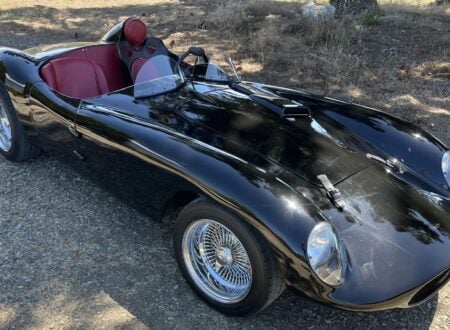
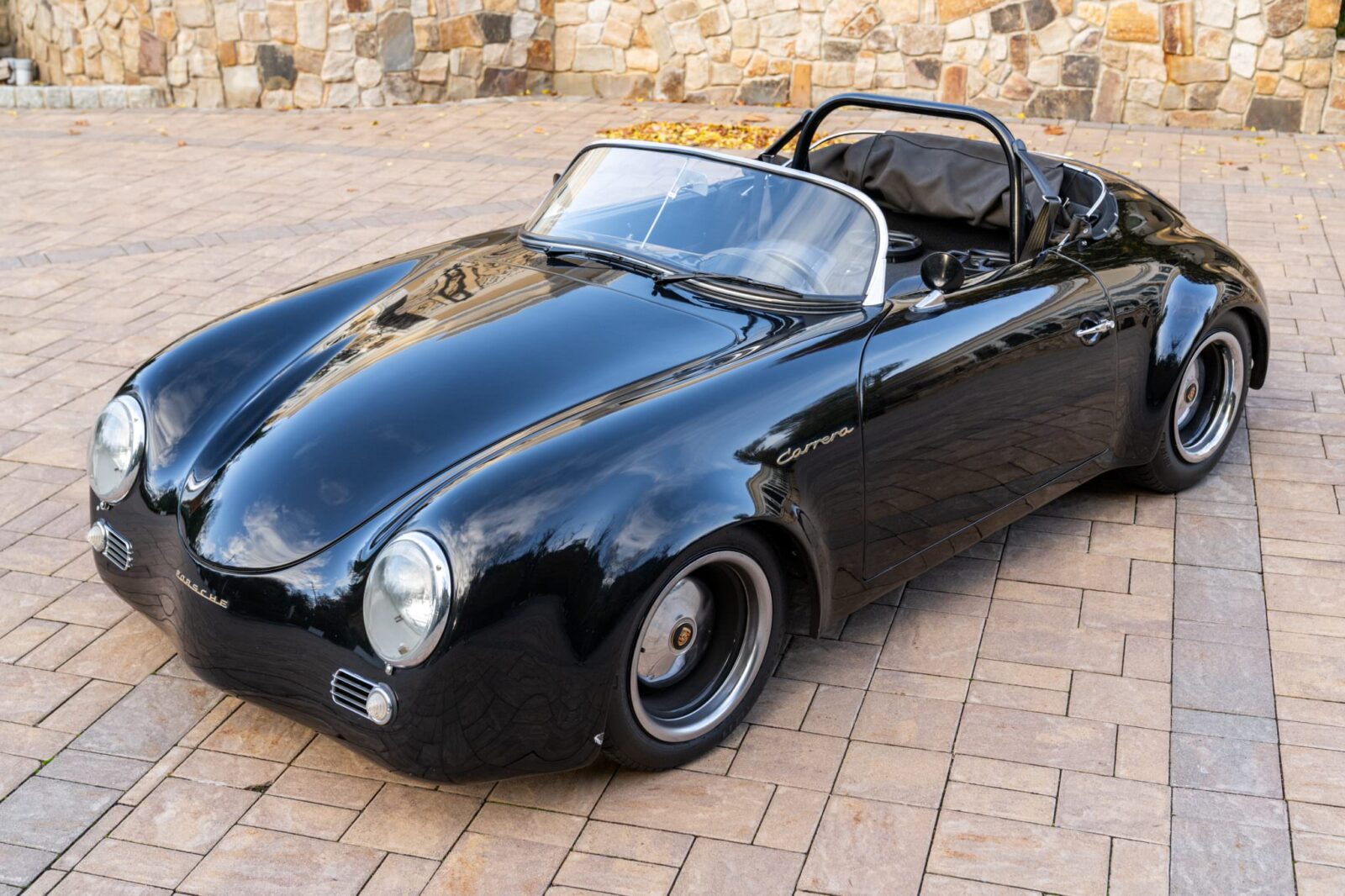
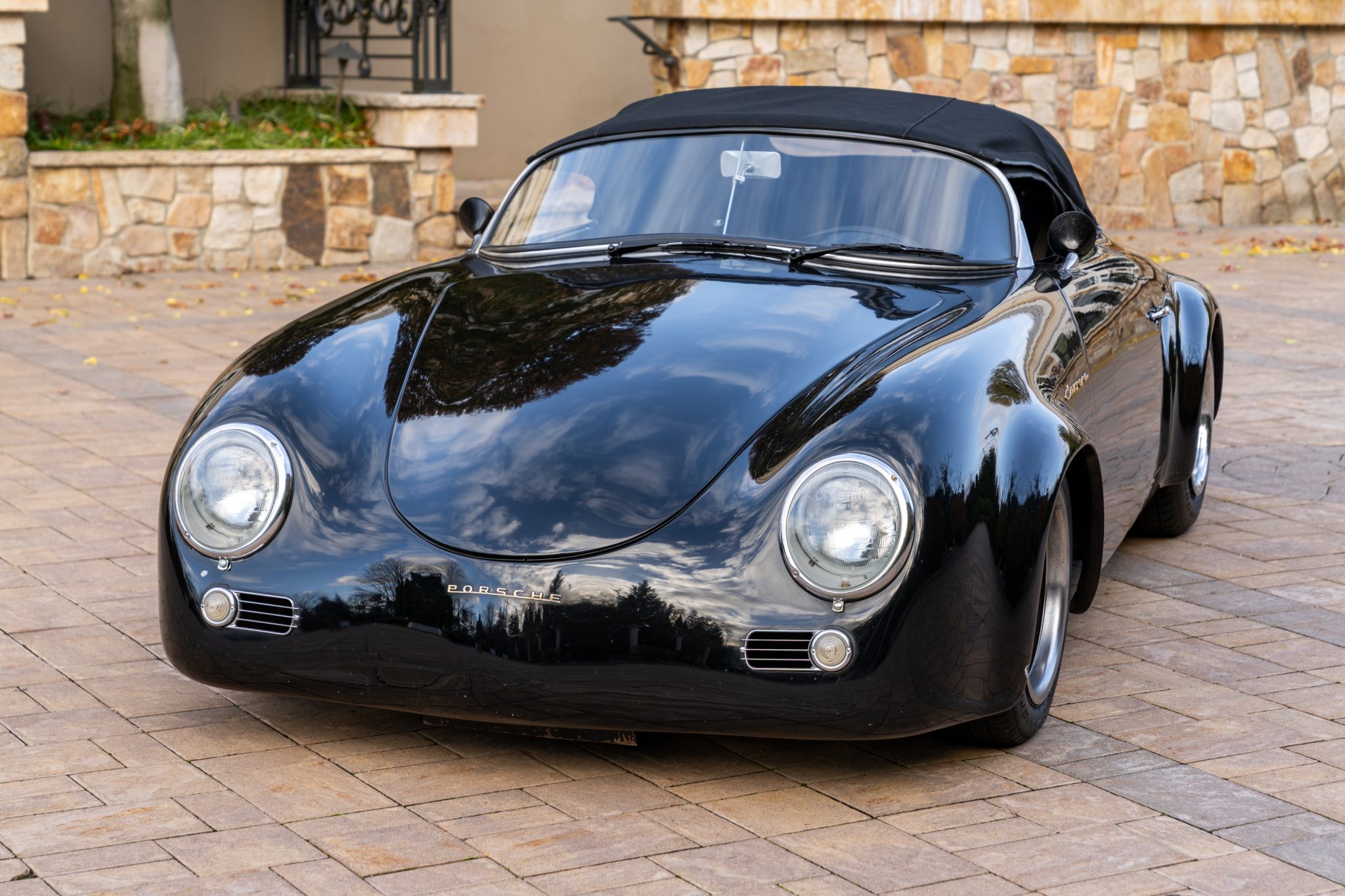
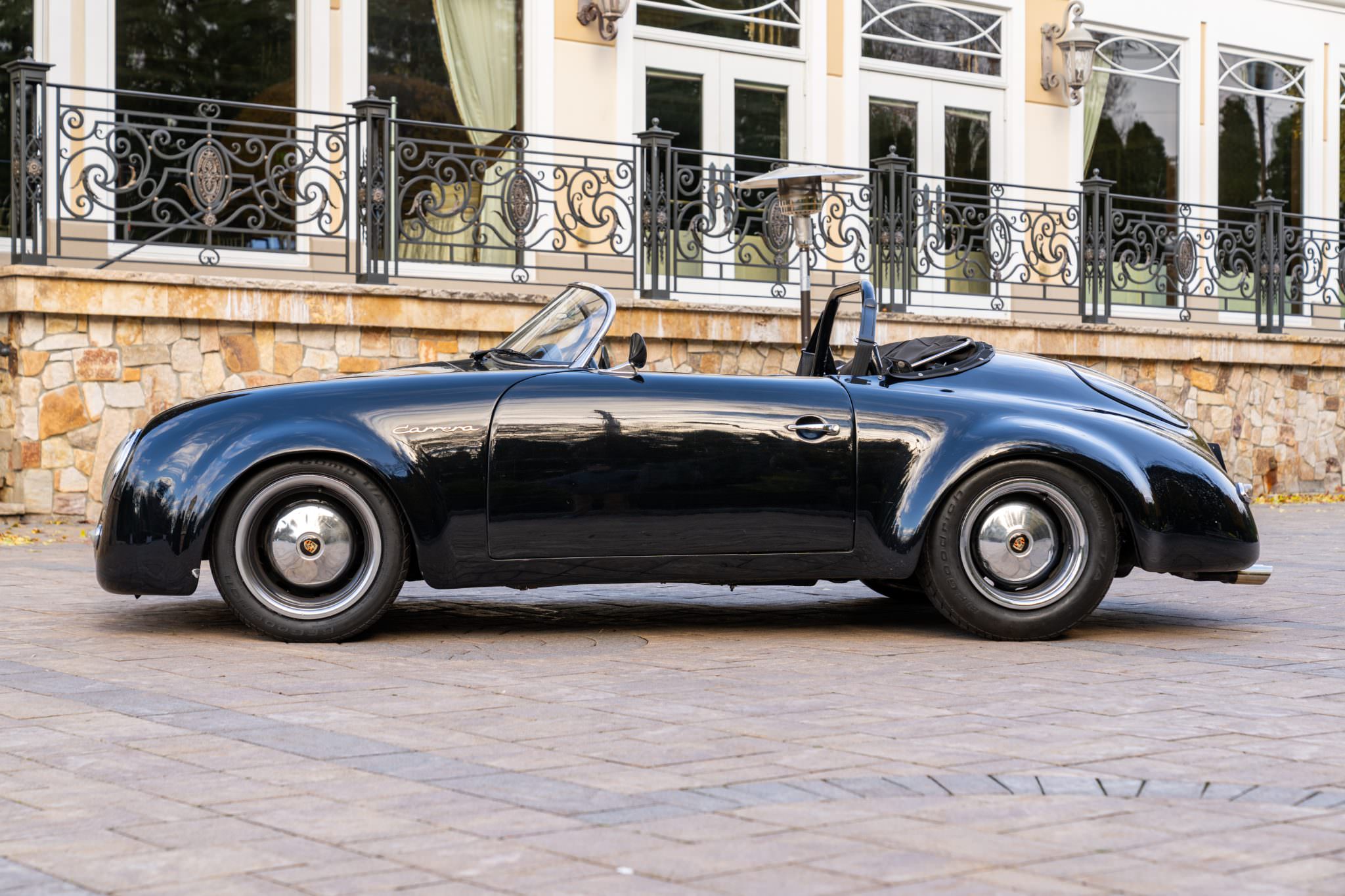
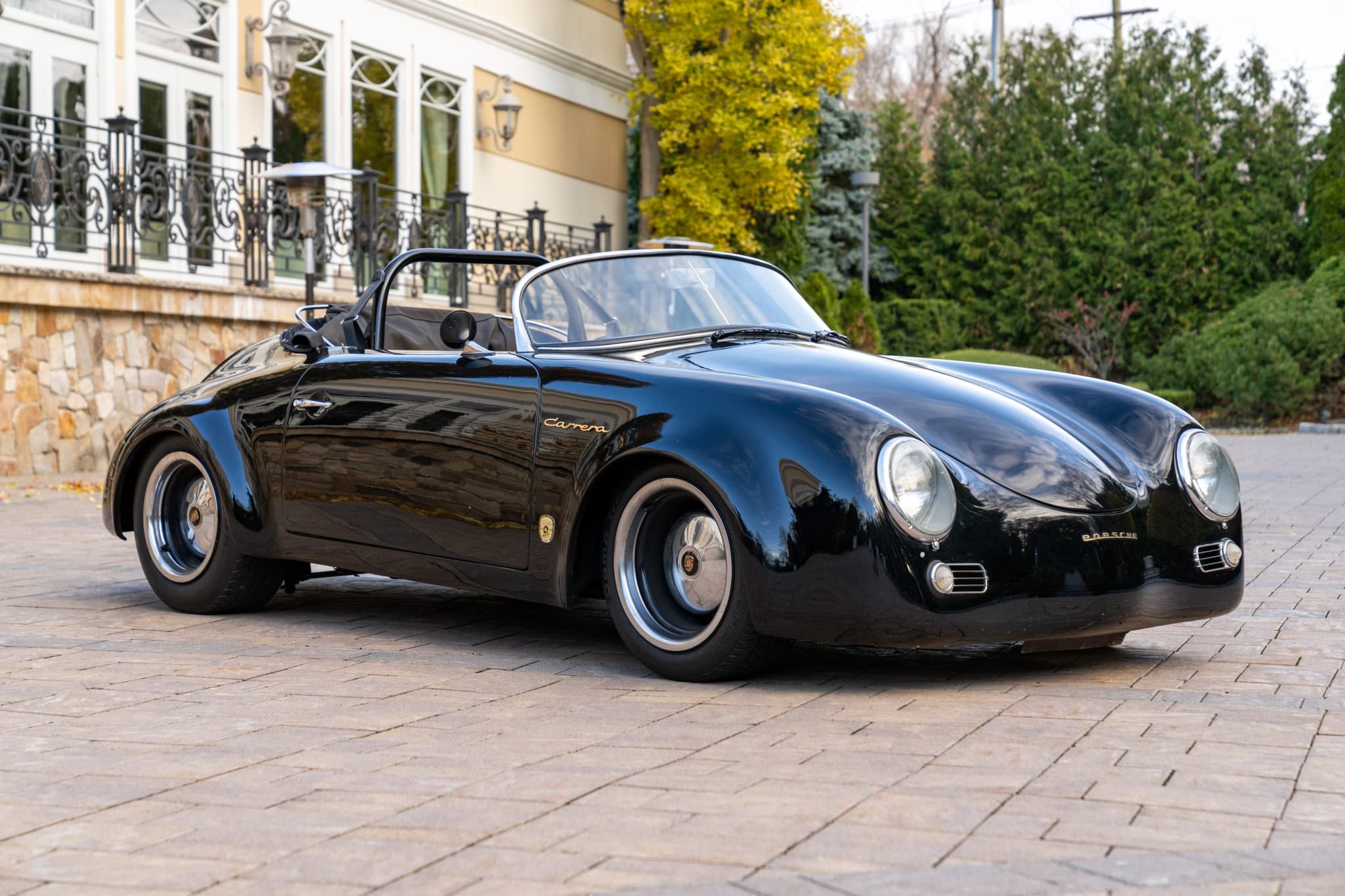
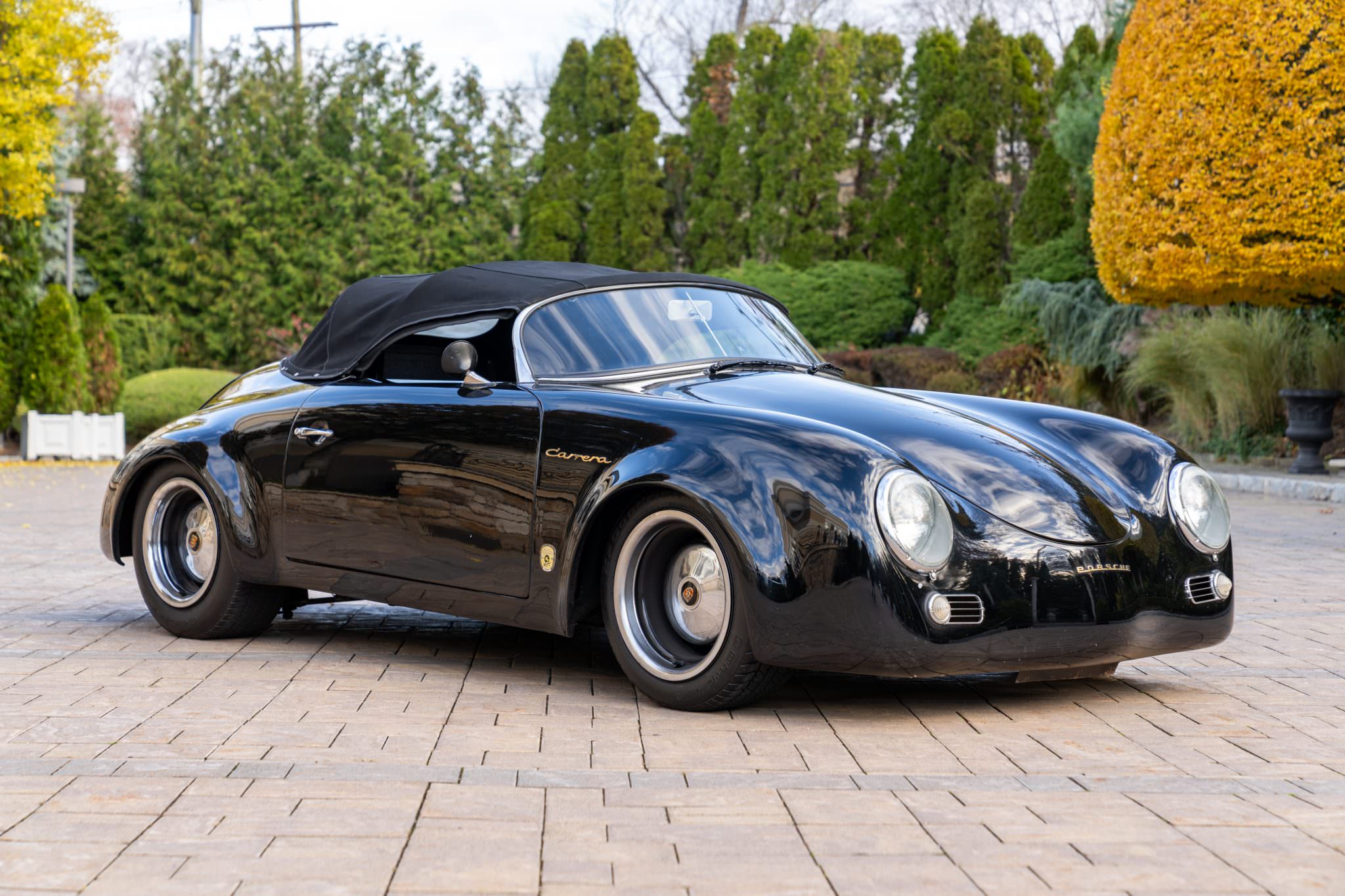
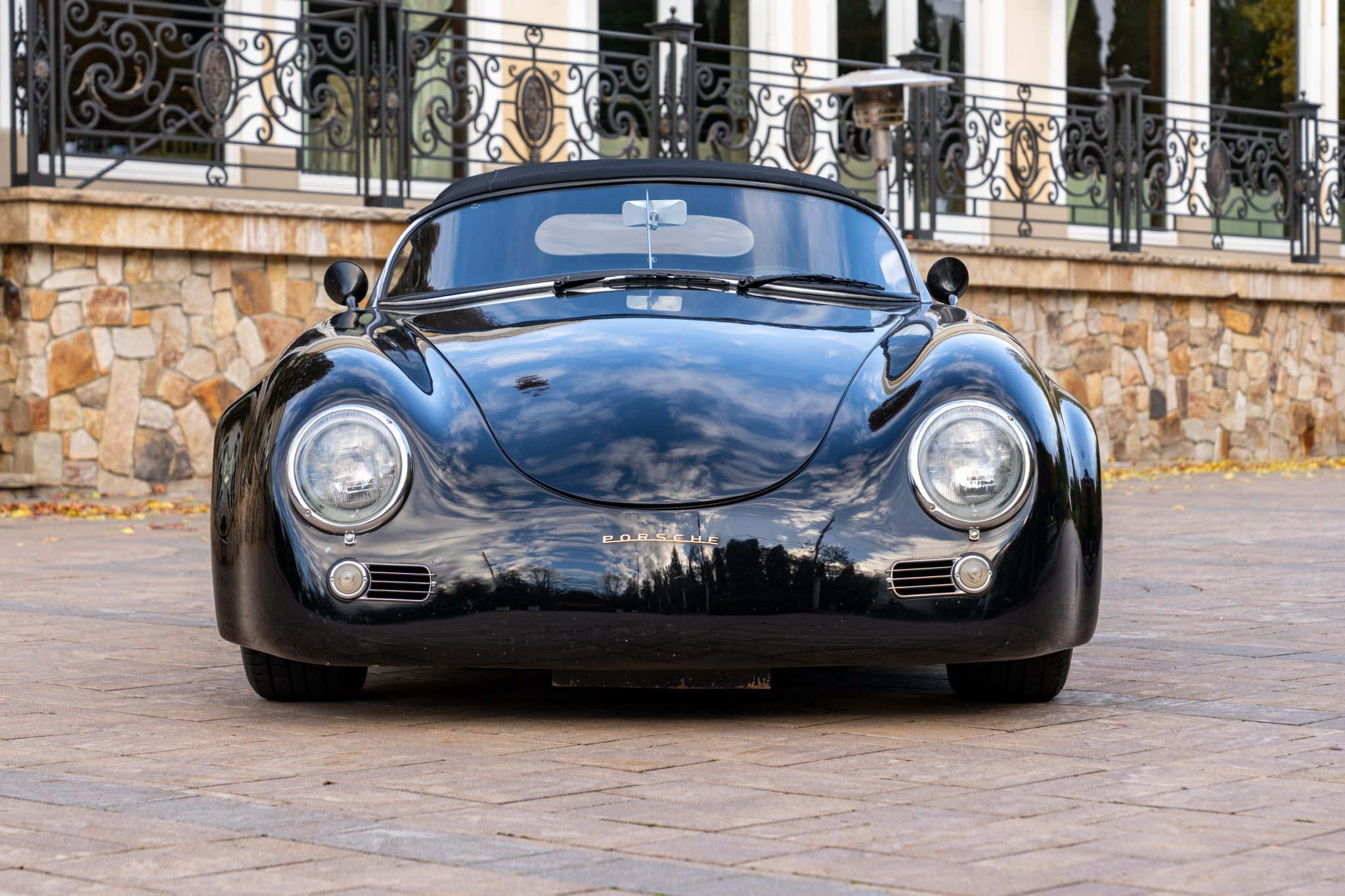
This is a Porsche 356-style Speedster that was built in 1987/1988 for ZZ Top’s Billy Gibbons as one of a pair, with an identical car built at the same time for his bandmate Frank Beard.
Gibbons nicknamed the cars “taco wagons” as they were intended to be used for running errands – errands he described as going out to get guitar strings and tacos. The car is now being offered for sale out of Westwood, New Jersey with a magazine it was featured in, as well as a couple of ZZ Top cassettes.
Fast Facts: An Ex-ZZ Top Porsche 356-Style Speedster
- This Porsche 356-style Speedster was built in 1987/1988 for Billy Gibbons as part of a two-car commission intended for Gibbons and Frank Beard. Nicknamed “taco wagons,” the cars were conceived as casual errand runners with style. Beard later lost interest, leaving both cars with Gibbons.
- The original Porsche 356 Speedster was developed in the mid-1950s at the urging of US importer Max Hoffman. Introduced for the 1955 model year, it targeted American buyers seeking a stripped-down, affordable sports car focused on style, simplicity, and amateur competition rather than comfort and/or touring.
- Built on the 356 Pre-A platform, the Speedster had a low removable windshield, minimal interior trim, and a basic folding top with side curtains rather than roll up windows. Power came from air-cooled flat-four engines ranging from 1.5 to 1.6 liters. Production ran from 1954 to 1958, totaling just over 4,100 cars.
- The replica shown here was built by D&D Specialty Cars with Vintage Air, using a CarGem frame and fiberglass widebody. It is powered by a 1,776cc flat-four with dual Webers and a four-speed manual gearbox.
History Speedrun: The Porsche 356 Speedster
The Porsche 356 Speedster has become one of the most copied car designs of the 20th century, sitting right alongside the Shelby Cobra as a common target for replica kit car builders. 356 Speedster replicas are most commonly built on a VW Beetle platform, keeping the engine, suspension, brakes, steering, and transmission all in place, and simply adding a fiberglass Speedster body over the top.

 The original Porsche 356 Speedster had emerged in the mid-1950s as a car very much intended for the American market, and more specifically to buyers in Southern California. Image courtesy of Porsche.
The original Porsche 356 Speedster had emerged in the mid-1950s as a car very much intended for the American market, and more specifically to buyers in Southern California.
By 1953 Porsche’s highly-influential US importer, Max Hoffman, was convinced there was room for a stripped-down, lower-priced open topped 356 that was focused on style, simplicity, and weekend competition rather than higher-end touring comfort.
Hoffman pushed Stuttgart hard, arguing that American buyers wanted something closer to a minimalist sports racer than a conventional cabriolet. Porsche agreed, and the Speedster was born soon after.
Introduced late in 1954 for the 1955 model year, the Speedster was based on the 356 Pre-A platform but simplified wherever possible. It used a sharply raked, removable low windshield instead of the standard tall screen, side curtains in place of roll-up windows, and a basic folding fabric top designed for emergency weather protection rather than regular daily use.
Interior trim was sparse as you might imagine, with lightweight bucket seats and minimal sound insulation. These changes reduced cost and weight while giving the car a competition-ready character that was immediately put to the test by many of its young owners – including a movie star named James Dean.
Mechanically, the Speedster remained true to its 356 roots. Early cars were fitted with Porsche’s air-cooled flat-four engines in 1.5 liter form, producing between 55 and 70 bhp depending on the state of tune.
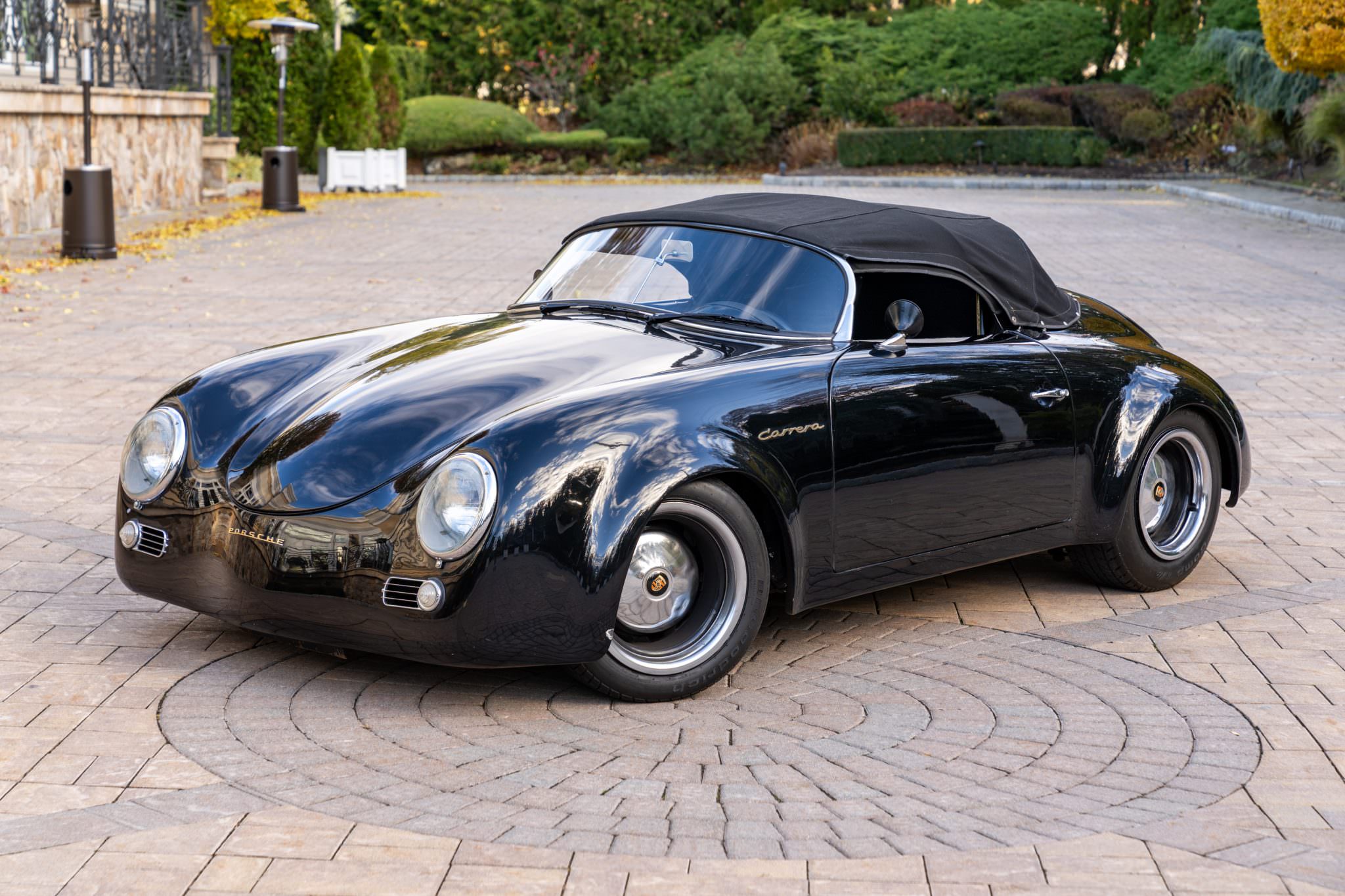
This Porsche 356-style Speedster custom was built by D&D Specialty Cars of Arkansas in collaboration with Vintage Air of San Antonio – it was commissioned as part of a two-car project for ZZ Top members Billy Gibbons and Frank Beard.
Later 356A Speedsters received more powerful 1.6 liter engines, including the 1600 Super rated at 75 bhp. Power was sent to the rear wheels through a 4-speed manual gearbox, with drum brakes all around and Porsche’s familiar swing-axle rear suspension.
A curb weight that was typically around 1,700 lbs (770 kgs) meant that the Speedster was lively, and when piloted by a skilled driver they could humble much more powerful machinery.
Production of the Speedster ran from late 1954 through 1958, after which it was replaced by the more refined Porsche Convertible D. Total Speedster production is generally accepted at just over 4,100 cars, making it one of the lower-volume 356 variants. The vast majority were sold in the United States – validating Hoffman’s original instincts about the need for such a car in the American market.
The Speedster became a fixture at SCCA events and weekend races across California, it helped define Porsche’s competition image in the US, and established a visual template that Porsche would revisit decades later.
Although just over 4,000 Speedsters were made by Porsche, there have been many times that number of replicas made – and if you see a Speedster on the street today it’s highly likely that it’s actually a fiberglass bodied kit car built on a Beetle chassis and running gear.
Although these replicas are understandably far less desirable than the originals, they do tend to get driven a lot more, and they owners are typically a passionate lot who wrench on their cars themselves, and take great pride in them.
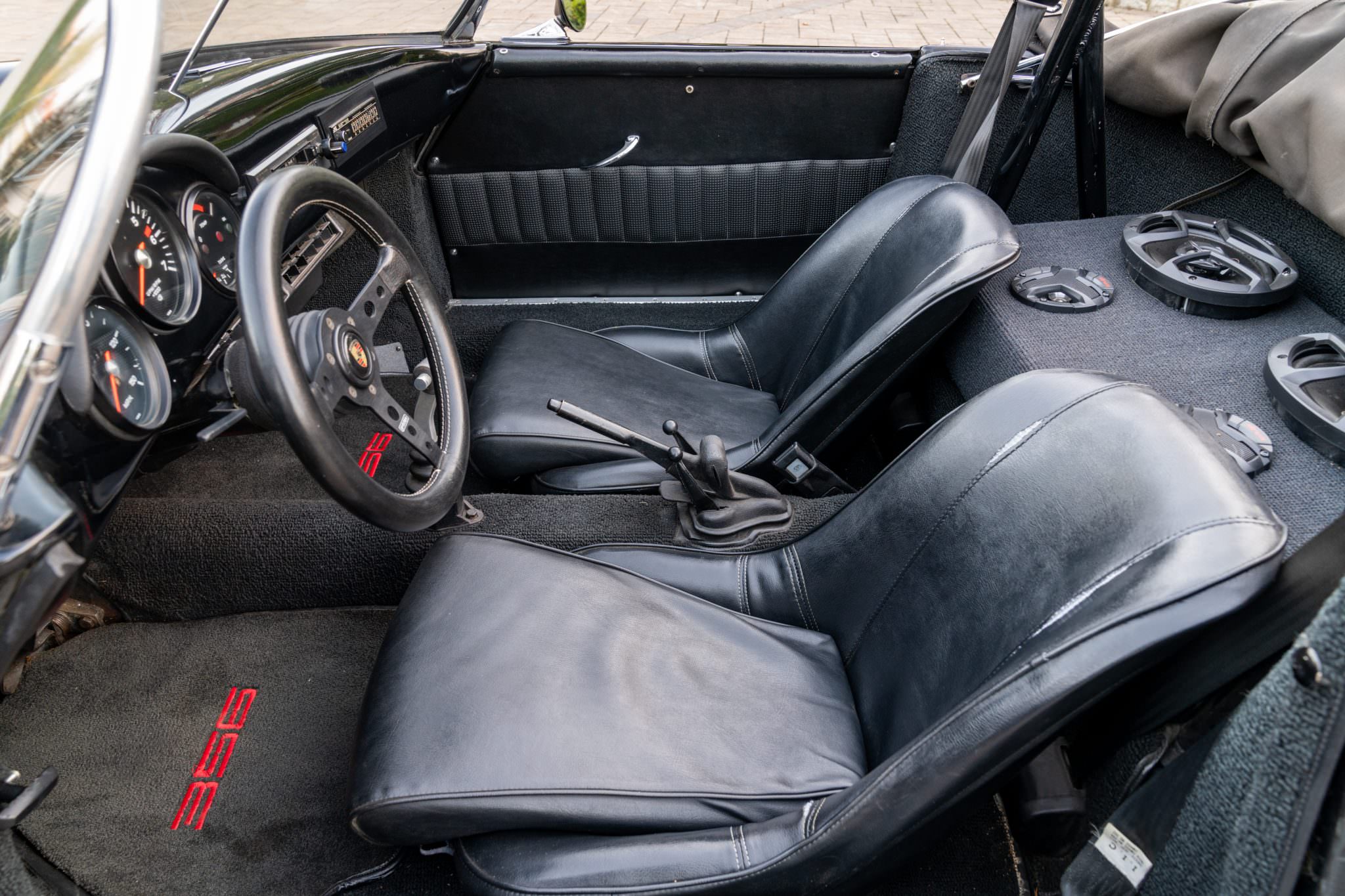
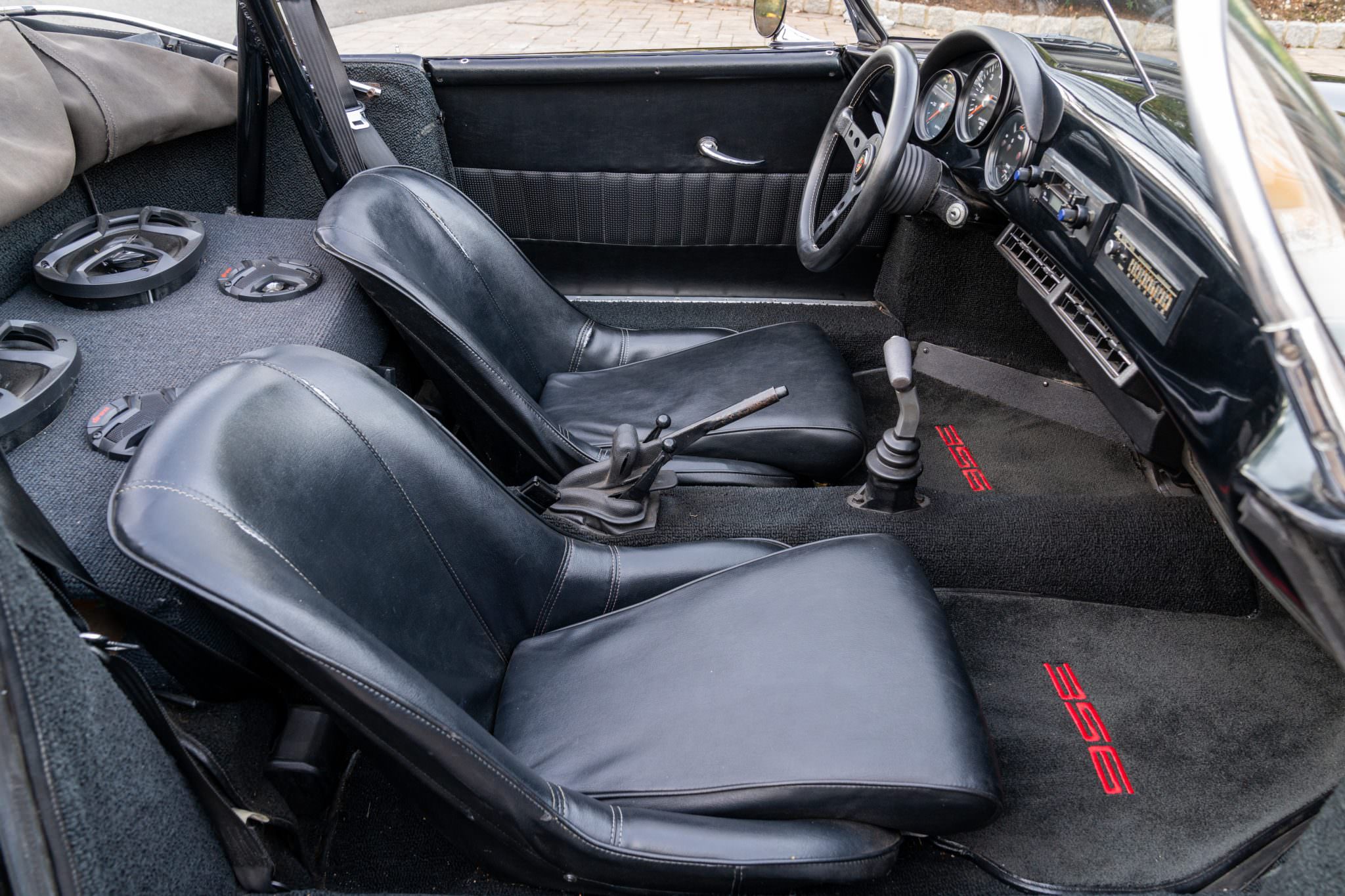
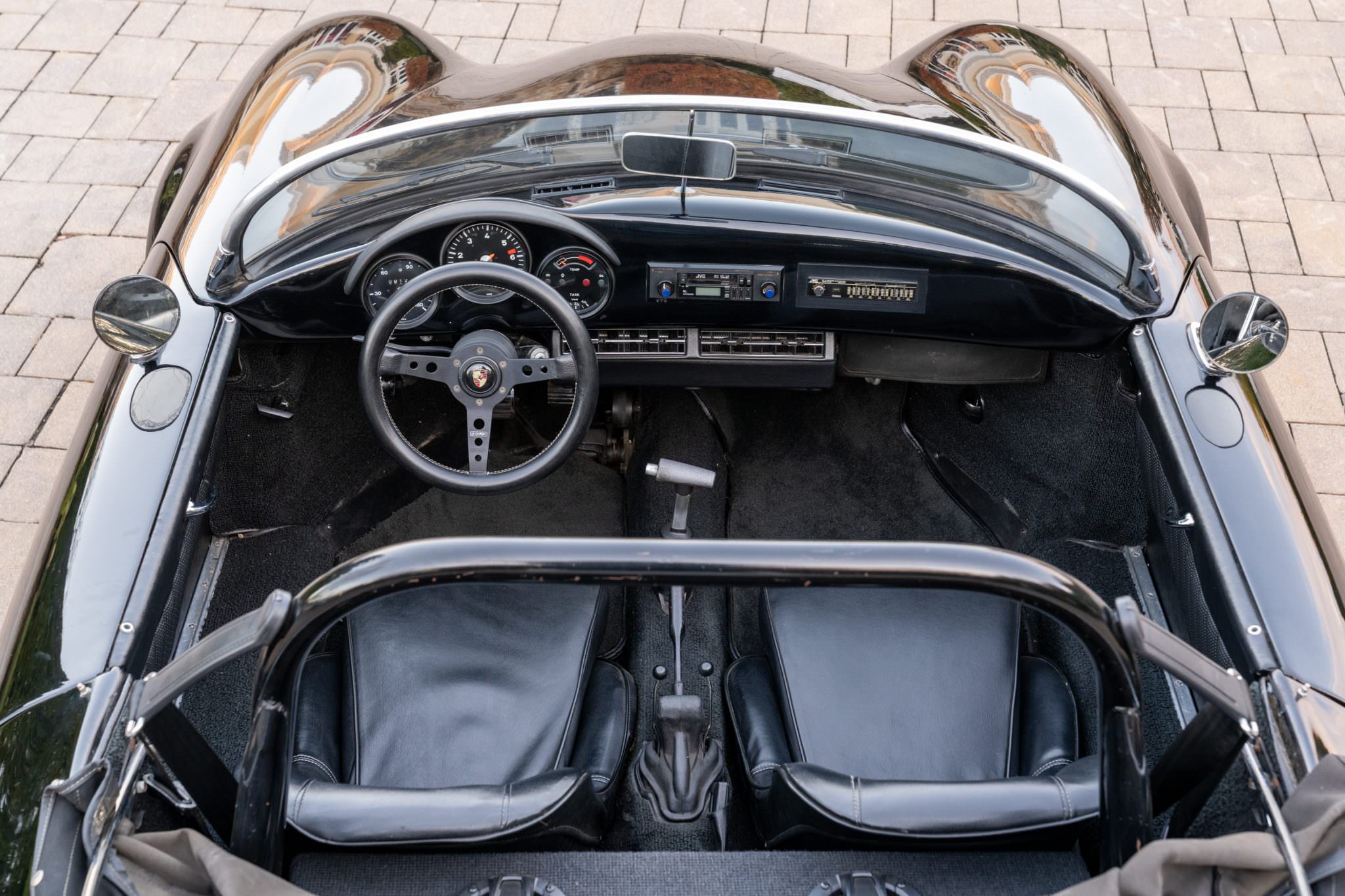
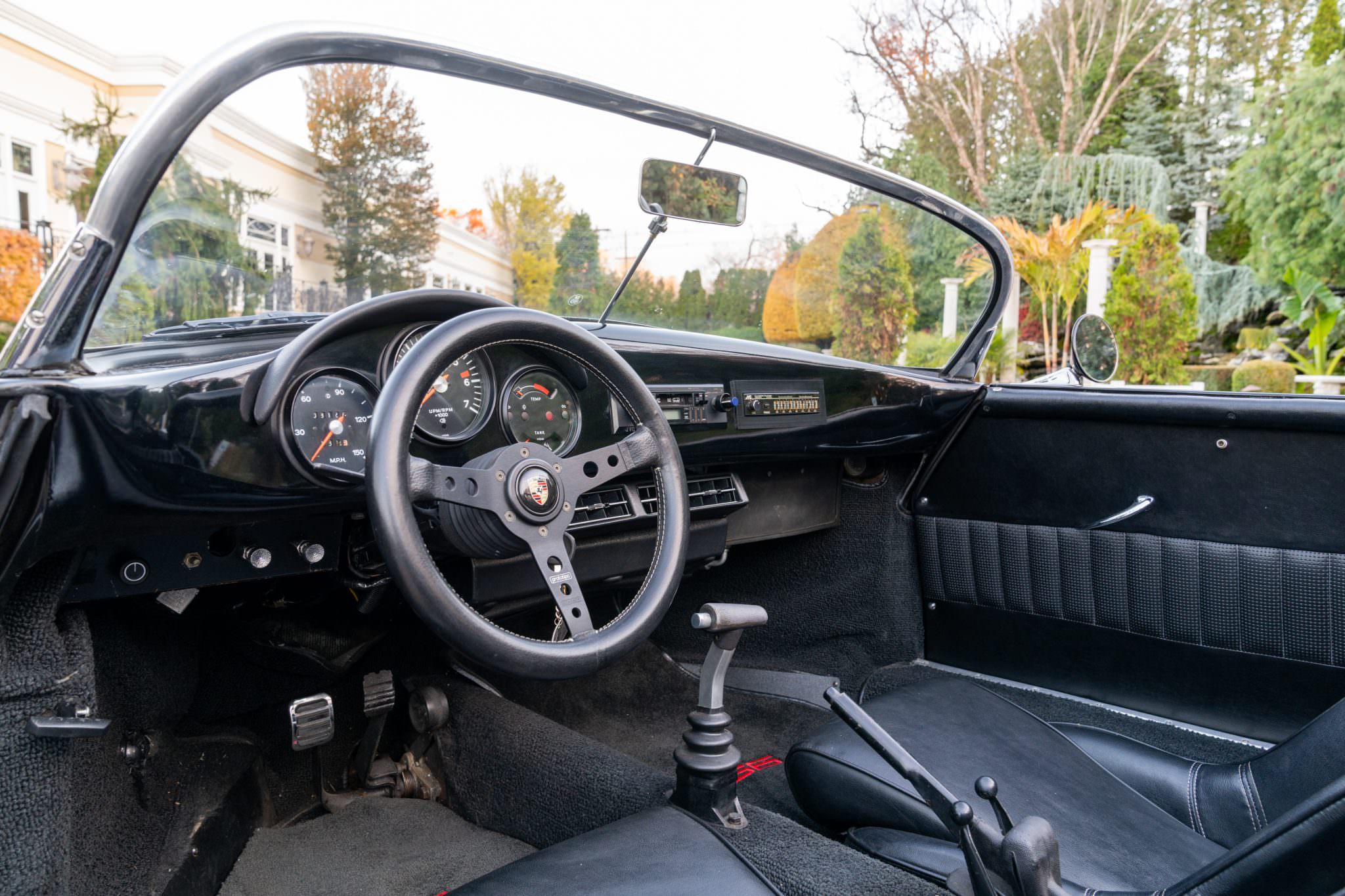
The interior is trimmed in black upholstery and has low-back bucket seats, a matching dash pad, door panels, and carpeting. Equipment includes a roll bar, air conditioning, a rear parcel shelf, and a JVC AM/FM cassette stereo with equalizer and JVC DRVN speakers.
The Ex-Billy Gibbons’ 356-Style Speedster Shown Here
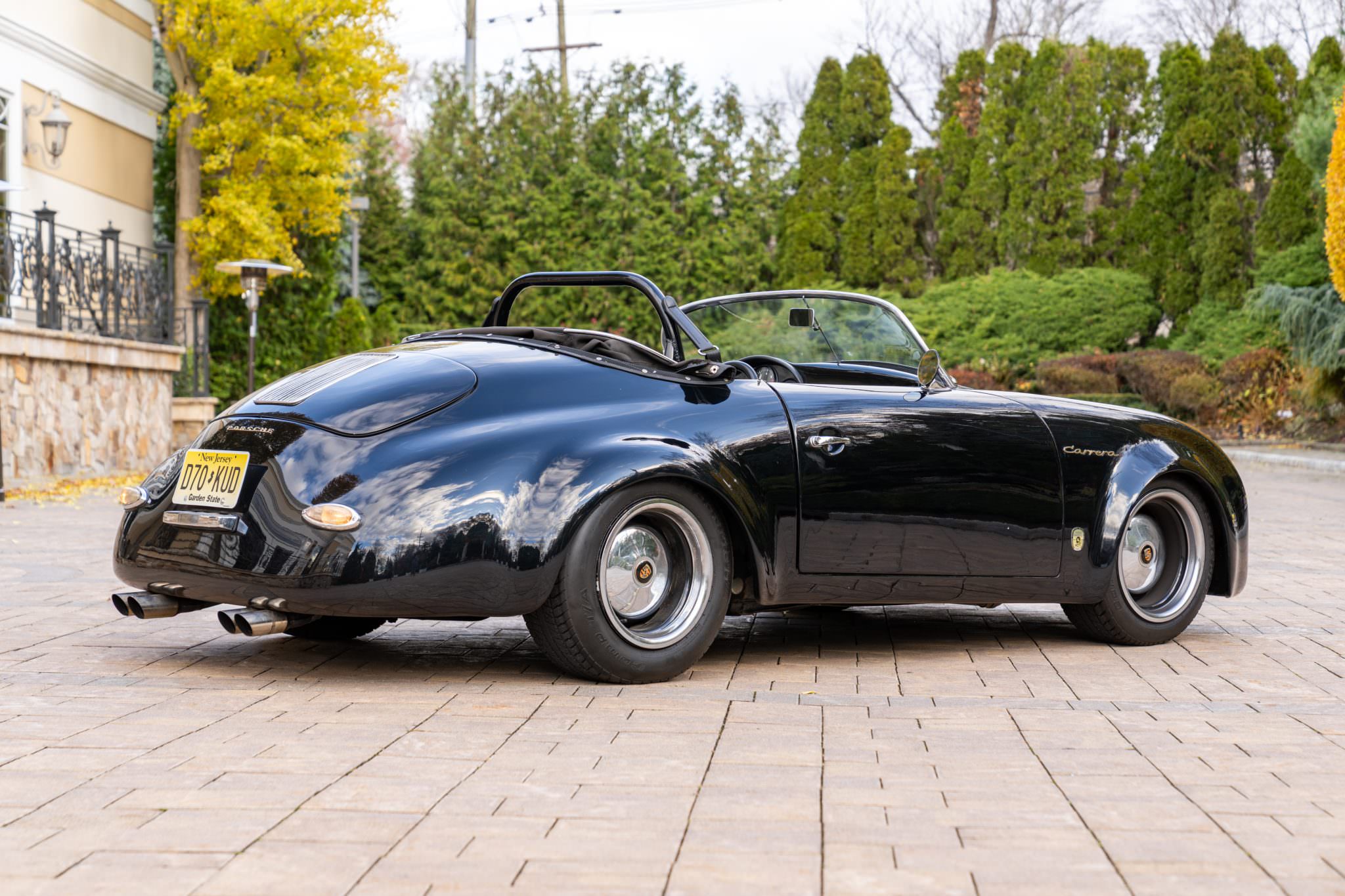
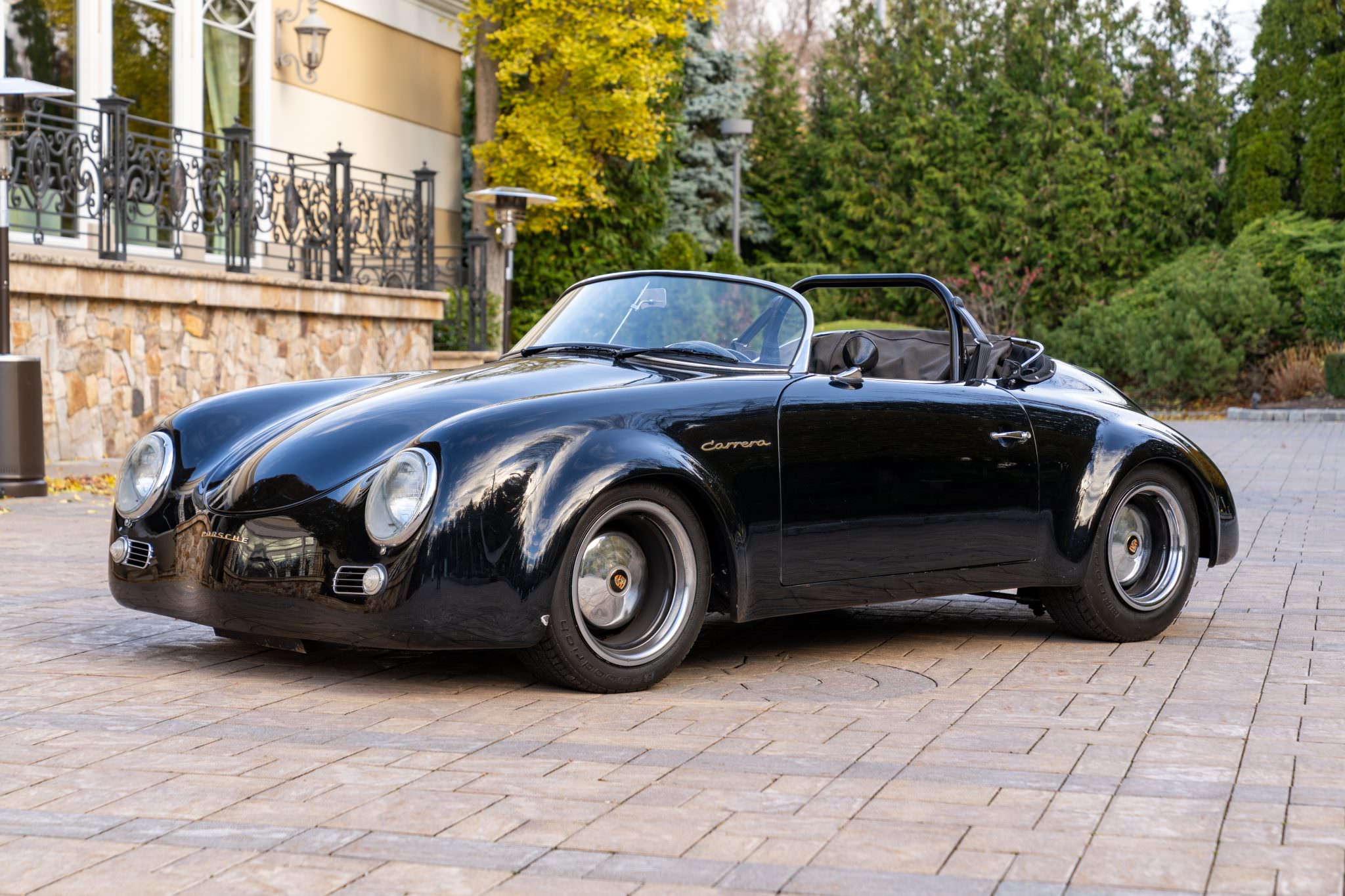
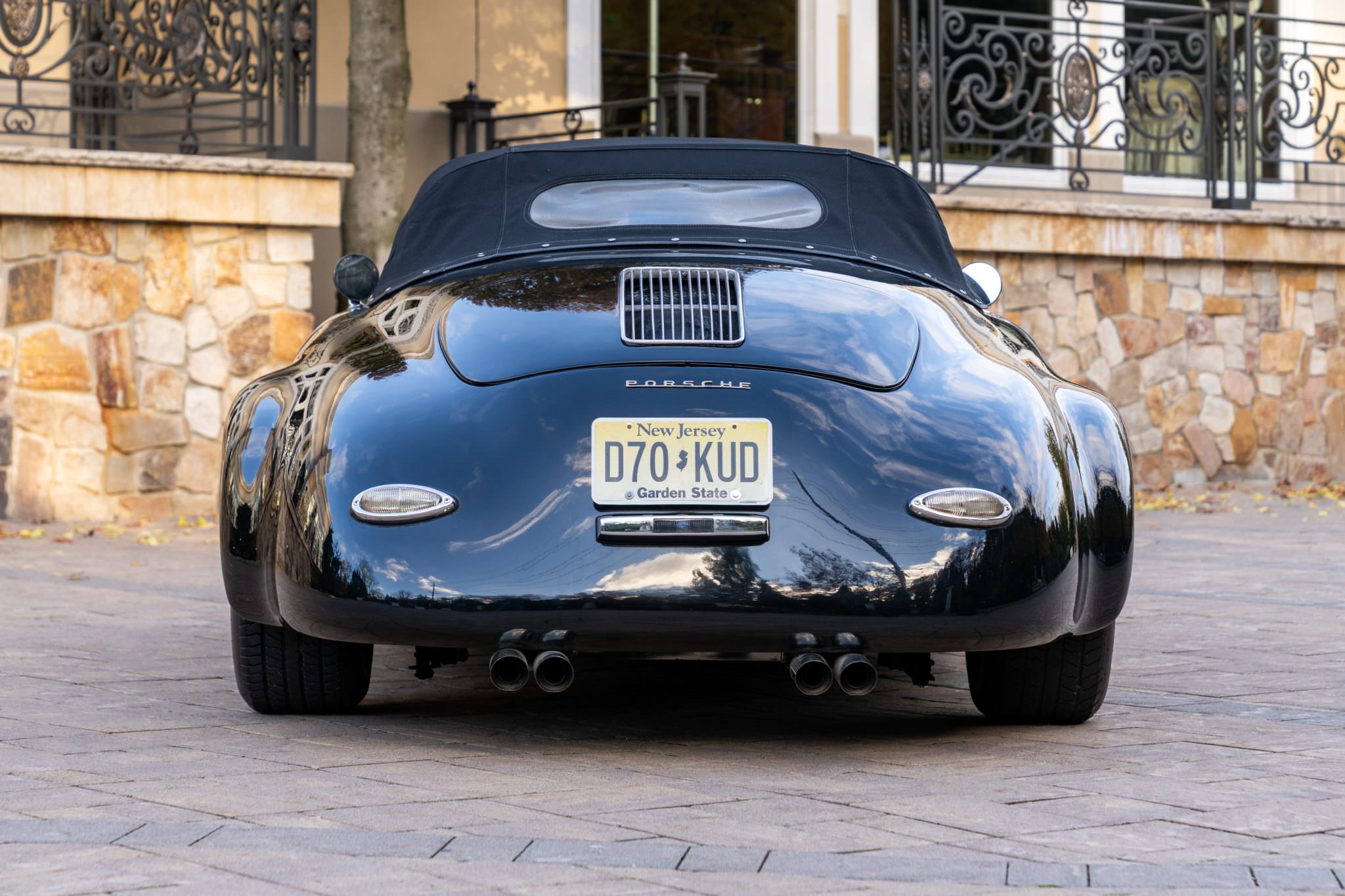
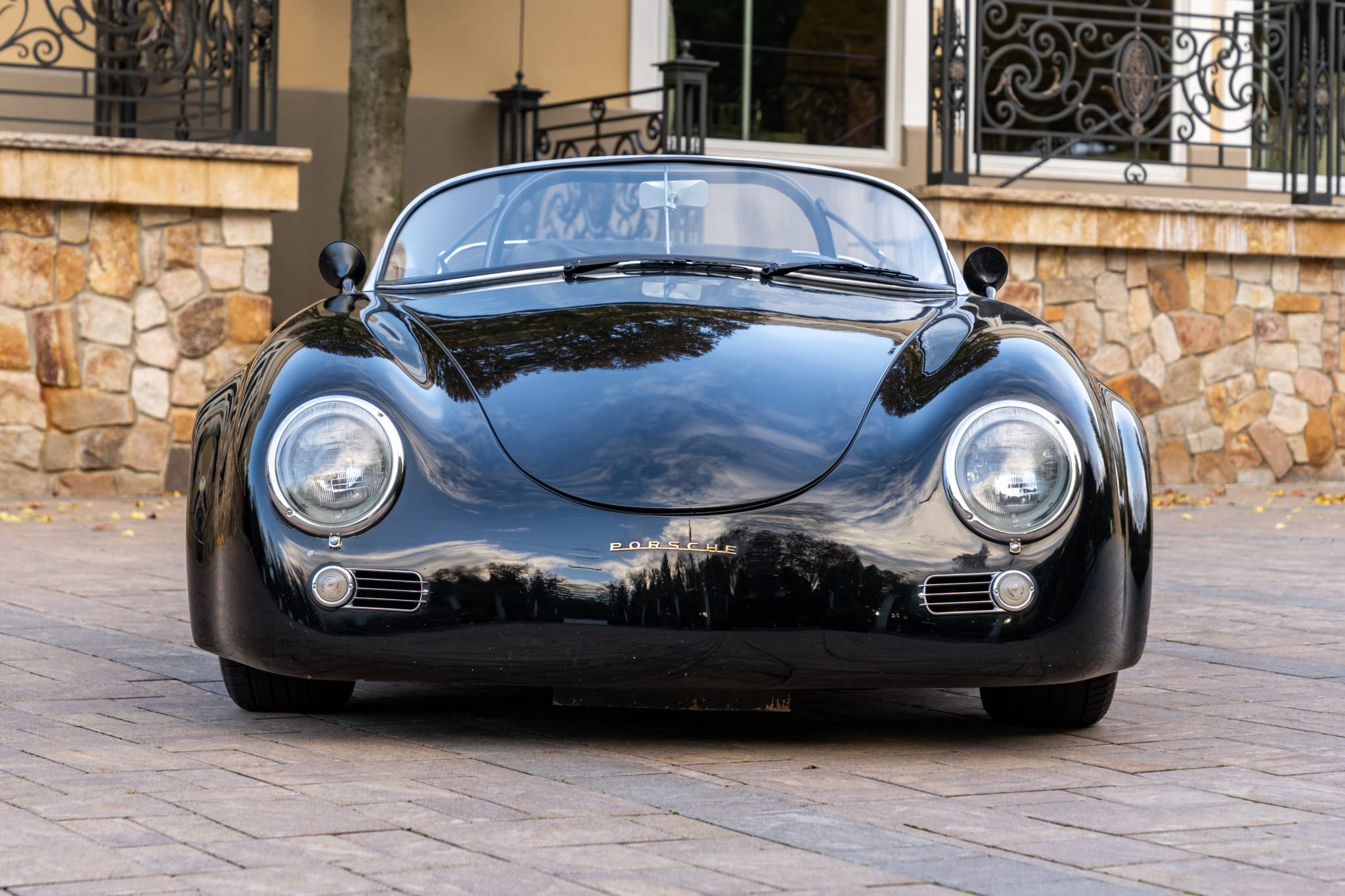
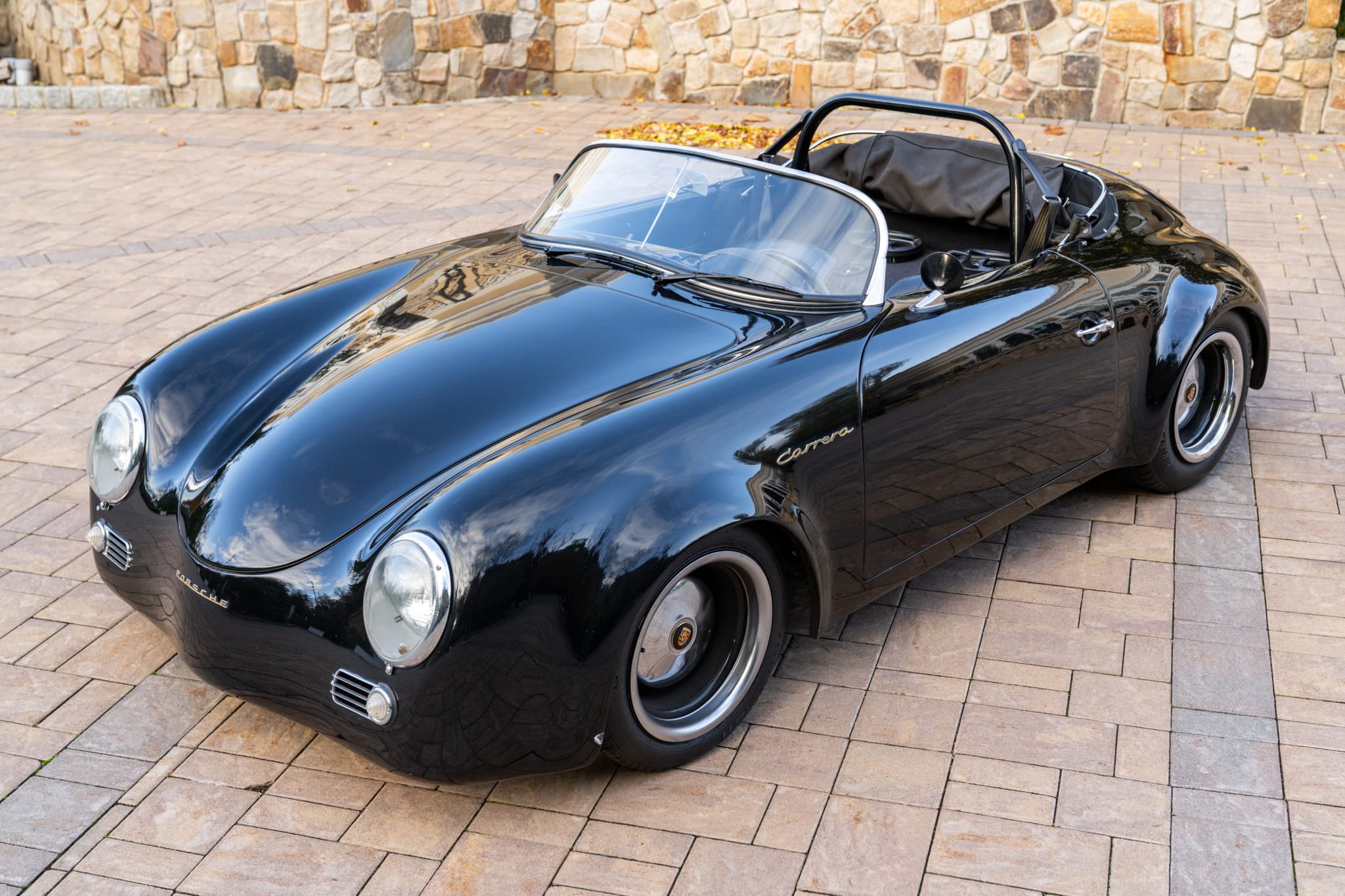
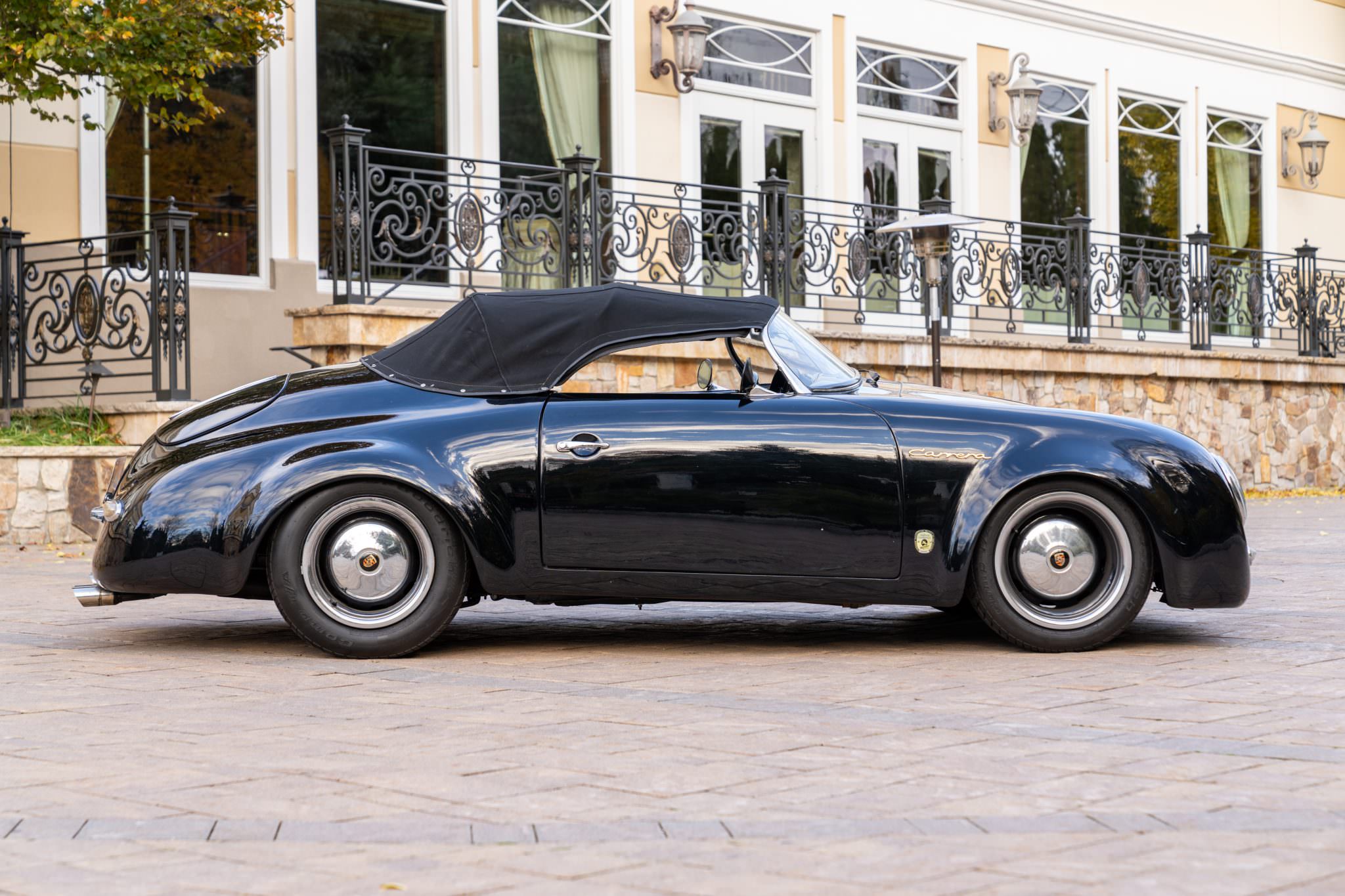
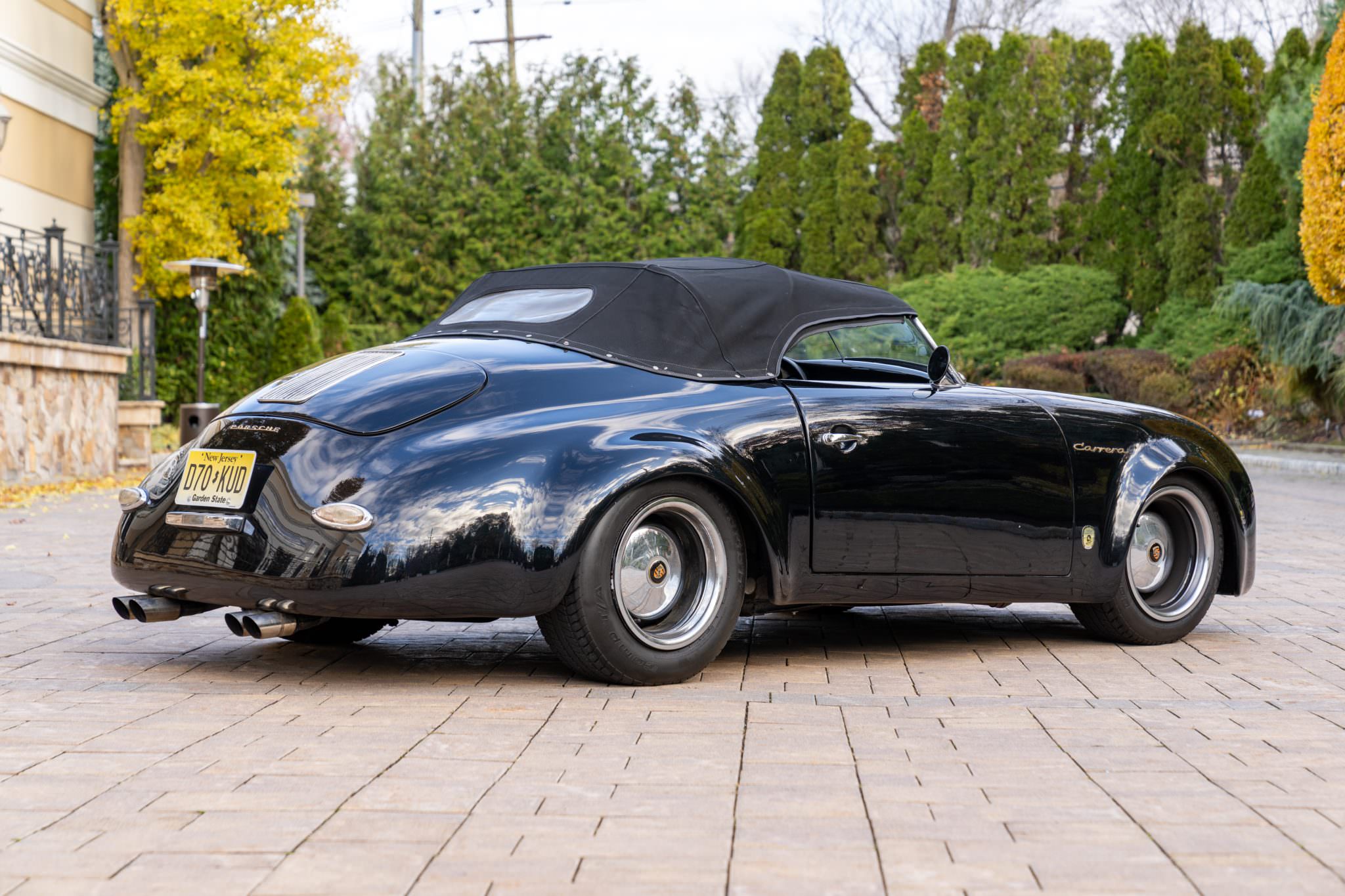
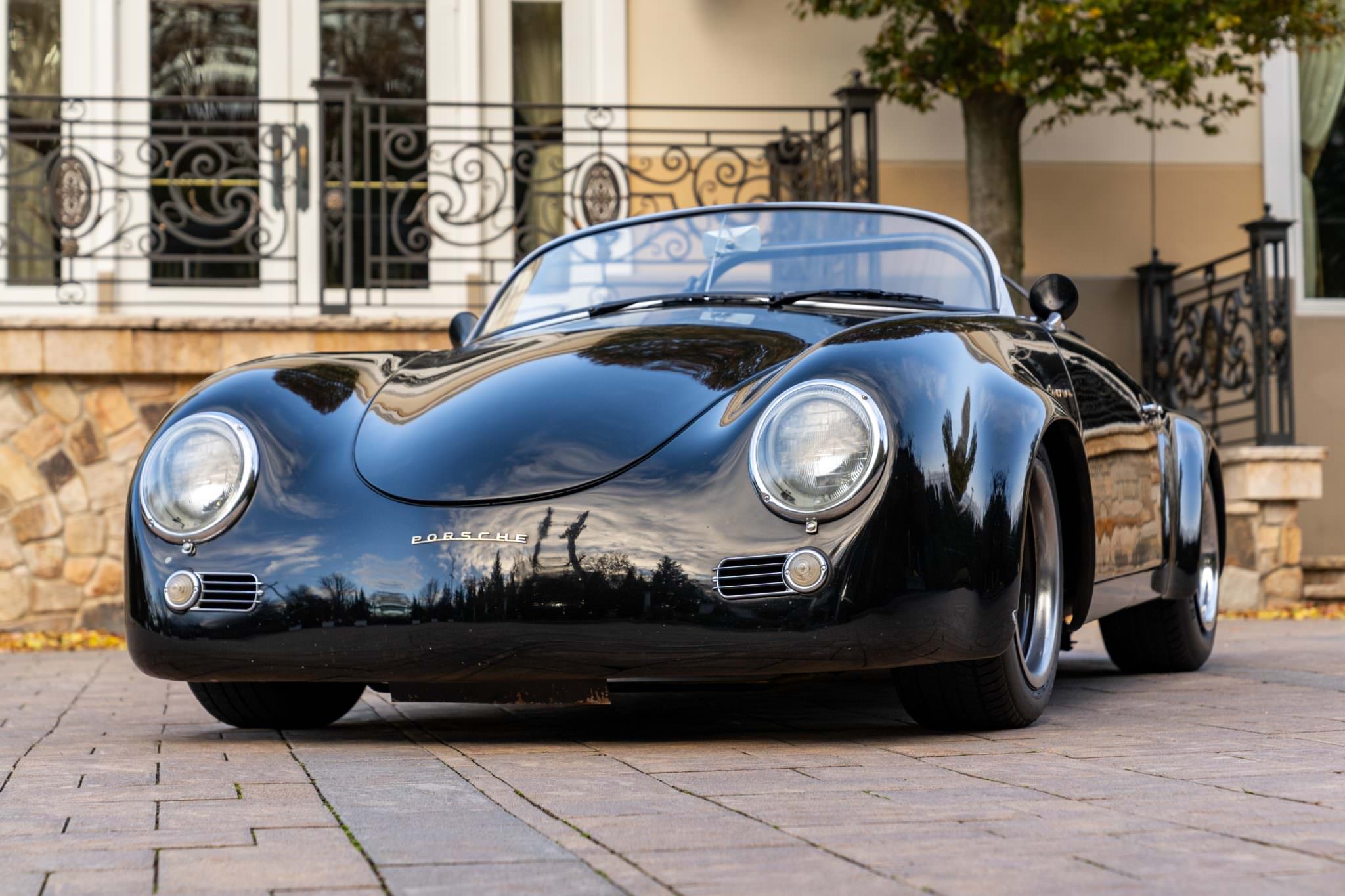
This Porsche 356-style Speedster custom was built by D&D Specialty Cars of Arkansas in collaboration with Vintage Air of San Antonio – it was commissioned as part of a two-car project for ZZ Top members Billy Gibbons and Frank Beard, however delays with the builds reportedly led Beard to lose interest, and both cars remained with Gibbons.
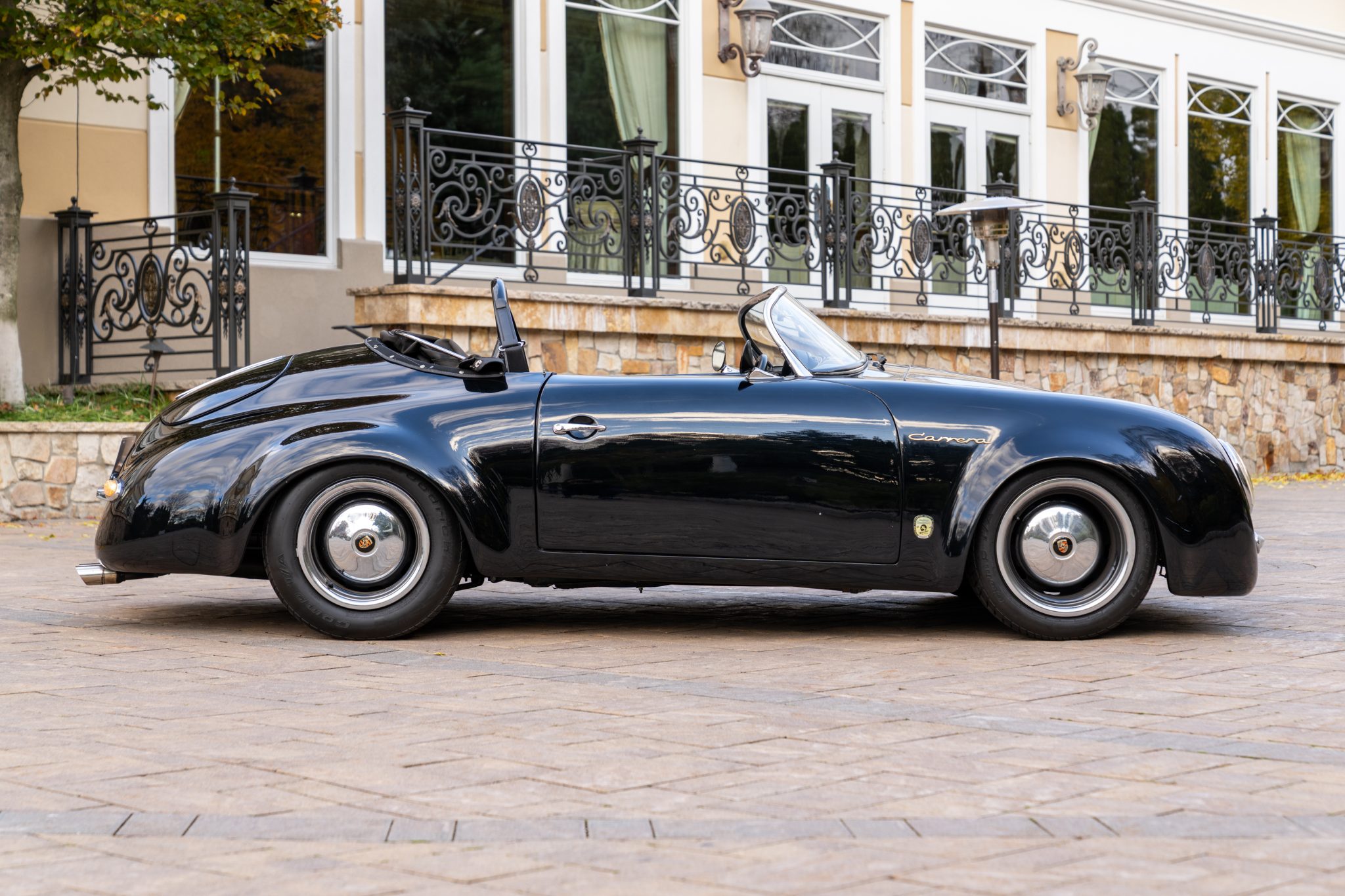
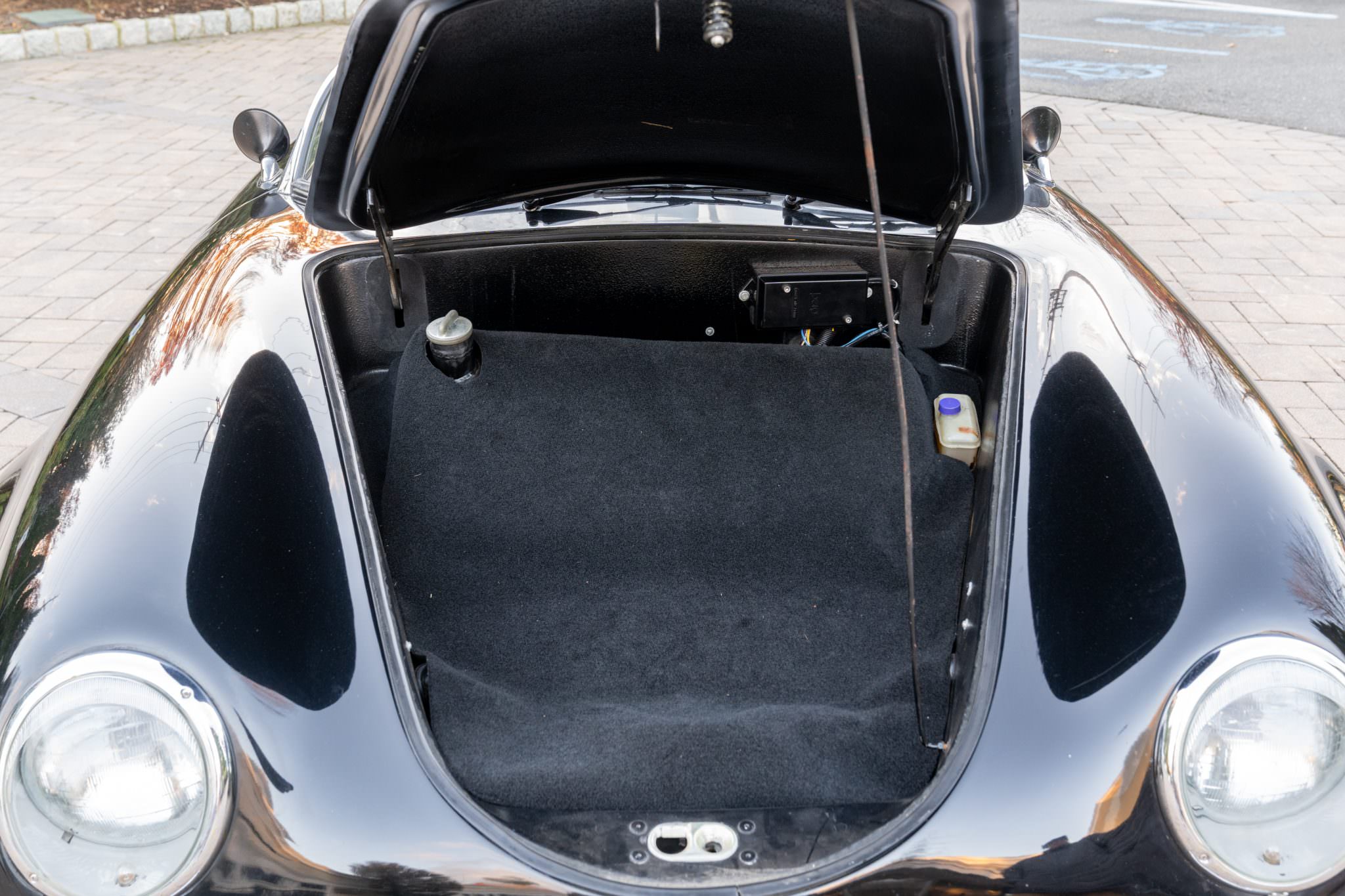
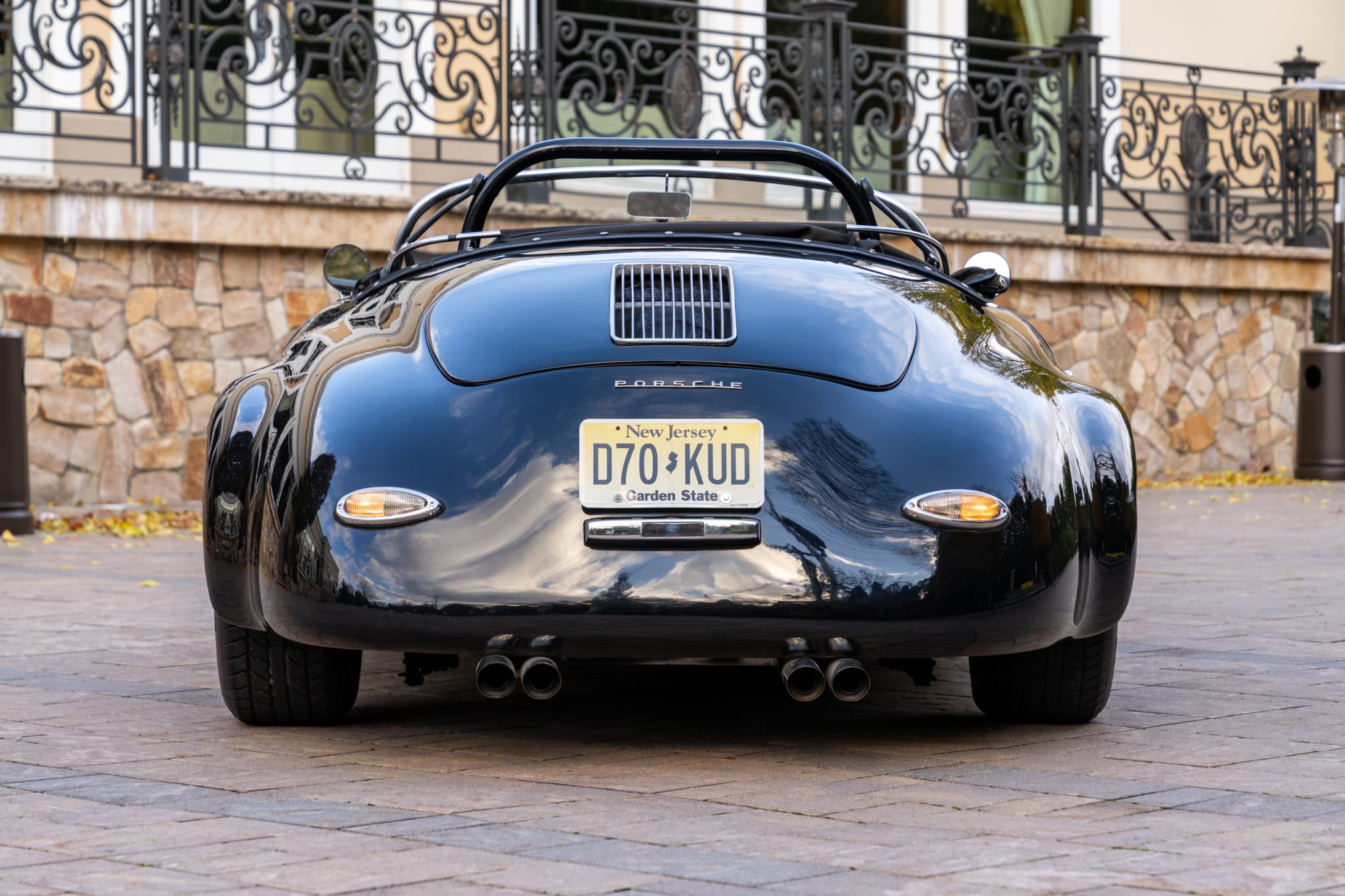
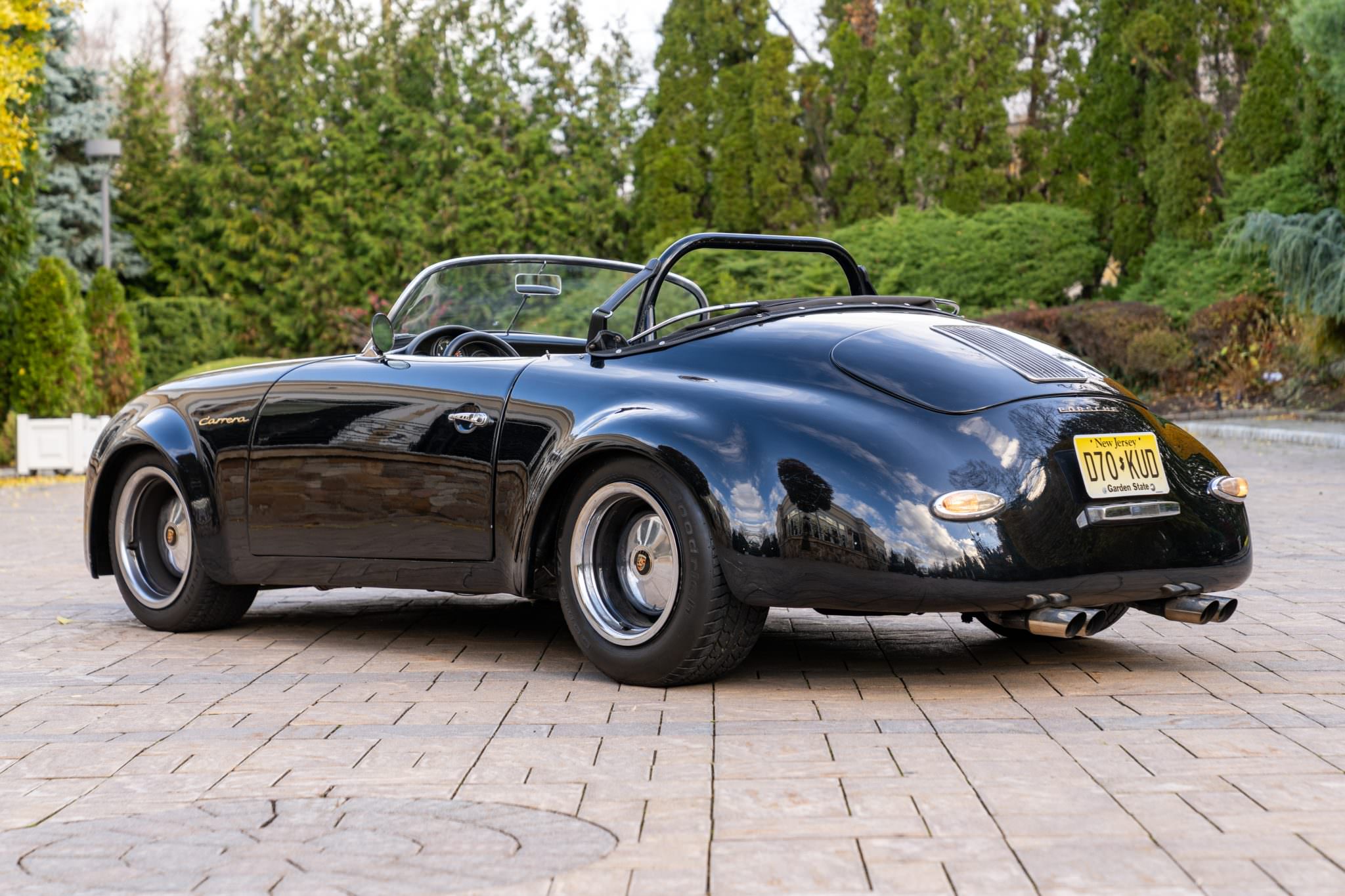
Finished in black, the fiberglass body has a widebody Speedster-style profile with a black soft top, single-grille decklid, dual mirrors, and twin exhausts. Steel 15-inch wheels with chrome baby moon hubcaps are fitted with BFGoodrich Comp T/A tires, while braking is handled by front discs and rear drums – the master cylinder and pedal assembly were reportedly serviced in April of 2019.
The interior is trimmed in black upholstery and has low-back bucket seats, a matching dash pad, door panels, and carpeting. Equipment includes a roll bar, air conditioning, a rear parcel shelf, and a JVC AM/FM cassette stereo with equalizer and JVC DRVN speakers.
Instrumentation includes a central tachometer, a 150 mph speedometer, and a combined oil temperature and fuel gauge, with the five-digit odometer showing approximately 8,000 miles, about 1,200 added by the current owner.
Power comes from an air-cooled 1,776cc flat-four with dual Weber carburetors, paired with a 4-speed manual transaxle and it all rides on a CarGem frame.
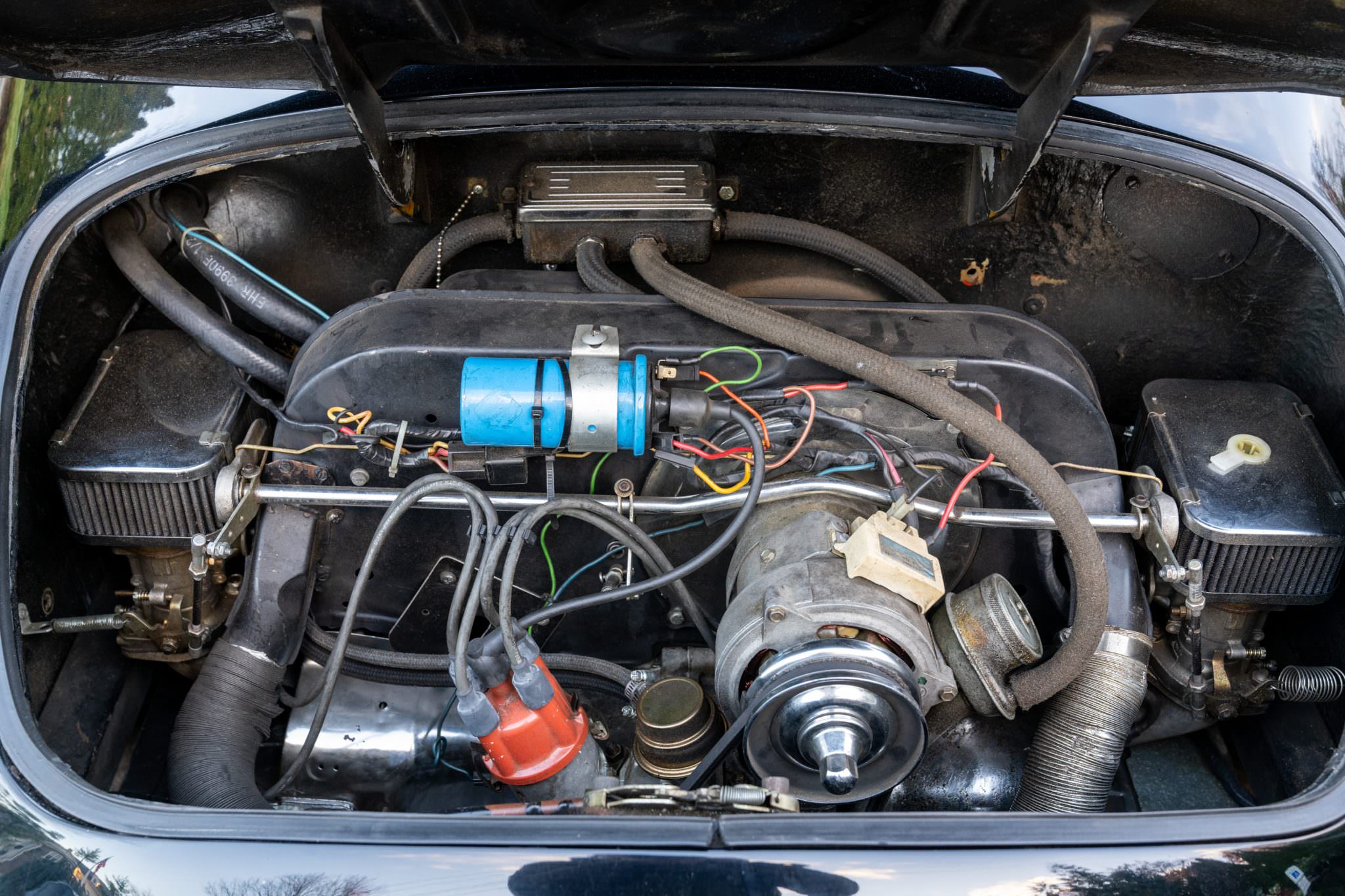
Power comes from an air-cooled 1,776cc flat-four with dual Weber carburetors, paired with a 4-speed manual transaxle and it all rides on a CarGem frame.
The engine was rebuilt in April of 2019 with inspection of valves and pistons, and replacement of the fuel pump, fuel lines, and battery – additional work since then has addressed the ignition switch, carburetor and timing adjustments, a fuel leak repair, flywheel reconditioning, and installation of a replacement muffler.
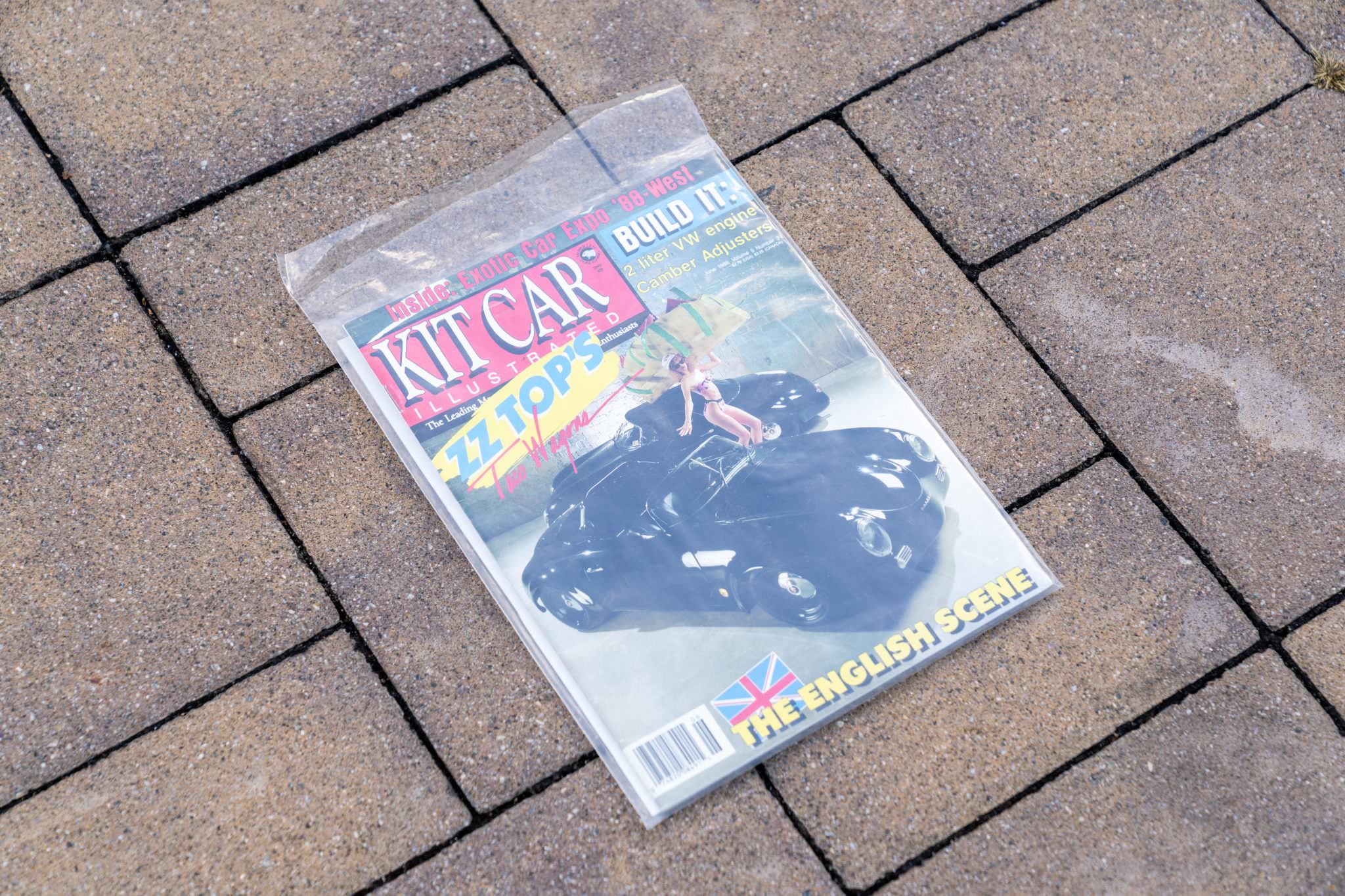
The car is titled in New Jersey as a 1955 356 Roadster and is offered with a copy of its feature in the June 1988 issue of Kit Car Illustrated out of Westwood, New Jersey. You can visit the listing here if you’d like to read more or place a bid.

Images courtesy of Bring a Trailer

Articles that Ben Branch has written have been covered on CNN, Popular Mechanics, Smithsonian Magazine, Road & Track Magazine, the official Pinterest blog, the official eBay Motors blog, BuzzFeed, Autoweek Magazine, Wired Magazine, Autoblog, Gear Patrol, Jalopnik, The Verge, and many more.
Silodrome was founded by Ben back in 2010, in the years since the site has grown to become a world leader in the alternative and vintage motoring sector, with well over a million monthly readers from around the world and many hundreds of thousands of followers on social media.