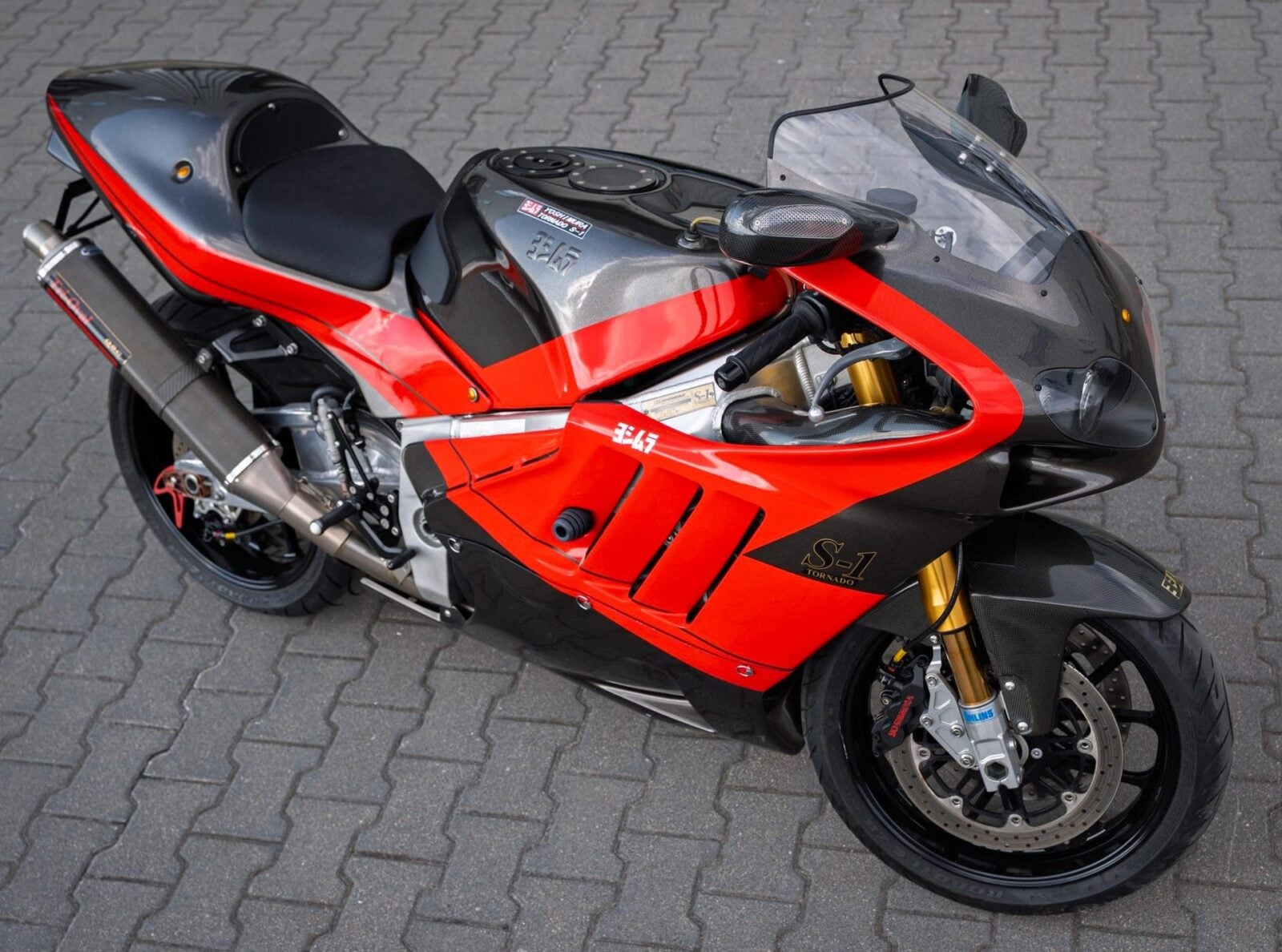
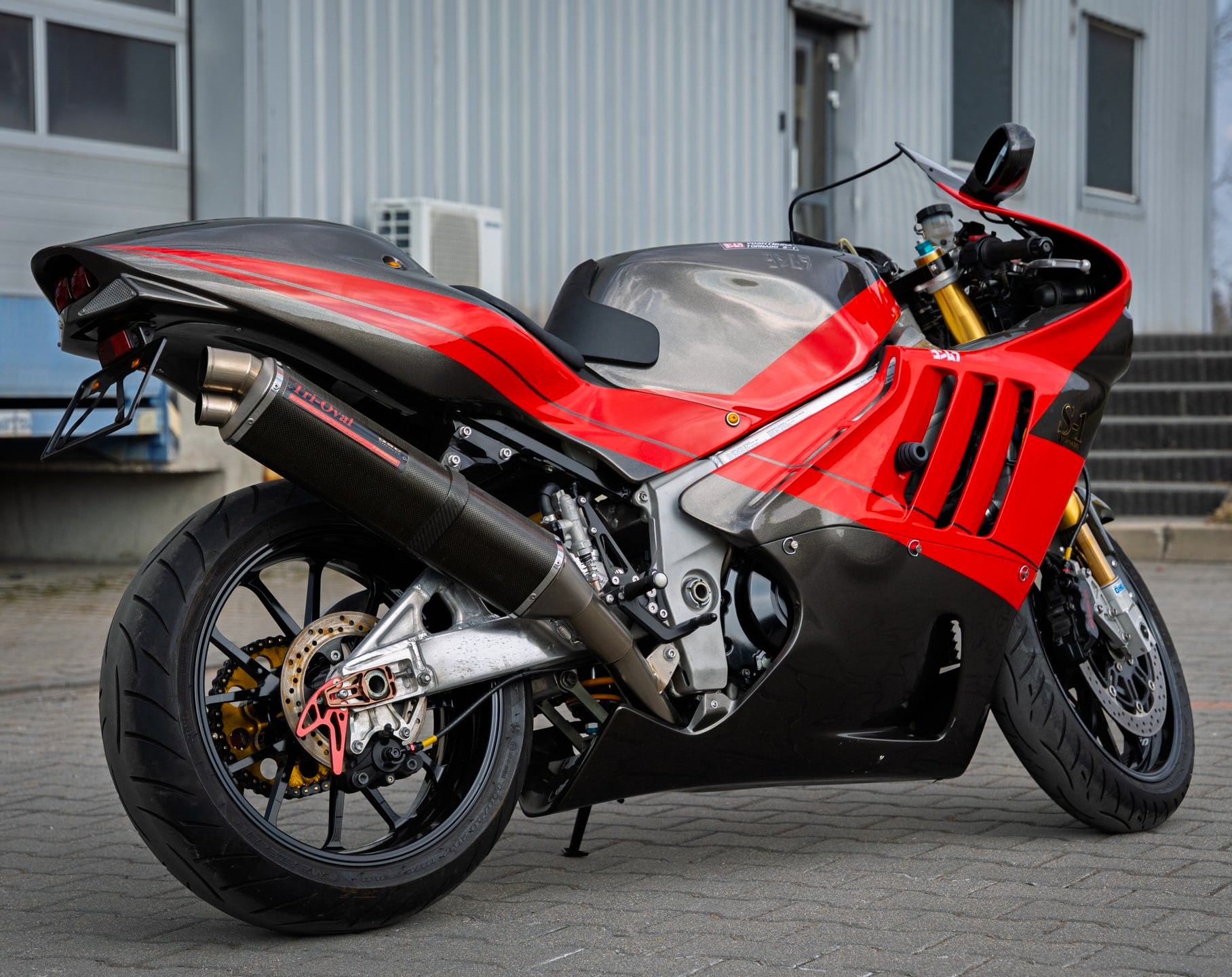
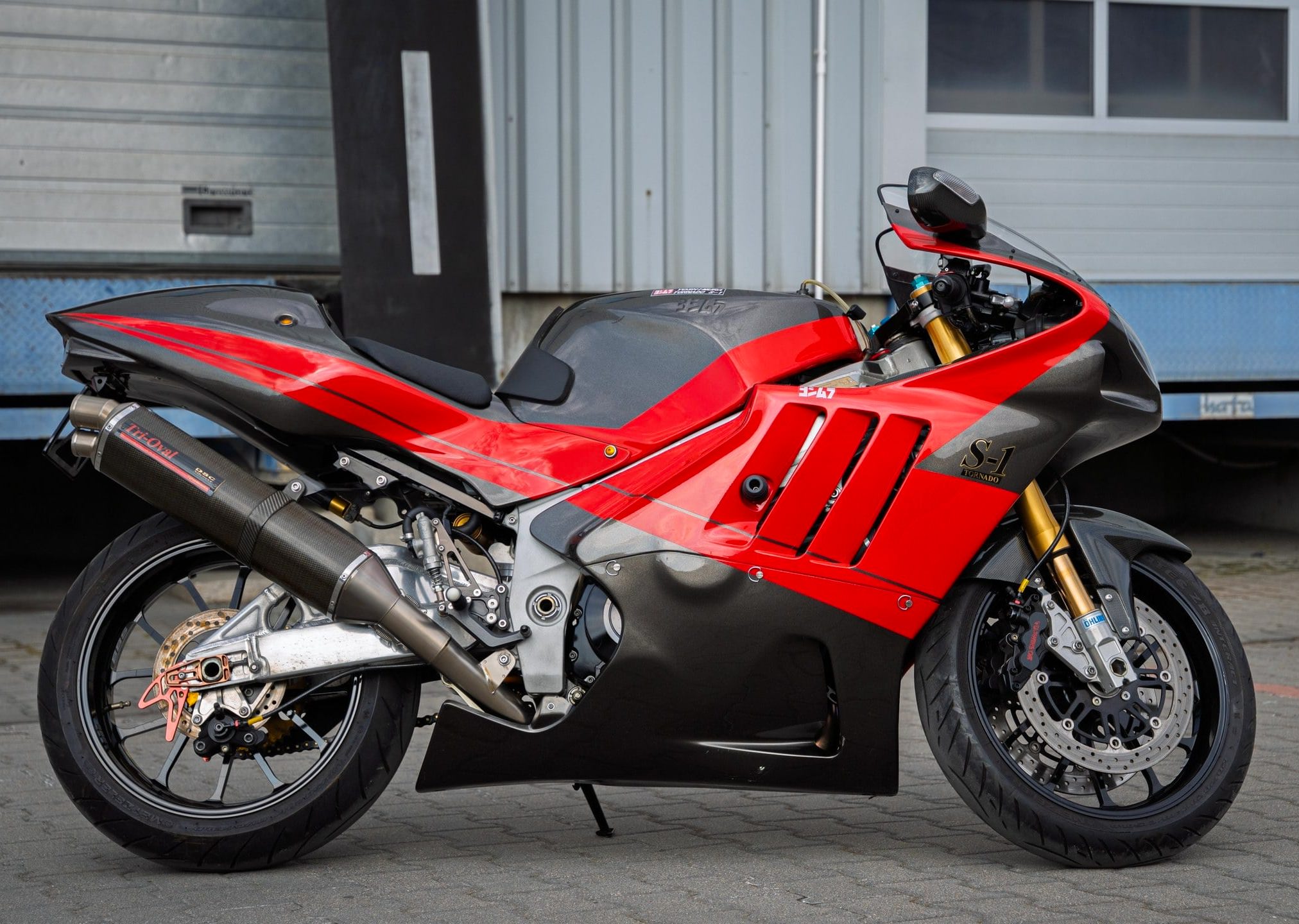
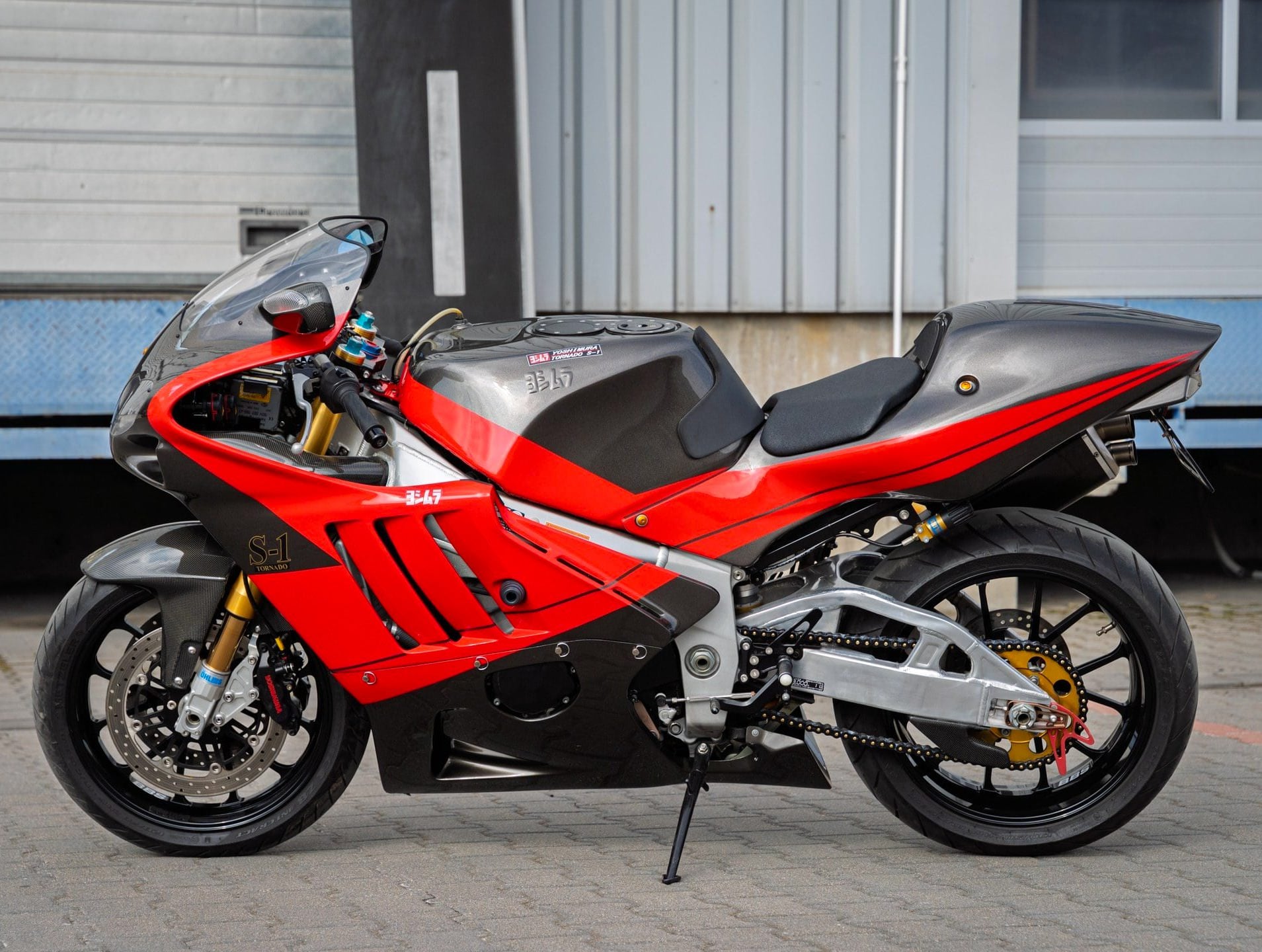
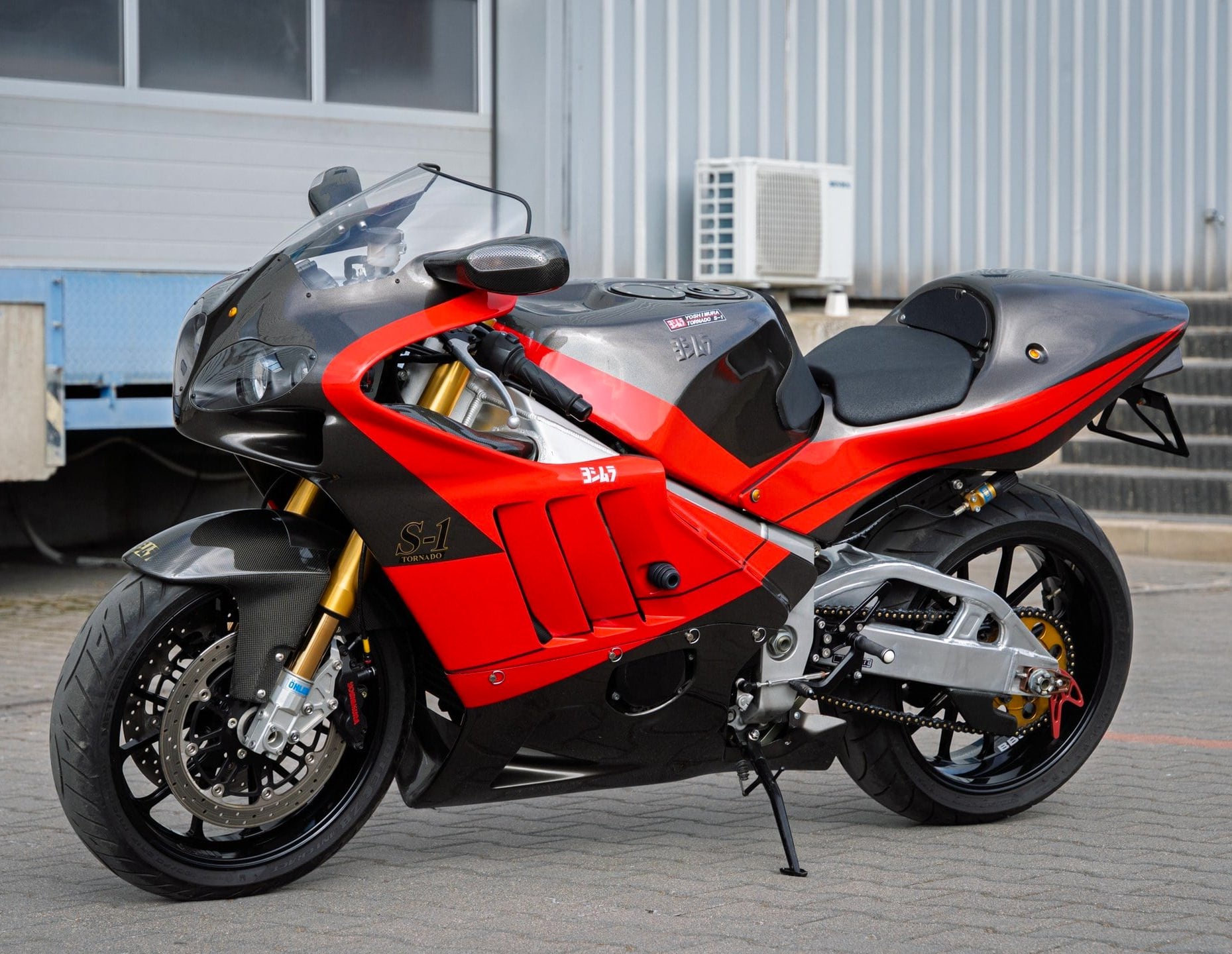
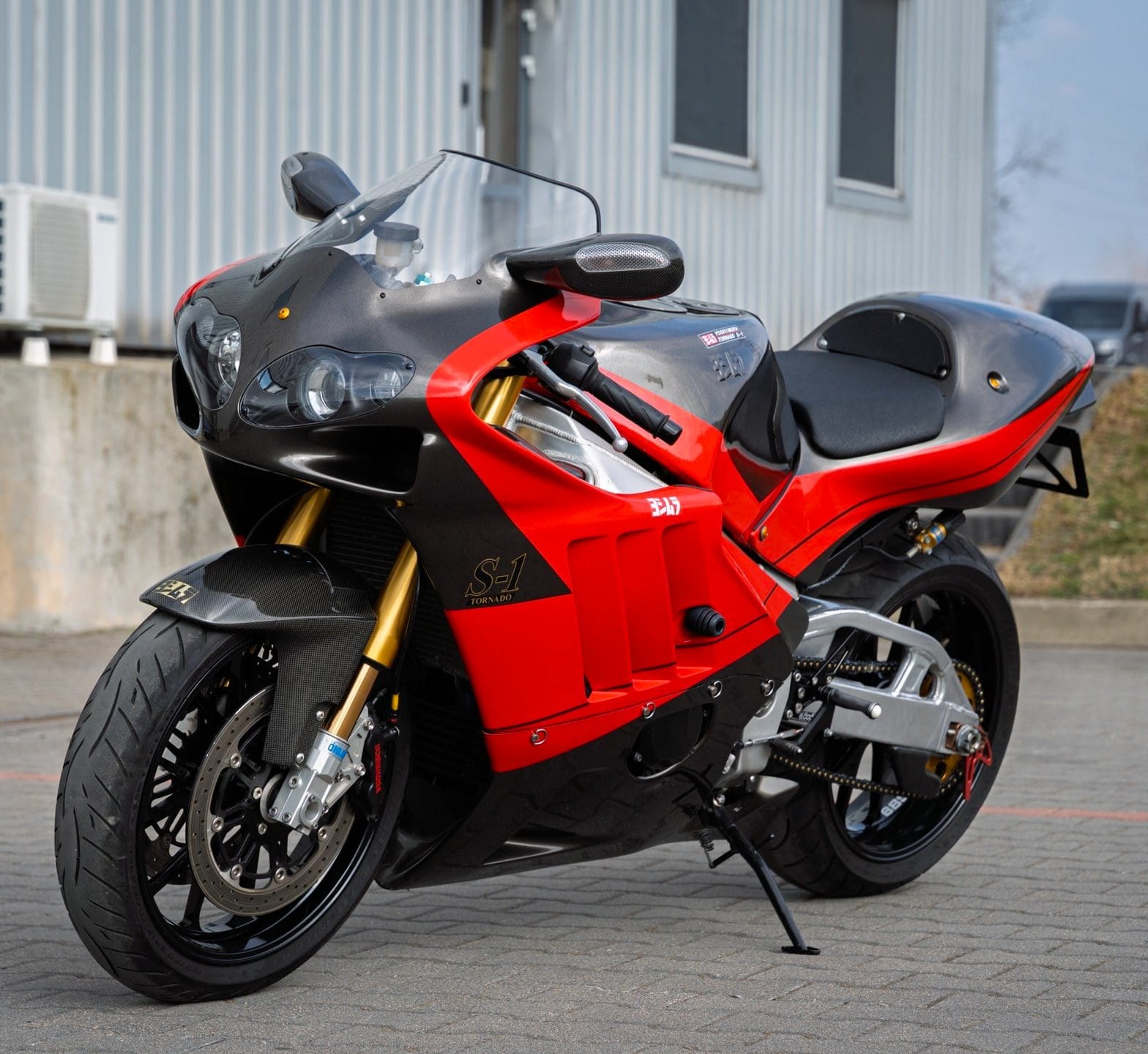
This is an original 2002 Yoshimura Tornado S-1, just 50 of these were made in period, and at the time they were among the fastest and most desirable superbikes in the world, with 175 bhp on tap and scalpel-sharp handling.
Even by modern standards, the performance of the Tornado S-1 is blistering, so one can only imagine what it must have been like to read the spec sheet back in 2002 when they were released for the first time. The bike you see here is a low-mile original, and it’s now being offered for sale.
Fast Facts: The Yoshimura Tornado S-1
- Yoshimura’s reputation was built by founder Hideo “Pops” Yoshimura, who started tuning motorcycles in Japan in the 1950s before expanding into racing and the American market. Major wins with Suzuki in AMA Superbike and endurance racing turned the company into one of the most respected names in high-performance motorcycle engineering.
- The Tornado S-1 was one of Yoshimura’s rarest complete road bikes, based on the first-generation Suzuki GSX-R1000 and produced in a run of just 50 individually numbered machines. Released in 2002 at ¥3,780,000, it represented Yoshimura’s most thorough reworking of a road-legal superbike from that period.
- Yoshimura extensively revised the 988cc engine and chassis, raising compression, fitting ST-1 cams, upgraded springs, bespoke engine management, a quick shifter, titanium exhaust, Öhlins suspension, revised brakes, BBS wheels, and carbon-fibre bodywork. Output was listed at over 175 bhp, with a higher rev limit and many purpose-built parts throughout.
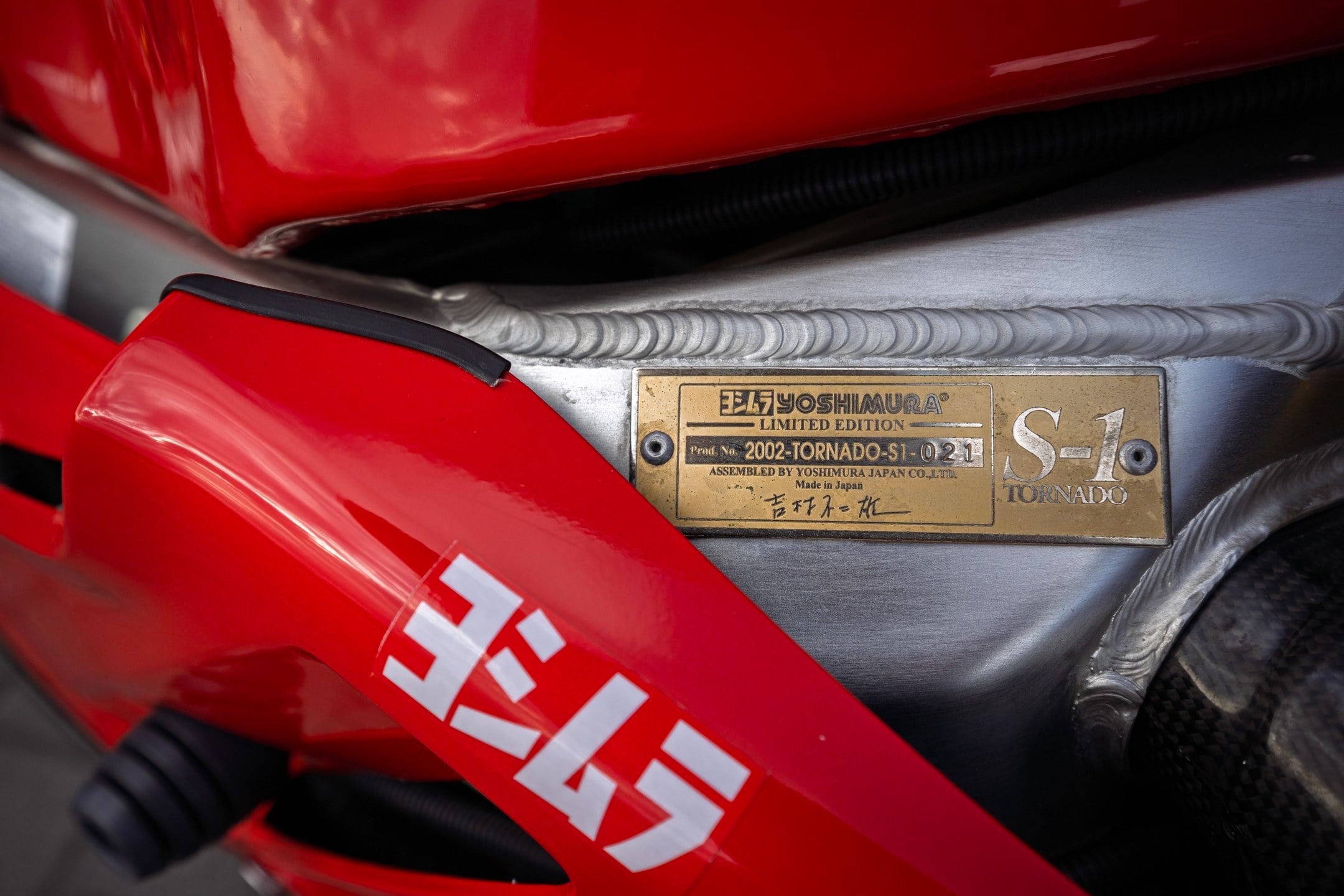
- The motorcycle shown here is number 21 of the 50 built, a Japanese-market example showing 6,986 km and said to remain in original collector-grade condition. Imported into the EU in 2025 and serviced in Poland in March 2026, it is now offered with paperwork for international registration.
History Speedrun: The Yoshimura Tornado S-1
Few names in the annals of high performance motorcycles carry quite the same reverence as Yoshimura. Founded in 1954 by Hideo “Pops” Yoshimura in Fukuoka, Japan, the company grew from a one-man tuning shop into one of the most respected aftermarket and racing operations in the history of motorcycling.
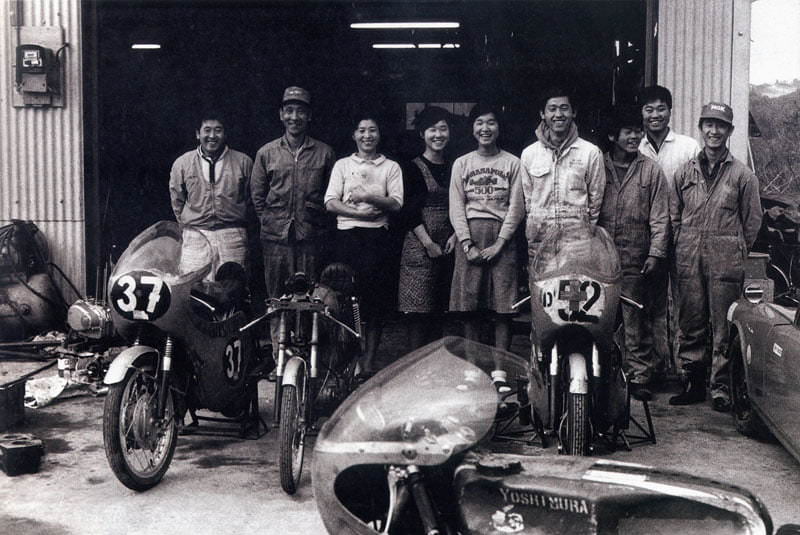
 In 1954, Pops formally established Yoshimura Motors in Fukuoka, with his wife Naoe, daughter Namiko, and son Fujio all working alongside him in the family workshop. That’s him in the picture, second in from the left. Image courtesy of Yoshimura Japan.
The Tornado S-1, built on the first-generation Suzuki GSX-R1000 platform, was one of the rarest and most comprehensively re-engineered road-legal superbikes Yoshimura ever produced – a limited run of just 50 individually numbered machines was made, each carrying a price tag of ¥3,780,000 – that’s roughly $35,000 USD at the time and closer to $64,000 USD today.
To really understand the Tornado S-1, you need to understand the man and the company behind it.
Pops Yoshimura: The Origin Story
Hideo “Pops” Yoshimura was born on October the 7th, 1922, in Fukuoka, Japan. During the Second World War he was trained as an aircraft mechanic, these would be skills he would later apply to a very different class of machine.
After the war, he began tuning motorcycles for American servicemen stationed near Itazuke Air Force Base, and it was these young GIs who gave him the nickname “Pops,” a term of affection for the strict but fatherly mechanic who ran a tight ship. In 1954, Pops formally established Yoshimura Motors in Fukuoka, with his wife Naoe, daughter Namiko, and son Fujio all working alongside him in the family workshop.
Pops quickly earned a reputation as an intuitive and gifted engine tuner, working largely without reference material in an era when the science of performance tuning was little understood in most of Japan. His talent for extracting power caught the attention of racers, and in 1964, a Yoshimura-prepared machine won the gruelling Suzuka 18-Hour endurance race. In 1965, his business relocated to Fussa, near Tokyo, and was renamed Yoshimura Competition Motors.
The Big Move To Hollywood
The big leap for Yoshimura came in 1971, when Pops and Fujio moved to Los Angeles and opened a shop in North Hollywood. In 1973, they formally established Yoshimura Racing (later renamed Yoshimura Research & Development of America) as a US business entity. The timing turned out to be perfect, the four-cylinder Japanese superbike era was just dawning, and the AMA was on the verge of creating a production-based racing class.
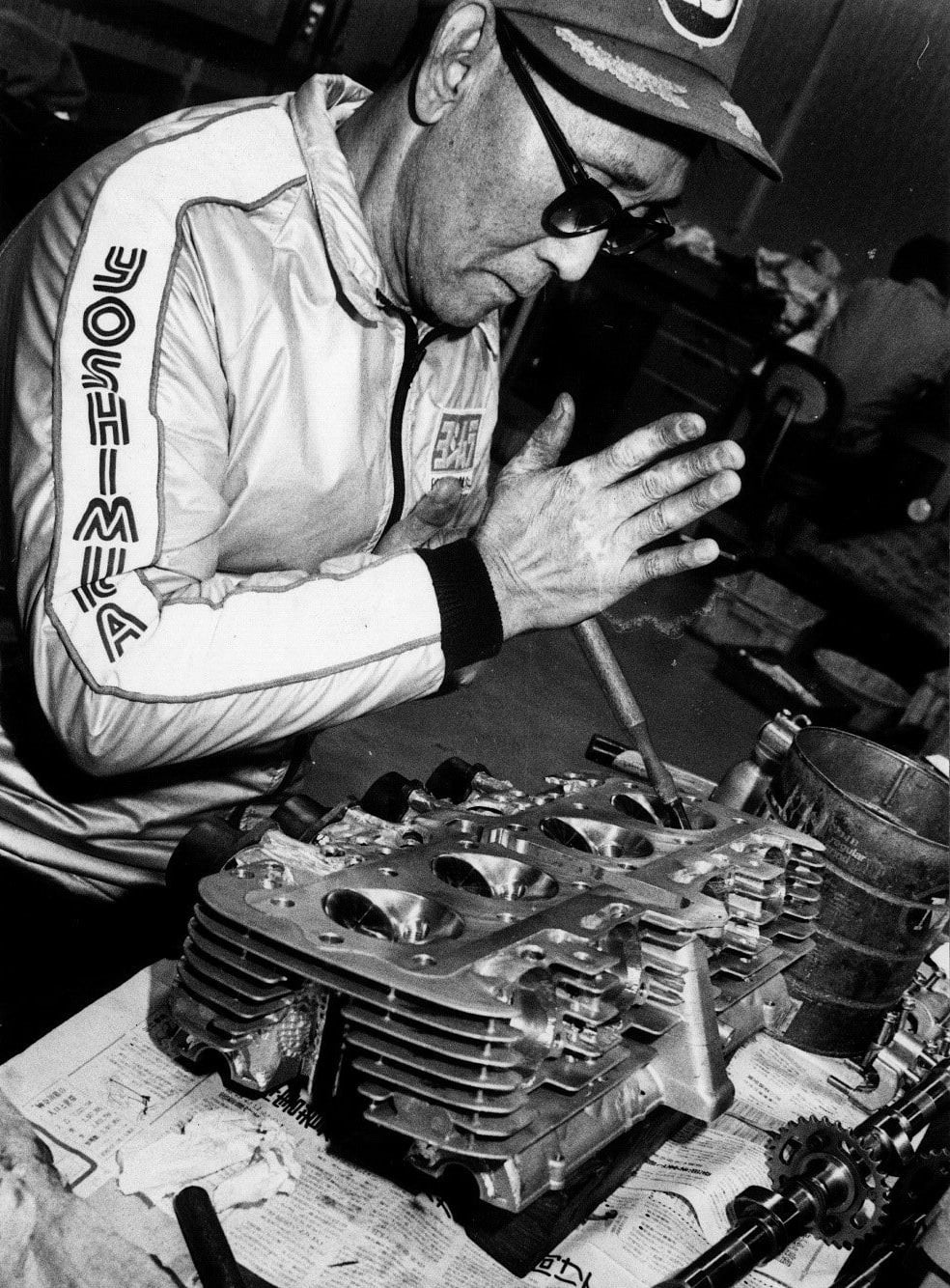
Hideo “Pops” Yoshimura was born on October the 7th, 1922, in Fukuoka, Japan. During the Second World War he was trained as an aircraft mechanic, these would be skills he would later apply to a very different class of machine. Image courtesy of Yoshimura Japan.
Yoshimura initially campaigned Kawasaki Z1s, and when the AMA Superbike series launched in 1976, Pops was ready to go. A switch to Suzuki in 1978 proved transformative for the company, Steve McLaughlin won the Daytona Superbike race that year on a Yoshimura Suzuki, and Wes Cooley and Mike Baldwin won the inaugural Suzuka 8 Hours endurance race the same year, these were the results that truly established the company’s reputation on both sides of the Pacific.
The following year, Cooley took Yoshimura’s first AMA Superbike championship just to prove it hadn’t all been a fluke.
Countless other race wins would follow, and Yoshimura would develop lines of performance parts for many superbike models from Japan’s Big Four. Funnily enough, one of their best selling items has always been “Yoshimura” decals that people add to their bikes, such is the brandname recognition – some even joke that the stickers themselves add 15 bhp to the bike.
In 1981, Pops returned to Japan to focus on growing Yoshimura Japan, while Fujio stayed in America to lead the US operation. Pops passed away from cancer on March the 29th, 1995, at the age of 72. He was posthumously inducted into the AMA Motorcycle Hall of Fame in 2000.
The Lineage Of The Yoshimura Tornado S-1
The Tornado name had existed in Yoshimura’s vocabulary long before the S-1 was ever developed. The original Tornado was the company’s line of heavily modified Suzuki GSX-R machines, beginning with the Tornado 1200 Bonneville in 1987, which was based on the GSX-R1100. Only three were built. These were not merely modified street bikes, they were comprehensive re-imaginings that showed Yoshimura’s most ambitious engineering projects.
The Tornado name became synonymous with the company’s most extreme complete-build projects.
Before the S-1, Yoshimura also produced the Hayabusa X-1 in 2000 (100 units, based on the GSX1300R) and the Katana 1135R in 2001 (just five units, based on the GSX1100S Final Edition). The S-1 was the next chapter in the series.
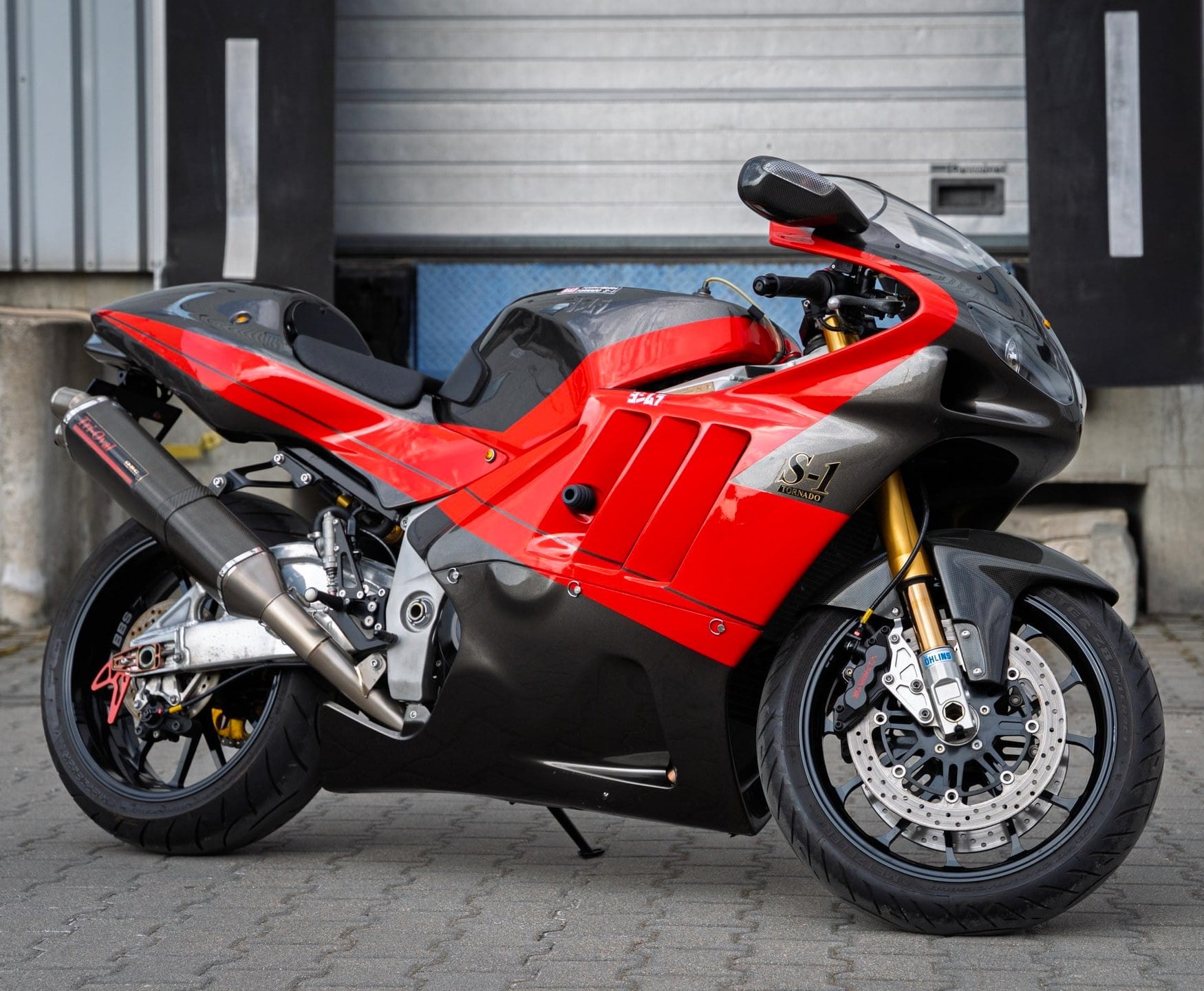
This is an original 2002 Yoshimura Tornado S-1, just 50 of these were made in period, and at the time they were among the fastest and most desirable superbikes in the world with 175 bhp on tap and scalpel-sharp handling.
The Tornado S-1: Specifications + Engineering
The Tornado S-1 was a 2001 Yoshimura complete model based on the first-generation Suzuki GSX-R1000 platform, and according to Yoshimura’s official company history timeline, it was released to market in 2002. The GSX-R1000 had itself been widely acclaimed as the first true competitor to Yamaha’s game-changing 1998 YZF-R1 and one of the best superbikes in the world, but despite this, Yoshimura’s engineers improved on almost every single aspect of the machine.
The engine work began with the cylinder head, which was re-ground and fitted with a thinner head gasket to raise the compression ratio from the stock 12.0:1 to 13.2:1. Yoshimura ST-1 camshafts and upgraded valve springs replaced the factory items, allowing the engine to rev 500 rpm higher than standard, to a ceiling of 12,700 rpm.
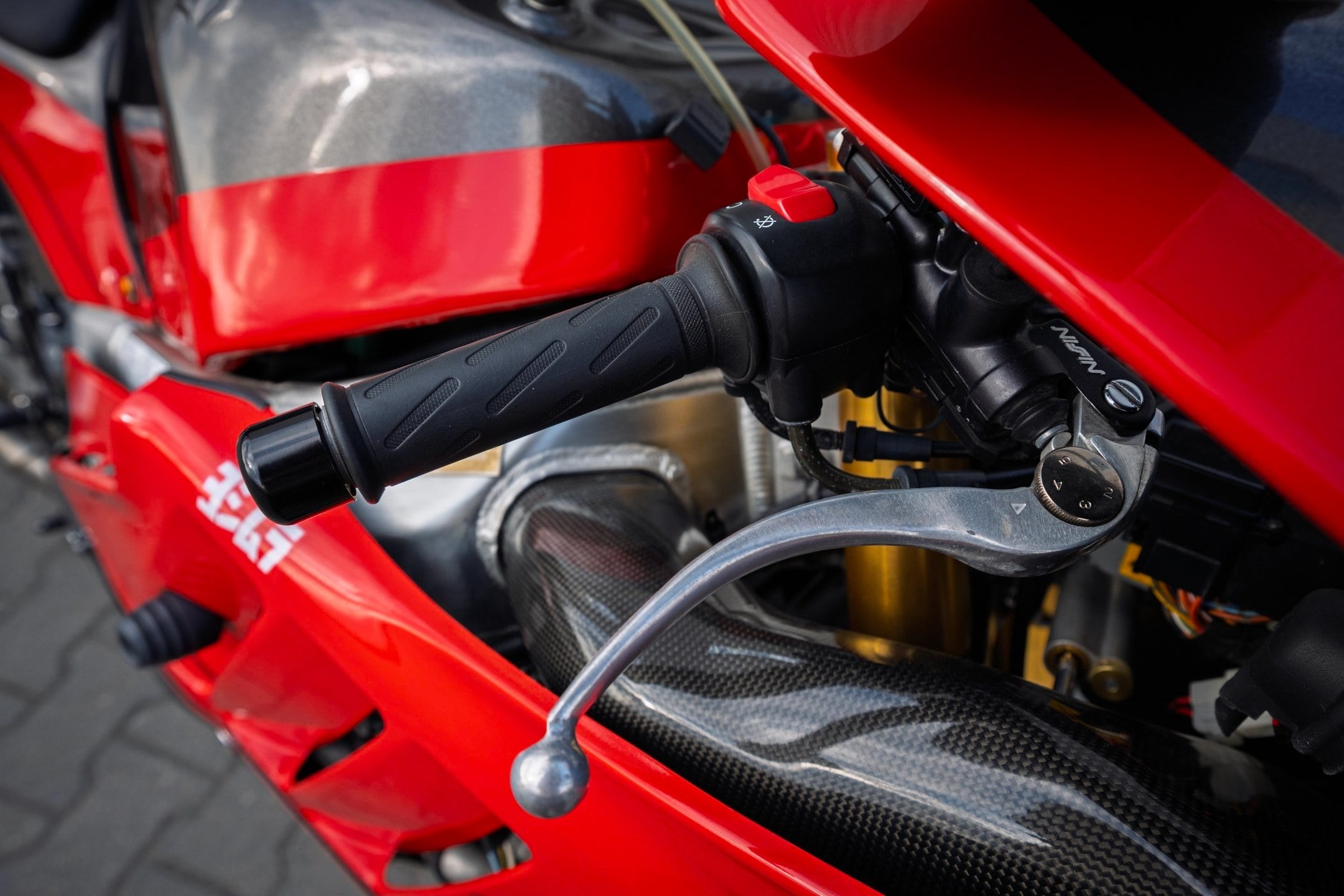
The stock Suzuki engine management system was replaced with a bespoke Yoshimura EMS unit, controllable via a handlebar-mounted three-way switch that let the rider toggle between different fuel and ignition maps on the move, an advanced feature for the time.
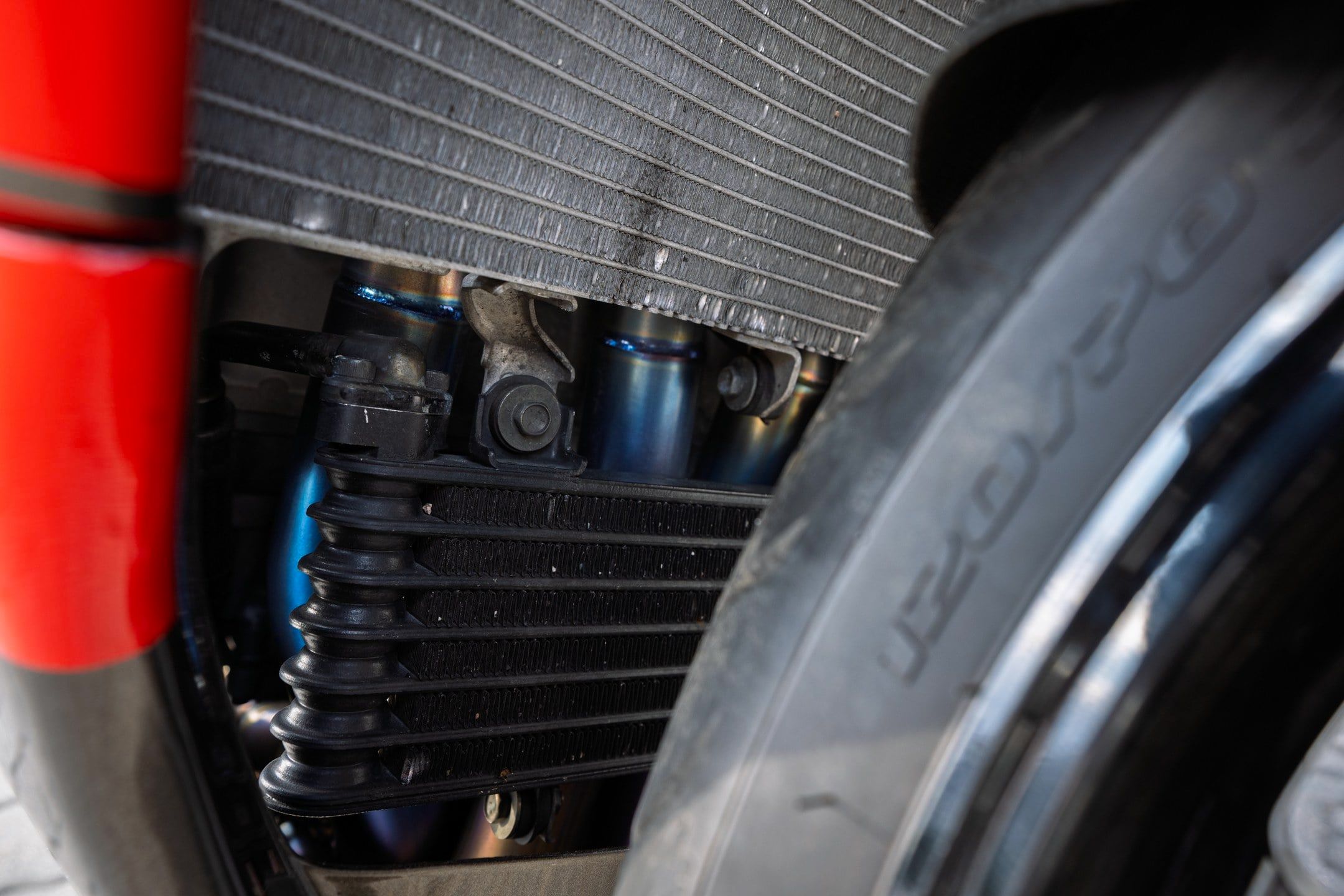
A clutchless quick-shifter was fitted, along with a dash-mounted shift timing light. A revised oil pan set increased oil capacity by 300cc over standard. The exhaust was a bespoke 4-into-1 titanium Tri-Oval Cyclone system with a carbon fibre silencer sleeve. The result of all this, per Yoshimura’s own specification sheet, was over 168 bhp (170 PS) at 12,000 rpm, with 80 lb ft of torque at 10,000 rpm.
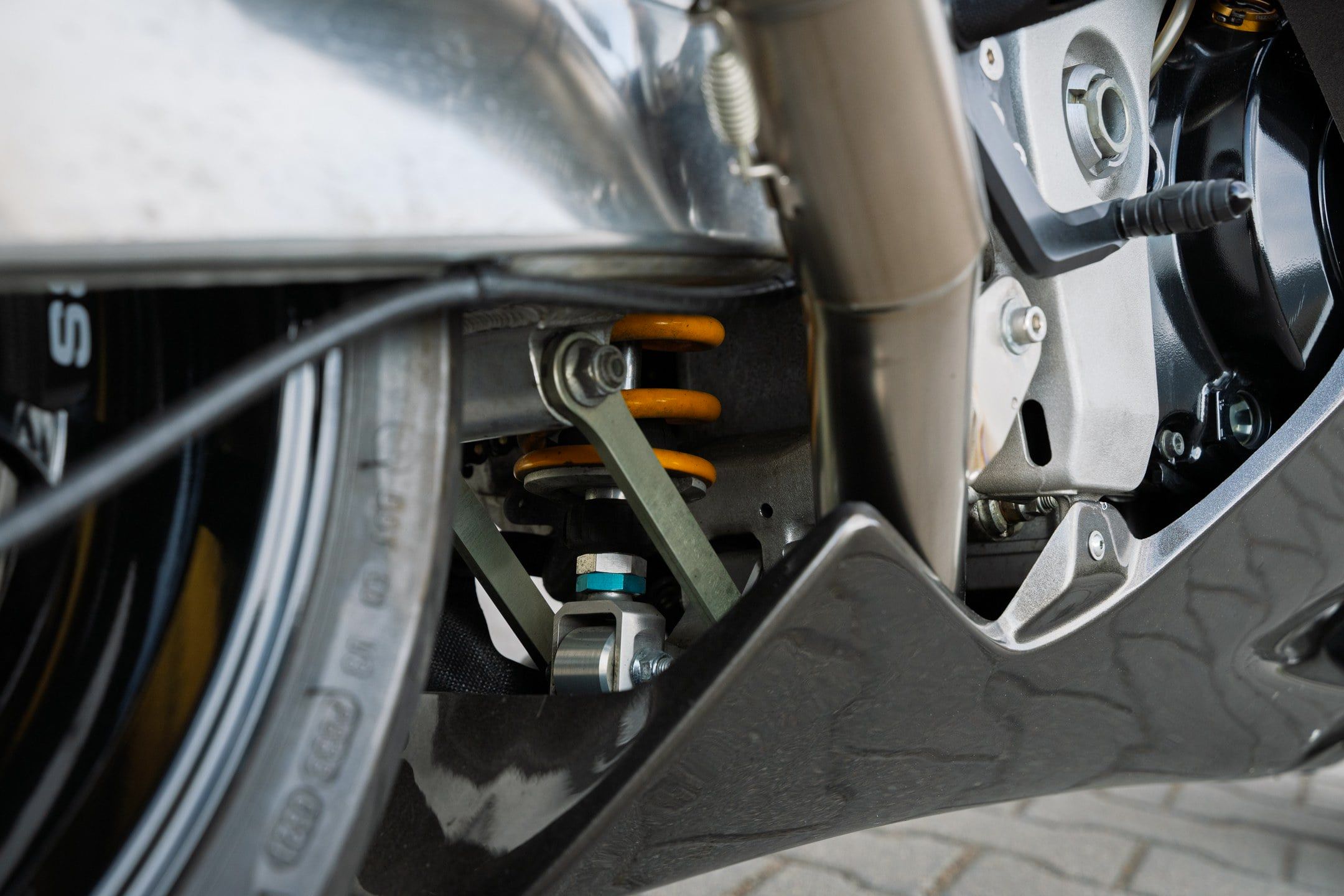
The suspension received equally thorough attention of course, Öhlins units were fitted front and rear, with Yoshimura-specific settings, along with an Öhlins steering damper. A revised steering stem, rear suspension linkage, and a bespoke swingarm completed the changes.
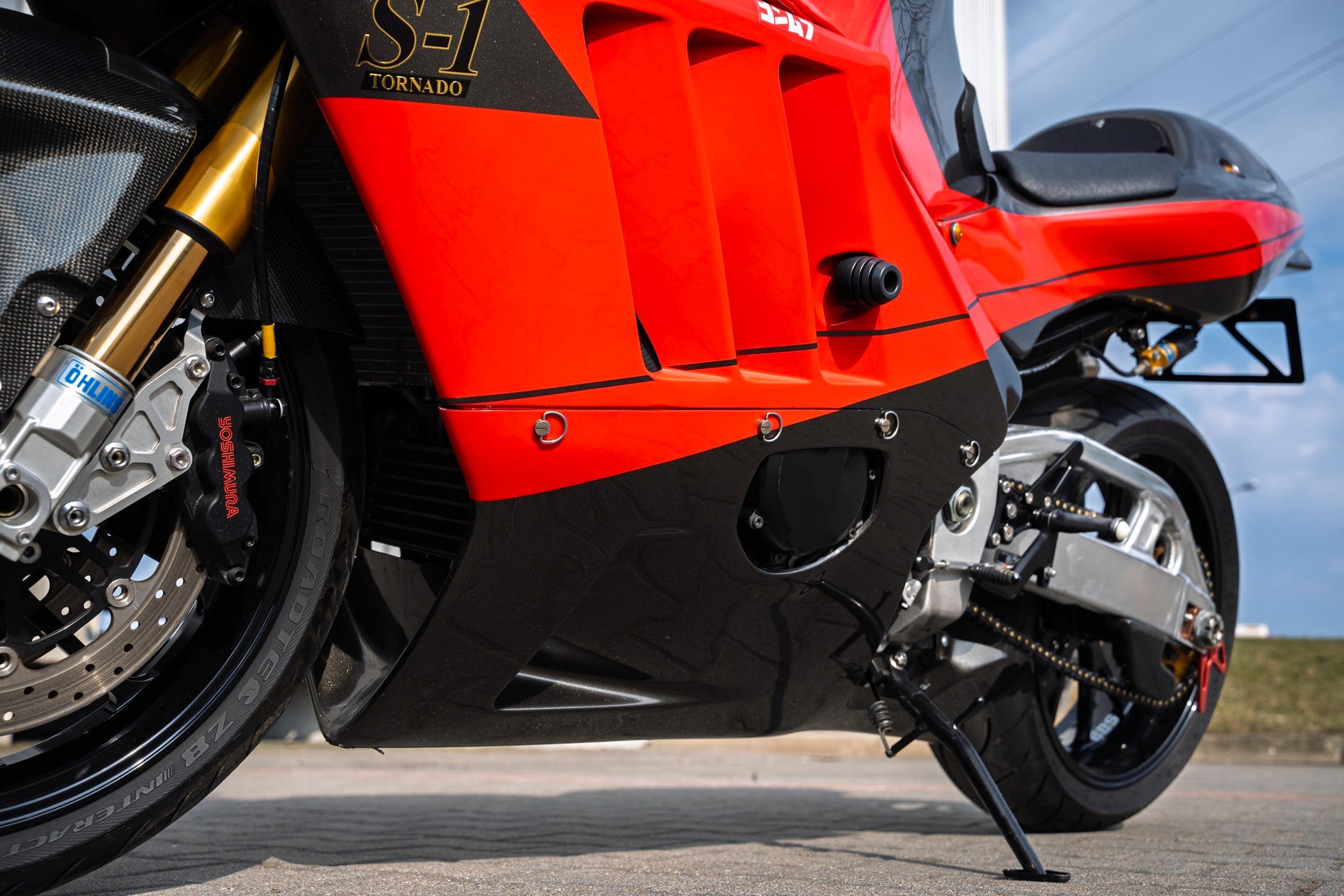
Modified front brake calipers were fitted along with a Nissin radial-pump master cylinder and braided hydraulic lines. The calipers were six-piston Nissin units, and the standard steel wheels were replaced with lightweight cast aluminum units from BBS, shod with Dunlop D208 Super Sport tires, 120/70ZR17 front and 190/50ZR17 out back.
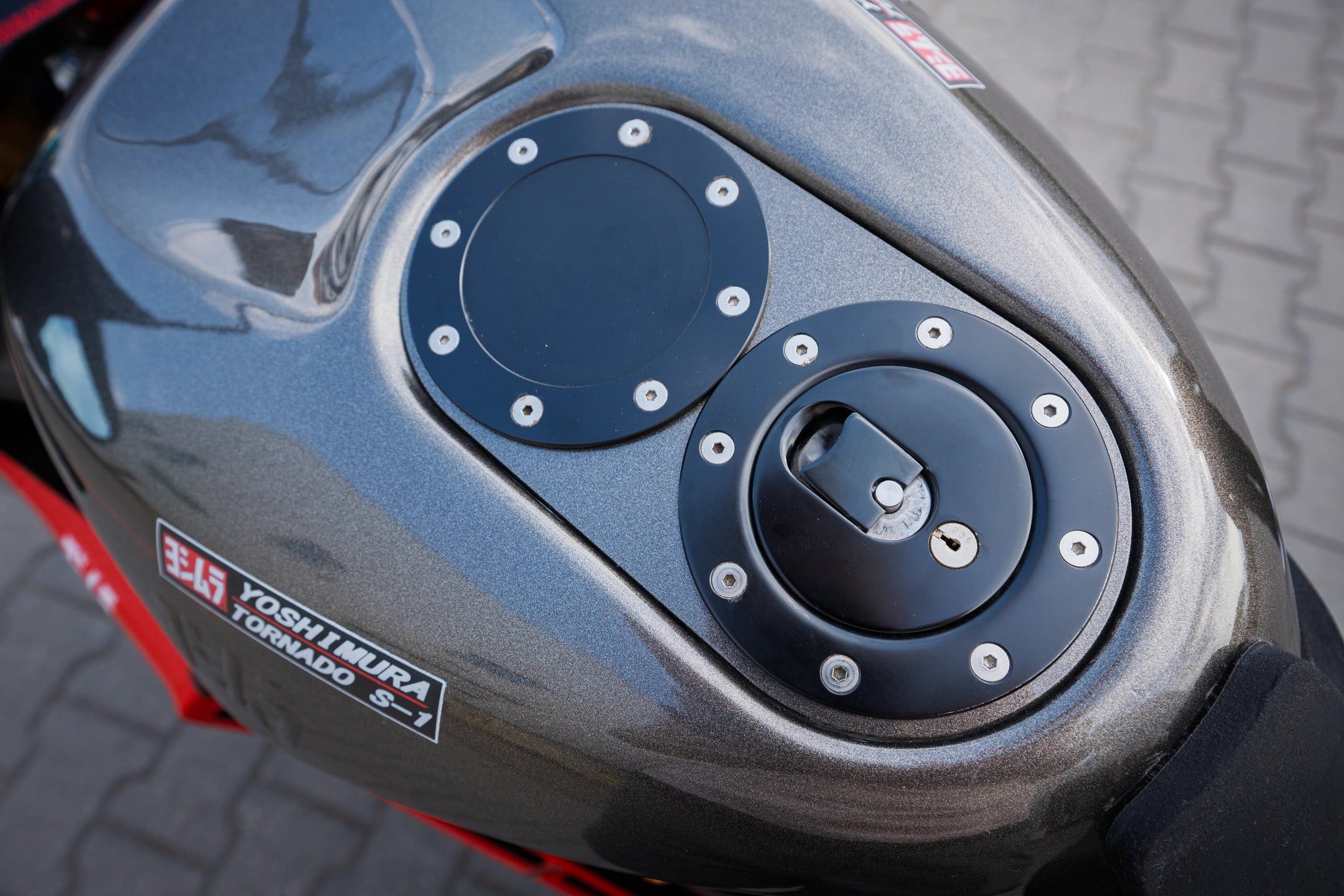
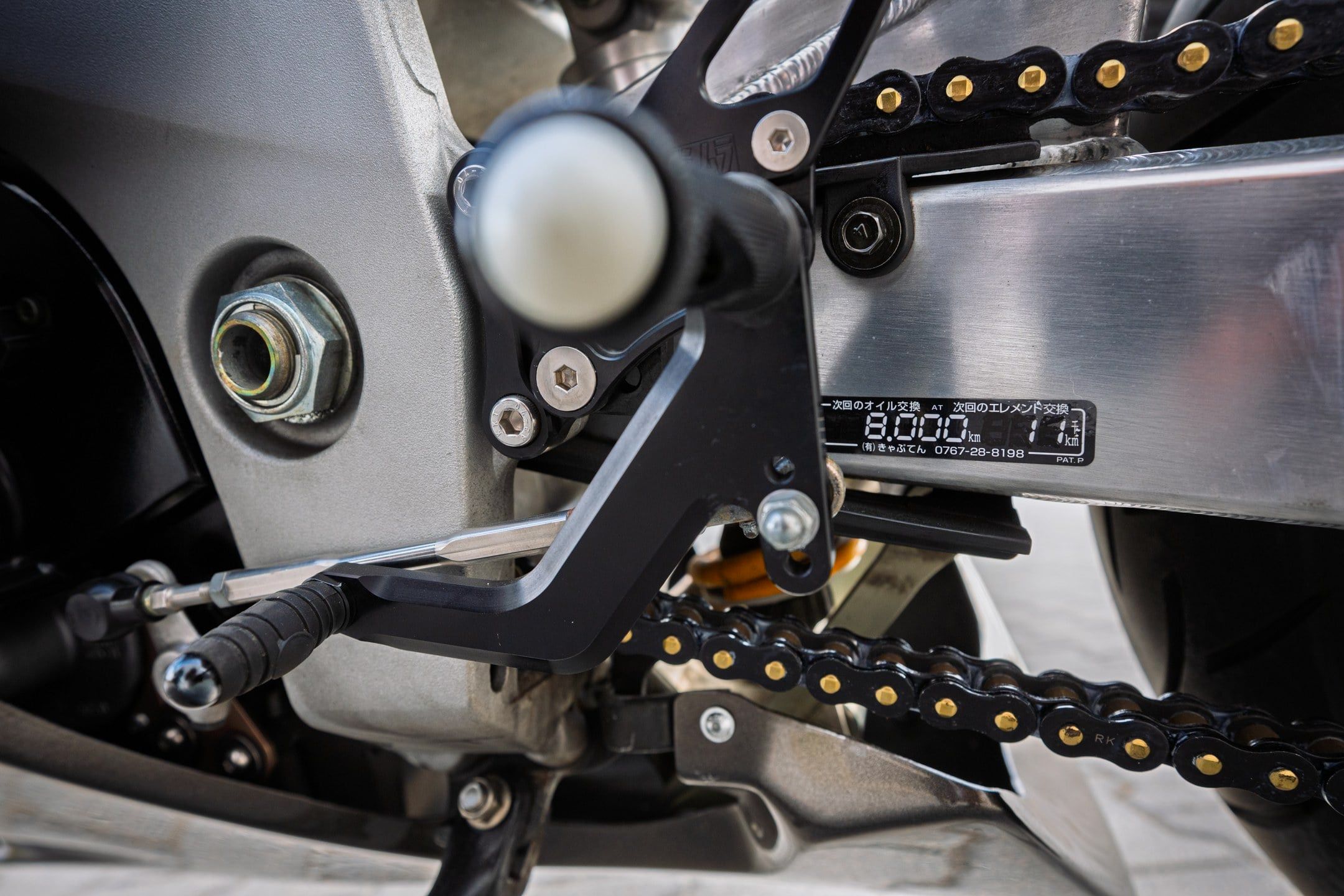
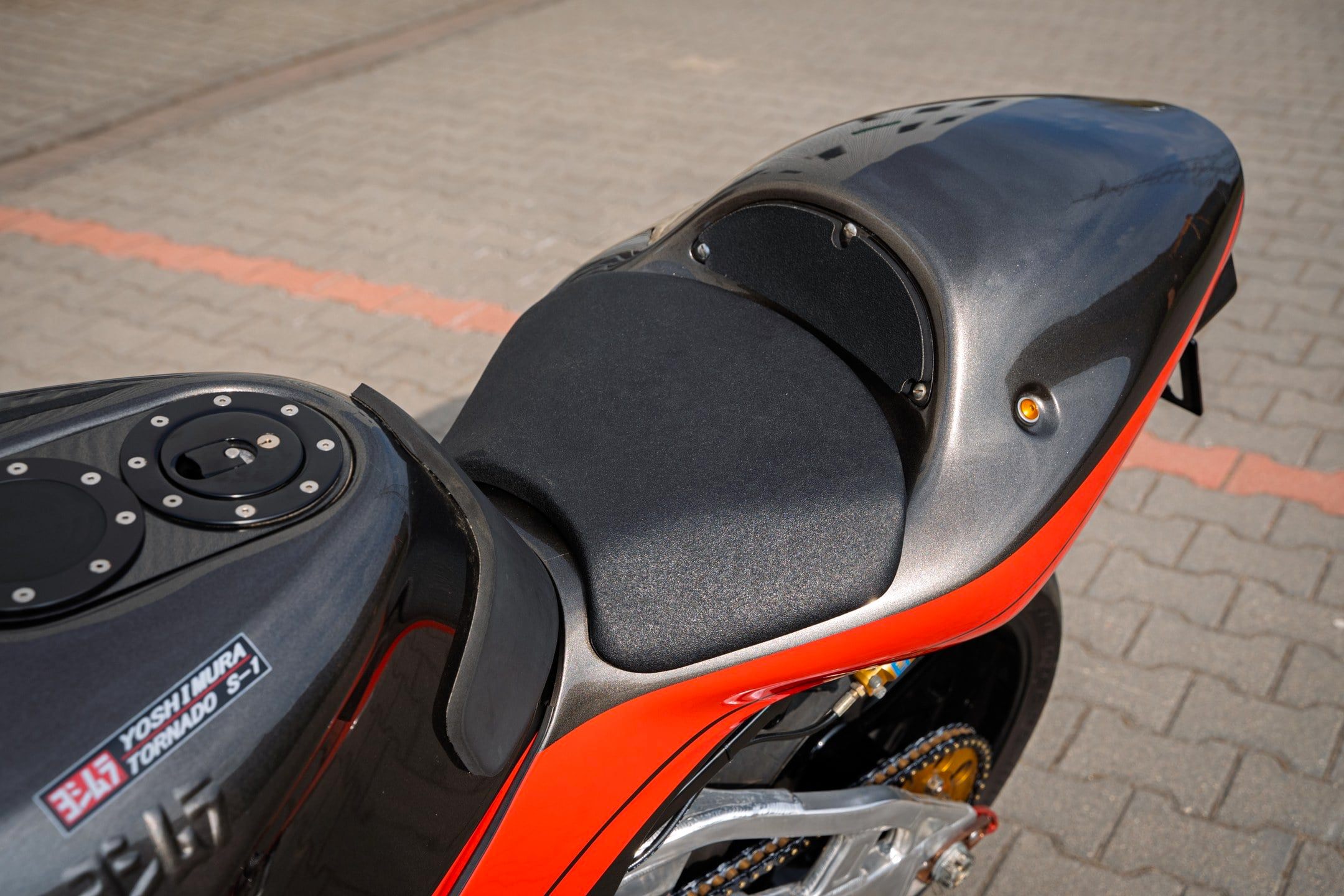
The fuel tank was replaced with a 24 liter aluminum unit fitted with a Yoshimura racing filler cap. The entire bodywork was bespoke carbon fibre designed and produced by Yoshimura, giving the S-1 a completely distinct visual identity that thoroughly disguised its GSX-R origins. Lighting was upgraded with HID projector headlights, this was a rarity on a motorcycle of the time but far more common now. AFAM aluminum sprockets and Yoshimura racing rearsets rounded out the package.
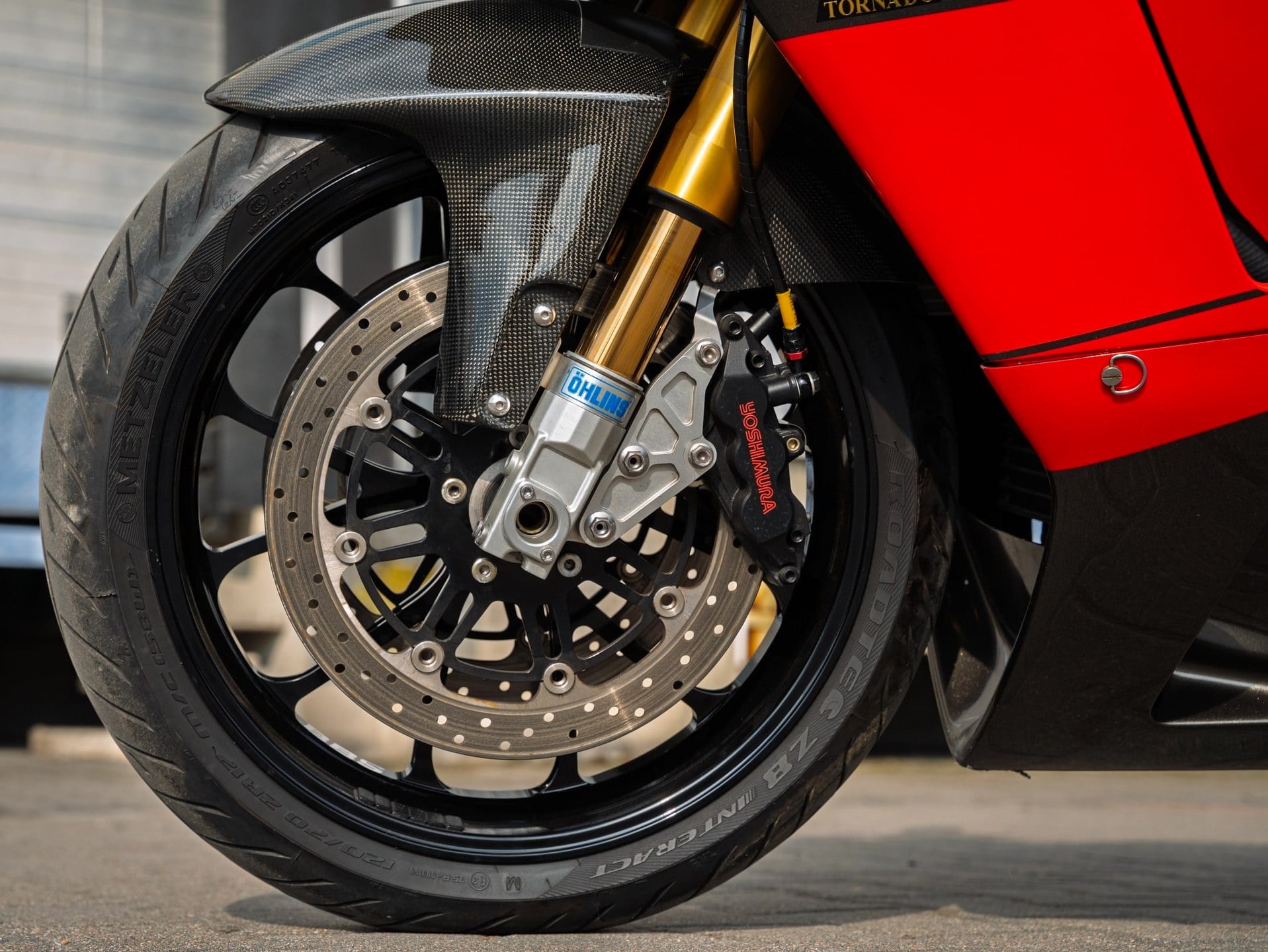
Öhlins suspension was fitted front and rear, with Yoshimura-specific settings, along with an Öhlins steering damper. A revised steering stem, rear suspension linkage, and a bespoke swingarm completed the changes.
Each of the 50 machines carried a serial-numbered nameplate and was delivered with a Yoshimura S-1 book, a Snap-On tool kit, and a Daxim bike cover.
On the rare occasions a Tornado S-1 surfaces for sale nowadays, asking prices have ranged from $30,000 to well over $42,000 USD, a sign of both the engineering substance and the extreme scarcity of the model.
The 2002 Yoshimura Tornado S-1 Shown Here
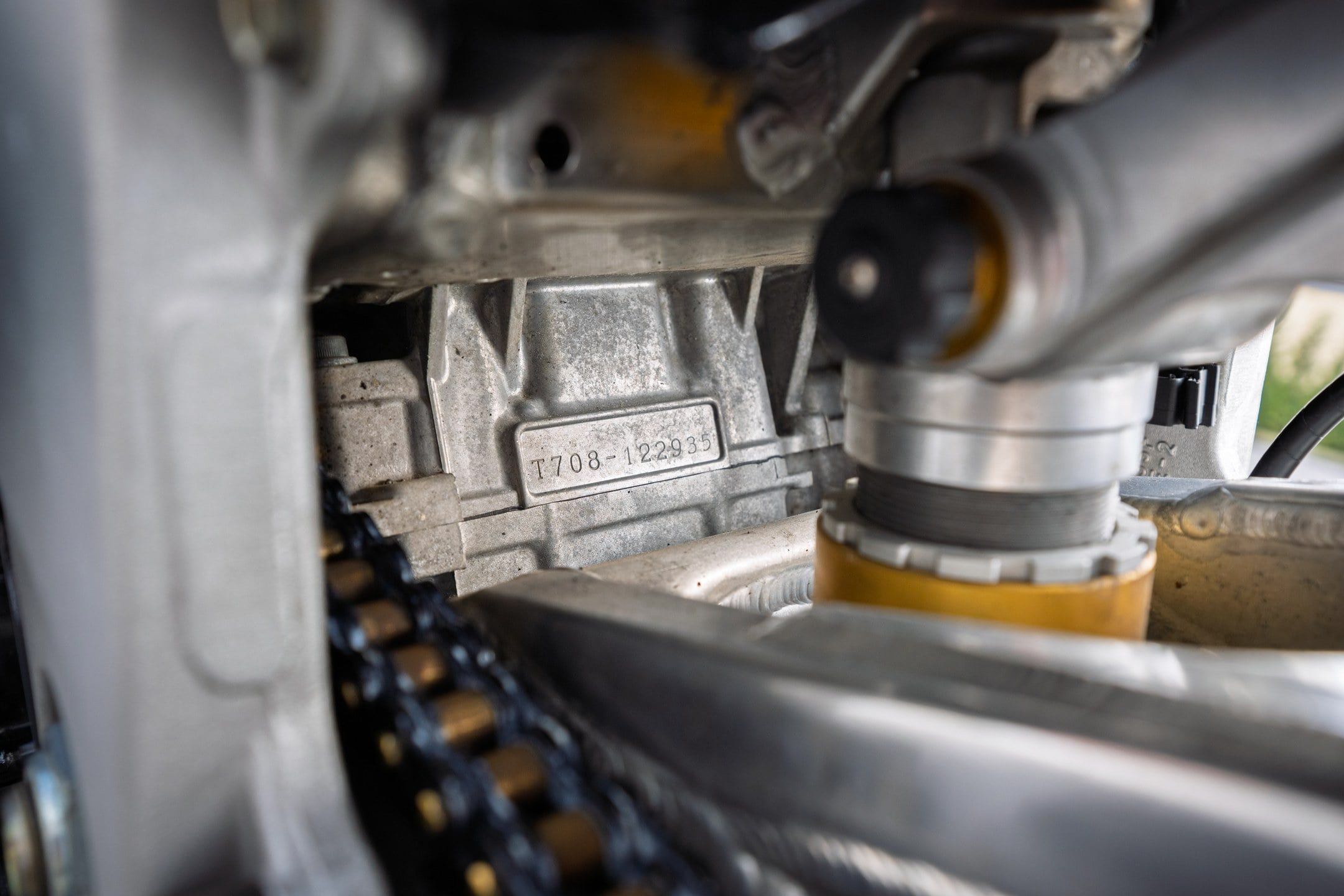
This is number #21 of the 50 Yoshimura Tornado S1 motorcycles produced, a Japanese domestic market exclusive that was never officially sold outside Japan. The bike shows 6,986 kms on the odometer and is described by the seller as being in original collector’s condition throughout, with the original paintwork said to be in very good order.
The specification of the bike follows the full Yoshimura treatment applied to the first-generation Suzuki GSX-R1000 platform for the S-1 series. The chassis has a strengthened swingarm and triple clamps, while the bodywork is entirely carbon fibre with an aluminum fuel tank.
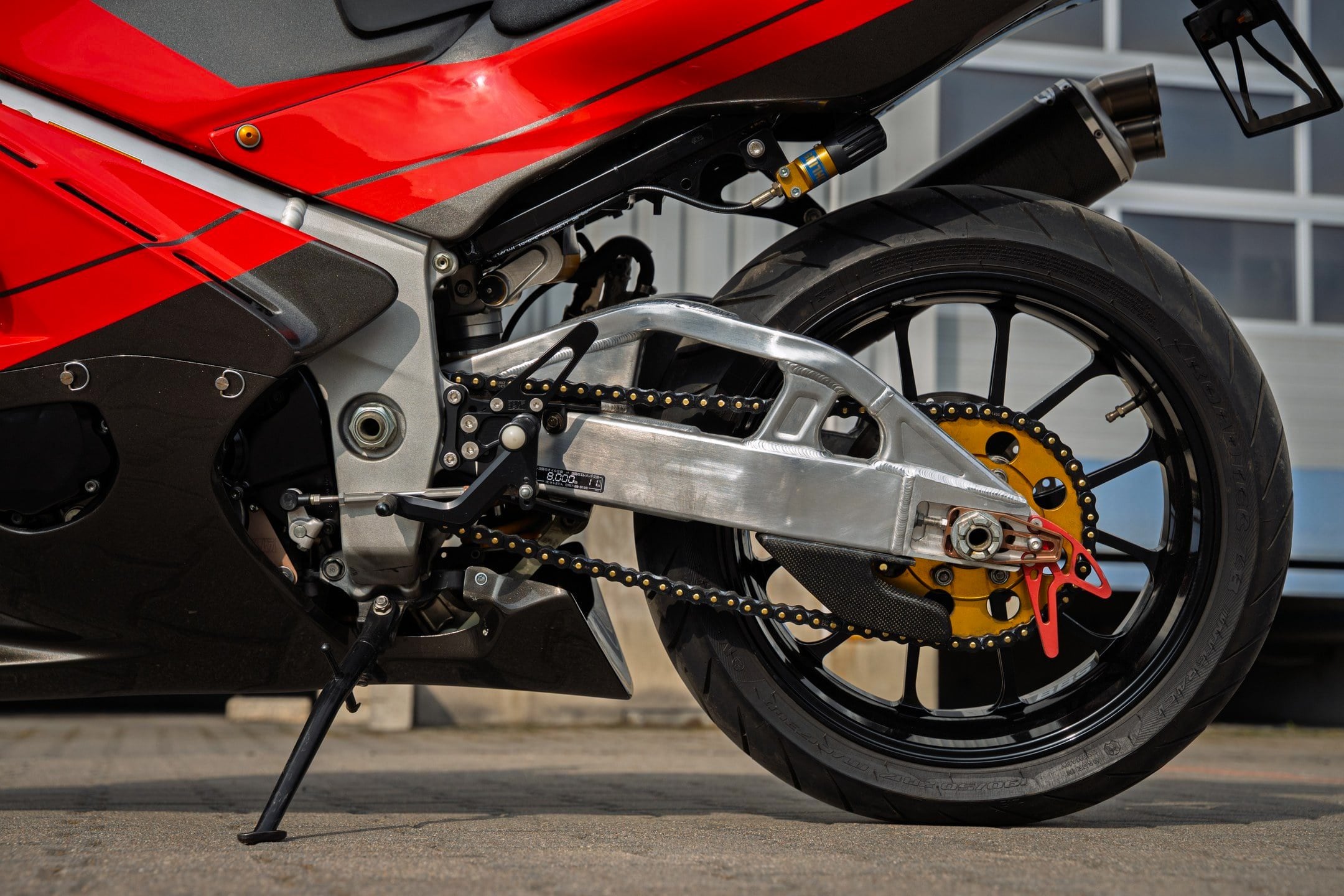
Modified front brake calipers were fitted along with a Nissin radial-pump master cylinder and braided hydraulic lines. The calipers were six-piston Nissin units, and the standard steel wheels were replaced with lightweight cast aluminum units from BBS, shod with Dunlop D208 Super Sport tires, 120/70ZR17 front and 190/50ZR17 out back.
The 988cc inline four-cylinder engine was rebuilt by Yoshimura with high-compression cylinders and springs, ported and polished internals, and a Yoshimura-tuned exhaust system, producing 170 bhp at 12,000 rpm through a six-speed constant-mesh transmission fitted with a quick shifter.
This S-1 was imported from Japan to the EU in 2025 and received a fresh service in Poland in March of 2026, including oil and filters along with a thorough detailing. It’s now offered for sale with the necessary documentation for international registration, and you can visit the listing here if you’d like to read more or register to bid.
Images courtesy of Car & Classic
Articles that Ben Branch has written have been covered on CNN, Popular Mechanics, Smithsonian Magazine, Road & Track Magazine, the official Pinterest blog, the official eBay Motors blog, BuzzFeed, Autoweek Magazine, Wired Magazine, Autoblog, Gear Patrol, Jalopnik, The Verge, and many more.
Silodrome was founded by Ben back in 2010, in the years since the site has grown to become a world leader in the alternative and vintage motoring sector, with well over a million monthly readers from around the world and many hundreds of thousands of followers on social media.