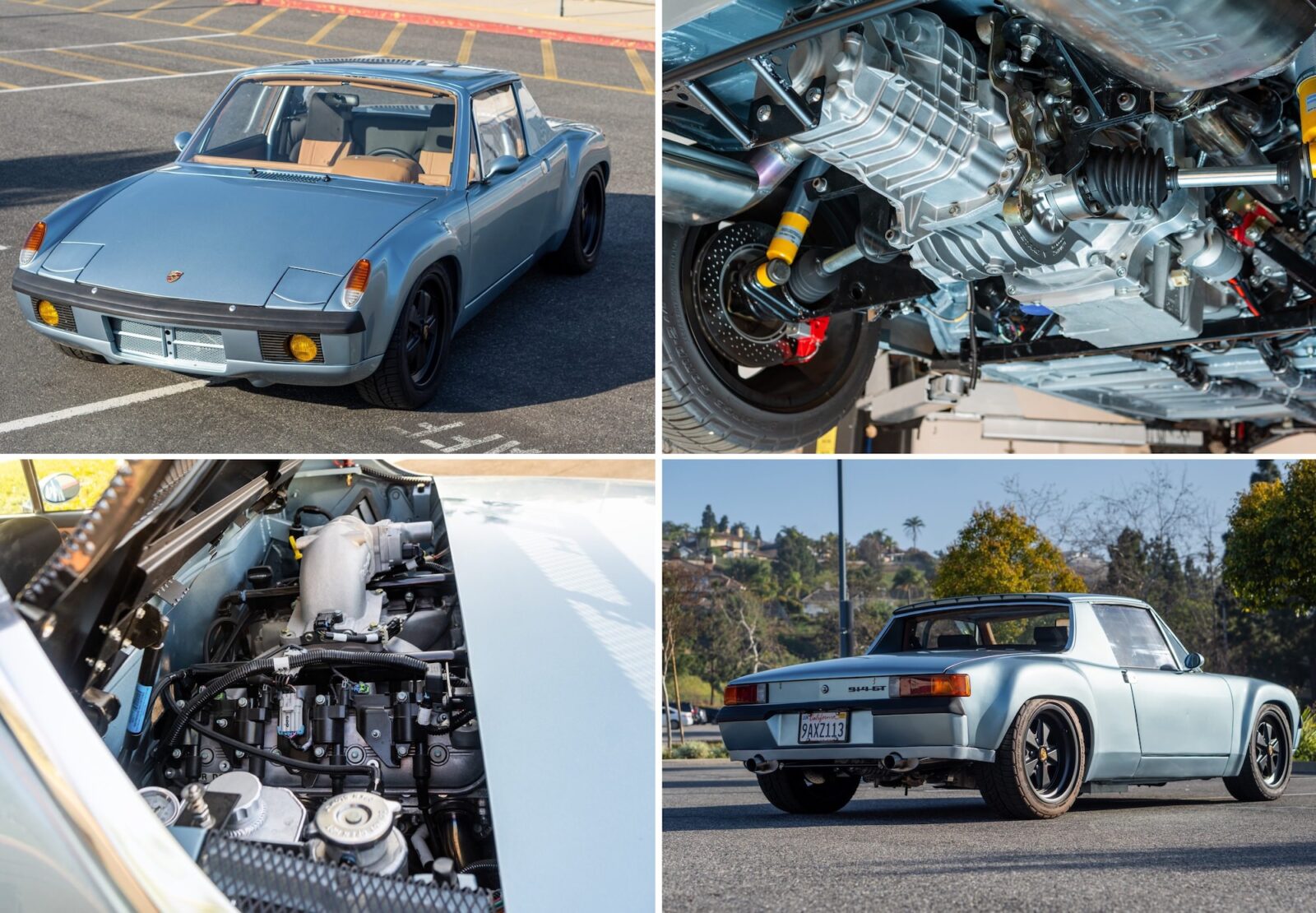
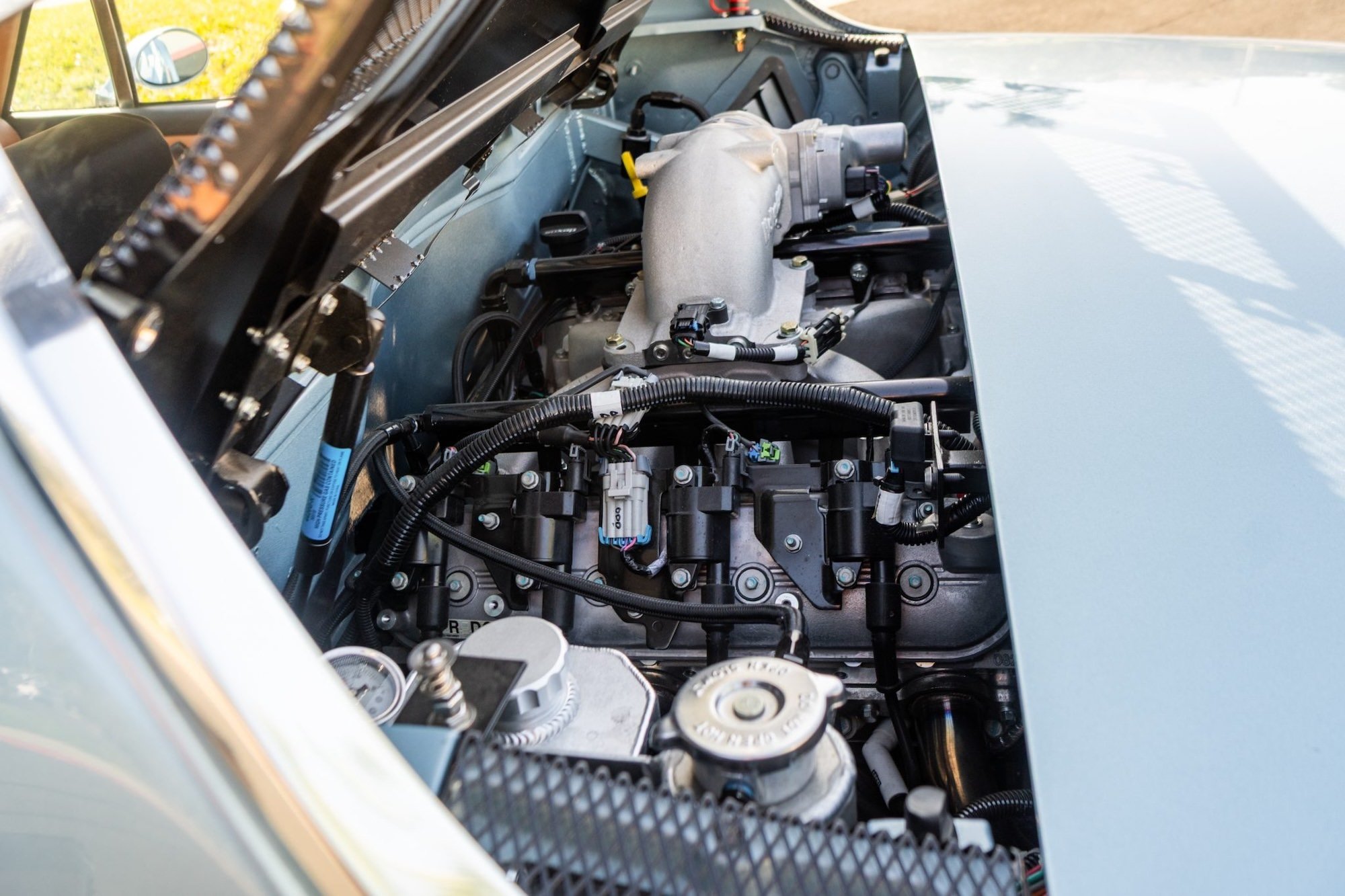
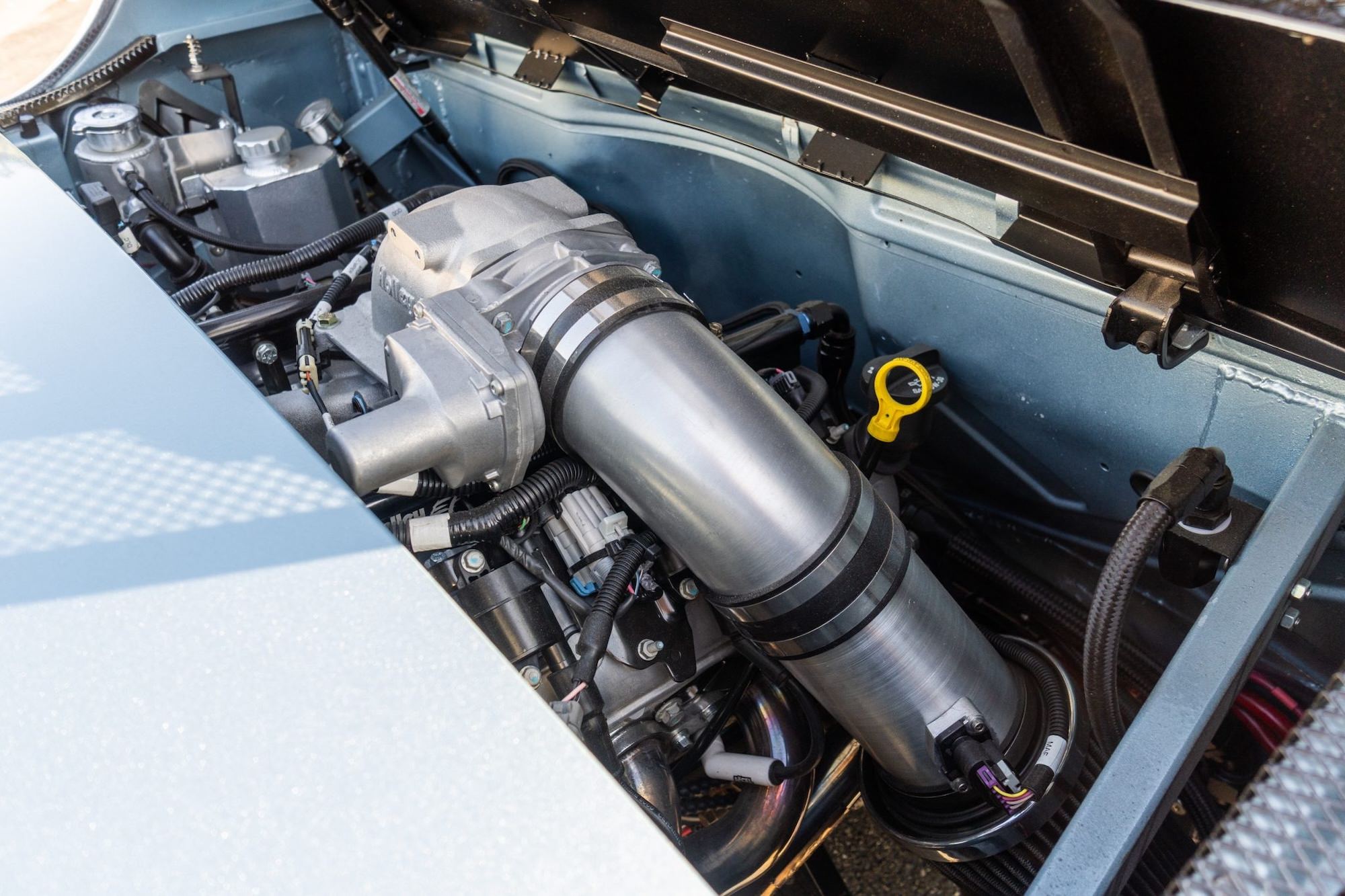
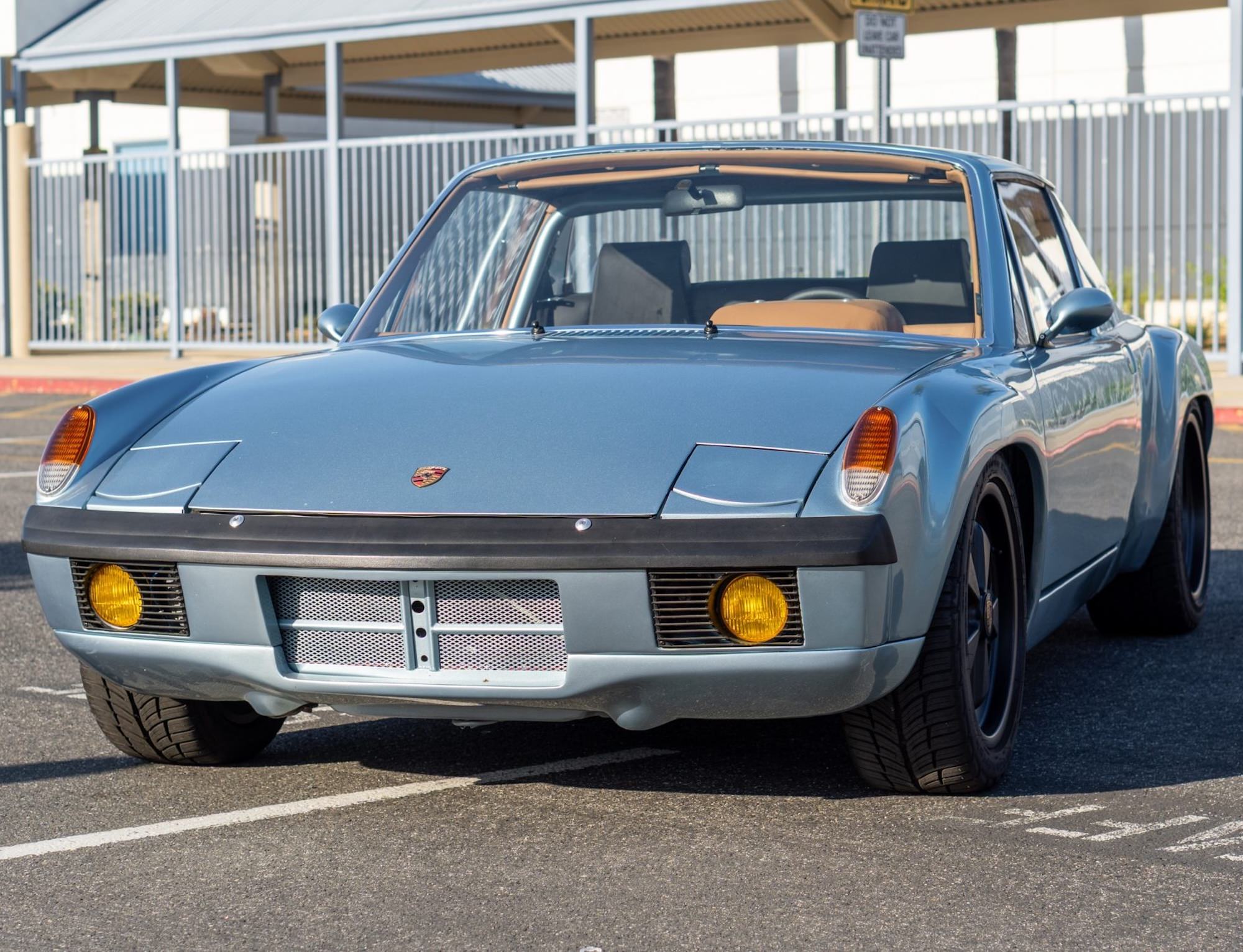
This is a 1974 Porsche 914 that has been given an impressive series of modifications, including the fitment of a 430 bhp LS3 V8 crate engine – over four times as much power as the car had from the factory.
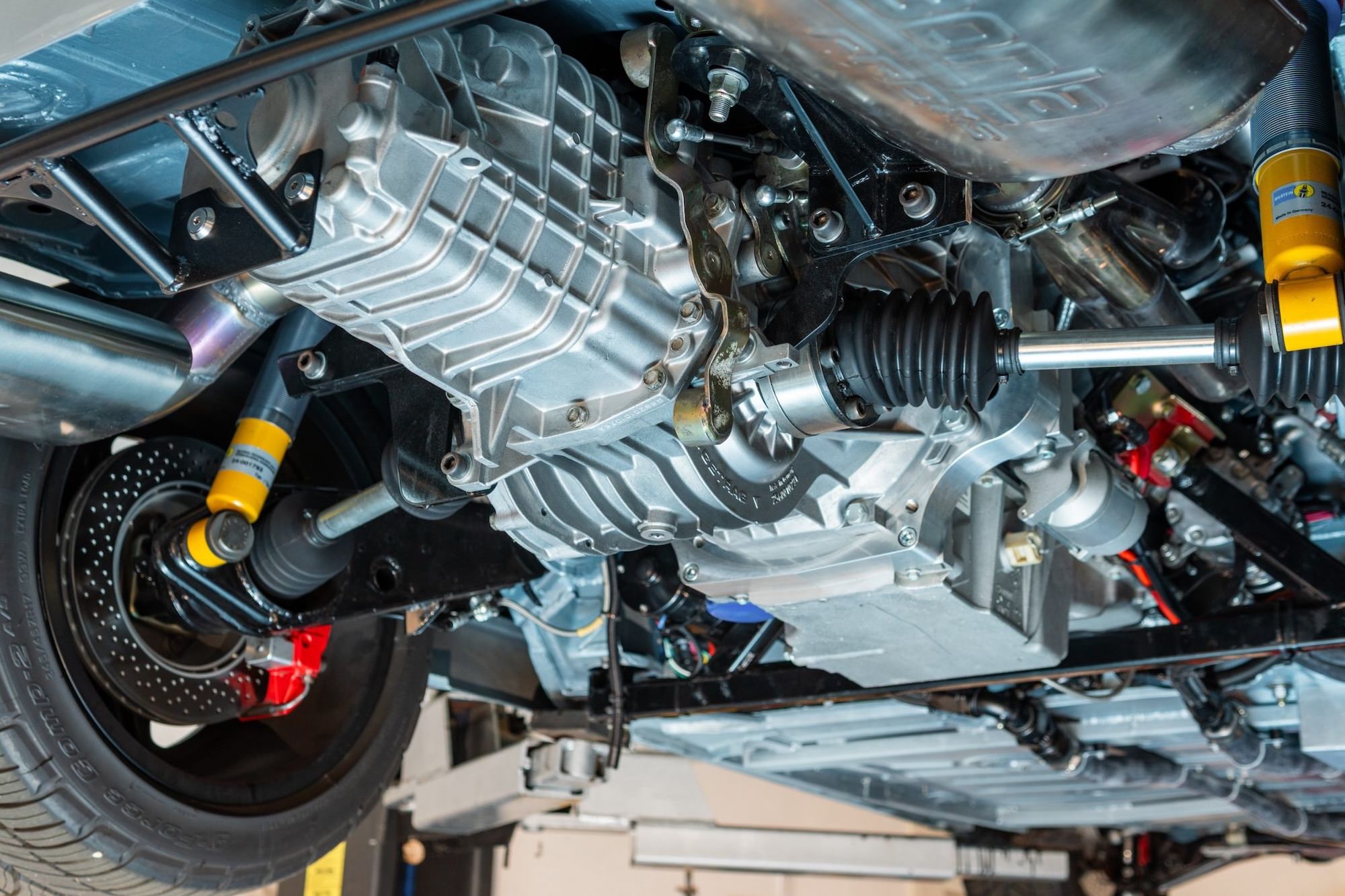
This engine is mated to a 6-speed manual transaxle with a Wavetrac limited-slip differential. The car has also received major updates to its suspension and brakes to handle the new power output, and the mid-engined location of the LS3 helps to keep handling more neutral than you might get with a front or rear-engined car.
Fast Facts: An LS3 V8-Swapped Porsche 914
- This 1974 Porsche 914 has been comprehensively rebuilt around a 6.2 liter LS3 V8 crate engine rated at 430 bhp, delivering more than four times the output of a factory four-cylinder car. Installed in 2024, it has a Holley Hi-Ram EFI intake, stainless headers, and Renegade Hybrids mounts.
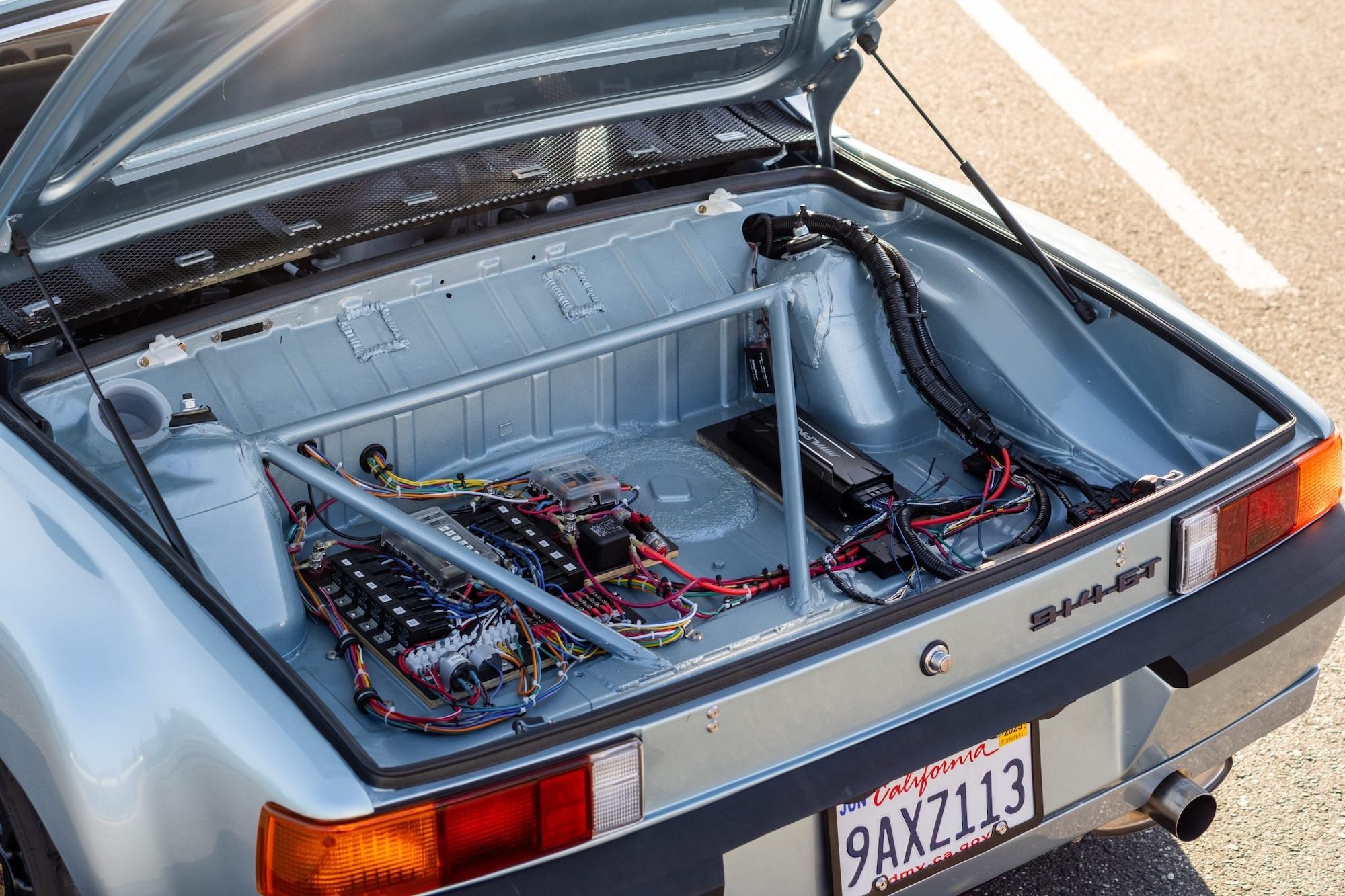
- Power is routed through a 986 Boxster S 6-speed manual transaxle paired with a Wavetrac limited-slip differential, with a Wilwood clutch master cylinder added. The chassis was reinforced with welded structural supports tied into the shock towers, and the trunk houses the engine wiring, ECU, and an Alpine amplifier.
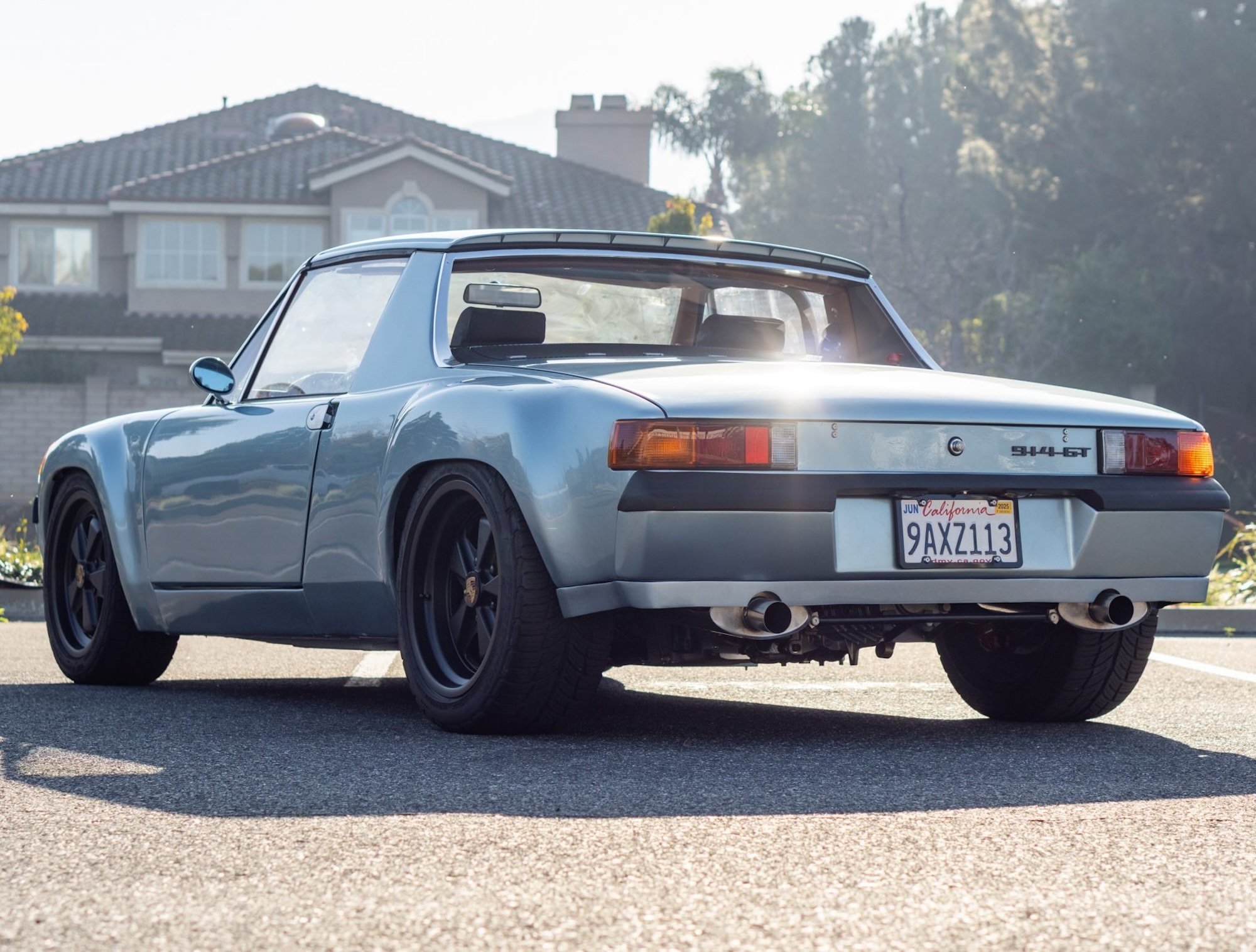
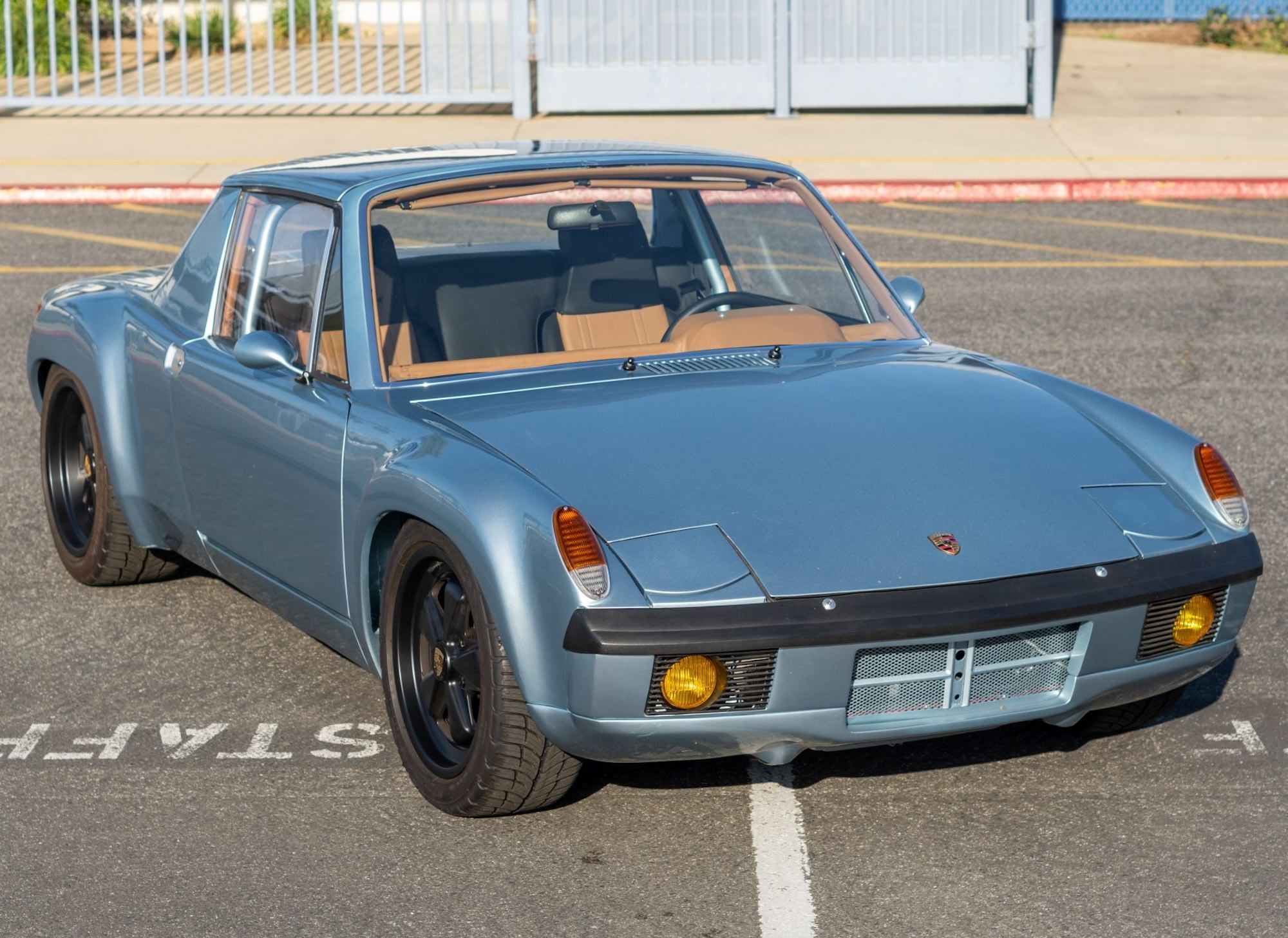
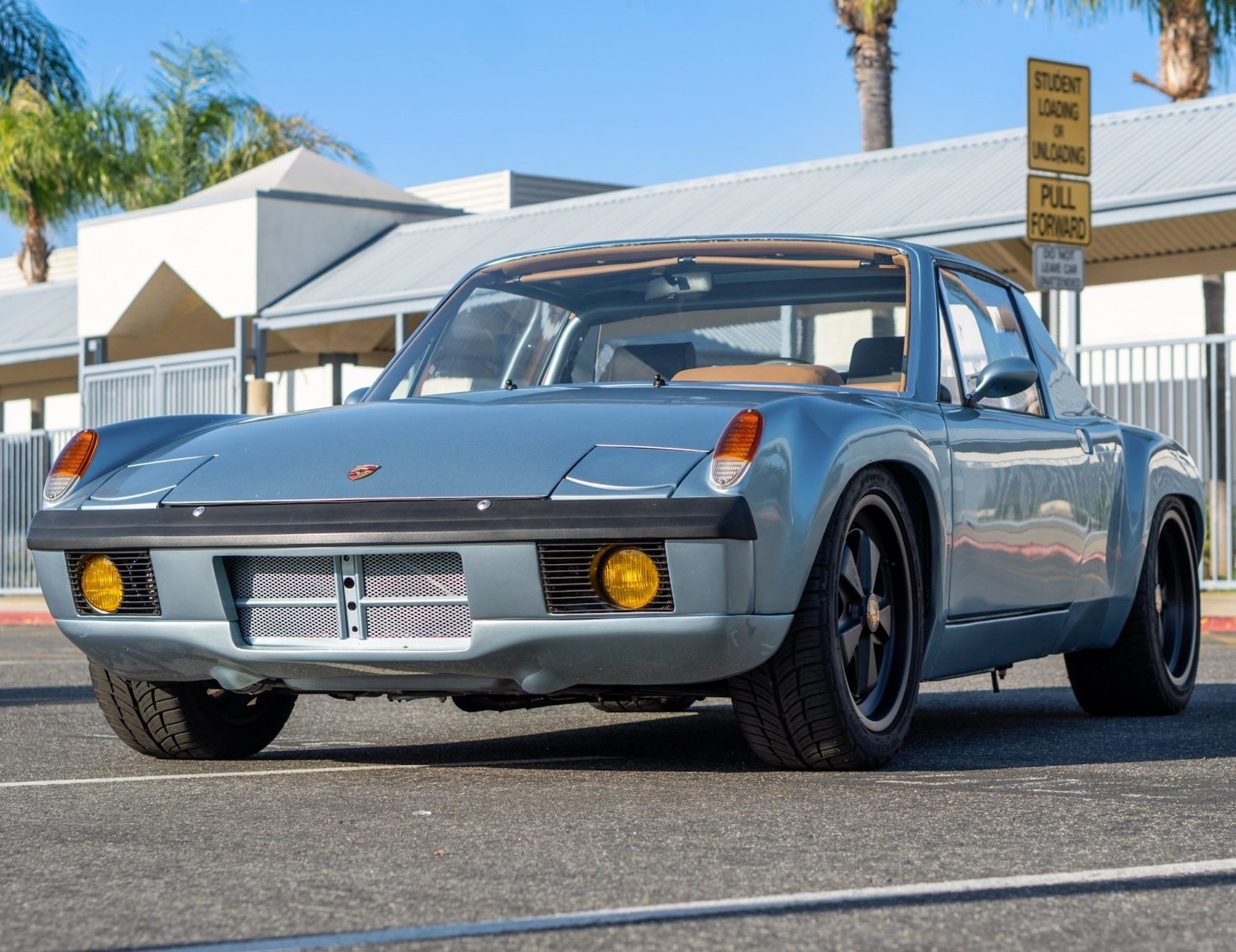
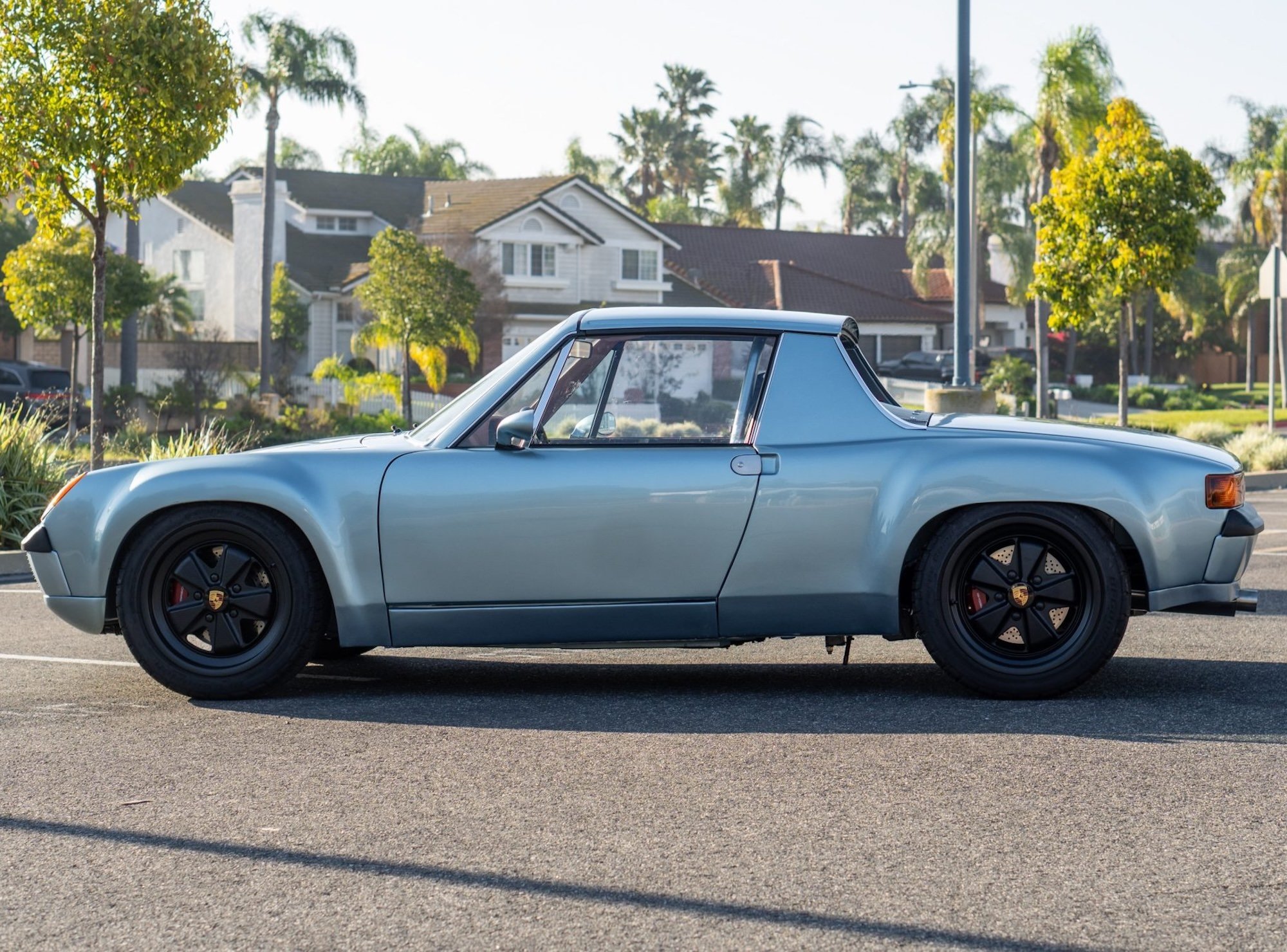
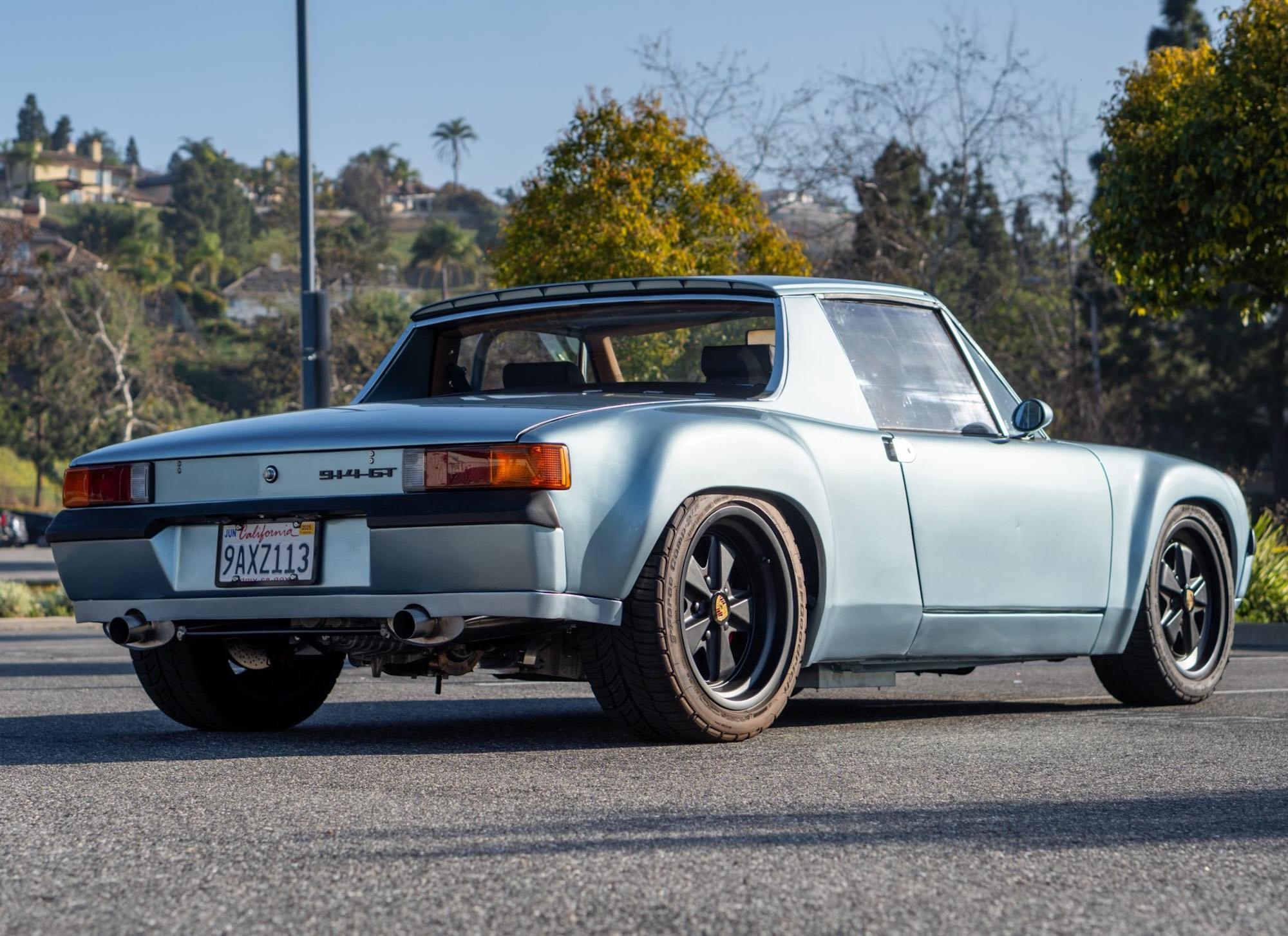
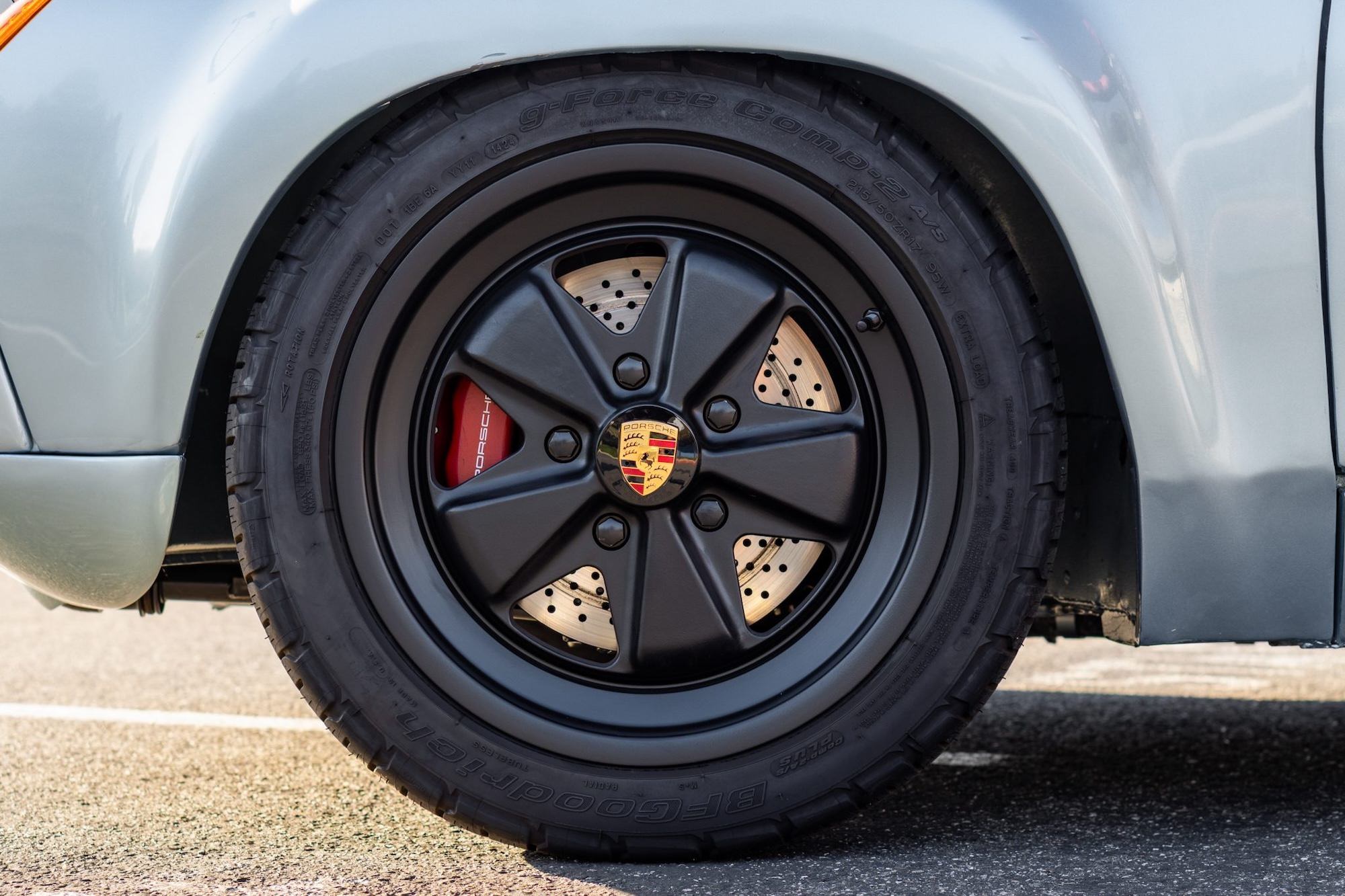
- The body was stripped to bare metal, repaired as needed, fitted with steel fender flares, and refinished in Marathon Blue Metallic including the removable targa top. It rides on staggered 17 inch Fuchs-style wheels, 9 inches front and 11 inches rear, shod with 215/50 and 245/45 BFGoodrich G-Force tires.
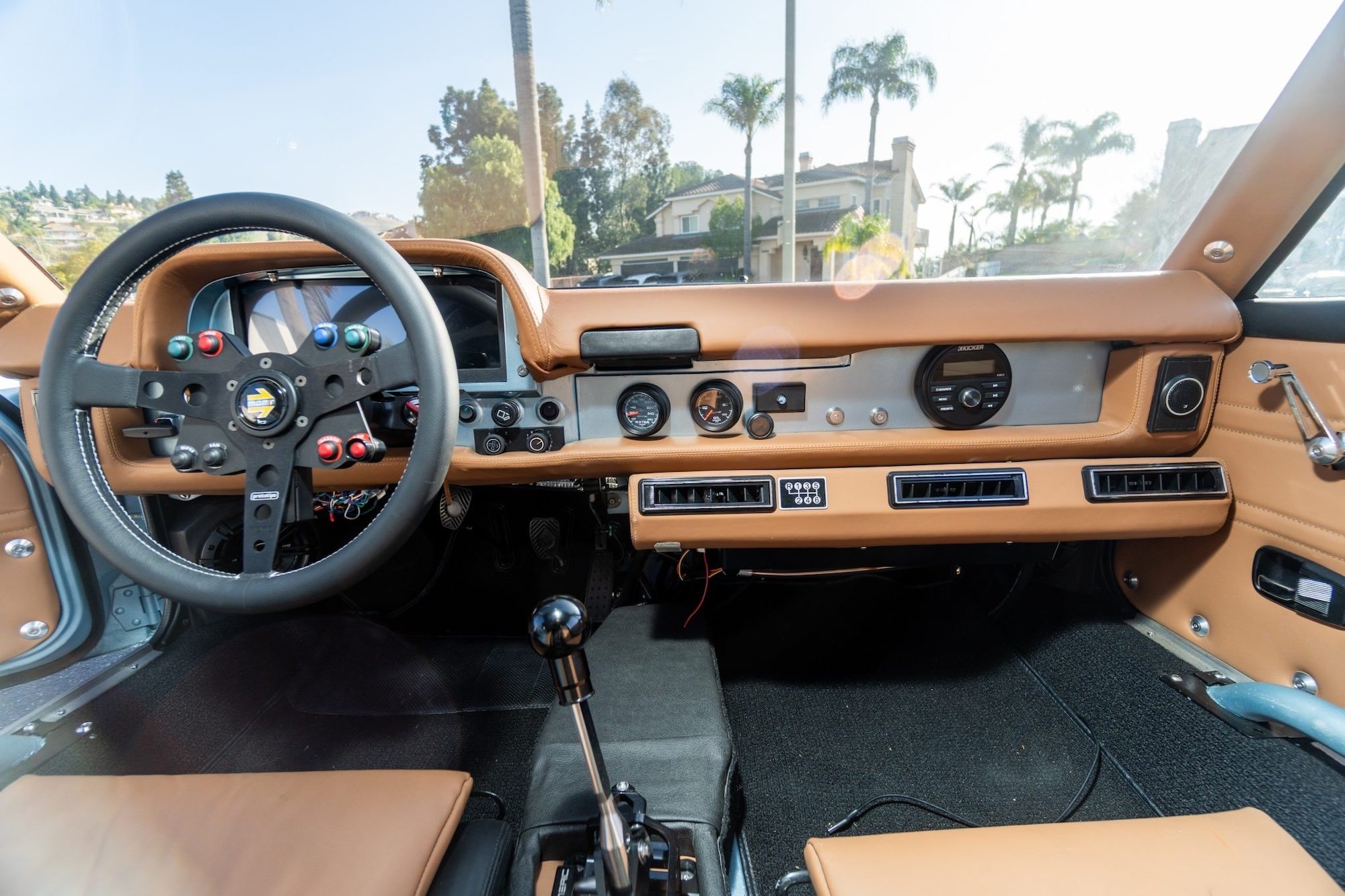
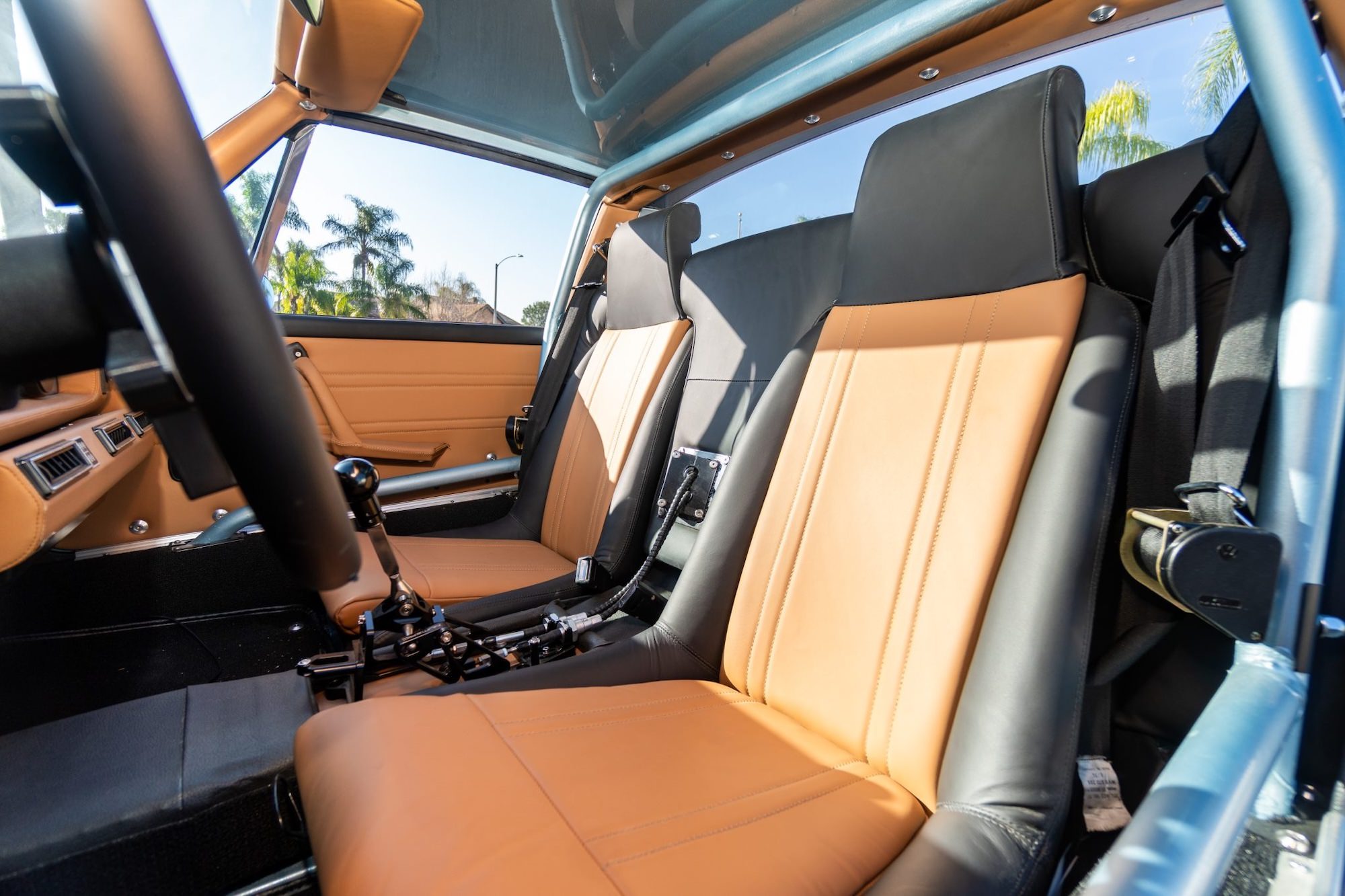
- Suspension and braking were upgraded to match the power increase, including Bilstein coilovers, an Elephant Racing torsion bar delete kit, 911-spec steering and front components, and 996 big brakes. The reupholstered cabin features black and tan leather bucket seats, a roll bar, Numeric Racing shifter, Momo wheel, AutoMeter digital cluster, air conditioning, and shows just 275 miles since completion.
History Speedrun: The Porsche 914
The Porsche 914 was developed in the mid-1960s as a joint solution to two separate problems. Porsche needed a new entry-level model to replace the 912, while Volkswagen wanted a modern sports coupe to succeed the Type 34 Karmann Ghia at the top of its range.
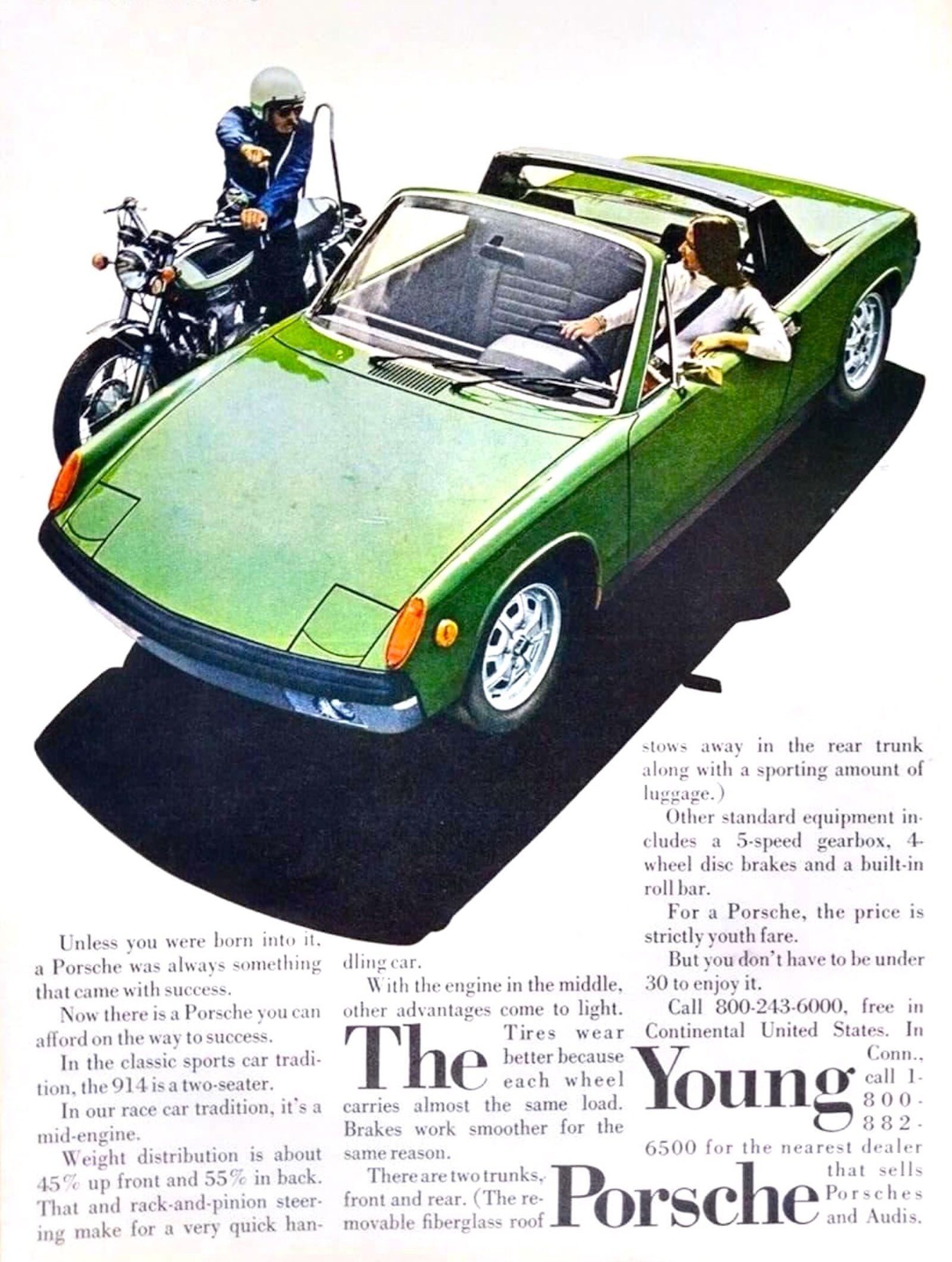
 Despite the tumultuous start to the Porsche 914’s life, it would end up becoming a successful model in 914/4 configuration. The price of these cars put them into a sweet spot in the market and they sold like hotcakes in the USA. Image courtesy of Porsche.
Although the plan started out with both German marques sharing the 914 platform, the agreement wouldn’t stay that way for long. Porsche executives were concerned that, particularly in the North American market, consumers seeing the same car being sold as both a Volkswagen and a Porsche might dilute their brand appeal. They were probably right about it too.
An agreement was struck with Volkswagen to allow the car to be sold in North America only as the Porsche 914, with the four-cylinder car marketed as the 914/4 and the six-cylinder car marketed as the 914/6. This verbal agreement had been made between Porsche and Volkswagen’s chairman Heinrich Nordhoff, sadly, Nordhoff would die shortly thereafter.
Nordhoff’s replacement would be Kurt Lotz, the verbal agreement with his predecessor didn’t hold up, and Lotz decreed that if Porsche wanted the rights to sell the model under their own name then they would have to share the tooling expenses – which were considerable.
This was more than a bump in the road for Porsche, as the 914 had been intended as the lower-cost sports car below the Porsche 911 in the model range to replace the outgoing Porsche 912. Production of the car went ahead, but the cost of the Porsche 914/6 version was so high that it was selling for only a little less than an entry-level 911, which largely defeated its purpose.
As a result of all this, the Porsche 914/6 would remain in production for only three years between 1969 and 1972, with 3,351 of them made in total. Today they’re considered quite collectible, though it’s important to get an original car, and not a 914/4 that had a flat-six installed later.
Despite the tumultuous start to the Porsche 914’s life, it would end up becoming a successful model in 914/4 configuration. The price of these cars put them into a sweet spot in the market and they sold like hotcakes in the USA.
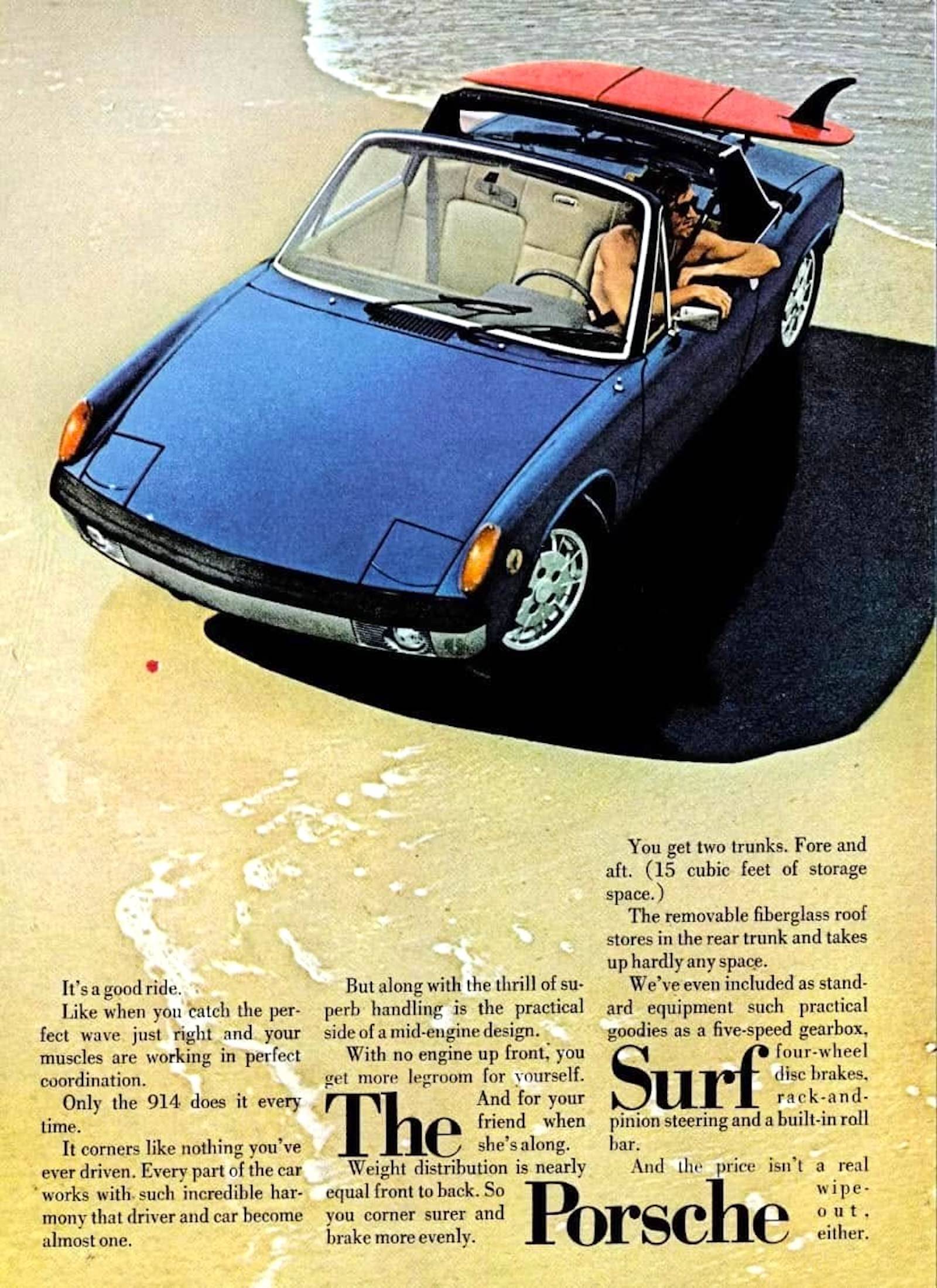
The 914 had been developed as the lower-cost sports car below the Porsche 911 in the model range to replace the outgoing Porsche 912. Image courtesy of Porsche.
Over the course of the 1969 to 1976 production run there would be 118,000 units sold worldwide, vastly more than the Porsche 911, and the funds helped keep Porsche alive through the 1970s.
The Porsche 914: Specifications
Both versions of the Porsche 914 shared the same fundamental shell, a steel unibody design with an integrated targa-style roll bar and a removable fiberglass top.
The engine was installed in a mid-engined position, unlike the rear-engined Porsche 356 and Porsche 911, with the power sent back to a 5-speed manual transaxle, or an optional 4-speed semi-automatic “Sportomatic” transmission.
None of the production examples of the Porsche 914 were particularly powerful, the four-cylinder version started out with just 80 bhp and 100 lb ft of torque, with the flat-six turning out 110 bhp and 118 lb ft of torque.
Though this may not sound like much power, it was actually adequate given the low curb weight of the cars – from 940 kgs (2,072 lbs) to 985 kgs (2,172 lbs). Suspension was independent at all four corners, with MacPherson struts, lower A-arms, and longitudinal torsion bars up front and semi-trailing arms with coil springs in the rear.
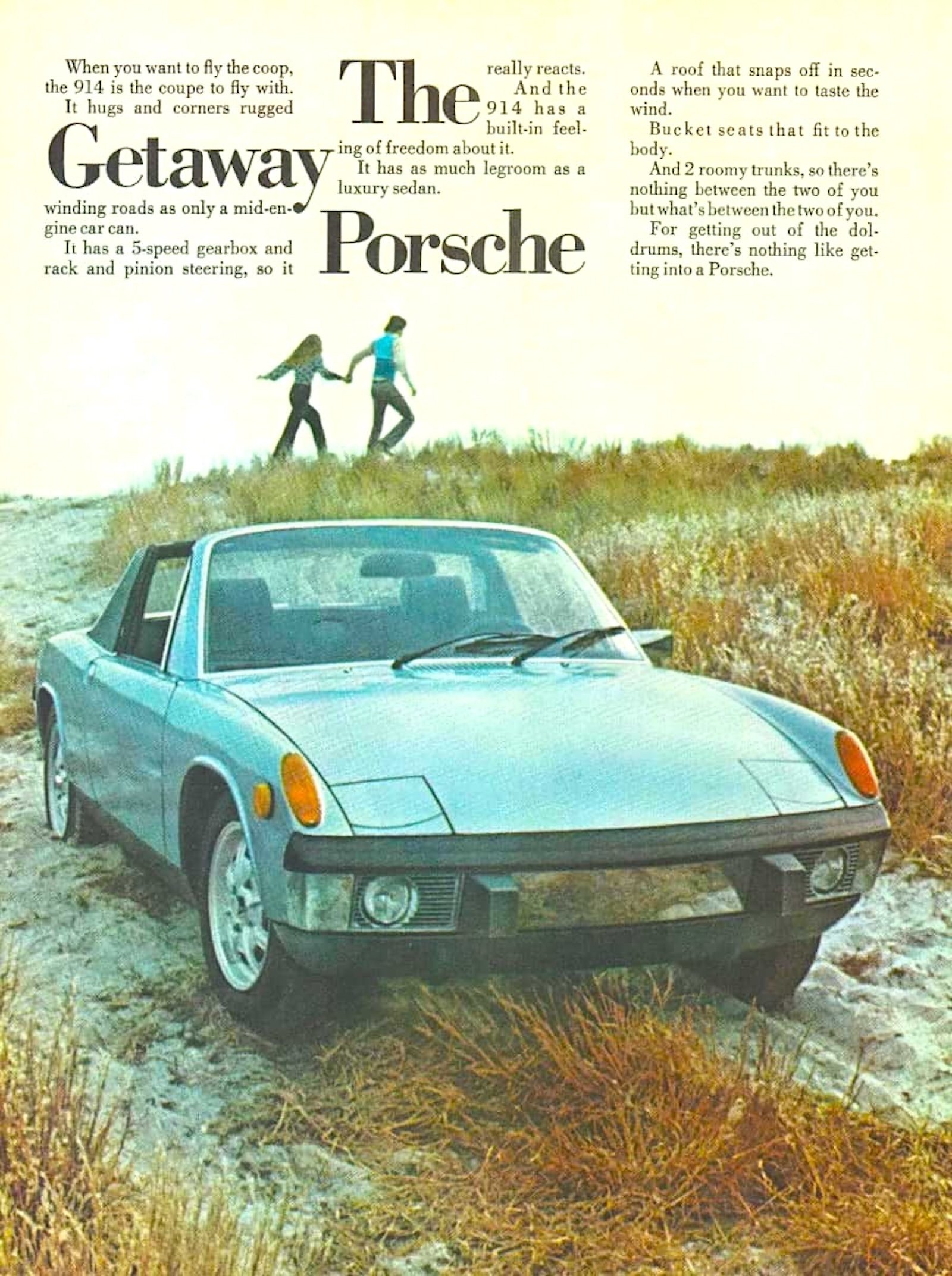
The Porsche 914 was targeted directly at younger buyers, it was relatively affordable, and the marketing materials often featured young men or women, or young couples. Image courtesy of Porsche.
Disc brakes were fitted front and rear, and the car could be ordered in left or righthand drive depending on your location. There were no fixed roof or convertible versions of the 914 offered from the factory, though many have produced their own custom versions over the years.
The design of the Porsche 914 resulted in a very low center of gravity and a planted feel on the road, the aerodynamics were good for the class, and they quickly proved their worth in amateur racing competition on both sides of the Atlantic.
Later versions of the car would get more powerful flat-four engines, 84 bhp in the base model and 101 bhp in the higher end model. The Porsche 914/6 remains by far the most valuable, however many aftermarket tuners have now produced larger VW-based flat-four engines that are more powerful than the original detuned Porsche 911 flat-six that was originally fitted to the 914/6.
The LS3 V8-Swapped Porsche 914 Shown Here
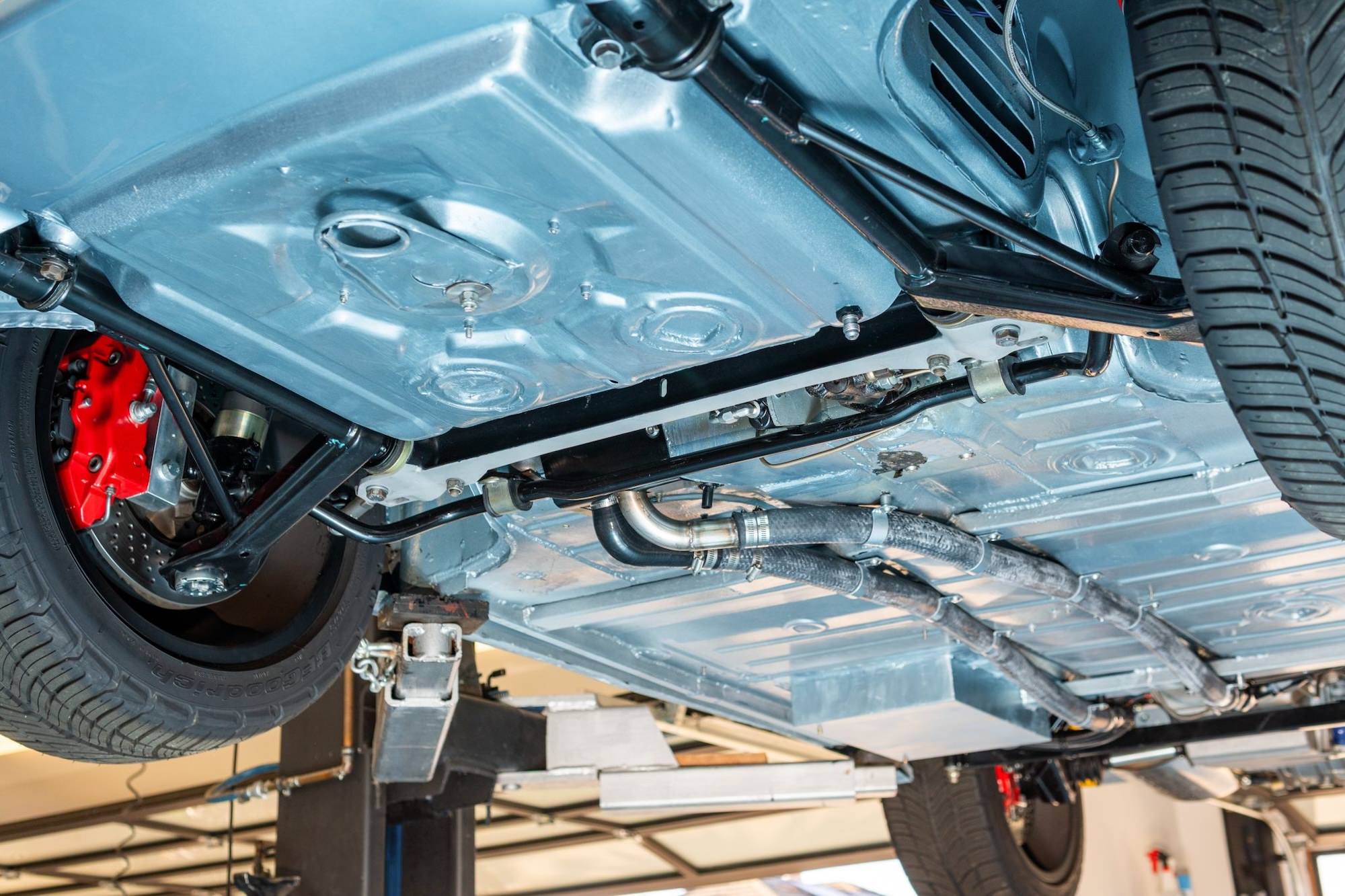
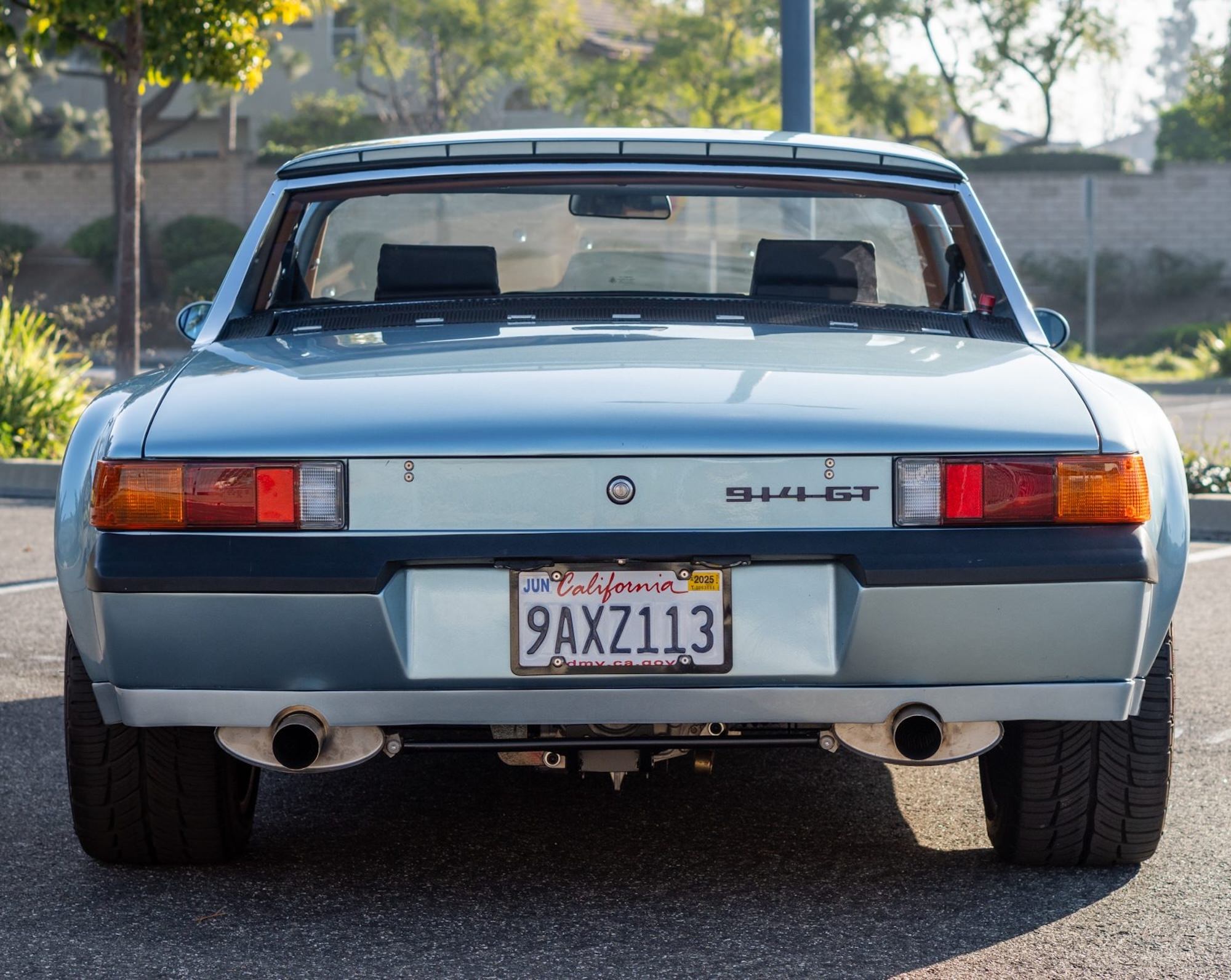
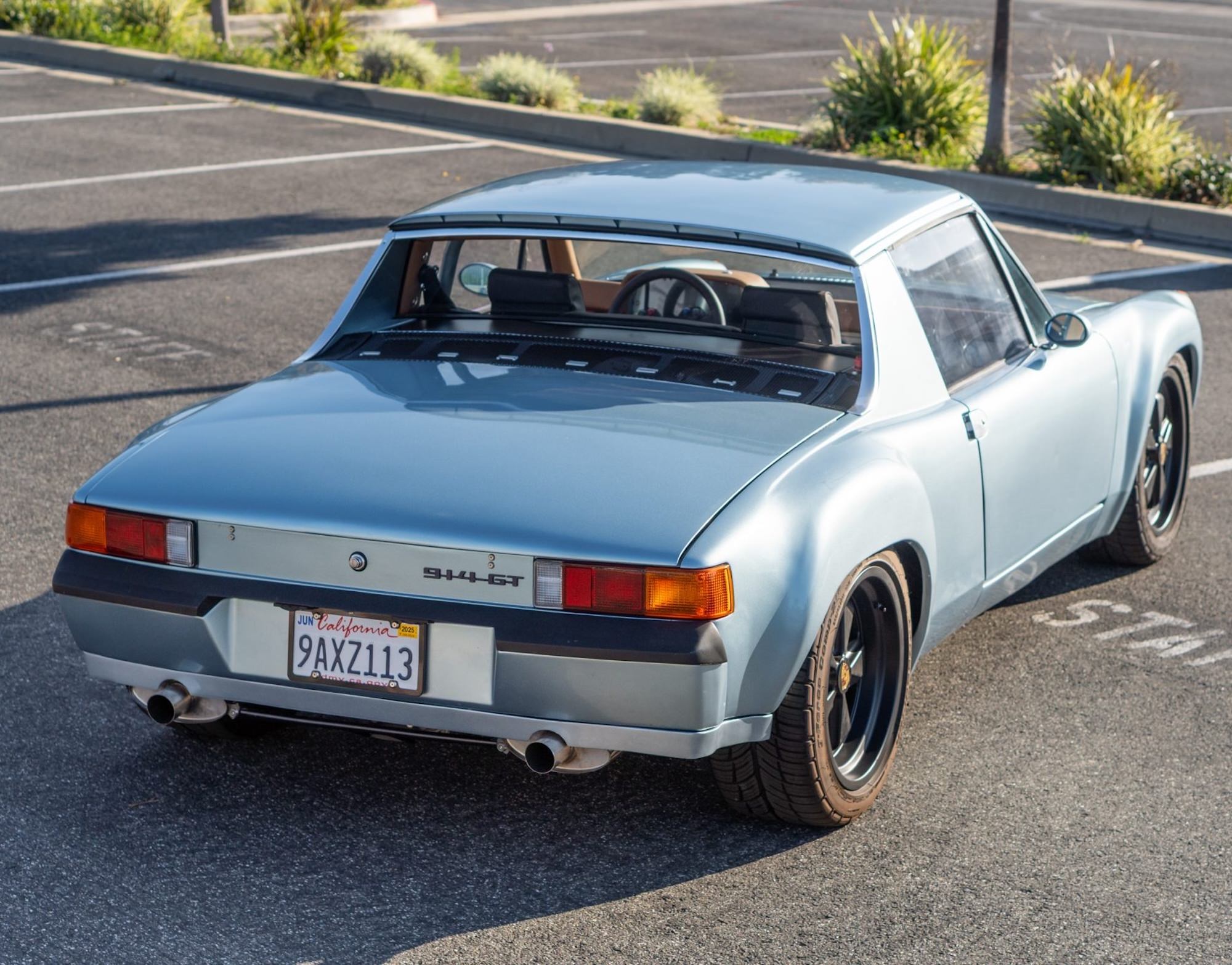
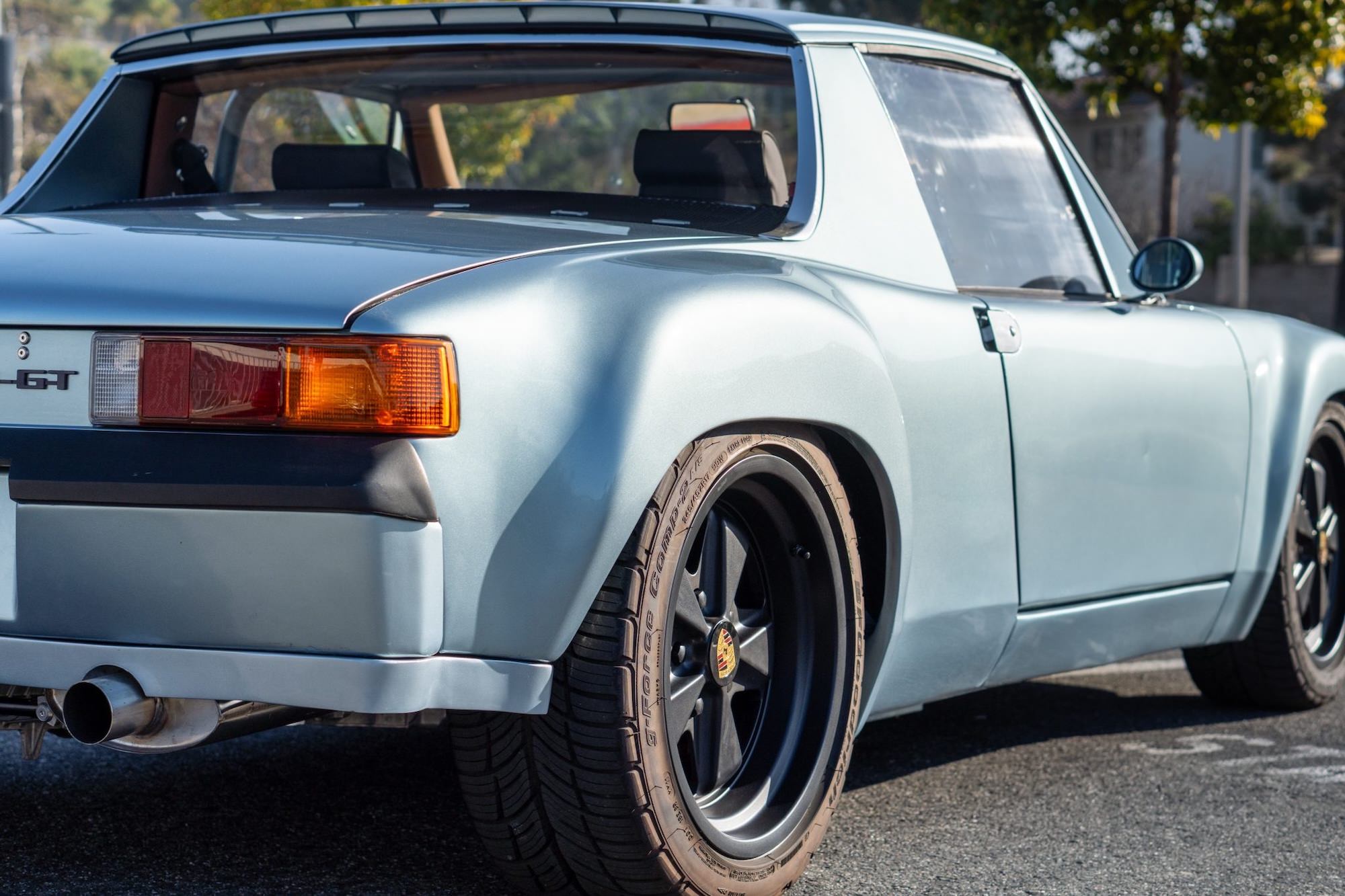
This 1974 Porsche 914 was purchased by the current owner in 2022 and subsequently stripped to bare metal for a comprehensive rebuild into what would become a considerably faster car. Rust repairs were carried out before the body was fitted with steel fender flares and refinished in Marathon Blue Metallic, including the removable Targa hardtop.
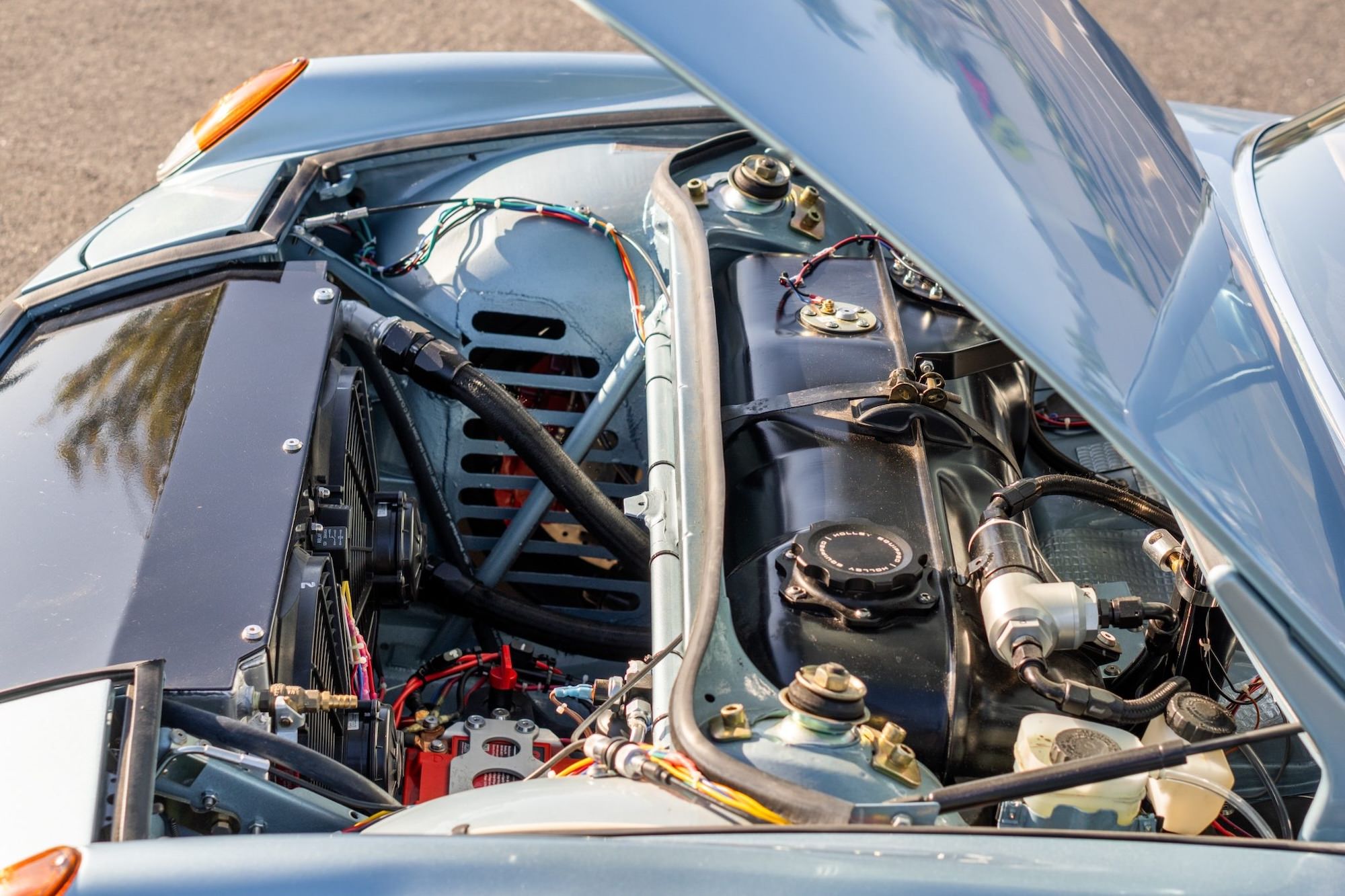
Power now comes from a 6.2 liter LS3 V8 crate engine installed in 2024. The engine is equipped with a Holley Hi-Ram EFI intake manifold, stainless-steel headers, and Renegade Hybrids mounting hardware, with cooling handled by a front-mounted radiator and dual electric fans. The trunk houses the LS3’s wiring and CPU along with an Alpine amplifier. Welded structural supports in the trunk tie into the shock towers to reinforce the chassis and boost overall stiffness.
Power is sent to the rear wheels through a 986 Boxster S 6-speed manual transaxle paired with a Wavetrac limited-slip differential, and a Wilwood clutch master cylinder has been added. The car rides on staggered 17 inch Fuchs-style wheels, measuring 9 inches wide up front and 11 inches at the rear, shod with 215/50 and 245/45 BFGoodrich G-Force tires.
The suspension has been upgraded with Bilstein coilovers, an Elephant Racing torsion bar delete kit, and 911-specification rack-and-pinion steering, control arms, and spindles. Braking is handled by 996-specification “big” brakes.
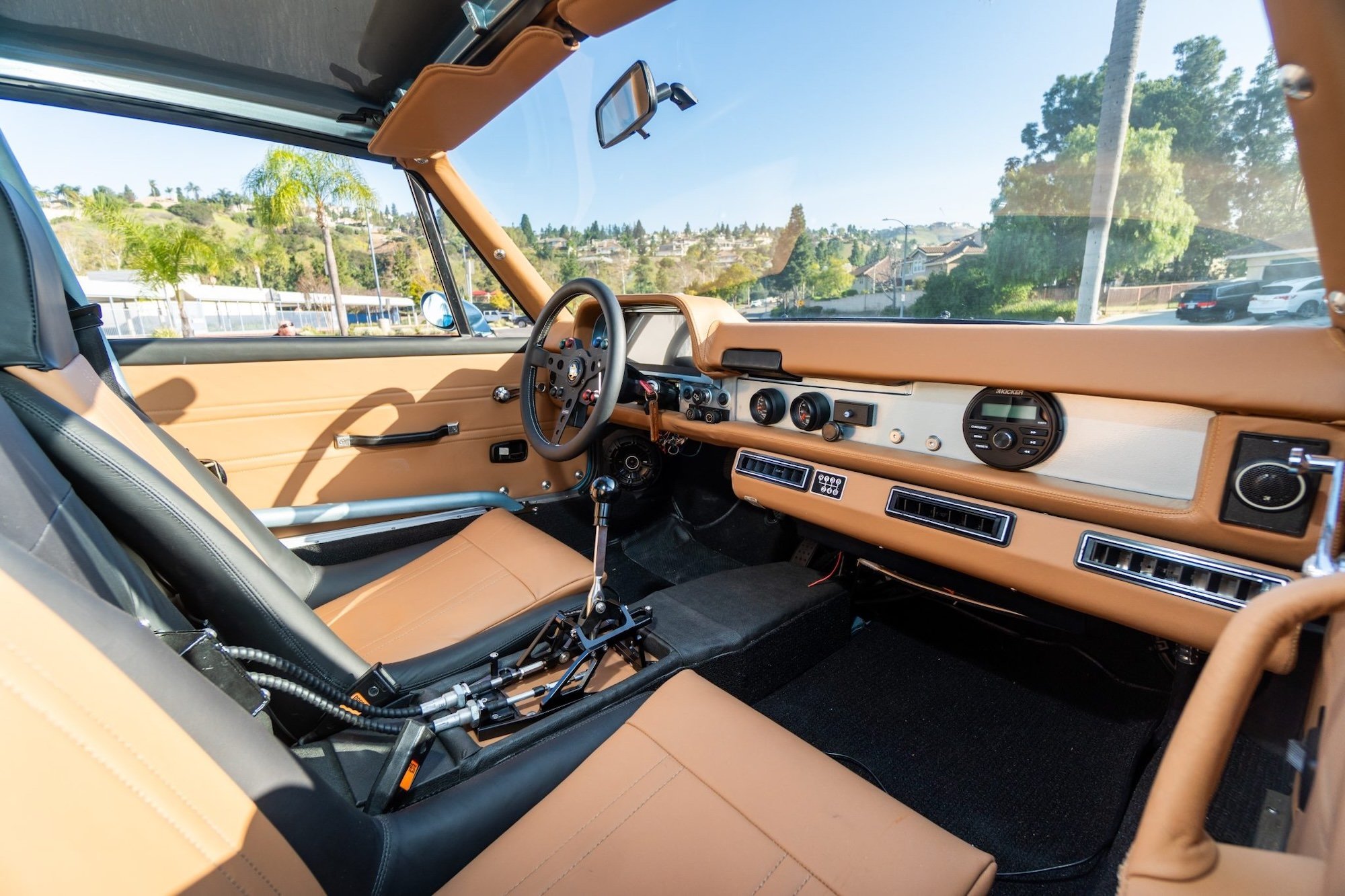
Inside, the cabin has reupholstered two-way adjustable bucket seats trimmed in black leather with tan centers, with matching leather extending across the dashboard. Equipment includes a body-color roll bar, Numeric Racing shifter and cables, air conditioning, and a Kicker Bluetooth stereo system.
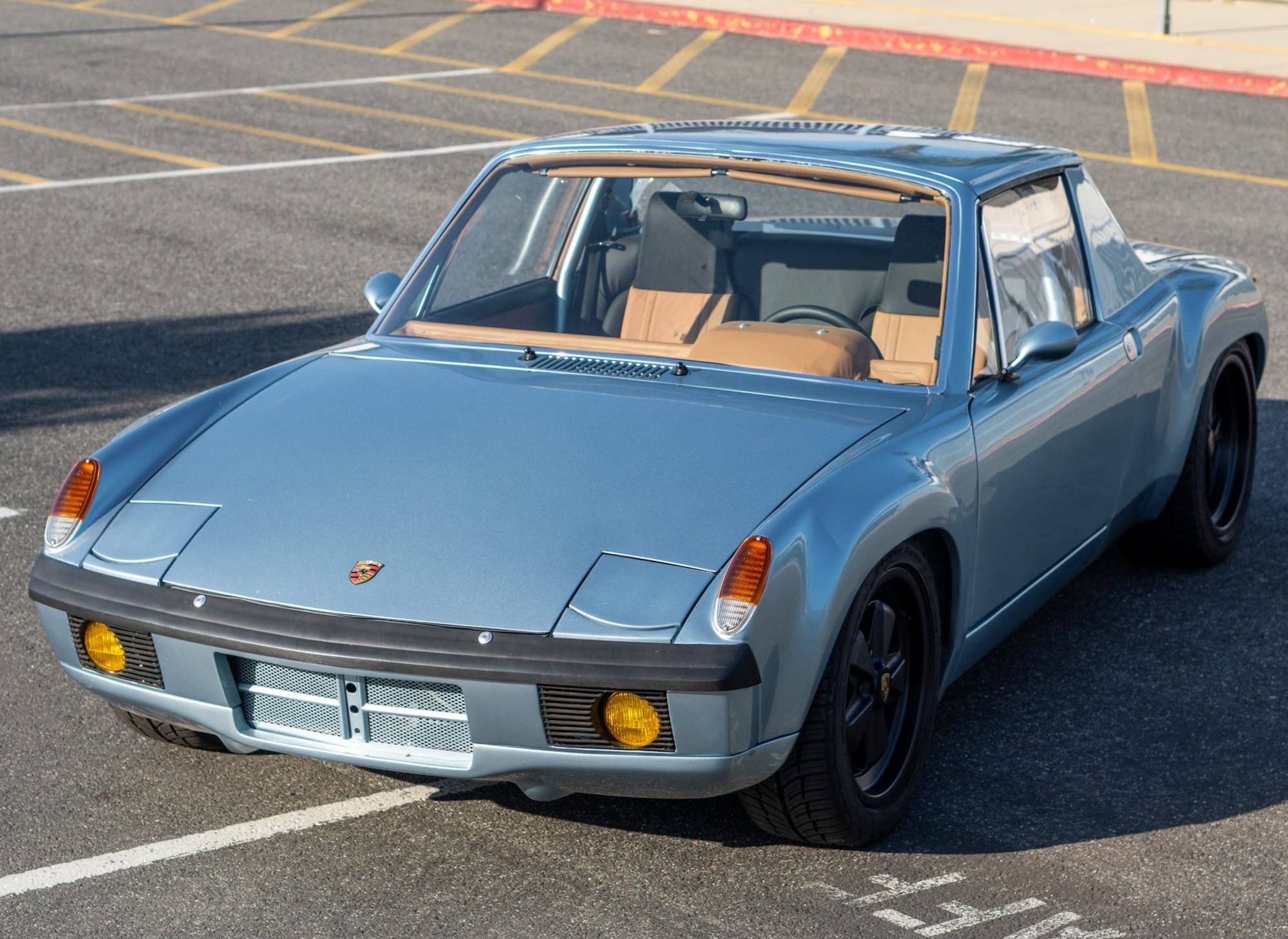
This is a 1974 Porsche 914 that has been given a remarkable series of modifications, including the fitment of a 430 bhp LS3 V8 crate engine – over four times as much power as the car had from the factory.
A leather-wrapped Momo steering wheel fronts an AutoMeter InVision LCD digital cluster, with additional AutoMeter water temperature and oil pressure gauges. The digital odometer shows 275 miles since completion of the build.
The car is now being offered at no reserve with a clean California title in the seller’s name and you can visit the listing here on Bring a Trailer if you’d like to read more about it or place a bid.
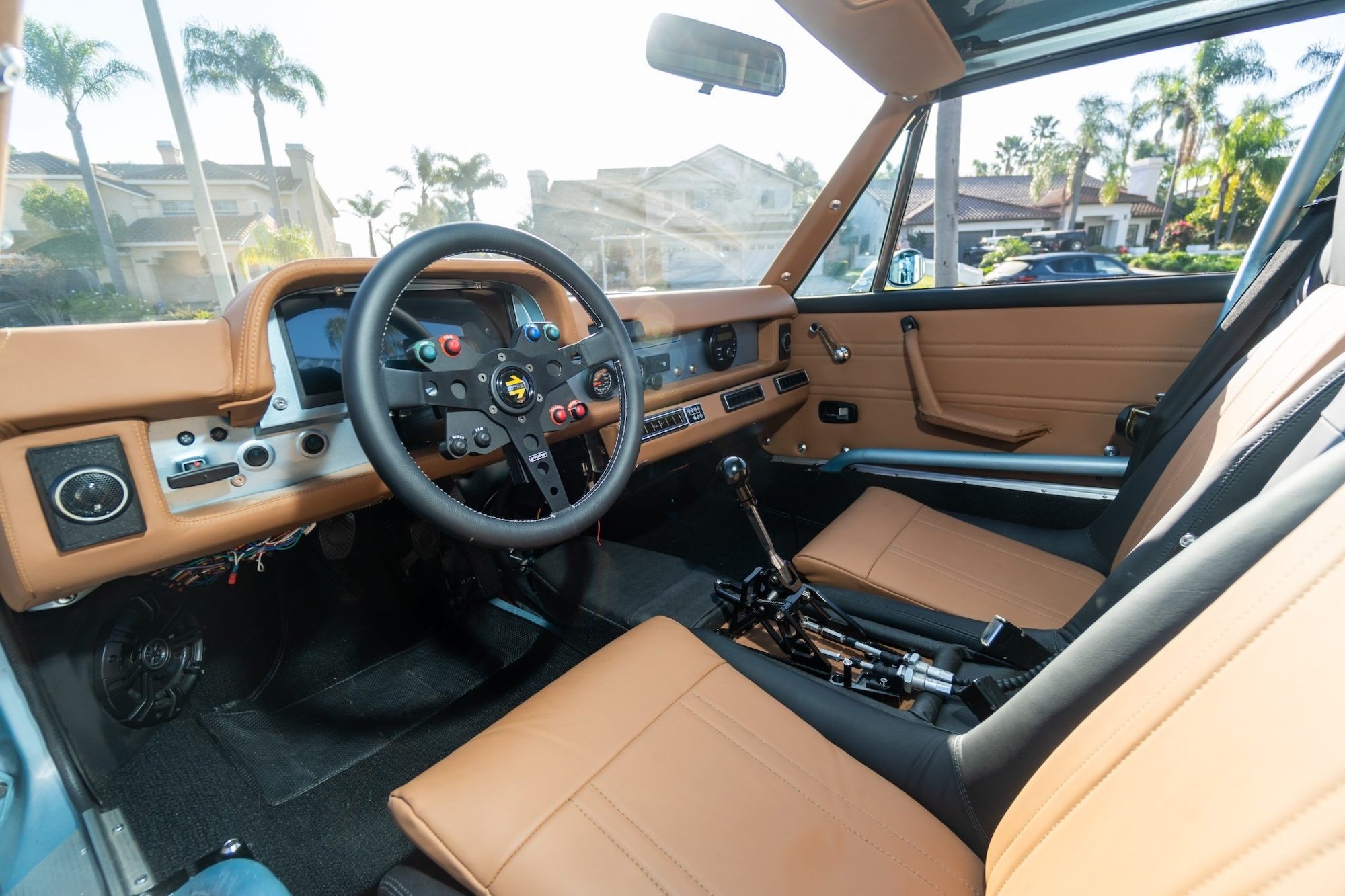
Images courtesy of Bring a Trailer

Articles that Ben Branch has written have been covered on CNN, Popular Mechanics, Smithsonian Magazine, Road & Track Magazine, the official Pinterest blog, the official eBay Motors blog, BuzzFeed, Autoweek Magazine, Wired Magazine, Autoblog, Gear Patrol, Jalopnik, The Verge, and many more.
Silodrome was founded by Ben back in 2010, in the years since the site has grown to become a world leader in the alternative and vintage motoring sector, with well over a million monthly readers from around the world and many hundreds of thousands of followers on social media.