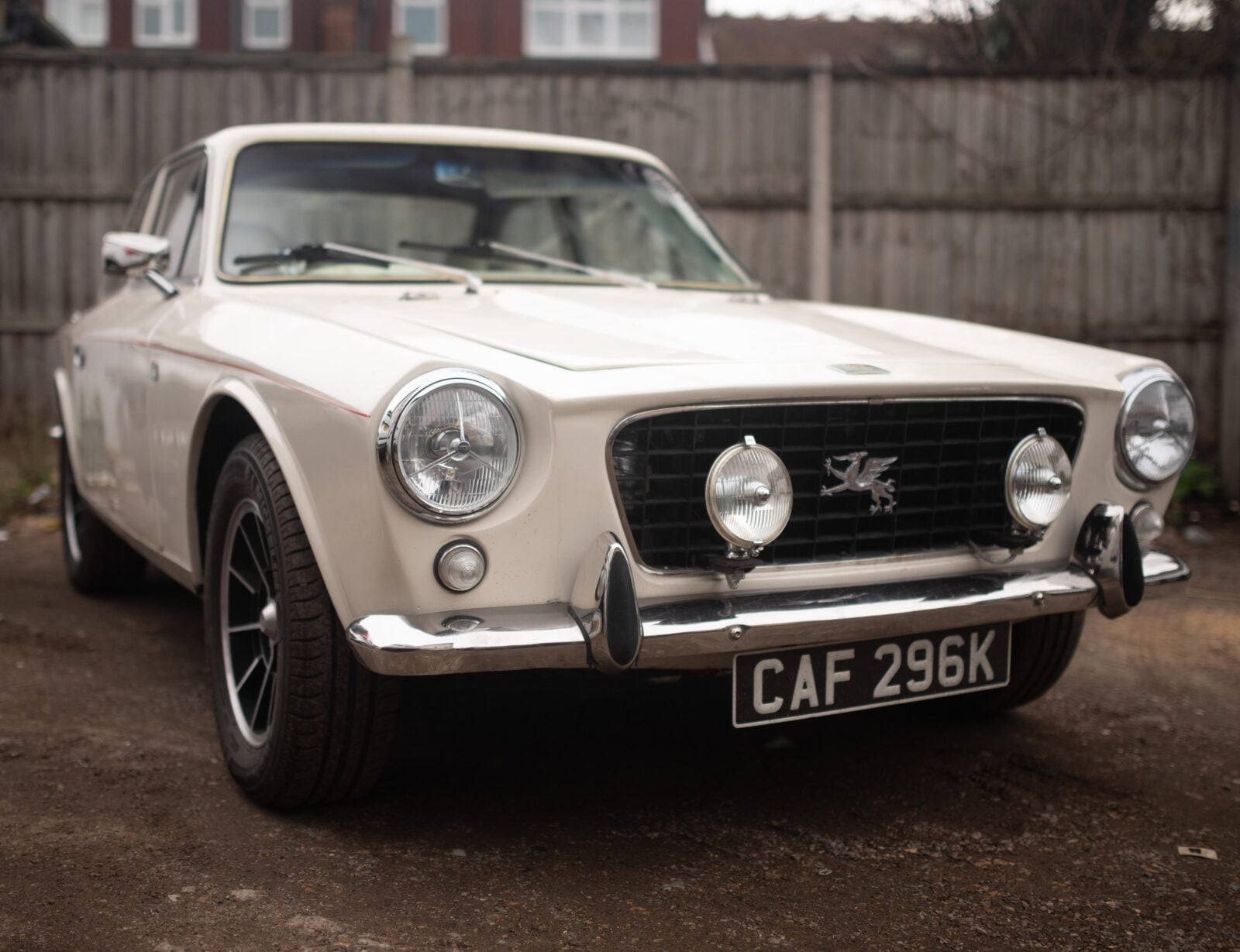
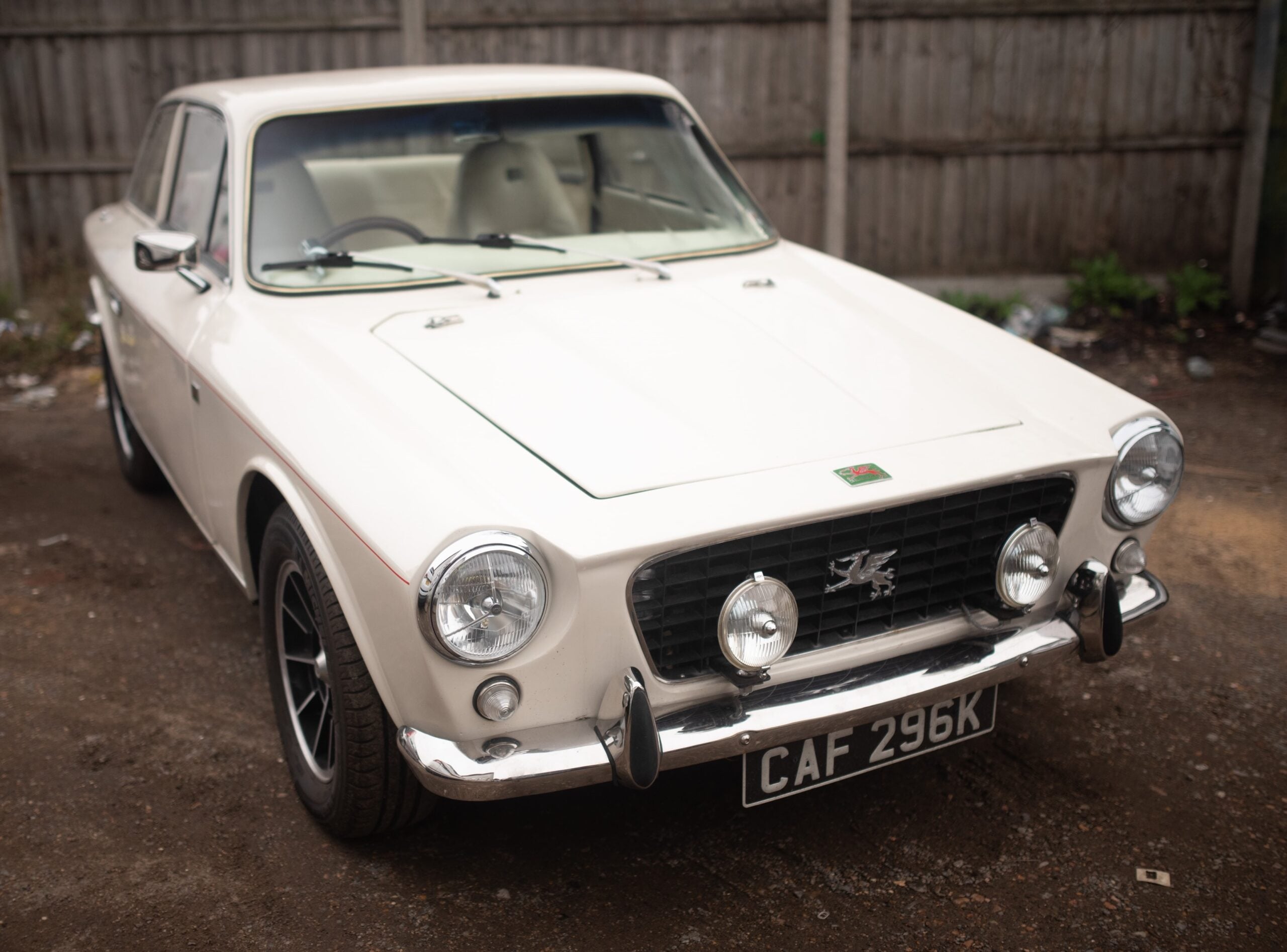
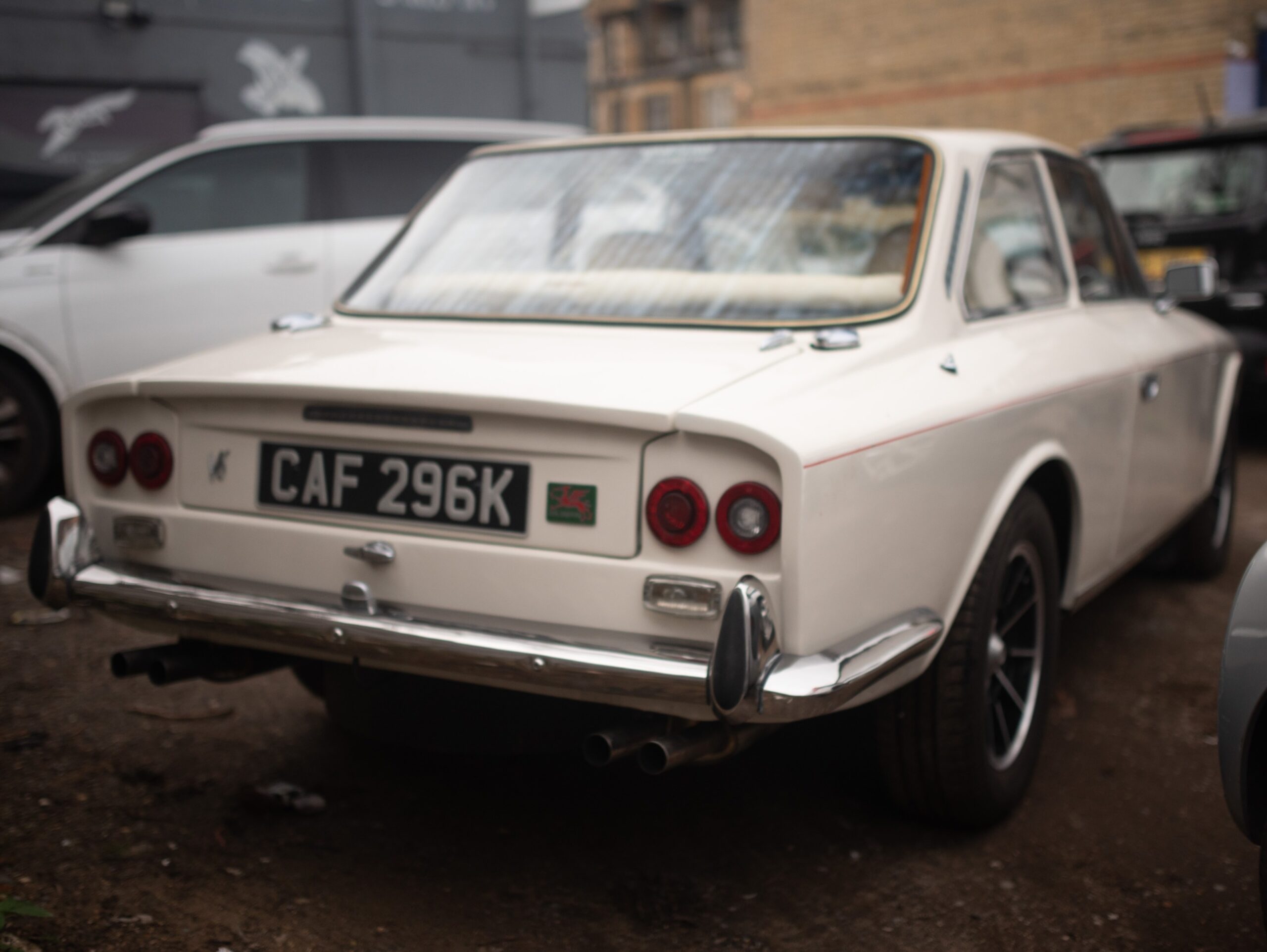
This is a rare Gilbern Invader from 1972, it’s a little-remembered GT car that was built in Wales and offered sprightly performance thanks to its relatively low curb weight and its 3.0 liter Ford Essex V6.
The Invader was the final production model offered by Gilbern, and it was also the most developed, with an improved chassis, upgraded suspension, and even luxuries like electric windows and a walnut-veneered dashboard. Just 603 were made, and they only rarely come up for sale now.
Fast Facts: The Gilbern Invader
- The Gilbern Invader was introduced in July of 1969 as a heavily revised successor to the earlier Genie model, built with glassfiber bodywork over a square-section steel chassis. Power came from the 2,994cc Ford Essex V6, giving the lightweight Welsh GT excellent low and mid-range push suited to long-distance touring and brisk road use.
- Gilbern, founded in 1959 by Giles Smith and Bernard Friese, operated first from a small workshop before moving to the former Red Ash Colliery site in Llantwit Fardre. The company’s formula relied on proven mass-market mechanical parts, selling cars either factory-built or in component form to remain price competitive.
- The Invader evolved through three main iterations. The Mk I established the strengthened chassis and improved braking, using higher-spec front suspension components. The Mk II, launched in October 1971, introduced detail revisions including reclining seats and additional chassis stiffening. The Mk III, introduced in 1972, had more extensive body restyling, Ford Cortina front suspension, and a wider track.
- An unusual Estate version arrived in 1970, effectively a V6-powered shooting brake built years before fast estates became fashionable. Production figures vary between roughly 68 and 110 units for the Estate. Total Invader production across all variants reached 603 cars before Gilbern ceased operations in April of 1973 following VAT changes that removed the financial advantage of component car sales.
History Speedrun: The Gilbern Invader
Gilbern never built cars the way the mainstream British automotive industry did – instead it built them the way a small, stubborn Welsh outfit would: glassfiber bodywork over a square-section steel chassis, using proven mass-market mechanical bits, then selling the finished product either as a complete car or, in kit form to keep it affordable for blue collar Welsh (and British) enthusiasts.
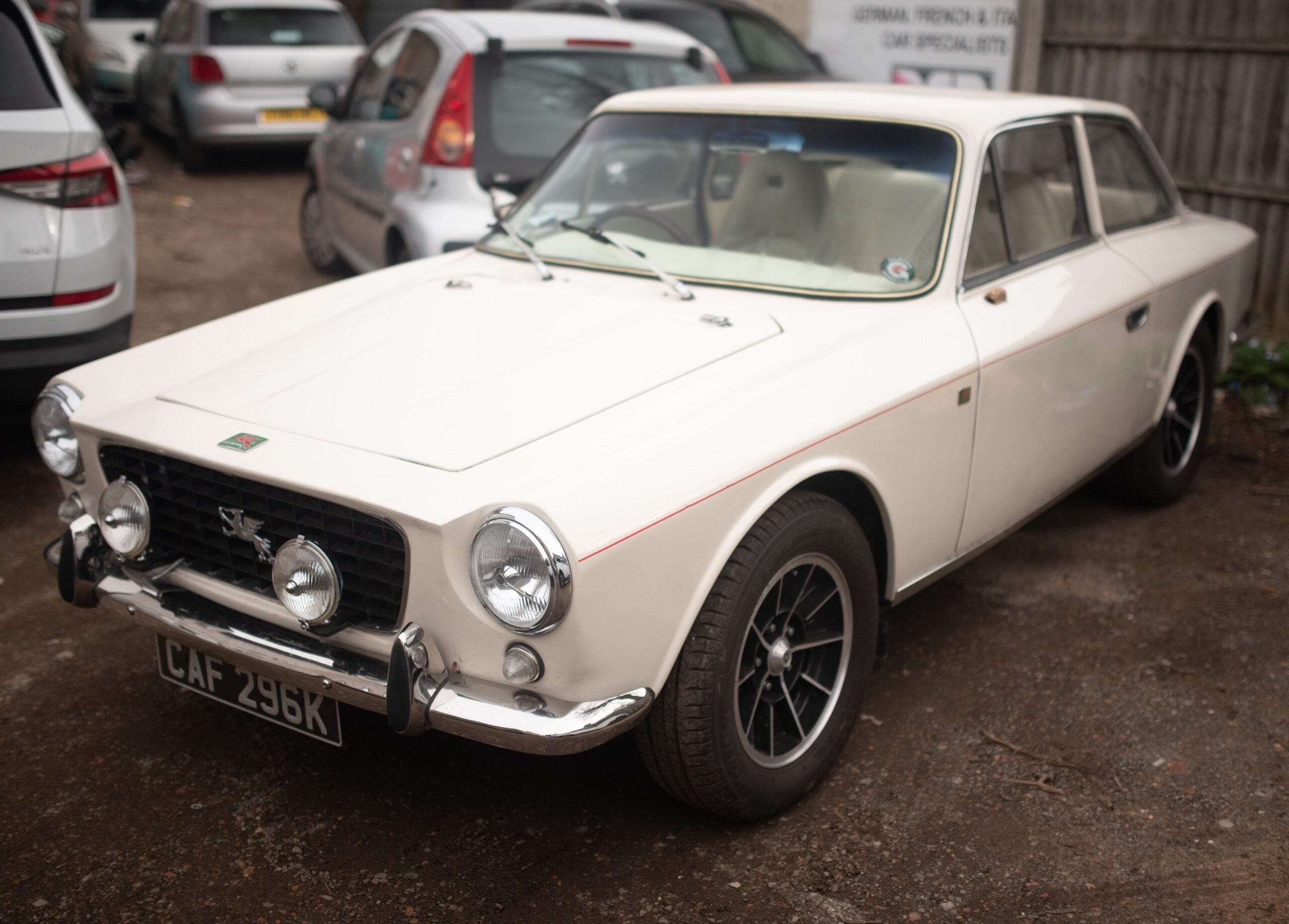
 This is a rare Gilbern Invader from 1972, it’s a little-remembered GT car that was built in Wales and offered sprightly performance thanks to its relatively low curb weight and its 3.0 liter Ford Essex V6.
Sadly for all concerned, the Invader arrived right at the moment when that well-trodden British kit car formula needed to grow up and face stark new tax realities. Tax realities caused by government-led changes that were blind to the industry-wide death sentence they would be causing.
Gilbern was founded in 1959 by Giles Smith, a former butcher, and Bernard Friese, a German engineer with experience in glassfiber moulding. Interestingly, Friese was a Prussian member of the German military during WWII who had been taken prisoner by the Allies during the war, and ended up in a British PoW camp.
He had met his locally born wife during the war, on one of his frequent forays over the camp fence at night, and after the war they married and Friese settled into his new life in his adopted country. He would end up having six children with his wife, and becoming a major figure in the British low-volume car industry of the time
Early operations at Gilbern were humble and based out of a small workshop, when production gathered pace the business moved to the former Red Ash Colliery site at Llantwit Fardre, near Pontypridd. By the late 1960s Gilbern had already found its niche building composite GT cars, first with the Gilbern GT and then with the Gilbern Genie. The Gilbern Invader was the last chapter, and the most ambitious.
The Gilbern Invader Appears
The Invader was introduced in July of 1969 as a development of the Genie, but it wasn’t just a facelift. The chassis was strengthened and braking capacity improved, with front suspension switching over to higher-spec MGC parts.
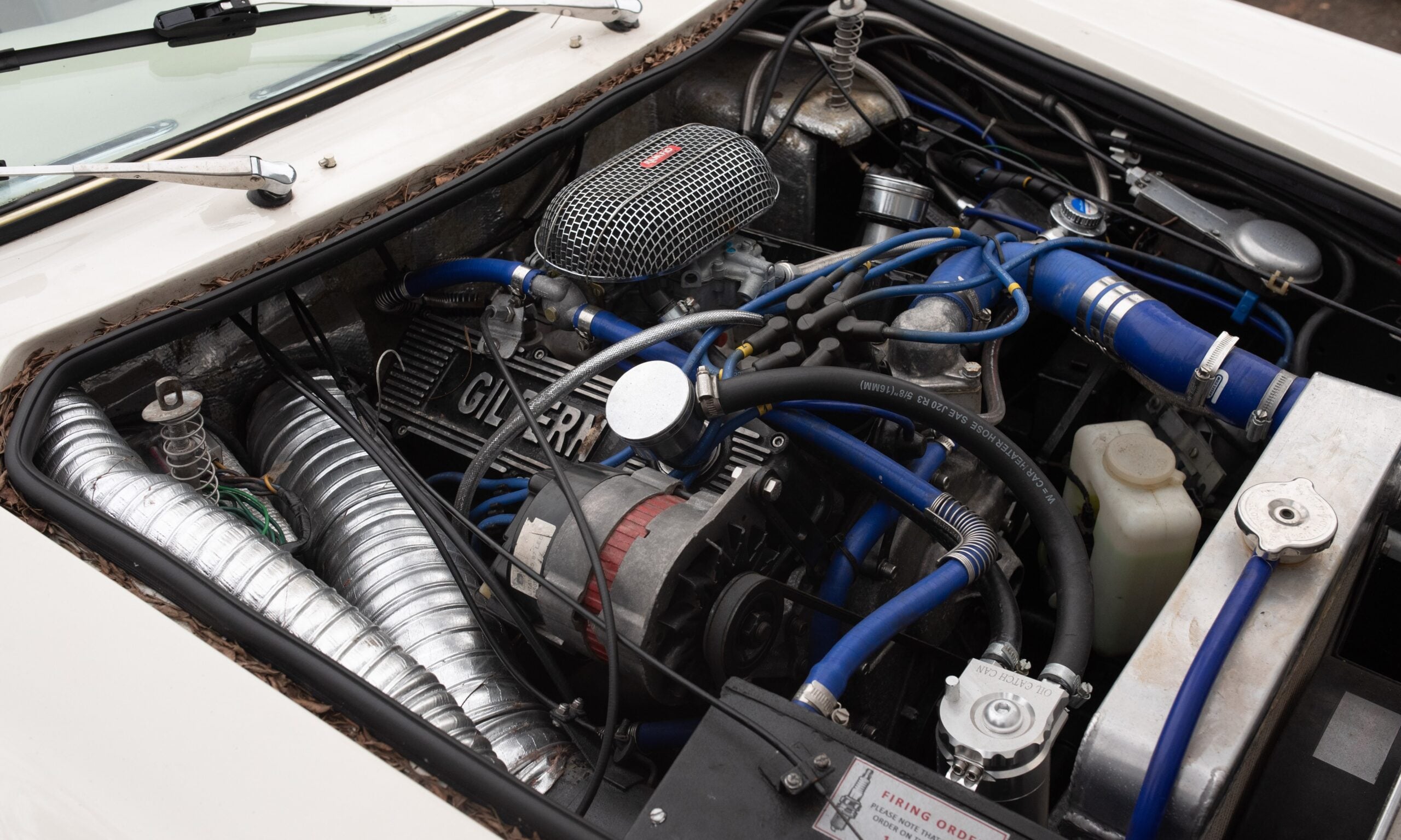
Mechanically, this Invader keeps the Ford Essex 3.0 liter V6 that has now been rebuilt to a higher state of tune, and paired with an overhauled overdrive gearbox and new clutch.
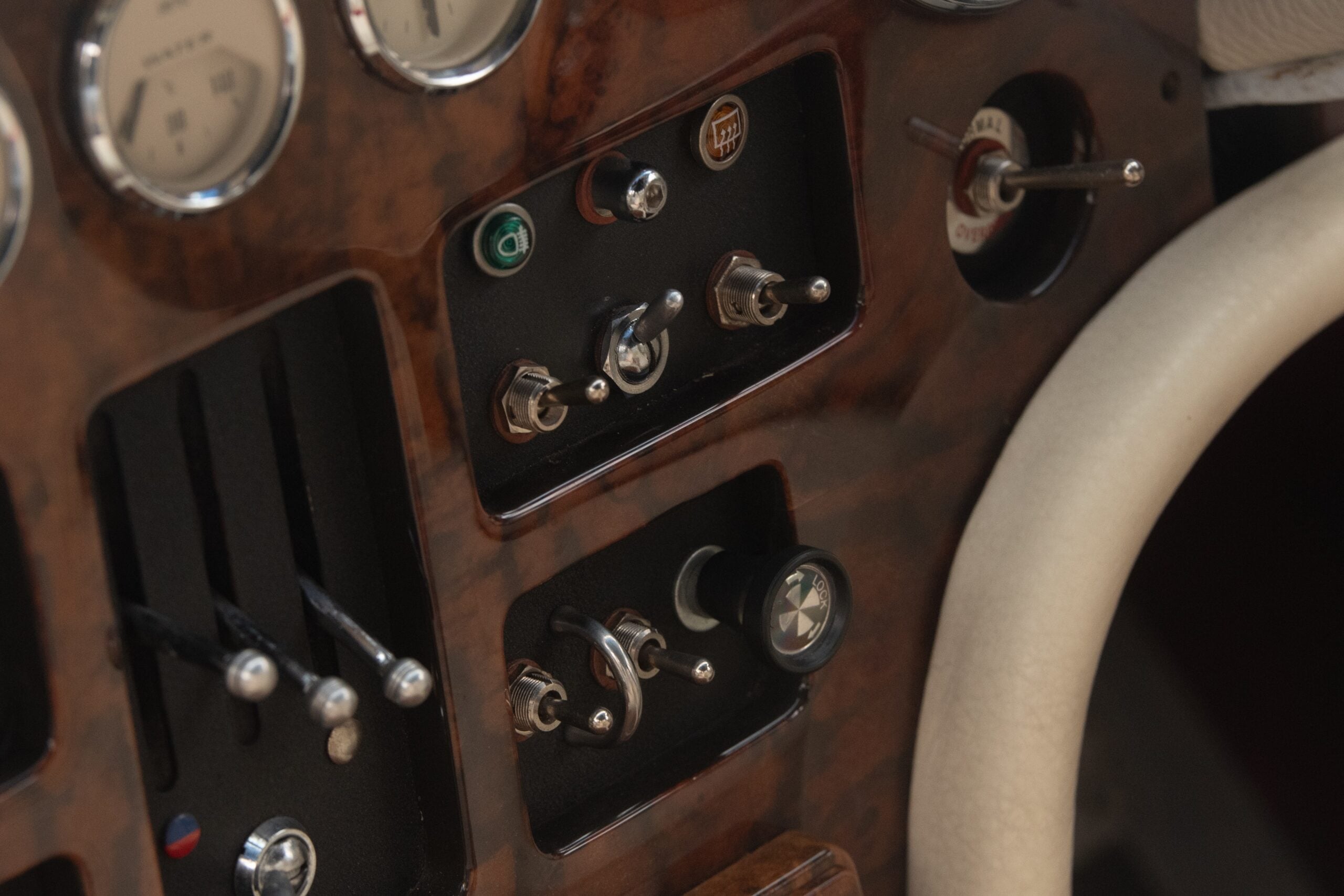
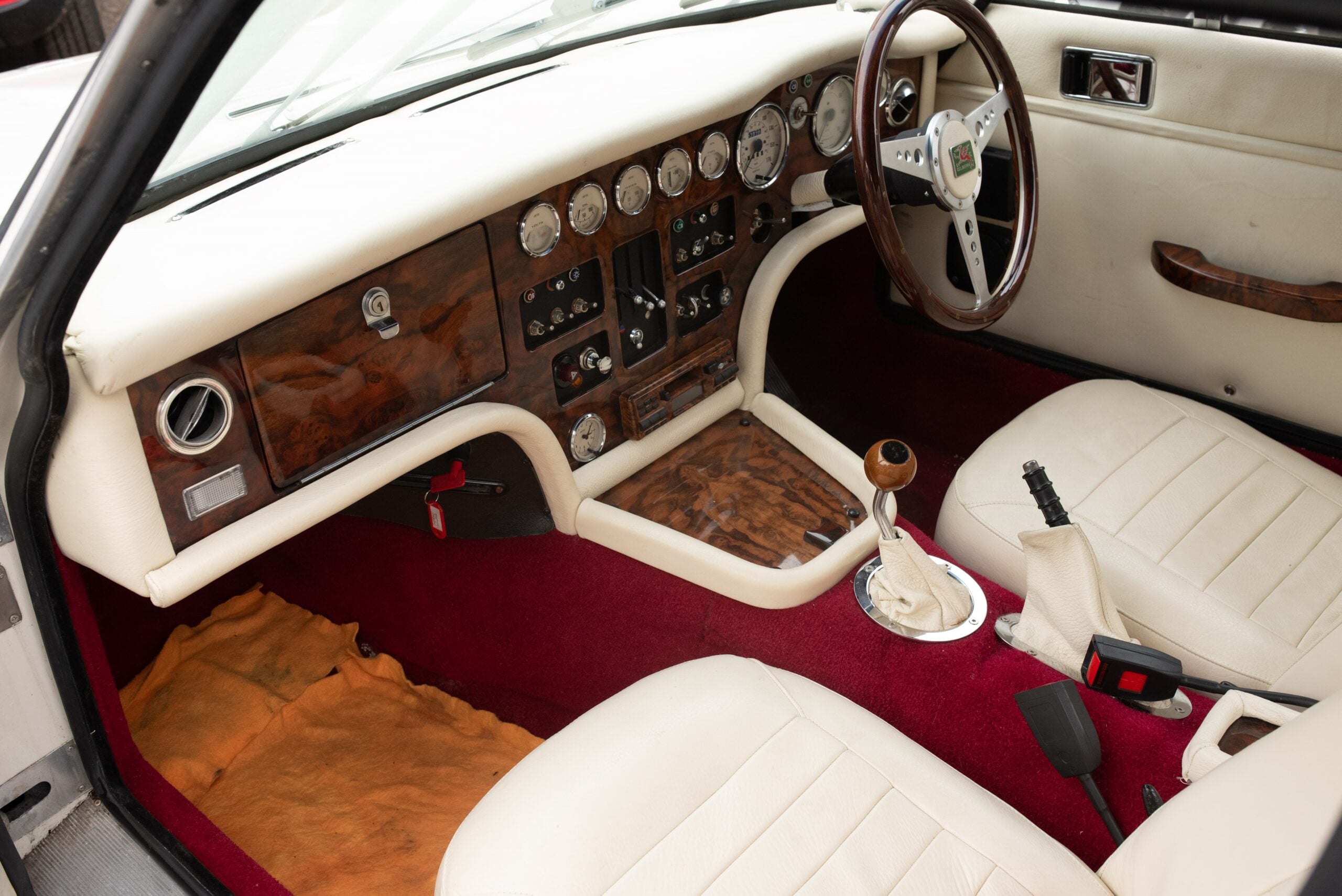
Power came from Ford’s Essex V6 in 2,994cc (3.0 liter) form, giving the Invader the kind of torque and mid-range shove that suited a small GT meant to cover distance and do it with spirit. Gilbern also pushed the Invader further upmarket with features that read more junior luxury coupe than kit car special – it had electric windows and a walnut-veneered dashboard, improved seats, and better fit and finish throughout.
Where the earlier Gilbern cars could feel like an assembly of bought-in parts under a neat fiberglass skin, the Invader tried harder to feel like a finished production car.
In 1970 Gilbern added the Invader Estate, it’s the version most people remember because it’s so unusual – a Welsh V6 GT shooting brake/wagon built years before the concept of a fast estate became a popular niche. Production was somewhere between 68 and 110 for the estate version, and they’re considered highly collectible today.
By late 1971, Gilbern was still developing the Invader platform, the Mk II Invader was launched in October of 1971 at the London Motor Show, it was broadly similar to the original car but updated in small details, including new reclining front seats and some chassis stiffening that further improved the handling.
The final iteration was the Invader Mk III, launched in 1972. This iteration offered some major mechanical and body changes including Ford Cortina front suspension, front and rear body restyling, a wider and lower body from new moulds, and a track increase of about four inches (10 cms).
Gilbern didn’t survive much longer. The company’s end date was April of 1973, a date that coincided with the UK government decision to add Value Added Tax (VAT) to kit cars, killing off any financial advantage that Gilbern might have had.
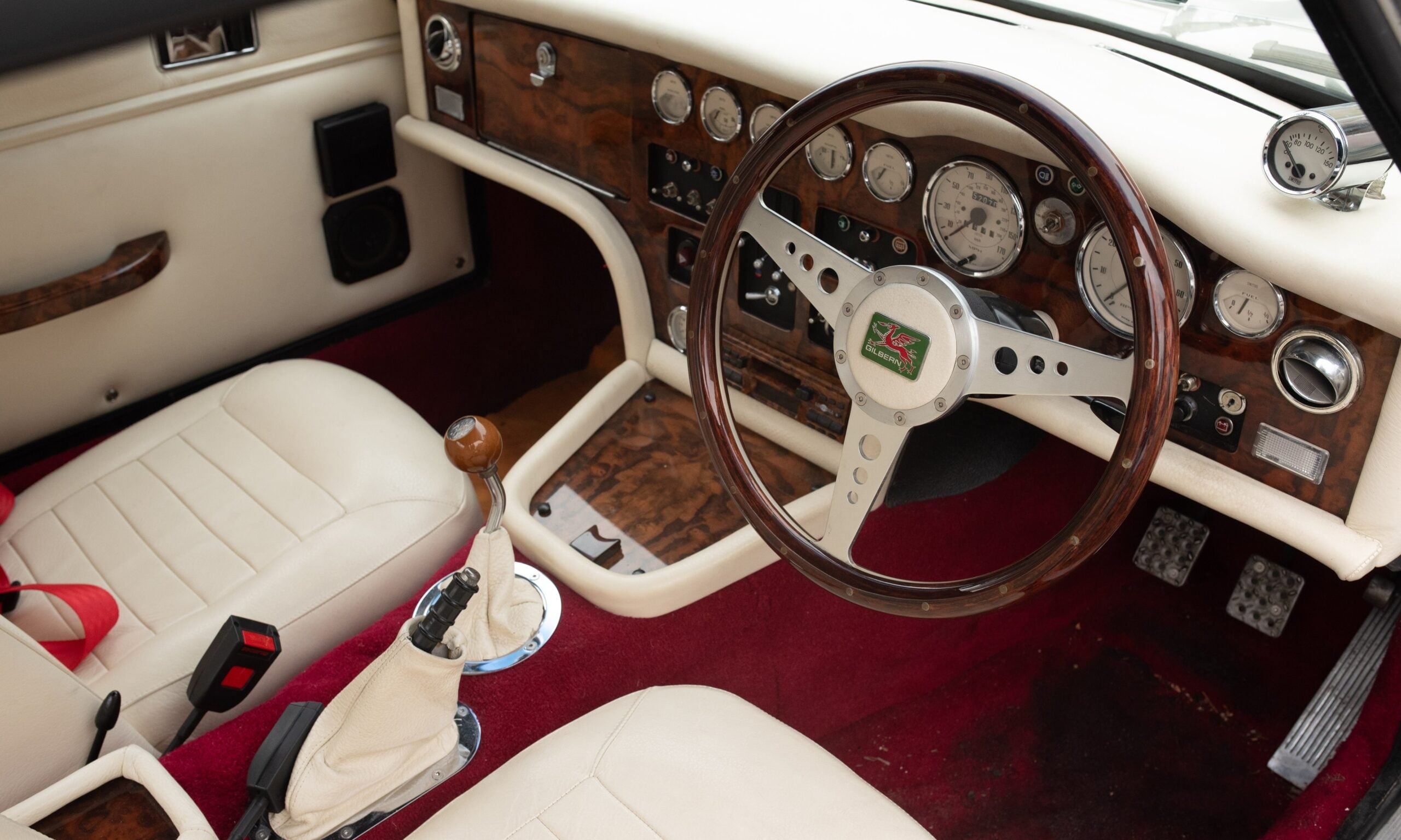
The Invader was the final production model offered by Gilbern, and it was also the most developed, with an improved chassis, upgraded suspension, and even luxuries like electric windows and a walnut-veneered dashboard. Just 603 were made, and they only rarely come up for sale now.
The surviving Gilbern cars are now treasured by their owners, and many have survived thanks to their rust-proof fiberglass bodies – just so long as owners took care to keep the chassis dry and coated in fresh Waxoyl.
The Gilbern Invader Mk II Shown Here
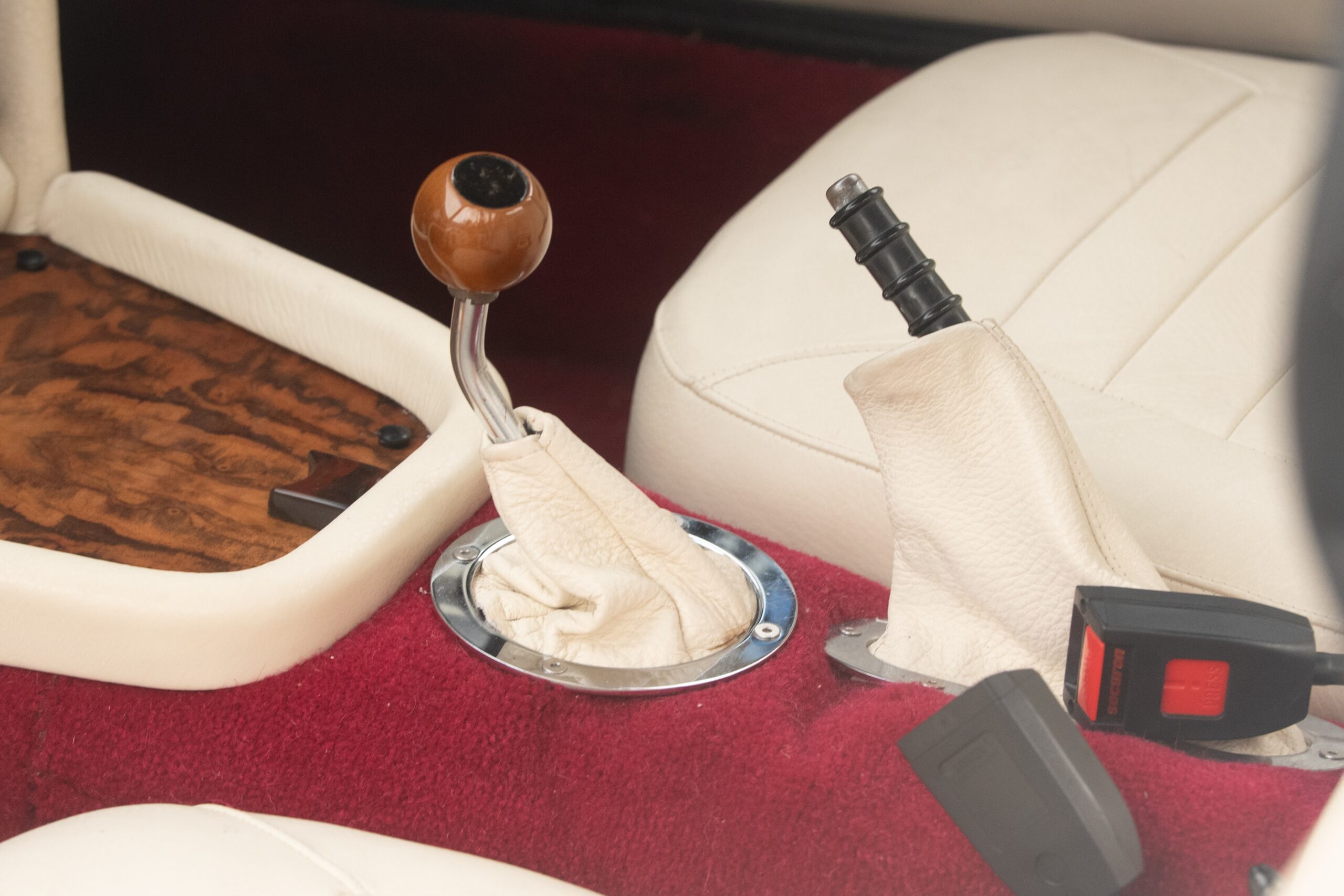
This is a 1972 Gilbern Invader Mk II finished in period-correct white over a white and red interior with ample burr walnut woodwork. The car has an indicated 52,069 miles on the clock, though this isn’t warranted.
This Invader was supplied new in component form and then assembled by its first owner, with early paperwork all present and accounted for. It reportedly stayed with that original owner for decades before changing hands in the late 2000s.
A later owner commissioned a longterm, ground-up restoration said to have taken close to ten years, with a substantial cost of over £14,000 ($18,900 USD). The work was aimed at returning the car to a clean, thoroughly sorted condition rather than just a quick cosmetic refresh.
Mechanically, it keeps the Ford Essex 3.0 liter V6 that has now been rebuilt to a higher state of tune, and paired with an overhauled overdrive gearbox and new clutch. Additional upgrades include a Weber carburetor, an upgraded cooling system, refreshed fuel system hardware, and a new stainless exhaust.
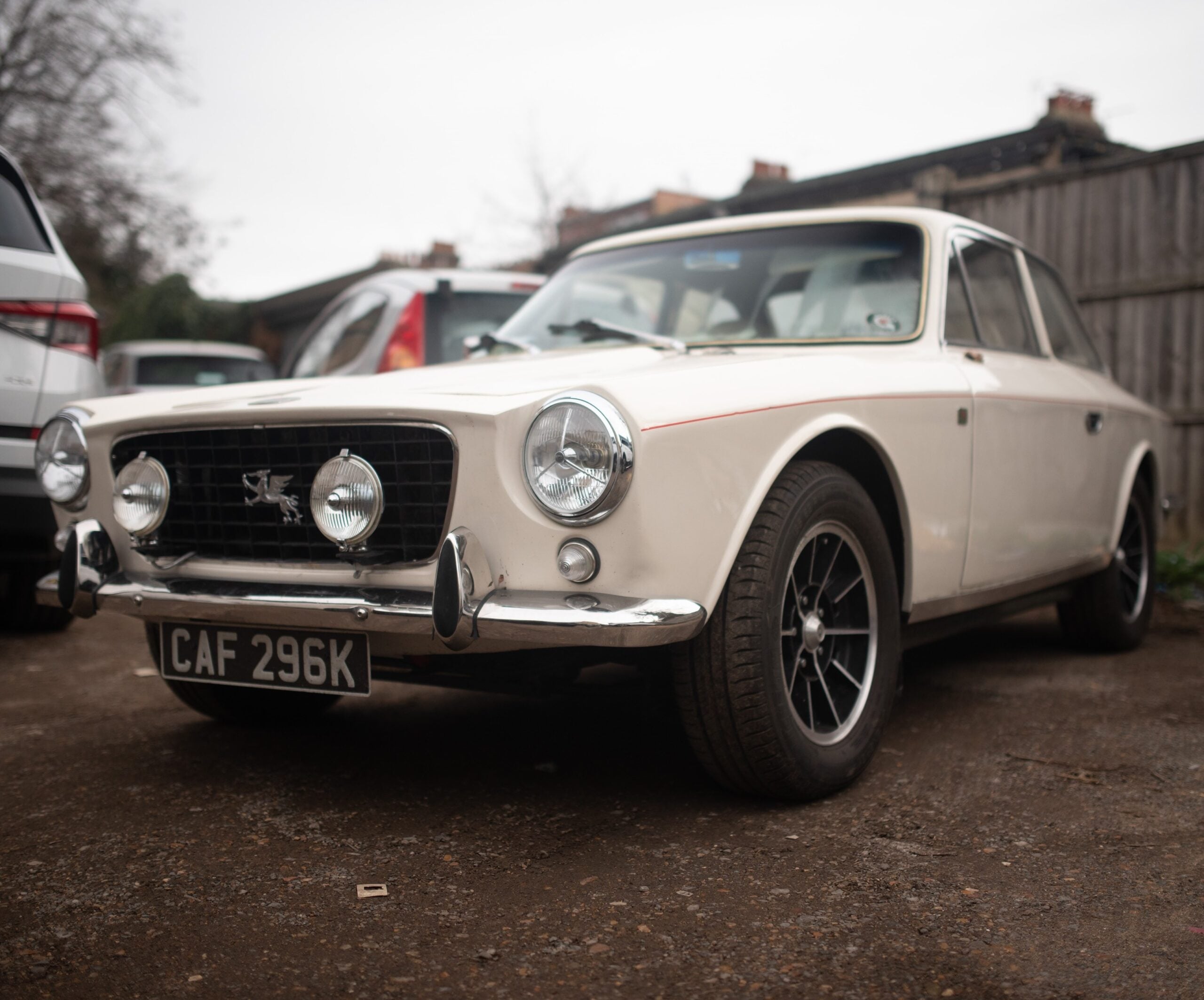
This Invader was supplied new in component form and then assembled by its first owner, with early paperwork all present and accounted for. It reportedly stayed with that original owner for decades before changing hands in the late 2000s.
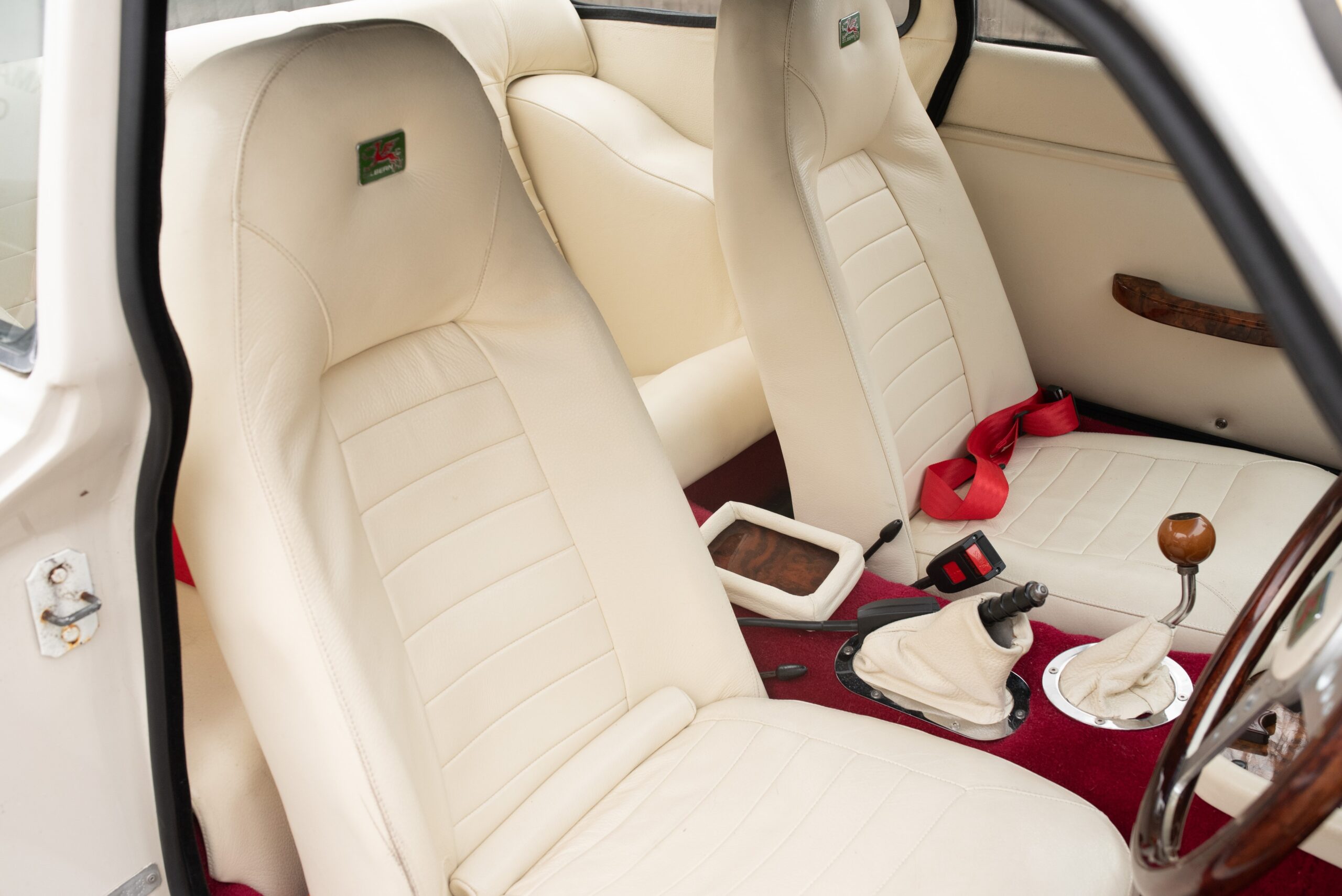
The restoration included an interior retrim with leather seats and refurbished trim details, plus refinished wheels on Michelin tires. The restoration was completed in 2018, after which the car has seen very limited mileage, and it’s accompanied by its paperwork/history file and current UK registration documents.
If you’d like to read more about it or register to bid you can visit the listing here. The car is due to roll across the auction block with Historics Auctioneers on the 7th of March with a price guide of £10,000 – £14,000 or approximately $13,500 – $18,900 USD.
Images courtesy of Historics Auctioneers

Articles that Ben Branch has written have been covered on CNN, Popular Mechanics, Smithsonian Magazine, Road & Track Magazine, the official Pinterest blog, the official eBay Motors blog, BuzzFeed, Autoweek Magazine, Wired Magazine, Autoblog, Gear Patrol, Jalopnik, The Verge, and many more.
Silodrome was founded by Ben back in 2010, in the years since the site has grown to become a world leader in the alternative and vintage motoring sector, with well over a million monthly readers from around the world and many hundreds of thousands of followers on social media.