This is a rare Ducati Mini Marcellino from 1969, it’s one of the smallest Ducati-powered production motorcycles ever made, and unusually it was made in Spain rather than Italy.
Although the company is best-known for its superbikes today, Ducati actually started out in post-WWII Italy building rather small motorcycles – their first model, the Ducati Cucciolo, had a displacement of just 48cc.
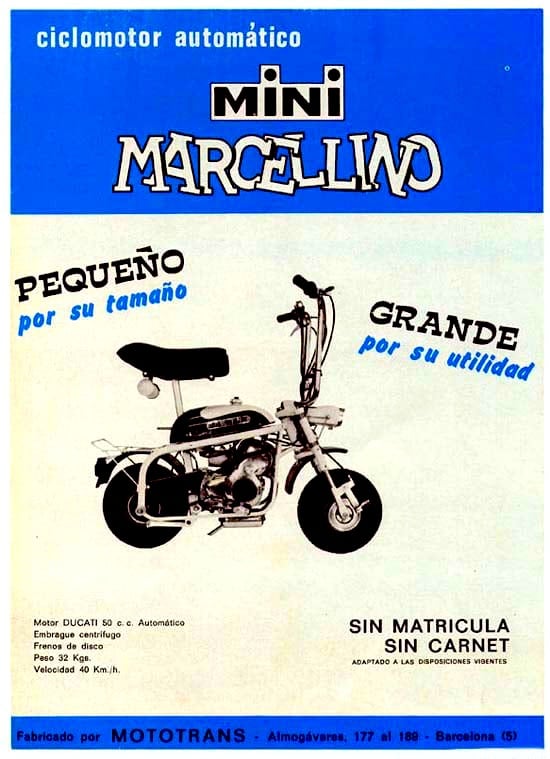
 The Mini Marcellino was a product of the late-1960s European mini-bike craze, which saw manufacturers from Moto Graziella to Beta, and Fantic all chasing the same idea – a pint-sized machine small and light enough to stow in a car’s luggage compartment and deploy for short-range transport at the other end. Image courtesy of Mototrans.
History Speedrun: Ducati Mini Marcellino
Although it’s often referred to as the Ducati Mini Marcellino, the bike isn’t, strictly speaking, a Ducati. Its origins lie with a small Italian manufacturer called DMT (Dinamica Meccanica Tassinari) based in the Ravenna area of Emilia-Romagna, not far from San Marino. DMT debuted the Mini Marcellino at the Milan Motorcycle Show in 1967 as a folding moped designed to fit in the trunk of a small car.
It was a product of the late-1960s European mini-bike craze, which saw manufacturers from Moto Graziella to Beta, and Fantic all chasing the same idea – a pint-sized machine small and light enough to stow in a car’s luggage compartment and deploy for short-range transport at the other end. It was an idea that Honda would visit many years later with the Honda Motocompo.
The Earlier Italian Version
The Italian original was powered by a Franco Morini two-stroke engine of 47.6cc, fitted with an automatic clutch. Early Italian machines used a recoil rope starter, while later examples switched to a lever-start mechanism. The frame was rigid, with no rear suspension, the first-series machines had no true front suspension either, relying only on short inverted connecting rods.
Disc brakes were fitted to both wheels, this was a genuinely advanced feature for a moped of this era, and the tiny Pirelli 3.00-5 tires gave it the proportions of a motorized toy. Cycle World magazine described it in April of 1968 as weighing just 57.4 lbs, with folded dimensions of 35.4 by 19.7 by 11 inches, a top speed of roughly 25 mph, and fuel consumption of around 71 mpg.
Unusually, this machine came with a purpose-made carrying bag in water-resistant synthetic leather with a tartan lining – so it could be carried by hand or slotted into a car trunk with only the saddle poking out. It may very well have been the only production motorcycle in history that came with its own handbag.
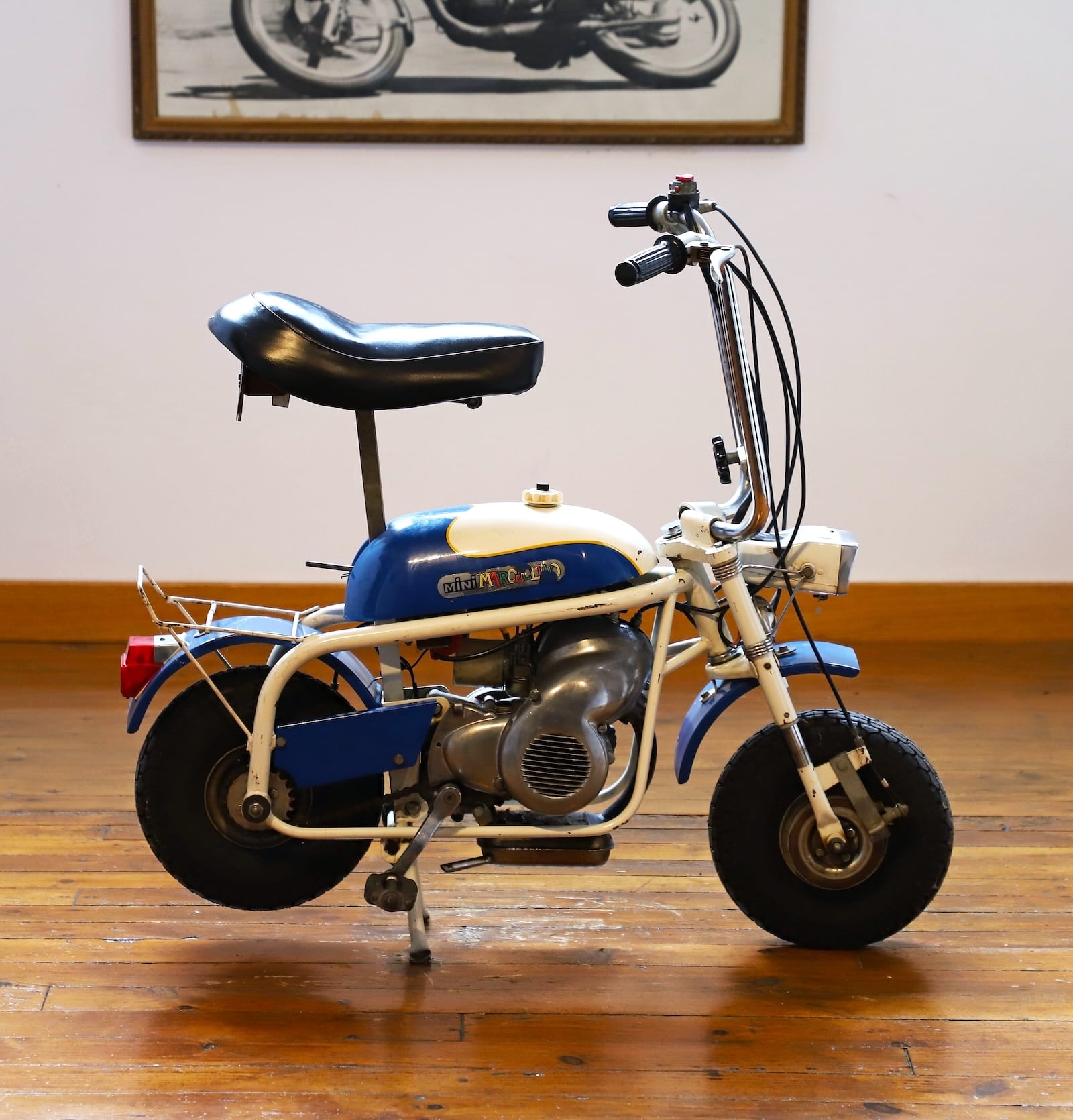
This is a rare Ducati Mini Marcellino from 1969, it’s one of the smallest Ducati-powered production motorcycles ever made, and unusually it was made in Spain rather than Italy.
DMT produced the Mini Marcellino in Italy from 1967 to 1969 in two main series. The first had no front suspension at all, the second introduced inverted telescopic forks and was offered in two trim levels – a spartan “Normal” model and the better-equipped “Super America,” which added a wider saddle, a speedometer, pannier bags, and Super America branding on the tank.
It’s believed that fewer than 1,000 Italian examples were built across both series, making it both rare and highly collectible today.
The Development Of The Spanish “Ducati” Version
The Ducati connection arrived in 1968 when Ernesto Palmieri Pirazzoli, a former Ducati rider and mechanic born in Bologna, was hired by the Spanish firm Dismave S.L. of Sagunto, near Valencia.
Palmieri travelled to Italy, secured the production licence from DMT, and returned to adapt the design for Spanish manufacture. Crucially, rather than importing Franco Morini engines, he chose to fit 48cc two-stroke engines built by Mototrans – the Barcelona firm that manufactured Ducati motorcycles under license for the Spanish market.
This is the basis for the “Ducati” name that has attached itself to the Mini Marcellino – the Spanish-built machines were powered by these license-built Ducati Mototrans engines, but the design, the chassis, and the concept all originated with DMT in Italy.
The first Spanish-built Mini Marcellinos left the Sagunto factory in 1969, initially keeping the Italian double-L spelling. From 1970 onward, commercial production was shared between Dismave and Mototrans, with Dismave handling distribution and after sales service.
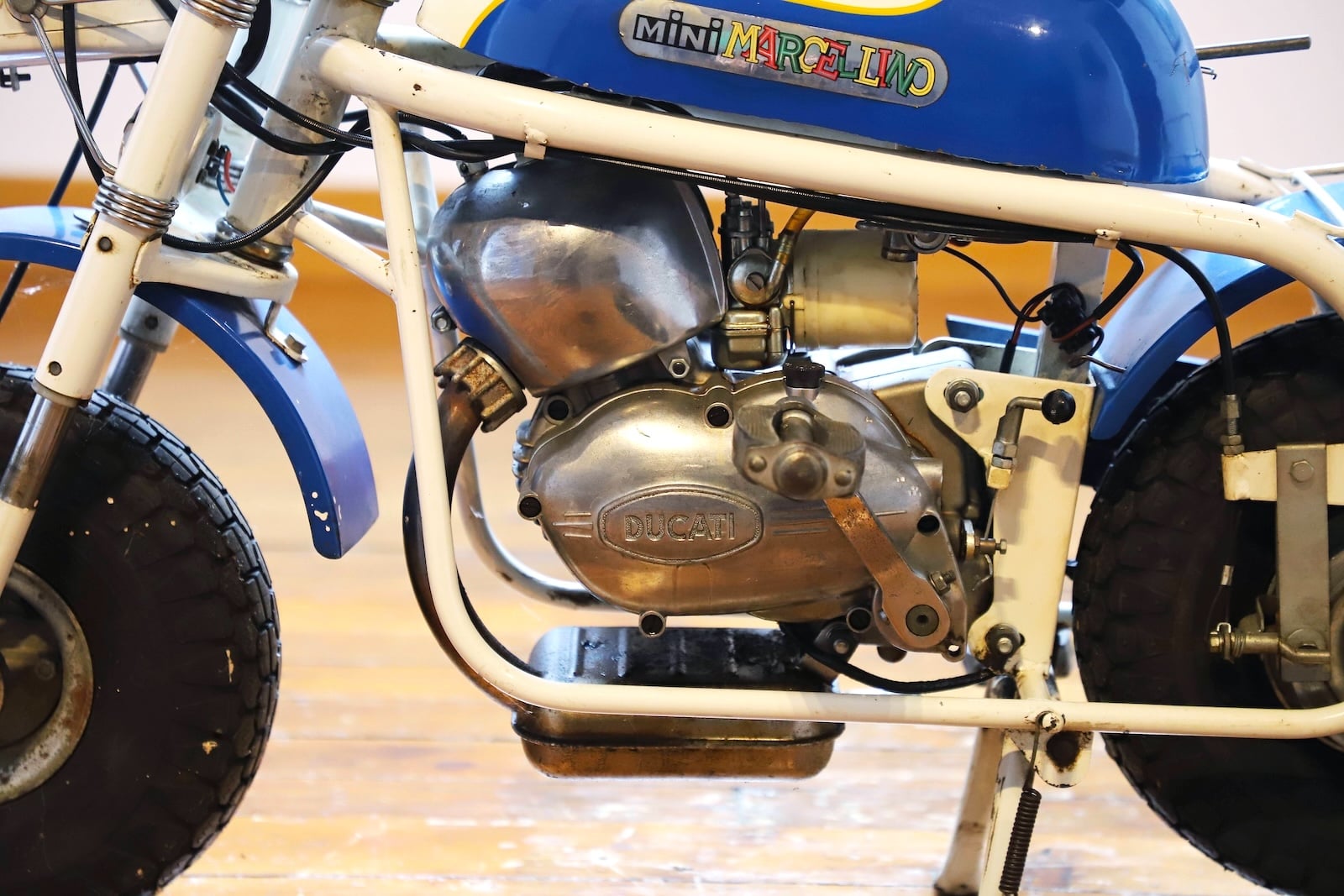
The earliest Spanish machines closely copied the Italian design with fiberglass bodywork and a rigid frame, and they kept disc brakes on both wheels. The spelling was simplified to “Marcelino” (one L) in 1971. In total, it’s thought that around 3,700 Spanish examples were built.
Whether the Spanish Mini Marcelino should properly be called a Ducati remains a matter of debate among enthusiasts. It was never advertised alongside mainline Ducati products, yet its type certificates were issued by the Delegation of Industry of Barcelona, Mototrans’s jurisdiction, and it always carried a Ducati Mototrans engine.
In late-1960s Spain it was an expensive little bike – at 13,060 pesetas it represented a significant outlay when a small car cost 60,000+ pesetas. It became a coveted prize in raffles, competitions, and nightclub giveaways, a miniature status symbol of sorts in a country on the cusp of its economic boom.
The 1969 Ducati Mini Marcellino Shown Here
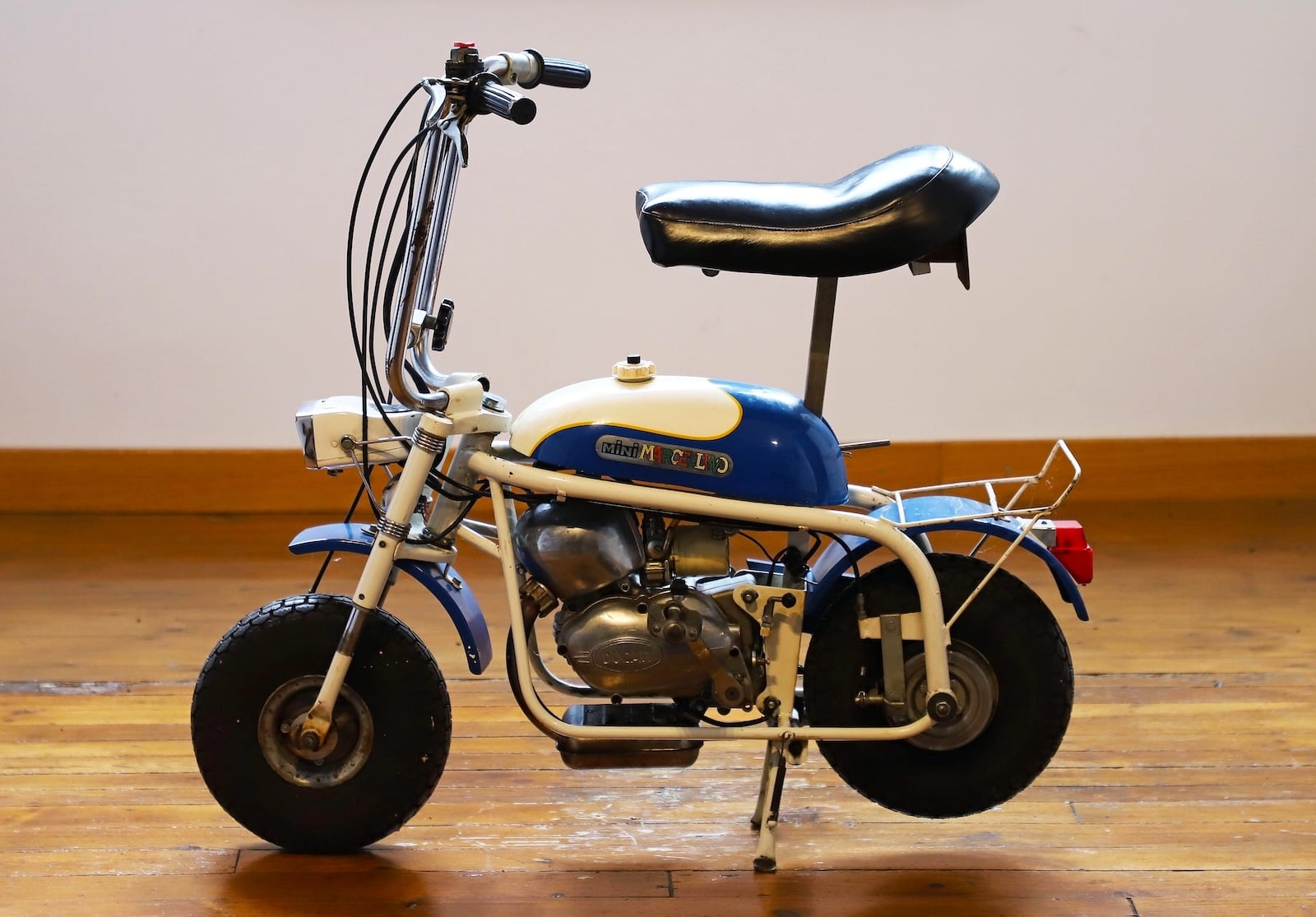
The 1969 Ducati Mini Marcellino you see here is being offered for sale out of a museum collection in France along with dozens of other interesting vintage bikes.
This Marcellino is finished in white and blue, and looks to be in complete, original condition throughout, right down to the tires and tiny disc brakes.
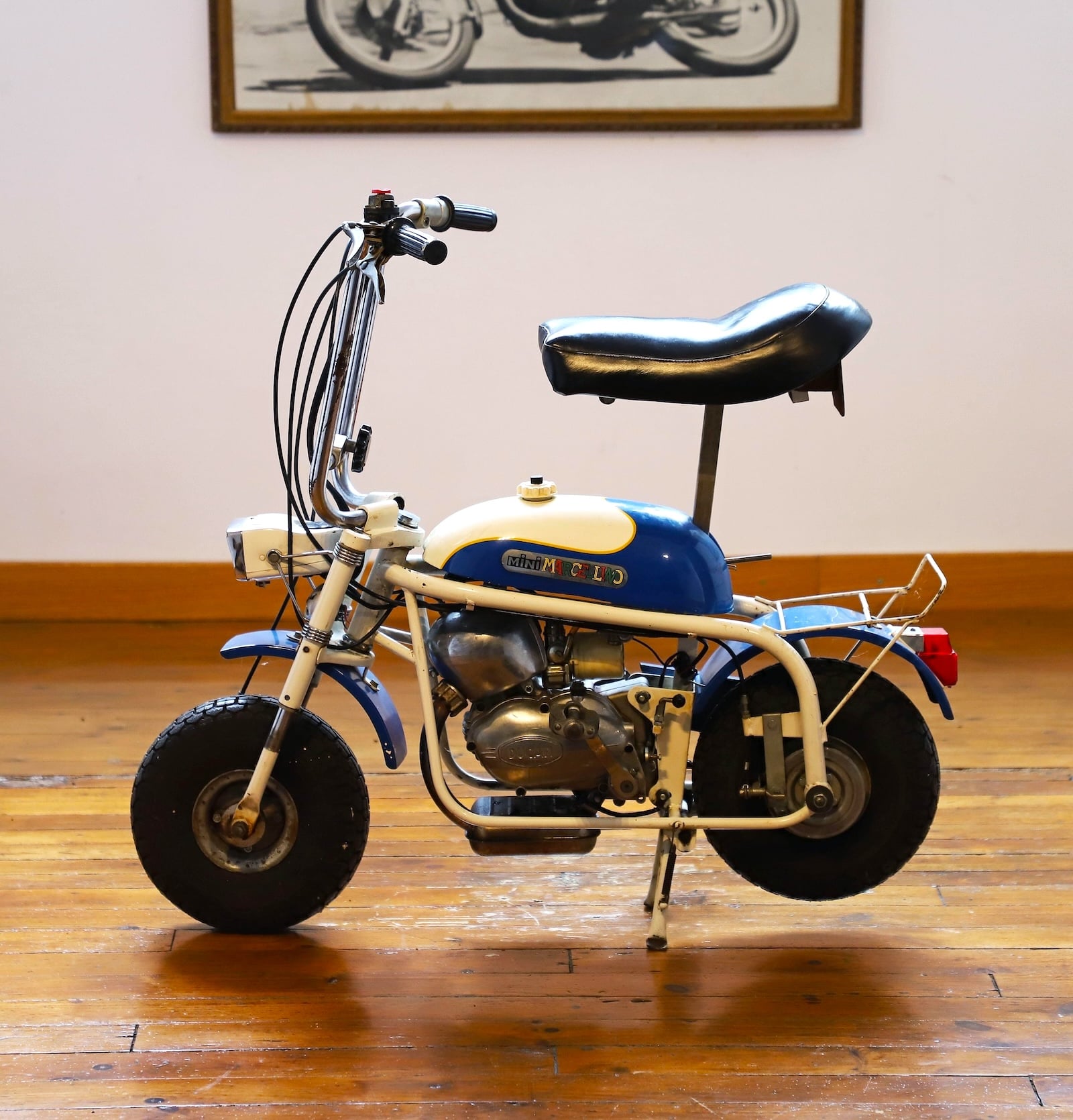
The 1969 Ducati Mini Marcellino you see here is being offered for sale out of a museum collection in France along with dozens of other interesting vintage bikes.
The listing doesn’t mention if the bike runs, although as it’s coming out of a museum collection it should probably be assumed that it will require some recommissioning work to get it back on the road.
It’s due to roll across the auction block with Aguttes on the 13th of April with a price guide of €500 to €1,000, which works out to approximately $576 USD to $1,152 USD. If you’d like to read more about it or register to bid you can visit the listing here.
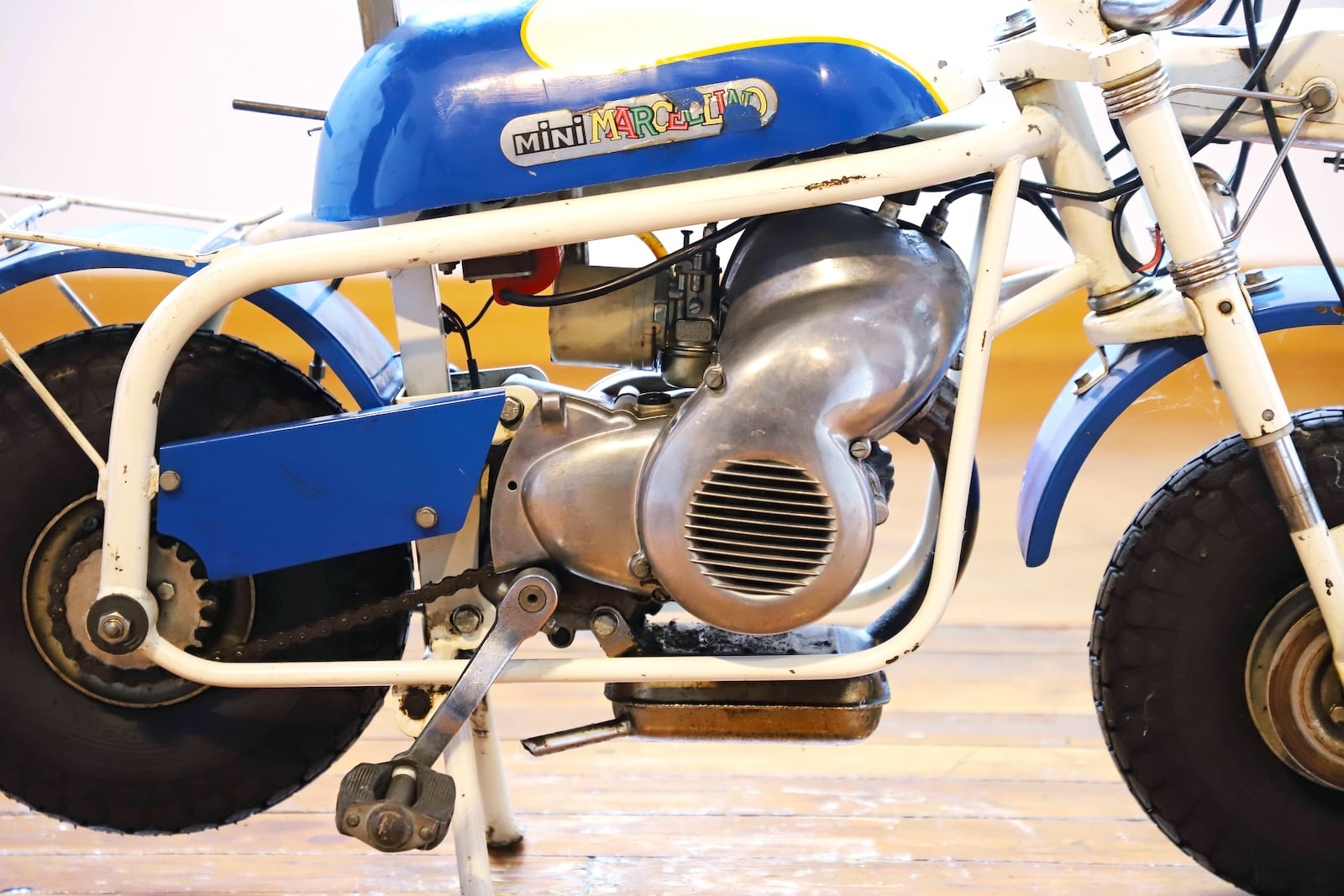
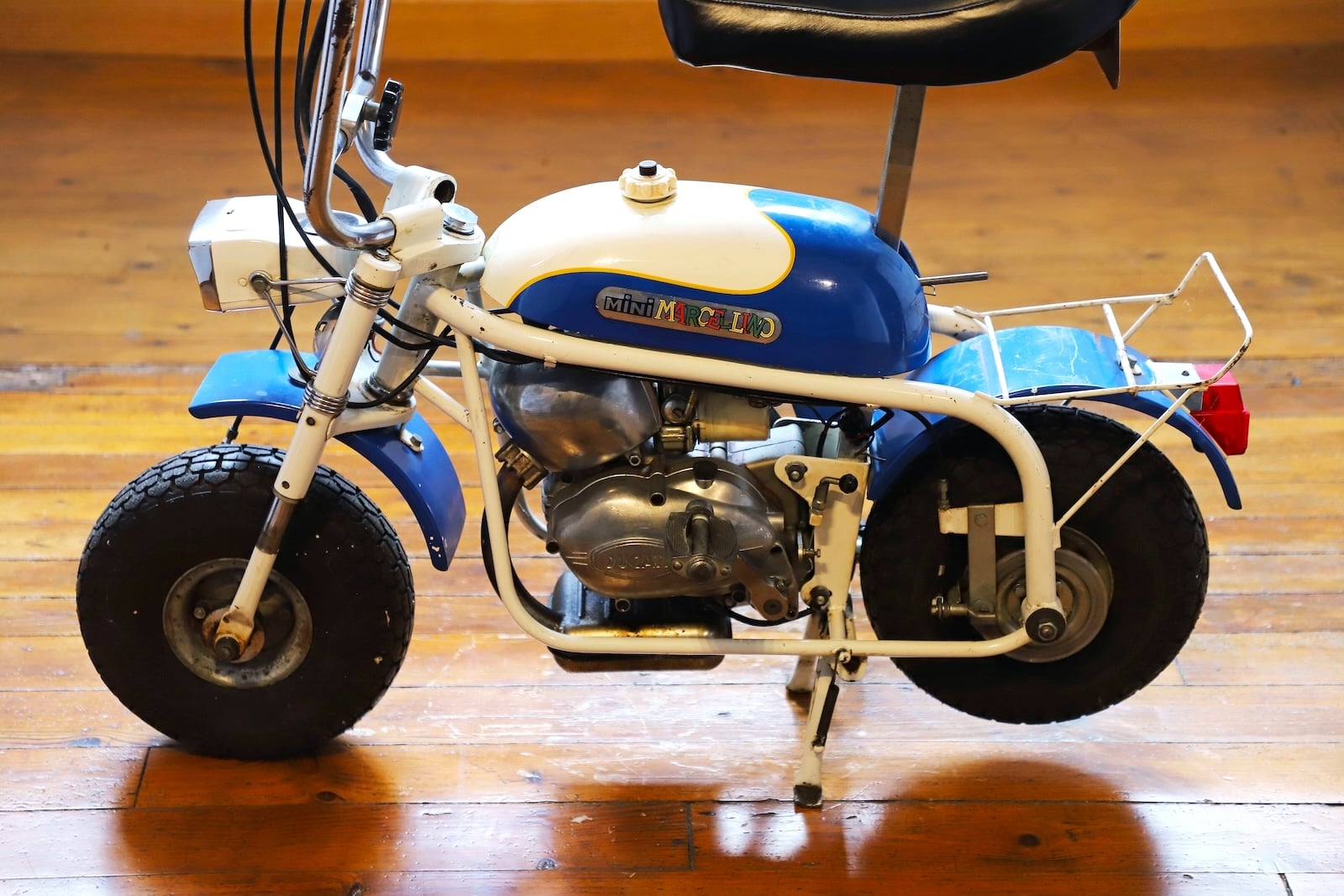
Images courtesy of Aguttes

Articles that Ben Branch has written have been covered on CNN, Popular Mechanics, Smithsonian Magazine, Road & Track Magazine, the official Pinterest blog, the official eBay Motors blog, BuzzFeed, Autoweek Magazine, Wired Magazine, Autoblog, Gear Patrol, Jalopnik, The Verge, and many more.
Silodrome was founded by Ben back in 2010, in the years since the site has grown to become a world leader in the alternative and vintage motoring sector, with well over a million monthly readers from around the world and many hundreds of thousands of followers on social media.