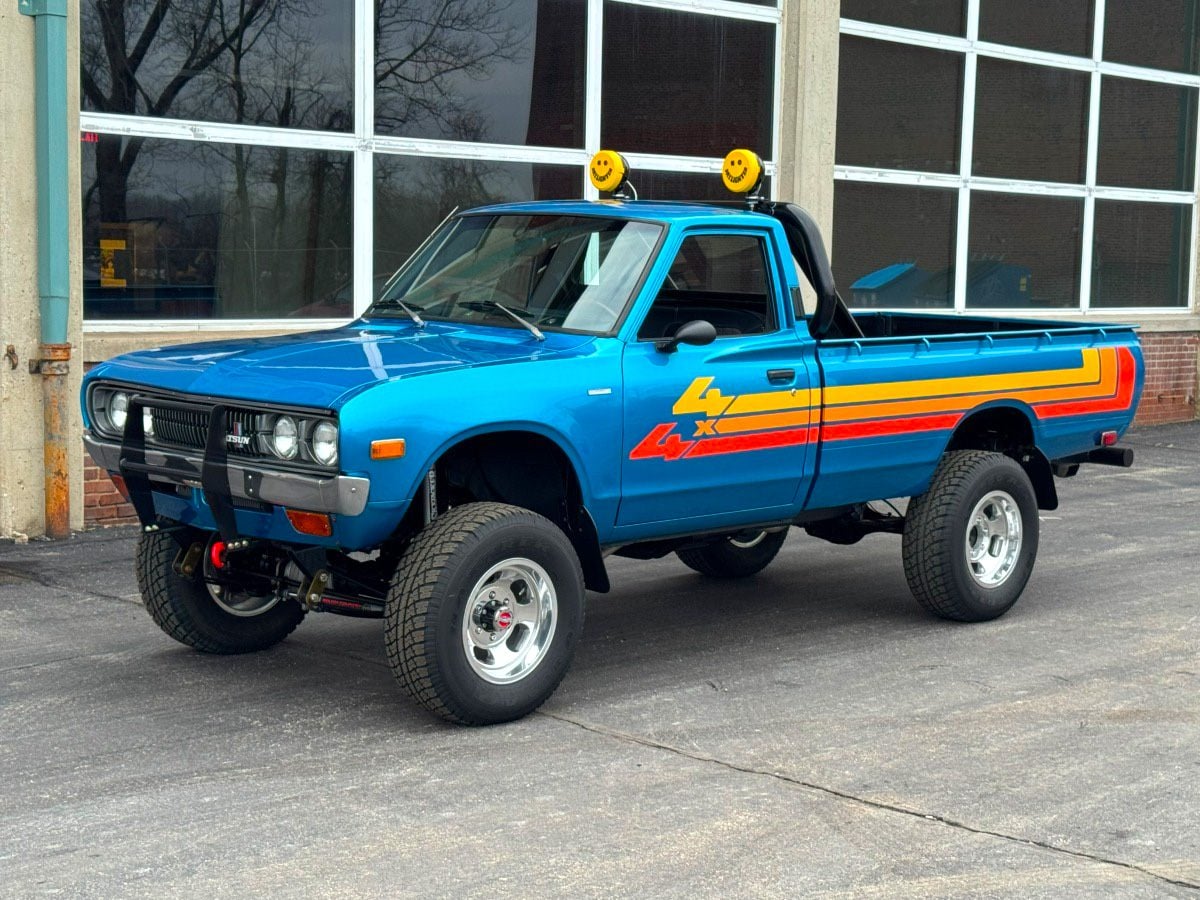
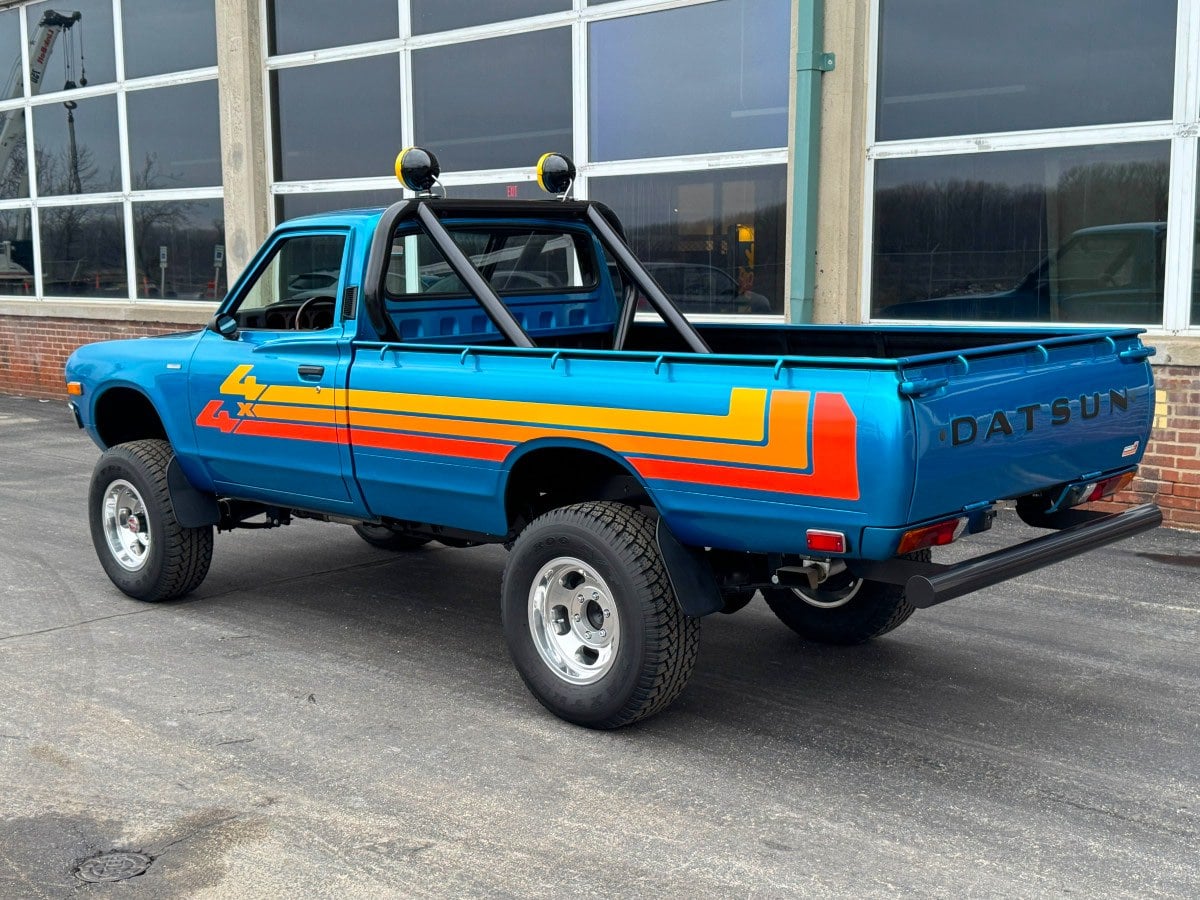
This is a 1975 Datsun 620 Pickup that’s been converted to four-wheel drive – a common upgrade in period as it vastly increased the usefulness of the truck for many owners.
The Datsun 620, along with the Toyota Hilux and Chevrolet LUV, was among the most important Japanese exports to the USA in the 1970s. These trucks helped establish the now wildly popular compact pickup truck market segment, and they offered a lower sticker price than their larger American competitors.
Fast Facts: 1975 Datsun 620 Pickup
- The Datsun 620 was built from 1972 to 1979 as Nissan’s successor to the 521, and it arrived in the United States at exactly the right time. Rising fuel prices and demand for smaller, cheaper trucks helped it become one of the Japanese pickups that established the compact truck market in North America.
- Across its production run, the 620 gained a reputation for combining useful engineering with style. It had a distinctive “Bullet Side” body crease, multiple body styles, several wheelbases, and progressively larger L-series engines, culminating in the 2.0 liter L20B rated at 110 bhp.
- Mechanically, the 620 remained rear-wheel drive from the factory, with torsion-bar independent front suspension and a leaf-sprung live rear axle, though some were later converted to four-wheel drive. It also introduced a series of new features over time, including an automatic transmission option, front disc brakes, electronic ignition, and the pioneering King Cab extended-cab layout.
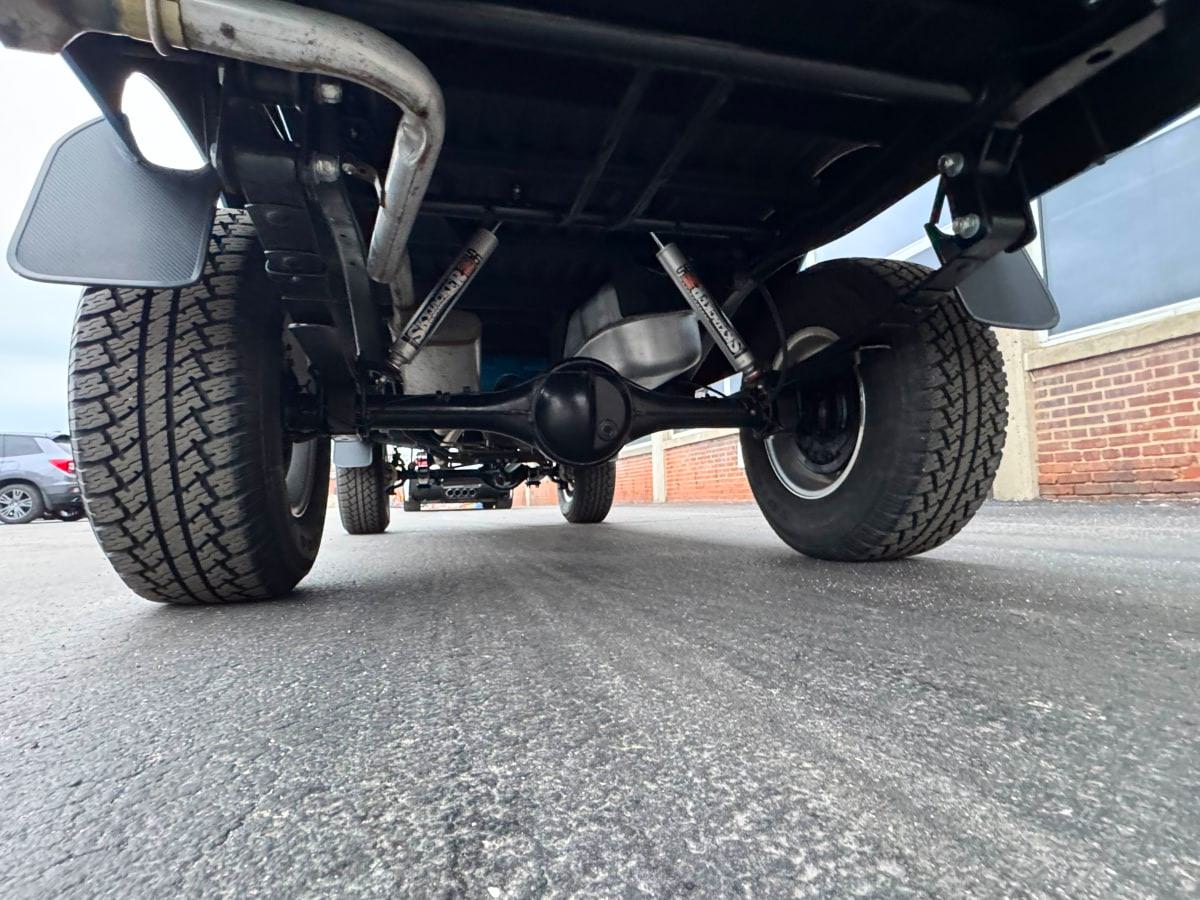
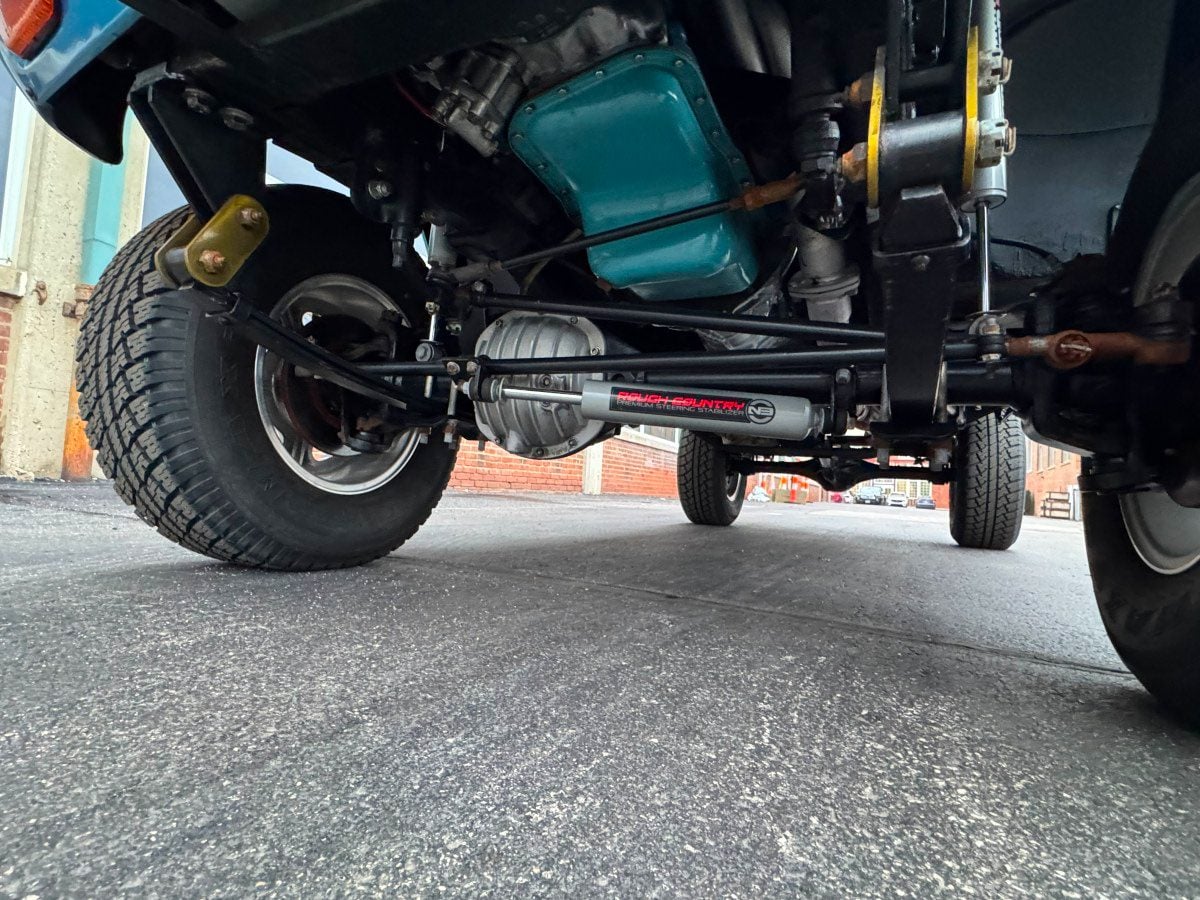
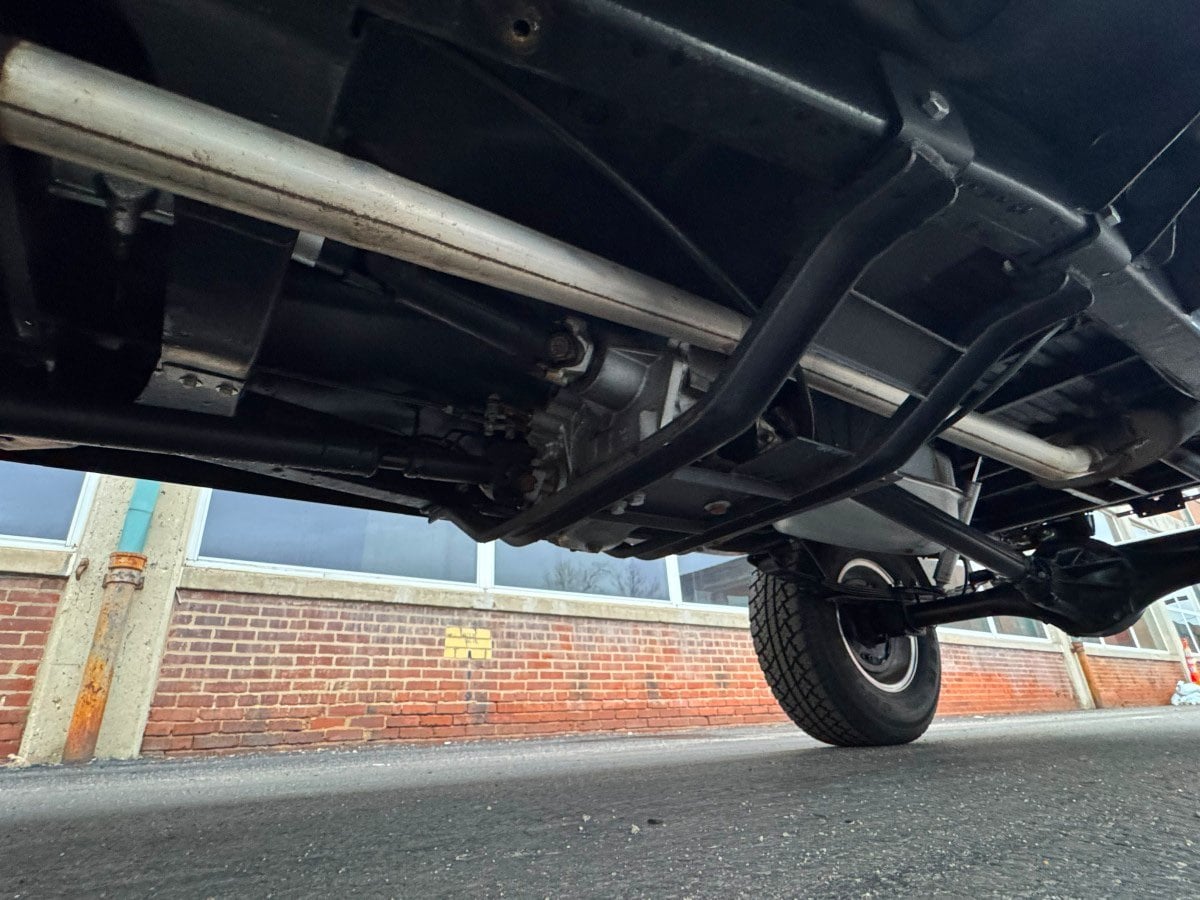
- The 1975 truck shown here was modified with a period-style four-wheel-drive conversion that includes a front live axle, dual-range transfer case, Dana 30 front axle, Warn hubs, and a 5-speed manual.
History Speedrun: The Datsun 620 Pickup
The Datsun 620 was a series of compact pickup trucks that were built by Nissan under the Datsun nameplate from February of 1972 through to 1979. The 620 succeeded the earlier 520 and 521 series trucks and it was itself replaced by the later Datsun 720, which was introduced in late 1979. Marketed in the United States as the “Li’l Hustler” and in Canada as the “Sportruck,” the 620 arrived at an important moment in American automotive history, just ahead of the 1973 Oil Crisis, and as a result it became a key competitor in the growing compact pickup truck market segment.
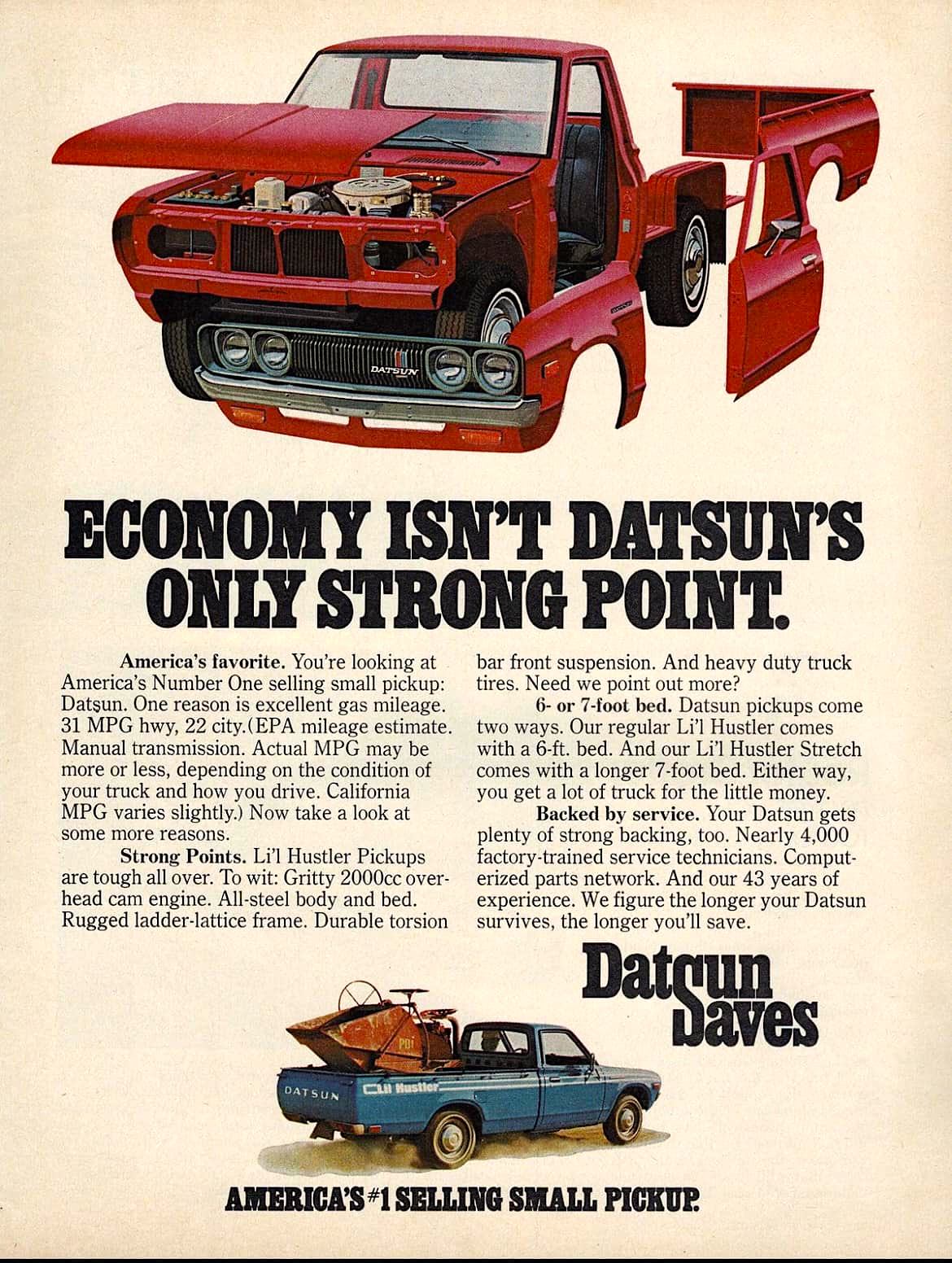
 The 620 platform used independent front suspension with torsion bars and a solid rear axle located by leaf springs. It was only ever offered from the factory as a rear-wheel drive vehicle, however a number were converted to four-wheel drive by dealerships in-period, and many others have been converted by owners using aftermarket parts – so its not unusual to find 4×4 versions of the 620 for sale. Image courtesy of Nissan.
The Datsun truck line stretches all the way back to the pre-WWII Type 13 of 1934 and it progressed through the 120, 220, and 320 series before arriving at the 520, which debuted in 1965. The 521 (a facelifted evolution of the 520) followed in 1968 and it helped establish Datsun’s compact pickup as a viable proposition in the American market, a market that still largely favored size over fuel efficiency.
The Arrival Of The 620
The Datsun 620 built on the 521’s foundation, offering upgraded styling, a wider range of body configurations, and a series of progressive mechanical improvements over its eight year production run.
The 620 was defined by its signature “Bullet Side” styling, a distinctive outward-flared crease running along the shoulder of the body, giving the small truck a somewhat muscular, purposeful appearance. Side badges read “Datsun 1600” or simply “Datsun,” and the grille was fitted with a badge consisting of two colored stripes (one red, one blue) behind the Datsun name.
Later models would get rectangular headlights and a revised front end as part of an otherwise mild 1978 facelift, which also brought changes to the grille, front bumper, and a 30mm increase in track width at both ends.
Datsun 620 Specifications
Two wheelbases were offered in the 620 series, and there were six distinct models in total. Body configurations included the standard cab with short or long bed (the long bed arriving in 1975), a delivery van that was offered exclusively in Japan, bare chassis models for locally built flat-deck bodies, and the U620, this was a crew cab “Utility” version with a shorter, fully integrated bed designed to seat four up front.
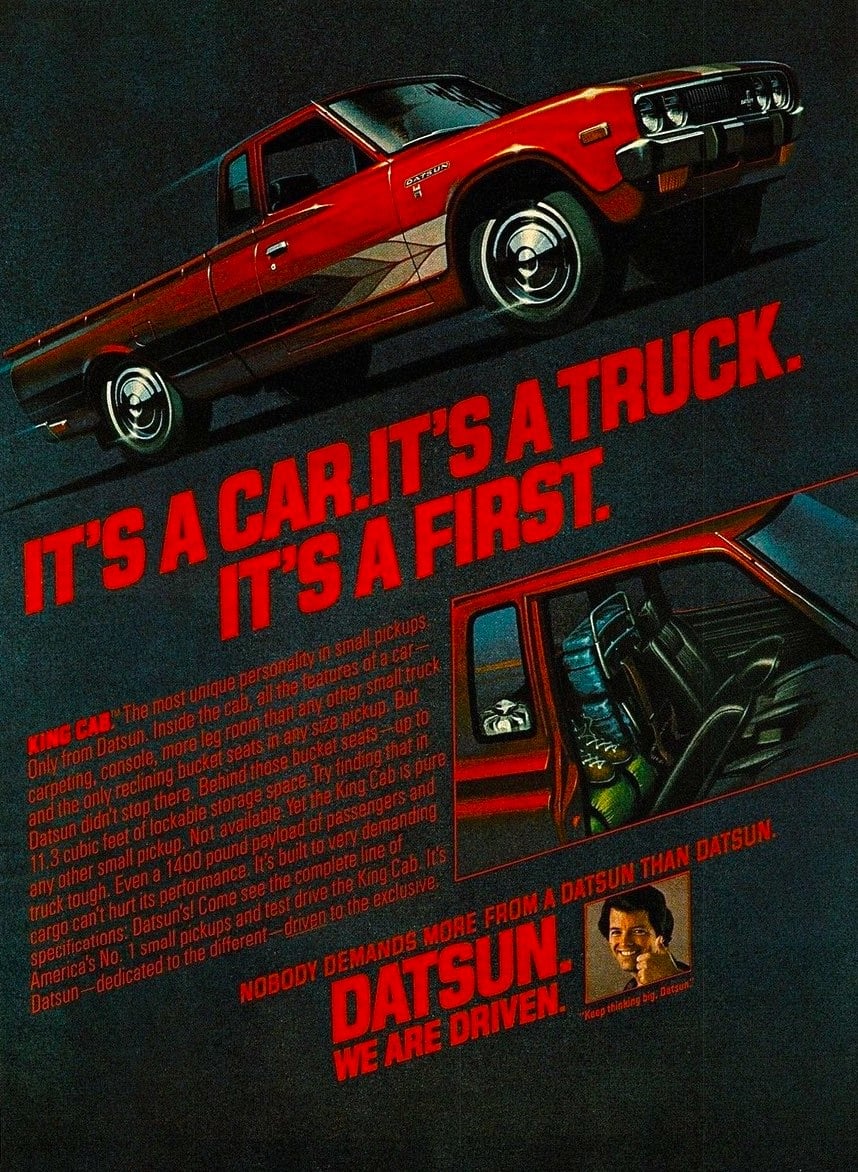
In North America, the 620 was powered exclusively by Nissan’s L-series inline-four engines, which were shared with the Datsun 510 and belonged to the same Nissan L-series engine family used in contemporary Z-cars, though the Z used the larger six-cylinder variants of course. Image courtesy of Nissan.
In North America, the 620 was powered exclusively by Nissan’s L-series inline-four engines, which were shared with the Datsun 510 and belonged to the same Nissan L-series engine family used in contemporary Z-cars, though the Z used the larger six-cylinder variants of course. Both the 510 and Z-series cars would go onto become race and championship winners in the United States, and they did a lot to establish the reputation of Japanese vehicles in North America.
The 1972 and 1973 models received the 1.6 liter L16, producing a modest 96 bhp. For 1974, the 1.8 liter L18 increased output to 100 bhp, and from 1975 through the end of production in 1979, the 2.0 liter L20B delivered 110 bhp. In most other global markets, the 620 was fitted with the J15, a 1.5 liter four-cylinder producing 77 bhp and a claimed top speed of 135 km/h (84 mph). A 2.2 liter diesel engine rated at 66 bhp was later offered in some markets outside North America.
A series of 3, 4, and 5-speed manual transmissions were offered over the production run, and interestingly, the 620 was the first Datsun truck series to offer an automatic transmission – the 3N71 3-speed automatic, which was available from mid-1972 onwards.
The 620 platform used independent front suspension with torsion bars and a solid rear axle located by leaf springs. It was only ever offered from the factory as a rear-wheel drive vehicle, however a number were converted to four-wheel drive by dealerships in-period, and many others have been converted by owners using aftermarket parts – so its not unusual to find 4×4 versions of the 620 for sale.
The 620 introduced several notable firsts for the compact pickup segment, it has an EGR-based emission control system that met California’s stringent standards without requiring a catalytic converter, making it a “50 State Car” – this was an achievement few competitors could match at the time.
Front disc brakes and electronic ignition followed in 1978, but perhaps the most significant innovation was the 1977 introduction of the King Cab – the first extended-cab configuration offered on a compact pickup. The King Cab stretched the cabin by 24 cm (approximately 10 inches) behind the front seats, providing additional space for passengers or secure storage, all mounted on the longer wheelbase and retaining the standard bed. It was soon copied by Toyota and others.
The 620’s Main Competitors
The 620 competed directly with the Toyota Hilux (also known as the Toyota Pickup or Toyota Truck in the USA), the Mazda-built Ford Courier, and the Isuzu-built Chevrolet LUV. All of these trucks were shipped from Japan regardless of the badge they wore, and all traded on fuel efficiency and affordability during an era of rising fuel prices and ever increasing emissions regulations.
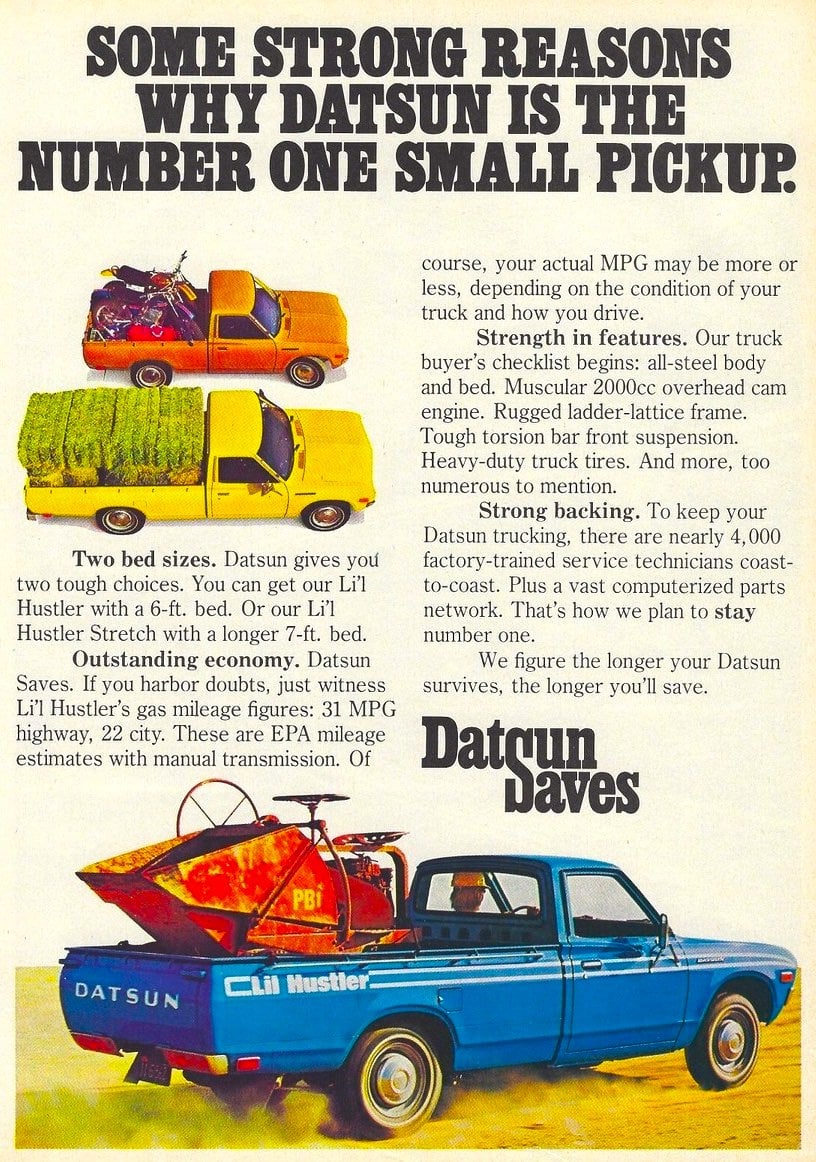
The 620 competed directly with the Toyota Hilux (also known as the Toyota Pickup or Toyota Truck in the USA), the Mazda-built Ford Courier, and the Isuzu-built Chevrolet LUV. All of these trucks were shipped from Japan regardless of the badge they wore, and all traded on fuel efficiency and affordability during an era of rising fuel prices and ever increasing emissions regulations. Image courtesy of Nissan.
Unusually, many American buyers treated the 620 less as a commercial vehicle than its competitors. Nissan reported that 40% of 620 buyers said they never used the truck for work, buying it instead as personal transportation, this was a statistic that clearly foreshadowed the lifestyle-oriented compact truck market that would develop in subsequent decades and carry on through to the current day.
The 620 was succeeded by the Datsun 720, introduced in October of 1979, which continued many of its predecessor’s mechanical elements while adopting updated styling. The 720 was eventually available in both two-wheel-drive and four-wheel-drive configurations and became the first Nissan vehicle to be assembled in the United States, at the Smyrna, Tennessee plant from the 1983.5 model year.
The 1975 Datsun 620 Pickup Shown Here
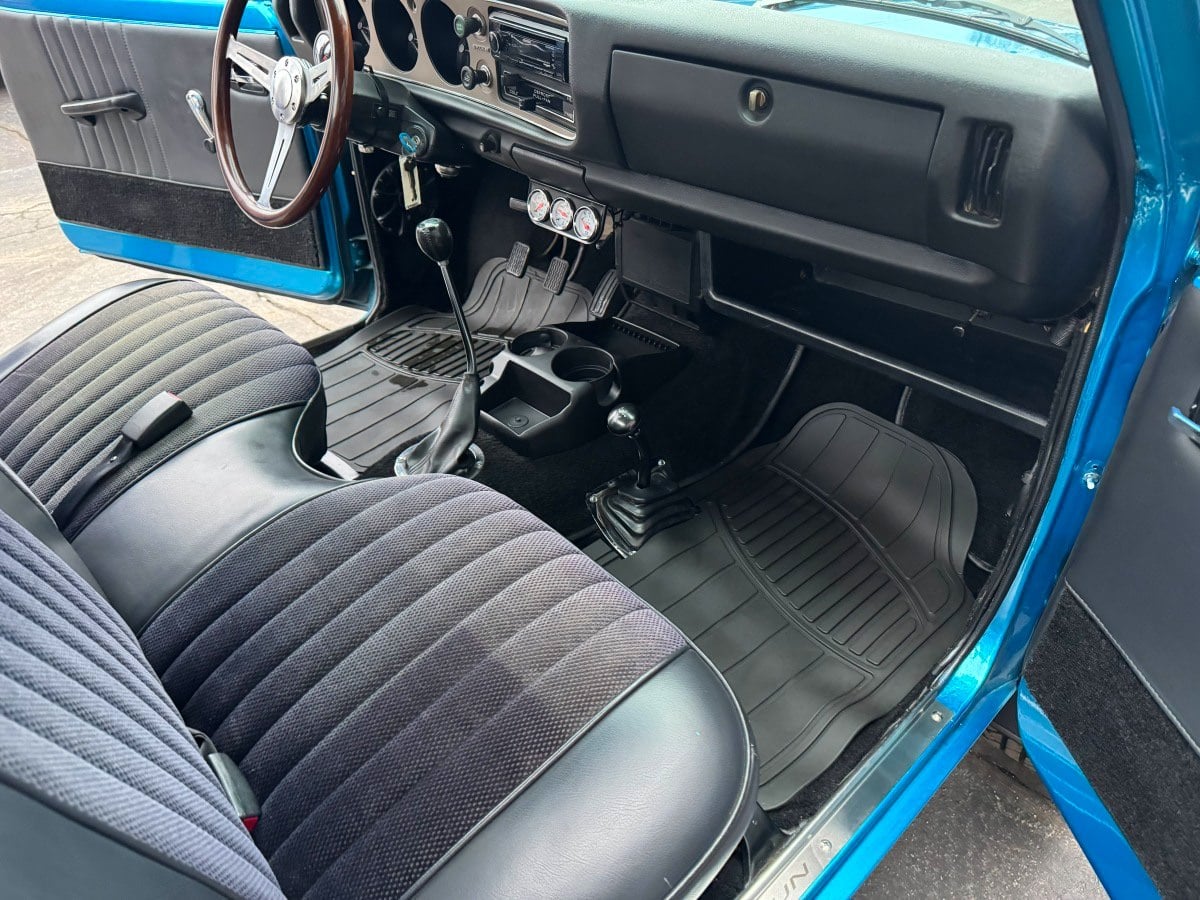
This is a 1975 Datsun 620 Pickup that has been given a series of period-correct upgrades, most notably a four-wheel drive conversion with a new line axle front end, a dual-range transfer case, and a 5-speed manual transmission with an overdrive top gear for improved highway use.
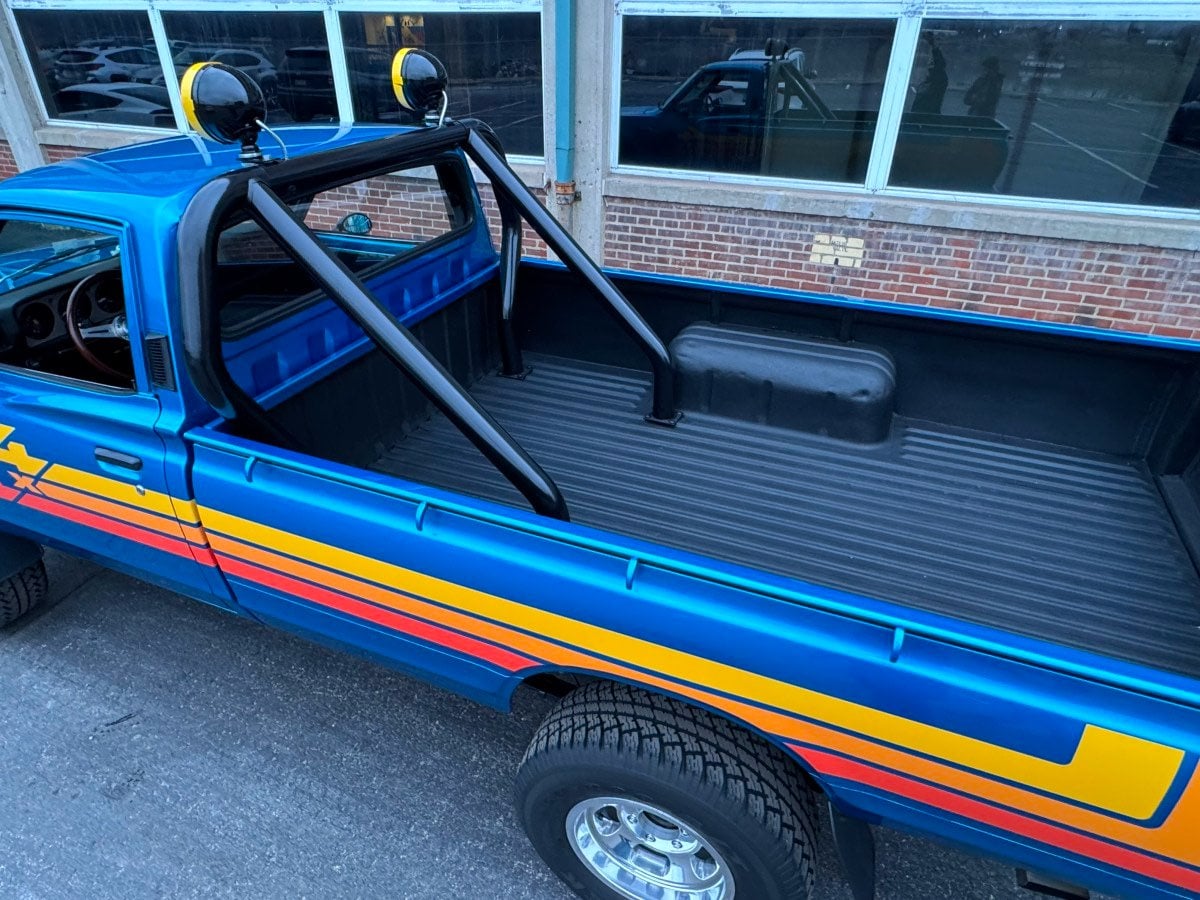
The truck rides on polished aluminum wheels and it’s finished in blue, with a tricolor 1970s-style retro graphics down the side highlighting the new 4×4 drivetrain. It now has a Dana 30 front axle, Warn front locking hubs, a Rough Country steering stabilizer, and Skyjacker shock absorbers.
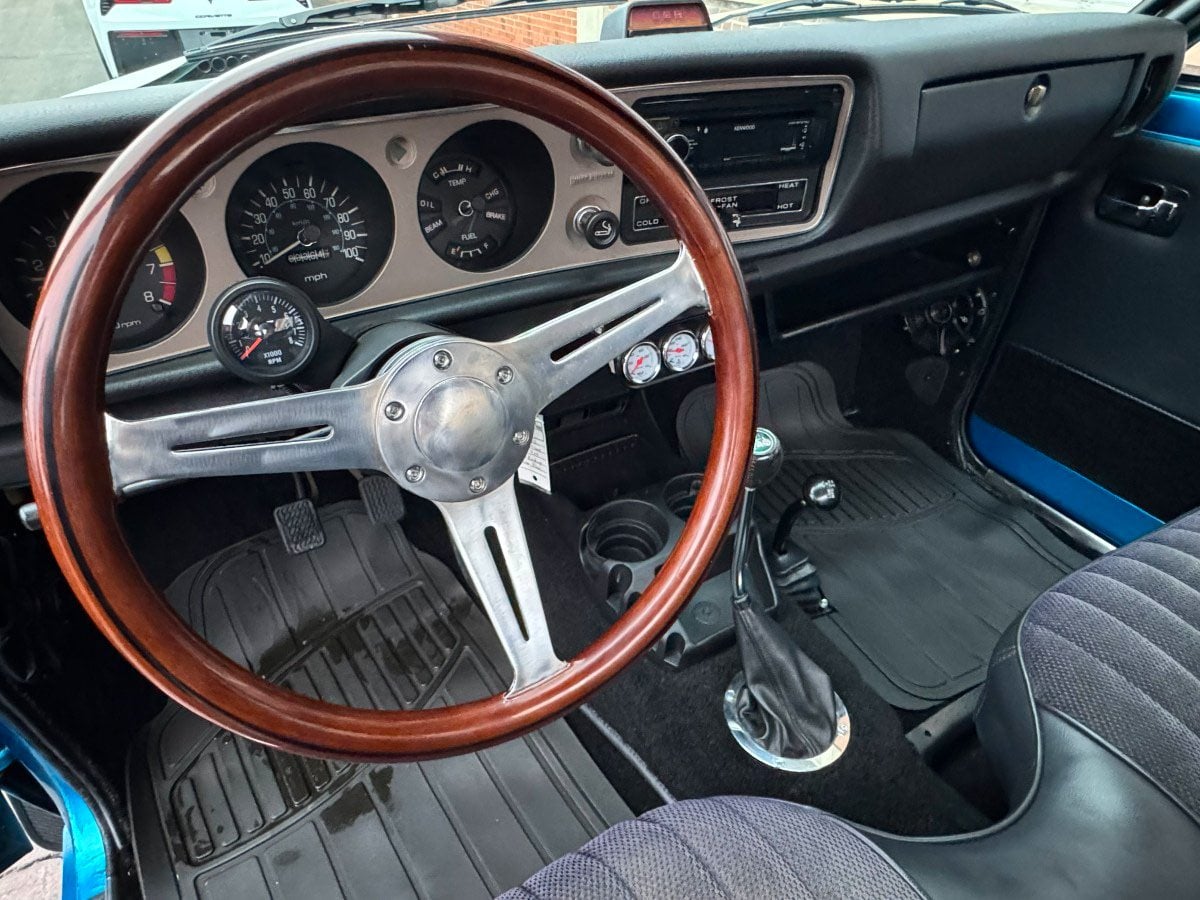
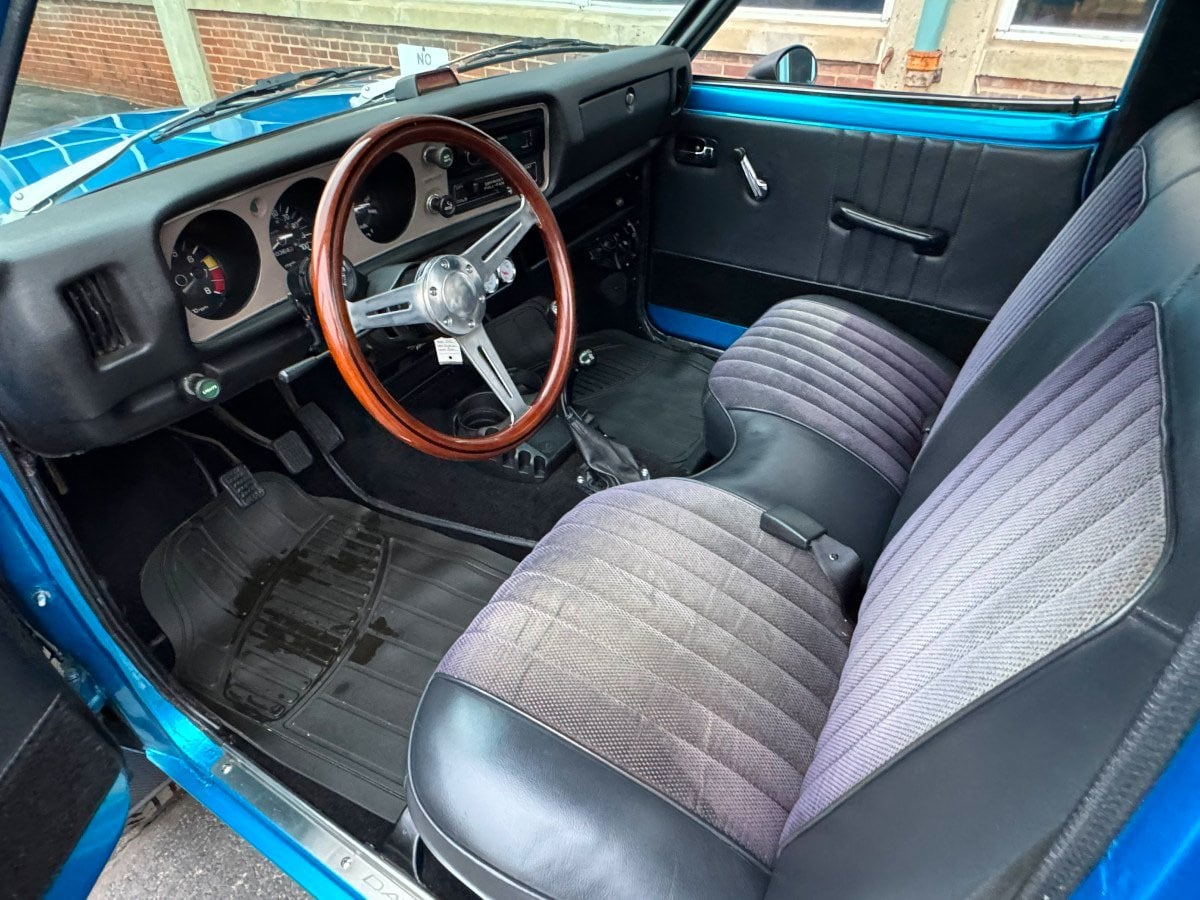
Inside the cabin you’ll find a Kenwood stereo, a wood-rimmed steering wheel, gray trim, seating for two, and an aftermarket drink holder. As you might expect for the era, it has standard wind-down windows.
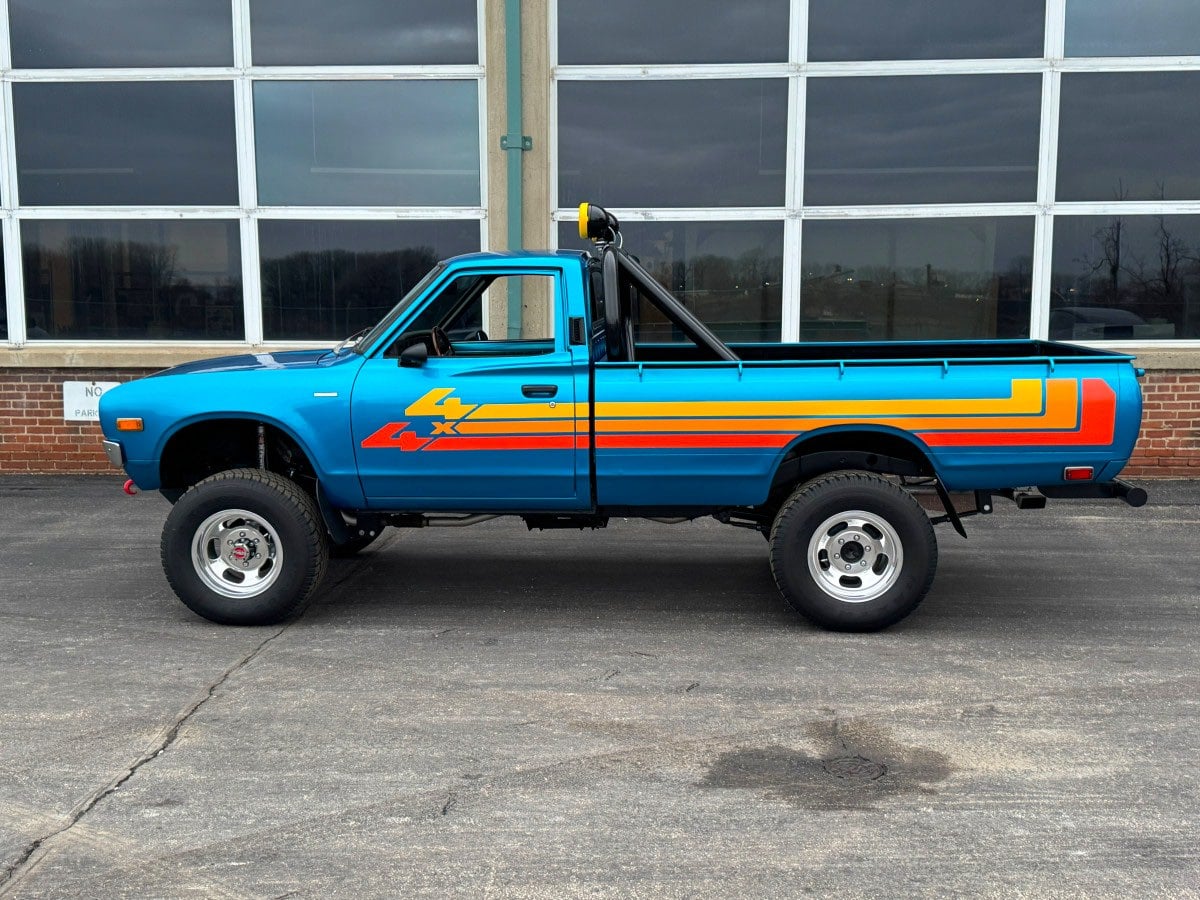
This is a 1975 Datsun 620 Pickup that has been given a series of period-correct upgrades, most notably a four-wheel drive conversion with a new line axle front end, a dual-range transfer case, and a 5-speed manual transmission with an overdrive top gear for improved highway use.
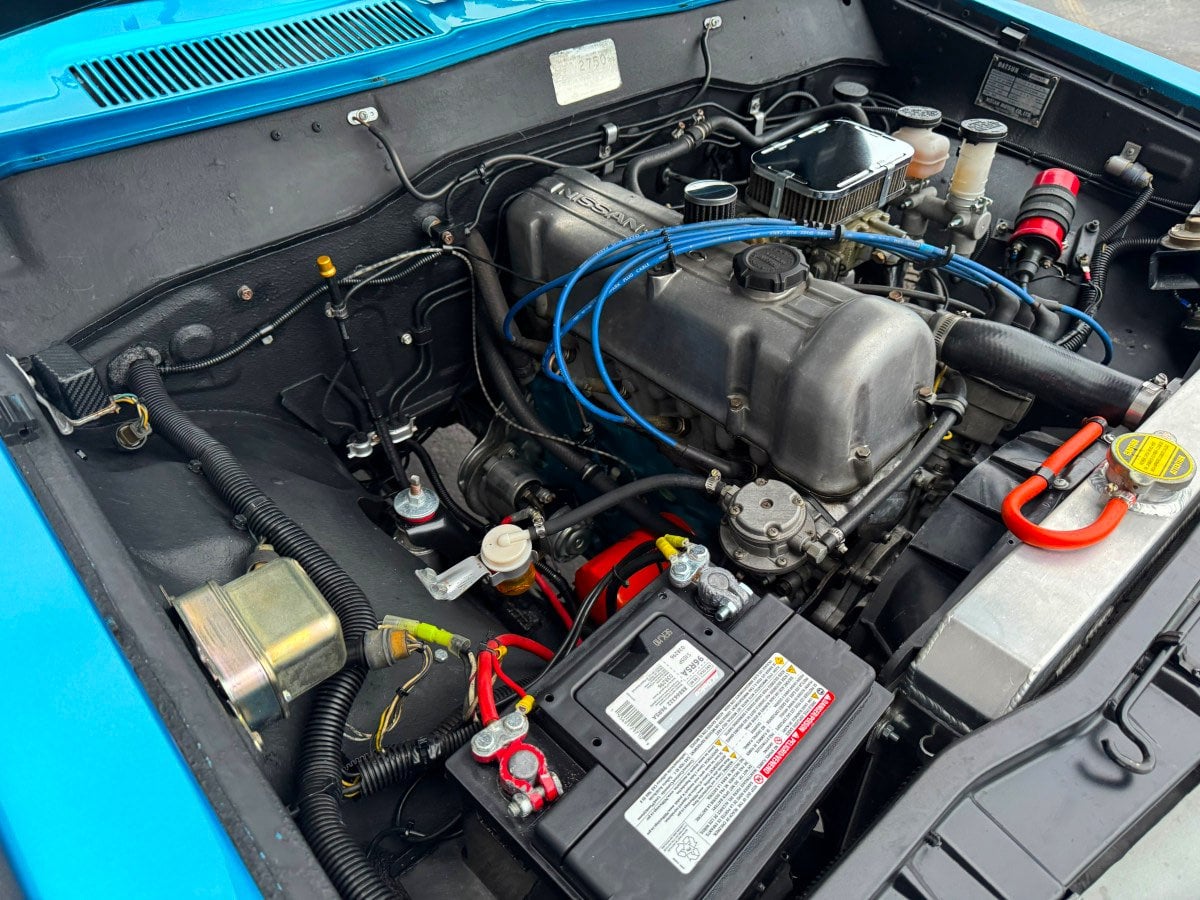
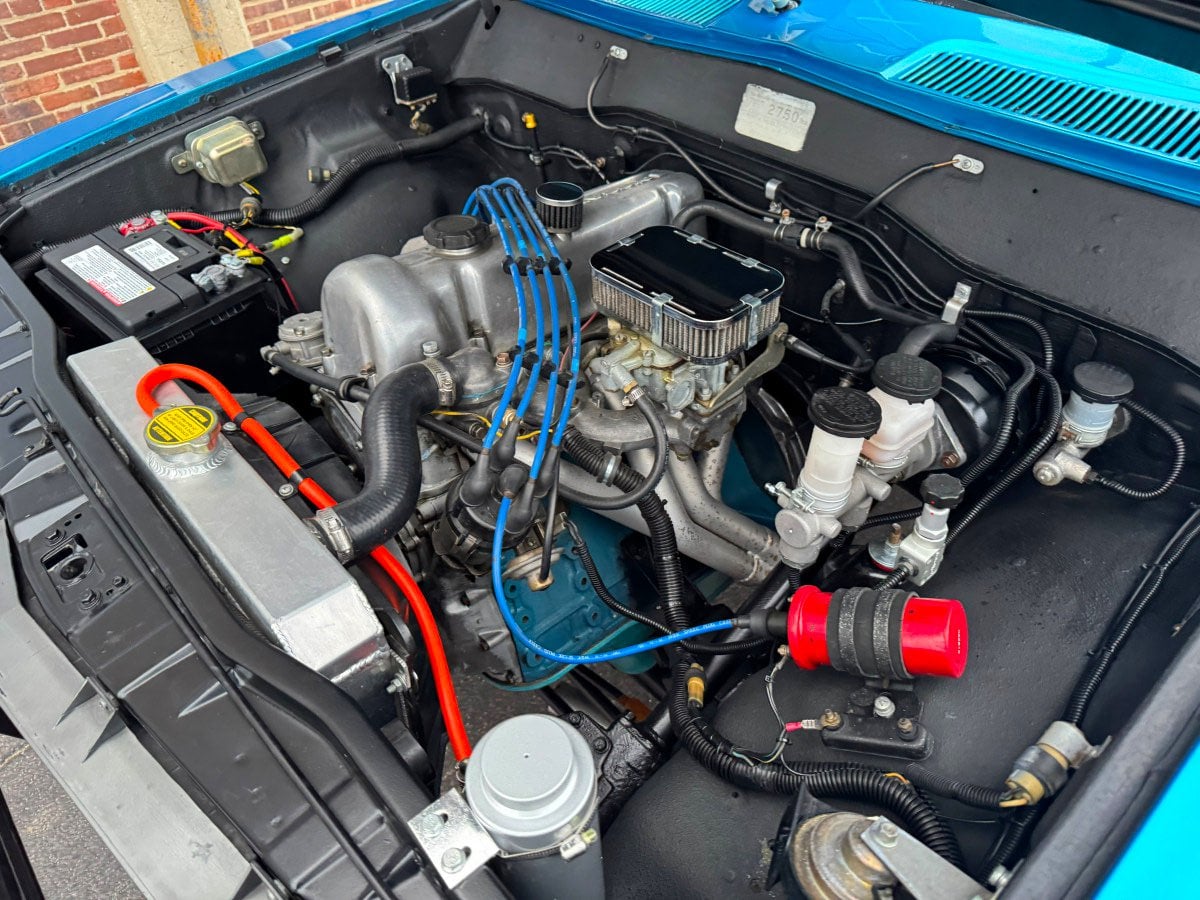
Under the hood you’ll find the 2.0 liter L20B 110 bhp engine, a four cylinder unit with a single overhead cam and two valves per cylinder. The car is now also fitted with an aluminum radiator, and it has power brakes.
It’s now due to roll across the auction block with Mecum on the 10th of April, and you can visit the listing here if you’d like to read more about it or register to bid.
Images courtesy of Mecum

Articles that Ben Branch has written have been covered on CNN, Popular Mechanics, Smithsonian Magazine, Road & Track Magazine, the official Pinterest blog, the official eBay Motors blog, BuzzFeed, Autoweek Magazine, Wired Magazine, Autoblog, Gear Patrol, Jalopnik, The Verge, and many more.
Silodrome was founded by Ben back in 2010, in the years since the site has grown to become a world leader in the alternative and vintage motoring sector, with well over a million monthly readers from around the world and many hundreds of thousands of followers on social media.