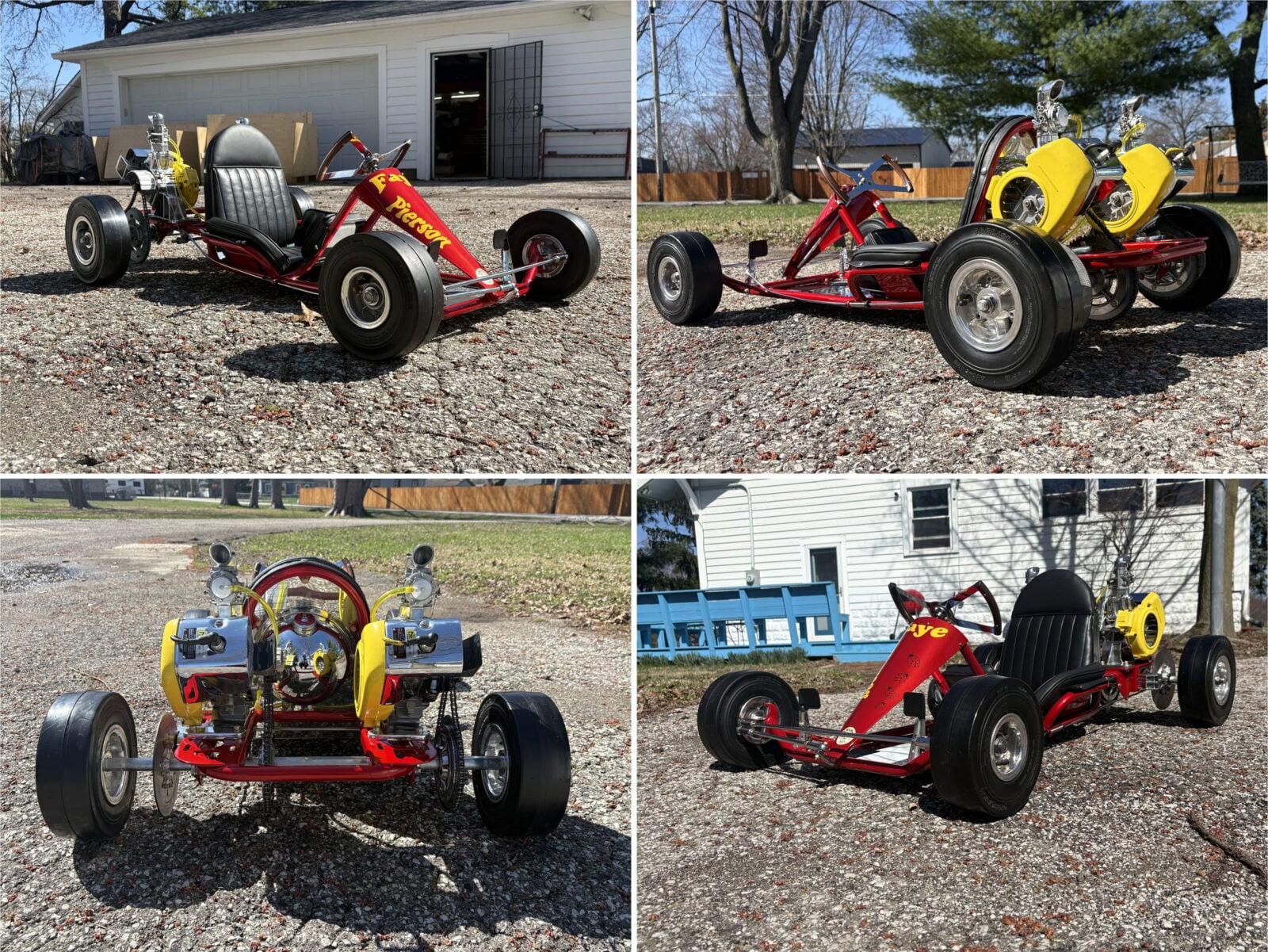
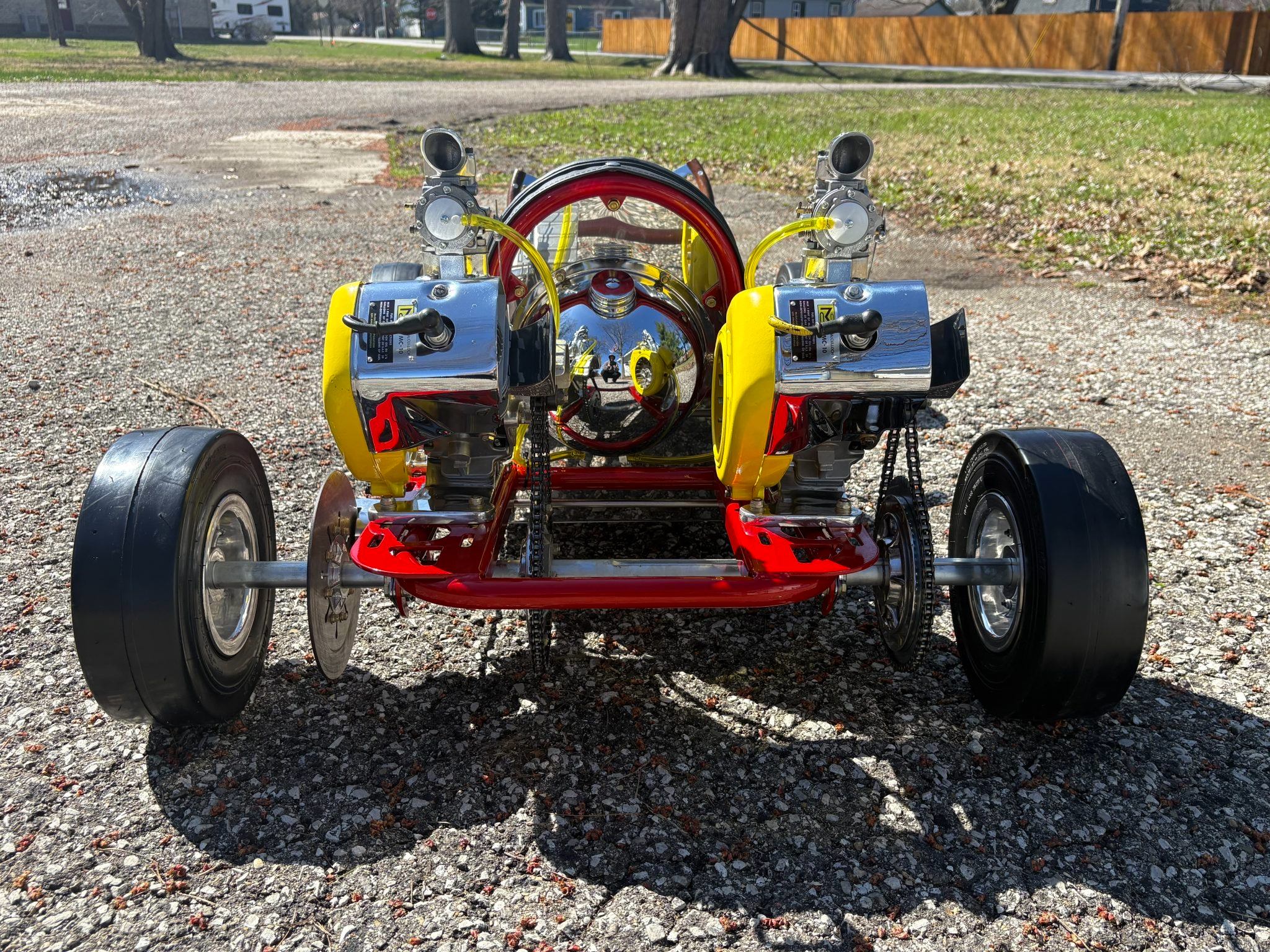
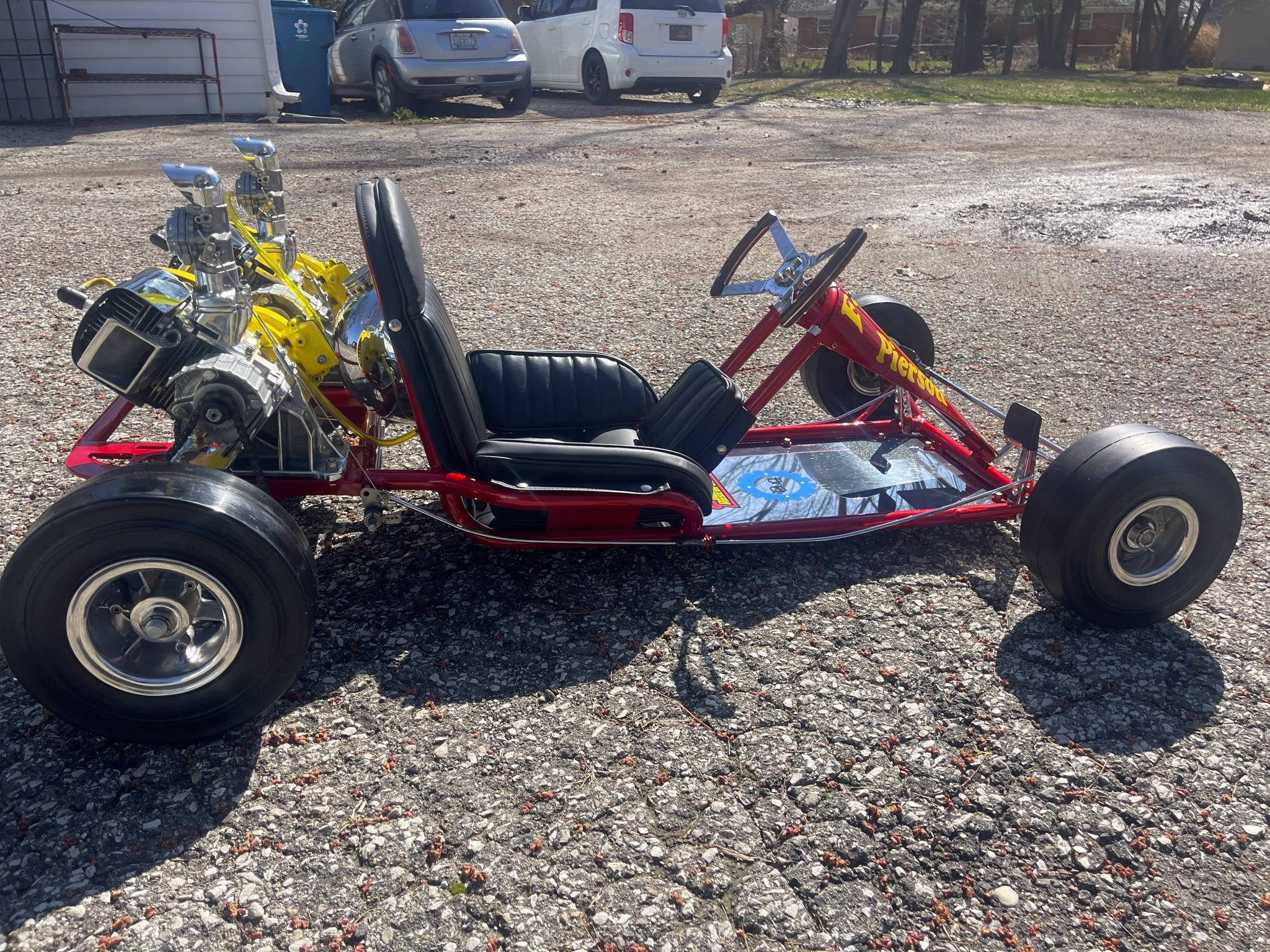
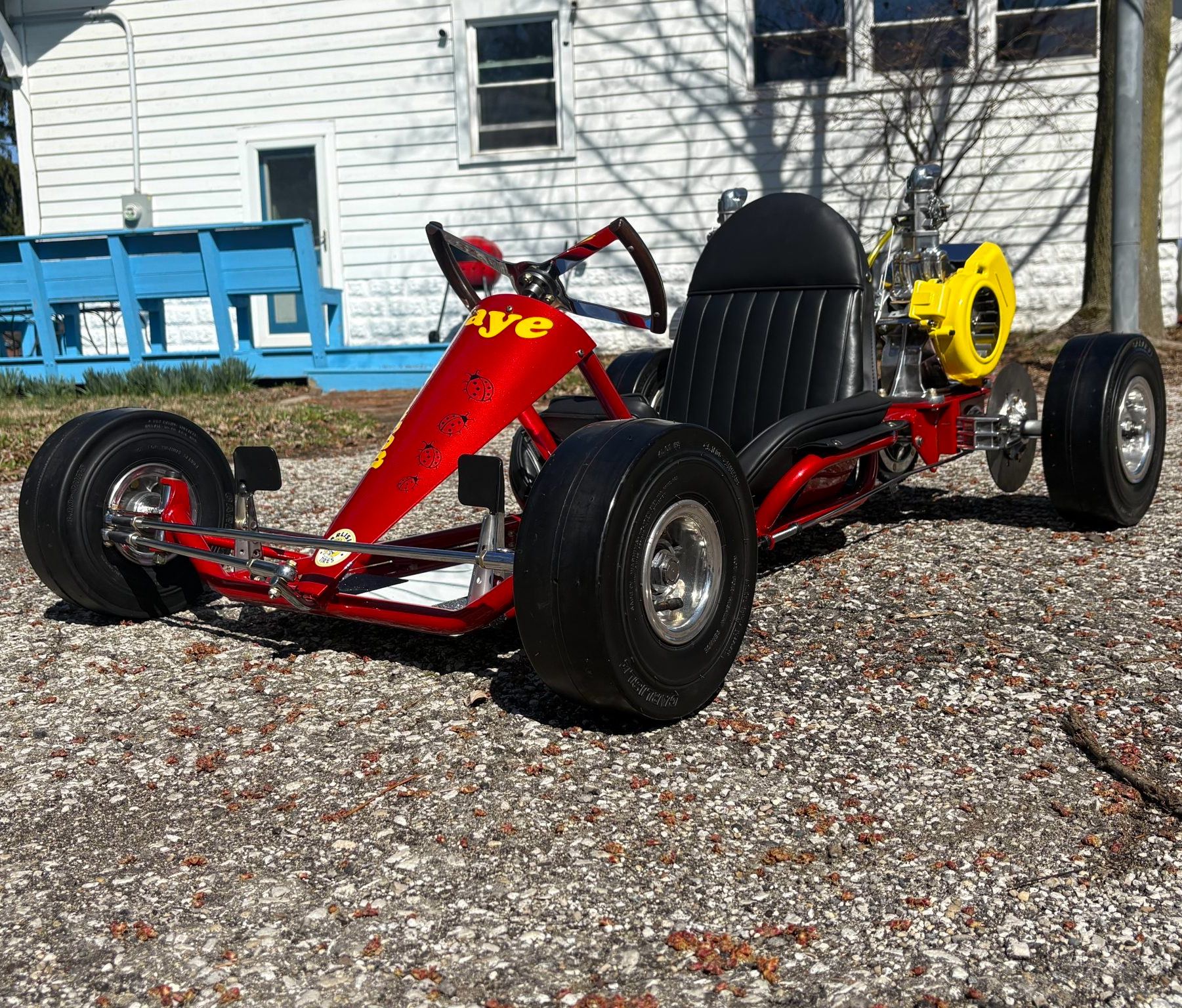
This is a 1962 Bug Wasp Go-Kart that is said to have belonged to the legendary Faye “Ladybug” Pierson, and to have been raced by her in period.
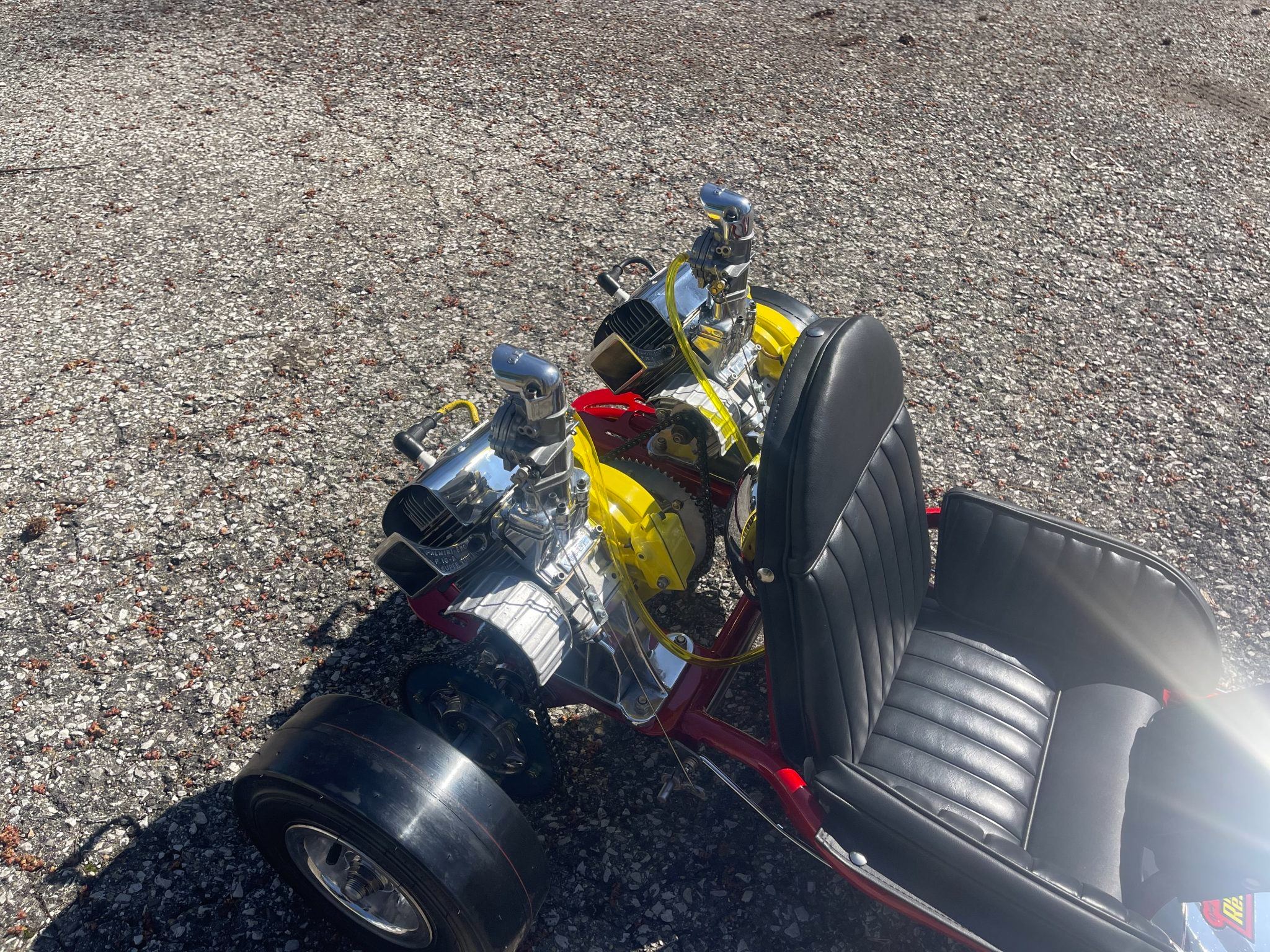
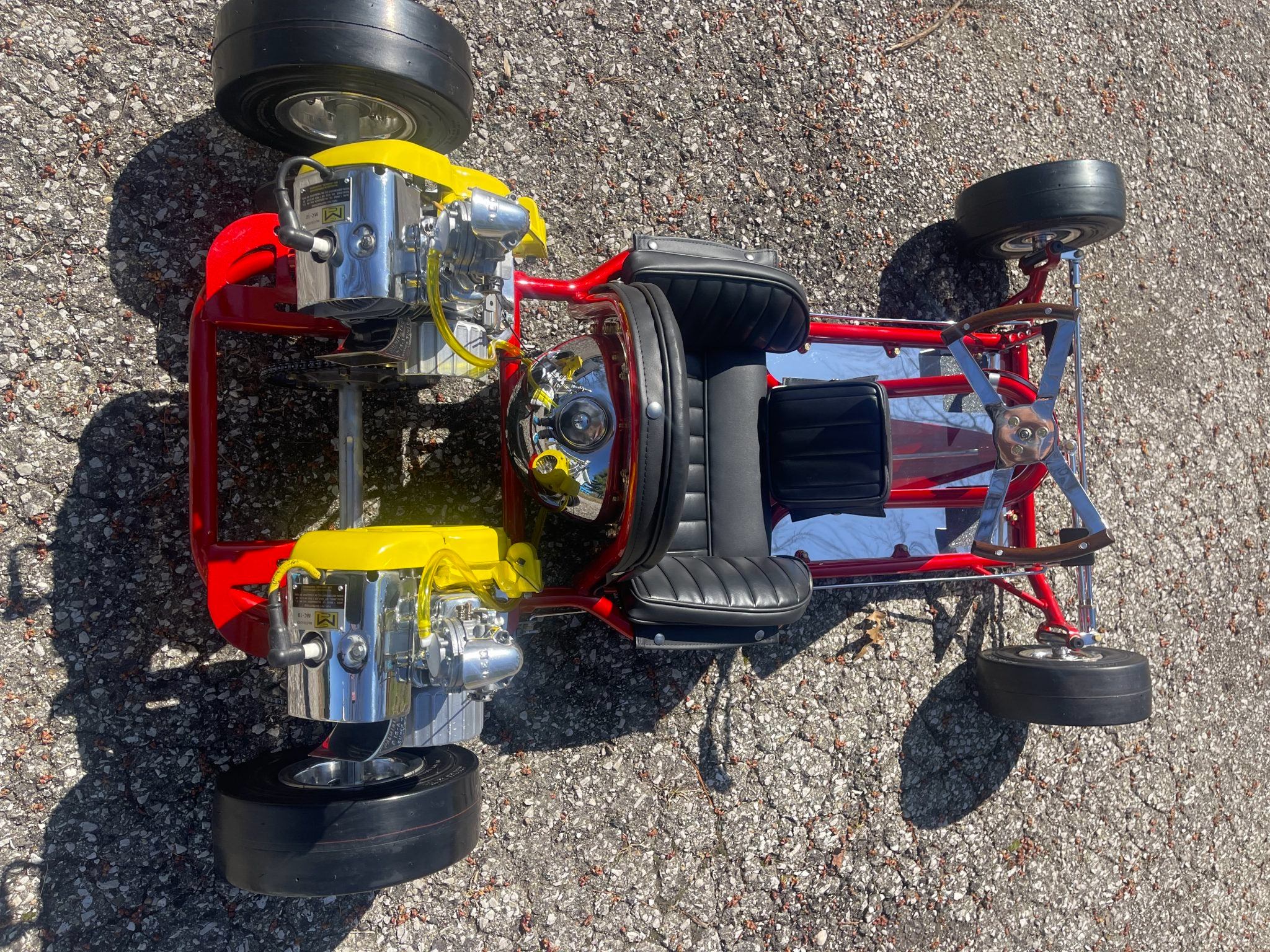
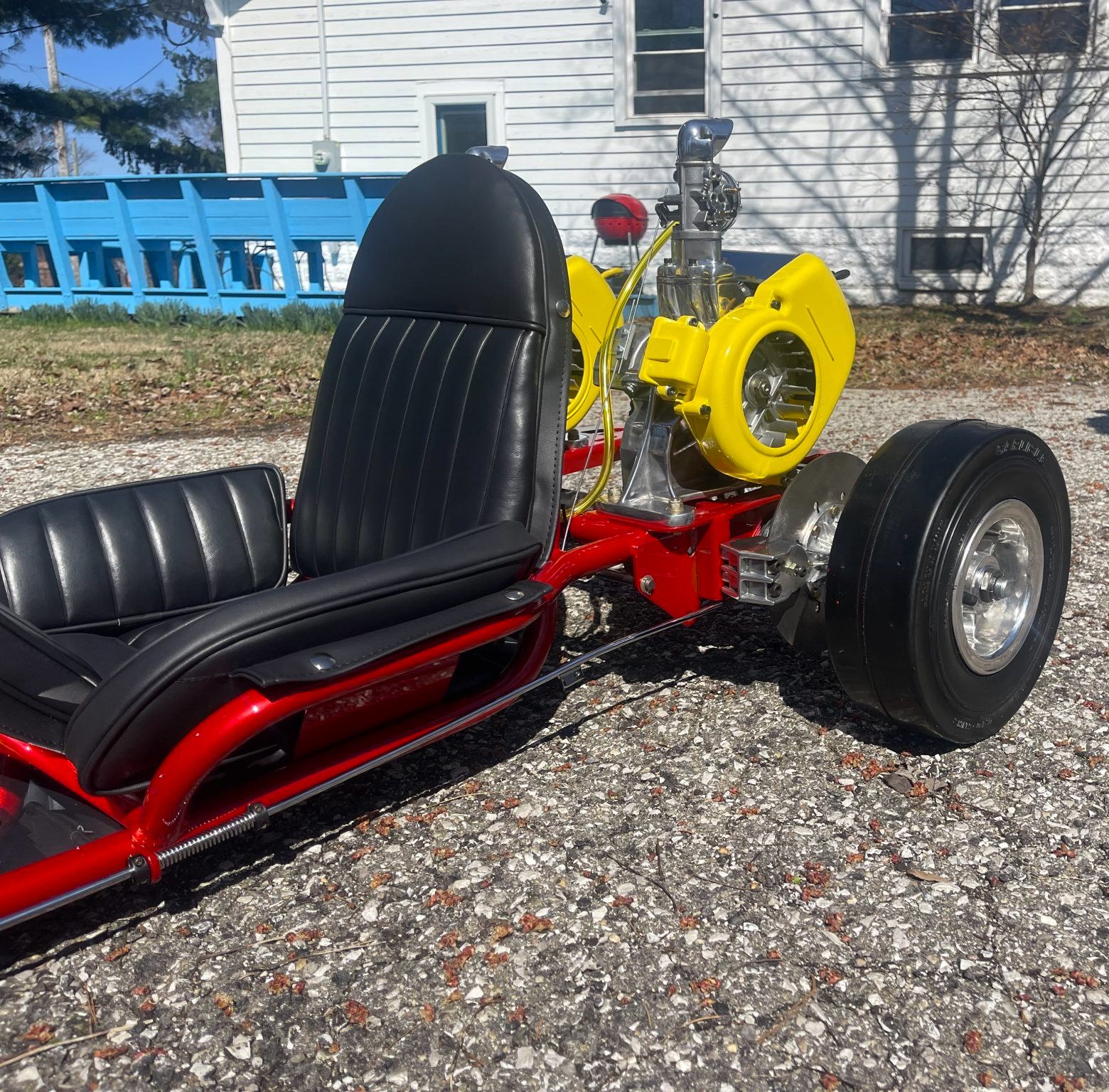
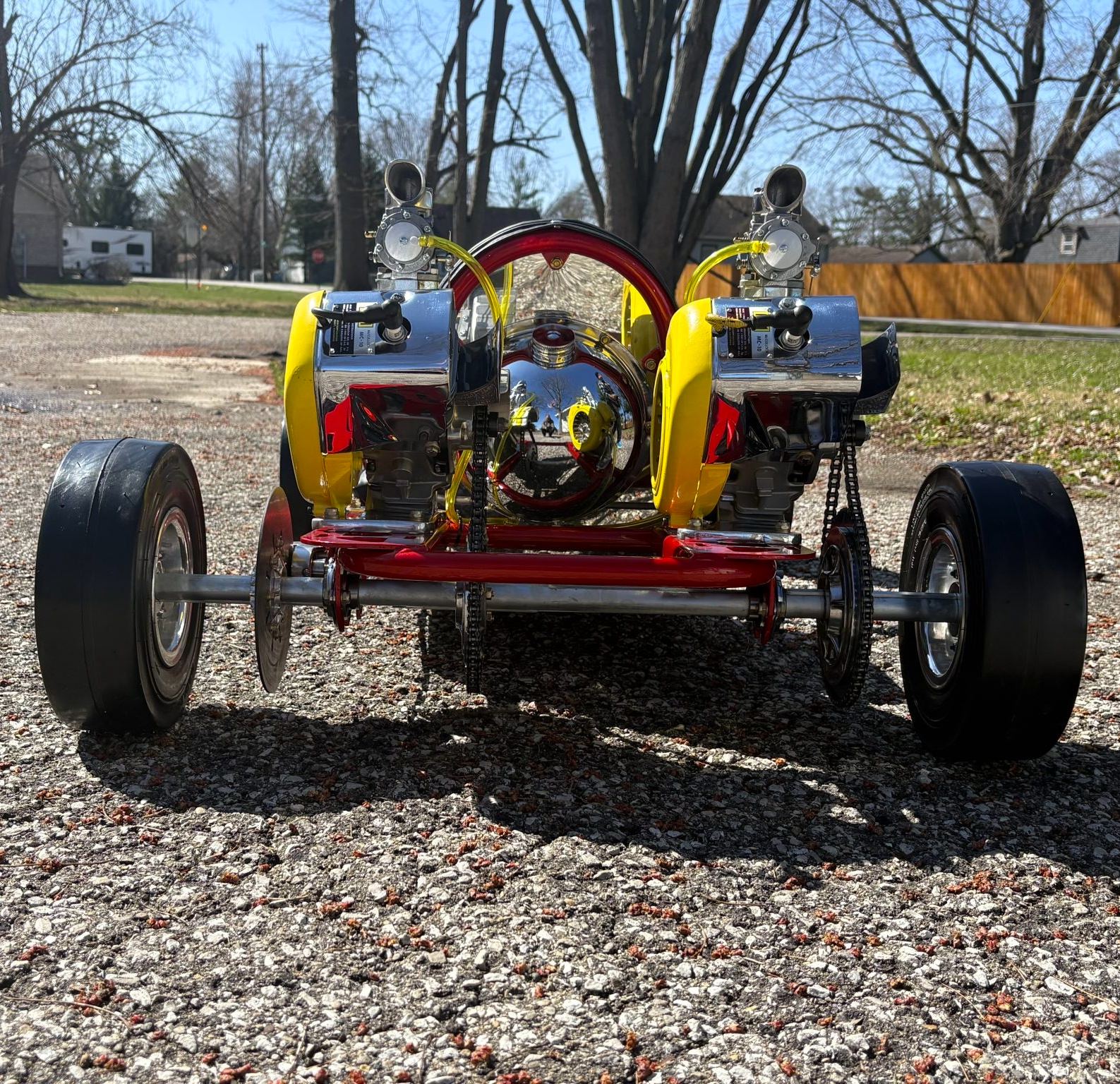
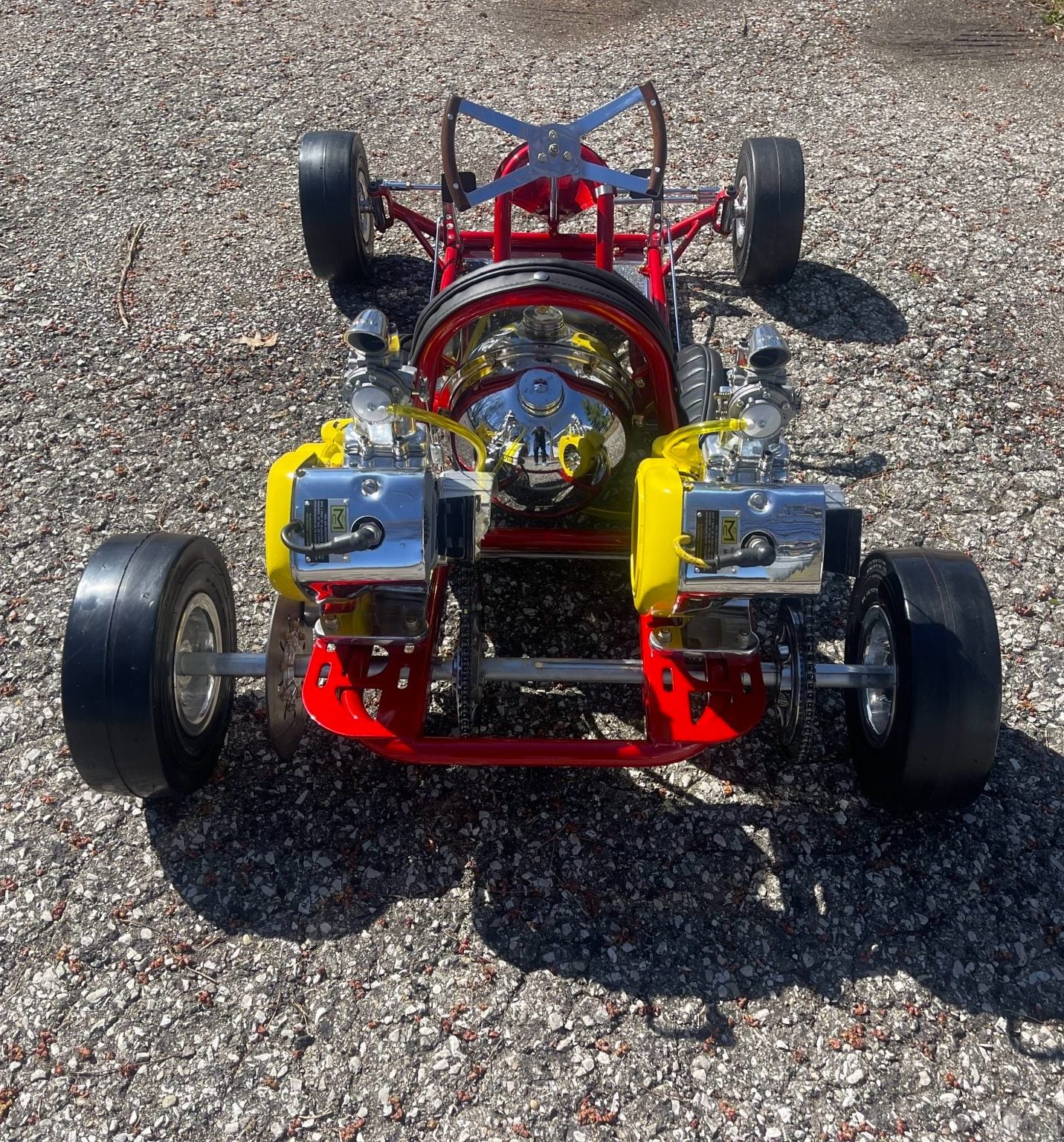
It now benefits from an extensive restoration by Vintage Museum Restoration in Indianapolis, and it’s been converted to a twin-engined set up offering twice the original power output and plenty of thrills.
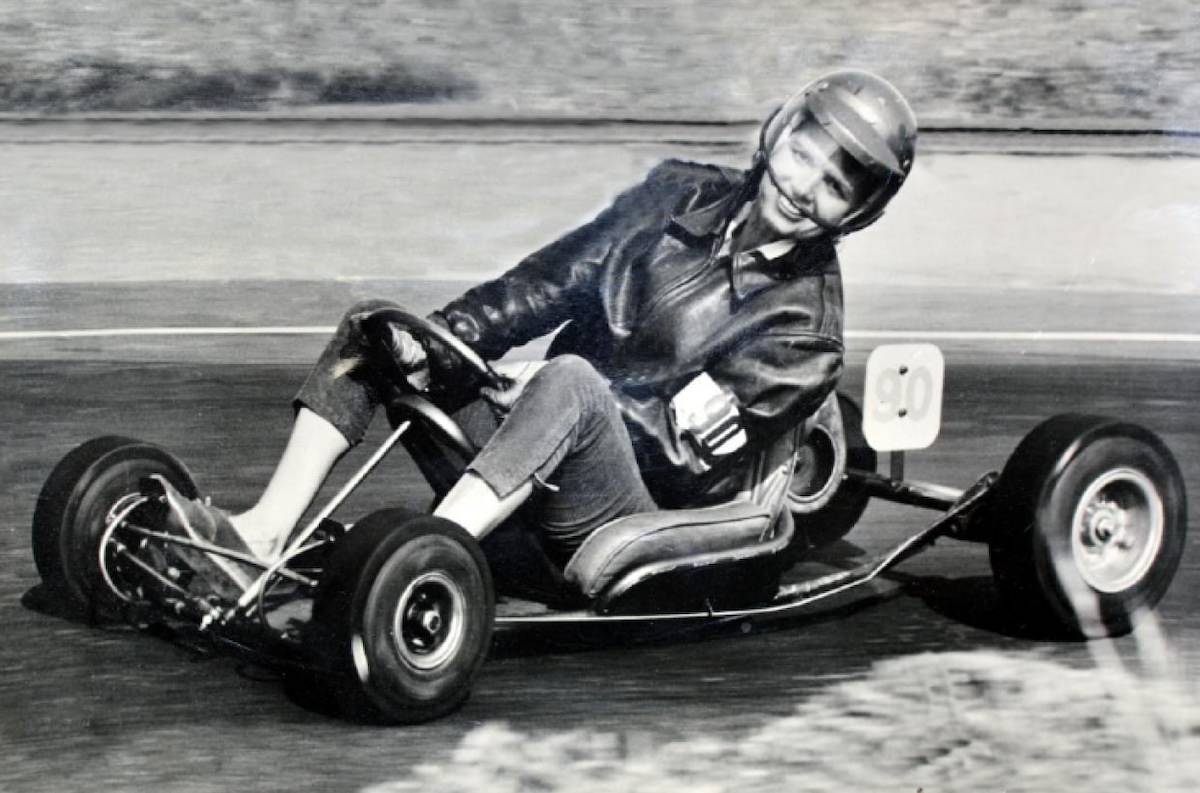
 Bug Engineering was founded in 1958 by Faye and Tom Pierson, along with family friend Dick Geer, in the Piersons’ garage in a Los Angeles suburb. The company name has long been attributed to a failed brainstorming session, according to a widely repeated story, Faye grew frustrated with the process, said it was “bugging” her, and the name stuck. Image courtesy of Bug Engineering.
History Speedrun: The Bug Wasp Go-Kart
In early 1960, a small company in the suburbs of Los Angeles introduced a go kart that would help set the template for what a proper racing kart should look like – it as called the “Bug Wasp,” and it was built by Bug Engineering of Azusa, California. It arrived at a pivotal moment in karting history, just as the sport was transitioning from crude backyard contraptions into legitimate, purpose-built racing machines that would launch the careers of countless future racing drivers.
Bug Engineering was founded in 1958 by Faye and Tom Pierson, along with family friend Dick Geer, in the Piersons’ garage in a Los Angeles suburb. The company name has long been attributed to a failed brainstorming session, according to a widely repeated story, Faye grew frustrated with the process, said it was “bugging” her, and the name stuck.
What began as a garage operation grew at a staggering pace. By 1960, one contemporary report noted that Bug Engineering was producing as many as 320 complete karts per day, a figure that speaks to the explosive demand of the early karting craze that was sweeping the nation, and much of the western world, at the time.
The Bug Wasp Specifications + Engines
The Wasp was Bug’s first truly serious racing kart. It debuted in advertising in February of 1960 in the pages of Quarter Midget and Karting World magazine. Its defining design feature was a tubular steel frame with side rails that extended rearward to form the back of the chassis, this was a significant step forward from the simpler, rail-less designs that Bug and others had been building. The frame was finished in Bug’s signature metallic blue paint and fitted with black naugahyde upholstery.
Standard equipment on the Wasp included a Clinton A-400 engine, a Palmini hydraulic disc brake on the back axle, and a two-spoke steering wheel, all for a retail price of $189 USD. Buyers who wanted more performance could opt for a Clinton A-490 or McCulloch MC-5 or MC-10 engines, available in single or twin engine configurations.
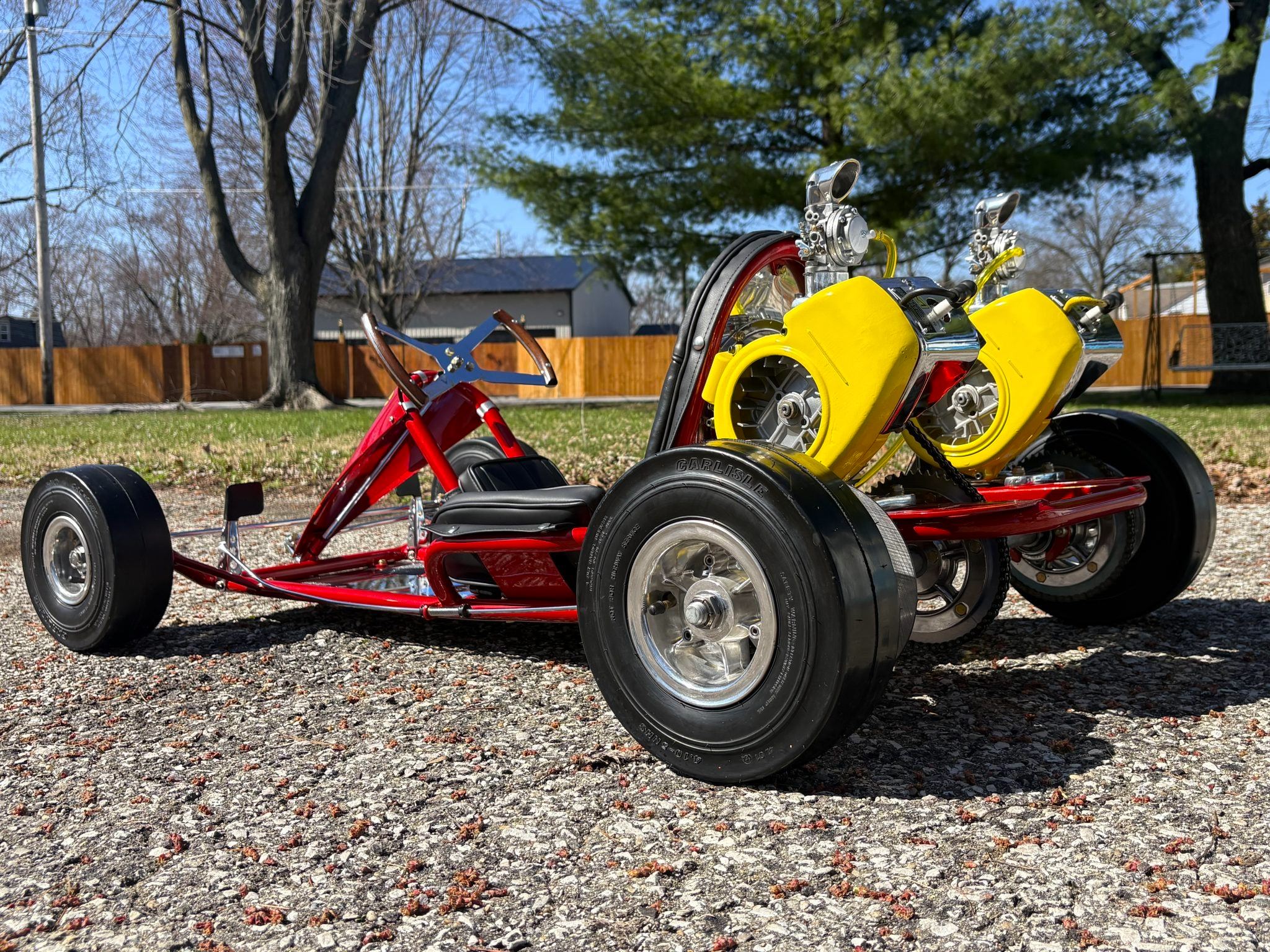
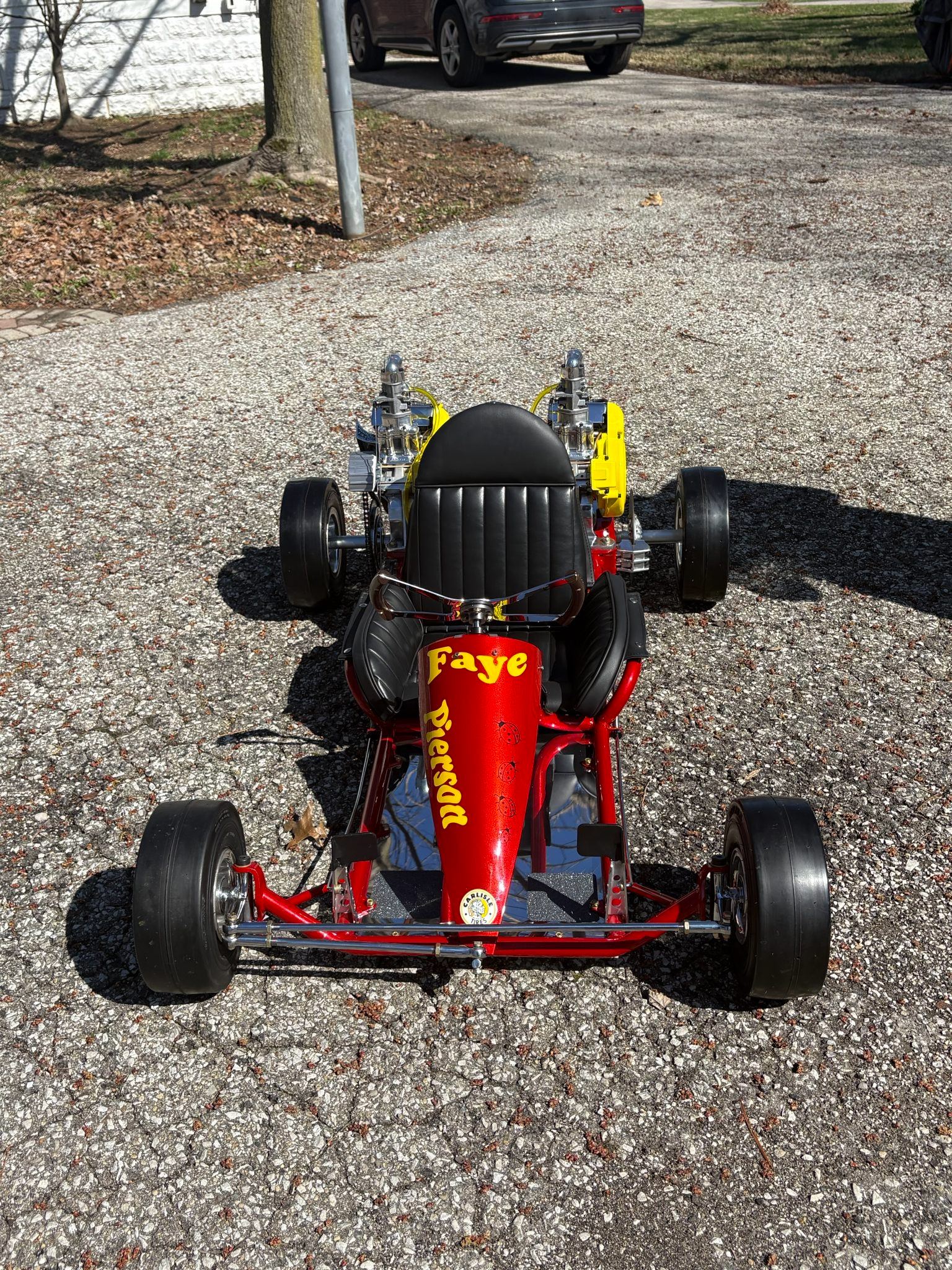
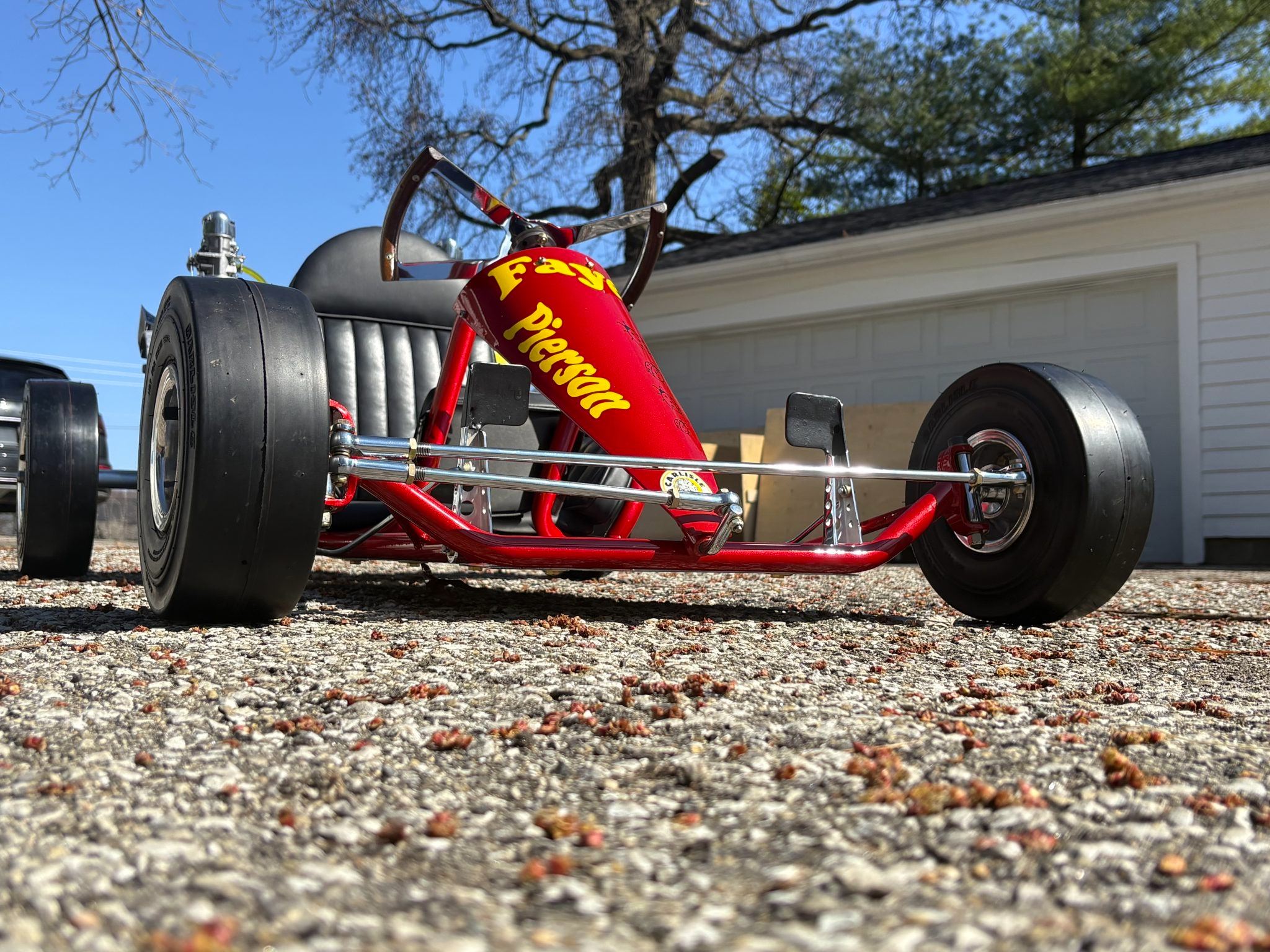
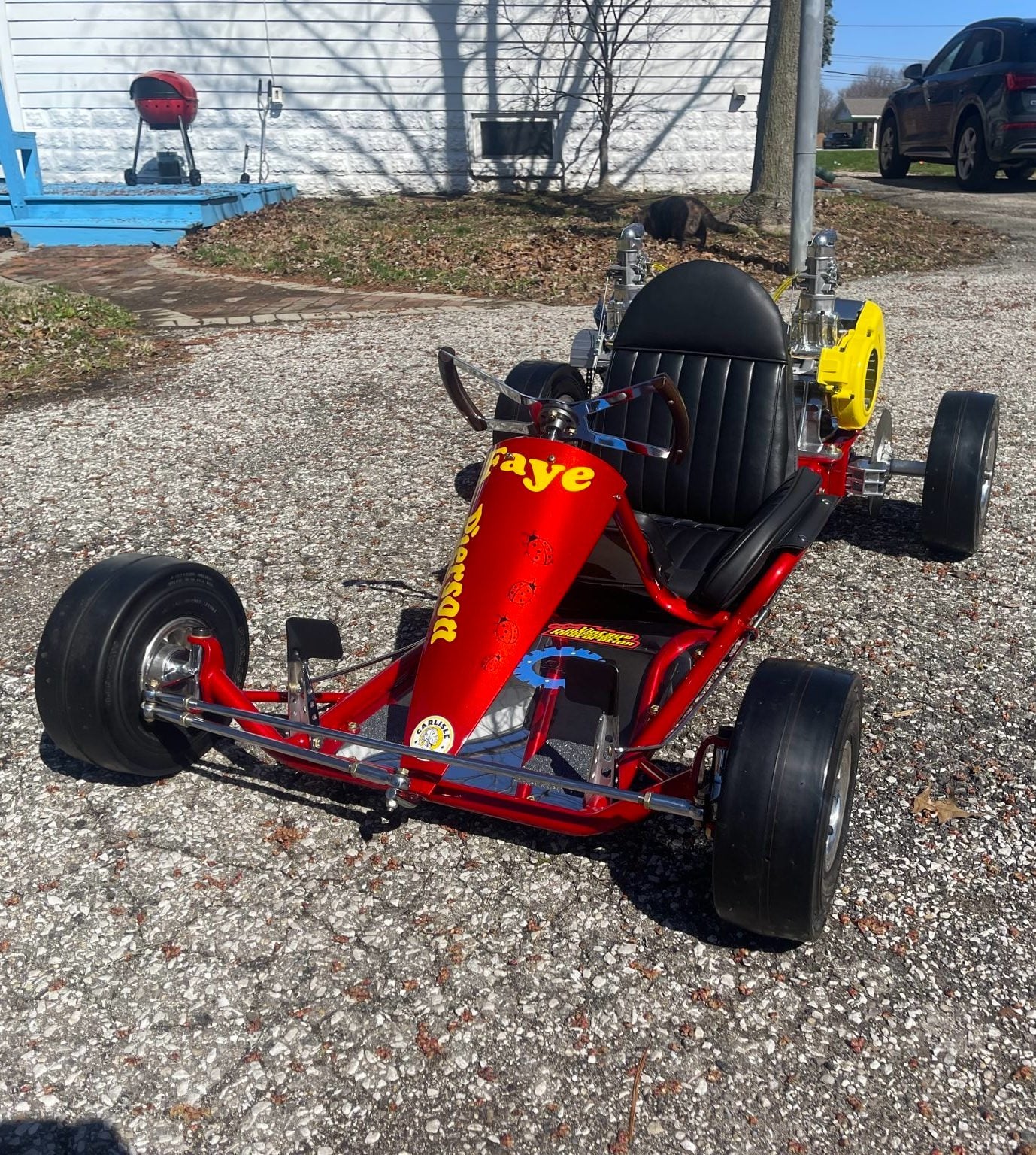
This Bug Wasp has now been refurbished by Vintage Museum Restoration in Indianapolis and converted to a twin-engine setup. The kart rides on a tubular chromoly steel frame that was repainted Iridescent Red during the refurbishment.
The Wasp was reviewed by Karting World magazine in the November of 1960 issue, and was also the subject of a period road test in Hot Rod magazine later in 1960. Both magazines offered high praise in their assessments, and the Wasp quickly earned a reputation as one of the best-handling and best-built karts of its era.
The Wasp’s Key Competitors
The Bug Wasp entered a highly-competitive marketplace upon release, its most direct rival was the Go Kart 800, produced by Go Kart Manufacturing Co., the firm co-founded by Duffy Livingstone and Roy Desbrow that is widely credited with commercializing the sport.
The 800 debuted in mid-1960 and represented Go Kart Mfg.’s own leap forward in chassis sophistication. Another significant competitor was the Rupp Dart Kart, built by Mickey Rupp in Mansfield, Ohio. Rupp’s operation would grow to employ more than 400 people, and Dart Karts won or placed in six of eight categories at the 1961 Go Kart Club of America National Championship.
Other contemporaries included the Fox Go-Boy, the Simplex Challenger, and the Rathmann Xterminator, the latter designed by Indy 500 winner Jim Rathmann. The Moss Cart, designed by Indianapolis chassis builder George Salih, was another advanced machine that appeared in early 1960.
Bug Engineering continued to evolve well beyond the original Wasp, the company introduced the Bug Stinger sidewinder in 1970, a design that proved an instant success. The company relocated from its original facility on Irwindale Avenue to a purpose-built plant at 950 West Foothill Boulevard in Azusa.
Bug chassis remained competitive in kart racing well into the 1990s, accumulating numerous national and international championships along the way. The company was later renamed K&P (Karts & Parts) Manufacturing, and it earned the distinction of being the world’s oldest kart manufacturer before finally closing its doors in 2014, after more than five decades in operation.
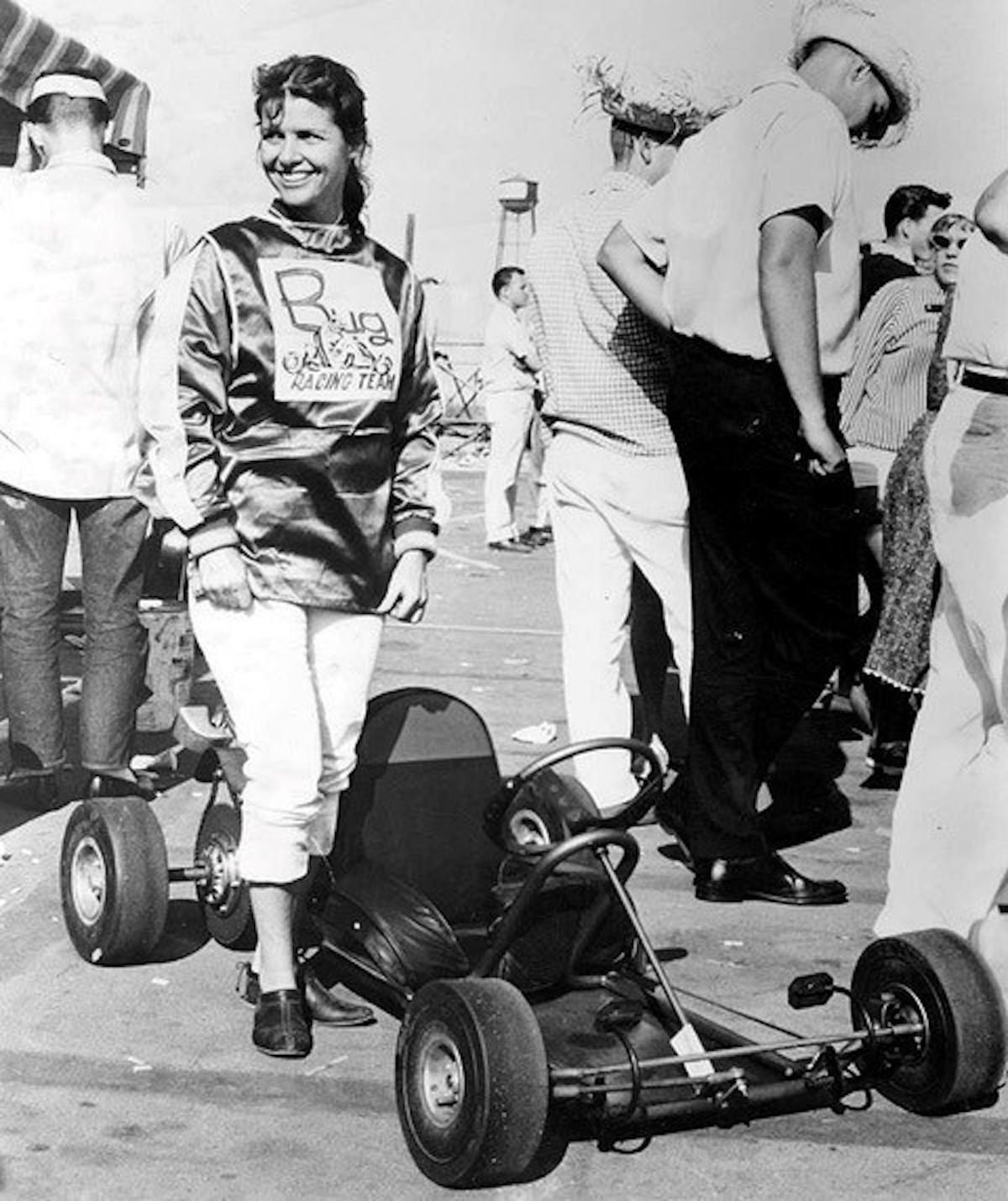
Faye Pierson, known throughout the karting world as “Lady Bug,” was inducted into the World Karting Association’s Hall of Fame in 1989 and remained active in vintage karting events for decades. After manufacturing ceased, she preserved part of the old Bug facility as a private museum dedicated to the company’s history. She passed away on March the 6th, 2021, at the age of 92. Image courtesy of Bug Engineering.
Faye Pierson, known throughout the karting world as “Lady Bug,” was inducted into the World Karting Association’s Hall of Fame in 1989 and remained active in vintage karting events for decades. After manufacturing ceased, she preserved part of the old Bug facility as a private museum dedicated to the company’s history. She passed away on March the 6th, 2021, at the age of 92.
The 1962 Bug Wasp Go-Kart Shown Here
This 1962 Bug Wasp go-kart is said to have been the personal competition kart of Faye “Ladybug” Pierson, co-founder of Bug Engineering in Azusa, California. The seller states he purchased it in 2025 from Faye Pierson’s grandson, and that it was originally raced by Faye in 1962 in single-engine configuration.
It has since been refurbished by Vintage Museum Restoration in Indianapolis and converted to a twin-engine setup. The kart rides on a tubular chromoly steel frame that was repainted Iridescent Red during the refurbishment.
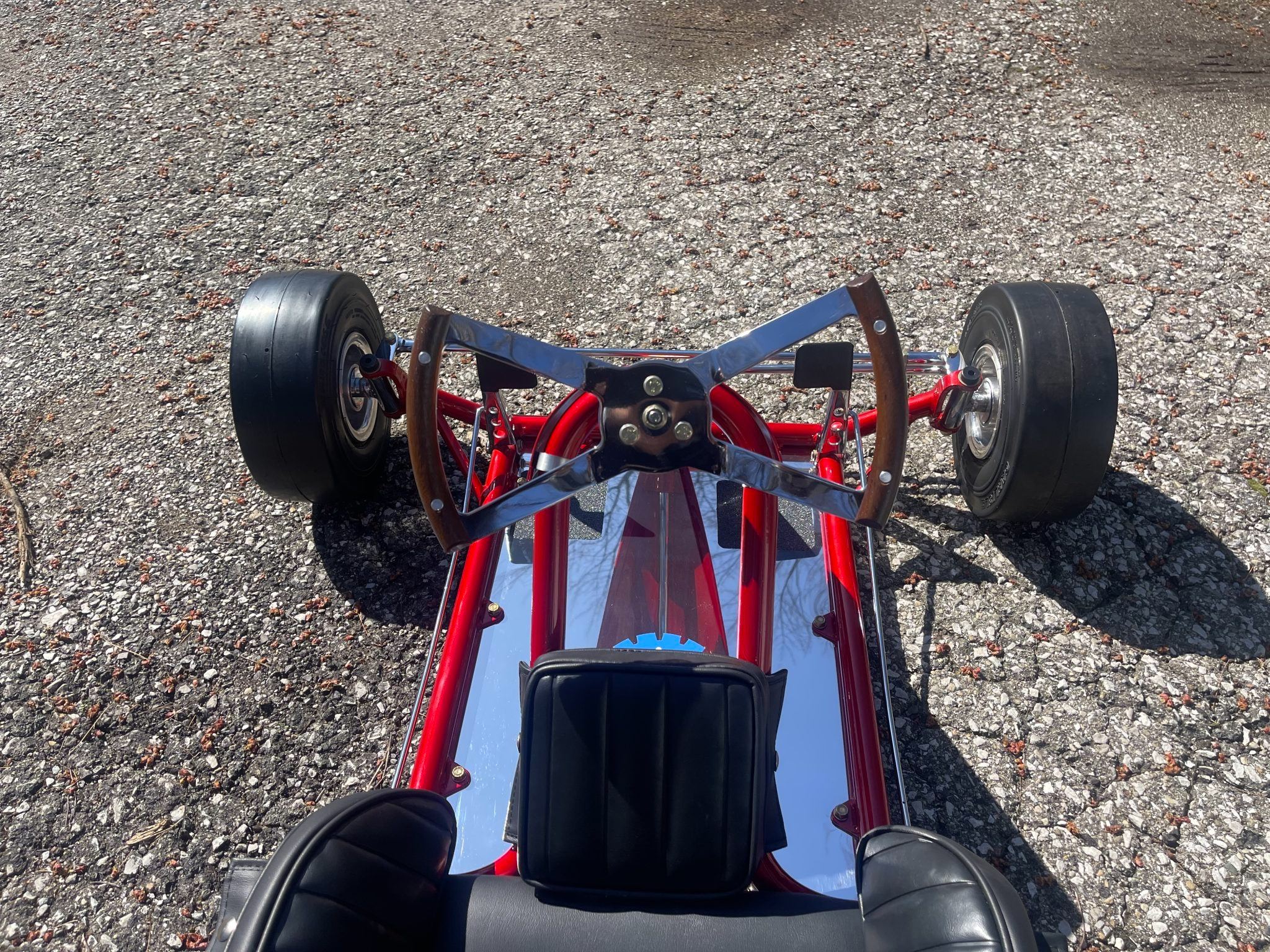
It has a color-matching Nassau panel bearing “Faye Pierson” script, a polished aluminum floor pan with Bug Wasp graphics and under-heel grip pads, and a chrome-polished seat-back fuel tank. The bolstered seat is upholstered in black vinyl and was replaced during the restoration, and the steering yoke has wood trim with re-chromed twin foot pedals and tie rods.
Power comes from a pair of McCulloch MC10 90cc two-stroke singles, reportedly sent to Terry Ives for block squaring, boring, and vapor-honing before being further prepared by Vintage Museum Restoration with replacement internal components including the points and condenser.
The engines are fitted with McCulloch high-compression heads, Tillotson flat-back carburetors, VanTech intake manifolds, GEM velocity stacks, Palmini exhausts and stuffers, Hands engine mounts, and Palmini chain guards. Both engines run direct drive with chains to the rear axle and are finished with yellow fan covers and chrome-polished shrouds.
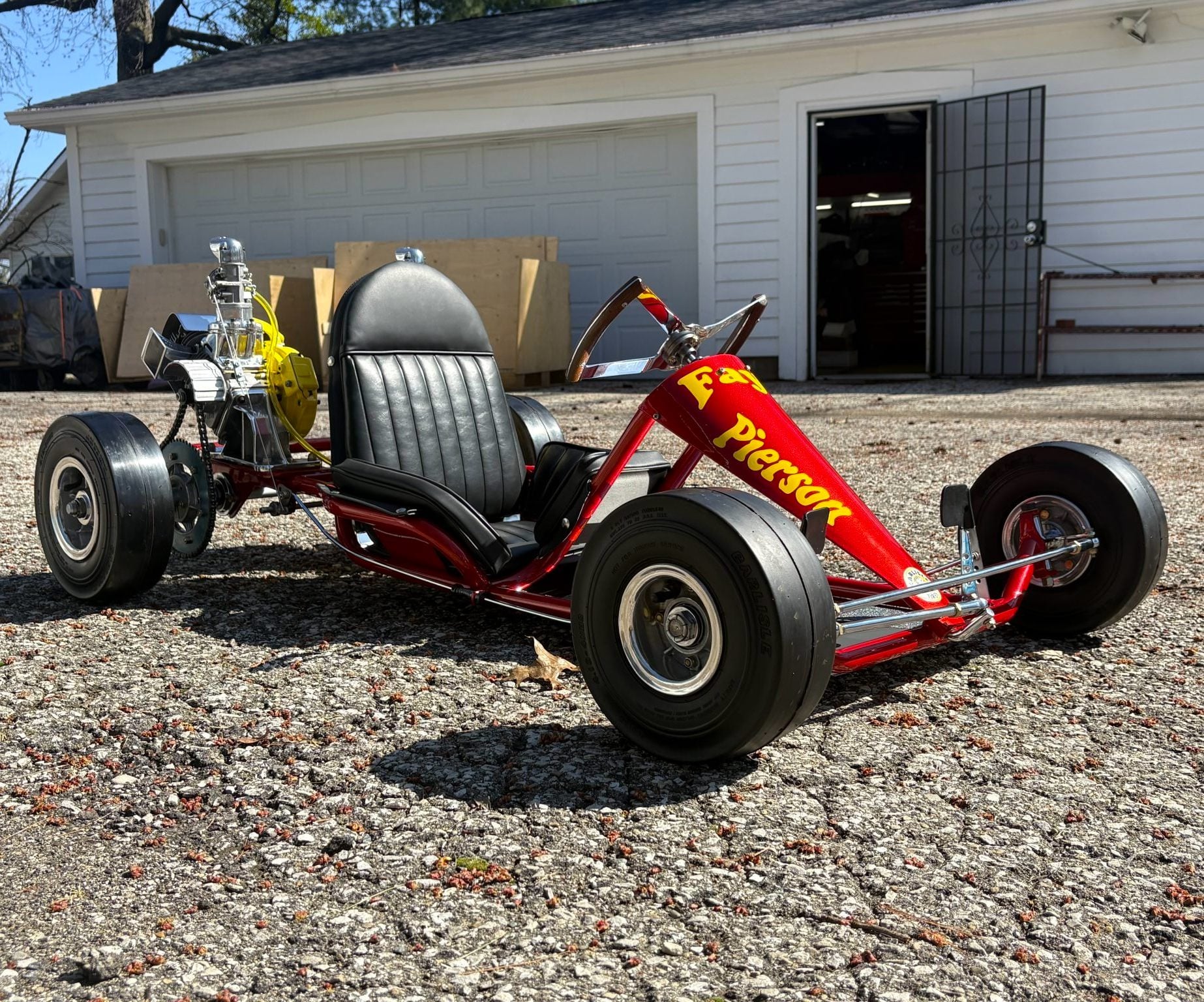
This 1962 Bug Wasp go-kart is said to have been the personal competition kart of Faye “Ladybug” Pierson, co-founder of Bug Engineering in Azusa, California. The seller states he purchased it in 2025 from Faye Pierson’s grandson, and that it was originally raced by Faye in 1962 in single-engine configuration.
Hands 4 inch wheels sit up front, while refurbished 5 inch magnesium Bug Spider wheels are fitted at the rear and shod with Carlisle racing slicks. Braking is handled by a rear-mounted disc setup with a Bug mechanical caliper and a Hurst-Airheart disc and hub.
The kart is now being offered for sale at no reserve out of Indianapolis, Indiana, on a bill of sale and you can visit the listing here if you’d like to read more about it or register to bid.
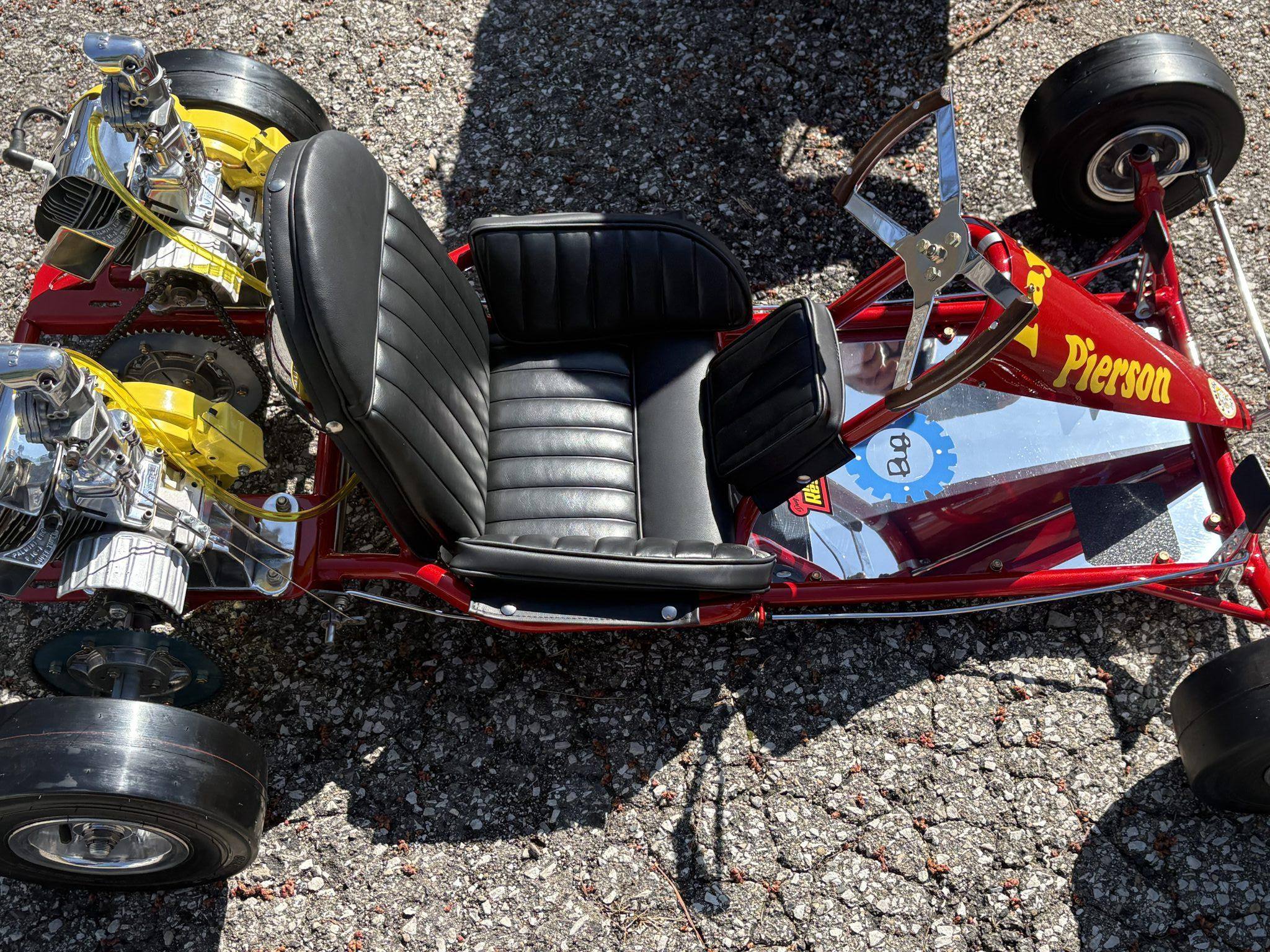
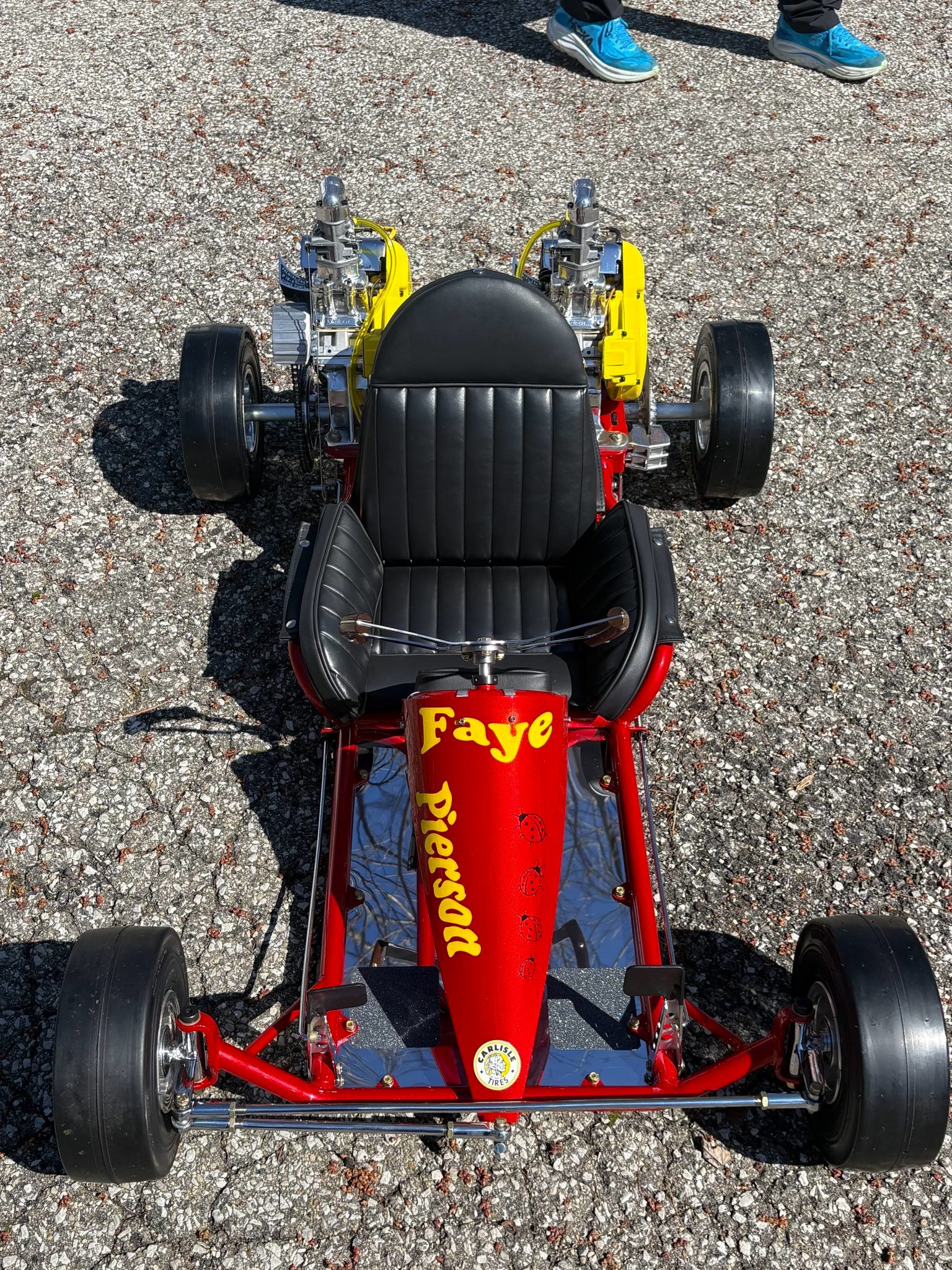
Images courtesy of Bring a Trailer

Articles that Ben Branch has written have been covered on CNN, Popular Mechanics, Smithsonian Magazine, Road & Track Magazine, the official Pinterest blog, the official eBay Motors blog, BuzzFeed, Autoweek Magazine, Wired Magazine, Autoblog, Gear Patrol, Jalopnik, The Verge, and many more.
Silodrome was founded by Ben back in 2010, in the years since the site has grown to become a world leader in the alternative and vintage motoring sector, with well over a million monthly readers from around the world and many hundreds of thousands of followers on social media.