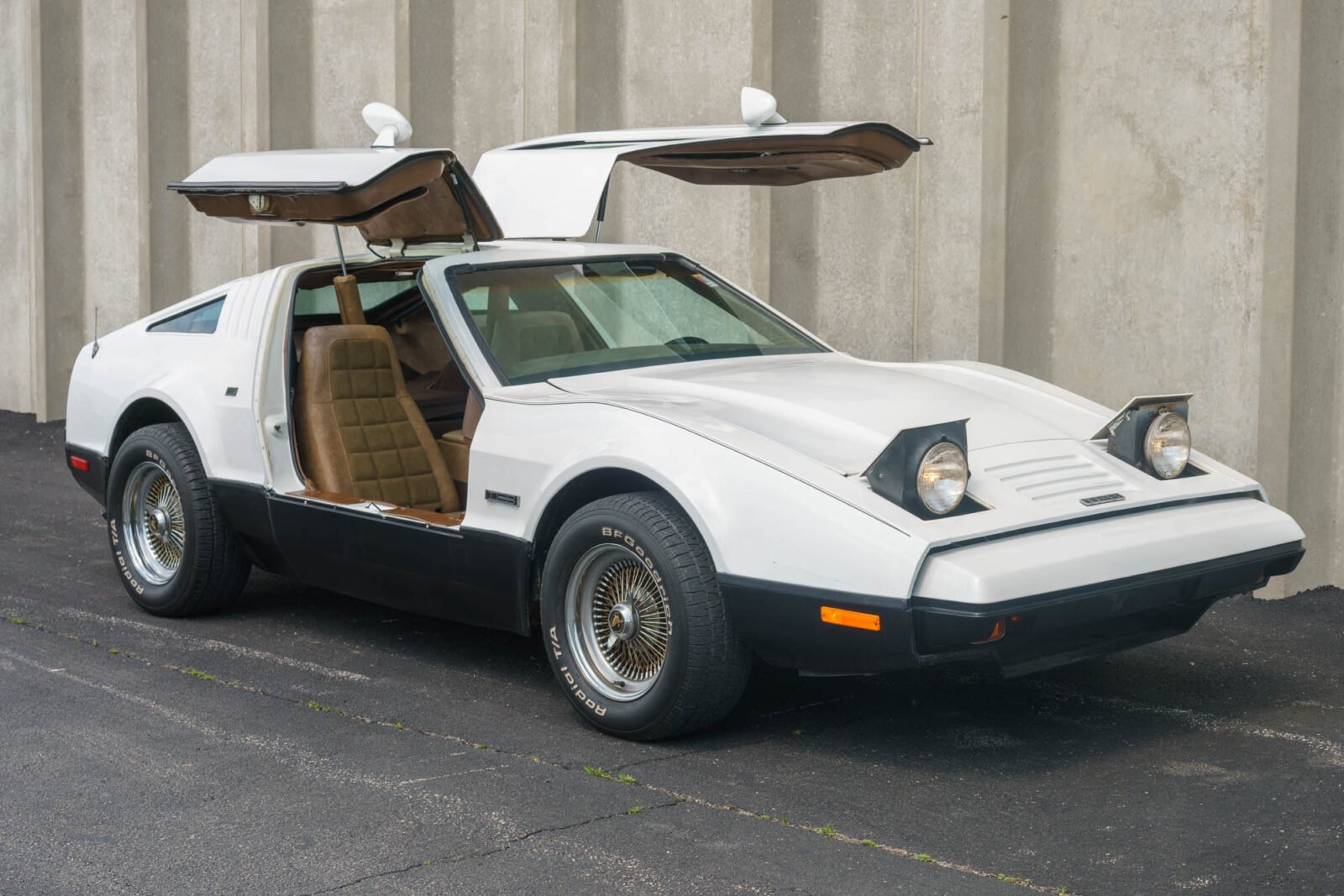
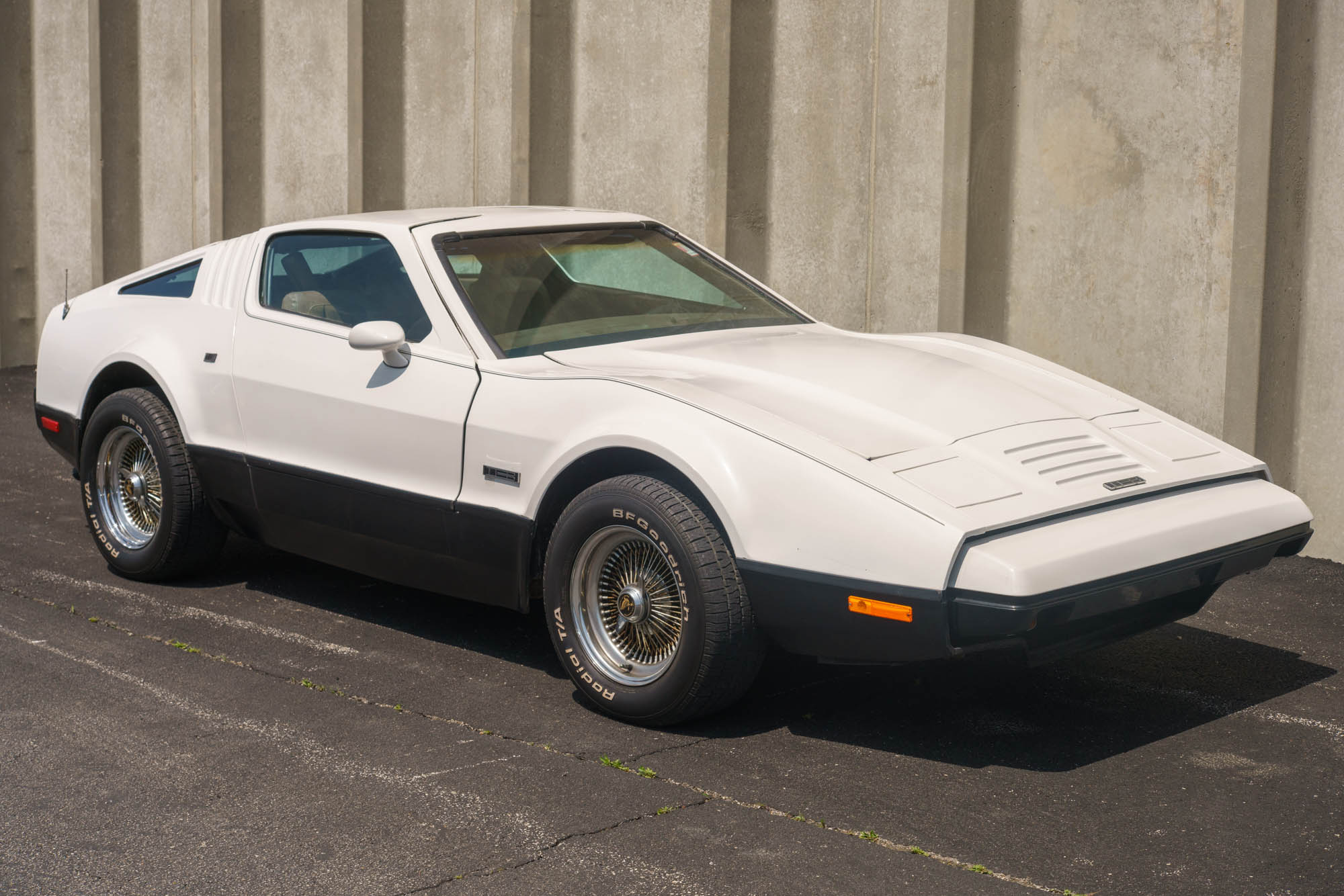
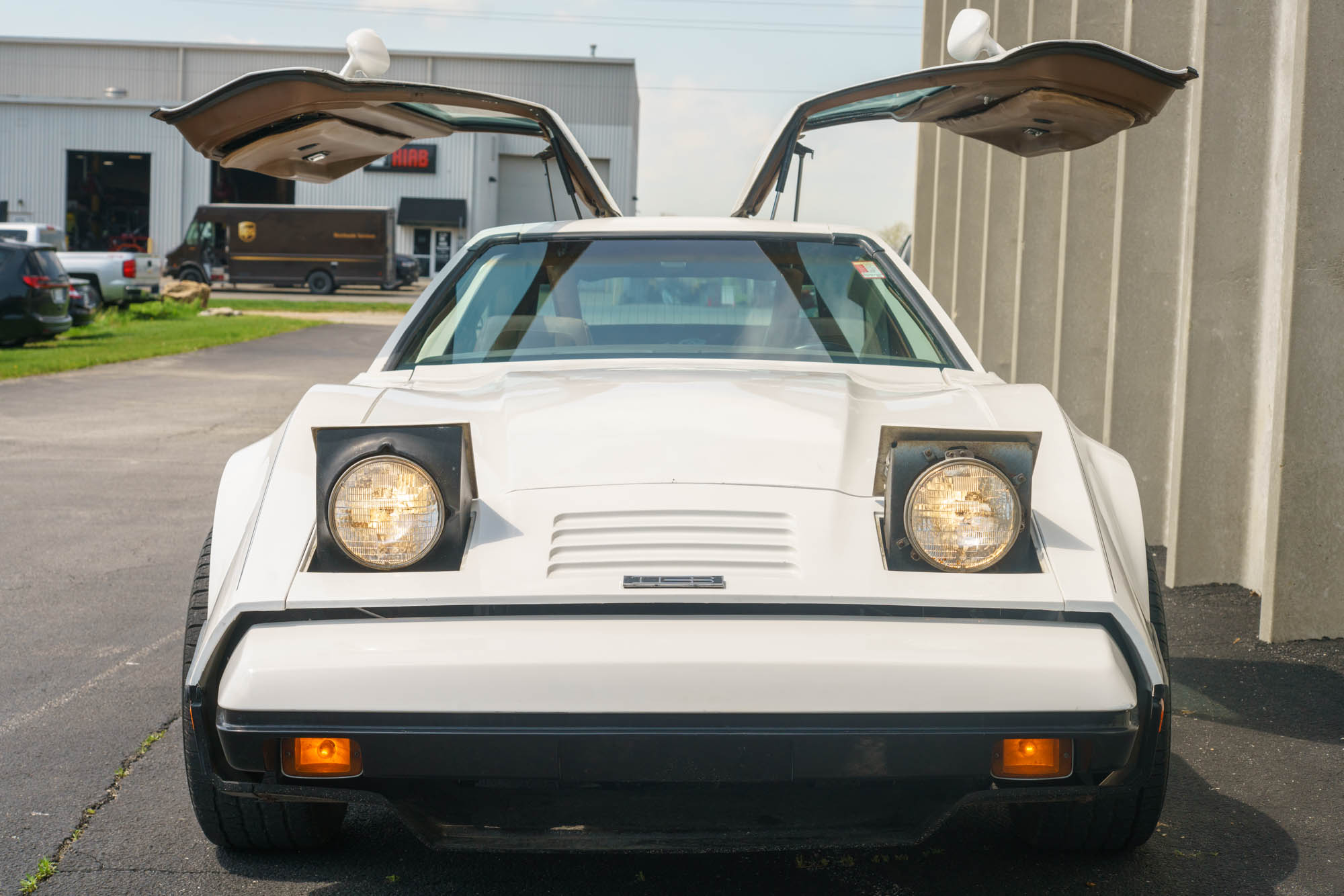
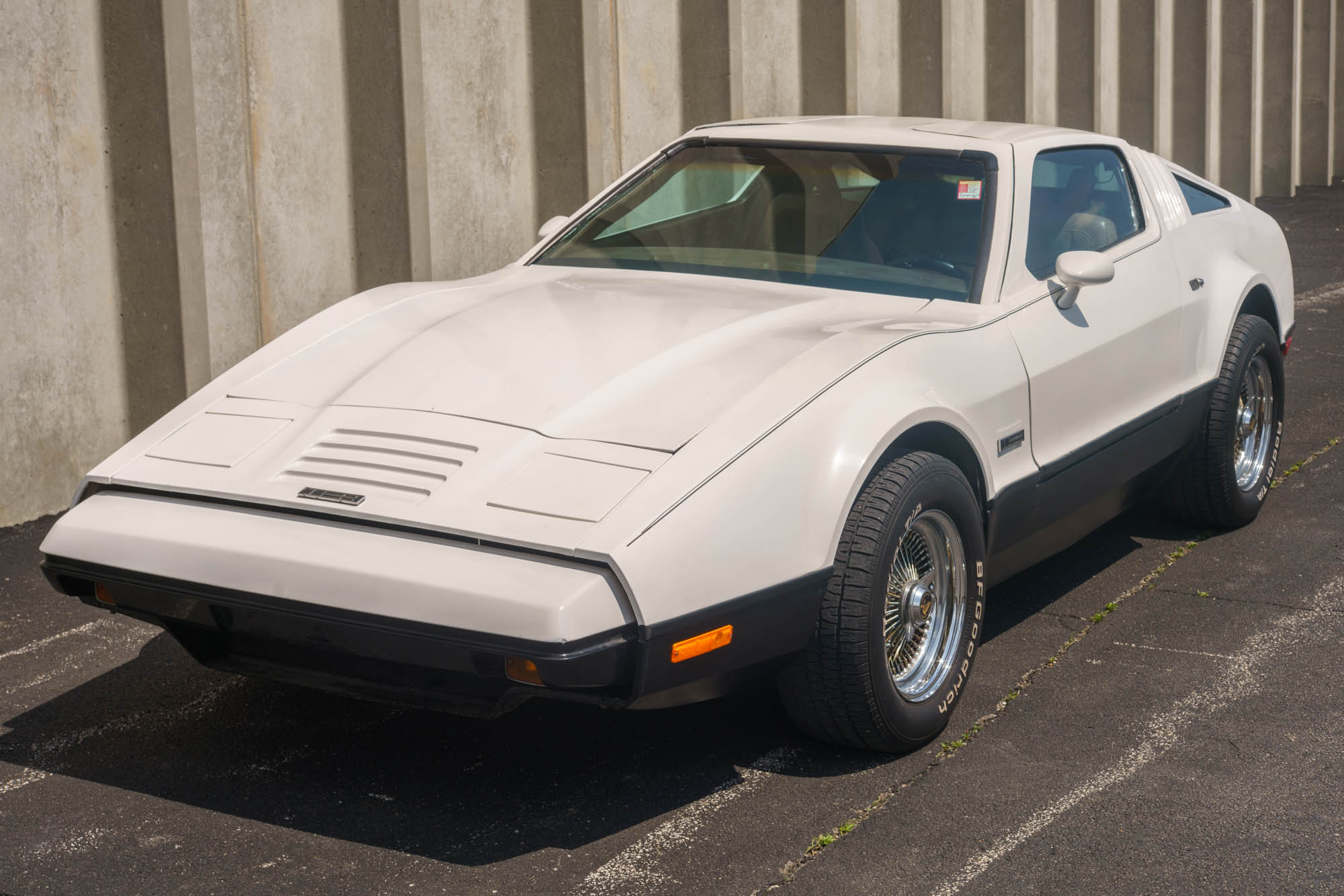
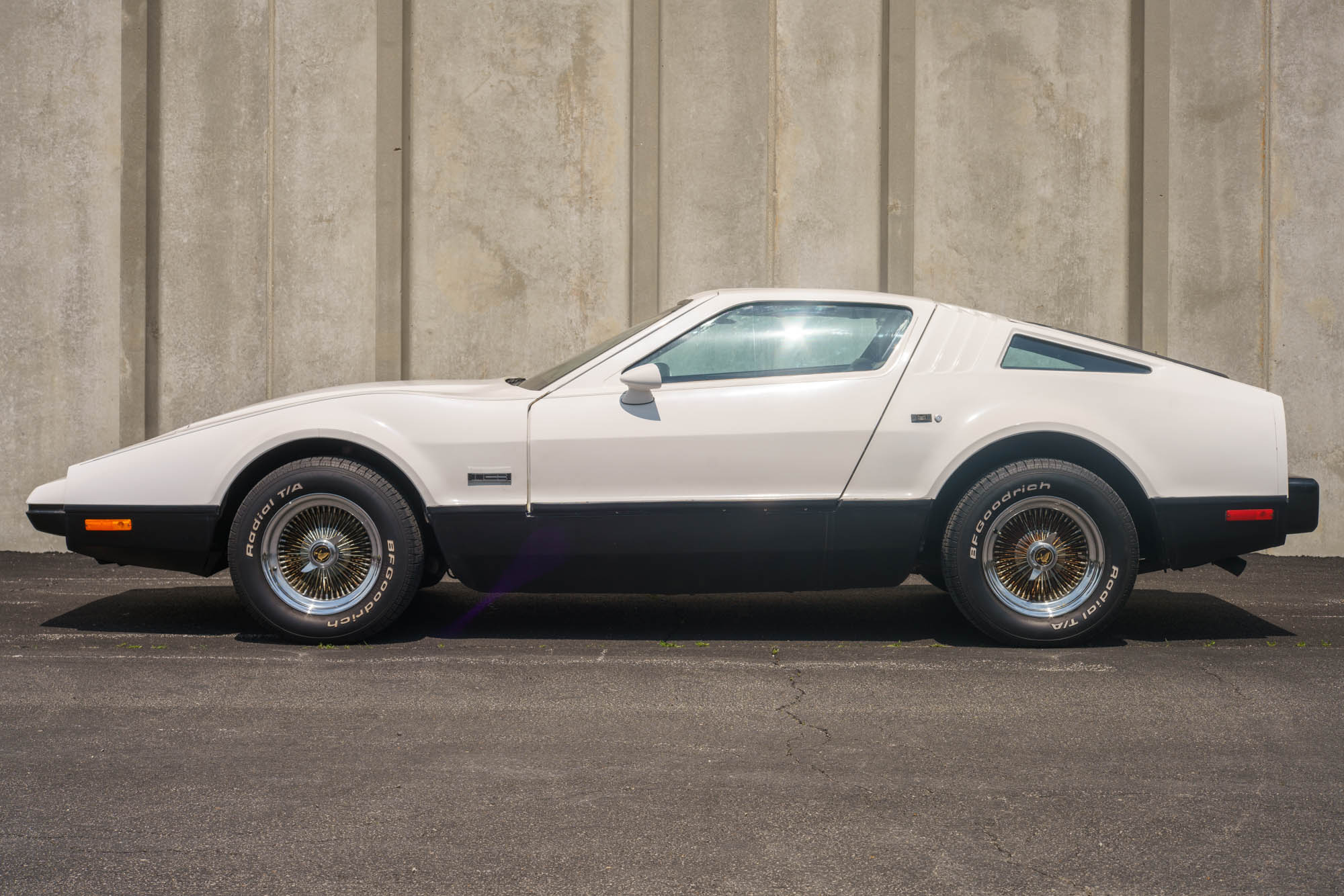
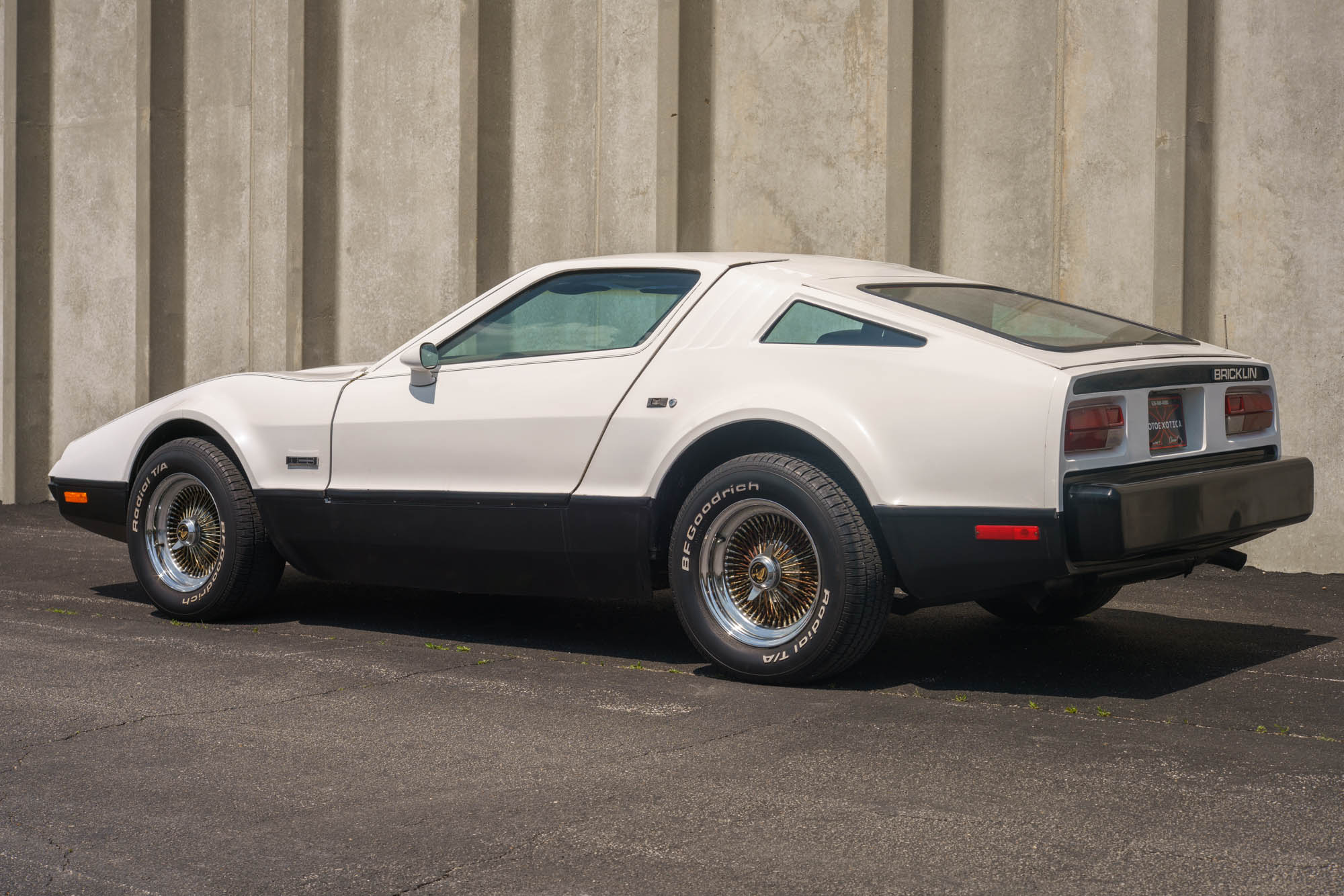
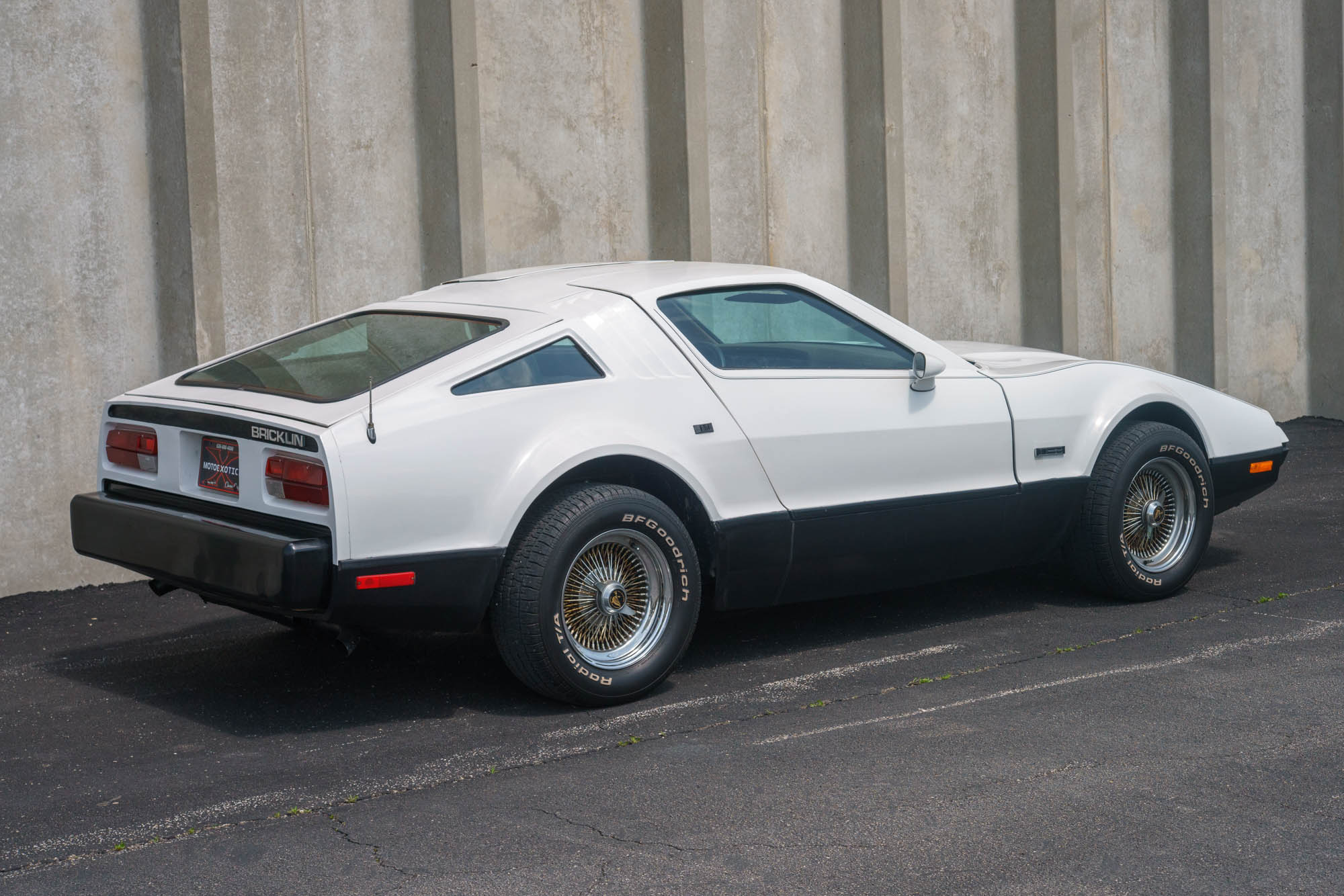
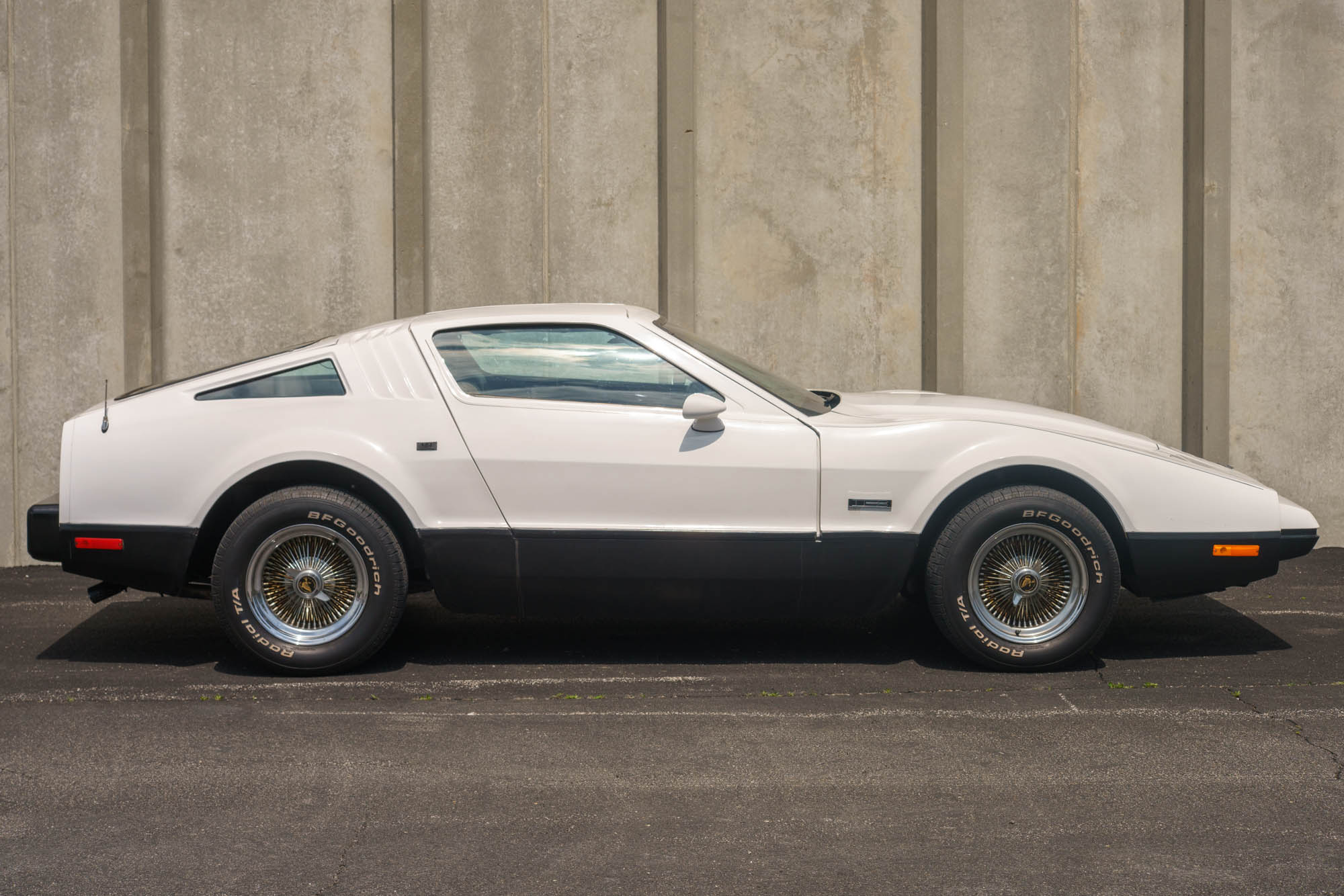
This is a 1975 Bricklin SV-1, an unusual gullwing sports car that debuted years before the DMC DeLorean, but which has lived in the stainless steel-clad car’s shadow ever since.
The car was the brainchild of Malcolm Bricklin, the name “SV-1” stands for “Safety Vehicle 1,” and the car was developed with a series of safety features that were ahead of its time, including an integral roll cage, impact absorbing front and rear bumpers, and a steel perimeter frame.
Fast Facts: The Bricklin SV-1
- The Bricklin SV-1 was a mid-1970s gullwing sports coupe conceived by entrepreneur Malcolm Bricklin as a direct response to criticism of earlier small imported cars. Branded “Safety Vehicle 1,” it’s design was based around occupant protection through an integrated roll structure, impact-absorbing bumpers, and a steel perimeter frame paired with a lightweight fiberglass body.
- Bricklin’s background included co-founding Subaru of America in 1968 and importing the Subaru 360, which drew significant negative attention for safety and performance. Lessons from that experience heavily influenced the SV-1’s concept, positioning it as a safety-focused, North American-built sports car intended to counter prevailing perceptions of lightweight, unsafe imports.
- The SV-1 had front-engine, rear-wheel-drive layout and was offered with AMC 360 V8 or later Ford 351 Windsor power, paired with three-speed automatic or four-speed manual transmissions. Suspension followed common practice for the period, with double wishbones up front, a live rear axle on leaf springs, and disc front brakes with rear drums.
- Production challenges, quality issues, and escalating costs ultimately doomed the company, with fewer than 3,000 cars built before collapse. Despite its failure, the SV-1 developed a strong cult following. Active owner support networks and decades of refinement now allow surviving examples to be more reliable and better finished than when new.
History Speedrun: The Bricklin SV-1
The story of the development, production, and ultimate failure of the Bricklin SV-1 project is worthy of its own Netflix series. It involves a charismatic entrepreneur, a ground-breaking new automobile design, and a small town government that pinned their hopes on the project and provided funding. The parallels with the story of the DeLorean DMC-12 which would appear a few years later are extraordinary.
Above Video: This is a vintage full-length documentary about the Bricklin SV-1 that tells the story of its car, its conception, design, production, and its survival as a classic.
Long before Malcolm Bricklin became known for the Bricklin SV-1, he had already left a mark on the American automotive landscape by co-founding Subaru of America in 1968. He recognized the potential of importing small, fuel-efficient Japanese cars to the U.S., especially at a time when domestic automobiles were typically large and consumed significant amounts of fuel.
The Subaru 360, a small and affordable car, was the first model introduced, although it was criticized for its safety features (or lack thereof) and performance. Nevertheless, Subaru of America survived its initial hurdles and has since become a significant player in the U.S. automotive market.
Having learned the lessons from all the bad press the small, underpowered, and unsafe Subaru 360 had received Bricklin’s next project would be almost a point-by-point answer to the criticisms of the pint-sized Japanese economy car.
The car was to be called the Bricklin SV-1, the model name stands for “Safety Vehicle #1,” and it was designed by Marshall Hobart and the first prototype was built by Dick Dean. A later evolution of the design was created by Herb Grasse Design and engineered by AVC Engineering, AVC would also build three operational prototypes.
The final design was a sports car coupe with two doors, a fixed roof, and a hatchback in the rear. The engine was mounted up front sending power to the rear wheels. The SV-1 made use of an unusual steel perimeter frame/chassis with an integrated “Steel Roll-Over Module” for roll over protection for the occupants.
Front and rear bumpers were integrated into the design that were said to be able to absorb a 5 mph (8 km/h) impact with little to no damage – a typical speed for parking lot collisions. In order to reduce tooling costs and help with curb weight the body was fiberglass – this also meant that the factory didn’t need a separate section for the expensive and time consuming job of painting.
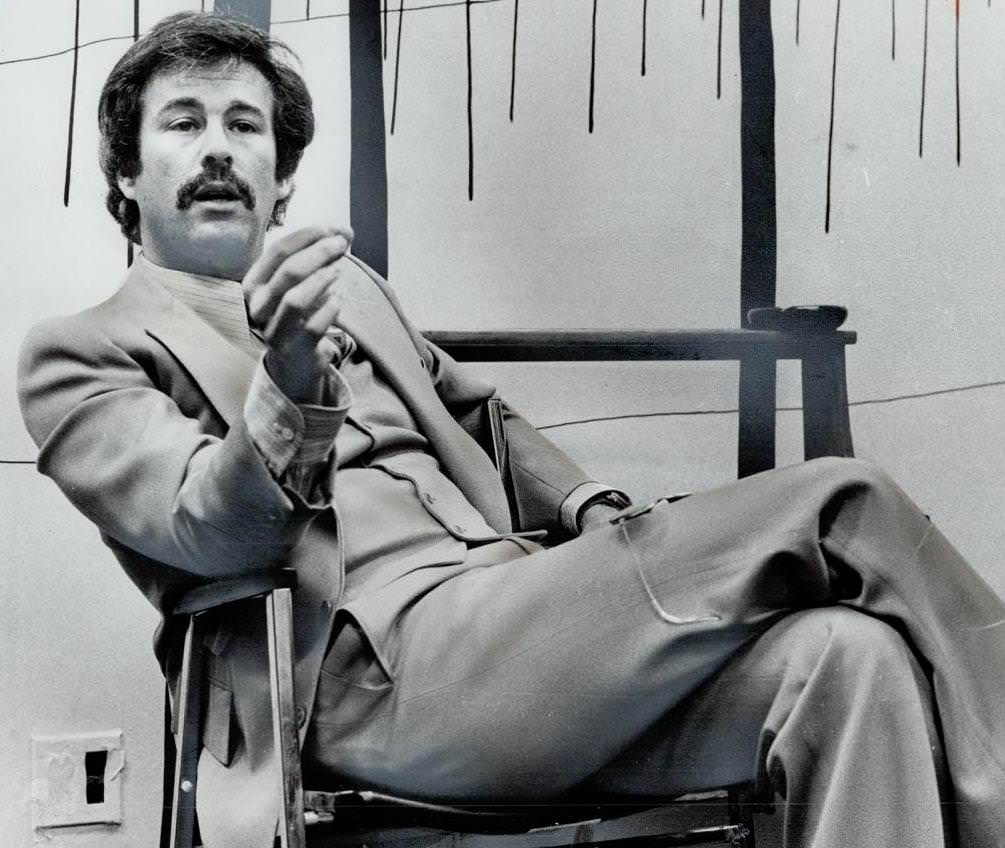
 A picture of Malcolm Bricklin in 1975, at this time the company was in full production, building well over 1,000 cars a year – though storm clouds were gathering.
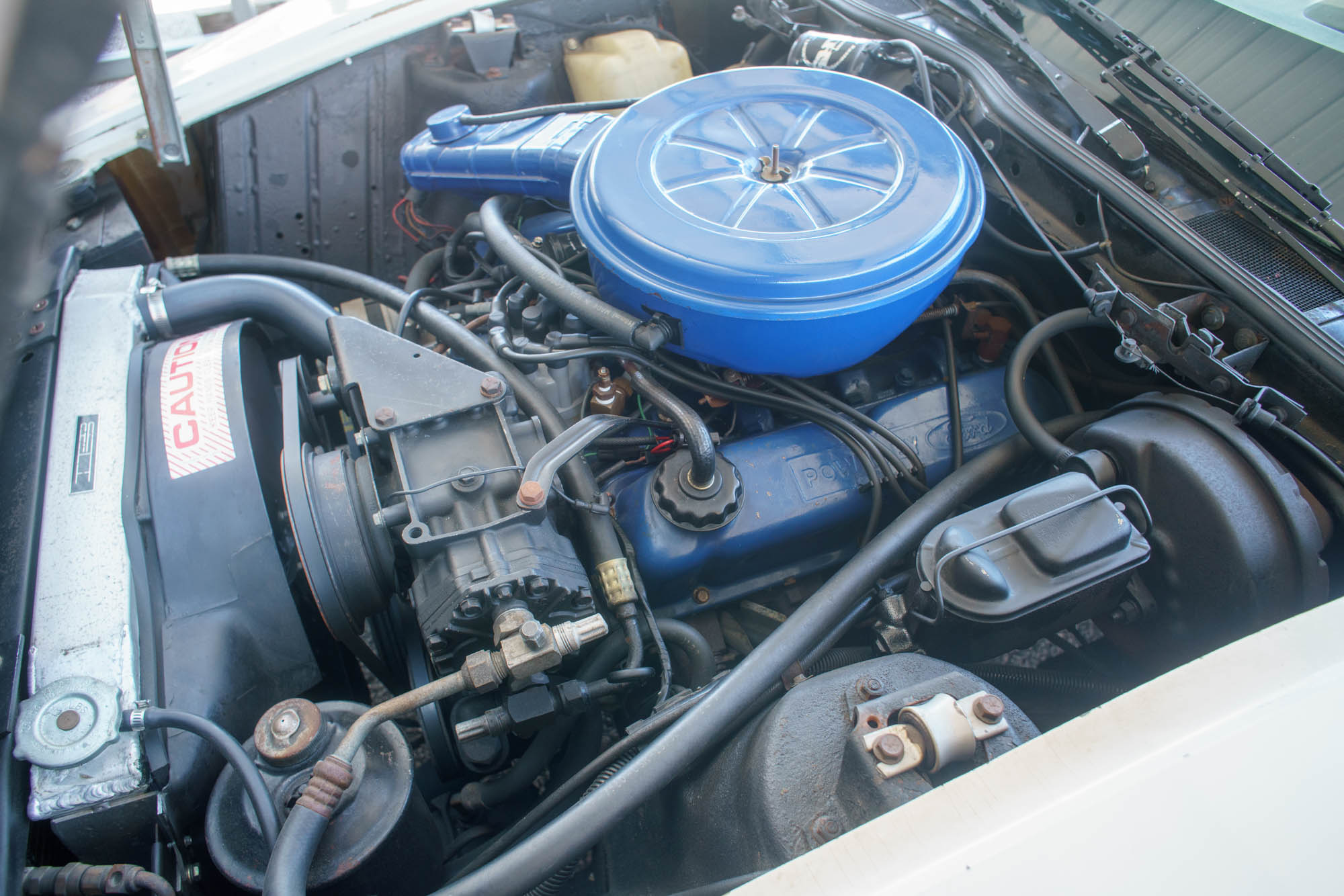
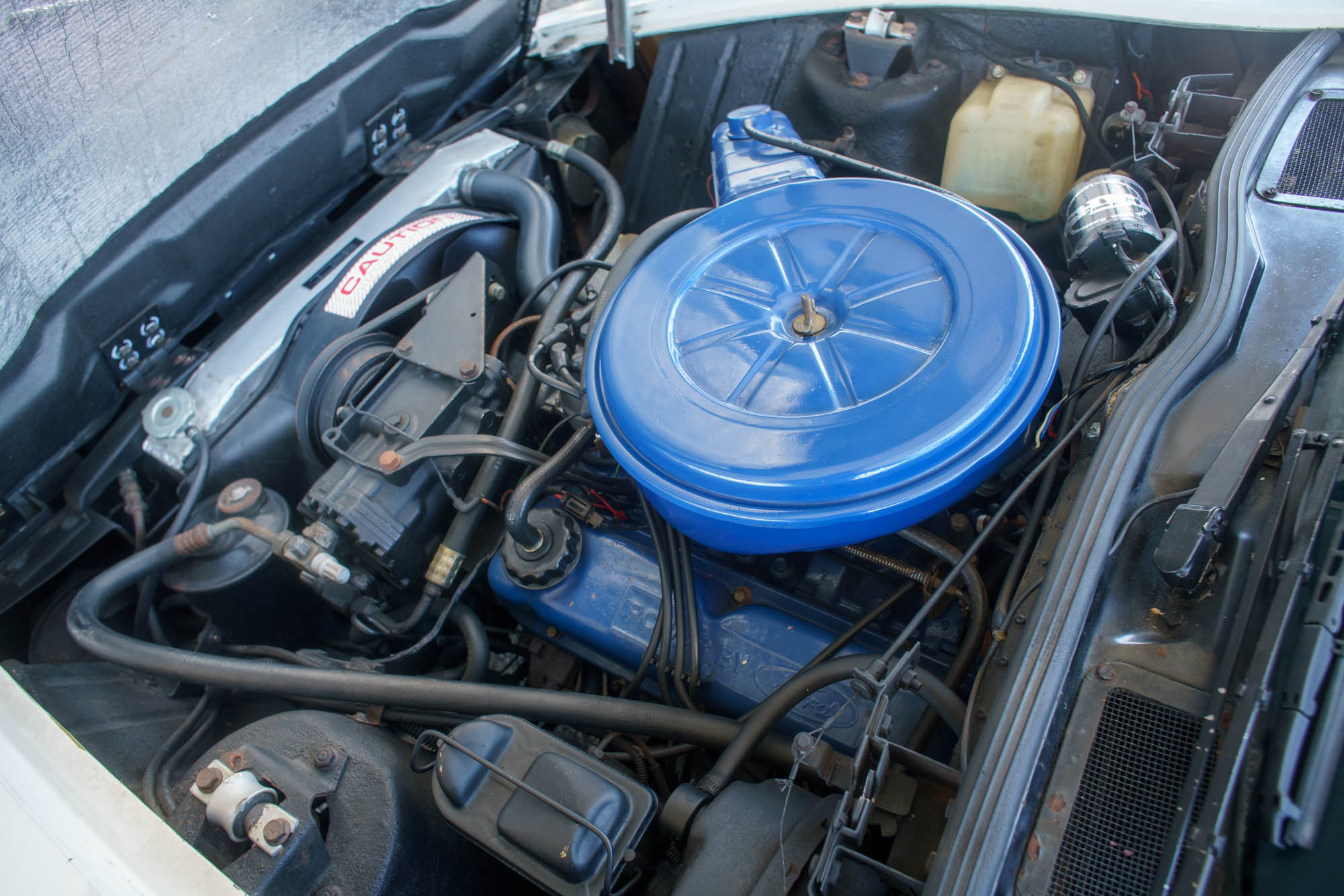
Two different engines were used over the course of the production run, initially the SV-1 was powered by the 360 cubic inch (5.9 liter) AMC V8 fitted with a single four-barrel carburetor which produced 220 bhp and 315 lb ft of torque. Later cars received the 351 cubic inch (5.8 liter) Windsor V8, and transmission options included either the 3-speed Torque Command automatic, or a BorgWarner T-10 4-speed manual.
The suspension was relatively standard for the era, with double A-arms, coil springs and telescopic shock absorbers up front, and a live axle in the rear with leaf springs. Front discs were fitted along with rear drums.
Issues with production, quality control, and runaway costs plagued the SV-1. This is a common theme with many new automakers, including notable examples like Tucker, DeLorean, and Tesla.
Sadly in the case of Bricklin these issues would prove fatal, the company manufactured the SV-1 in 1974 and 1975 before succumbing, with just under 3,000 cars made.
Despite this ignominious end the Bricklin SV-1 remains a cult classic today, they’re highly sought after by enthusiasts and there’s an active club in place that helps with repairs, restorations, and parts sourcing to keep them on the road.
Many (if not all) of the early car’s quality and design issues have long ago been solved, meaning it’s now possible to buy an SV-1 in better condition than it ever would have left the factory.
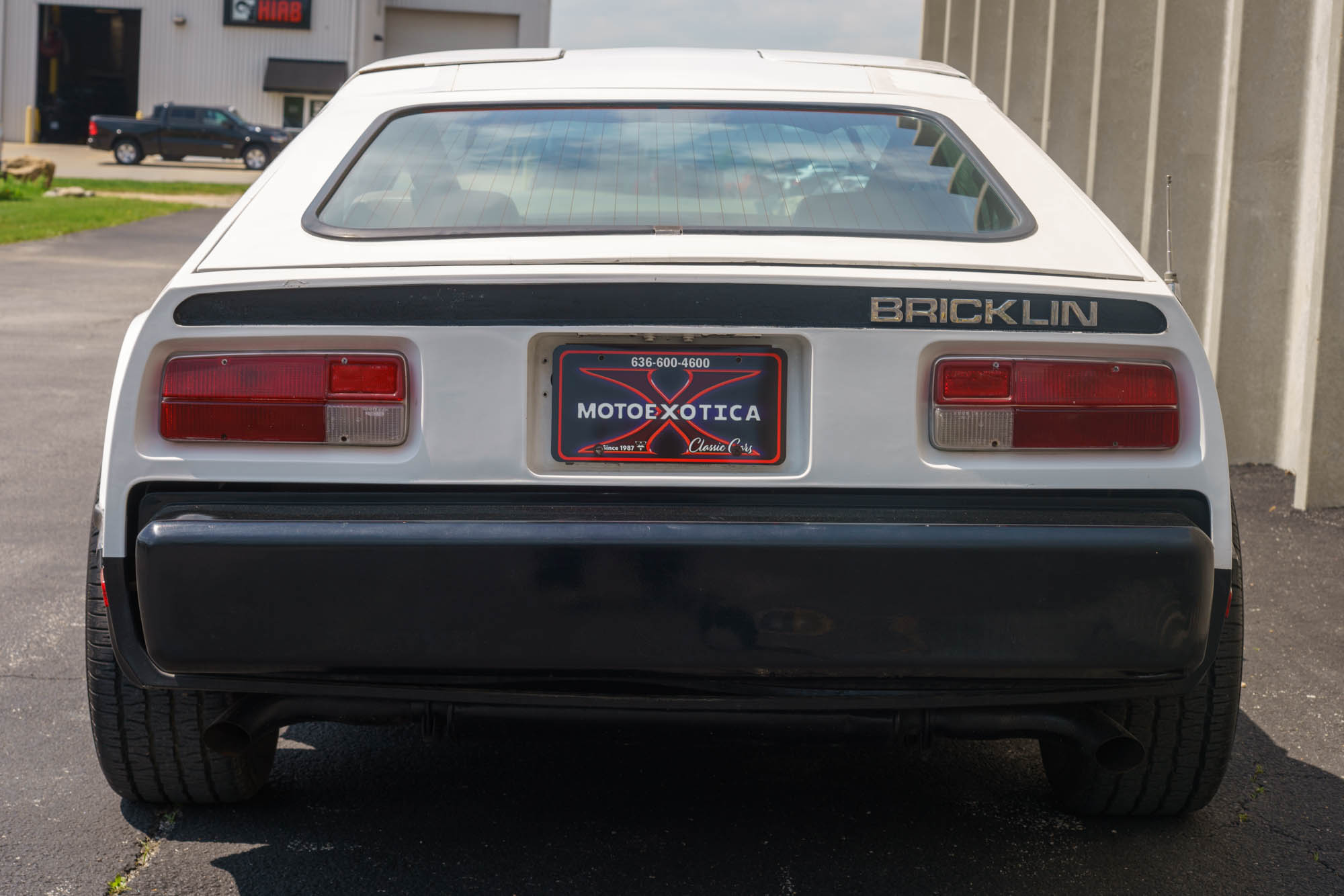
The 1975 Bricklin SV-1 Shown Here
The car you see here is a 1975 Bricklin SV-1 that was part of a private collection in Alabama for many years before it was bought by the selling dealer earlier this year.
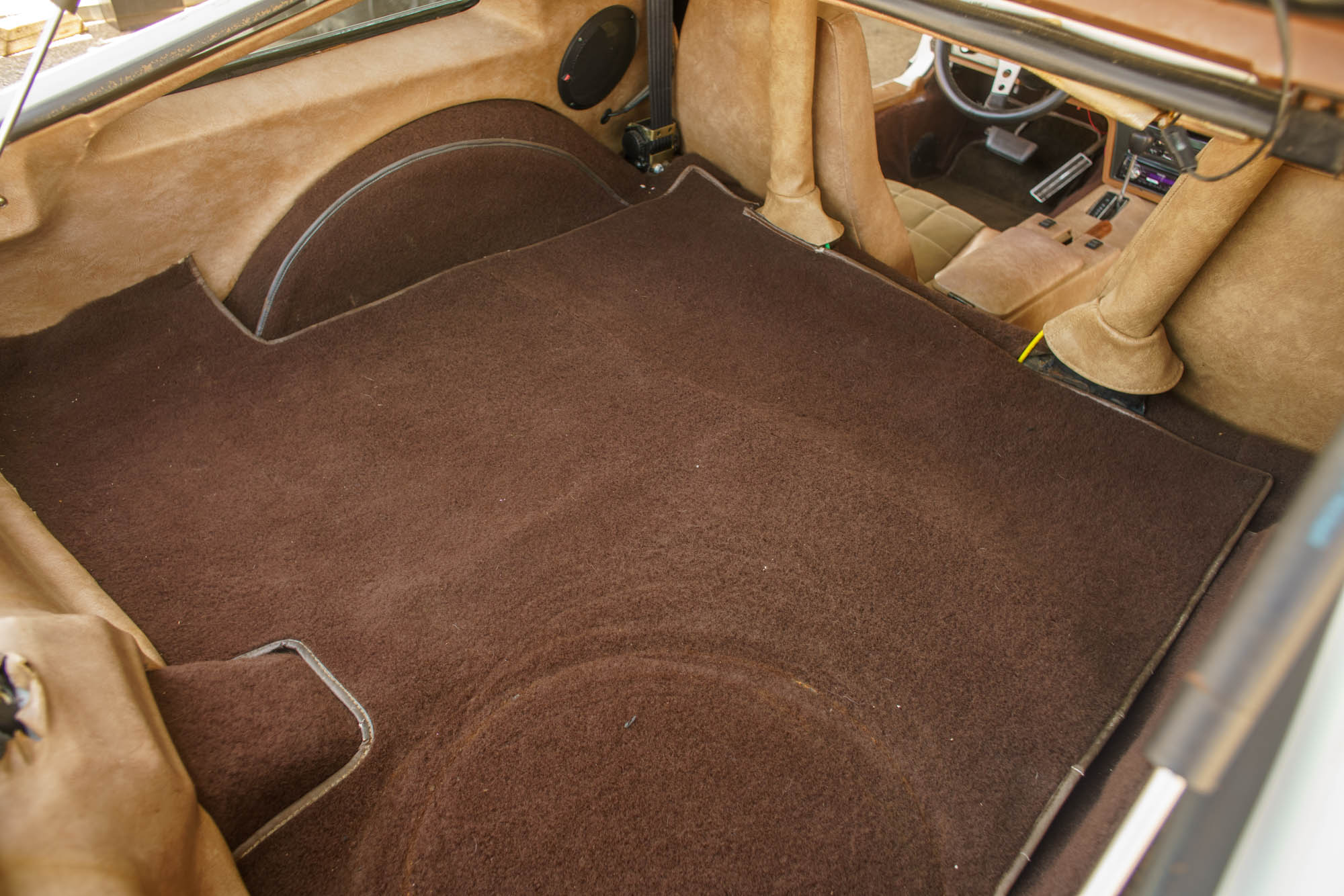
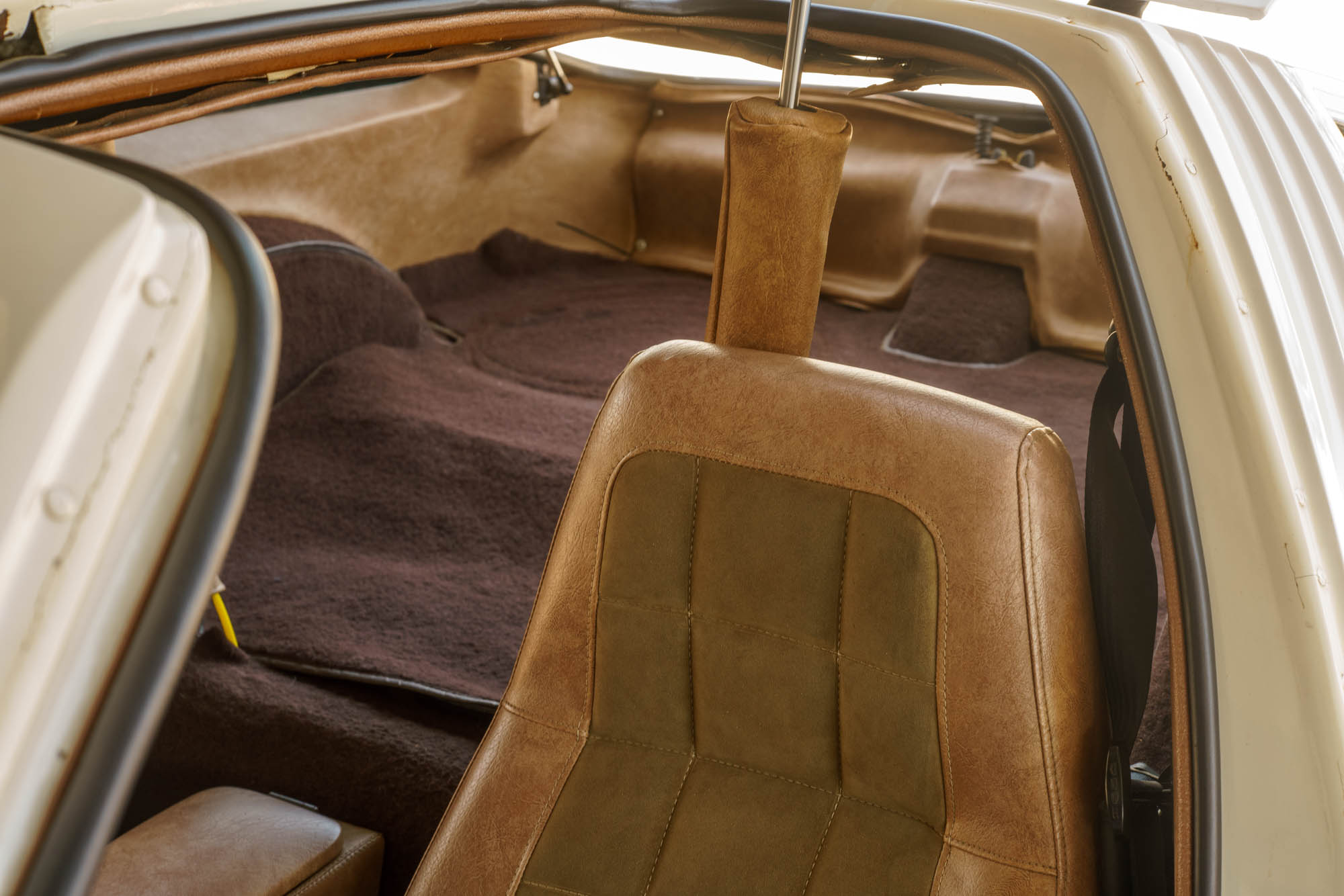
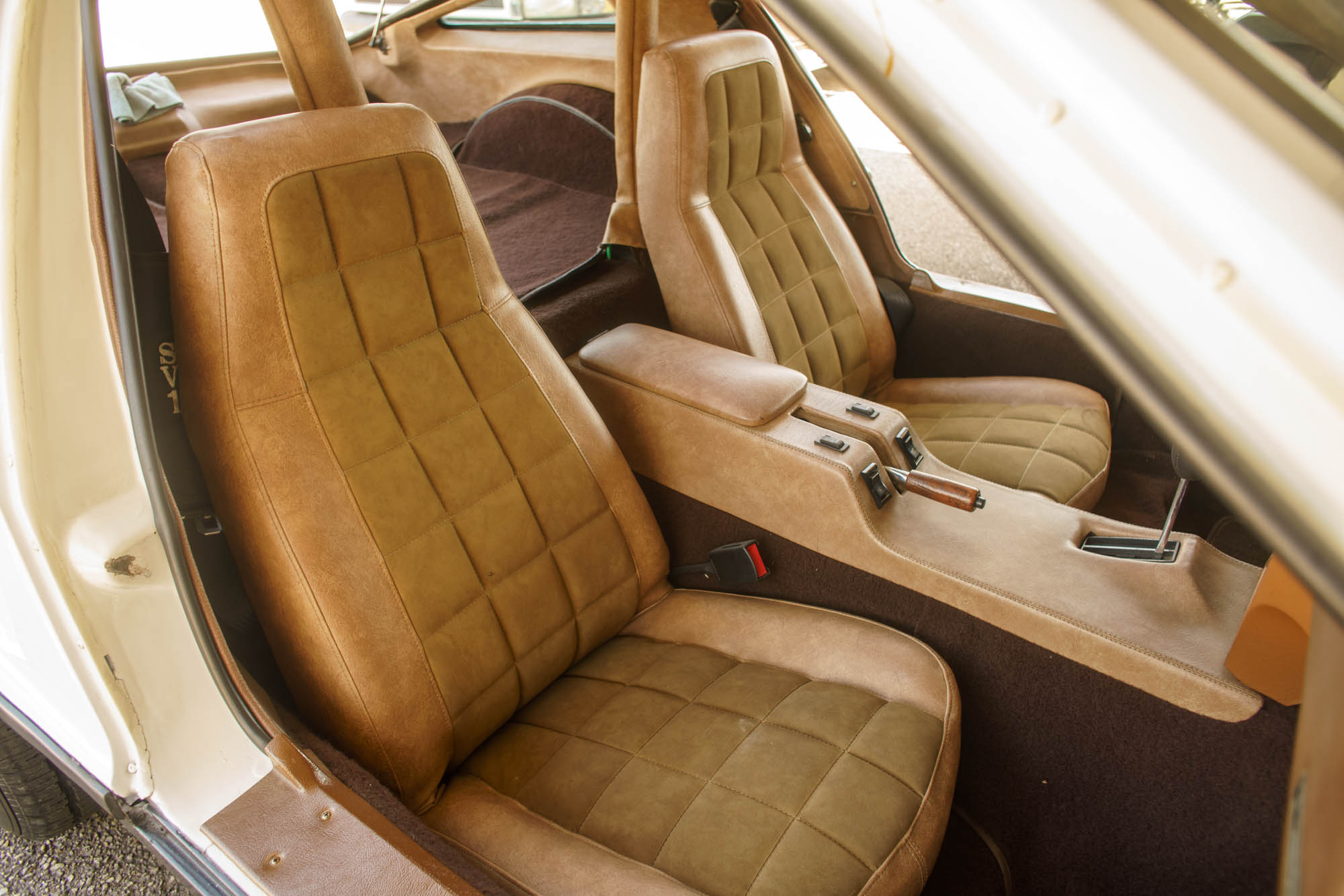
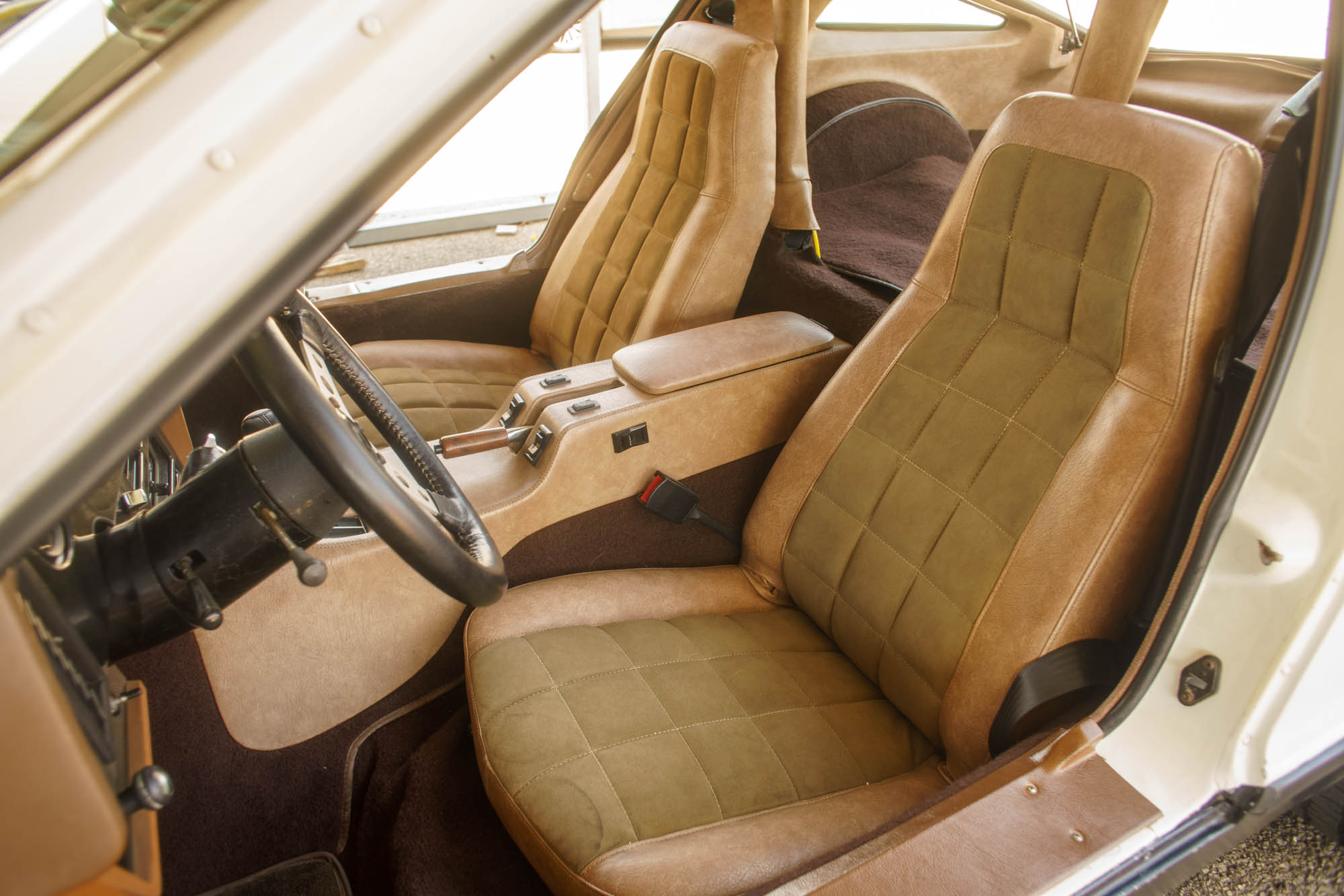
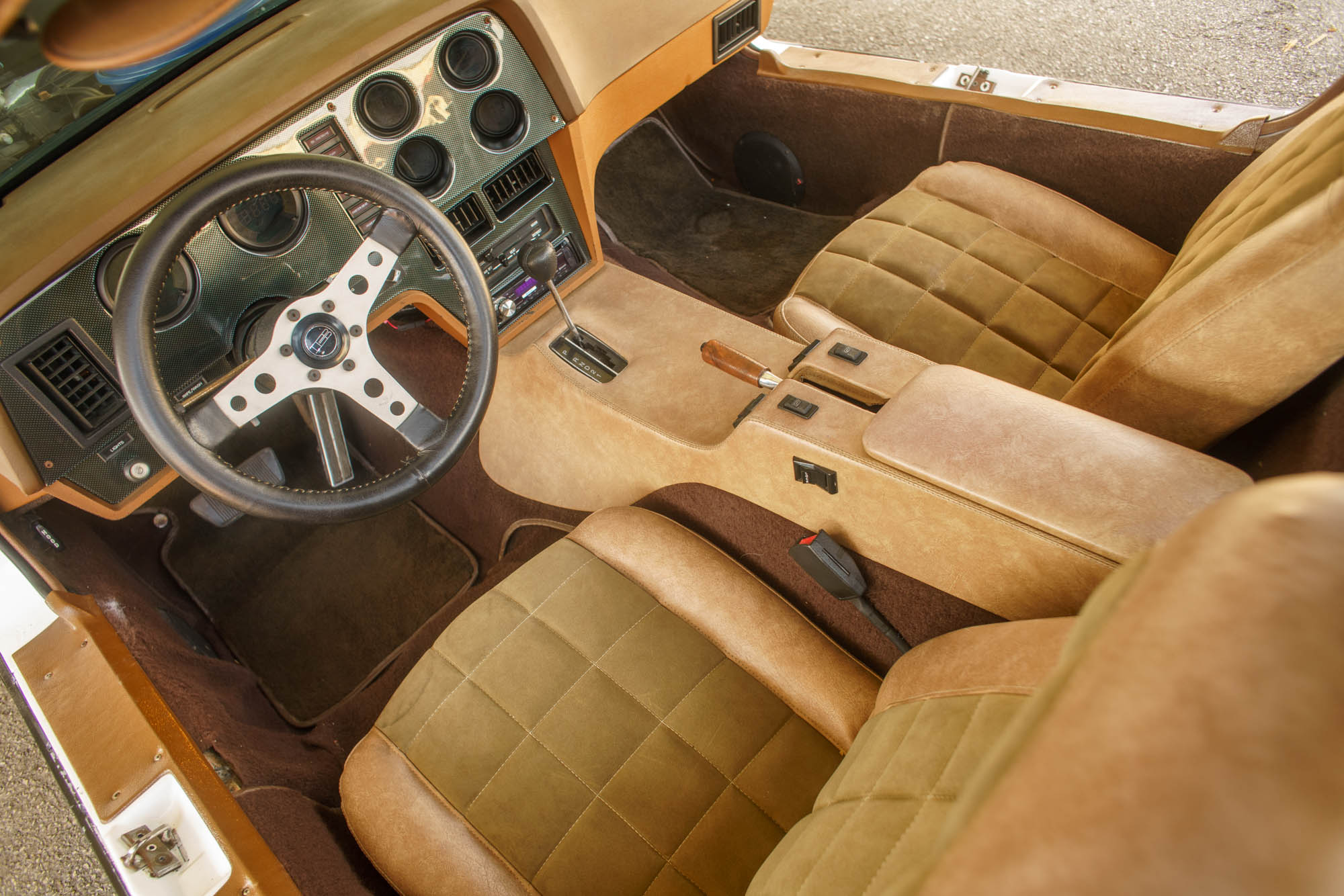
It’s powered by a 351 cubic inch (5.8 liter) Windsor V8 paired with a 3-speed automatic transmission, with power then sent to the rear wheels courtesy of a live axle. It’s finished in Safety White over two-tone tan vinyl and suede microfiber cloth interior, and it has black pin-striping.
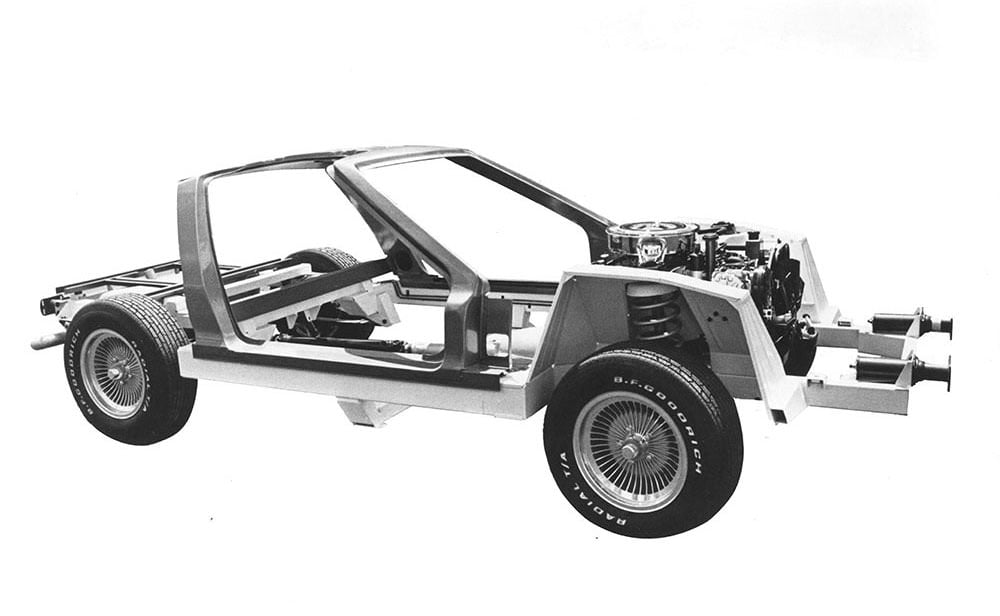
This is the unusual steel chassis of the fiberglass-bodied SV-1. It includes high sills for side impact protection which necessitated gullwing doors.
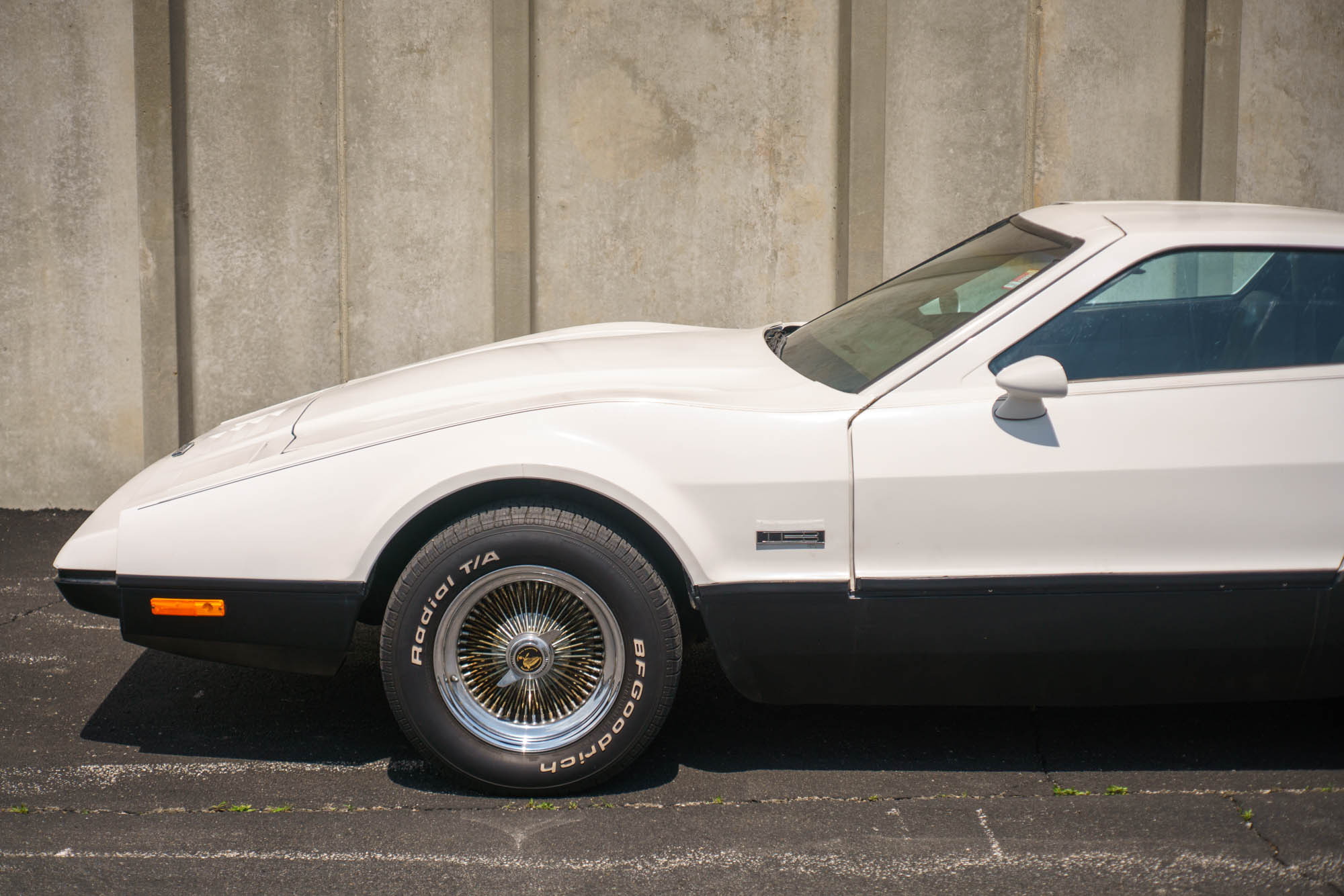
As you would expect, the car has a full fiberglass body, gullwing doors, pop-up headlights, and high-back bucket seats. It also comes with power steering, power-assisted front disc brakes, 15″ wire-spoke wheels, a Kenwood CD stereo, and it now has retrofitted digital instrumentation.
It’s now being offered for sale out of Fenton, Missouri with a jack, two remotes, and a Missouri title. If you’d like to read more about it or register to bid you can visit the listing here.
Images courtesy of Bring a Trailer

Articles that Ben Branch has written have been covered on CNN, Popular Mechanics, Smithsonian Magazine, Road & Track Magazine, the official Pinterest blog, the official eBay Motors blog, BuzzFeed, Autoweek Magazine, Wired Magazine, Autoblog, Gear Patrol, Jalopnik, The Verge, and many more.
Silodrome was founded by Ben back in 2010, in the years since the site has grown to become a world leader in the alternative and vintage motoring sector, with well over a million monthly readers from around the world and many hundreds of thousands of followers on social media.