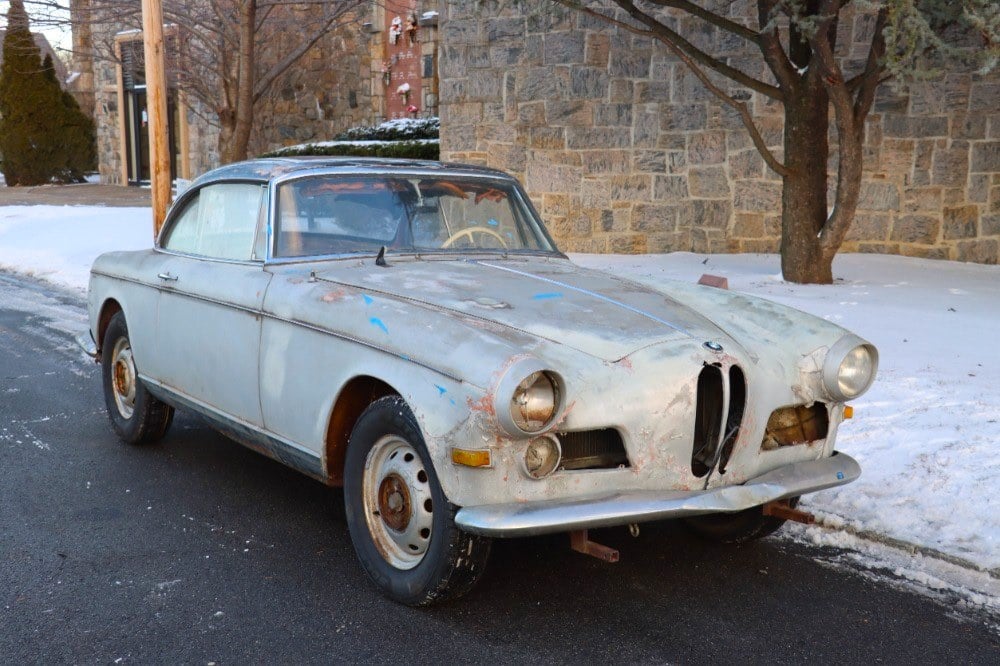
This is an original, matching-numbers 1959 BMW 503. It’s one of just 253 examples of the model that were made, all with the 90º aluminum BMW 3.2 liter V8, and it’s been called one of the most beautiful BMWs of the 20th century.
The 503, and its sibling the BMW 507, were developed to use as much of the drivetrain and underpinnings of the 501 and 502 luxury sedans as possible, giving the German automaker its own top-tier GT car to compete with the likes of Mercedes, Jaguar, Maserati, and Aston Martin.
Fast Facts: A 1959 BMW 503 Barn Find
- The BMW 503 was a hand-built luxury grand tourer introduced in 1956, sharing much of its engineering with BMW’s 501 and 502 sedans. Styled by Albrecht von Goertz, it was intended to give BMW a prestigious rival to high-end cars from Mercedes-Benz, Jaguar, Maserati, and Aston Martin.
- Underneath its aluminum body, the 503 used a steel chassis with independent front suspension, a live rear axle, and BMW’s 3.2 liter aluminum V8. Fed by twin Zenith carburetors, the engine produced 138 bhp and 159 lb ft, giving the 1,500 kg car a 118 mph top speed.
- BMW introduced the Series 2 in late 1957, moving the 4-speed gearbox forward to bolt directly to the engine and replacing the column shifter with a floor-mounted lever. Electric windows replaced the earlier electro-hydraulic system. Production ended in 1960 after just 412 cars, including 273 coupes and 139 cabriolets.
- The car shown is a silver BMW 503 coupe described as an original, unrestored, matching-numbers example that spent 35 years in storage. Imported to the United States in the early 1970s, it remains complete but non-running and needs restoration. The listing conflicts on whether it is a 1957 or 1959 example.
History Speedrun: The BMW 503
In the mid-1950s BMW’s car business largely rested on the expensive 501 and V8-engined 502 sedans, with the Isetta bubble car only just entering production. The Munich plant didn’t have a whole lot of production capacity, and sales chief Hanns Grewenig argued that a factory of that size was better suited to small numbers of high-margin luxury cars than to volume production, and a sporting coupe and cabriolet built on the 502’s running gear fit that thinking.
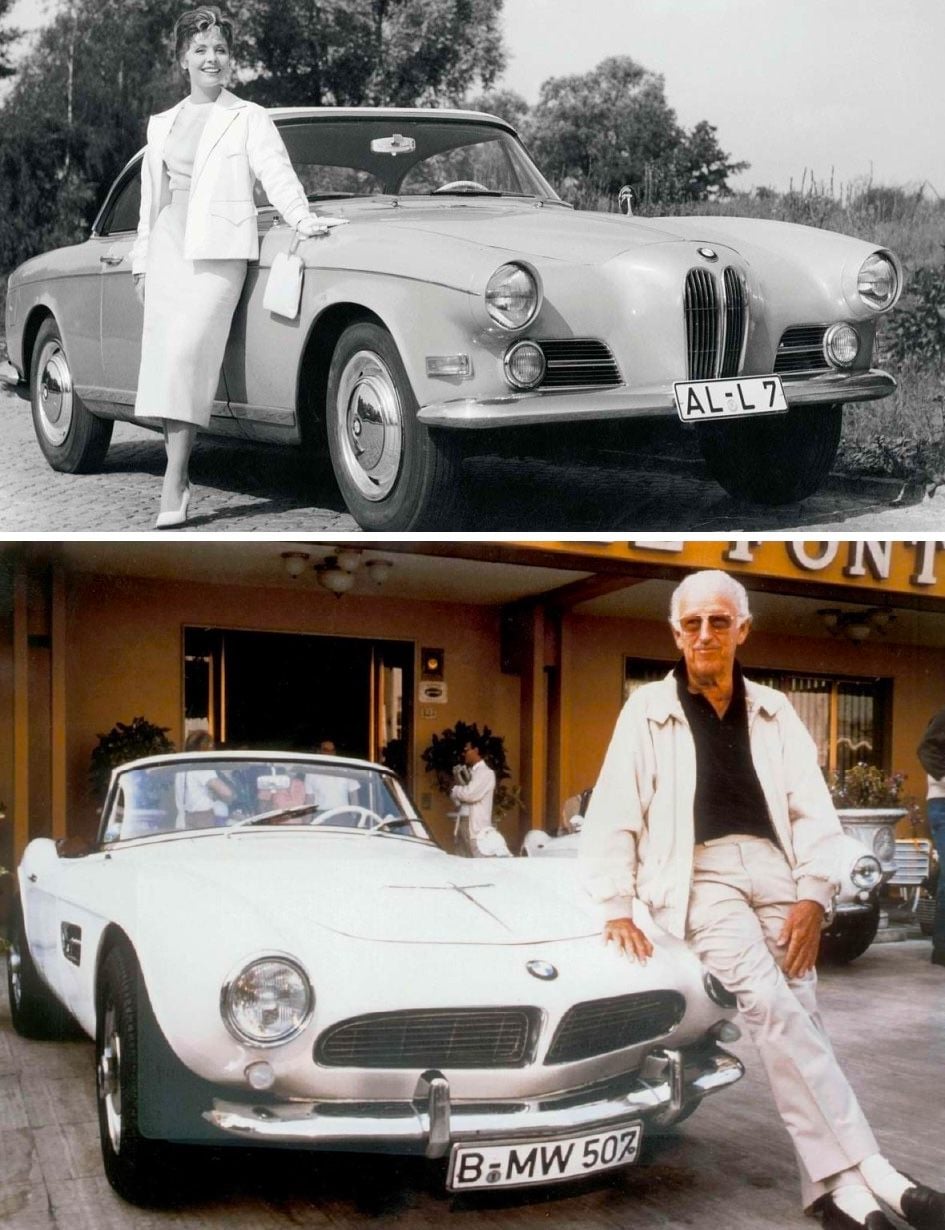
 That’s celebrated actress Sonja Ziemann with her BMW 503 in the top image, and the inimitable industrial designer Count Albrecht von Goertz in the lower image, with a BMW 507 – he designed both cars. Images provided by BMW.
Max Hoffman, the New York importer who sold BMWs in the United States, wanted a sports car priced at around $5,000 USD and promised substantial orders if BMW could meet that figure. He also steered the company toward Albrecht Graf Goertz (actually Count Albrecht von Goertz), a German-born industrial designer who had worked for Raymond Loewy before opening his own office in New York.
BMW signed Goertz in January of 1955 to design the two-seat roadster that became the 507 and soon added the 503 to his brief, which he developed from some early work by BMW’s Kurt Bredschneider.
BMW missed Hoffman’s target by a huge margin, and it would almost instantly sour their formerly lucrative arrangement with him. When both cars appeared at the Frankfurt Motor Show in September of 1955, they were priced at over double what he’d recommended, and he withdrew from the arrangement on the spot.
That left BMW without a dealer network in the American market, it was a catastrophe that they should have seen coming, but for whatever reason, they didn’t. Some have postulated that they priced the cars so high to compete directly with their old rivals over at Mercedes-Benz, but whatever the reason, it was one of the most significant misjudgments the company made in the post-WWII period. And it cost them dearly.
The Underpinnings Of The 503
BMW based the 503 on the 502 3.2 liter Super, it kept the sedan’s box-section steel frame at an unchanged 2,835 mm (111.6 inch) wheelbase, and the 507 used a version shortened by 355 mm (14 inches).
Front suspension was by double wishbones and longitudinal torsion bars, with a live axle at the rear. The brakes were Alfin drums with an ATE vacuum servo, and Dunlop front discs appeared on later cars for improved stopping power.
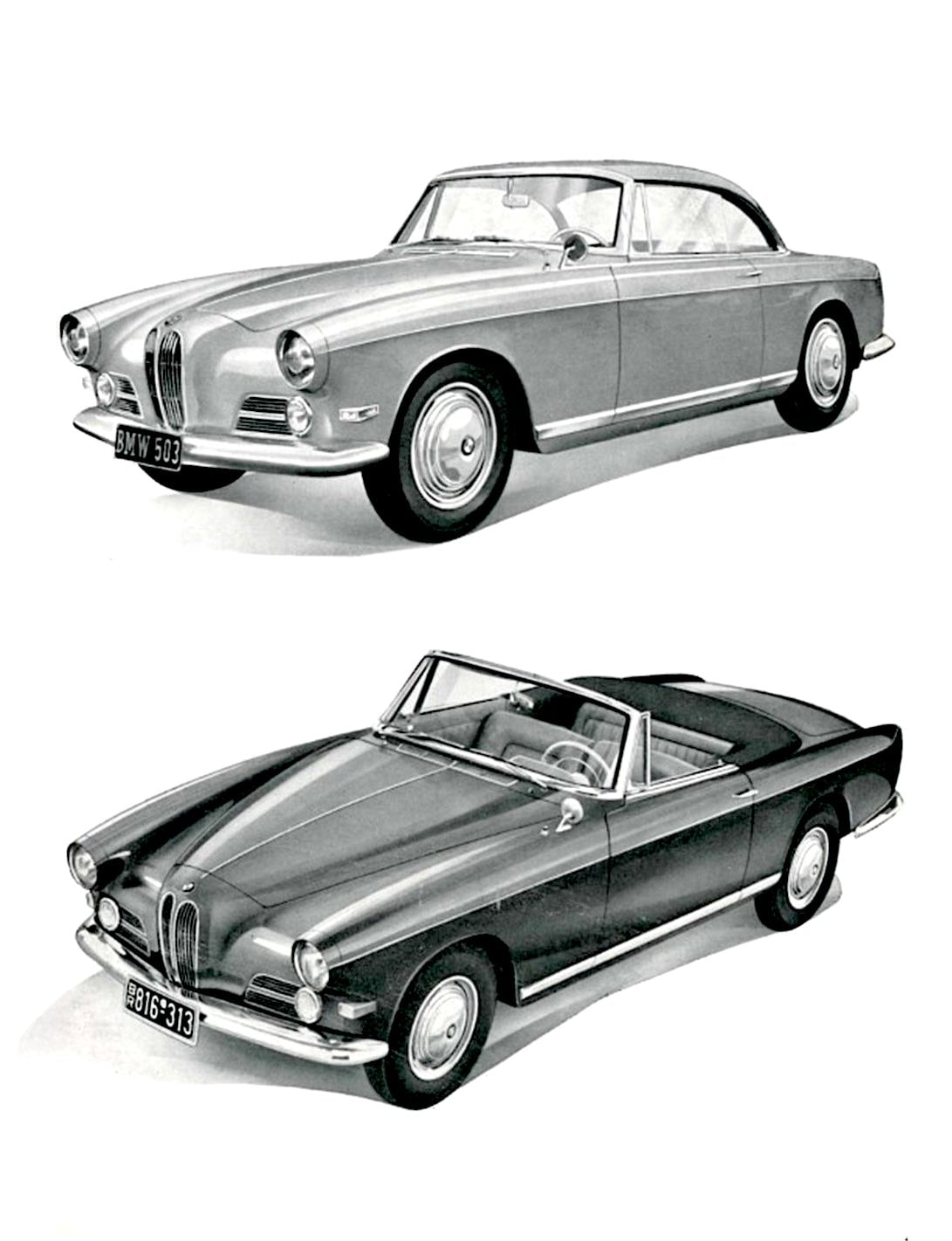
BMW based the 503 on the 502 3.2 liter Super, it kept the sedan’s box-section steel frame at an unchanged 2,835 mm (111.6 inch) wheelbase, and the 507 used a version shortened by 355 mm (14 inches). Image provided by BMW.
The cars on the Frankfurt Motor Show stand had steel bodies with aluminum hoods and trunk lids, but the production cars were paneled entirely in aluminum over the steel frame.
The engine was BMW’s aluminum 90º V8 in 3.2 liter (3,168 cc) form. It had a single central camshaft driven by a duplex roller chain, pushrod-operated overhead valves, wet cylinder liners, and a five-bearing crankshaft, with a bore and stroke of 82 mm by 75 mm.
Two Zenith 32 NDIX twin-choke downdraft carburetors fed it, and output was 138 bhp at 4,800 rpm, with 159 lb ft of torque – BMW quoted a top speed of 118 mph (190 km/h). The curb weight, with a full tank of gas, was around 1,500 kgs (3,300 lbs), so it certainly wasn’t a lightweight.
On the Series 1, the fully synchronized 4-speed gearbox sat apart from the engine beneath the front seats, linked to it by a short shaft and worked by a column shift. The side windows were operated electro-hydraulically, and on the cabriolet the same system raised and lowered the top.
The Series 2 Cars
BMW revised the 503 in late 1957 and turned it into the Series 2, on the Series 2 the gearbox was bolted directly to the engine and shifted from the floor, electric window lifts replaced the earlier hydraulic ones, but the cabriolet’s top stayed hydraulic.
The chrome strip along each flank now ran straight to the tail instead of kicking upward, and the ashtray moved from under the dashboard to sit beside the radio speaker. Of the 412 cars, 219 were Series 1 and 193 were Series 2.
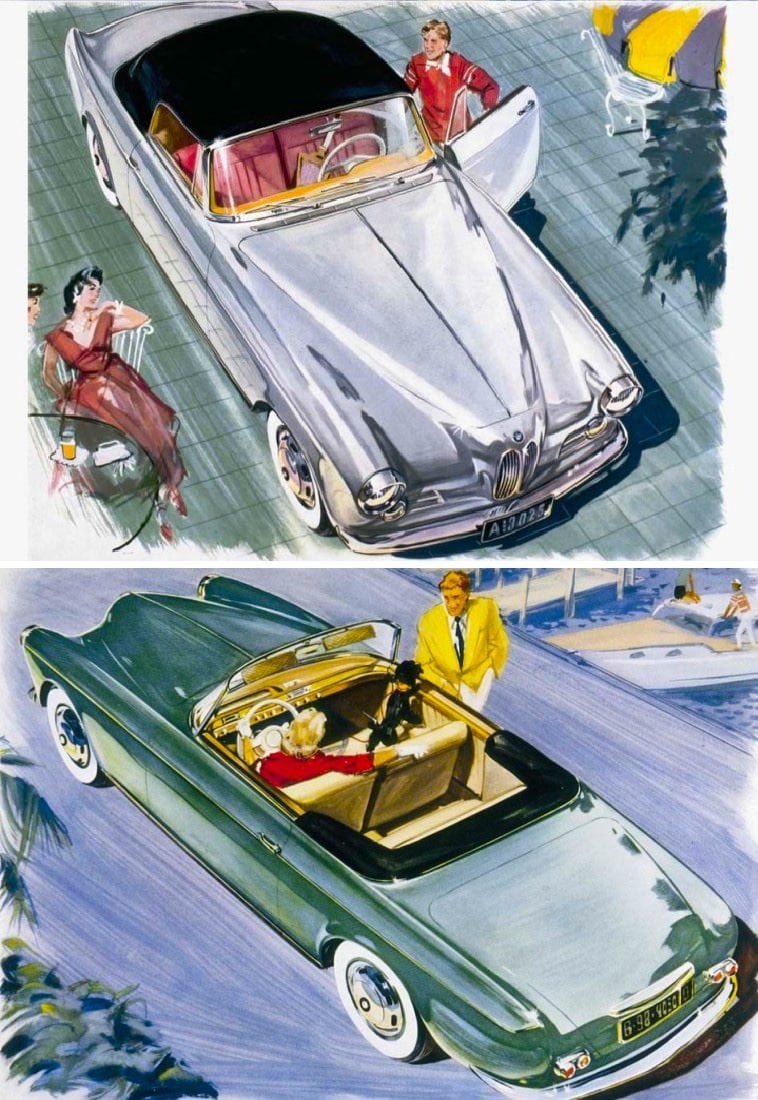
The car’s designer, Albrecht Graf Goertz, recalled in 1978 that Battista “Pinin” Farina had called the 503 the most beautiful car he had ever seen. Images provided by BMW.
The End Of The Road
The buyers of the BMW 503 were wealthy and few, owners included the actress Sonja Ziemann and Rudolf-August Oetker. The car’s designer, Albrecht Graf Goertz, recalled in 1978 that Battista “Pinin” Farina had called the 503 the most beautiful car he had ever seen. That said, it was really the smaller BMW 507 that had made Goertz’s name. Even Elvis Presley had owned one.
Production of the 503 ended in spring 1960, and BMW replaced it with the far more modern-looking, Bertone-bodied BMW 3200 CS in 1962.
The 1959 BMW 503 Barn Find Shown Here
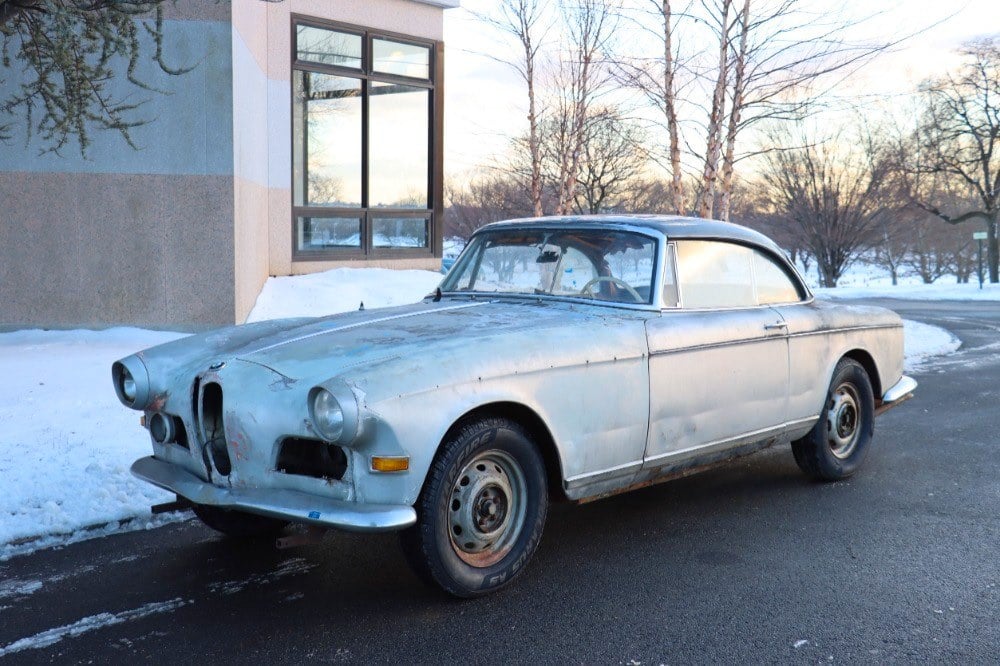
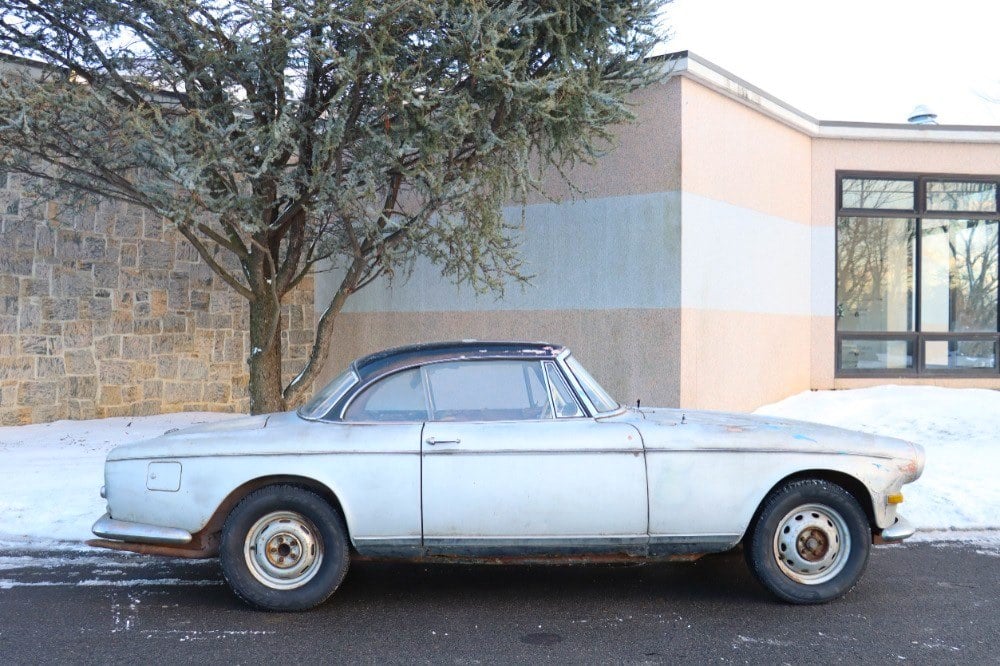
This is a BMW 503 Coupe from 1959, it’s being presented as an exceptionally original, unrestored example that’s spent 35 years in storage.
The car is finished in silver over a tan interior, it retains its matching-numbers 3.2 liter V8 and it’s described as complete and largely intact, though it’s not currently running and will require a full restoration. According to the eBay listing, this car was brought to the United States in the early 1970s before eventually being placed into long-term storage.
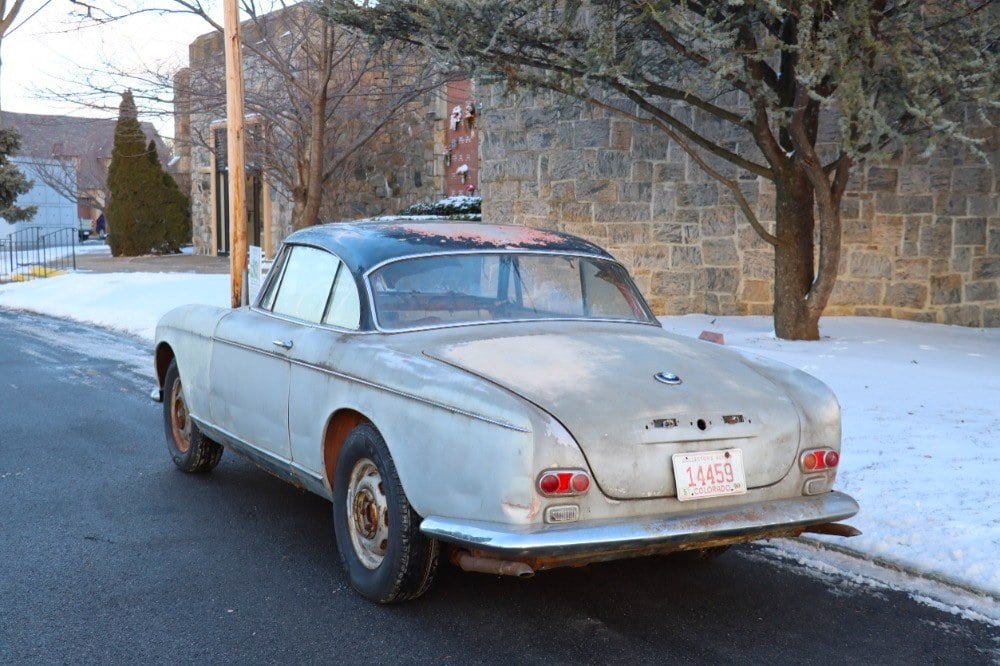
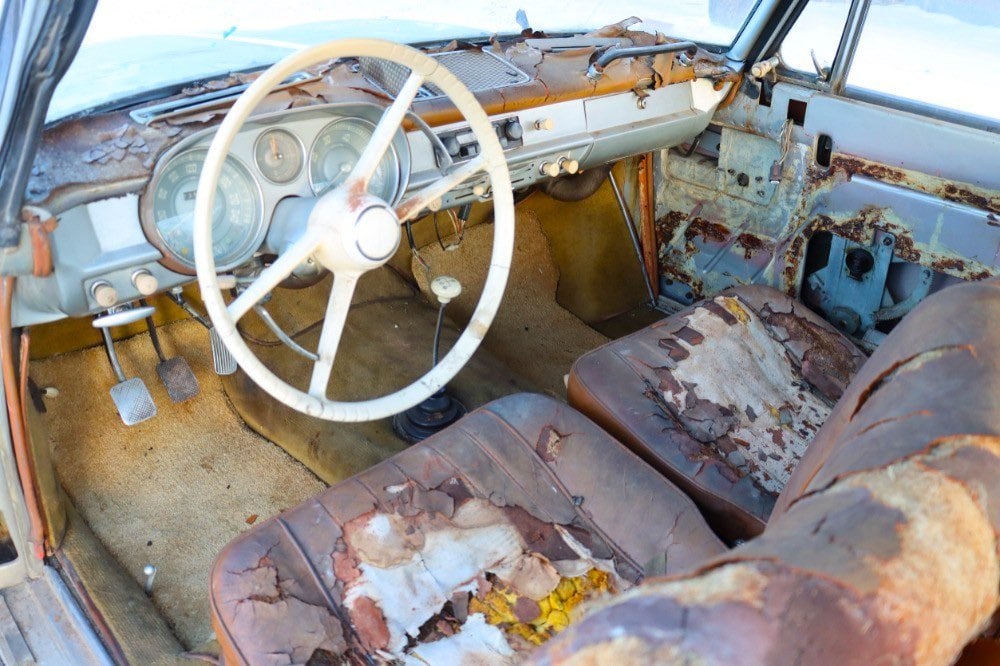
This is a BMW 503 Coupe from 1959, it’s being presented as an exceptionally original, unrestored example that’s spent 35 years in storage.
Its combination of originality, matching-numbers drivetrain, and largely untouched condition makes it an attractive restoration candidate, particularly given that only 273 BMW 503 coupes were ever made. One point worth checking before making an offer is that the listing headline calls the car a 1959 model while the description says it’s a 1957.
It’s being offered for sale on eBay out of Astoria, New York and you can visit the listing here if you’d like to read more about it or make them an offer.
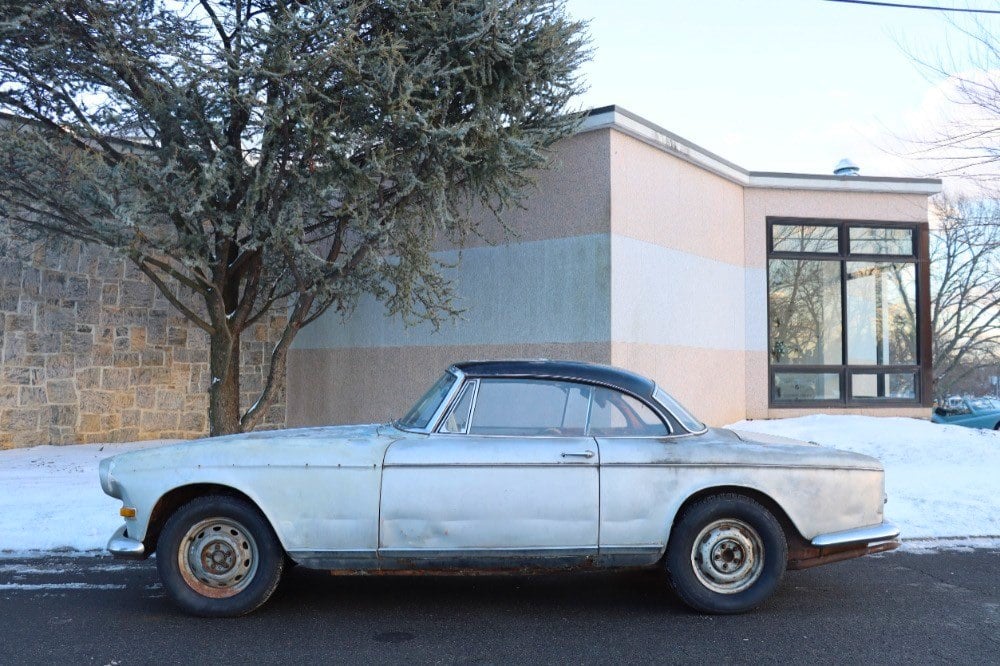
Images courtesy of Gullwing Motor Cars

Articles that Ben Branch has written have been covered on CNN, Popular Mechanics, Smithsonian Magazine, Road & Track Magazine, the official Pinterest blog, the official eBay Motors blog, BuzzFeed, Autoweek Magazine, Wired Magazine, Autoblog, Gear Patrol, Jalopnik, The Verge, and many more.
Silodrome was founded by Ben back in 2010, in the years since the site has grown to become a world leader in the alternative and vintage motoring sector, with well over a million monthly readers from around the world and many hundreds of thousands of followers on social media.