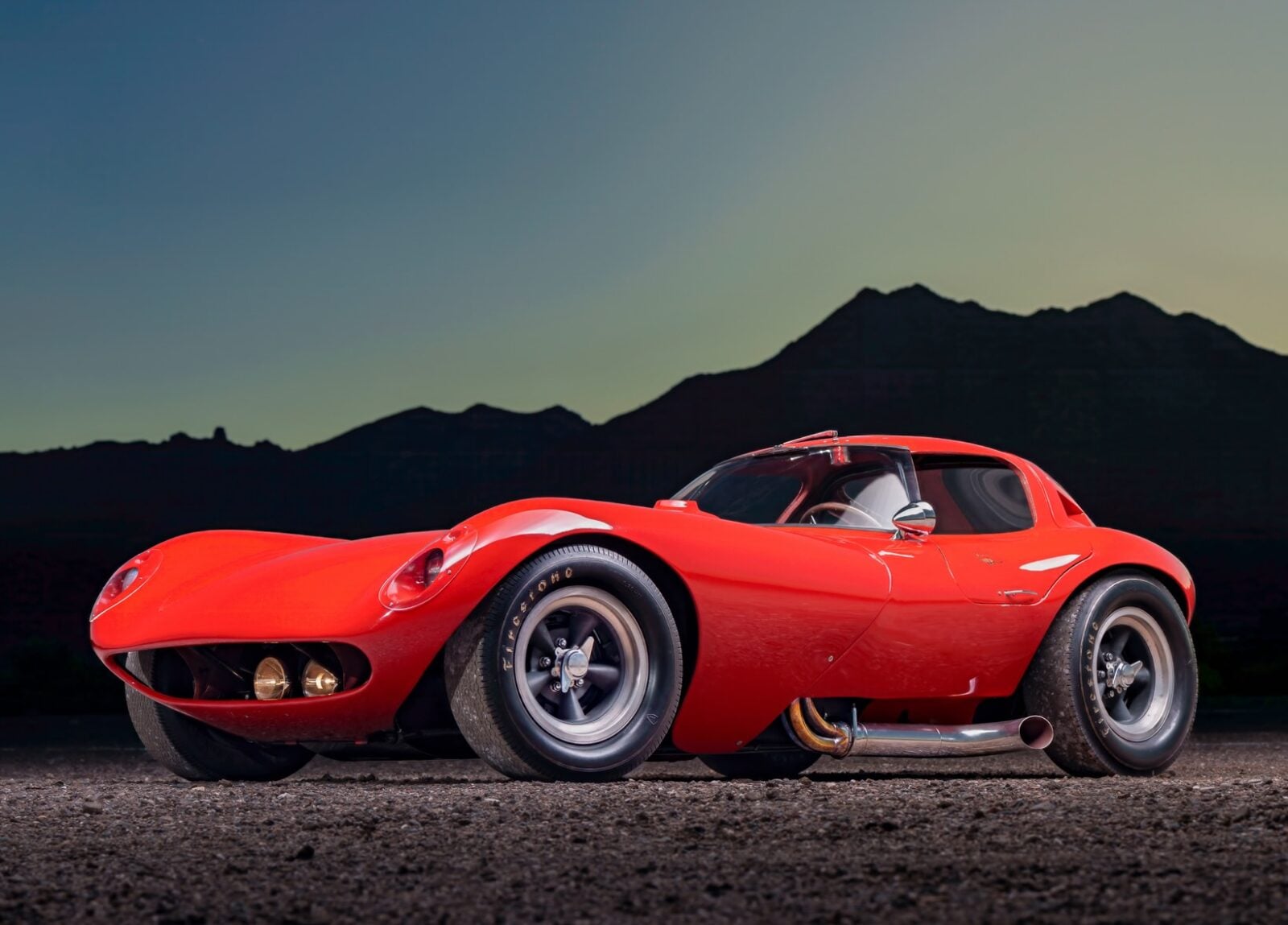
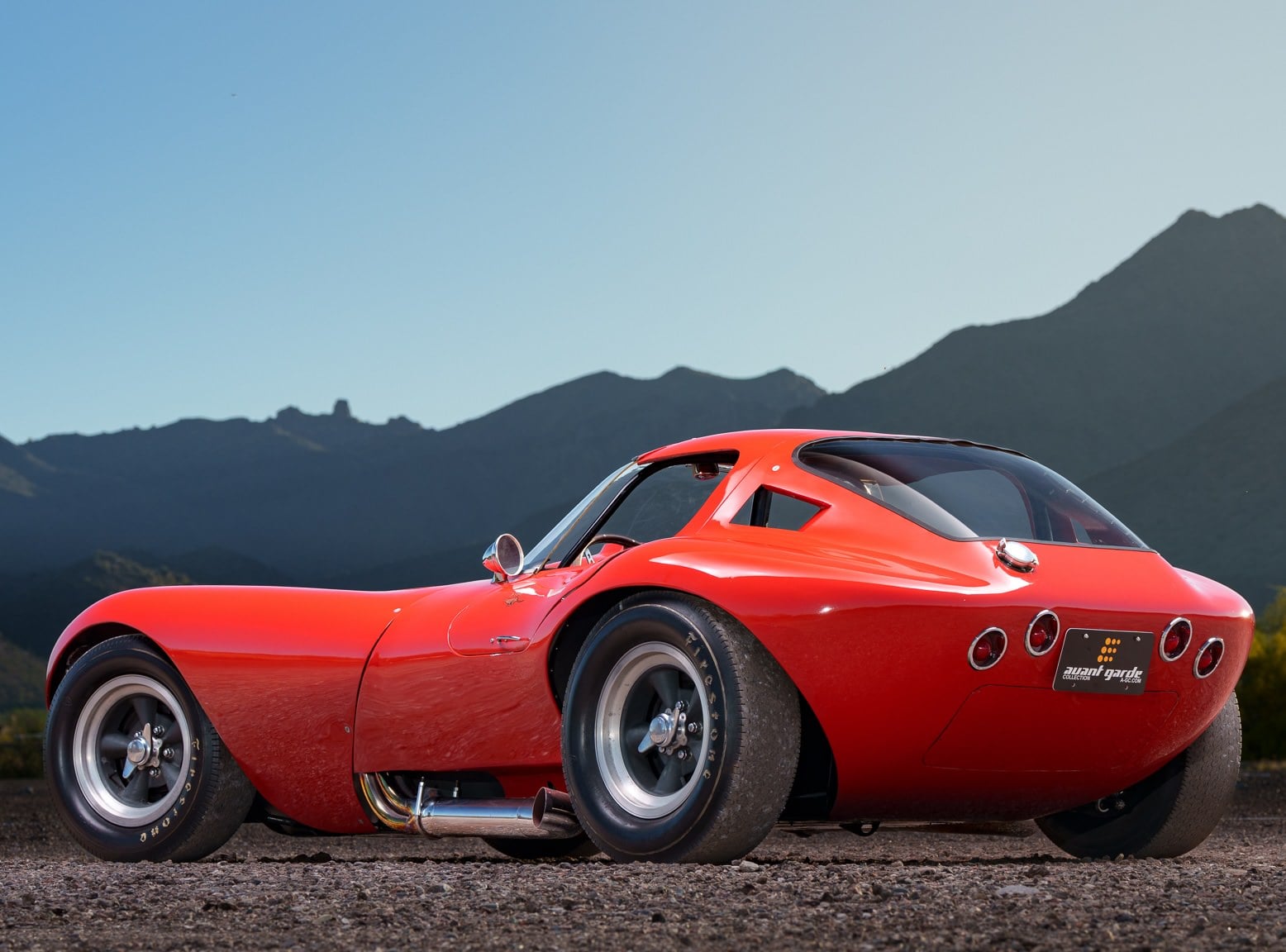
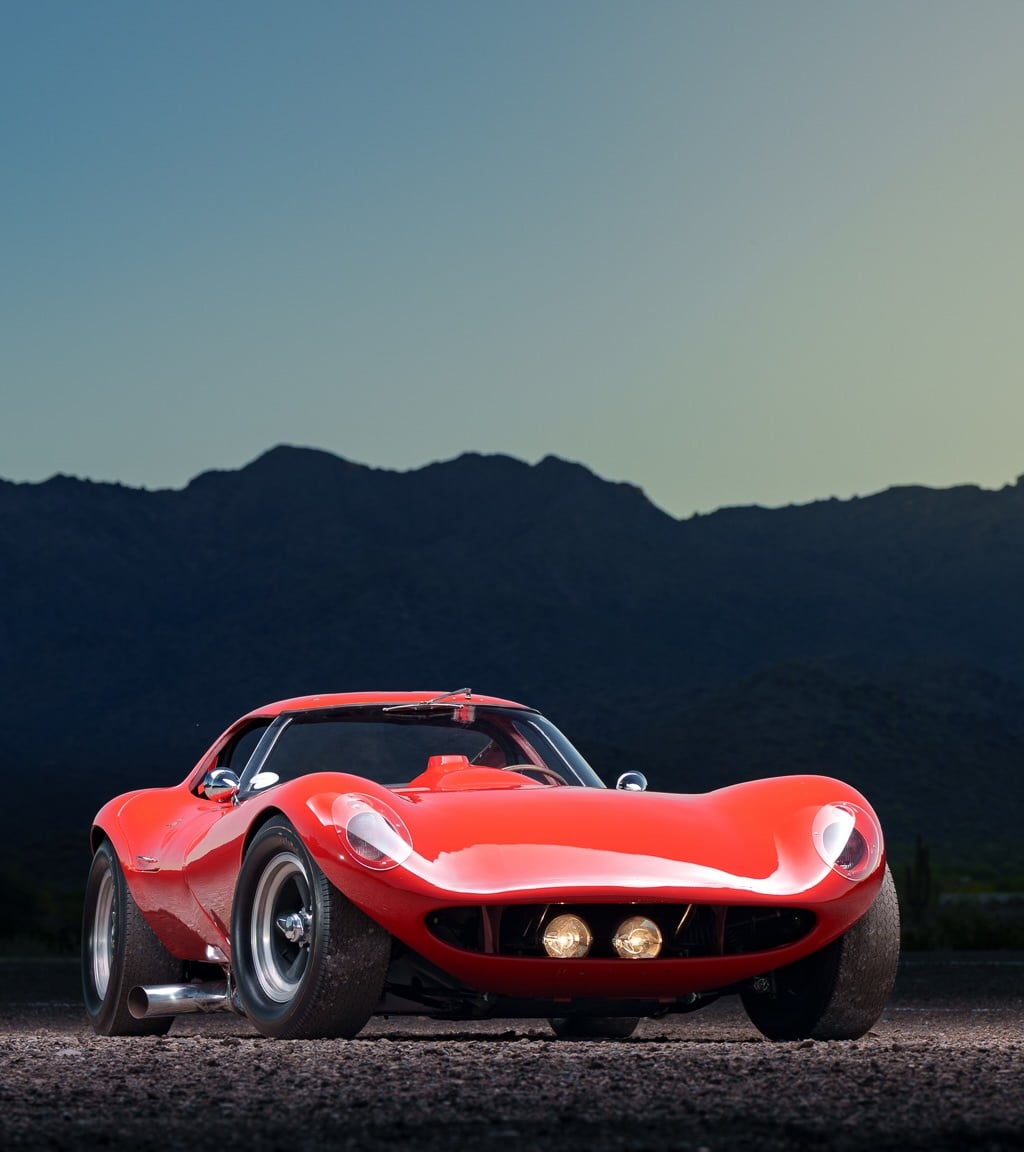
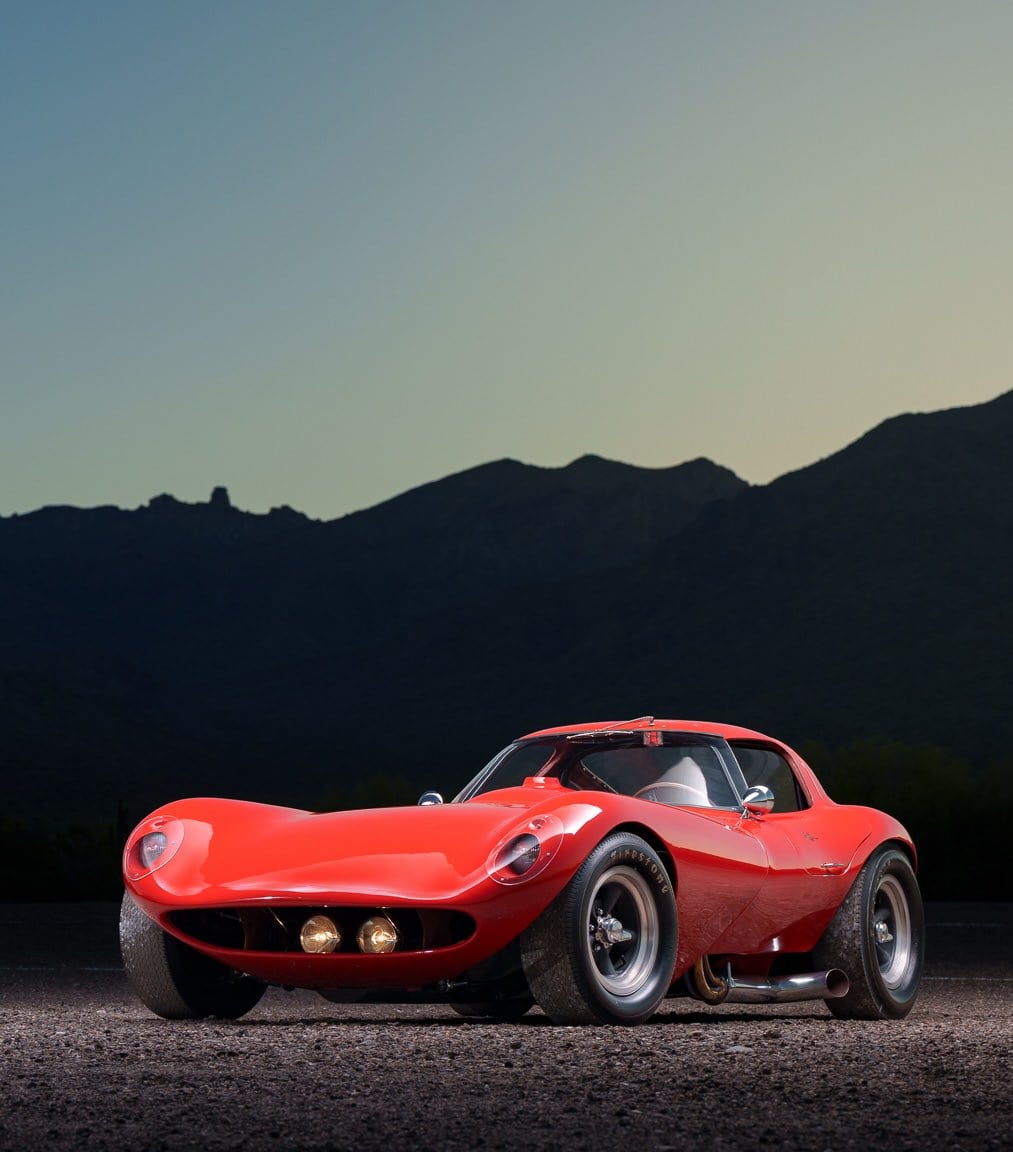
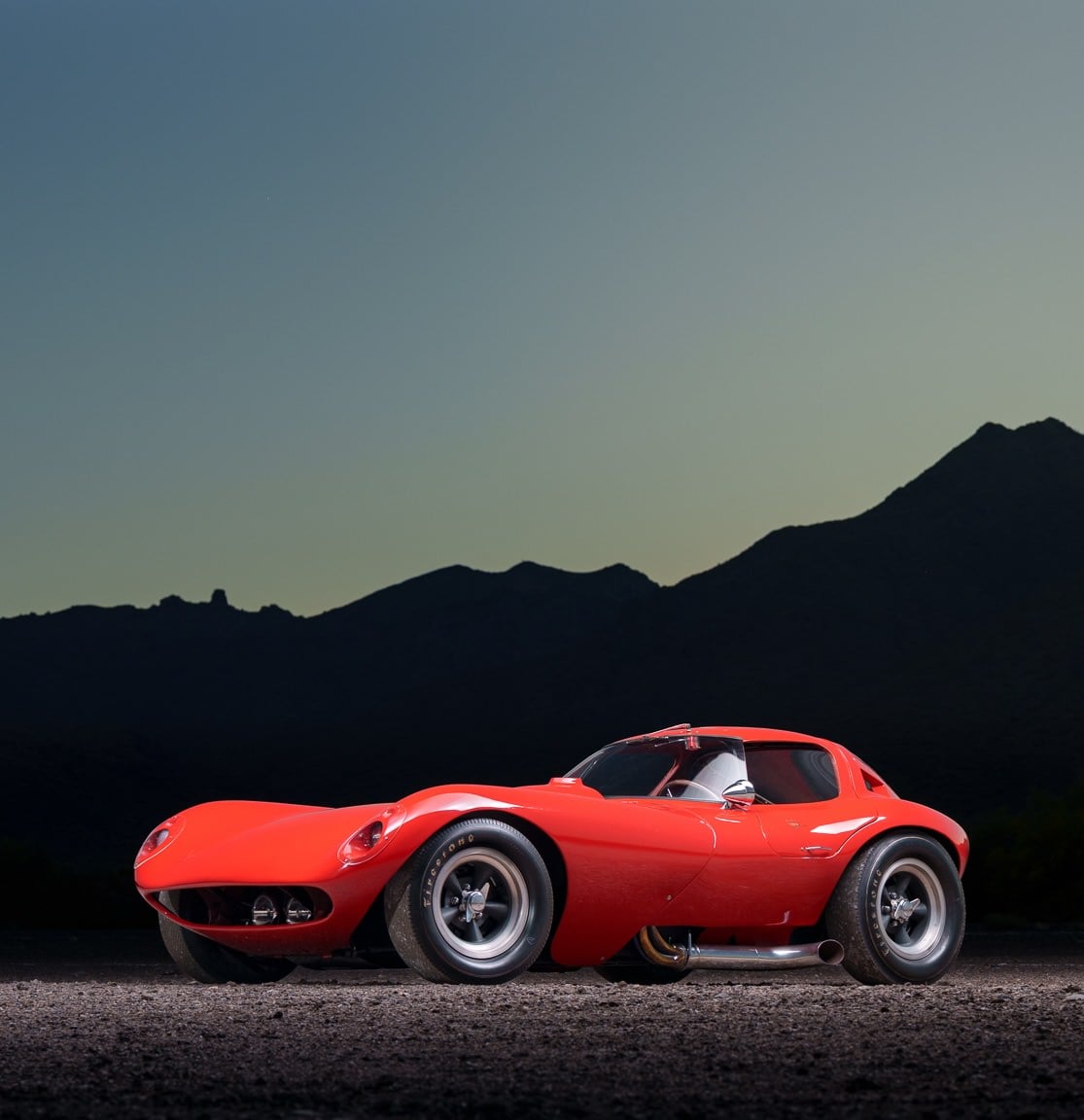
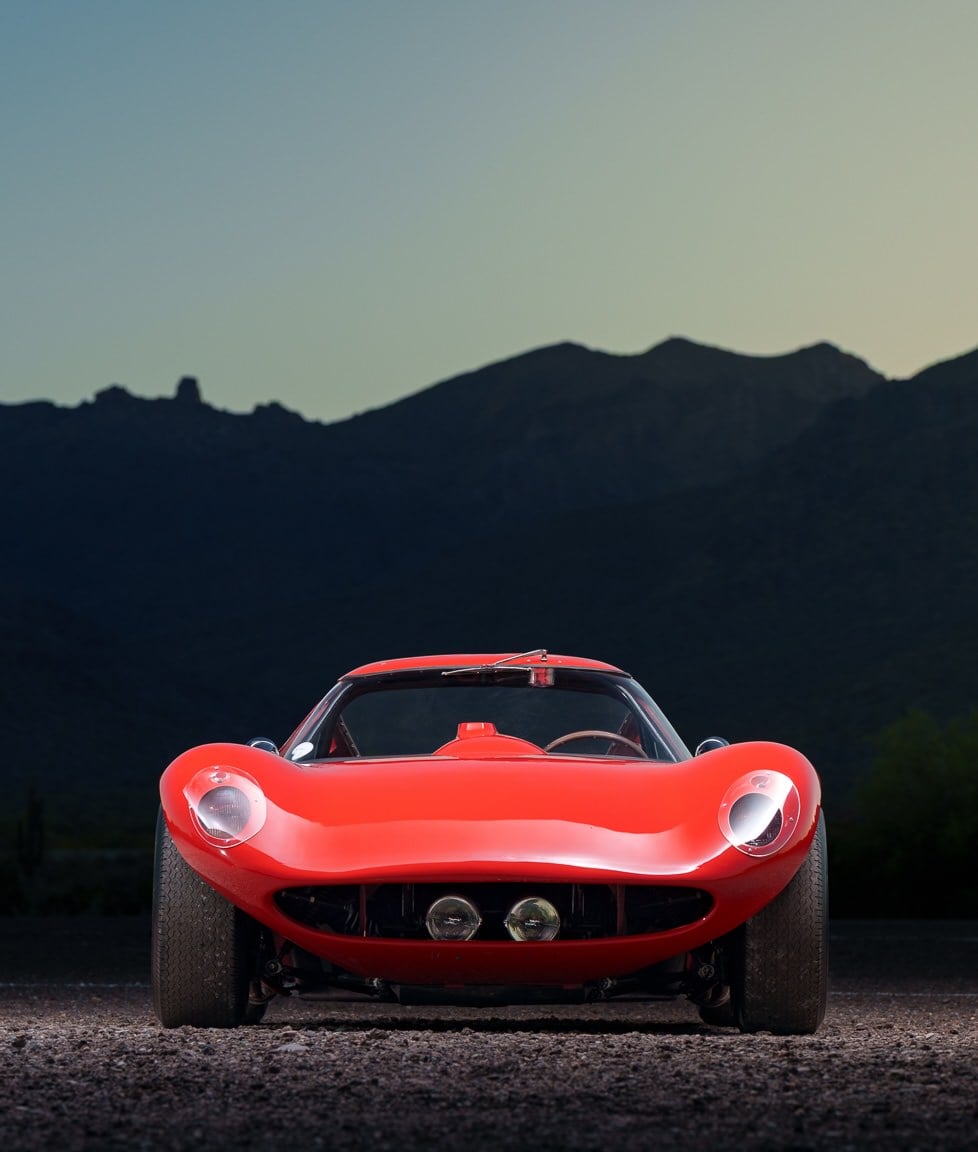
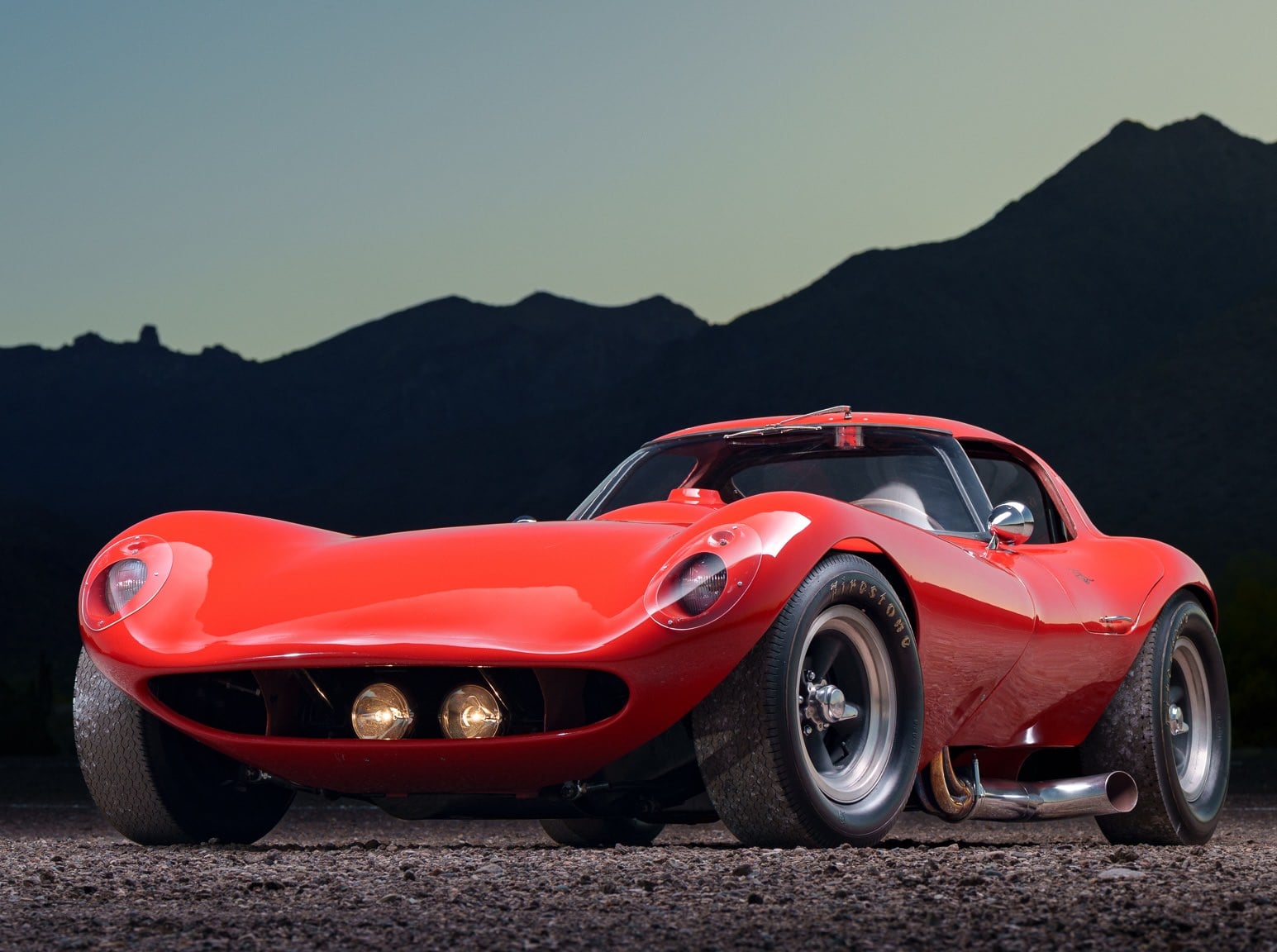
This 6.2 liter Chevrolet V8-powered Cheetah is the last of the original Bill Thomas Cheetahs that was ever built, a fact that was later reaffirmed by Bill Thomas’s chief fabricator Don Edmunds.
The Cheetah was developed on a shoestring budget as a front-mid-engined sports car capable of taking on the likes of the Ferrari, as well as the Corvette and the Cobra and winning – something it did more than once. It’s an oft-forgotten chapter in the history of American sports cars – and it deserves to be far better known than it is.
Fast Facts: The Bill Thomas Cheetah
- The Bill Thomas Cheetah was developed in 1963 by Bill Thomas and his chief fabricator Don Edmunds, who famously sketched the initial chassis layout in chalk on the shop floor. Built with under-the-table support from GM’s Vince Piggins to challenge the Ford-powered Shelby Cobras, the front-mid-engined sports car earned the nickname “Cobra killer” after taking dozens of wins against Ferrari, Ford, and Shelby machinery despite being developed without an engineering department or wind tunnel.
- This particular Cheetah is reported to be the final original example ever built, with construction beginning in December of 1965 after a shop fire disrupted Thomas’s Anaheim workshop operations. Commissioned without a drivetrain by Eddie King, it was delivered in April of 1966 to King’s Sales and Service Inc. in Ohio, where King registered it for street use and retained ownership through 1968.
- The car passed through just three private owners over its lifetime. The second owner acquired it in a trade involving a split-window Corvette C2 and $4,500 USD in cash, keeping it for nearly four decades. The third owner responded to a 1980 Autoweek ad but didn’t complete the purchase until 2007, after which the car was refreshed and shown at Pebble Beach, The Quail, and McCall’s Motorworks Revival. Don Edmunds provided a signed Acknowledgement of Authenticity following a 2007 evaluation.
- The red fiberglass body has gullwing doors with hand-painted cheetah graphics, and the car rides on magnesium 15 inch Torq-Thrust wheels with staggered Firestone tires. Power comes from a 377 cubic inch (6.2 liter) Chevrolet V8 with Rochester mechanical fuel injection, paired with a 4-speed manual transmission and Corvette-sourced differential. It is now offered for sale out of Scottsdale, Arizona, with historic documentation and a clean Ohio title.
History Speedrun: The Bill Thomas Cheetah
The chassis of the Bill Thomas Cheetah was famously developed by Don Edmunds, Bill’s lead fabricator, who laid out the engine, transmission, and rear assembly on the shop floor and then used chalk to lay out the initial chassis design.
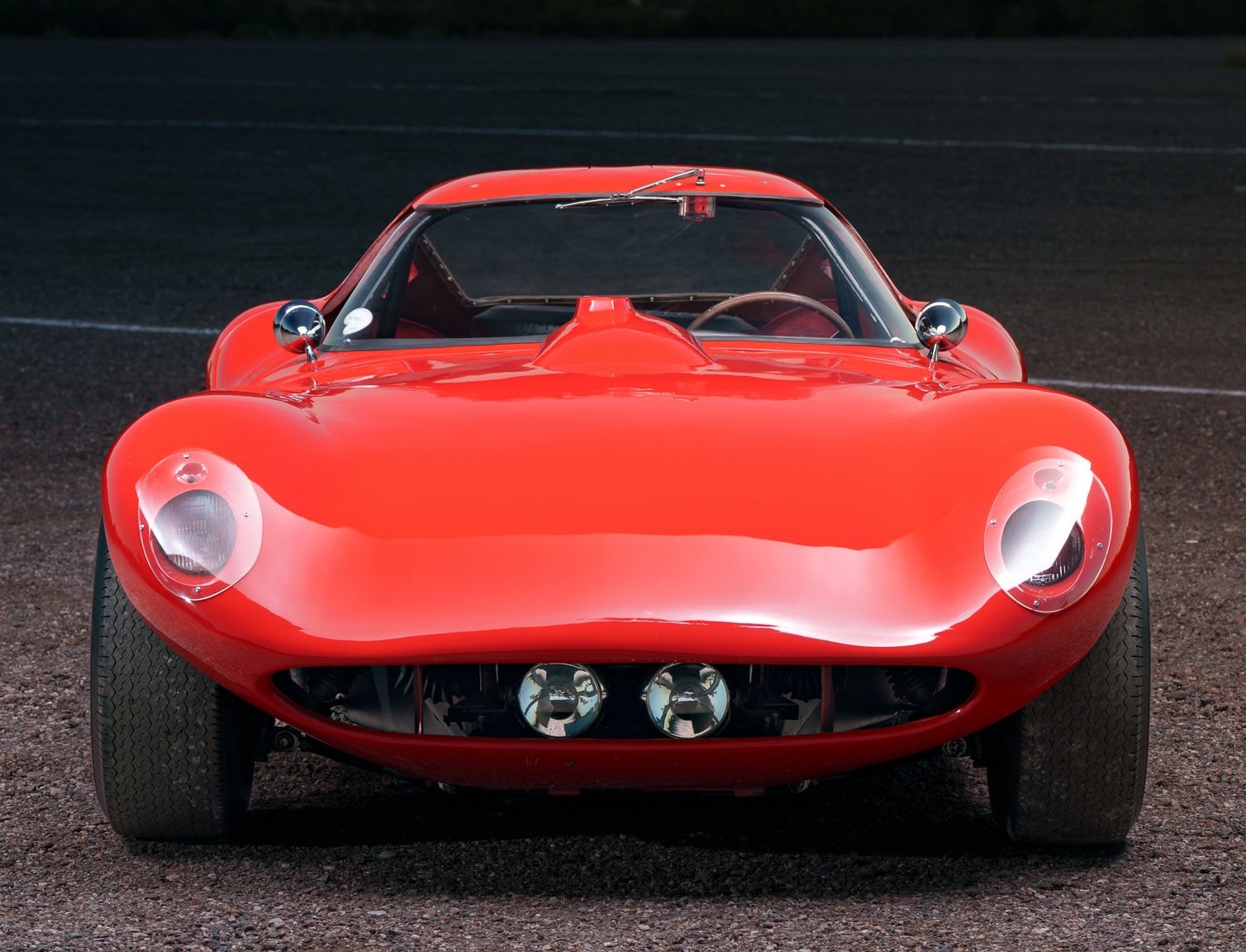
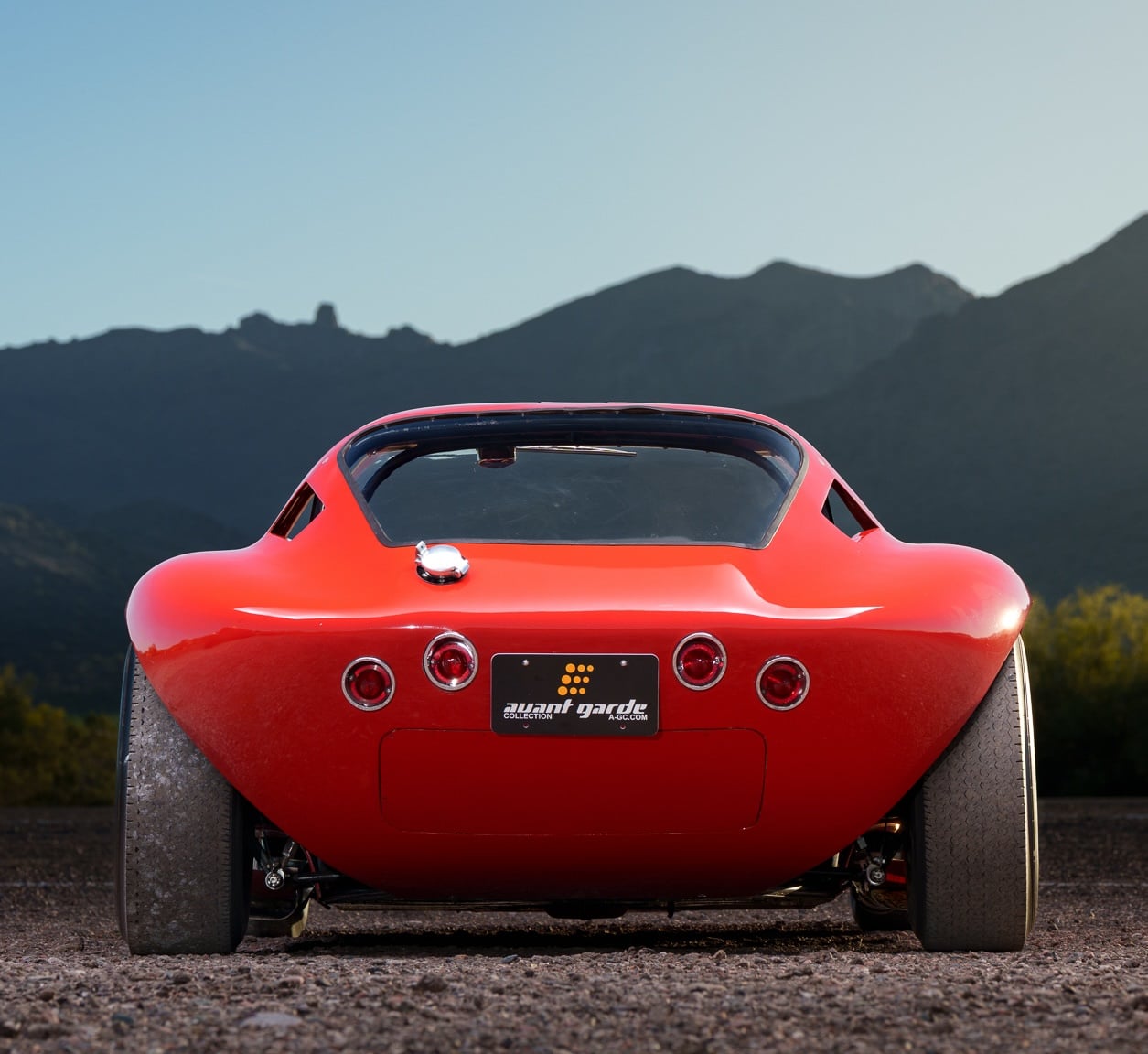
 This 6.2 liter Chevrolet V8-powered Cheetah is the last of the original Bill Thomas Cheetahs that was ever built, a fact that was later reaffirmed by Bill Thomas’s chief fabricator Don Edmunds.
Despite this less-than-scientific approach, the car that the two men developed would win dozens of races against many of the fastest sports racing cars in the world at the time, from makes like Ferrari, Chevrolet, Ford, and Shelby – earning the Cheetah the nickname – the “Cobra killer.”
The project to build the now legendary Cheetah began in 1963 when Thomas was given under-the-table approval from General Motors Performance Product Group head honcho Vince Piggins to develop the car that would become known as the Cheetah as a concept vehicle.
The hope was that the Cheetah would be able to take the fight to the Shelby Cobras which were powered by Ford V8s, General Motors’ arch enemy. Thomas and Edmunds would develop the car together, with Edmunds designing the chassis as described above.
The engine, a Chevrolet Corvette 327 V8, as well as the 4-speed manual Muncie transmission, and independent rear-end assembly were all supplied by Chevrolet, and many other parts came from the General Motors family, including suspension, brakes, and more.
Once the chassis design was in place and fitted with wheels and the engine, Edmunds sketched the body. Not being a trained automotive designer, Edmunds racing car designs always looked a little different, but there was always a good reason for it.
The Design Of The Cheetah
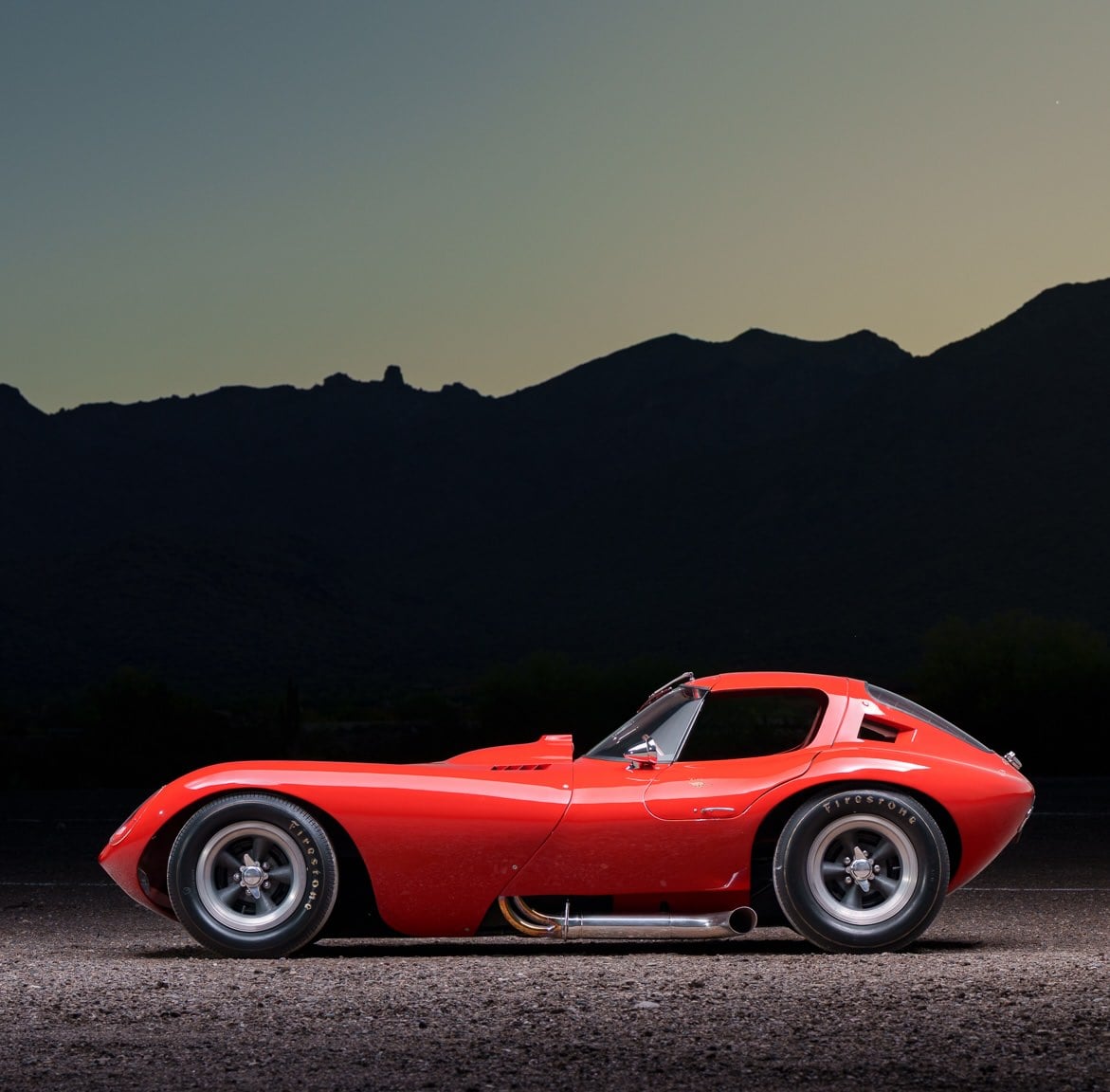
The design of the Cheetah body put the cockpit as far back as possible, in order to install the engine as far back as possible for optimal front/back weight distribution. This led to the unusual situation in which the driver and passenger would be seated just in front of the rear axle line.
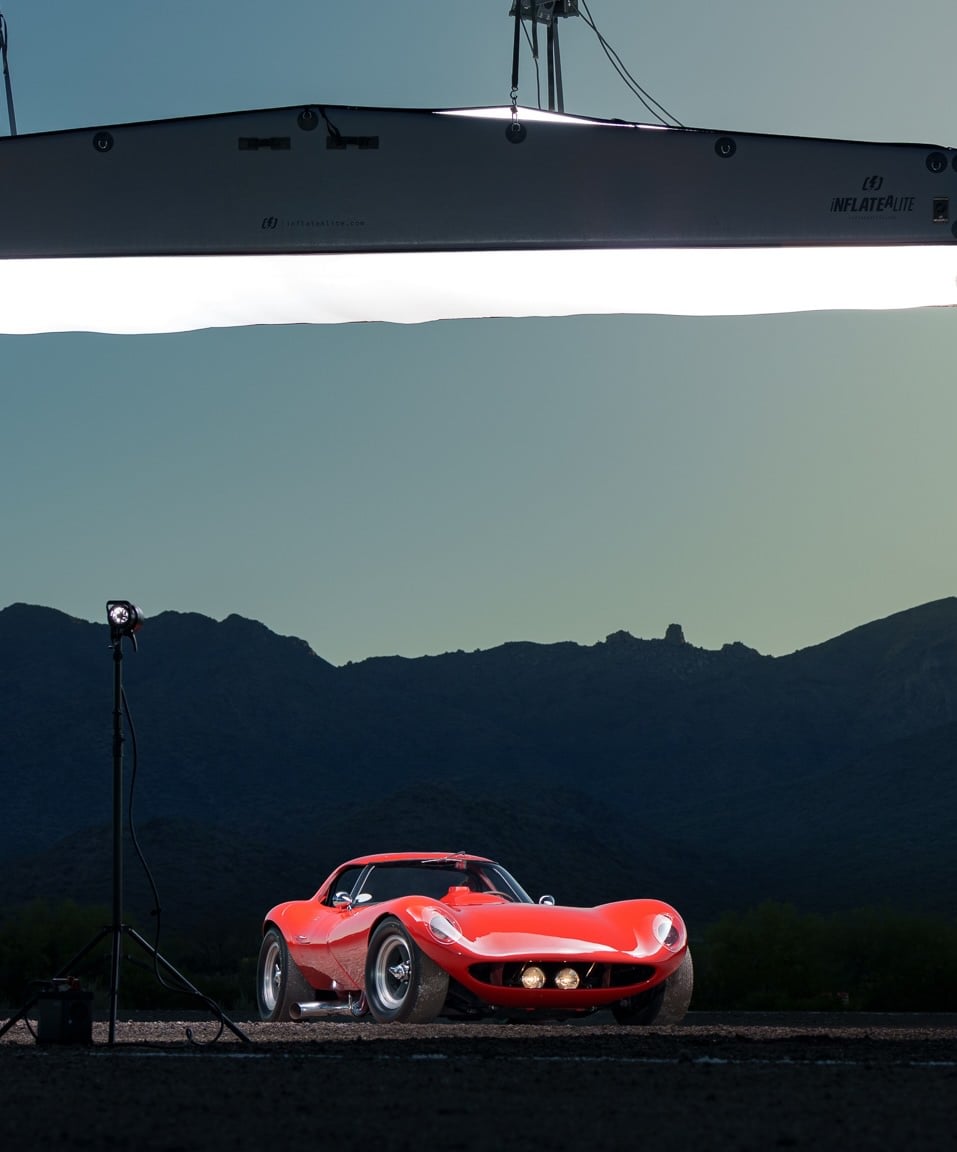
This Bill Thomas Cheetah is reported to be the final one ever built, with construction commencing in December of 1965, after the fire that severely disrupted Bill Thomas’s Anaheim, California workshop. It comes with a series of photos from January in 1966, documenting its assembly in various stages of completion.
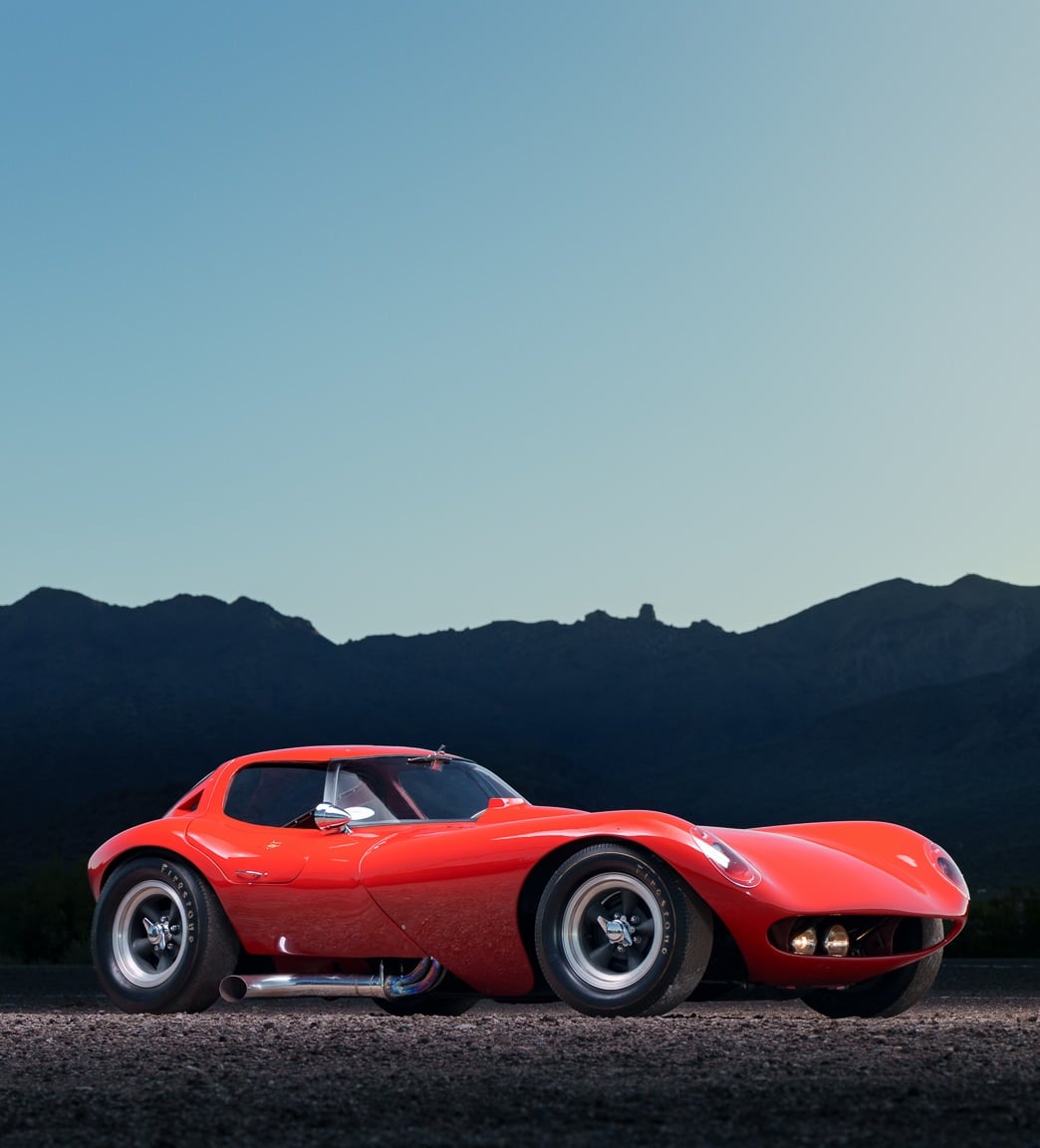
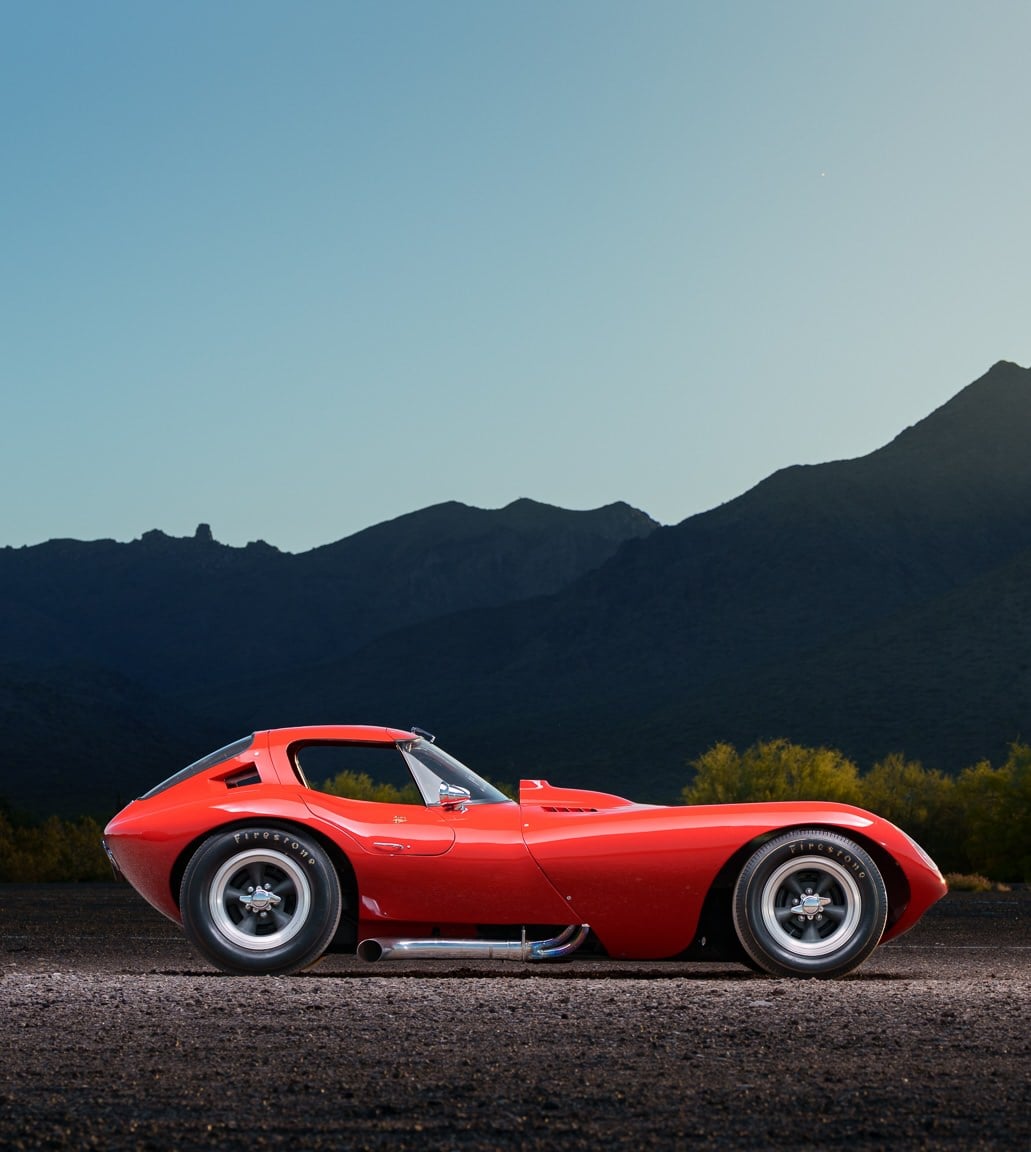
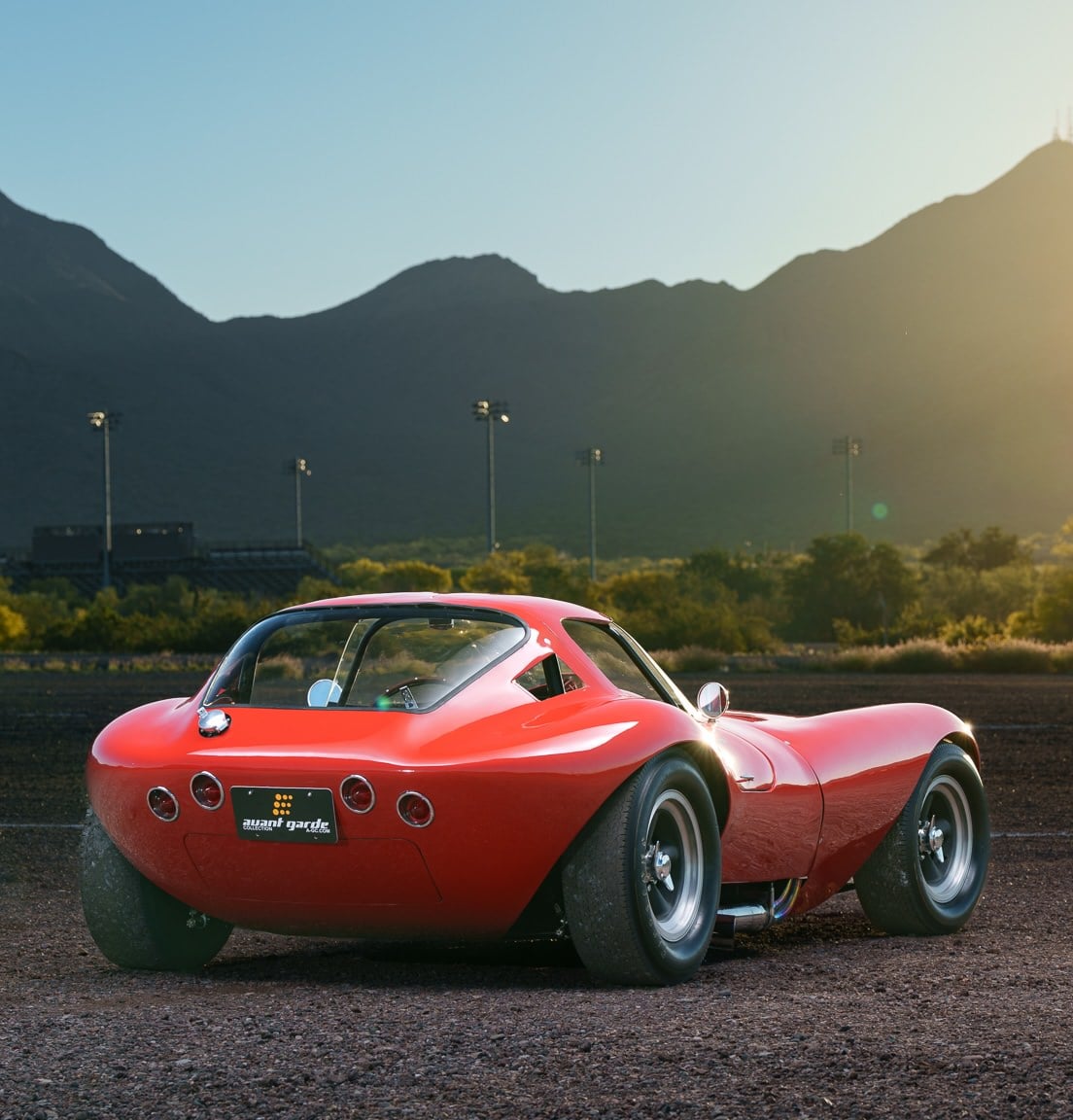
The Cheetah was given a sleek, aluminum body, though most later versions had fiberglass bodies for the sake of simplicity. The car has a snub-nosed fastback rear end with a long, low hood line and a swept back windshield.
The engine was so far back in the chassis that there is just a single universal joint linking the transmission with the differential, there was no driveshaft at all in the early cars. The driver’s legs were beside the engine and the exhaust headers passed over the driver (and passenger) footwells, causing them to become a little toasty on longer drives.
The handful of Cheetahs that were built were raced extensively in the mid-1960s and onwards, their low curb weight, high power output, and almost even weight distribution made them difficult to beat, and they took dozens of wins and innumerable podium places.
This feat was made all the more remarkable when you realize that Bill Thomas and Don Edmunds did the development work on the cars themselves, without an engineering department, wind tunnel, or design office.
The End Of The Cheetah (And A New Beginning)
Surviving original cars are rare but the car’s reputation is legendary in US sports racing car circles, and as a result there was a lot of demand for new examples.
Replica bodies have been offered intermittently in the past but in the early 2000s Bill Thomas came to an agreement with Bob Auxier of BTM, who had been building replicas, to build an official line of continuation cars.
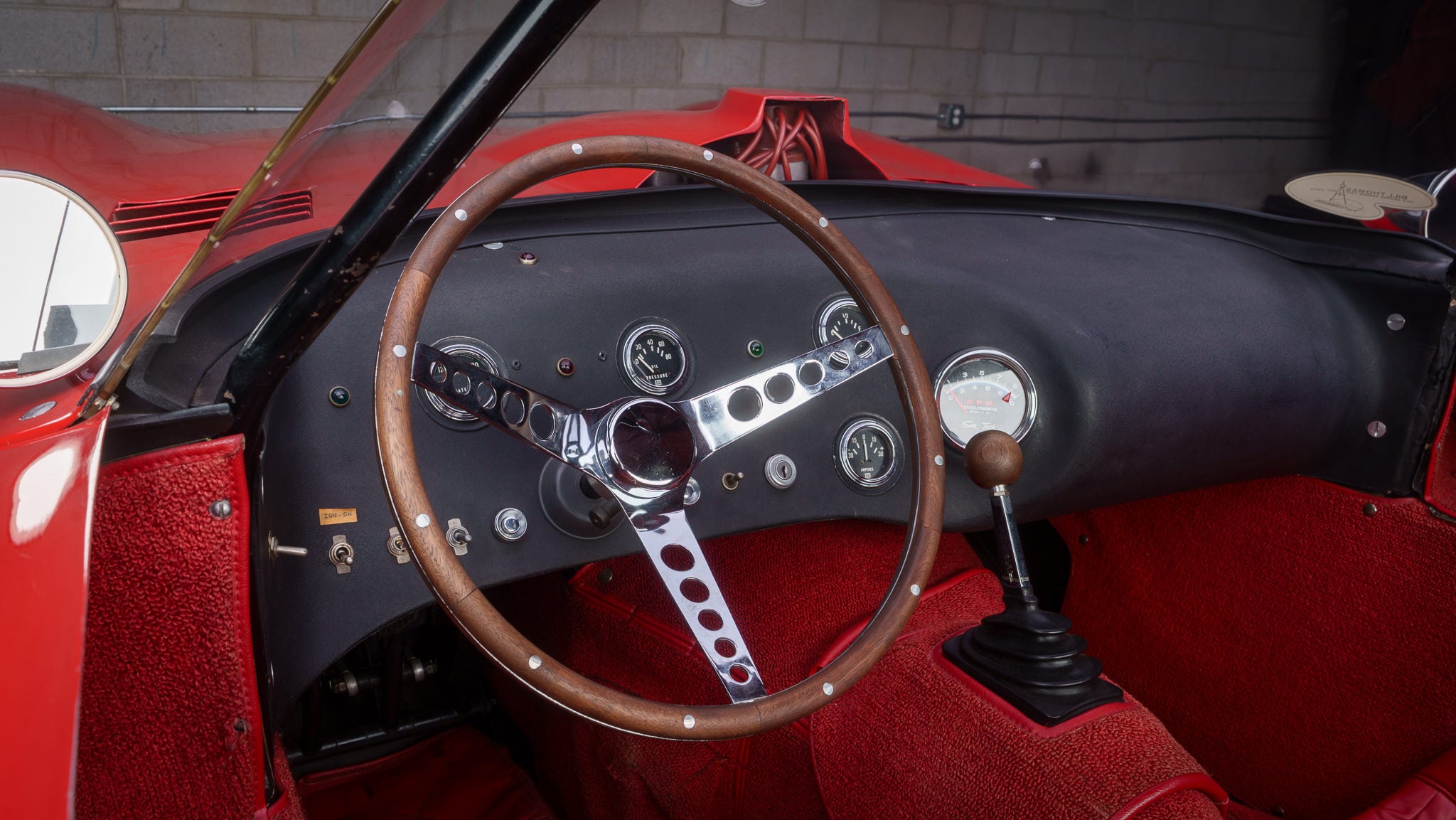
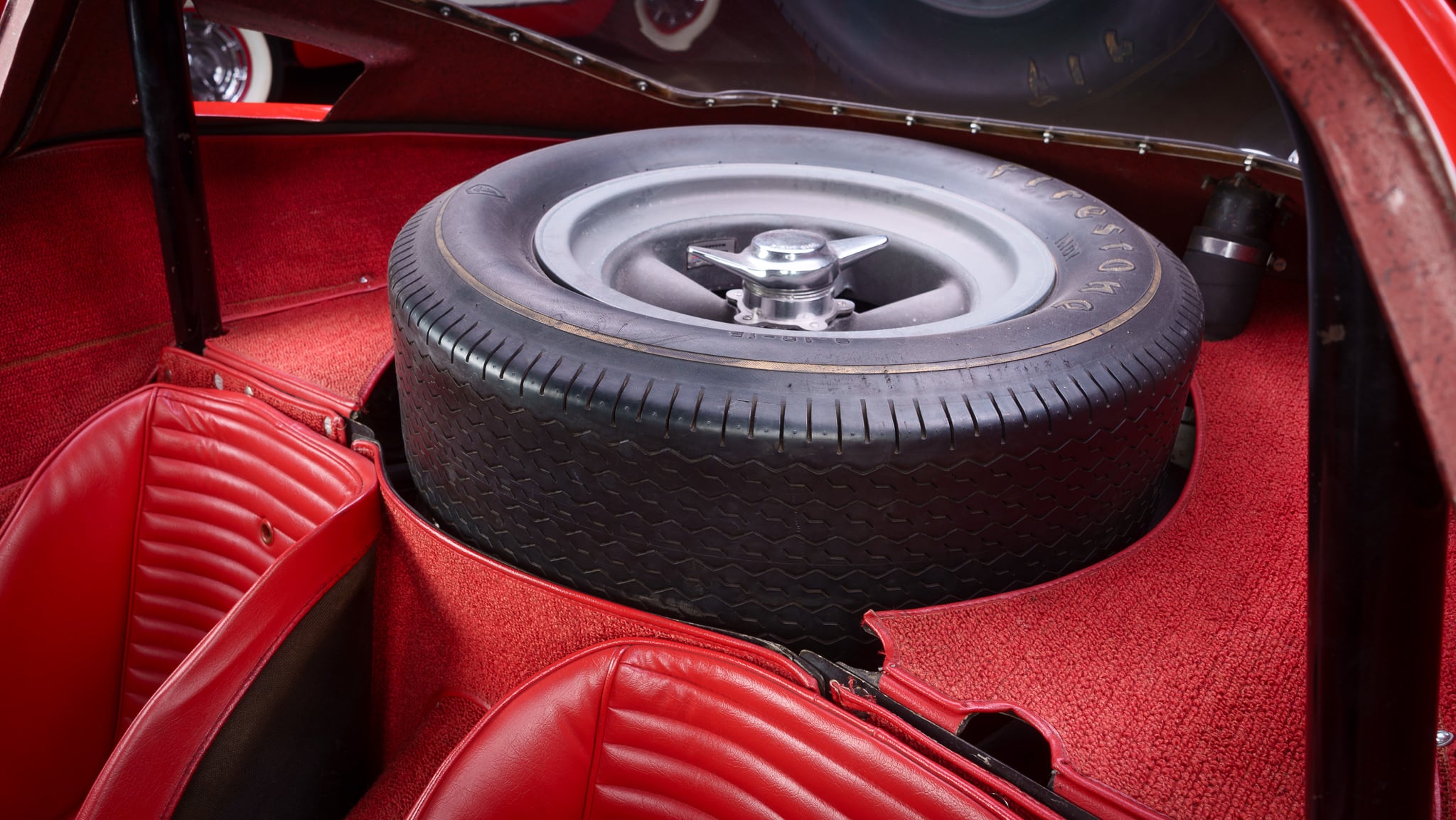
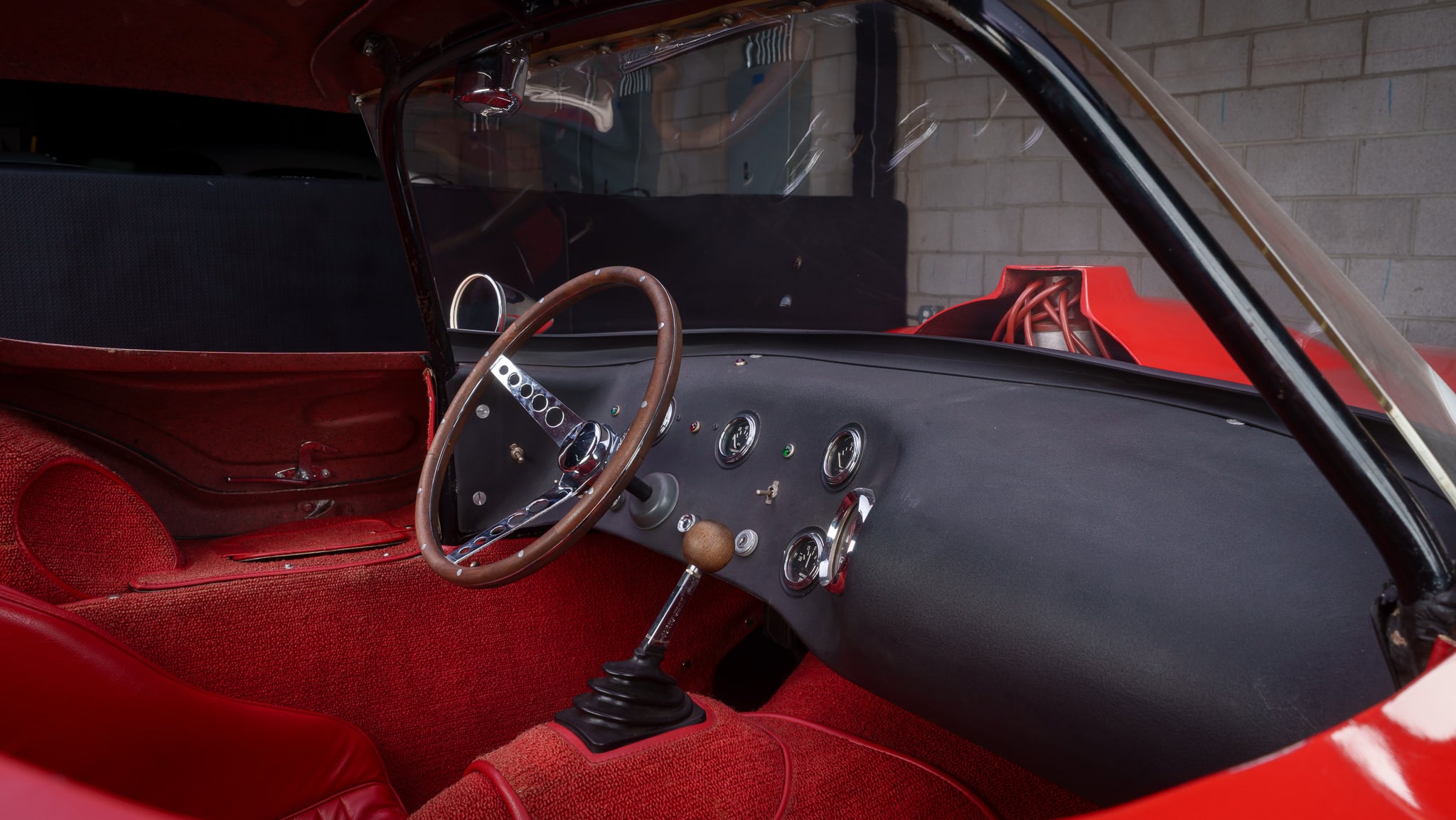
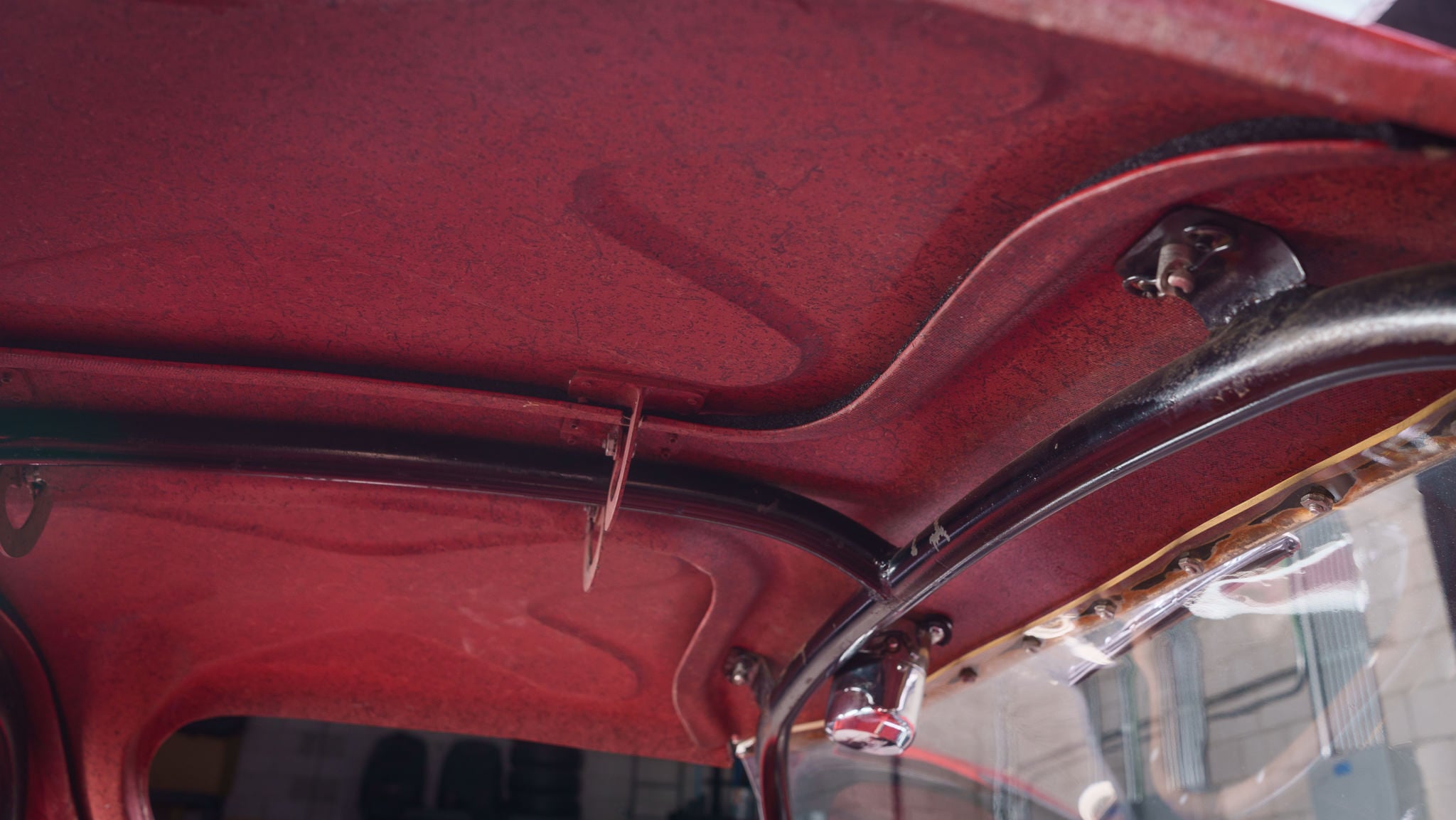
The car has fixed-back bucket seats are trimmed in red leather with ventilation grommets, joined by color-coordinated carpets, a wood-rimmed steering wheel, a Hurst shifter with a wooden knob, a Sun Tach 10k-rpm tachometer, and Stewart-Warner gauges monitoring water temperature, oil pressure, fuel level, and amperage.
It’s believed that 46 of these continuation cars would be built, and today they’re highly sought after, with some even being FIA homologated to take part in vintage motorsport competition.
The 1966 Bill Thomas Cheetah Shown Here
This Bill Thomas Cheetah is reported to be the final one ever built, with construction commencing in December of 1965, after the fire that severely disrupted Bill Thomas’s Anaheim, California workshop. It comes with a series of photos from January in 1966, documenting its assembly in various stages of completion.
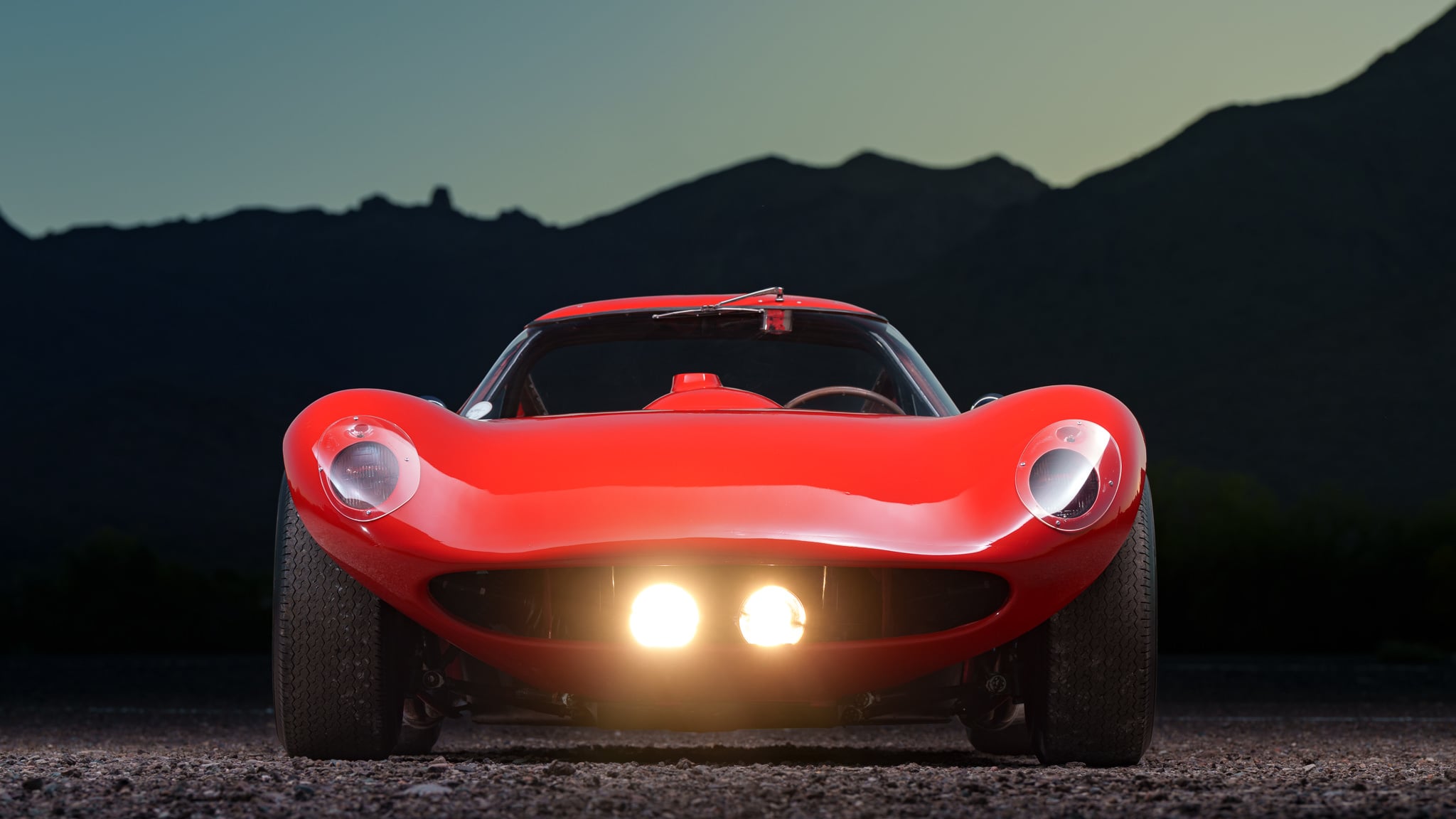
The car was commissioned without a drivetrain by Eddie King, who took delivery in April of 1966 at King’s Sales and Service Inc. in Ohio. King registered it for street use, adding a single top-mounted windshield wiper and driving lamps to the fiberglass bodywork, and he kept it until 1968.
The second owner acquired the car in a trade involving a fuel-injected split-window Corvette C2 and $4,500 USD in cash (a princely sum at the time), and they kept it for nearly four decades. The car was listed for sale in a 1980 issue of Autoweek, and the eventual third owner responded to that ad but did not complete the purchase until 2007 after no less than 25 years of stalled negotiations!
Following acquisition, the car was disassembled and refreshed for display at the 2008 Pebble Beach Concours d’Elegance, later appearing at The Quail, A Motorsports Gathering in 2009 and McCall’s Motorworks Revival in 2014. It was also sent to Don Edmunds (Bill Thomas’s original chief fabricator) for evaluation in 2007, resulting in a signed Acknowledgement of Authenticity.
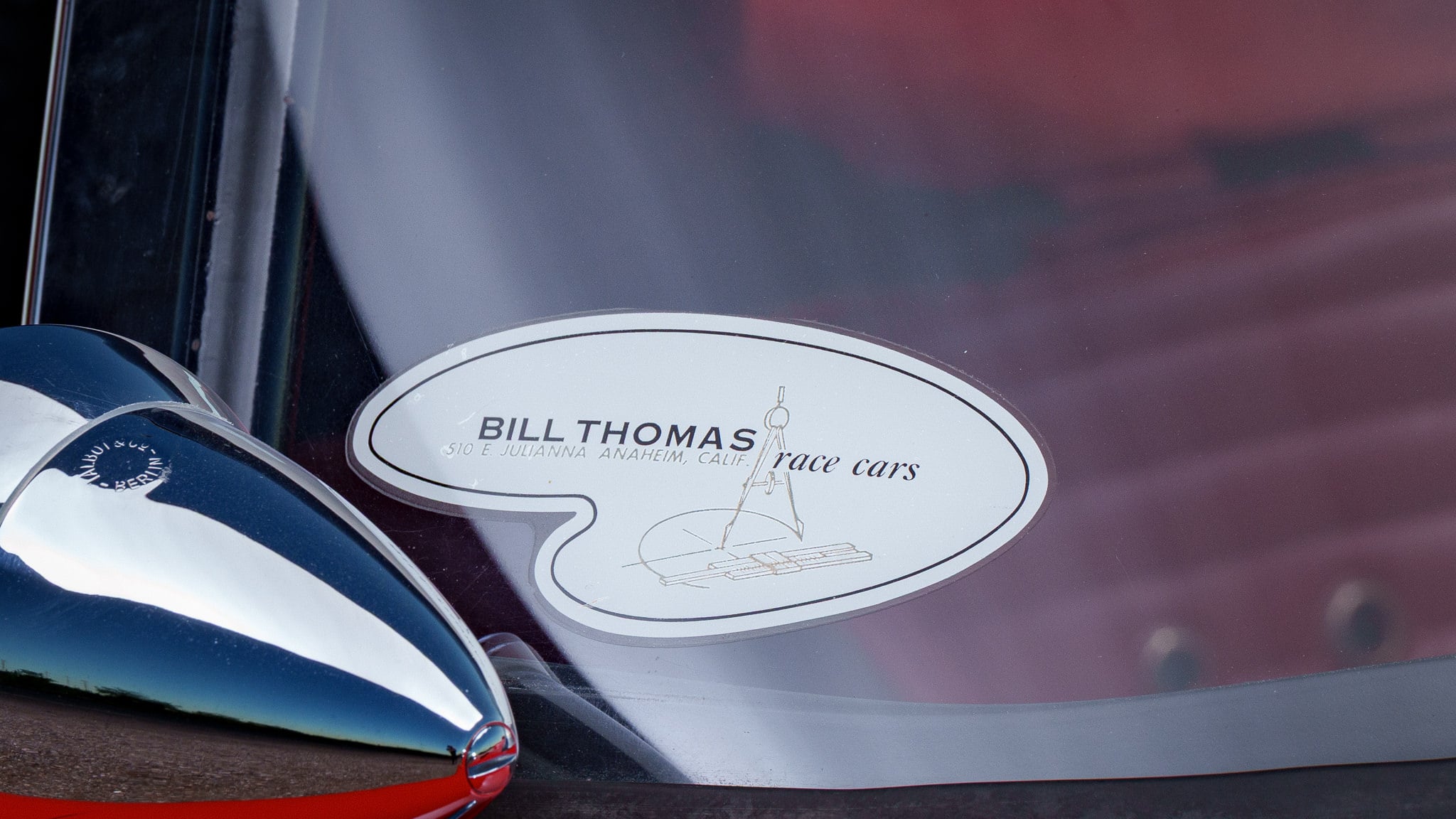
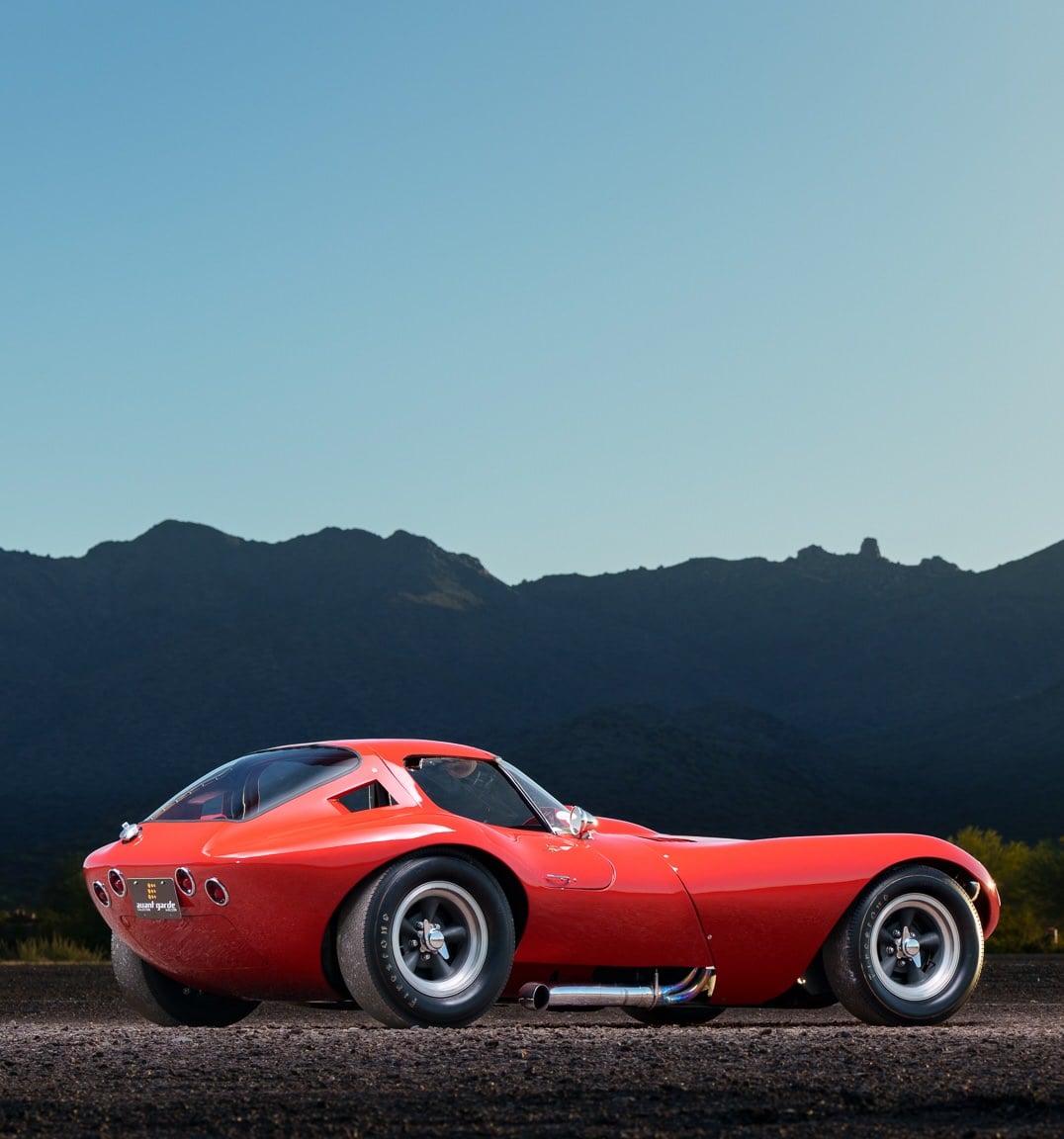
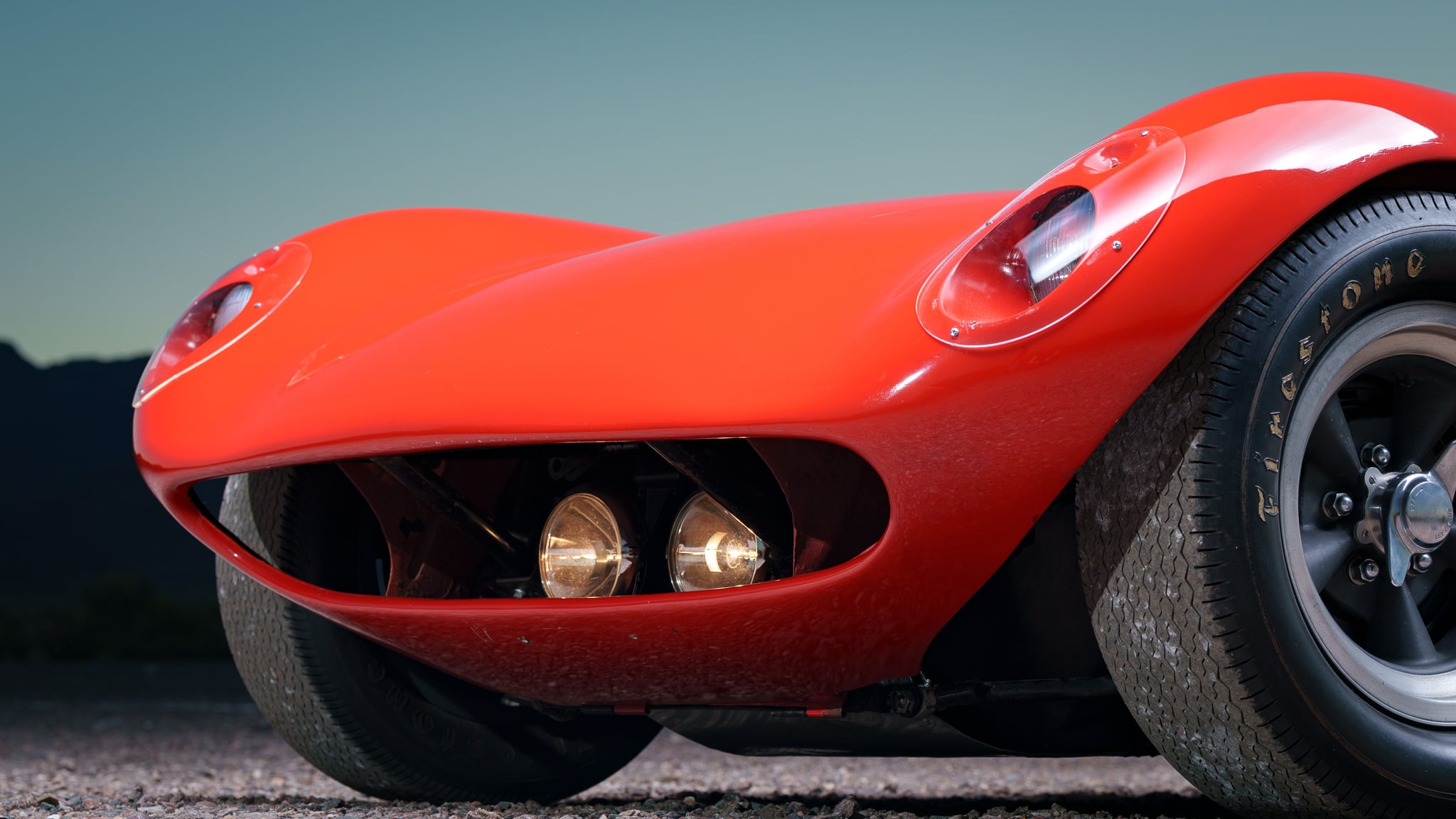
The red fiberglass body has gullwing doors with hand-painted cheetah graphics, a clamshell hood, clear headlight covers, dual Talbot Berlin side mirrors, and an exposed fuel filler. It rides on magnesium 15-inch American Racing Torq-Thrust wheels with two-eared knock-off spinners and staggered Firestone tires, with a matching spare stored inside the cabin.
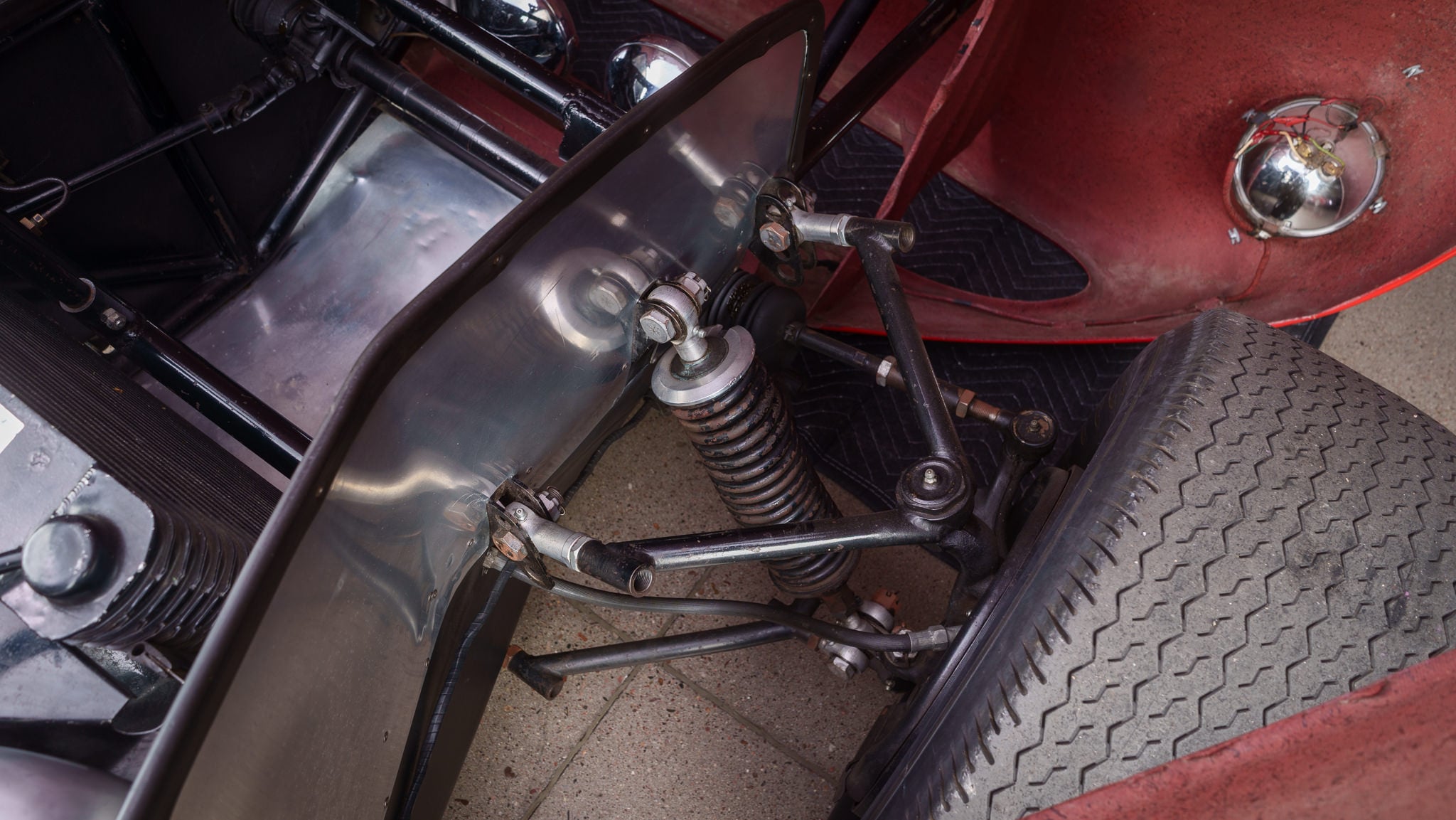
Braking is handled by four-wheel drums actuated by dual master cylinders, and the car uses rack-and-pinion steering with independent suspension at both ends – double wishbones up front and rear radius rods, all with coilover shock absorbers.
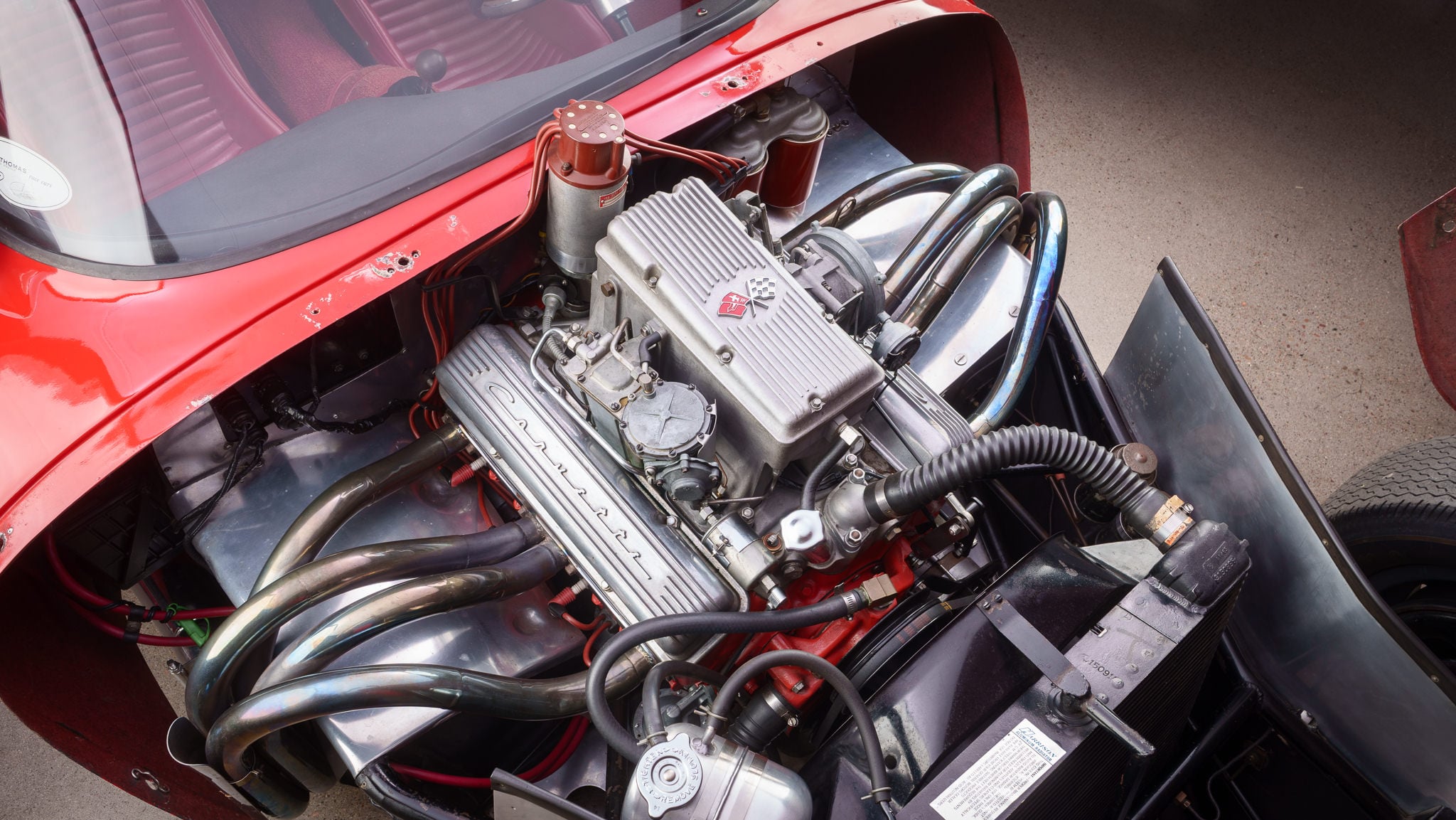
The drivetrain was installed by the first owner, it’s a front-mid-mounted 377 cubic inch (6.2 liter) Chevrolet V8 built from a 283 cubic inch (4.6 liter) block bored .060 inches over with a stroker crankshaft.
It’s equipped with a Rochester mechanical fuel injection system featuring a single air meter and Corvette-branded intake plenum and valve covers, a Vertex magneto, and a Harrison aluminum radiator and expansion tank. Tubular headers feed a dual side-exit exhaust, and power is delivered through a 4-speed manual transmission and a Corvette-sourced differential.
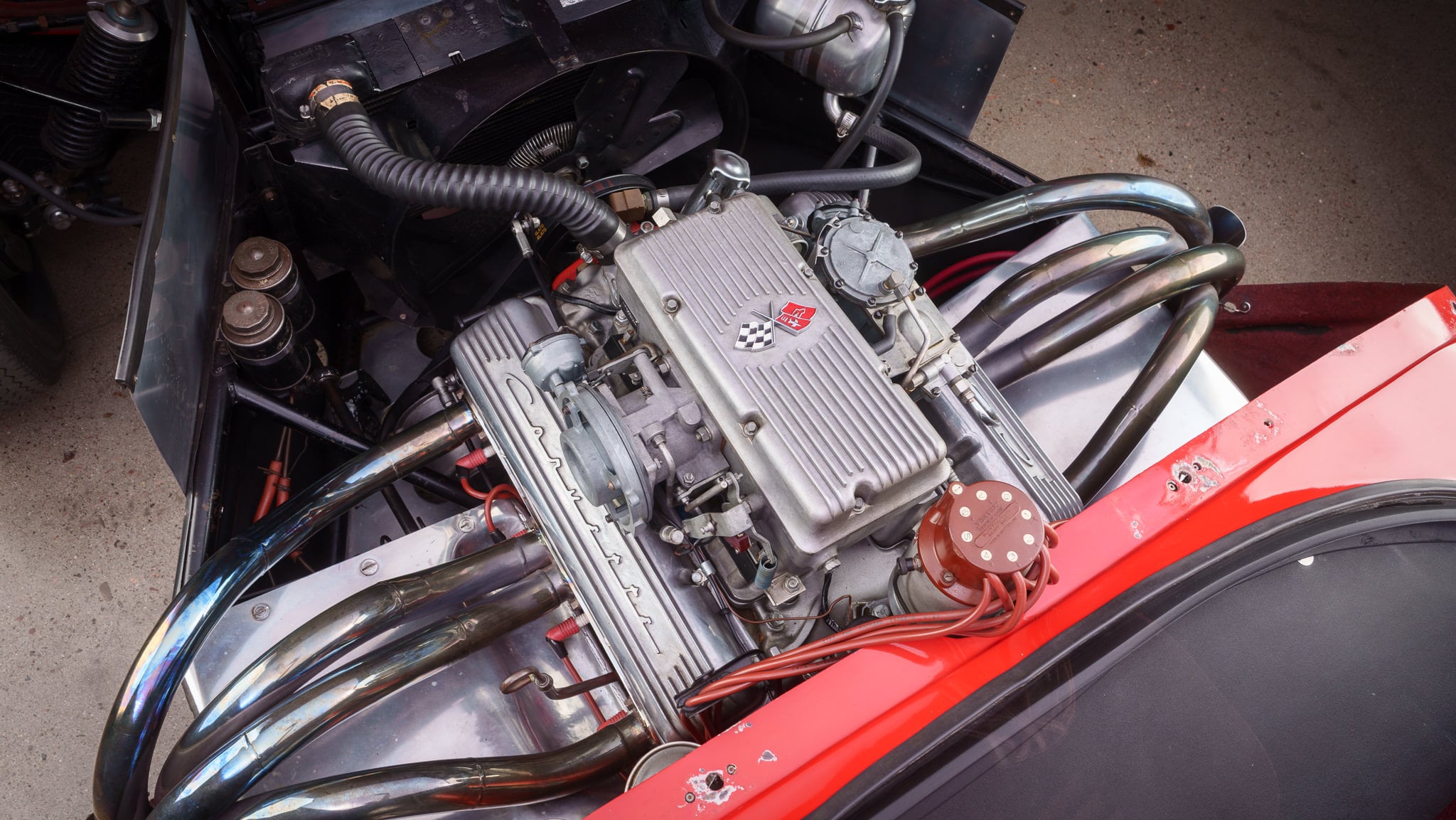
The drivetrain was installed by the first owner, it’s a front-mid-mounted 377 cubic inch (6.2 liter) Chevrolet V8 built from a 283 cubic inch (4.6 liter) block bored .060 inches over with a stroker crankshaft.
Inside, fixed-back bucket seats are trimmed in red leather with ventilation grommets, joined by color-coordinated carpets, a wood-rimmed steering wheel, a Hurst shifter with a wooden knob, a Sun Tach 10k-rpm tachometer, and Stewart-Warner gauges monitoring water temperature, oil pressure, fuel level, and amperage.
The car has no speedometer or odometer, and a bolt-in roll cage and dashboard are finished in black. Bought by its current owner three years ago, this Cheetah is now offered on dealer consignment out of Scottsdale, Arizona and you can visit the listing here if you’d like to read more about it or register to bid.
Images courtesy of Bring a Trailer + TheImageEngine
Articles that Ben Branch has written have been covered on CNN, Popular Mechanics, Smithsonian Magazine, Road & Track Magazine, the official Pinterest blog, the official eBay Motors blog, BuzzFeed, Autoweek Magazine, Wired Magazine, Autoblog, Gear Patrol, Jalopnik, The Verge, and many more.
Silodrome was founded by Ben back in 2010, in the years since the site has grown to become a world leader in the alternative and vintage motoring sector, with well over a million monthly readers from around the world and many hundreds of thousands of followers on social media.