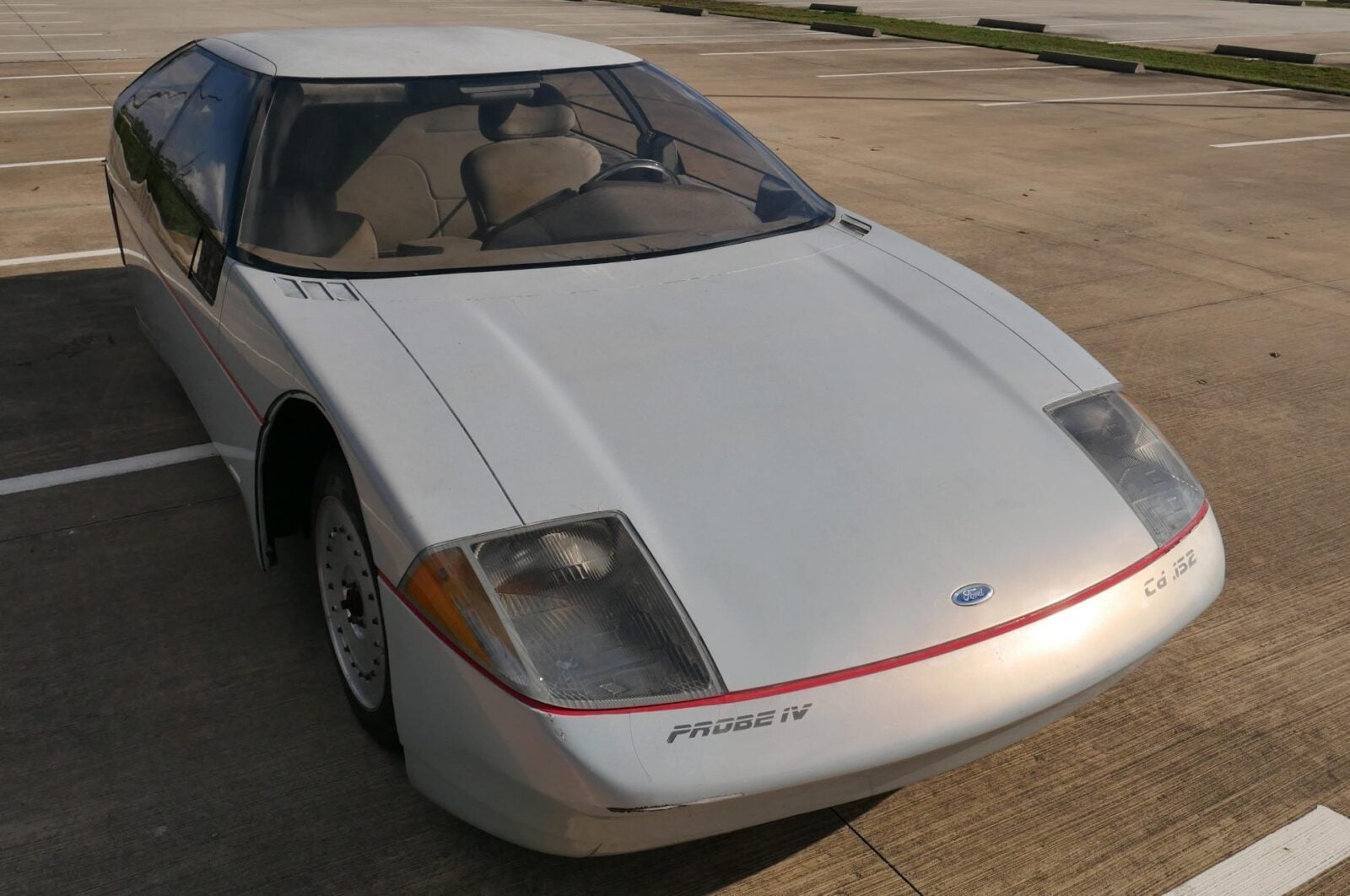
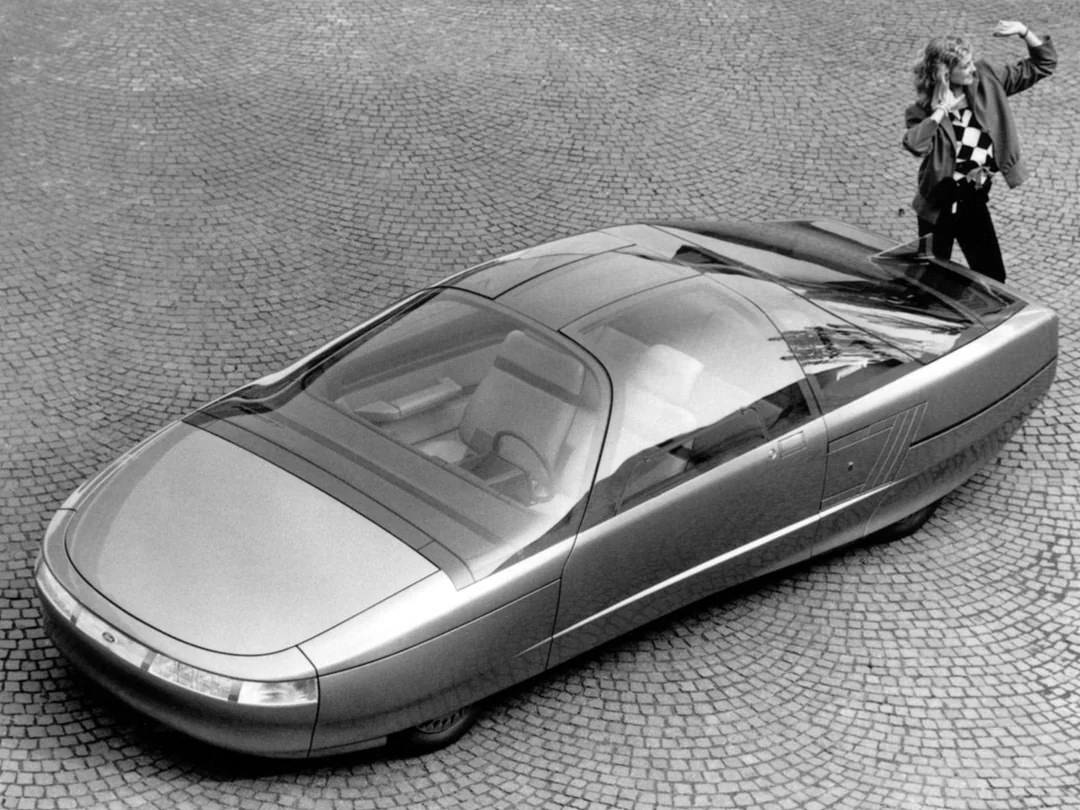
This is the 1983 Ford Probe IV Concept by Ghia, it’s one of the most influential concept cars of its time, previewing a slew of advanced features designed to get the aerodynamic coefficient of drag down to just 0.15 – an incredible figure even by modern standards.
The Ford Probe series of concept cars were developed to push the envelope of what was possible at the time, all were developed and extensively wind tunnel tested, and many of their design features made their way onto future Ford production cars – most notably the Ford Taurus.
Fast Facts: The 1983 Ford Probe IV Concept Car
- The 1983 Ford Probe IV Concept was part of Ford’s broader Probe program, a series of aerodynamic research cars created to explore how lower drag could improve fuel economy and help meet tightening regulations. The program grew out of the oil crises of the 1970s and Ford’s need to raise overall fleet efficiency.
- Ford design executive Don Kopka pushed the Probe project after recognizing that conventional, upright body shapes were hurting efficiency. Working with Ghia in Turin, Ford developed a succession of concept cars that steadily reduced drag, beginning with Probe I in 1979 and continuing through increasingly advanced designs over the next several years.
- Probe IV represented the most extreme phase of the program to that point, with a claimed drag coefficient of 0.15. Its shape used covered wheels, flush glazing, concealed wipers, hidden lights, rear-mounted cooling hardware, and an active ride-height system with a deployable front air dam to cut aerodynamic resistance as far as possible.
- The Probe series helped steer Ford toward more aerodynamic production cars, especially the Sierra and later the Taurus, whose rounded shapes reflected lessons learned from the concepts. The Probe IV described here is a non-running display and wind-tunnel model, now offered for sale in Texas as a rolling exhibition piece.
History Speedrun: The Ford Probe Concept Series
The Ford Probe concept car series was all about pushing the boundaries of automobile aerodynamic efficiency, typically the preserve of racing cars and exotic prototypes, but it was a science that could also dramatically improve the fuel economy of ordinary passenger vehicles. The program kicked off in the 1970s, a time characterized by two oil crises (1973 and 1979), and ever more stringent emissions regulations in the United States and around the world.
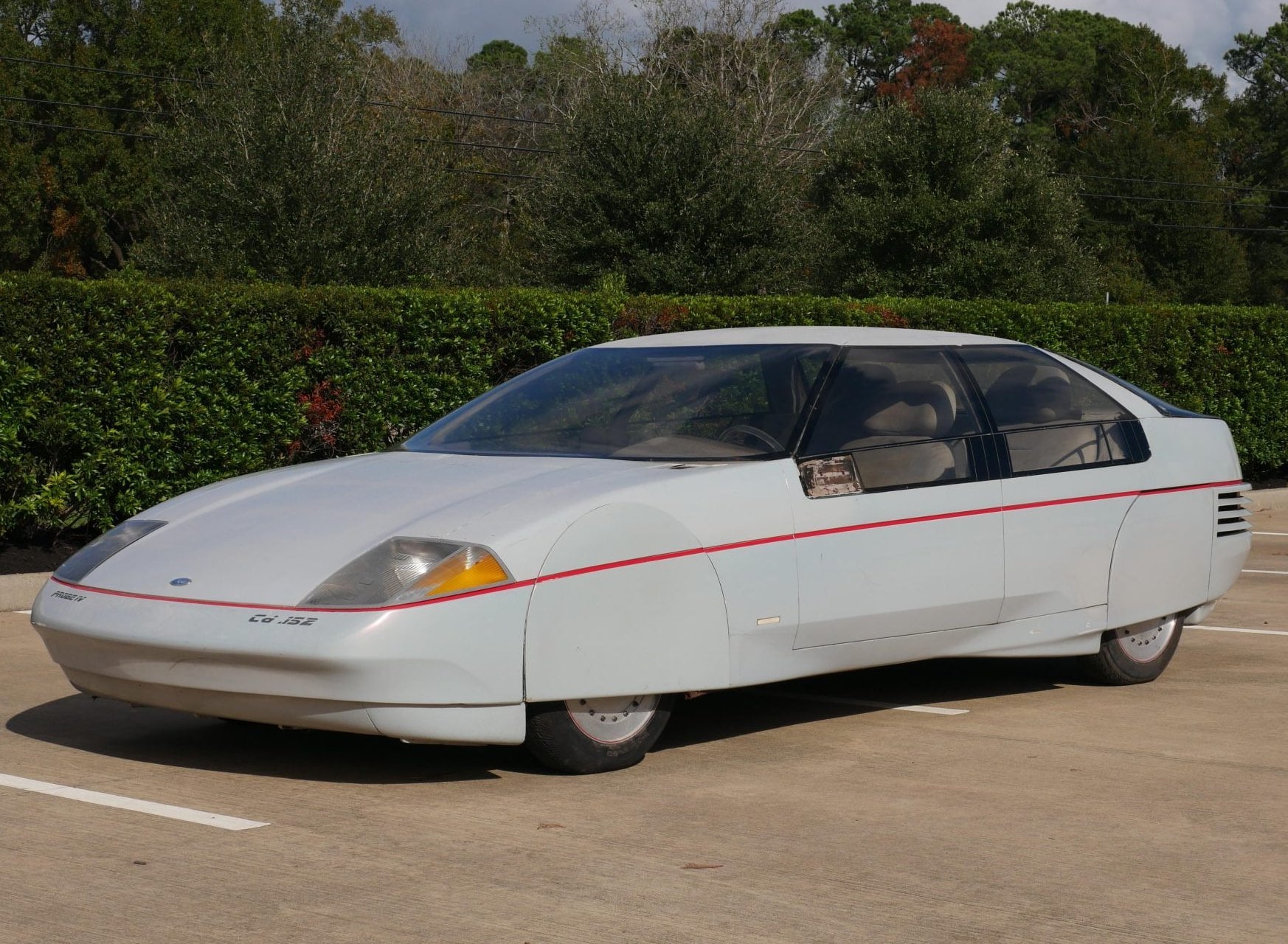
 This is the 1983 Ford Probe IV Concept by Ghia, it’s one of the most influential concept cars of its time, previewing a slew of advanced features designed to get the aerodynamic coefficient of drag down to just 0.15 – an incredible figure even by modern standards.
The Ford Probe program was championed by Don Kopka, then executive director of Ford’s Advanced and International Design Studio, who had realized that the upright, flat-fronted designs of Ford’s 1970s cars were doing nothing whatsoever to help the company meet federally mandated Corporate Average Fuel Economy (CAFE) requirements introduced after the 1973 Oil Crisis.
Kopka estimated that even modest aerodynamic tweaks to existing Ford products had added 1.5 miles per gallon to the company’s fleet average, changes costing around $10 million to implement but equivalent to nearly $3 billion in powertrain re-engineering.
Convinced that much more was possible, he partnered with Carrozzeria Ghia, Ford’s coachbuilding studio in Turin, Italy, to build a series of clean-sheet aerodynamic concept cars to push the boundaries of what was possible.
The Arrival Of The Probe I
The first car in the series, the Probe I, debuted at the 1979 Frankfurt Motor Show. Interestingly, it was built on the Fox-body Mustang platform with a turbocharged 2.3 liter four-cylinder engine producing 170 bhp, it achieved a drag coefficient of 0.25 – that’s roughly 37% better than the 0.40 figure typical of a two-door coupe at the time.
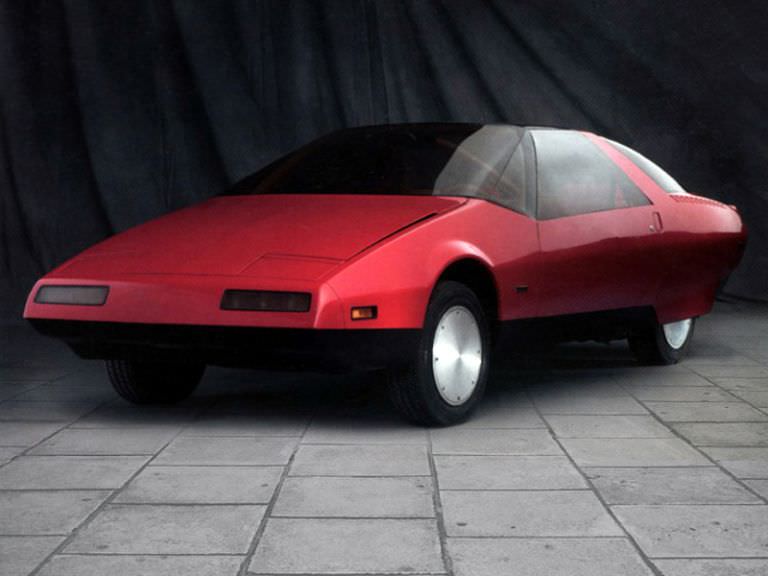
The first car in the series, the Probe I, debuted at the 1979 Frankfurt Motor Show. Interestingly, it was built on the Fox-body Mustang platform with a turbocharged 2.3 liter four-cylinder engine producing 170 bhp, it achieved a drag coefficient of 0.25 – that’s roughly 37% better than the 0.40 figure typical of a two-door coupe at the time. Image courtesy of Ford.
Its wedge shape, covered rear wheels, and pop-up headlights were radical for the era, but the car was fully functional and carried a complete interior. Kopka’s goal with Probe I was as much internal as external – it was built to convince Ford’s own leadership that aerodynamic design was a necessary evolution for all Ford production cars, not just some geeky scientific sideshow.
The Probe II
The Probe II followed in 1980 as a more conventional-looking sedan. The 1981 Probe III, a collaboration between designers Uwe Bahnsen and Patrick le Quément, achieved a drag coefficient of just 0.22 and was also unveiled at the Frankfurt Motor Show. Ford claimed the Probe III’s aerodynamic design alone would improve fuel economy by 27% compared to the average European car on the road at the time.
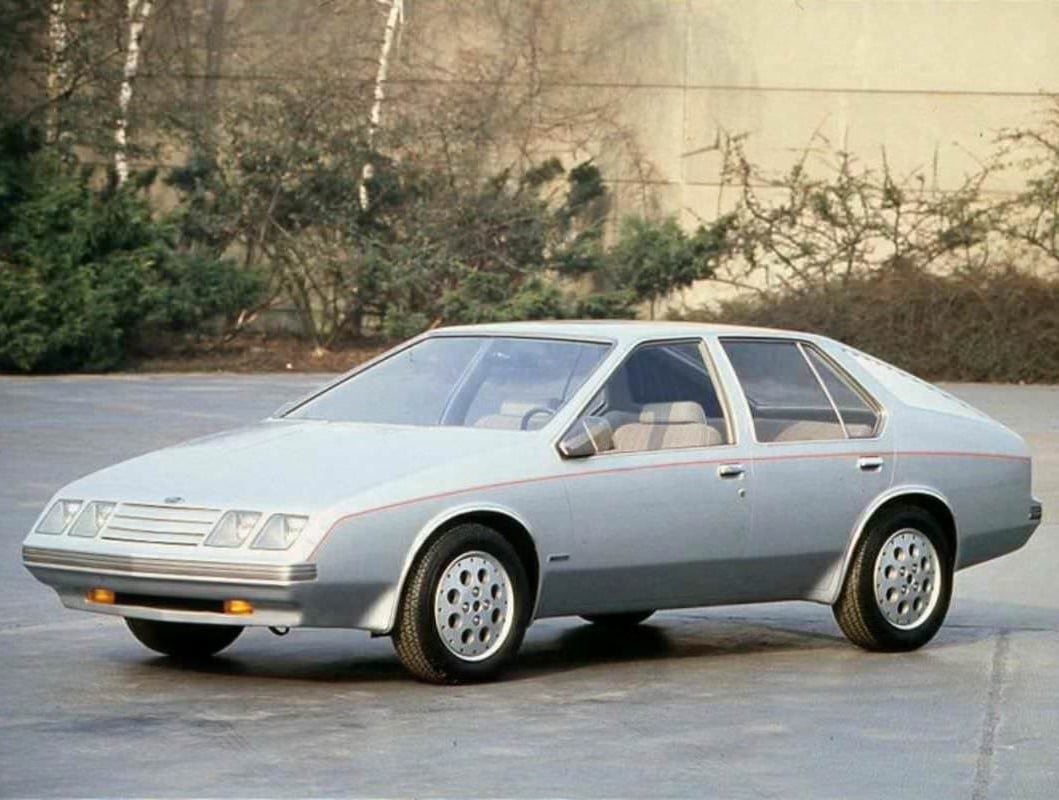
The Probe II followed in 1980 as a more conventional-looking sedan. The 1981 Probe III, a collaboration between designers Uwe Bahnsen and Patrick le Quément, achieved a drag coefficient of just 0.22 and was also unveiled at the Frankfurt Motor Show. Image courtesy of Ford.
The Probe III
Perhaps most critically, the Probe III was the concept that most directly shaped the Ford Sierra (sold in North America as the Merkur XR4Ti), which was already signed off when the concept debuted. The Sierra’s successful market reception, along with the wider lessons of the Probe program, then helped lay the groundwork for Ford’s most important American sedan of the decade – the Taurus.
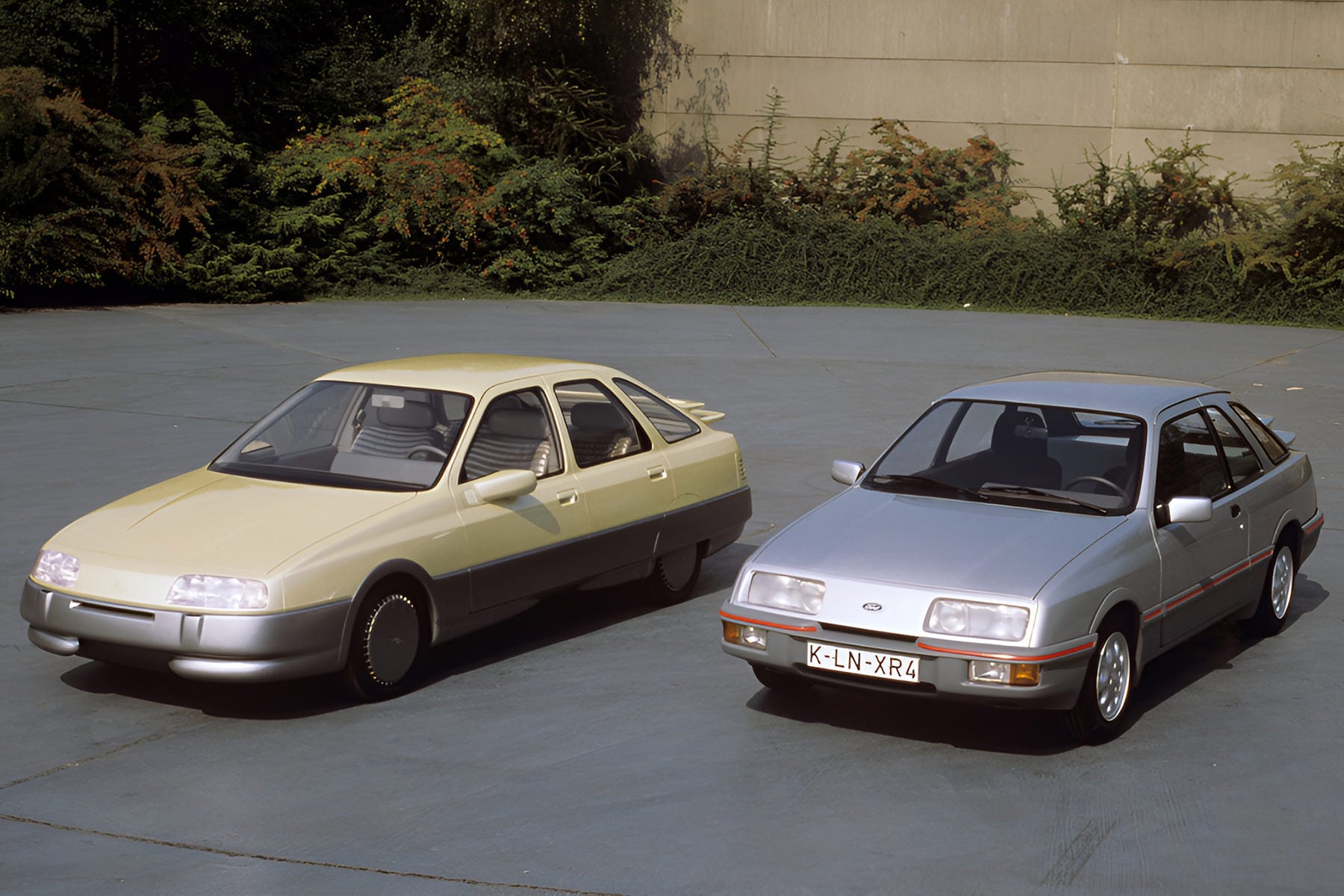
Perhaps most critically, the Probe III (left) was the concept that most directly shaped the Ford Sierra (sold in North America as the Merkur XR4Ti and seen here in the right), which was already signed off when the concept debuted. Image courtesy of Ford.
The Probe IV
The Probe IV arrived in 1983 and pushed the entire project into more extreme territory. It was unveiled at the Detroit Auto Show and it achieved a drag coefficient of just 0.15 – a figure which Ford compared to that of a jet fighter. Key features of the design included fully shrouded wheels, flush glass, covered headlights, concealed wipers, and a nose with no cooling apertures at all, the radiator and air-conditioning condenser were relocated to the rear.
An automatic attitude-control system lowered the car from six and a half inches of ground clearance at city speeds to just three inches at highway speed, with a computer-deployed front air dam. By this point, Ford and Ghia had already proved they could translate aerodynamic theory into production reality with the Sierra, so the Probe IV was all about finding absolute limits rather than previewing any specific road car technology.
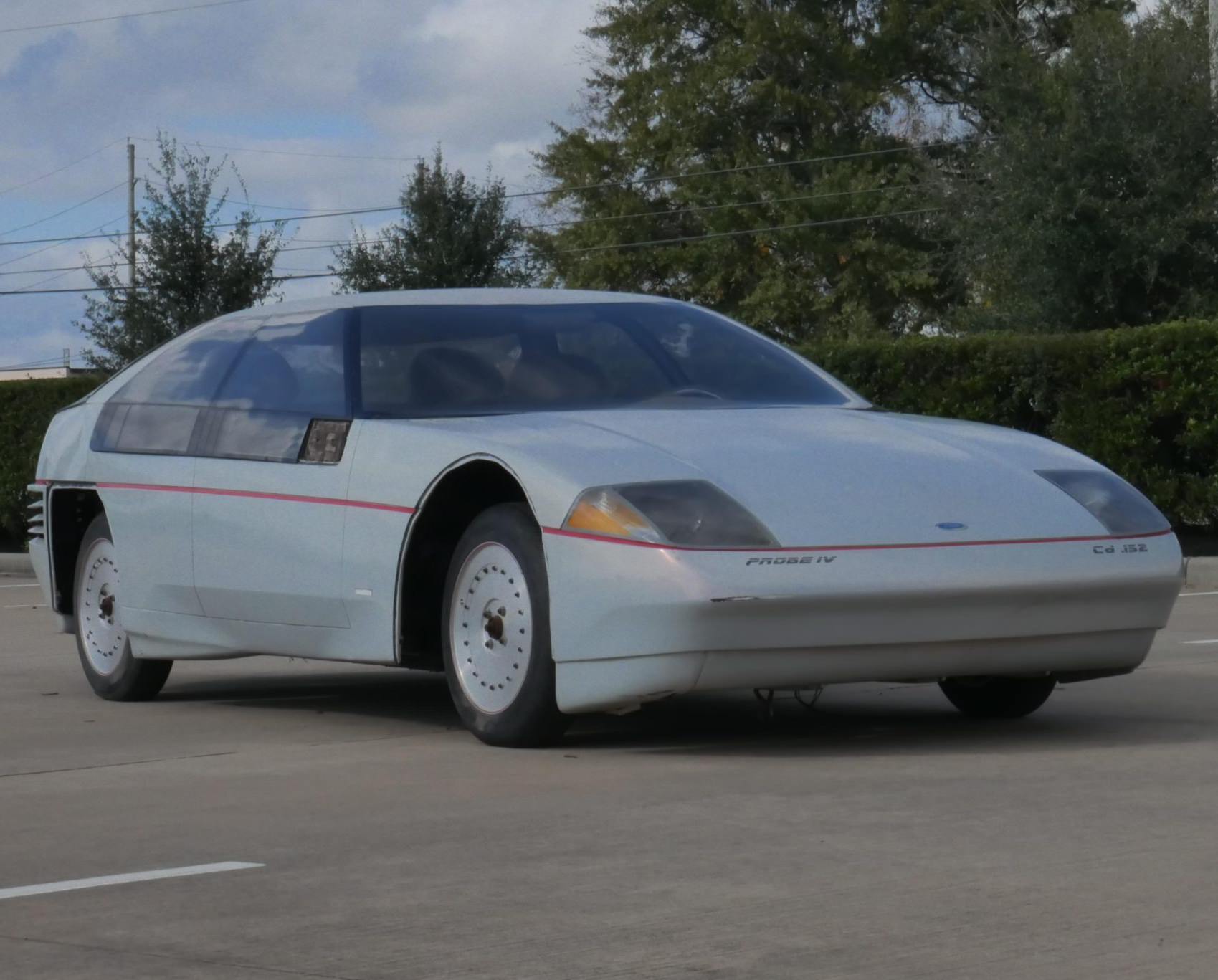
The Probe IV arrived in 1983 and pushed the entire project into more extreme territory. It was unveiled at the Detroit Auto Show and it achieved a drag coefficient of just 0.15 – a figure which Ford compared to that of a jet fighter.
The Probe V
The Probe series concluded in 1985 with the Probe V, which achieved a further 10% reduction in drag over the Probe IV, reaching 0.137. Unlike its predecessors, the Probe V used a mid-engine layout with a transverse turbocharged four-cylinder mounted behind the rear seats, enabling an even more extreme cab-forward design.
The program’s most tangible production car legacy was the 1986 Ford Taurus. The Taurus incorporated many of the lessons learned from the Probe program and its smooth, rounded form gave it a drag coefficient of around 0.29, which helped Ford comfortably meet CAFE standards.
The Taurus became one of Ford’s most important cars since the original Mustang and began a design revolution in Detroit, with Chrysler and General Motors scrambling to catch up. Ford’s design chief Kopka himself stated that lessons from the Probe V would be adapted to production models in the years ahead, and they were, to varying degrees.
The Probe series concluded in 1985 with the Probe V, which achieved a further 10% reduction in drag over the Probe IV, reaching 0.137. Unlike its predecessors, the Probe V used a mid-engine layout with a transverse turbocharged four-cylinder mounted behind the rear seats, enabling an even more extreme cab-forward design. Image courtesy of Ford.
The Probe name lived on in a different form, when Ford’s Mazda-based front-wheel-drive coupe needed a name for its 1988 launch, it was christened the Ford Probe, borrowing from the concept series – though in reality the production car shared nothing with the concepts beyond the badge.
The 1983 Ford Probe IV Concept Car Shown Here
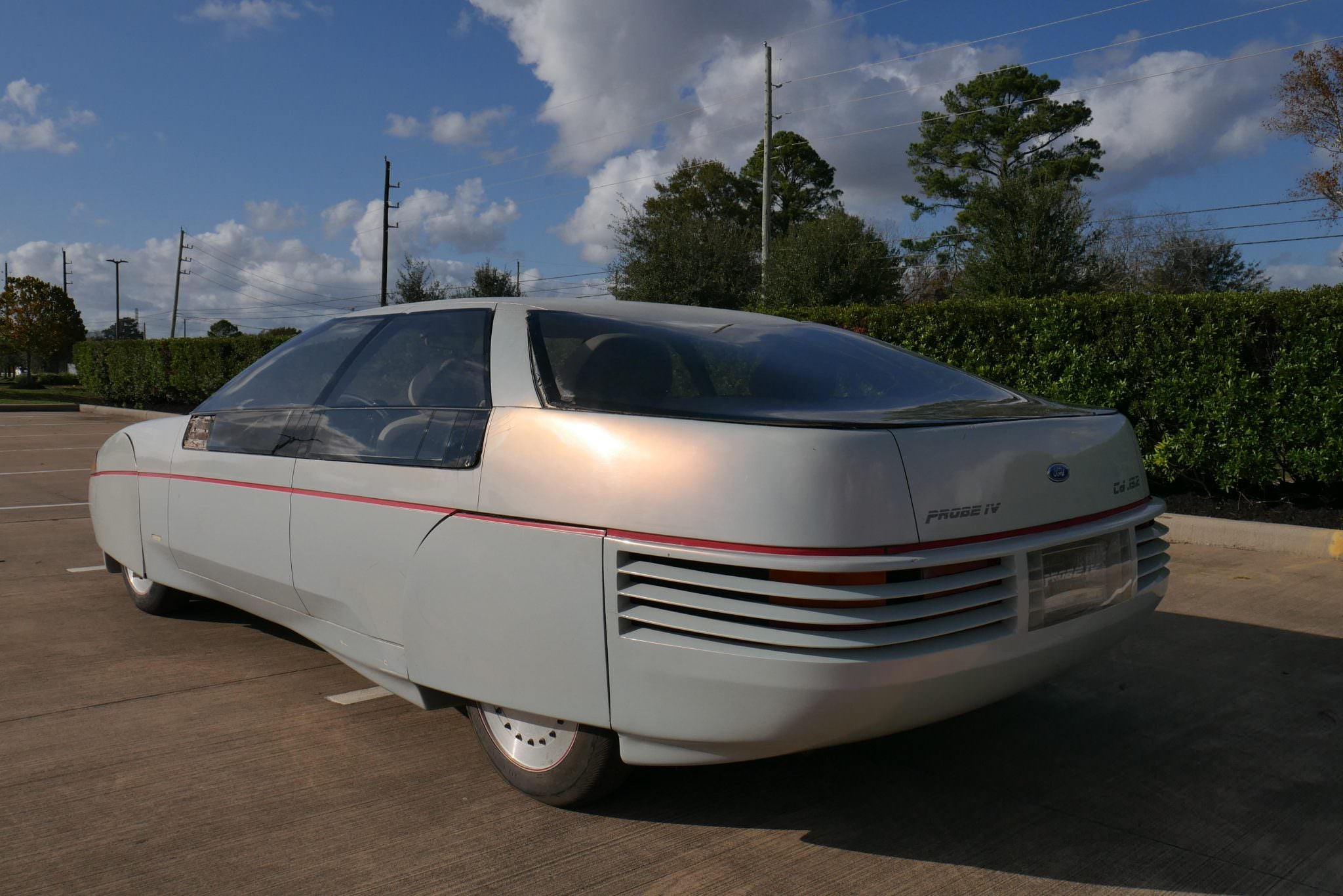
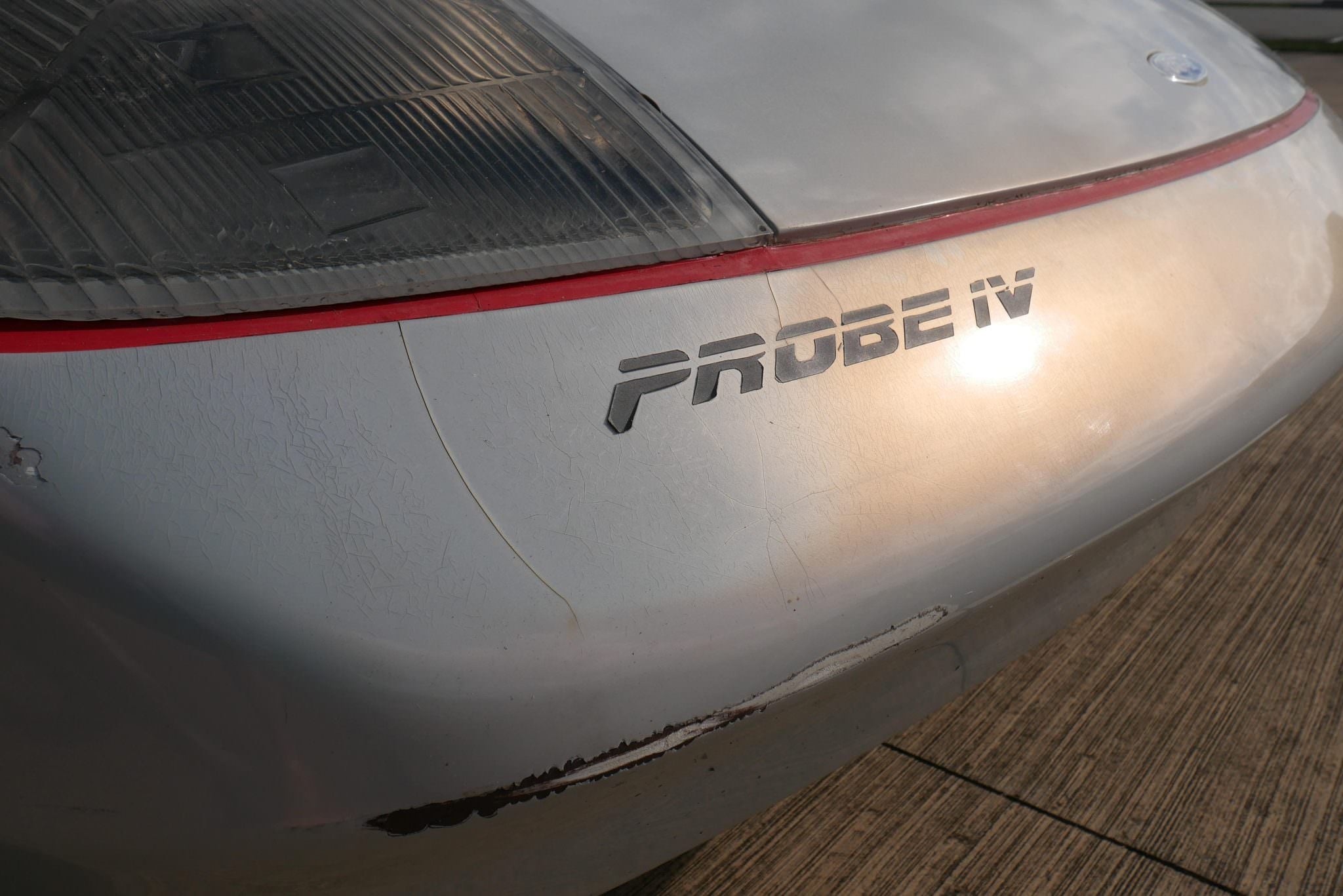
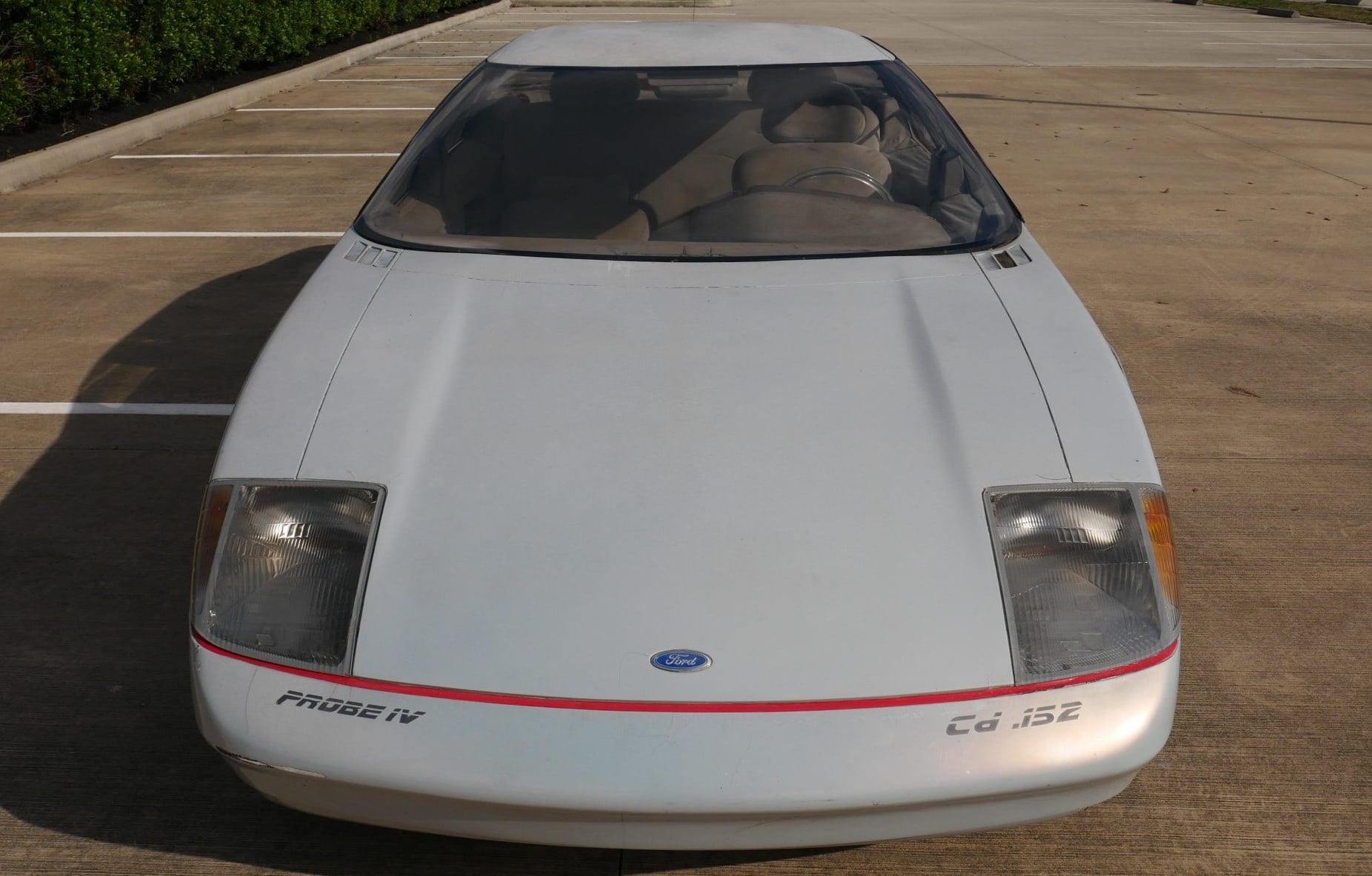
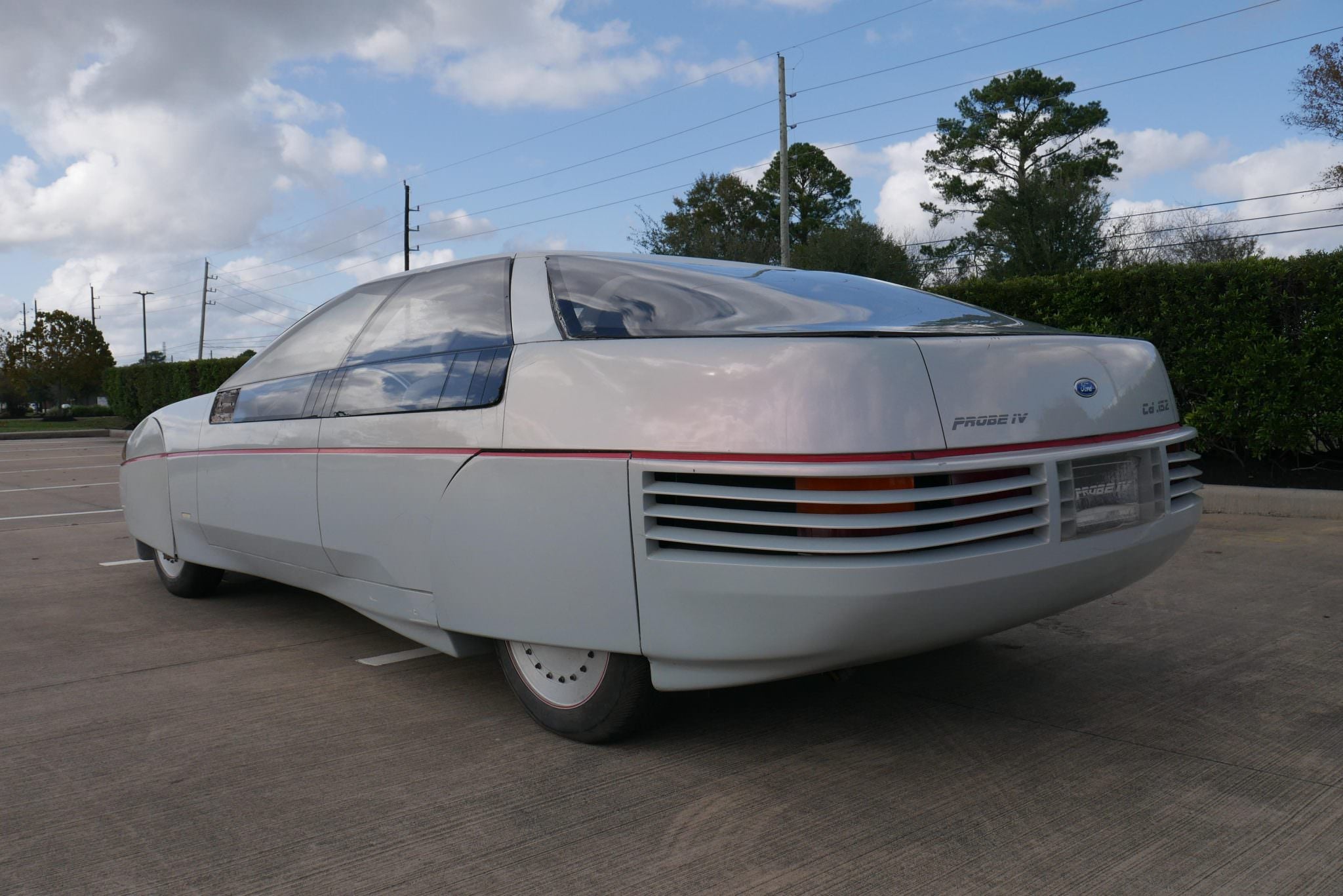
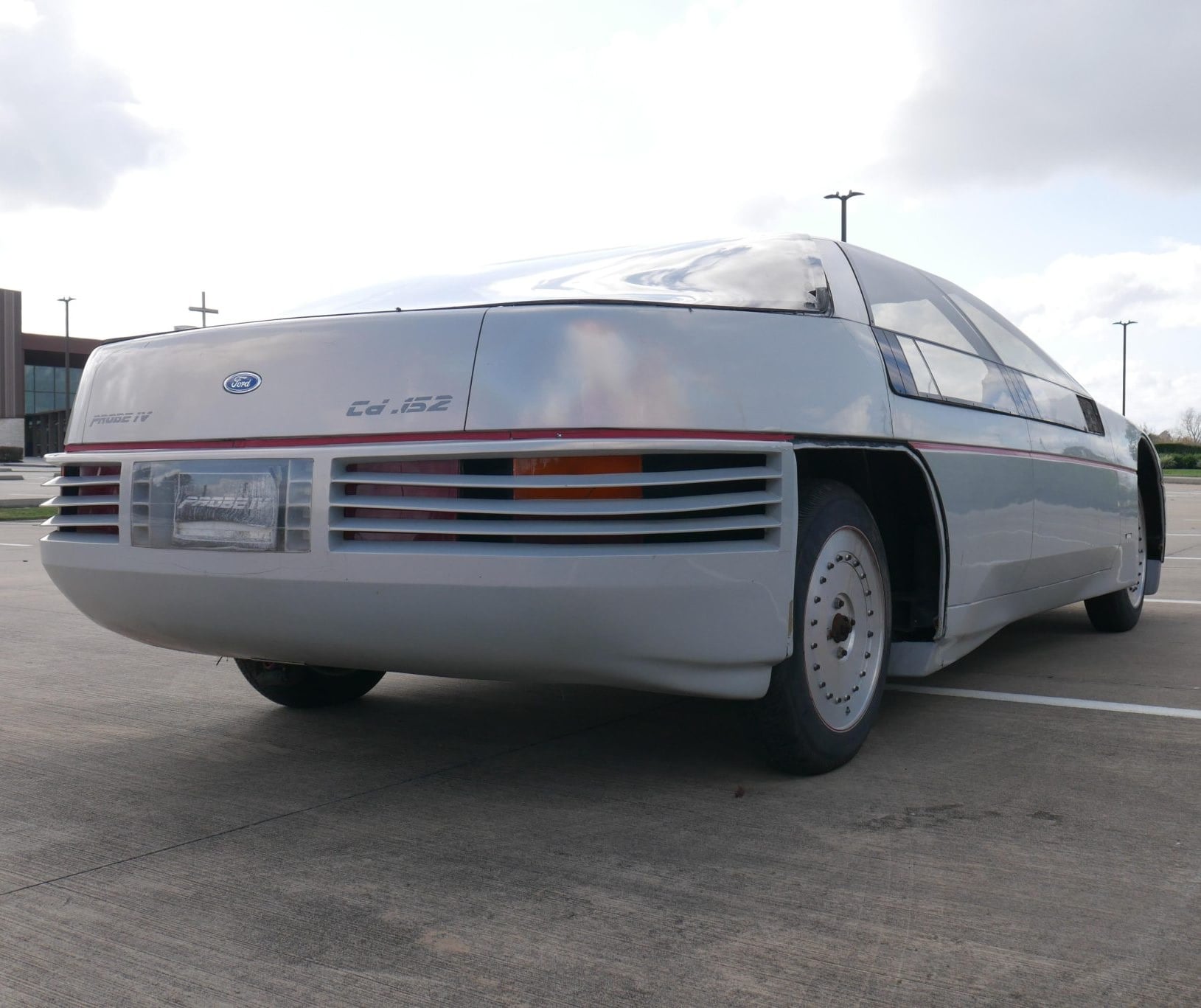
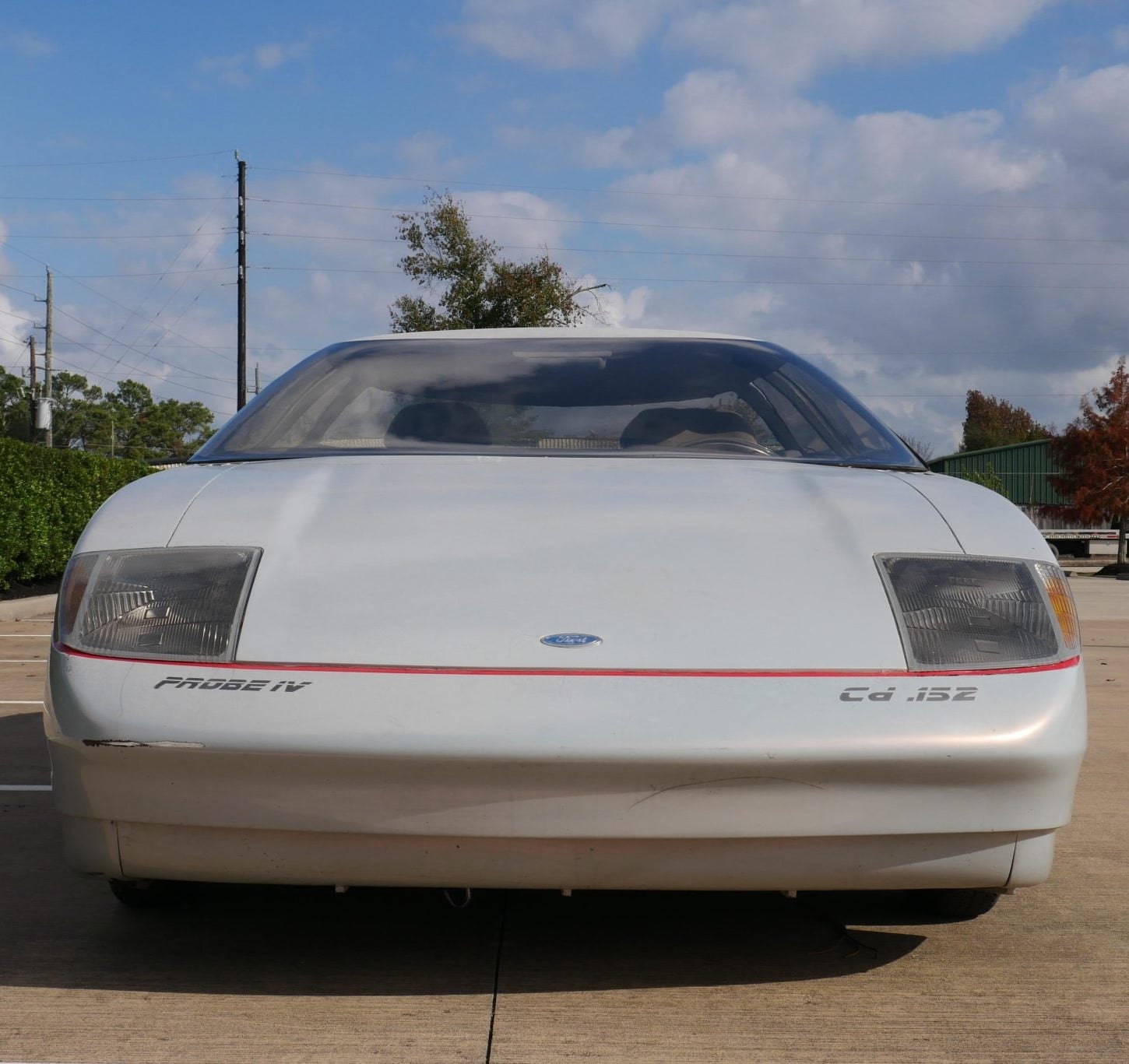
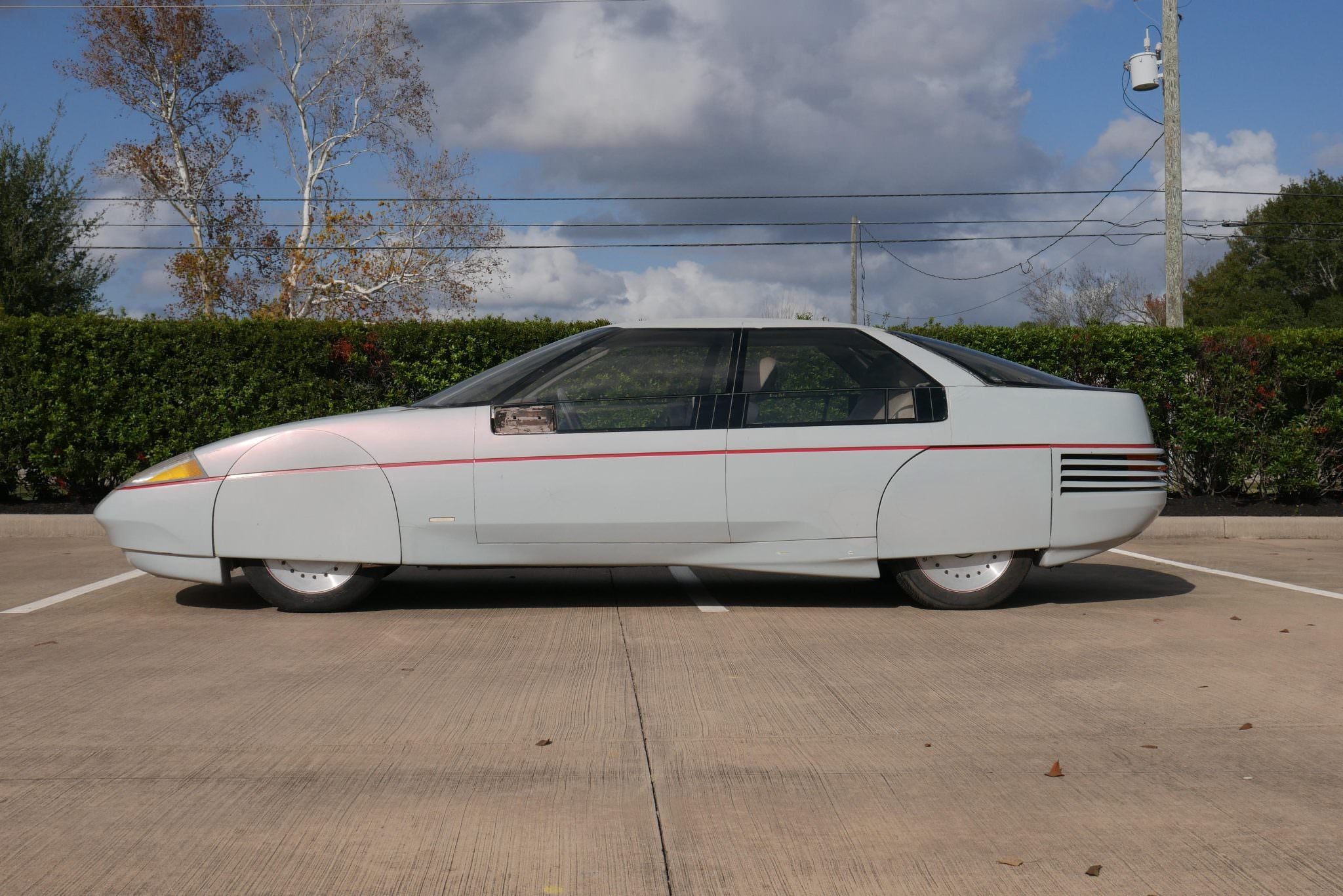
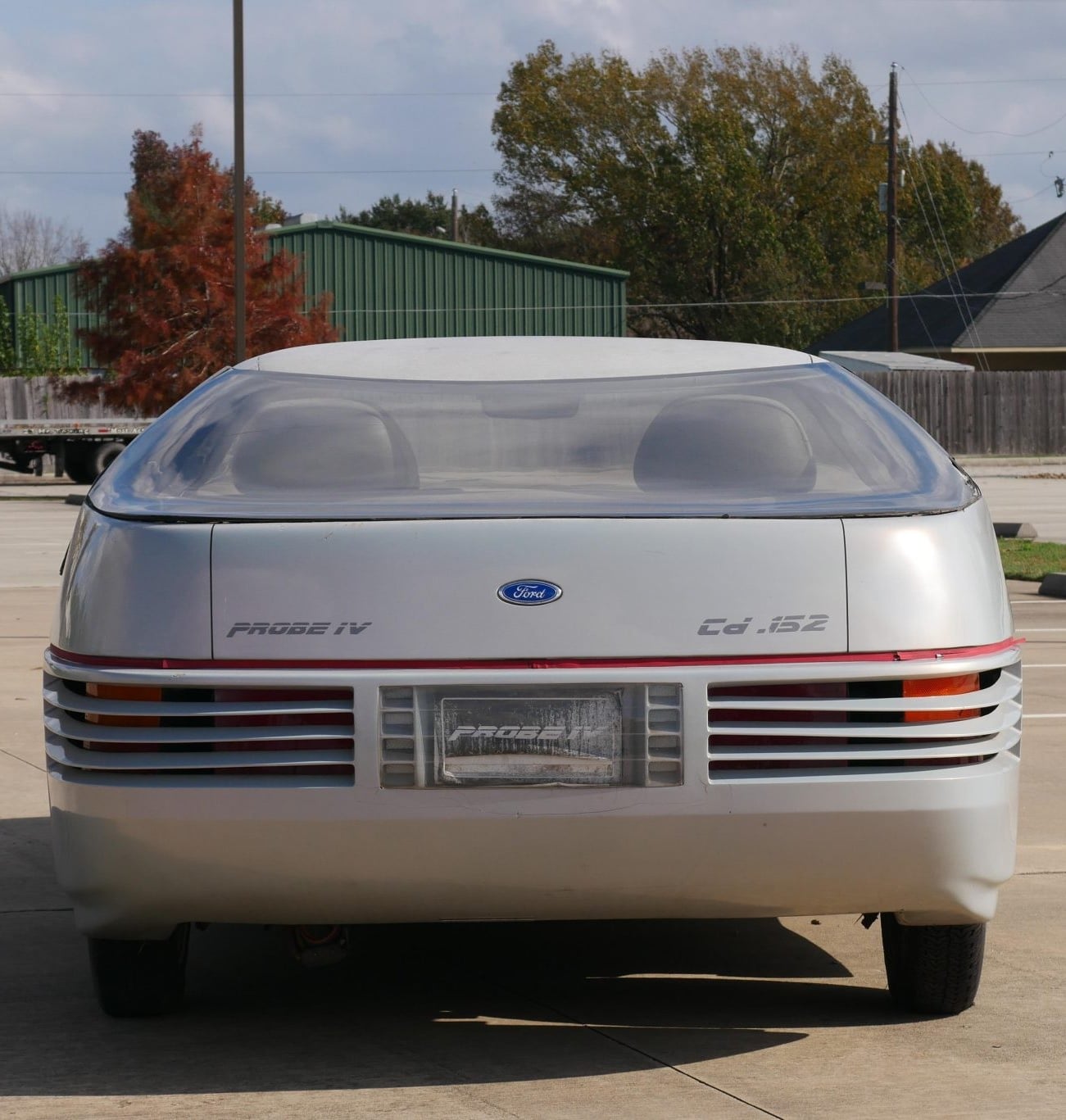
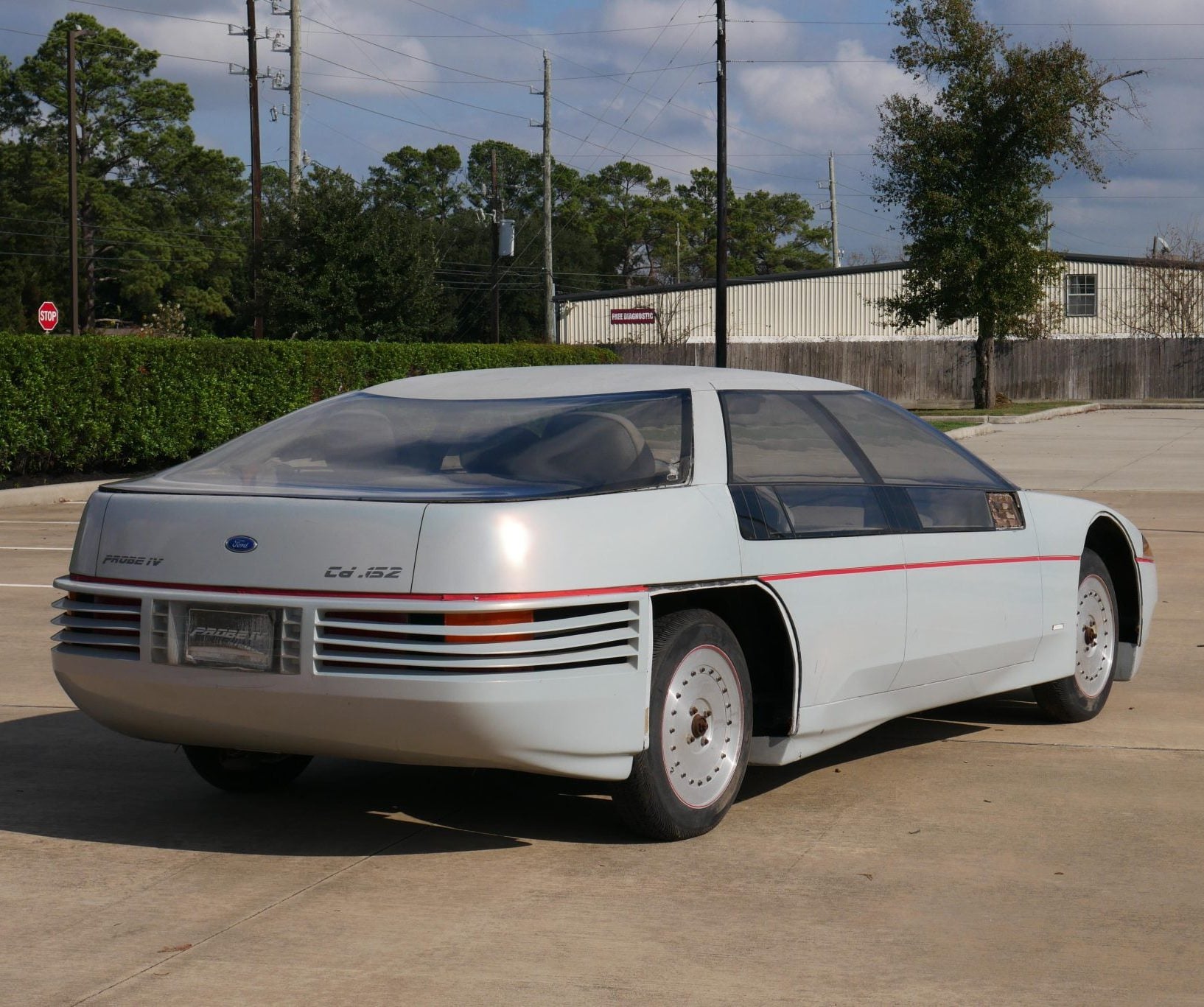
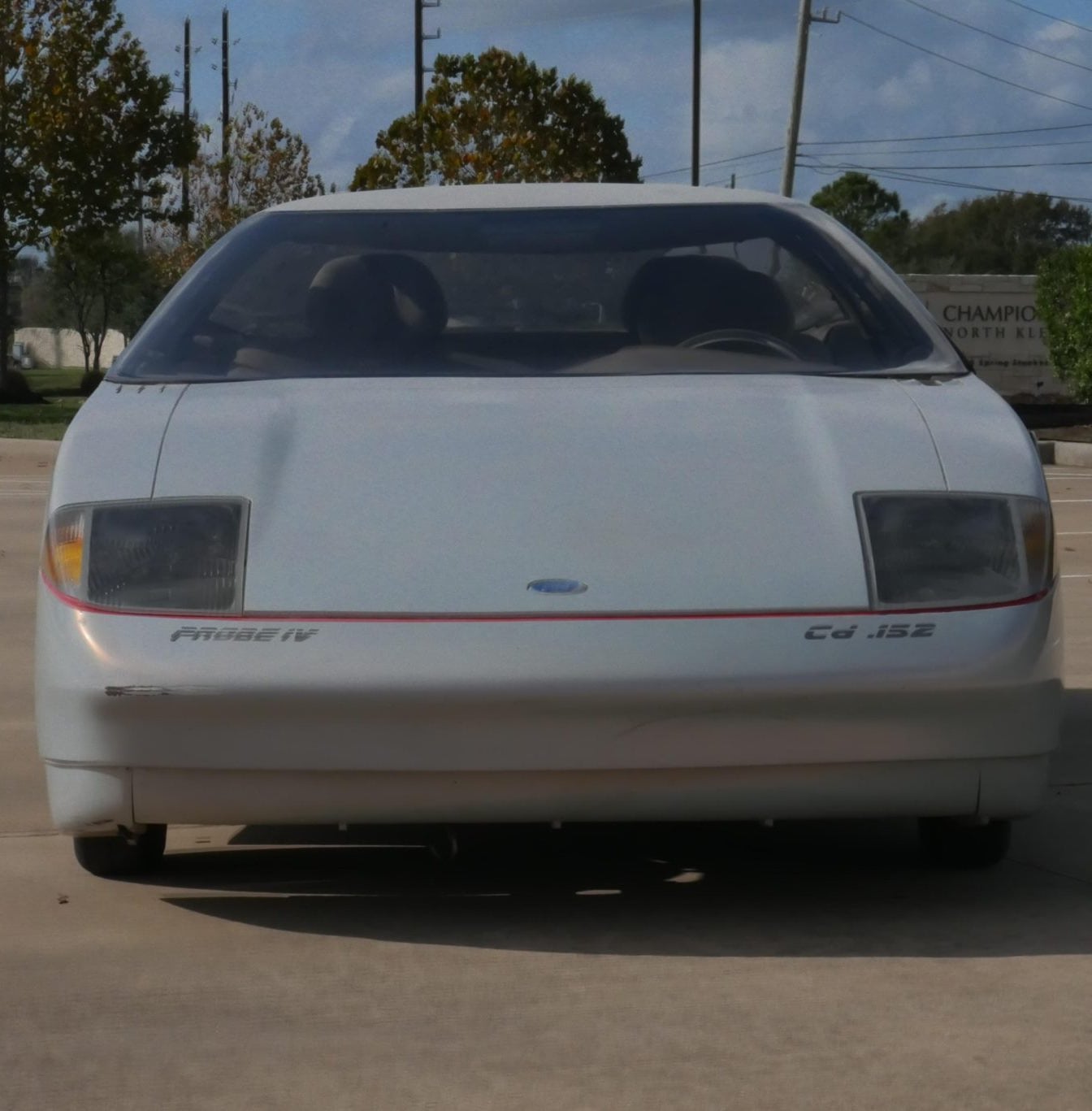
This is the original 1983 Ford Probe IV, it’s one of two examples built as the fourth in a series of five low-drag concept cars, all of which are described in detail above. This specific car was built as a static display and wind-tunnel model rather than a functional vehicle – as such it has no engine, transmission, drivetrain, brakes, or working steering. The body is fiberglass over a wood frame with adjustable steel subframes carrying the wheel assemblies, and it carries the identification plate OGHA SLVRPRB4001.
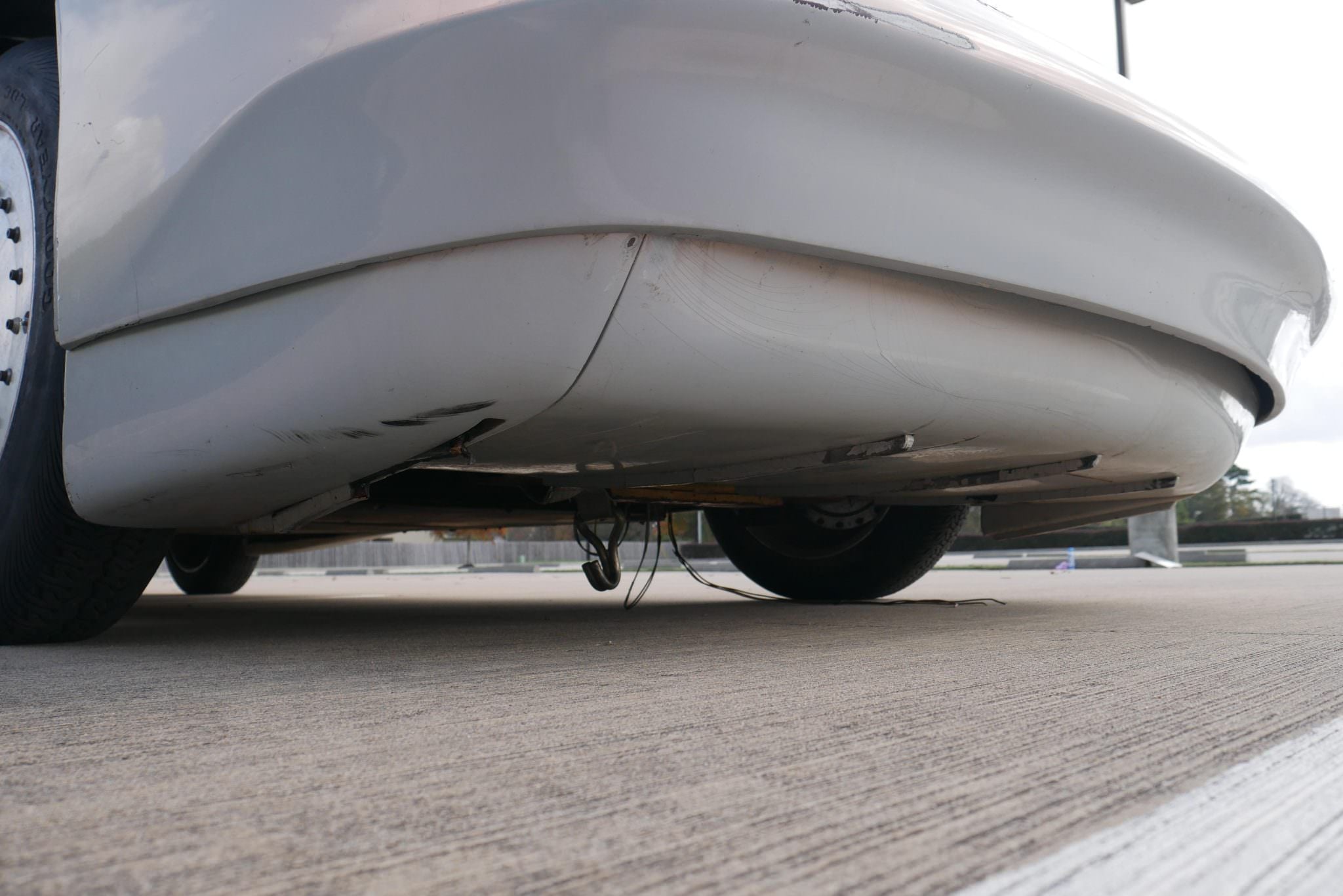
The silver-finished body is a masterclass in extreme aerodynamic design, and it achieved a claimed drag coefficient of 0.15. It has an electrically retractable front air dam, a nose entirely free of air inlets, faired-in headlights, wheel spats over all four wheels, and windows that extend into the (simulated) door panels. The radiators were designed to be mounted at the rear flanks rather than the front, though they’re present on this prototype, as it doesn’t have an engine, drivetrain etc.
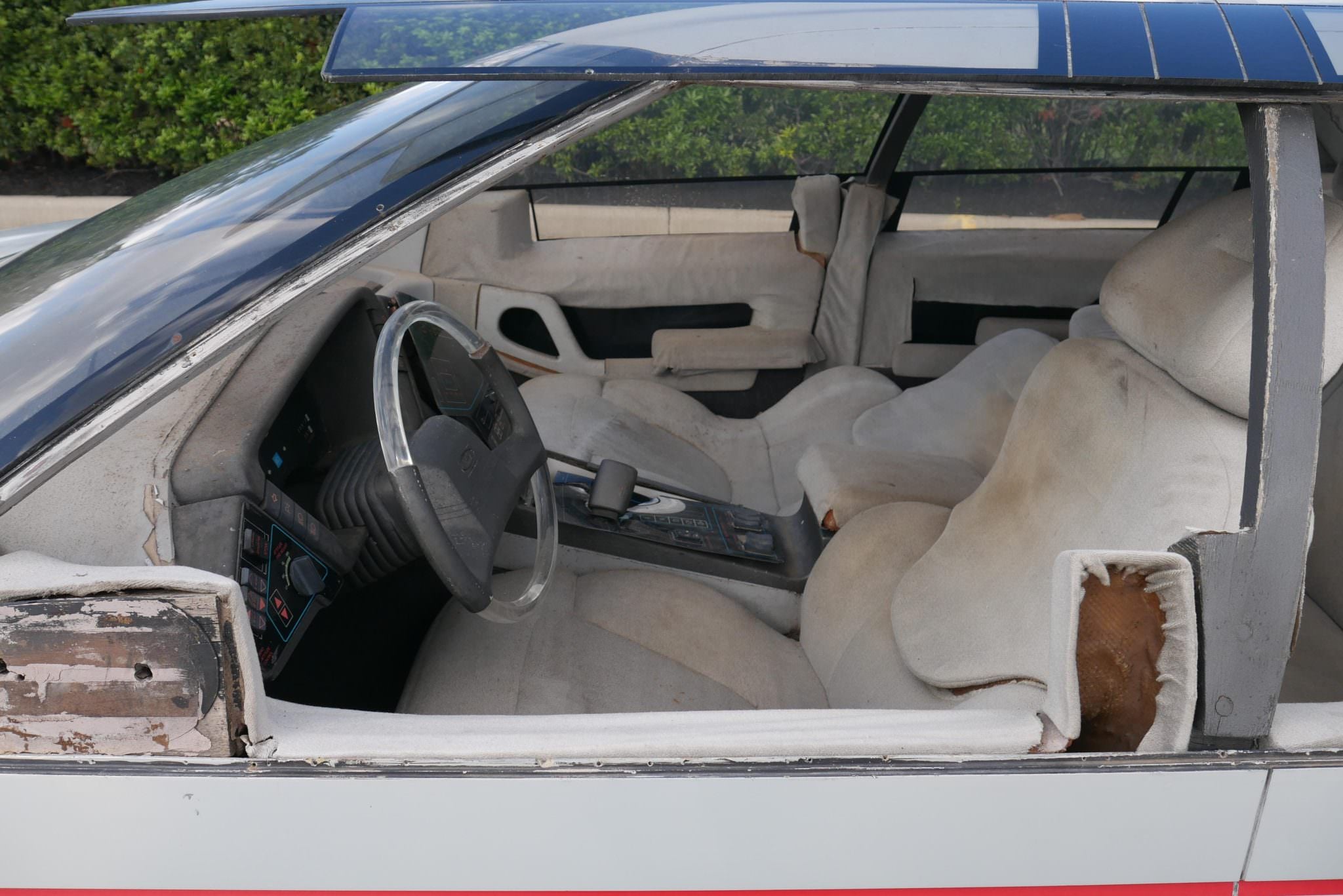
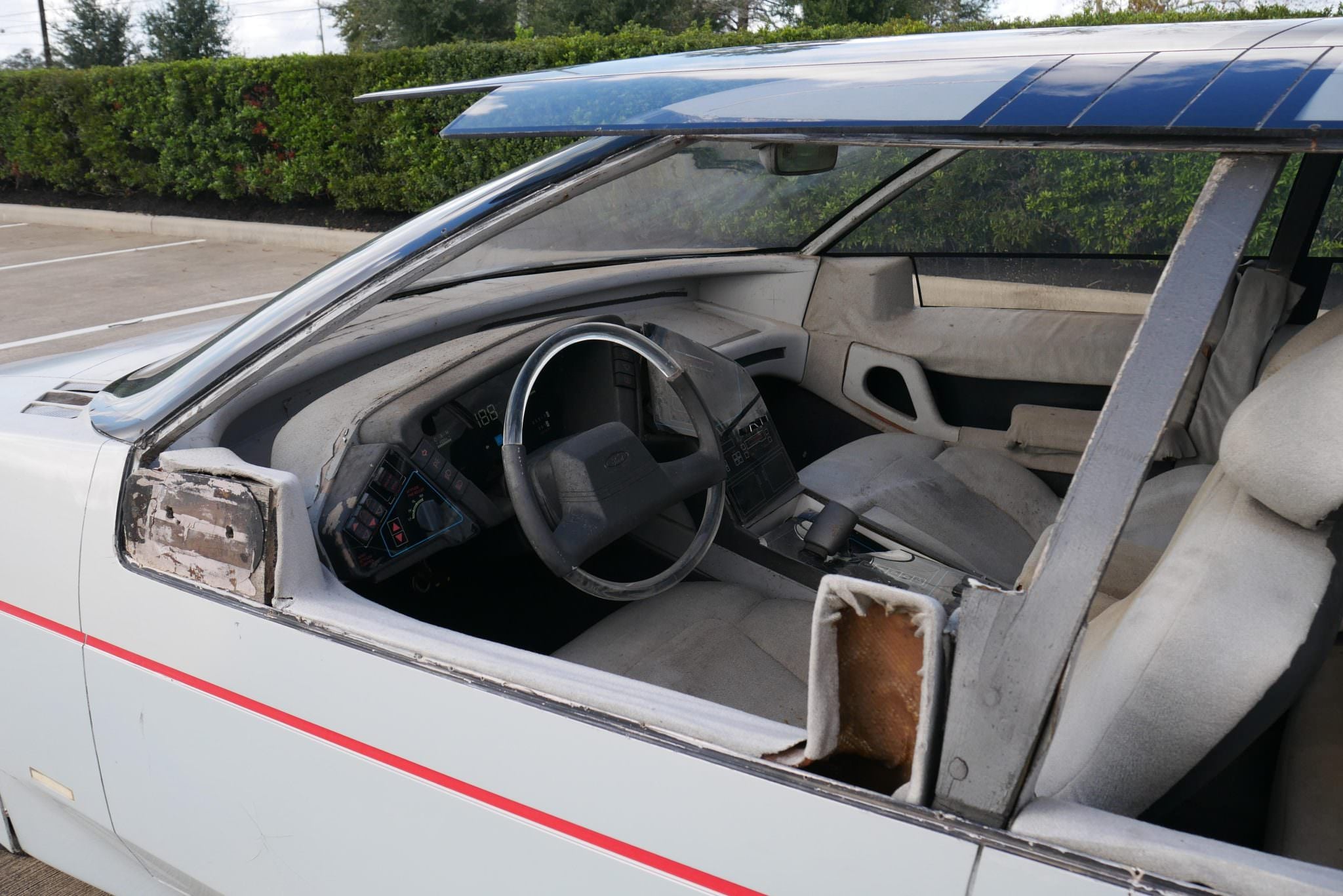
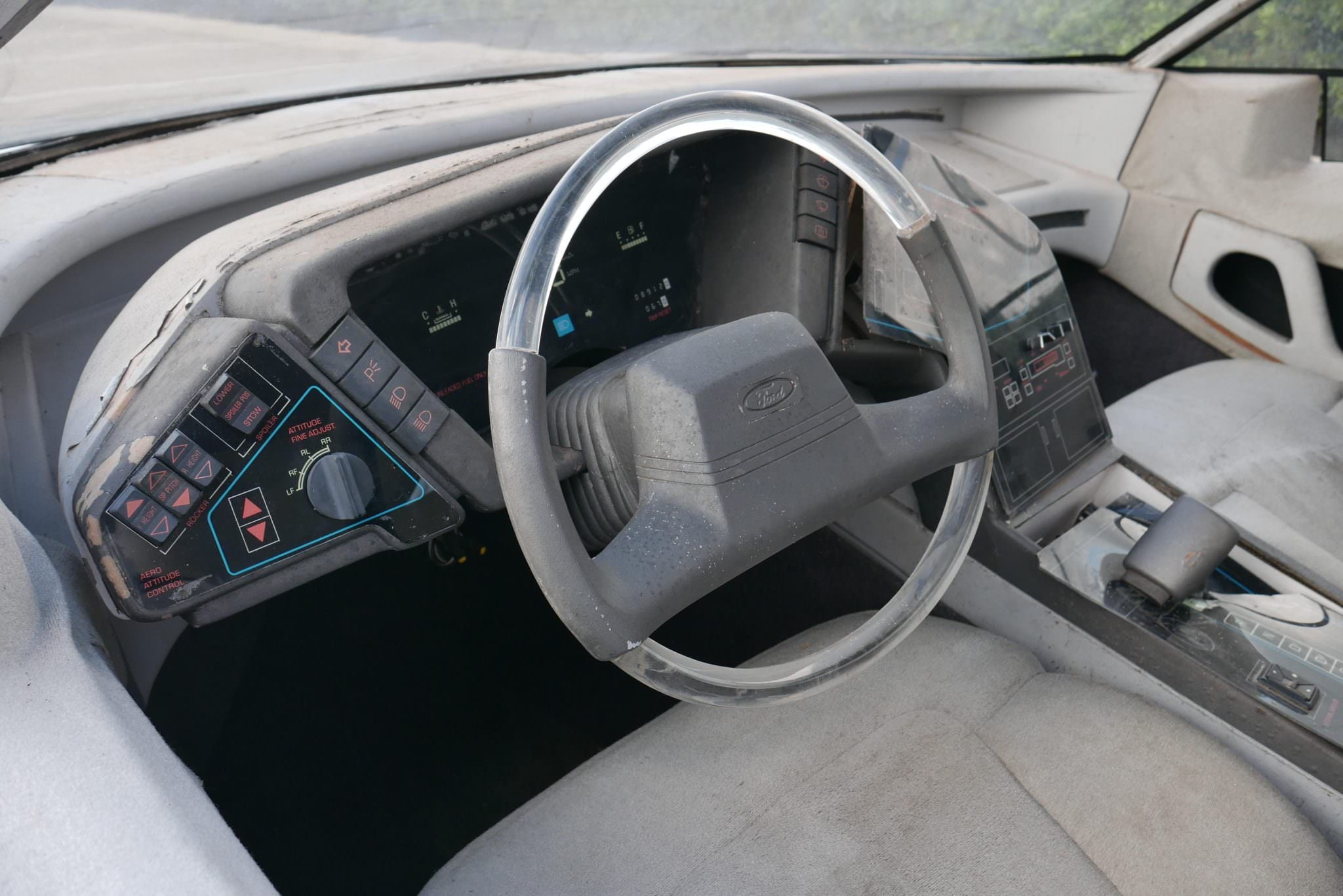
The interior has front bucket seats and a rear bench in gray cloth, a two-spoke steering wheel with translucent rim segments, a simulated digital instrument display, and a mix of simulated and physical switchgear. The car has an electrical system wired for exterior lights and the air dam, though its function has not been tested in recent years.
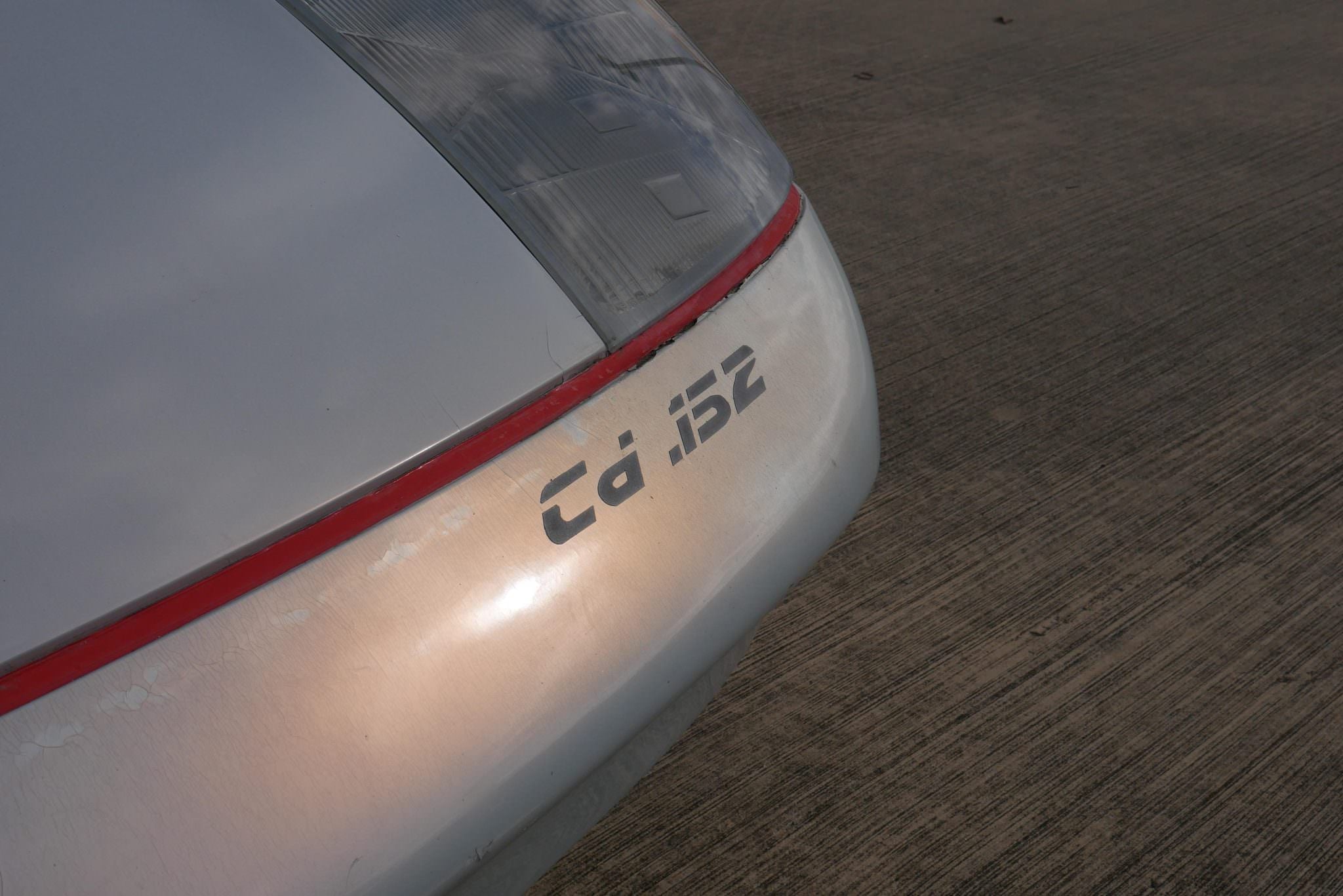
The car shows is clearly showing its age, the finish has some imperfections, a portion of the rear roof sags and prevents the rear window from fitting properly, the side mirrors and right-front wheel spat are missing, interior trim is loose in places, the shifter panel is damaged, and the center stack panel is loose.
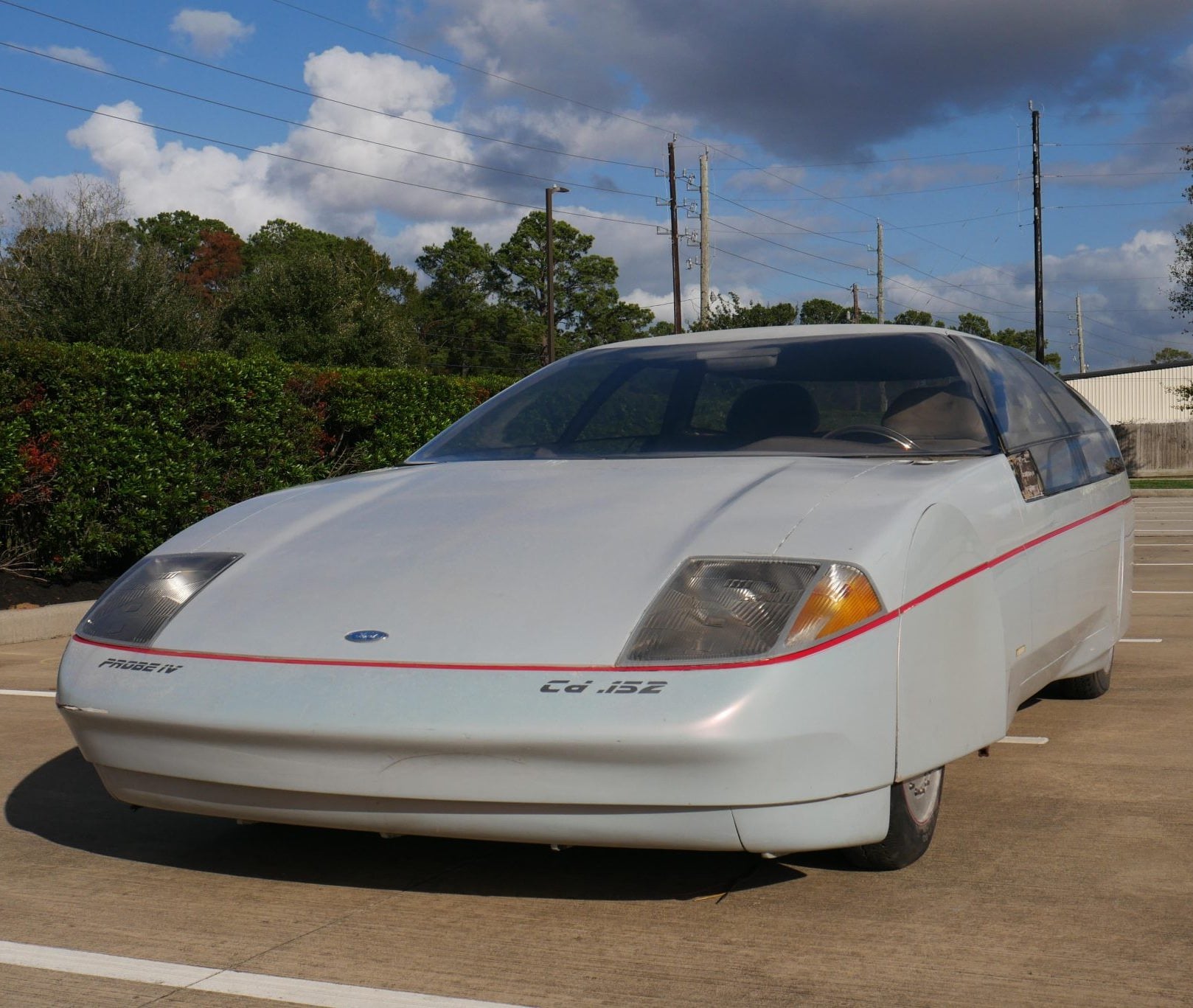
This is the original 1983 Ford Probe IV, it’s one of two examples built as the fourth in a series of five low-drag concept cars, all of which are described in detail above. This specific car was built as a static display and wind-tunnel model rather than a functional vehicle – as such it has no engine, transmission, drivetrain, brakes, or working steering.
The Probe IV is reported to have spent several years on display in the private collection of the owner of Gullo Ford in Conroe, Texas, before entering long-term storage. It resurfaced in 2024 and was acquired by the current seller.
It’s now being offered for sale as a rolling display piece in Spring, Texas, with a bill of sale. If you’d like to read more about it or register to bid you can visit the listing here.
Images courtesy of Bring a Trailer + Ford

Articles that Ben Branch has written have been covered on CNN, Popular Mechanics, Smithsonian Magazine, Road & Track Magazine, the official Pinterest blog, the official eBay Motors blog, BuzzFeed, Autoweek Magazine, Wired Magazine, Autoblog, Gear Patrol, Jalopnik, The Verge, and many more.
Silodrome was founded by Ben back in 2010, in the years since the site has grown to become a world leader in the alternative and vintage motoring sector, with well over a million monthly readers from around the world and many hundreds of thousands of followers on social media.