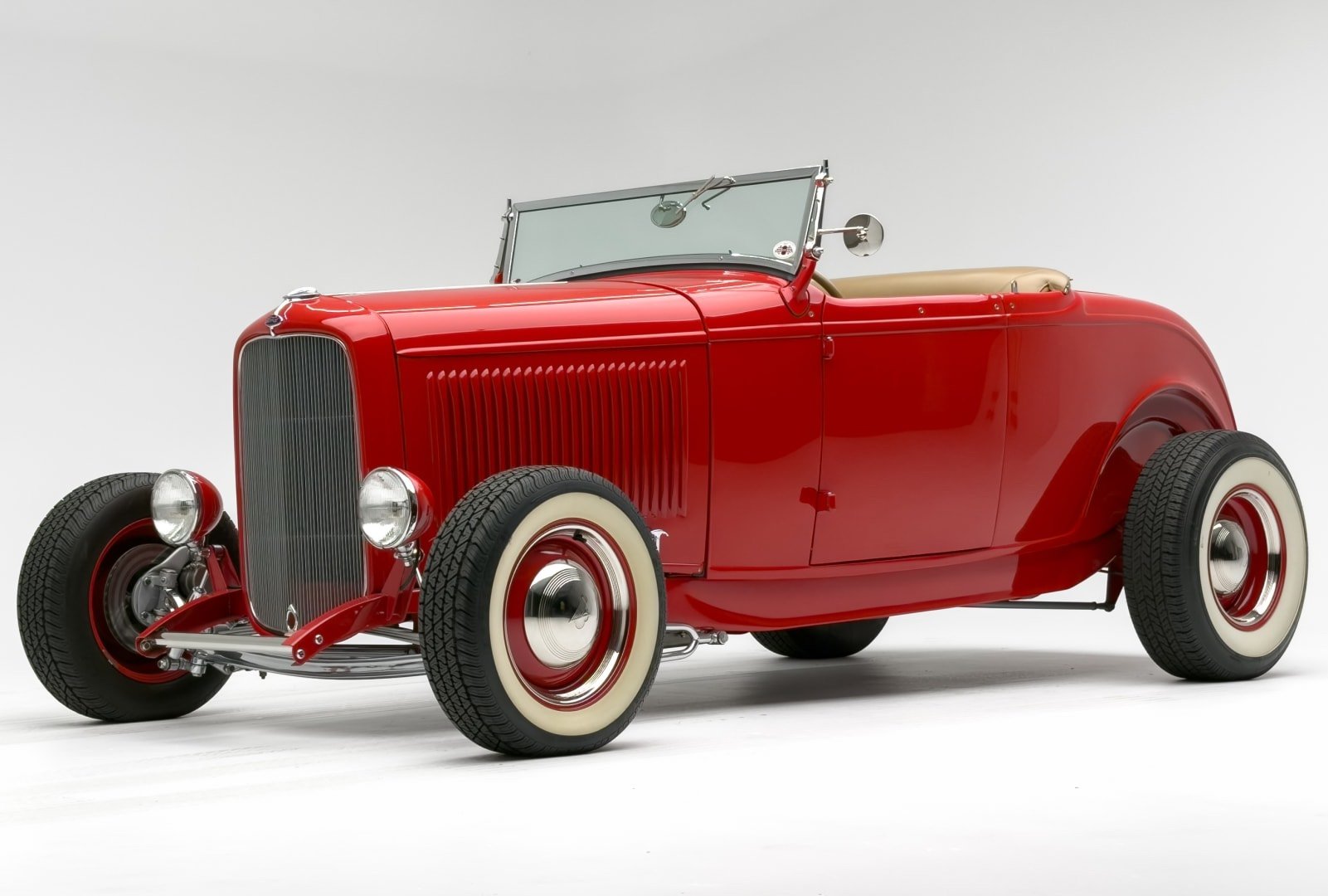
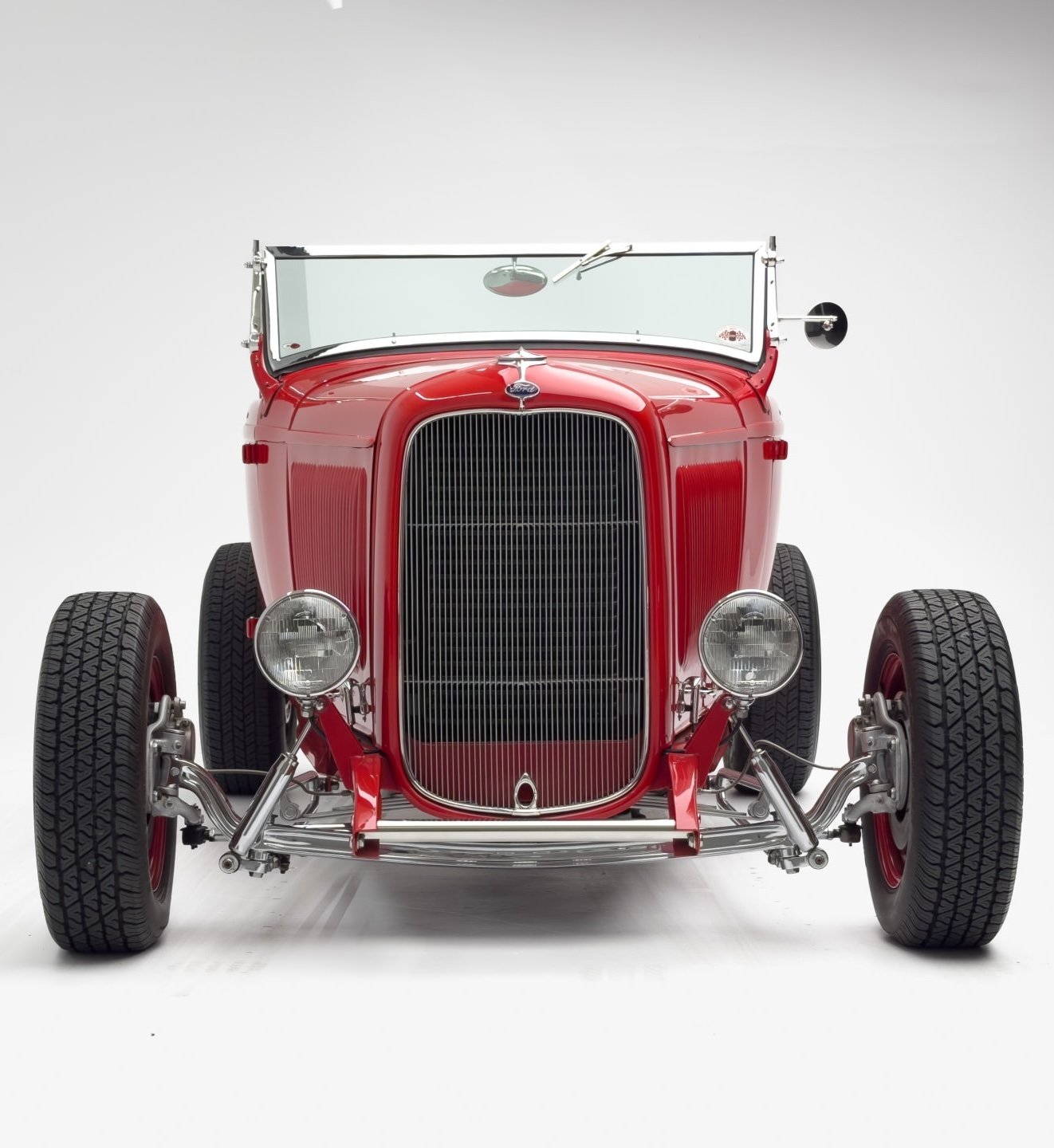
This is an original 1932 Ford Model B Hi-Boy Roadster built by the So-Cal Speed Shop in the style of the hot rods that began appearing in the mid-to-late 1950s.
This beautifully appointed ’32 Ford is powered by a Chevy 350 small block V8 crate engine, it rides on updated suspension and it has four-wheel disc brakes. It’s now being offered for sale out of the illustrious Petersen Automotive Museum collection in California.
Fast Facts: A 1932 Ford Model B Hi-Boy Roadster
- The vehicle is a 1932 Ford Model B Hi-Boy Roadster built by the So-Cal Speed Shop, styled after hot rods from the mid-to-late 1950s. It has a traditional fenderless body, period-correct proportions, and presentation-level detailing. The car is currently offered from the Petersen Automotive Museum collection in California.
- Power comes from a Chevrolet 350 cubic inch 5.7 liter small block V8 crate engine paired with an automatic transmission. The car runs updated suspension, four-wheel disc brakes, and modern running gear while retaining that classic hot rod styling.
- So-Cal Speed Shop was founded in 1946 by Alex Xydias in Burbank, California, initially operating as a speed parts retailer. The shop became central to postwar hot rodding, supporting racers, stocking early aftermarket components, and fielding successful competition cars. Its Bonneville efforts and record-setting streamliners brought in national recognition.
- The roadster shown here showcases the long-standing Ford and Chevrolet hybrid tradition common after the small block Chevy debuted. It includes coilover rear suspension, a dropped front axle, steel wheels with whitewalls, and a custom leather interior with rumble seat. The car is scheduled for auction with Mecum as part of the Petersen collection.
History Speedrun: The So-Cal Speed Shop
The So-Cal Speed Shop was founded on March the 3rd, 1946, the same day its founder Alex Xydias was honorably discharged from the U.S. Army Air Forces. Fresh out of uniform and short on capital but long on ideas, Xydias opened a small parts-only storefront in Burbank, California, at a time when Southern California’s returning servicemen were transforming surplus equipment and prewar Fords into something much faster, leaner, and more exciting.
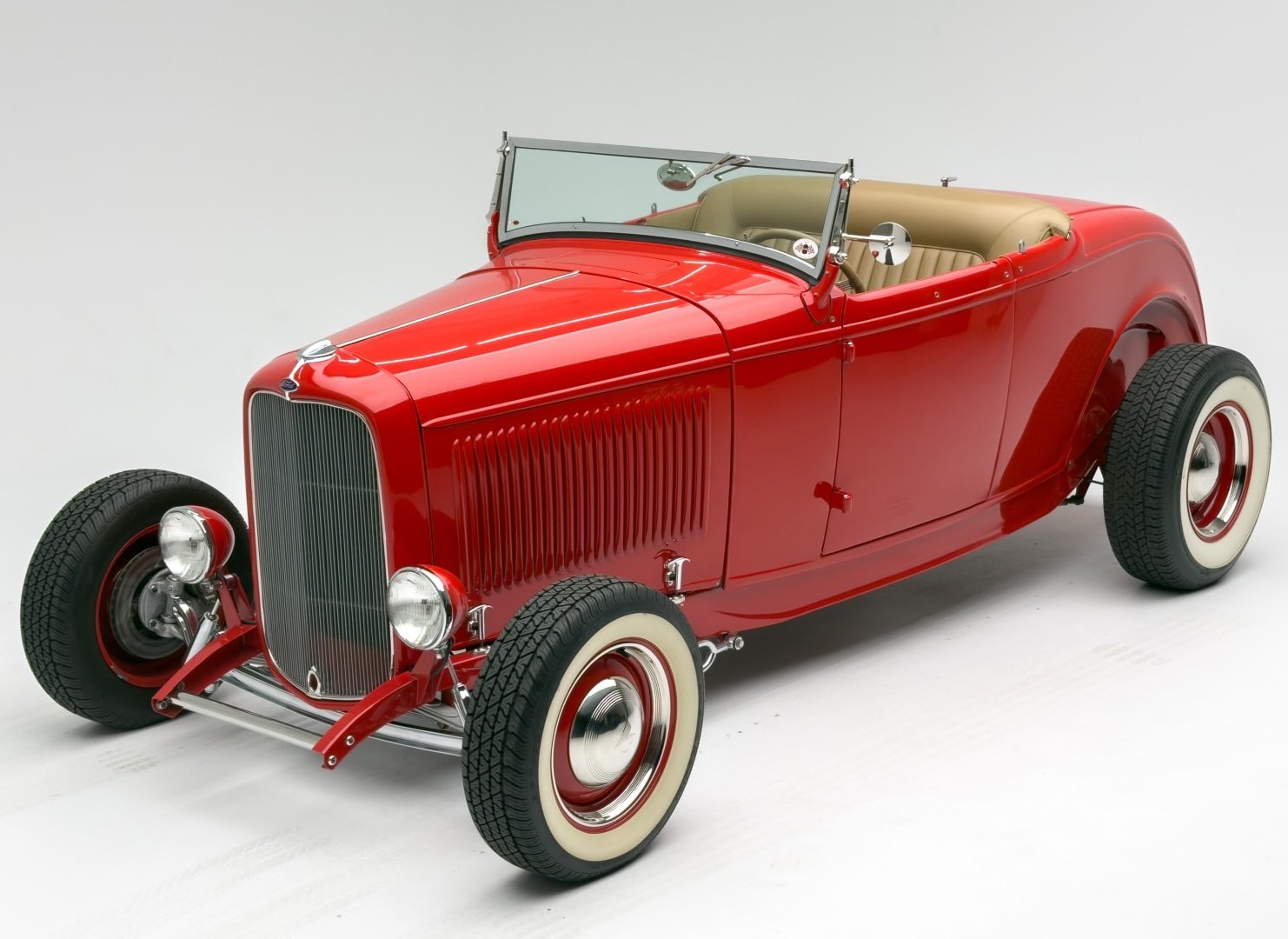
 This is an original 1932 Ford Model B Hi-Boy Roadster built by the So-Cal Speed Shop in the style of the hot rods that began appearing in the mid-to-late 1950s.
Xydias’ decision to sell speed parts only, rather than operate a full-service garage, proved prescient – So-Cal became a hub for racers and builders who already knew how to wrench but needed access to the right hardware.
The shop began on Olive Avenue in Burbank before moving to 1104 South Victory Boulevard, a larger site that would become synonymous with postwar hot rodding. From these early modest storefronts Xydias helped professionalize a scene that had previously been informal and scattered. He stocked the emerging aftermarket brands, supported racers directly with sponsorship and parts, and built a reputation around results – rather than just advertising hype.
Those results would come quickly. So-Cal’s race cars were fixtures at the Bonneville Salt Flats, where the team experimented with belly tank lakesters built from surplus aircraft drop tanks. The Edelbrock-powered So-Cal Special made headlines in the late 1940s by becoming the first Flathead Ford-based streamliner to pass the 200 mph mark, earning national attention and a cover spot in Hot Rod magazine.
By the early 1950s, So-Cal drivers and cars were setting records with regularity, and the team was voted the top racing outfit in the country by Mechanix Illustrated in 1952.
By the end of the decade, the hot rod world was changing. Overhead valve V8s displaced the side valve Flathead, tastes shifted, and the economics of the speed parts business grew tougher.
In 1961, following the departure of longtime associate Keith Baldwin, Xydias closed the original So-Cal Speed Shop. Though it’s important to note that his influence didn’t stop there – he remained active in automotive publishing and helped shape early industry trade shows that would later evolve into SEMA.
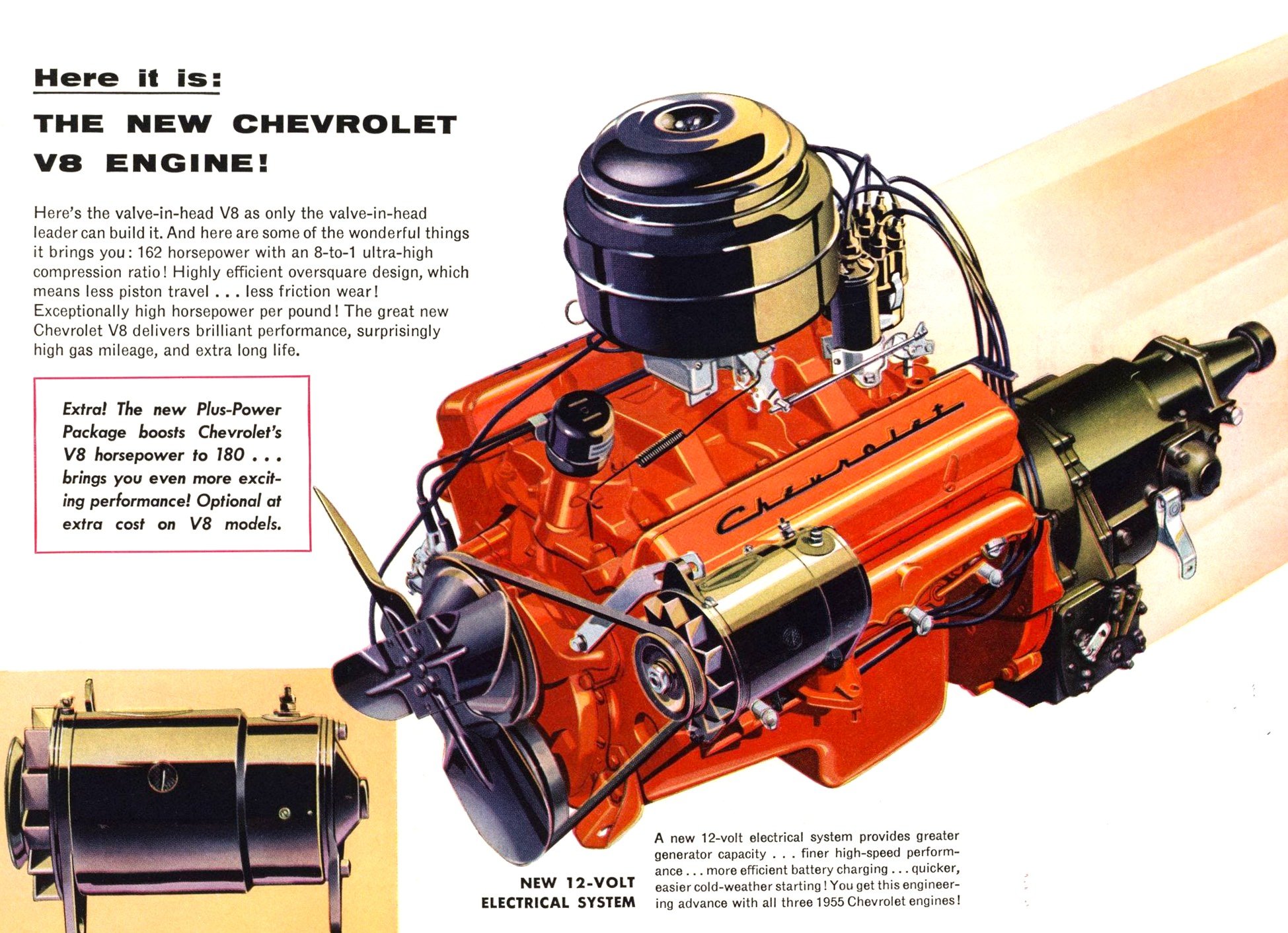
The arrival of the Chevrolet small block V8 in the mid-1950s, with its more modern design including overhead valves, would revolutionize the hot rodding world. Image courtesy of General Motors.
The So-Cal name returned in 1997 when Xydias partnered with builder Pete Chapouris to revive the brand. The modern incarnation respected its roots, producing traditional-style chassis, speed equipment, and complete builds while keeping the visual language of postwar hot rodding alive. Nearly eight decades after its founding, So-Cal Speed Shop today remains one of the defining institutions of American hot rod culture.
The So-Cal Speed Shop 1932 Ford Model B Shown Here
The hot rod you see here was built by the team at the So-Cal Speed Shop, it’s a great example of a 1950s hot rod, using a classic 1932 Ford Roadster chassis and body, but with the more modern (and more powerful) 350 small block Chevy V8 under the hood.
These Ford/Chevy hybrid hot rods were controversial back in the day, but once the small block Chevy V8 debuted in the mid-1950s and showed just how much power it could produce, the days of the Ford Flathead V8 were numbered. Many ’32 Ford hot rod owners swapped out their Flathead for a small block, and they reaped the benefits down the 1/4 mile as a result.
This car has a few other nods to modernity, it’s fitted with four-wheel disc brakes and the rear axle now rides on adjustable rear coilovers rather than leaf springs. It has a custom brown leather interior, a Kenwood stereo with speakers and a rear rumble seat.
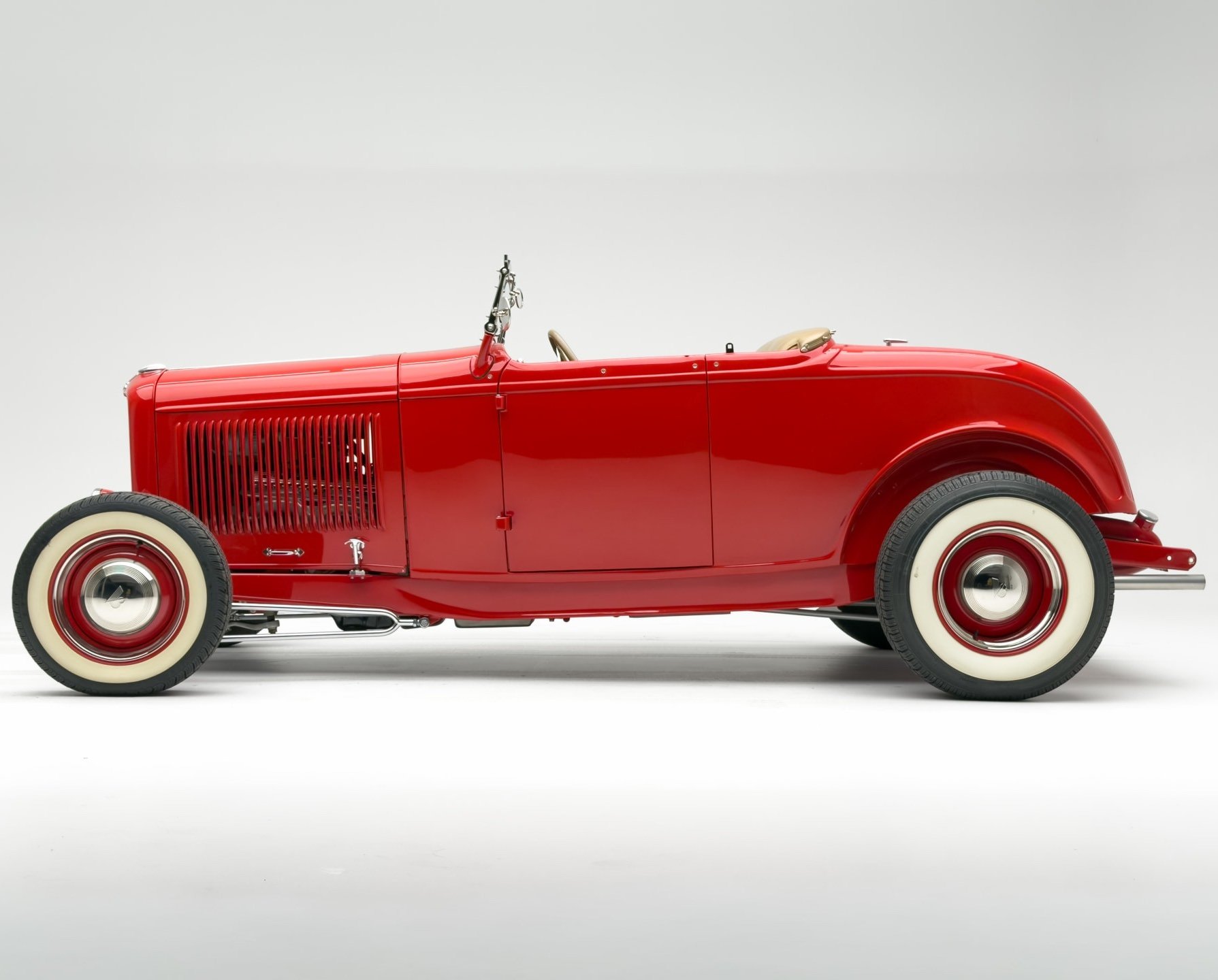
The hot rod you see here was built by the team at the So-Cal Speed Shop, it’s a great example of a 1950s hot rod, using a classic 1932 Ford Roadster chassis and body, but with the more modern (and more powerful) 350 small block Chevy V8 under the hood.
It rides on red steel wheels with chrome hub caps and white wall tires, and it has a front drop axle with chromed tubular shock absorbers. The V8 is a Chevrolet 350 cubic inch (5.7 liter) small block crate engine which is now topped with a Holley Performer intake and a Weber carburetor, and power is sent back through an automatic transmission.
This car is now due to roll across the auction block with Mecum in March as part of the Petersen Automotive Collection, and you can visit the listing here if you’d like to read more about it or register to bid.
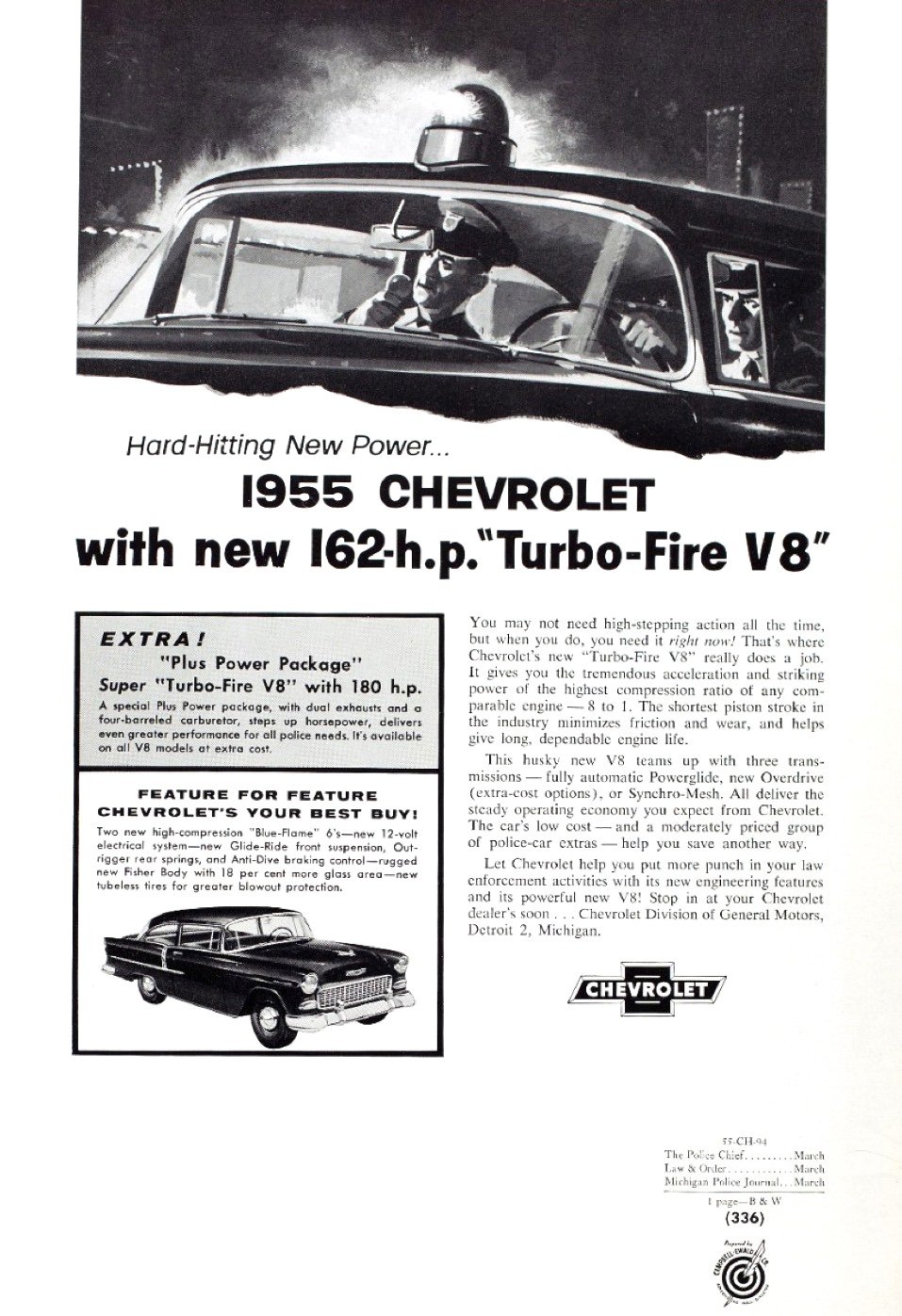
it wasn’t just hot rods that made use of the new Chevrolet small block V8s, police departments began using them too – they had to if they wanted any hope of catching them. Image courtesy of General Motors.
Images courtesy of Mecum + The So-Cal Speed Shop
Articles that Ben Branch has written have been covered on CNN, Popular Mechanics, Smithsonian Magazine, Road & Track Magazine, the official Pinterest blog, the official eBay Motors blog, BuzzFeed, Autoweek Magazine, Wired Magazine, Autoblog, Gear Patrol, Jalopnik, The Verge, and many more.
Silodrome was founded by Ben back in 2010, in the years since the site has grown to become a world leader in the alternative and vintage motoring sector, with well over a million monthly readers from around the world and many hundreds of thousands of followers on social media.