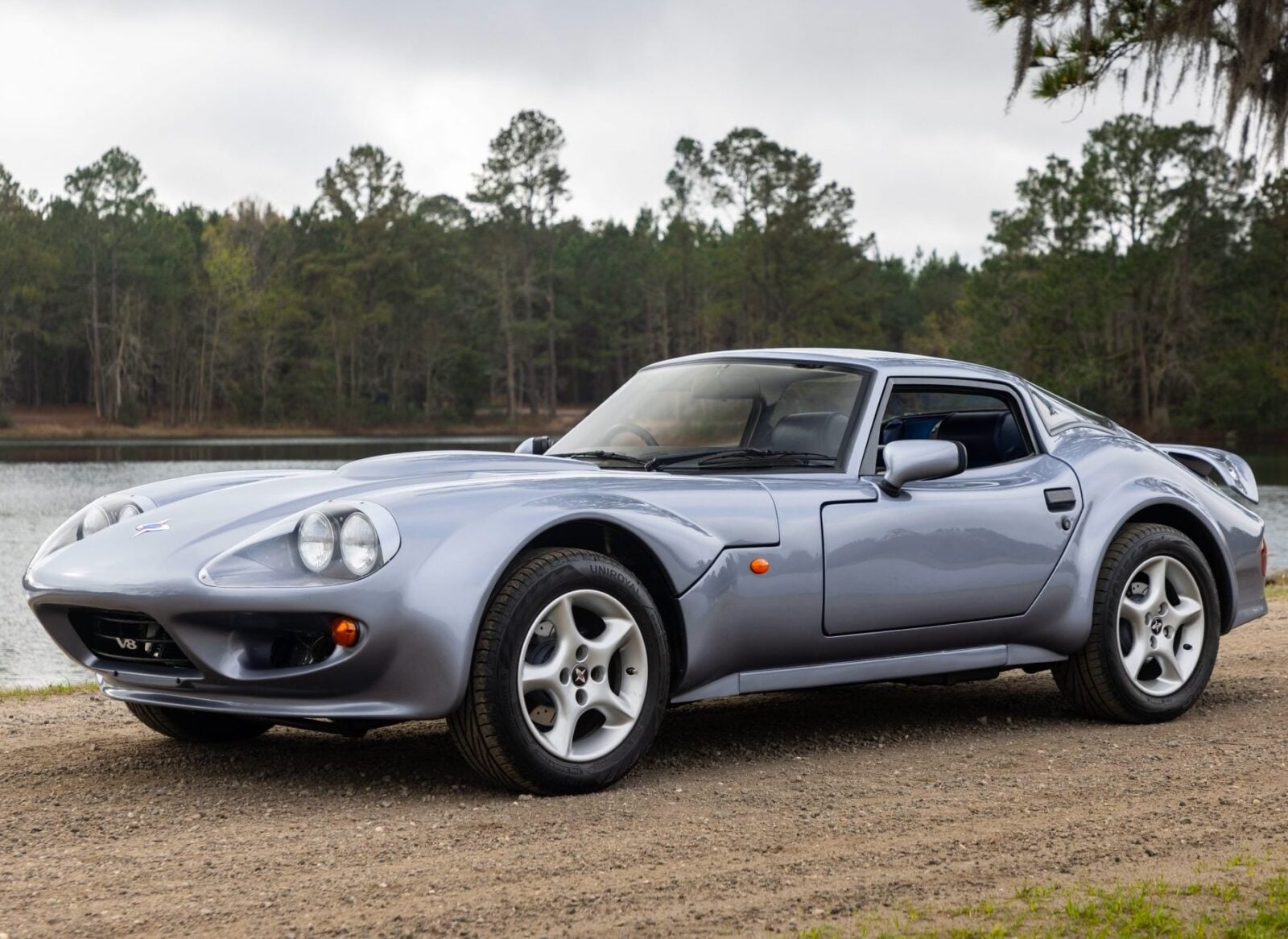
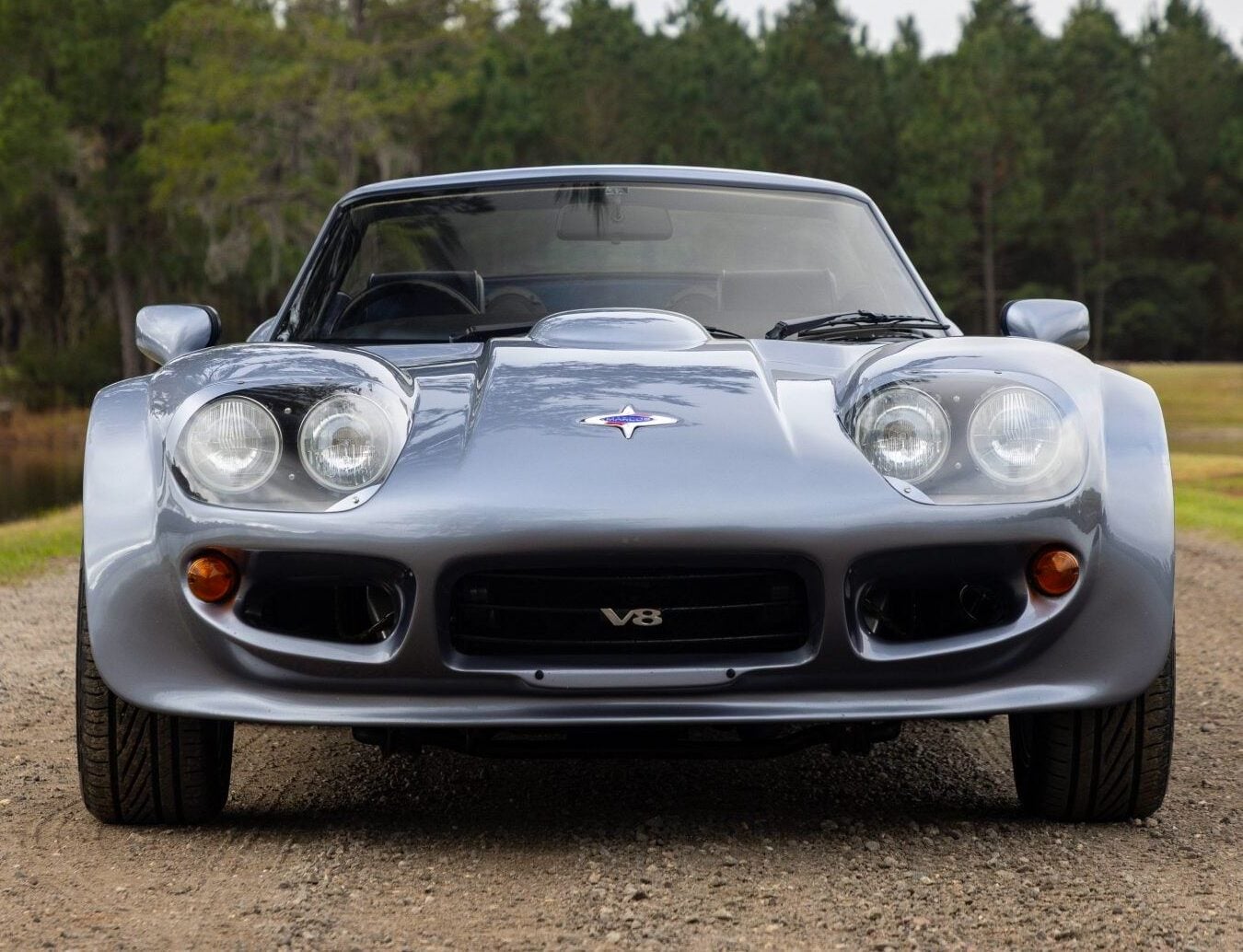
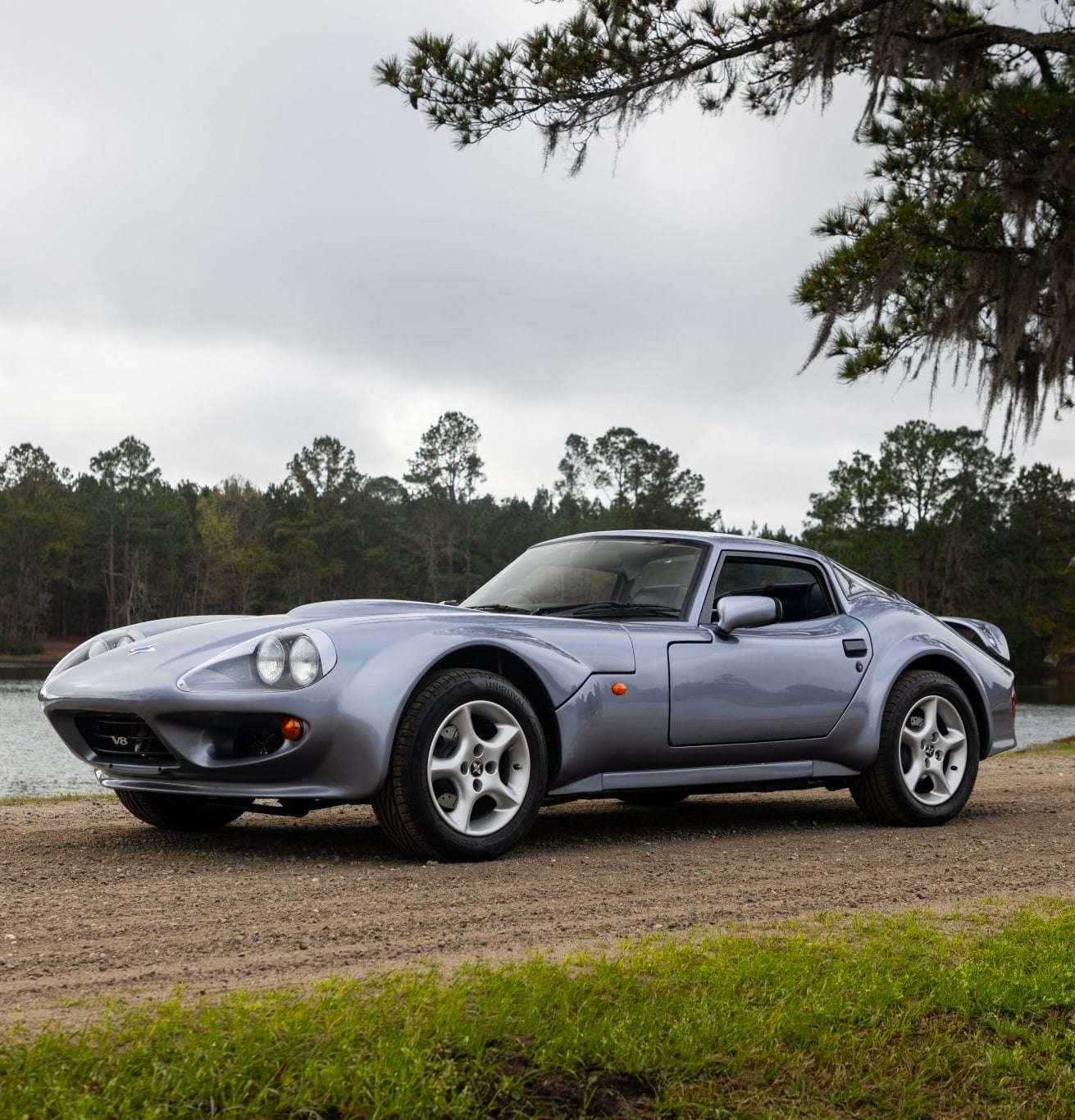
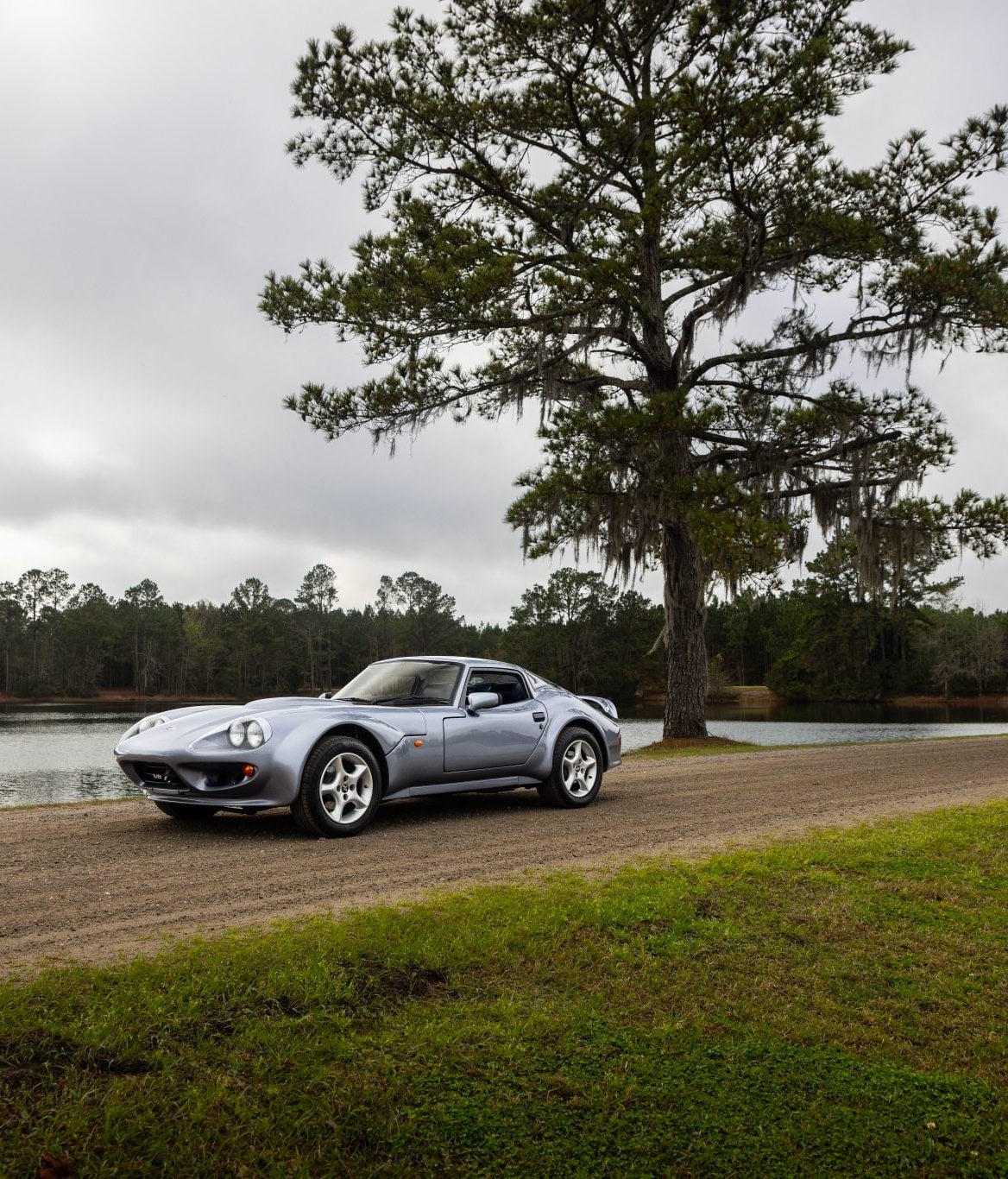
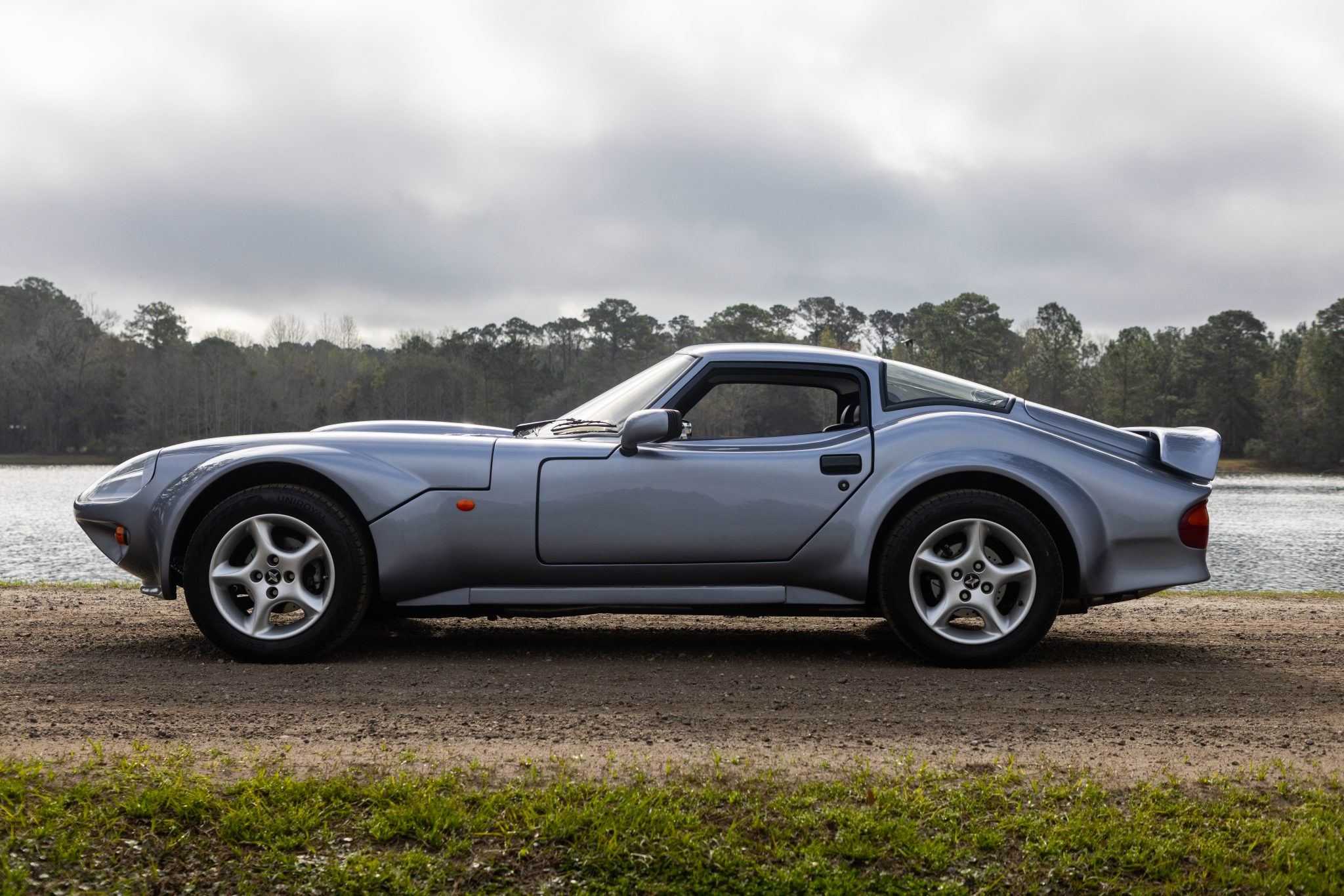
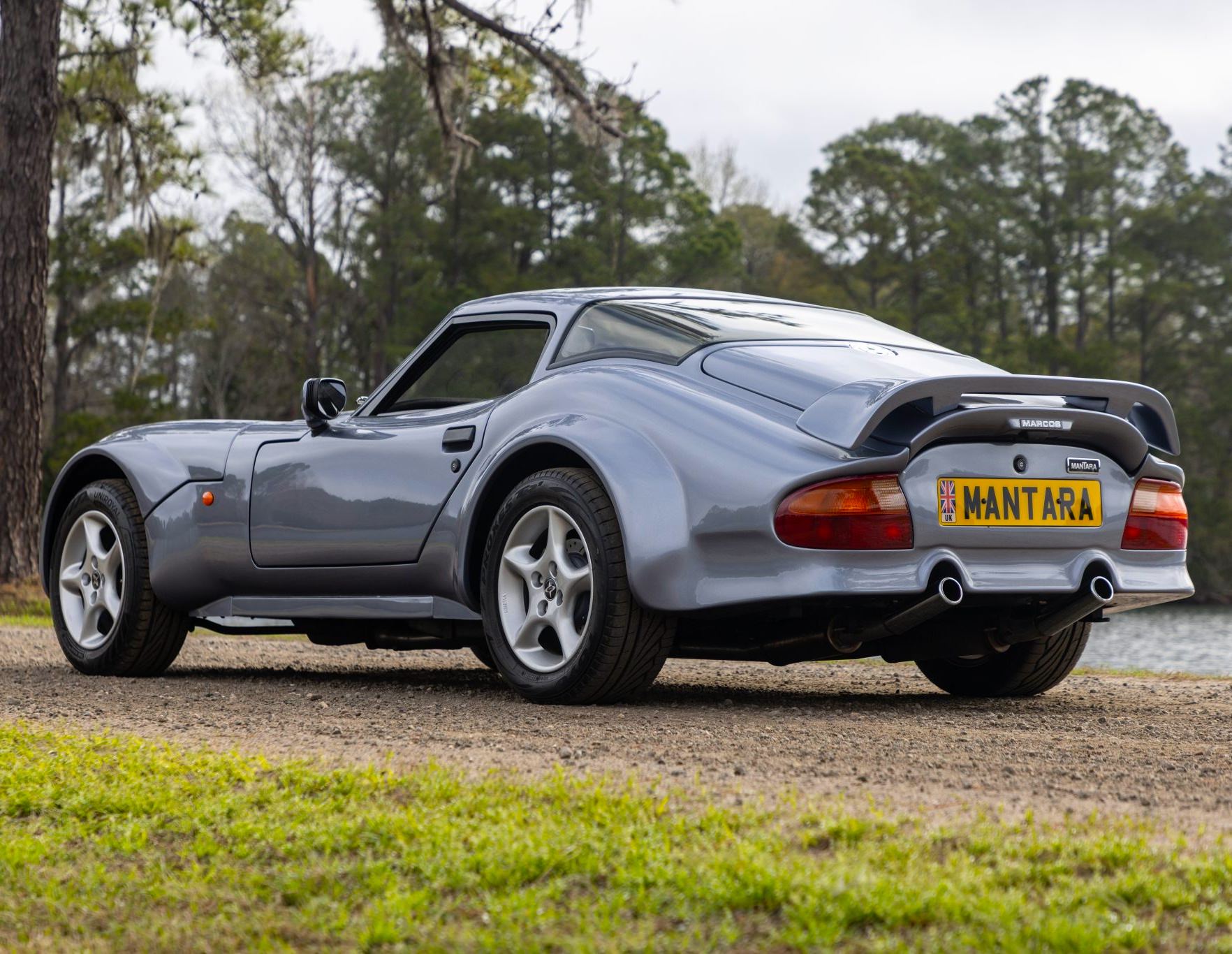
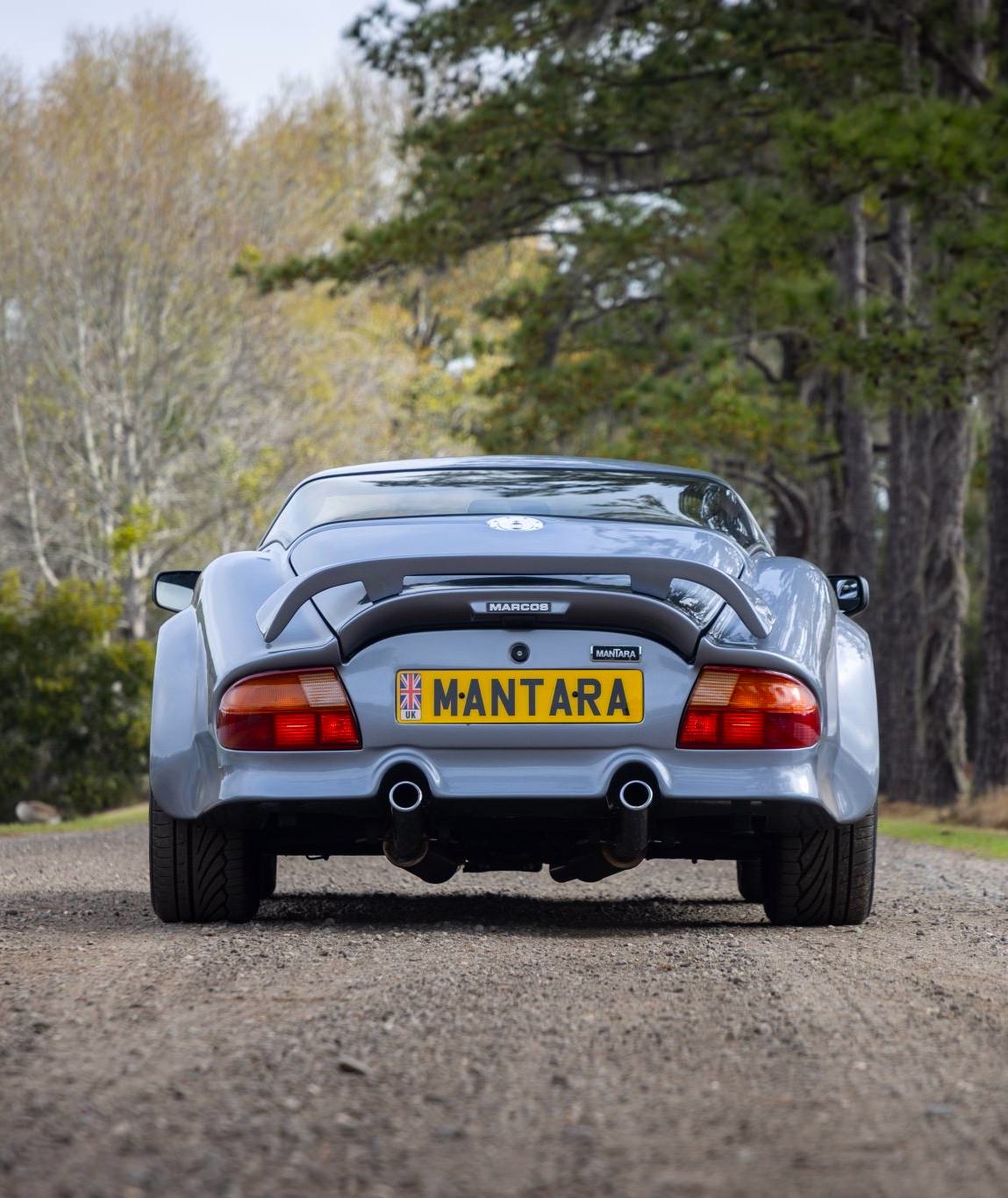
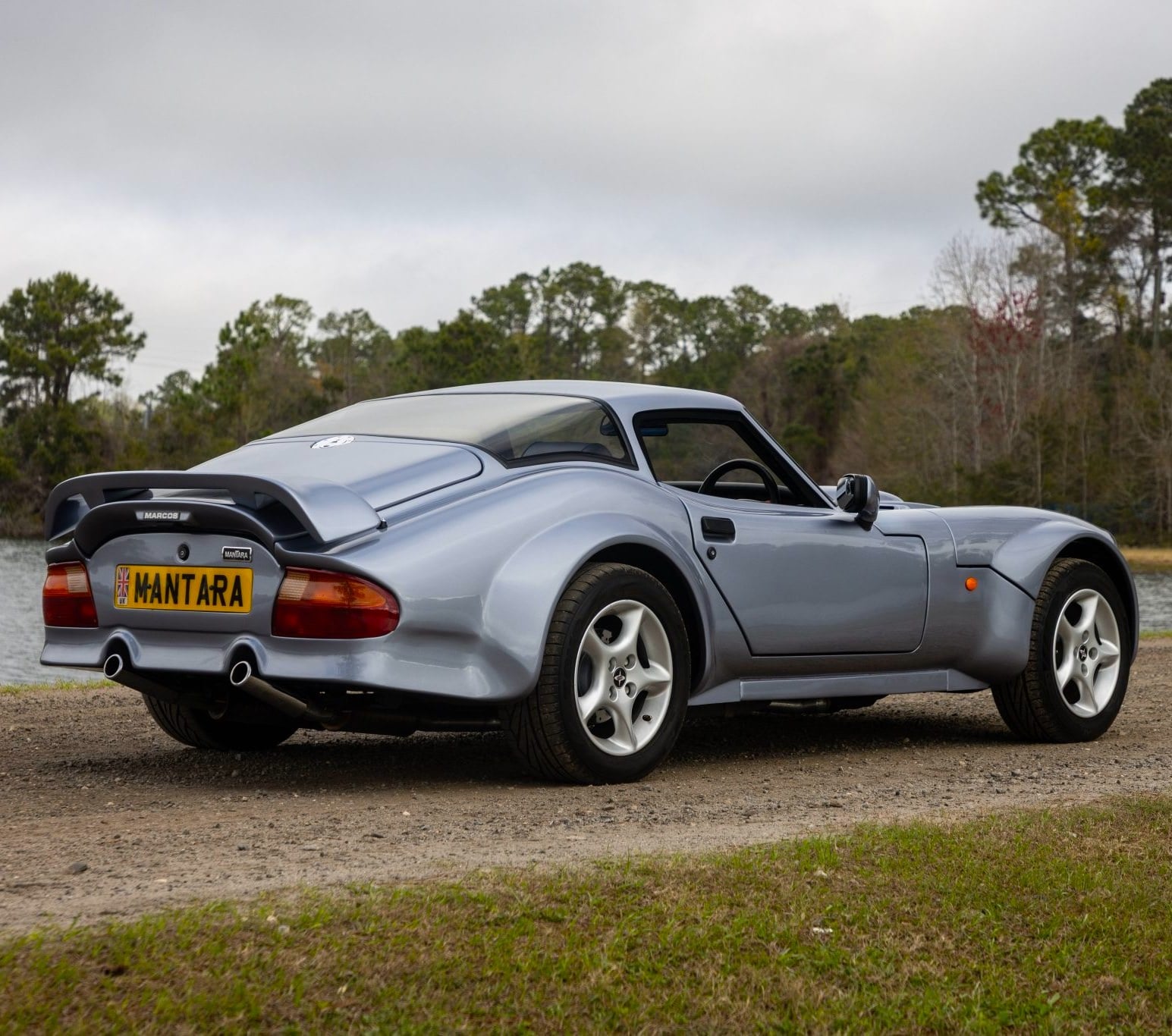
This is a rare, original Marcos Mantara 400 from 1996. It’s a little-known British sports car with a 3.9 liter V8, a tubular steel chassis, independent four-wheel suspension, four-wheel disc brakes, a fiberglass body, and a curb weight of just 2,370 lbs.
The cars built by Marcos were period competitors for fellow low-volume British automakers like Lotus, TVR, and Morgan. Marcos vehicles always had distinctive looks and unusual engineering, and they suited people who wanted something quick, fun, and completely unlike anything in mass-production.
Fast Facts: The Marcos Mantara 400
- The Marcos Mantara 400 was a rare, handbuilt British sports car powered by a 3.9 liter Rover V8. It used a fiberglass body over a steel spaceframe chassis, with independent suspension, four-wheel disc brakes, and very low curb weight, giving it excellent performance in an unusual-looking package.
- Marcos was founded in 1959 by Jem Marsh and Frank Costin, with the company name drawn from the first three letter of each of their surnames. Early cars were known for their unusual engineering, including plywood chassis. By the 1980s the Rover V8-powered Mantula revived the marque and directly led to the later Mantara.
- Introduced in 1992, the Mantara marked Marcos’s move away from kit cars toward fully factory-built production. It had updated front suspension, a revised chassis, improved bodywork, and a more modernized cabin. Variants included the 3.9 liter Mantara 400, 4.6 liter Mantara 450, and the Italian-market turbo GTS.
- The featured car is a 1996 Mantara 400 finished in silver over blue, now in the United States after import from the UK. It has received extensive mechanical updates, air conditioning work, and cosmetic care, and comes with records, books, tools, awards, and a clean Georgia title.
History Speedrun: The Marcos Mantara 400
The name Marcos famously comes from the surnames of the company’s two founders, engineer Jem Marsh and aerodynamicist Frank Costin, who established the firm in Dolgellau, North Wales, in 1959. Costin had previously worked on the de Havilland Mosquito during the Second World War, and he brought lessons learned from that plywood fighter-bomber directly into the world of automotive engineering.
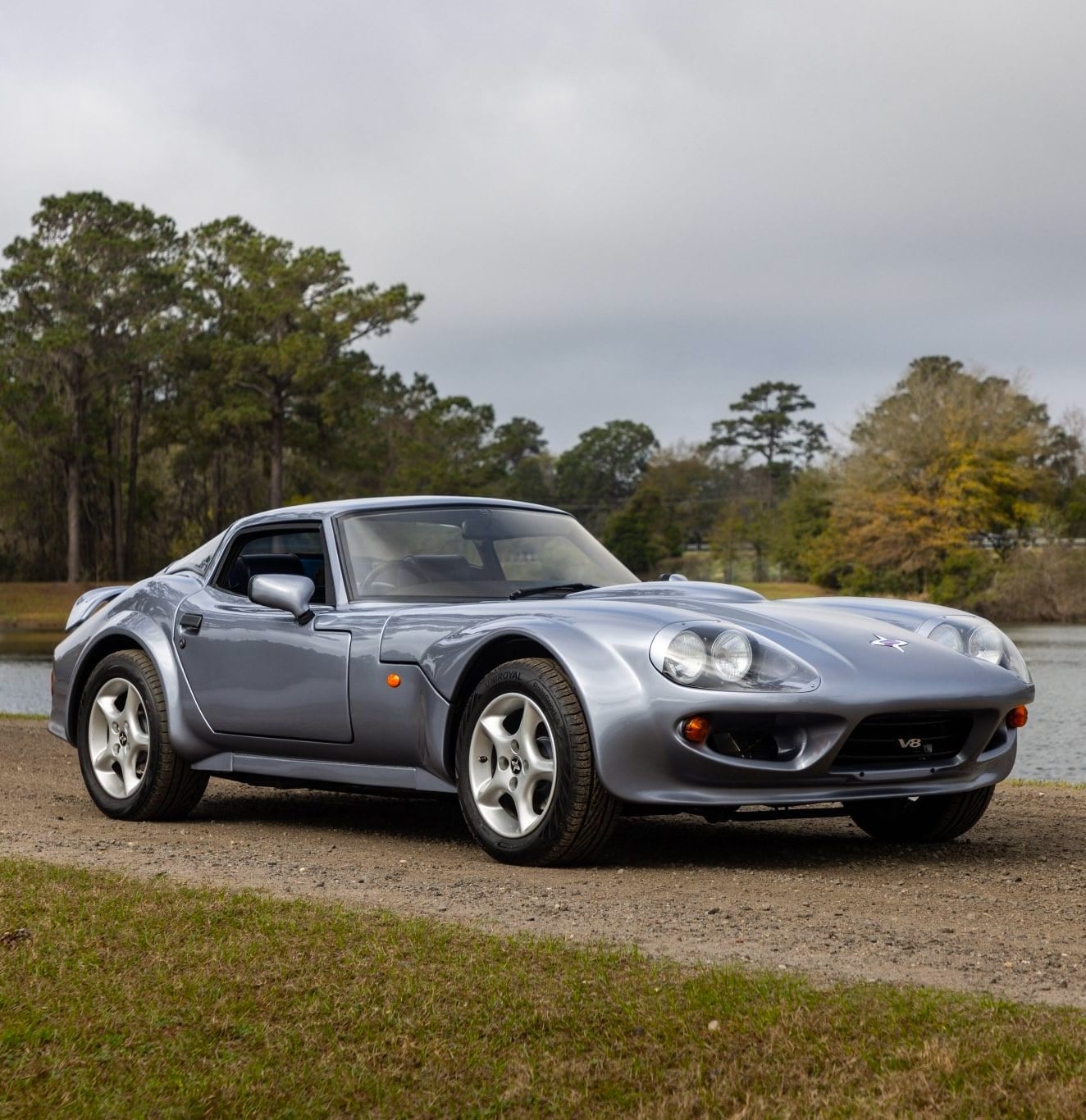
 This is a rare, original Marcos Mantara 400 from 1996. It’s a little-known British sports car with a 3.9 liter V8, a tubular steel chassis, independent four-wheel suspension, four-wheel disc brakes, a fiberglass body, and a curb weight of just 2,370 lbs.
The earliest Marcos cars used semi-monocoque chassis made from laminated marine plywood, it was lightweight, stiff, and inexpensive to produce, though time-consuming to assemble. These early models, including the Xylon, the Luton Gullwing, and the 1800 GT, established Marcos as a credible alternative to the likes of Lotus, TVR, and Morgan in the British specialist sports car market.
By the late 1960s the company had transitioned to steel chassis, and in the 1980s Jem Marsh revived the brand with the Rover V8-powered Mantula, introduced in 1983, which kept the classic Dennis Adams-penned silhouette alive and set the stage for the car that would follow it – the Mantara.
The Mantara Arrives On The Scene
Launched at the NEC Motor Show in late 1992, the Marcos Mantara represented a significant evolution of the company’s long-running GT car formula. It was the first Marcos to be offered exclusively as a factory-built car rather than a kit car, marking the end of the marque’s component-car era and following in the footsteps of Lotus and TVR who had made similar decisions, though much earlier on.
This shift from kits to turnkey cars was enabled by the arrival of the UK’s Limited Vehicle Type Approval (LVTA) regulations in 1993, which allowed low-volume manufacturers to build up to 500 cars annually without the prohibitive cost of full crash-test certification. This legislation was a lifeline for the legendary British “garagiste” culture, and ensured the survival of a number of smaller manufacturers.
Computacenter co-founder Philip Hulme, who had acquired a majority stake in Marcos in 1991, drove the company’s push toward legitimacy as a proper manufacturer, seeking to compete directly with Morgan and TVR in particular.
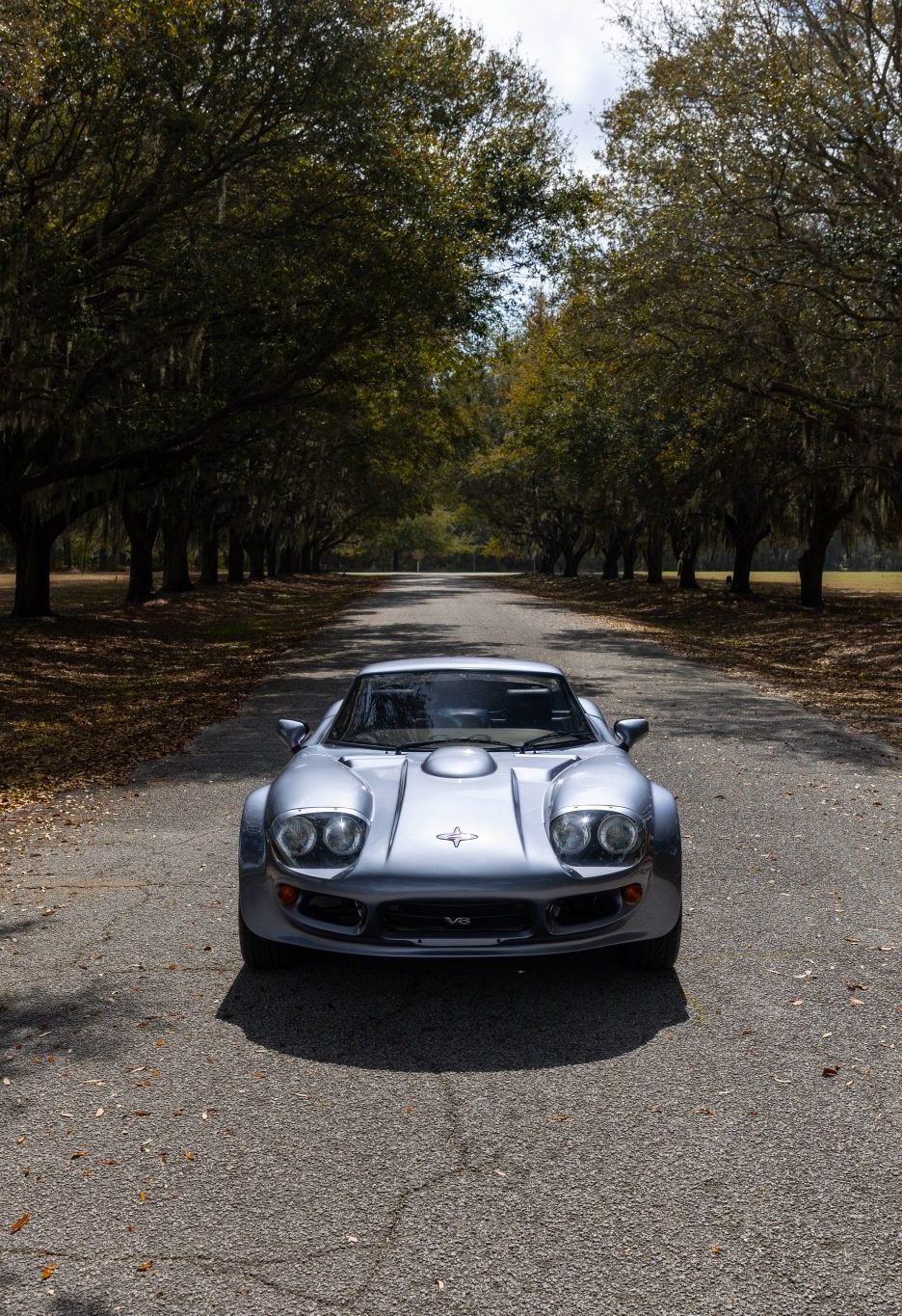
The cars built by Marcos were period competitors for fellow low-volume British automakers like Lotus, TVR, and Morgan. Marcos vehicles always had distinctive looks and unusual engineering, and they suited people who wanted something quick, fun, and completely unlike anything in mass-production.
Marcos Mantara Specifications
The most significant mechanical change from the outgoing Mantula was the adoption of MacPherson strut front suspension, replacing the by-then archaic Triumph-sourced setup that had become increasingly difficult to source. The new system used Ford Sierra-derived front knuckle assemblies, incorporating a MacPherson strut damper, coil spring, and an anti-roll bar.
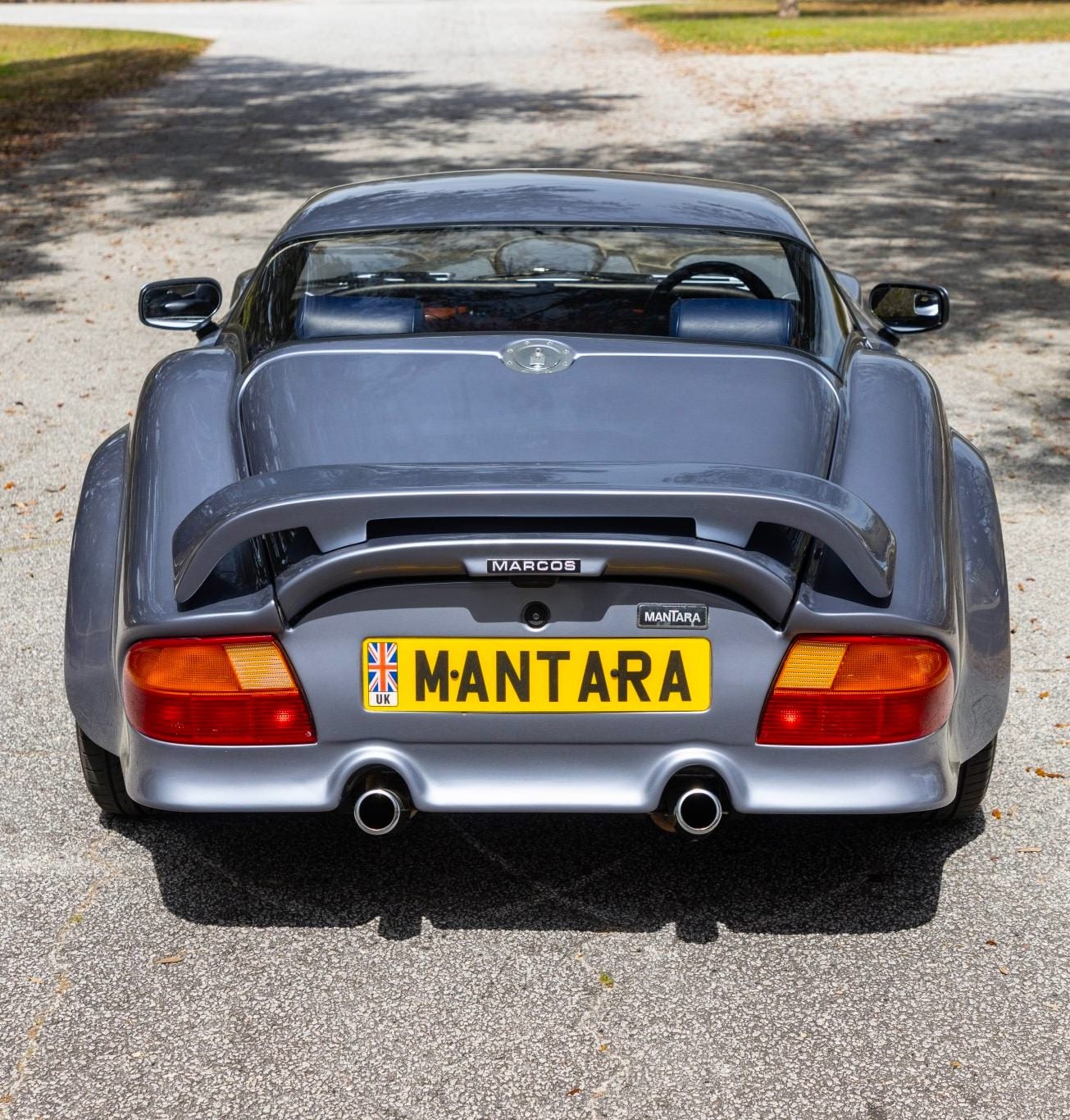
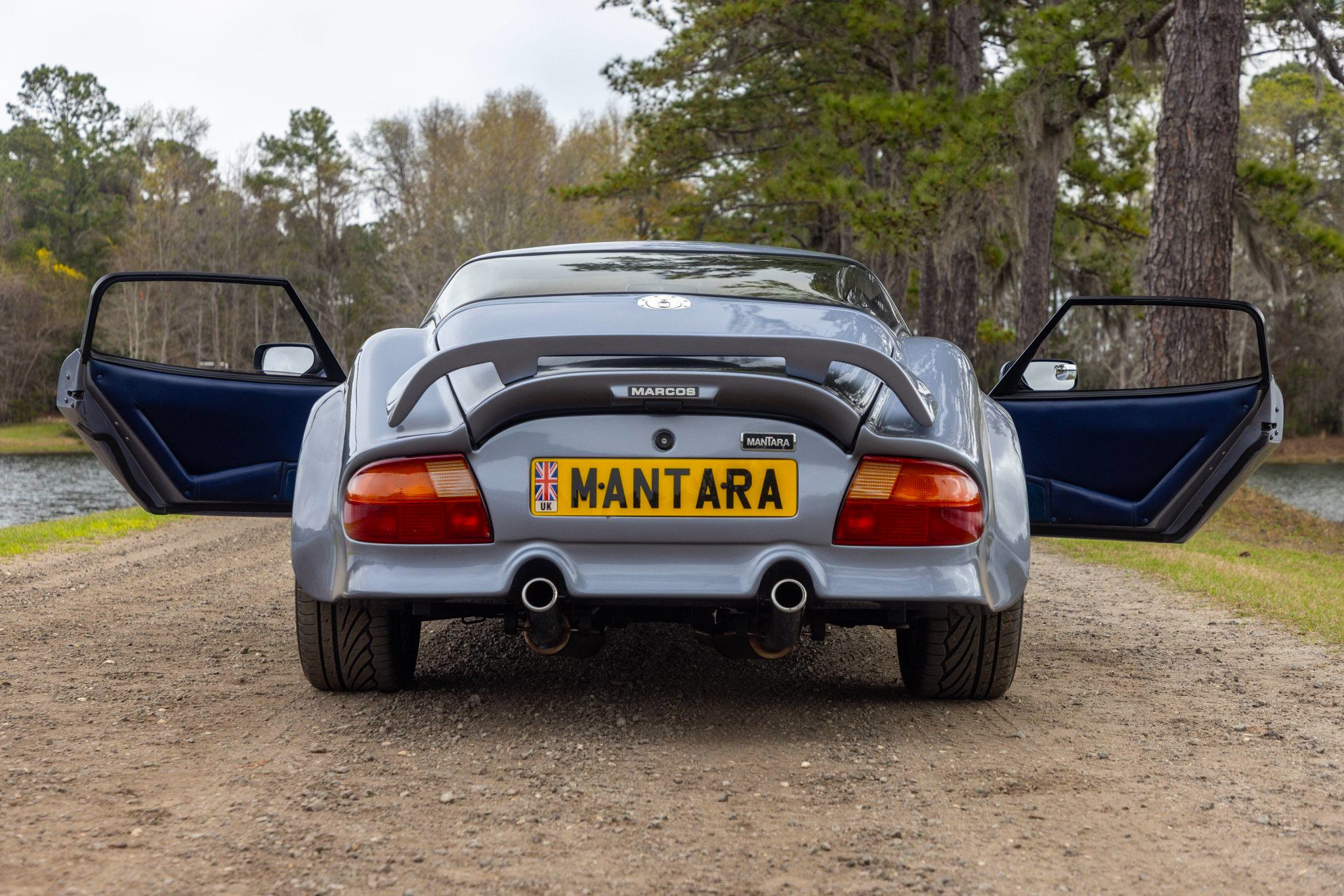
At the rear, the car retained independent double wishbones with coil springs and telescopic dampers. The wider front track necessitated a new hood (bonnet) profile and flared front wheelarches, while the rear arches and tail lights were also restyled in an effort to modernize the car’s appearance. Power steering was offered on a Marcos for the first time, though it remained an option rather than standard equipment, and it wasn’t a popular choice for the purists.
Underneath the lightweight fiberglass body sat the familiar Marcos steel spaceframe chassis, though this too was refined over time. In 1995, the company streamlined production by replacing the fiberglass footwells with steel sections integrated into the chassis, swapping the wooden dashboard supports for steel, and simplifying the door frames by removing the quarter lights in favor of a single-piece drop-glass window.
The standard Mantara engine was a 3.9 liter fuel-injected Rover V8 producing 190 bhp at 4,750 rpm and 235 lb ft of torque, managed by a Lucas 14CUX hot-wire engine management system and paired with a 5-speed manual gearbox.
Marcos claimed a 0 to 60 mph time of 5.4 seconds and a top speed of 140 mph, impressive figures given the car’s kerb weight of just 1,020 kgs (2,248 lbs). A 4.6 liter Rover V8 was available as an option, producing 230 bhp, and a small number of late-production cars were fitted with a 5.0 litre NCK-built engine and sports pack rated at a claimed 320 bhp. Cars equipped with the 3.9 liter engine were commonly referred to as the Mantara 400, while those with the 4.6 liter unit were known as the Mantara 450.
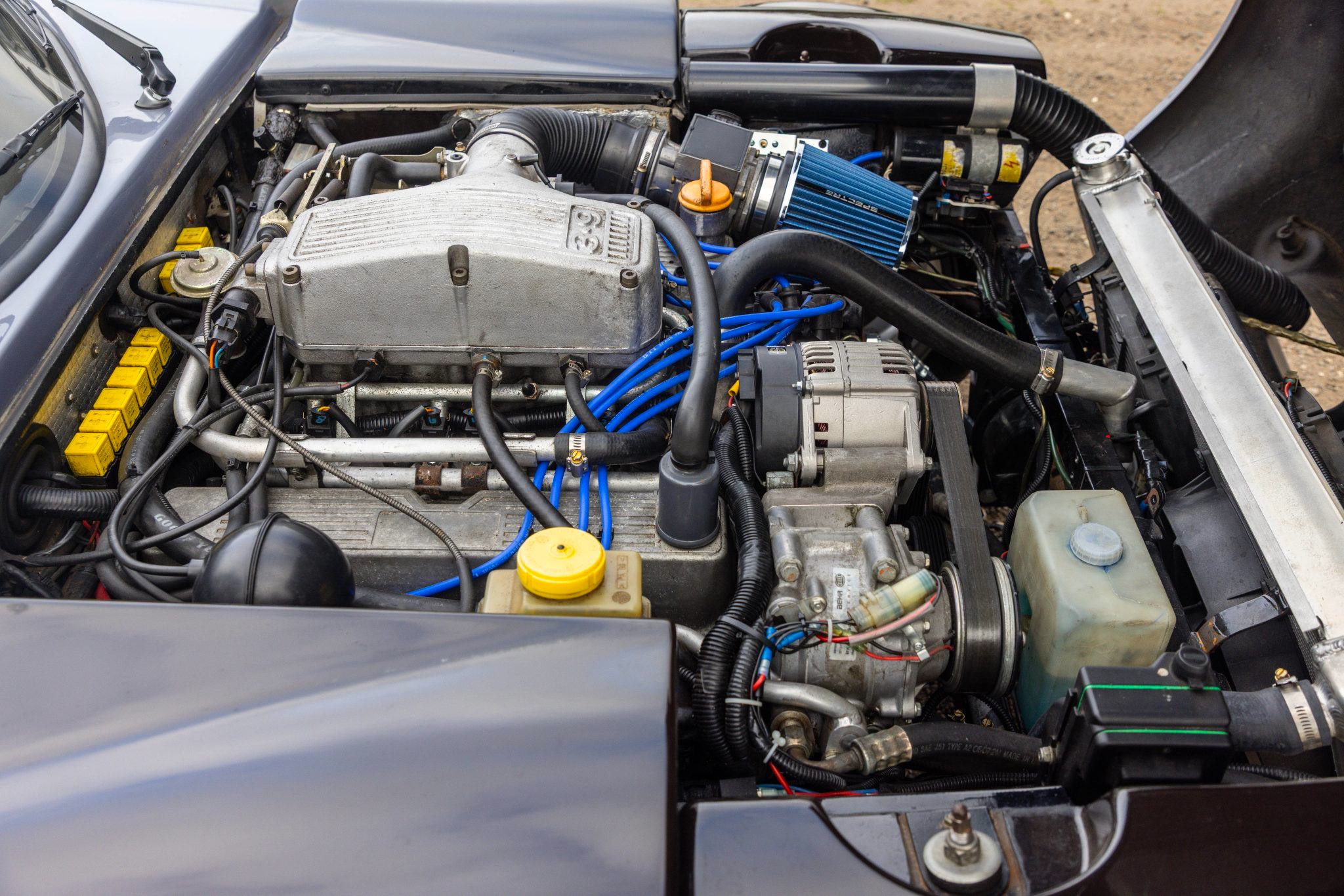
Under the clamshell hood sits a fuel-injected 3.9 liter Rover V8 with cross-bolted main bearings and an aluminum intake plenum, paired with a 5-speed manual transmission driving the rear wheels.
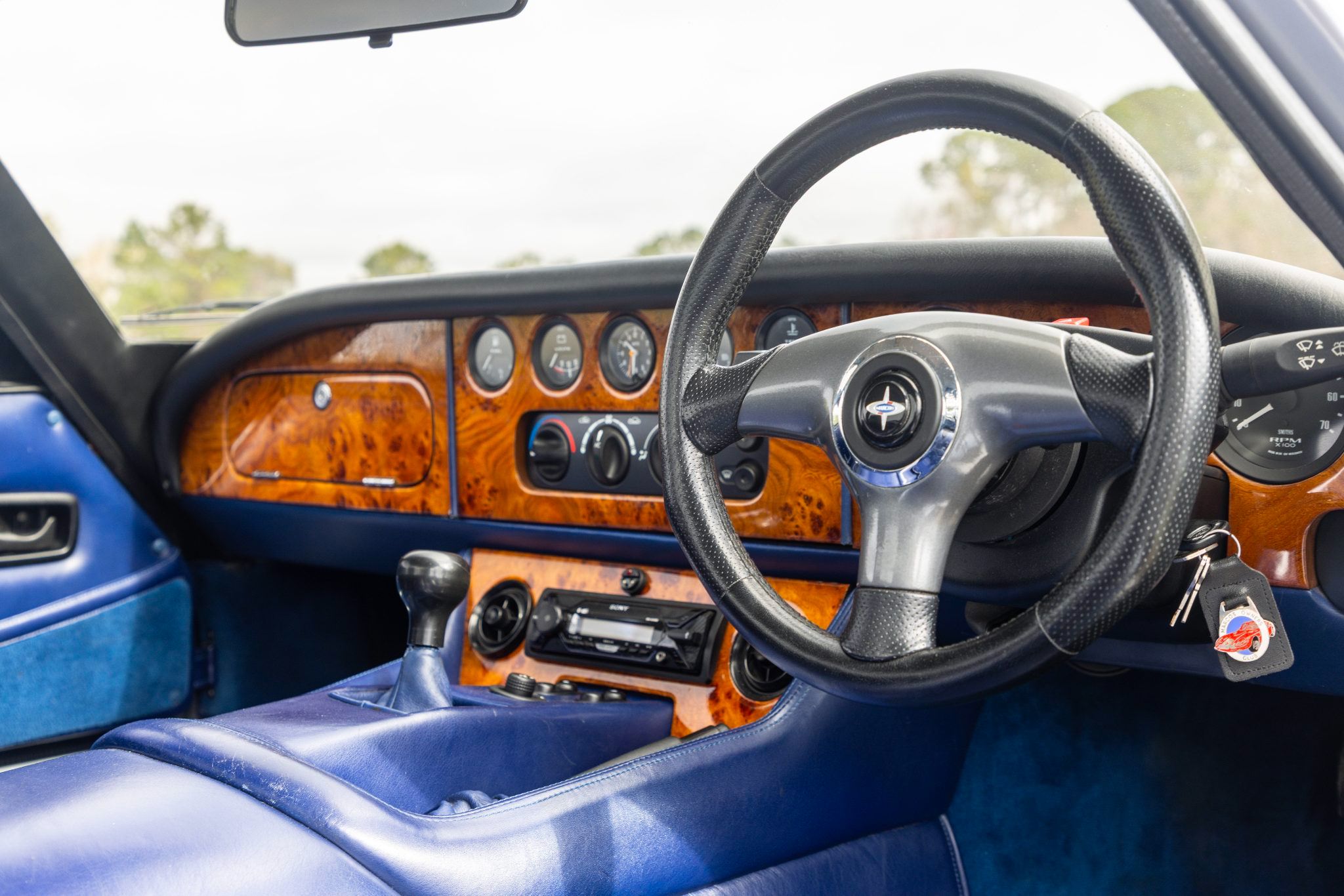
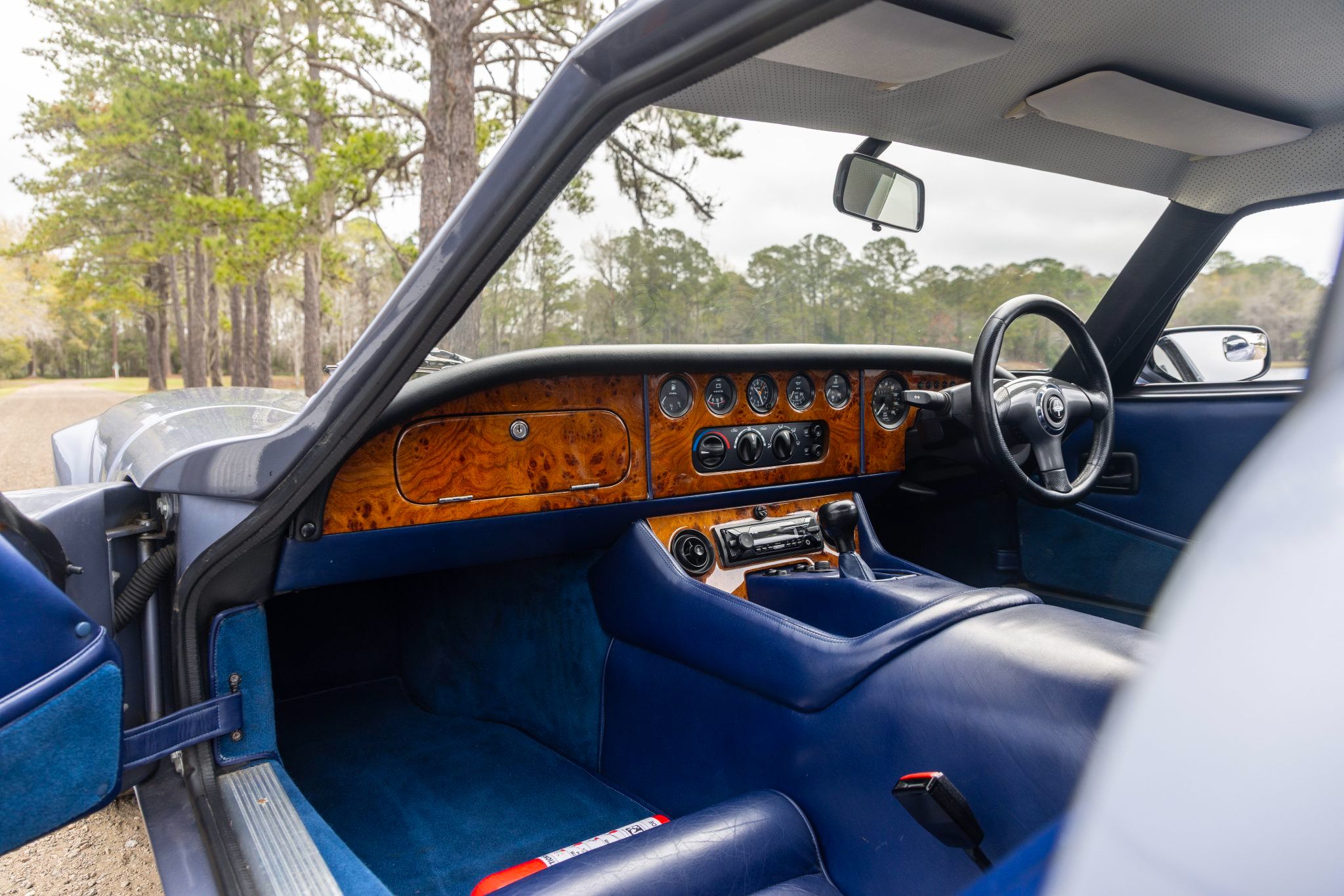
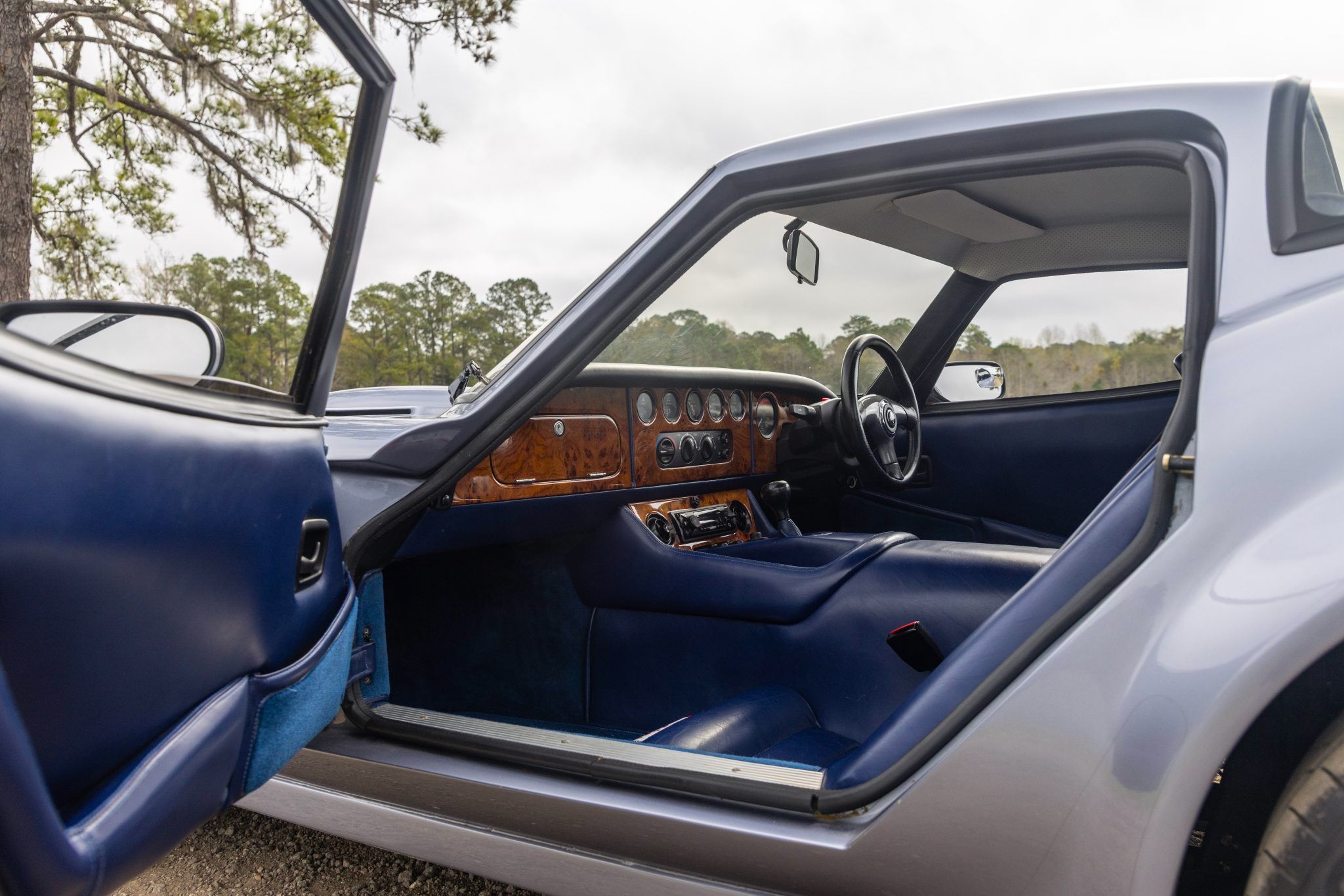
The cabin combined traditional British sports car materials, like leather upholstery, Wilton carpet, and walnut veneer on the dashboard, with a few idiosyncrasies. In typical Marcos fashion, the seats were fixed in place and the pedals were adjustable to suit drivers of different heights, a feature dating back to Jem Marsh’s insistence that all Marcos cars accommodate his own 6-foot-4-inch frame. The driving position was low and reclined, described by contemporary road testers as race-car-like.
The Italian Version: The Marcos GTS
In 1997, the Italian distributor Martes Spider Cars requested a smaller-engined variant for the Italian market, where heavy taxation on engines over 2.0 liters made the V8 versions prohibitively expensive to own. The result was the Marcos GTS, powered by the 2.0 liter Rover Tomcat engine in both naturally aspirated and turbocharged forms.
The turbo GTS produced 197 bhp and, despite weighing roughly the same as the V8 car, was actually slightly quicker to 60 mph at 5.5 seconds. The GTS also introduced a restyled hood with smoother lines, bonded-in headlamps, and a deeper front spoiler, these are all styling cues that would later carry over to the Mantaray successor model.
The Mantara competed in a market segment dominated by TVR, whose Griffith and Chimaera models vastly outsold Marcos during the 1990s. While both marques offered a similar recipe, with a lightweight fiberglass body, V8 power, tubular steel frame independent four-wheel suspension, and rear-wheel drive, the TVRs were more modern in appearance and offered more raw power.
The Marcos LM-Series Race Cars
The Mantara also spawned the LM series of racing derivatives, these were the LM400, LM500, and LM600, which used a widened, stretched version of the Mantara body over a modified spaceframe.
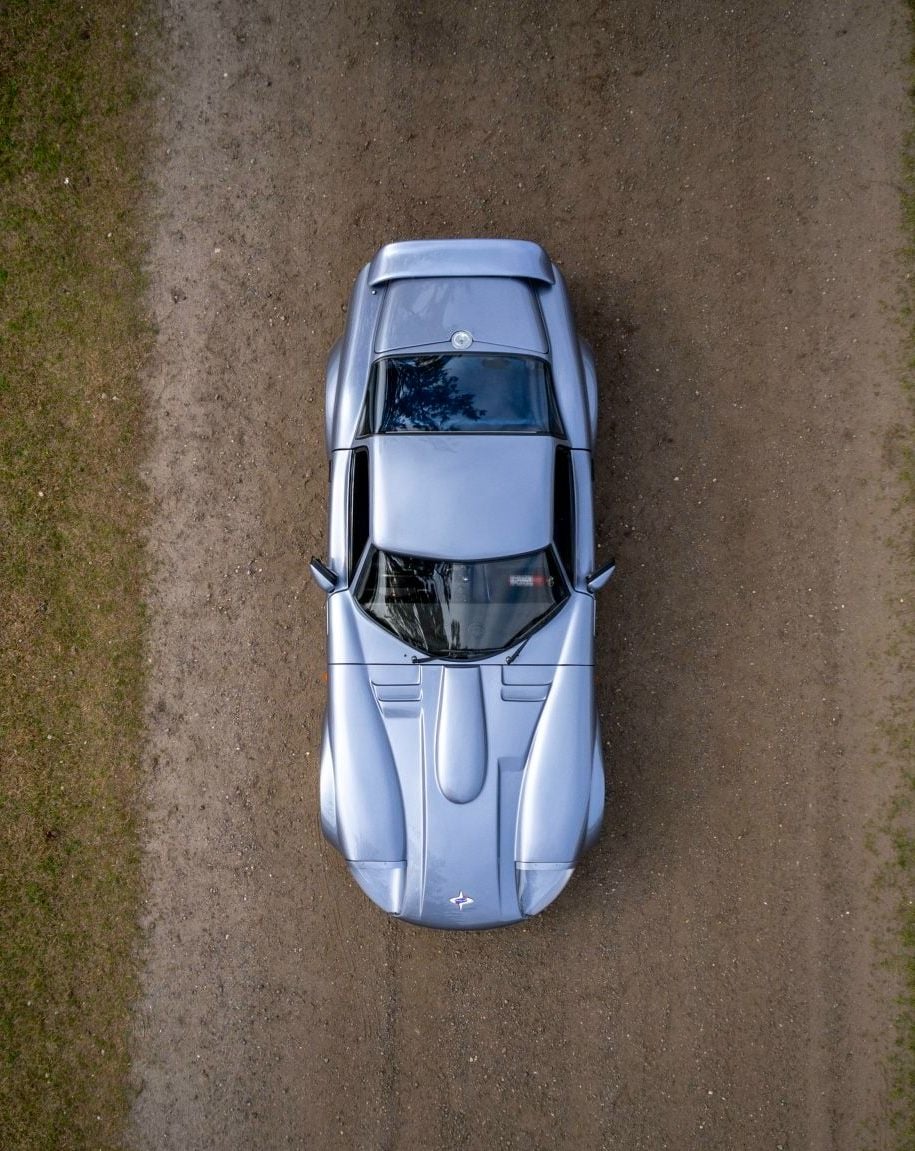
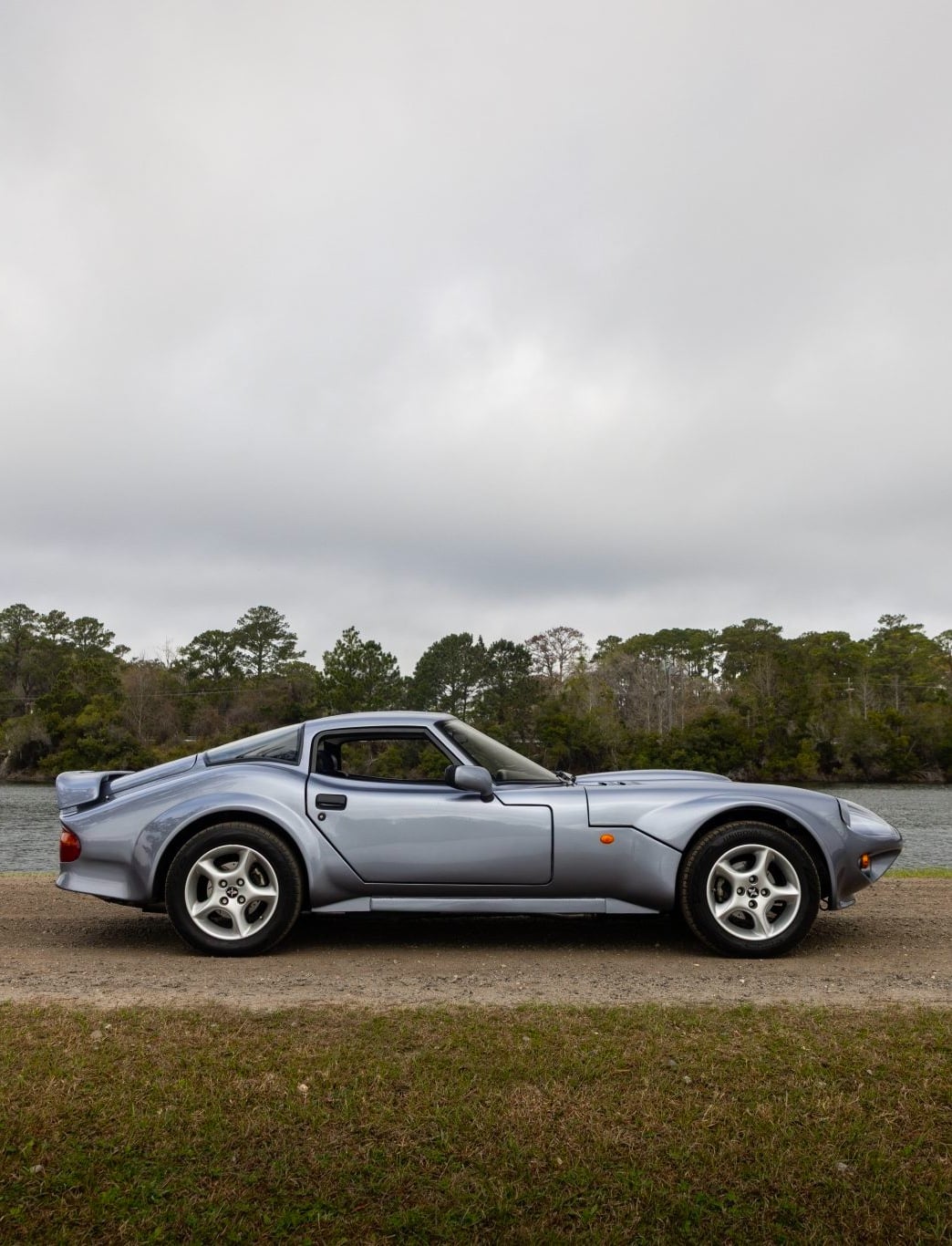
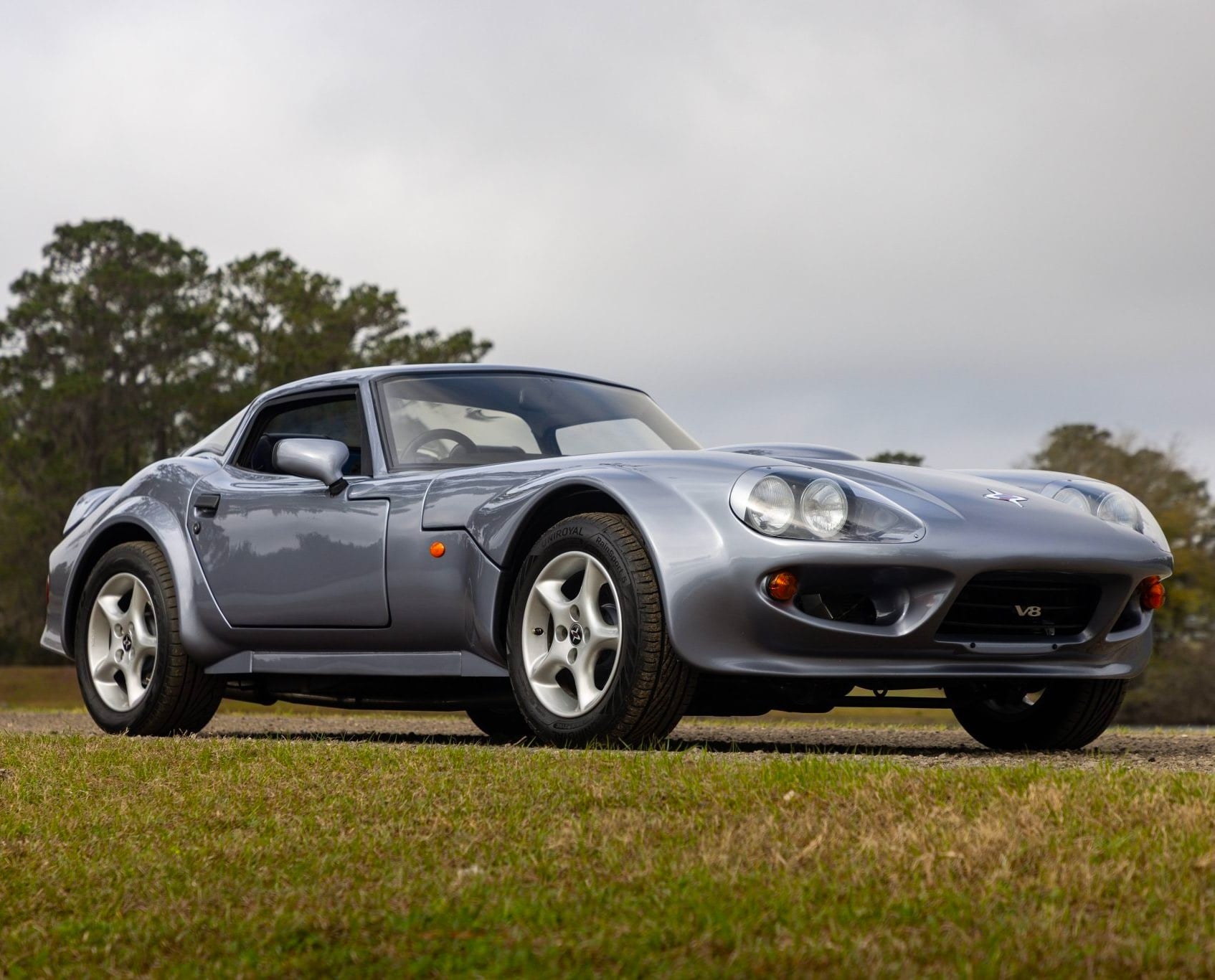
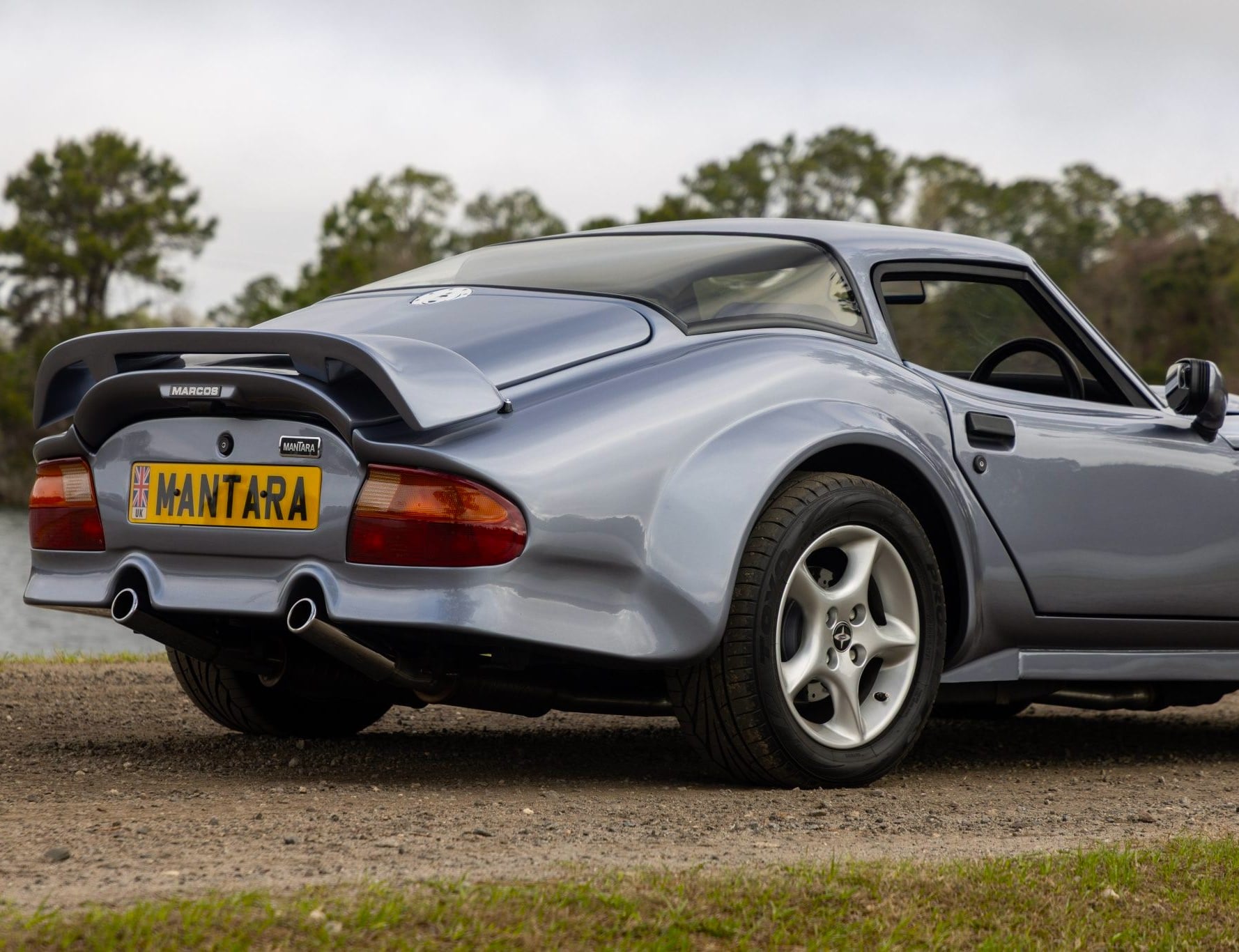
This 1996 Marcos Mantara Coupe 400 is finished in Cosworth Silver Metallic over an Ink Blue leather interior with Jonio Blue carpets and Elm burl veneer trim. It was originally bought new in the southwestern UK for £30,000 including VAT, and the seller then bought it in 2025 before importing it to the United States.
These cars brought Marcos back to international motorsport, with Chris Hodgetts winning the British GT GT2 class championship in 1995 and the marque competing at the 24 Hours of Le Mans the same year. A limited number of road-going LM cars were produced to satisfy homologation requirements, with approximately 30 to 36 built across all variants.
The End Of The Line
Total Mantara production from 1992 to 1998 amounted to 137 cars, all handbuilt at the factory in Westbury, Wiltshire.
A variant-by-variant breakdown from one specialist source accounts for 101 V8-powered 3.9 liter cars, eight with the 4.6 liter engine, one with a 2.0 liter naturally aspirated engine, and 26 2.0 liter GTS turbos destined primarily for Italy – though it’s worth noting that these figures total 136, leaving one car unaccounted for in the categorization, possibly an early prototype.
A handful of late V8 Mantaras were produced with the GTS-style hood before the Mantaray was introduced alongside it in 1997, with both models overlapping in production until 1998. The marque itself would survive only a few more years, with the road car business entering liquidation in 2001, though the name has continued to change hands and resurface periodically ever since.
The 1996 Marcos Mantara 400 Shown Here
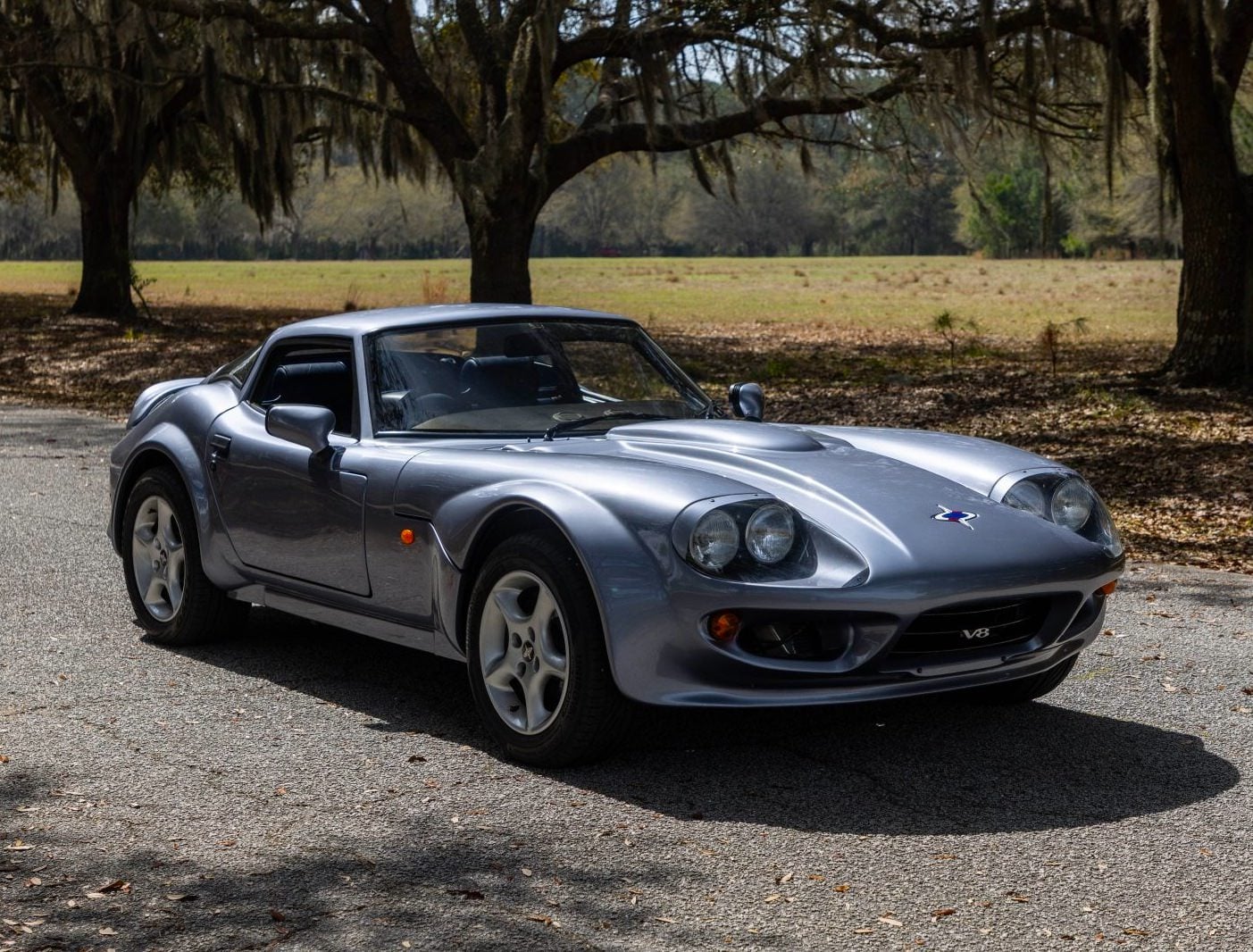
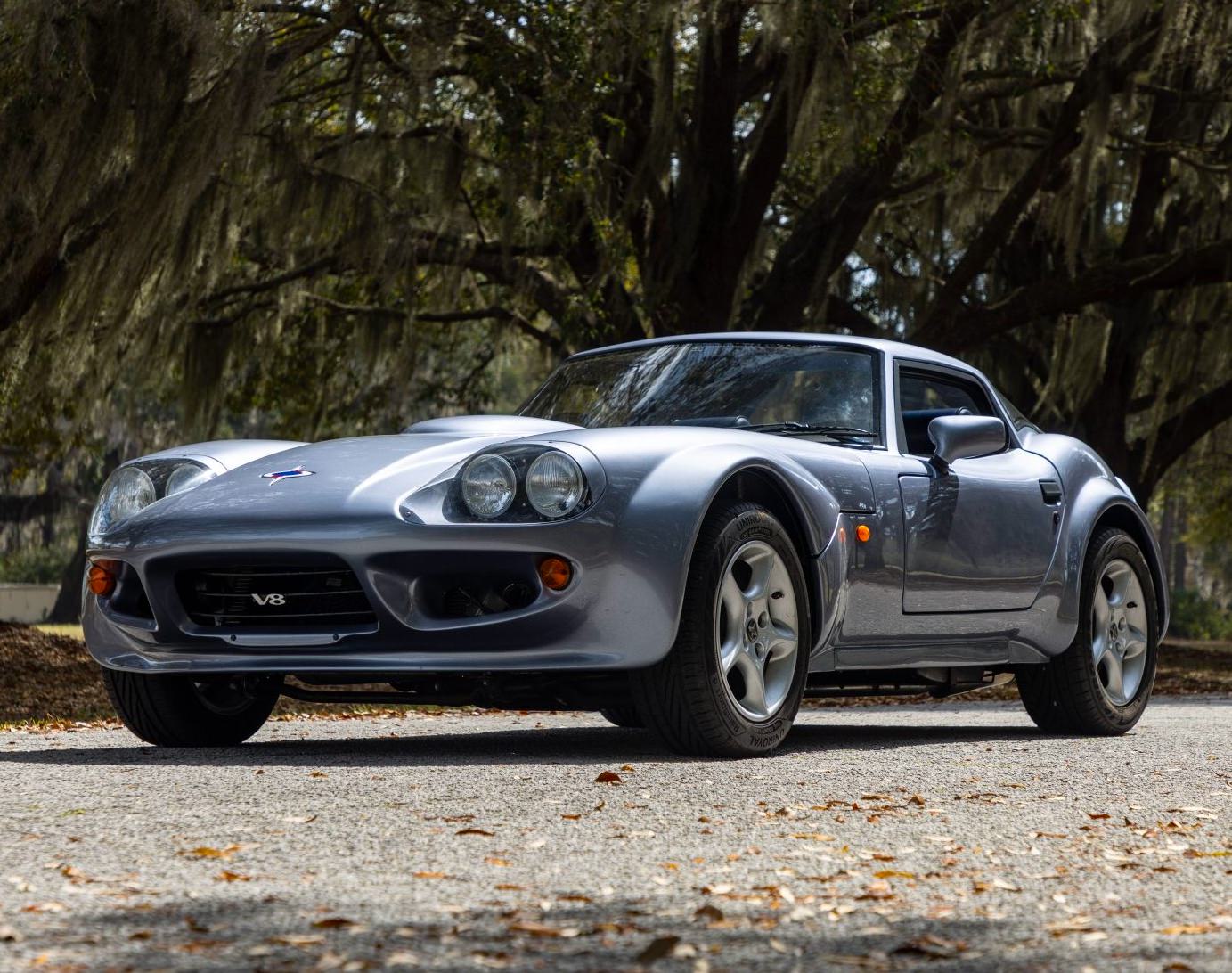
This 1996 Marcos Mantara Coupe 400 is finished in Cosworth Silver Metallic over an Ink Blue leather interior with Jonio Blue carpets and Elm burl veneer trim. It was originally bought new in the southwestern UK for £30,000 including VAT, and the seller then bought it in 2025 before importing it to the United States.
Under the clamshell hood sits a fuel-injected 3.9 liter Rover V8 with cross-bolted main bearings and an aluminum intake plenum, paired with a 5-speed manual transmission driving the rear wheels.
The current owner has carried out significant mechanical work on the car, including the fitment of a Kent Cams high-lift camshaft, machined cylinder heads, an ECU reprogram, a larger aluminum radiator with Summit electric fans and a Bosch controller, and a custom stainless-steel dual exhaust system with four-into-one headers and Flowmaster Flow FX mufflers. The ignition system, alternator, battery, freeze plugs, seals, and gaskets were also replaced.
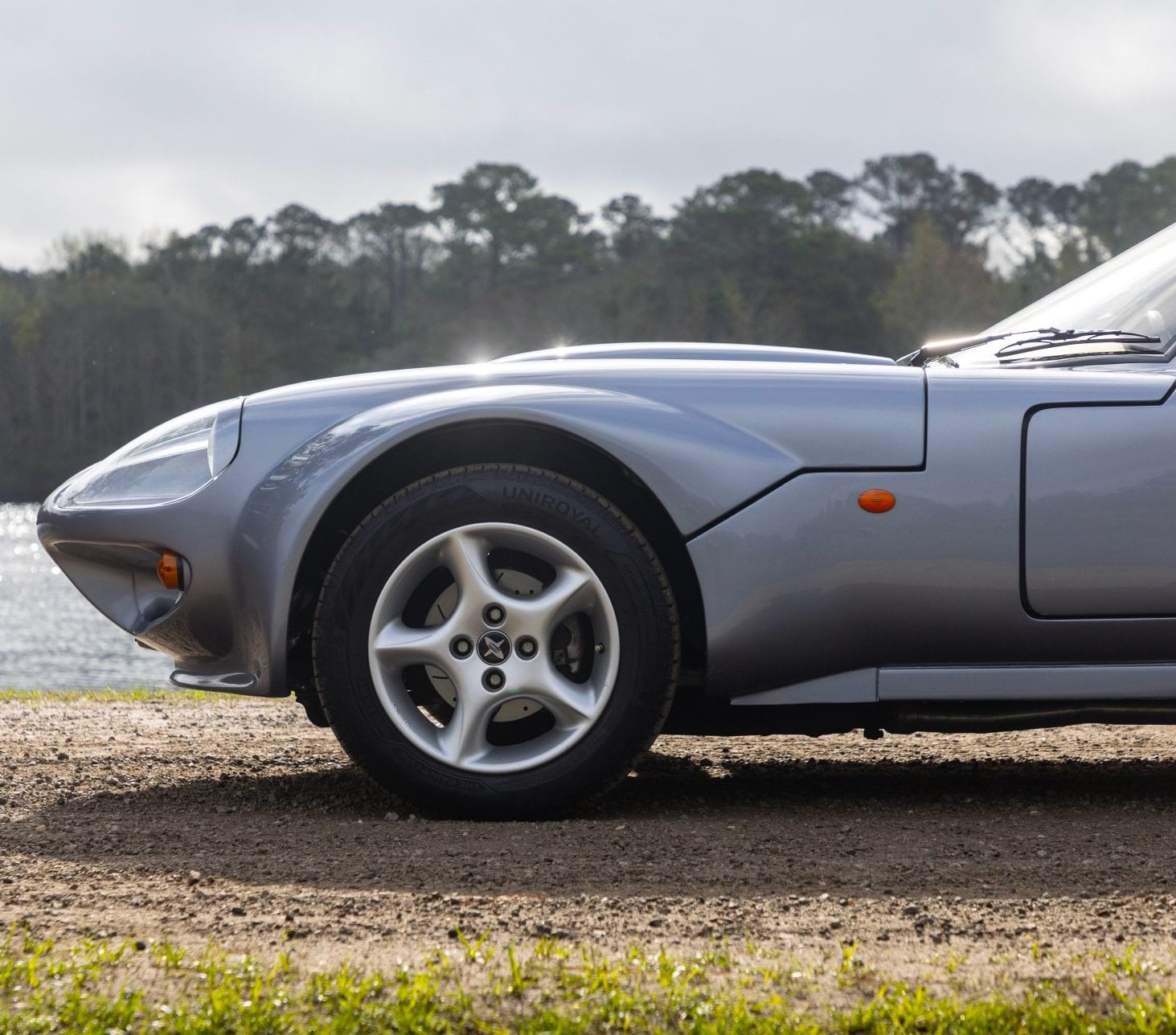
The car has adjustable coilovers at the rear, braking is by four-wheel discs with replaced flex lines and pads. It rides on Valbrem 15 inch alloy wheels with Marcos center caps, currently fitted with a mixed set of Uniroyal RainSport 5 and Toyo Proxes TR1 tires.
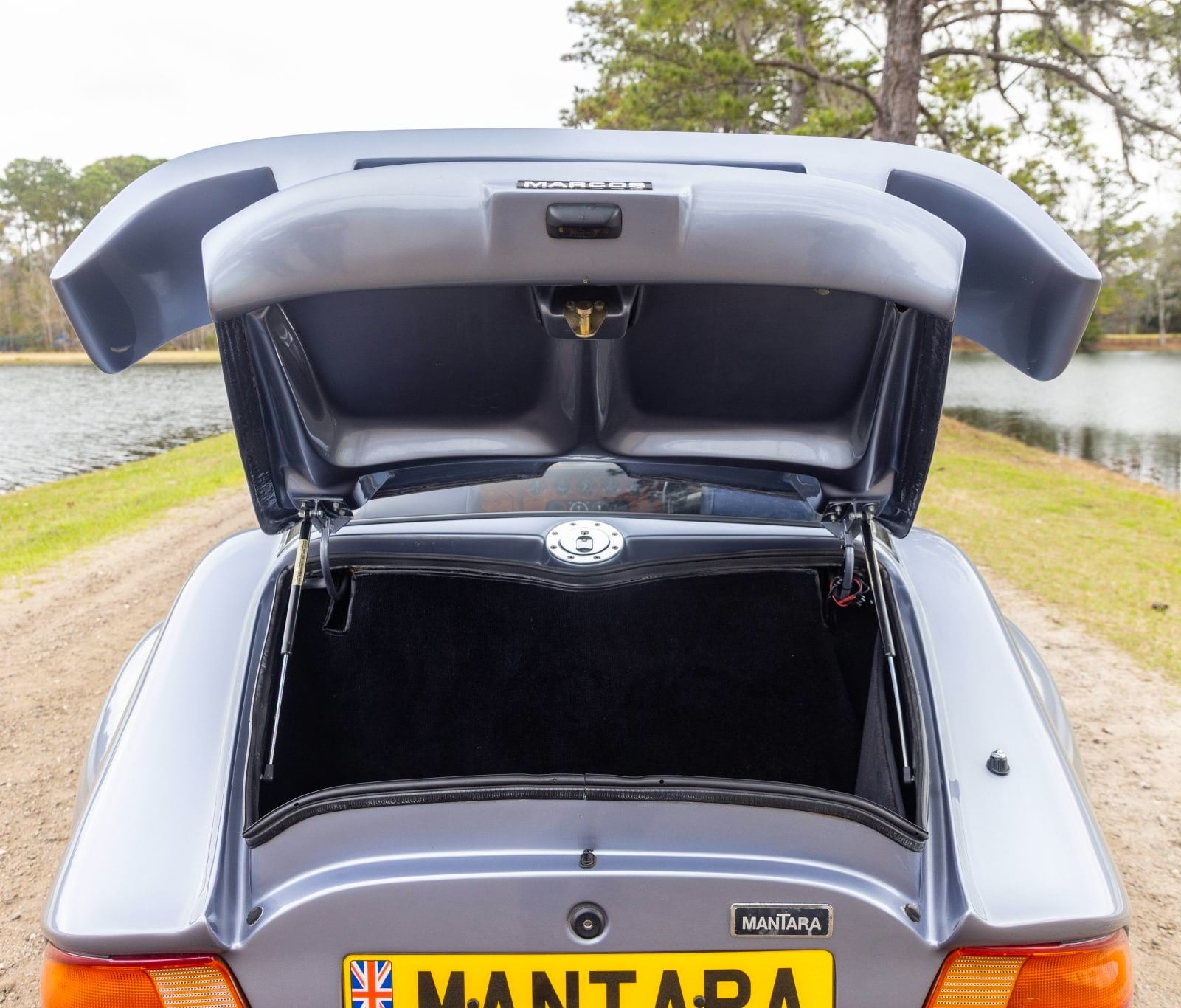
Factory fitted equipment includes a rear wing, power windows, power locks, and Smiths instrumentation with a 170 mph speedometer and 7,000 rpm tachometer. A Sony DSX-A510BD digital media receiver and Kenwood speakers have been added, and the air conditioning system was overhauled with a new condenser, evaporator, and lines.
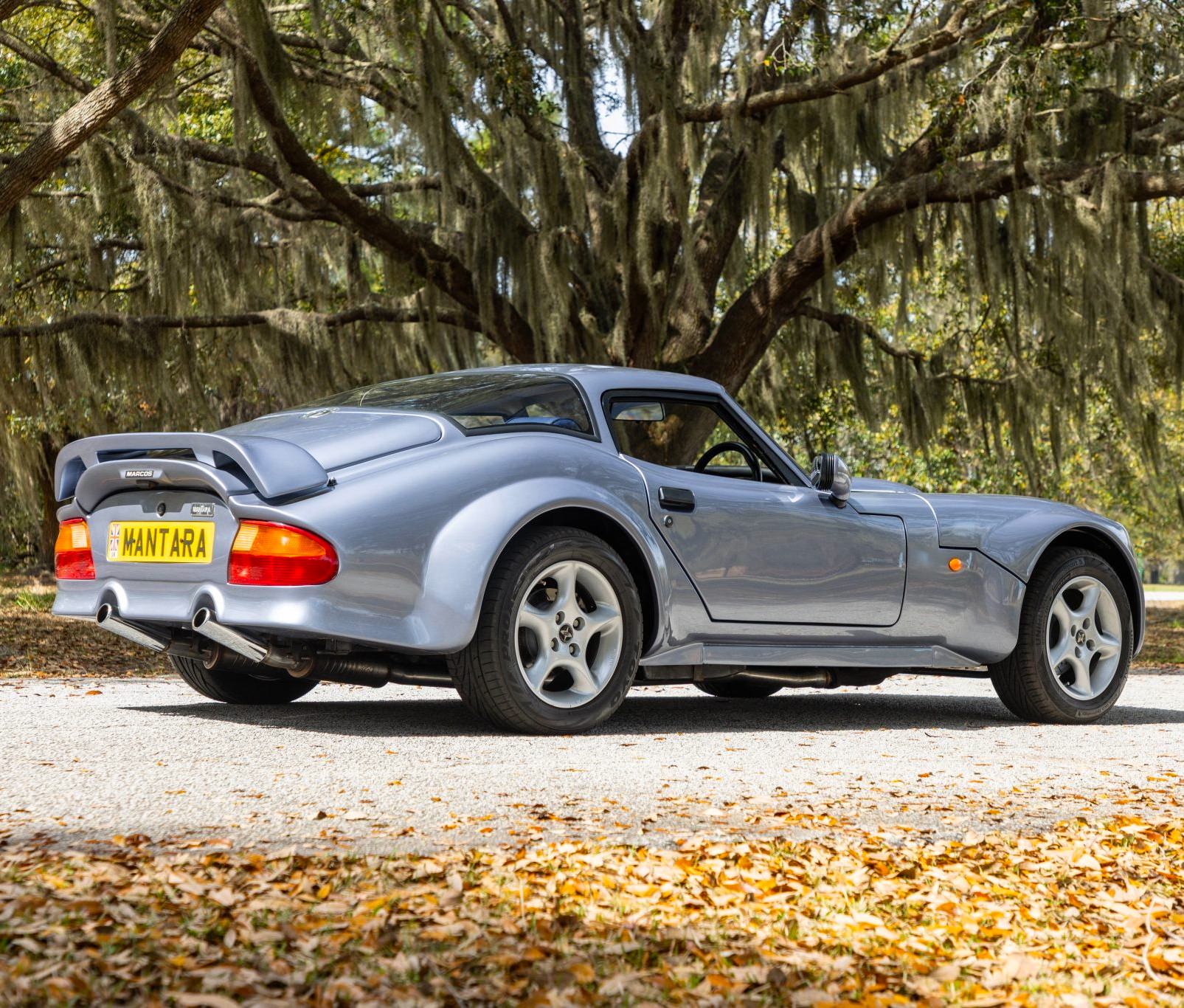
The car received several awards at the 2025 Hilton Head Island Concours d’Elegance & Motoring Festival, including the Committee’s Choice Award. It now shows 31,000 miles, roughly 600 of which were added under current ownership.
The car received several awards at the 2025 Hilton Head Island Concours d’Elegance & Motoring Festival, including the Committee’s Choice Award. It now shows 31,000 miles, roughly 600 of which were added under current ownership.
It’s now being offered for sale out of Savannah, Georgia with the original purchase invoice, an owner’s handbook, manufacturer’s literature, service records, awards, tools, and a clean Georgia title. If you’d like to read more or place a bid you can visit the listing here.
Images courtesy of Bring a Trailer

Articles that Ben Branch has written have been covered on CNN, Popular Mechanics, Smithsonian Magazine, Road & Track Magazine, the official Pinterest blog, the official eBay Motors blog, BuzzFeed, Autoweek Magazine, Wired Magazine, Autoblog, Gear Patrol, Jalopnik, The Verge, and many more.
Silodrome was founded by Ben back in 2010, in the years since the site has grown to become a world leader in the alternative and vintage motoring sector, with well over a million monthly readers from around the world and many hundreds of thousands of followers on social media.