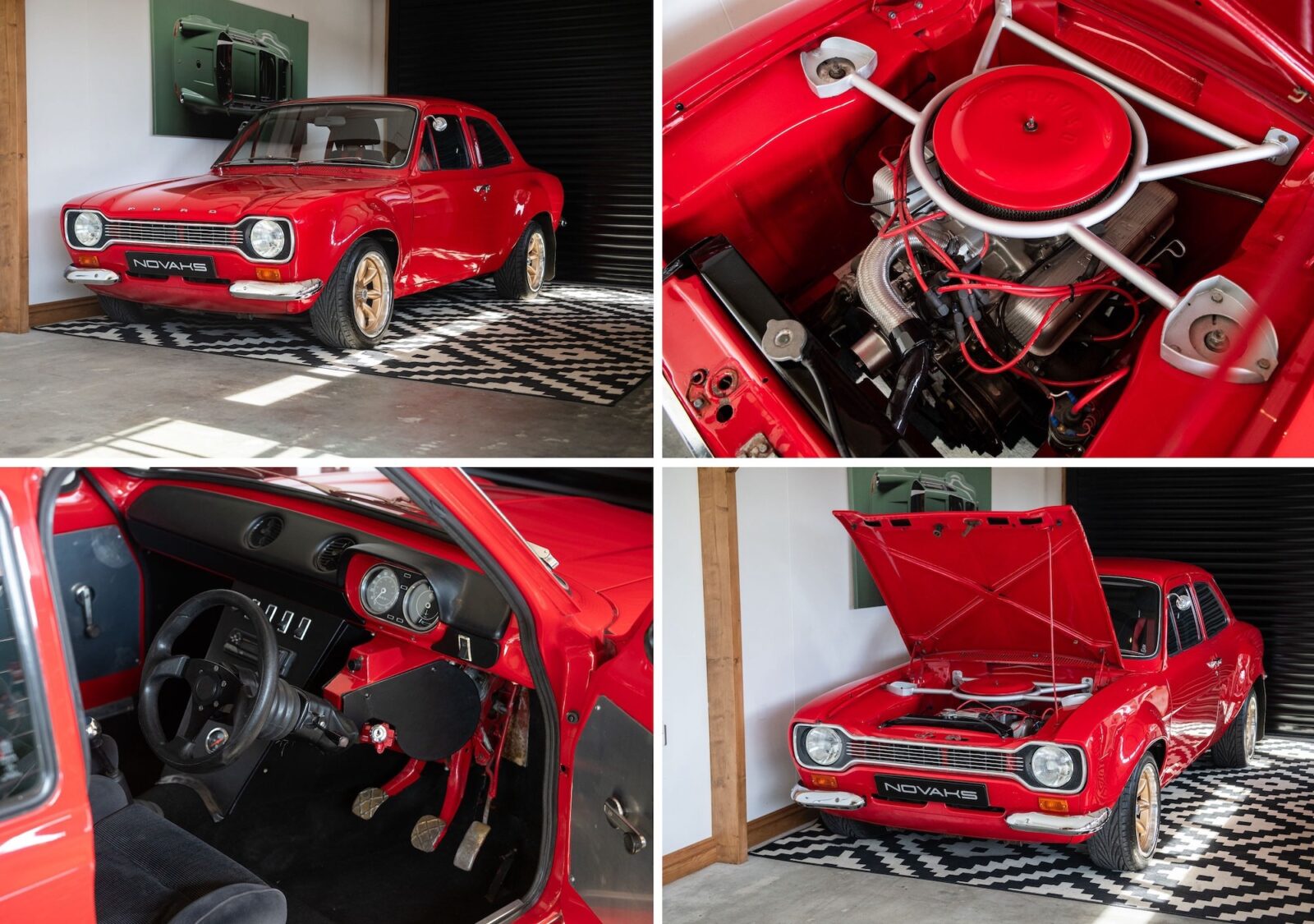
This is a 1970 Ford Escort Mark 1 that has been completely rebuilt from the ground up, and now rather than a four-banger under the hood you’ll find a 3.9 liter all-alloy Rover V8 capable of far more power and torque.
Of all the available V8s to swap into something like an Escort, the Rover unit does make a lot of sense. The aluminum block and heads means it’s not that much heavier than the iron block Kent Crossflow inline-four, and so if done right the swap doesn’t mess up the sharp handling of the Mk1.
Fast Facts: A V8-Swapped Ford Escort Mk1
- This is a fully rebuilt 1970 Ford Escort Mk1, it now runs a 3.9 liter all-aluminum Rover V8 instead of its original four-cylinder. The lightweight V8 suits the Escort well, delivering far higher output without a major weight penalty, preserving the car’s sharp handling when the conversion is executed properly.
- The Escort Mk1 debuted in 1968 as Ford of Europe’s compact rear-wheel-drive family car, replacing the Anglia. Its simple unibody construction, MacPherson strut front suspension, and live rear axle kept costs low while delivering predictable handling, making it adaptable for both mass-market use and serious motorsport development – particularly in the world of rally.
- Performance versions would the Mk1’s legacy – the Twin Cam, Mexico, RS1600, and RS2000 variants all underpinned Ford’s rally dominance in the early 1970s, including a World Rally Championship manufacturers’ title. Light weight, tough, and flexible engine options made the Escort one of the most successful competition platforms of its time.
- This V8-swapped example was built over two decades ago and uses a Cosworth 5-speed gearbox, a Quaife rear axle, Holley carburetion, and chassis bracing. Extensive interior repositioning improved weight balance and allowed engine fitment. Finished in red, it is offered in the UK for £22,000.
History Speedrun: The Ford Escort Mk1
The Ford Escort Mark I arrived in 1968 at a truly crucial moment for Ford of Europe, the company needed a modern, compact family car that could replace the outgoing Ford Anglia while competing head-on with the Morris 1100 and Vauxhall Viva. What emerged from Ford’s design and engineering teams in Britain and Germany was a clean-slate small car design with straightforward mechanicals, a wide range of engine options, and a chassis platform that would prove far more capable in the world of racing than anyone expected.

 The Ford Escort Mark I arrived in 1968 at a truly crucial moment for Ford of Europe, the company needed a modern, compact family car that could replace the outgoing Ford Anglia while competing head-on with the Morris 1100 and Vauxhall Viva. Image courtesy of Ford Europe.
Launched first in the UK and Ireland, the Escort Mk1 used a conventional front-engine, rear-wheel-drive layout with a steel unibody shell, MacPherson strut front suspension, and a live rear axle on leaf springs. It was simple, light, and inexpensive to build, but critically it was designed from the outset to feel stable and predictable.
That balance, more than any sort of outright power, became the foundation for the Escort’s competition success. Production ran from late 1967 through 1974, with millions built across Ford’s European plants.
Early road cars were offered with Kent crossflow engines ranging from 1.1 to 1.3 liters, later joined by a more powerful 1.6 liter unit. Power outputs were modest, typically between 45 and 70 bhp, but curb weight stayed low at around 1,690 lbs (767 kgs), keeping performance acceptable by late-1960s standards. Trim levels varied widely, from basic two-door saloons to better-equipped Super and GT models, this allowed Ford to cover a broad market without changing the underlying car.
The Escort’s reputation would be forged by its performance variants, cars like the Twin Cam, introduced in 1968, paired the Escort shell with a Lotus-developed 1.6 liter DOHC engine producing 110 bhp as well as uprated suspension. It was a homologation special in spirit and execution, immediately successful in rallying and circuit racing.
Following it, the Ford Escort Mexico was created to celebrate Ford’s victory in the 1970 London-to-Mexico World Cup Rally. Using a strengthened bodyshell and a 1.6 liter crossflow engine producing 85 bhp, it traded the outright speed of the Twin Cam for toughness, durability, and longevity.
The quickest competition Escorts arrived with the RS1600 and later the RS2000. The RS1600 used the Cosworth BDA 1.6 liter four-cylinder, an all-alloy, belt-driven DOHC engine that produced 120 bhp in road trim and far more in rally specification. It became one of the defining rally engines of the era. The RS2000, introduced in 1973, took a different approach, using Ford’s Pinto 2.0 liter SOHC engine with 100 bhp but offering more torque and an easier upgrade path.
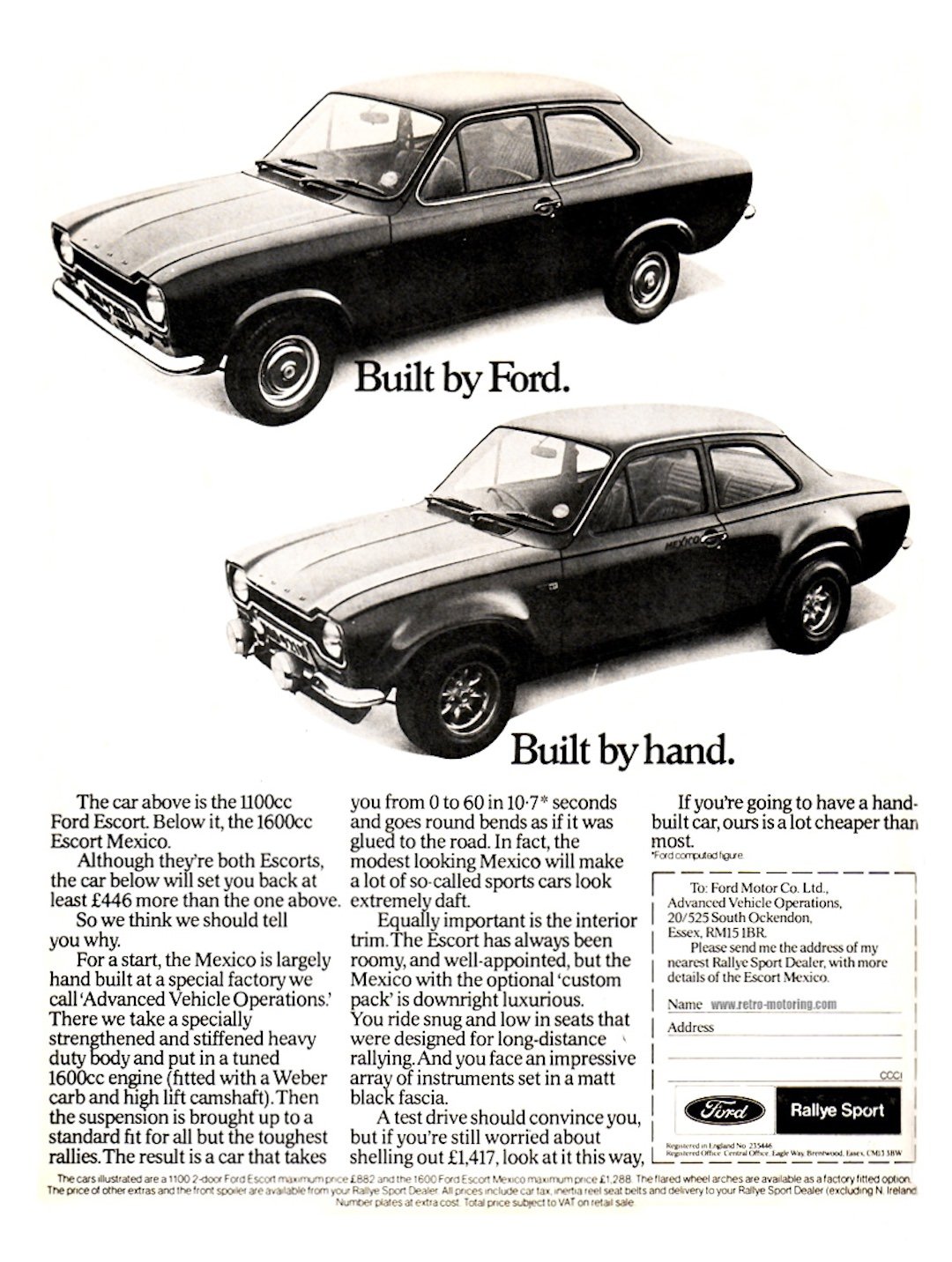
The Ford Escort Mexico was created to celebrate Ford’s victory in the 1970 London-to-Mexico World Cup Rally. Using a strengthened bodyshell and a 1.6 liter crossflow engine producing 85 bhp, it offered genuine pace for the class. Image courtesy of Ford Europe.
In motorsport, the Escort Mk1 was dominant. It won the World Rally Championship manufacturers’ title for Ford in 1970 and continued to secure major victories well into the early 1970s. Drivers like Hannu Mikkola and Roger Clark used Escorts to win events across Europe and beyond, benefiting from the car’s predictable handling, its toughness on rough stages, and its incredible adaptability to different engines and suspension setups. Few cars of the period in this displacement class could rival it.
By the time the Escort Mk2 replaced it, the Mk1 had already become a motorsport legend and a cultural touchstone. Its boxy lines, “dog’s bone” front grille, and unmatched rally record made it far more than the compact family car it was originally intended as.
Decades later, it’s still one of Ford’s most influential European designs and a benchmark case for how an inexpensive, mass-market car can succeed at the highest levels of competition without losing its everyday appeal.
The V8-Swapped 1970 Ford Escort Mk1 Shown Here
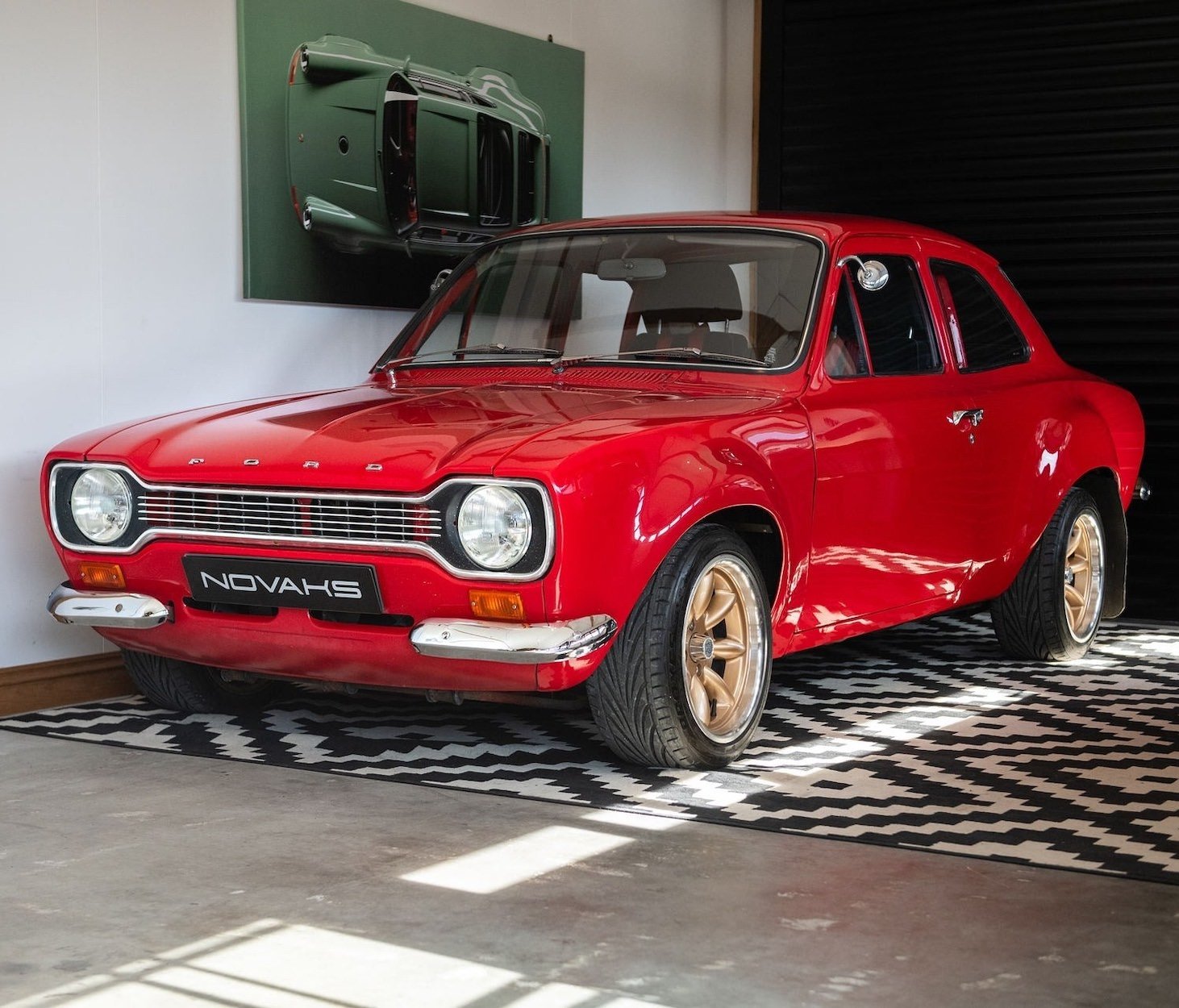
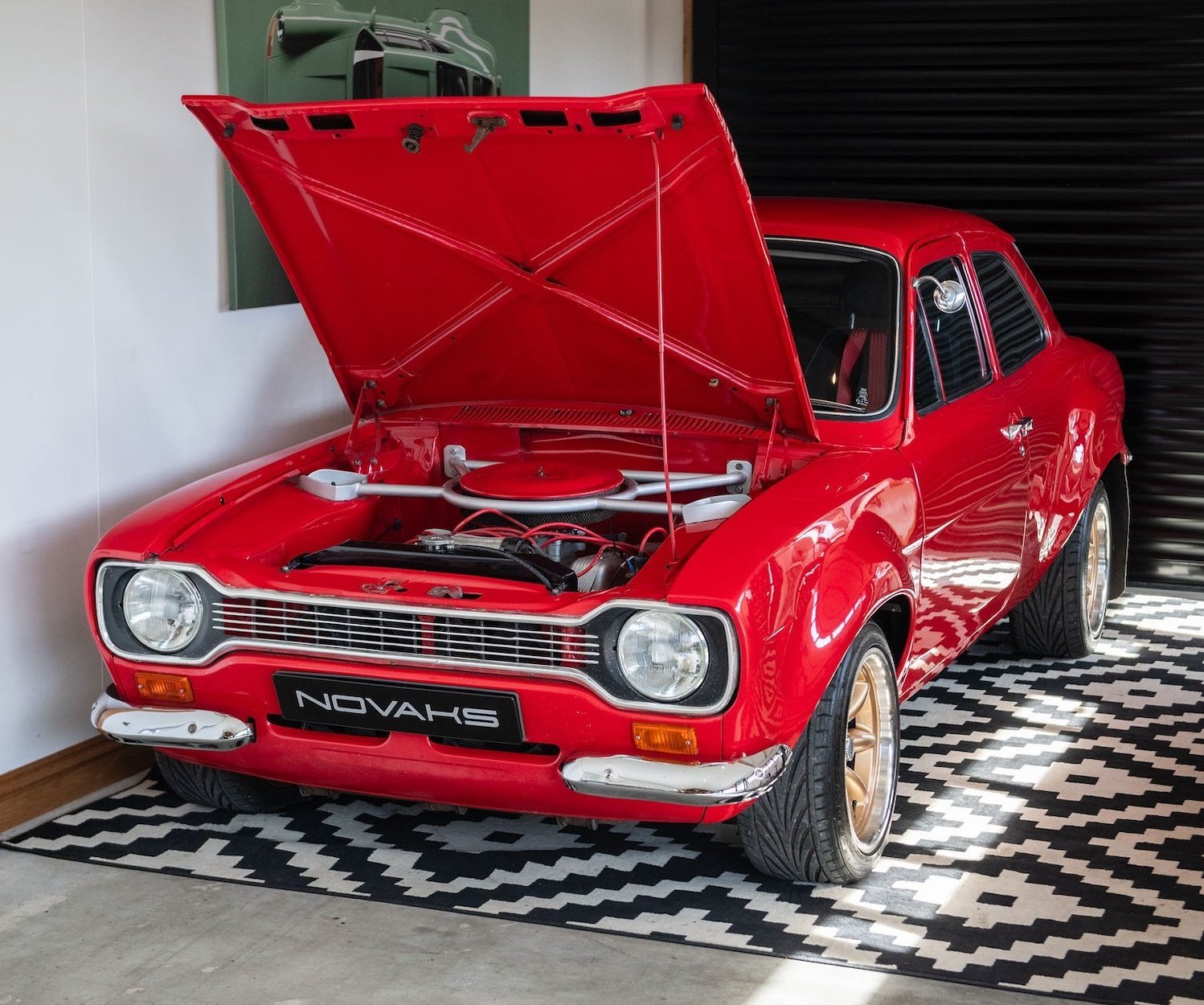
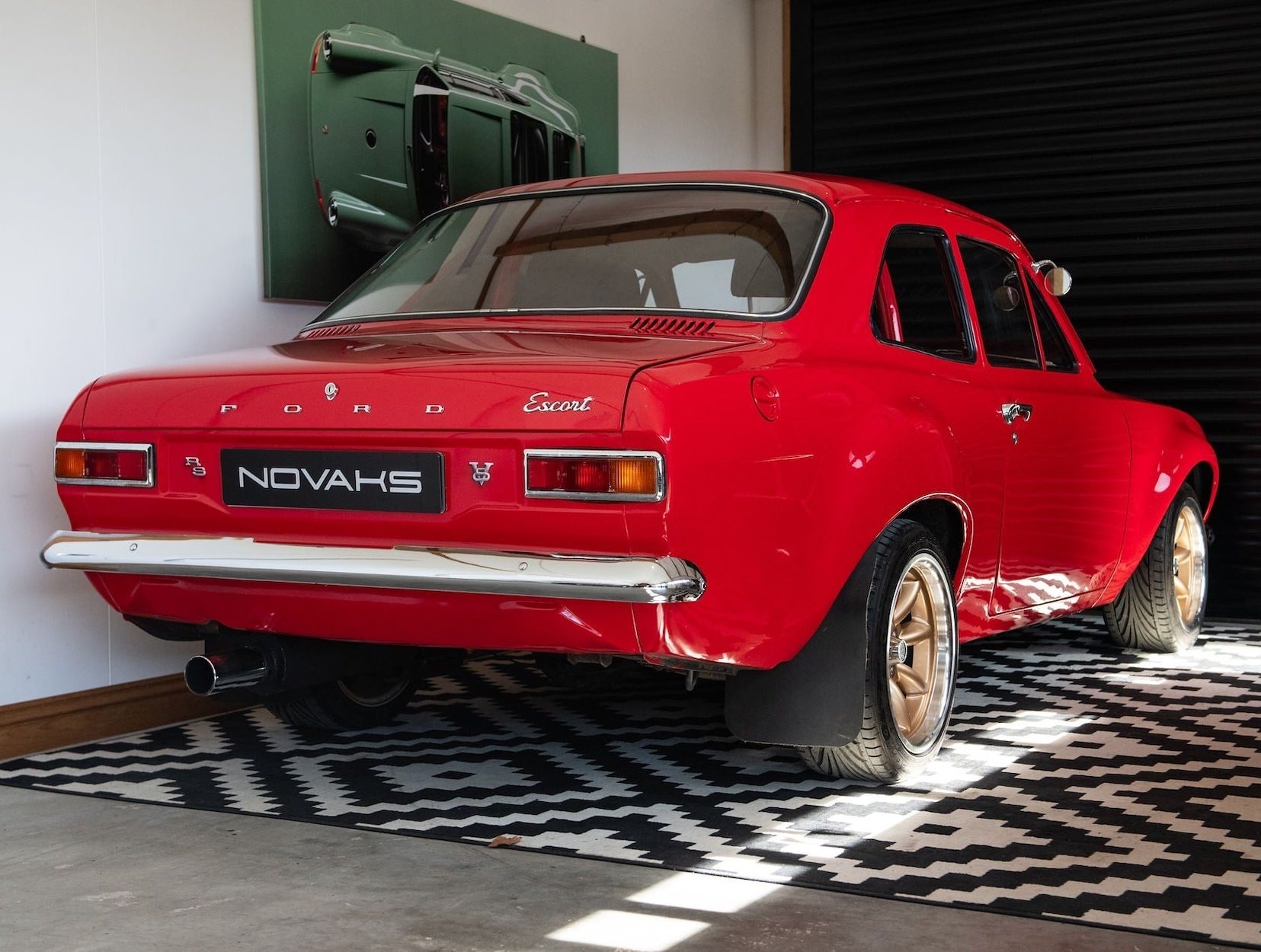
The car you see here is a Ford Escort Mk1 with a difference. Quite a big difference in fact, a 3.9 liter all-alloy Rover V8 that’s been dropped into the engine bay in place of the original Kent Crossflow inline-four.
It’s said to have been built 21 years ago, the V8 is mated to a 5-speed Cosworth gearbox and Quaife rear axle, and it’s fitted with a Tony Law exhaust system, a Holley carburetor, and Moroso air cleaner.
It has an unusual Monte Carlo bar across the tops of the front struts and reaching back to the firewall to help with rigidity, while still allowing space for the air cleaner. It’s finished in Ferrari Red over a black interior with twin racing-style bucket seats with harnesses.
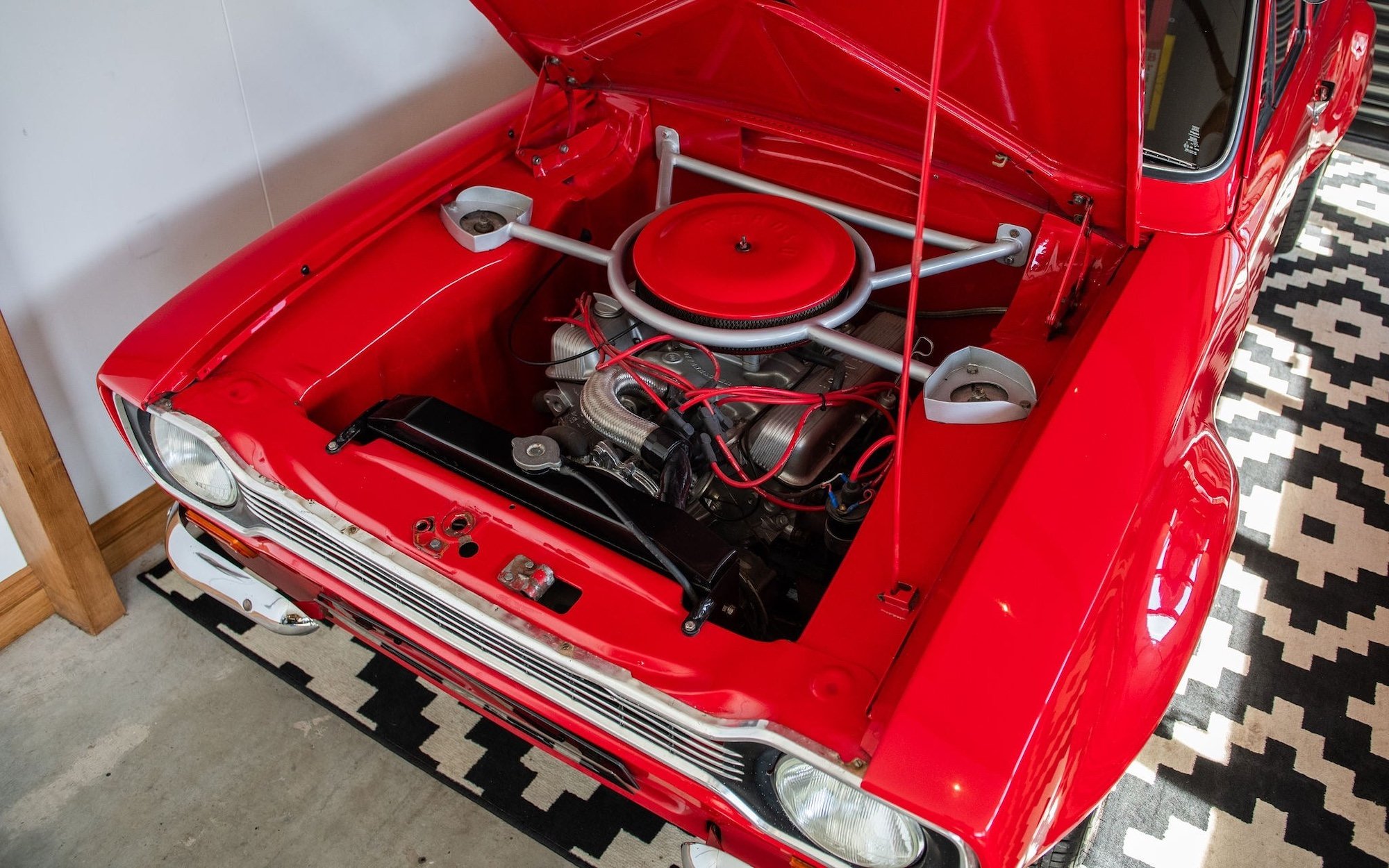
The car you see here is a Ford Escort Mk1 with a difference. Quite a big difference in fact, a 3.9 liter all-alloy Rover V8 that’s been dropped into the engine bay in place of the original Kent Crossflow inline-four.
Due to the size of the engine the firewall has been modified and the steering wheel, pedals, seats, and shifter all moved back to match. It gives the interior an unusual look, but getting the engine as far back in the engine bay as possible was crucial to keeping the car’s weight balanced front/back.
It’s now being offered for sale out of Wakefield in the United Kingdom with an asking price of £22,000 which is around $29,500 USD – that’s a good price for a well-sorted Mk1 Escort that’s had this much work done.
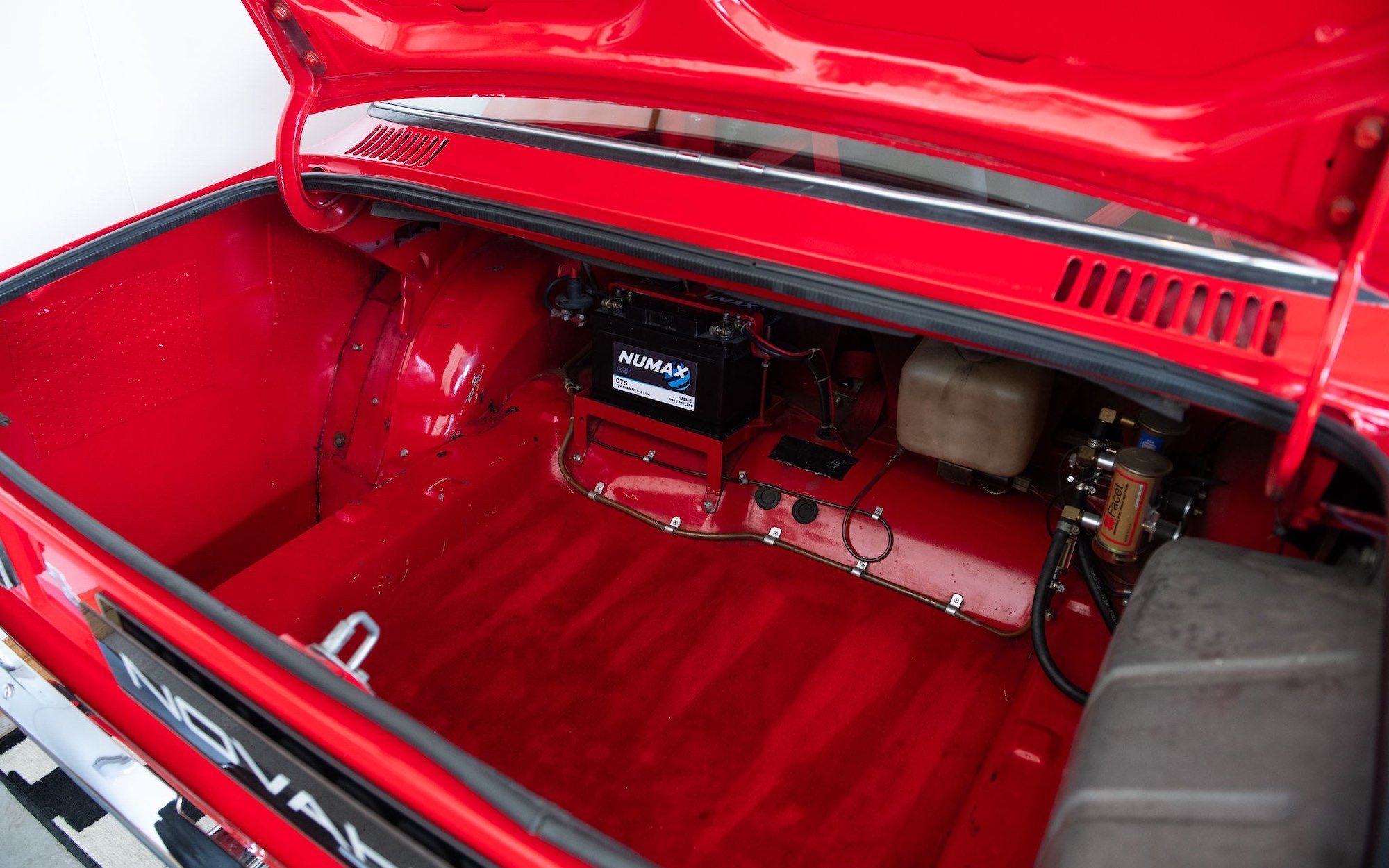
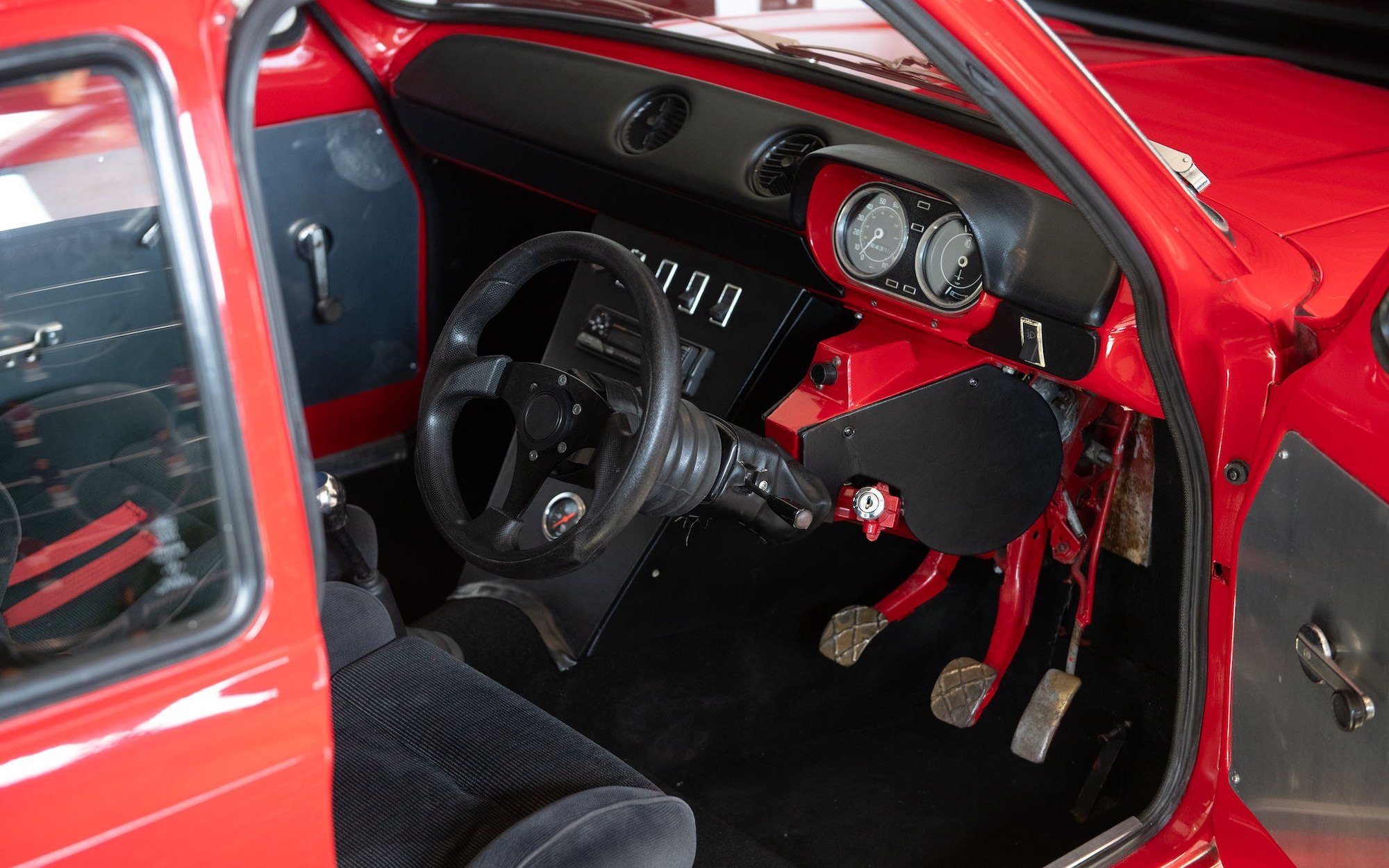
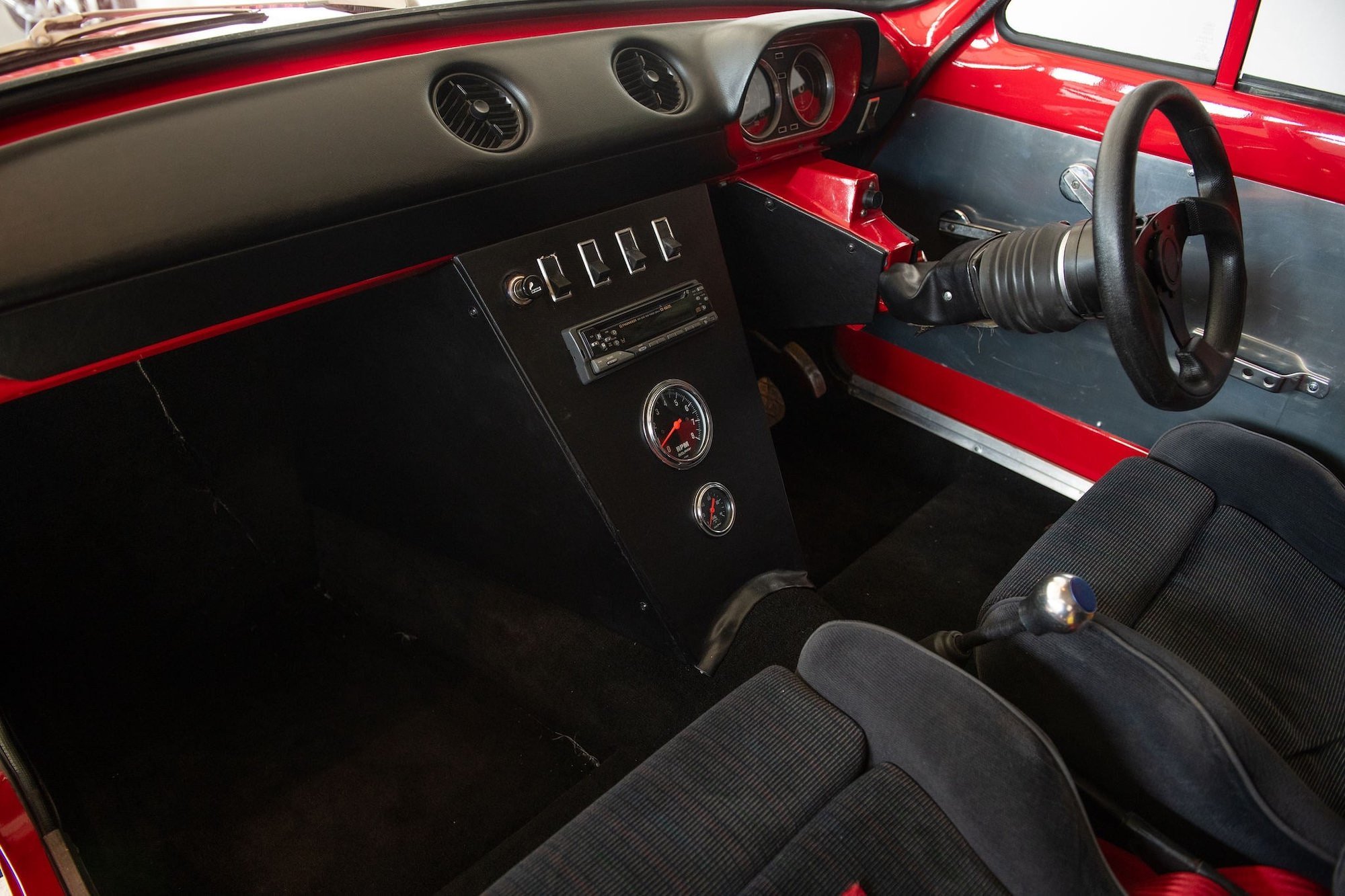
Images courtesy of Car & Classic + Ford Europe

Articles that Ben Branch has written have been covered on CNN, Popular Mechanics, Smithsonian Magazine, Road & Track Magazine, the official Pinterest blog, the official eBay Motors blog, BuzzFeed, Autoweek Magazine, Wired Magazine, Autoblog, Gear Patrol, Jalopnik, The Verge, and many more.
Silodrome was founded by Ben back in 2010, in the years since the site has grown to become a world leader in the alternative and vintage motoring sector, with well over a million monthly readers from around the world and many hundreds of thousands of followers on social media.