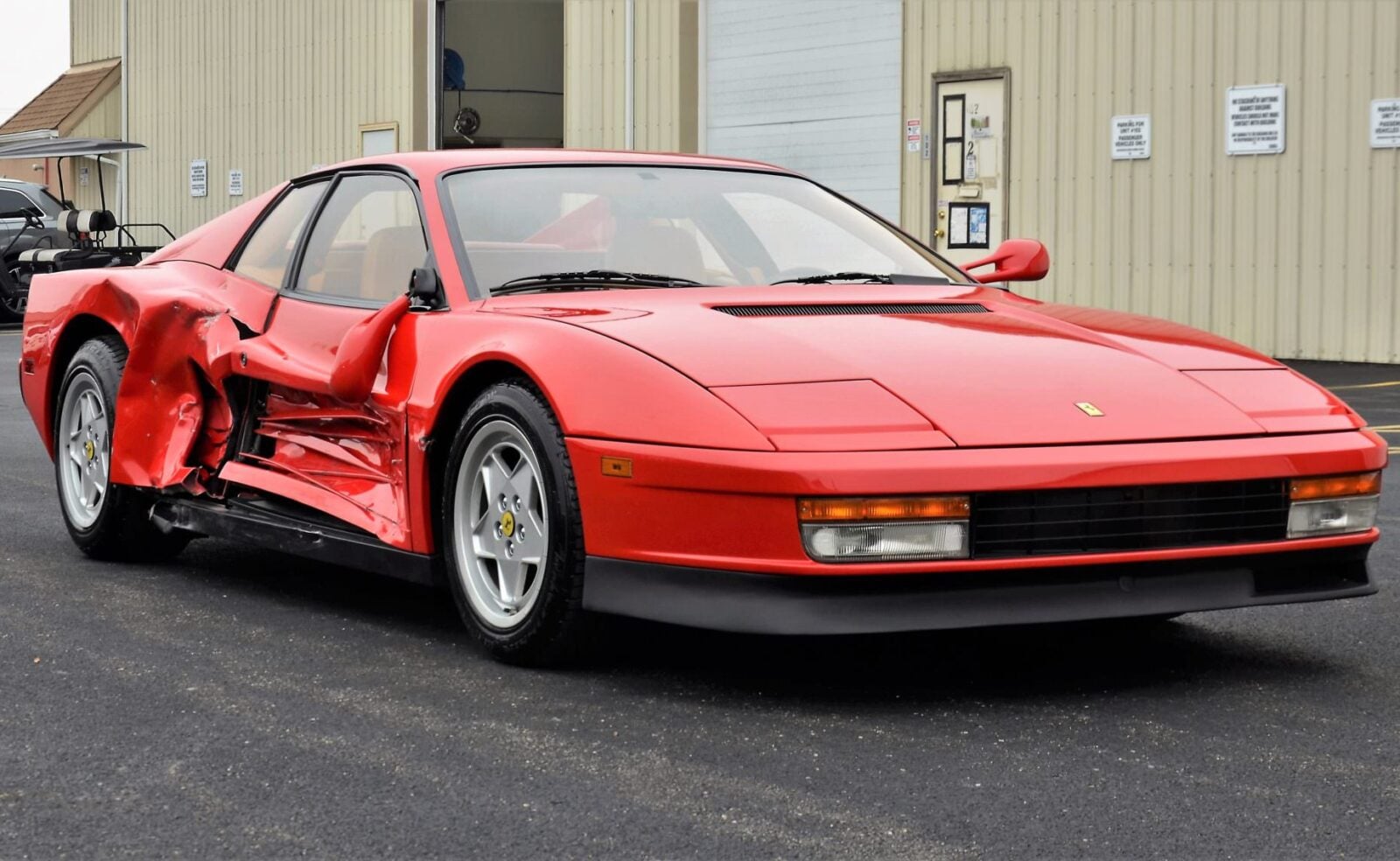
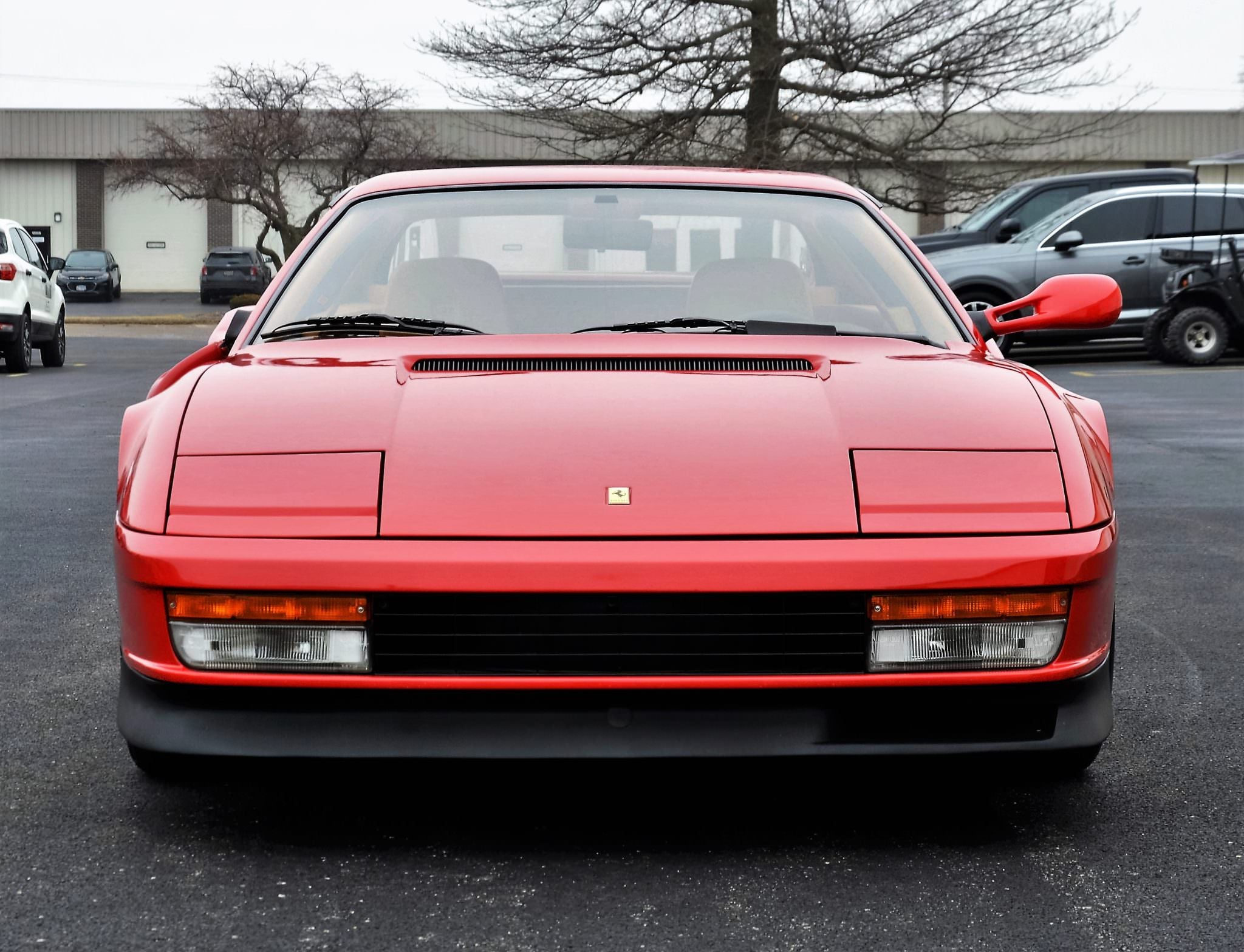
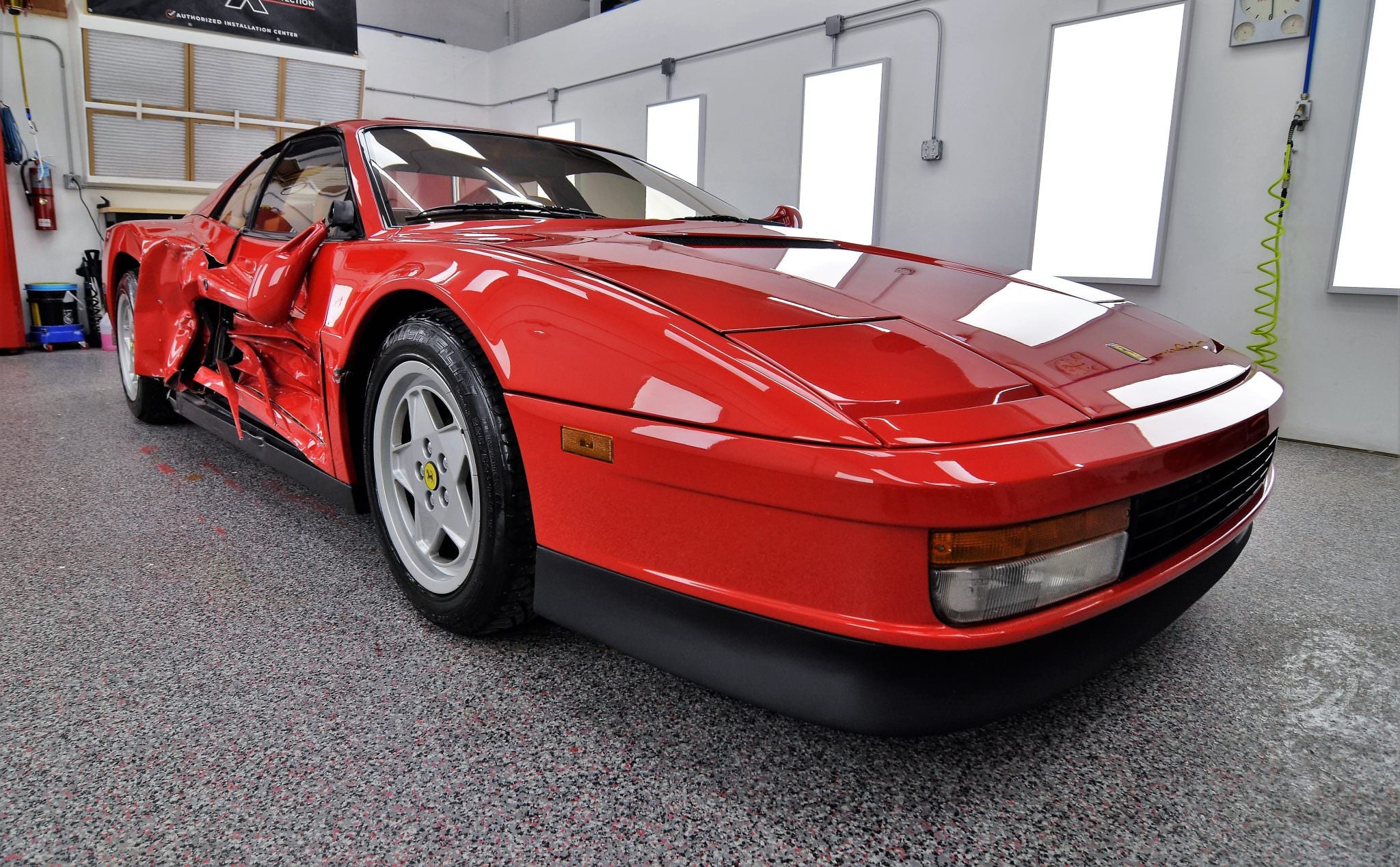
This is a low-mile 1990 Ferrari Testarossa that was involved in a side collision in late 2025 and now needs some restorative work to get it back on the road.
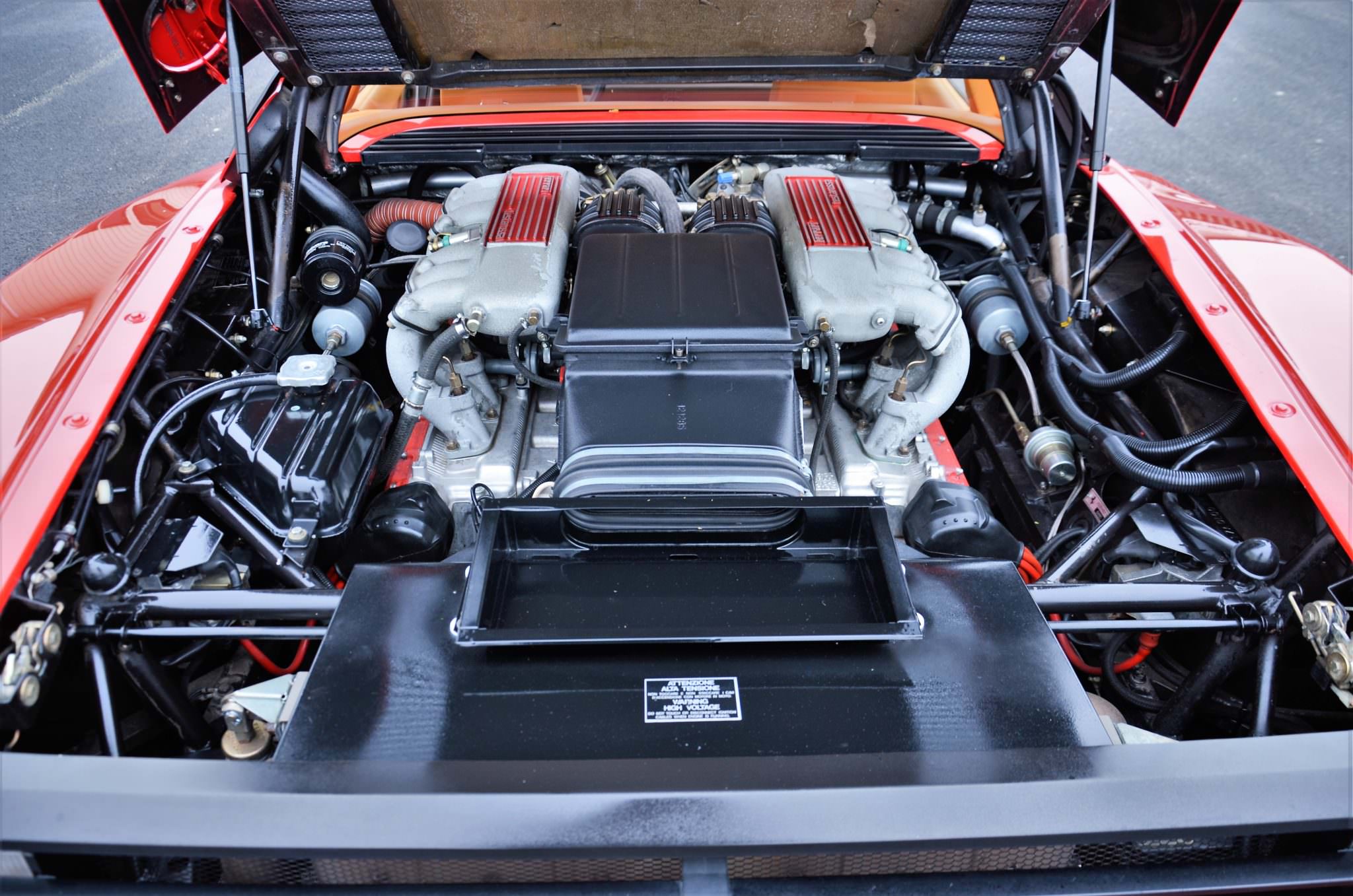
The good news is that it’s got just 14,000 miles on the clock, and it underwent a comprehensive engine-out refurb in 2022 which saw the timing belts replaced and the transaxle rebuilt, as well as a clutch replacement, and replacements for the fuel pumps, fuel filter, spark plugs, and fuse board.
Fast Facts: A 1990 Ferrari Testarossa Project Car
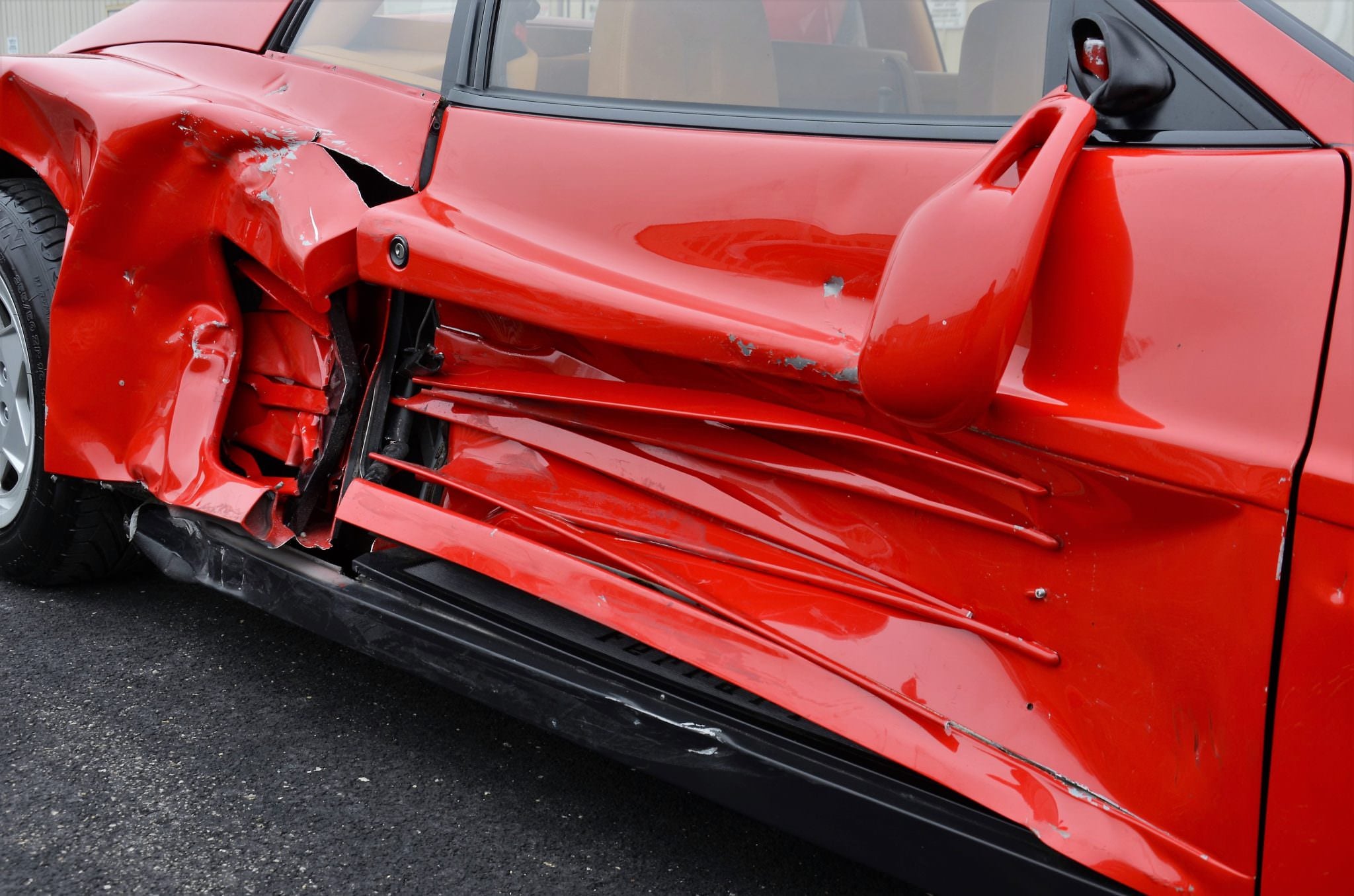
- This 1990 Ferrari Testarossa is a low-mile project car with about 14,000 miles showing, now needing restoration after a side-impact crash in late 2025. Damage reportedly affects the right side and right rear, including the radiator, alignment, suspension, bodywork, and cooling system, leaving it in need of significant repair work.
- In 2022 the car received an engine-out service costing roughly $44,000, including timing belts, a transaxle rebuild, clutch replacement, fuel pumps, fuel filter, spark plugs, drive belts, fuse board, and water pump hose, with additional fluid servicing completed in 2025.
- Ferrari originally developed the Testarossa model series to address shortcomings of the earlier 512 BBi, including heat management, poor luggage space, and lack of US compliance. Pininfarina’s team created the car’s famous side strakes around the new rear-mounted radiator layout, giving the Testarossa its unmistakable appearance.
- Powered by a 4.9 liter flat-12 with Bosch fuel injection and a 5-speed manual transaxle, the Testarossa offered supercar performance with genuine grand touring practicality. The model became a cultural icon through appearances in Miami Vice and Out Run, and its platform later evolved into the 512 TR and F512 M.
History Speedrun: The Ferrari Testarossa
The Ferrari Testarossa was developed to solve a clear set of issues with its predecessor, the Ferrari 512 BBi. The Boxer’s cabin tended to get uncomfortably hot because coolant had to be piped all the way from the mid-mounted engine to a front-mounted radiator. Luggage space was practically nonexistent. Perhaps most critically, Ferrari had never been able to make the Boxer compliant with American emissions and safety regulations, which meant the company was locked out of its most lucrative export market. By the early 1980s, a successor was essential, and it had to be road-legal in the USA.
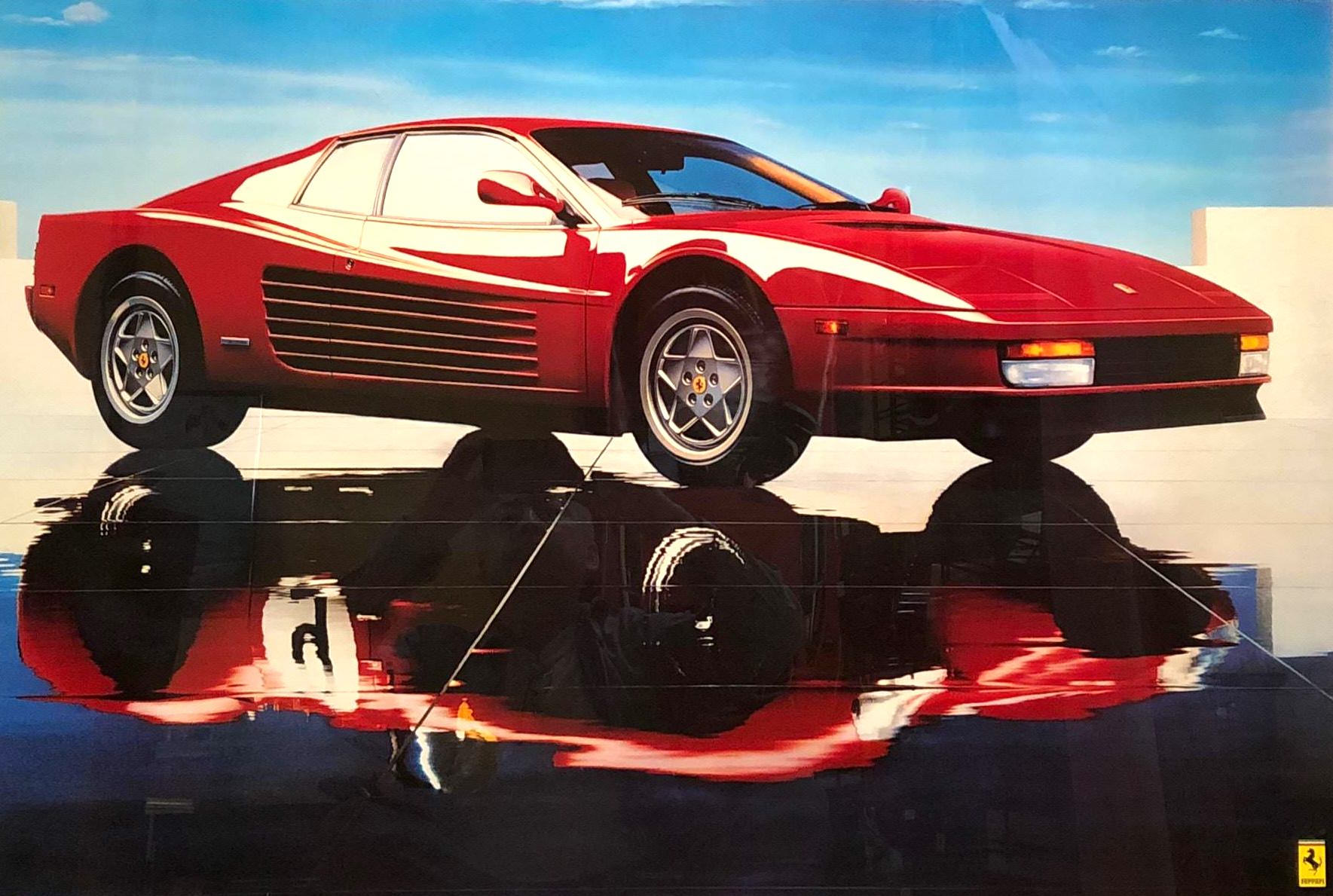
 The name Testarossa famously means “red head” in Italian, it was a deliberate callback to the legendary 250 Testa Rossa racing cars that had dominated the World Sportscar Championship in the late 1950s. You can see the earlier car here in the reflection. Image courtesy of Ferrari.
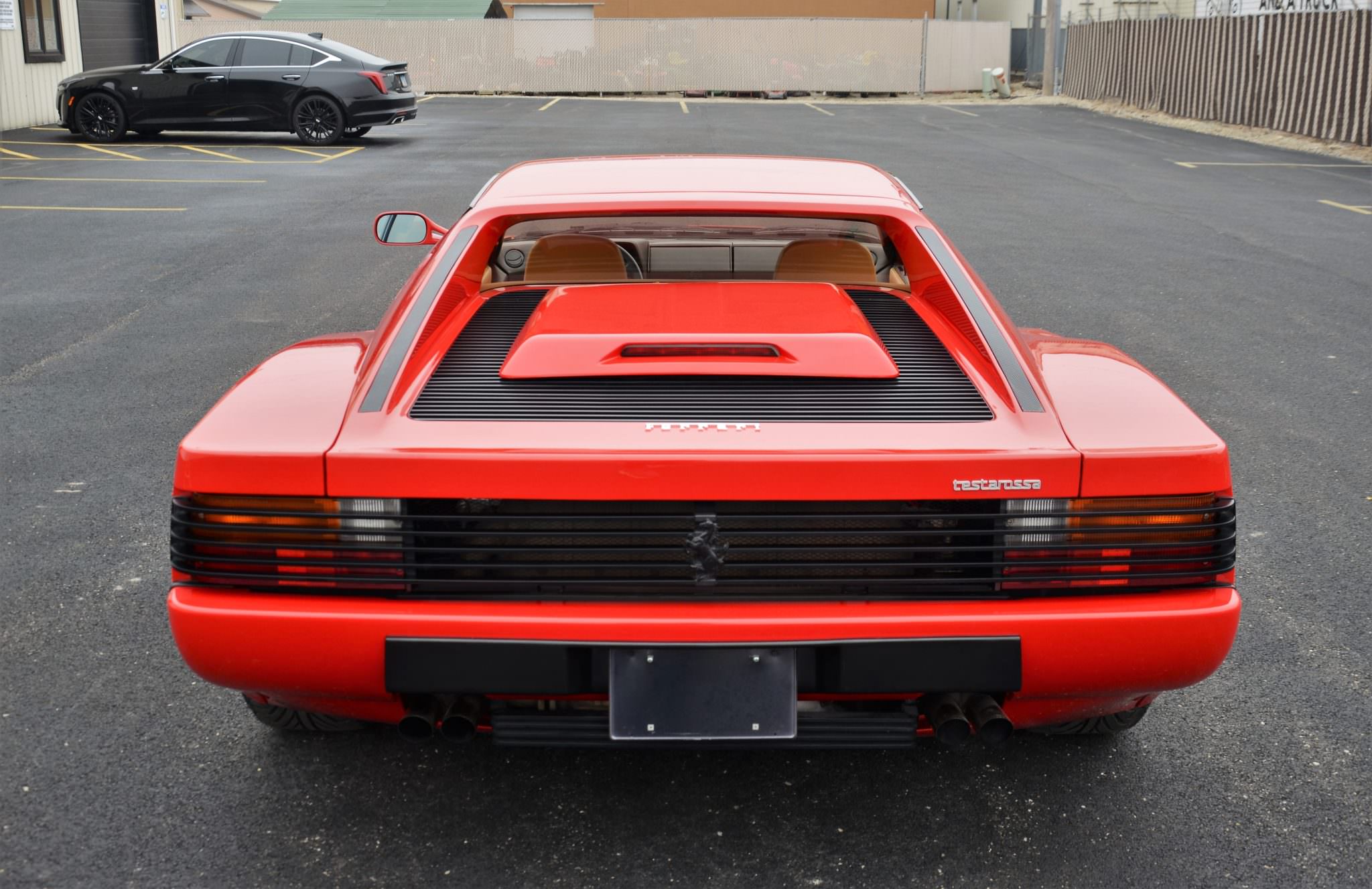
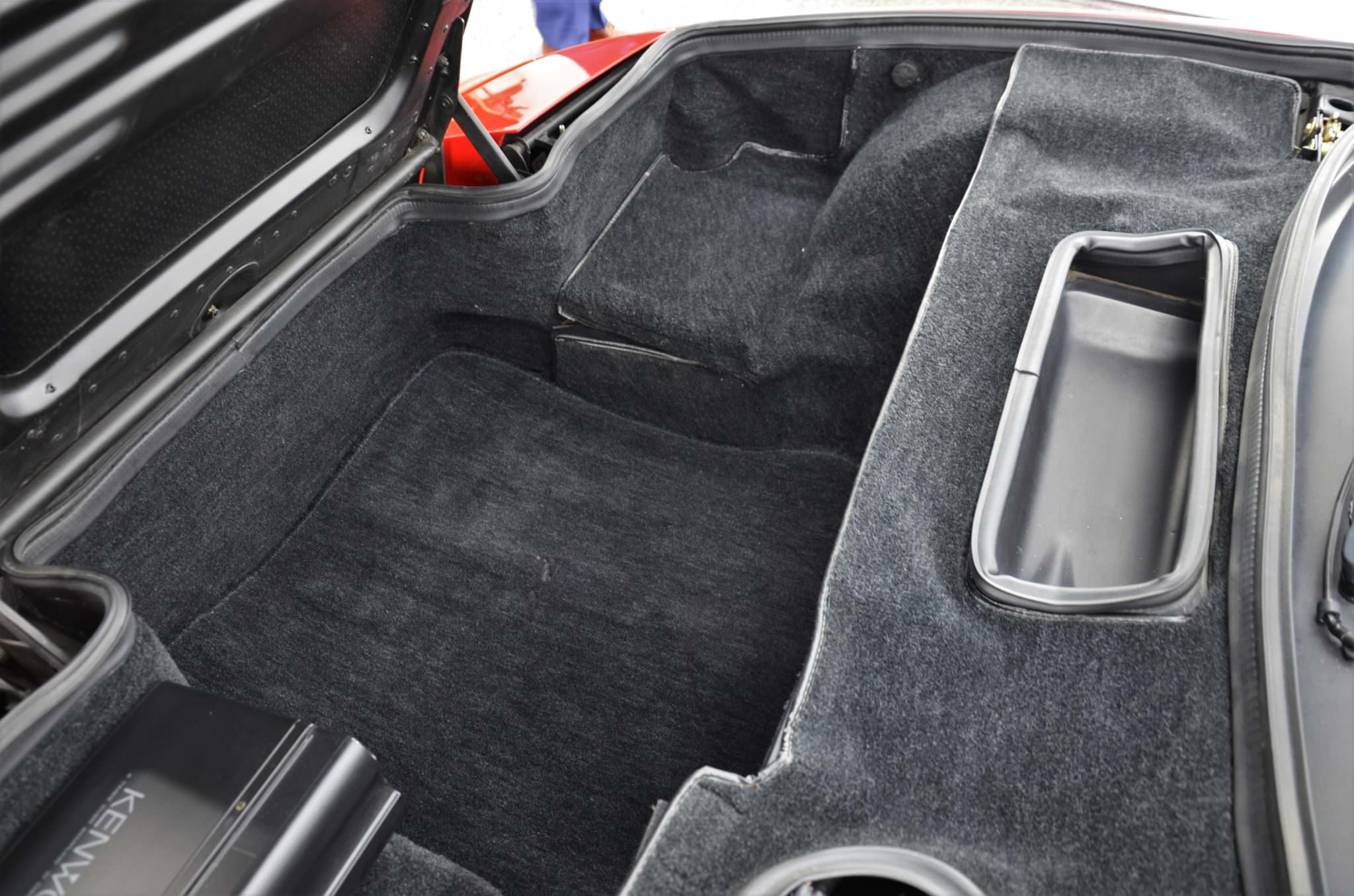
Ferrari turned to Pininfarina, where a design team of Ian Cameron, Guido Campoli, Diego Ottina, and Emanuele Nicosia worked under the direction of design chief Leonardo Fioravanti. Their solution to the cooling problem was elegant – instead of one front radiator, they fitted twin radiators either side of the engine at the rear, eliminating the long pipe runs entirely and freeing up space in the nose for a carpeted luggage compartment. Essentially solving two problems at once.
The Controversial Cheese Graters
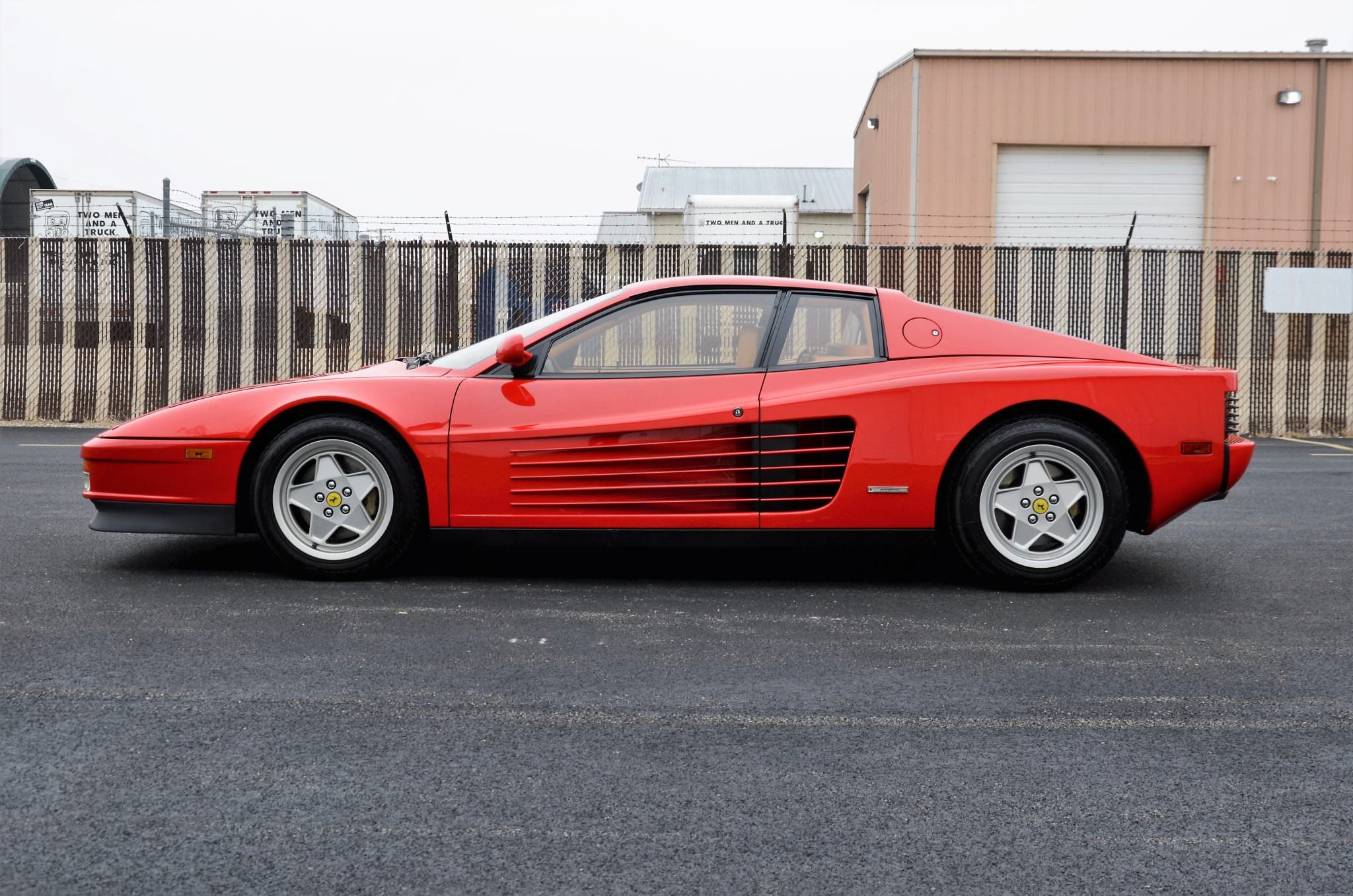
This engineering decision resulted in the Testarossa’s most memorable styling cue – the car needed large air intakes along its flanks to feed those radiators, and since American safety legislation prohibited leaving those intakes as large open holes, the team initially tried to minimize them before deciding instead to make them a design statement.
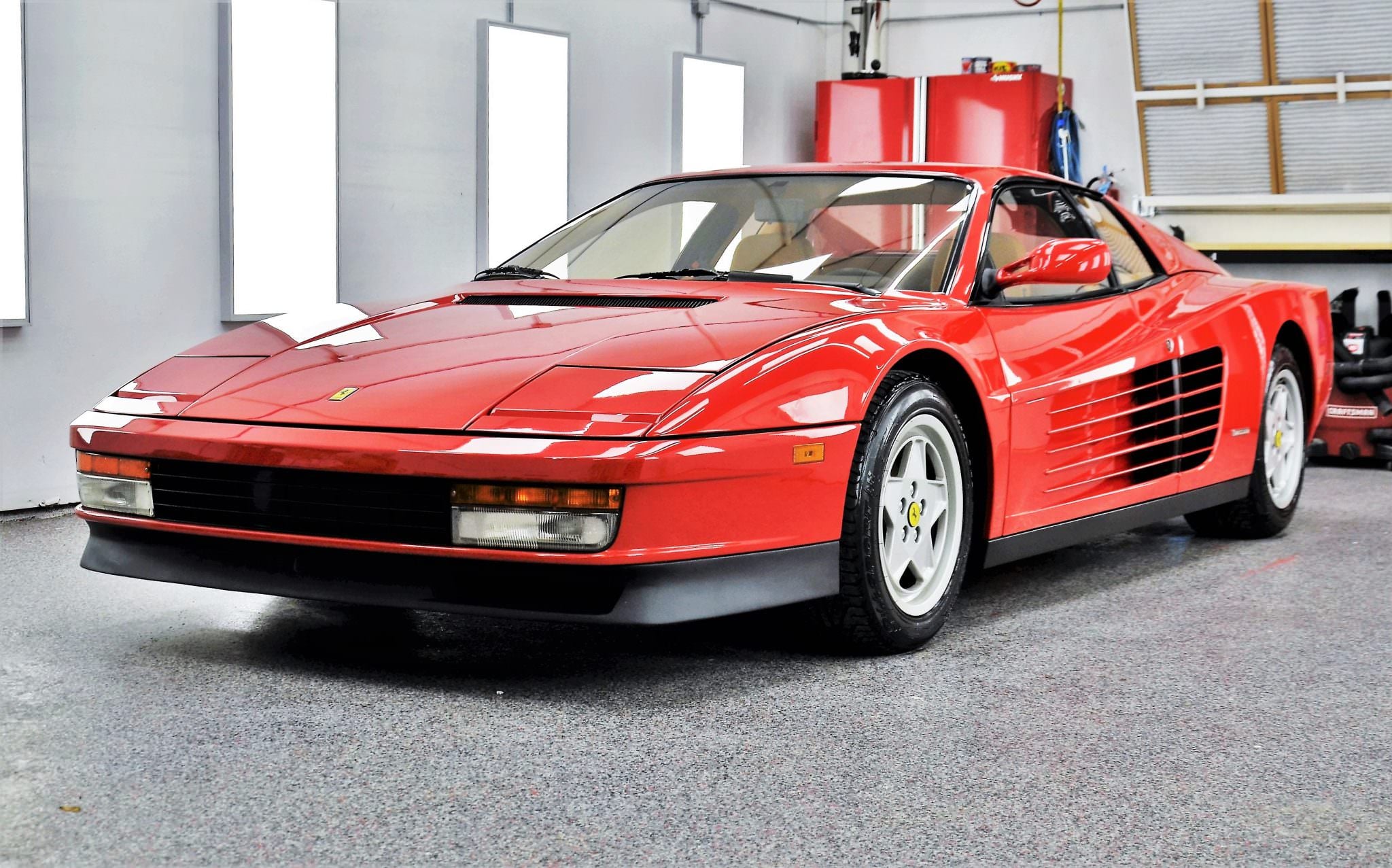
The resulting horizontal strakes, sometimes called “cheese graters” or “egg slicers,” became the car’s greatest defining visual feature, a feature that would be copied far and wide despite being somewhat controversial early on. The result was a car that measured in at 1,976mm wide, roughly 150mm more than the BB512 series, with a side profile unlike anything else on the road.
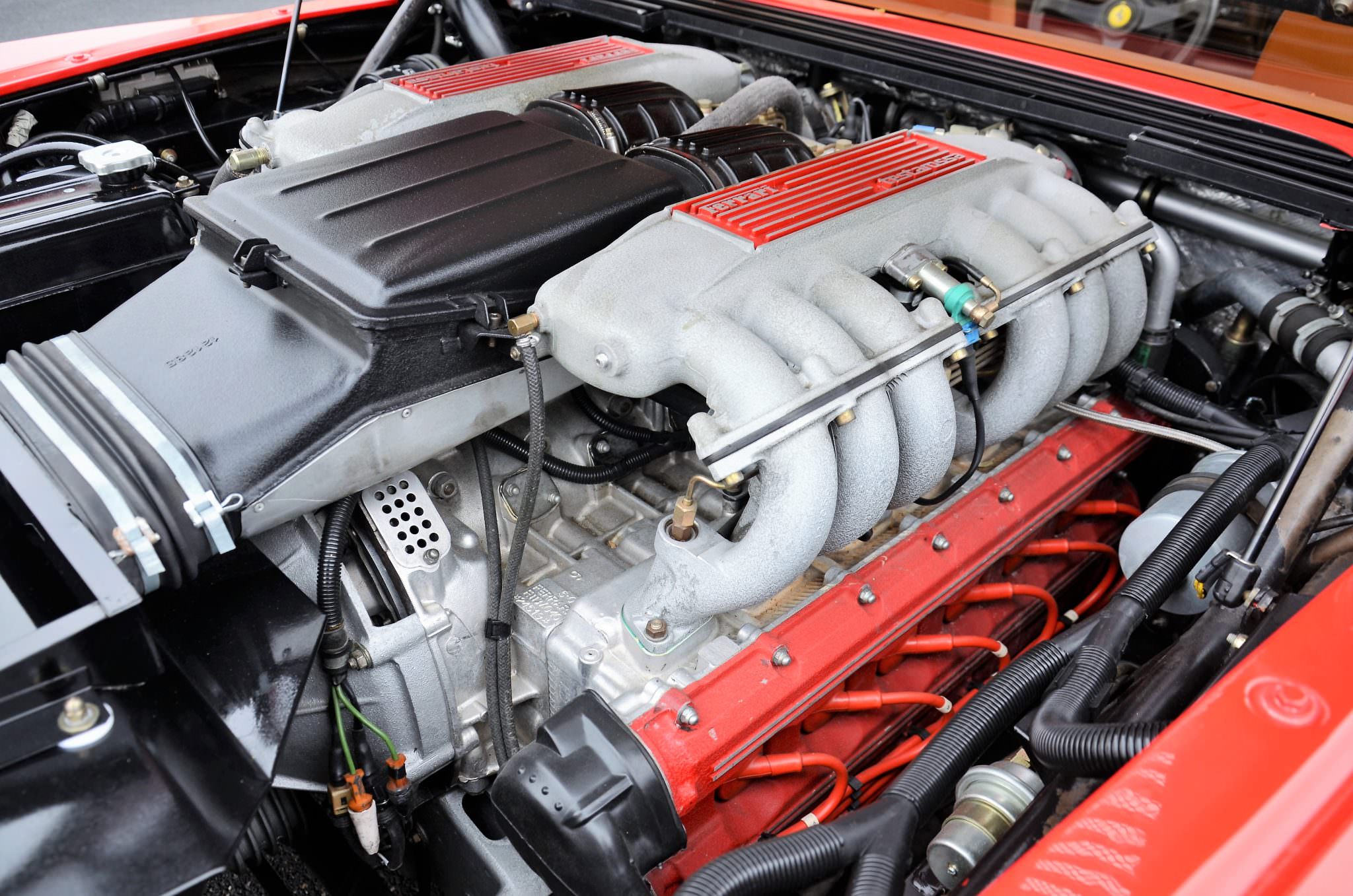
The name Testarossa famously means “red head” in Italian, it was a deliberate callback to the legendary 250 Testa Rossa racing cars that had dominated the World Sportscar Championship in the late 1950s. Both cars shared the same distinguishing feature – bright red-painted cam covers on their twelve-cylinder engines.
Ferrari Testarossa Specifications
The Testarossa was powered by a naturally aspirated 4,943cc flat-12 engine designated the Tipo F113. Fitted with double overhead camshafts per bank and four valves per cylinder for a total of 48, Bosch K-Jetronic mechanical fuel injection, and a dry sump lubrication system, it produced 385 bhp in European specification and 380 bhp for American-market cars.
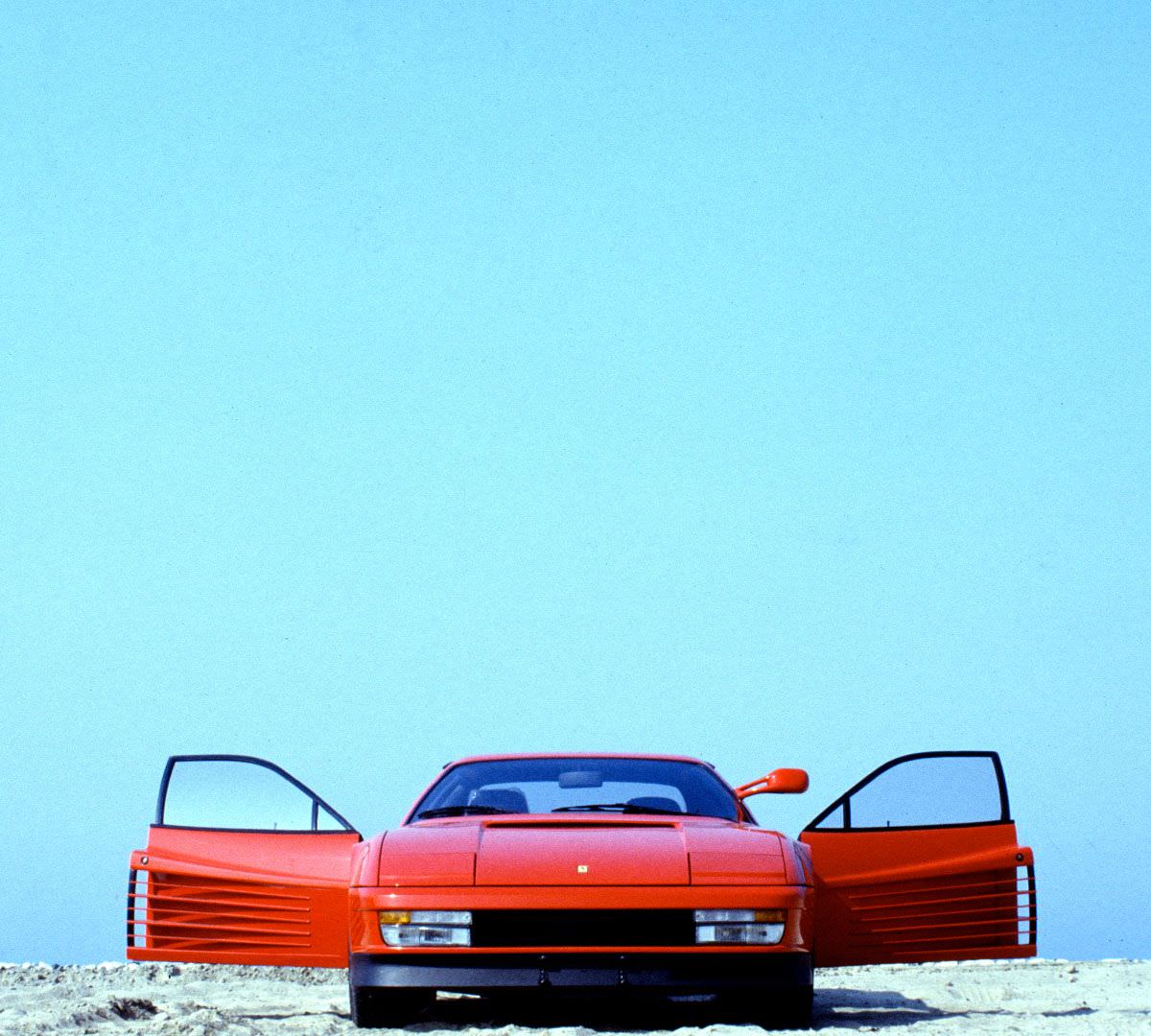
This engineering decision resulted in the Testarossa’s most memorable styling cue – the car needed large air intakes along its flanks to feed those radiators, and since American safety legislation prohibited leaving those intakes as large open holes, the team initially tried to minimize them before deciding instead to make them a design statement. Image courtesy of Ferrari.
The engine was mated to a rear-mounted 5-speed manual transaxle operated through Ferrari’s trademark gated shifter. Suspension was independent double wishbones all round with coil springs, telescopic dampers, and anti-roll bars front and rear, built around a tubular steel chassis.
Ferrari quoted a top speed of 180 mph and a 0 to 60 mph time of 5.8 seconds, though several period car magazines recorded quicker times in testing – with Motor Trend managing an impressive 5.29 seconds.
The Testarossa premiered on the 2nd of October 1984 at the Lido Club on the Champs-Élysées in Paris, lowered from above on a giant platform with a single spotlight illuminating the car in an otherwise darkened room.
It appeared the following day on the Ferrari stand at the Paris Motor Show, where 37 orders were taken immediately. Early cars had a single high-mounted side mirror on the driver’s side (the “Monospecchio”) which was controversial at the time but is now among the most sought-after details for collectors. From 1987, American-market cars received a lower-mounted mirror and a second mirror on the passenger side to offer better rearward visibility.
The Key Rivals
The Testarossa’s primary rivals were the Lamborghini Countach, by then evolved into the 5000 QV with its 5.2 liter V12 producing 420 bhp in US fuel-injected specification, and the Porsche 911 Turbo (930), which offered a fundamentally different rear-engined, turbocharged experience.
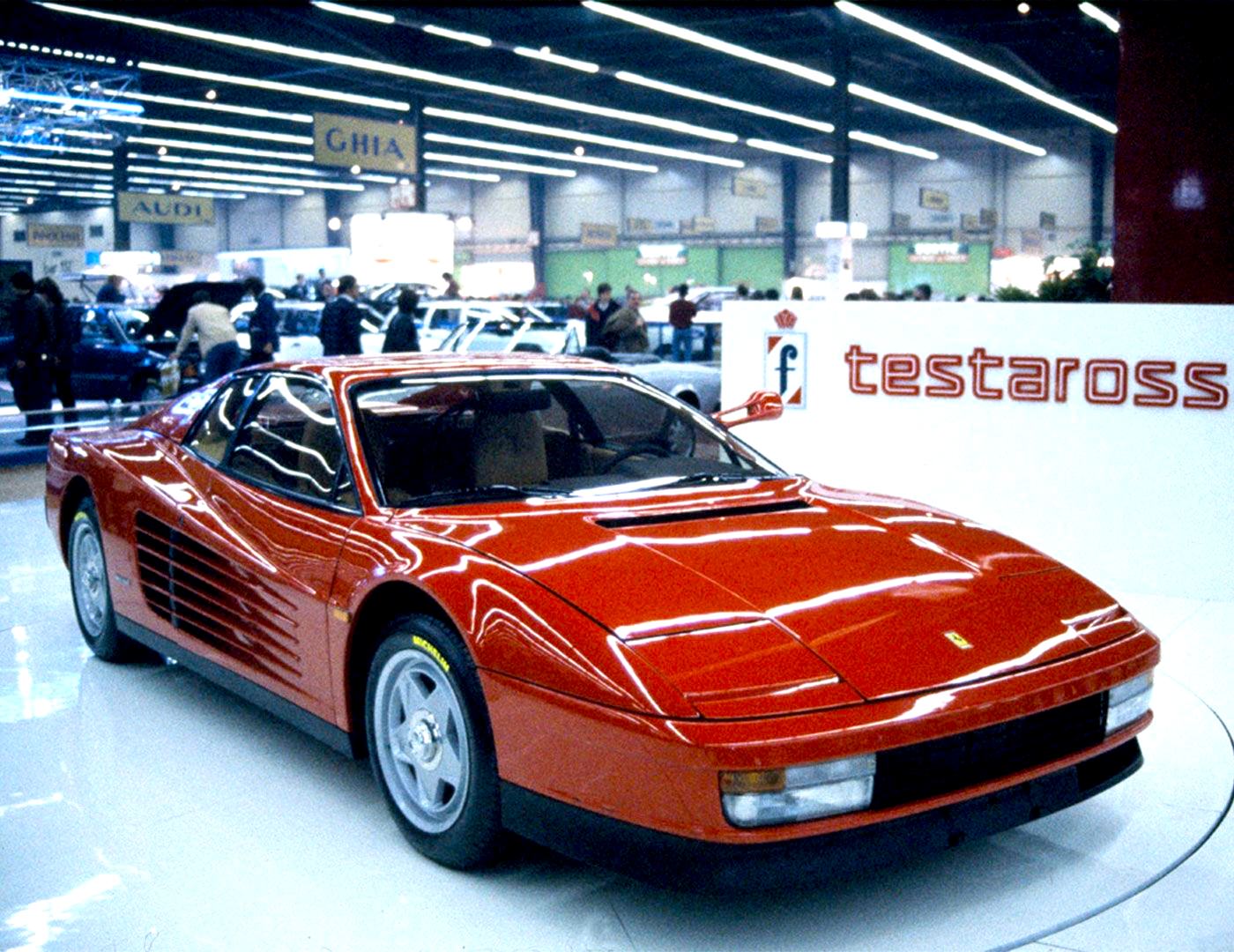
The Ferrari Testarossa was first shown to the world on the Ferrari stand at the Paris Motor Show in 1984, where 37 orders were taken immediately. Image courtesy of Ferrari.
The Testarossa positioned itself as a grand tourer that could comfortably accommodate two people and their luggage while delivering genuine supercar performance, and crucially, it could be sold legally in America for the first time in a decade as a full twelve cylinder Ferrari production car.
Between 1984 and 1991, Ferrari built 7,177 Testarossas, making it the best-selling twelve-cylinder model in the company’s history to that point in time. During the late 1980s boom, demand was so intense that buyers paid up to three times the list price just to secure a car quickly.
The cultural footprint of the model grew even larger thanks to its role in Miami Vice from 1986 onward, Enzo Ferrari personally gifted star Don Johnson a silver 1989 example as thanks, and through Sega’s Out Run arcade game, which put a virtual Testarossa in the hands of millions of kids around the world.
The Testarossa Successors
Due to the wild success of the Testarossa platform Ferrari opted to evolve it through two subsequent variants instead of just replacing it outright. The 512 TR, introduced at the 1992 Los Angeles Auto Show, brought a revised engine with Bosch Motronic injection, higher compression, and 428 bhp in European specification (421 bhp for the US models), along with a lowered engine and gearbox position for a better centre of gravity. A total of 2,261 were built.
The final iteration, the F512 M (for modificata), debuted at the 1994 Paris Auto Show with 434 bhp, fixed headlights replacing the pop-ups, and titanium connecting rods. Just 501 were made, making it the rarest variant by a wide margin. The F512 M holds a particular distinction – it was the last production Ferrari ever to use a flat-12 engine.
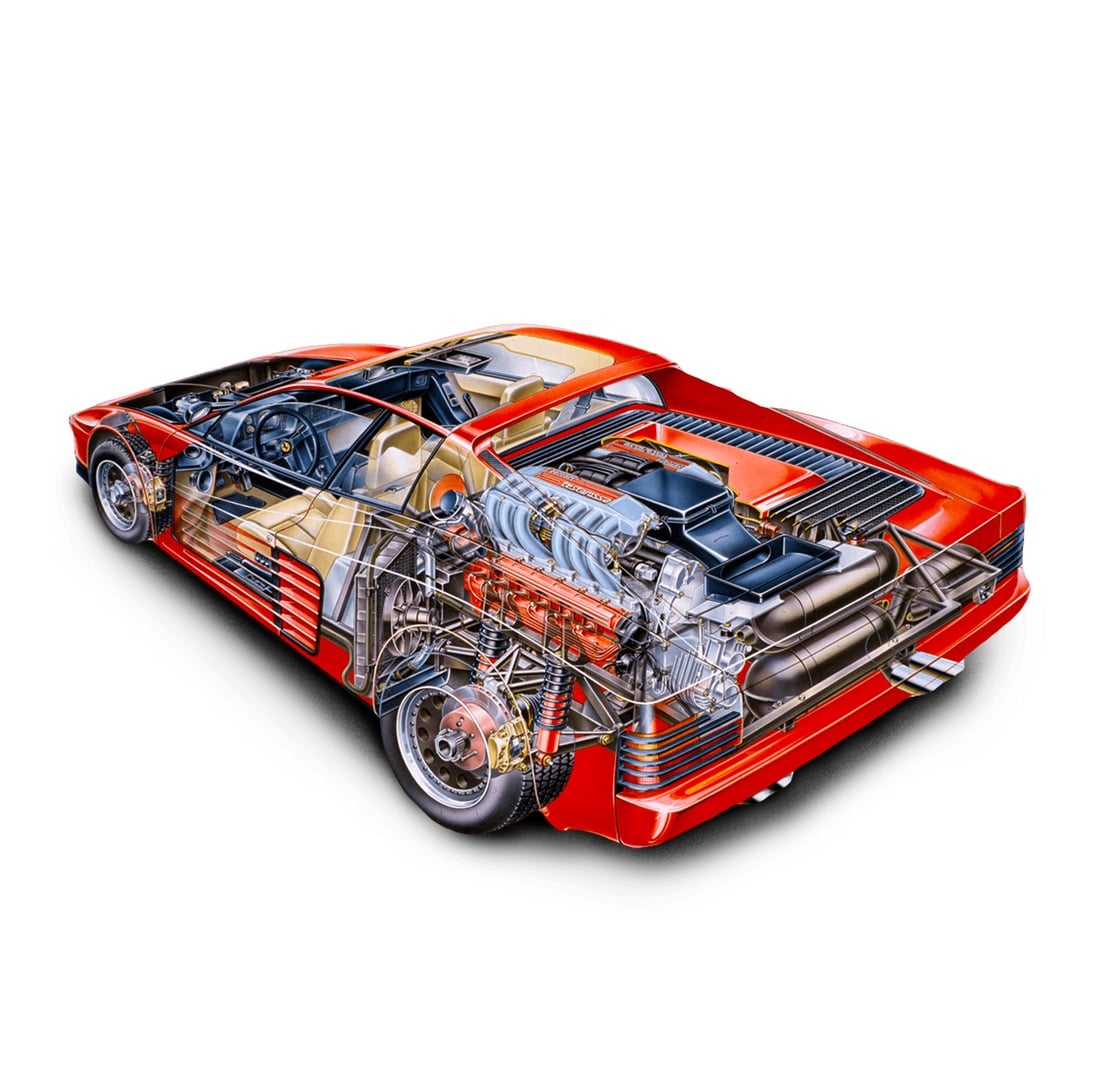
The Testarossa was powered by a naturally aspirated 4,943cc flat-12 engine designated the Tipo F113. Fitted with double overhead camshafts per bank and four valves per cylinder for a total of 48, Bosch K-Jetronic mechanical fuel injection, and a dry sump lubrication system, it produced 385 bhp in European specification and 380 bhp for American-market cars. Image courtesy of Ferrari.
Across all three of these variants, total production reached 9,939 cars – this was a remarkable figure for Ferrari and a clear sign of the Testarossa’s appeal as both a bragging-rights supercar/GT and a cultural touchstone of its era.
The 1990 Ferrari Testarossa Project Car Shown Here
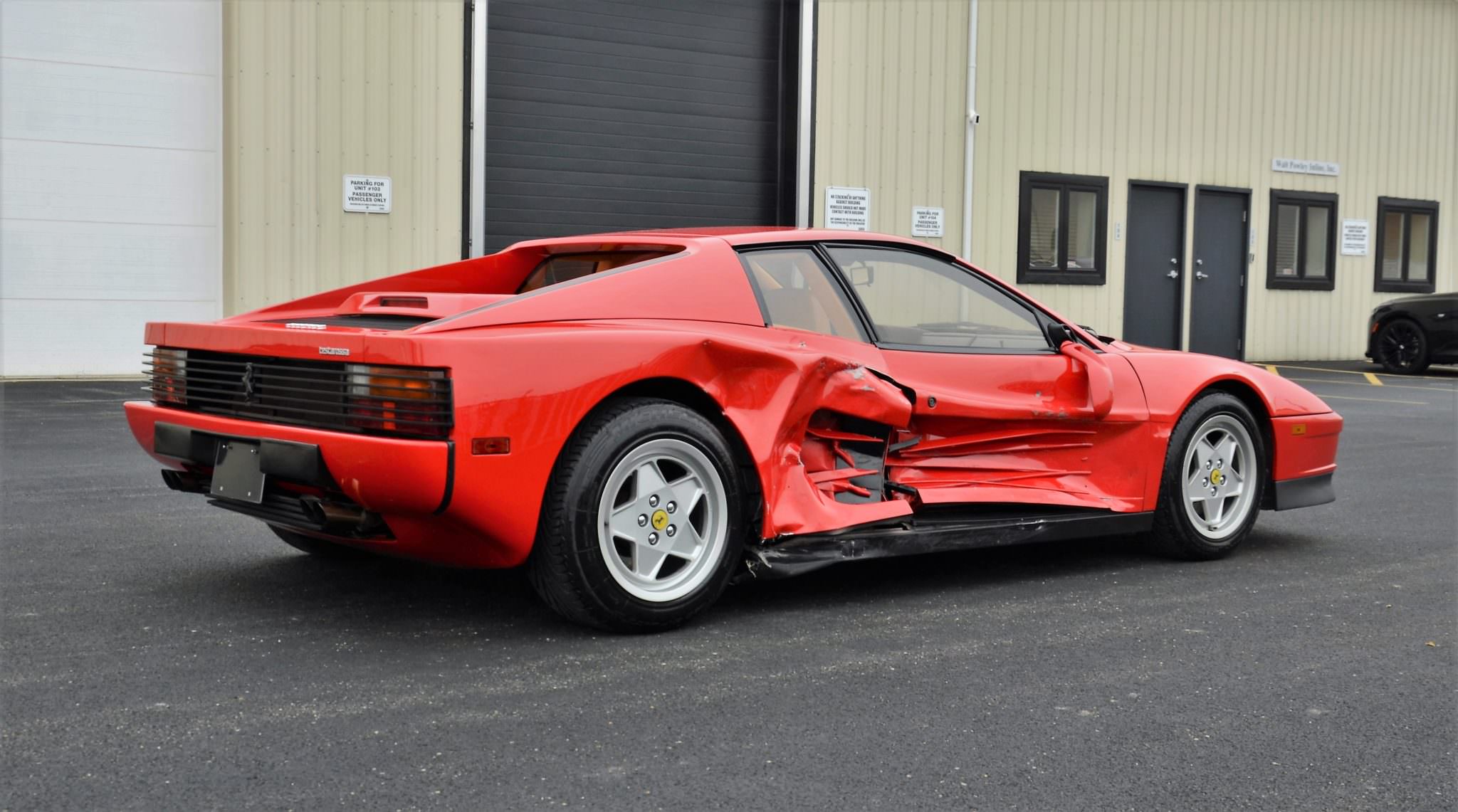
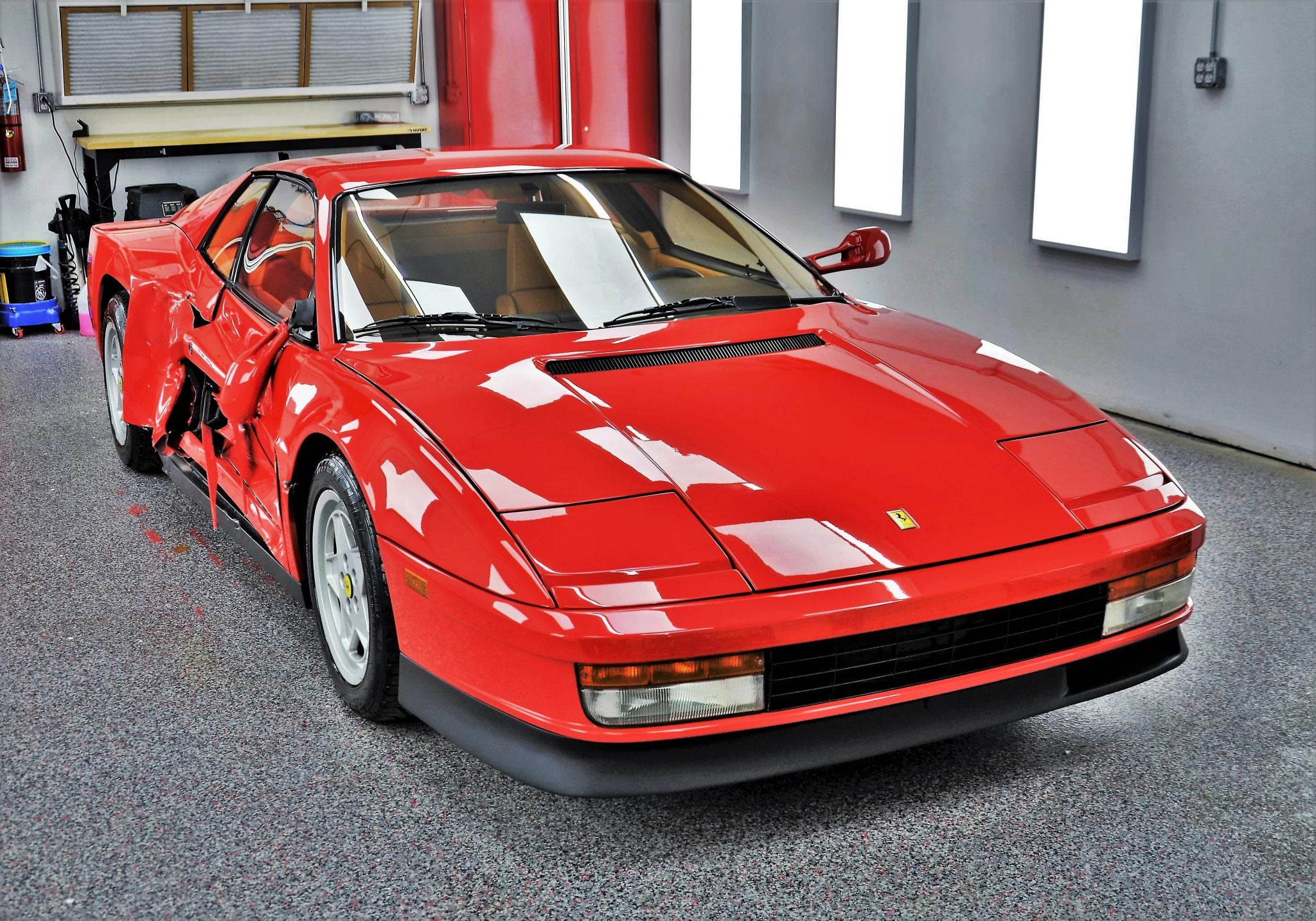
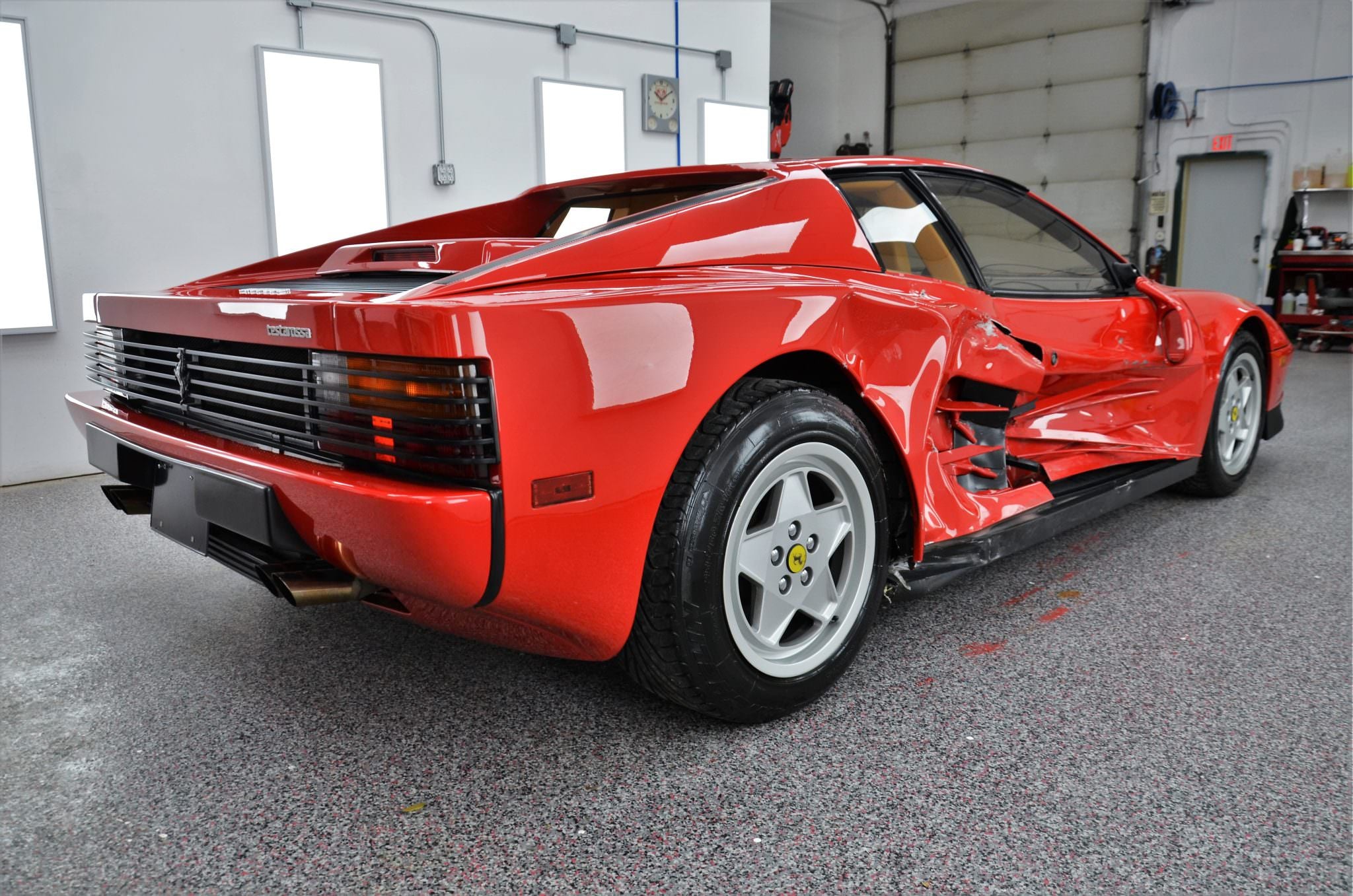
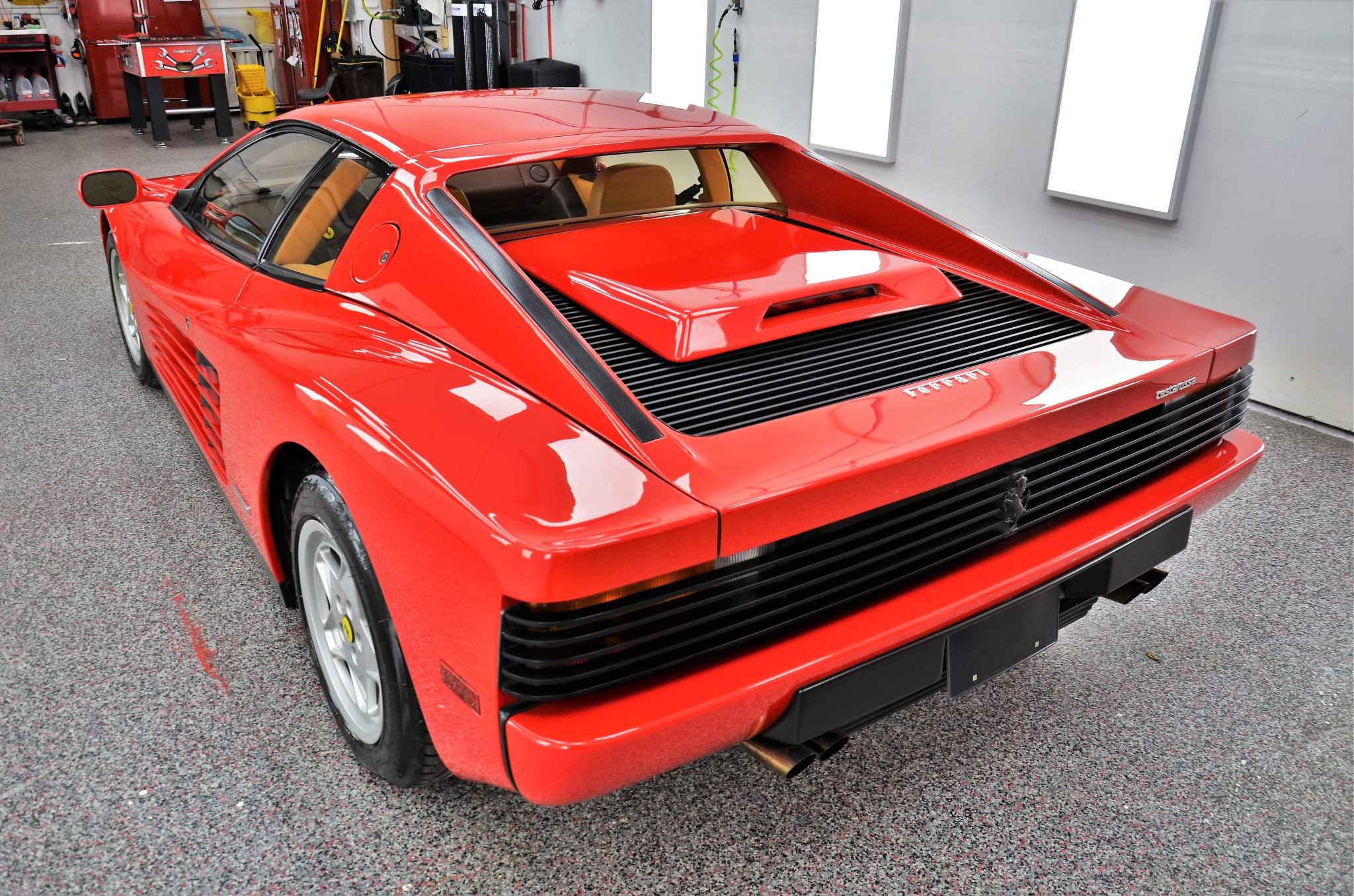
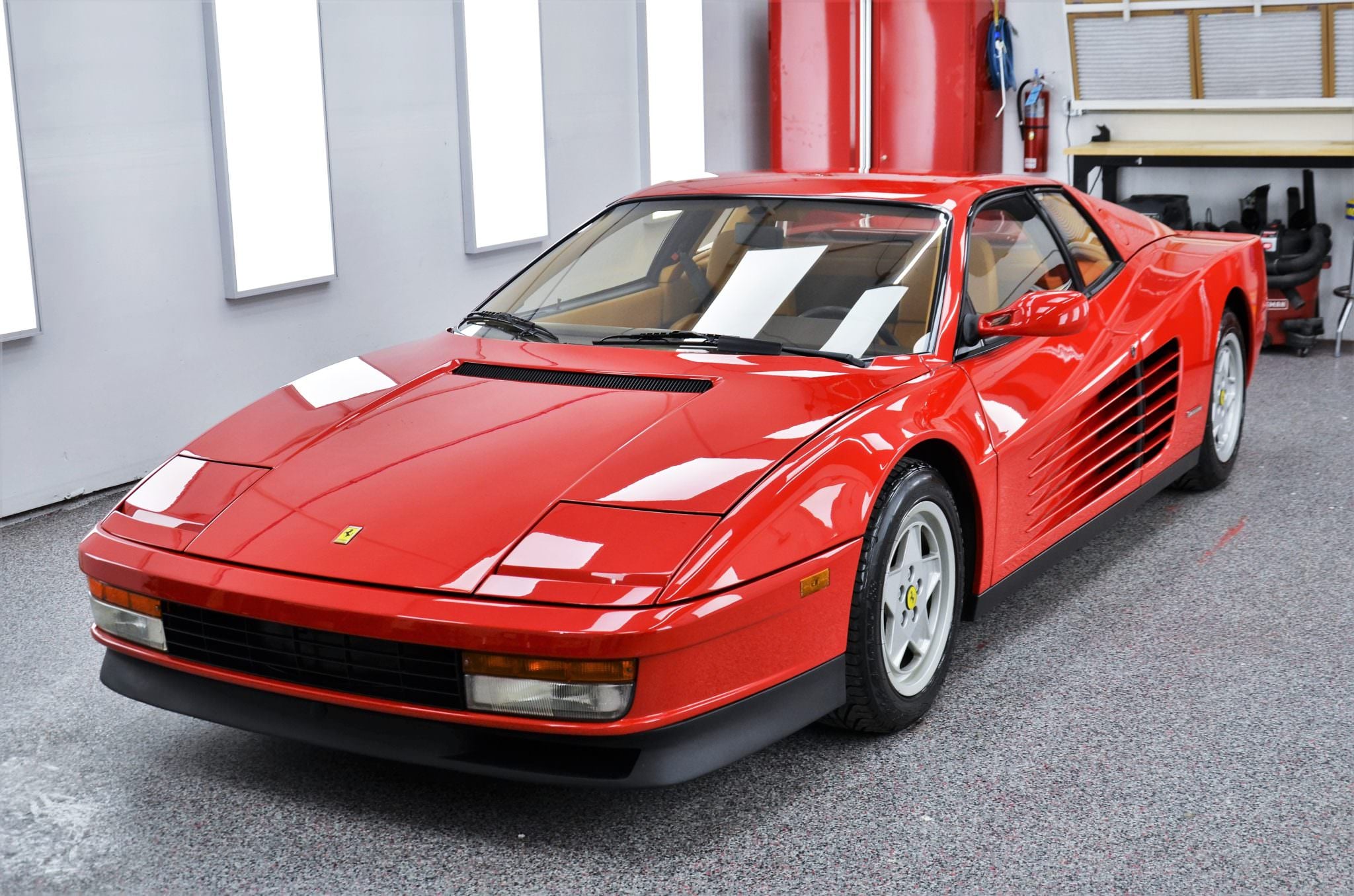
The 1990 Ferrari Testarossa you see in this article is being sold as a project car following a side-impact collision in October of 2025 that damaged the right side and right rear. The listing notes that the right-side radiator is damaged, the alignment is out of specification, and that the car will need body, suspension, and cooling system repairs before it can be driven.
Despite the collision damage, the car does benefit from a substantial mechanical service history. A roughly $44,000 engine-out service was completed in May of 2022, covering the timing belts, transaxle rebuild, clutch replacement, fuel pumps, fuel filter, spark plugs, drive belts, fuse board, and water pump hose. More recently, the oil was changed in September of 2025, and brake fluid, transaxle fluid, and clutch fluid were also serviced in 2025.
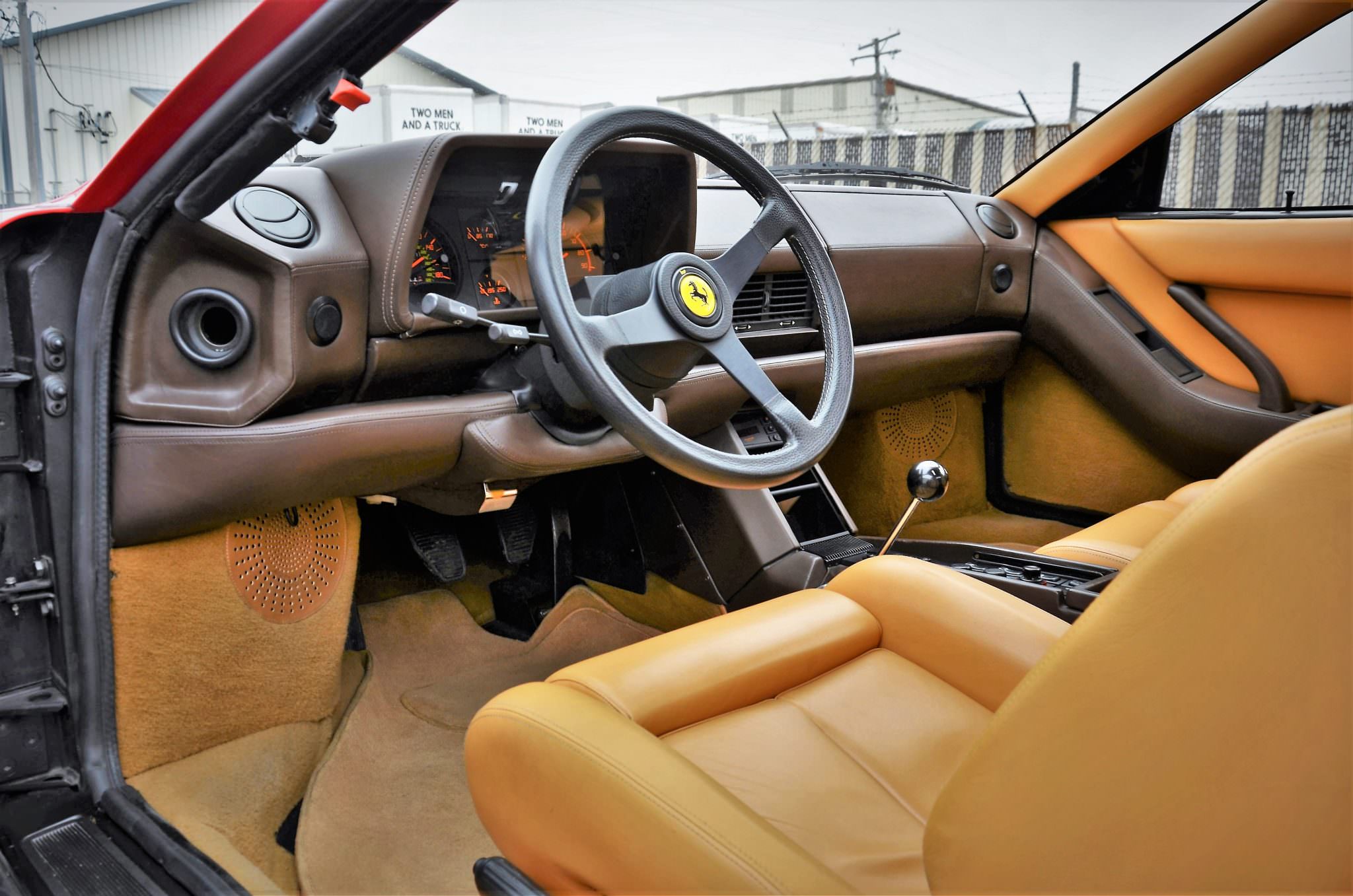
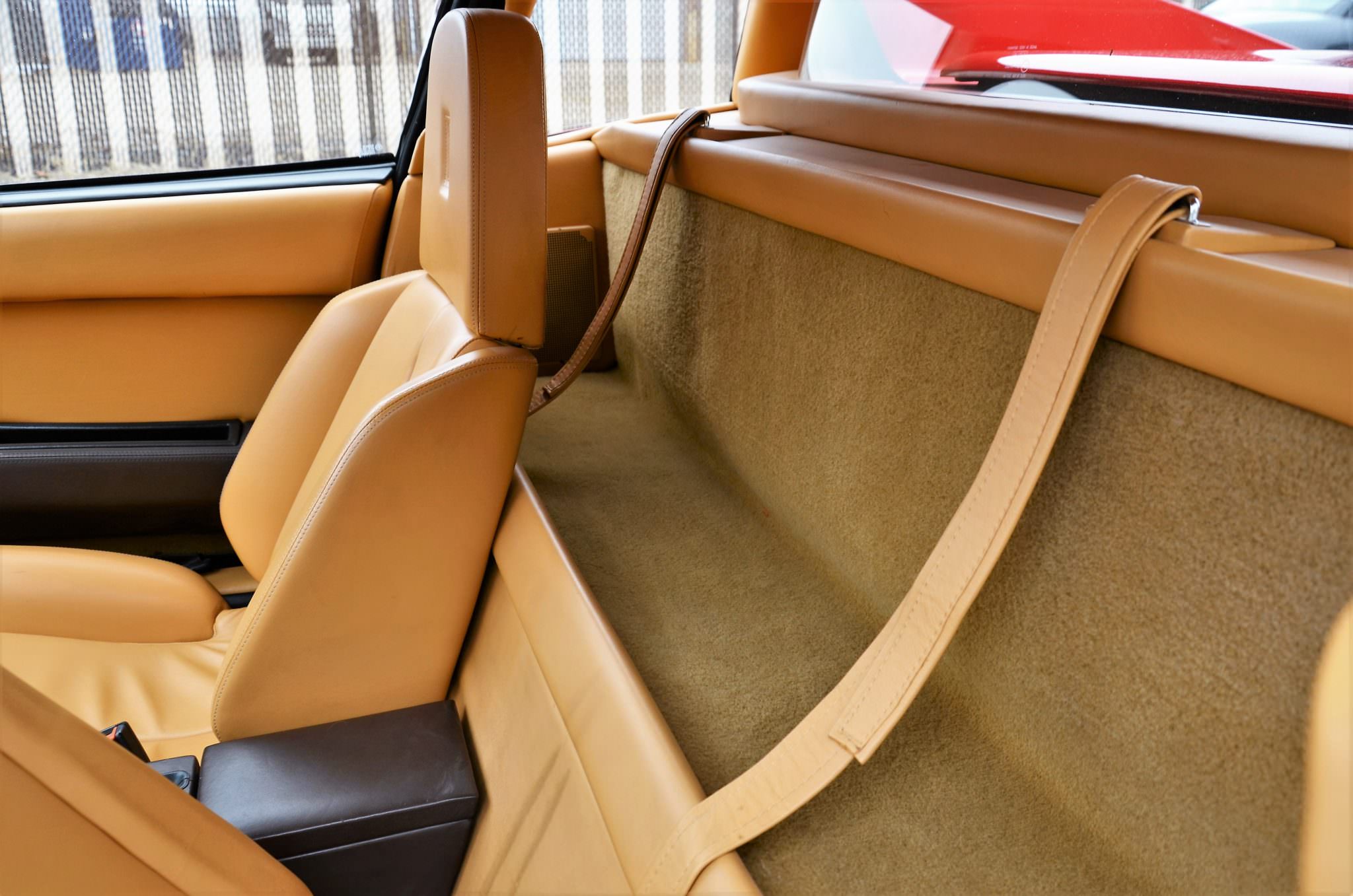
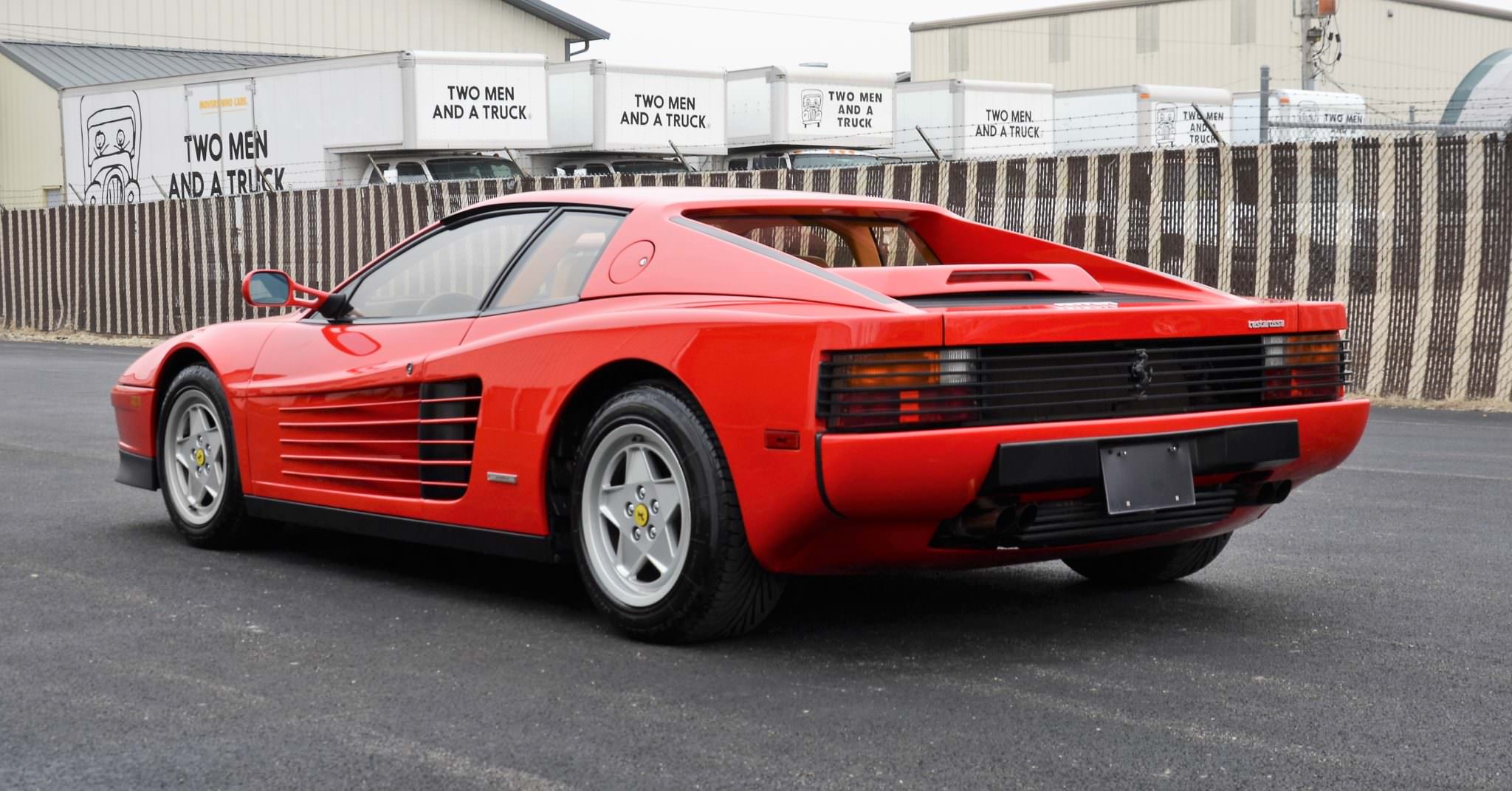
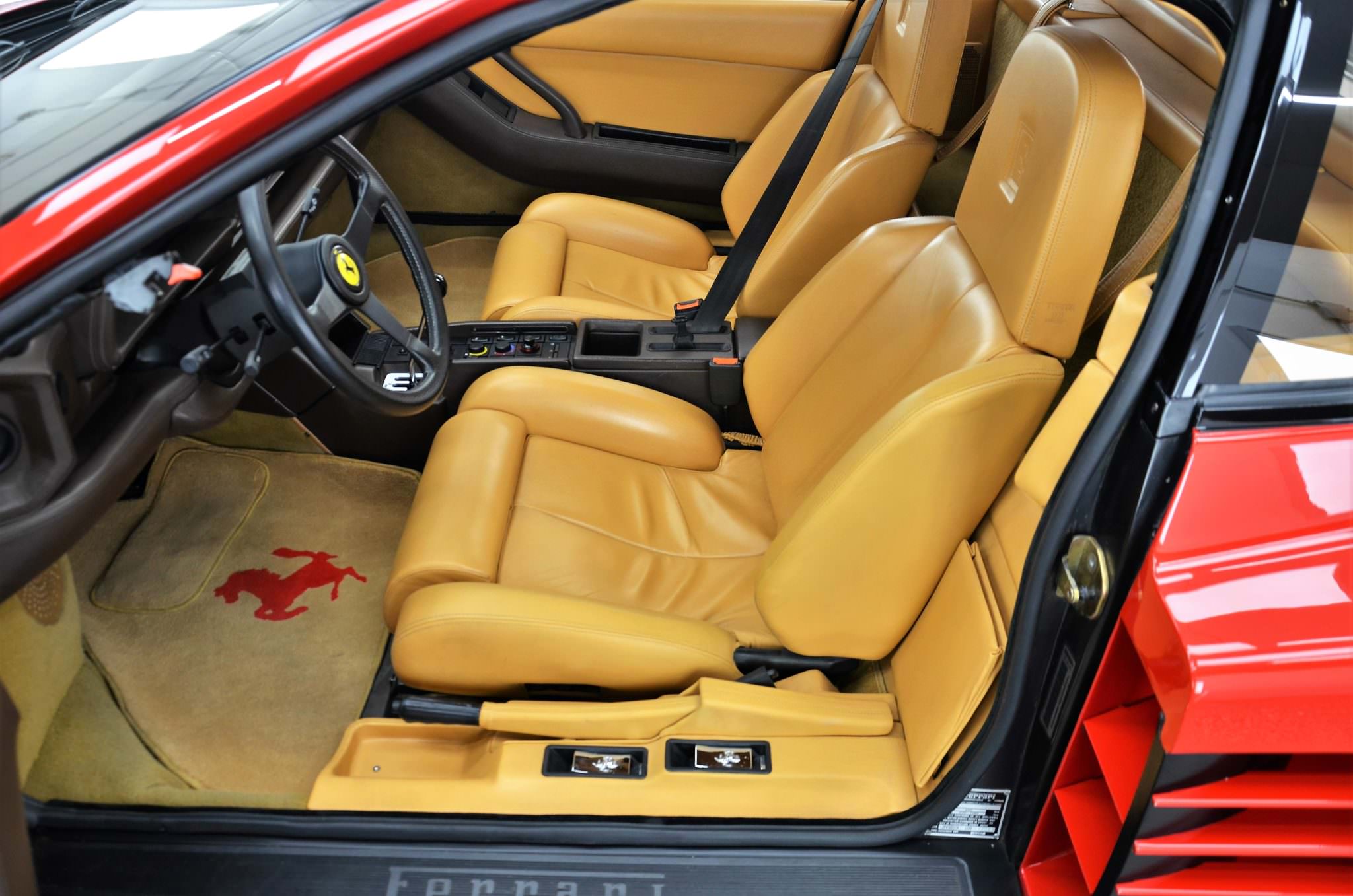
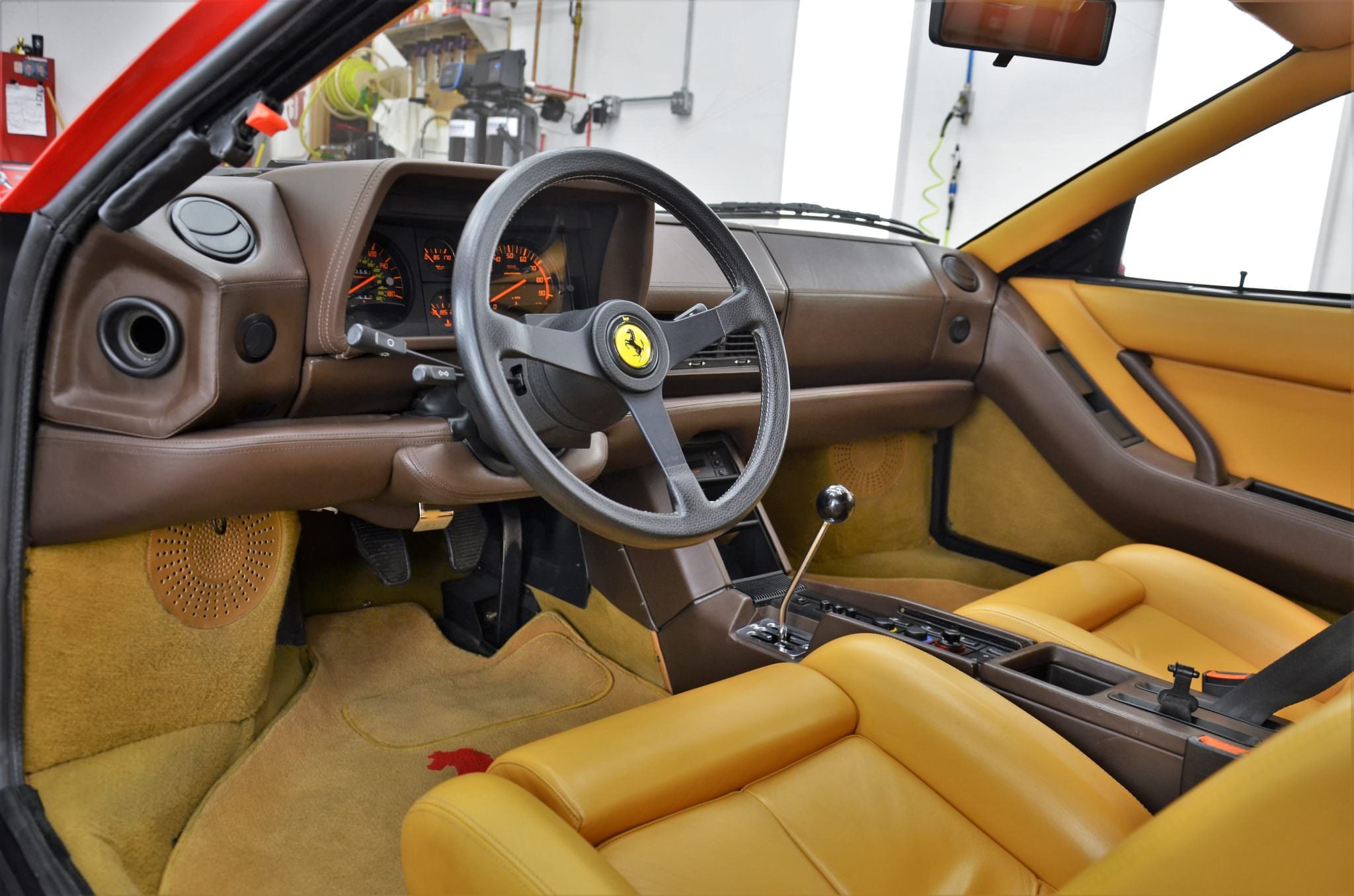
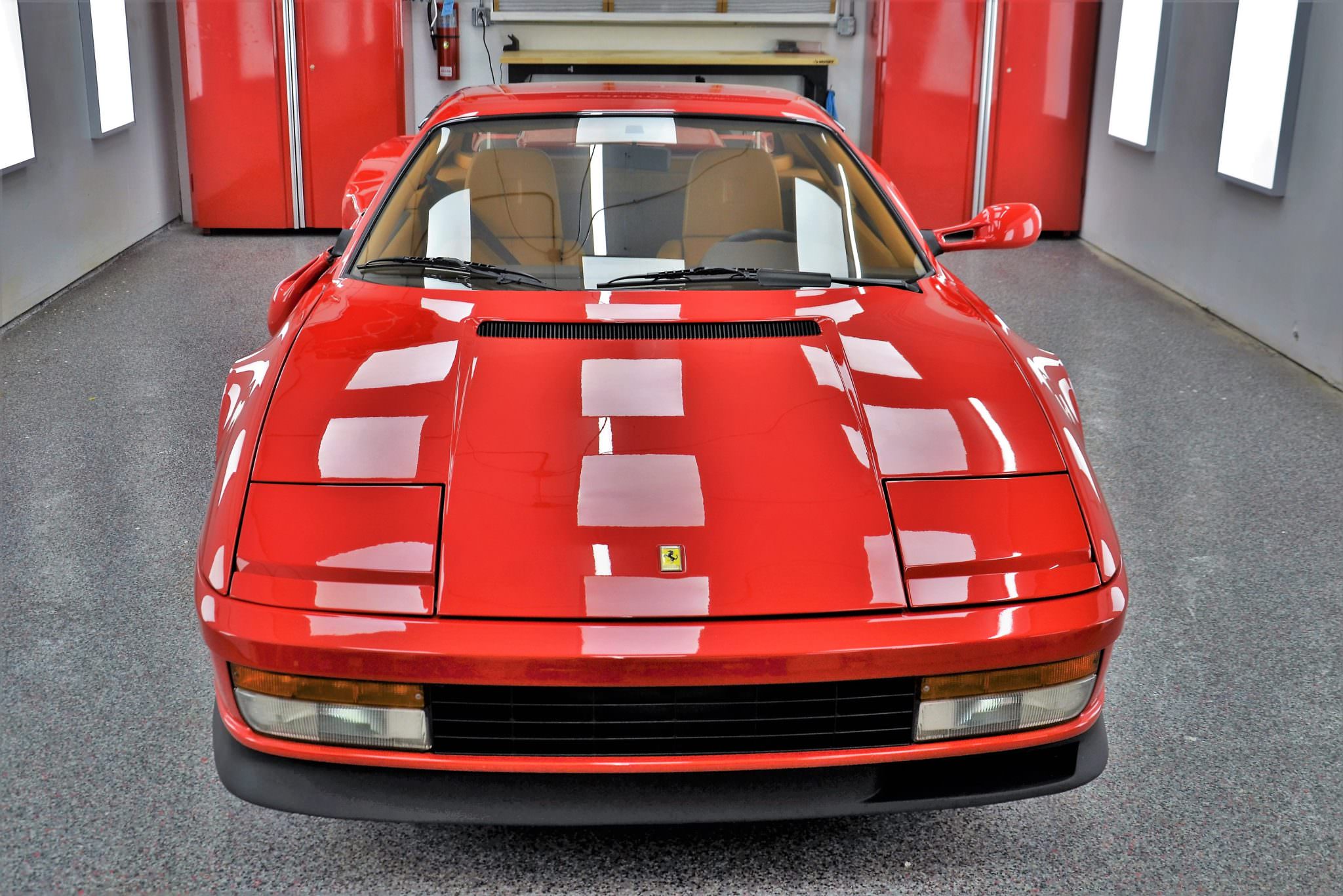
The car is finished in the classic Rosso Corsa over beige Connolly leather, widely considered the most desirable Testarossa color combination. The interior features Veglia instrumentation, a gated 5-speed shifter, a cassette stereo, motorized seat belts, and R134a air conditioning. Power comes from the 4.9 liter flat-12 as you would expect.
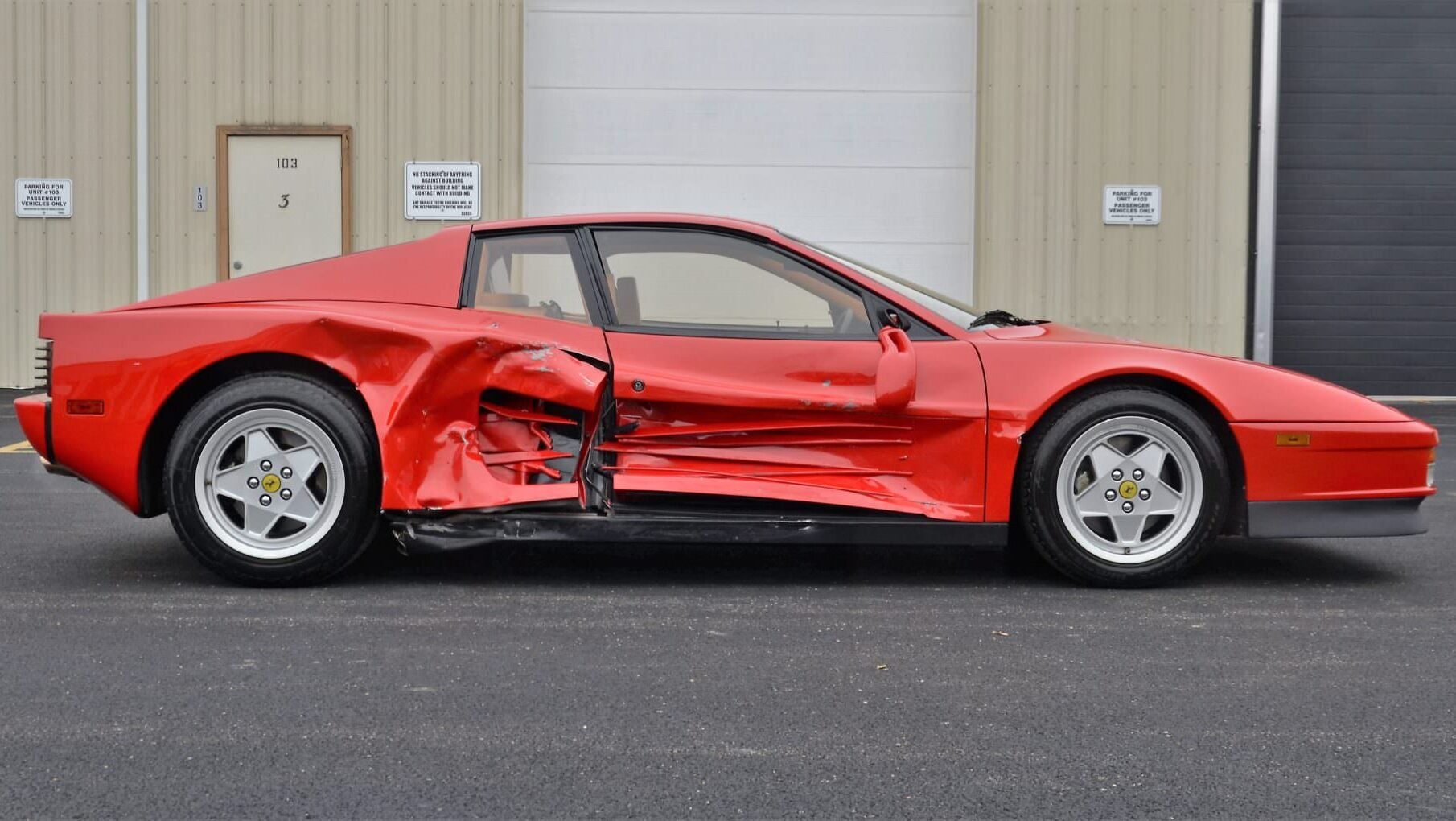
The 1990 Ferrari Testarossa you see in this article is being sold as a project car following a side-impact collision in October of 2025 that damaged the right side and right rear.
Originally delivered to Cornes Motors in San Diego with a factory sticker price of $168,050, the car has had a relatively gentle life mileage-wise, with only about 800 miles added under the current owner. The 16 inch five-spoke alloy wheels are shod with Michelin Pilot Sport tires, and braking is handled by four-wheel ventilated discs.
The car now shows 14,000 miles on the odometer and it’s being sold on behalf of the owner with an Illinois title, a Carfax report, service records, and manufacturer’s literature. If you’d like to read more about it or register to bid you can visit the listing here.
Images courtesy of Bring a Trailer + Ferrari

Articles that Ben Branch has written have been covered on CNN, Popular Mechanics, Smithsonian Magazine, Road & Track Magazine, the official Pinterest blog, the official eBay Motors blog, BuzzFeed, Autoweek Magazine, Wired Magazine, Autoblog, Gear Patrol, Jalopnik, The Verge, and many more.
Silodrome was founded by Ben back in 2010, in the years since the site has grown to become a world leader in the alternative and vintage motoring sector, with well over a million monthly readers from around the world and many hundreds of thousands of followers on social media.