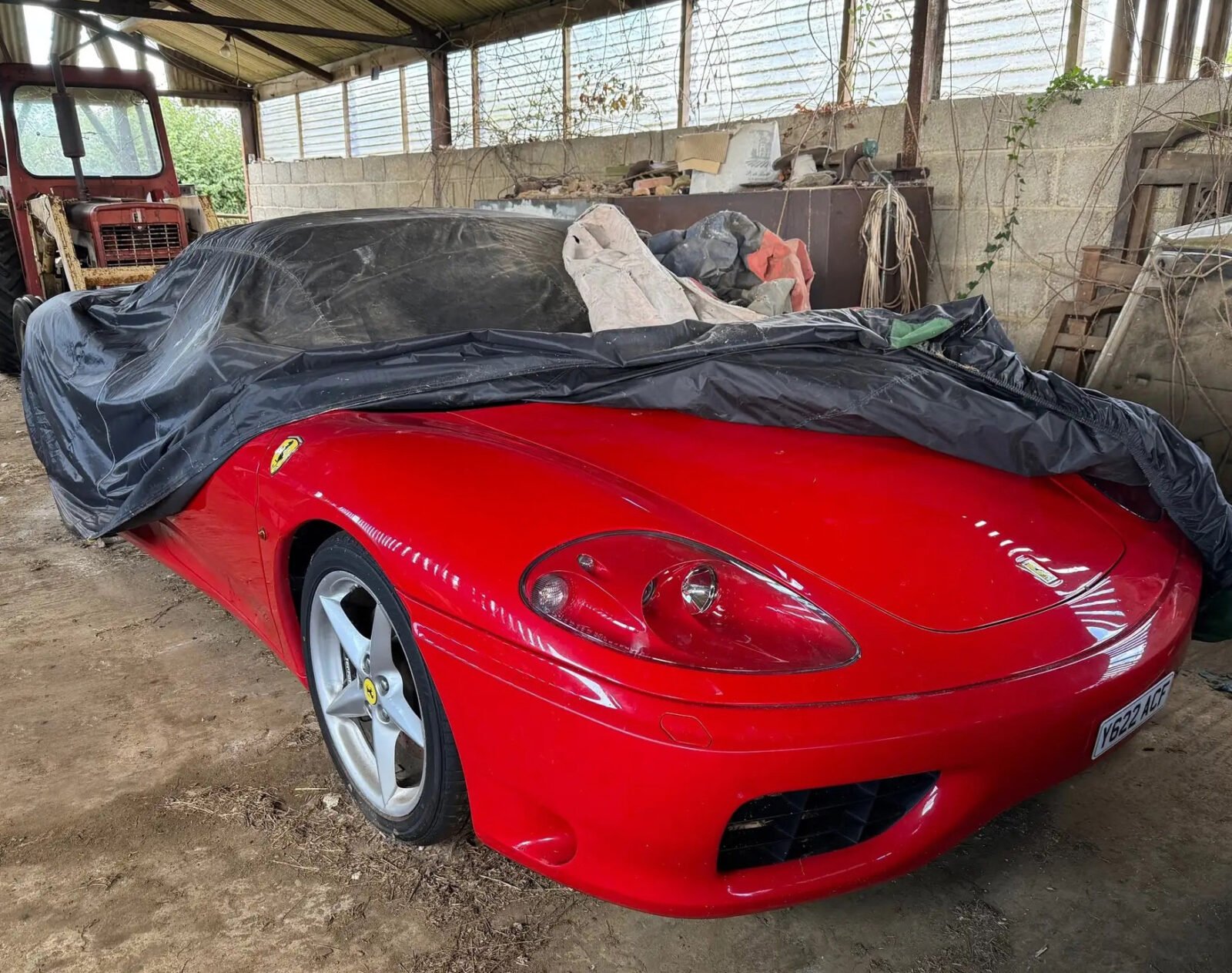
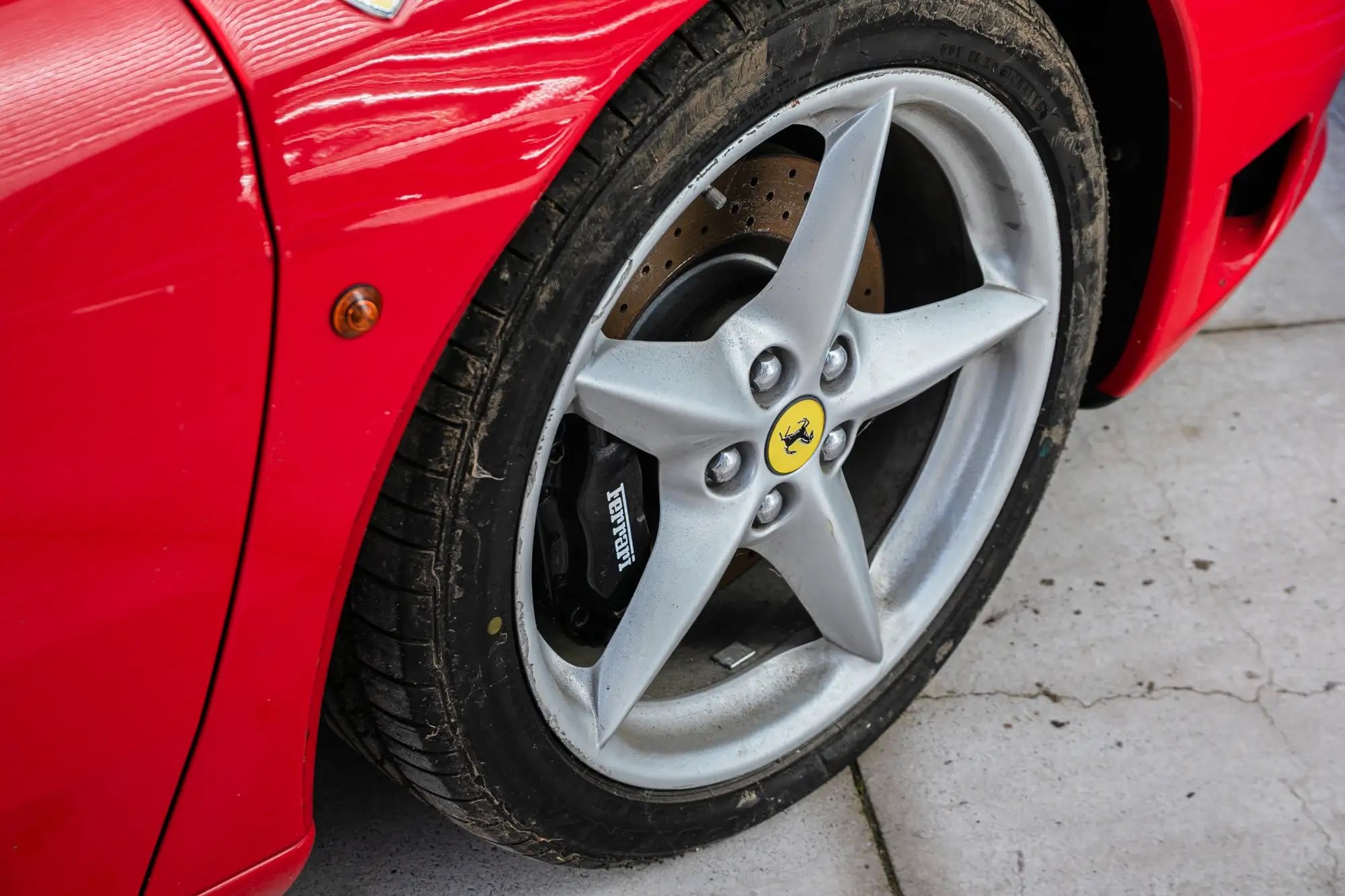
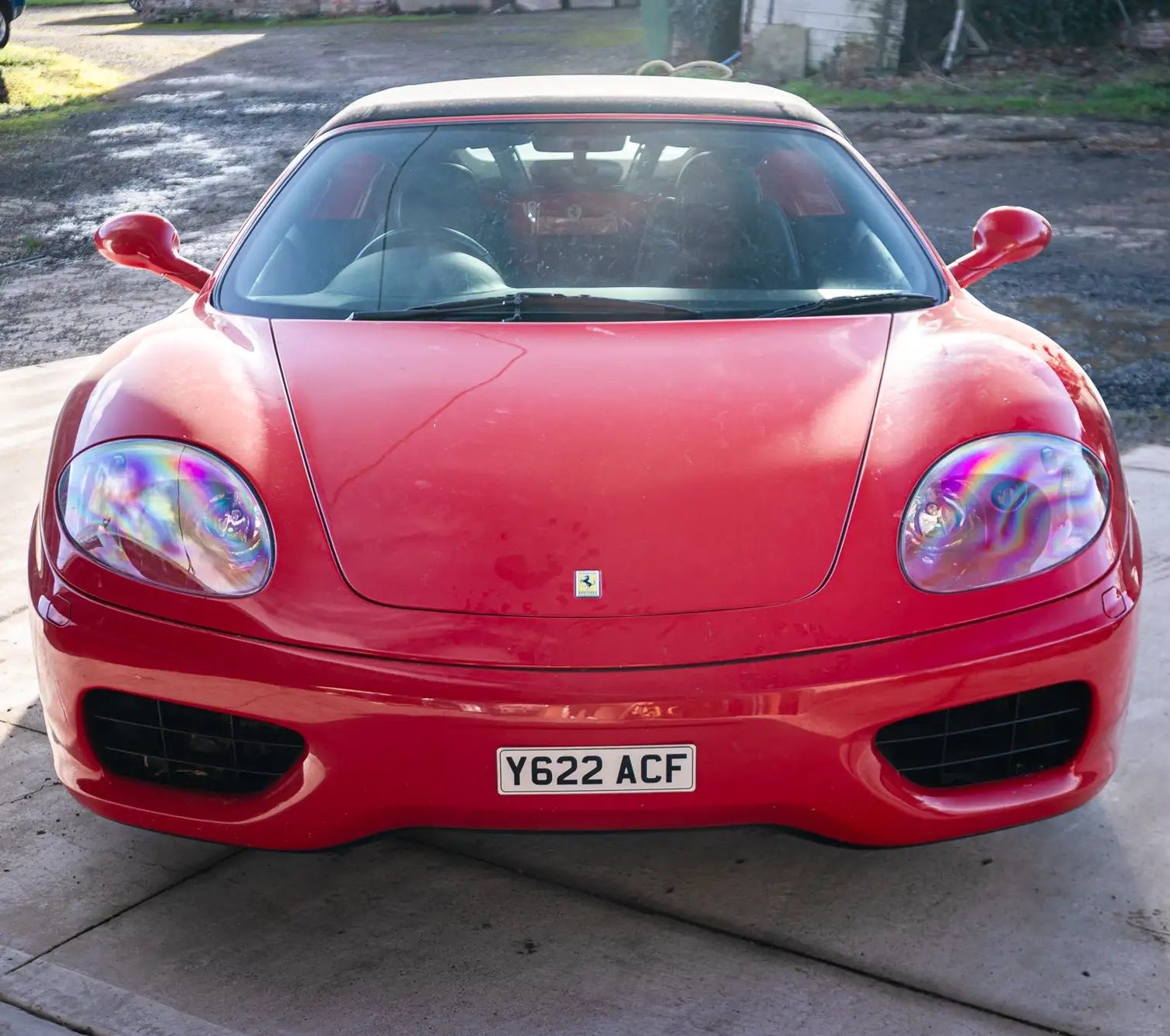
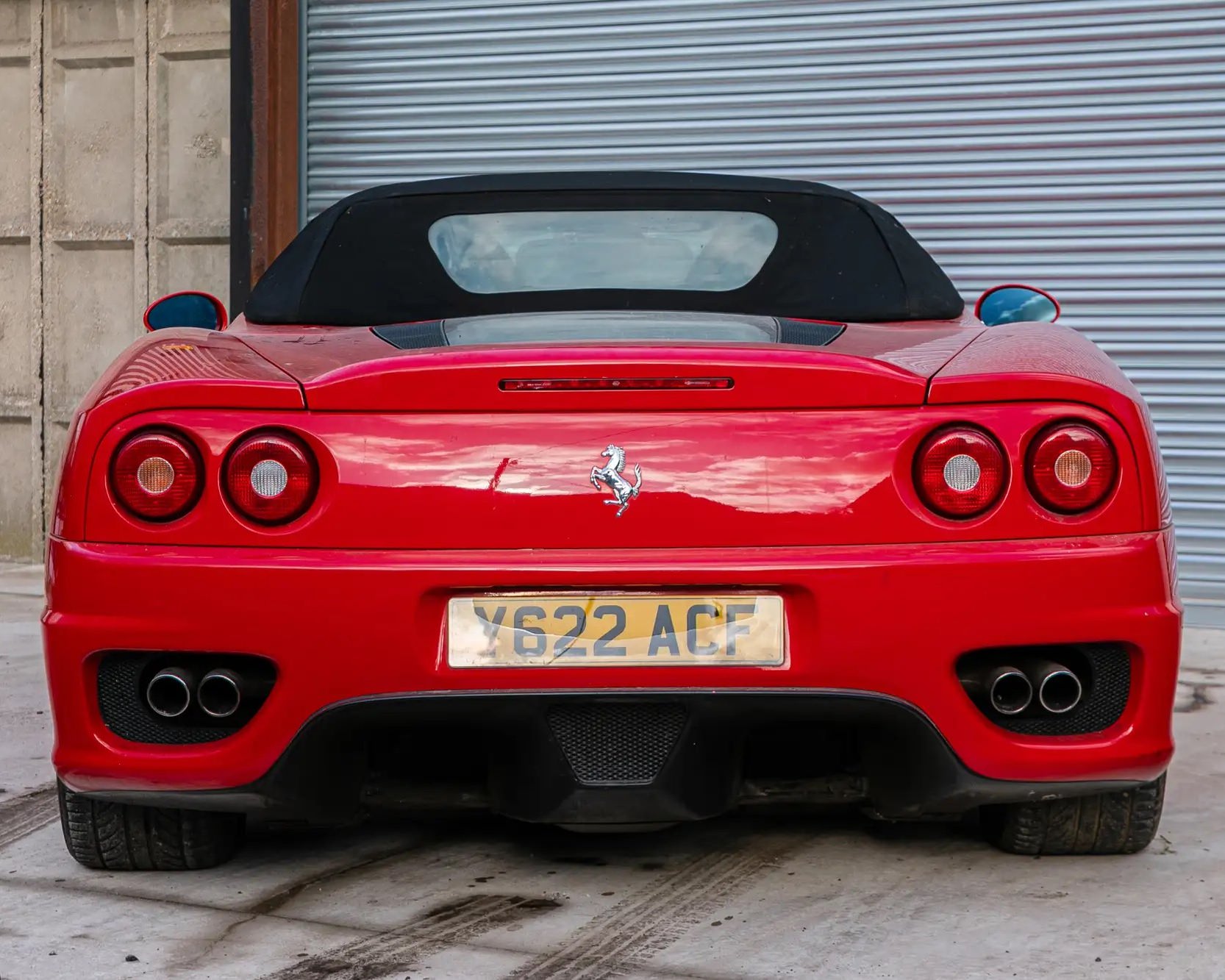
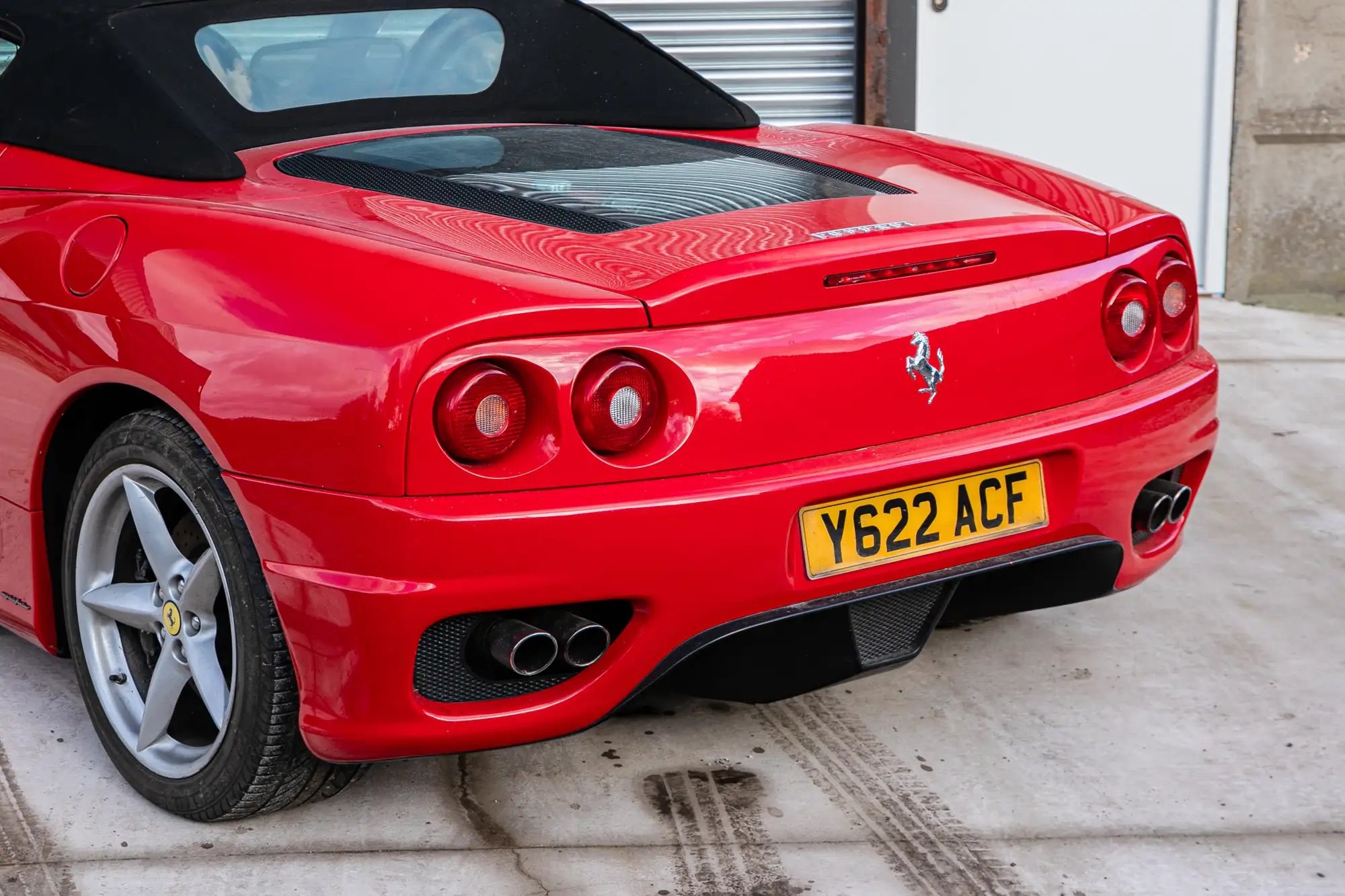
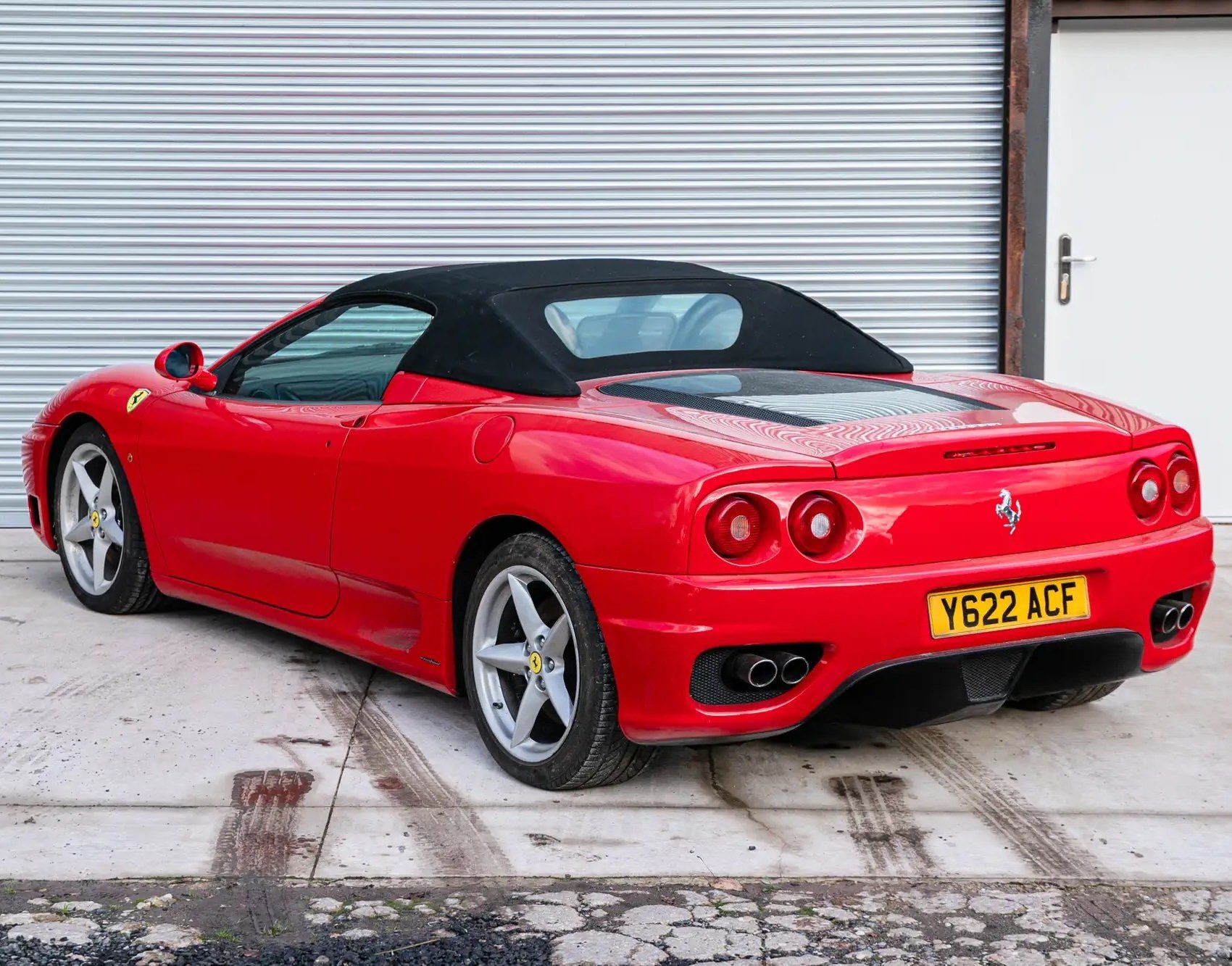
The car you see here is a 2001 Ferrari 360 Spider with the desirable gated-manual transmission option, it has 28,086 miles on the clock and it’s spent the past few years under a tarp in a barn waiting to be resurrected.
It’s now being offered for sale from its second owner, it spent a number of years as part of a prominent collection, and it’s listed as being in good overall condition – but it will of course need recommissioning before any driving is attempted.
Fast Facts: The Ferrari 360 Modena
- Ferrari’s 360 Modena marked a major technical reset when it launched in 1999, replacing the F355 with a clean-sheet design. It introduced Ferrari’s first mass-produced aluminum spaceframe road car, delivering big gains in stiffness, weight reduction, safety, and manufacturing efficiency while preserving that traditional mid-engine Ferrari V8 character.
- The aluminum chassis was developed with Alcoa using bonded and riveted extrusions, castings, and panels. Compared with the F355, it was 40% stiffer and 28% lighter. This resulted in improved handling, better crash test performance, and set the foundation for Ferrari’s later aluminum architectures.
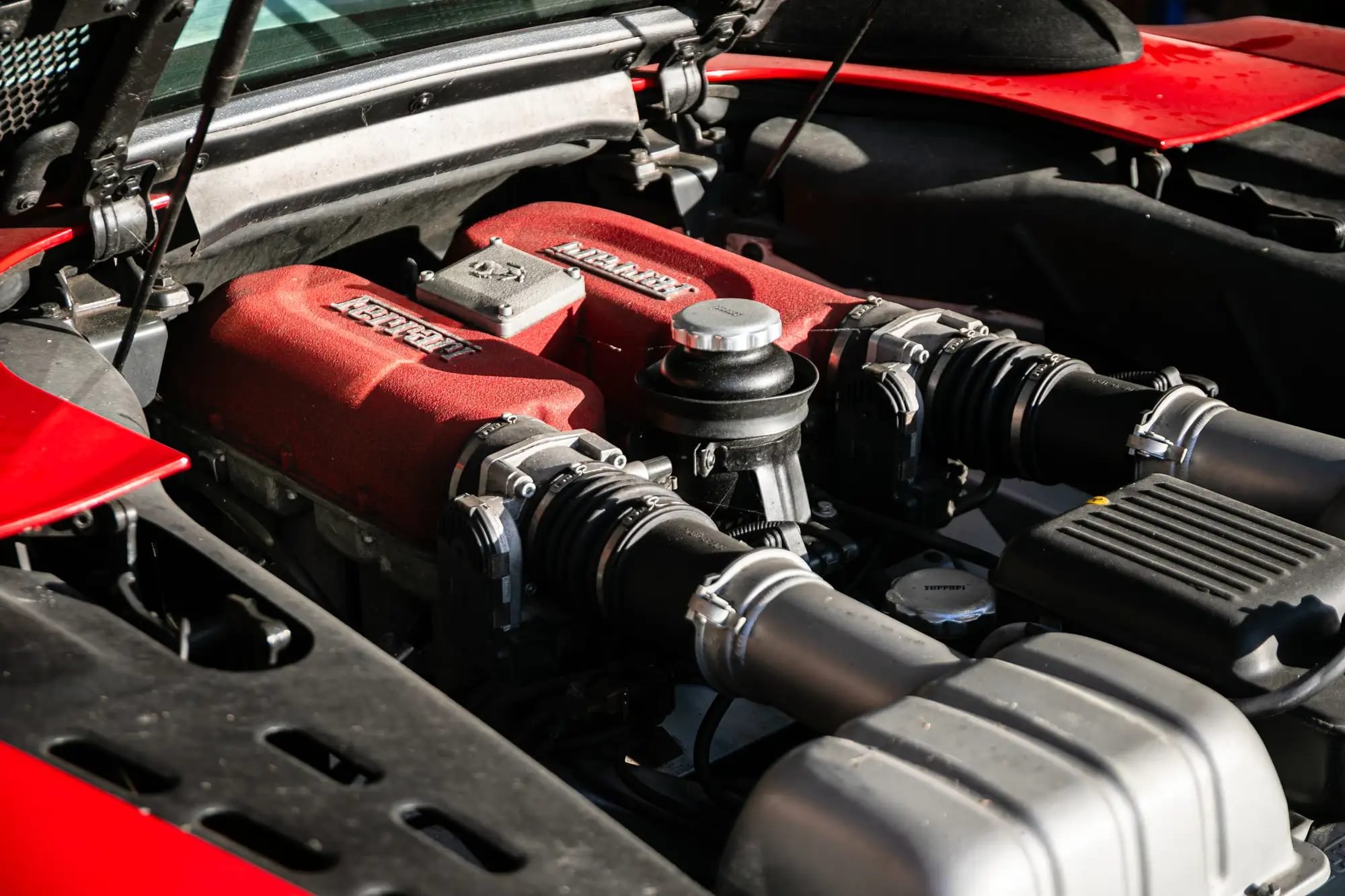
- Power came from the longitudinally mounted 3.6 liter Tipo F131 V8, producing 400 bhp and paired with either a gated 6-speed manual or the F1 electro-hydraulic gearbox. The new layout greatly improved service access, allowing timing belt changes without removing the engine as with earlier cars.
- The example shown here is a 2001 Ferrari 360 Spider with the highly-desirable gated manual transmission, showing just 28,086 miles. Stored unused for several years in a barn, it will require recommissioning, including timing belts and tires before it’s driven.
History Speedrun: The Ferrari 360 Modena
The Ferrari 360 Modena is remembered today as one of the most important technical resets in the Italian company’s modern production car history. Introduced in 1999 as the replacement for the outgoing F355 model, it was not developed as an evolution of an existing platform but as a clean-sheet, mid-engined V8 Ferrari designed to carry the brand into the new millennium.
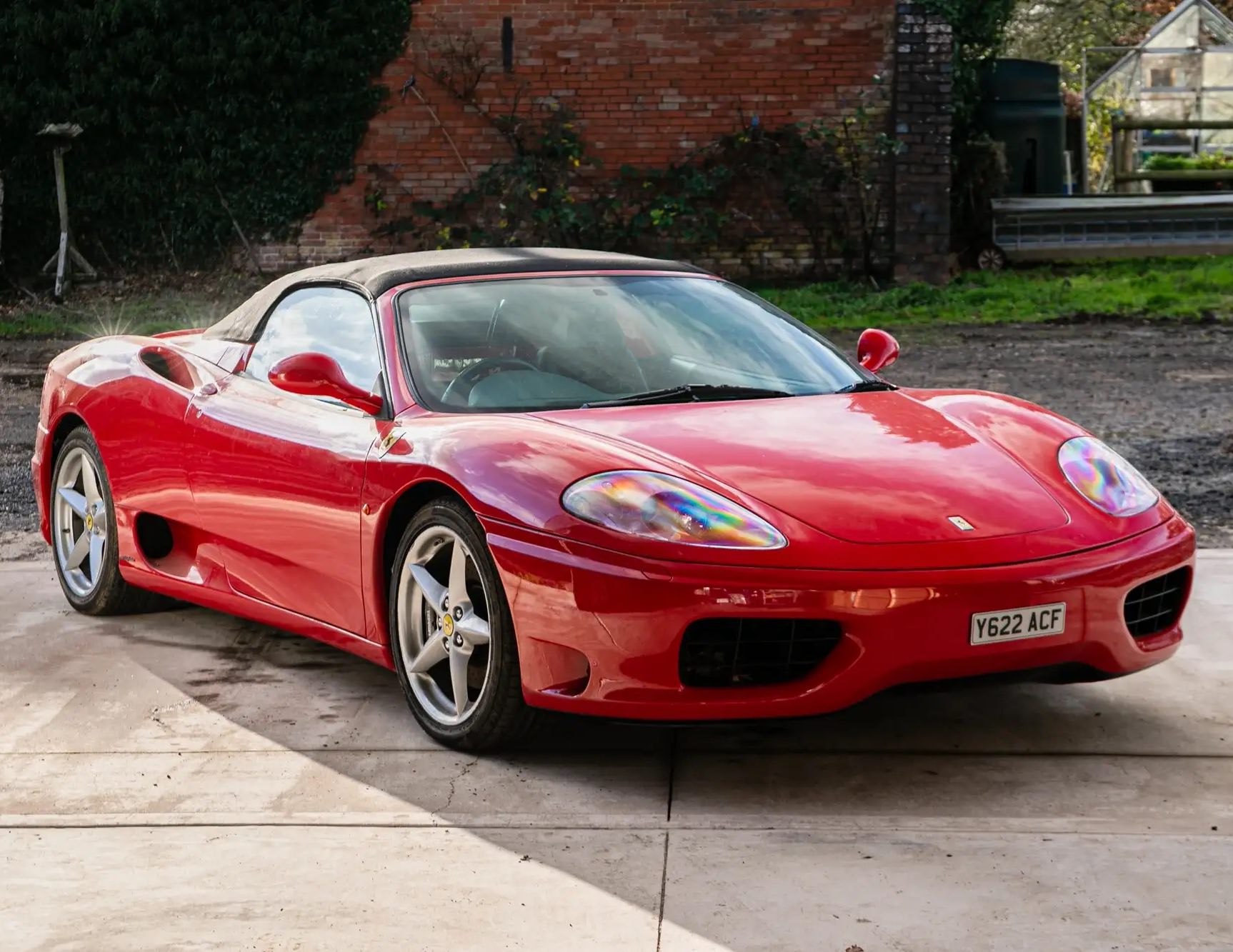
 The car you see here is a 2001 Ferrari 360 Spider with the desirable gated-manual transmission option, it has 28,086 miles on the clock and it’s spent the past few years under a tarp in a barn waiting to be resurrected.
The development brief for the 360 was broad, but it can be largely reduced down to the desire to reduce mass, improve structural rigidity, simplify servicing and maintenance, modernize manufacturing, and deliver solid gains in performance and usability without abandoning the traditional mechanical character that made Ferraris what they were.
By the mid-1990s, Ferrari engineers were acutely aware that the tubular steel chassis architecture underpinning cars like the 348 and F355 had reached its practical development limits. Rivals were beginning to exploit aluminum structures, and both emissions and safety demands were tightening. The 360 program was launched to address those pressures head-on, and its core defining feature became an all-aluminum spaceframe chassis, the first used on a Ferrari road car in mass-production.
Ferrari entered into a technical partnership with Alcoa to develop this new chassis structure, using aerospace manufacturing techniques rather than more conventional automotive construction methods used with the previous steel frame. The result was a bonded and riveted aluminum spaceframe composed of extrusions, castings, and sheet sections.
Compared with the outgoing F355’s steel chassis, the 360’s frame was approximately 40% stiffer torsionally while also being 28% lighter. This step change in rigidity improved both handling and crash test performance – while also laying the groundwork for Ferrari’s future aluminum-based automotive architectures.
The new chassis also allowed Ferrari to rethink packaging and serviceability, as a result the 3.6 liter V8, internally designated Tipo F131, was mounted longitudinally rather than transversely as in the earlier F355.
This layout improved weight distribution and simplified things in the rear, but it also enabled a far more accessible engine bay – as a result, routine servicing jobs, like changing the timing belts, were now able to be completed without removing the engine from the car. This was a direct response to the widespread criticism of earlier Ferraris that could see servicing bills climb well into the five figures.
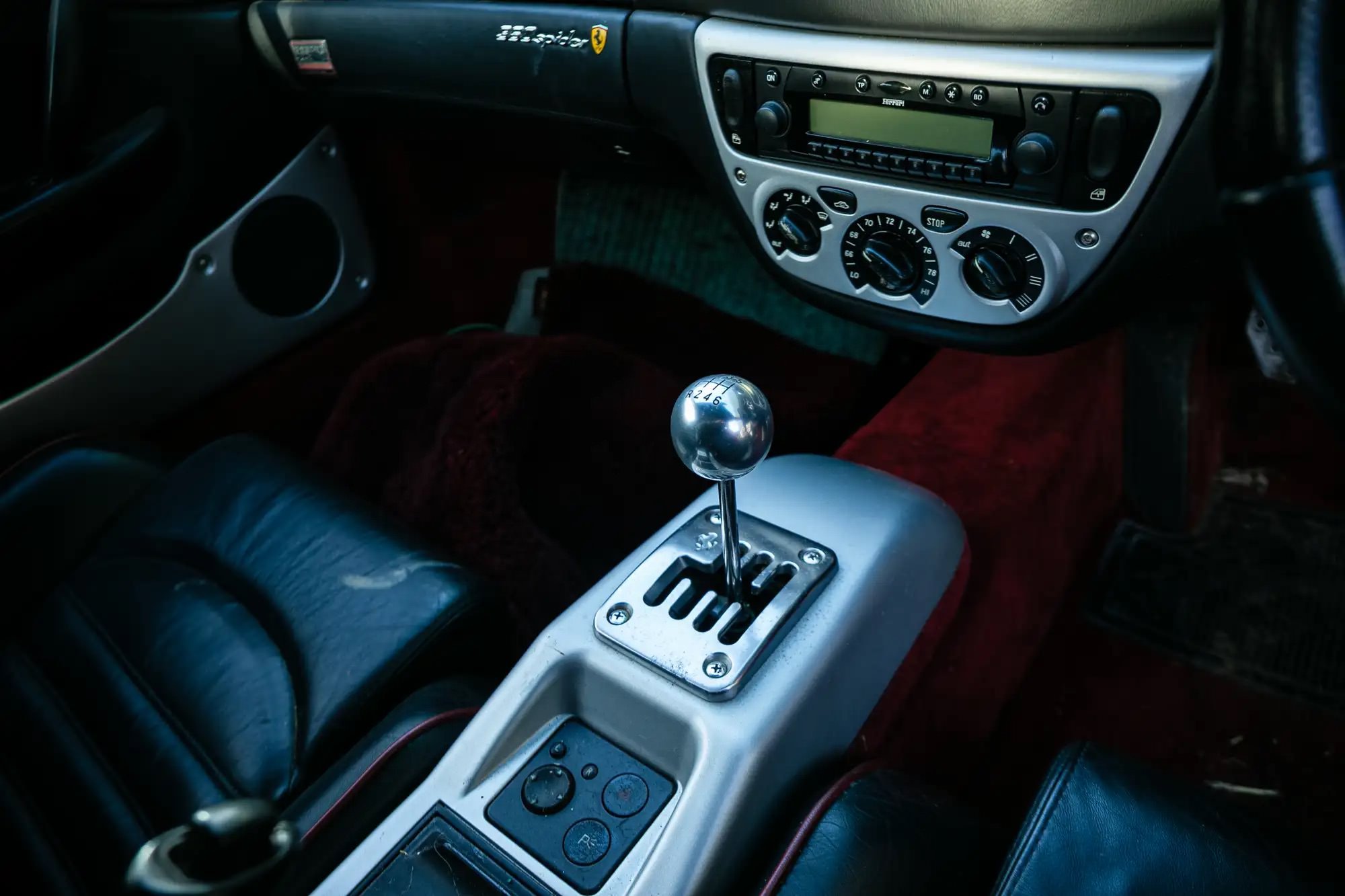
Power was sent to the rear wheels through either a traditional 6-speed gated manual or Ferrari’s electro-hydraulically actuated F1 transmission, derived from its Formula One paddle-shift system. Although cutting edge at the time, the F1 transmission did receive some criticism in period media coverage, and today there is a significant price premium for original gated manual cars.
The naturally aspirated 3,586cc V8 had an aluminum block and heads, with five valves per cylinder, dry-sump lubrication, and a flat-plane crankshaft. Output at launch was 400 bhp at 8,500 rpm and 275 lb ft of torque, figures that comfortably eclipsed the F355 while still meeting or exceeding stricter emissions regulations in all key markets – no mean feat.
Power was sent to the rear wheels through either a traditional 6-speed gated manual or Ferrari’s electro-hydraulically actuated F1 transmission, derived from its Formula One paddle-shift system. Although cutting edge at the time, the F1 transmission did receive some criticism in period media coverage, and today there is a significant price premium for original gated manual cars.
Suspension was by unequal-length double wishbones front and back, mounted directly to the aluminum frame, with coil-over dampers and anti-roll bars front and rear. Braking was handled by large ventilated discs on all four corners, with ABS standard.
Aerodynamic development focused on underbody airflow rather than with the addition of external wings, generating meaningful downforce while still maintaining the clean Pininfarina-designed lines that are still winning the car fans today, over a quarter of a century after its initial introduction.
The 360 Modena could manage the 0 to 60 mph dash in 4.5 seconds and reach a top speed of 183 mph, putting it in direct competition with cars like the Porsche 911 Turbo, Lamborghini Diablo VT, and Aston Martin DB7 Vantage – its key competitors.
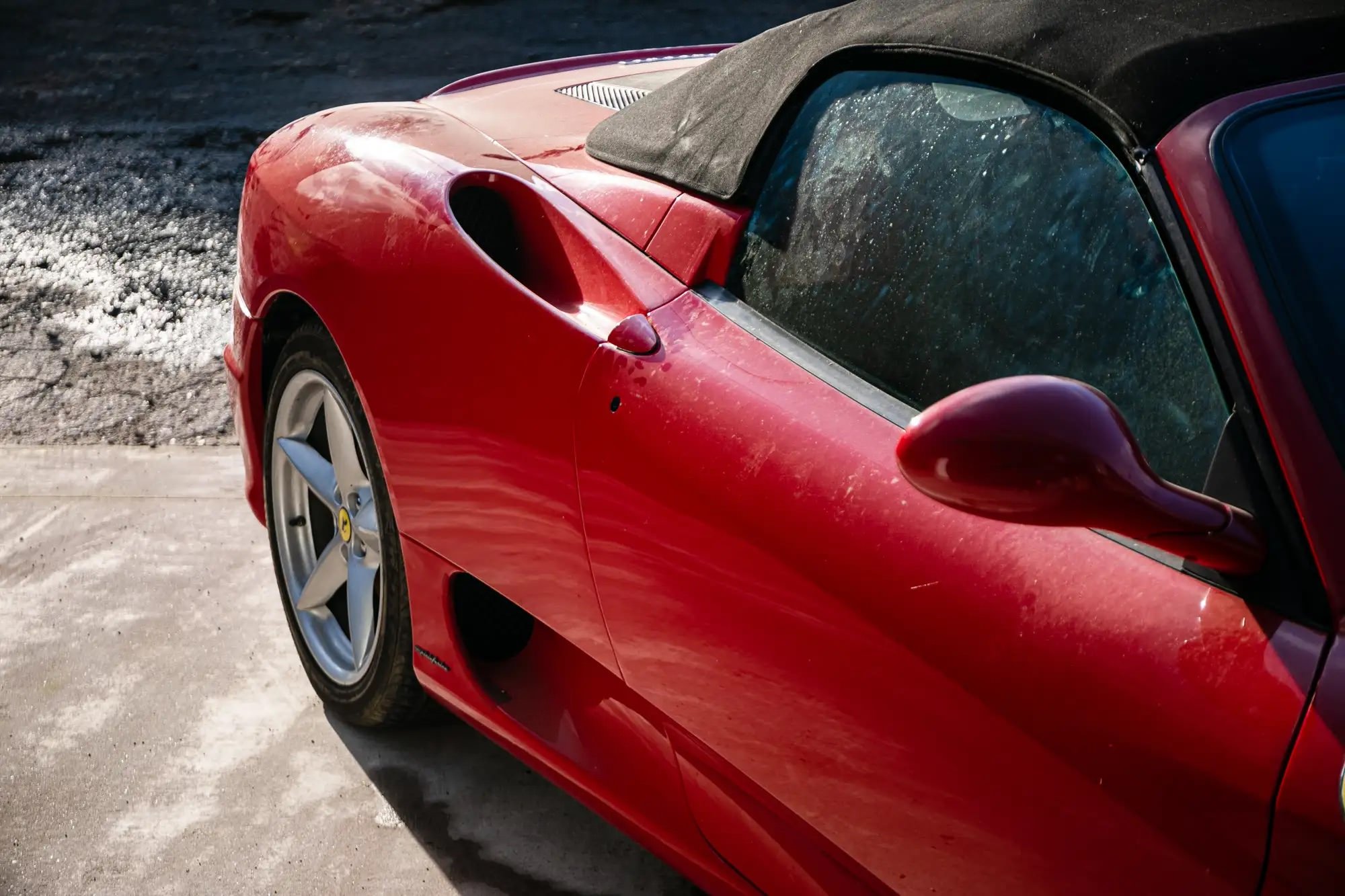
In 2000, Ferrari expanded the 360 Modena range with the introduction of the 360 Spider, which used a power-operated fabric roof and incorporated structural reinforcements to compensate for the loss of the fixed roof, resulting in a modest weight increase but much the same chassis stiffness.
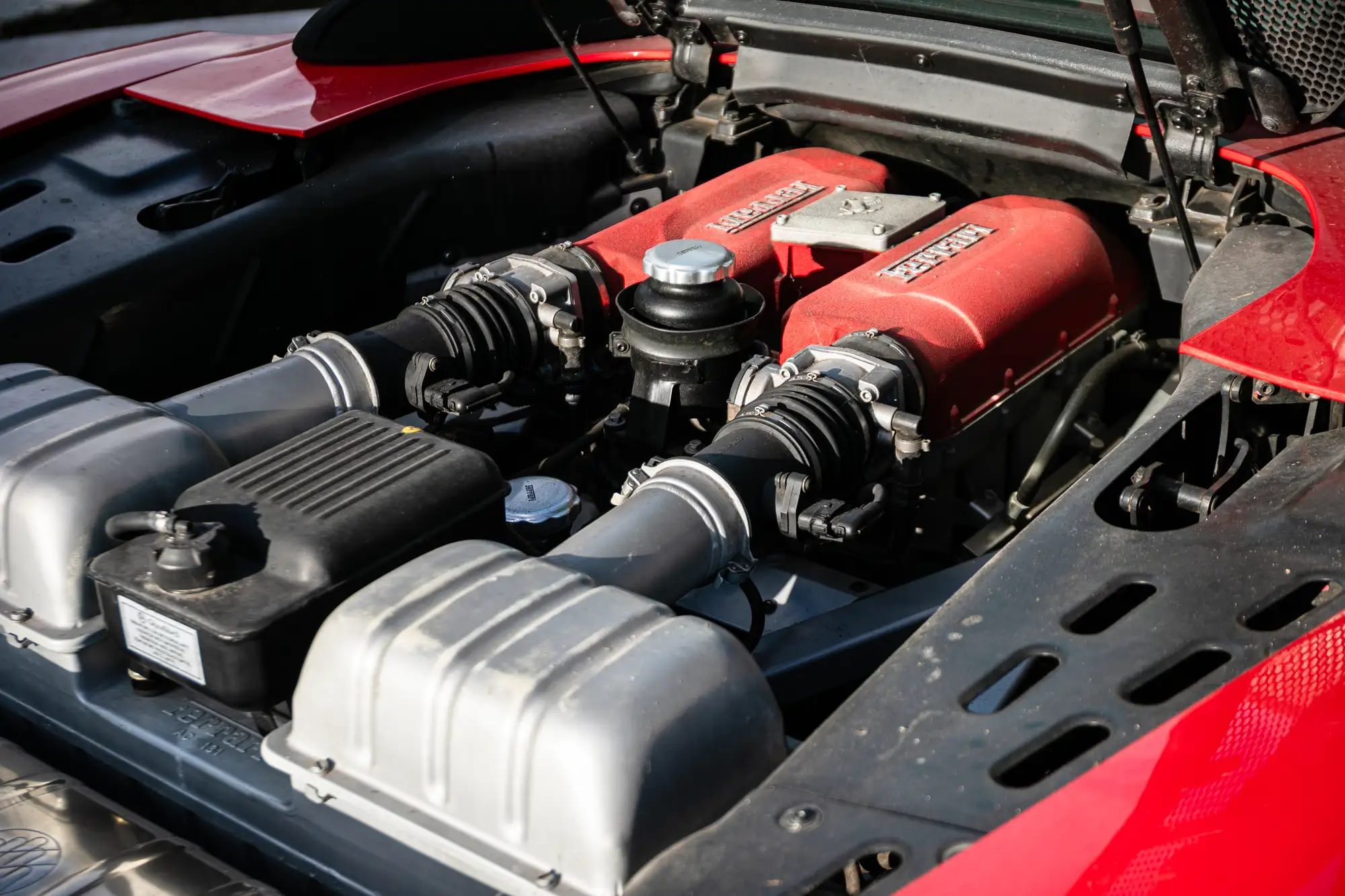
The naturally aspirated 3,586cc V8 had an aluminum block and heads, with five valves per cylinder, dry-sump lubrication, and a flat-plane crankshaft. Output at launch was 400 bhp at 8,500 rpm and 275 lb ft of torque, figures that comfortably eclipsed the F355 while still meeting or exceeding stricter emissions regulations in all key markets – no mean feat.
The most performance-oriented (but still road going) version of the car arrived in 2003 with the 360 Challenge Stradale. Inspired by Ferrari’s one-make racing series, it went through extensive weight-reduction measures, including carbon-fiber body panels, stripped interior trim, lighter glass, and revised exhaust and intake systems. Output rose to 425 bhp, while weight dropped by around 110 kgs (243 lbs) compared with the standard Modena.
Suspension, brakes, steering, and aerodynamics were all sharpened in the Challenge Stradale, producing a car that was considerably quicker than its siblings but also a lot less usable as a grand tourer.
Production of the Ferrari 360 ran from 1999 until 2005, with total output across all variants reaching just over 17,000 cars. That figure made it one of Ferrari’s most commercially successful models up until that point in time, vindicating the original design ethos and acting as a technological bridge between Ferrari’s analog past and its increasingly sophisticated future.
The Barn Find Ferrari 360 Spider Shown Here
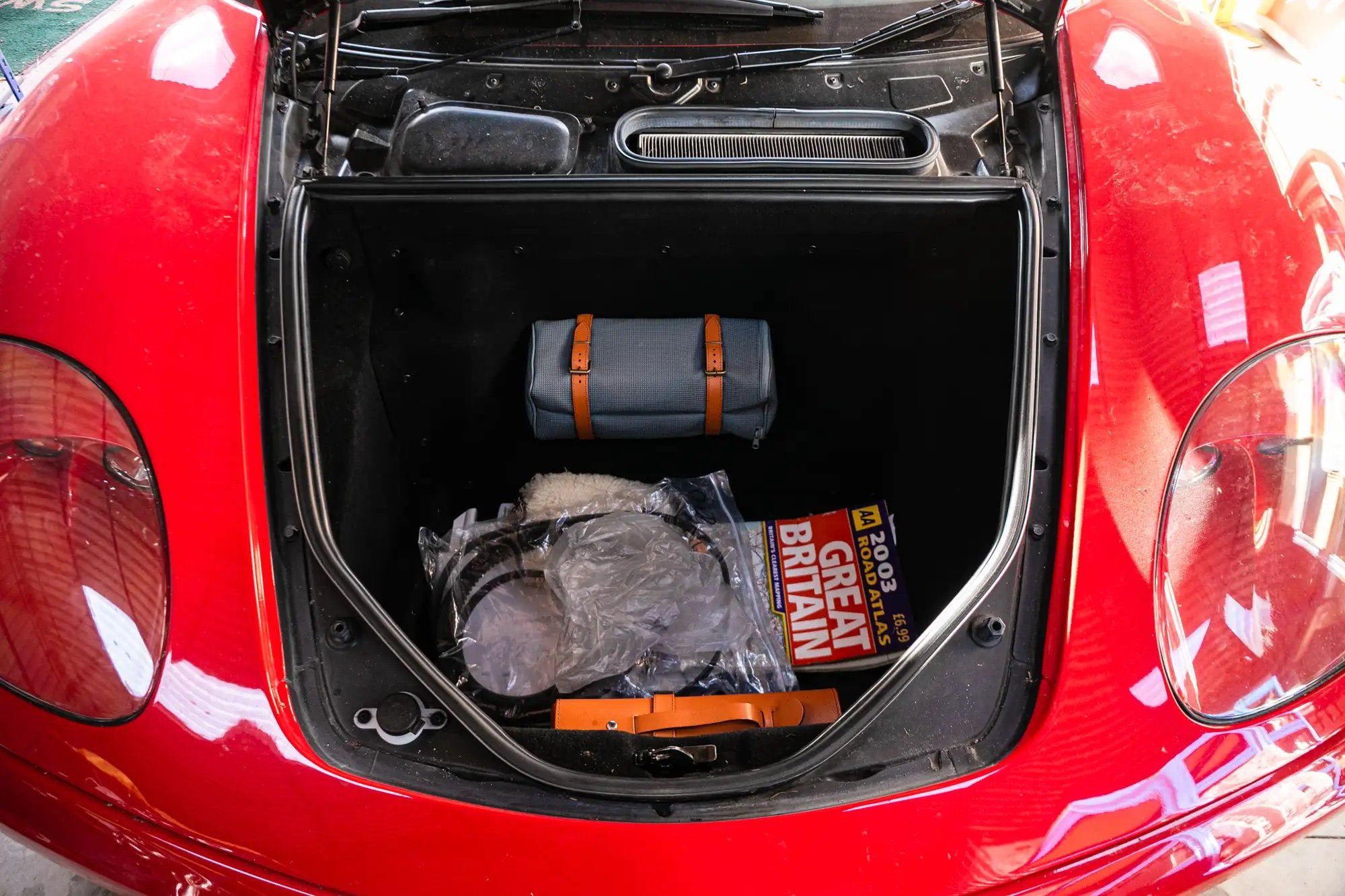
The car you see here is a 2001 Ferrari 360 Spider with the gated manual 6-speed transmission. It has just 28,086 miles on the odometer, and it’s spent the last few years parked in a barn under a tarp waiting for a new owner to come along and have it recommissioned.
This 360 Spider was delivered new to the UK where it remains today, as you would expect it’s right hand drive, and it has the F1 paddle shift transmission. It was part of the late Clive Harris’ Collection since 2004 and it’s had just two owners since new.
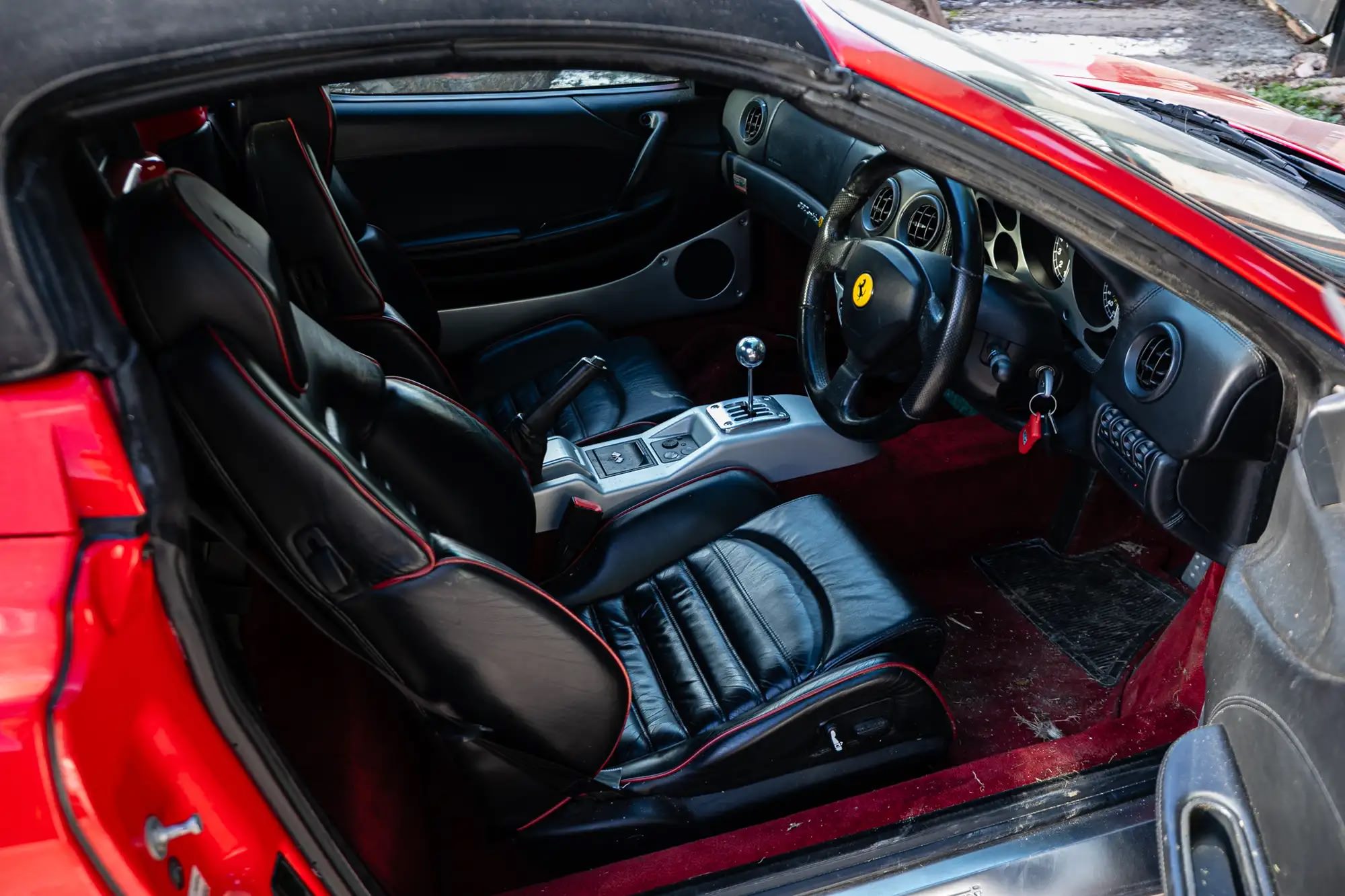
The car you see here is a 2001 Ferrari 360 Spider with the gated manual 6-speed transmission. It has just 28,086 miles on the odometer, and it’s spent the last few years parked in a barn under a tarp waiting for a new owner to come along and have it recommissioned.
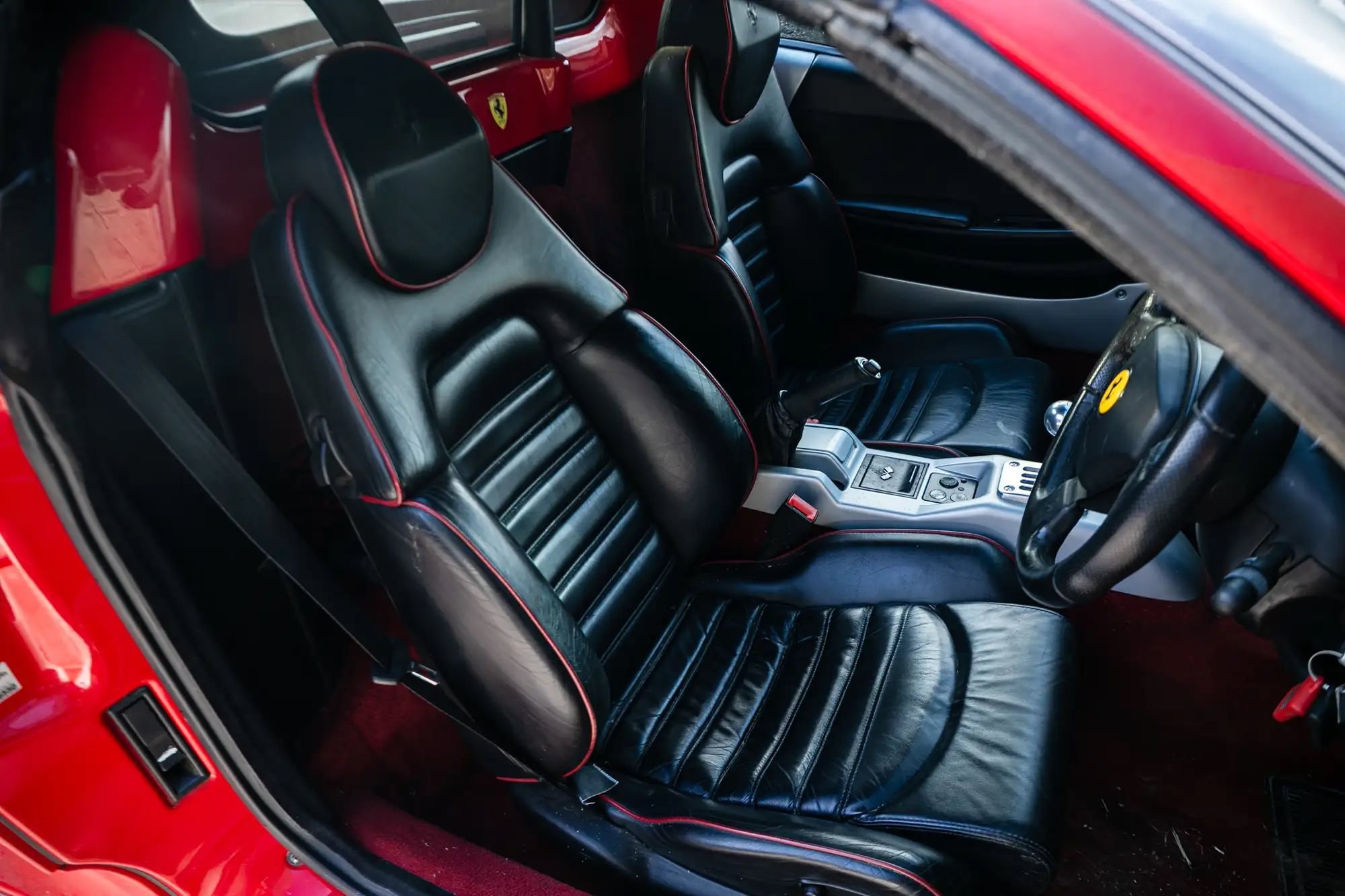
The car is listed as being in very good overall condition but the battery has been removed and it hasn’t been started in the last two years. The timing belts were last changed around 10 years ago, so the new owner would be wise to budget for having them done, as well as new tires, and any other recommissioning work that may be needed to get it back on the road.
If you’d like to read more about it or register to bid you can visit the listing here on Iconic Auctioneers, it’s being auctioned on the 21st of February with a price guide of £30,000 – £40,000, or around $40,500 to $54,000 USD.
Images courtesy of Iconic Auctioneers

Articles that Ben Branch has written have been covered on CNN, Popular Mechanics, Smithsonian Magazine, Road & Track Magazine, the official Pinterest blog, the official eBay Motors blog, BuzzFeed, Autoweek Magazine, Wired Magazine, Autoblog, Gear Patrol, Jalopnik, The Verge, and many more.
Silodrome was founded by Ben back in 2010, in the years since the site has grown to become a world leader in the alternative and vintage motoring sector, with well over a million monthly readers from around the world and many hundreds of thousands of followers on social media.