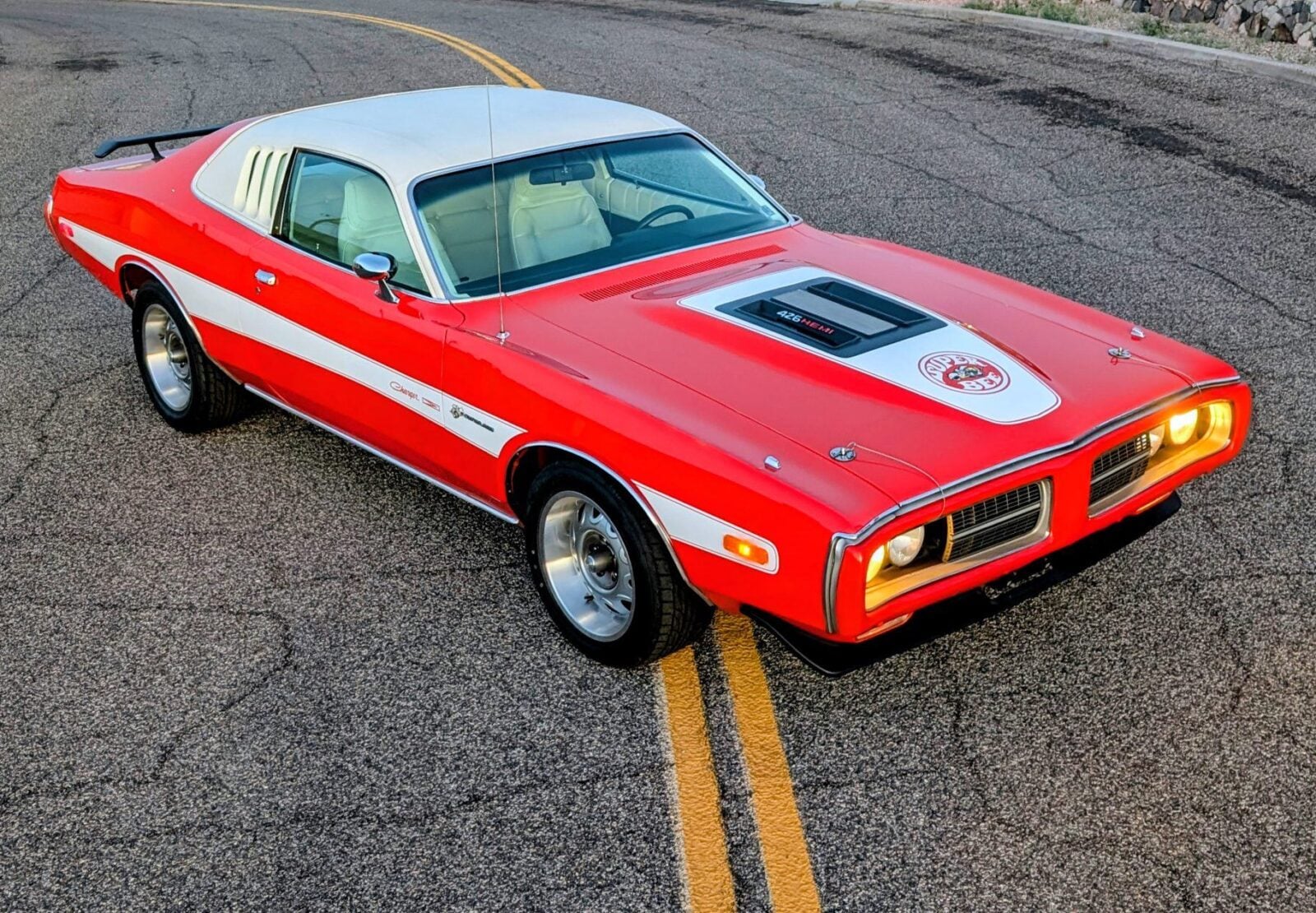
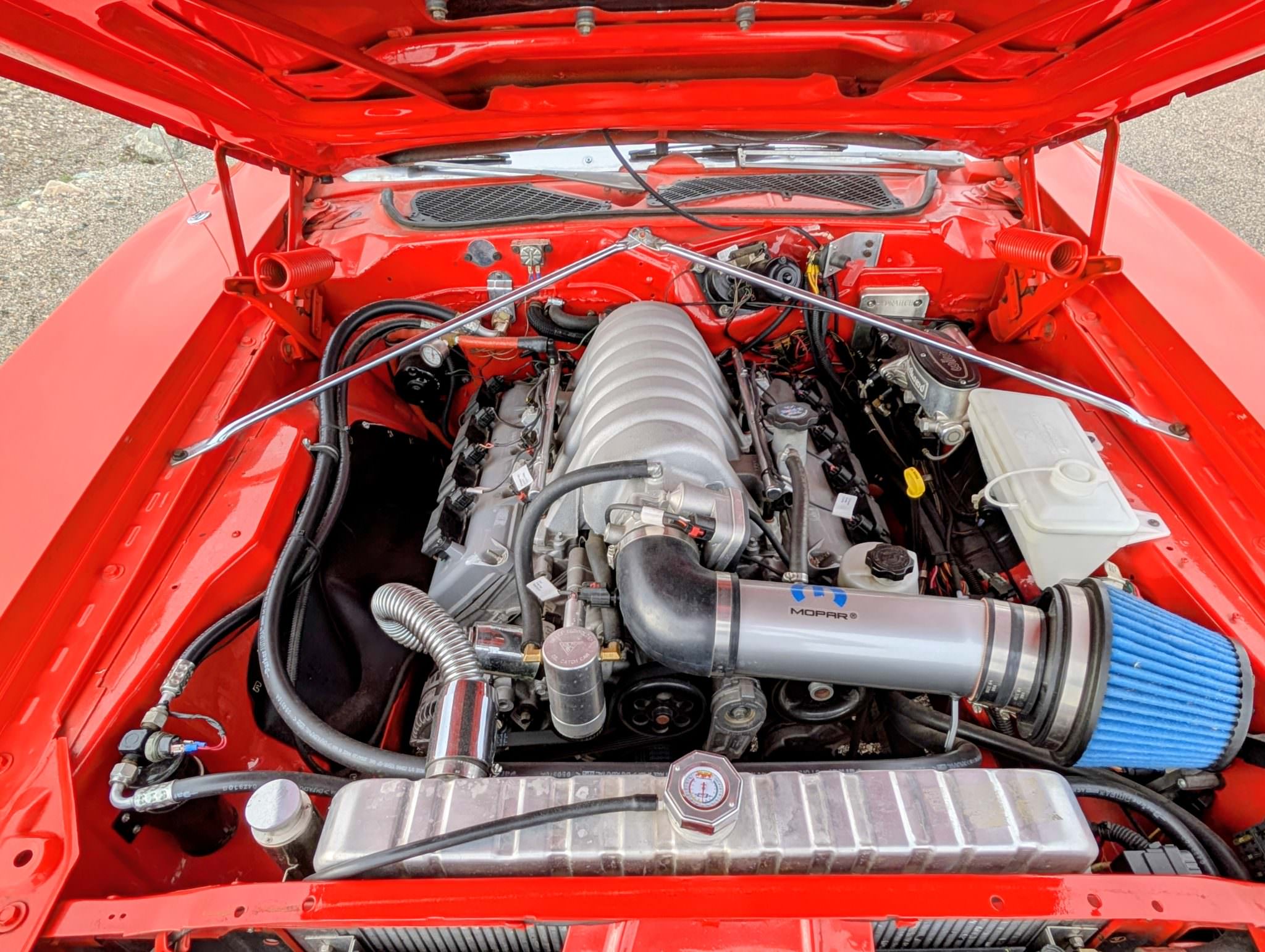
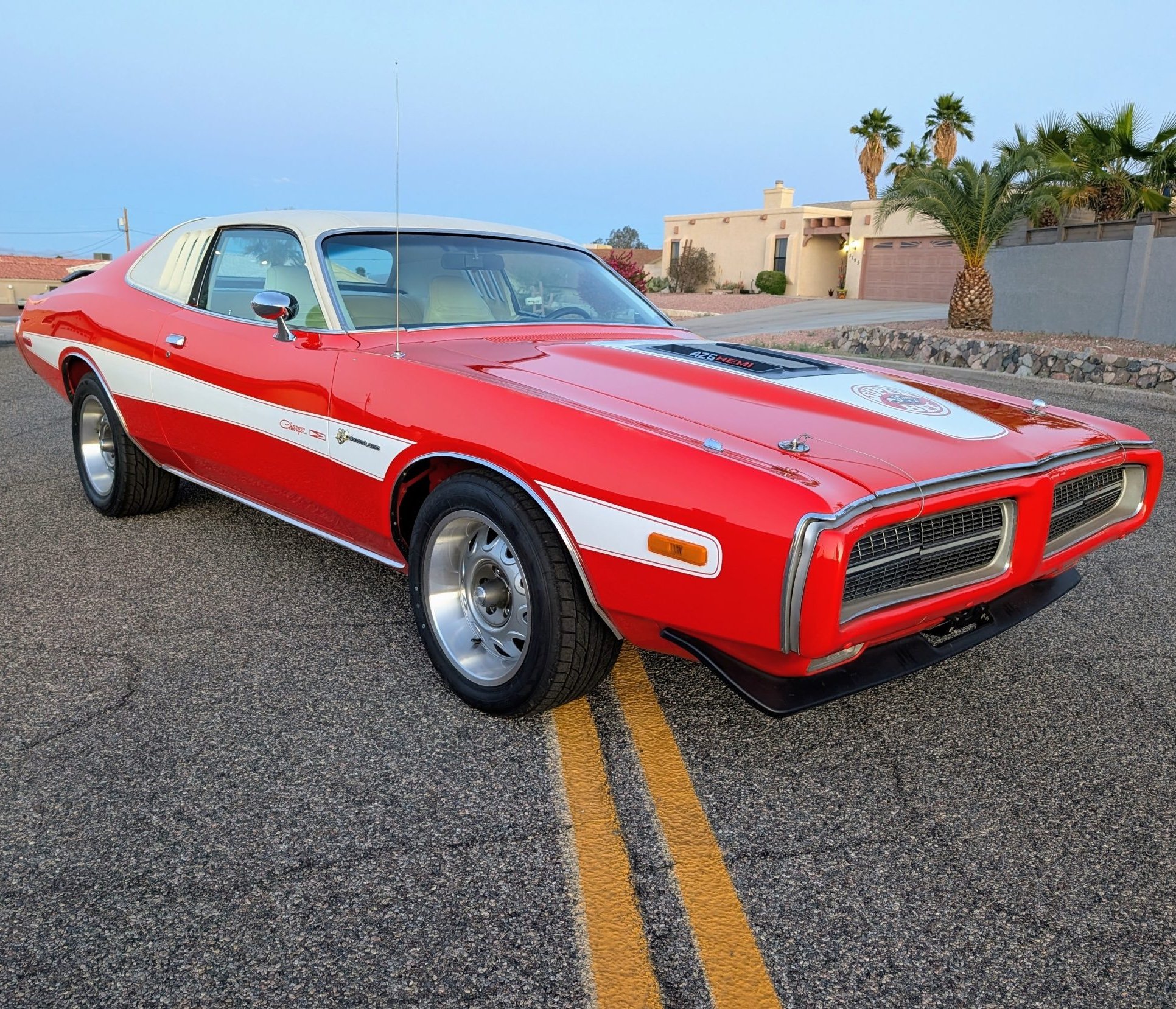
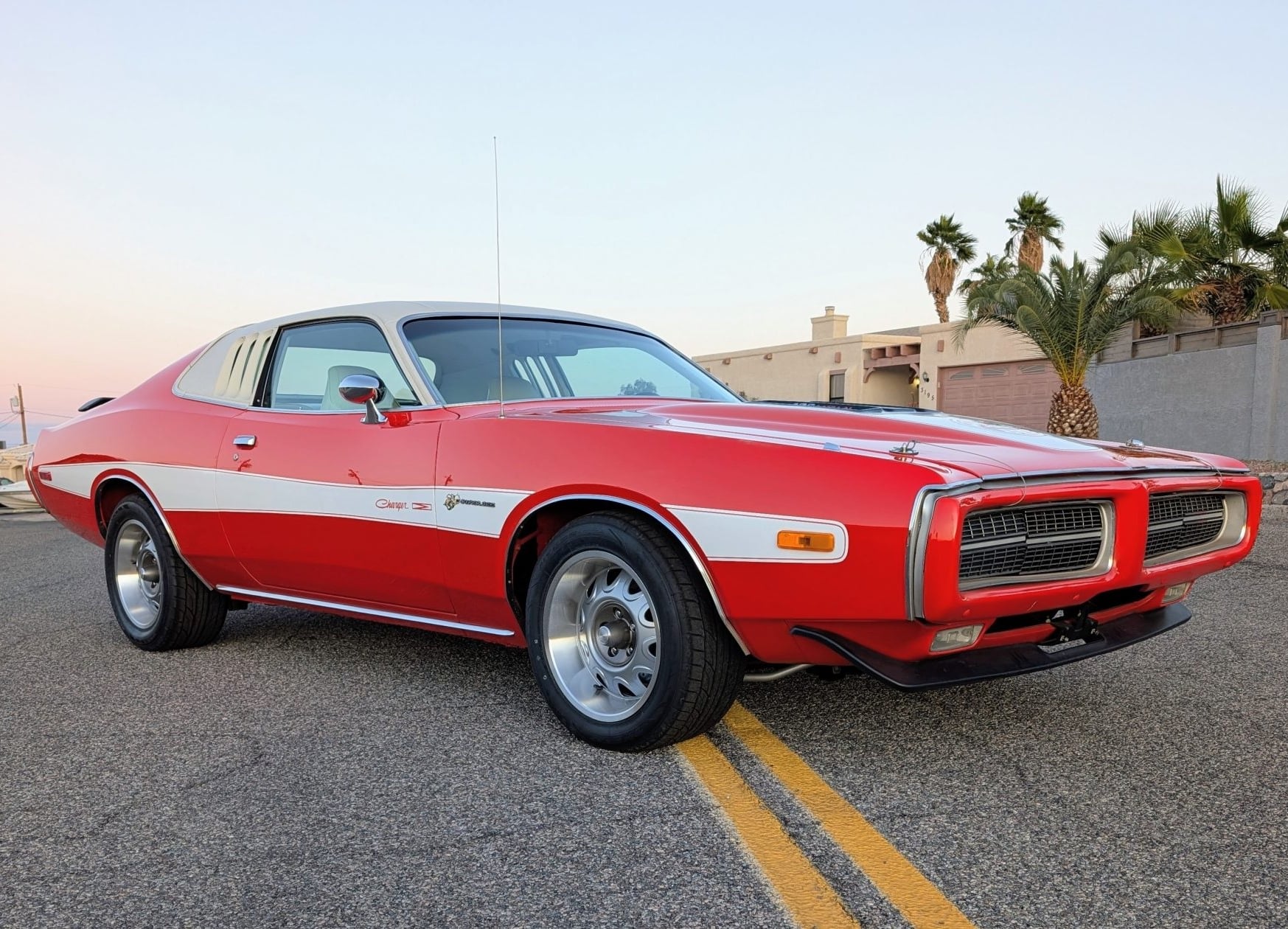
This is a 1973 Dodge Charger SE that now benefits from a slew of major upgrades to the suspension, brakes, driveline, and engine bay – it’s now powered by a 7.0 liter “Gen III” Hemi V8 said to be good for a dyno-tested 600 bhp.
Originally powered by a 400 cubic inch V8 producing as little as 175 bhp in two-barrel carburetor form, this car has now been transformed by a series of mods that have turned it into a true weapon – and best of all, it’s street legal.
Fast Facts: The 1973 Dodge Charger SE
- Dodge launched the Charger in 1966 as a fastback personal-performance coupe on the Coronet’s B-body platform. Early sales were on the modest side, but the 1968 redesign by Richard Sias transformed it into a major success. That second generation established the Charger as a muscle-car icon and set the stage for later development.
- The third-generation Charger arrived for 1971 with rounded fuselage styling, a split grille, and a broader model range. By 1973, revisions included larger 5-mph bumpers, new grilles, and vertically slatted taillights. The Charger SE became the luxury-focused version, combining personal-luxury styling with V8 power options and more high-end features.
- The 1973 Charger SE was all about refinement over outright performance. Standard and optional equipment included a canopy-style vinyl roof, triple opera windows, wood-grain trim, and upgraded interior materials. Engine choices ranged from the Slant Six to the 440 Magnum, with the 400 cubic inch V8 as one of the most common choices.
- This modified Charger SE shown here has been rebuilt far beyond factory specification, now using a fuel-injected 7.0 liter Gen III Hemi crate V8 rated at 600 bhp. Supporting upgrades include a 545RFE automatic gearbox, a limited-slip rear end, revised front and rear suspension, Wilwood disc brakes all around, chassis bracing, and a reworked white-trimmed interior.
History Speedrun: The Third-Gen Dodge Charger
In the early 1960s, Chrysler was falling behind in the rapidly emerging specialty car market, and so the company chose its Dodge division to build a mid-size sports car positioned somewhere between the Ford Mustang and the larger, more upmarket Ford Thunderbird.
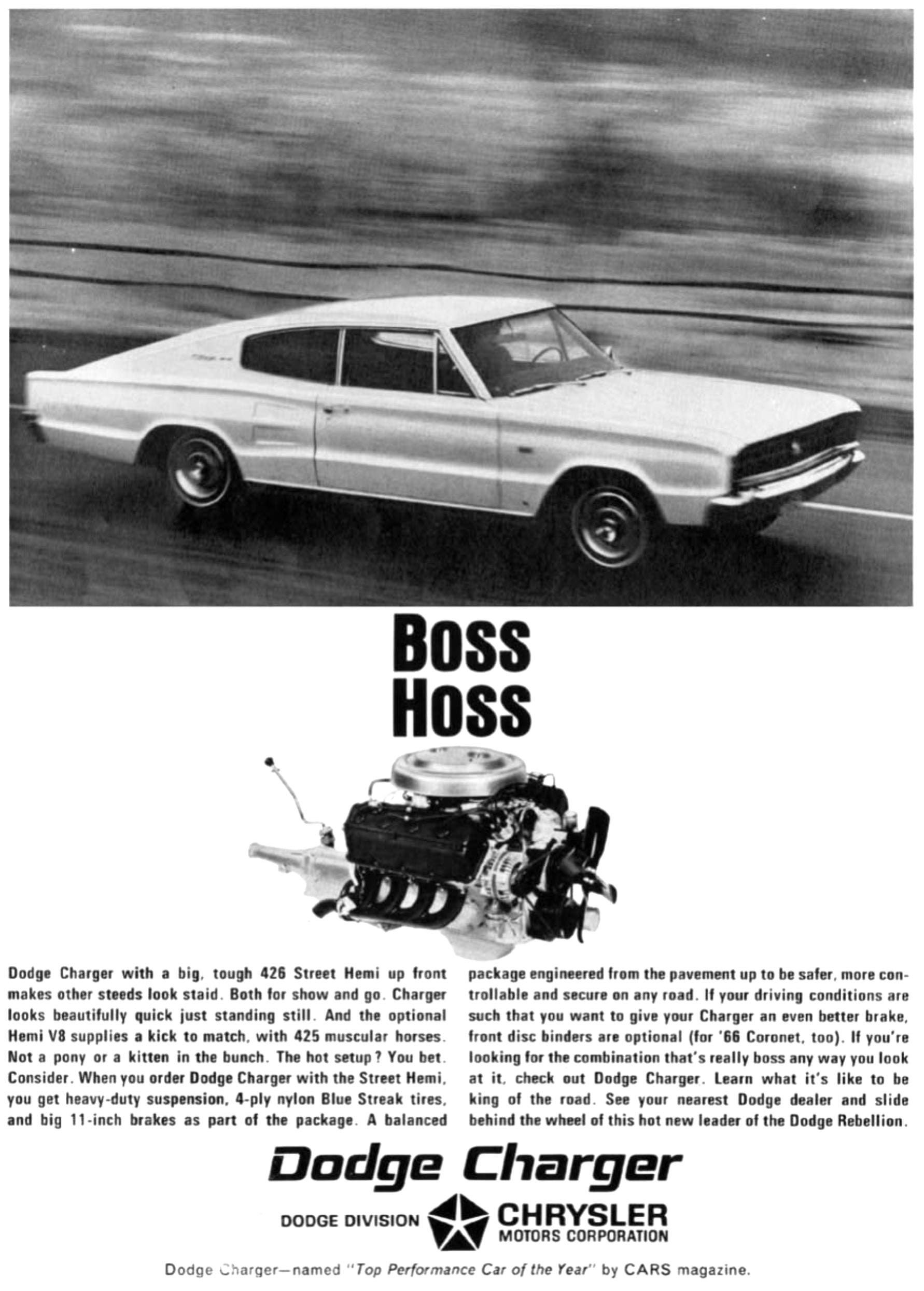
 The first-gen Dodge Charger debuted in 1966. It was a two-door fastback with hidden headlights, full-width taillights, and four bucket seats linked by a full-length center console. It was a good looking car by any measure, but only modestly successful from a sales perspective. Image courtesy of Dodge.
The goal was a fastback look built on as much existing hardware as possible – all based on the Coronet’s B-body platform. Burt Bouwkamp, Dodge’s Chief Engineer and Manager of Passenger Car Product Planning, later said that Chrysler president Lynn Townsend directed him to give dealers a specialty car but insisted it not be a derivative of Plymouth’s Barracuda – it had to be something truly unique.
The result debuted in mid-1966 – it was named the Dodge Charger, and it was a two-door fastback with hidden headlights, full-width taillights, and four bucket seats linked by a full-length center console. It was a good looking car by any measure, but only modestly successful from a sales perspective, and by 1967 sales had dropped to just 15,788 units.
The 1968 redesign changed everything. Richard Sias penned a new body with “coke bottle” curves and a flying-buttress roofline that made the Charger an instant style icon. Sales then surged to 96,100 for 1968, including over 17,000 of the higher performance R/T models.
This was the Charger famously used in films like Bullitt and later in The Dukes of Hazzard TV series. Aerodynamic variants like the Charger 500 and the radical winged Daytona, followed for NASCAR homologation purposes. The second generation ran through 1970 and cemented the Charger’s reputation as one of the golden era-defining American muscle cars.
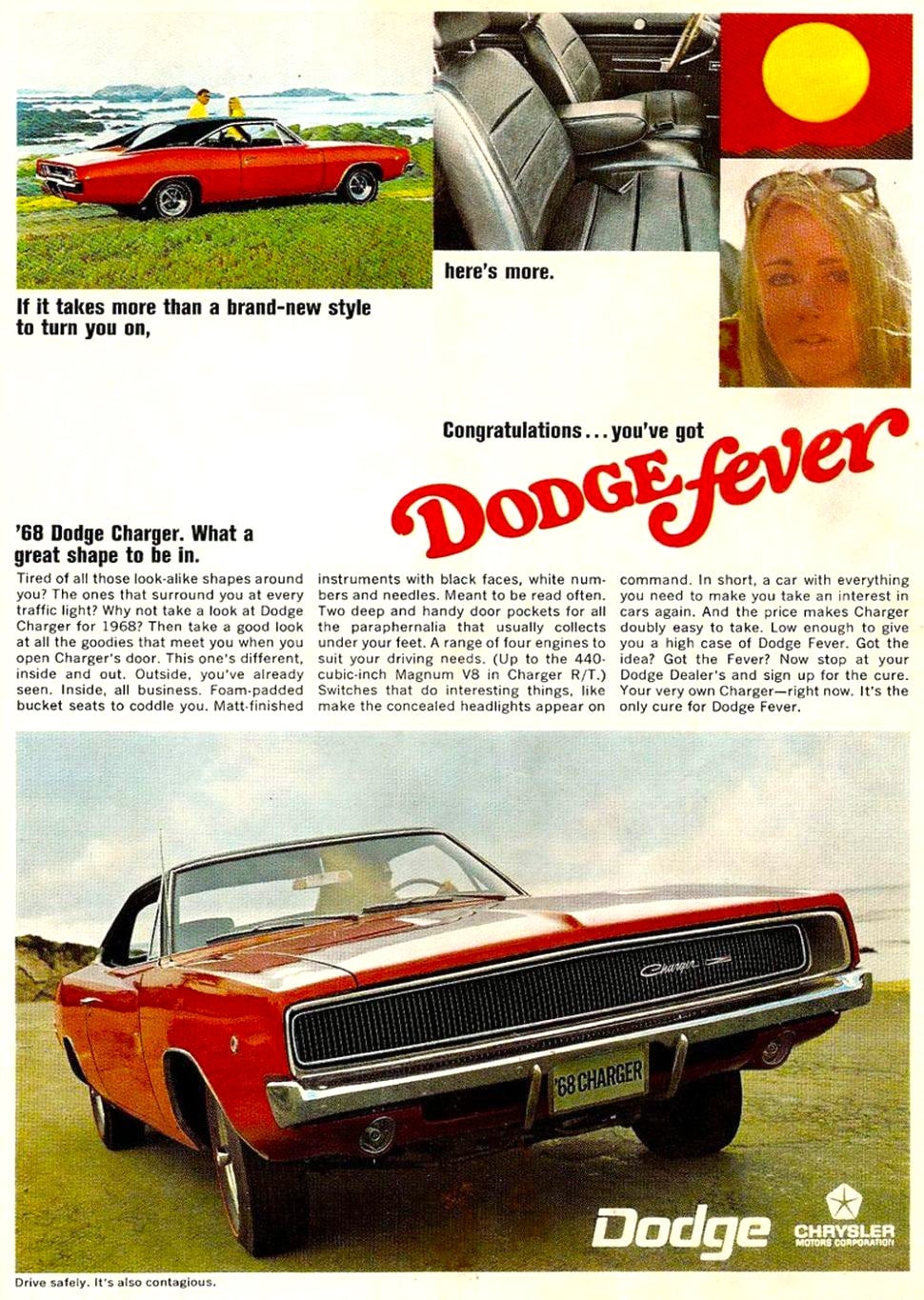
The second-gen Charger debuted for 1968. This was the Charger famously used in films like Bullitt and later in The Dukes of Hazzard TV series. Aerodynamic variants like the Charger 500 and the radical winged Daytona, followed for NASCAR homologation purposes. Image courtesy of Dodge.
The Third Generation Charger: 1971 to 1974
For 1971, the Charger was completely restyled with rounded “fuselage” bodywork, a split grille, and a semi-fastback roofline. Dodge merged its two-door lineup and all two-door B-bodies became Chargers and all four-doors became Coronets.
The platform was updated to meet ever tightening federal emissions and safety standards. Six distinct models launched that first year, they were the base Coupe, Hardtop, 500, SE, the one-year-only Super Bee, and the R/T in its final appearance of course. By 1972 the R/T was replaced by the Rallye package, which combined a blackout hood, hood pins, side stripes, and rally gauges with engines ranging from the 318 to the 440.
The 1973 model year brought a meaningful refresh, with new sheet metal making the cars longer, wider, and slightly taller than the 1971/1972 models, with new vertically slatted taillights and revised grilles. All 1973 Chryslers received 5-mph bumpers front and rear, and hidden headlights were dropped entirely.
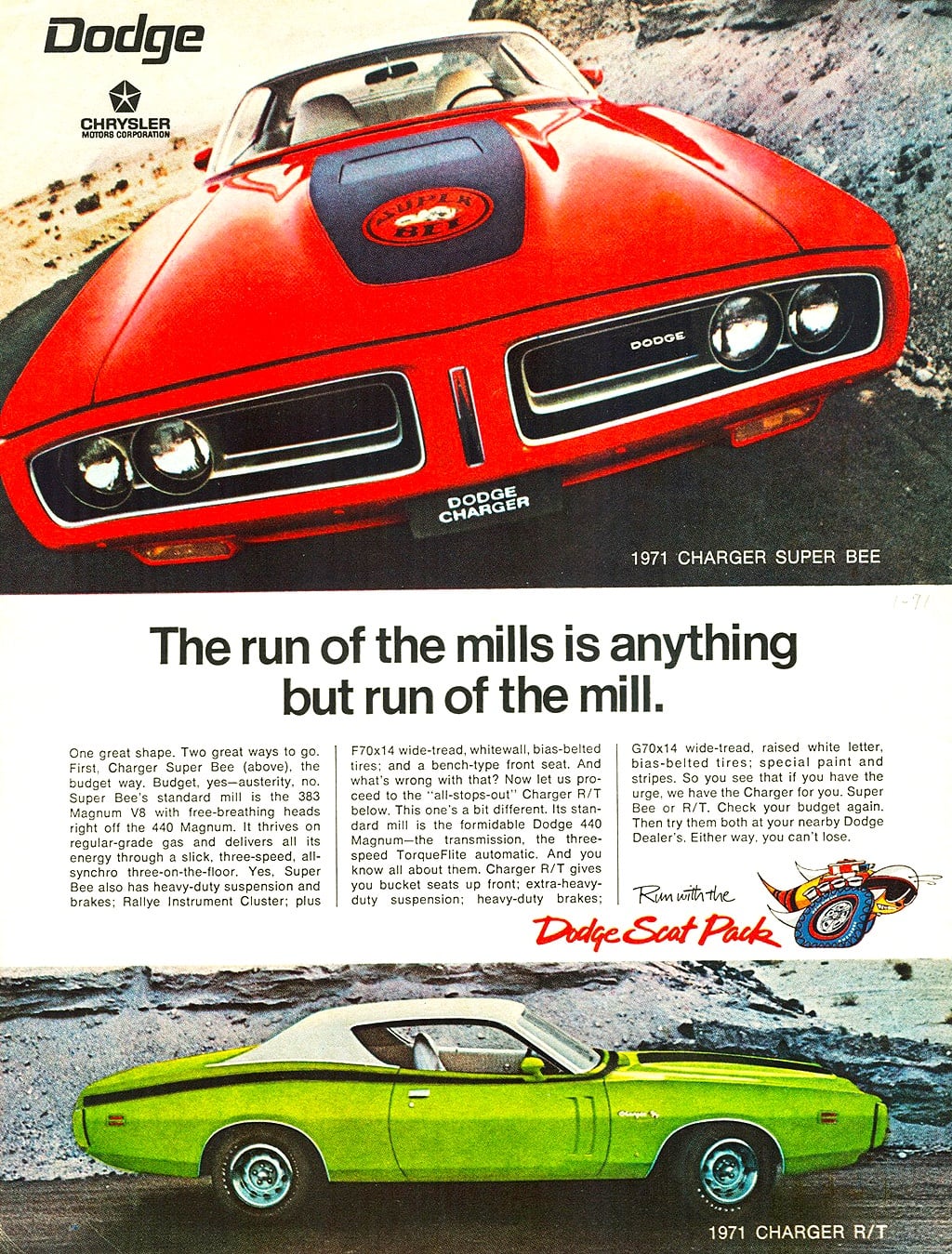
For 1971, the Charger was completely restyled with rounded “fuselage” bodywork, a split grille, and a semi-fastback roofline. Dodge merged its two-door lineup and all two-door B-bodies became Chargers and all four-doors became Coronets. Image courtesy of Dodge.
The Charger SE (Special Edition)
The SE sat near the top of the Charger range as a luxury-oriented hardtop coupe, designated WP29 on the fender tag (“W” for Charger, “P” for Premium price class, “29” for two-door Sports Hardtop). It was the most popular body style in 1973.
What set the SE apart was its clear emphasis on refinement, standard features included a vinyl roof treatment (hugely popular at the time, less so now), leather-grain vinyl or optional genuine leather seats, and wood-grain interior accents – in true 1970s style.
The SE received a distinctive “triple opera window” surrounded by a canopy-style vinyl roof, louvered quarter windows that became the model’s most recognizable visual signature. The 1973 SE introduced the Torsion-Quiet Ride suspension system with additional sound-deadening material, and came with a Rallye instrument cluster, a hideaway center armrest, and a split bench seat as standard.
Engine choices spanned the full range available to all 1973 Chargers. The lineup ran from a 225 Slant Six at 105 net horsepower through a 318 V8 (150 bhp), 340 V8 (240 bhp), 400 V8 in two-barrel (175 bhp) or four-barrel (260 bhp) form, up to the 440 Magnum four-barrel at 280 bhp.
The SE captured the spirit of its moment surprisingly perfectly, the raw muscle car era was fading under the weight of emissions rules, rising insurance costs, the increased focus on safety, and Dodge’s answer was a car that blended V8 performance with personal luxury.
NASCAR legend Richard Petty won 35 races with the 1971 – 1974 body style between 1972 and 1977, but on dealer lots the SE’s vinyl roof and wood-grain dash were doing the selling. The final year, 1974, brought only minor tweaks before the Charger pivoted fully to the personal luxury segment with its fourth generation in 1975.
The Hemi V8-Swapped 1973 Charger SE Shown Here
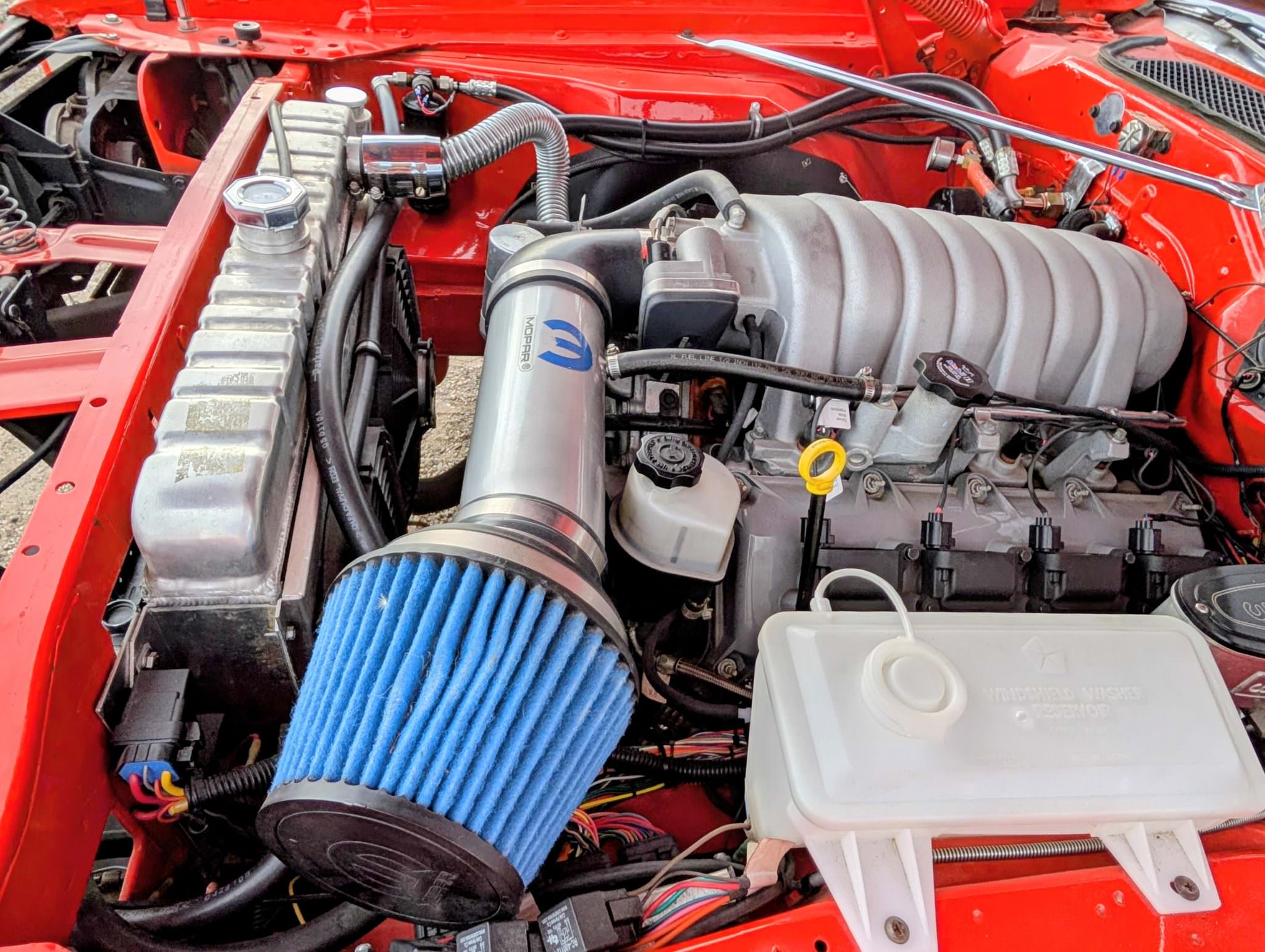
This 1973 Dodge Charger SE has been extensively upgraded from its 1970s-era factory configuration – it was originally powered by a 400 cubic inch V8 but now runs a fuel-injected 7.0 liter Gen III Hemi V8, a Mopar crate engine with CNC-ported heads, a forged crankshaft, and a cold-air intake said to be good for a dyno proven 600 bhp.
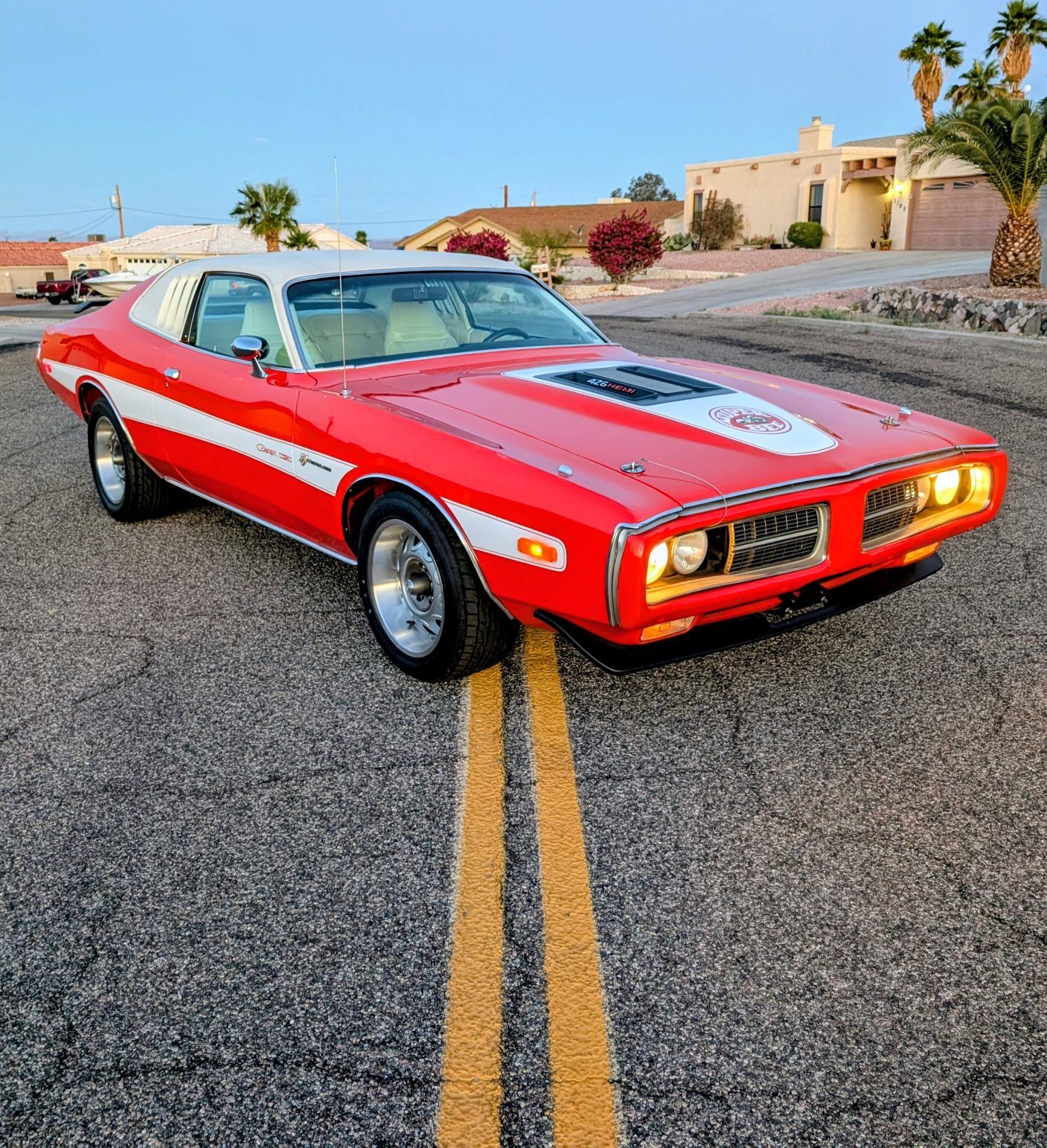
This 1973 Dodge Charger SE has been extensively upgraded from its 1970s-era factory configuration – it was originally powered by a 400 cubic inch V8 but now runs a fuel-injected 7.0 liter Gen III Hemi V8, a Mopar crate engine with CNC-ported heads, a forged crankshaft, and a cold-air intake said to be good for a dyno proven 600 bhp.
Power is sent back through a 545RFE 5-speed automatic transmission to a limited-slip rear end with 4.10:1 gearing, Moser axles, and a custom aluminum driveshaft. The engine was dyno-tuned in December 2025, though the seller notes it occasionally surges at cruising speed and this issue would need to be addressed.
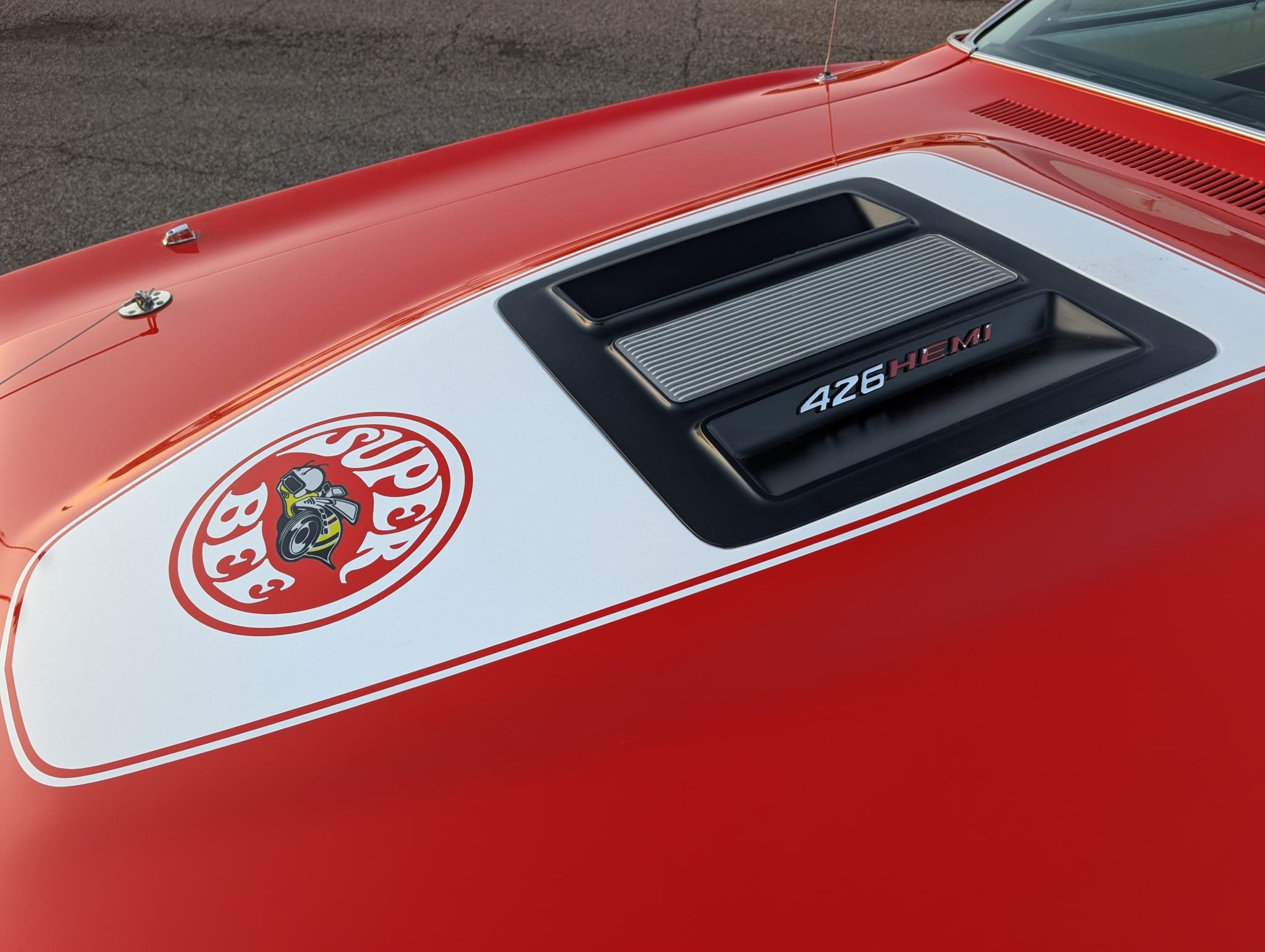
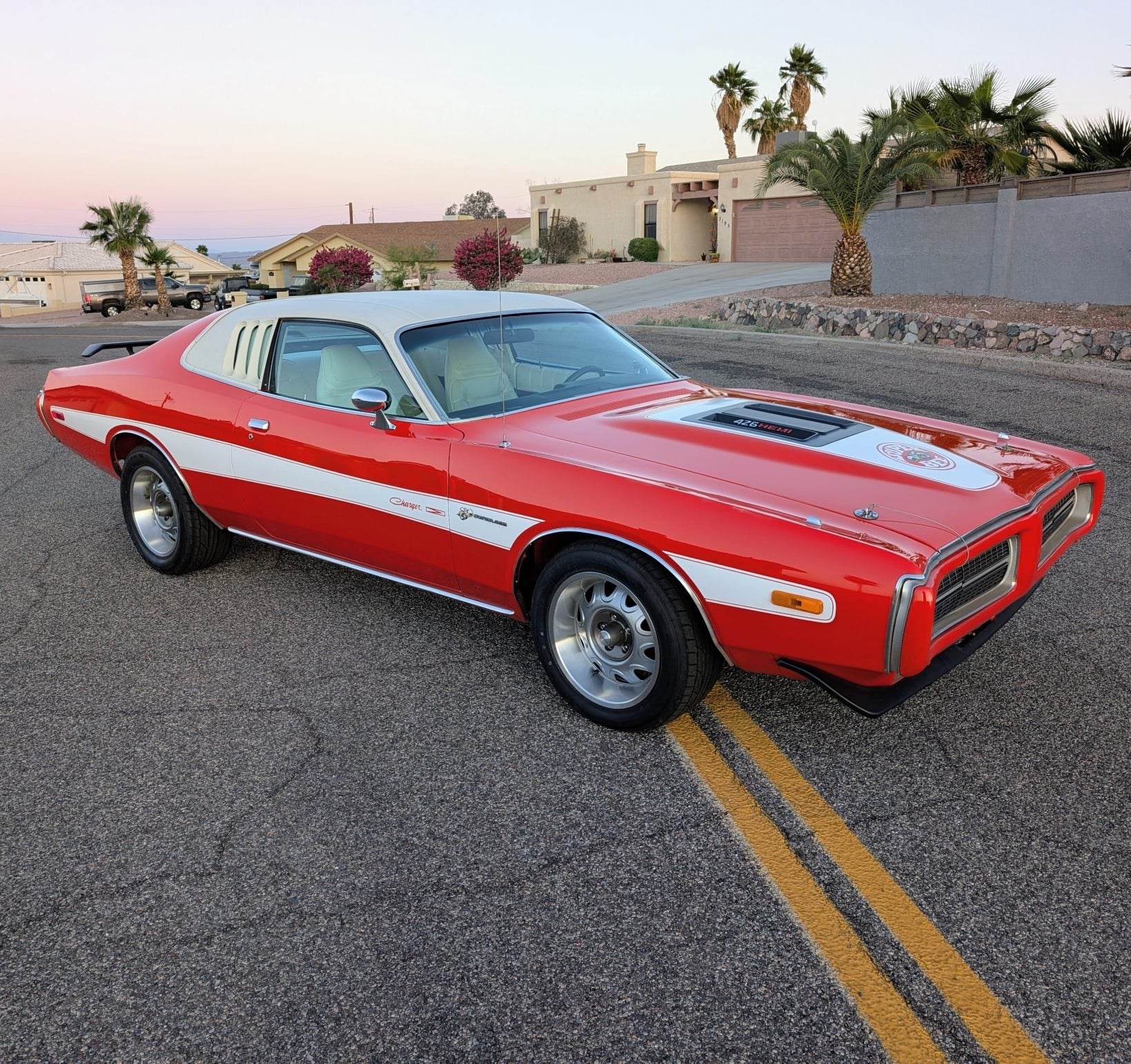
During the 2011 rebuild the body was stripped and repainted in Hemi Orange with white stripes and Super Bee-style graphics. Exterior features include a vented hood with pins and “426 Hemi” badging, a canopy-style white vinyl roof, the SE’s signature fixed louvered quarter windows, a front air dam, a rear wing, and body-color bumpers.
Underneath, the chassis has been substantially reworked, essential really, when you consider the size of the power increase. A Reilly MotorSports AlterKtion K-member provides power rack-and-pinion steering, while a Reilly Street-Lynx four-link setup replaces the original rear suspension.
QA1 adjustable coilovers now sit at all four corners, the car has a front sway bar, rear traction bars, and additional chassis bracing throughout. Braking is now much improved thanks to a Wilwood four-wheel disc system with drilled-and-slotted 12.2-inch rotors, four-piston calipers, and a Hydratech booster. The car now rides on YearOne Rallye-style 17×9 wheels with staggered Nitto 555 G2 tires.
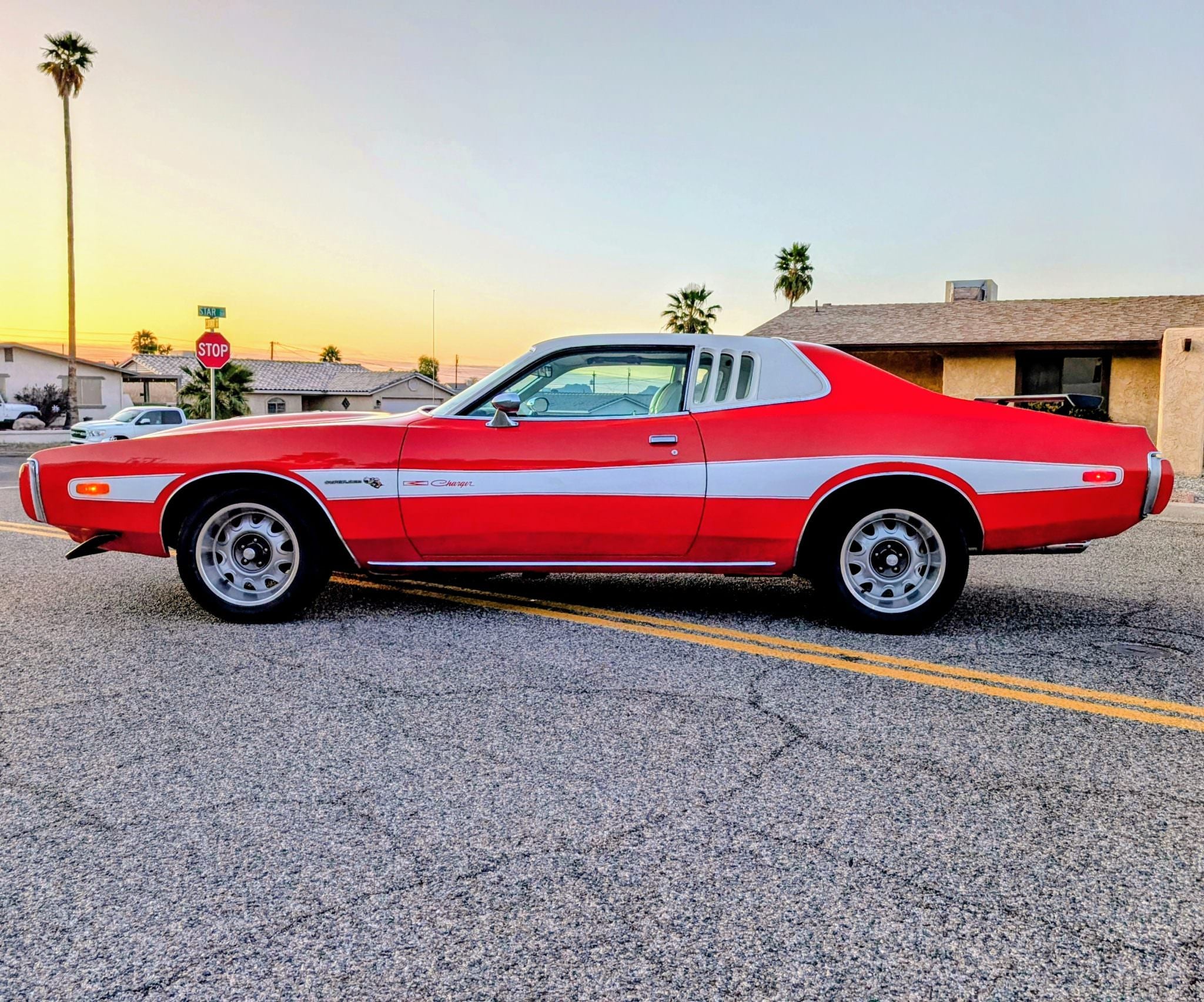
During the 2011 rebuild the body was stripped and repainted in Hemi Orange with white stripes and Super Bee-style graphics. Exterior features include a vented hood with pins and “426 Hemi” badging, a canopy-style white vinyl roof, the SE’s signature fixed louvered quarter windows, a front air dam, a rear wing, and body-color bumpers.
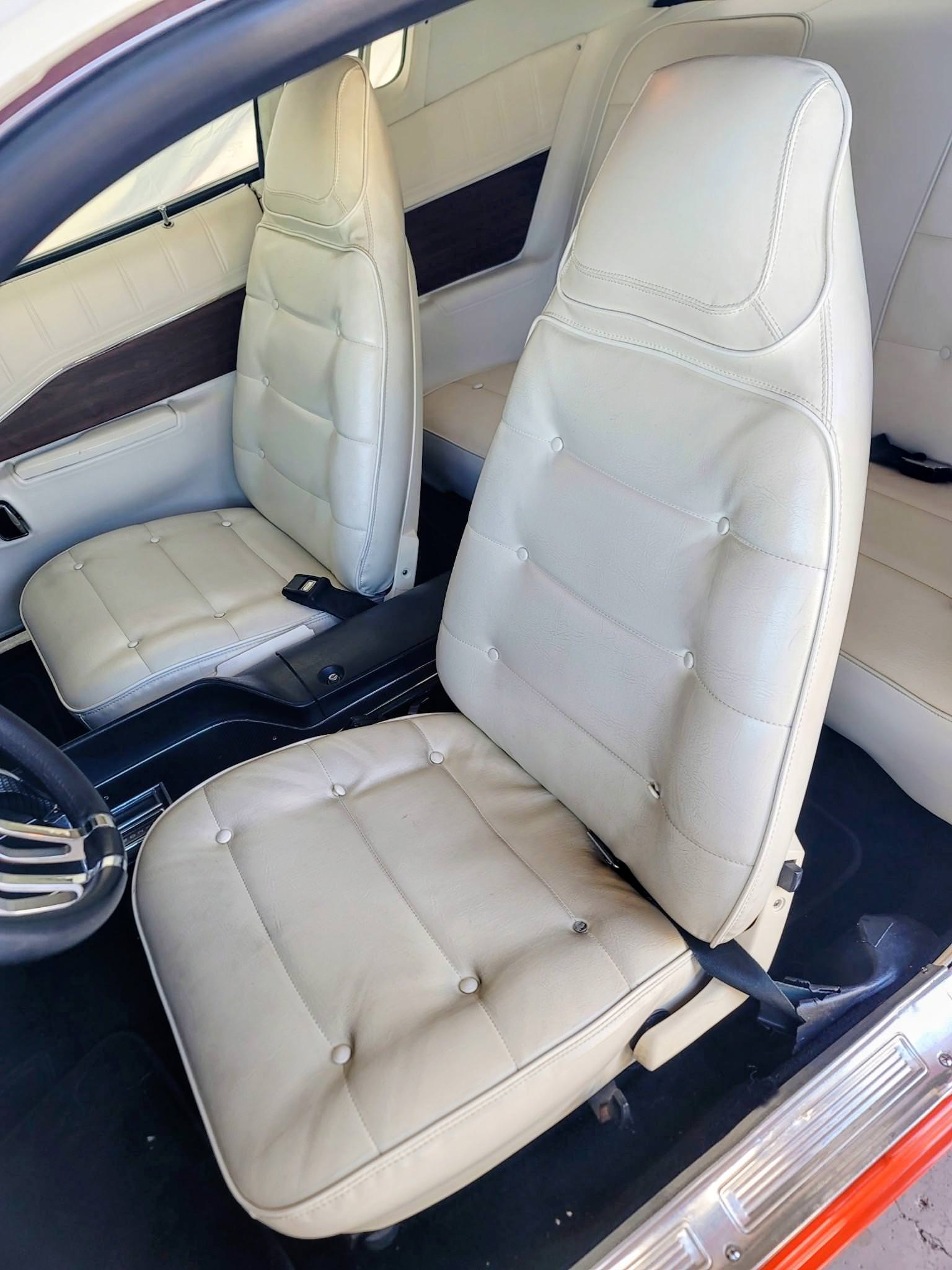
Inside, the high-back bucket seats and rear bench have been reupholstered in white vinyl, with matching replacement door panels and carpeting. The cabin has aftermarket air conditioning, a center console with a carbon-fiber-style pistol-grip shifter, woodgrain trim, and a Flaming River billet steering wheel on a tilting column.
The car is now being offered with a build book, modifications paperwork, and a clean Arizona title out of Lake Havasu City, Arizona. If you’d like to read more about it or register to bid you can visit the listing here on Bring a Trailer.
Images courtesy of Bring a Trailer + Dodge Chrysler

Articles that Ben Branch has written have been covered on CNN, Popular Mechanics, Smithsonian Magazine, Road & Track Magazine, the official Pinterest blog, the official eBay Motors blog, BuzzFeed, Autoweek Magazine, Wired Magazine, Autoblog, Gear Patrol, Jalopnik, The Verge, and many more.
Silodrome was founded by Ben back in 2010, in the years since the site has grown to become a world leader in the alternative and vintage motoring sector, with well over a million monthly readers from around the world and many hundreds of thousands of followers on social media.